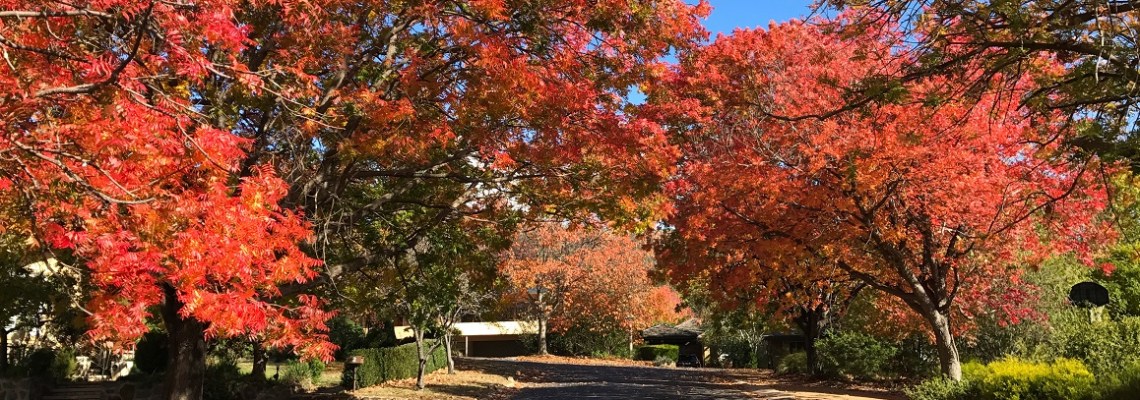
A lack of blogging endeavour is reflective of my position of relative stasis in the last couple of months. Still, if you were to choose a period to stay put in Canberra then this may well be it. For while my feet have largely been rooted in the capital, change has very slowly and subtly washed over me.
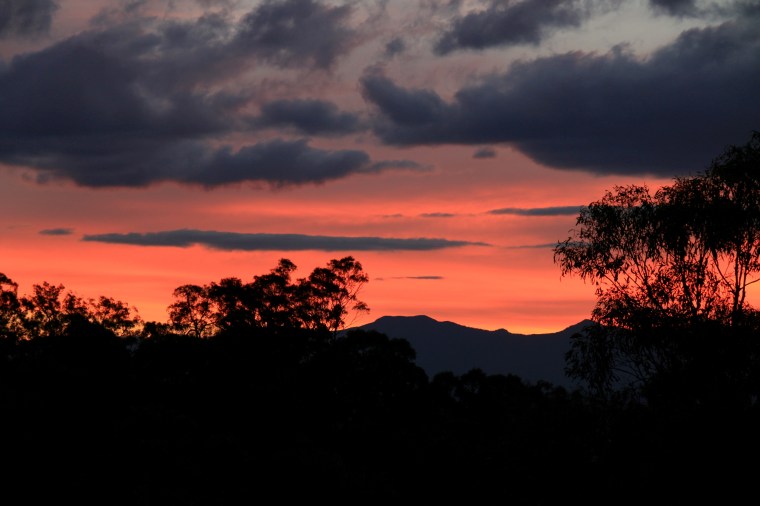
The late summer lingering of balmy days and comfortable nights has lingered longer than usual. On the streets, an initial shock of arboreal colour mellowed and probably wanted to turn back green. The Anzac Day ritual of firing up the heaters was drastically postponed, as armies marched in 27 degrees. Meanwhile, the western ranges burned – in a controlled way – but the taste of smoke pervaded regardless, transforming the late afternoon skies blood red as the clocks wound back. Only now in May does Canberra’s autumn peak. And trainer socks dissipate from the laundry.

Welcome – at last – to the annual autumn edition! It began, perhaps, around the start of April with daytime temperatures dropping below thirty degrees, and overnights to single digits. This is a milestone of sorts, but one that is bordering on uncomfortably hot for visitors from Middle Buntingland-Upon-Farage. Not long after Dad had left these shores with a decent tan, Jill arrived on a relatively last-minute trip to Australia, and came to Canberra seeking a few days escape from the noise and hustle of Sydney. So what better way to flee than in the hills, to that very Australian bush, the wilderness on our doorstep.

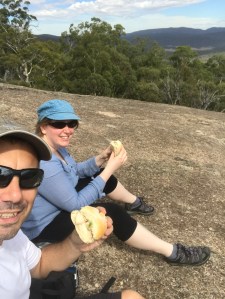 In truth, the walk up the Yerrabri Track in Namadgi National Park was only part of a bigger equation. An equation whose solution was a delicious bird roll or two. N+J*OzNP(vt)+C0les=br. It’s a concept that has evolved from very preliminary experiments at the New Years’ Test in Sydney, refined to perhaps its ultimate manifestation on the top of Mount Kosciuszko. Replicated many times since, it is now a requisite of any encounter between Jill and I. Recently, each of us have tried to outdo one another in the bird roll stakes and today, on a rocky platform overlooking peak serenity of an abundant emptiness, I may have taken the lead. For now.
Bird rolls are not the only thing that are becoming customary. Having zig-zagged up Kangaroo Creek in Royal National Park and almost losing a boat on the Bellinger River, we have since become more finessed in guiding bright pieces of plastic upon water. Okay, I think we got up close and personal with the Norfolk Broads last year, but just the once. And this time – my first time self-propelled on Lake Burley Griffin – there was no shrubbery with which we embarrassed ourselves. Indeed, it was an incident-free beautiful late afternoon pedal in a kayak, the sun going down earlier than the day before and a noticeable coolness making itself known.

Since then, around the lake shore, it has been peak biking conditions under calm blue skies and ambient warmth. Only more recently have shorts been swapped for long legs, T-shirts for hoodies, short socks for long. Like the weather, autumn evolves in patches, materialising in pockets; a glade untainted green here, trees stripped bare there. In between an emergence of yellows, oranges, reds and browns, meaning that every day there is something different to see from the vantage of two wheels.
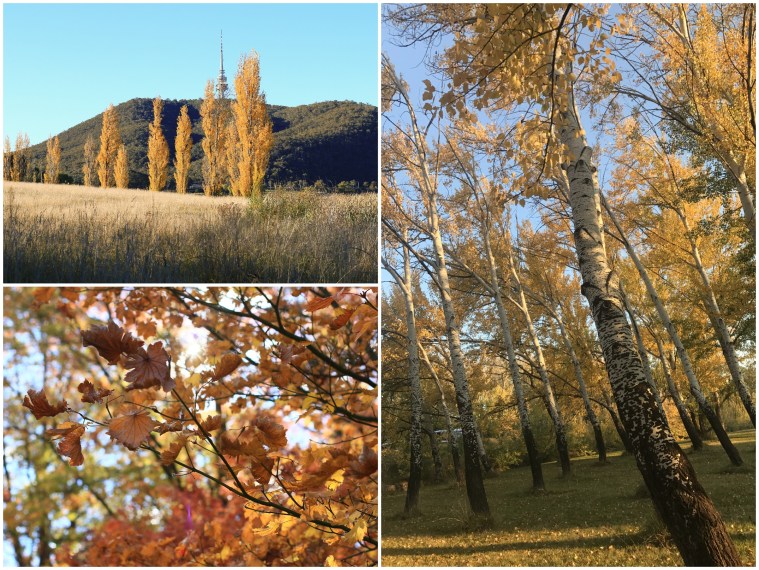
But it is at this point in the year that ambling in Canberra’s suburbia comes into its own, usurping the attractions of its lakeside coves, bushland hills, and concrete edifices. It’s the peoples’ Canberra, the homes and gardens and streets that real, mostly normal, everyday Bruces and Sheilas like you and I live in. Okay, the more affluent burbs have the lions share of autumnal splendour, but pockets of colour burst out from pavements far and wide. Even down near the local youth centre, the skulking youngsters seem softened by an explosion of nature’s confetti.
It is in these streets, around these crescents, besides these storm drains that I can happily wander. In autumn, an insipid walk becomes a quaint stroll. Not that there’s total serenity; as the number of leaves fall, the number of shrieking cockatoos rise. Thankfully there are a few black ones to offer some grace.

In the afternoons it is still warm and golden, and coffee can still be taken alfresco and still with cake. But now, as May nears its end and winter will soon nominally start, the real change sets in. It started in shorts and T-shirts, humid hikes and toasty paddles, with a cold beer to wash the day down. It ends in an Orange Sky hoodie, bracing rides, electric blankets and the warming spice of a glass of red. Standing still, embracing change.


 Fast-forward a few days and the work was done, proving less cumbersome and far more populated with coffee and cake than I could have hoped for. This left me alone with a car and a few belongings close to the Queensland-NSW border. A massive part of me wanted to make the journey home as quickly as possible, but then an equally massive part also yearned to stop in Warrumbungle National Park. Another significant consideration was a determination to miss the whole messy Newcastle-Central Coast-Sydney conglomeration. This along with the fact that, heading inland, I could go through Texas tipped the scales definitively south and west. Yeehaw.


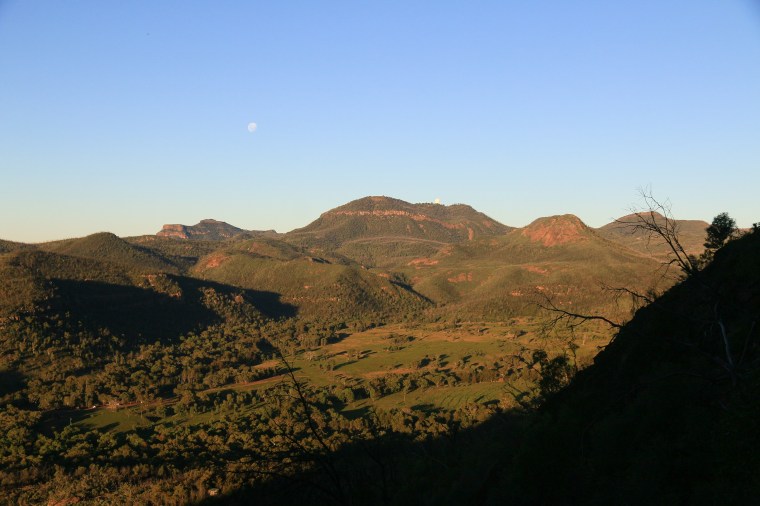

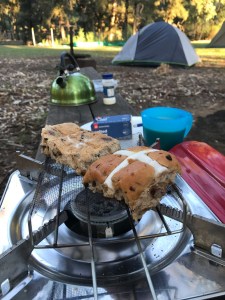 I was even more glad of my foresight in buying some hot cross buns and a block of butter in Coonabarabran yesterday. What better way to use the camp stove for the last time, to set me on my way to Gilgandra, to Dubbo, to Wellington, to Molong, to Canowindra, to Cowra, to Boorowa, to Yass and – 550kms later – to Canberra.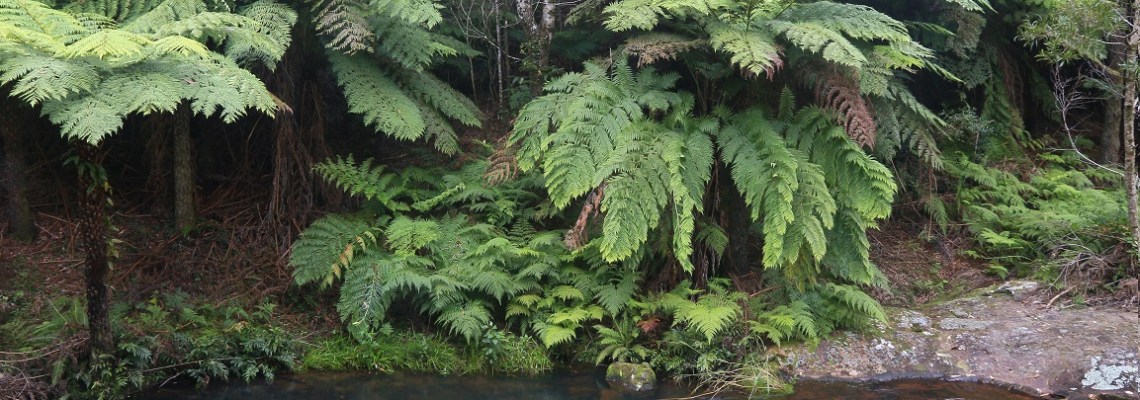
 Anyway, lest I offend several friends, family, prospective employers and the rest of their state, Queensland can be beautiful and at times might be equated with some form of perfection. However, the humidity is frequently disgusting and – on this occasion at least – the marooaaans easily trounced the blues in the rainfall stakes. Meanwhile, the growth of South East Queensland is rapidly turning the area into one very long Gold Coast-Brisbane-Sunshine Coast conglomeration where it seems obligatory to buy an oversized property and a Toyota Hilux. Here, the only koala left is a giant fake blue mascot sitting around watching far too many swimming events.

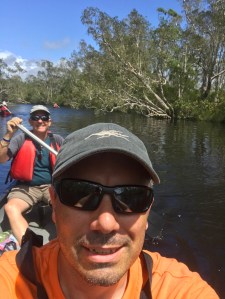 I think if miracles exist then we had one, for there was around one hour of dry, relatively sunny weather on that day which had seemed totally implausible earlier on. An hour that coincided with our allotted time in a canoe, gently zig-zagging with the meanders of the water towards Harry’s Hut. While the surrounds were a bit samey and somewhat nondescript (in a jungly, swampy wilderness kind of way), it was an hour of calm, of peace, of harmony with the environment. And above all, recognition of sheer bloody luck.
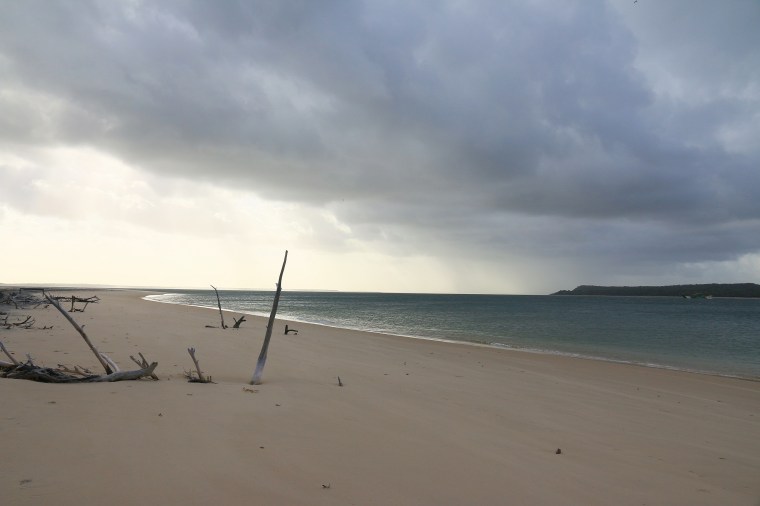
 Just a hefty stone’s throw from the tip of Fraser Island, the soft sand delights the toes more than it does tyres. The rugged natural detritus of storms and tides offers a little intrigue and entertainment. The comings and goings of the ferry – and the potential for vehicles to get bogged down on Fraser – offer even more. Dark shadows intersperse with brilliant sunshine, grey waters become blue, brown sands less brown. Fatigue becomes contentment, and moments to remember form. Moments that are beautiful, even perfect. Damn you Queensland!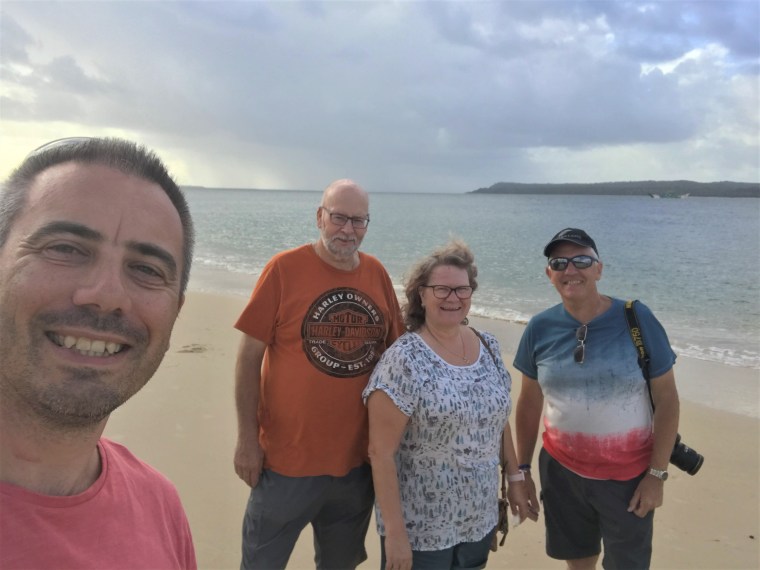


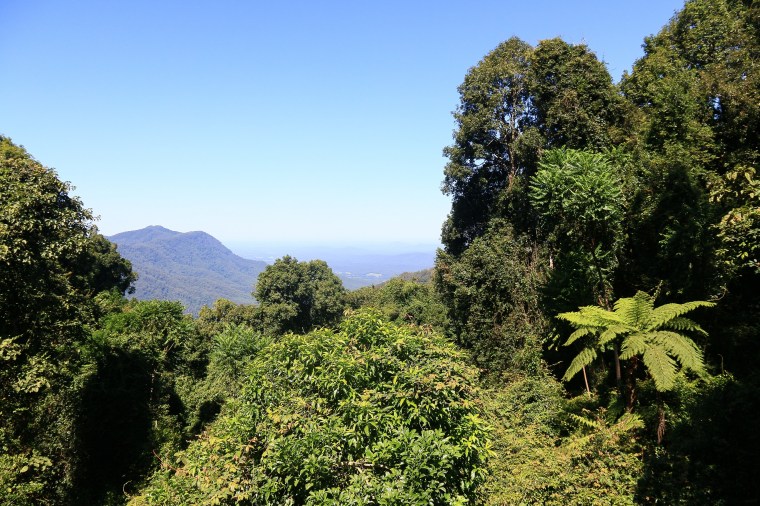
 Up the road at Ebor Falls, situated within Guy Fawkes River National Park, we have reached a land of rugged gorges and wild rivers, decorated with millions of eucalypts and a million more golden everlasting daisies. Indeed, green becomes more golden with the drop in rainfall. The smells and sounds are more familiar: that earthy aridity mixed with the fresh minty essence of the gums; the friendly chirp of a pair of rosellas; the chatter of an old guy named Bert to his wife Sandra. “Well, isn’t that grand.” And indeed, it sure is. It sure is.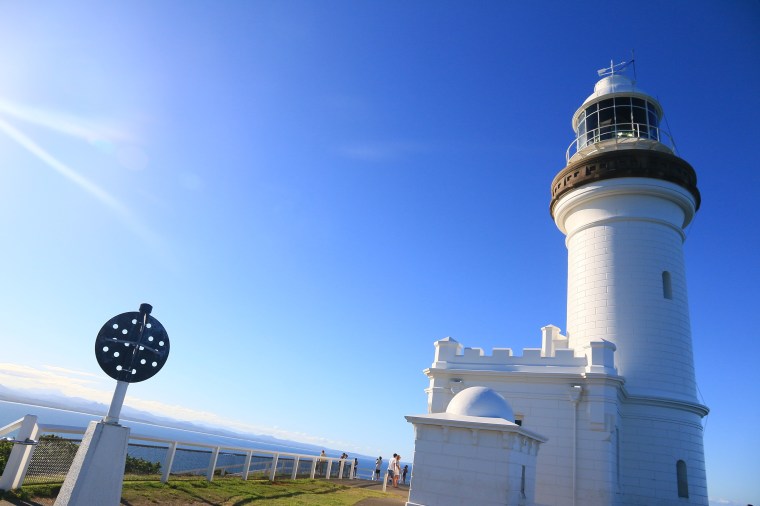




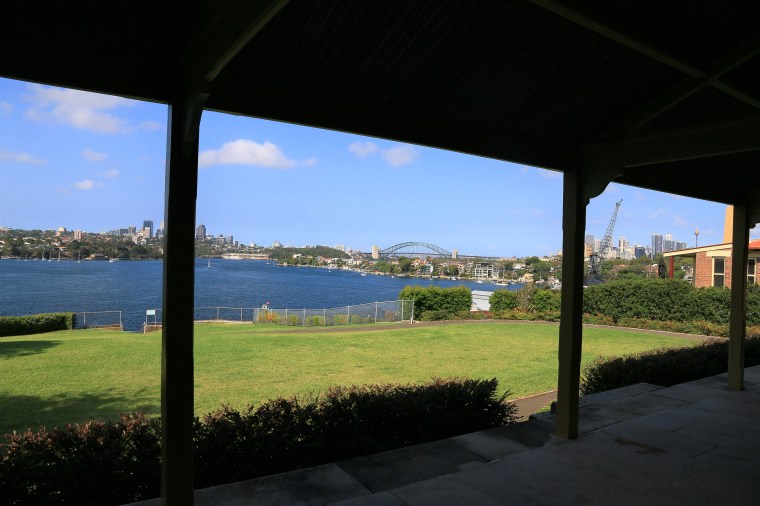
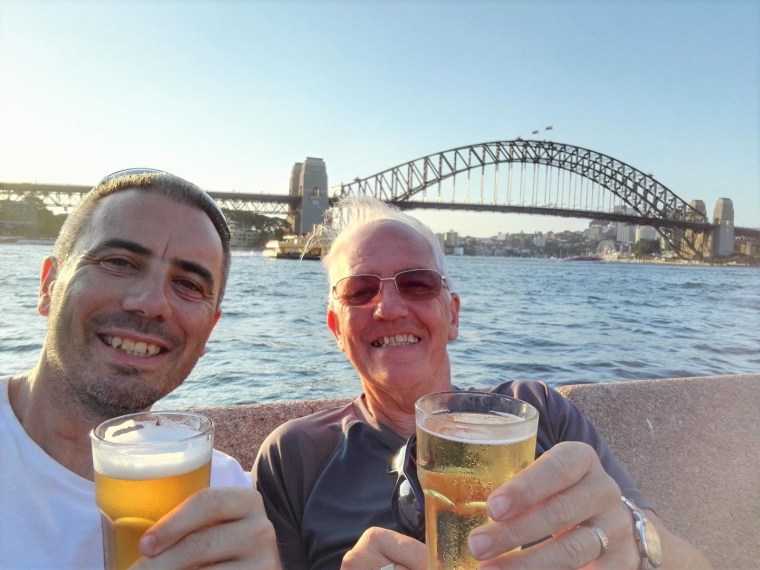
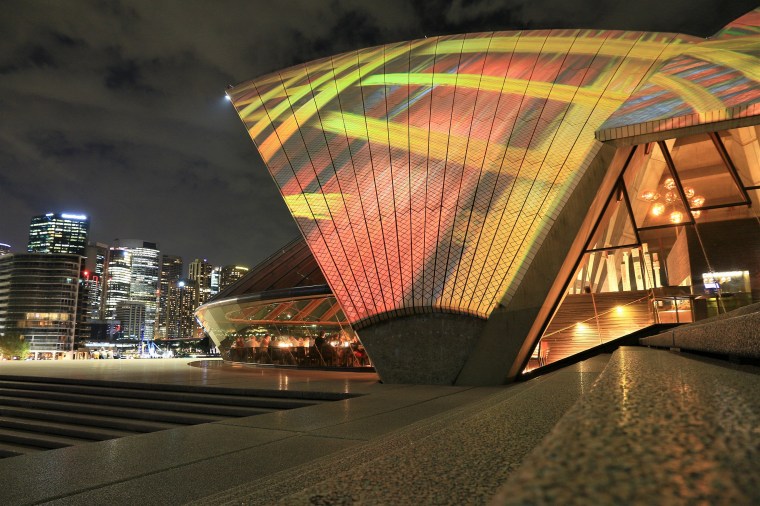
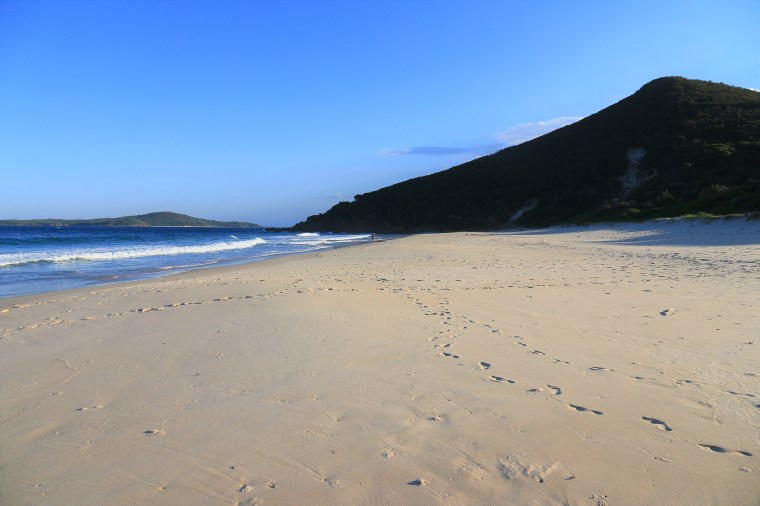


 While memories can be magnified or maligned by multiple visits, there is something special about breaking new ground. A stop around South West Rocks and Hat Head National Park provided many highlights, one of them being that this was new territory for me, Dad and the car. We all quite liked the drive alongside the Macleay River, with its green watery pastures, tiny weatherboard towns and cowbirds. We all liked a lot less the potholes around the national park campground by the beach. We were fond of the lighthouse and its views, but not so keen to traverse a rough track to some mythical walking trail. Still, if we hadn’t switched to a different walk we might have missed the sun going down. Everything works out for the best in the end.
 The beach is pitch black barring the beam of light circling upon the lighthouse. The sound of waves suggest ocean somewhere vaguely nearby, a roar magnified without any other disturbance at night. The sea breeze is cooling and evaporative, seemingly keeping the blood-sucking bugs at bay. The fine sand sustains a tripod and the sky offers an infinite, ever-expanding canvas. The photos may not have turned out brilliant, but the shared experience, the learning, the new adventure was. I daresay it was even better than Eastenders. And on that bombshell, bom, bom, bom, bom-bu-bu-bu-bum.

 Contrast this with an hour later in Arrowtown, a cutesy (if a touch contrived) old gold rush village just out of Queenstown. Sheltered by hills, twenty-five degrees, sunshine out, there was no hesitation in showing my pants to the whole of the car park and changing into shorts. Likewise, both Dad and I had no hesitation in agreeing ice cream should be on the agenda. Such thoughts are obvious portents of the cloud rolling in, the wind rising, and drizzle emerging. But let that not stop us eating ice cream!


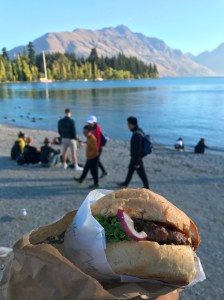 And so, in this hasty encounter with a small part of a bigger-than-you-think country packed with spectacle we finish up in Queenstown. Of all the places we visited this was undoubtedly the most frenetic, but it was no London, nor even Canberra. Firstly, you can forgive the masses of backpackers and Contiki coaches and adrenaline shots because Queenstown is beautiful. And – you know what – the people, the bustle, the mixture of ages and nationalities soaking up the holiday air creates a really nice vibe down by the lake. Particularly if this is accompanied by a ‘legendary’ Fergburger and a glowing evening as the sun slides west.


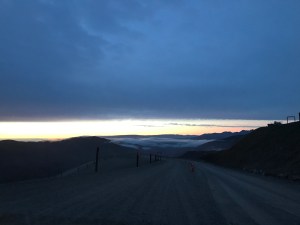 But, after our final, final night of sleep in New Zealand we set off down the mountain, seeing in the light the spectacle that we were to now say goodbye to again. With the delays, the exhaustion, the impending drag down the Hume Highway from Sydney to Canberra, we were both keen to get back. And it was a shame to end this way, even if a bacon butty and coffee at the airport temporarily lifted spirits. But everyone expects a little adventure in New Zealand and we belatedly had ours. This along with much to remember, much to savour, much to linger in the mind for as long as the white cloud blessing this most amazing big little country.
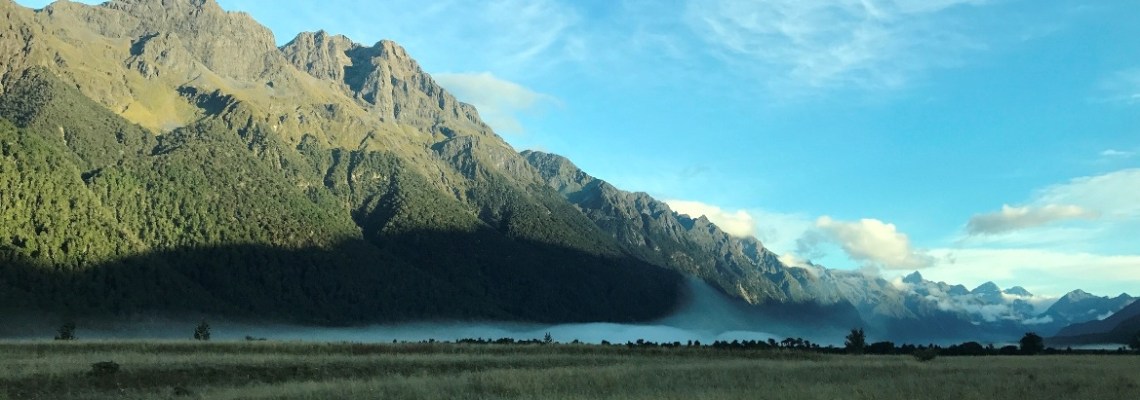

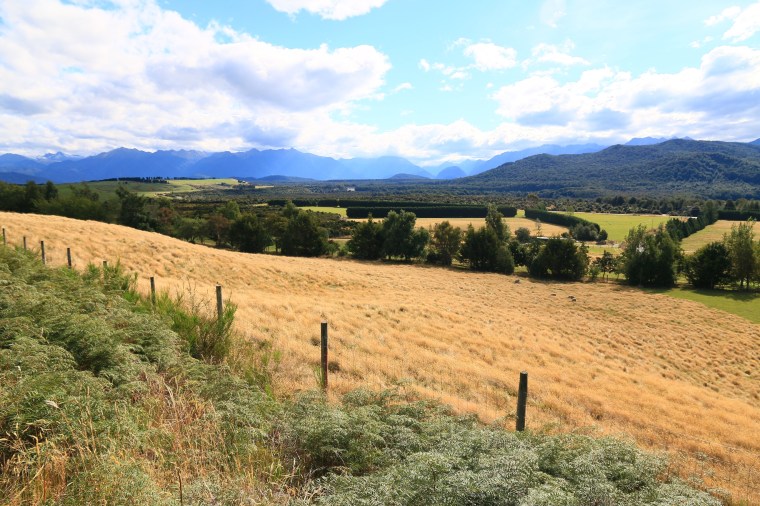

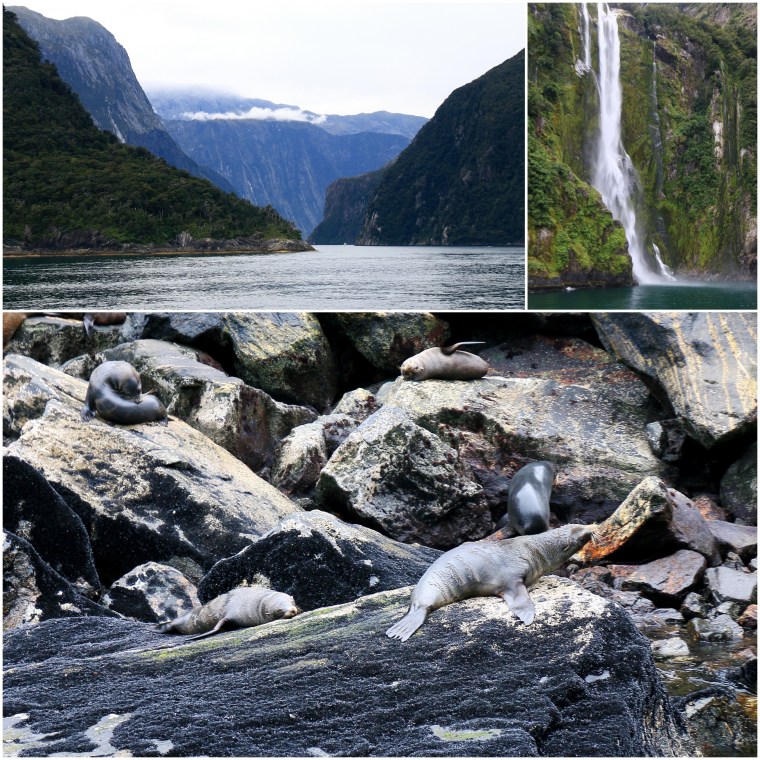
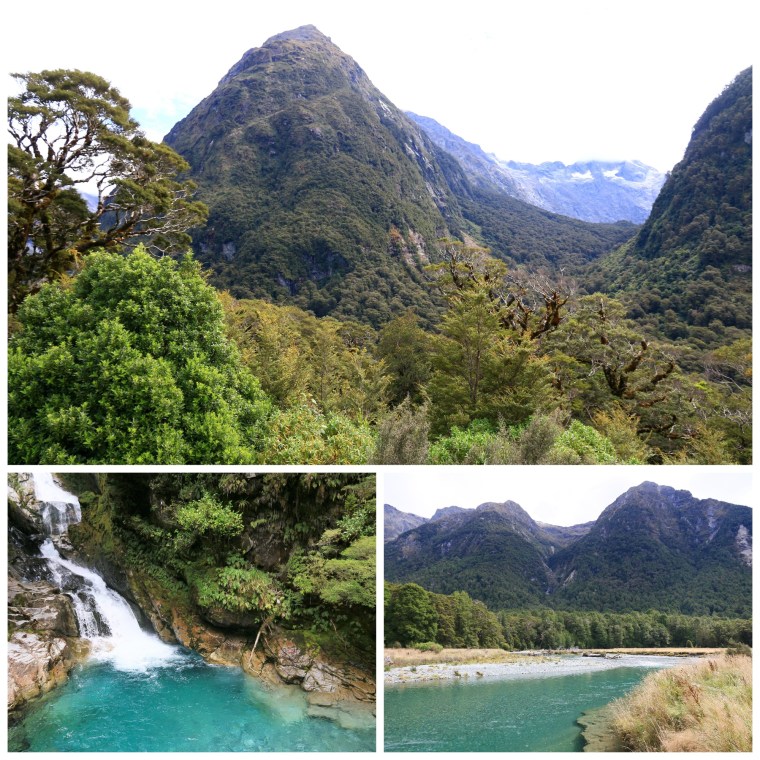
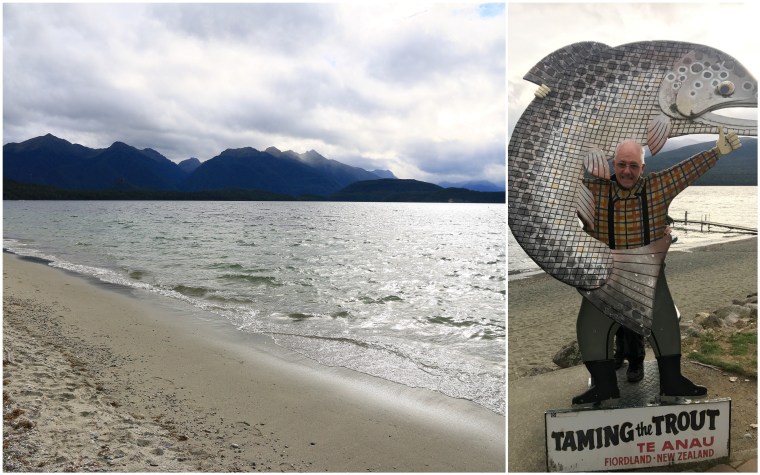
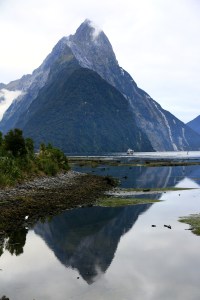 The sunny start changed around The Divide as we headed into the clouds and prospects for a clear cruise on the sound were diminished. It was the kind of weather I expected, typical of this area which is famed for being the wettest spot in New Zealand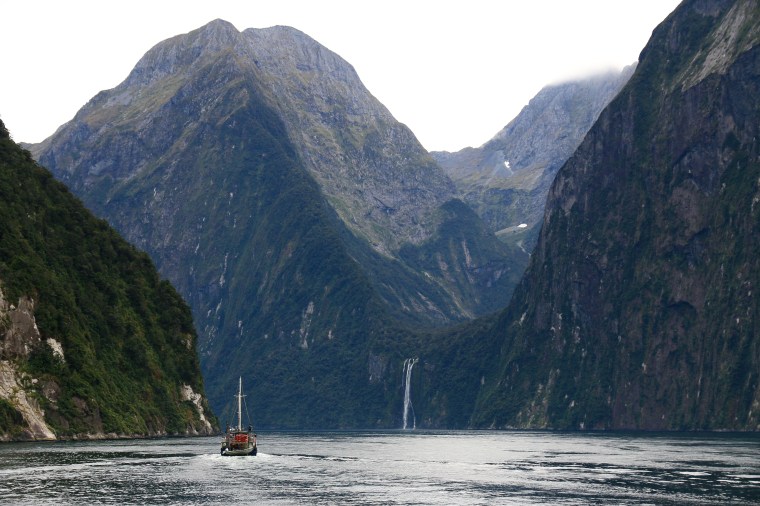


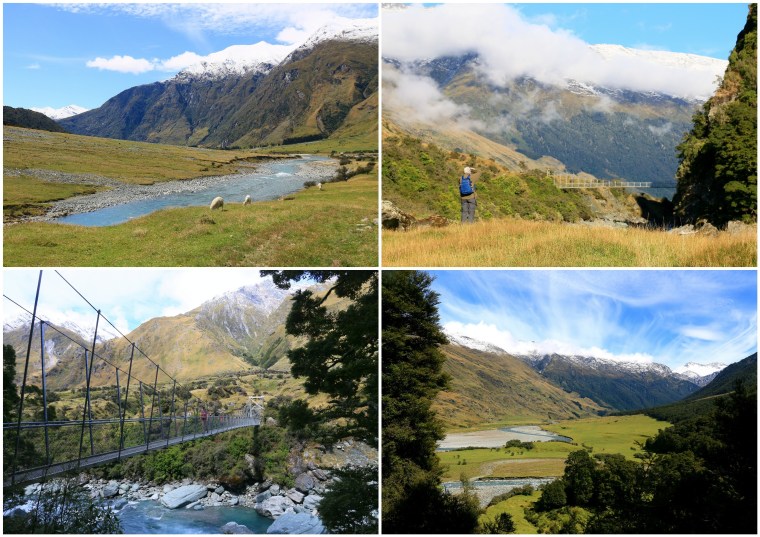
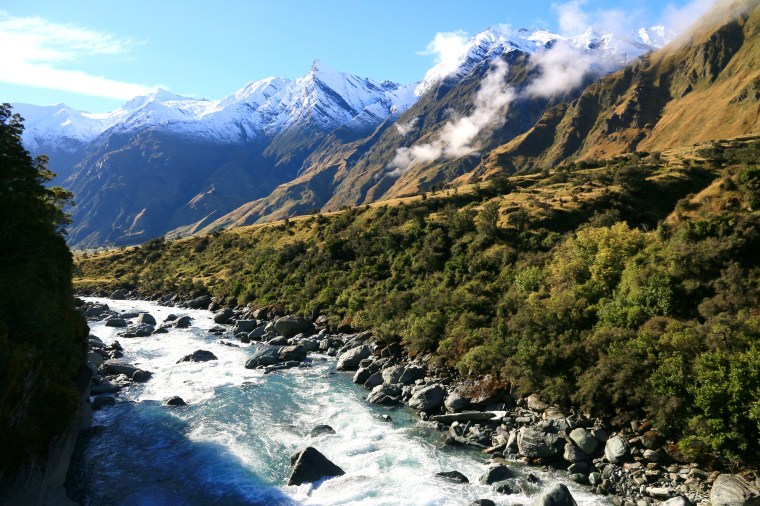

 In some ways the end of the track is something of an anti-climax, but only because the entire journey getting there has been as, if not more, enjoyable. Terminating close to the glacier, yet another waterfall for company, it is an ideal sandwich stop, a platform from which to take photos that cannot capture the all-round panorama of ice and snow and forest and water under big blue sunny skies. Dad and I two insignificant specks of unintentionally coordinated orange that have passed through the storm and into the light.
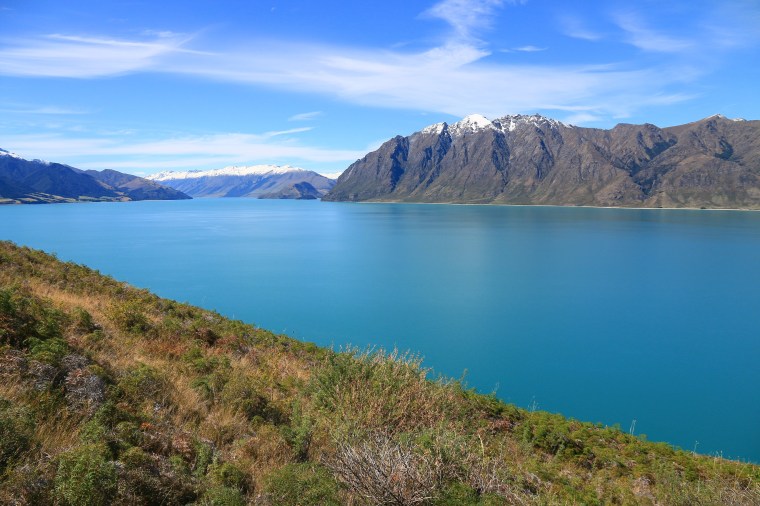
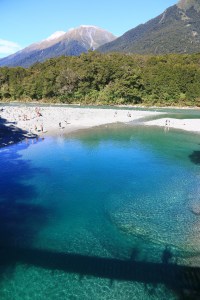 Lake Wanaka eventually ends and narrows into the valley of the Makarora River. Just past the township of Makarora another popular stop for caravans and coaches and cars and cameras are the jade pools of Blue Pools. With a gentle walk through a forest overflowing with hobbit hiding holes, two swing bridges and stony beaches suitable for building thousands of stupid piles of rocks that might look good in a picture but disturb the natural ecosystem, this is a busy spot. But yet again, as so many times in New Zealand, you can forgive the constant flow of people given the sheer beauty of the place, cognisant that you are just another nobody adding to the crowd anyhow. And with people comes stone-skimming fandom and plenty of fresh blood for the delightful sand flies that are in even greater abundance.

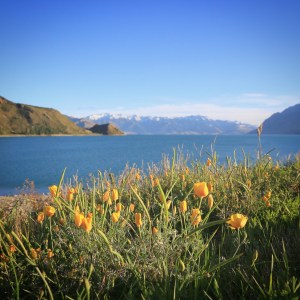 Happily, the sunshine continued into the next day and it was good to finally see our Lake Hawea surroundings in a golden light. What comforted with cosiness during the storm also shone with charm in the summer sun. To me, Lake Hawea proved a good alternative to Wanaka, barely down the road but without the crowds and providing much more space. Indeed, under such big blue skies it was a shame to leave, to miss out on sitting in the garden, foraging in the greenhouse, rubbing the cat’s belly on the grass. But there was time for one last amble down to the lake shore, to the blue and green and gold and white of just another amazing little corner of this country. And time then to move on to yet another one.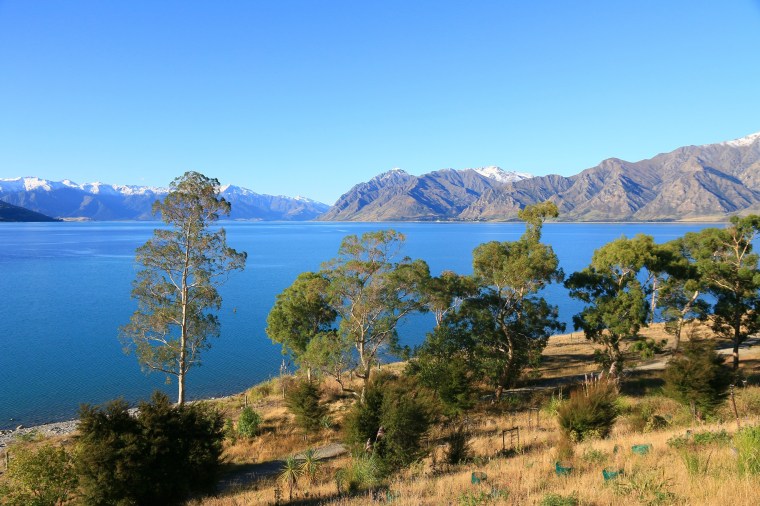


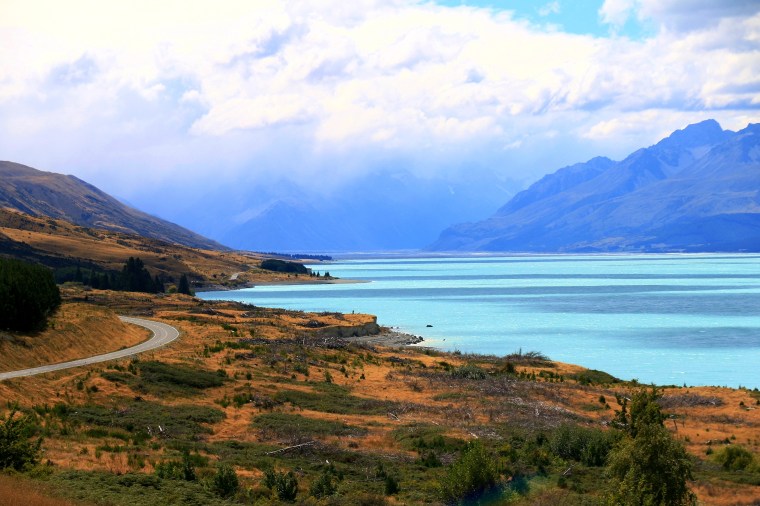


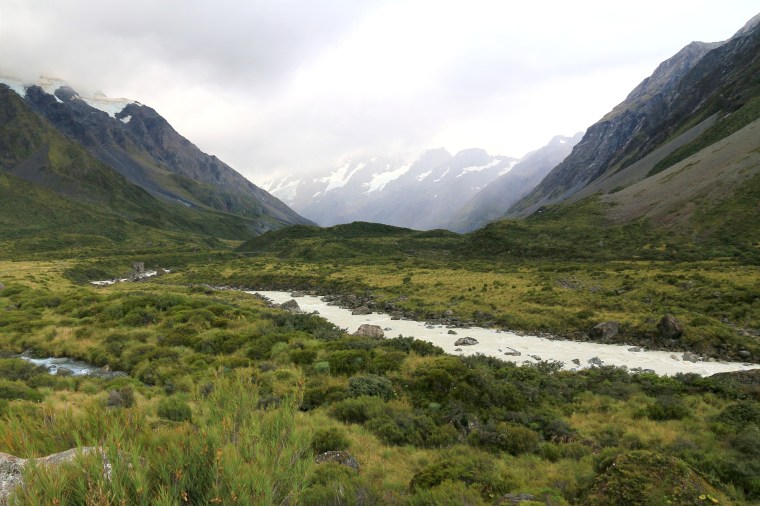
 It was a noisy night in a house on the outskirts of Twizel. Not because of hoons doing burn outs or rampaging feral possums, but the iconic sound of raindrops on a tin roof. Many Australians go misty-eyed when you mention the sound of raindrops on a tin roof, as if in some kind of messed-up ballad by Banjo Patterson accompanied by dreadful Lamingtons, but I don’t see the appeal. How the fricking heck do you sleep? Turns out this rain may or may not have been associated with cyclone Gita, or ex-cyclone Gita, or whatever was heading our way for 48 hours or more…

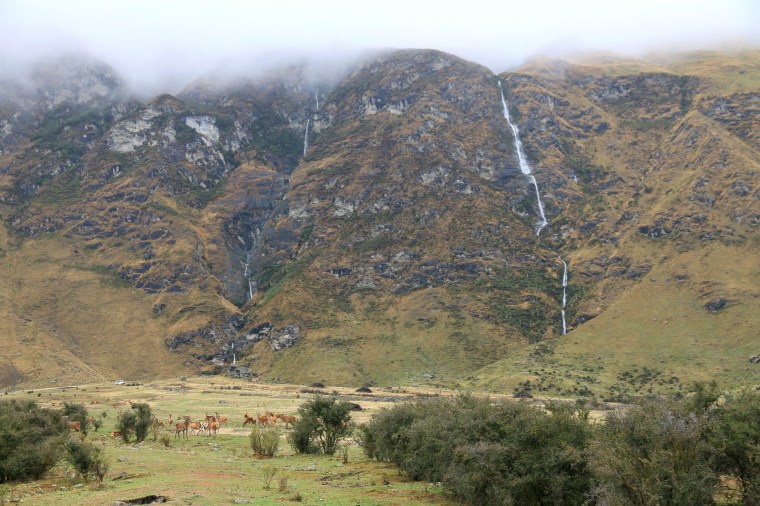
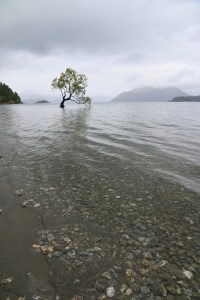 Generally, I prefer waterfalls to crowds of tourists, but the crowds of tourists can provide useful guidance on the location of scenic stops. Like a tree on Lake Wanaka – That Wanaka Tree – which probably has its own Twitter account and features on every second Instagram post with the hashtag newzealand. We join a semicircle of tourists taking pictures of the tree, with the tree, around the tree, through other trees to the tree and generally marvel at the tree, which is a very pleasant, photogenic tree. And frankly, you can’t ask much more from a tree. Other than it to grow money…which it may have done given its ubiquity on the internet.
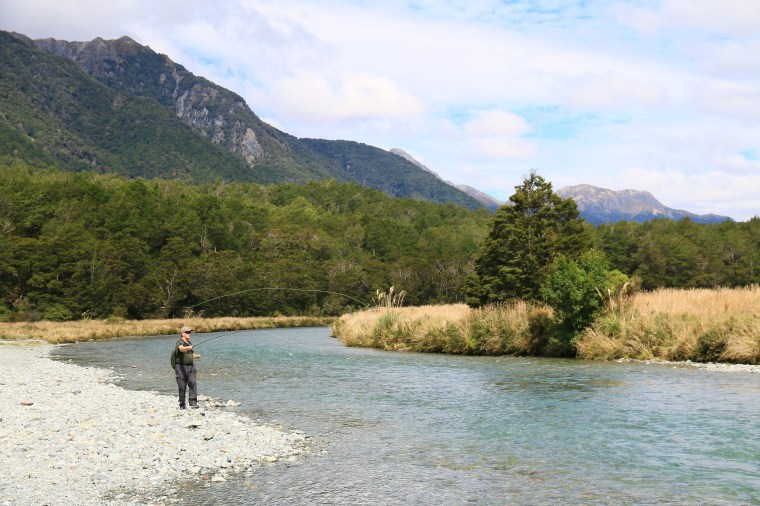
 More waterfalls were spotted on a drive to the northern side of Lake Hawea late in the day. A stop for some Dad fishing which yielded a stop in the rain. Briefly the sun even emerged albeit a touch watery like everything else around. But for the first time in a long time the windscreen wipers on the car could be set to zero. And as we parked up following a peaceful drive back home, without a fire or cat in sight, the sky miraculously fired up red, to the shepherd’s – and tourist’s – delight. Perhaps the storm had come, and gone.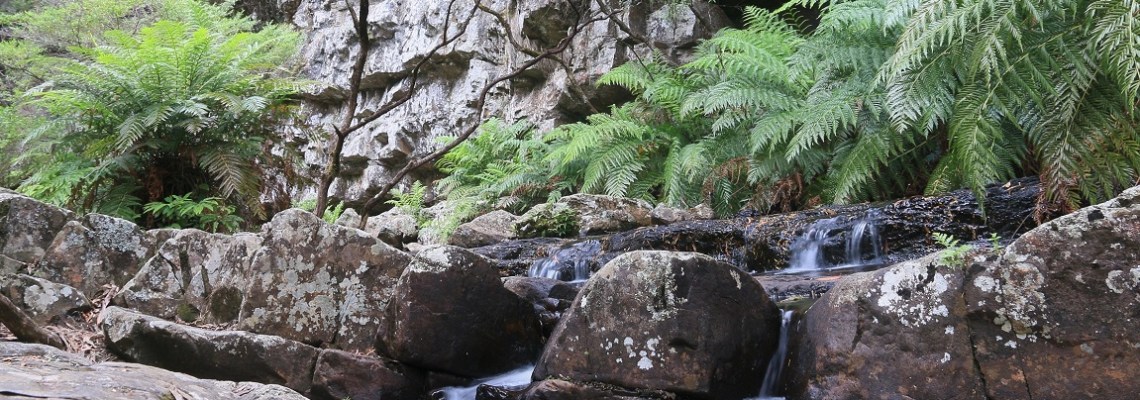
 Most cars are heading up or down the Hume Highway, towards Sydney, Melbourne or – even – Canberra. And / or beyond. Fewer are taking an alternate road north, across golden farmland and riverine gorges, passing through the town of Taralga and very little else until reaching the bright lights of Oberon. Here, west of the gargantuan expanse of the Greater Blue Mountains, fingertips of road and trail penetrate into the edge of wilderness.
 Walking helped warm things up a little and the gloomy view of Kanangra Walls was eclipsed by the natural serenity around Kalang Falls. This required a little descending beyond the escarpment edge and each step below evoked a sense of immersion in something elemental and pristine. As well as the pervasive eucalypts, native flowering shrubs and bonsai-sized pines and cedars clung happily to the rocky outcrops. Ferns adorned the pools and watercourse of the creek as it disappeared down and down into depths unseen. A trickle seemingly so insignificant continuing to somehow carve out this impenetrable gorge country.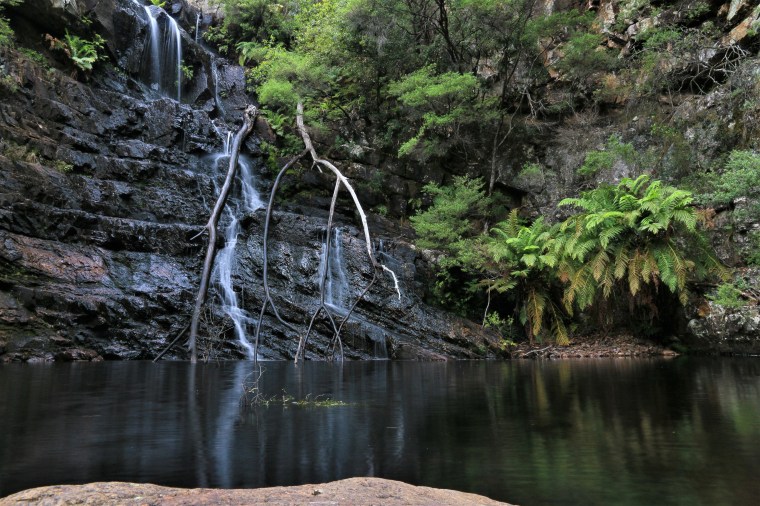
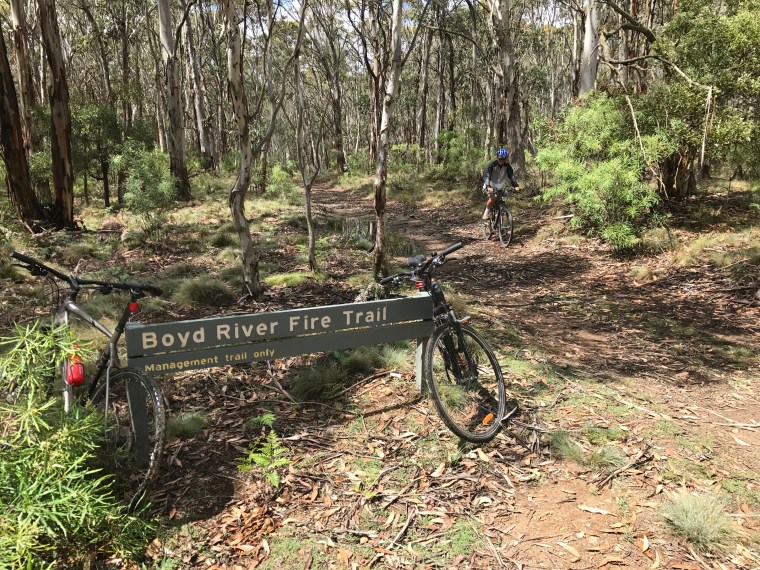
 And indeed, by time we got underway some of the gloom had lifted and the initial pedal on smooth tracks though the forest was heartening. Things began to go downhill as the terrain went more steeply and precariously downhill (described as “gently rolling”), compounded by creek crossings and the nagging knowledge that at some point climbing would be inevitable.

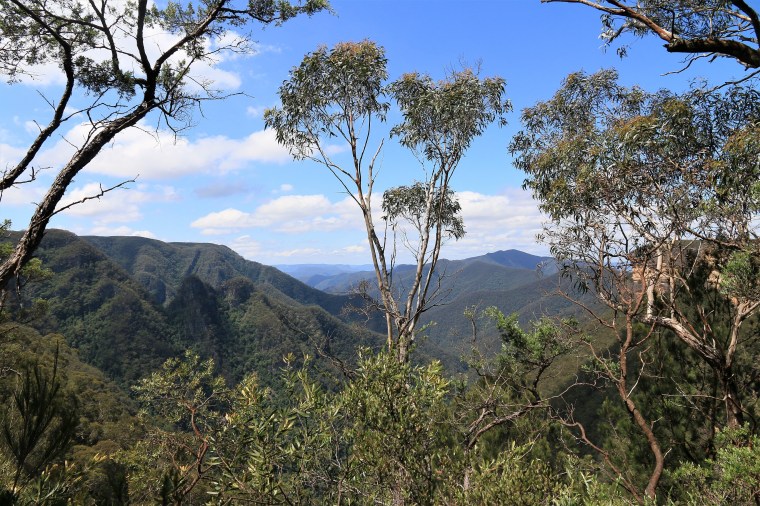
 Being energetic types, we embarked on a walk along the plateau in the afternoon which – naturally – only involved a few minor ups and downs. Panoramas were a regular companion, the vertiginous cliff line giving way to a green carpet plummeting down into infinity. Caution was high on the agenda peeping towards the precipice, a dizzying spectacle in which you hope not to be consumed. Let the snapchatting youth and boastful backpackers perch on the edge, for we have had enough adventure for today thank you very much; and how much more of a thrill do you need than being a part of this landscape, an insignificant dot in such spectacle.
 Working up a thirst, the cold beverages on the second – and final – night were far more fitting. By now, any clouds and wind had completely disappeared and the forest was aglow in the lingering end-of-day sunlight. Even my one-pot cooking failed to ruin the experience. We had been through the tribulations of the trails of dust and drizzle, creeks and climbs and were being generously rewarded. Finishing on a high, Australia at its summer holiday best, and you, and a couple of friends, immersed within it.

 It’s taken a while for summer in Canberra to arrive, with the inevitable false starts and the fake summer that usually emerges for a week or so in October before retreating with startling rapidity. The variable weather conditions are largely a boon for nature which bursts into a frenzy of colour and gargantuan jungle of weeds. One minute you have a perfectly respectable outside patio area, the next it’s a (*culture alert*) frenzied sketch from Rousseau. Best to try and ignore the weeding and admire how the professionals manage things at the Botanic Gardens.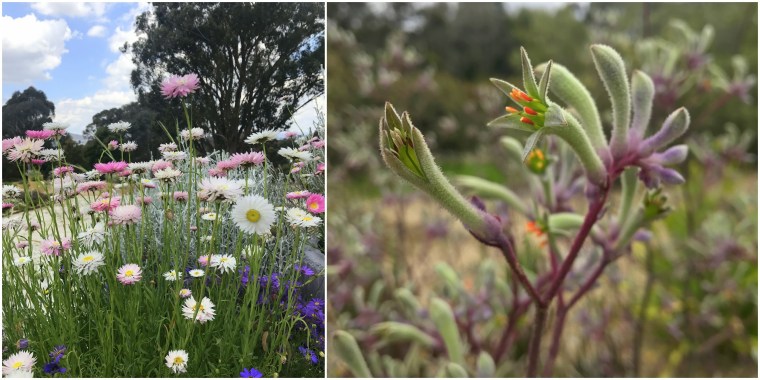
 There is a point for me in which winter in Canberra is definitely over and summer is certainly on the way. It’s that day when you decide to walk in the shade to cool down and protect, rather than seek out a warming sun and its melanoma vengeance. You know you should get your floppy hat out despite looking like a numpty in it. And largely avoid the midday sun for disproven fear that it is this that is making your hair grey and not the inevitable march of age and genetics.
 Anyway, the best times are the day’s extremities as the amount of sunshine increases. Those cool mornings when Wattlebirds wake you up at 5am and you could be tempted to a) get on your bike for a beautiful lakeside ride of virtue or b) turn on the radio in the hope that you will doze back to news of Cooper Cronk being signed by the Northern Beaches Numbats. And, at the other end, there’s those lingering light evenings, in which twilight golf is a possibility and cold beer and barbecues become a more frequent consideration.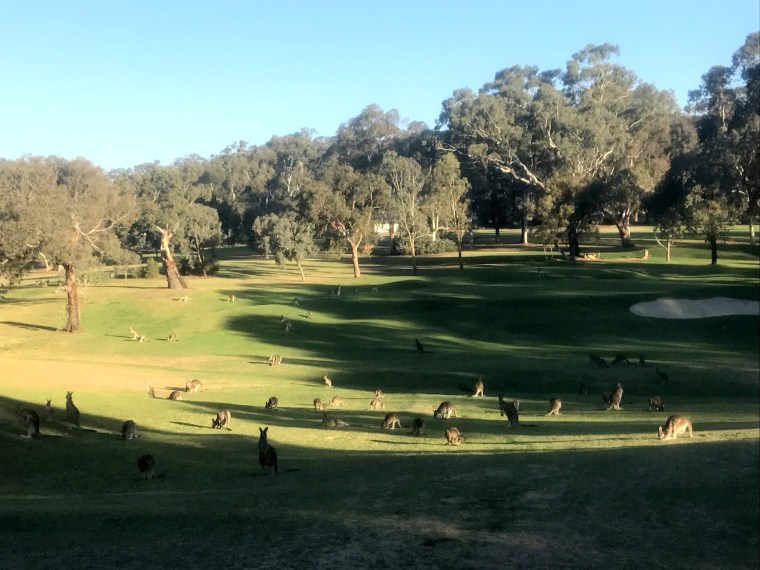
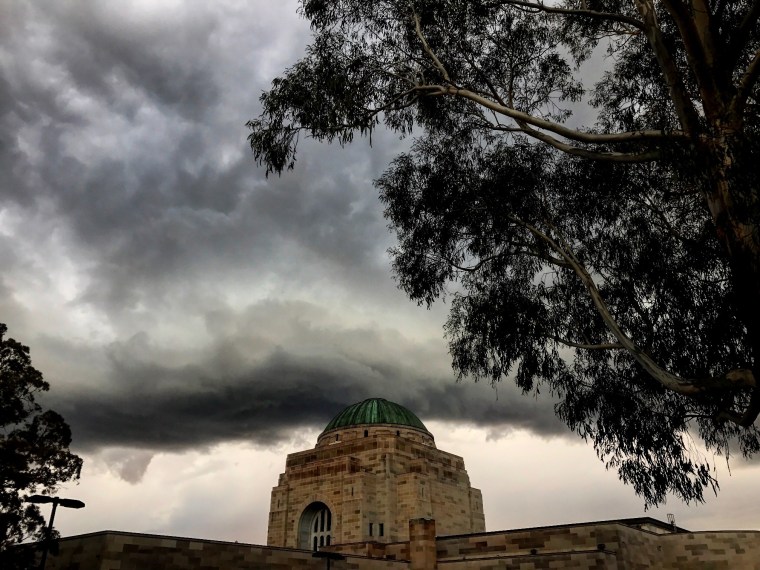
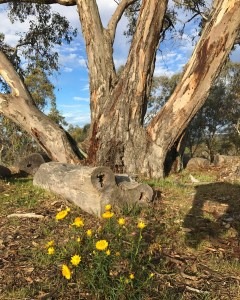 All this water, all this sunshine, all this warmth and cool change. A time for shorts and hoodies and rainbows, many rainbows. Rainbows and butterflies as summer seems to assert itself with greater authority. But still Christmas hovers as a lottery between scorching bushfires and mild drizzle; no doubt it will be 35 degrees for a classic roast or a chilly 18 for a poolside barbie with novelty oversized prawns. Only time will tell.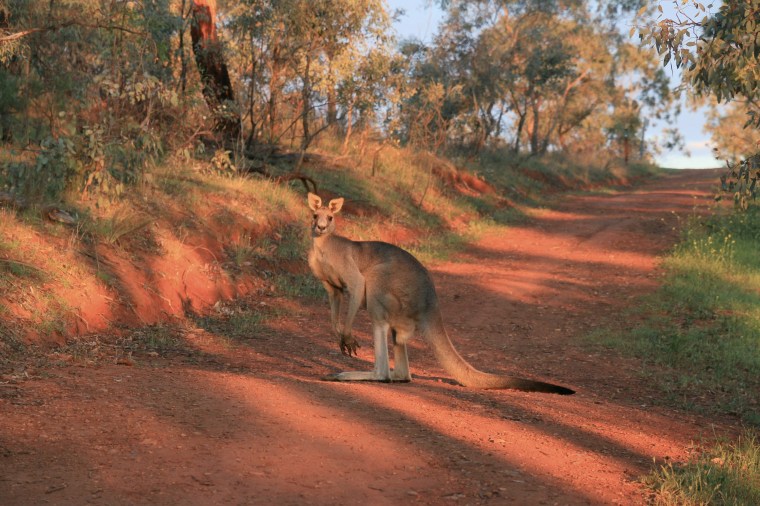

 And so the drive out of Canberra almost immediately led to immersion into a flat, golden brown landscape almost devoid of interruptions or scenic highlights. Diverting around Yass and Jugiong and encountering extensive lane closures on the road to Gundagai, distraction naturally came with the Dog on the Tuckerbox. It’s a statue of a dog. On a tuckerbox. But it is sunny and warm and the landscape here more undulating and fertile. Gum trees offer shady refuge for the melodious magpies and chirpy galahs; tin sheds and wooden farmsteads sit snugly among long grasses and fields of sheep; and there are numerous comings and goings to observe at the Tuckerbox KFC.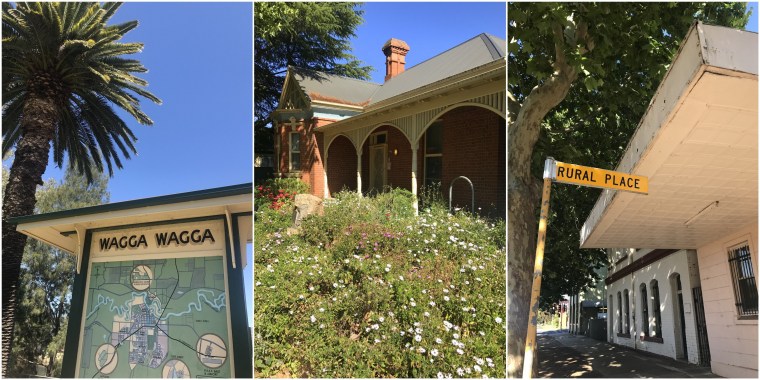
 I enjoyed a late afternoon beside the river, checking out the sandy beach and colourful language of some local ladies engaged in a very open discussion about Tinder and uncles marrying strippers and the like. The beach is obviously no Bondi or Bantham, but there’s sand and water and – I can imagine on those scorching summer days – it has enough going for it to impel you into the Murrumbidgee. Under the shade of eucalypts the vibe is chilled, languid like the river itself and I could have sat here a while if I didn’t have some work to do.
 The return trip was far more diverting than a dog on a tuckerbox, mainly because I opted to take a different route back which didn’t involve dual carriageway and bypassing one street towns. The Snowy Mountains Highway stretches all the way down to Cooma, and if I was going to avoid taking a massive detour to Canberra I would have to find my way across the Brindabella Ranges. But first, time for a little bushwalk, just south of Tumut to a slab of rock called Blowering Cliffs. It was a decent jaunt out, starting off through lush meadows and rising ceaselessly through forest to a protrusion of granite. Sometimes a waterfall plunges off here, but today it was like a sporadically dripping tap.

 What goes down must go up and so there was some further climbing through Brindabella National Park on more precarious surface before cresting the ranges where the NSW-ACT border sits. I figured out this was my final road border crossing into the Australian Capital Territory and immediately the road surface improved: still dirt but smoother and significantly more tolerant. At the oh-so-ironic Piccadilly Circus I was back on familiar ground, winding down towards the subdued hum of sealed tarmac once more. Back in Canberra comfort, but with the satisfaction of a touch of exploration behind my back.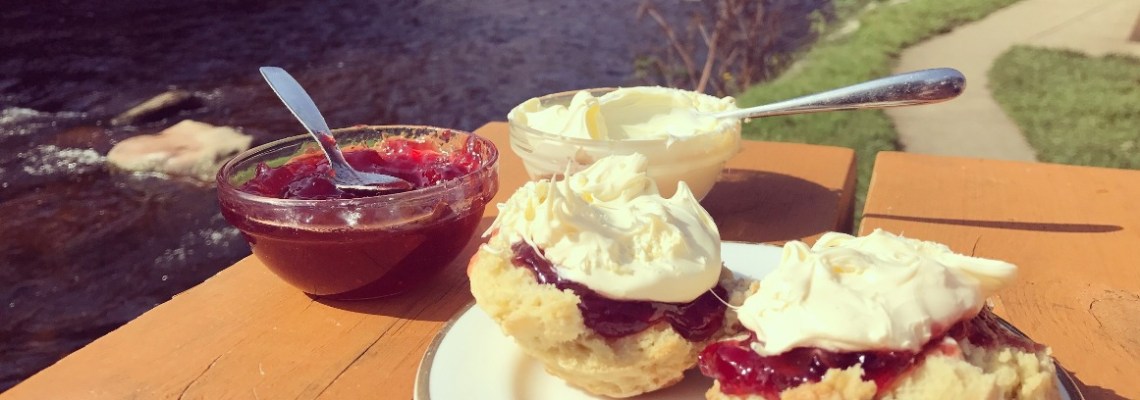
 It’s funny because arriving here doesn’t particularly feel exciting or exotic or out of the ordinary. But it was a moment I had longed for; I suspect precisely because it doesn’t feel exciting or exotic or out of the ordinary. I say this despite a diversion to a new coach station, the inevitable addition of more Greggs in town, and some positive additions to family structure. But at the heart of it, the connection with home yields a familiarity that is the very essence of comfort and, for the most part, happiness.
 Happiness is that first bite of scone with jam with clotted cream. OH. MY. GOD. Obviously this happened the day immediately after my arrival at the coach station. And it was in a new location. Cardinham Woods in Cornwall, where there was plenty of wooded green to soothe the mind, Snakes and Owls and Gruffalo to find, and deliciousness of a kind, which is unmatched anywhere on earth.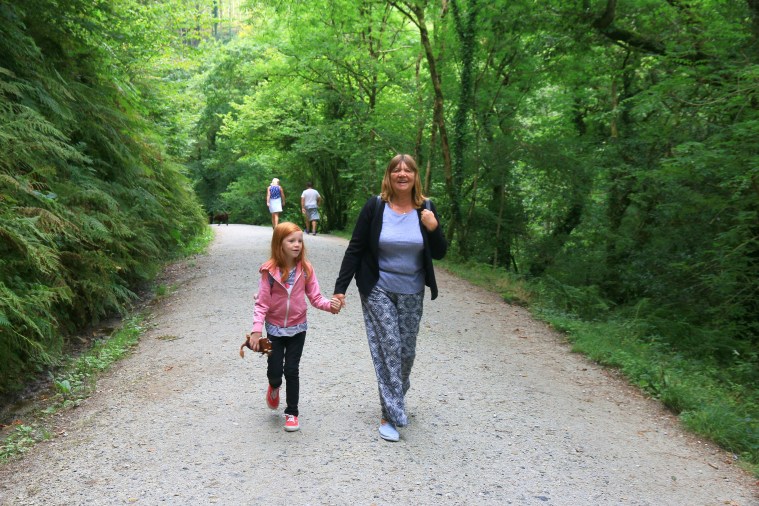
 Happiness is going to see a Hoe, and a very familiar one at that. That walk that I have walked five hundred times and I will walk five hundred more. Plymouth Sound constant companion by my side, the stripes of Smeaton’s Tower a backdrop to proper footy kick abouts and OAPs parked up, gazing out to ocean as they lick languidly away at their Miss Whippys. For me, it’s coffee in the sun by the Sound; shit coffee but sun and the Sound.
 Happiness is going to see Sarah, who is definitely not a hoe, but a very fine woman who I am hugely in love with. I have no idea who Sarah is, but she makes bloody good pasties. So much so that any other pasty is now disappointing. It means a trip to Looe, an adventure in trying to find a car park, an effort of restraining expletives as grockles spill aimlessly over the roads and flock to inferior pasty chain stores. There is achievement to be felt, reward to be had, and attention still needed to protect incredible nuggets of pastry from seagulls as undiscerning as the grockles.
 Meanwhile, have I mentioned the accessibility of cream teas at home? That makes me happy. Cream teas in Devon that are not Devonshire teas in Cremorne. Another quest, another discovery, this time at the Fox Tor Cafe in Princetown. It’s not much to look at – and weekends bring out an excess of Lycra – but the buttery scones are utterly Devonly divine. And the jam and cream ain’t so bad either.
 Happiness is not often a product of the English weather. But expectations are so, so low that you cannot fail to smile when the forecast is for light cloud and a top of nineteen degrees. Get a bank holiday weekend when the temperature builds under blue skies and you’ll find everyone turns mildly, wildly delirious. Blackened charcoal sausage is the staple food source, evenings out are comfortable and you begin to think, hmm maybe this isn’t so bad after all. Followed by the inevitable if only it could be like this all the time. These are the words uttered outside waterside pubs, along the promenades, within the leafy parks and wedged between giant hedges as countryside spills down to coast.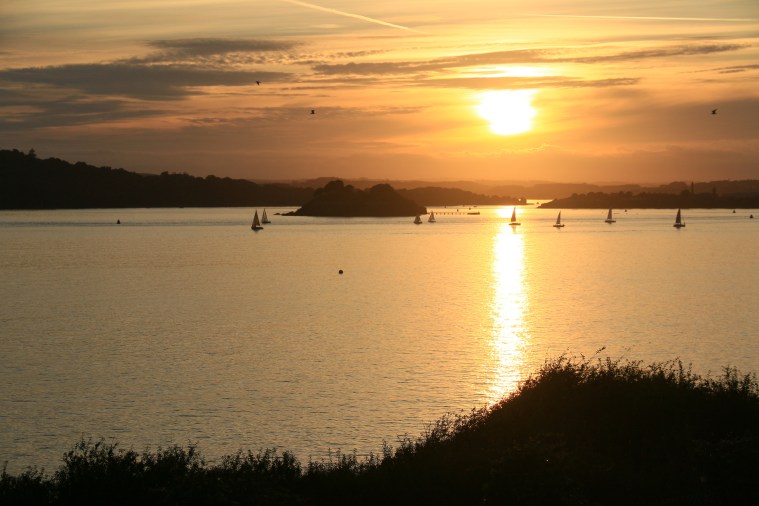

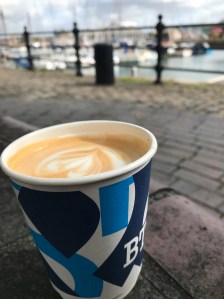 For all its tea-based pleasures and intricacies, Devon and Cornwall – and England and the rest of the UK – is not, it must be oft said with an eye roll thrown in, accomplished in the art of coffee. But there are glimmers of hope; hope that possibly makes you think hmm maybe this isn’t so bad after all. Followed by the inevitable if only it could be like this all the time. These are the words uttered inside my head as I sup on a reasonable flat white among the glistening cobbles and boats of Plymouth’s Barbican.
 Happiness is the aspiration pushed by marketers at Morrisons and Sainsburys and Tesco and, yes, Aldi. The Aldi happiness is more a utilitarian, Germanic form of pleasure, and certainly hard to pinpoint at 3:30pm on a Sunday afternoon, before the stores close in a quaint but annoying reminder that Sunday used to be a day of rest. These are the temples of a kid in a candy shop or, um, actually a grown man in a candy shop. For every reliable revisit of a Double Decker there is a new discovery or a forgotten one rediscovered. Like Wispa bites, and Digestive cake bars, and more things contributing to the presence of salted caramel as a major food group. And then I see the dairy aisle and the copious supply of clotted cream, and I feel a bit sad.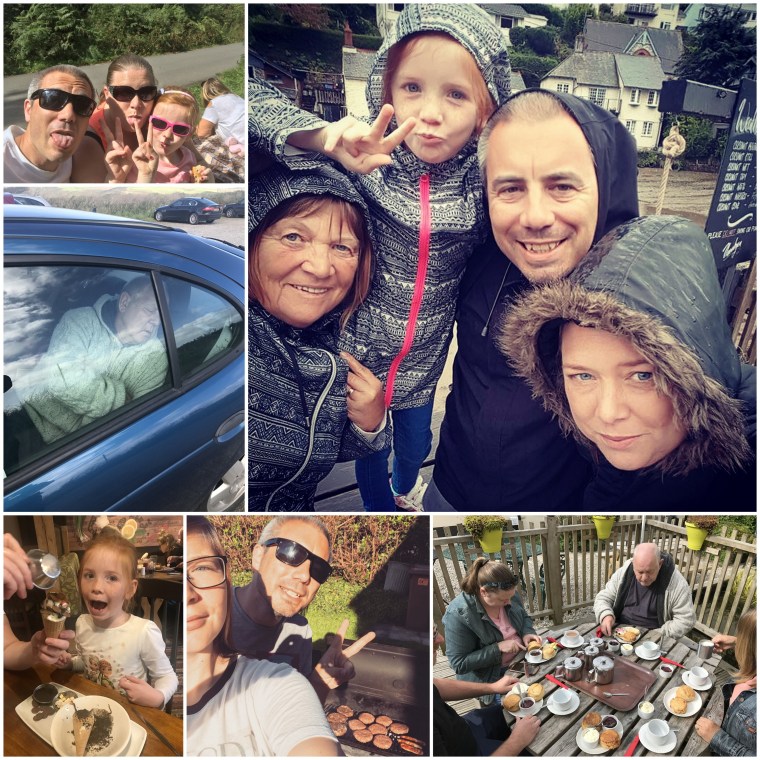

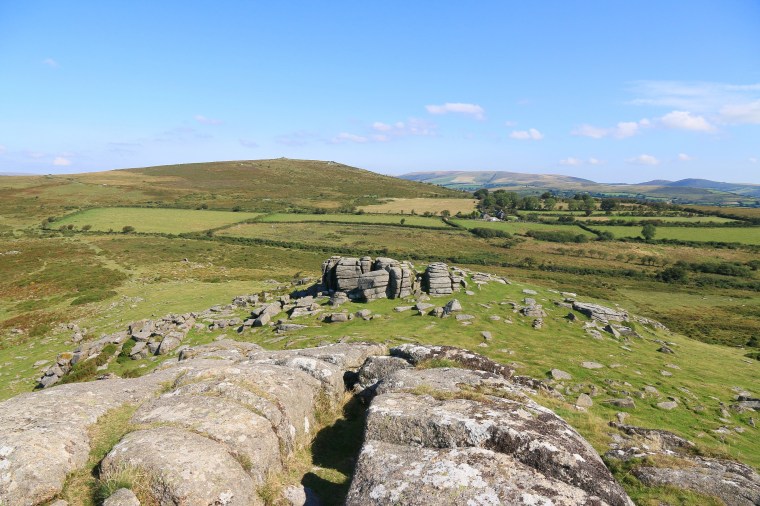
 On the road to Burrator, the sheep are out in force, arse sticking out into the tarmac, head tucked into a giant gorse bush, oblivious to the fact that there are two cars coming at opposite directions on a lane built for one. Further on, a few sheep mill about in the foot of Sheepstor, just so they can pose for clichéd photos and get in the way of cars trying to park. Better to get out on foot though, and take in a stretch of reservoir, country lane, farm and hamlet aesthetic, before climbing the wilder, granite strewn hill itself. It’s a route I’ve taken a few times now and strikes me as a wonderful bona fide welcome back to Devon.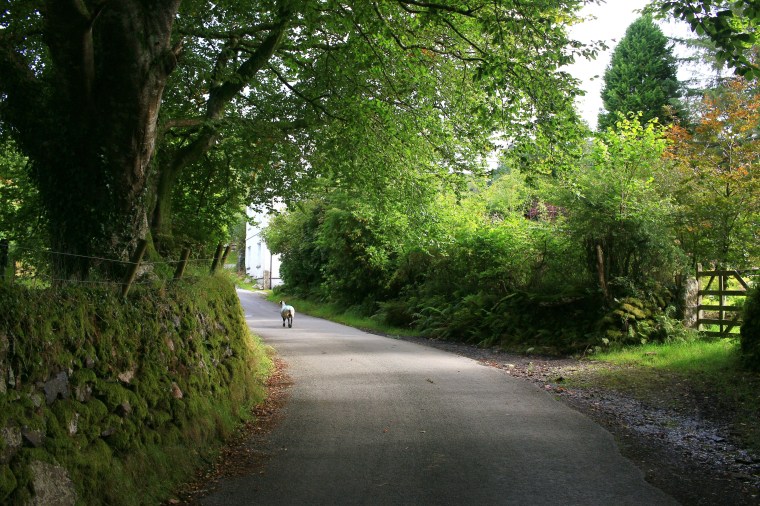
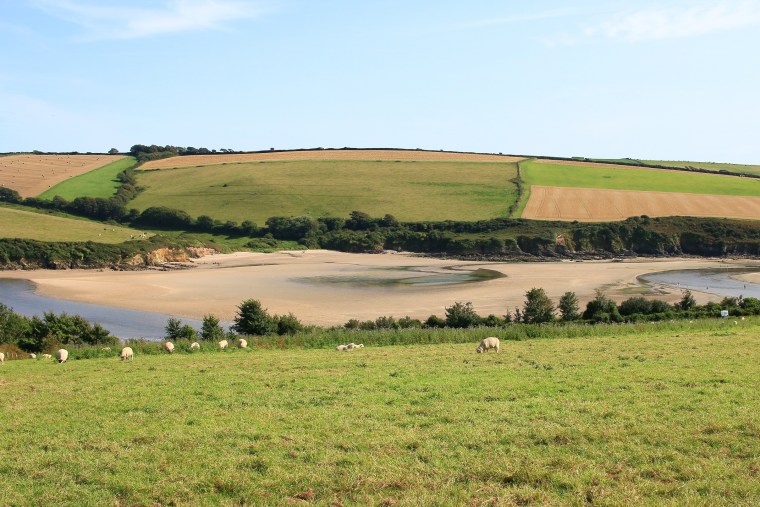
 It really is in a delightful setting, Mothecombe; the tranquil shallows of the River Erme meandering out to sea, the sandy banks and rock pools revealed at low tide, the sheltered, undeveloped bay with gentle waves and translucent waters. Such appealing waters that people were in there swimming and I got the shock of my life when I put my own feet in. Not the usual, anticipated shock of oh my god what are they doing this is f*****g freezing, but a slight eyebrow raising oh this is actually tolerable for a bit up to ankle height I guess. No wonder the roads are so busy.
 Following a day of showers merging into longer spells of rain I was keen to get outdoors when a longer spell of rain appeared to have passed leaving a few showers behind. I was in the habit of checking the weather radar by now, and took a bit of a gamble on a potential gap in the way things were tracking. Out around Sharpitor, as cloudbursts pummelled the Tamar Valley and a black doom sat unyielding beyond Princetown, some late sunshine pierced the skies and set the landscape aglow. Sheltering from the cold wind, I stood insignificant within expansive moorland and raggedy tors, alternately shining golden in sun or darkened by racing clouds. Barring the occasional car on the main road crossing the moor, it was just me and the sheep and a pony or two to witness it. I felt as though I had struck gold.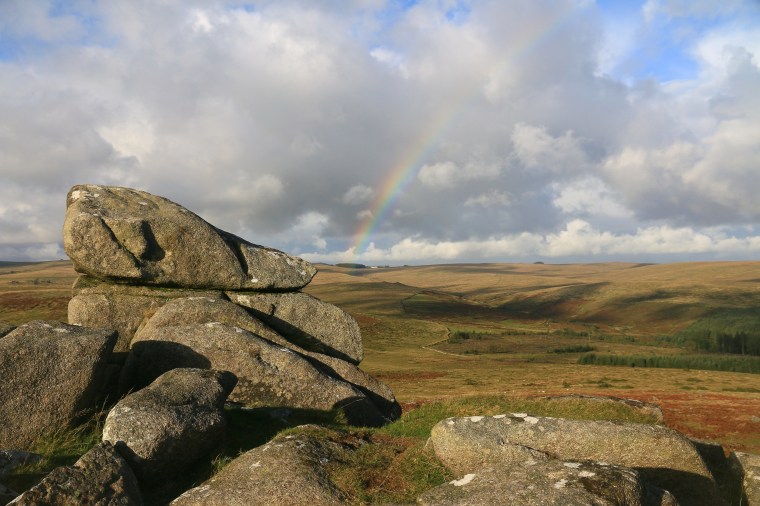
 And you know what? In a turn of events that no good travel writer would ever make up, it pretty much stayed raining albeit with some slight easing off for about five minutes. Thankfully the Ship Inn had some funky outdoor pods to huddle together and drink hot chocolate in – think three quarters hamster ball in Teletubbie land – and with the tide being in (well checked, sir), the scene was not one of stinking tidal sludge. Indeed, it was rather serenely pretty under a comfort blanket of cloud.

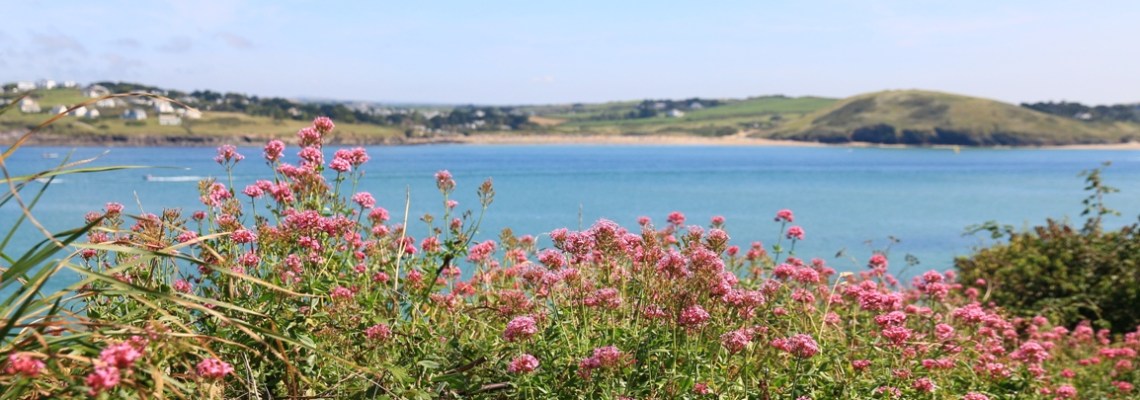

 Other repeat visits transpire from convenience and come with pastry-coated benefits that are worth duplicating. Like the relatively short drive from Plymouth to Looe, through the most contented countryside and down towards the south coast. I don’t usually linger around Looe, but it’s a good base for refreshment and with the right light, tidal state and the discovery of a peaceful corner you can value its merits.
 Even closer to home – so much so that just over the hill you will see council blocks, cranes and incinerators – Whitsand Bay is starkly, surprisingly rugged. The eroded, sea-shattered lump of Rame Head is something you’d expect to encounter further west. Bracken and gorse-clad cliffs are punctuated in clusters by cheap fibro shacks with pretty gardens clinging on for dear life. And the waves roll in to the shore in a long translucent line stretching all the way back towards Looe. It is a go-to place for that essential endeavour of ‘blowing away the cobwebs,’ an endeavour far safer in England than Australia.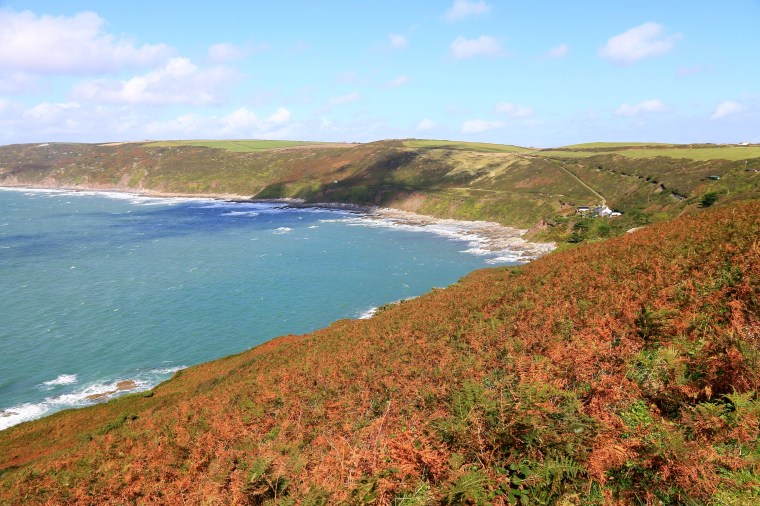
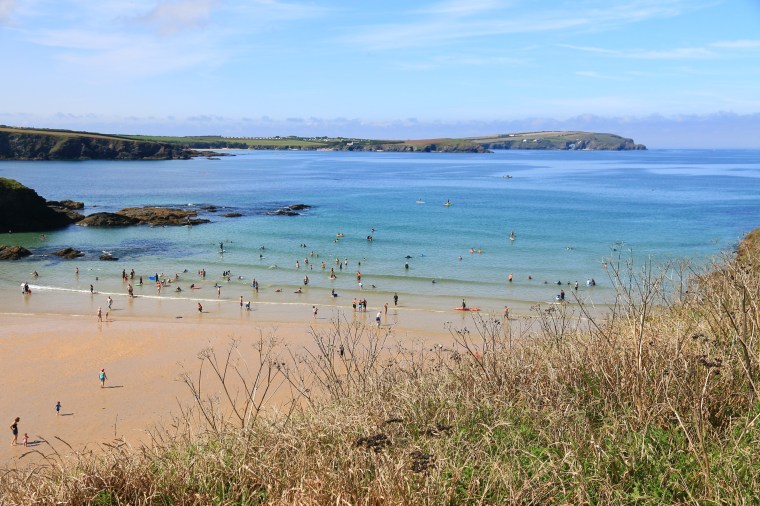
 Once again, I turn to the South West Coast Path for solace; a relatively easy walk northwards towards the headland at Stepper Point, taking in some archetypal Cornish scenery with only a smattering of rambling sightseers passing me by. There are rocky coves, clear seas, sandy inlets and windswept green fields to enjoy. A highlight is the chimney stack formation at Gunver Head, resembling an ancient tin mine frozen in time, weathered and beaten by the cruelty of the Atlantic. Climbing up and up and up over this rocky, eroded headland, surely a grumpy and grizzled Luke Skywalker is hiding out here somewhere?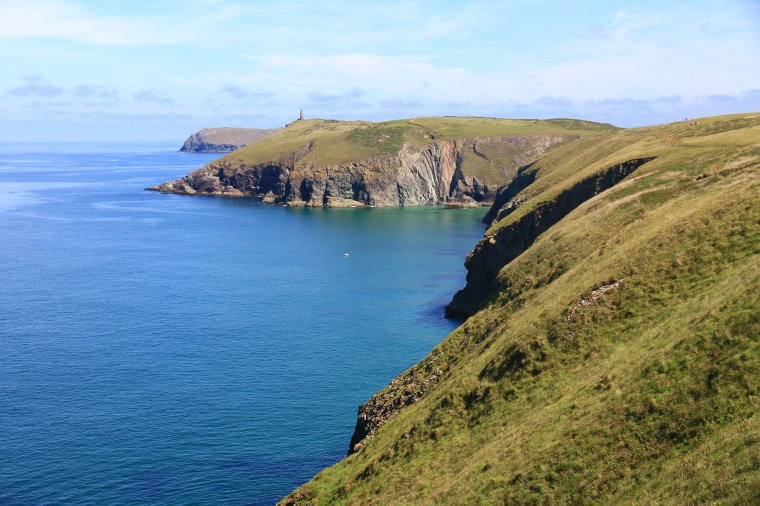


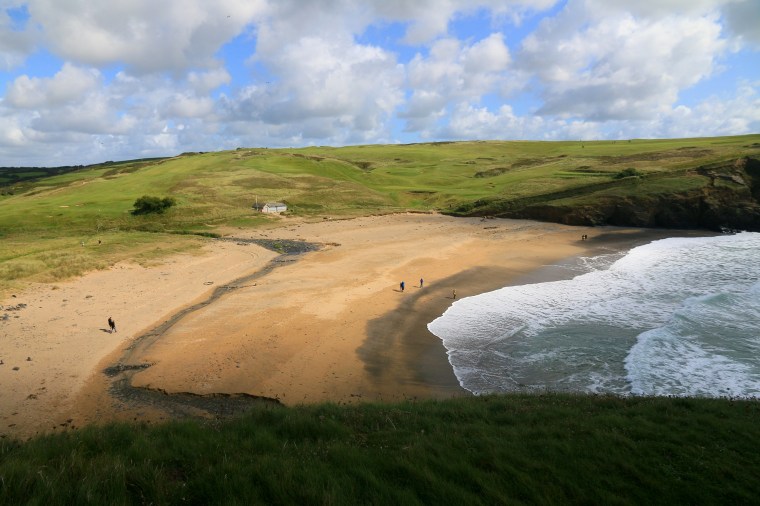

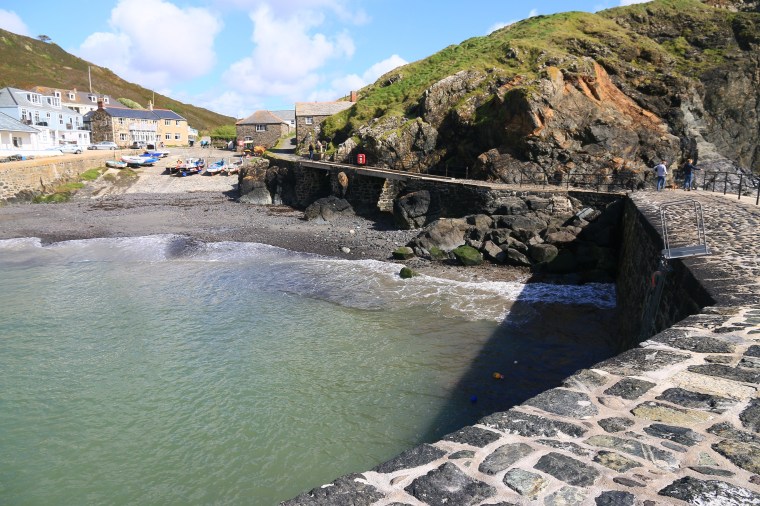

 More popular, and having risen in stocks dramatically in the last couple of years, is Kynance Cove. To the extent that at 3:30pm in the middle of the week in September the National Trust would like you to pay a bar of gold bullion and hand over your firstborn to park. I blame Poldark, stupid knob end. Of course, being locals (okay, sort of), we’re not having any of that, and parked a little way back along the cliff line at a place only the locals (okay, those who look at the satellite view of Google maps) know. Ha, eat your hat Poldark.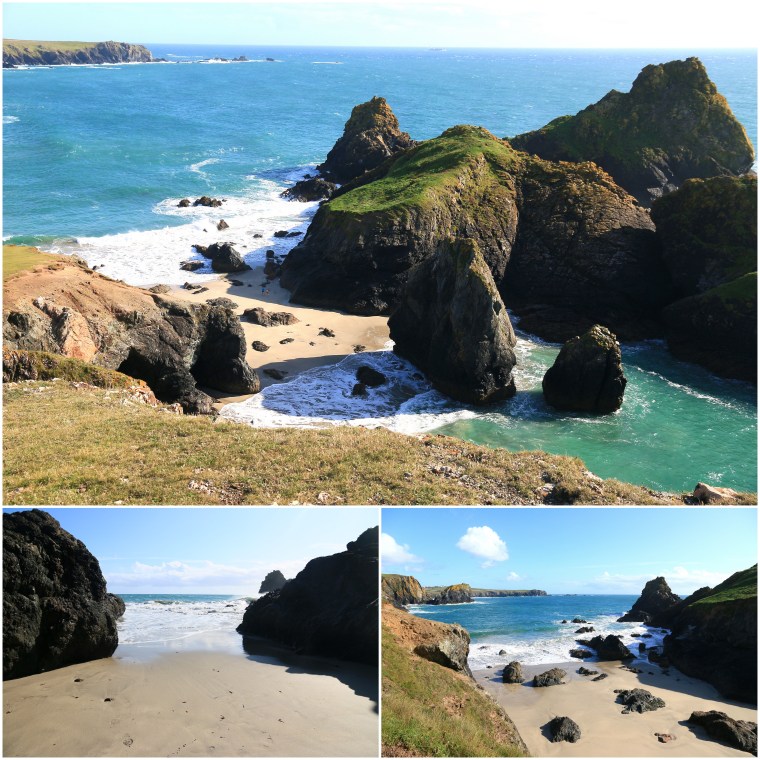
 gbpilgrim