It’s entirely natural to reminisce about holidays, to #tbt, to revel in the sights and sounds granted by being at leisure. And once home, to miss the adventures, the freedom, the thrill of discovering new places and experiencing a certain degree of randomness along the way. Casting my mind back to January – and a road trip return home – such rose-tinted sentiment is tangible, readily available to grasp.
There seems to be an added dimension of fond reminiscence surrounding this trip though. It was as if it took place in a different age, before the world got a real dumb deal; a time when things were not quite as barking mad, when there was still some value placed on logic and reason and fact, when the majestic pinnacles of the Warrumbungles were less likely to be obliterated in a twitterstorm. Thank goodness I got to see them – and more – on the return to Canberra…
Farewell pineapple paradise
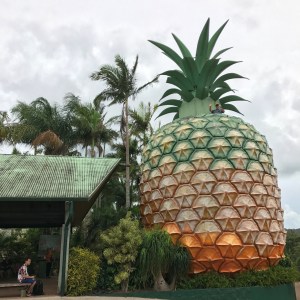 A couple of days on the Sunshine Coast had delivered only intermittent milky doses of sunshine, with homely patches of drizzle persisting throughout my final morning. An obvious light in the dark was the Big Pineapple on the outskirts of Nambour. A possible former plaything of an ex PM and Treasurer of Australia, I felt this was a perfect way to say goodbye to the Sunshine Coast and a suitably symbolic start of another long drive through the heart of Australia.
South of here, along the Steve Irwin Way, are the crikey strewth craggy lumps of the Glasshouse Mountains. I had hoped perhaps to go for a walk, but a dense shower and the constraints of time put a scupper on that. Instead a brief stop at a lookout to watch the cloud graze the jagged edges of rock, and a scurry to the car as it moved overhead and deposited its load was the order of the day.
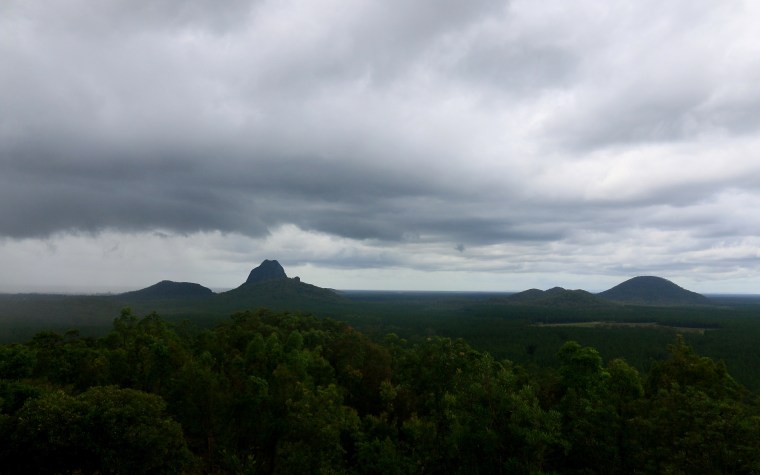
I decided to circumnavigate Brisbane, heading inland through Woodford, Kilcoy and loosely following the valley of the Brisbane River. Here, it was an insignificant trickle compared to the wide brown water beating a course through the city. At Esk the summer made a splendid return, providing the setting for an exemplary chicken sandwich-making lunch stop.
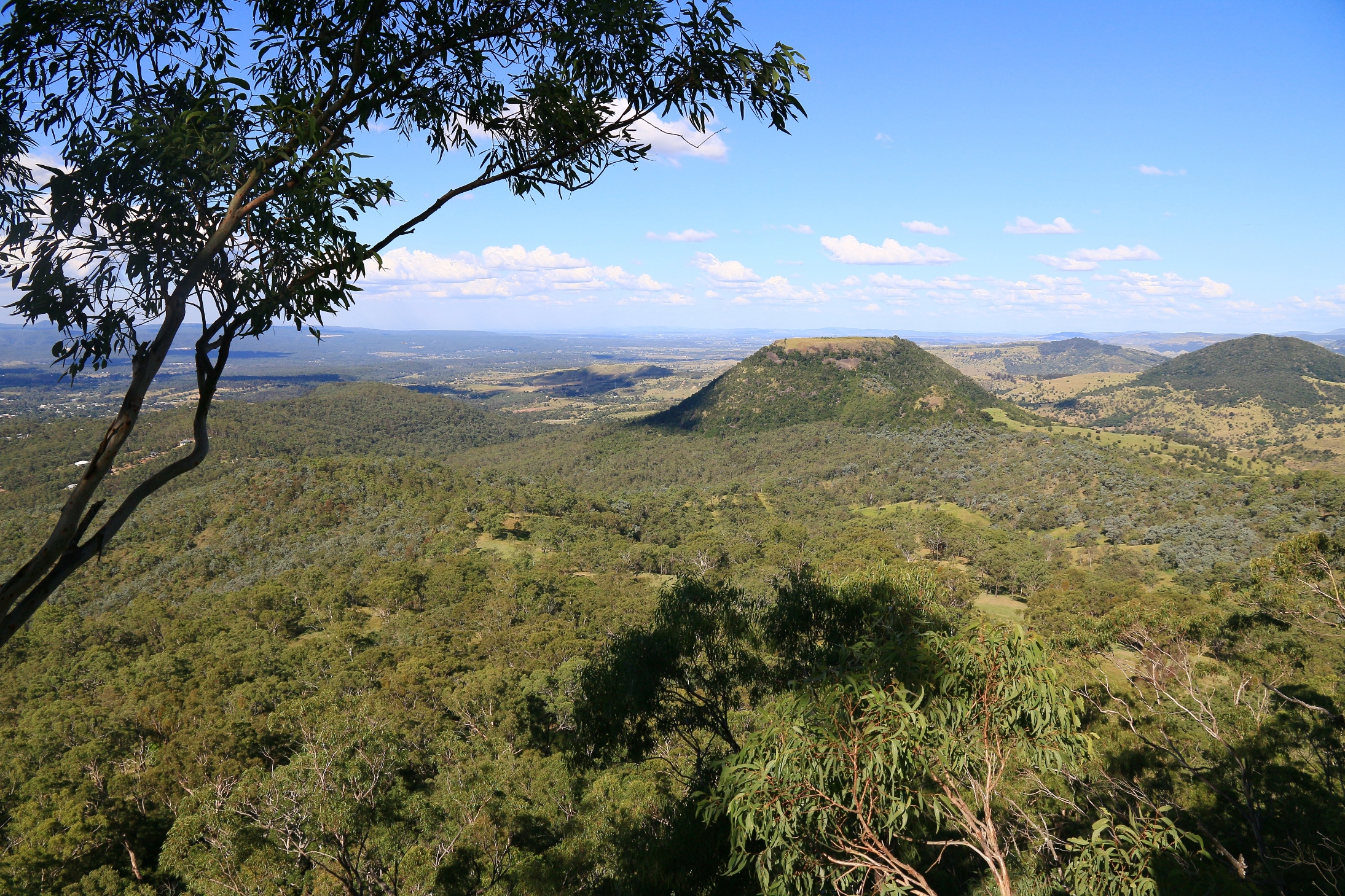
I was heading towards the New South Wales border and had entered a region promisingly labelled the Scenic Rim. Curious as to how much this was tourism marketing exaggeration, it didn’t take long to ascertain that, for once, this was not fake news. Distant views of extinct volcanic peaks became closer, the green and fertile landscape opening up as the car climbed the curving ribbon of highway to cross the divide. At its apex, Main Range National Park offered one final taste – on a brief jaunt – of the majestic rainforest that had been a significant feature of my trip.
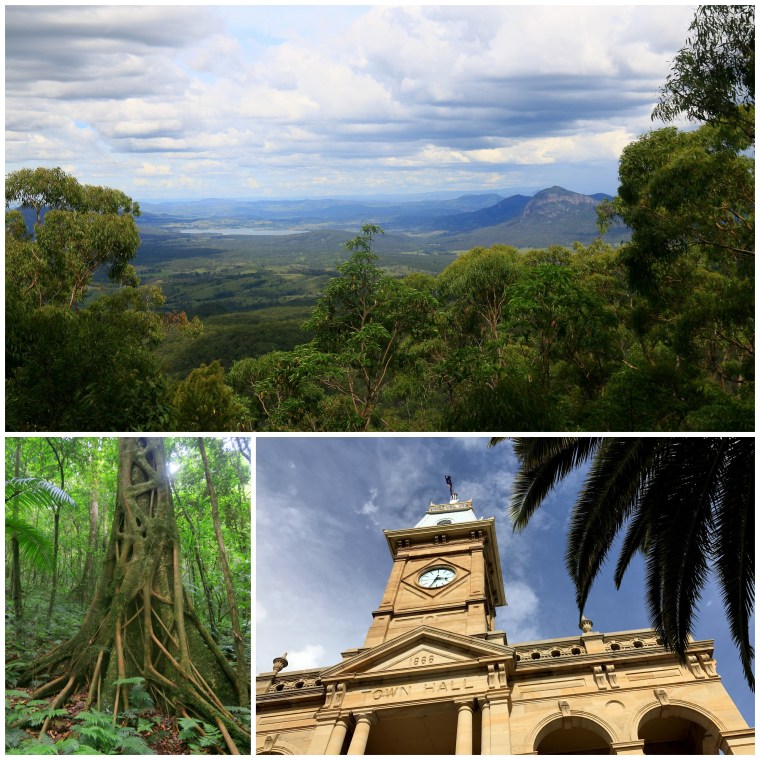
Beyond the rainforest, the road ambled down a valley through what appeared to be a rich vein of farmland. This continued to Warwick, which was a pleasant, well-heeled kind of place, suggesting the surrounding farmland does indeed possess significant richness. From here orchards and vineyards cluster around Stanthorpe, at the heart of the Granite Belt.
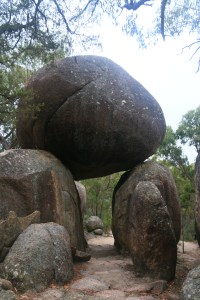 Pausing at Stanthorpe the rain had returned and I made use of mobile coverage to assess the likelihood of getting soaked while camping. It was touch and go but I opted to camp a little south in Girraween National Park. This was unlike a Queensland in any of the brochures…cool, cloudy, a little dank. Clusters of giant boulders dotted the landscape, sitting within short and stubby forest and forming natural terrain for pools of water to form.
Here, in Queensland, just a few miles from the state border was a striking replica of Namadgi National Park in the ACT. Weather and all. The granite boulders a symbol of home, the coolness a familiar relief. But – pinching myself – the reality was of another thousand clicks to go, and the impending ordeal of losing an hour tomorrow.
The road
 I was definitely the first person to leave the campground the next morning, cognisant of a long day ahead and jumping forward an hour into New South Wales. A lonely road led to Glen Innes, the only memory of which I have is of waiting ages for a coffee and then discovering, driving out of town, that they had decided to put sugar in it. This clouded my opinion of Glen Innes, and driving through the next town of Inverell, I wish I had stopped there instead.
I was back on little used country roads, cutting a smooth swathe through fields of wheat and passing over desolate ranges coated in eucalyptus. I was making a surge to Narrabri, hoping to get there as quickly as possible for lunch. But lunch came quite late (and, inevitably, in KFC), after a few diversions slowed my progress.
Crossing a bridge into Myall Creek, the name registered in my head for some reason. Maybe it was in A Country Practice or had a Big Thing or was the birthplace of some famous Aussie cricketer who sent English wickets cartwheeling towards the Nursery End? If only. Sadly, heartbreakingly, it was the scene of slaughter, as white invaders massacred 28 Aboriginal men, women and children who were camping peacefully on the Myall Creek cattle station in 1838. Even more sadly, grotesquely, such occurrences were not rare. What distinguished this was that for the first time – the only time – white men were arrested, charged, and hanged for the murder of Aborigines.
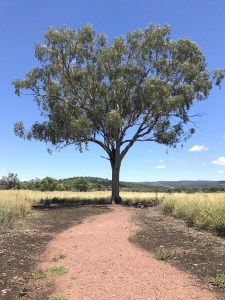 Today, it is a quiet place of solitude and reflection. The chirping of birdsong persists despite searing heat and baked earth. A simple, memorial walk exists, a swirling red path providing points of information and remembrance. There is talk of healing, of coming together of ancestors, of deep remorse and some kind of hope. A hope that, eventually, love does trump hate.
Myall Creek seems a long way from anywhere. The nearest town of Bingara has a sleepy charm; it’s the kind of place I could be tempted to sup an ice cold schooner in the pub, surely the beating heart of the town. But I head on, closer to the incredible peaks and volcanic plugs of Mount Kaputar National Park. I have a fondness for this spot, which effectively heralded the happy start of an epic trip in 2013. Back then it became a surprisingly good replacement for the Warrumbungles, which had been decimated by bushfire. But now, four years later, I could finally cruise past Mount Kaputar and see how much nature had recovered.
In the bungles, the mighty Warrumbungles
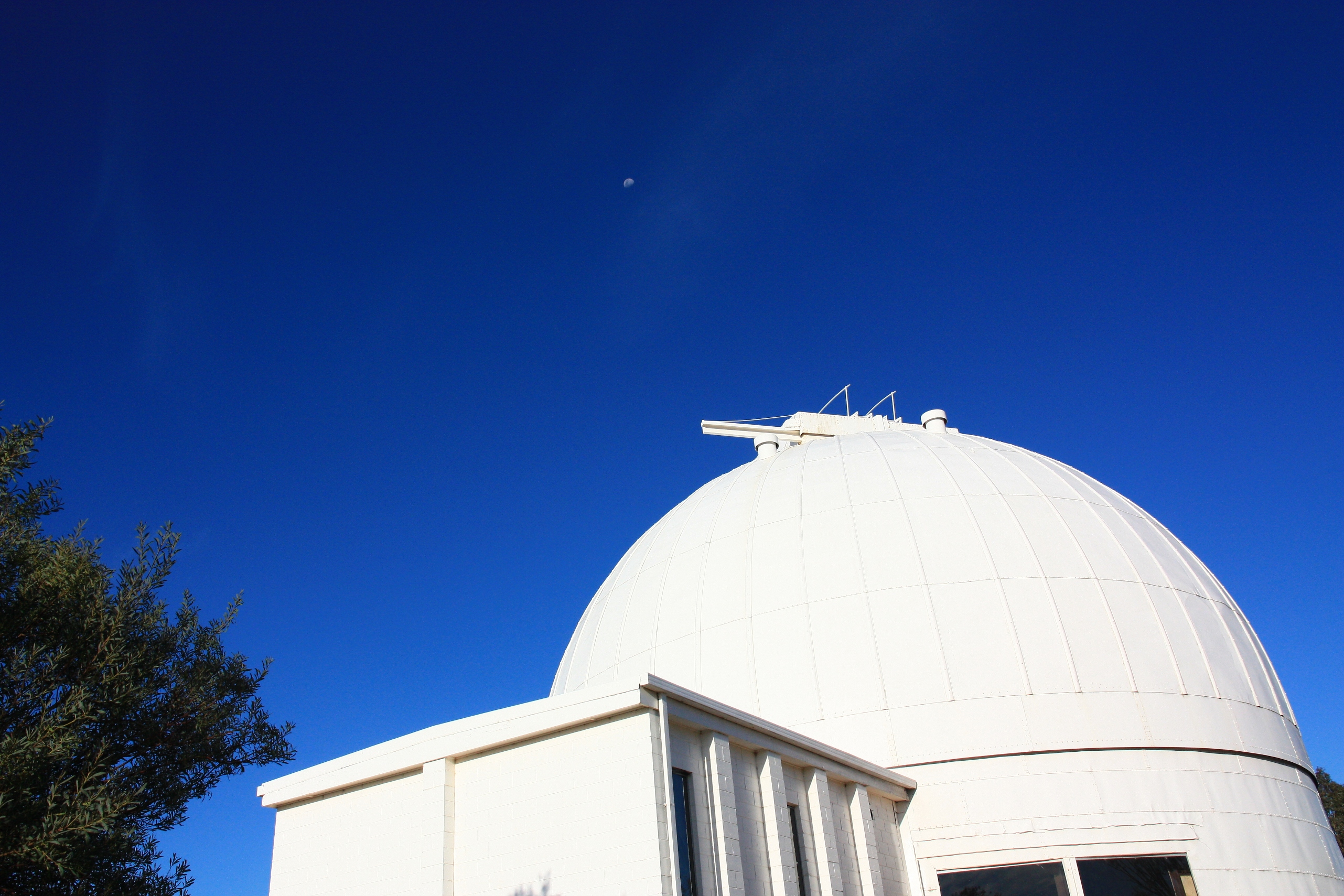
 Entering Warrumbungle National Park, it was pretty clear that a fire had ravaged the area; blackened trunks of trees lined the steep slopes and the road produced a patchy, lumpy ride where the tarmac had no doubt melted. Up one of the hills, some of the buildings of Siding Spring Observatory had suffered damage but the telescopes survived. Well, thank goodness for that…we can still scope out future worlds to inhabit when Fake Lord Emperor Pussy Grabber destroys this one.
But this land is a resilient land. Just under four years and further into the heart of the Warrumbungles, the green explosion of new growth is abundant. I was looking forward to exploring it more in the morning. For now, time to make my bed in the delightful surrounds of Camp Blackman and enjoy the added attraction of running water and hot showers.

I was the first person up the next morning again. This was deliberate and well worth it, for I was embarking on a pretty long walk and it would be hot. Returning to the car park towards the end of that walk I passed numerous people coming the other way. Of course I said hello, g’day, howzitgahn but my mind was saying things like good luck you fools, shouldn’t have been so lazy this morning should ya.
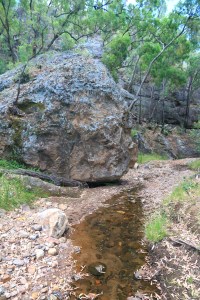 With benefit of doubt perhaps they were not doing the entire Breadknife and Grand High Tops walk. Maybe they were just doing the first part, which was gentle and followed the course of a mostly dry creek bed. This would be a rather fine walk in itself, for it is such an elemental, earthy landscape in which to linger. I wasn’t expecting such enchantment here, such homage to the rugged environments further inland, closer to the desert. There was a bit of Flinders Ranges crossed with The Grampians about this place. Two of my favourite ever spots blended into one.

 The other benefit of starting early was to witness the early rays of sun graze the hilltops and glow through the tree trunks and branches of the bush. I think the angle of an early sun also helped to illuminate some of the spider webs formed between shrubs on either side of the path, requiring a little stooping and contortion to avoid. Being a pioneer has its downsides and I guess if I was later in the day many of these webs would have been smashed by hapless walkers that had come before.
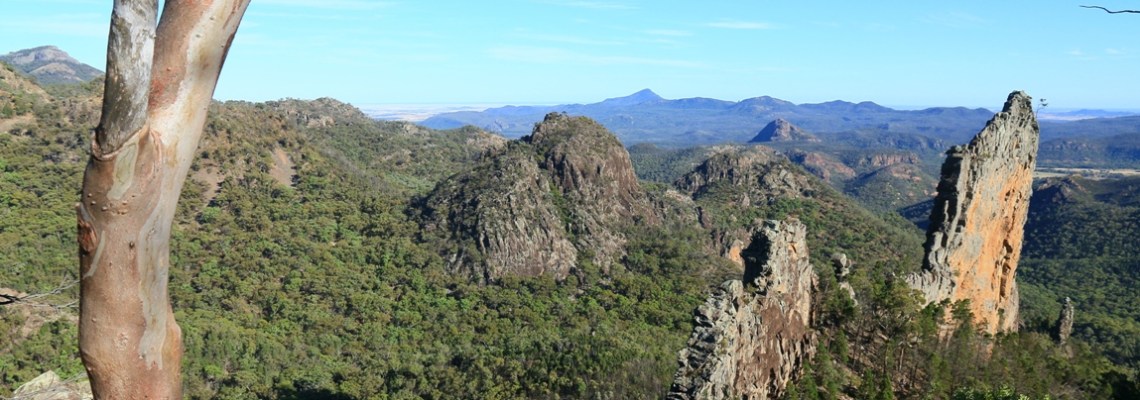
 Inevitably after a couple of kilometres the track climbed, with a steep but nicely constructed path giving way to endless metal steps. This was taking me up towards the Breadknife, so named because of its sheer sided slopes and thin pointed summit thrust into the sky like a scene from Crocodile Dundee in which Mick shows some New York Hoodlum a proper knife. Up close, you couldn’t really see it, but, eventually, when the trees fade away and the rocky floor of the Grand High Tops themselves are underfoot, the knife is there, just one of many rocky crags and rounded lumps rising up from an incredible sea of green.

“Call that a knife?” was the current expression that was going through my head as I sat and ate some cold bacon sandwiches premade from the night before. I didn’t say this out loud, because two other hikers soon joined me in admiring the view. Distant to the west, beyond the sweep of green was a flat, yellow expanse that would extend to – well – Perth? Behind, further rocky mounds and eucalypt forest reached to the horizon; a horizon I would be heading towards later in the day.

But first, descent. It wasn’t too bad, apart from a few larger rocky steps somewhat deformed and eroded into that gravelly stuff that is treacherous underfoot. Luckily I stayed upright, apart from the numerous times ducking under spider webs again, some of them occupied by things which are probably perfectly fine but Australian and therefore potentially deadly. Such was the profusion of webs in the shadow of the Breadknife, I grabbed a stick and waved it up and down in front of me. For a moment I felt like Harry Potter, but this particular wand had a success rate of something like 25%.
The largest, ugliest, potentially deadliest spider sat low over the path, guarding the final section of the loop back to the metal steps. I started to take a photo of it and it looked at me as if it didn’t really like being in pictures. So I stopped. Wary, I assessed any alternative routes but to the left of me, a scrubby, rocky drop and to the right a cliff face. There was nothing for it but to crouch as low as possible, scramble quickly underneath and avoid looking up.
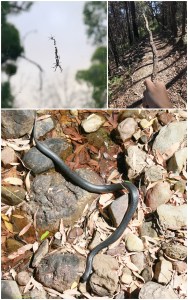 Further down the trail I encountered a young lady throwing rocks at another occupied web. It was one I must have ducked under a couple of hours earlier. She looked terrified and said as much. In trying to comfort and reassure, I told her it was probably the last of them and moved promptly on. She scarpered under the web to continue her walk while I went to look at a deadly snake. Pausing at a little wooden bridge over the dry creek, a beautiful Red-bellied black meandered along the rocks beneath. It was quite mesmerising, until it disappeared out of sight, when it became a snake that I couldn’t see and therefore significantly less appealing.
Come to Warrumbungle National Park, to experience an epic, timeless Australian landscape and to appreciate its friendly animals. Actually, do come. I loved this place more than anywhere else on my trip. Good campgrounds, great walks, beautiful country. And only six solid hours from Canberra…so I may return!
Old country for no men
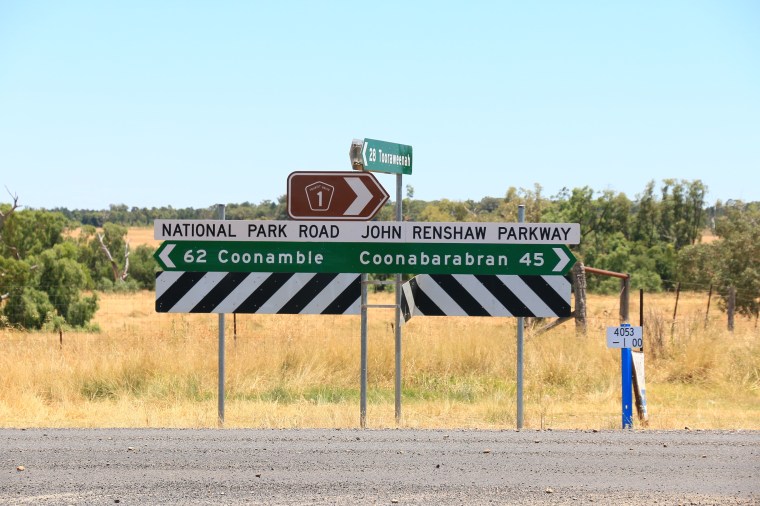
 A couple of hours and I was back in more familiar country. Dubbo is one of my token regional research towns and I had a sense of déjà vu checking into a motel with a plastic cow on a pole out front. But still, a motel, with refurbished rooms, air-conditioning and a king-sized bed. After my morning adventures, what better way to appreciate this scenario than nap.
I was still a little weary as the evening emerged, so randomly stumbled upon the comfort and cooling refuge of the local cinema. Star Wars and a natural blue raspberry Slush Puppie in a cinema in Dubbo. It was like it was 1985 again.
 The next morning, after obligatory buffet breakfast, I set off on the final stretch of road home. It was a day in which there was little of note. As a commemoration of all things road trip I made a spontaneous stop at a place called Peak Hill. Here I went on a little walk along the perimeter of a big hole in the ground, previously mined for gold. While gold sounds glamorous, it was a hot and dusty walk with countless flies trying to go up my nose and the pervasive smell of urine in the air.
 South of here, Parkes had a more pleasant aroma, decent coffee, and was positively bustling with the prospect of Elvis coming to town. Or thousands of Elvises (or Elvi?) all dressed up for the annual festival, starting in a few days. If ever you needed an encapsulation of randomness this was it. Seeking quirky Elvis sights, many shops were filled with posters for upcoming Elvis impersonation gigs, and a couple of murals were dotted about the town. One, I was informed by a very enthusiastic lady, lit up at night and projected videos and played songs out loud and everything. I should come back tonight she said. I got my coffee and moved on.
From here, more familiar names like Canowindra, Cowra and Boorowa passed by. All surrounded by a gentle landscape of golden wheat fields and occasional strips of bushland. It was a placid, smooth, easy ride where the only real highlight was the prospect of falling asleep at the wheel and creating a massive fireball visible for miles around. A frozen coke kept me going to join the Hume Highway and bypass Yass. The Hume Highway! Yass! This is practically home.
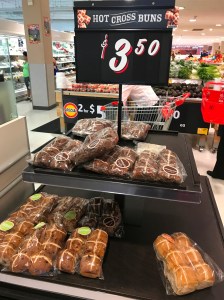 Of the 4,232 kilometres covered on this trip to Queensland and back there were around 50 more to go. Past Poacher’s Pantry where a pre-Christmas lunch lingered in the memory; across the state border and back into capital territory; a roundabout and empty dual carriageway through bush towards home. The city of Canberra is here somewhere, but I could still be out on the open road, in the middle of nowhere. Suburbia and never-ending apartment construction does finally emerge. There are supermarkets in which to replenish supplies, and, crucially, stock up on hot cross buns for Easter.
It is January 9th and with a cup of tea and hot cross bun I am relaxing at home. It is always nice to be home for sure. The ready availability of a bed and shower are not to be underestimated. However, there is that slight disappointment in the air of a good trip finished. With summer still in full swing and the prospect of extensive work minimal, there are still days ahead which could be holiday-like. But they will be comparatively static, comfortable, predictable. Well, at least until January 20th 2017.
——————-
If you really enjoyed this endless waffle or have more time to kill while you should be working or doing something far more productive, check out the other two parts of my Christmas and New Year trilogy. Like Star Wars, only less something something something dark side.
Part 1: Back on the road: Canberra-Mudgee-Scone-Tamworth-Armidale-Grafton-Lismore
Part 2: Sweaty New Year: Ballina-Nerang-Brisbane-Stradbroke Island-Sunshine Coast

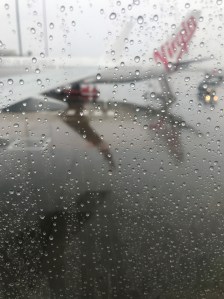 Landing at Tullamarine, Melbourne was grey and damp. It’s June, it’s Melbourne. I was about as surprised as I would be if the UK Conservative Party decided to dump everyone in the shit rather than get on with governing twice in the space of a year. The wind was strong, my crappy hire car was far from stable, but at least I was heading away from the clouds on the drive north to Bendigo.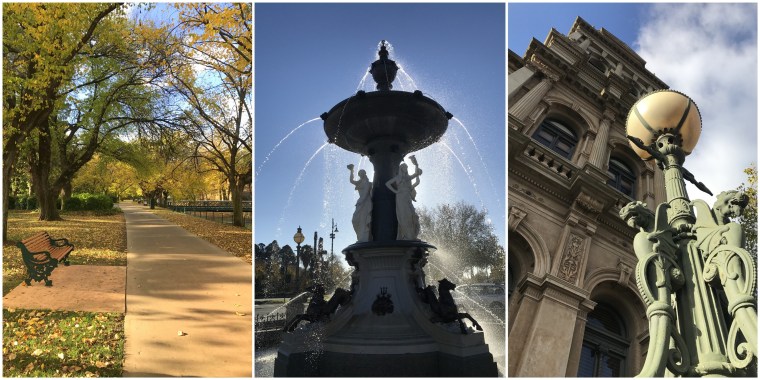


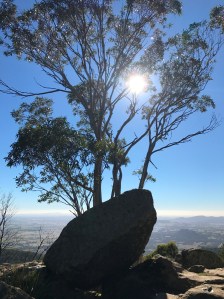 Anyway, such have been my ramblings in Victoria over the years I wasn’t actually sure if I had been to the top of Mount Macedon before. It turns out that I hadn’t, unless I really don’t remember the upward crawl into roads lined with ever more spindly and pathetic-looking gum trees, the view of expansive plains below and a giant golden cross constructed to appease the wrath of the almighty.
 It was chilly up here, but I knew I was on my way back to Canberra so it wasn’t going to get any better. And for the second time in succession, my dawdling was beginning to make it touch and go that I would make my flight. Maybe I’ll learn, or maybe I’ll just nudge a little over the speed limit and swear at every idiot who dares to pull out at a roundabout and get in my way. It seems to work, and so this gold rush came to a successful frenetic end, antidote to the sedate charm of Victorian Victoria.
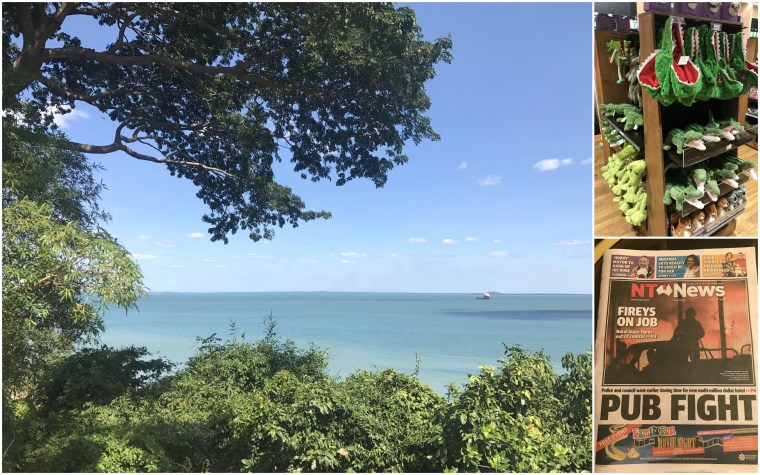
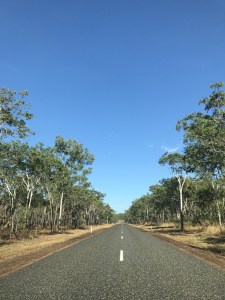 Having come so far, I was determined to explore beyond Darwin during The Dry, so tacked on an extra night to squeeze in what most people would probably do over two or three days. An early start on Saturday and speed limits of 130km/h help, and I found myself entering Litchfield National Park before ten; just in front of the procession of tour buses (invariably named things like Crocco Tours, The Top End Crocosaurus, NT Outback Crocclebus etc etc) entering the parking area of Florence Falls.


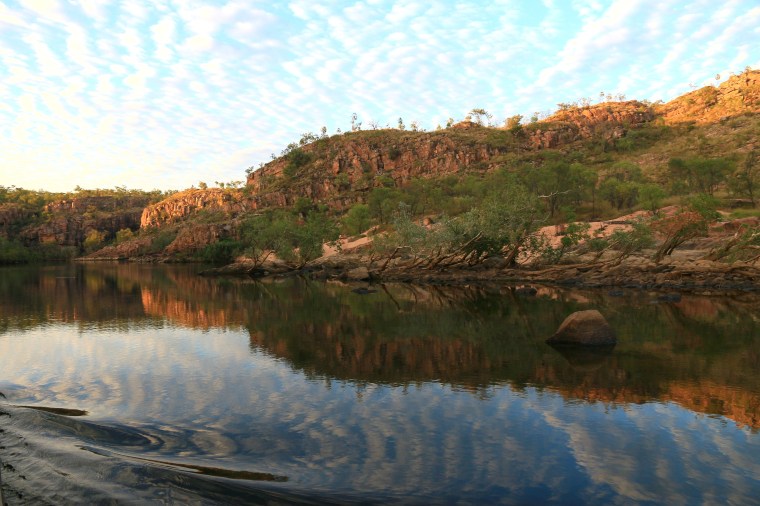


 Christmas Day came and went with little fuss; a suitable blend of English traditions (think paper hats, Christmas pudding and rubbish TV) and Australian holiday (cue swimming pools, prawns and rubbish TV). And the next day like millions across both hemispheres, I hit the road to expand my horizons, meet up with others, and curse at the appalling driving ubiquitous across the highways and byways of the land.
 Setting out, the tones of Jim Maxwell narrating the Boxing Day test helped me along familiar ground to Goulburn and then round the back of the Blue Mountains via Taralga and Oberon. I’m not quite sure when the familiar becomes, well, exotic, but I had never been to Hartley before and I wasn’t expecting to see emus along the roadside. Attempting to quell this confronting change, I popped in for some afternoon tea in the cutesy national trust cafe. Devonshire scones with clearly non-Devonshire cream. Sigh. When will they learn?!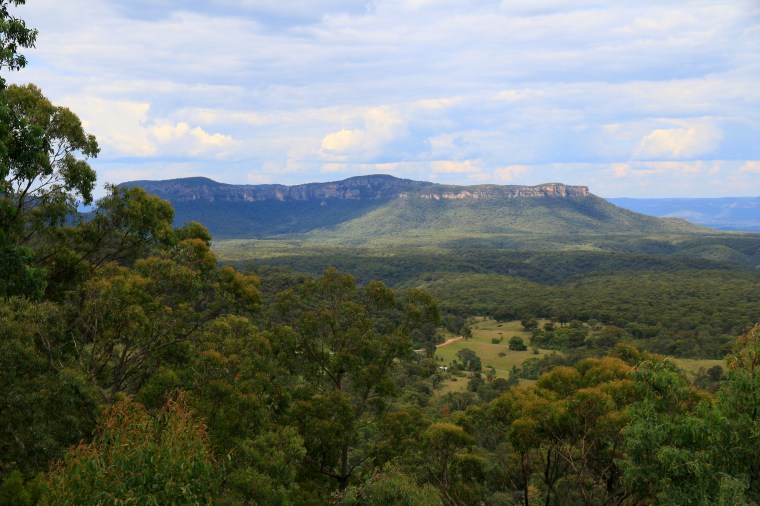
 With the day drawing to a conclusion I had to make haste to my first camp spot, passing through a seemingly deserted Mudgee, and hitting the gravel roads into Goulburn River National Park. Here I surprised myself at how efficiently I made camp, setting up gear which had not seen the light of day for a few years. Yes, the swag was back and loving its natural environment.
 With all this travel and excitement it was easy to forget that it was Christmas time and today was Boxing Day. It certainly didn’t feel like a typical Boxing Day, but I paid a little homage to tradition by boiling up and coarsely mashing some potatoes and carrot, serving it with some ham, and adding a few pickled onions and a pile of Branston. This camp stove and esky creation was a perfect amalgamation of English traditions and Australian summer holiday, a supremely satisfying garnish to this first day.
 But obviously I stop and detour and make inevitable visits to big things like a giant golden guitar in Tamworth. It’s my third time here but I still cannot resist the allure of such a curious, iconic Australian landmark. The car and I refuel, we park up and make lunch of ham sandwiches and crisps. And, comfortably gathering that road trip rhythm, we set off once more, another hundred clicks up the road to Armidale.
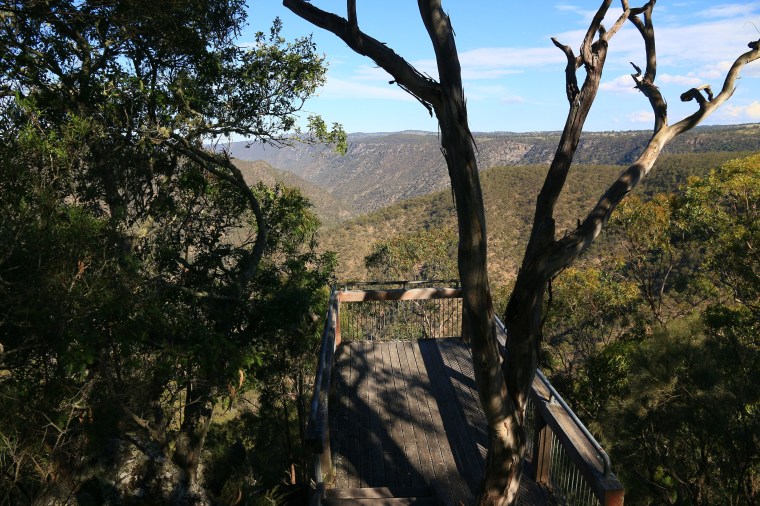
 Along the Waterfall Way I could make a mid-morning stop at Ebor Falls, a site I had previously encountered boasting a couple of quite magnificent waterfalls. Today, they were an inferior imitation of what I remembered, reduced to a trickle and hidden in the shadows from the morning sun. But as road stop rest stops go, there was plenty to savour: a gentle shady walk along the valley rim, pockets of wildflowers and patches of birdlife, the smell of the bush. All under the deepest blue skies.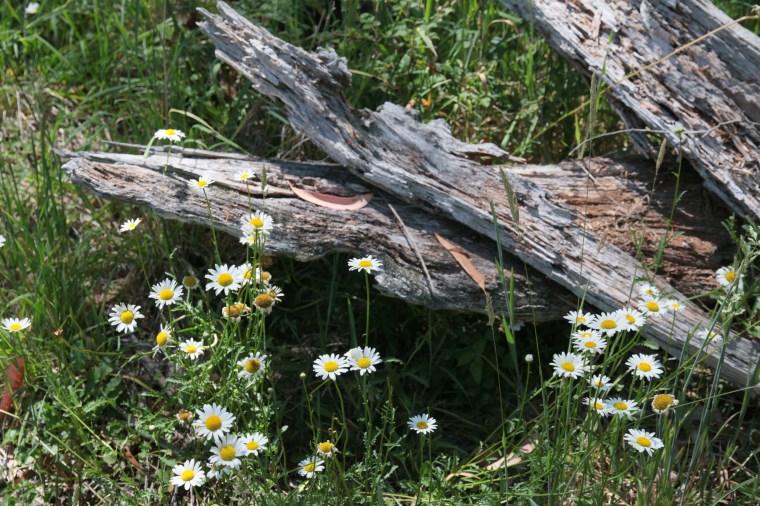
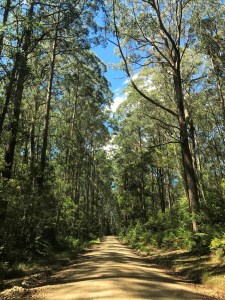 From KFC in Grafton, the car headed through patches of woodland and along the picturesque valley of the Mann River. Rugged ranges loomed, neared and eventually required climbing; like so many roads from the coast to the inland, hairpins and lookouts and massive tree ferns clinging to the eastern escarpment. Atop all this a dirt road led off the highway and plunged into the rainforest of Washpool National Park.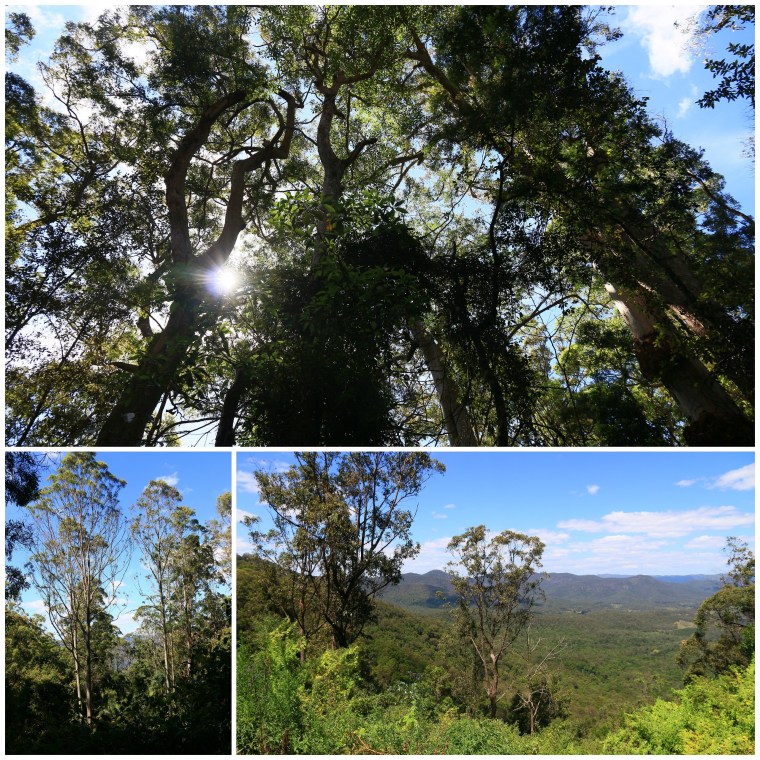
 I felt as though I had earned a beer and decided to take one with me on a brief amble to a lookout near the park entrance. This is the benefit of having everything in the car and, um, the beer would provide hydration if I ended up getting lost or bitten by a snake or something, right? Thankfully the lookout was a mere stroll and the satisfaction of that coldish beer on that bench on those rocks in that peace with that view under early evening skies without the prospect of getting lost and having snakes for company was something to cherish.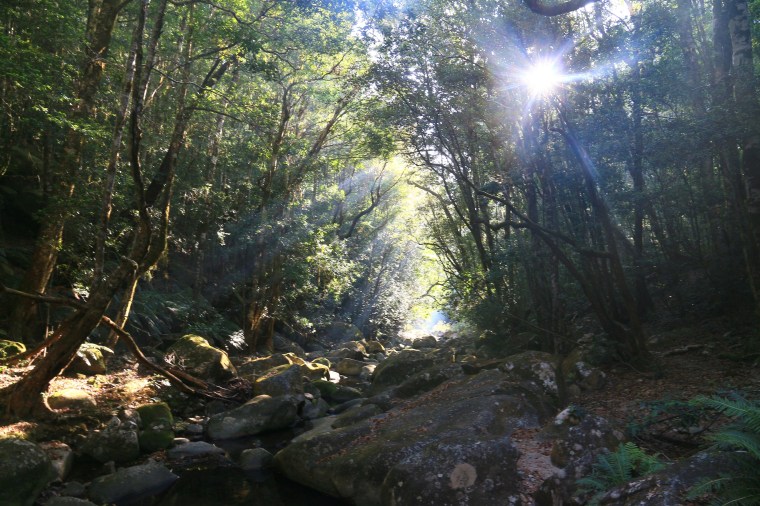
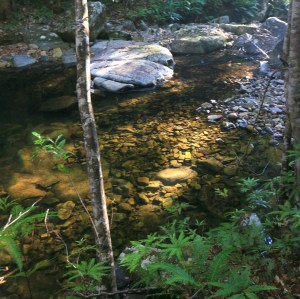 Before breakfast, before packing up, before moving on once more, I could hatch out of the swag and wake up with the world around me. Virtually from my bed a small trail followed the pristine waters of the creek and looped back through a large stand of Coachwood. The sun gradually made its appearance, shafts of light angling through the trees and shimmering through the ferns onto the water. The creek was clear and cool, and after three nights of camping without a shower, it was tempting to bathe. But I really didn’t want to ruin its purity; my mind turned to the allure of the ocean instead.
 Without going into lurid detail I did wash each day thanks to boiling water and the use of a bucket, an art mastered in the trip of 2013 with Jill. Simultaneously I could make a cuppa, grill some toast and prepare my morning sink. Sure, it wasn’t exactly luxurious or even two star, but it allowed me some confidence to mingle a little with civilisation each day and order a morning coffee, buy petrol and ice. Which is exactly what I did in Grafton after descending from the hills that morning.
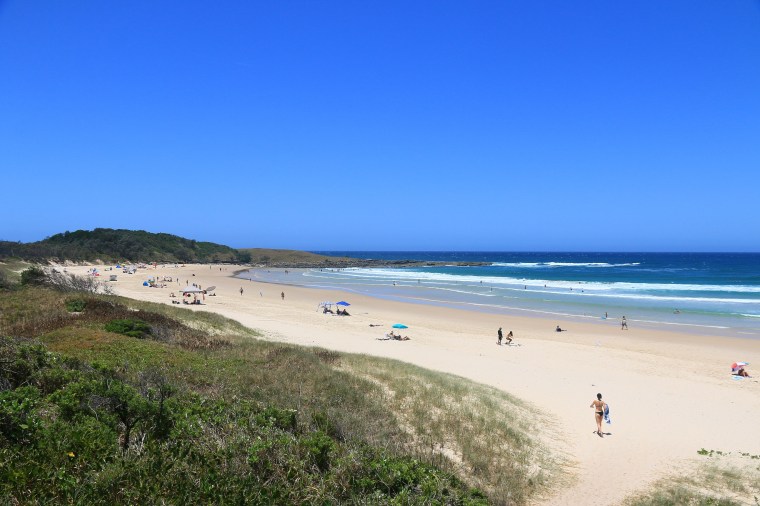
 I encountered my first inexplicable traffic jam north of Yamba and speculated that this was being replicated up and down the highway. Still, I only had twenty clicks at a snail’s pace before I could turn off and head to Lismore. Lismore was to herald my proper return to civilisation, something which some people would find surprising in relation to Lismore. But I was to sleep in a proper bed and have a proper shower here, both of which I was quick to enjoy upon arrival. Refreshed and walking Lismore’s unfathomably charming streets, I felt part of normal society again.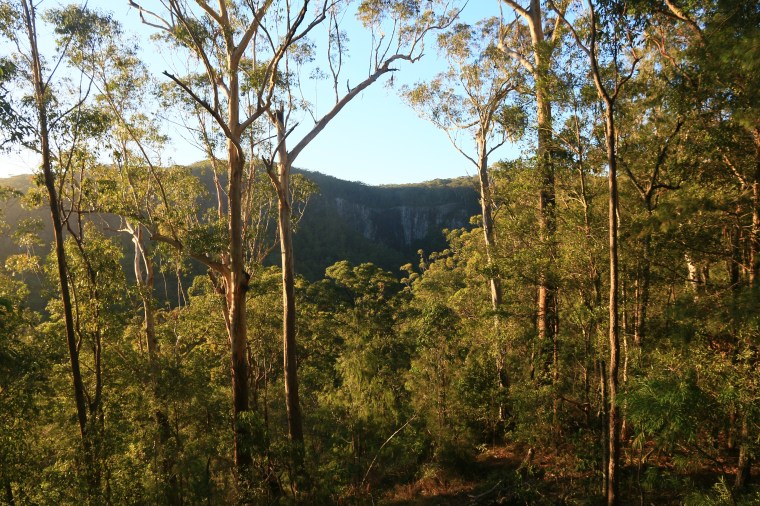

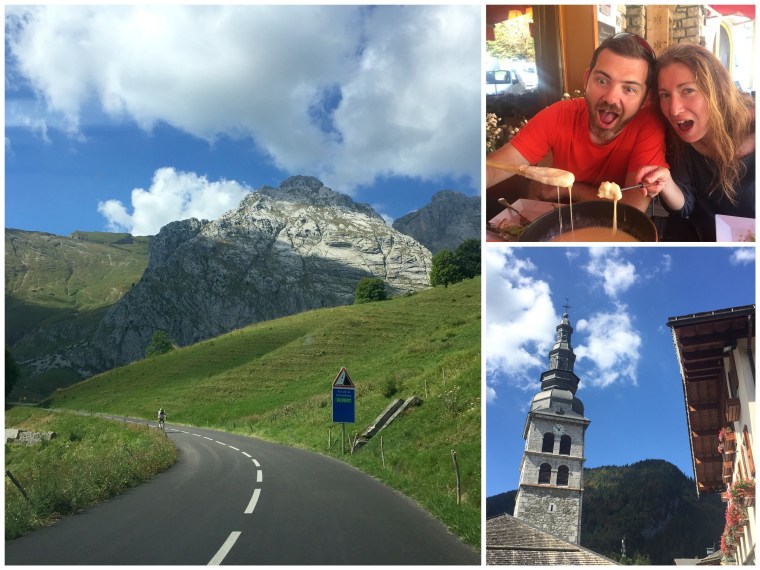


 And what a lovely tour it was, revisiting some vaguely familiar territory but under glorious skies instead of disappointing murk. First stop was Carrefour, which was a little less lovely, but suitably stocked with bread and meats and cheese, staples that can be lumped together and taken up to the top of a hill in scenes reminiscent of a Peppa Pig episode in which they have a thoroughly middle class picnic.


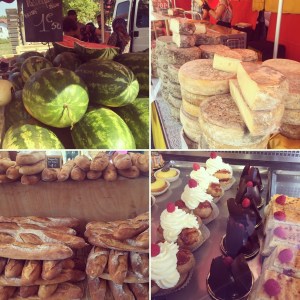 And so there were walks to parks and more picnics, bouncy castles, lego blocks, hearty lunches, tickle monsters, bustling markets, outdoor petanque, selfies, tired parents and doting grandparents. Oh, and a bit of a premature gateaux anniversaire for a certain someone. It was the final family flourish before saying, again, au revoir. Goodbye. Leave.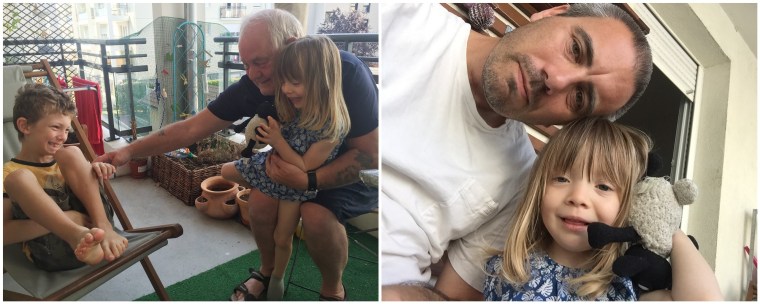
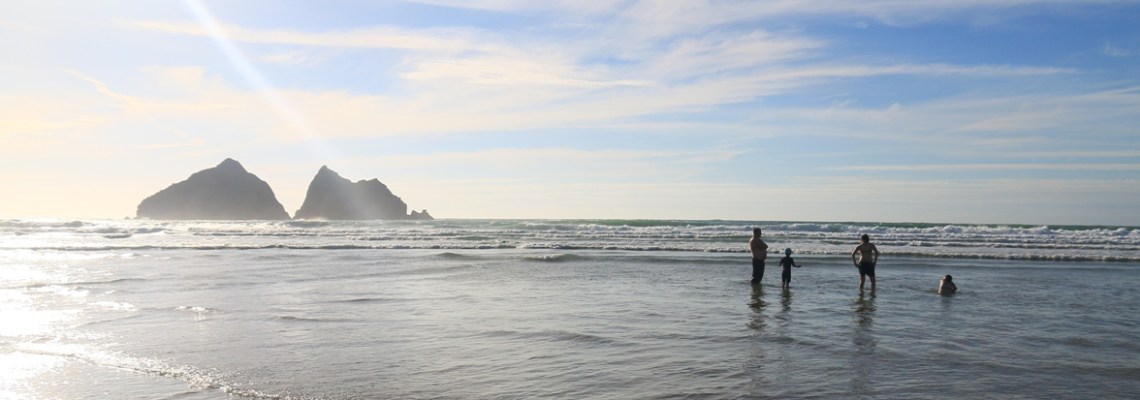
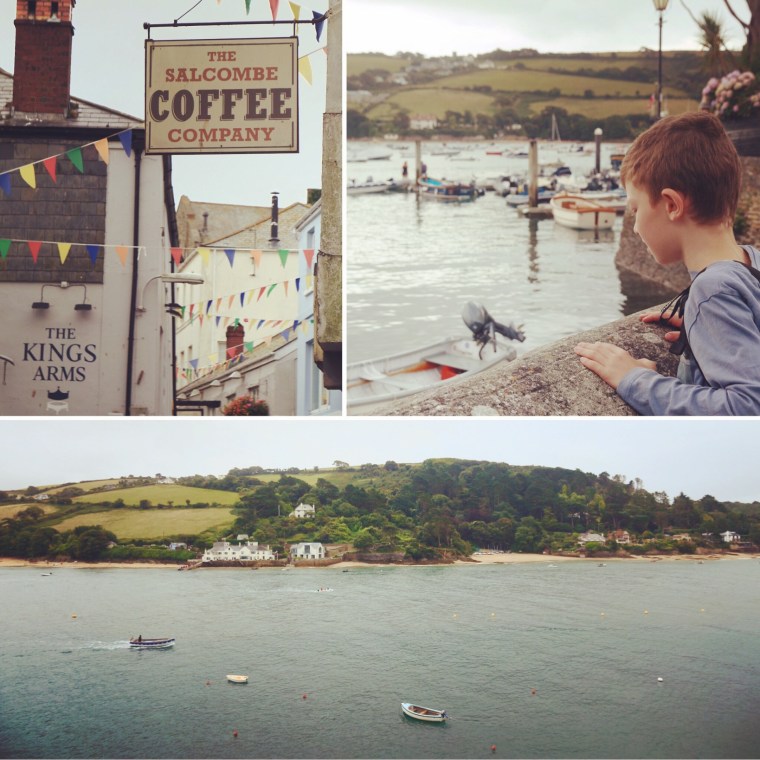
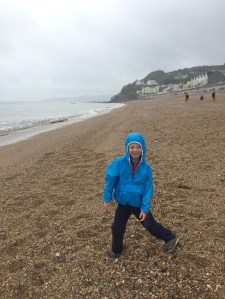 Just a stone’s throw from here – but via tortuously scenic roads hemmed in by a picture postcard of thatched cottages – sit the pebbles of Slapton Sands. Even on dismal days the pebbles lend vibrancy to the air, clarity to the water, and a chance to display consistent inadequacy at skimming. The alternative option of tossing increasingly giant rocks into the sea proved far more accessible and entertaining.
 As the afternoon evolved, summer came back with a bang. Perfect golfing weather and opportunity to get a little burnt. I never get burnt in Australia, only soggy little Britain, quite probably because I never expect to be on the receiving end of such ultraviolet aggression. The golf wasn’t exactly red hot, but we coped around the course sculpted in such a splendid location.
 Having abandoned a bunch of wildlings on the beach, it was late afternoon by time my brother and I rejoined the rest of the family, who didn’t seem to miss us one bit. And why would they, frolicking in the sun, attacking one another with water, jumping over surf. It was quite wonderful to see, together in perfect harmony, in amazing weather, in an attractive place. What else do you need? Fish and chips maybe? Okay.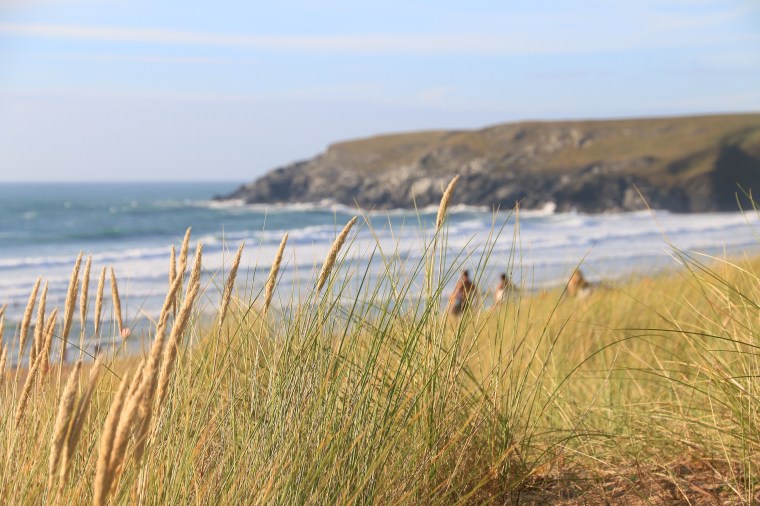
 The criminal thing – though actually fortuitous for us locals in the know – are the queues of people backing out of Ye Olde Cornish Bakehouse or West Cornwall Pasty Ltd or whatever they are called. Chain stores in mediocrity. Delivering nourishment to hordes of people trying to find a few metres on the grainy beach. This is why Looe on a hot August afternoon is not for me. But I’d go there for Sarah.
 In a final hit and miss cloud affair in which there were more misses than hits we returned to the North Cornwall coast the next day. The aim was a last hoped-for paddle in water and delicious cream tea, something that could please everybody. The setting on the River Camel at Daymer Bay was agreeable enough, and could have been quickly heightened with a spot of sun. But it was under a mackerel sky that a few of us tiptoed into the water and clambered over rock pools.
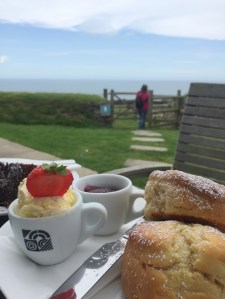 Because I was actually really enjoying driving around blind bends and along single track lanes I decided we could seek out a cream tea further up the coast near Boscastle. For once eschewing the village, we managed to get a parking spot at

 Who am I kidding? It was a sublimely gorgeous blue sky day after all and, following a quick embrace of various family members, I scarpered for the moors, reuniting with narrow lanes, wayward sheep, dry stone walls and a Willy’s ice cream. And on the subject of willies…such was my frantic rush to climb Sheepstor I ripped the trousers I had on while straddling a ditch, leaving me delightfully well ventilated if a little wary of human encounters. The views – from my end at least – were majestic.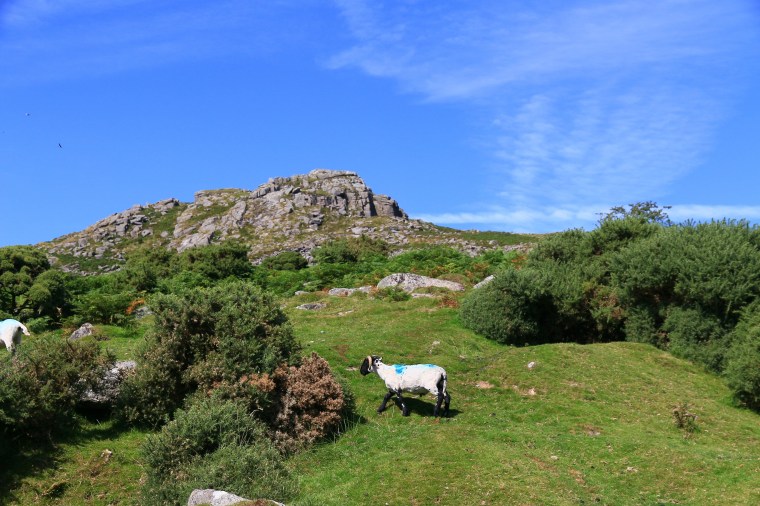
 Ripping trousers so early on are not a good portent for the remainder of a holiday which has historically involved a deluge of high fat dairy products, intense sugar, and hearty stodge. The fact that I was here not so long ago for an awfully long time (acquiring at least one stone in the process), failed to have little impact on my behaviour. Pasty done, cream tea done, massive barbecue meat fest done and 48 hours not yet passed.
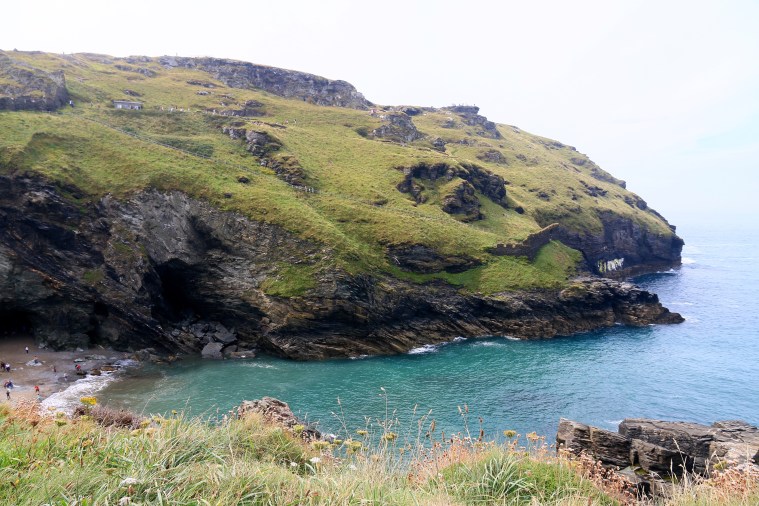
 Unfortunately it was all a little murky in Boscastle, but at least the descent to the harbour took us out of the clouds and into a flower filled, tourist peppered, boat bobbing idyll. From which we promptly walked up and up (a seemingly recurrent theme all day) along the coast path to the western headland. Here, the clouds skimmed our heads and offered a little pleasant drizzle, obscuring the coastline and patchwork hills inland. While a weather feature atypical of Manitoba, it could only divert for a few minutes at best, and half a cream tea back at sea level felt like a more agreeable option.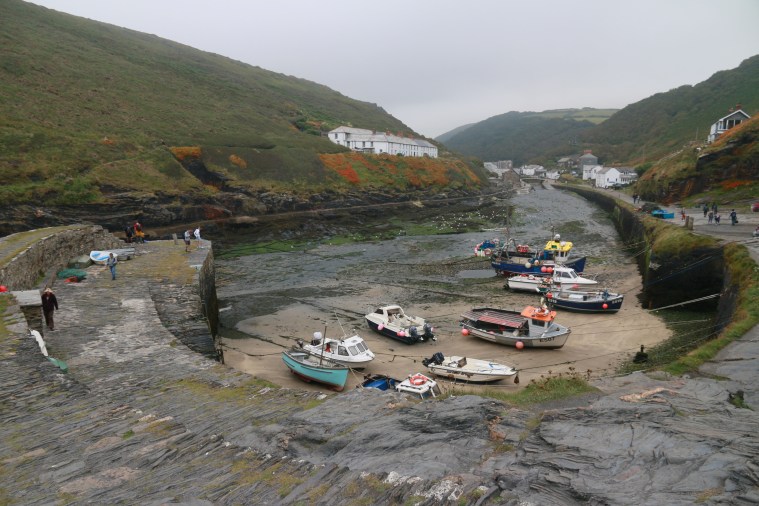


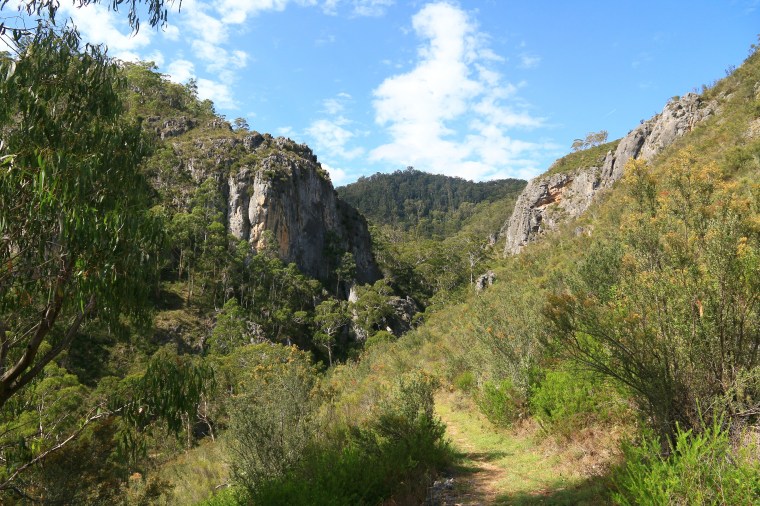
 As the fading gentrification of the Southern Highlands descends toward the sea you can be in no doubt that this is Australia. Indeed, an Australia as it was before anyone, even its first peoples, decided to venture over by boat. The plateau abruptly falls away into a dense system of deep valleys and gorges. Massive walls of sandstone plummet towards pristine creeks obscured by a blanket of gums. A pair of black cockatoos glide in the air, conversing in prehistoric shrieks. Banksia and wattles compete for attention in the understorey topping the escarpment. And a thin veil of water tumbles over its edge, destined ultimately for the ocean.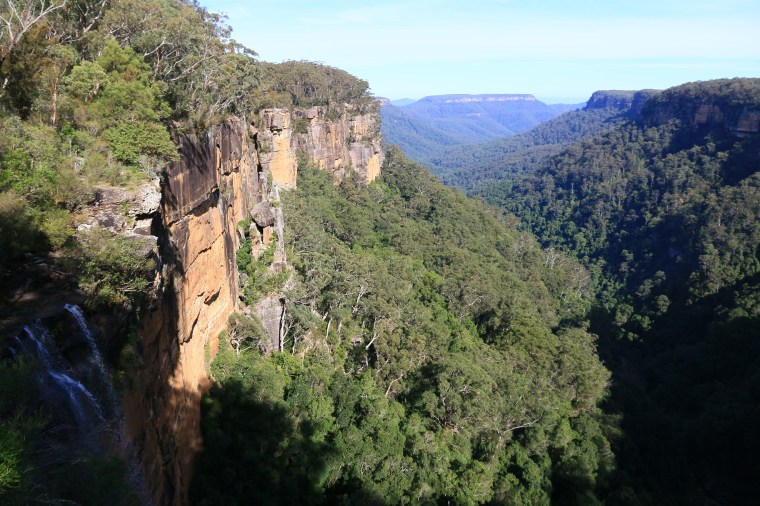
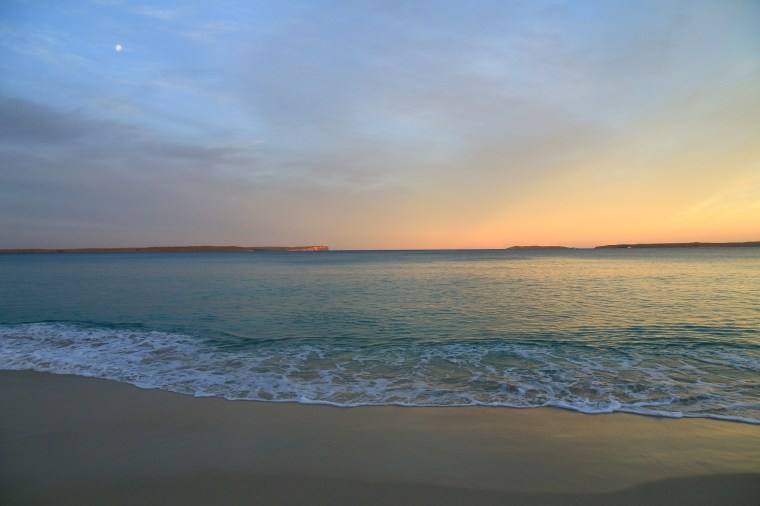
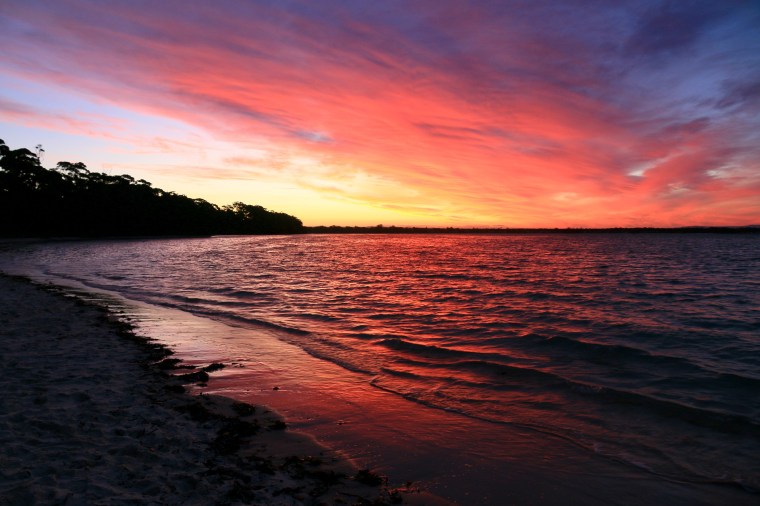
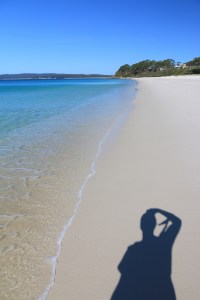 From bay to bay, traversing succulent coastal forests in between, it’s an easy amble from Blenheim Beach to Hyams Beach. The only real difficulty is deciding whether to take your shoes and socks off on the sandy bits only to then have the hassle of putting them on again for rougher terrain (conclusion: wear sandals or thongs). Plus there’s the challenge of restraining your photo-taking so that you don’t have endless, repetitive pictures of clear water lapping at fine, white sand.
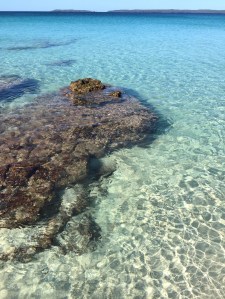 The sand is so white here that it famously gets on every piece of tourist literature and recurrently features on Sydney Weekender as the whitest sand in the world. In fact, it is genuinely so white that even small-minded immigration ministers would feel unthreatened and some cretin with a golden toupee would approve. Personally, I think there is probably whiter (for instance, around Esperance), but that is probably just supremacist talk.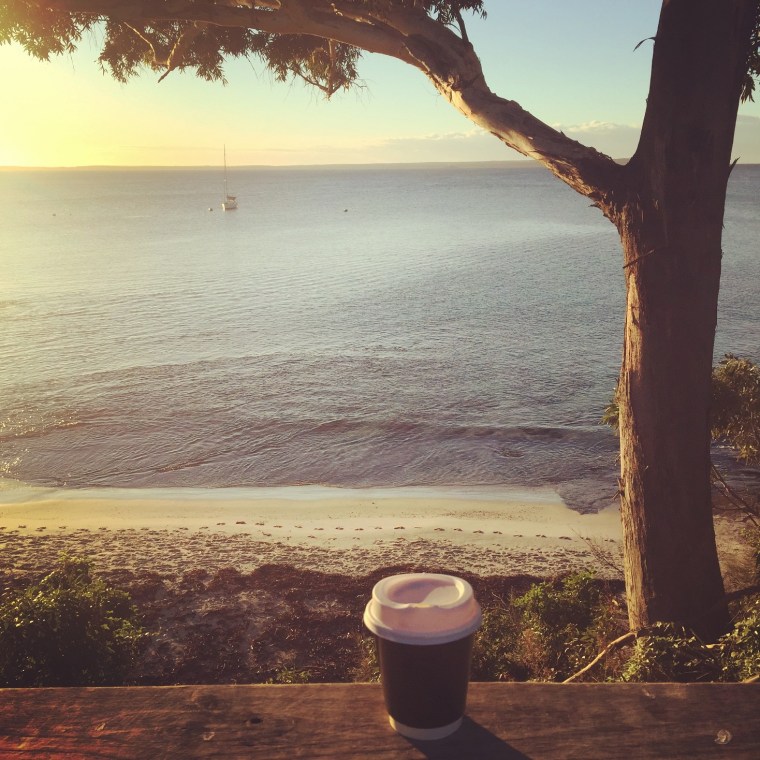


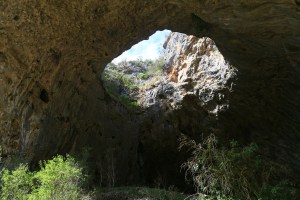 I have been here before, but that was almost ten years ago. Almost ten years, when I first arrived to live in Australia, intending to stay for a year! I couldn’t remember much of it, though the giant hole in the ceiling of one cave opening triggered something approaching recollection. But the river walk must have been new, at least for my feet, and the thermal pool – a steady 27 degrees all year – offered surprise and consideration for wintertime lolling.

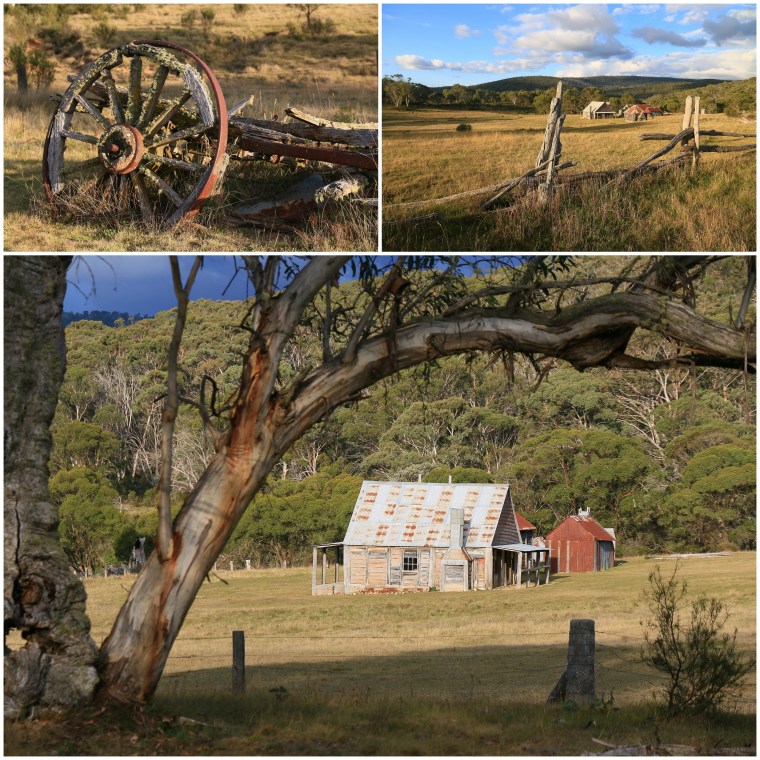
 Age must be affecting me because I am questioning the sanity of camping, even if I have copped out by reverting to the back of the car. Every little thing requires pre-planning and organising, extra time and increased awkwardness. It is effectively homelessness, perhaps more so when you sleep in the car. But then, in the morning, as the misty murk of pre-dawn is dispersed by a welcoming sun, as the deathly still air fills with birdsong, as the wattle and grasses shimmer silver with dew, as you witness the birth of a new day a part of this nature, you know why you do it.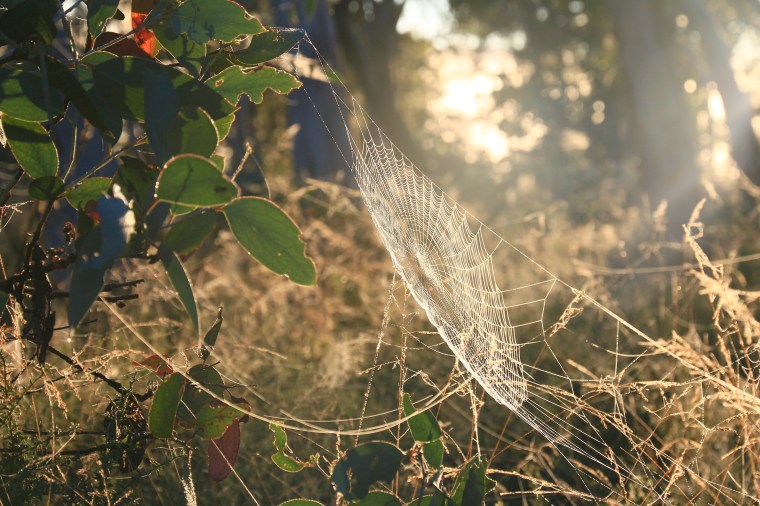
 It is, in theory, possible to clamber your way to the Goodradigbee, but this seems almost as difficult as pronouncing it. Beyond the scenic Blue Waterholes (which enjoyed relative popularity and happy interaction with fellow humans), river crossings and the narrow pass of Clarke Gorge make it too much for someone who is already warm and weary, and has been told to beware of snakes in happy interactions with fellow humans.


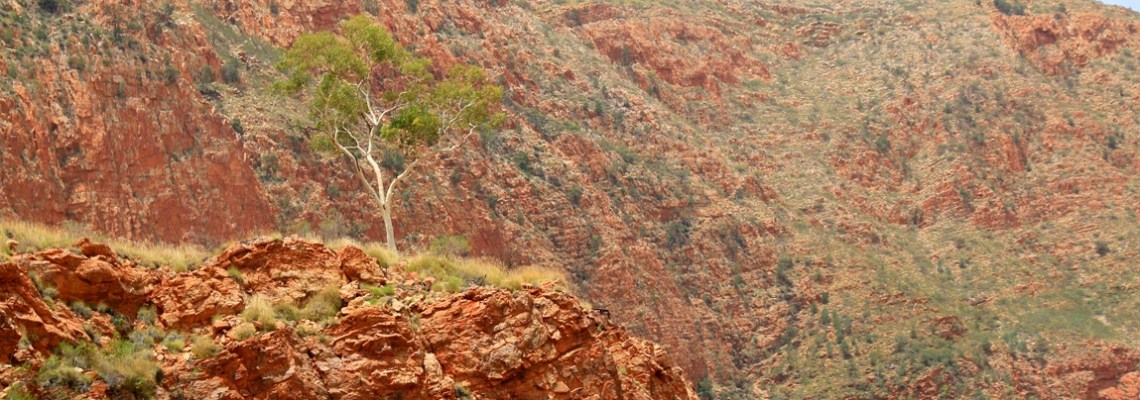
 On the other hand, natural oases appear more limited. The Todd River is mostly a river in name only. Usually it’s just a dry, wide, and sunken swathe of sand meandering through town, almost as if a dreamtime serpent had once there slivered. It is quite striking and also quite beautiful in a way: grasses and short and stocky shrubs flower along its banks and a parade of River Red Gums indulge in a majestic arrangement of bulbous roots, variegated bark and twisted, stretching branches. There really is not a better Eucalypt in all of Australia, in my uneducated opinion. It just looks like it belongs here.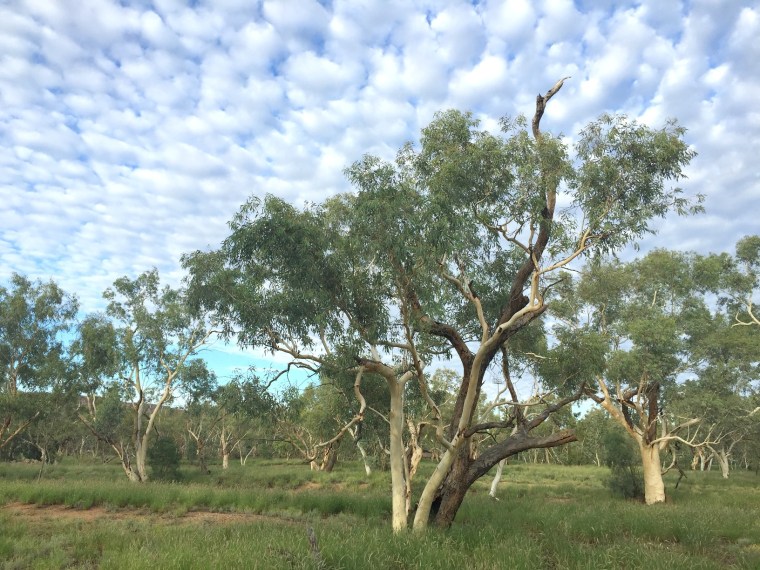
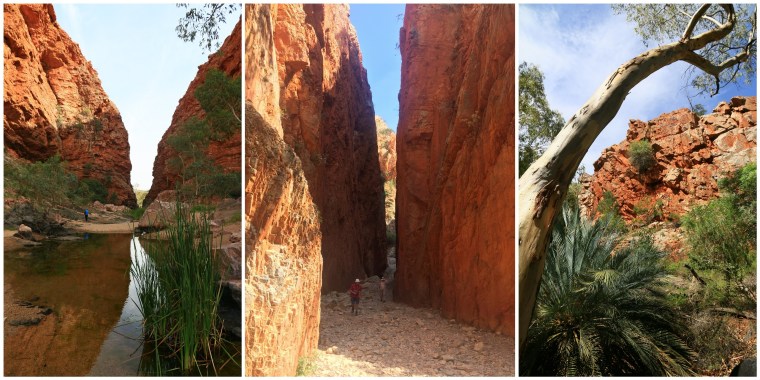
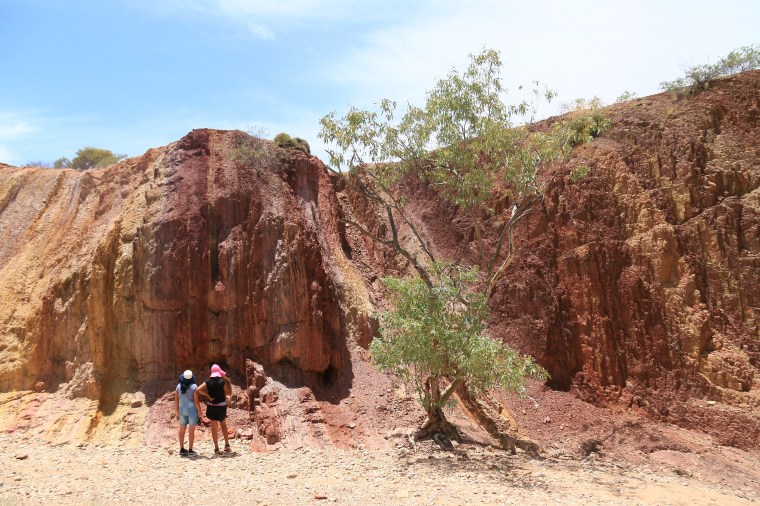
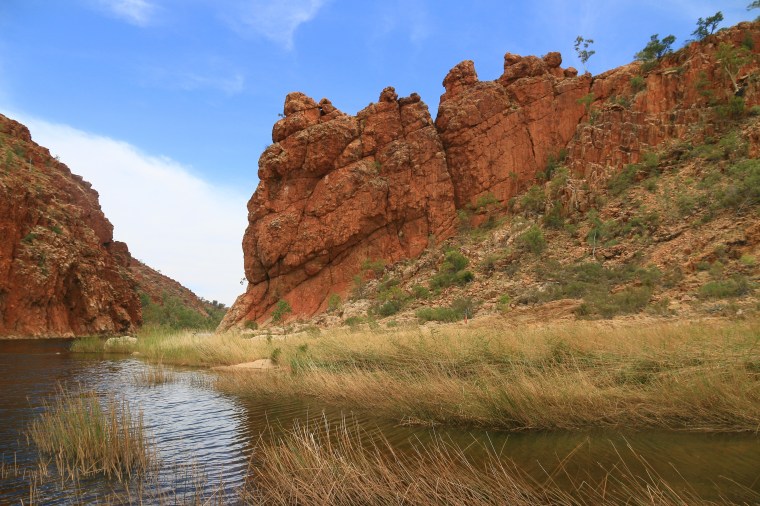
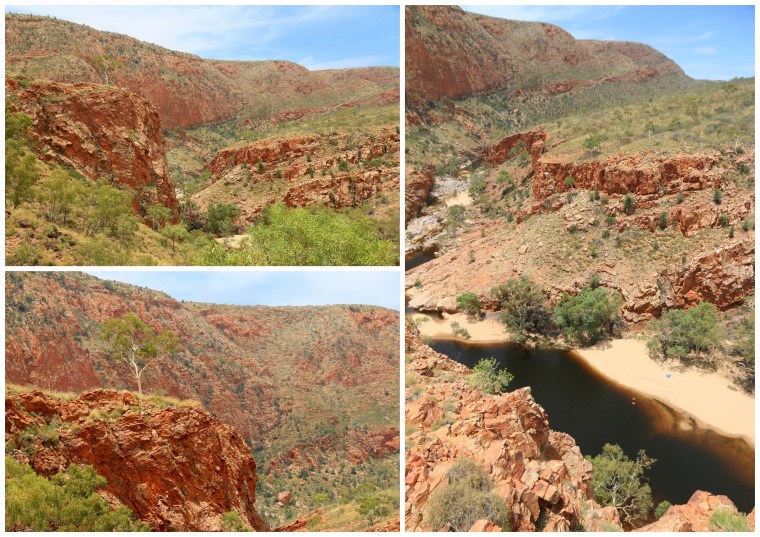
 And so, ten minutes later with a flat front right, someone opened the lamingtons while others flagged down help to get a message back to Alice for another bus to be despatched. Certain overseas visitors couldn’t fathom that there was no mobile reception here, and it was not as simple as getting a rescue helicopter so they could still make it in time for their dinner reservation. One hour in, an extended family resorted to playing the ABC game and I desperately hoped they would ask me to join in. Two hours, and restlessness heightened. People needed to pee in the bushes and generally say what they would have done differently with the eternal benefit of hindsight and no experience whatsoever travelling in the Australian outback. A man with binoculars scanned the road on the horizon, each occasional sighting of a vehicle bringing brief hope before its despair.

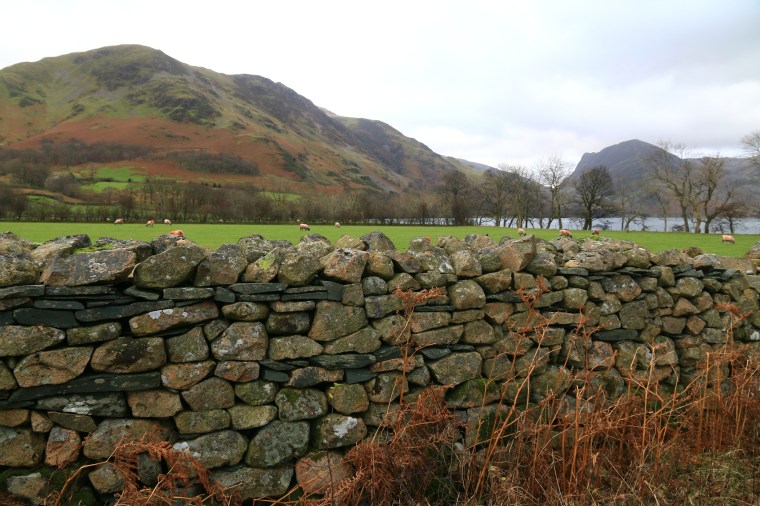


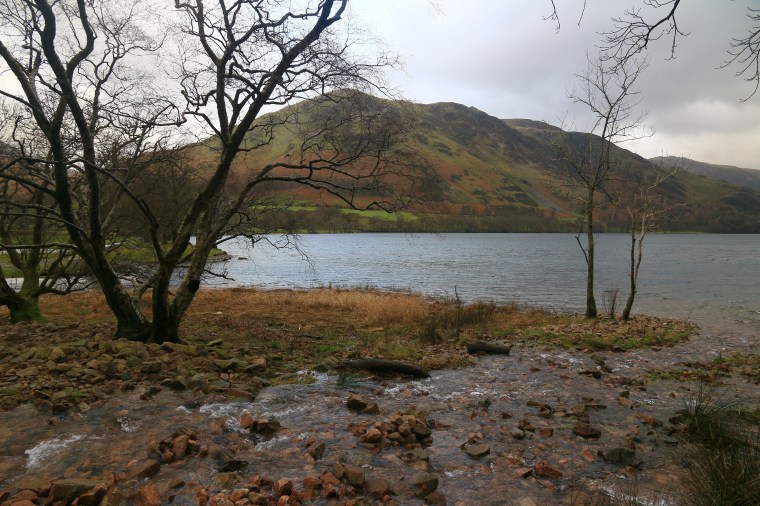















 gbpilgrim