Down South

tug01Having now spent over nine years (with interruptions) in everyone’s favourite Australian city you would think I’d have exhausted every nook, crevice and scrubby hilltop. Forget nine years…many would say two days is sufficient, and even then you might have to drag things out with a wander around the National Archives, surely the least compelling sounding attraction of the lot (which might explain why, still, I have never been). But no, it turns out Canberra has even more suburbs and scrubby hilltops than you can ever imagine.

Partly, the new has been thrust upon me. Well, not so much thrust but more gently cajoled after a temporary change of residence. It’s hardly a hardship (in comparison to, say, being evicted and dragged to a mosquito-infested tropical island where you will get abused and suffer long-term mental degradation courtesy of the Australian Government). But some locals will recoil in horror, the froth atop their soy lattes spilling over onto the front page of The Australian, when they hear I am living in Tuggeranong.

Quick geography lesson: Canberra is weird and like no other city. There is a city centre, of sorts and then some town centres as well, and I suppose some village centres and suburban shopping precincts, which spread out like satellites around the town centres. Occasionally an out-of-town shopping centre muscles in to compete with the town centres and no-one goes to the city centre because they are all at the new IKEA which is on the edge of a centre on the periphery of nothing. All the important government-type stuff happens without a centre, but instead is contained within its own triangle which is more like a diamond, if you take into account the War Memorial. Meanwhile grassland wedges and lumps of trees bubble up out of a mesh of roundabouts, circles and parkways where confused cars with NSW plates frequently vanish, never to be seen again.

Tuggeranong is a town centre in the south of Canberra, with Wanniassa – where I stay for now – one of those satellite suburbs on its edge. Wanniassa is actually closer to Woden (another town centre), but I will spare you even more complexities. It’s officially part of Tuggeranong, which is believed to have a higher proportion of Bogans per square kilometre than the other Canberra towns. I cannot truly vouch for this on my forays into its cul-de-sacs. All I can report is that there is a broad cross-section of mostly Anglo-centric Australia on display, from suited public servants to Shazzas in tracky-dacks. Utage – that is the popular Australian tendency to convey oneself by pimped up utility vehicle – seems high, as does baby-booming designer spectacle wearing.

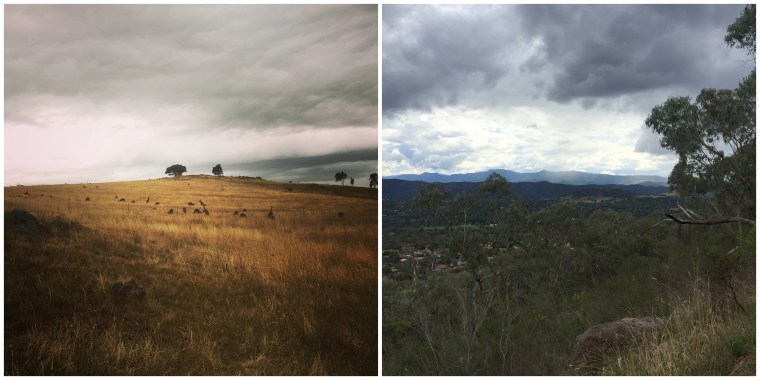
In spite of repetitiveness in its suburbia, Tuggeranong sits in quite a spectacular bowl. To the south and west, the Brindabella Ranges appear much closer and far more impenetrable. North and East, a series of Canberra hills and ridges block out the rest of the city. With a little imagination, you could picture a Swiss town in that valley, with church steeples and cowbells decorating the air (alas they filled it with concrete brutalism instead). Meanwhile, the omnipresent dome of Mount Taylor is recast as Mount Fuji, a conical summit piercing the seal of a leaden sky and drawing the Lycra-bound to its trails.

It’s no Red Hill but I have found Mount Taylor to be a convenient escape from the clutches of the valley. The lower slopes of grassland are regularly grazed by kangaroos, fattening themselves for a game of chicken on the Tuggeranong Parkway. The middle section – which flattens for much-needed respite – is all bushland shrubbery, concealing colourful rosellas and wrens and a cockatoo or two. The final ascent upon gravel is open and barren, affording views over Tuggeranong and the ever-changing weather scattered over the ridges and valleys to the west. In the other direction, the needle atop Black Mountain reminds that you are still in Canberra, and another town centre or two awaits below.

tug02a

Naturally I have not confined myself to this area – old haunts are only a 15 minute drive or so and offer greater reliability of coffee. Upon returning to one of a handful of coffee spots in the Inner South in which I regularly spread my love and money, I was astounded that they remembered my name and didn’t seem at all fussed that I hadn’t been there for over six months. While some curiosity might not have gone amiss, the warm feeling of going to a place where everybody knows your name makes it harder to sever ties.

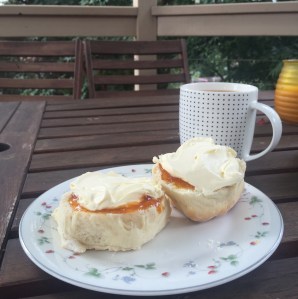
tug05Nevertheless, it was with some contentment that I found a reasonably close reasonably decent coffee stop one Saturday morning, as part of a bike ride on the many accommodating paths in the Tuggeranong Valley. One path circumnavigates its lake, which is a poor man’s Burley-Griffin but amiable enough. Others cut through the various patches of grass set between the backs of brick houses and alongside storm drains. One route takes you up towards Oxley Hill, a reasonable but not unobtainable test of legs, and another does the long uphill drag back to Wanniassa, in which aforementioned legs turn to jelly. I may be being just a touch healthier, but with this comes justification in feasting on yet another, sadly Antipodean, cream tea.

tug04

As well as a higher-than-average distribution of Bogans, it is said that Tuggeranong gets a little more rain, at least compared with the gauge at the dry and dusty international airport. It’s the proximity of the mountains you see, and the bubbling up of storm clouds. Some of these have been very generous in their distribution of rain in the last couple of weeks, transforming Aussie golden to English green.

With these mountains just a touch closer, wilderness practically on your doorstep, ridges almost always framing your vista, there is a magnetic appeal to that which lies nearby. The fresh air of the bush is tantalisingly close to Tuggers. And for that, and really quite a lot else, it can’t be much faulted.

tug06

Australia Green Bogey Society & Culture

Nuage magique

In further news not westcountry, here are some more pictures and jumbled words from a recent trip to the Geneva suburbs of France and the French bit of Switzerland. Family connections make such trips possible and while this can raise some minor irritations – think early starts, couch sleeps, tricky post-dinner cheese decisions – there are more positives than negatives. Like family fun at six in the morning, afternoon naps on a comfy couch when all is quiet, and fulfilling post-dinner cheese decisions.

Fr01

In addition there is the location, which provides access to two countries and cultures and some very hilly ground. I feel like I have at one explored much and touched only little over multiple visits. New settings emerge like the sun through the lake cloud, while old haunts linger, much like the lake cloud. Thus, in conclusion, the lake cloud is very variable and largely unpredictable in late autumn and sets the tone for the disposition of the day. Linger in cold dreariness or bask in pleasant, warm sunshine. Just be prepared to deal with it one way or another…

1. Disconnect sensory and logic-processing synapses

It looks like a pile of gloom. It sounds like a pile of gloom. It smells like a pile of gloom. It is not necessarily a pile of gloom, though it could be actually. Or maybe not. What is dark and leaden at the start of the 61 bus ride can be clear and airy at the end of it. Now, I know the 61 bus ride feels like an eternity for some, but not so long to make this transition conventional. You think there is no way under the (non-existent) sun that this pile of gloom will shift today, and it does. In the twinkle of a traffic light, your body which was in winter is now firmly in autumn and possibly just absorbing a residual hint of summer.
Fr02

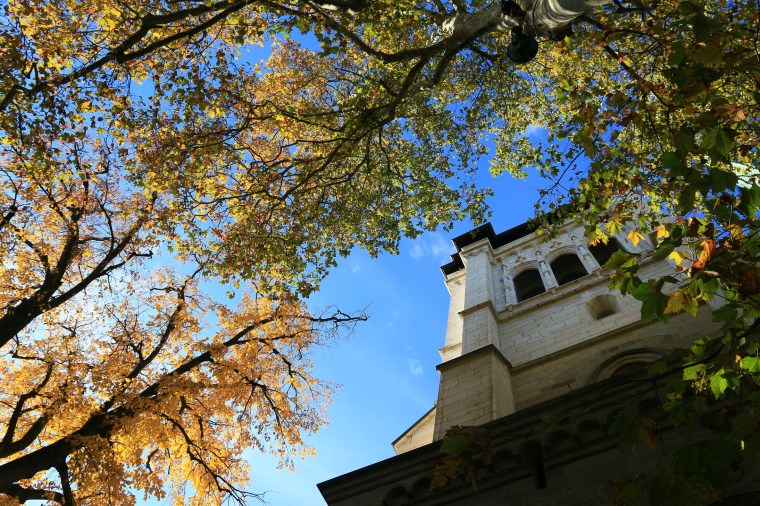
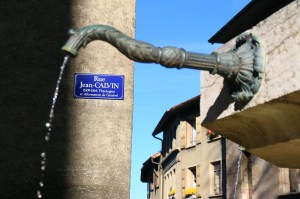
Fr03Of course, this is marvellous given such abysmal expectations. You find yourself beside the lake in Geneva all sapphire and topaz crystal. Leaves are ablaze with afternoon sun. A walk up into the old town warms the body further, despite its narrow cobbled streets in the permanent shadow of expensive jewellery shops and even more expensive solicitors. The Saleve – which didn’t exist before – punctures the horizon from the Promenade de la Treille. Children play merrily, students philosophise lazily, lovers embrace amorously. Where is the gloom? None of this makes sense.

Fr04

2. Ascension

There is wisdom to be had in the words of Yazz and the Plastic Population. It may take many hairpins and navigation through the inside of a big damp cloud, but go up and you may just end up above the weather.

It was looking doubtful climbing up to a car park in the shadow of Les Voirons, a lumpy ridge rising to highs of 1400 metres. Only in the last few kinks of road did the mistiness glow bright and dissipate. Even then, occasional wisps of cloud hovered over the road surface, as if a smoke machine was spewing out its final puffs from a distant eighties dance-pop-funk performance.

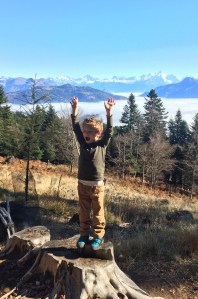
In the clear air, churned up tracks through the forest conveyed a sense of truffle hunting, rabid dogs, and people with shotguns. After piddling about along these tracks for a little while, the only way was to ascend, bay-ay-beee. Up through millions of discarded leaves, into a clearing and views of the sea; a brilliant white sea lapping at the shores of craggy peaks and ice-capped spires. The very top of the Saleve a small desert island floating in this blinding ocean.

Fr05

Fr06There was something very satisfying about being above the cloud, in brilliant blue skies, knowing that it was well miserable down there. As if you had stuck two fingers up to the weather and, for once, outsmarted it. Haha, yes weather, you are no match for altitude, mwahahahaaa! All your stupid cloud is doing is reflecting the sun and making me incredibly warm, so that I can cope in a T-shirt. And in making the valleys disappear, you accentuate the purity of the view, the drama and scale of the stunning panorama of the Mont Blanc massif. Yeah, screw you, cloud.

Fr08

3. Just eat

Sunday lunches are often best when they are lingering affairs, embellished with hearty food and infused with wine. They are the perfect antidote to grey skies and uninspiring temperatures, a strip of crispy crackling in a pile of over-boiled cabbage. Perhaps in the case of this particularly Sunday lunch it was the heat from the Raclette-melting contraption (it probably has a local name, like raclettesiennierre-de-montagne-lardonass) that generated just enough upward convection to part the clouds towards the end of the day.
Fr09Cue some reluctant shifting of our own lardonasses for a welcome amble in the nearby Swiss section of countryside. Golden light casts a serene glow on everything and everyone. A crispness in the air is refreshing and helps to dilute the strong odours of cheese. The cloud has gone again, and – in such endless skies reaching to the stars – it is hard to believe that it will so easily return.

Fr10

4. Try a different country

Okay, so perhaps Switzerland has all of the sunshine, what with millions of fancy penknives slashing at the cloud and all. So, with a free day out to use up courtesy of my rail pass I was able to penetrate deeper into the country and seek out its sunnier spots.

Fr11First, with cloud embedded deep into the valleys, I had to escape up once more. From the town of Vevey, a gleaming commuter train elegantly curves its way past chalets and chateaus to the suburb of Blonay. Here, a change of train (waiting on the other platform, naturally) shifts into a steeper grade through forest and occasional hamlets to Les Pleiades. Nothing much is at this terminus, apart from open meadows, scientific contraptions, and labourers preparing for the winter. But it is a spot well above the cloud, which sits snugly in its lake-filled indent, a luminescent glacier of cotton wool.

Numerous jet trails pierce the clear blue sky and it is warm again. This is the sunny side of Switzerland, all rolling green meadows and dotted villages. Happy to linger, I gradually stroll down, passing a small fromagerie and a couple of holiday chalets a louer. A barn sits empty, the cows having descended for the winter, the sound of their bells occasionally echoing up the valley. I move down too, only from what seems an alpine summer and back to a winter by the lake.

Fr12

———————————————-

My original plan was to hop on a boat cruise from Vevey, a sedate and civilised way to soak up the charm of the Riviera towns and the drama of the rising mountains. While some hazy breaks hinted at a clearing it was still predominantly grey; not quite the scene I had pictured in which I lazed contentedly on a wooden deck, the lowering sun illuminating the surrounding mountains. So instead – with free travel at my fingertips – I jumped on a train for twenty minutes to Aigle.

One of the problems with free travel and chronic indecision is deciding what to do with the free travel that you have decided to buy. At Aigle, two tempting options wait and time, really, for only one. Platform 13 and a train to Les Diablerets, Platform 14 Leysin. Both equipped to move upwards and no doubt deliver another hearty dose of gorgeous Swissness. One leaving in four minutes, the other in six…time barely sufficient for decision-making.

Jumping on the first to depart (Les Diablerets), the carriages immediately turned into a tram and clunked through the streets of the town. I caught a glimpse of the chateau on Aigle’s edge, and promptly jumped off at the first stop. There would be no time to visit that as well as Les Diablerets, so I crossed a road and caught the following train to Leysin.
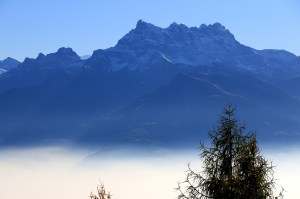
Fr14With the sun now out in Aigle there was less imperative to climb, but the train relentlessly lumbered upwards. Surprisingly there was deception in that valley sunshine, as it became clear once up high that a layer of haze hovered at around 800 metres. The sunny valley was no longer visible, despite it being sunny when down there. What kind of sorcery was this?

Leysin itself appeared to possess charm and utility, no doubt bustling in winter and thriving in summer. In early November things were a little devoid of life apart from clusters of students, neatly attired, mostly Asian, receiving an expensive Swiss education in a school with a view. A few joined me on the train back down, through that mysterious haze which was only visible from above.

Fr13

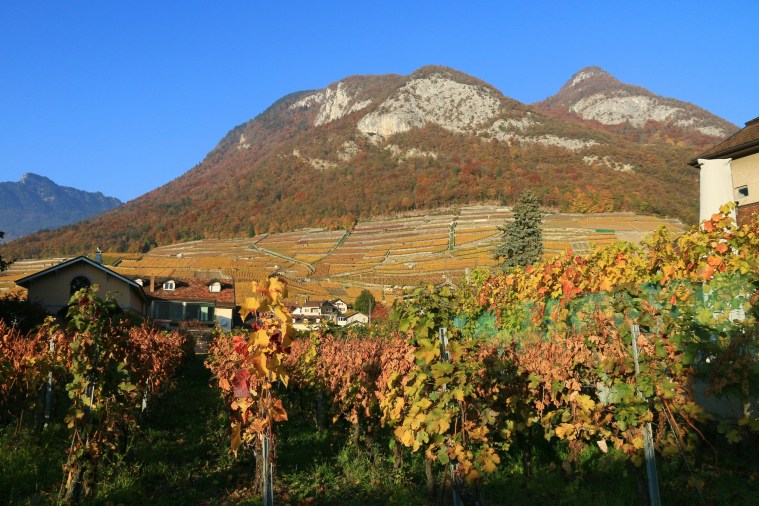
In time-honoured tradition I hopped off the train a couple of stops early, prior to it reaching Aigle level. I had noticed on the way up the glimmering terraces adorned with rows of vines, golden in the peculiar autumn sunshine. The chateau would be visible below, and there must be a walk down, because a carriage of younger schoolkids disembarked here on the way up.
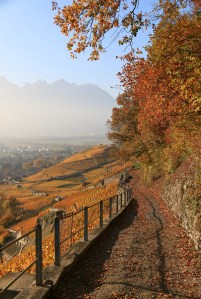
Fr15I have no idea how all those schoolkids assembled on the platform, such as it was: two square paving slabs dangling over one of the walls cascading down in giant steps towards the valley. What looked like some kind of drainage channel passed steeply under the rail track; the only other person to disembark informing me that this was the road-cum-path. And despite this initial steepness, it was a glorious walk, mostly following the small chemins used to transport grapes and labour. Occasional houses adjoined the route, each proudly displaying the name of the vigneron and date of establishment. One or two tempted with open doorways, while outside a couple of workers toasted a hard day’s winemaking with a crisp glass of white.
Fr16

Fr17With the light lowering in the clear (???) sky, there was barely chance to visit Aigle’s picturesque chateau before it would be cast into shadow. While sunset time was a little way off, the narrowing of the valley and the proximity of gargantuan mountaintops meant that it would soon kiss this part of the world goodbye. Darkness would return, and with it, the infamous foggy shroud of dank.

5. Suck it up, cheese boy

There is only so much successful blue sky strategising that one can manage, and fortuitous decision-making will eventually turn sour. While I loved practically everything about an overnight stay up from Vevey in the village of Chexbres – king-sized bed, amazing shower, big screen TV with 832 channels in English, French, German, Italian, Spanish, Russian, Arabic, Cornish, Swisshornian – the balcony view was not one of them. Beyond vine terraces and tightly packed village roofs floating in the mist a sparkling blue lake had disappeared.

With a midday checkout I dawdled for as long as possible for things to clear but today was not going to happen. On top of the low cloud, some medium level cloud and then some high cloud, with a few spots of rain and little hope of sun. I faced a cloud lasagne with bits of Switzerland oozing through the layers. Suck it up, cheese boy.

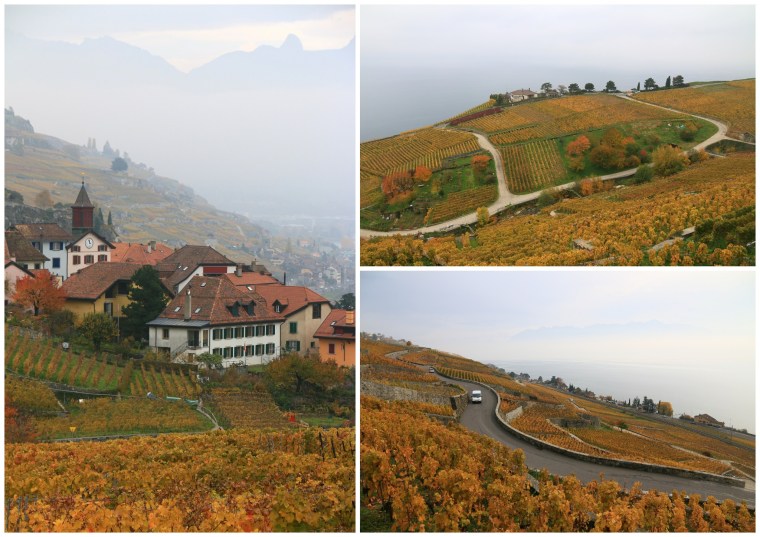
Still, the setting – in the heart of the Lavaux wine region – was very pretty, just that more subdued than the previous afternoon in similar terrain around Aigle. Wine has been grown here for donkey’s years, probably with the use of donkeys on the steep-sided terraces, frisked by slavering monks gagging for their next tipple. Today, a few mechanical contraptions – steep narrow-gauge rail tracks like fairground rides, convoluted water sprinklers, grape conveyor belts – have evolved, but much must still be managed and picked by hand.
Fr18

A network of chemins provides gentle and mostly traffic-free walking across appellations, between villages, and – occasionally – directly through the rows of vines themselves. It’s such easy and serene walking that you can comfortably end up strolling all the way into Lausanne. I practically did in the hope that the sun would shine as the hour lengthened. And, towards the end, the milkiest hint of sunlight filtered through the cloud levels, briefly giving the impression of a vast lake below, and high mountains beyond.

Fr19

A large patch of blue sky greeted me as I arrived back into Geneva’s train station. It seemed – from my limited recent experience – uncharacteristic that Geneva would be clear while further up the lake it remained damp and grey. Little of the day remained to enjoy it, but the light illuminated the final 61 bus ride back to Annemasse. And it provided a salient reminder that there is only so much you can do to predict, manage, and deal with the infamous wintry shroud of Lake Geneva.
Europe Food & Drink Green Bogey Photography Society & Culture Walking

Swiss day out

The number 61 bus from Annemasse Gare to Geneve Cornavin seems to pass as one of the longest short journeys around. I don’t know what it is about it…perhaps the trundle through France, with its oil-stained Renault workshops and flashing green pharmacie signs? Or maybe the sombreness of being beneath a Leman gloom cloud, omnipresent in early November? Though a seamless (at least then) border crossing sweeps you into a more sanitised array of Swiss shops and streets, the rattling and bending and last-gasp stopping continues apace. Stylishness and affluence glides in, bag ladies and yoof dribble out. No-one, ever, stands up for anybody else, achieved (for those rare species without tablets and phones) through an accomplished display of middle-distance gazing, looking at nothing or no-one in particular.

The journey only takes forty minutes or so, which is considerably longer than the one hour, thirty six minutes and forty nine seconds it took me to travel almost all of the Piccadilly line (from Oakwood) to Heathrow, which in itself was longer than the flight duration from London to Geneva. But this bus feels the longest trip of the lot, and it is with relief and excitement that you find yourself at the virtual terminus of the Swiss railway network (not to mention round the corner from Manor).

Looking for something to do – for lake cloud to escape and bendy buses to flee – I availed myself of a Lake Geneva – Alps Regional Pass. It took some finding, for there is nothing the Swiss seem to like more (well, apart from chocolate, cheese, and referenda) than a convoluted array of rail passes, network zones and travel conditions, all in French, German, English and occasional Italian. I could get a Swiss Card for a half-priced fare, or a one-day whole-of-SBBCFFFFS roamer, or a Zug Snausserhorn Goldenpass or maybe a Cloud Cuckooclockland permit, with 70% discount on VIP chocolate train seats instead? What is certain is that no Swiss person will ever pay a full fare and that – despite such ticketing intricacies – the trains will still run like a well-worn cliché involving clock mechanisms.

It’s not just the timeliness of the trains, but the efficiency of connections, something which never fails to evoke wonder amongst travellers bred on a discombobulated British rail system or faced with a practically non-existent Australian one. Connections to other cantons and cities and major towns, but also to tiny villages, hay sheds and pieces of rock in the middle of nowhere. Like Montreux – upon glittering Leman shores – to Rochers de Naye, some two thousand metres in the sky.

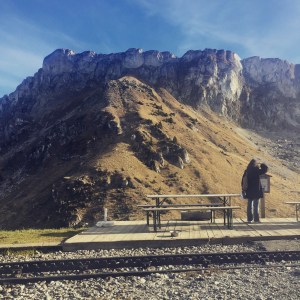
RDN01Lake cloud which started to fragment in Lausanne had virtually evaporated by the time I reached Montreux, for my seven minute transfer to platform 10 and the Rochers de Naye train. Departing exactly at 09:47 as planned, the two cogwheel carriages made no bones about it and immediately veered sharply upwards, through a tunnel and out onto sun-filled plateaus coated with luminous autumn foliage and expensive views.

Riviera homes for bankers, third rate Swiss pop stars and dairy farmers alike slowly passed by, and occasional stops in the middle of nowhere allowed regulars to jump off to reach their hidden retreat in the woods. While some stations resembled the genuine thing sited in proper villages, other stops were little more than a plank of wood or a metal gate. Here, the train would briefly pause on a 50% gradient, before rolling a tad backwards in a disconcerting motion accompanied by a grinding shriek of metal on metal. You could almost smell the sparks as Sepp hopped off and waved a cheery goodbye to Michel, brown envelope in hand, as though this was the most normal thing in the world.

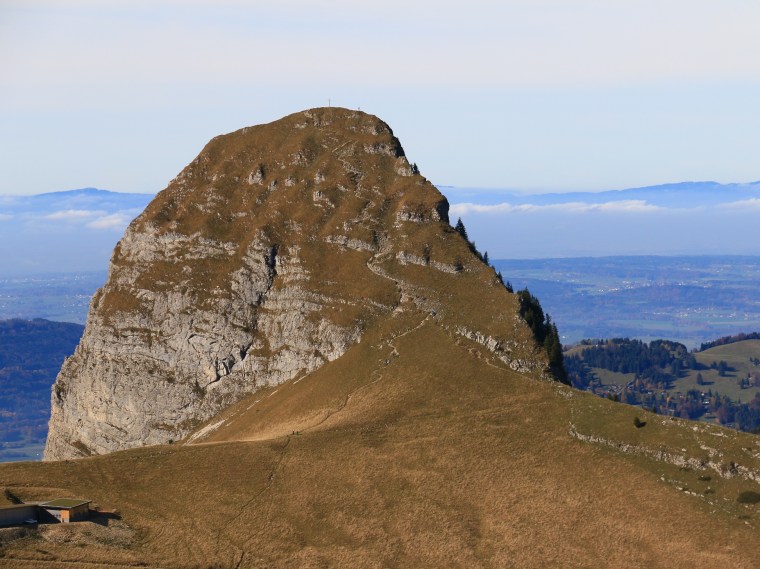
With altitude the ‘suburban’ stops fade and only walkers and the curious remain at this time of the year. Many of the walkers disembark at the Col de Jaman to walk up the nearby bulbous lump that is the Dent de Jaman. The curious – such as I – stay seated, dedicated to reaching their highs the easier way.

RDN07

One final climb through a pitch black tunnel makes the dazzle of reasonably fresh snow all the more blinding. Such is the drama of the journey, the top station is a touch underwhelming. A few views are spoiled by ski infrastructure, while building work distracts from an overpriced and bitter coffee in the cafe. A couple of goats offer mild amusement but the jardin alpin is closed for the season. Fortunately there is a higher viewpoint from here, up a short series of switchbacks, from which Switzerland – and France – is on view.

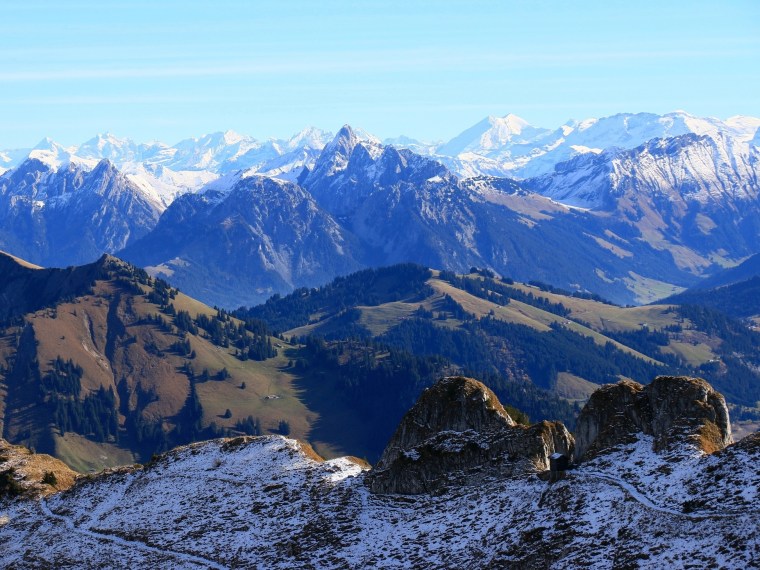
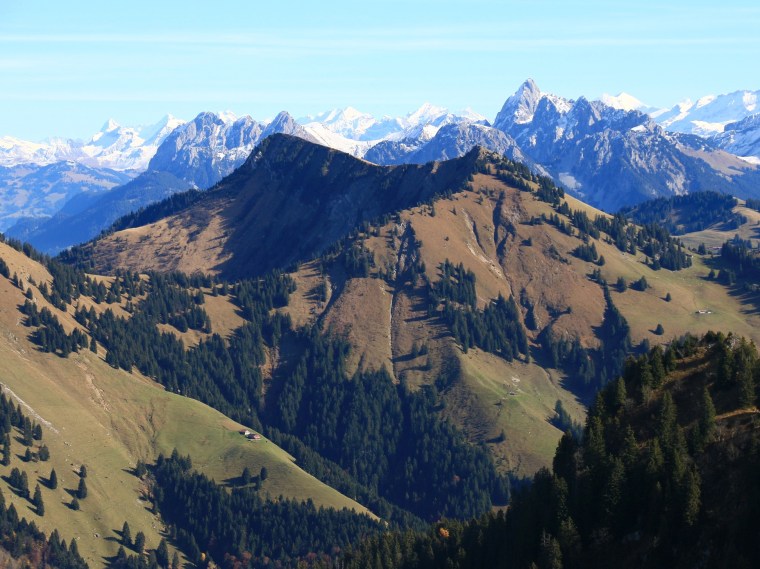
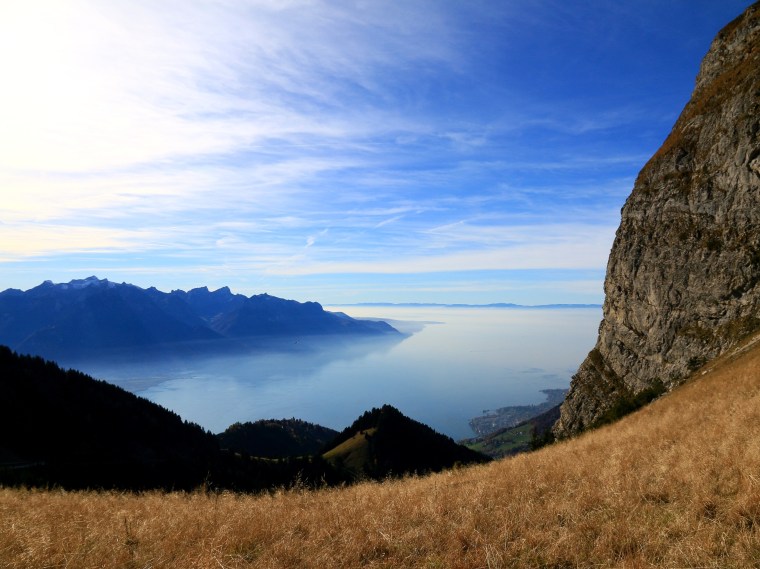
And what a view. A long way down, Lake Geneva cuts a swathe like a bloated boomerang westwards. Beyond lumpy outcrops and hills forested dark green and charred red, the lakeside towns – Montreux, Vevey, Lausanne and others – portray one elongated urban jungle. Occasional tower blocks, cranes, churches, chateaus can be picked out, while the curvature of the rail line up from there resembles some kind of herculean bobsleigh run. The alternate side of the lake sits hazily desolate, hemmed in by the pile of Haute Savoie dents, cols and monts. On the horizon, the thin line of the Jura hovers above the remaining cloud, still seemingly enveloping Geneva.

RDN02

RDN06And that is just the westward view. In all other directions, a sweeping panorama of snow-capped peaks and plunging valleys reaches out into the distance. The behemoths of the Bernese Oberland pierce the sky, pointed and rutted and sharpened and sculpted. Pillars of rock – too precipitous to catch the snow – endure; like resistant teeth in a seven year old’s mouth. This raggedy snowline fades into darkly forested slopes and meadows tinged brown by the passing summer.

RDN05

There is still warmth in those upland valleys, a sun-trap that allows for wearing of T-shirts, particularly when walking uphill. Keen to take advantage of this unexpected vestige of a rapidly fading summer, I embarked on a circular walk pieced together with my Rochers de Naye leaflet and snatches of online maps for crucial moments of decision and misdirection.

Following a ridge gradually down from the viewpoint, I reached a junction: one way back through a small valley to the top station, or another down alongside a rock face to the Col de Jaman. Somewhere within this hulk of rock the train burrows through, while humans have to inch their way around on slate ledges and avalanche rubble. The route understandably prefaced with warnings involving sturdy footwear, slipperiness, and crumbling pieces of mountain made it an easy decision: lunch on a sunny patch of grass with a spectacular view, before heading back up the valley.

RDN08

RDN09Thus it was that I found myself down to a T-shirt (and trousers!) while walking through snow. The snow had obviously thinned as the day had progressed, but remained thick enough to obscure the last part of the trail up to the top station. Warm, slightly breathless, low on water…I could see the appeal of taking the train now, which again emerged out of its tunnel to taunt me. It was heading down, and – after safely completing my walk – I was to join it.

RDN11I could have plunged all the way back down to lake level but – determined to make the most of this wonderful weather (not to mention my expertly discovered rail pass) – I paused at the Col de Jaman station. Walkers were still setting off to conquer the lump nearby and close up it didn’t seem too bad. Switchbacks yes, but nothing that would cause undue alarm for someone with sturdy footwear and good heart. Maybe on another day, but today I was content to bathe in the sunshine accompanied by the remainder of my giant Raclette pretzel bought from the kings of Cornavin.

RDN12

RDN13

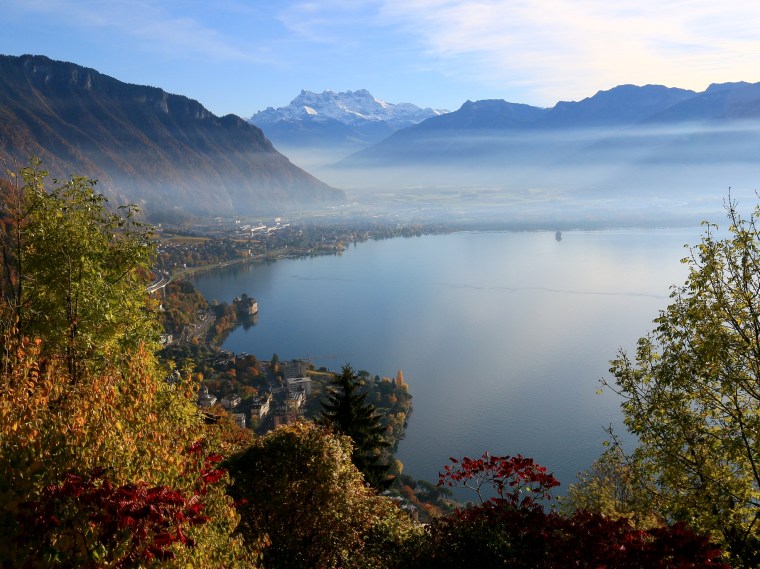
My final stop on the way down was somewhat spontaneous and turned rather fortuitous. I had made a note of Glion on the way up, purely because of the splendid views down to the lake and across to surrounding mountains, sweeping their way into the Valais. The foliage too – on this lower south facing terrace – was something to cherish in the eruption of autumn. Through the leaves and branches, glimpses of glassy water would emerge, encircled by the mountains rising upwards through the valley haze.

RDN14

RDN16The outlook was so alluring, the late afternoon light so enchanting, that I set off walking and carried on without really knowing where I was going. I assumed – given the gentle downward gradient of the lane I followed – that I would end up somewhere by the lake, from which an efficient and comfortable Swiss train would be waiting. Few cars bothered me, while occasional grand houses and health retreats sprung up on the slopes between the trees. At a kink in the road, passing two farmhouses, the view again opened out to reveal the colourful wooded hillsides tumbling down towards the lake, with a hint of winter looming upon the distant Dents du Midi.

RDN15

For all the fun of the train I was glad to complete this final part of the descent on foot, each turn revealing a looming mountain, glimpse of water or avenue of bronze. Merrily marching, time whizzed by and before long I did indeed reach the outskirts of Montreux, a feat achieved more through instinct than design. A long straight balcony of a road continued to descend, each house and villa passed with a tinge of envy and click of a camera. A churchyard offered one final panorama as the sun started to graze the tops of the peaks to the southwest before dipping beyond. In such a setting, even I might be tempted to attend Sunday service here.

RDN17

No doubt if I had stayed on the train descending all the way to Montreux I would have had such a simple and effective connection that I would be back in Geneva by now. Instead, arriving at the station on foot I managed to miss a train by a matter of minutes. The next was a whopping forty-five minutes away, an incredulous amount of time given Swiss standards. However, despite gathering weariness that comes with a 5:30am start and a ride on the 61 bus, I inched on down to the lake shore, feeling fortunate in the end to have missed that train…

RDN18

Such was the beauty of the day, the charm of the late afternoon, the ambience of the evening as the last light faded I was tempted to stay for some dinner and catch a late train back. Perhaps if I did I would not have had to – shockingly –stand in the vestibule of a railway carriage, at least until Vevey. It turns out (relative) congestion sometimes exists in Switzerland too.*

No such problems back in Geneva, with a seat on the 61 to push through the darkness and over into France, eventually. Some of the people – enduring a long, hard day of low-taxing money making – were quite probably on the same bus as me this morning, staring absently into the middle distance. Their laborious daily commute was my stroke of fortune, a crucial cog taking me to the top of a mountain and back. An unappreciated, maligned link in a great continental railway – and now bus – journey.

* I should add, trains can run late as well. On another journey of mine the train was once running four minutes late departing Lausanne. The conductor was beside himself with contrition and pleaded to the gods that this had not caused any inconvenience to anyone whatsoever.

Europe Green Bogey Photography Walking

October, revised

If I had been diligent and conscientious and just a little more bored, I could have written something about the month of October by now (as well as July, August and September). I would probably have discussed the drawing in of the northern hemisphere nights and the first big storms barrelling in from the Atlantic. Meanwhile, down in the southern half of the globe, shorts and bushfires would be a genuine topic for discussion yet again.

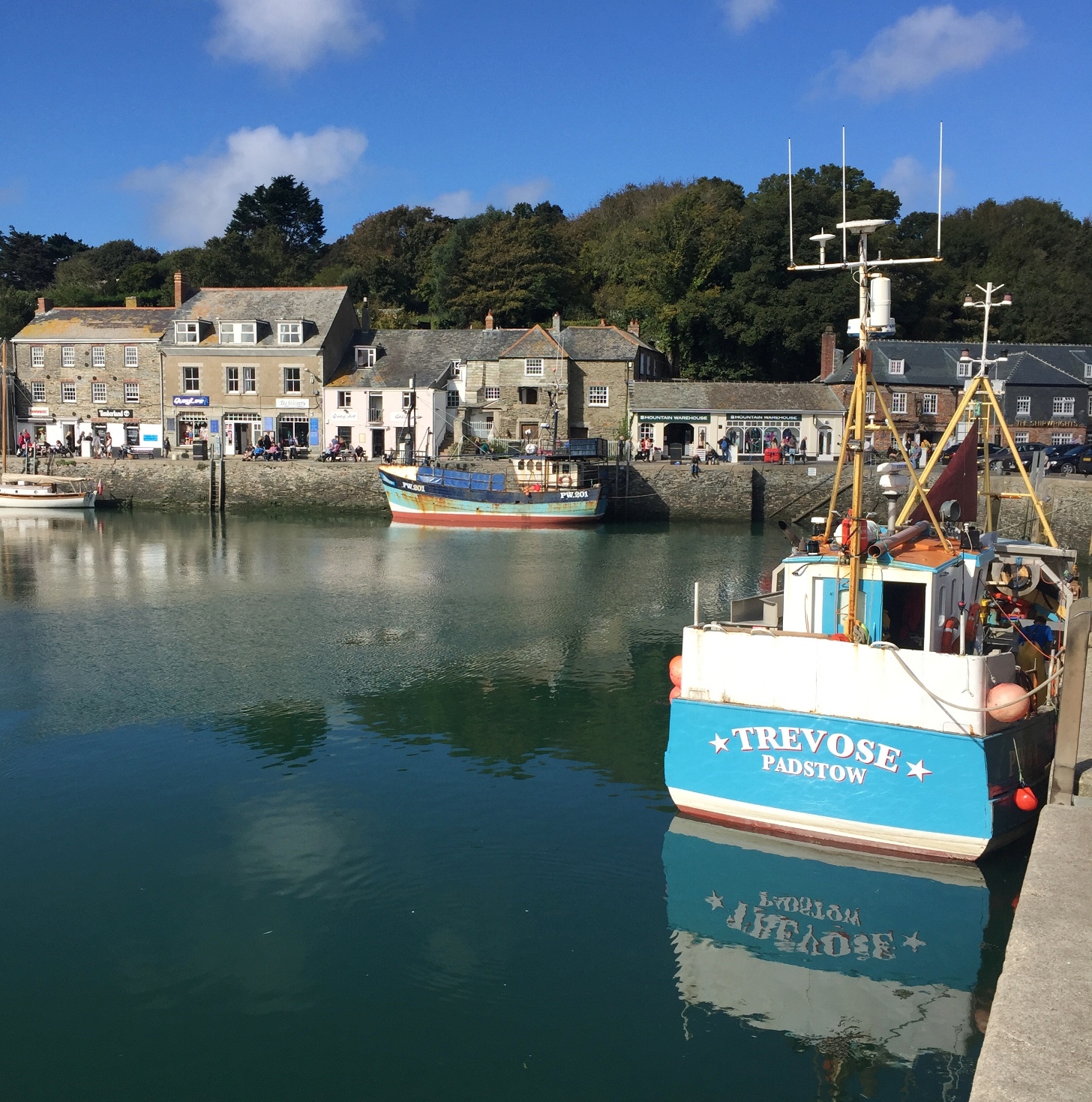
octsw05As it happens, October 2015 has been somewhat benign, at least in the southwest corner of England in which I have mostly lingered. And I have been perfectly content to linger there, what with this benign weather and all. I do believe we endured two whole weeks without a single drop of rain, an occurrence putting many outside of their comfort zone. At the start of the month I got away with a few hours in shorts, and the dry weather appeared to encourage farmers to set fire to things. On a beach, near Padstow, in an ashen blue sky air, T-shirt adorned, it could almost have been Australia.

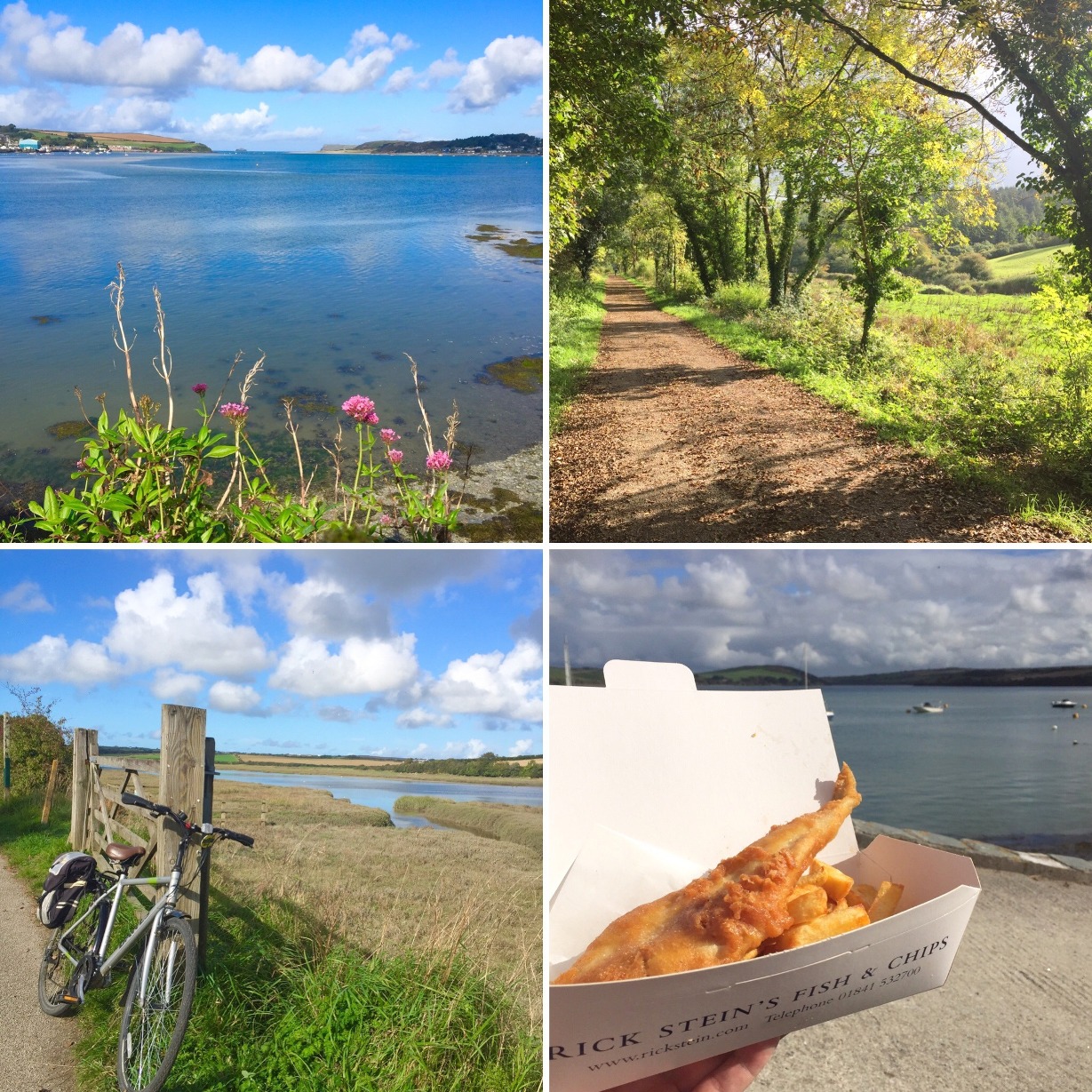
octsw01One day of particular breathlessness spurred me to get on a bike, reassured that I would not face a headwind of Atlantic gale proportions. Hiring two wheels from Wadebridge, I rode much of the Camel Trail, only wishing that I was on my own more comfortable machine which languishes back in Canberra. Breathless from forty kilometres of riding through breathless scenery in breathless air. It was not quite Vancouver high, but the experience provided much to enjoy, including an inevitable stop for Rick’s fish and chips, well-earned.

octsw02

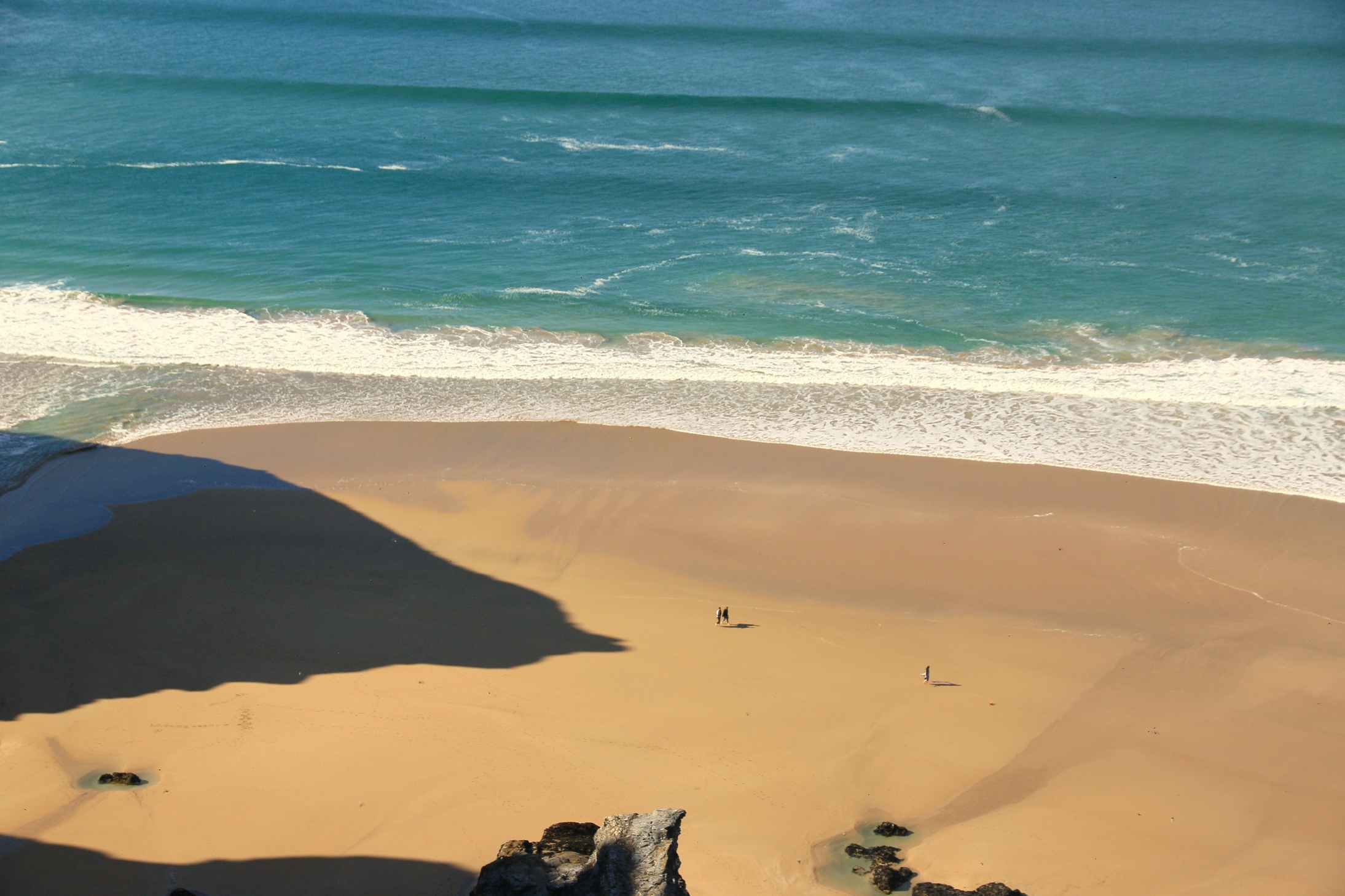
octsw04Around the corner from Padstow another day offered something a little more sedate, though with just as much, if not more, breathlessness in the scenery department. A stop for coffee overlooking Watergate Bay (coffee=acceptable and worth revisiting) preceded a jaunt along the cliff line overlooking Bedruthan Steps. Here stands the archetypal grandeur of the North Cornish coast, carved and sculpted by The Atlantic, still relatively benign. And upon these mighty shores, the National Trust serves delectable treats from their cafe…potatoes as giant as the rocks and wedges of ham as thick as the surf.

octsw03

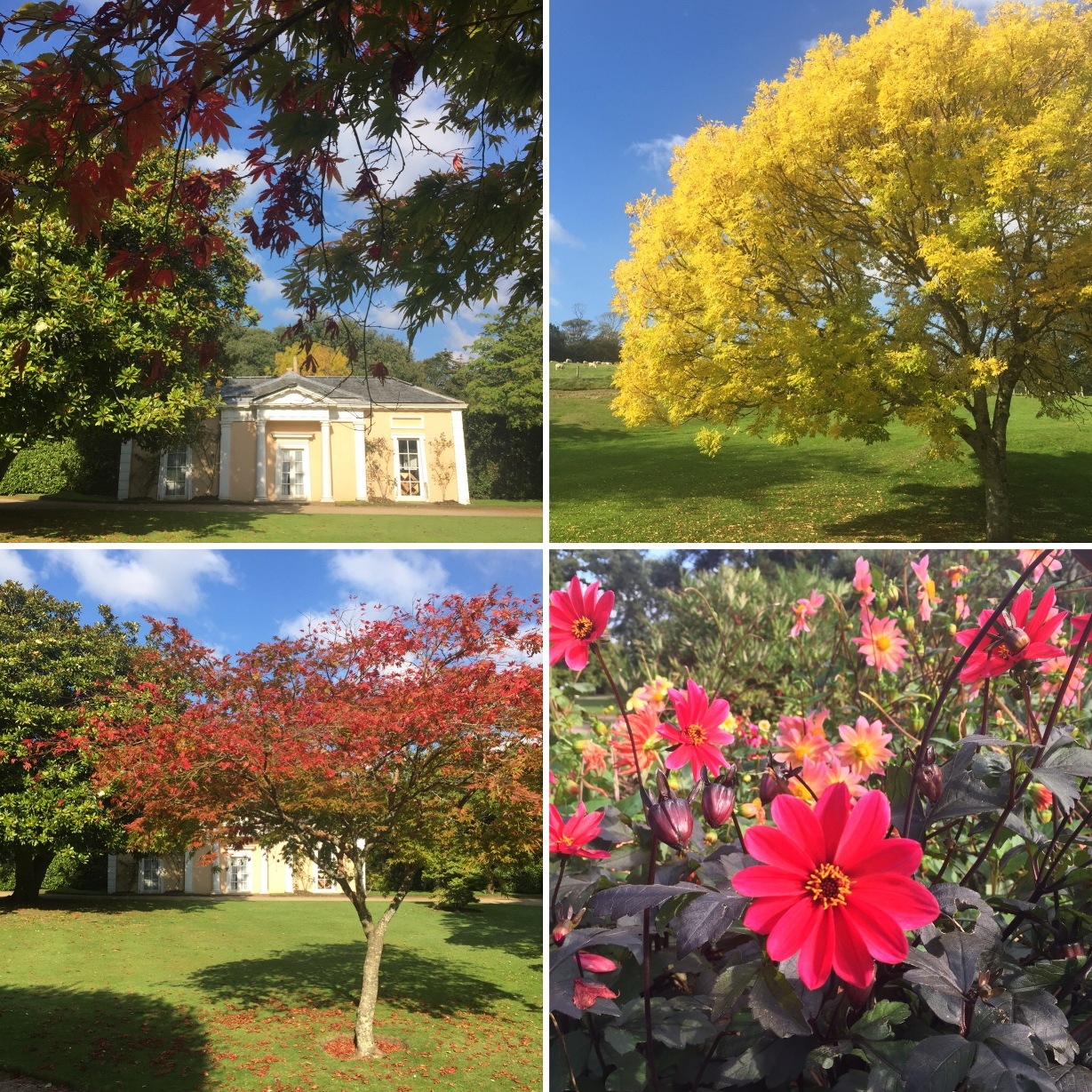
octsw07T-shirts and scrumptious food at Bedruthan became a happily common theme for a few days, transferred to settings closer to Plymouth. A visit to Mount Edgecumbe offered discovery of a good lunch spot and welcome to an autumn, though at times it was hard to distinguish this from spring within the formal gardens. A couple of afternoon hours at Wembury proffered sunlit sea, coffee and cake. Meanwhile the steady climb up to the Dewerstone from Shaugh Bridge was sweat-inducing, relieved by a home-made sandwich that hit the mark like only home-made sandwiches sometimes can.

octsw08

Plenty of leaves remain on the trees, but despite the best efforts of the weather the signs of autumn ever-so-subtly emerge. No Atlantic storms, but more and more tinges of yellow and gold, fading to dour brown, eventually to carpet the land and decompose into treacherous sludge. Sweeping moors are turned to rust by the bracken which dwindles under a lowering sun. Offers for Roses and Celebrations pepper the shops, a proliferation of karaoke singers and pantomime dancers parade on TV, and Argyle are still top of the league.

octsw09

Quite possibly the best thing about this time though is the fact that Devon and Cornwall can return to some kind of quiet normality without flocks of marauding caravans and plagues of Daves from Dudley. The roads are quieter, car parks cheaper, dogs are (alas) allowed back on the beaches, even though it seems they were never off them in the first place. Sometimes you feel you have this land to yourself and it really is a quiet little backwater in our giant world.

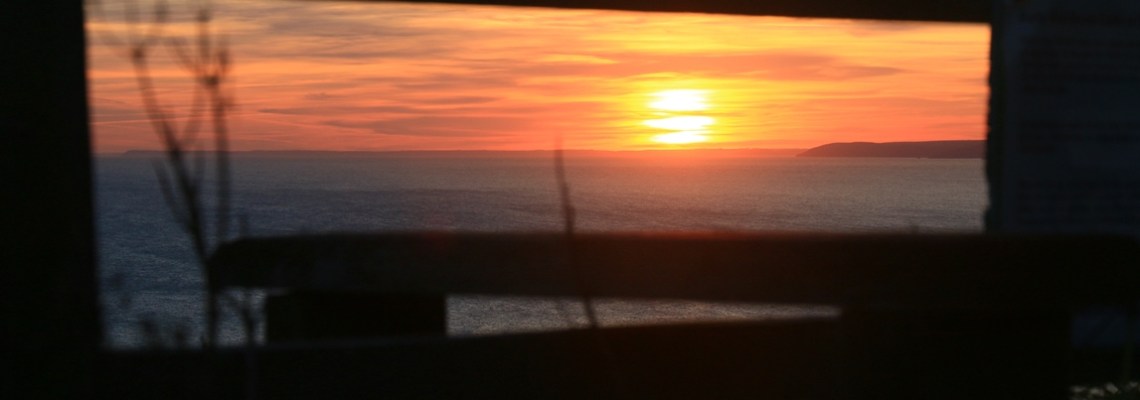
octsw11And so, there I was, rarely bumping into anything other than the odd pheasant down in the Roseland Peninsula. A farm track took me out to Dodman Point, high above a placid silver sea pierced by the occasional trawler chugging back towards Mevagissey. Around the headland, Anvil Beach was – this time – peppered only by one or two souls, some inevitably allowing their dogs to run wild.

octsw10

The tangle of tiny roads and time of year seems to make this area a backwater amongst backwaters. The seemingly vast Caerhays Estate hosts a few timeless hamlets, invariably reached by a steep decline toward the sea or a severe kink in the wooded lanes. At Portholland, chatter over a cup of tea rises into the gentle afternoon sun, while at Portloe, it is though you are transferred to a Polperro without the masses, sitting quietly content amongst its pockmarked coves. Here, as the afternoon quickly fades there are signs of closure, of people battening down the hatches, of a looming change to be embraced sometime soon. The Atlantic storms will roll in, but perhaps we will just have to wait until November for that.

octsw12

Food & Drink Great Britain Green Bogey Walking

Seventh Heaven

I experience inevitable pangs of longing as pictures of Floriade, flat whites and thongs in thirty degrees Celsius begin to infiltrate my Instagram feed. Suddenly (and quite dramatically this year it seems) the balance tips and before you know it the people of Canberra will be cycling blissfully along the lake in bushfire smoke. I would be quite happy to throw on some shorts, pedal down to Penny University for a coffee, pop back to Manuka for some takeaway Mees Sushi rolls, have a nap if the squawking birds allow, and then watch the shadows lengthen on Red Hill. Still, I could fairly easily be doing that this time next week if I chose to.

The day will come, but not yet. There have been, and still are, plenty of good reasons to linger in the northern hemisphere. The recent weather has been better than it was in August, though the days shorten and wind now has a bite. As September trickled into October, autumn itself appeared on hold. Seven days with barely a cloud, and even those were as fluffily white as the sheep. Seven days in which I again got distracted. Seriously…
Sunday

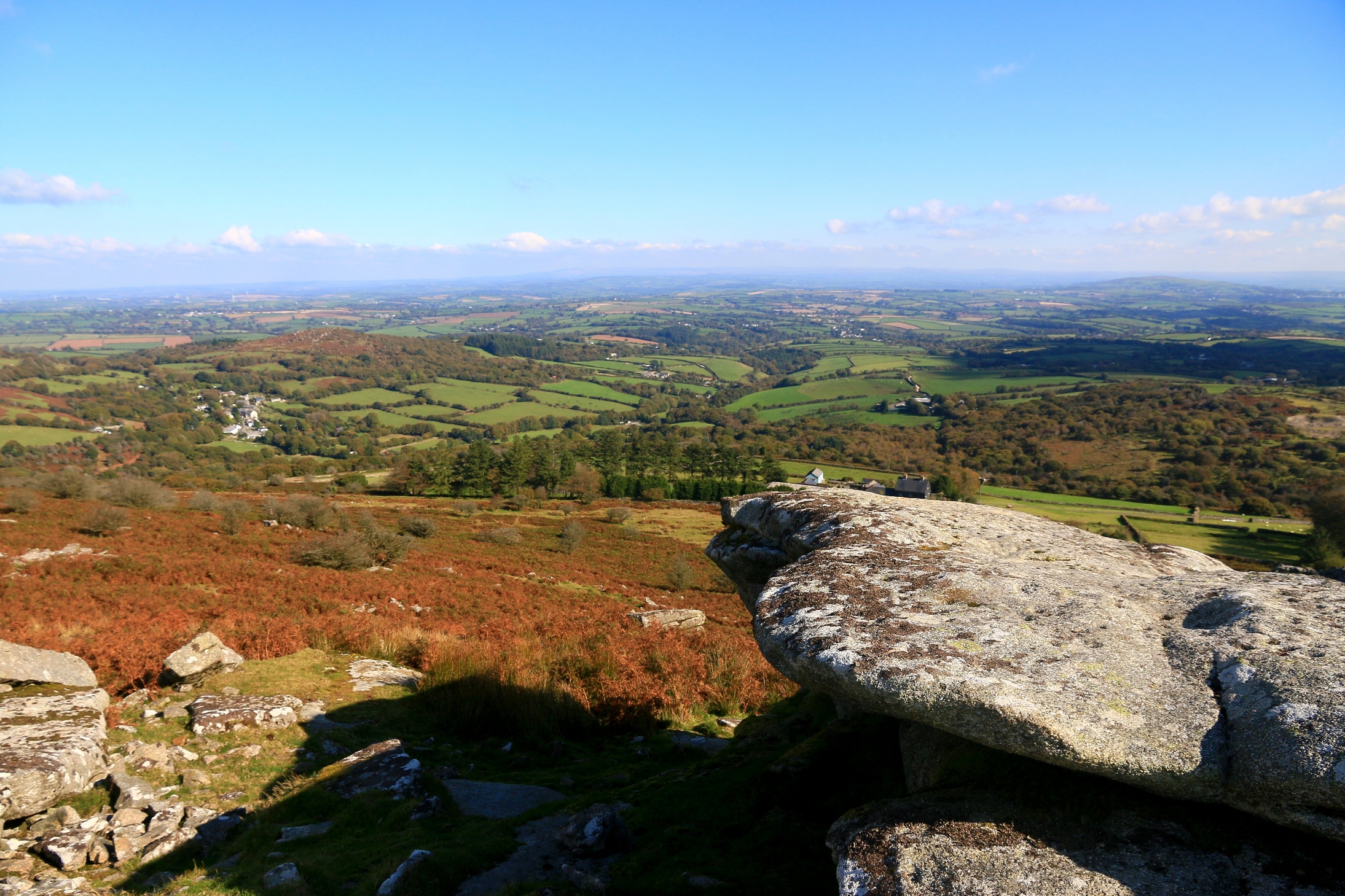
A morning walk on the moors, what better way to absorb the clear air and open space? Intending to go to one spot, I ended up at another, but that can often be the way with Dartmoor. Squeezing through Horrabridge and up to Whitchurch Down, the setting looked exquisite enough to not need go any further.
mag01

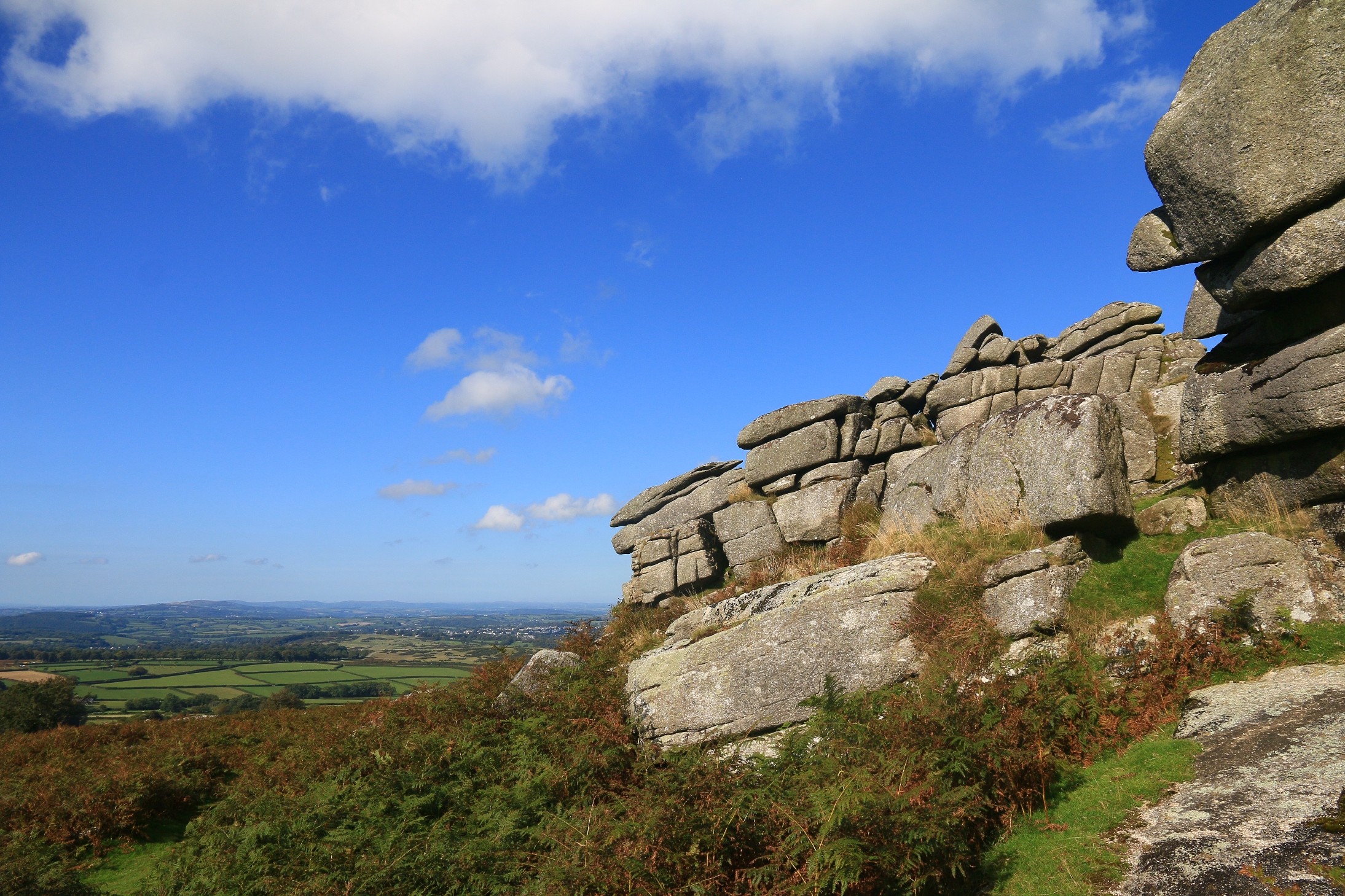
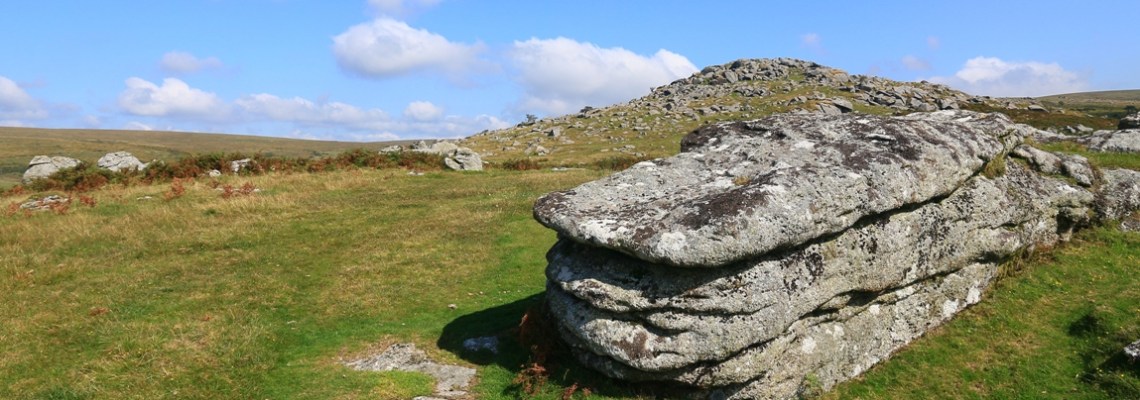
I think I ended up climbing to a clump of rocks known as Pew Tor but I didn’t know this at the time. It seems apt, since several rows of disorderly granite offered exemplary seating to watch proceedings across to Merivale and Great Mis Tor and down the moor into the Tavy and Tamar Valleys. Brentor was there (again) as were the beacons of Bodmin Moor across the border. A seat for a Sunday morning service I don’t mind attending.

mag02

mag03

Monday

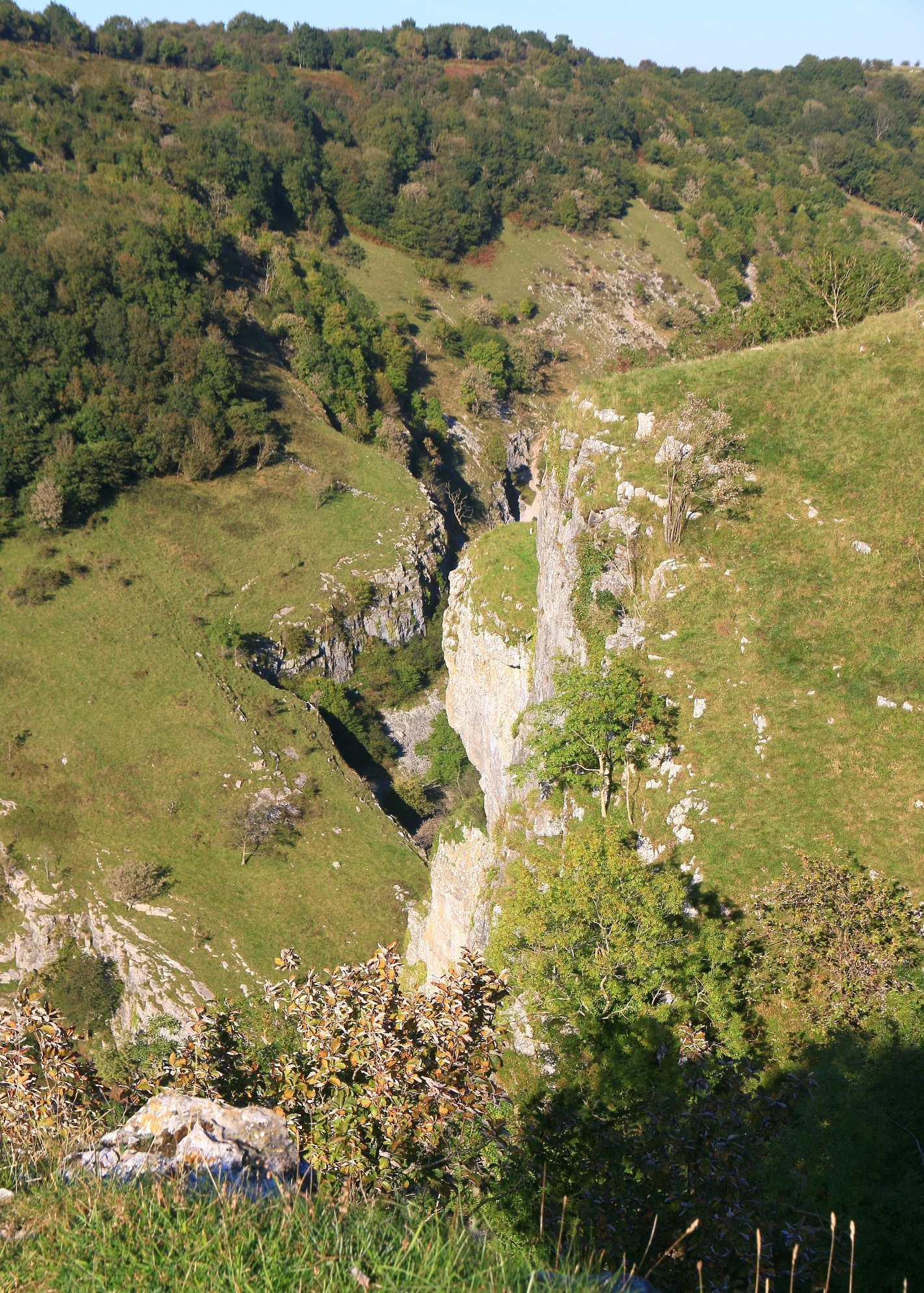
I had duties to perform but duties that only served to add an extra layer of holiday feeling not at all conducive to working. The A38 and M5 – often a scene of holiday hell – acted as a gateway to Bristol Airport and temporary disposal of the parents. I could’ve just turned around and come back to revel in my newly found again freedom, but that little stretch of road between the M5 and Bristol Airport is just so lush that it seems a waste to pass it by. Especially when I can zip off my legs, eat ice cream and toil atop Cheddar Gorge.

mag04

mag05Steep climbs made a warm sun feel hot. Only brief glimpses of gorge and harsh but inevitable comparison with the many amazing chasms of Australia put this one close to the wrong side of the effort-reward ratio. Still, the rolling Mendips and glary Somerset levels offered an appealing backdrop, and the effort was ample to justify a wedge of clothbound, cave matured, genuine Cheddar.

mag06Anyway, the weather was of course A-MAZE-BALLS and I may have added to my dirty tan. It certainly did not feel like autumn, despite a few sneaky clues emerging in shadier spots.  Who needs Ibiza? Even the drive back on the M5 and A38 was quite a pleasure, as if one was heading west on holiday oneself. Which one pretty much was.

Such gloriousness spurred me to an impromptu, upwards detour as the sun lowered across Devon. Up to Haytor to see the last, laser hues of sunlight projected Uluru-like on the grey granite. Shorts still on, but not exactly appropriate. Cooler nights ahead, but clear and calm days to linger.

mag07

mag08

Tuesday

For balance, I completed some chores and did some work. But by about four o’clock that became tiresome and the sun was still taunting me through the window. So I hopped over on the Torpoint ferry to Whitsand Bay, parked up and walked out to Rame Head.

mag09

mag10What gorgeousness in the shelter of the east wind, the sunlight cast low upon the rugged line of cliffs stretching to Looe. What good fortune to still be able to do this so late in the day, after being unusually productive. And what a nice spot to watch the sun go out again, the end of another year accomplished.

Wednesday

If I was to design my own exemplary birthday present it would probably involve a sparkling drive across the rolling countryside of eastern Cornwall. I would reach the north coast at Boscastle, where I would sip on a reasonable coffee by the water before moving on to Tintagel for a more than reasonable pasty. Crumbly fudge may also be picked up via this route as an optional but inevitable extra. Interspersed between the eating would be cliff top walks under a big blue sky, the sound of ocean waves rising from the caves and coves of the coastline. Yes, the coffee could be still better, and the weather still warmer, but I sense a contentment of such simple things with age. Tintagel Island my cake, a steak and stilton pasty the candle on top.

mag11

Thursday

mag12Older, wiser, even more prone to daytime napping, I again used the day in a semi-productive manner with frequent interruptions. A few spots of cloud came and went and the hours ticked on by to leave me with yet another end of day outing. Somewhere handy and close would do the job, and while the inlets of Plymouth Sound and cars of the city are detrimental to handiness, the views from nearby Jennycliff still manage to do the job. Goodbye sunshine, see you again tomorrow.

mag13

Friday

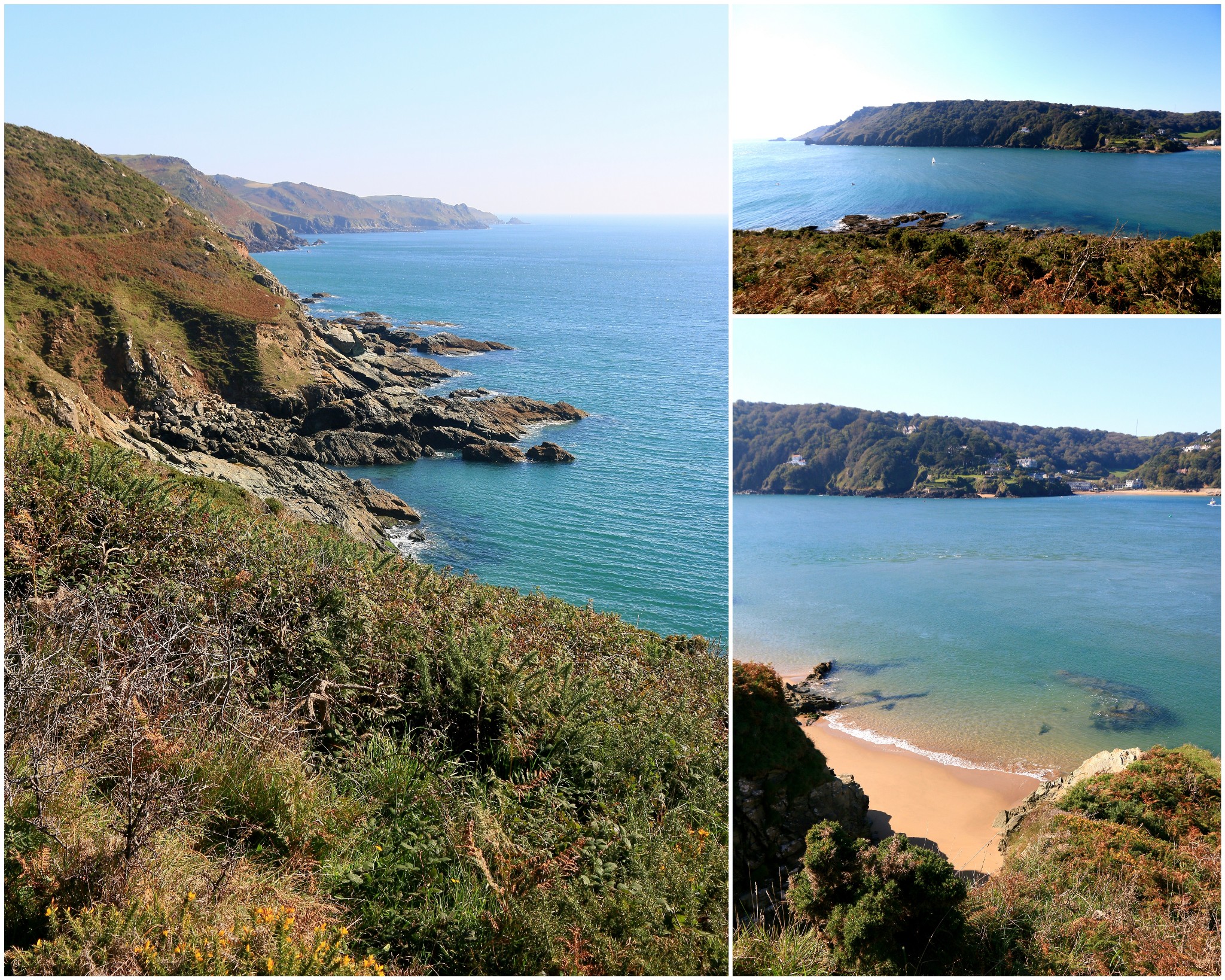
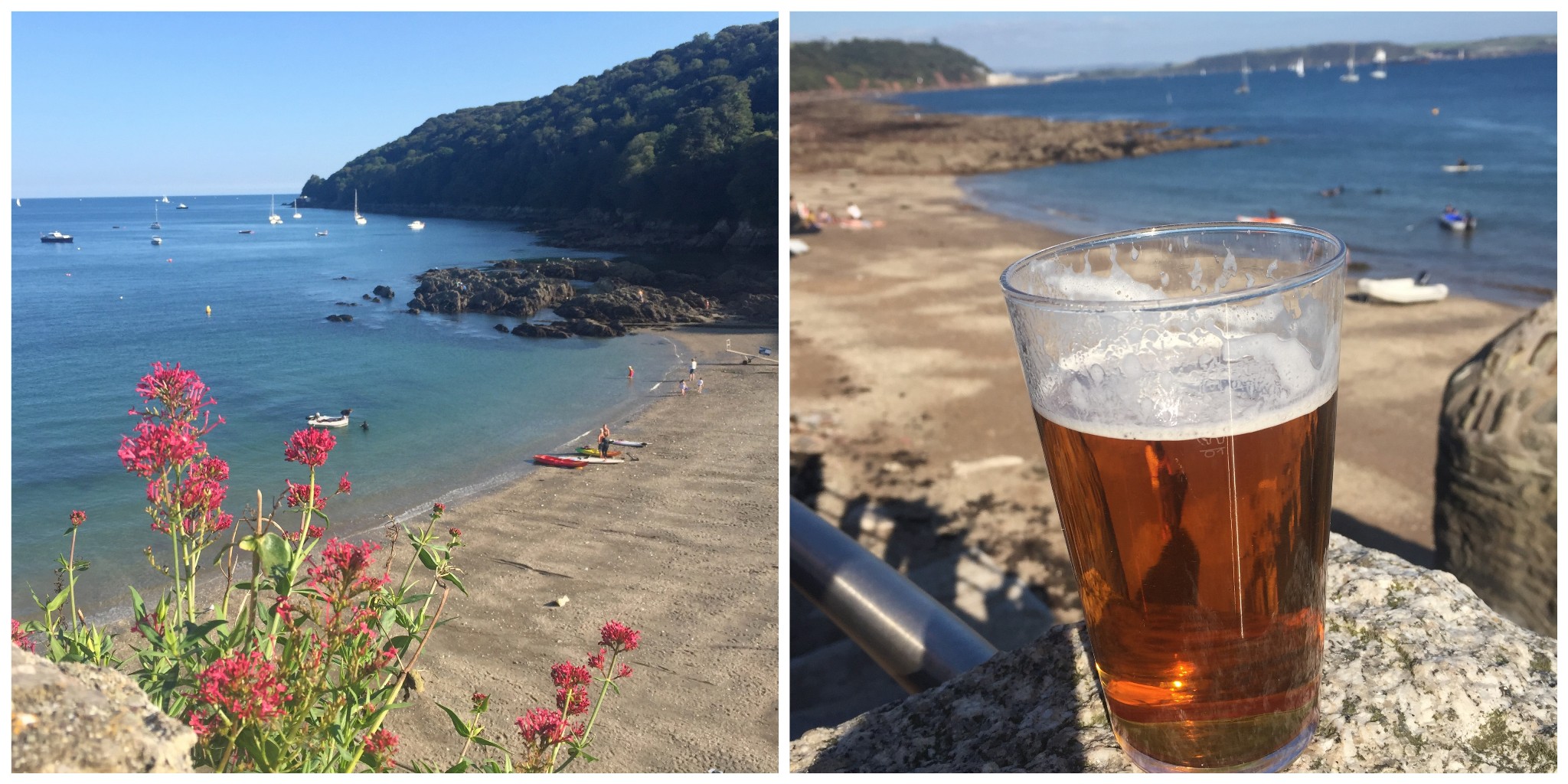
Having barely ventured outside of the Plymouth city borders yesterday (a few steps on the coast path veering into the South Hams), corrective action was necessary on what was shaping into yet another sunny and mild day. This fine weather is getting tediously predictable, yet I still feel the urge to make as much of it as I can, because surely tomorrow will be worse. And so, ship shape and Bristol fashion, it’s off to Salcombe we go.

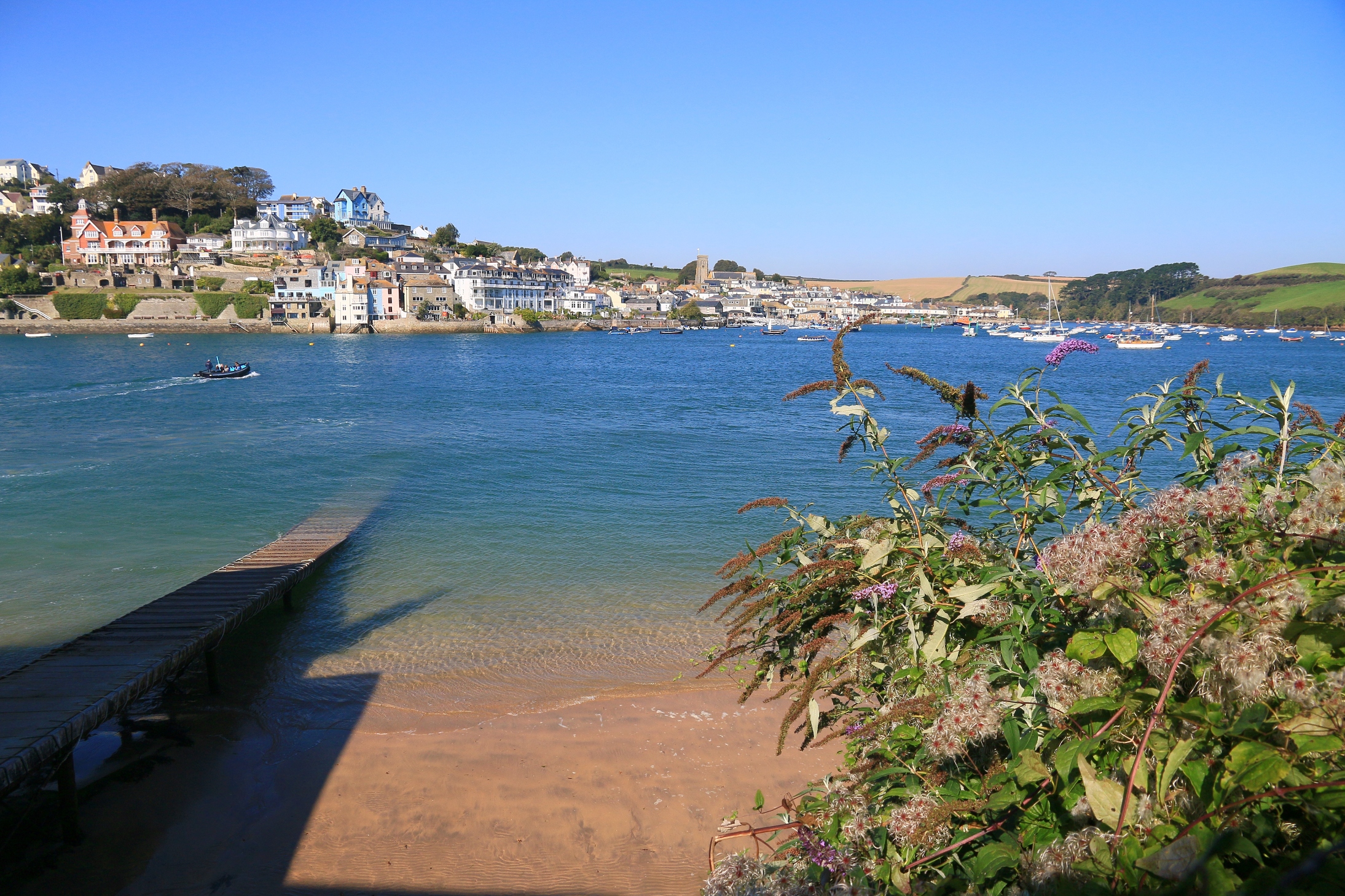
mag14I think it’s fair to make a sweeping generalisation and say that Salcombe is in a more upmarket corner of Devon. Upmarket in the ships ahoy, jolly poor showing by the English against those Colonials I say dear boy mode. The Daily Mail is the predominant manifesto of choice amongst a bowls club of stripy sweaters keeping a keen eye on the watery horizon for any unwanted intruders. And, across the river – at East Portlemouth – high fences of hydrangeas protect expensive views and private beaches.

mag15

mag16Thankfully there are access points for commoners who make the effort. The ferry – manned by a servant with pleasingly gruff countenance – bobs back and forth to link town with East Port (as the locals probably call it). The fine, golden sand of Mill Bay is perfectly accessible, as long as you abide by the many rules and regulations set out on the Charter of Public Citizen Access as endorsed by the Board of Her Majesty’s Quarterdecks and Royal Commonwealth Bridge Club. The National Trust – a more agreeable British institution – have usurped some of the land nearby for all to use, and this takes you round to a couple more secluded bays and out back into the wilds.

mag17Now, the clipped hedges and accents fade, paralleled by a spilling out of protected estuary into untamed sea. A yacht bravely ventures out past Bolt Head and into the deep blue. A sea which is looking fairly placid today, reflecting much warmth towards bare cliffs and making me legless for the second time in a week. For some reason I am reminded of a tiny stretch of rare undeveloped Spanish coast between Cartagena and La Manga. Warm, barren, secluded. A palette seemingly burnished by the sun.

There are a few people for company out in the wilds, especially upon reaching Gara Rock Beach. An old man on some rocks seems to glare at me as if I was wearing a fluorescent pink onesie emblazoned with the words ‘LOOK AT ME’ or something. Only when he gets the binoculars out do I realise his penchant for birdlife, and my likely noisy clambering disturbing a pair of superb tits. A scattering of people bathe on the sands, while fellow ramblers wheeze their way up to the cafe seventy five metres above.

mag18

Ah the cafe. I am back in Salcombe, with its crayfish pine nut salads and cedar-pressed Prosecco, served on a deck all wood planks and reinforced glass. Torn between two worlds, I resist and plough on down through woodland with my homemade cheese and ham and – a little in keeping – avocado sandwich. Back in town, an ice cream from Salcombe Dairy perfectly caps it off, a delight that anyone can most definitely enjoy on a day such as this.

Saturday

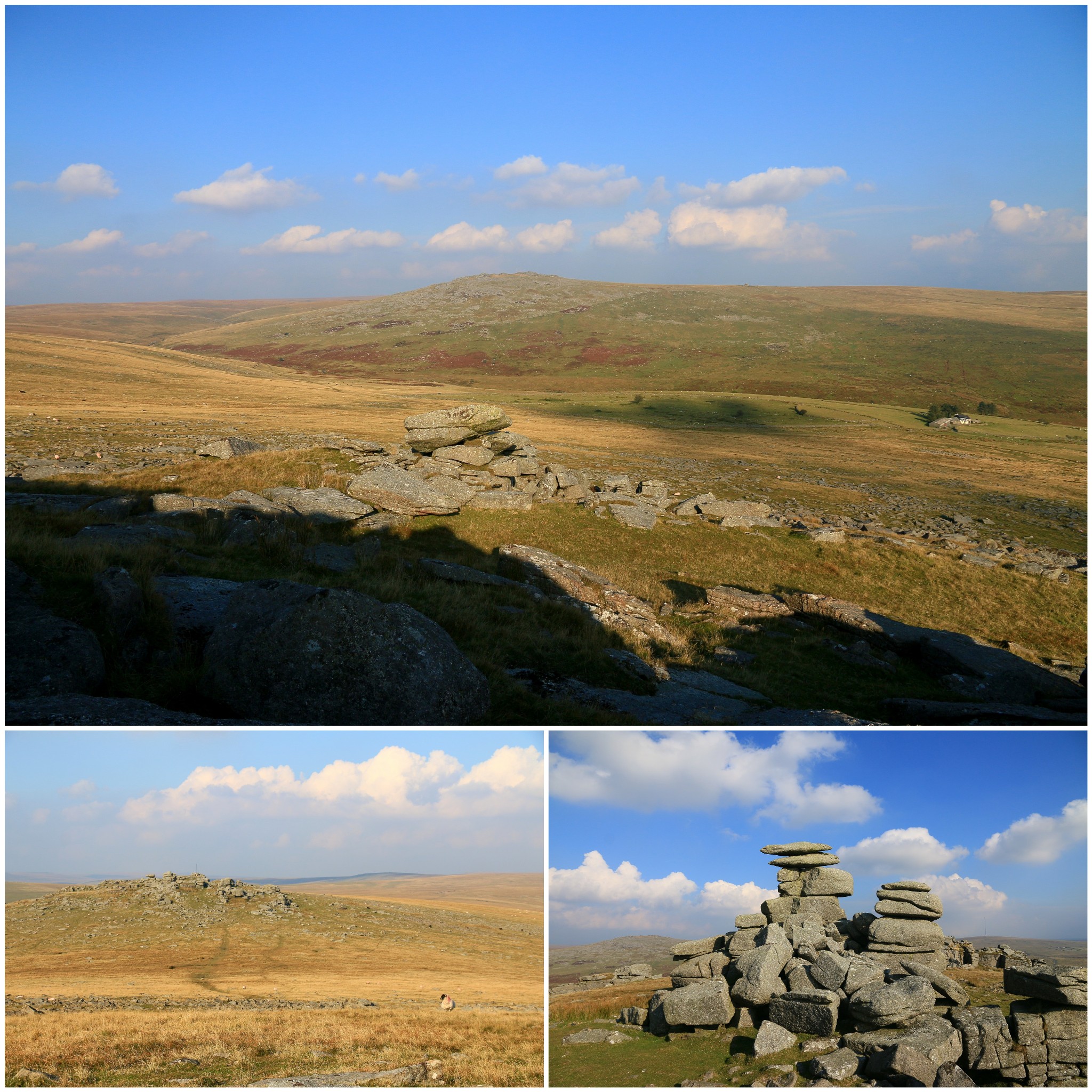
And so we are back where we began. Or, to be precise, back where I had intended to begin a week ago: at the top of Pork Hill between Tavistock and Merivale and heading into the heart of empty, high Dartmoor. Late day light replaces that of mid morning, but the scene is much the same. Perhaps the grass is a little more yellow and the bogs a little less swampy. The sheep are thirsty and the ponies unfathomably shelter in early October shadows. Small white clouds swiftly pass on the steady breeze, projecting speckles of shadow on a landscape devoid of much at all. One small farmhouse lingers in the fringe lands of the valley. Tors rupture and balance in a haphazard jigsaw of granite. At Roos Tor, there are no roos to be seen, but I am perfectly fine with that. For now, in such magic weather, with such a magic week, there is nowhere better.

mag19

(Sunday: It was cloudy, I napped and had roast dinner)

Food & Drink Great Britain Green Bogey Photography Walking

Walking in an unknown wonderland

A few weeks back I ventured bravely into the unknown, leaving the comforting bosom of Devon and Cornwall and stepping east into Dorset. At first, there was nothing of great alarm, trundling through sunny places with names like Littleknockers Botherscombleyton and Purdleywetherall Nincompoop. The quite dully named Dorchester still had a Tesco and it also had my Dad, who had mastered this particular rendezvous and whizzed us briskly onwards to West Lulworth.

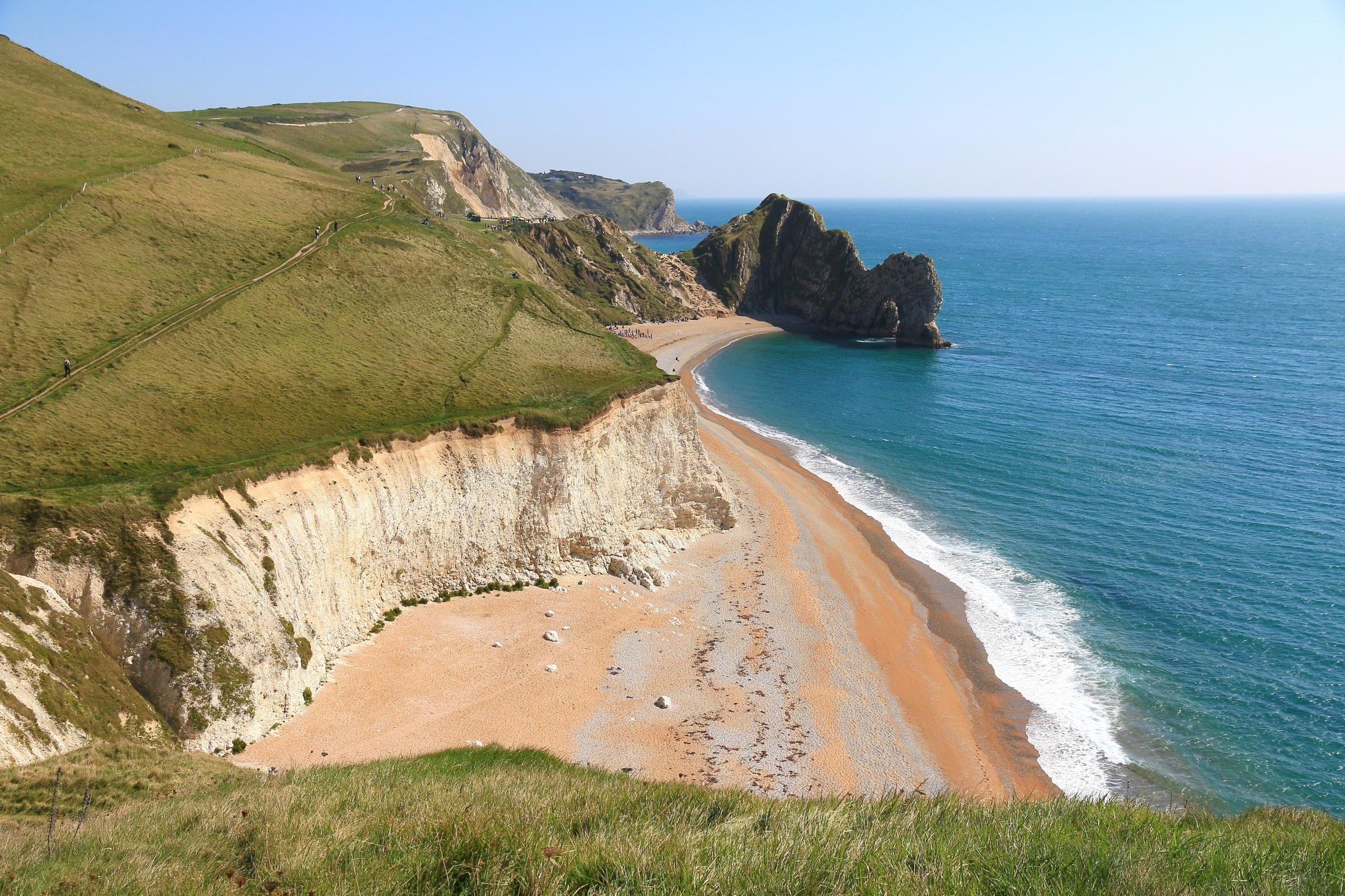
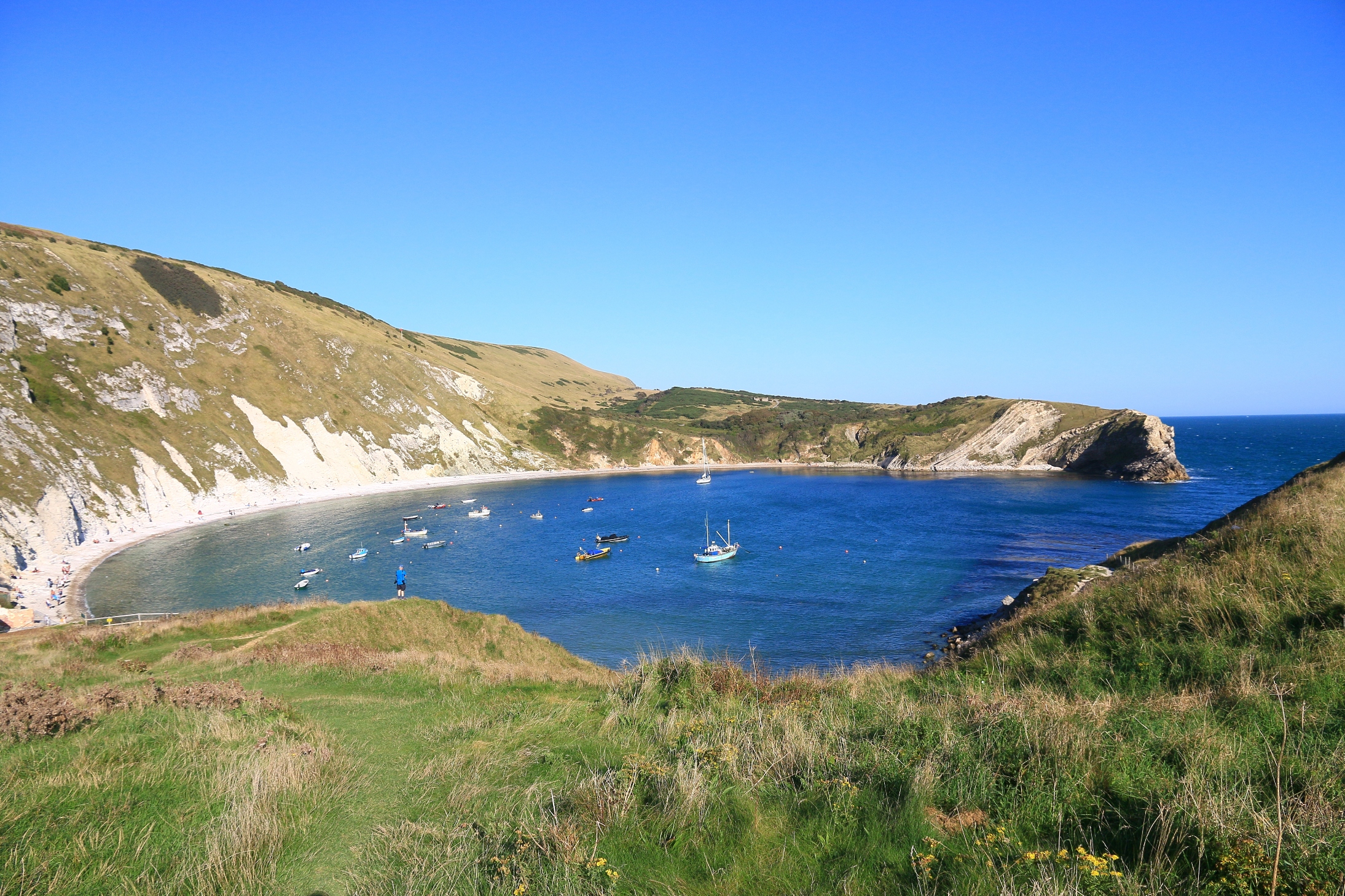
If anywhere was going to remind me of GCSE Geography – apart from a teacher attired in 70s Cornish tramp style – this was it. Limestones, clays, chalk and sands…a concordant coastline of multifarious erosion (thanks for the reminder Wikipedia). But you don’t need to know your geology to appreciate such sights, on this most glorious of September days.

dors01You may, however, need a decent pair of lungs and a sturdy set of hamstrings. Depending on distance, exploring this coastline is at best lumpy and at worst near vertical. I have an inkling this may be down to different rocks and things and their resistance to erosion and stuff. The current batch of Geography students at the top of the first hill might be able to tell me. But no time for stopping, for the first amazing sight is down the hill.

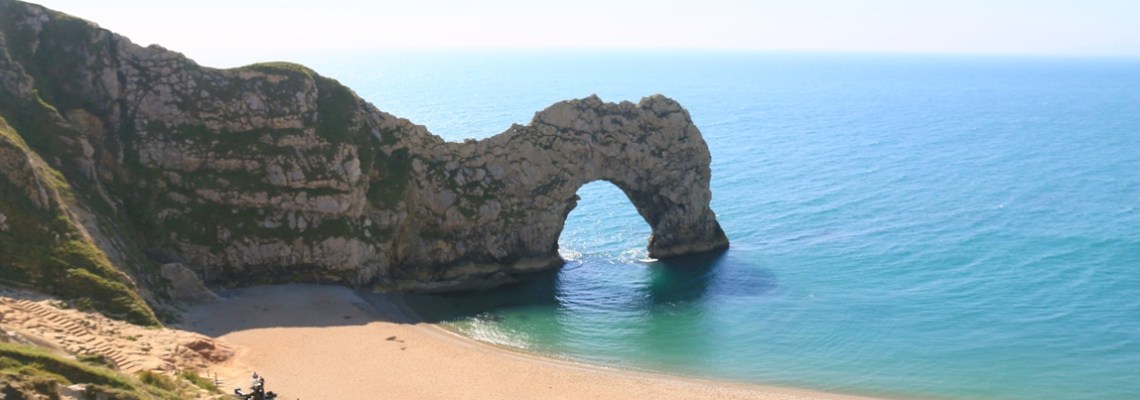
With a name like Durdle Door it could only be in Dorset. A headland (which has, again, multifariously resisted erosion) pokes out into the beautiful blue green water, which harbours shimmering sandy coves. It seems someone forgot to shut the door on this feature, because there is a big hole where it should be. Born in a barn, as they probably say here as well (to which the answer is, unequivocally, yes).

dors02

It doesn’t jump out at me and say: “India”. I haven’t been to India but it’s not what I picture from the clichés and stereotypes milling about my brain. Still, someone decided it was a good spot for a Bollywood movie. From above the beach (which was closed for filming) it seems this particular movie was about a bunch of young lasses and fellas having a right hoot playing football on the sand (surely it should be cricket, no?). There was some music and perhaps there was some dancing, as we turned onwards and most definitely upwards.

dors03The good thing about this particular climb was the ever expanding backdrop, necessitating natural rest breaks for photos and selfies and simply having a breather and taking it all in. Occasional wafts of lively Bollywood music spurred you on to the top (arguably, to get away from it!) and you reached there and thought…well that wasn’t so bad after all.

dors04

But still, the trail (which is, I hasten to add, the oft venerated South West Coast Path) undulates. Another climb, another gargantuan row of white chalk cliffs and shingle beach colouring the sea azure. A long stretch, less steep but grinding, gnawing, nagging, starting to get a little annoying. The air is warm, the fields bare, the reflection from the ocean blinding. It is amazing, but I am being English and naturally starting to complain. Not out loud, but in my legs and in my head. A tiger roll and slabs of cheddar help as does the astonishing view. Looking back from whence we came, the highs and lows, crevices and coves, the jumbled tangle of concordant coastline which plunges and slides into the English Channel.

Turn the other way, and you can see that it does all come to an end. The cultivated rolling pasture of a Hardy novel reclaims the land, and villages like Corlookatthat Honeytemple wallow in the valleys of rampant conservatism. The endless sands of Weymouth look welcoming and – at least from here – Portland appears as some magical, mystical isle rising up out of the sea (spoiler alert: it’s not).

dors07The route back from here departs from the cliff line and mercifully involves fewer lumps and bumps, skirting the edges of great bowl-shaped valleys and the occasional patch of gorse. It is infinitely less interesting, but does the job with a minimum of fuss. Occasional views north show hilltops and ridges many miles away, while patches of pastoral begin to return underfoot. It be no Devon but it aint a bad go.

In fact, despite similar voluptuousness, it seems drier than Devon and thus a little harsher on the eye. Perhaps top of year A Level Geography students would tell you it’s due to the geology of the place and the climate. Others will say it’s just a nice sunny day which is great for the harvest and even better for ice cream. Ah, an ice cream at Lulworth Cove. This may well have been something I was daydreaming about on a plastic chair back in an austere converted military hospital in Devonport in the 1990s. It took a long time coming, a spot of bravery, but it was worth the wait.

dors08

Great Britain Green Bogey Photography Walking

More moors

Dartmoor is a very handy place. Particularly on those days where guilt gets the better of me and I engage in the preposterous proposition of work. After instant coffee breaks – a sure sign I have been in England too long and settled for inadequacy – it reaches something like 3pm and I yearn to break free. And there Dartmoor is, through the school and hospital and fast food takeaway traffic, and up the A386.

moor04

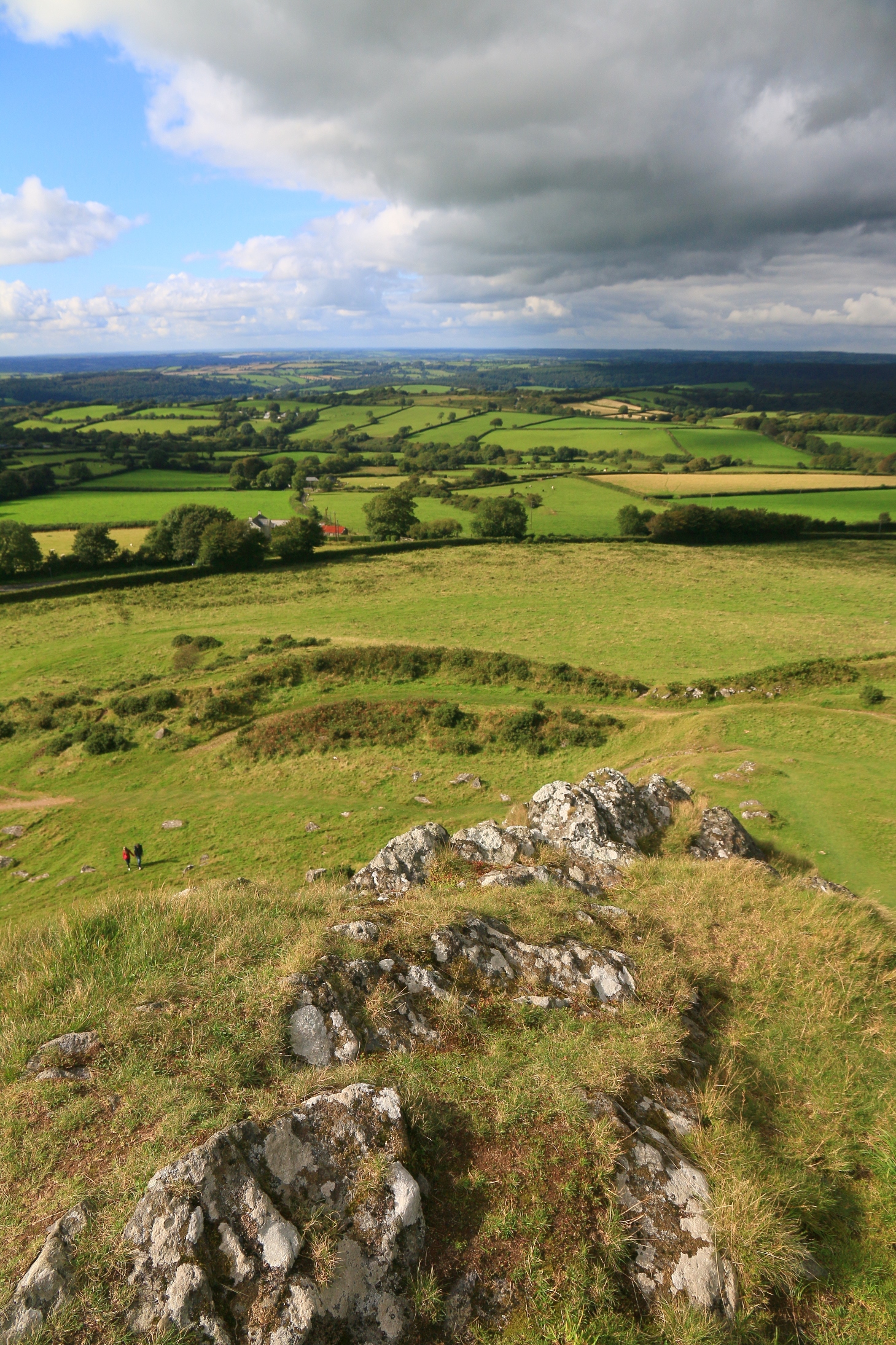
moor05The area around Burrator is probably the handiest and offers a useful mixture of forests, tors, ponies and a chance to gobble down a Willy’s ice cream. Sharpitor, Leather Tor, Sheepstor, Down Tor all provide the opportunity to scramble around and over clutters of granite, to gaze north and east into the wilds and south and west over the patchwork dream to the hazy ocean on the horizon. Swathes of bracken meander down to gnarly forests and tinkling streams, some of which are occasionally plummeting (conveniently and suspiciously close to the ice cream van).

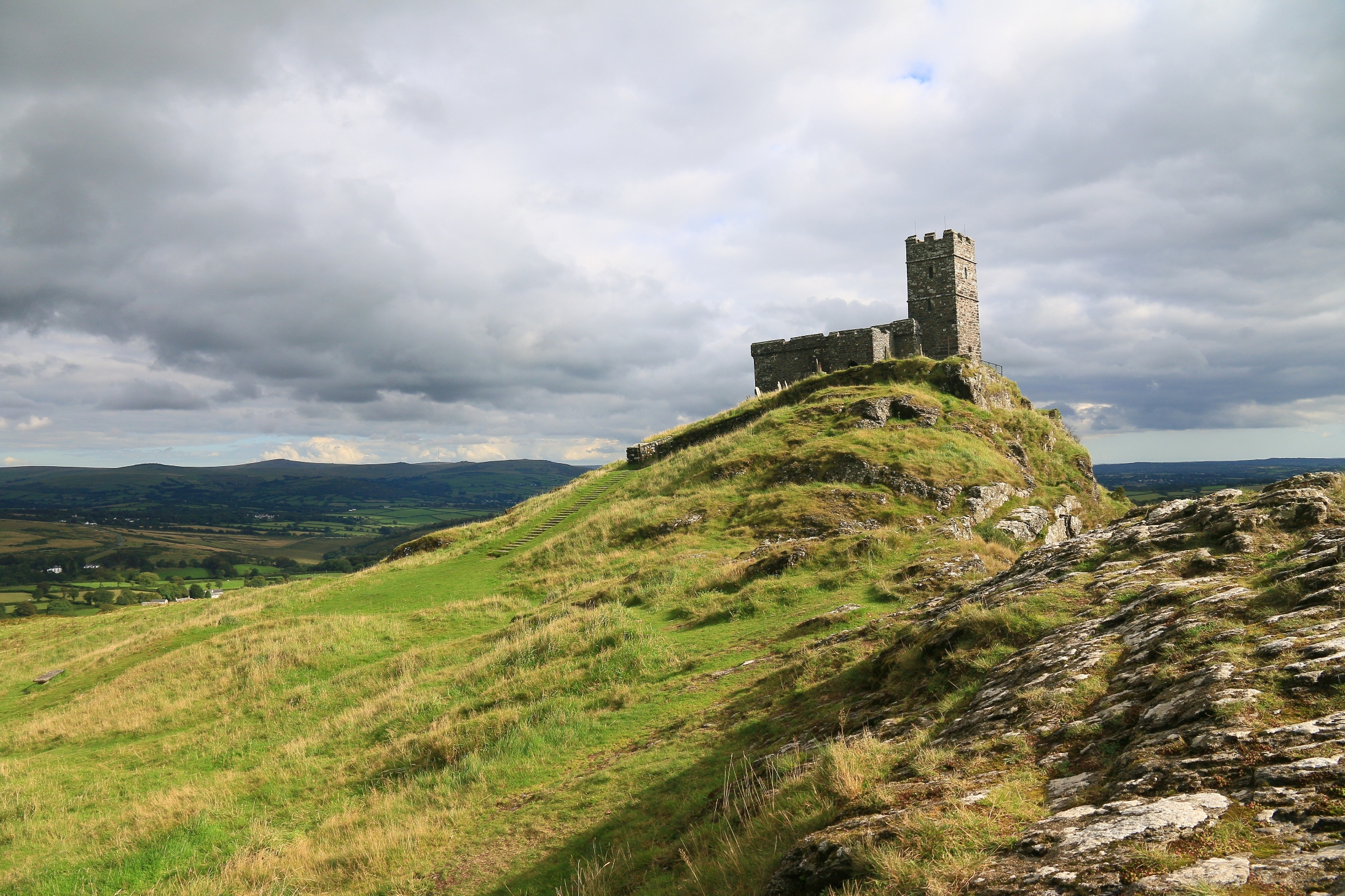
From such moorland vantages – and practically any other hilltop in West Devon and East Cornwall – the modest mound of Brentor is visible, disconnected from the barren tops of Dartmoor before it slides down into the Tamar Valley. Its distinction not only stems from its prominence amongst flatter surrounds, but its famous church that some dedicated god-botherers decided to construct a long time ago.

moor01

moor02I suspect the church provided a symbolic, steadfast two fingers to the heathens, roaming the moor via their crazy stone circles and rows, all wild hair, posies of heather, and rampant Chlamydia. An outpost for civilisation, a rising up from the moral turpitude of the flea-bitten masses towards the light. I feel much the same leaving Plymouth and heading to Dartmoor today, bathed in its pure air and natural light. Swept away in wonderment, even my jeans are feeling holy, what with all the pasties and frequent straddling of giant cracks between granite blocks.

moor03

moor07As well as flailing raggedly down from Dartmoor, heathens would have been in profusion west of Brentor and into the dark, forbidding uplands of Kernow. Willing to shake it up a little, I grabbed my passport one afternoon, crossed the Tamar and headed towards Bodmin Moor. Less defined and gargantuan than its Devonian counterpart, there are nonetheless pockets of heather and gorse pierced by shattered tors. Ponies graze and stone rows lurk and the diggings and ruins of the tin industry crumble away in profusion. There is less of the idyllic in this zone around Minions, but there is enough to encourage future exploration.

From these boggy pastures the River Fowey runs south and widens into that rather delightful spot by the sea. Upstream has its highlights too, as I found at Golitha Falls. Verdant woodlands are making the most of the last of the summer, tinges of yellow and orange and red brushing the tops exposed to the sun. A scattering of leaves are floating down towards the mossy branches and rocks of the forest floor. All the while, the pure waters of the river meander and tumble unendingly onward, luring you to follow them forever towards the sea. Cool and refreshing and rejuvenating, there are no excuses not to get back to work, other than more moors.

moor06

Driving Great Britain Green Bogey Photography Walking

Gap Fillers 1: Southeast Cornwall

I am behind, seriously behind. Numerous distractions scattered within a 30 mile radius of Plymouth have conspired to infiltrate the memory card of my camera and ingratiate the memory banks of my brain. Blogging was so much easier when I was marooned in Canberra, with just the occasional escape to regurgitate and local tree pictures to upload. Today I forget what day of the week it was yesterday and where I popped out in the afternoon after labouring in front of my computer doing work (eeek).

So, in an effort to catch up to the present day, here is the first of a non-sequential, scattergun melee of words and pictures. To provide some semblance of logic, the focus is on Southeast Cornwall and various trips I have made across the Tamar to this somewhat understated of back yards. It’s an area that can get overlooked – in fact I have been guilty of such – for the drama and mystique of the North Cornish coast. But there are many gems, some of them new to me, littered within the rolling fields and crystal coves of the south.

Literally just across the Tamar are the twin villages of Cawsand and Kingsand. It’s a small pedestrian ferry ride away from the salty sewage and sinister seagulls of Plymouth’s Barbican. Despite the influx of Janners, it is undeniably charming courtesy of its narrow streets and pastel ocean tones. Stick around as a sunny Sunday afternoon lengthens, and you can gleefully soak in the mellow vibes with a Doom Bar outside the front of the Devonport Inn.

scorn01

Around the corner from here is Whitsand Bay. An area that I frequently bypass in pursuit of those finer grains of sand. Come at high tide and there will be little of it to walk on. But when the tide is out, the bay stretches on and on and on. The ribbon of road skirting the cliff tops bears a passing resemblance to a small section of Great Ocean Road, and steep tracks lead down to the sands and rocks and pools far below. Not so bad to reach, but harder to return.

scorn02

There is a great sense of space here – of vast ocean and big sky, Plymouth hidden by the hulking spine of Maker Heights and Rame Head. Small fibro shacks with names like Eddystone View and Shipwreck Haven add a rough and ready, ends of the earth, windswept aura. It could be coastal Tasmania, Devonport around the corner and Launceston up the road.

Along from Whitsand Bay the trappings of modernity return at Looe, a place of many a childhood day. There is nothing overly special about Looe – it’s just your regular run-of-the-mill southern Cornish fishing port nestled into a steep valley. Peppered with fish and chips and amusements it is a resort town, though not of the same ilk as Skegness or St Tropez. Two prime assets are its leafy branch rail line linked with Liskeard and Sarah’s Pasty Shop. Both in the same day make it worth an afternoon.

scorn03Many of the emmets and grockles and – indeed – locals combine a trip to Looe with a stop in Polperro. Polperro is undoubtedly the prettier of the two, with narrow (mostly car-free) streets, cosier cottages, and a ruggedly fishy pungency. Pasties look no more than average, but the recent revival in crumbly fudge (as opposed to the bland, processed slabs packed in Huddersfield) has blessed the town with a new outlet to be commended. Cornish sea salt is the fitting and fulfilling way to go.

From here I am going to skip a huge section of the coastline and return to it in a jiffy. Mainly because I want to build this post up towards a marvellous, heady climax. So, shifting further west, if I was to pick a line between Mevagissey and Falmouth I would be marking unchartered territory. It excites me that I still have unchartered territory in this part of the world. I made a small incursion into it the day after returning from London and it confirmed that if I was ever to move back to the UK it would not be in London (but never say never right?!).

scorn04Gorran Haven is, I suppose, nothing remarkable and its town beach would disappear with a high tide. But it offers a less touristified alternative to nearby Mevagissey, possessing enough steep narrow streets and cobbled harbour walkways to keep seaside amblers happy. I think it’s the kind of place where everyone knows everyone and their business, which is no doubt discussed in lurid detail at the local RNLI supporters group meeting every third Tuesday of the month following the gathering of the Retired St Austell Druids and Mystic Circle Society. But I think I might like that. Its fish and chips and fairly remote and secret sandy beach around the headland might also make it bearable.

scorn05

But if we are looking for blissful sandy beaches in azure seas there is a gem amongst gems, a golden crown gleaming through the rubies and pearls of Southeast Cornwall. I had not set my eyes on it until a month or so ago, benign and more subdued under cloudy skies. A sunny day in early September gave me inspiration to return.

Eschewing another day of winding lanes and tractor blockages, I took the train for a change, disembarking at Par for a bus to Fowey. Fowey is kind of like Looe and Polperro, being yet another steep harbour lined with pastel cottages and granite townhouses. I like it the most out of the lot of them, maybe because it is a bit more upper class when I am not. I could live here but doubt if I could afford it. You can tell it’s on the Islington radar, with a beautiful bakery and organic butcher and delicatessen and many a cosy cafe to wait for a water taxi to take you to your yacht. I think this might help explain why I think I could live here.

scorn06

scorn09I could just as equally live in Polruan, across the river from Fowey and gateway to another luscious corner of cotton wool clouds hovering over creamy fields spilling into the sea.  No fancy bakery, no organic quinoa, just good old fashioned St Austell Ales and the sound of circular saws emanating from the boatyard. A steep, steep hill laden with bunting, or a slightly less severe meander lead to St Saviour’s headland, and expansive views south, east and west.

scorn08Back in classic South West Coast Path territory, the trail dips and rises steeply once again, the glare from a becalmed sea radiating heat like the sun through a windscreen. Turn a corner and you cross over into the Mediterranean, as the horseshoe cove of Lantic Bay welcomes the weary. Islington-on-sea may have anchored down below, but the ultimate satisfaction is to arrive on foot, rewarded for effort beyond expectation. I cannot think of a better place to eat some of my provisions from that bakery and delicatessen, marvelled by the colours from on high.

A jewel for the keeping.

scorn07

Great Britain Green Bogey Photography Walking

Cornish pastiche

Amongst the dollops of clotted cream and generous helpings of Plymouth rain during August, a few days away in Cornwall yielded a chance to dabble in classic British seaside family holiday territory, complete with dollops of rain and generous helpings of Brummie. Staying in a cosy cottage up an unfathomably narrow lane on the fringes of St Agnes, the benefit of this traditional British seaside holiday was that it was not entirely British or overly traditional. There were French people for a start and – well – the experience was less Blackpool bucket and spade and more scenic coastal delight. On a good day and some bad, the Cornish coast is difficult to surpass.

corn02

The trip started very much in the traditional way, departing Plymouth on a train in pouring rain, invariably teeming and spitting and drizzling all the way to Truro. And while this particular band of summer holiday weather cleared as a double decker valiantly wound its way to Perranporth, the emerging sun only served to bring out the windbreaks and ice creams and Brummies upon the beach. United in ice cream dedication, I then turned my back upon the human speckled sands and headed up, up and away.

corn01

What followed was a predictably exquisite walk along the coastline to St Agnes, despite the scarred residue of mining and the eroded zigzagging of ambling ramblers and rampant rabbits. Loaded with a backpack of clothes I could easily have been mistaken for some intrepid adventurer myself, hiking the entire perforated coast of the southwest and growing a beard in the process. I was happy for this facade to stick, passing impressed day trippers with their miniscule handbags and inappropriate footwear on their traditional summer holiday.

corn03Navigating plunging cliff lines and sapphire coves, the thought of lugging a full backpack over days and weeks lost some appeal with the steeply unending climb up from Trevellas Porth. However, contrary to popular exaggeration this did end and it was with some joy that my muddy shoes and sweaty back made it into The Driftwood Spars for a prized pint of Doom Bar. I could, indeed, get used to this.

corn04

Reunited at the pub with the French family, my fraudulent pretence of long distance exploration could no longer be maintained. More traditional holiday pursuits – such as rock pool pottering, cheese eating, and children not really wanting to go to bed – amply filled the remainder of the evening. And I, with the rest of them, settled in for a comfortable night of sleep in the little cottage up the unfathomably narrow lane.

corn06The next day offered something of a repeat of the previous, albeit more family-friendly and with one of those pathetic little daypacks on my back for company. What was unchanging however was the beautiful scenery, from the generous sands of Porthtowan to the charming cove of Chapel Porth. There and back again over heather and gorse, the curls of Atlantic surf peppering the craggy headlands and sweeping up empty beaches enjoying their day in the sun. Ice creams and sandcastles and paddles in the undeniably frigid sea were add-ons at the end of the day, as the summer clouds again gathered over the abandoned relics of this heritage mining coast.

corn07

Red sky at night, ice cream vendor’s delight, so the ancient saying goes. And true to this cliché, the next day dawned clear and blue, generating a fervour of ant-like humans engaging in traditional seaside holidays upon the sands of Perranporth. There were windbreaks and Brummies and disposal barbecues and the inevitability that is a once-loved but now abandoned flip flop. Plus, of course, ice creams in abundance.

corn08Thankfully the tide at Perranporth was out and the beach here thus stretches on and on and on, offering enough room for everyone to enjoy their own holiday. Space to paddle in pools and throw Frisbees; dry sands on which to lay, wet from which to build; high cliff tops concealing the congregation of brooding clouds, the lofty rocks a sufficient shield to pretend briefly that this is actually summer.

It is in moments such as these that the appeal of the traditional British seaside family holiday becomes clearer, particularly if it happens to have a French twist and things proceed a little less in the Birmingham tradition. It is an appeal embellished of course with the delight that is being in this part of the world, with these people, and with the prospect of a rainy day yet again ahead, on the return to Plymouth tomorrow.

corn09

Great Britain Green Bogey Photography Walking

Up Pompey

I must confess to an inexplicable, in-built prejudice towards the city of Portsmouth. While not quite as menacing as the Daily Mail’s fear-stoking crusade for an antiquated version of middle England, my prejudice stems from uninformed and socially constructed antipathy. Nurtured through supposed rivalry – the battle of the dockyards – between Plymouth and Portsmouth, I have naturally taken the side of Plymouth, envisioning Portsmouth as lacking anything of appeal.

This prejudice of course exists without ever having been there. And so, it seems obvious to say that the best way to make an informed decision about the city of Portsmouth is to actually base it on real experience and facts, a principle that seems out-of-reach of many a lazy newspaper editor and Facebook re-poster the world around.

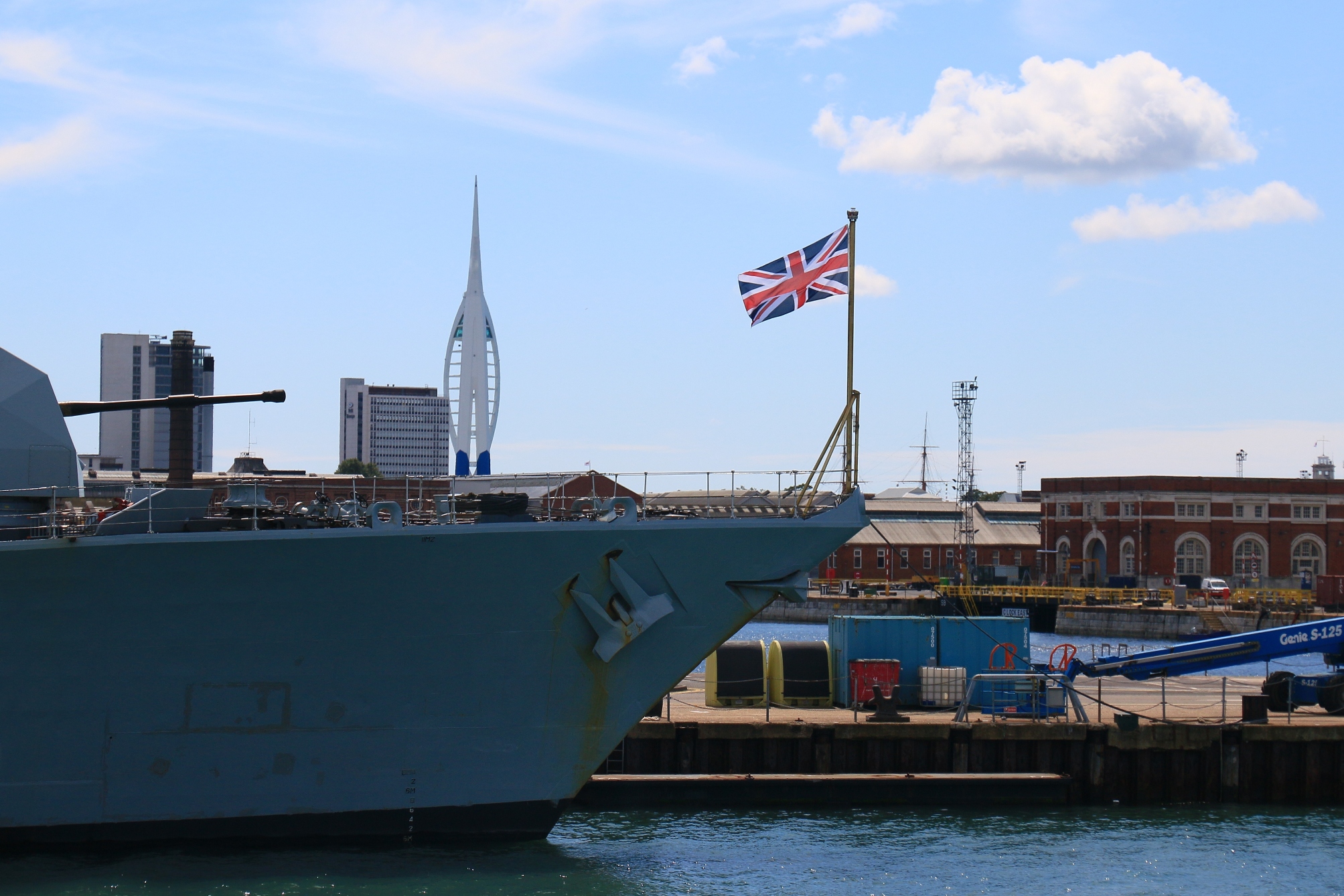
bas01One (of many) positive things I can now say about Portsmouth is that it actually has a summer. Well, at least for one day at the start of August. This may score it points over Plymouth, whose current endless drizzle is slowly driving me mad. The summer skies (which now seem an age away) are penetrated by a rather large erection – the Spinnaker Tower – brought to you, almost inevitably, by emirates.com. This protuberance now dominates the skyline, suddenly popping up around various corners and appearing from distant vantages. It has a Sydney Harbour Bridge quality in this respect, and is almost as photographically alluring.

bas02Indeed, atop the tower you could kid yourself that you are staring out at that great harbour of the southern continent, ferries bustling, sails billowing, cruisers cruising, waters glimmering in the sun. Then you taste a coffee and are brought back down to earth, only one hundred metres up, and your feet are plonked precariously on a glass floor. Shortbread for millionaires and the far-reaching views sweeten the bitterness and steady the nerves.

bas04The First Fleet left this same harbour a smidge over 225 years ago, just one small trinket of history in what is, undeniably, a great naval city. Today, the Historic Dockyard aims to pack all of this in around one sprawling site. Such is its richness that you cannot hope to cover it all in one day, but a harbour tour offers a good overview and – again – sat out on the deck on a warming clear day, a slight pang of the Sydneyesque emerges.

bas03

bas05Within the dockyard itself several old ships of worldly significance stand, a reminder of empire and industry and rambunctious naval warfare between derring-do admirals and rascally foreigners with finely groomed beards and bouts of Syphilis. The hipsters of their time, strutting the maze of stairs and low ceilings of HMS Victory or gliding the gleaming decks of HMS Warrior. Doing things that will later appear in vaguely recalled history lessons and espoused more memorably by Stephen Fry and co on TV.

The dockyard experience makes a sudden swell of patriotism hard to resist, and it is inevitable that Rule Britannia will start pounding through your head, interspersed with Sideshow Bob Sings Songs from HMS Pinafore. How patriotic then to have delicious fish and chips in a pub and drive back through Jane Austen countryside, satisfied that the city of Portsmouth is actually one of suitable constitution to befit inclusion in this Jerusalem.

bas06Now, if I had prejudice for the English countryside it would undeniably be overly-favourable and rose-tinted, photoshopping out little blips like power pylons, speed cameras, and fields of slurry. It would be a scene closely resembling a walk through the Wiltshire countryside, starting in the quiet, affluent high street of Amesbury and finishing atop an ancient hill fort with the needle spire of Salisbury Cathedral gleaming in the middle distance.

bas07

bas09Along this serene, sun-filled walk, thatched cottages and glorious gardens scatter amongst sweeping fields of wheat and undulating grassy meadows. Shady wooded copses harbour tinkling streams and melodic songbirds. A village meanders along the banks of a crystal clear river, the pub garden its heart and soul. Country lanes melt away into the hedgerow landscape, and weathered stone bridges hint at a past industriousness.

bas08

bas11This is all enjoyed on the second day of summer weather in a row, a rarity as scarce as the ability to wear shorts, which is also somehow happening. It is pleasantly warm rather than scorching, but conditions are adequate enough for cidery refreshment at the midpoint. While post-drink malaise now seems a little more conducive for a nap than a hike, we push on up onto a ridge and then to the summit culmination of Old Sarum.

With 360 degree views, Old Sarum obviously made sense for original Middle Englanders (and then various waves of migrants) to construct defences and forts and castles and cathedrals. Sat atop its slope eating lunch, it is quite easy to imagine pouring some scalding hot oil on a pesky interloper who has made it across the deep moat. However, life today is generally more sedate and the only oil to be found is something like cold pressed balsamic infused deluxe extra virgin organic Tuscan olive oil offered with semi-dried tomato and wild chevre slow-rise sourdough served up in nearby Salisbury. I would have settled for an ice cream, but then not everything can be perfect on this exemplary English day, on a consummate, enlightening British weekend.

bas10

Great Britain Green Bogey Walking

With age goes wisdom

If you haven’t got anything nice to say don’t say anything at all, said like no politician in the history of the world ever. This becomes apparent in the brief snatches of news footage or articles I have intermittently stumbled across in relation to the UK election. So, from what I can make out, some commie wonk stumbled when feeding a shiny-faced posh man a bacon sandwich, who choked upon hearing Scotland are going to build a big high speed rail bridge bypassing England to Europe, but turned up to the NHS only to find it riddled with BBC bias and a wealthy man of the people chuffing a cigar hand-crafted by Romanians he secretly keeps in his shed. Meanwhile, some woman had a baby, which like happens every minute of every day of every year. Oh Britain, how I miss you.

All this leads me to say that I don’t have much to say; not because there is nothing nice to say, but really since things (unlike Election 2015, oh yes!) are fairly mundane. The biggest event was having all four wisdom teeth – intricately shaped at angles in the kind of x-ray you see in medical journals – extracted. Convalescence was aided by frozen peas, warm soup, and gentle walks around the leafy, crunchy, rainbow suburban streets.

apr00

apr07Like Batman getting my powers back, things progressed at a steady pace: work was sadly possible but also happily income-giving; hills could be walked up; soup became mashed potato became fish curry became shepherd’s pie…until finally I could mercifully manage a bacon sandwich. The bike could be pedalled, when the variable weather was having a good day. And wine could be safely drunk, useful when on a charming tour of Lerida Estate two weeks post-wisdom.

apr01

ANZAC day came and went with its usual amalgamation of touching remembrance, freedom- embracing alcoholism, and political posturing. This year, one hundred years after Gallipoli, there were more TV dramatisations and politicians posturing than ever. I spotted in Target the day before that you could buy a ‘Camp Gallipoli’ swag. Yes, you too can sleep out like the ANZACS, though I presume without the cloying mud, stench of death, and general sense of imperial-driven futility.

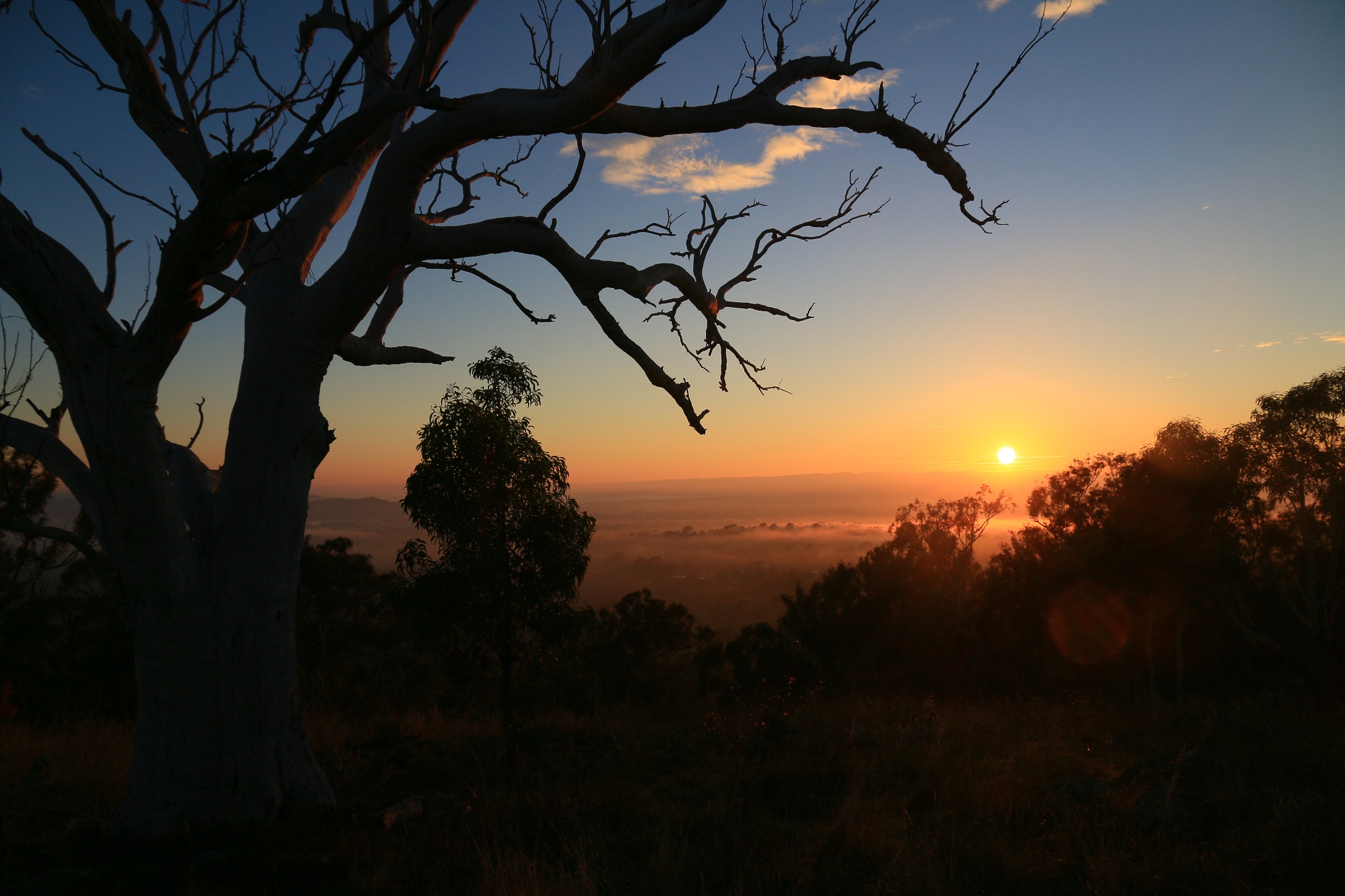
The dawn service – a genuinely poignant and worthy lamentation for the death and sacrifice of war – was attended by something like 120,000 people. Too late to the party, I stood alone, upon a nearby hill, the sun rising above the early mist of dawn as magpies uttered melodies, and the shadow of gums were given new life. Standing to see the sun, lucky.

apr05

apr06

And with that I really can’t think of anything else to be said.

Australia Green Bogey Photography Walking

A mountain to climb

In another week in which the Australian political landscape imploded in much self-generated excitement, it is hard not to be drawn into contributing more electronic graffiti about levels of douchebagness and the chaos and disorder that is certainly not happening again like it did with that other bunch. Nothing to see here, move along now. However, while the world really doesn’t wait with baited breath to figure which “adult” is in charge of the Knightly Order of Her Majesty’s Commonwealth of Australia, the kos12natural landscape is in much less turmoil (unless you listen to those wacky “scientists” with their corroborated, peer-reviewed “research” and years of undisputed empirical “data”). There are, clearly, mountains to climb and some are easier than others.

The Snowy Mountains are very old – older indeed than a snoozing Senator – and have been worn down over millions of years. If they were several millions of years younger they would be more akin to the New Zealand Alps or the Himalayas, but because of their age they have mellowed; they are more rounded, worn down and weather-beaten, skin baked by summer sun and scoured by winter ice. They are, perhaps, the Brecon Beacons down under, with classic U-shaped valleys, remnant moraine and small, glacial tarns.

Having digested various parts of the mountains over the years – embedded deep within Kosciuszko National Park – a one-day walk finally appeared to stitch together the different threads of footsteps past. In particular, the Main Range circuit, nudging 22km in length and looping around the highest country. This included a stretch of six kilometres or so that I had not been on before and which, undoubtedly, was the most spectacular.

So, in pursuit of clear air and with the captain’s picks of two friends for company, let me guide you around the trail in a mostly factual, pictorial and certainly not chaotic or disorderly fashion…

Starting off from Charlotte Pass (1,837m), the track drops substantially to ford the Snowy River (1,717m). The river rises somewhere amongst the boggy marshes 5km upstream, and has gathered enough water by this point to make a crossing on stepping stones sometimes hazardous. Today – still reasonably early on a crystal clear February morning – all was rather placid and safely negotiated without wet feet or soggy sandwiches.

kos01

kos02

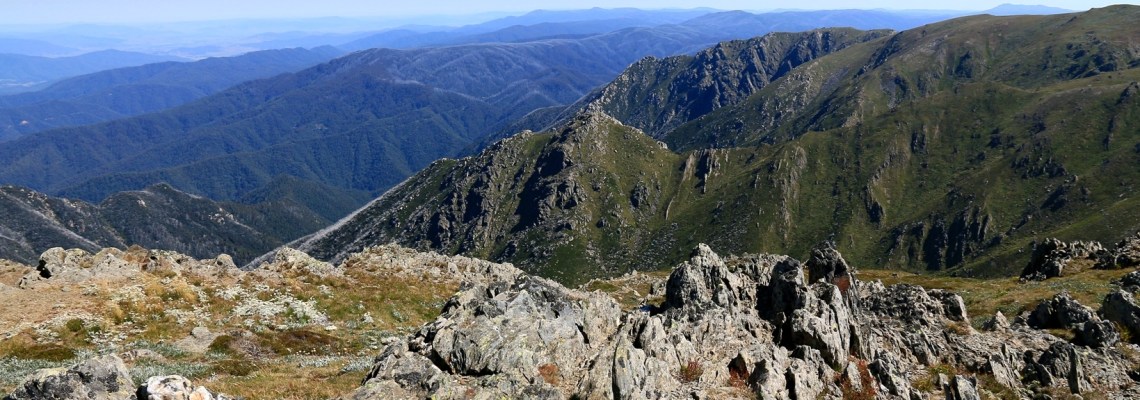
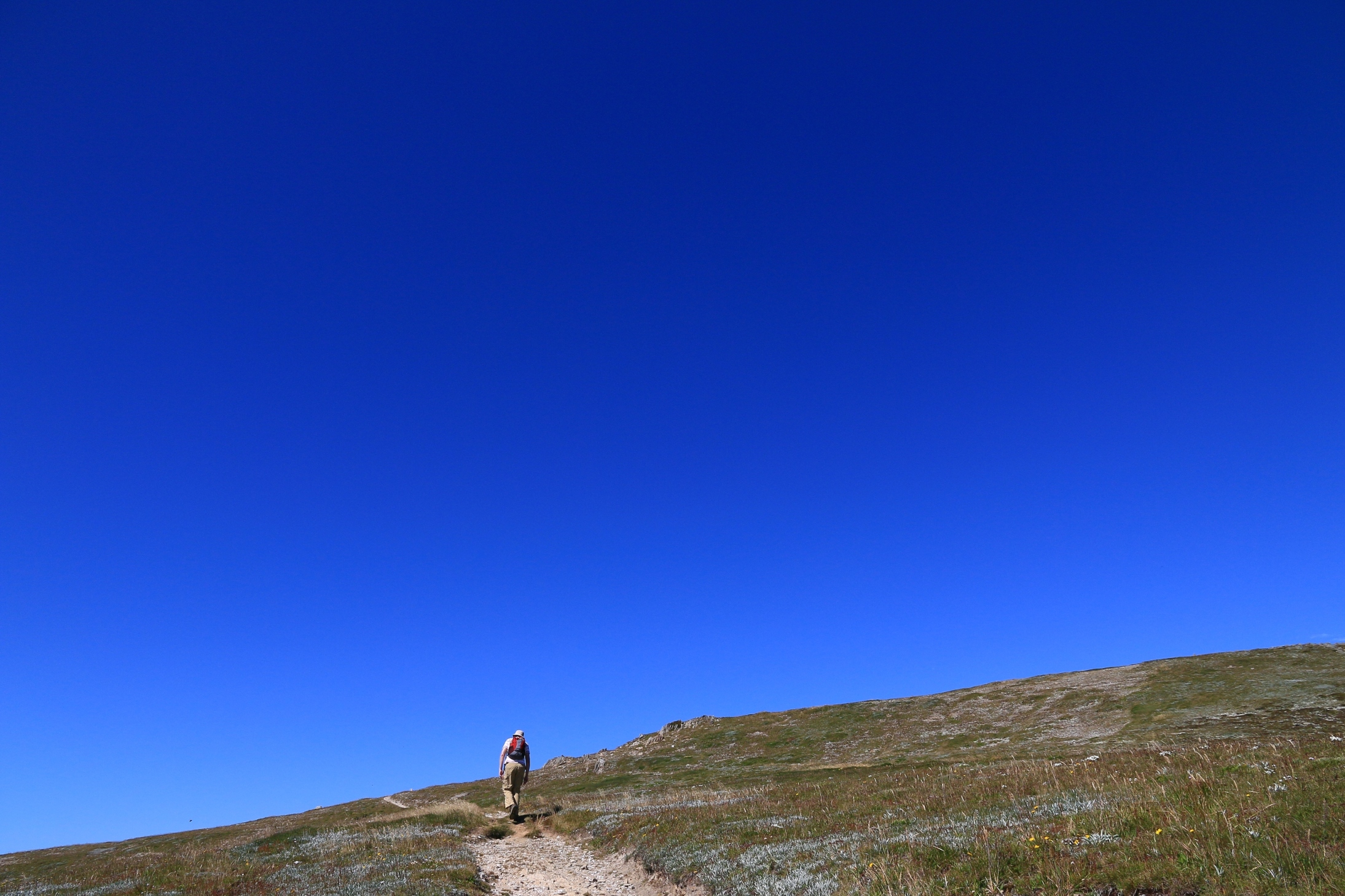
From the river crossing it is unsurprisingly onwards and upwards; in fact the climb, while never too steep, is quite incessant and longer than I remember! However, with altitude the views start to open up, including the sight of Hedley’s Tarn and the ridgelines of the Main Range’s highest peaks.

kos03

After some 300 metres of ascent and four kilometres from the start a view of Blue Lake is attained. Today it is lacking much of a blue colour and the glaring morning sun and a wind whipping across the surface are photogenically challenging! From here though it is not too much further to reach a saddle with the first views of more spectacular jagged mountains and the ranges of blue spreading west. A perfect opportunity for a morning food stop taking in a homemade sausage roll and spot of middle-class hiker’s quiche.

kos04

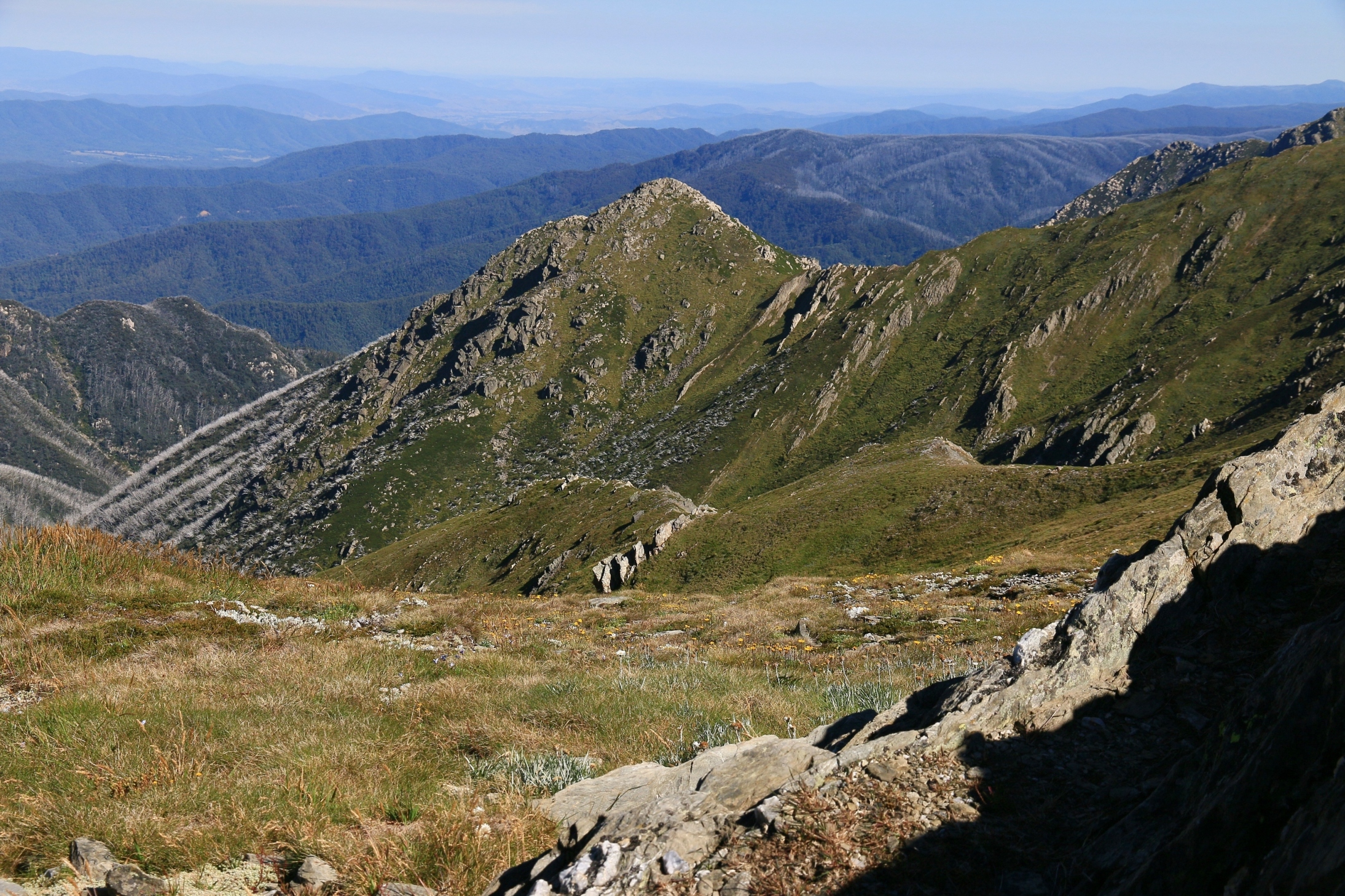
From this point, the trail is all new ground for me and the morning sustenance is useful for the slow climb up to Carruthers Peak (2,139m). The spectacular views continue, and the summit itself affords the first look at Club Lake, as well as the trail following the ridgeline to the rather bland summit of Mount Kosciuszko.

kos06

kos07

The ridgeline is a joy to follow, with remnant wildflowers, the prominence of Mount Townsend to kos09the right and deep ravines carved by Lady Northcote’s Creek, the mountains seeming to tumble sharply west. I have no idea who Lady Northcote was but if her character was anything like that of the landscape in which she was named, she was probably a bit of a looker, though occasionally bleak and somewhat cutting.
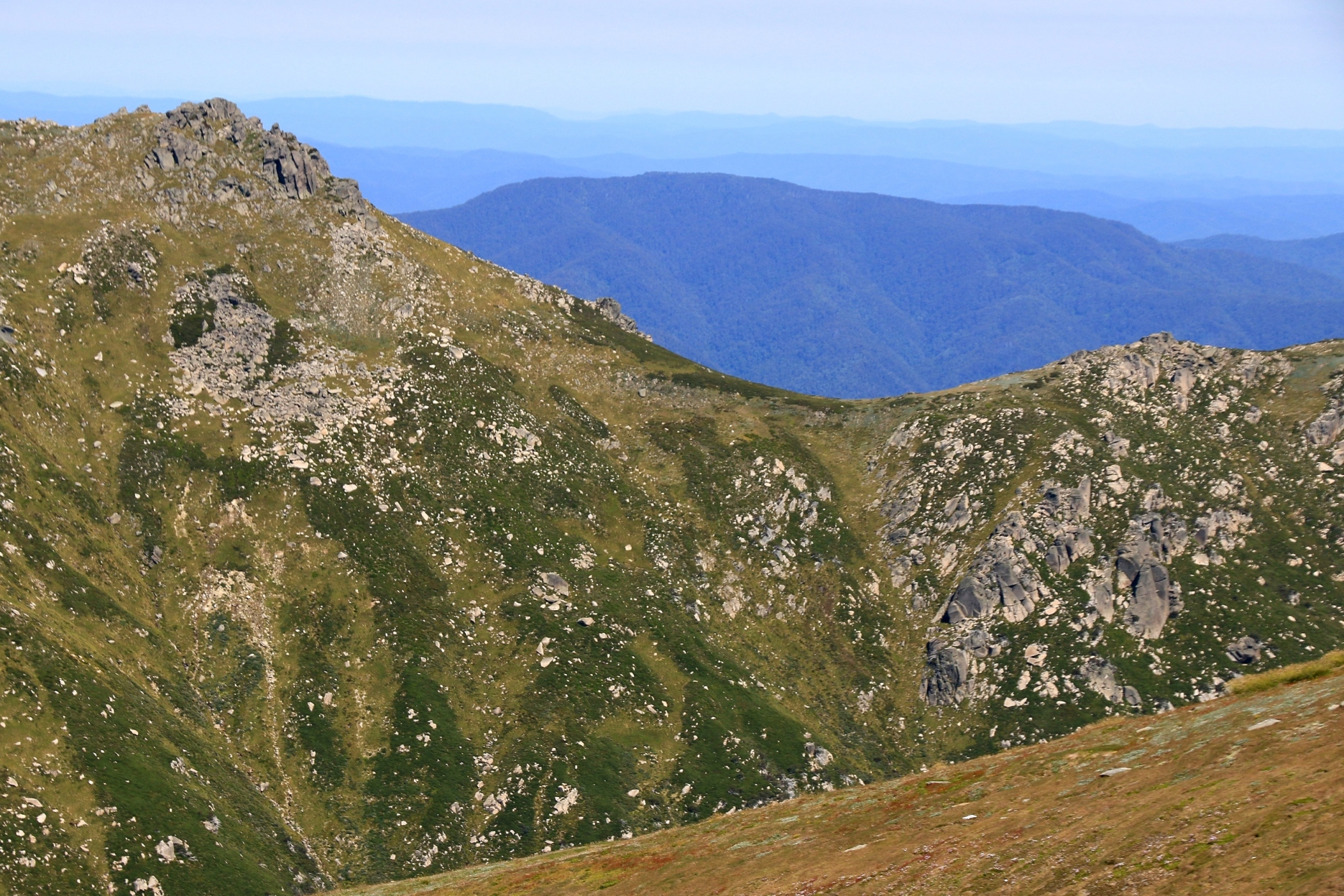
kos08

kos10Before too long Albina Lake emerges, tucked in a sheltered valley seemingly conducive to an array of wildflowers and other alpine plants. The lake looks quite inviting in the warmth and would prove a nice spot for a picnic. It’s about nine kilometres into the walk now, and with the summit of Mount Kosciusko just a few thousand metres distant, we resolve to head on and join the masses carrying their lunch to the top of Australia. On reflection, the best part of the walk is over…though this may be in part because familiar paths will soon be rejoined.
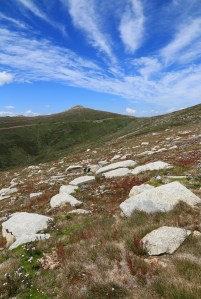
kos11Unfortunately we seem to have gradually descended a little, and the hoick up to the main summit thoroughfare is probably the steepest of the day. We’re not talking rock climbing here, but frequent steps and, by now, quite a penetrating sun. The junction with the main summit trail is like emerging from a country lane onto the M1. Mostly originating from Thredbo, families, fitness freaks and old fogies join us in a steady stream coiling up to the top (2,228m). A medley of Aussie flags and fluoro leggings congregates around the summit marker, and lunching is de rigueur. With homemade hummus and more quiche ours is perhaps one of the more pretentious of picnics!
kos13

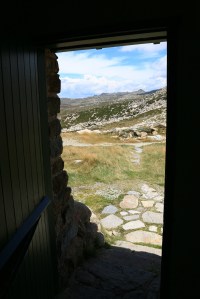
Apart from a little blip it is all downhill from here, some eight and a half kilometres back to Charlotte Pass. From Rawson Pass (2,119m) – which is something akin to the base camp for the kos14summit climb and apparently includes Australia’s highest public toilet – a sedate, well-graded trail makes it all the way back. This is the old summit road and I read that a shuttle bus used to ply along here, part of me wishing it was still running. The open scenery is not unpleasant, but in comparison to other parts of the track and given the gathering weariness this part is a bit of a drag. Markers every kilometre break it up, as does Seaman’s Hut (2,020m) and a more comfortable bridging of the Snowy River with four kilometres remaining.
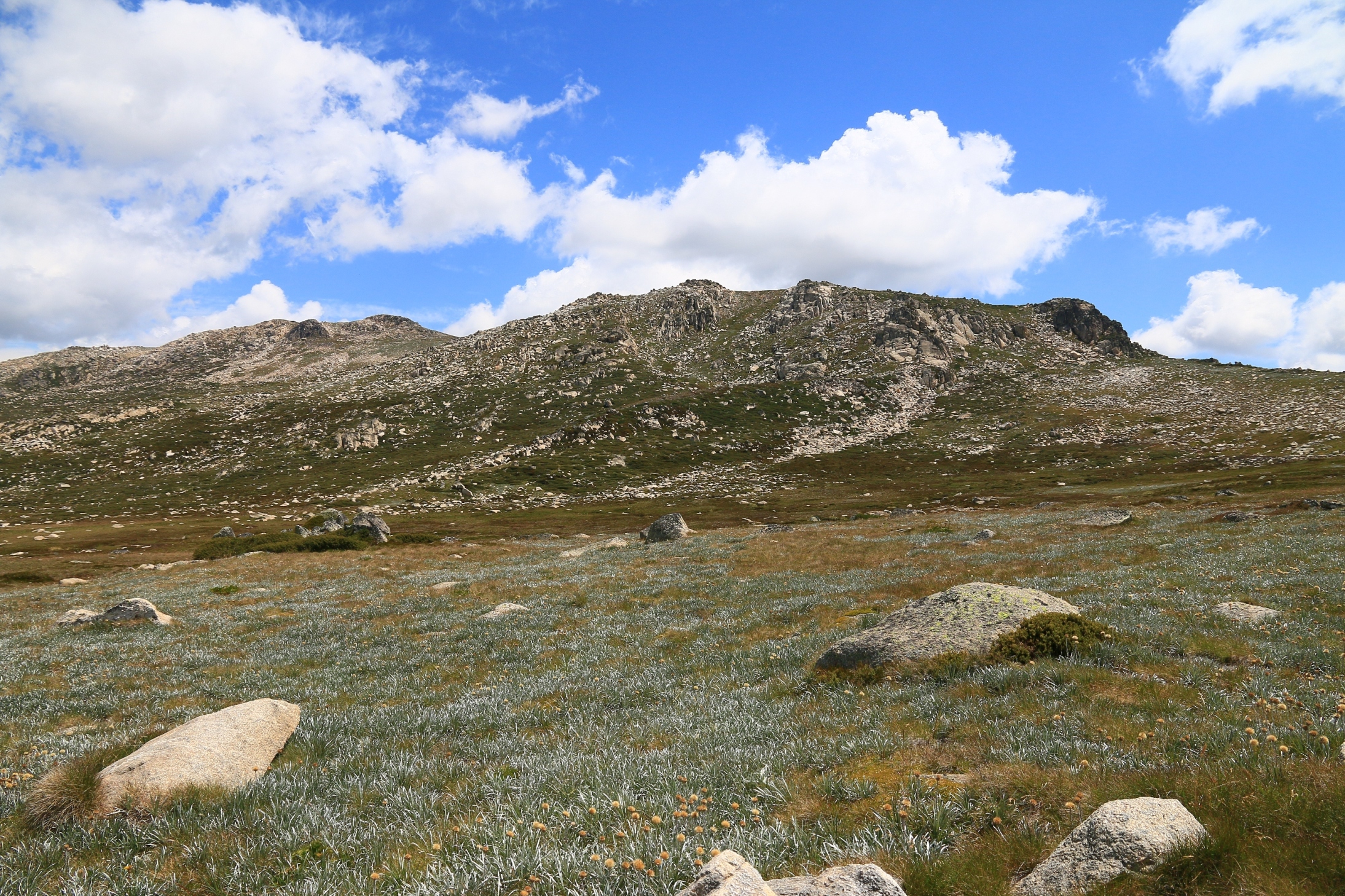
kos15

Approaching Charlotte Pass, signs of civilisation re-appear – a chairlift and the occasional dark grey metallic huts populated by visitors in winter. The Snowy courses to the left and from across the valley the earlier, kos16upwards trail to Blue Lake looks like an impressive climb! Snow Gums also cluster here, stunted and bending with their striped, smooth bark of chocolate and sand, of black and white. Afternoon clouds are building and the risk of storms hypothesised look as though they will be realised. But, after six and a half hours and 21.9 kilometres, we reach the (relative) safety of a Subaru Outback. Accomplished and relieved, invigorated and weary; trundling another 220km back to Canberra (577m), via Jindabyne caffeine and Cooma steak. From the real Australia and back to the bizarre.

Australia Green Bogey Walking

The twelve themes of Christmas

On twelve days after Christmas, my true love gave to me, another serve of leftover Christmas pudding with valiant Tasmanian attempts at clotted cream. By then it was 2015, and I was thinking that this indulgence really needed to come to an end. But the Australian Christmas seems a more elongated affair, blending as it does with summer holidays which creep all the way to Australia Day at the end of January. I say this every year, but Christmas in Australia is still somewhat bizarre and while I adore the lazy holiday feel and the addition of fine seafood to the agenda, a large part of me craves a good windy winter storm and a good windy dose of roast potatoes and Brussels sprouts.

While there are obvious differences between the Australian and European Christmas experiences, both are obsessed with a crazy excess of food. And so a day or so prior to Christmas I had acquired an esky full of crisps and nuts, chocolates and puddings. A fridge full to capacity with ham and sausage rolls and cream and cheese and (just for a touch of balance) fruit and salad. Longevity was the name of the game for the ham, and the hidden orange Christmas pudding (serves 10), took me alone a whole week to devour. In some way I was glad to see them go, but also a little wistful that they were no longer a part of my life.

Christmas Day itself was a suitably multifarious affair, bringing together the Australian, the Anglo, and the Italian. The day commenced with what any good day should – a walk up Red Hill in preparation for calorific overload – before a relaxing hour of reading and an early shandy with nibbles at home. jan01From then on the eating proceeded with a mostly seafood lunch involving the largest prawns ever created, sweets, desserts, nibbles, barbecue, sweets, snacks, more nibbles, etc. Presents were unwrapped, outdoor chairs were reclined, family discussions were robust. And to cap the day, I came home for a touch more nourishment and a little drink to lubricate the Skype calls to Europe.

By New Year’s Eve, some food stocks were depleting and I needed to buy more provisions from the supermarket to prepare salads and desserts for an excellent few hours of outdoor pool soaking, meaty barbecuing, and, well, dessert-eating. It was here that the tiramisu I made delivered everything I wanted and more; better than the Italians’ creation (soaking time was important after all) and more satisfying than watching the Sydney fireworks on the TV. Is it me, or was someone just shuffling through their iTunes playlist and skipping tracks they didn’t like that much while some crackers went off to fill the night sky with smoke? There was some discussion on the news the next day (post 11am) that London may be giving Sydney a run for its money in the New Year firework stakes. Again, the natural advantage that is that beautiful harbour may well be a cause of complacency.

jan02There have been some natural and arguably more spectacular fireworks anyway. The hot dry summer which occurred in November has now been usurped by a north Queensland period of sunny, sultry mornings building to climatic storms and downpours later in the day. The pattern has been so recurrent that the days are becoming almost entirely tediously predictable, and so activities (unless they involve storm-chasing) are almost best undertaken in the mornings.
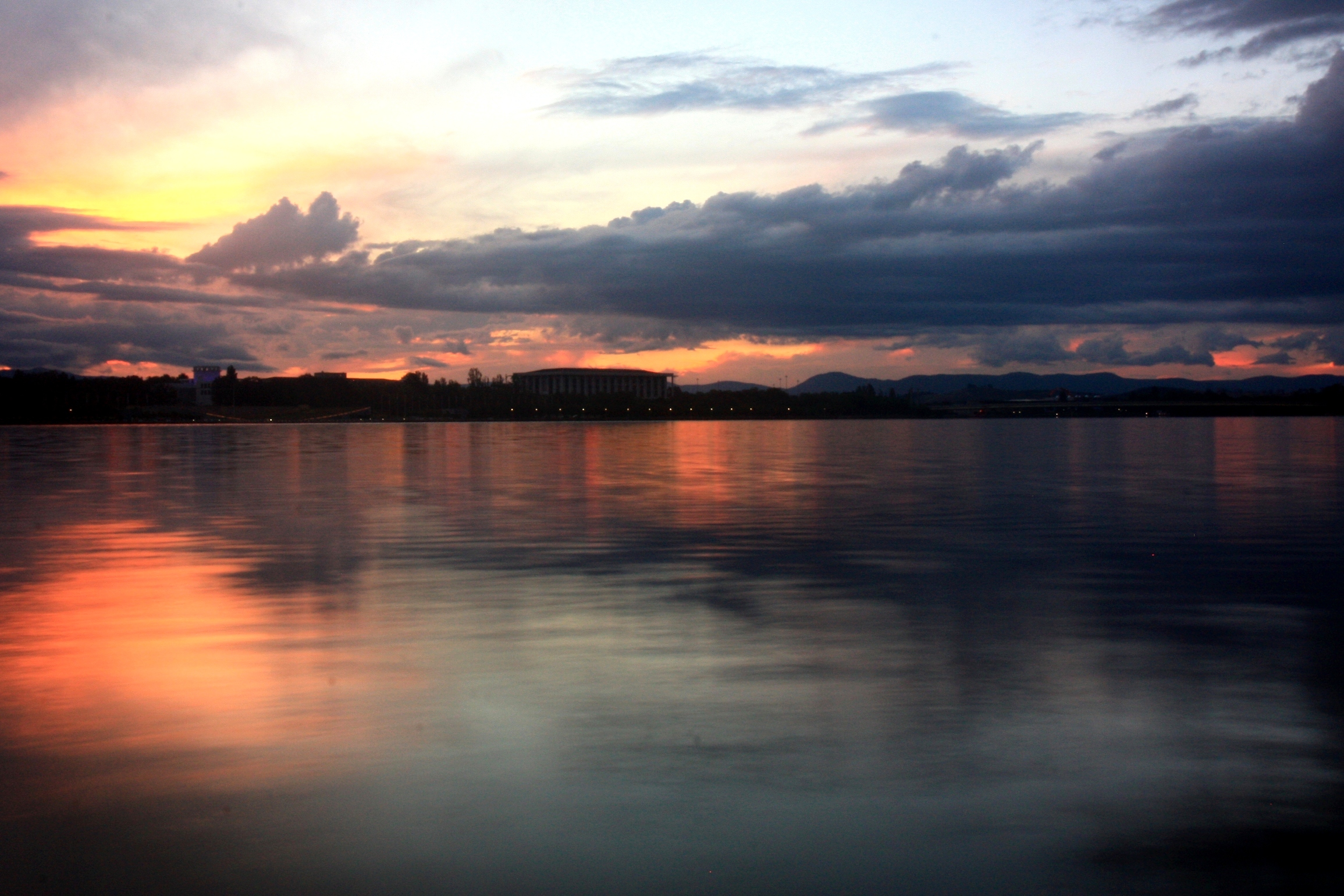
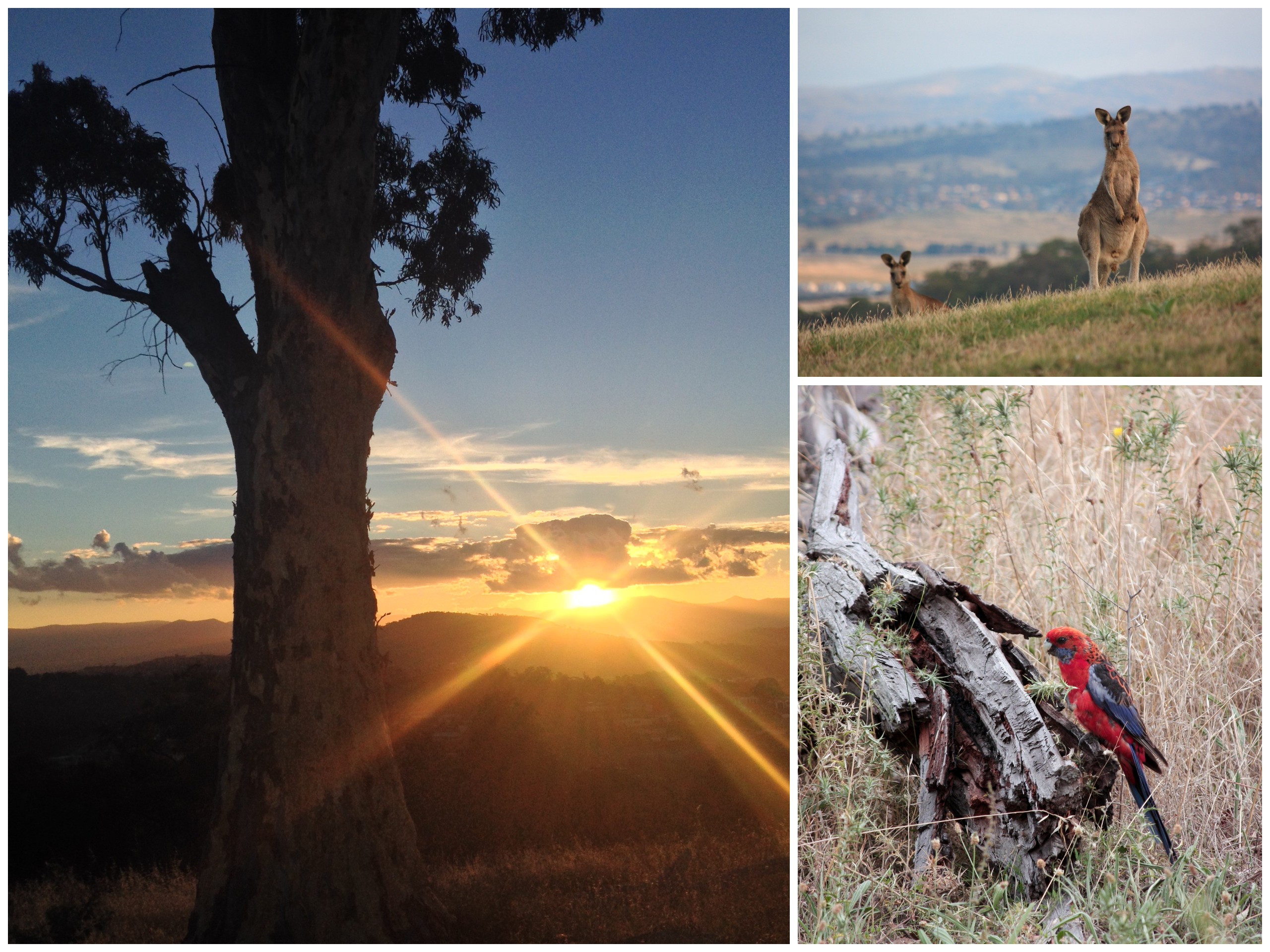
jan03

Fortunately, for the prospect of my cholesterol and obesity levels, I have been able to engage in decent amounts of exercise over the holiday period. In part, this is merely an extension of my normal life and having lots of time to do things in, rather than some hyped-up resolve to get fit. Local walks are a normative feature of the days. Most frequently of course this has involved trips to Red Hill reserve, where all is well with just about everything and everyone. But such has been the excess of free time that I have even sought out walks elsewhere!

jan04

One such place was Cooleman Ridge, which obviously is not as good as Red Hill but – being on the western edge of Canberra – has a more pastoral aspect. Hobby horses and scattered cows dot the fields, still relatively golden despite the stormy interludes. Somewhere yonder the brown waters of the Murrumbidgee laze, splitting the tamed grassland with the bush-tangled upward thrust of the Bullen Range. Further west and the larger mountains of the Brindabellas hit the sky, ever-present and ever-enticing.

jan06

It was up into these hills that a more substantial adventure transpired in between serves of Christmas pudding and tiramisu. A mountain walk along the high borders of the ACT and NSW, taking in the summit of Mount Gingejan07ra (1,855m), offered the perfect antidote to Christmas torpor. And it wasn’t even too difficult – the first six kilometres along a fire trail with interruptions for forest views, bird sightings, flower-filled glades, blue-tongued lizards and lunch beside a rickety mountain hut.

The remaining kilometre to the rocky outcrop capping the mountain was a more steadfastly uphill affair, the trees giving way to grasses and sphagnum moss and more flowery glades and the odd snow gum. The views increasingly opened out to reveal vast wilderness stretching west and south, and even east, at least until you could see the tack-like tower atop Black Mountain, looking diminutive in comparison to the ridges of bushland lain out before it.

jan08

Being in the interlude between Christmas and New Year, the feats of energy required to climb a mountain were intrinsically counterbalanced with a delightful stop on the journey home. Emerging from the car fridge three cool beers, trophies of conquest to accompany crackers, cheese, ham, nuts, dips, vegetables and pickles. Extra weight to provide extra grip as the car wound back down the gravel of Brindabella Road.

Beyond the walks, the bike continues to receive attention and while the category 4 climbs have been a bit absent of late (attempted once in the midst of the Christmas pudding / tiramisu jan09period with less than impressive results), it has been nice to venture lakeside and use a bicycle as a functional means of attaining coffee and shopping. A day spent re-visiting some of the national attractions was ideal by bike, and trips to town are scenic and satisfying, despite the fact that this means entering stores glistening and red-faced.
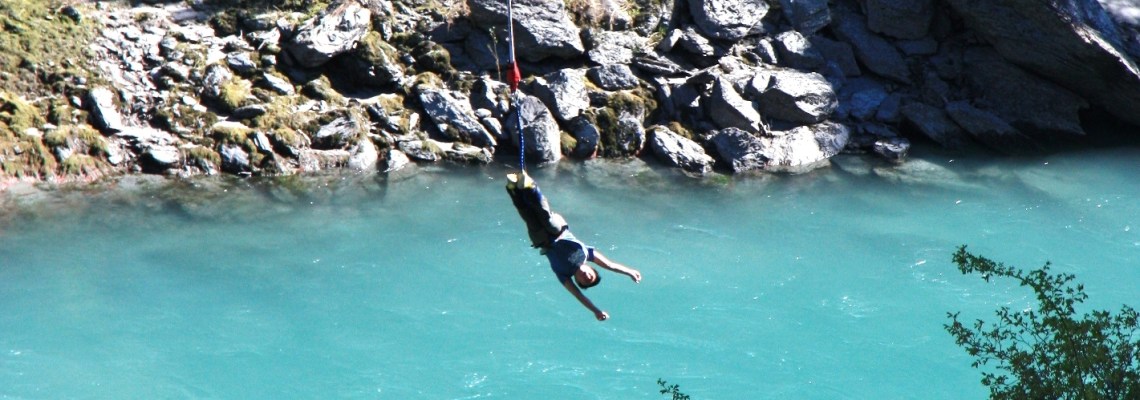
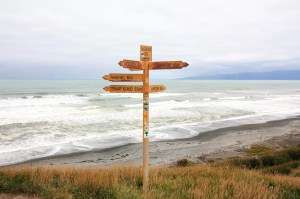
And if all that wasn’t sporty enough, golf has become a feature on the agenda of late, aided by the light evenings and cheaper twilight rates. Surprisingly, my game has been passable and there have even been a few shots to remember. Alas, such is golf that it seems the more you play, the more the bad habits return, and the memory of why this is such an utterly infuriating but addictive endeavour becomes real again.

So it seems that the holidays have been reasonably active, but for every climb up Red Hill there is an afternoon nap. For every pedal along the lake, a stretch out on the settee, reading and infrequently observing cricket in the background. I enjoy this time but also feel sometimes like I should be using it more productively. This is when writing may kick in, whether something inarticulate about my boring life over the Christmas holidays, recollections of trips of the past, or deliberations on the month of January. I’ve found some of the writing to be particularly pleasurable in an old-fashioned pencil and notepad kind of way, from a blanket in the Botanic Gardens to a bench down by the Cotter River. However, the scale of my endeavours has been, at best, average. Prolificacy bears no correlation to time availability.

jan10

Part of the problem has been other distractions. Distractions that are entirely self-created and – if you were to analyse it – may symbolise a deliberate intent to enhance procrastination and delay doing something that sounds like it could entail hard work.  Morning coffee is a distraction, particularly when it has involved trying to find an alternative venue while your regular favourites are closed over the holidays. Visits to the Westfield shopping mall are a distraction, though I feel only I am partly to blame here, having been kindly provided with vouchers to spend. And technology, always a distraction. More so when you spill a whole cup of tea over your iphone and unfortunately have to upgrade, and then spend several days visiting the Westfield shopping mall to get a protective, tea-resistant cover (picking up a takeaway coffee whilst there).

Alas, the interference from technology and its associated expense may mean that time availability will have to decrease at some point reasonably soon. Living off my pre-Christmas earnings will not last forever, as much as I want it to. This is not helped too with the purchase of a new body (for my camera) and an almost slavish desperation to travel to some places sometime in 2015. But still, I have a day at the cricket, a trip to Sydney, and it is Australia Day weekend soon enough. No need to do anything too drastic just yet, the year is still but a baby.

Australia Food & Drink Green Bogey Photography Walking

Momentum

I do tend to like a song that builds; one that’s all tender and melancholy to begin, subtle layers of sound layered with every soft verse until they rise into a crashing crescendo of strings and vocals and guitars and tambourines and bassoons and triangles and maracas and backing singers, passing out in an epic conclusion. Well, I didn’t expect that, may be your reaction if you hadn’t listened to it a hundred times already. What could have been so dreary gradually gains pace and noise, rhythm and harmony, and comes with a climax that makes you feel good and want to cry out loud. Which you sometimes do when not in company or stopped at traffic lights.

There are many parallels to be had between music and travel. Both offer the chance of escape, an exposure to culture, and a form of enjoyment (or annoyance!). We often listen to music while we travel and we often travel while listening to music. Indeed, catch any bus or train today and see if you can spot anyone who is not attached to a small electronic device by some white wires sticking out of their ears or a pair of oversize earmuffs like they are some kind of Craig David wannabe. Craaaaaiiiiiiiig David. And like a good piece of music (i.e. not Craig David), can there be anything better than travel experiences that gather an unexpectedly irresistible momentum and culminate in an ecstatic high? Transformative moments which end with you pinching yourself to check that they really happened?

Well, picture the scene on the far south coast of New Zealand, in a picturesque swathe of countryside and coast making up The Catlins. Alas today, like many days no doubt, is grey and a constant chill wind blows off an iron sea. Mist and drizzle occasionally grips the rocky tumult of the seashore and hovers among dense, dark forests. It’s Waitangi Day, a national holiday, but there is little sign of people gathering in revelry, the area remote and sparsely inhabited. It feels as though banjo-plucking will be echoing through the rolling valleys as the van propels itself on the few remaining drops of petrol in its tank. But that would perhaps be a bit too chirpy a soundtrack for this uninspiring morning.

It’s been a few days like this now…swishing wipers down to Dunedin and braving gaps in weather to look at seals and seabirds, admiring their resolve to make a bombarded clump of grey rock their home. Home for me has mostly been the van and it smells damp. It’s also almost out of petrol now, but there is a town or two coming up. The first offers a small garage but a wonky handwritten sign tells me I would have better luck going to the next stop along. It’s only twenty kilometres, but lights, heating, radio and lead foot driving are all dispelled while the red warning light continues to taunt me. And these valiant attempts mean that the van makes it to a town with another closed petrol station.

This is the low, and there has got to be a way to climb out of it. At the other end of town from the petrol station that is also a visitor centre and shop and fishing bait store and whatever else not being offered for sale today, is a house that has a banner for ice cream beside the road. I’m not sure whether this is a shop or cafe or just someone’s shed with a few trinkets in. I didn’t see any ice cream, but then I wasn’t really looking. The owner – we shall call him Pat (because I don’t remember his name) – looks bemused when asked whether the petrol station is open. “Well, if it don’t look like it’s open I guess it’s not open”. For once, endearing Kiwi frankness not very endearing. “I’ll call Nigel”.

Whoever Nigel was he wasn’t so keen to speak to Pat, the phone line mysteriously cutting out on the first contact attempt. Things looked bleak, while my exterior has a forlorn look about it, inside I was quietly sobbing. This would not be a great place to stay for another night…and it was barely 10am. Behind his beard Pat could sense this, so he tried another call and this time successfully woke Nigel from his hungover slumber. Nigel, it turns out, could fill our car with petrol. Begrudgingly so and clearly needing another beer to kick start his day, but he gave up some liquid gold (at a commensurate price) nevertheless. Nigel and Pat, two unlikely saviours, a solid backing coming in to give thrust to this song of a day.

So it was that the van comfortably made its way to Invercargill where it could properly fill up its tank on petrol and cruise past the disproportionate amount of drive-through liquor stores which do a roaring trade [1]. M_catsInvercargill represented a line in the sand and from here the journey was west and north. Straight out of a Tolkien tale, the town of Riverton was a necessary pit stop that became late morning tea. If Pat and Nigel kick-started the van, this was the sugar comfort hit that kick-started the endorphins.

Somewhere between Riverton and Te Anau the sun emerged, weakly at first but increasing in frequency, offering a pleasant symphony of colour and warmth across the landscape. This was turning into a very different day, a day where you need to change into shorts at Te Anau itself, because it is warm and clear and sparkling. A day where you need to savour a ham sandwich beside the beautiful lake but avoid lingering too long because it can still get even better. From here, Fiordland National Park is waiting.

There is a dead end road from Te Anau, but it is no dead end of discarded breeze blocks and tumbleweed tottering in the wind. Its terminus is Milford Sound and the route to it must rank as one of the most awe-inspiring in the world. The scenery is so grand it will make Gandalf look small, as the road follows valley and plain, fringes a series of small lakes and eventually has to cut through the mountains to get down to the precipitous chasm of water that is Milford Sound.

It is a journey where you want to pull over at every available opportunity and take a dozen photos and pinch yourself again because it is so inexplicably sunny and warm and better than what could have been. Eglinton Valley is a perfect place to do this, with its broad plain of swaying gold grass tantalising you to loll around in it like you are five again. Or, as is often the case in such mountainous terrain, break out like Julie Andrews and proclaim the hills to be alive. But I can save that for a higher vantage, a reward for a walk and a lofty paradise in the late afternoon sun.

Can there be anything better to do than getting out in this environment on foot, leaving the van far behind and below. A walk. A hike. A tramp! Who would have thought it this morning? It’s a bit of a climb but sure and steady, inspiration added by being on a section of the Routeburn Track, one of New Zealand’s premier multi-day tramps. With forest at first there is little to see beyond the dark green boughs and flourishing fronds. It is cool and shady, serene and ancient. Occasional glimpses sight the road down in the valley or tops of mountains still a long way above. Then, all of a sudden, the vegetation clears and you are reaching the crescendo.

A few more steep zigzags and you emerge onto a rolling plateau – Key Summit [2] – where the hills do seem to be alive with the sound of music. Small tarns pepper the bright green grass and forests continue to spread over and along the hillsides. The late afternoon sun, still warm and pristine, highlights the pleasingly rocky Humboldt Range as it disappears north and east. The bright light battles with towering peaks that plummet to the west, down into the waters of the fiords and Tasman Sea. Far below, the van sits with half a tank of petrol, happy to rest and sit vacant and linger in memories of Nigel.

M_keysummit

It’s an immense ending to an indifferent start, a reminder that things change for the better all of the time. You may have gotten out of bed the wrong side or endured a period of drab drizzle, but the sun does always shine again.[3] And shine again it did for many more days on that trip of New Zealand – on Milford Sound the next day and into the mountains after, glistening off the amazing bays of Abel Tasman and striking dramatic light on the volcanic doom of the north island. Indeed, such is its remarkableness it doesn’t take much to gain momentum in New Zealand. Just a little bit of petrol and some good tunes along the way.


[1] They do call this region ‘The Scotland of the South’ after all.

[2] I don’t think named after New Zealand’s current Prime Minister

[3] At least for something crazy like 500 billion years or whatever Brian Cox said in some documentary, by which time we would have easily destroyed everything anyway

Links

The kitty kat Catlins: http://www.catlins.org.nz/

Amazing Fiordland: http://www.doc.govt.nz/parks-and-recreation/national-parks/fiordland/

Dirty tramp: http://www.doc.govt.nz/parks-and-recreation/tracks-and-walks/fiordland/northern-fiordland/routeburn-track/

Route to Routeburn: http://neiliogb.blogspot.it/2013/02/finding-me-marbles-christchurch-to.html

A to Z Driving Walking

Southwest bits blitz (1)

It may be a product of sustained transience but the chance to drop anchor for an undefined period in a familiar place has been of great appeal. And so here I still am – Plymouth, Devon – and only twice so far have I pined for the other side of the world. Once I was in Starbucks and had a drink that had the front to be called coffee. The other time, some dreadful nincompoop and his bumbling mates were taking over Australia, and while I was not missing the crowing and hollering, my inner nerd was bereaved of two party preferred counts, the swings, the coloured maps and the abject head-shaking of democracy where a mandate is claimed when less than half of the population vote for you and, even those who do, probably do not agree with 100% of your policies.

Still, I do intend to return to the country despite a change in the people who nominally run it but don’t really do much at all. You see, at some point here the weather will get continually miserable and the people will get more miserable and I will get miserable with the miserable weather and the miserable people. And then I can return to the land down under which is so fortunate it forgets how fortunate it is. But the people there won’t be miserable because they got what they wanted.

sw02Plymouth can be incredibly miserable but at the moment there is a prolonged ray of sunshine that transforms even the dodgy concrete alleys filled with rubbish bags into an artistic postmodern composition of urban life. The crazy drunks walking the streets become salt of the earth characters and chavved up pram pushers on the bus make for a colourful melee of handbags and hairdos. I’ve heard it said that Australia is just like Britain would be with good weather; not exactly, but the weather can do wonders for a place.

The familiar abounds but every time I return there are incremental changes to the city. Royal William Yard is an obvious one and I have been impressed by the conversion from disused naval quarters to swanky flats and waterside cafes. Devil’s Point provides the picturesque walk to burn off jam and cream filled shortbread from the bakery, and something approaching an alright cappuccino is available on occasion.  On my first visit, in warm Sunday sunshine, I had the momentary feeling that I was back in Australia such was the sparkle, the relaxed buzz, and general air of wellbeing. I even had a flat white, but this was very English.

sw01

sw05Part of the familiarity re-familiarisation process is engaging in the foodstuffs of this part of the world. The issue is, the longer I linger, the less I can justify filling my face. On day 1, cream tea on Dartmoor was ticked off and clotted cream has re-appeared on a number of other opportunities (like when I made treacle tart, yum yum!). But I have also been back to Dartmoor and not eaten cream – something that sounds like progress. Meanwhile Dartmoor continues to captivate through its moods and sweeping vistas.

sw04

sw03The Cornish pasties have bubbled to the surface like oozing hot steak juice through a pastry crust, though only infrequently. Almost every single one I have is a disappointment unless it is from Pengenna Pasties. On which note, I am pleased to have paid a visit to Bude where the queues out of the door and mass munching in the town square are a sure sign of Pengennirvana. This was the undoubted highlight of a bank holiday Monday, which was a reminder of what a bank holiday Monday is all about. Traffic queues, parking hassles, gritty sand packed with feral children and people from Wolverhampton going red in the twenty degree heat. I didn’t really enjoy Bude apart from that pasty.

By contrast another day trip in Cornwall ranks as one of the best I have had this year; a year which, I remind you, has encompassed a tour of New Zealand and a scenic meandering across Australia. A piddly train to Penzance doesn’t rank up there with the journeys but then an open top double-decker through the narrow lanes and warm sunshine of West Penwith brought a sense of adventure to the trip. And this delivered me to Porthcurno and a scene to celebrate, a landscape bejewelled in sand and seas bedecked in a stunning clarity and rare calm.

sw06

sw07This is the pointy end of Cornwall, the pointy end of Britain, and if anyone thinks Britain is a drab, miserable place, well…stick ‘em with the pointy end. This is country best explored on foot, on that magnificent coastal path, a path I followed for seven miles or so around Land’s End and on to Sennen Cove. It is stunning country and every minute was marvellous. Of course, you have to put a little asterisk here and acknowledge that the sun shining makes a world of difference. But even on dank, foggy days or, better still, stormy windswept occasions, it is a natural wonder.

sw08The coast path along here turned out to be pretty good walking too, only dipping down to a cove and climbing arduously up again about four times, which isn’t that bad for Cornwall. A lot of the time you can just follow the cliff line, strolling upon high overlooking clusters of volcanic rock tumbling into clear blue seas, where the occasional trio of seals bob along and seabirds glide on warm air.  Around, the exposed heath is a colour of gorse and heather, a purple and gold that could quite justifiably replace the black and white of the Cornish flag.

sw09

sw11A blip of sorts pops up at Land’s End. While the coastline is appropriately craggy and exposed, the necessary touristification due to popularity takes away a bit from the surrounds. So there are eroded paths down to see grumpy farmyard animals, shops selling fudge made in Wales and tea towels made in China, arcade machines to play and One Direction posters for sale. There are doughnuts and beer and ice cream to buy. Stop. Ice cream. I’ve been walking five and a half miles. Ice cream. It’s mid afternoon. Ice cream. I deserve ice cream.

sw10

Expecting lame, rip-off ice cream I remember it quite fondly as not being particularly lame or too much of a rip off. A popular Cornish brand it had enough creaminess to see me over the last substantial hummock of the path before dropping down to Sennen Cove. I remember coming here about ten years ago, on a mild but foggy old day, the cove sheltering a fine sweep of sand intermingled with cottages and boats. It was deathly quiet then, a sure contrast to today.

Today Sennen was St. Tropez, but thankfully the beach stretches beyond the comfortable confines of the car park. Once over towels and tents and through ball games, the beach widens and empties. The sand is genuinely sandy and the water a clear shade of blue. Surfers attempt to do something in the lumps and bumps of wave that exist on this breathless day while lifesavers watch on. Yes, it is, almost, Australian.

sw12

It’s kind of funny how I look out for a touch of the Australian in Britain and when in Australia the opposite happens. I presume it’s the whole have your cake and eat it syndrome. When both do come together – like in the creamy green hills around Kangaroo Valley or the sunny, civilised sands of Cornwall – it’s something of a marvel. And while misery quotients and government philosophies reach common ground there is little to distinguish one over the other. For now.

Great Britain Green Bogey Photography Walking