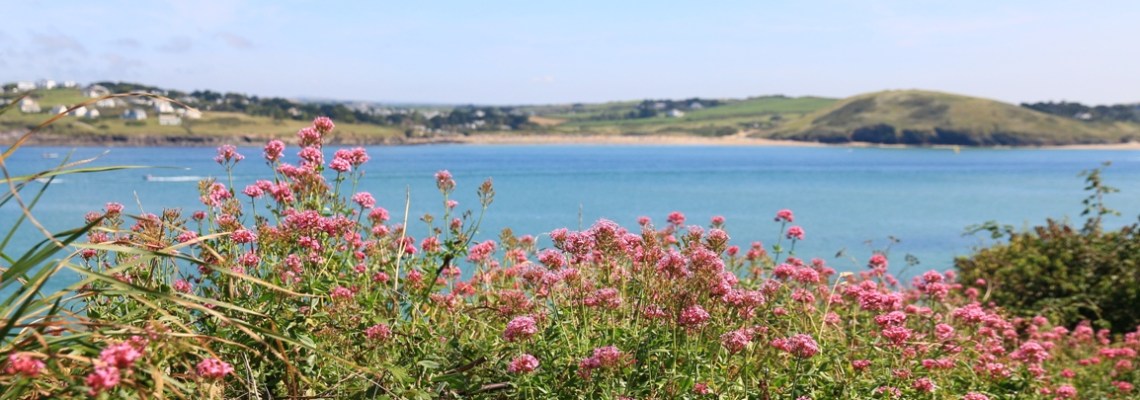
With access to a car and decent spells of time on my side, the last few years have opened my eyes to parts of Cornwall previously unseen. Or if not unseen, unsighted since I had browner hair, smoother skin, missing teeth, and a squeakier voice. This newfound exploration has frequently left me in admiration, appreciation and exhaustion; admiration over the alternating drama and tranquillity of wild coasts, placid coves, windswept moor and pastoral nooks; appreciation for my roots and the luck of being born and able to revisit this part of the world [1]; and exhaustion from the forty-five degree climbs up the coast path or from eating too many scones back down by the sea.

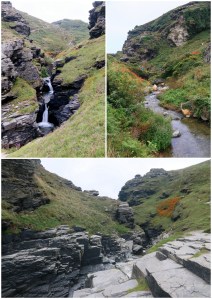
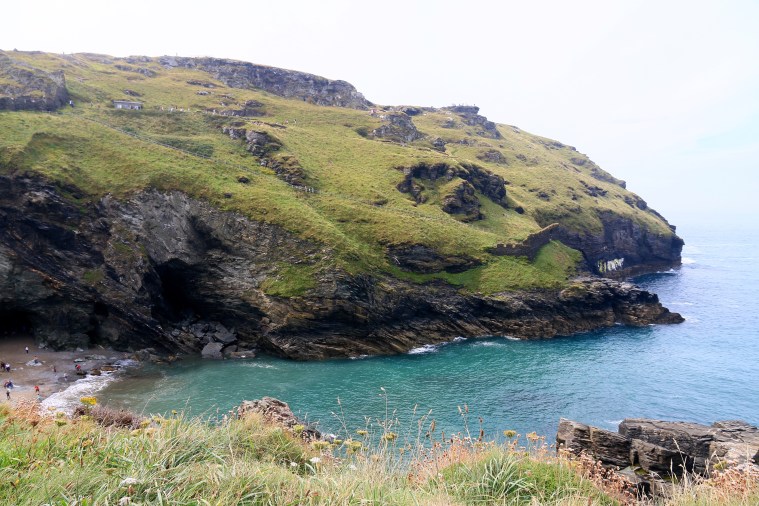
For a few weeks this year I had opportunity to enter the Duchy again and – if truth be told – I was struggling a little for new ideas and places to discover. Not that repeat visits are a bad thing; such as the practically annual drive to Boscastle and Tintagel on the far north coast. And while there are some cherished familiarities (say, Granny Wobbly’s Fudge Crumble), just a little more digging can lead to dramatic vistas around Pentargon Falls or across to the island from the exposed positioning of St. Materiana’s Church.
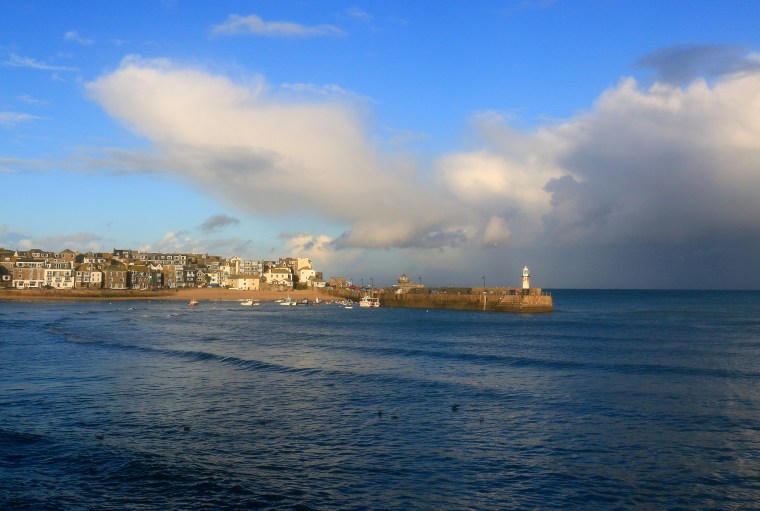
 Other repeat visits transpire from convenience and come with pastry-coated benefits that are worth duplicating. Like the relatively short drive from Plymouth to Looe, through the most contented countryside and down towards the south coast. I don’t usually linger around Looe, but it’s a good base for refreshment and with the right light, tidal state and the discovery of a peaceful corner you can value its merits.

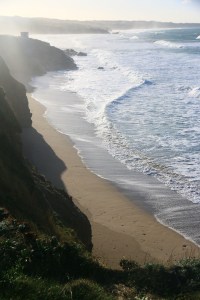
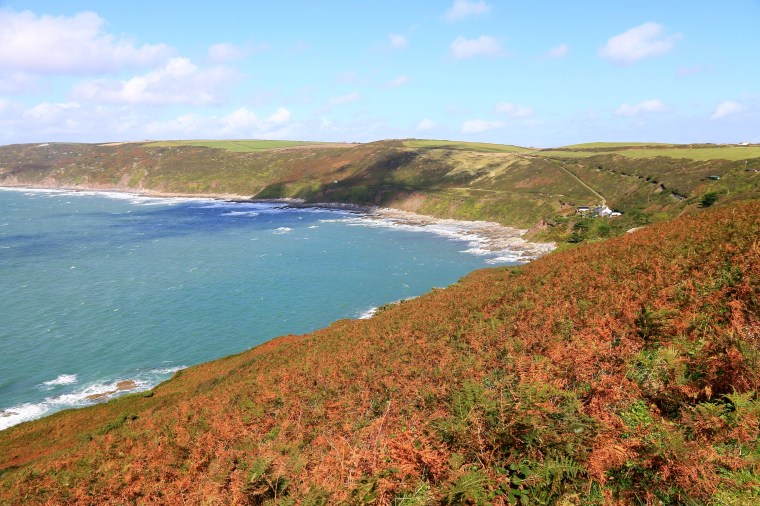
 Even closer to home – so much so that just over the hill you will see council blocks, cranes and incinerators – Whitsand Bay is starkly, surprisingly rugged. The eroded, sea-shattered lump of Rame Head is something you’d expect to encounter further west. Bracken and gorse-clad cliffs are punctuated in clusters by cheap fibro shacks with pretty gardens clinging on for dear life. And the waves roll in to the shore in a long translucent line stretching all the way back towards Looe. It is a go-to place for that essential endeavour of ‘blowing away the cobwebs,’ an endeavour far safer in England than Australia.
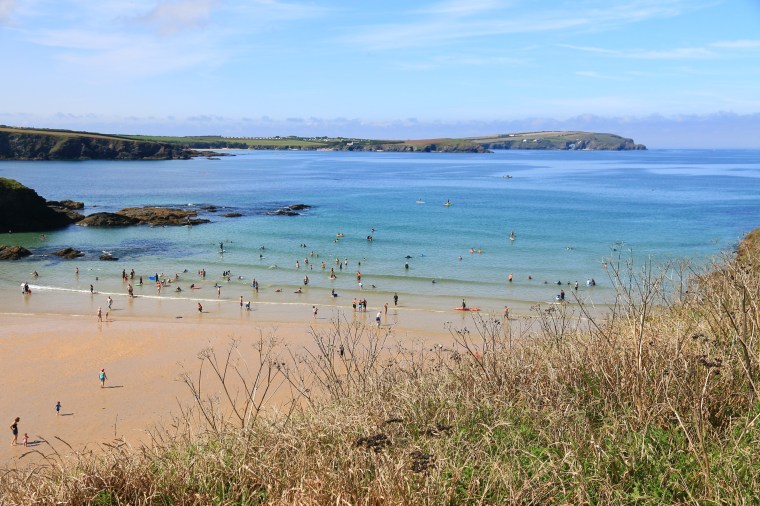
But what of new discoveries? Surely the web of country lanes and undulations of the coast mean there is so much more around the next corner? Well, technically Trevone Bay near Padstow isn’t new. But I last came here in October and today it was a startlingly sunny and warm day on the August bank holiday weekend. A different place indeed, and one in which I was not so keen to linger.
 Once again, I turn to the South West Coast Path for solace; a relatively easy walk northwards towards the headland at Stepper Point, taking in some archetypal Cornish scenery with only a smattering of rambling sightseers passing me by. There are rocky coves, clear seas, sandy inlets and windswept green fields to enjoy. A highlight is the chimney stack formation at Gunver Head, resembling an ancient tin mine frozen in time, weathered and beaten by the cruelty of the Atlantic. Climbing up and up and up over this rocky, eroded headland, surely a grumpy and grizzled Luke Skywalker is hiding out here somewhere?
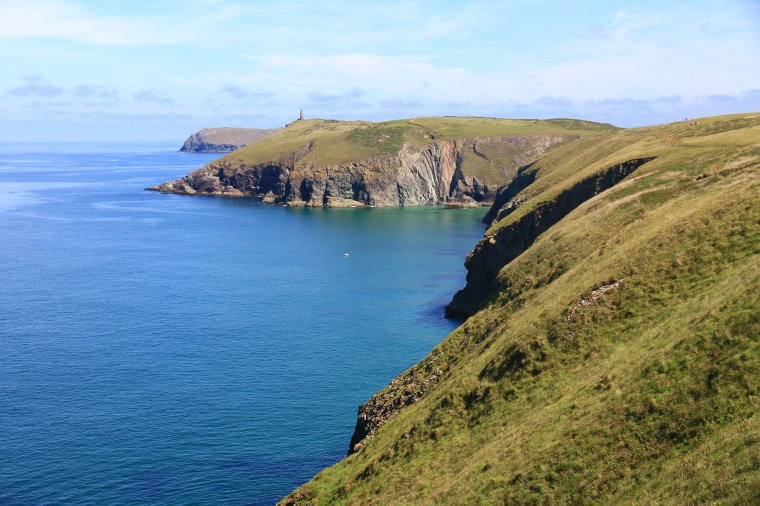
The miniscule Butterhole Beach offers azure waters lapping at fine golden sand; tempting to visit but near impossible unless equipped with ropes, ladders and a death wish. Instead, you hope for a sign so that you can, er, cover up some of the letters and take a hilarious selfie before heading down to the Camel Estuary. Here the waters and sand are far more accessible, but not too accessible as to be jam packed. Padstein is still a little way away and, with the tide out, there is plenty of room to relax and eat a homemade roll assembled from BBQ leftovers.

This is another one of those if only it was like this all of the time moments. They don’t last but they stick in the memory. Sometimes it’s a fleeting moment…the sun in your face, sweat on your brow, the sound of gulls and waves and even distant shrieks of joyous infants. Occasionally it’s a series of moments stitched together over the course of a day. Often the final Cornwall day.
If my words cannot convince you of the sheer beauty, the pockets of joy, the drama and blessedness in which Cornwall radiates, then it is probably a fictional romp about smugglers and miners and war and steamy liaisons brought lavishly to TV. I cannot confess to watching much of the most recent dramatisation of Poldark but I am well aware of its presence. Sometimes, on a Sunday night in Canberra I have glanced up from stirring a stew to see some bloke with a fancy hat all brooding and serious on Holywell Bay. Or a corseted wench galloping along some cliffs near St Agnes. It evokes memory and a little longing, but I’ll leave the serious fandom stuff to Mum.

With Mum joining me for Poldark Day, my last Cornwall day, it was less about Poldark and more about the canvas – a new canvas – in which such contrived intrigue is set. Not that you would think that at Charlestown, in which tall sail ships peacefully wallow and the clutter of woven baskets and bags of fake grain adorn the quay. It turned out that they were filming here the very next day and the waterside itself was out of bounds. Still, turn one eighty degrees and from the fictional eighteenth century you find what seems something like twenty first century Australia. A rather hip, outdoorsy-focused cafe bar, offering a moderate flat white with the air of prawns and Prosecco on the agenda. Not exactly what I was expecting.
Moving westward and traversing the outskirts of Truro, the Poldark express moved on to The Lizard. Now this was an area that had been on the agenda for some time, but I had never quite made it. Today, sheltered from a blustery nor’wester, it proved the perfect spot for sightseeing, lunching, rambling and a final Cornish ice cream.
First stop, Gunwalloe Church Cove, where I applaud the National Trust for offering hourly parking rates instead of the usual all day scam. An hour was sufficient for an amble and lunch on the sandy bay, relatively sparse now that mid-September was upon us. What a difference a few weeks makes.
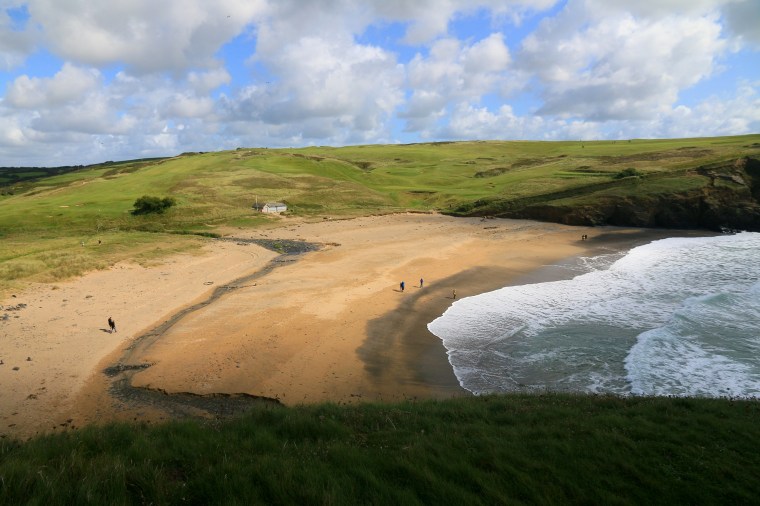

Rising up from the beach the links of Mullion Golf Club made me want to grab a club and get swinging again; though some of those holes look like a long slog upwards, and there are other hills to climb. Like in Mullion Cove itself, down from a parking area to the harbour and thus back up again. If there is a piece of flat land in Cornwall I would love to see it. Perhaps at nearby RNAS Culdrose, from where a helicopter did continuous laps of The Lizard all day. They no doubt classified this as ‘training manoeuvres’ but I’m convinced they were out for a sightseeing jolly.
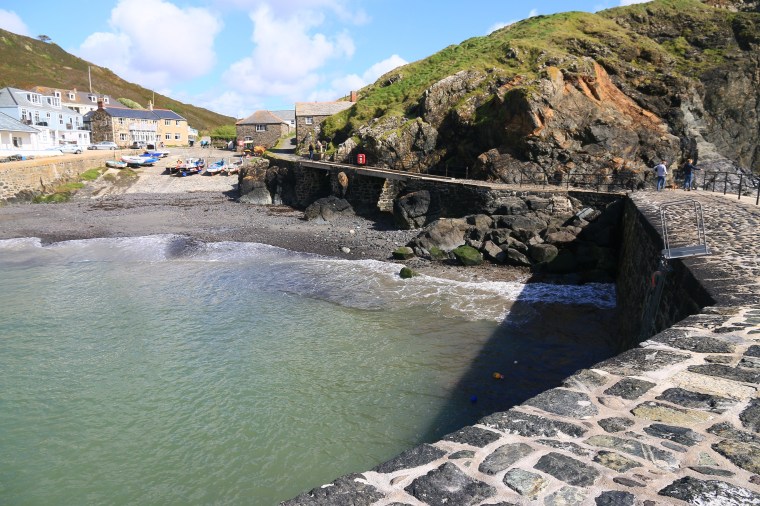

There was not very much at all at Mullion Cove which is why it was so charming. A few boats, a few cottages, a few lobster pots spilling down onto the cobbled wharf. A smattering of the curious sitting in the sun or watching the waves crash into the cliffs. This is where you could stay a week and get through a good few books without being disappointed that you had ventured no further. We moved on.
 More popular, and having risen in stocks dramatically in the last couple of years, is Kynance Cove. To the extent that at 3:30pm in the middle of the week in September the National Trust would like you to pay a bar of gold bullion and hand over your firstborn to park. I blame Poldark, stupid knob end. Of course, being locals (okay, sort of), we’re not having any of that, and parked a little way back along the cliff line at a place only the locals (okay, those who look at the satellite view of Google maps) know. Ha, eat your hat Poldark.
You know what though, this was a better way to approach it, with views across the bay to England’s most southerly point, and a sense of anticipation at what might be over the brow of that hill. And there it was, a clump of weather-beaten rocks, encircled by golden sand becoming exposed as the tide drifted out. Despite the costs, it was a popular spot with many stopping in the cafe for an ice cream or cream tea and venturing onto the grassy banks or exploring the nooks and crannies being revealed. Meanwhile, a helicopter whirred overhead, again and again and again and again…
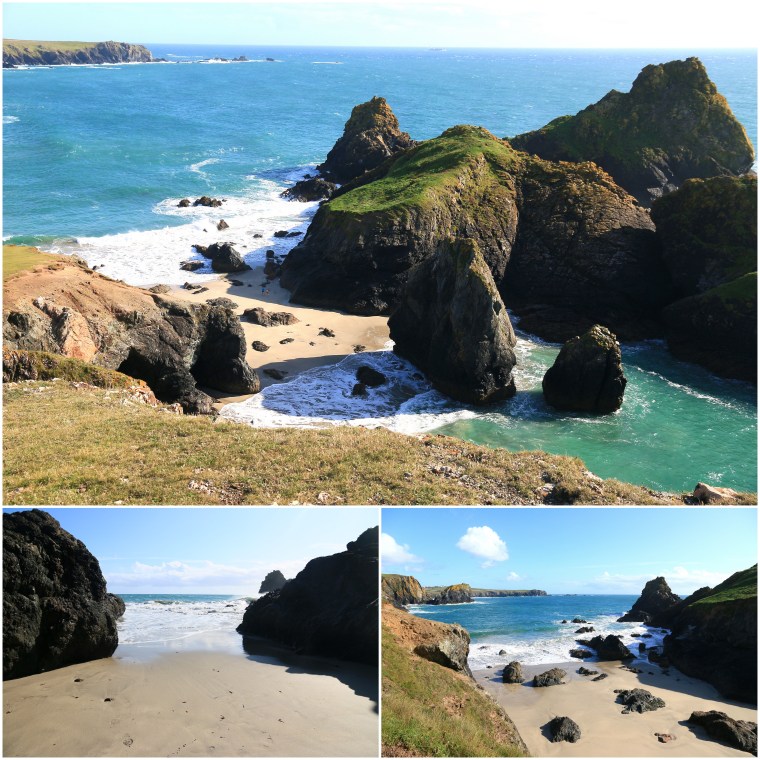
It cannot be denied that Kynance Cove is a spectacular sight, an encapsulation of the Cornish coast that makes you feel lucky to exist. But for some reason I felt all the hype was a little overblown, probably because much of the rest of the county does exactly the same. So whether it’s old or new, revisited or discovered, there is admiration, appreciation and exhaustion in every footstep, every mile, every brooding stare ocean bound. An adoration and attachment that means to Cornwall I will always, like that chopper, inevitably return.
[1] Okay, technically I was born across the river in Devon but this appreciation stretches across both borders

 In 2013 it took me – alongside one of my favourite travel buddies Jill – a good solid couple of months to travel from the east coast of Australia to the west. I remember watching the sun go down over the Indian Ocean somewhere around Yallingup, in the beautiful Margaret River region of Western Australia. It was a touch symbolic, a satisfactory “we have made it” amidst the golden ambience; despite the fact that the engine of the car had knowingly decided to overheat earlier that day.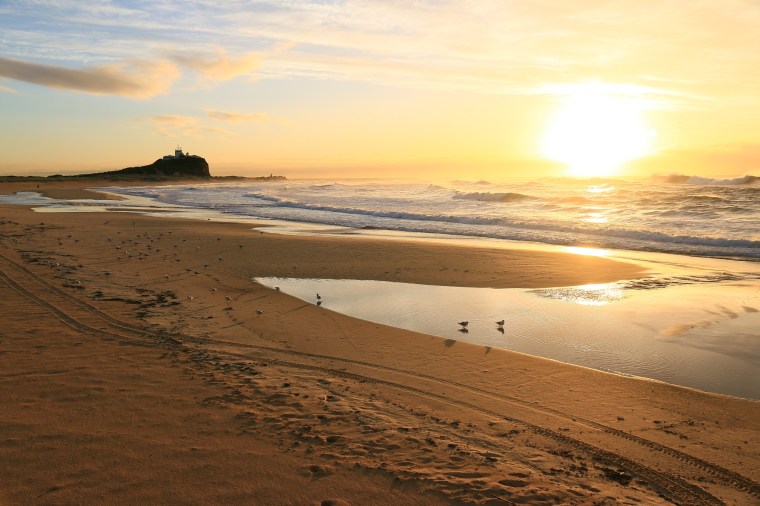
 Just to ensure I clocked off five states and territories on this trip, my route to Adelaide incurred a brief stopover at Melbourne Airport. I had a bit more time on my hands in Adelaide but, barring an hour over lunchtime, the weather was mostly imitating England; cool, cloudy, drizzle interspersed with more frantic spots of rain. I ducked for cover in Rundle St Mall, and lingered in the Central Markets. I called in at Haighs, lured by giant displays of Rocky Road, and ambled under leaden skies through the ring of Parklands encircling the city.
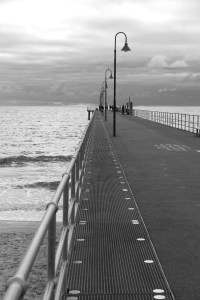 For all its charm and grace, I had seen better days in Adelaide. But at least the rain had stopped by the time I found myself on the tram to Glenelg late Friday afternoon. I was hoping for sunset, but I was guaranteed kebab. Just catching up on another feast down memory lane, and, unlike the sunset, it didn’t disappoint.
 The next day, in a swish of a jet engine I was whisked back to summer, crossing the seas and striking landfall near Esperance. I swear, 30,000 feet below, I could just make out a tiny piece of my heart deposited in the white sands of Twilight Beach. The Wheatbelt passed in considerably less time than the twelve hour drive, and then, before you knew it, Perth hills tumbling down to an archetypal Australian suburbia. Hello Perth! Hello 27 degrees!

 At City Beach I didn’t remember those rather fancy looking eateries and yet another pristinely positioned surf club in Australia. Some money had come into here, but from lord knows where. Perth has slumped somewhat since the state reaped lots of cash from rocks in the ground and lazily rolled about in its lucre. Still, I guess the new restaurants were an investment and they looked pretty busy. I opted for an original: my favourite calamari and chips at Floreat Beach Kiosk, worth the train and bus journey alone.

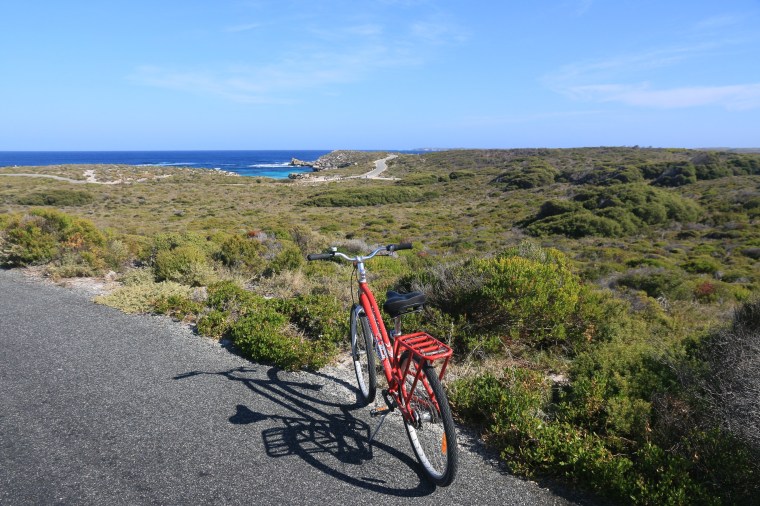
 There is not much more to say about Rotto, apart from glorious beaches and amazingly vivid waters and wonderful sands and beautiful bays and crystal coves. There are some sea-sculpted rock formations in between and – inland – a few smelly stagnant lakes, snake-housing scrub, and one bigger hill on which a lighthouse sits. Around the quay a touch of civility in the form of cafes and shops makes the whole place entirely tolerable as the temperature hovers around a pleasant twenty-six degrees.
 The other main feature of Rottnest Island are the quokkas, who are generally very cute, incredibly tame, and quite keen to get a lick of your ice cream. The main goal of many visitors to the island these days seems to be to achieve the perfect quokka selfie and #quokkaselfie. Seriously, view that hashtag and see what you come across!
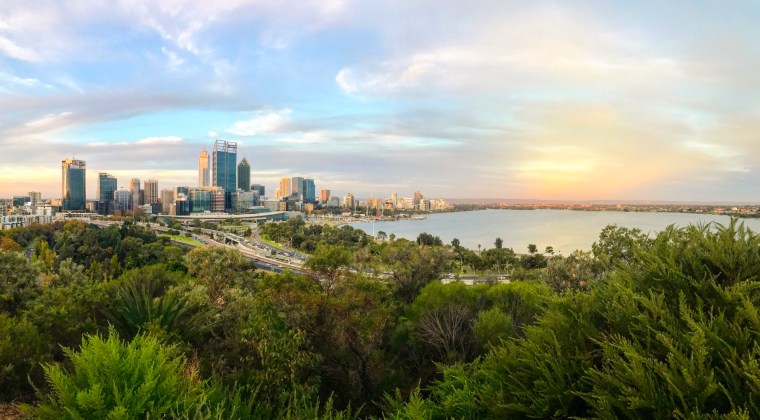
 Essentially, I managed a jaunt into Kings Park one late afternoon, which is undoubtedly one of the biggest assets outside of the beaches that Perth has to offer. It is scenic and sprawling and accessible and full of all those variants and species that are unique to small corners of Western Australia. It’s a reminder of how isolated, how individual, this place is. Yes, there may be Hungry Jacks down the road and Home and Away showing on TV, but there is also a Banksia that only grows on one or two of those giant bluffs of the Stirling Ranges.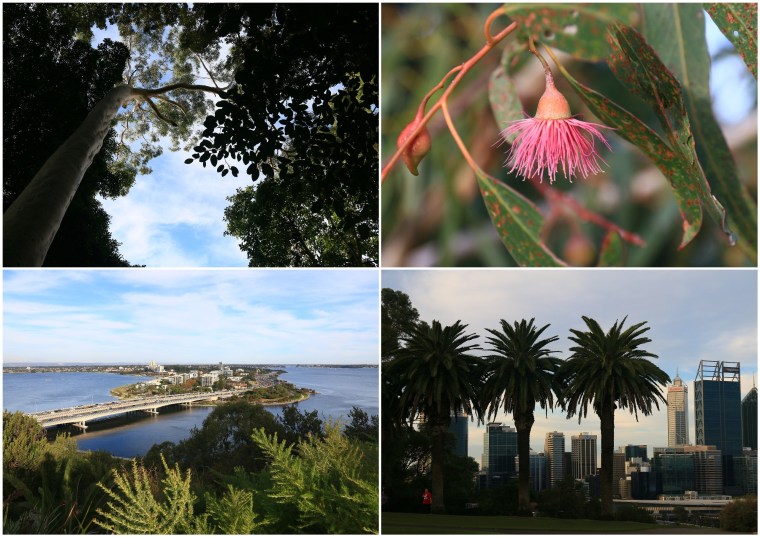

 Once clear of this blackspot of industry, you are back in a more familiar kind of Australia, with Newcastle boasting some fine beaches, cafe-cultured hubbub, and waterside retreats. I like it here, though being unfamiliar with what’s hot and what’s not it took me four attempts to get a good coffee. Cafes on Darby Street have an appearance in which they seem to talk the talk, but walking proves far more problematic. Is it me, or are baristas with an armful of tattoos, baseball caps and a love of the mirror at the gym usurping hipsters in coffee-making skills? Just something I seem to have observed in recent times…
 Once I found a good coffee from someone who could crush the beans by hand, I decided I liked Newcastle a lot. It probably joins the long list of places where I’d say I could live if I had to. Being on the coast has a lot to do with it, and while showers were around and daylight saving had ended, at least I got to enjoy the last of the day with the rainbows and butterflies before setting off for some evening work.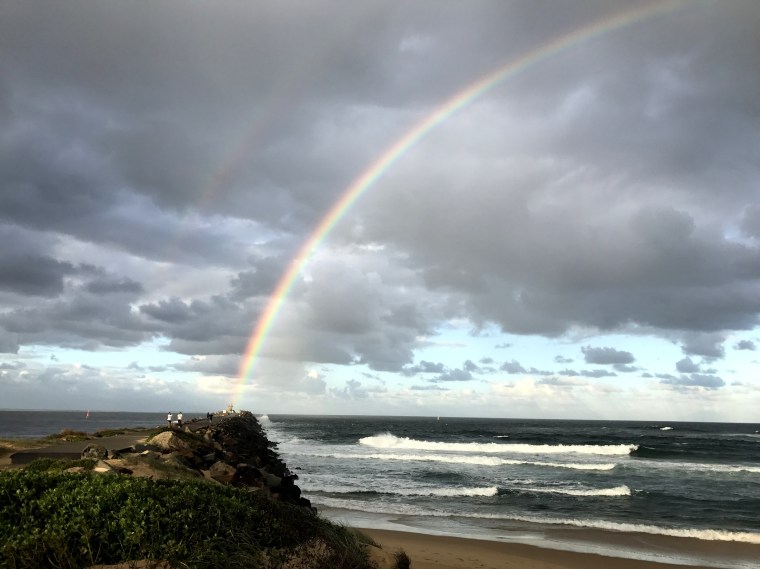

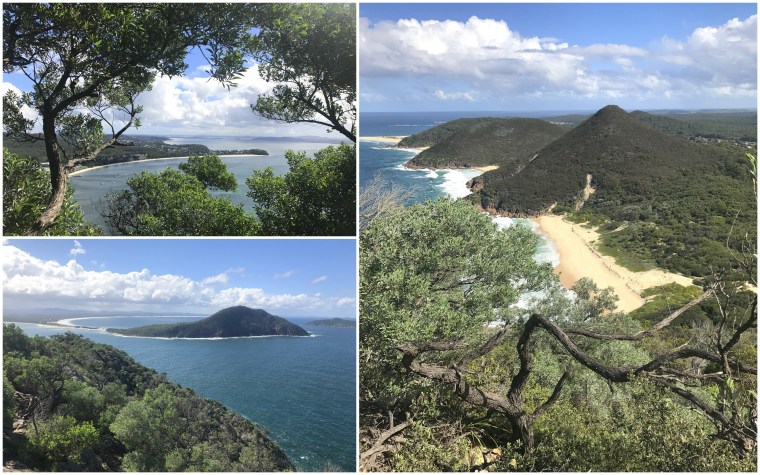
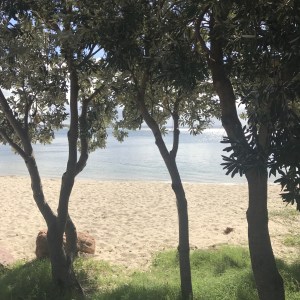 While blessed with the rugged scenery of Northumberland I doubt if the Newcastle of the north would have such a temperate idyll an hour away. You can see why people come here for holidays, or to retire. Even the koalas of NSW like it here, not that I saw any (or saw any people looking up into trees which is the best way of spotting koalas). I have only been to the other Newcastle once and I thought it was alright. But if I was to choose, I think this one would win hands down; even without a Sunderland next door aye!
 In Part 2 of my holiday travels (
 Pausing briefly around the border towns of Tweed Heads and Coolangatta, I decided to head around much of the Gold Coast and enjoy the lumpy patch of verdant paradise that is the hinterland. We crossed the border back into NSW and changed time zone heading up and down to Murwillumbah. Surrounded by fields of sugar cane, half of this year’s yield was in my iced soft drink from KFC in the town. After which we zoomed onwards and upwards.
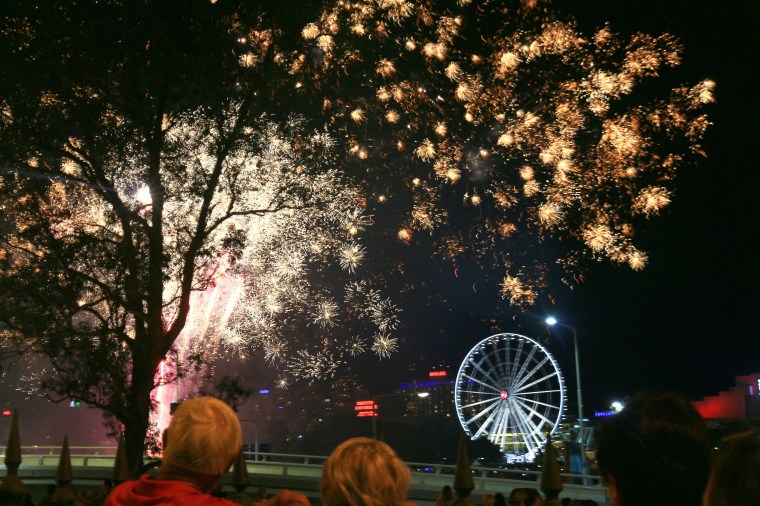
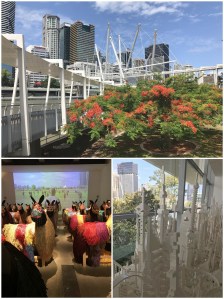 We were staying in a rather pleasant apartment in the CBD, with a bit of river view that was to come in handy for New Year’s Eve. The river was a frequent feature of our ambling, crossing over to South Bank, strolling alongside the Botanic Gardens, heading over to the air-conditioned awesomeness of GOMA. You could see its brown waters from the top of Mount Coot-tha, and you could encounter them at close quarters on the CityCat ferry, travelling under the Story Bridge to New Farm. In fact the river was almost as pervasive as Max Brenner; Caroline keen to get a fix or two before heading back to England, and I happy to tag along.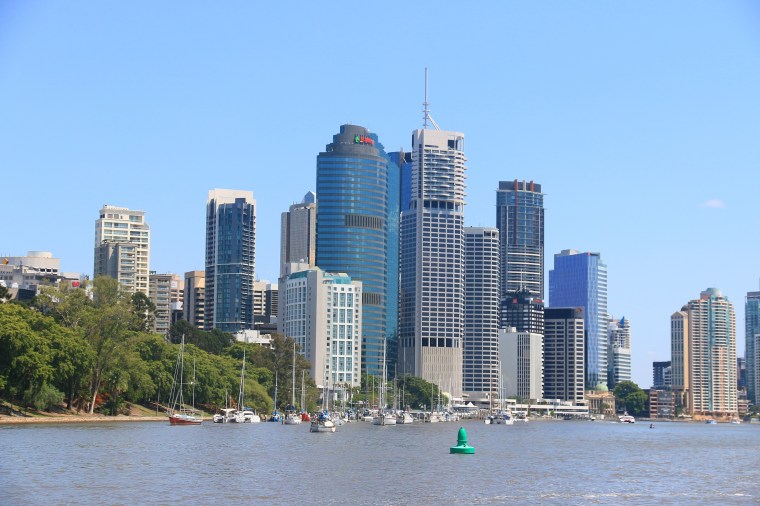
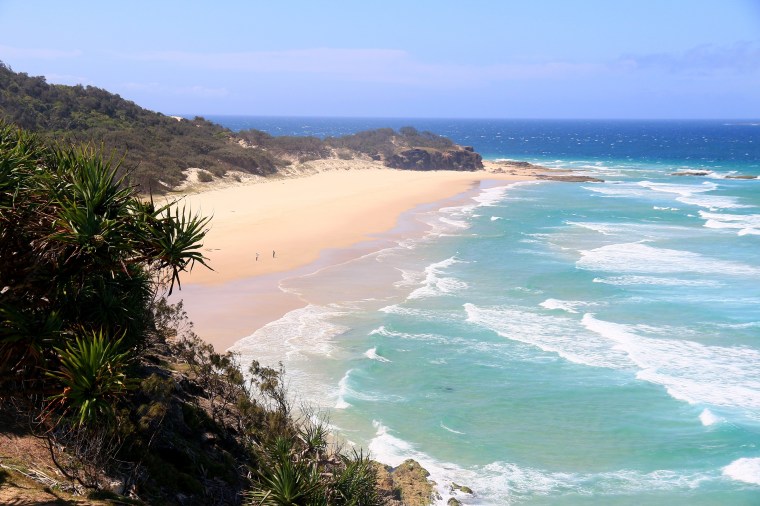
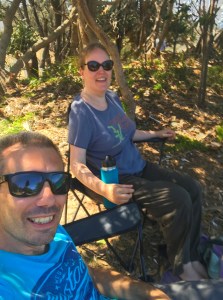 Ah, island life. A time to kick back and relax. Or wade in stagnant pools with hundreds of kids, or queue endlessly for ice cream, or take a big f*ck off truck onto the sand and ruin the wild ambience. This is what was happening all around, but we still managed to kick back and relax a little at Point Lookout. Before queuing for ice lollies in the world’s most humid shop.
 A taste of what this would be like came at the end of the day, with the sun lowering, a breeze providing relief and a quiet satisfaction milling about the beach near Amity Point. In slanted sunlight kissing sand golden, you could innocently wade in the water happy, only to discover dolphins surfacing mere metres away. Before disappearing as abruptly, leaving only fond memories and countless blurry pictures of ocean on your camera.
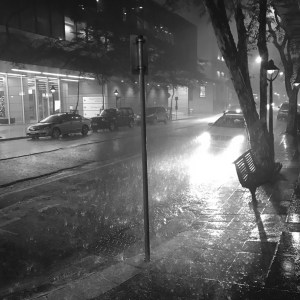 Still, this drizzle is nothing compared to the deluge the previous evening. Sat contentedly eating some Japanese food in the city, we were somewhat oblivious to the torrent of rain that had decided to unleash itself on Brisbane. Only emerging did we witness instant rivers flowing down the mall and citizens racing precariously across streets in their unsuitably thonged feet. We made it back to the apartment, but even with the protection of umbrellas there was considerable dampness.
 So as grey as it was today in Redcliffe, at least you could walk outside without fear of being drowned. And there are always the Bee Gees to brighten things up. It seems the canny council in Redcliffe has recognised the potential cash cow of this association by constructing The Bee Gees Way. Linking two streets, it captures people walking from the car park to the scattering of restaurants by the seafront. More than a woman walked by the pictures, words and videos telling you of their time in Australia and beyond. I guess your willingness to trek out to Redcliffe to see this display may depend on how deep your love is for the hairy triumvirate. I can take or leave them, but I found The Bee Gees Way curiously distracting.
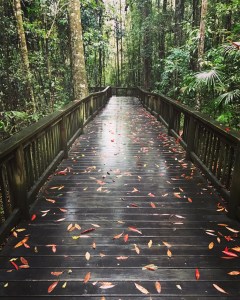 Arriving in Buderim, I made the best of the weather and tried to have a nap. While it was of limited success, the rest refreshed enough for a walk in Buderim Forest Park. Here, the dampness had the effect of illuminating the tangles of rainforest, a grey backdrop to semi-tropical vibrancy. Glistening boardwalks peppered with fallen russet leaves; lustred green foliage and ferns dusted silver with water; and bubbling cascades and falls given impetus by the weather.
 I was only going to stay the one night on the Sunshine Coast, but my weather-induced weariness and the prospect of heading back to the swag tempted me to linger for one more. The extra day was drier, and the sunshine even emerged on occasion. This made the walk up to the top of Mount Coolum somewhat more hellish, but I felt like I had achieved something and could spend the rest of the day eating and being lazy.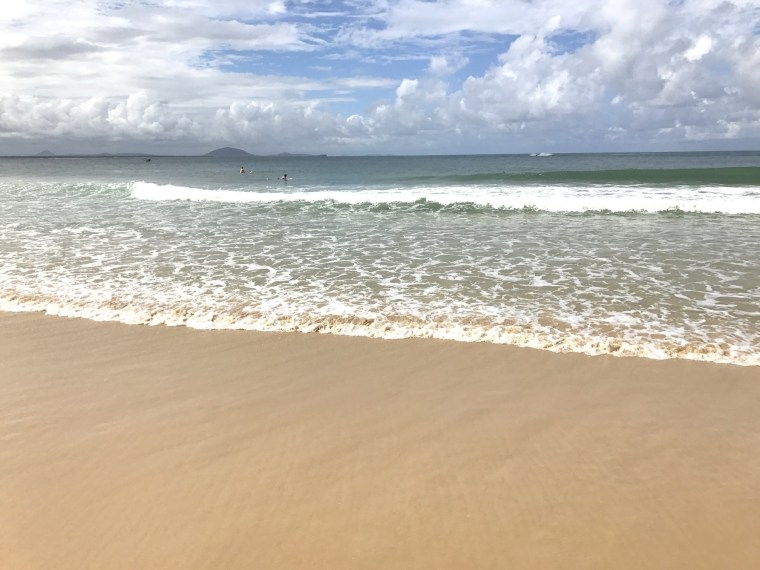


 Almost inevitably (and positioned next to water), the first stop straight off the M5 was Coogee. A late afternoon to tread in the sand, sup coffee under a shady tree, and amble to Clovelly and back. Once all this arduousness had passed it was practically dinner time and so a fish and chip takeaway consumed in fading light alongside the beach made perfect sense.
 Moving away from the bronzed bodies beyond Shelly Beach, nature reclaimed the surrounds and people became a rarity. A walk up into North Head rewarded with solace and a refreshing breeze, before leading to a dose of beautiful harbourside discovery. Collins Beach provides the perfect exemplar of the bushland coves littering the shoreline of Sydney’s waters. Gems that make this part of the world exceedingly expensive. But walking here is free.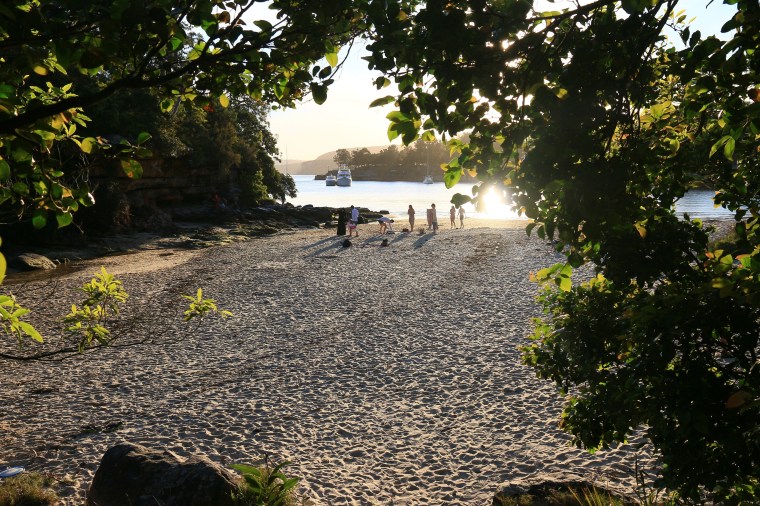
 Well it worked because plenty of people are being lured to the Hills via the Lane Cove Tunnel and M2 toll motorway. It’s heady mix of shopping malls, slightly more affordable housing, faith-based singing and pockets of bushland reserve offer something for everyone. The bushland is my favourite part – discovered one fresh morning in Cumberland State Forest. A tonic before heading to yet another Shopping Mega Centre for top secret work purposes.
 Towards the end of my week criss-crossing the city I ended up in the North Shore and Northern Beaches of Sydney. Indeed my schedule fortuitously terminated in Warringah Mall. While Warringah unfortunately conjures up images of Tony Abbott in Speedos, it’s not all bad. A final interview is finished and I can clock off and drive to nearby Curl Curl beach on a Friday afternoon. I can lie on a towel and try to doze, but become restless and go for a stroll up onto a headland. I can feel relief that the intense week is over and I can start to add up my road toll expenses. I can make plans for dinner at one of my favourite places in Bondi. And I can head home tomorrow, replenished by these opportunities to occasionally exist beside the water.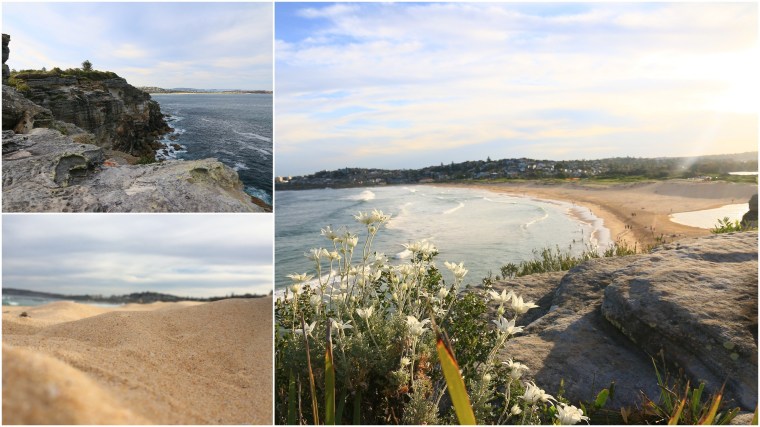

 I remember arriving back from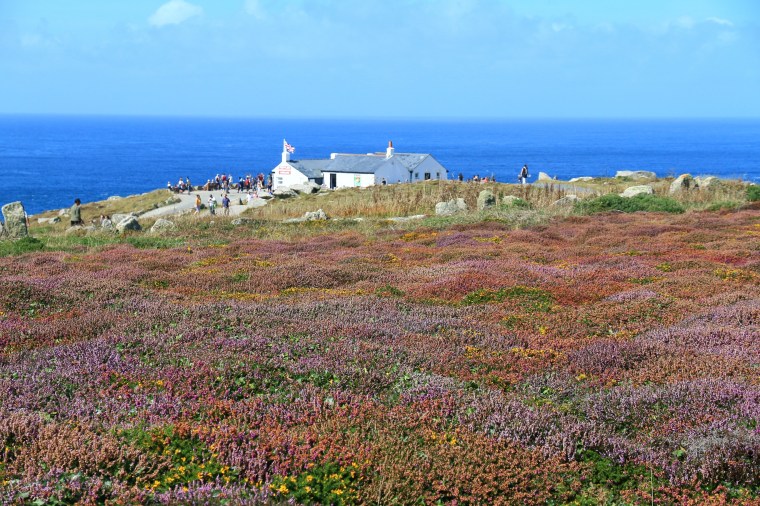
 Practically round the corner from Land’s End is Sennen Cove. Though most of the Land’s End crowd have filtered out, the beach remains busy and tiny car parks are amply populated with people eternally waiting for someone else to move. But beyond the main drag the alleys are cosily quiet, and the coast path is trampled in only an infrequent fashion by jolly people with beaming smiles. I may have been one of them.
 Further along the path the beach empties out, disappearing altogether as a small headland perforates the arc of Whitesand Bay. There are rocks to clamber over and a tightening of the sea against the land. It’s just a small inconvenience when you round a corner and discover another bay, another beach, another dream that you might want to pinch yourself from. If anywhere in the UK is ever going to get close to a rugged beach of southern New South Wales, then maybe Gwynver Beach is the one.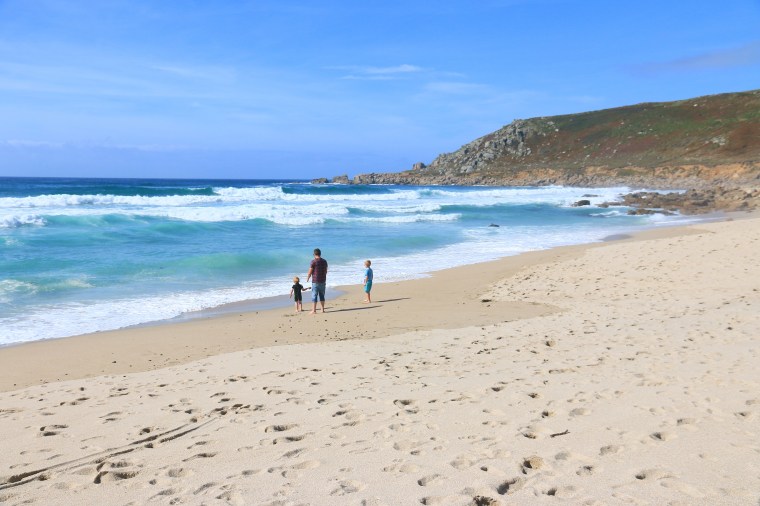

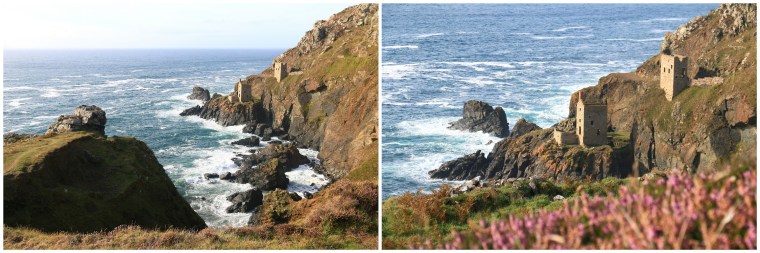
 Such as a pint. A pint of Doom Bar in a Doom Bar glass in an independent, old school pub perched on the edge of Cornwall, the edge of England, maybe even the edge of civilisation (though that is debatable more than ever these days). Can there be any better way to toast an exemplary Cornish Day than waiting for the bus like this?
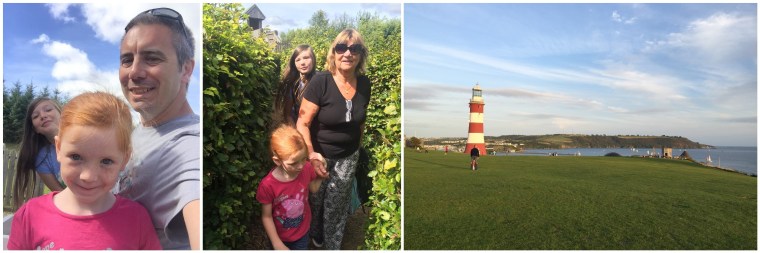

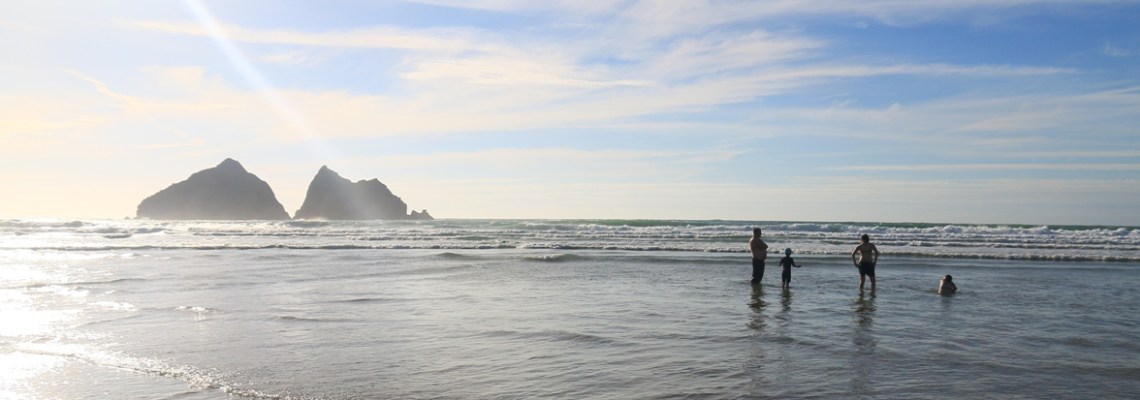
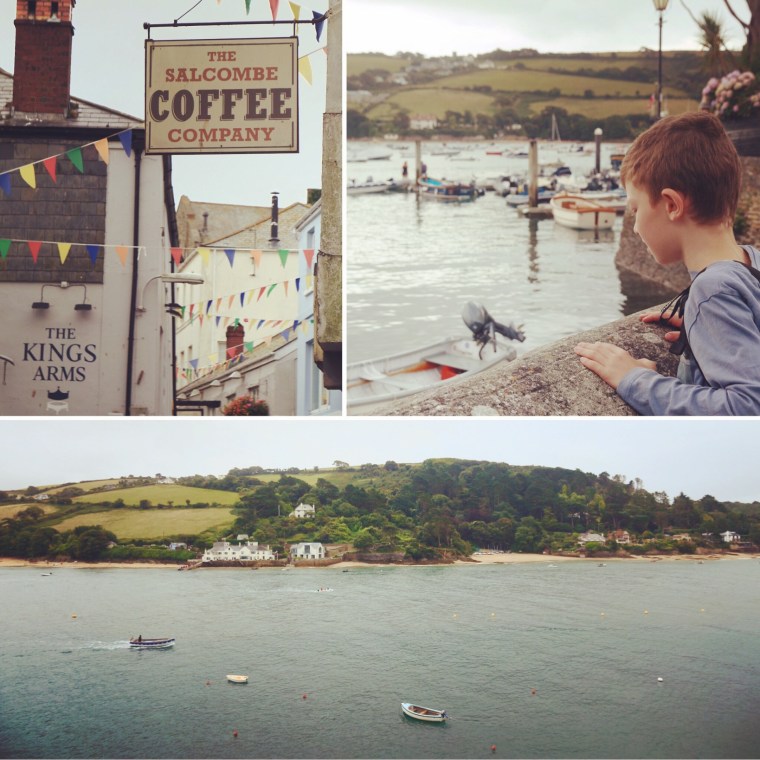
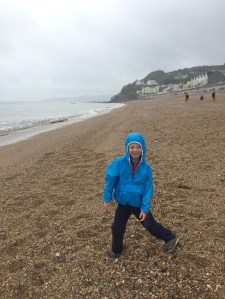 Just a stone’s throw from here – but via tortuously scenic roads hemmed in by a picture postcard of thatched cottages – sit the pebbles of Slapton Sands. Even on dismal days the pebbles lend vibrancy to the air, clarity to the water, and a chance to display consistent inadequacy at skimming. The alternative option of tossing increasingly giant rocks into the sea proved far more accessible and entertaining.
 As the afternoon evolved, summer came back with a bang. Perfect golfing weather and opportunity to get a little burnt. I never get burnt in Australia, only soggy little Britain, quite probably because I never expect to be on the receiving end of such ultraviolet aggression. The golf wasn’t exactly red hot, but we coped around the course sculpted in such a splendid location.
 Having abandoned a bunch of wildlings on the beach, it was late afternoon by time my brother and I rejoined the rest of the family, who didn’t seem to miss us one bit. And why would they, frolicking in the sun, attacking one another with water, jumping over surf. It was quite wonderful to see, together in perfect harmony, in amazing weather, in an attractive place. What else do you need? Fish and chips maybe? Okay.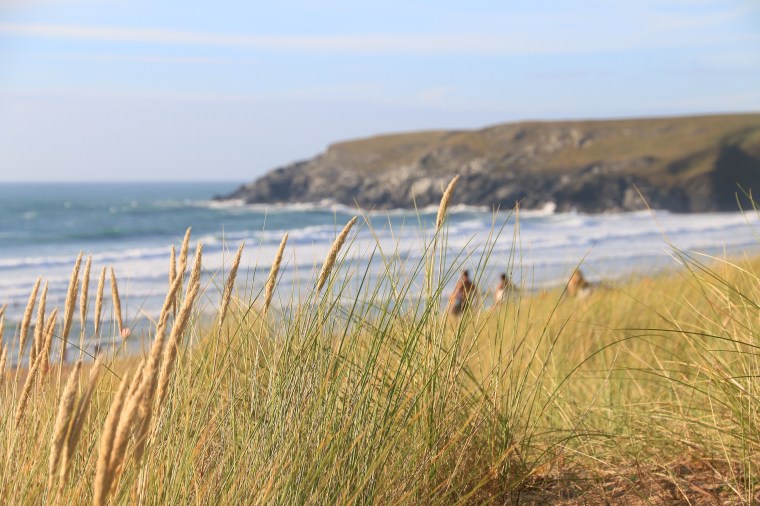
 The criminal thing – though actually fortuitous for us locals in the know – are the queues of people backing out of Ye Olde Cornish Bakehouse or West Cornwall Pasty Ltd or whatever they are called. Chain stores in mediocrity. Delivering nourishment to hordes of people trying to find a few metres on the grainy beach. This is why Looe on a hot August afternoon is not for me. But I’d go there for Sarah.
 In a final hit and miss cloud affair in which there were more misses than hits we returned to the North Cornwall coast the next day. The aim was a last hoped-for paddle in water and delicious cream tea, something that could please everybody. The setting on the River Camel at Daymer Bay was agreeable enough, and could have been quickly heightened with a spot of sun. But it was under a mackerel sky that a few of us tiptoed into the water and clambered over rock pools.
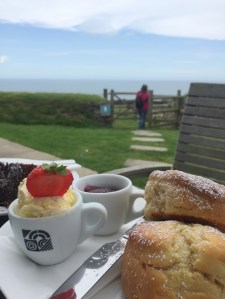 Because I was actually really enjoying driving around blind bends and along single track lanes I decided we could seek out a cream tea further up the coast near Boscastle. For once eschewing the village, we managed to get a parking spot at

 Who am I kidding? It was a sublimely gorgeous blue sky day after all and, following a quick embrace of various family members, I scarpered for the moors, reuniting with narrow lanes, wayward sheep, dry stone walls and a Willy’s ice cream. And on the subject of willies…such was my frantic rush to climb Sheepstor I ripped the trousers I had on while straddling a ditch, leaving me delightfully well ventilated if a little wary of human encounters. The views – from my end at least – were majestic.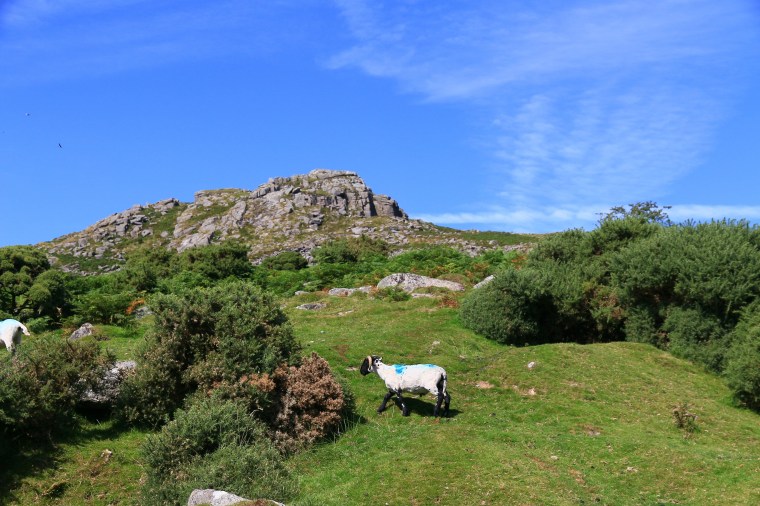
 Ripping trousers so early on are not a good portent for the remainder of a holiday which has historically involved a deluge of high fat dairy products, intense sugar, and hearty stodge. The fact that I was here not so long ago for an awfully long time (acquiring at least one stone in the process), failed to have little impact on my behaviour. Pasty done, cream tea done, massive barbecue meat fest done and 48 hours not yet passed.
 Unfortunately it was all a little murky in Boscastle, but at least the descent to the harbour took us out of the clouds and into a flower filled, tourist peppered, boat bobbing idyll. From which we promptly walked up and up (a seemingly recurrent theme all day) along the coast path to the western headland. Here, the clouds skimmed our heads and offered a little pleasant drizzle, obscuring the coastline and patchwork hills inland. While a weather feature atypical of Manitoba, it could only divert for a few minutes at best, and half a cream tea back at sea level felt like a more agreeable option.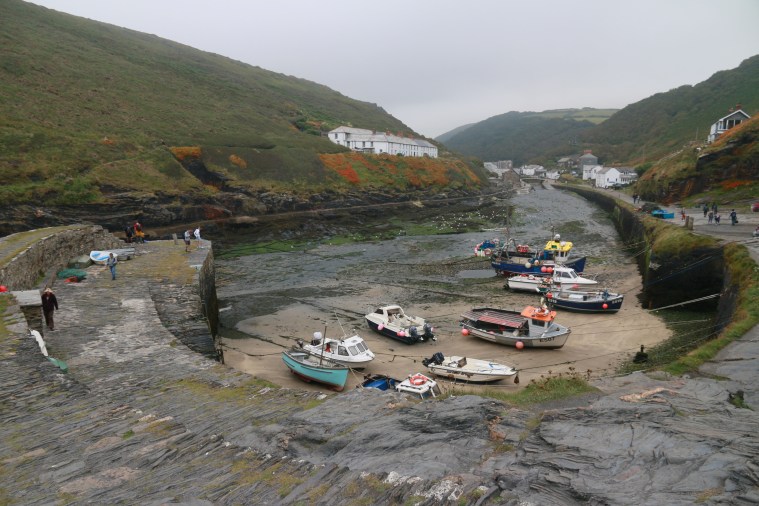


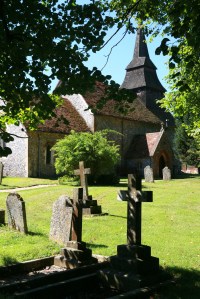 The blue skies over Basingstoke proved ideal to escape Basingstoke and blow off the airline induced cobwebs gathered over the South China Sea and entire Russian landmass. Now, somewhere on the more compact Hampshire-Berkshire border I faced chalk downs, golden fields of wheat, abundant hedgerows, village greens, and the astonishing threat of sunburn. For once, the summer I entered was better than the winter I had left behind.
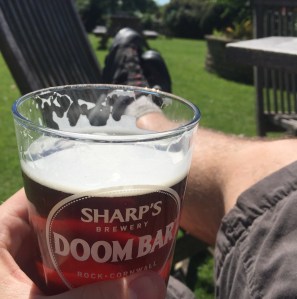 All this bucolic traipsing on foot is thirsty work and Dad was more than content to fulfil my request for an English country pub beer garden experience. Doom Bar on tap was an added bonus at The Vine in Hannington, suitable tonic to march on and out towards more panoramic views. It might be the beer, but I simply cannot fathom how there can be so much countryside in one of the most densely populated corners of a tiny island. Where do they hide them all?
 While the following day was a little more cloud prone, the afternoon perked up and acclimatisation was in full force with the continued wearing of shorts. This does herald the risk of attack by rampant stinging nettle, but it’s a relatively benign one by Australian standards. And the risks bring more ample reward around Whitchurch and the meandering, translucent waters of the River Test. Such as pretty mills and meadows and cows and flowers and ice cream.
 If you’re getting bored with so much idyllically clichéd countryside (and, jeez, why would you?) let me take you to the coast. Obviously not (yet) the coast with the most, but a little island sitting off Hampshire. Reached by a placid ferry ride from Southampton, The Isle of Wight offers fine bays, meandering tidal estuaries, and hulking cliffs, all wrapping an interior of yet more idyllically clichéd countryside.
 On a sunny Sunday in August it’s a popular spot, but some fortuitous ferry disembarkation took us briskly to the western end, where the hair-raising joy of an open top bus awaited. Clattering into branches, dipping and swerving round bends, threading through thatched villages, we survived to Freshwater Bay. Where everything was rather more sedate. Glisteningly, tranquilly, satisfyingly, balmily sedate.
 The big attraction in these parts is of course The Needles. The place even has its own theme park but mercifully it has not impinged the natural attraction of these iconic, dazzlingly white blades of rock. Visible from a viewing platform, sunglasses are very much needed, as are cunning tactics to jostle your way through dawdlers and selfie takers in order to snatch a glimpse.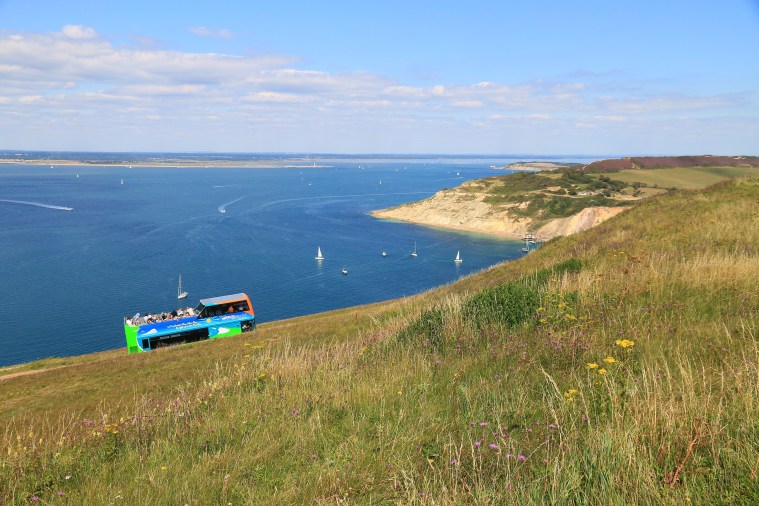


 Two hours with a stop for coffee at the improvingly-serviced by coffee Braidwood and I can find myself pondering whether to take off my jumper along the calm shoreline of Broulee. I didn’t, because it was only about fifteen degrees, but it was certainly still and sunny and rather blissful for thirty minutes or so. A happiness heightened by the token lunch of fish and chips in nearby Moruya, after which I felt a bit sick.
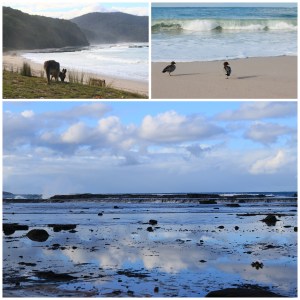 All this is hors d’oeuvre for the main ingredients of this south coast winter classic: driving through the beautiful spotted gums and spiky palms of Murramarang National Park. Arriving at the pristine sweep of Depot Beach and ambling on foot along the sand and rock platforms to Pebbly Beach. Home to beachside kangaroos offering clichéd images of some kind of idyllic Australia. Scary waves and placid bays, reflections and a sea spray haze. Fishing nomads and foolhardy surfers. And escapees from Canberra hoping to bare their arms.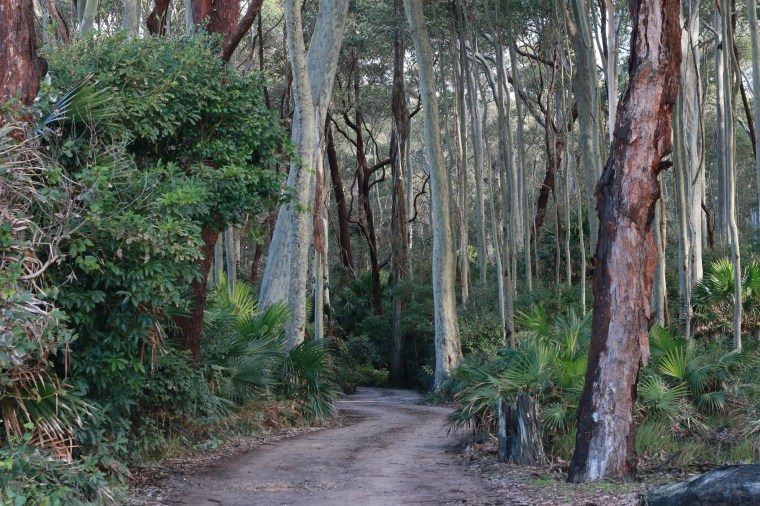
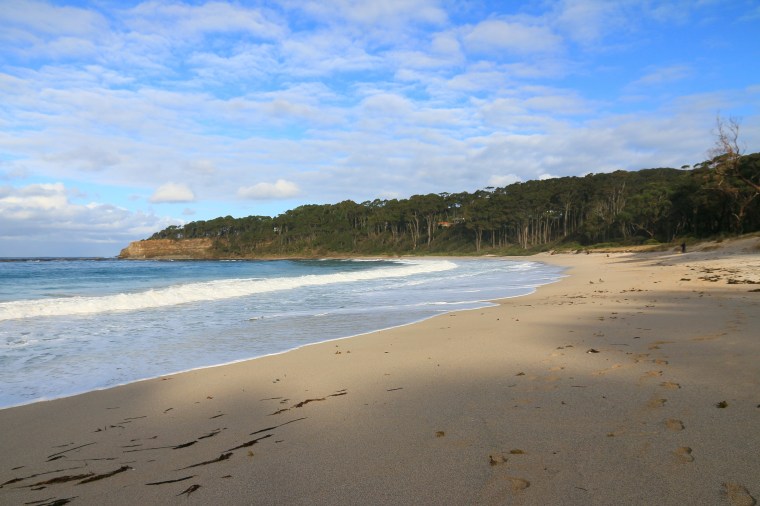


 In fact, I didn’t even make it to Pebbly Beach, a turn of events making those fish and chips an even guiltier pleasure. Rocky debris and a surging high tide meant that onward travel would be a little bit silly, something only to be attempted on The Island with Bear Grylls. My cut off, my terminus, my turnaround point, was an impromptu cascade, tumbling from the sodden forest and weather beaten cliff. There is only so far one can go in a day, and it was a winter’s day after all.

 As the fading gentrification of the Southern Highlands descends toward the sea you can be in no doubt that this is Australia. Indeed, an Australia as it was before anyone, even its first peoples, decided to venture over by boat. The plateau abruptly falls away into a dense system of deep valleys and gorges. Massive walls of sandstone plummet towards pristine creeks obscured by a blanket of gums. A pair of black cockatoos glide in the air, conversing in prehistoric shrieks. Banksia and wattles compete for attention in the understorey topping the escarpment. And a thin veil of water tumbles over its edge, destined ultimately for the ocean.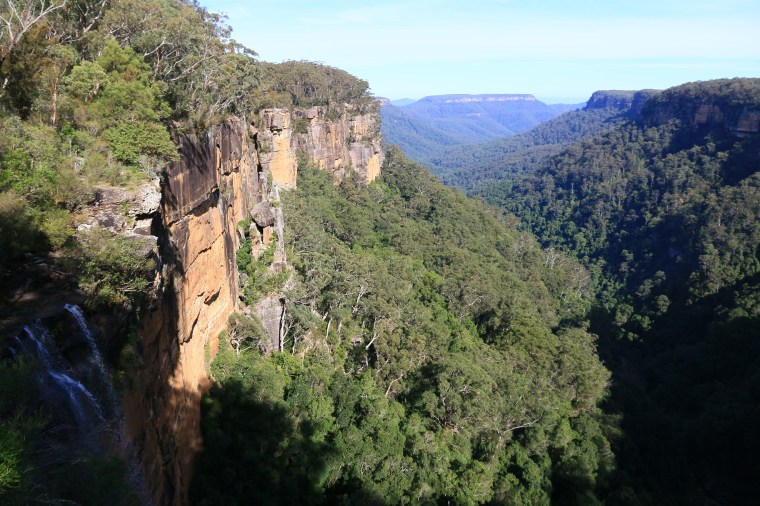
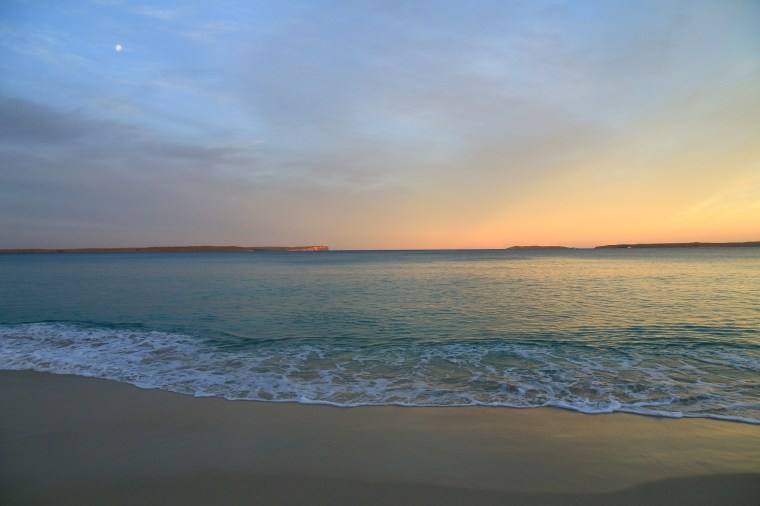
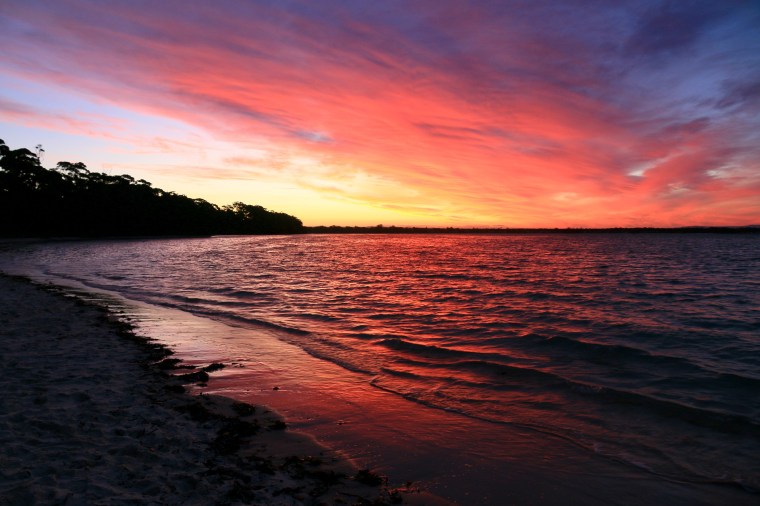
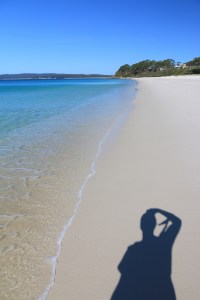 From bay to bay, traversing succulent coastal forests in between, it’s an easy amble from Blenheim Beach to Hyams Beach. The only real difficulty is deciding whether to take your shoes and socks off on the sandy bits only to then have the hassle of putting them on again for rougher terrain (conclusion: wear sandals or thongs). Plus there’s the challenge of restraining your photo-taking so that you don’t have endless, repetitive pictures of clear water lapping at fine, white sand.
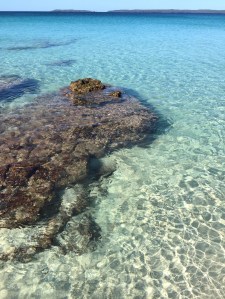 The sand is so white here that it famously gets on every piece of tourist literature and recurrently features on Sydney Weekender as the whitest sand in the world. In fact, it is genuinely so white that even small-minded immigration ministers would feel unthreatened and some cretin with a golden toupee would approve. Personally, I think there is probably whiter (for instance, around Esperance), but that is probably just supremacist talk.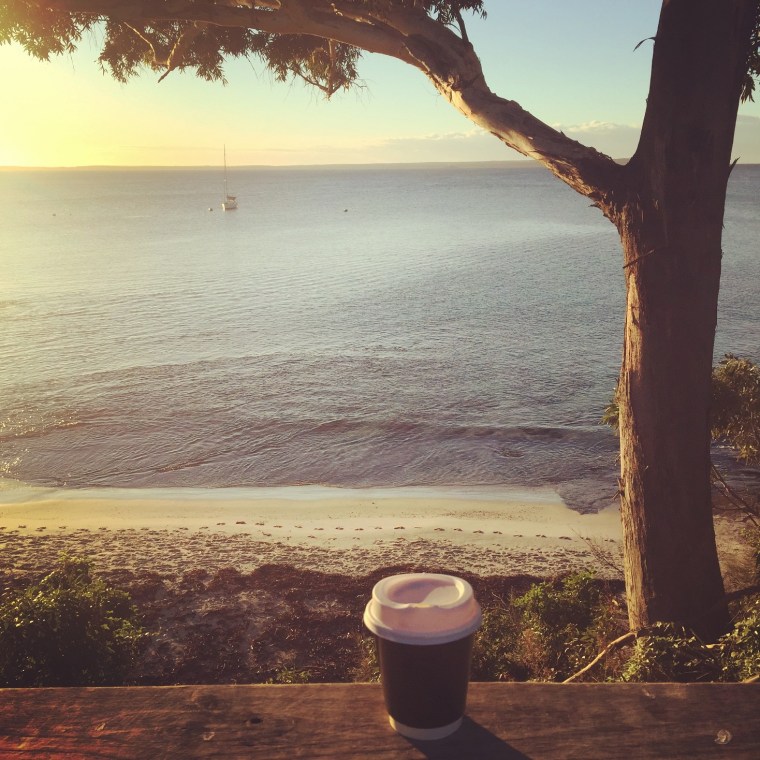
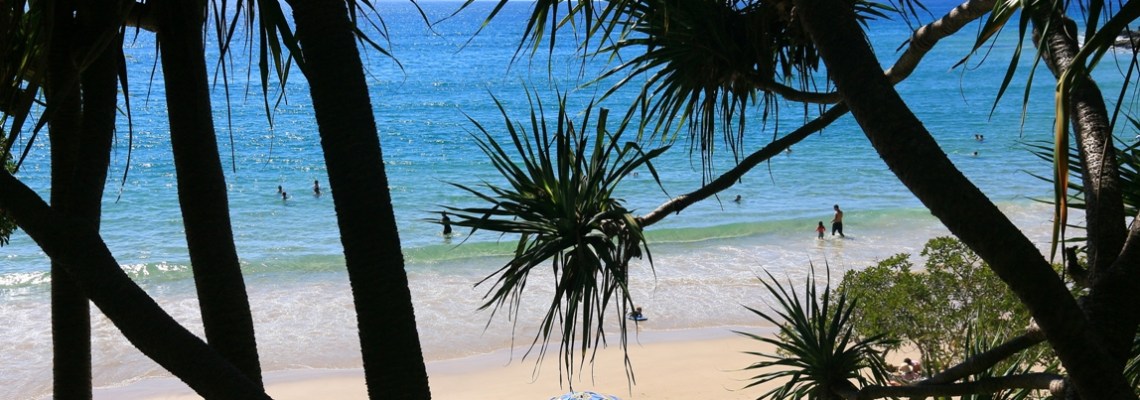


 This comfortable civility dissipates quickly once away from the main road; national parks host waterfalls and rock pools and scenic views over jungle. Tracks weave through palms and strangler figs and giant feathery ferns. Snakes and spiders probably hide. While the crowds loiter all the way down to pools and falls at Kondalilla National Park, beyond the swimming spots, the jungle is almost all yours. Yours and a couple of fellow pioneers, hoping to steer clear of Drop Bears and survive on rations of emergency salt and vinegar crisps and deodorant. We made it, and went to eat cake to celebrate.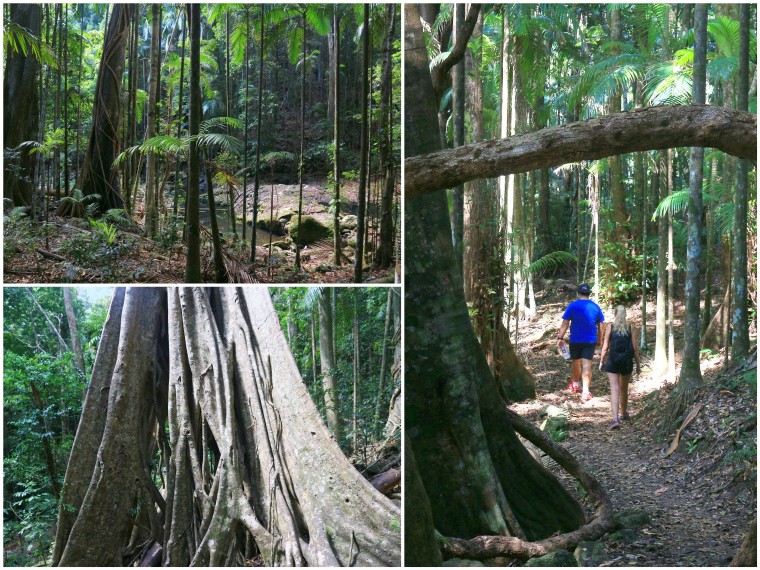
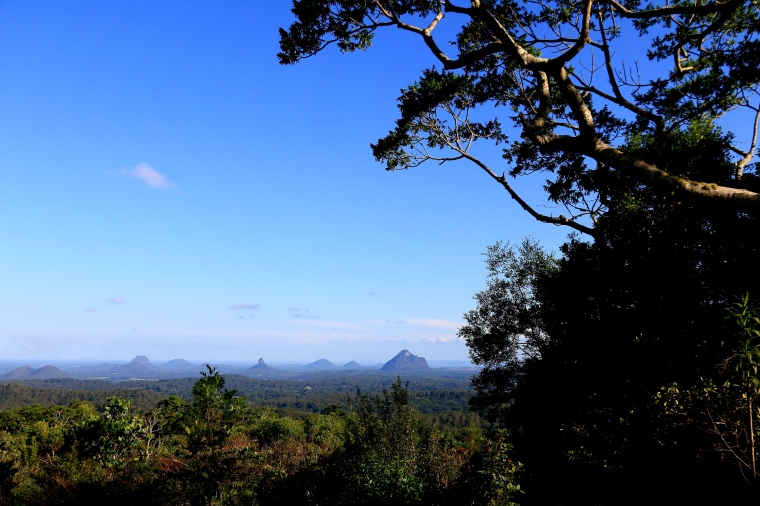
 The return of the sun the next day prompted the usual screeching, warbling, cackling and occasionally tuneful singing of the Buderim birdlife. It is a struggle to sleep in and I was more than ready to escape down the road into Buderim Forest Park for some early morning exercise. While others decided to jog, I was content enough to engage in spells of brisk walking punctuated by abrupt stops for Instasnaps. A kilometre in, the falls came as a surprise. I mean, I knew they were there, but I wasn’t actually expecting much to be falling. And while it was hardly a deluge, there was something aesthetically pleasing about Buderim Falls that was absent at Kondalilla yesterday.
 You see, the tourist board have been so successful that Noosa is brimming at the seams on a warm, sunny Sunday lunchtime, jammed with locals and foreigners alike. Parking is in the lap of the gods, but boy, have they got some of the prettiest parking spots around. The beach is – well – busy for an Australian beach, but admittedly it is a rather pretty beach. And even the national park, which shelters Noosa from encroachment from the south, is bustling with a steady stream of backpackers, families, joggers, and adventurers most of whom are, of course, exceedingly pretty. It is, undoubtedly, a very pretty place, and a requisite on a two day drop bear bushwalk adventure beach and waterfall honey monster tour.
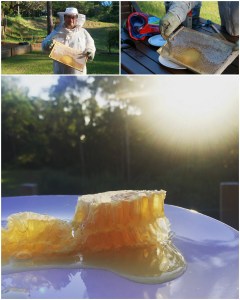 Like all of the most accomplished tours though, the best is saved for last. No tour is complete without a visit to a twee little spot providing lovingly crafted local produce and quirkily endearing owners. Honey Bear Honey of Buderim is not yet on the tourist itinerary, but with a bit more blue sky and a 10% cut it could well be. Look, I’m even promoting it on this blog for goodness sake, reaching tens of
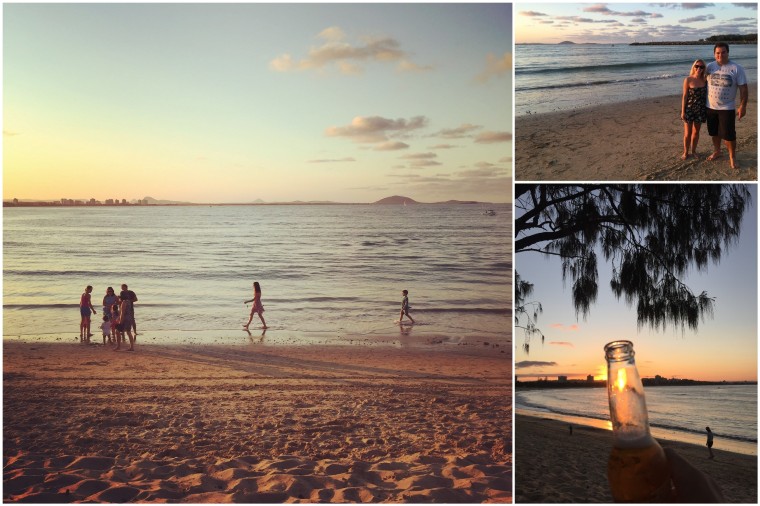
 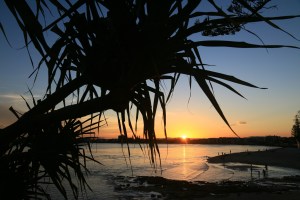 Some might go on to watch the sun disappear, over the apartments and occasional jagged plugs of the Glass House Mountains. Many linger in the warm air, sedated by sparkling wine and a sense of being the luckiest people on this planet; making the most of it all before heading back to work; living each day as if it is your last. Sensible, because, in this splendid corner of Queensland, you never know when a Drop Bear might strike.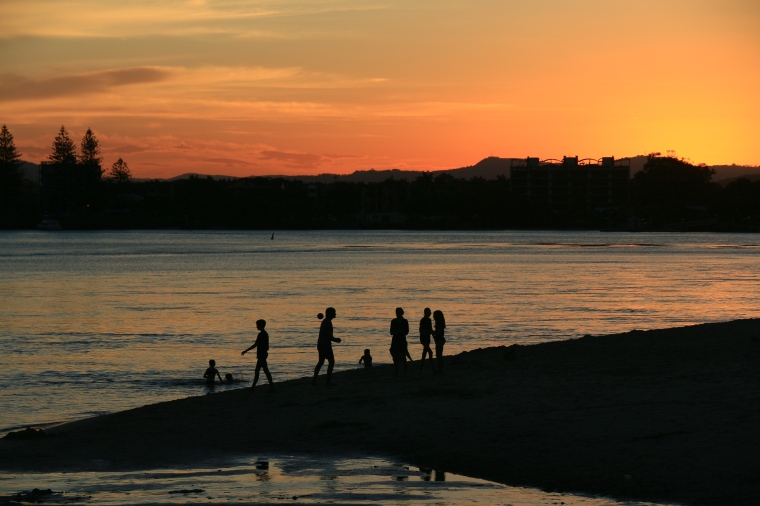

 With time to spare I was happy to head that little bit farther, down to the far south coast of New South Wales. Perks of this journey include – to a limited degree – the striking, golden plains of the Monaro, baked hard and golden by summer sun; the midway bakery opportunity in inimitable Nimmitabel; the rainforest rim of Brown Mountain; and the panoramic view over the rolling cow-dotted Bega Valley, into which the road drastically plunges.
 My base for three nights was Merimbula, handy in terms of size and facilities (i.e. food, coffee, picnic tables on which to work) and generous in its setting upon the shallow inlet and oceanfront. There is even an airport here with connections to Sydney, which does genuinely make you wonder about its feasibility as a site for sea change. A plane buzzed overhead the next morning, as I ventured out for an early walk through bushland along the inlet to Bar Beach. I could get used to these early morning walks, especially when a small but perfectly formed kiosk awaits besides the modest cove to offer up waterfront coffee.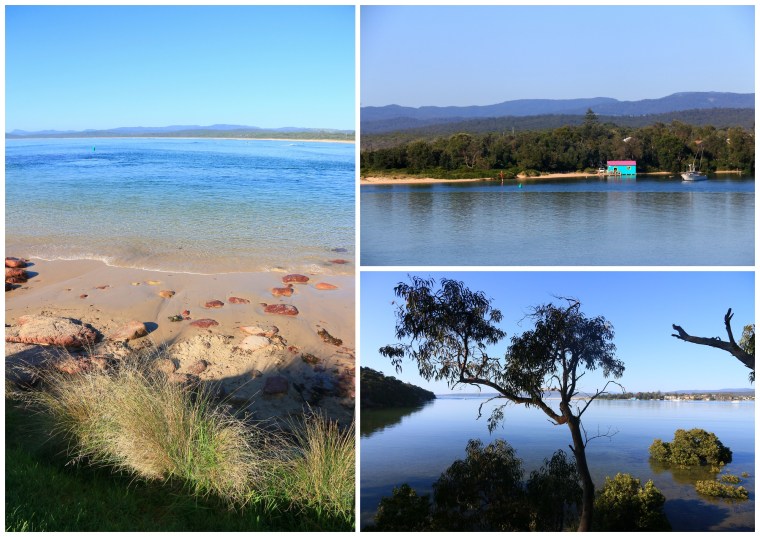
 The water here is quite ludicrously beautifully opaque, which probably helps for spotting sharks and giant stingrays. The only hazard this morning was mostly on the eyes, with a generous gaggle of cashed up baby boomers making the most of retirement by lumbering about in various states of undress. Understandably glowing and jovial – why wouldn’t you be facing yet another day in paradise – it may yet be too early for me to contemplate semi-retirement at the coast.
 What followed over the next couple of days was a pleasing routine of waterside walking, working and wallowing in sand and sea. I explored every possible boardwalk in Merimbula and visited the ice cream parlour at least twice. Late afternoons in the mid to high twenties were perfect for attempts at beachside siestas, but the call of the outdoors and nagging feeling that I probably should be doing something more productive with this opportunity made me restless. I would wander some more or open my laptop for five minutes and stare at the screen as Windows decided to install countless updates yet again, before concluding that it was better to just stand in the sea and spy distant dolphins doing all the work.

 In Eden, I love the shabby end-of-the-world outpost feeling. It’s a long way from Sydney and a long way from Melbourne, which means it generally only picks up on road trippers passing through and lost Canberrans seeking fish and chips. I have heard – along with countless other places – that it could have been the national capital instead of Canberra. And perched upon an outcrop overlooking beautiful Twofold Bay and the rising hinterland of the coastal ranges, one can only wonder what might have been.
 Alas, the sheep paddock that eventually became the capital awaited the next morning. The good news was that I had – or will have – a home to go back there to, and some paperwork to sort out. I wasn’t going to rush – too much – and so took a final walk out to Bar Beach and a coffee to get me over the hills and far away. The boomers were of course there, semi-naked and just slightly self-satisfied, and I could see that I really wasn’t ready to join them for a while yet. But I would definitely be open to further remote working out-of-high-season breaks, just to soak up their paradise, their fantasy for a few more days close to the Pacific.