Sydney shorts

Time has transformed with the antipodean clocks turning backward. What was previously generous is now more meagre. The sun still shines but dwells less in the sky, the time in the day becoming both a literal and figurative challenge: sometimes there is just not enough of it. Catching the sunset can cause a rush, the luxury of lingering and meandering and simply just killing time vanished. Time, with the predictably sudden splurge of work, is now precious. So much so, that I want to keep this brief. You may be thankful for such small mercies.

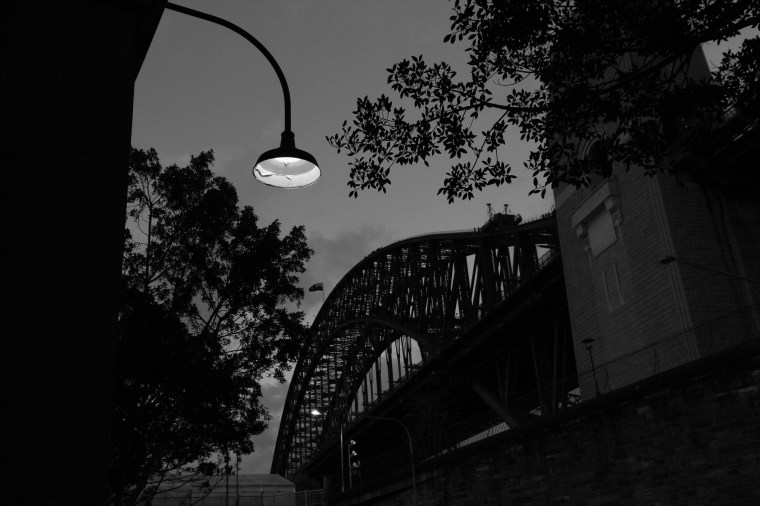
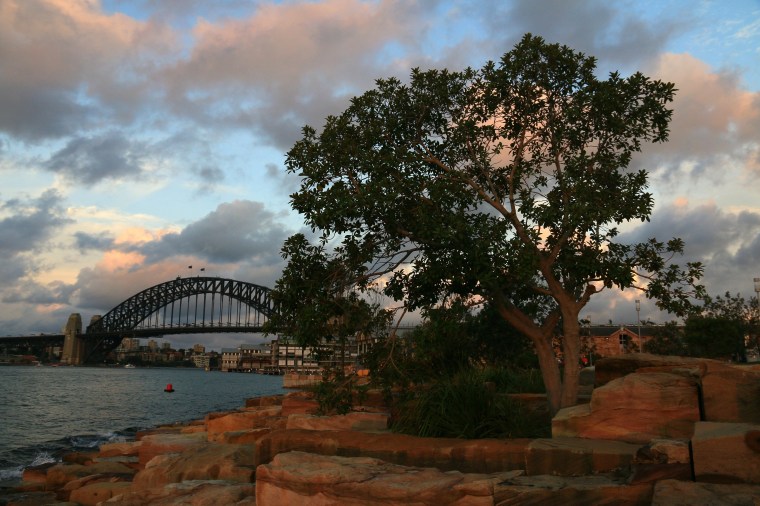
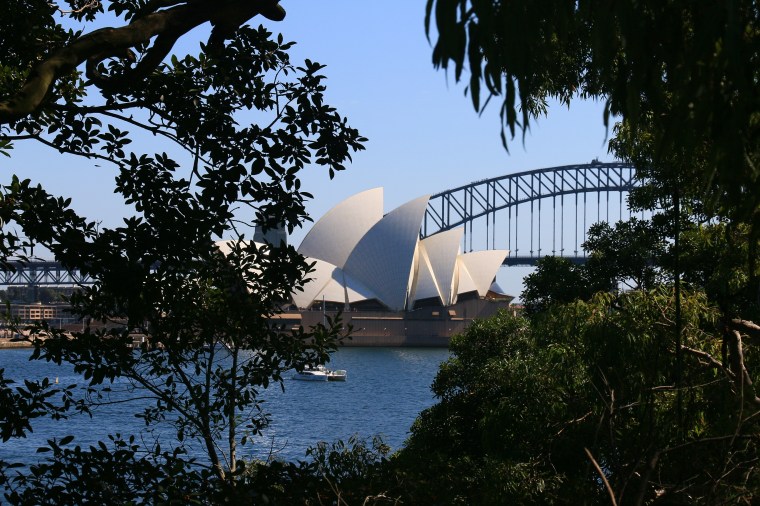
syd03With work travel finally emerging like the red gloss upon a Canberra oak, I have the fortune of tacking on bits and pieces of tourism around insightful spells of blue sky strategy. Like a spell last week in Sydney, giving me the perfect opportunity to simply dwell in Sydney again. To walk alongside its waterways and admire its skyline. To stride through its city streets part England, part America, part Asia. To turn a corner and come up against the looming harbour bridge, all brickwork glitz and dark steel glamour. And from there – of course – to embrace that centrepiece of shells jutting out from Circular Quay, impossible to resist.

syd01

syd02

syd04With sun-filled days setting record April temperatures it was hard to avoid getting distracted. An early morning coffee run turned into a walk under the fig tree shade of Hyde Park which turned into a jaunt over The Domain which led into the many pathways of the Botanic Gardens. I often find refuge in the gardens of over-researched regional towns, a touch of civic serenity amidst a clutch of daggy stores and gargantuan pokie palaces. The Botanic Gardens in Sydney are another matter entirely, a mammoth attraction in their own right, lapping at the silver towers of the city and the sparkling opal waters of the harbour. They are free and open and – even with oodles of exercisers and selfie takers and backpackers – remain forever fabulous.

syd05

A cliché-ridden, repetitively photographed documentation of Sydney would not be complete without some beach shots.  And because this was – after an absence of what must be getting on for a year – a journey down memory lane – there was no other place for me to go than Coogee. After a lengthy evening discussing interesting things with interesting people I had earned that breakfast at Globe the next morning. And while I should probably have been listening back to interesting people discussing interesting things and making sense of it all, it was infinitely more alluring to stride on the sand and to push on along the Eastern Suburbs Pedestrian Expressway.

syd08Each step a memory, each stride made afresh. Gordon’s Bay, Clovelly, Bronte, Tamarama…I am not sure I have seen them looking quite as lovely as they do now. The midweek morning provides a contrast from the irritating queues and blockages of walkers and runners and selfie takers cluttering the place on weekends, almost all of whom are exquisitely beautiful, but almost all of whom somehow ruin the views. Today there is freedom and space and just the attractiveness of golden sands and a becalmed, translucent Pacific to excite. Today, it really is all in the timing, and I just about got it right.

syd06

Australia Green Bogey Photography Walking

Cool man

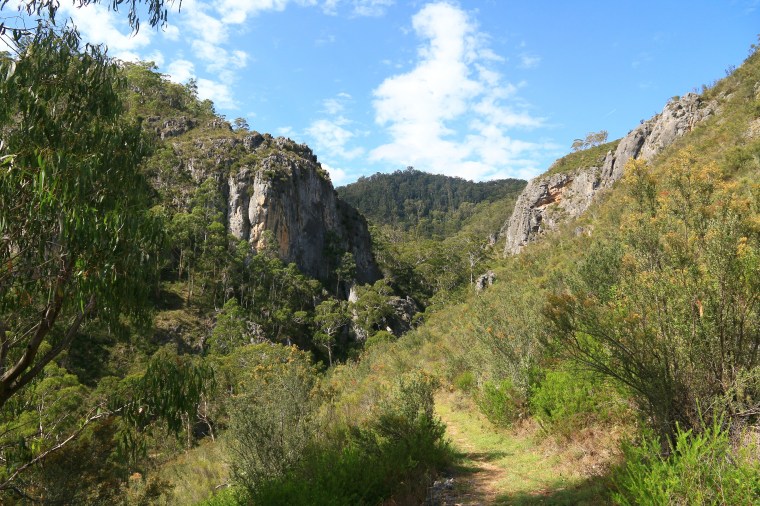
Just over the hills yet far away there is a landscape of sweeping upland plains, forested ridges and snaking river gorges. Wild Brumbies gallop gracefully across the grasslands or socialise under the shade of a clutch of gum trees. Kangaroos on a family outing peer up out of the golden tufts, looking fairly nonplussed about it all. Cockatoos predictably shriek and magpies chime sweet melodies. The skies are big and low and can almost be touched.

cool04

The Cooleman Plain is about 50 kilometres from downtown Canberra, as the cockatoo flies. For us humans with four decent and independently operating wheels, it takes about 200, detouring south to pass round the Brindabella Mountains. The ride is scenic heading down the length of Namadgi National Park. The border crossing into NSW is modest, marked more strikingly by a deterioration of road surface than anything else. And then the joy of tarmac in Adaminaby is only eclipsed by the sight of the Big Trout.

Other than a giant fibre glass trout there is not much to distract in Adaminaby, so you head promptly in what seems to be – finally – the right direction. Kiandra – an abandoned high country settlement spurred on by gold – sits bleak amongst boggy plains and barren ridges. There is a touch of upland England in the vista, that same sparse striking beauty available in the high parts of Dartmoor or the Peak District. But the gum trees tell you this is unmistakably Australia, as you head down into the sheltered green valley housing the Yarrongobilly Caves.

cool03

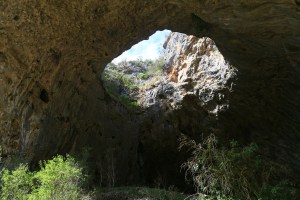
cool02I have been here before, but that was almost ten years ago. Almost ten years, when I first arrived to live in Australia, intending to stay for a year! I couldn’t remember much of it, though the giant hole in the ceiling of one cave opening triggered something approaching recollection. But the river walk must have been new, at least for my feet, and the thermal pool – a steady 27 degrees all year – offered surprise and consideration for wintertime lolling.

cool01

Back up the chasm and across from Yarrangobilly, the upland plains stretch out north and east, interrupted occasionally by hilly islands of trees and the long barrier of the not-so-distant Brindabellas. I am heading towards Canberra again and almost expect to catch a glimpse of the needle tower on Black Mountain. But of course I don’t, the high peaks of Bimberi, Gingera and Ginini standing in the way.  I have been up there, and it seems oh so close.

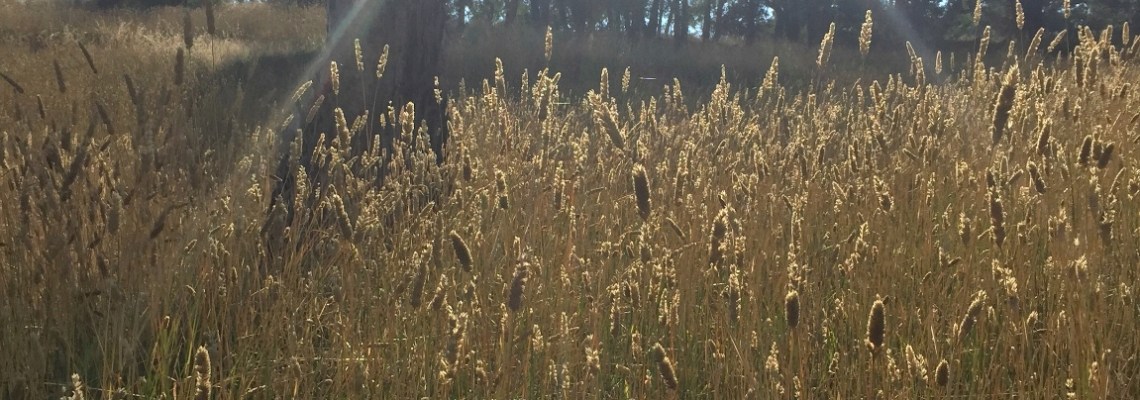
By now the day is moving towards an end and there is a wonderful aura in the light, filtering at an angle onto the grasses and gums of the Cooleman Plain. Keen to take a walk in this golden hour I follow the dirt road towards the remnants of Coolamine Homestead. There is no-one else around and I daresay the Brumbies are more attuned to seeing cars hurtling past than humans gently ambling. A couple seem protective, endlessly circling, snorting, staring me down in an effort to keep me away. I am wary but they allow me passage.

cool05

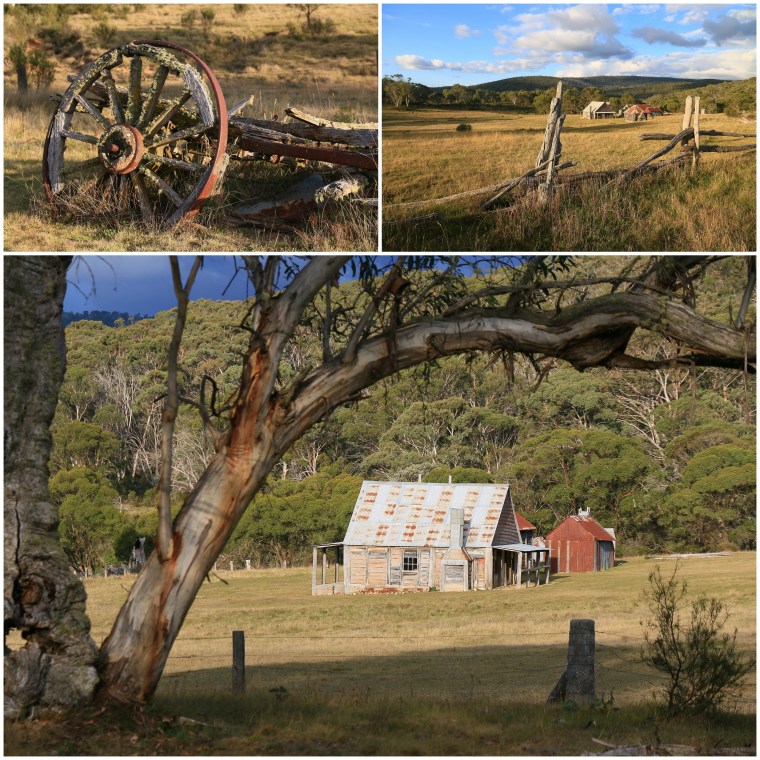
Coolamine Homestead is one of many that dot the highlands within and around Kosciuszko National Park. Practically all are now abandoned, the toil of work and life in such isolated and unforgiving climes proving too much to sustain. Coolamine is at least restored and, with this, promises a certain cosiness and tranquillity, at least on such a beautiful March evening as this. But you just know the winters will be harsh, the life lonely, the work unviable. Plus there is no mobile signal to be able to do anything whatsoever, a sad indictment of modernity that I resentfully find challenging now.

cool06

At nearby Cooleman Mountain I set up camp for the night without any signal, without any other people, without the comfort of civilisation. It is perhaps because of this that setting up mostly involves shifting things around in my car to accommodate a swag mattress. For some reason I don’t fancy sleeping outdoors – the remoteness, the impending chill, the inevitable, sopping morning dew. The cocoon of the car feels protective. I’m not entirely sure watching an episode of The Walking Dead on my laptop in the dark shell of my car in the middle of an empty forest without anyone else nearby is smart. But I do anyway, and no zombies bang on the window during a fitful night’s sleep.

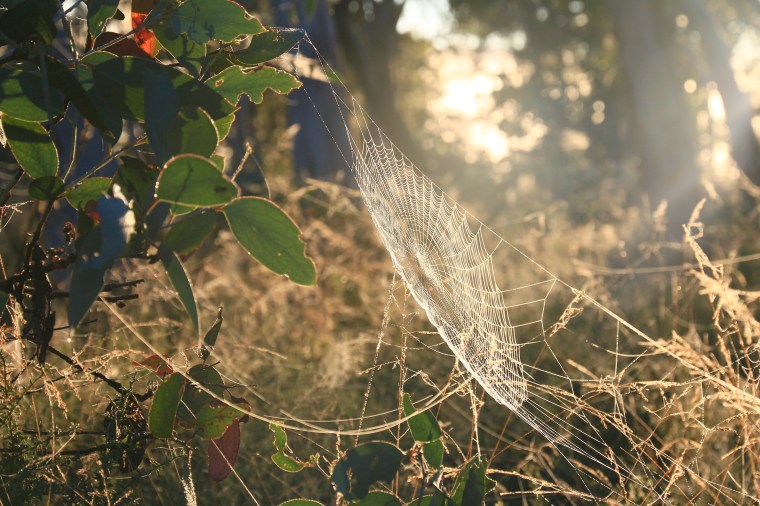
cool07Age must be affecting me because I am questioning the sanity of camping, even if I have copped out by reverting to the back of the car. Every little thing requires pre-planning and organising, extra time and increased awkwardness. It is effectively homelessness, perhaps more so when you sleep in the car. But then, in the morning, as the misty murk of pre-dawn is dispersed by a welcoming sun, as the deathly still air fills with birdsong, as the wattle and grasses shimmer silver with dew, as you witness the birth of a new day a part of this nature, you know why you do it.

cool08

The pre-dawn murk took a little longer to clear down in the plain, and shifting my car back to the homestead required slow and steady navigation through the mist. Setting off from here by foot I resumed my journey along the dirt track towards Blue Waterholes. Ever closer to the ACT border, the mist quickly lifted to show off the backside of the Brindabellas and then, before them, the steep-sided river banks and gorges which filter water down to the very fish-friendly Goodradigbee.

cool09It is, in theory, possible to clamber your way to the Goodradigbee, but this seems almost as difficult as pronouncing it. Beyond the scenic Blue Waterholes (which enjoyed relative popularity and happy interaction with fellow humans), river crossings and the narrow pass of Clarke Gorge make it too much for someone who is already warm and weary, and has been told to beware of snakes in happy interactions with fellow humans.

cool10

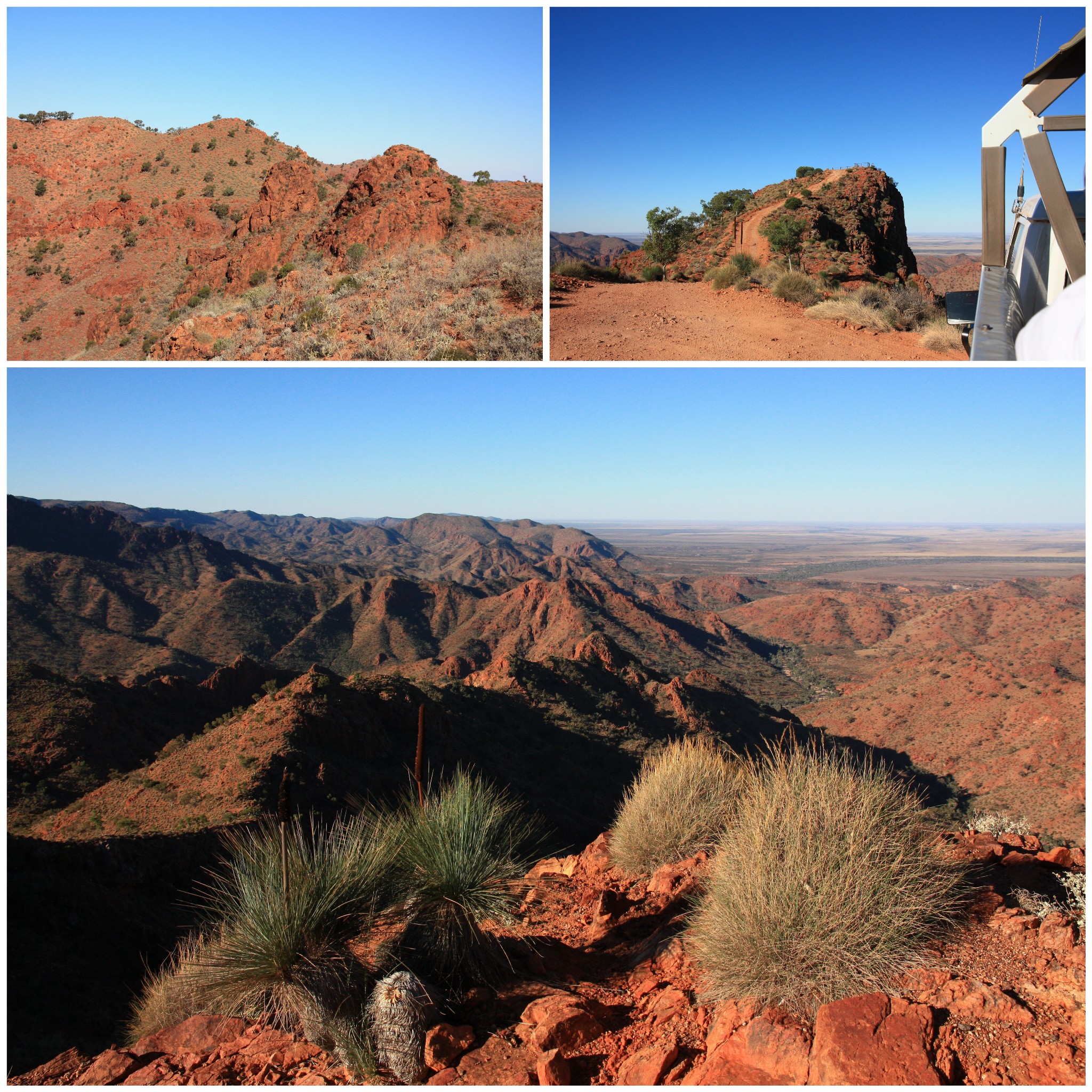
Luckily, Nichols Gorge is more family friendly but I daresay unlikely to be any less suited to snakes. I didn’t see any in the end, which is surprising given the many heated rocks of the dry creek bed and the tumbling gorge walls. The walk is pleasant, though today it seems to drag a little. The surroundings certainly offer something distinctive: with a tinge of red and a few more eucalypts it could be within the cherished Flinders Ranges. Not just across the border from the ACT, tantalising close to views of the Black Mountain tower.

cool11

Of course, getting back to see the Black Mountain tower requires a three hour drive and, as I launch up from the gorge and back out onto the unprotected expanse of Cooleman Plain, I reward myself with a cheese-filled baguette, true mountain walking food. This will keep me going until Adaminaby, where I can pause and refresh with a giant trout. And that will nourish enough to rumble along the dirt, across the border and over the hills, back to a place not really very, very far away. At least as the cockatoo flies, or, indeed, as the Brumby gallops.

cool12

Australia Driving Green Bogey Photography Walking

Catch the pigeon

For all the scurvy, seasickness and usurping imperialism it would have been quite something to voyage with Captain Cook in 1770. Cruise the ocean, meet the locals, spot exotic wildlife, hide Joseph Bank’s acacia collection in the poop deck. You’d get to discover new lands and – best of all –name them. Cook would have had first dibs mind, and being from Yorkshire he would be undeniably dry and unimaginative about it: Wide Bay (a large open bay), Sandy Cape (sand), Red Point (red), Booby Island (wishful thinking arising from a year at sea).

Cook was having a delirious day on April 21, 1770 when cruising up the south coast of what – inexplicably – was to become called New South Wales. Somewhere beyond Point Upright (yeah he named that too) Cook “saw a remarkable peaked hill which resembles a square dovehouse with a dome on top”. He thus decided to name it Pigeon House and from that point on it has acted as a beacon for sailors, sightseers and bush bashers the world over.

Pigeon House now sits within the gargantuan Budawang wilderness covered by Morton National Park and a number of adjoining reserves, a largely unexplored, impenetrable land of sandstone cliffs and gorges, coated with eucalypts, shrubs and ferns. It is almost as it was when Cook whizzed past on the way to Botany Bay. A few roads fringe its edges and offer access to scenic vistas, waterfalls and a tangle of greenery. But it can take some work to enter, even with the newly upgraded Nerriga Road taking some of the roughness temporarily out of the equation.

pigeon01

One of the bonuses of a visit to Pigeon House is its proximity to the coast, meaning that with a bit of planning you can enjoy all that has to offer as well. Like fish tacos in Milton and leisurely golf in Mollymook and shopping in Ulladulla, before enduring a relaxing couple of hours in and around the water in Bendalong. Warm sunshine fading, ocean glimmering, cold beer flowing, is this ideal preparation for an assault on a mountain?

pigeon2

I have had far worse Monday mornings than a dawn start in Bendalong. With the seasons supposedly changing sunrise is drifting beyond seven these days, making it an ideal period to revel in that new dawn, new day vibe. It is the hour of dog walkers and anglers and people with cameras but today just sparsely scattered; most appeared to still be in bed in the Tourist Park, even by the time we had packed up to head for the hills. Leaf blowing, I guess, can wait.

pigeon3

And so, to Pigeon House Mountain, the reason we are here after all. Via a fortuitous stop at the Milton Heritage Bakery (which is definitely one that can be logged in the revisit bank). Fuel for a challenging but captivating climb. Part of the challenge being getting to the trailhead itself, via the back roads and rutted logging tracks which undulate through cool, shady, beautiful forest. The Subaru seems to love this stuff though and I quite love taking it on such journeys too.

pigeon5So the car was up to the job, but were the humans – me, Alex and Michael? The trail – well-built and marked – veers quite steadily upwards and scrambles up a number of rocks for the first kilometre. A small shelf offers the first of the views, snatched through clutches of trees and over boulders. It’s an opportune stop for breath, water and to try to dry the sweat from running down your face and into your eyes and mouth. But it’s a futile effort, with the first view of the mountaintop itself offering both allure and a sense of foreboding.

pigeon4

pigeon6True, there is some relief for a while following a sheltered ridgeline, before the steps return again and the sweat comes back in profusion. It is quite remarkable that someone has gone to the effort to build all these steps though, and the piece de resistance comes with the final climb on a series of metal steps and ladders, hopefully fixed securely to the rocky dovehouse. At the top of each series of steps, views begin to open up and you can see, sense, taste, that the salty sweat will definitely be worth it.

pigeon7

And, you know what, that old effort-reward ratio is positive in spite of the effort part of the equation. While the sea can be seen sparkling and blue, it is the wilderness of the Budawangs to the west, north and south that shines. It is immense, primeval, distinctly and majestically Australian. The Monolith Valley beckons, surrounded by tabletop plateaus carved by the meander of the Clyde River. Ranges expand north and south, and somewhere over one of those distant lumps the road back to Canberra rises.

pigeon8

pigeon9

pigeon10Pigeons were lacking but instead the summit appeared to be a bastion for numerous giant butterflies, the ubiquitous Australian fly, and a curious lizard or two. No doubt accustomed to weary walkers feasting in celebration on apples and oranges and squished cakes from Milton Heritage Bakery, waiting for the crumbs to fall. I’ll say it again, but I have had far worse Monday mornings, even when cake has likewise been involved.

And so, in a matter-of-fact Yorkshire way, what goes up must come down and back to sea level we headed by foot and by car. A sea level with fish and chips, cooling drinks and cooler ice cream, seemingly modelled on the giant summit lumps of Pigeon House. Anything worked off replenished in minutes. Extra burden for the car, which now struggled a little in the heat over the hills (I know how you feel poor car).

Oh to be sailing instead, onwards to some bay surrounded by botany and up north to a rather large reef acting as a kind of barrier. To see new things and name them after the bleeding obvious (or upper crust toffs from England). To strike out into the world like a pigeon into the skies, embracing the wonders around you, finally coming home with tales to tell and sights that will ingrain in your memory until the end of days. To embark on voyages of discovery every day, long since Captain Cook’s has passed.

Australia Green Bogey Photography Walking

Some over the hill boulder dash

I have moved into the Woden valley. Good things about this include the fact that I have a wardrobe and my own bed for practically the first time in eight months, I can cycle home without having a stroke (I think), I can avail Westfield of its air conditioning and thickshakes, and – should I wish – I can sit on the couch in my pants without undue concern for the wellbeing of others. It’s not like I do that or anything…it’s just the idea that I could, if I really wanted to, that is so gratifying.

hills03Still, with every up there’s a down and I have lost mountain views. I have also moved into an area where there is a yappy dog. I only write about this now because I just heard it, again. I always seem to find myself in a neighbourhood with a yappy dog. I think everyone does. There seem to be yappy dogs everywhere these days, coming over here, taking our peace and quiet. They frequently pester me on Canberra nature walks too, usually roaming free because their owners don’t need to pay heed to the numerous signs regarding leads and wildlife protection and all that silly nonsense. Still, at least I can see the mountains on these walks, and the dog yapping can be tolerated with such rewards.

I love the view of the mountains even more than I really do love yappy dogs. Sure, they’re not in the same league as the gargantuan cones and precipices of Switzerland, but they offer a pleasing backdrop to Canberra, particularly as the sun fades and a long shadowy ridgeline contrasts with the purpling sky and flickering lights of comfortable suburbia. And while I can no longer see them from my dog-infested ghetto in the valley, there are numerous points near and far from which to admire the heights.

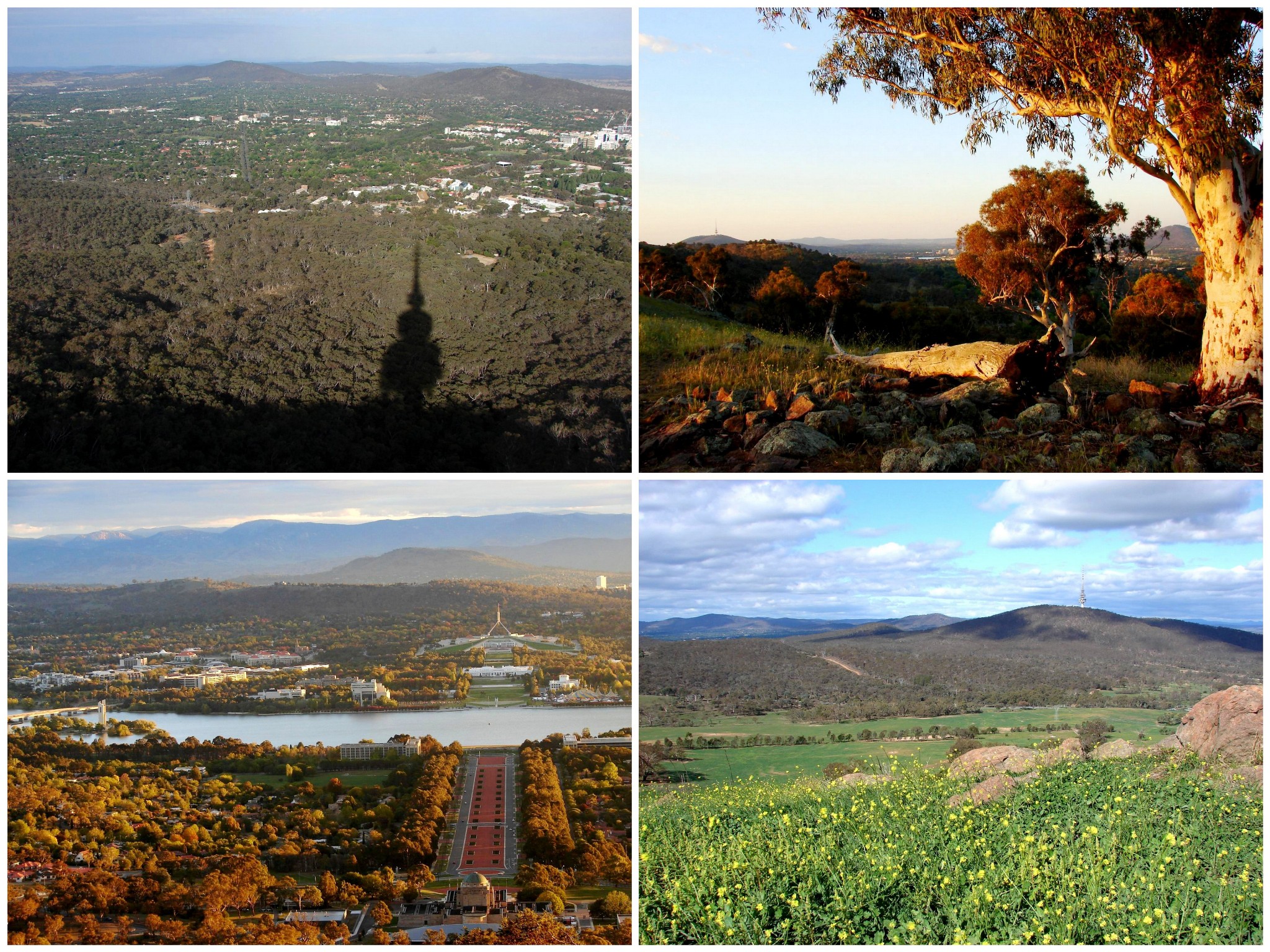
hills01Take Dairy Farmers Hill, which sits in the National Arboretum on the western fringe of Canberra. I cycled up here a few times in the past, but was usually too close to fainting to really appreciate the 360 degree panorama. Driving one evening with the comfort of air con was somewhat more agreeable. The sun dipping onto and over the Brindabellas offered a treat, while the proximate lumps of Black Mountain and Mount Ainslie received a farewell glow. There were no dogs.

hills02

The thing about seeing the ranges to the west practically every day is that you eventually want to strike out for them and almost lose yourself in their lumpy ridgelines and tangled bushiness. It must be how those buffoons who tried to get over the Blue Mountains felt, impelled by an urge to see what is on the other side (cows as it turns out, who figured going round the mountains would  be far easier). These days, buffoons have Subarus and can churn their way up dirt tracks in Namadgi National Park to see if there are cows on the other side.

hills04

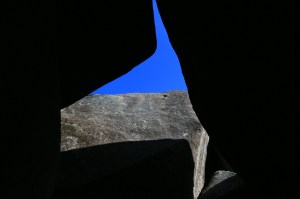
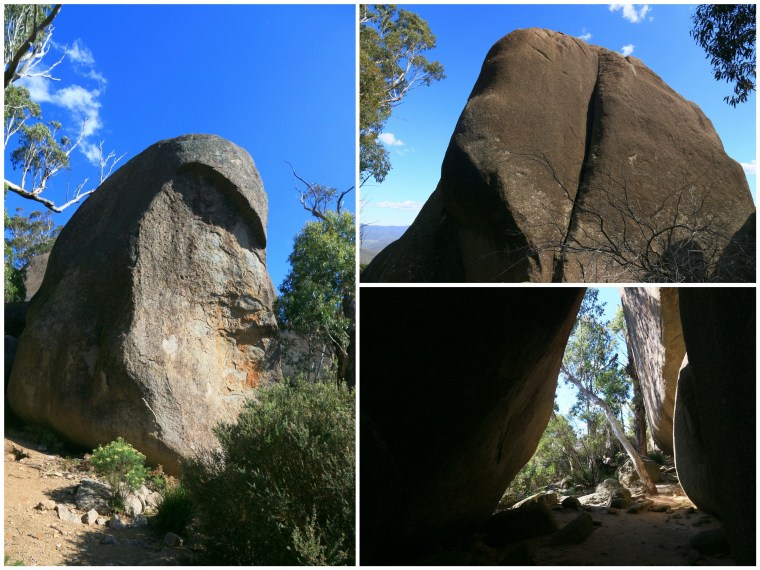
hills07You don’t notice from afar, but these ranges are peppered with giant, rounded granite boulders stacked like clumps of frozen peas that have been left in the freezer for far too many years. These boulders congregate quite generously up on Orroral Ridge, where a series of slightly neglected tracks lead to rocks named for their resemblance to animals and people and other inanimate objects which aren’t rocks. Such is the profusion of rocks that geologists have wet dreams, climbers drool onto their harnesses, and random waifs and strays seeking mountain air delight in the summer coolness of virtual caves formed in the hollows of a cluster of boulders.

hills05a

Cooling rock hollows would have been most welcome on a separate foray into the wilds of Namadgi. Technically it was autumn by the time I made it down into the Orroral Valley and struck out on a much better trail to Nursery Swamp. But so far autumn has produced unyielding temperatures in the low to mid thirties and love for my newly acquired air conditioning. It’s weather that is great for drying washing, but by time I had washed and then hung said washing out it was nearing midday, and only mad dogs and Englishmen go out in the midday sun.

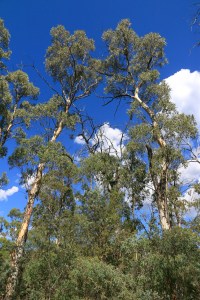
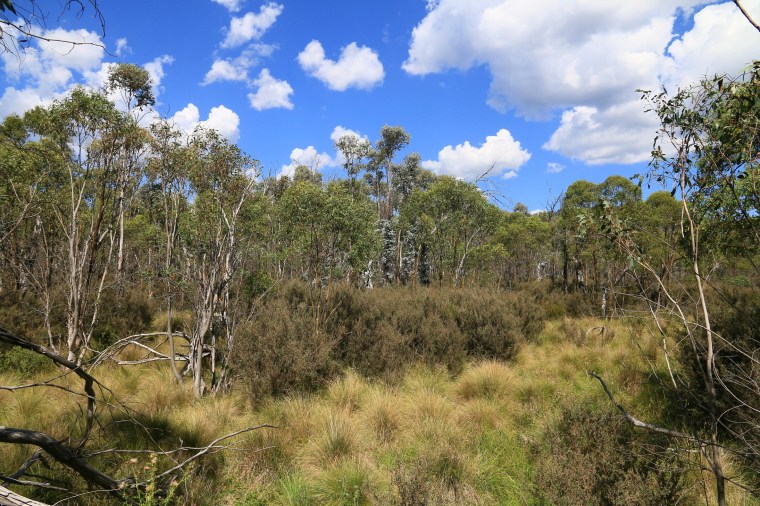
hills09I wasn’t expecting much from this walk – in truth it was something to do in a lull while my washing dried. Plus being practically the last remaining marked trail I hadn’t been on in Namadgi I felt a little obliged to complete it. The word ‘swamp’ was hardly enticing, with images of squelchy boggy plains, rotting carcasses and festering mosquitoes. But it was actually quite a delight, rising steadily through lofty Peppermint Gums, bypassing a few more giant boulders, and meandering through button grass and boardwalks under blue skies and fluffy clouds.

hills10

hills11The swamp turns out to be a fen, as the information board at the end of the walk explained. I’m not really sure of the difference, but it was fairly less swampy than I imagined. A bench here overlooked a river of vivid green grass, lapping at tall forest and rocky outcrops. Being now beyond midday it was the perfect place for a simple homemade sandwich and, once again, for all the expensive meals and gourmet plate ups*, can there be anything more satisfying than a bushwalk sandwich? I don’t think so.

Thus, even in the heart of these enduring mountains, with their magnetic heights and silhouetted ridgelines sit divine little glades like this. So, while the mountains can be marvelled at, the views readily lapped up, here’s to the valleys of this world; contented spots with a bit of simple tucker and lack of yappy dogs.

* On a complete tangent, I was in a cafe recently and someone ordered some “activated muesli”. WTF? Do they shake the muesli up in its box before serving? I noted a price tag of $14.50 to seriously activate your wallet.

Australia Green Bogey Walking

Fantasea

In those deepest darkest bleakest dreary days of a northern November it was difficult not to yearn for the Pacific. Soft tidal sands under an off white sky at Bigbury could only do so much. A bracing breeze may have kept rain at bay at least for a few hours, but there was little warmth in that air; little solace in a faded, washed out scene in which even the sheep seemed sullen. Beautiful melancholy yes – but melancholy all the same – and I could have done with just a day on a different south coast to lift this permeating shroud.

Apart from a touchdown over Botany Bay the ocean had eluded me in my inexplicable hunger to return to landlocked Canberra. But with the weather settling into perfection and opportunity to keep work tasks ticking over remotely, I finally saw and seized an opportunity for a few away days, back beside the saturated sapphire hues of the Pacific. I don’t think I could have dreamt of such perfect days, even when being buffeted by a south-westerly on Burgh Island a few months back.

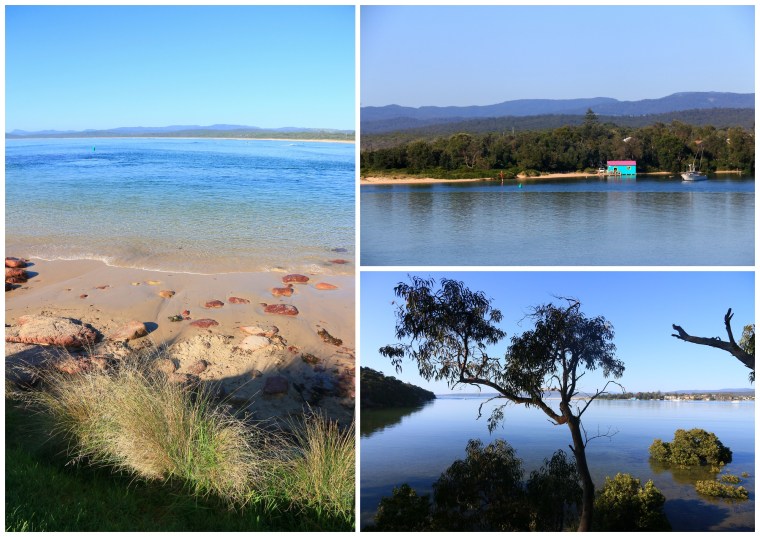
mer01With time to spare I was happy to head that little bit farther, down to the far south coast of New South Wales. Perks of this journey include – to a limited degree – the striking, golden plains of the Monaro, baked hard and golden by summer sun; the midway bakery opportunity in inimitable Nimmitabel; the rainforest rim of Brown Mountain; and the panoramic view over the rolling cow-dotted Bega Valley, into which the road drastically plunges.

Generous January rain in the valley could, just occasionally, trick the senses into believing they were cruising through South Devon hills to Bigbury. But any doubt is eliminated when the Pacific finally comes into view at Tathra. This could only be Australia, and from parking my car underneath a clutch of ti trees to being almost blinded by the golden white sand, to dipping my toes in that ambient ocean, I had a euphoric sense of finally being back.

mer03My base for three nights was Merimbula, handy in terms of size and facilities (i.e. food, coffee, picnic tables on which to work) and generous in its setting upon the shallow inlet and oceanfront. There is even an airport here with connections to Sydney, which does genuinely make you wonder about its feasibility as a site for sea change. A plane buzzed overhead the next morning, as I ventured out for an early walk through bushland along the inlet to Bar Beach. I could get used to these early morning walks, especially when a small but perfectly formed kiosk awaits besides the modest cove to offer up waterfront coffee.

mer02

mer04The water here is quite ludicrously beautifully opaque, which probably helps for spotting sharks and giant stingrays. The only hazard this morning was mostly on the eyes, with a generous gaggle of cashed up baby boomers making the most of retirement by lumbering about in various states of undress. Understandably glowing and jovial – why wouldn’t you be facing yet another day in paradise – it may yet be too early for me to contemplate semi-retirement at the coast.

mer07What followed over the next couple of days was a pleasing routine of waterside walking, working and wallowing in sand and sea. I explored every possible boardwalk in Merimbula and visited the ice cream parlour at least twice. Late afternoons in the mid to high twenties were perfect for attempts at beachside siestas, but the call of the outdoors and nagging feeling that I probably should be doing something more productive with this opportunity made me restless. I would wander some more or open my laptop for five minutes and stare at the screen as Windows decided to install countless updates yet again, before concluding that it was better to just stand in the sea and spy distant dolphins doing all the work.

mer08

Beyond Merimbula I made my ‘usual’ excursion to the Pambula River. Continuing a good grasp of tidal knowledge which I rediscovered in Devon, I arrived to a low tide, which opened up a far longer stretch of white sand and crystal water in which to wade. The backdrop of bushland and bellbirds in such a paradise might have encouraged a siesta, but here I failed too. Perhaps that semi-retirement by the coast really is looking still quite a long way off.

mer05

mer09In Eden, I love the shabby end-of-the-world outpost feeling. It’s a long way from Sydney and a long way from Melbourne, which means it generally only picks up on road trippers passing through and lost Canberrans seeking fish and chips. I have heard – along with countless other places – that it could have been the national capital instead of Canberra. And perched upon an outcrop overlooking beautiful Twofold Bay and the rising hinterland of the coastal ranges, one can only wonder what might have been.

mer10Alas, the sheep paddock that eventually became the capital awaited the next morning. The good news was that I had – or will have – a home to go back there to, and some paperwork to sort out. I wasn’t going to rush – too much – and so took a final walk out to Bar Beach and a coffee to get me over the hills and far away. The boomers were of course there, semi-naked and just slightly self-satisfied, and I could see that I really wasn’t ready to join them for a while yet. But I would definitely be open to further remote working out-of-high-season breaks, just to soak up their paradise, their fantasy for a few more days close to the Pacific.

Australia Green Bogey Photography Walking

Down South

tug01Having now spent over nine years (with interruptions) in everyone’s favourite Australian city you would think I’d have exhausted every nook, crevice and scrubby hilltop. Forget nine years…many would say two days is sufficient, and even then you might have to drag things out with a wander around the National Archives, surely the least compelling sounding attraction of the lot (which might explain why, still, I have never been). But no, it turns out Canberra has even more suburbs and scrubby hilltops than you can ever imagine.

Partly, the new has been thrust upon me. Well, not so much thrust but more gently cajoled after a temporary change of residence. It’s hardly a hardship (in comparison to, say, being evicted and dragged to a mosquito-infested tropical island where you will get abused and suffer long-term mental degradation courtesy of the Australian Government). But some locals will recoil in horror, the froth atop their soy lattes spilling over onto the front page of The Australian, when they hear I am living in Tuggeranong.

Quick geography lesson: Canberra is weird and like no other city. There is a city centre, of sorts and then some town centres as well, and I suppose some village centres and suburban shopping precincts, which spread out like satellites around the town centres. Occasionally an out-of-town shopping centre muscles in to compete with the town centres and no-one goes to the city centre because they are all at the new IKEA which is on the edge of a centre on the periphery of nothing. All the important government-type stuff happens without a centre, but instead is contained within its own triangle which is more like a diamond, if you take into account the War Memorial. Meanwhile grassland wedges and lumps of trees bubble up out of a mesh of roundabouts, circles and parkways where confused cars with NSW plates frequently vanish, never to be seen again.

Tuggeranong is a town centre in the south of Canberra, with Wanniassa – where I stay for now – one of those satellite suburbs on its edge. Wanniassa is actually closer to Woden (another town centre), but I will spare you even more complexities. It’s officially part of Tuggeranong, which is believed to have a higher proportion of Bogans per square kilometre than the other Canberra towns. I cannot truly vouch for this on my forays into its cul-de-sacs. All I can report is that there is a broad cross-section of mostly Anglo-centric Australia on display, from suited public servants to Shazzas in tracky-dacks. Utage – that is the popular Australian tendency to convey oneself by pimped up utility vehicle – seems high, as does baby-booming designer spectacle wearing.

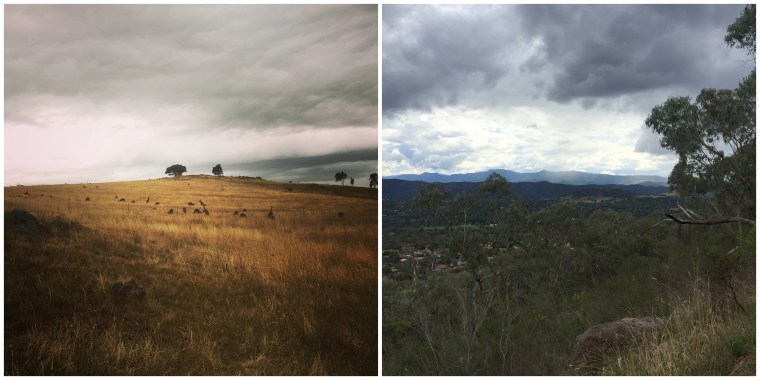
In spite of repetitiveness in its suburbia, Tuggeranong sits in quite a spectacular bowl. To the south and west, the Brindabella Ranges appear much closer and far more impenetrable. North and East, a series of Canberra hills and ridges block out the rest of the city. With a little imagination, you could picture a Swiss town in that valley, with church steeples and cowbells decorating the air (alas they filled it with concrete brutalism instead). Meanwhile, the omnipresent dome of Mount Taylor is recast as Mount Fuji, a conical summit piercing the seal of a leaden sky and drawing the Lycra-bound to its trails.

It’s no Red Hill but I have found Mount Taylor to be a convenient escape from the clutches of the valley. The lower slopes of grassland are regularly grazed by kangaroos, fattening themselves for a game of chicken on the Tuggeranong Parkway. The middle section – which flattens for much-needed respite – is all bushland shrubbery, concealing colourful rosellas and wrens and a cockatoo or two. The final ascent upon gravel is open and barren, affording views over Tuggeranong and the ever-changing weather scattered over the ridges and valleys to the west. In the other direction, the needle atop Black Mountain reminds that you are still in Canberra, and another town centre or two awaits below.

tug02a

Naturally I have not confined myself to this area – old haunts are only a 15 minute drive or so and offer greater reliability of coffee. Upon returning to one of a handful of coffee spots in the Inner South in which I regularly spread my love and money, I was astounded that they remembered my name and didn’t seem at all fussed that I hadn’t been there for over six months. While some curiosity might not have gone amiss, the warm feeling of going to a place where everybody knows your name makes it harder to sever ties.

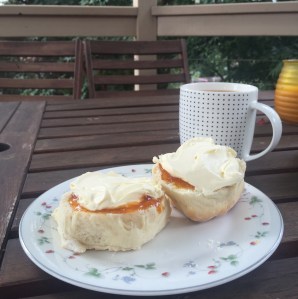
tug05Nevertheless, it was with some contentment that I found a reasonably close reasonably decent coffee stop one Saturday morning, as part of a bike ride on the many accommodating paths in the Tuggeranong Valley. One path circumnavigates its lake, which is a poor man’s Burley-Griffin but amiable enough. Others cut through the various patches of grass set between the backs of brick houses and alongside storm drains. One route takes you up towards Oxley Hill, a reasonable but not unobtainable test of legs, and another does the long uphill drag back to Wanniassa, in which aforementioned legs turn to jelly. I may be being just a touch healthier, but with this comes justification in feasting on yet another, sadly Antipodean, cream tea.

tug04

As well as a higher-than-average distribution of Bogans, it is said that Tuggeranong gets a little more rain, at least compared with the gauge at the dry and dusty international airport. It’s the proximity of the mountains you see, and the bubbling up of storm clouds. Some of these have been very generous in their distribution of rain in the last couple of weeks, transforming Aussie golden to English green.

With these mountains just a touch closer, wilderness practically on your doorstep, ridges almost always framing your vista, there is a magnetic appeal to that which lies nearby. The fresh air of the bush is tantalisingly close to Tuggers. And for that, and really quite a lot else, it can’t be much faulted.

tug06

Australia Green Bogey Society & Culture

There’s something about Alice

Well, it is quite something to be thrown back into the thick of it, and quite something again to be thrown into the thick of it in the thick of it. With a hop, skip and considerable jump there could be no pretence of being in England anymore. No tranquil ponds and croquet-worthy lawns, no afternoon teas and broadleaved avenues, no ubiquitous sarcasm and cling-filmed sandwiches. Just right bloody ripper sunbaked Straya with Utes and flies and glad-wrapped beetroot sangas and drongos in high-vis and Aboriginals under trees, with rarely a hipster in sight.

That probably does Alice Springs an injustice to be fair. While there are plenty of Utes and flies and a fair share of drongos, it struck me what a right multicultural melee Alice is. An African taxi driver took me to my resort hotel, filled with – among others – softly-spoken British baby boomer couples and their lairy transatlantic cousins. Here an immaculate receptionist of Southeast Asian heritage checked me in and I passed what passed for a chambermaid from the Middle East. Later, on the way into town for a bite to eat (friendly Asian service again), I strolled along Todd Street Mall to the sounds of German and French backpacker accents and something more rarely heard in other Australian towns and cities: Aboriginal dialects, which are many and varied. For better or worse, it really is a right little melting pot in the middle of nowhere.

There is an oasis town aura to Alice – albeit a little rough around the edges – which perhaps draws these people in. Approaching from north, south, east or west it is probably the first place with a Woolworths and Kmart for a thousand miles, or something stupidly noteworthy like that. You can finally get a cappuccino, but do beware. And there are public showers so you can attempt to wrench off layers of sand and dirt and flies that have attached to your skin while ploughing through the Oodnadatta Track in your big fuck off truck. Frankly, if only more towns in Australia had such facilities, it would have been most welcome.

alice01On the other hand, natural oases appear more limited. The Todd River is mostly a river in name only. Usually it’s just a dry, wide, and sunken swathe of sand meandering through town, almost as if a dreamtime serpent had once there slivered. It is quite striking and also quite beautiful in a way: grasses and short and stocky shrubs flower along its banks and a parade of River Red Gums indulge in a majestic arrangement of bulbous roots, variegated bark and twisted, stretching branches. There really is not a better Eucalypt in all of Australia, in my uneducated opinion. It just looks like it belongs here.

alice02

As well as dry (semi-arid is the tour guide word of choice) Alice is – it will come as no surprise – frequently hot. However, having endured a scorcher of a week in Canberra, it actually felt quite pleasantly temperate for my stay. A nice ambient thirty degrees with a bit of a breeze and occasional cloud cover. Pah, call this hot?

Anyway, venturing into the outback from Alice – once work duties have been completed – it doesn’t take long to feel a long, long way from anywhere and anything. You can sense it would be really, really nasty on a proper hot day. Flies would multiply tenfold, crickets would pulsate loudly before passing out, the cracked earth would literally bake a goanna, while giant birds would circle for unsuspecting Englishmen lost in their quest to find a tea shop.

Fortunately, this particular Englishman was on a minibus tour today, taking in the West Macdonnell Ranges. Not the entire length of the ranges mind, because they stretch virtually uninterrupted for something like five hundred kilometres. Technically there are three separate ranges in the ranges, if that makes sense. Named after British conquistadors who got a bit lost, I suspect. I cannot remember, because instead of taking in everything the tour guide was saying, I was kind of mesmerised by the almost repetitive pattern of sweeping ridges rising from scrubby red plains.

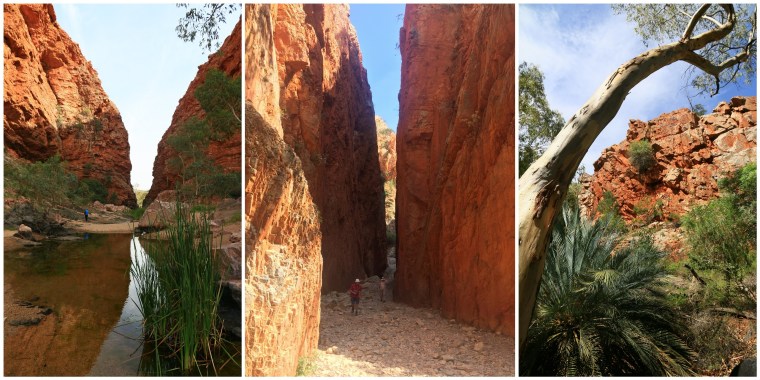
Scenery passing by the window, I noticed how once every few kilometres the ridgeline dips and is eroded to varying degrees. In some spots this has created a significant gap and a way through to the north, sometimes narrower than an American tourist. This is where waterholes and gorges form – Simpsons Gap, Standley Chasm, Ellery’s Big Hole and the like – providing opportune stops for purveyors of sightseeing day tours. They are stops worth making, for there is an air of magnificent serenity in such sheltered grandeur.

alice03

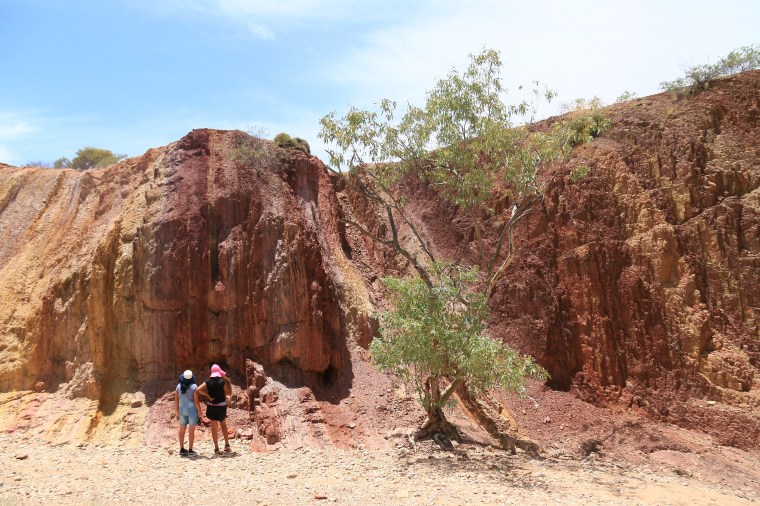
Further down the road there are some ochre pits, imaginatively marked on the map as ‘Ochre Pits’ (it is a rare thing indeed to find any ambiguity whatsoever in modern Australian place names). The pits offer evidence of mining long before unscrupulous Queenslanders and Chinese corporations arrived. I never realised how rare ochre was, this being one of only nine such pits in Australia. Quite coincidentally I had been to one other, down in the Flinders Ranges, a couple of years ago. And I remember just as many flies there as there were here today.

alice04

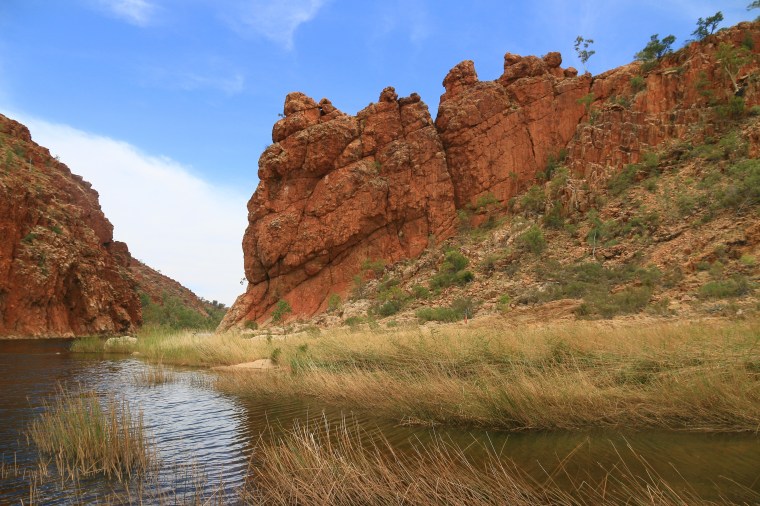
Beyond noon and the sun was starting to become a little fiercer and, of course, the flies had been stoked into action. Time for a cold beer and a feed I would say. And quite astonishingly there is a place just for that. At Glen Helen Gorge – which really does appear in the middle of nowhere – someone has decided to build a resort. It’s not your resort in the Abu Dhabi or Port Douglas sense – think more shack-like and rubble-strewn. But it has a pub, a pub with cold beer, along with a plethora of touring essentials like fly nets and trail guides and fridge magnets. And just down from the pub you can stagger down to the next waterhole.

alice05

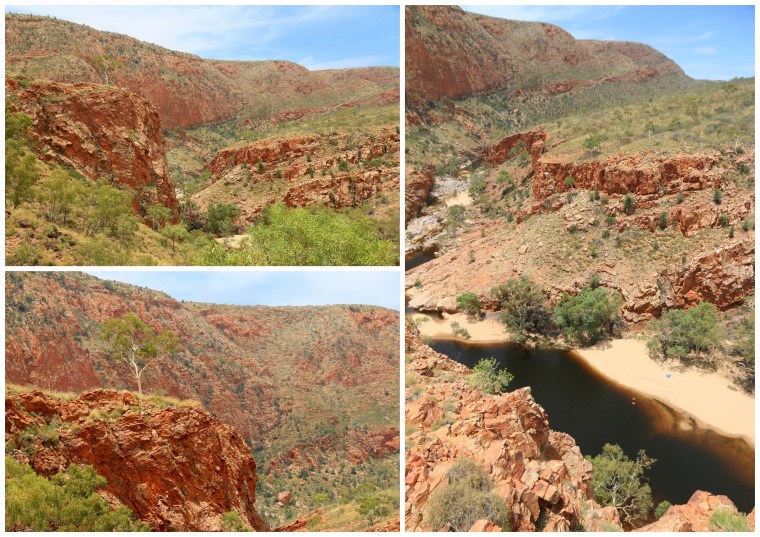
Refreshed, you may like to take a post-lunch dip and float on the waters that have collected in the hollows of Ormiston Gorge, ten minutes or so up a side road from Glen Helen. Or, like me and several others, you may wish to feel the full force of the early afternoon sun on a short but steady climb to an overlook. Perhaps it is the sweat from collective hordes of visitors that gathers in the open air swimming pool several hundred feet below?

Still, it is all worthwhile toil, for the view is pure red heart of Australia stuff. With trails and river beds and curiosity beckoning on every rocky ridge top, you can begin to see why Aboriginal tribes were prone to wander. For food and water for sure, but there is also something captivating and enticing about this landscape which is hard to describe. It wants to lure you in, to see what is around the next corner, and, in doing so, to fool you into a frazzled state of bewilderment and possible death because you are not part of it.

alice06

Thankfully, an air-conditioned minibus was enough to tempt me away from disappearing into a chasm, but I have made a mental note of the Larapinta Trail – or parts thereof – for future reference.

The pleasingly cool bus happily commenced its return to Alice with another waterhole stop – where you could invariably change into swimmers, bathers, togs, swimsuits or just go stark bollock naked – to come. And then, what will later be re-created as an episode of pure outback horror for some, commenced. A puncture, hordes of flies, hot afternoon sun, circling vultures, probable snakes, likely serial killers. Would we make it back in time for our dinner reservations? What about our flights tomorrow? What if we get eaten by kangaroo zombies? Anyone want any lamingtons? AGGGHHHHHH, lamingtons, help!!

Mercifully, the tyre got changed, with just a little help from yours truly. Being the only male of a certain age on the bus I felt obliged. And a touch heroic, vanquishing the oily grime from my hands with a wet wipe from someone’s handbag. What. A. Man. We still might make the waterhole stop now, and not have to eat lamingtons to survive. Unless we get another puncture, but what are the chances of that?!

alice07And so, ten minutes later with a flat front right, someone opened the lamingtons while others flagged down help to get a message back to Alice for another bus to be despatched. Certain overseas visitors couldn’t fathom that there was no mobile reception here, and it was not as simple as getting a rescue helicopter so they could still make it in time for their dinner reservation. One hour in, an extended family resorted to playing the ABC game and I desperately hoped they would ask me to join in. Two hours, and restlessness heightened. People needed to pee in the bushes and generally say what they would have done differently with the eternal benefit of hindsight and no experience whatsoever travelling in the Australian outback. A man with binoculars scanned the road on the horizon, each occasional sighting of a vehicle bringing brief hope before its despair.

Two and a half hours in, one more vehicle sighting provided another glimmer of hope. With sunlight dipping, the time when kangaroo zombies stir from the caves was nearing. I had resisted the lamingtons thus far and wanted to keep it that way. The vehicle slowed and revealed itself to be an identical minibus, apart from some livery telling us it’s the airport shuttle. Jeez, that’s some transfer, so let us hope it’s for us.

And of course it was, for this isn’t really an outback horror tale at all, just some inconvenient episode that soured a fine day but will find use in a vacation anecdote (or maybe even an inane post on an obscure blog). It may have already appeared on Trip Advisor, thanks to the ruining of dinner reservations. And of course, it’s just another reminder that you’re back in Australia Neil, the real ‘Straya. And there aint a lot you can do about anything in the real ‘Straya, so suck it up, maaaate!

Australia Driving Green Bogey Photography

Winter warmers

There are plenty of ways to warm up during an Australian winter. Koala soup; scenic coal-fired electric blankets; just living practically anywhere apart from inland uplands, exposed southern promontories and frigid deserts. Only in the bleakest of places does a winter bite, the bleakest of places and Canberra.

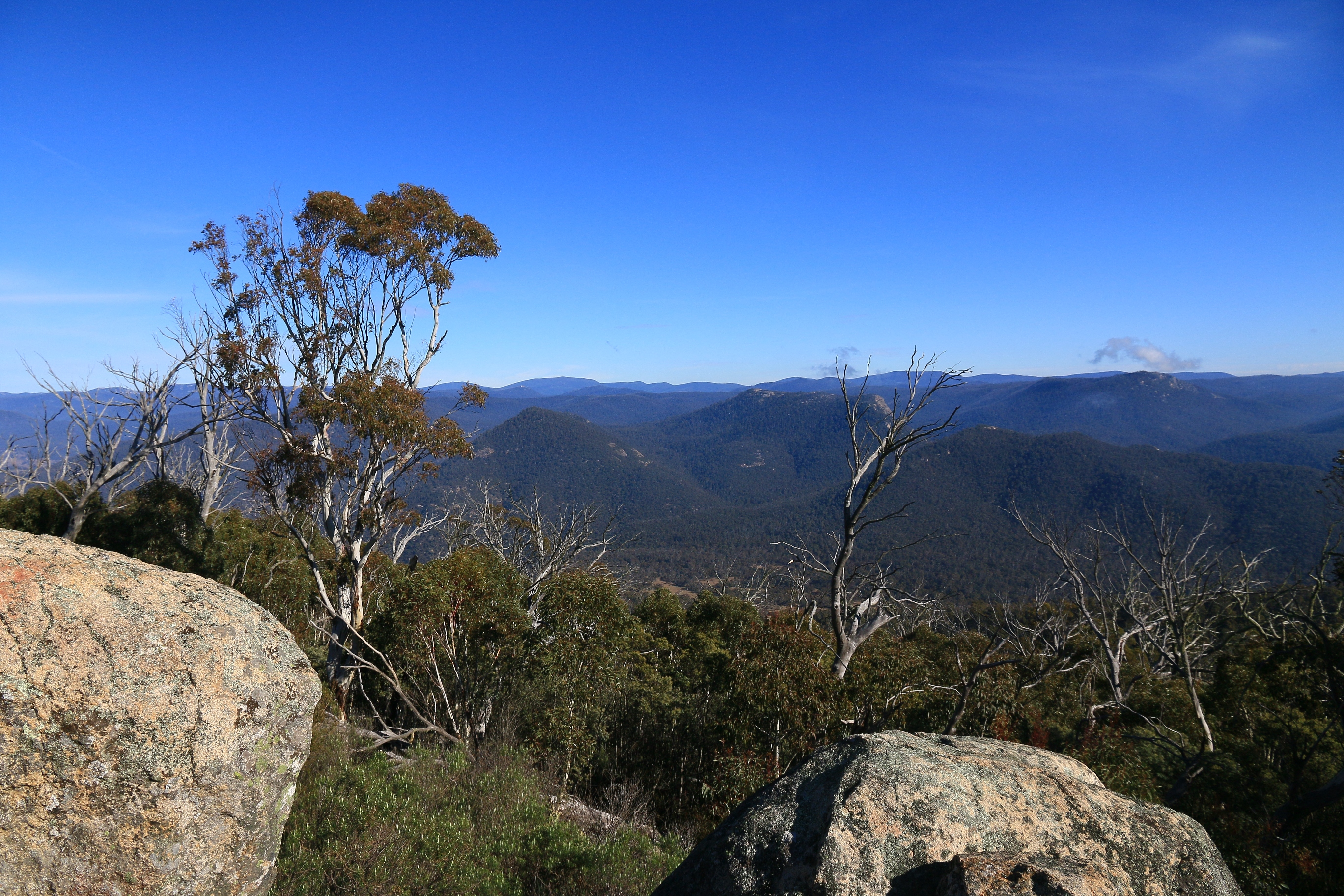
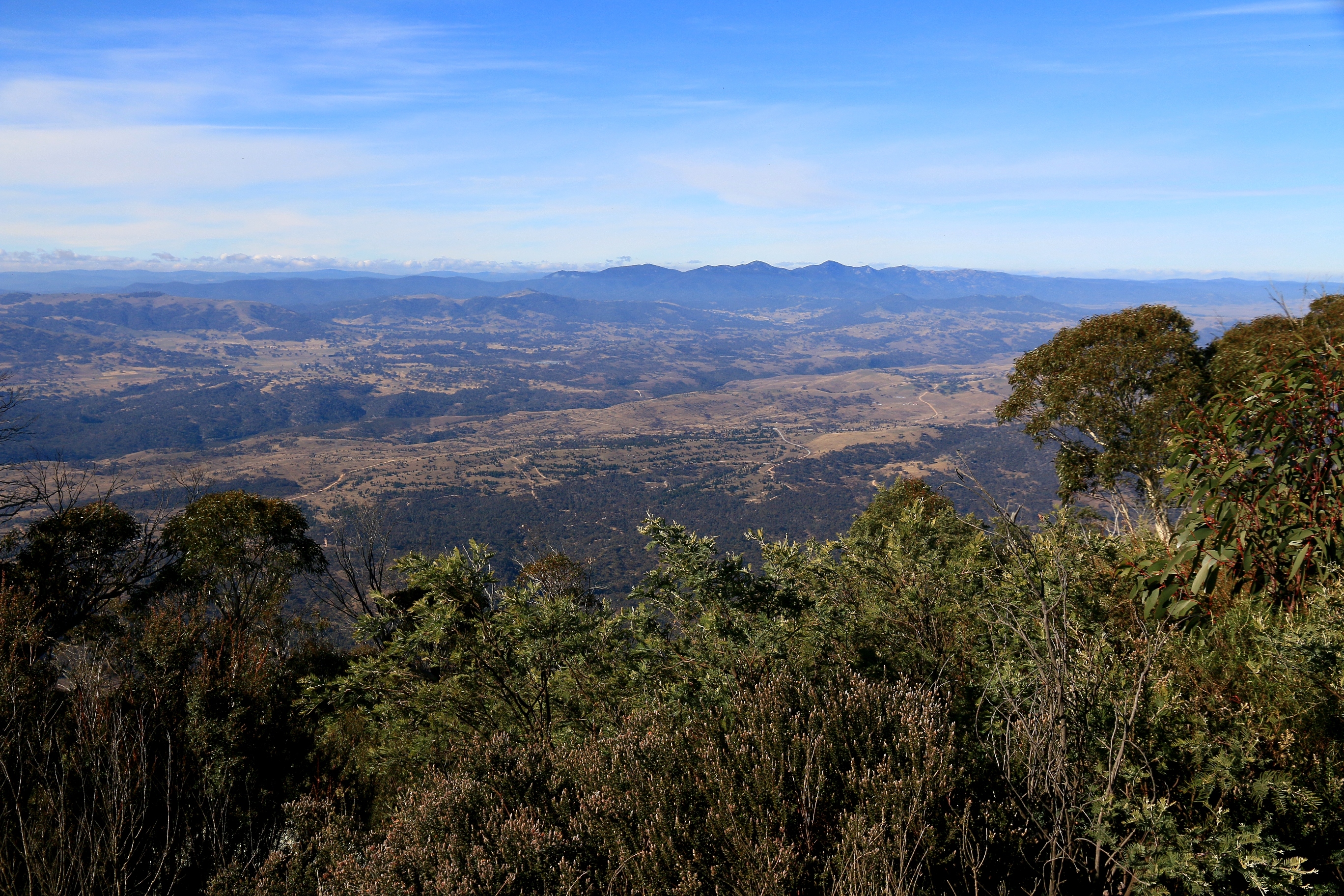
QJun01Yet even within touching distance of the capital’s shivering legoland suburbs you can work up a sweat and work off a sweater. Climbing seven hundred metres or so, rising from the valley mists into a blue stratosphere, toward the crown of Mount Tennent. A steady grind with the sun on your back, the consequences clear in the comfort of short sleeves. And warmed all the more by vistas providing a positive effort:reward ratio so critical to the success of a good tramp.

QJun02

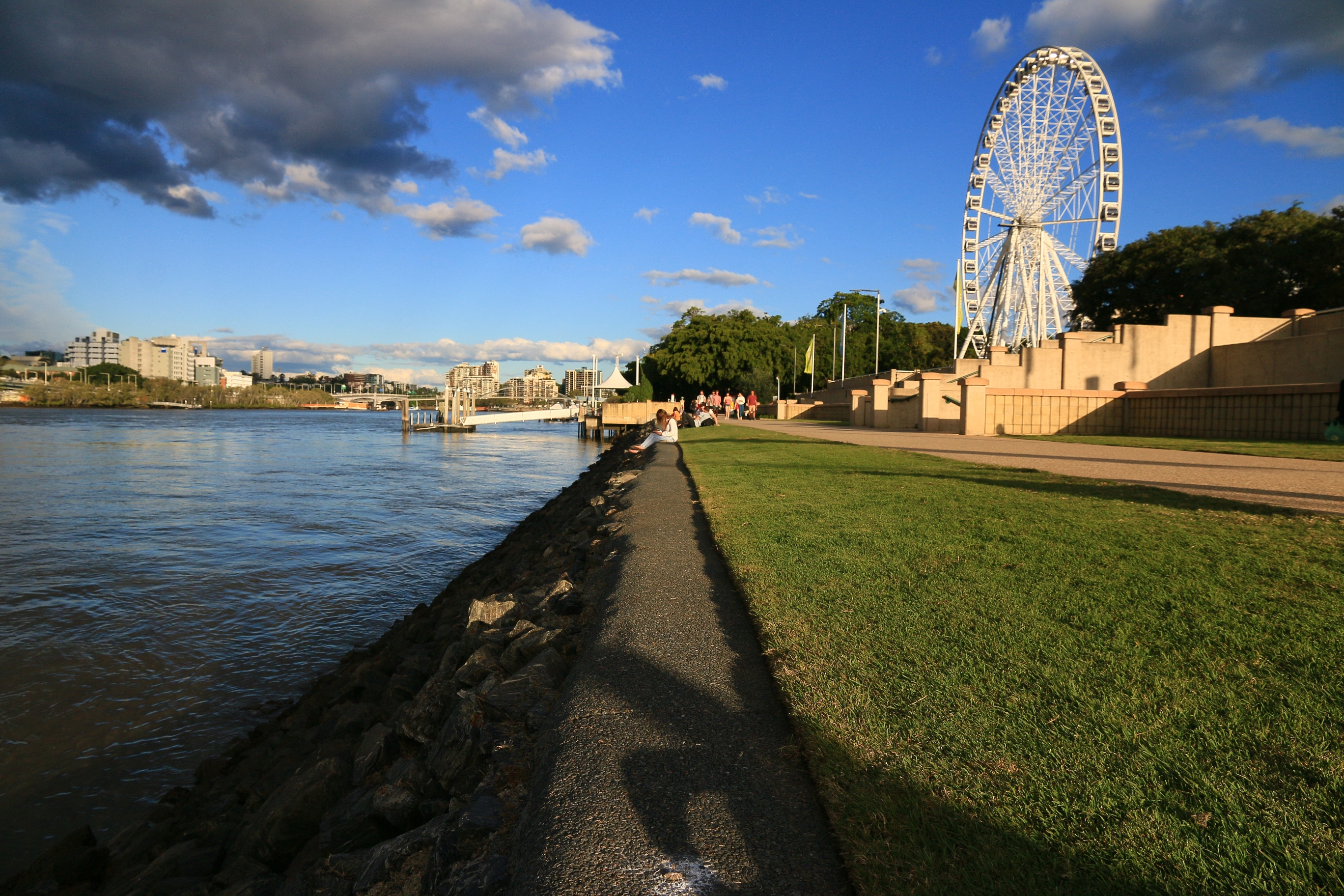
Meanwhile, back, again, in Queensland the effort required for such warmth is negligible. Brisbane may experience a fog but it barely lingers. It is quite comfortable – actually very comfortable indeed – to sit beside the river and eat a slab of cake alfresco. This place has been a second home of late, but despite this being my fourth visit in the space of a month I still cannot acclimatise sufficiently like the locals to wear a scarf without feeling entirely fraudulent. Fare thee well Brisbane, you have been good for my core temperature and bank balance, but your City Cycles are terribly uncomfortable.

Qjun04

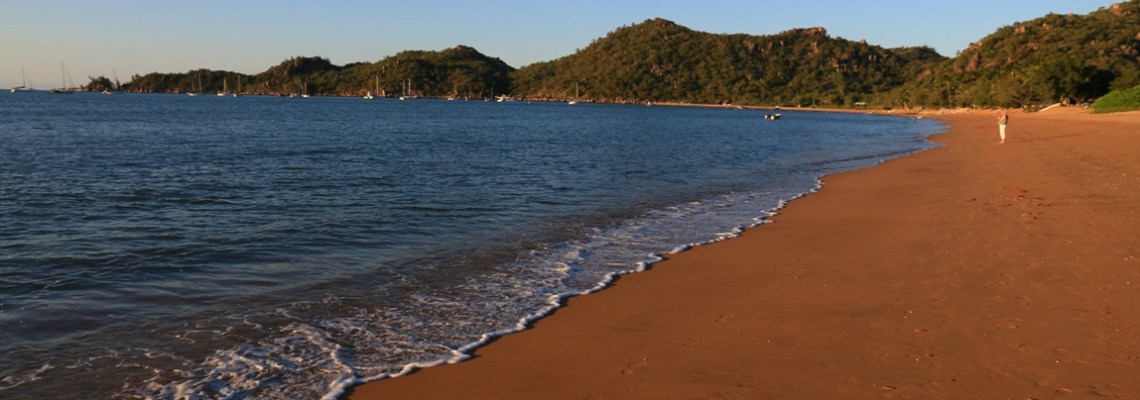
One more week of work to go, one more week to go. That was what I was telling myself walking over the craggy hills and gentle sands of Magnetic Island. But, being on that island, it was hard not to think that I was on holiday already. I believe it may be down to the palm trees by the beach, or the strip of outdoor cafes at Horseshoe Bay, or the one road linking a few small towns in which most other people are on some kind of temporary or permanent holiday. Even the presence of backpackers adds to the mood that the only thing for it is to swing in a hammock.

QJun05

Possibly because Brisbane was not warm enough, work brought me north to Townsville, handily coinciding with a weekend in which to kill some time. So I grabbed the ferry across to the island and spent a wonderful day or two upon its shores. Saturday may have clouded over, but there was ample time to gently reacquaint myself with tropical forests and colourful birds, the briefest of sunsets and the longest of beers. Acclimatisation into that hammock holiday-minded state.

QJun06

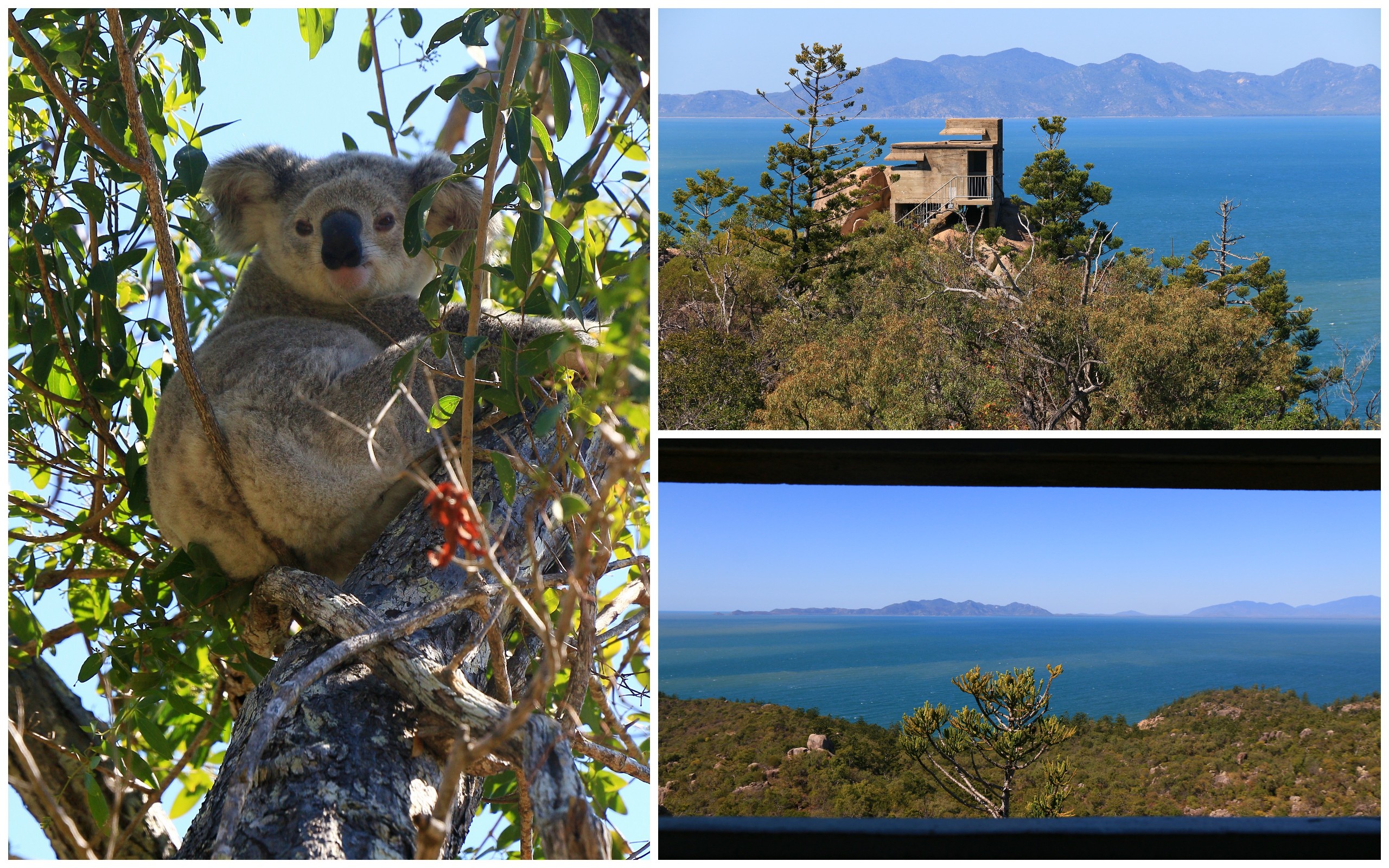
QJun07But it was the Sunday that was super, cloudless throughout, though with a morning freshness that made the walking all the more pleasurable. Commencing with a wake up coffee by the beach in Horseshoe Bay, it was over one hill to one fine beach, over another to the next, and onward and upward to lookouts galore. A substantially energetic loop walk that topped out around The Forts – a series of wartime installations plonked atop the forest in a tasteful rendition of Plymouth city centre style concrete. Obviously here because of the commanding views, but the koalas didn’t seem to care whether the Japanese were coming or not.

Qjun08

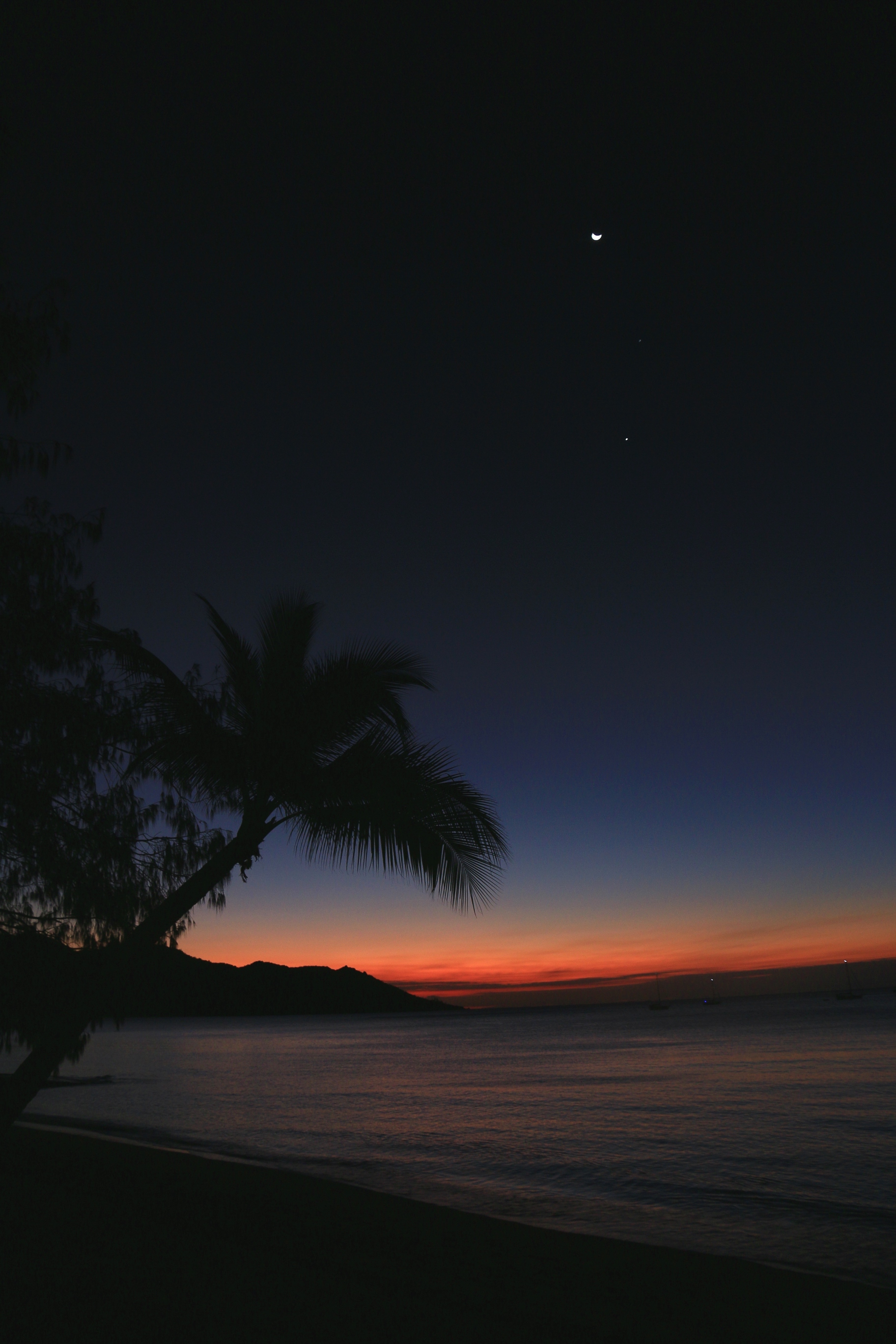
Qjun09With the satisfaction and accomplishment of a walk complete, a late lunch of salt and pepper calamari beside the water will suffice thank you very much. Oh, and ice cream, of course. I am feeling like I am on holiday after all. So much so, that as Sunday dwindles and the prospect of Monday creeps up, I do not want to leave. The late sun glows and dips and fades and the stars and moon twinkle as blue turns to black. Yet still I am comfortable in shorts, and with another end of day beer in hand.

Qjun10

Happily Monday brought some drizzle and the transition back to work was reasonably comfortable in Townsville. But there was an abrupt decline in its standard as I re-located south, to Dubbo. On the plus side though this was not as bad as I expected, but then I expected little. The people were nice, I found a good coffee, and squeezed in a pleasant riverside walk. But I was ready to get out of there and, temporarily, get home.

Qjun11And so, the climatic rollercoaster finally shifted into Sydney, for one night only and then onto Canberra. Sydney was putting on its sparkling look-at-me face, demonstrating a pretence at winter that is misaligned with the comfort of not needing a coat. I was even able to brave an ice cream, sadly. Canberra, meanwhile, had its morning shroud of cold and cloud, but cleared to its best fresh hue of blue. One more week, one more week of keeping warm, and then a northern summer will bless me again.

Australia Food & Drink Green Bogey Photography Walking

June

[Best read in David Attenborough style]: As the temperature cools in the southern part of the Australian land mass, the first signs of an incredible migration start to appear. Senior males of the species are spotted in pockets along the coast, struggling to grasp with the multiple tasks and devices which will propel them north. Reserves are gathered to a state of surplus, and a battle for alpha male superiority subtly ensues, a contest which will last across the season.

But here, it is the female that rules. Freshly groomed and adorned for the long journey, small numbers congregate. While not always harmonious, they band together for the greater good, bound by a common aim: maintaining survival, comfort, and subjugation over their once proud male partners. Hunting out and often gathering the food, directing the placement of shelters, maintaining the hygiene and lustre of their coats. In groups characterised by auburn dyed hair and expensive designer spectacles funded by generous tax breaks, these females underpin the mass migration that takes place.

And so, in June, across the more northerly coasts of this great continent, the grey nomads begin to cluster. They flock in their thousands to known waterholes. Sites like Carnarvon are almost overwhelmed by the influx, its banana-rich pastures transformed into shanty towns and its pharmacy inundated. The males continue to display in a parade of sandals, white socks and short shorts but, predictably, with little impact. After a while they retreat to seek out fish and engage in ablutions, but there is still competitiveness over the size and strength of their equipment. Some will settle here, and see another winter through with their mate. But others, with stronger torque and deeper reserves, will head on, north to the next great gathering place.

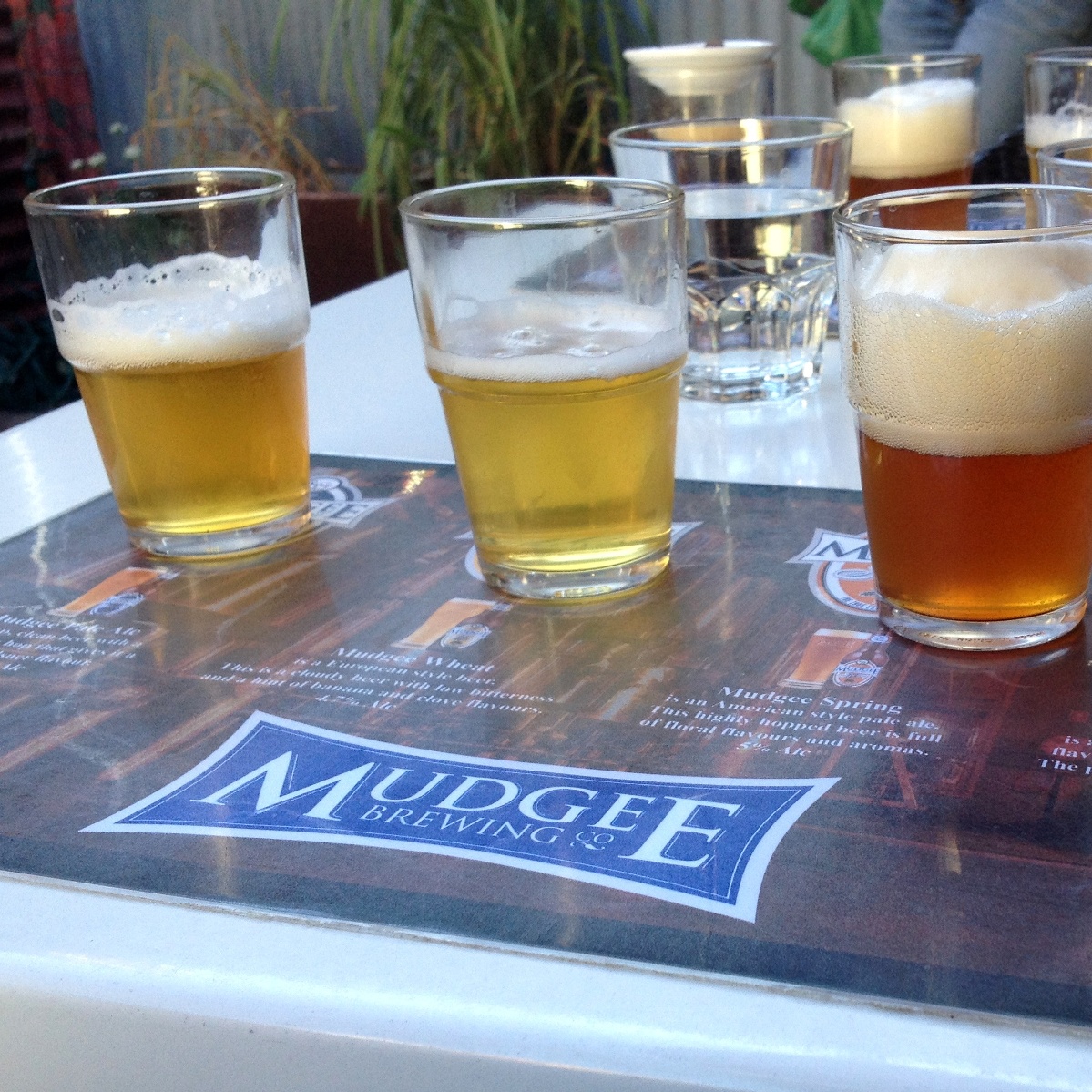
[Back to normal voice in your head]: My first significant encounter with a mass gathering of grey nomads was back down in southern Australia, in a pleasantly ambient March. It was apparent that Mudgee – a NSW country town standing out from many of the others thanks to pastoral affluence and providores – was an alluring spot for ripening baby boomers to hook up their motor homes. A caravan park beside the river, close to town, with excellent ablutions that may have won an award for hottest power showers in the west was always going to prove popular. And so it was that the mini street blocks dumped onto a meadow were crammed with a veritable mix of shiny white coaches and ramshackle fibros, often adorned with an auburn-topped lady in a folding chair reading through her expensive spectacles while a rangy male figure stumbled around trying to figure out how to empty the septic tank.

June01Campers, as so often, were an afterthought. Allocation to a small patch of grass that possibly classifies as a verge. Sited next to the river, but with the downsides of an adjacent public right of way and numerous biting insects. As ever, placed in the most open and prominent position so that all can look on in bemusement at the canvas contraptions that somehow you and your companion manage to be sleeping quite comfortably in. Swags were always a source of much fascination and eternal debate amongst the nomads, with lively discussions around one’s own ability to survive in such a thing and – on occasions lubricated by grape juice and a great Aussie irreverence – the possibility of sexual intercourse in such a structure [i].

Deflecting much of this attention and offering comradeship against the rows of Grand Adventurer 3000s and solar-panelled satellite dishes tuned into Today Tonight, one other person was braving the use of canvas in Mudgee. And quite amazingly it was one of the greyest of the grey nomads, a dear old lady cycling all over Australia towing her belongings, one of which was a stuffed dog [ii]. There is always someone or something to ruin your sweeping generalisations and lazy stereotypes, darn it. Anyway, being one of the few persons on site to actually need the kitchen facilities (I say kitchen, but think sink and a few tables under a picnic shelter), it was discovered over breakfast that she was in need of a cataract operation, possibly because she hadn’t invested in a pair of those expensive designer spectacles. And with a few delightfully cutting comments about the extravagance of $100,000 motor homes, she loaded up and wobbled on to the next stop down what I hope she knew was the main road.

We never did come across this cycling legend again, something I am pleased about in one sense because I had horror images of finding her happily peddling down the wrong way of the M5, the stuffed dog the only one alert to the situation, a terrified expression on its face. But it is quite possible – indeed highly likely – that you will encounter the same nomads, recognise the same Grand Adventurer 3000s, bump into the same old guy off to the ablutions for his dump, during the migration season.

June02Rob and Sue – well we think they were called Rob and Sue so that is how they became known – spotted us first. Apparently I had overtaken their car and trailer about ten times that day on the most boring stretch of road to cross the Nullarbor. I can’t say I noticed, because that boring stretch of road was so soporific that senses became dulled, and the caravans and trailers all took on a likeness and started talking to me and whispering sweet nothings as I hazily overtook them at 140kph, all entirely safely as pink elephants blew champagne bubbles through their trunks and out into the endless sky. But over a roast lamb fiesta in the quite delightful Fraser Range Station that night, they recognised us. I suspect a shiny blue Outback with a roof box and what were relatively young people inside (it’s all relative) were a more distinctive site. And as Rob recounted being overtaken ten times that day by some young hoons in a Subaru, my mind tried to recall whether any of those manoeuvres were in any way dodgy [iii].

Rob and Sue were quite lovely, in that quite lovely way where everything is quite lovely. Kind of like the quite lovely aunt and uncle who would have a quite lovely lovingly kept home and would happily let you stay for a lovely dinner and sleep in their quite lovely spare room. They were younger nomads; indeed there was a chance that Rob might still go back to work after their little test of the waters. They didn’t even have a proper motor home, just one of those plain trailers that somehow transforms itself into a suite at The Ritz. I’m sure they didn’t quite see themselves in the same mould as the wildebeestian hordes of socks and sandals and designer spectacles, and were glad to speak to some youth for a change [iv].

Anyway, the next day as the end of the Nullarbor beckoned, we passed Rob and Sue a few more times as part of that drive-rest-stop-drive tango, but now always with a friendly flash of lights and gesture to the pink elephants blowing bubbles in the sky. We marginally missed each other down in Cape Le Grand National Park near Esperance, a fact I discovered when we came from opposite directions to cross in the quite amazing Fitzgerald River National Park [v]. Later, I think they may have been a few vehicles in front of us at some lights in Denmark. And we fully expected to bump into each other once more, migrating north up the west coast of WA. So it was with some disappointment that Rob and Sue vanished into the great tarmac ribbon on red dirt, never to be seen or considered to possibly be stalking us again.

I reckon they were always a few days ahead, due to us lingering around in some backwater like Perth, finally drinking good coffee and wasting time in its breweries and beachside cafes. They were not there among the few souls braving the annoyingly icy waters of Shark Bay to see dolphins being fed; neither did they emerge from the masses crammed into the favelas of Carnarvon, a site which appeared to be only one step removed from a season finale of The Walking Dead; perhaps they weren’t brave enough to stop at the the very rustic setting of Quobba Station or enjoy the jackaroo appeal of Bullara Station, even though a few alternative, non-stereotypical nomads could.

June03

[And so, back to Attenborough]: In the northwest corner of Western Australia, Exmouth is the next staging post for the nomads. Here though, they come up against some younger bucks who could represent a threat to their existence: outsiders from France and other wild lands with extravagant plaits and body features that are proudly displayed, yet to sag. Competing for prime locations next to the ocean from which to alternately strum guitars and read books, there is an uneasy peace between the two groups. As the fine weather holds, an air of acceptance persists and the species cohabit side by side, with Derek very friendly towards young Amelie much to the disapproving over-the-spectacles glare of Margaret.

[Cue crack of lighting and thunder rumble scene, signifying, uh-oh, trouble]: But an unseasonal low pressure storm approaches. Some hunker down, others retreat to the cheapest motel to make the most of the downtime and look at some research publications and transfer the content into an excel spreadsheet in order to save the world. Trouble and coffee brews.

As the rains continue, the wily nomads now sense their opportunity. Secretly unhitching the power and emptying septic tanks in the quiet of dawn, a convoy gathers on the one and only main road of Exmouth. Emboldened by their superior torque and sixteen speed automatic military-spec drive, the nomads traverse the flood plains to settle in drier and warmer climes. Basking in Broome in tinted designer spectacles, they leave behind a melee of Wicked campervans bedecked with misogyny and potentially fatal odours. The grand migration of the common grey nomad carries on unstoppable, and we leave them on their endless roaming and return south.

——————————————–

[i] Important interpretative note: by ‘possibility’ I refer to consideration of the practicalities of such actions being feasible in such a structure, rather than a request to give it a try!

[ii] Now, I am no Lance Armstrong, but I would imagine that you would do everything possible to minimise weight when cycling across Australia. Apart from those important coke cans for transporting syringes of unicorn blood.

[iii] I mean, we could have been singing out loud to songs from Eurovision 2012 or something. For instance: https://www.youtube.com/watch?v=O_9QaVC-NKw or https://www.youtube.com/watch?v=mrIaxnjeJ58

[iv] If there is one thing to be said for surrounding yourself with grey nomads it is that wonderful feeling of being made to feel a youngster again. Having said that, typically we were the first to bed and departed the site the next morning before many of the older ones had stirred!

[v] If ever you have chance, go there.

12 Months Australia Driving Society & Culture

Queenslander

Ask an Australian to say “Dirk Drongo is making his debut for the Maroons” and you will realise you are indeed in Australia. The fact that Dirk Drongo is making his dayboo for the Murowns will not only secretly appal the smug little English teacher lurking inside of you, but you will also wonder why this is front page news on the Courier Mail. Apparently, it’s all to do with a game of rugby or – preposterously – football as it is called. Not the FIFA type of football in which you kick a ball at an open goal only to see it diverted by a mysterious sheik into a pit of money built by exploited foreign labour. No, the rugby league type of football, in which scandals are much more unsophisticated affairs involving parties on balconies that somehow always seem to get out of hand and end up with contrite media conferences in which apologies are made for any offence caused.

Having spent a substantial amount of time in Queensland recently it was a relief to escape a few hours before the Murowns played the Blues in something called State of Origin. It was possibly the only relief, because Queensland appears to be quite beautiful this time of year, decorated with clear blue skies and radiant, twenty degree-plus warmth. As a couple of nights of minus five await, and the citizens of Canberra adorn themselves as if on an expedition to the Antarctic, my spirit is lifted by the thought of Brisbane on the horizon once again.

qldmay01

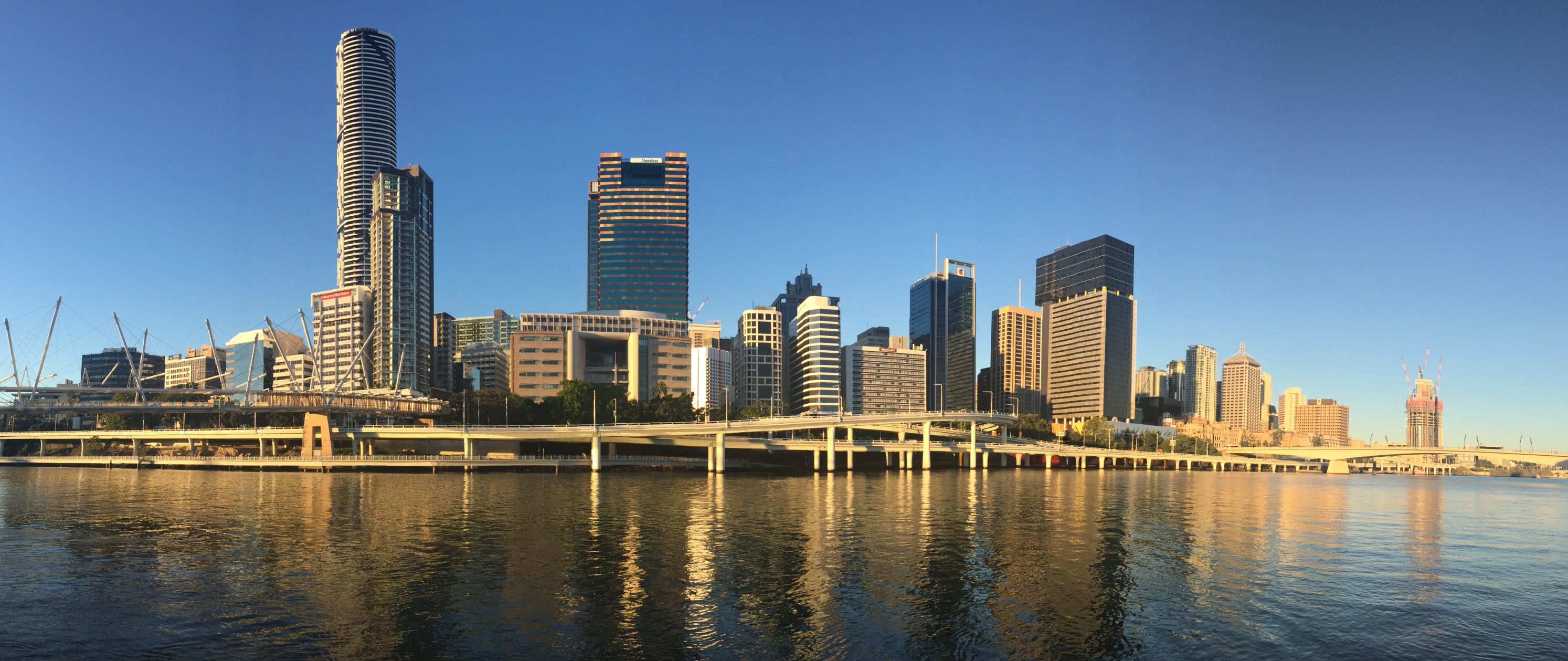
qldmay03While locals will vehemently disagree, it is quite possible to live in Brisbane without a jumper. Mine came off emerging from the plane, although I did put it on again one morning, just to appear less of an outsider. Meandering around amongst the city towers and along the river, a touch of summer lingers forever: clusters of dark green foliage dwell under a weight of blooming extravagance; sweat is apparently still a thing here; and the official State costume of thongs and boardies can be easily detected in the outdoor swimming pools of Southbank.

There are of course many upsides to this, and one of them is ice cream. And flat whites that remain a pleasure to sip alfresco. Sure, some overzealous cafe owners may have blasted on the outdoor heaters so that you too can relive those heady summers of Marble Bar, but the coffee is at least of reasonable metropolitan standard. It seems to taste blander than that in Canberra, but then maybe I just don’t know the right spots…always a first world curse of first world business trips.

qldmay02A good spot with or without coffee is GOMA, the Gallery of Modern Art. Probably without coffee, because that would have been condensed into an essence of cold-dripped Columbian syrup and daubed on the walls to spell out a series of Japanese characters that make no sense whatsoever, but have deep, deep, meaning, hmmm. Still, I love the building in which such work sits, and there is something immensely satisfying in cloaking your laptop bag for an hour and transitioning to a world away from depth interviews and strategically coloured bar charts.

qldmay04Moving down now a cultural gear or ten, it is on to the Gold Coast. One could argue that the height of culture in the Gold Coast is the all-you-can-eat seafood buffet on the 71st level of a tower in Surfers Paradise. But here dwells the Australian dream on steroids, and many people lap it up like State of Origin players and…well…steroids. Here, you can live in a big white house in a gated community on a reclaimed island, be woken up at 5am by a cacophony of lorikeets and get all your tax minimisation forms done by seven. Then you can go for a power walk by the beach, enjoy a weak soy latte, and engage in a round of golf at the Princess Palmer Palace Retreat and Country Club Theme Park. Later, after listening to a radio station called Hot Tomato, it is quite possible to head out as the shadows of towers infringe upon the sand, surfing in your very own paradise.

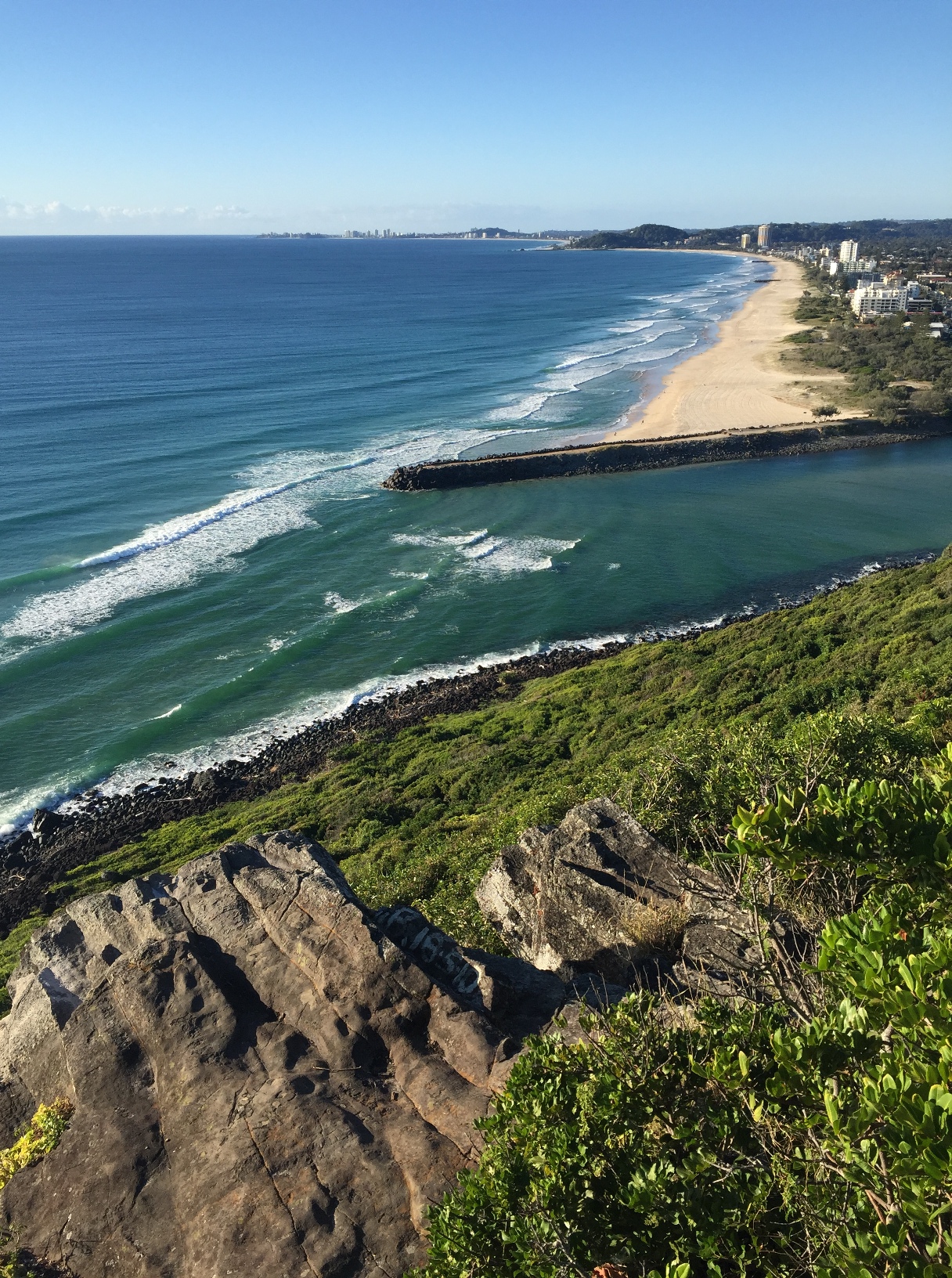
qldmay05I have always said I don’t mind the Gold Coast and I still think that way. I’m sure my inner Brit arrives here and sees a stretch of white sand, a modern and affluent city-cum-holiday resort, with good food and reasonable coffee. I love nothing more than an all-you-can-eat challenge, a power walk up Burleigh Heads in guilt, and the pronunciation of tomato on Hot Tomato driving back. And, of course, more than anything, it really does seem to be twenty-four degrees in winter.

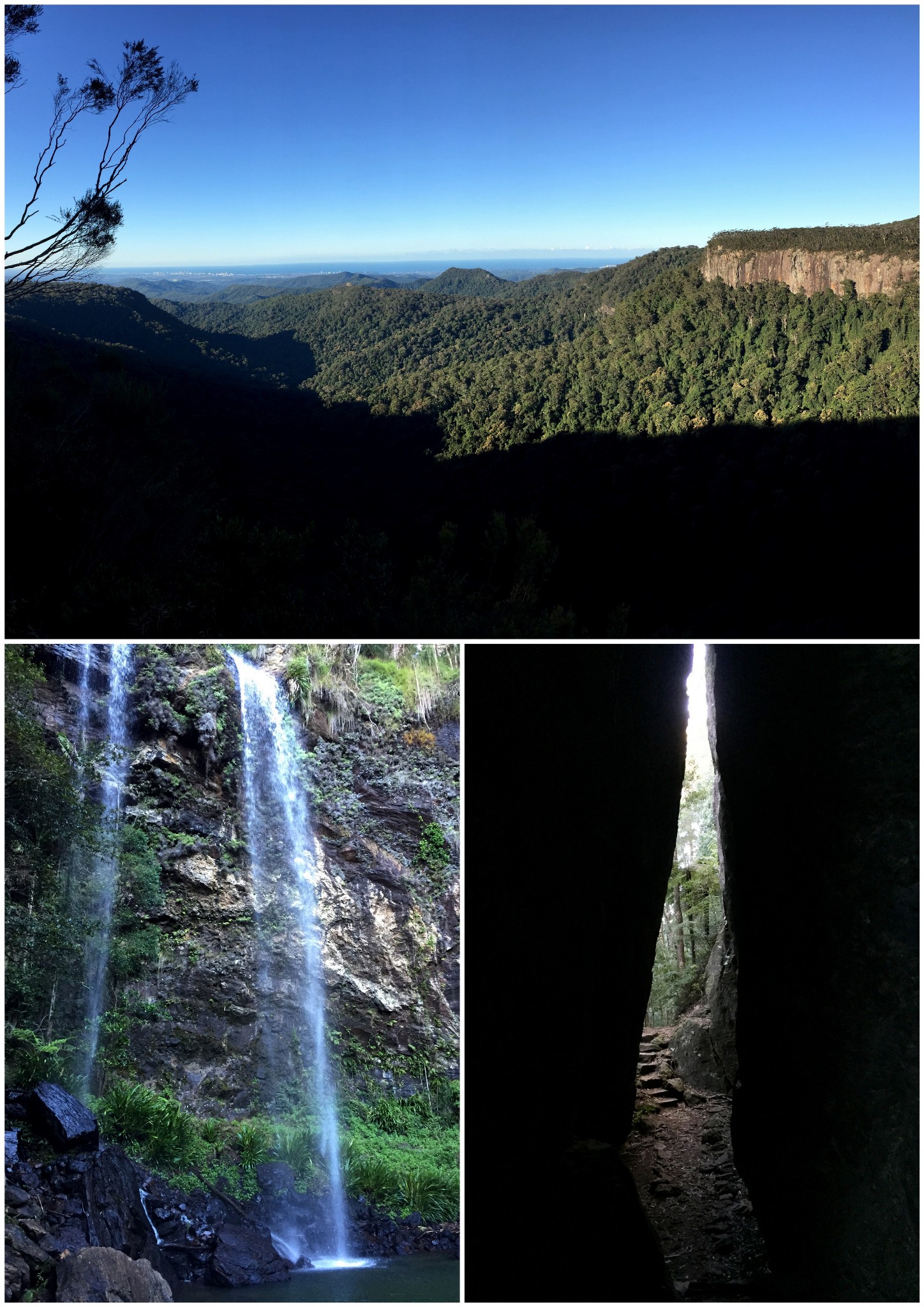
qldmay06Away from the surfers there is still a paradise. Towers and condos and gated communities drift away and roads rise into a hinterland. Side-stepping villages of token tweeness mixed with essential oils, Springbrook National Park stands guard over the landscape, one lofty remnant of a massive, ancient caldera. Stunning lookouts? Check. Plunging waterfalls? Check. Rainforest? Check. Bitumen? Check. Good walking trails? Check. Still with proximity to coffee, cake and ice cream? Check. Funny rat-like marsupials unlikely to cause significant damage as you drive down the hill at twilight? Check.  Springbrook is probably one of the best national parks I have ever been to, and now twice in my life.

qldmay08I would happily go back a third time, and then I would actually remember to bring my proper camera. You see, these travels in Queensland have been for business which came to be mixed – thanks to clever scheduling and a will to make up time on weekends – with pleasure. But I travelled with business in mind and today’s blog is brought to you in conjunction with the iphone 6. It has a good camera…hell…it’s a great camera considering it is one tiny little part of a slender and stylish lifestyle enhancement device ((c) Apple Marketing 101). But it cannot make waterfalls flow ghostly ribbons of white.

Neither can it do justice to the best of all lookouts, which is aptly marked on the map and road signs as Best of All Lookout. But then any camera would struggle with the scale and grandeur (not to mention the shade and light complications of 4:30 on a winter’s afternoon). I came here before in 2007, the lookout stubbornly shrouded in the clouds. Today, not one fouled the sky, allowing the late sunlight to project its glow upon Mount Warning, and a chill to emerge in the shade to prepare me for a return to Canberra.

qldmay10

qldmay11The Gold Coast airport was but a twenty minute drive from where I was staying, but I detoured a few hours. With a flight later in the day there was one other branch of Springbrook to revisit. Again, part of the joy is getting there, again blessedly on bitumen, but winding around west of the escarpment and into a valley of the dinosaurs. Lush and green, it’s an alternative route across into New South Wales, the border a genuine high pass which throws you up and over into the verdant Tweed Valley. It is a landscape that, beyond cane and bamboo and no trespassing signs, one cannot help but suspect is dotted with marijuana.

qldmay12A natural high just before the border is Natural Bridge, which again is best captured with a proper camera on a slow shutter speed. Nevertheless, the walk through rainforest is of agreeable length while the falls – plunging down a hole in the rock and out through a cave – cannot fail to thrill. In the valley, in the shade, it is again quite cool and Canberra feels closer.

Over in New South Wales, Murwillumbah sits amongst the sugar cane and feels a lot less glitzy than the Gold Coast. There seems to be good coffee on offer and a fine brownie to keep me going, not laden with local produce – apart from sugar – as far as I am aware. Following the Tweed back to the coast, the tower blocks and marinas soon again emerge, and that lost world, that lost valley of earlier seem all the more remarkable in contrast. And with contrasts clear, like the light and dark from the Best of All Lookout, it is time to put the jumper back on and head south.

Australia Green Bogey Photography Uncategorized Walking

With age goes wisdom

If you haven’t got anything nice to say don’t say anything at all, said like no politician in the history of the world ever. This becomes apparent in the brief snatches of news footage or articles I have intermittently stumbled across in relation to the UK election. So, from what I can make out, some commie wonk stumbled when feeding a shiny-faced posh man a bacon sandwich, who choked upon hearing Scotland are going to build a big high speed rail bridge bypassing England to Europe, but turned up to the NHS only to find it riddled with BBC bias and a wealthy man of the people chuffing a cigar hand-crafted by Romanians he secretly keeps in his shed. Meanwhile, some woman had a baby, which like happens every minute of every day of every year. Oh Britain, how I miss you.

All this leads me to say that I don’t have much to say; not because there is nothing nice to say, but really since things (unlike Election 2015, oh yes!) are fairly mundane. The biggest event was having all four wisdom teeth – intricately shaped at angles in the kind of x-ray you see in medical journals – extracted. Convalescence was aided by frozen peas, warm soup, and gentle walks around the leafy, crunchy, rainbow suburban streets.

apr00

apr07Like Batman getting my powers back, things progressed at a steady pace: work was sadly possible but also happily income-giving; hills could be walked up; soup became mashed potato became fish curry became shepherd’s pie…until finally I could mercifully manage a bacon sandwich. The bike could be pedalled, when the variable weather was having a good day. And wine could be safely drunk, useful when on a charming tour of Lerida Estate two weeks post-wisdom.

apr01

ANZAC day came and went with its usual amalgamation of touching remembrance, freedom- embracing alcoholism, and political posturing. This year, one hundred years after Gallipoli, there were more TV dramatisations and politicians posturing than ever. I spotted in Target the day before that you could buy a ‘Camp Gallipoli’ swag. Yes, you too can sleep out like the ANZACS, though I presume without the cloying mud, stench of death, and general sense of imperial-driven futility.

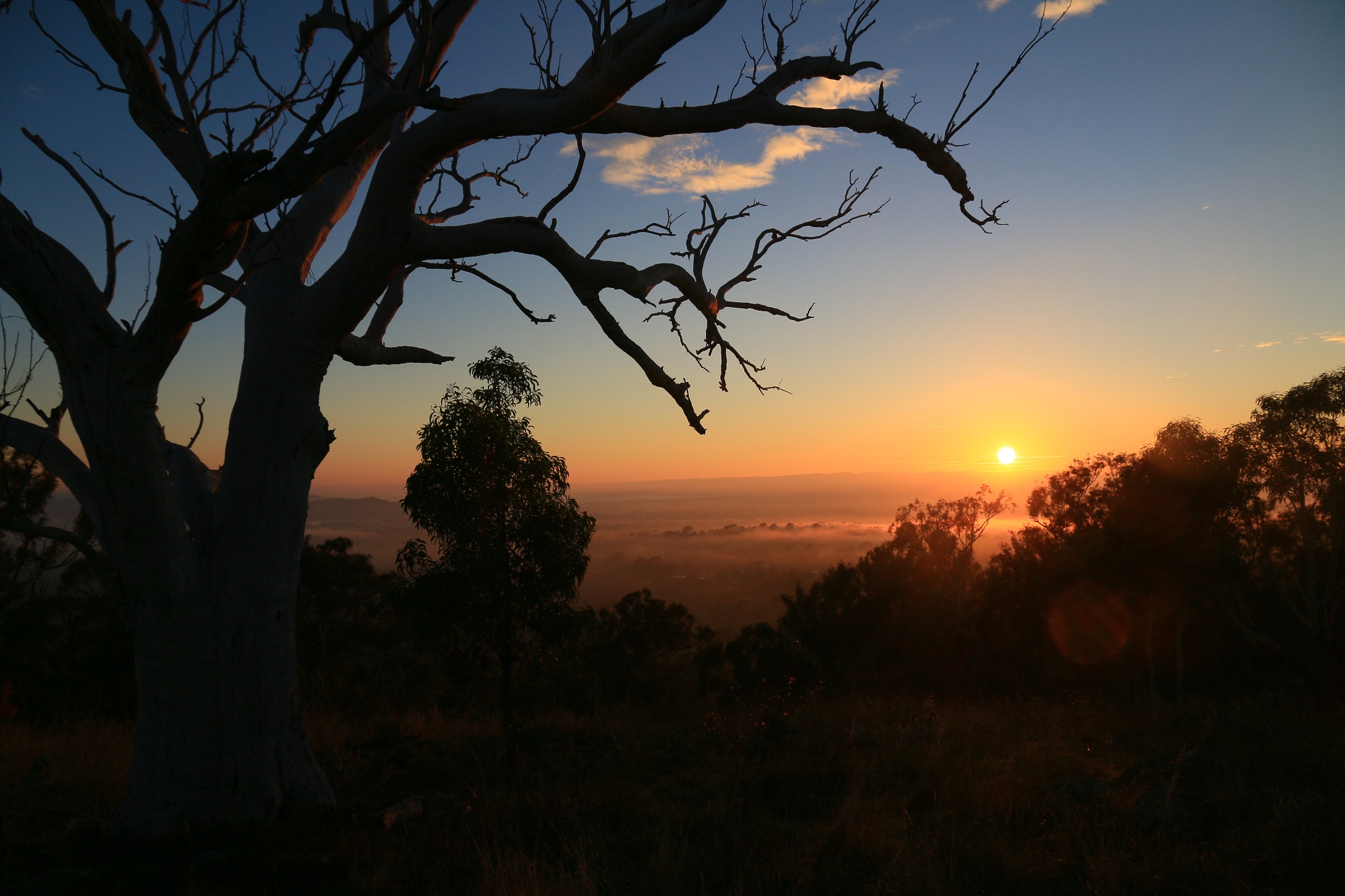
The dawn service – a genuinely poignant and worthy lamentation for the death and sacrifice of war – was attended by something like 120,000 people. Too late to the party, I stood alone, upon a nearby hill, the sun rising above the early mist of dawn as magpies uttered melodies, and the shadow of gums were given new life. Standing to see the sun, lucky.

apr05

apr06

And with that I really can’t think of anything else to be said.

Australia Green Bogey Photography Walking

Great divides and sunny coasts

Wagga Wagga. Ballarat. Dubbo. Albury. Bendigo. Rockhampton. Geelong. Bunbury. Mount Gambier. These are the recurrent regional research towns, in which there is sufficient population to extract a small selection of locals to talk about everything from the design on a bottle of shampoo to the delight of doing tax. I have been to each and every one, mostly for business but sometimes for pleasure, and now and again for both. Until this past week though there had been a noticeable absentee from the list, and, as if hearing the crucial number in a game of bingo, the Queensland town of Toowoomba delivered a full house.

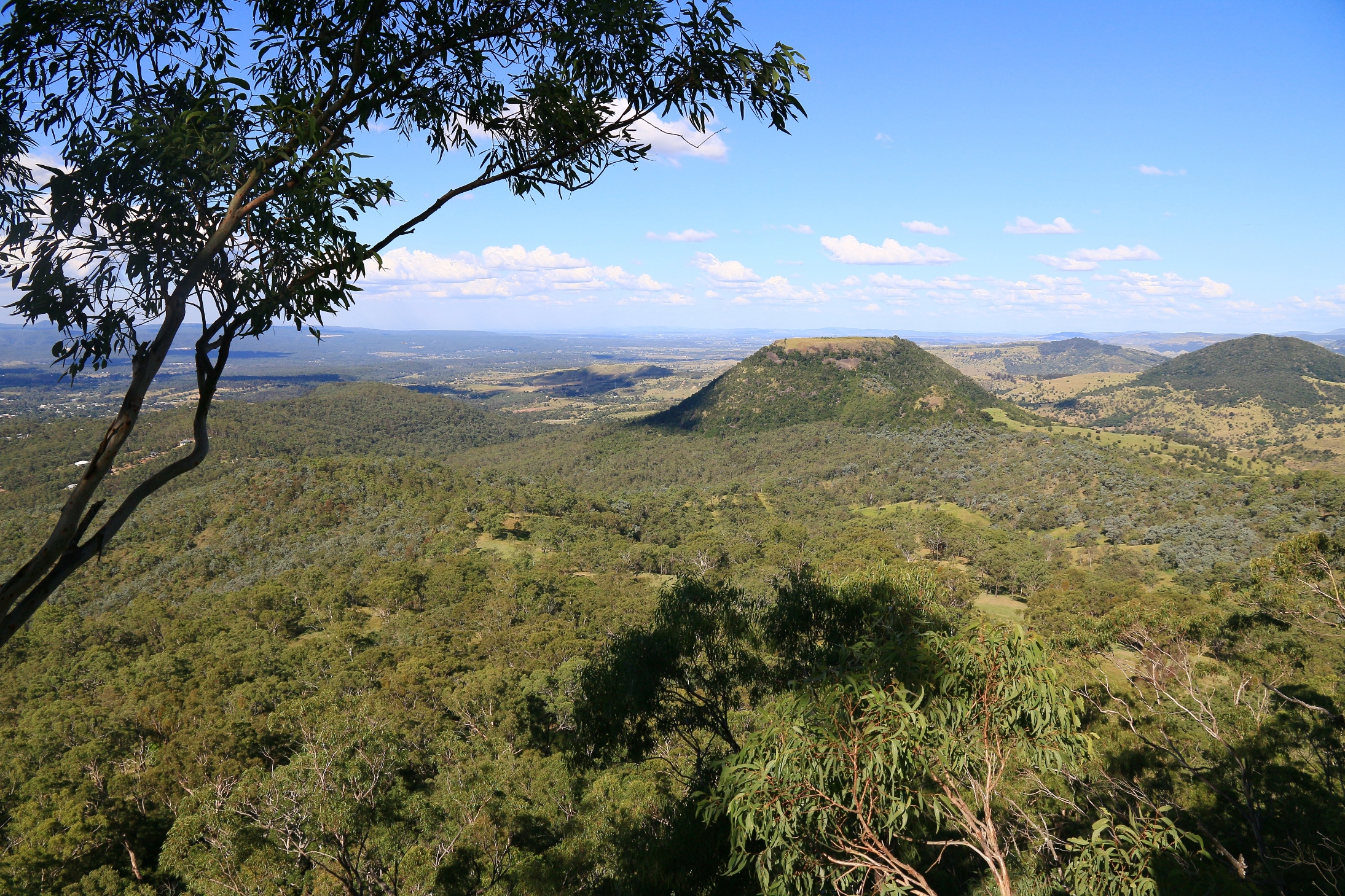
Qld02Toowoomba is a touch inland from Brisbane and, with a sizeable population over a hundred thousand, benefits from good road links, appreciated in the rush that I somehow managed to contrive one working afternoon and evening. It rather dramatically emerges atop the Great Dividing Range, perched on a plateau over this somewhat ill-defined chain of ridges and hills which meanders along the entire eastern fringe of Australia. Thus, the edge of one side of town is adorned with tabletop views as fingers of parkland and bush thrust into the lowland expanse of the Lockyer Valley, cut by hairpins of highway and – because we are in Queensland – no doubt teeming with spiders, snakes, and snag-stained singlets.

Qld03

The emergence of the town is quite sudden; one minute you are chugging up a protracted series of bends through the bush and then, as soon as it levels, suburban concrete and commercial highways spread out west. I suspect it could almost be the modern equivalent of reaching Machu Picchu, with a city that is shielded from view until traversing a final mountain ridge. Once crested, the ancient civilisation of the Supercheap Autans fills intrepid travellers with awe, as the sun sets over the Darling Downs.

Qld01Away from its edges, the remainder of town could easily be Wagga or Ballarat or any other regular research regional resort. There is a city block with some familiar and some uniquely local stores, a typical amalgamation of elegant turn of century buildings and functional blocks. A giant mall draws shoppers from the older town centre while between the two a strategically placed drive-thru Maccas casts its magnet on the alloy wheels of ute-borne bogans and the iron fillings of schoolkids. Amongst this, one small alleyway has been transplanted from Melbourne, adorned with street art and beards making coffee. I stopped by there twice.

Leaving Toowoomba with a decent coffee and mushroom-focused breakfast, I had a free day to return to Brisbane and decided to take a different route back down. First stop was the small village of Hampton, from where I attained necessary booklets and maps from the tourist information centre. Nearby, Ravensbourne National Park, offered some scenic views of the fairly lush and productive countryside of the region, and the first of several mixed rainforest-bush-type ambles.

QLD04

Heading down to the town of Esk, the road continues in the picturesque Brisbane Valley, fringing the immense Wivenhoe Lake. It was this massive body that bulged with too much water a few years back and released its content into the Brisbane River, causing flooding all the way down to the coast. This was responsible for awful scenes, in which Kevin Rudd – then deposed as PM – waded gleefully through shallow water in his boardies to deliver an empty box of mixed metaphors and cringe-worthy superlatives to despairing locals. Today things were more sedate, though the occasional flood marker and rough strip of tarmac indicated that flood damage is always a risk.

Qld06Above the floodplain, more ranges rise on a very winding and sometimes precipitous alternative route to Brisbane. Crossing through D’Aguilar National Park with a touch of je ne sais quoi and foux du fafa, the road takes in several beautiful viewpoints, patches of subtropical rainforest, and sleepy wood-bedecked villages. Of course I stopped at the viewpoints, and partook of a decent walk through forest near Mount Glorious. Ferns, palms, fig trees and fungus were signals of something a little moister and a touch exotic; a setting in which snakes probably hide to wait for ill-footed southerners, and ants are poised to nibble on fleshy toes. Mercifully, I made it out there alive, accompanied by the rumble of thunder and the sweat of ridiculous humidity.

Qld05

Plunging down away from the rain, the national park ends and immediately Brisbane suburbia grips. There are parallels with the emergence of Toowoomba, as traffic clearways and junctions and shopping malls spring up, traversing The Gap and Ashgrove and a very different kind of Red Hill. The CBD appears, the Brisbane River crossed, and a reminiscent friendship blue sky laksa is taken for old times’ sake. Afterwards, more traffic and concrete and now lights stretch on north, before the city finally gives up, and the motorway allows a speeding up towards the Sunshine Coast.

—————————

From experience I know it is not always sunny on the Sunshine Coast. A now somewhat distant Christmas in particular sticks in the mind. Recently, cyclonic remnants turned fields into mud and streets into streams. This weekend, however, the region was true to its name.

Qld07

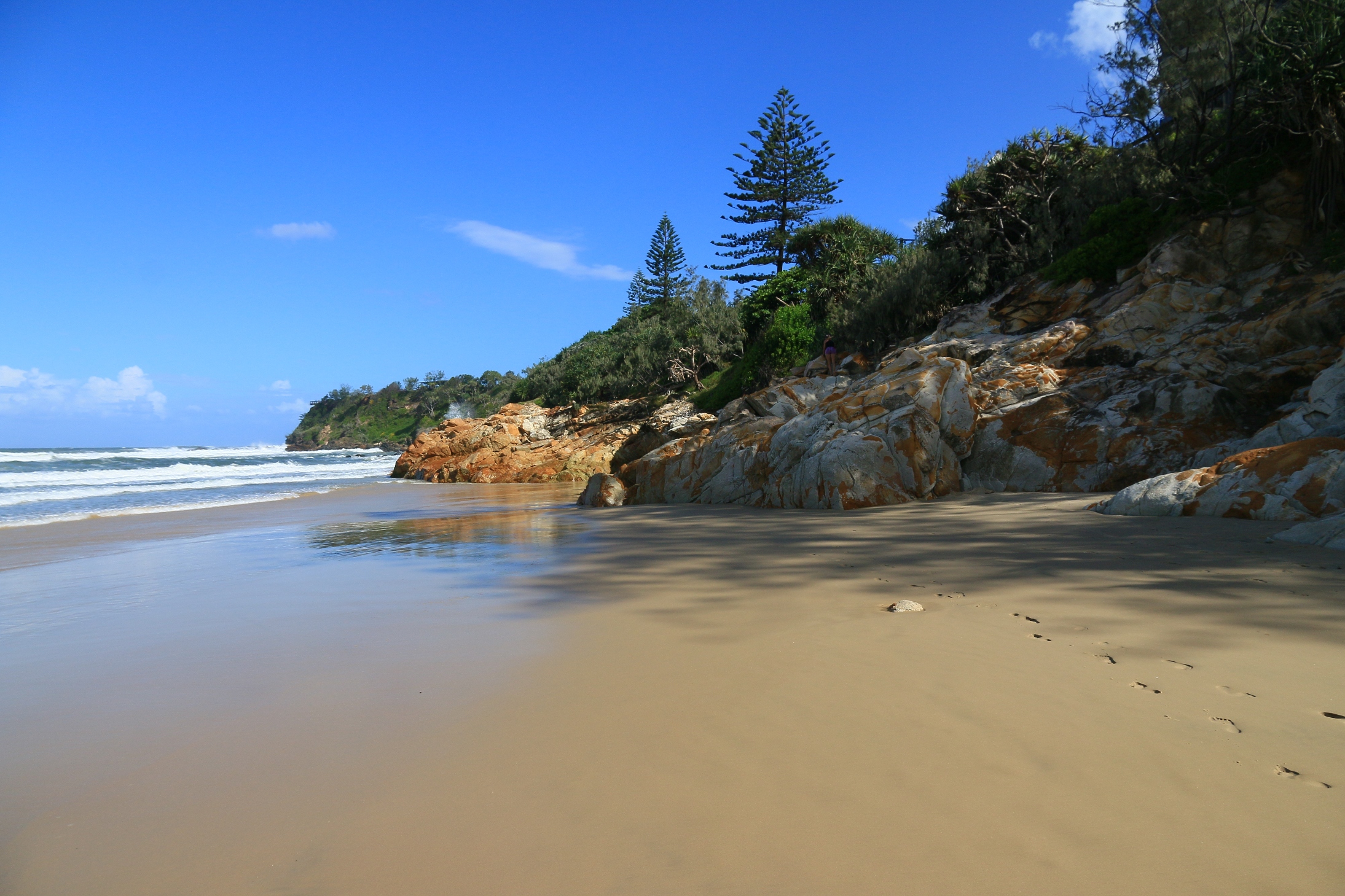
Indeed, it was rather warm. Not drastically higher in temperature than Canberra but with added humidity and night-time sweatiness. Mornings were a bit fresher, meaning that coffee and brunch was not out of the question. But building heat later in the day was more conducive to iced coffees and cold beers, and some relief beside the ocean. In this regard, Coolum Beach at least sounded the part. Certainly, the noticeable sea breeze was causing significant chop on the water and taking some of the perspiration away. Most soothing though was a wade through the ocean itself, as sand and water and feet met in perfect harmony for some brief entanglements of bliss.

Qld08

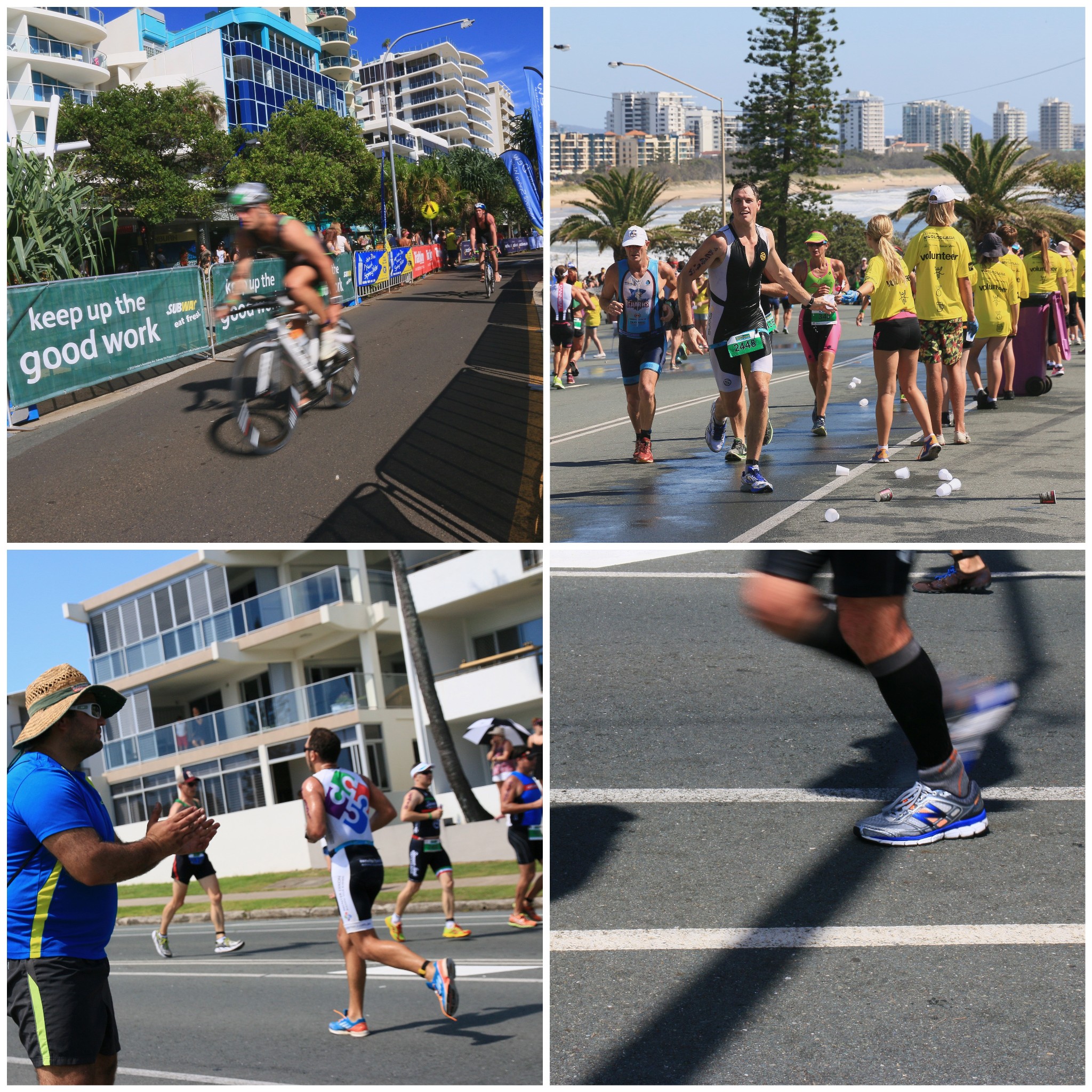
Qld10The last thing I would want to do in this weather is run. Swimming would be okay I suppose, if you could cope with the oversized waves and not get dragged under by sharks or stung by jellyfish or hit by a wayward surfboard. Cycling might be fine too, if you can mainly stick to going down the nine hills plunging from Buderim, breeze flowing through Lycra, and refresh with an iced latte afterwards. But running doesn’t seem to come with any benefits. Nonetheless, thousands of people decided to engage in all this and more in the Mooloolaba Triathlon, taking place on a perfect, breezeless thirty degree Sunday.

It was hard work, conquering breakfast and then standing by the road, seeking shade, occasionally clapping and snapping and still questioning why on earth you would be doing this when there is a beautiful beach and ocean you could surely be having far more enjoyment out of. I guess there is admiration, but not a logical one because the endeavour seems so senseless. Strangely and surprisingly though I quite enjoyed watching some of the triathlon, and took satisfaction in encouraging all sorts of sweaty bodies towards the top of their final hill.

Qld11Needless to say, following all this frivolous activity I had a nap and then an iced coffee in the afternoon. A little bit of work accompanied the iced coffee but the iced coffee just about made that all okay. It also generated a bit of extra energy to do some exercise myself, though more of the sedate sunset walk type than the extreme ironman sweatfest. With daylight fading early, particularly as Queensland are backwards when it comes to moving clocks forward, the signs are of seasons changing. And indeed, on the shores of Mooloolaba, still gently wading through warm waters as the halo of twilight captured the skies, I felt as though this could be the last dose of real summer. It may soon drop below twenty-five degrees and Queenslanders will soon reach for the scarves. And for me, research days in the freezing fog of a Ballarat or Wagga winter are closer to realisation.

Australia Driving Food & Drink Green Bogey Photography

February

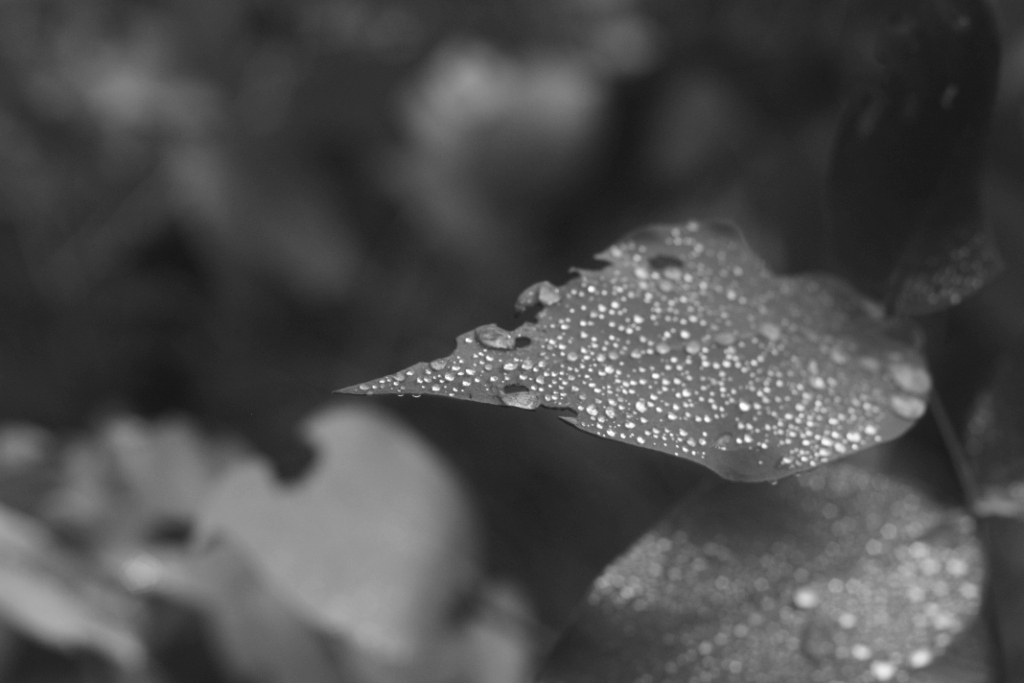
The chill embrace of water was invasive. A pond stretching out in smooth monotone reflected only the dead black trees, clutching and distorting like lost souls grasping for salvation. In places a mist danced, swirls of vapour disappearing and re-emerging within the blink of an eye; drifting towards the pond’s banks and adding burden to the dense brambles and thickets of weed. Here, a lonely black crow occasionally paced, agitating water from the undergrowth and sending it downwards to disturb the silvery veneer. The grass sweeping up to where he stood was sopping, congested with dewdrops longing to be transformed into jewels by an absent sun.  And into this reservoir one more droplet formed, trickling down his scarred cheek and stolen by the air.

The mist on that day one year ago was somehow more startling. It hovered fleetingly down in the small gully at the back of his plot, barely distinguishable in the first light, twisting through the remaining tree ferns like some ghostly serpent of the dreamtime.  He was always up at this hour, surveying the daybreak from the back of his veranda, but not once could he recall mist down there at this time of year. He found the pre-dawn a beautiful, peaceful period, becalmed before the summer sun gathered in ferocity and the winds became energised. It was his time, a secret hour of solace before the industry of human activity discovered the world again and disrupted its placidity.

The first sounds, apart from those of the creaking deck upon which he paced, came from the birds. Usually a lone wattlebird set everything off, calling to its mate and waiting – sometimes forlornly – for a distant reply. Without a response its cry would intensify towards panic, only subdued when an echo rebounded from somewhere amongst the trees lining the road. As the black of night faded indigo and navy blue, the kookaburras stirred; first a guttural warm-up from the lead voice, like that of a car’s ignition struggling to get going on the first attempt. Upon finally starting this lone cackle would act as an alarm call for the others to burst into a cacophony. This seemed to peeve the sulphur-crested cockatoos, shrieking in retort to being rudely awaken. The shrill flits of galahs and rosellas followed, while the currawongs and magpies struggled to be heard in the melee. By time the first red rays of sun glowed upon the upper reaches of the big cabbage gum to his right, an uninterrupted wall of sound flowed through the air and the world was awake again.

A wall of sound greeted him now, walking up Highgate Hill, though little of it emanated from anything other than what man had done. Red double deckers played tag, rumbling up the hill from Archway and swapping places at alternate stops. Occasionally a black cab spirited its way towards the city and fluoro cyclists diced with death on a mad downhill descent. But mostly there were Range Rovers and Landcruisers and a variety of precision-made German-engineered supersized cars perfectly suitable for the rough terrain of north London. Inside, almost unequivocally, a well-groomed mother was returning from the school run, bedecked in a smart-fitting pastel blazer and adorned with large sunglasses.

Overhead, a few pigeons scattered in the skies, continually eclipsed by the roar of jets ascending from Heathrow, veering left as they rose on a repetitive north-easterly track. Many destined to escape the chill. It was perhaps only around four degrees – already incrementally warmer than overnight – but the cold was bitter enough to cause him to be jolted by the heat encased within Sam’s Cafe as he opened the door.

It was only ten in the morning when he had been hit like this last year. Protected by the settler’s schizophrenic garden of apple tree and acacia, fuchsia and grevillea, his blue weatherboard home escaped the worst excesses of summer. Unlatching the back door and opening out its fly screen onto the veranda, he was immediately confronted by a burst of heat; like that of an airplane door closed at Aberdeen and opened again at Alicante. Over the creek he could see his neighbour’s Friesians clustered under the shade of a eucalypt. Their complaining bellows had replaced the melodies of dawn long since passed, with only the intermittent clucking of his chooks competing for attention. As he made his way across to their pen to collect the morning’s yield, a waft of wind stirred in the cabbage gum. This was replicated a minute later by the trees upon the ridge, whipped up in greater fury for ten seconds before dying completely. Gathering up just two eggs – fewer than normal – his throat had dried and any relief from his own saliva was fleeting.

On days like this there was little he could do. Tending to the chooks, clearing the yard of clutter, and undertaking perfunctory checks on the water tank, roof and gutters was about the sum of it. There was nothing for it other than to close all the blinds, reach for the fridge, crack open a beer, and wait for the day to pass. The beer was the medicinal part. The contours of the glass, coated in icy beads of water, were balsam to his ruddy hands. In one fluid gesture he passed the bottle across his forehead, twisted off the cap to release a short, sweet spurt of gas, and brought the rim up to his lips for an indulgent gulp.

Soothed and mellowed, he reached up to the shelf and flicked on the radio, before settling down in a wooden chair that had seen better days. Set to the ABC – as it had been for umpteen years – a young bloke was talking about his experimentations in crop diversification. Several varieties of something called keynwah, he thought they had said. Apparently, he got some of this keynwah sent over from South America and one of its party was delivering promise here in Gippsland. There was good money in it, apparently, and as the talk meandered into yield per hectare, cost inputs and market pricing, he found his eyelids dropping and head becoming heavy, dragged down by a tonne of exotic wholegrain…

…a young Peter Hollingsworth was walking alongside the Thames once again. The brown river was languid, a juxtaposition to the barges and cruisers bustling up and downstream with purpose. It was sunny, though crisp, with a gusty easterly wind whipping under the railway bridges and backstreet arches of Bankside. Next he saw a pint of chocolaty brown ale in front of him, topped off with creamy white foam. It was called something like Black Boar, and was a fine sight to behold. But more striking, more achingly beautiful, more lustfully alluring was the vision of Emily Coniston, animated across the table in delivering a rebuttal to some dandy twerp who dared to suggest she should stick to becoming a housewife and mother. Making out her argument was tough – the crackle of the open fire incessant – but you could tell she was having the better of things, and looked all the finer for it.

The crackling intensified, and slowly the image blurred and vanished. The talk of keynwah had ceased and the radio had lost signal altogether. Slowly rising, Peter switched it off, and went back out to the veranda to check up on what the world was doing. By now, the midday sun was searing and he lingered sparingly in it. Everything was eerily still and quiet. The cows had gone, probably offered refuge in one of the big tin sheds up on the hill. Even the cicadas were subdued, no doubt wallowing amongst the more succulent clumps of grass and weed next to the boundary fence. The chooks were silent too, but faring okay as he ambled down to their pen with extra water. Inside the small shed attached to their run, he noticed four hens snoozing away in the shade, as if the heat was today’s excuse for a typically elongated siesta.

Turning back to the house was when he first noticed a narrow plume of smoke, rising vertically many kilometres distant, up somewhere in the ranges west of Buchan. This was nothing new, the whole country up there so rugged and devoid of human habitation that fires could burn away for months on end.  Twelve years previously he remembered it coming down from the mountains and torching a few sheds and accounting for six cattle and a cat in one of the scattered settlements in the valley. The fire had ravaged an area the size of Belgium, but its damage was mostly temporary, the bush regenerating, as it does, to take on its latest iteration. Even the old couple who lost their cat easily got a new one from the dozens offered by well-meaning do-gooders.

Heading to the back door he looked once more at the smoke, but did not see that of a bushfire simultaneously destroying and rejuvenating a tangled patch of far off high country; instead it was that rising from Battersea Power Station to his west, adding another smoky texture to the otherwise blanket grey sky. Emily was gliding on the ice, reaching out for his hand and guiding him with both a tenderness and passion that was as much about a journey into his heart as it was a helping hand to an Australian unaccustomed to such wintry escapades. His tentativeness and clumsiness eased, so much so that he could finally avert his gaze up from his feet and dwell longer in that carefree smile and the large, brown eyes brimming with life. Only when those eyes reached into his did he stutter once more, crashing to the ground accompanied by the sounds of unbridled, joyous laughter.

A small gust of wind rattled through the cabbage gum, and briefly diverted his attention back to the present. But his mind was now deeply focused on the past. It may have been nearing forty degrees in a rural homestead in the middle of not much at all, but Peter was now transfixed on one magical winter many years ago in a huge, sprawling city on the other side of the world. Retreating inside, he sought out one of those shoeboxes that contain life’s memories. It was buried in a bigger box under souvenir stubby holders and a dream catcher and several bits of key chain and magazines about photography and newspaper pullouts about walking trails and places in South America and recipes for Malaysian curries. Inside, the smell was of an old bookshop in Melbourne, as letters and postcards, photos and train tickets, spilled out onto the kitchen table.

The afternoon passed in a blur of words and images. Three cherished letters, two photo booth pictures, a program from the Old Vic, and a return train ticket from Waterloo to Winchester were the only physical representations Peter retained of his time with Emily Coniston. He read and re-read every sentence in the letters; the first was full of sparkle and suggestion, of hopes and dreams of a life to come. The second, composed a few years later, was more formal, though he detected an occasional playfulness in between lines of her impending marriage to Will Barlow. The third was more recent – sent upon the turn of the millennium – in which fondness for their collective past was painted in such a vividly romantic hue that it was impossible not to rue what might have been.

The train tickets did little justice in capturing the memories of that day. It was a sunny Sunday in early February. The train carriage had been stationed at Waterloo overnight and so, first thing, it was like entering a cold store full of legs of ham hanging from the ceiling. Things warmed a touch as the sun penetrated the carriage, and the white frost-capped roofs of the suburbs slowly began to drip as they passed by. In Winchester, the lawns in front of the cathedral were pocketed white and dewy green, the harsh frostiness lingering where the spire had shadowed the sun. Walking together alongside the old stone walls of the college, they joined arms, offering internal warmth more than sufficient to counter that of the ice layered across the waterway to their right. Warmer still, the hot chocolate shared in a cafe beside the bridge, and the contentedness of being in that place at that time with that person.

A sudden and strong gust rattled the house, causing the shoebox to drop to the floor much in the same way as past memories rapidly evaporated back to the present. For the first time that day, Peter felt a shiver, as if he had been briefly relocated through space and time into that railway carriage on the platform of Waterloo station. The wind whistled again, becoming more persistent and sustained. He could hear the leaves in the gum tree in perpetual motion, the sound as if it were that of a waterfall plunging over the rim of a sandstone cliff. The noises were troublesome, the shrieks and hollers of spirits risen up from the earth, come down from the mountains, and returning from the past.

Outside the situation transformed rapidly, but somehow – and it is hard for him to describe – the next hour passed to Peter in slow motion, in discrete and deliberative moments of time, stitched together like acts from Richard III; a past winter of content soothing what was now becoming a summer of alarm. Before too long, embers began appearing from the west, blazing leaves of eucalyptus oil floating on the sky and whirling downwards to rain on the front porch.  Like the snowflakes floating onto their faces atop Parliament Hill. Each one extinguished before it took hold, as if coming into contact with a rosy cheek reddened all the more with wine. Peter glided calm and assured, as if he had finally perfected the art of ice skating, only on the grass and thistle and weed of the Australian bush. His skates from R.M. Williams and his support, his companionship coming this time from the hosepipe gripped in his hands.

A couple of kilometres out, a wall of flame was now visible upon a ridgeline. Trees in the near distance were touched by the smallest ember and immediately ignited into a fiery vaporous mass. Cockatoos shrieked and fled, their usual brilliance dulled by the smoky air. A kangaroo, eyes panicked and bewildered, clattered into the fence by the road at full force. The cows up in the shed wailed in a desperate high-pitched tone that was marginally more terrifying than that of the wind, or the shriek of the Bakerloo line train coming into the curved platform at Paddington. In an inevitability that was only a matter of time, the cabbage gum caught and Peter found that he was being overwhelmed.

Emily was with him again, grasping the hand that had dropped the hose in panic, and leading him away. Cloaking him in the February of London, guiding him down to the ponds on the Heath. Pausing only to unlatch the chook’s pen, and hearing the birds follow in terror as they fled down the hill. Stripping off in a fit of bravado and alcohol-induced daring to plunge into the icy cold waters of the pond. Laying there in the shallow waters of the creek and being kissed once more, treasuring the feel of her cold, smooth skin upon his. Together in the freezing water as the flames licked overhead, as if in the dead heart of the fire in the pub. Passing through the inferno of hell in the recollection of a heaven. And shedding a tear of happiness into the creek that would eventually run into the sea and cross oceans and find its way back to that pond one year later.

Feb

12 Months Australia Great Britain

Viewpoints

We all have viewpoints. Mine tend to be moulded in a woolly leftish laissez-faire egalitarianism which is open to paying extra tax for everyone to be educated, receive healthcare and live in an environment less likely to be heading towards a fiery doom. But I would say that because I am comfortably suckling at the teats of first world capitalist privilege and not really confronted with all the hazards of war, poverty,  illness or being able to cope with a few extra immigrants contributing to our collective prosperity or the alarmist perils of gay people being able to marry. It’s not very 007, but live and let live I say.

Thankfully the world has millions of apolitical viewpoints that are generally unchanging and far more impressive. A physical vista; a snapshot of what lies in front of your eyes every time you look up, back or around the corner. And amongst these scenes are many structured and grandly formalised viewpoints: the tourist lookouts set up for our collective exploration and viewing pleasure. The mountain tops and observation decks, the roadside turn outs and waterfall balconies, the plateau points and tunnel views, the Mecca to the coach tour pilgrims.

Yes, humans seem to adore lookouts and, yes, I am entirely culpable of some kind of sycophantic, unconditional love towards them. On a map my eyes will be drawn to the star or sunny symbol denoting a high point with a view; on the road, a directional sign indicating an overlook will be dutifully, religiously followed; on a trail, the aim will often be the top. Sometimes they will disappoint, other times they will marvel, always they will provide a purposeful sense of exploration and appreciation of the landscape.

A gauge on my viewpoint love-in can be deduced from this blog. It started at the top of the Empire State Building, sporadically flailing around the globe to sublime points and hurricane ridges, taking in fairytale views and homely vistas, reaching snowy high peaks, glacier points, and key summits, pausing for elegant city views before marvelling at wild canyon overlooks. It seems a written piece dedicated to viewpoints is merely an extension of everything that has come before. Surely there can be no lookouts left to look at, no vistas left to visit?

It is perhaps no coincidence that the city in which I (kind of) live is no stranger to viewpoints. On one particular hill, people gather with all sorts of different perspectives and childishly bicker about their views in an effort to cement these into legislation [1]. Still, the good thing is you can escape this nonsense and climb onto the roof of Parliament House for a much better view, noting many other viewpoints rising up within the 360 degree panorama of Canberra.

Phil Liggett, the renowned and rambling voice of cycling, would best describe Canberra’s terrain as ‘lumpy’, akin to those long tortuous days through the Breton countryside. Sure, less verdant and lacking real quality cheese, but rarely a piece of sustained flat on which to take a breather. The geography offers a number of hills, ridges and ‘mountains’, with suburban streets clustered into undulating bowls and smaller hummocks. It’s a landscape of amphitheatres within one bigger colosseum, where numerous viewpoints are the upper circles looking down on a sedate and civilised performance.

I rather cherish these tops, particularly as they usually involve a varied and energetic walk through grasslands and Eucalypt woods, a smattering of kangaroos and darting blurs of birdlife accompanying the trip up. Each hill acts as a beacon calling, a bastion of nature and wildlife with an inevitable, reliably scenic viewpoint at its summit.

V_CBR views

—————————–

There are varying degrees of effort required for the ascent of Canberra’s hills and peaks. This brings us to a consideration of the effort-reward ratio sometimes involved in attaining a view. That is, will the view be worth the effort required to reach it? Sometimes this is blatantly in the positive, such as pulling over on the roadside and easily waddling to a nicely paved lookout over an expanse of wild forest and mountainous outcrops. On other occasions, the effort-reward ratio veers towards the negative that is a plodding, endless haul up a Scottish Munro in the cloying rain to a view of two whole metres of blanket misty white.

The effort input is – I would say – very high to extreme on the Tongariro Crossing on the north island of New Zealand. To start, there is an alarm call of 4:30am and pre-dawn gloom to navigate the initial gravelly meander along a long, narrowing valley. As the valley nears its end there is an inevitable sense of foreboding about the onward route; it is clear that there can be only one way to continue and, as Yazz & the Plastic Population screams in your head to make things even better, the only way is up. Up along the invitingly named Devil’s Staircase.

Steps and zigzags mark the way from here, but at least the emerging landscape offers the chance to use that little trick of taking a photo every ten paces, more for an intake of oxygen rather than genuine quest for photographic perfection. However, with heart pounding, head dizzying and legs in a brittle strain of tension, even that becomes a bit much to persevere with [2]. The top does come and there is an adrenaline boost of reward, quickly flattened like the astounding lifeless volcanic plateau of the South Crater on which you stand. For this is but a halfway point and over this one ridge another higher one rises.

While the first climb was hard going, at least it was well-graded and decently constructed with switchbacks and steps. On the second, the loose scree and large boulders of an ever narrowing and ever steepening arête have you wishing for a fat hobbit to carry you on his back. But as energetic youth bound their way up and past you without any offers of assistance, there is motivation to continue at your own pace. Effort inputs are maximised for reward outputs that are logarithmic in scale.

The viewpoint from the top of Red Crater is staggering in many ways. Staggering in directions and distance you can see; staggering in the otherworldly landscape of smooth craters and conical peaks and blasted red mountainsides and steaming green pools; staggering in the knowledge that the earth from underneath you could blow up as you bite into a deliciously fulfilling ham sandwich; and staggering because you made it. Here, the big effort makes for exponentially greater rewards.

V_tongariro

—————————–

Effort to reach a viewpoint comes in many forms and a final case in point can be illustrated via an afternoon in the Arkaroola Wilderness of South Australia. Indeed, this particular afternoon on a gloriously sunny late autumn day involved sitting down for two hours to reach a pinnacle called Sillers Lookout. Sitting down is surely the easiest thing in the world, but becomes infinitely more difficult when seated sideways in the semi-open back of a 4×4 that is traversing a corrugated rock-scape at precipitous gradients.

Sitting at the back, there is a different physical effort here which fluctuates with an uphill or downhill stretch of ‘road’. Uphill and it is a case of bracing the body from being squashed by the collective ample weight of other passengers and preventing it from falling out of the back; downhill and the effort is on not squashing your fellow passengers too much and falling forward to the front. Beyond these physical endeavours there is the effort to – at various points – make conversation with grey nomads, avoid swallowing flies, concentrate on not being sick, and pretending to be excited that the afternoon tea involves that underwhelming favourite: Lamingtons.

V_arkAll I can say is that it is a good job afternoon tea occurs at the ultimate viewpoint of this ridge top tour. In the afternoon, with the sun lowering it is a quite incredible vista of absolute primitive and earthen wilderness. No doubt shaped by that perennial favourite of ancient inland seabed activity, the scene is a very Australian red, with a very Australian sense of harshness and ferocity, which is somehow very, very beautiful. And despite the different perspectives and world views of the people here to see it this afternoon, it is a viewpoint we can all agree is special…a reward that comes with all good viewpoints.


[1] Meanwhile, journalists lazily refer to ‘Canberra’ as imposing these views on the rest of the country: ‘Canberra slugs unfair tax on mining billionaires’, ‘Canberra scraps science funding’, ‘Canberra hits the hip pocket of working families’. Bloody Canberra, is it any wonder there are so many negative connotations from people who have never been here?

[2] Meanwhile, lithe and energetic teens annoyingly bound their way past and, to add to the enjoyment, you are rudely reminded of ageing.

Links

Bumps in the ACT: http://en.wikipedia.org/wiki/List_of_mountains_in_the_Australian_Capital_Territory

Canberra Nature Park: http://www.tams.act.gov.au/parks-recreation/parks_and_reserves/canberra_nature_park

Tongariro Alpine Crossing: http://www.tongarirocrossing.org.nz/

Tongariro National Park: http://www.doc.govt.nz/parks-and-recreation/national-parks/tongariro/

Carry me Sam: http://lotr.wikia.com/wiki/Mount_Doom

Hold on to your hats: http://www.arkaroola.com.au/ridgetop.php

Some more top views: http://travel.nationalgeographic.com.au/travel/top-10/vistas/#page=1

A to Z Activities Australia Photography Places Walking

Red

Red is surely the most schizophrenic colour. It is the blood that pumps through our body, and sometimes spills out in horror. It is the heart of the fire that warms us, the fire that can also consume and savage. It shrieks warning and danger, making us stop in our cars and wait for what seems like forever, all for our own safety. Red is the shade of the devil dressed, agitating up an hors category climb in the Alps, pursuing breathless cyclists to the upper limits of their EPO threshold. It’s the colour of love and passion, of Wimbledon strawberries and luscious lips on a glass of Cabernet Sauvignon. It is dry earth and fiery sunsets, timeless and boundless on the horizon.

I would not declare red as my favourite colour, but then I struggle to see how any colour can have superiority over others [1]. When I think about it though I have been drawn to red across my life, starting from the time I was placed in Budoc, the red house at primary school for which I accumulated goodie-two-shoe points and bonus long-jump merits. Since then I have gathered red t-shirts that have become faded through years of devoted use [2]. I do enjoy a glass of red wine, and of course the gooey red jam spread out on a warm scone, the sweet template for a dollop of silky, rich cream. I am clearly enamoured with a place called Red Hill, where I am especially enlivened when an explosive red sunset marks the passing of a day. There is even something ashamedly endearing about that album by Taylor Swift. Like driving a Maserati down a dead-end street.

Forget your green and gold, to me red is synonymous with Australia. It is the colour which paints the emptiness of the country and is most obviously portrayed through the sunset pictures of Uluru featuring on postcards and slick tourism adverts everywhere. It’s a scene embedded in the national consciousness despite – for most – a lived environment of golden beaches and green bushland, silver cities and yellowing countryside.

Ever since moving here an aspiration has seeded and sprouted in my head whereby I tread into fine red sand, baked and cracked by searing afternoon heat. A clutter of rocks and saltbush and spinifex sheltering frilled lizards lies before me. Small gullies weathered by flooding rain weave into the landscape, twisting toward bare, earthy ranges crumpled and folded so that they cast shadows across one another. It is remote; it is a little dangerous; it is the very essence of the heart of Australia. 

I’ve had a few tasters of this red, from Uluru itself, to giant sand dunes in the NSW outback and a visit of the fabulous Flinders Ranges in South Australia. One particular spot that I have ventured into seems almost wholly red. Pilbara red coats the northwest corner of Australia right down to the stunning blues and whites of its coast. The deep red hues cover a suitably rugged and barren landscape which gets surprisingly hilly at times, rising to the mountainous ridges of the Hammersley Range. Despite some significant intrusions, it retains a remote, untamed and enduring sense.

A gateway to this landscape proved to be Bullara Station. Bullara Station proved to be a surprise. A surprise proved to be most welcome along this sparsely populated stretch of Western Australia. A huge working cattle station, Bullara also offered a rustic camping area. Now, rustic can often be a byword for primitive and inadequate. But in this case it was more charming and quaint, from the moment you were welcomed by the friendly owners to the campfire damper with many who are enamoured enough to linger. The beautiful open top shower shed was surprisingly one of the best places to wash away some of that red dirt.

R_desert

Bullara is – in the context of this vast landscape – but a stone’s throw to the west coast and the sensational coastal colours of Ningaloo Reef. With white sands and shallow turquoise waters, the reef is every bit the tropical idyll you would expect. Yet equally striking here are the desert sands perforated with termite mounds and the upward thrusts of the Cape Range piling up into giant pillars of rock and sliced by dry gorges. This is where the red earth meets the blue sea.

Heading in the opposite direction and inland from Bullara Station it takes some time to find a settlement. Petrol is a premium price to pay to cover the country. Settlements that do spring up are principally established because of the red land around it: red rocks that are mostly dug up and taken away to China.

R_mineTom Price is one such spot; a rough replication of a Canberra suburb clustered between deep pits and mountains carved away into a spiral of tiers. The scale of these mines is huge – from giant yellow transporters whose tyres are bigger than me to rows of rocks pilfered from the ground and lined up into varying grades of iron ore. It is both crude and sophisticated, simple and advanced. And while the urban latte sipping ecomentalist in me could take offence at such obliteration, I remind myself that we all use iron, we benefit a great deal from these holes in the ground and, yes, there are plenty of red rocks still to go round.  

Thankfully environmental credentials are restored east of Tom Price, in a swathe of Pilbara red pitted with deep gorges and crumbling upland. Karijini National Park is the jewel in the crown, the ruby in the iron of this russet country. It is where you can step out into the red land and absorb it, along the panoramic cliff edges and down into the heart of quite breathtaking canyons. Rivers and pools add a vibrant green tinge to the valley floors, a ribbon of life flourishing amongst twisting red walls. It’s said that red and green should never be seen, but here it is a perfect arrangement.

Yes it sounds clichéd but this is the real Australia, the realisation of the vision and the aspiration of the fundamental essentials of a red earth country. A grand composition of nature, culminating in the view as four gorges congregate hundred of metres below Oxers Lookout. Millions of years in the making, impenetrable and untainted. Red rocks shaped by land and water and maybe a giant serpent, rocks that have not felt a human’s footstep or handprint and likely never will. This is part of the magic, the wonder, the spirit of Australia. This is the allure of red.

R_karijini


[1] Note to self: avoid vacuous interviews in vacuous magazines

[2] They used to go nicely with my black hair, but now that has become grey and the deep red material has faded, the effect has diminished

A to Z Australia Driving Photography Walking