As per usual around August and September I spent a decent amount of time in the south west of England. A place so dense and diverse in beauty that one blog post, one picture can barely do it justice. More than a place; a feeling so embedded in the depths of my soul that annual departure can feel like heartbreak. It sounds melodramatic, much like the windswept gorse and heather billowing gold and purple down towards a craggy shore bruised by the Atlantic. In which case, more melodrama will be written in coming weeks…
But what of the rest of the UK, or at least select parts of it? A journey connecting friends and family from Devon to Norfolk to Derbyshire to Lancashire to Wiltshire and Dorset? Travel time in which to reflect on those little things about the UK that may have changed in a year, or remind you of what a blessedly peculiar place this is. I made a few observations as I went along. I don’t know if all of these are unique to England or more a result of exposure which is lacking in my life and surrounds in Australia. But let me just say…
…British coffee is getting incrementally better. My first Costa latte was dire, but the flat whites improved and the discovery of a place called Boston Tea Party heralds promise. On the downside there are even more Costas springing up (or, in Norfolk, a Coasta), along with about twenty Greggs servicing every small town.
…Someone at Heart Radio discovered Spanish and decided they would play two songs over and over again. In between Ed Sheeran, who is rapidly taking his place as an honorary member of the Bus of Doom.
…Nineteen degrees Celsius is scientifically warmer in England than Australia. So much so that every beach in Cornwall takes on the appearance of a shanty town. Circular fortresses of windbreaks and folding chairs spring up, even when the only wind is the sound of Brummie accents moaning about the price of a pasty that was made in a warehouse in Solihull.
…Stop with the speed bumps for goodness sake! I counted 25 on the two miles or so between my Mum’s and sister’s. It seems needless having bumps every ten metres, especially as the roads are so congested with parked cars and other clutter that you can’t even get above 20 mph. Bloody Tories! Or EU more likely, tsssk. Good job we won’t have to bother ourselves with their trade and human rights and security and status on the world stage for much longer.
…British berries are the best. Period. I just had some strawberries in Australia this morning and tasted utter emptiness.
…Nobody wants to hear what dreadful videos you are playing on your phone. Especially in the quiet coach. Please just put the phone down for a few minutes. Please!
…Nowhere does countryside better. It is mystifying how there can be so much of it in a small jam-packed island. It is an asset greater than pork pies and almost as joyous as clotted cream. Almost. But then perhaps I’m being melodramatic.
Anyway, on with the tour…
——————————————-
The tractor fanciers express from Devon to Norfolk
Who would have thought a flight on a Thursday from Exeter to Norwich would have been full? It almost had one spare seat due to malfunctioning cars and delayed trains, but a taxi from Exeter St Davids saved the day. I really must spend a few hours in Exeter some time; as much as it begrudges me to say, it looks pleasant and reasonably civilised. But not today, I need to get to the airport.
 Reminiscent of Canberra-Sydney flights it was a quick up, get tea trolley out for five minutes and plunge down into Norwich. Views along the south coast of Devon and Dorset disappeared under cloud, only opening up again over the north of London before we descended towards the wind farms of the North Sea. Thankfully we made a few turns and landed in Norwich, where Jill was waiting to pick me up and really excited about the prospect of driving from a new place and avoiding numerous road closures.
We stocked up on curry from the local Indian in Acle that evening, filling us for the next day of vigorous exercise in a kayak. Kayaking was one of those things we did in Australia a few times, achieving sporadic success in getting from A to B in a predominantly straight line. Today, we equipped ourselves well, navigating a section of the Norfolk Broads without crashing into any other barges, being attacked by swans, or falling into the water. Okay, a couple of times we got a bit friendly with the reeds, but surely the purpose of being in a kayak is to get close to nature, right?

 It was a placid foray out onto the water; that is until turning and heading for home which took way longer than expected and I’m sure burnt enough energy to justify a pork pie from Roys. Roys of Wroxham is a bit of a thing it seems, possibly boasting a department store, food hall, toy store, hairdresser and funeral directors. Or something like that.
 On reflection – trying to occupy my mind while jetlag keeps me wide awake at three in the morning – this day was definitely in my top five 2017 holiday days. Following the morning’s kayaking adventure a little R&R in the very pleasant garden sunshine preceded a top deck bus ride to Norwich and a pint or three by the river. I should have added above that Britain does pubs and beer better than Australia too. So much so that we had dinner in another before retiring at a very age-appropriate hour.
 Having explored a little of the Broads (and I daresay the rest looks exactly the same), the next day was spent on the North Norfolk coast. With the tide out there was ample sand to stroll along before this gave way to a rockier shoreline apparently chock full of fossils. There are more fossils here than caravans. Arguably.
Successfully mounting a rare hill in East Anglia (the Beeston Bump), the reward included fine views of the picturesque town of Sheringham and – more pleasingly – a scrumptious and lovingly recreated version of a bird roll. This was another one of those things we did in Australia from time to time, and it tasted just as good in England. Kudos to Jill for this most excellent and evocative idea. Even Paul Hollywood’s buns were not enough to ruin the experience!

Sheringham provided all the trappings of the English seaside: rows of people sat on concrete sea defences eating fish and chips, about ten ice cream parlours, gritty sand, colourful beach huts, cunning seagulls, and idiots actually swimming in the perishingly cold water. To round out its slightly dated holiday charm, a steam train terminated here and proved more regular and punctual than the actual proper train that should have taken us back to Cromer.
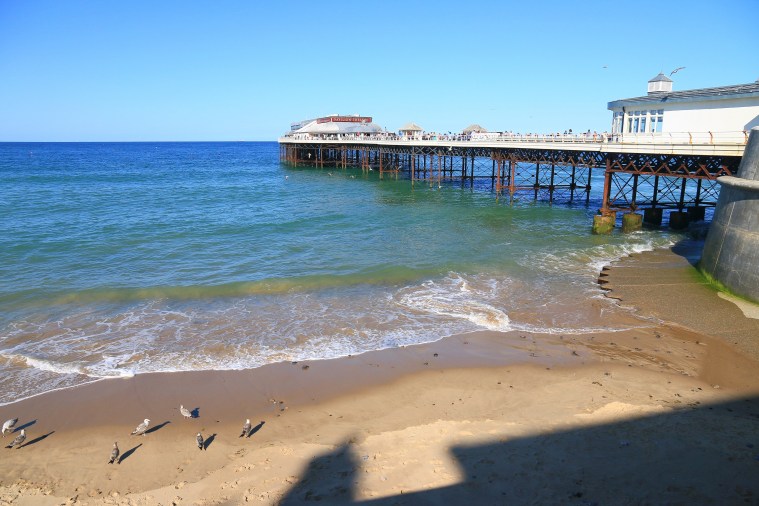
Cromer offered much of the same, though with a slightly more downmarket feel. Still, the pier is an elegant place for ambling and – for many – crabbing. Elsewhere, the pub beer garden is a good way to kill an hour or two experiencing more local ales before it is acceptable enough a time to grab some fish and chips for dinner. Fish and chips on the pier as the sun goes golden. It feels like the summer is never going to end.
The Northern Snail to Edale
It ended the next day, something which may or may not correlate with the fact that I was heading definitively into the north. I even reached Yorkshire, changing at Sheffield for a smaller train into the Hope Valley and the station at Edale, Derbyshire. There is not a great deal to Edale – a few holiday homes, a church and, crucially, two pubs. But the station sits in the midst of a slice of delectable England salvaging the grimy post-industry and haphazard gentrification of several northern cities. Indeed, in theory, Manchester should be half an hour away.
You could spend days, weeks even, exploring the Peak District National Park but my time was limited to an overnight stopover en route to the west coast. Such are the restrictions of only a month in England! Still, it was three o’clock in the afternoon upon arrival at Edale International Railway Terminus and despite greying, occasionally drizzly skies, the tops of the hills could be sighted. I struck out, on a gentle country lane, over stiles and gradually upwards through the patchwork fields of sheep contained by crumbling dry stone walls. This can only be England, and it can never fail to induce utter content.
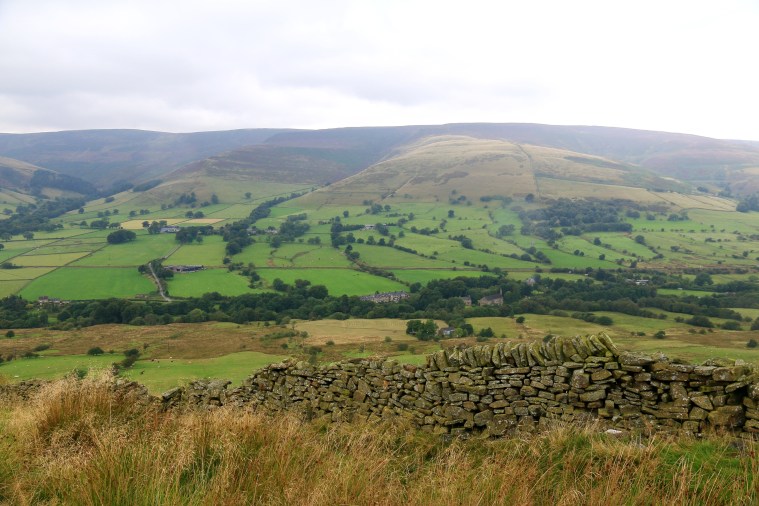
The climbing got a little more intense up to Hollins Cross, where a view south was becoming increasingly obscured by low cloud and rain, and the wind was a constant companion on a ridge towards the prominence of Mam Tor. Reaching the summit, the summer of yesterday was well and truly finished, and – almost incredulously – I employed my waterproof coat for the first time in two weeks!

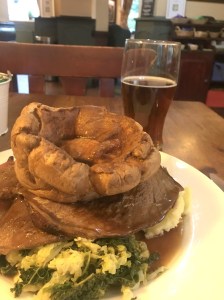 Mustn’t grumble…the weather could have been far worse and it offered the perfect conditions for an Edale pub crawl. Walking up to the Old Nags Head, the first ale flowed quickly down as I rested in a pleasingly darkened nook of creaking wood. And back down in the Rambler Inn, where I was staying for the night, a hefty Sunday roast was well-accompanied by a couple of the local brews. I went to bed slightly aggrieved I wasn’t staying longer.
The take what you can get to Ansdell and Fairhaven
Black pudding. Now there’s something I don’t rush back to England craving. However, having opted for the Full English and being one of only two diners that morning and being in the north, I felt duty bound to pay it some attention. Beans and HP sauce can help.
Breakfast was made more stressful with the news that conductors were on strike and trains were not bothering to stop at Edale. Alternative options seemed complex and required significant walking and waiting. But the fact that there was very little in Edale was a blessing in disguise, the manager at the Rambler Inn having to make a trip down the hills to the ooh la la sounding Chapel-en-le-Frith to visit the closest post office. Here, apparently, hourly trains to Manchester were in operation.
Indeed that proved to be the case, and from Manchester I was able to connect with reasonable efficiency on to Preston, Lancashire. I never had the ambition to spend two hours in the city centre, but that was the only viable option to kill time until the next connection. It was pretty much like any other city centre in England but at least that was marginally better than what I was expecting. I think it has improved since I was last here, thanks to pedestrianisation and – largely – an absence of unoccupied stores. Still, no offence, but I don’t think Preston would make the ‘I could live here’ list.
 Could I live amongst the gentrified avenues and peering from behind net curtain populace of Ansdell and Fairhaven? Possibly. The promenade fringing the estuary is pleasant on rare days when gales don’t blow off the Irish Sea, the town centre of Lytham is tidy and amenable, there are pubs, and I could even go swinging at the golf club. But most of all there are old friends who are a pleasure to see and spend time with, plus new feline ones who would be quite welcome to stow away in my suitcase.
The thing with this area is I am unsure if there are days when it doesn’t actually rain. Maybe I have just been unfortunate lately (I have heard rumours of hot sunny summer days), but the predominance of dankness simply serves to exacerbate my grim up north prejudice. A thought that was on my mind as I headed out in the drizzle to the tiny one platform station once more.
The so over it to Pewsey
It could be worse. You could be stuck in Wolverhampton for an hour, missing a tight connecting train heading further south. Aghast at such a prospect I carried on to Birmingham New Street which, following a grand redevelopment, is all impressive sleekness and luminosity. Still, it remains Birmingham and I was pleased to see a train in half an hour heading to Reading.
At Reading there was more joy in store by waiting around half an hour for a train to Basingstoke where I could wait another half hour for a train to Salisbury where I could then sit in traffic for a while before reaching the final destination of Durrington. Or I could change plans and board that train destined for Pewsey in the next ten minutes. What would Michael Portillo do, I didn’t think?
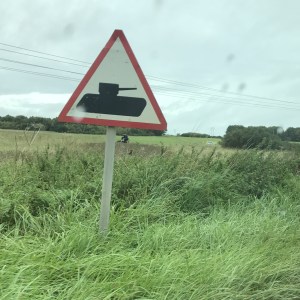 Wiltshire. A new place to stay with Dad and Sonia and some different parts of the countryside to explore. With names like the Vale of Pewsey, Netheravon, and Honey Street, it could be something straight out of the pages of Tolkien. The comfortable, idyllic bit, with thatched cottages, gardens prospering in shafts of sunlight, cosy pubs and weird looking hobbits. But lurking behind this, the prospect of dark times and conflict as tanks carry out manoeuvres and prepare for the threat of some dark lord thing with a big fiery eye and fondness for Twitter.
At peace, there was much walking to be had in Wiltshire, with a trip along the ridgelines of the Pewsey Downs and through the vale below. Commonplace around here, a white horse had been etched onto the hillside, looking elegant from afar but entirely distorted close up. And a bit less white, as if it could do with a top up of gravel from Bunnings. Anything for an awful sausage sizzle.

 With cloud lifting and just a little sun emerging it was a pleasant walk, a pub beside the Kennet and Avon Canal offering some refreshment but little in the way of good cheer. Better refreshment and more cheer, however, at the Honeystreet Cafe in the form of cake and okay coffee. Alas, I have since heard this spot is going to be closing down, which is a shame since it offers delicious fuel for the trudge back up to the car parked up on the ridge.
The next day was less conducive to walking and so we headed down to Poole where at least the rain was mostly insipid. It’s hard to judge Poole on a grey, damp and cool day. I’m sure on sunny days it would be rather jaunty and the appeal of boat trips and sandy enclaves would emerge. Today, it was an outing, something to do that was better than staying at home.
Back into the Wiltshire countryside, the River Avon provides a ribbon of life and opulence upon which gated estates, woodlands and cosy villages intertwine. Nestled in the middle of southern England, it is a very middle middle England. On an amiable and diverse circular walk with Dad we saw one of Sting’s mansions (unlikely to be at home, busy banishing poverty), passed a very posh lady on a horse, encountered distant views of Stonehenge, walked through a verdant valley, and just about made it back in time before a rain shower.


After the rain had fallen, we popped off to Salisbury, with its impressive cathedral, medieval buildings and pretty riverside parklands. There were the usual shops too, and the trappings of any English town (which now seem to include the ever-expanding Roly’s Fudge Pantries, hello).
 I was kind of surprised – given the general affluence of the area – to observe people milling about the town included an assorted jumble of yoofs, chavs, oddballs and eccentrics. But I suppose that is also reassuring and, in many ways, comforting to know that Salisbury is not much different to anywhere else (and you too can fit in!). England is still England, kind of functioning in its own little way, peculiar but familiar, simultaneously appalling and utterly incredible. And really blessed with the best berries grown in the best countryside in the world.


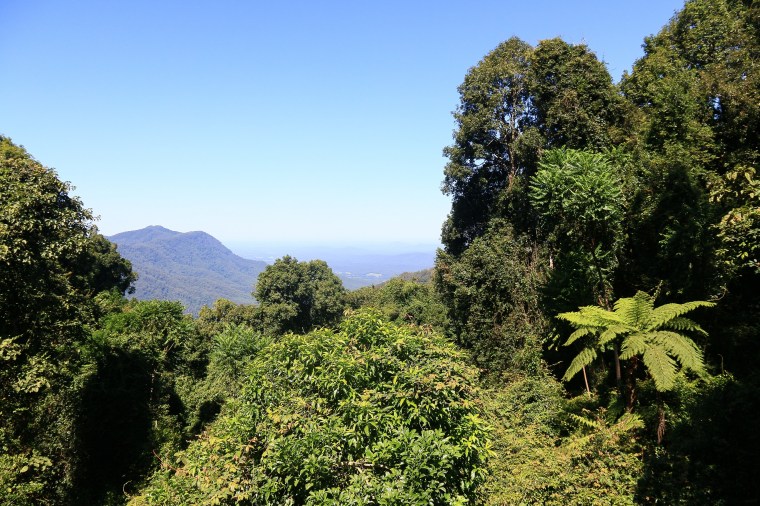
 Up the road at Ebor Falls, situated within Guy Fawkes River National Park, we have reached a land of rugged gorges and wild rivers, decorated with millions of eucalypts and a million more golden everlasting daisies. Indeed, green becomes more golden with the drop in rainfall. The smells and sounds are more familiar: that earthy aridity mixed with the fresh minty essence of the gums; the friendly chirp of a pair of rosellas; the chatter of an old guy named Bert to his wife Sandra. “Well, isn’t that grand.” And indeed, it sure is. It sure is.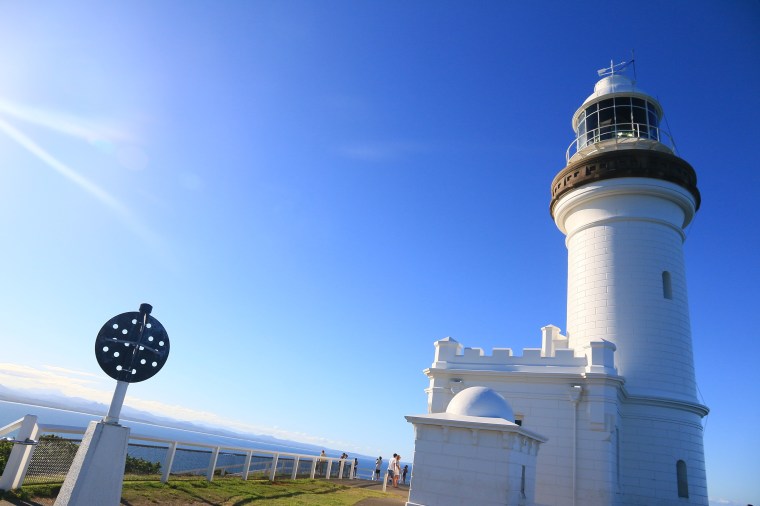




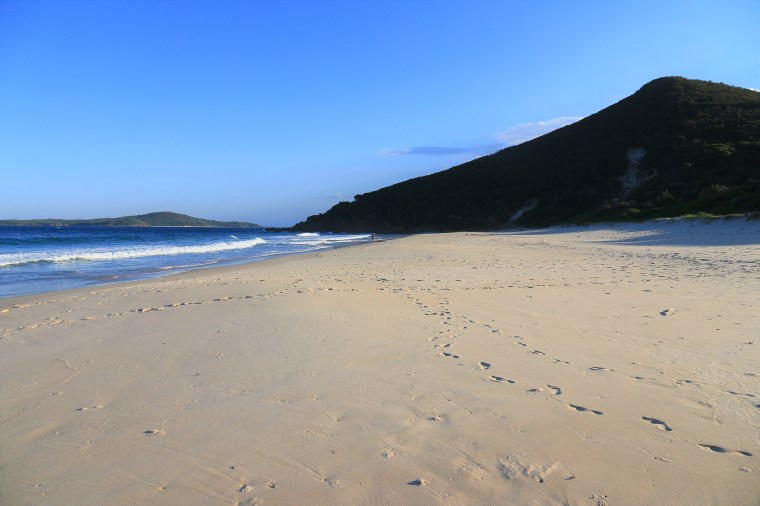


 While memories can be magnified or maligned by multiple visits, there is something special about breaking new ground. A stop around South West Rocks and Hat Head National Park provided many highlights, one of them being that this was new territory for me, Dad and the car. We all quite liked the drive alongside the Macleay River, with its green watery pastures, tiny weatherboard towns and cowbirds. We all liked a lot less the potholes around the national park campground by the beach. We were fond of the lighthouse and its views, but not so keen to traverse a rough track to some mythical walking trail. Still, if we hadn’t switched to a different walk we might have missed the sun going down. Everything works out for the best in the end.
 The beach is pitch black barring the beam of light circling upon the lighthouse. The sound of waves suggest ocean somewhere vaguely nearby, a roar magnified without any other disturbance at night. The sea breeze is cooling and evaporative, seemingly keeping the blood-sucking bugs at bay. The fine sand sustains a tripod and the sky offers an infinite, ever-expanding canvas. The photos may not have turned out brilliant, but the shared experience, the learning, the new adventure was. I daresay it was even better than Eastenders. And on that bombshell, bom, bom, bom, bom-bu-bu-bu-bum.

 Contrast this with an hour later in Arrowtown, a cutesy (if a touch contrived) old gold rush village just out of Queenstown. Sheltered by hills, twenty-five degrees, sunshine out, there was no hesitation in showing my pants to the whole of the car park and changing into shorts. Likewise, both Dad and I had no hesitation in agreeing ice cream should be on the agenda. Such thoughts are obvious portents of the cloud rolling in, the wind rising, and drizzle emerging. But let that not stop us eating ice cream!


 And so, in this hasty encounter with a small part of a bigger-than-you-think country packed with spectacle we finish up in Queenstown. Of all the places we visited this was undoubtedly the most frenetic, but it was no London, nor even Canberra. Firstly, you can forgive the masses of backpackers and Contiki coaches and adrenaline shots because Queenstown is beautiful. And – you know what – the people, the bustle, the mixture of ages and nationalities soaking up the holiday air creates a really nice vibe down by the lake. Particularly if this is accompanied by a ‘legendary’ Fergburger and a glowing evening as the sun slides west.


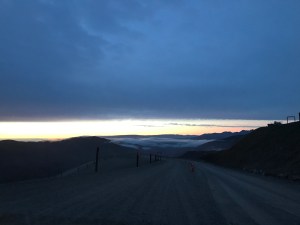 But, after our final, final night of sleep in New Zealand we set off down the mountain, seeing in the light the spectacle that we were to now say goodbye to again. With the delays, the exhaustion, the impending drag down the Hume Highway from Sydney to Canberra, we were both keen to get back. And it was a shame to end this way, even if a bacon butty and coffee at the airport temporarily lifted spirits. But everyone expects a little adventure in New Zealand and we belatedly had ours. This along with much to remember, much to savour, much to linger in the mind for as long as the white cloud blessing this most amazing big little country.
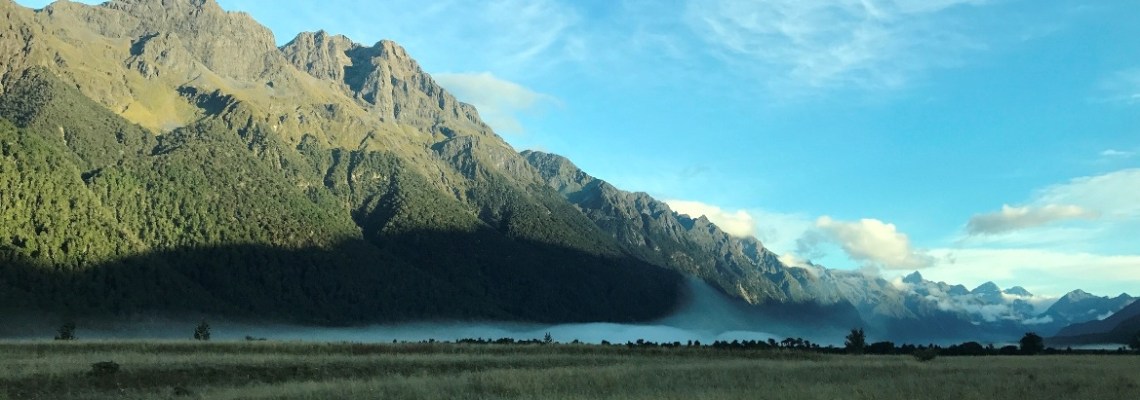

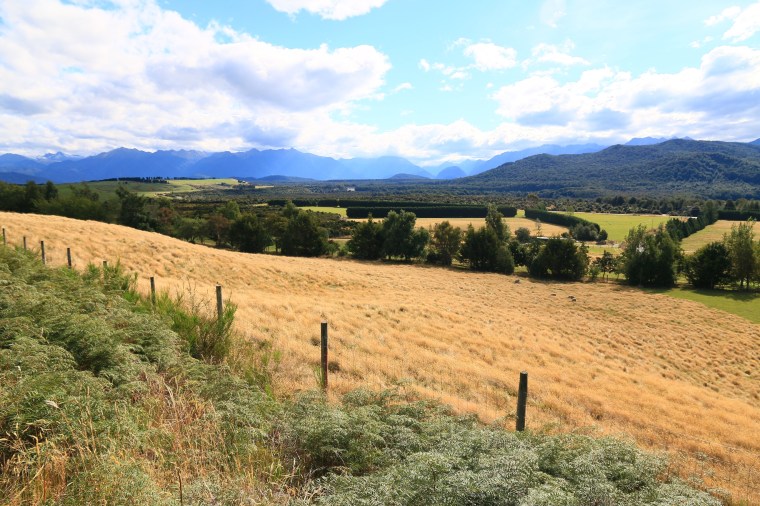

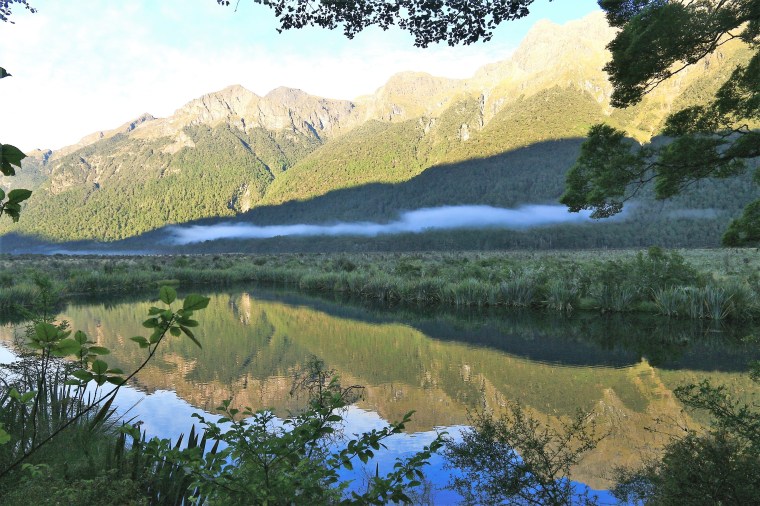
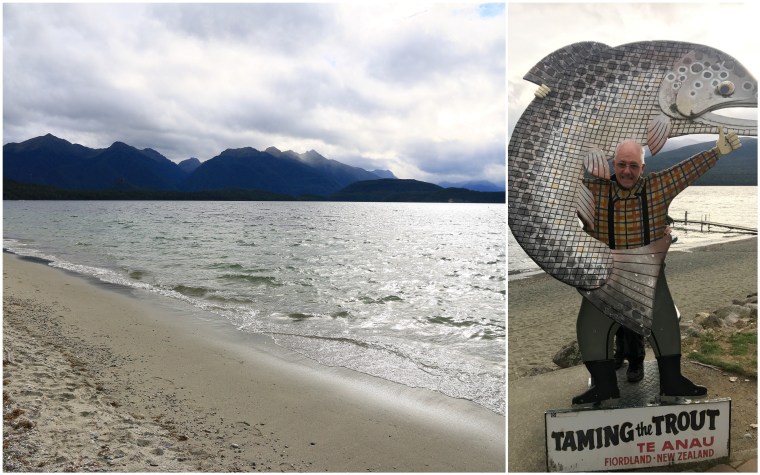
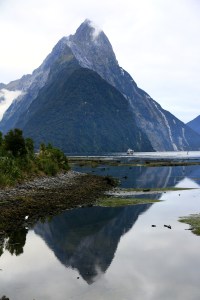 The sunny start changed around The Divide as we headed into the clouds and prospects for a clear cruise on the sound were diminished. It was the kind of weather I expected, typical of this area which is famed for being the wettest spot in New Zealand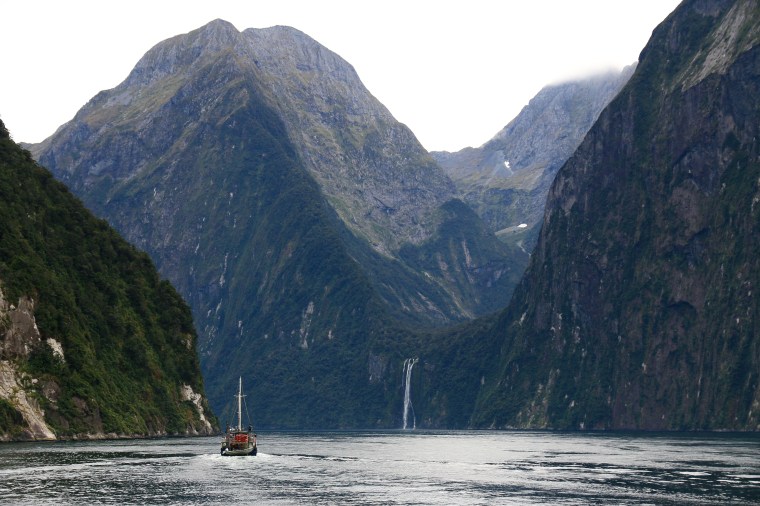
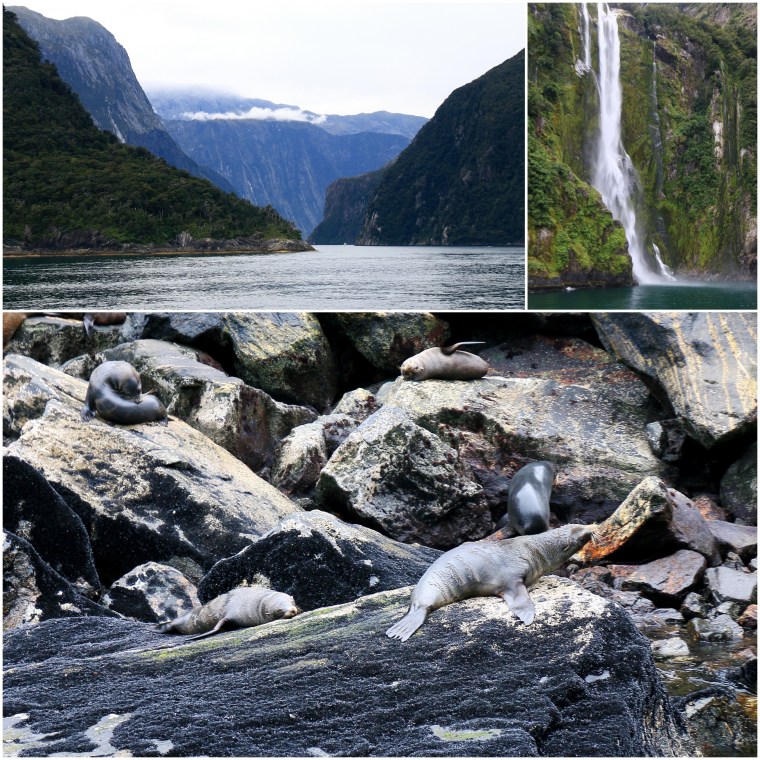
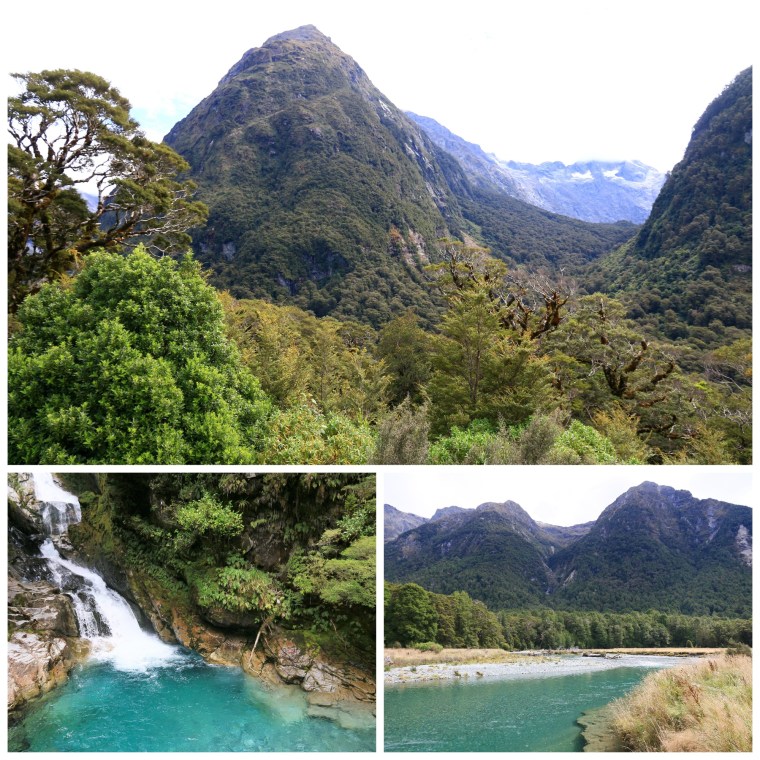


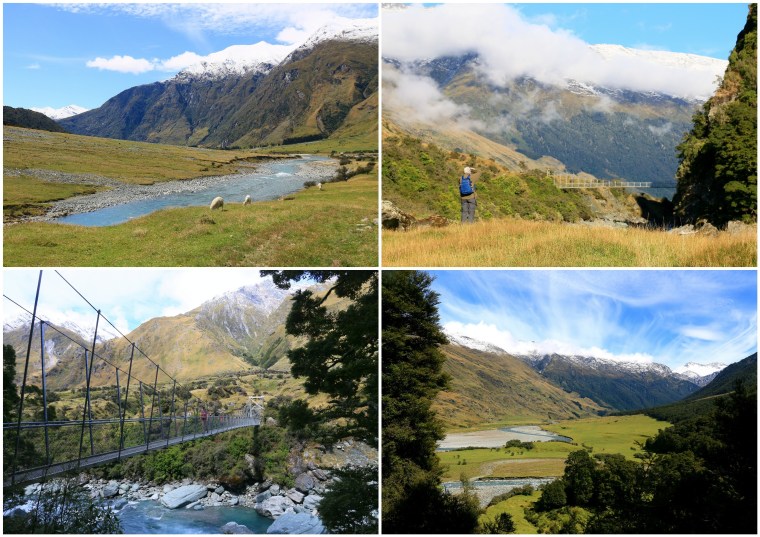
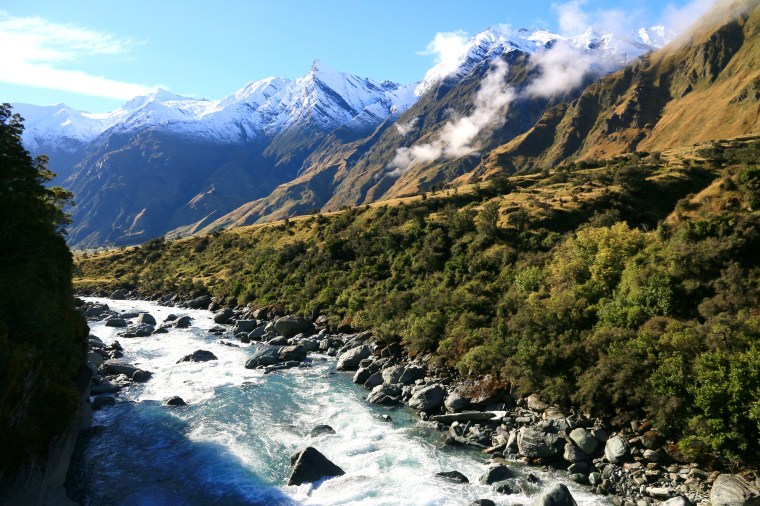

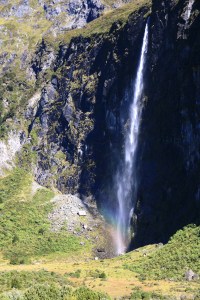 In some ways the end of the track is something of an anti-climax, but only because the entire journey getting there has been as, if not more, enjoyable. Terminating close to the glacier, yet another waterfall for company, it is an ideal sandwich stop, a platform from which to take photos that cannot capture the all-round panorama of ice and snow and forest and water under big blue sunny skies. Dad and I two insignificant specks of unintentionally coordinated orange that have passed through the storm and into the light.
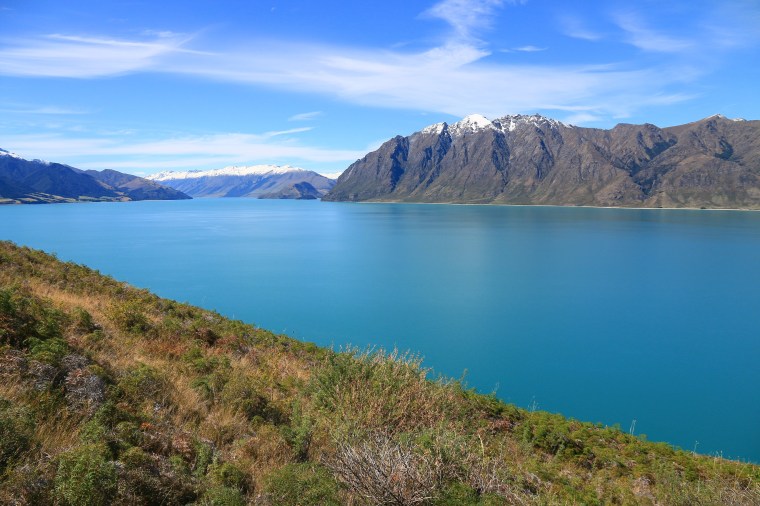
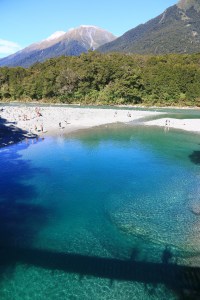 Lake Wanaka eventually ends and narrows into the valley of the Makarora River. Just past the township of Makarora another popular stop for caravans and coaches and cars and cameras are the jade pools of Blue Pools. With a gentle walk through a forest overflowing with hobbit hiding holes, two swing bridges and stony beaches suitable for building thousands of stupid piles of rocks that might look good in a picture but disturb the natural ecosystem, this is a busy spot. But yet again, as so many times in New Zealand, you can forgive the constant flow of people given the sheer beauty of the place, cognisant that you are just another nobody adding to the crowd anyhow. And with people comes stone-skimming fandom and plenty of fresh blood for the delightful sand flies that are in even greater abundance.

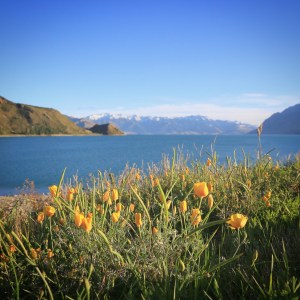 Happily, the sunshine continued into the next day and it was good to finally see our Lake Hawea surroundings in a golden light. What comforted with cosiness during the storm also shone with charm in the summer sun. To me, Lake Hawea proved a good alternative to Wanaka, barely down the road but without the crowds and providing much more space. Indeed, under such big blue skies it was a shame to leave, to miss out on sitting in the garden, foraging in the greenhouse, rubbing the cat’s belly on the grass. But there was time for one last amble down to the lake shore, to the blue and green and gold and white of just another amazing little corner of this country. And time then to move on to yet another one.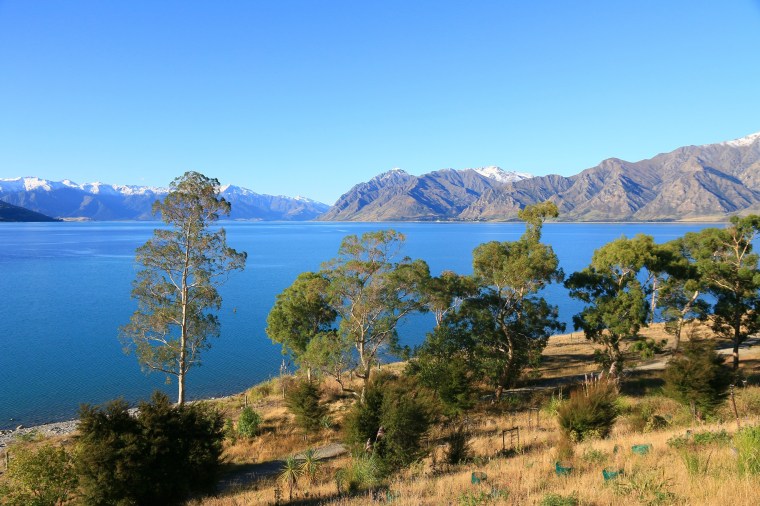


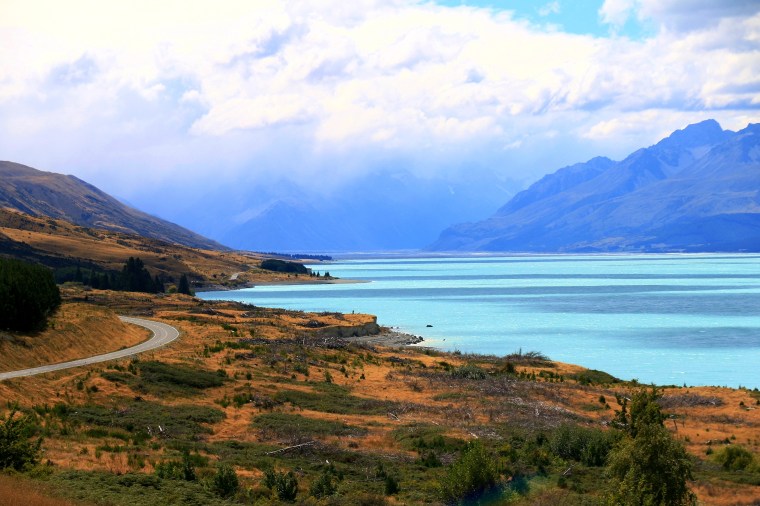


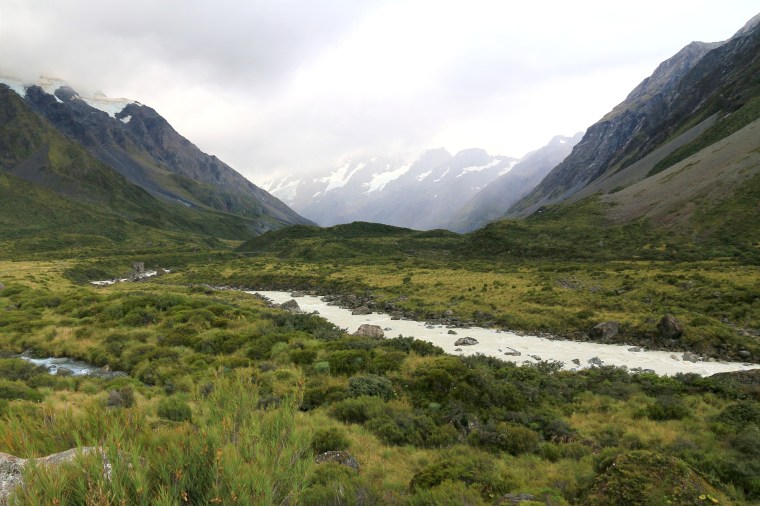
 It was a noisy night in a house on the outskirts of Twizel. Not because of hoons doing burn outs or rampaging feral possums, but the iconic sound of raindrops on a tin roof. Many Australians go misty-eyed when you mention the sound of raindrops on a tin roof, as if in some kind of messed-up ballad by Banjo Patterson accompanied by dreadful Lamingtons, but I don’t see the appeal. How the fricking heck do you sleep? Turns out this rain may or may not have been associated with cyclone Gita, or ex-cyclone Gita, or whatever was heading our way for 48 hours or more…

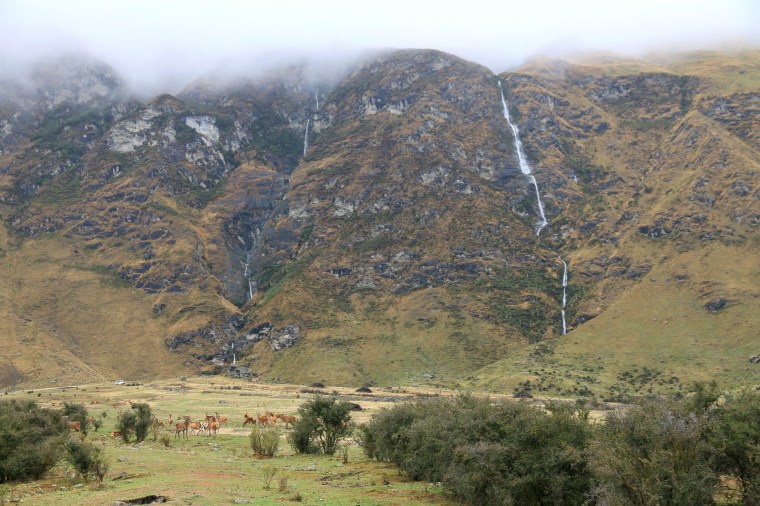
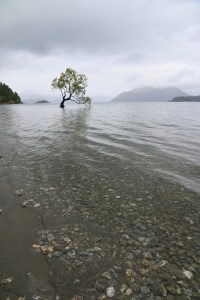 Generally, I prefer waterfalls to crowds of tourists, but the crowds of tourists can provide useful guidance on the location of scenic stops. Like a tree on Lake Wanaka – That Wanaka Tree – which probably has its own Twitter account and features on every second Instagram post with the hashtag newzealand. We join a semicircle of tourists taking pictures of the tree, with the tree, around the tree, through other trees to the tree and generally marvel at the tree, which is a very pleasant, photogenic tree. And frankly, you can’t ask much more from a tree. Other than it to grow money…which it may have done given its ubiquity on the internet.
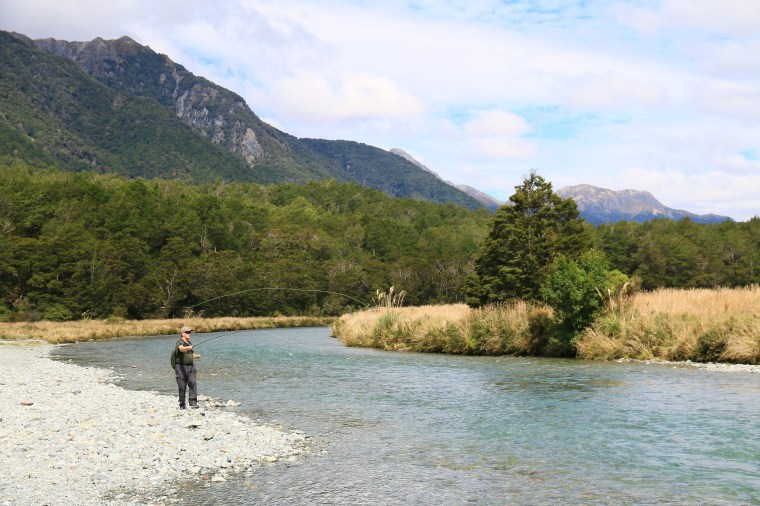
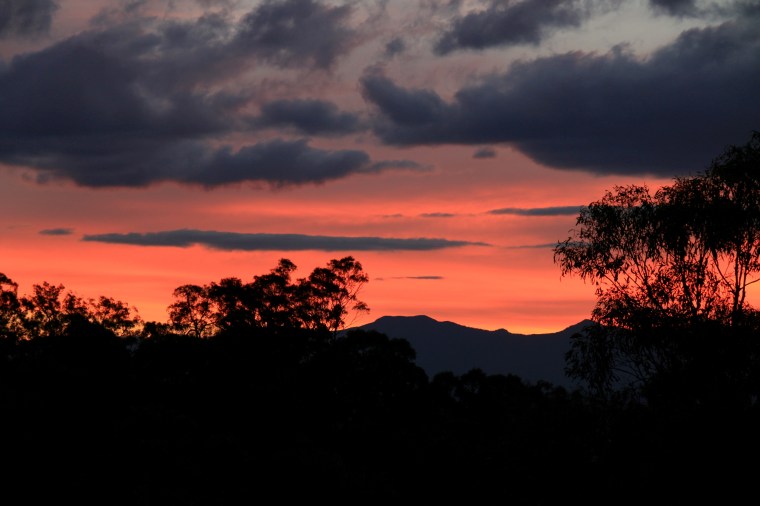
 More waterfalls were spotted on a drive to the northern side of Lake Hawea late in the day. A stop for some Dad fishing which yielded a stop in the rain. Briefly the sun even emerged albeit a touch watery like everything else around. But for the first time in a long time the windscreen wipers on the car could be set to zero. And as we parked up following a peaceful drive back home, without a fire or cat in sight, the sky miraculously fired up red, to the shepherd’s – and tourist’s – delight. Perhaps the storm had come, and gone.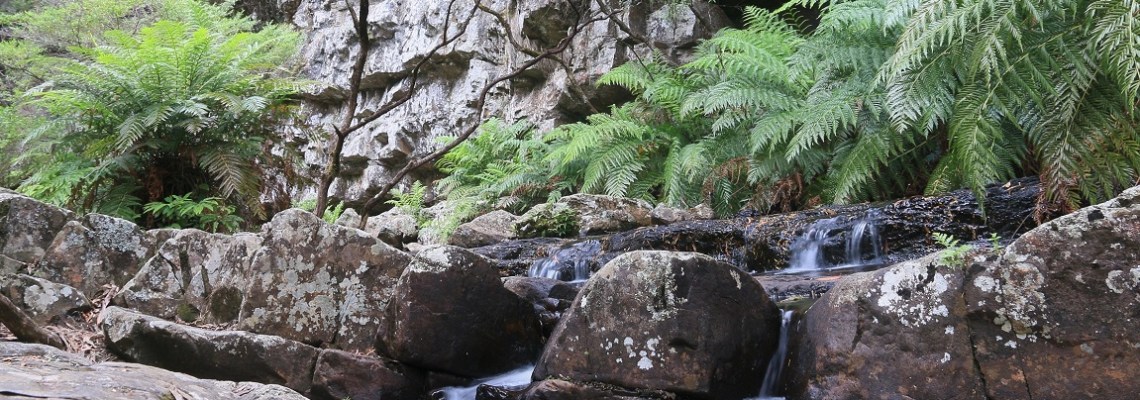
 Most cars are heading up or down the Hume Highway, towards Sydney, Melbourne or – even – Canberra. And / or beyond. Fewer are taking an alternate road north, across golden farmland and riverine gorges, passing through the town of Taralga and very little else until reaching the bright lights of Oberon. Here, west of the gargantuan expanse of the Greater Blue Mountains, fingertips of road and trail penetrate into the edge of wilderness.
 Walking helped warm things up a little and the gloomy view of Kanangra Walls was eclipsed by the natural serenity around Kalang Falls. This required a little descending beyond the escarpment edge and each step below evoked a sense of immersion in something elemental and pristine. As well as the pervasive eucalypts, native flowering shrubs and bonsai-sized pines and cedars clung happily to the rocky outcrops. Ferns adorned the pools and watercourse of the creek as it disappeared down and down into depths unseen. A trickle seemingly so insignificant continuing to somehow carve out this impenetrable gorge country.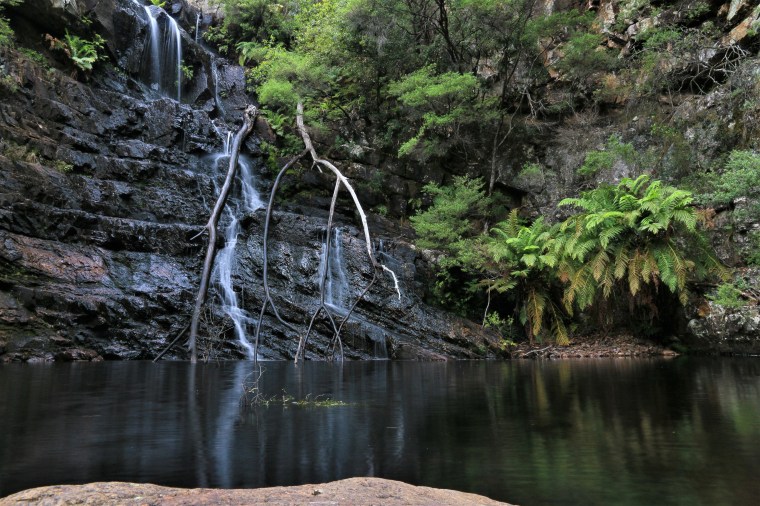
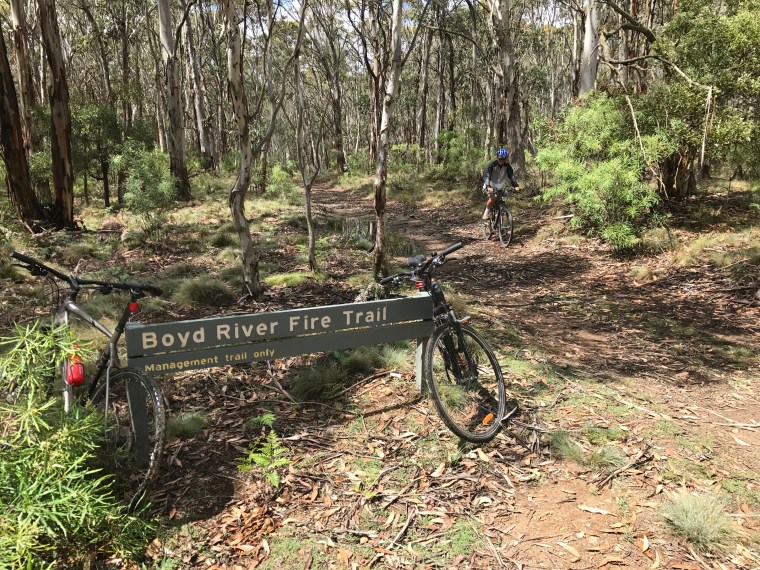
 And indeed, by time we got underway some of the gloom had lifted and the initial pedal on smooth tracks though the forest was heartening. Things began to go downhill as the terrain went more steeply and precariously downhill (described as “gently rolling”), compounded by creek crossings and the nagging knowledge that at some point climbing would be inevitable.

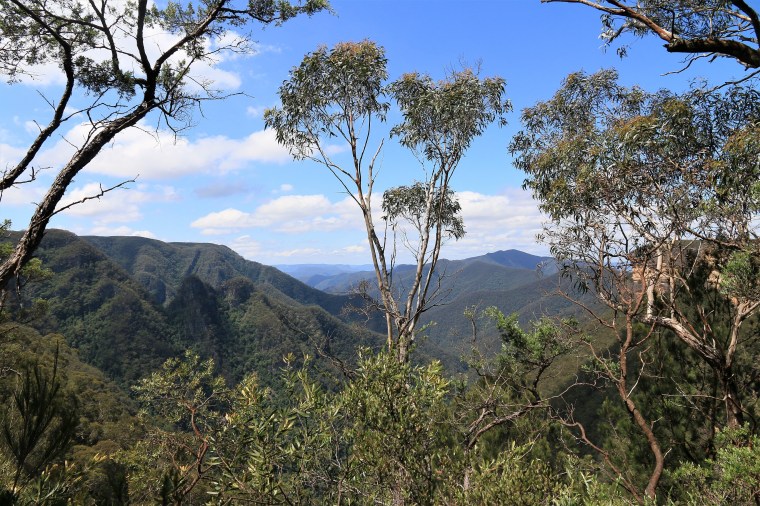
 Being energetic types, we embarked on a walk along the plateau in the afternoon which – naturally – only involved a few minor ups and downs. Panoramas were a regular companion, the vertiginous cliff line giving way to a green carpet plummeting down into infinity. Caution was high on the agenda peeping towards the precipice, a dizzying spectacle in which you hope not to be consumed. Let the snapchatting youth and boastful backpackers perch on the edge, for we have had enough adventure for today thank you very much; and how much more of a thrill do you need than being a part of this landscape, an insignificant dot in such spectacle.
 Working up a thirst, the cold beverages on the second – and final – night were far more fitting. By now, any clouds and wind had completely disappeared and the forest was aglow in the lingering end-of-day sunlight. Even my one-pot cooking failed to ruin the experience. We had been through the tribulations of the trails of dust and drizzle, creeks and climbs and were being generously rewarded. Finishing on a high, Australia at its summer holiday best, and you, and a couple of friends, immersed within it.

 It’s taken a while for summer in Canberra to arrive, with the inevitable false starts and the fake summer that usually emerges for a week or so in October before retreating with startling rapidity. The variable weather conditions are largely a boon for nature which bursts into a frenzy of colour and gargantuan jungle of weeds. One minute you have a perfectly respectable outside patio area, the next it’s a (*culture alert*) frenzied sketch from Rousseau. Best to try and ignore the weeding and admire how the professionals manage things at the Botanic Gardens.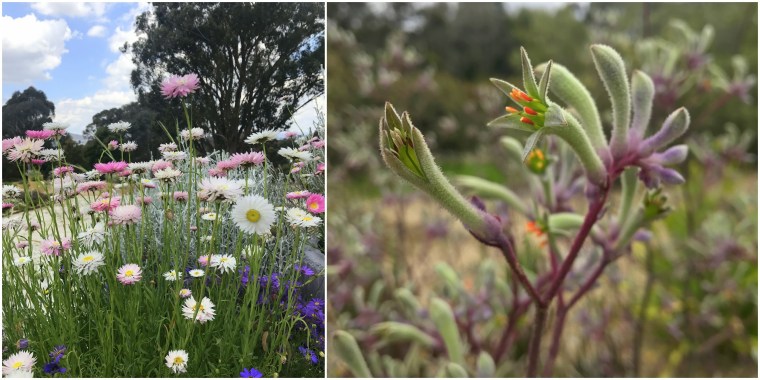
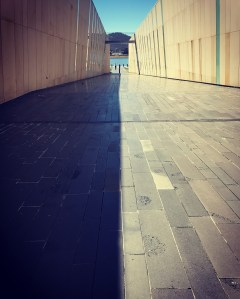 There is a point for me in which winter in Canberra is definitely over and summer is certainly on the way. It’s that day when you decide to walk in the shade to cool down and protect, rather than seek out a warming sun and its melanoma vengeance. You know you should get your floppy hat out despite looking like a numpty in it. And largely avoid the midday sun for disproven fear that it is this that is making your hair grey and not the inevitable march of age and genetics.
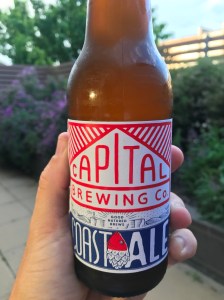 Anyway, the best times are the day’s extremities as the amount of sunshine increases. Those cool mornings when Wattlebirds wake you up at 5am and you could be tempted to a) get on your bike for a beautiful lakeside ride of virtue or b) turn on the radio in the hope that you will doze back to news of Cooper Cronk being signed by the Northern Beaches Numbats. And, at the other end, there’s those lingering light evenings, in which twilight golf is a possibility and cold beer and barbecues become a more frequent consideration.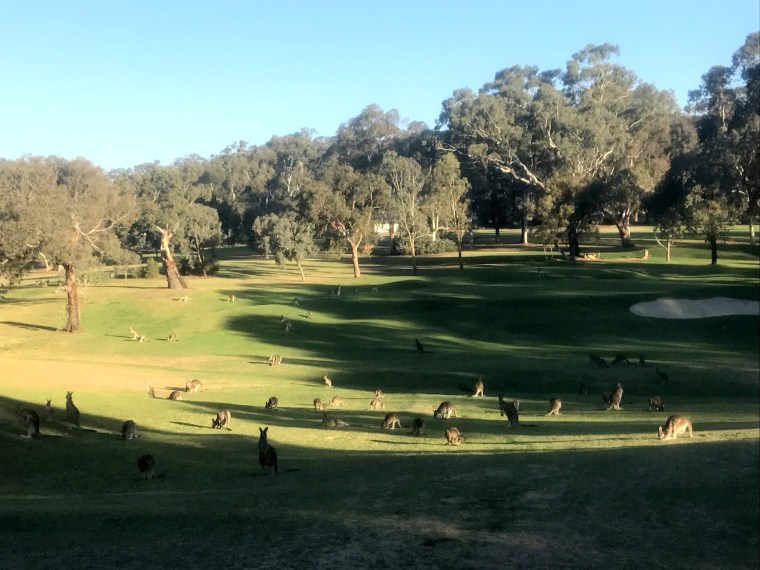
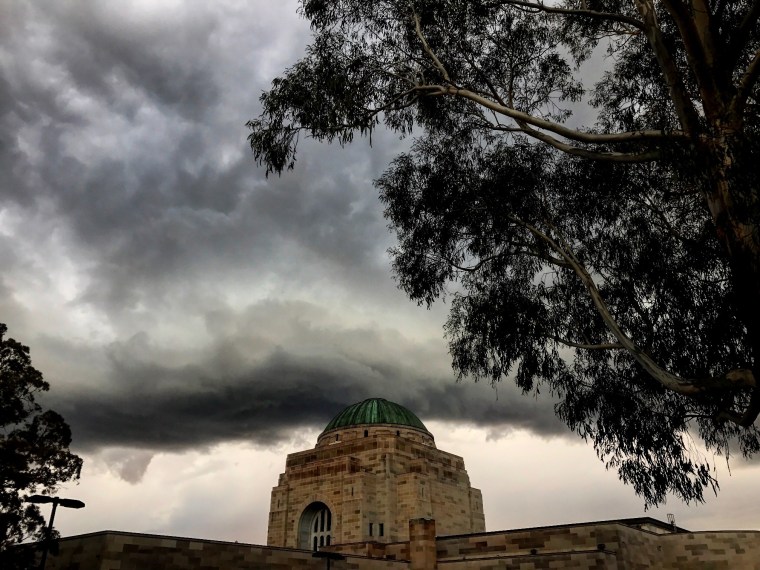
 All this water, all this sunshine, all this warmth and cool change. A time for shorts and hoodies and rainbows, many rainbows. Rainbows and butterflies as summer seems to assert itself with greater authority. But still Christmas hovers as a lottery between scorching bushfires and mild drizzle; no doubt it will be 35 degrees for a classic roast or a chilly 18 for a poolside barbie with novelty oversized prawns. Only time will tell.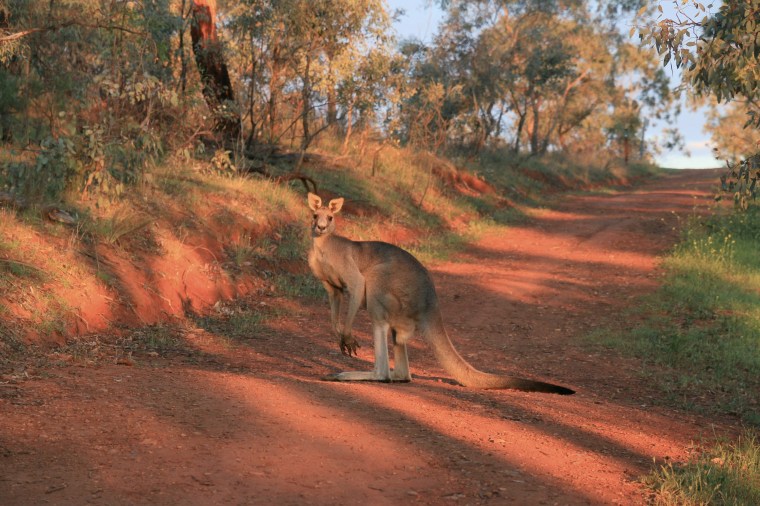

 And so the drive out of Canberra almost immediately led to immersion into a flat, golden brown landscape almost devoid of interruptions or scenic highlights. Diverting around Yass and Jugiong and encountering extensive lane closures on the road to Gundagai, distraction naturally came with the Dog on the Tuckerbox. It’s a statue of a dog. On a tuckerbox. But it is sunny and warm and the landscape here more undulating and fertile. Gum trees offer shady refuge for the melodious magpies and chirpy galahs; tin sheds and wooden farmsteads sit snugly among long grasses and fields of sheep; and there are numerous comings and goings to observe at the Tuckerbox KFC.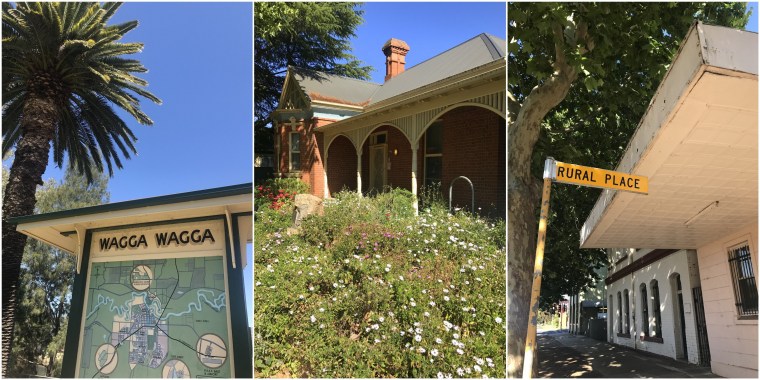
 I enjoyed a late afternoon beside the river, checking out the sandy beach and colourful language of some local ladies engaged in a very open discussion about Tinder and uncles marrying strippers and the like. The beach is obviously no Bondi or Bantham, but there’s sand and water and – I can imagine on those scorching summer days – it has enough going for it to impel you into the Murrumbidgee. Under the shade of eucalypts the vibe is chilled, languid like the river itself and I could have sat here a while if I didn’t have some work to do.
 The return trip was far more diverting than a dog on a tuckerbox, mainly because I opted to take a different route back which didn’t involve dual carriageway and bypassing one street towns. The Snowy Mountains Highway stretches all the way down to Cooma, and if I was going to avoid taking a massive detour to Canberra I would have to find my way across the Brindabella Ranges. But first, time for a little bushwalk, just south of Tumut to a slab of rock called Blowering Cliffs. It was a decent jaunt out, starting off through lush meadows and rising ceaselessly through forest to a protrusion of granite. Sometimes a waterfall plunges off here, but today it was like a sporadically dripping tap.

 What goes down must go up and so there was some further climbing through Brindabella National Park on more precarious surface before cresting the ranges where the NSW-ACT border sits. I figured out this was my final road border crossing into the Australian Capital Territory and immediately the road surface improved: still dirt but smoother and significantly more tolerant. At the oh-so-ironic Piccadilly Circus I was back on familiar ground, winding down towards the subdued hum of sealed tarmac once more. Back in Canberra comfort, but with the satisfaction of a touch of exploration behind my back.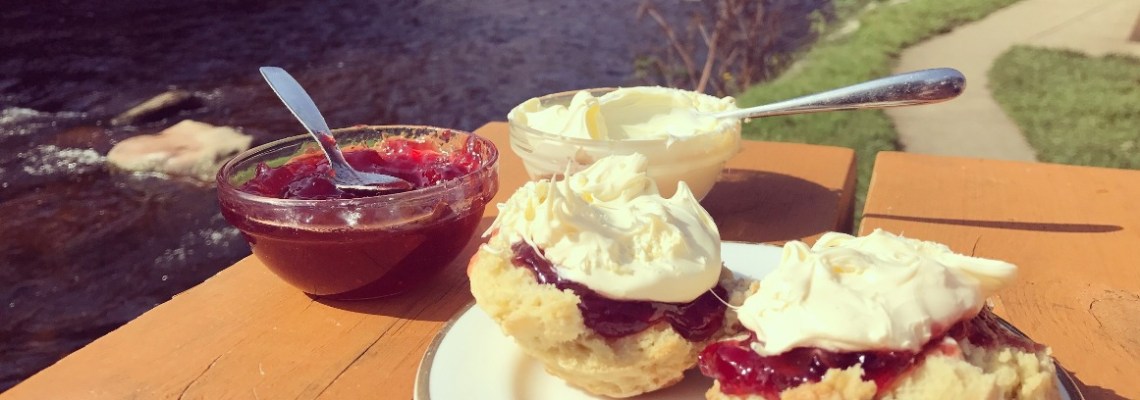
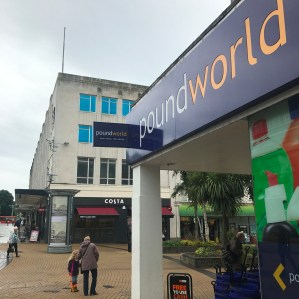 It’s funny because arriving here doesn’t particularly feel exciting or exotic or out of the ordinary. But it was a moment I had longed for; I suspect precisely because it doesn’t feel exciting or exotic or out of the ordinary. I say this despite a diversion to a new coach station, the inevitable addition of more Greggs in town, and some positive additions to family structure. But at the heart of it, the connection with home yields a familiarity that is the very essence of comfort and, for the most part, happiness.
 Happiness is that first bite of scone with jam with clotted cream. OH. MY. GOD. Obviously this happened the day immediately after my arrival at the coach station. And it was in a new location. Cardinham Woods in Cornwall, where there was plenty of wooded green to soothe the mind, Snakes and Owls and Gruffalo to find, and deliciousness of a kind, which is unmatched anywhere on earth.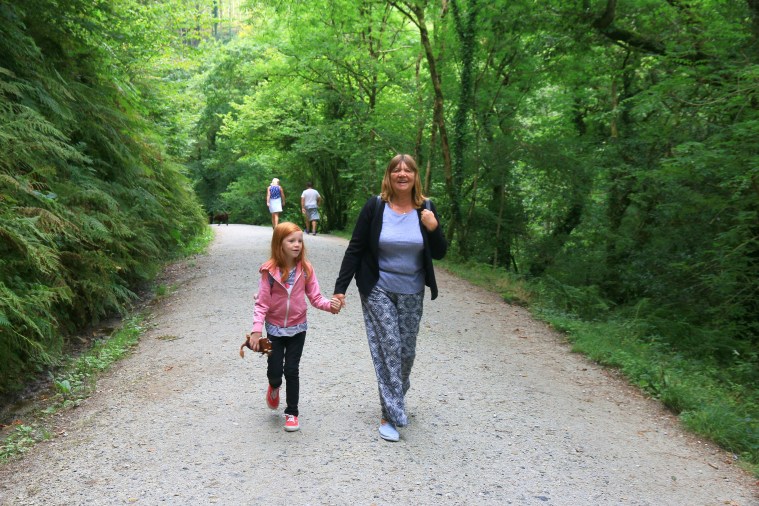
 Happiness is going to see a Hoe, and a very familiar one at that. That walk that I have walked five hundred times and I will walk five hundred more. Plymouth Sound constant companion by my side, the stripes of Smeaton’s Tower a backdrop to proper footy kick abouts and OAPs parked up, gazing out to ocean as they lick languidly away at their Miss Whippys. For me, it’s coffee in the sun by the Sound; shit coffee but sun and the Sound.
 Happiness is going to see Sarah, who is definitely not a hoe, but a very fine woman who I am hugely in love with. I have no idea who Sarah is, but she makes bloody good pasties. So much so that any other pasty is now disappointing. It means a trip to Looe, an adventure in trying to find a car park, an effort of restraining expletives as grockles spill aimlessly over the roads and flock to inferior pasty chain stores. There is achievement to be felt, reward to be had, and attention still needed to protect incredible nuggets of pastry from seagulls as undiscerning as the grockles.
 Meanwhile, have I mentioned the accessibility of cream teas at home? That makes me happy. Cream teas in Devon that are not Devonshire teas in Cremorne. Another quest, another discovery, this time at the Fox Tor Cafe in Princetown. It’s not much to look at – and weekends bring out an excess of Lycra – but the buttery scones are utterly Devonly divine. And the jam and cream ain’t so bad either.
 Happiness is not often a product of the English weather. But expectations are so, so low that you cannot fail to smile when the forecast is for light cloud and a top of nineteen degrees. Get a bank holiday weekend when the temperature builds under blue skies and you’ll find everyone turns mildly, wildly delirious. Blackened charcoal sausage is the staple food source, evenings out are comfortable and you begin to think, hmm maybe this isn’t so bad after all. Followed by the inevitable if only it could be like this all the time. These are the words uttered outside waterside pubs, along the promenades, within the leafy parks and wedged between giant hedges as countryside spills down to coast.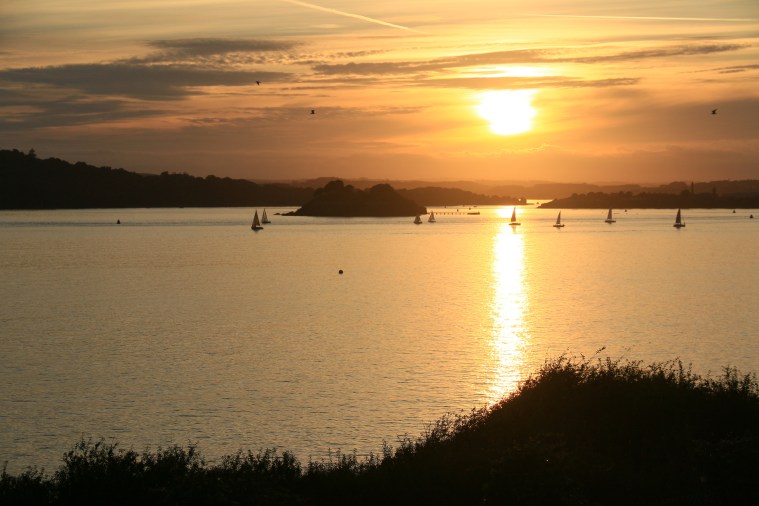

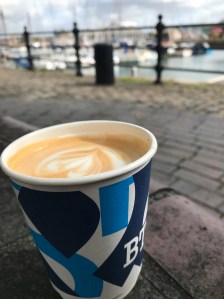 For all its tea-based pleasures and intricacies, Devon and Cornwall – and England and the rest of the UK – is not, it must be oft said with an eye roll thrown in, accomplished in the art of coffee. But there are glimmers of hope; hope that possibly makes you think hmm maybe this isn’t so bad after all. Followed by the inevitable if only it could be like this all the time. These are the words uttered inside my head as I sup on a reasonable flat white among the glistening cobbles and boats of Plymouth’s Barbican.
 Happiness is the aspiration pushed by marketers at Morrisons and Sainsburys and Tesco and, yes, Aldi. The Aldi happiness is more a utilitarian, Germanic form of pleasure, and certainly hard to pinpoint at 3:30pm on a Sunday afternoon, before the stores close in a quaint but annoying reminder that Sunday used to be a day of rest. These are the temples of a kid in a candy shop or, um, actually a grown man in a candy shop. For every reliable revisit of a Double Decker there is a new discovery or a forgotten one rediscovered. Like Wispa bites, and Digestive cake bars, and more things contributing to the presence of salted caramel as a major food group. And then I see the dairy aisle and the copious supply of clotted cream, and I feel a bit sad.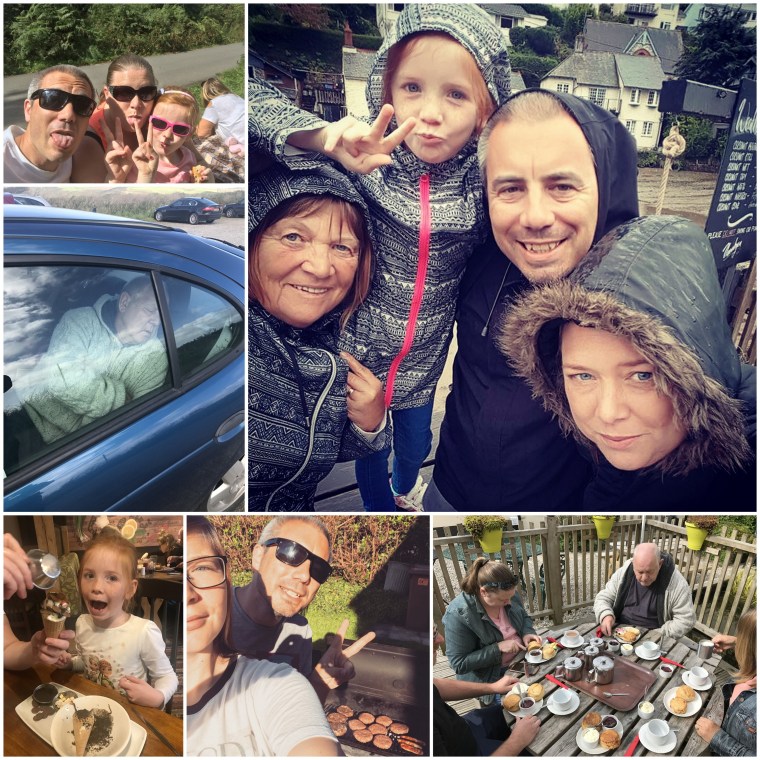

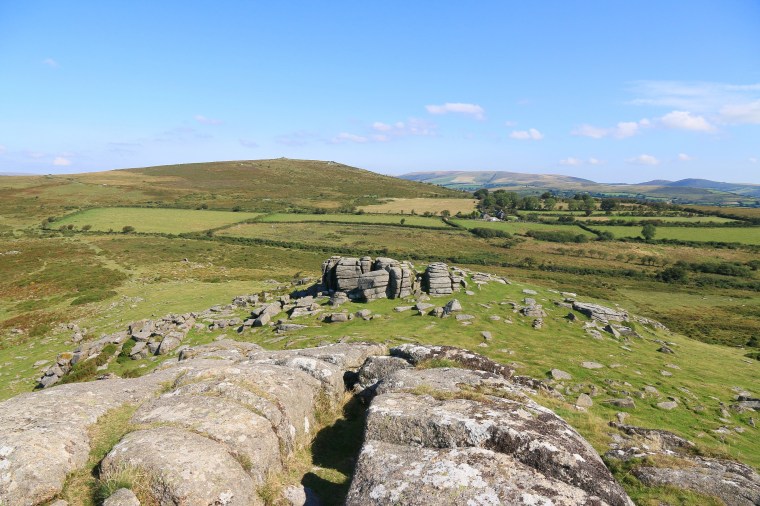
 On the road to Burrator, the sheep are out in force, arse sticking out into the tarmac, head tucked into a giant gorse bush, oblivious to the fact that there are two cars coming at opposite directions on a lane built for one. Further on, a few sheep mill about in the foot of Sheepstor, just so they can pose for clichéd photos and get in the way of cars trying to park. Better to get out on foot though, and take in a stretch of reservoir, country lane, farm and hamlet aesthetic, before climbing the wilder, granite strewn hill itself. It’s a route I’ve taken a few times now and strikes me as a wonderful bona fide welcome back to Devon.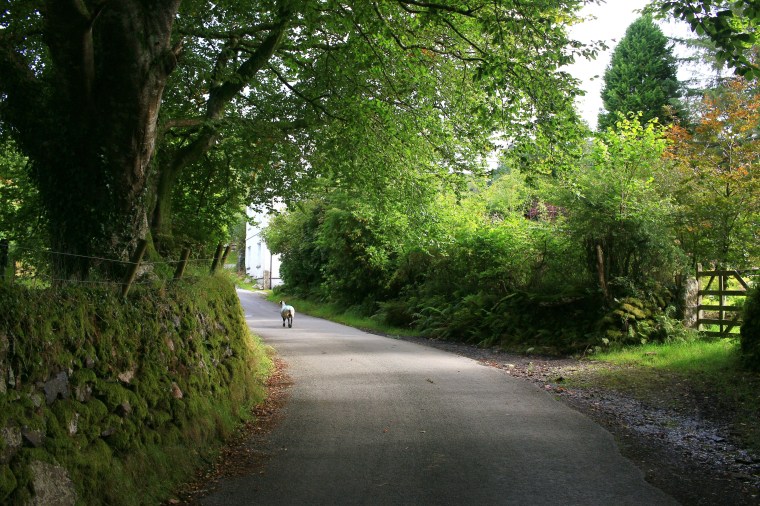
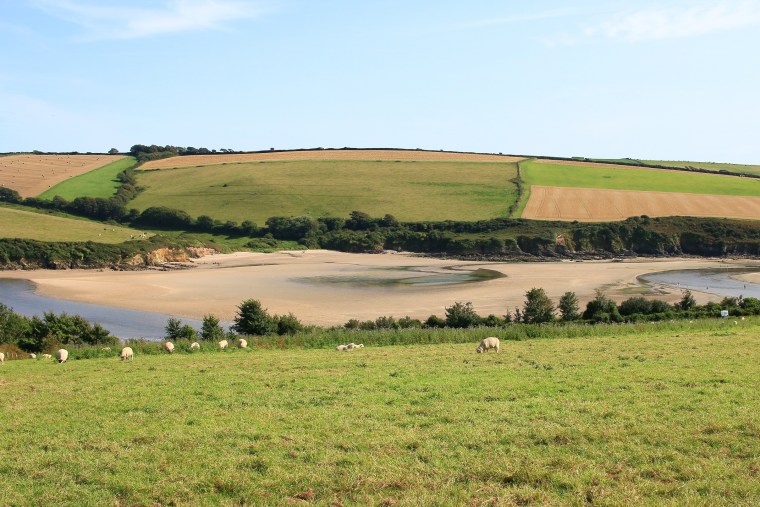
 It really is in a delightful setting, Mothecombe; the tranquil shallows of the River Erme meandering out to sea, the sandy banks and rock pools revealed at low tide, the sheltered, undeveloped bay with gentle waves and translucent waters. Such appealing waters that people were in there swimming and I got the shock of my life when I put my own feet in. Not the usual, anticipated shock of oh my god what are they doing this is f*****g freezing, but a slight eyebrow raising oh this is actually tolerable for a bit up to ankle height I guess. No wonder the roads are so busy.
 Following a day of showers merging into longer spells of rain I was keen to get outdoors when a longer spell of rain appeared to have passed leaving a few showers behind. I was in the habit of checking the weather radar by now, and took a bit of a gamble on a potential gap in the way things were tracking. Out around Sharpitor, as cloudbursts pummelled the Tamar Valley and a black doom sat unyielding beyond Princetown, some late sunshine pierced the skies and set the landscape aglow. Sheltering from the cold wind, I stood insignificant within expansive moorland and raggedy tors, alternately shining golden in sun or darkened by racing clouds. Barring the occasional car on the main road crossing the moor, it was just me and the sheep and a pony or two to witness it. I felt as though I had struck gold.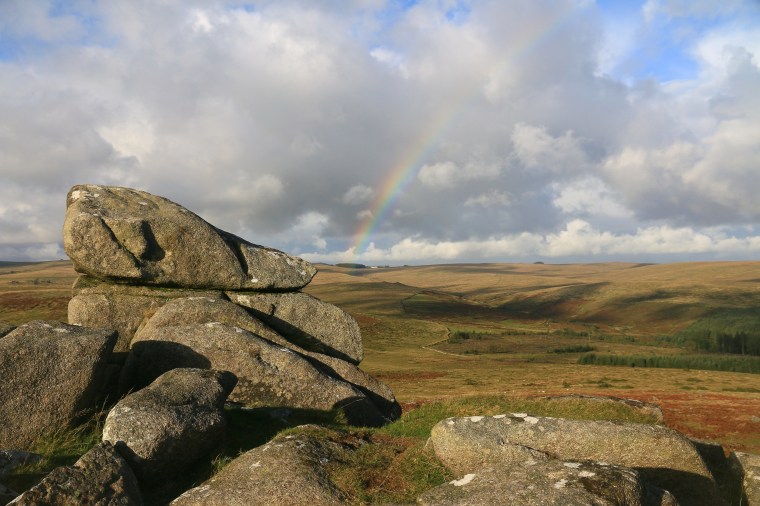
 And you know what? In a turn of events that no good travel writer would ever make up, it pretty much stayed raining albeit with some slight easing off for about five minutes. Thankfully the Ship Inn had some funky outdoor pods to huddle together and drink hot chocolate in – think three quarters hamster ball in Teletubbie land – and with the tide being in (well checked, sir), the scene was not one of stinking tidal sludge. Indeed, it was rather serenely pretty under a comfort blanket of cloud.

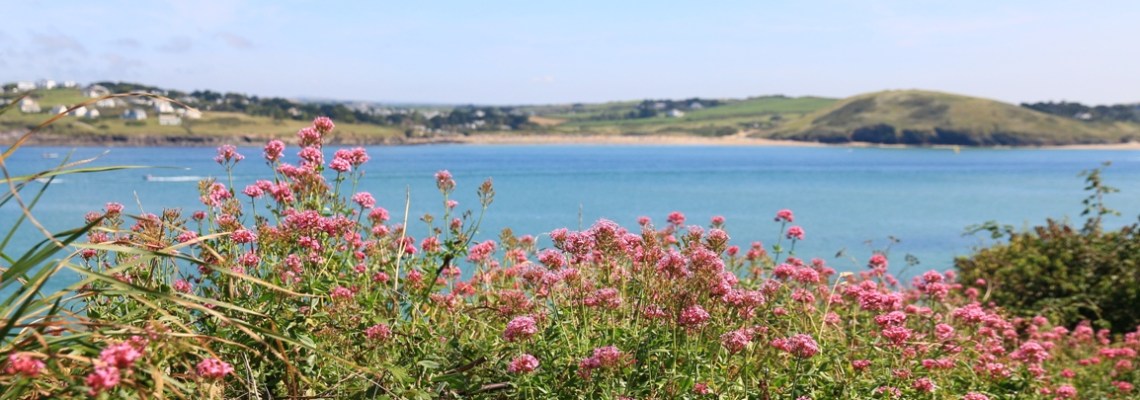

 Other repeat visits transpire from convenience and come with pastry-coated benefits that are worth duplicating. Like the relatively short drive from Plymouth to Looe, through the most contented countryside and down towards the south coast. I don’t usually linger around Looe, but it’s a good base for refreshment and with the right light, tidal state and the discovery of a peaceful corner you can value its merits.
 Even closer to home – so much so that just over the hill you will see council blocks, cranes and incinerators – Whitsand Bay is starkly, surprisingly rugged. The eroded, sea-shattered lump of Rame Head is something you’d expect to encounter further west. Bracken and gorse-clad cliffs are punctuated in clusters by cheap fibro shacks with pretty gardens clinging on for dear life. And the waves roll in to the shore in a long translucent line stretching all the way back towards Looe. It is a go-to place for that essential endeavour of ‘blowing away the cobwebs,’ an endeavour far safer in England than Australia.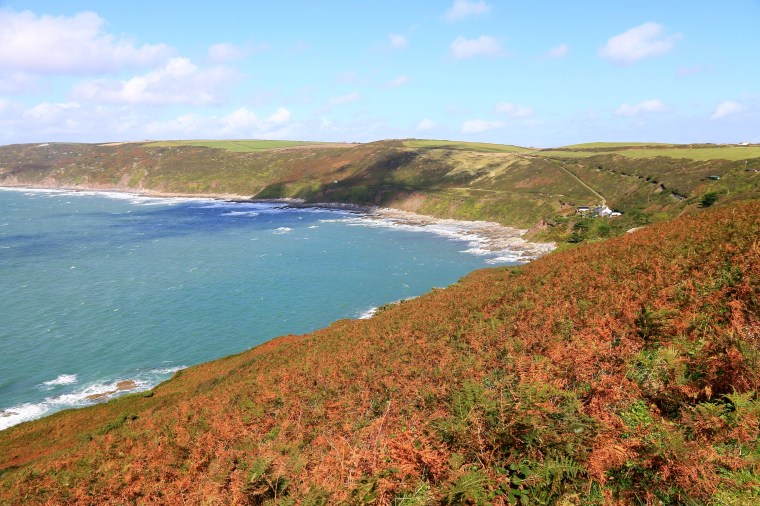
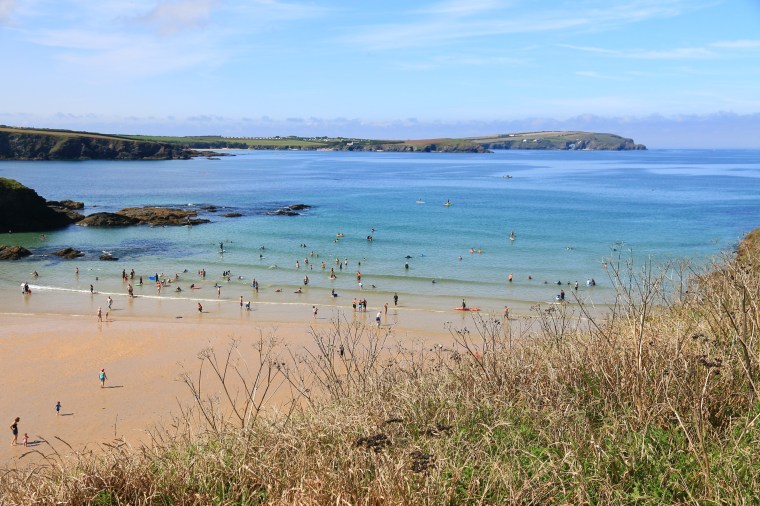
 Once again, I turn to the South West Coast Path for solace; a relatively easy walk northwards towards the headland at Stepper Point, taking in some archetypal Cornish scenery with only a smattering of rambling sightseers passing me by. There are rocky coves, clear seas, sandy inlets and windswept green fields to enjoy. A highlight is the chimney stack formation at Gunver Head, resembling an ancient tin mine frozen in time, weathered and beaten by the cruelty of the Atlantic. Climbing up and up and up over this rocky, eroded headland, surely a grumpy and grizzled Luke Skywalker is hiding out here somewhere?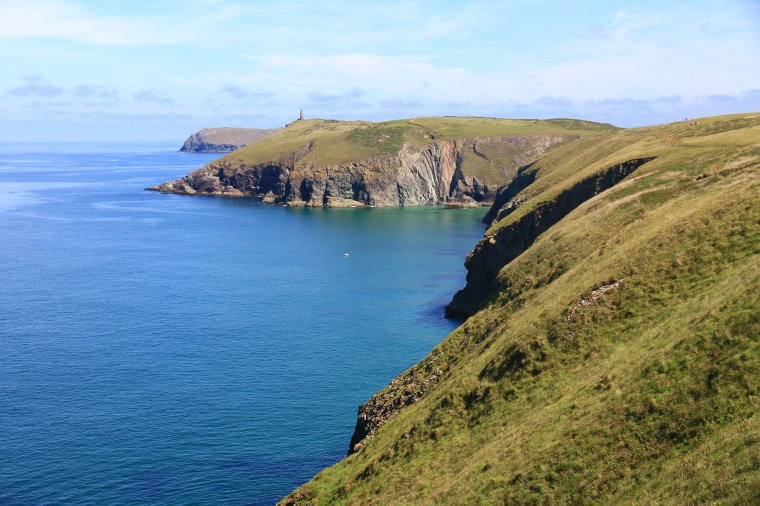


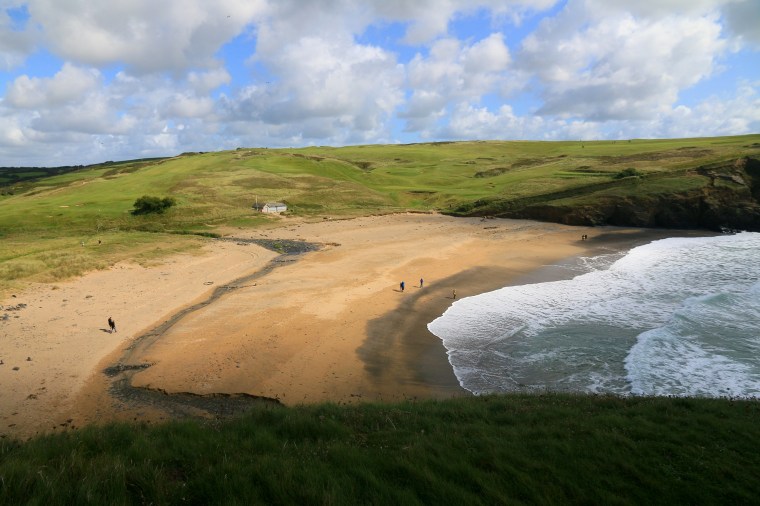

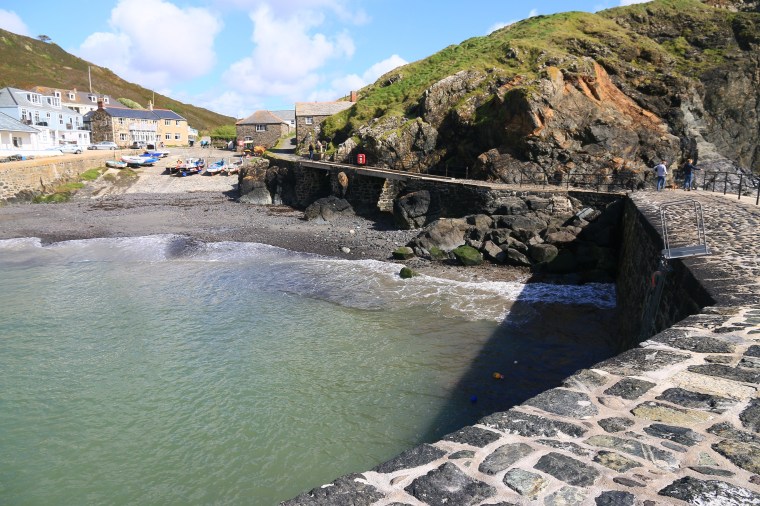

 More popular, and having risen in stocks dramatically in the last couple of years, is Kynance Cove. To the extent that at 3:30pm in the middle of the week in September the National Trust would like you to pay a bar of gold bullion and hand over your firstborn to park. I blame Poldark, stupid knob end. Of course, being locals (okay, sort of), we’re not having any of that, and parked a little way back along the cliff line at a place only the locals (okay, those who look at the satellite view of Google maps) know. Ha, eat your hat Poldark.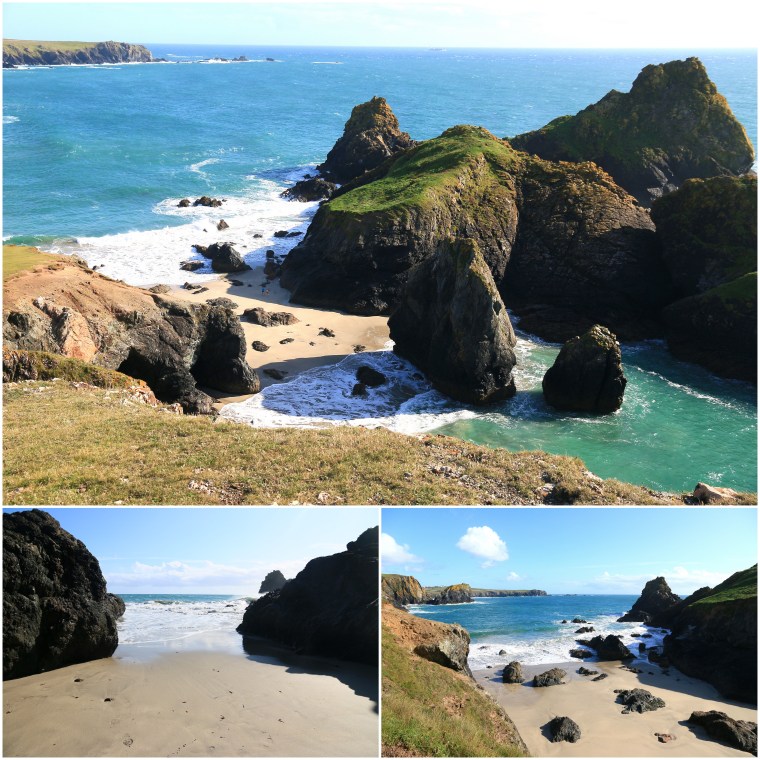


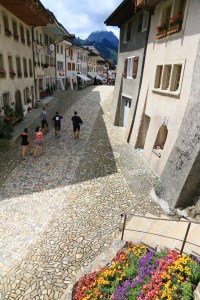 Indeed, many visitors were lured by the smells of the Cailler chocolate factory in Broc; so much so that we skipped the long wait times and went straight to the chocolate tasting (i.e. shop) instead. One bar later we were getting off the train in Gruyeres, straight opposite the fromage factory and down below the castled old town. Undeniably cheesy with a touch of theme park, it is nonetheless a fine spot in which to amble and eat a random picnic from the Coop.
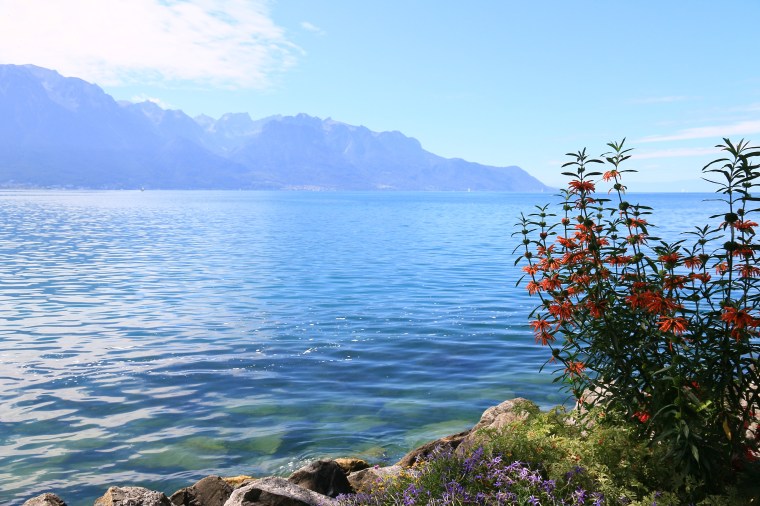
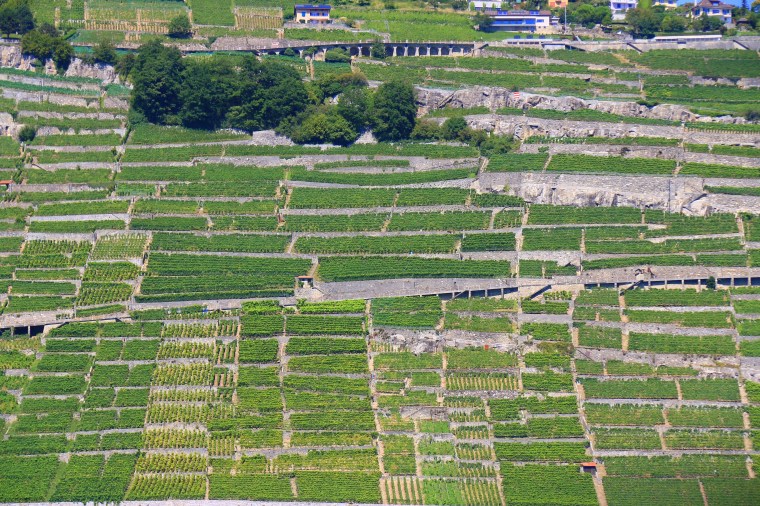
 Retracing some of the route back into the French speaking side of Switzerland, train seven rolled and lulled its way to snoozeville, climbing up through a hole in the rock to emerge way above Lake Geneva. The descent was disorienting as the lake shifted from left to right and eventually lapped at the foot of Montreux. What better way to stretch the legs than to walk along the lake shore in the early evening sunshine, ambling towards a Legoland castle jutting out into the water?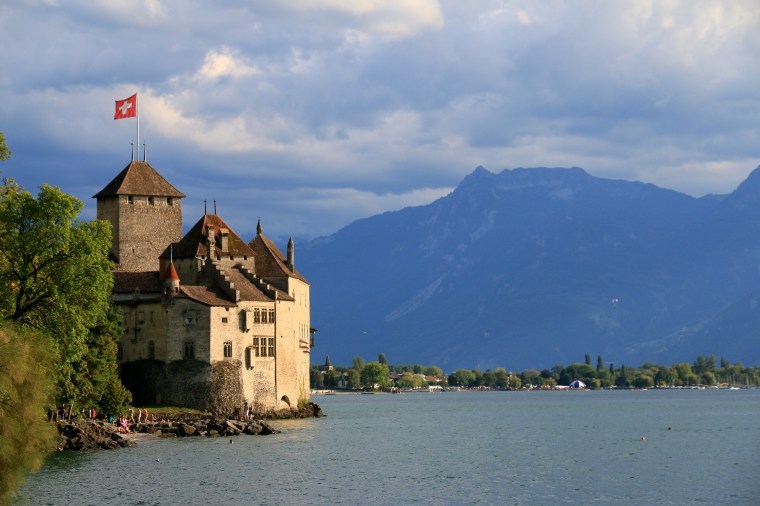
 Following an epic day cruising the rails of eastern Switzerland, the next day – Sunday – proved a quieter affair. I mean, it did start with a train, the Lausanne metro transporting us to a dormant university campus and close to more lakeside ambles. Lausanne was emerging to life in its dog walkers and cyclists and rowers and barbecue in the park chefs. It was still rather quiet, in a Canberra-like kind of state.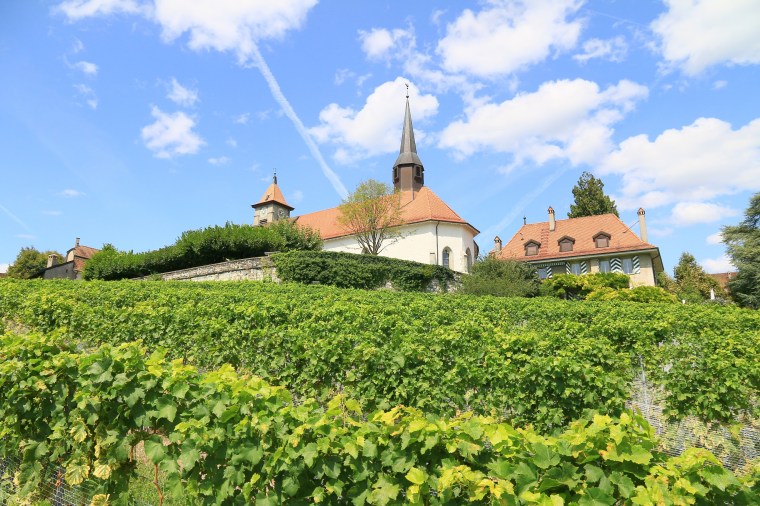
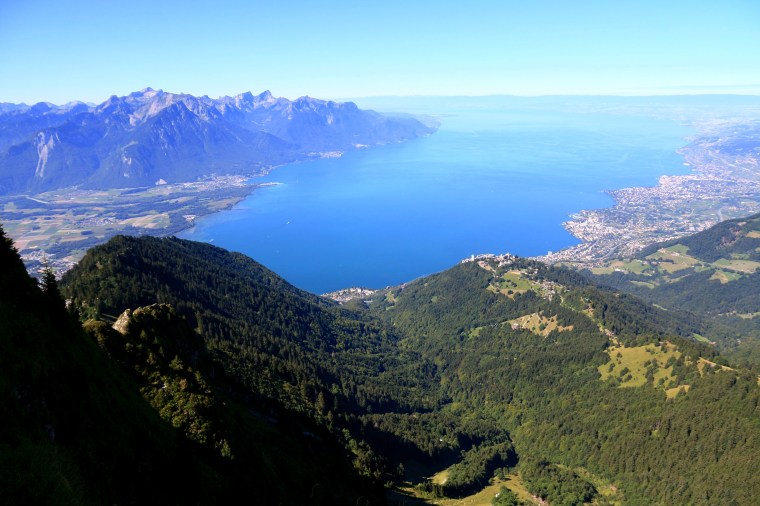
 The trip from Montreux up to Rochers-de-Naye would cost an arm and a leg in itself. Better than cramp and a heart attack that would be the inevitable result of trying to make this journey on foot. Old and old at heart alike were more than happy to board the open air carriages, passing the raffish suburbs of Higher Montreux, up through clusters of chalets and expensive hotel restaurants commanding views of the lake, into pine forest under deep blue skies and out into open meadows way up high. At around two thousand metres in height, panoramas of Switzerland and France abound.


 Just when you think you have pretty much seen the French Alps, another gorgeously picturesque valley road veers upwards, speckled with chalets and cyclists, leading to a modest resort town and an inevitable col de something or other once mentioned by Phil Liggett late at night. Saint-Francois-Longchamp is not only pleasingly French sounding but possesses all the jagged scenery and cowbell fields you could hope for. And plenty of those wooden chalets in which to stay avec famille.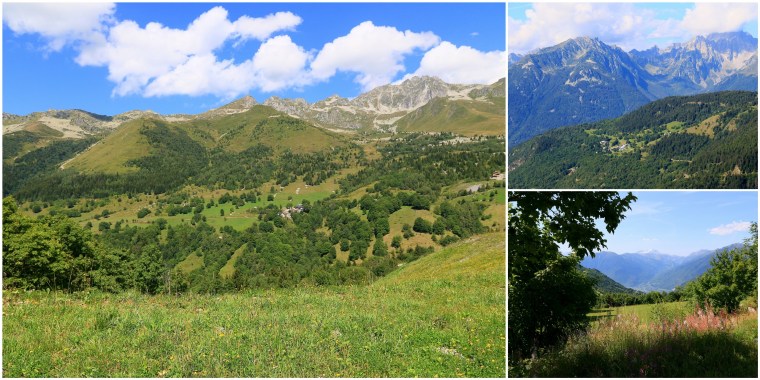
 As things tended to go, footsteps to the boulangerie were typical first thing, followed by a longer walk somewhere someplace prior to or incorporating lunch. Warm afternoons were generally more leisurely before fun, games, and dinner. Dinner obviously incorporated cheese in several forms… another sameness which is in no way whatsoever a bad thing.
 Trips beyond Saint-Footlong-Champignons included the short climb up the hairpins to the Col de la Madeleine (HC). By voiture this was okay; an electric powered bike might have been doable; but pure pedal power seems like pure crazy. Especially from 1500 metres below in the valley of the Arc. I think if I even remotely made part of this climb without dying I would reward myself with trois boules of ice cream. But I didn’t, so just had the ‘two’ instead.

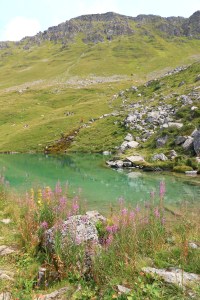 The lakes were small placid affairs, ideal for observing the evolution of tadpoles to gourmet cuisine. Marmot whistles vied for attention with miniscule mosses and macrobugs, while the number of baguettes being simultaneously munched beside the water reached epic proportions around one. But then, you could see the appeal; they really were rather charming spots to eat and wile away a couple of hours up high.
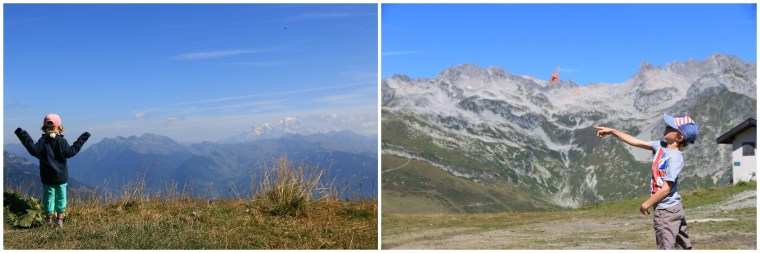
 Despite so much to enjoy it was perhaps the final morning where life in the Alps peaked. From the Col de la Madeleine once more, a cloudless sky provided the obligatory view of a glimmering, gargantuan Mont Blanc. It was a steady companion along a gravel track with views over valleys and peaks as far as the eye could see. I had probably been in some of those, and eaten some of their cheese before.
 gbpilgrim