
Ah live blogging. Tweeting Trump tirades. Instantaneous pictures of food. All the wonders of the 21st century. And here I am stuck in the past, thinking back to early September and a final foray (in 2016 at least) in the southwest of England. Luckily the memories are vivid, and the wonders of the 21st century mean that I can draw on way too many photographs than is healthy.
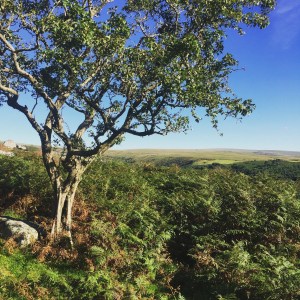 I remember arriving back from London in splendid sunshine and almost immediately rushing to the moors. The car had alternate ideas, but some rectification and replacement meant that the day wasn’t totally ruined. In fact the afternoon sky was bluer, the light clearer, the warmth warmer on a rapid trot up from the tinkling cascades around Norsworthy Bridge towards Down Tor. Clearly, so clearly, and happily back in Devon.
And then, crossing counties, there was the day. In other years it has been around Porthcurno or Padstow or Fowey or St Agnes. The Cornwall Day. The day when I venture out into a world set up so perfectly that you start to question why you would even think about going anywhere else. Sure, it was a long trek down to Penzance on the train, and then to Land’s End with its touch of tack and touristification. But head north, mostly along the coast path, and you are transported into a rugged, beautiful, heart-warming world that oozes pasty filling and rich clotted cream.
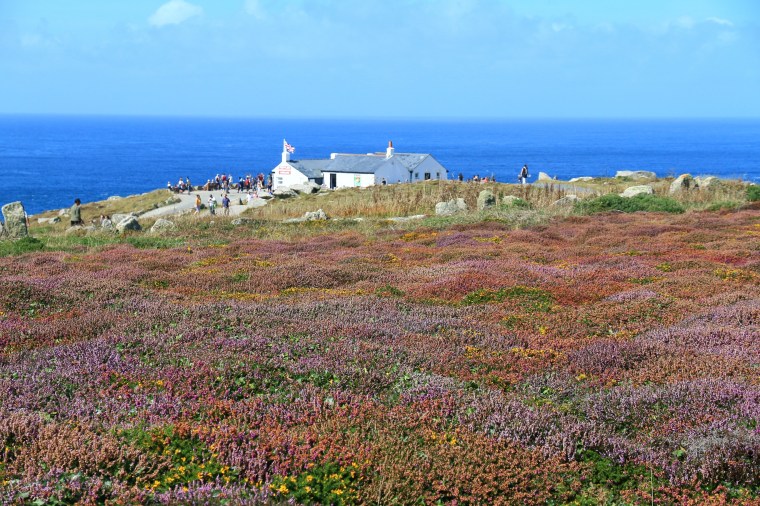
 Practically round the corner from Land’s End is Sennen Cove. Though most of the Land’s End crowd have filtered out, the beach remains busy and tiny car parks are amply populated with people eternally waiting for someone else to move. But beyond the main drag the alleys are cosily quiet, and the coast path is trampled in only an infrequent fashion by jolly people with beaming smiles. I may have been one of them.

 Further along the path the beach empties out, disappearing altogether as a small headland perforates the arc of Whitesand Bay. There are rocks to clamber over and a tightening of the sea against the land. It’s just a small inconvenience when you round a corner and discover another bay, another beach, another dream that you might want to pinch yourself from. If anywhere in the UK is ever going to get close to a rugged beach of southern New South Wales, then maybe Gwynver Beach is the one.
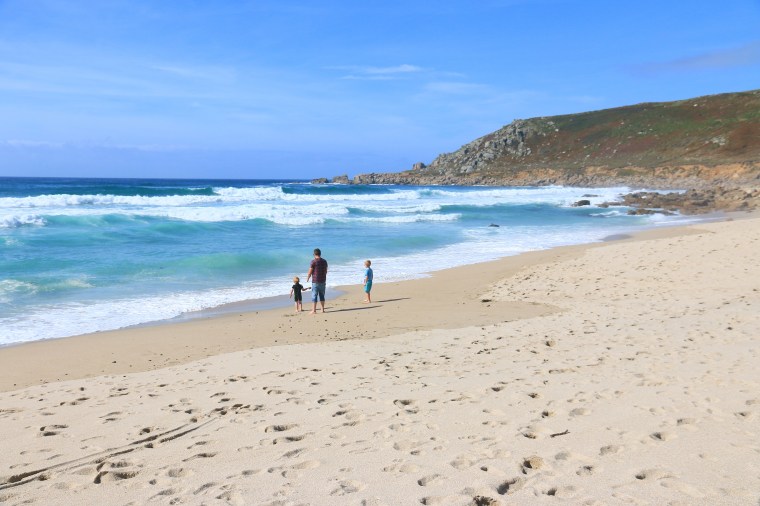
But unlike the other souls who have found this place, there is little time to linger, other than to eat a somewhat squishy Double Decker on a rock. I have public transport timetables to consider, and there is not very much to consider. It is the bus or bust. So I move promptly northward, following the cliff line towards Cape Cornwall. The sandy beaches have gone and it is all raggedy rocks and windswept heather, brilliant in the afternoon light beamed from the west. It is archetypal Cornwall and it is only right for this particular Cornwall day.

I never make it to Cape Cornwall, thanks in no small part to bus concerns and the elongated fissure that is Porth Nanven. In true Cornish fashion, the coastline is pierced by a stream, the steep valley it has left in its wake stretching to the suburbs of St Just and requiring a significant detour. With St Just tantalisingly in site and consulting my bus timetable, I instead make a dash for the 1644 to Pendeen.
The bus is – almost inevitably in this part of the world, at this time of year, at this hour in the day – a little late. But it is running and drops me off at The Queens Arms in Botallack. This is a handy place for a bus stop, as I make a mental note of the time back to Penzance and do swift calculations in my head to ensure there is opportunity for a pint. It all depends though on how much I linger around the Botallack mine sites.
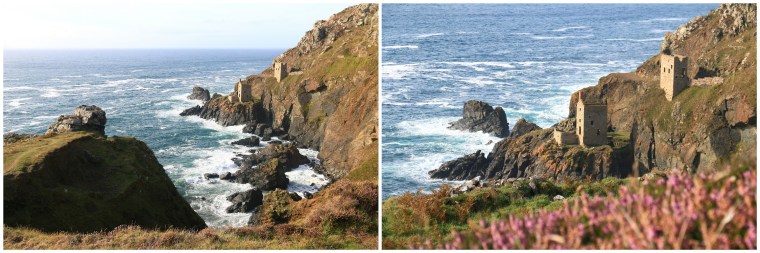
There is plenty to linger for here, and with the sun gradually moving lower you know it will probably get even better. At first glance it doesn’t seem the most aesthetically pleasing spot, mining remnants littering the whole coastline, chimney stacks towering above a small gravel car park, wheelhouses crumbling into a pile of rubble. But out on one of the headlands is the iconic site of a mine perched precariously next to the Atlantic Ocean. And another above that. It is a right proper Ginsters Smugglers Pilchard Jamaica Inn Poldark of a sight, and it takes a lot to tear you away.
 Such as a pint. A pint of Doom Bar in a Doom Bar glass in an independent, old school pub perched on the edge of Cornwall, the edge of England, maybe even the edge of civilisation (though that is debatable more than ever these days). Can there be any better way to toast an exemplary Cornish Day than waiting for the bus like this?
——————————-
You know, as well as getting frequently drunk it seems the in thing in England these days is to get bleatingly nostalgic about the supposedly good old days, often while drunk. I was wondering what it would be like after the whole let’s leave Europe and go our own way rah rah rah eff off we’re full thing. Maybe it was a decent summer, maybe it was Olympic glory, and maybe it was the fact that not much had really changed – yet – that doses of an idyllic, untroubled, pacific England were there to be had. Like that final late afternoon upon Brentor, sticking up above the rolling patchwork, dotted with sheep, cows, the odd cosy farmhouse and distant church-steepled villages. I love this spot.

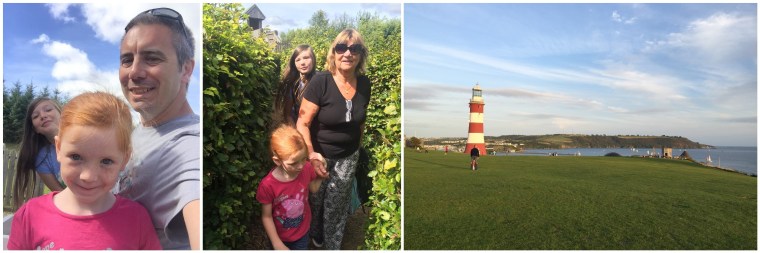
And with sweeping sentimentality there were also the inevitable farewells to be had on those last few days. A farewell to Plymouth, who’s Hoe I finally got to visit one spontaneous evening. A farewell to proper clotted cream for another year, nurturing and sustaining me through winding lanes and gigantic hedgerows. A farewell to the school summer holidays, mercifully. A farewell to pasties, though with Sarah deciding to close on a Sunday, the last taste was one of bitterness and disenchantment in Looe. Oh, and a farewell to some of these people, once again. People who never fail to entertain, irritate, feed, amuse and always capture my heart.

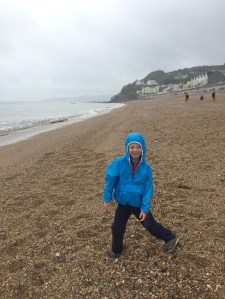 Just a stone’s throw from here – but via tortuously scenic roads hemmed in by a picture postcard of thatched cottages – sit the pebbles of Slapton Sands. Even on dismal days the pebbles lend vibrancy to the air, clarity to the water, and a chance to display consistent inadequacy at skimming. The alternative option of tossing increasingly giant rocks into the sea proved far more accessible and entertaining.
 As the afternoon evolved, summer came back with a bang. Perfect golfing weather and opportunity to get a little burnt. I never get burnt in Australia, only soggy little Britain, quite probably because I never expect to be on the receiving end of such ultraviolet aggression. The golf wasn’t exactly red hot, but we coped around the course sculpted in such a splendid location.
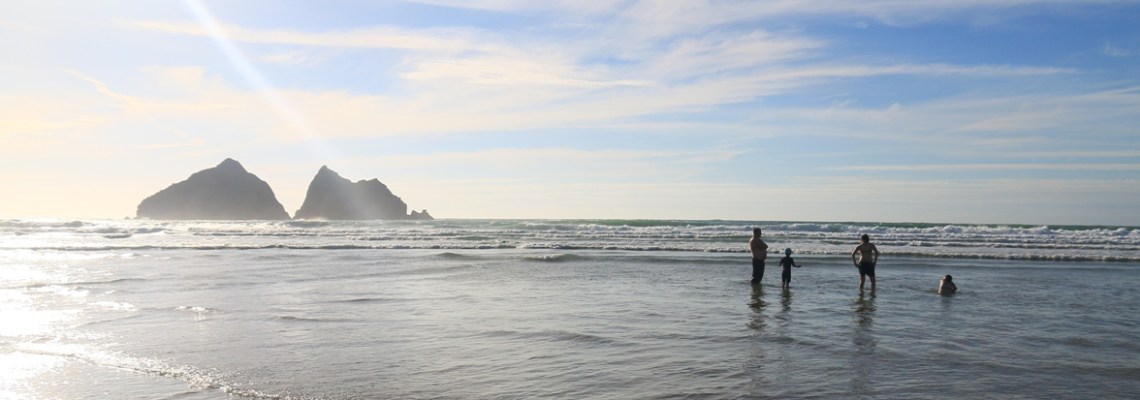
 Having abandoned a bunch of wildlings on the beach, it was late afternoon by time my brother and I rejoined the rest of the family, who didn’t seem to miss us one bit. And why would they, frolicking in the sun, attacking one another with water, jumping over surf. It was quite wonderful to see, together in perfect harmony, in amazing weather, in an attractive place. What else do you need? Fish and chips maybe? Okay.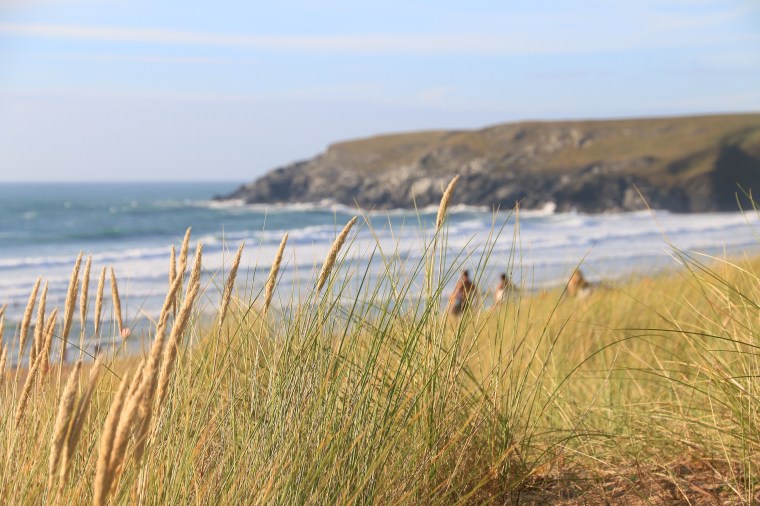
 The criminal thing – though actually fortuitous for us locals in the know – are the queues of people backing out of Ye Olde Cornish Bakehouse or West Cornwall Pasty Ltd or whatever they are called. Chain stores in mediocrity. Delivering nourishment to hordes of people trying to find a few metres on the grainy beach. This is why Looe on a hot August afternoon is not for me. But I’d go there for Sarah.
 In a final hit and miss cloud affair in which there were more misses than hits we returned to the North Cornwall coast the next day. The aim was a last hoped-for paddle in water and delicious cream tea, something that could please everybody. The setting on the River Camel at Daymer Bay was agreeable enough, and could have been quickly heightened with a spot of sun. But it was under a mackerel sky that a few of us tiptoed into the water and clambered over rock pools.
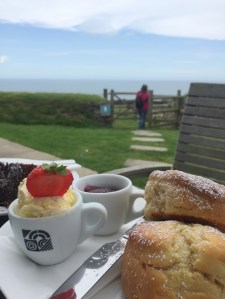 Because I was actually really enjoying driving around blind bends and along single track lanes I decided we could seek out a cream tea further up the coast near Boscastle. For once eschewing the village, we managed to get a parking spot at

 Who am I kidding? It was a sublimely gorgeous blue sky day after all and, following a quick embrace of various family members, I scarpered for the moors, reuniting with narrow lanes, wayward sheep, dry stone walls and a Willy’s ice cream. And on the subject of willies…such was my frantic rush to climb Sheepstor I ripped the trousers I had on while straddling a ditch, leaving me delightfully well ventilated if a little wary of human encounters. The views – from my end at least – were majestic.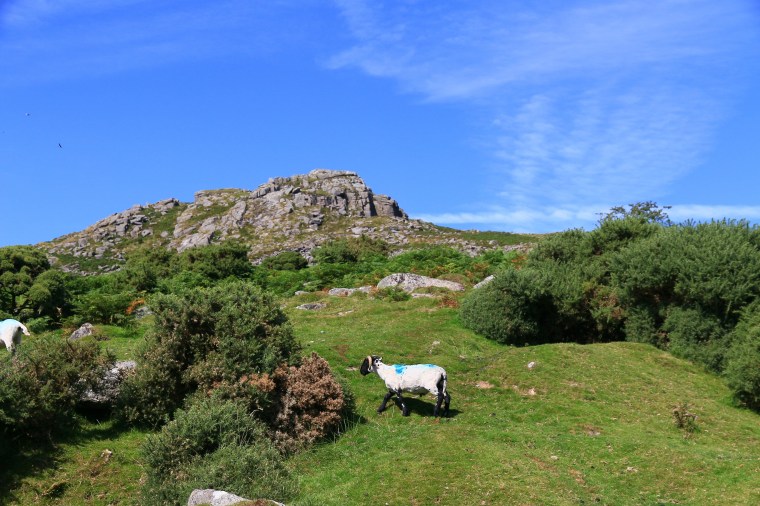
 Ripping trousers so early on are not a good portent for the remainder of a holiday which has historically involved a deluge of high fat dairy products, intense sugar, and hearty stodge. The fact that I was here not so long ago for an awfully long time (acquiring at least one stone in the process), failed to have little impact on my behaviour. Pasty done, cream tea done, massive barbecue meat fest done and 48 hours not yet passed.
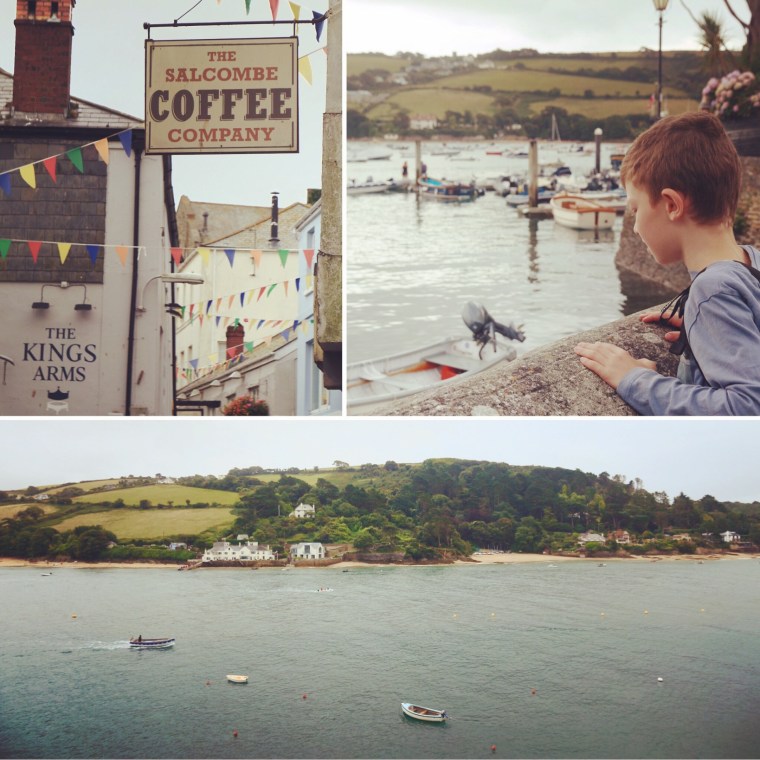
 Unfortunately it was all a little murky in Boscastle, but at least the descent to the harbour took us out of the clouds and into a flower filled, tourist peppered, boat bobbing idyll. From which we promptly walked up and up (a seemingly recurrent theme all day) along the coast path to the western headland. Here, the clouds skimmed our heads and offered a little pleasant drizzle, obscuring the coastline and patchwork hills inland. While a weather feature atypical of Manitoba, it could only divert for a few minutes at best, and half a cream tea back at sea level felt like a more agreeable option.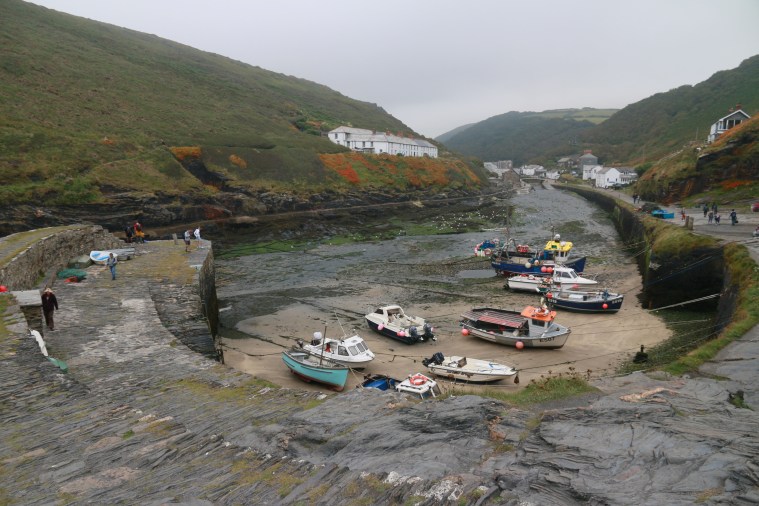


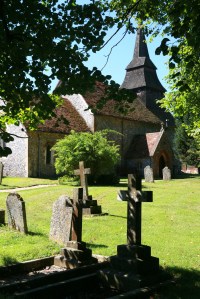 The blue skies over Basingstoke proved ideal to escape Basingstoke and blow off the airline induced cobwebs gathered over the South China Sea and entire Russian landmass. Now, somewhere on the more compact Hampshire-Berkshire border I faced chalk downs, golden fields of wheat, abundant hedgerows, village greens, and the astonishing threat of sunburn. For once, the summer I entered was better than the winter I had left behind.
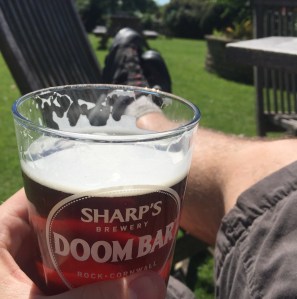 All this bucolic traipsing on foot is thirsty work and Dad was more than content to fulfil my request for an English country pub beer garden experience. Doom Bar on tap was an added bonus at The Vine in Hannington, suitable tonic to march on and out towards more panoramic views. It might be the beer, but I simply cannot fathom how there can be so much countryside in one of the most densely populated corners of a tiny island. Where do they hide them all?
 While the following day was a little more cloud prone, the afternoon perked up and acclimatisation was in full force with the continued wearing of shorts. This does herald the risk of attack by rampant stinging nettle, but it’s a relatively benign one by Australian standards. And the risks bring more ample reward around Whitchurch and the meandering, translucent waters of the River Test. Such as pretty mills and meadows and cows and flowers and ice cream.
 If you’re getting bored with so much idyllically clichéd countryside (and, jeez, why would you?) let me take you to the coast. Obviously not (yet) the coast with the most, but a little island sitting off Hampshire. Reached by a placid ferry ride from Southampton, The Isle of Wight offers fine bays, meandering tidal estuaries, and hulking cliffs, all wrapping an interior of yet more idyllically clichéd countryside.
 On a sunny Sunday in August it’s a popular spot, but some fortuitous ferry disembarkation took us briskly to the western end, where the hair-raising joy of an open top bus awaited. Clattering into branches, dipping and swerving round bends, threading through thatched villages, we survived to Freshwater Bay. Where everything was rather more sedate. Glisteningly, tranquilly, satisfyingly, balmily sedate.
 The big attraction in these parts is of course The Needles. The place even has its own theme park but mercifully it has not impinged the natural attraction of these iconic, dazzlingly white blades of rock. Visible from a viewing platform, sunglasses are very much needed, as are cunning tactics to jostle your way through dawdlers and selfie takers in order to snatch a glimpse.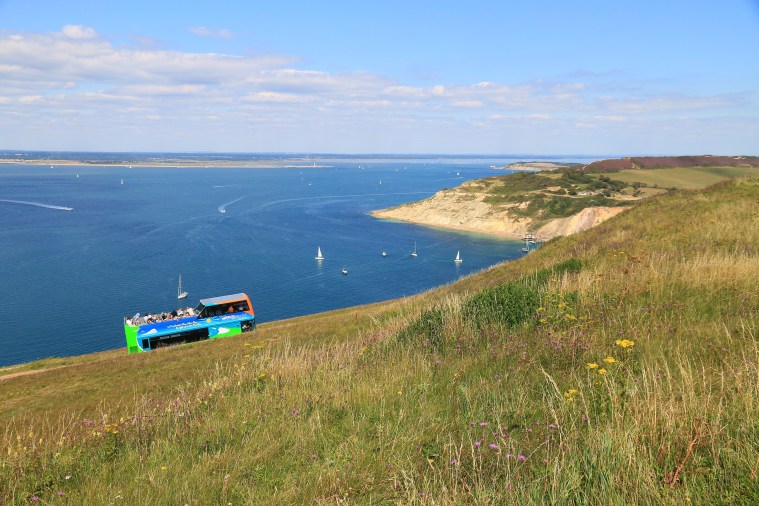

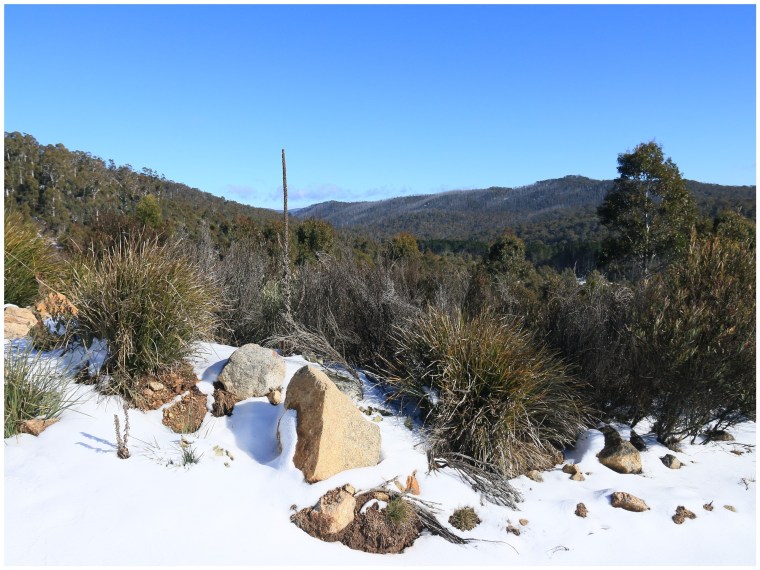
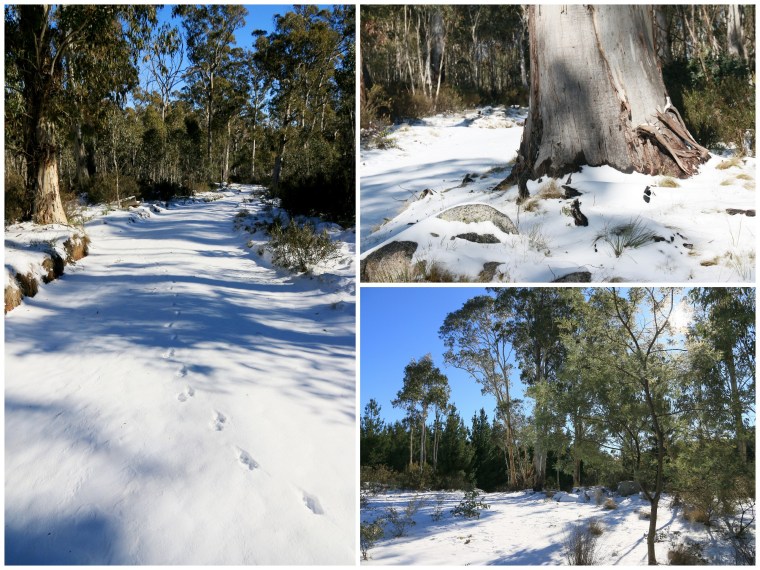
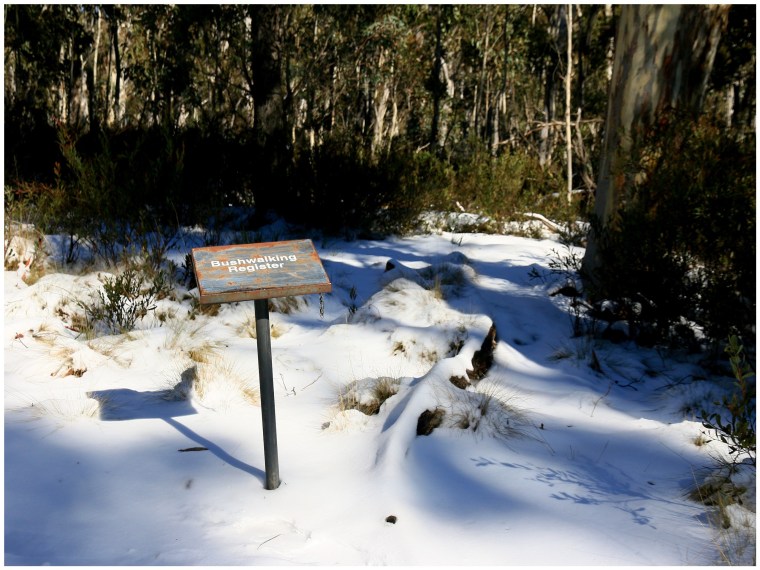


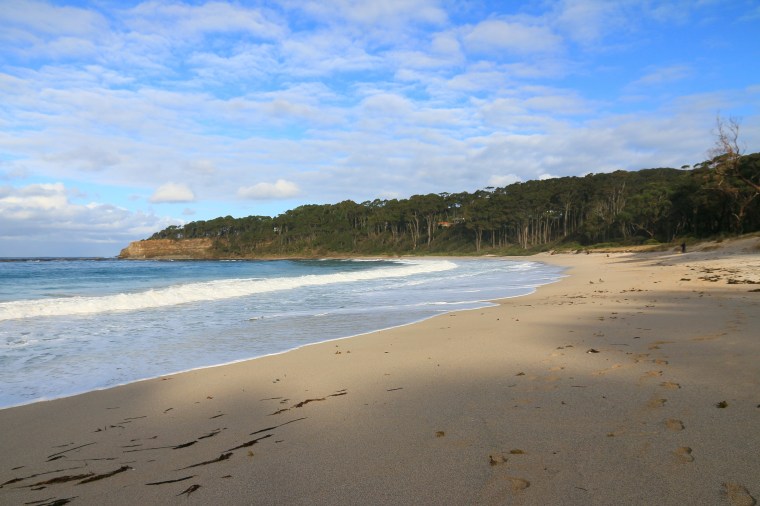
 Two hours with a stop for coffee at the improvingly-serviced by coffee Braidwood and I can find myself pondering whether to take off my jumper along the calm shoreline of Broulee. I didn’t, because it was only about fifteen degrees, but it was certainly still and sunny and rather blissful for thirty minutes or so. A happiness heightened by the token lunch of fish and chips in nearby Moruya, after which I felt a bit sick.
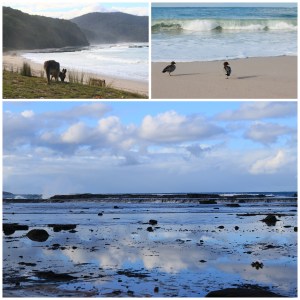 All this is hors d’oeuvre for the main ingredients of this south coast winter classic: driving through the beautiful spotted gums and spiky palms of Murramarang National Park. Arriving at the pristine sweep of Depot Beach and ambling on foot along the sand and rock platforms to Pebbly Beach. Home to beachside kangaroos offering clichéd images of some kind of idyllic Australia. Scary waves and placid bays, reflections and a sea spray haze. Fishing nomads and foolhardy surfers. And escapees from Canberra hoping to bare their arms.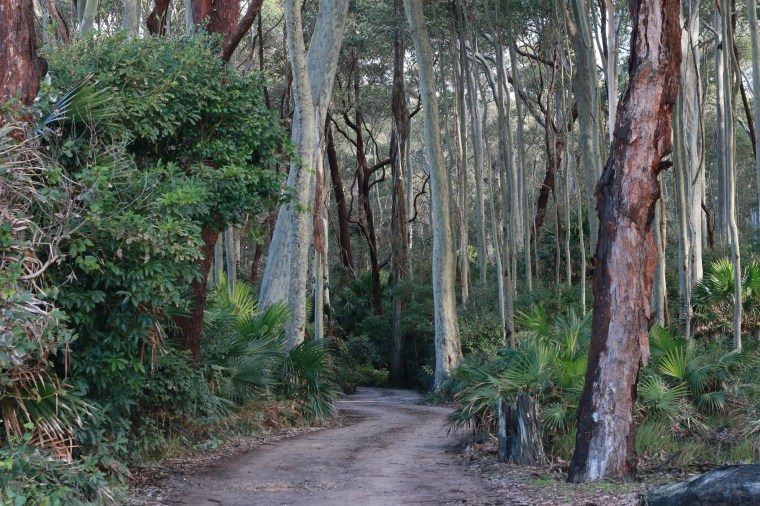


 In fact, I didn’t even make it to Pebbly Beach, a turn of events making those fish and chips an even guiltier pleasure. Rocky debris and a surging high tide meant that onward travel would be a little bit silly, something only to be attempted on The Island with Bear Grylls. My cut off, my terminus, my turnaround point, was an impromptu cascade, tumbling from the sodden forest and weather beaten cliff. There is only so far one can go in a day, and it was a winter’s day after all.

 As the fading gentrification of the Southern Highlands descends toward the sea you can be in no doubt that this is Australia. Indeed, an Australia as it was before anyone, even its first peoples, decided to venture over by boat. The plateau abruptly falls away into a dense system of deep valleys and gorges. Massive walls of sandstone plummet towards pristine creeks obscured by a blanket of gums. A pair of black cockatoos glide in the air, conversing in prehistoric shrieks. Banksia and wattles compete for attention in the understorey topping the escarpment. And a thin veil of water tumbles over its edge, destined ultimately for the ocean.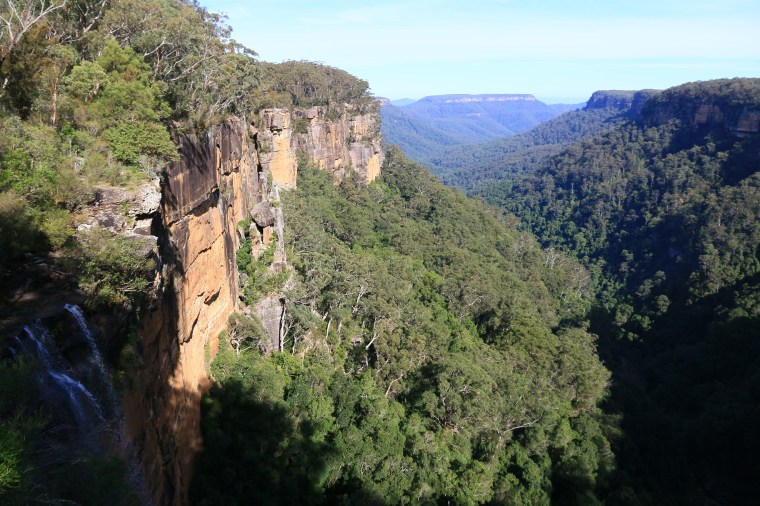
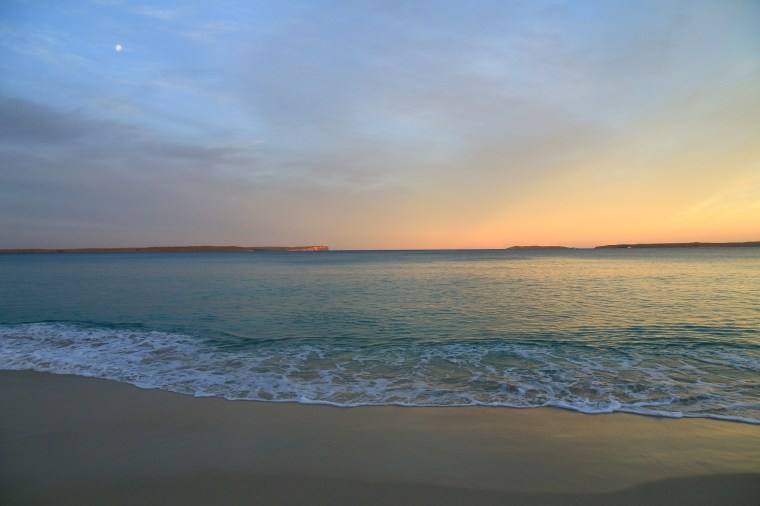
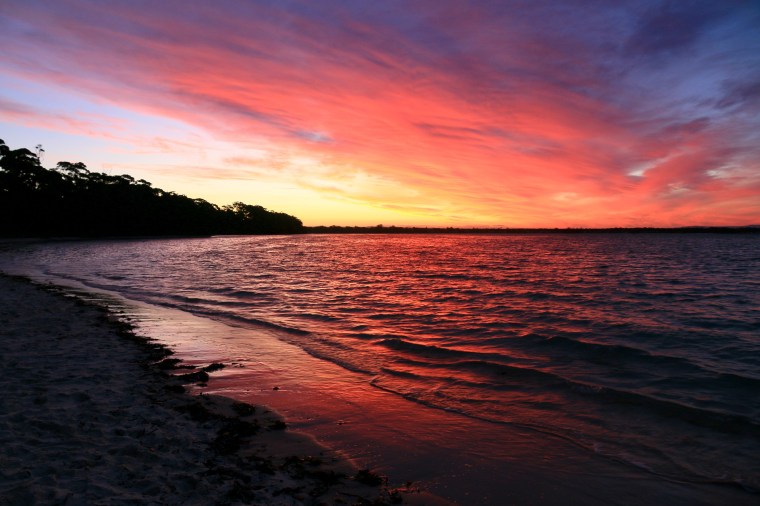
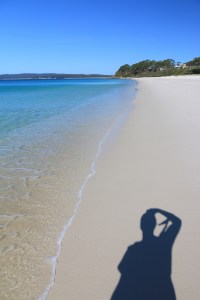 From bay to bay, traversing succulent coastal forests in between, it’s an easy amble from Blenheim Beach to Hyams Beach. The only real difficulty is deciding whether to take your shoes and socks off on the sandy bits only to then have the hassle of putting them on again for rougher terrain (conclusion: wear sandals or thongs). Plus there’s the challenge of restraining your photo-taking so that you don’t have endless, repetitive pictures of clear water lapping at fine, white sand.
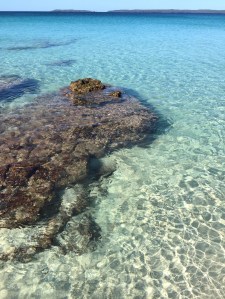 The sand is so white here that it famously gets on every piece of tourist literature and recurrently features on Sydney Weekender as the whitest sand in the world. In fact, it is genuinely so white that even small-minded immigration ministers would feel unthreatened and some cretin with a golden toupee would approve. Personally, I think there is probably whiter (for instance, around Esperance), but that is probably just supremacist talk.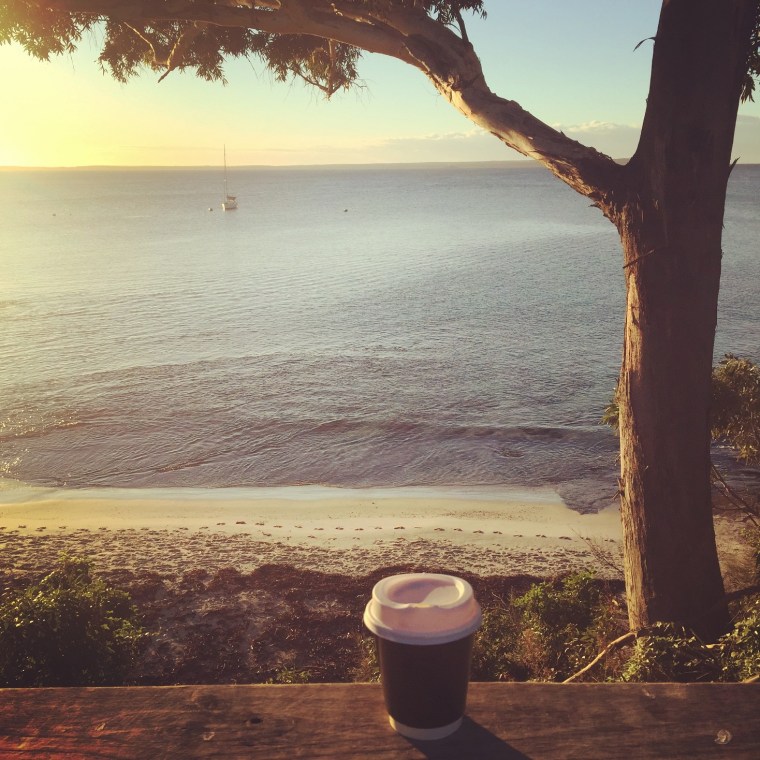


 This comfortable civility dissipates quickly once away from the main road; national parks host waterfalls and rock pools and scenic views over jungle. Tracks weave through palms and strangler figs and giant feathery ferns. Snakes and spiders probably hide. While the crowds loiter all the way down to pools and falls at Kondalilla National Park, beyond the swimming spots, the jungle is almost all yours. Yours and a couple of fellow pioneers, hoping to steer clear of Drop Bears and survive on rations of emergency salt and vinegar crisps and deodorant. We made it, and went to eat cake to celebrate.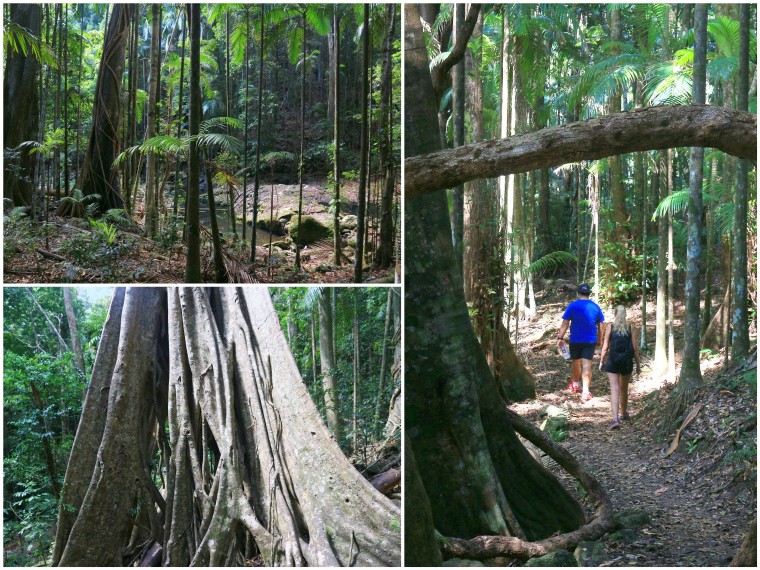
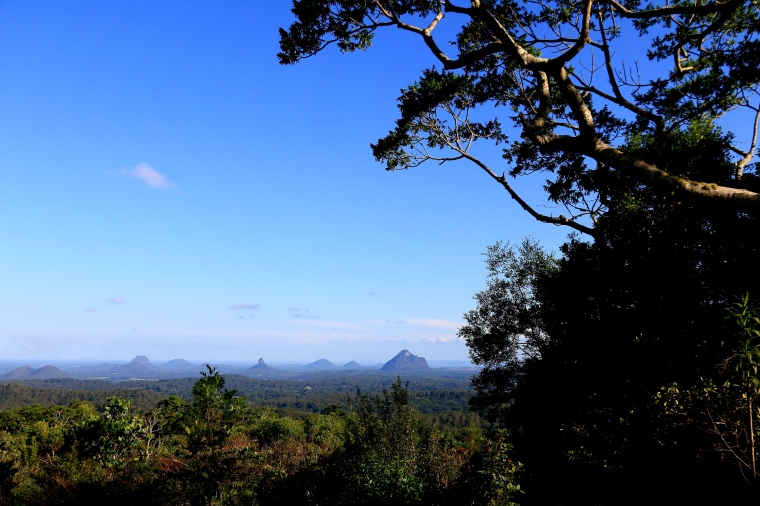
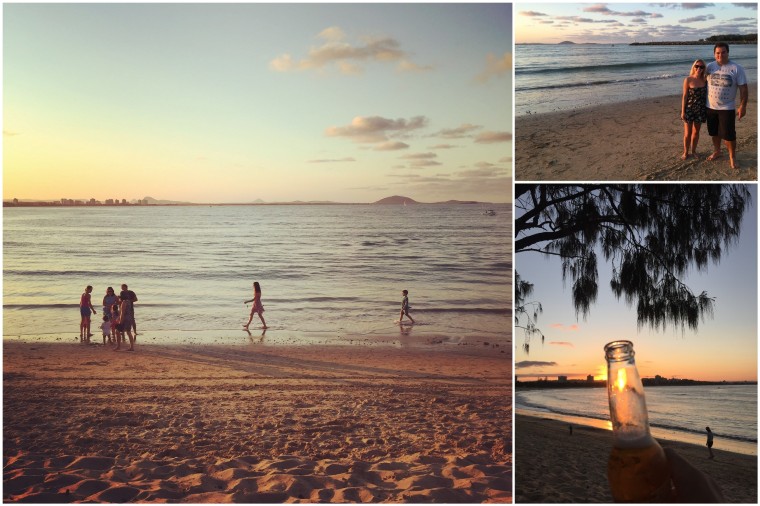
 The return of the sun the next day prompted the usual screeching, warbling, cackling and occasionally tuneful singing of the Buderim birdlife. It is a struggle to sleep in and I was more than ready to escape down the road into Buderim Forest Park for some early morning exercise. While others decided to jog, I was content enough to engage in spells of brisk walking punctuated by abrupt stops for Instasnaps. A kilometre in, the falls came as a surprise. I mean, I knew they were there, but I wasn’t actually expecting much to be falling. And while it was hardly a deluge, there was something aesthetically pleasing about Buderim Falls that was absent at Kondalilla yesterday.
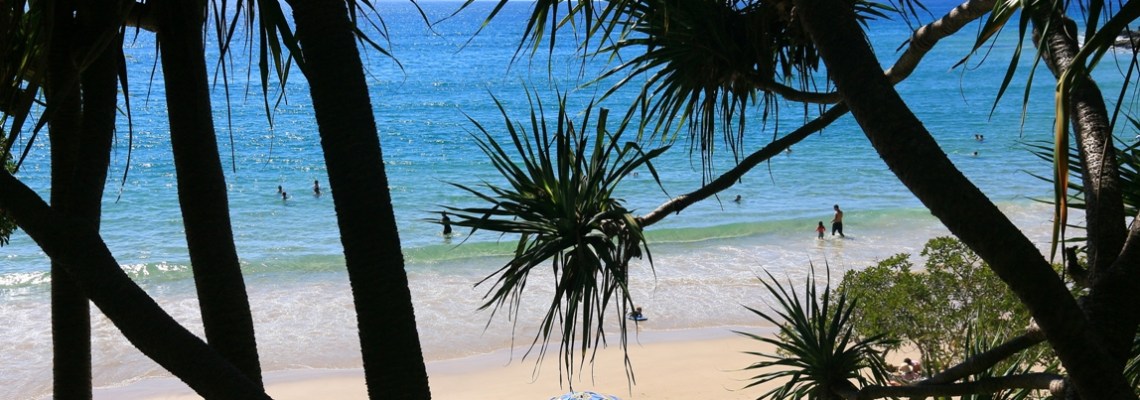
 You see, the tourist board have been so successful that Noosa is brimming at the seams on a warm, sunny Sunday lunchtime, jammed with locals and foreigners alike. Parking is in the lap of the gods, but boy, have they got some of the prettiest parking spots around. The beach is – well – busy for an Australian beach, but admittedly it is a rather pretty beach. And even the national park, which shelters Noosa from encroachment from the south, is bustling with a steady stream of backpackers, families, joggers, and adventurers most of whom are, of course, exceedingly pretty. It is, undoubtedly, a very pretty place, and a requisite on a two day drop bear bushwalk adventure beach and waterfall honey monster tour.
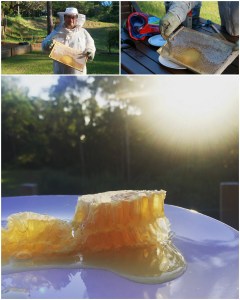 Like all of the most accomplished tours though, the best is saved for last. No tour is complete without a visit to a twee little spot providing lovingly crafted local produce and quirkily endearing owners. Honey Bear Honey of Buderim is not yet on the tourist itinerary, but with a bit more blue sky and a 10% cut it could well be. Look, I’m even promoting it on this blog for goodness sake, reaching tens of
 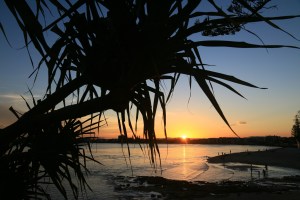 Some might go on to watch the sun disappear, over the apartments and occasional jagged plugs of the Glass House Mountains. Many linger in the warm air, sedated by sparkling wine and a sense of being the luckiest people on this planet; making the most of it all before heading back to work; living each day as if it is your last. Sensible, because, in this splendid corner of Queensland, you never know when a Drop Bear might strike.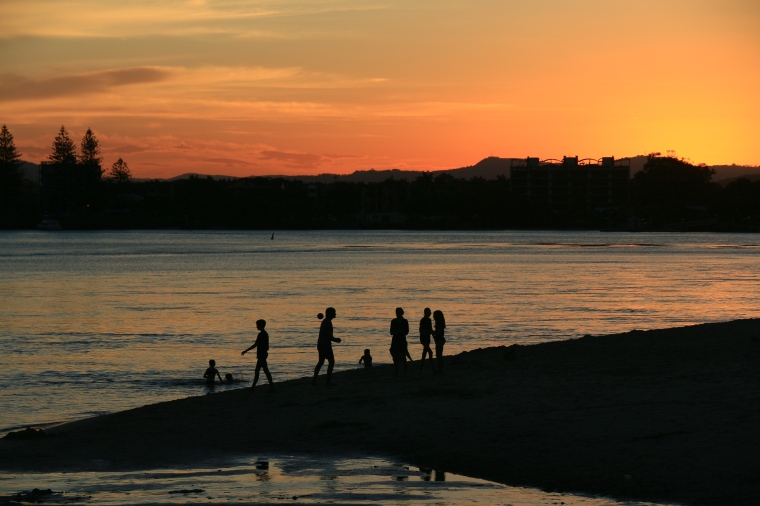

 With work travel finally emerging like the red gloss upon a Canberra oak, I have the fortune of tacking on bits and pieces of tourism around insightful spells of blue sky strategy. Like a spell last week in Sydney, giving me the perfect opportunity to simply dwell in Sydney again. To walk alongside its waterways and admire its skyline. To stride through its city streets part England, part America, part Asia. To turn a corner and come up against the looming harbour bridge, all brickwork glitz and dark steel glamour. And from there – of course – to embrace that centrepiece of shells jutting out from Circular Quay, impossible to resist.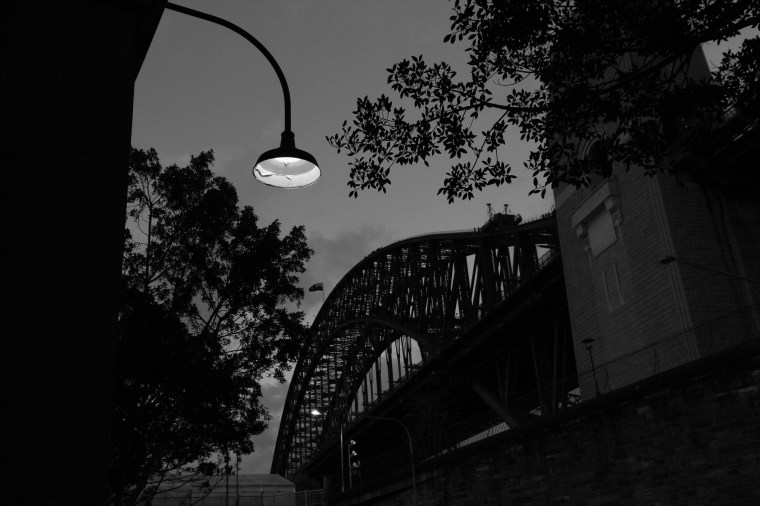
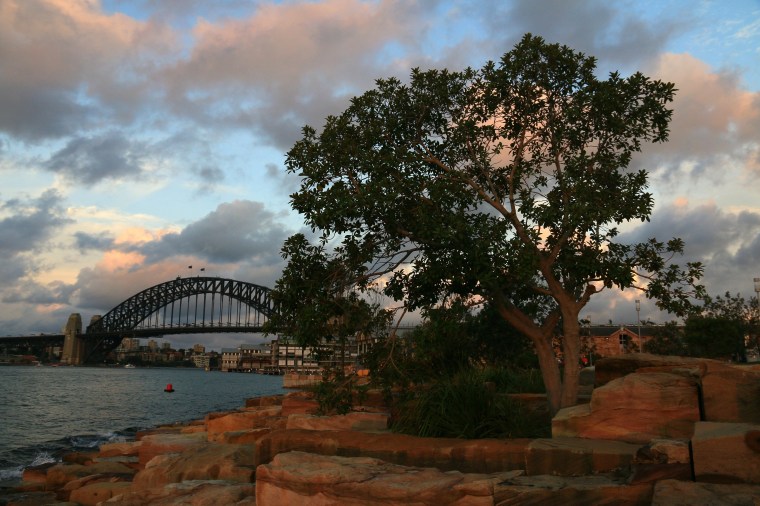
 With sun-filled days setting record April temperatures it was hard to avoid getting distracted. An early morning coffee run turned into a walk under the fig tree shade of Hyde Park which turned into a jaunt over The Domain which led into the many pathways of the Botanic Gardens. I often find refuge in the gardens of over-researched regional towns, a touch of civic serenity amidst a clutch of daggy stores and gargantuan pokie palaces. The Botanic Gardens in Sydney are another matter entirely, a mammoth attraction in their own right, lapping at the silver towers of the city and the sparkling opal waters of the harbour. They are free and open and – even with oodles of exercisers and selfie takers and backpackers – remain forever fabulous.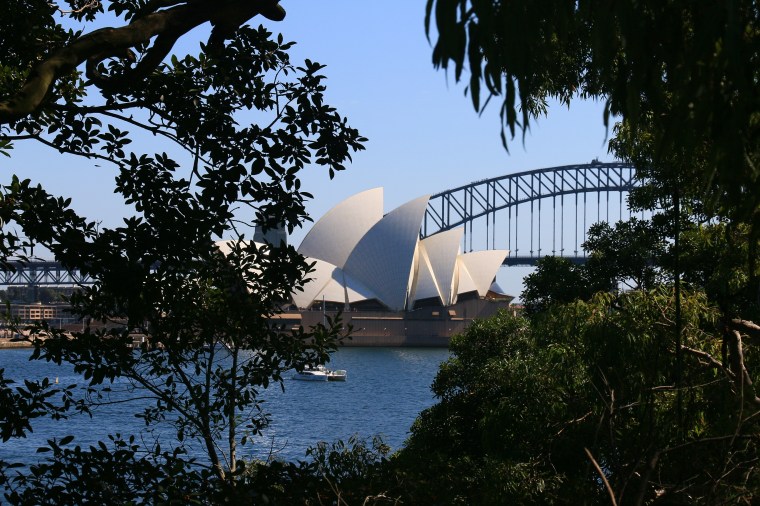
 Each step a memory, each stride made afresh. Gordon’s Bay, Clovelly, Bronte, Tamarama…I am not sure I have seen them looking quite as lovely as they do now. The midweek morning provides a contrast from the irritating queues and blockages of walkers and runners and selfie takers cluttering the place on weekends, almost all of whom are exquisitely beautiful, but almost all of whom somehow ruin the views. Today there is freedom and space and just the attractiveness of golden sands and a becalmed, translucent Pacific to excite. Today, it really is all in the timing, and I just about got it right.


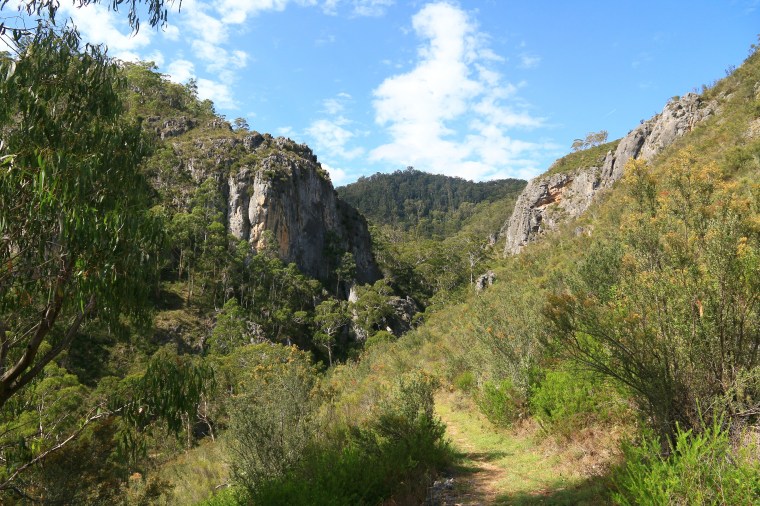
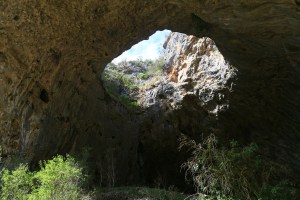 I have been here before, but that was almost ten years ago. Almost ten years, when I first arrived to live in Australia, intending to stay for a year! I couldn’t remember much of it, though the giant hole in the ceiling of one cave opening triggered something approaching recollection. But the river walk must have been new, at least for my feet, and the thermal pool – a steady 27 degrees all year – offered surprise and consideration for wintertime lolling.

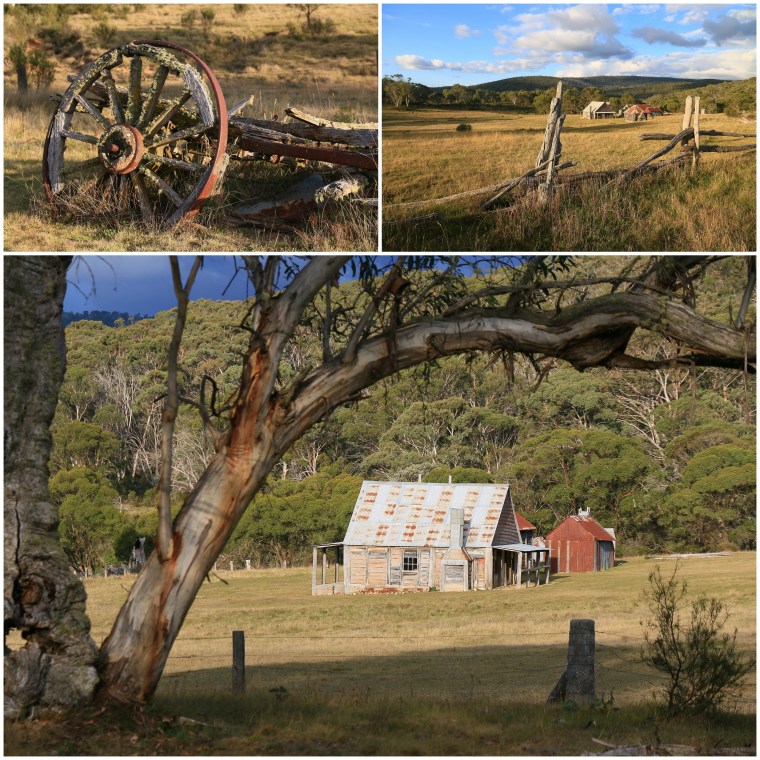
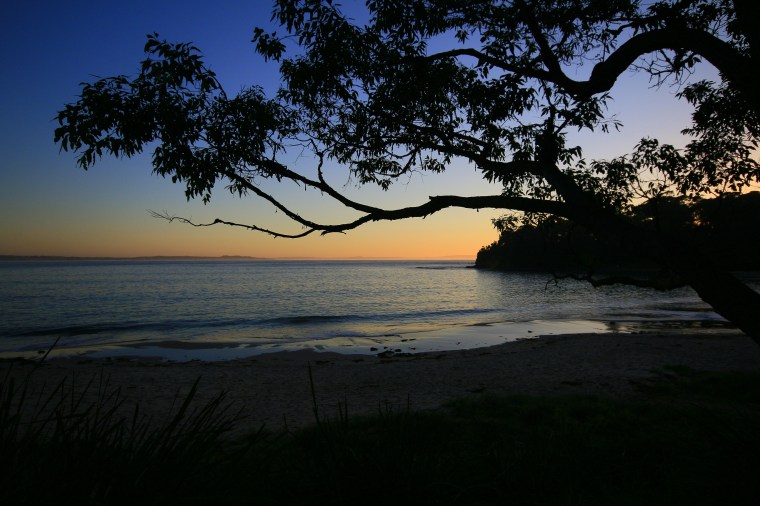
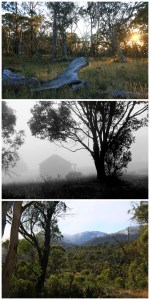 Age must be affecting me because I am questioning the sanity of camping, even if I have copped out by reverting to the back of the car. Every little thing requires pre-planning and organising, extra time and increased awkwardness. It is effectively homelessness, perhaps more so when you sleep in the car. But then, in the morning, as the misty murk of pre-dawn is dispersed by a welcoming sun, as the deathly still air fills with birdsong, as the wattle and grasses shimmer silver with dew, as you witness the birth of a new day a part of this nature, you know why you do it.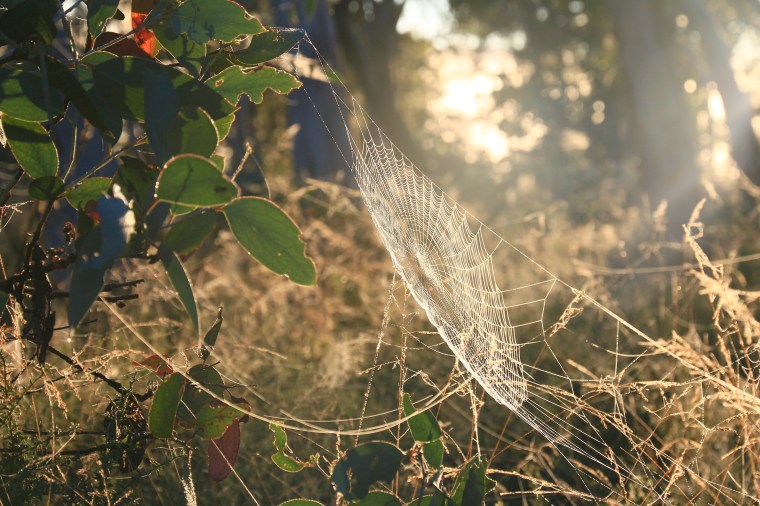
 It is, in theory, possible to clamber your way to the Goodradigbee, but this seems almost as difficult as pronouncing it. Beyond the scenic Blue Waterholes (which enjoyed relative popularity and happy interaction with fellow humans), river crossings and the narrow pass of Clarke Gorge make it too much for someone who is already warm and weary, and has been told to beware of snakes in happy interactions with fellow humans.


 So the car was up to the job, but were the humans – me, Alex and Michael? The trail – well-built and marked – veers quite steadily upwards and scrambles up a number of rocks for the first kilometre. A small shelf offers the first of the views, snatched through clutches of trees and over boulders. It’s an opportune stop for breath, water and to try to dry the sweat from running down your face and into your eyes and mouth. But it’s a futile effort, with the first view of the mountaintop itself offering both allure and a sense of foreboding.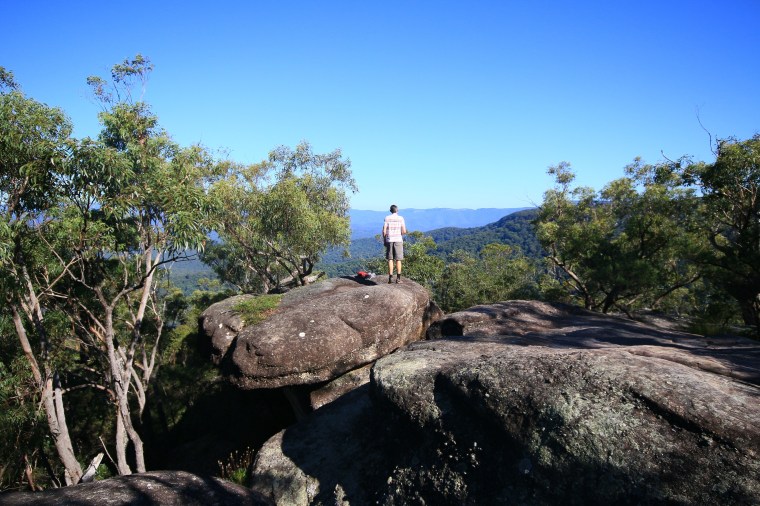
 True, there is some relief for a while following a sheltered ridgeline, before the steps return again and the sweat comes back in profusion. It is quite remarkable that someone has gone to the effort to build all these steps though, and the piece de resistance comes with the final climb on a series of metal steps and ladders, hopefully fixed securely to the rocky dovehouse. At the top of each series of steps, views begin to open up and you can see, sense, taste, that the salty sweat will definitely be worth it.


 Pigeons were lacking but instead the summit appeared to be a bastion for numerous giant butterflies, the ubiquitous Australian fly, and a curious lizard or two. No doubt accustomed to weary walkers feasting in celebration on apples and oranges and squished cakes from Milton Heritage Bakery, waiting for the crumbs to fall. I’ll say it again, but I have had far worse Monday mornings, even when cake has likewise been involved.
 Still, with every up there’s a down and I have lost mountain views. I have also moved into an area where there is a yappy dog. I only write about this now because I just heard it, again. I always seem to find myself in a neighbourhood with a yappy dog. I think everyone does. There seem to be yappy dogs everywhere these days, coming over here, taking our peace and quiet. They frequently pester me on Canberra nature walks too, usually roaming free because their owners don’t need to pay heed to the numerous signs regarding leads and wildlife protection and all that silly nonsense. Still, at least I can see the mountains on these walks, and the dog yapping can be tolerated with such rewards.
 Take Dairy Farmers Hill, which sits in the National Arboretum on the western fringe of Canberra. I cycled up here a few times in the past, but was usually too close to fainting to really appreciate the 360 degree panorama. Driving one evening with the comfort of air con was somewhat more agreeable. The sun dipping onto and over the Brindabellas offered a treat, while the proximate lumps of Black Mountain and Mount Ainslie received a farewell glow. There were no dogs.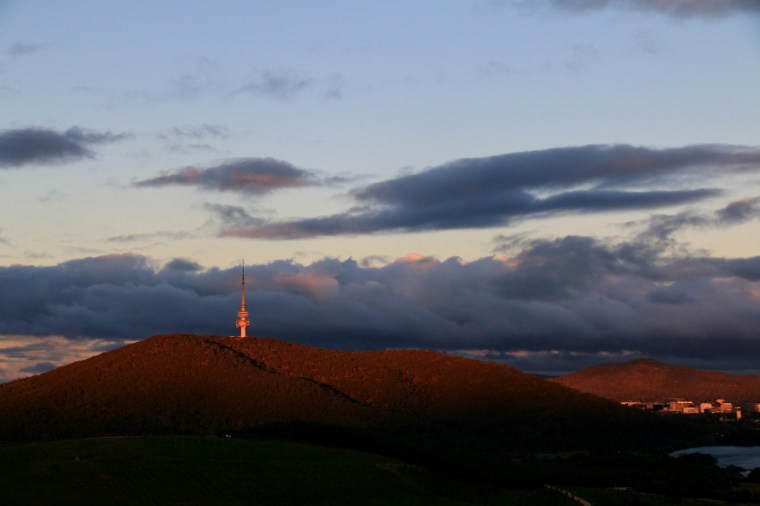
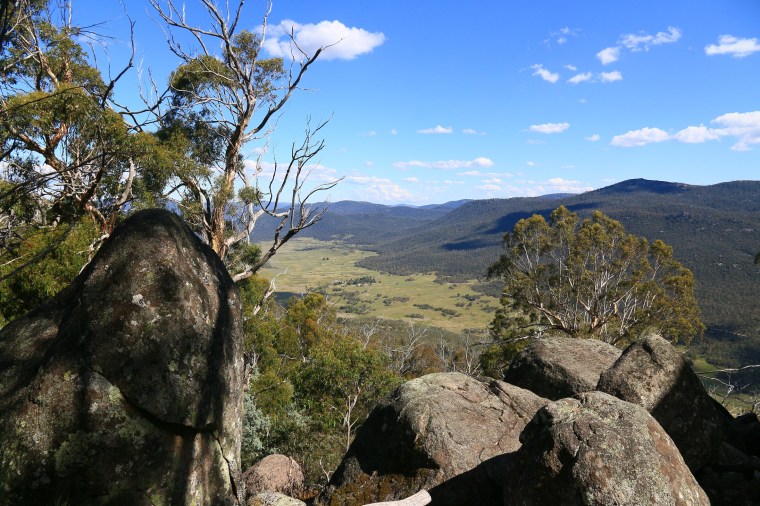
 You don’t notice from afar, but these ranges are peppered with giant, rounded granite boulders stacked like clumps of frozen peas that have been left in the freezer for far too many years. These boulders congregate quite generously up on Orroral Ridge, where a series of slightly neglected tracks lead to rocks named for their resemblance to animals and people and other inanimate objects which aren’t rocks. Such is the profusion of rocks that geologists have wet dreams, climbers drool onto their harnesses, and random waifs and strays seeking mountain air delight in the summer coolness of virtual caves formed in the hollows of a cluster of boulders.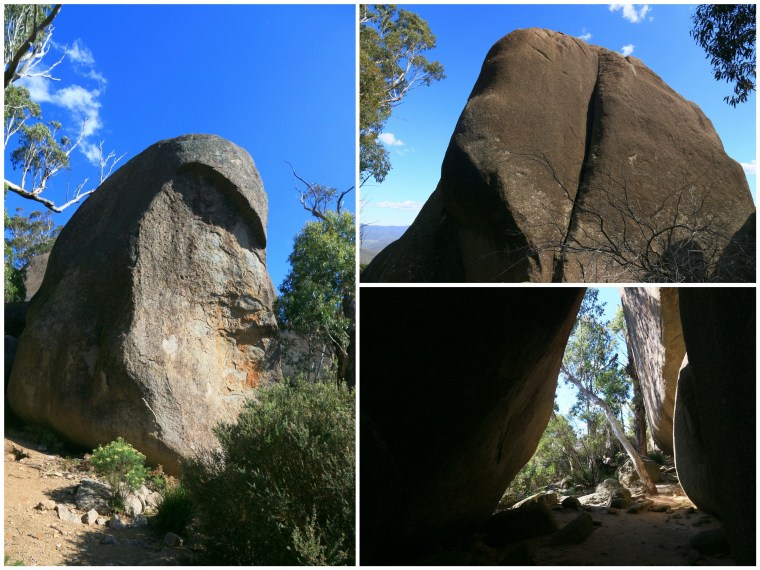
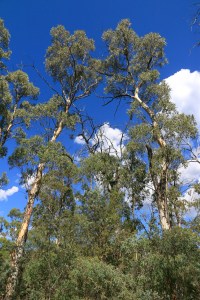 I wasn’t expecting much from this walk – in truth it was something to do in a lull while my washing dried. Plus being practically the last remaining marked trail I hadn’t been on in Namadgi I felt a little obliged to complete it. The word ‘swamp’ was hardly enticing, with images of squelchy boggy plains, rotting carcasses and festering mosquitoes. But it was actually quite a delight, rising steadily through lofty Peppermint Gums, bypassing a few more giant boulders, and meandering through button grass and boardwalks under blue skies and fluffy clouds.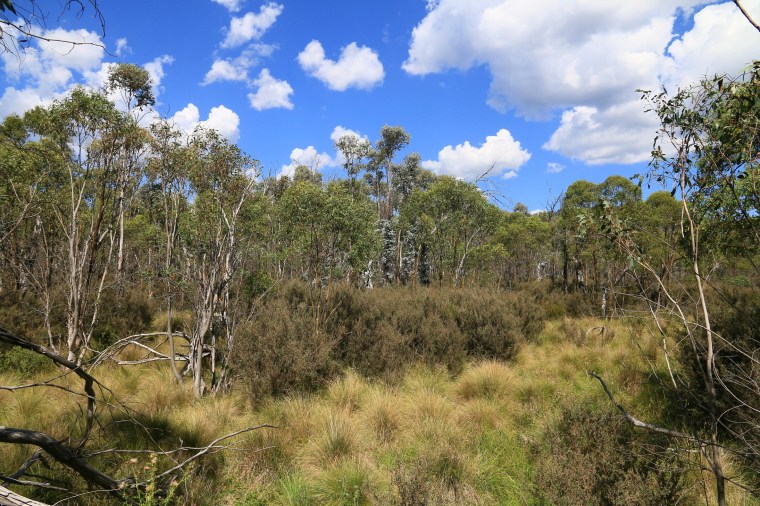
 The swamp turns out to be a fen, as the information board at the end of the walk explained. I’m not really sure of the difference, but it was fairly less swampy than I imagined. A bench here overlooked a river of vivid green grass, lapping at tall forest and rocky outcrops. Being now beyond midday it was the perfect place for a simple homemade sandwich and, once again, for all the expensive meals and gourmet plate ups*, can there be anything more satisfying than a bushwalk sandwich? I don’t think so.
 With time to spare I was happy to head that little bit farther, down to the far south coast of New South Wales. Perks of this journey include – to a limited degree – the striking, golden plains of the Monaro, baked hard and golden by summer sun; the midway bakery opportunity in inimitable Nimmitabel; the rainforest rim of Brown Mountain; and the panoramic view over the rolling cow-dotted Bega Valley, into which the road drastically plunges.
 My base for three nights was Merimbula, handy in terms of size and facilities (i.e. food, coffee, picnic tables on which to work) and generous in its setting upon the shallow inlet and oceanfront. There is even an airport here with connections to Sydney, which does genuinely make you wonder about its feasibility as a site for sea change. A plane buzzed overhead the next morning, as I ventured out for an early walk through bushland along the inlet to Bar Beach. I could get used to these early morning walks, especially when a small but perfectly formed kiosk awaits besides the modest cove to offer up waterfront coffee.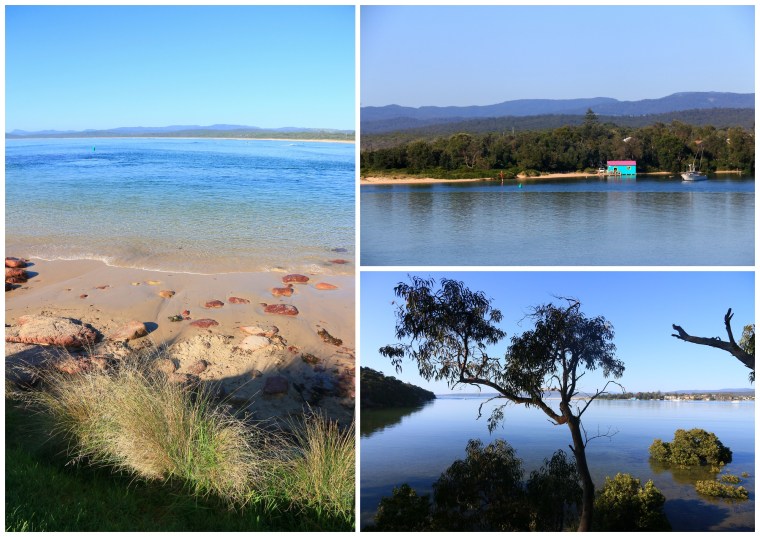
 The water here is quite ludicrously beautifully opaque, which probably helps for spotting sharks and giant stingrays. The only hazard this morning was mostly on the eyes, with a generous gaggle of cashed up baby boomers making the most of retirement by lumbering about in various states of undress. Understandably glowing and jovial – why wouldn’t you be facing yet another day in paradise – it may yet be too early for me to contemplate semi-retirement at the coast.
 What followed over the next couple of days was a pleasing routine of waterside walking, working and wallowing in sand and sea. I explored every possible boardwalk in Merimbula and visited the ice cream parlour at least twice. Late afternoons in the mid to high twenties were perfect for attempts at beachside siestas, but the call of the outdoors and nagging feeling that I probably should be doing something more productive with this opportunity made me restless. I would wander some more or open my laptop for five minutes and stare at the screen as Windows decided to install countless updates yet again, before concluding that it was better to just stand in the sea and spy distant dolphins doing all the work.

 In Eden, I love the shabby end-of-the-world outpost feeling. It’s a long way from Sydney and a long way from Melbourne, which means it generally only picks up on road trippers passing through and lost Canberrans seeking fish and chips. I have heard – along with countless other places – that it could have been the national capital instead of Canberra. And perched upon an outcrop overlooking beautiful Twofold Bay and the rising hinterland of the coastal ranges, one can only wonder what might have been.
 Alas, the sheep paddock that eventually became the capital awaited the next morning. The good news was that I had – or will have – a home to go back there to, and some paperwork to sort out. I wasn’t going to rush – too much – and so took a final walk out to Bar Beach and a coffee to get me over the hills and far away. The boomers were of course there, semi-naked and just slightly self-satisfied, and I could see that I really wasn’t ready to join them for a while yet. But I would definitely be open to further remote working out-of-high-season breaks, just to soak up their paradise, their fantasy for a few more days close to the Pacific.









 gbpilgrim