More moors

Dartmoor is a very handy place. Particularly on those days where guilt gets the better of me and I engage in the preposterous proposition of work. After instant coffee breaks – a sure sign I have been in England too long and settled for inadequacy – it reaches something like 3pm and I yearn to break free. And there Dartmoor is, through the school and hospital and fast food takeaway traffic, and up the A386.

moor04

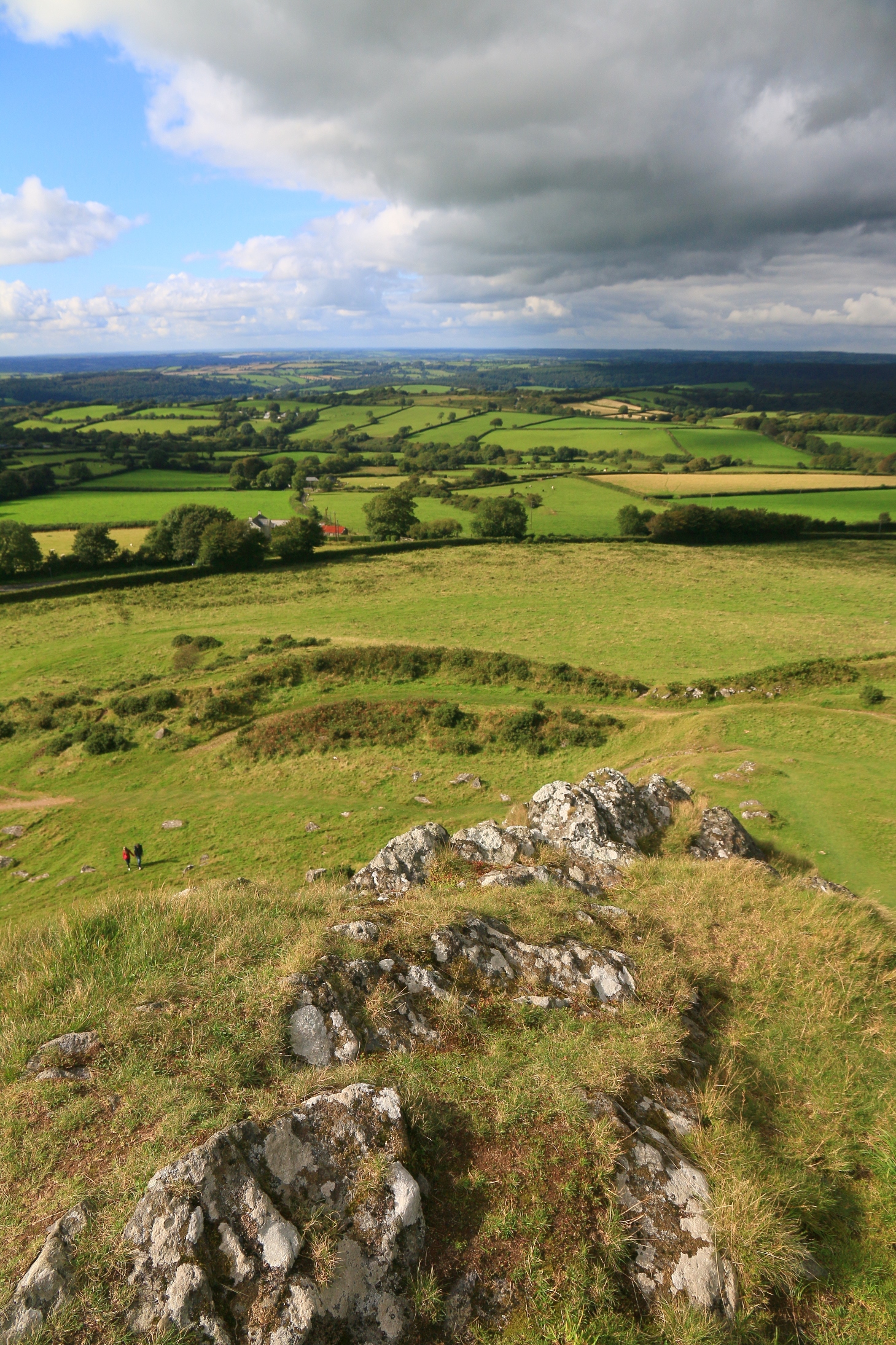
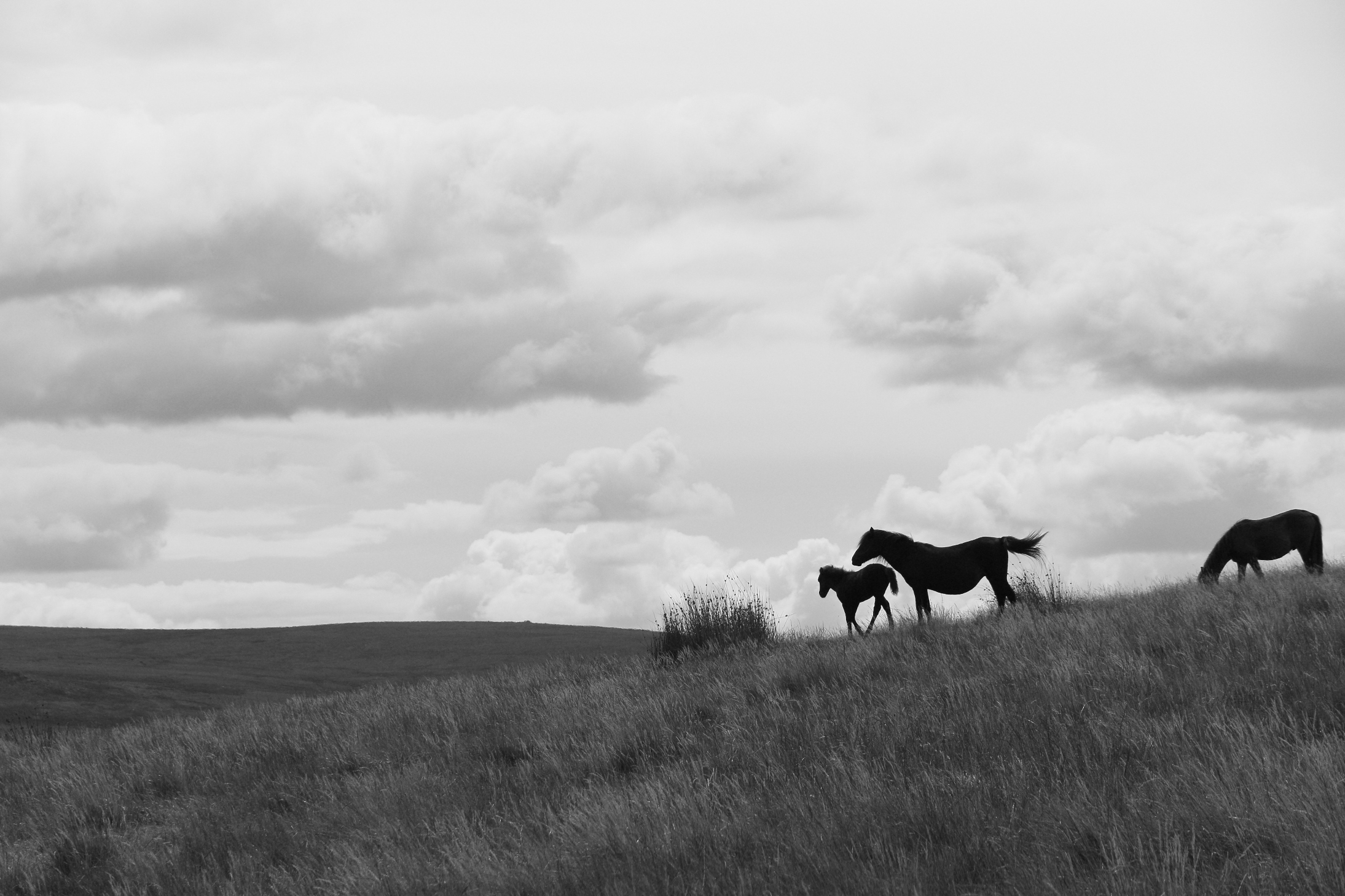
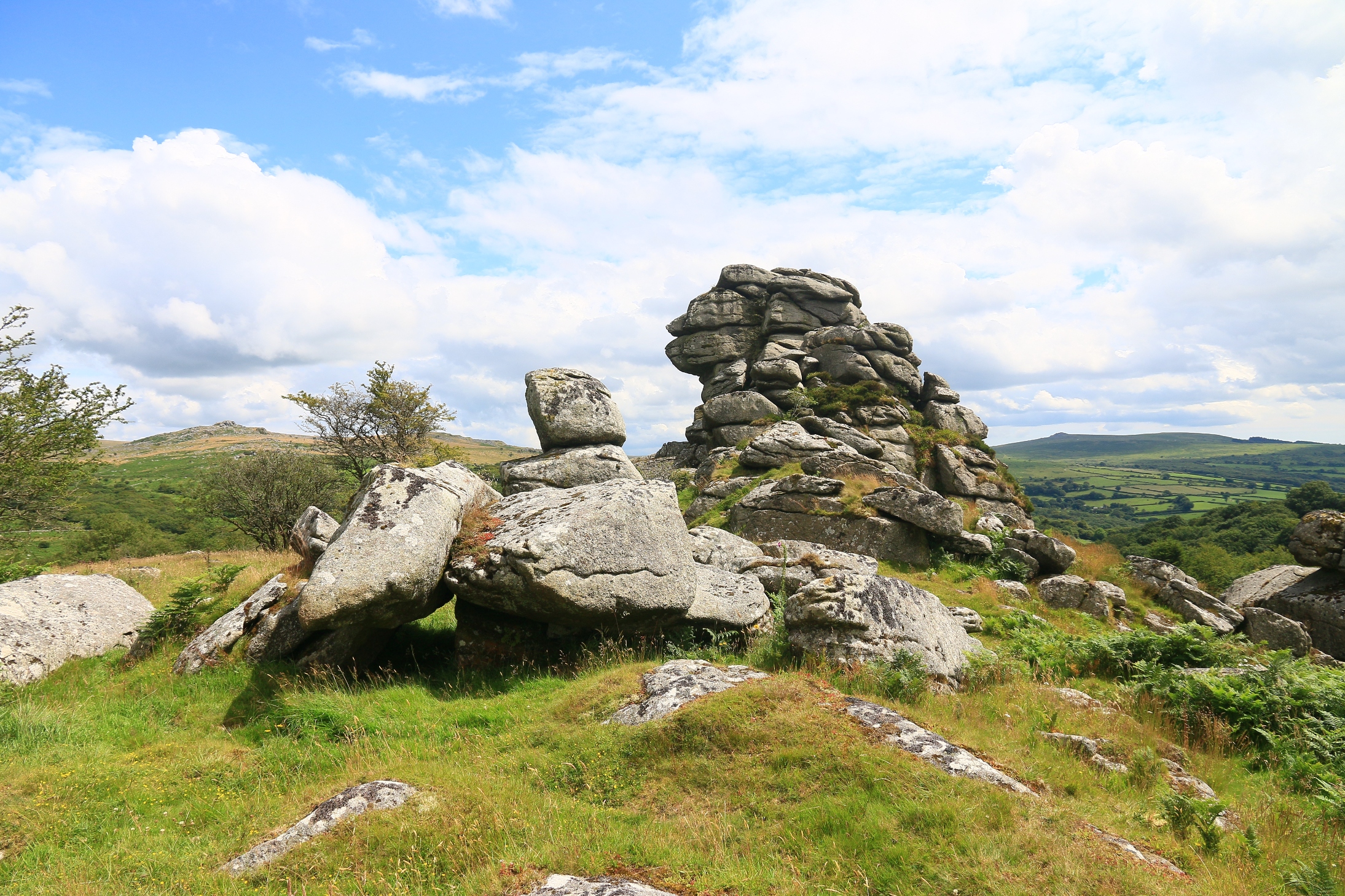
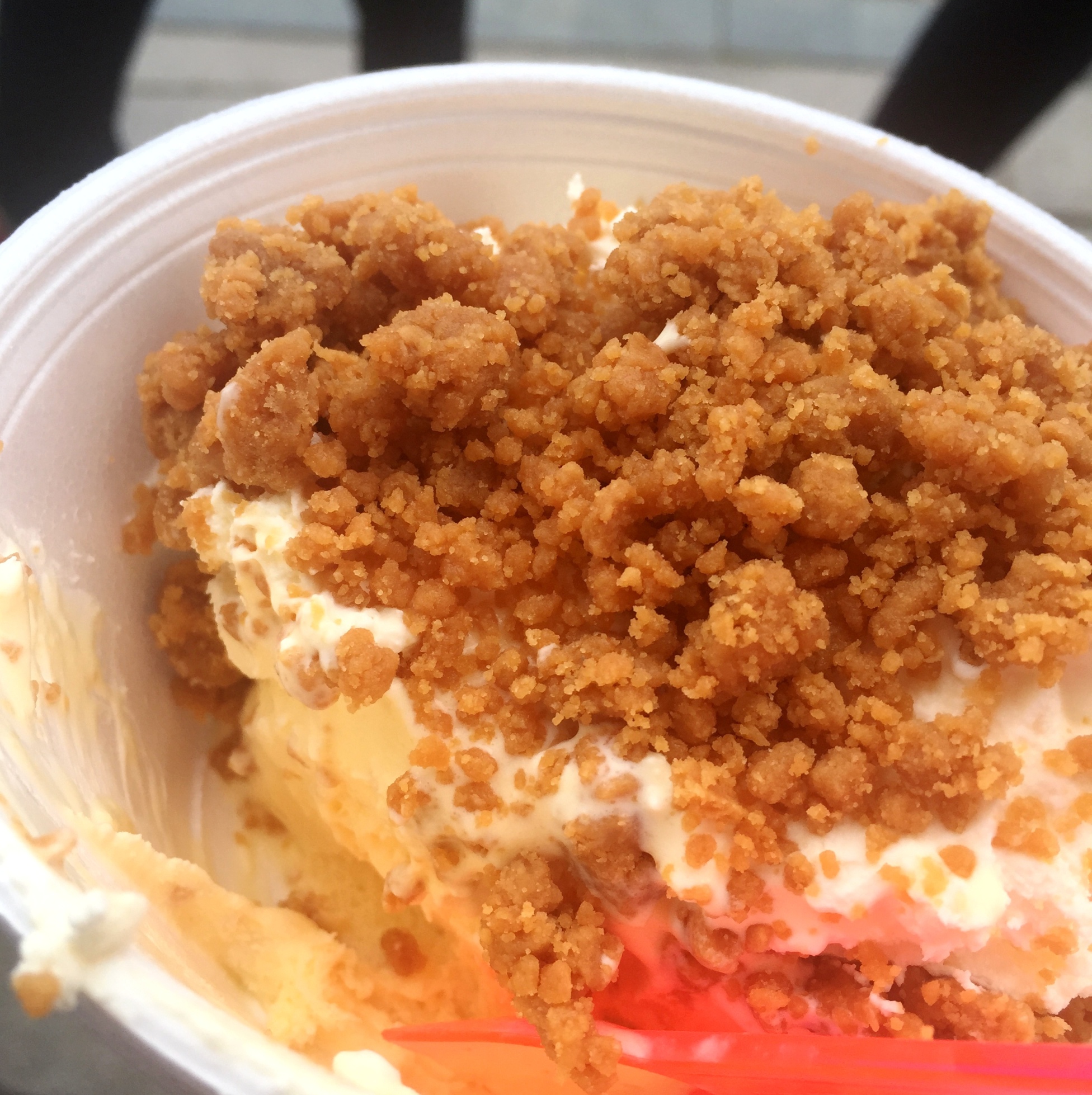
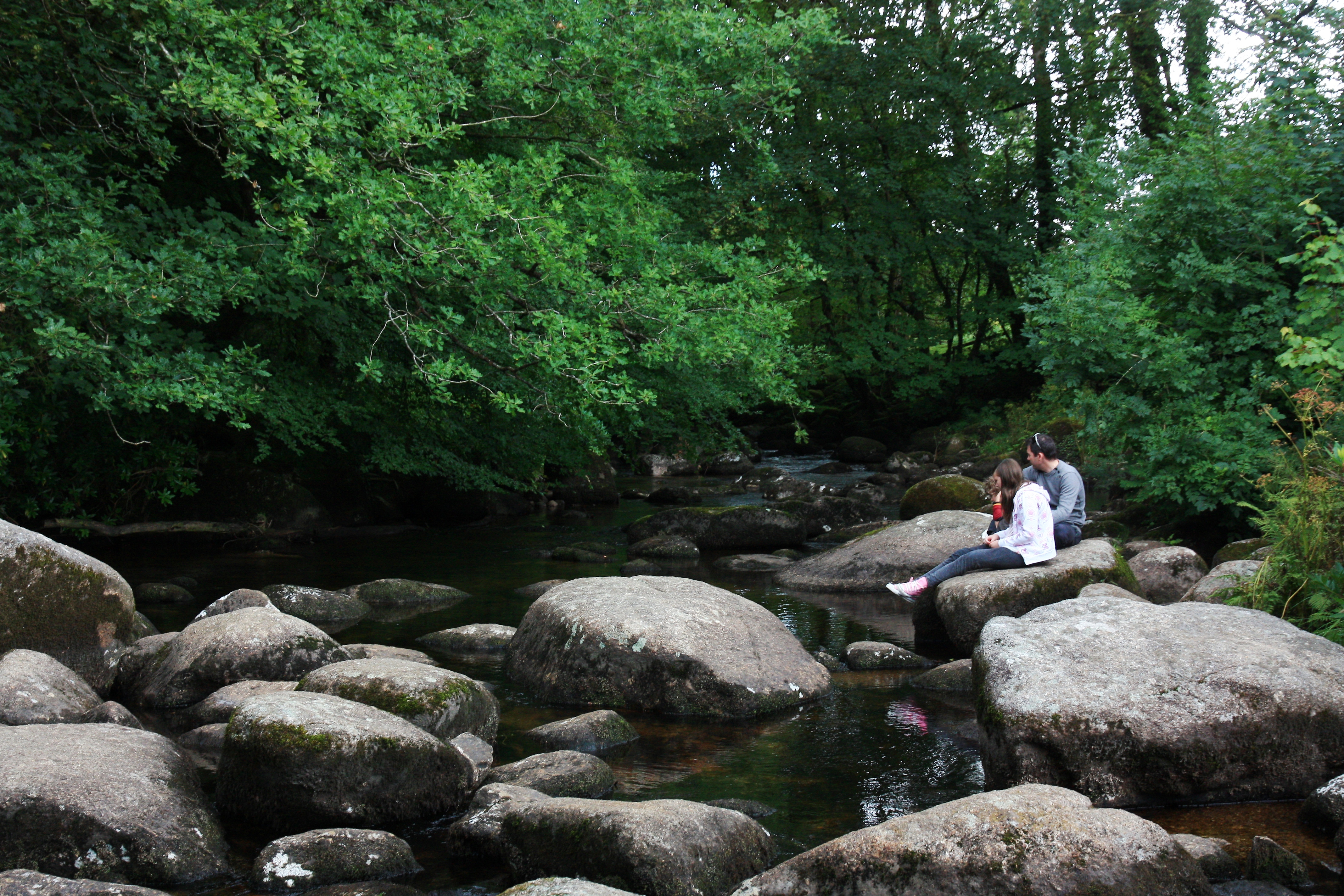
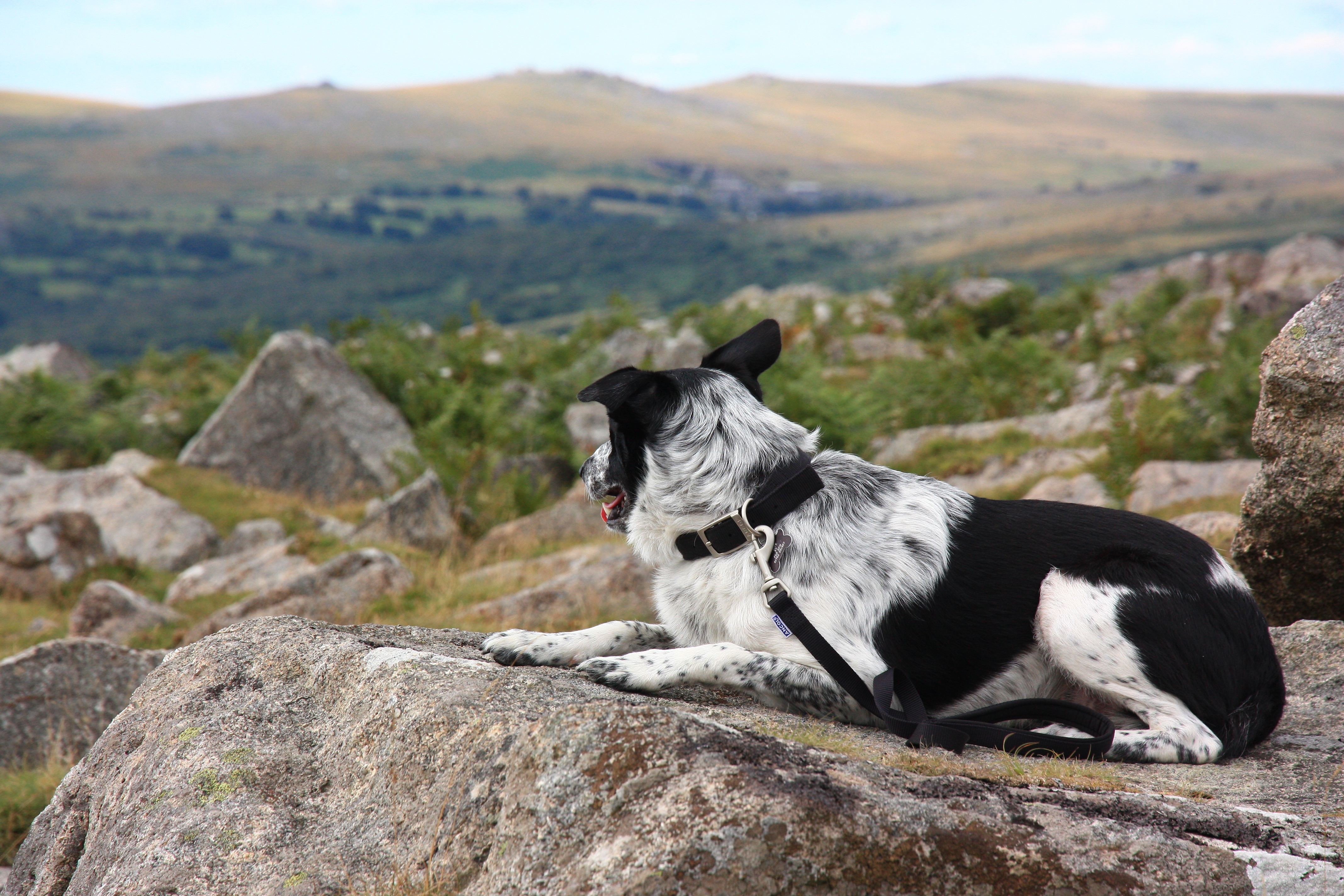
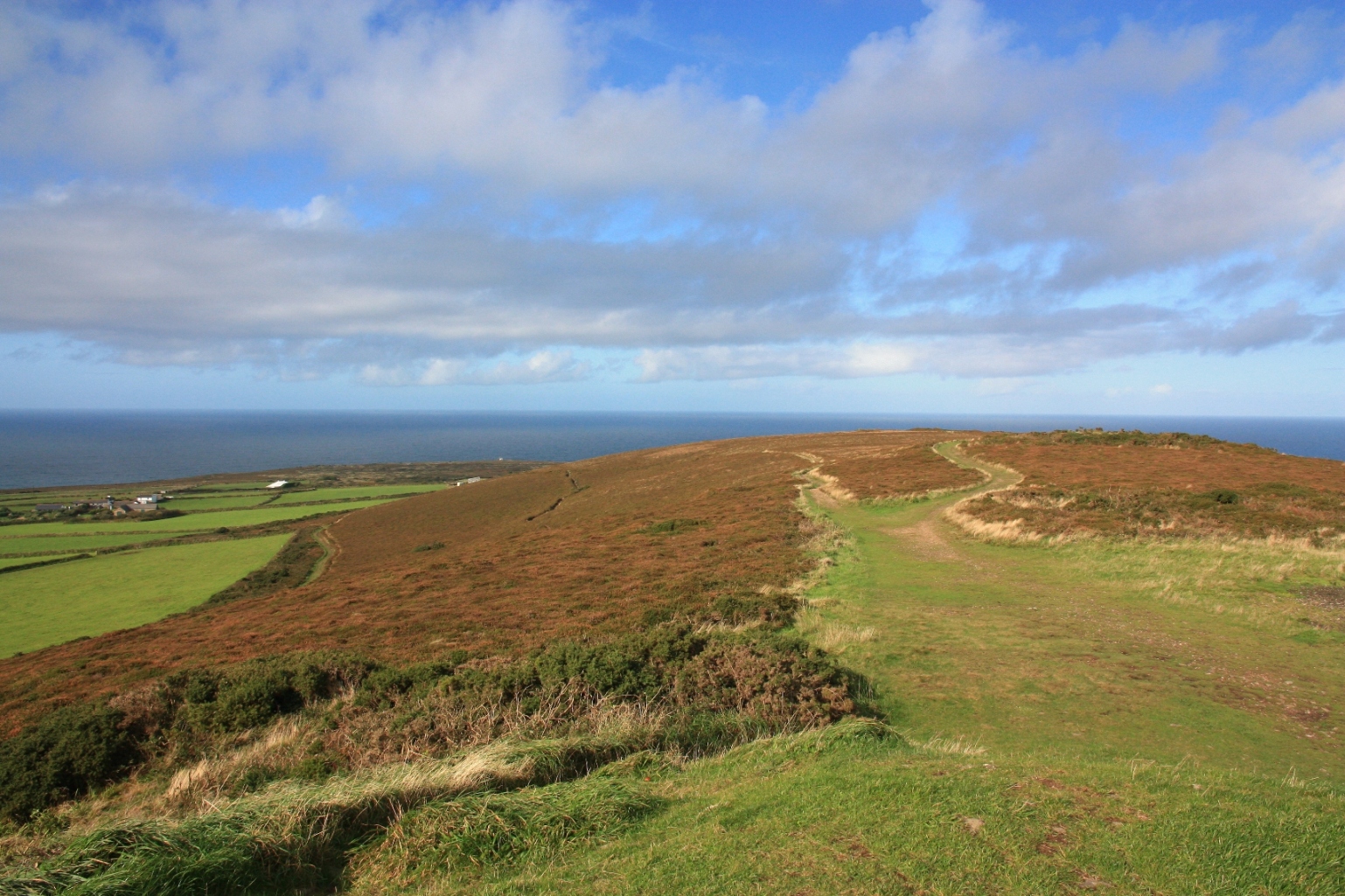
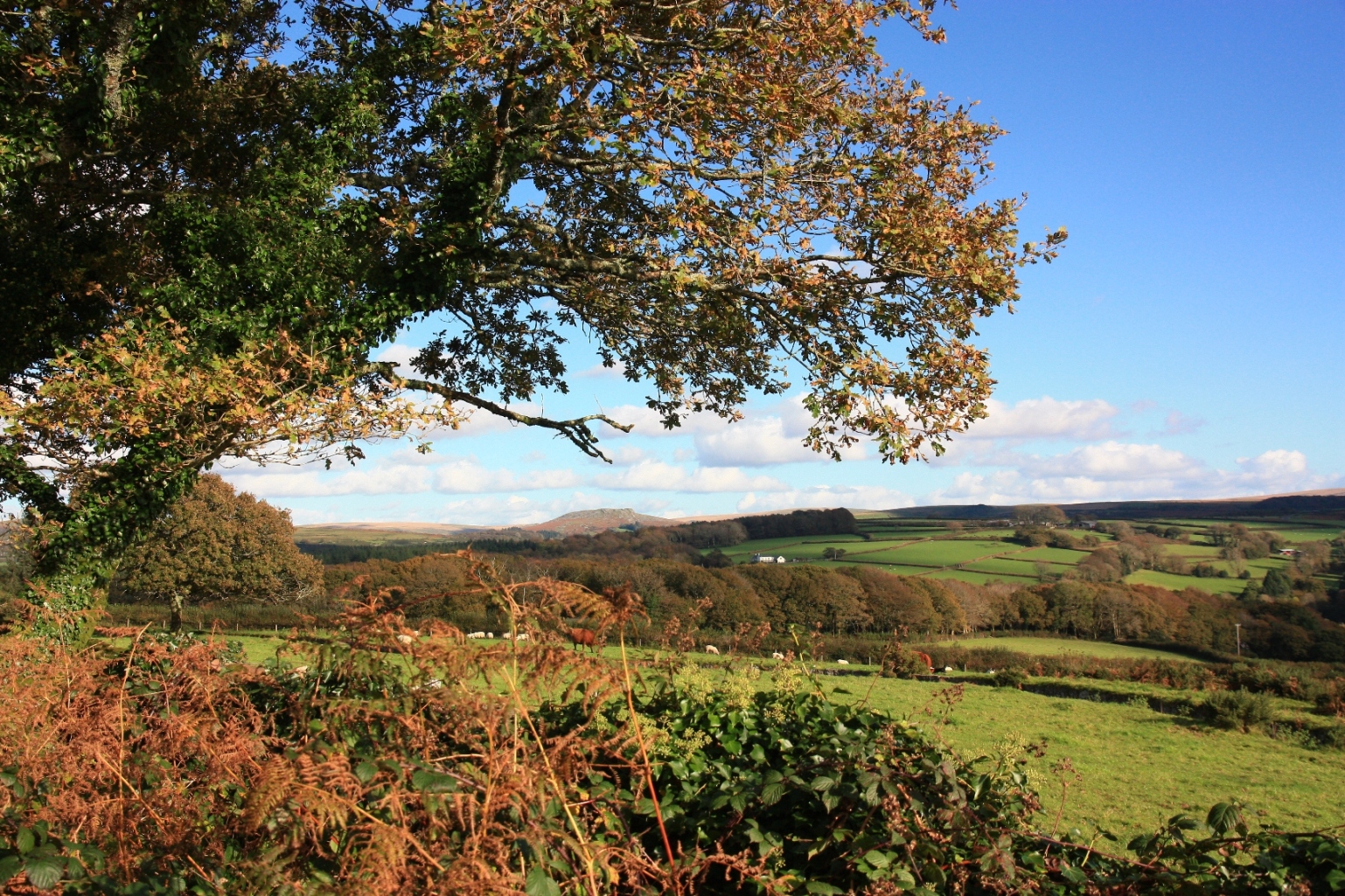
moor05The area around Burrator is probably the handiest and offers a useful mixture of forests, tors, ponies and a chance to gobble down a Willy’s ice cream. Sharpitor, Leather Tor, Sheepstor, Down Tor all provide the opportunity to scramble around and over clutters of granite, to gaze north and east into the wilds and south and west over the patchwork dream to the hazy ocean on the horizon. Swathes of bracken meander down to gnarly forests and tinkling streams, some of which are occasionally plummeting (conveniently and suspiciously close to the ice cream van).

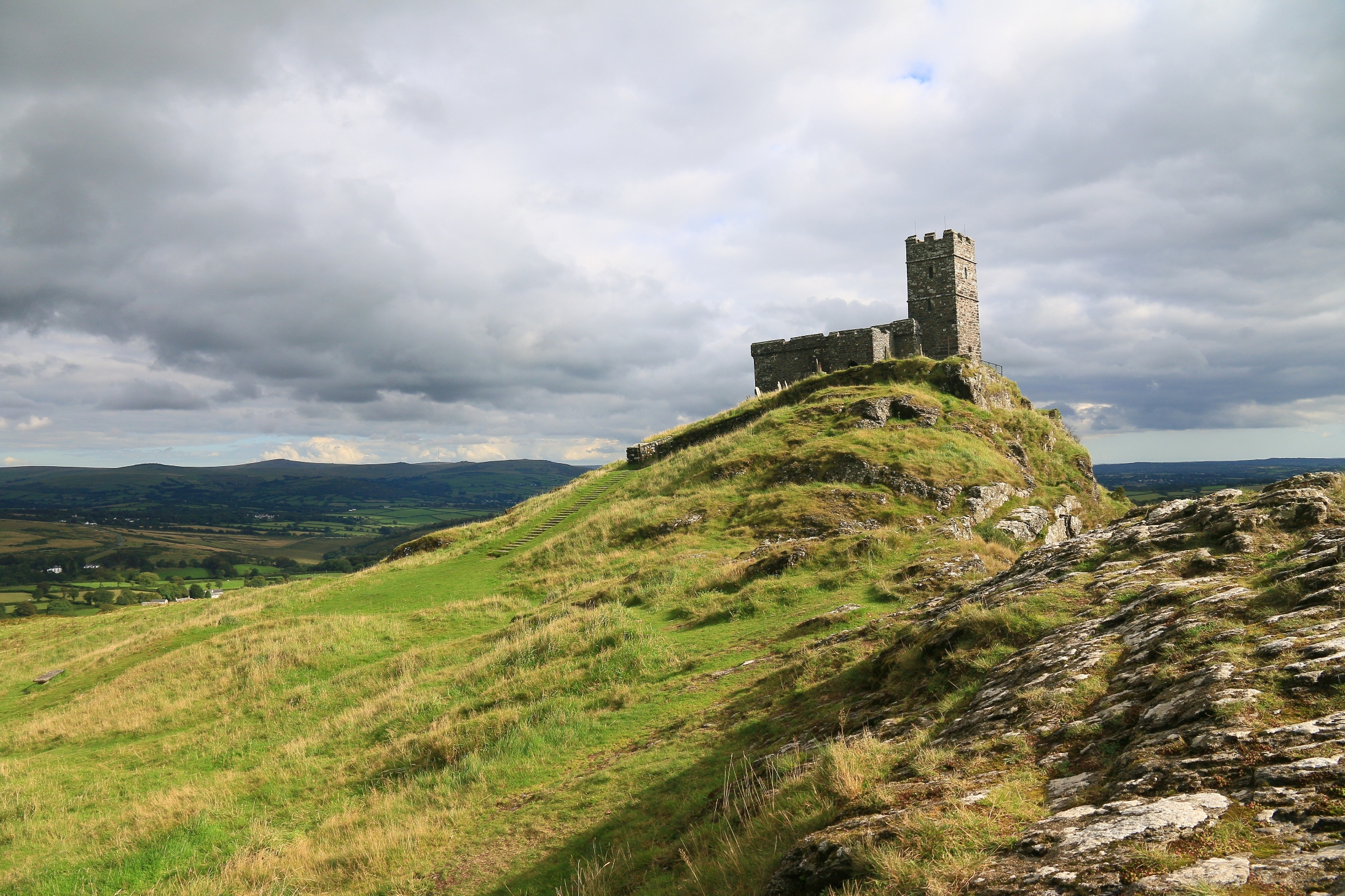
From such moorland vantages – and practically any other hilltop in West Devon and East Cornwall – the modest mound of Brentor is visible, disconnected from the barren tops of Dartmoor before it slides down into the Tamar Valley. Its distinction not only stems from its prominence amongst flatter surrounds, but its famous church that some dedicated god-botherers decided to construct a long time ago.

moor01

moor02I suspect the church provided a symbolic, steadfast two fingers to the heathens, roaming the moor via their crazy stone circles and rows, all wild hair, posies of heather, and rampant Chlamydia. An outpost for civilisation, a rising up from the moral turpitude of the flea-bitten masses towards the light. I feel much the same leaving Plymouth and heading to Dartmoor today, bathed in its pure air and natural light. Swept away in wonderment, even my jeans are feeling holy, what with all the pasties and frequent straddling of giant cracks between granite blocks.

moor03

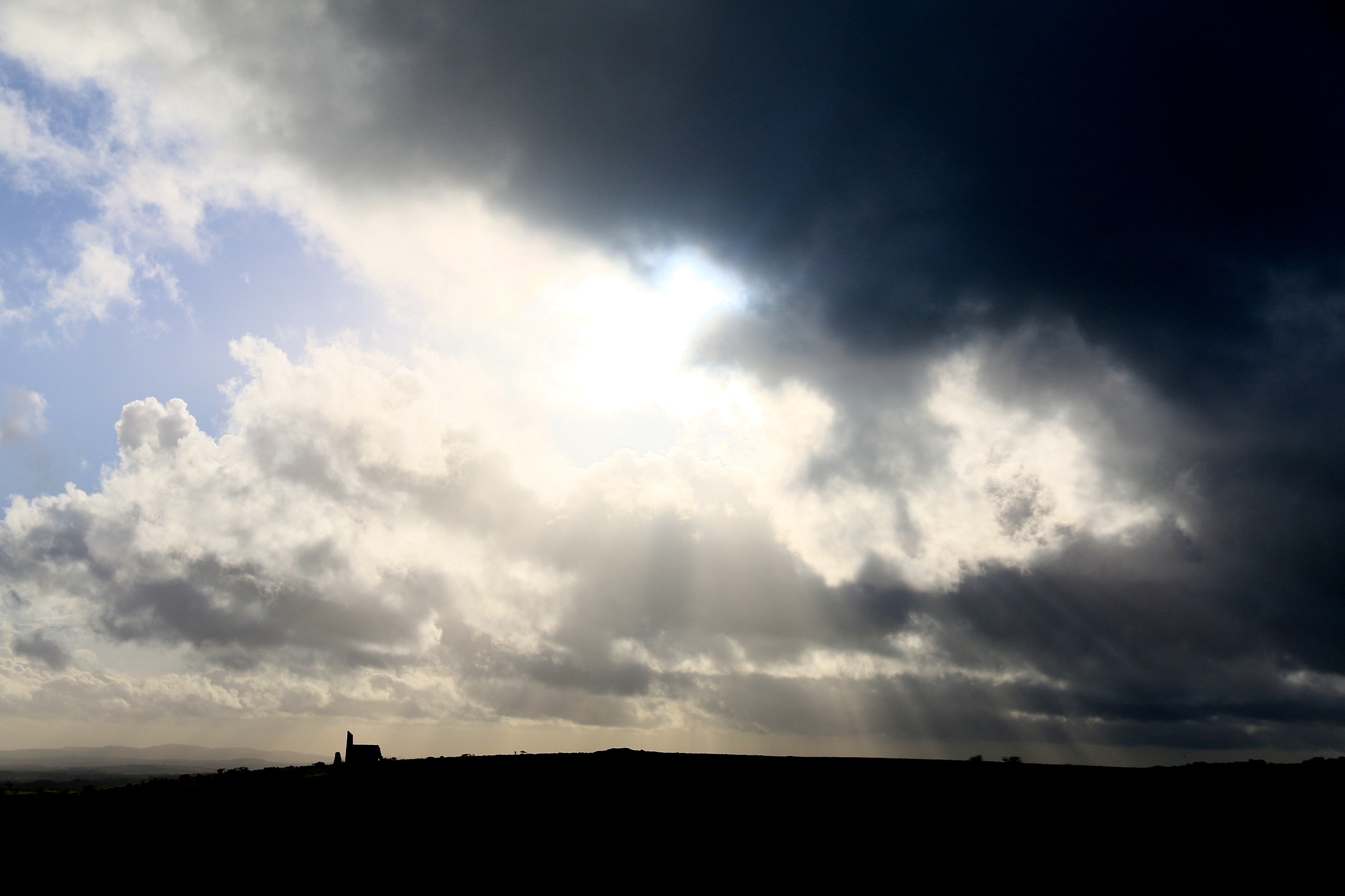
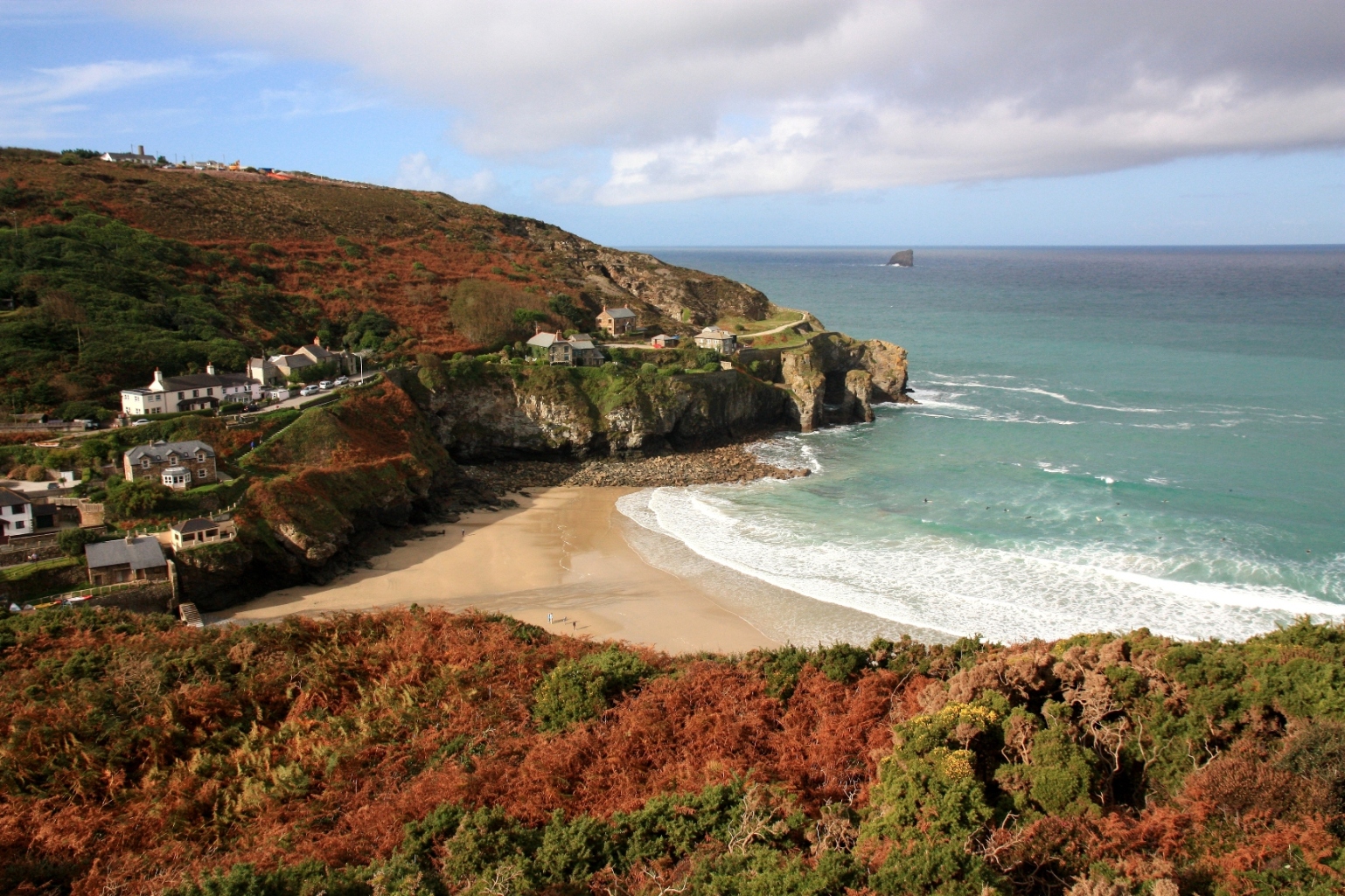
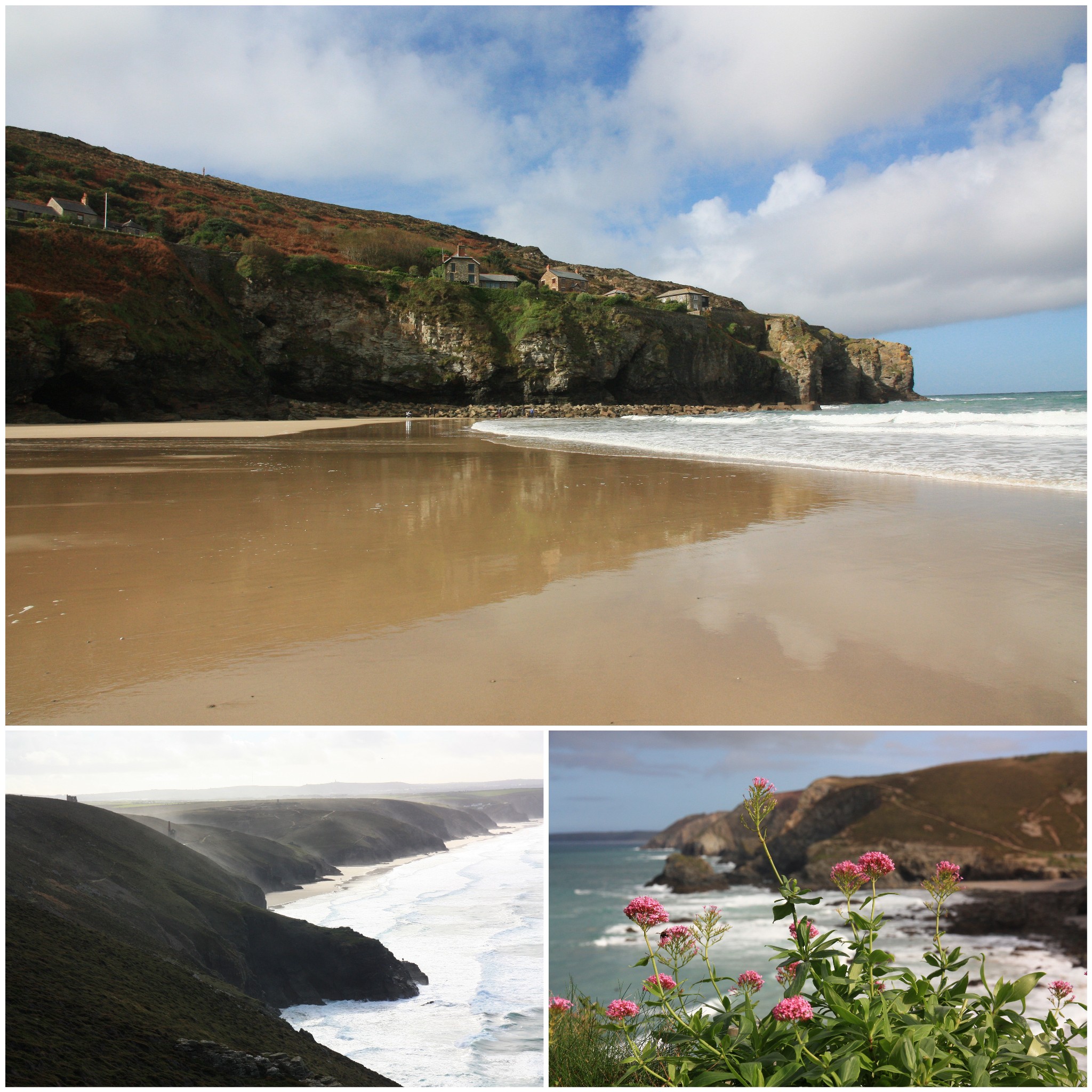
moor07As well as flailing raggedly down from Dartmoor, heathens would have been in profusion west of Brentor and into the dark, forbidding uplands of Kernow. Willing to shake it up a little, I grabbed my passport one afternoon, crossed the Tamar and headed towards Bodmin Moor. Less defined and gargantuan than its Devonian counterpart, there are nonetheless pockets of heather and gorse pierced by shattered tors. Ponies graze and stone rows lurk and the diggings and ruins of the tin industry crumble away in profusion. There is less of the idyllic in this zone around Minions, but there is enough to encourage future exploration.

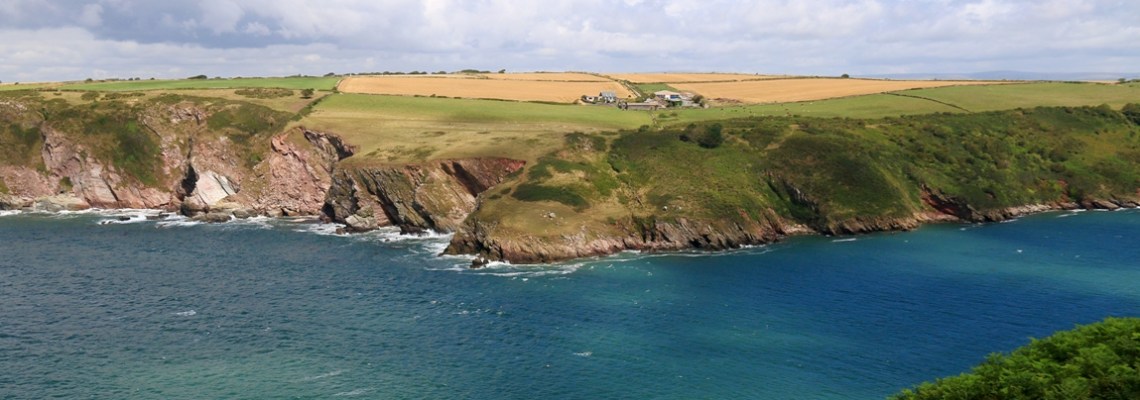
From these boggy pastures the River Fowey runs south and widens into that rather delightful spot by the sea. Upstream has its highlights too, as I found at Golitha Falls. Verdant woodlands are making the most of the last of the summer, tinges of yellow and orange and red brushing the tops exposed to the sun. A scattering of leaves are floating down towards the mossy branches and rocks of the forest floor. All the while, the pure waters of the river meander and tumble unendingly onward, luring you to follow them forever towards the sea. Cool and refreshing and rejuvenating, there are no excuses not to get back to work, other than more moors.

moor06

Driving Great Britain Green Bogey Photography Walking

Devon slices

The eternal battle between Devon and Cornwall hinges on the correct approach to bedeck a scone. Cream then jam, jam then cream? Does it really matter when both are so god damn delicious? Well, clearly the answer is yes and, clearly, Cornwall wins.

It may seem a trifling matter, but the fight for sconepremacy reflects something far deeper in the southwest psyche. That is, which is the better county? Unlike the scone debate, this question cannot be so easily resolved. In my mind at least it is on a par with assessing the merits of England and Australia and as complex as Tony Blair being the logical person you’d hire to bring about peace in the Middle East. And you know what, I think the answer to this conundrum may be to appreciate each as equals, and revel in the fact that they are both pretty good anyway, particularly as scones are plentiful in whichever county.

For balance only the leftist BBC conspirators could dream of, let me now present some recent evidence for the case of Devon (given my last entry was Cornish). Specifically, the southern and western part of Devon within reasonable proximity to Plymouth. The other stuff doesn’t really matter, mostly because the pong from Exeter ruins it. And this is the stuff that is close to home.

The best mayo:

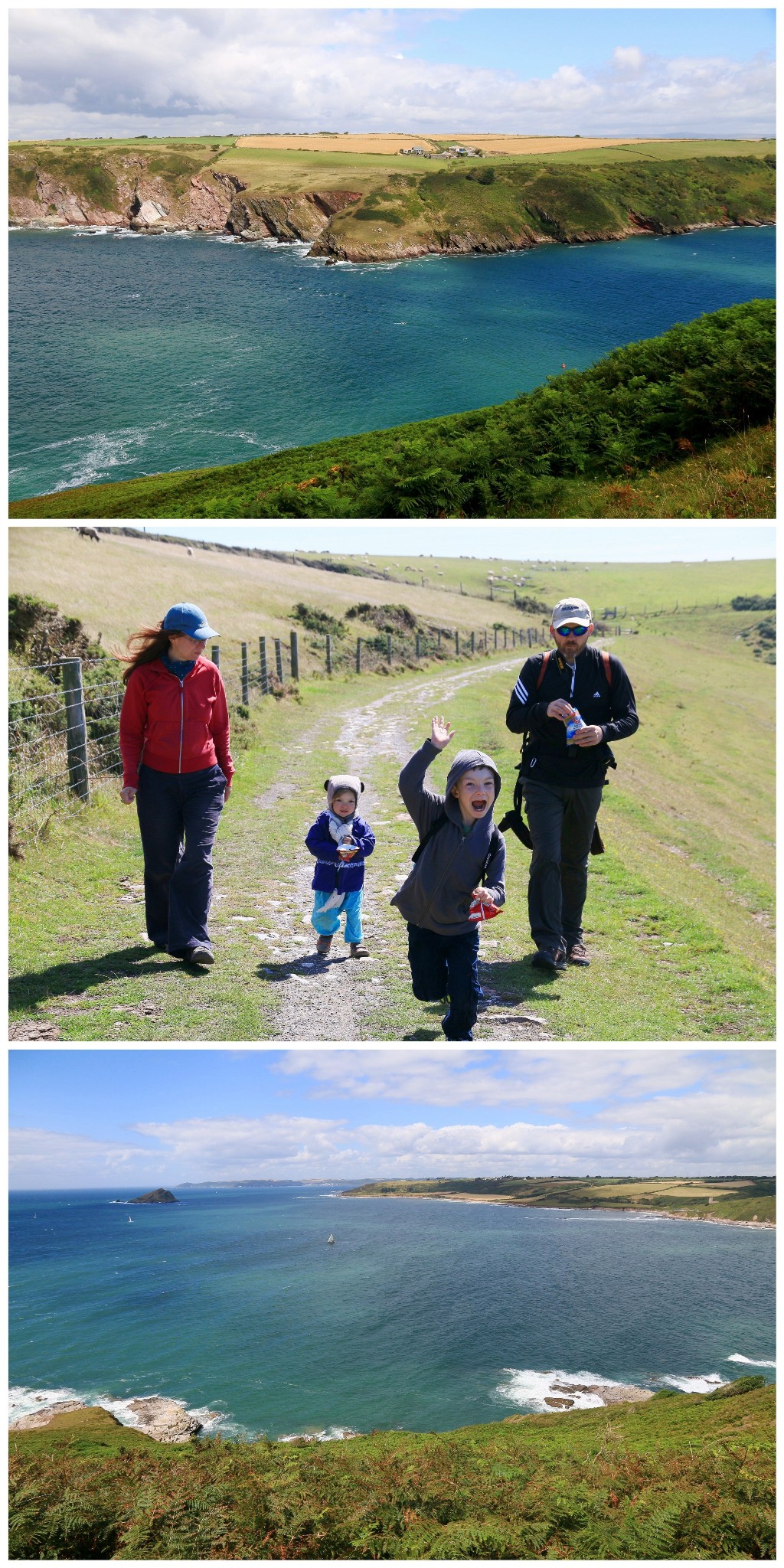
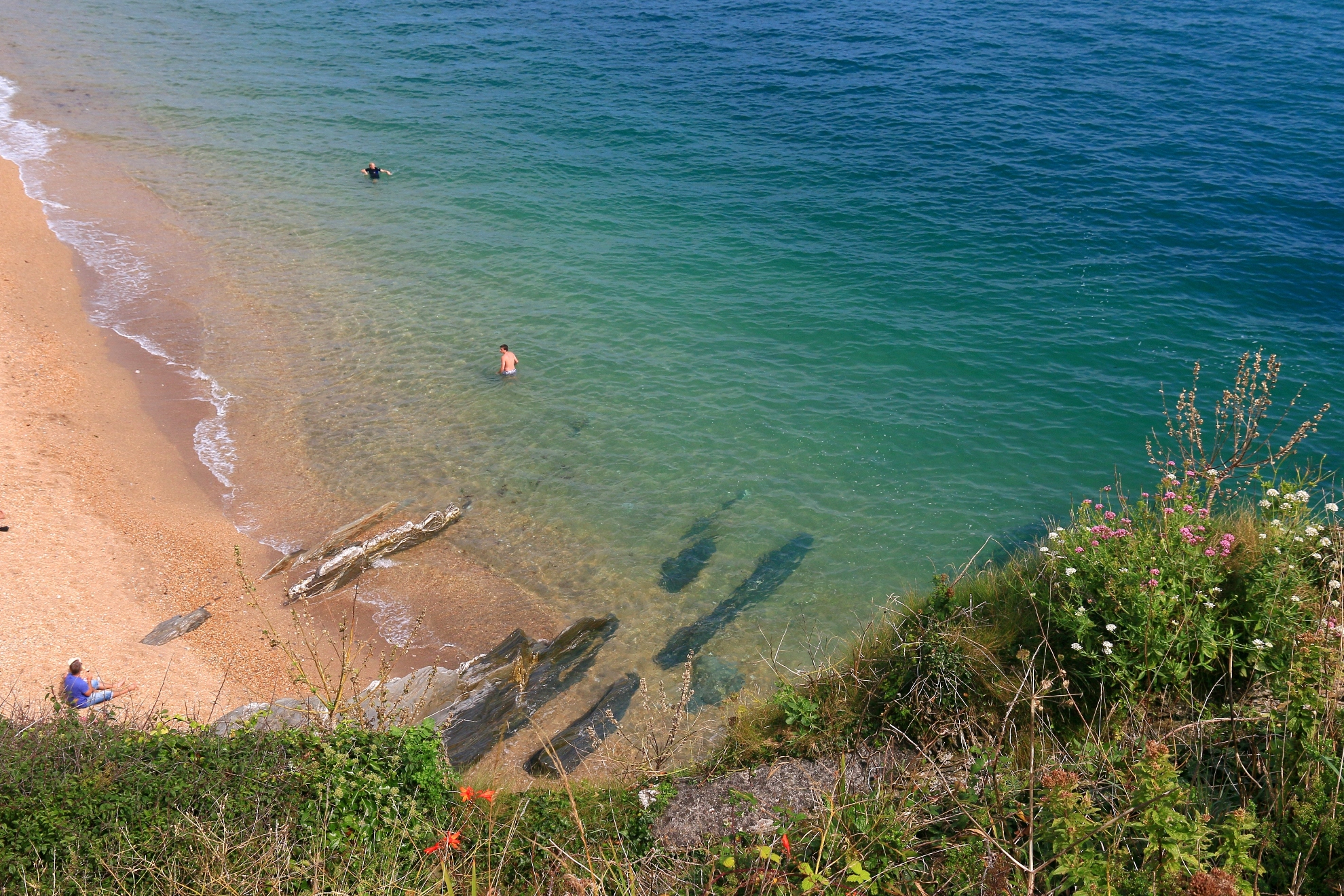
dev01Hellmans and Simon despair, for Noss Mayo is the winner and may well take out loveliest village in Devon competition. Just a short run out from Plymouth via a maze of ten foot hedgerows, it’s a place of peace and serenity and that colourful bunting that is just about in every village in the southwest. Cottages with names like Anchor’s Rest and Primrose Lodge scatter haphazardly down to the water, while home grown asparagus sits next to an honesty box and a bowl of water for passing dogs.

dev04An additional perk of Noss Mayo is the perfectly blended walk of seaside cliffs, creamy pastures, flourishing woods and boat-a-bobbing creek. A loop walk that can – should you wish – be completed at a relaxed, ambling pace. Just watch out for frenetic foreigners high on sunshine and the scent of silage.

dev05

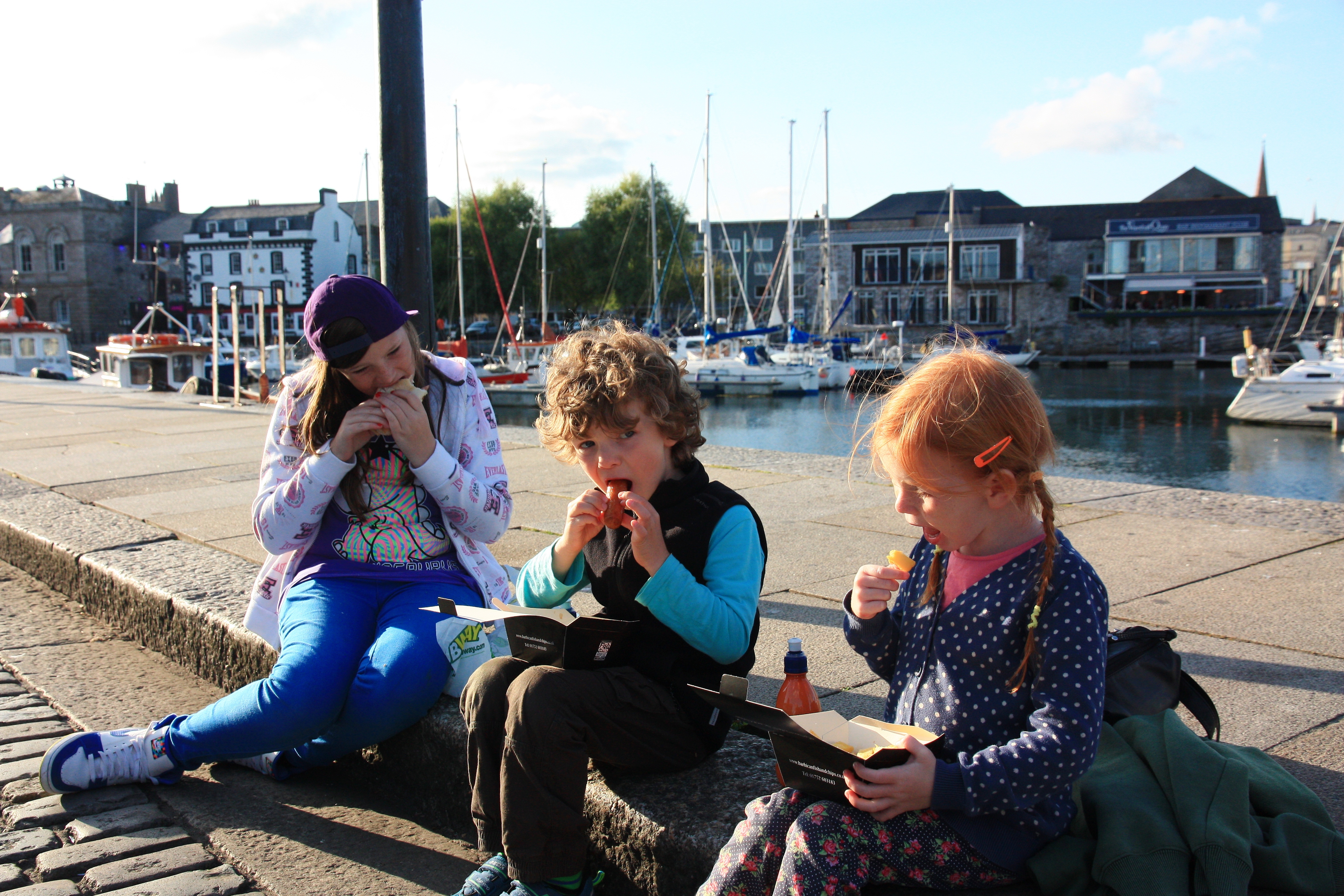
dev06Oh, and did I mention there’s a pub? I probably have, several times in the past. It’s positioned perfectly towards the end of that walk, at the heart of the village, jutting out into the water (or…at low tide, the slightly less idyllic mud). The pub is arguably the jewel in the crown of Noss Mayo and I can now recommend the fish and chips as well as the selection of ales. Experience suggests this may not assist the final climb back up to the car, but it will likely have you coming back for more.

A nice set of hams:

Outside of Noss, there could well be many other contenders for Devon’s loveliest village yet to be discovered. It’s a fair bet that a bulk of these will also be in the South Hams, the luscious, rolling countryside tumbling down from the moors and into the glittering ocean. Various rivers cut their course through the hills, passing thatched roofs and church spires on their way out into the sea, itself fringed with shallow sandbanks and undulating dunes.

dev09Of course, the weather cannot always be relied upon to generate the picture postcard that I have so feebly conveyed. And when the sun does shine in summer, the village of Modbury can transform into a car park. Beaches such as South Milton Sands become busily popular, but there is enough room to play cricket and tentatively wade into the inviting but tepid ocean. Escaping humanity remains a possibility, with the ever glorious southwest coast path providing hope to reach Hope. Meanwhile, the increasing proximity to Salcombe means that the ice cream from its dairy becomes commonplace.

dev08

The loveliest village could actually lie along the stretch of road between Kingsbridge and Dartmouth in the South Hams. The problem is that it is difficult to assess, since negotiating each village by car requires a shot in the dark, following by a wait and a reverse, and a punt around the next corner before a tractor bears down on you followed by an unfeasible double decker bus, which is wedged in next to the pub that would be nice to have an ale at if there was somewhere you could park and be able to get out again, without hitting any ramblers lurking in gargantuan hedgerows. Despite its obvious perils, driving on this apparent A road is marvellously endearing.

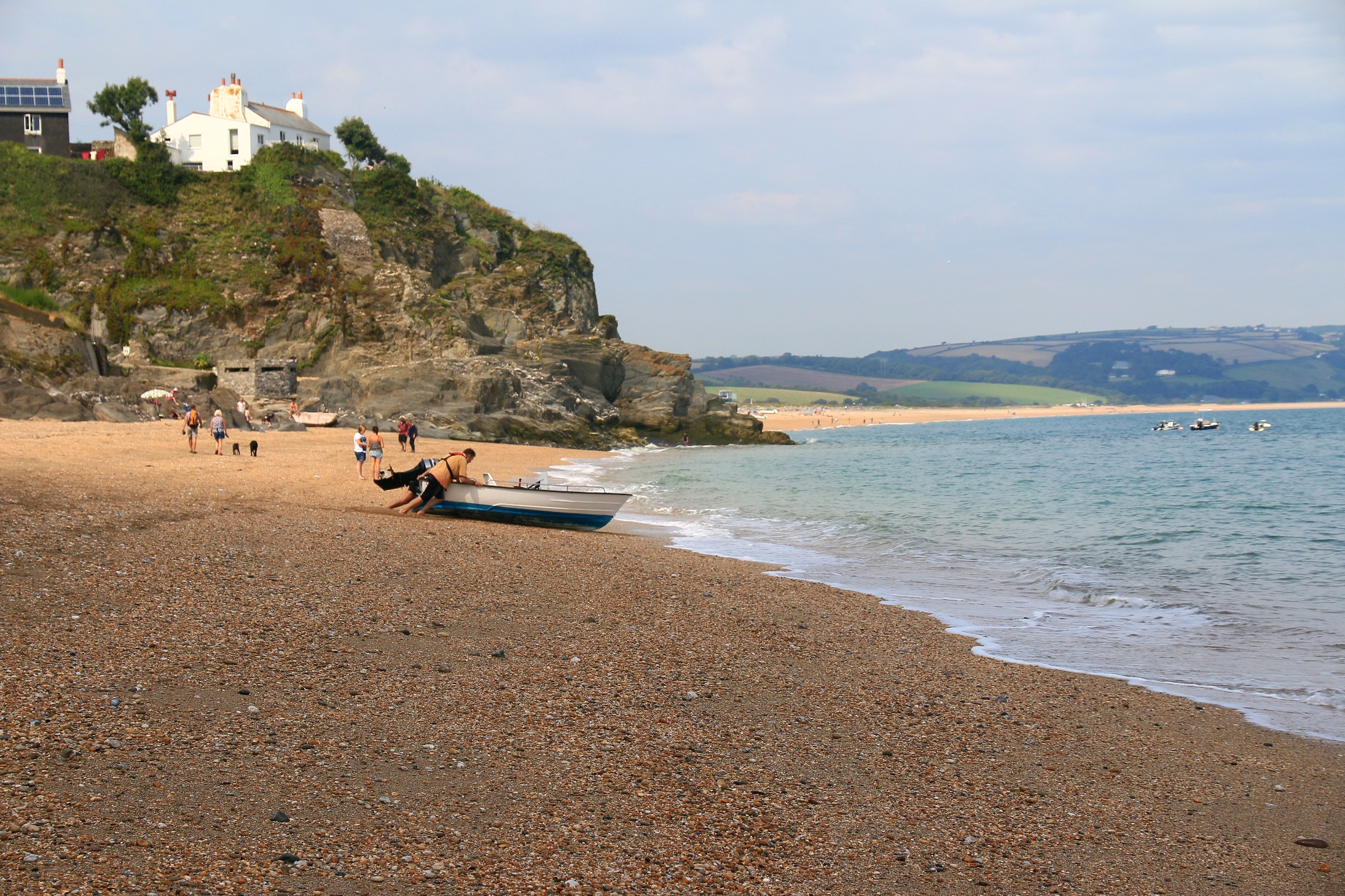
dev11I think it may be nine miles from Kingsbridge to Torcross but it can feel five hundred, and five hundred more. Torcross sits at the southern end of Slapton Sands, so named because the sands were obviously slapped on a ship and sent miles away, leaving only pebbles and more pebbles. Smooth and colourful and cleansing, they lend the seascape a pristine hue, and – if you don’t look too closely – the beach does appear as though it could pass muster in Australia.

dev12

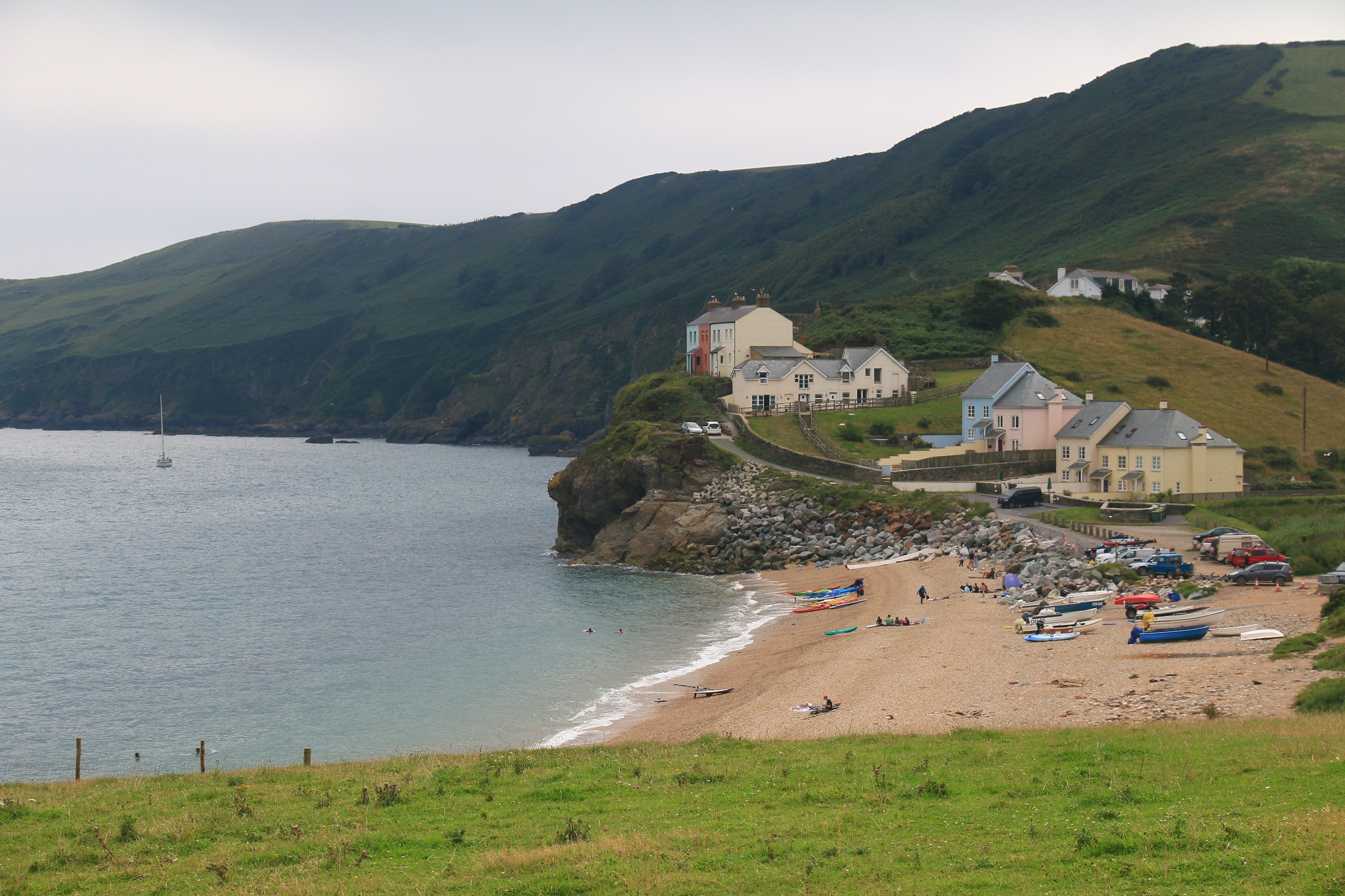
dev13Like everywhere around this way, there is good walking to be had. Over the hill to Beesands with its less photogenic beach, and on to Hallsands, precariously awaiting the next winter storm. Beyond Hallsands the waters of Start Bay curve their way against precipitous slopes, topped with radio masts, sea mists and happy cows, giving way at Start Point.

I could push on to there today, but the hills get steep, my legs say no, and I still have the potential car parks of Dartmouth and Totnes to negotiate before getting home. One small mercy is that the tide is now out, and the hill between Beesands and Torcross can be circumnavigated via the millions of pebbles. Who needs sand all the time anyway Cornwall? It just ends up in every crack and crevice.

dev14

Moor scones available:

dev15While the South Hams possess the requisite balance of thatched cottage to rolling pasture to pebbly beach, the somewhat tamed landscape eventually gives up and transitions to the wild uplands of Dartmoor National Park. Now this is truly on the doorstep. One minute you are navigating hapless drivers attempting to cross a roundabout to get to Tesco, the next you are passing hapless drivers braking sharply and pulling into the Dartmoor Diner. Civilisation may well linger, but it is quite possible to see nothing or no-one obviously man-made for lengthy periods of time when out on the moor.

For many Dartmoor is Plymouth’s playground, where you can stroll, frolic in a river, cycle, have an ice cream, walk the dogs, and fantasise about hairy hands. For me too it is something of a Red Hill surrogate. Though clearly not quite as close (i.e. 5 minutes), there are hills to climb and views to be had and, if you squint hard enough (very hard), the sheep may take on the resemblance of a grazing kangaroo.

dev16

dev22Just around the corner though (maybe 5 minutes with a good run of lights and a Bugatti Veyron) is the River Plym. Gathering down from the moors, the Plym gently meanders its way through leafy woodlands on its way to Plymouth Sound. One minute you are in an industrial estate, the next the lane narrows into a hobbit hole and you are bathed in shadowy leafiness. Again, children frolic, people cycle and dogs yap. Some (dogs) may even become potential kidnap victims due to ridiculous cuteness.

dev17

Plymbridge offers an easy escape – from Plymouth, from Asda, from endless episodes of Emmerdale. And it reminds you, quite simply and quite easily, how really lovely it can be to be in Devon. In fact, just as lovely as Cornwall.

Food & Drink Great Britain Green Bogey Photography Walking

Tasty taster

I suppose it is not uncommon to arrive in Plymouth in the midst of summer to find the place bedecked in insipid drizzle. A shroud of gloom so dank that even the statue of Sir Francis Drake stares out blankly, wondering where the rather large body of Plymouth Sound has gone and thus if it has been stolen by the Spanish. It’s a welcome that temporarily makes you question why you bothered, offering reassurance that you are doing the right thing by not living here. And then the weather clears.

swA01In the space of one week, you remember to make the most of drier and clearer slots sparingly scattered across the southwest summer, and race to the moors, the coast, the countryside. Dartmoor is literally on the doorstep: one minute it’s all superstores and industrial units and Wimpey homes, the next rolling farmland and upland tors. Somewhere amongst the wilderness you may have the good fortune to deliberately stumble upon a cream tea. And once more, you are back in Utopia.

swA02

Across the border, a pilgrimage to the North Cornwall coast is a must, unifying the potential for pasties, fudge, and ice cream with rugged scenery and pretty towns. There are so many pretty towns with so many pasty, fudge and ice cream shops that is hard to know which one to raid. Experience proves a good option is to hone in towards Tintagel, and have it all.

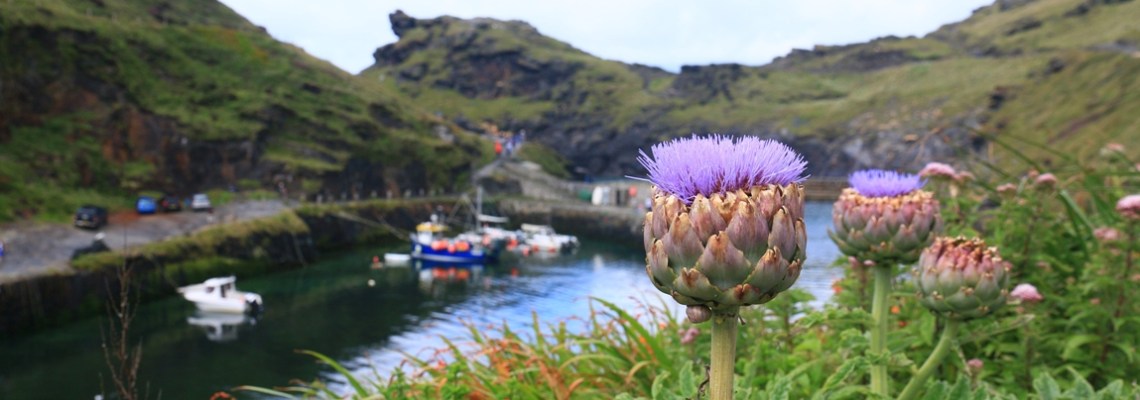
swA04First though there is Boscastle which is just simply a delight, no matter the weather (although the deluge causing flash flood variety does tend to put a downer on things). Ducking in to a cute cafe by the water as a shower passes overhead, it is all sunshine and smiles the other side of a typically variable flat white. The summer of sorts reappears, and a sweater can be removed in the sheltered harbour glow.

swA03

swA05Tempting cakes and bakery goodies are purgatory, but you push on in the knowledge that a Pengenna pasty awaits up the road in Tintagel. A meal in itself, today it is the main reason for stopping there. A walk past plastic Arthurian swords and St Austell Ales, it nourishes but is underwhelming. High expectations from past delectations are hard to satisfy, but solace comes from a creamy fudgy pile of ice cream from Granny Wobbly instead.

What better way to burn off just a few of the calories than in Port Isaac? Doc Martin and an array of quirky characters with affected bumpkin accents may have walked these narrow streets, but today it is over to the tourists. Most are taking pictures of the places where Doc Martin and an array of quirky characters have walked the streets, but some – like me – push on through the town. Up onto yet another gargantuan headland with views of the harbour and coastline stretching north to Hartland. Inland, as the rain clouds refuse to budge over Bodmin Moor, patchwork farms go about their business of producing life essentials, many of which I feel I have eaten today.

swA06

So, a cream tea, pasty and fudgy pile of goodness completed in little under 24 hours, ticking off both the wilds of Dartmoor and the coves and crevices of the North Cornish coast. Occasional rain days offer more mundane revisitations around Plymouth, but the foodstuffs continue apace. A roast dinner, proper Cadbury’s, and even a barbecue in a bright and breezy sixteen degrees mate.

swA07All this eating necessitates exercise, I guess. If I was in Canberra I would head up Red Hill but here I can return to Dartmoor. Waking early on a Saturday morning, little traffic on the roads heading gradually up through suburbs and to higher ground, half of Devon and much of Cornwall reveals itself. It is, again, bright and breezy, just the ponies for company in the lee of Sharpitor. Selfies are needed, but the emptiness, the space, the clear air, the expanse is a joy to behold in this sometimes claustrophobic country.

swA09

swA08

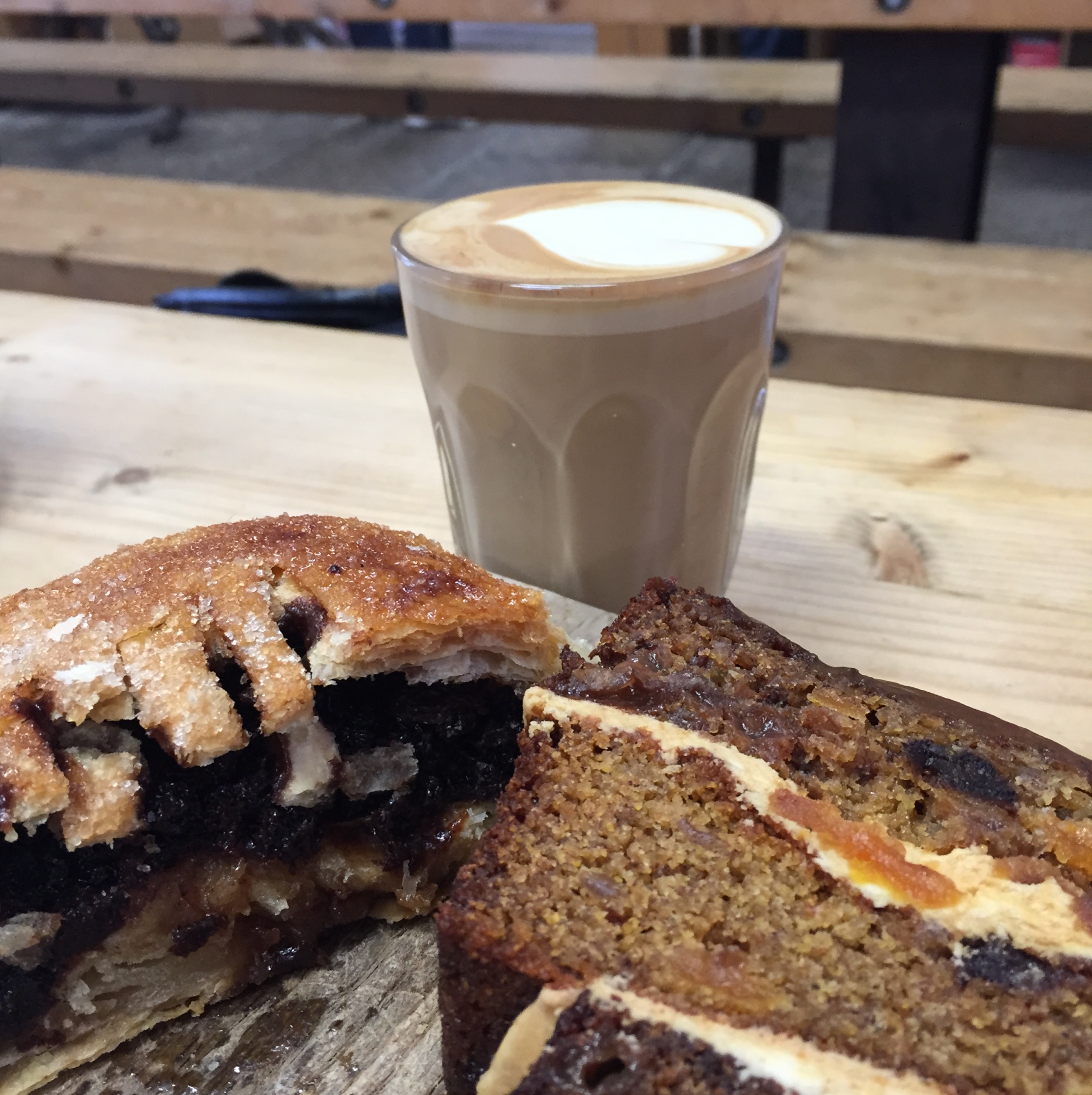
swA10Sigh…if only you could get a good coffee. Hang on, what’s this? It still requires further validation, but there could be something with potential. A flat white which is flat and white and creamy and not scalding hot with a pile of insipid froth on top. Blended together with a mellow strength. Served in a glass as if a latte but I can forgive that. I will have to come back and reinvestigate.

Fortunately there are fine cakes and pastries on offer even if future coffees end up being awful. And there is always tea. With a scone. And maybe some jam. And a smidgeon of cream. And a landscape which is as delicious in the admittedly intermittent summer sun. It is the Ambrosia, and I will come back to taste it again.

Food & Drink Green Bogey Photography Walking

The ice cream bucket list challenge

Laydeez and gentlemun, welkum to Landan Saaaaaaaaffend, where the temprator is nynedeen digreez innit and the cockles an whelks are fresh from the eshtry mud.

ukA00As gateways to Great Britain go, it is a bit different, but Essex is indeed British soil and there is comfort at seeing the red cross of St George adorning the council estates and in smelling the fish and chips on Southend seafront. Should Southend be a little too bedecked with commoners awaiting a summer carnival parade, Leigh-on-Sea is a tad more upmarket with white stiletto undertones. Home to several cosy pubs spilling out onto the mud and water, an ale and hearty burger brings me back to a Britain obsessed with pulled pork and bake offs.

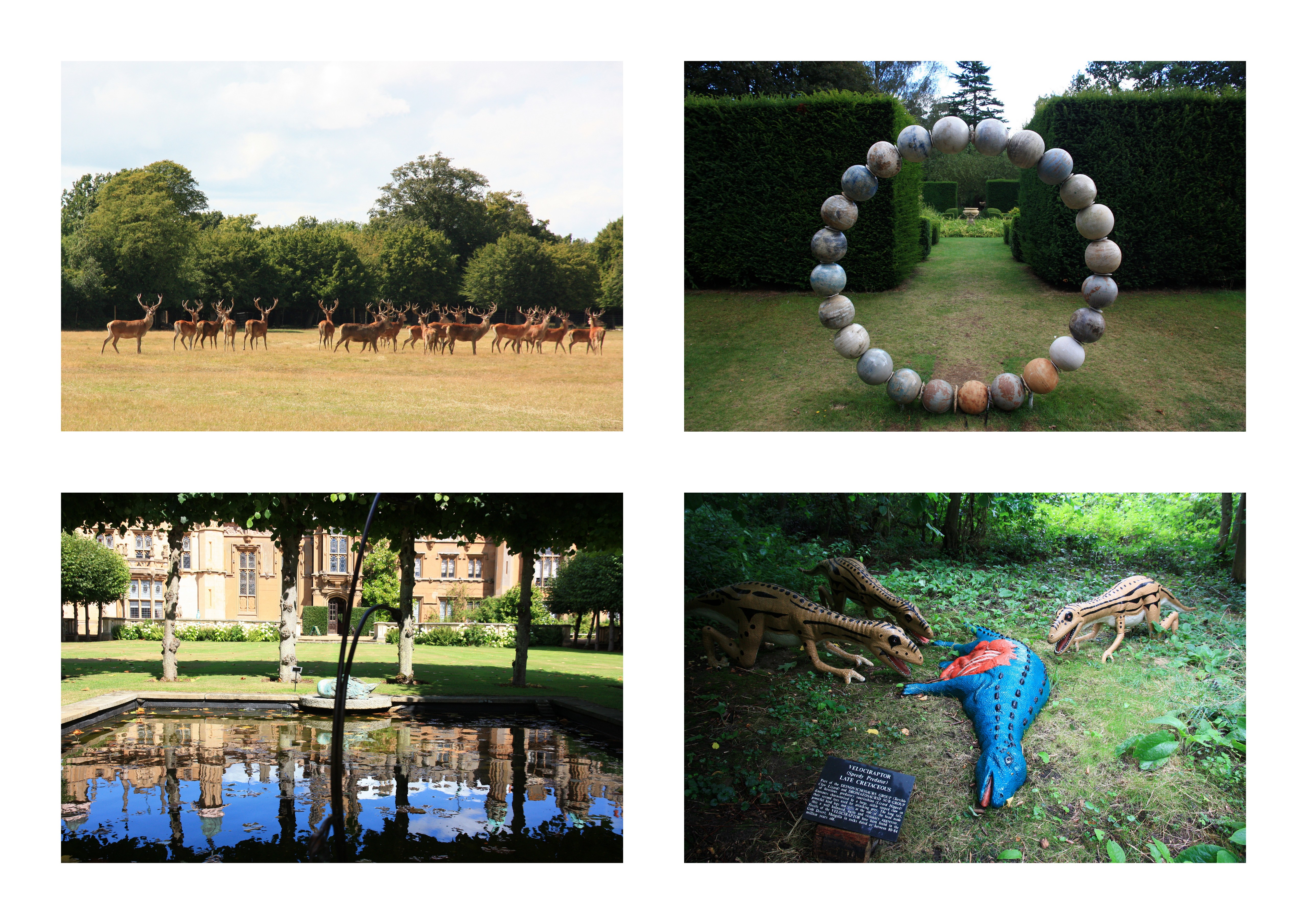
Hertfordshire is the classier cousin to Essex, where inspiring place names like Potters Bar and Stevenage and Welwyn Garden City are linked by motorways and single file country lanes alike. Interspersed within this, offering views of giant pharmaceutical empires and a procession of easyjets bound for Luton, stands Knebworth House. Perhaps best known for Oasis and Robbie Williams mega-concerts it may come as a surprise to hear that Knebworth is rather refined. The archetypal crusty upper class country estate, complete with musty carpets, majestic libraries and derring-do tales of empire building. Gardens with fancy lawns and fancier sculptures, a copse littered with giant fibreglass dinosaurs serving as inspiration for damned colonial upstarts such as Clive Palmer. On an increasingly sunny summer afternoon, as deer graze the meadows and country pubs await, this is England, but not quite my England.

ukA01

The next day brings the homecoming within a homecoming as I depart London for Plymouth. That’s not before saying farewell to the iconic capital with two friends who I met in Australia and who I can continue to enjoy pizza with – whether on Bondi or near Bankside – to this day. It is a happy conclusion to the English prelude and the level of unhealthy eating signifies the start of many days enduring essential foodstuffs, the real super foods that are far away from a land of quinoa and hipster-nurtured compressed kale shavings.

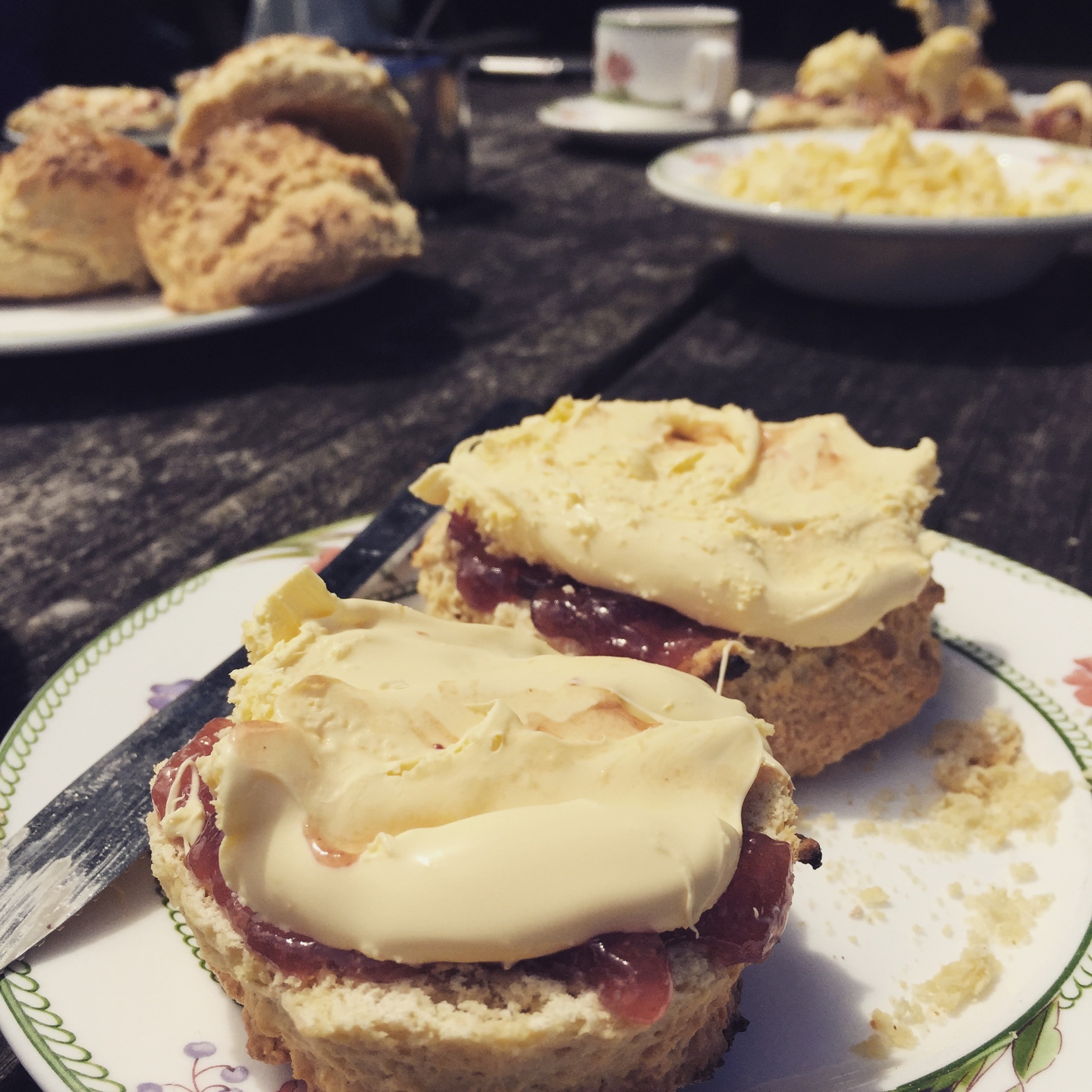
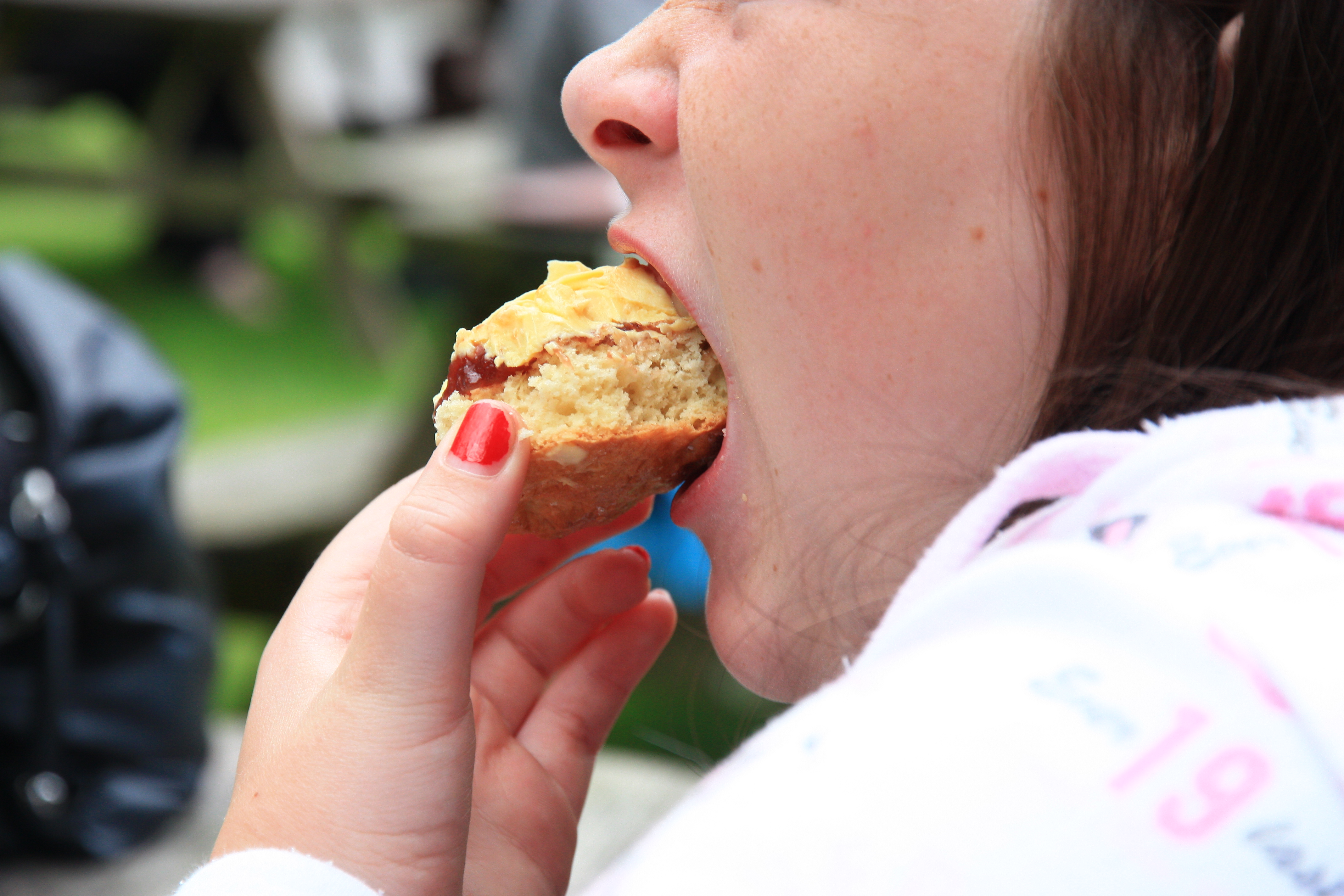
ukA02Gargantuan fish and chips were a starter prior to a night at Home Park, watching a rather lame game of football thankfully enlivened by Guillaume the French nephew shouting ‘come on you greens’ in an adorable accent. It worked, for we managed to scramble a deep into injury time penalty equaliser. More sedate, slightly less greasy but perhaps as equally lardy as those fish and chips was the Devon cream tea; the Devon cream tea that takes place in the same spot on Dartmoor practically every year but is a tradition which never fails to be anything other than marvellous. That first bite of scone and jam and – mostly – rich, buttery, clotted cream is like the feeling from a first sip of morning coffee multiplied ten million times. The river valley setting and surrounding tors amplify it further.

ukA03

ukA04Indeed, becoming as traditional as the cream tea is the slightly guilt-driven walk up Sharpitor, which is still just a gentle and brief jaunt for hilltop views of half of Devon and Cornwall. Traipsing up with family could get a little repetitive if it wasn’t so rewarding, an annual canvas for Facebook photos and Snapchat selfies amongst the clitter and ponies of the high moor.

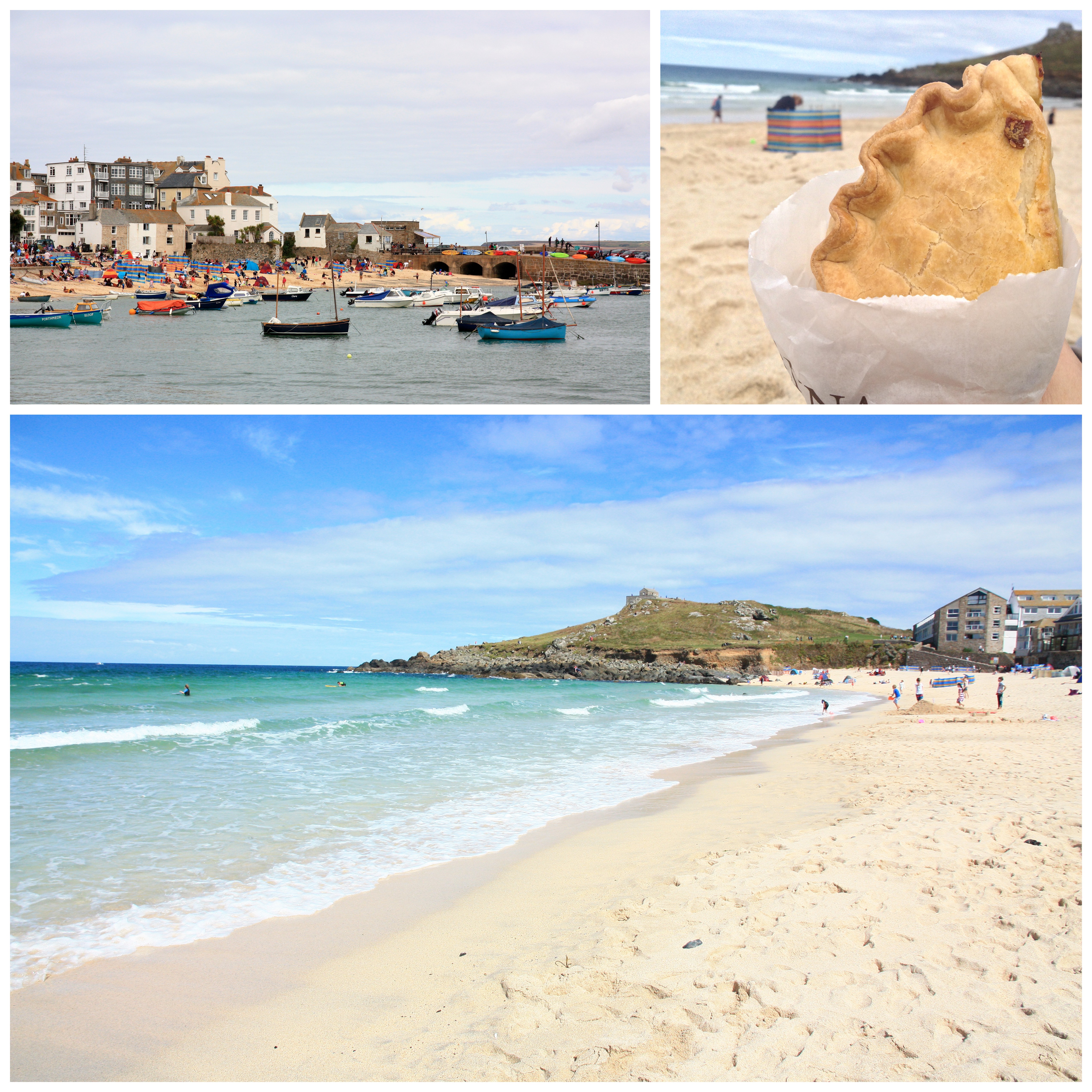
ukA05The Cream Tea on Dartmoor Experience is just one required escapade for the bucket list. The next one to tick off is the Cornish Pasty in Cornwall Adventure. Today this requires a rather trundling and busy train journey all the way down towards the pointy end. St. Ives is not only a reputed haven for artists, but possesses one of the more accessible by public transport shopfronts for Pengenna Pasties, where artists create masterpieces of delicious shortcrust pastry stuffed full of meat and vegetables and seasoning. Eaten on the beach, of course.

ukA06

I should not neglect here to give a special commendation to Moomaids of Zennor. While their clotted cream vanilla (what else?!) was nothing remarkable, I was hoping that the Cornish sea salt caramel was never going to end. It may feature as a staple of the next Cornish Pasty in Cornwall Adventure (with Bonus Local Ice Cream Discovery).

ukA07Away from food (for a little while), it is about time I mentioned the weather. For should I not write about food nor weather, what will I have left?! Temperatures were well below average as the shorts and sandals in my luggage remained largely untouched, while clean jumpers came at a premium. But there was plenty of dry and fine weather. This meant that, on occasion, clean jumpers would need to come off and then quickly returned once the sun disappeared behind the clouds scuttling across the sky on a chilling sea breeze. It was weather not so much for sunbathing but ideal for family fun in West Hoe Park, where nieces and nephews were able to relive one’s own youth by venturing on the iconic – yes, iconic – Gus Honeybun train and bouncy castle, and create their own memories in a pirate ship mini golf water boats gold panning extravaganza.

ukA08

ukA09It was all rather delightful, aided and abetted by bucket list ice cream and raspberries and clotted cream on the foreshore and then, a little later, waterfront dining on the Barbican courtesy of Cap’n Jaspers (so it’s back to the food then already…). A day to remind, as was mentioned several times, that Plymouth finds itself in a quite enviable position compared with – say – Wolverhampton or Corby or Blackburn or pretty much anywhere else not on the sea and in the midst of such coastal and pastoral splendour.

ukA10This undeniable splendour provides the context for one essential bucket list item for a perfect southwestern experience. The oft-quoted, oft-photographed, oft-walked South West Coast Path. I figure that maybe by the time I reach old age I may just have covered around 10% of this amazing trail. On a day that started with grey clouds and rain, the train trip to Truro and a tactical delaying coffee enabled the weather to perk up, and by time I reached St. Agnes on the bus, patches of blue sky were promising much. In fact, the sun very much came out when munching on the world’s best sausages rolls from St. Agnes bakery.

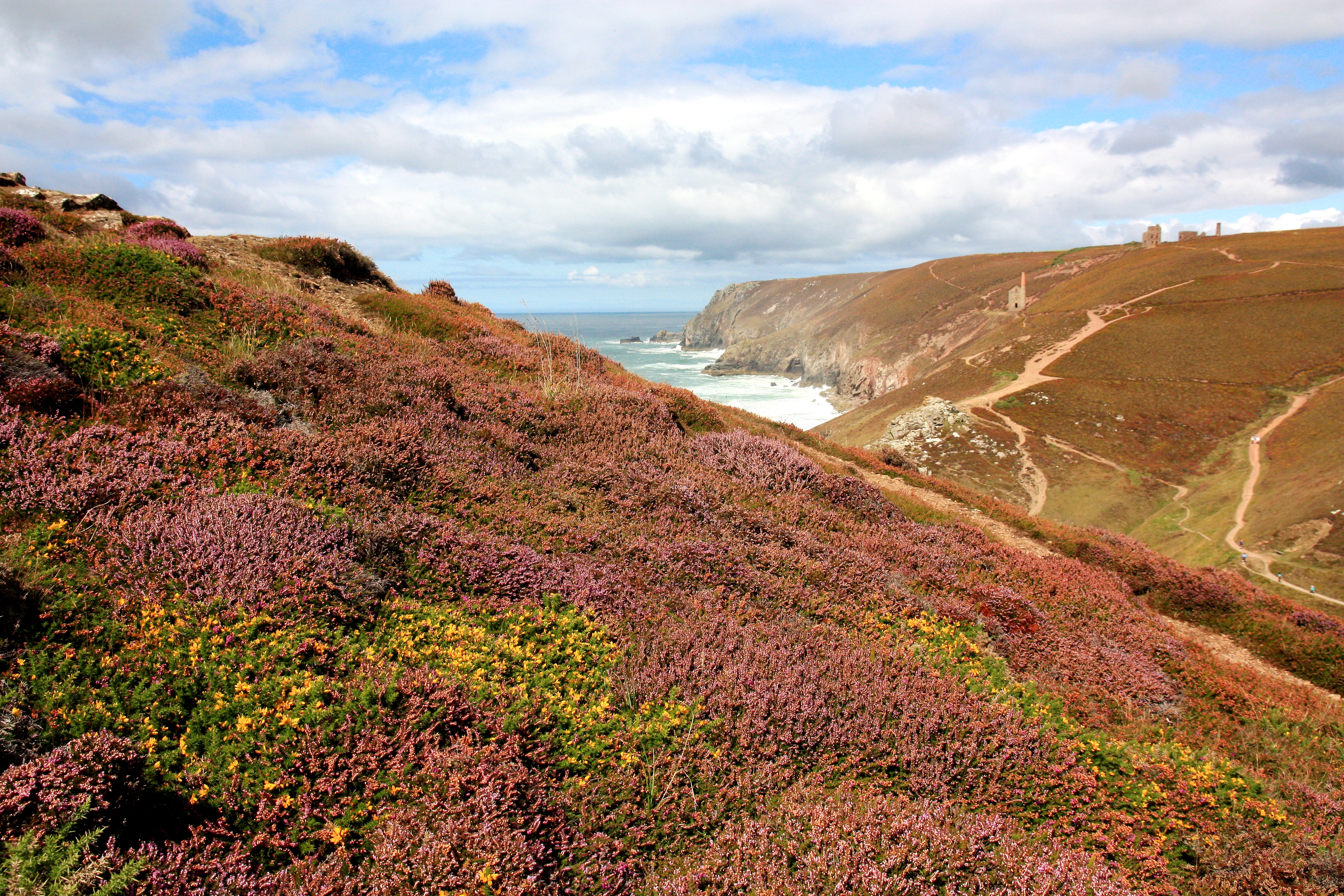
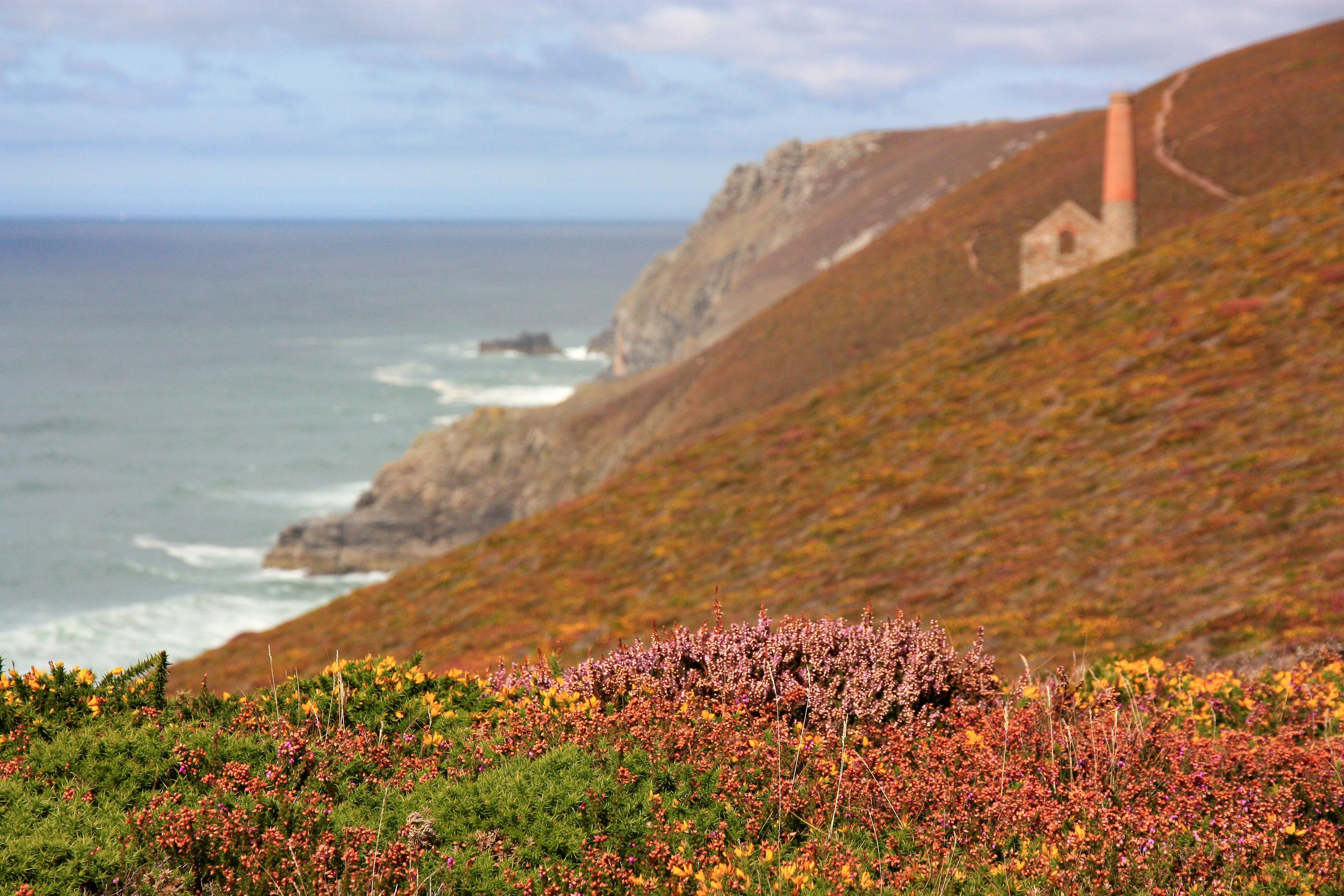
Up over St Agnes beacon, the north coast view stretches down to St. Ives and, heading in this direction, I found myself clocking up a new section of path leading towards Porthtowan. The main features along this typically wild and rugged stretch are the old tin workings and mine buildings of Wheal Coates. If North Cornwall can be summed up in one scene it is from here, which probably explains why it featured as the cover image for Ginster’s Pasties. And I had a sausage roll, tut tut!

ukA11

ukA12There was a point into this walk that something quite unexpected happened. I was feeling a little hot. Yes, the sun was well and truly out and I was able to covert my convertible trousers to shorts, roll down my black socks a little, and bare some leggy flesh. I applied sunscreen, wore a hat, and, by time I reached Porthtowan, felt long overdue an ice cream. However, no sufficiently suitable ice cream was readily available near the beach and I settled for a cold beer instead to happily wind down the time until a bus back to Truro.

ukA14The North Cornwall Walking Wondrousness Trip pretty much meant that the Westcountry bucket list had been amply satisfied. The final day down there offered a bonus with a family day out on the train to Looe. It’s not so far from Plymouth but the journey provides a reminder of the lovely countryside of southeast Cornwall and on the branch line to Looe it could still easily be the 1950s. Looe itself offered its reliable fill of narrow lanes, fish and chip smells, bucket and spades and, for me, one final and very commendable pasty! Again, there was something approaching heat, meaning that shorts – if I had them with me – would have been more than acceptable in the afternoon.

ukA15

ukA13The train ride back offered that final hurrah and farewell to Cornwall, resplendent and verdant in the late summer sunshine. For once, the same could not be said of Devon, as I departed the following day in a somewhat murky, drizzly air. I missed seeing the white fluffy clouds and whiter fluffier sheep, the glimmering Teign estuary and glass sea of Dawlish. Even so, it was again sad to leave, the murk reflecting a melancholy that drifts along to Exeter. The holiday is not over, the visits and sights await, and there are more cherished friends and family to see. But it does feel that a holiday within a holiday, a homecoming within a homecoming has drawn to a close once again. ‘Til next year.

Food & Drink Great Britain Green Bogey Photography Walking

Where the grass is always greener

uk01Rain. We give it a bad rap. Wet and splodgy, irritating with its inescapable shroud of damp. An unwanted present from a dreary sky, sent to make boots muddy and ruin plans best laid. A shocking contrast from the sun in Spain that was 20 degrees warmer. But then surely rain is what puts the Great in Britain, our reassuring companion, along with tea and cake.

uk02It is fair to assume that Basingstoke and rain are hardly the most riveting bedfellows, but shops are shops and people are still wearing shorts to go to Tesco. It is hard to let go of the summer and, just for a moment, it returns on a Sunday afternoon at The Vyne. Here, amongst the moist muddy tracks are the autumnal fruits of summer – fungi cascading down mossy brown trunks, spiky green pods spilling out with chestnuts, leaves wafting down onto the ground, coating the forest floor in a layer of browns and yellows. All helped by that cursed rain.

uk03

uk06bRain is no stranger to the southwest of England, as Atlantic fronts begin to form; waiting in the wings to blow in on winds, some strong enough to bring down trees. This is the season where a night can be dramatic, and the next day as placid as a hippy doing yoga on a fluffy white marshmallow. Air blows in clean and fresh and the lowering sun in the southern sky illuminates the greens-turning-brown on magical days.

Magical days are easy to come by in St Agnes, sitting tucked in on the north coast of Cornwall; a prized position to make most of the sun, and the rain, and that wind when it blows on in. Like so many Cornish towns it totters down through a maze of narrow streets to a beach; there are a few pokey shops and – it turns out – a blessed bakery serving the type of sausage rolls I have craved in my mind since seeing one snatched away for someone else’s consumption last year in Hobart. Proper good sausage rolls that are hard to come by in Greggs and Warrens and anywhere in Australia other than one place in Hobart. Possibly.

uk04

uk05Unlike more genteel parts of Cornwall, the landscape here has a raggedy rugged edge to it, peppered with tin mining relics, tinged with a faded glory scoured by eternal weather. The coast path is solid and spectacular, as it always is, heading along to St Agnes Head with views north to Trevose and south along a wave pounded coast towards St Ives. Higher up – atop St Agnes Beacon – an even mightier panorama unfolds, with most of West Cornwall on view, and St Agnes nestled down below, reached by muddy field to complete a memorable circular.

uk06

Magical days are harder to come by holed up in Plymouth library trying to make something up that is of a work-related nature and popping out for mediocre coffee in the hope that just for once it may not be mediocre. Even mediocre coffee can be a welcome distraction though, so when the cloud clears and a sunny afternoon pops up out of the blue the allure to escape is palpable. Luckily there is a very quick escape from the varied charms of Plymouth, by taking a bobbling boat across the Tamar to Mount Edgcumbe.

uk08Here, the meander of autumnal woodlands and fading gardens give way to exposed hilltops, looming high over the Tamar with views spreading out to encompass a Cornish and Devonian sea.  Inland the wide river flows into a border landscape of patchwork fields and secret inlets, punctuated by towns and villages and giving out to rising moorland hills. Herds of deer scarper into nearby woods, aware of your presence and no doubt cognisant of the fact that you would quite like to see some good old fashioned autumnal rutting. Instead, the view will suffice.

uk09

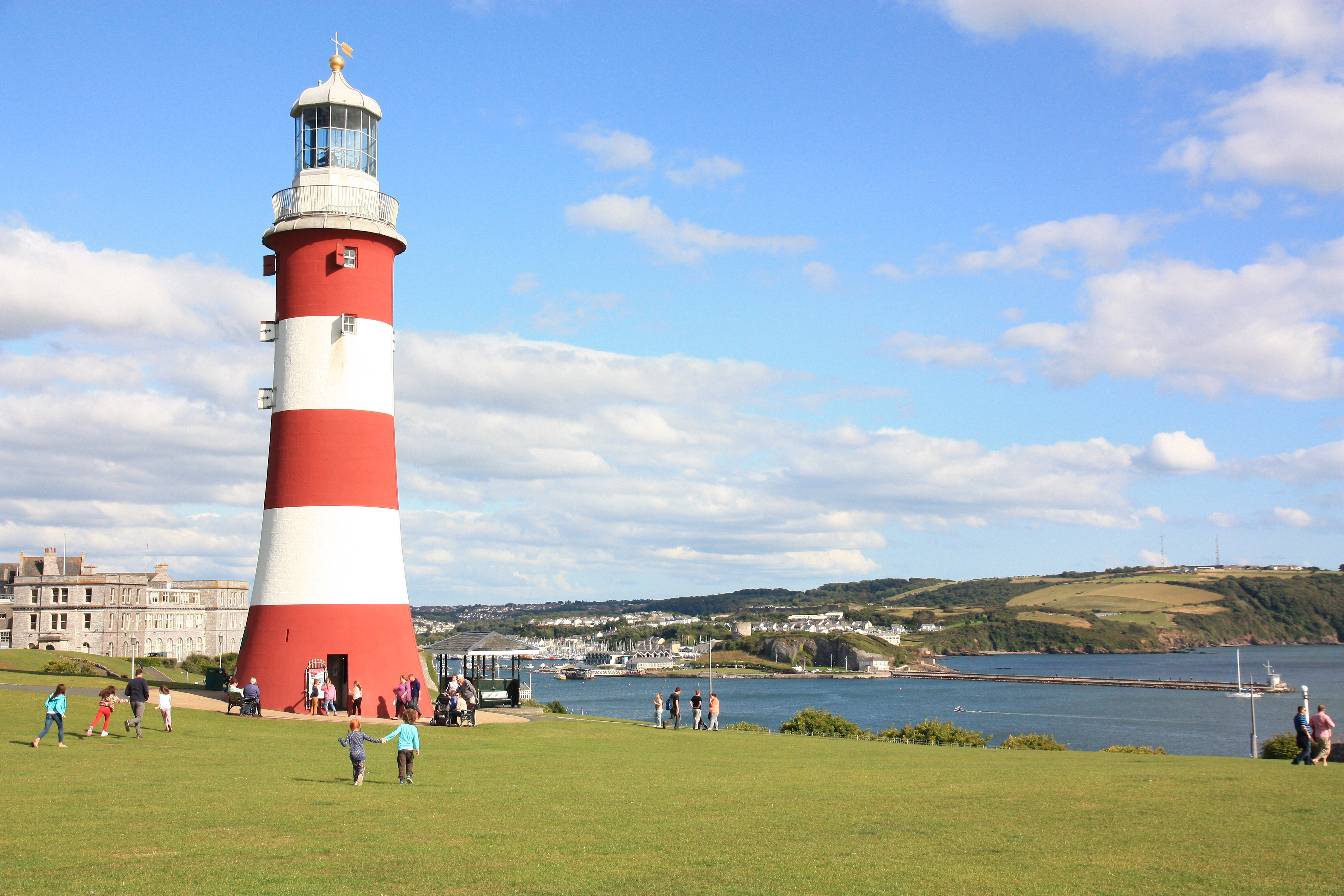
uk07Plonked amongst this idyll is the city of Plymouth, with rows of houses running like dominoes over the lumpy contours of the suburbs, meeting cranes and boats toppling into the river. Its waterfront welcome mat is striking with the Where’s Wally striped beacon of Smeaton’s Tower and a wheel that looks even bigger from afar. Illuminated is a background of moorland, sweeping over the horizon. It is here that you can appreciate the quite blessed setting in which Plymouth sits. Yeah, the city might be a bit crummy and tatty in places, but a turnip growing in a field of flowers is better than a turnip growing in a pile of shit, right?

Another philosophical conclusion I have come to over the last few weeks is, when situated in this part of the world, even when the day is crap, you are having a stinker, work sucks, and other such things, there is the consolation of easy access to clotted cream, jam, scones and tea. This can make a bad day amazing. At Mount Edgcumbe it made a good afternoon sublime.

uk13The hills behind Plymouth spread afar into Dartmoor National Park and this represented what was to become my final outing into the virtual field of flowers surrounding the city. A circular walk from Yelverton offered a perfectly balanced English country composition of riverside woodlands, sheep and cow fields, tumbledown cottages and exposed tors. This amble on the fringe of Plymouth was a pretty decent way to bid it all farewell.

uk11

uk12Spending time here, intermittently from August to November, has obviously allowed me to observe the changing seasons take effect. What once was an uninterrupted blanket of flourishing green is now softening, holes are appearing, and things are shrivelling. A golden brown is slowly but inevitably creeping into the landscape and soon even this will become more spartan and altogether less comforting.

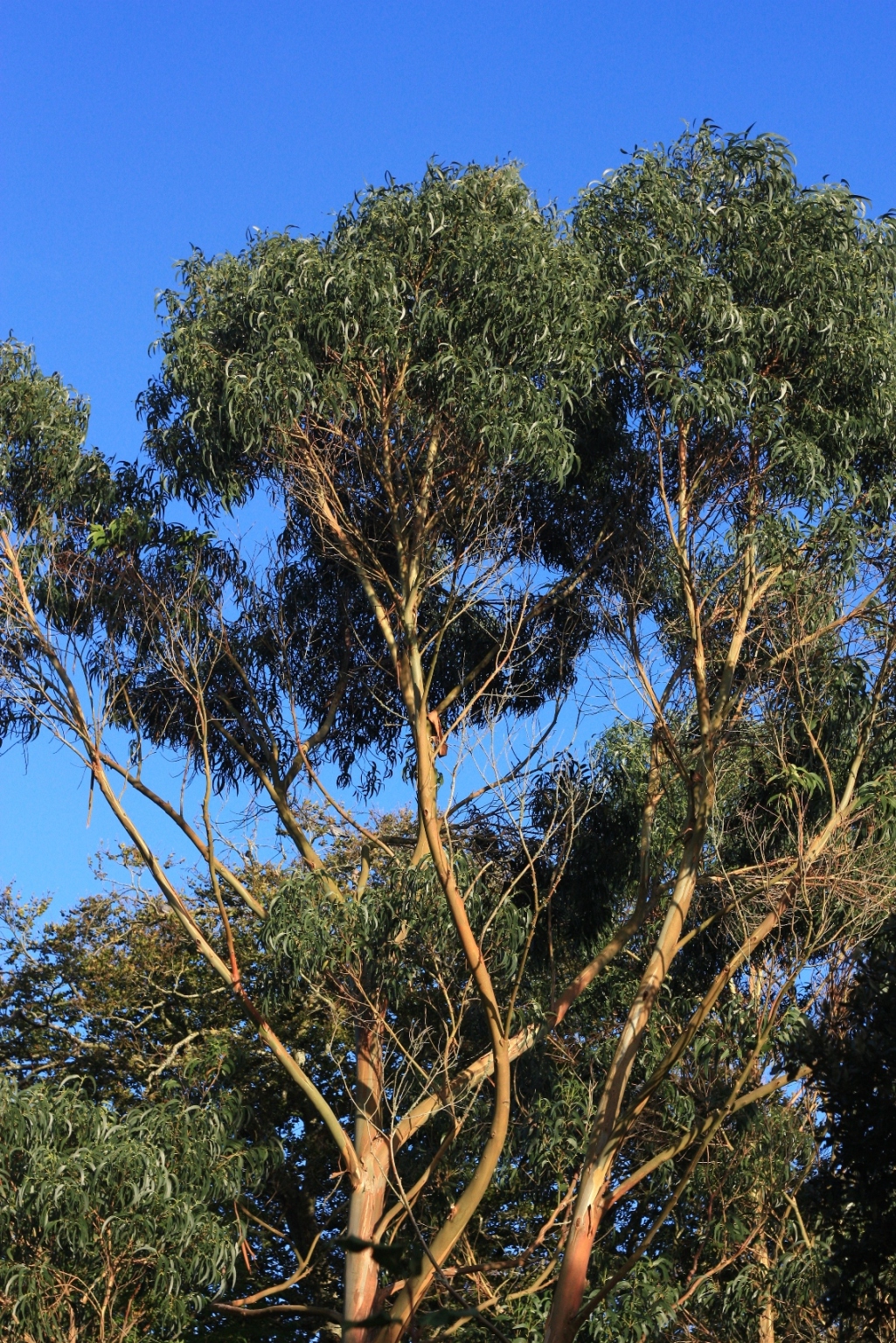
uk14And as the leaves disappear from the trees my southward migration kicks in. It has become a customary route over the last seven years, this time a little later after a little longer than normal. It leaves me with mixed feelings; sad to be leaving one place and excited to be heading to the other. It’s a feeling that comes to life when marvelling in the grand autumnal splendour of Mount Edgcumbe only to come across a couple of Eucalyptus trees shooting up into clear blue sky, aliens in a foreign land. For a moment I am transported, wrapped up against a southwest autumn and looking up at the promise of Australia. The best of both worlds, where leaves do not fall and a cream tea is just around the corner.

Green Bogey Photography Walking

Southwest bits blitz (1)

It may be a product of sustained transience but the chance to drop anchor for an undefined period in a familiar place has been of great appeal. And so here I still am – Plymouth, Devon – and only twice so far have I pined for the other side of the world. Once I was in Starbucks and had a drink that had the front to be called coffee. The other time, some dreadful nincompoop and his bumbling mates were taking over Australia, and while I was not missing the crowing and hollering, my inner nerd was bereaved of two party preferred counts, the swings, the coloured maps and the abject head-shaking of democracy where a mandate is claimed when less than half of the population vote for you and, even those who do, probably do not agree with 100% of your policies.

Still, I do intend to return to the country despite a change in the people who nominally run it but don’t really do much at all. You see, at some point here the weather will get continually miserable and the people will get more miserable and I will get miserable with the miserable weather and the miserable people. And then I can return to the land down under which is so fortunate it forgets how fortunate it is. But the people there won’t be miserable because they got what they wanted.

sw02Plymouth can be incredibly miserable but at the moment there is a prolonged ray of sunshine that transforms even the dodgy concrete alleys filled with rubbish bags into an artistic postmodern composition of urban life. The crazy drunks walking the streets become salt of the earth characters and chavved up pram pushers on the bus make for a colourful melee of handbags and hairdos. I’ve heard it said that Australia is just like Britain would be with good weather; not exactly, but the weather can do wonders for a place.

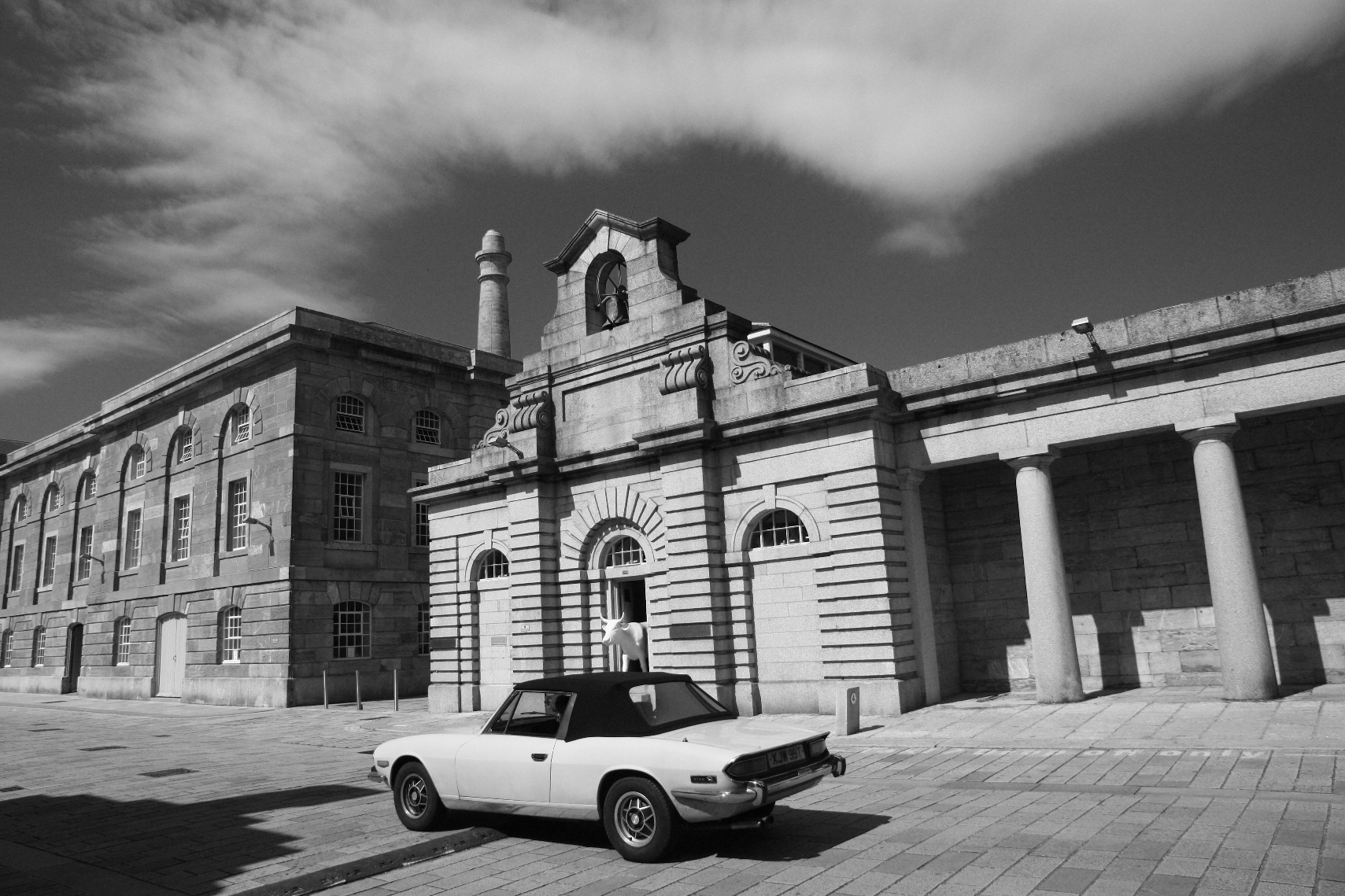
The familiar abounds but every time I return there are incremental changes to the city. Royal William Yard is an obvious one and I have been impressed by the conversion from disused naval quarters to swanky flats and waterside cafes. Devil’s Point provides the picturesque walk to burn off jam and cream filled shortbread from the bakery, and something approaching an alright cappuccino is available on occasion.  On my first visit, in warm Sunday sunshine, I had the momentary feeling that I was back in Australia such was the sparkle, the relaxed buzz, and general air of wellbeing. I even had a flat white, but this was very English.

sw01

sw05Part of the familiarity re-familiarisation process is engaging in the foodstuffs of this part of the world. The issue is, the longer I linger, the less I can justify filling my face. On day 1, cream tea on Dartmoor was ticked off and clotted cream has re-appeared on a number of other opportunities (like when I made treacle tart, yum yum!). But I have also been back to Dartmoor and not eaten cream – something that sounds like progress. Meanwhile Dartmoor continues to captivate through its moods and sweeping vistas.

sw04

sw03The Cornish pasties have bubbled to the surface like oozing hot steak juice through a pastry crust, though only infrequently. Almost every single one I have is a disappointment unless it is from Pengenna Pasties. On which note, I am pleased to have paid a visit to Bude where the queues out of the door and mass munching in the town square are a sure sign of Pengennirvana. This was the undoubted highlight of a bank holiday Monday, which was a reminder of what a bank holiday Monday is all about. Traffic queues, parking hassles, gritty sand packed with feral children and people from Wolverhampton going red in the twenty degree heat. I didn’t really enjoy Bude apart from that pasty.

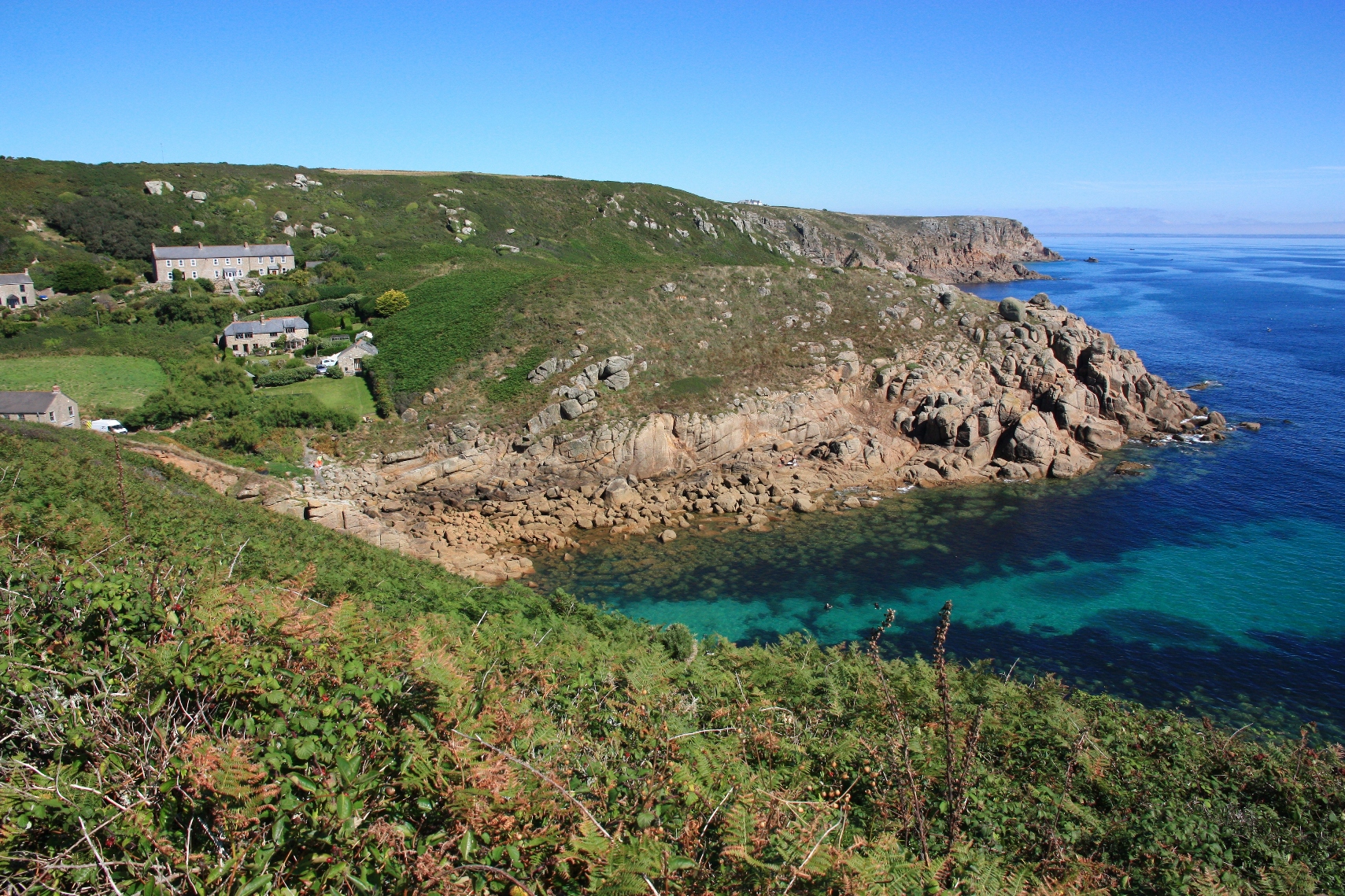
By contrast another day trip in Cornwall ranks as one of the best I have had this year; a year which, I remind you, has encompassed a tour of New Zealand and a scenic meandering across Australia. A piddly train to Penzance doesn’t rank up there with the journeys but then an open top double-decker through the narrow lanes and warm sunshine of West Penwith brought a sense of adventure to the trip. And this delivered me to Porthcurno and a scene to celebrate, a landscape bejewelled in sand and seas bedecked in a stunning clarity and rare calm.

sw06

sw07This is the pointy end of Cornwall, the pointy end of Britain, and if anyone thinks Britain is a drab, miserable place, well…stick ‘em with the pointy end. This is country best explored on foot, on that magnificent coastal path, a path I followed for seven miles or so around Land’s End and on to Sennen Cove. It is stunning country and every minute was marvellous. Of course, you have to put a little asterisk here and acknowledge that the sun shining makes a world of difference. But even on dank, foggy days or, better still, stormy windswept occasions, it is a natural wonder.

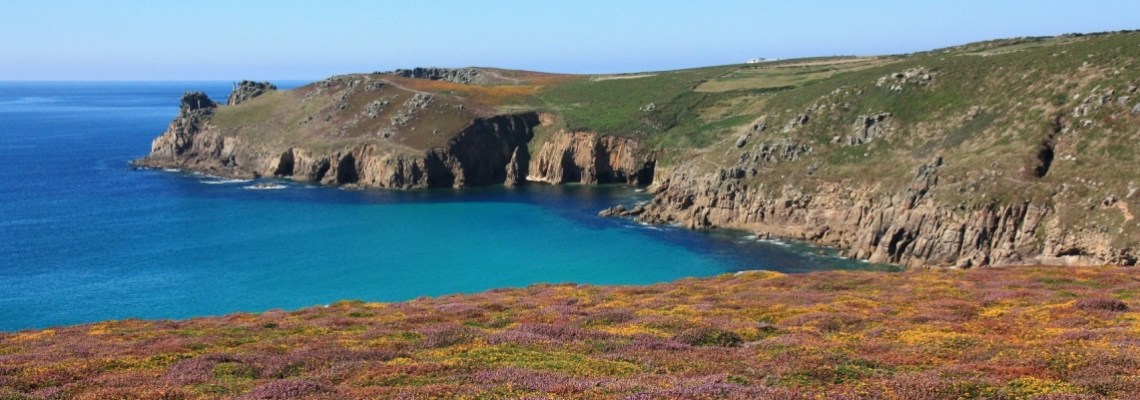
sw08The coast path along here turned out to be pretty good walking too, only dipping down to a cove and climbing arduously up again about four times, which isn’t that bad for Cornwall. A lot of the time you can just follow the cliff line, strolling upon high overlooking clusters of volcanic rock tumbling into clear blue seas, where the occasional trio of seals bob along and seabirds glide on warm air.  Around, the exposed heath is a colour of gorse and heather, a purple and gold that could quite justifiably replace the black and white of the Cornish flag.

sw09

sw11A blip of sorts pops up at Land’s End. While the coastline is appropriately craggy and exposed, the necessary touristification due to popularity takes away a bit from the surrounds. So there are eroded paths down to see grumpy farmyard animals, shops selling fudge made in Wales and tea towels made in China, arcade machines to play and One Direction posters for sale. There are doughnuts and beer and ice cream to buy. Stop. Ice cream. I’ve been walking five and a half miles. Ice cream. It’s mid afternoon. Ice cream. I deserve ice cream.

sw10

Expecting lame, rip-off ice cream I remember it quite fondly as not being particularly lame or too much of a rip off. A popular Cornish brand it had enough creaminess to see me over the last substantial hummock of the path before dropping down to Sennen Cove. I remember coming here about ten years ago, on a mild but foggy old day, the cove sheltering a fine sweep of sand intermingled with cottages and boats. It was deathly quiet then, a sure contrast to today.

Today Sennen was St. Tropez, but thankfully the beach stretches beyond the comfortable confines of the car park. Once over towels and tents and through ball games, the beach widens and empties. The sand is genuinely sandy and the water a clear shade of blue. Surfers attempt to do something in the lumps and bumps of wave that exist on this breathless day while lifesavers watch on. Yes, it is, almost, Australian.

sw12

It’s kind of funny how I look out for a touch of the Australian in Britain and when in Australia the opposite happens. I presume it’s the whole have your cake and eat it syndrome. When both do come together – like in the creamy green hills around Kangaroo Valley or the sunny, civilised sands of Cornwall – it’s something of a marvel. And while misery quotients and government philosophies reach common ground there is little to distinguish one over the other. For now.

Great Britain Green Bogey Photography Walking

Cream

I grew up in Devon, England. On paper it may sound idyllic for Devon surely conjures images of rolling green hills and tinkling rivers, bobbling their way down to the sea past thatched cottages and fields of sheep and cow [1]. The image is ingrained on a can of Ambrosia custard, a can which may be spotted overflowing from a pile of black bin bags in a grimy back lane of Plymouth, Devon, as I endeavour to find the shortest route home from school, avoiding the dog mess and scary people hanging around the dreary Thatcher-era jobcentre. The can is eventually collected by a wearily underpaid and grizzled local, transporting it by diesel truck to a stinking pile of garbage, where seagulls scavenge for bits of leftover pastie and people scavenge for usable second hand furniture and car boot trinkets. When it comes to custard cans, what you see is not exactly everything that you get.

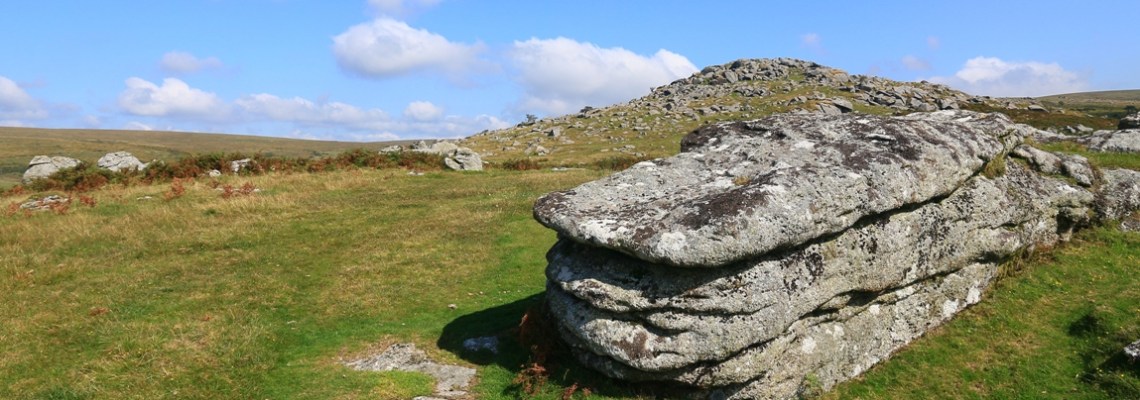
That is not to say the custard can is a total fabrication, and the idyllic Devon does exist in spades, particularly once you get out of some of the more run down parts of its towns and cities. Within fifteen minutes of that cobbled back alley I can be on the edge of Dartmoor, with the rolling hills spanning ever higher until they become barren and sparse, topping out with crumbling rocks that eventually give up pushing their way out of the earth and tumble downwards over the steep hillside, like a very very slow moving volcanic eruption of granite. Here lie rocks that I once had the dubious pleasure of measuring for a geography field trip on the kind of day where misty rain sits stagnant in the air and soaks you to the bone. Still, it was so worth it to learn that there was some correlation between the size of the granite rocks and their position on the hillside [2].

By now you may be thinking this is all rather nice but what has any of this got to do with the letter C? It all seems to be a bit D like, rambling on about Devon and Dartmoor. And while there is something to be said for a double D it is not conducive to the order and logic that you have set yourself with this quite possibly pointless time-wasting task of writing something about each bloody letter of the alphabet like you are some magic floating pencil on Sesame Street. However, to you naysayers I pronounce that it is a truth universally acknowledged that when I return to Devon from wherever I have been lately I make a beeline for one thing: cream. Thick, yellow dollops of local clotted cream, with jam and scones and tea, or treacle tart, or ice cream and raspberries, or, well, just about anything. This exercise is not solely restricted to Devon, and the county of Cornwall can also be cleverly incorporated. Cornwall, custard cans, cream, coagulated coronaries. That’s clearly more like it.

Though I could lovingly list out the top ten cream tea moments or some such, I want to first draw out an expanded definition of creaminess, without degenerating into smutty innuendo too much. I think creamy can be appropriately used as an adjective to describe the landscape of Devon and Cornwall as it can nowhere else, in its cosy seaside villages, its wooded river valleys and rolling quilt of comforting green hills. In a Fifty Sheds type way [3], you can definitely have a ‘creamy’ experience, squeezing through tight country lanes to go for an invigorating stride in the countryside, butterflies and bees milling about in the dappled sunlight as tits and warblers penetrate the air. This is a rich and verdant landscape that produces, and is thus encapsulated, in that dollop of smooth, silky heart attack.
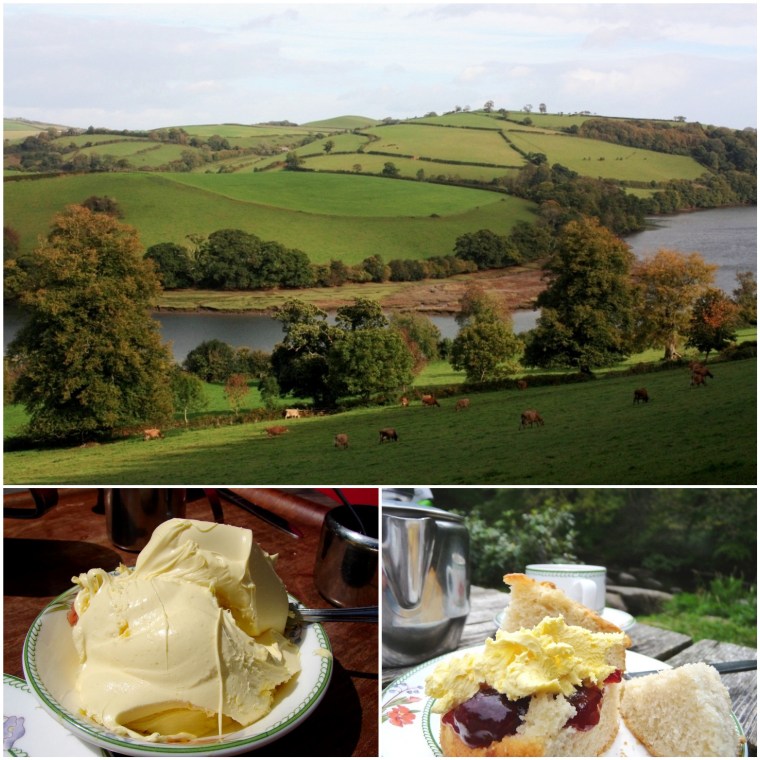
Creamy collage

Incidentally, I love how, being at the extremes of the country, Devon and Cornwall have taken cream to the max by making it ‘clotted’ or, if you like, ‘extreme cream’. I think there is an embodiment of local spirit and independence here, the fact that some bumpkins have done something a little against the grain, taking unpasteurised cream and simmering it and skimming the very richest part off the top for themselves. They have undoubtedly created something to be targeted in future obesity campaigns and crackdowns by Brussels Bureaucrats as writers to the Daily Mail letters page would have us get in a flap about. But I don’t think they will get anywhere, for locals will resist in a barrage of fine Westcountry accents: “Arh sod it, a lil bid a cream wownt urt yer now, willett?”

If I was to pick one spot in Devon that is particularly creamy to me (though I should caution, not in a cream my pants sense) it would be the small village of Noss Mayo. It’s only a short jaunt from Plymouth but another world entirely; a cluster of cosy coloured cottages cascading down a narrow wooded valley to meet the gently bobbing boats on Noss Creek. Here lies a starting and finishing point for a fairly easy yet delightful walk that captures an archetypal, timeless Devon. There are country lanes rising past fields of sheep and hay and dotted islands of buttercups. There is the coastal headland, from where you can look far down to splintered rock fingers reaching out at the shimmering blue water. There is the estuary and river, which is fringed with copious, flourishing woodland, and then the creek itself, upon which sits a perfect pub. The only thing lacking – ironically – is a cream tea, which the pub never seems to offer, though a cider is recompense, especially since it too handily begins with a C.

Noss Mayo

For a full on Devon Cream Tea there are some fond memories past, but for a regularly reliable, convenient experience in a still quite blissful setting it would be hard to beat the endeavours of the Badgers Holt Tearooms on Dartmoor. At something of a tourist honeypot on the River Dart, here they simply make the cream the star, with scones and jam mere portals for the thick pale yellow cream piled high in a china bowl. A similar experience more off the beaten track – though I cannot vouch for its reliability having only been there once – was found at the Fingle Bridge Inn, visiting a few years back with my brother and his partner on one of our once regular cream-seeking excursions.  We would go on these day trips for a good walk and some sightseeing, though secretly we all knew it was mostly about the cream tea and the other things were just diverting time-fillers!

Alas such creaminess is rarer these days. Being based in Australia will do that, where a Devonshire Tea frequently comes with squirty cream from a can (I kid you not!), and variations of ‘Australian style’ clotted cream are more milk-like than anything else [4]. The problem is the antipodean distaste for bacteria, by way of unpasteurised milk products, which I assume are considered a risk to the unique flora and fauna of this nation. So, rather than enjoying a fine cream tea and letting microbes run riot through the wild streets of Vaucluse, we destroy the country by pillaging its resources and selling them all on the cheap to China. Times have moved on. It is, after all, the Asian Century.

A redeeming feature of Australia is that they do generally make good use of cream when it comes to a Pavlova. In fact, the Christmas just past provided a perfect example, confirming that you can never have too much cream on a Pavlova because there is fresh fruit involved and that is healthy, right? Other countries too do not fare so badly. In Slovenia, there is Bled cake, which practically involves three inches of whipped cream sandwiched between two light pastry layers. In France there are any number of pastries involving some intricate creamy surprise; or think of Crème de Chantilly atop a Mont Blanc size ice cream. And in Switzerland there is La Crème de Gruyere…

 Gruyere

Gruyere is noted of course for another dairy based product, which itself could form an entirely different and probably more entertaining entry under the letter C. And true to form I will fondly remember the fondue in the immaculate medieval town square and the odd, and thus very Swiss, self-guided tour though the cheese factory [5]. Gruyere feels a bit like a concocted Swiss fantasy, designed atop a hill to lure cheese eating tourists. Surrounding mountains are not as grand as elsewhere, but offer a teaser of what lies beyond, a more manageable scene of hills and lakes, vines and meadows, rather than the eye-goggling and neck bracing spires and hulks of the high Alps. It has its requisite fill of castles and churches, courtyards and window boxes, cafes and gift shops. It is, then, perfect coach tour day trip territory.

It was partly a result of arriving early to miss most of the hordes that my brother and I found ourselves with time to spare before it could be deemed acceptable to eat lunch and drink wine. It must have been before eleven or something. Having explored all that the town had to offer, walking from one end to the other, even down a little out of the way to a church, and climbing town walls, and still with time to kill, we headed to a cafe that looked like it was kind of open maybe; well, at least the waitress let us in though without much of a welcome. A coffee was a good call (now there is another C I could write about with very much less detriment to Australia). This was nothing special in itself, very un-Australian in fact, which makes sense given we are in Switzerland remember. But it did come with a little chocolate cup, filled with this Crème de Gruyere stuff.

At this point the mind plays a trick as it’s naively thinking, hmm, this could taste a little weird, I mean Gruyere cream, Gruyere is a cheese, right, and this is cream from it or something, like the dregs once all the lumpy bits have been squeezed out?! I doubt if this is anywhere near true, but that’s what the mind associates with Gruyere. The stupid mind needs to stop being so lazy in its word association and just think that, well, actually, it’s just another product from those very well cared for, loved and happy cows chewing those lush meadows with the flavours of 31 different grass, herb and flower species or something. It only turns a little cheesy when you buy too much to take home and it gets neglected after a few days because you have been snowed under eating far too many other treats, many of which are also dairy based. Calcium deficiency cannot be a problem here.

Anyway, it was a delightful little nugget in a delightful setting, which is often the case with the best cream based experiences. Perhaps this stems from being able to appreciate a direct link between your surroundings and the produce in front of you; in fact there may even be cows mooing in the background as you collapse with a blocked artery and the ambulance arrives. The cows keep on mooing regardless, continuing to produce a very basic ingredient that is turned by man into all sorts of delight. I think good cream is a result of good country, happy, contented animals and people with respect for traditions and tasty food. Traditions such as jam first then cream, or cream first and…or… well, who cares, just whop it on there and shove it in your mouth me lover. That’s how we do it in the Westcountry.


[1] Lately, some of these tinkling rivers have grown to large brown lakes, cutting off Devon from the rest of the world and, sadly, inundating many homes

[2] Smaller rocks had managed to flee further down the hill. I think. The mist made it hard to tell, not to mention the 25 years that have since passed.

[4] One notable exception is from a small dairy in Tasmania, whose name I am not going to mention for fear of their products always being sold out when I look for them.
[5] Completing the clichés that day were a mountain cog train ride and chocolate factory tour. It was thus an amazing day.
Links

Oo-ar, it’s ambrosia: http://www.ambrosia.co.uk/range/ambrosia-devon-custard/

Dartmoor granite, tors and clitter: http://www.dartmoor-npa.gov.uk/learningabout/lab-printableresources/lab-factsheetshome/lab-geologylandforms

The Ship Inn, Noss Mayo: http://www.nossmayo.com/

Badgers Holt: http://www.badgersholtdartmoor.co.uk/

The Fingle Bridge Inn: http://www.finglebridgeinn.com/

La Gruyere: http://www.la-gruyere.ch/en/

Mastering the art of Jannery: http://www.chavtowns.co.uk/2005/02/plymouth-the-janner-textbook/

A to Z Europe Food & Drink