Devon slices

The eternal battle between Devon and Cornwall hinges on the correct approach to bedeck a scone. Cream then jam, jam then cream? Does it really matter when both are so god damn delicious? Well, clearly the answer is yes and, clearly, Cornwall wins.

It may seem a trifling matter, but the fight for sconepremacy reflects something far deeper in the southwest psyche. That is, which is the better county? Unlike the scone debate, this question cannot be so easily resolved. In my mind at least it is on a par with assessing the merits of England and Australia and as complex as Tony Blair being the logical person you’d hire to bring about peace in the Middle East. And you know what, I think the answer to this conundrum may be to appreciate each as equals, and revel in the fact that they are both pretty good anyway, particularly as scones are plentiful in whichever county.

For balance only the leftist BBC conspirators could dream of, let me now present some recent evidence for the case of Devon (given my last entry was Cornish). Specifically, the southern and western part of Devon within reasonable proximity to Plymouth. The other stuff doesn’t really matter, mostly because the pong from Exeter ruins it. And this is the stuff that is close to home.

The best mayo:
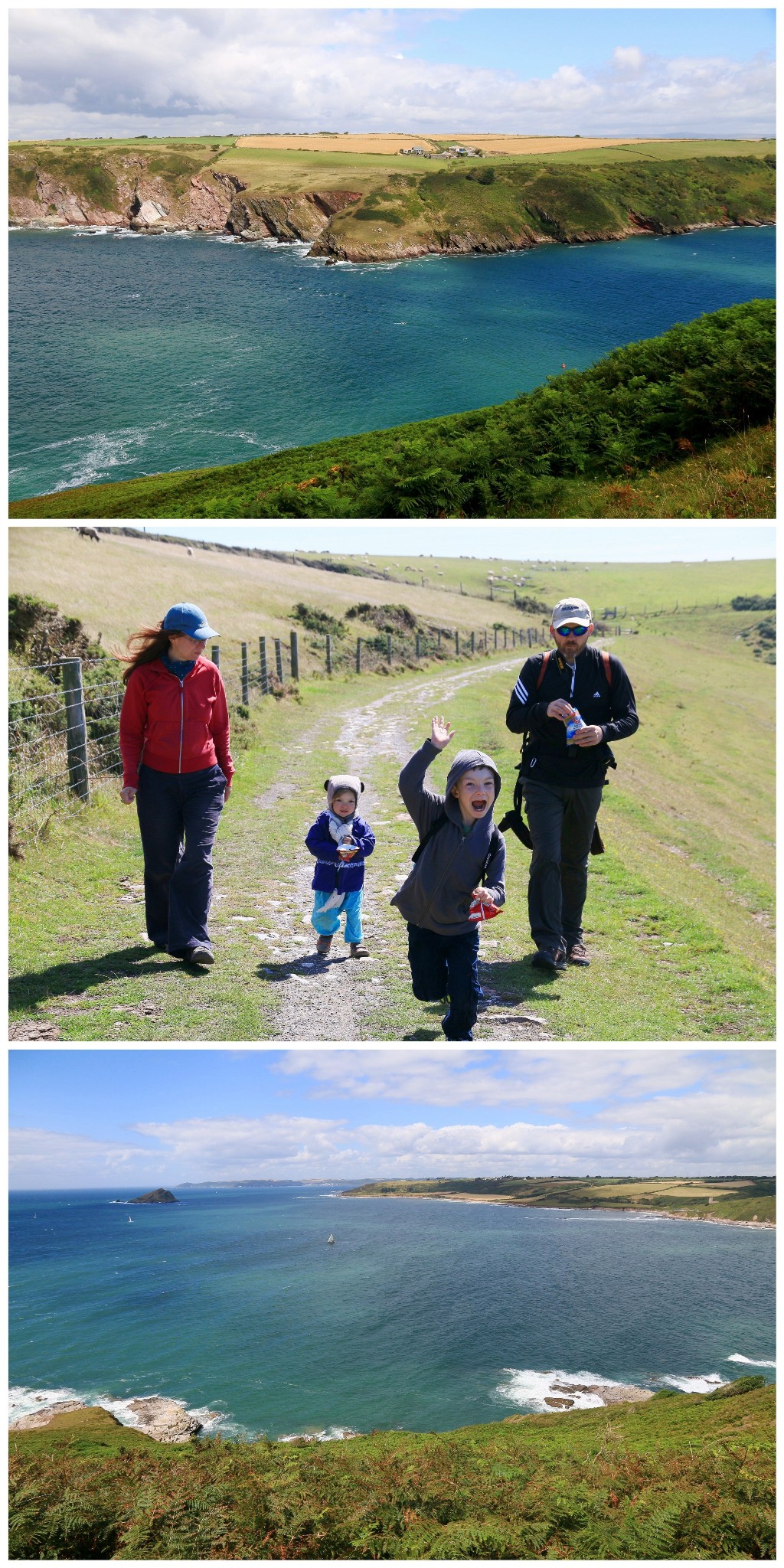
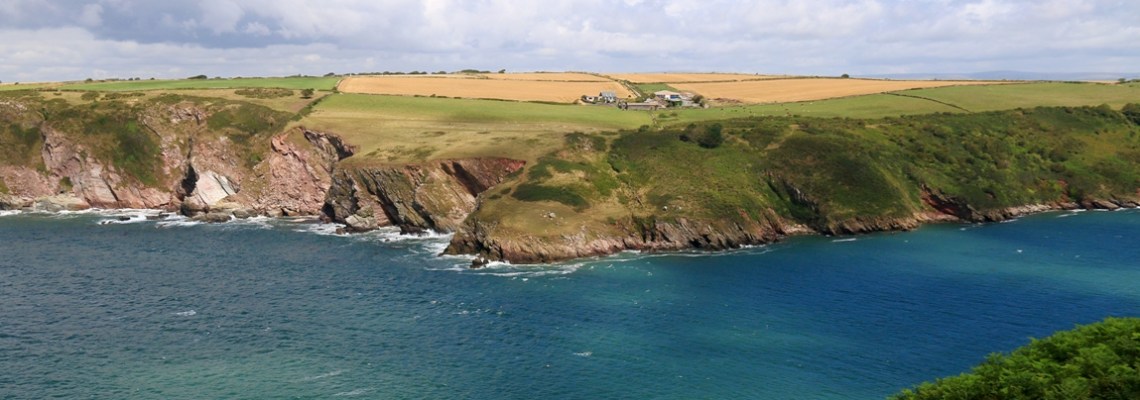
dev01Hellmans and Simon despair, for Noss Mayo is the winner and may well take out loveliest village in Devon competition. Just a short run out from Plymouth via a maze of ten foot hedgerows, it’s a place of peace and serenity and that colourful bunting that is just about in every village in the southwest. Cottages with names like Anchor’s Rest and Primrose Lodge scatter haphazardly down to the water, while home grown asparagus sits next to an honesty box and a bowl of water for passing dogs.

dev04An additional perk of Noss Mayo is the perfectly blended walk of seaside cliffs, creamy pastures, flourishing woods and boat-a-bobbing creek. A loop walk that can – should you wish – be completed at a relaxed, ambling pace. Just watch out for frenetic foreigners high on sunshine and the scent of silage.

dev05

dev06Oh, and did I mention there’s a pub? I probably have, several times in the past. It’s positioned perfectly towards the end of that walk, at the heart of the village, jutting out into the water (or…at low tide, the slightly less idyllic mud). The pub is arguably the jewel in the crown of Noss Mayo and I can now recommend the fish and chips as well as the selection of ales. Experience suggests this may not assist the final climb back up to the car, but it will likely have you coming back for more.

A nice set of hams:

Outside of Noss, there could well be many other contenders for Devon’s loveliest village yet to be discovered. It’s a fair bet that a bulk of these will also be in the South Hams, the luscious, rolling countryside tumbling down from the moors and into the glittering ocean. Various rivers cut their course through the hills, passing thatched roofs and church spires on their way out into the sea, itself fringed with shallow sandbanks and undulating dunes.

dev09Of course, the weather cannot always be relied upon to generate the picture postcard that I have so feebly conveyed. And when the sun does shine in summer, the village of Modbury can transform into a car park. Beaches such as South Milton Sands become busily popular, but there is enough room to play cricket and tentatively wade into the inviting but tepid ocean. Escaping humanity remains a possibility, with the ever glorious southwest coast path providing hope to reach Hope. Meanwhile, the increasing proximity to Salcombe means that the ice cream from its dairy becomes commonplace.

dev08

The loveliest village could actually lie along the stretch of road between Kingsbridge and Dartmouth in the South Hams. The problem is that it is difficult to assess, since negotiating each village by car requires a shot in the dark, following by a wait and a reverse, and a punt around the next corner before a tractor bears down on you followed by an unfeasible double decker bus, which is wedged in next to the pub that would be nice to have an ale at if there was somewhere you could park and be able to get out again, without hitting any ramblers lurking in gargantuan hedgerows. Despite its obvious perils, driving on this apparent A road is marvellously endearing.

dev11I think it may be nine miles from Kingsbridge to Torcross but it can feel five hundred, and five hundred more. Torcross sits at the southern end of Slapton Sands, so named because the sands were obviously slapped on a ship and sent miles away, leaving only pebbles and more pebbles. Smooth and colourful and cleansing, they lend the seascape a pristine hue, and – if you don’t look too closely – the beach does appear as though it could pass muster in Australia.
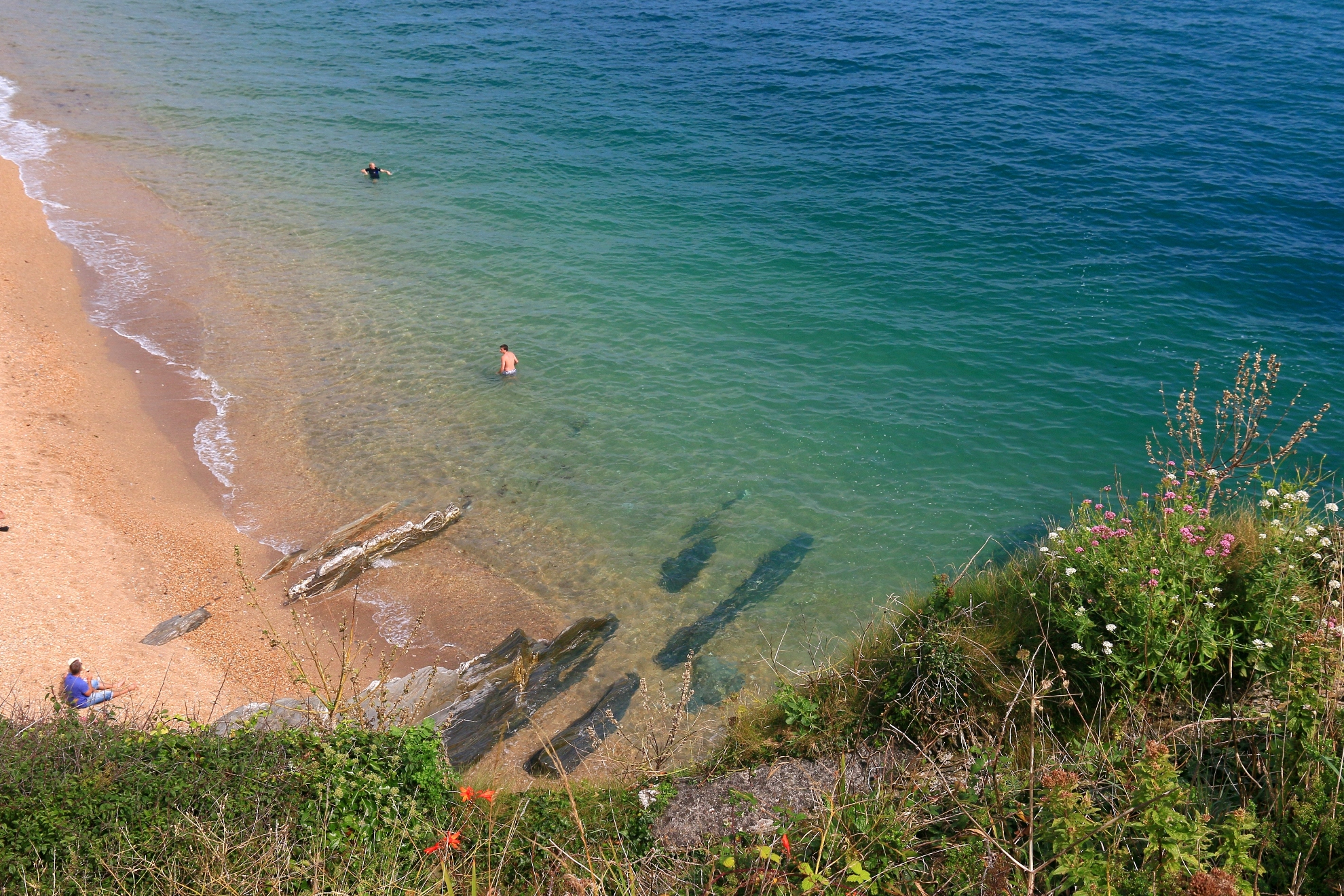
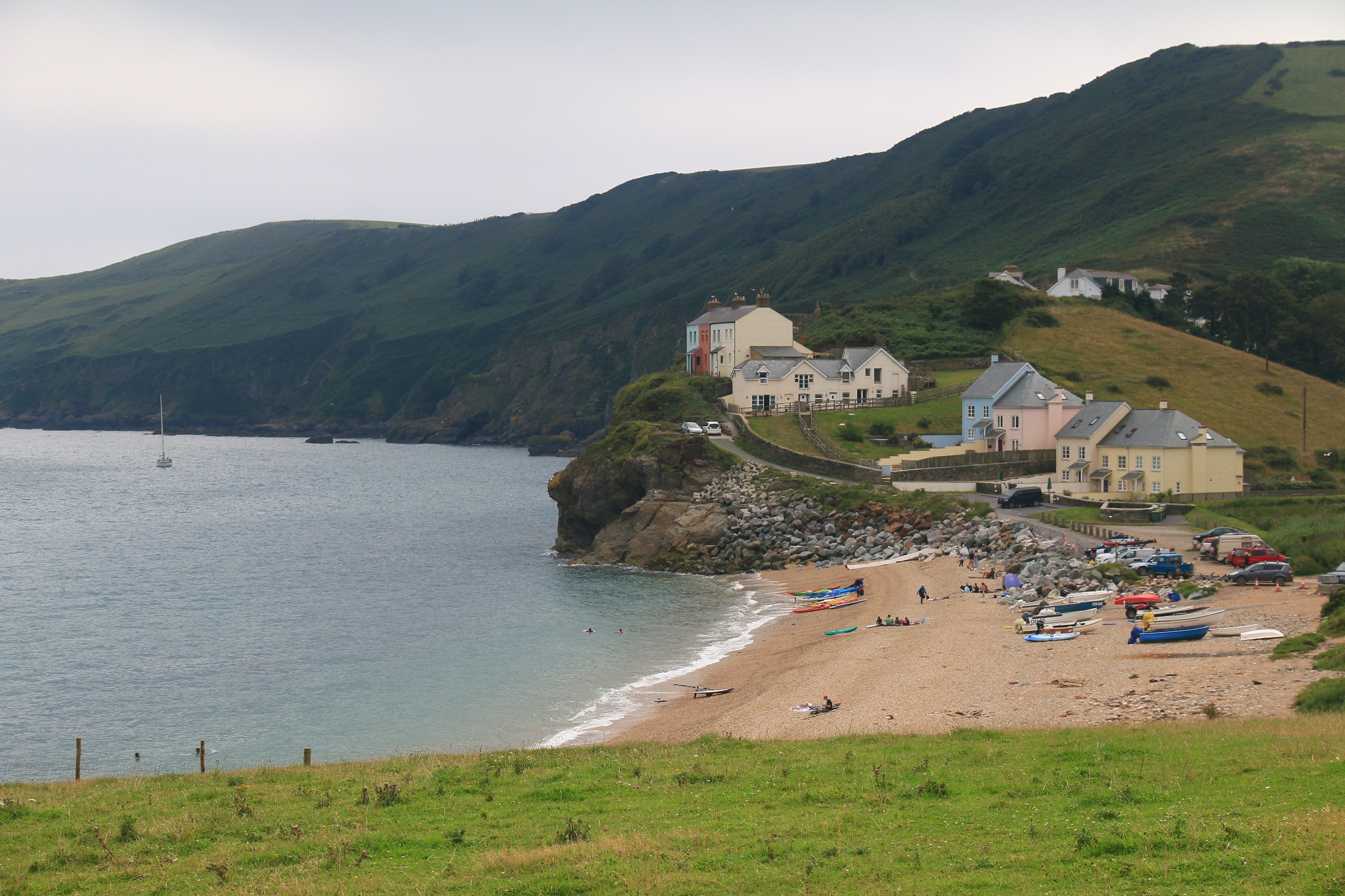
dev12

dev13Like everywhere around this way, there is good walking to be had. Over the hill to Beesands with its less photogenic beach, and on to Hallsands, precariously awaiting the next winter storm. Beyond Hallsands the waters of Start Bay curve their way against precipitous slopes, topped with radio masts, sea mists and happy cows, giving way at Start Point.

I could push on to there today, but the hills get steep, my legs say no, and I still have the potential car parks of Dartmouth and Totnes to negotiate before getting home. One small mercy is that the tide is now out, and the hill between Beesands and Torcross can be circumnavigated via the millions of pebbles. Who needs sand all the time anyway Cornwall? It just ends up in every crack and crevice.
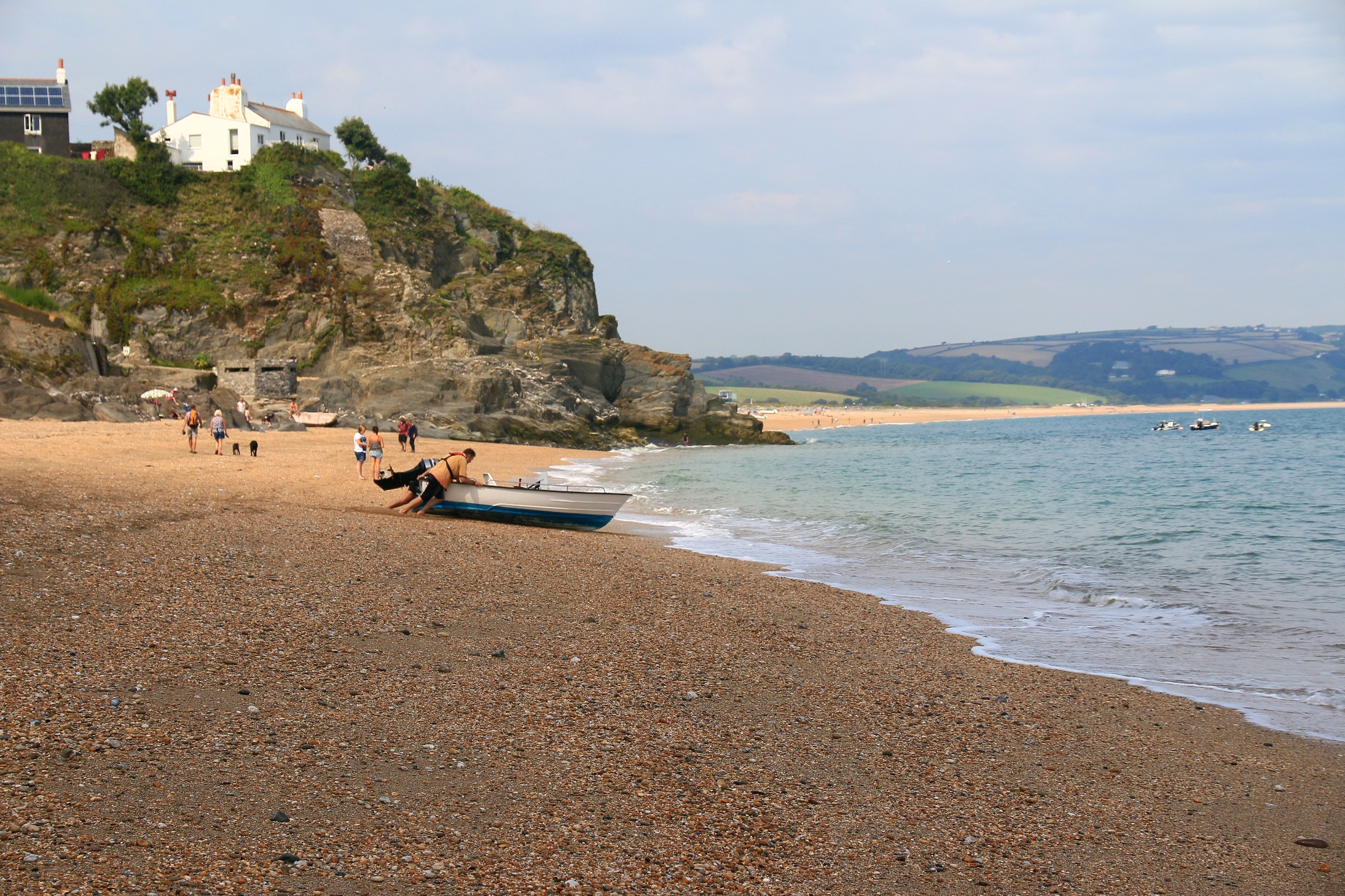
dev14

Moor scones available:

dev15While the South Hams possess the requisite balance of thatched cottage to rolling pasture to pebbly beach, the somewhat tamed landscape eventually gives up and transitions to the wild uplands of Dartmoor National Park. Now this is truly on the doorstep. One minute you are navigating hapless drivers attempting to cross a roundabout to get to Tesco, the next you are passing hapless drivers braking sharply and pulling into the Dartmoor Diner. Civilisation may well linger, but it is quite possible to see nothing or no-one obviously man-made for lengthy periods of time when out on the moor.

For many Dartmoor is Plymouth’s playground, where you can stroll, frolic in a river, cycle, have an ice cream, walk the dogs, and fantasise about hairy hands. For me too it is something of a Red Hill surrogate. Though clearly not quite as close (i.e. 5 minutes), there are hills to climb and views to be had and, if you squint hard enough (very hard), the sheep may take on the resemblance of a grazing kangaroo.
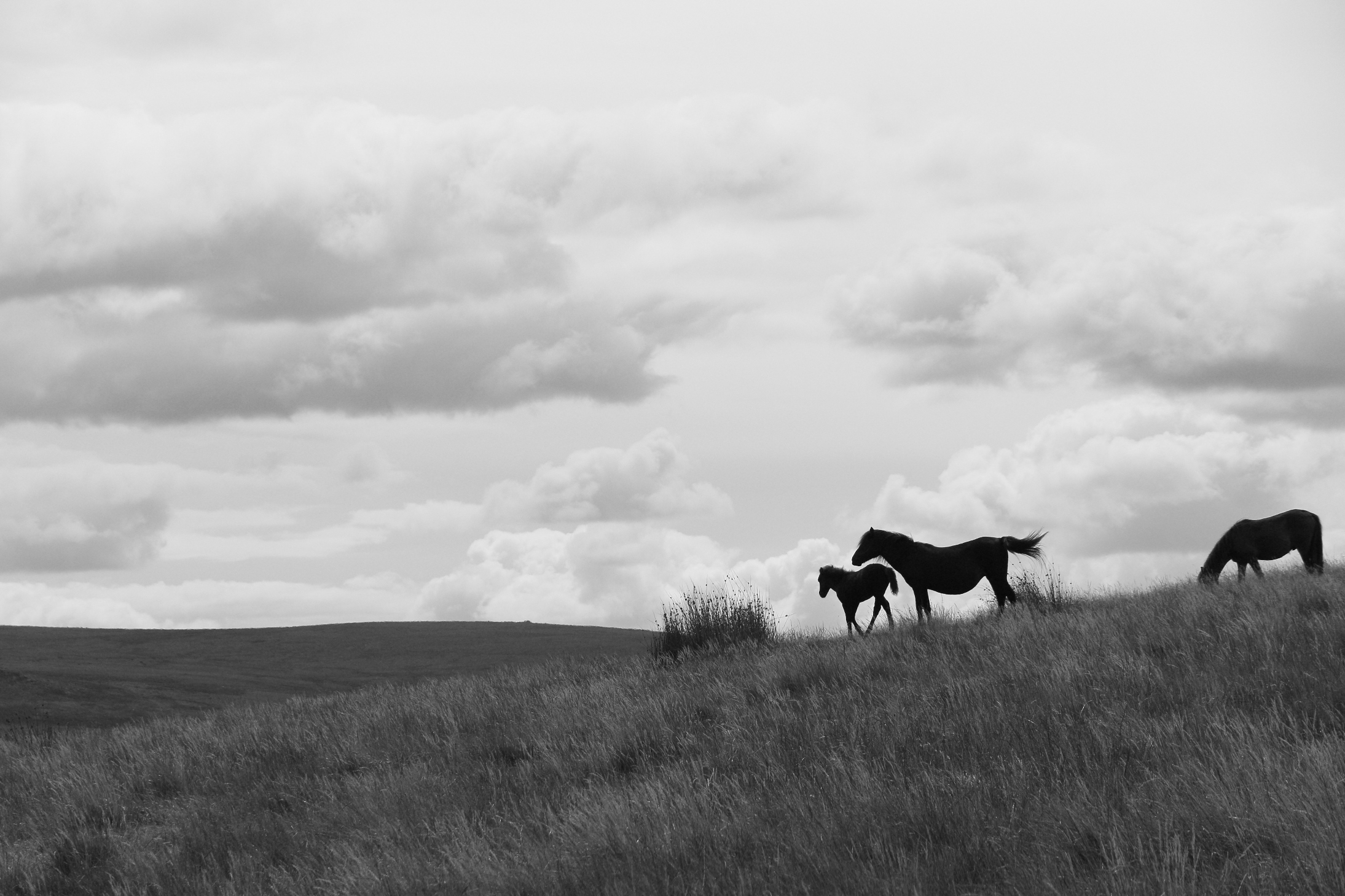
dev16

dev22Just around the corner though (maybe 5 minutes with a good run of lights and a Bugatti Veyron) is the River Plym. Gathering down from the moors, the Plym gently meanders its way through leafy woodlands on its way to Plymouth Sound. One minute you are in an industrial estate, the next the lane narrows into a hobbit hole and you are bathed in shadowy leafiness. Again, children frolic, people cycle and dogs yap. Some (dogs) may even become potential kidnap victims due to ridiculous cuteness.

dev17

Plymbridge offers an easy escape – from Plymouth, from Asda, from endless episodes of Emmerdale. And it reminds you, quite simply and quite easily, how really lovely it can be to be in Devon. In fact, just as lovely as Cornwall.

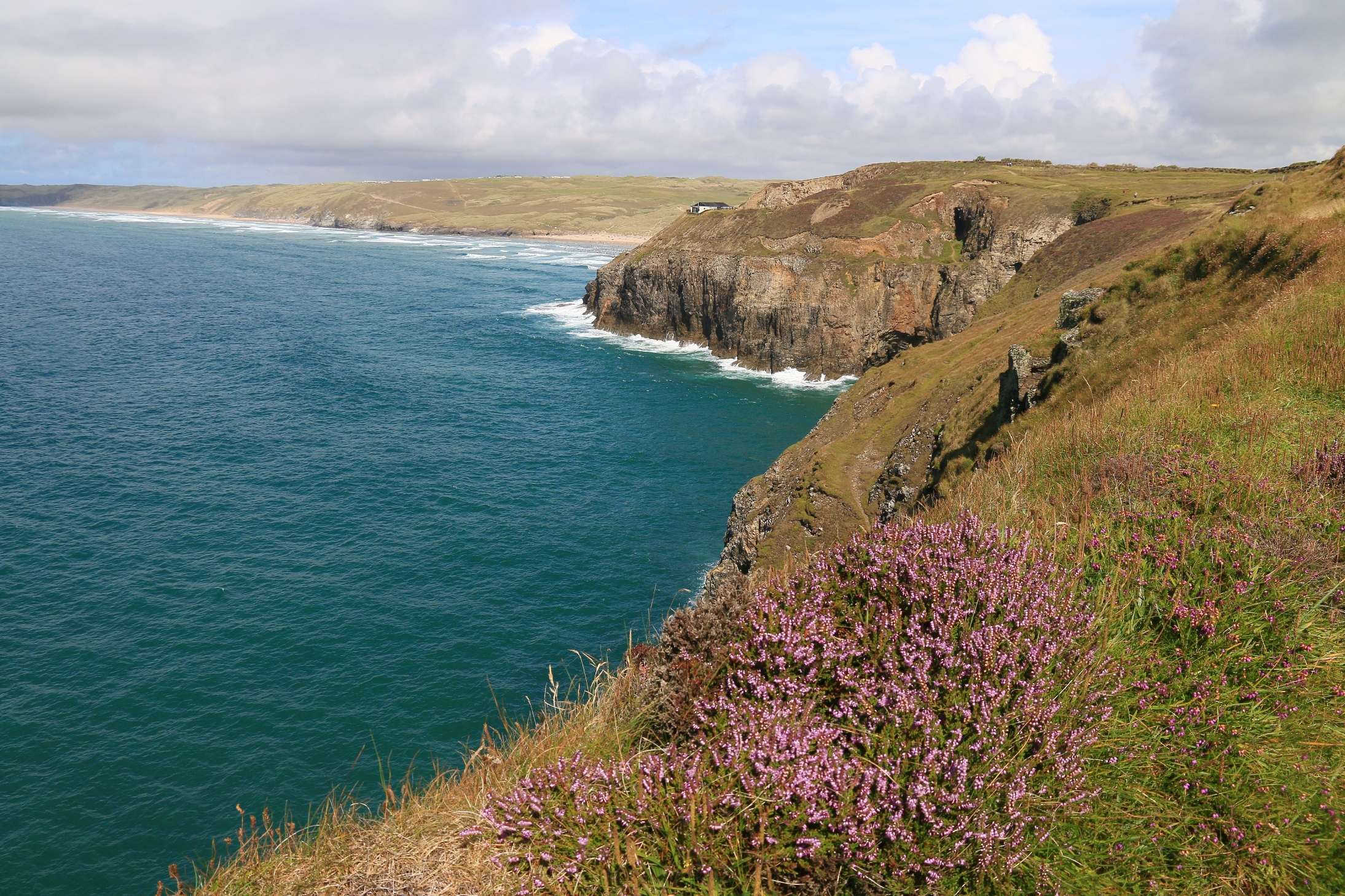
Food & Drink Great Britain Green Bogey Photography Walking

Cornish pastiche

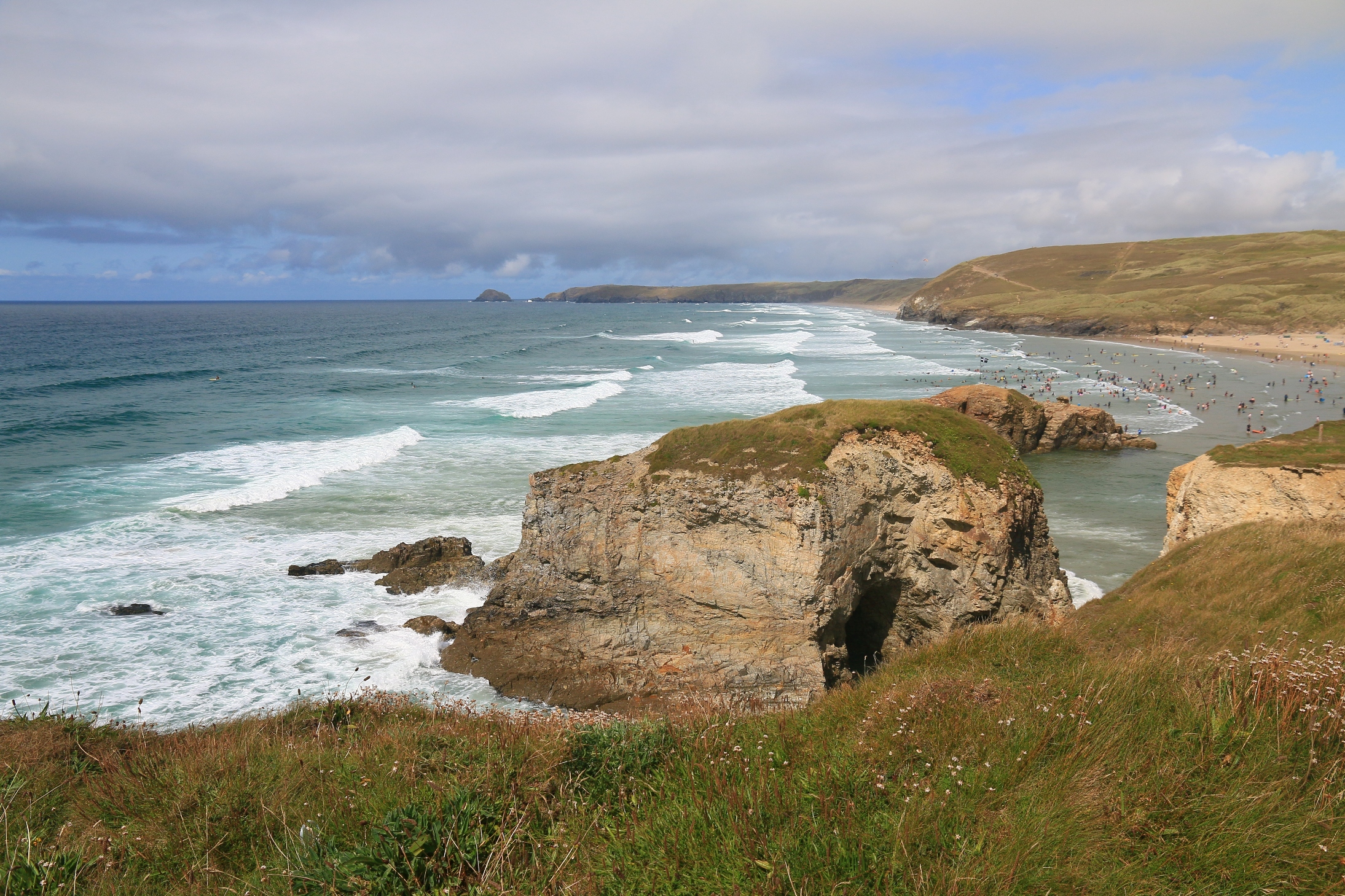
Amongst the dollops of clotted cream and generous helpings of Plymouth rain during August, a few days away in Cornwall yielded a chance to dabble in classic British seaside family holiday territory, complete with dollops of rain and generous helpings of Brummie. Staying in a cosy cottage up an unfathomably narrow lane on the fringes of St Agnes, the benefit of this traditional British seaside holiday was that it was not entirely British or overly traditional. There were French people for a start and – well – the experience was less Blackpool bucket and spade and more scenic coastal delight. On a good day and some bad, the Cornish coast is difficult to surpass.

corn02

The trip started very much in the traditional way, departing Plymouth on a train in pouring rain, invariably teeming and spitting and drizzling all the way to Truro. And while this particular band of summer holiday weather cleared as a double decker valiantly wound its way to Perranporth, the emerging sun only served to bring out the windbreaks and ice creams and Brummies upon the beach. United in ice cream dedication, I then turned my back upon the human speckled sands and headed up, up and away.

corn01

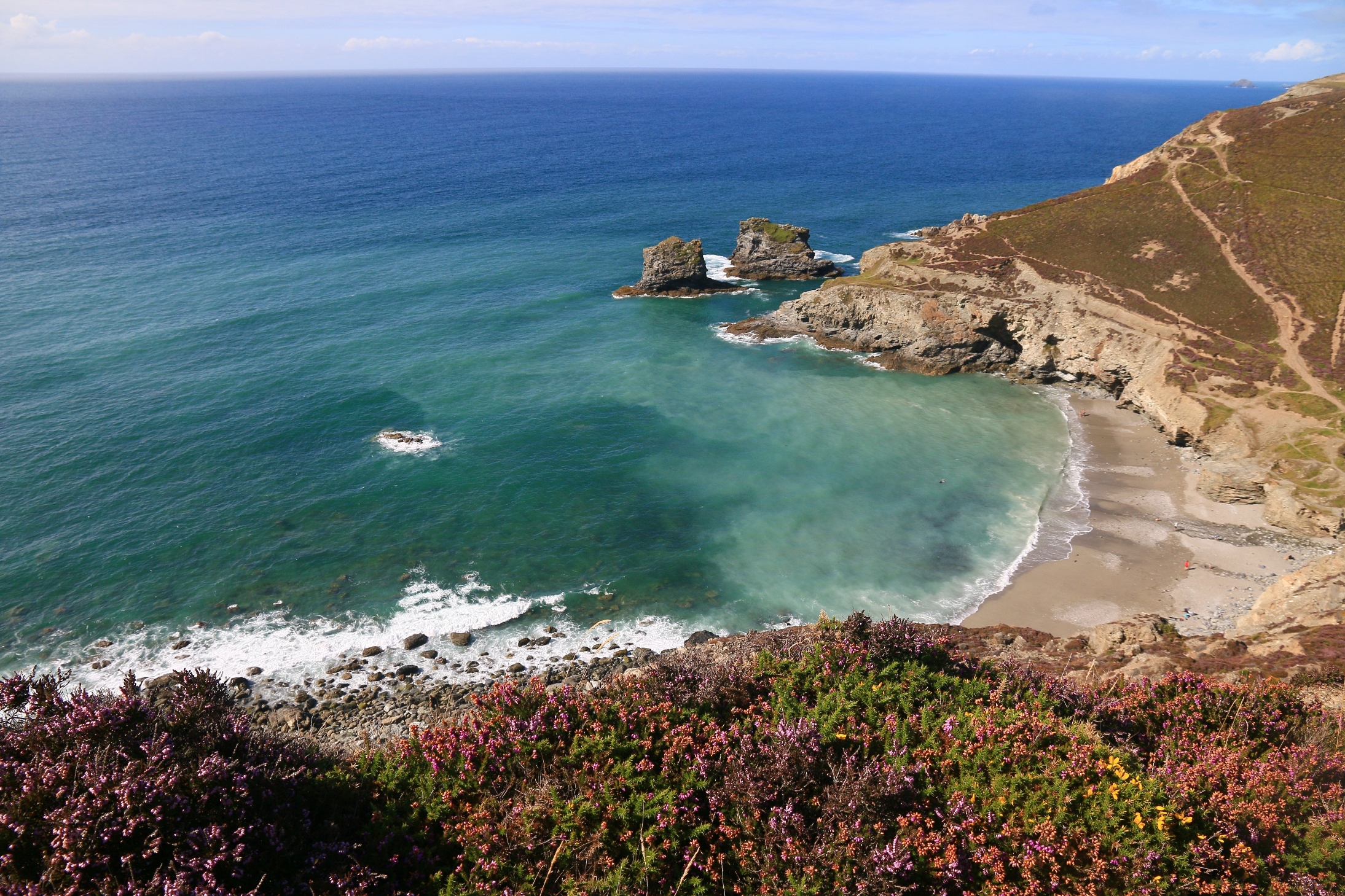
What followed was a predictably exquisite walk along the coastline to St Agnes, despite the scarred residue of mining and the eroded zigzagging of ambling ramblers and rampant rabbits. Loaded with a backpack of clothes I could easily have been mistaken for some intrepid adventurer myself, hiking the entire perforated coast of the southwest and growing a beard in the process. I was happy for this facade to stick, passing impressed day trippers with their miniscule handbags and inappropriate footwear on their traditional summer holiday.

corn03Navigating plunging cliff lines and sapphire coves, the thought of lugging a full backpack over days and weeks lost some appeal with the steeply unending climb up from Trevellas Porth. However, contrary to popular exaggeration this did end and it was with some joy that my muddy shoes and sweaty back made it into The Driftwood Spars for a prized pint of Doom Bar. I could, indeed, get used to this.

corn04

Reunited at the pub with the French family, my fraudulent pretence of long distance exploration could no longer be maintained. More traditional holiday pursuits – such as rock pool pottering, cheese eating, and children not really wanting to go to bed – amply filled the remainder of the evening. And I, with the rest of them, settled in for a comfortable night of sleep in the little cottage up the unfathomably narrow lane.

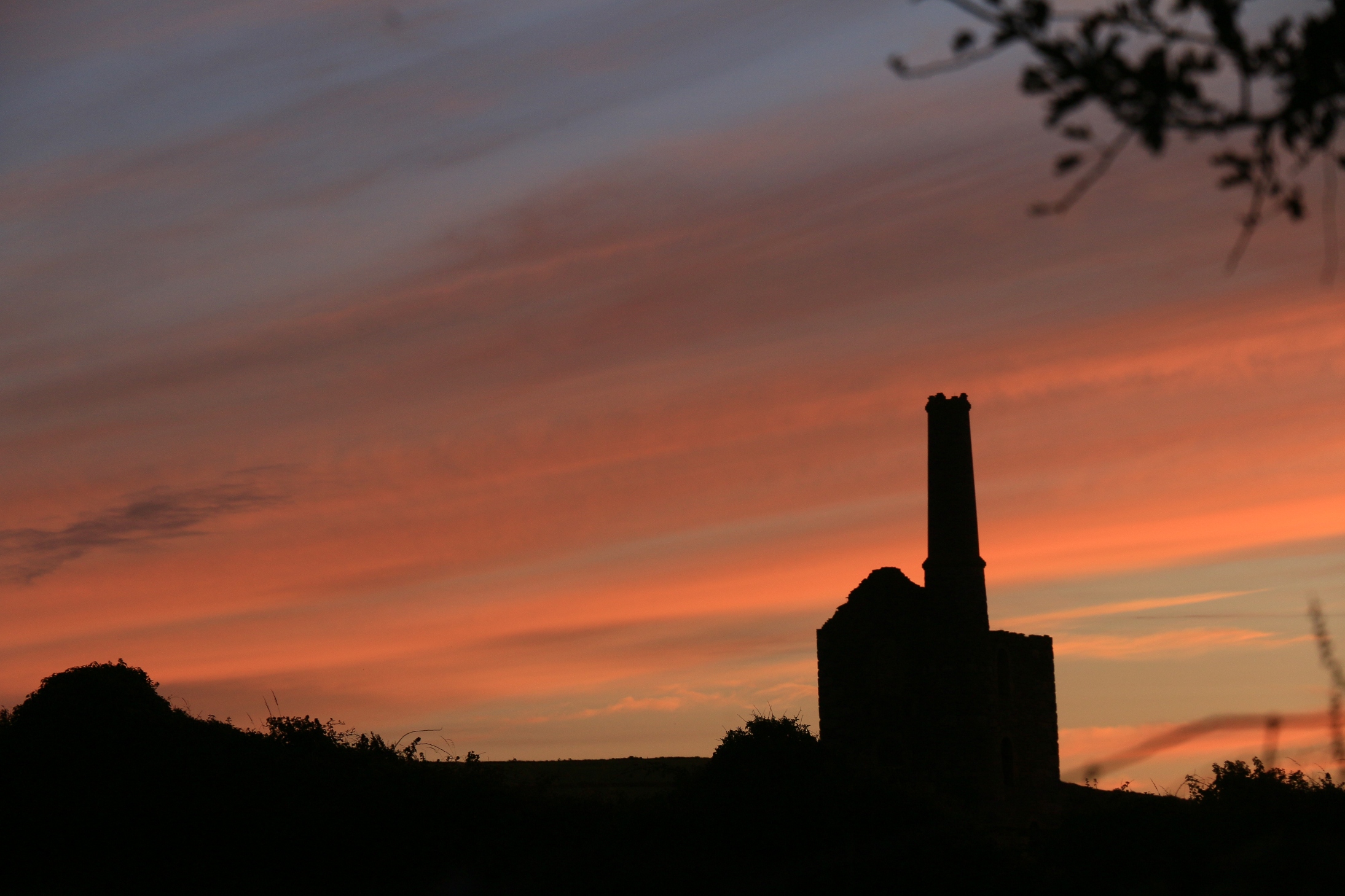
corn06The next day offered something of a repeat of the previous, albeit more family-friendly and with one of those pathetic little daypacks on my back for company. What was unchanging however was the beautiful scenery, from the generous sands of Porthtowan to the charming cove of Chapel Porth. There and back again over heather and gorse, the curls of Atlantic surf peppering the craggy headlands and sweeping up empty beaches enjoying their day in the sun. Ice creams and sandcastles and paddles in the undeniably frigid sea were add-ons at the end of the day, as the summer clouds again gathered over the abandoned relics of this heritage mining coast.

corn07

Red sky at night, ice cream vendor’s delight, so the ancient saying goes. And true to this cliché, the next day dawned clear and blue, generating a fervour of ant-like humans engaging in traditional seaside holidays upon the sands of Perranporth. There were windbreaks and Brummies and disposal barbecues and the inevitability that is a once-loved but now abandoned flip flop. Plus, of course, ice creams in abundance.

corn08Thankfully the tide at Perranporth was out and the beach here thus stretches on and on and on, offering enough room for everyone to enjoy their own holiday. Space to paddle in pools and throw Frisbees; dry sands on which to lay, wet from which to build; high cliff tops concealing the congregation of brooding clouds, the lofty rocks a sufficient shield to pretend briefly that this is actually summer.

It is in moments such as these that the appeal of the traditional British seaside family holiday becomes clearer, particularly if it happens to have a French twist and things proceed a little less in the Birmingham tradition. It is an appeal embellished of course with the delight that is being in this part of the world, with these people, and with the prospect of a rainy day yet again ahead, on the return to Plymouth tomorrow.

corn09

Great Britain Green Bogey Photography Walking

Up Pompey

I must confess to an inexplicable, in-built prejudice towards the city of Portsmouth. While not quite as menacing as the Daily Mail’s fear-stoking crusade for an antiquated version of middle England, my prejudice stems from uninformed and socially constructed antipathy. Nurtured through supposed rivalry – the battle of the dockyards – between Plymouth and Portsmouth, I have naturally taken the side of Plymouth, envisioning Portsmouth as lacking anything of appeal.

This prejudice of course exists without ever having been there. And so, it seems obvious to say that the best way to make an informed decision about the city of Portsmouth is to actually base it on real experience and facts, a principle that seems out-of-reach of many a lazy newspaper editor and Facebook re-poster the world around.

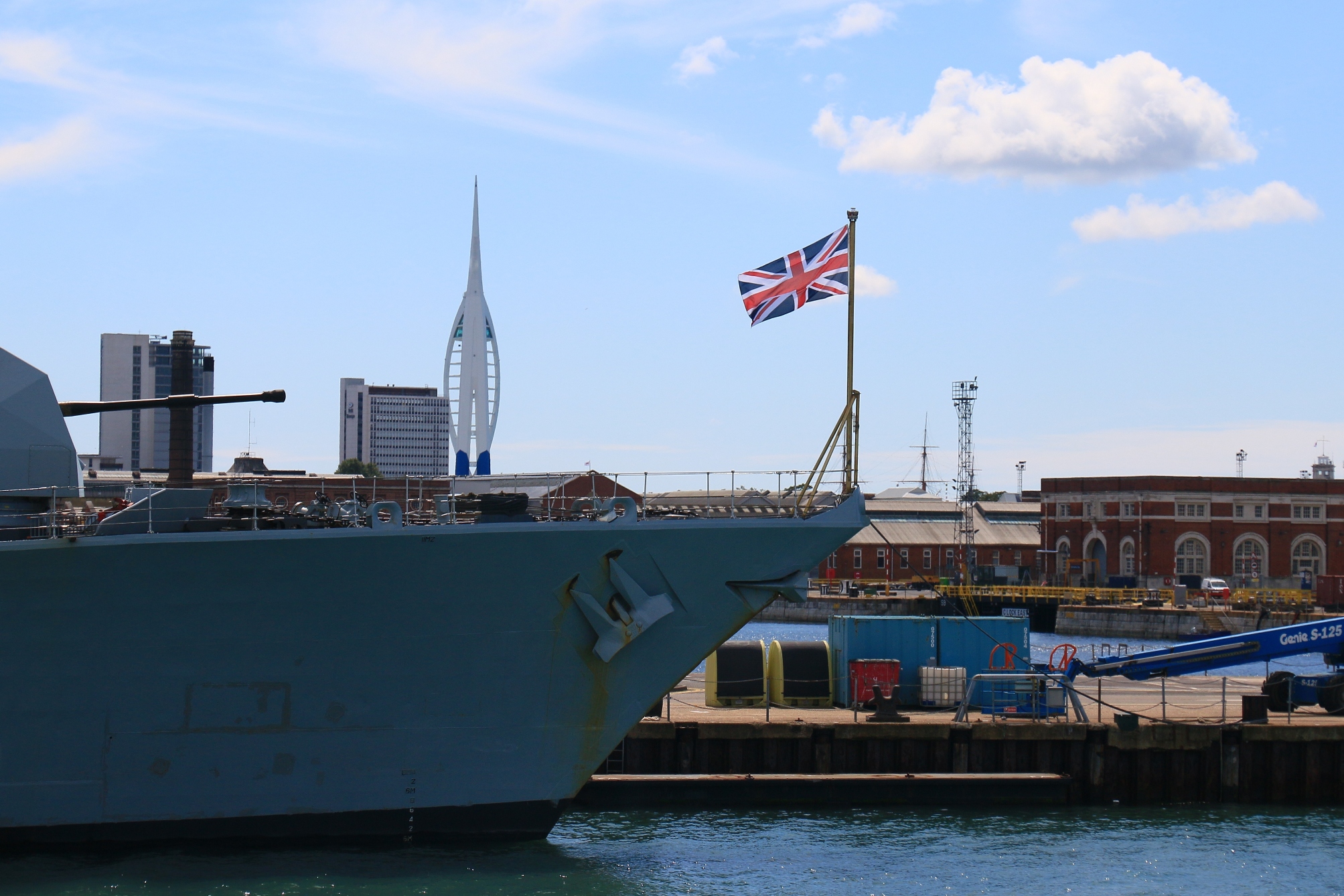
bas01One (of many) positive things I can now say about Portsmouth is that it actually has a summer. Well, at least for one day at the start of August. This may score it points over Plymouth, whose current endless drizzle is slowly driving me mad. The summer skies (which now seem an age away) are penetrated by a rather large erection – the Spinnaker Tower – brought to you, almost inevitably, by emirates.com. This protuberance now dominates the skyline, suddenly popping up around various corners and appearing from distant vantages. It has a Sydney Harbour Bridge quality in this respect, and is almost as photographically alluring.

bas02Indeed, atop the tower you could kid yourself that you are staring out at that great harbour of the southern continent, ferries bustling, sails billowing, cruisers cruising, waters glimmering in the sun. Then you taste a coffee and are brought back down to earth, only one hundred metres up, and your feet are plonked precariously on a glass floor. Shortbread for millionaires and the far-reaching views sweeten the bitterness and steady the nerves.

bas04The First Fleet left this same harbour a smidge over 225 years ago, just one small trinket of history in what is, undeniably, a great naval city. Today, the Historic Dockyard aims to pack all of this in around one sprawling site. Such is its richness that you cannot hope to cover it all in one day, but a harbour tour offers a good overview and – again – sat out on the deck on a warming clear day, a slight pang of the Sydneyesque emerges.

bas03

bas05Within the dockyard itself several old ships of worldly significance stand, a reminder of empire and industry and rambunctious naval warfare between derring-do admirals and rascally foreigners with finely groomed beards and bouts of Syphilis. The hipsters of their time, strutting the maze of stairs and low ceilings of HMS Victory or gliding the gleaming decks of HMS Warrior. Doing things that will later appear in vaguely recalled history lessons and espoused more memorably by Stephen Fry and co on TV.

The dockyard experience makes a sudden swell of patriotism hard to resist, and it is inevitable that Rule Britannia will start pounding through your head, interspersed with Sideshow Bob Sings Songs from HMS Pinafore. How patriotic then to have delicious fish and chips in a pub and drive back through Jane Austen countryside, satisfied that the city of Portsmouth is actually one of suitable constitution to befit inclusion in this Jerusalem.

bas06Now, if I had prejudice for the English countryside it would undeniably be overly-favourable and rose-tinted, photoshopping out little blips like power pylons, speed cameras, and fields of slurry. It would be a scene closely resembling a walk through the Wiltshire countryside, starting in the quiet, affluent high street of Amesbury and finishing atop an ancient hill fort with the needle spire of Salisbury Cathedral gleaming in the middle distance.

bas07

bas09Along this serene, sun-filled walk, thatched cottages and glorious gardens scatter amongst sweeping fields of wheat and undulating grassy meadows. Shady wooded copses harbour tinkling streams and melodic songbirds. A village meanders along the banks of a crystal clear river, the pub garden its heart and soul. Country lanes melt away into the hedgerow landscape, and weathered stone bridges hint at a past industriousness.

bas08

bas11This is all enjoyed on the second day of summer weather in a row, a rarity as scarce as the ability to wear shorts, which is also somehow happening. It is pleasantly warm rather than scorching, but conditions are adequate enough for cidery refreshment at the midpoint. While post-drink malaise now seems a little more conducive for a nap than a hike, we push on up onto a ridge and then to the summit culmination of Old Sarum.

With 360 degree views, Old Sarum obviously made sense for original Middle Englanders (and then various waves of migrants) to construct defences and forts and castles and cathedrals. Sat atop its slope eating lunch, it is quite easy to imagine pouring some scalding hot oil on a pesky interloper who has made it across the deep moat. However, life today is generally more sedate and the only oil to be found is something like cold pressed balsamic infused deluxe extra virgin organic Tuscan olive oil offered with semi-dried tomato and wild chevre slow-rise sourdough served up in nearby Salisbury. I would have settled for an ice cream, but then not everything can be perfect on this exemplary English day, on a consummate, enlightening British weekend.

bas10

Great Britain Green Bogey Walking

Dublin effort

Twenty-four hours in Dublin. Twenty-four hours after very little sleep, crossing Canada, crossing the Atlantic, crossing the road with traffic back on the proper side. Some off my plane would have gone straight to the pub for a pint of the black stuff. At eight in the morning on a Sunday, I opted for the full Irish breakfast instead, accompanied by HP sauce and several cups of tea.

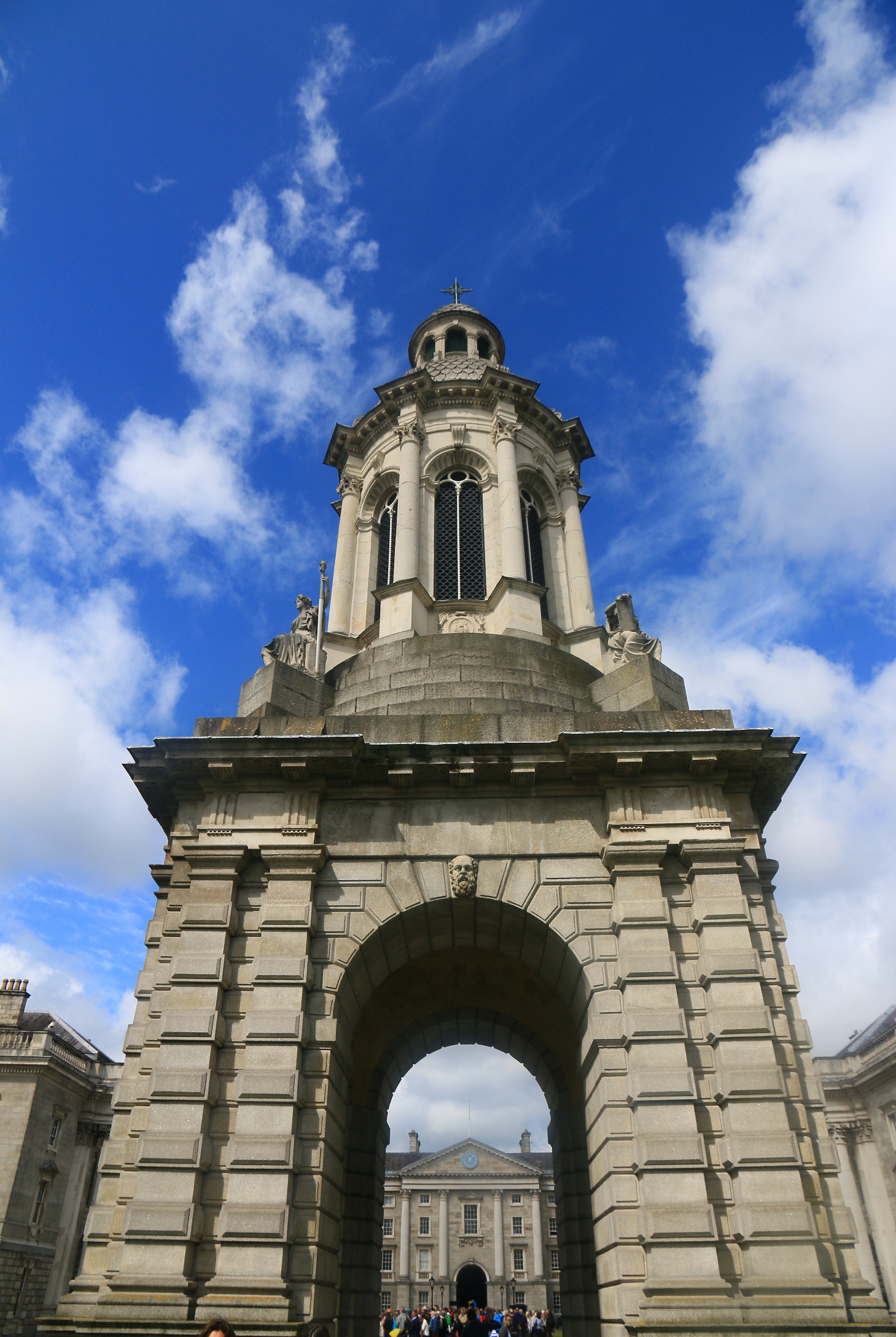
dub01Unable to check in to my room at such an early hour I instead auditioned as an extra for The Walking Dead in the grounds of Trinity College. I was probably not the only one, given the high concentration of students following in the hungover footsteps of such greats as Samuel Beckett, Bram Stoker, Chris de Burgh, and Father Jack Hackett. A few of the students possessed sufficient sobriety to dress like Harry Potter and lead clusters of tourists around the grounds, recalling the rascally deeds of former chancellors and erstwhile academics, tales of privilege and luck, tradition and progress. All the while subtly leading you to the queue for the Book of Kells, some ancient sacrosanct manuscript of religious fastidiousness, painstakingly embroidered on calfskin and difficult to fully appreciate when you think you are going to faint because your body should be sleeping right now.

From one book to many in the Long Room, a library of epic proportions in which the books appear to be arranged according to subject area, author’s surname, and size. So while the small riveting reads clamber for any attention at the top, large tomes of tedium brood all too accessibly further down. Probably to do with weight distribution. Downstairs sits a gift store as gargantuan, for all your novelty leprechaun-themed needs, arranged in equally eccentric order.

dub02

dub03By some miracle (thank you Book of Kells) I made it out of there and got back to a hotel room all ready for me to shower and nap. Then, my body decided it was starving and chowed down a mega-plate self-loaded with traditional Irish fare such as sweet and sour chicken and onion bhajis from a food court. Meanwhile, the rest of Dublin was being a multitude of hip, merry, dour, sophisticated, happily pessimistic, and – with rainbows still prominent – a little bit gay (in a jauntily liberal welcome to the twenty-first century kind of way).

dub04

It would be fair to say – to be sure – that there is no prominent centrepiece to Dublin. No wow look at me razzle dazzle, no glitzy building housing opera, no distinctive skyline or meandering waterside. Along the Liffey sit video stores and Spar shops, greasy spoons and hairdressers. Perfectly functional and useful, but not so appealing to the tourist unless you fancy egg and chips and a perm. Dublin has clear British city resemblance, and some familiar sights – Tesco, double decker buses, drizzle – are strangely comforting. Other things – like the pedestrian crossings seemingly imported from Australia (which themselves were imported from the Death Star), and the dual language signage – hint at the exotic. It is though everything here points to me being home, but there is something not quite right.

dub05Dazed and confused I naturally headed to the Guinness Storehouse brewery, which is more than a meander along a gritty suburban thoroughfare. I suppose this is the thing to do in Dublin, and many others were clearly of the same opinion, as streams of people passed me in the opposite direction with their exclusive gift shop purchases in Guinness branded bags.

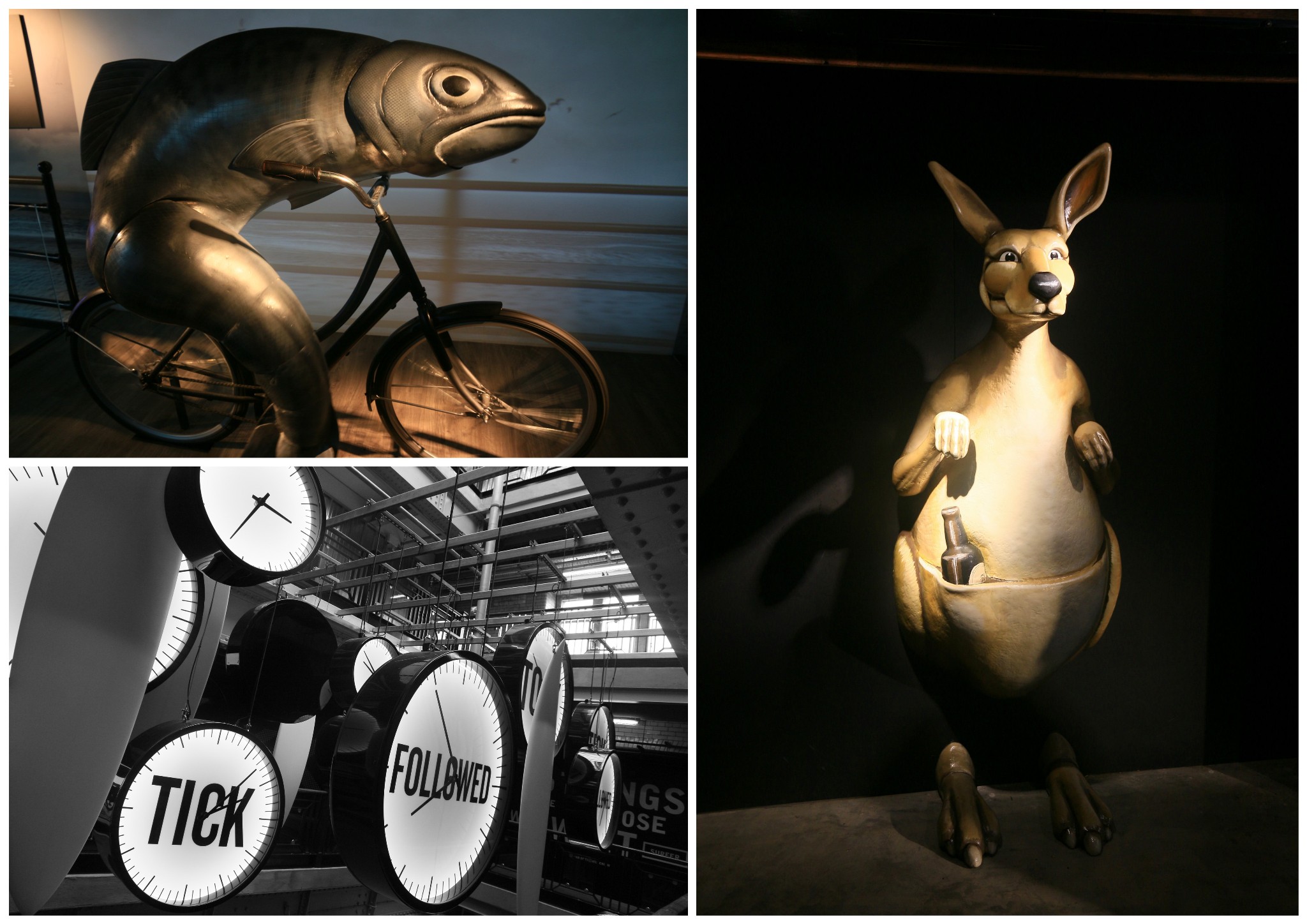
If nothing else I thought a visit here would be something to do to keep me awake. What I thought might be overly gimmicky and tacky was actually a good deal of fun. The building possesses enough crumbling brickwork and iron to retain authenticity (and quite probably fit out 10,000 hipster cafes). A clever renovation has seen a museum and visitor centre encased within the old building, spiralling up five floors offering details of the brewing process, the (double?) vision of Arthur Guinness, and – my favourite at least – a plethora of marketing and advertising icons.

dub06

Smartly, the top level is a panoramic bar, offering unparalleled views of Dublin and an opportunity to obtain your free pint of Guinness…after 119.5 patient seconds of course. Inexplicably, some people were drinking water. Perhaps this was to avoid induced joviality leading you back down to the gift shop and purchasing Guinness themed leprechauns and tea towels. I succumbed to a bag of crisps, which became dinner.

dub07

Back out into the Dublin air it was clear that being a Sunday night was not going to stop the party and that many more pints of Guinness and other beverages would be consumed and the Irish economy would be perfectly fine. Indeed, my frequent jetlag wakings were accompanied by a muffled background of cheers and jeers, as people spilled out on to the streets of Temple Bar. 2am. 3am. 4am. Tick followed tock followed tick. A final, sporadic night to get through before making the final turn for home.

Europe Food & Drink Green Bogey

A rival for affection

Initially I wasn’t too fussed about spending time in Vancouver, my appetite instead skewed towards the forests and mountains, inlets and meadows of super natural British Columbia. This feeling was elevated as a week travelling in such environments was drawing to a close, a trip that I could have quite happily continued. But as the final greyhound drew into the quite uninspiring Vancouver terminus, I resigned myself to a couple of days in a big city.

Happily, Vancouver has a magical gift that justifies its frequent position in all those different lists of the best cities in the world to live. It is often vying for the title alongside places like Melbourne, Sydney, Copenhagen, and even a little country town called Canberra. Indeed, I sensed a bit of a Melbourne vibe, a touch of Sydney waterfront, the smell of Danish-like bacon, and, err, a backdrop of rugged, open ranges.

van07

Thus, in the space of a laundry washing and drying cycle, I had managed to readjust to the idea of being in a city, and embracing everything that entailed. Things like pedestrian crossings, in which the Canadian version appears to involve the traffic light receiving a flurry of tweets. @RobsonandGranville #crossnowhumans #tensecondsleft. The emergence of coffee shops, many of them dire, many of them Starbucks, on every street corner, though luckily the outside temperate was conducive to far more favourable iced coffee options. And something I embraced more wholeheartedly was the plethora of good quality, low cost, always welcoming Asian eateries, all too conscious that such choices will practically disappear in Europe.

van02Probably a good reason I ended up loving Vancouver so – apart from the chicken karaage and spicy udon ramen – was the sumptuous weather. Crucially there was no smoke accompanying an ambient temperature somewhere around the mid twenties. What this means is a happy, healthy, blissed out and mostly beautiful populace, invariably strolling, cycling, rollerblading, or volleyballing their way into the light evenings beside the waterside paths and parks of False Creek.

Such spirit is infectious, and the next day I joined the many hiring a bike near Yaletown dock. The freedom and joy of two wheels again, made all the easier by Vancouver’s generous allotment of cycling paths and priority lanes. Here, it became clear the city rivals Canberra, and it was quite possible to cycle something heading towards forty kilometres without jostling with vehicles.

The first task was to head up False Creek and into Stanley Park. This is essentially where everyone on a bike goes and you can see why. A rounded peninsula of spruce, cedars, firs and totem poles, occasional ponds and meadows, cafes and beaches, all encased within a sea wall. It is the sea wall that provides a thoroughfare for the bikes, so that there are eternal city, mountain, harbour and ocean views with every pedal. The parade of bikes is incessant, sometimes requiring adept manoeuvring, but it is simple to stop and go for a stroll in an empty forest.

van01

van03The park easily filled a morning, meaning that I handily reached Granville Island around lunchtime. This spot is cluttered with wooden shacks selling handmade jewellery and boating slacks and things like paperweights and incense sticks. But mostly there is food, centred around the Public Market and coming in a variety of forms. Fresh and healthy, processed and gluttonous, and everything in between.

Given I veered towards the gluttonous I was happy to pedal all the way to Point Grey and the University of British Columbia. Passing several beaches – Kitsilano, Jericho, and Spanish Banks – the views back to the city and its mountainous backdrop progressively opened up. Climbing up a long, steady hill – the kind that seems like an impressive feat only when you come back down – the university campus strikes you as a quite magnificent place to study. The challenge though would be to concentrate on a lecture, rather than stare out of the window all of the time.

van04

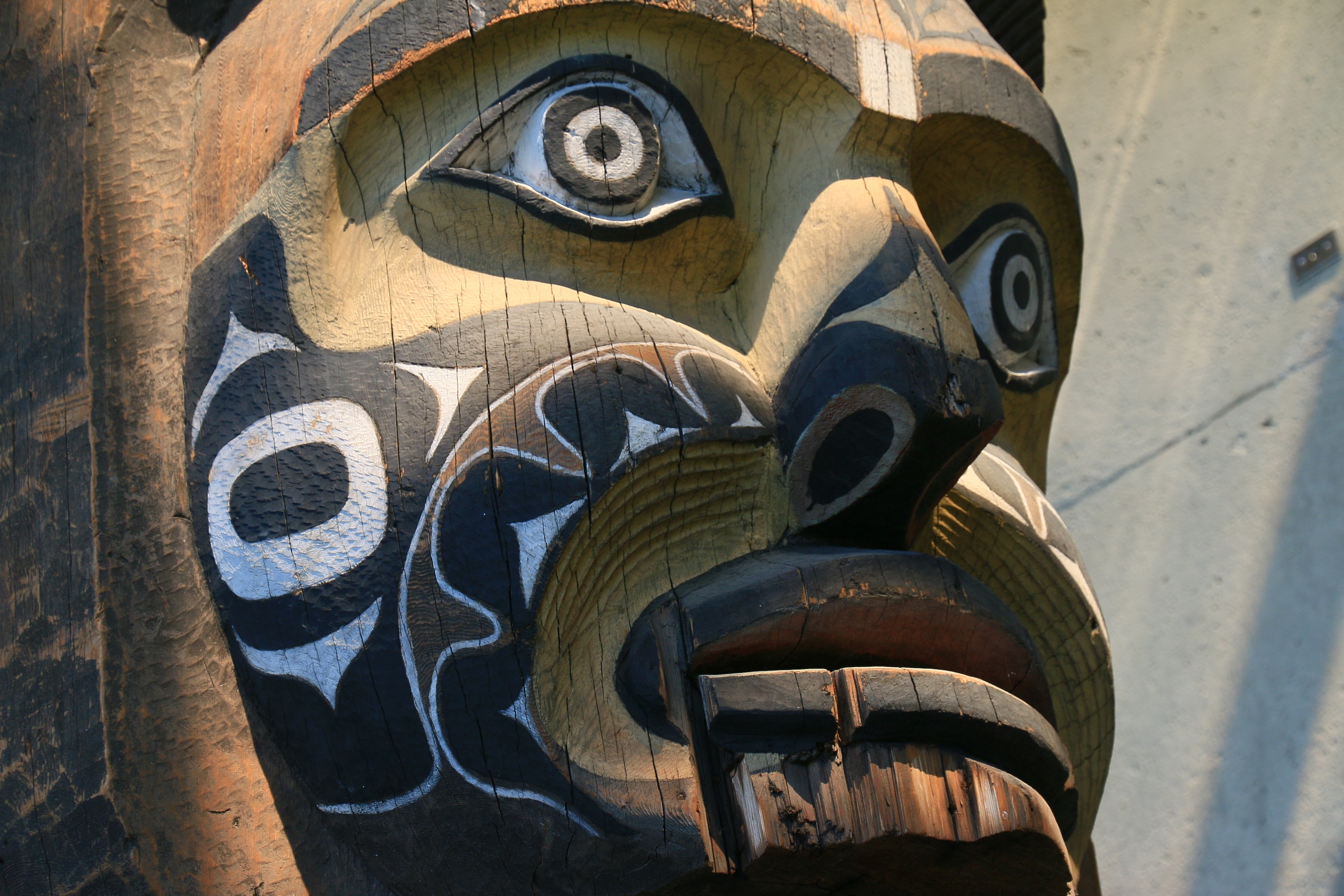
van05I came here to visit the Museum of Anthropology and while this contains numerous worldly artefacts, the predominant focus is on that of the First Nations. A huge hall houses an array of impressive totems, canoes, boxes, archways, tools, and utensils. Displays tell of the meaning, the stories, the legends, and the inevitable intrusion of the white man. Outside, a Haida village is recreated in the Vancouver sun, and the cafe next door sells Nanaimo bars. Two cakes in one day but I am, I think, working it off.

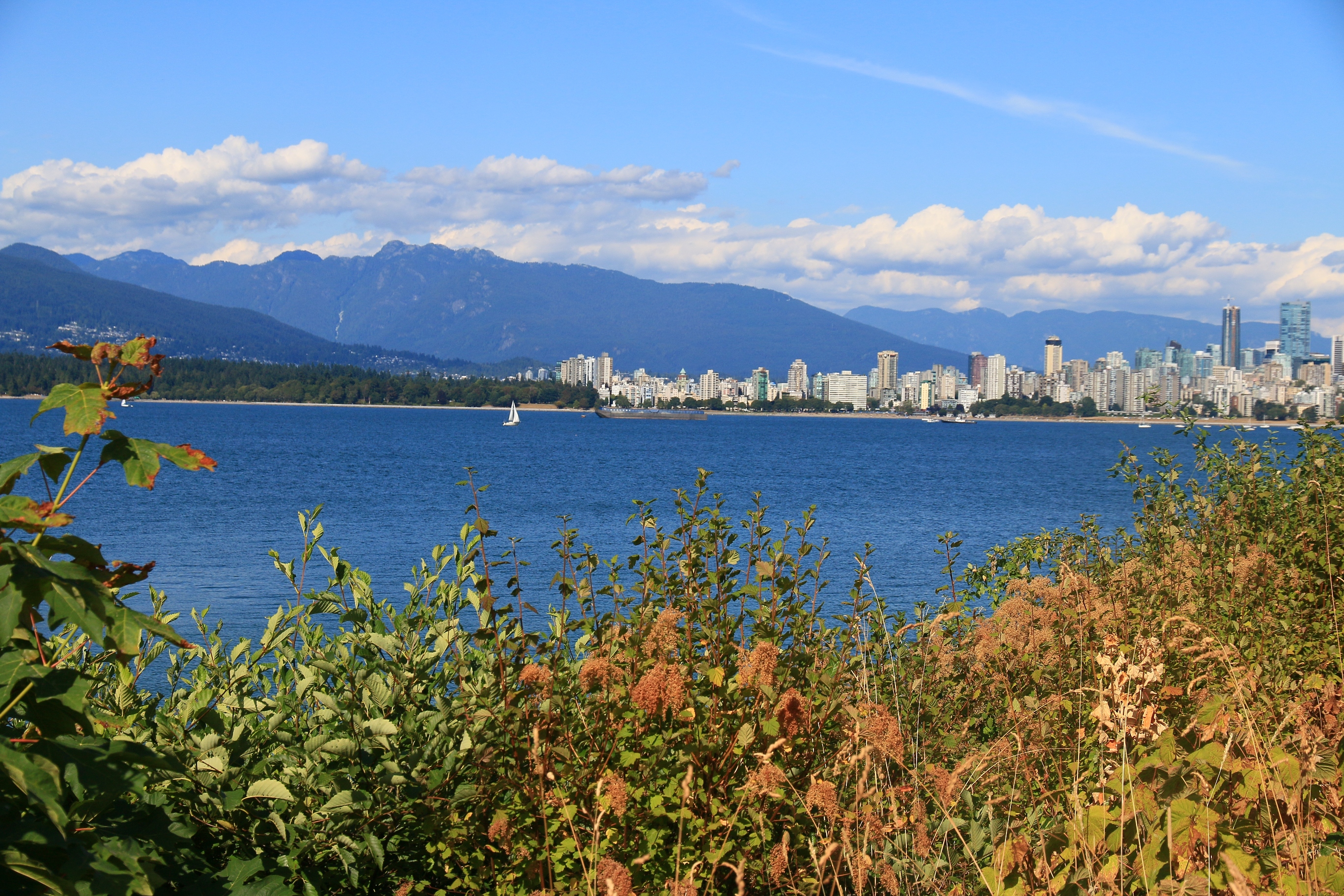
van06Back downhill, I paused numerous times beside the beaches to take in the view, as the westerly sun incrementally illuminates the city skyline and the mountains stretching north. The beaches are no Broulee or even Bondi, but it is warm and the city folk are a-flocking. I reflect on what has been a truly magnificent day, one which continues with still another ten kilometres back to the bike shop. Ten kilometres to join the healthy and happy populace, continuing to elevate their endorphin levels. A fabulous day, inevitably topped off with Asian food for dinner.

I had such a good time with a bike I almost considered doing it again the next day – my last in Vancouver. In the end I took the public transport option, crossing by ferry to North Vancouver and trundling by bus through the leafy suburbs climbing up to the base of Grouse Mountain. From here a far more expensive gondola transports you up to a world of mountain meadows and pines, fancy restaurants, ziplines and kitsch lumberjack shows. There are few longer trails on which to escape, but the views are there to be had. I can see the United States of America, most prominently in the form of Mount Baker, and my proximity to a previous travel adventure hits home. Meanwhile to the north and west, the mountains roll on, a reminder of the sparseness of this land, while the city of Vancouver shimmers many hundreds of metres below behind my back.

van09

van10This is bear country, and it so happened that I came face to face with a grizzly up here. Mercifully, two of them who were orphaned and are now cared for in captivity. No doubt softened by a life being pampered, they are nonetheless fearsome and overwhelmingly gargantuan. Despite being orphaned and this being the best option for them (the other likely being death as cubs), I cannot help but feel that I should be seeing such an incredible beast out in the wild, ruling its pristine domain. But, looking at the force and scale of such a creature, I am mostly glad I am not.

van11After Grouse Mountain, I should have headed back, rested, and readied myself for a staggered transatlantic voyage. But I was starting to not want to leave this city. My final trundle on a bus therefore took me to Lynn Canyon, where a suspension bridge offers a little bit of wow amongst the beautiful forests and riverside pools, increasingly populated by youngsters and families seeking a cool down towards the end of the day.

While others settled in this utopia for the evening, I had to drag myself away and – annoyingly – transport myself and belongings from the place I was staying to an airport hotel. There was, however, a good prompt to do so. One Direction were performing in BC Place, literally across the road from my hotel. This explains why they had no vacancy for my last night there and also why I seem to find myself having to increasingly negotiate a pathway through gawky teenage legs.

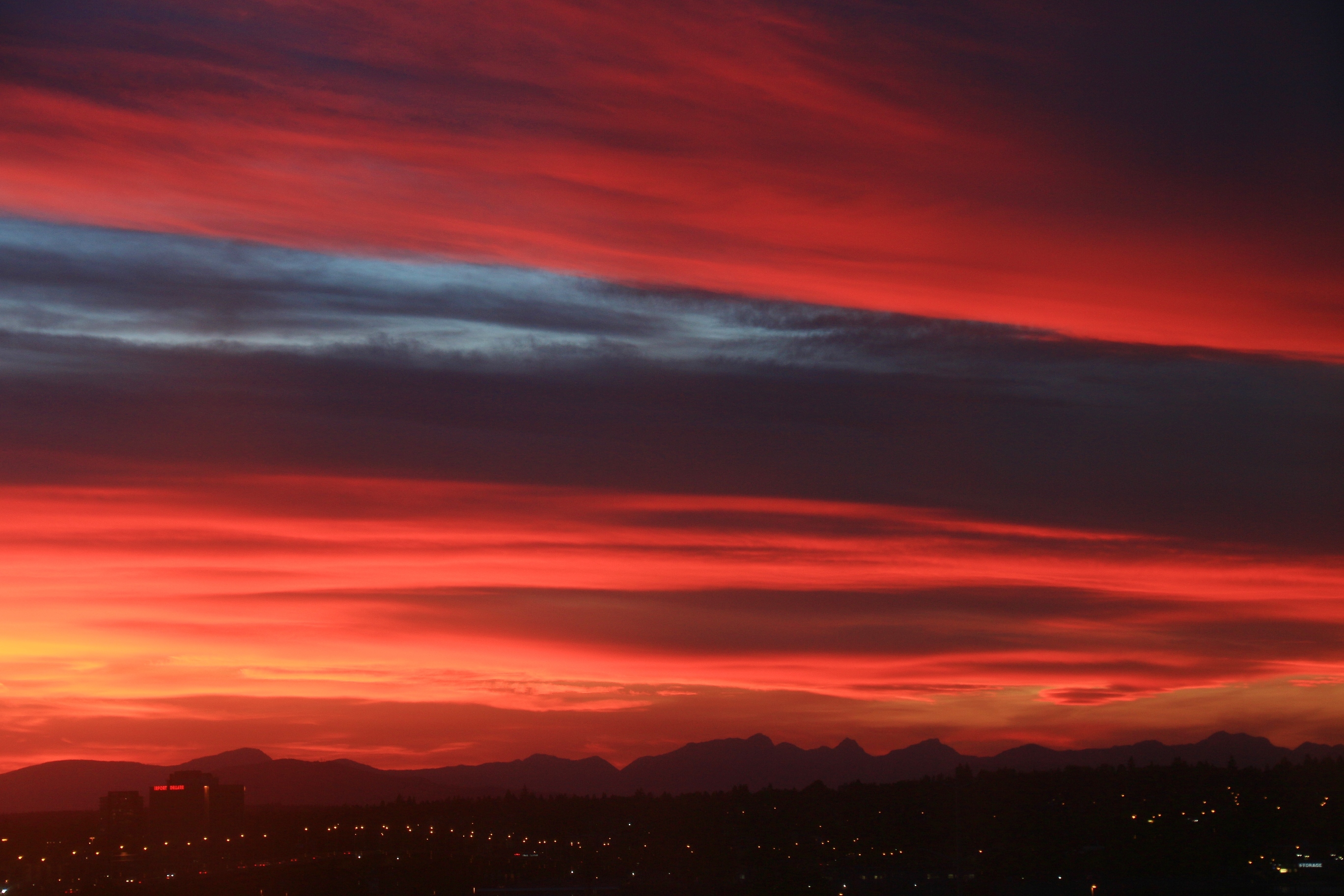
As adolescent screams echoed through the warm evening sky, I lamentably turned my back on Vancouver. But after gliding twenty minutes by train and dragging a suitcase along the concrete sidewalk of a grimy highway, Vancouver said goodbye to me from an upper floor of a Travelodge. A sky as fiery as the flame in my heart and the chilli in my laksa. A final, luminous ocean of evidence that the lists are not wrong, and this truly is one of the best cities in the world.

van12

Food & Drink Green Bogey Photography USA & Canada Walking

British Columbian

One week…one week of finishing work, packing up a white flat, jamming in flat whites, lingering in the bush and avoiding the fog. A week successfully navigated, with the generous bonus of a grating cough and snotty nose from the city of Canberra to see me on my way. Something to make an interminable fourteen hour flight even cheerier. But one week and fourteen hours later, I descended through a cloud of smoke and a sinus of pain into the city of Vancouver, and then beyond, out into the grizzly wilds…

In Whistler while you work

Skipping through Vancouver I had decided to head straight to the hills, for some post-journey restitution and mountain air. What sounded good on paper was challenged in practice, as huge forest fires courtesy of a severe drought had enshrouded most of BC in a layer of smoke. Whistler, it seems, was quite probably the worst place to be, with an air quality rating akin to bad days in Beijing. Oh to live in Beijing.

bc01There was little for it than to venture out in short bursts, around the shops and maze of pedestrian streets that make navigating Canberra suburbs seem a breeze. Oh for a breeze, to lift this constant eau-de-campfire. It came eventually, and there was minor visibility later in the day. Enough to see a red sun above the pines, encounter a moose, and stumble across a black bear.

The black bear sighting was a definitive highlight of the day, even more for the fact that I had probably already passed it once without noticing. Just munching on some berries beside a shared cycle and walking path, possibly waiting for some hapless campers with a picnic basket. Or people like me lost and doing an about turn. I passed, I saw, I lingered for a few seconds to weigh up the pros of making the most of a picture opportunity and the cons of being eaten. I carried on and the bear carried on regardless.

So one day in and I had already ticked off a few Canadian clichés. The next day I had a Canadian coffee, which was still relatively awful despite it being called a flat white and despite at least one Australian working in the coffee shop at the time. Never fear, British coffee awaits! Oh wait. On the plus side, while there was still a distinctive campfire smell, the smoke haze had lifted a little, meaning some bigger lumps of terrain could be spotted, down which numerous mountain bikers hurtled themselves faithfully like lemmings off a cliff.

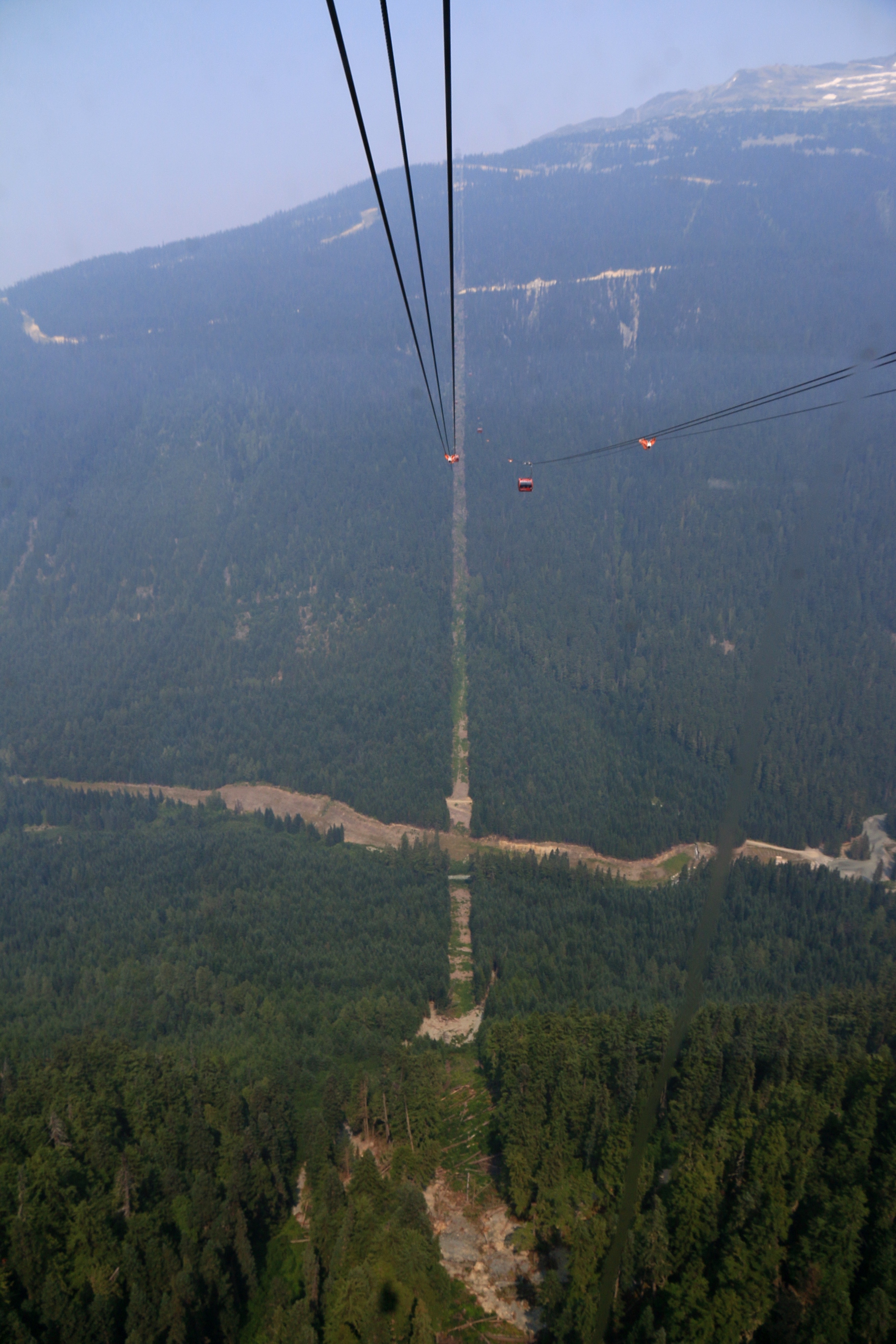
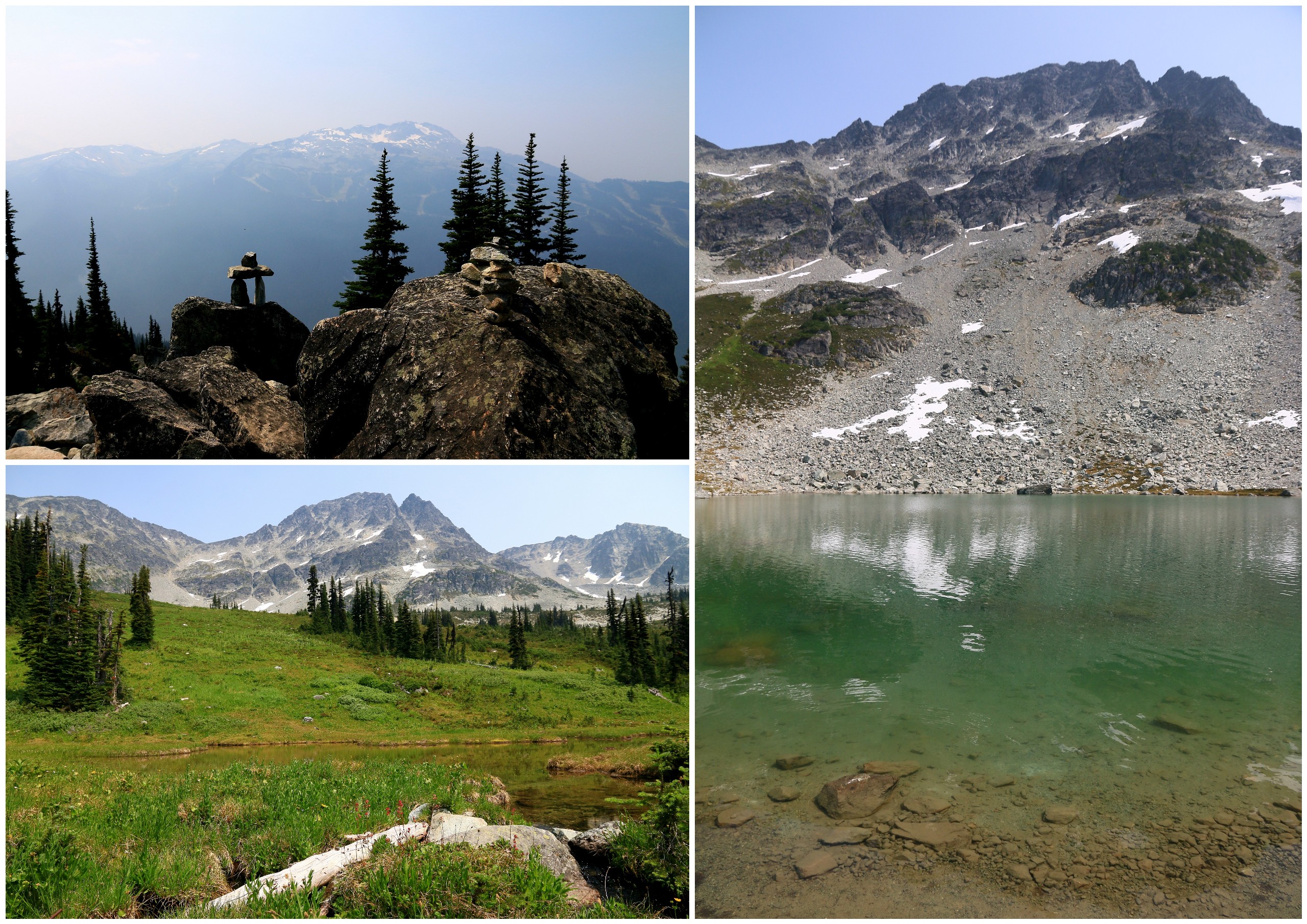
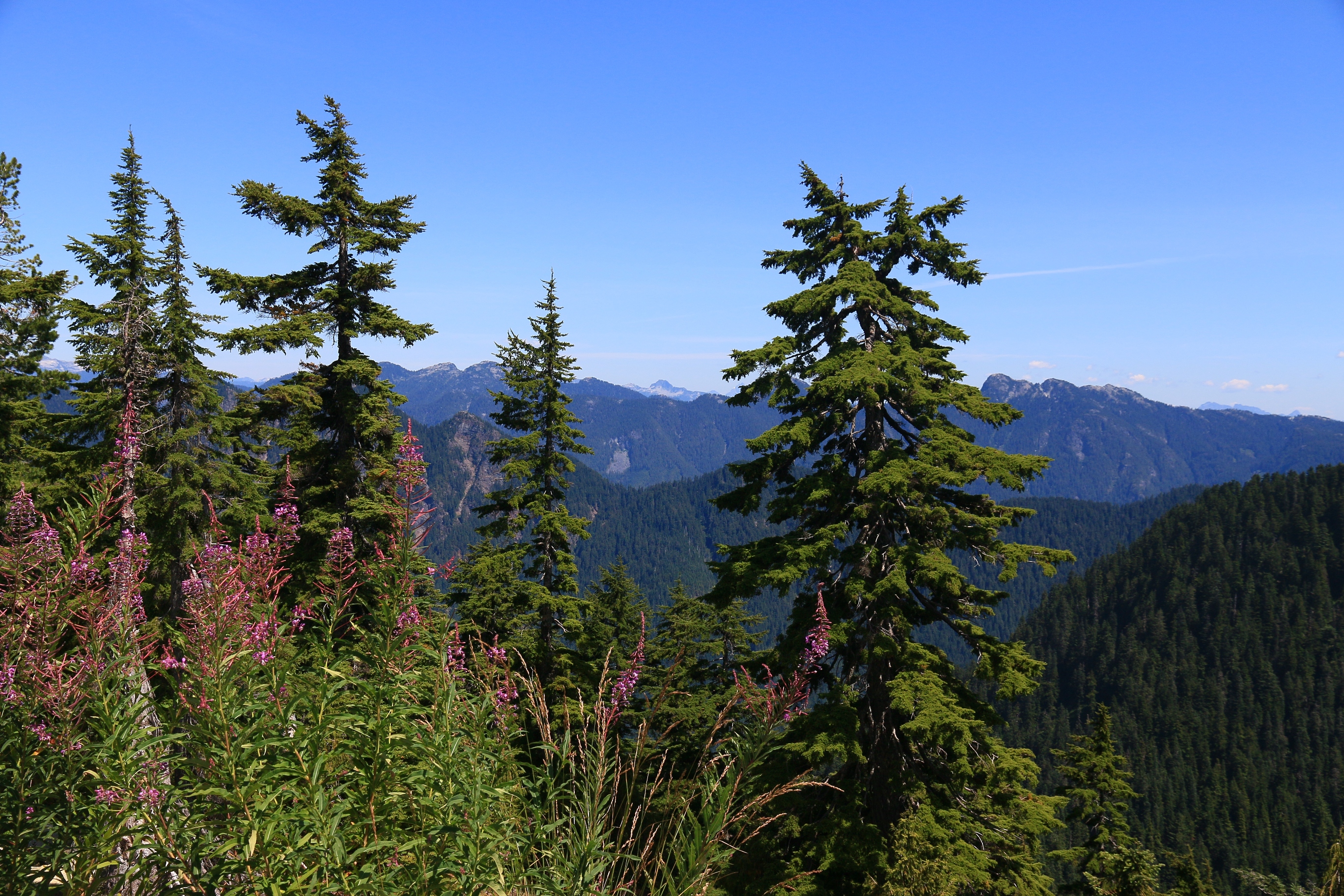
bc03What goes down must go up and there is a generous lift system in Whistler for the intrepid explorer. This includes the Peak to Peak, a seemingly endless high wire linking Whistler and Blackcomb Mountains, its small red cabins dangling over a gigantic precipice in between. Turns out the Swiss don’t have a monopoly on gravity defiance after all. Thanks to such engineering feats I was able to walk in a high alpine environment, and while the views were naturally hazy and the going a challenge (think jetlag, chest infection, altitude, smoke, heat, bad coffee) I made it to a small tarn on the Blackcomb side of the world.
bc02

The trails stretch on to glacial views and craggy ridges and summit peaks and hidden valleys and – in another time, in other conditions – I could have gone on and on. But Whistler proved hard work and there was some relief at coming down from the mountains, away from the smoke and into brief Vancouver sea-level summertime ambience.

Clearer and coola

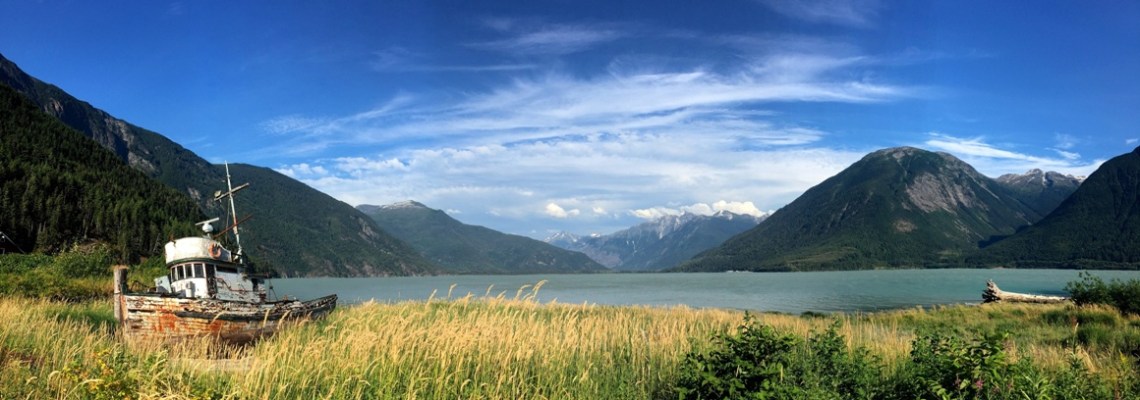
Not that there was much time for recovery. Early Friday and I was off to the airport to hop on a twelve-seater to the Bella Coola Valley. Where I hear you ask? Exactly. I am not sure myself how I first found out about this place and how I came to be here. But, after an hour flying over an astonishing wilderness of glacial river valleys, high ridges and gigantic icefields, I emerged in clear blue skies, uplifted to arrive in a momentously attractive spot.

A short boat ride took me across to the ever-photogenic and sublimely blissful Tallheo Cannery. Here stand the remnants of a once bustling enterprise, in which the plentiful salmon – sockeye, pink, and the highly prized spring – were netted, off-loaded, canned and shipped away to Vancouver and beyond. Nowadays, it is preserved in a ramshackle kind of way by a young family who have taken on with passion and gusto the task of maintaining and sharing this magical place with those lucky enough to find their way here.

bc04

Making landfall again upon the small jetty I knew I had stumbled across what would be the undoubted highlight of my time in Canada. A pathway meandered through a small pocket of forest towards a rocky beach, next to which the remains of the cannery building protruded upon a series of weathered stilts, stained by the constant ebb and flow of the tide. Elsewhere, various other wooden structures – the old general store, bunkhouse, outhouse, and two or three more buildings for the important people – offered testament to the thriving place this once was, with up to 300 souls living and working here during peak seasons. Throughout, there are enough trinkets and relics – from fishing nets and boats to paperwork for credit accounts and old cans of soda – to keep anyone with curiosity and a camera happy for several hours.

bc05

In what must be a labour of love, more and more bits and pieces appear to be unearthed in cupboards and drawers on an almost daily basis, while any inclement spell can reveal a new leak, another piece of rotting timber, an additional piece of roof sheeting down. But you can likely forgive all these quirks – embrace them even – given the setting, best appreciated from the veranda or, better still, the hammock of the bunkhouse, which is now a charming guest house for people like me.

It was a house I ended up having all to myself, though I was thankful for the company of the owners in a building nearby and their dogs who were accomplished at keeping the bears and wolves at bay. There was little to do here other than relax in that hammock, broken by occasional wanderings onto the beach or out to a point to sight eagles and gaze at the changing light on the mountains, or head over behind the buildings to explore the clear waters of the back creek into which salmon spawn. Not a bad way to pass the remainder of the day, not bad at all.

bc07

bc10After the best night’s sleep so far, a new day emerged in which the weather gradually turned and cast a new mood upon the scene. Because even I could not potter around taking pictures of the same things over and over again, I caught a lift by boat into the township of Bella Coola and explored its buzzing downtown metropolis, something which took all of twenty minutes. The town is a mixed settlement, with vital services and stores, more ramshackle wooden houses, and a significant First Nations population, the local Nuxalk people, whose land provides several totem pole and traditional craft viewing opportunities.

After a lunch here involving a quite delicious burger with a Poutine topping (yes, a meat patty topped with chips, gravy and cheese!) the greying skies finally delivered some rain. This was marvellous news for the locals, who had endured weeks on end of uncharacteristic searing dry heat; however, tourists like me were somewhat less enthused. Nonetheless, the smell of fresh rain on dry earth, the droplets forming upon ferns and pine needles, the mists and grey clouds hovering upon mountainsides, offered a new perspective, a new angle, a new opportunity to potter about the cannery and soak up its serene, wood-soaked ambience.

bc11

It was an ‘ambience’ that was to persist into the next day, shrouding scenery alongside the pristine inlets and channels of the Great Bear Rainforest as the journey moved on…

A damp inside passage   

If there was one day in Canada that I was hoping would be clear and calm this was it. Bella Coola to Port Hardy, via the fjord-like waters of the Dean Channel, Inside Passage and Queen Charlotte Sound. As it turned out, it was the wettest day of my whole trip but when you are going via a place called Ocean Falls which prides itself on receiving 173 inches of rain in an average year, I guess it’s to be expected. I was, alas, viewing the area in its natural state, rather than this surreal drought of the past month.

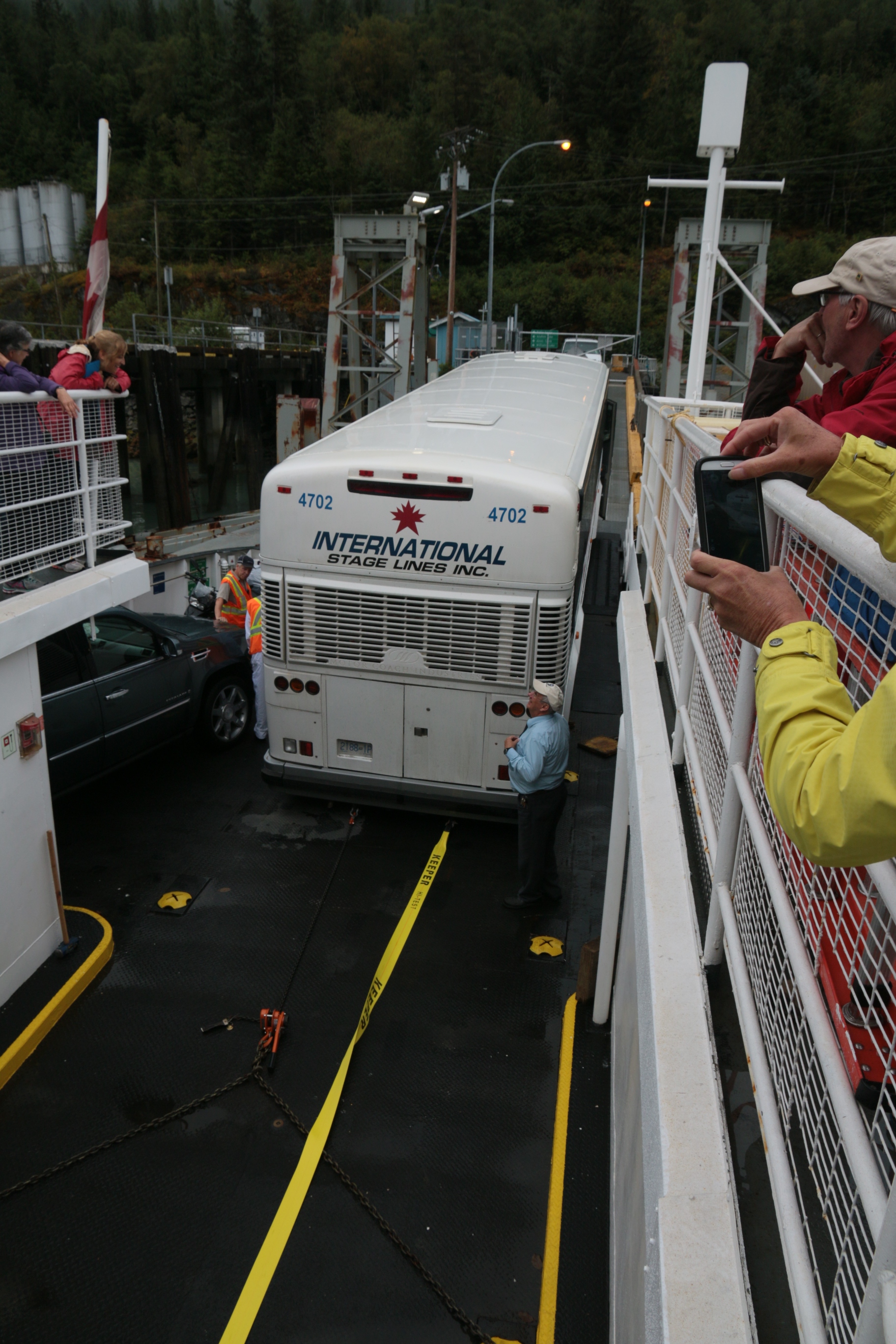
bc12In the end, the scheduled stop at the place where half the Ocean Falls was cancelled due to the late departure of the BC ferry from Bella Coola. The harbour was positively buzzing as cars, motorbikes and the odd foot passenger crammed onto a boat a third of the size of the Torpoint ferry. Oh, and there was a coach as well, transporting a delightful assortment of seniors on something called an Ageless tour. A coach that became stuck half on and half off the ferry for a good hour, grounded due to the incline. It was a fascinating drama for passengers and locals alike, whose intense gaze upon crew armed with a plethora of jacks and ramps and pulleys and increasing exasperation was only made all the better by the friendly advice shouted down from above.

Thankfully once again the Americans saved the day. Some smartass from Colorado with a monumental RV possessing incredible torque and a gas-guzzling capacity the size of Texas managed to use his diamond reinforced tow rope to budge the bus a few inches, getting it off the ground and on to the ferry. The whole episode meant that the Ageless people had aged a few more years and I feared some of them might not make the trip. But almost two hours late, we sailed out of port and passed the red maple leaf flying above the Tallheo Cannery, bound for Bella Bella.

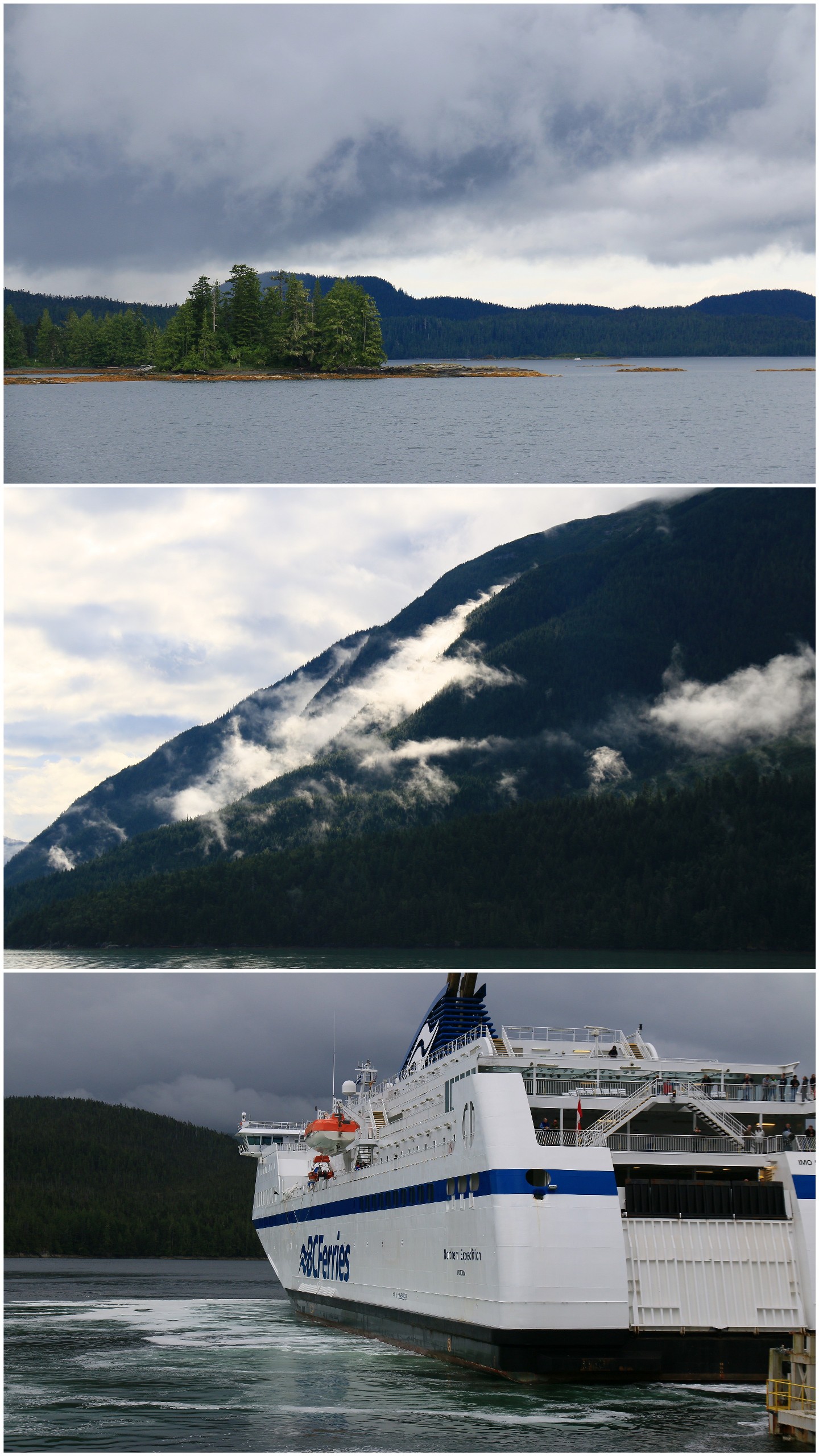
bc13The delay at least meant that the rain had stopped and there was a sense that the cloud might even lift. Every time the odd ray of sunshine filtered through, the outside decks became laden by a hubbub of grey hair and long lenses. However, the weather worsened as we approached the area of Ocean Falls, where the people were no doubt dancing with joy in the rain and wondering where on earth the ferry had got to.

bc14

So, around eight hours after leaving port, the boat arrived in Bella Bella, having failed to encounter any whales or bears or much of note at all along the way. But at least the Ageless posse were invariably entertaining, and the glimpses of scenery were serenely beautiful. Indeed, the change of boats at Bella Bella was a little sad, the intimacy and camaraderie lost with the transfer to a much larger vessel sailing the main Inside Passage between Prince Rupert and Port Hardy.
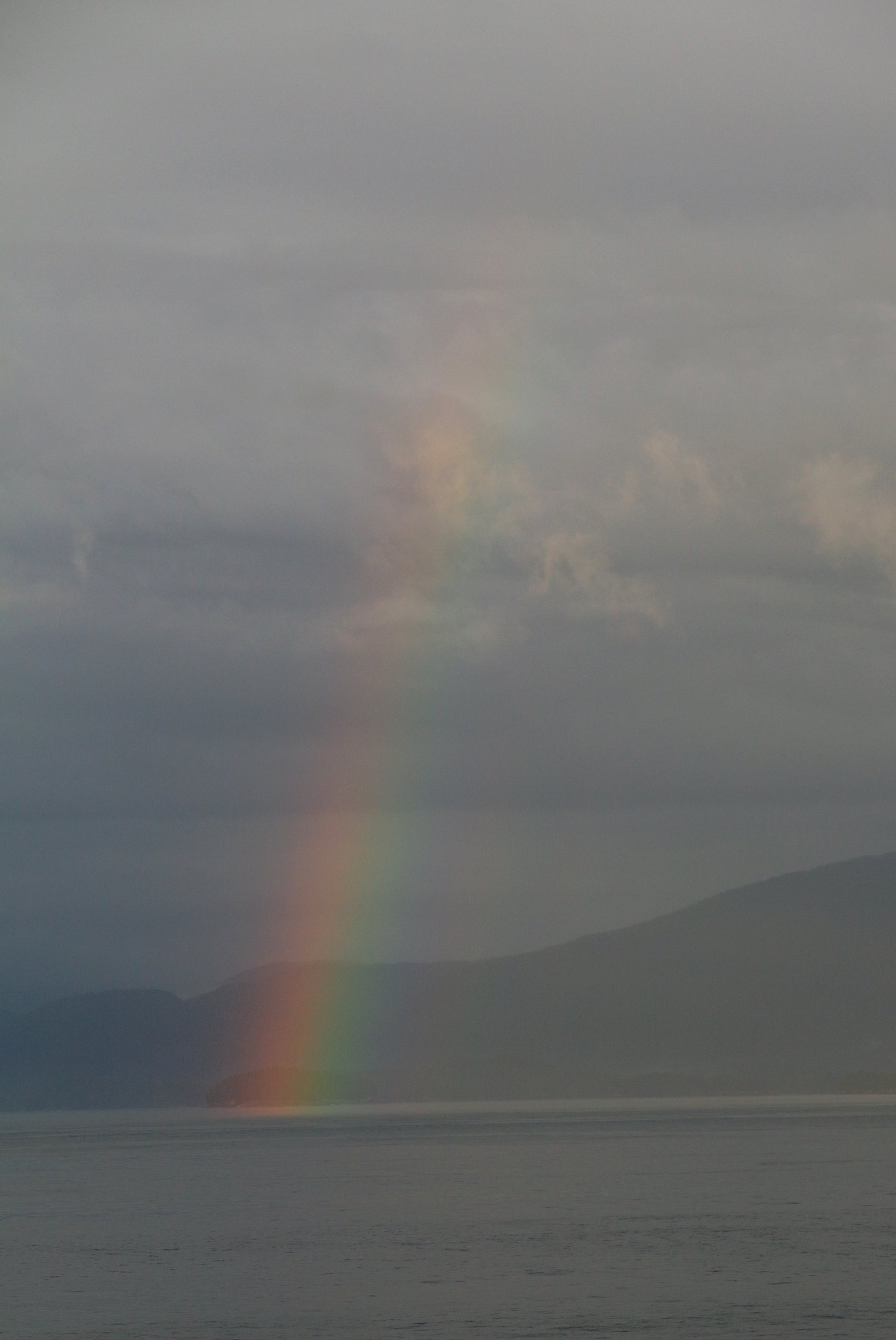
bc15With every dark cloud there is a silver lining, and the bigger ferry was far more luxurious – padded and reclining seats, cafes, even an all-you-can-eat buffet that proved ferry tempting but one I avoided in anticipation of what might happen in the open waters of Queen Charlotte Sound. The dark clouds outside also yielded silver, in the form of a marriage equality rainbow (now featuring everywhere but Australia), as the sun lowered through the heavy clouds and shimmered off a gently rolling tin foil sea.

bc16

The long day finally turned dark and the lights of Port Hardy twinkled as if some New York City in a sea of nothingness. Everyone from Ageless and the coach had made it, something that was not always inevitable. And I stepped off with many more foot passengers who had come down the entire passage, dumped onto land towards a school bus onwards to the hotels and motels of town.

The islands

bc18Port Hardy – from what I saw during a couple of early morning hours – appeared a charming, even cosmopolitan place. It’s all relative I suppose, from the isolation of the cannery and the minimalism of Bella Coola to at least three cafes and possibly even a shopping mall. While there remains enough in the way of grizzled looking locals smelling of fish and sufficient remoteness to offer a frontier feel, the continuous transit of ferry passengers has also fostered an air of gentility and rustic comfort. Bears may still invade the campgrounds and giant trucks may still trawl the streets, but you can also buy an almond croissant and city-style substandard coffee.

bc17

Meandering south and east, a half empty greyhound bus trundled leisurely beside the forests and lakes of Vancouver Island, with fleeting glances of gentle mountains and occasional snatches of the Johnstone Strait. The sun became more familiar and was amply bathing the wharf three hours down the road in Campbell River. Fish and chips for lunch proved a good use of time while waiting for another ferry, though this one just the fifteen minutes, across to Quadra Island.

bc19Like Bella Coola, I had no strong idea of what this place would be like or exactly what I would do here – the main reason for stopping being its position as an approximate halfway point between Port Hardy and Vancouver. A sunny, moderately-sized holiday island, with rocky shores, forests and a penchant for ageing hippies who have done far too many drugs in their lifetime. I did not know this before, but it became patently clear at any visit to the local shopping area.

bc21The tie-dyed highlight here was a day with a bike, which allowed me to truly explore the flatter, southern half of the island. I say flatter, but there were a few, sustained uphill workouts made all the more arduous by a lack of gears. Who would have thought getting high here would have been so difficult? But I loved being on a bike again, exploring the thin stretch of Rebecca Spit, meandering through a forest trail, cycling and then hiking down to the water, and resting up for an afternoon doze in the sun.

bc20

Departing from Quadra and onto Vancouver meant another two ferry journeys. First it was the short hop back across to Campbell River, where I feasted on a delicious breakfast wrap before getting back on another half empty greyhound. And then, there was the longer crossing from Nanaimo to Horseshoe Bay, back on the mainland. A final chance to look for elusive whales which – if this was a perfectly crafted travel story – would have launched into the sky off starboard in a climatic ecstatic finale.

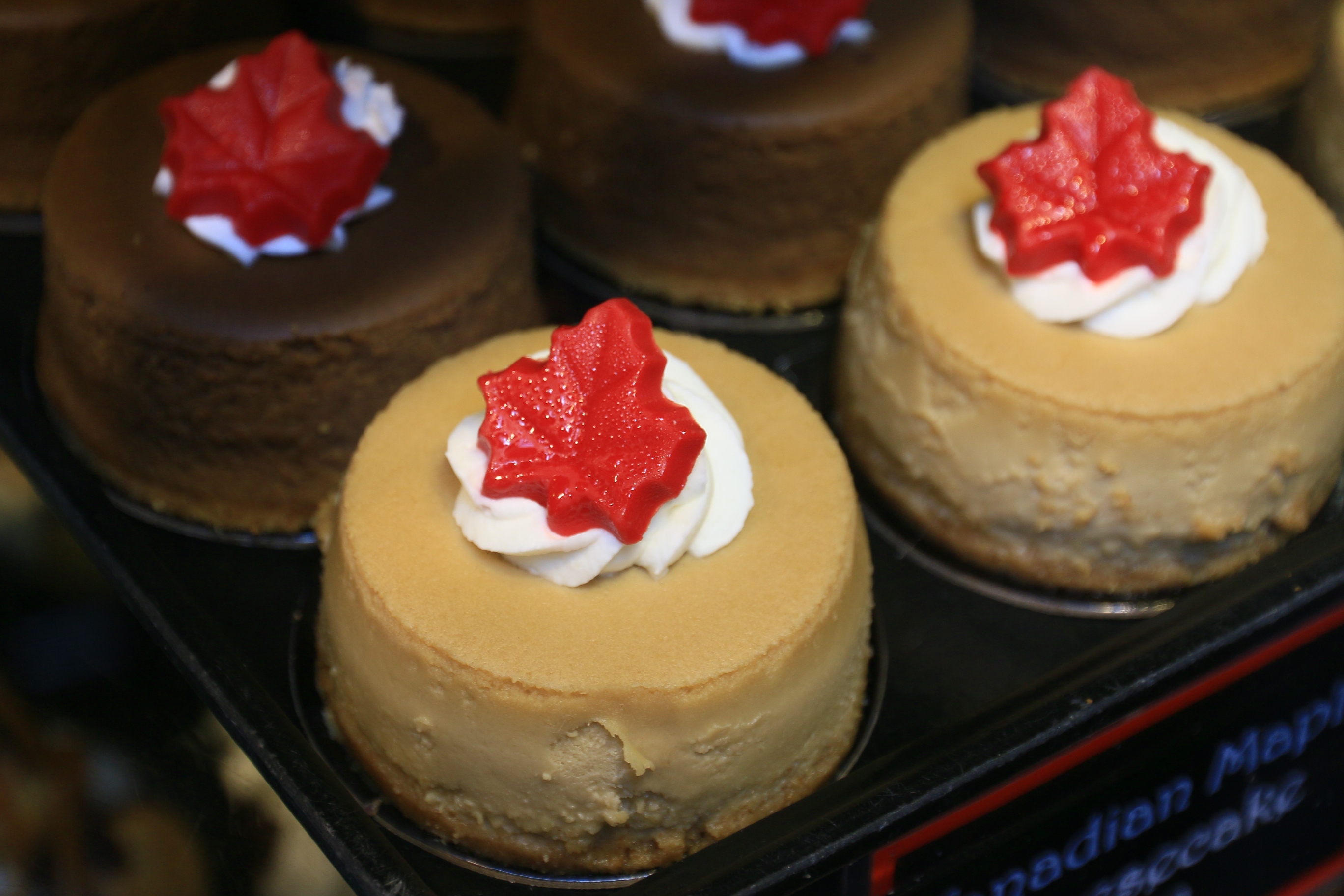
bc22Alas, this is clearly not a perfectly crafted travel story but there is a happy ending of sorts. My first and best Nanaimo bar, a gooey, creamy, chocolaty concoction from this incredibly beautiful part of the world. Like this jaunt, a touch earthy and rustic but providing a heady buzz. Smoke free, devoid of whales (I assume no whales were used in the making of this bar), and useful to temper the bitterness of the local coffee. Indeed it seems to me life here is like a local bar of chocolate. Deliciously sweet.

Food & Drink Green Bogey Photography USA & Canada

Winter warmers

There are plenty of ways to warm up during an Australian winter. Koala soup; scenic coal-fired electric blankets; just living practically anywhere apart from inland uplands, exposed southern promontories and frigid deserts. Only in the bleakest of places does a winter bite, the bleakest of places and Canberra.

QJun01Yet even within touching distance of the capital’s shivering legoland suburbs you can work up a sweat and work off a sweater. Climbing seven hundred metres or so, rising from the valley mists into a blue stratosphere, toward the crown of Mount Tennent. A steady grind with the sun on your back, the consequences clear in the comfort of short sleeves. And warmed all the more by vistas providing a positive effort:reward ratio so critical to the success of a good tramp.

QJun02

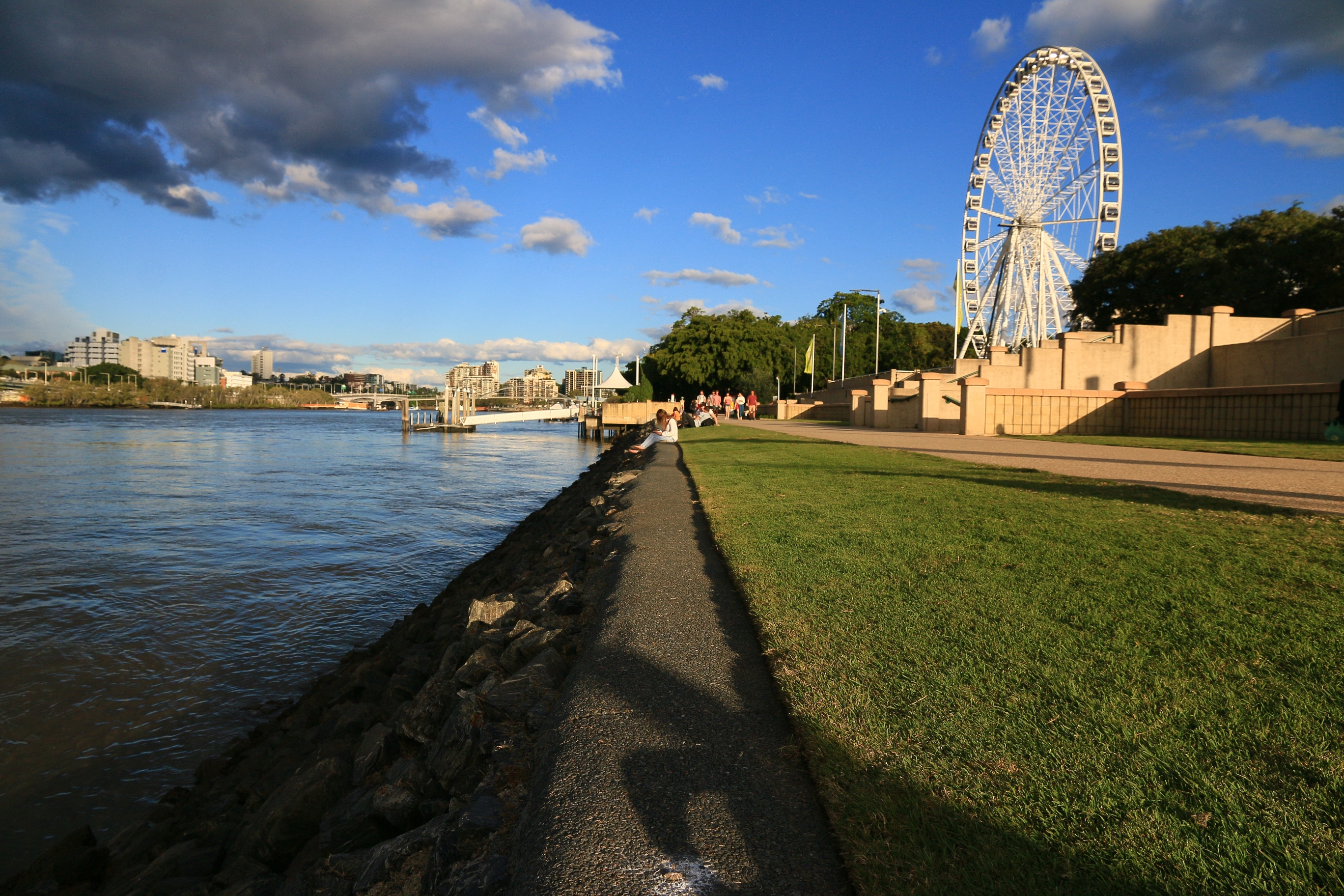
Meanwhile, back, again, in Queensland the effort required for such warmth is negligible. Brisbane may experience a fog but it barely lingers. It is quite comfortable – actually very comfortable indeed – to sit beside the river and eat a slab of cake alfresco. This place has been a second home of late, but despite this being my fourth visit in the space of a month I still cannot acclimatise sufficiently like the locals to wear a scarf without feeling entirely fraudulent. Fare thee well Brisbane, you have been good for my core temperature and bank balance, but your City Cycles are terribly uncomfortable.

Qjun04

One more week of work to go, one more week to go. That was what I was telling myself walking over the craggy hills and gentle sands of Magnetic Island. But, being on that island, it was hard not to think that I was on holiday already. I believe it may be down to the palm trees by the beach, or the strip of outdoor cafes at Horseshoe Bay, or the one road linking a few small towns in which most other people are on some kind of temporary or permanent holiday. Even the presence of backpackers adds to the mood that the only thing for it is to swing in a hammock.

QJun05

Possibly because Brisbane was not warm enough, work brought me north to Townsville, handily coinciding with a weekend in which to kill some time. So I grabbed the ferry across to the island and spent a wonderful day or two upon its shores. Saturday may have clouded over, but there was ample time to gently reacquaint myself with tropical forests and colourful birds, the briefest of sunsets and the longest of beers. Acclimatisation into that hammock holiday-minded state.

QJun06

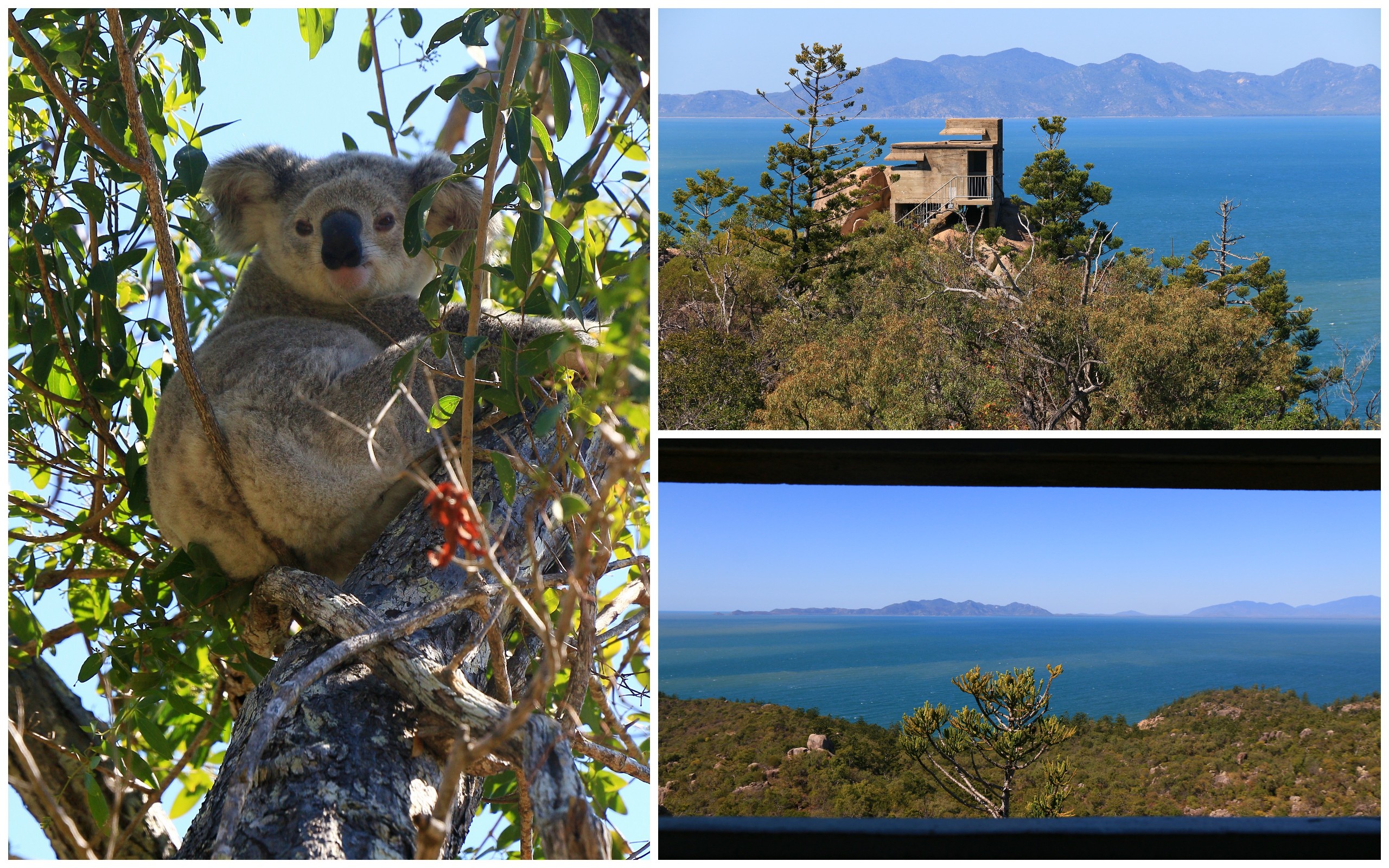
QJun07But it was the Sunday that was super, cloudless throughout, though with a morning freshness that made the walking all the more pleasurable. Commencing with a wake up coffee by the beach in Horseshoe Bay, it was over one hill to one fine beach, over another to the next, and onward and upward to lookouts galore. A substantially energetic loop walk that topped out around The Forts – a series of wartime installations plonked atop the forest in a tasteful rendition of Plymouth city centre style concrete. Obviously here because of the commanding views, but the koalas didn’t seem to care whether the Japanese were coming or not.

Qjun08

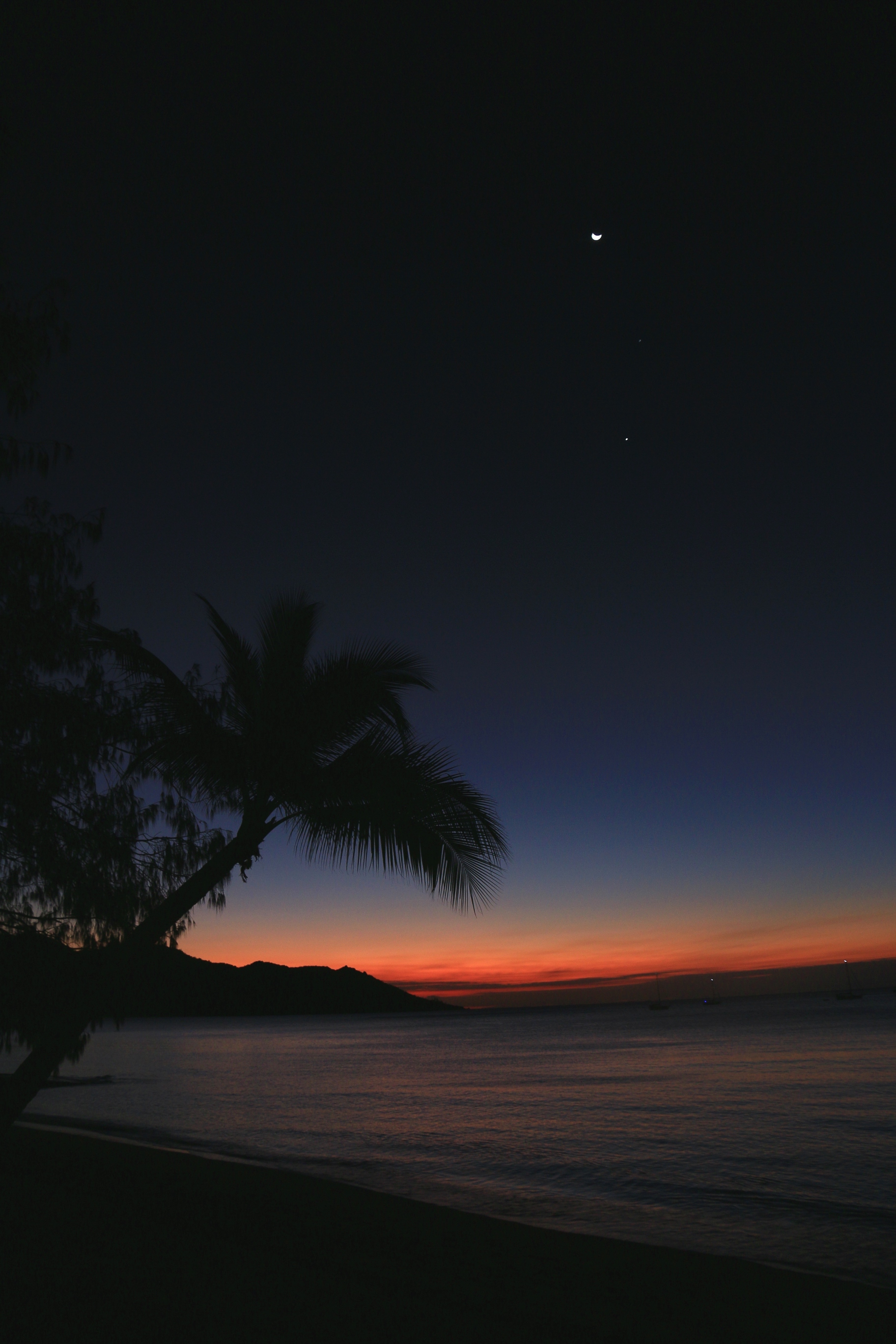
Qjun09With the satisfaction and accomplishment of a walk complete, a late lunch of salt and pepper calamari beside the water will suffice thank you very much. Oh, and ice cream, of course. I am feeling like I am on holiday after all. So much so, that as Sunday dwindles and the prospect of Monday creeps up, I do not want to leave. The late sun glows and dips and fades and the stars and moon twinkle as blue turns to black. Yet still I am comfortable in shorts, and with another end of day beer in hand.

Qjun10

Happily Monday brought some drizzle and the transition back to work was reasonably comfortable in Townsville. But there was an abrupt decline in its standard as I re-located south, to Dubbo. On the plus side though this was not as bad as I expected, but then I expected little. The people were nice, I found a good coffee, and squeezed in a pleasant riverside walk. But I was ready to get out of there and, temporarily, get home.

Qjun11And so, the climatic rollercoaster finally shifted into Sydney, for one night only and then onto Canberra. Sydney was putting on its sparkling look-at-me face, demonstrating a pretence at winter that is misaligned with the comfort of not needing a coat. I was even able to brave an ice cream, sadly. Canberra, meanwhile, had its morning shroud of cold and cloud, but cleared to its best fresh hue of blue. One more week, one more week of keeping warm, and then a northern summer will bless me again.

Australia Food & Drink Green Bogey Photography Walking

June

[Best read in David Attenborough style]: As the temperature cools in the southern part of the Australian land mass, the first signs of an incredible migration start to appear. Senior males of the species are spotted in pockets along the coast, struggling to grasp with the multiple tasks and devices which will propel them north. Reserves are gathered to a state of surplus, and a battle for alpha male superiority subtly ensues, a contest which will last across the season.

But here, it is the female that rules. Freshly groomed and adorned for the long journey, small numbers congregate. While not always harmonious, they band together for the greater good, bound by a common aim: maintaining survival, comfort, and subjugation over their once proud male partners. Hunting out and often gathering the food, directing the placement of shelters, maintaining the hygiene and lustre of their coats. In groups characterised by auburn dyed hair and expensive designer spectacles funded by generous tax breaks, these females underpin the mass migration that takes place.

And so, in June, across the more northerly coasts of this great continent, the grey nomads begin to cluster. They flock in their thousands to known waterholes. Sites like Carnarvon are almost overwhelmed by the influx, its banana-rich pastures transformed into shanty towns and its pharmacy inundated. The males continue to display in a parade of sandals, white socks and short shorts but, predictably, with little impact. After a while they retreat to seek out fish and engage in ablutions, but there is still competitiveness over the size and strength of their equipment. Some will settle here, and see another winter through with their mate. But others, with stronger torque and deeper reserves, will head on, north to the next great gathering place.

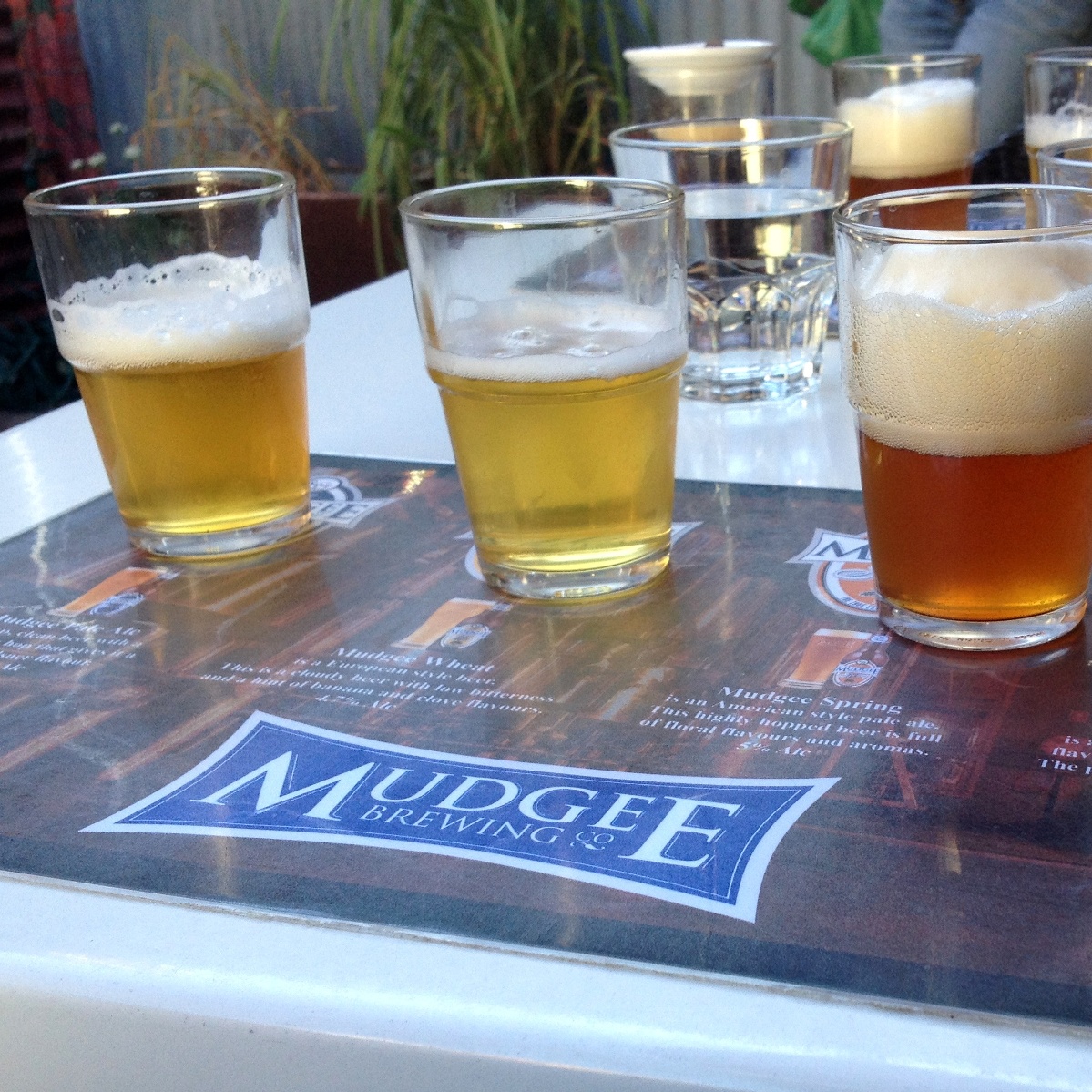
[Back to normal voice in your head]: My first significant encounter with a mass gathering of grey nomads was back down in southern Australia, in a pleasantly ambient March. It was apparent that Mudgee – a NSW country town standing out from many of the others thanks to pastoral affluence and providores – was an alluring spot for ripening baby boomers to hook up their motor homes. A caravan park beside the river, close to town, with excellent ablutions that may have won an award for hottest power showers in the west was always going to prove popular. And so it was that the mini street blocks dumped onto a meadow were crammed with a veritable mix of shiny white coaches and ramshackle fibros, often adorned with an auburn-topped lady in a folding chair reading through her expensive spectacles while a rangy male figure stumbled around trying to figure out how to empty the septic tank.

June01Campers, as so often, were an afterthought. Allocation to a small patch of grass that possibly classifies as a verge. Sited next to the river, but with the downsides of an adjacent public right of way and numerous biting insects. As ever, placed in the most open and prominent position so that all can look on in bemusement at the canvas contraptions that somehow you and your companion manage to be sleeping quite comfortably in. Swags were always a source of much fascination and eternal debate amongst the nomads, with lively discussions around one’s own ability to survive in such a thing and – on occasions lubricated by grape juice and a great Aussie irreverence – the possibility of sexual intercourse in such a structure [i].

Deflecting much of this attention and offering comradeship against the rows of Grand Adventurer 3000s and solar-panelled satellite dishes tuned into Today Tonight, one other person was braving the use of canvas in Mudgee. And quite amazingly it was one of the greyest of the grey nomads, a dear old lady cycling all over Australia towing her belongings, one of which was a stuffed dog [ii]. There is always someone or something to ruin your sweeping generalisations and lazy stereotypes, darn it. Anyway, being one of the few persons on site to actually need the kitchen facilities (I say kitchen, but think sink and a few tables under a picnic shelter), it was discovered over breakfast that she was in need of a cataract operation, possibly because she hadn’t invested in a pair of those expensive designer spectacles. And with a few delightfully cutting comments about the extravagance of $100,000 motor homes, she loaded up and wobbled on to the next stop down what I hope she knew was the main road.

We never did come across this cycling legend again, something I am pleased about in one sense because I had horror images of finding her happily peddling down the wrong way of the M5, the stuffed dog the only one alert to the situation, a terrified expression on its face. But it is quite possible – indeed highly likely – that you will encounter the same nomads, recognise the same Grand Adventurer 3000s, bump into the same old guy off to the ablutions for his dump, during the migration season.

June02Rob and Sue – well we think they were called Rob and Sue so that is how they became known – spotted us first. Apparently I had overtaken their car and trailer about ten times that day on the most boring stretch of road to cross the Nullarbor. I can’t say I noticed, because that boring stretch of road was so soporific that senses became dulled, and the caravans and trailers all took on a likeness and started talking to me and whispering sweet nothings as I hazily overtook them at 140kph, all entirely safely as pink elephants blew champagne bubbles through their trunks and out into the endless sky. But over a roast lamb fiesta in the quite delightful Fraser Range Station that night, they recognised us. I suspect a shiny blue Outback with a roof box and what were relatively young people inside (it’s all relative) were a more distinctive site. And as Rob recounted being overtaken ten times that day by some young hoons in a Subaru, my mind tried to recall whether any of those manoeuvres were in any way dodgy [iii].

Rob and Sue were quite lovely, in that quite lovely way where everything is quite lovely. Kind of like the quite lovely aunt and uncle who would have a quite lovely lovingly kept home and would happily let you stay for a lovely dinner and sleep in their quite lovely spare room. They were younger nomads; indeed there was a chance that Rob might still go back to work after their little test of the waters. They didn’t even have a proper motor home, just one of those plain trailers that somehow transforms itself into a suite at The Ritz. I’m sure they didn’t quite see themselves in the same mould as the wildebeestian hordes of socks and sandals and designer spectacles, and were glad to speak to some youth for a change [iv].

Anyway, the next day as the end of the Nullarbor beckoned, we passed Rob and Sue a few more times as part of that drive-rest-stop-drive tango, but now always with a friendly flash of lights and gesture to the pink elephants blowing bubbles in the sky. We marginally missed each other down in Cape Le Grand National Park near Esperance, a fact I discovered when we came from opposite directions to cross in the quite amazing Fitzgerald River National Park [v]. Later, I think they may have been a few vehicles in front of us at some lights in Denmark. And we fully expected to bump into each other once more, migrating north up the west coast of WA. So it was with some disappointment that Rob and Sue vanished into the great tarmac ribbon on red dirt, never to be seen or considered to possibly be stalking us again.

I reckon they were always a few days ahead, due to us lingering around in some backwater like Perth, finally drinking good coffee and wasting time in its breweries and beachside cafes. They were not there among the few souls braving the annoyingly icy waters of Shark Bay to see dolphins being fed; neither did they emerge from the masses crammed into the favelas of Carnarvon, a site which appeared to be only one step removed from a season finale of The Walking Dead; perhaps they weren’t brave enough to stop at the the very rustic setting of Quobba Station or enjoy the jackaroo appeal of Bullara Station, even though a few alternative, non-stereotypical nomads could.

June03

[And so, back to Attenborough]: In the northwest corner of Western Australia, Exmouth is the next staging post for the nomads. Here though, they come up against some younger bucks who could represent a threat to their existence: outsiders from France and other wild lands with extravagant plaits and body features that are proudly displayed, yet to sag. Competing for prime locations next to the ocean from which to alternately strum guitars and read books, there is an uneasy peace between the two groups. As the fine weather holds, an air of acceptance persists and the species cohabit side by side, with Derek very friendly towards young Amelie much to the disapproving over-the-spectacles glare of Margaret.

[Cue crack of lighting and thunder rumble scene, signifying, uh-oh, trouble]: But an unseasonal low pressure storm approaches. Some hunker down, others retreat to the cheapest motel to make the most of the downtime and look at some research publications and transfer the content into an excel spreadsheet in order to save the world. Trouble and coffee brews.

As the rains continue, the wily nomads now sense their opportunity. Secretly unhitching the power and emptying septic tanks in the quiet of dawn, a convoy gathers on the one and only main road of Exmouth. Emboldened by their superior torque and sixteen speed automatic military-spec drive, the nomads traverse the flood plains to settle in drier and warmer climes. Basking in Broome in tinted designer spectacles, they leave behind a melee of Wicked campervans bedecked with misogyny and potentially fatal odours. The grand migration of the common grey nomad carries on unstoppable, and we leave them on their endless roaming and return south.

——————————————–

[i] Important interpretative note: by ‘possibility’ I refer to consideration of the practicalities of such actions being feasible in such a structure, rather than a request to give it a try!

[ii] Now, I am no Lance Armstrong, but I would imagine that you would do everything possible to minimise weight when cycling across Australia. Apart from those important coke cans for transporting syringes of unicorn blood.

[iii] I mean, we could have been singing out loud to songs from Eurovision 2012 or something. For instance: https://www.youtube.com/watch?v=O_9QaVC-NKw or https://www.youtube.com/watch?v=mrIaxnjeJ58

[iv] If there is one thing to be said for surrounding yourself with grey nomads it is that wonderful feeling of being made to feel a youngster again. Having said that, typically we were the first to bed and departed the site the next morning before many of the older ones had stirred!

[v] If ever you have chance, go there.

12 Months Australia Driving Society & Culture

Queenslander

Ask an Australian to say “Dirk Drongo is making his debut for the Maroons” and you will realise you are indeed in Australia. The fact that Dirk Drongo is making his dayboo for the Murowns will not only secretly appal the smug little English teacher lurking inside of you, but you will also wonder why this is front page news on the Courier Mail. Apparently, it’s all to do with a game of rugby or – preposterously – football as it is called. Not the FIFA type of football in which you kick a ball at an open goal only to see it diverted by a mysterious sheik into a pit of money built by exploited foreign labour. No, the rugby league type of football, in which scandals are much more unsophisticated affairs involving parties on balconies that somehow always seem to get out of hand and end up with contrite media conferences in which apologies are made for any offence caused.

Having spent a substantial amount of time in Queensland recently it was a relief to escape a few hours before the Murowns played the Blues in something called State of Origin. It was possibly the only relief, because Queensland appears to be quite beautiful this time of year, decorated with clear blue skies and radiant, twenty degree-plus warmth. As a couple of nights of minus five await, and the citizens of Canberra adorn themselves as if on an expedition to the Antarctic, my spirit is lifted by the thought of Brisbane on the horizon once again.

qldmay01

qldmay03While locals will vehemently disagree, it is quite possible to live in Brisbane without a jumper. Mine came off emerging from the plane, although I did put it on again one morning, just to appear less of an outsider. Meandering around amongst the city towers and along the river, a touch of summer lingers forever: clusters of dark green foliage dwell under a weight of blooming extravagance; sweat is apparently still a thing here; and the official State costume of thongs and boardies can be easily detected in the outdoor swimming pools of Southbank.

There are of course many upsides to this, and one of them is ice cream. And flat whites that remain a pleasure to sip alfresco. Sure, some overzealous cafe owners may have blasted on the outdoor heaters so that you too can relive those heady summers of Marble Bar, but the coffee is at least of reasonable metropolitan standard. It seems to taste blander than that in Canberra, but then maybe I just don’t know the right spots…always a first world curse of first world business trips.

qldmay02A good spot with or without coffee is GOMA, the Gallery of Modern Art. Probably without coffee, because that would have been condensed into an essence of cold-dripped Columbian syrup and daubed on the walls to spell out a series of Japanese characters that make no sense whatsoever, but have deep, deep, meaning, hmmm. Still, I love the building in which such work sits, and there is something immensely satisfying in cloaking your laptop bag for an hour and transitioning to a world away from depth interviews and strategically coloured bar charts.
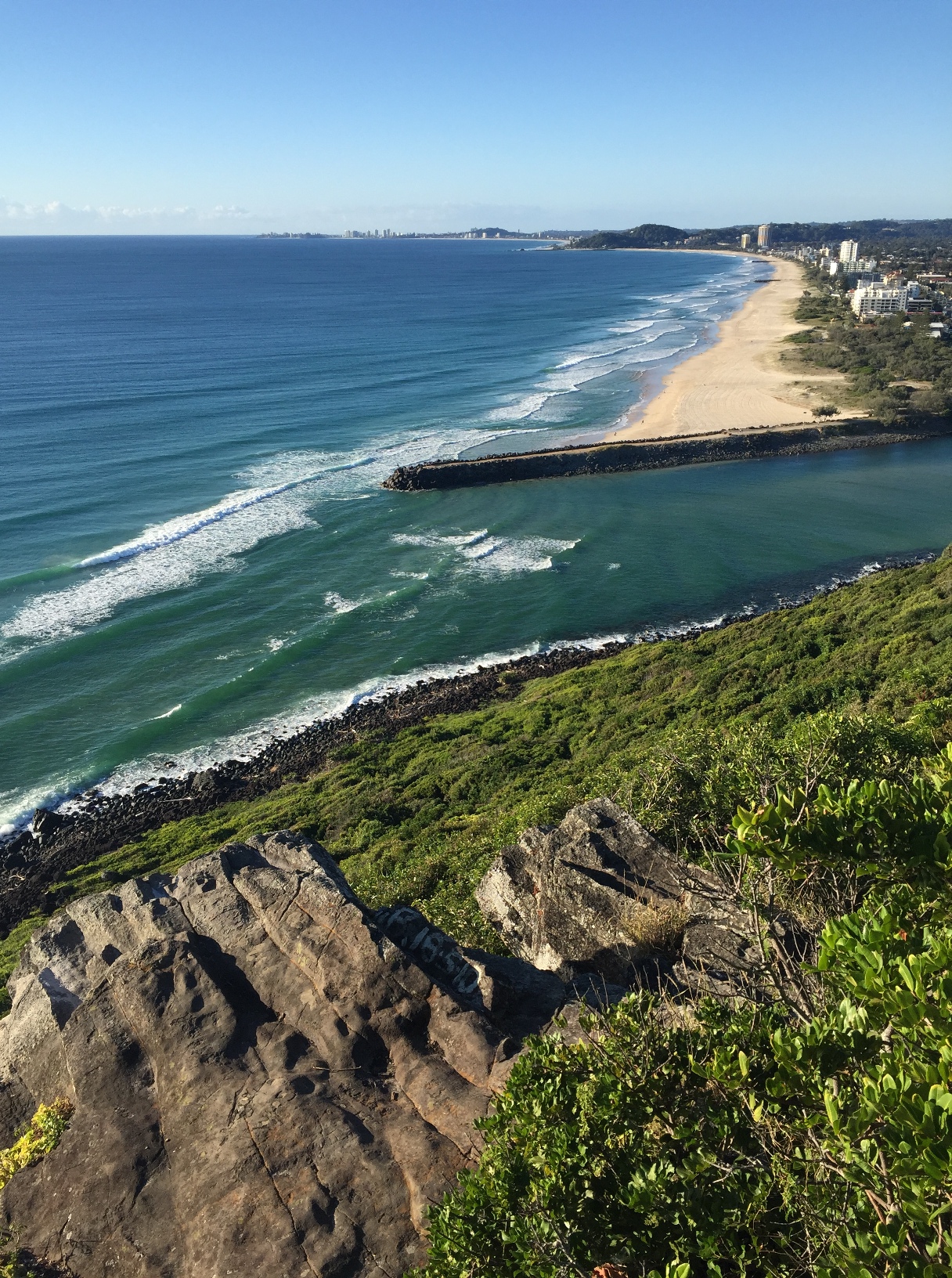
qldmay04Moving down now a cultural gear or ten, it is on to the Gold Coast. One could argue that the height of culture in the Gold Coast is the all-you-can-eat seafood buffet on the 71st level of a tower in Surfers Paradise. But here dwells the Australian dream on steroids, and many people lap it up like State of Origin players and…well…steroids. Here, you can live in a big white house in a gated community on a reclaimed island, be woken up at 5am by a cacophony of lorikeets and get all your tax minimisation forms done by seven. Then you can go for a power walk by the beach, enjoy a weak soy latte, and engage in a round of golf at the Princess Palmer Palace Retreat and Country Club Theme Park. Later, after listening to a radio station called Hot Tomato, it is quite possible to head out as the shadows of towers infringe upon the sand, surfing in your very own paradise.

qldmay05I have always said I don’t mind the Gold Coast and I still think that way. I’m sure my inner Brit arrives here and sees a stretch of white sand, a modern and affluent city-cum-holiday resort, with good food and reasonable coffee. I love nothing more than an all-you-can-eat challenge, a power walk up Burleigh Heads in guilt, and the pronunciation of tomato on Hot Tomato driving back. And, of course, more than anything, it really does seem to be twenty-four degrees in winter.

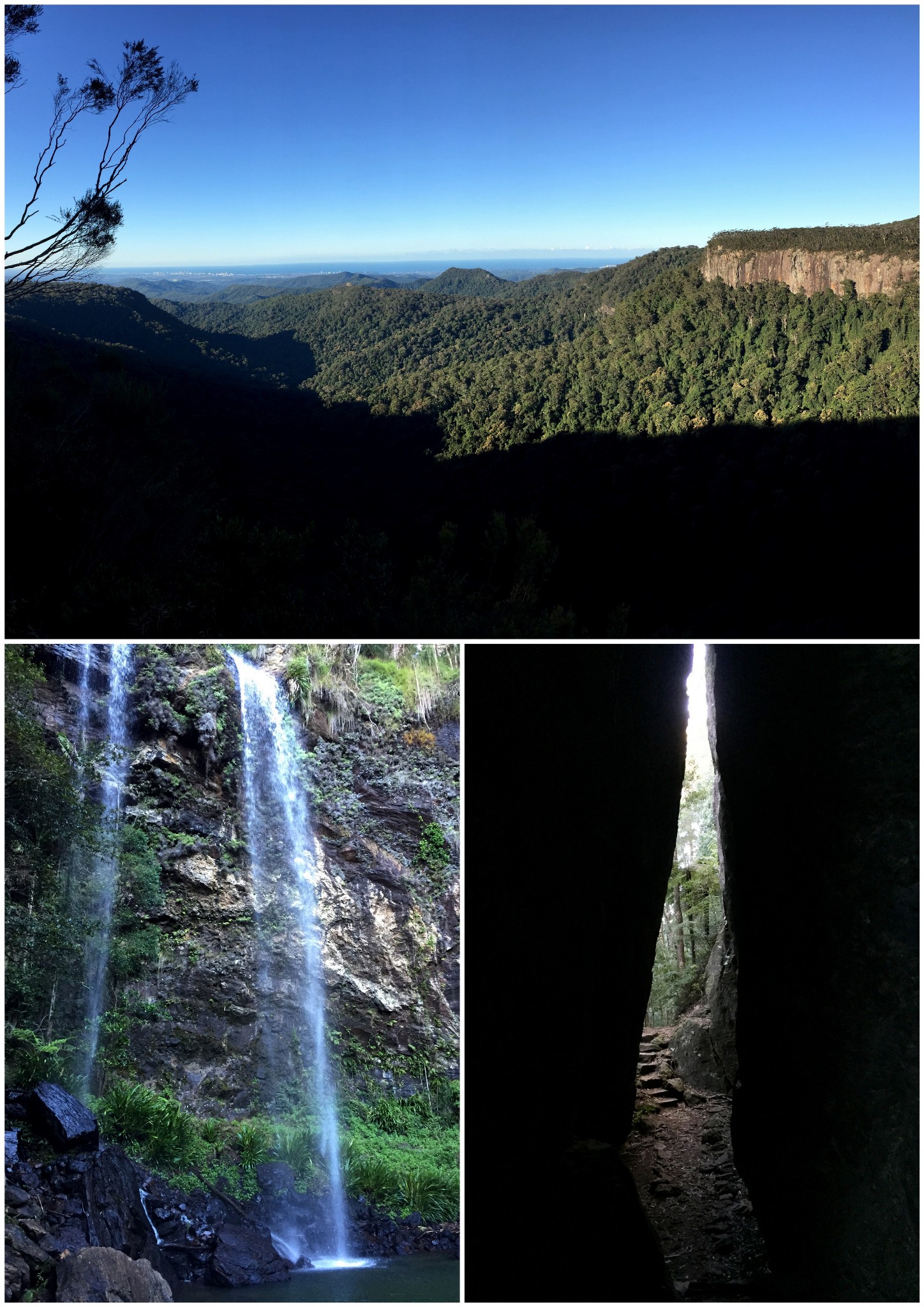
qldmay06Away from the surfers there is still a paradise. Towers and condos and gated communities drift away and roads rise into a hinterland. Side-stepping villages of token tweeness mixed with essential oils, Springbrook National Park stands guard over the landscape, one lofty remnant of a massive, ancient caldera. Stunning lookouts? Check. Plunging waterfalls? Check. Rainforest? Check. Bitumen? Check. Good walking trails? Check. Still with proximity to coffee, cake and ice cream? Check. Funny rat-like marsupials unlikely to cause significant damage as you drive down the hill at twilight? Check.  Springbrook is probably one of the best national parks I have ever been to, and now twice in my life.

qldmay08I would happily go back a third time, and then I would actually remember to bring my proper camera. You see, these travels in Queensland have been for business which came to be mixed – thanks to clever scheduling and a will to make up time on weekends – with pleasure. But I travelled with business in mind and today’s blog is brought to you in conjunction with the iphone 6. It has a good camera…hell…it’s a great camera considering it is one tiny little part of a slender and stylish lifestyle enhancement device ((c) Apple Marketing 101). But it cannot make waterfalls flow ghostly ribbons of white.

Neither can it do justice to the best of all lookouts, which is aptly marked on the map and road signs as Best of All Lookout. But then any camera would struggle with the scale and grandeur (not to mention the shade and light complications of 4:30 on a winter’s afternoon). I came here before in 2007, the lookout stubbornly shrouded in the clouds. Today, not one fouled the sky, allowing the late sunlight to project its glow upon Mount Warning, and a chill to emerge in the shade to prepare me for a return to Canberra.

qldmay10

qldmay11The Gold Coast airport was but a twenty minute drive from where I was staying, but I detoured a few hours. With a flight later in the day there was one other branch of Springbrook to revisit. Again, part of the joy is getting there, again blessedly on bitumen, but winding around west of the escarpment and into a valley of the dinosaurs. Lush and green, it’s an alternative route across into New South Wales, the border a genuine high pass which throws you up and over into the verdant Tweed Valley. It is a landscape that, beyond cane and bamboo and no trespassing signs, one cannot help but suspect is dotted with marijuana.

qldmay12A natural high just before the border is Natural Bridge, which again is best captured with a proper camera on a slow shutter speed. Nevertheless, the walk through rainforest is of agreeable length while the falls – plunging down a hole in the rock and out through a cave – cannot fail to thrill. In the valley, in the shade, it is again quite cool and Canberra feels closer.

Over in New South Wales, Murwillumbah sits amongst the sugar cane and feels a lot less glitzy than the Gold Coast. There seems to be good coffee on offer and a fine brownie to keep me going, not laden with local produce – apart from sugar – as far as I am aware. Following the Tweed back to the coast, the tower blocks and marinas soon again emerge, and that lost world, that lost valley of earlier seem all the more remarkable in contrast. And with contrasts clear, like the light and dark from the Best of All Lookout, it is time to put the jumper back on and head south.

Australia Green Bogey Photography Uncategorized Walking

May

Recently I saw the first mention of Britain being warmer than Spain. It was on the Yahoo homepage, somewhere between top ten tips to pout like a trout and a twitter post from Taylor Swift that you would, apparently, never believe. Somewhere or someone called Yahoo is not a place I would naturally go for in-depth analysis of the factors underpinning the fragmentation of the Middle East or the precise dimensions of Kim Kardashian’s behind, both of which may be somehow inextricably linked. But a long time ago, in a galaxy far, far away, I created an email address there and occasionally get distracted by evil click-baiters now preying on people who are slightly bored enough to be checking their email.

Anyway, today, Britain was warmer than Spain, and adorned with attractive young ladies baring skin on a strip of pebbles next to some murky water. The pronouncement of this statement is, of course, as much a feature of British summertime as Wimbledon and a plate of Cumberland sausages infused with burnt charcoal. It blares out why go overseas when you can roast yourself red here? Given a clear pathway towards Brexit forged in the desperate need for a PM to save his shiny, pampered skin, and what with the incredulous love-in for UKIP and Nigel Farage (whose own skin is tanned to the extent that it can only have been achieved with European influence), it is a statement that is arguably as popular as ever [i]. Yeah, who needs Spain anyway, what with its nasty weather and cheap prescriptions and high-speed trains and bargain-basement villas and welfare and services readily available to millions of British expatriates?

Back to this article…I am not sure where in Spain somewhere in Britain was warmer than. It could have been the top of the Picos de Europa being compared with a 1980s British Railway carriage in which the heating has always been on. I suspect it was more likely a temperate resort – usually a Malaga or a Benidorm, or perhaps a more northerly Costa Brava – being compared with an equally delightful place like Gravesend or Hastings. Regardless of its pitfalls, the story was clear: the weather was actually quite nice for the first time in ages.

It may be this that I most miss about Britain. When I see numerous Facebook posts like “Loving this sunny weather” and “Baking in the garden” and even – god forbid – “Sitting in the shade because it’s too hot”, I want to be a part of it, there in my jumper, wondering what all the fuss is about. No, seriously, with acclimatisation still pretty instantaneous I’d be there in my shorts and chomping on a plate of burnt Cumberland sausages with the rest of them.

It really is true how eighteen degrees feels much warmer in Britain than it does in Australia. And in May, equilibrium strikes: Plymouth and Canberra will likely attain similar maximum temperatures. But while one is on the rise (or at least fairly steady), the other is quickly descending into Arctic despair, judging by the attire of locals and their desperate protestations of hypothermia. Thus, despite the same temperatures it is not unusual to come across adjacent posts on Facebook informing me that it is too hot to sit in the sun and that I should be wrapped up in a Merino wool thermal Snuggie with accompanying solar-warmed Ugg boots.

Notwithstanding such distorted equilibrium, and a withering autumnal beauty stretching across Canberra, I’d still rather be in Britain in May. Which is a tad ironic when I think I have only been back to Britain in May once, and then propelled primarily by a wedding. I suspect a big reason for this absence is the level of work sprouting from every orifice of the Government, in a crazy cash splurge that could rival a Channel Seven teatime quiz. Spending is temporarily back in fashion in order to receive the same budget funding, the leftovers of which can be spent frantically again this time next year. Thus Mad May, as I quickly discovered it to be known, is a perennial – but welcome travel-funding – feature of my life.

And so it is that my European trips usually take place from July at the earliest, once the financial year has wrapped up. But, as I say, I did manage a May trip once without the Government here collapsing, and it was truly a beauty. Okay, there was some rain – you expect that – and I may have needed a jumper once or twice, but there were also barbecued Cumberland sausages, early season strawberries so much better than any from down under, and one or two days in which it was okay to wear shorts. Add the inevitable industrial doses of clotted cream to a backdrop of pure green fields and wooded river valleys, and you have the recipe for success (and possibly a heart attack).

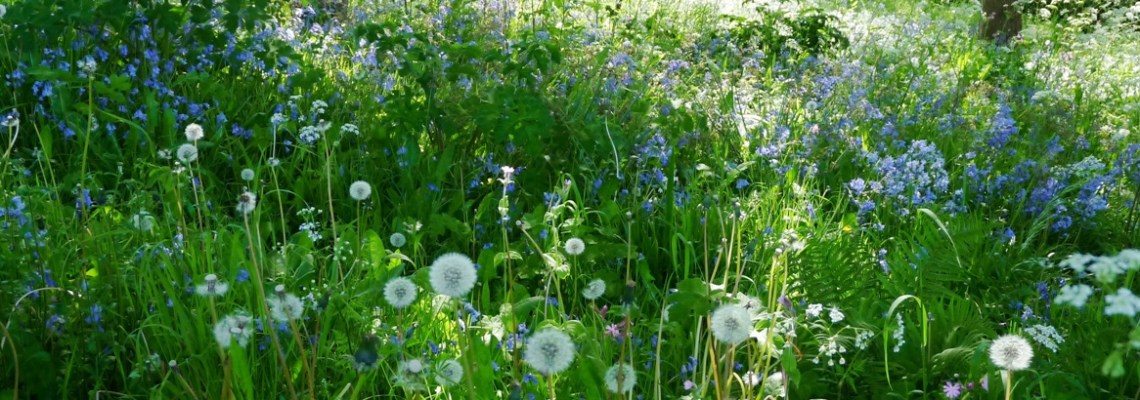
may01I remember the green most of all. Catching a suburban rattler from London Waterloo through the Surrey heath and into Hampshire, the rail line part tunnel of branch and leaf, the hedgerows maintained by the clipping blade that is the express to Southampton. The woodlands glowing chartreuse, as a gentle sun dapples its light onto sweeping clusters of bluebells. The cocoon of light and leaves offering a greenhouse in which sweaters can be comfortably removed. In the open, fields of yellow canola interspersed with succulent pasture for cows and hilly outcrops for sheep stretch south and west. Despite intrusions of modernity, there is a timelessness to it.

In Devon, the county may have been made for May. Here, the whole landscape is the epitome of the Ambrosia custard can. There is a sense of new endeavour in the rolling hills, a scene of rapid natural productivity in the woodlands, and an audible tinkling of rivers and streams as they make their way towards the estuaries and inlets of the coast. The city of Plymouth is something of a black spot amongst this utopia, but even here you cannot ignore the sweeping green grass of the Hoe, the headlands plunging into the glittering waters of the Sound, and the grasses, flowers, and weeds flourishing in the cracks of the pavements and the neglected council estate gardens.

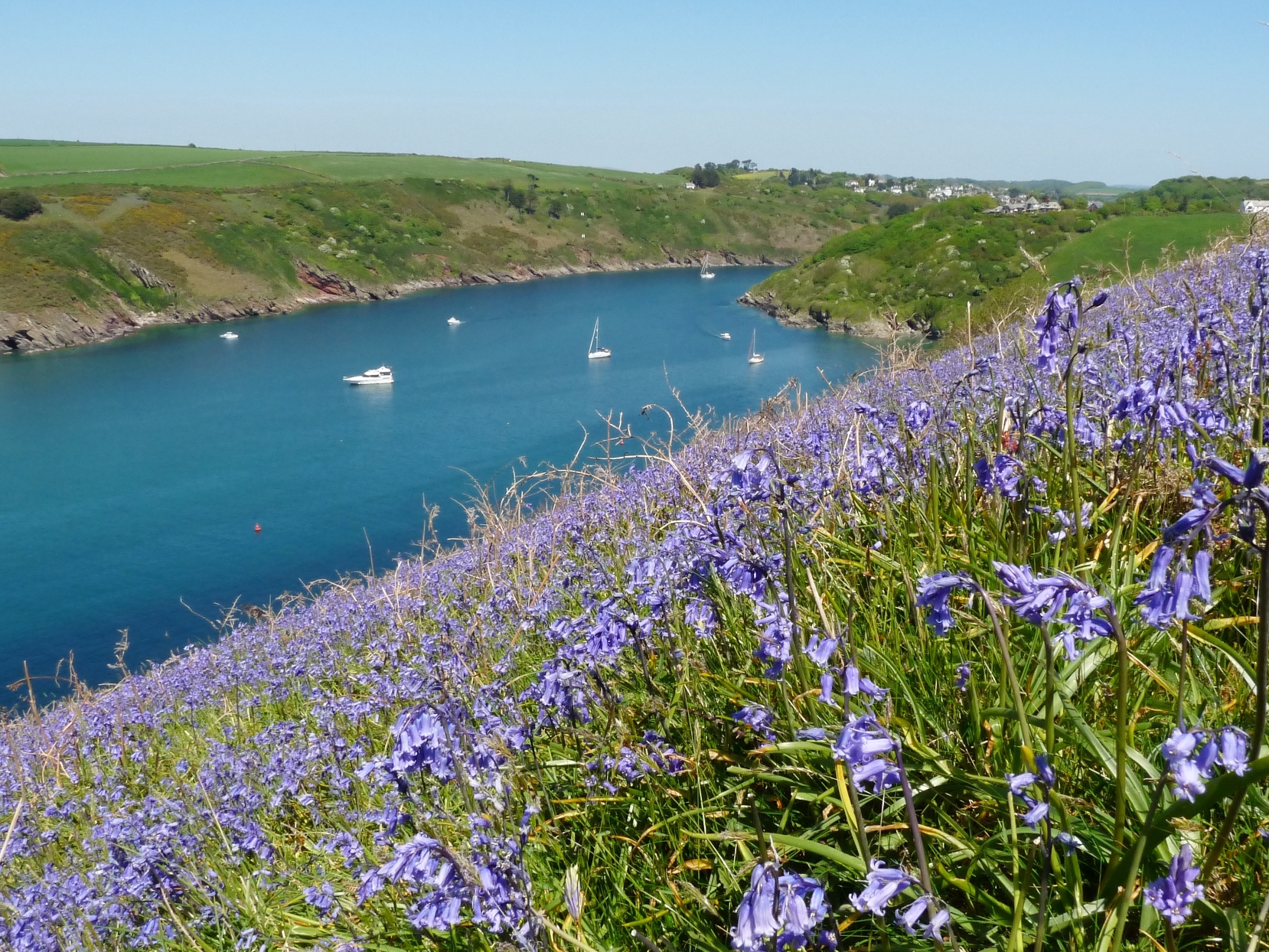
Not far from Plymouth, largely tucked away from civilisation, Noss Mayo exudes a loveliness that is probably repeated up and down the south coast of Devon.  Here, I could brave shorts, chomp on fresh strawberries, feel the warmth reflecting off the blue seas, and cool down again through the shadowy banks of the Yealm. I could hike up to the church and wallow in more bluebells and daffodils and buttercups and daisies. I could let gravity take me back down to the creek for a cold cider or warm beer beside the water, as boats of red and blue sit in the tidal mud, and the sporadic appearance of a bus may or may not feature. Sitting waiting without a care, floating butterflies will make friends and transform into wasps and shake me from my rose-tinted moment of paradise.  Like impending Atlantic weather fronts, wasps are wont to do that [ii].

may05

And so back in the real world, the British May may be heaven one day and a drearier version of hell the next. But at least it is not winter anymore and the prospects for a good day again soon appear credible. As the rain plummets onto the broken concrete Plymouth streets and buses of damp people in damp coats on damp seats grind their way up the hills, I have a vision of beautiful people in Canberra drinking flat whites, wrapped up against the perishing eighteen degree days, thinking about what dubious investments they can make before the end of the financial year. Mums sup lattes as their kids crunch amongst the oak leaves, hipsters go about perfecting their hair, beard, and top button arrangements, and tradies roll around in the lucre of non-stop apartment-building. I may long for the colour, the coffee, the air. But there are no bluebell glades, and only the prospect of several frosty months and a period of intense labour for companionship.

In Canberra, in May, there will be no headlines jubilantly celebrating temperatures warmer than the Costa del Sol. And that is surely reason enough to turn minds back to the north.


[i] Of course, the very recent 2015 UK General Election demonstrated Little England was still going strong, sticking two fingers up to those pesky Scots what with their crazy ideas of equity and – well – caring and compassion for the less rich, and cementing an in-out-shake it all about referendum on participation in the EU. As for UKIP, well, 3,881,129 people must see something, I’m just not sure what, and whether this something is really the panacea to solving all their woes. Nonetheless, Mr. Farage can at least now go work on his tan.

[ii] Indeed, the European wasp is fast becoming a scourge of Australian suburban idylls. Bloody Europeans, coming over here, taking our native flora and fauna. See http://www.canberratimes.com.au/act-news/european-wasps-in-canberra-at-record-numbers-20150427-1muobh.html


12 Months Europe Walking

With age goes wisdom

If you haven’t got anything nice to say don’t say anything at all, said like no politician in the history of the world ever. This becomes apparent in the brief snatches of news footage or articles I have intermittently stumbled across in relation to the UK election. So, from what I can make out, some commie wonk stumbled when feeding a shiny-faced posh man a bacon sandwich, who choked upon hearing Scotland are going to build a big high speed rail bridge bypassing England to Europe, but turned up to the NHS only to find it riddled with BBC bias and a wealthy man of the people chuffing a cigar hand-crafted by Romanians he secretly keeps in his shed. Meanwhile, some woman had a baby, which like happens every minute of every day of every year. Oh Britain, how I miss you.

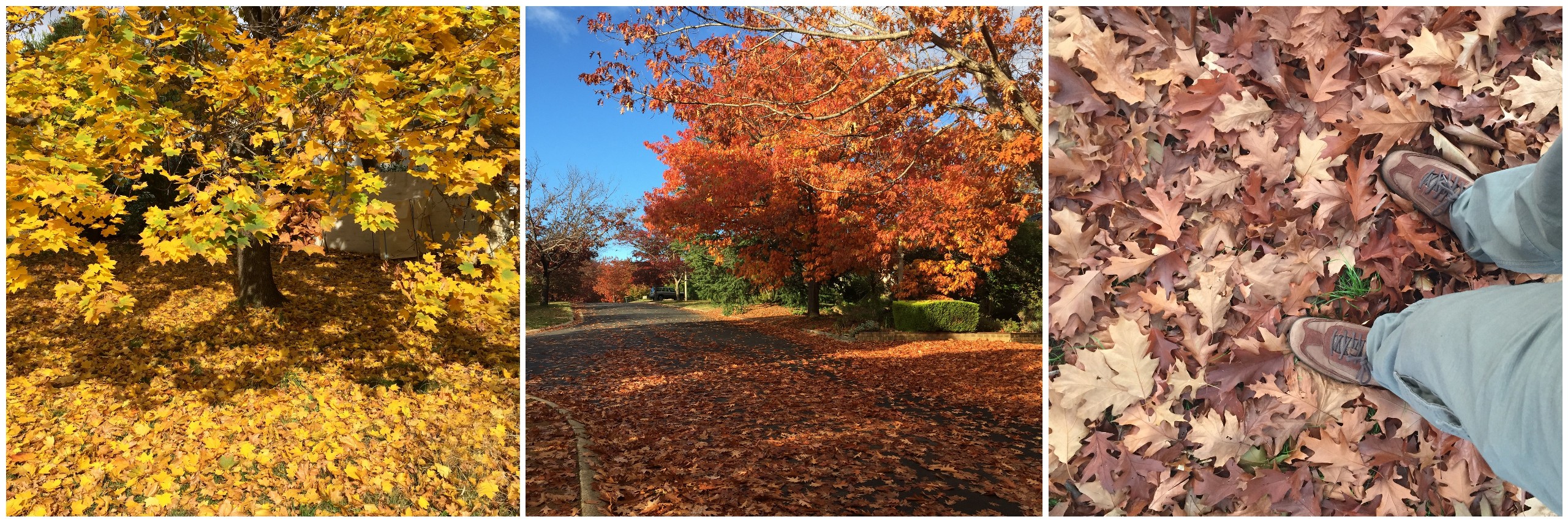
All this leads me to say that I don’t have much to say; not because there is nothing nice to say, but really since things (unlike Election 2015, oh yes!) are fairly mundane. The biggest event was having all four wisdom teeth – intricately shaped at angles in the kind of x-ray you see in medical journals – extracted. Convalescence was aided by frozen peas, warm soup, and gentle walks around the leafy, crunchy, rainbow suburban streets.

apr00

apr07Like Batman getting my powers back, things progressed at a steady pace: work was sadly possible but also happily income-giving; hills could be walked up; soup became mashed potato became fish curry became shepherd’s pie…until finally I could mercifully manage a bacon sandwich. The bike could be pedalled, when the variable weather was having a good day. And wine could be safely drunk, useful when on a charming tour of Lerida Estate two weeks post-wisdom.

apr01

ANZAC day came and went with its usual amalgamation of touching remembrance, freedom- embracing alcoholism, and political posturing. This year, one hundred years after Gallipoli, there were more TV dramatisations and politicians posturing than ever. I spotted in Target the day before that you could buy a ‘Camp Gallipoli’ swag. Yes, you too can sleep out like the ANZACS, though I presume without the cloying mud, stench of death, and general sense of imperial-driven futility.

The dawn service – a genuinely poignant and worthy lamentation for the death and sacrifice of war – was attended by something like 120,000 people. Too late to the party, I stood alone, upon a nearby hill, the sun rising above the early mist of dawn as magpies uttered melodies, and the shadow of gums were given new life. Standing to see the sun, lucky.

apr05

apr06

And with that I really can’t think of anything else to be said.

Australia Green Bogey Photography Walking

April

Upon the outside steps, schoolchildren gather in awkwardness and relief, escaping the restrictive solemnity and required reverence of a place venerating death. The air is filled with youthful chatter, indecipherable in a squawkish flurry of hopes, dreams and no-good insolence. It is another age, in which hashtags were yesterday’s news and that which came before unfathomably remote. Yet still the human condition presupposes that one of their names may just, despairingly, return to this spot.

apr01In a gathering gloaming, reassembly occurs along the arches and steps, their backs to the names of the fallen. Arms dangling from the tedium of patience drift over the letters spelling out Korea and Timor and Gallipoli. A man speaks; a bagpipe plays in mournful strangulation. A story is told of one person’s life, the end of which is predictable only in the all too early and violent a termination. Finally, a man in uniform blares out The Last Post and one begins to wonder whether the humble bugle is ever used for anything else. As the concluding brassy notes fade into the cockatoo skies, the rumble of coach engines spark up, seemingly anxious to return their hormonal payload to Sydney and Wagga and Bairnsdale as soon as they can.

A scene like this takes place practically every day at the Australian War Memorial in Canberra, just before closing. In addition to the several hundred present – composed of tourists, locals, and a scattering of uniformed dignitaries, as well as the bundles of schoolkids fulfilling a rite of passage – the ceremony is now live streamed on the memorial’s website. Like the moment’s silence each evening at RSL clubs, it is a physical act aiming to encapsulate those immortal three words: Lest We Forget. And at the going down of the sun, after a visit loosely planned as research for this piece, I was moved, somewhat surprisingly given the desensitisation that comes with distance and time.

War commemoration is awkward. It makes us feel awkward, conflicted even. It is a world of contradictions and hypocrisy. A multi-million dollar industry in which battle sites and memorials can become numbers on a bucket list, stops on a coach tour [i]. We publicly lament the sacrifice, the loss, the needlessness, yet people are still in conflict, losing their lives as we do this. We celebrate victories and make heroes of some, of us, and villains of others, of them. We may question the purpose of daily services such as those at the War Memorial, wondering if they are put on for the tourist experience, a kind of ‘dawn-service-lite’, to ensure visitor number KPIs and funding requirements are met. We are right to question, for blind faith may lead us down the path of ignorance and subservience that has led to past wrongs. Yet it can be uncomfortable to do so, in the context of – quite justifiably – a reverence and respect for many millions of individuals who died because of war.

April in Australia (and, one assumes, New Zealand) heralds the annual peak in our fascination with war commemoration. ANZAC Day is an annual fixture in the antipodean calendar, unmoving and unstinting on the 25th April, reflecting the anniversary of the first mass landing of allied troops from down under onto the rocky shores of Gallipoli in 1915. And because we venerate the reaching of a century – from Steve Smith to the Queen Mother to a national capital – ANZAC Day 2015 is set to be more of a blockbuster event than ever.

Like Easter, one wonders if ANZAC Day has become somewhat diluted and fragmented with meaning over time: it’s a day off work, a chance to go to Bunnings or be a part of the Harvey Norman ANZAC Day price-busting sale, lest we forget. An opportunity to mow the lawn, gather the leaf litter, or watch the annual AFL match as the slow-cooked lamb melts succulently in the oven and The Last Post rings out again at the G. We may drink to excess and legally gamble on two-up, justifying this as being what the diggers would have wanted (whether they would have wanted the increase in injuries, violence and domestic abuse that this may lead to is doubtful). Nonetheless, we still do remember, and millions of us rise early in the dark or attend mid-morning parades, or even visit overseas sites that would be totally anonymous if it were not for their place as a graveyard of war.

As a sometimes alien sometimes looking in, I do not feel as connected to ANZAC Day as sometimes I feel I am supposed to be. It is not a part of my history; I was not exposed to the ANZAC legend growing up. Despite some semi-studious First World War lessons in secondary school, the Gallipoli campaign was a brief mention somewhere in a text book. From what I know, it strikes me as an absolute shambolic disaster. That this – a sorry slaughter bungled by British commanders and with no far-reaching impact on the wider war effort – is widely considered as the birthplace of modern Australia is, on paper, bewildering. Forget that this negates the presence of one of the oldest continuous cultures on earth, or the development of affluent cities and the taming [ii] of a harsh landscape, or the achievement – in 1901 – of Federation that came with white settlement. Gallipoli also bore all the hallmarks of old empire, in which young Australians (and, incidentally, many more British and Turkish men) were sacrificed in unfailing service to the motherland. A defeat; a wasteful, pointless loss in which Australians blindly followed the orders of a bunch of crusty British superiors. It does not smack strongly of independent nationhood.

It was here though that the ANZAC legend was born and this has since become institutionalised as a turning point in Australia’s view of itself and relationship with the old world. In the run up to the centenary, a surge in earnest documentaries and debates, confected dramatisations, and obscure blog entries by half-wits like me will regurgitate and nuance such arguments, questioning the role of ANZAC Day and what it means to the nation in the twenty-first century [iii]. While the bravery and actions of those in Gallipoli will not be diminished, it is pleasing – if that is the right word in such a context – to see a stronger emphasis shifting towards remembering many more Australians lost on the Western Front, in Asia and across other conflicts. ANZAC Day may well be becoming less about Gallipoli and more about everyone and everything touched by the ruinous proclivities of humankind.

——————————————-

apr02

There are approximately 102,000 names embossed upon the roll of honour in the Australian War Memorial. The western colonnade contains those who were killed in the First World War (62,000), while the opposite wall of bronze tablets mark those lost in the Second World War, followed by the post-war wars in Asia and the Middle East. Some, such as Afghanistan, forlornly remain open ended. There is little space remaining for further names to be added, which at least might signify some optimism that never will a mass conflict cause so much loss of life again [iv]. The scale can be overwhelming, so much so that it can distort one’s sense of comprehension, much in the same way that it can be too much for us to conceptualise the number of stars in the universe or the number of Olympic-sized swimming pools in Sydney harbour.

Should it somehow transpire that no more Australians are killed in battle from this day forward, it would still take around 280 years for the Memorial’s daily service (assuming this continues) to tell the individual story of each one of the names on its roll of honour. Against the almost unfathomable mass of loss and sacrifice, it is perhaps the individual stories that are the most telling, the most poignant, and maybe even the most relatable. In more recent visits to the Memorial I have found myself seeking someone with my surname on the wall, placing a poppy nearby to join the clusters of red springing from all available gaps and crevices between panels. To none of these Staffords am I related (as far as I am aware), but it makes me feel slightly less guilt-ridden at being a tourist, and somehow more connected as an outsider. Reflecting on the one may resonate stronger than one hundred thousand.


All that connects us is a name:

Stafford, J.G., 22nd Battalion.

I saw you today upon that wall,

With hundreds of thousands of others to fall

In battle, in war, often in vain,

Sent far from home, you’ll always remain.


You died 59 years before I was born:

The 4th of October, 1917.

Upon Flander’s fields, dispatched in battle,

Sent up to be killed, slaughtered like cattle.

Lain down in Ypres, beyond Menin Gate,

Marked by a white cross, as all with this fate.


Your life in Australia was spent in the country:

Colac, Victoria before moving to Ouyen.

A labourer is all, constructing a wall,

Sweating with toil, tilling the soil,

Getting the call,

To fight a great war.


You were 27 years when leaving Port Melbourne:

Upon the HMAT Hororato.

A girl left in port, named Ivy Jane,

A niece or friend, or once secret flame.

When I was your age, in Australia as well,

I’d discovered a heaven, while you left for hell.


I do not know you, nor do we share blood:

But today you were there, and there I stood.

Thoughtful and thankful, looking for meaning,

You sent me away, stronger belief in,

My fortune and hope, my freedom and joy,

Your name etched a man, and I still a boy.


And, fittingly for such bad First World War poetry, an addendum courtesy of Baldrick:

Boom, boom, boom, boom,

Boom, boom, boom. [v]

——————————————-

apr03

My own experience of ANZAC Day has, thus far, embraced a range of experiences one is expected to engage in. Though I am yet to get inebriated and lose hundreds of dollars gambling, I did once add a shot or two of whiskey to a flask of hot coffee for the dawn service, justifying this as being what the diggers would have wanted of course. Plus it was treacherously cold at that time of day at that time of year, and I suspect I wasn’t the only one with a hip flask handy.

The dawn service is a memorable and genuinely moving experience. Pitch black with icy winds streaming down from the hills, there is sleepy-headed confusion at encountering hundreds of buses and thousands of people, barely visible ants streaming towards the dimly-lit dome of the Australian War Memorial. Candles flicker, readings are aired, silences are held, bugles are played. The singing of Abide With Me is drawn out with such sombreness as to lead to total gut-wrenching despondency. There is no sense of jubilation, no air of celebration. Arguments are forgotten, debates paused; for now, all that matters is remembrance and despair.

Almost imperceptibly the black of night softens and, as Advance Australia Fair concludes the service, a thin, indigo line is visible above Mount Ainslie. Cockatoos shriek in suitable reprise to the final chimes of the national anthem, pursuing the fruits of the gently flaming and fading oaks nearby. The faces of others take form – young, old, white, black, Asian. Top brass military regaled in finery mingle alongside youths still in their bedtime onesies. There is much of beauty in what modern Australia has become, and the debt of gratitude is never more apparent.

As the Australian capital glows in its autumnal splendour, its citizens and visitors are free to go back to bed, go buy a flat white, go to the pub. They may well go to the later morning ceremony, which includes a parade past various dignitaries with their own entry theme tunes [vi] and the thunderous excitement of a jet flypast. The citizens can now, officially, put on their heating (there was nothing stopping them before apart from a long-held Canberra convention that is regularly flouted). It can be pretty handy, particularly as snow is not unheard of up in the hills and mountains by the end of April. Indeed, one of the most memorable – and surprising – ANZAC Day long weekends I experienced was waking to snow in Thredbo, and enjoying a day of tramping through snowy Eucalyptus forests and warming up with hot chocolates.

All of these freedoms, all of these wonders, all of these hot chocolates are derived from the lottery-winning ticket of life that is being born in or coming to live in Australia. It was not always this easy, neither was it always just or pure or peaceful. But it is what it is, born from an ancient sea and moulded by rainbow serpents, shaped by the ANZACS, the first fleet, the pastoralists and gold diggers, the builders and scientists and mothers and cricketers, the Aborigines, the Dutch, the French, the British, the Chinese, the German. It was, and still is, and long may it continue through a journey of acceptance and evolution, something that would be worth fighting for.


[i] There have been several recent features regarding the (sometimes crass) commercialisation of ANZAC Day. For instance, see http://www.abc.net.au/news/2015-04-16/green-anzacs-lest-we-forget-to-turn-a-buck/6396176?section=ww1 and http://www.themonthly.com.au/blog/james-brown/2014/02/17/1392601420/anzacs-long-shadow-cost-our-national-obsession. Also, check out much of the profiteering here at http://anzacprofit.tumblr.com/

[ii] ‘Taming’ is far too simplistic (and restrictive) to describe white settlement of the land in Australia, but I only have one sentence to play with. One may also consider cultivating, irrigating, clearing, destroying, pillaging, ruining etc etc. I found Don Watson’s The Bush to provide a highly readable synopsis of some of the failings and achievements of settlement, with a detailed understanding of weeds to boot!

[iii] For its part, the state broadcaster – the ABC – has produced a vast resource of ANZAC related content, including much navel-gazing and probably far better researched and written analysis than that included here. See http://www.abc.net.au/news/first-world-war-centenary/

[iv] Alas there is always scope for expansion upon the current site.

[v] The German Guns, by Pte S O Baldrick. See https://www.youtube.com/watch?v=7UKpZxM-c9w

[vi] From memory, the PM gets a quirky little ditty of Waltzing Matilda, the Governor General Advance Australia Fair (or possibly Song of Australia?), any visiting royals hear God Save my mother / grandmother / aunt etc, and a New Zealand representative any song by the Finn brothers.

12 Months Australia Society & Culture

The climate changes

Little things, sometimes performed unconsciously, indicate a time of change. There is the walk for morning coffee, in which you now seek the sunny section of pavement rather than its shady, covered counterpart. At home you have to reach in the darkest depths of your wardrobe for – god forbid – a sweater; only to discover that they are musty and holey and jaded and faded but at least protect against a cooling evening. Scattered on a nearby chair are the vagaries of climate suitable attire in late March: shorts from two days back (27 degrees), and a hoodie from the night before (2 degrees). Tracksuit pants come back into fashion, at least inside the privacy of your own home. Outside, the basil flourishes, at its most bountiful before frost decimation. And, excitedly, thoughts turn to how it can be used with red meats and red wines, frequently together.

Shorts and salads were still the preferred modus operandi for most of March, and suitable for a reasonably easy-going walk on the Settler’s Track down in the remote southern tip of the ACT. A scattering of huts and pastoral remnants speak of a far challenging time, and one can only recoil in fright at the thought of icy winter winds seeping through the gaps in the wooden planks that made for walls. The comforts of a piddling new town called Canberra lay distant, across brown plains upon which a permafrost lingers, gnarly tangles of stunted gums and dense mounds of wattle lining the mud-racked excuse for a road. Today, we had a bit of a sunny picnic and returned to Canberra in air-conditioned comfort in an hour, with only a little part of the road slightly bumpy.

easter02

The climatic downshift has produced more amenable conditions for burning some of this land, doing so in a controlled and measured manner. The intention of this – previously practiced by the original inhabitants of this continent to great success – is to reduce the fuel load for more intensive and damaging fires in the summer months. Thus it is an act of destruction that protects and regenerates, with any luck clearing out tangles of invasive weeds to open the way for more friendly natives.

The controlled burns were noticeable this year in their seeming proximity to Canberra. Partly this an illusion, a foreshortening of distance created by the lines of ranges to the west and the hidden deciduous streets of Canberra in between. It is heightened by the smell of smoke in the air but at no point was the largest ugly concrete building in Woden facing any threat, even as plumes of smoke spiralled in the hills behind like some kind of Jurassic Rotorua. Alas, while the ugly tower survives the smoke, the light, the angle of the sun upon its equinox, the time and day and place and year produce some memorable, cherished Redhillian sunsets.

easter03

With the fiery skies appearing earlier each eve, and the increasing need for arm and leg coverings, panic can start to grip the citizens of the national capital. There is alarm that it may get down to fifteen degrees, a temperature in Australia requiring scarves and beanies and carbon intensive wood fires. Concern too that the Australian right to enter the ocean and brag about its perfection to the rest of the world is on the wane. Easter escapes may (though things seem to be changing) herald the last chance to wade in the water of the South Coast. So I thought about going down there over Easter too.

In the end, I changed my mind, and went a few days earlier because the weather was perfect, ideal for a spur of the moment day trip that is only possible with self-employment. Old favourites of Mollymook and Depot Beach, with some fish and chips in between. Shorts and sandals and, yes, gentle wading in the ocean. Something surely to brag about.

easter04

My pre-emptive conniving worked wonders because, in the main, the long Easter weekend was one of those in which Canberra (and the region) did its best to imitate Britain. Two days of cool greyness without a break, then two days of heavy downpours, possibly followed by a debate between seven charm-filled politicians arguing about HIV-laden Europhiles stealing our tax money jobs and murdering badgers with Clarkson or something. Ideal conditions for some reading and lounging and DVD watching and baking and napping. In this context, in this climate, it seemed right that the clocks changed, and – at least from the perspective of time-fixing – winter commenced.

easter05The first morning on winter time turned out to be delightful. For a few hours the clouds went away, and the sun delivered enough radiance for a comfortable period of shorts-wearing. The morning light and air contributed to a Red Hill glow, projecting upon the grass and gum trees and ranging hills in the distance. Rather than signalling a decline, the change of clocks appeared to induce a spurt of wild industriousness. Cockatoos plentiful, screeching from tree to tree; pairs of rosellas flitting amongst branches; galahs flaming; and of course the kangaroos, forever grazing and looking all rather nonplussed about it.

Giving Red Hill the hill a run for its money was Red Hill the suburb. easter06From what seemed to be shaping up to be a relatively mundane autumn – with lots of early browns and leaf losses noticeable – a week which turned from warmth and sunniness to a condition of damp mildness appeared to have fashioned a more elaborate state of affairs. And amongst this fading technicolour the birds lingered too. Foraging and flirting and feasting, the fruitful trees bedecked with gang-gangs.
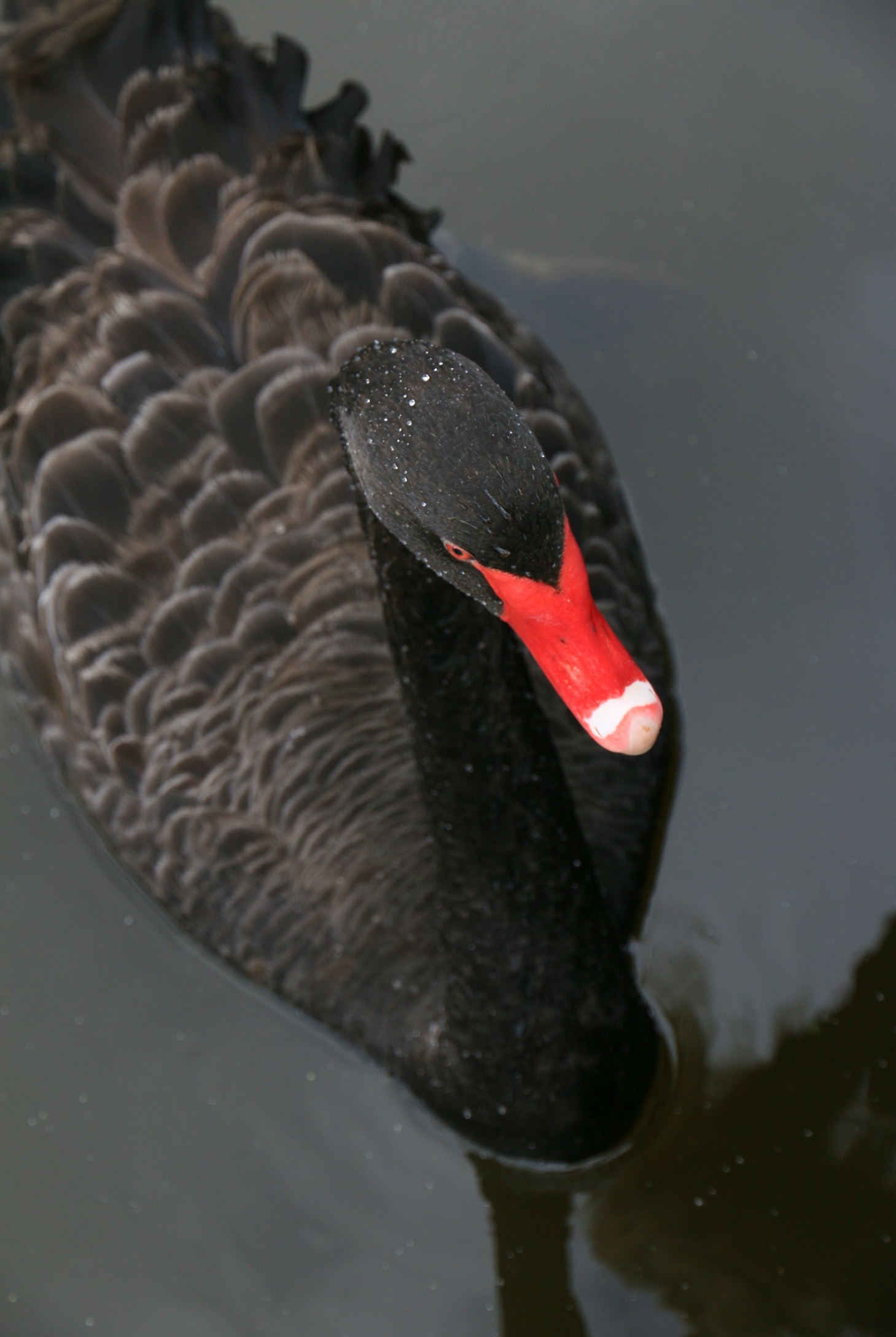
easter07

easter09This Easter Sunday suburban sunshine was relatively short-lived. What followed, I guess you could say, were April showers. Thus a planned escapade into escarpment wilderness on Easter Monday became sedated somewhat and, instead, transformed into reasonably gentle ambles within nearby Tidbinbilla. Like suburbia, the wildlife was out in force here too. A few koalas and wallabies sheltered amongst the Peppermint Gums. Swans and pelicans and magpie geese and the duck-billed platypus and platypus-billed duck confirmed that it was nice weather for ducks. Weather that was – well – cold. Cloaked in long trousers, T-shirt, hoodie and raincoat it must have been fifteen degrees or something. And as the sun surprisingly filtered through the rising mist of cloud lifting from the mountains, there was joy in rushing out from the shade of trees and bursting towards its friendly warmth once again.

easter08

Australia Green Bogey Photography Uncategorized Walking

Great divides and sunny coasts

Wagga Wagga. Ballarat. Dubbo. Albury. Bendigo. Rockhampton. Geelong. Bunbury. Mount Gambier. These are the recurrent regional research towns, in which there is sufficient population to extract a small selection of locals to talk about everything from the design on a bottle of shampoo to the delight of doing tax. I have been to each and every one, mostly for business but sometimes for pleasure, and now and again for both. Until this past week though there had been a noticeable absentee from the list, and, as if hearing the crucial number in a game of bingo, the Queensland town of Toowoomba delivered a full house.

Qld02Toowoomba is a touch inland from Brisbane and, with a sizeable population over a hundred thousand, benefits from good road links, appreciated in the rush that I somehow managed to contrive one working afternoon and evening. It rather dramatically emerges atop the Great Dividing Range, perched on a plateau over this somewhat ill-defined chain of ridges and hills which meanders along the entire eastern fringe of Australia. Thus, the edge of one side of town is adorned with tabletop views as fingers of parkland and bush thrust into the lowland expanse of the Lockyer Valley, cut by hairpins of highway and – because we are in Queensland – no doubt teeming with spiders, snakes, and snag-stained singlets.

Qld03

The emergence of the town is quite sudden; one minute you are chugging up a protracted series of bends through the bush and then, as soon as it levels, suburban concrete and commercial highways spread out west. I suspect it could almost be the modern equivalent of reaching Machu Picchu, with a city that is shielded from view until traversing a final mountain ridge. Once crested, the ancient civilisation of the Supercheap Autans fills intrepid travellers with awe, as the sun sets over the Darling Downs.

Qld01Away from its edges, the remainder of town could easily be Wagga or Ballarat or any other regular research regional resort. There is a city block with some familiar and some uniquely local stores, a typical amalgamation of elegant turn of century buildings and functional blocks. A giant mall draws shoppers from the older town centre while between the two a strategically placed drive-thru Maccas casts its magnet on the alloy wheels of ute-borne bogans and the iron fillings of schoolkids. Amongst this, one small alleyway has been transplanted from Melbourne, adorned with street art and beards making coffee. I stopped by there twice.

Leaving Toowoomba with a decent coffee and mushroom-focused breakfast, I had a free day to return to Brisbane and decided to take a different route back down. First stop was the small village of Hampton, from where I attained necessary booklets and maps from the tourist information centre. Nearby, Ravensbourne National Park, offered some scenic views of the fairly lush and productive countryside of the region, and the first of several mixed rainforest-bush-type ambles.

QLD04

Heading down to the town of Esk, the road continues in the picturesque Brisbane Valley, fringing the immense Wivenhoe Lake. It was this massive body that bulged with too much water a few years back and released its content into the Brisbane River, causing flooding all the way down to the coast. This was responsible for awful scenes, in which Kevin Rudd – then deposed as PM – waded gleefully through shallow water in his boardies to deliver an empty box of mixed metaphors and cringe-worthy superlatives to despairing locals. Today things were more sedate, though the occasional flood marker and rough strip of tarmac indicated that flood damage is always a risk.

Qld06Above the floodplain, more ranges rise on a very winding and sometimes precipitous alternative route to Brisbane. Crossing through D’Aguilar National Park with a touch of je ne sais quoi and foux du fafa, the road takes in several beautiful viewpoints, patches of subtropical rainforest, and sleepy wood-bedecked villages. Of course I stopped at the viewpoints, and partook of a decent walk through forest near Mount Glorious. Ferns, palms, fig trees and fungus were signals of something a little moister and a touch exotic; a setting in which snakes probably hide to wait for ill-footed southerners, and ants are poised to nibble on fleshy toes. Mercifully, I made it out there alive, accompanied by the rumble of thunder and the sweat of ridiculous humidity.

Qld05

Plunging down away from the rain, the national park ends and immediately Brisbane suburbia grips. There are parallels with the emergence of Toowoomba, as traffic clearways and junctions and shopping malls spring up, traversing The Gap and Ashgrove and a very different kind of Red Hill. The CBD appears, the Brisbane River crossed, and a reminiscent friendship blue sky laksa is taken for old times’ sake. Afterwards, more traffic and concrete and now lights stretch on north, before the city finally gives up, and the motorway allows a speeding up towards the Sunshine Coast.

—————————

From experience I know it is not always sunny on the Sunshine Coast. A now somewhat distant Christmas in particular sticks in the mind. Recently, cyclonic remnants turned fields into mud and streets into streams. This weekend, however, the region was true to its name.

Qld07

Indeed, it was rather warm. Not drastically higher in temperature than Canberra but with added humidity and night-time sweatiness. Mornings were a bit fresher, meaning that coffee and brunch was not out of the question. But building heat later in the day was more conducive to iced coffees and cold beers, and some relief beside the ocean. In this regard, Coolum Beach at least sounded the part. Certainly, the noticeable sea breeze was causing significant chop on the water and taking some of the perspiration away. Most soothing though was a wade through the ocean itself, as sand and water and feet met in perfect harmony for some brief entanglements of bliss.

Qld08

Qld10The last thing I would want to do in this weather is run. Swimming would be okay I suppose, if you could cope with the oversized waves and not get dragged under by sharks or stung by jellyfish or hit by a wayward surfboard. Cycling might be fine too, if you can mainly stick to going down the nine hills plunging from Buderim, breeze flowing through Lycra, and refresh with an iced latte afterwards. But running doesn’t seem to come with any benefits. Nonetheless, thousands of people decided to engage in all this and more in the Mooloolaba Triathlon, taking place on a perfect, breezeless thirty degree Sunday.

It was hard work, conquering breakfast and then standing by the road, seeking shade, occasionally clapping and snapping and still questioning why on earth you would be doing this when there is a beautiful beach and ocean you could surely be having far more enjoyment out of. I guess there is admiration, but not a logical one because the endeavour seems so senseless. Strangely and surprisingly though I quite enjoyed watching some of the triathlon, and took satisfaction in encouraging all sorts of sweaty bodies towards the top of their final hill.

Qld11Needless to say, following all this frivolous activity I had a nap and then an iced coffee in the afternoon. A little bit of work accompanied the iced coffee but the iced coffee just about made that all okay. It also generated a bit of extra energy to do some exercise myself, though more of the sedate sunset walk type than the extreme ironman sweatfest. With daylight fading early, particularly as Queensland are backwards when it comes to moving clocks forward, the signs are of seasons changing. And indeed, on the shores of Mooloolaba, still gently wading through warm waters as the halo of twilight captured the skies, I felt as though this could be the last dose of real summer. It may soon drop below twenty-five degrees and Queenslanders will soon reach for the scarves. And for me, research days in the freezing fog of a Ballarat or Wagga winter are closer to realisation.

Australia Driving Food & Drink Green Bogey Photography

Capitalising

march02Change is in the air. After a more than generous period of retirement, I am on the precipice of embarking on a spell of significant work again. The Treasurer will be happy, though it’s not like I stopped being a consumer. Despite recently spending extortionate amounts on dental treatment (not covered by the much-revered Medicare of course), and purchasing coffee (and sometimes cake) to break up the days a little, the economy is still heading towards possible Armageddon. So the prospect of work lies ahead of me like the Nullarbor, stretching out in hazy uniformity for the rest of my life, only to finally end up at Norseman, which is possibly even worse.

march01Change of a more subtle variety is also noticeable around the neighbourhood. The summer storms appear to have dissipated and – for now at least – Canberra has settled into a golden period of warm days, pleasantly refreshing nights, and big blue skies seemingly typical of March. Leaves are largely unturned, but there is a soft wilting and readiness to transform. Mornings are lighter later, but the wattlebird still manages to indulge in its annoying calls outside my window really early every morning without fail. Meanwhile, the cockatoos are even more voraciously attacking the acorns and itchy-bombs, causing overhead hazards on walks in this suburban wilderness.

Aligned with the glorious prospect of seasonal transformation is a final, lingering dose of Canberra activity. Enlighten, which appears more popular as the years pass (I was one of those stoic first year visitors before the advent of hipster-conducive noodle markets), always seems to coincide with the finest of nights. Each year brings a new stab at illuminative inventiveness, although one which is usurped this year by that going on within the National Gallery. To stand within an artwork in daggy little protective feet covers and be simultaneously disoriented, uncomfortable and exhilarated by light and space is just a tad different to giant projections of political cartoons on Old Parliament House. Maybe James Turrell can design all of Enlighten next year?

march04

Whatever, the natural light and space of Canberra can be every bit as magical all year round, though there seems increasing clarity and depth as the sun shifts lower on the horizon. Rising early to see the annual balloon extravaganza is a reminder of that hallowed time of the morning before day breaks. The wattlebird may have been carping on for half an hour already, but the indigo sky is only slowly softening, the glow on the eastern horizon building until the first rays of sun blind the eyes, redden the white bark of the gums, and silhouette the parade of tripods seeking to capture it beside the lake. Hundreds of cameras redirected because the balloons are tethered, unable to take off because of too much or too little or too much and too little wind.

march05

march06

Not strong enough wind there is or wind too much in gusts of the force” mutters the giant Yoda balloon. I would trust his wisdom (certainly more than an angry bird or dodo), and thus they remain a picture lingering upon the lawns, surrounded by an always surprisingly large mass for so early in the morning.

march07

Further round the lake, distant in the west, several balloons have made it into the air. I guess wind conditions are more favourable away from a parliamentary area that usually generates a lot of unnecessary hot air. Hot air that has, I guess, indirectly contributed to my own forthcoming increased income tax contribution to save the economy. Hot air piped out of the giant flagpole that will mix with cooler and colder and – eventually – perishing air as the months progress. It was good while it lasted!

Australia Green Bogey Photography