 Christmas Day came and went with little fuss; a suitable blend of English traditions (think paper hats, Christmas pudding and rubbish TV) and Australian holiday (cue swimming pools, prawns and rubbish TV). And the next day like millions across both hemispheres, I hit the road to expand my horizons, meet up with others, and curse at the appalling driving ubiquitous across the highways and byways of the land.
My destination was Brisbane and a tad beyond. In the first of three undeniably thrilling instalments I shall take you with me on the journey north. I had determined to go inland, avoiding the ludicrous middle and outer lane hogging of the Sydney motorways and the family-fuelled people carrier congestion of the coast. Yes, I would mostly miss the beautiful cooling ocean but there is a lot to see in the interior of Australia, believe it or not…
Boxing Day mash up
 Setting out, the tones of Jim Maxwell narrating the Boxing Day test helped me along familiar ground to Goulburn and then round the back of the Blue Mountains via Taralga and Oberon. I’m not quite sure when the familiar becomes, well, exotic, but I had never been to Hartley before and I wasn’t expecting to see emus along the roadside. Attempting to quell this confronting change, I popped in for some afternoon tea in the cutesy national trust cafe. Devonshire scones with clearly non-Devonshire cream. Sigh. When will they learn?!
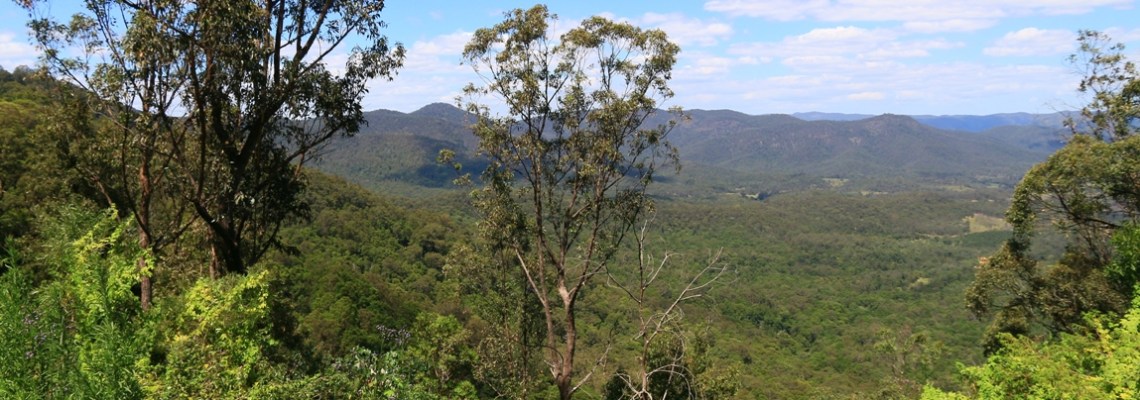
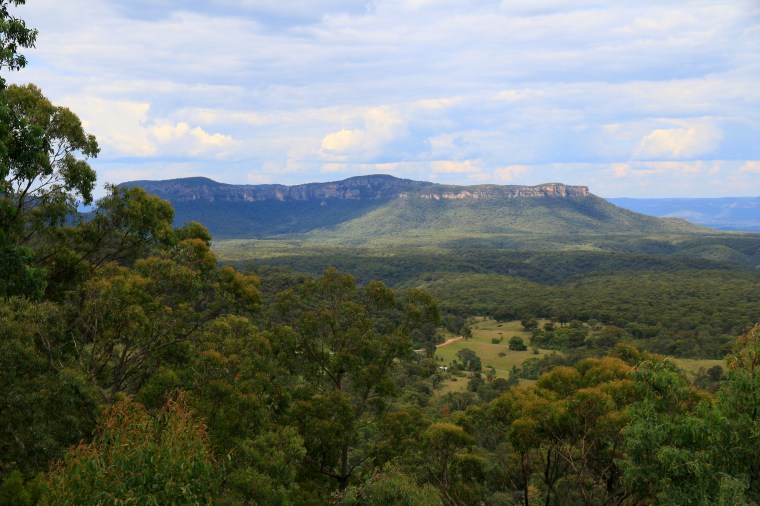
The journey proceeded through Lithgow and alongside the expansive Capertree Valley, where my first lookout stop offered a surprising reveal of a sweeping landscape. From here, the final sandstone ridges of the Blue Mountains stand bastion over a green carpet of eucalyptus, and – closer to the road – the occasional green taming of human activity. Apparently the Capertree Canyon is the second biggest in the world after that gargantuan gorge called The Grand Canyon. Which clearly makes it the largest in the southern hemisphere. However, despite this billing, for me, it was a detour too far.
 With the day drawing to a conclusion I had to make haste to my first camp spot, passing through a seemingly deserted Mudgee, and hitting the gravel roads into Goulburn River National Park. Here I surprised myself at how efficiently I made camp, setting up gear which had not seen the light of day for a few years. Yes, the swag was back and loving its natural environment.
 With all this travel and excitement it was easy to forget that it was Christmas time and today was Boxing Day. It certainly didn’t feel like a typical Boxing Day, but I paid a little homage to tradition by boiling up and coarsely mashing some potatoes and carrot, serving it with some ham, and adding a few pickled onions and a pile of Branston. This camp stove and esky creation was a perfect amalgamation of English traditions and Australian summer holiday, a supremely satisfying garnish to this first day.
To England, my New England
The next morning dawned sunny and warm, a hot day ahead to progress north into New England. At some point – Merriwa I think – I rejoined a road I had once been on, and the New England Highway steadily progressed towards Tamworth. Some may disagree, but I find this route north to Brisbane more scenic, more interesting than the Pacific Highway, which follows the coast but sufficiently distant from it to rarely glimpse the gorgeousness of Pacific Ocean.
Here, the landscape is rolling and golden and covered in a warming glow. Sun-baked fields and picket-fenced horse studs line the highway, frequently terminating at abrupt rises in the land and wilderness once more. A steady stream of small towns gladly interrupt the journey, adding the interest of random claims to fame, elegant facades, and Driver Revivers. And road signs proclaim only 700kms to Brisbane. I could be there in a tick.

 But obviously I stop and detour and make inevitable visits to big things like a giant golden guitar in Tamworth. It’s my third time here but I still cannot resist the allure of such a curious, iconic Australian landmark. The car and I refuel, we park up and make lunch of ham sandwiches and crisps. And, comfortably gathering that road trip rhythm, we set off once more, another hundred clicks up the road to Armidale.
From Armidale I find myself heading south and east…not exactly the direction for Brisbane. But just a little way out of town, farmland gives up and a corner of Oxley Wild Rivers National Park is accessible. This is gorge country which – after rain – boasts the promise of waterfalls. In the midst of this summer Dangars Falls is absent, but the deep gorge is clearly less fickle and the campground nestled above it is a delight.

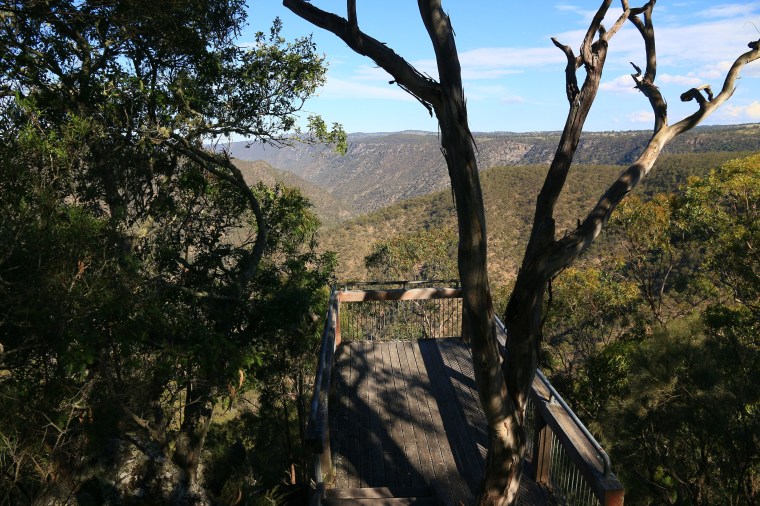
After setting up with even more surprising efficiency there are a few hours left in the long summer day for a bit of a walk. It is the perfect time of day and – at what must be approaching 1000 metres in altitude – the temperature is pleasant, the walk shady, and possessing only a couple of manageable inclines to negotiate. The final couple of kilometres weave along a ridge high above the chasms carved by Salisbury Waters, leading to an abrupt halt at McDirtys Lookout. It may sound like it’s named after a slang term for a ubiquitous fast food burger chain, but there are no car parks, no neon signs, no frozen cokes in sight. Just a landscape preserved thanks to its inaccessibility and the wild rivers that made it.
In the Washpool
Day three and already I was making spontaneous changes to my vaguely pre-defined route. Instead of heading up a boring looking road to Glen Innes, the journey took me along a section of the Waterfall Way and then cut across on a quiet, winding road to Grafton.
 Along the Waterfall Way I could make a mid-morning stop at Ebor Falls, a site I had previously encountered boasting a couple of quite magnificent waterfalls. Today, they were an inferior imitation of what I remembered, reduced to a trickle and hidden in the shadows from the morning sun. But as road stop rest stops go, there was plenty to savour: a gentle shady walk along the valley rim, pockets of wildflowers and patches of birdlife, the smell of the bush. All under the deepest blue skies.
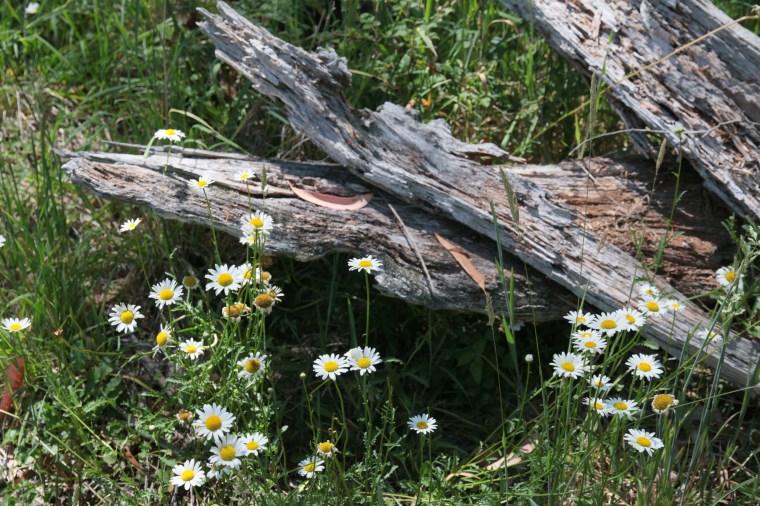
It is broadly along the latitude of the Waterfall Way that the first of a number of pockets of ancient rainforest appear; clusters which frequently emerge all the way north from here, up to and across the Queensland border. Dorrigo National Park is the first and has much to adore. But having been there and done that, I was keen to make it to a large swathe further north.
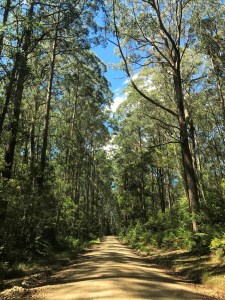 From KFC in Grafton, the car headed through patches of woodland and along the picturesque valley of the Mann River. Rugged ranges loomed, neared and eventually required climbing; like so many roads from the coast to the inland, hairpins and lookouts and massive tree ferns clinging to the eastern escarpment. Atop all this a dirt road led off the highway and plunged into the rainforest of Washpool National Park.
The Washpool walk provided nine kilometres to stare up at giant trees and admire the light through the vivid green canopy. Vines and creepers tempted Tarzan escapades. Humidity sapped and a small waterfall offered only gentle relief while also hastening the need to pee. It was an immersive and captivating rainforest experience but – perhaps after another long, hot day – a couple of kilometres too far in my opinion. Still, at least I had sweated out maybe one piece of southern fried chicken.
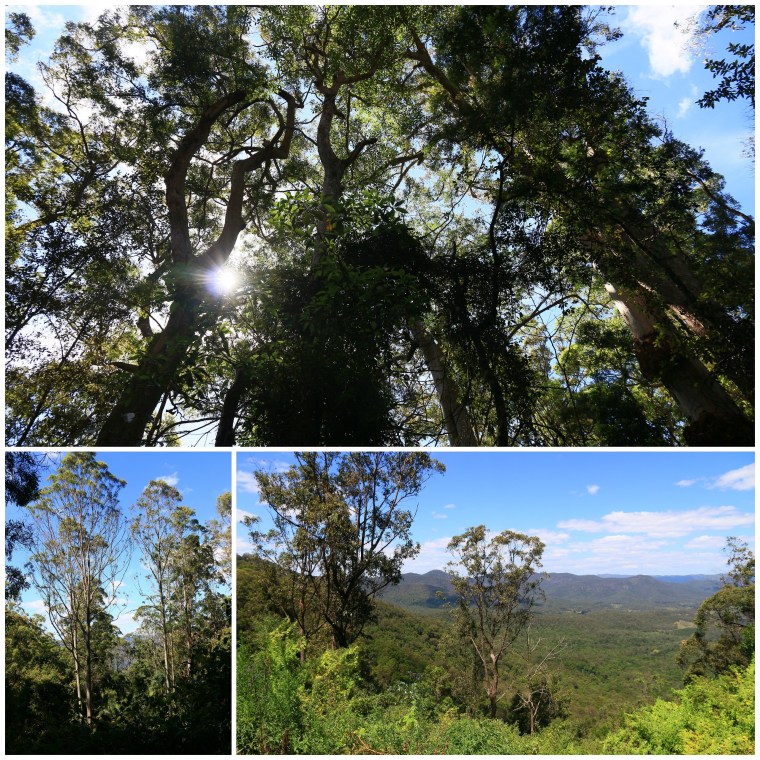
 I felt as though I had earned a beer and decided to take one with me on a brief amble to a lookout near the park entrance. This is the benefit of having everything in the car and, um, the beer would provide hydration if I ended up getting lost or bitten by a snake or something, right? Thankfully the lookout was a mere stroll and the satisfaction of that coldish beer on that bench on those rocks in that peace with that view under early evening skies without the prospect of getting lost and having snakes for company was something to cherish.
While the beer episode is up there, it was just about surpassed by waking the next morning beside Coombadjha Creek. This is why you put up with a little discomfort and a lot of phaff by camping. You feel part of the environment, immersed in the landscape, at one with nature. Even if this means enduring the bittersweet alarm call of shrieking and cackling at four in the morning.
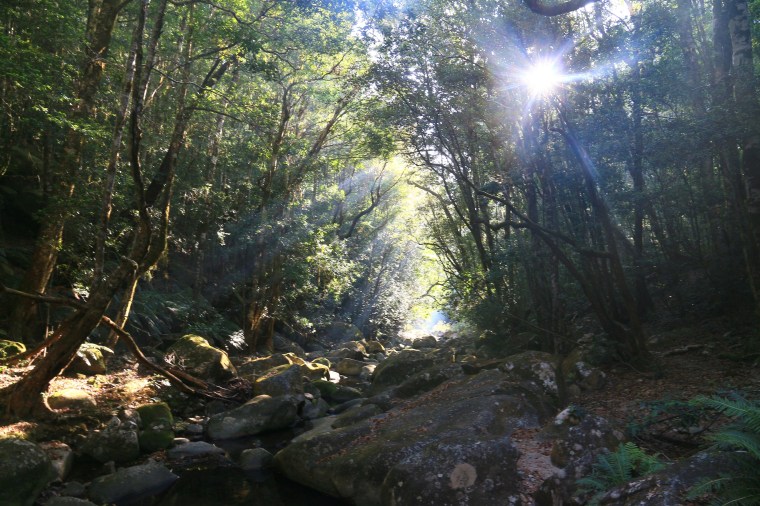
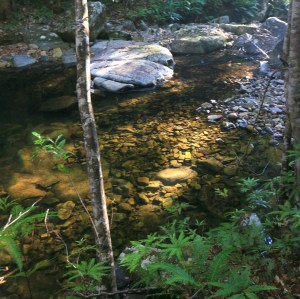 Before breakfast, before packing up, before moving on once more, I could hatch out of the swag and wake up with the world around me. Virtually from my bed a small trail followed the pristine waters of the creek and looped back through a large stand of Coachwood. The sun gradually made its appearance, shafts of light angling through the trees and shimmering through the ferns onto the water. The creek was clear and cool, and after three nights of camping without a shower, it was tempting to bathe. But I really didn’t want to ruin its purity; my mind turned to the allure of the ocean instead.

Return to a civilisation
 Without going into lurid detail I did wash each day thanks to boiling water and the use of a bucket, an art mastered in the trip of 2013 with Jill. Simultaneously I could make a cuppa, grill some toast and prepare my morning sink. Sure, it wasn’t exactly luxurious or even two star, but it allowed me some confidence to mingle a little with civilisation each day and order a morning coffee, buy petrol and ice. Which is exactly what I did in Grafton after descending from the hills that morning.

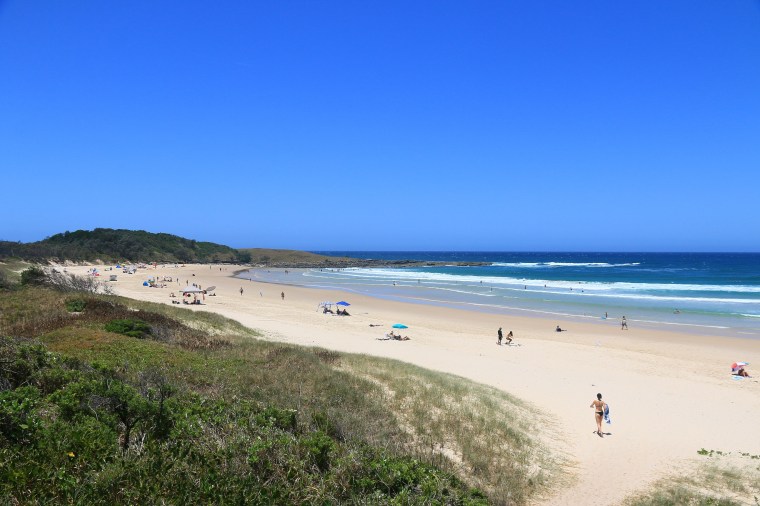
Heat had been building on this trip and by now it really was scorchio. I could resist the ocean no more and joined the masses along the Pacific Highway, turning off towards Yamba. Outside of school holidays I am sure this is an easy-going little coastal town. Today a shady car park was at a premium and the wait for fish and chips was half an hour. But it had several beaches lapped by clear and calm water in which to linger. I finally felt that a layer of inland Australia had been cleansed, only to be replaced by salt, sand and – subsequently – fish and chip grease.
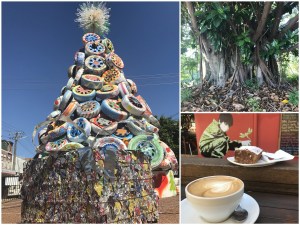 I encountered my first inexplicable traffic jam north of Yamba and speculated that this was being replicated up and down the highway. Still, I only had twenty clicks at a snail’s pace before I could turn off and head to Lismore. Lismore was to herald my proper return to civilisation, something which some people would find surprising in relation to Lismore. But I was to sleep in a proper bed and have a proper shower here, both of which I was quick to enjoy upon arrival. Refreshed and walking Lismore’s unfathomably charming streets, I felt part of normal society again.
Yet after the joy of showering and napping on a double bed and walking a little along the Wilsons River, I felt lost. This habitat, this environment, this standing still in one place felt a little odd. Still with a couple of hours of daylight to spare, I drove out into the lush countryside, through stretched out villages hidden amongst the trees boasting honesty fruit stalls, lefty views, and probable marijuana. To Nightcap National Park, where some falls were missing but where the late sun bathed the forest in gold. Just me and the Subaru, enjoying the last beer from the esky, the final slice of ham. We had come far and – refreshed – we could carry on until the end of days. Or, more likely, until I needed a shower and craved a soft double bed again.

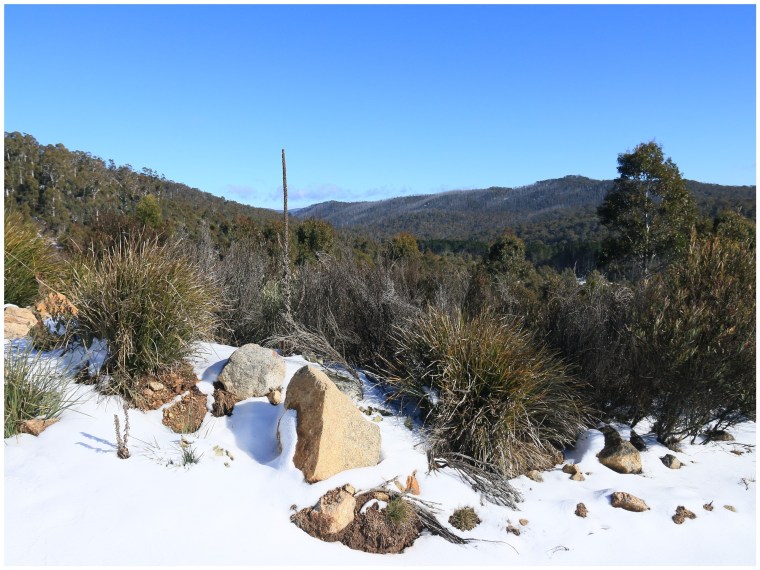
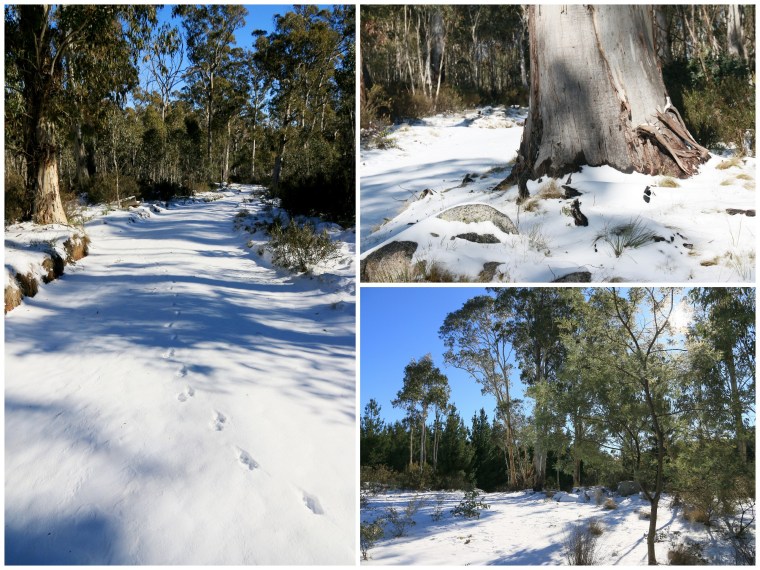
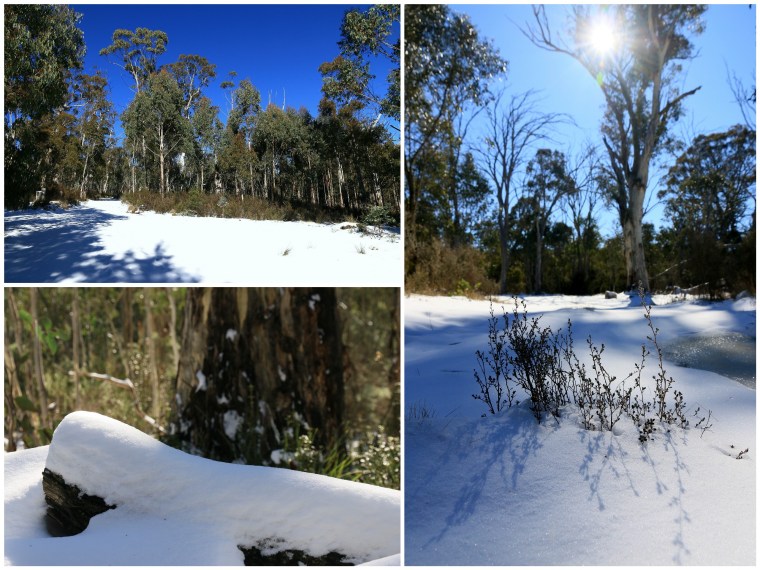
 Because this is Australia the ingeniously named Snowy Mountains are not perennially snowy. However, at the end of November I was not expecting to see so many chunks of frozen icy slush dotting the mountaintops. The snow gave distinction to the ranges, visible just after a picnic in Cooma with Caroline and a potato masher. And moving closer and climbing in altitude, it was possible to walk on a splodge of icy snow at Charlotte Pass, from where more white stuff was visible along the Main Range.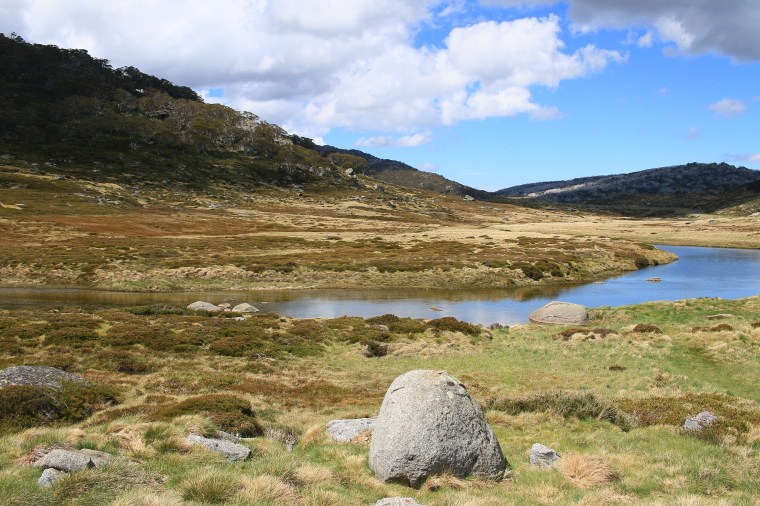
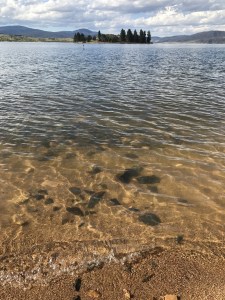 Jindabyne has always proven to be a bit of a pass-through town on the way to the higher mountains. But staying here for two nights offered the chance to explore many of the highlights of the town, including its TWO shopping precincts! While these provide sufficient eating and coffee opportunities, the highlight of Jindabyne is undoubtedly the expansive lake on which it sits. Part Canada, part Lake District, part Australia, it’s a haven for boat owner people and fishy types. But don’t let that put you off…there are also charming parklands and meandering pathways fringing the shore. Benches and picnic tables offer frequent recovery. From here you can watch morning mists hovering over a dead calm mirror, or bask later on in the afternoon warmth. Or live out the end of the day with never-ending hummus and laser red light.
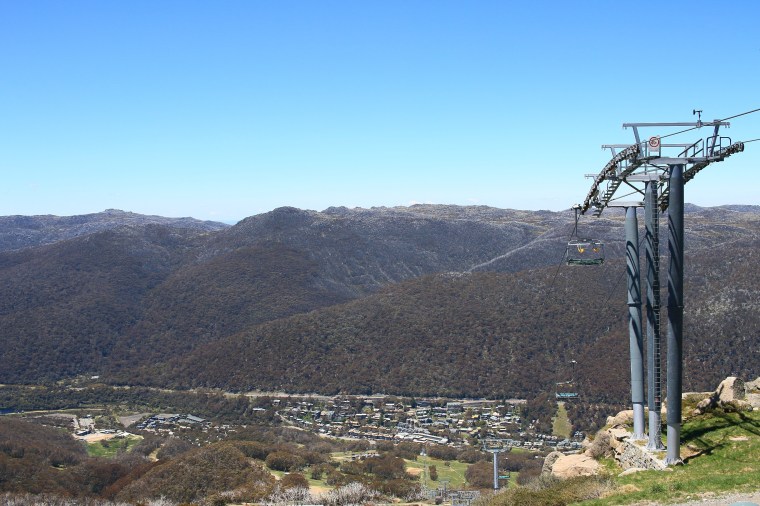
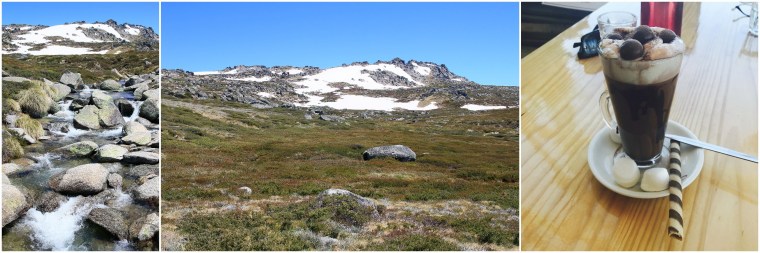

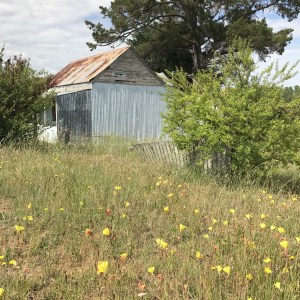 Leaving the high mountains we drove a somewhat convoluted route back to Canberra to provide maximum adventure. First up was a brief pause at Dalgety, a tiny place perched alongside the Snowy River that could have been the capital of Australia. And they say Canberra is quiet! There must be like ten houses, a few cows, and a million flies. But it’s kinda cute nonetheless.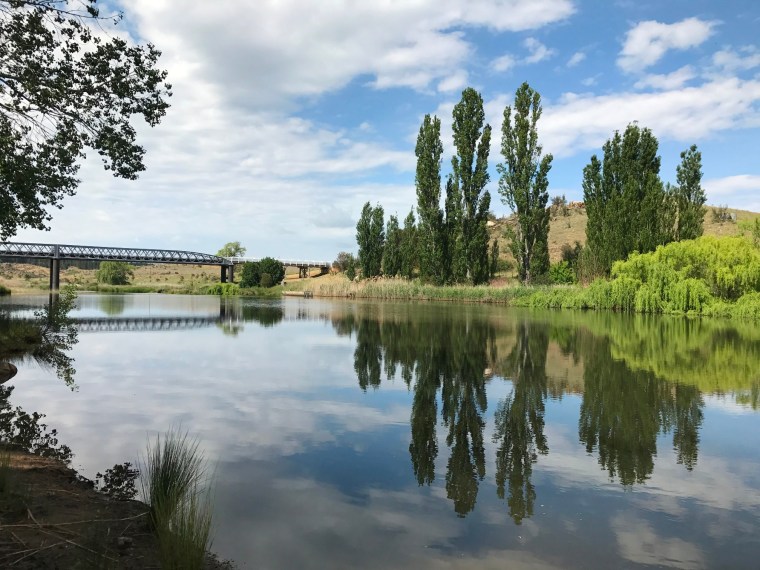
 With the unforeseen temporary closure of the Snowy Hydro Visitor Centre in Cooma, a decision was made to proceed to Adaminaby for lunch instead. And what better way to lunch than next to a great big trout! This was indeed turning into a marvellous, sponteanous adventure and the best (or worst) was yet to come.

 Almost inevitably (and positioned next to water), the first stop straight off the M5 was Coogee. A late afternoon to tread in the sand, sup coffee under a shady tree, and amble to Clovelly and back. Once all this arduousness had passed it was practically dinner time and so a fish and chip takeaway consumed in fading light alongside the beach made perfect sense.
 Moving away from the bronzed bodies beyond Shelly Beach, nature reclaimed the surrounds and people became a rarity. A walk up into North Head rewarded with solace and a refreshing breeze, before leading to a dose of beautiful harbourside discovery. Collins Beach provides the perfect exemplar of the bushland coves littering the shoreline of Sydney’s waters. Gems that make this part of the world exceedingly expensive. But walking here is free.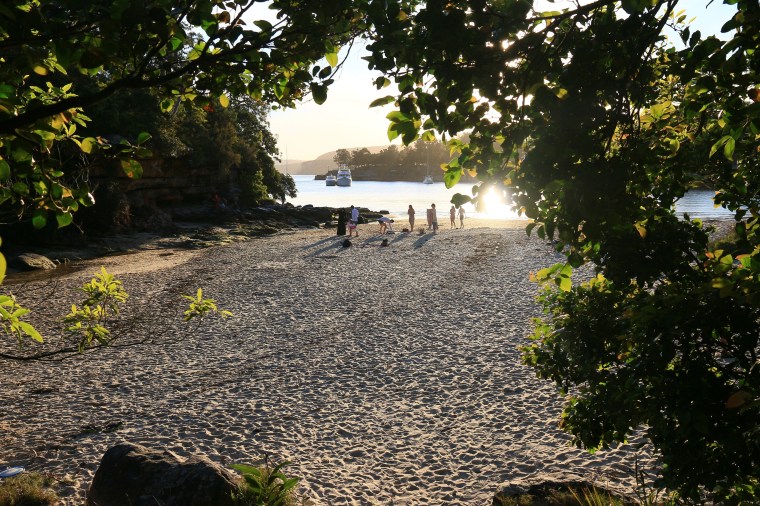
 Well it worked because plenty of people are being lured to the Hills via the Lane Cove Tunnel and M2 toll motorway. It’s heady mix of shopping malls, slightly more affordable housing, faith-based singing and pockets of bushland reserve offer something for everyone. The bushland is my favourite part – discovered one fresh morning in Cumberland State Forest. A tonic before heading to yet another Shopping Mega Centre for top secret work purposes.
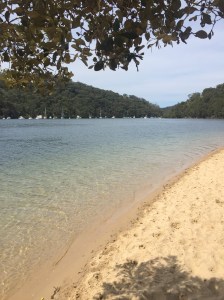 Towards the end of my week criss-crossing the city I ended up in the North Shore and Northern Beaches of Sydney. Indeed my schedule fortuitously terminated in Warringah Mall. While Warringah unfortunately conjures up images of Tony Abbott in Speedos, it’s not all bad. A final interview is finished and I can clock off and drive to nearby Curl Curl beach on a Friday afternoon. I can lie on a towel and try to doze, but become restless and go for a stroll up onto a headland. I can feel relief that the intense week is over and I can start to add up my road toll expenses. I can make plans for dinner at one of my favourite places in Bondi. And I can head home tomorrow, replenished by these opportunities to occasionally exist beside the water.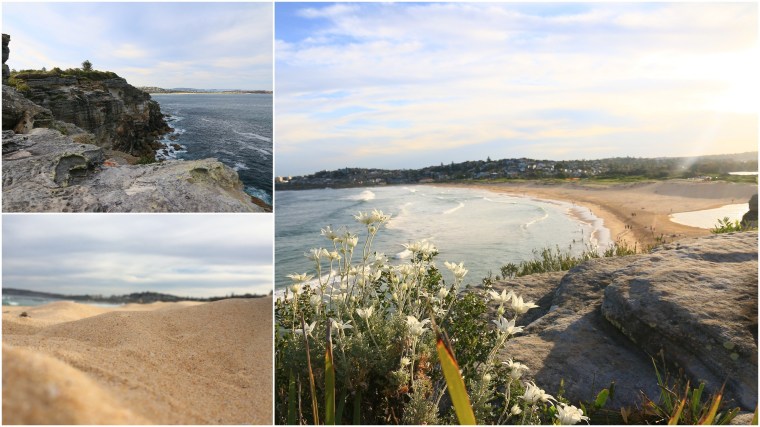









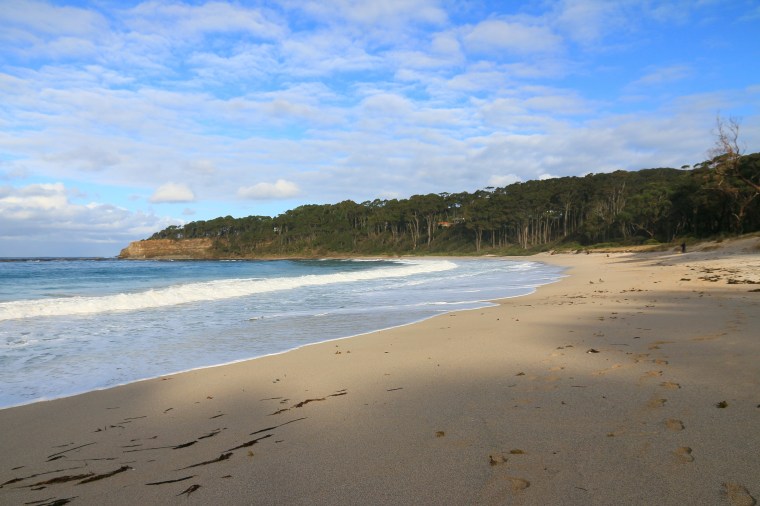
 Two hours with a stop for coffee at the improvingly-serviced by coffee Braidwood and I can find myself pondering whether to take off my jumper along the calm shoreline of Broulee. I didn’t, because it was only about fifteen degrees, but it was certainly still and sunny and rather blissful for thirty minutes or so. A happiness heightened by the token lunch of fish and chips in nearby Moruya, after which I felt a bit sick.
 All this is hors d’oeuvre for the main ingredients of this south coast winter classic: driving through the beautiful spotted gums and spiky palms of Murramarang National Park. Arriving at the pristine sweep of Depot Beach and ambling on foot along the sand and rock platforms to Pebbly Beach. Home to beachside kangaroos offering clichéd images of some kind of idyllic Australia. Scary waves and placid bays, reflections and a sea spray haze. Fishing nomads and foolhardy surfers. And escapees from Canberra hoping to bare their arms.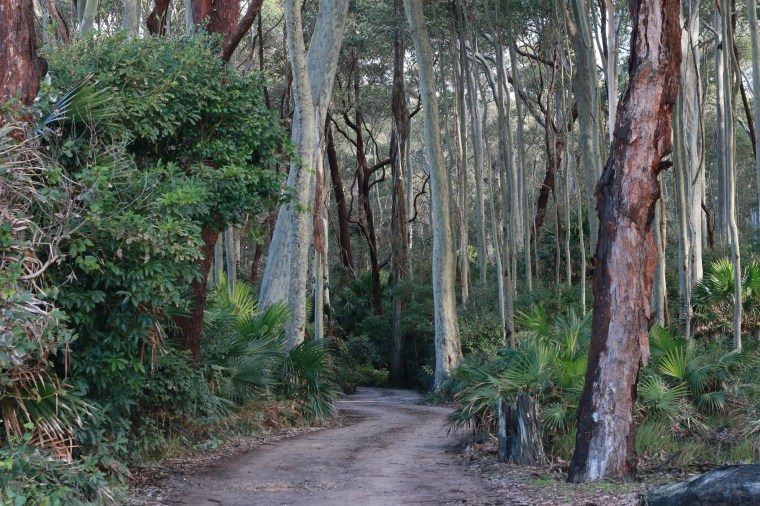


 In fact, I didn’t even make it to Pebbly Beach, a turn of events making those fish and chips an even guiltier pleasure. Rocky debris and a surging high tide meant that onward travel would be a little bit silly, something only to be attempted on The Island with Bear Grylls. My cut off, my terminus, my turnaround point, was an impromptu cascade, tumbling from the sodden forest and weather beaten cliff. There is only so far one can go in a day, and it was a winter’s day after all.

 I was envisaging a challenging winter weekend in pleasant Sydney sunshine when assigned a work trip there recently. Instead, torrential, stormy, incessant rain submerged a large part of eastern Australia and I delayed my visit. Stuck in Canberra for an extra day, I discovered that the apartment complex I had moved into had acquired an English-like riverside setting, which immediately put the rent up a hundred bucks, and probably inspired people to dump shopping trolleys into the storm drain to complement the graffiti before blaming it and everything else on foreigners.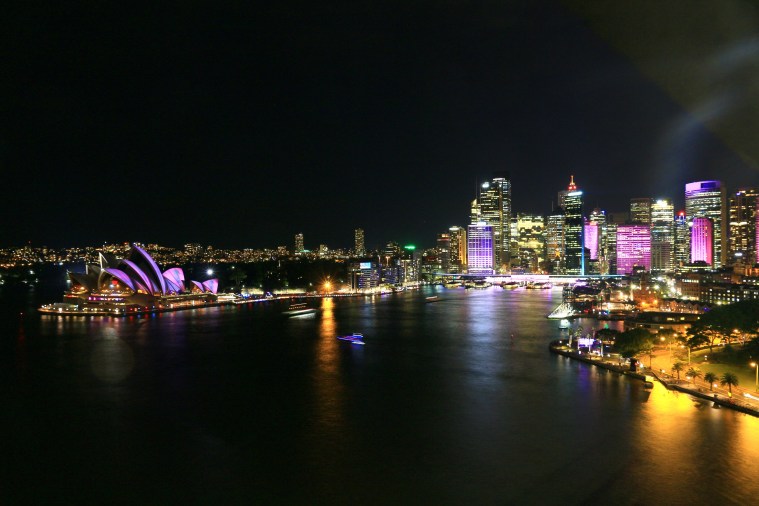


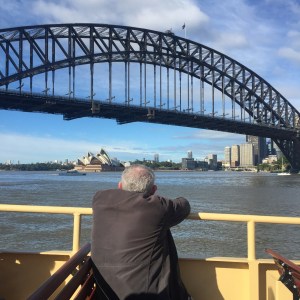 The next day in Sydney offered a return to sunlight, though still possessing a cool enough breeze to warrant jackets and scarves of course. I should probably have been catching up on work, making notes and thinking about what it all means. But after a breakfast catch up in Milsons Point, the harbour again beckoned, and an impromptu boat ride just for the hell of it. No matter how many times you encounter this city’s jewels, it is almost always impossible to avert your eyes, so I said in an instant on Instagram.
 One more day and I would return to something a little wintrier in Canberra, where there are frosts and even some rare single digit daytime maximums. It’s part of the reason so many people hate it despite never having been there. I can see their point a little, and the cold nights do drag well into September. Thus I am more than happy to embrace a bit of time down in Wollongong – prior to another nightshift – in which there was a window of T-shirt wearing opportunity. This plus fish and chips and the pounding drama of a still frenetic swell makes for a contented couple of hours.
 As much as I love Canberra there are times, in the heart of winter, that I question my decision not to live beside the sea. Why would I not want to briskly stroll along a boardwalk? Why would I not want to find good coffee and tasty brunch fare with an ocean view? Why would I not want to do a spot of work on a bench in a foreshore park so I could claim that food on expenses? Why? Maybe because I don’t want to turn into a softie who rushes to David Jones for a chequered scarf and jaunty hat at the sight of sixteen degrees. At least let’s go through something a little darker to really, truly savour the light that follows.
 As the fading gentrification of the Southern Highlands descends toward the sea you can be in no doubt that this is Australia. Indeed, an Australia as it was before anyone, even its first peoples, decided to venture over by boat. The plateau abruptly falls away into a dense system of deep valleys and gorges. Massive walls of sandstone plummet towards pristine creeks obscured by a blanket of gums. A pair of black cockatoos glide in the air, conversing in prehistoric shrieks. Banksia and wattles compete for attention in the understorey topping the escarpment. And a thin veil of water tumbles over its edge, destined ultimately for the ocean.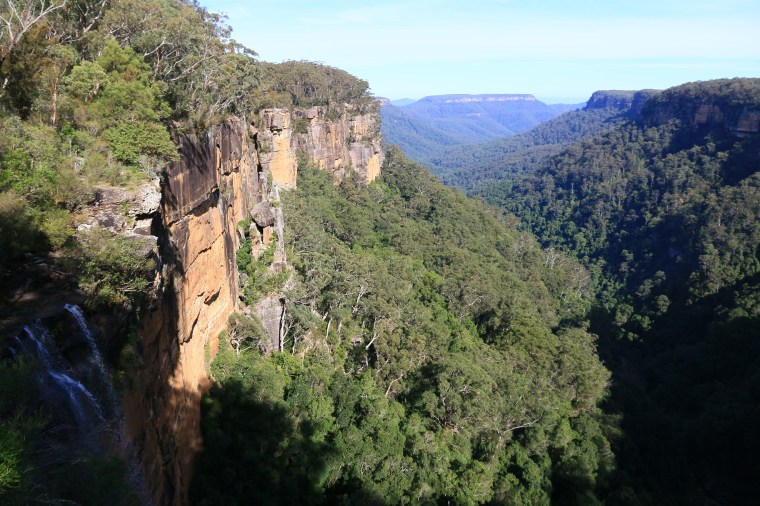
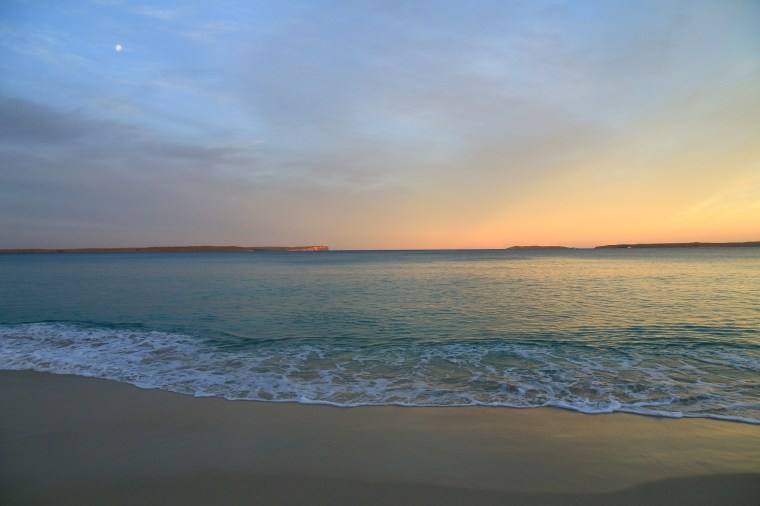
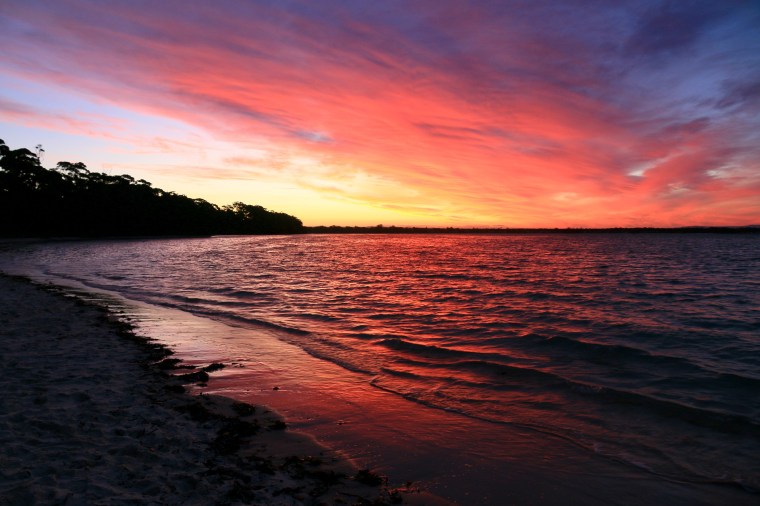
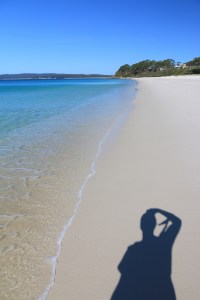 From bay to bay, traversing succulent coastal forests in between, it’s an easy amble from Blenheim Beach to Hyams Beach. The only real difficulty is deciding whether to take your shoes and socks off on the sandy bits only to then have the hassle of putting them on again for rougher terrain (conclusion: wear sandals or thongs). Plus there’s the challenge of restraining your photo-taking so that you don’t have endless, repetitive pictures of clear water lapping at fine, white sand.
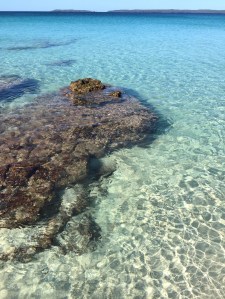 The sand is so white here that it famously gets on every piece of tourist literature and recurrently features on Sydney Weekender as the whitest sand in the world. In fact, it is genuinely so white that even small-minded immigration ministers would feel unthreatened and some cretin with a golden toupee would approve. Personally, I think there is probably whiter (for instance, around Esperance), but that is probably just supremacist talk.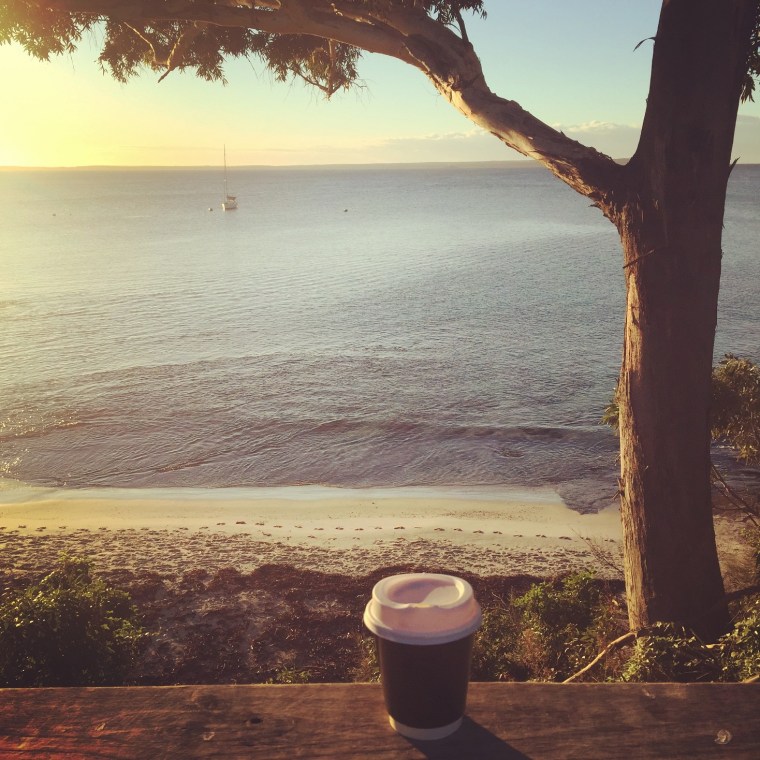






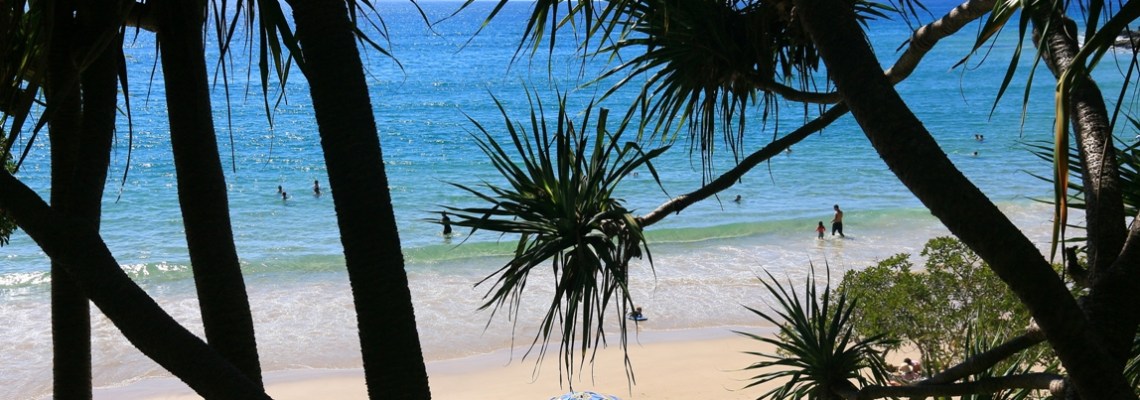


 This comfortable civility dissipates quickly once away from the main road; national parks host waterfalls and rock pools and scenic views over jungle. Tracks weave through palms and strangler figs and giant feathery ferns. Snakes and spiders probably hide. While the crowds loiter all the way down to pools and falls at Kondalilla National Park, beyond the swimming spots, the jungle is almost all yours. Yours and a couple of fellow pioneers, hoping to steer clear of Drop Bears and survive on rations of emergency salt and vinegar crisps and deodorant. We made it, and went to eat cake to celebrate.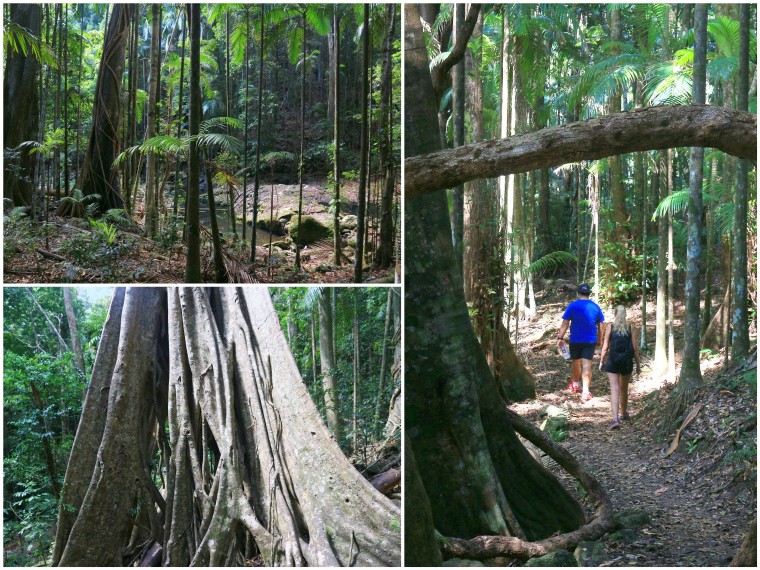
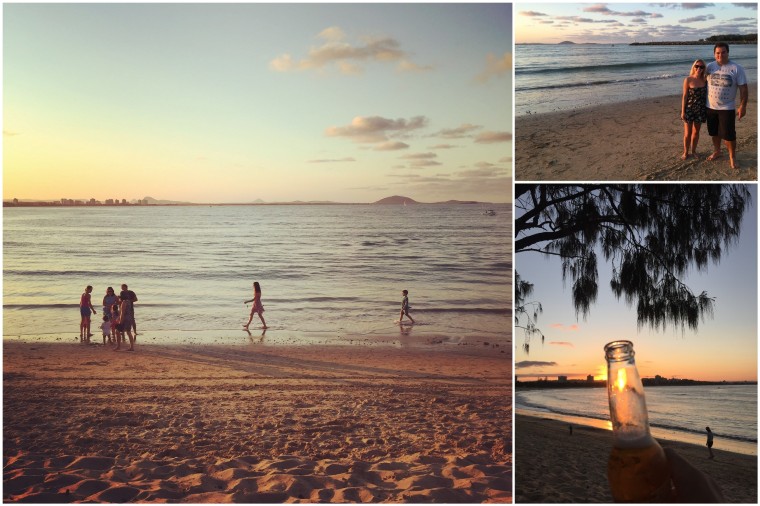
 The return of the sun the next day prompted the usual screeching, warbling, cackling and occasionally tuneful singing of the Buderim birdlife. It is a struggle to sleep in and I was more than ready to escape down the road into Buderim Forest Park for some early morning exercise. While others decided to jog, I was content enough to engage in spells of brisk walking punctuated by abrupt stops for Instasnaps. A kilometre in, the falls came as a surprise. I mean, I knew they were there, but I wasn’t actually expecting much to be falling. And while it was hardly a deluge, there was something aesthetically pleasing about Buderim Falls that was absent at Kondalilla yesterday.
 You see, the tourist board have been so successful that Noosa is brimming at the seams on a warm, sunny Sunday lunchtime, jammed with locals and foreigners alike. Parking is in the lap of the gods, but boy, have they got some of the prettiest parking spots around. The beach is – well – busy for an Australian beach, but admittedly it is a rather pretty beach. And even the national park, which shelters Noosa from encroachment from the south, is bustling with a steady stream of backpackers, families, joggers, and adventurers most of whom are, of course, exceedingly pretty. It is, undoubtedly, a very pretty place, and a requisite on a two day drop bear bushwalk adventure beach and waterfall honey monster tour.
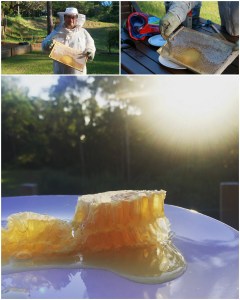 Like all of the most accomplished tours though, the best is saved for last. No tour is complete without a visit to a twee little spot providing lovingly crafted local produce and quirkily endearing owners. Honey Bear Honey of Buderim is not yet on the tourist itinerary, but with a bit more blue sky and a 10% cut it could well be. Look, I’m even promoting it on this blog for goodness sake, reaching tens of
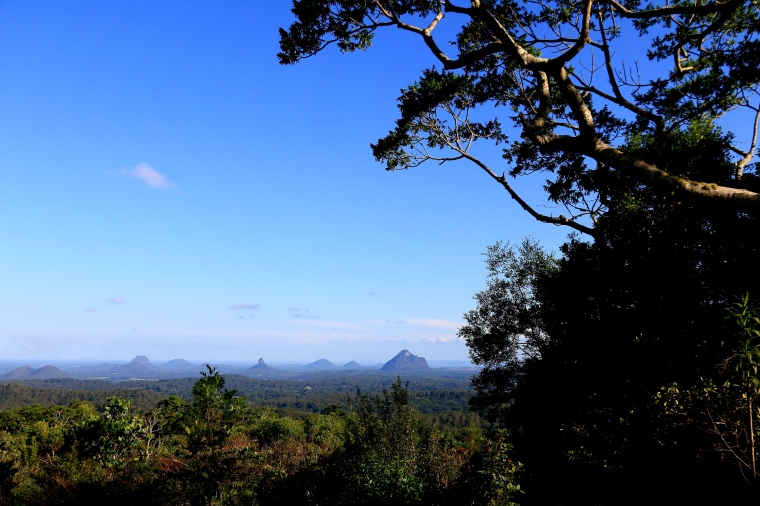
 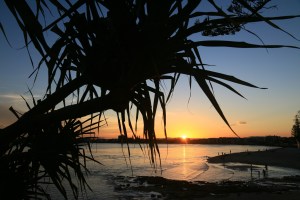 Some might go on to watch the sun disappear, over the apartments and occasional jagged plugs of the Glass House Mountains. Many linger in the warm air, sedated by sparkling wine and a sense of being the luckiest people on this planet; making the most of it all before heading back to work; living each day as if it is your last. Sensible, because, in this splendid corner of Queensland, you never know when a Drop Bear might strike.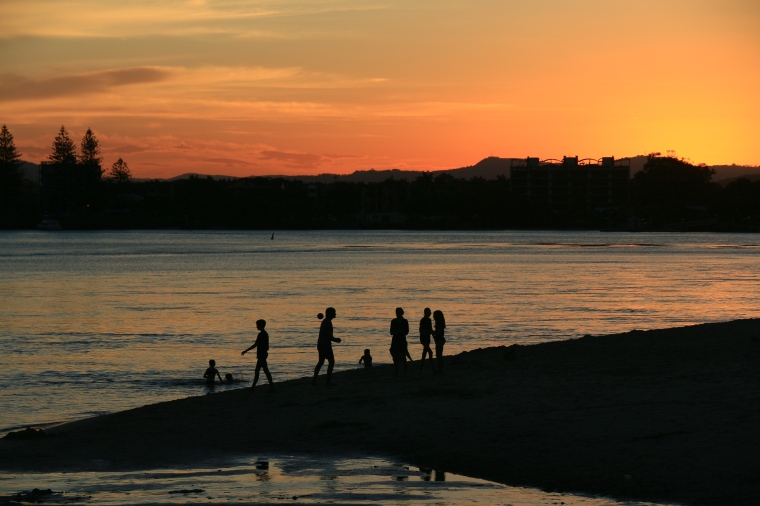

 With work travel finally emerging like the red gloss upon a Canberra oak, I have the fortune of tacking on bits and pieces of tourism around insightful spells of blue sky strategy. Like a spell last week in Sydney, giving me the perfect opportunity to simply dwell in Sydney again. To walk alongside its waterways and admire its skyline. To stride through its city streets part England, part America, part Asia. To turn a corner and come up against the looming harbour bridge, all brickwork glitz and dark steel glamour. And from there – of course – to embrace that centrepiece of shells jutting out from Circular Quay, impossible to resist.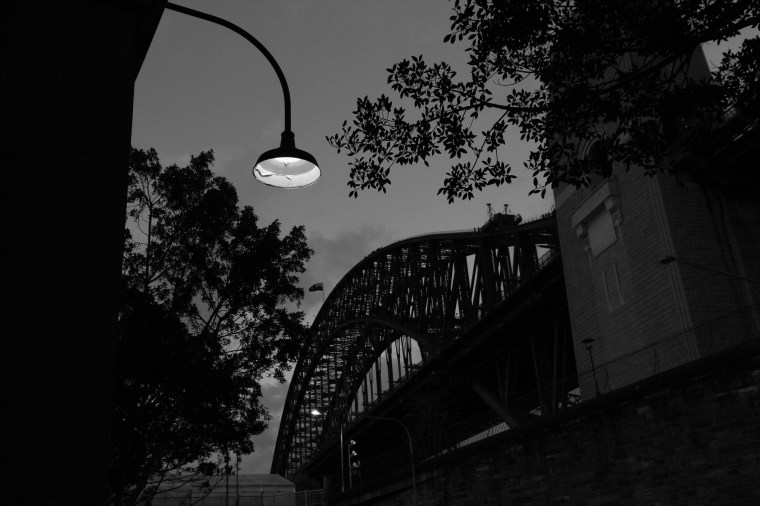
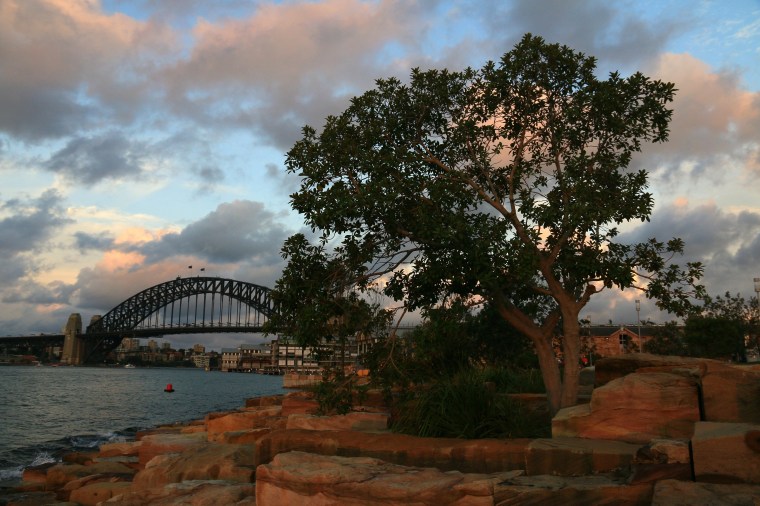
 With sun-filled days setting record April temperatures it was hard to avoid getting distracted. An early morning coffee run turned into a walk under the fig tree shade of Hyde Park which turned into a jaunt over The Domain which led into the many pathways of the Botanic Gardens. I often find refuge in the gardens of over-researched regional towns, a touch of civic serenity amidst a clutch of daggy stores and gargantuan pokie palaces. The Botanic Gardens in Sydney are another matter entirely, a mammoth attraction in their own right, lapping at the silver towers of the city and the sparkling opal waters of the harbour. They are free and open and – even with oodles of exercisers and selfie takers and backpackers – remain forever fabulous.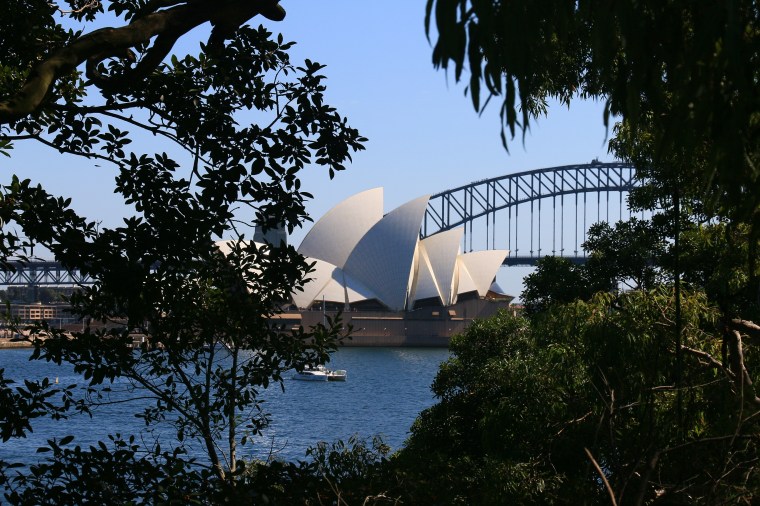
 Each step a memory, each stride made afresh. Gordon’s Bay, Clovelly, Bronte, Tamarama…I am not sure I have seen them looking quite as lovely as they do now. The midweek morning provides a contrast from the irritating queues and blockages of walkers and runners and selfie takers cluttering the place on weekends, almost all of whom are exquisitely beautiful, but almost all of whom somehow ruin the views. Today there is freedom and space and just the attractiveness of golden sands and a becalmed, translucent Pacific to excite. Today, it really is all in the timing, and I just about got it right.


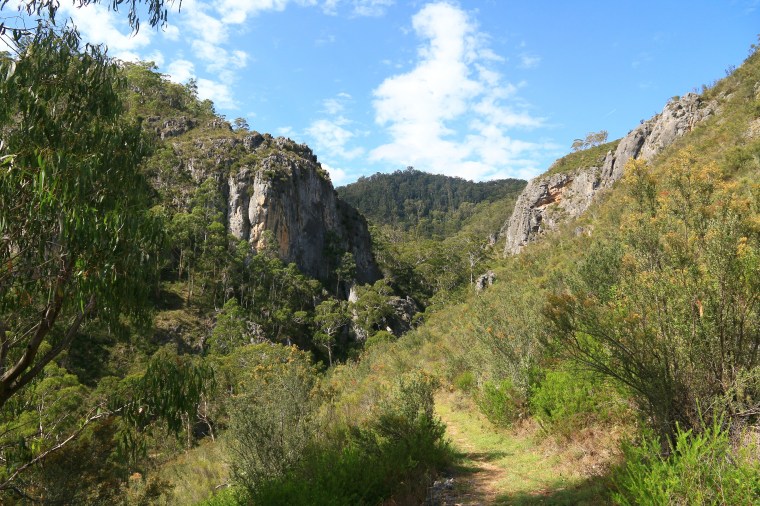
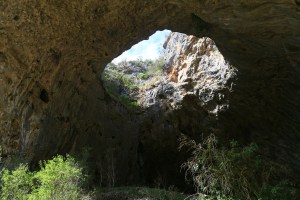 I have been here before, but that was almost ten years ago. Almost ten years, when I first arrived to live in Australia, intending to stay for a year! I couldn’t remember much of it, though the giant hole in the ceiling of one cave opening triggered something approaching recollection. But the river walk must have been new, at least for my feet, and the thermal pool – a steady 27 degrees all year – offered surprise and consideration for wintertime lolling.

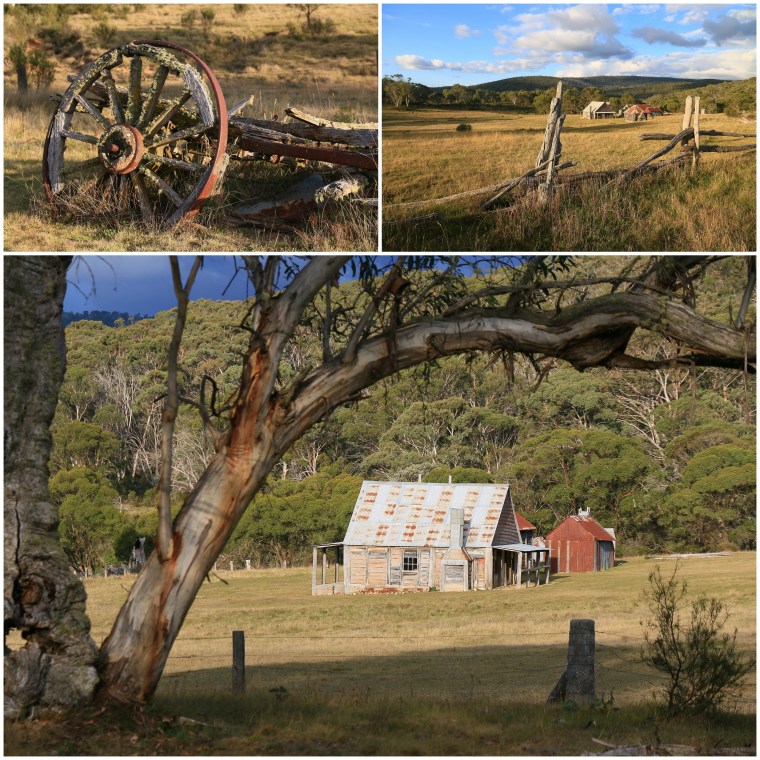
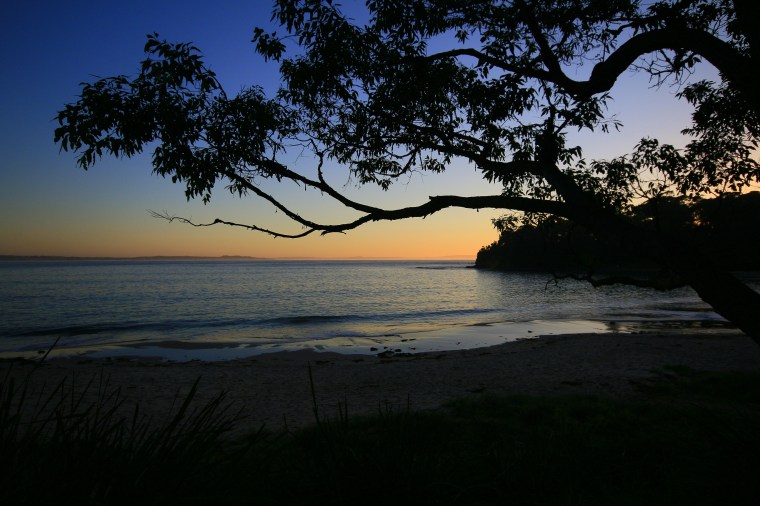
 Age must be affecting me because I am questioning the sanity of camping, even if I have copped out by reverting to the back of the car. Every little thing requires pre-planning and organising, extra time and increased awkwardness. It is effectively homelessness, perhaps more so when you sleep in the car. But then, in the morning, as the misty murk of pre-dawn is dispersed by a welcoming sun, as the deathly still air fills with birdsong, as the wattle and grasses shimmer silver with dew, as you witness the birth of a new day a part of this nature, you know why you do it.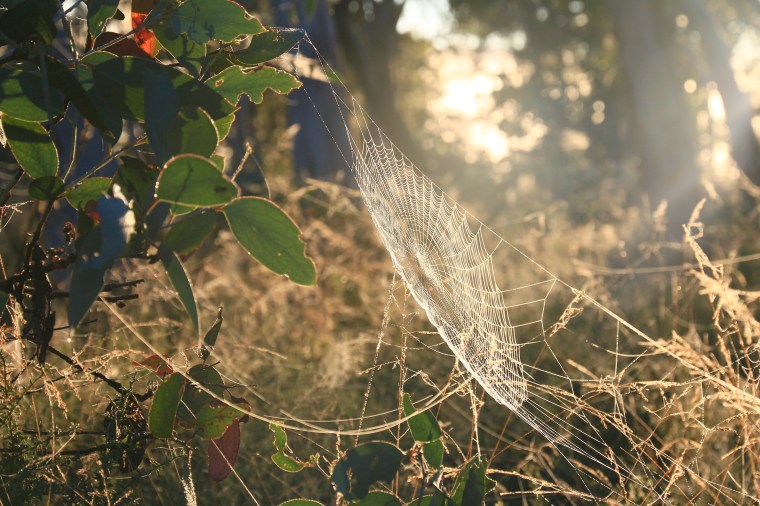
 It is, in theory, possible to clamber your way to the Goodradigbee, but this seems almost as difficult as pronouncing it. Beyond the scenic Blue Waterholes (which enjoyed relative popularity and happy interaction with fellow humans), river crossings and the narrow pass of Clarke Gorge make it too much for someone who is already warm and weary, and has been told to beware of snakes in happy interactions with fellow humans.


 So the car was up to the job, but were the humans – me, Alex and Michael? The trail – well-built and marked – veers quite steadily upwards and scrambles up a number of rocks for the first kilometre. A small shelf offers the first of the views, snatched through clutches of trees and over boulders. It’s an opportune stop for breath, water and to try to dry the sweat from running down your face and into your eyes and mouth. But it’s a futile effort, with the first view of the mountaintop itself offering both allure and a sense of foreboding.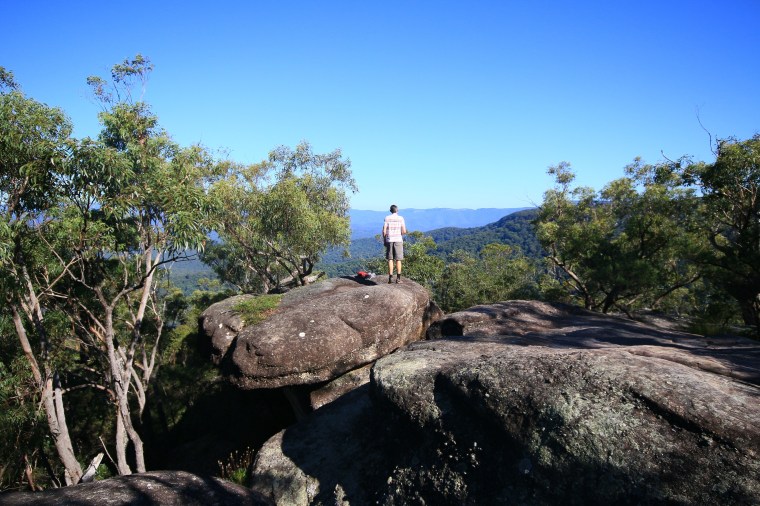
 True, there is some relief for a while following a sheltered ridgeline, before the steps return again and the sweat comes back in profusion. It is quite remarkable that someone has gone to the effort to build all these steps though, and the piece de resistance comes with the final climb on a series of metal steps and ladders, hopefully fixed securely to the rocky dovehouse. At the top of each series of steps, views begin to open up and you can see, sense, taste, that the salty sweat will definitely be worth it.


 Pigeons were lacking but instead the summit appeared to be a bastion for numerous giant butterflies, the ubiquitous Australian fly, and a curious lizard or two. No doubt accustomed to weary walkers feasting in celebration on apples and oranges and squished cakes from Milton Heritage Bakery, waiting for the crumbs to fall. I’ll say it again, but I have had far worse Monday mornings, even when cake has likewise been involved.
 Still, with every up there’s a down and I have lost mountain views. I have also moved into an area where there is a yappy dog. I only write about this now because I just heard it, again. I always seem to find myself in a neighbourhood with a yappy dog. I think everyone does. There seem to be yappy dogs everywhere these days, coming over here, taking our peace and quiet. They frequently pester me on Canberra nature walks too, usually roaming free because their owners don’t need to pay heed to the numerous signs regarding leads and wildlife protection and all that silly nonsense. Still, at least I can see the mountains on these walks, and the dog yapping can be tolerated with such rewards.
 Take Dairy Farmers Hill, which sits in the National Arboretum on the western fringe of Canberra. I cycled up here a few times in the past, but was usually too close to fainting to really appreciate the 360 degree panorama. Driving one evening with the comfort of air con was somewhat more agreeable. The sun dipping onto and over the Brindabellas offered a treat, while the proximate lumps of Black Mountain and Mount Ainslie received a farewell glow. There were no dogs.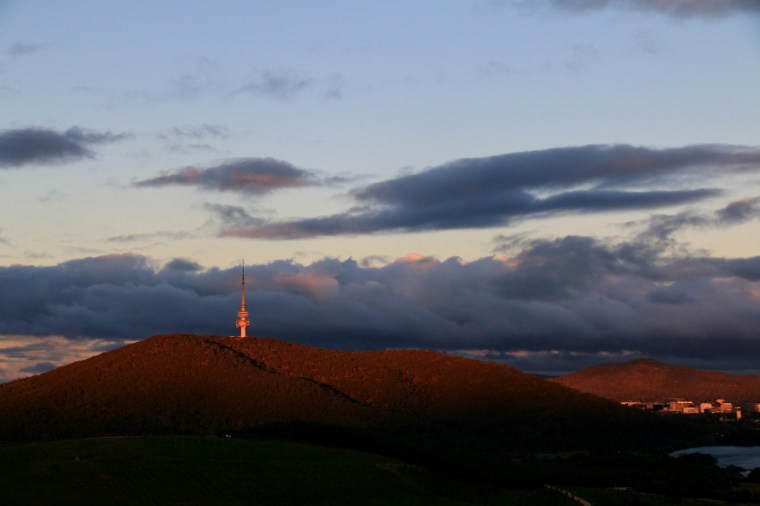
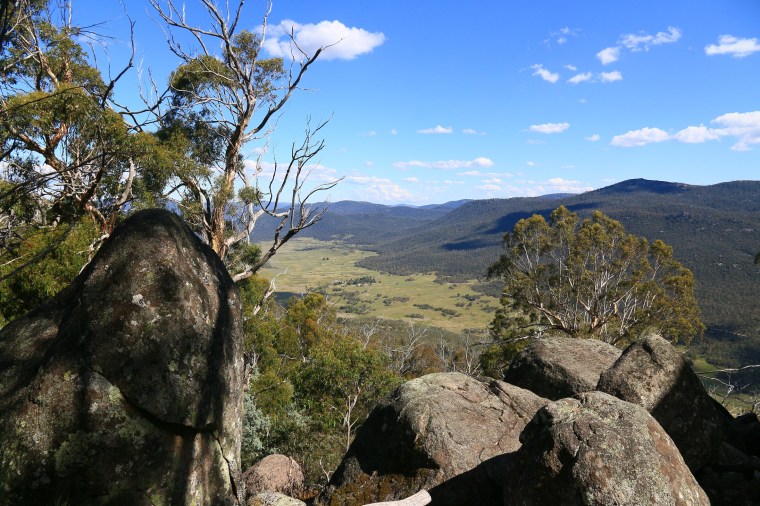
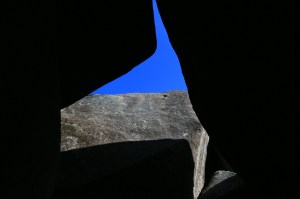 You don’t notice from afar, but these ranges are peppered with giant, rounded granite boulders stacked like clumps of frozen peas that have been left in the freezer for far too many years. These boulders congregate quite generously up on Orroral Ridge, where a series of slightly neglected tracks lead to rocks named for their resemblance to animals and people and other inanimate objects which aren’t rocks. Such is the profusion of rocks that geologists have wet dreams, climbers drool onto their harnesses, and random waifs and strays seeking mountain air delight in the summer coolness of virtual caves formed in the hollows of a cluster of boulders.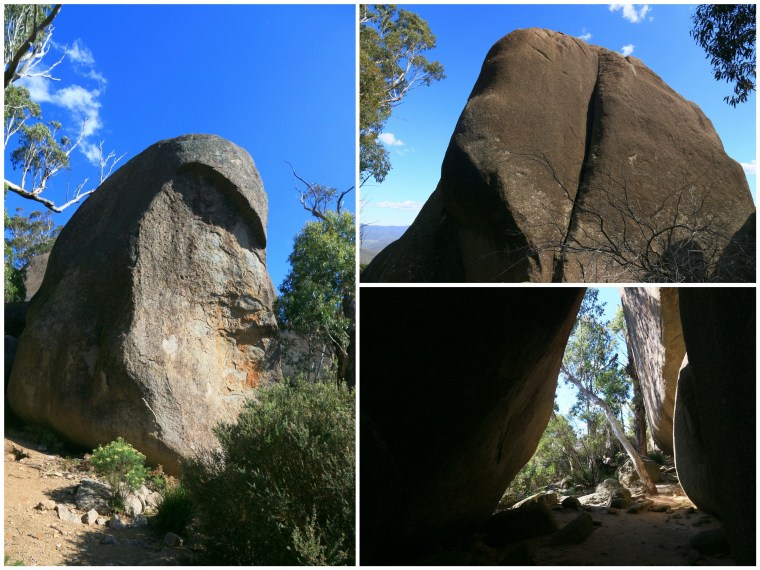
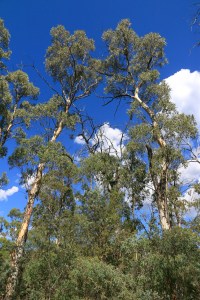 I wasn’t expecting much from this walk – in truth it was something to do in a lull while my washing dried. Plus being practically the last remaining marked trail I hadn’t been on in Namadgi I felt a little obliged to complete it. The word ‘swamp’ was hardly enticing, with images of squelchy boggy plains, rotting carcasses and festering mosquitoes. But it was actually quite a delight, rising steadily through lofty Peppermint Gums, bypassing a few more giant boulders, and meandering through button grass and boardwalks under blue skies and fluffy clouds.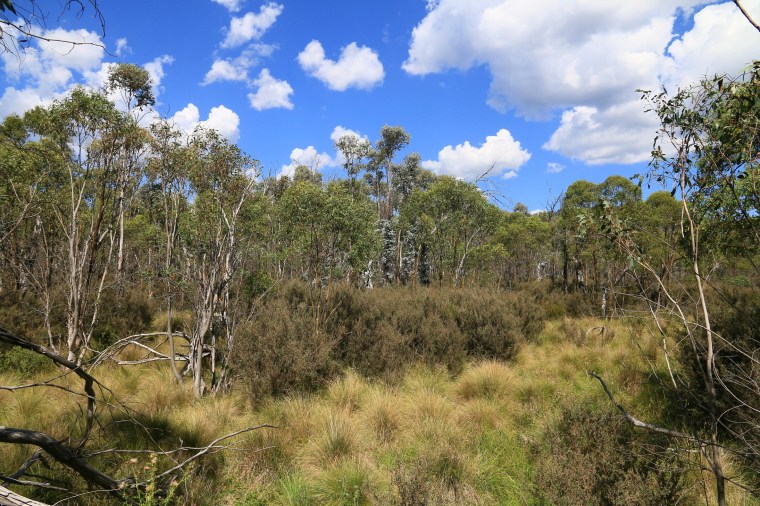
 The swamp turns out to be a fen, as the information board at the end of the walk explained. I’m not really sure of the difference, but it was fairly less swampy than I imagined. A bench here overlooked a river of vivid green grass, lapping at tall forest and rocky outcrops. Being now beyond midday it was the perfect place for a simple homemade sandwich and, once again, for all the expensive meals and gourmet plate ups*, can there be anything more satisfying than a bushwalk sandwich? I don’t think so.
 With time to spare I was happy to head that little bit farther, down to the far south coast of New South Wales. Perks of this journey include – to a limited degree – the striking, golden plains of the Monaro, baked hard and golden by summer sun; the midway bakery opportunity in inimitable Nimmitabel; the rainforest rim of Brown Mountain; and the panoramic view over the rolling cow-dotted Bega Valley, into which the road drastically plunges.
 My base for three nights was Merimbula, handy in terms of size and facilities (i.e. food, coffee, picnic tables on which to work) and generous in its setting upon the shallow inlet and oceanfront. There is even an airport here with connections to Sydney, which does genuinely make you wonder about its feasibility as a site for sea change. A plane buzzed overhead the next morning, as I ventured out for an early walk through bushland along the inlet to Bar Beach. I could get used to these early morning walks, especially when a small but perfectly formed kiosk awaits besides the modest cove to offer up waterfront coffee.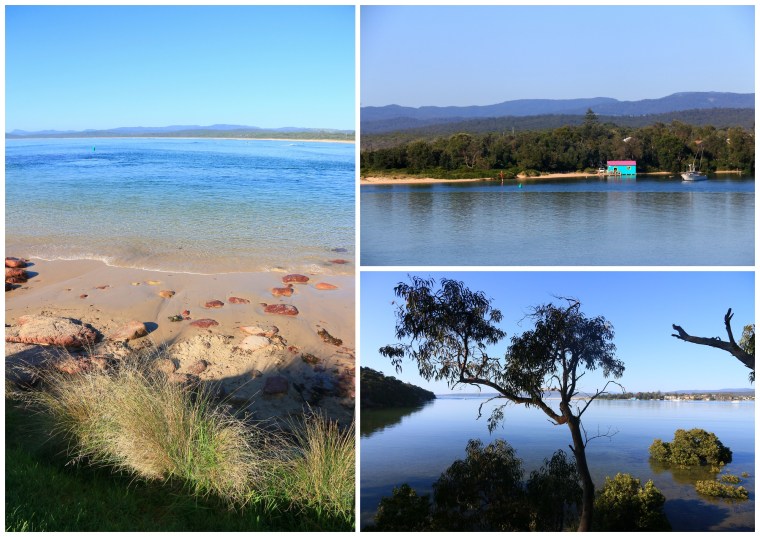
 The water here is quite ludicrously beautifully opaque, which probably helps for spotting sharks and giant stingrays. The only hazard this morning was mostly on the eyes, with a generous gaggle of cashed up baby boomers making the most of retirement by lumbering about in various states of undress. Understandably glowing and jovial – why wouldn’t you be facing yet another day in paradise – it may yet be too early for me to contemplate semi-retirement at the coast.
 What followed over the next couple of days was a pleasing routine of waterside walking, working and wallowing in sand and sea. I explored every possible boardwalk in Merimbula and visited the ice cream parlour at least twice. Late afternoons in the mid to high twenties were perfect for attempts at beachside siestas, but the call of the outdoors and nagging feeling that I probably should be doing something more productive with this opportunity made me restless. I would wander some more or open my laptop for five minutes and stare at the screen as Windows decided to install countless updates yet again, before concluding that it was better to just stand in the sea and spy distant dolphins doing all the work.

 In Eden, I love the shabby end-of-the-world outpost feeling. It’s a long way from Sydney and a long way from Melbourne, which means it generally only picks up on road trippers passing through and lost Canberrans seeking fish and chips. I have heard – along with countless other places – that it could have been the national capital instead of Canberra. And perched upon an outcrop overlooking beautiful Twofold Bay and the rising hinterland of the coastal ranges, one can only wonder what might have been.
 Alas, the sheep paddock that eventually became the capital awaited the next morning. The good news was that I had – or will have – a home to go back there to, and some paperwork to sort out. I wasn’t going to rush – too much – and so took a final walk out to Bar Beach and a coffee to get me over the hills and far away. The boomers were of course there, semi-naked and just slightly self-satisfied, and I could see that I really wasn’t ready to join them for a while yet. But I would definitely be open to further remote working out-of-high-season breaks, just to soak up their paradise, their fantasy for a few more days close to the Pacific.
