August 2006, and after a now customary gruelling journey by land and air I found myself at Canberra’s suitably bland Jolimont Bus Station. Here I was for a year – not the bus station but the city at large – a work swap to sample the delights of Australian bureaucracy and seek to escape Canberra for other parts of the country as frequently as possible. And while I have done all that, here I still am almost ten years later. Next week I will head to the Jolimont Centre again, to commence that journey, again, but – again – I will be back.
So, where did that ten years go exactly? Well, for a start, not every single day has been spent in the national capital, with extended periods in swags and other people’s beds both down under and abroad. I nominally left a couple of times, packing up my belongings in boxes and placing them in various friend’s nooks and crannies. But I had to go back to retrieve them, and, once I did, I decided it was agreeable enough to stay.
So, in honour of the passing of a milestone, allow me to ramble on about ten Canberra things that have kept me amused, bemused, infuriated, mystified, but largely happy. With some archive pictures to boot, in which the shade of my hair and athleticism of my body is, lamentably, so last decade. In 2006 I strove to the top of that hill in a crappy bike. Ten years later, and not so much has changed.

Upon Red Hill with Black Mountain in the distance, October 2006
1 – Four Seasons in One Year
It is of course customary to talk about the weather in any conversation starter. Indeed, Australians are almost as prone to this as Brits. What would we talk about if there was no weather, like on the Gold Coast? Retirement savings, Pauline Hanson, golf?
I arrived in Canberra towards the end of winter. Which presented my British bones with beautiful, pleasant sun-filled days in which you could almost strip to a T-shirt. Ha, winter, I laughed, whatever. But then I think it plunged to minus eight overnight and I had a little more respect for the hardiness of the souls living here.

Spring, Summer, Autumn, Winter
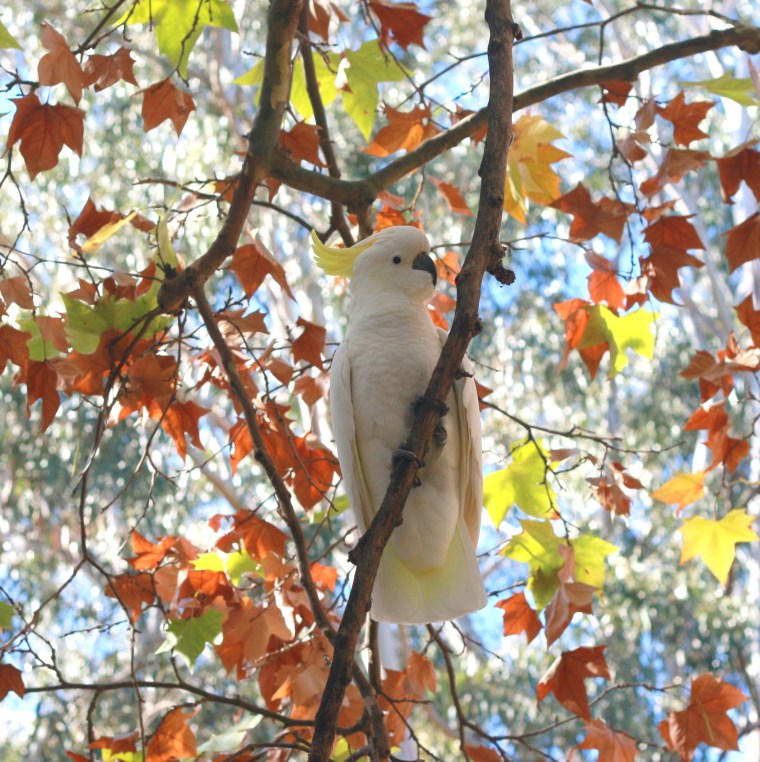
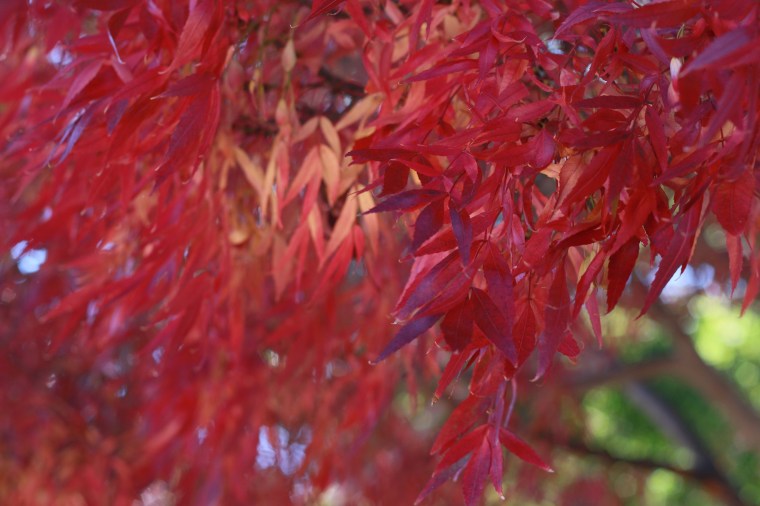
Because of its altitude, its distance from the coast, its fondness for winds direct from the mountains, Canberra has a very clear four seasons. I say very clear, but weird plants and shit seem to be in flower all the time, and birds never fail to make a racket at five in the morning. Still, there is definitely frost, blossom, sweltering bushfire smoke days (known as “stinkers”) and – best of all – the golden glowing foliage of autumn. I like that about Canberra (people ask does it make you feel at home, as an unruly pack of Cockatoos shriek their way through a decimated oak tree). With the seasons, life is constantly, visibly changing. Unlike – say – on the Gold Coast, where it largely just ebbs away.
2 – That Canberra
Canberra has cut pensions for war veterans! Canberra has imposed a great new tax on everything! Canberra has got its knickers in a twist with the latest self-absorbed leadership tussle! Apart from, of course, it hasn’t. The Federal Parliament, voted for by the great people of Australia, has allegedly done all this in my time here. But a city and 99.999% of its residents have not. Editors, sub-editors, journalists, reporters, radio shock-jocks: STOP BEING SO FRICKIN GORMLESSLY LAZY!
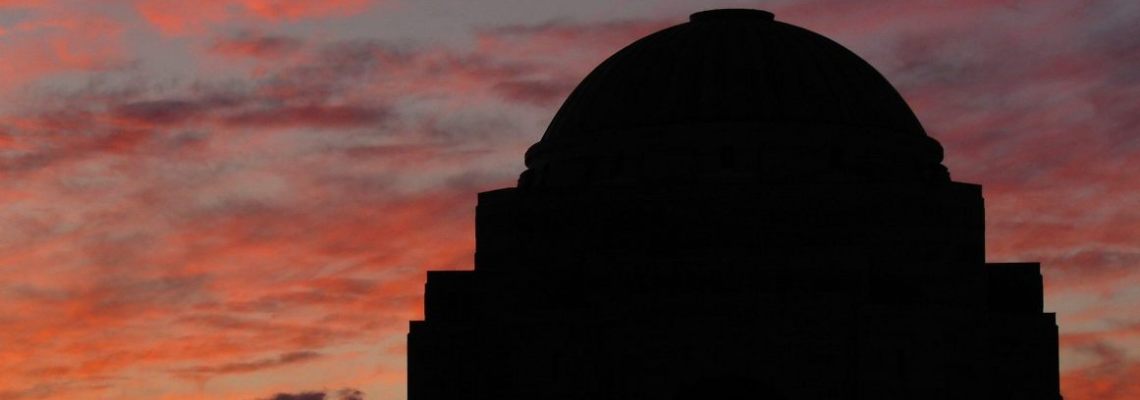
However, it would be remiss of me to avoid mentioning the presence of Parliament Houses, both old and new, in this capital city. They are quite distinctive and diverse, lined up to degrees of perfection on a central axis. For me, the old one is better, mainly because it’s no longer used for debates and mediocre policy formulation. Which means you can walk the halls, sit in the padded chairs, swing around in the former prime minister’s seat, cigar in hand and a scotch on the rocks. For better or worse, this was why Canberra was made.

A reflection of Australian Parliament House, June 2007
3 – Flashes of Brilliance
I had been to Australia before 2006, and I had even been to Canberra. However, I didn’t recall the almost nonchalant parade of colourful birds swooping and hollering across suburbs and over hills. Most remarkable – to an Englishman familiar with the monotone – was the sheer brilliance of colour and decoration: a flutter of rainbow emerging from long grass, a blush of pink perched on a wire, the regal red and blue of a pair of rosellas serenading in the bush. Even the pigeons and seagulls seem a little cleaner and offer at least a little charm.
I’m no twitcher but I have grown to recognise the basics and even some of the calls that these assorted oddments provide (mostly just to identify who keeps waking me up at 5am). And while they have attained a familiarity, there are still moments, when a blur of brilliance darts through the bush, that bring a little, wondrous smile to my face.
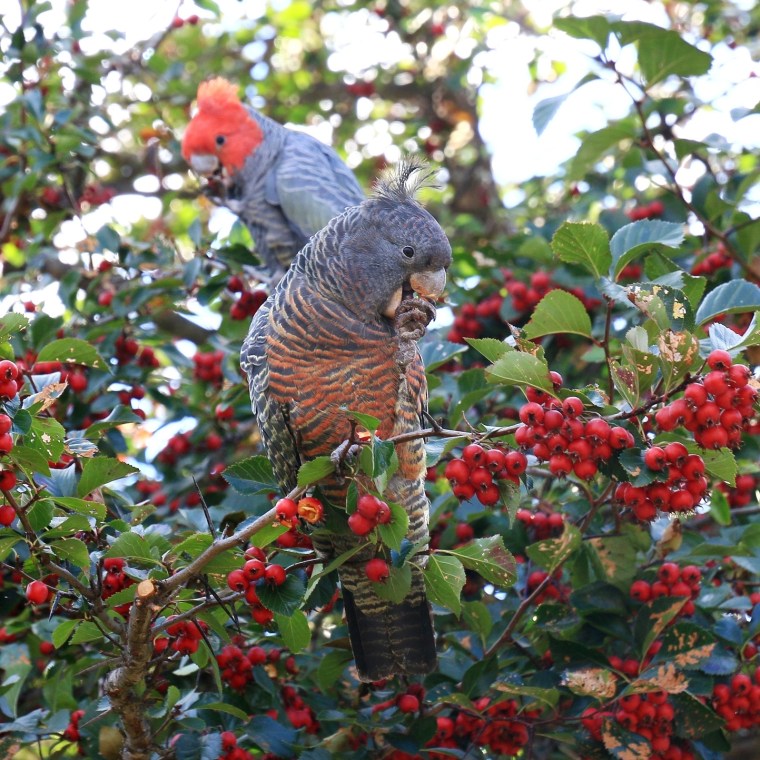
A pair of Gang Gang Cockatoos, April 2015
4 – And as for the Plants
I seem to make routine visits to the Australian National Botanic Gardens. After ten years I do so with little in the way of enthusiasm or expectation – it’s more like it’s somewhere different in the rotation of hill walks, lakeside ambles and suburban rambles. Yet each time, after wandering off onto one of the tracks for ten minutes, I find myself in some kind of placid contented vegan tree-hugging alternate state. It’s a bit like going to Melbourne, only with callistemon and grevillea instead of coffee and graffiti.
Of course, it goes without saying that Australian plants can be a little quirky. As someone still part foreigner, a walk through the gardens evokes a sense of discovery, a sense that you are clearly in an alien land. Indeed, you can almost imagine how Joseph Banks was feeling nearly 250 years ago, getting a boner at the sight of a bottlebrush, incessantly naming things after himself. To be fair, there were a lot of things to name in the Anglo classification scheme of things and – as the Botanic Gardens consistently exemplify – the sensory overload can be exhilarating. For me, nothing, like nothing, can beat the smell of the bush after rain.

Waratahs bursting forth in the Botanic Gardens, October 2012
5 – Food glorious food. And coffee.
I didn’t really do coffee in the UK. And after ten years in Australia, that last statement seems even more sensible. Despite only incremental improvements it is largely awful. If there was an Ashes for coffee – and perhaps cafe culture more broadly – Australia would do the flat whitewash each time, perhaps with some stoic resistance from the English tailenders in the final dead rubber.
So now I have become one of those awful Australians who harps on about how bad the coffee is in the UK. I remember supping on my first few coffees in Manuka, in what was once Hansel and Gretel and has now become Ona, with awards and movies and a somewhat more pretentious, more beard-infested, and more expensive take on anything that can be derived from a humble bean. I rarely go there these days, but such is the profusion of good standard coffee that it doesn’t really matter. But it is nice to find a spot where everybody knows your name.
Food in Australia leaves me a little more ambivalent. Ashes contests would be more competitive in this space. Highlights include mangoes, most Asian food, steak, and some of the seafood. Cheese can be a little hit and miss, especially with some crucial French cheeses off the agenda due to health and safety regulations (sigh). The biggest issue though is the absence of genuine clotted cream. Clearly this is a problem. And it may well be the driving force for return visits to the UK (sorry family and friends!).

A classic before it became much more: Brodburger, October 2008
6 – On the Edge of Wilderness
Australia has a luxury of space which makes any dispiriting rant of “F**k off we’re full” all the more silly. Sure, a lot of it is hostile and infertile, jam-packed with snakes and spiders. But even in the temperate south east corner there are vast tracts of not very much at all. The airiness, the freedom, the big blue sky, this is why Canberra itself was such a tonic arriving from London ten years ago. And while the city has an excess of underused scrubby grassland, this pales into insignificance when looking south and west.
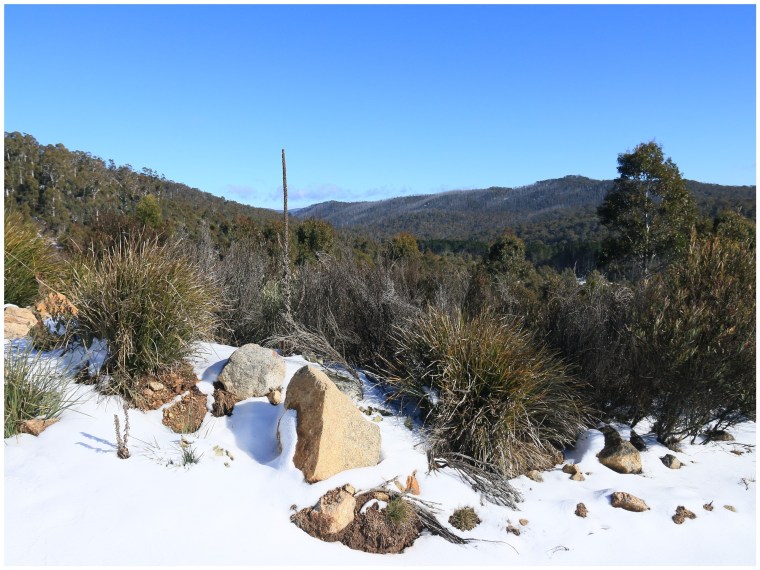
Namadgi National Park sits entirely within the ACT and while it’s not up there with the likes of some of the other spectacular wilderness areas of Eastern Australia, you can at least get a good view. Sadly most of these views require a reasonable hike there and back again, trails I have now exhausted in their entirety. But being little over forty minutes away, access to wilderness is literally on your doorstep. And where a familiar trail ends, there is so much temptation, so much allure, so much that is pulling you to want to dive in further. To bush bash. Until the thought of all those snakes and spiders sends you back the way you came, again.

The end of the Yerrabri Track in Namadgi NP, January 2015
7 – Culcha innit
Being a capital city, Canberra has the rather good fortune of containing all the usual national suspects: a library, a museum, a big war memorial and countless other ones, national archives, a portrait gallery, and the National Gallery of Australia. While interstate visitors and schools parties can pile off their coaches for a whistlestop gawp, the benefits of being a local mean that you can go back and explore, time and time again.
In the main, these institutions are free and have cafes. Which means I frequently pop to one or other when I have an hour or so to kill. The National Library has provided a workspace on occasion, the Portrait Gallery some photographic inspiration, the National Museum respite from a biting wind on a bike. And as for the National Gallery, there is something quite satisfying about popping in and casually cruising past some famous works and famous names, diverting one’s attention in pursuit of a coffee.
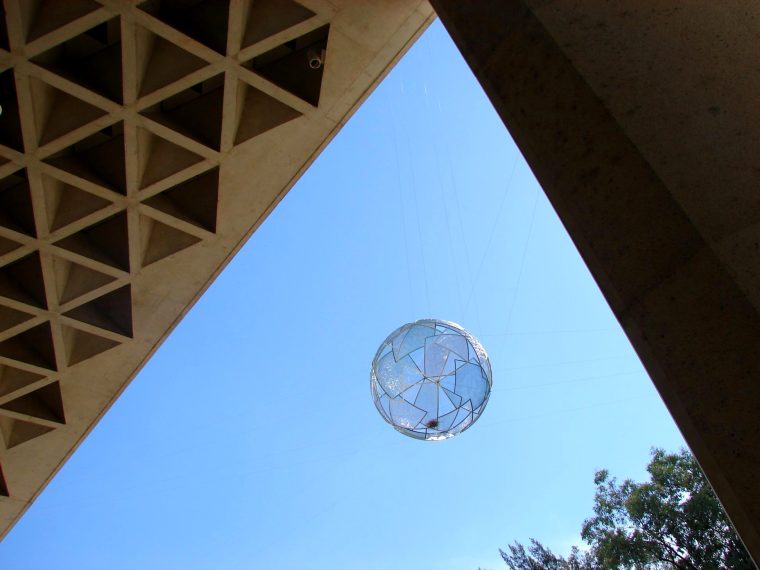
Hanging outside the National Gallery of Australia, March 2009
8 – Sod it, Let’s go to the Coast

Beach in Murramarang NP, October 2008
Okay not technically Canberra, but referring to Batemans Bay as Canberra-on-Sea has some justification. Australians’ slavish desire to worship beach frontage contributes to the high disregard attributed to the national capital. But I’ve obviously quite rightly made the argument that Canberra is closer to the coast than Western Sydney, once you take into account traffic and the all-round awfulness of Parramatta Road. And what a coast it has.
My first visit (and escape from Canberra) was at the end of September in 2006. A bus down Clyde Mountain to the Bay, hopping off at Broulee. It was a fortuitous choice, as Broulee is one of the best. Sweeping golden sand, rugged coastal forest, distant mountains. So much so that Broulee regularly comes back into play, on any fabled day trip that has been made many times since.
9 – Jesus of Suburbia
Canberra’s suburbs can be at one utopian and hellish. Ten years on, and it is still feasible that I could get lost in them. Essentially Canberra is a city of suburbs with some hills and a few important buildings in between. Many of them have politically inspired names, but I fail to distinguish between such places as Ainslie, Scullin, Theodore.
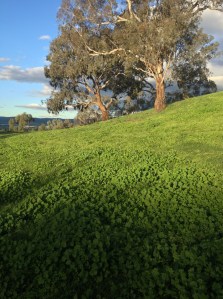
Navigating the suburbs to Rocky Knob Park, April 2014
I’m currently in Phillip, which is either named after Governor Phillip or an expression the Duke of Edinburgh caught wind of a few times in boarding school. Before this I was in Red Hill, and this presented the best aspect of suburban living: leafy avenues, quiet crescents, popular schools, and cafes and shops a pleasant fifteen minute walk away. Often finding myself working at home, it was so easy to take a break, ogle at expensive houses, scrunch through leaves, dodge resident peacocks, and emerge to a bit of a view – and a bit of a titter – at Rocky Knob Park.
10 – The summit
It will come as no surprise to anyone who knows me reasonably well that I save the best to last. Much like the crackling from a Sunday roast, for which fork stabbing is in order if anyone dares try nab it from my plate.
The last and best of Canberra’s things may come as no surprise either; my subject and muse, my meditation and therapy, my gym and inspiration, where the suburbs give way to a bushland ridge known collectively as Red Hill.
It’s possible it could have been another hill. But this was the first and will always be the best. Three days into the Canberra experience, a sunny Sunday and desperate to fend off jetlag, I opened the door and walked west. Kingston, Manuka, Forrest…the last luxurious homes giving way to Red Hill reserve. A summit climb, a coffee and cake, a special view. Nature, space, golden light, the excitement of a new city and new people below. The city may have become more familiar, the hair may have – ahem –mellowed, the people may have come and gone, the discoveries faded, but still I can be happily, contentedly, thanking my lucky stars upon this very hill today.

Late light at Red Hill Nature Park, October 2007


 Almost inevitably (and positioned next to water), the first stop straight off the M5 was Coogee. A late afternoon to tread in the sand, sup coffee under a shady tree, and amble to Clovelly and back. Once all this arduousness had passed it was practically dinner time and so a fish and chip takeaway consumed in fading light alongside the beach made perfect sense.
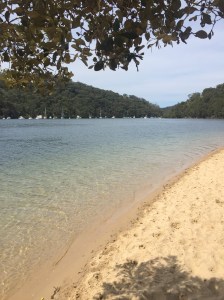
 Moving away from the bronzed bodies beyond Shelly Beach, nature reclaimed the surrounds and people became a rarity. A walk up into North Head rewarded with solace and a refreshing breeze, before leading to a dose of beautiful harbourside discovery. Collins Beach provides the perfect exemplar of the bushland coves littering the shoreline of Sydney’s waters. Gems that make this part of the world exceedingly expensive. But walking here is free.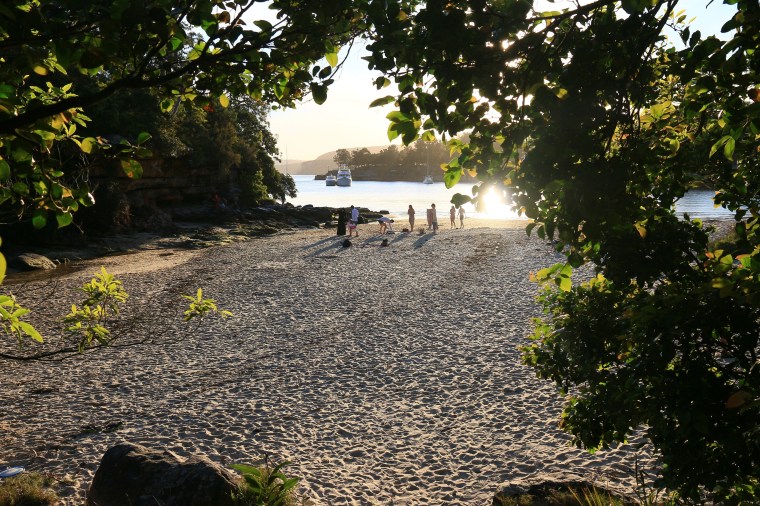
 Well it worked because plenty of people are being lured to the Hills via the Lane Cove Tunnel and M2 toll motorway. It’s heady mix of shopping malls, slightly more affordable housing, faith-based singing and pockets of bushland reserve offer something for everyone. The bushland is my favourite part – discovered one fresh morning in Cumberland State Forest. A tonic before heading to yet another Shopping Mega Centre for top secret work purposes.
 Towards the end of my week criss-crossing the city I ended up in the North Shore and Northern Beaches of Sydney. Indeed my schedule fortuitously terminated in Warringah Mall. While Warringah unfortunately conjures up images of Tony Abbott in Speedos, it’s not all bad. A final interview is finished and I can clock off and drive to nearby Curl Curl beach on a Friday afternoon. I can lie on a towel and try to doze, but become restless and go for a stroll up onto a headland. I can feel relief that the intense week is over and I can start to add up my road toll expenses. I can make plans for dinner at one of my favourite places in Bondi. And I can head home tomorrow, replenished by these opportunities to occasionally exist beside the water.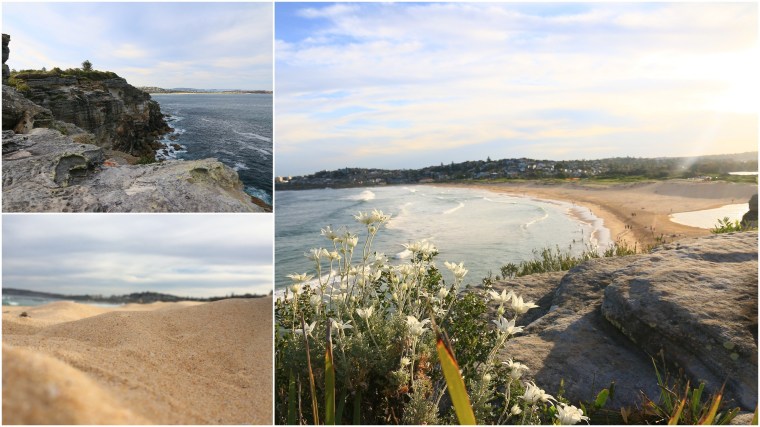

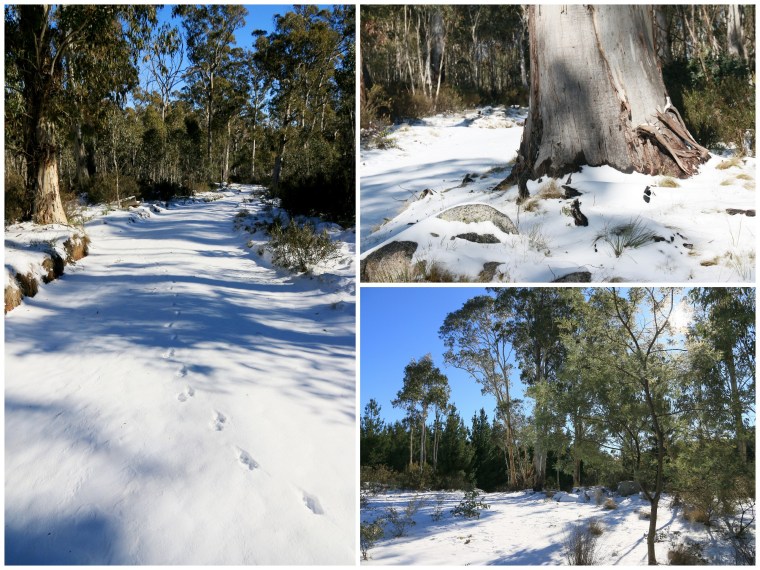


 Two hours with a stop for coffee at the improvingly-serviced by coffee Braidwood and I can find myself pondering whether to take off my jumper along the calm shoreline of Broulee. I didn’t, because it was only about fifteen degrees, but it was certainly still and sunny and rather blissful for thirty minutes or so. A happiness heightened by the token lunch of fish and chips in nearby Moruya, after which I felt a bit sick.
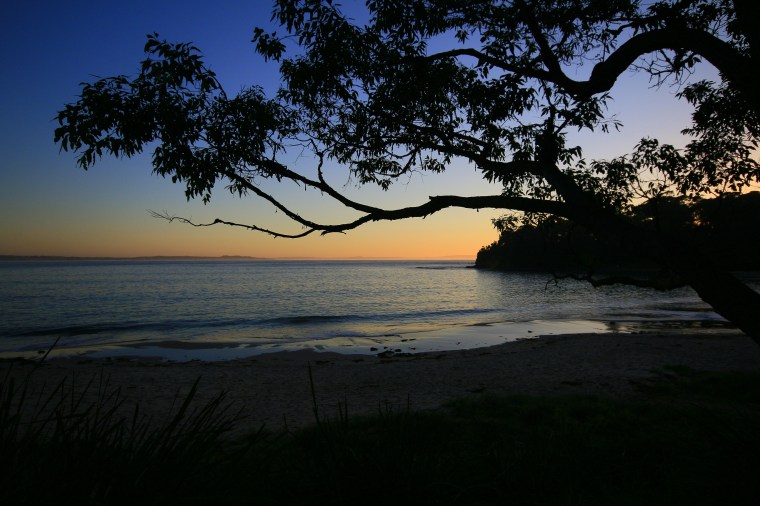
 All this is hors d’oeuvre for the main ingredients of this south coast winter classic: driving through the beautiful spotted gums and spiky palms of Murramarang National Park. Arriving at the pristine sweep of Depot Beach and ambling on foot along the sand and rock platforms to Pebbly Beach. Home to beachside kangaroos offering clichéd images of some kind of idyllic Australia. Scary waves and placid bays, reflections and a sea spray haze. Fishing nomads and foolhardy surfers. And escapees from Canberra hoping to bare their arms.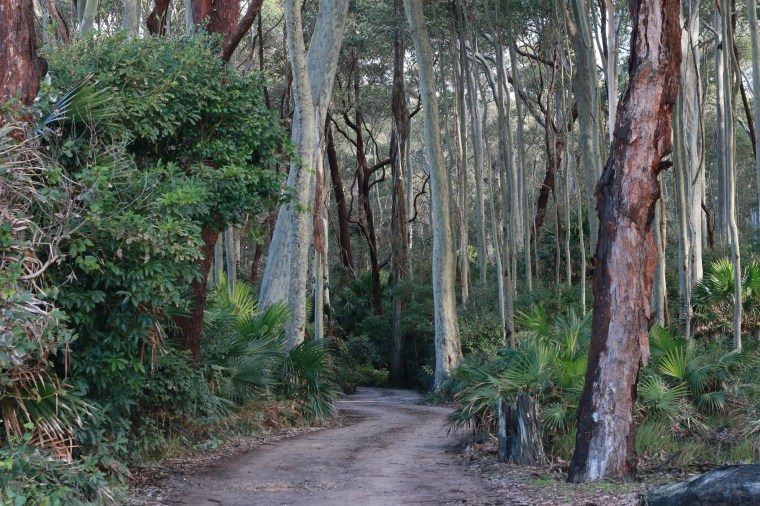
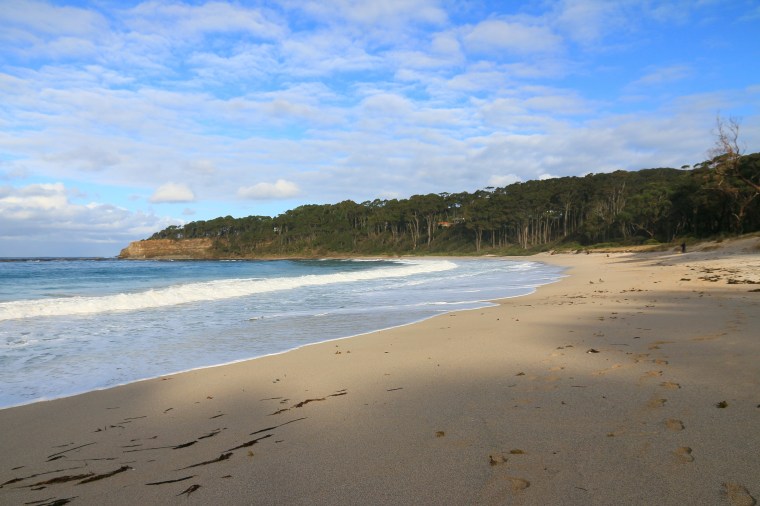


 In fact, I didn’t even make it to Pebbly Beach, a turn of events making those fish and chips an even guiltier pleasure. Rocky debris and a surging high tide meant that onward travel would be a little bit silly, something only to be attempted on The Island with Bear Grylls. My cut off, my terminus, my turnaround point, was an impromptu cascade, tumbling from the sodden forest and weather beaten cliff. There is only so far one can go in a day, and it was a winter’s day after all.

 I was envisaging a challenging winter weekend in pleasant Sydney sunshine when assigned a work trip there recently. Instead, torrential, stormy, incessant rain submerged a large part of eastern Australia and I delayed my visit. Stuck in Canberra for an extra day, I discovered that the apartment complex I had moved into had acquired an English-like riverside setting, which immediately put the rent up a hundred bucks, and probably inspired people to dump shopping trolleys into the storm drain to complement the graffiti before blaming it and everything else on foreigners.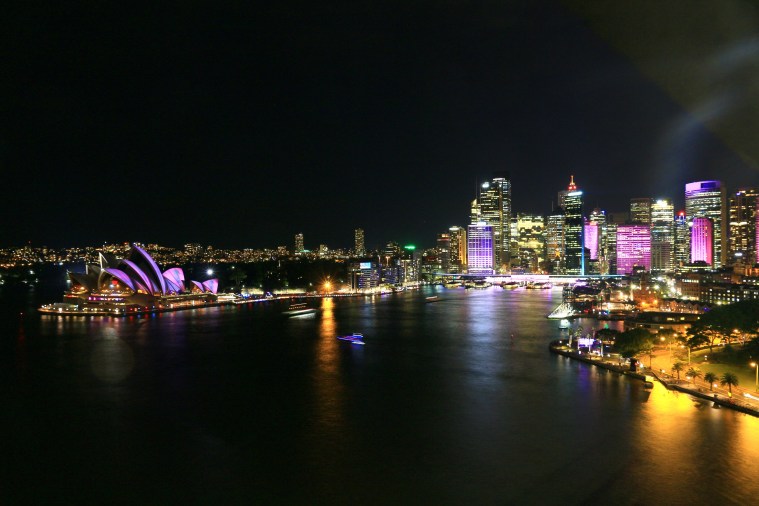


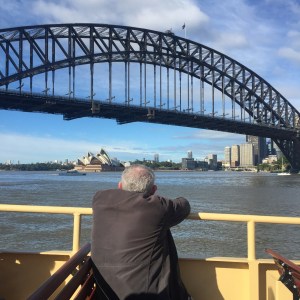 The next day in Sydney offered a return to sunlight, though still possessing a cool enough breeze to warrant jackets and scarves of course. I should probably have been catching up on work, making notes and thinking about what it all means. But after a breakfast catch up in Milsons Point, the harbour again beckoned, and an impromptu boat ride just for the hell of it. No matter how many times you encounter this city’s jewels, it is almost always impossible to avert your eyes, so I said in an instant on Instagram.
 One more day and I would return to something a little wintrier in Canberra, where there are frosts and even some rare single digit daytime maximums. It’s part of the reason so many people hate it despite never having been there. I can see their point a little, and the cold nights do drag well into September. Thus I am more than happy to embrace a bit of time down in Wollongong – prior to another nightshift – in which there was a window of T-shirt wearing opportunity. This plus fish and chips and the pounding drama of a still frenetic swell makes for a contented couple of hours.
 As much as I love Canberra there are times, in the heart of winter, that I question my decision not to live beside the sea. Why would I not want to briskly stroll along a boardwalk? Why would I not want to find good coffee and tasty brunch fare with an ocean view? Why would I not want to do a spot of work on a bench in a foreshore park so I could claim that food on expenses? Why? Maybe because I don’t want to turn into a softie who rushes to David Jones for a chequered scarf and jaunty hat at the sight of sixteen degrees. At least let’s go through something a little darker to really, truly savour the light that follows.
 As the fading gentrification of the Southern Highlands descends toward the sea you can be in no doubt that this is Australia. Indeed, an Australia as it was before anyone, even its first peoples, decided to venture over by boat. The plateau abruptly falls away into a dense system of deep valleys and gorges. Massive walls of sandstone plummet towards pristine creeks obscured by a blanket of gums. A pair of black cockatoos glide in the air, conversing in prehistoric shrieks. Banksia and wattles compete for attention in the understorey topping the escarpment. And a thin veil of water tumbles over its edge, destined ultimately for the ocean.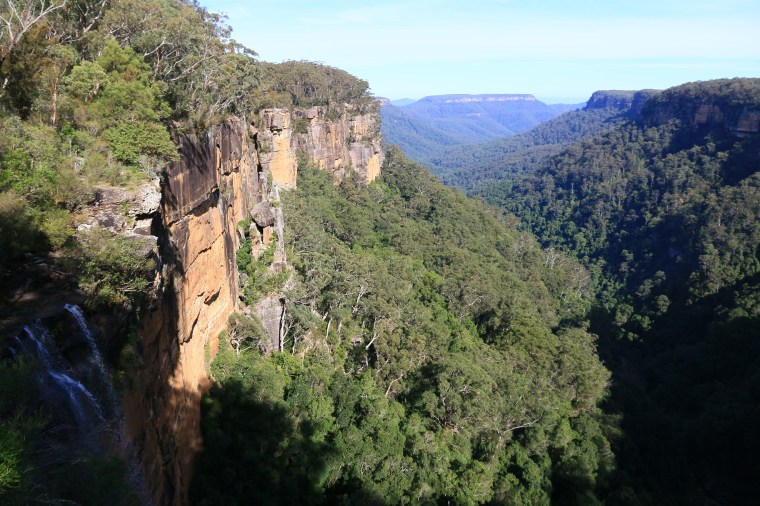
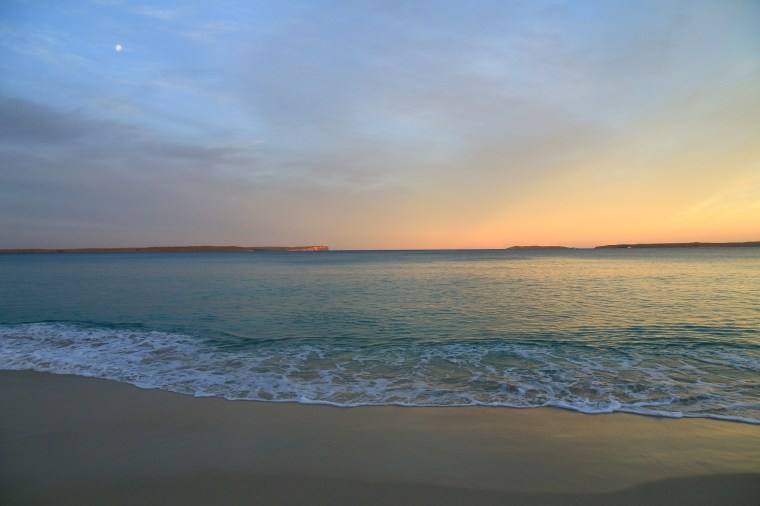
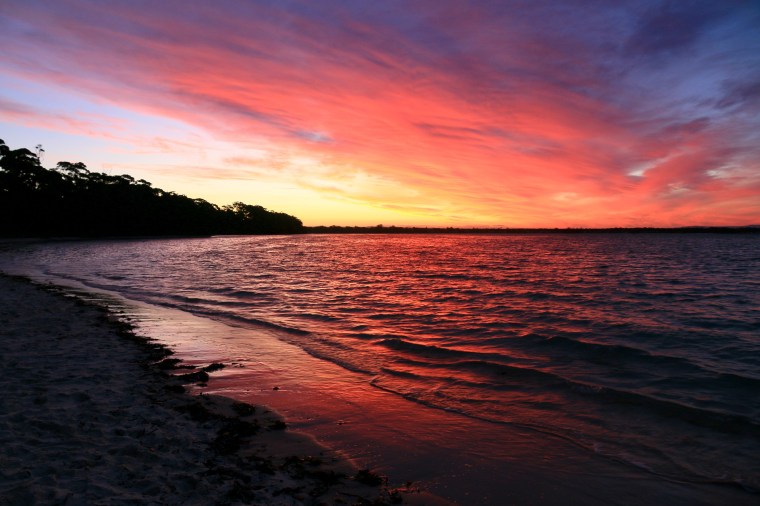
 From bay to bay, traversing succulent coastal forests in between, it’s an easy amble from Blenheim Beach to Hyams Beach. The only real difficulty is deciding whether to take your shoes and socks off on the sandy bits only to then have the hassle of putting them on again for rougher terrain (conclusion: wear sandals or thongs). Plus there’s the challenge of restraining your photo-taking so that you don’t have endless, repetitive pictures of clear water lapping at fine, white sand.
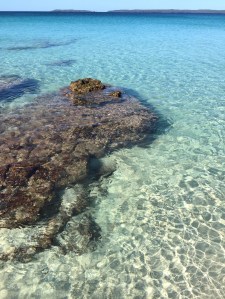 The sand is so white here that it famously gets on every piece of tourist literature and recurrently features on Sydney Weekender as the whitest sand in the world. In fact, it is genuinely so white that even small-minded immigration ministers would feel unthreatened and some cretin with a golden toupee would approve. Personally, I think there is probably whiter (for instance, around Esperance), but that is probably just supremacist talk.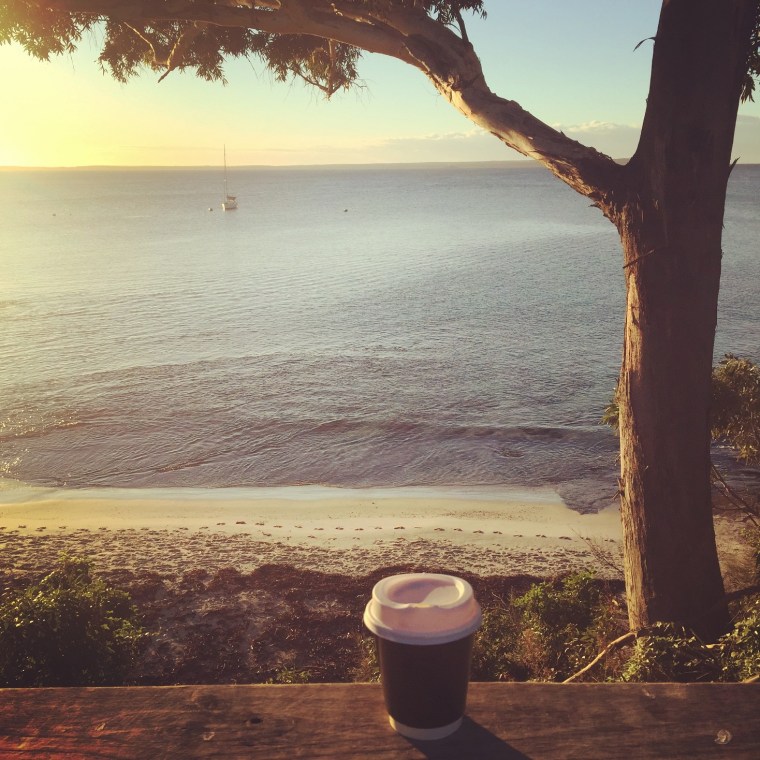








 This comfortable civility dissipates quickly once away from the main road; national parks host waterfalls and rock pools and scenic views over jungle. Tracks weave through palms and strangler figs and giant feathery ferns. Snakes and spiders probably hide. While the crowds loiter all the way down to pools and falls at Kondalilla National Park, beyond the swimming spots, the jungle is almost all yours. Yours and a couple of fellow pioneers, hoping to steer clear of Drop Bears and survive on rations of emergency salt and vinegar crisps and deodorant. We made it, and went to eat cake to celebrate.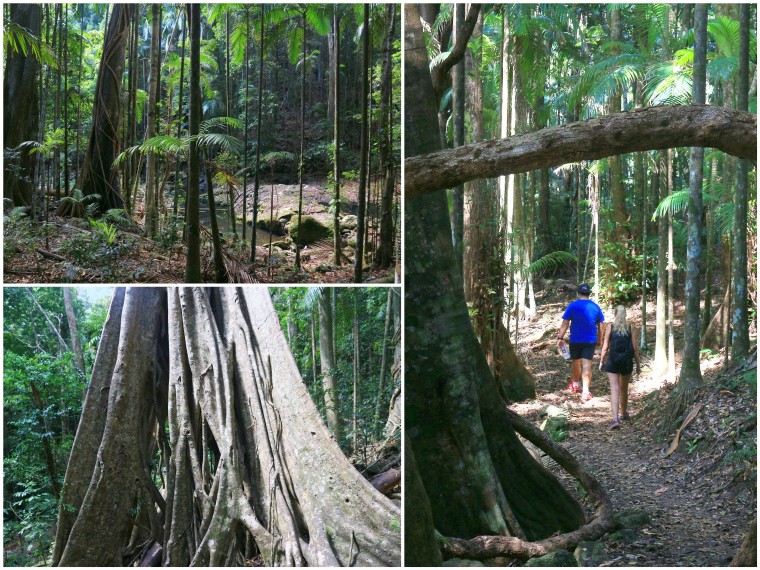
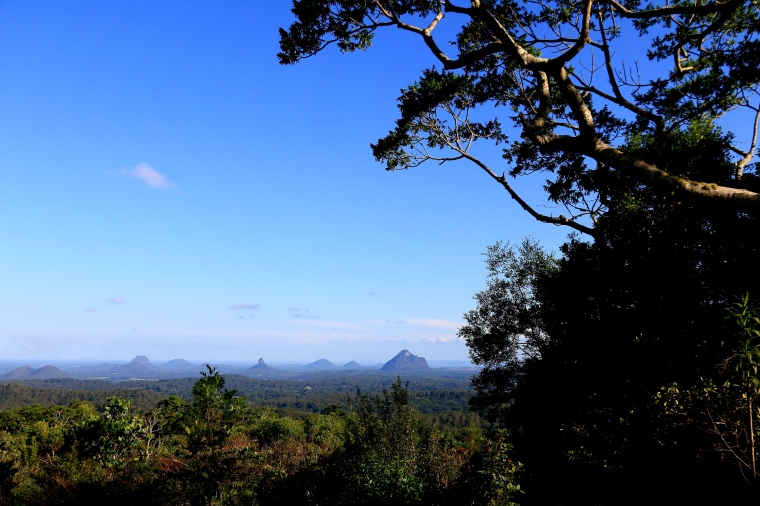
 The return of the sun the next day prompted the usual screeching, warbling, cackling and occasionally tuneful singing of the Buderim birdlife. It is a struggle to sleep in and I was more than ready to escape down the road into Buderim Forest Park for some early morning exercise. While others decided to jog, I was content enough to engage in spells of brisk walking punctuated by abrupt stops for Instasnaps. A kilometre in, the falls came as a surprise. I mean, I knew they were there, but I wasn’t actually expecting much to be falling. And while it was hardly a deluge, there was something aesthetically pleasing about Buderim Falls that was absent at Kondalilla yesterday.
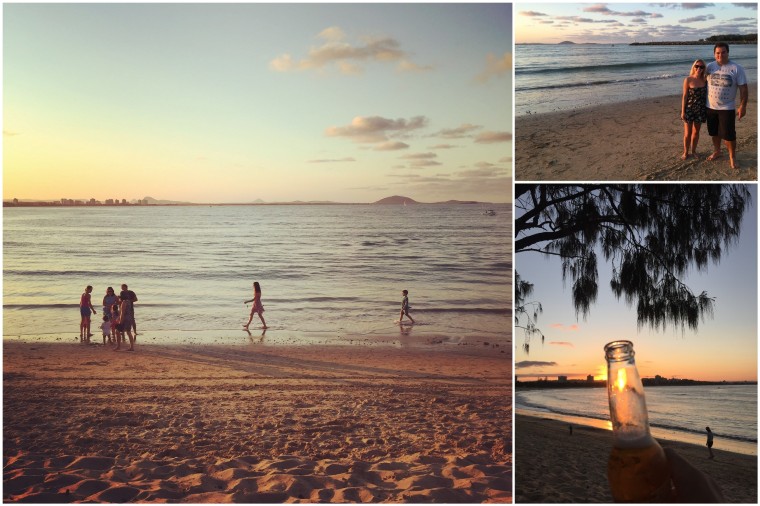
 You see, the tourist board have been so successful that Noosa is brimming at the seams on a warm, sunny Sunday lunchtime, jammed with locals and foreigners alike. Parking is in the lap of the gods, but boy, have they got some of the prettiest parking spots around. The beach is – well – busy for an Australian beach, but admittedly it is a rather pretty beach. And even the national park, which shelters Noosa from encroachment from the south, is bustling with a steady stream of backpackers, families, joggers, and adventurers most of whom are, of course, exceedingly pretty. It is, undoubtedly, a very pretty place, and a requisite on a two day drop bear bushwalk adventure beach and waterfall honey monster tour.
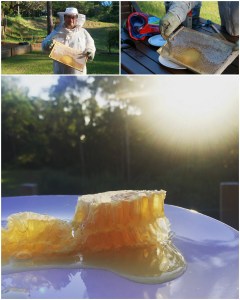 Like all of the most accomplished tours though, the best is saved for last. No tour is complete without a visit to a twee little spot providing lovingly crafted local produce and quirkily endearing owners. Honey Bear Honey of Buderim is not yet on the tourist itinerary, but with a bit more blue sky and a 10% cut it could well be. Look, I’m even promoting it on this blog for goodness sake, reaching tens of
 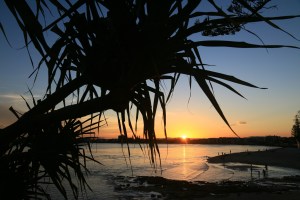 Some might go on to watch the sun disappear, over the apartments and occasional jagged plugs of the Glass House Mountains. Many linger in the warm air, sedated by sparkling wine and a sense of being the luckiest people on this planet; making the most of it all before heading back to work; living each day as if it is your last. Sensible, because, in this splendid corner of Queensland, you never know when a Drop Bear might strike.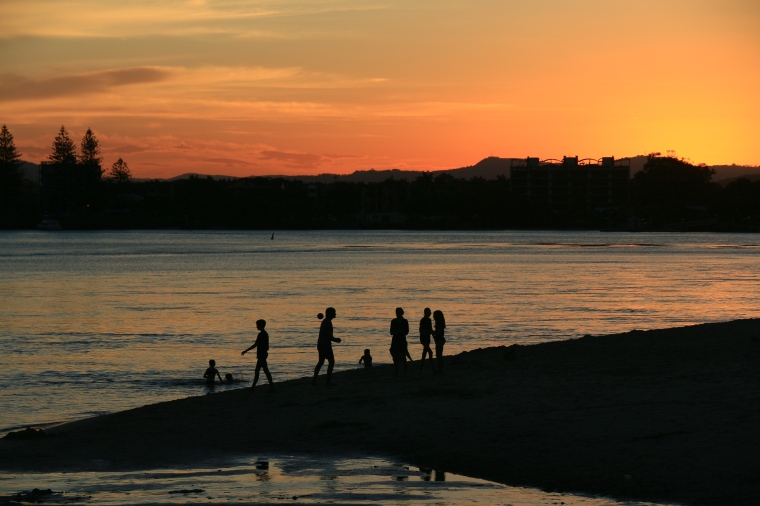

 With work travel finally emerging like the red gloss upon a Canberra oak, I have the fortune of tacking on bits and pieces of tourism around insightful spells of blue sky strategy. Like a spell last week in Sydney, giving me the perfect opportunity to simply dwell in Sydney again. To walk alongside its waterways and admire its skyline. To stride through its city streets part England, part America, part Asia. To turn a corner and come up against the looming harbour bridge, all brickwork glitz and dark steel glamour. And from there – of course – to embrace that centrepiece of shells jutting out from Circular Quay, impossible to resist.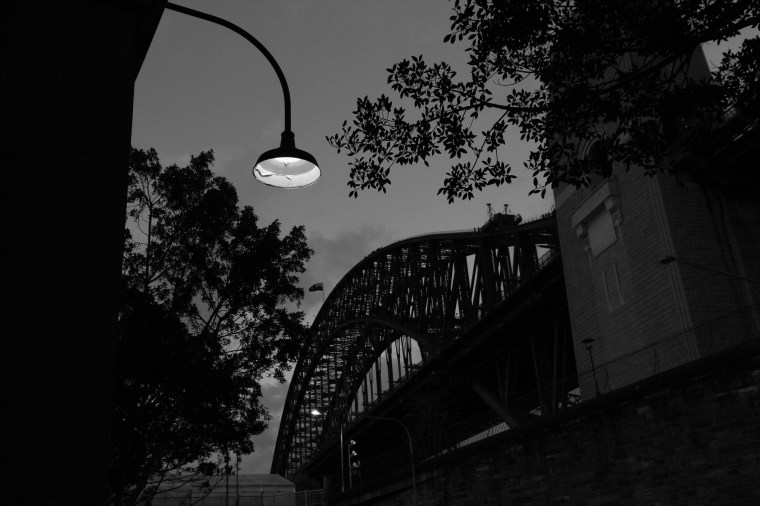
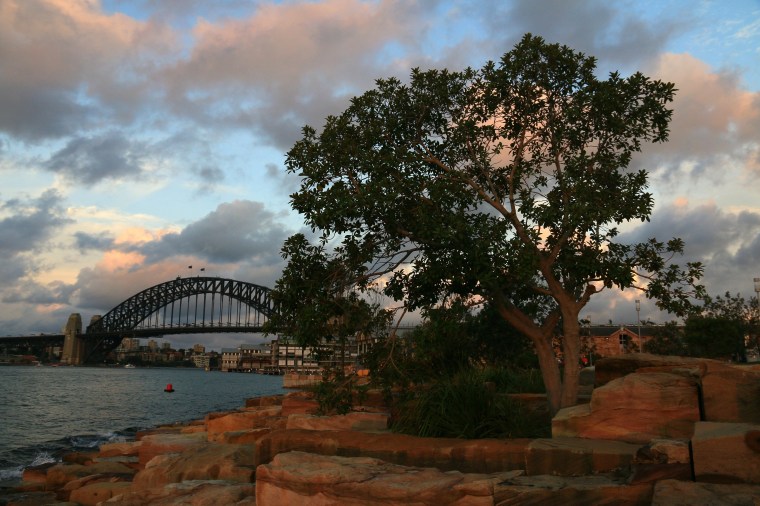
 With sun-filled days setting record April temperatures it was hard to avoid getting distracted. An early morning coffee run turned into a walk under the fig tree shade of Hyde Park which turned into a jaunt over The Domain which led into the many pathways of the Botanic Gardens. I often find refuge in the gardens of over-researched regional towns, a touch of civic serenity amidst a clutch of daggy stores and gargantuan pokie palaces. The Botanic Gardens in Sydney are another matter entirely, a mammoth attraction in their own right, lapping at the silver towers of the city and the sparkling opal waters of the harbour. They are free and open and – even with oodles of exercisers and selfie takers and backpackers – remain forever fabulous.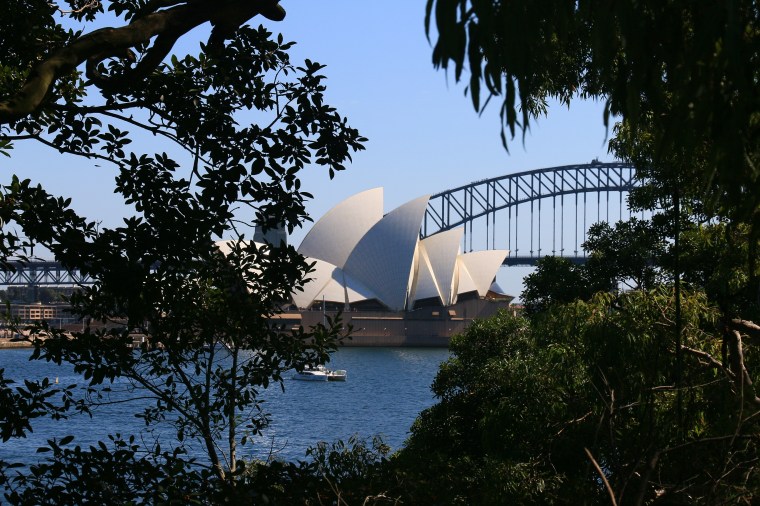
 Each step a memory, each stride made afresh. Gordon’s Bay, Clovelly, Bronte, Tamarama…I am not sure I have seen them looking quite as lovely as they do now. The midweek morning provides a contrast from the irritating queues and blockages of walkers and runners and selfie takers cluttering the place on weekends, almost all of whom are exquisitely beautiful, but almost all of whom somehow ruin the views. Today there is freedom and space and just the attractiveness of golden sands and a becalmed, translucent Pacific to excite. Today, it really is all in the timing, and I just about got it right.


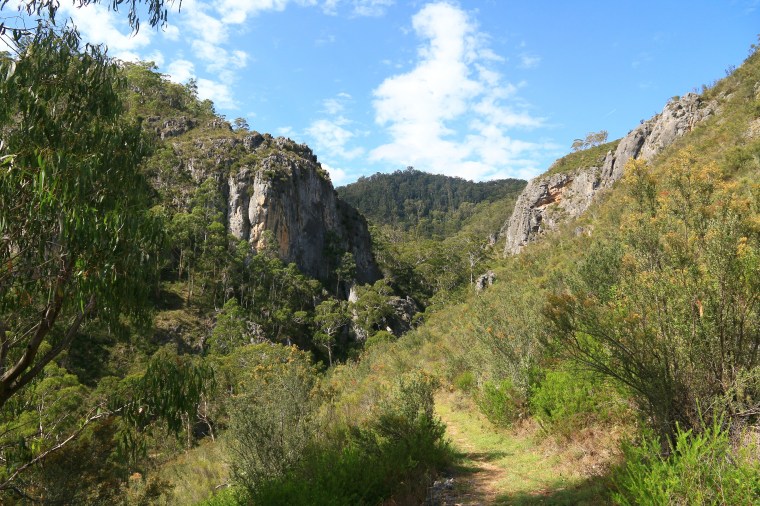
 I have been here before, but that was almost ten years ago. Almost ten years, when I first arrived to live in Australia, intending to stay for a year! I couldn’t remember much of it, though the giant hole in the ceiling of one cave opening triggered something approaching recollection. But the river walk must have been new, at least for my feet, and the thermal pool – a steady 27 degrees all year – offered surprise and consideration for wintertime lolling.

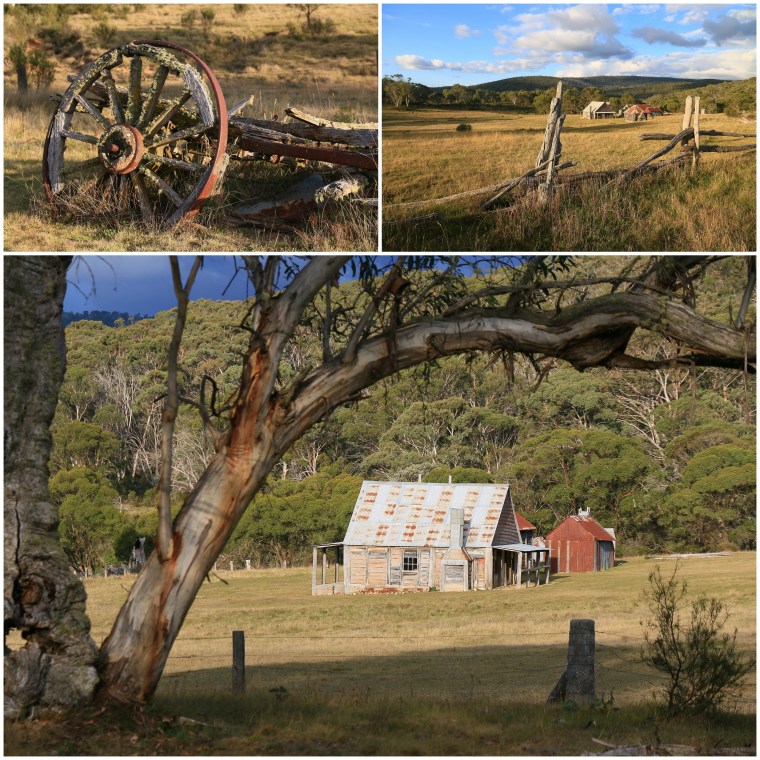
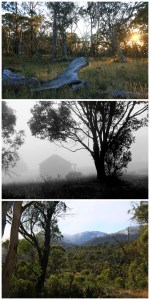 Age must be affecting me because I am questioning the sanity of camping, even if I have copped out by reverting to the back of the car. Every little thing requires pre-planning and organising, extra time and increased awkwardness. It is effectively homelessness, perhaps more so when you sleep in the car. But then, in the morning, as the misty murk of pre-dawn is dispersed by a welcoming sun, as the deathly still air fills with birdsong, as the wattle and grasses shimmer silver with dew, as you witness the birth of a new day a part of this nature, you know why you do it.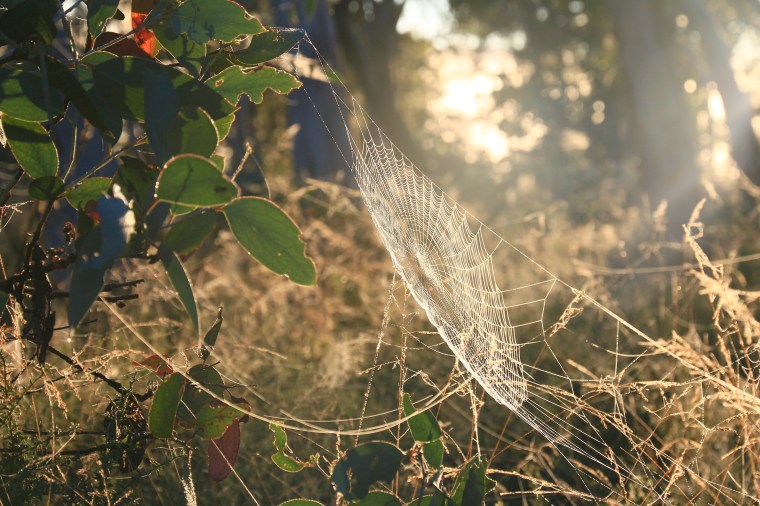
 It is, in theory, possible to clamber your way to the Goodradigbee, but this seems almost as difficult as pronouncing it. Beyond the scenic Blue Waterholes (which enjoyed relative popularity and happy interaction with fellow humans), river crossings and the narrow pass of Clarke Gorge make it too much for someone who is already warm and weary, and has been told to beware of snakes in happy interactions with fellow humans.


 So the car was up to the job, but were the humans – me, Alex and Michael? The trail – well-built and marked – veers quite steadily upwards and scrambles up a number of rocks for the first kilometre. A small shelf offers the first of the views, snatched through clutches of trees and over boulders. It’s an opportune stop for breath, water and to try to dry the sweat from running down your face and into your eyes and mouth. But it’s a futile effort, with the first view of the mountaintop itself offering both allure and a sense of foreboding.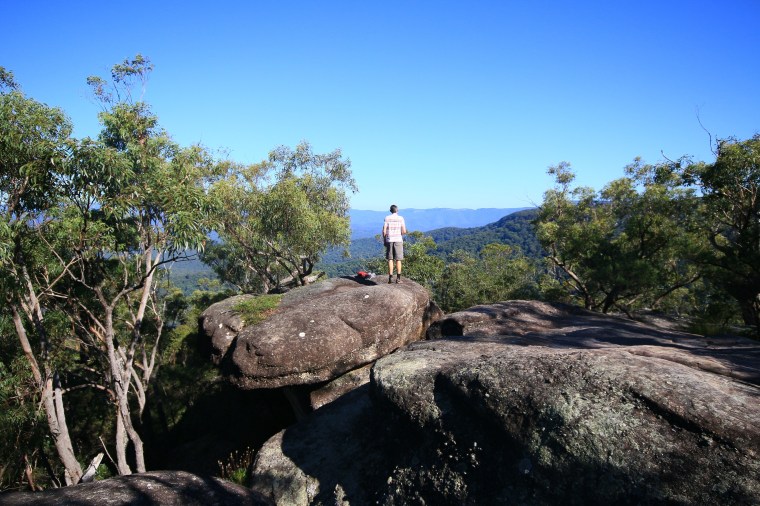
 True, there is some relief for a while following a sheltered ridgeline, before the steps return again and the sweat comes back in profusion. It is quite remarkable that someone has gone to the effort to build all these steps though, and the piece de resistance comes with the final climb on a series of metal steps and ladders, hopefully fixed securely to the rocky dovehouse. At the top of each series of steps, views begin to open up and you can see, sense, taste, that the salty sweat will definitely be worth it.


 Pigeons were lacking but instead the summit appeared to be a bastion for numerous giant butterflies, the ubiquitous Australian fly, and a curious lizard or two. No doubt accustomed to weary walkers feasting in celebration on apples and oranges and squished cakes from Milton Heritage Bakery, waiting for the crumbs to fall. I’ll say it again, but I have had far worse Monday mornings, even when cake has likewise been involved.
 Still, with every up there’s a down and I have lost mountain views. I have also moved into an area where there is a yappy dog. I only write about this now because I just heard it, again. I always seem to find myself in a neighbourhood with a yappy dog. I think everyone does. There seem to be yappy dogs everywhere these days, coming over here, taking our peace and quiet. They frequently pester me on Canberra nature walks too, usually roaming free because their owners don’t need to pay heed to the numerous signs regarding leads and wildlife protection and all that silly nonsense. Still, at least I can see the mountains on these walks, and the dog yapping can be tolerated with such rewards.
 Take Dairy Farmers Hill, which sits in the National Arboretum on the western fringe of Canberra. I cycled up here a few times in the past, but was usually too close to fainting to really appreciate the 360 degree panorama. Driving one evening with the comfort of air con was somewhat more agreeable. The sun dipping onto and over the Brindabellas offered a treat, while the proximate lumps of Black Mountain and Mount Ainslie received a farewell glow. There were no dogs.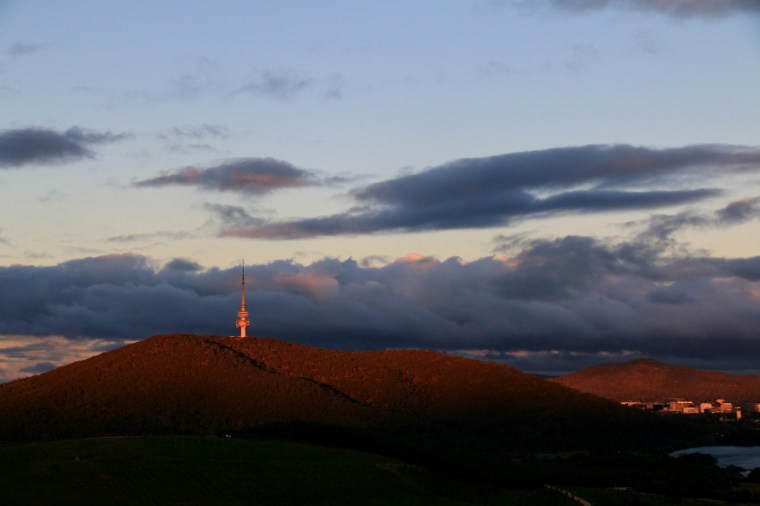
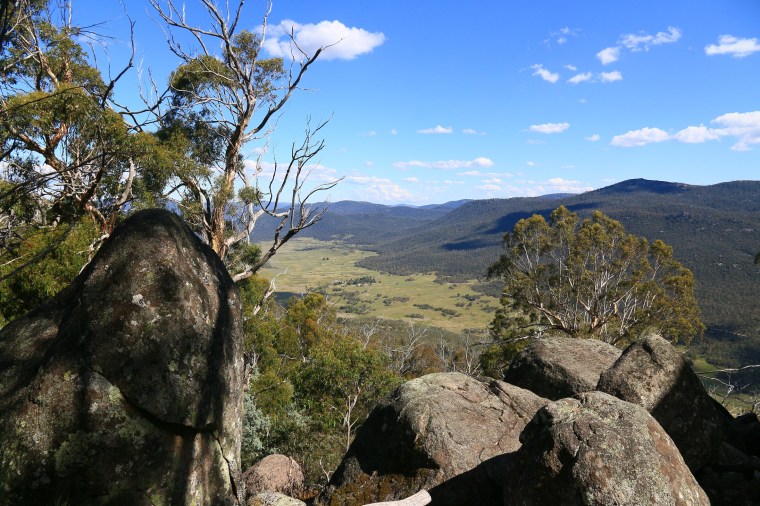
 You don’t notice from afar, but these ranges are peppered with giant, rounded granite boulders stacked like clumps of frozen peas that have been left in the freezer for far too many years. These boulders congregate quite generously up on Orroral Ridge, where a series of slightly neglected tracks lead to rocks named for their resemblance to animals and people and other inanimate objects which aren’t rocks. Such is the profusion of rocks that geologists have wet dreams, climbers drool onto their harnesses, and random waifs and strays seeking mountain air delight in the summer coolness of virtual caves formed in the hollows of a cluster of boulders.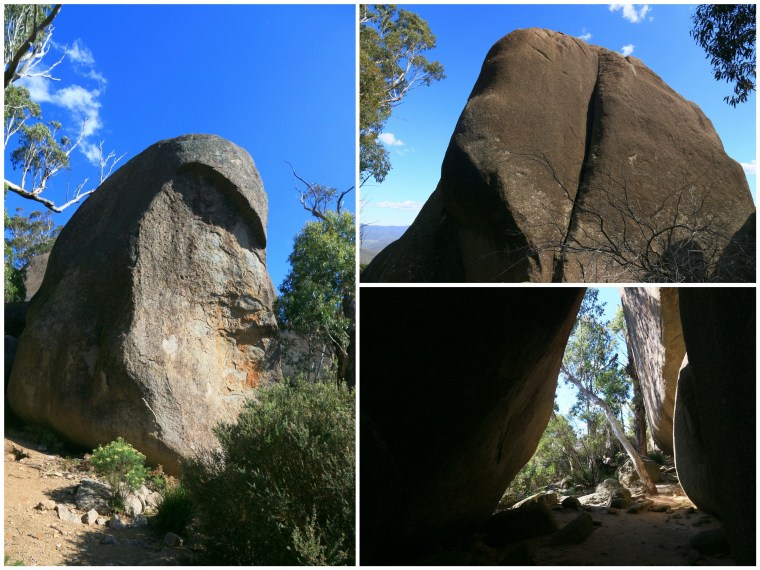
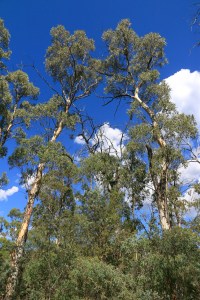 I wasn’t expecting much from this walk – in truth it was something to do in a lull while my washing dried. Plus being practically the last remaining marked trail I hadn’t been on in Namadgi I felt a little obliged to complete it. The word ‘swamp’ was hardly enticing, with images of squelchy boggy plains, rotting carcasses and festering mosquitoes. But it was actually quite a delight, rising steadily through lofty Peppermint Gums, bypassing a few more giant boulders, and meandering through button grass and boardwalks under blue skies and fluffy clouds.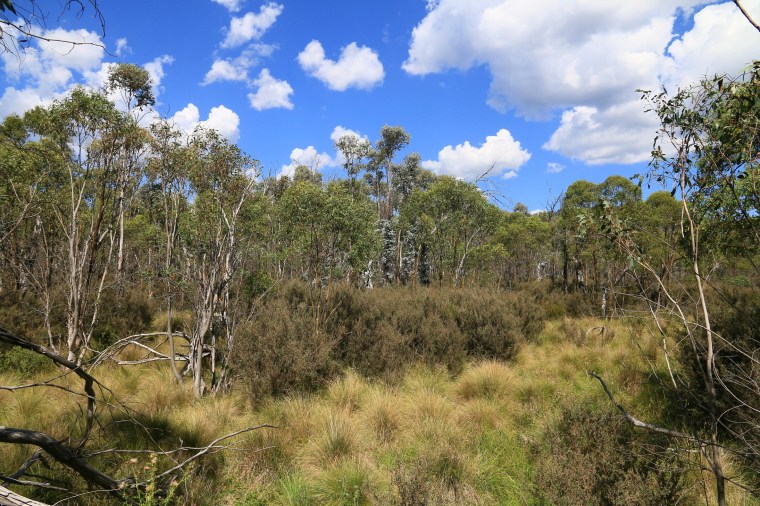
 The swamp turns out to be a fen, as the information board at the end of the walk explained. I’m not really sure of the difference, but it was fairly less swampy than I imagined. A bench here overlooked a river of vivid green grass, lapping at tall forest and rocky outcrops. Being now beyond midday it was the perfect place for a simple homemade sandwich and, once again, for all the expensive meals and gourmet plate ups*, can there be anything more satisfying than a bushwalk sandwich? I don’t think so.
 With time to spare I was happy to head that little bit farther, down to the far south coast of New South Wales. Perks of this journey include – to a limited degree – the striking, golden plains of the Monaro, baked hard and golden by summer sun; the midway bakery opportunity in inimitable Nimmitabel; the rainforest rim of Brown Mountain; and the panoramic view over the rolling cow-dotted Bega Valley, into which the road drastically plunges.
 My base for three nights was Merimbula, handy in terms of size and facilities (i.e. food, coffee, picnic tables on which to work) and generous in its setting upon the shallow inlet and oceanfront. There is even an airport here with connections to Sydney, which does genuinely make you wonder about its feasibility as a site for sea change. A plane buzzed overhead the next morning, as I ventured out for an early walk through bushland along the inlet to Bar Beach. I could get used to these early morning walks, especially when a small but perfectly formed kiosk awaits besides the modest cove to offer up waterfront coffee.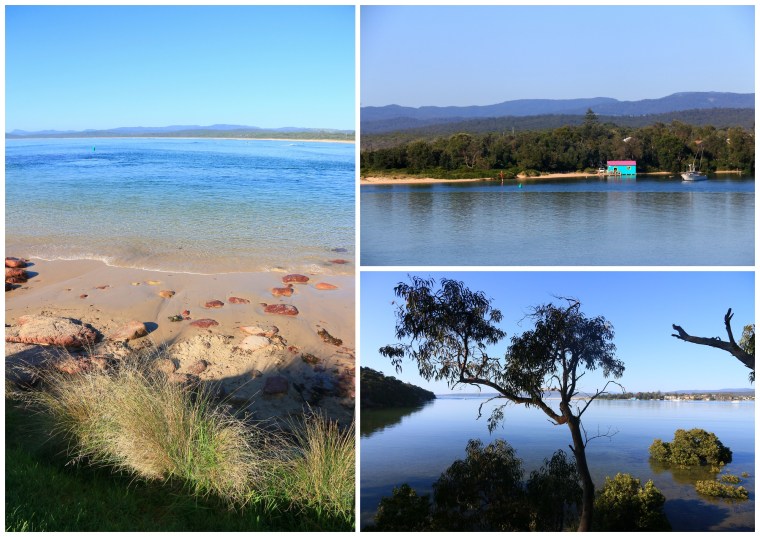
 The water here is quite ludicrously beautifully opaque, which probably helps for spotting sharks and giant stingrays. The only hazard this morning was mostly on the eyes, with a generous gaggle of cashed up baby boomers making the most of retirement by lumbering about in various states of undress. Understandably glowing and jovial – why wouldn’t you be facing yet another day in paradise – it may yet be too early for me to contemplate semi-retirement at the coast.
 What followed over the next couple of days was a pleasing routine of waterside walking, working and wallowing in sand and sea. I explored every possible boardwalk in Merimbula and visited the ice cream parlour at least twice. Late afternoons in the mid to high twenties were perfect for attempts at beachside siestas, but the call of the outdoors and nagging feeling that I probably should be doing something more productive with this opportunity made me restless. I would wander some more or open my laptop for five minutes and stare at the screen as Windows decided to install countless updates yet again, before concluding that it was better to just stand in the sea and spy distant dolphins doing all the work.

 In Eden, I love the shabby end-of-the-world outpost feeling. It’s a long way from Sydney and a long way from Melbourne, which means it generally only picks up on road trippers passing through and lost Canberrans seeking fish and chips. I have heard – along with countless other places – that it could have been the national capital instead of Canberra. And perched upon an outcrop overlooking beautiful Twofold Bay and the rising hinterland of the coastal ranges, one can only wonder what might have been.
 Alas, the sheep paddock that eventually became the capital awaited the next morning. The good news was that I had – or will have – a home to go back there to, and some paperwork to sort out. I wasn’t going to rush – too much – and so took a final walk out to Bar Beach and a coffee to get me over the hills and far away. The boomers were of course there, semi-naked and just slightly self-satisfied, and I could see that I really wasn’t ready to join them for a while yet. But I would definitely be open to further remote working out-of-high-season breaks, just to soak up their paradise, their fantasy for a few more days close to the Pacific.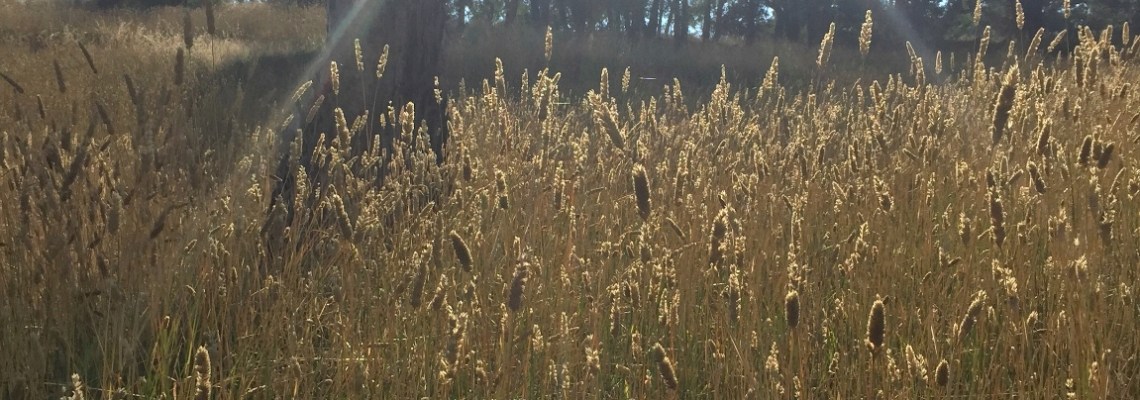
 Having now spent over nine years (with interruptions) in everyone’s favourite Australian city you would think I’d have exhausted every nook, crevice and scrubby hilltop. Forget nine years…many would say two days is sufficient, and even then you might have to drag things out with a wander around the National Archives, surely the least compelling sounding attraction of the lot (which might explain why, still, I have never been). But no, it turns out Canberra has even more suburbs and scrubby hilltops than you can ever imagine.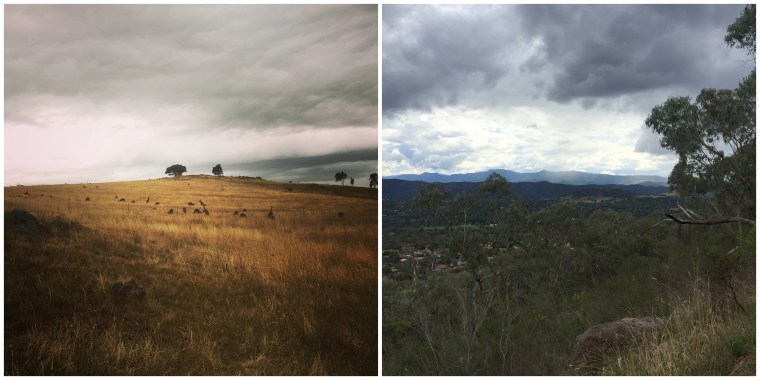
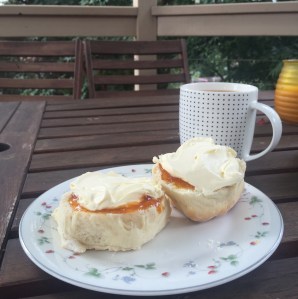 Nevertheless, it was with some contentment that I found a reasonably close reasonably decent coffee stop one Saturday morning, as part of a bike ride on the many accommodating paths in the Tuggeranong Valley. One path circumnavigates its lake, which is a poor man’s Burley-Griffin but amiable enough. Others cut through the various patches of grass set between the backs of brick houses and alongside storm drains. One route takes you up towards Oxley Hill, a reasonable but not unobtainable test of legs, and another does the long uphill drag back to Wanniassa, in which aforementioned legs turn to jelly. I may be being just a touch healthier, but with this comes justification in feasting on yet another, sadly Antipodean, cream tea.

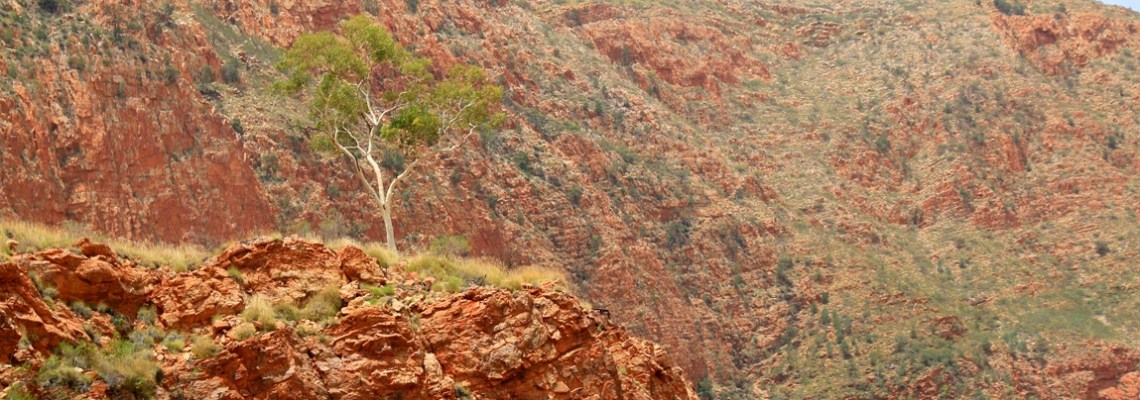
 On the other hand, natural oases appear more limited. The Todd River is mostly a river in name only. Usually it’s just a dry, wide, and sunken swathe of sand meandering through town, almost as if a dreamtime serpent had once there slivered. It is quite striking and also quite beautiful in a way: grasses and short and stocky shrubs flower along its banks and a parade of River Red Gums indulge in a majestic arrangement of bulbous roots, variegated bark and twisted, stretching branches. There really is not a better Eucalypt in all of Australia, in my uneducated opinion. It just looks like it belongs here.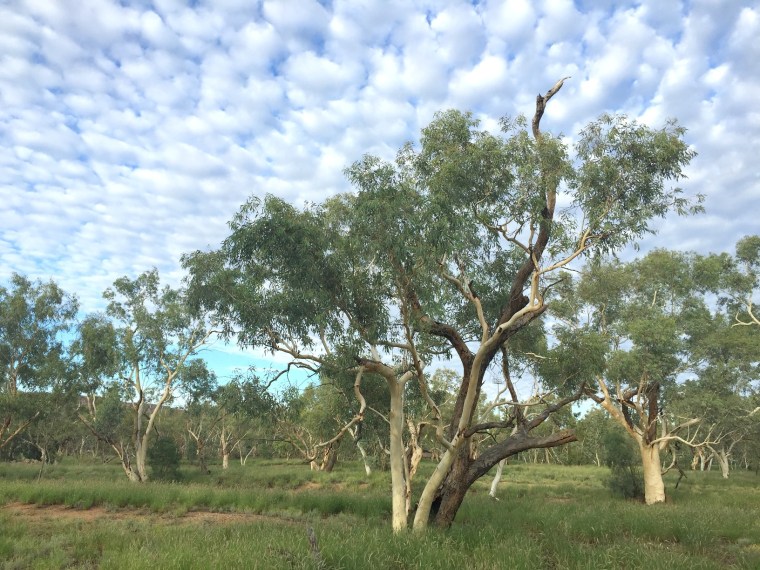
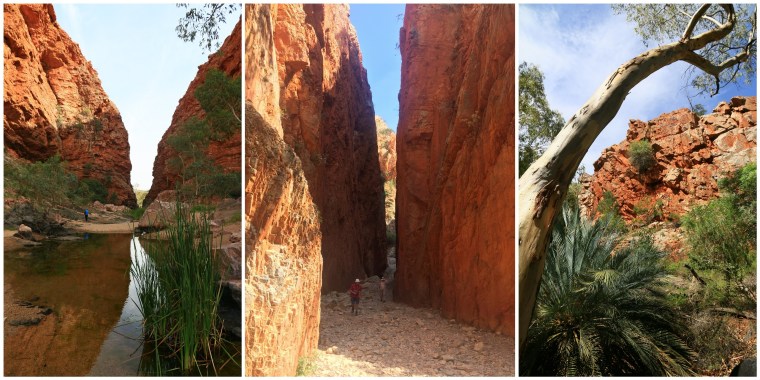
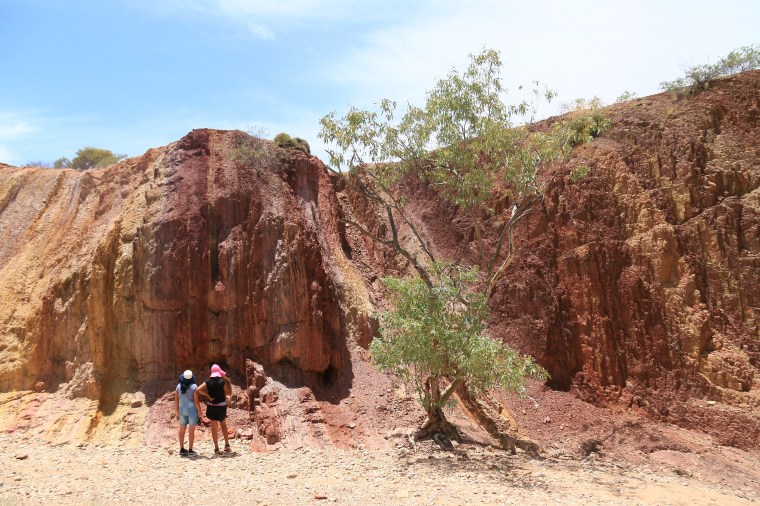
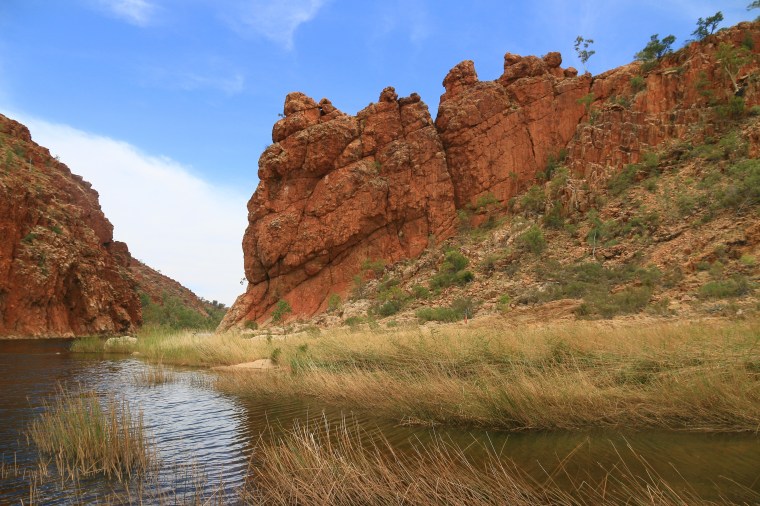
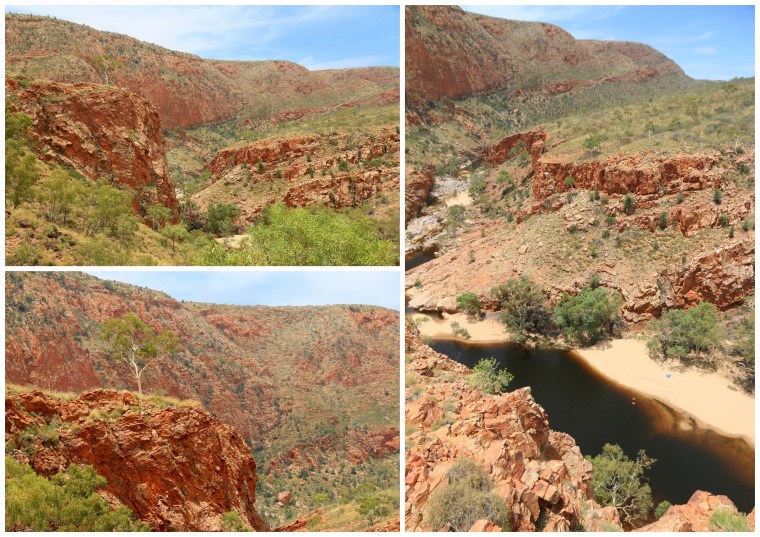
 And so, ten minutes later with a flat front right, someone opened the lamingtons while others flagged down help to get a message back to Alice for another bus to be despatched. Certain overseas visitors couldn’t fathom that there was no mobile reception here, and it was not as simple as getting a rescue helicopter so they could still make it in time for their dinner reservation. One hour in, an extended family resorted to playing the ABC game and I desperately hoped they would ask me to join in. Two hours, and restlessness heightened. People needed to pee in the bushes and generally say what they would have done differently with the eternal benefit of hindsight and no experience whatsoever travelling in the Australian outback. A man with binoculars scanned the road on the horizon, each occasional sighting of a vehicle bringing brief hope before its despair.
 gbpilgrim