
Warning: lots of oriental palace pictures looking almost exactly the same. It’s a similar phenomenon to being new to Europe and snapping away at every single church spire and stained glass window. Or migrating to Australia and taking a picture of a kangaroo every time you see one. Novelty and entrancement that only dwindles very incrementally. (In the case of the kangaroos ten years, and even then, the odd roo shot is not outside the realms of possibility).
Anyway, yadda yadda yadda. Palaces and temples. Seoul has a lot of them and as well as offering an insight into ancient South Korean culture and tradition they are housed within expansive grounds, providing contrast with the built up city environment bordering their perimeter. Enclaves of space and peace and gentle ornamentation, where the modern world disappears and you can find yourself all contemplative and meditative. And / or snap happy.

Changdeokgung and the Secret Garden
The first thing to note about Changdeokgung is that you can arrive early, buy a ticket for the Secret Garden English tour and realise you have some time to kill, thereby finding a coffee place that proves reassuringly good. With the first sip I could sense I was getting closer to Australia and this plus the caffeine infiltrating my body gave me quite the buzz.
So I was already in a strangely contented state entering Changdeokgung where I didn’t really read that the palace was originally built in 1405 and acted as Seoul’s principle palace from the 1590s to 1896. Instead, I was heading off towards various buildings, all seemingly interlinked with perimeter structures and interwoven courtyards. Apart from some of the enclosed spaces, you were pretty free to roam, enabling that random meandering which proves the best form of discovery.
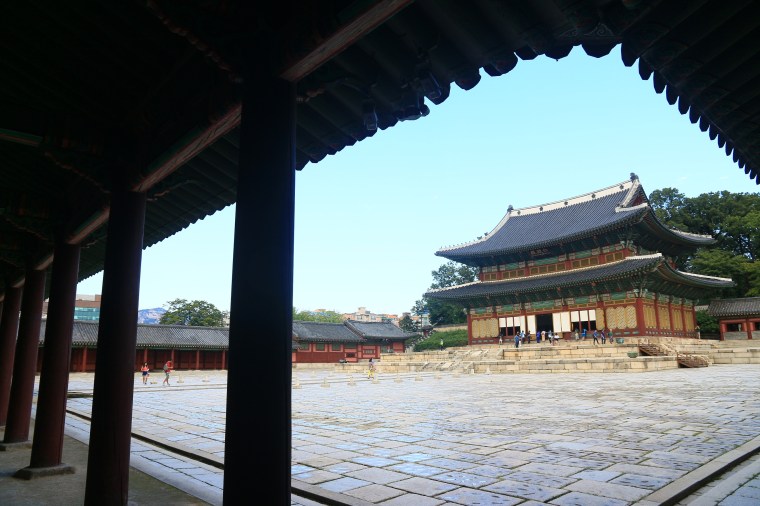
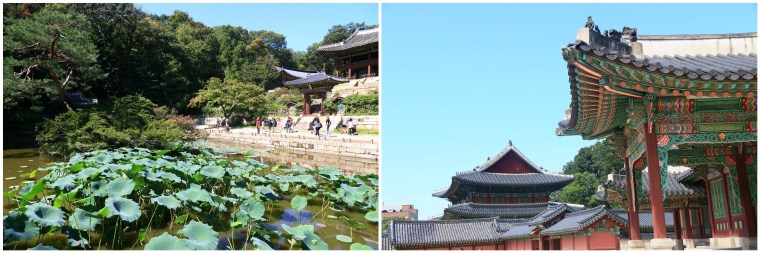
The purported highlight of Changdeokgung is the Biwon, or Secret Garden. What forward-thinking pioneering marketing by calling it a secret garden. I mean, how alluring does that sound to the 21st century Anglo traveller looking for some respite from the late summer heat of a busy Asian city? The fact that you could only access it by a tour in which numbers are controlled (admittedly to a not-so-serene one hundred) can only add to that appeal.
Well, the Secret Garden was certainly agreeable, all lily ponds and curvy-roofed wooden structures, circling pathways and blissfully shady trees. I suspect it would be stupendous in the full burst of autumn and without one hundred other sightseers becoming progressively weary and disinterested as they are shepherded from one ornate compound to the next. I think the best way to appreciate the secret garden would be if you were employed as a gardener. What fabulous picnic lunch breaks there would be on the cards, and some supremely pretty sheds for your tools. Plus good coffee down the road once the horde of foreign zombies descend at two hour intervals.
Bukchon Hanok Village
On the western flank of Changdeokgung is Bukchon Hanok Village, an area of traditional Korean housing now a little bit touristified. Nestled amongst hilly terrain there remains a sufficient network of maze-like lanes to get completely lost and stumble upon a spot that you had previously walked past. Possibly. The dwellings are single storey and – for the most part – look small, though I suspect some of this is an optical illusion and beyond those walls the interior opens out tardis-like into light and airy rooms and hidden verdant courtyards.
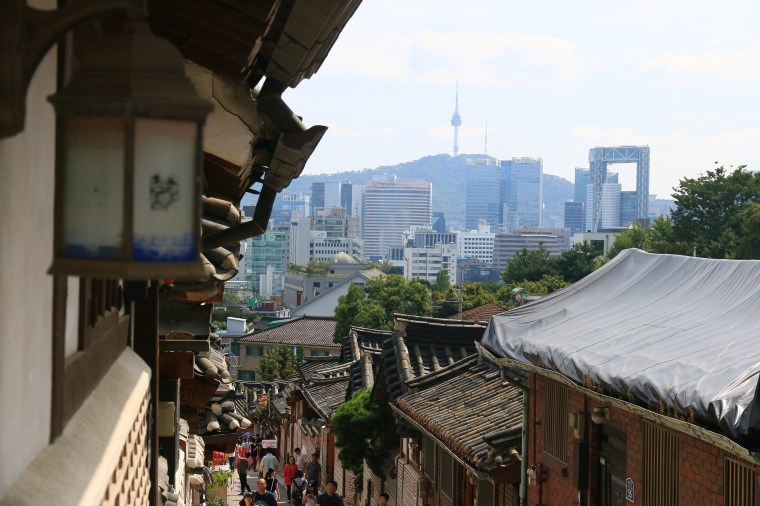
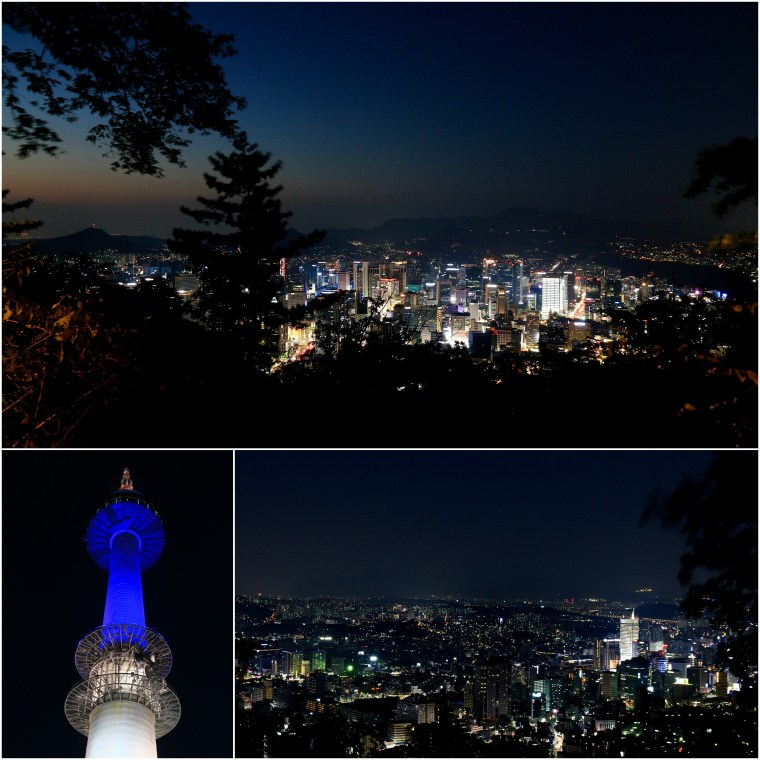
On the busier strips – one ascending lane in particular seemed to be significantly more popular than the others – locals patrol with signs invoking the masses to “Please talk quietly”. It’s a reminder that this is just a regular neighbourhood with regular Joes trying to get on with their regular lives. I observe no noticeable hush, and can only deduce that the more expensive properties would be away from this major thoroughfare. But the view at the top is why so many tread this way. Looking towards the CBD and North Seoul Tower, it’s the classic juxtaposition of old and new, emblematic of this city as a whole.
Gyeongbokgung
Moving further east from Bukchon, it doesn’t take long before another royal palace comes into view. Gyeongbokgung ticks similar boxes – aesthetically at least – to Changdeokgung so I decide to keep my Wan in my wallet and have a cursory look around outside of the barriers. If anything, the site appears more imposing, with the main entrance gate at the northern end of a long thoroughfare adorned with statues and memorials. There is a greater sense of power and status here, brought to life by the presence of ceremonial guards in traditional costume. Guards which you can find in greater profusion by following the thoroughfare south…

Deoksugung
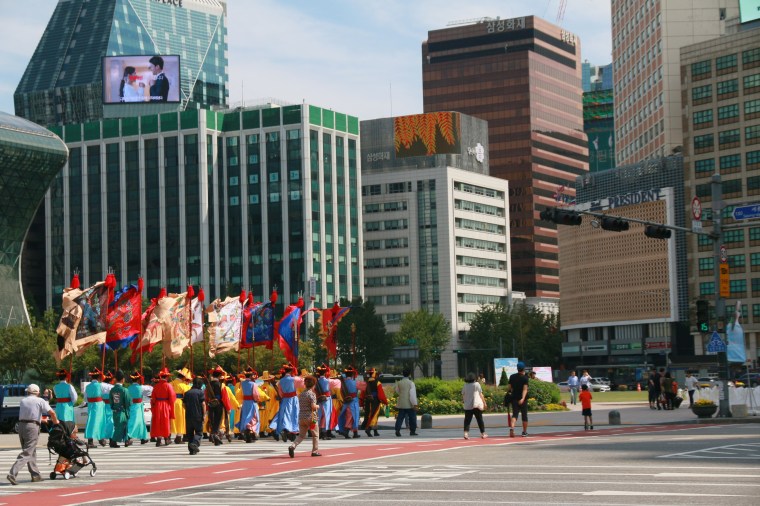
The palace at Deoksugung may look similar to the others. I have no idea, because I never really ventured beyond its exterior walls. The main attraction here is a changing of the guard ceremony with more men in colourful costumes and garnished with stick-on facial hair. Sure, it feels like a bit of a show for visitors but – heck – I’m a visitor and expect some easily accessible semblance of traditional Korean culture, right!
I thought I may be late for the ceremony and while there was something stirring by time I arrived, I was pleased to find a space near the front. Only as the show progressed did I understand why I had secured such a premium position. Oh, that’s a big drum in front of me is it? Oh, that hastily shouted Korean was a plea to cover your ears. Oh. Ouch.
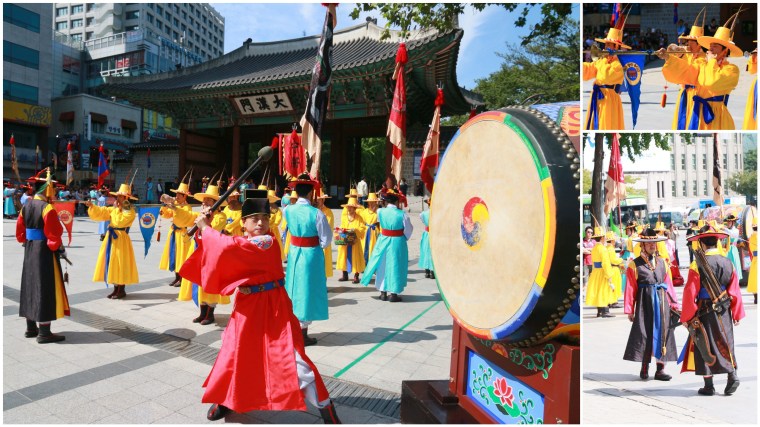
As well as the abundance of stick-on facial hair it was funny to see this taking place in front of a Dunkin Donuts. There were also a couple of pauses in proceedings for people to come up to the guards and pose for selfies. And when it seemed like all was over, there was the sight of the ceremony heading across to City Square but – before doing so – waiting patiently at the traffic lights for the green man. For me, this was the perfect encapsulation of that inescapable (and overused term of) juxtaposition. A country moving rapidly into the 21st century while trying to hang on to its traditions. Here, progress and reverence in at least some kind of harmony.

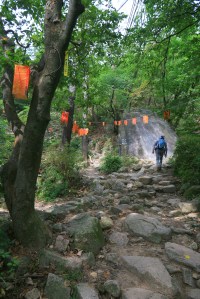 The stream of people continued along the first, generously wide and paved section of a trail, thinning slightly with the introduction of a junction. Before long, an incessant parade of steps appeared, the upward thrust causing pockets of walkers to pause and congregate in clusters for water, snack bars, some even breaking out a stove and cooking up a soupy concoction. Barring a handful of souls, almost everyone was Korean and I received the odd, surprised, what is he doing here look. One old guy offered me a boiled sweet in broken English, proclaiming them as the elixir to conquer Jaunbong. In our stilted conversation, he deduced that I was from Austria, noting his love of Mozart and possibly proclaiming the hills to be alive. For an Austrian, such climbing as it was here should be a breeze. For an Australian: faaaaaaahk.
 There was no breeze and it was tough going…particularly given it was the day after I had arrived on a plane from England and then gorged on fried chicken. Some welcome respite came at Cheonchuksa, a small detour leading away from the upward procession and revealing a temple and its various ornaments snuggled into a cliff. Simultaneously serene and vivid, offering fresh water to refill bottles, to take a break, to tread briefly on level ground and tiptoe in a suitably reverential hush. I could have lingered and napped.
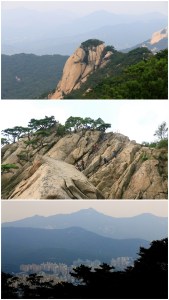 But apparently the path to enlightenment continues up and up, past increasingly frequent groups pausing for food and water, wiping sweating brows, recovering breath and looking somewhat abject. Eyes silently pleaded when would this end, how much more of this would there be? Signs that were once in Korean and English had reverted to Korean but I deduced there was something like a kilometre to the top. And it probably took an hour, but after that time a rocky crag appeared above the forest. Bedecked with yet more picnickers, convivial and relieved, catching hazy, smoggy views of the hills and occasional snatches of suburban apartment tower sprawl.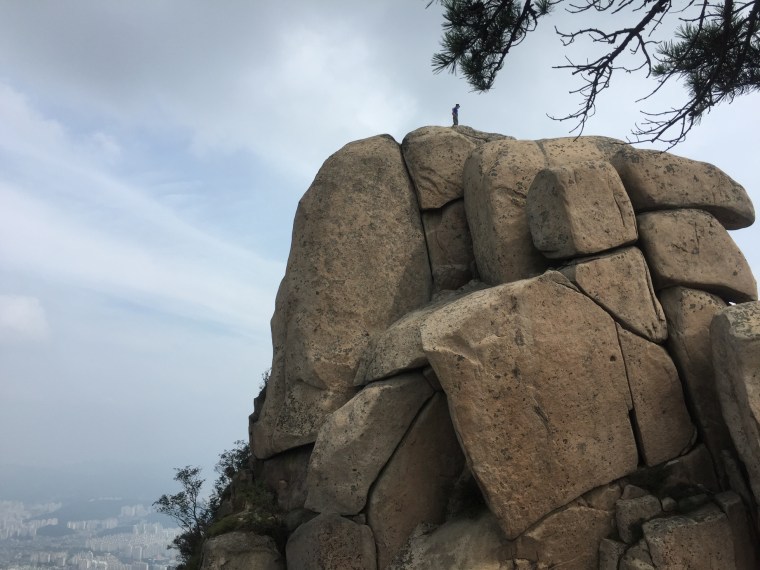
 The path to enlightenment is never easy and after a long slog upwards all day it was only when gravity was on my side that I fell completely ass over tit. A winding, gravelly descent was more competent than my footwear and I received a very nice caking of dust over one side of my body. No-one else was present to witness this event, something I was actually pleased about in terms of embarrassment management. It’s kind of like if a tree falls in a forest and if no-one is around to hear it, does it make a sound?
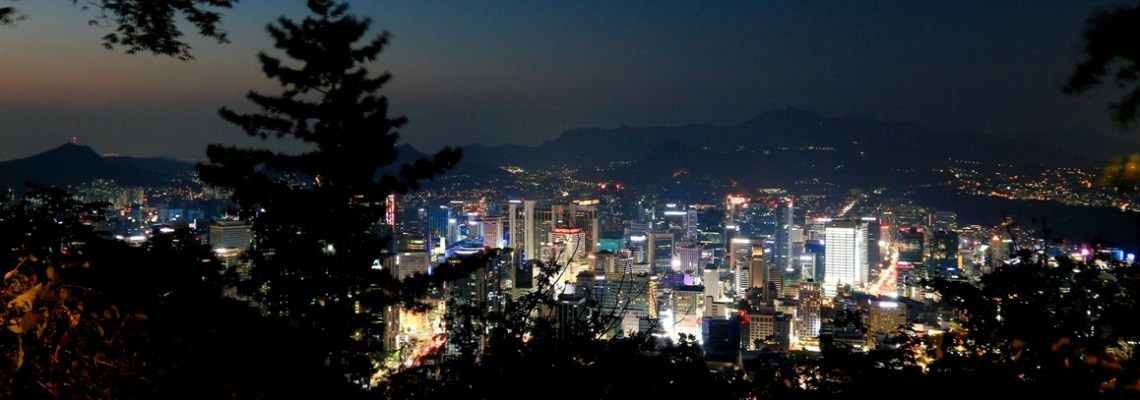
 I was staying roughly in an area listed as Jong-no, in what turned out to be a rather charming, peaceful small hotel (
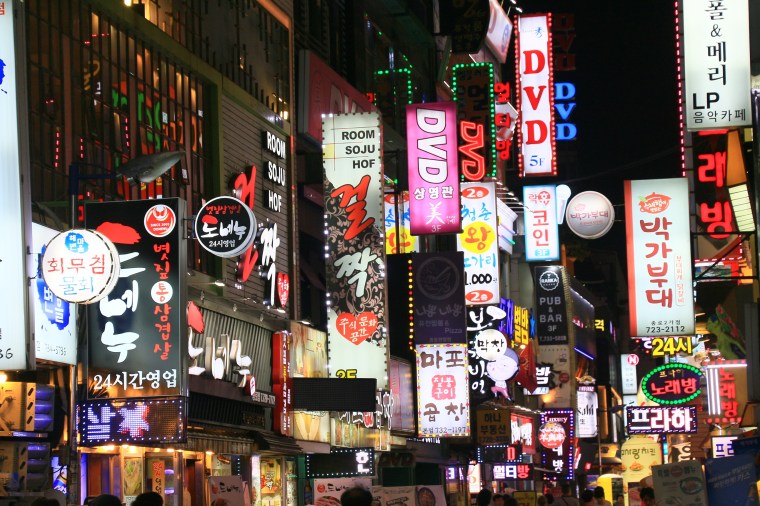
 The stream is in close proximity to alleyways filled with neon signs and sizzling aromas. In fact, it seems anywhere is in close proximity to food. The choice is bewildering, especially when you are tired and indecisive but also very, very hungry. In this state it seems the best option is for some Korean Fried Chicken and a beer. This is a staple, and as staples go, I’m sure down with it.
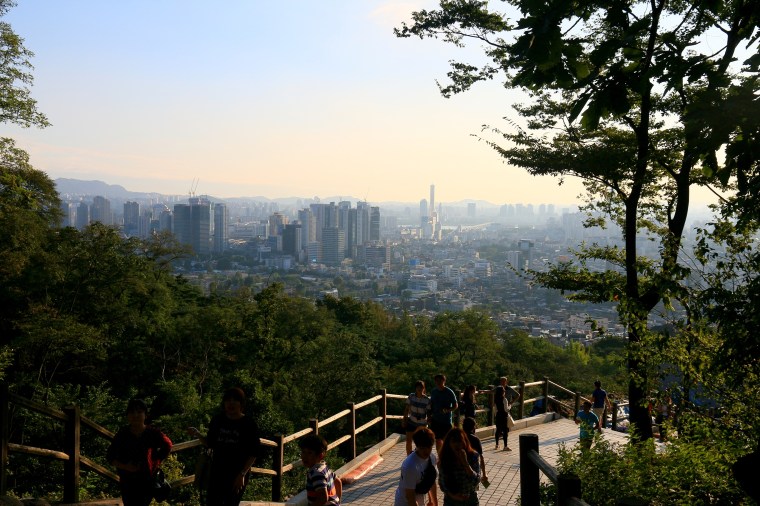


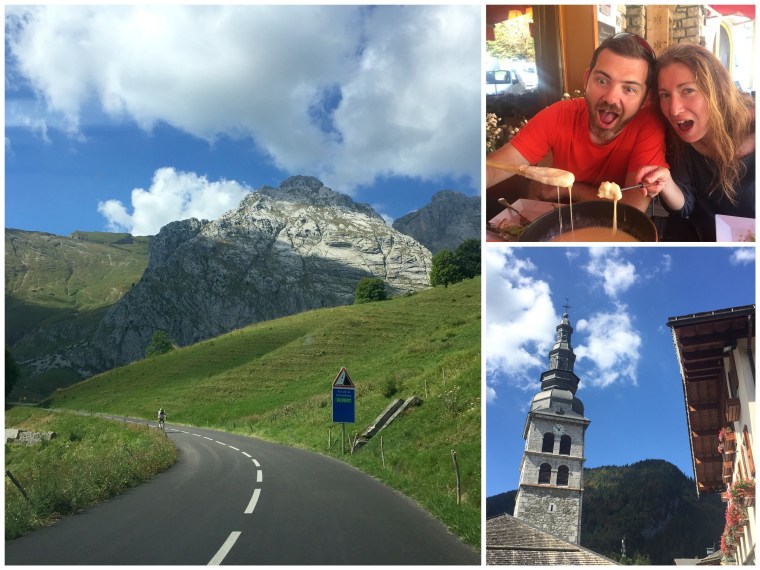


 And what a lovely tour it was, revisiting some vaguely familiar territory but under glorious skies instead of disappointing murk. First stop was Carrefour, which was a little less lovely, but suitably stocked with bread and meats and cheese, staples that can be lumped together and taken up to the top of a hill in scenes reminiscent of a Peppa Pig episode in which they have a thoroughly middle class picnic.


 And so there were walks to parks and more picnics, bouncy castles, lego blocks, hearty lunches, tickle monsters, bustling markets, outdoor petanque, selfies, tired parents and doting grandparents. Oh, and a bit of a premature gateaux anniversaire for a certain someone. It was the final family flourish before saying, again, au revoir. Goodbye. Leave.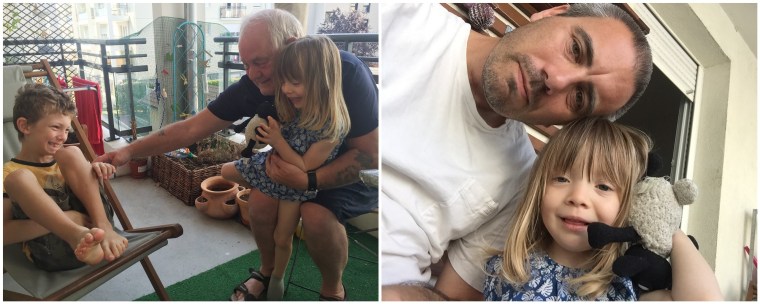

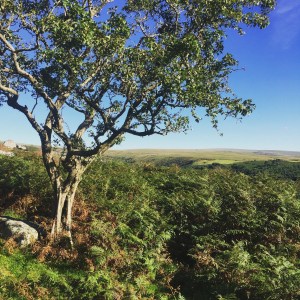 I remember arriving back from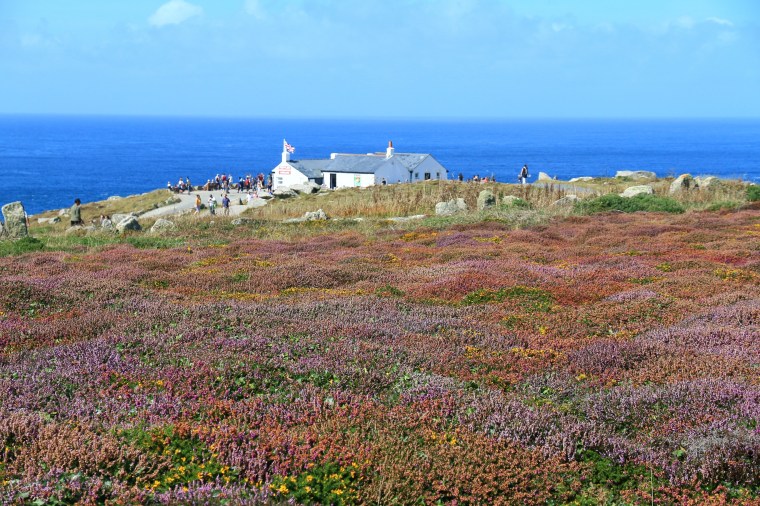
 Practically round the corner from Land’s End is Sennen Cove. Though most of the Land’s End crowd have filtered out, the beach remains busy and tiny car parks are amply populated with people eternally waiting for someone else to move. But beyond the main drag the alleys are cosily quiet, and the coast path is trampled in only an infrequent fashion by jolly people with beaming smiles. I may have been one of them.
 Further along the path the beach empties out, disappearing altogether as a small headland perforates the arc of Whitesand Bay. There are rocks to clamber over and a tightening of the sea against the land. It’s just a small inconvenience when you round a corner and discover another bay, another beach, another dream that you might want to pinch yourself from. If anywhere in the UK is ever going to get close to a rugged beach of southern New South Wales, then maybe Gwynver Beach is the one.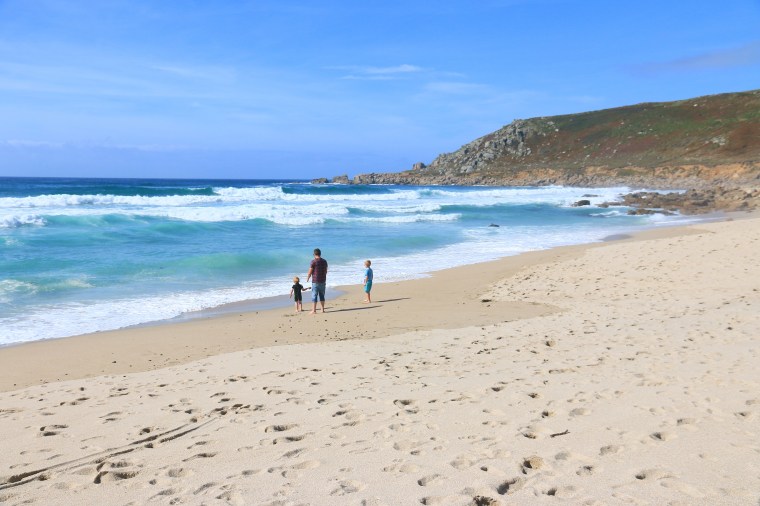

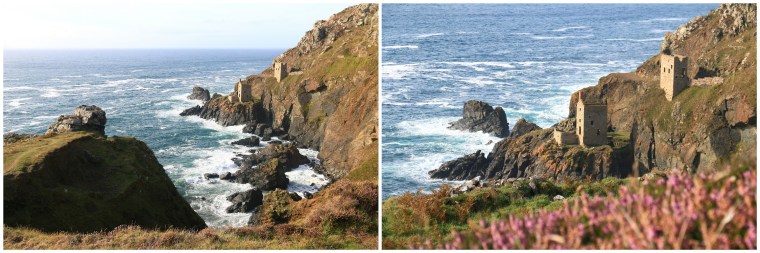
 Such as a pint. A pint of Doom Bar in a Doom Bar glass in an independent, old school pub perched on the edge of Cornwall, the edge of England, maybe even the edge of civilisation (though that is debatable more than ever these days). Can there be any better way to toast an exemplary Cornish Day than waiting for the bus like this?


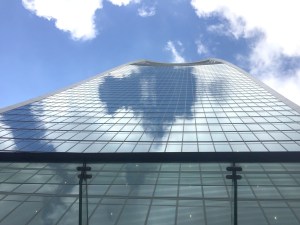 First up on a perfect day we scaled the heights of 20 Fenchurch Street. By elevator of course, up to the Sky Garden of the building popularly known as the Walkie-Talkie. No bungee jumping, no glass-bottom floor, no zip wire…just astounding views over London, shady ferns, comfy sofas and another predictably poor coffee.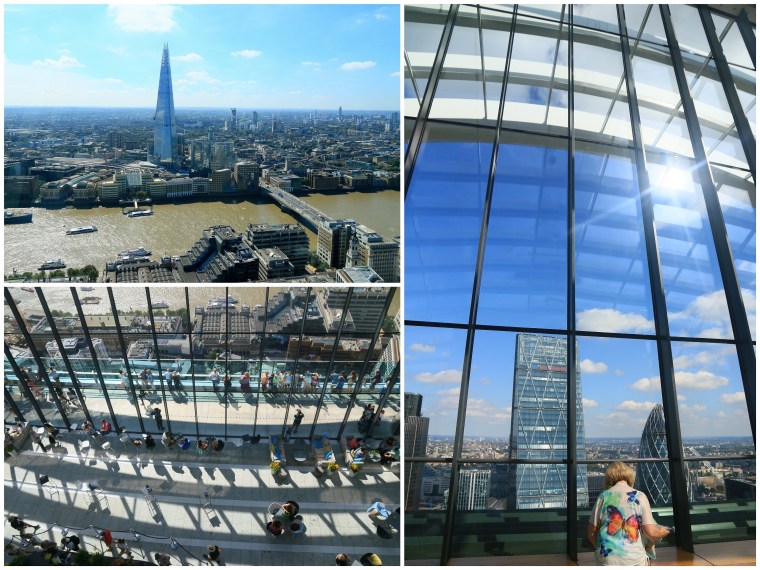
 I am wondering if there is any finer place than Kew Gardens on such a beautiful late summer’s day. For not only are there acres of manicured lawn, generous pockets of woodland bursting green, and a profligate array of multihued flowerbeds, but you can also play guess the airline. In the cloudless sky, the parade of jets coming into land at Heathrow provides a distracting guessing game when one finds oneself eating ice cream under the shade of a tree. The funny thing was, we didn’t seem to be the only ones playing it.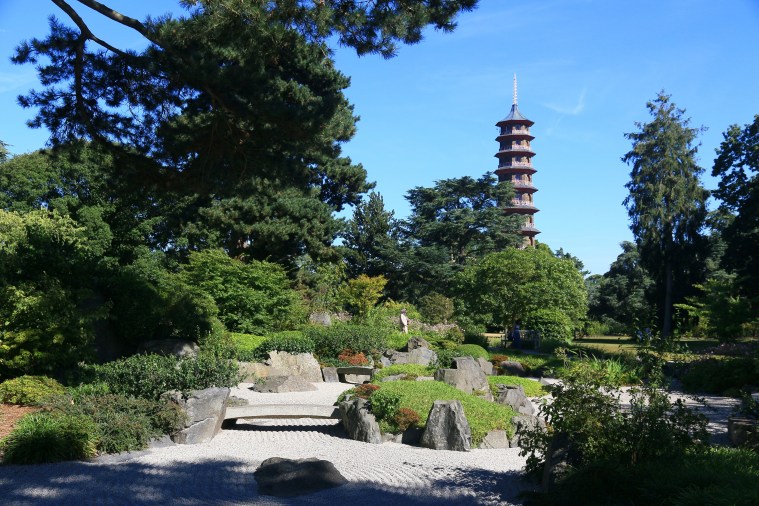
 But back to earth. We must have walked a fair few miles around the gardens but at regular intervals there was an opportunity to dwell, a chance to linger. A gallery here, a cafe there, a grand house beyond the trees. Sculptures and water features and artworks to do with bees, in which human drones obediently infiltrate the hive out of nothing more than curiosity.


 Another surprise in this area was the presence of something called Walthamstow Village. While no thatched cottage idyll in the South Hams of Devon, it possessed that quiet street, classic brickwork, church green feel of a London village, with some similarity to more celebrated haunts such as Highgate and Hampstead. Plus there was somewhere to buy ice cream, relief on another generously warm day.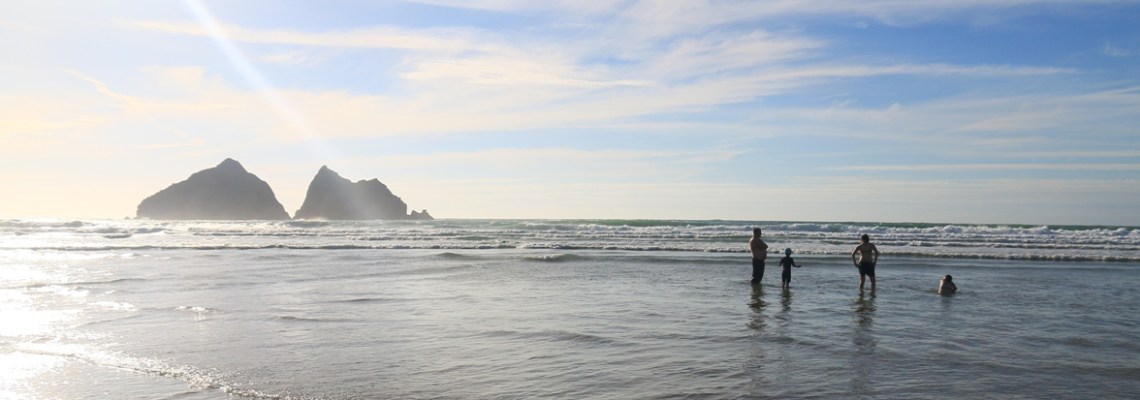
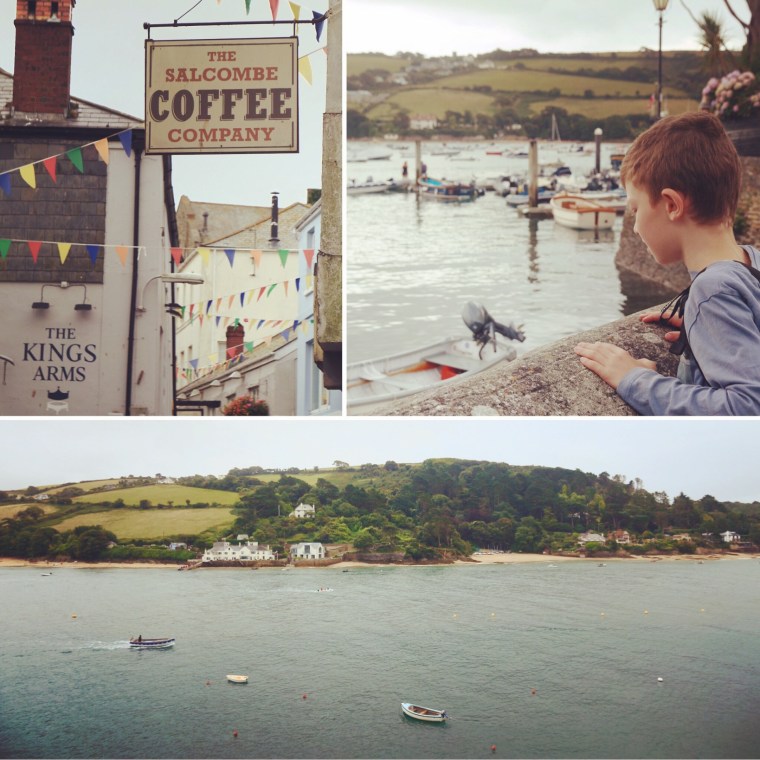
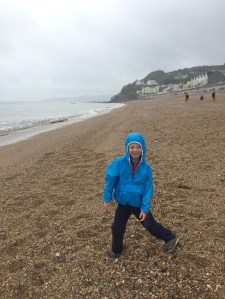 Just a stone’s throw from here – but via tortuously scenic roads hemmed in by a picture postcard of thatched cottages – sit the pebbles of Slapton Sands. Even on dismal days the pebbles lend vibrancy to the air, clarity to the water, and a chance to display consistent inadequacy at skimming. The alternative option of tossing increasingly giant rocks into the sea proved far more accessible and entertaining.
 As the afternoon evolved, summer came back with a bang. Perfect golfing weather and opportunity to get a little burnt. I never get burnt in Australia, only soggy little Britain, quite probably because I never expect to be on the receiving end of such ultraviolet aggression. The golf wasn’t exactly red hot, but we coped around the course sculpted in such a splendid location.
 Having abandoned a bunch of wildlings on the beach, it was late afternoon by time my brother and I rejoined the rest of the family, who didn’t seem to miss us one bit. And why would they, frolicking in the sun, attacking one another with water, jumping over surf. It was quite wonderful to see, together in perfect harmony, in amazing weather, in an attractive place. What else do you need? Fish and chips maybe? Okay.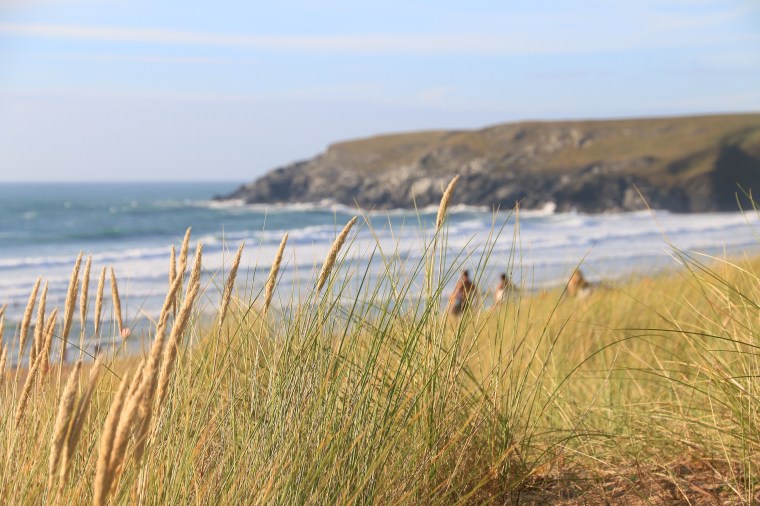
 The criminal thing – though actually fortuitous for us locals in the know – are the queues of people backing out of Ye Olde Cornish Bakehouse or West Cornwall Pasty Ltd or whatever they are called. Chain stores in mediocrity. Delivering nourishment to hordes of people trying to find a few metres on the grainy beach. This is why Looe on a hot August afternoon is not for me. But I’d go there for Sarah.
 In a final hit and miss cloud affair in which there were more misses than hits we returned to the North Cornwall coast the next day. The aim was a last hoped-for paddle in water and delicious cream tea, something that could please everybody. The setting on the River Camel at Daymer Bay was agreeable enough, and could have been quickly heightened with a spot of sun. But it was under a mackerel sky that a few of us tiptoed into the water and clambered over rock pools.
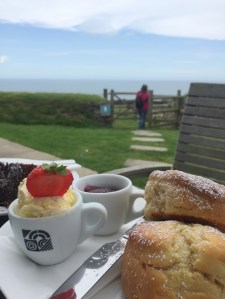 Because I was actually really enjoying driving around blind bends and along single track lanes I decided we could seek out a cream tea further up the coast near Boscastle. For once eschewing the village, we managed to get a parking spot at

 Who am I kidding? It was a sublimely gorgeous blue sky day after all and, following a quick embrace of various family members, I scarpered for the moors, reuniting with narrow lanes, wayward sheep, dry stone walls and a Willy’s ice cream. And on the subject of willies…such was my frantic rush to climb Sheepstor I ripped the trousers I had on while straddling a ditch, leaving me delightfully well ventilated if a little wary of human encounters. The views – from my end at least – were majestic.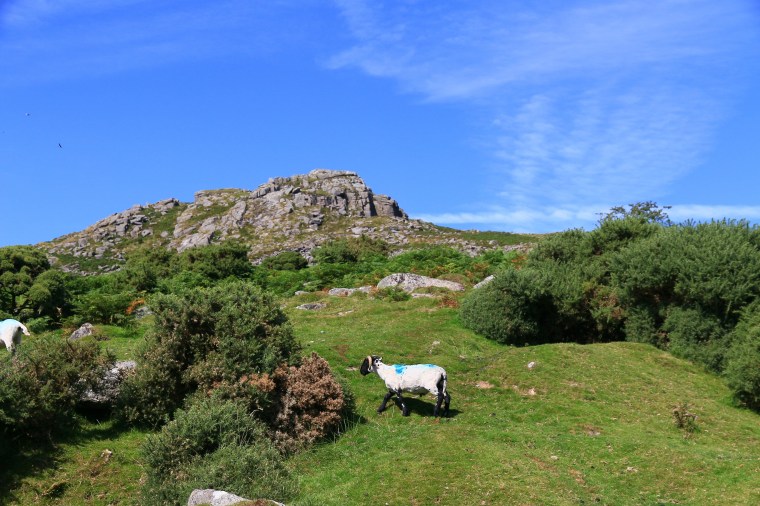
 Ripping trousers so early on are not a good portent for the remainder of a holiday which has historically involved a deluge of high fat dairy products, intense sugar, and hearty stodge. The fact that I was here not so long ago for an awfully long time (acquiring at least one stone in the process), failed to have little impact on my behaviour. Pasty done, cream tea done, massive barbecue meat fest done and 48 hours not yet passed.
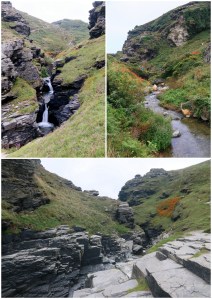
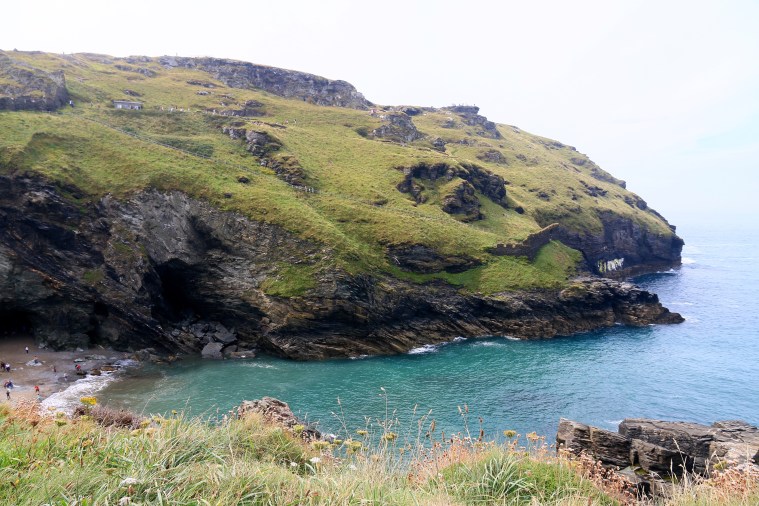
 Unfortunately it was all a little murky in Boscastle, but at least the descent to the harbour took us out of the clouds and into a flower filled, tourist peppered, boat bobbing idyll. From which we promptly walked up and up (a seemingly recurrent theme all day) along the coast path to the western headland. Here, the clouds skimmed our heads and offered a little pleasant drizzle, obscuring the coastline and patchwork hills inland. While a weather feature atypical of Manitoba, it could only divert for a few minutes at best, and half a cream tea back at sea level felt like a more agreeable option.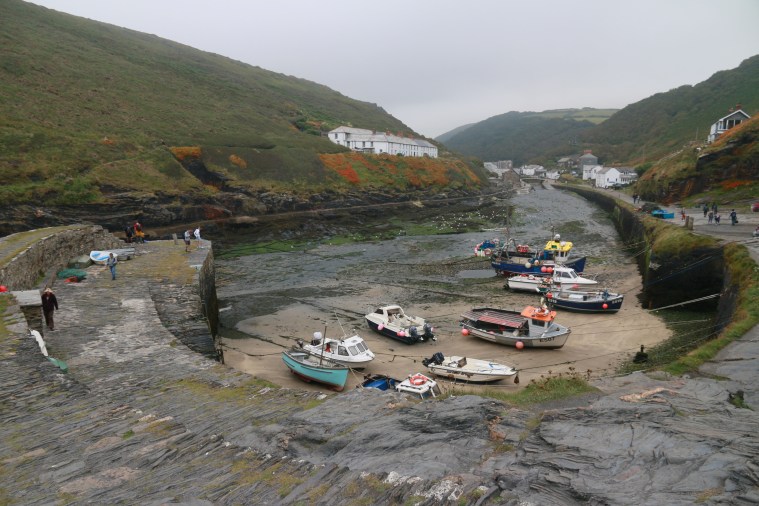


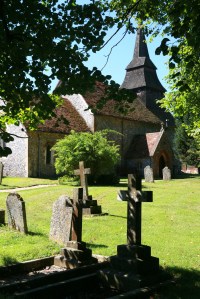 The blue skies over Basingstoke proved ideal to escape Basingstoke and blow off the airline induced cobwebs gathered over the South China Sea and entire Russian landmass. Now, somewhere on the more compact Hampshire-Berkshire border I faced chalk downs, golden fields of wheat, abundant hedgerows, village greens, and the astonishing threat of sunburn. For once, the summer I entered was better than the winter I had left behind.
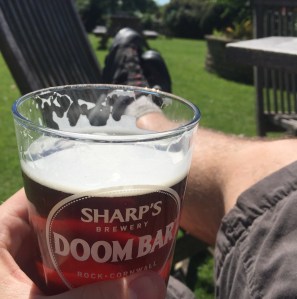 All this bucolic traipsing on foot is thirsty work and Dad was more than content to fulfil my request for an English country pub beer garden experience. Doom Bar on tap was an added bonus at The Vine in Hannington, suitable tonic to march on and out towards more panoramic views. It might be the beer, but I simply cannot fathom how there can be so much countryside in one of the most densely populated corners of a tiny island. Where do they hide them all?
 While the following day was a little more cloud prone, the afternoon perked up and acclimatisation was in full force with the continued wearing of shorts. This does herald the risk of attack by rampant stinging nettle, but it’s a relatively benign one by Australian standards. And the risks bring more ample reward around Whitchurch and the meandering, translucent waters of the River Test. Such as pretty mills and meadows and cows and flowers and ice cream.
 If you’re getting bored with so much idyllically clichéd countryside (and, jeez, why would you?) let me take you to the coast. Obviously not (yet) the coast with the most, but a little island sitting off Hampshire. Reached by a placid ferry ride from Southampton, The Isle of Wight offers fine bays, meandering tidal estuaries, and hulking cliffs, all wrapping an interior of yet more idyllically clichéd countryside.
 On a sunny Sunday in August it’s a popular spot, but some fortuitous ferry disembarkation took us briskly to the western end, where the hair-raising joy of an open top bus awaited. Clattering into branches, dipping and swerving round bends, threading through thatched villages, we survived to Freshwater Bay. Where everything was rather more sedate. Glisteningly, tranquilly, satisfyingly, balmily sedate.
 The big attraction in these parts is of course The Needles. The place even has its own theme park but mercifully it has not impinged the natural attraction of these iconic, dazzlingly white blades of rock. Visible from a viewing platform, sunglasses are very much needed, as are cunning tactics to jostle your way through dawdlers and selfie takers in order to snatch a glimpse.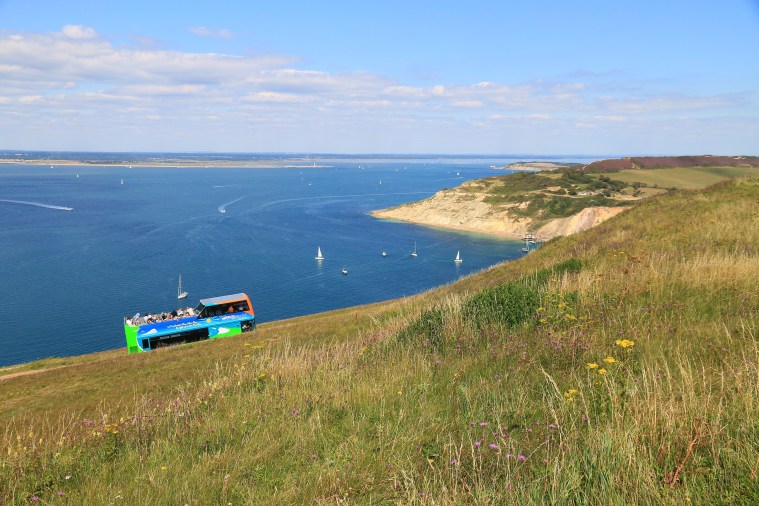

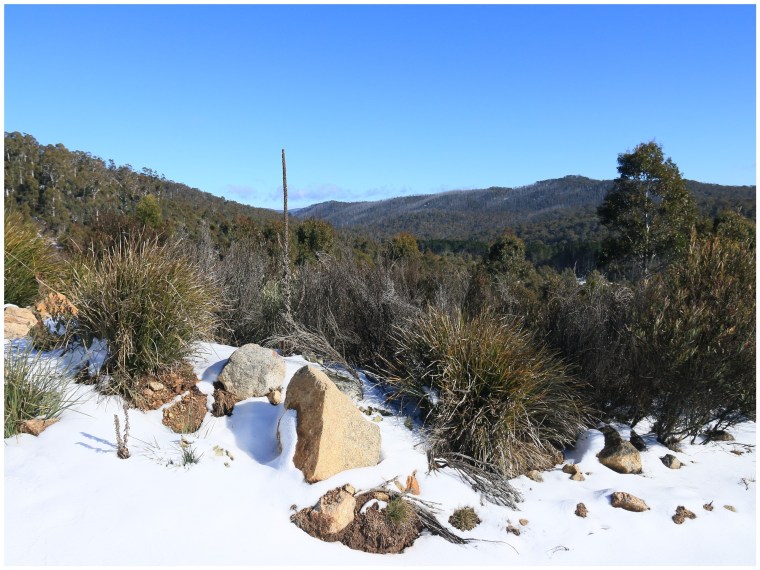
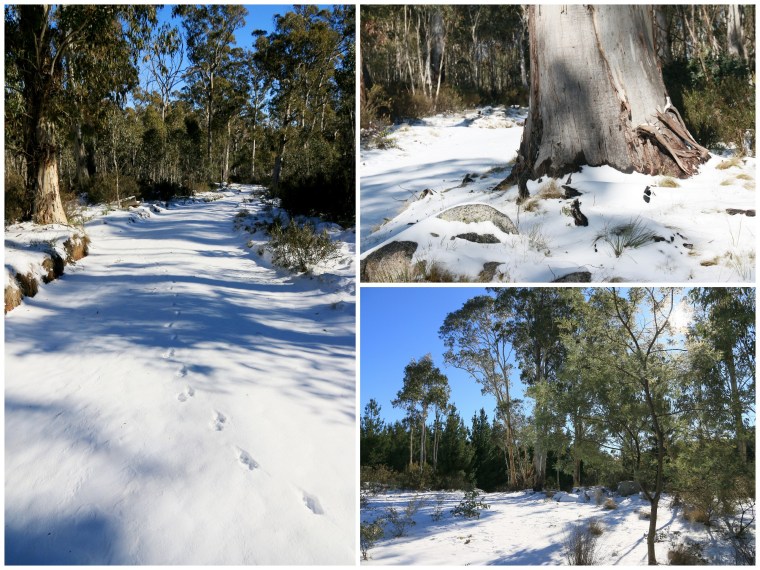


 Two hours with a stop for coffee at the improvingly-serviced by coffee Braidwood and I can find myself pondering whether to take off my jumper along the calm shoreline of Broulee. I didn’t, because it was only about fifteen degrees, but it was certainly still and sunny and rather blissful for thirty minutes or so. A happiness heightened by the token lunch of fish and chips in nearby Moruya, after which I felt a bit sick.
 All this is hors d’oeuvre for the main ingredients of this south coast winter classic: driving through the beautiful spotted gums and spiky palms of Murramarang National Park. Arriving at the pristine sweep of Depot Beach and ambling on foot along the sand and rock platforms to Pebbly Beach. Home to beachside kangaroos offering clichéd images of some kind of idyllic Australia. Scary waves and placid bays, reflections and a sea spray haze. Fishing nomads and foolhardy surfers. And escapees from Canberra hoping to bare their arms.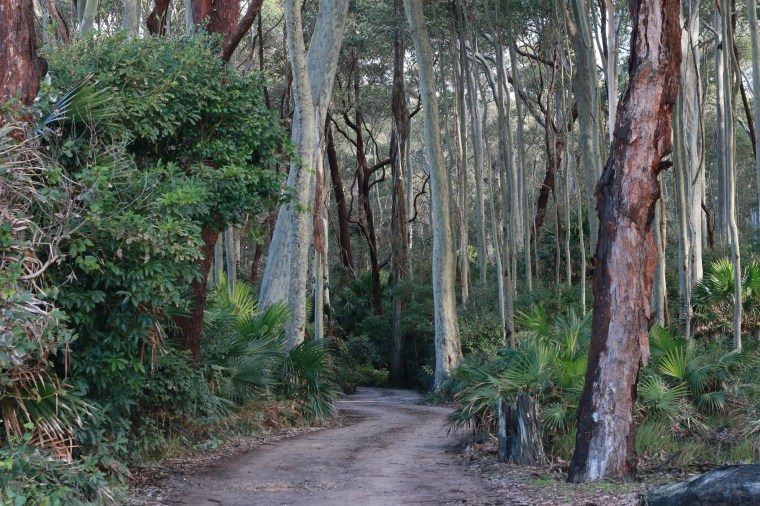
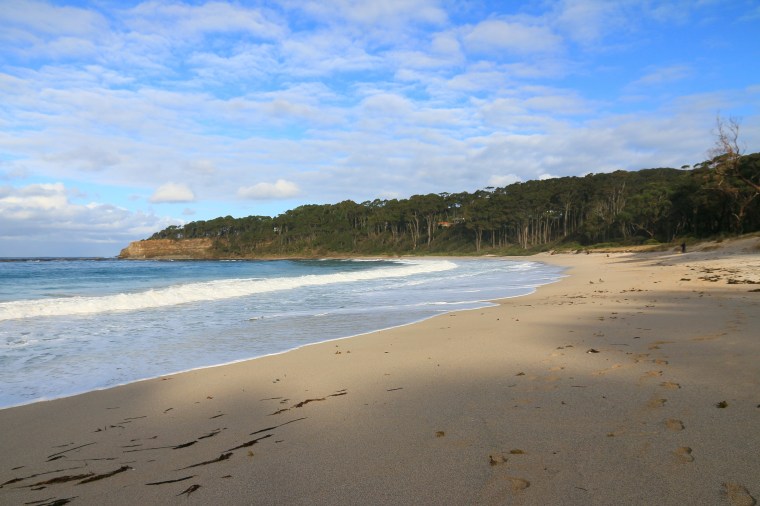


 In fact, I didn’t even make it to Pebbly Beach, a turn of events making those fish and chips an even guiltier pleasure. Rocky debris and a surging high tide meant that onward travel would be a little bit silly, something only to be attempted on The Island with Bear Grylls. My cut off, my terminus, my turnaround point, was an impromptu cascade, tumbling from the sodden forest and weather beaten cliff. There is only so far one can go in a day, and it was a winter’s day after all.

 I was envisaging a challenging winter weekend in pleasant Sydney sunshine when assigned a work trip there recently. Instead, torrential, stormy, incessant rain submerged a large part of eastern Australia and I delayed my visit. Stuck in Canberra for an extra day, I discovered that the apartment complex I had moved into had acquired an English-like riverside setting, which immediately put the rent up a hundred bucks, and probably inspired people to dump shopping trolleys into the storm drain to complement the graffiti before blaming it and everything else on foreigners.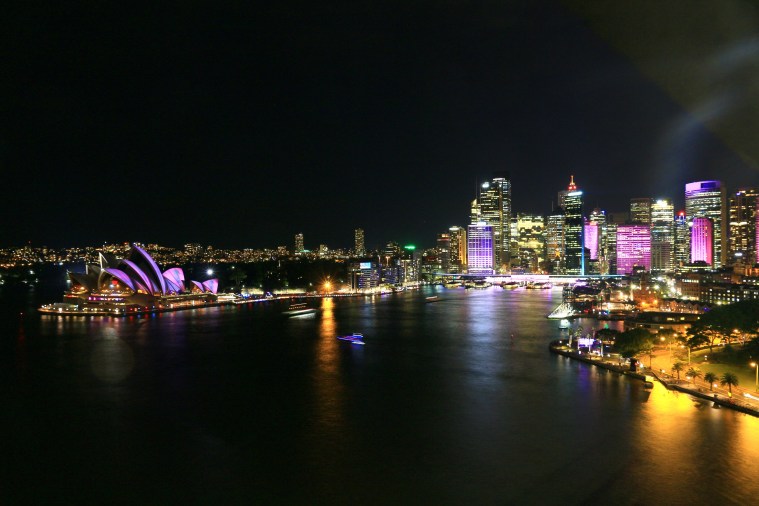


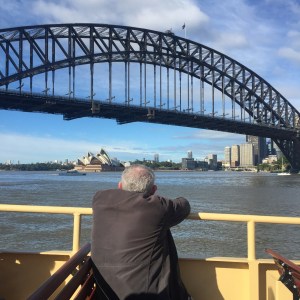 The next day in Sydney offered a return to sunlight, though still possessing a cool enough breeze to warrant jackets and scarves of course. I should probably have been catching up on work, making notes and thinking about what it all means. But after a breakfast catch up in Milsons Point, the harbour again beckoned, and an impromptu boat ride just for the hell of it. No matter how many times you encounter this city’s jewels, it is almost always impossible to avert your eyes, so I said in an instant on Instagram.
 One more day and I would return to something a little wintrier in Canberra, where there are frosts and even some rare single digit daytime maximums. It’s part of the reason so many people hate it despite never having been there. I can see their point a little, and the cold nights do drag well into September. Thus I am more than happy to embrace a bit of time down in Wollongong – prior to another nightshift – in which there was a window of T-shirt wearing opportunity. This plus fish and chips and the pounding drama of a still frenetic swell makes for a contented couple of hours.
 As much as I love Canberra there are times, in the heart of winter, that I question my decision not to live beside the sea. Why would I not want to briskly stroll along a boardwalk? Why would I not want to find good coffee and tasty brunch fare with an ocean view? Why would I not want to do a spot of work on a bench in a foreshore park so I could claim that food on expenses? Why? Maybe because I don’t want to turn into a softie who rushes to David Jones for a chequered scarf and jaunty hat at the sight of sixteen degrees. At least let’s go through something a little darker to really, truly savour the light that follows.
 As the fading gentrification of the Southern Highlands descends toward the sea you can be in no doubt that this is Australia. Indeed, an Australia as it was before anyone, even its first peoples, decided to venture over by boat. The plateau abruptly falls away into a dense system of deep valleys and gorges. Massive walls of sandstone plummet towards pristine creeks obscured by a blanket of gums. A pair of black cockatoos glide in the air, conversing in prehistoric shrieks. Banksia and wattles compete for attention in the understorey topping the escarpment. And a thin veil of water tumbles over its edge, destined ultimately for the ocean.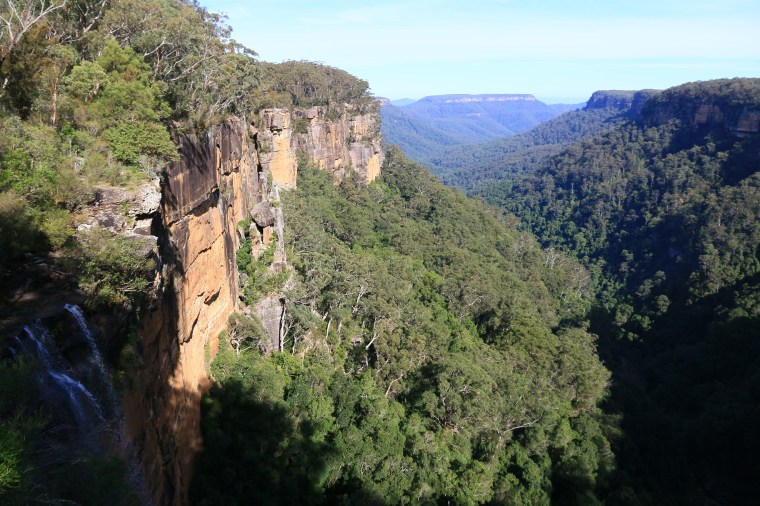
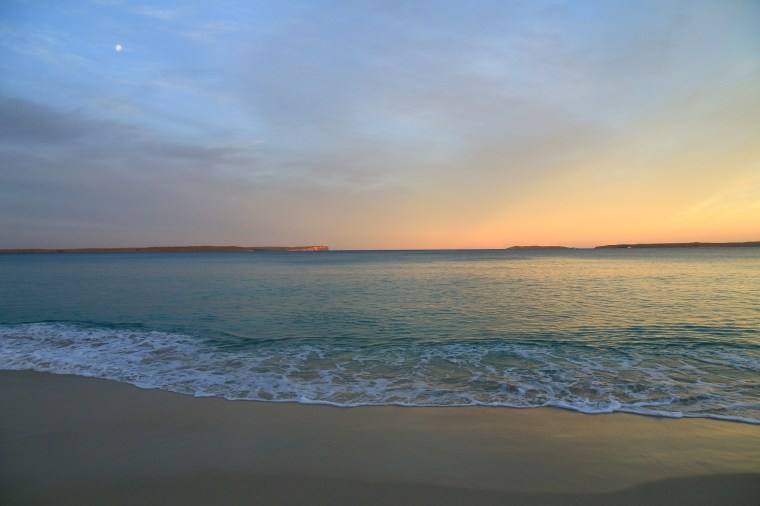
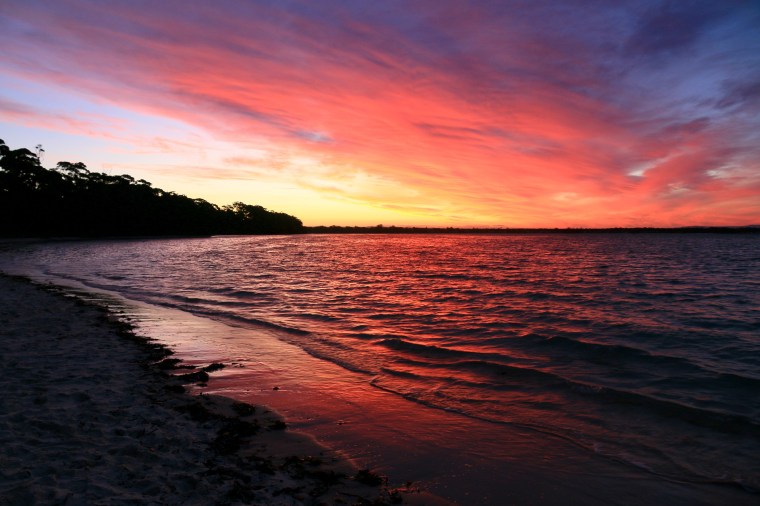
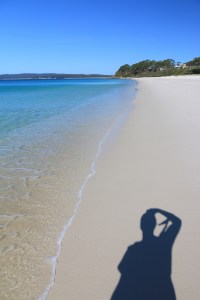 From bay to bay, traversing succulent coastal forests in between, it’s an easy amble from Blenheim Beach to Hyams Beach. The only real difficulty is deciding whether to take your shoes and socks off on the sandy bits only to then have the hassle of putting them on again for rougher terrain (conclusion: wear sandals or thongs). Plus there’s the challenge of restraining your photo-taking so that you don’t have endless, repetitive pictures of clear water lapping at fine, white sand.
 The sand is so white here that it famously gets on every piece of tourist literature and recurrently features on Sydney Weekender as the whitest sand in the world. In fact, it is genuinely so white that even small-minded immigration ministers would feel unthreatened and some cretin with a golden toupee would approve. Personally, I think there is probably whiter (for instance, around Esperance), but that is probably just supremacist talk.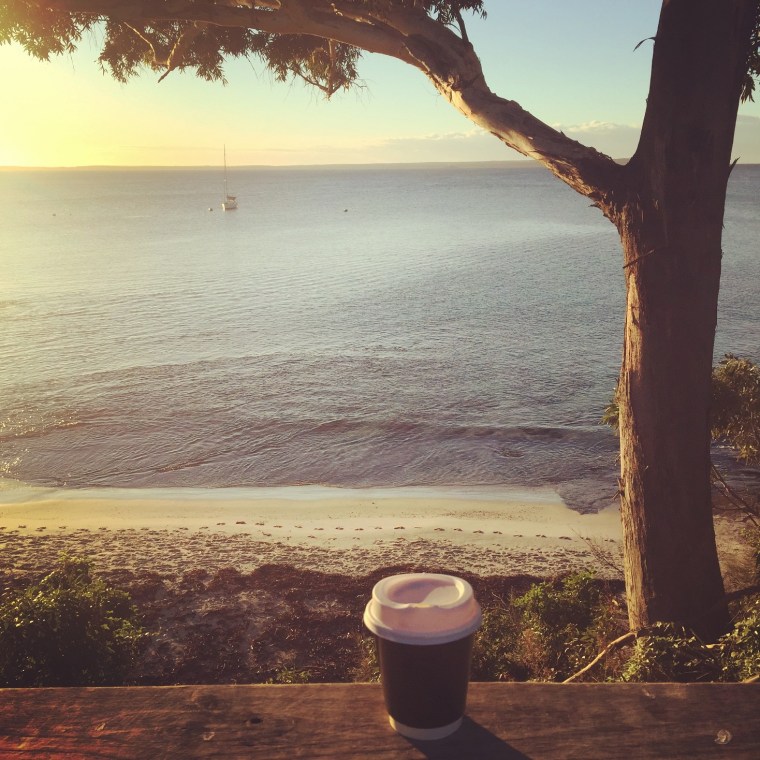








 This comfortable civility dissipates quickly once away from the main road; national parks host waterfalls and rock pools and scenic views over jungle. Tracks weave through palms and strangler figs and giant feathery ferns. Snakes and spiders probably hide. While the crowds loiter all the way down to pools and falls at Kondalilla National Park, beyond the swimming spots, the jungle is almost all yours. Yours and a couple of fellow pioneers, hoping to steer clear of Drop Bears and survive on rations of emergency salt and vinegar crisps and deodorant. We made it, and went to eat cake to celebrate.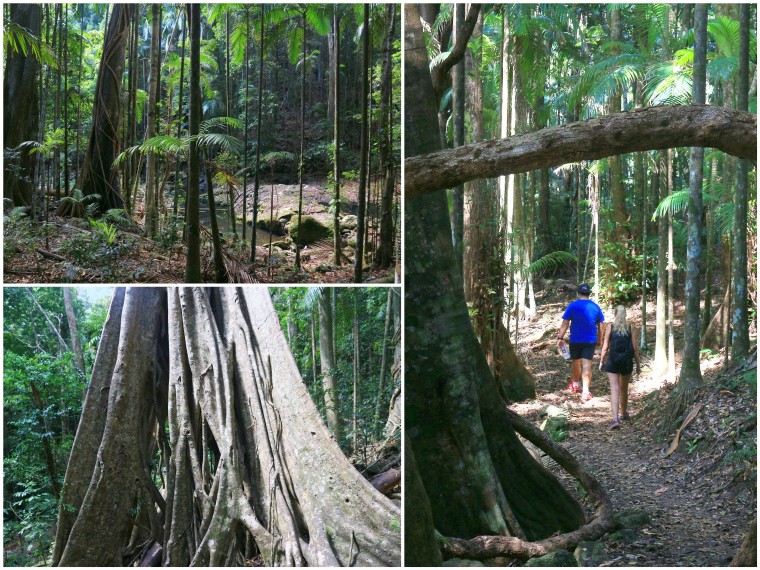
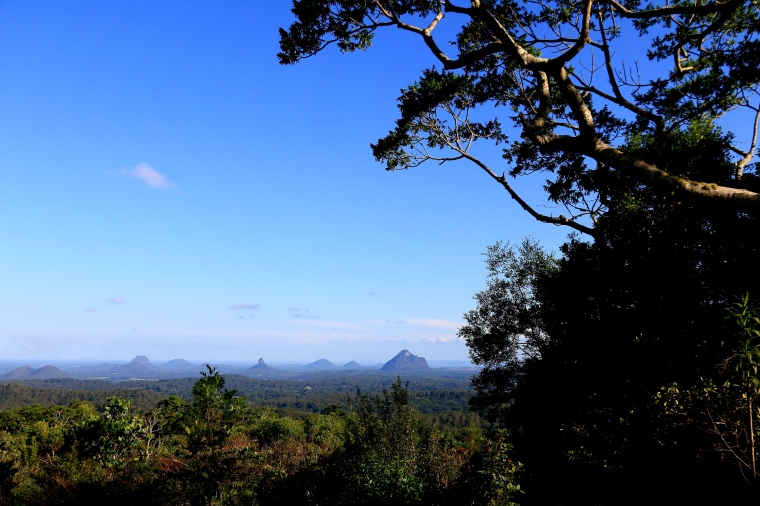
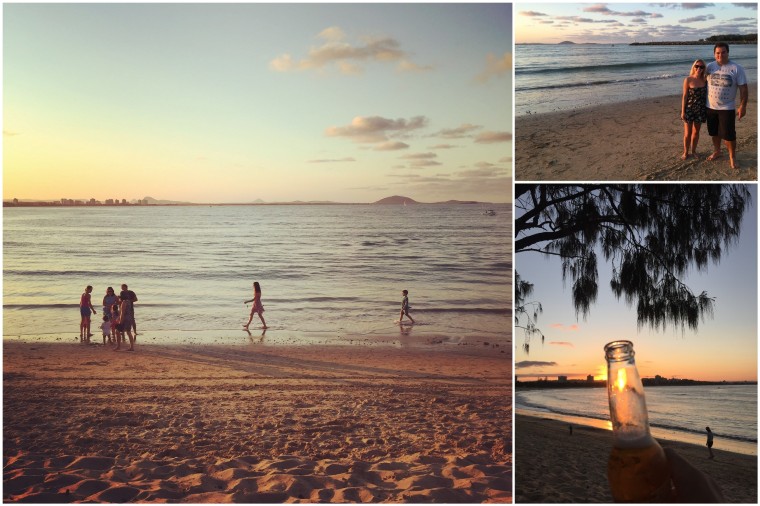
 The return of the sun the next day prompted the usual screeching, warbling, cackling and occasionally tuneful singing of the Buderim birdlife. It is a struggle to sleep in and I was more than ready to escape down the road into Buderim Forest Park for some early morning exercise. While others decided to jog, I was content enough to engage in spells of brisk walking punctuated by abrupt stops for Instasnaps. A kilometre in, the falls came as a surprise. I mean, I knew they were there, but I wasn’t actually expecting much to be falling. And while it was hardly a deluge, there was something aesthetically pleasing about Buderim Falls that was absent at Kondalilla yesterday.
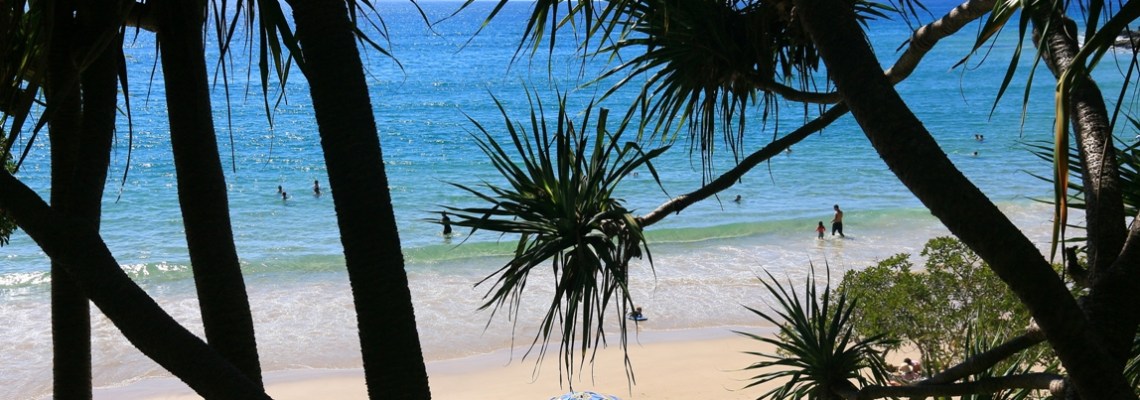
 You see, the tourist board have been so successful that Noosa is brimming at the seams on a warm, sunny Sunday lunchtime, jammed with locals and foreigners alike. Parking is in the lap of the gods, but boy, have they got some of the prettiest parking spots around. The beach is – well – busy for an Australian beach, but admittedly it is a rather pretty beach. And even the national park, which shelters Noosa from encroachment from the south, is bustling with a steady stream of backpackers, families, joggers, and adventurers most of whom are, of course, exceedingly pretty. It is, undoubtedly, a very pretty place, and a requisite on a two day drop bear bushwalk adventure beach and waterfall honey monster tour.
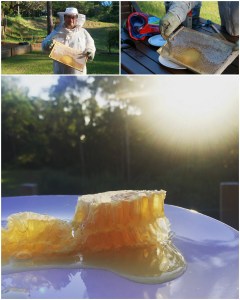 Like all of the most accomplished tours though, the best is saved for last. No tour is complete without a visit to a twee little spot providing lovingly crafted local produce and quirkily endearing owners. Honey Bear Honey of Buderim is not yet on the tourist itinerary, but with a bit more blue sky and a 10% cut it could well be. Look, I’m even promoting it on this blog for goodness sake, reaching tens of
 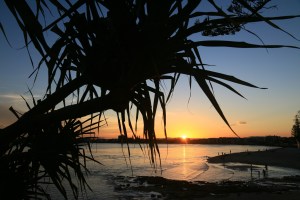 Some might go on to watch the sun disappear, over the apartments and occasional jagged plugs of the Glass House Mountains. Many linger in the warm air, sedated by sparkling wine and a sense of being the luckiest people on this planet; making the most of it all before heading back to work; living each day as if it is your last. Sensible, because, in this splendid corner of Queensland, you never know when a Drop Bear might strike.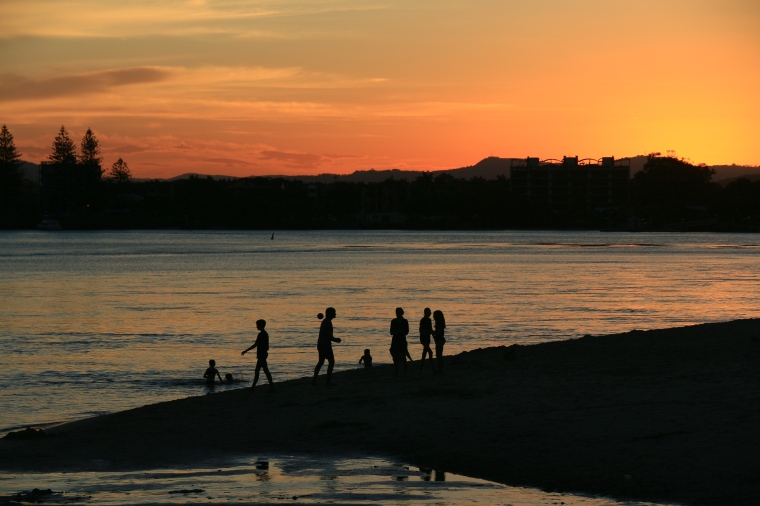
 gbpilgrim