Cool man

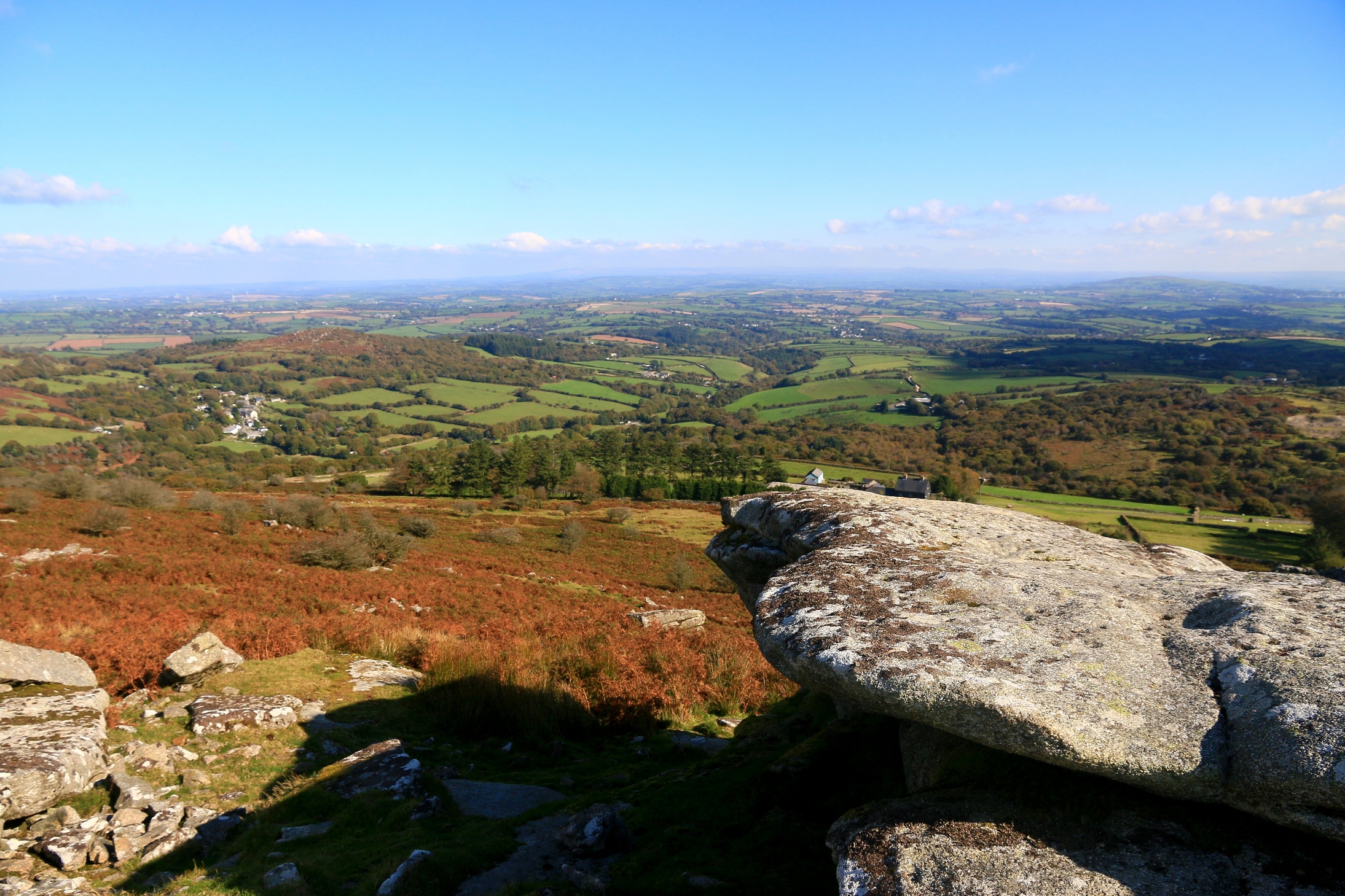
Just over the hills yet far away there is a landscape of sweeping upland plains, forested ridges and snaking river gorges. Wild Brumbies gallop gracefully across the grasslands or socialise under the shade of a clutch of gum trees. Kangaroos on a family outing peer up out of the golden tufts, looking fairly nonplussed about it all. Cockatoos predictably shriek and magpies chime sweet melodies. The skies are big and low and can almost be touched.

cool04

The Cooleman Plain is about 50 kilometres from downtown Canberra, as the cockatoo flies. For us humans with four decent and independently operating wheels, it takes about 200, detouring south to pass round the Brindabella Mountains. The ride is scenic heading down the length of Namadgi National Park. The border crossing into NSW is modest, marked more strikingly by a deterioration of road surface than anything else. And then the joy of tarmac in Adaminaby is only eclipsed by the sight of the Big Trout.

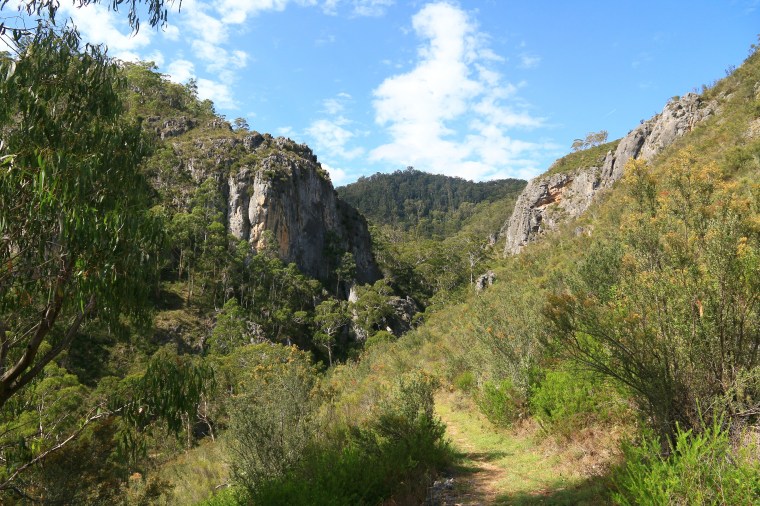
Other than a giant fibre glass trout there is not much to distract in Adaminaby, so you head promptly in what seems to be – finally – the right direction. Kiandra – an abandoned high country settlement spurred on by gold – sits bleak amongst boggy plains and barren ridges. There is a touch of upland England in the vista, that same sparse striking beauty available in the high parts of Dartmoor or the Peak District. But the gum trees tell you this is unmistakably Australia, as you head down into the sheltered green valley housing the Yarrongobilly Caves.
cool03

cool02I have been here before, but that was almost ten years ago. Almost ten years, when I first arrived to live in Australia, intending to stay for a year! I couldn’t remember much of it, though the giant hole in the ceiling of one cave opening triggered something approaching recollection. But the river walk must have been new, at least for my feet, and the thermal pool – a steady 27 degrees all year – offered surprise and consideration for wintertime lolling.

cool01

Back up the chasm and across from Yarrangobilly, the upland plains stretch out north and east, interrupted occasionally by hilly islands of trees and the long barrier of the not-so-distant Brindabellas. I am heading towards Canberra again and almost expect to catch a glimpse of the needle tower on Black Mountain. But of course I don’t, the high peaks of Bimberi, Gingera and Ginini standing in the way.  I have been up there, and it seems oh so close.

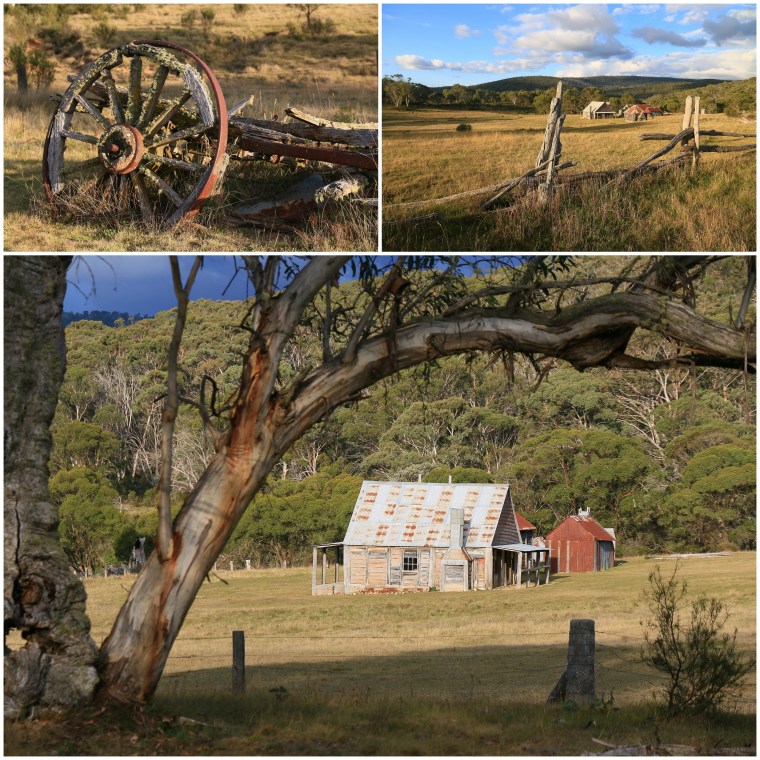
By now the day is moving towards an end and there is a wonderful aura in the light, filtering at an angle onto the grasses and gums of the Cooleman Plain. Keen to take a walk in this golden hour I follow the dirt road towards the remnants of Coolamine Homestead. There is no-one else around and I daresay the Brumbies are more attuned to seeing cars hurtling past than humans gently ambling. A couple seem protective, endlessly circling, snorting, staring me down in an effort to keep me away. I am wary but they allow me passage.

cool05

Coolamine Homestead is one of many that dot the highlands within and around Kosciuszko National Park. Practically all are now abandoned, the toil of work and life in such isolated and unforgiving climes proving too much to sustain. Coolamine is at least restored and, with this, promises a certain cosiness and tranquillity, at least on such a beautiful March evening as this. But you just know the winters will be harsh, the life lonely, the work unviable. Plus there is no mobile signal to be able to do anything whatsoever, a sad indictment of modernity that I resentfully find challenging now.
cool06

At nearby Cooleman Mountain I set up camp for the night without any signal, without any other people, without the comfort of civilisation. It is perhaps because of this that setting up mostly involves shifting things around in my car to accommodate a swag mattress. For some reason I don’t fancy sleeping outdoors – the remoteness, the impending chill, the inevitable, sopping morning dew. The cocoon of the car feels protective. I’m not entirely sure watching an episode of The Walking Dead on my laptop in the dark shell of my car in the middle of an empty forest without anyone else nearby is smart. But I do anyway, and no zombies bang on the window during a fitful night’s sleep.
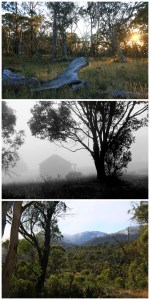
cool07Age must be affecting me because I am questioning the sanity of camping, even if I have copped out by reverting to the back of the car. Every little thing requires pre-planning and organising, extra time and increased awkwardness. It is effectively homelessness, perhaps more so when you sleep in the car. But then, in the morning, as the misty murk of pre-dawn is dispersed by a welcoming sun, as the deathly still air fills with birdsong, as the wattle and grasses shimmer silver with dew, as you witness the birth of a new day a part of this nature, you know why you do it.
cool08

The pre-dawn murk took a little longer to clear down in the plain, and shifting my car back to the homestead required slow and steady navigation through the mist. Setting off from here by foot I resumed my journey along the dirt track towards Blue Waterholes. Ever closer to the ACT border, the mist quickly lifted to show off the backside of the Brindabellas and then, before them, the steep-sided river banks and gorges which filter water down to the very fish-friendly Goodradigbee.

cool09It is, in theory, possible to clamber your way to the Goodradigbee, but this seems almost as difficult as pronouncing it. Beyond the scenic Blue Waterholes (which enjoyed relative popularity and happy interaction with fellow humans), river crossings and the narrow pass of Clarke Gorge make it too much for someone who is already warm and weary, and has been told to beware of snakes in happy interactions with fellow humans.

cool10

Luckily, Nichols Gorge is more family friendly but I daresay unlikely to be any less suited to snakes. I didn’t see any in the end, which is surprising given the many heated rocks of the dry creek bed and the tumbling gorge walls. The walk is pleasant, though today it seems to drag a little. The surroundings certainly offer something distinctive: with a tinge of red and a few more eucalypts it could be within the cherished Flinders Ranges. Not just across the border from the ACT, tantalising close to views of the Black Mountain tower.

cool11

Of course, getting back to see the Black Mountain tower requires a three hour drive and, as I launch up from the gorge and back out onto the unprotected expanse of Cooleman Plain, I reward myself with a cheese-filled baguette, true mountain walking food. This will keep me going until Adaminaby, where I can pause and refresh with a giant trout. And that will nourish enough to rumble along the dirt, across the border and over the hills, back to a place not really very, very far away. At least as the cockatoo flies, or, indeed, as the Brumby gallops.

cool12

Australia Driving Green Bogey Photography Walking

Catch the pigeon

For all the scurvy, seasickness and usurping imperialism it would have been quite something to voyage with Captain Cook in 1770. Cruise the ocean, meet the locals, spot exotic wildlife, hide Joseph Bank’s acacia collection in the poop deck. You’d get to discover new lands and – best of all –name them. Cook would have had first dibs mind, and being from Yorkshire he would be undeniably dry and unimaginative about it: Wide Bay (a large open bay), Sandy Cape (sand), Red Point (red), Booby Island (wishful thinking arising from a year at sea).

Cook was having a delirious day on April 21, 1770 when cruising up the south coast of what – inexplicably – was to become called New South Wales. Somewhere beyond Point Upright (yeah he named that too) Cook “saw a remarkable peaked hill which resembles a square dovehouse with a dome on top”. He thus decided to name it Pigeon House and from that point on it has acted as a beacon for sailors, sightseers and bush bashers the world over.

Pigeon House now sits within the gargantuan Budawang wilderness covered by Morton National Park and a number of adjoining reserves, a largely unexplored, impenetrable land of sandstone cliffs and gorges, coated with eucalypts, shrubs and ferns. It is almost as it was when Cook whizzed past on the way to Botany Bay. A few roads fringe its edges and offer access to scenic vistas, waterfalls and a tangle of greenery. But it can take some work to enter, even with the newly upgraded Nerriga Road taking some of the roughness temporarily out of the equation.

pigeon01

One of the bonuses of a visit to Pigeon House is its proximity to the coast, meaning that with a bit of planning you can enjoy all that has to offer as well. Like fish tacos in Milton and leisurely golf in Mollymook and shopping in Ulladulla, before enduring a relaxing couple of hours in and around the water in Bendalong. Warm sunshine fading, ocean glimmering, cold beer flowing, is this ideal preparation for an assault on a mountain?

pigeon2

I have had far worse Monday mornings than a dawn start in Bendalong. With the seasons supposedly changing sunrise is drifting beyond seven these days, making it an ideal period to revel in that new dawn, new day vibe. It is the hour of dog walkers and anglers and people with cameras but today just sparsely scattered; most appeared to still be in bed in the Tourist Park, even by the time we had packed up to head for the hills. Leaf blowing, I guess, can wait.

pigeon3

And so, to Pigeon House Mountain, the reason we are here after all. Via a fortuitous stop at the Milton Heritage Bakery (which is definitely one that can be logged in the revisit bank). Fuel for a challenging but captivating climb. Part of the challenge being getting to the trailhead itself, via the back roads and rutted logging tracks which undulate through cool, shady, beautiful forest. The Subaru seems to love this stuff though and I quite love taking it on such journeys too.

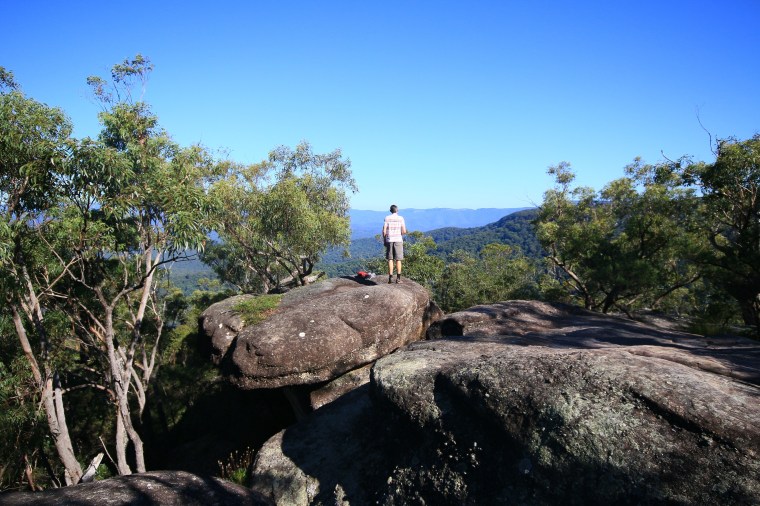
pigeon5So the car was up to the job, but were the humans – me, Alex and Michael? The trail – well-built and marked – veers quite steadily upwards and scrambles up a number of rocks for the first kilometre. A small shelf offers the first of the views, snatched through clutches of trees and over boulders. It’s an opportune stop for breath, water and to try to dry the sweat from running down your face and into your eyes and mouth. But it’s a futile effort, with the first view of the mountaintop itself offering both allure and a sense of foreboding.
pigeon4

pigeon6True, there is some relief for a while following a sheltered ridgeline, before the steps return again and the sweat comes back in profusion. It is quite remarkable that someone has gone to the effort to build all these steps though, and the piece de resistance comes with the final climb on a series of metal steps and ladders, hopefully fixed securely to the rocky dovehouse. At the top of each series of steps, views begin to open up and you can see, sense, taste, that the salty sweat will definitely be worth it.

pigeon7

And, you know what, that old effort-reward ratio is positive in spite of the effort part of the equation. While the sea can be seen sparkling and blue, it is the wilderness of the Budawangs to the west, north and south that shines. It is immense, primeval, distinctly and majestically Australian. The Monolith Valley beckons, surrounded by tabletop plateaus carved by the meander of the Clyde River. Ranges expand north and south, and somewhere over one of those distant lumps the road back to Canberra rises.

pigeon8

pigeon9

pigeon10Pigeons were lacking but instead the summit appeared to be a bastion for numerous giant butterflies, the ubiquitous Australian fly, and a curious lizard or two. No doubt accustomed to weary walkers feasting in celebration on apples and oranges and squished cakes from Milton Heritage Bakery, waiting for the crumbs to fall. I’ll say it again, but I have had far worse Monday mornings, even when cake has likewise been involved.

And so, in a matter-of-fact Yorkshire way, what goes up must come down and back to sea level we headed by foot and by car. A sea level with fish and chips, cooling drinks and cooler ice cream, seemingly modelled on the giant summit lumps of Pigeon House. Anything worked off replenished in minutes. Extra burden for the car, which now struggled a little in the heat over the hills (I know how you feel poor car).

Oh to be sailing instead, onwards to some bay surrounded by botany and up north to a rather large reef acting as a kind of barrier. To see new things and name them after the bleeding obvious (or upper crust toffs from England). To strike out into the world like a pigeon into the skies, embracing the wonders around you, finally coming home with tales to tell and sights that will ingrain in your memory until the end of days. To embark on voyages of discovery every day, long since Captain Cook’s has passed.

Australia Green Bogey Photography Walking

Some over the hill boulder dash

I have moved into the Woden valley. Good things about this include the fact that I have a wardrobe and my own bed for practically the first time in eight months, I can cycle home without having a stroke (I think), I can avail Westfield of its air conditioning and thickshakes, and – should I wish – I can sit on the couch in my pants without undue concern for the wellbeing of others. It’s not like I do that or anything…it’s just the idea that I could, if I really wanted to, that is so gratifying.

hills03Still, with every up there’s a down and I have lost mountain views. I have also moved into an area where there is a yappy dog. I only write about this now because I just heard it, again. I always seem to find myself in a neighbourhood with a yappy dog. I think everyone does. There seem to be yappy dogs everywhere these days, coming over here, taking our peace and quiet. They frequently pester me on Canberra nature walks too, usually roaming free because their owners don’t need to pay heed to the numerous signs regarding leads and wildlife protection and all that silly nonsense. Still, at least I can see the mountains on these walks, and the dog yapping can be tolerated with such rewards.

I love the view of the mountains even more than I really do love yappy dogs. Sure, they’re not in the same league as the gargantuan cones and precipices of Switzerland, but they offer a pleasing backdrop to Canberra, particularly as the sun fades and a long shadowy ridgeline contrasts with the purpling sky and flickering lights of comfortable suburbia. And while I can no longer see them from my dog-infested ghetto in the valley, there are numerous points near and far from which to admire the heights.

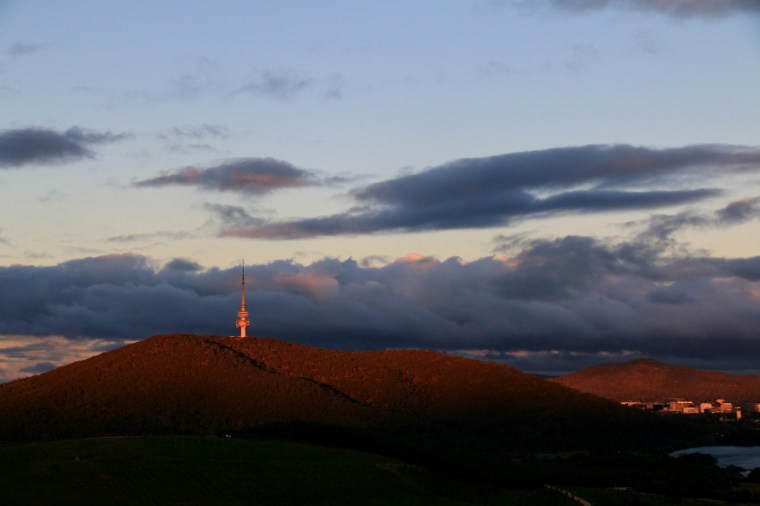
hills01Take Dairy Farmers Hill, which sits in the National Arboretum on the western fringe of Canberra. I cycled up here a few times in the past, but was usually too close to fainting to really appreciate the 360 degree panorama. Driving one evening with the comfort of air con was somewhat more agreeable. The sun dipping onto and over the Brindabellas offered a treat, while the proximate lumps of Black Mountain and Mount Ainslie received a farewell glow. There were no dogs.
hills02

The thing about seeing the ranges to the west practically every day is that you eventually want to strike out for them and almost lose yourself in their lumpy ridgelines and tangled bushiness. It must be how those buffoons who tried to get over the Blue Mountains felt, impelled by an urge to see what is on the other side (cows as it turns out, who figured going round the mountains would  be far easier). These days, buffoons have Subarus and can churn their way up dirt tracks in Namadgi National Park to see if there are cows on the other side.

hills04

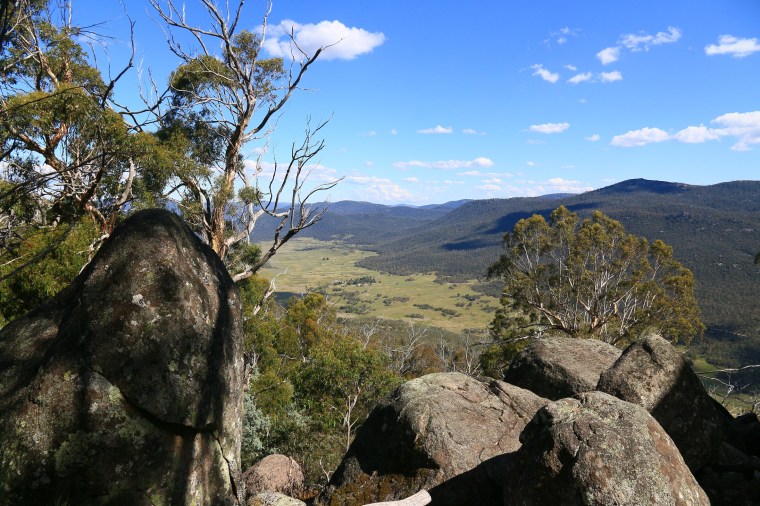
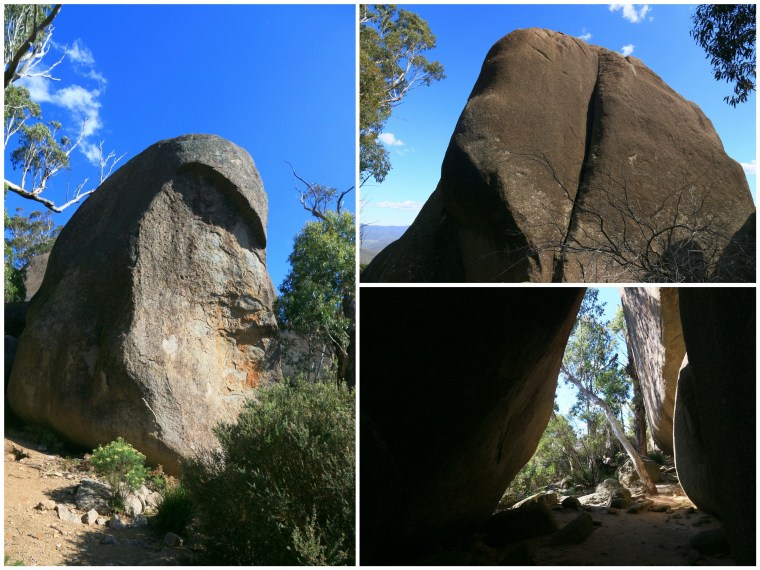
hills07You don’t notice from afar, but these ranges are peppered with giant, rounded granite boulders stacked like clumps of frozen peas that have been left in the freezer for far too many years. These boulders congregate quite generously up on Orroral Ridge, where a series of slightly neglected tracks lead to rocks named for their resemblance to animals and people and other inanimate objects which aren’t rocks. Such is the profusion of rocks that geologists have wet dreams, climbers drool onto their harnesses, and random waifs and strays seeking mountain air delight in the summer coolness of virtual caves formed in the hollows of a cluster of boulders.
hills05a

Cooling rock hollows would have been most welcome on a separate foray into the wilds of Namadgi. Technically it was autumn by the time I made it down into the Orroral Valley and struck out on a much better trail to Nursery Swamp. But so far autumn has produced unyielding temperatures in the low to mid thirties and love for my newly acquired air conditioning. It’s weather that is great for drying washing, but by time I had washed and then hung said washing out it was nearing midday, and only mad dogs and Englishmen go out in the midday sun.

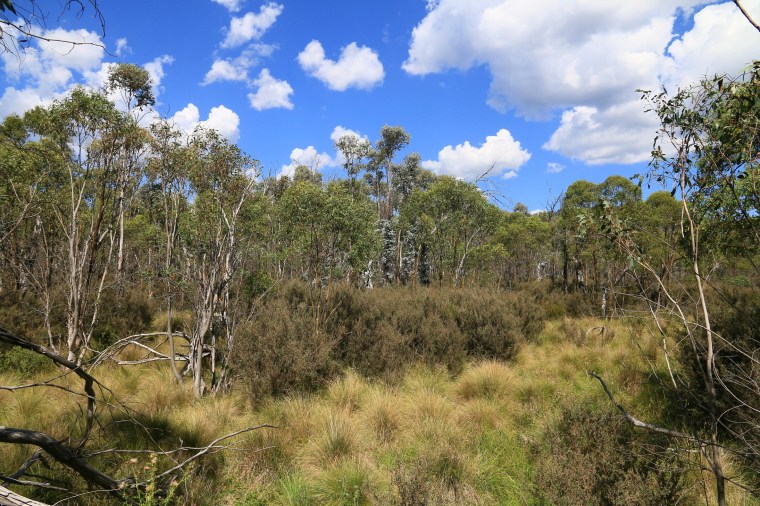
hills09I wasn’t expecting much from this walk – in truth it was something to do in a lull while my washing dried. Plus being practically the last remaining marked trail I hadn’t been on in Namadgi I felt a little obliged to complete it. The word ‘swamp’ was hardly enticing, with images of squelchy boggy plains, rotting carcasses and festering mosquitoes. But it was actually quite a delight, rising steadily through lofty Peppermint Gums, bypassing a few more giant boulders, and meandering through button grass and boardwalks under blue skies and fluffy clouds.
hills10

hills11The swamp turns out to be a fen, as the information board at the end of the walk explained. I’m not really sure of the difference, but it was fairly less swampy than I imagined. A bench here overlooked a river of vivid green grass, lapping at tall forest and rocky outcrops. Being now beyond midday it was the perfect place for a simple homemade sandwich and, once again, for all the expensive meals and gourmet plate ups*, can there be anything more satisfying than a bushwalk sandwich? I don’t think so.

Thus, even in the heart of these enduring mountains, with their magnetic heights and silhouetted ridgelines sit divine little glades like this. So, while the mountains can be marvelled at, the views readily lapped up, here’s to the valleys of this world; contented spots with a bit of simple tucker and lack of yappy dogs.

* On a complete tangent, I was in a cafe recently and someone ordered some “activated muesli”. WTF? Do they shake the muesli up in its box before serving? I noted a price tag of $14.50 to seriously activate your wallet.

Australia Green Bogey Walking

Fantasea

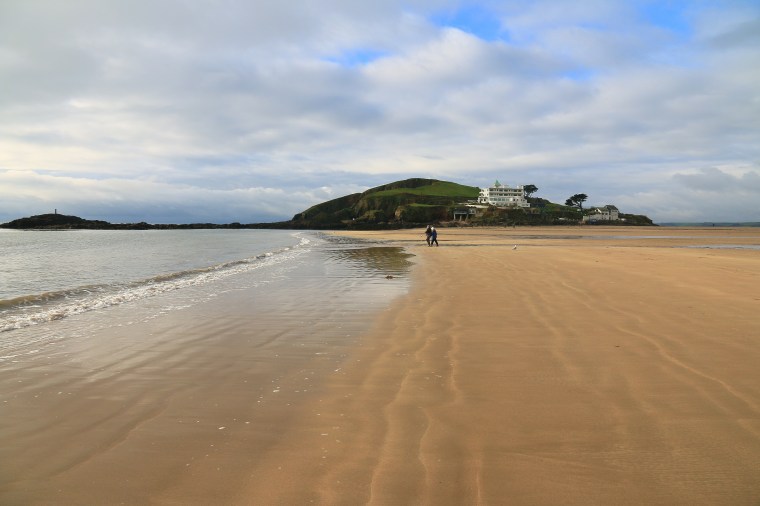
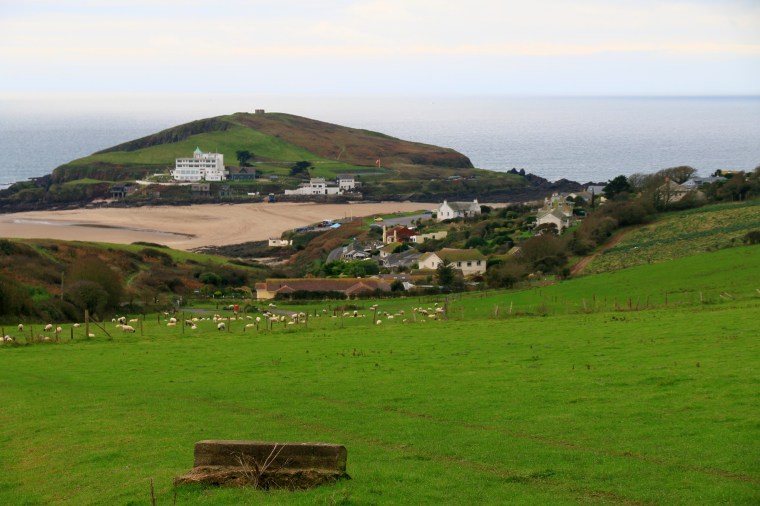
In those deepest darkest bleakest dreary days of a northern November it was difficult not to yearn for the Pacific. Soft tidal sands under an off white sky at Bigbury could only do so much. A bracing breeze may have kept rain at bay at least for a few hours, but there was little warmth in that air; little solace in a faded, washed out scene in which even the sheep seemed sullen. Beautiful melancholy yes – but melancholy all the same – and I could have done with just a day on a different south coast to lift this permeating shroud.

Apart from a touchdown over Botany Bay the ocean had eluded me in my inexplicable hunger to return to landlocked Canberra. But with the weather settling into perfection and opportunity to keep work tasks ticking over remotely, I finally saw and seized an opportunity for a few away days, back beside the saturated sapphire hues of the Pacific. I don’t think I could have dreamt of such perfect days, even when being buffeted by a south-westerly on Burgh Island a few months back.

mer01With time to spare I was happy to head that little bit farther, down to the far south coast of New South Wales. Perks of this journey include – to a limited degree – the striking, golden plains of the Monaro, baked hard and golden by summer sun; the midway bakery opportunity in inimitable Nimmitabel; the rainforest rim of Brown Mountain; and the panoramic view over the rolling cow-dotted Bega Valley, into which the road drastically plunges.

Generous January rain in the valley could, just occasionally, trick the senses into believing they were cruising through South Devon hills to Bigbury. But any doubt is eliminated when the Pacific finally comes into view at Tathra. This could only be Australia, and from parking my car underneath a clutch of ti trees to being almost blinded by the golden white sand, to dipping my toes in that ambient ocean, I had a euphoric sense of finally being back.

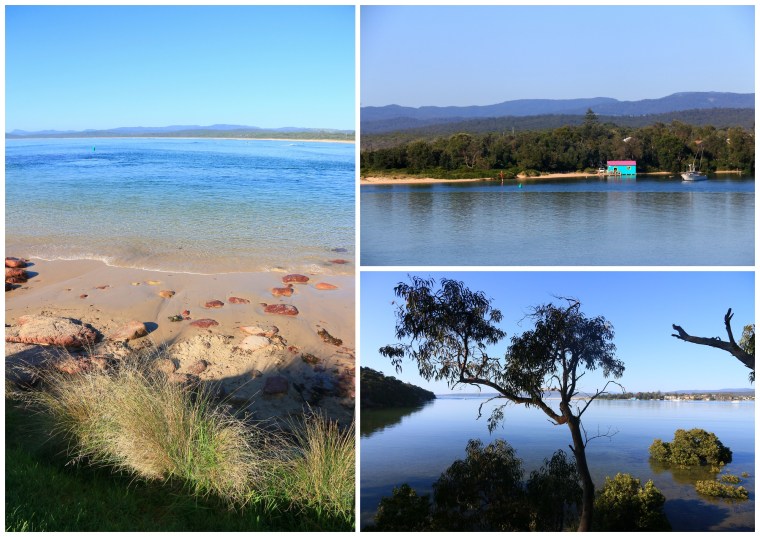
mer03My base for three nights was Merimbula, handy in terms of size and facilities (i.e. food, coffee, picnic tables on which to work) and generous in its setting upon the shallow inlet and oceanfront. There is even an airport here with connections to Sydney, which does genuinely make you wonder about its feasibility as a site for sea change. A plane buzzed overhead the next morning, as I ventured out for an early walk through bushland along the inlet to Bar Beach. I could get used to these early morning walks, especially when a small but perfectly formed kiosk awaits besides the modest cove to offer up waterfront coffee.
mer02

mer04The water here is quite ludicrously beautifully opaque, which probably helps for spotting sharks and giant stingrays. The only hazard this morning was mostly on the eyes, with a generous gaggle of cashed up baby boomers making the most of retirement by lumbering about in various states of undress. Understandably glowing and jovial – why wouldn’t you be facing yet another day in paradise – it may yet be too early for me to contemplate semi-retirement at the coast.

mer07What followed over the next couple of days was a pleasing routine of waterside walking, working and wallowing in sand and sea. I explored every possible boardwalk in Merimbula and visited the ice cream parlour at least twice. Late afternoons in the mid to high twenties were perfect for attempts at beachside siestas, but the call of the outdoors and nagging feeling that I probably should be doing something more productive with this opportunity made me restless. I would wander some more or open my laptop for five minutes and stare at the screen as Windows decided to install countless updates yet again, before concluding that it was better to just stand in the sea and spy distant dolphins doing all the work.

mer08

Beyond Merimbula I made my ‘usual’ excursion to the Pambula River. Continuing a good grasp of tidal knowledge which I rediscovered in Devon, I arrived to a low tide, which opened up a far longer stretch of white sand and crystal water in which to wade. The backdrop of bushland and bellbirds in such a paradise might have encouraged a siesta, but here I failed too. Perhaps that semi-retirement by the coast really is looking still quite a long way off.

mer05

mer09In Eden, I love the shabby end-of-the-world outpost feeling. It’s a long way from Sydney and a long way from Melbourne, which means it generally only picks up on road trippers passing through and lost Canberrans seeking fish and chips. I have heard – along with countless other places – that it could have been the national capital instead of Canberra. And perched upon an outcrop overlooking beautiful Twofold Bay and the rising hinterland of the coastal ranges, one can only wonder what might have been.

mer10Alas, the sheep paddock that eventually became the capital awaited the next morning. The good news was that I had – or will have – a home to go back there to, and some paperwork to sort out. I wasn’t going to rush – too much – and so took a final walk out to Bar Beach and a coffee to get me over the hills and far away. The boomers were of course there, semi-naked and just slightly self-satisfied, and I could see that I really wasn’t ready to join them for a while yet. But I would definitely be open to further remote working out-of-high-season breaks, just to soak up their paradise, their fantasy for a few more days close to the Pacific.
Australia Green Bogey Photography Walking

Down South

tug01Having now spent over nine years (with interruptions) in everyone’s favourite Australian city you would think I’d have exhausted every nook, crevice and scrubby hilltop. Forget nine years…many would say two days is sufficient, and even then you might have to drag things out with a wander around the National Archives, surely the least compelling sounding attraction of the lot (which might explain why, still, I have never been). But no, it turns out Canberra has even more suburbs and scrubby hilltops than you can ever imagine.
Partly, the new has been thrust upon me. Well, not so much thrust but more gently cajoled after a temporary change of residence. It’s hardly a hardship (in comparison to, say, being evicted and dragged to a mosquito-infested tropical island where you will get abused and suffer long-term mental degradation courtesy of the Australian Government). But some locals will recoil in horror, the froth atop their soy lattes spilling over onto the front page of The Australian, when they hear I am living in Tuggeranong.

Quick geography lesson: Canberra is weird and like no other city. There is a city centre, of sorts and then some town centres as well, and I suppose some village centres and suburban shopping precincts, which spread out like satellites around the town centres. Occasionally an out-of-town shopping centre muscles in to compete with the town centres and no-one goes to the city centre because they are all at the new IKEA which is on the edge of a centre on the periphery of nothing. All the important government-type stuff happens without a centre, but instead is contained within its own triangle which is more like a diamond, if you take into account the War Memorial. Meanwhile grassland wedges and lumps of trees bubble up out of a mesh of roundabouts, circles and parkways where confused cars with NSW plates frequently vanish, never to be seen again.

Tuggeranong is a town centre in the south of Canberra, with Wanniassa – where I stay for now – one of those satellite suburbs on its edge. Wanniassa is actually closer to Woden (another town centre), but I will spare you even more complexities. It’s officially part of Tuggeranong, which is believed to have a higher proportion of Bogans per square kilometre than the other Canberra towns. I cannot truly vouch for this on my forays into its cul-de-sacs. All I can report is that there is a broad cross-section of mostly Anglo-centric Australia on display, from suited public servants to Shazzas in tracky-dacks. Utage – that is the popular Australian tendency to convey oneself by pimped up utility vehicle – seems high, as does baby-booming designer spectacle wearing.

In spite of repetitiveness in its suburbia, Tuggeranong sits in quite a spectacular bowl. To the south and west, the Brindabella Ranges appear much closer and far more impenetrable. North and East, a series of Canberra hills and ridges block out the rest of the city. With a little imagination, you could picture a Swiss town in that valley, with church steeples and cowbells decorating the air (alas they filled it with concrete brutalism instead). Meanwhile, the omnipresent dome of Mount Taylor is recast as Mount Fuji, a conical summit piercing the seal of a leaden sky and drawing the Lycra-bound to its trails.

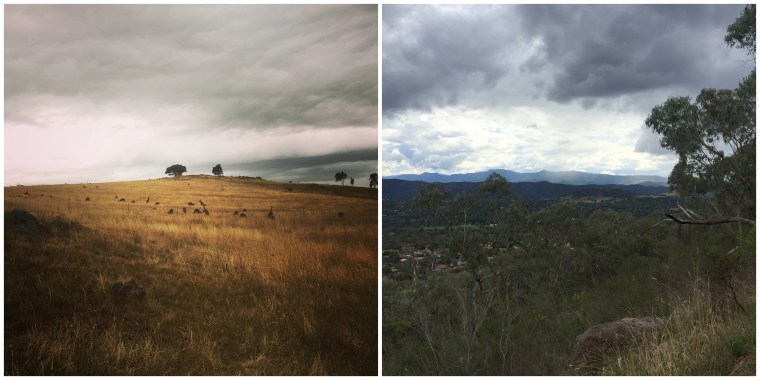
It’s no Red Hill but I have found Mount Taylor to be a convenient escape from the clutches of the valley. The lower slopes of grassland are regularly grazed by kangaroos, fattening themselves for a game of chicken on the Tuggeranong Parkway. The middle section – which flattens for much-needed respite – is all bushland shrubbery, concealing colourful rosellas and wrens and a cockatoo or two. The final ascent upon gravel is open and barren, affording views over Tuggeranong and the ever-changing weather scattered over the ridges and valleys to the west. In the other direction, the needle atop Black Mountain reminds that you are still in Canberra, and another town centre or two awaits below.

tug02a

Naturally I have not confined myself to this area – old haunts are only a 15 minute drive or so and offer greater reliability of coffee. Upon returning to one of a handful of coffee spots in the Inner South in which I regularly spread my love and money, I was astounded that they remembered my name and didn’t seem at all fussed that I hadn’t been there for over six months. While some curiosity might not have gone amiss, the warm feeling of going to a place where everybody knows your name makes it harder to sever ties.

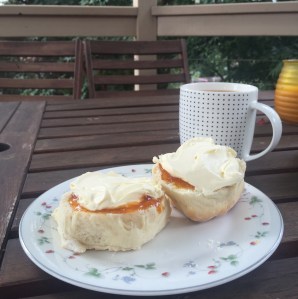
tug05Nevertheless, it was with some contentment that I found a reasonably close reasonably decent coffee stop one Saturday morning, as part of a bike ride on the many accommodating paths in the Tuggeranong Valley. One path circumnavigates its lake, which is a poor man’s Burley-Griffin but amiable enough. Others cut through the various patches of grass set between the backs of brick houses and alongside storm drains. One route takes you up towards Oxley Hill, a reasonable but not unobtainable test of legs, and another does the long uphill drag back to Wanniassa, in which aforementioned legs turn to jelly. I may be being just a touch healthier, but with this comes justification in feasting on yet another, sadly Antipodean, cream tea.

tug04

As well as a higher-than-average distribution of Bogans, it is said that Tuggeranong gets a little more rain, at least compared with the gauge at the dry and dusty international airport. It’s the proximity of the mountains you see, and the bubbling up of storm clouds. Some of these have been very generous in their distribution of rain in the last couple of weeks, transforming Aussie golden to English green.

With these mountains just a touch closer, wilderness practically on your doorstep, ridges almost always framing your vista, there is a magnetic appeal to that which lies nearby. The fresh air of the bush is tantalisingly close to Tuggers. And for that, and really quite a lot else, it can’t be much faulted.

tug06

Australia Green Bogey Society & Culture

There’s something about Alice

Well, it is quite something to be thrown back into the thick of it, and quite something again to be thrown into the thick of it in the thick of it. With a hop, skip and considerable jump there could be no pretence of being in England anymore. No tranquil ponds and croquet-worthy lawns, no afternoon teas and broadleaved avenues, no ubiquitous sarcasm and cling-filmed sandwiches. Just right bloody ripper sunbaked Straya with Utes and flies and glad-wrapped beetroot sangas and drongos in high-vis and Aboriginals under trees, with rarely a hipster in sight.

That probably does Alice Springs an injustice to be fair. While there are plenty of Utes and flies and a fair share of drongos, it struck me what a right multicultural melee Alice is. An African taxi driver took me to my resort hotel, filled with – among others – softly-spoken British baby boomer couples and their lairy transatlantic cousins. Here an immaculate receptionist of Southeast Asian heritage checked me in and I passed what passed for a chambermaid from the Middle East. Later, on the way into town for a bite to eat (friendly Asian service again), I strolled along Todd Street Mall to the sounds of German and French backpacker accents and something more rarely heard in other Australian towns and cities: Aboriginal dialects, which are many and varied. For better or worse, it really is a right little melting pot in the middle of nowhere.

There is an oasis town aura to Alice – albeit a little rough around the edges – which perhaps draws these people in. Approaching from north, south, east or west it is probably the first place with a Woolworths and Kmart for a thousand miles, or something stupidly noteworthy like that. You can finally get a cappuccino, but do beware. And there are public showers so you can attempt to wrench off layers of sand and dirt and flies that have attached to your skin while ploughing through the Oodnadatta Track in your big fuck off truck. Frankly, if only more towns in Australia had such facilities, it would have been most welcome.

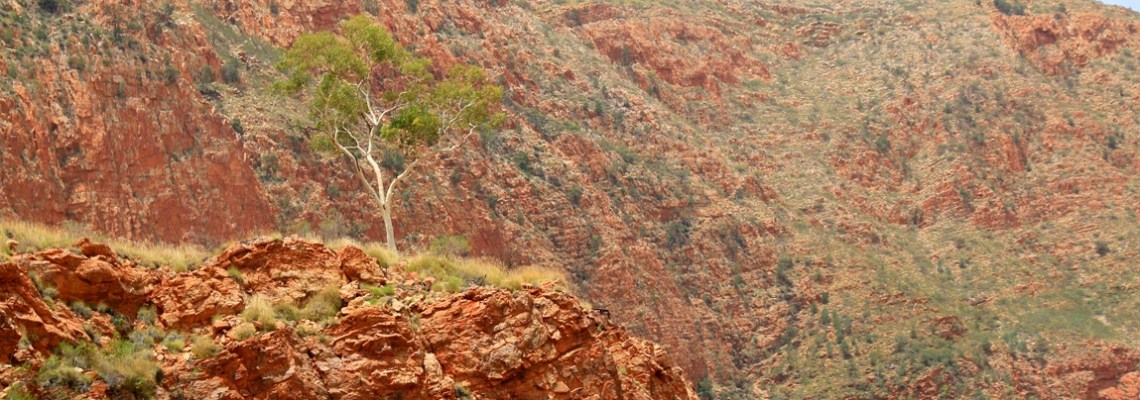
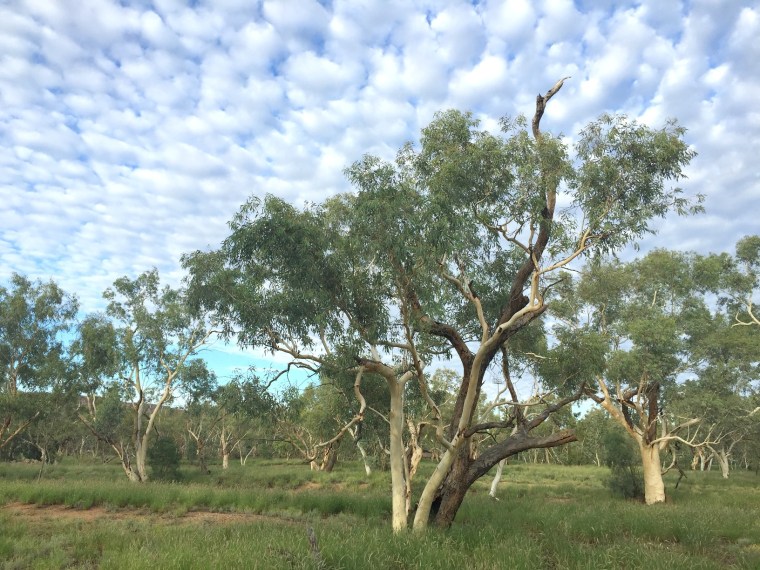
alice01On the other hand, natural oases appear more limited. The Todd River is mostly a river in name only. Usually it’s just a dry, wide, and sunken swathe of sand meandering through town, almost as if a dreamtime serpent had once there slivered. It is quite striking and also quite beautiful in a way: grasses and short and stocky shrubs flower along its banks and a parade of River Red Gums indulge in a majestic arrangement of bulbous roots, variegated bark and twisted, stretching branches. There really is not a better Eucalypt in all of Australia, in my uneducated opinion. It just looks like it belongs here.
alice02

As well as dry (semi-arid is the tour guide word of choice) Alice is – it will come as no surprise – frequently hot. However, having endured a scorcher of a week in Canberra, it actually felt quite pleasantly temperate for my stay. A nice ambient thirty degrees with a bit of a breeze and occasional cloud cover. Pah, call this hot?

Anyway, venturing into the outback from Alice – once work duties have been completed – it doesn’t take long to feel a long, long way from anywhere and anything. You can sense it would be really, really nasty on a proper hot day. Flies would multiply tenfold, crickets would pulsate loudly before passing out, the cracked earth would literally bake a goanna, while giant birds would circle for unsuspecting Englishmen lost in their quest to find a tea shop.

Fortunately, this particular Englishman was on a minibus tour today, taking in the West Macdonnell Ranges. Not the entire length of the ranges mind, because they stretch virtually uninterrupted for something like five hundred kilometres. Technically there are three separate ranges in the ranges, if that makes sense. Named after British conquistadors who got a bit lost, I suspect. I cannot remember, because instead of taking in everything the tour guide was saying, I was kind of mesmerised by the almost repetitive pattern of sweeping ridges rising from scrubby red plains.

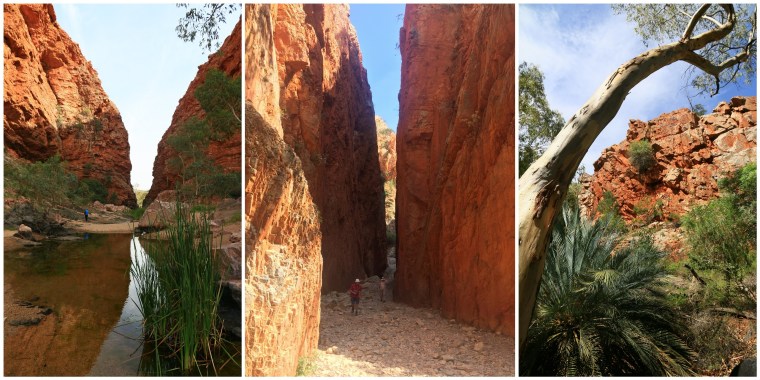
Scenery passing by the window, I noticed how once every few kilometres the ridgeline dips and is eroded to varying degrees. In some spots this has created a significant gap and a way through to the north, sometimes narrower than an American tourist. This is where waterholes and gorges form – Simpsons Gap, Standley Chasm, Ellery’s Big Hole and the like – providing opportune stops for purveyors of sightseeing day tours. They are stops worth making, for there is an air of magnificent serenity in such sheltered grandeur.

alice03

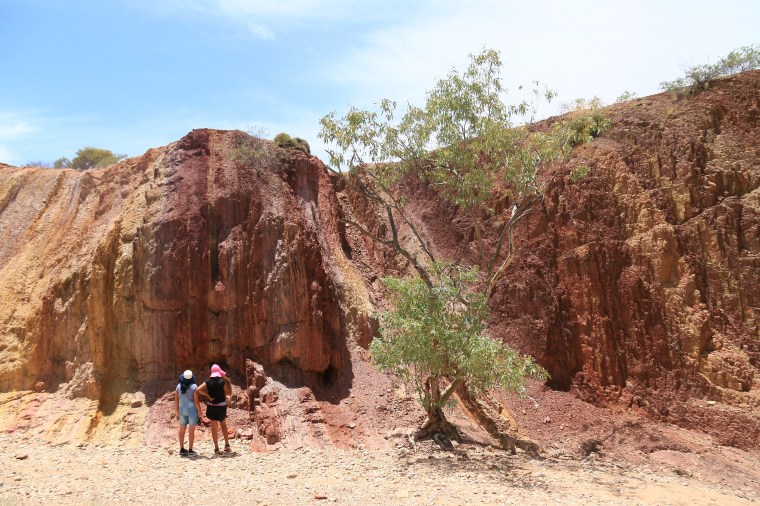
Further down the road there are some ochre pits, imaginatively marked on the map as ‘Ochre Pits’ (it is a rare thing indeed to find any ambiguity whatsoever in modern Australian place names). The pits offer evidence of mining long before unscrupulous Queenslanders and Chinese corporations arrived. I never realised how rare ochre was, this being one of only nine such pits in Australia. Quite coincidentally I had been to one other, down in the Flinders Ranges, a couple of years ago. And I remember just as many flies there as there were here today.

alice04

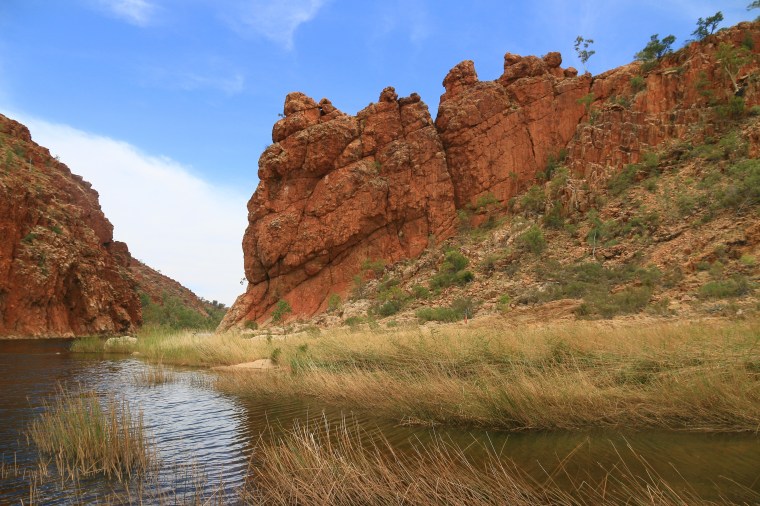
Beyond noon and the sun was starting to become a little fiercer and, of course, the flies had been stoked into action. Time for a cold beer and a feed I would say. And quite astonishingly there is a place just for that. At Glen Helen Gorge – which really does appear in the middle of nowhere – someone has decided to build a resort. It’s not your resort in the Abu Dhabi or Port Douglas sense – think more shack-like and rubble-strewn. But it has a pub, a pub with cold beer, along with a plethora of touring essentials like fly nets and trail guides and fridge magnets. And just down from the pub you can stagger down to the next waterhole.

alice05

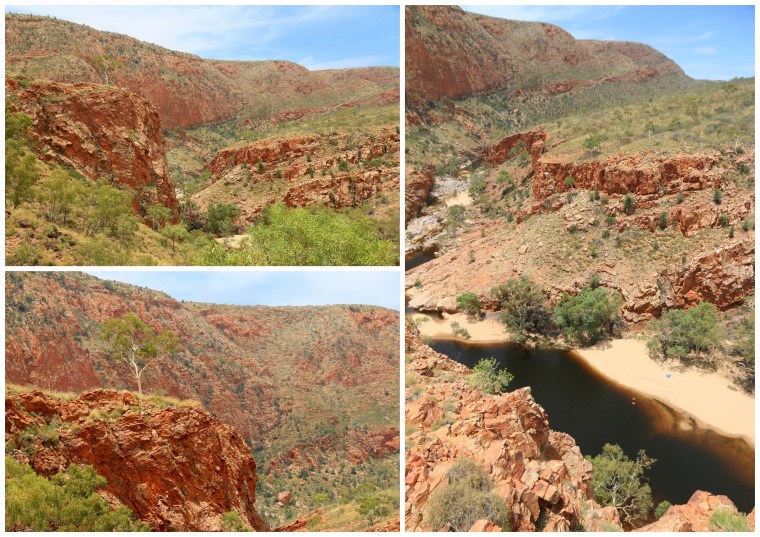
Refreshed, you may like to take a post-lunch dip and float on the waters that have collected in the hollows of Ormiston Gorge, ten minutes or so up a side road from Glen Helen. Or, like me and several others, you may wish to feel the full force of the early afternoon sun on a short but steady climb to an overlook. Perhaps it is the sweat from collective hordes of visitors that gathers in the open air swimming pool several hundred feet below?

Still, it is all worthwhile toil, for the view is pure red heart of Australia stuff. With trails and river beds and curiosity beckoning on every rocky ridge top, you can begin to see why Aboriginal tribes were prone to wander. For food and water for sure, but there is also something captivating and enticing about this landscape which is hard to describe. It wants to lure you in, to see what is around the next corner, and, in doing so, to fool you into a frazzled state of bewilderment and possible death because you are not part of it.

alice06

Thankfully, an air-conditioned minibus was enough to tempt me away from disappearing into a chasm, but I have made a mental note of the Larapinta Trail – or parts thereof – for future reference.

The pleasingly cool bus happily commenced its return to Alice with another waterhole stop – where you could invariably change into swimmers, bathers, togs, swimsuits or just go stark bollock naked – to come. And then, what will later be re-created as an episode of pure outback horror for some, commenced. A puncture, hordes of flies, hot afternoon sun, circling vultures, probable snakes, likely serial killers. Would we make it back in time for our dinner reservations? What about our flights tomorrow? What if we get eaten by kangaroo zombies? Anyone want any lamingtons? AGGGHHHHHH, lamingtons, help!!

Mercifully, the tyre got changed, with just a little help from yours truly. Being the only male of a certain age on the bus I felt obliged. And a touch heroic, vanquishing the oily grime from my hands with a wet wipe from someone’s handbag. What. A. Man. We still might make the waterhole stop now, and not have to eat lamingtons to survive. Unless we get another puncture, but what are the chances of that?!

alice07And so, ten minutes later with a flat front right, someone opened the lamingtons while others flagged down help to get a message back to Alice for another bus to be despatched. Certain overseas visitors couldn’t fathom that there was no mobile reception here, and it was not as simple as getting a rescue helicopter so they could still make it in time for their dinner reservation. One hour in, an extended family resorted to playing the ABC game and I desperately hoped they would ask me to join in. Two hours, and restlessness heightened. People needed to pee in the bushes and generally say what they would have done differently with the eternal benefit of hindsight and no experience whatsoever travelling in the Australian outback. A man with binoculars scanned the road on the horizon, each occasional sighting of a vehicle bringing brief hope before its despair.
Two and a half hours in, one more vehicle sighting provided another glimmer of hope. With sunlight dipping, the time when kangaroo zombies stir from the caves was nearing. I had resisted the lamingtons thus far and wanted to keep it that way. The vehicle slowed and revealed itself to be an identical minibus, apart from some livery telling us it’s the airport shuttle. Jeez, that’s some transfer, so let us hope it’s for us.

And of course it was, for this isn’t really an outback horror tale at all, just some inconvenient episode that soured a fine day but will find use in a vacation anecdote (or maybe even an inane post on an obscure blog). It may have already appeared on Trip Advisor, thanks to the ruining of dinner reservations. And of course, it’s just another reminder that you’re back in Australia Neil, the real ‘Straya. And there aint a lot you can do about anything in the real ‘Straya, so suck it up, maaaate!

Australia Driving Green Bogey Photography

Advance to 2016

The best way I can describe a thirteen hour flight from Europe to Asia is that it feels like one elongated sigh. Tentatively sidestepping countries that may be a tad hostile to flying objects creates a convoluted route, and ample time to mull over life’s little niggles. Like why won’t my seat fully recline? And what possesses airlines to have one hundred movies, all of which are at best mediocre or at worst starring Tom Cruise? Worse than that, the selection of ‘comedy’ contains no trace of wit whatsoever, churned out direct from Hollywood with copious amounts of canned laughter. Six hours in, zigzagging the Middle East, I can understand why the Scotsman in front of me downed wine after wine. And never shut the f**k up.

So I was undeniably a bit delicate and frazzled arriving at Kuala Lumpur International Airport, but pleased to be on solid ground. It was now – somehow – eight in the morning on New Year’s Eve. Usually I would march through various sterile checkpoints and stride ten miles by travelator to board a plane for a further nine hours of frustration at 36,000 feet. This time, though, I was embarking on the luxury of a stopover, and a new spot to see in a new year.

You know you are no longer in England when you are whisked at high speed in spacious and air-conditioned futurism to the middle of a city somewhere over the horizon. All sleek glass and swish whooshing noises as stunted palm trees and suspiciously golfy-looking estates flash past in a blur. You also know you are no longer in England when you turn into a gasping pile of sweat traipsing through an inner city jungle. Despairingly unable to check in to hoped-for luxury so early, KL had me bright, hot, and early.

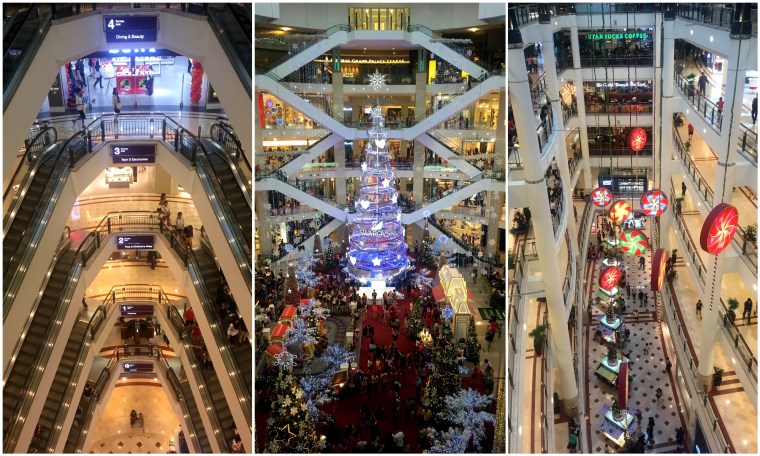
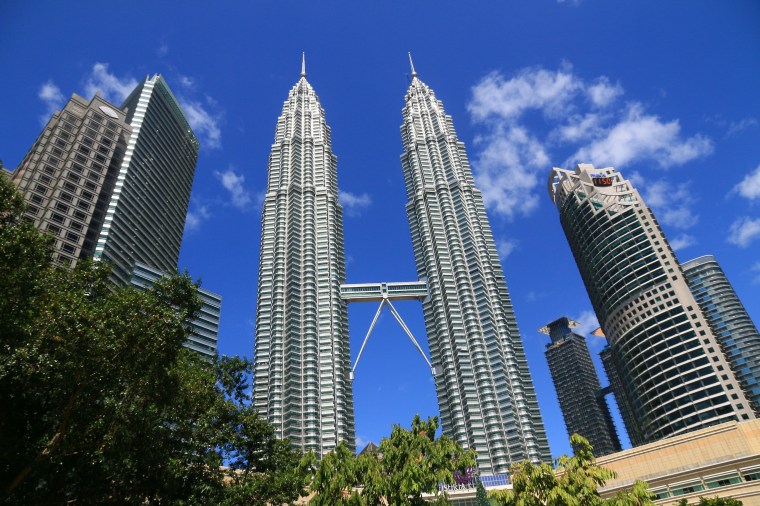
So, I clambered up steps and dawdled down hills and crossed roads that were of questionable safety, unexpected u-turns being a favourite of hundreds of mopeds per minute. Eventual refuge emerged in one of many shopping malls, wonderfully air-conditioned and extravagantly Christmassy. And to think I had the naivety to assume Christmas was done and dusted; here it was bigger and more opulent than ever, and with a mosque or two just down the road. Still, grand extravagance seems to have been all the rage in KL over the last decade or so, encapsulated in the shiny Petronas Towers stretching into the sky above Santa’s grotto.

kl01

Extravagance of a kind was waiting for me back at my hotel once I could – with the utmost relief – check in. There was a pool and gym and chandeliered lobby with lots of people in red uniforms and gold buttons feverishly milling around seeking tips. There was a water feature and sweeping driveway for parades of taxis and eight elevators to propel you to the 27th floor. A floor with city views but the most famous of the towers obscured. A floor with room and king bed and satin sheets and probably the most deserved afternoon nap ever…

……………………

…the city was still there and still in daylight when waking and I calculated that any New Year’s Eve fireworks would largely be obscured from this spot. Thus the option to see in 2016 in my pants with a bag of peanuts lost some of its appeal, and meant I had to put in the effort to go outside again.

kl02In the end I’m rather glad I did, because I saw a few different parts of the city and discovered a more chaotic and odorous KL, more befitting of one’s expectations of being in Asia. Luminous signs and satay sticks on smoke, bars with Bintang and bang bang, street sellers trading in ancient arts and iphone cases. I was offered a massage on at least fifteen occasions in the space of twenty metres and a tacky umbrella at every alternate shop. It was raining now, and threatening to dampen the wait until midnight.

When in KL, do what it looks like many of the Lumpens do. Head to a mall, never more than half a kilometre away. Revel in the cool, dry air and twinkling diamonds of Christmas. Take five escalators down to a gargantuan food court and then another hour to decide which sublime looking bargain concoction to eat. In the end I chose Japanese, content to fulfil my Malaysian quota over the course of the stopover.

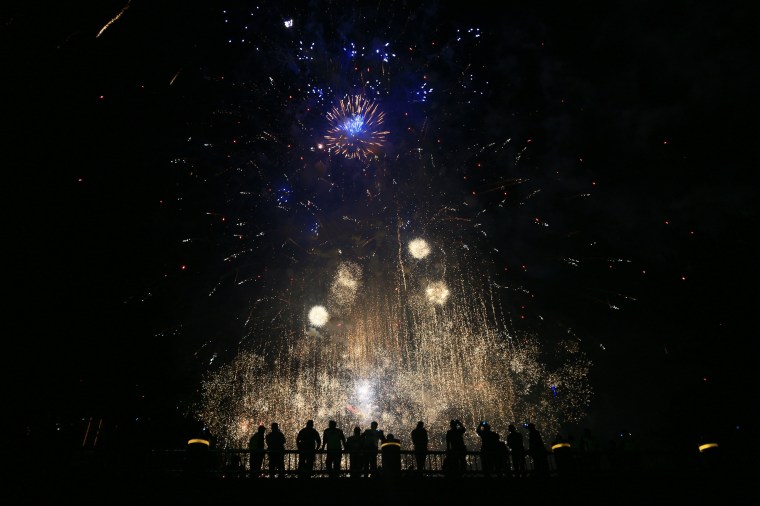
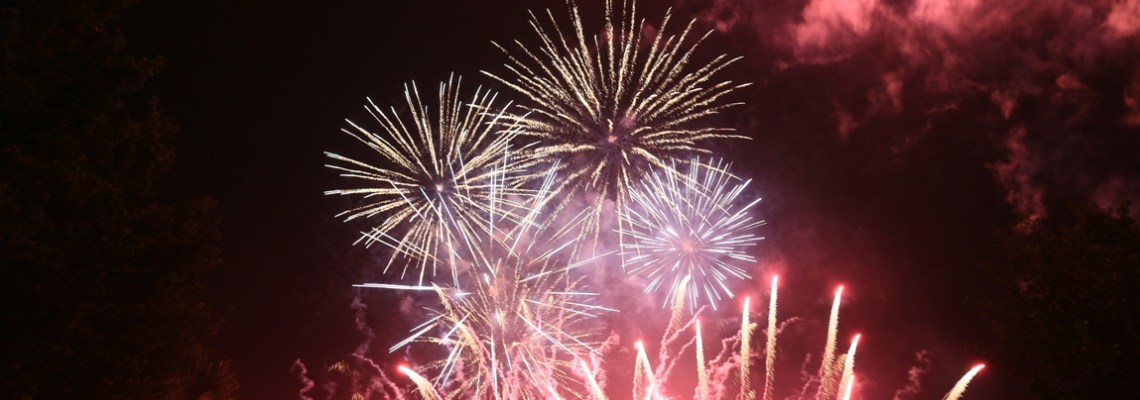
By ten the rain had stopped and I ventured back out into the night air to establish exactly where to watch fireworks. Logic dictated somewhere around the Petronas Towers, and I practically circumnavigated the perimeter of its adjoining park to suss out the opportunities. Eventually I came to a halt, joining an amiable throng of people lining the banks of a feature lake. Music was playing and coloured fountains were bubbling and projections were being beamed onto buildings, one of which handily had a giant digital clock. There was enough space and a clear view and even a little cooling breeze and I immediately thought this would just not be possible in Sydney at 11pm on 31st December.

kl03Only with ten minutes to spare did locals and visitors rise to their feet, counting down the final minute of the year. Phones and tablets floated above heads, forever capturing the last ten seconds of 2015 and the first few of 2016. Almost everyone pointed shiny screens at the towers, waiting for the bangs and sparkles. The clock struck twelve, the bangs rang out and the sparkles were, oh, behind you.

kl04

Now very happily in 2016, the first hour of the year was spent trying to avoid inadvertently photobombing selfies while taking a very gradual, processional walk back to my hotel. What was an easy entry became a more congested exit, but there was a jovial aura, strangers were friends, the crowd was cosy and the blaring of cheap plastic horns was incredibly annoying. My mind said SHUT. THE. HELL. UP. But good manners and New Year cheer ought to persist for at least an hour, I feel.

I enjoyed the final day of the year immensely and was glad to have made the effort to see in 2016 in a different place. The first day of the New Year commenced uneventfully – subdued even – and I was in no rush to check out early and embrace the mugginess. Farewell five star comfort and hello hours of walking and pausing and dodging traffic and cooling off in every mall stop available. First mall for iced coffee, second mall for lunch (a highlight-worthy Nasi Lemak), third mall just for the hell of it. Across from this, the monorail took me laboriously to a further mall, acting as a glorified transit tunnel towards the Botanic Gardens.

kl05Any city worth its weight in Ringgits can only be judged by the quality of its Botanic Gardens. Here they were – for the most part – divinely lovely. In spots shadily cooling, tropically exotic, elegantly coiffured. A few quiet roads intersected with meandering paths and crossed ornamental streams. Most welcome though was the relative peace and calm, a sanctuary in what can be a busy, noisy, pungent place. And surely that is all you can ask of a city’s Botanic Gardens.

kl06Heading back down into humid chaos and occasional grime of the city I unexpectedly stumbled onto Kuala Lumpur’s Central Mosque. I like it when random stuff like this happens in places you have never been before. I may not have chosen to go there, but here I was now, and appreciative I was of the geometric architecture and alignment and symbolism crossed with a concrete styling worthy of Plymouth city centre post-war brutalism. You were welcome – as a non-Muslim – to visit inside and be guided around the place. The only stumbling block was the thought of taking of my shoes, and subjecting an entire religion to the smell of my by now equatorial flavoursome feet.

So I pushed onto the frequently touted in guidebooks but underwhelming Merdeka Square, crossed a very brown stretch of water, explored the Central Markets disappointing lack of food stalls, struggled to cross complex road intersections and eventually ended up back in Bintang. Daytime was quieter and generally devoid of satay sticks. Massages appeared to be a thing of the night. Only ambling tourists and opportunistic traders lingered, while everyone else must have been at the mall.

With seemingly little left to see and do and weariness now set in, the mall became my refuge as well. I still had five hours until my flight departed, but time for some dinner and a sit on a bench and a potter around a bookshop. Endless arrays of escalators from an M.C. Escher fantasy took some strain off the feet. Christmas was still out in force, perhaps for just a few more days, but I was quietly accepting of this by now.  For all that I was starting to tire of malls, it still beats being cooped up on an aluminium tube, fighting a losing battle with headphone sockets and movies featuring Tom Cruise. I was ready to leave but also wasn’t. The tedium of the tube awaits, but at least it would deliver me – at last – back to Australia 2016.

kl07

Green Bogey

Changing of the guard

Britain is a pretty unspectacular place. It has no alpine peaks or broad rift valleys, no mighty gorges or thundering cataracts. It is built to really quite a modest scale. And yet with a few unassuming natural endowments, a great deal of time and an unfailing instinct for improvement, the makers of Britain created the most superlatively park-like landscapes, the most orderly cities, the handsomest provincial towns, the jauntiest seaside resorts, the stateliest homes, the most dreamily-spired, cathedral-rich, castle-strewn, abbey-bedecked, folly-scattered, green-wooded, winding-laned, sheep-dotted, plumply hedgerowed, well-tended, sublimely decorated 50,318 square miles the world has ever known – almost none of it undertaken with aesthetics in mind, but all of it adding up to something that is, quite often, perfect. What an achievement that is.

montage1

And if you are thinking that is the most masterful, evocative, and passionate paragraph I have ever written (or, alternatively, overly rose-tinted, nauseating and contentious), then you are just plain wrong. For the always marvellous Bill Bryson had that to say in a Christmas present I bought myself, courtesy of some shady international bank transfer originating in Switzerland. With researcher instinct and the preposterous suggestion that someone might a) read b) notice and c) sue me for breach of copyright, that would be Bryson (2015, p.33).

montage1aNow, back to some original nonsensical drivel, and Christmas in Great Britain finally came and went. Blink and you may have missed it. I think I was part of it – my waistline certainly attests to such – but already it seems a world away. I remember a Christmas jumper and a gargantuan dinner and a predictably endless game of monopoly. I recall a losing battle to eat my way through four types of cheese and multiple slices of ham and final dollops of clotted cream with practically anything. I recollect a Boxing Day trip to Argyle and another success to stay top of the league. This part sounds the most fantastical, and perhaps I really am just dreaming.

montage1bA fond memory persists from Christmas Eve, rain sweeping briskly through to provide a few bright hours pottering in Polperro and tackling a cloying coastal path. Sunlit and sedate, contentedly winding down towards the Christmas weekend, it was all rather lovely. With the addition of a Doom Bar in a low-ceilinged, cosily log-fired, jauntily handsome pub, it delivered a moment to cherish.

I like to think it was quite a feat for me to make it through to Christmas…November and December testing my patience for all things grey and damp. But in reality it was barely a chore. Over almost half a year I came to love the variety, the luxury of choice for walks and wanders near and far. I marvelled in some unseasonable early autumn weather and wallowed in a shifting, fading, tinted landscape. I discovered new wonders like the Jurassic Coast and sublime pockets of South Cornwall and cultural and historical hotspots of London town. I also found comfort in the familiar, the cream teas and BBC and old friends and Plymouth Sound. True, I struggled to adapt to an unending parade of TV soaps (how much Emmerdale does one really need in life?), but became wearily accepting of the indifferent coffee. I adjusted and accepted and it became the norm.

Now things shift back to Australia once more and a counter-adjustment is in flow. No bothersome soaps and plenty of amazing coffee. Warmish temperatures (not that it ever got cold in England), but still some rain. Pitiful ‘Devonshire’ Teas. An absence of a delectable coast path, but a plethora of sweeping bushland trails in its place. Happy reunions proving some compensation for forlorn farewells. A new year commences with a newish start in what feels – at this point – a new place. A novelty that will quell my curiosity for the weeks and months ahead, until England – and its people – comes calling again.

montage2


Reference

Bryson, B. (2015). The Road to Little Dribbling. More Notes From a Small Island. London: Transworld Publishers

Great Britain Green Bogey

Lighting up the dark

What were once, many month ago, memorable firsts are now becoming cherished lasts. Pasties. Cream teas. Crossings of the Tamar. Episodes of The Apprentice. Fleeting appearances of the sun. A sudden realisation that I’ll be in Australia in a couple of weeks has triggered a desperate clamour for final foodstuffs and must-do jaunts. Mostly foodstuffs…but there are minimum requisites to properly bid adieu – again – to this comely corner of the world.

Crossing the Tamar into Cornwall is one of them. Having wallowed in some tremendous sections of the county over the past few months, I decided to sign off in style. Winter may have brought miserable mild drabness, but it has blessed us with quiet roads which make the far, far west more readily amenable to a day trip. And open for a taste of genuine Christmas charm.

xcorn1Driving through squalls on the best weather day for a while, I first paused next to the surging Atlantic in Portreath. Brisk winds had parted the clouds more generously than I had hoped, and the uplifting sea air was matched by a decent coffee and indecent chocolate salted caramel slice. Another cafe stop to store in the archives for future reference.

xcorn2Westward from Portreath the coast road skirts booming cliffs and precipitous drama. At Godrevy, the massive expanse of St Ives Bay sweeps into the golden sands and stoic dunes of the coastline. Today the bay is lively, stoked by an unending blast of brisk southwesterlies and intemperate swell. The surge sounds incessant, thrusting and thrashing, cursing and crashing at England’s door.

xcorn4

Seals shelter in deep coves while humans embrace the sunshine seldom seen. One member of the species slips on an innocuous patch of grass and is caked in mud for the rest of the day. The last time I hit the ground around here it was done with glee, jumping into the giant sand pits as a nine-year-old.  Other distant Gwithian memories include stinging nettles, six ounces of American hardgums from the old dear in the post office, and several jolly circuits on a campground in an orange Reliant Robin. Plus scenes of the lighthouse, steadfast on its island. Today as vivid as any a memory.

xcorn3

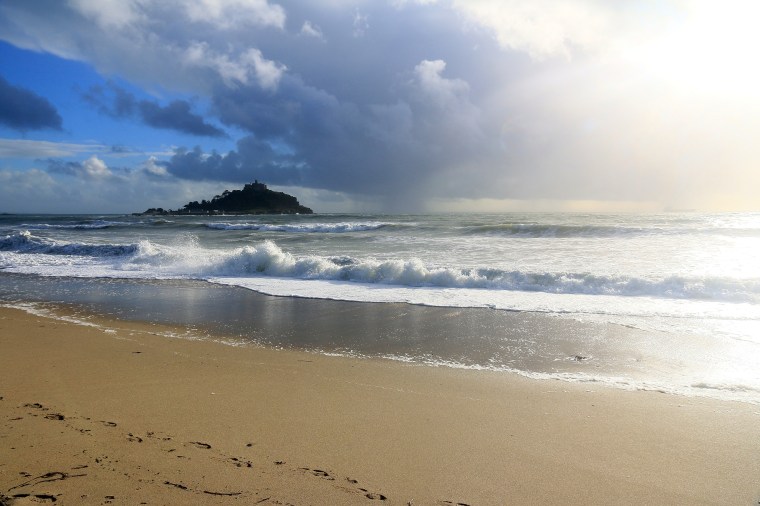
More memories can be made with a proper job pasty experience, vital for the Cornish farewell. I have had a few. However, in a radical departure from the norm I planned my attack for Marazion, vaguely recalling a tiny bakery here serving delicious bundles of scrumptiousness. And there, on a corner of the higgledy-piggledy high street, it stood. Closed. Still, consolation came from the vista across Mounts Bay and the ever-photogenic St Michael’s Mount.

xcorn5

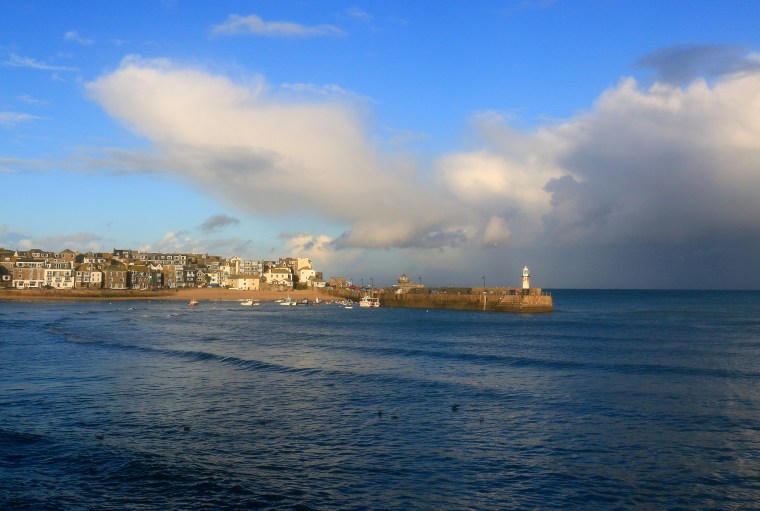
Luckily there is a little place I know back up the road in St. Ives, known as Plan P. It has served me well in the past. Today, on the Sunday before Christmas, the miracles of St. Ives included finding some free on-street parking, dodging a nasty-looking shower, and feeling grateful that one of the few bakeries open was open. A few lingering seagulls paced around opportunistically, but they didn’t stand a chance.

xcorn6

Ragged cliff walks, booming seas, sweeping sands, plump pasties…all classic Cornishness ticked off in a few hours. This year’s farewell comes with a difference though, being deep in the depths of December. Thus far I have struggled to rediscover the delights of a northern hemisphere Christmas – the build up seems a needlessly drawn out affair and the climate has been pitifully non-Dickensian. I was hoping Mousehole might change that.

xcorn7

xcorn8Tucked away along the coast from the Penzance-Newlyn conglomeration, Mousehole is fairly unremarkable in being yet another remarkably quaint and cosy fishing village perched upon the Cornish coast. Dinky cottages meander along narrow streets and nestle in its hillsides. Small boats rest ashore upon stony harbour walls. Briny smells and hollering seagulls pervade the air. A pub tempts, and tea shops too. It could easily be Mevagissey or Port Isaac or Portloe or Polperro. But it is Mousehole, and it is Christmas.

xcorn9

Sure, the weather hardly evokes a Christmas card scene, but the harbour lights delight. Lanterns line the sea wall and crisscross their way above the busily constricted streets. Festive shapes twinkle and shimmer off the water. The pub is jammed with bonhomie and drooling lines spill out of Janners chippy. While a brass band wouldn’t have gone amiss, it is as close to the unrealistic Dickensian vision of a Cornish Christmas I had yearned for. And today it is the icing and marzipan on a special goodbye cake. Avv an ansom krissmus one and all.

xcorn10

Food & Drink Green Bogey Photography USA & Canada

Floody ‘ell

So it turns out ‘The North’ is more than just a fictional imagining in George R.R. Martin’s gargantuan head. There is a real place in which gruff folk with grizzled beards mumble about stone walls. The weather can be cold, but it is mostly just bone-chillingly wet; sombrely leaden. Expansive wilds present a bleak, gritty beauty, tamed only in picturesque patches of lowland. Sheep cling forlornly to the slopes, anticipating, finally, the coming of winter. Further North, an ancient wall struggles to keep out wildlings, armed with Tennants Super on the 0900 to Euston. We are in Cumbria.

lk04

Cumbria before the floods, but only just. After a soggy few days on the Lancashire coast, it wasn’t much of a surprise to travel up the M6 in a medley of drizzle, dark cloud, and downpour. While a brief period where I didn’t have to use windscreen wipers offered hope, this was dashed with unending persistence once in the Lake District National Park. And so, from umbrella buying in Bowness to umbrella usage in Ambleside to umbrella drying off in a neat hotel in the middle of nowhere, there really wasn’t much to do in this greatest of outdoors.

As the dim skies faded black and the patter of rain continued apace upon the skylight I decided to make a break for it and check out the bright, Christmas lights of Keswick. I was hoping for a Dickensian scene of late night shopping, market stalls with hubbub and mulled wine, brass bands blaring out Once in Royal David’s City, and ribbons of light twinkling above curving cobbled alleyways. The reality offered some lights but little else, as the town appeared to be hunkering down for the night. With sodden shoes and a reduced-price pork pie from the Co-op, I retreated back to the car, umbrella decimated by a gust of wind, facing only the promise of driving through surface water in the dark. I made it, but Keswick did not. Two days later it was flooded.

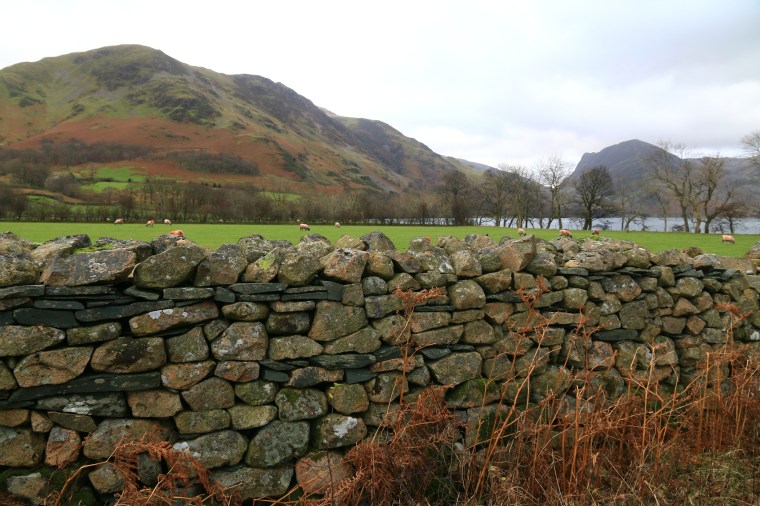
Oh for a dry day and, for most of Friday, it happened. It wasn’t exactly bright or pleasant, but for a few hours the rain had paused before it was to come back in such vengeance. A few puddles dotted the road alongside Derwentwater on the way towards Honister Pass. Softened valley villages and stonewalled farms yielded to barren upland, coated a deep brown with the dying bracken. A steep decline worthy of the Tour De France returned things to something closer to the idyllic around the idyllic sounding Buttermere.

lk01

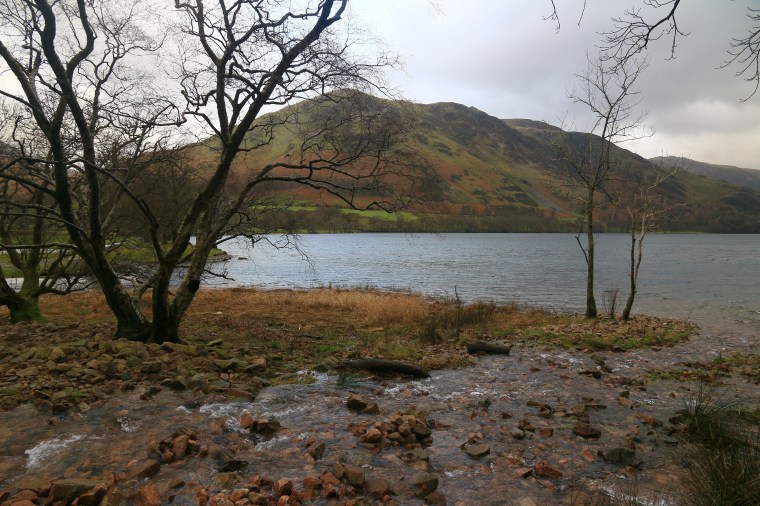
This was my chance to revel in dreary dryness, to soak up bleak melancholy, to wander lonely as a big grey cloud. The lake could be circumnavigated and it came as something of a surprise that the path was still in good condition during the two hour loop. Only once was a rocky detour required due to a swollen lake edge. Oh, and a couple of steps through a rising brook. Hang on…I almost forgot…that falling ass over tit moment on a small stretch of grass linking the road back to the path. Muddy bottom, muddy camera, but thankfully no-one around to see my slippery fall from grace.

lk03The scenery was undeniably beautiful. One wonders whether it would be improved by sunlight and fluffy white clouds, buttercups and warmth. Probably. I remember it as such on a brief stop ten years past. Today, it was moody and, to be honest, me too. After a week without it, I just really really REALLY craved the sun. But at least it was dry…so mustn’t grumble.

lk02

lk05

lk06With all the previous day’s rain it was no major surprise to encounter a series of stretched out cascades and falls plunging down the steep-sided fells towards the lake. I suppose this is some recompense for the deluge, but so frequent and incessant is the sound of water that it makes you want to pee really really badly. And there is not much in the way of foliage left to offer shelter and protection.

Still, relieved and closer to the end, an alien sliver of blue sky opened up to the northeast. A chink in the steel armour, it was something to cling to, something to chase. Briefly it illuminated some hills in the distance, but failed to deliver anything of solace on my face. There would be little chance for anything to air for long.

lk07

lk09Completing the Buttermere circumnavigation, I jumped back into the car to venture over a narrow pass and down to the western edge of Derwentwater. That chink of blue sky was somewhere in this direction, and I may have bathed in it for all of twenty seconds. Unfortunately I was in the car at the time, but it was still a very special twenty seconds. A valley glowed. A farm building shimmered. The sheep murmured quiet contentment. And then the strong wind sent it away, off into the distance.

lk08

Early afternoon in Keswick and things had actually dried out a little – perhaps it too had been briefly kissed by the sun? There were people on its streets and a hint of something Christmas-related in the air. There was no wafting smell of hot pork pie though, but then I began to question whether this ten year old recollection was actually in Kendall rather than Keswick? So, of all things, I ended up with a Cornish pasty in the cute town square.
Determined not to suffer a food disappointment to compound my rapidly redeveloping British glumness, I set out on a mission for afternoon tea. For what else is the Lake District if not the archetypal biscuit tin setting for afternoon tea? Grasmere sounds a likely spot, full of tea shoppes and crafty gifts to cater for poetic dreamers. A place where a pot of tea can – at a single moment – feel like the best thing in the world. Elation amplified by a gigantic slice of treacle tart, sickeningly delectable. A high on which to leave the lakes and to treasure a day of figurative sunshine amongst the December clouds.


Driving Great Britain Green Bogey Photography Walking

I’m an Australian, Get Me Outta Here?!

Every once in a while I pick up on a sign that I have been in Britain for a lengthy time. The coffee becomes more tolerable and I seek out a Costa. I engage in the politics, once finding myself watching Andrew Marr on a Sunday morning and invariably tutting and name-calling towards an array of politicians (just like a Sunday morning with Bazza and co in Australia). I also develop greater familiarity with popular culture, aware at least of which predictable warbler might remain in X Factor and who ends up eating cockroaches in the Gold Coast hinterland. I am persuaded that Ant and Dec can actually be quite funny. And reminded that most of the press remains dire, particularly for non-xenophobic lefties.

If anything, weather fixation intensifies and I obsessively scramble to watch the national forecast on BBC breakfast every morning. And then the local one ten minutes later. Absorbing, calculating, praying in hope that there will be a clearer slot in between graphical blues and greens depicting more rain. I doubt that I have used the word ‘dank’ in Australia, but here it re-enters my lexicon. It was inevitable, but it still comes as a disappointment.

I later discovered that November was the gloomiest on record which is absolutely brilliant isn’t it? Bright spells were as rare as succulent oak trees in a delightfully scorching sun-blasted desert. Any glimmer of blue (or white or less grey grey) prompted me to seek the outdoors. Sunshine and squally showers meant a good day, like on an outing to Newquay with Mum.

nov01

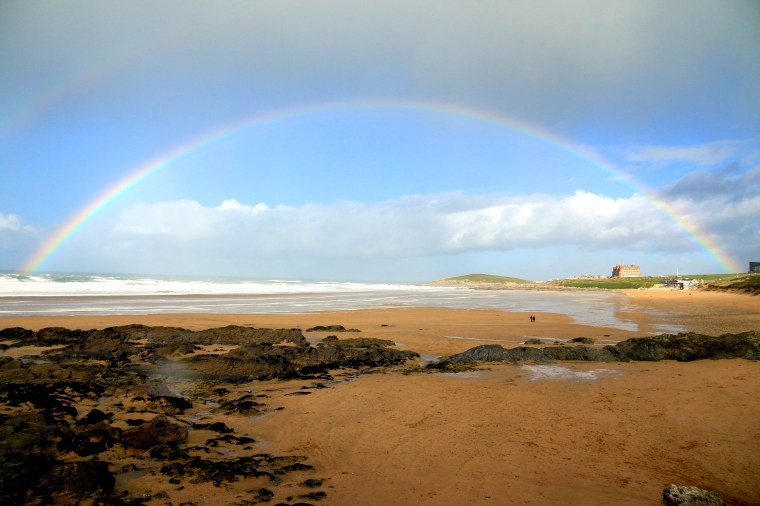
I would naturally avoid Newquay in the summer, jammed as it would be with school holiday sun-seekers stumbling over surfboards and clinging to caravans. Out of season is a different proposition though, with Fistral Beach sparse and surfers unwilling to venture upon seas whipped into meringue peaks. An out-of-season foam party streams onto the sand as a continuous crashing soundtrack booms in from the Atlantic.

nov02

nov03It is – to be sure – bracing, but seems more purposeful than hunkering down to watch endless episodes of Pointless. We pursue the headland for the 360 degree views and a ragged crossroads of wind and water and land. Shelter is close and welcoming, provided by another Stein enterprise which can comfortably survive a winter with fish and chips and bread and tea specials.

Post-batter and it is back through the foam party and across to Pentire Headland. Similar to before, angled walking is required to puncture through a north-westerly headwind; pausing still to take a photo requires strength and agility. Waves crash on three sides and filter into the beach at Crantock. A distant squall promptly bears down and sends us scurrying for the car. The rain is back, and the blue sky gone again.

nov04

My standards of what constitutes a good day in November have lowered, indeed plummeted. A grey morning triggers a return to Noss Mayo, an oft-visited haven but never so late in the year. What once was quaint is turned dour, the sheep peppering the coast questioning their existence and the yachts of the estuary creaking in ghostly wails. Bleakness envelops and a downpour drenches me before I could seek refuge in The Ship Inn. Posh people hog the fire with a sense of entitlement. Times have changed but some things haven’t.

nov05

The weather folk on TV keep trying to sound cheerful, gleefully informing us that it is unusually mild for the time of year, before presenting a summary of the week ahead featuring words like “unsettled”, “rain at times”, “overcast”, and “winds increasing”. So it came as something of a surprise to wake one Saturday morning to find a frost on the car windscreen, hastily scraped off in an attempt to enjoy the blue skies before the clouds encroached and it became “overcast” again.

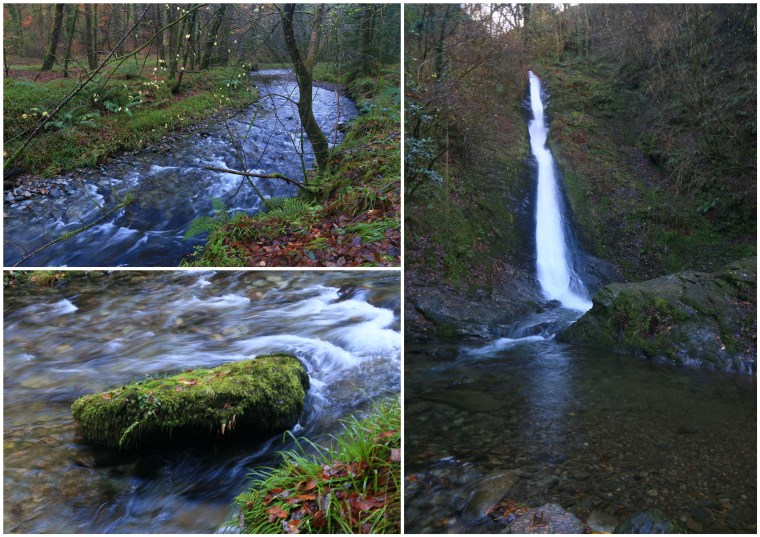
The moors were looking stunning in such rarefied light, swathes of bracken glowing bronze and raggedy silver outcrops piercing a deep blue. Not everywhere was shimmering though, the sun sitting on such a low trajectory that hollows and recesses struggled to shake off the shade. Thus on a nice sunny day I find myself in a chilly, dark chasm, following a beautiful watercourse in Lydford Gorge to the foot of White Lady Falls. A very reliable supply of water (i.e. Britain) ensures the falls plunge with suitable grace and power, offsetting the annoying lack of sunlight in the valley.

nov07

nov06With the trees rapidly denuding it seems that autumn is fast dwindling away into winter, even if the temperature is hardly playing ball. It starts to feel like Christmas is of course a-coming, although the shops have been full of Christmas since September. I cannot remember there being so many TV adverts for Christmas food, Christmas presents, Christmas drinks, Christmas movies, Christmas jumpers and Christmas music. I thought it would be nice to stay in the UK for Christmas, but this overabundance is starting to drive me mad. I guess that is part of the whole Christmas experience too!

Chances of a white Christmas appear non-existent, unless you escape to a seascape brimful of foamy fury. Unlike Newquay and the north coast, stretches of the south coast may not cut it for impromptu seafoamball fights, thanks to protection from Atlantic surge. Beaches like Bantham and Bigbury are generally more sedate affairs and miraculously the sun may break through the white cloud thanks to the shelter of the hills. At low tide, miles of sand act as a barrier to the elements and afford safe, non-muddy footing for bracing strolls.

nov08

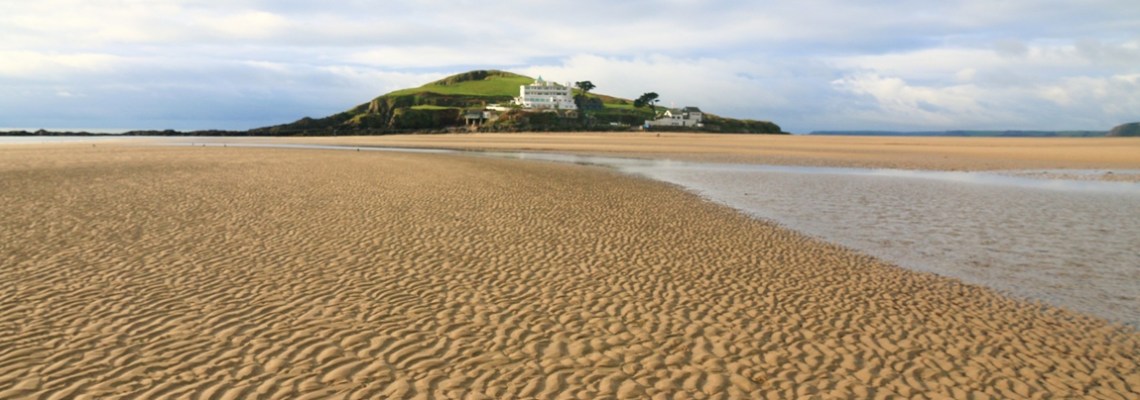
nov09Burgh Island is the centrepiece of this quaint corner of South Devon and easily accessed when the tide is out. Catch it at the wrong time and you’ll be faced with a giant tractor ride or a perishing wade through water surging in from left and right. Or maybe wait it out with a cocktail in the artiest deco hotel of them all. Alas, my re-acclimatisation means I am used to paying attention to the tide times along with the weather forecast and miss out on cocktails and tractors.

Despite the predominant cloud, despite the withering trees, despite the headwinds and squalls and muddy tracks, despite the gloomiest November on record, there is just a little charm and delight to be found. A few hours like those in Bigbury, or Newquay, or at Lydford make a world of difference. They are rare interludes, and may not be enough to persuade me I could do a whole November again. But then it could be a lot worse, it could be December instead…

nov10

Great Britain Green Bogey Photography Society & Culture Walking

Nuage magique

In further news not westcountry, here are some more pictures and jumbled words from a recent trip to the Geneva suburbs of France and the French bit of Switzerland. Family connections make such trips possible and while this can raise some minor irritations – think early starts, couch sleeps, tricky post-dinner cheese decisions – there are more positives than negatives. Like family fun at six in the morning, afternoon naps on a comfy couch when all is quiet, and fulfilling post-dinner cheese decisions.

Fr01

In addition there is the location, which provides access to two countries and cultures and some very hilly ground. I feel like I have at one explored much and touched only little over multiple visits. New settings emerge like the sun through the lake cloud, while old haunts linger, much like the lake cloud. Thus, in conclusion, the lake cloud is very variable and largely unpredictable in late autumn and sets the tone for the disposition of the day. Linger in cold dreariness or bask in pleasant, warm sunshine. Just be prepared to deal with it one way or another…

1. Disconnect sensory and logic-processing synapses

It looks like a pile of gloom. It sounds like a pile of gloom. It smells like a pile of gloom. It is not necessarily a pile of gloom, though it could be actually. Or maybe not. What is dark and leaden at the start of the 61 bus ride can be clear and airy at the end of it. Now, I know the 61 bus ride feels like an eternity for some, but not so long to make this transition conventional. You think there is no way under the (non-existent) sun that this pile of gloom will shift today, and it does. In the twinkle of a traffic light, your body which was in winter is now firmly in autumn and possibly just absorbing a residual hint of summer.

Fr02

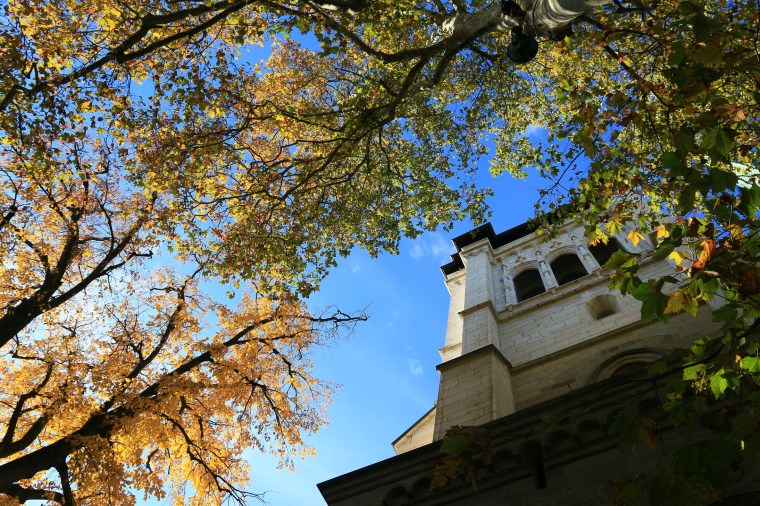
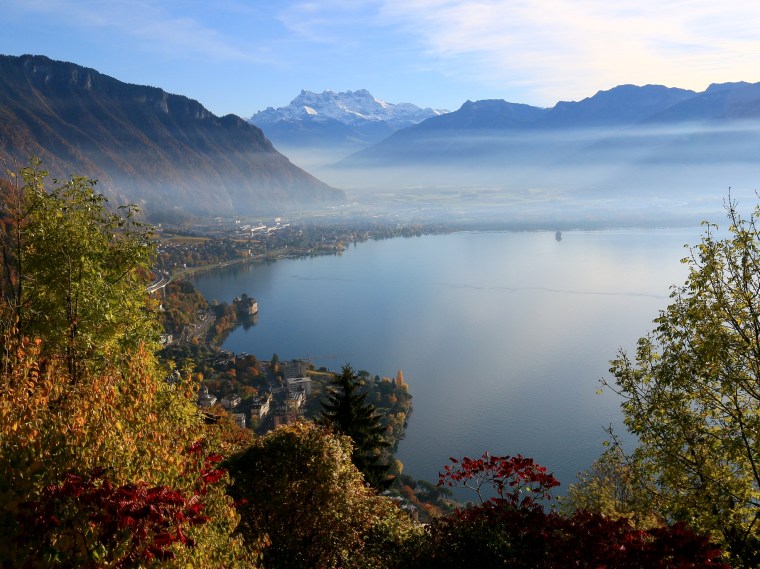
Fr03Of course, this is marvellous given such abysmal expectations. You find yourself beside the lake in Geneva all sapphire and topaz crystal. Leaves are ablaze with afternoon sun. A walk up into the old town warms the body further, despite its narrow cobbled streets in the permanent shadow of expensive jewellery shops and even more expensive solicitors. The Saleve – which didn’t exist before – punctures the horizon from the Promenade de la Treille. Children play merrily, students philosophise lazily, lovers embrace amorously. Where is the gloom? None of this makes sense.

Fr04

2. Ascension

There is wisdom to be had in the words of Yazz and the Plastic Population. It may take many hairpins and navigation through the inside of a big damp cloud, but go up and you may just end up above the weather.

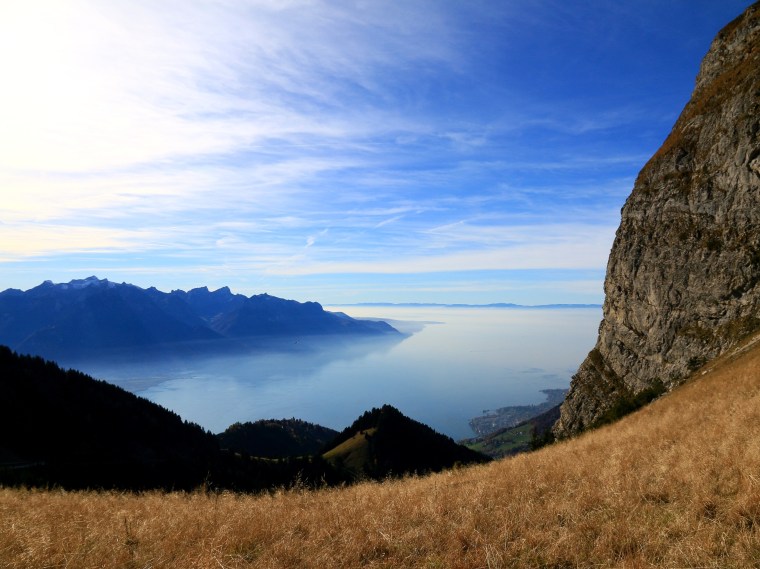
It was looking doubtful climbing up to a car park in the shadow of Les Voirons, a lumpy ridge rising to highs of 1400 metres. Only in the last few kinks of road did the mistiness glow bright and dissipate. Even then, occasional wisps of cloud hovered over the road surface, as if a smoke machine was spewing out its final puffs from a distant eighties dance-pop-funk performance.

In the clear air, churned up tracks through the forest conveyed a sense of truffle hunting, rabid dogs, and people with shotguns. After piddling about along these tracks for a little while, the only way was to ascend, bay-ay-beee. Up through millions of discarded leaves, into a clearing and views of the sea; a brilliant white sea lapping at the shores of craggy peaks and ice-capped spires. The very top of the Saleve a small desert island floating in this blinding ocean.

Fr05

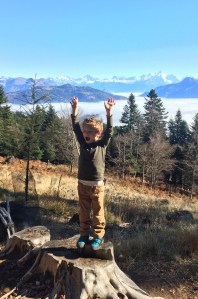
Fr06There was something very satisfying about being above the cloud, in brilliant blue skies, knowing that it was well miserable down there. As if you had stuck two fingers up to the weather and, for once, outsmarted it. Haha, yes weather, you are no match for altitude, mwahahahaaa! All your stupid cloud is doing is reflecting the sun and making me incredibly warm, so that I can cope in a T-shirt. And in making the valleys disappear, you accentuate the purity of the view, the drama and scale of the stunning panorama of the Mont Blanc massif. Yeah, screw you, cloud.

Fr08

3. Just eat

Sunday lunches are often best when they are lingering affairs, embellished with hearty food and infused with wine. They are the perfect antidote to grey skies and uninspiring temperatures, a strip of crispy crackling in a pile of over-boiled cabbage. Perhaps in the case of this particularly Sunday lunch it was the heat from the Raclette-melting contraption (it probably has a local name, like raclettesiennierre-de-montagne-lardonass) that generated just enough upward convection to part the clouds towards the end of the day.

Fr09Cue some reluctant shifting of our own lardonasses for a welcome amble in the nearby Swiss section of countryside. Golden light casts a serene glow on everything and everyone. A crispness in the air is refreshing and helps to dilute the strong odours of cheese. The cloud has gone again, and – in such endless skies reaching to the stars – it is hard to believe that it will so easily return.

Fr10

4. Try a different country

Okay, so perhaps Switzerland has all of the sunshine, what with millions of fancy penknives slashing at the cloud and all. So, with a free day out to use up courtesy of my rail pass I was able to penetrate deeper into the country and seek out its sunnier spots.

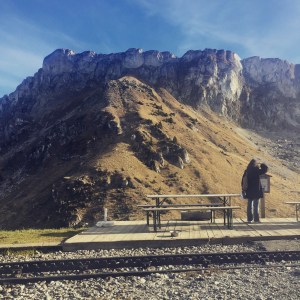
Fr11First, with cloud embedded deep into the valleys, I had to escape up once more. From the town of Vevey, a gleaming commuter train elegantly curves its way past chalets and chateaus to the suburb of Blonay. Here, a change of train (waiting on the other platform, naturally) shifts into a steeper grade through forest and occasional hamlets to Les Pleiades. Nothing much is at this terminus, apart from open meadows, scientific contraptions, and labourers preparing for the winter. But it is a spot well above the cloud, which sits snugly in its lake-filled indent, a luminescent glacier of cotton wool.
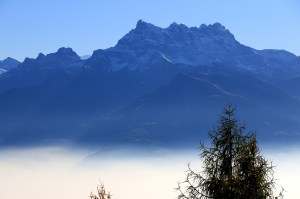
Numerous jet trails pierce the clear blue sky and it is warm again. This is the sunny side of Switzerland, all rolling green meadows and dotted villages. Happy to linger, I gradually stroll down, passing a small fromagerie and a couple of holiday chalets a louer. A barn sits empty, the cows having descended for the winter, the sound of their bells occasionally echoing up the valley. I move down too, only from what seems an alpine summer and back to a winter by the lake.

Fr12

———————————————-

My original plan was to hop on a boat cruise from Vevey, a sedate and civilised way to soak up the charm of the Riviera towns and the drama of the rising mountains. While some hazy breaks hinted at a clearing it was still predominantly grey; not quite the scene I had pictured in which I lazed contentedly on a wooden deck, the lowering sun illuminating the surrounding mountains. So instead – with free travel at my fingertips – I jumped on a train for twenty minutes to Aigle.

One of the problems with free travel and chronic indecision is deciding what to do with the free travel that you have decided to buy. At Aigle, two tempting options wait and time, really, for only one. Platform 13 and a train to Les Diablerets, Platform 14 Leysin. Both equipped to move upwards and no doubt deliver another hearty dose of gorgeous Swissness. One leaving in four minutes, the other in six…time barely sufficient for decision-making.

Jumping on the first to depart (Les Diablerets), the carriages immediately turned into a tram and clunked through the streets of the town. I caught a glimpse of the chateau on Aigle’s edge, and promptly jumped off at the first stop. There would be no time to visit that as well as Les Diablerets, so I crossed a road and caught the following train to Leysin.

Fr14With the sun now out in Aigle there was less imperative to climb, but the train relentlessly lumbered upwards. Surprisingly there was deception in that valley sunshine, as it became clear once up high that a layer of haze hovered at around 800 metres. The sunny valley was no longer visible, despite it being sunny when down there. What kind of sorcery was this?

Leysin itself appeared to possess charm and utility, no doubt bustling in winter and thriving in summer. In early November things were a little devoid of life apart from clusters of students, neatly attired, mostly Asian, receiving an expensive Swiss education in a school with a view. A few joined me on the train back down, through that mysterious haze which was only visible from above.

Fr13

In time-honoured tradition I hopped off the train a couple of stops early, prior to it reaching Aigle level. I had noticed on the way up the glimmering terraces adorned with rows of vines, golden in the peculiar autumn sunshine. The chateau would be visible below, and there must be a walk down, because a carriage of younger schoolkids disembarked here on the way up.
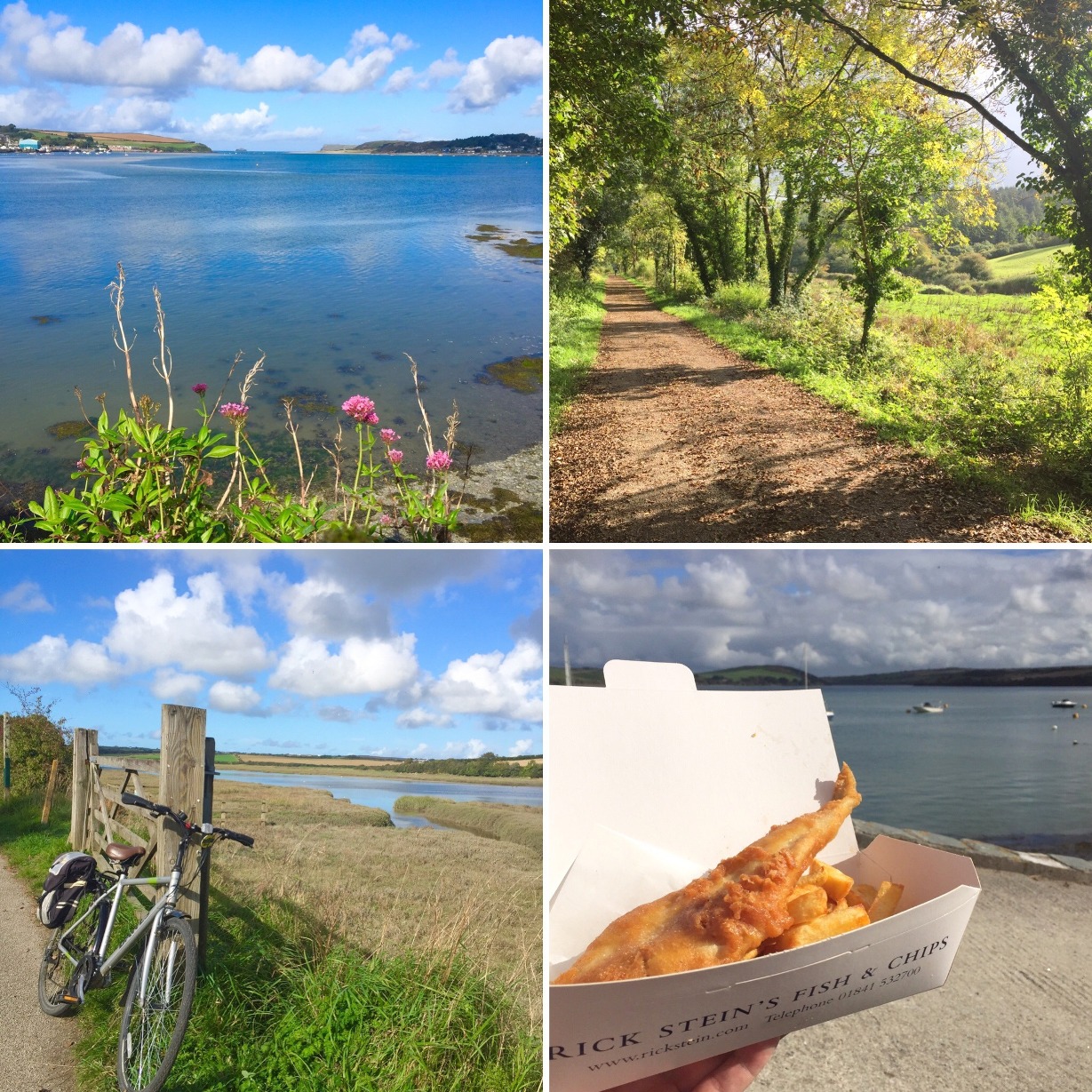
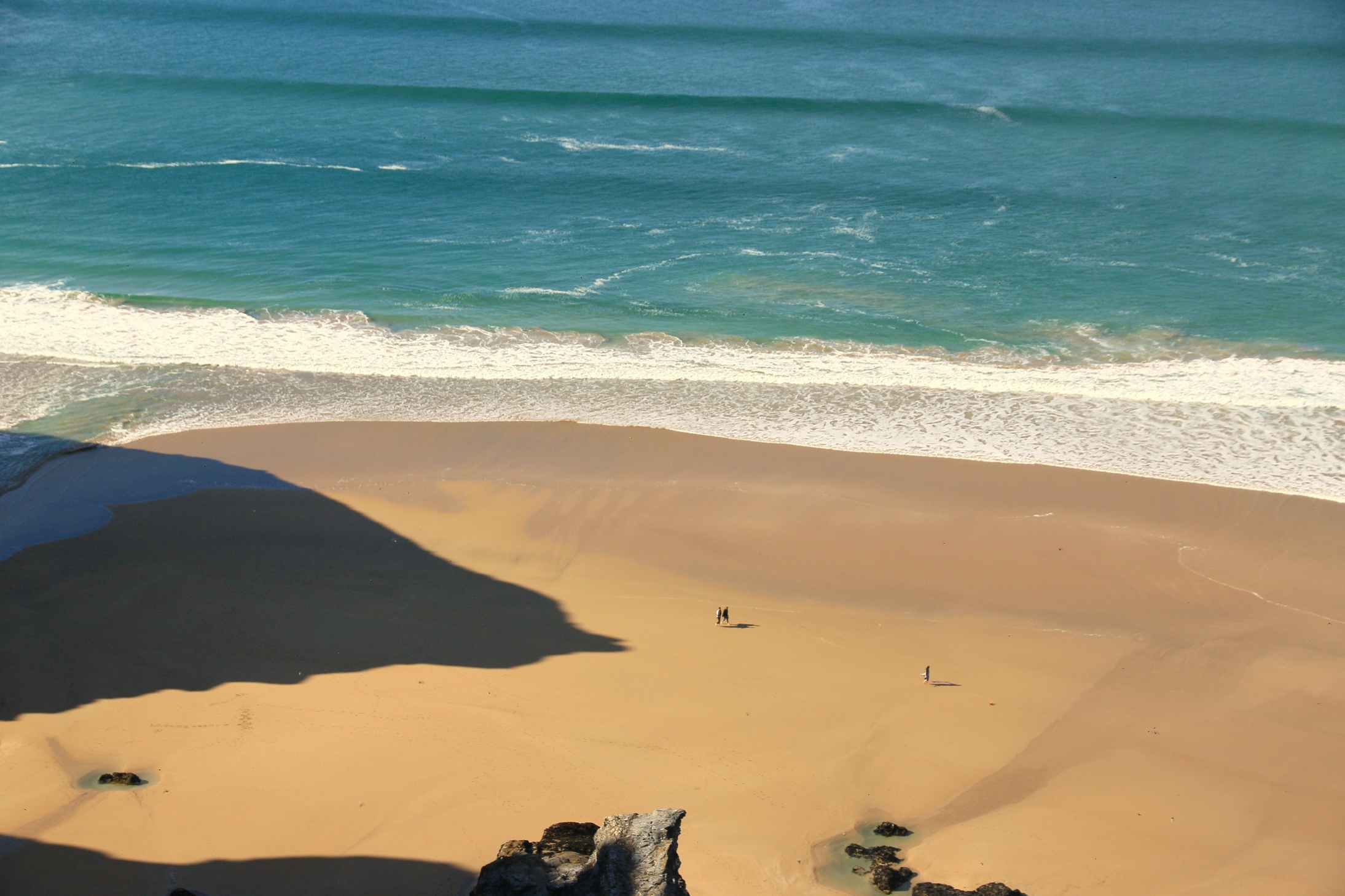
Fr15I have no idea how all those schoolkids assembled on the platform, such as it was: two square paving slabs dangling over one of the walls cascading down in giant steps towards the valley. What looked like some kind of drainage channel passed steeply under the rail track; the only other person to disembark informing me that this was the road-cum-path. And despite this initial steepness, it was a glorious walk, mostly following the small chemins used to transport grapes and labour. Occasional houses adjoined the route, each proudly displaying the name of the vigneron and date of establishment. One or two tempted with open doorways, while outside a couple of workers toasted a hard day’s winemaking with a crisp glass of white.

Fr16

Fr17With the light lowering in the clear (???) sky, there was barely chance to visit Aigle’s picturesque chateau before it would be cast into shadow. While sunset time was a little way off, the narrowing of the valley and the proximity of gargantuan mountaintops meant that it would soon kiss this part of the world goodbye. Darkness would return, and with it, the infamous foggy shroud of dank.

5. Suck it up, cheese boy

There is only so much successful blue sky strategising that one can manage, and fortuitous decision-making will eventually turn sour. While I loved practically everything about an overnight stay up from Vevey in the village of Chexbres – king-sized bed, amazing shower, big screen TV with 832 channels in English, French, German, Italian, Spanish, Russian, Arabic, Cornish, Swisshornian – the balcony view was not one of them. Beyond vine terraces and tightly packed village roofs floating in the mist a sparkling blue lake had disappeared.

With a midday checkout I dawdled for as long as possible for things to clear but today was not going to happen. On top of the low cloud, some medium level cloud and then some high cloud, with a few spots of rain and little hope of sun. I faced a cloud lasagne with bits of Switzerland oozing through the layers. Suck it up, cheese boy.

Still, the setting – in the heart of the Lavaux wine region – was very pretty, just that more subdued than the previous afternoon in similar terrain around Aigle. Wine has been grown here for donkey’s years, probably with the use of donkeys on the steep-sided terraces, frisked by slavering monks gagging for their next tipple. Today, a few mechanical contraptions – steep narrow-gauge rail tracks like fairground rides, convoluted water sprinklers, grape conveyor belts – have evolved, but much must still be managed and picked by hand.

Fr18

A network of chemins provides gentle and mostly traffic-free walking across appellations, between villages, and – occasionally – directly through the rows of vines themselves. It’s such easy and serene walking that you can comfortably end up strolling all the way into Lausanne. I practically did in the hope that the sun would shine as the hour lengthened. And, towards the end, the milkiest hint of sunlight filtered through the cloud levels, briefly giving the impression of a vast lake below, and high mountains beyond.

Fr19

A large patch of blue sky greeted me as I arrived back into Geneva’s train station. It seemed – from my limited recent experience – uncharacteristic that Geneva would be clear while further up the lake it remained damp and grey. Little of the day remained to enjoy it, but the light illuminated the final 61 bus ride back to Annemasse. And it provided a salient reminder that there is only so much you can do to predict, manage, and deal with the infamous wintry shroud of Lake Geneva.

Europe Food & Drink Green Bogey Photography Society & Culture Walking

Swiss day out

The number 61 bus from Annemasse Gare to Geneve Cornavin seems to pass as one of the longest short journeys around. I don’t know what it is about it…perhaps the trundle through France, with its oil-stained Renault workshops and flashing green pharmacie signs? Or maybe the sombreness of being beneath a Leman gloom cloud, omnipresent in early November? Though a seamless (at least then) border crossing sweeps you into a more sanitised array of Swiss shops and streets, the rattling and bending and last-gasp stopping continues apace. Stylishness and affluence glides in, bag ladies and yoof dribble out. No-one, ever, stands up for anybody else, achieved (for those rare species without tablets and phones) through an accomplished display of middle-distance gazing, looking at nothing or no-one in particular.

The journey only takes forty minutes or so, which is considerably longer than the one hour, thirty six minutes and forty nine seconds it took me to travel almost all of the Piccadilly line (from Oakwood) to Heathrow, which in itself was longer than the flight duration from London to Geneva. But this bus feels the longest trip of the lot, and it is with relief and excitement that you find yourself at the virtual terminus of the Swiss railway network (not to mention round the corner from Manor).

Looking for something to do – for lake cloud to escape and bendy buses to flee – I availed myself of a Lake Geneva – Alps Regional Pass. It took some finding, for there is nothing the Swiss seem to like more (well, apart from chocolate, cheese, and referenda) than a convoluted array of rail passes, network zones and travel conditions, all in French, German, English and occasional Italian. I could get a Swiss Card for a half-priced fare, or a one-day whole-of-SBBCFFFFS roamer, or a Zug Snausserhorn Goldenpass or maybe a Cloud Cuckooclockland permit, with 70% discount on VIP chocolate train seats instead? What is certain is that no Swiss person will ever pay a full fare and that – despite such ticketing intricacies – the trains will still run like a well-worn cliché involving clock mechanisms.

It’s not just the timeliness of the trains, but the efficiency of connections, something which never fails to evoke wonder amongst travellers bred on a discombobulated British rail system or faced with a practically non-existent Australian one. Connections to other cantons and cities and major towns, but also to tiny villages, hay sheds and pieces of rock in the middle of nowhere. Like Montreux – upon glittering Leman shores – to Rochers de Naye, some two thousand metres in the sky.

RDN01Lake cloud which started to fragment in Lausanne had virtually evaporated by the time I reached Montreux, for my seven minute transfer to platform 10 and the Rochers de Naye train. Departing exactly at 09:47 as planned, the two cogwheel carriages made no bones about it and immediately veered sharply upwards, through a tunnel and out onto sun-filled plateaus coated with luminous autumn foliage and expensive views.

Riviera homes for bankers, third rate Swiss pop stars and dairy farmers alike slowly passed by, and occasional stops in the middle of nowhere allowed regulars to jump off to reach their hidden retreat in the woods. While some stations resembled the genuine thing sited in proper villages, other stops were little more than a plank of wood or a metal gate. Here, the train would briefly pause on a 50% gradient, before rolling a tad backwards in a disconcerting motion accompanied by a grinding shriek of metal on metal. You could almost smell the sparks as Sepp hopped off and waved a cheery goodbye to Michel, brown envelope in hand, as though this was the most normal thing in the world.

With altitude the ‘suburban’ stops fade and only walkers and the curious remain at this time of the year. Many of the walkers disembark at the Col de Jaman to walk up the nearby bulbous lump that is the Dent de Jaman. The curious – such as I – stay seated, dedicated to reaching their highs the easier way.

RDN07

One final climb through a pitch black tunnel makes the dazzle of reasonably fresh snow all the more blinding. Such is the drama of the journey, the top station is a touch underwhelming. A few views are spoiled by ski infrastructure, while building work distracts from an overpriced and bitter coffee in the cafe. A couple of goats offer mild amusement but the jardin alpin is closed for the season. Fortunately there is a higher viewpoint from here, up a short series of switchbacks, from which Switzerland – and France – is on view.

And what a view. A long way down, Lake Geneva cuts a swathe like a bloated boomerang westwards. Beyond lumpy outcrops and hills forested dark green and charred red, the lakeside towns – Montreux, Vevey, Lausanne and others – portray one elongated urban jungle. Occasional tower blocks, cranes, churches, chateaus can be picked out, while the curvature of the rail line up from there resembles some kind of herculean bobsleigh run. The alternate side of the lake sits hazily desolate, hemmed in by the pile of Haute Savoie dents, cols and monts. On the horizon, the thin line of the Jura hovers above the remaining cloud, still seemingly enveloping Geneva.

RDN02

RDN06And that is just the westward view. In all other directions, a sweeping panorama of snow-capped peaks and plunging valleys reaches out into the distance. The behemoths of the Bernese Oberland pierce the sky, pointed and rutted and sharpened and sculpted. Pillars of rock – too precipitous to catch the snow – endure; like resistant teeth in a seven year old’s mouth. This raggedy snowline fades into darkly forested slopes and meadows tinged brown by the passing summer.

RDN05

There is still warmth in those upland valleys, a sun-trap that allows for wearing of T-shirts, particularly when walking uphill. Keen to take advantage of this unexpected vestige of a rapidly fading summer, I embarked on a circular walk pieced together with my Rochers de Naye leaflet and snatches of online maps for crucial moments of decision and misdirection.

Following a ridge gradually down from the viewpoint, I reached a junction: one way back through a small valley to the top station, or another down alongside a rock face to the Col de Jaman. Somewhere within this hulk of rock the train burrows through, while humans have to inch their way around on slate ledges and avalanche rubble. The route understandably prefaced with warnings involving sturdy footwear, slipperiness, and crumbling pieces of mountain made it an easy decision: lunch on a sunny patch of grass with a spectacular view, before heading back up the valley.

RDN08

RDN09Thus it was that I found myself down to a T-shirt (and trousers!) while walking through snow. The snow had obviously thinned as the day had progressed, but remained thick enough to obscure the last part of the trail up to the top station. Warm, slightly breathless, low on water…I could see the appeal of taking the train now, which again emerged out of its tunnel to taunt me. It was heading down, and – after safely completing my walk – I was to join it.

RDN11I could have plunged all the way back down to lake level but – determined to make the most of this wonderful weather (not to mention my expertly discovered rail pass) – I paused at the Col de Jaman station. Walkers were still setting off to conquer the lump nearby and close up it didn’t seem too bad. Switchbacks yes, but nothing that would cause undue alarm for someone with sturdy footwear and good heart. Maybe on another day, but today I was content to bathe in the sunshine accompanied by the remainder of my giant Raclette pretzel bought from the kings of Cornavin.

RDN12

RDN13

My final stop on the way down was somewhat spontaneous and turned rather fortuitous. I had made a note of Glion on the way up, purely because of the splendid views down to the lake and across to surrounding mountains, sweeping their way into the Valais. The foliage too – on this lower south facing terrace – was something to cherish in the eruption of autumn. Through the leaves and branches, glimpses of glassy water would emerge, encircled by the mountains rising upwards through the valley haze.

RDN14

RDN16The outlook was so alluring, the late afternoon light so enchanting, that I set off walking and carried on without really knowing where I was going. I assumed – given the gentle downward gradient of the lane I followed – that I would end up somewhere by the lake, from which an efficient and comfortable Swiss train would be waiting. Few cars bothered me, while occasional grand houses and health retreats sprung up on the slopes between the trees. At a kink in the road, passing two farmhouses, the view again opened out to reveal the colourful wooded hillsides tumbling down towards the lake, with a hint of winter looming upon the distant Dents du Midi.

RDN15

For all the fun of the train I was glad to complete this final part of the descent on foot, each turn revealing a looming mountain, glimpse of water or avenue of bronze. Merrily marching, time whizzed by and before long I did indeed reach the outskirts of Montreux, a feat achieved more through instinct than design. A long straight balcony of a road continued to descend, each house and villa passed with a tinge of envy and click of a camera. A churchyard offered one final panorama as the sun started to graze the tops of the peaks to the southwest before dipping beyond. In such a setting, even I might be tempted to attend Sunday service here.

RDN17

No doubt if I had stayed on the train descending all the way to Montreux I would have had such a simple and effective connection that I would be back in Geneva by now. Instead, arriving at the station on foot I managed to miss a train by a matter of minutes. The next was a whopping forty-five minutes away, an incredulous amount of time given Swiss standards. However, despite gathering weariness that comes with a 5:30am start and a ride on the 61 bus, I inched on down to the lake shore, feeling fortunate in the end to have missed that train…

RDN18

Such was the beauty of the day, the charm of the late afternoon, the ambience of the evening as the last light faded I was tempted to stay for some dinner and catch a late train back. Perhaps if I did I would not have had to – shockingly –stand in the vestibule of a railway carriage, at least until Vevey. It turns out (relative) congestion sometimes exists in Switzerland too.*

No such problems back in Geneva, with a seat on the 61 to push through the darkness and over into France, eventually. Some of the people – enduring a long, hard day of low-taxing money making – were quite probably on the same bus as me this morning, staring absently into the middle distance. Their laborious daily commute was my stroke of fortune, a crucial cog taking me to the top of a mountain and back. An unappreciated, maligned link in a great continental railway – and now bus – journey.

* I should add, trains can run late as well. On another journey of mine the train was once running four minutes late departing Lausanne. The conductor was beside himself with contrition and pleaded to the gods that this had not caused any inconvenience to anyone whatsoever.

Europe Green Bogey Photography Walking

The times, they are a changing

Okay, the southwest of England is driving me to distraction, what with its salty fishing villages, sweeping expanses of surf-hit sand, babbling rivers trundling though woodland, and rolling, empty moors. There is also only so much Cornationendersfarm City that one can take, so, come the end of October, a change of scenery proved timely.

To Basingstoke and a stopover en route to London. A stopover providing what must be the culmination of the autumn season, full of colour despite a grey day. Virginia Water conjures up Peter Alliss blather, Major Stockington-Breeches-Follybottom, faux-Greco-Roman palatial commuter estates and an endless array of Lycra and leggings jogging with pricey strollers in hand. It is Surrey leafiness typified, fringing the regal Great Windsor Park. A place that remains welcomingly open to all, Range Rover, Lycra, knighthood or no.

norf01

norf2On what must have been one of our more sedate walks, Dad and I set off to circumnavigate the water in a higgledy-piggledy fashion thanks to the allure of various trees and shrubs and leafy avenues peppered with colour. I don’t know if it’s the extra pollution, the degree or two increased warmth, the absence of ocean or – simply – the exotic plantings pillaged from the colonies, but everything was a lot more colourful than back in the southwest. And just as distracting.

norf03

norf04

norf05Eventually, we reached the end of the water, crossing the bridge and turning back for home, still some several kilometres though further leafiness, lakeside reflection, and ornamental falls. Despite the gentle pace, the walk became a little weary and there was a palpable sense of the faded glory that comes with descent into autumn and, then, the foreboding of winter. Jets occasionally screeching overhead from Heathrow, dankness in the air, it was evocative of an imminent departure back to Australia. But not this year, for I will taste (hopefully) just a touch of winter.

————————————

An extra hour in bed. That is the pitiful recompense so heartily proclaimed in an attempt to offset the despair of the sun setting at half four. For me though, this meant an extra hour to spend in Norfolk, which – given I had never set foot in the county before – seemed only fair to do it justice.

norf06It could have been Australia – there was the company of Jill and Caroline, a very good coffee, some sunshine, sandy beaches, wildlife and lots of boatpeople. But it also obviously wasn’t. Drizzle, roast dinners, M&S and numerous buildings in Norwich dating back at least more than a hundred years signified what end of the world this particular Old at Heart tour was cosily embedded within.

Sunday morning in the village of Acle was just a tad brighter than usual, thanks to that shift in space and time that may or may not signal the start of winter. Watery sunshine evolved over the day, illuminating the Norfolk Broads into a swathe of silvery reflections and golden reeds. The closest resemblance I could (laughably) make was to the Florida Everglades, though with fewer alligators and slightly more bumpkins pushing wheelbarrows to the village shop to buy fork handles.

norf8

norf09A delicious Sunday roast beside the water drifted into the dramatically shortened afternoon, leaving just an hour or so of soft, gorgeous light to explore the coast. Horsey Beach provided a remote seascape of gently rising dunes, collapsing into fine sand running like a protective ribbon along the perimeter of eastern England. A procession of groynes held it all together, occasional slippages and collapsed dunes testament to its precarious instability.

norf11Upon this spacious sanctuary, clusters of people stood in small arcs, as if participating in some kind of Sunday service towards the gods of the sea. Closer up and cameras and selfies and standing about in wellies talking about mating was more the order of the day. Seals – and a good many of them – were the attraction. Lounging about, agitated with the waves, occasional grumpiness spilling over into aggression, they were quite mesmerising to watch. Something pure and pristine in this regularly despoiled of isles. Carrying on doing their thing, as they fade into the shade of the towering dunes, lapped by a frigid sea as the sun flames red and darkness begins to fall. And all before five o’clock.

norf10

Great Britain Green Bogey Photography Walking

October, revised

If I had been diligent and conscientious and just a little more bored, I could have written something about the month of October by now (as well as July, August and September). I would probably have discussed the drawing in of the northern hemisphere nights and the first big storms barrelling in from the Atlantic. Meanwhile, down in the southern half of the globe, shorts and bushfires would be a genuine topic for discussion yet again.

octsw05As it happens, October 2015 has been somewhat benign, at least in the southwest corner of England in which I have mostly lingered. And I have been perfectly content to linger there, what with this benign weather and all. I do believe we endured two whole weeks without a single drop of rain, an occurrence putting many outside of their comfort zone. At the start of the month I got away with a few hours in shorts, and the dry weather appeared to encourage farmers to set fire to things. On a beach, near Padstow, in an ashen blue sky air, T-shirt adorned, it could almost have been Australia.

octsw01One day of particular breathlessness spurred me to get on a bike, reassured that I would not face a headwind of Atlantic gale proportions. Hiring two wheels from Wadebridge, I rode much of the Camel Trail, only wishing that I was on my own more comfortable machine which languishes back in Canberra. Breathless from forty kilometres of riding through breathless scenery in breathless air. It was not quite Vancouver high, but the experience provided much to enjoy, including an inevitable stop for Rick’s fish and chips, well-earned.

octsw02

octsw04Around the corner from Padstow another day offered something a little more sedate, though with just as much, if not more, breathlessness in the scenery department. A stop for coffee overlooking Watergate Bay (coffee=acceptable and worth revisiting) preceded a jaunt along the cliff line overlooking Bedruthan Steps. Here stands the archetypal grandeur of the North Cornish coast, carved and sculpted by The Atlantic, still relatively benign. And upon these mighty shores, the National Trust serves delectable treats from their cafe…potatoes as giant as the rocks and wedges of ham as thick as the surf.

octsw03

octsw07T-shirts and scrumptious food at Bedruthan became a happily common theme for a few days, transferred to settings closer to Plymouth. A visit to Mount Edgecumbe offered discovery of a good lunch spot and welcome to an autumn, though at times it was hard to distinguish this from spring within the formal gardens. A couple of afternoon hours at Wembury proffered sunlit sea, coffee and cake. Meanwhile the steady climb up to the Dewerstone from Shaugh Bridge was sweat-inducing, relieved by a home-made sandwich that hit the mark like only home-made sandwiches sometimes can.

octsw08

Plenty of leaves remain on the trees, but despite the best efforts of the weather the signs of autumn ever-so-subtly emerge. No Atlantic storms, but more and more tinges of yellow and gold, fading to dour brown, eventually to carpet the land and decompose into treacherous sludge. Sweeping moors are turned to rust by the bracken which dwindles under a lowering sun. Offers for Roses and Celebrations pepper the shops, a proliferation of karaoke singers and pantomime dancers parade on TV, and Argyle are still top of the league.

octsw09

Quite possibly the best thing about this time though is the fact that Devon and Cornwall can return to some kind of quiet normality without flocks of marauding caravans and plagues of Daves from Dudley. The roads are quieter, car parks cheaper, dogs are (alas) allowed back on the beaches, even though it seems they were never off them in the first place. Sometimes you feel you have this land to yourself and it really is a quiet little backwater in our giant world.

octsw11And so, there I was, rarely bumping into anything other than the odd pheasant down in the Roseland Peninsula. A farm track took me out to Dodman Point, high above a placid silver sea pierced by the occasional trawler chugging back towards Mevagissey. Around the headland, Anvil Beach was – this time – peppered only by one or two souls, some inevitably allowing their dogs to run wild.

octsw10

The tangle of tiny roads and time of year seems to make this area a backwater amongst backwaters. The seemingly vast Caerhays Estate hosts a few timeless hamlets, invariably reached by a steep decline toward the sea or a severe kink in the wooded lanes. At Portholland, chatter over a cup of tea rises into the gentle afternoon sun, while at Portloe, it is though you are transferred to a Polperro without the masses, sitting quietly content amongst its pockmarked coves. Here, as the afternoon quickly fades there are signs of closure, of people battening down the hatches, of a looming change to be embraced sometime soon. The Atlantic storms will roll in, but perhaps we will just have to wait until November for that.

octsw12

Food & Drink Great Britain Green Bogey Walking