
I was hoping this really would be the final instalment of a bushfire trilogy. I had written an intro all about the process of relief and recovery, the goodness that sprouts forth as communities pull together, the hope again blossoming like sprigs of green emerging on a forest floor. And lo and behold I drove back home and observed a large plume of smoke rising over the mountains southwest of Canberra. An endless summer marching on. Ten thousand hectares and counting; like Star Wars, there may be more to come.
But recovery is taking place and I think it’s useful to focus on this. Huge amounts of money have been donated, food and clothes given away, houses opened up to strangers. We take our empty eskies down to the coast, we have benefit concerts and tennis rallies, we construct boxes for wildlife to nest in. We pull together, many as one. The best of us on display.
It was inspiring to come across such compassion this past week as I sought out something I could do, anything. This found me on the road to Gundagai and beyond, heading to a BlazeAid camp in Adelong. BlazeAid is a volunteer-led organisation which works with farmers and their families in areas impacted by natural disaster, helping them to repair their property with a focus on damaged fencing. I have never done anything like it. But I definitely will again.

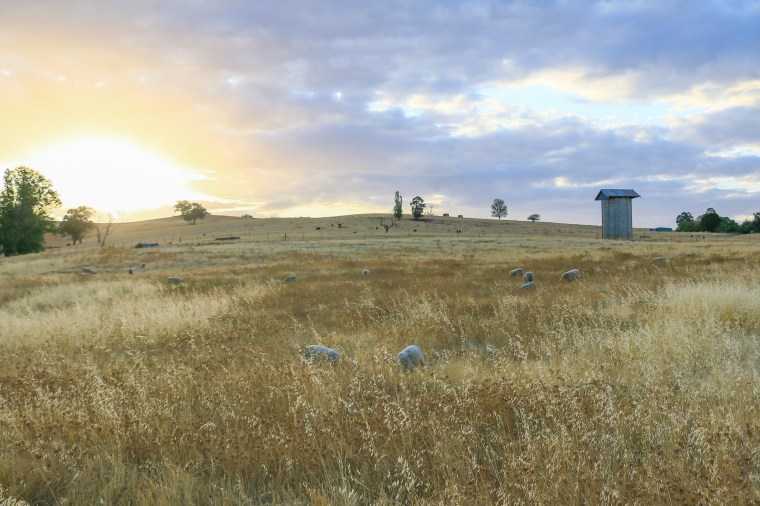
The road from Gundagai was all golden Australian summer, rolling countryside featuring large paddocks baked by the sun. Recent rainfall and violent storms seemingly doing little to break the drought. While parched, there was little sign of the destruction and devastation of fire as I made my way towards Tumut. The blackness was somewhere beyond.
I arrived at the BlazeAid camp in Adelong, which was based at the local showground. More on this later but suffice to say it was all somewhat larger than I had expected. After signing away my life and setting up my tent, dinner was provided and an update on the day’s activities was made. Dessert was had. And with an early start beckoning, people dissolved into their caravans, tents and swags hopefully to sleep. Something which evaded me for a long while, reinforcing the latter day struggle that camping is proving to be.

With a kookaburra alarm clock, a large cooked breakfast and a healthy dose of organised chaos, I was off with a small group of others to a farm somewhere in the hills around Batlow. Batlow is in the midst of a massive swathe of scorched land and the town was isolated at the peak of the firestorm. Several outlying properties are now crumpled, tortured heaps of metal and brick, the shells of cars parked outside. The petrol station in town is a ruin.
Heading up the nearby Gilmore Valley the scene was at first all rather idyllic – good farming country that would not have looked out of place in northern England. And then the first bare and blackened hillside appears on the horizon, like the shadow cast by a massive thundercloud. And before long it is all around.

Climbing up and up a muddy road we reach the home of Paul and Andrea which is – mercifully – fully intact. You can see how close they were to devastation, the garden shrubs singed and charred like overzealously grilled broccoli. We are introduced to Smiley, a farmhand who has that high country man from Snowy River look about him. The hut he was living in didn’t fare so well, wrecked and ruined and taking most of his possessions with it. His ute survived along with a few salvaged remains.
We drive across a few bare paddocks and into the forest. Trees stand like charcoal sticks, branches down but eventually likely to prosper again. The forest floor is another matter: a bare wasteland of ash, like the remnants of a barbecue the day after the night before, spreading out in every direction. The compensation that it has cleared the weeds seemingly a small offset in the greater loss of habitat. And the loss of product – the farm up here produces pure eucalyptus oil, which will take several years to become productive again.
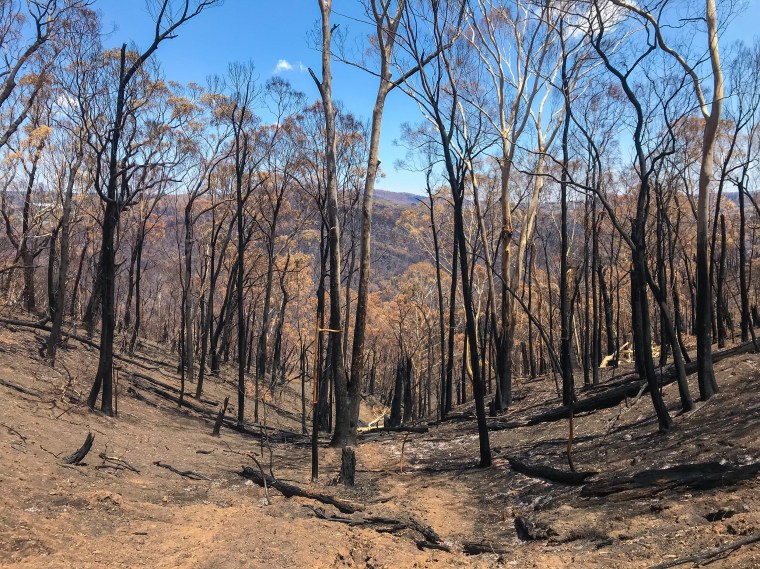
Among this alien landscape there were – of course – long lines of fencing. Some standing, but most bent and broken and needing repair. I was reminded of why we had come up here. The task was to clear the fencing so that new stuff could be eventually put down in its place. This involved a lot of snipping of wires with cutters of varying quality and the pulling out of fence poles with a fence post pulling contraption. I quite liked the post pulling – more so than the snipping – even though some of the sixty-five year old poles were stubborn to yield.
 Focusing on the task at hand, the surrealness of the environment fades away, until you occasionally pause and look up again and take stock. Among the ash, small piles of fence post and a carpet of wire lay ready to be gathered in machines by Smiley and Paul. Our team of four alternate tasks, to relieve various aching muscles and torment others yet to be abused. I’m the youngest and glad of the experience of more practical, hands-on kind of folk who offer good advice and warm conversation. Smiley throws in the odd tip, alongside a healthy dose of banter. He suggests I work for Scomo and this is a bait it’s hard not to take.
There is immense satisfaction at seeing the visible fruits of your labour. We work our way down alongside the perimeter track in increasingly precipitous terrain. The sun is heating up and I’m glad when our team leader decides to call it a day. Sweaty, coated in grey ash, there is a perverse pleasure in acquiring the symbols of a hard day’s toil. You don’t get this writing reports.

The next day offered more of the same but better. Better because we had a better idea of what we were doing. Better because it was cooler and more overcast. Better because we had a better pair of snippers. And, above all, better because we got to interact more with Paul, Andrea and Smiley.
Partly this was a consequence of the weather, as gusty winds mid-morning prompted a decision to leave the forested area for fear of collapsing trees and branches weakened by the fire. A small stretch of open fencing beside a dam provided a little workout but, when that was done, morning tea was declared. I like morning tea.

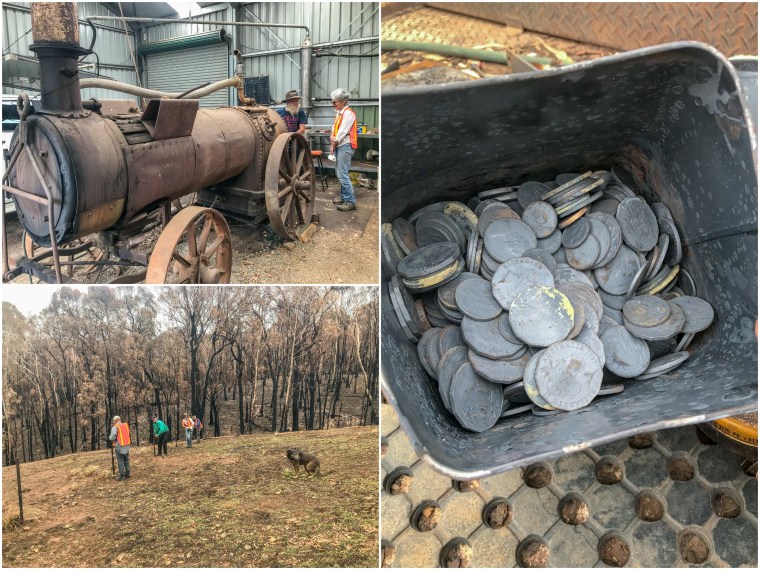
It was over an elongated morning tea that we got to find out a bit more about life on the farm, the people living on this land and their recent experiences as these lives came under threat. Andrea guided us around the garden, pointing out what it was like before flame lapped at the borders. Smiley pointed us towards various contraptions that went into extracting the eucalyptus oil, included a century old steam engine acting as the driving force. And we learned about Paul’s craftsmanship creating gnarly old walking sticks simply with a sheet of sandpaper and a glass of Port.
They are nothing if not creative, resourceful people, sensitive of the land that they live in. You feel – you hope – this will stand them in good stead moving beyond the fires. You know that this is what probably saved their lives.
Inevitably the conversation moves towards January 4th and the days before and after. There was a sense of inevitability about the fire coming and Paul highlights that the waiting was one of the worst things about it. Days of anxiety and alarm that came from forewarning and a frank admission from the fire service that, if they were to stay, they would be on their own. During this time, busying themselves with preparations: clearing the land of debris, felling overhanging branches, watering down around the house and sheds. Getting the car packed with essentials should they need to flee. Watching. Waiting. For what seems like an eternity.
Eventually it appears on the western horizon. They talk – and it feels an almost cathartic exchange – of defending their home as the fire lapped at its doors from three sides. Erratic, violent wind changes pushing the front from the west, the north and the south. The noise terrifying. Raining embers igniting bushes and trees around them. Sprinklers on the roof previously used to clear snow now somehow sputter enough to dampen sparks. The power goes out but – mercifully – the generator kicks in and the water pumps persist.
It is the longest, darkest day, one they freely admit they would never face down again. Barely was there time for a breather, though Smiley managed to take five and puff on a rollie. Paul captured this image on his phone and chuckles: if ever there was a sign of an addict that was it. Chuffing away as smoke surrounded.
He probably deserved a ciggie, his hut lost along with many of his possessions, his ute still bearing a few scorch marks from the moment he fled. On the back were some salvaged items, including a charred tin of loose change, the coins inside faded and melded to grey. Hopefully still legal tender – there is a fair amount in there, though the dollars no longer shine gold.
Smiley fondly recalls his home in a hollow among, but not right next to, the trees. It was always ten degrees cooler, he says, natural air conditioning and breeze. Snug in winter. A place of peace and solitude. He’s now in a caravan which they managed to pick up at a bargain price – for this he feels lucky. Lucky! But he hankers for a hut again and intends to rebuild in another nearby pocket of paradise.
 If that isn’t inspiration enough to get back out to finish our job, I don’t know what is. The gusty change of the morning has subsided and we venture back into the forest, working methodically uphill towards the boundary of the property with the forestry road. Someone spots a red belly, thankfully not me. The fence is horizontal here, and the pole puller contraption largely redundant until they can be bent upright.
As we approach our last stretch of fence to clear, rumbles of thunder echo through the forest from the west. Large spots of rain begin to plop into the ash and earth and upon our hats and gloves and hi-vis vests. The last post is pulled and we march back to the vehicles as the heavens open. It is but a shower, but a heavy shower and every little helps.
Before departing Paul invites us back to the house, offering a cold beer and a gift pack of eucalyptus products. Andrea and Smiley join us, as do the two dogs, keen for a spot of attention from strangers. Or those who were once strangers, but who now chat away like old friends. Mates helping mates.

Of course, it is now abundantly clear that BlazeAid is about more than just fencing. It’s about connection and conversation, and a manifestation of community looking out for one another, through good times and bad. It’s not really charity, nor is it solely a case of do-gooders looking to do good and boast about it on social media. Everyone gets something out of it: practical, tangible skills, connection and interaction with different people, sore backs and filthy clothes, and the opportunity to enter some of the most beautiful lands within Australia, as savaged as they are.
It seems a bit strange to say in the context in which it takes place, but there is a feelgood factor around the experience. The atmosphere at camp is both soberly reflective and celebratory. Teary eyes are never far away. Inspiration is on tap. People from all walks of life, across the ages, from all over Australia and beyond, come together over dinner, swap tales from the day, share the stories of farmers and their families, reel off the length of fence cleared or erected.
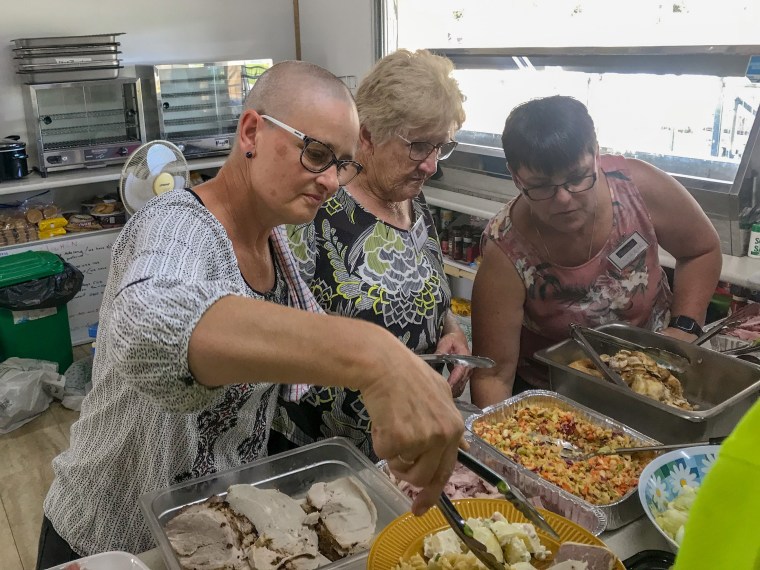
Dinner itself is an achievement, a carb-filled wonderland engineered by an angelic mix of locals and visitors giving their time to tray bake and slow cook and whip cream and take receipt of an endless donation of cakes from CWAs and Rotaries and Mums. If I stay any longer, I’ll get fat. They keep offering me biscuits and caramel slices and passionfruit tarts. Manual labour can only burn off so many calories.
I do stay one more day. One more cooked breakfast, one more hearty dinner, one more day of snipping and pulling and – this time – rolling up wire and starting to put brand new fence poles into the ground on a different property. The temptation to stay another day kicks in too, especially as the farmer promises to cook up a BBQ lunch the next day, the centrepiece being his 11 month aged beef nurtured on this land.
But my body, and my lack of sleep, tells me no. I struggle to clean my teeth, the grip and motion jarring on my hands and my shoulders and my chest. Writing is also pained, as I finally sign out and walk out to my car to begin the journey home.
As I do so, new arrivals are emerging for the long Australia Day weekend. A minibus of Afghan refugees from Shepparton set up their tents. A couple from Queensland offload supplies from their caravan. Teenagers from Wagga help to sort out donations. German backpackers encourage an international kickabout on the oval.
BlazeAid veterans wonder at it all. Unprecedented events resulting in unprecedented kindness. Not from superheroes, but from everyday people. Recovery belonging to us all, the community, now and in the months and years ahead.
—————————
Please check out www.blazeaid.com.au for all the details and camps currently in operation across several states. They will be running for many months.
Anyone can do it. Like me you don’t need to have any particular skills. Just a keenness to get involved and learn. Some people are great snippers, others are wonderful sausage sizzlers. All are needed and all are valued. It’s worth it just for the bounteous dinners and home baked cakes! It’s rewarding and enriching and it will be the best thing you have done in a long time, I promise.
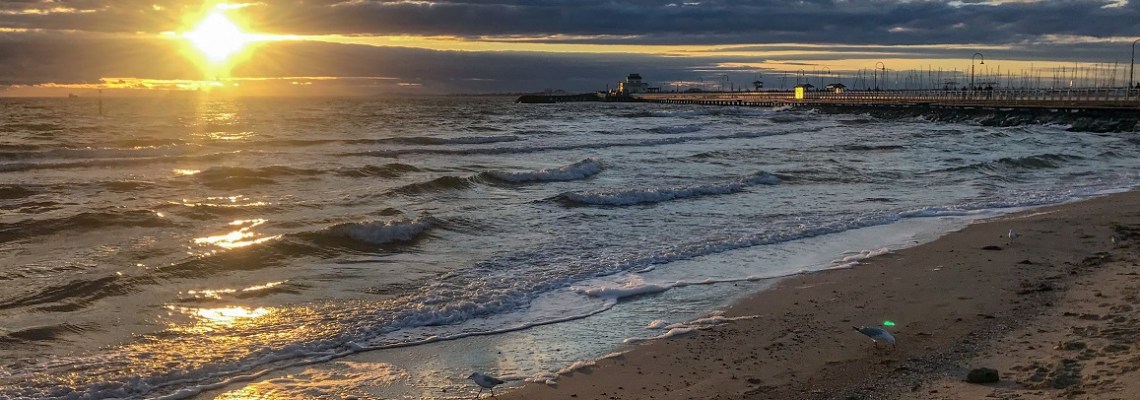


 Reaching Bondi – oh hallowed be thy name – I was determined to find a favourite little seafood haunt from times past; this was, after all, the prime reason I had not driven straight back to Canberra and had pottered about sufficiently to arrive at an acceptable time for dinner. And there it wasn’t. And there I was thinking why didn’t I just drive back to Canberra and have KFC at Marulan Service Centre instead? And there it was, on a different, quieter, cheaper street and life in Sydney was liveable for a few minutes again.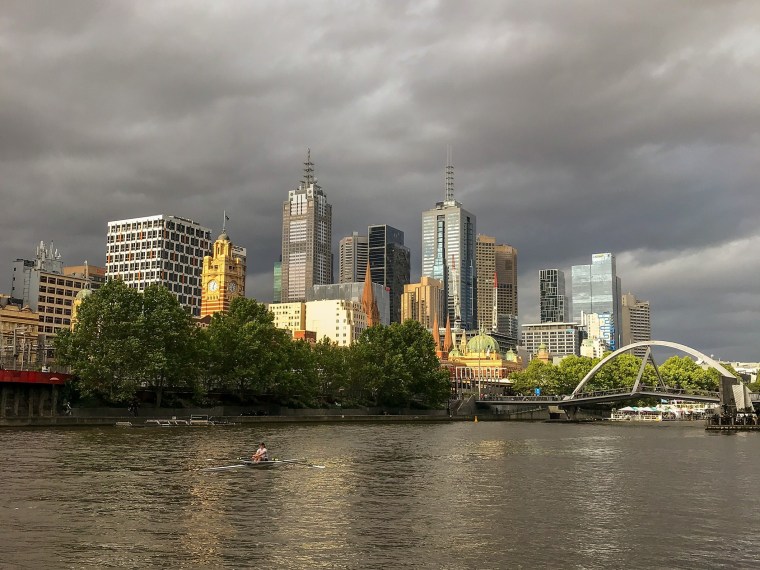
 Melbourne was – typical Melbourne – half the temperature of Sydney and a darn sight cooler than the world’s most liveable city, Canberra. It is sometimes proclaimed the most European of Australian metropolises, which means cloud and showery rain and a sometimes dingy – some may say grungy – countenance. And also, trams, which laugh in the face at numerous contemporary attempts to retrofit light rail elsewhere, like a wizened professor in a pokie room full of drongoes.
 You’d think the latter is more Melbourne while the former is all Sydney. But for me it was vice versa, the fish and chips the target of seagulls on St Kilda Beach, just for that extra European touch. If I had another jumper and another million dollars and an escape option from the oppression of another inevitable choking summer, I could probably live here, and I could probably live in Sydney too. If nothing else, I’d sure know some good spots for dinner.
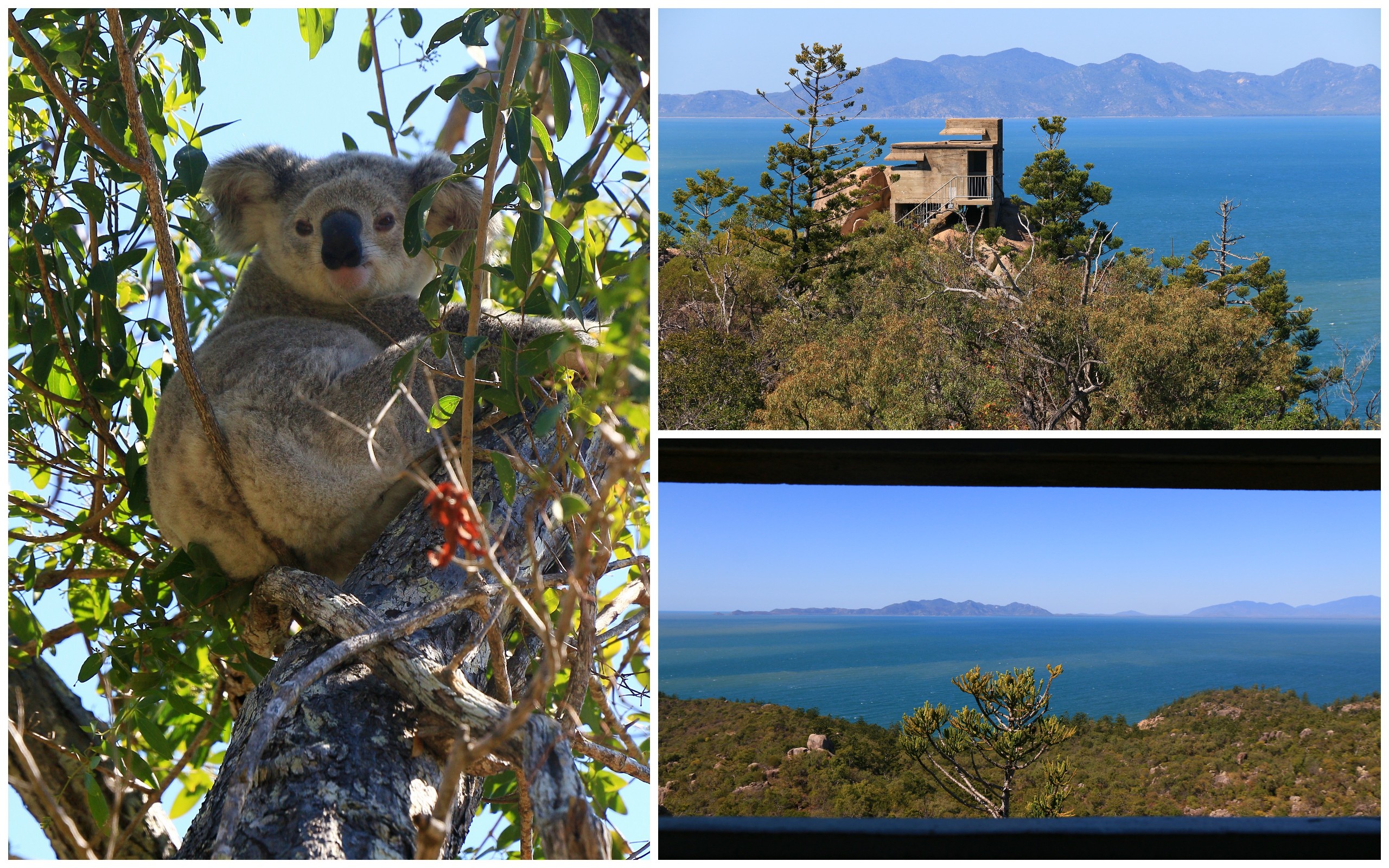
 There is a colony of koalas here, and I was pleased to come across one in the first hundred metres of my walk. It was around midday and hot, exactly the kind of conditions in which you should not be out walking. But with this early sighting, the pressure was off – no more relentlessly craning one’s neck upward in the usually forlorn hope of spotting a bulbous lump that isn’t a growth protruding from a eucalypt. I could instead loop back to the car concentrating more on keeping the flies from going up my nose. Yes, they are absolutely back.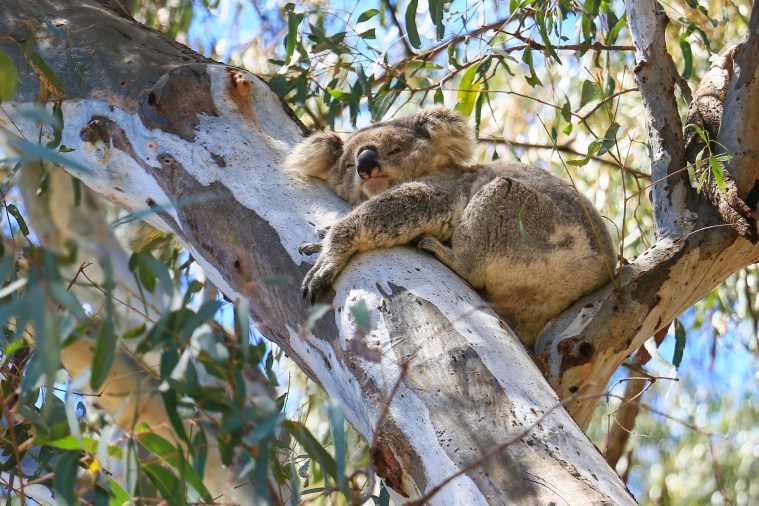

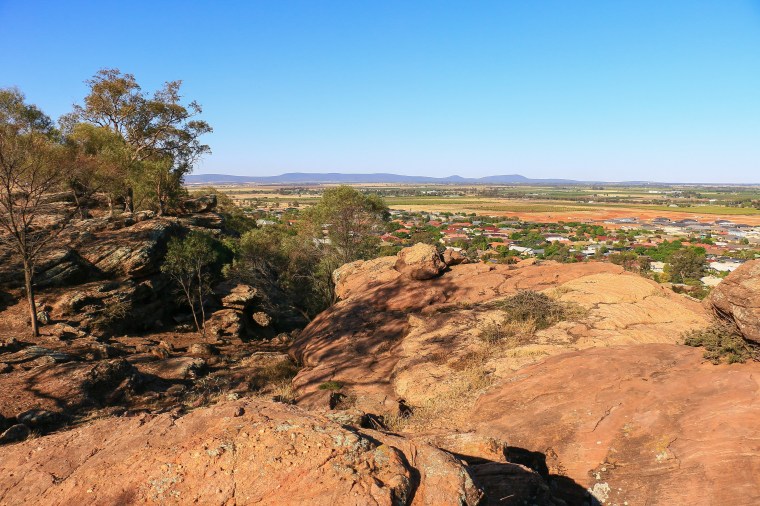


 Still, should you wish to rise from this indulgent slumber, another hour or so east will bring you to the western fringe of the Blue Mountains. Suddenly things change, and not just the petrol price rising thirty cents a litre in as many kilometres. The day trippers are out in force, the coaches idling at every single possible lookout, of which there are many. The escarpment top towns of Blackheath and Katoomba and Leura are brimming with people shuffling between café and bakery, spilling down like ants to the overlooks nearby. Below the ridge, however, and the wilderness wins. Only penetrable at its fringe, placid beneath a canopy of ferns and eucalyptus.

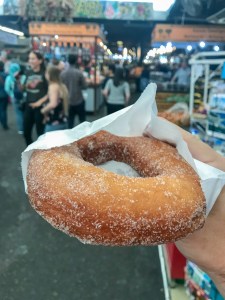
 And a raincoat. For it is even truer that Queensland is far from beautiful one day, perfect the next; a dubious marketing slogan dreamt up by mediocrities that continues apace in the supposed Sunshine Coast, a place frequently sodden by epic downpours and possessing a clammy mildew befitting the swampy subtropics. Saturday here was so damp that the highlight was a doughnut, and even that wasn’t much of a highlight, more a triumph of social marketing style over substance.
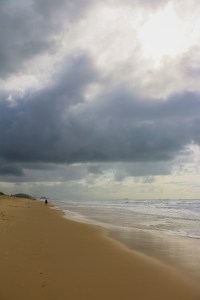 Queensland: pissing down one day, sweaty the next. The sweatiness emerging on Sunday as the sun makes an appearance, triggering rising heat and rampant moisture. Liquid particles are lifted by ocean gusts, filtered ineffectually through the thrum of air conditioning to congregate in damp surf club carpets. Puddles among snake-infested flood plain linger, waiting for passing birds and passing property developers to drain. The ubiquitous HiLux secretes fluids while idling outside Red Rooster, as a leftover billboard of some redneck running for parliament gazes down approvingly. Just thank the lord or some other unelected deity that it is not yet high summer.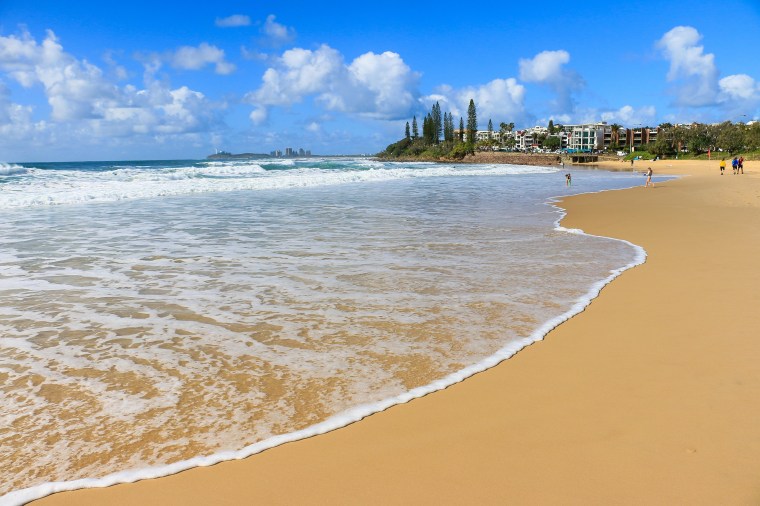
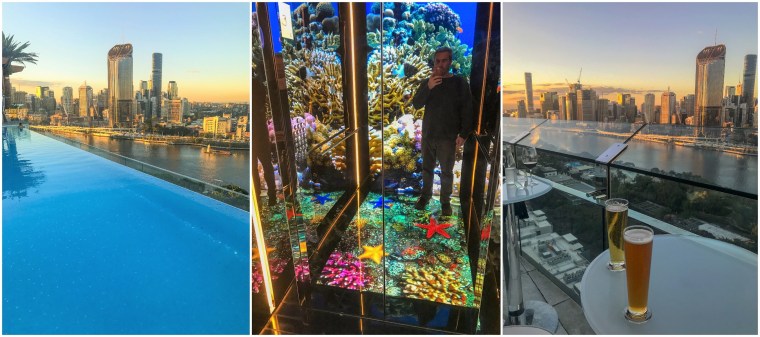


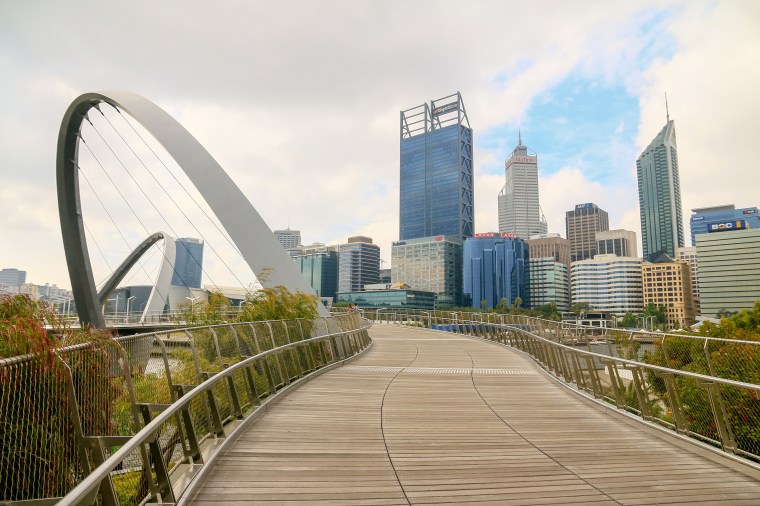

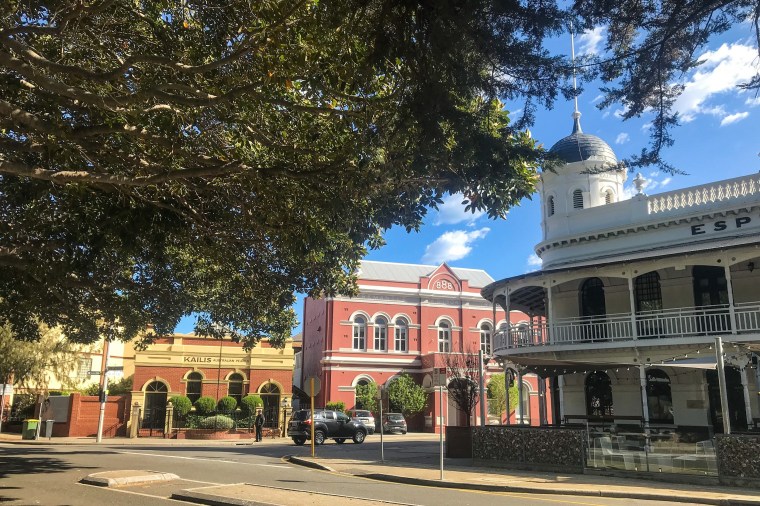
 Freo was my base for the week and part of its appeal was accessibility to water. Being a busy and somewhat historic port, it’s not without its charm and boasts a high concentration of elegant turn-of-the-century colonial buildings. It seems to attract hipsters which equals good coffee, has not one but two breweries, puts on some fine markets, and has developed into a mecca for fish and chip consumption. There is a lot to like about Freo.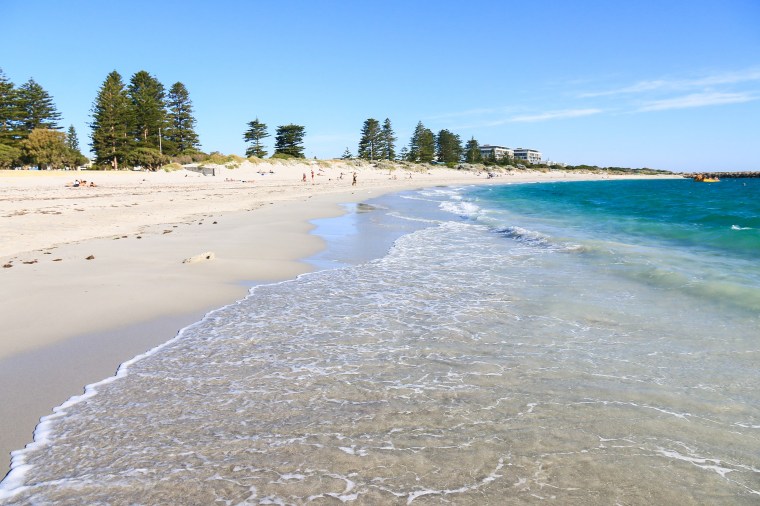
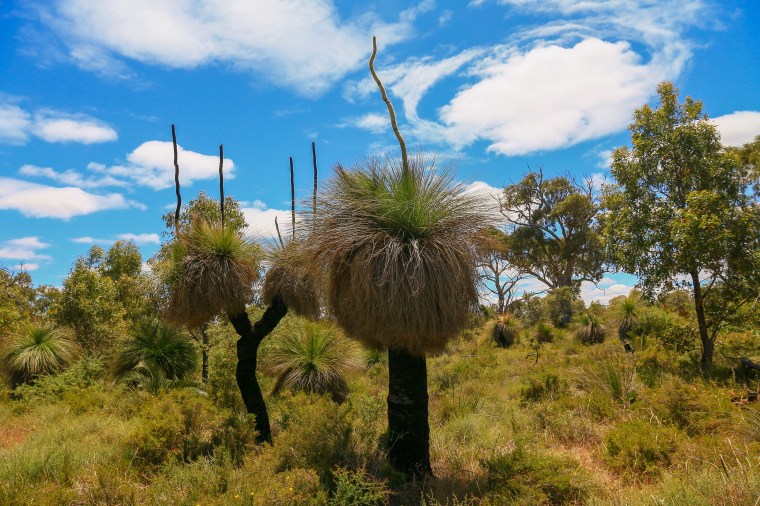
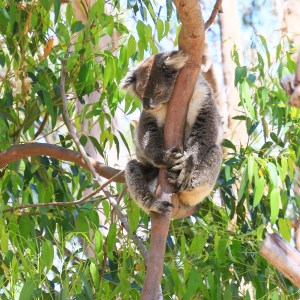 Given the proximity of this park to Perth, there is also a more manicured and deliberately designed aspect to certain areas, with tightly mown grass, a cosy café, campgrounds, waterside boardwalks and electric barbecues. A perfect family spot for a Sunday lunch, kickabout and encounter with koalas and kangaroos, creatures which seem strategically placed for the many visitors on minibus tours heading for the Pinnacles.
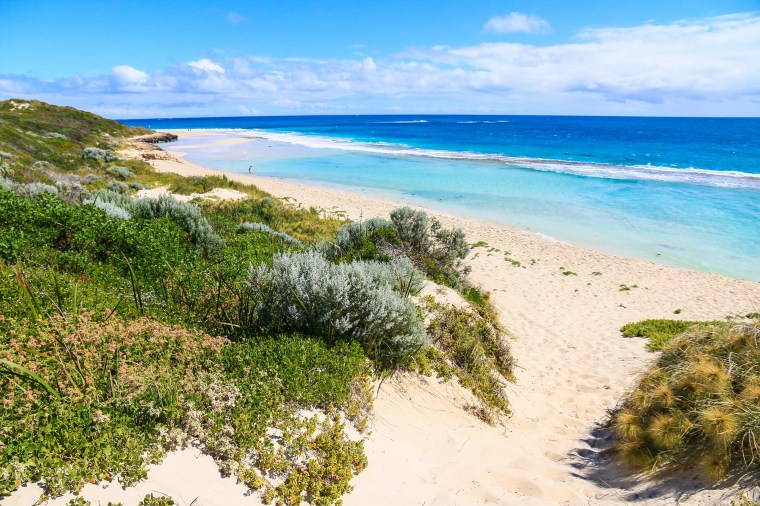


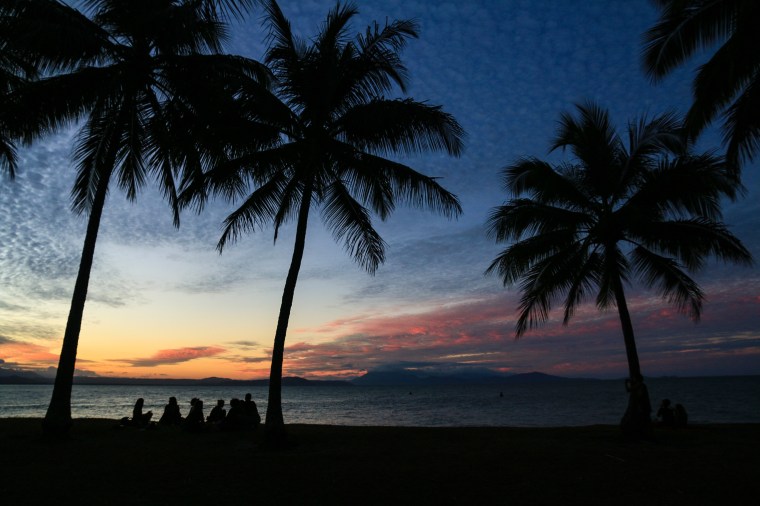

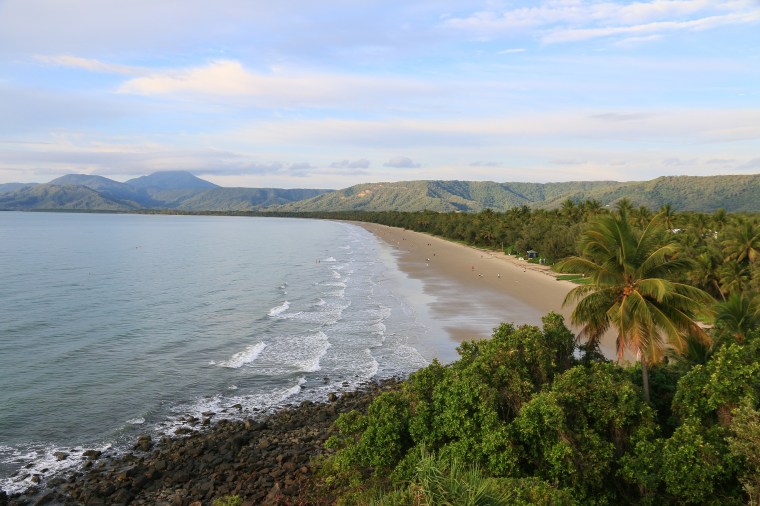


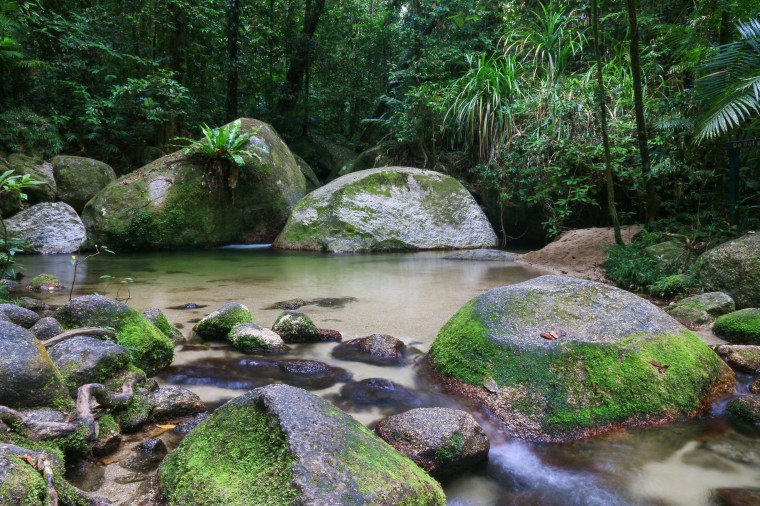
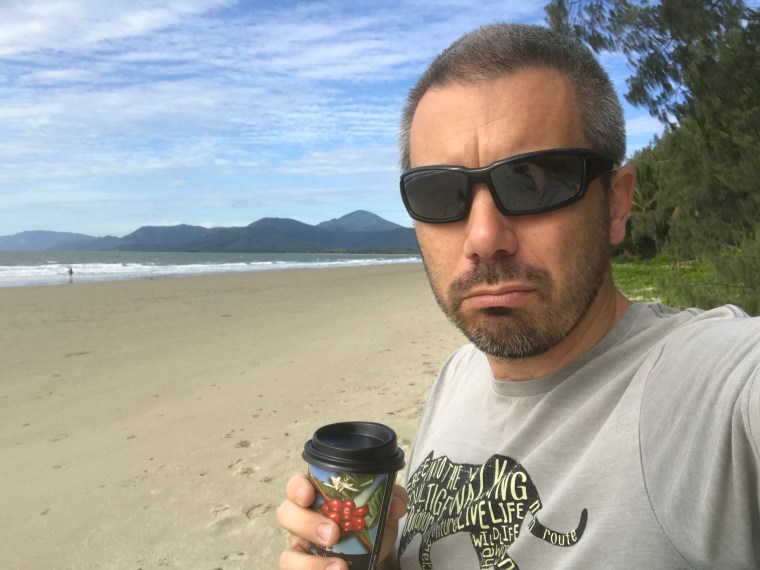
 I took one final coffee and stroll on the beach before embarking on the drive back south, which had a fair share of roadworks interspersed with spectacular scenery. Pausing around Ellis Beach, in this snatch of tropical palm-fringed cliché, it was again hard to fathom that I would be in a different world, in the same country, in a few hours. My poor shorts would be tucked away out of sight again.

 And so the drive out of Canberra almost immediately led to immersion into a flat, golden brown landscape almost devoid of interruptions or scenic highlights. Diverting around Yass and Jugiong and encountering extensive lane closures on the road to Gundagai, distraction naturally came with the Dog on the Tuckerbox. It’s a statue of a dog. On a tuckerbox. But it is sunny and warm and the landscape here more undulating and fertile. Gum trees offer shady refuge for the melodious magpies and chirpy galahs; tin sheds and wooden farmsteads sit snugly among long grasses and fields of sheep; and there are numerous comings and goings to observe at the Tuckerbox KFC.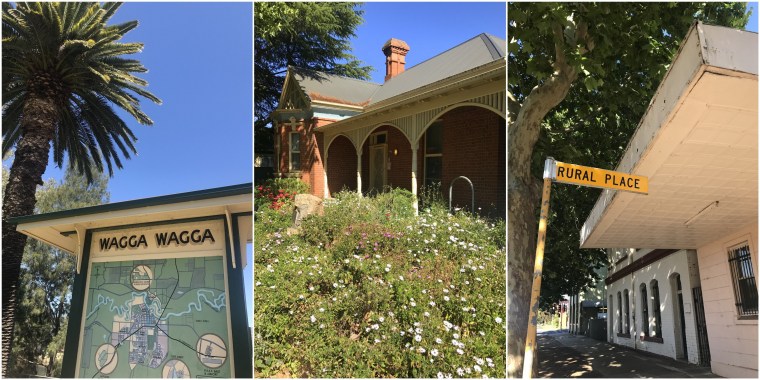
 I enjoyed a late afternoon beside the river, checking out the sandy beach and colourful language of some local ladies engaged in a very open discussion about Tinder and uncles marrying strippers and the like. The beach is obviously no Bondi or Bantham, but there’s sand and water and – I can imagine on those scorching summer days – it has enough going for it to impel you into the Murrumbidgee. Under the shade of eucalypts the vibe is chilled, languid like the river itself and I could have sat here a while if I didn’t have some work to do.
 The return trip was far more diverting than a dog on a tuckerbox, mainly because I opted to take a different route back which didn’t involve dual carriageway and bypassing one street towns. The Snowy Mountains Highway stretches all the way down to Cooma, and if I was going to avoid taking a massive detour to Canberra I would have to find my way across the Brindabella Ranges. But first, time for a little bushwalk, just south of Tumut to a slab of rock called Blowering Cliffs. It was a decent jaunt out, starting off through lush meadows and rising ceaselessly through forest to a protrusion of granite. Sometimes a waterfall plunges off here, but today it was like a sporadically dripping tap.

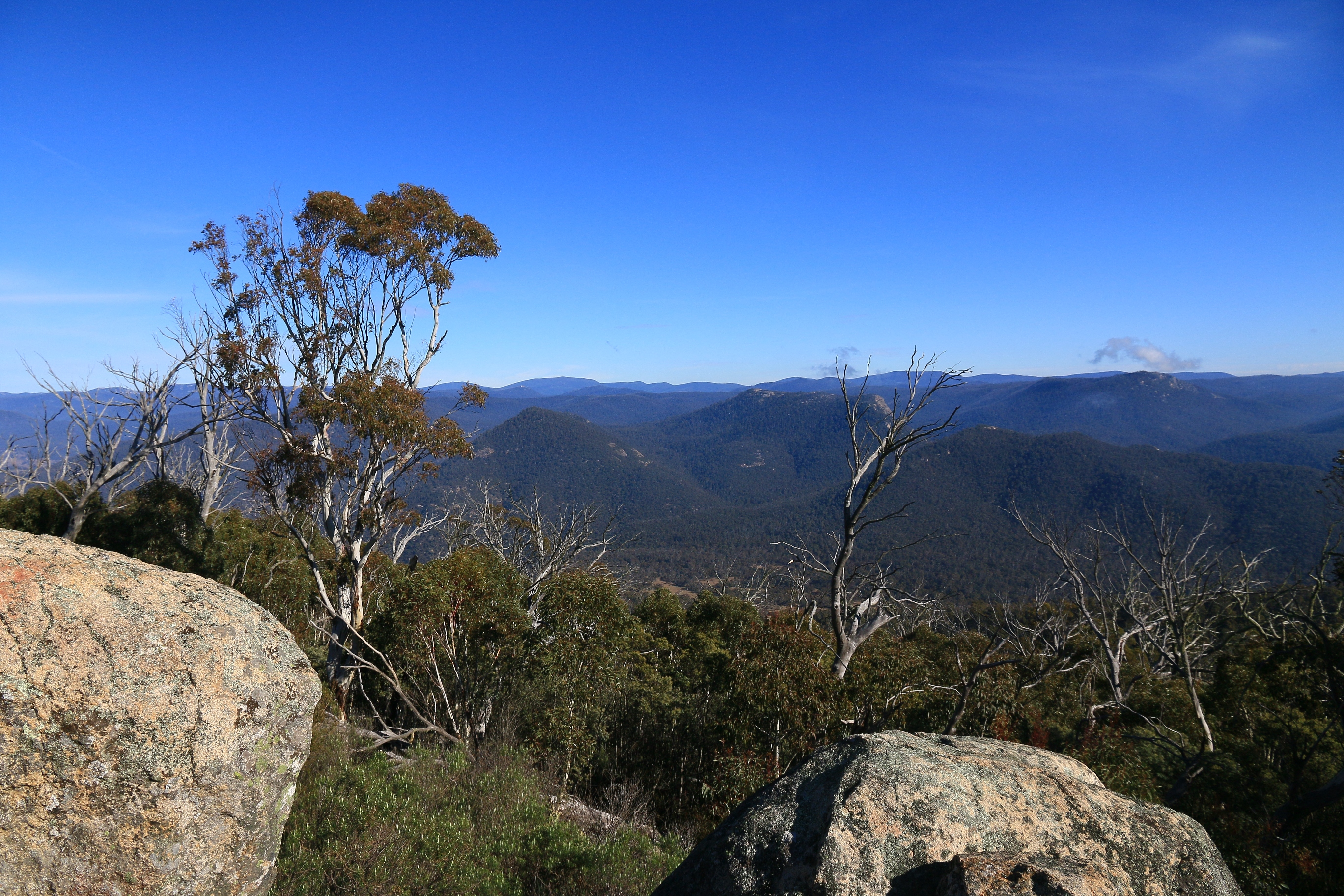
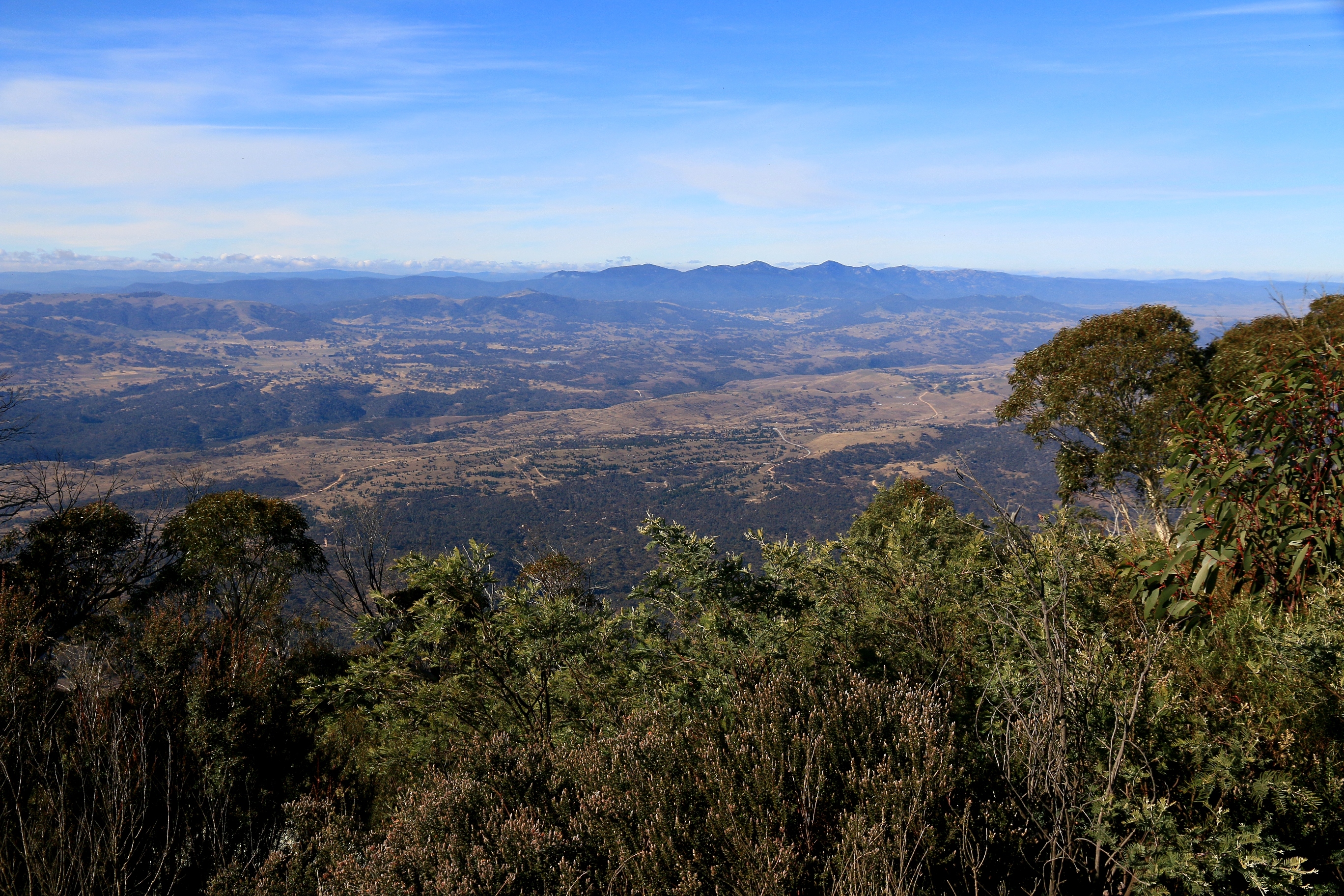
 What goes down must go up and so there was some further climbing through Brindabella National Park on more precarious surface before cresting the ranges where the NSW-ACT border sits. I figured out this was my final road border crossing into the Australian Capital Territory and immediately the road surface improved: still dirt but smoother and significantly more tolerant. At the oh-so-ironic Piccadilly Circus I was back on familiar ground, winding down towards the subdued hum of sealed tarmac once more. Back in Canberra comfort, but with the satisfaction of a touch of exploration behind my back.

 It’s kind of a winter thing, a cross-hibernation leisure shut down enforced by financial year leftovers and inevitable doses of bugs that may or may not be flu but love to linger. Canberra has had more than its fair share of cold, but – the last week apart – it has been phenomenally dry, with big clear skies bringing about pleasant afternoons before ruining the whole mood with sharp, sadistic frosts.
 It has been pleasant enough – out of any wind, with a little time spare – for a few walks into the bush. There are Red Hill ramblings of course, but throw in a few Mount Taylor hikes, Black Mountain bush and Botanic Garden explorers, Mount Ainslie parkways, and add a random sprinkling of Cooleman Ridge countryside ambles and Urambi Hills thrills and there’s enough to keep reasonably sane and fit. Especially when the bike is gathering cobwebs.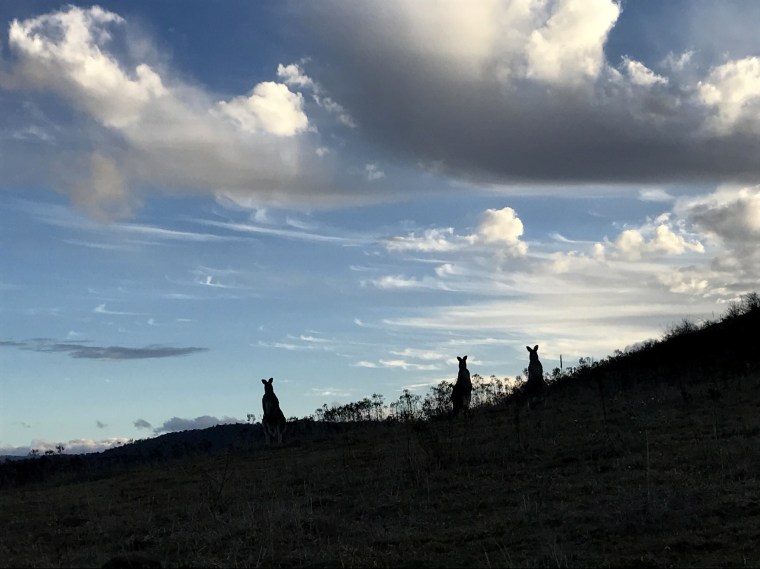


 And a few strategic recommendations for winter? Anything with gravy and a glass of red helps; get out in the warming afternoons even if this means working at night; and, in the midst of analytical bewilderment, book a flight to the UK, where the daytime temperature will probably end up being the same anyway! See you oop North….
 Landing at Tullamarine, Melbourne was grey and damp. It’s June, it’s Melbourne. I was about as surprised as I would be if the UK Conservative Party decided to dump everyone in the shit rather than get on with governing twice in the space of a year. The wind was strong, my crappy hire car was far from stable, but at least I was heading away from the clouds on the drive north to Bendigo.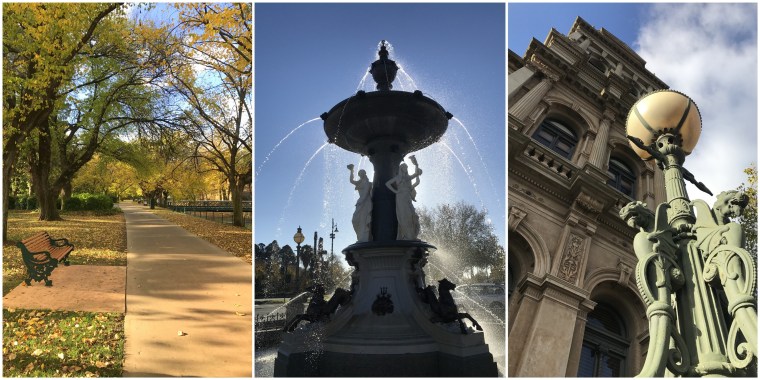


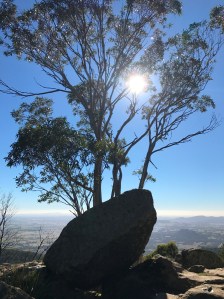 Anyway, such have been my ramblings in Victoria over the years I wasn’t actually sure if I had been to the top of Mount Macedon before. It turns out that I hadn’t, unless I really don’t remember the upward crawl into roads lined with ever more spindly and pathetic-looking gum trees, the view of expansive plains below and a giant golden cross constructed to appease the wrath of the almighty.
 It was chilly up here, but I knew I was on my way back to Canberra so it wasn’t going to get any better. And for the second time in succession, my dawdling was beginning to make it touch and go that I would make my flight. Maybe I’ll learn, or maybe I’ll just nudge a little over the speed limit and swear at every idiot who dares to pull out at a roundabout and get in my way. It seems to work, and so this gold rush came to a successful frenetic end, antidote to the sedate charm of Victorian Victoria.
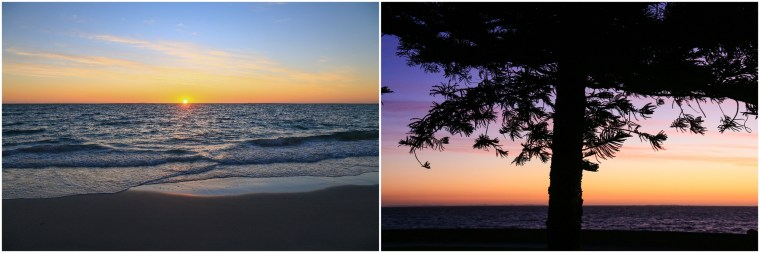
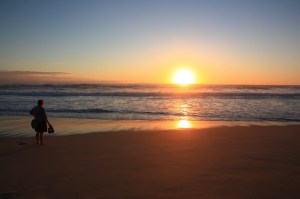 In 2013 it took me – alongside one of my favourite travel buddies Jill – a good solid couple of months to travel from the east coast of Australia to the west. I remember watching the sun go down over the Indian Ocean somewhere around Yallingup, in the beautiful Margaret River region of Western Australia. It was a touch symbolic, a satisfactory “we have made it” amidst the golden ambience; despite the fact that the engine of the car had knowingly decided to overheat earlier that day.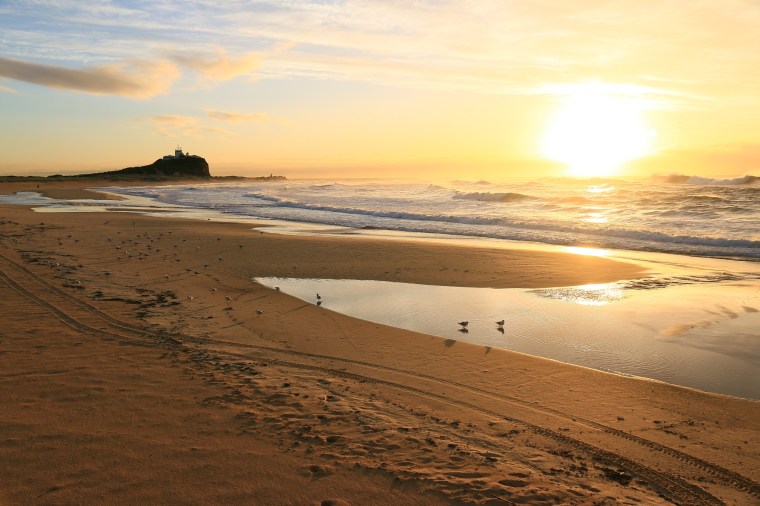
 Just to ensure I clocked off five states and territories on this trip, my route to Adelaide incurred a brief stopover at Melbourne Airport. I had a bit more time on my hands in Adelaide but, barring an hour over lunchtime, the weather was mostly imitating England; cool, cloudy, drizzle interspersed with more frantic spots of rain. I ducked for cover in Rundle St Mall, and lingered in the Central Markets. I called in at Haighs, lured by giant displays of Rocky Road, and ambled under leaden skies through the ring of Parklands encircling the city.
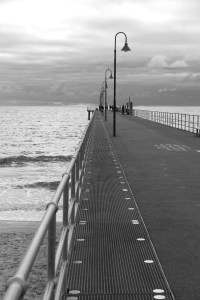 For all its charm and grace, I had seen better days in Adelaide. But at least the rain had stopped by the time I found myself on the tram to Glenelg late Friday afternoon. I was hoping for sunset, but I was guaranteed kebab. Just catching up on another feast down memory lane, and, unlike the sunset, it didn’t disappoint.
 The next day, in a swish of a jet engine I was whisked back to summer, crossing the seas and striking landfall near Esperance. I swear, 30,000 feet below, I could just make out a tiny piece of my heart deposited in the white sands of Twilight Beach. The Wheatbelt passed in considerably less time than the twelve hour drive, and then, before you knew it, Perth hills tumbling down to an archetypal Australian suburbia. Hello Perth! Hello 27 degrees!

 At City Beach I didn’t remember those rather fancy looking eateries and yet another pristinely positioned surf club in Australia. Some money had come into here, but from lord knows where. Perth has slumped somewhat since the state reaped lots of cash from rocks in the ground and lazily rolled about in its lucre. Still, I guess the new restaurants were an investment and they looked pretty busy. I opted for an original: my favourite calamari and chips at Floreat Beach Kiosk, worth the train and bus journey alone.

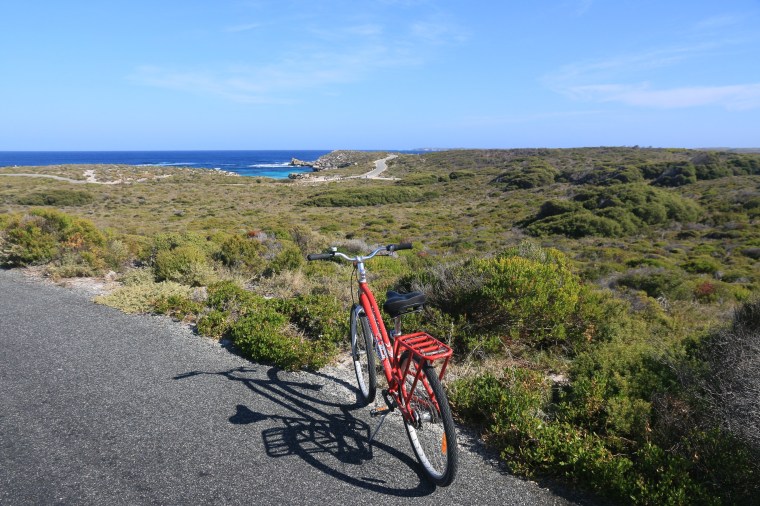
 There is not much more to say about Rotto, apart from glorious beaches and amazingly vivid waters and wonderful sands and beautiful bays and crystal coves. There are some sea-sculpted rock formations in between and – inland – a few smelly stagnant lakes, snake-housing scrub, and one bigger hill on which a lighthouse sits. Around the quay a touch of civility in the form of cafes and shops makes the whole place entirely tolerable as the temperature hovers around a pleasant twenty-six degrees.
 The other main feature of Rottnest Island are the quokkas, who are generally very cute, incredibly tame, and quite keen to get a lick of your ice cream. The main goal of many visitors to the island these days seems to be to achieve the perfect quokka selfie and #quokkaselfie. Seriously, view that hashtag and see what you come across!
 Essentially, I managed a jaunt into Kings Park one late afternoon, which is undoubtedly one of the biggest assets outside of the beaches that Perth has to offer. It is scenic and sprawling and accessible and full of all those variants and species that are unique to small corners of Western Australia. It’s a reminder of how isolated, how individual, this place is. Yes, there may be Hungry Jacks down the road and Home and Away showing on TV, but there is also a Banksia that only grows on one or two of those giant bluffs of the Stirling Ranges.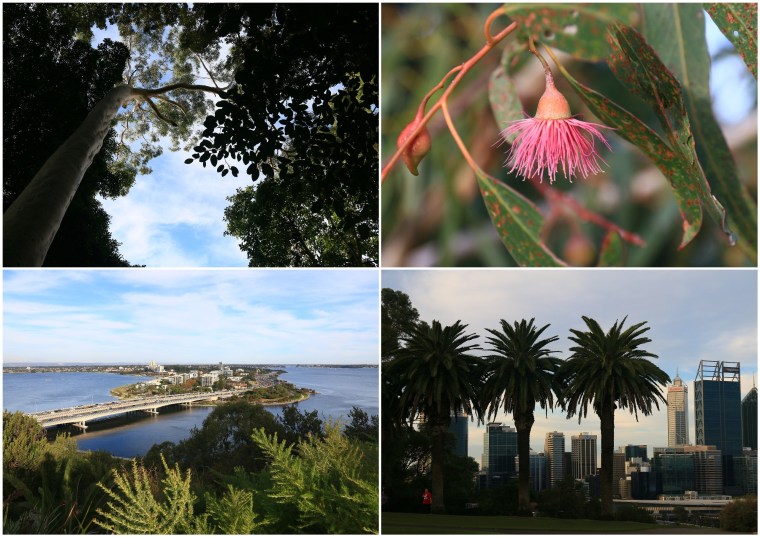
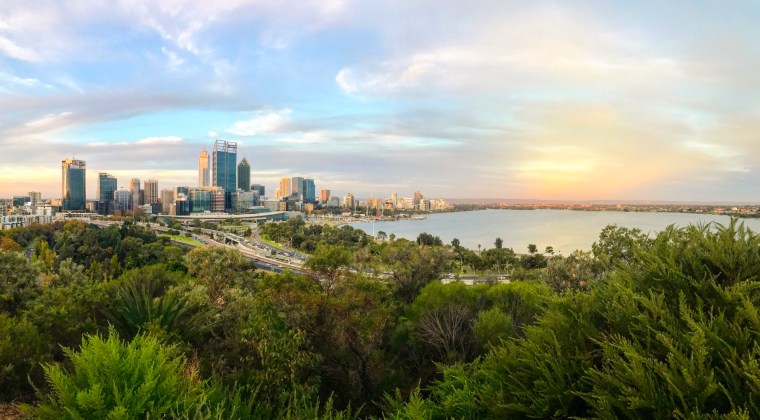

 Once clear of this blackspot of industry, you are back in a more familiar kind of Australia, with Newcastle boasting some fine beaches, cafe-cultured hubbub, and waterside retreats. I like it here, though being unfamiliar with what’s hot and what’s not it took me four attempts to get a good coffee. Cafes on Darby Street have an appearance in which they seem to talk the talk, but walking proves far more problematic. Is it me, or are baristas with an armful of tattoos, baseball caps and a love of the mirror at the gym usurping hipsters in coffee-making skills? Just something I seem to have observed in recent times…
 Once I found a good coffee from someone who could crush the beans by hand, I decided I liked Newcastle a lot. It probably joins the long list of places where I’d say I could live if I had to. Being on the coast has a lot to do with it, and while showers were around and daylight saving had ended, at least I got to enjoy the last of the day with the rainbows and butterflies before setting off for some evening work.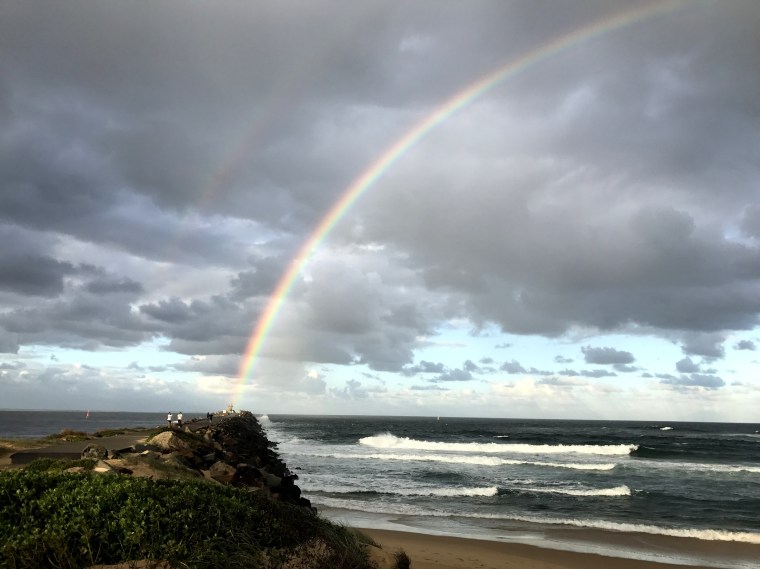

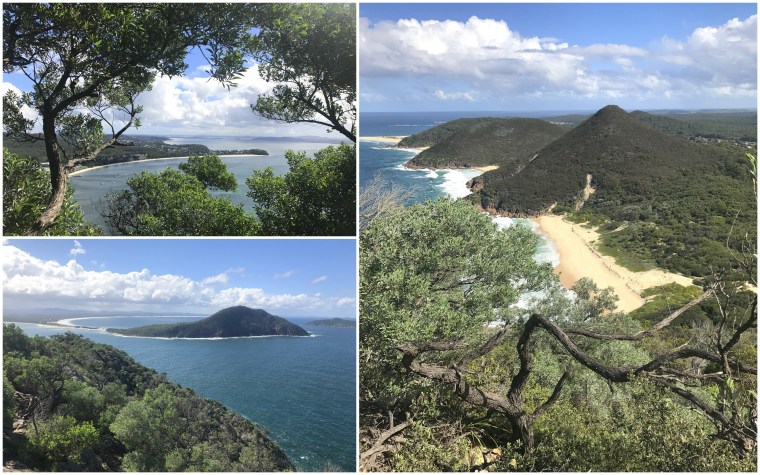
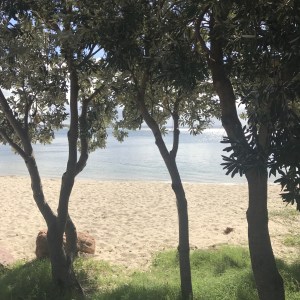 While blessed with the rugged scenery of Northumberland I doubt if the Newcastle of the north would have such a temperate idyll an hour away. You can see why people come here for holidays, or to retire. Even the koalas of NSW like it here, not that I saw any (or saw any people looking up into trees which is the best way of spotting koalas). I have only been to the other Newcastle once and I thought it was alright. But if I was to choose, I think this one would win hands down; even without a Sunderland next door aye!

 Almost inevitably (and positioned next to water), the first stop straight off the M5 was Coogee. A late afternoon to tread in the sand, sup coffee under a shady tree, and amble to Clovelly and back. Once all this arduousness had passed it was practically dinner time and so a fish and chip takeaway consumed in fading light alongside the beach made perfect sense.
 Moving away from the bronzed bodies beyond Shelly Beach, nature reclaimed the surrounds and people became a rarity. A walk up into North Head rewarded with solace and a refreshing breeze, before leading to a dose of beautiful harbourside discovery. Collins Beach provides the perfect exemplar of the bushland coves littering the shoreline of Sydney’s waters. Gems that make this part of the world exceedingly expensive. But walking here is free.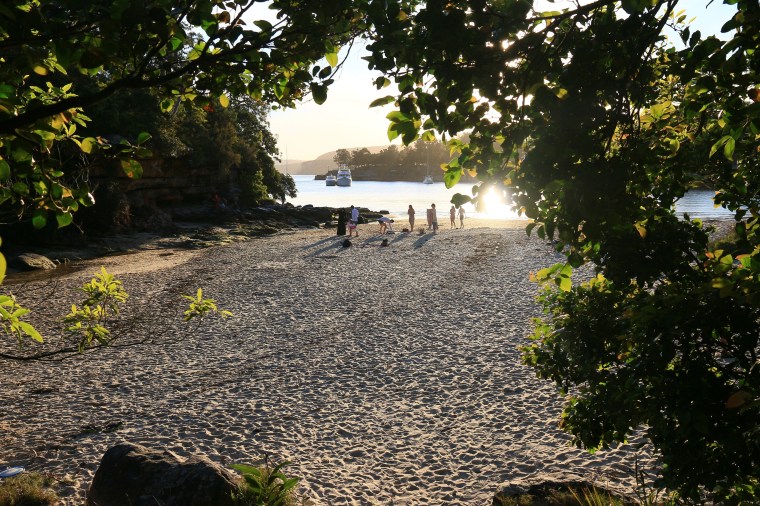
 Well it worked because plenty of people are being lured to the Hills via the Lane Cove Tunnel and M2 toll motorway. It’s heady mix of shopping malls, slightly more affordable housing, faith-based singing and pockets of bushland reserve offer something for everyone. The bushland is my favourite part – discovered one fresh morning in Cumberland State Forest. A tonic before heading to yet another Shopping Mega Centre for top secret work purposes.
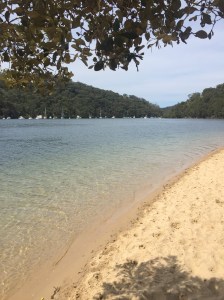 Towards the end of my week criss-crossing the city I ended up in the North Shore and Northern Beaches of Sydney. Indeed my schedule fortuitously terminated in Warringah Mall. While Warringah unfortunately conjures up images of Tony Abbott in Speedos, it’s not all bad. A final interview is finished and I can clock off and drive to nearby Curl Curl beach on a Friday afternoon. I can lie on a towel and try to doze, but become restless and go for a stroll up onto a headland. I can feel relief that the intense week is over and I can start to add up my road toll expenses. I can make plans for dinner at one of my favourite places in Bondi. And I can head home tomorrow, replenished by these opportunities to occasionally exist beside the water.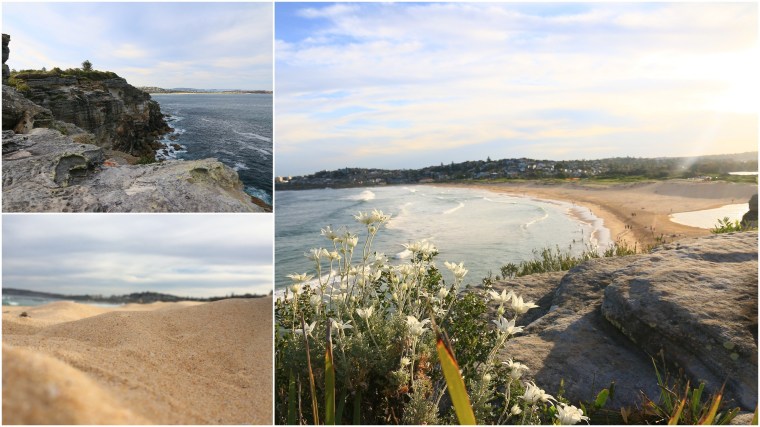





 gbpilgrim