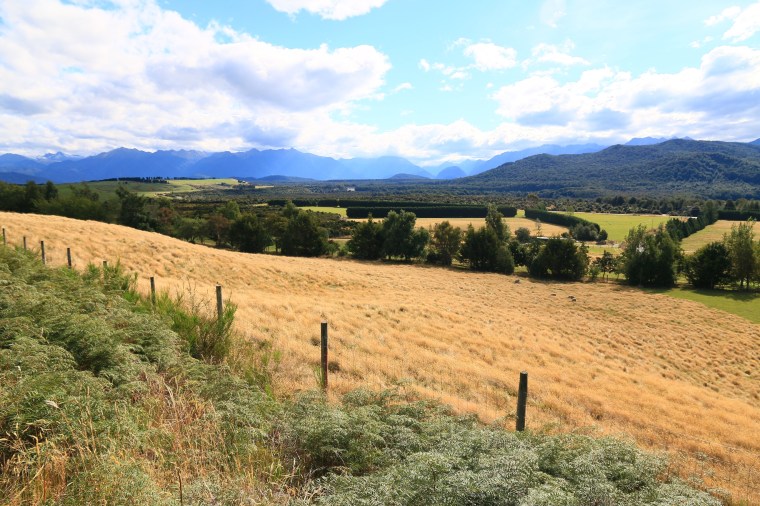
The town of Te Anau has one of the most unexpectedly elongated high streets perhaps anywhere in New Zealand. Plonked in the remote southwest corner of the country, it possesses two supermarkets, three petrol stations, at least four places where you can buy pizza, several pubs, numerous cafes and restaurants, something resembling a department store and more shops selling sheep key rings than you can shake a shepherd’s crook at.
The reason for this is – principally – Milford Sound, with Te Anau handily positioned as a coffee / lunch / afternoon tea / dinner stop on very full day excursions from Queenstown, or as a closer base from which to discover Fiordland. And while most trippers and trampers understandably head for the hills, Te Anau has a certain charm that is worth a linger. Despite the throughflow of visitors, it seems a lot quieter and subdued than Queenstown or Wanaka. The countryside around is greener and lusher, and its lakeside situation with views across to snow-capped peaks is divine.

Lest Te Anau get a little too busy we stayed a tad out of town in a log cabin wedged into the side of a hill. This was the Barnyard Backpackers complex, and while it retained a style of basic but comfortable accommodation, I was struck by how different staying in hostels is these days. Mostly this is down to the internet and its ability to transport you away from the here and now. So while I may have played shithead accompanied with a bottle of cheap wine with a group of randoms twenty years ago, nowadays it’s all about WhatsApp calls home and squinting solitarily into a small screen. Something I did with limited success thanks to all the bandwidth being taken up by WhatsApp calls to Germany! Still, at least here you can just look up and soak in the views.
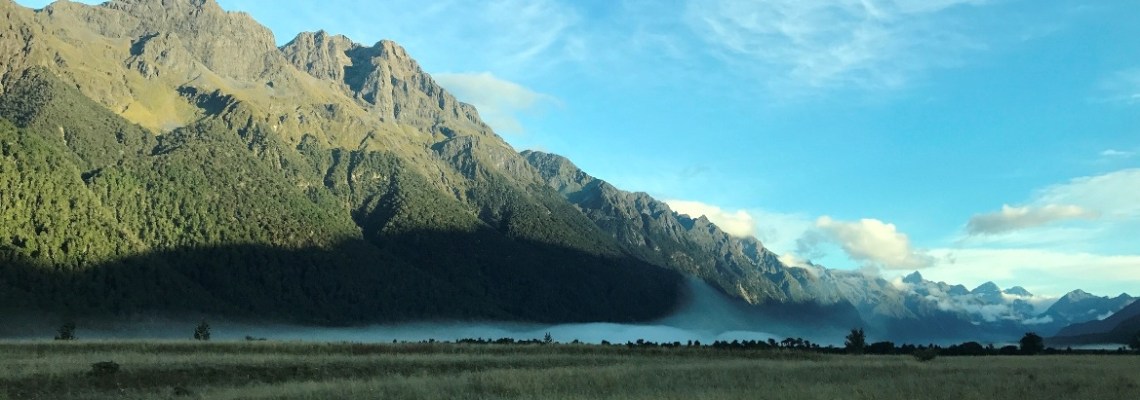
From Te Anau, the inevitable stream of people and cars converging on Milford Sound benefits from a little strategising; a calculation involving the avoidance of peak coach tour times, maximum weather and reflection opportunities, and which of the plethora of boat trips to pick. But really it’s just luck and we got pretty lucky. Striking out early via a coffee stop at the Sandfly Café, dawn light gradually infiltrated the Eglinton Valley, the sunlight and early mist rising from the river serving to accentuate its majesty.

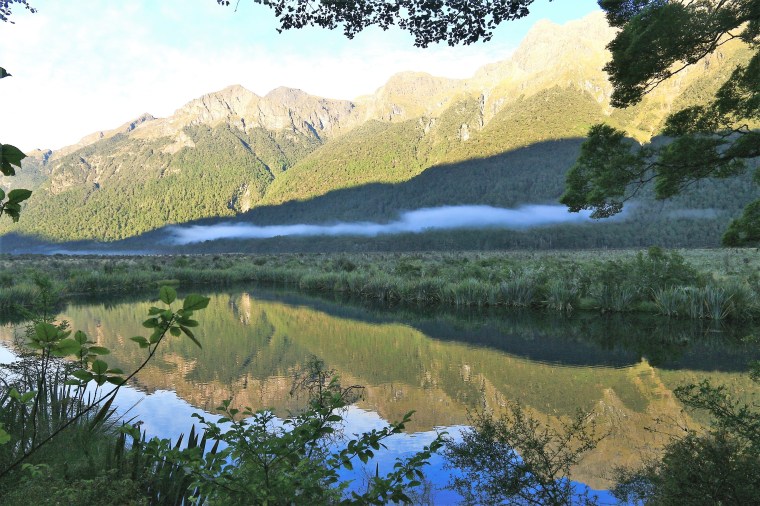
The calm of morning also meant that Mirror Lakes were actually mirror-like, reflecting the glowing mountains, and observed by just a smattering of early day-trippers like us.
 The sunny start changed around The Divide as we headed into the clouds and prospects for a clear cruise on the sound were diminished. It was the kind of weather I expected, typical of this area which is famed for being the wettest spot in New Zealand[1]. But emerging into and out of the Homer Tunnel there were breaks, mountain tops could be seen, and the winding road down to the water remained largely clear. Sure, it was not the rare blue sky day that you see in the advertising, but the pinnacle of Mitre Peak emerged, the tide was in, and there was ample time for relaxation and reflection before hitting the water.
This was to be my third visit to Milford Sound and each time has offered different conditions. The first visit was one of those wet affairs that delivered little visibility, only compensated by numerous spectacular waterfalls plunging from the heavens; second time around gave some blue sky, a brisk breeze and significant glare; and today was without doubt the most placid I had seen it, clear, calm under a high level white sky. Seasickness would not be a problem.
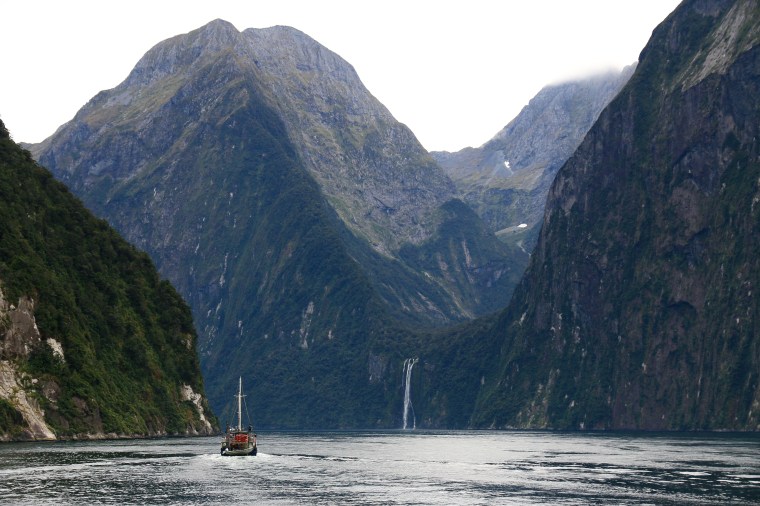
And so the obligatory cruise, which is a very pleasant experience but one which somehow you are fairly content to finish after two hours. Up to the Tasman Sea and back, taking in waterfalls, forests and seal-dotted rocks, neck-craned constantly to fathom the height of the precipitous mountains that encircle the fiord. The scale is hard to comprehend and harder to capture, but a steady stream of sightseeing planes and choppers looking the size of seagulls against the cliffs provided a persistent sense of perspective. All washed down by a ‘glacial facial’.
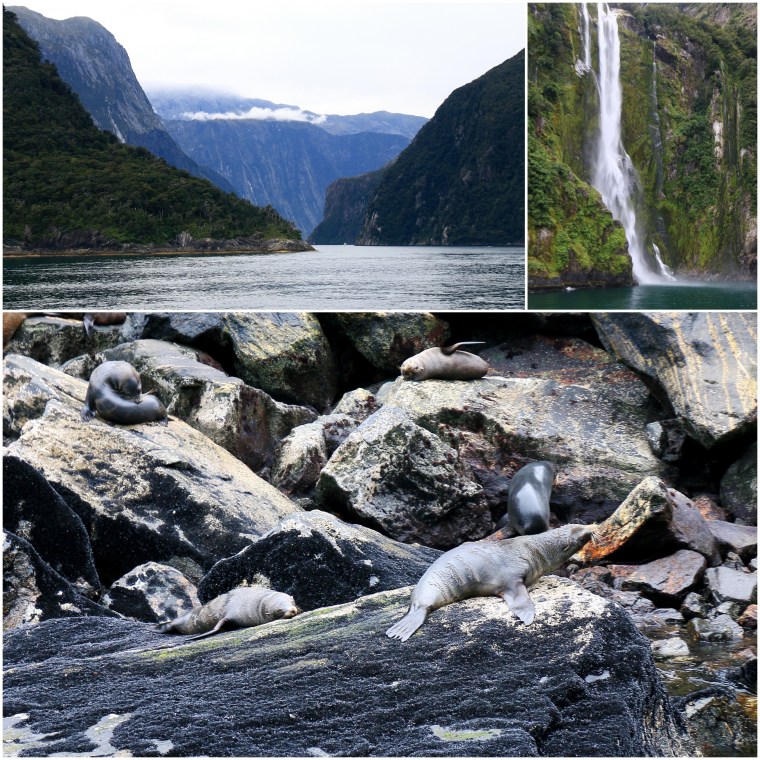
Our cruise finished at 12:30, meaning we had time to pause along the road back to Te Anau. What was an empty coach park (containing at least 40 bays) when we set off on the boat was now crammed, and the tide receding and breeze rising had scuppered any iconic Mitre Peak reflections for the masses. Strategy or luck, it ran out briefly at The Chasm, where we lingered long for a car park and failed to find a delightful glade for lunch. But further stops along the highway offered more opportunity to delight, to take in waterfalls, peaks and pristine river valleys.
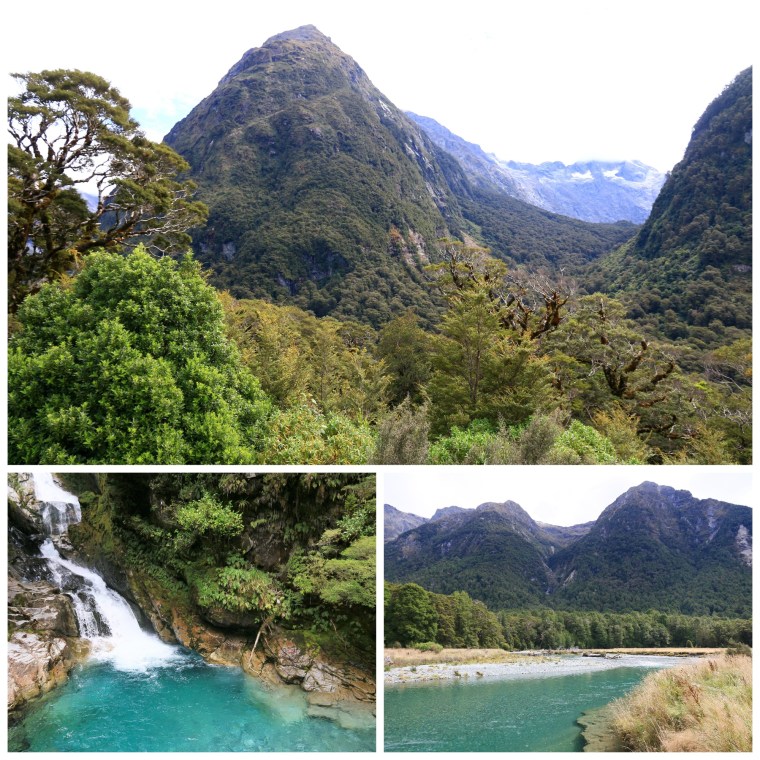
Back in the Eglinton Valley – where it had all really started this morning – the warm sun was once again shining and the day did its very best to resemble an idyll. I was more than happy to linger here, to wallow in the golden grasses beside jade waters, while Dad wallowed in a little fishing time. And even if the trout don’t bite so much here, surely in such a setting netting doesn’t matter.
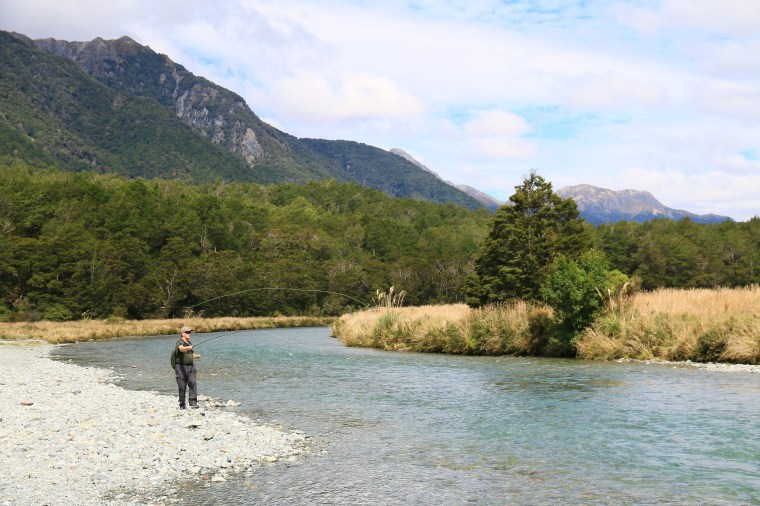
It turns out the better (aka easier haha!) fishing spots are closer to Te Anau. A prime spot to dump Dad and take the hire car for a bit of an explore, down south of Te Anau to Manapouri. If Te Anau had a serene calm about it, Manapouri was decidedly comatose. But I mean that in a good way, the lake wild and rugged, visitors few and far between and mostly heading toward or coming back from trips to Doubtful Sound. Doubtless there are trout here too, on the edge of the world.
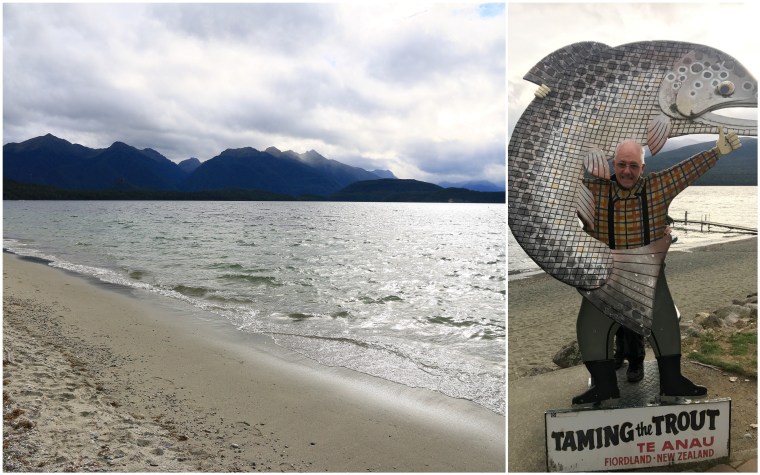
With this little foray, three hours and five fish had passed and we joined up to dine on takeaway pizza in the car overlooking Lake Te Anau. The breeze was up, the weather closing in a little, the car rocking. Omens of the mostly fine post-cyclone weather that we had enjoyed in the last few days coming to an end. It was looking as if rain might just visit us again, transforming Milford Sound to a funnel of waterfalls and blowing us back towards our final stop, Queenstown.
[1] The day after our visit, Milford Sound received over 30 centimetres (not millimetres!) of rain


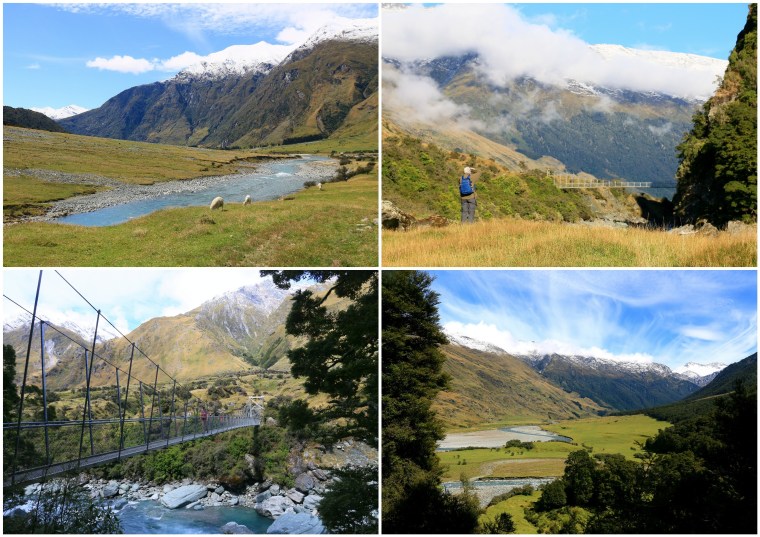
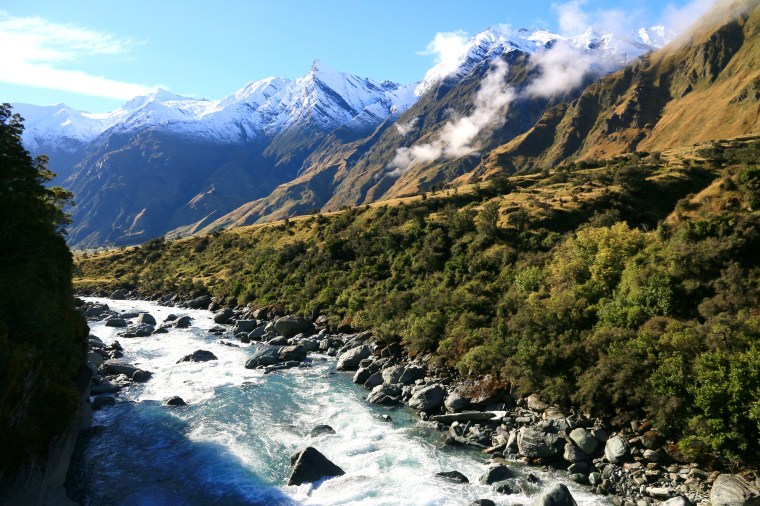

 In some ways the end of the track is something of an anti-climax, but only because the entire journey getting there has been as, if not more, enjoyable. Terminating close to the glacier, yet another waterfall for company, it is an ideal sandwich stop, a platform from which to take photos that cannot capture the all-round panorama of ice and snow and forest and water under big blue sunny skies. Dad and I two insignificant specks of unintentionally coordinated orange that have passed through the storm and into the light.
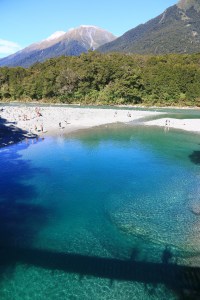 Lake Wanaka eventually ends and narrows into the valley of the Makarora River. Just past the township of Makarora another popular stop for caravans and coaches and cars and cameras are the jade pools of Blue Pools. With a gentle walk through a forest overflowing with hobbit hiding holes, two swing bridges and stony beaches suitable for building thousands of stupid piles of rocks that might look good in a picture but disturb the natural ecosystem, this is a busy spot. But yet again, as so many times in New Zealand, you can forgive the constant flow of people given the sheer beauty of the place, cognisant that you are just another nobody adding to the crowd anyhow. And with people comes stone-skimming fandom and plenty of fresh blood for the delightful sand flies that are in even greater abundance.

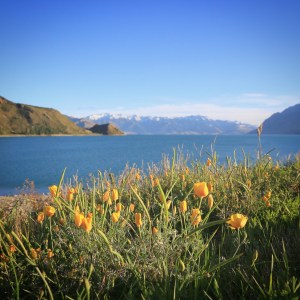 Happily, the sunshine continued into the next day and it was good to finally see our Lake Hawea surroundings in a golden light. What comforted with cosiness during the storm also shone with charm in the summer sun. To me, Lake Hawea proved a good alternative to Wanaka, barely down the road but without the crowds and providing much more space. Indeed, under such big blue skies it was a shame to leave, to miss out on sitting in the garden, foraging in the greenhouse, rubbing the cat’s belly on the grass. But there was time for one last amble down to the lake shore, to the blue and green and gold and white of just another amazing little corner of this country. And time then to move on to yet another one.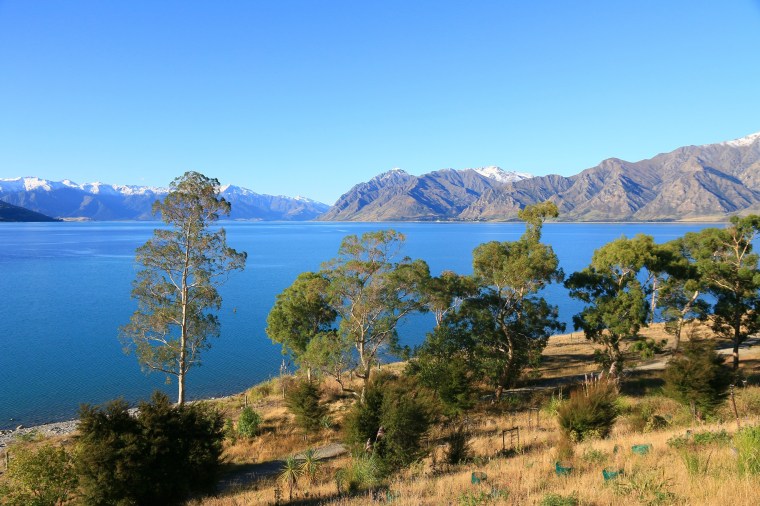


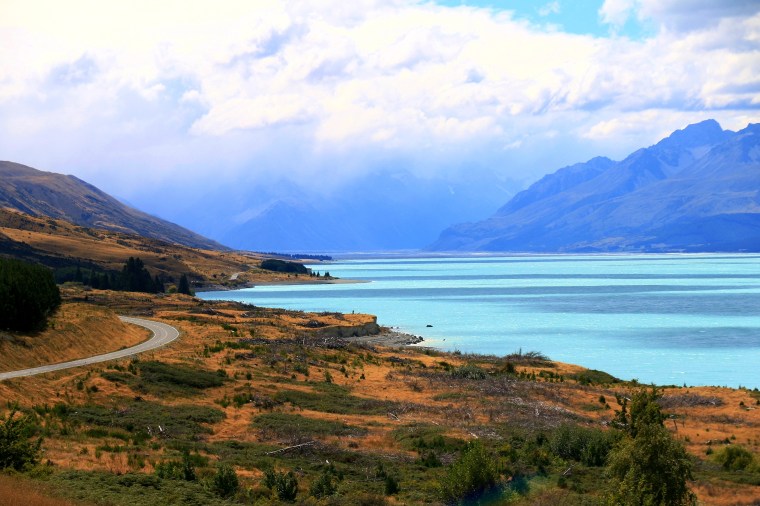


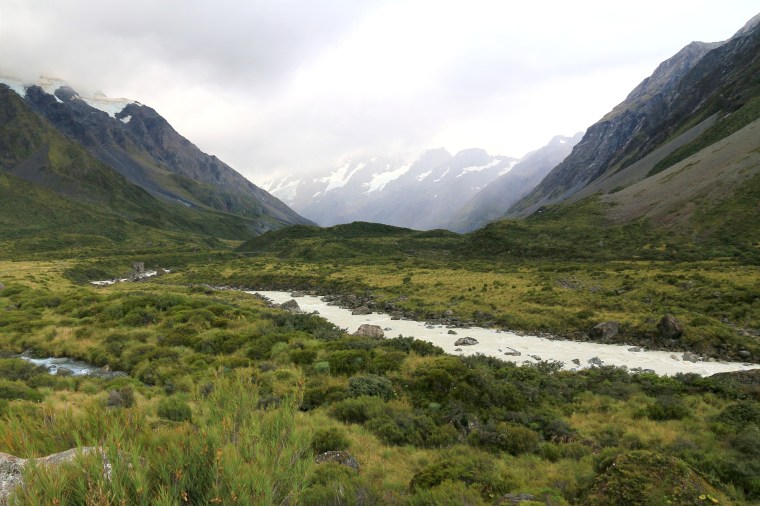
 It was a noisy night in a house on the outskirts of Twizel. Not because of hoons doing burn outs or rampaging feral possums, but the iconic sound of raindrops on a tin roof. Many Australians go misty-eyed when you mention the sound of raindrops on a tin roof, as if in some kind of messed-up ballad by Banjo Patterson accompanied by dreadful Lamingtons, but I don’t see the appeal. How the fricking heck do you sleep? Turns out this rain may or may not have been associated with cyclone Gita, or ex-cyclone Gita, or whatever was heading our way for 48 hours or more…

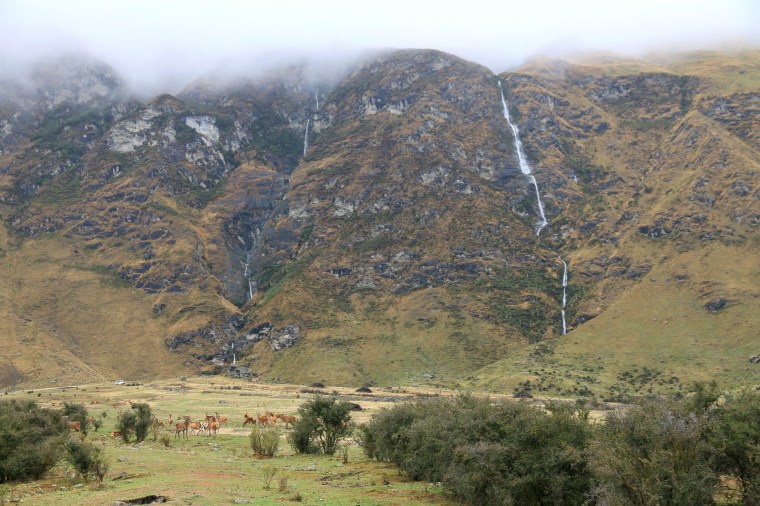
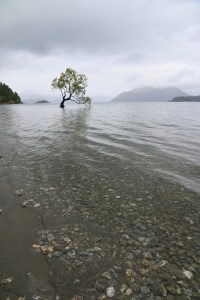 Generally, I prefer waterfalls to crowds of tourists, but the crowds of tourists can provide useful guidance on the location of scenic stops. Like a tree on Lake Wanaka – That Wanaka Tree – which probably has its own Twitter account and features on every second Instagram post with the hashtag newzealand. We join a semicircle of tourists taking pictures of the tree, with the tree, around the tree, through other trees to the tree and generally marvel at the tree, which is a very pleasant, photogenic tree. And frankly, you can’t ask much more from a tree. Other than it to grow money…which it may have done given its ubiquity on the internet.
 More waterfalls were spotted on a drive to the northern side of Lake Hawea late in the day. A stop for some Dad fishing which yielded a stop in the rain. Briefly the sun even emerged albeit a touch watery like everything else around. But for the first time in a long time the windscreen wipers on the car could be set to zero. And as we parked up following a peaceful drive back home, without a fire or cat in sight, the sky miraculously fired up red, to the shepherd’s – and tourist’s – delight. Perhaps the storm had come, and gone.
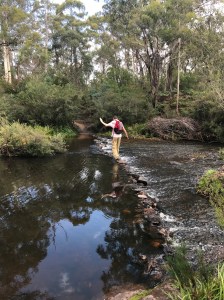 Most people use Braidwood as a coffee and loo stop on the way to the coast. Today however, with my friend Alex in the passenger seat, I was heading a little south into Deua National Park. A brown sign pointed to The Big Hole and Marble Arch, and who doesn’t want to see a big hole and a marble arch? Even if you do have to wade up to your knees in the Shoalhaven River to see these delights.
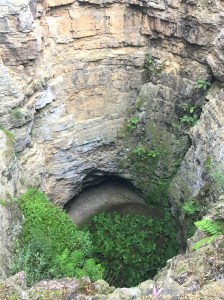 I knew I would be a fan of The Big Hole. Part of the attraction is the name itself, attributed through one of three traditional Australian place-naming techniques: the bleeding obvious (the other two methods being the Aboriginal and the Colonial rip-off). Climbing up and over a ridge, a sign in the midst of nondescript bush points to the hole a hundred metres away. And there it is. A big bloody hole. Seventy metres deep and filled with ferns that are a lot bigger than they look. At the end of the day, what else could you call this?
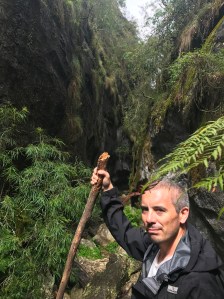 Marble Arch is far less obvious. And a good deal farther, through an annoying shower and down into a valley. In fact I don’t recall an extravagant arch glistening in the rain, just a narrow canyon and underground cave, with a few boulders and soggy pools in the way. Nonetheless it was quite a spectacle, quite an experience, quite an adventure. And quite a climb back up, in the rain.

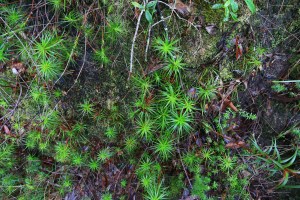 Walking along a gravel road in a landscape tamed by pasture and pricey property, the bush reclaims the country and sweeps down into the valley of Bundanoon Creek. While keen not to go all the way down to the creek (and thus back up), I dropped below the cliff line on the promisingly named Amphitheatre Track. While there are glimpses of the valley and the eastern escarpment through the trees, a lot of the attraction is in the close up, in the miniscule: the seeping moss, the crumbling sandstone, tunnels of ferns and trickling gullies.
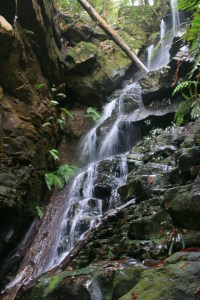 As well as savouring the sights, sounds and smells of the bush, I was on a waterfall mission, confident of success given the recent rains. It didn’t take long to find a trickle of water that had swollen sufficiently to spill through a cleft in the rock, briefly flowing over the path, disappearing into unfathomable depths below. Further gullies provided further cascading water, and such was the sogginess underfoot it was relief at times to emerge from beneath the ferns on slightly higher, drier ground.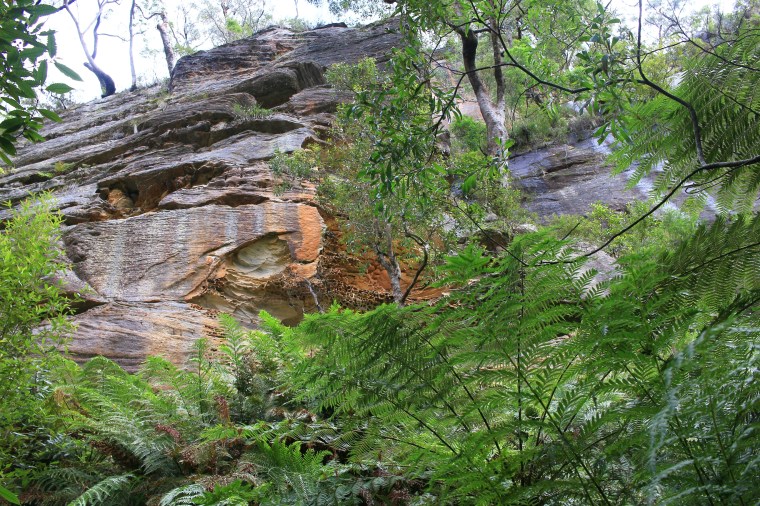
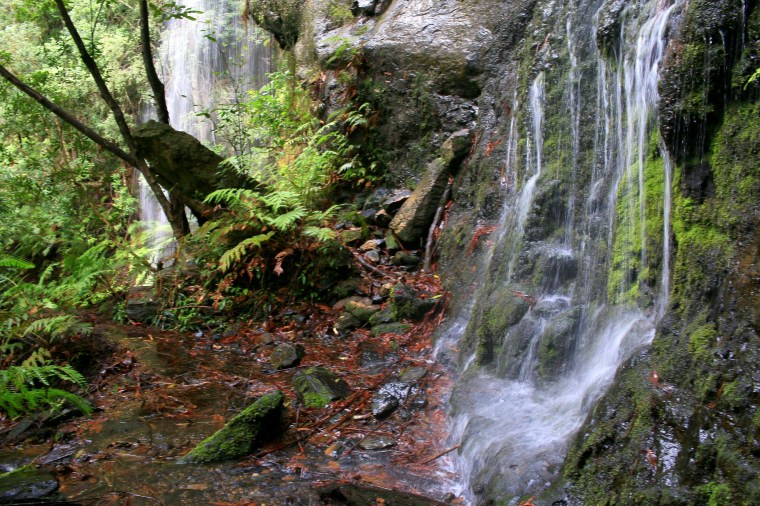

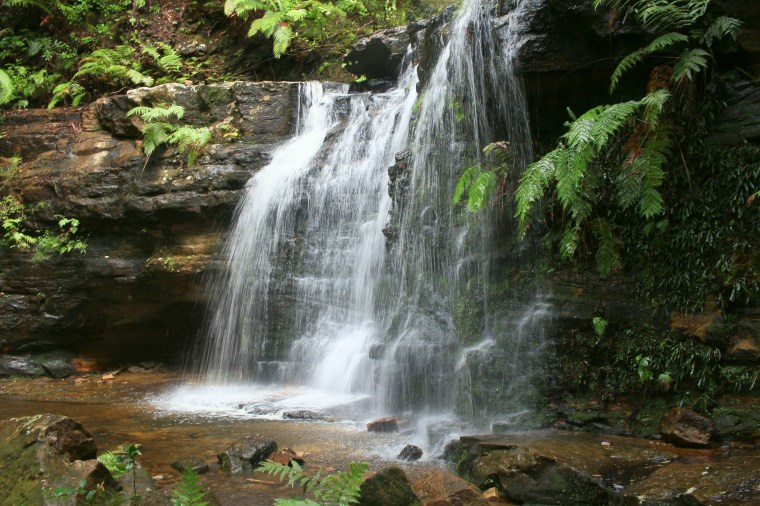
 I was relieved to get back to the car, relieved to be just fifteen minutes from a hearty lunch in Bernie’s Diner. And relieved that the first raindrops of the day hit the windscreen as I closed the car door, raindrops which continued almost all the way home.
 In Part 2 of my holiday travels (
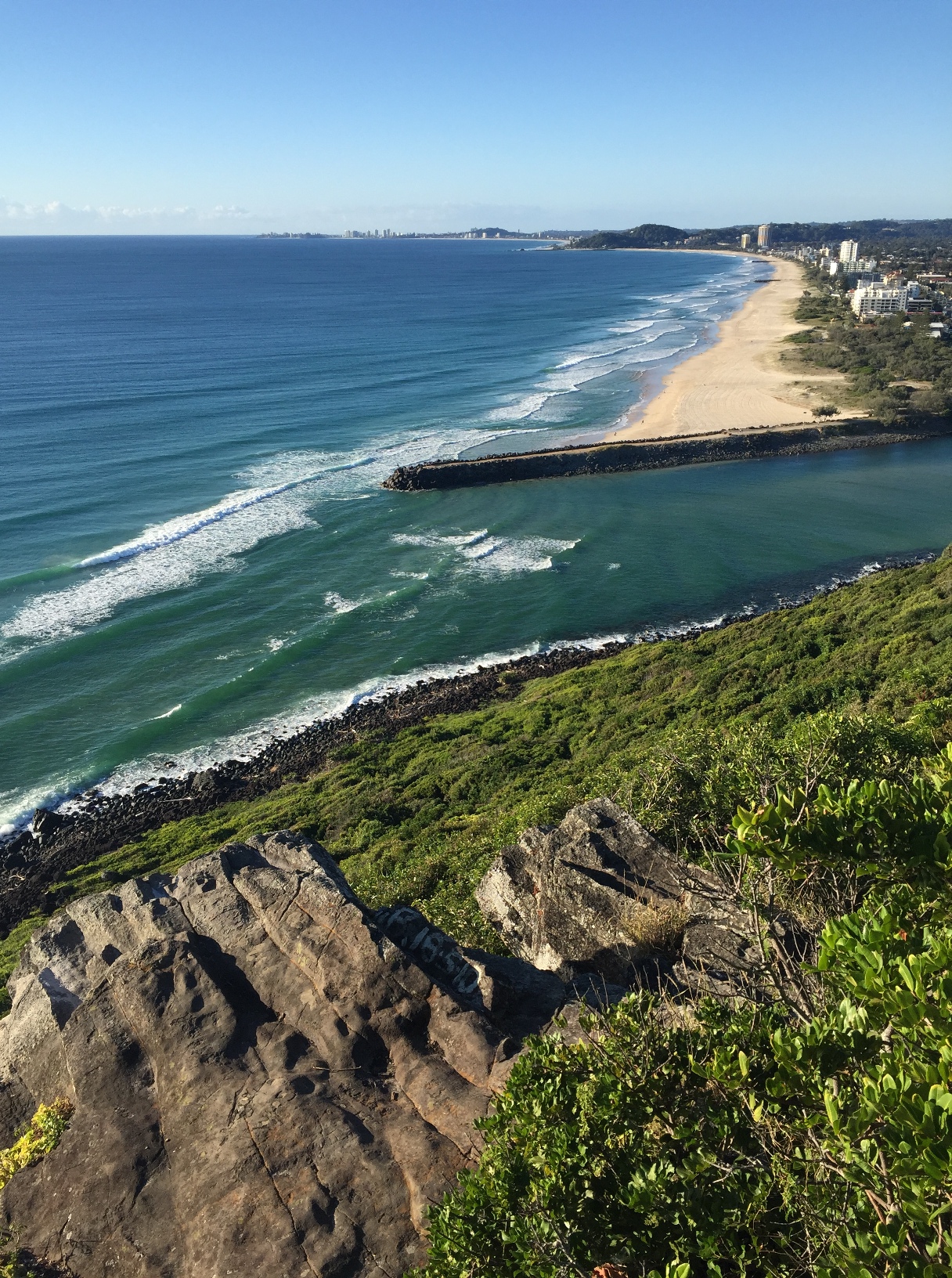
 Pausing briefly around the border towns of Tweed Heads and Coolangatta, I decided to head around much of the Gold Coast and enjoy the lumpy patch of verdant paradise that is the hinterland. We crossed the border back into NSW and changed time zone heading up and down to Murwillumbah. Surrounded by fields of sugar cane, half of this year’s yield was in my iced soft drink from KFC in the town. After which we zoomed onwards and upwards.
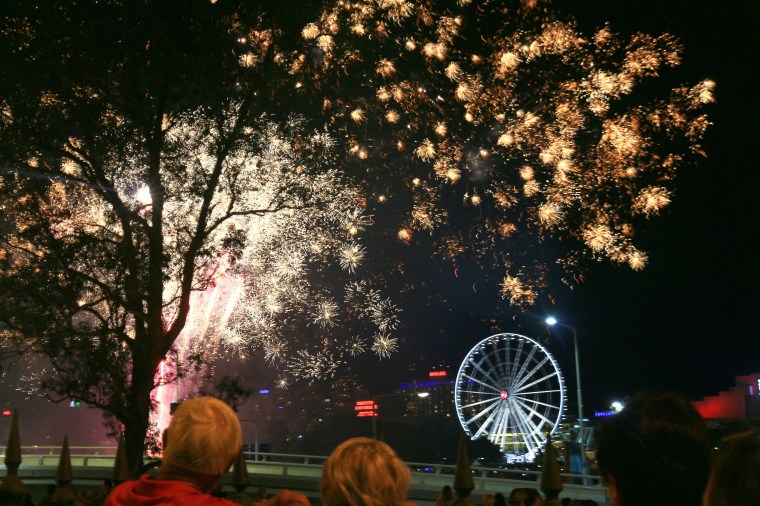
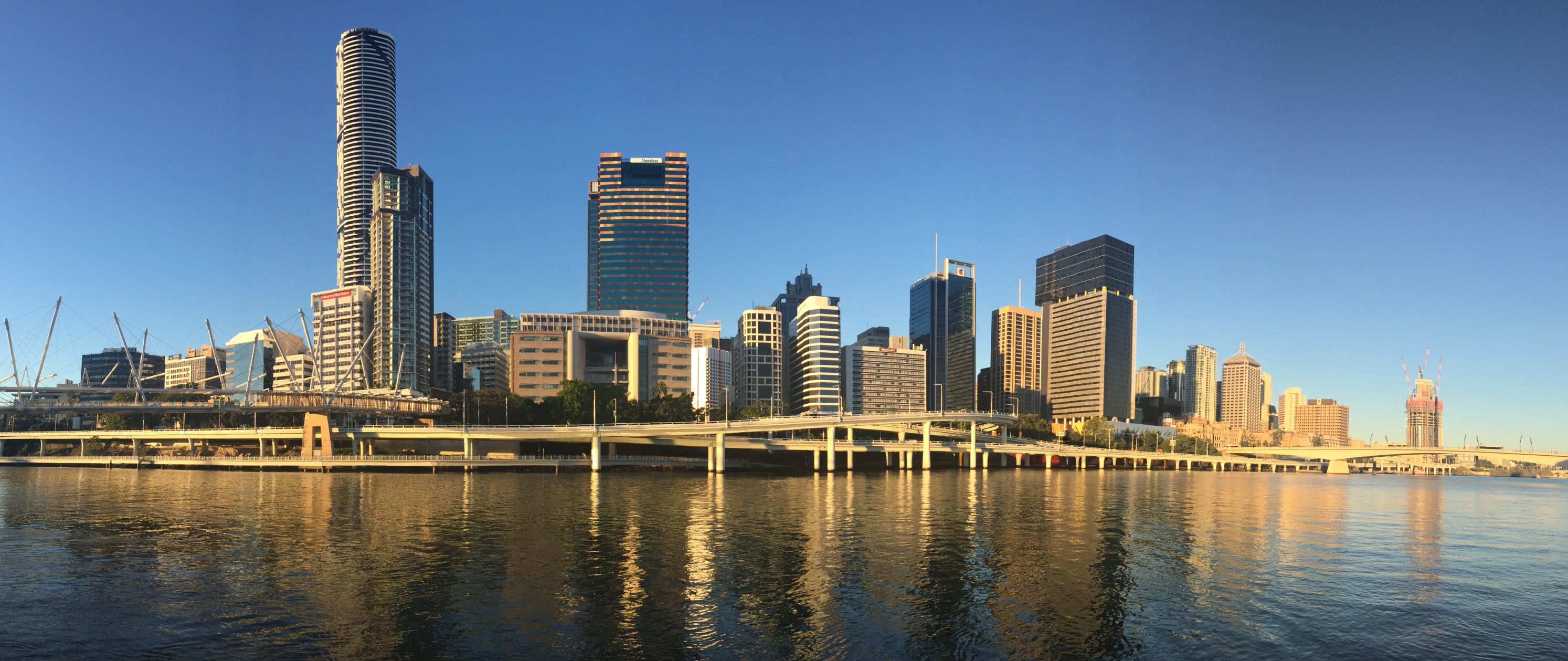
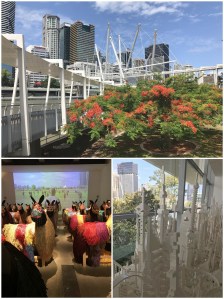 We were staying in a rather pleasant apartment in the CBD, with a bit of river view that was to come in handy for New Year’s Eve. The river was a frequent feature of our ambling, crossing over to South Bank, strolling alongside the Botanic Gardens, heading over to the air-conditioned awesomeness of GOMA. You could see its brown waters from the top of Mount Coot-tha, and you could encounter them at close quarters on the CityCat ferry, travelling under the Story Bridge to New Farm. In fact the river was almost as pervasive as Max Brenner; Caroline keen to get a fix or two before heading back to England, and I happy to tag along.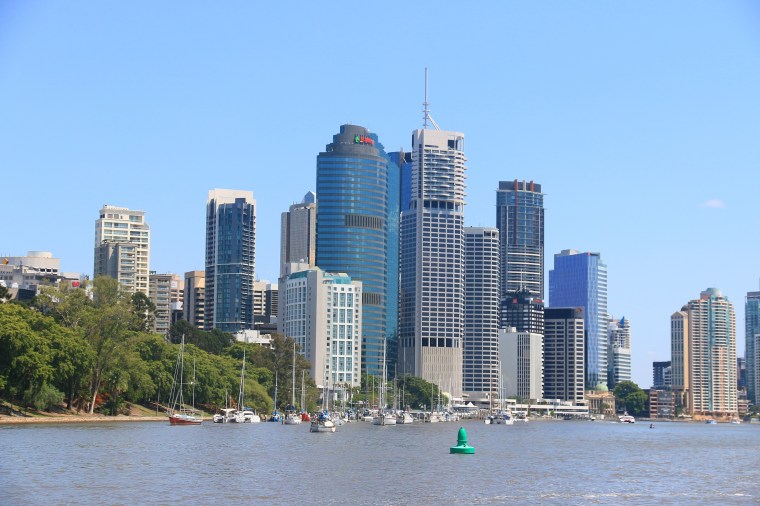
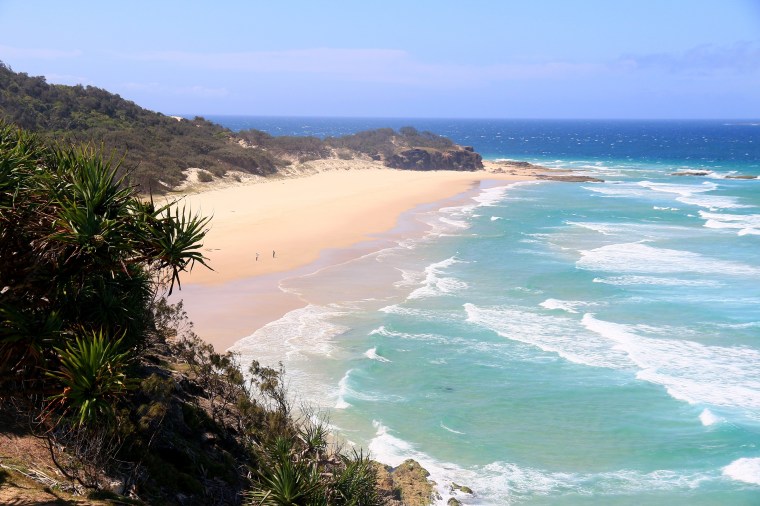
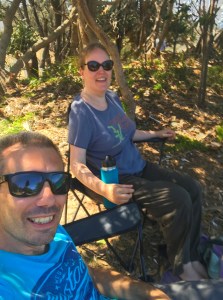 Ah, island life. A time to kick back and relax. Or wade in stagnant pools with hundreds of kids, or queue endlessly for ice cream, or take a big f*ck off truck onto the sand and ruin the wild ambience. This is what was happening all around, but we still managed to kick back and relax a little at Point Lookout. Before queuing for ice lollies in the world’s most humid shop.
 A taste of what this would be like came at the end of the day, with the sun lowering, a breeze providing relief and a quiet satisfaction milling about the beach near Amity Point. In slanted sunlight kissing sand golden, you could innocently wade in the water happy, only to discover dolphins surfacing mere metres away. Before disappearing as abruptly, leaving only fond memories and countless blurry pictures of ocean on your camera.
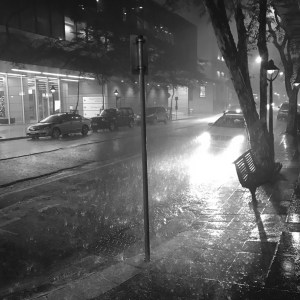 Still, this drizzle is nothing compared to the deluge the previous evening. Sat contentedly eating some Japanese food in the city, we were somewhat oblivious to the torrent of rain that had decided to unleash itself on Brisbane. Only emerging did we witness instant rivers flowing down the mall and citizens racing precariously across streets in their unsuitably thonged feet. We made it back to the apartment, but even with the protection of umbrellas there was considerable dampness.
 So as grey as it was today in Redcliffe, at least you could walk outside without fear of being drowned. And there are always the Bee Gees to brighten things up. It seems the canny council in Redcliffe has recognised the potential cash cow of this association by constructing The Bee Gees Way. Linking two streets, it captures people walking from the car park to the scattering of restaurants by the seafront. More than a woman walked by the pictures, words and videos telling you of their time in Australia and beyond. I guess your willingness to trek out to Redcliffe to see this display may depend on how deep your love is for the hairy triumvirate. I can take or leave them, but I found The Bee Gees Way curiously distracting.
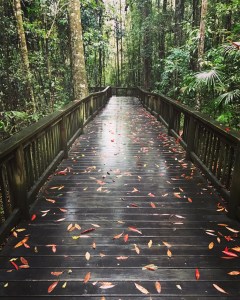 Arriving in Buderim, I made the best of the weather and tried to have a nap. While it was of limited success, the rest refreshed enough for a walk in Buderim Forest Park. Here, the dampness had the effect of illuminating the tangles of rainforest, a grey backdrop to semi-tropical vibrancy. Glistening boardwalks peppered with fallen russet leaves; lustred green foliage and ferns dusted silver with water; and bubbling cascades and falls given impetus by the weather.
 I was only going to stay the one night on the Sunshine Coast, but my weather-induced weariness and the prospect of heading back to the swag tempted me to linger for one more. The extra day was drier, and the sunshine even emerged on occasion. This made the walk up to the top of Mount Coolum somewhat more hellish, but I felt like I had achieved something and could spend the rest of the day eating and being lazy.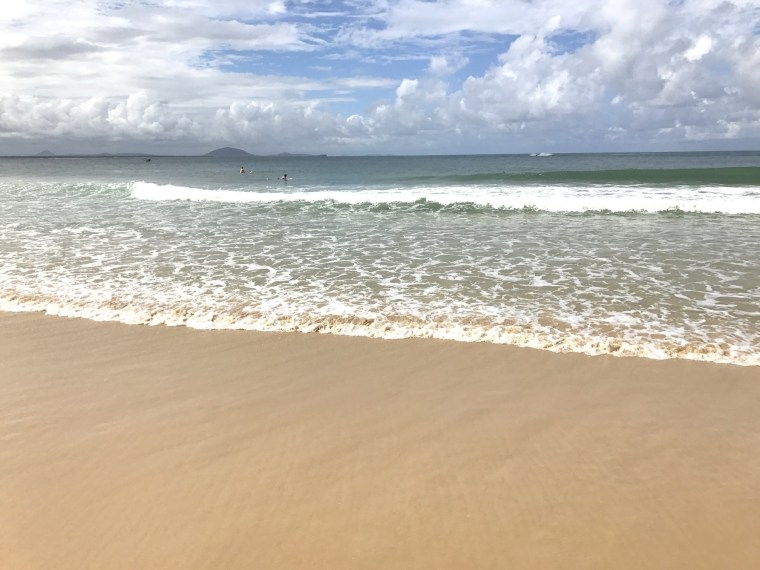


 This comfortable civility dissipates quickly once away from the main road; national parks host waterfalls and rock pools and scenic views over jungle. Tracks weave through palms and strangler figs and giant feathery ferns. Snakes and spiders probably hide. While the crowds loiter all the way down to pools and falls at Kondalilla National Park, beyond the swimming spots, the jungle is almost all yours. Yours and a couple of fellow pioneers, hoping to steer clear of Drop Bears and survive on rations of emergency salt and vinegar crisps and deodorant. We made it, and went to eat cake to celebrate.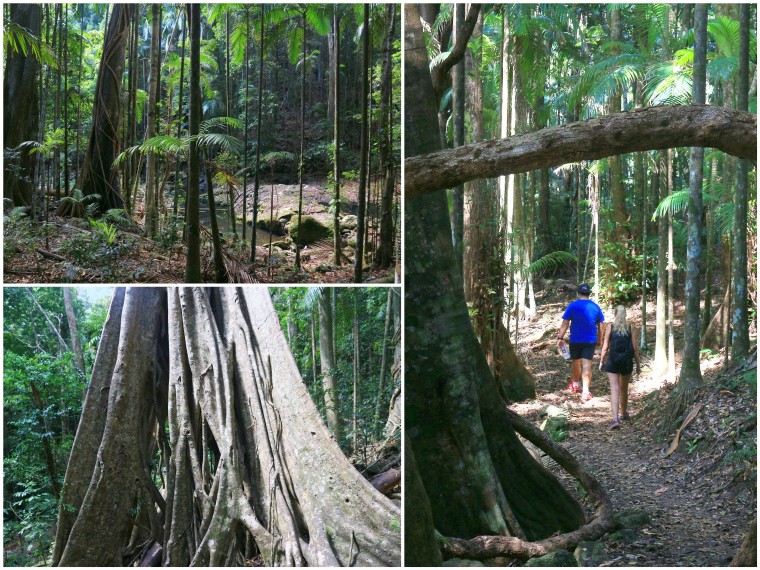
 The return of the sun the next day prompted the usual screeching, warbling, cackling and occasionally tuneful singing of the Buderim birdlife. It is a struggle to sleep in and I was more than ready to escape down the road into Buderim Forest Park for some early morning exercise. While others decided to jog, I was content enough to engage in spells of brisk walking punctuated by abrupt stops for Instasnaps. A kilometre in, the falls came as a surprise. I mean, I knew they were there, but I wasn’t actually expecting much to be falling. And while it was hardly a deluge, there was something aesthetically pleasing about Buderim Falls that was absent at Kondalilla yesterday.
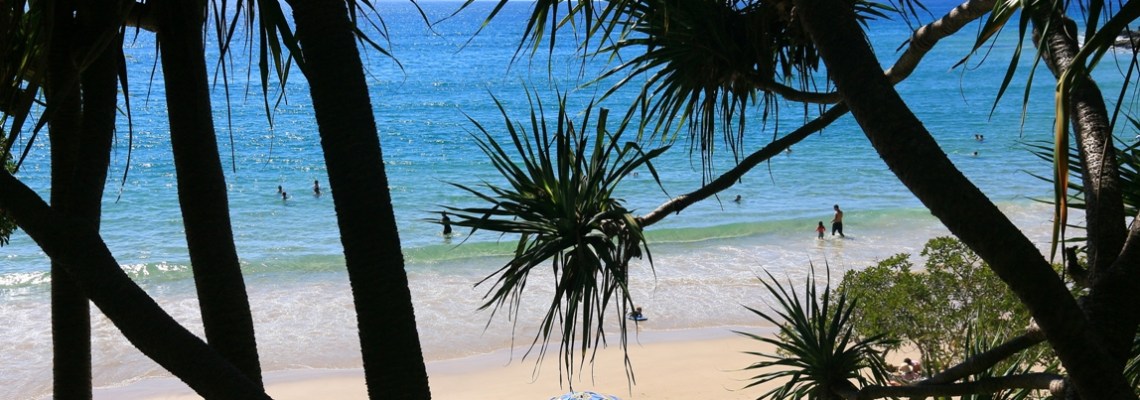
 You see, the tourist board have been so successful that Noosa is brimming at the seams on a warm, sunny Sunday lunchtime, jammed with locals and foreigners alike. Parking is in the lap of the gods, but boy, have they got some of the prettiest parking spots around. The beach is – well – busy for an Australian beach, but admittedly it is a rather pretty beach. And even the national park, which shelters Noosa from encroachment from the south, is bustling with a steady stream of backpackers, families, joggers, and adventurers most of whom are, of course, exceedingly pretty. It is, undoubtedly, a very pretty place, and a requisite on a two day drop bear bushwalk adventure beach and waterfall honey monster tour.
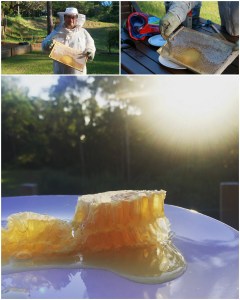 Like all of the most accomplished tours though, the best is saved for last. No tour is complete without a visit to a twee little spot providing lovingly crafted local produce and quirkily endearing owners. Honey Bear Honey of Buderim is not yet on the tourist itinerary, but with a bit more blue sky and a 10% cut it could well be. Look, I’m even promoting it on this blog for goodness sake, reaching tens of
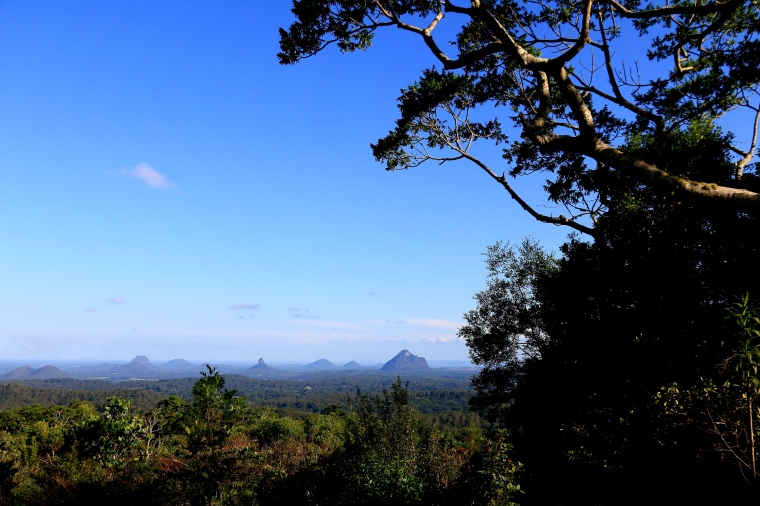
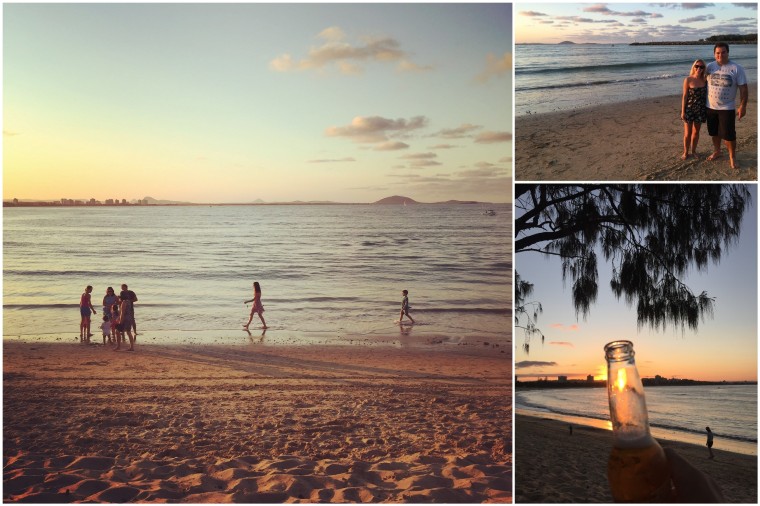
 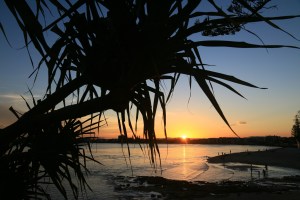 Some might go on to watch the sun disappear, over the apartments and occasional jagged plugs of the Glass House Mountains. Many linger in the warm air, sedated by sparkling wine and a sense of being the luckiest people on this planet; making the most of it all before heading back to work; living each day as if it is your last. Sensible, because, in this splendid corner of Queensland, you never know when a Drop Bear might strike.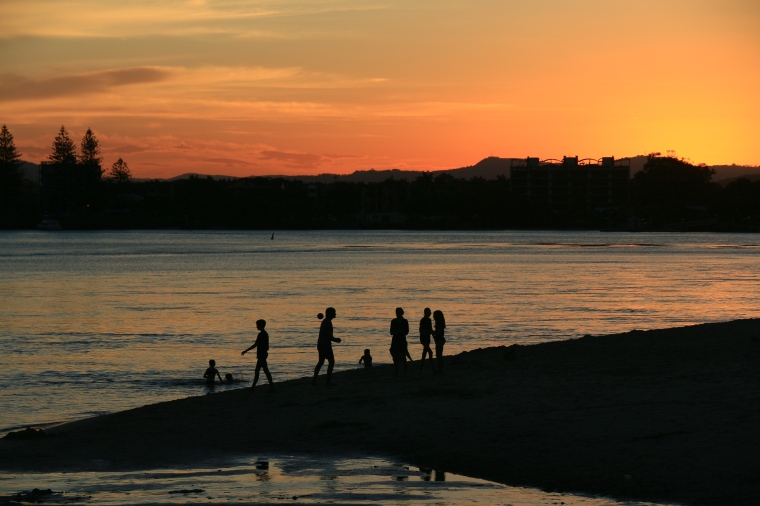
 Having now spent over nine years (with interruptions) in everyone’s favourite Australian city you would think I’d have exhausted every nook, crevice and scrubby hilltop. Forget nine years…many would say two days is sufficient, and even then you might have to drag things out with a wander around the National Archives, surely the least compelling sounding attraction of the lot (which might explain why, still, I have never been). But no, it turns out Canberra has even more suburbs and scrubby hilltops than you can ever imagine.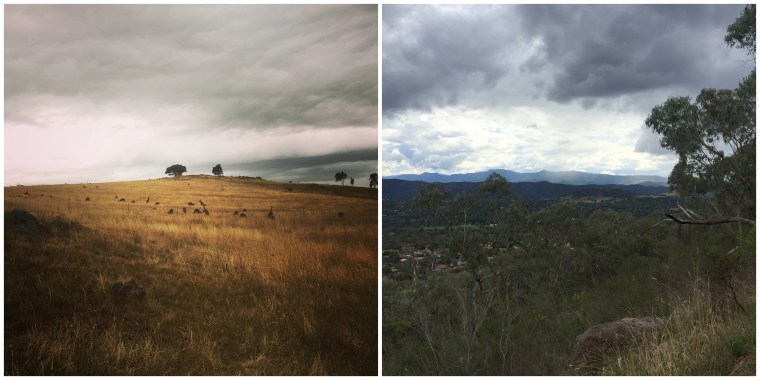
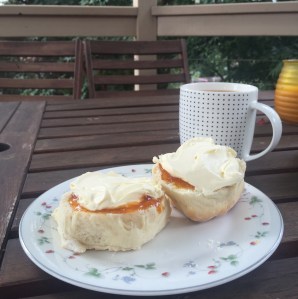 Nevertheless, it was with some contentment that I found a reasonably close reasonably decent coffee stop one Saturday morning, as part of a bike ride on the many accommodating paths in the Tuggeranong Valley. One path circumnavigates its lake, which is a poor man’s Burley-Griffin but amiable enough. Others cut through the various patches of grass set between the backs of brick houses and alongside storm drains. One route takes you up towards Oxley Hill, a reasonable but not unobtainable test of legs, and another does the long uphill drag back to Wanniassa, in which aforementioned legs turn to jelly. I may be being just a touch healthier, but with this comes justification in feasting on yet another, sadly Antipodean, cream tea.











 A good spot with or without coffee is GOMA, the Gallery of Modern Art. Probably without coffee, because that would have been condensed into an essence of cold-dripped Columbian syrup and daubed on the walls to spell out a series of Japanese characters that make no sense whatsoever, but have deep, deep, meaning, hmmm. Still, I love the building in which such work sits, and there is something immensely satisfying in cloaking your laptop bag for an hour and transitioning to a world away from depth interviews and strategically coloured bar charts.







 gbpilgrim