Is anyone else fed up of living in ‘interesting times’? If there wasn’t the death of a rock icon followed by the self-harm of isolationism followed by the election of a rabble-rousing orange manbaby preceding the onset of catastrophic bushfires coming just before the spread of a deadly virus leading into wild lockdown parties before another calamitous war broke out would things really have been that boring? It’s no wonder many people my age seem to hanker back to the 1990s, when the biggest deal was Jennifer Aniston’s hairdo.
If you are seeking uninteresting times, you could look no further than a long drive from Canberra to Coonamble and back, especially if this takes you through Dubbo. Admittedly that would make for some pretty uninspiring content, but there is comfort and reassurance to be had in the boring. I just don’t know how I will stay awake though, and it’s probably the same for you, dear reader, as well. So, in an effort to entertain all round, I contrived to make the journey into one big loop, extending the kilometres but exposing myself to some new tarmac – and dirt – along the way.
The first of the new ground was along blacktop through rugged Karst country, taking me from Abercrombie Caves down into the fertile plains around Bathurst. I could have detoured around Mount Panorama the right way while I was here, but time was pushing on and I was getting low on fuel. Stopping at a nearby servo offering the cheapest E10 for miles around, I became the proud owner of the most expensive tank of petrol I have ever bought. Until next week.
As the last glowing oranges and indigo hues of sky gave way to a starry night, I settled down for the evening in Sofala. By settling down I mean parking my car in a free camping area next to the Turon River, eating salad and cold pizza in the front seat, before clambering into the back and onto an air mattress. For a night of sweet cheesy dreams, eventually.

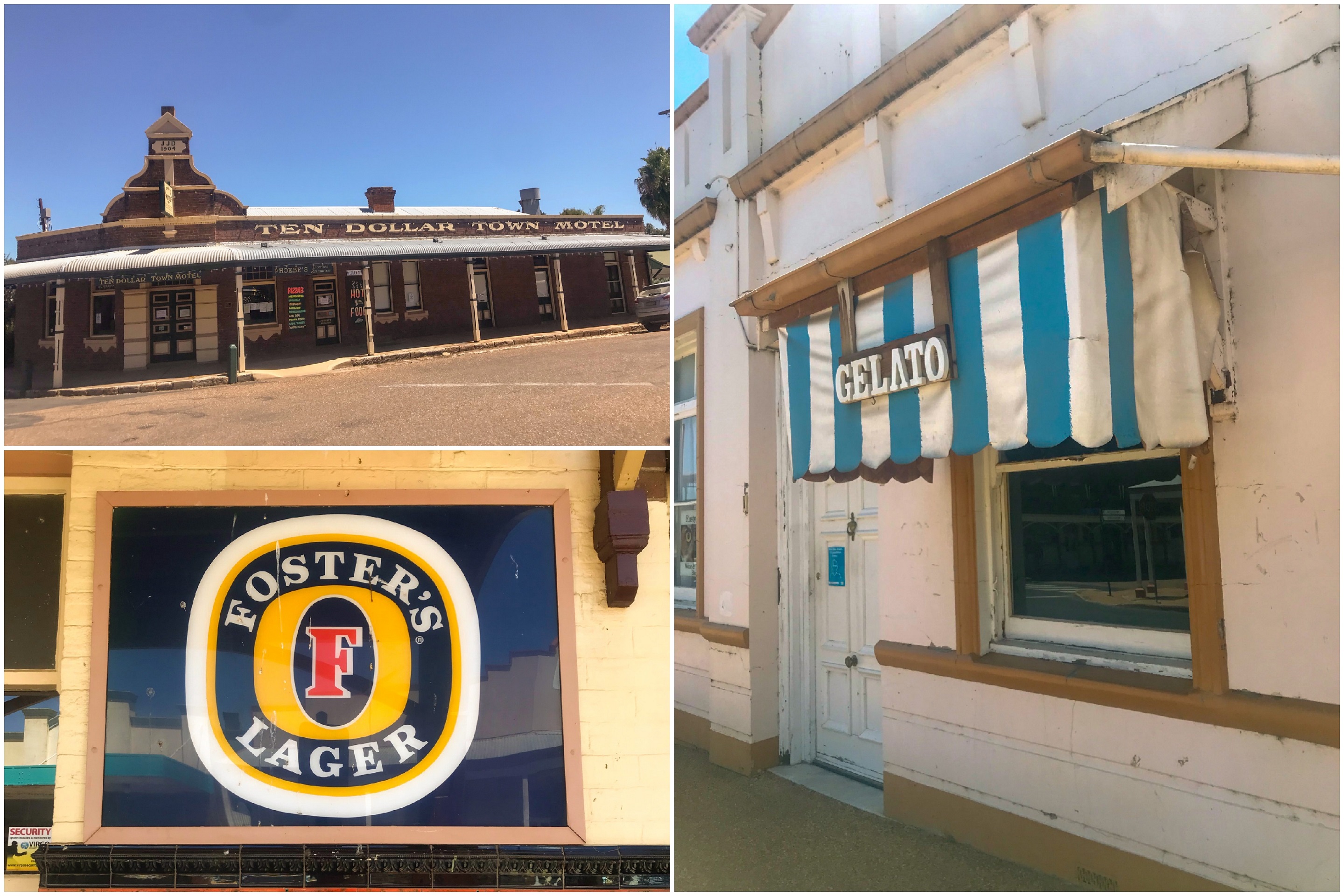
Sofala is one of those tiny places whose glory days have long passed. The glory days being – like many of the settlements in this region – the discovery of rich deposits of gold. Information boards display grainy black and white images and describe a bustling town featuring stage coaches and banks and theatres and, naturally, several raucous hostelries. Today, the high street is a sedate affair offering understated charm and just the one, currently lifeless pub.
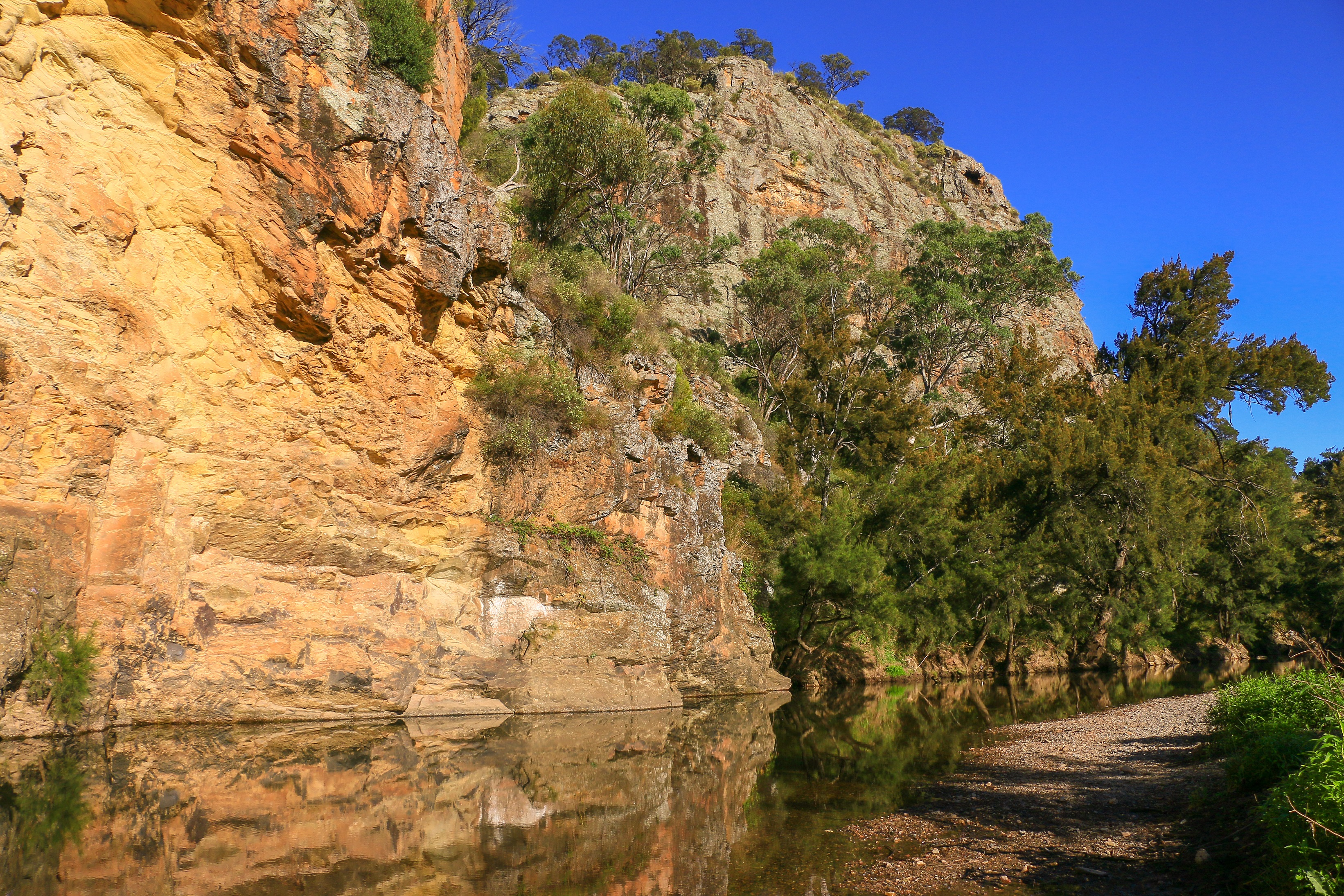
It turns out there is gold remaining just out of town, or at least the same glow emanating alongside the river. Water has scoured a course deep into the earth, leaving precipitous cliffs towering high above the mirrorlike pools of the Turon. Known locally as Wallaby Rocks (as indicated by a small, hand painted sign), this came as a total surprise, an interesting feature of an interesting drive that you wouldn’t have known about without passing this way.
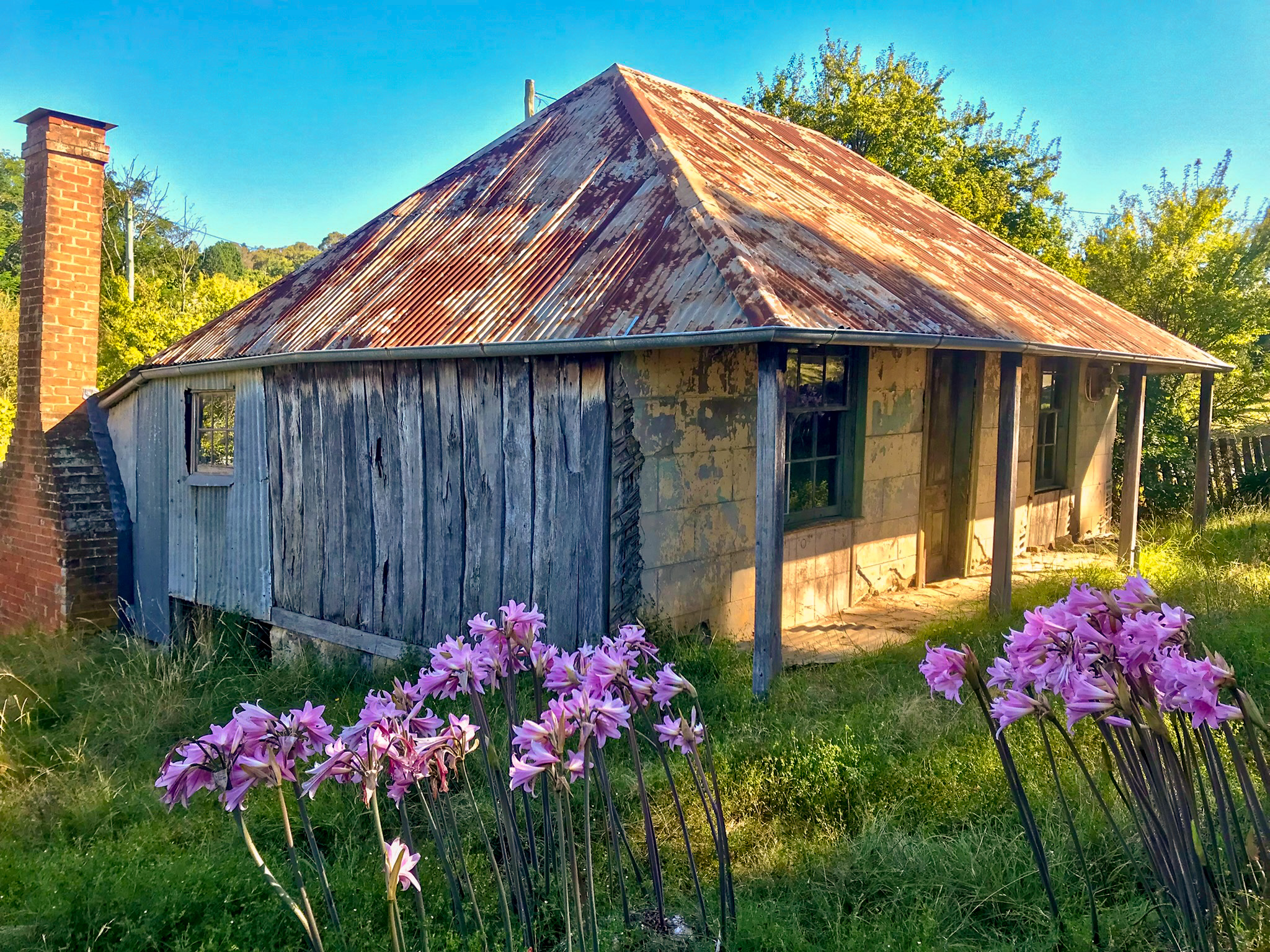
I was heading up towards Hill End, another settlement grown rich on the sunlight shimmer of minerals. Today it is preserved by NSW National Parks as a historic site, a village of the past functioning in the present. And so there is an old pub that still operates as a pub, a general store that still operates as a general store, and a scattering of private residences with owners doing the usual mowing and chook-feeding and sitting on creaky wooden verandas. I expected a more bustling affair here, but on a Friday morning it felt like I was the only visitor, a conspicuous sight wandering the streets and peering into people’s gardens.
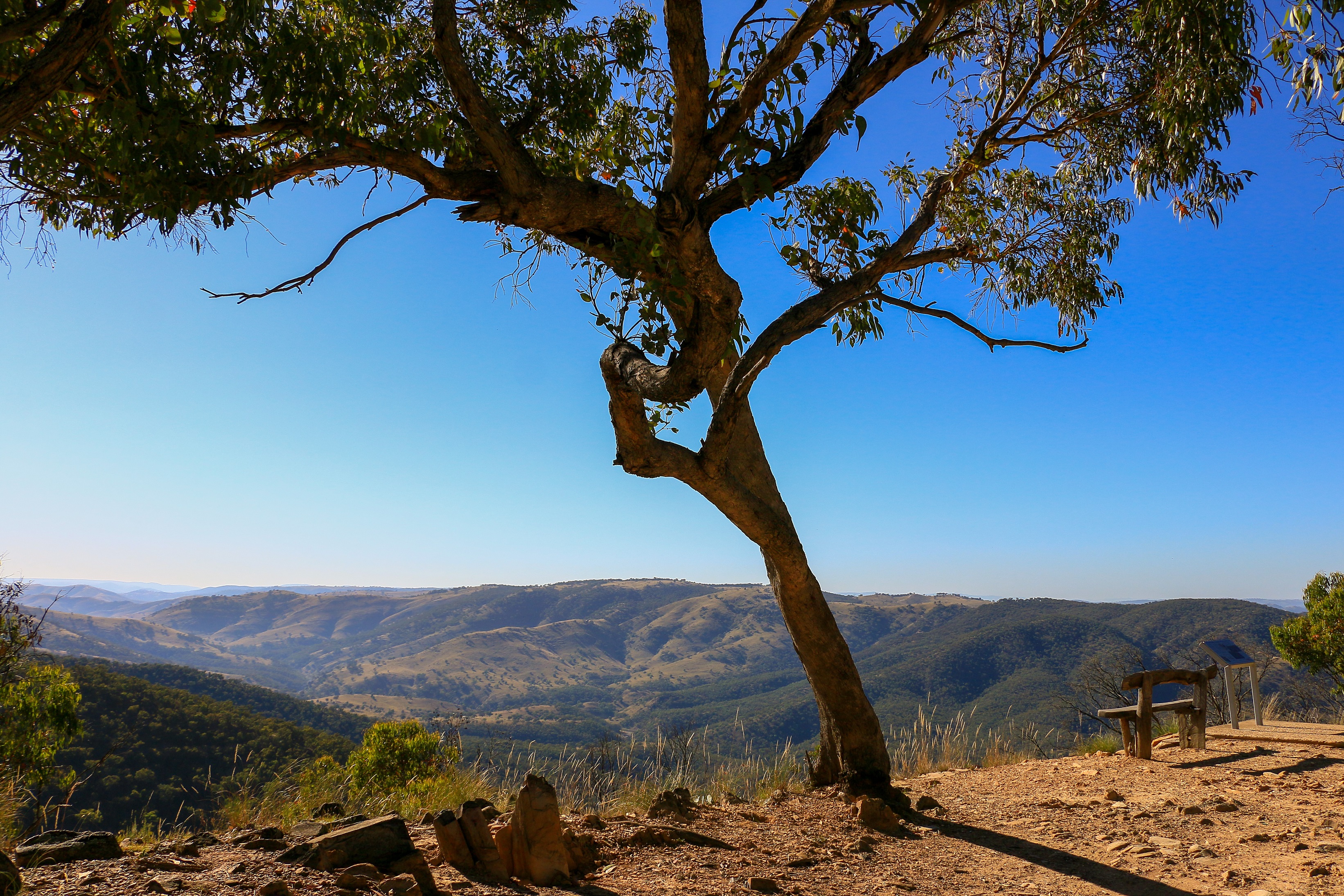
If nothing else, the village is aptly named, clustering at the end of a long plateau above the deep valley of that Turon River. This results in the promise of three separate lookouts and though not quite of a scale of – say – the Blue Mountains or Kosciuszko, they offered fine views of the golden, rolling countryside. Vistas that were, I suppose, somewhat interesting.
From Hill End I took a lengthy, winding road down towards Mudgee. This would be one of the more interesting towns along the route but cognisant of making progress north and noting the fact that I had stayed there before, I eschewed the town centre and made for lunch in Gulgong instead. The lunch would not be as fancy or as overpriced, but it was satisfying enough on a shady bench in a town that appeared to be rooted in the 1950s. Or maybe 80s. Golden times, whenever they were.
With every kilometre the level of interest along the road peters out, the landscape flattening and becoming dominated by grain. A painted silo at Dunedoo testifies to its abundance alongside the effort of these towns to generate some form of tourism through silo art. Further along at Mendooran there isn’t even a silo to justify stopping, but I stop anyway, grabbing a country coffee and slice of carrot cake to appease the bitterness of the coffee.
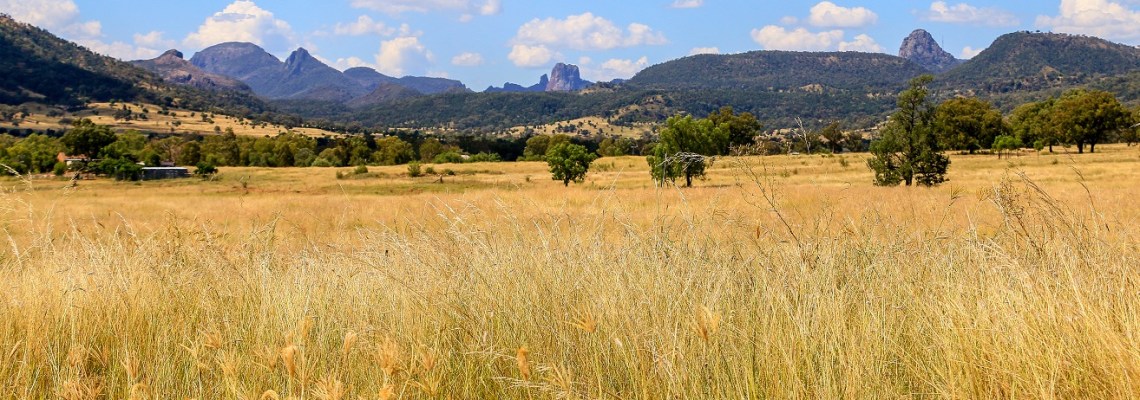
It is perhaps the plainness of these plains, today frazzled hot and windy, that makes the volcanic pinnacles and rugged chasms of Warrumbungle National Park all the more interesting. More than interesting in fact. Spectacular. I’ve said it before and I’ll say it again, I love this place and its very magnetism makes it impossible to drive on by. The view from Tooraweenah beseeches: come hither.
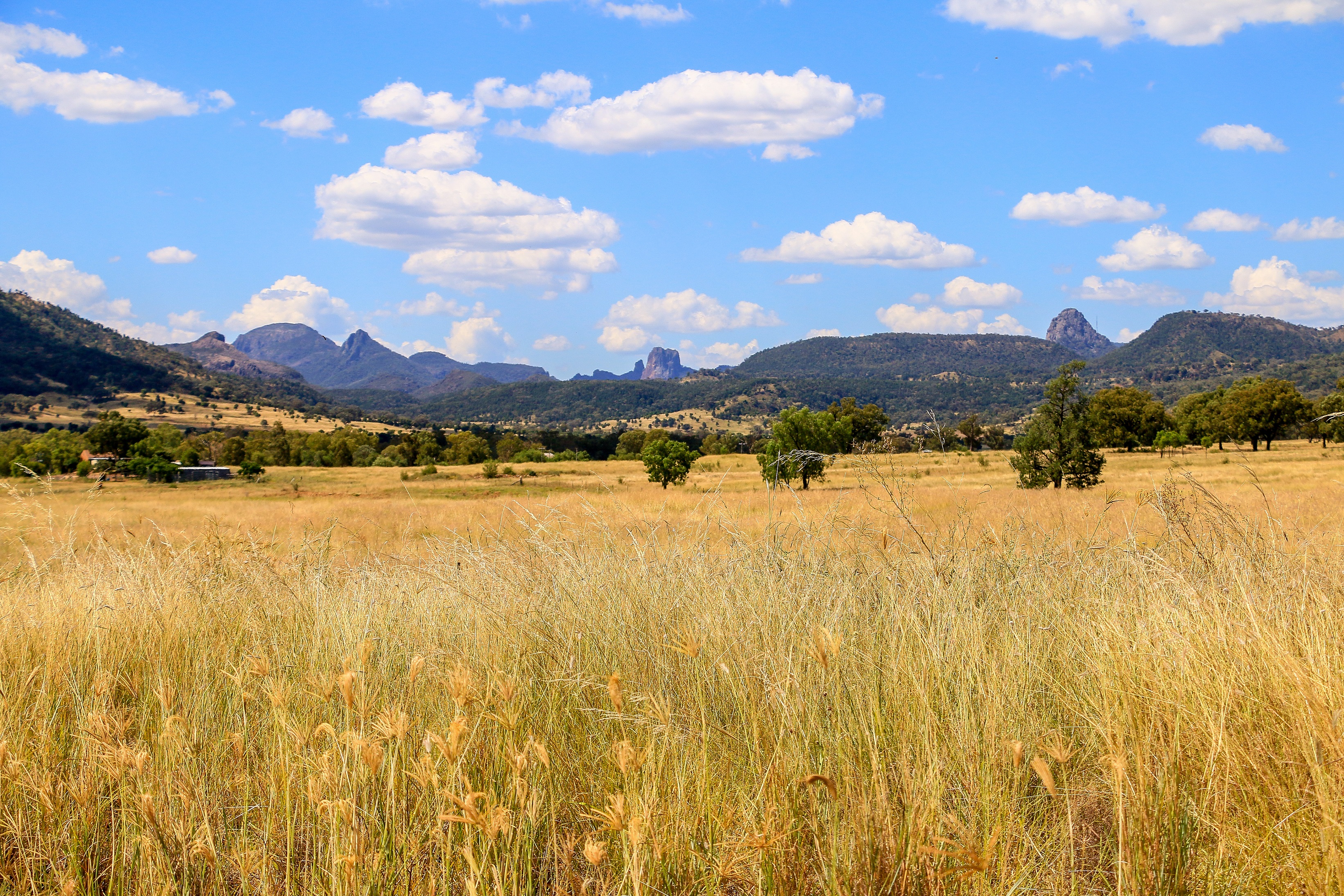
I should be making for dinner in Coonamble but cannot quite turn left. Sure it is thirty-five degrees, but the midday sun is well and truly a thing of the past and the return of trees to the landscape should offer some shade. Besides, I need to do something more interesting today, something other than largely sitting on my arse as Australia passes by. Climbing more than a thousands steps to Fans Horizon and marvelling in a conglomeration of sweat and awe at an incredible landscape is pretty interesting.


Prior experience of Warrumbungle National Park alerted me to the presence of showers in the campground, something I was thankful to use before completing the final leg to Coonamble. Last time I came here, the town had quite the aroma courtesy of the mouse plague. I didn’t want to be the one bringing that reminder to its townsfolk today. And be turned away for dinner.
And what a dinner, as always. The interest here is less Coonamble but more friendship and warmth and good food and loud voices and love. From twilight walks along the flat roads with my dear friend Norz, to tales of sand-blown motorbike adventures and potential pizza toppings with Howard. And then there is the joyous company of a two year old, one minute impelling me to drag race him in a plastic toy car, the next inventing the new sport of whisk tennis.
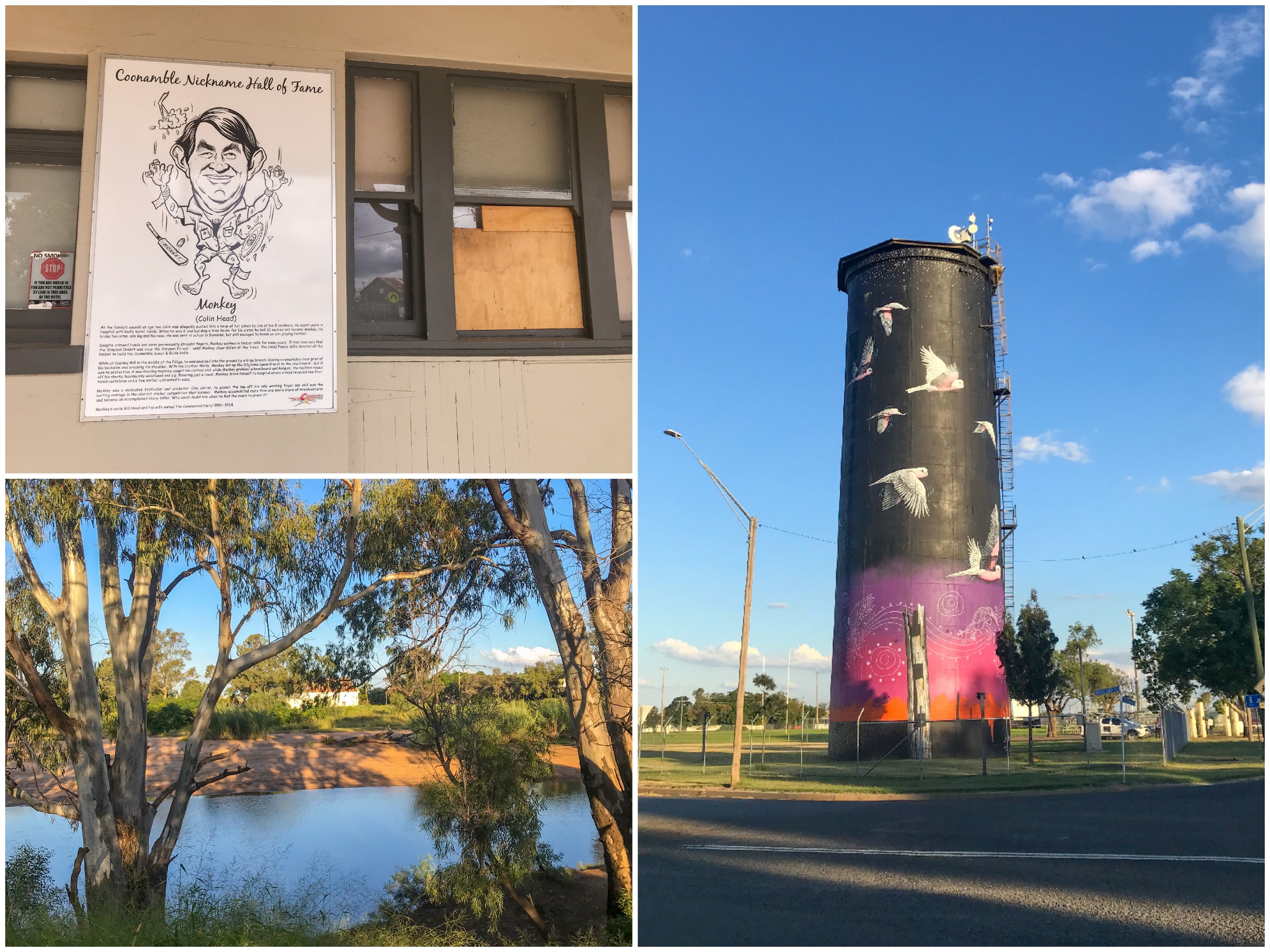
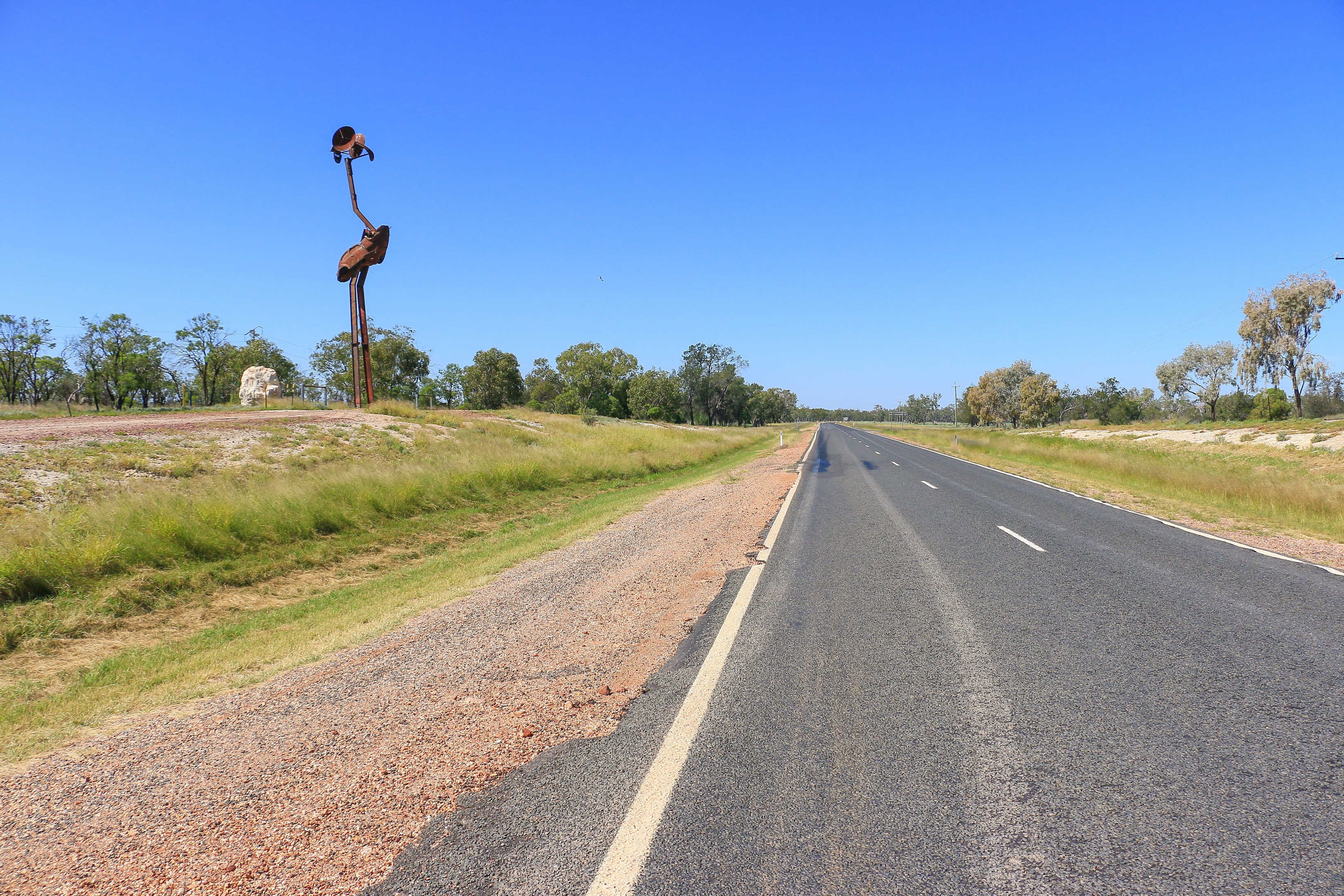
There are some mildly interesting things in Coonamble, including a painted silo, the nickname hall of fame, and the languid brown ribbon of the Castlereagh River. This time I discovered the weir, some new metal emus (competing with the Galahs of Gulargambone), an impromptu water park at the pub, and consumption of a different slice at the only café open on a Sunday. It’s not much, but it doesn’t matter.
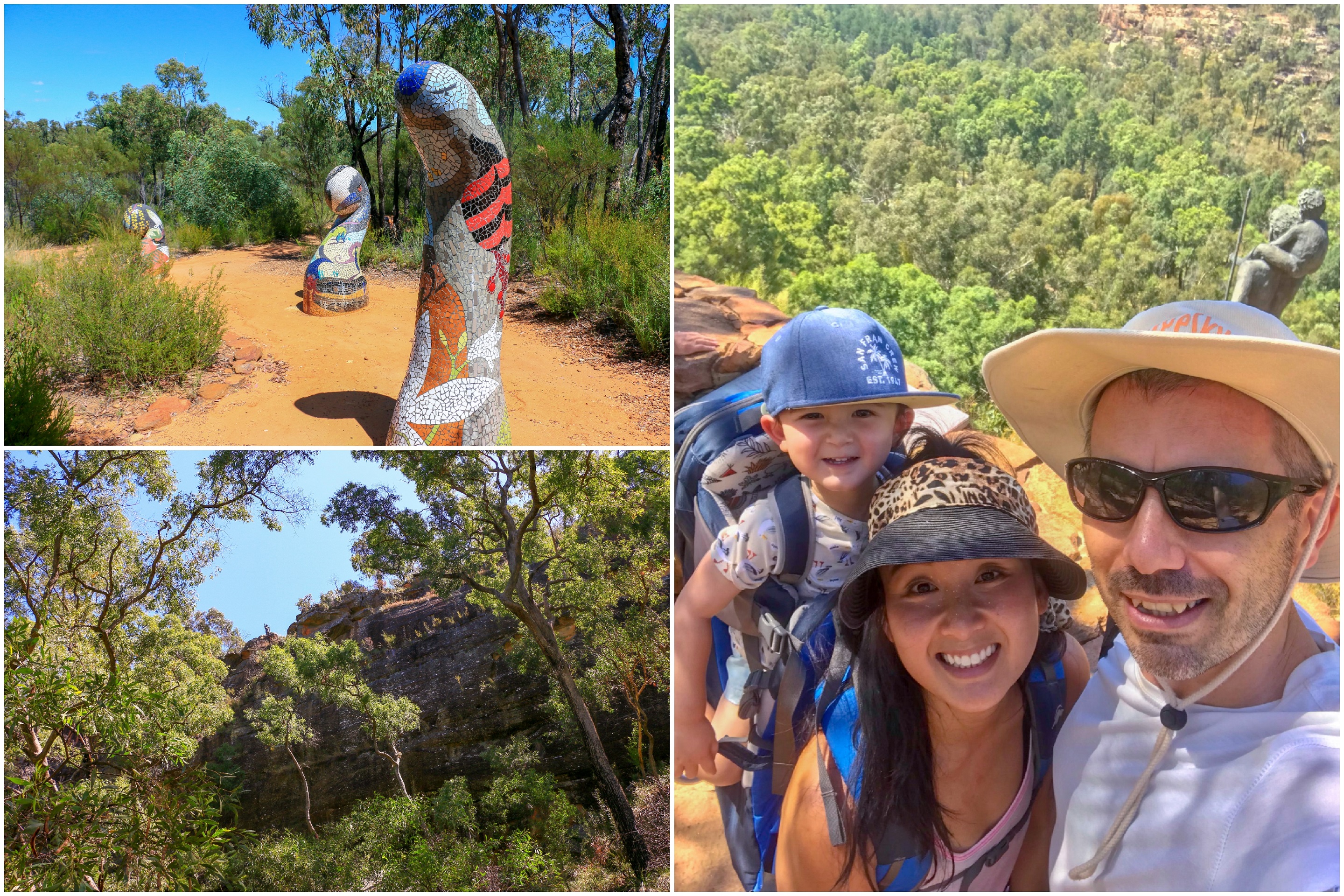
There were some surprises remaining out of town, most notably the splendid Sculptures in the Scrub. Tucked away in The Pilliga, the setting was unexpected: a fine, forested gorge whose escarpment is punctuated by artistic installations of meaning and connection. I always thought of The Pilliga as one big flat sandy forest, a landscape of monotony that would imperil any who should veer off its dirt roads. Here, you can feel things which are rich and timeless.

Just a stone’s throw away is Pilliga Pottery, but only if you’re a crow or galah. The generous rains of this summer meant the fording of a creek was out of the question, with further unknowns awaiting beyond. So, an hour and a half later, on mostly sealed road via Baradine and Coonabarabran, we were finally feasting on pizza and drinking out of earthenware cups. Another little enclave hidden in the woods, perfect to bunker down from the world.
Interestingly enough, in many ways the world was also here. The terracotta and tiled roofs and earthen walls evoked a late lunch in Spain, pre-siesta. The scattering of outbuildings and cars and rusted trinkets could be backwoods America. And then, as well as pizza on the menu, there was Bratwurst and Sauerkraut to be enjoyed. The reason became clear hearing staff converse in German, a multigenerational family thriving in The Pilliga. A veritable United Nations, without the veto power of a deluded kleptocracy.
And so, we return to those interesting times. Via Warren and Trangie and Forbes and Cowra and Murrumbateman and Moscow. With more time, Warren warrants greater exploration, particularly among the fringes of the reinvigorated Macquarie Marshes. Back in big sky grain country, Trangie may warrant a return purely for cake. I paused in Forbes for a late lunch, one of the last remaining towns of the Central West that I had yet to visit. This too had charm, elegant municipal buildings rising up among a town centre boasting a fifties Cadillac drive-in vibe. Elvis does live just up the road after all.

From Cowra the road is more familiar and home is on the horizon. Interest fades and thoughts turn from the rear-view mirror to what lays ahead. Hopefully avoiding the Highway to Hell.







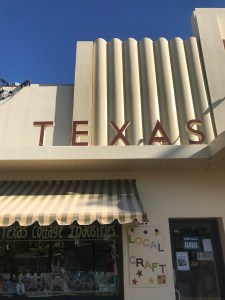 Fast-forward a few days and the work was done, proving less cumbersome and far more populated with coffee and cake than I could have hoped for. This left me alone with a car and a few belongings close to the Queensland-NSW border. A massive part of me wanted to make the journey home as quickly as possible, but then an equally massive part also yearned to stop in Warrumbungle National Park. Another significant consideration was a determination to miss the whole messy Newcastle-Central Coast-Sydney conglomeration. This along with the fact that, heading inland, I could go through Texas tipped the scales definitively south and west. Yeehaw.
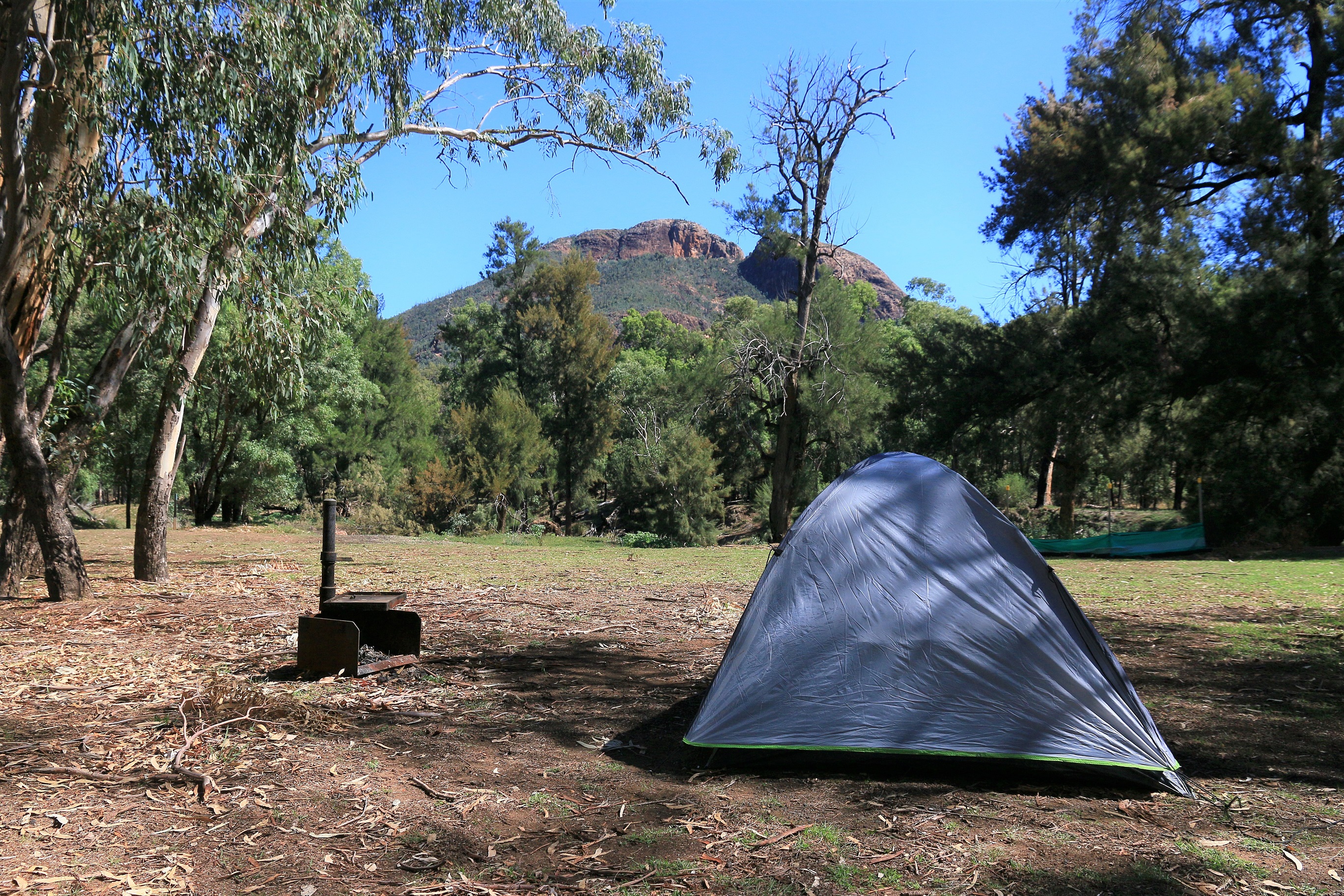

 I was even more glad of my foresight in buying some hot cross buns and a block of butter in Coonabarabran yesterday. What better way to use the camp stove for the last time, to set me on my way to Gilgandra, to Dubbo, to Wellington, to Molong, to Canowindra, to Cowra, to Boorowa, to Yass and – 550kms later – to Canberra.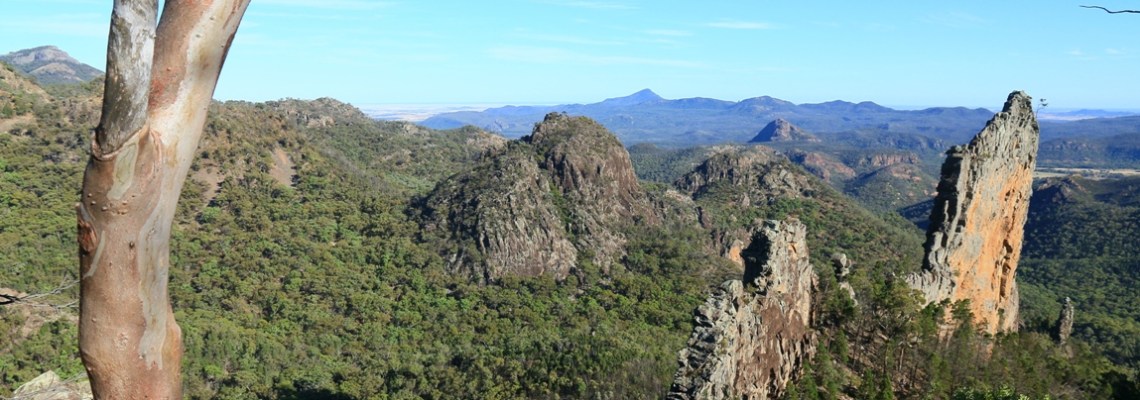
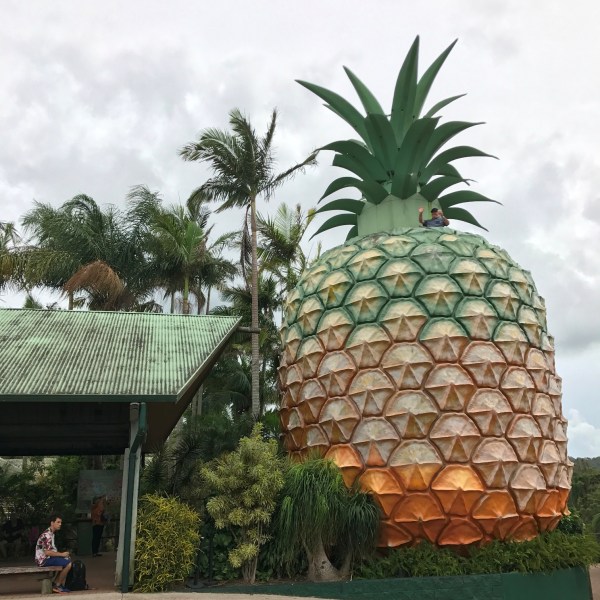 A couple of days on the Sunshine Coast had delivered only intermittent milky doses of sunshine, with homely patches of drizzle persisting throughout my final morning. An obvious light in the dark was the Big Pineapple on the outskirts of Nambour. A possible former plaything of an ex PM and Treasurer of Australia, I felt this was a perfect way to say goodbye to the Sunshine Coast and a suitably symbolic start of another long drive through the heart of Australia.

 Pausing at Stanthorpe the rain had returned and I made use of mobile coverage to assess the likelihood of getting soaked while camping. It was touch and go but I opted to camp a little south in Girraween National Park. This was unlike a Queensland in any of the brochures…cool, cloudy, a little dank. Clusters of giant boulders dotted the landscape, sitting within short and stubby forest and forming natural terrain for pools of water to form.
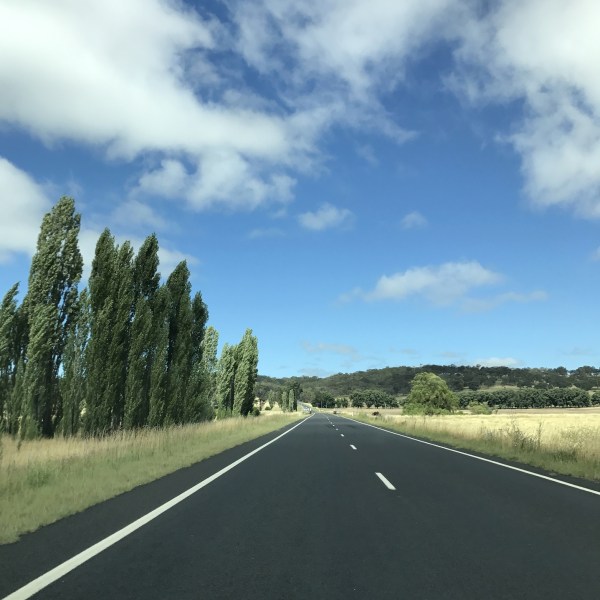 I was definitely the first person to leave the campground the next morning, cognisant of a long day ahead and jumping forward an hour into New South Wales. A lonely road led to Glen Innes, the only memory of which I have is of waiting ages for a coffee and then discovering, driving out of town, that they had decided to put sugar in it. This clouded my opinion of Glen Innes, and driving through the next town of Inverell, I wish I had stopped there instead.
 Today, it is a quiet place of solitude and reflection. The chirping of birdsong persists despite searing heat and baked earth. A simple, memorial walk exists, a swirling red path providing points of information and remembrance. There is talk of healing, of coming together of ancestors, of deep remorse and some kind of hope. A hope that, eventually, love does trump hate.
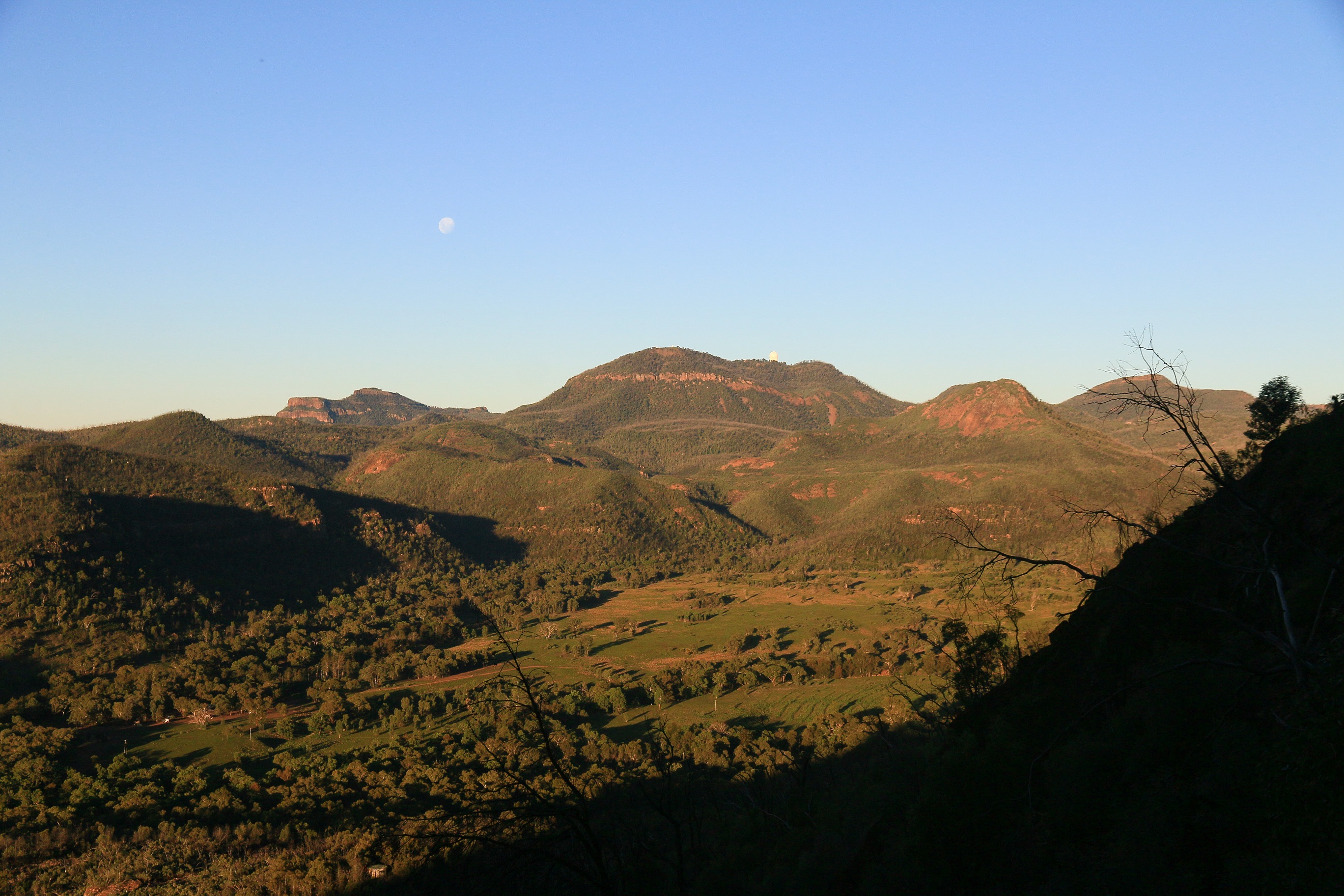
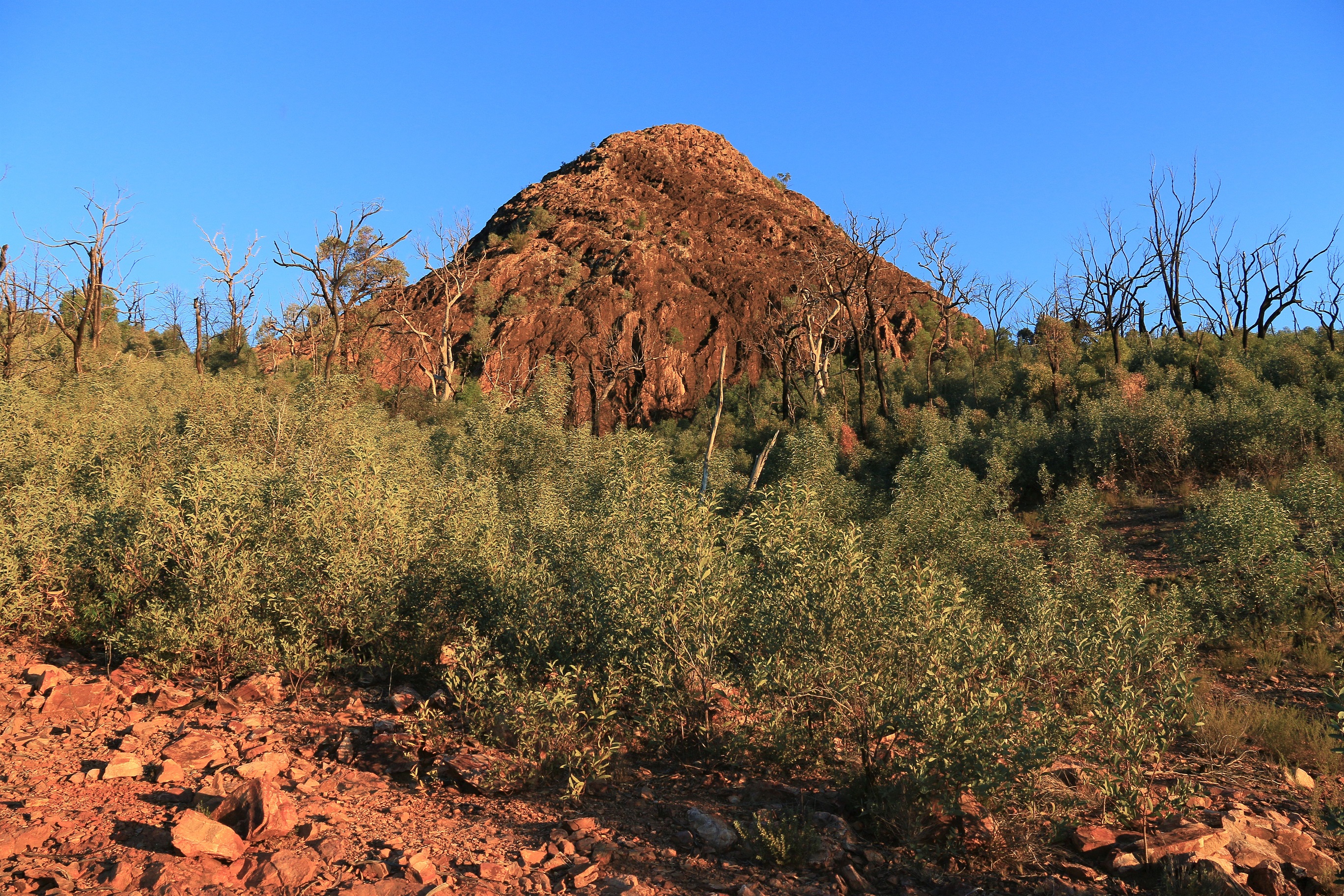
 Entering Warrumbungle National Park, it was pretty clear that a fire had ravaged the area; blackened trunks of trees lined the steep slopes and the road produced a patchy, lumpy ride where the tarmac had no doubt melted. Up one of the hills, some of the buildings of Siding Spring Observatory had suffered damage but the telescopes survived. Well, thank goodness for that…we can still scope out future worlds to inhabit when Fake Lord Emperor Pussy Grabber destroys this one.
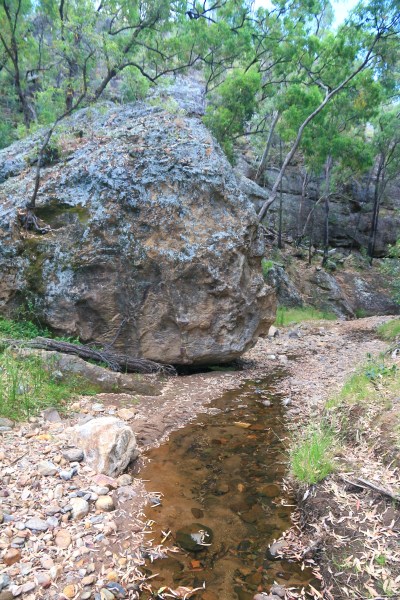 With benefit of doubt perhaps they were not doing the entire Breadknife and Grand High Tops walk. Maybe they were just doing the first part, which was gentle and followed the course of a mostly dry creek bed. This would be a rather fine walk in itself, for it is such an elemental, earthy landscape in which to linger. I wasn’t expecting such enchantment here, such homage to the rugged environments further inland, closer to the desert. There was a bit of Flinders Ranges crossed with The Grampians about this place. Two of my favourite ever spots blended into one.
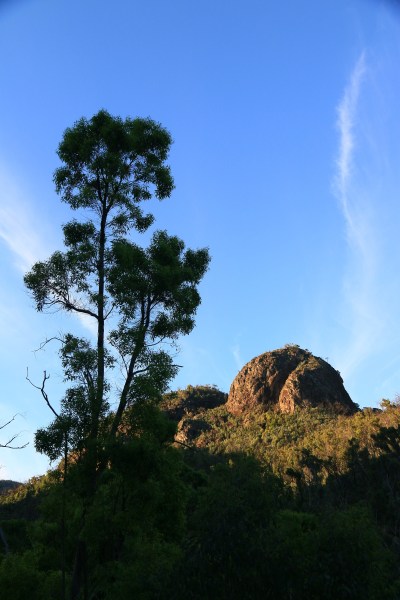 The other benefit of starting early was to witness the early rays of sun graze the hilltops and glow through the tree trunks and branches of the bush. I think the angle of an early sun also helped to illuminate some of the spider webs formed between shrubs on either side of the path, requiring a little stooping and contortion to avoid. Being a pioneer has its downsides and I guess if I was later in the day many of these webs would have been smashed by hapless walkers that had come before.
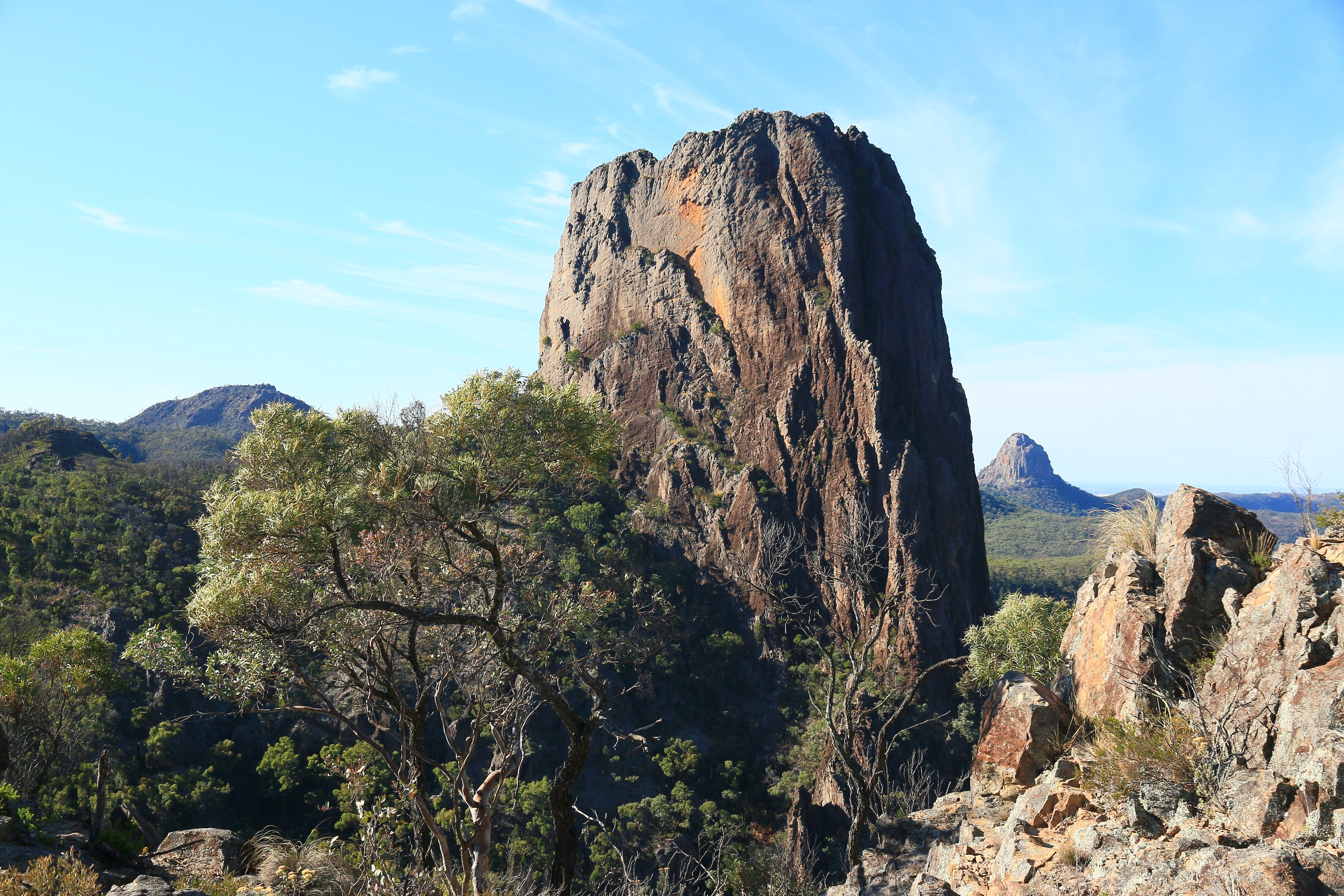
 Inevitably after a couple of kilometres the track climbed, with a steep but nicely constructed path giving way to endless metal steps. This was taking me up towards the Breadknife, so named because of its sheer sided slopes and thin pointed summit thrust into the sky like a scene from Crocodile Dundee in which Mick shows some New York Hoodlum a proper knife. Up close, you couldn’t really see it, but, eventually, when the trees fade away and the rocky floor of the Grand High Tops themselves are underfoot, the knife is there, just one of many rocky crags and rounded lumps rising up from an incredible sea of green.
 Further down the trail I encountered a young lady throwing rocks at another occupied web. It was one I must have ducked under a couple of hours earlier. She looked terrified and said as much. In trying to comfort and reassure, I told her it was probably the last of them and moved promptly on. She scarpered under the web to continue her walk while I went to look at a deadly snake. Pausing at a little wooden bridge over the dry creek, a beautiful Red-bellied black meandered along the rocks beneath. It was quite mesmerising, until it disappeared out of sight, when it became a snake that I couldn’t see and therefore significantly less appealing.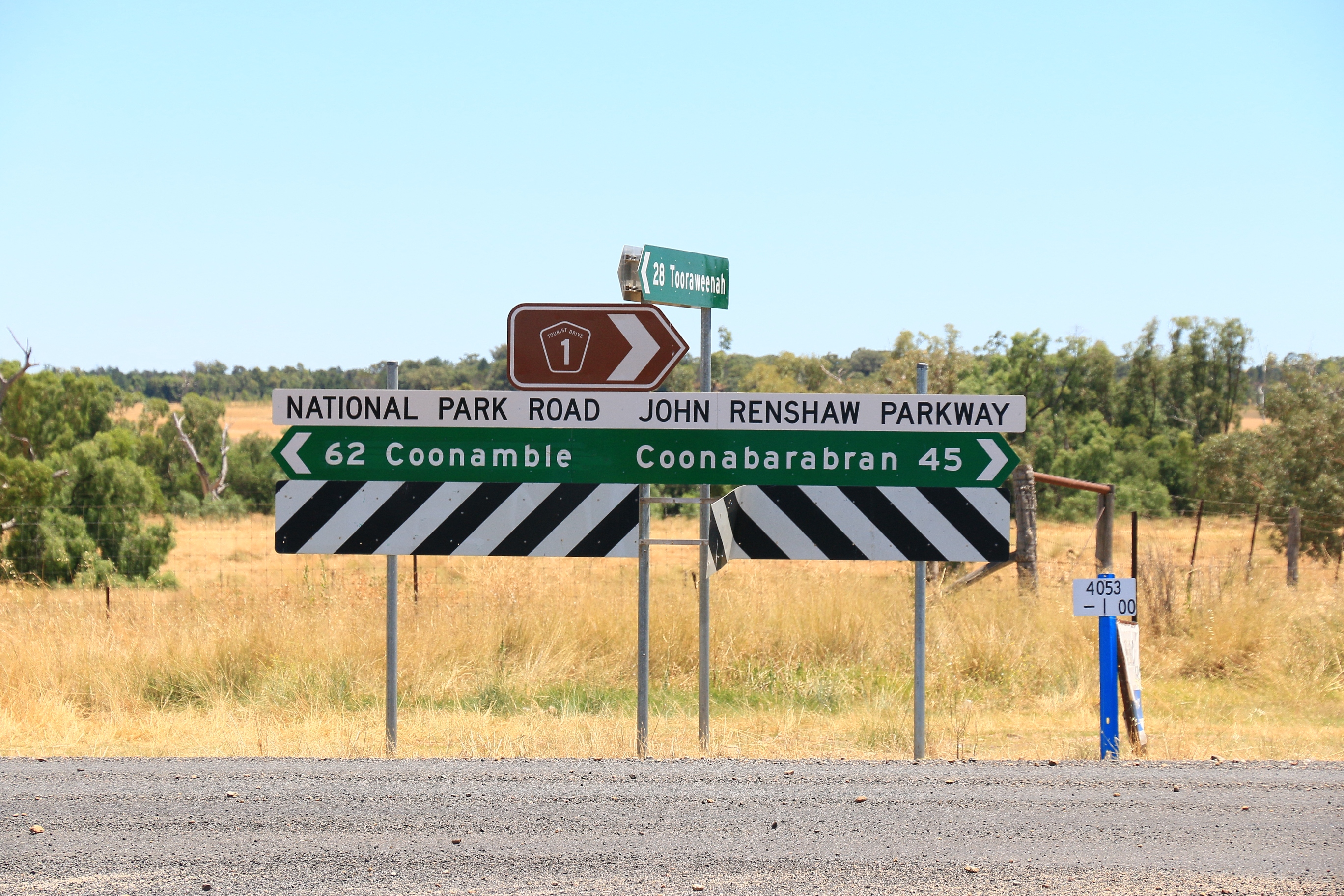
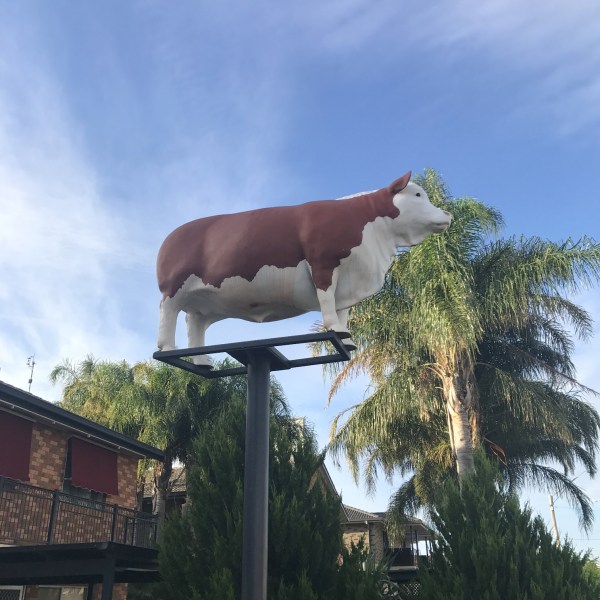 A couple of hours and I was back in more familiar country. Dubbo is one of my token regional research towns and I had a sense of déjà vu checking into a motel with a plastic cow on a pole out front. But still, a motel, with refurbished rooms, air-conditioning and a king-sized bed. After my morning adventures, what better way to appreciate this scenario than nap.
 The next morning, after obligatory buffet breakfast, I set off on the final stretch of road home. It was a day in which there was little of note. As a commemoration of all things road trip I made a spontaneous stop at a place called Peak Hill. Here I went on a little walk along the perimeter of a big hole in the ground, previously mined for gold. While gold sounds glamorous, it was a hot and dusty walk with countless flies trying to go up my nose and the pervasive smell of urine in the air.
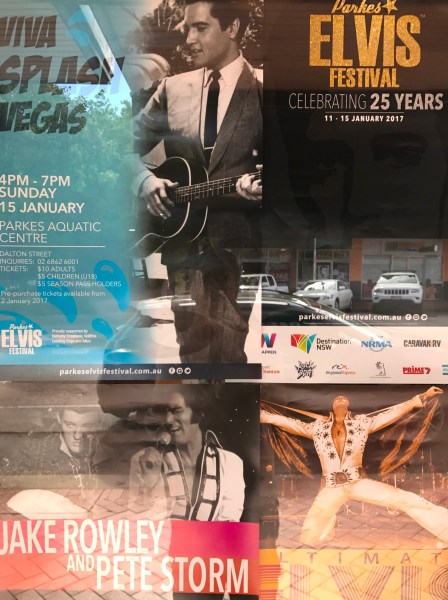 South of here, Parkes had a more pleasant aroma, decent coffee, and was positively bustling with the prospect of Elvis coming to town. Or thousands of Elvises (or Elvi?) all dressed up for the annual festival, starting in a few days. If ever you needed an encapsulation of randomness this was it. Seeking quirky Elvis sights, many shops were filled with posters for upcoming Elvis impersonation gigs, and a couple of murals were dotted about the town. One, I was informed by a very enthusiastic lady, lit up at night and projected videos and played songs out loud and everything. I should come back tonight she said. I got my coffee and moved on.
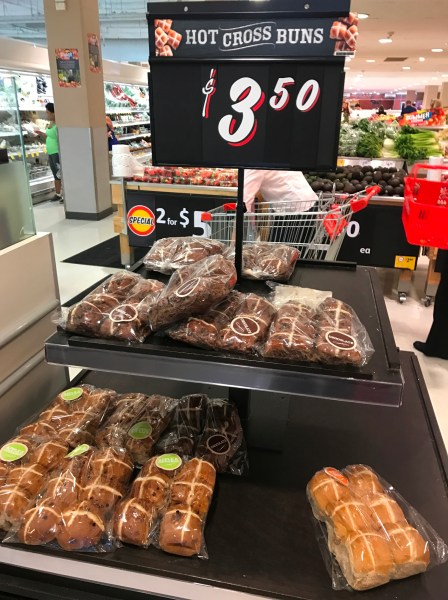 Of the 4,232 kilometres covered on this trip to Queensland and back there were around 50 more to go. Past Poacher’s Pantry where a pre-Christmas lunch lingered in the memory; across the state border and back into capital territory; a roundabout and empty dual carriageway through bush towards home. The city of Canberra is here somewhere, but I could still be out on the open road, in the middle of nowhere. Suburbia and never-ending apartment construction does finally emerge. There are supermarkets in which to replenish supplies, and, crucially, stock up on hot cross buns for Easter.
 gbpilgrim