I doubt the young lady taking my order was convinced. “Please may I have the Farmer’s Lunch please thank you? Thanks. How would I like it? I guess on a plate would be a good start, do you have these here yet? Oh, you mean the steak? Um… (killing a few seconds considering whether I should plump for rare like the locals) medium-rare please. Thank you.”
“Y’aint no farmer love are ya?”
“Yeah nah. I’ll be sitting next to the CWA ladies playing bingo if that’s okay? Thanks.”
Cowra, New South Wales, Saturday 21st November 2020 and not all of the above was true. I did order a Farmer’s Lunch and I did opt for medium-rare, but it was served to me without disdain. At least outwardly. You didn’t need to be a farmer to order it; only my internal voice was screaming out “FRAUD”.
I found myself here after much procrastination. Determined to embark on something of a mini road trip over the weekend I spent the previous few evenings plotting routes and stops largely based around where I could support the local economy. Given I was heading into the country, surely there would be a nice country pub with hearty fare and a cold beer? I pictured a shady garden perhaps, leading up to an arrangement of latticework and wood-flooring. Locals in Slim Dusty hats shading craggy, sunbeaten faces glanced up at me with a twinkle in the eye. A large fan whirred silently over a shelf crammed with ten-year-old bottles of Scotch. Above the fireplace, a framed blue jersey of some ex-footballer who once scored a field goal in Origin.

Perhaps such idyll exists, but I’m yet to find it. Still, air conditioning and keno was comforting as temperatures soared into the high 30s in Cowra. And the Farmer’s Lunch – steak, sausages, eggs and chips – was worth all that hard yakka sitting in a machine pressing a few buttons. Just like the farmers busily harvesting their grain.
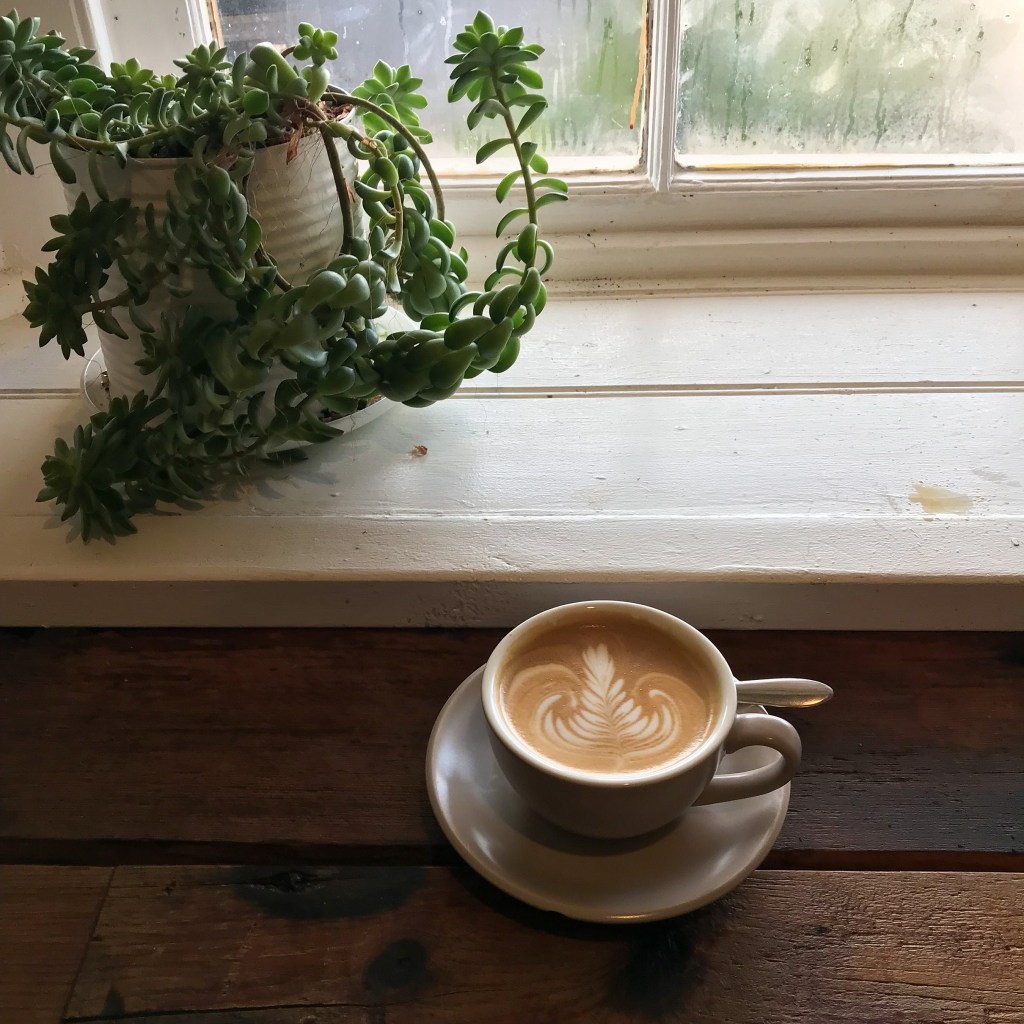
Earlier that morning I had driven up from Canberra in time for a coffee stop in Boorowa. After a previous visit in early spring it was notable how much the green had already diminished, long grasses browning off after a couple of weeks of warm, drier weather. Boorowa was nonetheless as charming as before, though the coffee stop didn’t quite live up to previous highs. I feel like it was under new ownership and lacked the same, welcoming community hubbub. On my way back to the car, another café promised for the next visit.
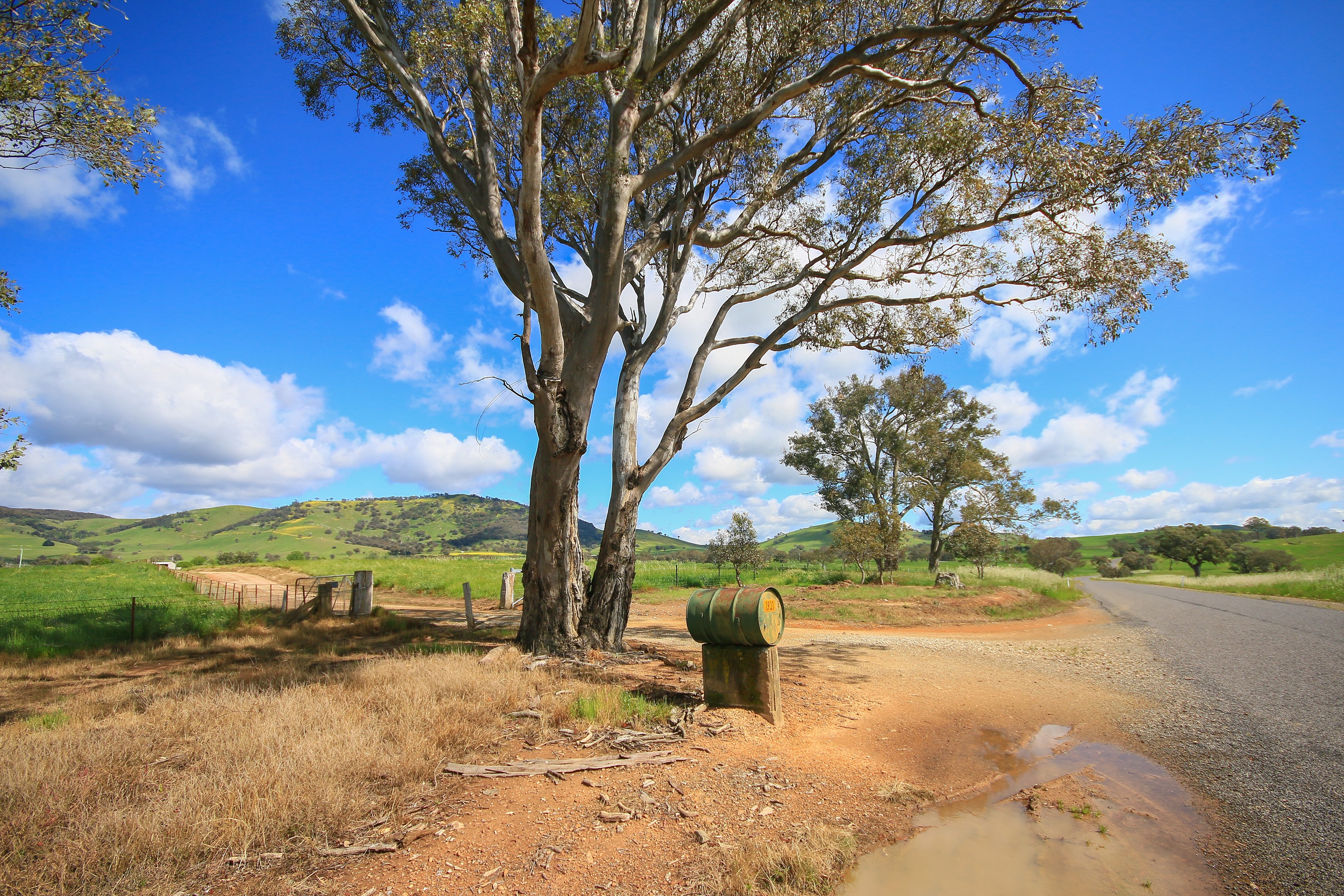
While Boorowa was still feeling jaunty under a gentle morning breeze, a little further up the road in Murringo the withering inland heat began to bite. Crackly yellow grass, searing bitumen, and the piercing symphony of cicadas. It had been a while since it was like this.

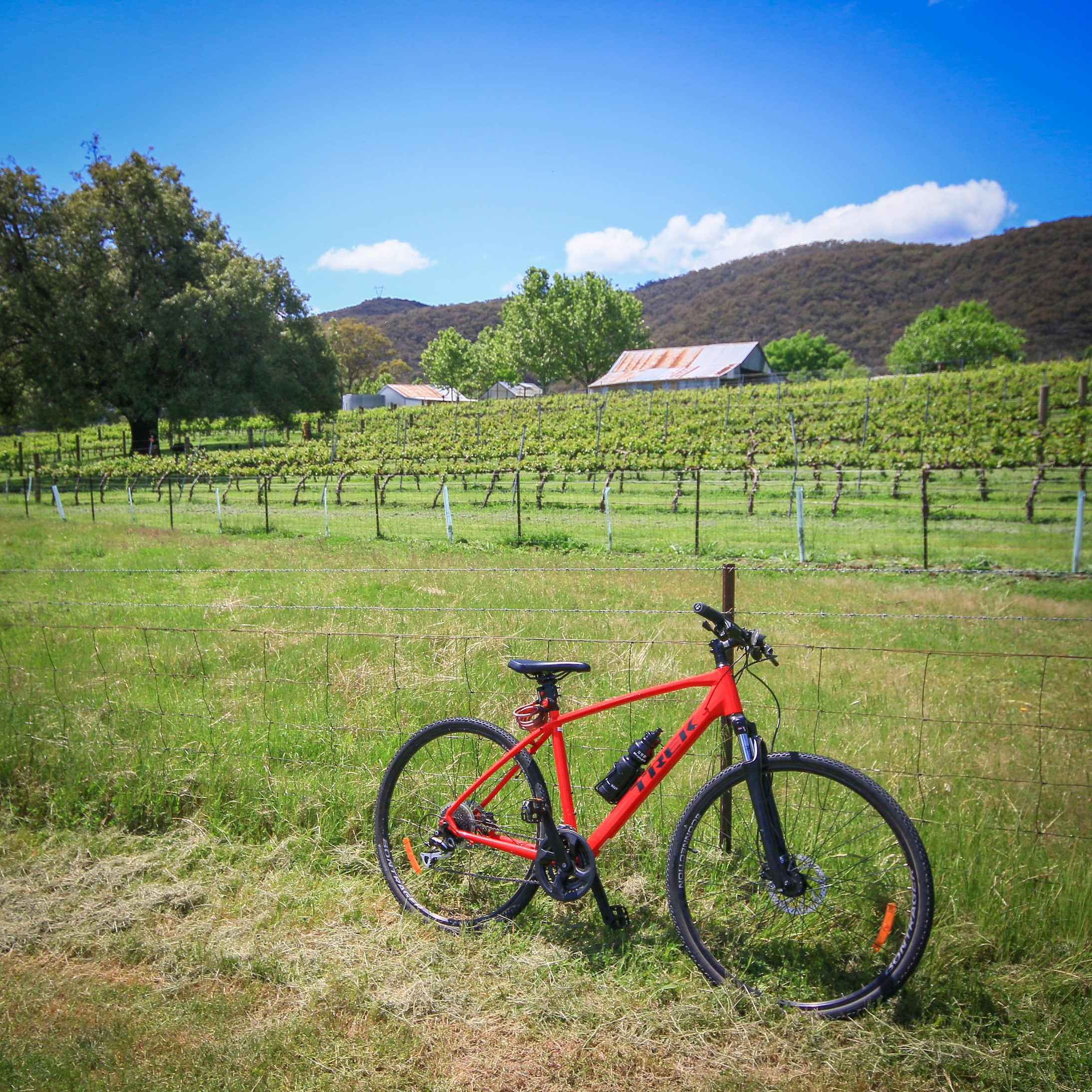
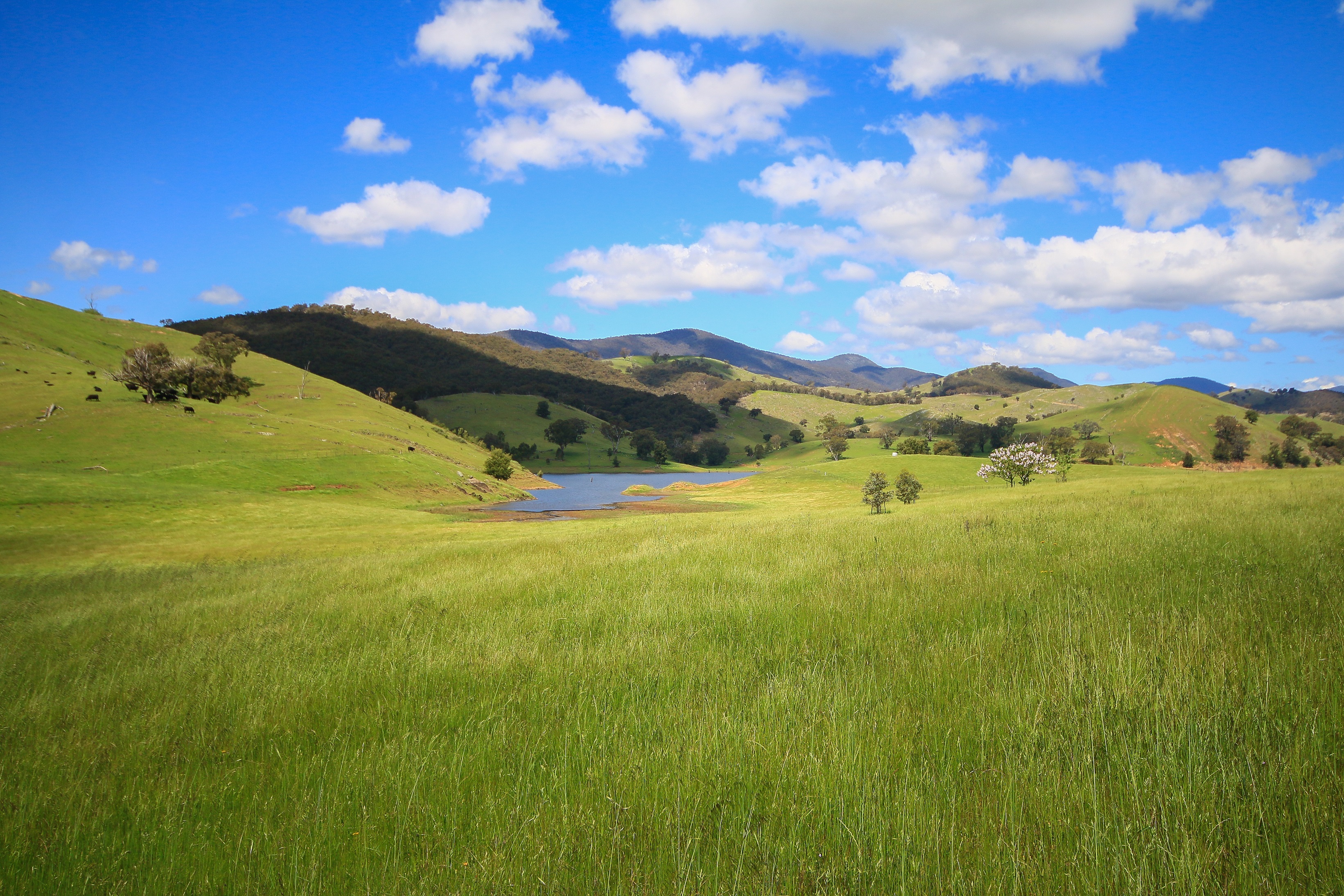
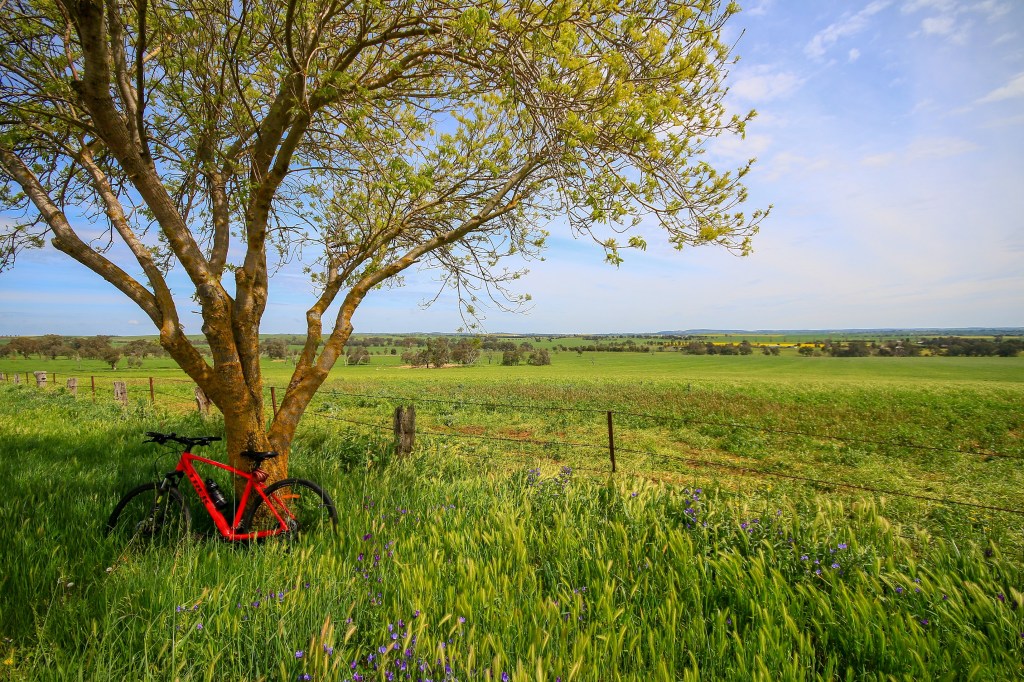
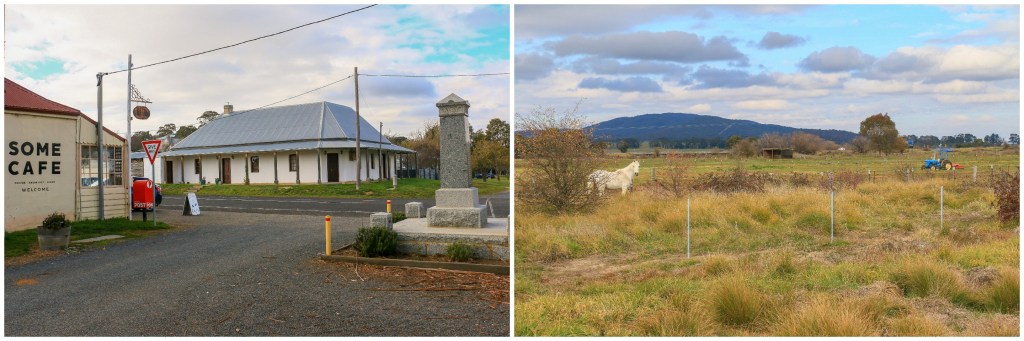
There wasn’t much to Murringo, other than a place where you can go and check out some whips. But it was cute all the same and the drive through Murringo Gap was pleasing with its hay bales and narrowing valley slopes. On cooler days I could see a cycle ride heading through here, but maybe that’s not until autumn now.
I was hoping to swiftly reach Conimbla National Park for a walk before the heat of the day kicked in. Arriving in a remote and empty patch of dirt, the clock on my car signalled a few minutes before midday. Mad dogs and Englishmen and all that. It was the kind of walk in which I could disappear down a ravine to be eaten by snakes before discovery three weeks later. I took some solace in the fact that the lady tending her allotment down in the valley eyed me warily as I drove past – surely she would send help? Or send in the boys with pitchforks?

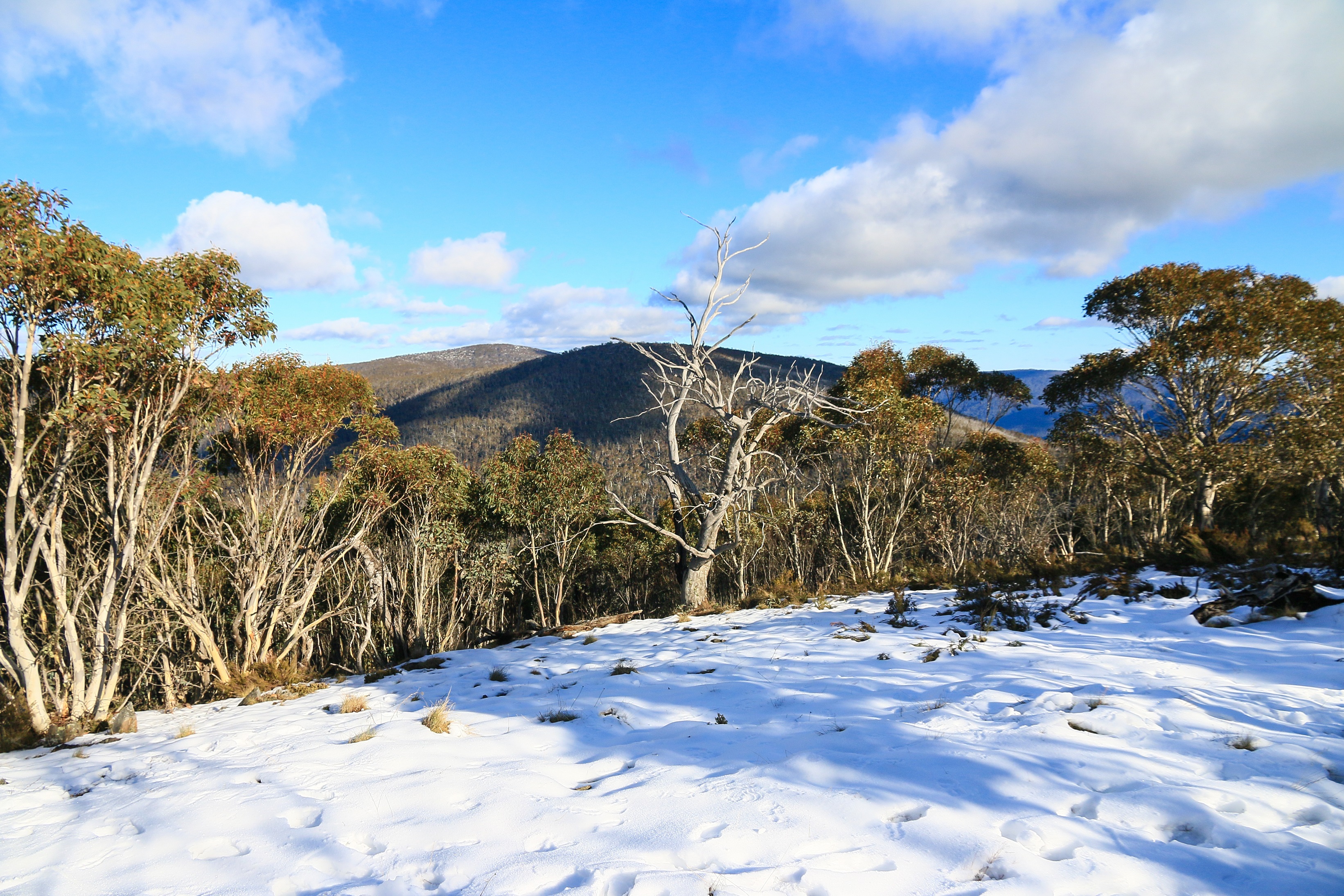
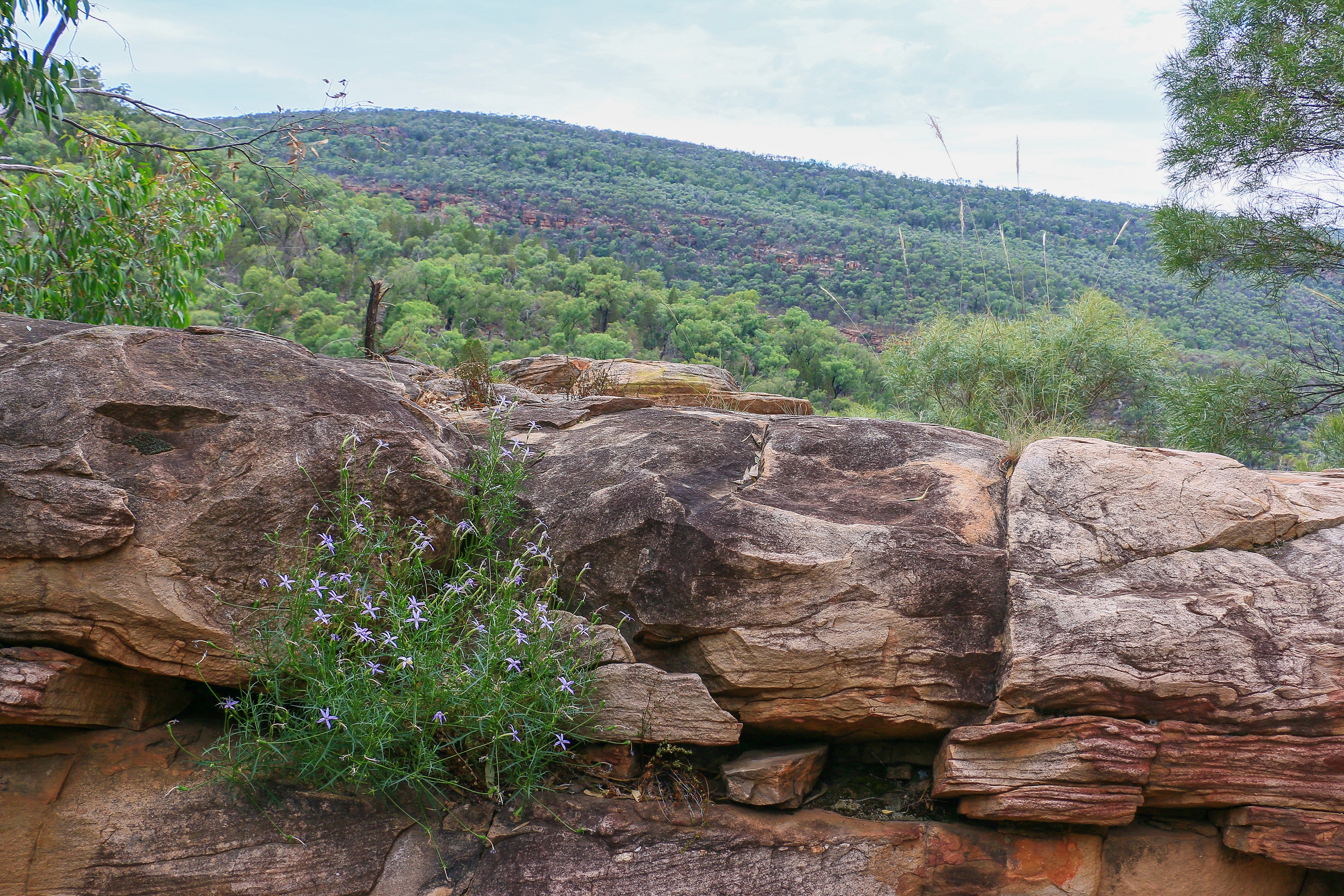
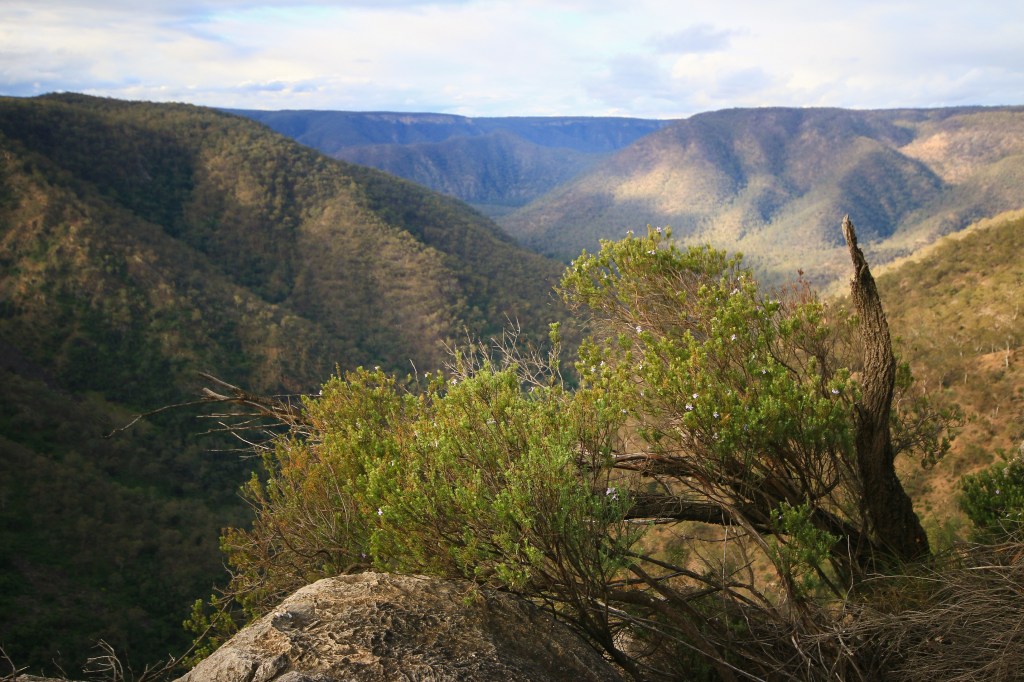
Spoiler alert: I survived. Was it worth it? Maybe. The highlight was a lookout midway along, offering views over a small valley. Trees of Eucalyptus mingled with black cypress pine, presenting a speckled green landscape under the fierce blue sky. Swathes of native bluebell offered comfort along the trail, tempered by the expectation that I could step on a snake hidden amongst such jolly thickets at any moment. I didn’t.
In fact I survived to make lunch. Through fields of grain and hills of sheep, the road entered Cowra to a fanfare of agricultural supplies and heavy machinery, giving way to the range of motels, fuel and fast food that heralds the fringe of a regional town centre. Across the Lachlan River, the first pub. With its Farmer’s Lunch and aircon.
With a hot afternoon in store it was tempting to linger with a cold beer in hand. But I wanted to make Grenfell and after that my home for the night. Through those hours the car was the most comfortable place to be, though I stopped in Canowindra and the even smaller settlement of Gooloogong along the way. Both seemingly at siesta or more permanently asleep.

Grenfell offered a little more excitement, though mainly in the form of petrol under a dollar and exemplary public toilets. As I filled up with cheap petrol a sign promoting whippy thickshakes took my fancy. It would likely be the only source of such nutrition still open, so I took the plunge and navigated the whole complexity of a make-your-own thickshake within a servo.
First figure out which of the various range of cups to use, then add your syrup flavour of choice. Beware the lively caramel which spurts out of its dispenser and onto your shoes. Try and find some tissue to wipe this mess up and then fail to locate a bin to dispose of carnage. Now, add the whippy content from the machine that kicks into action after first releasing a dubious watery dribble. Then try to stop this process before it flows over the cup and creates more mess. Finally, add some more syrup because you’re gonna need it after this. Attempt to mix together with a straw and add a plastic lid which doesn’t really fit. Make your way to the counter where the lady looks on slightly incredulous, texting her mate at the same time as taking your money. Still, petrol under a dollar a litre people!
With a cup sticking to my hands I couldn’t really drive again until I contracted severe brain freeze and cleaned up properly in those exquisite toilets. It gave me the chance to idle along Grenfell’s main street. I daresay on a Saturday morning it’s a bustling little place. People parking at the required reverse-in 45 degree angle (I think I was more 60, but overlooked bringing my protractor), picking up bread from Mick’s Bakery or Chris’s Bakery or the Empire Bakery by David. There is clearly a testosterone-fuelled bakery-war taking place in Grenfell. All jumbo sausage rolls at six paces and mince tarts.
Apart from a few youth loitering as Henry Lawson looked on, I was the only one out on the streets. Occasional utes reversed in at 45 degrees to pop into the IGA. This was where half the town was, a queue forming for hot chooks and lotto.
The other half of the population appeared to be at some kind of gathering beside an old railway station as I made my way out of town. For a few seconds I hoped I might have stumbled upon a rodeo or something involving giant pumpkins. But all I could see were a few food trucks that looked as if they had migrated from Canberra for the day and a small cluster of people not doing much at all. I moved on.
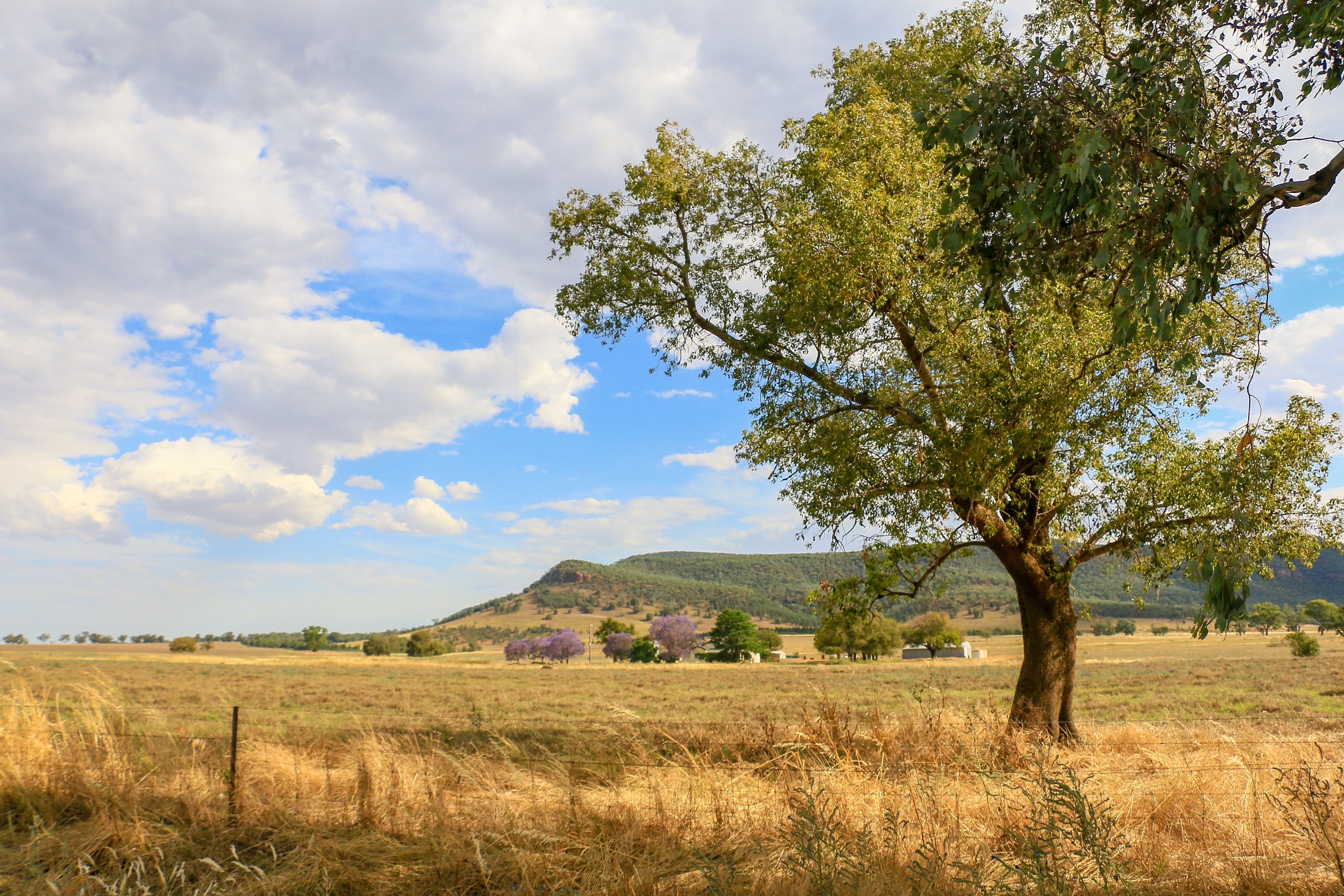
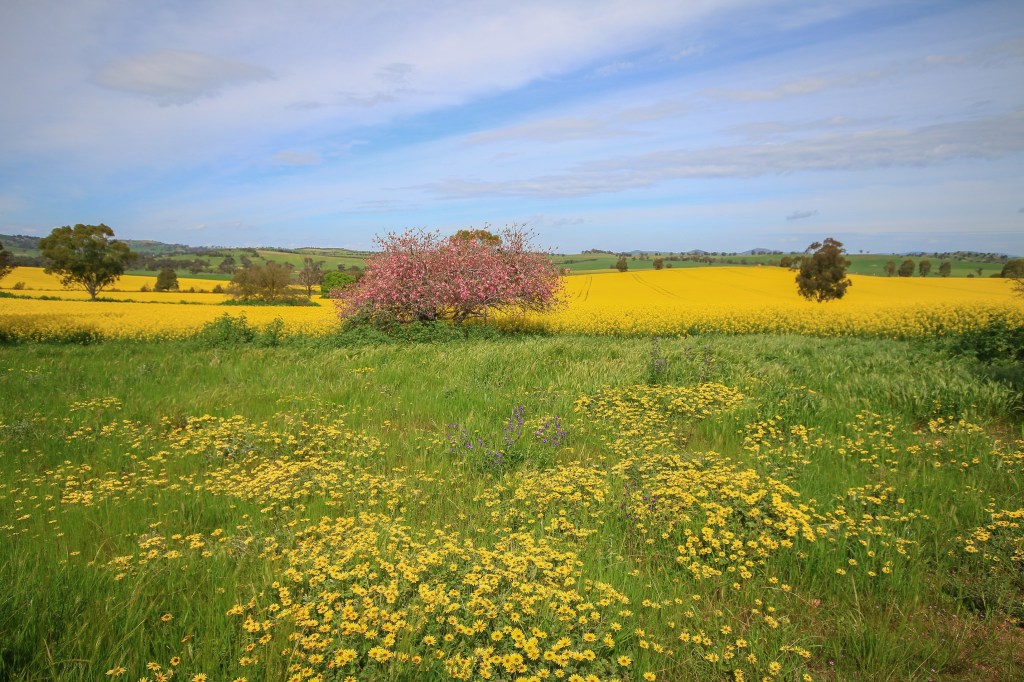
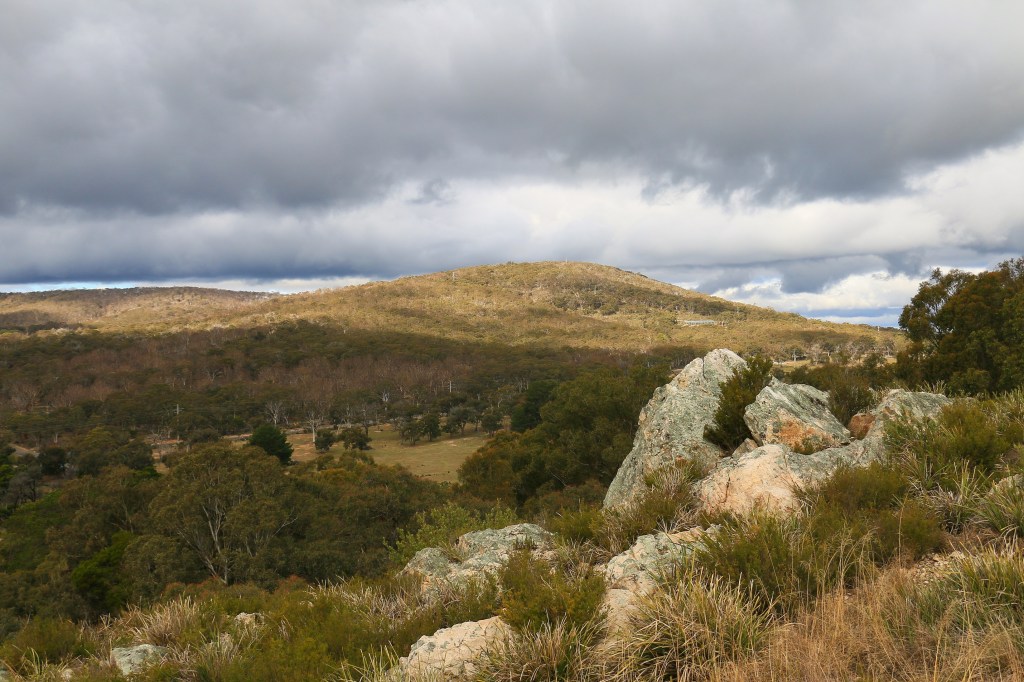
West of Grenfell, the sweeping fields of grain were undergoing various stages of collection. In the distance, a small plume of dust pinpointed a header hard at work. Rising abruptly from this widescreen landscape, striking by contrast, an island of bushland and rugged outcrops of rock. Uncleared, uncultivated, protected from the squatters and the pastoralists and the farmers by its very presence.
This was clearly Weddin Mountains National Park and my bed for the night. It was a new one for me, surprising in a way given its little over two hundred clicks from home. I can probably thank COVID for coming across it – coastal avoidance, travel limitations, appreciation of what is within two hundred clicks of home.
Setting up camp in a flash – more of this shortly – I set out to explore, hopeful that by 6pm the temperature would have started to drop a little and I would be blessed by golden light. The information board at Ben Halls Campground informed me of several trails from here. Against one – Lynchs Loop Trail – someone had appended in handwritten block capitals ‘RETURN THE SAME WAY YOU GO UP. THE PATH BEYOND IS NOT SAFE.’ Another promised cool shady gullies and waterfalls and no ad hoc Trumpian warnings, so I opted for that.
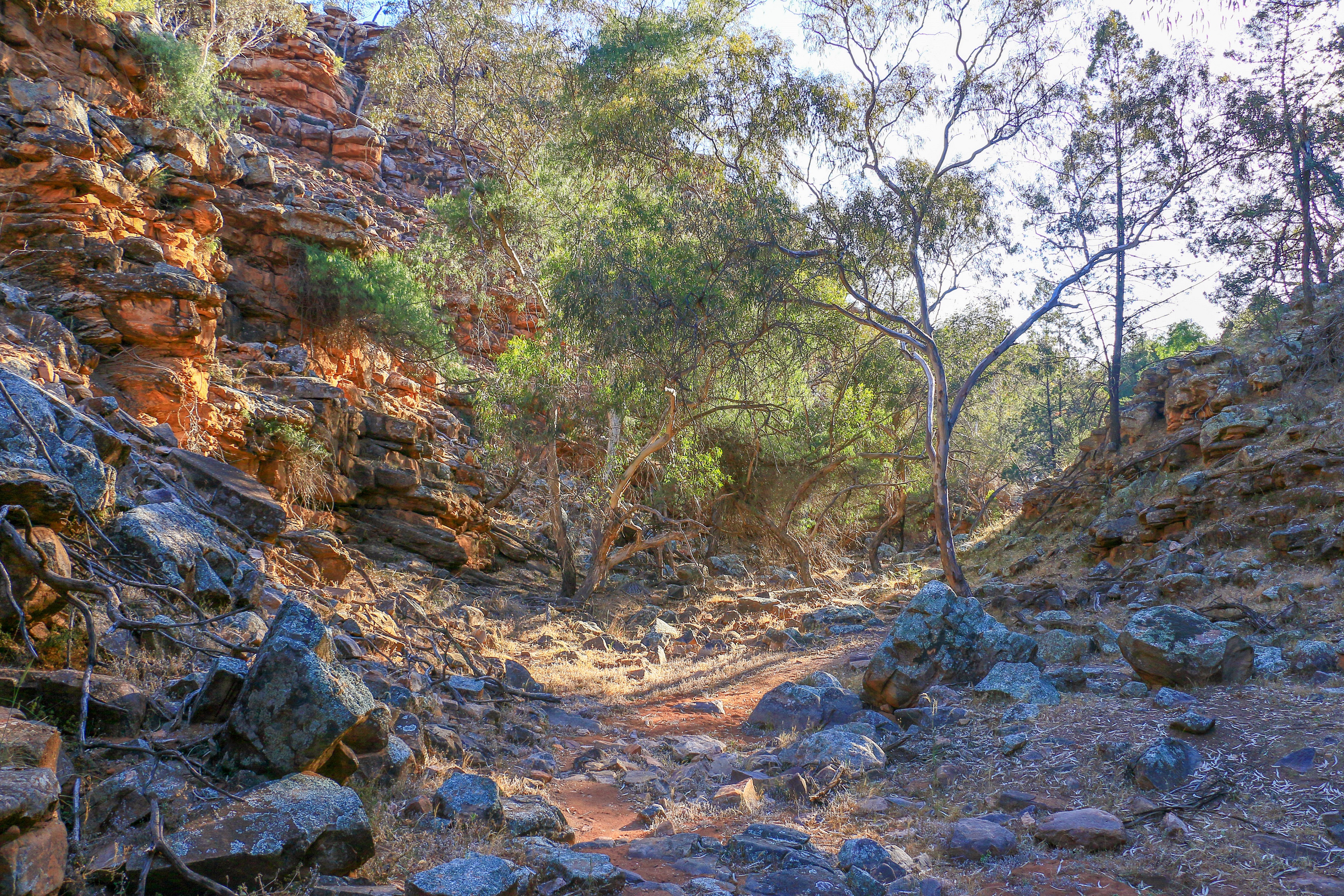
The Bertha’s Gully trail did indeed proceed up a gully, but I had managed to perfectly time things so that I was seared by the westerly sun. It must have been 40+ in that gully, sheltered from any breeze, clambering up boulders, conscious of snakes. The trail was quite rough, victim in part to the generous spring which has delivered a profusion of growth. Various spiky plants penetrated my legs and shoes and socks, creating a sensation every ten seconds that I was being eaten by ants. Yet despite all this, pausing for the nectar that is a chilled Berry Gatorade from Grenfell IGA, there was an elemental beauty to the place.
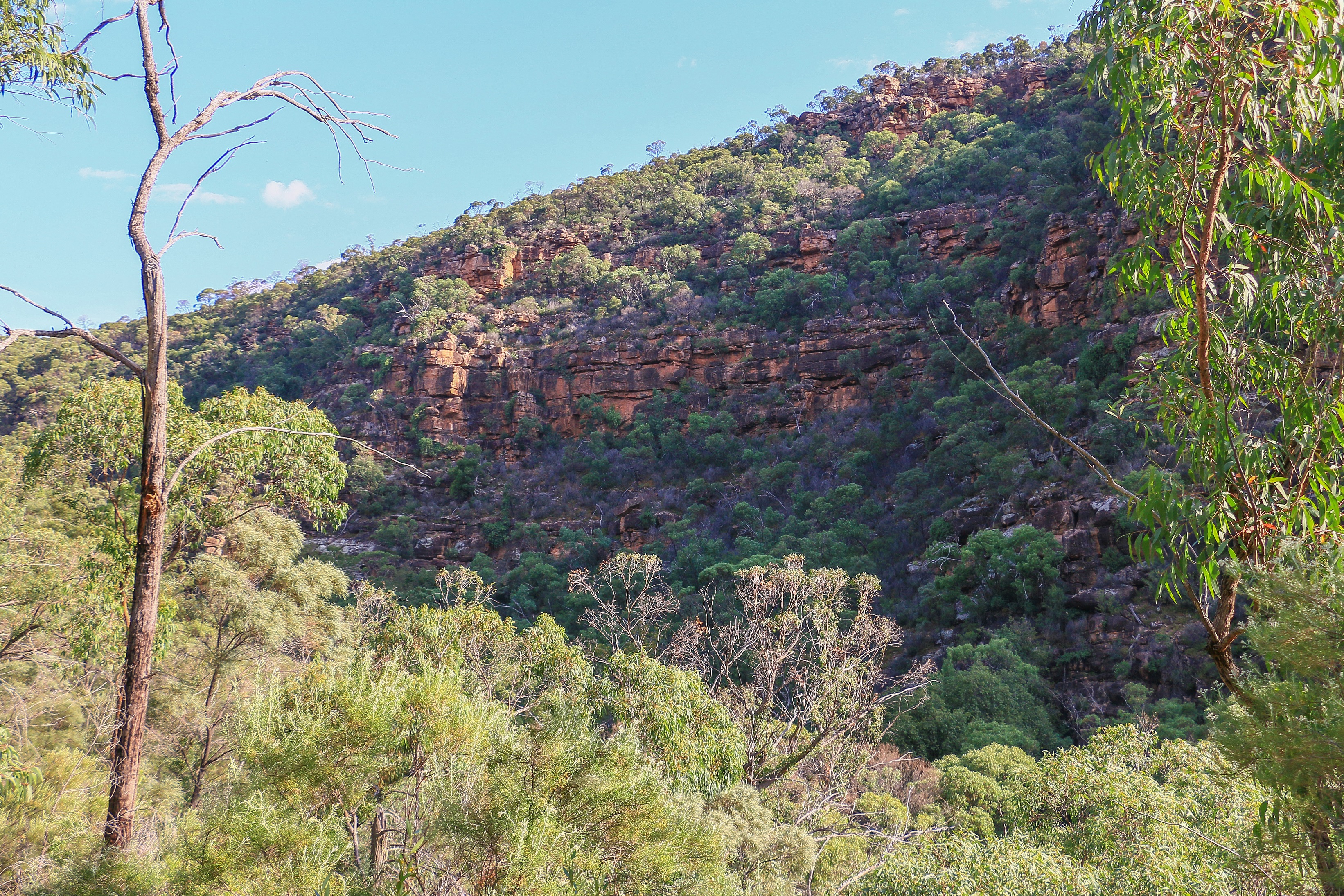
I think the Gatorade saved my life, finishing the last drops closer to the campground beside Ben Halls Cave. I was too spent to read the detail, but I assume Ben Hall was one of those celebrated reprobates who stole some sheep, robbed stagecoaches, shot some police, and vehemently denied homoerotic gatherings of brotherhood under precipitous cliff faces in the middle of a winter’s night.
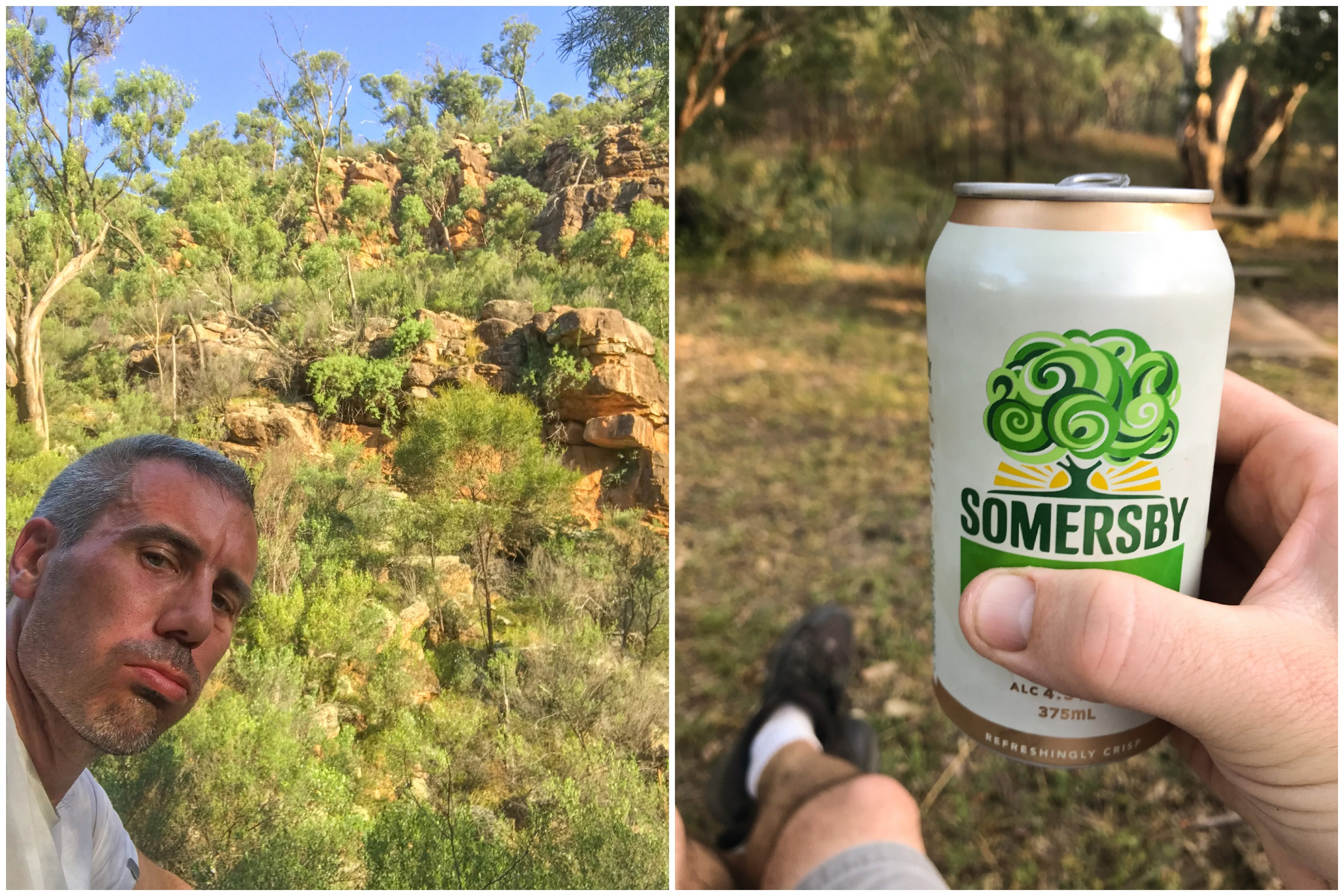
There was likely no need for spooning tonight. It was still hot when I arrived back to my camp chair and yet another disappointingly insipid Australian cider. In many ways it was the best of ciders, the worst of ciders. As refreshing as my sweat to the flies. I had forgotten about the flies and for a while it appeared they had forgotten about me. Until the time had come to relax with a cold cider.
I feel like every six months or so I have the urge to camp to be reminded of how arduous camping can be, the result of which is putting camping off for another six months or so. This time I thought I was making life easier by not really camping but sleeping in my car. This was a bit of a trial, but I had managed to remove and fold down seats to create space for my swag mattress. This padded by an old quilt created a perfectly spacious, comfortable area. Crucially I could stretch out fully from head to toe. My other less successful invention was the mosquito netting affixed on one of the rear windows by Velcro and Blu Tack.
I awoke after fitful sleep, still hot and greeted by the sound of a mosquito buzzing in my ear. Pilot test lessons: for some reason sleeping with your head at the back of the car is more comfortable. Get some better netting and use it on not one but two windows. Bring a tent just in case. Always, always consider a motel.
What you don’t usually get from a motel though is the experience of waking up at first light to a dawn chorus of joyous singing and painful shrieking. You don’t usually receive a refreshing essence from eucalypts releasing minty vapours in the cool of dawn. You are rarely greeted by an audience of kangaroos and their young, slightly startled to find that there is a person in that car around which they have been chomping overnight. You don’t have the options of a pit toilet or a tree.
Not feeling especially refreshed at six in the morning I was pleased to find that the iced coffee from Grenfell IGA was still reasonable in the car fridge. My original plan was to embrace the coolest part of the day by walking up Basin Gully to Eualdrie Lookout – billed as a ‘challenging’ and ‘adventurous’ hike, this time in printed information provided by the NSW National Parks and Wildlife Service. But rated as a Grade 5 hike (the most challenging) and weary as I was, I made the very sensible decision to give it a miss. What could I do instead? Oh, yes, that’s right, that shorter, mysterious Lynchs Loop.
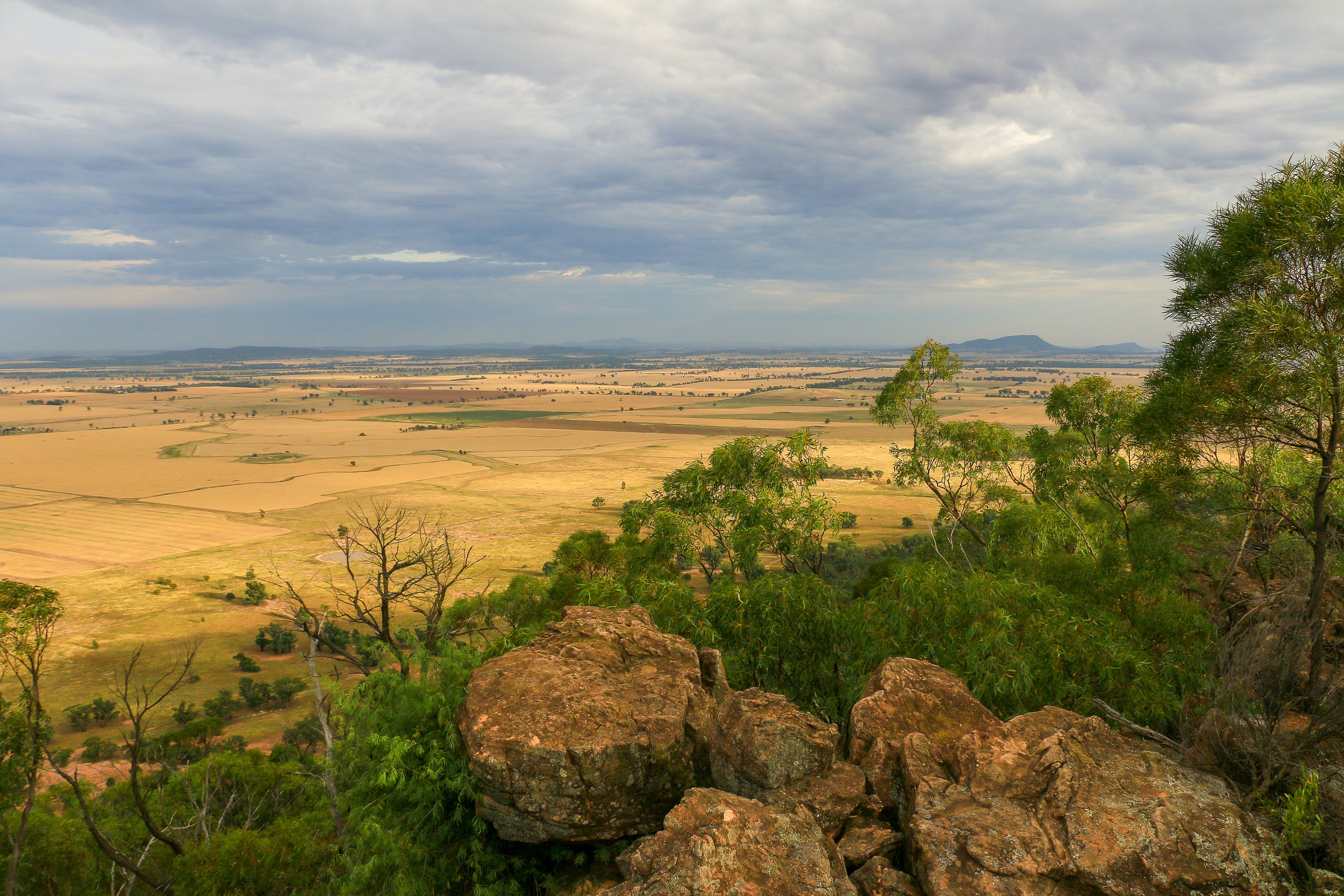
Armed with a big stick for breaking any spider webs in front of me, I climbed steadily up through grassy woodlands, occasionally interrupted by a rocky boulder. Each step revealing more of the valley in which the campground sat and, beyond that, the plains to the west. At a junction, a trail led off to an overlook perched upon the very edge of the national park. Beyond, a view into vastness.
Scattered pools of sunlight breaking through the clouds shifted upon an endless canvas of gold. The meandering of watercourses was clearly etched into the land, as if a giant serpent had indeed been at work. Distant, only another hill rising incongruently from this flat agricultural tablecloth. Perched here, not another soul in the world. This is why it is worth it.

Enlivened and spirited by such moments, I decided to carry on the loop trail to see how unsafe it really was. The answer was NOT AT ALL. The route descended but other than a few rocks everything was gentle. All I can assume is whoever had written that strident piece of public information had done so after heavy rain – the remaining section of the trail crossed a largely dry creek which would no doubt tumble with vigour once or twice a year.
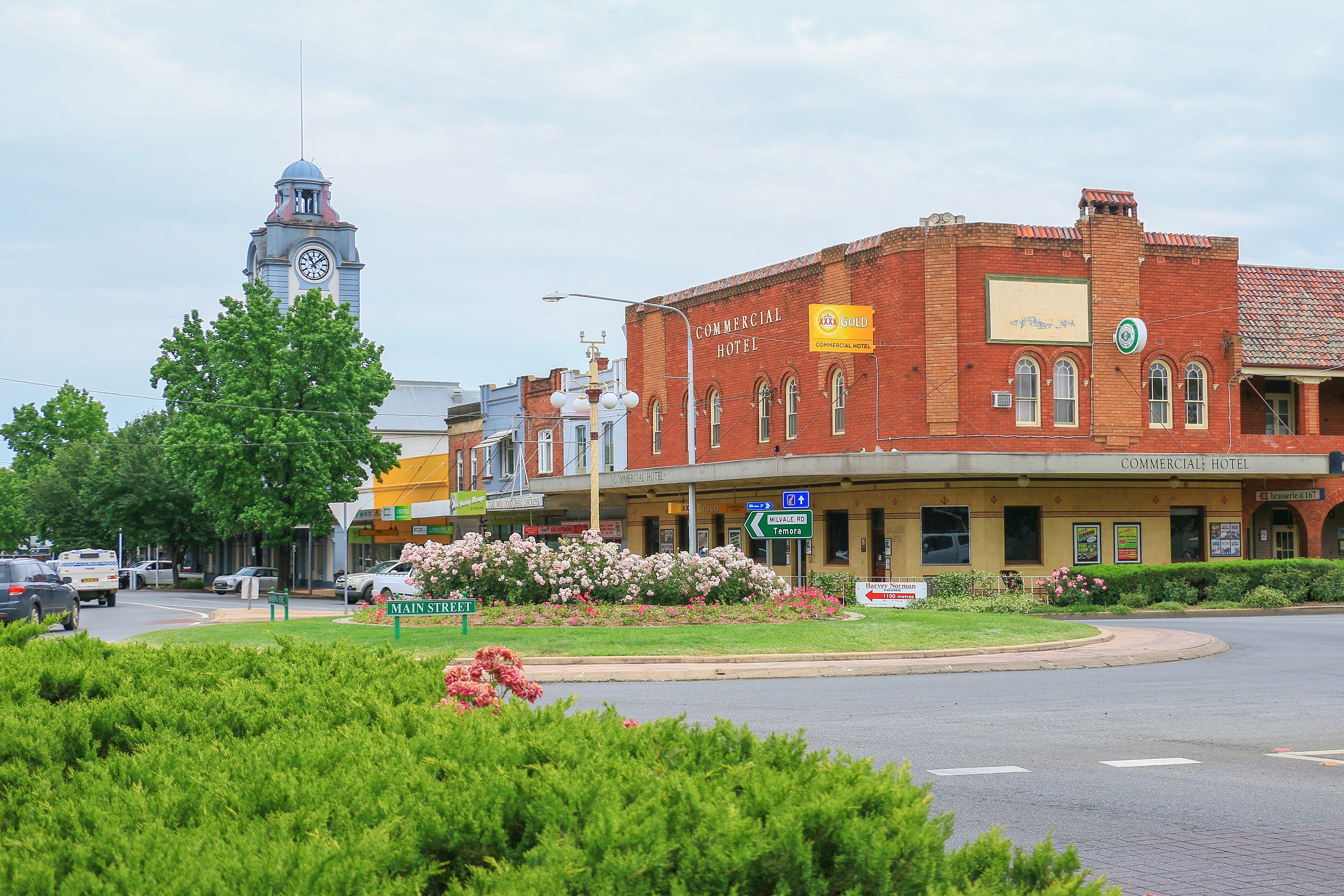
Leaving Weddin Mountains, I passed through Grenfell once again, failing to stop for a thickshake or to use its exemplary toilets. It wasn’t until Young that I embraced the luxury of running water once more. Young sits at the centre of the Hilltops region and the town itself lives up to this name. It seems whichever way you enter Young, it will be done from a height as your car winds its way down into the centre.
The centre of town – on a Sunday morning – was almost as devoid of habitation as Grenfell. Though larger, the high street also looked a bit rough-edged, run down, lacking the same faded elegance as its counterpart to the north. I always thought of Young as fairly well-to-do, set in a rich, productive landscape with a cherry on top.
This perception of Young returned upon entering a homewares store that featured a café, or more accurately a café that featured a selection of things for the home that are largely unnecessary. The café was busy with young, attractive people, extended families, and the local police collecting takeaway coffees and muffins. I felt fortunate to nab a table, close to the entrance where people were gathering in close proximity to register their presence on the off chance they had COVID.
It is quite an adjustment from sleeping in a car in the middle of nowhere to eating eggs benedict with pulled pork and an apple cider hollandaise in an upmarket homewares café. I felt and looked out of place, possibly because I was not wearing my hat indoors like the tens of identikit males with sculpted beards, black T-shirt and shorts and designer caps. They probably even had a shower this morning, show-offs.
The coffee was good and the brunch was delicious, albeit tarnished by the other great event of our times. What is it with being served only one slice of toast these days?! Two eggs and a pile of other stuff lumped onto one slice of toast. For something like twenty dollars. I don’t care if your toast is handcrafted sourdough whose airy bubbles are formed by unicorn farts, please may I have two of them?
The one slice of toast may have worked in my favour if the planets had aligned. Young is famous (in Australia at least) for cherries, harvested at this time of year and finding their way to many a Christmas table. There is even a National Cherry Festival, which may have occurred this very weekend if it wasn’t for the lingering presence of a microscopic virus. Each year, breakfast news weathermen arrive in Young to pick cherries and tell us how many tonnes are being shipped across Australia before informing of an impending heatwave. Apart from this year.
Nonetheless, the cherries and still growing and are still – despite a scarcity of backpackers to exploit – being picked. Many of the orchards offer pick your own and I had read of one that also had a café selling cherry pie. Surely the perfect ending before heading back, the cherry pie on the icing on the cake? As long as you book ahead.
For it turns out such is the renown of cherry season and such is the limitation of visitation numbers during 2020 that my intended destination was full. No more entry. Turn around and go away. Carrot cake down the road in Binalong will have to do.
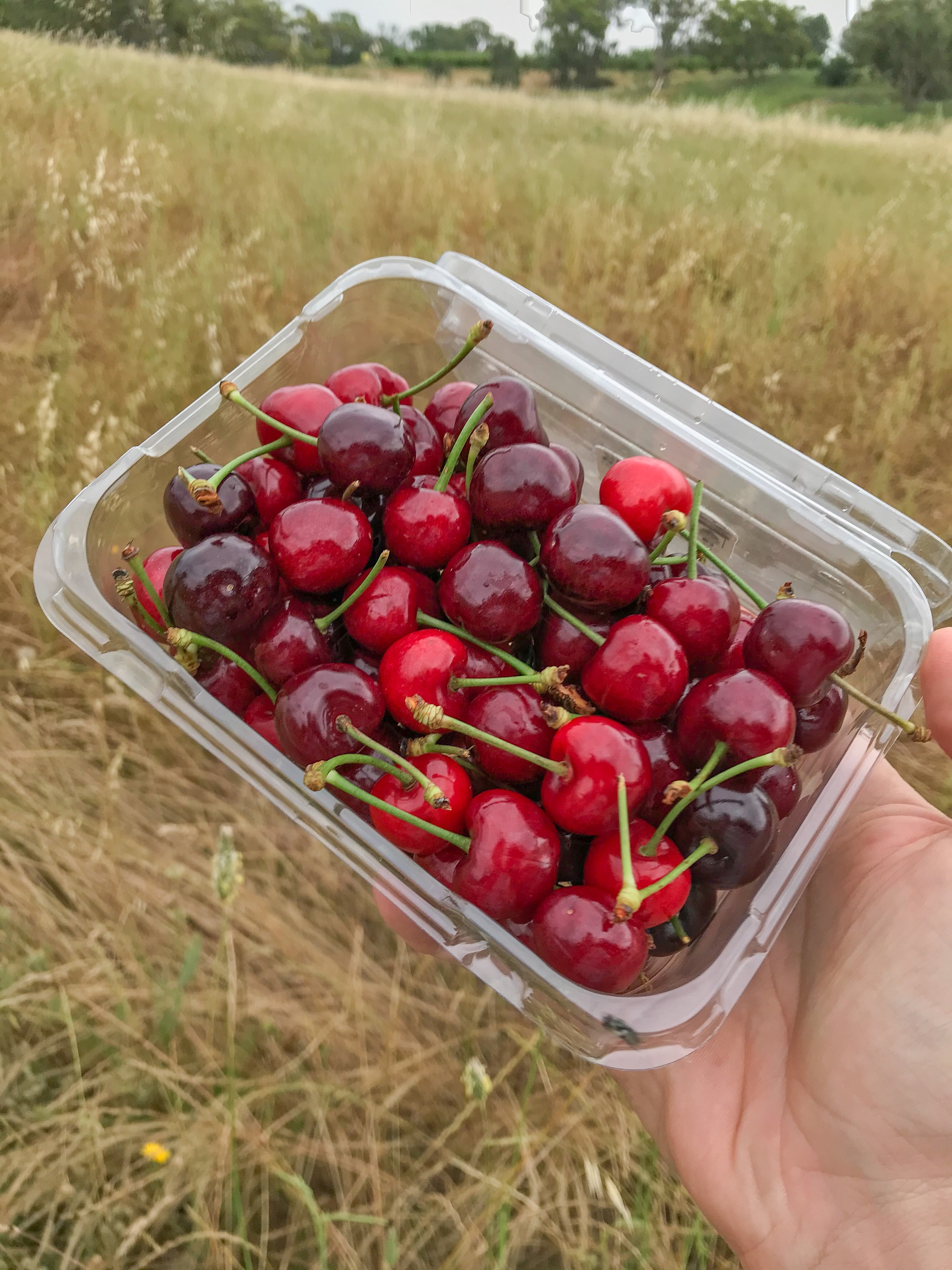
Happily, starting the journey home I came across a small outdoor market in the settlement of Wombat, around which many of the orchards are based. There was a mobile coffee van, and a plant stall, and that stand promoting turmeric as the cure-all for the world’s ailments. Something colourful and knitted emanated from another corner as you amble past and try not to make eye contact. And there, out of the back of the van, the punnets of cherries. Picked yesterday just around the corner.
You cannot come to Young at this time of year and not buy cherries. Much as you cannot come into this part of the world and not be impressed, not be thankful for the people labouring to bring food to your table. Or to relish the stops in small towns withering in the heat, hiding poets and bakers and bushrangers among elegant facades and restless youth. And perhaps the most impressive of all, you cannot be indifferent to those natural islands, remnants of a distant past, witnesses to a longstanding culture, rising up in defiance to the industrial plains.























 It’s a decent enough walk to require sustenance, so I strategically commenced in Bondi with a favourite pile of seafood. The beach was fairly busy – as you’d expect on a Sunday in February – but there is enough green space surrounding the bay to get your own little plot of land. Around me, every other person Facetiming to someone a million miles away, absent, distant. Nearby, a scruffy young guy settles down with a guitar, assuming the world near and far wants to be entertained by his derivative Passenger twaddle. It’s time to get moving.
 Walking by Bronte Beach and around the cemetery, through the cove of Clovelly, up the worse steps to circumnavigate Gordons Bay, and down again into Coogee. An egalitarian scene of Sunday sessions, volleyball, buckets and spades and barbecues. The beach has been in better shape, seemingly plagued by masses of seaweed that are surely something to do with the weird weather and warming seas. By now I finally feel a tad toasty, but ice cream proves the best way to cool back down.
 In a window distant, the towers of central Sydney loom large, shimmering like temples to the unstoppable commute. For me, it is onto a chilly train, bypassing under this city and out to Parramatta. Where equally chilly tower blocks await. Later, a chilly taxi crawls to the airport, where I am temporarily warmed by a beer with an old friend. We depart for chilly planes home through chillier skies. And, for once, arriving in Canberra there is the greatest relief at disembarking into the balmy evening air of a city getting back to its best.



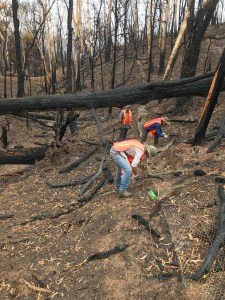
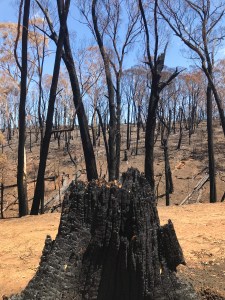 Focusing on the task at hand, the surrealness of the environment fades away, until you occasionally pause and look up again and take stock. Among the ash, small piles of fence post and a carpet of wire lay ready to be gathered in machines by Smiley and Paul. Our team of four alternate tasks, to relieve various aching muscles and torment others yet to be abused. I’m the youngest and glad of the experience of more practical, hands-on kind of folk who offer good advice and warm conversation. Smiley throws in the odd tip, alongside a healthy dose of banter. He suggests I work for Scomo and this is a bait it’s hard not to take.

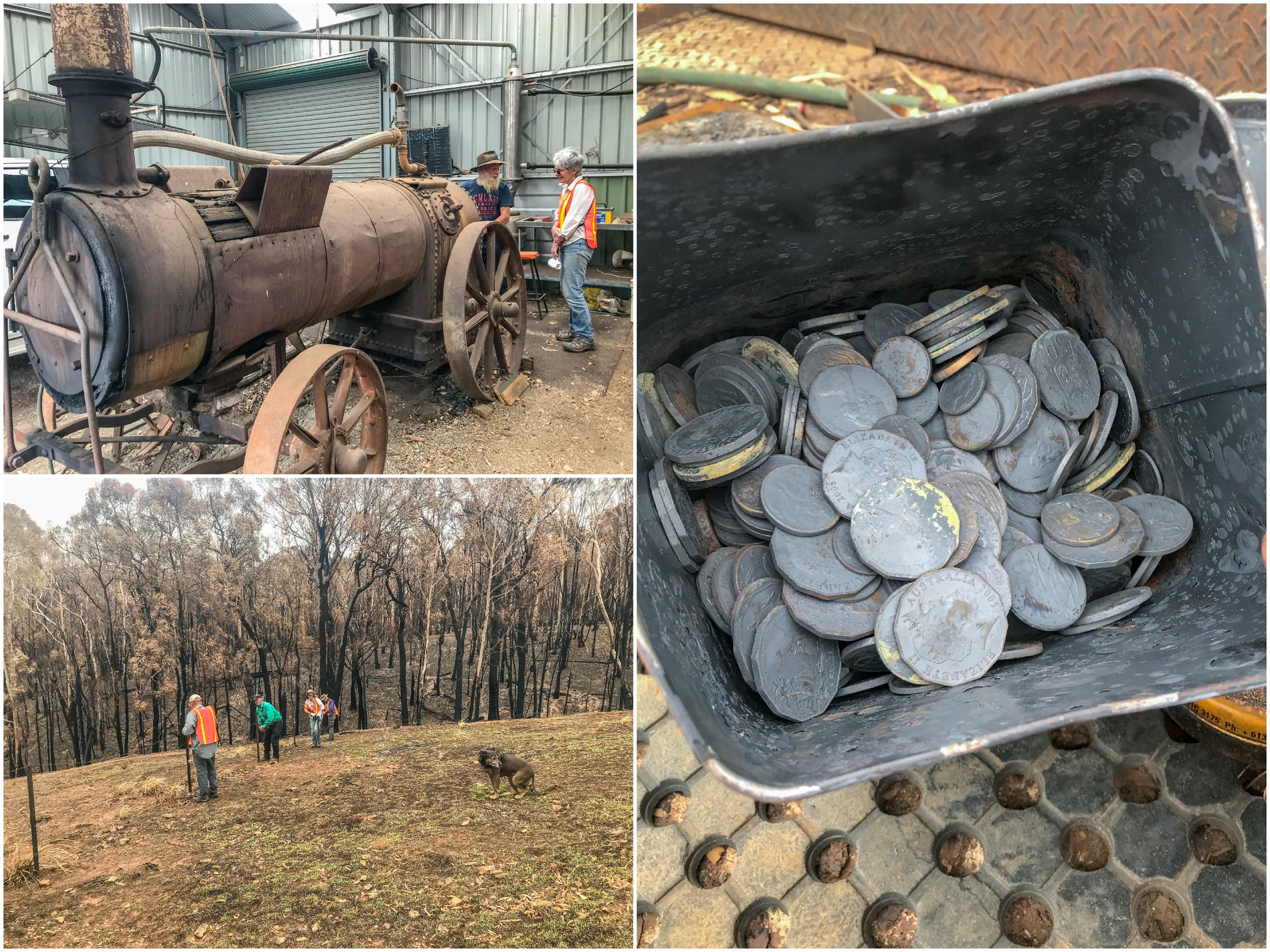
 If that isn’t inspiration enough to get back out to finish our job, I don’t know what is. The gusty change of the morning has subsided and we venture back into the forest, working methodically uphill towards the boundary of the property with the forestry road. Someone spots a red belly, thankfully not me. The fence is horizontal here, and the pole puller contraption largely redundant until they can be bent upright.


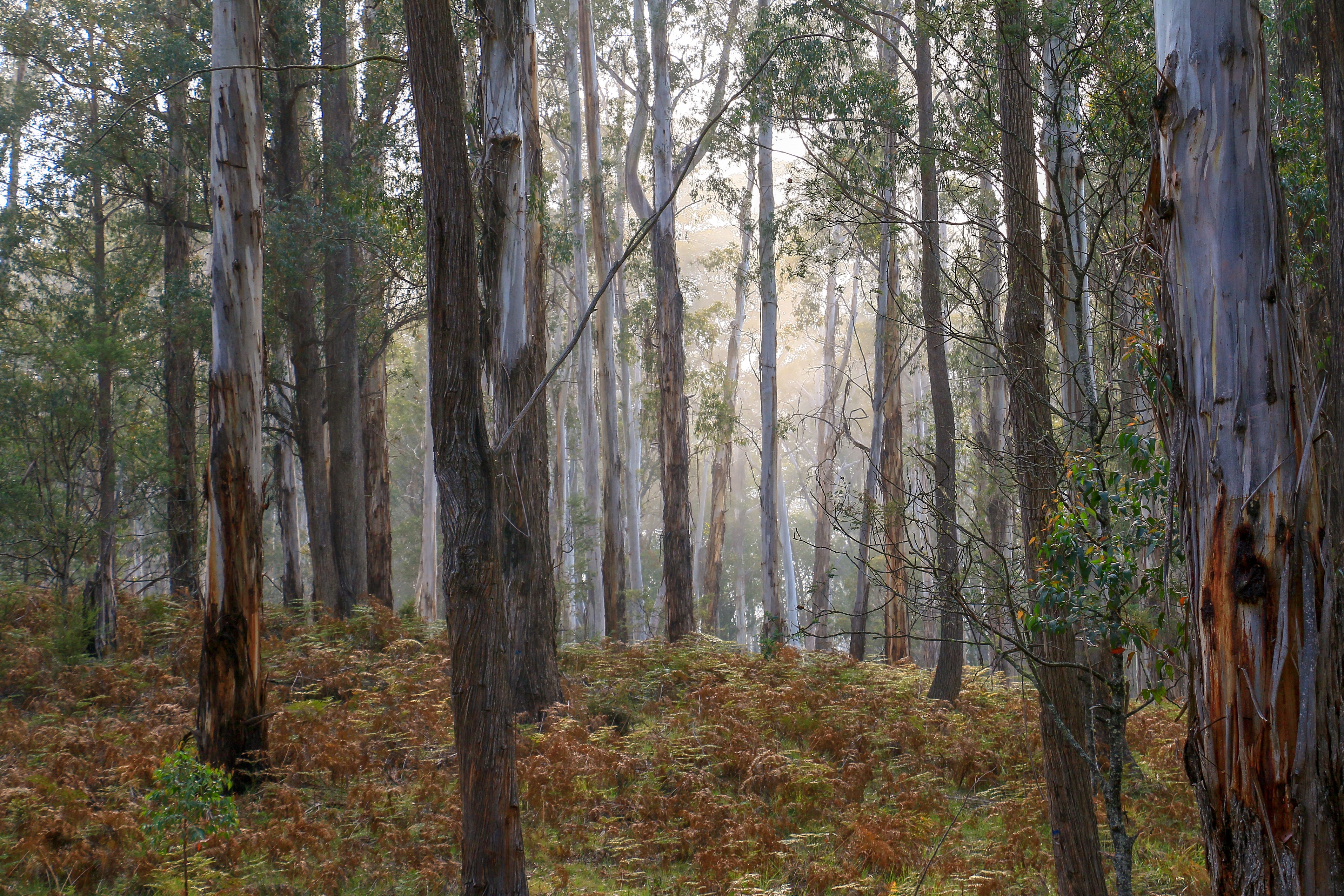
 And then, through Bombala and into South East Forests National Park, there was something resembling freshness. Blue sky. Green. Giant trees untainted by fire. A campground almost deserted, the camp guardian a spirited Kookaburra feeding its young. A sense of wonder and relief that this is all still actually possible. Breathe.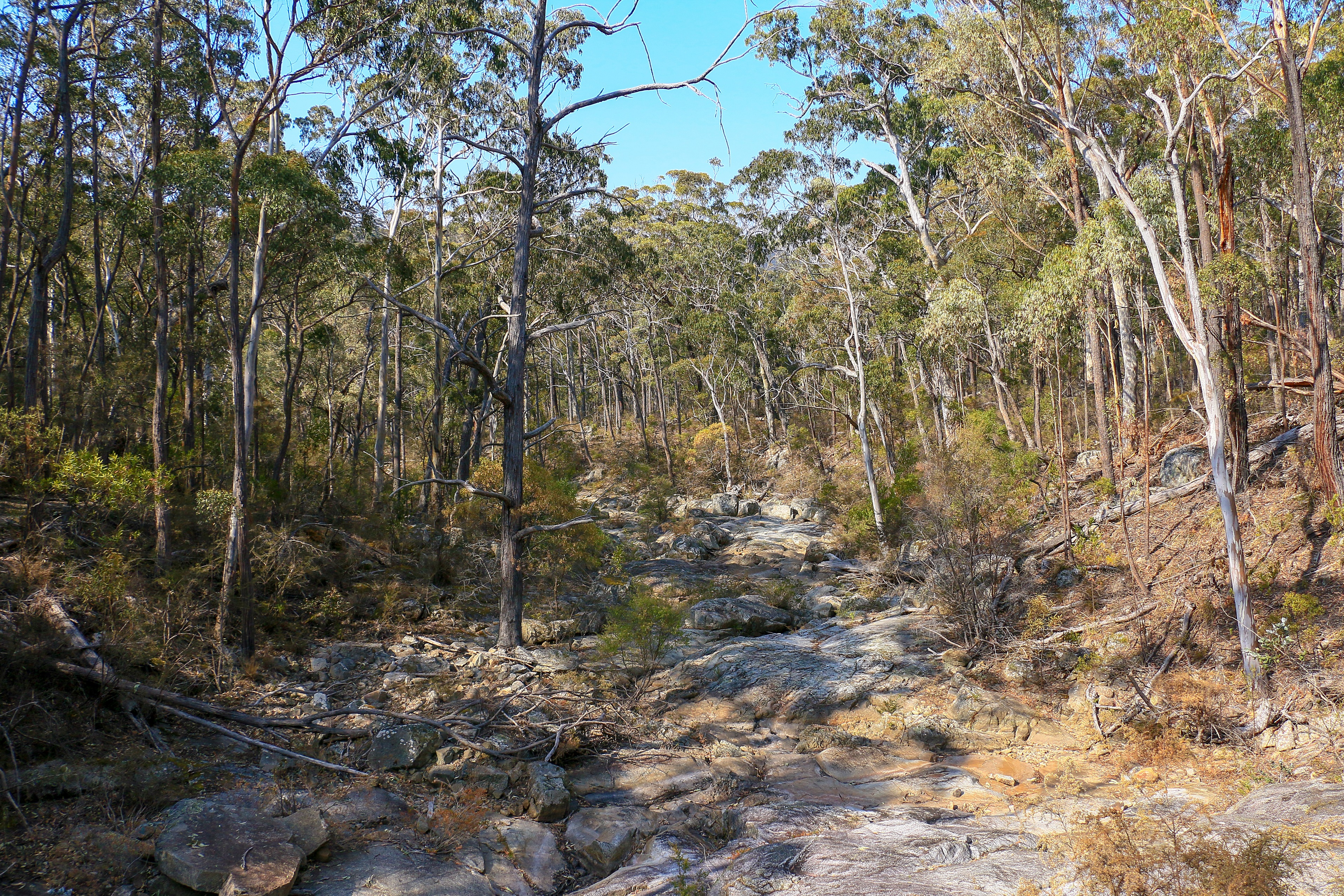

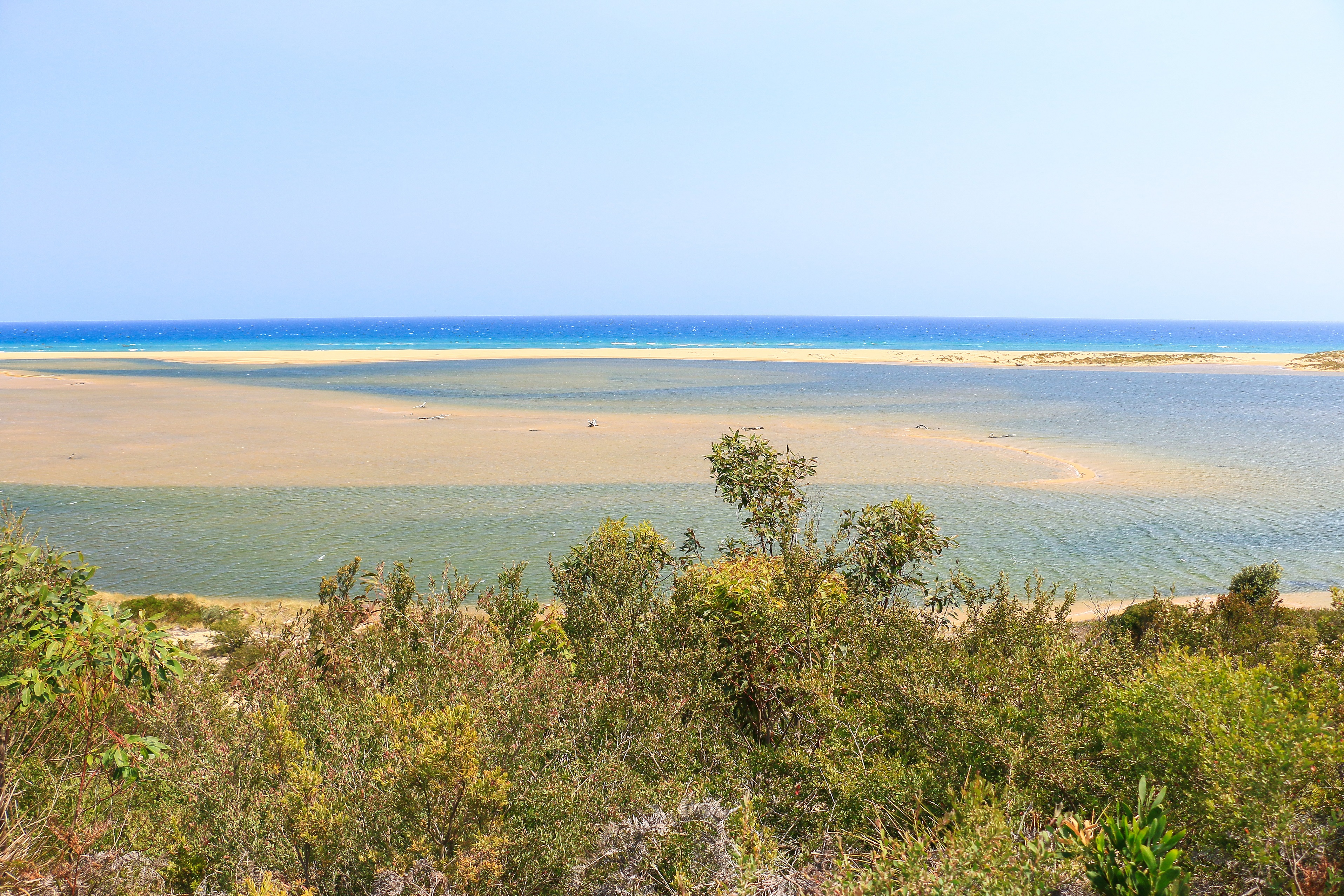
 This region – East Gippsland – is sparsely populated and only has a few access points to the coast, through the gorgeously pristine Croajingalong National Park. Camping in the park is popular over Christmas and I had no chance. But at Cann River itself, a free campground was available in which to set up at ten in the morning. And it came alongside a short walk through woodland that in places reminded me of somewhere in England, such were the treasured patches of greenery.
 I remember Orbost quite fondly from the only other time I was here in 2013, mainly because I found a bakery that served something akin to a Paris-Brest. It’s not really what you expect but my memory of this raised expectations beyond what I should have expected. I was looking to pick up some supplies for dinner, which I managed but not to the standard I had expected. The result was a very Christmas meze of leftover ham, sausage rolls, cheese and a couple of salads. How I craved a hot meal! Oh well, there is always tomorrow.







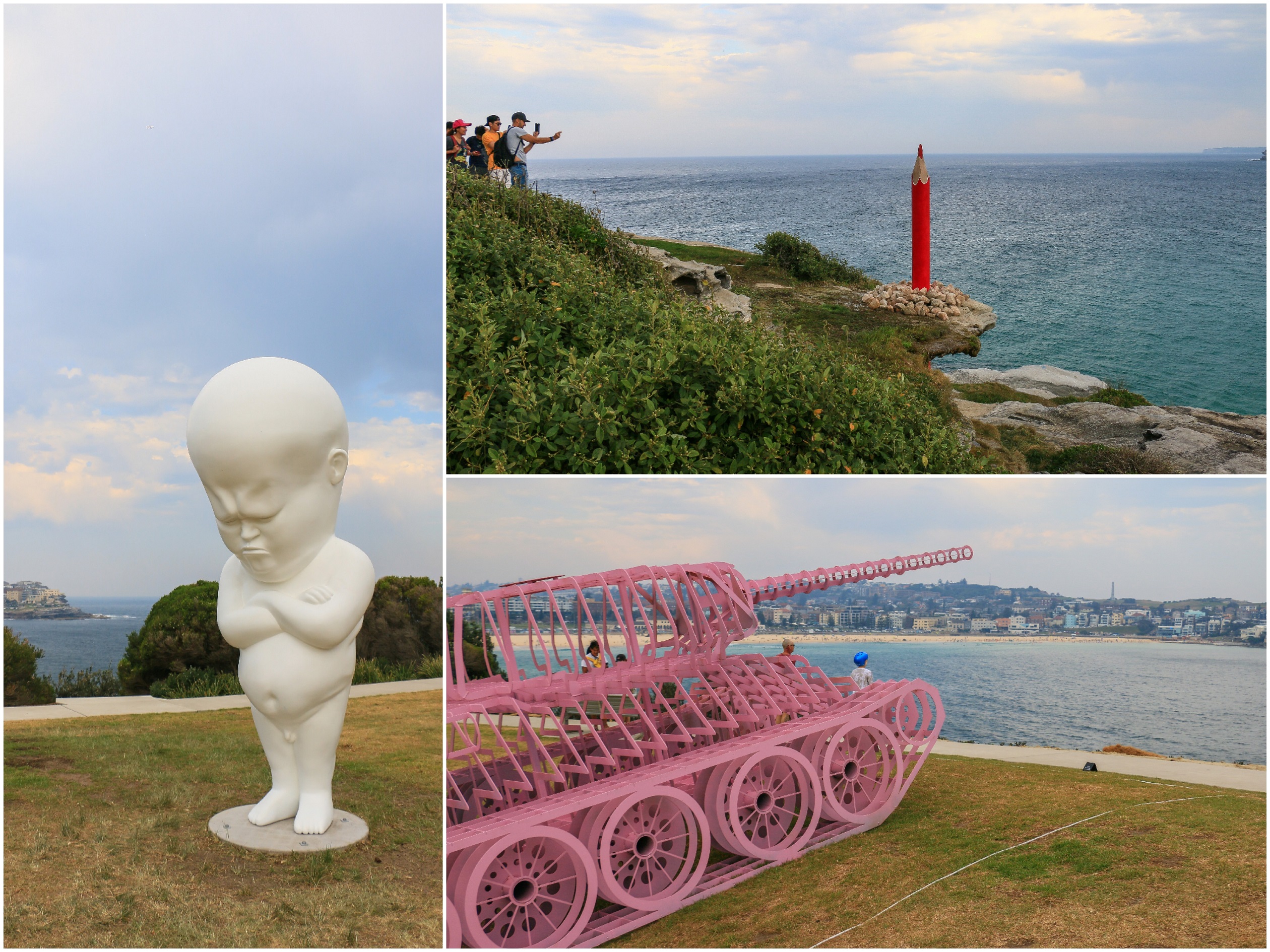
 Reaching Bondi – oh hallowed be thy name – I was determined to find a favourite little seafood haunt from times past; this was, after all, the prime reason I had not driven straight back to Canberra and had pottered about sufficiently to arrive at an acceptable time for dinner. And there it wasn’t. And there I was thinking why didn’t I just drive back to Canberra and have KFC at Marulan Service Centre instead? And there it was, on a different, quieter, cheaper street and life in Sydney was liveable for a few minutes again.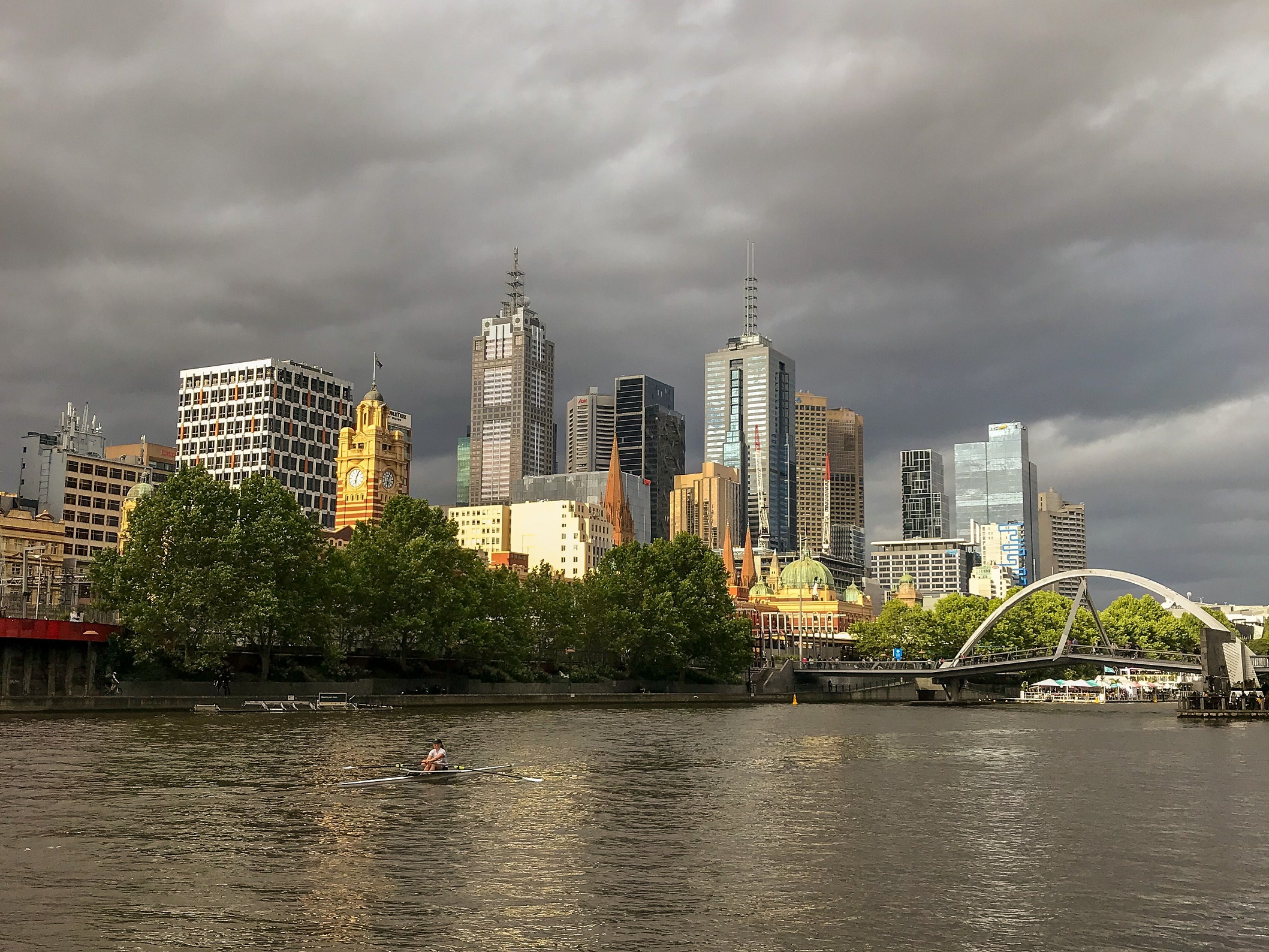
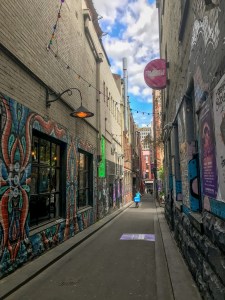 Melbourne was – typical Melbourne – half the temperature of Sydney and a darn sight cooler than the world’s most liveable city, Canberra. It is sometimes proclaimed the most European of Australian metropolises, which means cloud and showery rain and a sometimes dingy – some may say grungy – countenance. And also, trams, which laugh in the face at numerous contemporary attempts to retrofit light rail elsewhere, like a wizened professor in a pokie room full of drongoes.
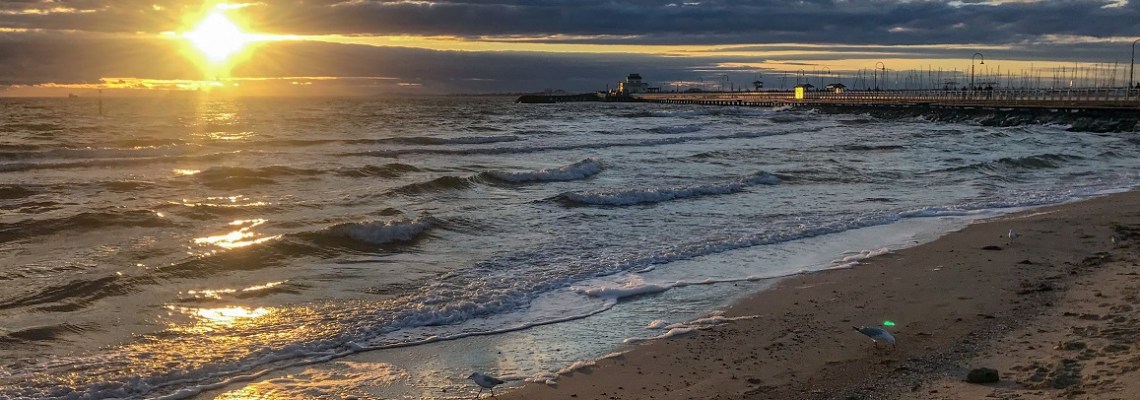
 You’d think the latter is more Melbourne while the former is all Sydney. But for me it was vice versa, the fish and chips the target of seagulls on St Kilda Beach, just for that extra European touch. If I had another jumper and another million dollars and an escape option from the oppression of another inevitable choking summer, I could probably live here, and I could probably live in Sydney too. If nothing else, I’d sure know some good spots for dinner.
 There is a colony of koalas here, and I was pleased to come across one in the first hundred metres of my walk. It was around midday and hot, exactly the kind of conditions in which you should not be out walking. But with this early sighting, the pressure was off – no more relentlessly craning one’s neck upward in the usually forlorn hope of spotting a bulbous lump that isn’t a growth protruding from a eucalypt. I could instead loop back to the car concentrating more on keeping the flies from going up my nose. Yes, they are absolutely back.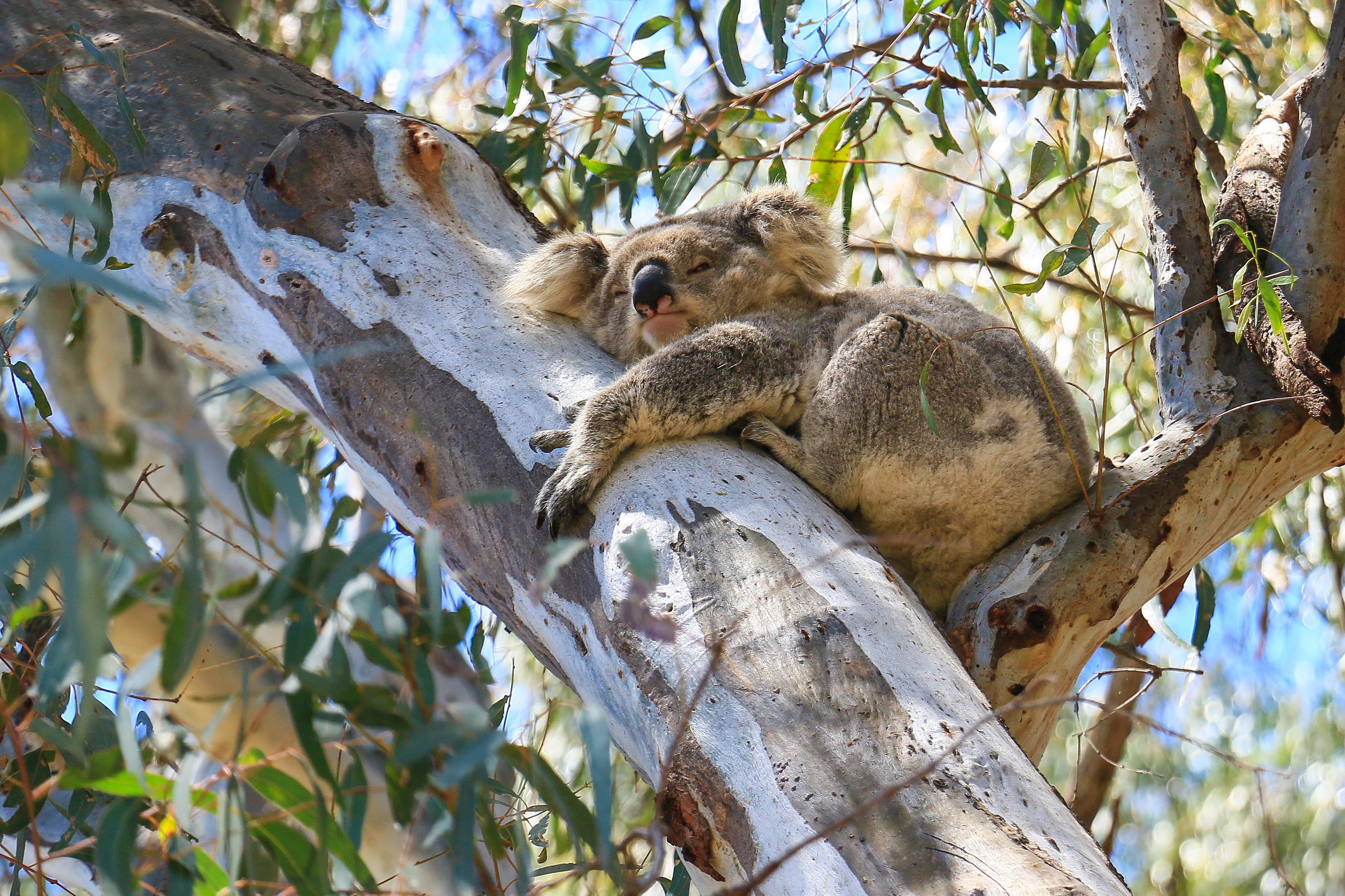




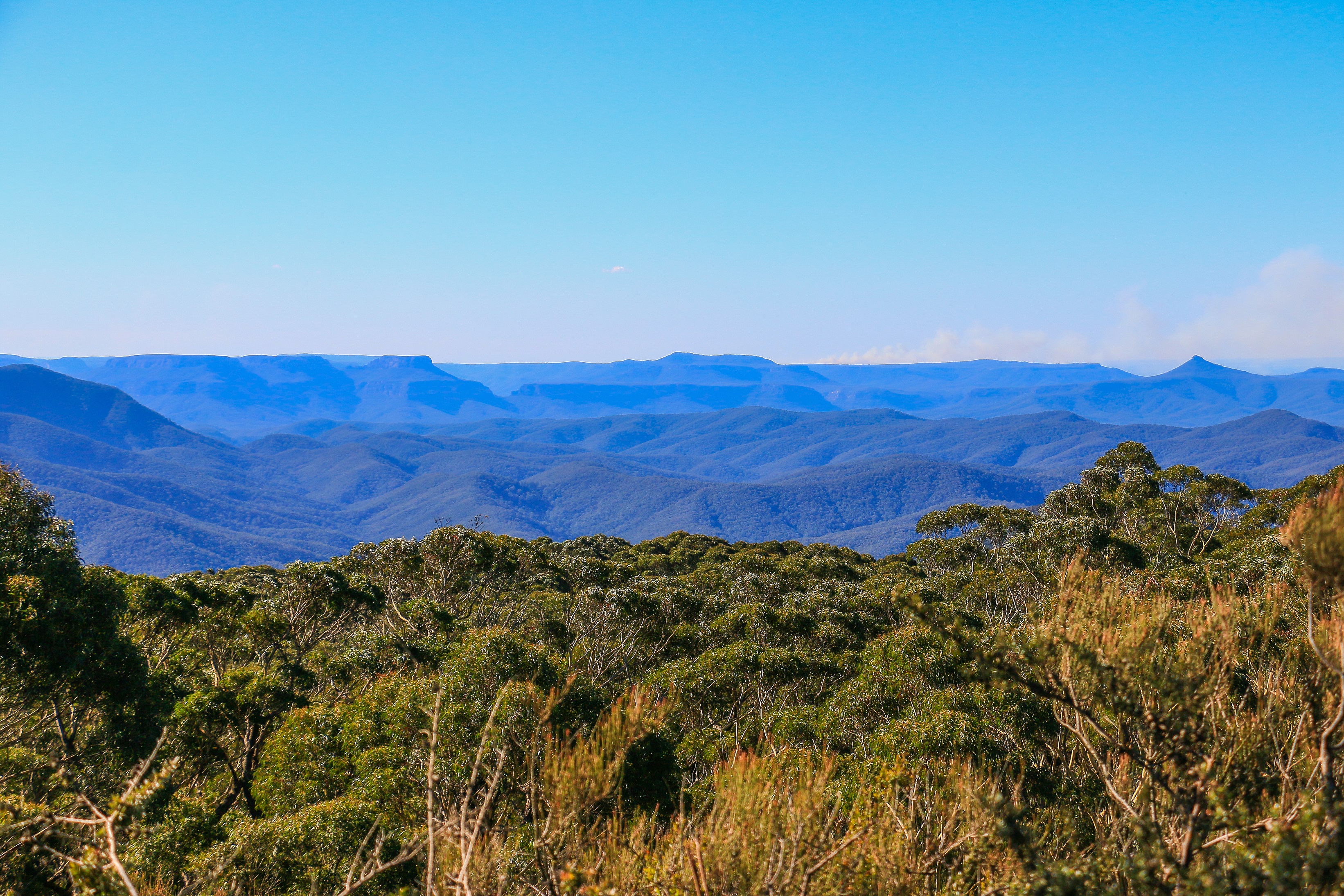
 Still, should you wish to rise from this indulgent slumber, another hour or so east will bring you to the western fringe of the Blue Mountains. Suddenly things change, and not just the petrol price rising thirty cents a litre in as many kilometres. The day trippers are out in force, the coaches idling at every single possible lookout, of which there are many. The escarpment top towns of Blackheath and Katoomba and Leura are brimming with people shuffling between café and bakery, spilling down like ants to the overlooks nearby. Below the ridge, however, and the wilderness wins. Only penetrable at its fringe, placid beneath a canopy of ferns and eucalyptus.


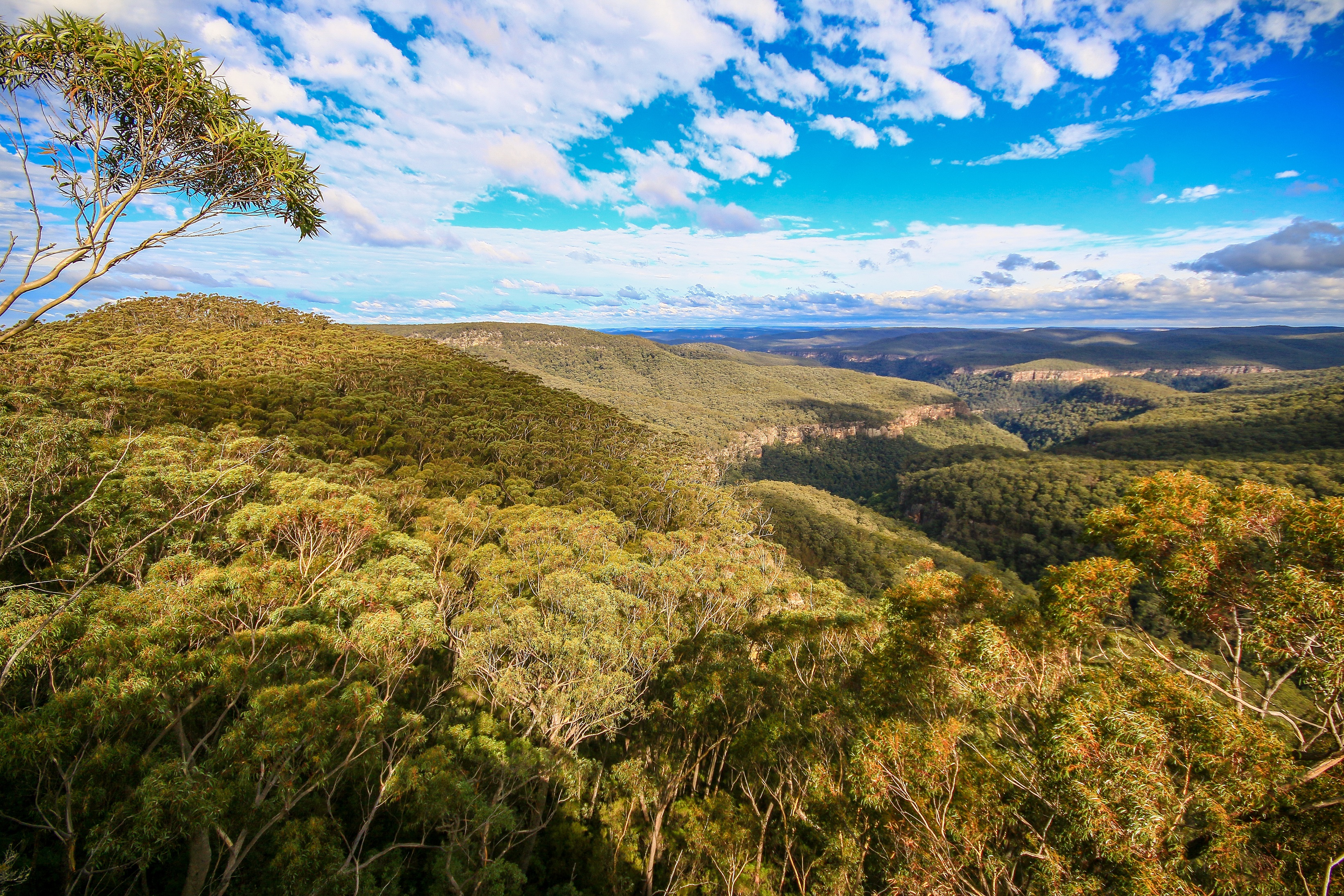

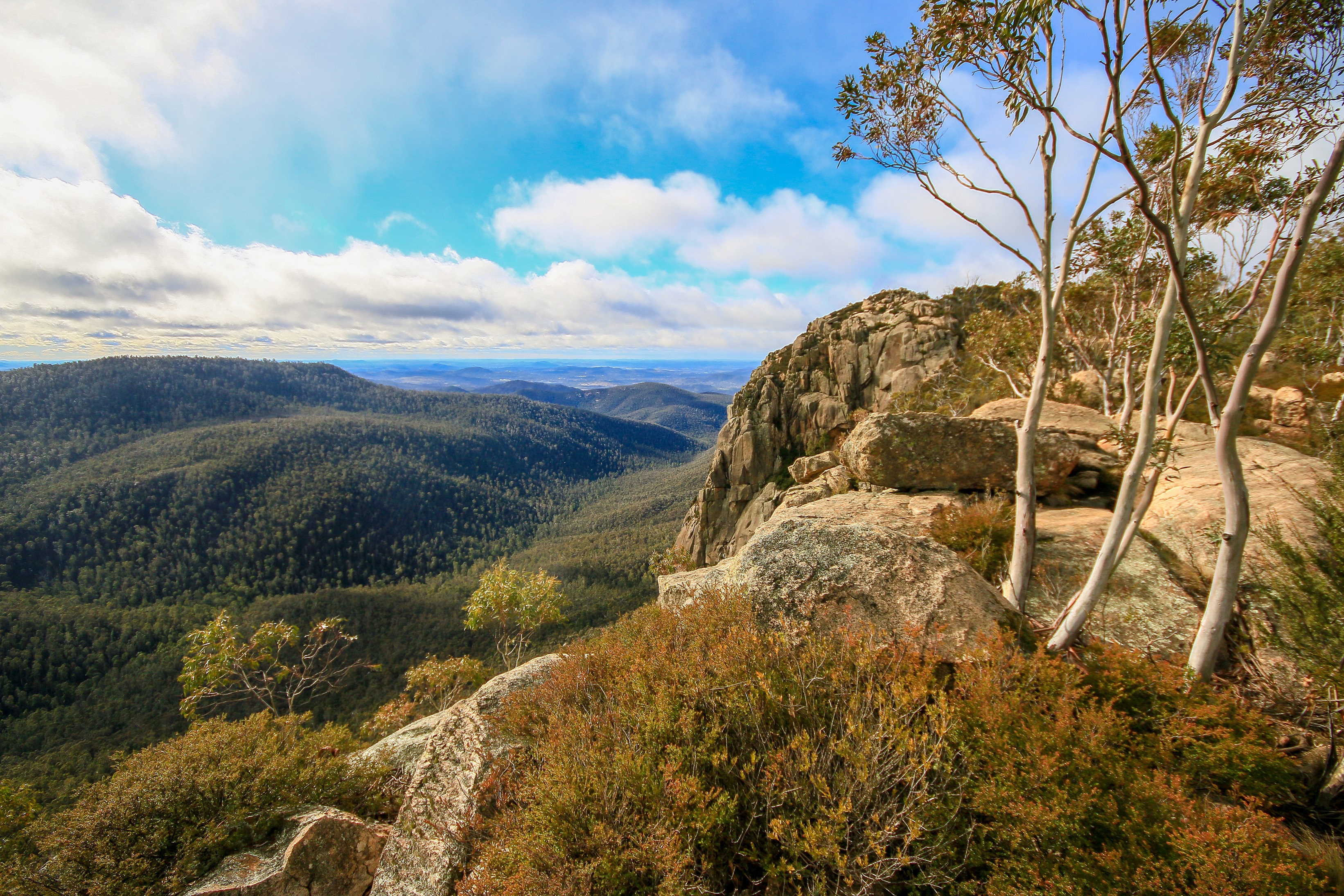
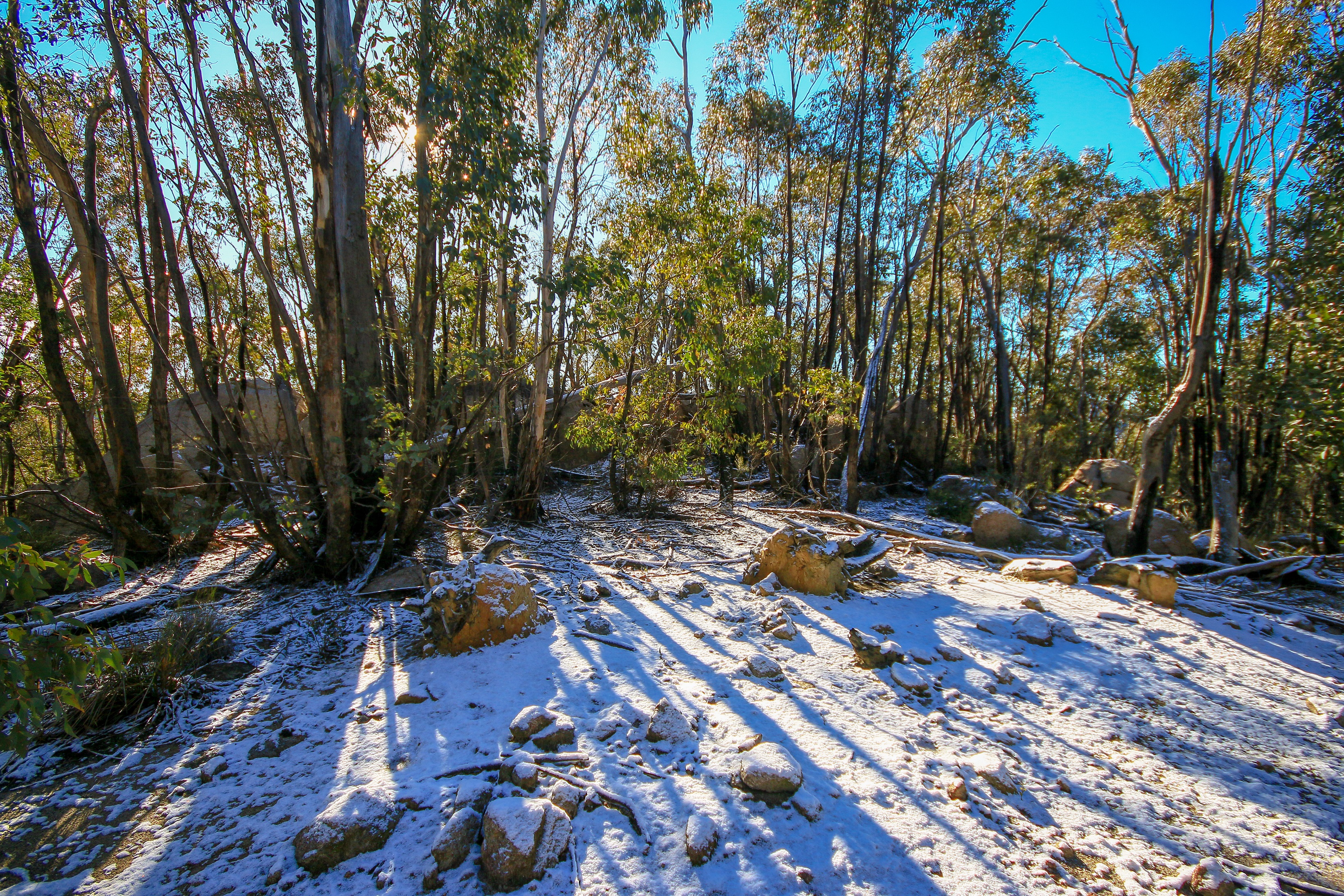
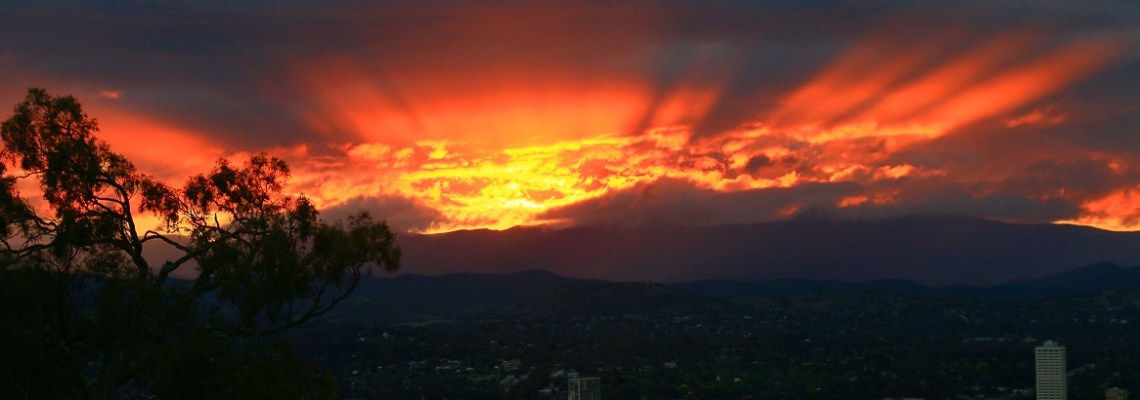
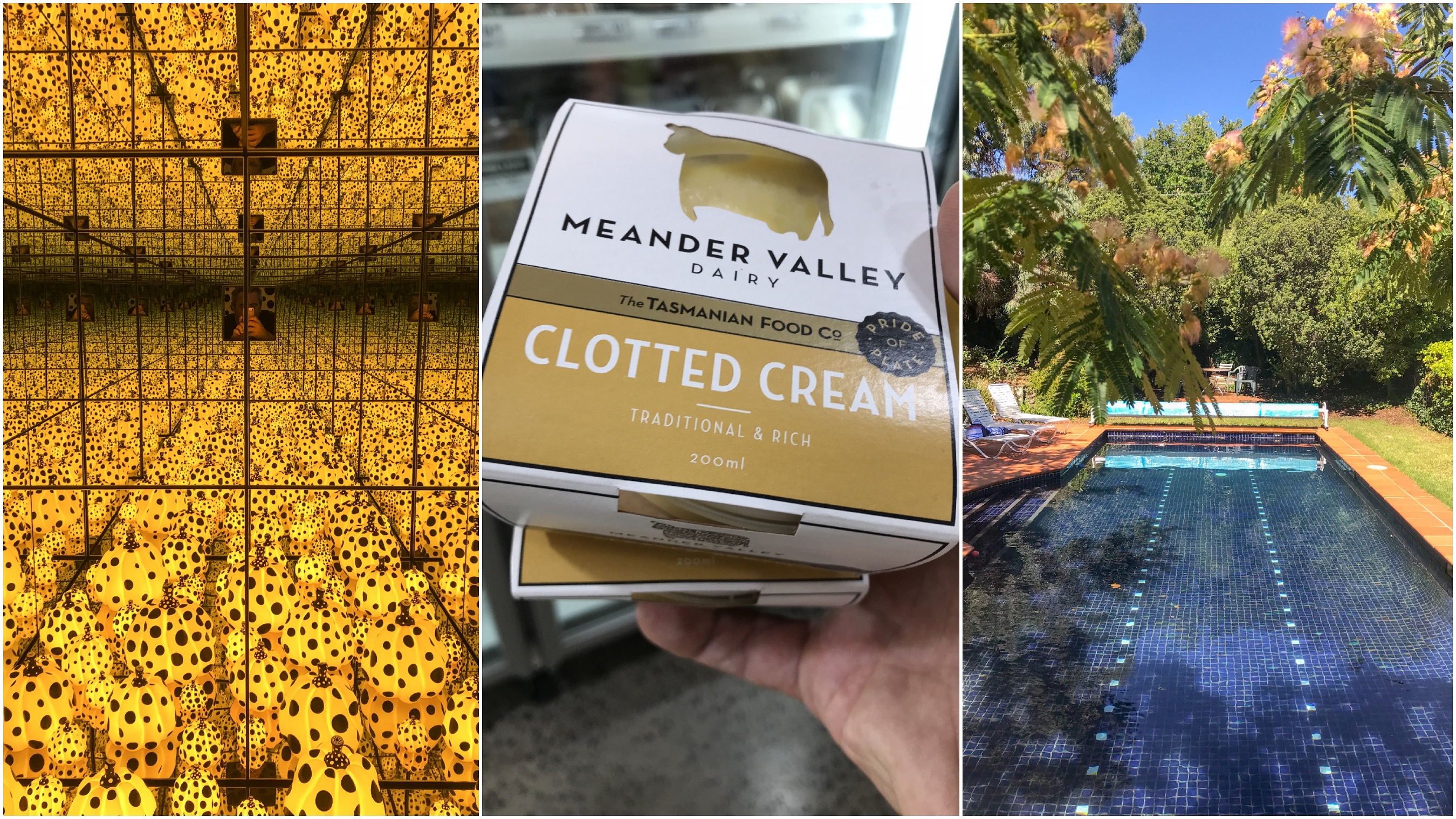
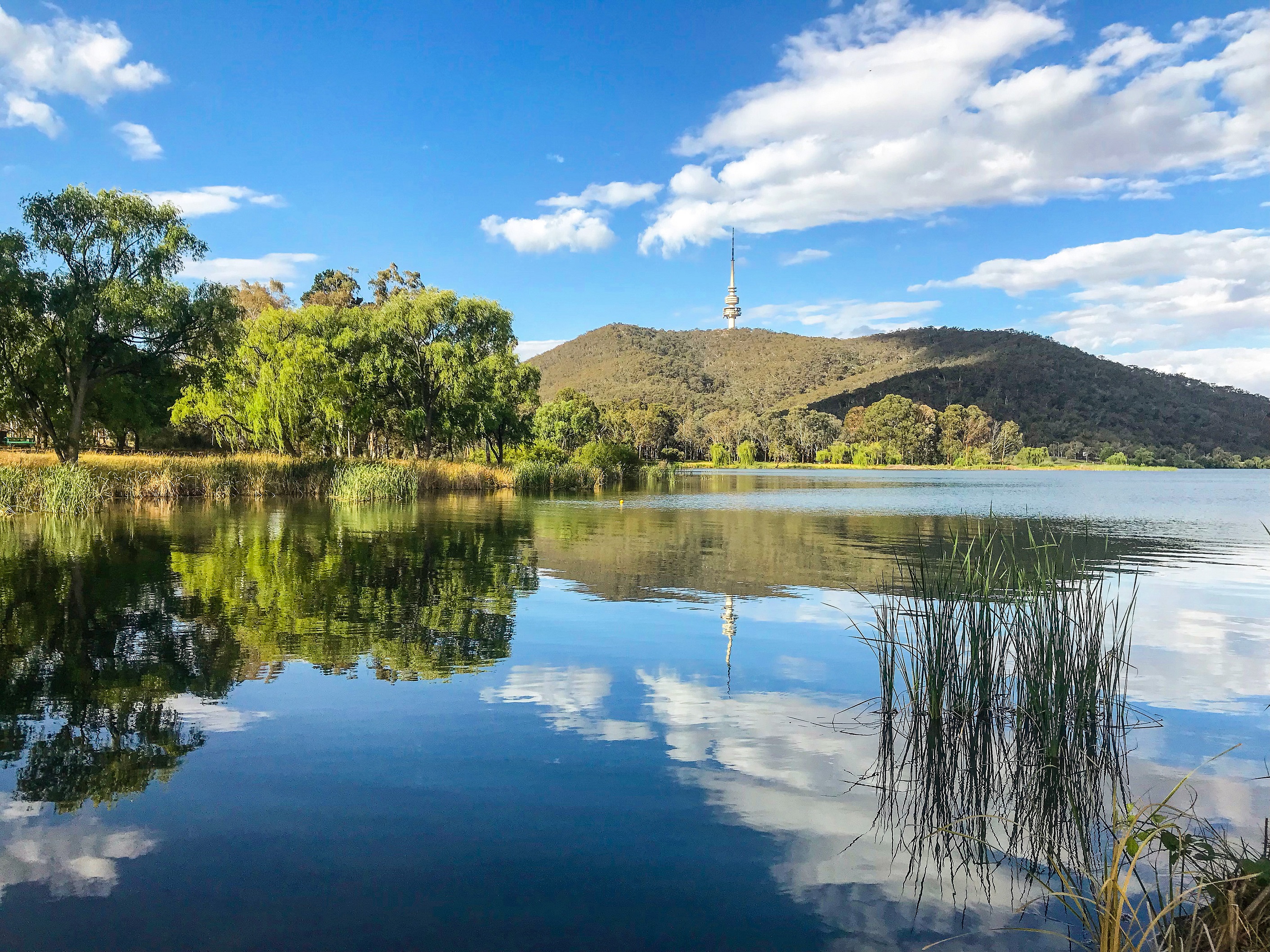


 I think about munching on some leftover sausage rolls in here, but delay lunch for one other walk before the temperature peaks. It’s already midday and clearly above thirty. Shade is intermittent on the way down to Tinted Cave and the Limestone Gorge, where sausage rolls can be enjoyed beside a shallow pool of water popular with dragonflies and sweaty humans.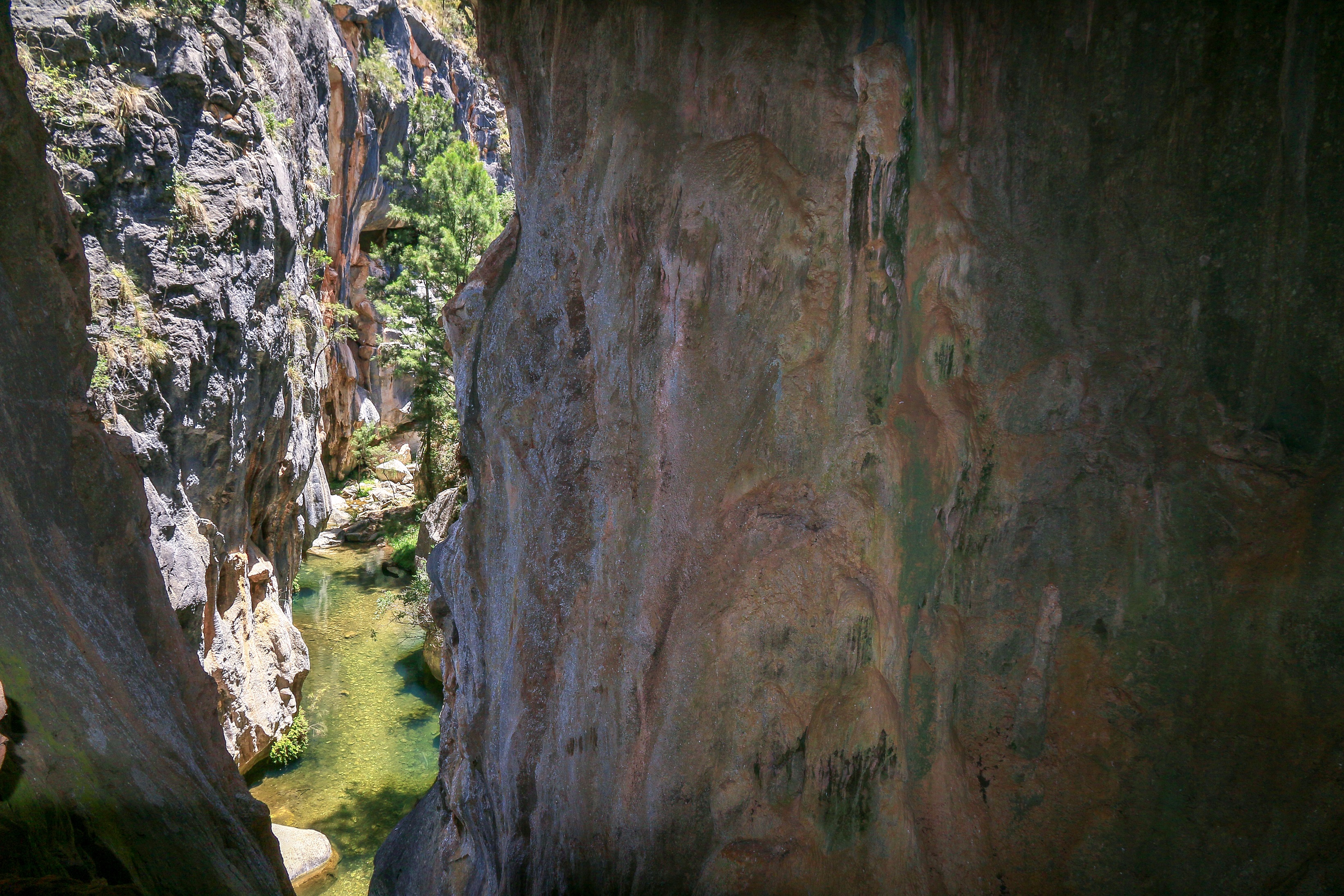


 Still, sheltered by untainted forest and rolling coastal hills, kissed by the radiance of the crystal ocean under clear skies, there is certain comfort to winter here. It is at one tranquil and vivacious, glowing in a freshness swept in by cold fronts and a seasonal lull in nature’s freneticism. The tried and trusted walk between Depot and Pebbly Beach proves to be at its very best.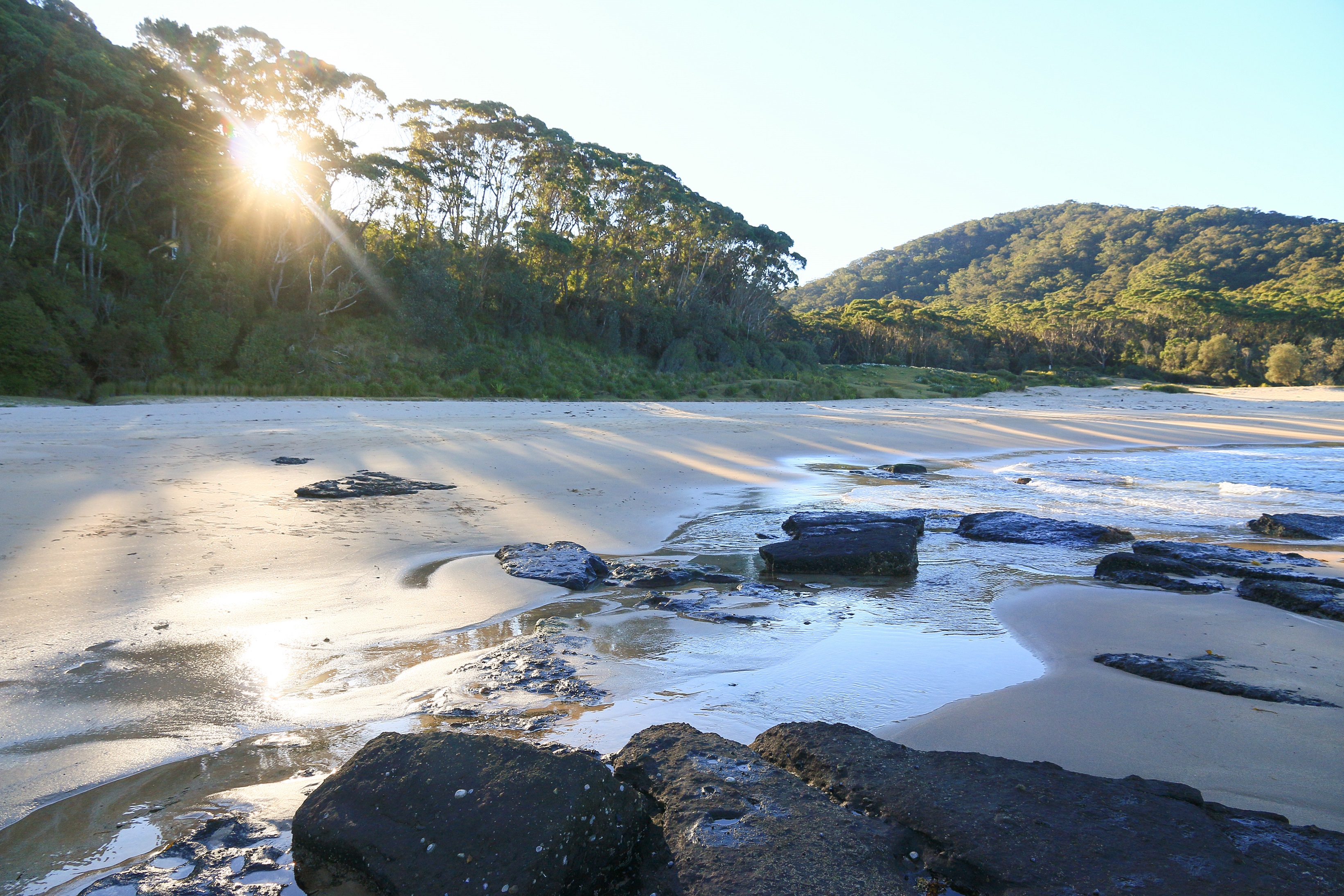
 The kangaroos and wallabies appear to be fans of this weather, out in force grazing on the luscious fringe of grassy dune and really, really hoping for a stray sandwich. While far from the explosion in #quokkaselfies on Rottnest Island in Western Australia, the placidity of these animals – along with the idyllic Australian coastal setting – have made #rooselfies a thing, sort of. Especially when there are tourists about.