In further news not westcountry, here are some more pictures and jumbled words from a recent trip to the Geneva suburbs of France and the French bit of Switzerland. Family connections make such trips possible and while this can raise some minor irritations – think early starts, couch sleeps, tricky post-dinner cheese decisions – there are more positives than negatives. Like family fun at six in the morning, afternoon naps on a comfy couch when all is quiet, and fulfilling post-dinner cheese decisions.

In addition there is the location, which provides access to two countries and cultures and some very hilly ground. I feel like I have at one explored much and touched only little over multiple visits. New settings emerge like the sun through the lake cloud, while old haunts linger, much like the lake cloud. Thus, in conclusion, the lake cloud is very variable and largely unpredictable in late autumn and sets the tone for the disposition of the day. Linger in cold dreariness or bask in pleasant, warm sunshine. Just be prepared to deal with it one way or another…
1. Disconnect sensory and logic-processing synapses
It looks like a pile of gloom. It sounds like a pile of gloom. It smells like a pile of gloom. It is not necessarily a pile of gloom, though it could be actually. Or maybe not. What is dark and leaden at the start of the 61 bus ride can be clear and airy at the end of it. Now, I know the 61 bus ride feels like an eternity for some, but not so long to make this transition conventional. You think there is no way under the (non-existent) sun that this pile of gloom will shift today, and it does. In the twinkle of a traffic light, your body which was in winter is now firmly in autumn and possibly just absorbing a residual hint of summer.
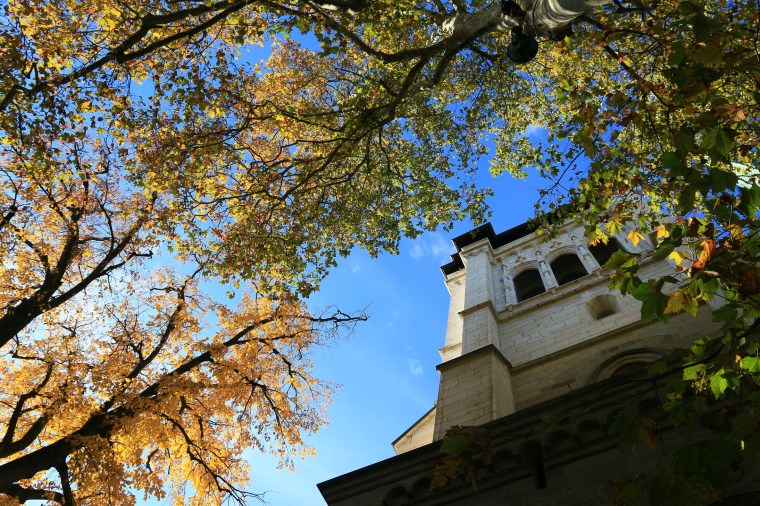
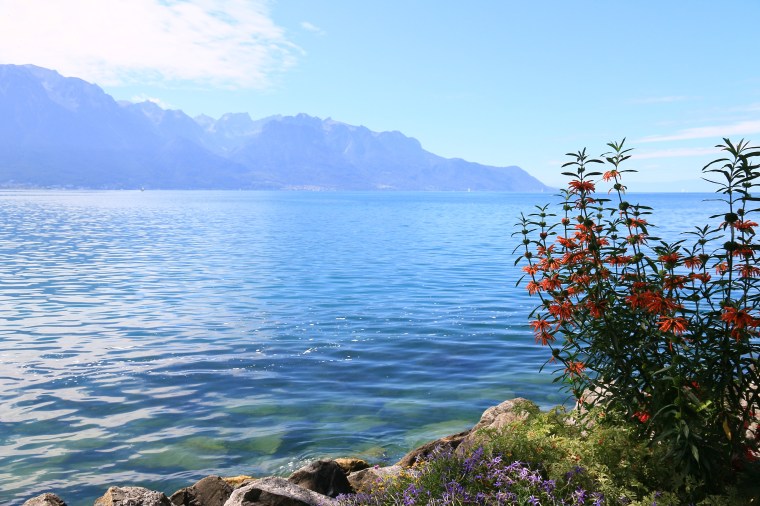
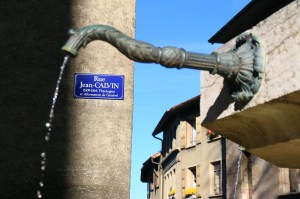 Of course, this is marvellous given such abysmal expectations. You find yourself beside the lake in Geneva all sapphire and topaz crystal. Leaves are ablaze with afternoon sun. A walk up into the old town warms the body further, despite its narrow cobbled streets in the permanent shadow of expensive jewellery shops and even more expensive solicitors. The Saleve – which didn’t exist before – punctures the horizon from the Promenade de la Treille. Children play merrily, students philosophise lazily, lovers embrace amorously. Where is the gloom? None of this makes sense.

2. Ascension
There is wisdom to be had in the words of Yazz and the Plastic Population. It may take many hairpins and navigation through the inside of a big damp cloud, but go up and you may just end up above the weather.
It was looking doubtful climbing up to a car park in the shadow of Les Voirons, a lumpy ridge rising to highs of 1400 metres. Only in the last few kinks of road did the mistiness glow bright and dissipate. Even then, occasional wisps of cloud hovered over the road surface, as if a smoke machine was spewing out its final puffs from a distant eighties dance-pop-funk performance.
In the clear air, churned up tracks through the forest conveyed a sense of truffle hunting, rabid dogs, and people with shotguns. After piddling about along these tracks for a little while, the only way was to ascend, bay-ay-beee. Up through millions of discarded leaves, into a clearing and views of the sea; a brilliant white sea lapping at the shores of craggy peaks and ice-capped spires. The very top of the Saleve a small desert island floating in this blinding ocean.

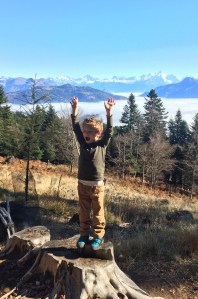 There was something very satisfying about being above the cloud, in brilliant blue skies, knowing that it was well miserable down there. As if you had stuck two fingers up to the weather and, for once, outsmarted it. Haha, yes weather, you are no match for altitude, mwahahahaaa! All your stupid cloud is doing is reflecting the sun and making me incredibly warm, so that I can cope in a T-shirt. And in making the valleys disappear, you accentuate the purity of the view, the drama and scale of the stunning panorama of the Mont Blanc massif. Yeah, screw you, cloud.

3. Just eat
Sunday lunches are often best when they are lingering affairs, embellished with hearty food and infused with wine. They are the perfect antidote to grey skies and uninspiring temperatures, a strip of crispy crackling in a pile of over-boiled cabbage. Perhaps in the case of this particularly Sunday lunch it was the heat from the Raclette-melting contraption (it probably has a local name, like raclettesiennierre-de-montagne-lardonass) that generated just enough upward convection to part the clouds towards the end of the day.
 Cue some reluctant shifting of our own lardonasses for a welcome amble in the nearby Swiss section of countryside. Golden light casts a serene glow on everything and everyone. A crispness in the air is refreshing and helps to dilute the strong odours of cheese. The cloud has gone again, and – in such endless skies reaching to the stars – it is hard to believe that it will so easily return.

4. Try a different country
Okay, so perhaps Switzerland has all of the sunshine, what with millions of fancy penknives slashing at the cloud and all. So, with a free day out to use up courtesy of my rail pass I was able to penetrate deeper into the country and seek out its sunnier spots.
 First, with cloud embedded deep into the valleys, I had to escape up once more. From the town of Vevey, a gleaming commuter train elegantly curves its way past chalets and chateaus to the suburb of Blonay. Here, a change of train (waiting on the other platform, naturally) shifts into a steeper grade through forest and occasional hamlets to Les Pleiades. Nothing much is at this terminus, apart from open meadows, scientific contraptions, and labourers preparing for the winter. But it is a spot well above the cloud, which sits snugly in its lake-filled indent, a luminescent glacier of cotton wool.
Numerous jet trails pierce the clear blue sky and it is warm again. This is the sunny side of Switzerland, all rolling green meadows and dotted villages. Happy to linger, I gradually stroll down, passing a small fromagerie and a couple of holiday chalets a louer. A barn sits empty, the cows having descended for the winter, the sound of their bells occasionally echoing up the valley. I move down too, only from what seems an alpine summer and back to a winter by the lake.

———————————————-
My original plan was to hop on a boat cruise from Vevey, a sedate and civilised way to soak up the charm of the Riviera towns and the drama of the rising mountains. While some hazy breaks hinted at a clearing it was still predominantly grey; not quite the scene I had pictured in which I lazed contentedly on a wooden deck, the lowering sun illuminating the surrounding mountains. So instead – with free travel at my fingertips – I jumped on a train for twenty minutes to Aigle.
One of the problems with free travel and chronic indecision is deciding what to do with the free travel that you have decided to buy. At Aigle, two tempting options wait and time, really, for only one. Platform 13 and a train to Les Diablerets, Platform 14 Leysin. Both equipped to move upwards and no doubt deliver another hearty dose of gorgeous Swissness. One leaving in four minutes, the other in six…time barely sufficient for decision-making.
Jumping on the first to depart (Les Diablerets), the carriages immediately turned into a tram and clunked through the streets of the town. I caught a glimpse of the chateau on Aigle’s edge, and promptly jumped off at the first stop. There would be no time to visit that as well as Les Diablerets, so I crossed a road and caught the following train to Leysin.
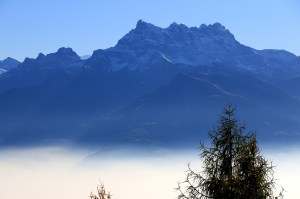 With the sun now out in Aigle there was less imperative to climb, but the train relentlessly lumbered upwards. Surprisingly there was deception in that valley sunshine, as it became clear once up high that a layer of haze hovered at around 800 metres. The sunny valley was no longer visible, despite it being sunny when down there. What kind of sorcery was this?
Leysin itself appeared to possess charm and utility, no doubt bustling in winter and thriving in summer. In early November things were a little devoid of life apart from clusters of students, neatly attired, mostly Asian, receiving an expensive Swiss education in a school with a view. A few joined me on the train back down, through that mysterious haze which was only visible from above.

In time-honoured tradition I hopped off the train a couple of stops early, prior to it reaching Aigle level. I had noticed on the way up the glimmering terraces adorned with rows of vines, golden in the peculiar autumn sunshine. The chateau would be visible below, and there must be a walk down, because a carriage of younger schoolkids disembarked here on the way up.
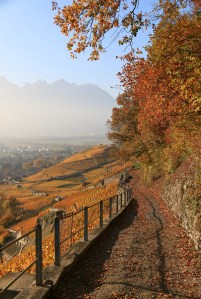 I have no idea how all those schoolkids assembled on the platform, such as it was: two square paving slabs dangling over one of the walls cascading down in giant steps towards the valley. What looked like some kind of drainage channel passed steeply under the rail track; the only other person to disembark informing me that this was the road-cum-path. And despite this initial steepness, it was a glorious walk, mostly following the small chemins used to transport grapes and labour. Occasional houses adjoined the route, each proudly displaying the name of the vigneron and date of establishment. One or two tempted with open doorways, while outside a couple of workers toasted a hard day’s winemaking with a crisp glass of white.
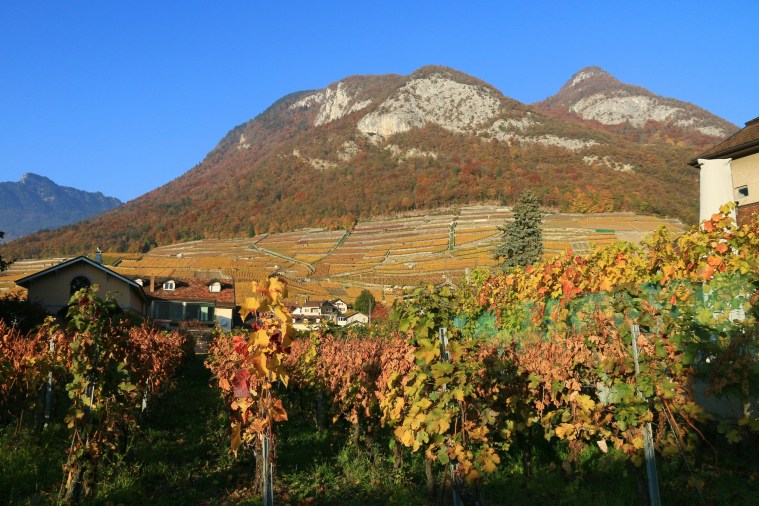
 With the light lowering in the clear (???) sky, there was barely chance to visit Aigle’s picturesque chateau before it would be cast into shadow. While sunset time was a little way off, the narrowing of the valley and the proximity of gargantuan mountaintops meant that it would soon kiss this part of the world goodbye. Darkness would return, and with it, the infamous foggy shroud of dank.
5. Suck it up, cheese boy
There is only so much successful blue sky strategising that one can manage, and fortuitous decision-making will eventually turn sour. While I loved practically everything about an overnight stay up from Vevey in the village of Chexbres – king-sized bed, amazing shower, big screen TV with 832 channels in English, French, German, Italian, Spanish, Russian, Arabic, Cornish, Swisshornian – the balcony view was not one of them. Beyond vine terraces and tightly packed village roofs floating in the mist a sparkling blue lake had disappeared.
With a midday checkout I dawdled for as long as possible for things to clear but today was not going to happen. On top of the low cloud, some medium level cloud and then some high cloud, with a few spots of rain and little hope of sun. I faced a cloud lasagne with bits of Switzerland oozing through the layers. Suck it up, cheese boy.
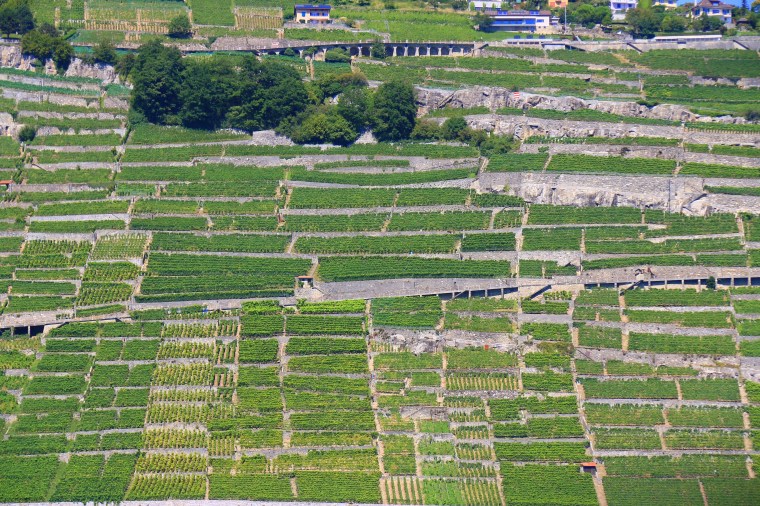
Still, the setting – in the heart of the Lavaux wine region – was very pretty, just that more subdued than the previous afternoon in similar terrain around Aigle. Wine has been grown here for donkey’s years, probably with the use of donkeys on the steep-sided terraces, frisked by slavering monks gagging for their next tipple. Today, a few mechanical contraptions – steep narrow-gauge rail tracks like fairground rides, convoluted water sprinklers, grape conveyor belts – have evolved, but much must still be managed and picked by hand.
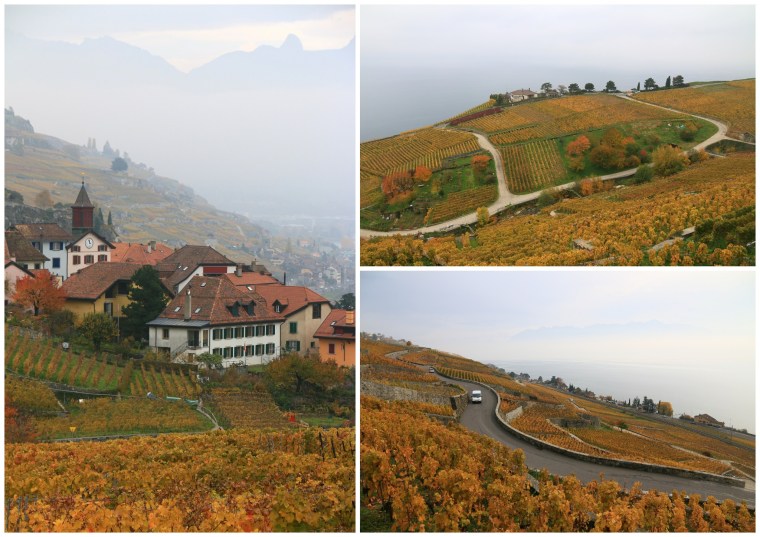
A network of chemins provides gentle and mostly traffic-free walking across appellations, between villages, and – occasionally – directly through the rows of vines themselves. It’s such easy and serene walking that you can comfortably end up strolling all the way into Lausanne. I practically did in the hope that the sun would shine as the hour lengthened. And, towards the end, the milkiest hint of sunlight filtered through the cloud levels, briefly giving the impression of a vast lake below, and high mountains beyond.

A large patch of blue sky greeted me as I arrived back into Geneva’s train station. It seemed – from my limited recent experience – uncharacteristic that Geneva would be clear while further up the lake it remained damp and grey. Little of the day remained to enjoy it, but the light illuminated the final 61 bus ride back to Annemasse. And it provided a salient reminder that there is only so much you can do to predict, manage, and deal with the infamous wintry shroud of Lake Geneva.


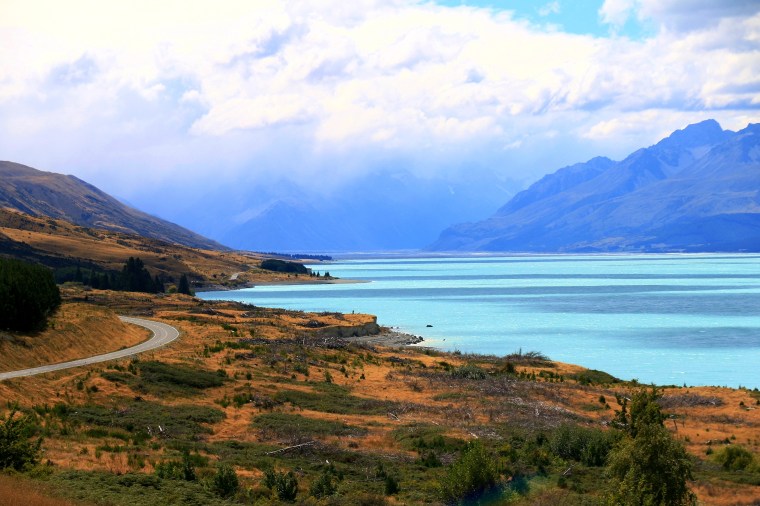


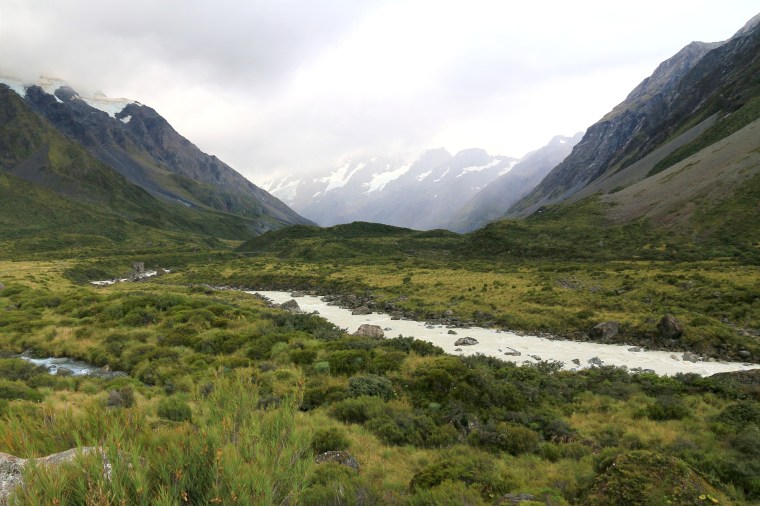
 It was a noisy night in a house on the outskirts of Twizel. Not because of hoons doing burn outs or rampaging feral possums, but the iconic sound of raindrops on a tin roof. Many Australians go misty-eyed when you mention the sound of raindrops on a tin roof, as if in some kind of messed-up ballad by Banjo Patterson accompanied by dreadful Lamingtons, but I don’t see the appeal. How the fricking heck do you sleep? Turns out this rain may or may not have been associated with cyclone Gita, or ex-cyclone Gita, or whatever was heading our way for 48 hours or more…

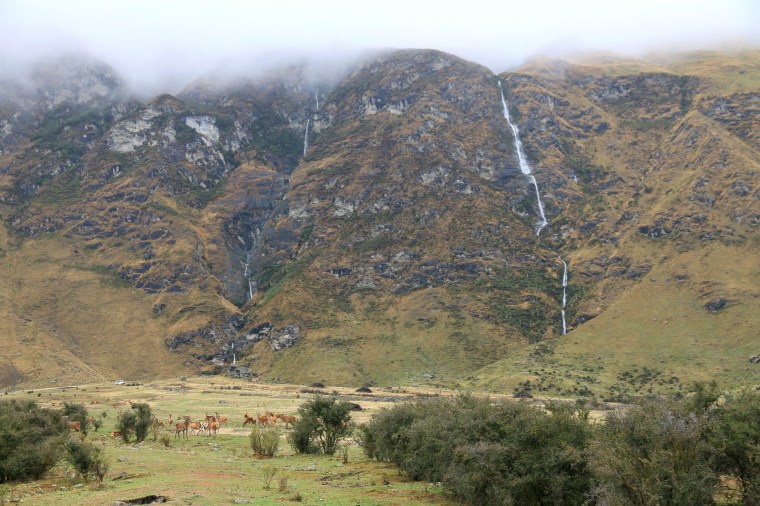
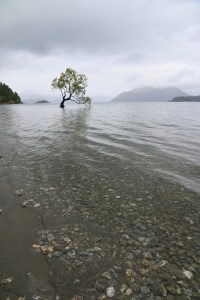 Generally, I prefer waterfalls to crowds of tourists, but the crowds of tourists can provide useful guidance on the location of scenic stops. Like a tree on Lake Wanaka – That Wanaka Tree – which probably has its own Twitter account and features on every second Instagram post with the hashtag newzealand. We join a semicircle of tourists taking pictures of the tree, with the tree, around the tree, through other trees to the tree and generally marvel at the tree, which is a very pleasant, photogenic tree. And frankly, you can’t ask much more from a tree. Other than it to grow money…which it may have done given its ubiquity on the internet.
 More waterfalls were spotted on a drive to the northern side of Lake Hawea late in the day. A stop for some Dad fishing which yielded a stop in the rain. Briefly the sun even emerged albeit a touch watery like everything else around. But for the first time in a long time the windscreen wipers on the car could be set to zero. And as we parked up following a peaceful drive back home, without a fire or cat in sight, the sky miraculously fired up red, to the shepherd’s – and tourist’s – delight. Perhaps the storm had come, and gone.

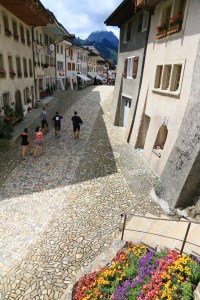 Indeed, many visitors were lured by the smells of the Cailler chocolate factory in Broc; so much so that we skipped the long wait times and went straight to the chocolate tasting (i.e. shop) instead. One bar later we were getting off the train in Gruyeres, straight opposite the fromage factory and down below the castled old town. Undeniably cheesy with a touch of theme park, it is nonetheless a fine spot in which to amble and eat a random picnic from the Coop.
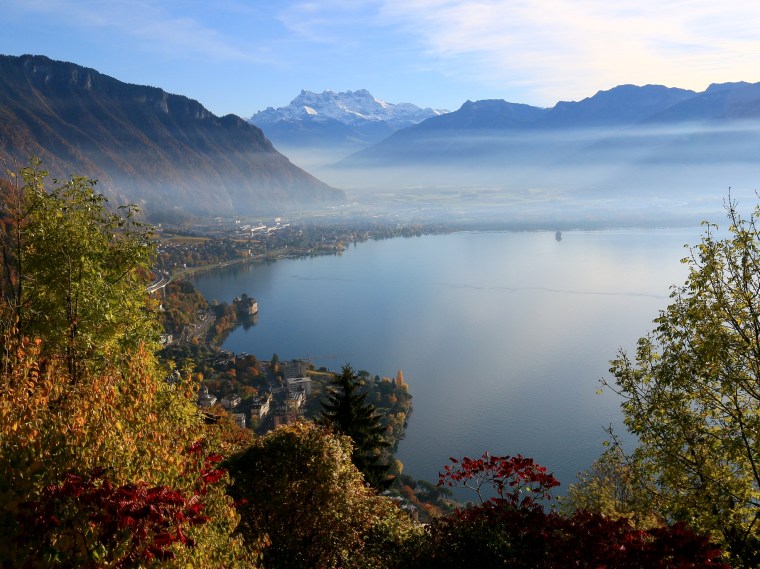
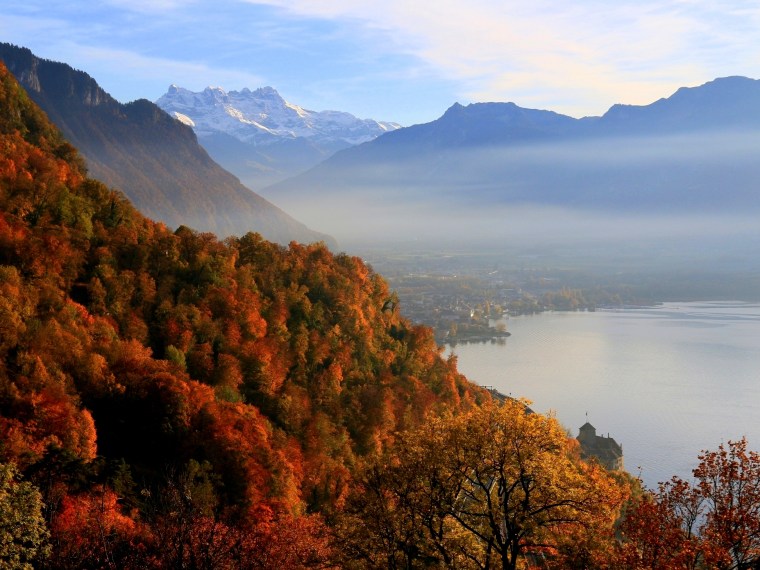
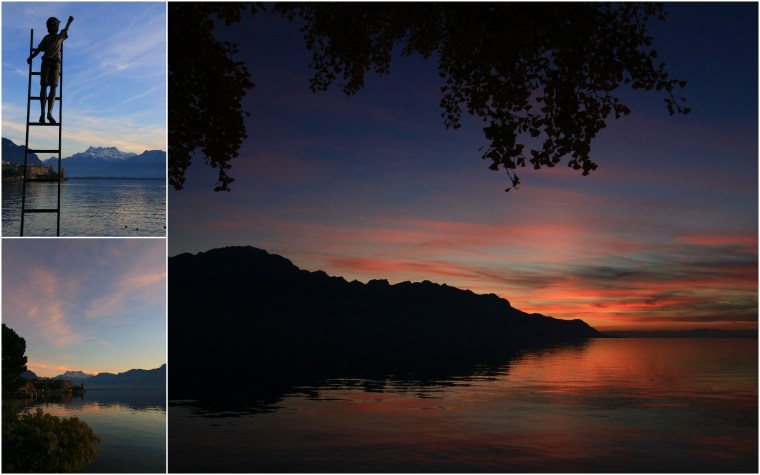
 Retracing some of the route back into the French speaking side of Switzerland, train seven rolled and lulled its way to snoozeville, climbing up through a hole in the rock to emerge way above Lake Geneva. The descent was disorienting as the lake shifted from left to right and eventually lapped at the foot of Montreux. What better way to stretch the legs than to walk along the lake shore in the early evening sunshine, ambling towards a Legoland castle jutting out into the water?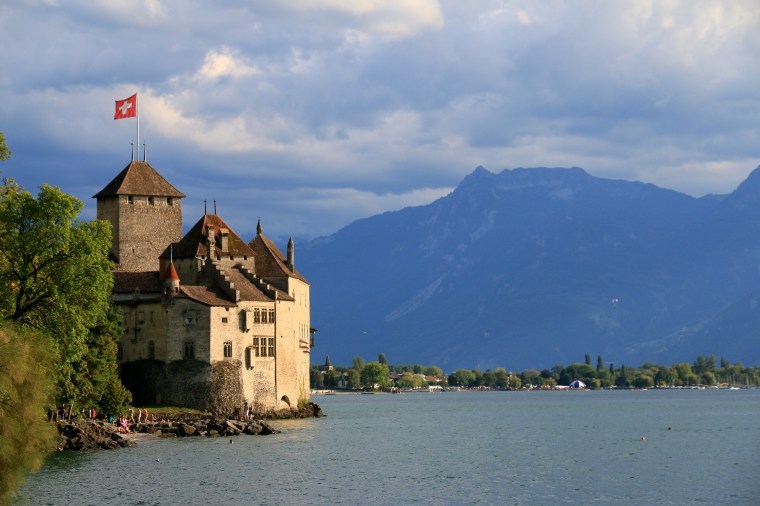
 Following an epic day cruising the rails of eastern Switzerland, the next day – Sunday – proved a quieter affair. I mean, it did start with a train, the Lausanne metro transporting us to a dormant university campus and close to more lakeside ambles. Lausanne was emerging to life in its dog walkers and cyclists and rowers and barbecue in the park chefs. It was still rather quiet, in a Canberra-like kind of state.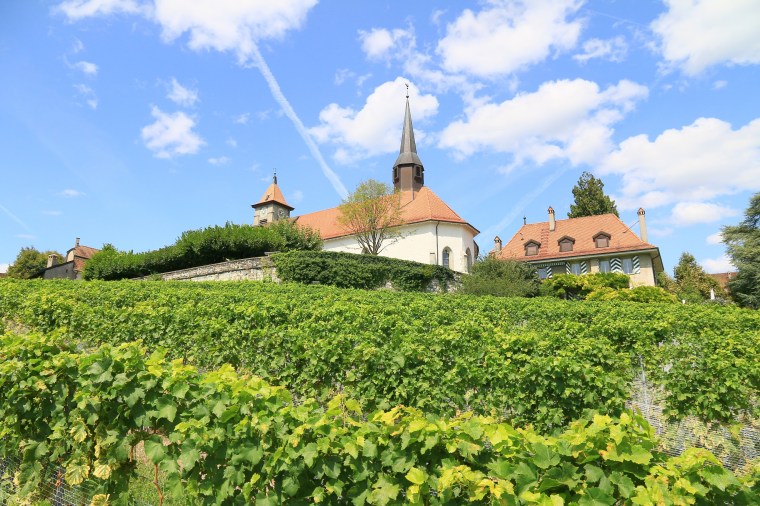
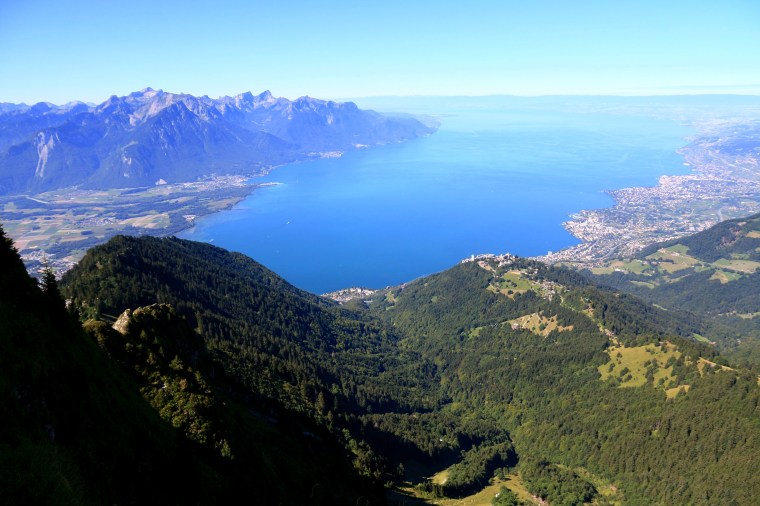
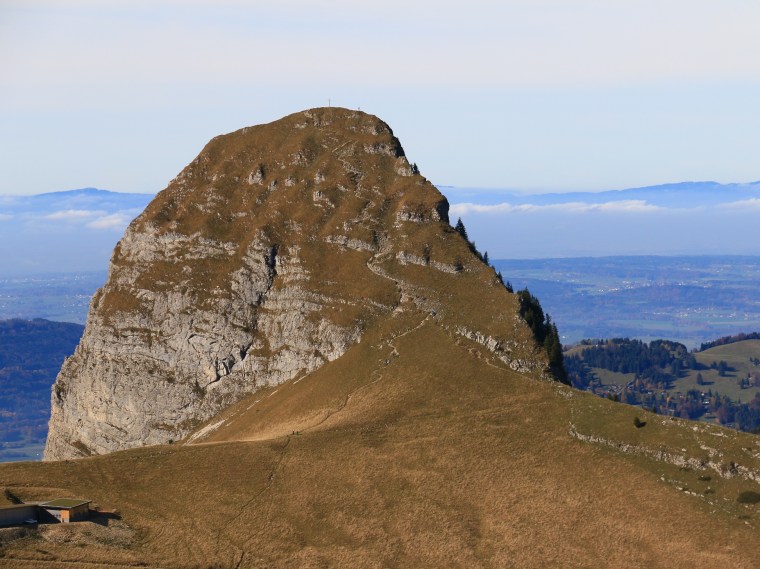
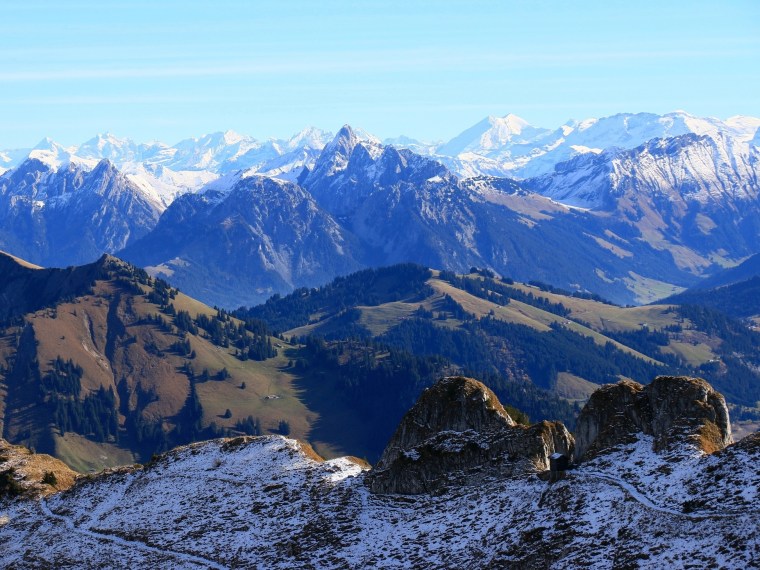
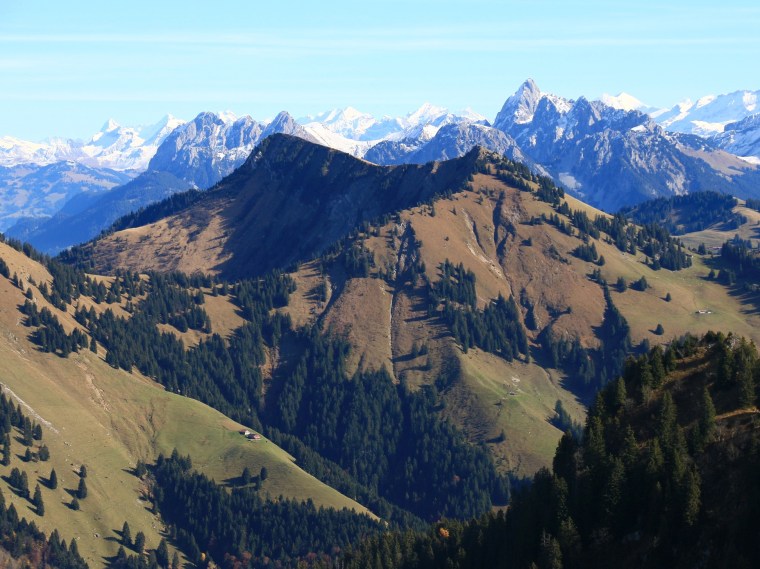
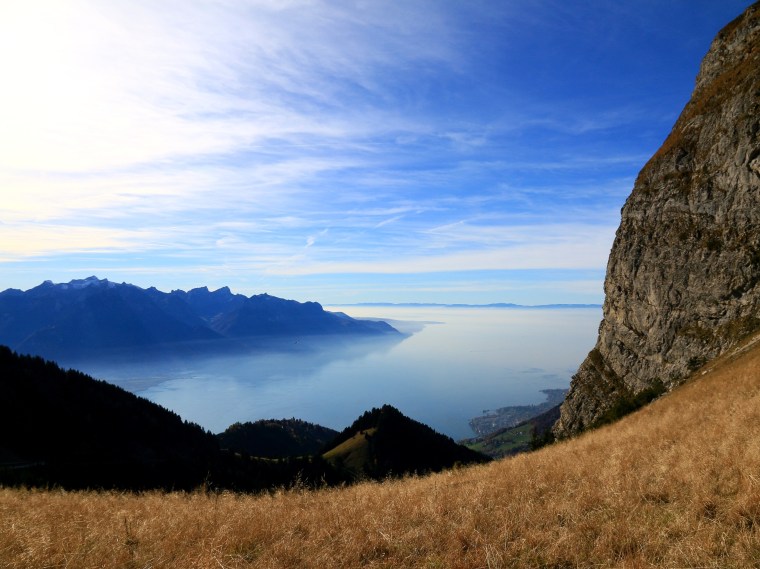
 The trip from Montreux up to Rochers-de-Naye would cost an arm and a leg in itself. Better than cramp and a heart attack that would be the inevitable result of trying to make this journey on foot. Old and old at heart alike were more than happy to board the open air carriages, passing the raffish suburbs of Higher Montreux, up through clusters of chalets and expensive hotel restaurants commanding views of the lake, into pine forest under deep blue skies and out into open meadows way up high. At around two thousand metres in height, panoramas of Switzerland and France abound.


 Just when you think you have pretty much seen the French Alps, another gorgeously picturesque valley road veers upwards, speckled with chalets and cyclists, leading to a modest resort town and an inevitable col de something or other once mentioned by Phil Liggett late at night. Saint-Francois-Longchamp is not only pleasingly French sounding but possesses all the jagged scenery and cowbell fields you could hope for. And plenty of those wooden chalets in which to stay avec famille.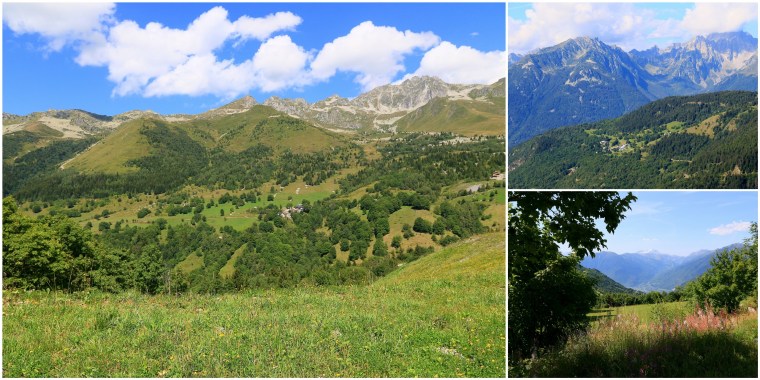
 As things tended to go, footsteps to the boulangerie were typical first thing, followed by a longer walk somewhere someplace prior to or incorporating lunch. Warm afternoons were generally more leisurely before fun, games, and dinner. Dinner obviously incorporated cheese in several forms… another sameness which is in no way whatsoever a bad thing.
 Trips beyond Saint-Footlong-Champignons included the short climb up the hairpins to the Col de la Madeleine (HC). By voiture this was okay; an electric powered bike might have been doable; but pure pedal power seems like pure crazy. Especially from 1500 metres below in the valley of the Arc. I think if I even remotely made part of this climb without dying I would reward myself with trois boules of ice cream. But I didn’t, so just had the ‘two’ instead.

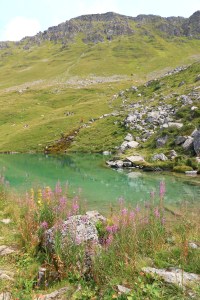 The lakes were small placid affairs, ideal for observing the evolution of tadpoles to gourmet cuisine. Marmot whistles vied for attention with miniscule mosses and macrobugs, while the number of baguettes being simultaneously munched beside the water reached epic proportions around one. But then, you could see the appeal; they really were rather charming spots to eat and wile away a couple of hours up high.
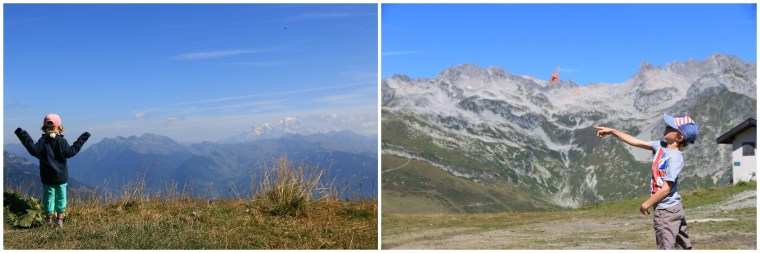
 Despite so much to enjoy it was perhaps the final morning where life in the Alps peaked. From the Col de la Madeleine once more, a cloudless sky provided the obligatory view of a glimmering, gargantuan Mont Blanc. It was a steady companion along a gravel track with views over valleys and peaks as far as the eye could see. I had probably been in some of those, and eaten some of their cheese before.


 It’s kind of a winter thing, a cross-hibernation leisure shut down enforced by financial year leftovers and inevitable doses of bugs that may or may not be flu but love to linger. Canberra has had more than its fair share of cold, but – the last week apart – it has been phenomenally dry, with big clear skies bringing about pleasant afternoons before ruining the whole mood with sharp, sadistic frosts.
 It has been pleasant enough – out of any wind, with a little time spare – for a few walks into the bush. There are Red Hill ramblings of course, but throw in a few Mount Taylor hikes, Black Mountain bush and Botanic Garden explorers, Mount Ainslie parkways, and add a random sprinkling of Cooleman Ridge countryside ambles and Urambi Hills thrills and there’s enough to keep reasonably sane and fit. Especially when the bike is gathering cobwebs.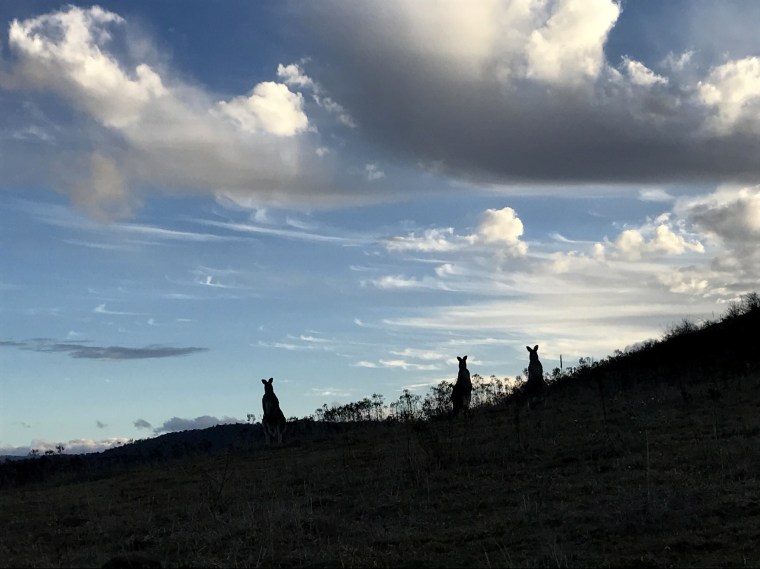


 And a few strategic recommendations for winter? Anything with gravy and a glass of red helps; get out in the warming afternoons even if this means working at night; and, in the midst of analytical bewilderment, book a flight to the UK, where the daytime temperature will probably end up being the same anyway! See you oop North….
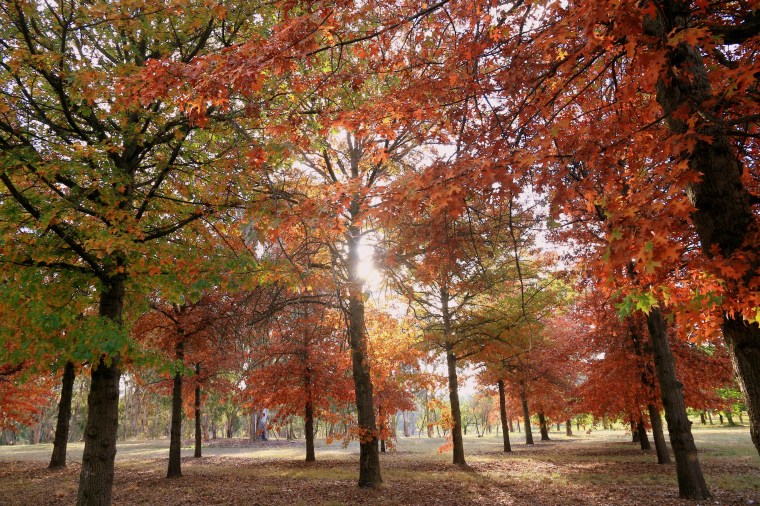
 It is a time to savour suburban walks, in the comfortable pockets of Canberra that will never be in reach. Foresight planted deciduous trees for garden suburbs for genteel homes. As temperatures drop to a level mild and amicable and still warmer than England in a hot flush, the streets now enliven, the crescents glow, the neighbourhoods flourish in a makeover both incremental and dramatic. Go on certain days and a regiment of wheelie bins will parade upon the kerb, afloat in an ocean of nature’s litter.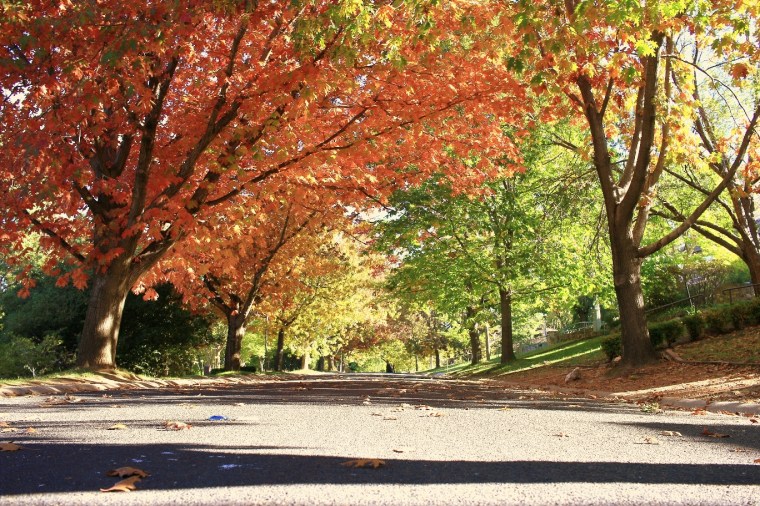
 Easter is the most perfect weekend as the warm kiss of autumn melts any eggs undiscovered by marauding imps. I don’t recall Easter egg hunts as a child; are these more a thing now, coordinated through Facebook groups and discoverable like Pikachu? Waiting until Sunday until you were permitted to make yourself sick on chocolate and then topping up with half price eggs on Monday was more my kind of thing. If I have made any progress in life, then let it be measured by cake, and I can mark the creation of a chocolate and hazelnut meringue as one of my greatest achievements.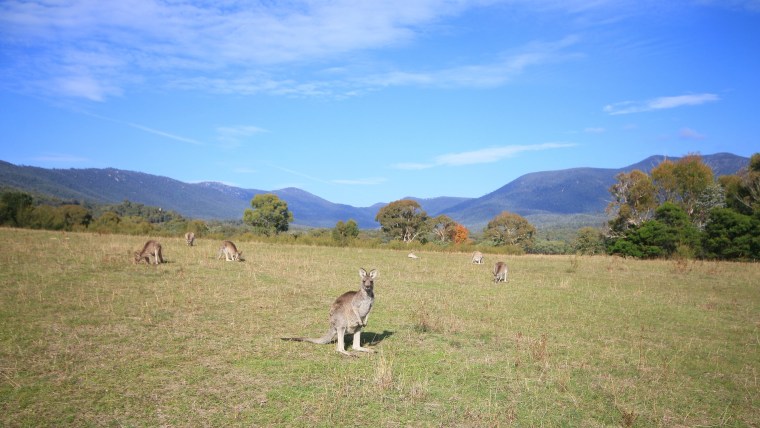
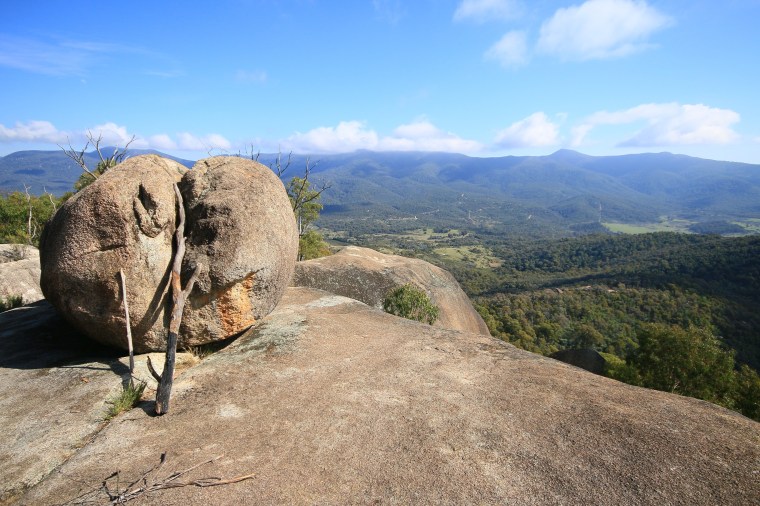
 Here there is the best of both worlds, with coffee available a little further down the road at the Moon Rock Cafe. This is attached to the Deep Space Communication Complex where – in my head at least – gentle mutterings from Professor Brian Cox are transmitted to distant worlds in the hope that it would sufficiently soothe angry aliens from undertaking imminent invasion. If you feel small atop Gibraltar Rocks, here you are infinitesimal, insignificant beyond belief. Yet at the same time, in the warm sun with caffeine and a bonus chocolate egg, your existence is undeniably amazing and incredibly fortunate.

 Tucked away in a quiet corner by Lake Burley Griffin, largely forgotten apart from the odd dog walker and camera wielder, the Lindsay Pryor Arboretum is an unbridled delight. A kaleidoscope of colours adorns the different varieties of oak, elm, birch and poplar. There are no visitor centres and no playgrounds, no cafes and no sculptures. The air is calm, the light soft, the mood understated. Occasional tunnels of foliage play at being England. And you could imagine, under these boughs, a snap election might just be called.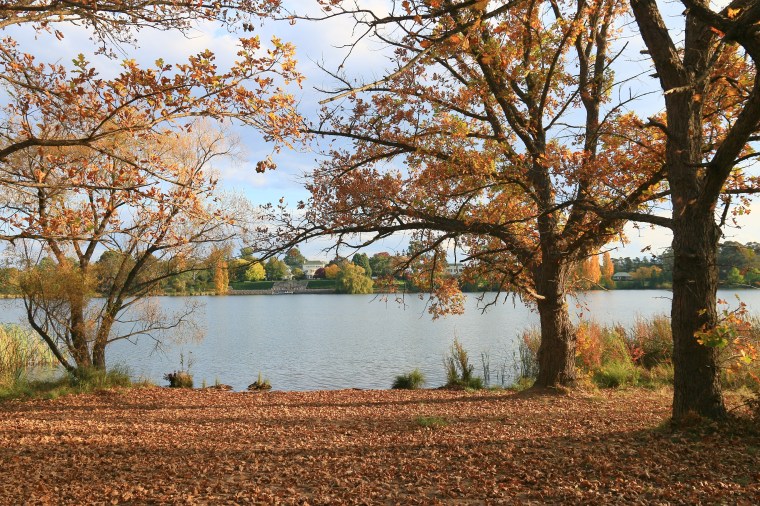

 Because this is Australia the ingeniously named Snowy Mountains are not perennially snowy. However, at the end of November I was not expecting to see so many chunks of frozen icy slush dotting the mountaintops. The snow gave distinction to the ranges, visible just after a picnic in Cooma with Caroline and a potato masher. And moving closer and climbing in altitude, it was possible to walk on a splodge of icy snow at Charlotte Pass, from where more white stuff was visible along the Main Range.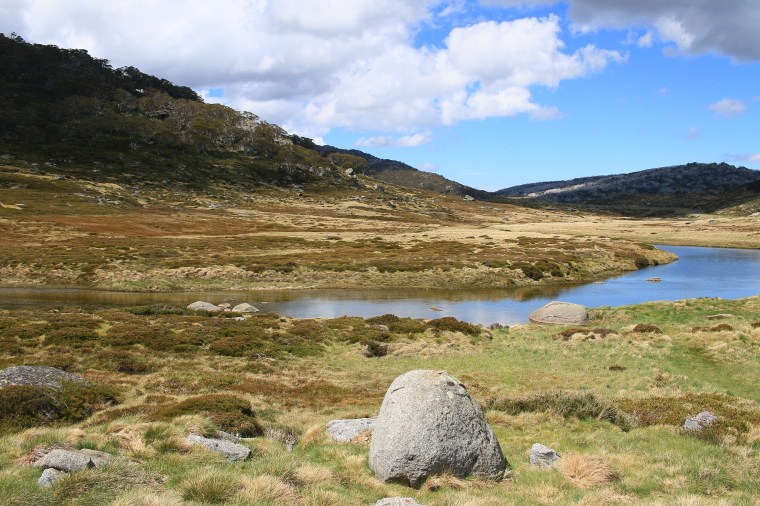
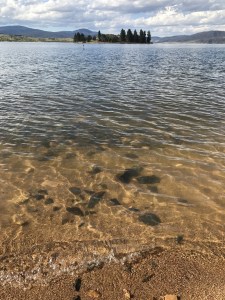 Jindabyne has always proven to be a bit of a pass-through town on the way to the higher mountains. But staying here for two nights offered the chance to explore many of the highlights of the town, including its TWO shopping precincts! While these provide sufficient eating and coffee opportunities, the highlight of Jindabyne is undoubtedly the expansive lake on which it sits. Part Canada, part Lake District, part Australia, it’s a haven for boat owner people and fishy types. But don’t let that put you off…there are also charming parklands and meandering pathways fringing the shore. Benches and picnic tables offer frequent recovery. From here you can watch morning mists hovering over a dead calm mirror, or bask later on in the afternoon warmth. Or live out the end of the day with never-ending hummus and laser red light.
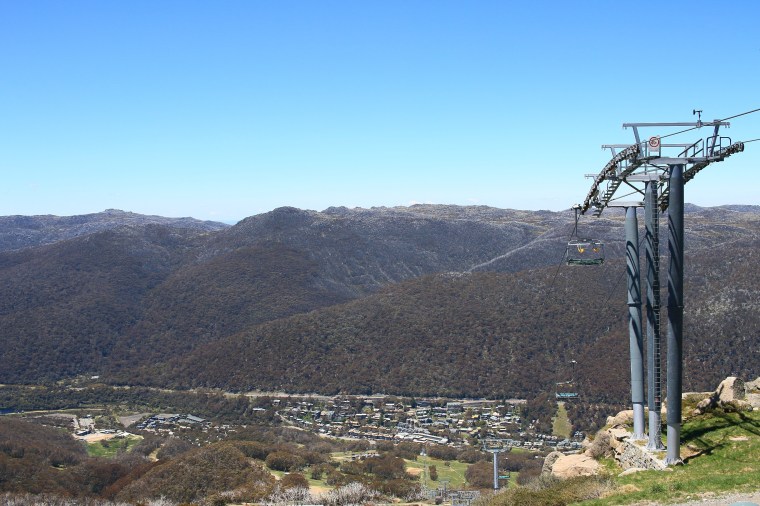
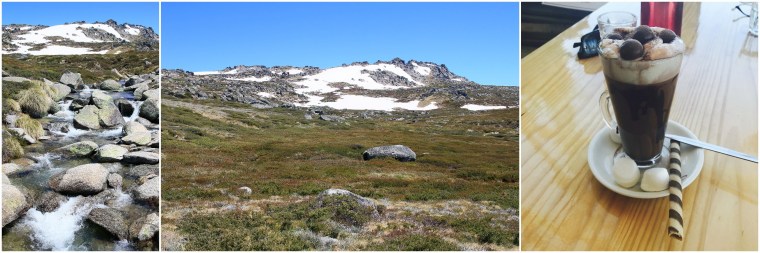

 Leaving the high mountains we drove a somewhat convoluted route back to Canberra to provide maximum adventure. First up was a brief pause at Dalgety, a tiny place perched alongside the Snowy River that could have been the capital of Australia. And they say Canberra is quiet! There must be like ten houses, a few cows, and a million flies. But it’s kinda cute nonetheless.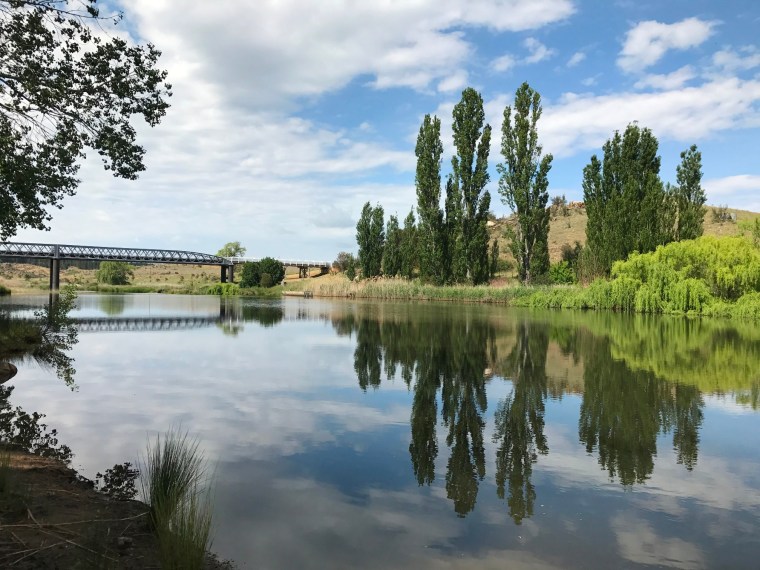
 With the unforeseen temporary closure of the Snowy Hydro Visitor Centre in Cooma, a decision was made to proceed to Adaminaby for lunch instead. And what better way to lunch than next to a great big trout! This was indeed turning into a marvellous, sponteanous adventure and the best (or worst) was yet to come.
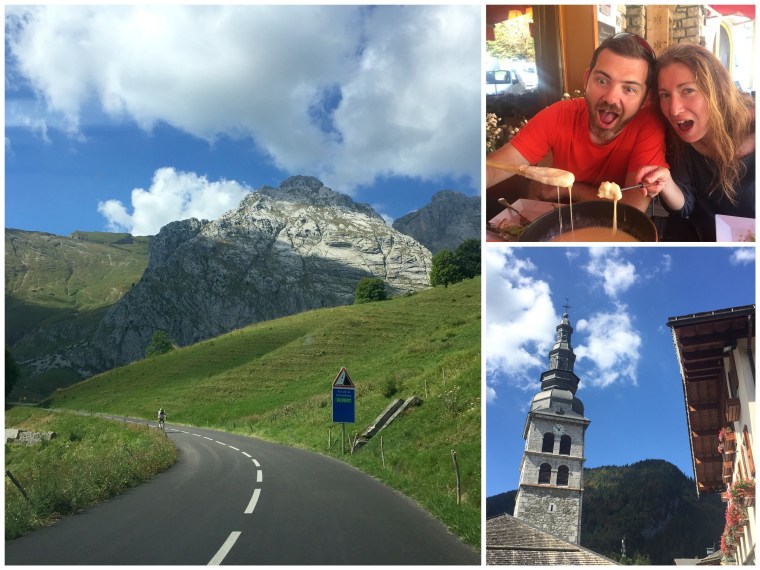


 And what a lovely tour it was, revisiting some vaguely familiar territory but under glorious skies instead of disappointing murk. First stop was Carrefour, which was a little less lovely, but suitably stocked with bread and meats and cheese, staples that can be lumped together and taken up to the top of a hill in scenes reminiscent of a Peppa Pig episode in which they have a thoroughly middle class picnic.


 And so there were walks to parks and more picnics, bouncy castles, lego blocks, hearty lunches, tickle monsters, bustling markets, outdoor petanque, selfies, tired parents and doting grandparents. Oh, and a bit of a premature gateaux anniversaire for a certain someone. It was the final family flourish before saying, again, au revoir. Goodbye. Leave.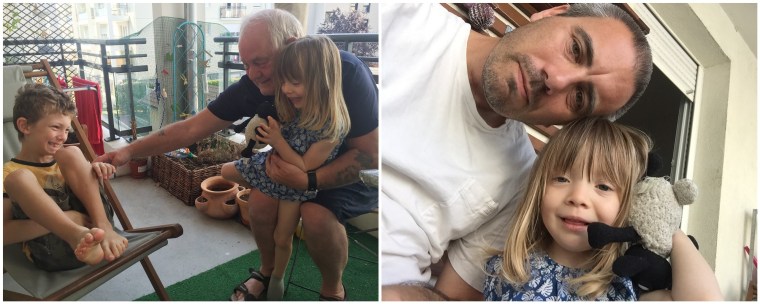


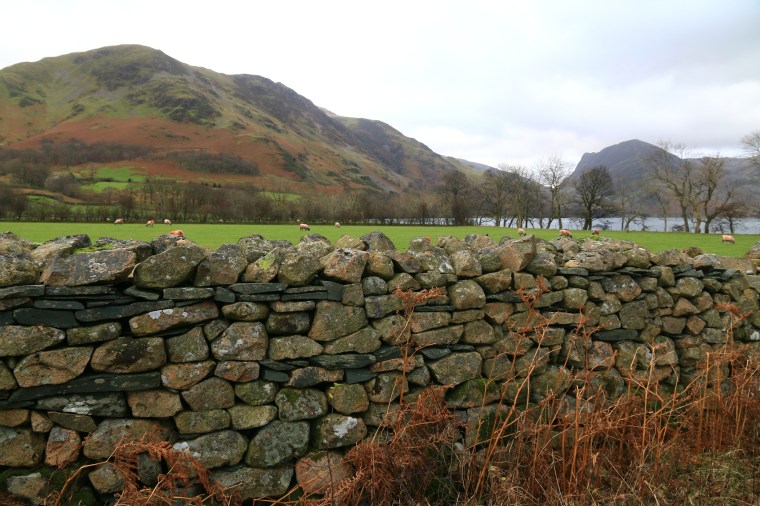


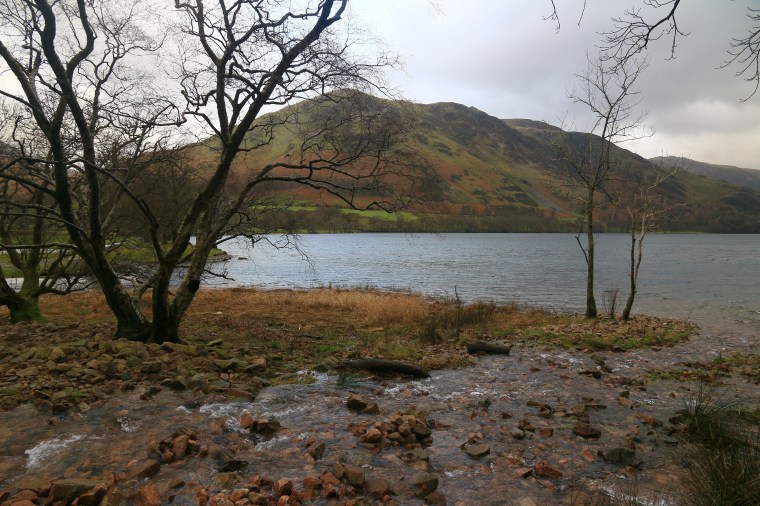







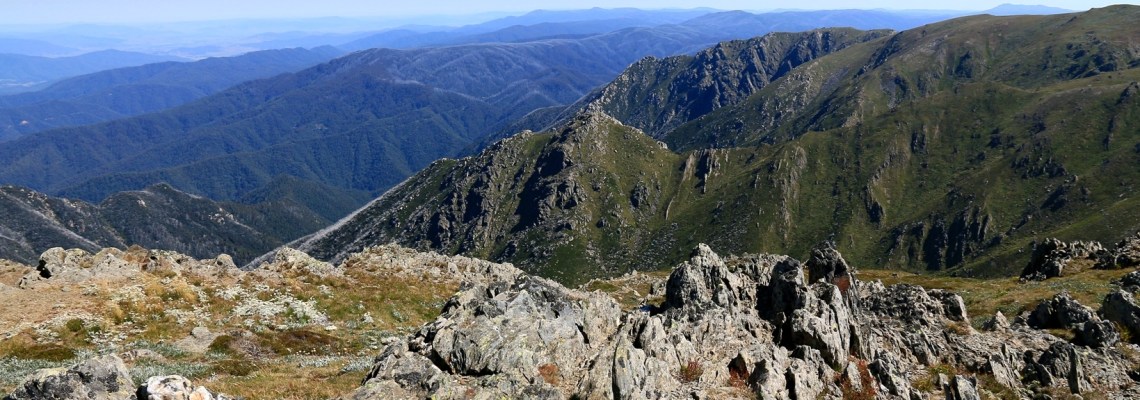
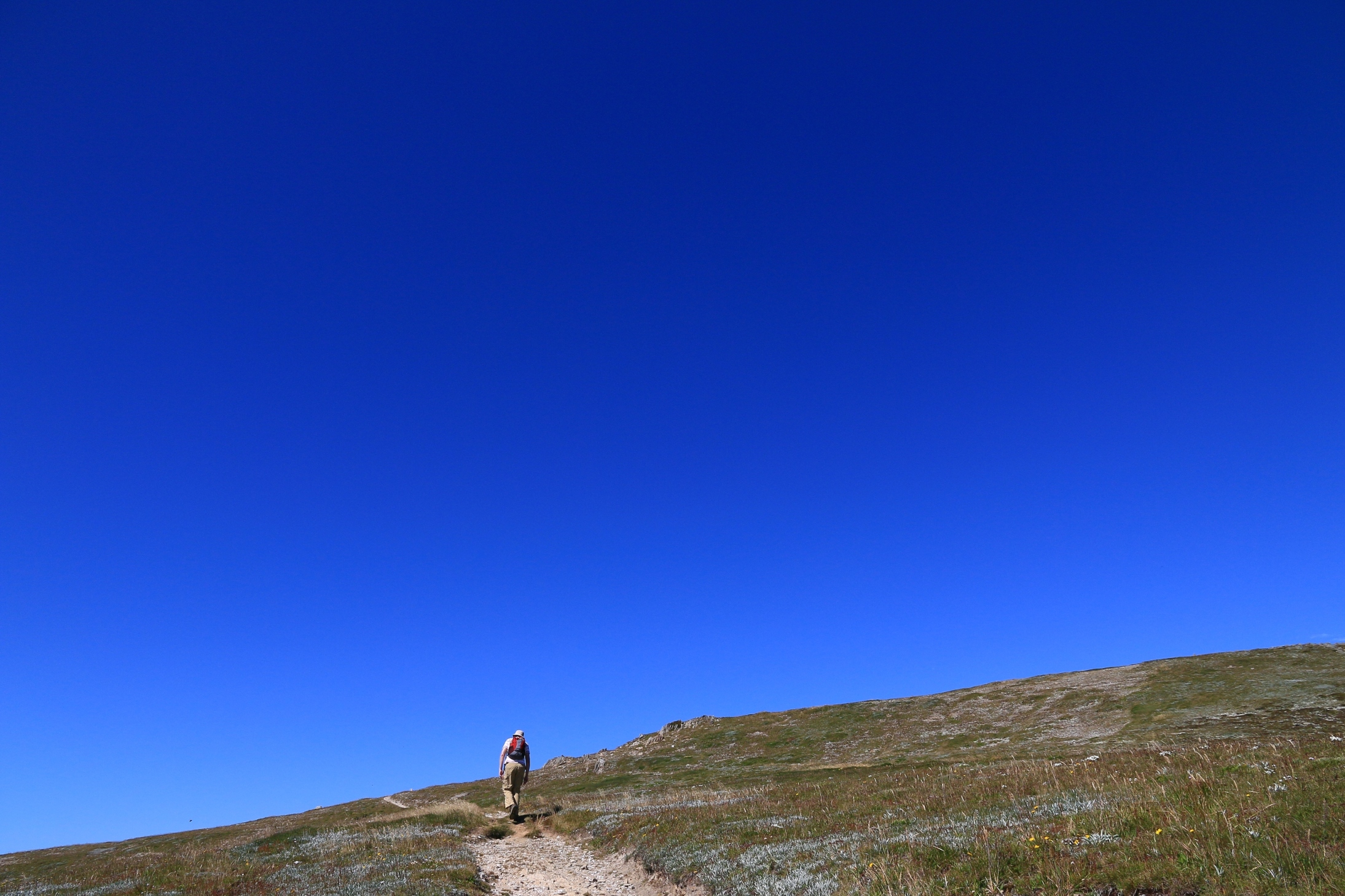
 natural landscape is in much less turmoil (unless you listen to those wacky “scientists” with their corroborated, peer-reviewed “research” and years of undisputed empirical “data”). There are, clearly, mountains to climb and some are easier than others.


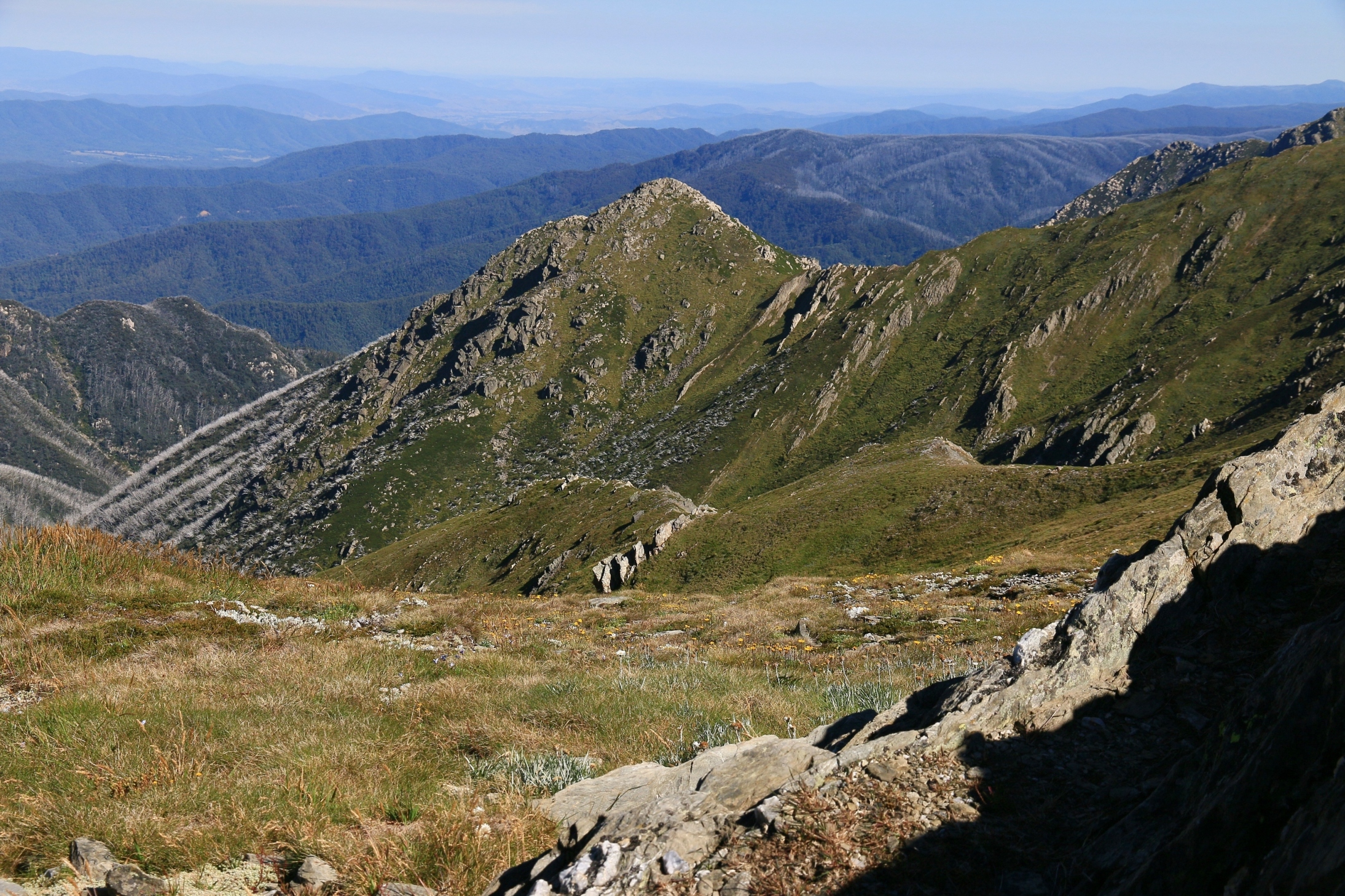

 the right and deep ravines carved by Lady Northcote’s Creek, the mountains seeming to tumble sharply west. I have no idea who Lady Northcote was but if her character was anything like that of the landscape in which she was named, she was probably a bit of a looker, though occasionally bleak and somewhat cutting.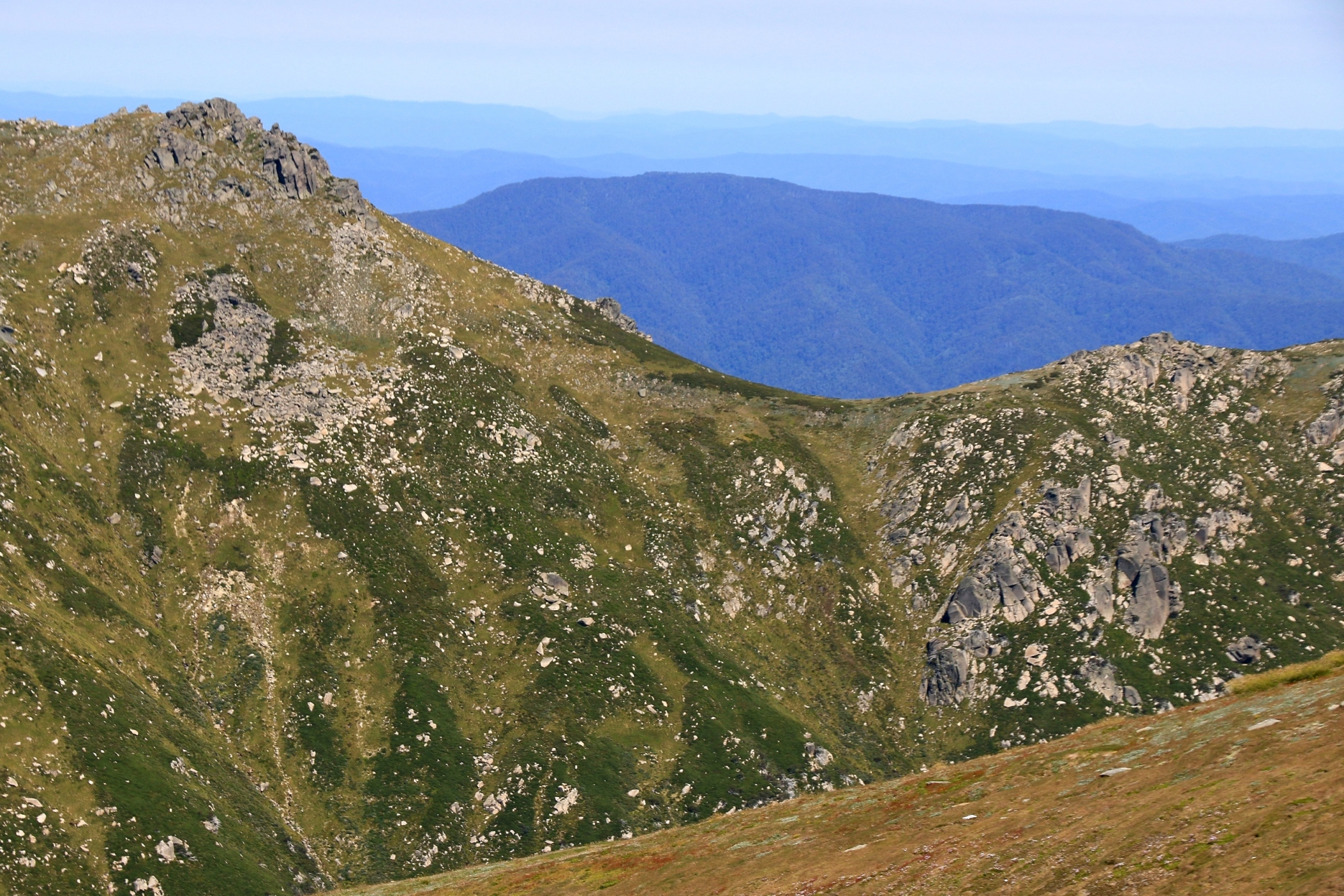
 Before too long Albina Lake emerges, tucked in a sheltered valley seemingly conducive to an array of wildflowers and other alpine plants. The lake looks quite inviting in the warmth and would prove a nice spot for a picnic. It’s about nine kilometres into the walk now, and with the summit of Mount Kosciusko just a few thousand metres distant, we resolve to head on and join the masses carrying their lunch to the top of Australia. On reflection, the best part of the walk is over…though this may be in part because familiar paths will soon be rejoined.
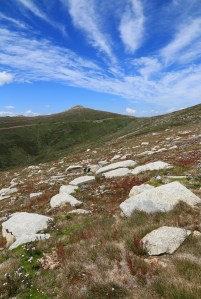 Unfortunately we seem to have gradually descended a little, and the hoick up to the main summit thoroughfare is probably the steepest of the day. We’re not talking rock climbing here, but frequent steps and, by now, quite a penetrating sun. The junction with the main summit trail is like emerging from a country lane onto the M1. Mostly originating from Thredbo, families, fitness freaks and old fogies join us in a steady stream coiling up to the top (2,228m). A medley of Aussie flags and fluoro leggings congregates around the summit marker, and lunching is de rigueur. With homemade hummus and more quiche ours is perhaps one of the more pretentious of picnics!
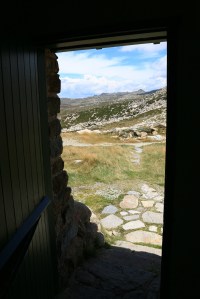 summit climb and apparently includes Australia’s highest public toilet – a sedate, well-graded trail makes it all the way back. This is the old summit road and I read that a shuttle bus used to ply along here, part of me wishing it was still running. The open scenery is not unpleasant, but in comparison to other parts of the track and given the gathering weariness this part is a bit of a drag. Markers every kilometre break it up, as does Seaman’s Hut (2,020m) and a more comfortable bridging of the Snowy River with four kilometres remaining.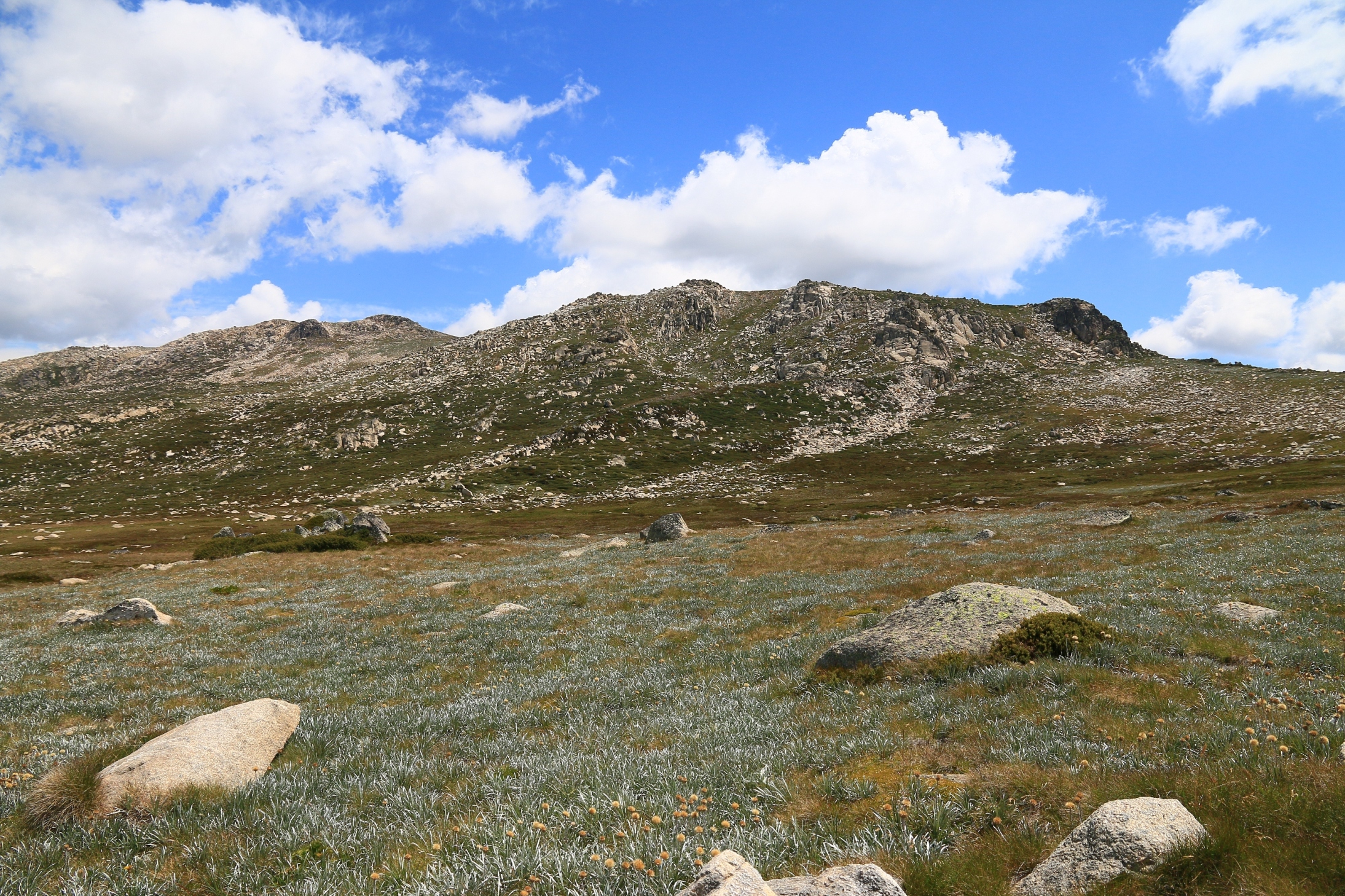
 upwards trail to Blue Lake looks like an impressive climb! Snow Gums also cluster here, stunted and bending with their striped, smooth bark of chocolate and sand, of black and white. Afternoon clouds are building and the risk of storms hypothesised look as though they will be realised. But, after six and a half hours and 21.9 kilometres, we reach the (relative) safety of a Subaru Outback. Accomplished and relieved, invigorated and weary; trundling another 220km back to Canberra (577m), via Jindabyne caffeine and Cooma steak. From the real Australia and back to the bizarre.
 gbpilgrim