Drilling into brick ain’t easy. But at least it’s – via a series of chunky payments over 360 weeks – my brick. The small hole above the bathroom window where I eventually gave up proving to be an imprint. My signature. The final flourish being the calls to the tradies that follow.
I did fix a wonky cupboard door, rip up a small piece of carpet, revitalise a cooktop and cleanse a stained sink. And I did manage to find a good plumber to repair a leaky tap and got some people around to do measures and quotes and hopefully install new flooring. The flooring has taken on an almost mythical quality, the promised sunlit uplands of when I finally feel I can properly unpack and organise rooms. At the moment, it’s somewhere on a ship trying to get into Sydney.
I think the delineation between non-homeownership and homeownership must be how many times I have been to Bunnings in the last month. It may be double figures though not once have I succumbed to a slimy morsel of cooked entrails with onions loosely encased in a slice of bread. I’ve been to Ikea three times and Kmart at least the same, plus some carpet showrooms and the expensive kitchenware section of David Jones, to browse. It is like I have entered a parallel universe I never knew existed, where a few hundred dollars here and there is offloaded with hardly the bat of an eyelid.
In the meantime, the regular universe has been doing its thing. In my neighbourhood there are some tall dark conifers under which sit a carpet of needles and the occasional crazy person. But there are also some wonderful deciduous trees putting on a rainbow spectacle as the Canberra autumn seeps in. The red and green king parrots blend into the canopy, only startling with delight when whizzing overhead. The cockatoos are voracious, wanton in their pursuit of abundant, nutty delicacies. Leafy detritus scatters the ground.
A week or two of still days in the low twenties has offered much. It’s great for a bushwalk and I took the opportunity of a somewhat back to normal Saturday to head up into the hills. It had been quite some time since I had last walked from Corin Forest out to Square Rock, fresh and pepperminty in the morning sun. At the rock, expansive views west and a flask of tea to go with a Creme Egg. Before popping into Bunnings in Tuggers on the way home.
A couple of four day weekends have propelled April into even more genial heights. While the first over Easter was a bit of a homestay, the second turned into a tale of two weekends, with Monday and Tuesday enjoyed on the South Coast. Narooma was my last minute overnighter, hastily arranged when I decided I was too tired and achy and old to camp. This at least meant plenty of room in the back for the bike, to burn off some of the cakes / ice cream / fish and chips via beautiful boardwalks.
Cognisant of Tuesday being a public holiday I was especially keen to feast on staples on the Monday lest everything be closed the next day. Setting out early meant perfect timing for coffee and a muffin in Mossy Point, enjoyed down on the public jetty. For the most part this was a picture-perfect setting for sipping and munching and soaking up the salty air, prior to the appearance of a wet dog keen to get in on some of the muffin action. I’m not sure if the remainder of my coffee comprised half dog seawater blend.
Next on the agenda after a morning coffee stop was lunch so really I needed to create at least a little time and exercise between the two. A diversion to Moruya Heads offered up a fine way to fill in the gap, taking in golden bays, tranquil lagoons and a blend of dilapidated shacks and multimillion dollar homes. This a scene practically replicated up and down the coast, including in the next town down, Tuross Head.
The Boatshed in Tuross Head caters for prince and pauper alike. While most people drive and park up for a spot of lunch, the more fabulous way would be to pull up in your boat while a member of staff hands out your seafood platter from the deck. If more people were doing this there may actually be somewhere to sit, but I contentedly took mine away anyway, around the corner and beside the lake. The one disappointment being the depletion of salt and pepper calamari from the menu. As I waited for mine to cook, piles of chips topped with calamari taunted me as they were delivered to happy people sitting on sunny tables.
I resolved to make amends with ice cream, filling the next gap between eats with a small but sometimes steep bike ride beside the Tuross beachfront. The ice cream came further down the road in Bodalla. An obligatory stop when anywhere slightly within the vicinity. It never fails to disappoint and I made the point of checking if they were open Anzac Day as well. Store that one in your back pocket.
With a heavier car I eventually make it to Narooma as the afternoon was heading into that moment of low light and lengthening shadows. Enough time to wander beside Wagonga Inlet as it twists its way towards Bar Beach and the small, hazardous outlet into the ocean. In the calmer waters, resident seals await patiently for leftovers from the fishing boats returning from the sea, or maybe to munch on dark chocolate digestives instead. Whatever floats your boat. And I think about the necessity of a light, leafy dinner.
While I missed the dawn services of Anzac Day, I arose early enough to sample the warming glow of a rising sun reflecting off the sea. With barely a breath it would’ve been inexcusable not to ride my bike along the waterways and Oceanside beaches up towards Dalmeny. And back again to Narooma where what I think is a fairly new cafe fulfilled my hopes for simple, waterfront coffee sips.
All that was left was to paddle in the ocean, lie on a beach, eat another ice cream and meet up with friends in Malua Bay before the journey home. Waiting for me there an unexpected delivery of flat pack furniture. Still flat and still packed, ready for that tremendous day when they can be assembled on a fake oak floor. Hoping to make it into the world without any more careless signatures – unless I need to anchor them to the wall.
There is a quaint tradition that takes place in Australia around every three years. Puffed up on bombast and / or desperation, the Prime Minister of the day boards a private jet to Canberra before being chauffeured through its leafy streets to tea with the Governor-General (almost ubiquitously a retired military general). He (almost ubiquitously a he) asks the Governor-General to dissolve parliament and allow for a general election. Outside, the nation celebrates in one almighty eye roll and stocks up on paracetamol to get through a six week headache.
In 2022 when we have all been Zooming and Teamsing and FaceTiming like forever, this ritual seems quite the preposterous exercise. Not to mention overly excessive in the use of fossil fuels. But the mining donors will love it and, of course, the media lap it up. Cue live coverage of the Prime Ministerial jet landing, the man himself ushered into a shiny white car, frenzied speculation about what weekend voting will fall on and the odd reference to a democracy sausage (like the sausage sizzle at Bunnings, tastes awful and often comes with a sick feeling several hours later).
Should the PM look up before pressing the flesh with the GG he might notice the beautiful tree-lined avenue of Dunrossil Drive. A road that – like the GG – gets its moment in the sun every three years. Spring elections will be accompanied by a tunnel of vibrant, lime green. Autumns, the golden shimmer of industrious nature gently on the wane. Cycles of nature and political fortune.
If the Prime Minister is anything like me (hopefully not), he will get out of his car and walk around taking surreptitious pictures of suburban streets with his phone. Every March, April and May they stack up, a photo reel transitioning from green and yellowing hues to fluorescent pinks and purples. Every now and then a picture of a cake interrupts the timeline.
Some of the photos manage in landscape but more often than not portrait mode is required, creeping ever backward and breathing in to fit the entire scene in frame. Should the Prime Minister find himself in such a situation he might want to beware of falling backwards into a hedge or car park or sports hall or absence of policy on women’s equality or word salad on climate change. But admiring the scene, how good is this climate change?
As the days, dress ups, press conferences and weeks pass, the Prime Minister may or may not make it back to see the Governor-General to get sworn in or (should this transpire) hopefully sworn at. By then, the colours of the capital would have faded some more, the trees along Dunrossil Drive depositing a crisp confetti to be scattered by the wake of a Comcar. And the Prime Minister and his cabinet and his members and his friends and his lobbyists and his mentors and his donors will be stuck in Canberra in the freezing fog. A beautiful thing.
In November 2021 I never expected I would be drier in southwest England than I would have been remaining in southeast Australia. And while it was certainly far short of wall-to-wall sunshine, most days provided conditions suitable enough for forays outdoors. Prepare for downpours, gales, and mud and most of the time expectations will be surpassed.
The more challenging aspect of the season was getting used to the rapidly shrinking presence of daylight and then – once any sun had disappeared – bracing for six hours or so to occupy yourself before bed. Often in life I will take a walk towards the end of day but here the prospect of outdoors before or after dinner is so unappealing that you find yourself more comforted by watching The Chase with Bradley Walsh. That’s not the greatest state of affairs so the best thing to do is make sure you get out at some point into the daylight before it gets cut short. Even if this is just down the road.
Take Wembury, which is essentially Plymouth’s premier beachside suburb. A place you go to retire or fund the National Trust through parking fees. It’s not the most sparkling beach in the world but possesses a raw enough quality to blow away the city cobwebs, with plenty of nooks and crannies and pools and items on a café menu for exploration.
During the Saturday of Storm Arwen, cobwebs were certainly braced to be blown away but there was also surprising shelter to be had in the lee of a gusty nor’wester. Accompanied by Mum and Brooke, conditions were apt for a spot of beachcombing and hide and seek and trying to escape the clutches of Brooke wanting to play yet more hide and seek. Café menu exploration was a little more disappointing, a reduced list of items and takeaway only evocative of a sombre this-is-living-with-COVID-(before-Omicron) air.
————————————
Frolicking on a bright and breezy beach there is a good case to argue that storm force winds are preferable to the old classic enshrouding by drizzle. A Plymothian occurrence so regular that it feels like an innate part of your soul. The kind of day where going into town to pick up a jam donut from Sainsburys and a pack of free test kits seems appealing.
Still, it wasn’t torrential rain and I packed my waterproof in order to escape to the moors afterwards. You can marvel at this landscape for miles around on blue sky days but it feels more at peace with itself when hunkered down in the murk. The trees seep with moisture, their trunks wrapped in bright green moss while their withered roots thrust down into the crevices of a dry stone wall. Smoke rises from the dour, sturdy blocks of a farmhouse, looking out over swathes of browned bracken and the shattered granite piercings of a couple of tors. Crossing the land, lichen sprayed boulders prove a slippery adversary in between the boggy hollows where unkempt sheep stagger around on their spindly legs.
It’s a timeless, peaceful scene, captured not so far from Plymouth around Sheepstor. Sure, the arrival of two armoured troop carriers interrupted things for a time at Burrator, but other than that it was all pretty uneventful.
I love immersing myself in the landscape on a circular walk here, a walk I have revisited at different times of the year. Starting at the dam wall, the route takes in peaceful wooded paths, narrow country lanes, a small hamlet whose cottages cluster around an old church, countryside views, sounds and smells, and the final rocky ascent of Sheepstor. From this vantage, views south to the sea, west over Burrator, the Tamar Valley and Bodmin Moor, and north and east to the rugged, foreboding empty uplands of Dartmoor.
Today, by time I reached Sheepstor the murk had lifted a touch and the world below expanded. That was probably thanks to our old friend the wind, which offered a reminder atop the rocks of the need for more clothing. Forgetting my gloves, I would be pleased to return to the car, to Plymouth, and to a warm living room watching Bradley Everywhere Walsh.
————————————
As the crow flies (in volatile winds), WhitsandBay is but a few miles from downtown Dempourt / Devonport. Literally around the corner yet a place that feels another world away. This sense of exoticism is bolstered when traversing the Tamar aboard the Torpoint Ferry. Nothing like a water crossing to evoke those island vibes.
I suppose at the eastern end of the bay, Rame Head is almost an island. Just a narrow neck of land bridging across to a rocky outcrop rising volcano-like above the foaming ocean. A perfect destination to head off for alone as Storm Arwen approaches.
An earlier slip on a steep bank of mud boded well, and that was before a blustery shower deposited further grease along the South West Coast Path. If there was an upside, it was the presentation of drama and wildness and awe captured underneath a rainbow. The pot of gold being this is just around the corner from a large city, remember.
Other than that shower, I somehow managed to stay dry. And upright. The crossing to Rame Head wasn’t quite as scary as I expected; wider, drier, calmer, at least until the lee of the land subsided. The small stone ruin sitting upon Rame Head possessed nooks offering refuge and in other places a full on wind tunnel. Exiting the door proved the biggest challenge to remaining upright.
As I leaned into the wind to return to wider land, further rainbows came and went over delectable countryside and plunging coastline. The small shacks littering the sides of the cliffs flitted rapidly between sun and shade, beaming and fading. One of them somewhere over there might reward me with a cuppa.
Not just a cuppa, but also a scone with jam and cream. An outcome in this part of the world as inevitable as the swell of the sea releasing its force upon the land, or the onset of a good old-fashioned Plymouth drizzle. Or the likelihood that you’ll get back to a cosy indoor sanctuary and find Bradley Bloody Everywhere Walsh on the TV. Get out of town.
Apparently, the Cornish pasty has been a feature of the British diet since the 14th century. Originally the preserve of rich inbred gentry it wasn’t until the 18th century that the pasty became a nourishing treat for the masses. Today, go to any coastal town or village in Cornwall and the pervasiveness of pasties for the people persists.
In some spots the choice can appear bewildering. This includes the chainstorisation of Britain making its presence felt at heavily branded outlets offering crafted goods from industrial Solihull. But at the other end of the scale, it’s possible you may stumble across bona fide nooks hidden down narrow passageways, replete with evocative odours and large steel trays of steaming hot goodness fresh from the oven.
Looe has such a place (along with the odd chain) and it’s become a site of regular pilgrimage, competing with a cream tea in the what-will-Neil-eat-first adventure. Today – a Monday at the end of November – Looe is unusually becalmed. Indeed, many shops and eateries are closed. But thankfully Sarah’s is trading and offering a few remaining pasties as the day nears half one. Despite tending towards lukewarm, a two and a half year gap in this experience generates immense delight with that first bite.
Eating beside the seafront, the tide is low. Apart from the beach, this doesn’t exactly provide the most favourable impression of Looe. The river estuary empties to leave a patchwork of boats tilting high and dry. Salty seaweed spreads across oozing mud, offering a pungency almost as bad as the aroma of entrails swept from the fish market. And of course, everywhere, seagulls lurk desperate for winter pasties few and far between.
So, after a pause to collect further delicacies at Roly’s Fudge, Mum and I hot foot it out of town and head on to Polperro. This is – on paper – a more charming prospect though one you’d do well to steer clear of in the height of summer. That’s why I thought we could give it a shot today.
Indeed Polperro was quiet. Deathly quiet. Barely anything was open but this didn’t deter two very Polperro occurrences. First, we have the sight of a delivery van somehow trying to squeeze through a gap between whitewashed cottages as locals roll their eyes knowingly at one another. And secondly, there remains the rip-off parking on a cold grey day in November when jack all is open.
I expected non-summertime parking rates but forgot this was Polperro where the emphasis appears to be on doing everything possible to deter day trippers. As one of a handful, I felt a touch conspicuous trawling the streets with my camera and decided it was a good day to warm my head with a Plymouth Argyle beanie and thus parade – admittedly Devonian – credentials.
In low sun, the beanie was a handy addition as half of the village sat in perennial shade. While a series of cute cottages on the east side of the harbour beamed in fine, holiday-let whitewash, others faded into the dark and damp recesses of an impending winter. Striding out to the headland I could see Mum sat on a bench on the quay in the last receding corner of sun. And with a brief hello to the South West Coast Path, I set off back down through the shade to join her.
By now we were both thinking afternoon treat, or at least a coffee beside the tidal mud. But of course, nothing suitable was open. Being here in November was to prove both a blessing and a curse; cherishing the lack of bother and stress associated with thousands of tourists, taking advantage of quicker than usual drives and – sometimes – free parking, yet being more at mercy to the weather and missing out on some of the usual local treats and delicacies (I never did end up having an ice cream for instance).
A similar picture played out a little further along the south coast on a different jaunt to Fowey. At picturesque Readymoney Cove, where I parked nearby for free, the kiosk supposedly open year round was obviously shut. Yet I was able to drive through the town and park again by the water, a prospect unfathomable in summer. Here at least a few spots were open and a coffee carried through attractive streets to a riverside bench offered contentment.
Lunch was a different matter, in brief taking in the disavowal of cold pasties in Fowey, a fruitless search for something in Lostwithiel and dismissal of a covidy café at a hoity toity garden centre (seriously, why not let us sit outside?). As a result, lunchtime had been and gone and options were running out. The last real opportunity was to return to Looe.
If you’ve actually been reading any of this babble you would know a pasty was a possibility here. But I was concerned at what would be left on the tray and how warm it might be. And the clock was clearly ticking over towards afternoon cream tea territory. So, we took a punt off the main drag, up a small hill. A short deviation that I’m sure will be repeated again. Daisy’s Café added to the what-will-Neil-eat-first adventure list. Making Looe the place where a wicked dilemma can finally be resolved: is it possible to have a pasty and cream tea on the same day? Roll on 2022!
Where do I begin? Faced with the rare overstimulation of drives to Sydney and flights to Darwin and much, much longer flights to Heathrow and double masking and swabs being shoved up noses and drives down the A303 and bacon and egg butties and autumn leaves and Ken Bruce still on BBC Radio 2 and drizzle? Where do I begin?
With speed bumps. Some shit may have gone down since May 2019 but if there is one upside to this passage of time it is the erosion of speed bumps along Eggbuckland Road, Plymouth. Approaching ‘home’ again I no longer need to brake every ten metres or so but can happily glide without delay towards long awaited reunions.
I suppose in this the neglect of governments proves to have its upsides. Or literal lack of them. Perhaps this flattening of speed bumps is what he means when he can be arsed to bumble out piffle like “levelling up”.
I may have been away for long but Britain feels a strange place to be in these days. COVID-normal Britain even stranger, particularly so for an arrival from the antipodes. It’s not an especially appealing destination in November 2021 yet somehow I crave it. Because here there are connections. And cream teas.
What I don’t usually come to Britain for is the coffee. However it is fair to say the serving from Olive & Co at Siblyback Lake on my first day there was bordering on the realms of impressive. To my delicate Australian ways, the sign requesting limitations on the number of people entering to order takeaway was also reassuring. Until a couple naturally disregarded this with their smug mask-free faces, as if they alone had conquered a whole pandemic.
To recover from this distress Mum and I did the whole sit outside in eight degrees under grey skies thing. Still, the outside world offered an antidote to everything else going on, those rolling green hills of the Cornish countryside feasted on once again by my hungry eyes. Damp, earthy air filled my nostrils while my mouth also came to be amply occupied.
Near Siblyback, the River Fowey twists and tumbles irresistibly toward the sea, a whitewater ride packaged together as Golitha Falls. It’s popular with dogs and photographers and people in wellies walking dogs and taking photos. Among woodland clinging on to the final browns of autumn, mossy tree trunks tell of the abundance of moisture all around. It feels like it will be this way at least until May. Or more likely forever.
Enduring cake at Siblyback, it took a whole twenty four hours to reacquaint myself with a proper cream tea. Again outside, but this time under brighter skies within the charming village of Widecombe in the Moor. Considering it had been two and a half years, it took a good five minutes to arrange a photo shoot and administer jam and cream by which time the tea was lukewarm and scone a bit dry. But it went down well all the same.
Was it enough to justify a complicated trip to Britain in November 2021? Well, probably not. But pan out from that village green onto the expanse of Dartmoor above and the tables begin to turn. Peaceful, dramatic, enchanting, quintessential, comforting, fresh. Perfect skies and vistas and air to share with Mum. And the anticipation of a couple more weeks of COVID Britain in store. Surely enough time for another cream tea or two.
Two weeks on holiday normally wouldn’t be such a strange thing. But it seems a pretty big deal these days. In the world BC, holidays would involve a month crisscrossing the UK in search of friends, family, scones and ales. Plus a European side trip featuring alps of snow and mountains of cheese. One day I’ll make it home again.
However, over the years I’ve come to think of home as more than a singular physicality. There are homes and, following the big bike ride, I needed to somehow find my way from Point B – Caloundra in Queensland – to Point A – Home, Canberra.
It had been a hectic holiday really, and I had visions of a couple of days nestled beside the ocean in some mild clime with good coffee. Perhaps a pool to soothe aching muscles. And a regular ice cream jaunt in the afternoon before taking in the final golden light of sundown. Alas, the weather forecast didn’t look especially conducive to this fantasy so – once again – I opted for the John Denver approach to travelling home.
Still, this wasn’t before at least taking in the sand and water on the Sunshine Coast. It was a brief foray, in between heavy showers and ocean chop at Alexandra Headland. Nearby, the Sunshine Plaza didn’t really offer a brighter disposition but eventually I located some much sought after rocky road. For later.
Faring Jason well with the understanding that we will one day again reunite for rail trail cycling magnificence, I fired up the four wheels and headed west. The road home was all smooth to start, taking me back – as it happened – into a land previously criss-crossed on two wheels. The second time around offered an opportunity to right some wrongs.
The first was pausing to marvel at the Kilcoy Yowie, which I had failed to note when we drove through here on the way to start our bike ride. It’s just, well, I cannot really explain. Further on, once more in Blackbutt, I called into the bakery where I scored a coffee and was confronted with the kind of display that causes indecisive cake-lovers like me to break out in a cold sweat. I think I went for sticky date fudge slice when pressed.
After the kilometre zero of Yarraman, the road led on towards Kingaroy. The extent of my knowledge about Kingaroy is absolute peanuts. Which is pretty spot on, given the area is famed for the cultivation of kernels. When in Kingaroy, Go Nuts is not the motto on the town sign, but you should at least stop by the Peanut Van. And if you want a taste of the manic, pop to the local Woolworths.
I was stocking up for the return to camping with a laser-like focus on making it as minimal effort as possible. Banana for breakfast. Packet soup for dinner, with a carrot and five frozen gyoza to add some bulk. Tent popped up, cooking by torchlight would never be so satisfying, and soup proved perfect in the cold.
At altitude in Bunya Mountains National Park it was surprising how cold things were, given I was still in Queensland. The Bunya Mountains rise up distinctly from the surrounding plains, a wild island among the productive downs. It is very much an island of biodiversity, illustrated by the large swathes of unique Bunya Pine. These giant, Monkey Puzzle type trees only grow naturally here and in a few smaller, dispersed pockets further north.
The trees yield massive cones which offered good tucker for Aboriginal Australians. When I see one in the small visitor centre, I am relieved my walking for the day has finished. Not only do you need to be wary of snakes, spiders, ticks, and stinging trees, but giant bloody cones falling on your noggin as well.
I absorbed the Bunya Mountains with a nice loop walk through dense forest, following lush gullies and creeks and occasionally peering out of the woods to see Queensland below. The gentle chirping of birds was a constant, but the dappled light and dark undergrowth made it impossible to sight any of the blighters. The forest had the becalmed air and melody of one of those meditation soundtracks cobbled together on Spotify by a bearded man wearing loose flowery pants.
Not that this led to a relaxing night. While I managed to get fairly snug, gusts of wind provoked regular rattling of canvas. With fitful rest, I rose early the next morning to discover my head in the clouds. With patience, this would rise and fall in swirls, chinks in the gloom revealing a sunny day unfolding for the Darling Downs.
Gravity would propel my car that way, rapidly plunging from the Bunya Mountains towards Dalby, where the day was indeed sunny. Dalby seems every bit a forgettable town, neither obviously appalling nor exceptionally outstanding. This is perfectly encapsulated by the popularity of a Coffee Club and Brumby’s Bakery on the high street.
Out of Dalby, large cotton fields once again spilled out towards the horizon. It is one of the regrets of the trip that I never managed to find a spot where I could brake abruptly and take a photo of them. Instead, here’s a metal yabbie at Moonie next to tennis courts and much sought after public toilets.
Moonie was little more than a junction on the way to Goondiwindi, a border town receiving attention over the past year for its checkpoints ensuring Queenslanders are kept safe from nasty viruses prior to a state election. As a border town it possesses all the essentials, retaining the chain store vibe of Dalby for passers-by who simply yearn for a bit of predictability. For lunch I grabbed some takeaway from Red Rooster, before a fuel stop and then a frozen coke from McDonalds to take me into New South Wales.
Crossing the border, one step closer to home. Yet still a million miles away. It certainly felt that way once my frozen coke had run out and I found myself on a bumpy road through endless fields of grain. The road – between Boggabilla and Warialda – was doing few favours to my left shoulder and arm, which had now developed post-cycling strain and pain.
In my ideal version of today I was reaching Bingara by two, allowing time for a relaxing nap before a potter around. But I’ve continued to underestimate Australia and the quest of driving across it. It was pretty much four when I checked into a motel – cheap, basic but welcoming in a countrified beige blanket kind of way. And not camping. One of the two double beds still looked good for a nap.
I vaguely remember passing through Bingara on another trip back from Queensland, the town now an intersection with the past. That time around I had come through Inverell and Myall Creek on my way to Narrabri and the Warrumbungles. Again attempting to cover a million miles in a day, I didn’t even stop here, but remember it conveyed a surprising rustic charm.
In the remaining light of day I therefore walked down to the Gwydir River and back into town where clusters of tradie and caravanning couples were gathering for Friday night dinner outside the pub. Along the high street, trees turned auburn signalled the passage of time and place that had gone on since I left home. And with the sun dipping over the hills, there was a tangible chill in the air. And plenty of chilli on my pizza.
Bingara enjoys a fine setting, nestled in a valley backed by rolling ranges. It’s technically in New England and feels that little bit closer to civilisation, if civilisation is Tamworth. I took in the surrounds from a lookout high upon one of many hills, wondering if I could see my destination. But that was still a long way off.
The road between Bingara and Narrabri must surely rank as a hidden gem. In between the two towns, the crazy volcanic landscape of Mount Kaputar National Park infiltrates, regularly revealing golden panoramas and rugged lumps thrust upward from the horizon. It’s one of those landscapes that makes you want to stop at regular intervals, eating yet again into your estimated journey time.
With a lunch date in the diary, I didn’t really have time to pause. I was in two minds whether to stop at Sawn Rocks, but being only a few hundred metres walk from the car park I figured I could squeeze such spectacle in. This is one of Australia’s best ‘organ-pipe’ rock formations, created in geological tumult and chaos. An experience I’m sure my car was feeling for the rest of the day.
I am not going to profess to taking it any faster than 110kph of course as I progressed towards Narrabri. The sacrifice for Sawn Rocks was no coffee in Narrabri and no wee in Wee Waa. By time I reached the small settlement of Pilliga I was more than ready to pause for some brief relief.
Pilliga is – shock horror – in the heart of The Pilliga, a vast, largely flat plain of sprawling dry forest and sandy soil. At one point – and I may have been hallucinating by that stage – I passed three camels. There was no chance to stop, and I’m not entirely sure if they were on a large farm or simply roaming wild. But the fact that you can easily imagine them roaming wild here says everything about the type of environment you are in.
Talking of wildlife, did I expect to find myself in Coonamble again? Well, yes, but I never expected I would be so ecstatic at reaching the place. Oh, there’s that spot I got chased by rabid dogs. Over there, the only café open on Sunday. There’s the river, languid and brown. The supermarket with the chemical mice killer aroma. The partly constructed public toilets embroiled in drama. And the home just out of town where I can again feel at home.
My plans were vague and uncertain and once pork belly was mentioned for dinner I knew this would be my spot for the night. Before dinner, lunch, a mere 45 minutes out of town. The Armatree Hotel is the best pub in town, the only pub in town, practically the only building in town. It has character and authenticity soaking through the wooden floorboards, corrugated iron bar, and XXXX on tap. Out back, the outback. And a beer garden, lively with get togethers and celebration of another week fulfilled.
I like the fact that I can come away from the Armatree Hotel having chatted to an old codger in a ten gallon cowboy hat while we both emptied the contents of our bladders. “Great place out here, hey”. Sure is mate, sure is.
After a restorative night, it finally was time for a homecoming. Coonamble to Canberra in one hit is a pretty lengthy affair but once through Dubbo (and a much-needed stop for coffee), the drive was pretty enjoyable. The weather had closed in and rain was falling as I reached Molong, giving the place an added autumnal melancholy. All across the Central West, trees were exploding crimson and gold in small towns like Cudal and on toward Cowra.
The rain had stopped and things were brighter by time I reached fairly familiar territory in Cowra. Not so long to go now. Just need a final country coffee to push me on, eclipsed by a delicious treat…because I am still on holiday after all. Just about. Down the road, Boorowa. Then Yass. Murrumbateman. Hall. And at last, home.
Over the hills and far away, everyone come out to play. One. Two. Three. Four. Thousand.
Such are the conical lumps and bumps of the countryside around Jugiong, you never know what you might find down a rabbit hole. Today, it is bursting at the seams with all sorts of characters, the village swollen with trippers pausing for drinks, pastries, ice creams, chocolate eggs. It is Good Friday and, even so, I am astonished. I have never seen the Hume Highway so busy.
It’s the kind of day where you could get hot and cross sat on your buns waiting an interminable time for a coffee. Unless you cheekily pop around the corner to the Jam Factory Outlet. And leave the gourmet country mecca that has become Jugiong raking in the cash.
It is heartening to see. Down the road a little, Coolac is the precise antithesis. A one street kind of town with a forty year old Holden parked eternally outside the pub. A Memorial Hall hosts a little life as a couple of old dears negotiate the keys and lights. Outside, the picket-fenced oval surprises given the difficulty in conjuring enough people for a cricket team. It seems more likely a host to rusty tractors and bizarre sculptures made from hay. I kind of like Coolac.
I’m detouring off the Hume and am making my way to Gundagai via a scenic route. One year on and surely I must be getting close to traversing all the sealed highways and byways of the Hilltops region. This one is a beauty, at times narrowing to a single track nestled into steep-sided embankments following the Murrumbidgee. Other traffic is a rare sight, only increasing as I approach Gundagai from the south.
I was originally thinking of camping by the river here. As I cross over the town’s rickety bridge, I glance down to see an accumulating complex of trailers and awnings and canvas-themed opulence. I feel relieved and slightly smug at the thought of booking somewhere quieter in Tumut instead. Well, I think it should be quieter.
So Gundagai becomes simply a pause for lunch. It sounds ridiculously middle class, but one of my camping road trip staples has become homemade quiche. It’s hearty, tasty fare and means I don’t have to lug my whole box of camp kitchen paraphernalia with me. Okay, it might make it hard for me to ingratiate myself with certain other types of campground people, but it sure does use up the out-of-date eggs.
I’ve never really dwelt for long in Gundagai. The town is clearly shaped by the Murrumbidgee, with the coloured roofs of houses rising up a series of hills like a scattering of Lego bricks. The floodplain divides and is sensibly reserved for non-essential infrastructure such as a golf course, a park, and the campground. Two old bridges indicate the perils of flood, suitably ramshackle as they pass by clusters of stately river red gum. You sense the trees will be here long after man-made debris has finally washed away.
And so on to the campground in Tumut which was – yikes – just as busy as everywhere else. This one was situated on a farm alongside the banks of the Tumut River, a natural attraction to fishers and kayakers and people who simply like to empty the contents of an esky while lounging to the sound of soft rock classics on endless rotation.
Occasionally I like to ride my bicycle and – after putting up the ‘instant’ tent in one of the better times yet – was keen to immerse myself in the surrounding countryside. Enclosed within a broad river valley I assumed the riding would be pretty flat and for the most part that was the case. Still, any incline was unwelcome in the late afternoon warmth, nearing thirty degrees.
On the northern side of the valley I headed towards Lacmalac, which was really just a cluster of farm buildings with hints of charming homestead within manicured garden. Occasional wafts of silage reminded of Devon, but then a giant southern cross reinforced the Australian condition. Crossing water at Little River, it was all Devon again, embodied in a rolling hill which was simply too steep for me to pedal.
In one of the quieter moments I realised that bike-riding is quite the bipolar experience. The inclines are irritating and often lack enjoyment. But then crest the top and the downhill is all exhilaration and relief. Flat stretches are simple compromise, somewhere in between. Most of the way back to Tumut was as flat as a pancake, along – oh I see – Tumut Flats Road.
With the sinking western sun in my face it was a relief to reach a little oasis called Tumut Junction. This is no Clapham or Spaghetti, but the point at which the Tumut River splits with the Goobarragandra. Lovingly manicured by the Lions Club, it would have been a wonderful place to linger longer. But daylight was fading and I still had a little way to go, crossing the bridge built in 1893 and returning through town to the campsite.
I returned to find a camp trailer had squeezed into the little space between me and the group of let’s-see-who-can-talk-the loudest millennials. On the other side, the medley of Jimmy Barnes and Fleetwood Mac continued without pause. Fires were being lit everywhere, including one that had been arranged crazily close to my car.
Now, I can see advantages in writing off a 21 year old car, but I really would like it to stay intact for a while longer. So I shifted it a little further away as we all jovially chuckled how I could always have driven it into the river if it caught fire haw haw haw. Safe and settled, I lounged beside the river with a cold beer and a conspicuous slice of quiche.
It’s about this time, as darkness descends, that you begin to wonder how you will fill a couple of hours before bed. There is always plenty of phaff associated with camping to pass much of that period – sort out food and drinks and dishes, arrange bed, piddle about with various items in the car, ensuring you have everything you might ever need in the middle of the night.
There is also the ‘guess who will be the most annoying neighbour’ game to play. It wasn’t going to be the trailer couple. Despite their fondness for arson, they were rather civilised, quaffing rose and engaging in chit chat. The obvious contenders would be the gang of millennials all a hootin’ and a hollerin’. But as soon as one young lady said she was off to bed after throwing up, silence descended.
Apart from the faint sound of Midnight Oil accompanied by the clink of another empty bottle returning to its carton.
It was way past two by the time I properly got to sleep but at least I had a relative lie in, waking around seven on the final morning of daylight saving. It was still before sunrise and I was glad to find a child making a racket proximate to the late night soft rockers. Outside the scene was ethereal, a light mist floating inches above the ground. Standing within the haze, the silhouettes of eucalypts competed with the stick figures of humanity queuing for the long drop.
Thankfully, the mist didn’t survive too long as the sun rose to bathe the countryside an early gold. It was to be a crucial weapon in my operation to achieve a dry canvas by ten in the morning. A contraption of car doors, chair and bike slowly aired the flysheet while I shook the beads of moisture out of various flaps. It was the closest thing to having a morning shower.
In the absence of the camp kitchen box I didn’t get a morning cuppa, but at least found comfort with a cold hot cross bun in bed. By time everything was dry and packed up, coffee in Tumut was essential, this time accompanied by a big breakfast that kept me going for most of the day.
I spent the remainder of the morning exploring a little more around Tumut, finding it just as charming as on previous occasions. While not peaking yet, the passage of autumn was undeniably playing its hand, the yellows and ambers first to appear within riverside parks and along quiet country lanes.
Pleasantly warm and breathless, there was temptation again to jump on the bike. But I was weary, and the amble was more in keeping with my mood. Goodness knows how I am going to accomplish 162kms over three days in a few weeks. My only comfort is that I feel more prepared and bike-fit than others due to embark on that journey.
For now, soak up the tranquillity back at the Junction. What a delightful spot this would be for a picnic, if only I was hungry. I really do think in the yet-to-be-published Exploration of Regional Towns Within a Few Hours of the National Capital During the Coronavirus (COVID-19) Pandemic, Tumut would be up there in the top three. Unless there are other places unknown.
For instance, what about Cootamundra? Having only skirted once before I decided to head home in a larger loop: from Tumut to Gundagai and up to Cootamundra before tracking back via Harden along the Burley Griffin Way to Yass. I had already checked out cake opportunities in Cootamundra to justify the extra drive.
Coota, in its inevitably abridged nomenclature, will not make my top three, unless you are reading the yet-to-be-published Regional Towns Within a Few Hours of the National Capital Still Stuck in the 1950s. The town seems harmless enough, but it was very much of the everything closed on a Saturday afternoon persuasion.
With Coota Hot Bake shut, a few stragglers were heading to Woolworths for their daily bread. Even here, the sounds from a busker gave off a mangled Buddy Holly vibe. I entered the one café open – well, it said it was open despite looking deserted – and eventually found some humans. An old guy clearly way beyond retirement age diligently sprayed tables with disinfectant. He was keen to regale me with the events of the day, which were allegedly incredibly hectic. Over four hundred cups of coffee he said. So many people on the roads he claimed. It is hard to imagine.
In my Cootamundra, I can imagine bumping into Donald Bradman at Coota Hot Bake. All chipper and strutting like a peacock in his flat cap, shouting at the young lady behind the counter that the knots in his knot rolls are not knotted enough. If she was smart, she’d reply that unfortunately the bake was 0.06 degrees too low today, hence the knot rolls not being so perfect after all.
The Don is very much alive in Cootamundra, as the town does all it can to milk the fact that he was born here. Indeed, as advertised, you can “Stand in the very room the Don was born” at the modest but pretty little cottage on the edge of town. Next door is a spot promoting rare and unusual cricketing memorabilia, perhaps like those awful collages of Warnie lolloping around the crease that used to be pushed at viewers on Nine’s Wide World of Sport.
Closer to the town centre, in a lovely shady park, is Captain’s Walk. If Donaldmania is irksome for an Englishman weaned on a diet of capitulating pommie wickets and smirking Australian assassins with beer guts, then this is not an enjoyable walk at all. Busts of every Australian cricket captain are arranged here, though it is not true to say that Steven Smith’s nose was smoothed down with a sheet of sandpaper hidden in my pants.
Passing the head of Greg Chappell inches above the grass, I departed Cootamundra before pausing in Harden for fuel and a much needed frozen sugar slush. Harden was one of those places already featured in Exploration of Regional Towns Within a Few Hours of the National Capital During the Coronavirus (COVID-19) Pandemic back in spring, when the canola was all a riot. Population 2,030 it is quite the feat to have a town which stretches on for what seems like forever along the main road.
When you finally do leave town, it’s a really pleasant drive with pleasant countryside and pleasant curves. Encountering unpleasant roadwork at one point I decided why not pull into the “Historic Village of Galong” just because it was there. Naturally even quieter than Coota I felt as though a few eyes were peering through old wooden windows at this interloper. Perhaps a banjo string being tightened. It is no Jugiong.
Yet in the afternoon sun, unseasonably hot once again, sleepiness seemed the perfect state of affairs. I could’ve quite happily joined the village for a siesta. All four of us. But I didn’t. There is Binalong and Bowning and Yass and Murrumbateman still to come before the sun will set in the sky. And then it really will be time to say goodbye. Bye-bye!
Back in January, when we were in the midst of that horrible summer, I proclaimed out loud that I would never complain about winter in Canberra ever again. So there you go. I am absolutely loving the first day of May, with its frigid drizzle and single digit tops. It’s even better than yesterday.
On Tuesday afternoon I was still in shorts, walking up Mount Ainslie. Such are the inconsistencies of change, the indecisiveness of an autumn spanning thirty degree highs to single digit lows. Sunburn in the suburbs and snow on the hills, closed off and out of reach.
I was curious how autumn would pan out this year after the terror summer, the massive hailstorm, the rain, and now the chill. But I shouldn’t have worried because – on this most dismal of days – there are still riots of colour in every other cul-de-sac, around every empty circle. And I’ve had plenty of opportunity to investigate multiple nooks and crannies in these recent weeks. From COVID-walks around the corner to expeditions along the Centenary Trail, there is always something of wonder on offer to brighten up the dark…
Walks from home, discovering every single street in an effort to mix it up a little
If you can walk clockwise and put up with the zillions of people getting their mandated exercise, Lake Burley Griffin offers all the usual spectacle
Red Hill: the street sweeper’s dream
It’s not only the cockies causing all the shenanigans. Flocks of pretty gang-gangs, vibrant king parrots and stately yellow-tailed black cockatoos are a regular sight feasting on the fruits of summer, and not practising social distancing
Colours in Campbell, sidestepping from the Centenary Trail
Look close and there is autumn magic around every corner
Imagine where we would be without the existence of parks. No climbing apparatus for kids to fracture a wrist on. No sunlit uplands upon which youths can illegally sunbathe in eighteen degree scorchers. No shady path where you can stare intensely at your phone while supposedly immersing yourself in the outdoors. No blessed congregation of trees and flowers and birds and butterflies. No shared refuge, unifying a community.
Parks are wonderful things and have so often been overlooked for canyons, mountains and bays. Sure, there are the iconic parks of great cities that make many a pouty influencer’s backdrop. And there are sprawling reserves weaving through suburbia. Vast green lungs hosting squirrels and spiders and pigeons and pigeon poop. But it is perhaps in those small neighbourhood enclaves, the park around the corner, that we find greatest solace and celebration.
In the restricted state of Coronaland our local parks have taken on a newfound appeal; in some cases proving too alluring. My local park around the corner remains open, never likely to close in the generous open space and placid gentility of Canberra. I think I’ve been going there pretty much every day, some days twice. Not because there are no other spots where I can appreciate the outdoors. It’s just so goddam handy, especially when work from home is generating more procrastination than productivity. A mid-morning stroll in the park has become followed by an instant coffee. At least let me have one thing I can enjoy.
So, in light of the times, while I usually focus on bringing you turgid text about canyons, mountains, and bays, let me instead take you on a tour of the local. A very 2020 trip…
I tend to pause for a rest on this bench. And sit there and browse my phone. You know…appreciating the outdoors and all that. When I do look up I often find a gang of magpies plotting how to poke my eyes out. One in front and one behind. But it’s the stealthy little bleeder unseen in the trees that you’ve got to watch out for. Especially between August and December. And probably January to July too. So it’s a really relaxing place to sit anyway.
Other entertainment from this bench can sometimes come about from observing truant EMOs playing disc golf. Some of them are really quite impressive. Who would have thought Frisbee would be so cool? There seem to be many holes scattered about the park. They consist of a green mat, from where you launch your disc towards an orange metal post adorned with chains. Kind of resembling a useless bin. Perhaps that’s part of the appeal for the EMOs, I dunno.
It looks as though the most challenging hole is the 14th, with an occasional water hazard to the left. The Yamba Channel Storm Drain adorns the eastern edge of the park, transporting rainwater and sewage from Canberra Hospital. In times of flood it’s quite the Venice. However, this storm drain pales into insignificance compared with the nearby Woden Central Rainwater Complex. Street art, dope-smoking, feral cats. It really does have it all.
It’s not all magpie terror, bin Frisbee and occasional canals in my park. No, there are plenty of structured entertainment opportunities, from workout contraptions dotted along the path at intervals, to swings, slides, tunnels and a concrete skate park. I don’t tend to linger here lest people get the wrong impression. I also avoid the skate park, determined to avoid catching baggy pants, hormones, acne and that kind of thing.
Of course, nowadays, no-one can linger there.
We can, however, still access the wetlands. I say wetlands but I mean pond and the bit of water that overflows because they didn’t factor in the concept of rain. Which is kind of fair enough when you think rain was such an alien concept two months ago.
To be honest, they’ve done a decent job on this part of the park, having recently completed some improvement work. It must be an election year or something. The pond has been reinvigorated by a water fountain, which makes you want to rush home to pee. No unnecessary lingering here. The ducks also seem seriously pissed off with this addition. Imagine the peace and quiet ruined, the stagnant water now a stormy sea.
The work does appear to have improved the water quality though, and provides habitat for an array of deadly spiders and snakes. I have also seen a few different birds come back: a pair of herons, some masked lapwings, other indeterminate duck-like things. They make their presence shown on one of the highlights of the park, pooh bridge. Like Pooh Corner, only less poohey.
From the boggy wetlands it is worth the climb to higher ground, courtesy of the grassy hummock, which represents the highest point in the park. The grassy hummock is extraordinarily regular, as if it was some ancient burial mound or – more likely – a site for discarded radioactive waste from the hospital. There is – naturally – a disc golf tee up there and exquisite views of the fine architecture of Woden Town Centre. A landscape ever-changing, as essential apartment building continues.
From here it is just a short walk home, but I may just linger longer, especially if all that awaits me is work and instant coffee. I might just dwell under the warm glow of a tree, sunlight filtering through leaves transforming gold. I may hesitate beside the shrubs, following the fluctuating course of a butterfly looking to settle. I could just spy a gang gang in a gum or the cluster of red rump parrots hiding in the grass, watching a while as they get on with getting on. And I may just decide to perch again on my bench, avoiding hand contact and voracious magpies, thankful for this, thankful for the park.
—————————————–
Beyond the Park: A 2020ish Adventure
Meanwhile, given I pretty much ain’t going anywhere in a hurry I came up with the idea of embarking on an adventure from home. Keeping to the confines of the Australian Capital Territory and contingent on a lot of things, I thought I would try and walk the Canberra Centenary Trail. This is a loop around the hills and reserves of Canberra, stretching for 145km. Obviously there’s no way I am doing that in one go, but over several, shorter, more convoluted stages.
Outside is looking remarkable. Outside is looking beautiful. An almost pinch-yourself-is-this-actually-real kind of sensation. One bringing delight rather than dread.
I was sat on a random log the other day, pleasant late afternoon sunshine nourishing the world. Rarely do I sit and stop and watch all the things going on around me: the ants milling about productively, transporting their wares in selfless community organisation; the magpie creeping from one spot of grass to the other, surveying for delicacies, a curious sideways look at my presence; the chirrup, somewhere, of two crimson rosellas, partners for life. The world going about its business.
There is an astonishment in this landscape of such verdant abundance. Where so recently it was so barren. The resilience of nature bearing fruit, flourishing again.
As well as sitting on random logs I randomly tried to capture this transition, this journey, this bounce back. Scrolling my phone for past images, dusty and brown. Attempting to line up positions and angles and replicating shots. Not always easy to know exactly where you have gone before. Fiddling about so much that sometimes it’s just far easier, far more satisfying to give up, sit on a log, and just watch the world.
The Bullen Range and Brindabellas from Cooleman Ridge, 6 weeks apart
Or how to catch up two months in one thousand words.
Can it really be more than two months ago that I was faring well an England seemingly destined for Johnsonillae exitium philanderus? Well, yes, it was and with that comes the strange and daunting prospect this year of an entire Canberra winter. Which, to tell the truth, hasn’t been overly taxing thus far. A few cold nights and fresh mornings, the occasional horror day featuring bone-chilling winds and foggy drizzle. Yet time it right in the afternoon and you can be bathing in 15 degree sunshine. And as the temperature plummets overnight, watching a cricket world cup at four in the morning in bed is cosy, if not calming.
Arriving back in mid-May delivered me to a climate marginally warmer and certainly sunnier than the realm from which I came. A mild, ambient goldenness that stretches into early June, as leaves linger and fade and float slowly down onto the ground. It was pleasing to still see autumn abounding after experiencing spring sprouting. A soothing ointment for jetlag.
Like the 4pm sun on a scarlet leaf, there is a distinct contrast returning from the UK to Australia, and Canberra in particular. Where are the streets clogged with parked cars and the friendly waves between drivers allowing one another to pass? What happened to the sweet birdsong and bounty of green? Just where is everyone? On the light rail maybe.
Wilderness, absolute emptiness is not really a trait of the British landscape, but here it practically feels as though it’s around every corner. A lingering day trip holiday hangover prompted me off to Braidwood for the token mid-morning coffee and cake and then on into the Budawang Wilderness. A landscape of escarpment and gorge, ferns and eucalyptus, blue hills and blue skies. A new peak to conquer – Mt Budawang – and those very Australian views. Not in Kansas or Kensington anymore.
There was more sandstone bush aplenty on another day trip into the Southern Highlands with two friends – Michael and Angela – who were briefly in the country for a change; equally keen to taste that generous sense of antipodean air and space before embarking for the freneticism of Europe. It was a right proper miserable public holiday morning in Canberra, but a little north and east near Bundanoon the drizzle faded, the skies cleared, and the hills and valleys of a small pocket of Morton National Park glowed. It became – still – comfortable enough for t-shirt.
Given such fortuitous conditions we stretched the day out with a visit to the ever popular Fitzroy Falls. The bulk of day trippers take the short stroll to the top of the falls, a few less meander on to the first couple of lookouts, and just the hardcore like us go all the way. It’s not that taxing – around 6km return – and it’s a walk constantly accompanied by generous vistas and plentiful woodland. Today, we had the bonus display of a lyrebird, perching and prancing and going through its repertoire of impeccable mimicry, reminding us, once again, how unique Australia truly is.
These Australian winter days are in many ways incomparable to those of the north; I could not imagine being so comfortable and surrounded by the continuing flourish of nature on a windswept Princetown tor in January. Or May. Yet, coincide some of the higher, harsher landscapes with the handful of genuine wintry days, and it can feel like a cream tea in front of a log fire would have been a far more sensible choice. Such as exposed upon the summit of Booroomba Rocks, as a tenuous sleety shower whips across the valley.
There is snow to be had as the year progresses into July, a clue provided by the proximity of the Snowy Mountains to Canberra. Most of the white stuff falls above 1800m or so, but a dusting can accumulate at lower levels to coat the western backdrop to the Australian capital. Clever foreshortening with big zooms can make it look as though the hill behind Parliament House is some kind of snow-capped Mount Fuji, but it takes around an hour to reach these powdery playgrounds.
When these powdery playgrounds receive a fresh dusting on a Sunday during school holidays, carnage can ensue. In fact, it creates a scene reminiscent of the frenzy after a dusting on Dartmoor, when cars stop and pull over willy-nilly, the white blanket concealing rocks and ditches and any intrinsic common sense remaining. The snow becomes muddy and slushy and by noon the picture resembles a bad day’s racing at Exeter Speedway in which the childcare centre has experienced full on meltdown.
I assumed leaving around eight in the morning I’d be one of a handful of pioneers to add fresh footsteps in the virgin snow around Corin Forest. Yet I find I’m in a queue of mainly oversized Utes idling while the road remains closed. I could wait, for goodness knows how long, to follow the many vehicles in front as they lose all sense of common sense upon the first sighting of a pile of slush. Or I could park up on this nice flat grassy verge and walk. Somewhere.
As fortuitous as the parking spot was, my luck doubled with the gate leading onto a fire trail which eventuated into a loop walk taking in a bit of a climb and gradually moving away from the road and the sound of idling engines and despairing parents with despairing children who need a wee. Fresh, fragrant eucalyptus with just a dusting of snow; seemingly not enough to really close a road, honestly, but a coating of white nonetheless. A scene sufficient to paint a picture of transition from the spring blossom to the autumnal gold to the middle of winter in two months. Two months and one thousand words. Okay, not quite one thousand, but if I just add up the words as I write this extra bit, I reckon I might just get there.
There was a somewhat fitting addendum to my journey in supposedly great Britain, a transitional phase elongating the journey between two hemispheres. Norfolk is rarely likened to Australia – though it is the driest region of the UK and famously has an in-breeding rate some hick towns in the outback might aspire to. Yet being here felt one step closer, one step nearer to that other home down under.
Norfolk is now home to Jill, someone who I associate with so much of Australia, having covered many miles together crossing a wide brown land. And so, a weekend here had parallels: coastal walks, bird rolls, coffee and cake, and an infestation of boatpeople. The Broads, like a Noosa Everglades of tangled waterways, is plied by extravagant cruisers and basic tinnies, festooned with birdlife, and regularly adorned with waterfront retreats. Very Australian; though here, little Englanders can live on their very own island and control their borders until their hearts are content.
It is quite possible to get a roast dinner in Australia; even when it is forty degrees there will be waterfront homes boasting a chook in the fan-assisted humidifying oven, accompanied by roasted vegetables that undoubtedly include pumpkin. While the roast dinner may be a relic of colonisation, its pure deliciousness has helped it to endure as a great British export, even if it does become bastardised with pumpkin or somehow cooked on the barbie with a can of beer up its arse. But the roast is best fitting in its true home: a cosy pub on a grey day.
It is also quite possible to get coffee in England; even if you are truly desperate there will be a Costa Express at the servo down dale. The thing is, you really need to have cake with it to compensate for the likelihood of receiving a giant cup of hot liquid somewhere in the range of blandly mediocre to bitterly dreadful. I can adapt to this situation, but the thought of returning to Australia and having a coffee fills me with a little cheer.
England or Australia, Jill and I always do our very best to eat and drink well.
The good thing is we traditionally tended to walk such things off with potters around Sydney Harbour or ascents of Grampian hills. A Saturday spent on the North Norfolk coast offered conditions for a good old bushwalk, with typical weather to boot: warm winds and clear skies probably bringing temperatures I had not felt since August. Centred around the sprawling estate of Sheringham Park, the walk including lush forests, lofty lookouts, dried out pastures and placid seas. The pebbly beaches are far from Bondi, but they can equally host a tasty bird roll picnic.
This landscape was naturally far from Australian, but it was also a slightly different type of England, distanced from that familiar land of heavily undulating green plunging into the Atlantic. I was no longer home on my way home, still happily soaking up lingering remnants of what is great about Britain but preparing my mind to embrace Australia again. A long transition was in play, like that of the leaves around me, gradually drifting away towards their winter…
——————————————
…And just like that the world spins and you fight against it for a day or so in this never-never land of cold air and reclining seats and unappealing movies and rice with two lumps of what might be chicken. Dessert is more of a highlight because it involves – somewhat poetically – Salcombe Dairy Ice Cream. Here I am on a Singapore Airlines A380 headed for Australia and dessert comes from a little patch of paradise on the south coast of Devon. In that taste of creamy cherry are the lush meadows and deep blue seas of home. I can see Bolt Head, as clear as day.
At some point the world becomes tropical. There are bright lights, acres of glass and miles of travellators. You could buy a Rolex or a roti with some weird money. It is five in the morning and people are eating dinner. You are somewhere in the world at some point in time but not much of it makes sense. If only it was all a dream, the relaxing sound of running water and floating butterflies lulling you into restful sleep…
——————————————
…restful sleep feels like such an unrealistic aspiration. You are back in your own bed, surrounded by your own comforts, but even the 3am sounds of a boring discussion on Radio National do not cause eyes or mind to yield. It can be tough, that first week being back, but it can also be filled with joy.
The joy of finally getting the journey done counts for a lot. But there are also those home comforts, a re-acquaintance with certain foods, my car starting, a new but familiar environment, the coffee…the coffee and the sun and catch ups with friends over coffee in the sun.
As I leave one autumn, the promise of spring pervades, amply exemplified in the lavender going crazy and weeds liberally taking over my garden. Everywhere flowers and blooms and fresh green buds, from the manicured terrain of the Parliamentary Triangle to the sprawling native treasures of the Botanic Gardens. Shorts are more often than not feasible under frequent blue skies.
Maybe it’s the season, but the blue skies you find in Australia do not seem to exist in the same way in the UK, in Europe. They are bigger and bluer here, more intense and infinitesimal. They create boldness and vibrance rather than subtlety and nuance. They can make the landscape appear stark and saturated. This difference like a polarising filter thrown over my eyes.
Only as the longer days edge towards their end does the light soften, but even then there are hues of summery gold and laser red projecting onto hills, eucalypts and rapidly rising apartment windows. The sun does its reliable trick of shifting forever west as the world turns, west to embrace the rest of the world, the world from where I have come. A sun forever shared across the miles, permanently, naturally transitional.
The richness of Britain is quite something. Not richness in an economic sense, that measure upon which so much weight is given – wander any town or city and it will quickly become apparent that financial riches are far from universal. No, it’s the sheer abundance of Britain. There’s so much in so little a space. Everything here is dense, whether that be the number of council houses clustered together in a cul-de-sac or the profusion of single-track lanes crisscrossing rolling green countryside. How can this small rock in the Atlantic host so much of everything? A tardis of a nation.
I feel like you could spend a lifetime and still not discover every corner of Britain. This is a task even more challenging when you don’t live there anymore, and you are largely content to frequent familiar fishing villages and creamy countryside on home turf. Why the need to go anywhere else?
Even the sands underneath me have felt my footsteps before, though I’m sure never in such a glorious glow. And under this clear air emanating from Blackpool, a horizon of land appears as alien to me as Timbuktu.
North Wales is a corner of Britain that seems to pack more punch in its acres than most. I think it’s largely explained by the proximity of the coastline to the jagged peaks just a few miles inland. At times the uplands appear to roll directly into the sea. And where they don’t, valleys, towns, forests and lakes squeeze in to fill the gaps. I could spend a month here and still not discover it all.
But I did at least have three days to explore new terrain and it commenced with a surprisingly seamless and pleasurable drive from Lancashire under continuing blue skies. Smoothly cruising through Cheshire, the terrain elevated somewhat into Wales, with snatched views of the Wirral and – in the distance – the conglomeration of Liverpool. At one point I could see the prominent rise of Snowdonia, clearly denoted by the only patch of cloudy sky in the whole of the British Isles. And I was heading straight for it.
The car came to a halt beside Llyn Ogwen, a sliver of a lake hemmed in by the A5 and two hilly clumps of land – the massifs of the Carneddau and Glyderau. To the north, the rolling, open uplands of the Carneddau shimmered gold in the sunshine while the rockier Glyderau was grazed by cloud. And guess to which one I was heading…
Passing a popular National Trust outpost, a gentle and well-worn path crossed the moorland towards Llyn Idwal, a small lake hemmed in by precipitous cliffs, popular with climbers and school parties vaguely attempting to do something related to Geography. While the landscape was striking, at times it was difficult to stand up, such was the wind howling through this giant bowl. And in late September, a hoodie was barely sufficient protection.
Thankfully the wind eased a little in the lee of the cliffs, a shattered barrier which seems insurmountable from below. Apparently a cleft proclaims to lead through something enticing called The Devil’s Kitchen and up to the top, via a small track rising from the lake. A few mountain goats appeared to be running up this in a ridiculous quest called exercise. I walked up a bit, feeling slightly breathless and a tad light-headed with each step. I figured it was a passing touch of wooziness that was quelled by a handful of Jaffa Cakes. And frankly, this view was a good enough one from which to turn around.
——————————————–
With overnight rest, the next day became a jam-packed whistle-stop exploration of the valleys, towns and bays of this corner of Wales. It started with the promise of early cloud and mist lifting in the small town of Llanrwst. Here, the River Conwy was spanned by a delightful arched bridge leading to what could possibly be one of the most photographed buildings in the principality. Having done very little research prior to this trip, I had no idea such a sight existed and that I would have timed things perfectly to coincide with the flourish of autumn. Turns out it’s a tea shop that – at this time in the morning – was closed. Otherwise clotted cream could have again been in the offing.
Further up the valley, the river widens towards the Conwy estuary and the countryside softens somewhat to resemble that of South Devon. The environment is a haven for birds, something I deduce from parking at an RSPB centre across the river from the town of Conwy itself. Ever a tight-arse with parking, I decided on the spur of the moment to walk over to the town, taking in splendid views of a majestic castle and surrounding hills across the water.
I became progressively enamoured by Conwy. Obviously its castle is a dominant – and splendidly preserved – feature of the town. Beyond this, much of Conwy is walled, with various towers and steps and ramparts in a crumbling state, the least crumbly of which can be explored for free. And within the walls sits a charming array of old cottages and colourful terraced houses, leading down to a sedate harbour cove. Everything seems peaceful and at peace. And somewhere within this is a massive slab of coffee and walnut cake that is so gargantuan it eliminates the need for lunch.
Walking back to the car in glorious sunshine I did my best to change into shorts without revealing my arse to any curious twitchers. This of course precipitated the onset of cloud as I drove further west, the A5 cutting under barren hills plunging into the sea, Holyhead across the water.
At Caernarfon, another castle straight out of a lego box impressed. Yet maybe it was the cloud and the coolness, but I found this place lacked much of the ambience of Conwy. It seemed a bit more touristy and try-hard, and the car park surrounding one side of the castle – like some kind of glass and steel moat – distracted from the scene. Meanwhile, the generator from a Mr Whippy van nearby disturbed any tranquillity.
I headed on hoping for a break in the clouds along the coast towards the Llyn Peninsula – the pointy out bit of North Wales. It seems a remote, sometimes bleak place, undoubtedly exposed to the elements throughout the year. I suspect Welsh is the first language here, all hacking throats and largely devoid of vwls. The small towns and villages tend to be off the beaten track… spots like Trefor, where I paused to survey a picturesque cove, one of the few visitors in the car park.
More popular with curious outsiders like me is Morfa Nefyn and, in particular, the bay-side hamlet of Pothdinllaen. Literally a pub and a few flowery cottages parked by the sand, it can really only be reached by foot, passing through one of those golf courses blessed in its occupation of prime links real estate. Some of the holes looked ludicrously unfair but the enviable setting, with water on all sides, cannot be denied.
Following an obligatory pint in the Ty Coch Inn I ambled back towards the car, stamping prints in the sand as the tide shifted out. The salty sea air had put me in a fish and chip mood and I thought Pwllheli might prove a good bet. But it looked a tad depressing passing through and I saw no obvious contenders, instead stopping further east in Cricceith, which satisfied requirements entirely.
It’s a shame the sun never materialised post-Conwy, just to add that sparkle and extra splendour to the sights. And it proved in more ways than one that Conwy simply put everything else into the shade that day.
——————————————–
Of course, the famous BBC weather forecast had been changing its sunshine symbols into white cloud ones as proximity to each day in question neared. My final day in Wales was, perhaps, the most promising online. Not that it looked especially good first thing, but surely such mist and cloud is to be expected as October nears?
Leaving early under grey skies, I was uncertain how this day would pan out. My intent was to hike proper good somewhere in Snowdonia. And as I reached a viewpoint towards Mount Snowdon itself, the magic happened. The magic that is lifting plumes of mist, evaporated by the laser-like sun of dawn.
In a matter of minutes it was if cloud had been consigned to the pages of history, and the decision to attempt an ascent on Mount Snowdon was an easy one to make. Rather than regurgitating every single step of this walk here, you can – should you wish – read more about it in this shameless cross-promotion for yet another blog page I have been working on when lulls in work strike me down with boredom. In summary: epic, awesome, enjoyable…enough of a challenge to provide reward without being too challenging to annoy. Though at times the train to the top did feel like the sensible option.
It really is remarkable to have such genuine mountain landscape concentrated alongside all the other facets making up this part of the world. Yes, the mountains lack altitude compared to, say, the Alps, but they have every characteristic col, ridge, tarn and peak required. They are mountains worthy of the name.
However, this is Britain so I guess they are mountains not entirely untamed. At lower levels, a few crumbling mining outposts remain, and slate quarries persist in other parts. And then there are sheep, lovely fluffy inevitable sheep, appearing when you least expect them on a rocky ridgeline, one hoof away from a plummet down a cliff. It would be remiss of me – negligent even – to be in Wales and not mention sheep. Lovely.
What a glorious day to be a sheep in the green, green grass of home. Now I was seeing sheep everywhere. Sheep to the left of me, sheep to the right. There were sheep even revelling in the field behind my little Airbnb bothy. As with many other things, Britain possesses such density of sheep (though nowhere near as dense as witnessed in New Zealand).
Sheep were dotted on the fields the next morning, as I woke up overlooking the valley of Penmachno one last time. More acquainted with a pocket of the country that had been unknown, ready to head off back to the familiar. But not before passing through and pausing among new discoveries along the way.
A lack of blogging endeavour is reflective of my position of relative stasis in the last couple of months. Still, if you were to choose a period to stay put in Canberra then this may well be it. For while my feet have largely been rooted in the capital, change has very slowly and subtly washed over me.
The late summer lingering of balmy days and comfortable nights has lingered longer than usual. On the streets, an initial shock of arboreal colour mellowed and probably wanted to turn back green. The Anzac Day ritual of firing up the heaters was drastically postponed, as armies marched in 27 degrees. Meanwhile, the western ranges burned – in a controlled way – but the taste of smoke pervaded regardless, transforming the late afternoon skies blood red as the clocks wound back. Only now in May does Canberra’s autumn peak. And trainer socks dissipate from the laundry.
Welcome – at last – to the annual autumn edition! It began, perhaps, around the start of April with daytime temperatures dropping below thirty degrees, and overnights to single digits. This is a milestone of sorts, but one that is bordering on uncomfortably hot for visitors from Middle Buntingland-Upon-Farage. Not long after Dad had left these shores with a decent tan, Jill arrived on a relatively last-minute trip to Australia, and came to Canberra seeking a few days escape from the noise and hustle of Sydney. So what better way to flee than in the hills, to that very Australian bush, the wilderness on our doorstep.
In truth, the walk up the Yerrabri Track in Namadgi National Park was only part of a bigger equation. An equation whose solution was a delicious bird roll or two. N+J*OzNP(vt)+C0les=br. It’s a concept that has evolved from very preliminary experiments at the New Years’ Test in Sydney, refined to perhaps its ultimate manifestation on the top of Mount Kosciuszko. Replicated many times since, it is now a requisite of any encounter between Jill and I. Recently, each of us have tried to outdo one another in the bird roll stakes and today, on a rocky platform overlooking peak serenity of an abundant emptiness, I may have taken the lead. For now.
Bird rolls are not the only thing that are becoming customary. Having zig-zagged up Kangaroo Creek in Royal National Park and almost losing a boat on the Bellinger River, we have since become more finessed in guiding bright pieces of plastic upon water. Okay, I think we got up close and personal with the Norfolk Broads last year, but just the once. And this time – my first time self-propelled on Lake Burley Griffin – there was no shrubbery with which we embarrassed ourselves. Indeed, it was an incident-free beautiful late afternoon pedal in a kayak, the sun going down earlier than the day before and a noticeable coolness making itself known.
Since then, around the lake shore, it has been peak biking conditions under calm blue skies and ambient warmth. Only more recently have shorts been swapped for long legs, T-shirts for hoodies, short socks for long. Like the weather, autumn evolves in patches, materialising in pockets; a glade untainted green here, trees stripped bare there. In between an emergence of yellows, oranges, reds and browns, meaning that every day there is something different to see from the vantage of two wheels.
But it is at this point in the year that ambling in Canberra’s suburbia comes into its own, usurping the attractions of its lakeside coves, bushland hills, and concrete edifices. It’s the peoples’ Canberra, the homes and gardens and streets that real, mostly normal, everyday Bruces and Sheilas like you and I live in. Okay, the more affluent burbs have the lions share of autumnal splendour, but pockets of colour burst out from pavements far and wide. Even down near the local youth centre, the skulking youngsters seem softened by an explosion of nature’s confetti.
It is in these streets, around these crescents, besides these storm drains that I can happily wander. In autumn, an insipid walk becomes a quaint stroll. Not that there’s total serenity; as the number of leaves fall, the number of shrieking cockatoos rise. Thankfully there are a few black ones to offer some grace.
In the afternoons it is still warm and golden, and coffee can still be taken alfresco and still with cake. But now, as May nears its end and winter will soon nominally start, the real change sets in. It started in shorts and T-shirts, humid hikes and toasty paddles, with a cold beer to wash the day down. It ends in an Orange Sky hoodie, bracing rides, electric blankets and the warming spice of a glass of red. Standing still, embracing change.
Compared with the mostly endless expanse of the Northern Territory and Western Australia, the southern state of Victoria is far more manageable to grasp. With its rolling green hills and web of country roads punctuated by amenable towns, it feels more familiar; cosy even. Don’t get me wrong, Victoria has some rugged and remote places and its share of foreboding bushland and bleak emptiness. But there’s usually a bakery and decent coffee stop within a 50 kilometre radius or less. Which I’m sure you’ll agree is very important indeed.
Landing at Tullamarine, Melbourne was grey and damp. It’s June, it’s Melbourne. I was about as surprised as I would be if the UK Conservative Party decided to dump everyone in the shit rather than get on with governing twice in the space of a year. The wind was strong, my crappy hire car was far from stable, but at least I was heading away from the clouds on the drive north to Bendigo.
Bendigo is almost the archetypal Victorian regional town. It’s a decent size so you can have your fair share of Harvey Norman and Maccas. But it’s also one of a string of towns born from the gold rush of the 1850s. This means there is a legacy of grace and charm, funded by glimmering rocks and transformed into ornate Victorian buildings, elegant parklands, and pompous statues. With a prominent effigy of Queen Victoria it could be the Daily Mail’s utopia, but I think that does an injustice to the fine people of Bendigo, and the fact that they at least have moved on from the 1800s.
I was here for work, but one of the advantages of having a work appointment in a cafe was the ready availability of cakeage. With an hour or so in between appointments, I walked a little bit off exploring the centre of town and parklands, discovering remnants of autumn, embellishments in iron and stone, and opulent fountains inducing the urgency to seek relief. I also came across a tower on a hill which, naturally, I had to climb for the view. With the rather prominent spire of the Catholic Cathedral punctuating the air and an array of functional buildings interspersed with green, I figured I could be in Exeter or something. Only without the knobbers.
The next day I had the drive back to the airport to look forward to, squeezing in a decent breakfast and coffee courtesy of proximity to Melbourne. With a little time to spare, I returned via a network of country roads rather than the freeway, which was heavily populated with end of financial year traffic cones.
In keeping with recent reminisces from 2013, I paused briefly at the village of Maldon, which is somewhat cutesy and somewhat boasting an oversupply of antique shops and useless trinkets for a place of its size. It looks like the type of high street that should have a good bakery, but I didn’t really find one, so pushed on to Castlemaine, which had a bakery but this didn’t look particularly inspiring. Still, the coffee was getting even better as the number of kilometres from Melbourne decreased.
Veering off the main road to head up to the top of Mount Macedon, I paused in Woodend, which had a bakery that looked more the kind of thing I was after. I mean, it was called a bakehouse for goodness sake, which is something that every fine Victorian should celebrate. I purchased an overpriced wrap and inevitable caramel slice, one of which I ate rapidly at the top of the hill, the other gorged on the flight home. The wrap fulfilled a functional purpose, the slice an emotional one.
Anyway, such have been my ramblings in Victoria over the years I wasn’t actually sure if I had been to the top of Mount Macedon before. It turns out that I hadn’t, unless I really don’t remember the upward crawl into roads lined with ever more spindly and pathetic-looking gum trees, the view of expansive plains below and a giant golden cross constructed to appease the wrath of the almighty.
It was chilly up here, but I knew I was on my way back to Canberra so it wasn’t going to get any better. And for the second time in succession, my dawdling was beginning to make it touch and go that I would make my flight. Maybe I’ll learn, or maybe I’ll just nudge a little over the speed limit and swear at every idiot who dares to pull out at a roundabout and get in my way. It seems to work, and so this gold rush came to a successful frenetic end, antidote to the sedate charm of Victorian Victoria.
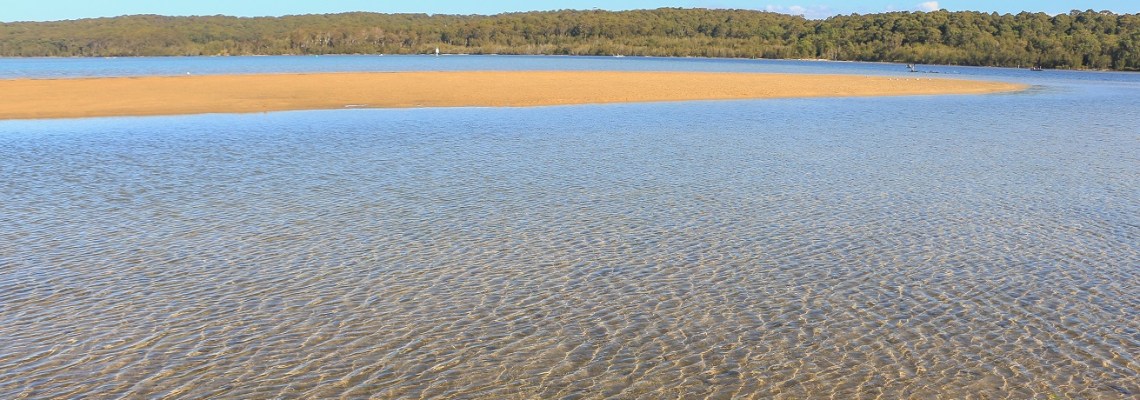
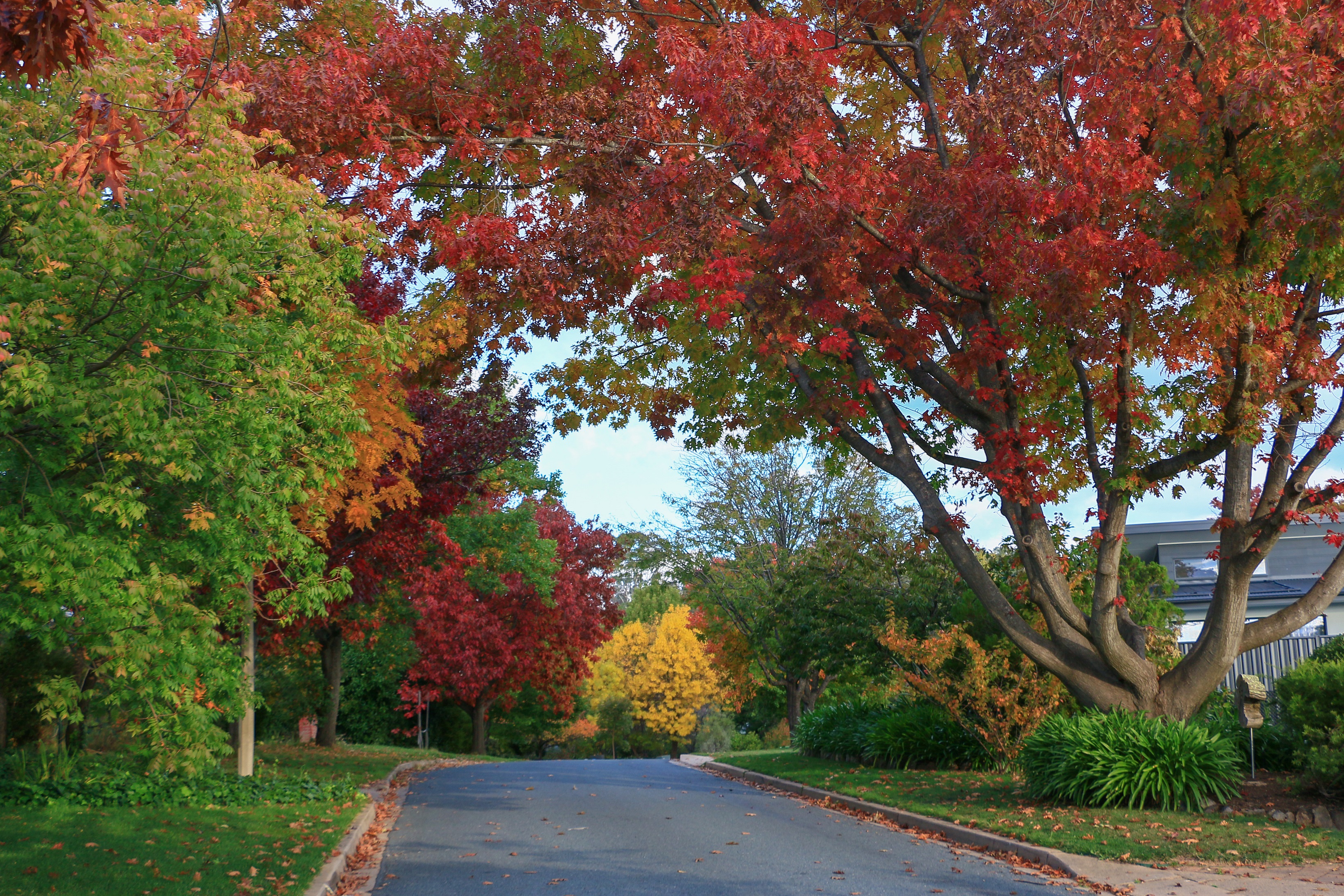


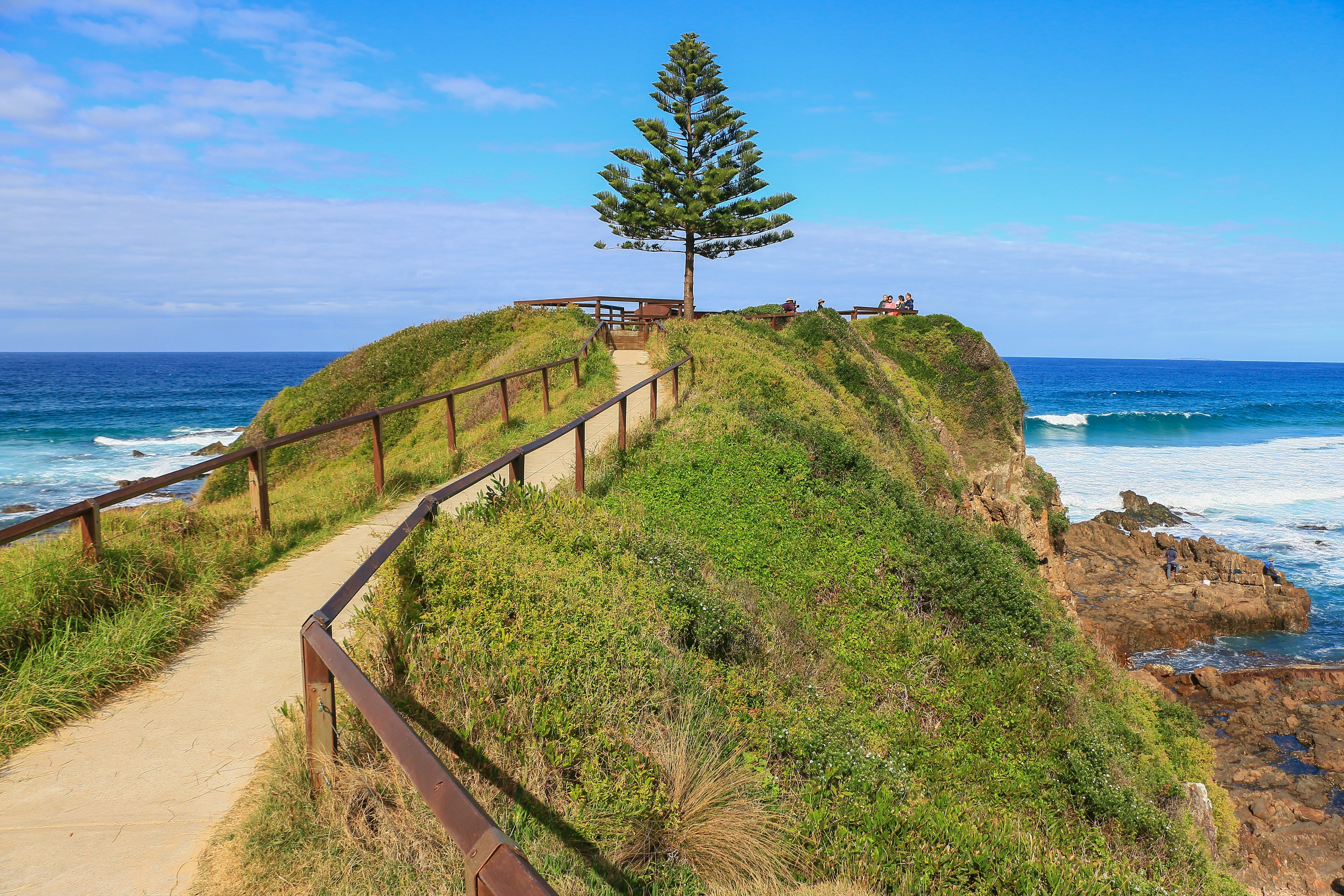


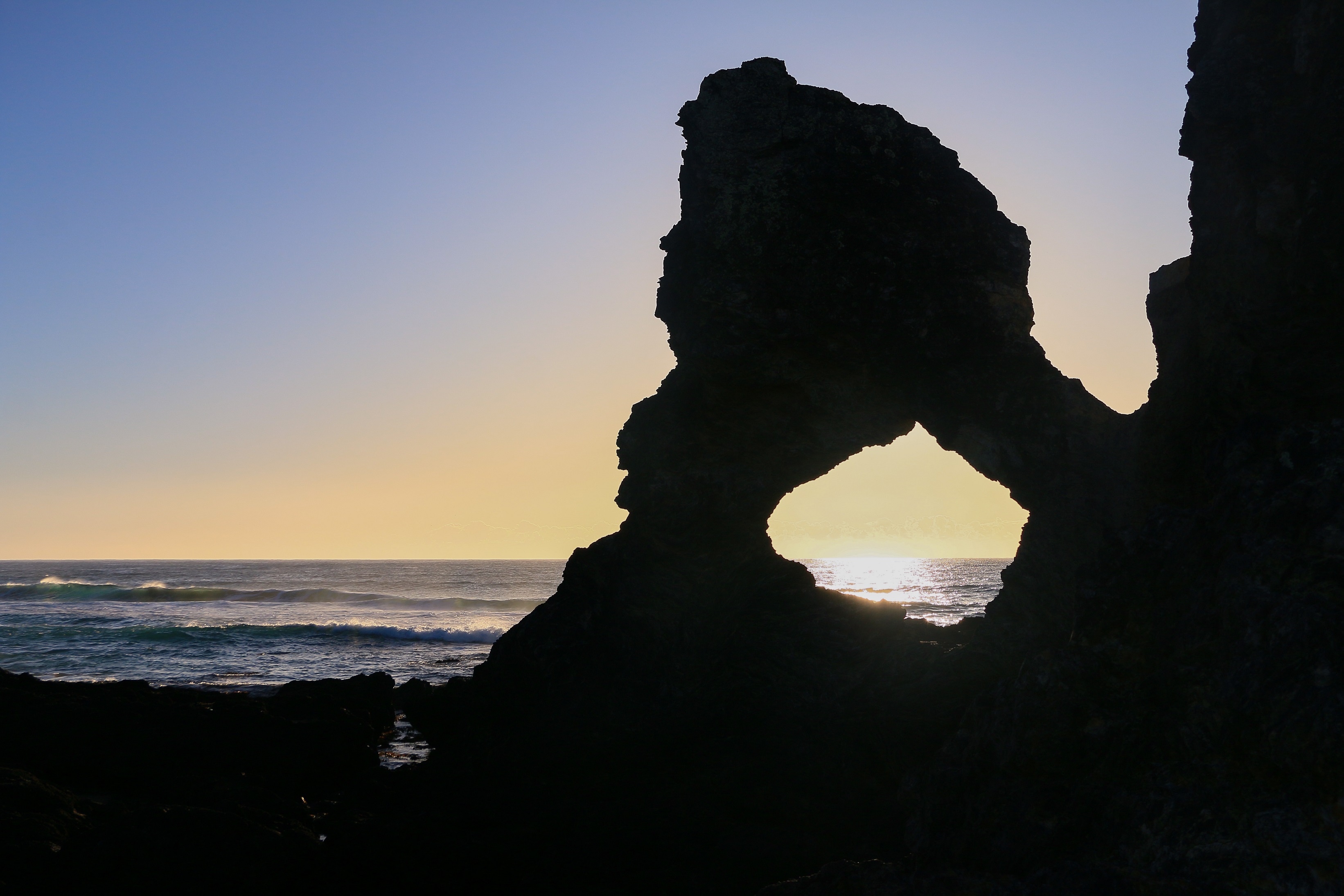
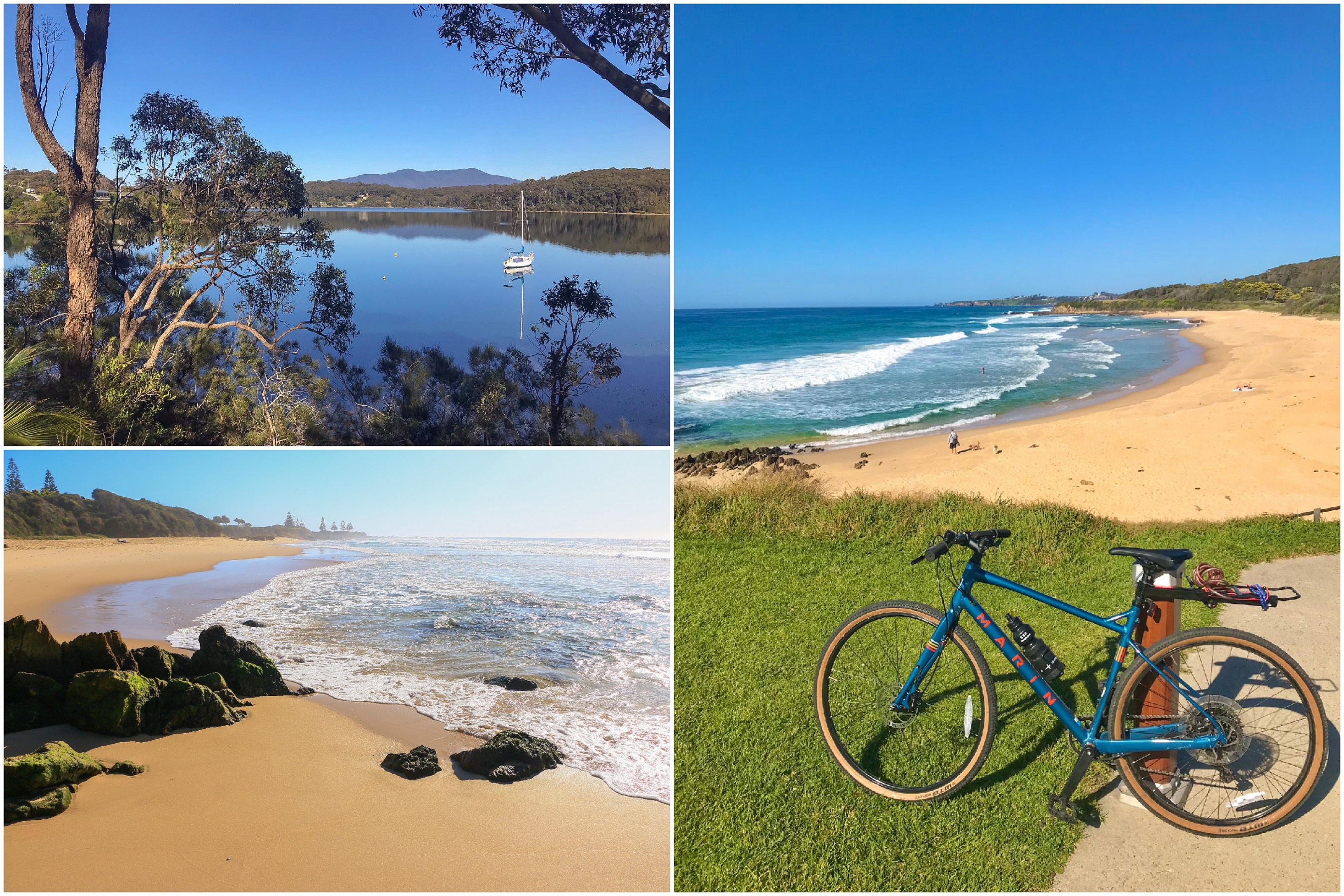
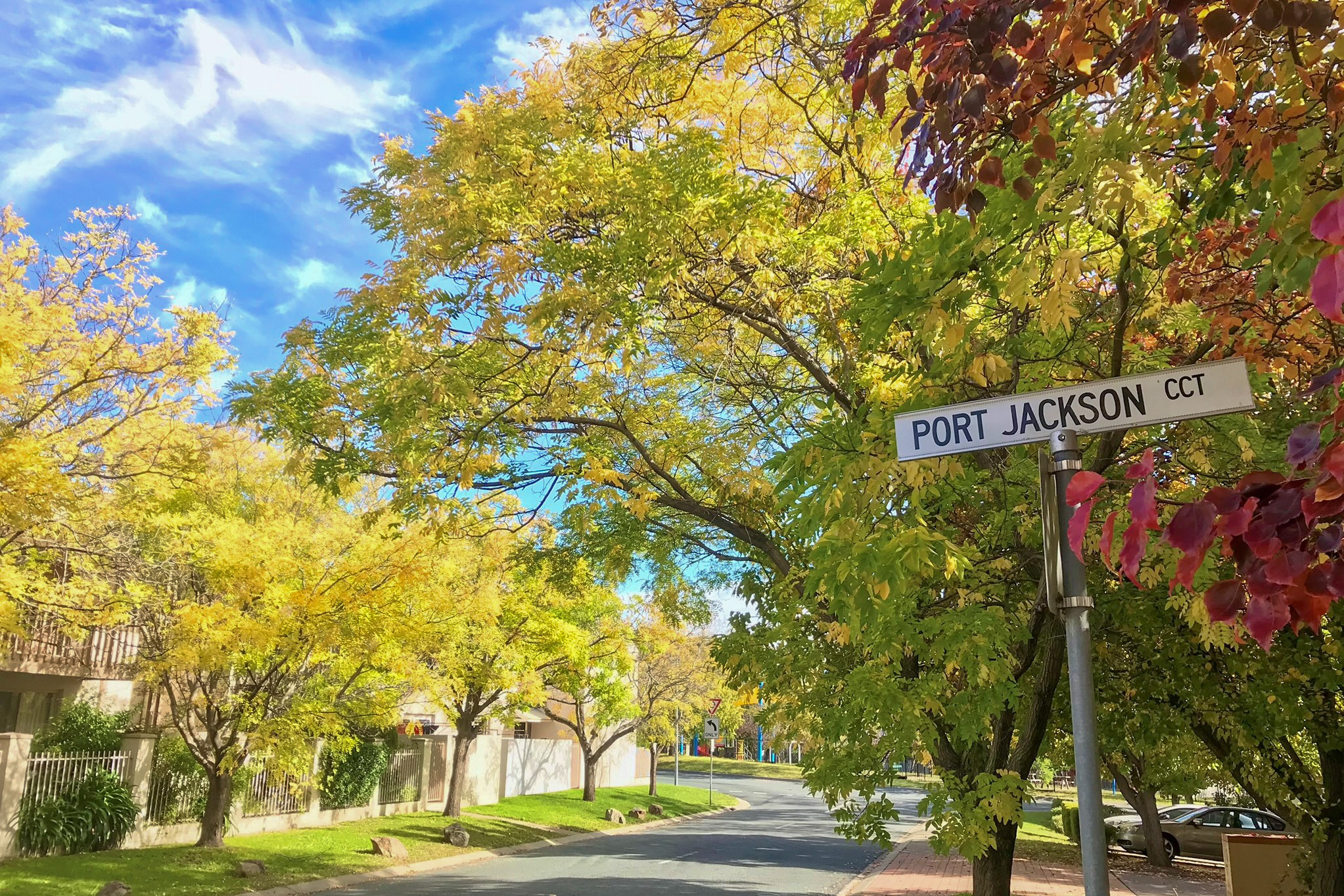


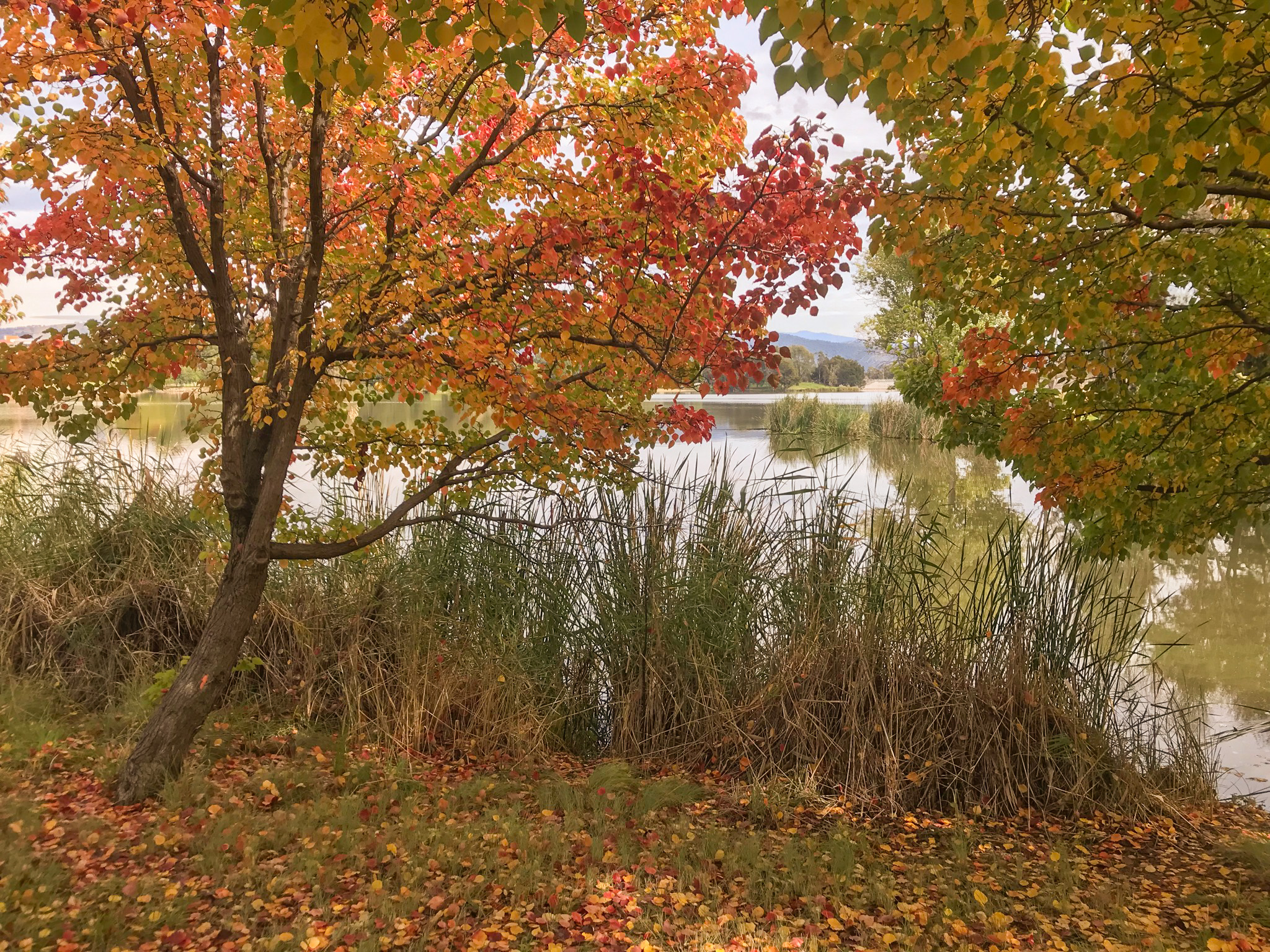


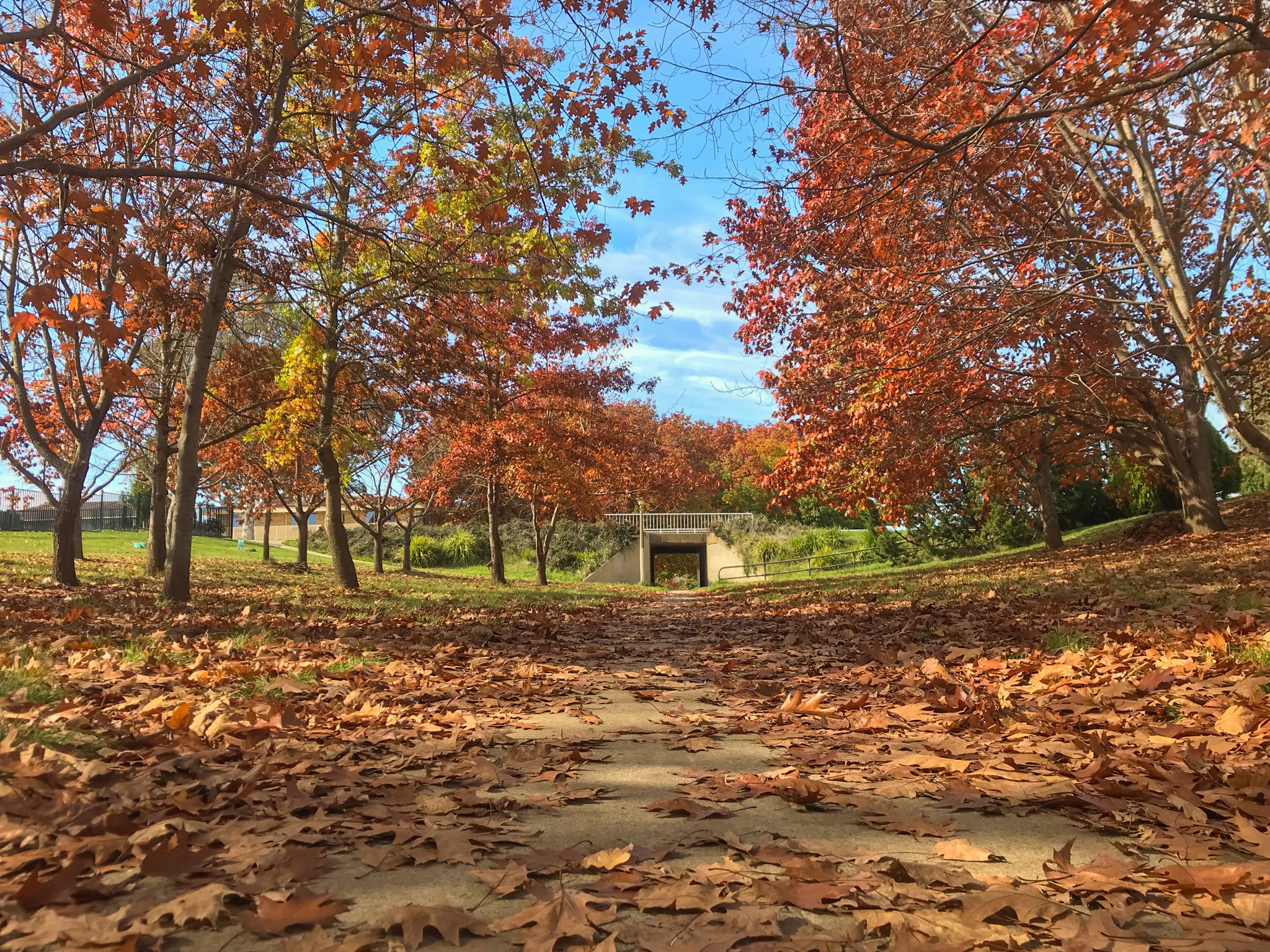


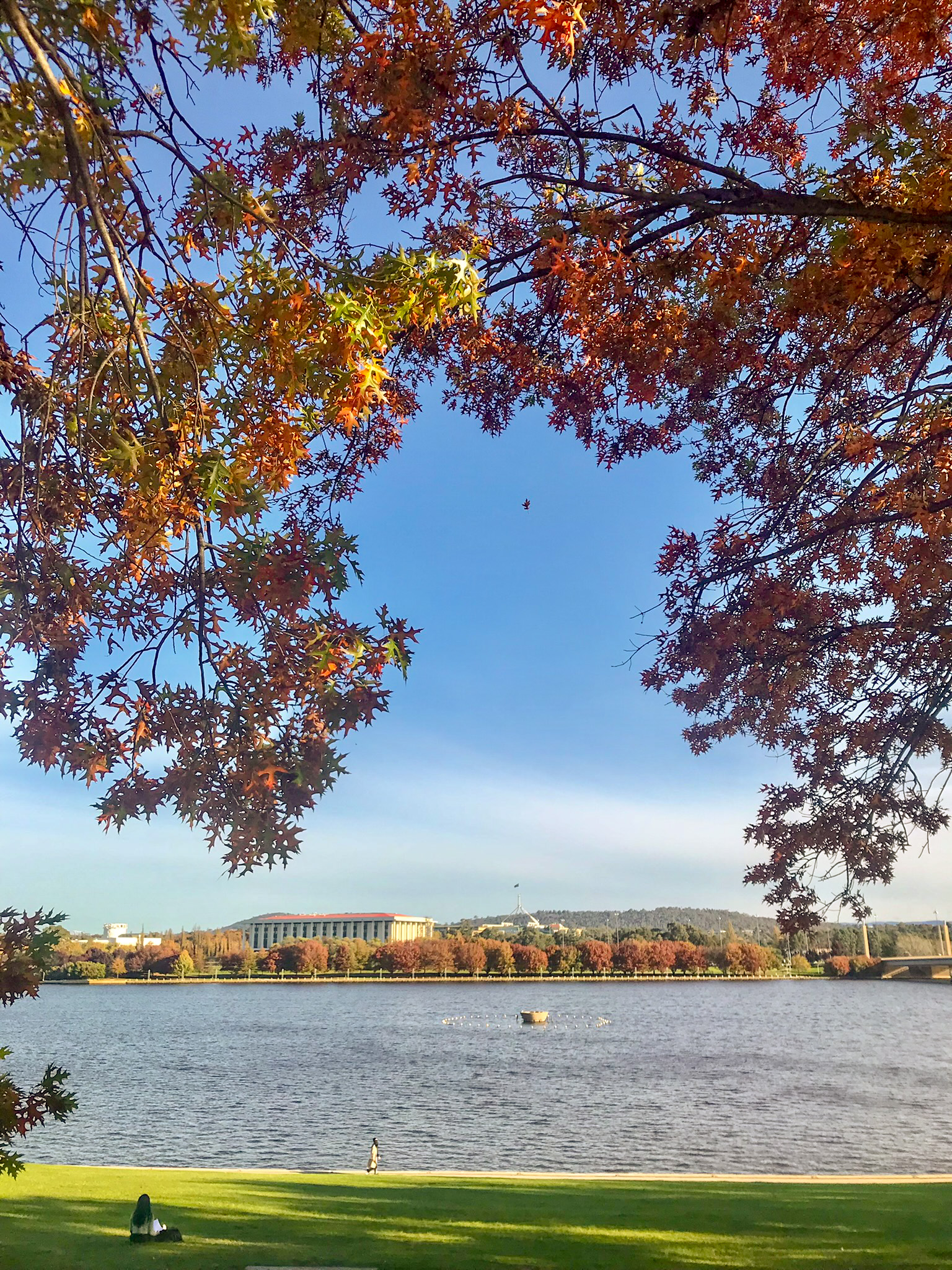
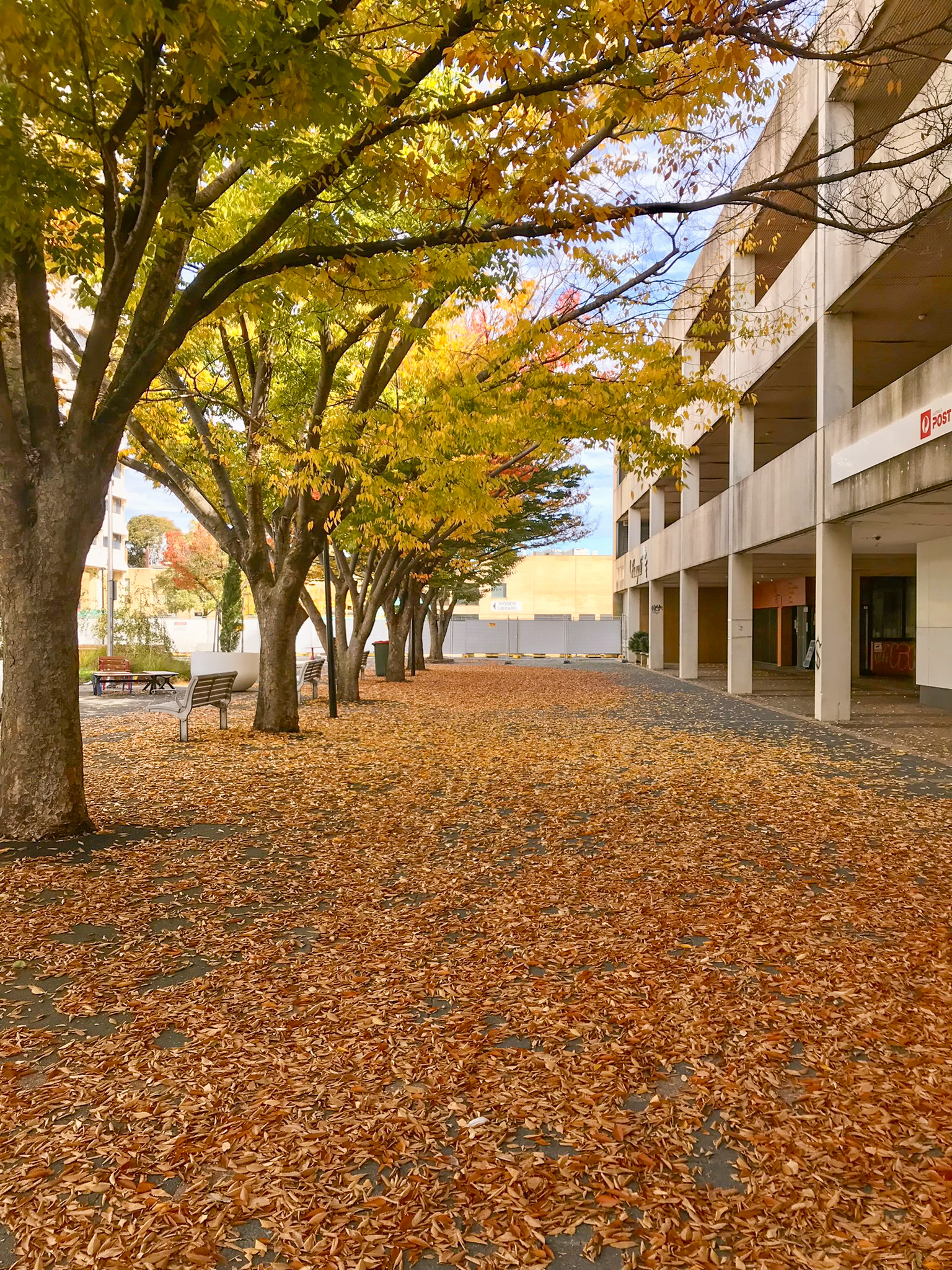


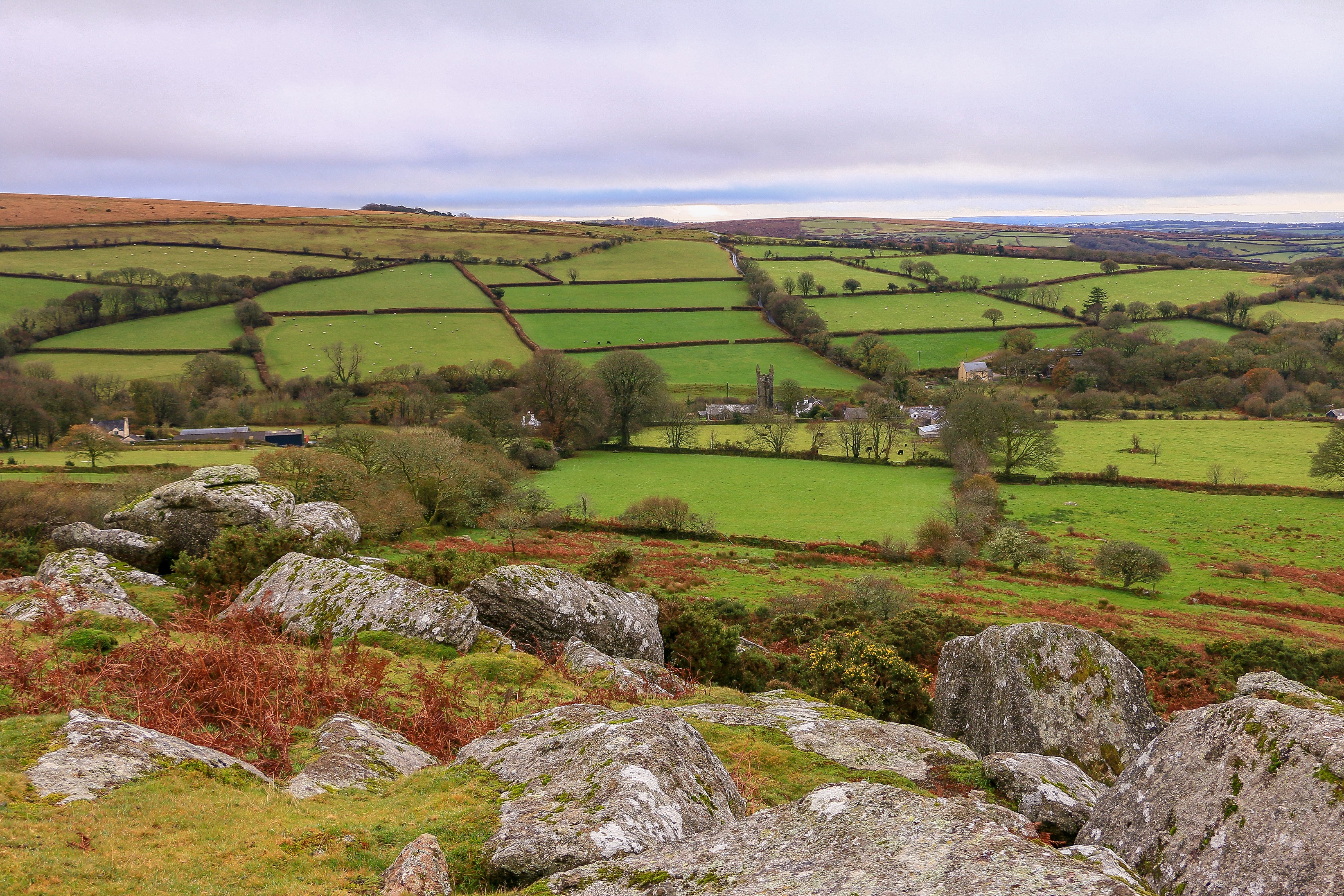
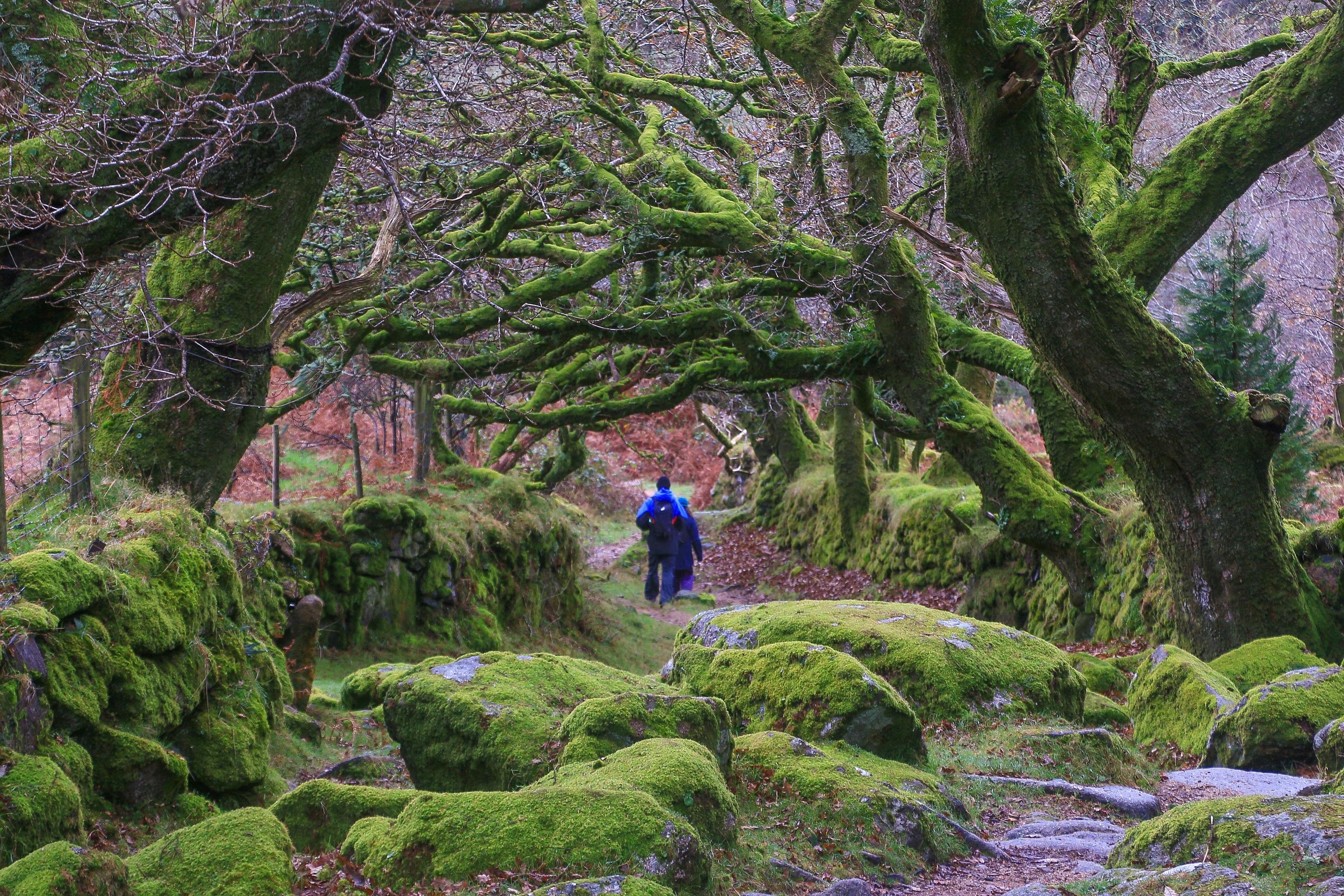


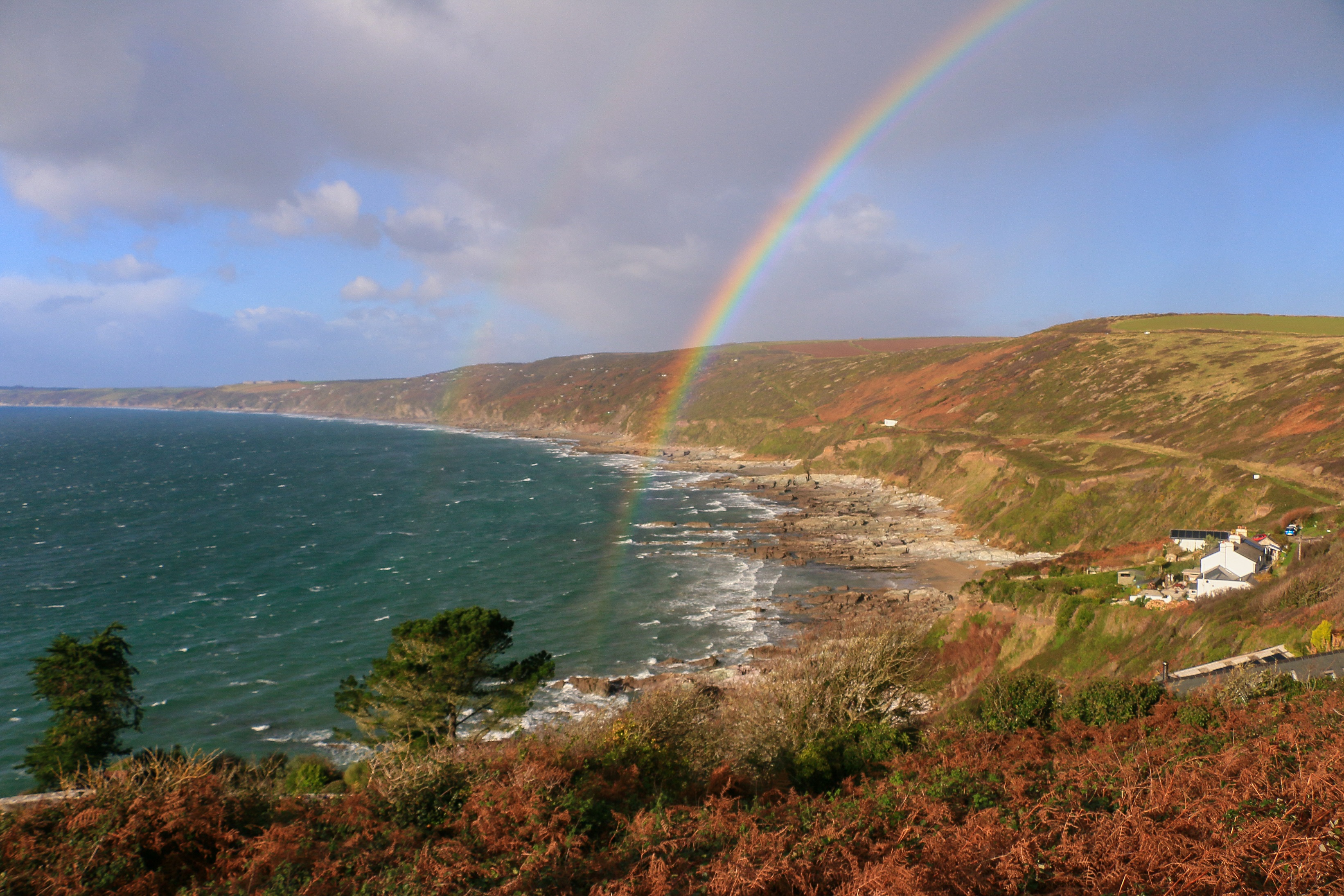
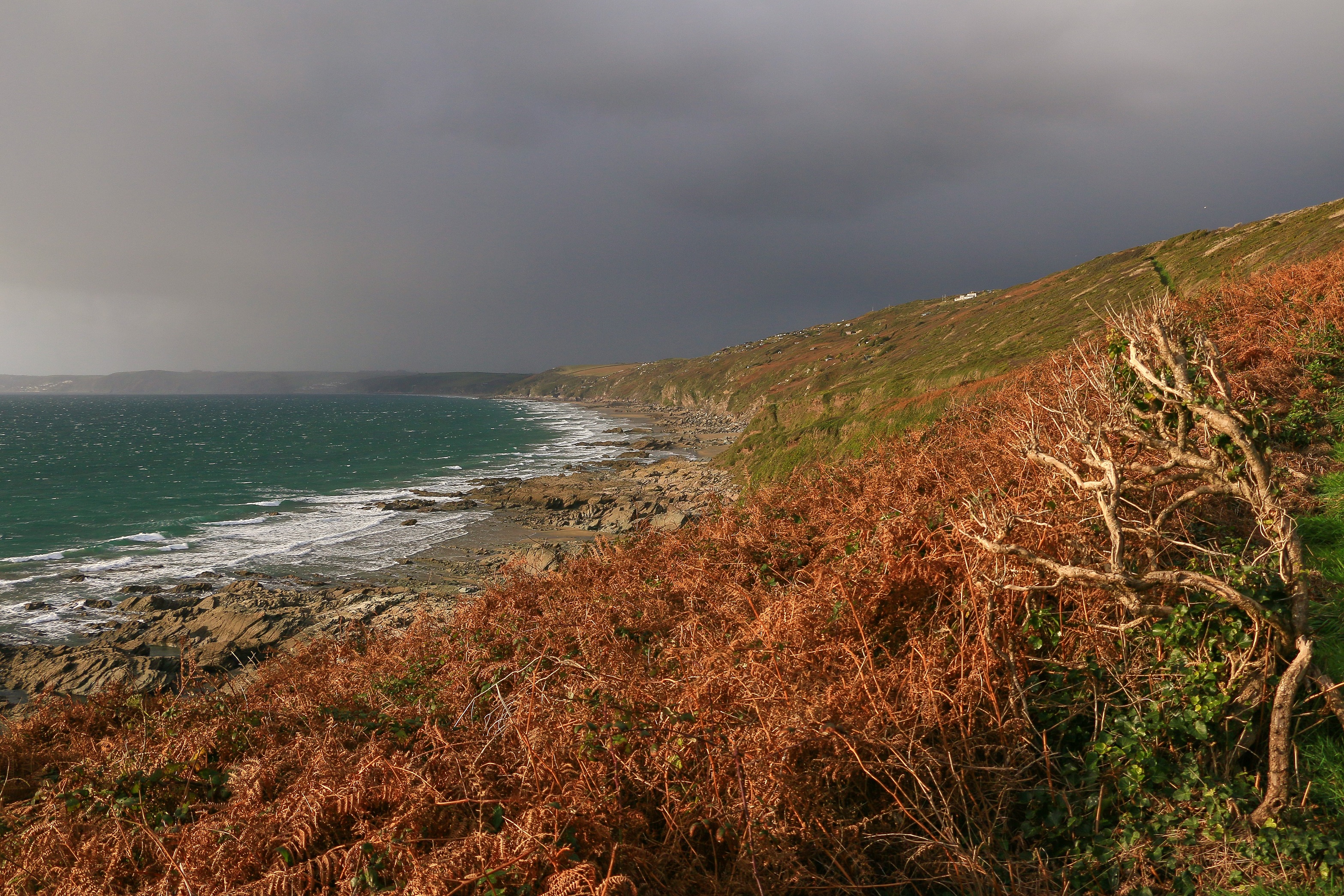

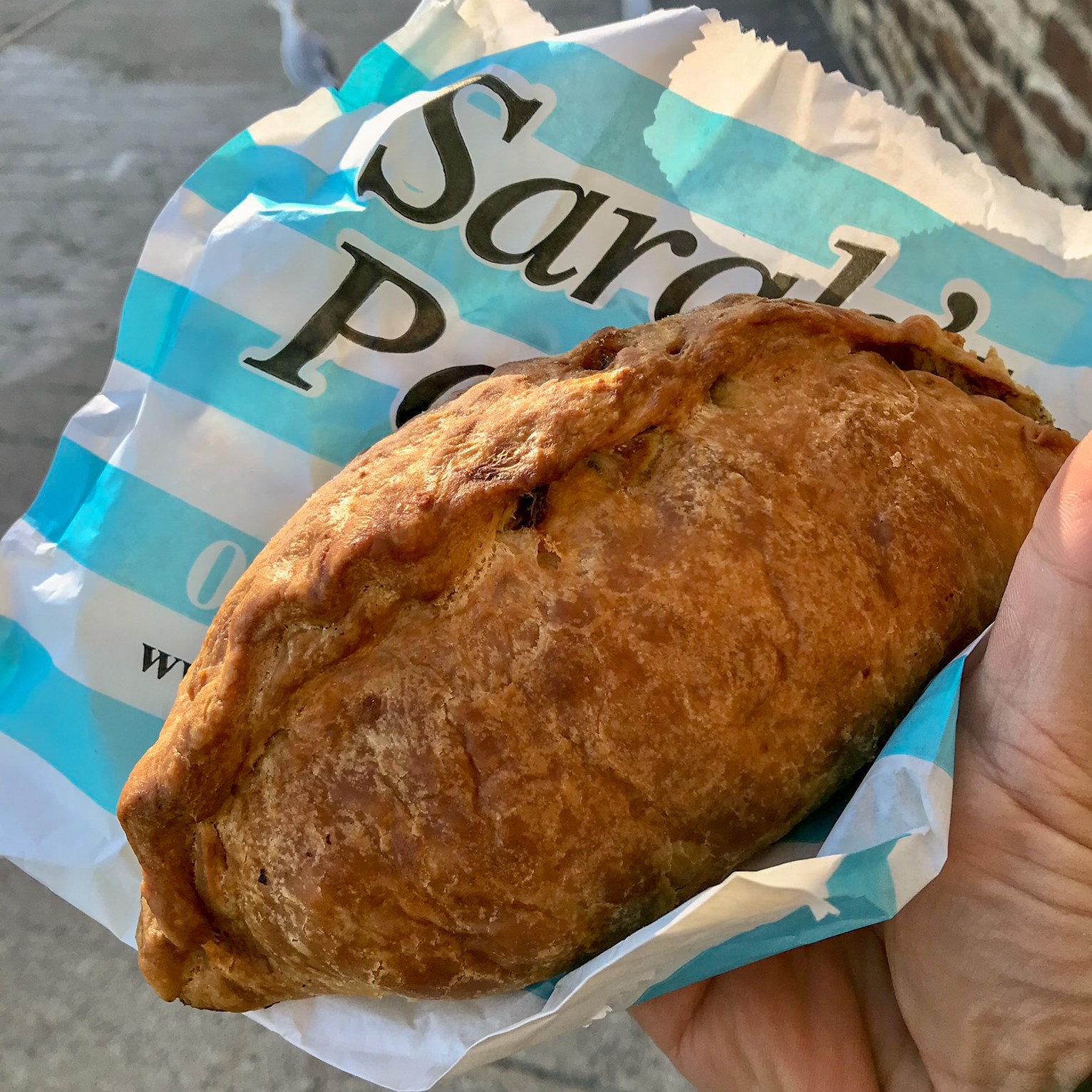


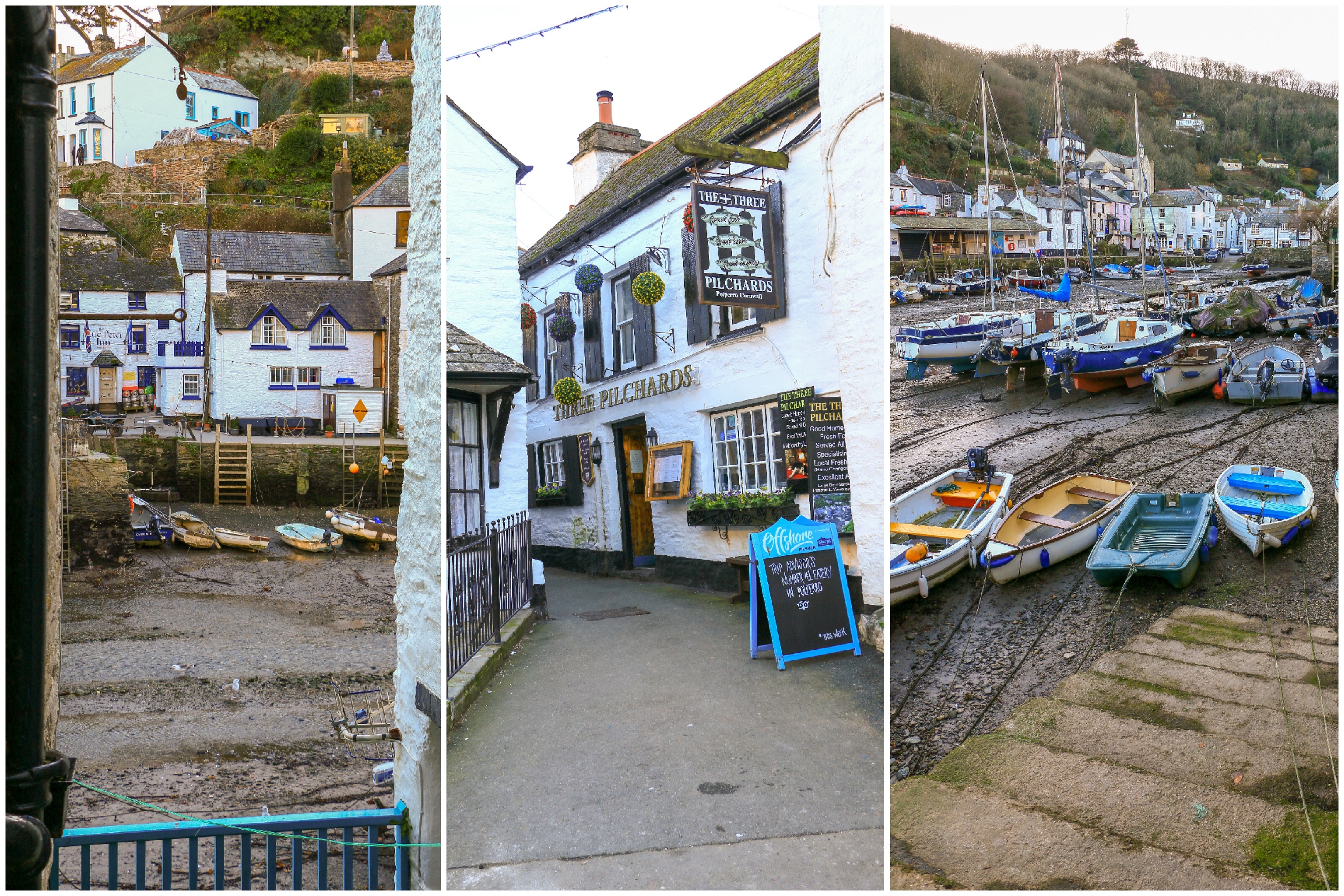

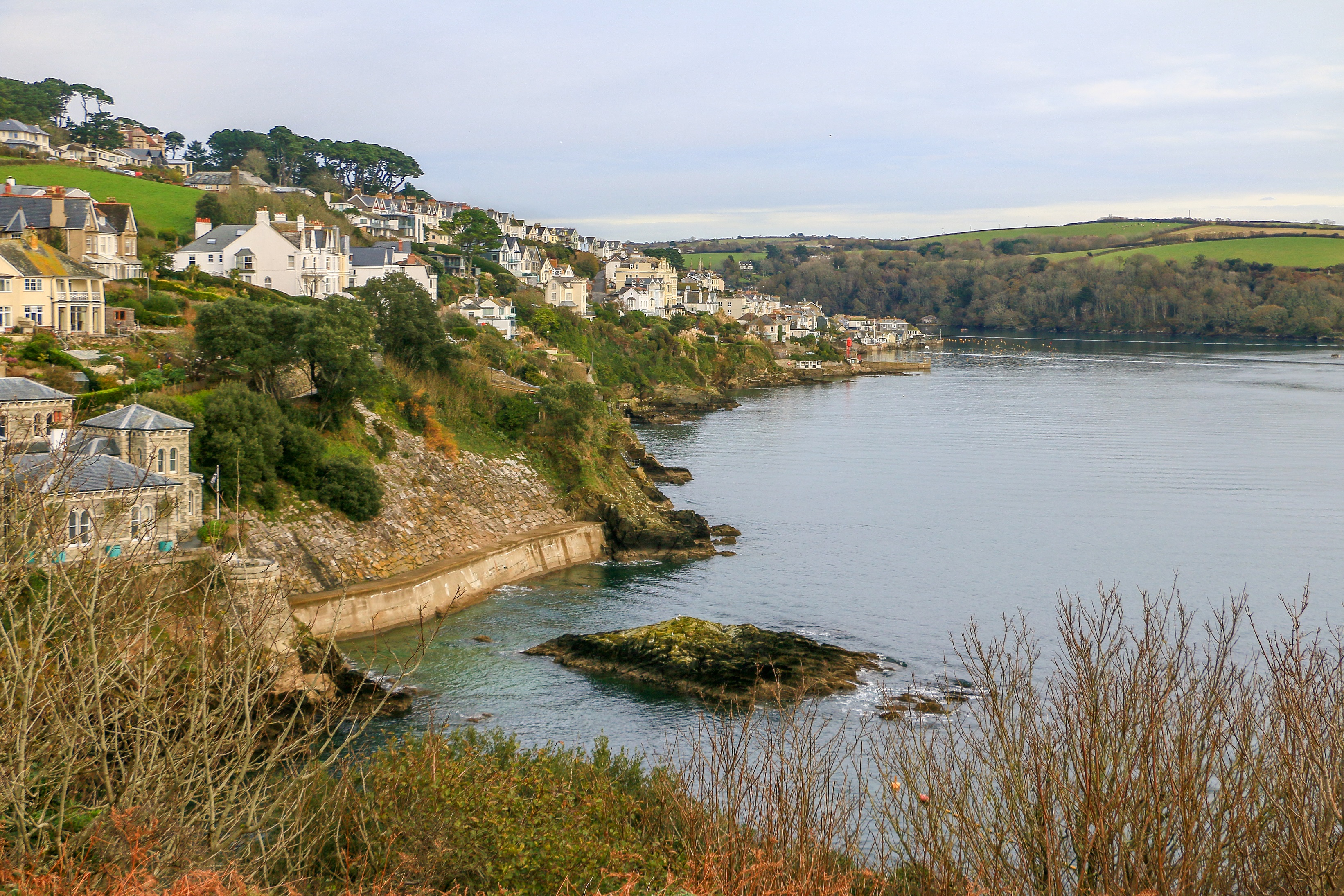


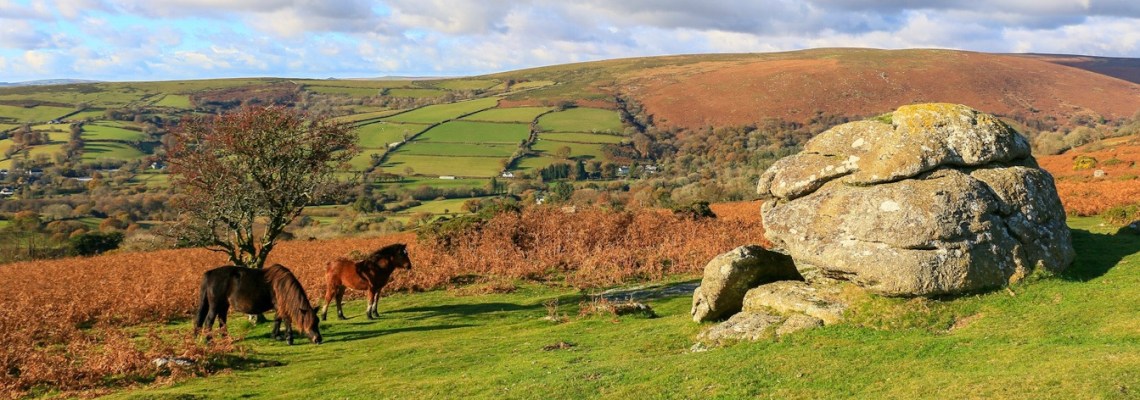

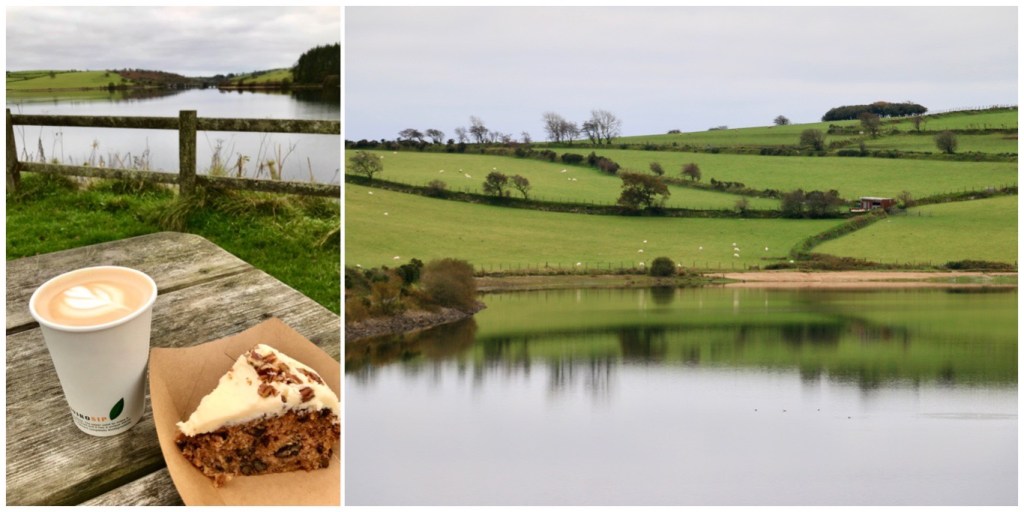


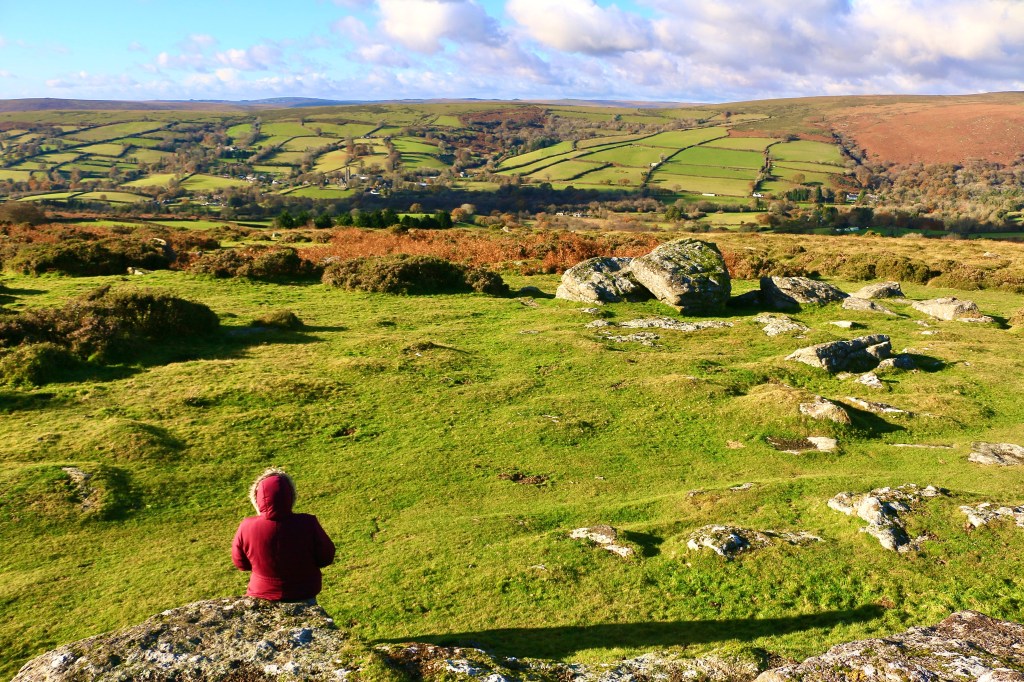

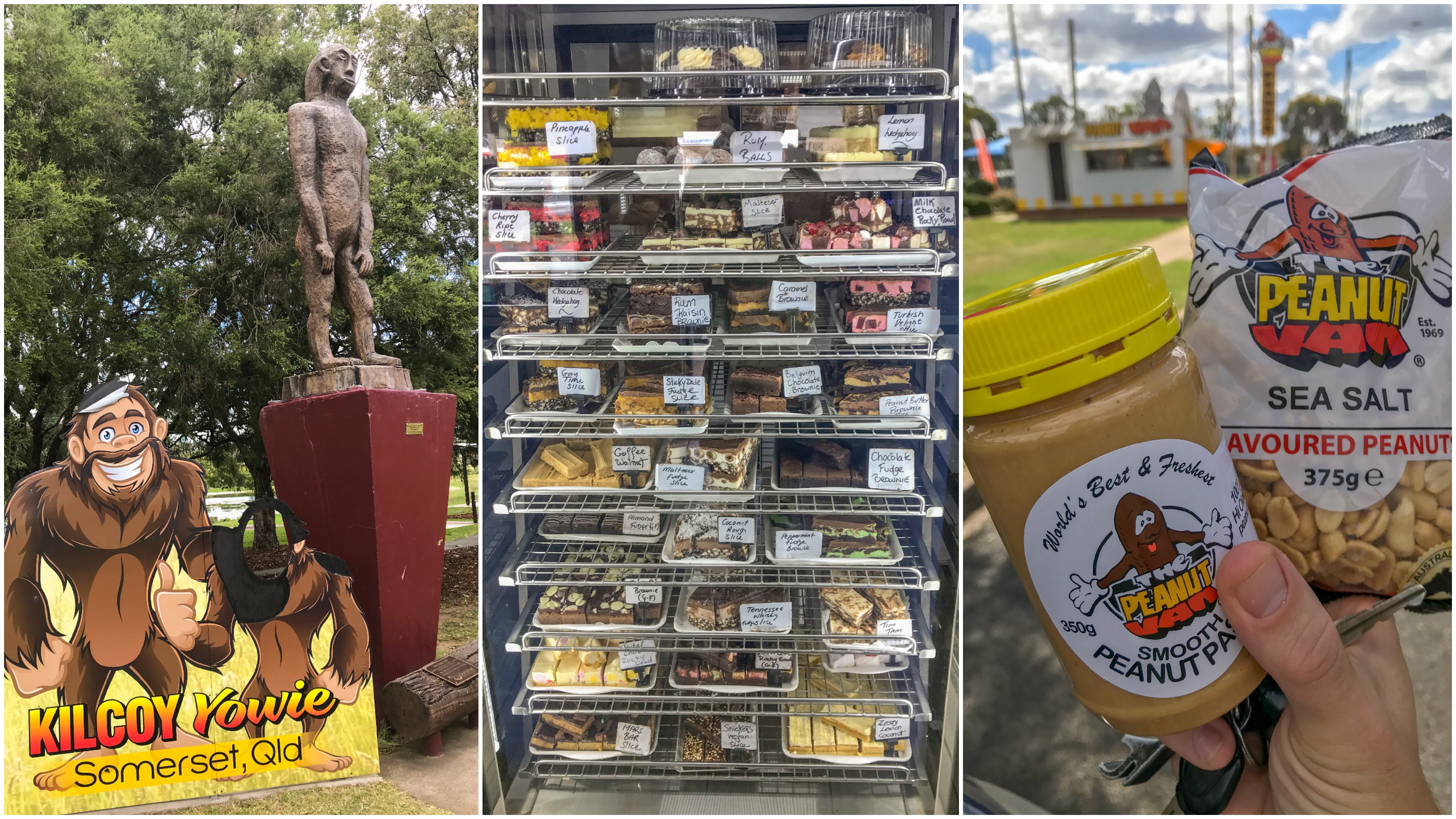


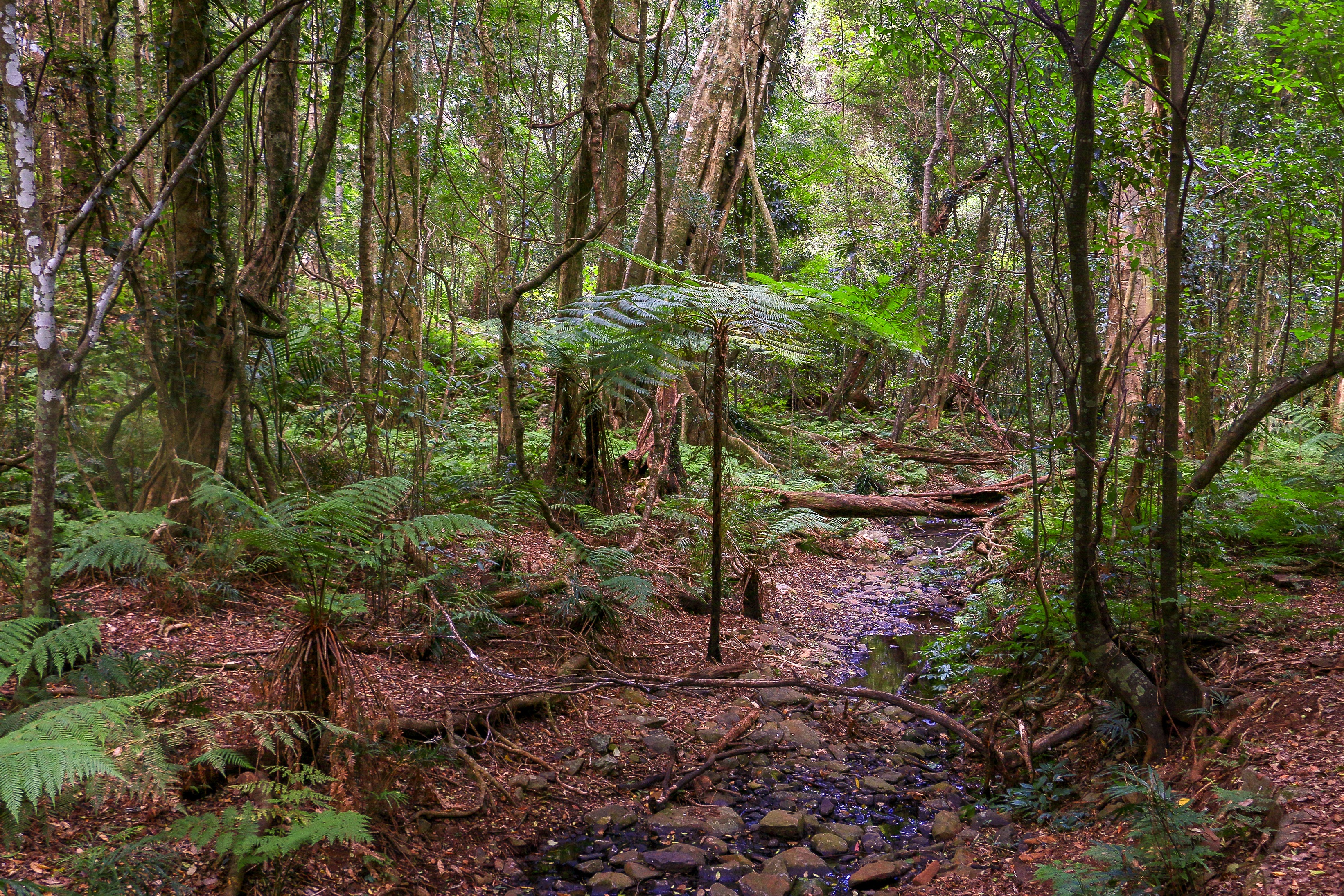
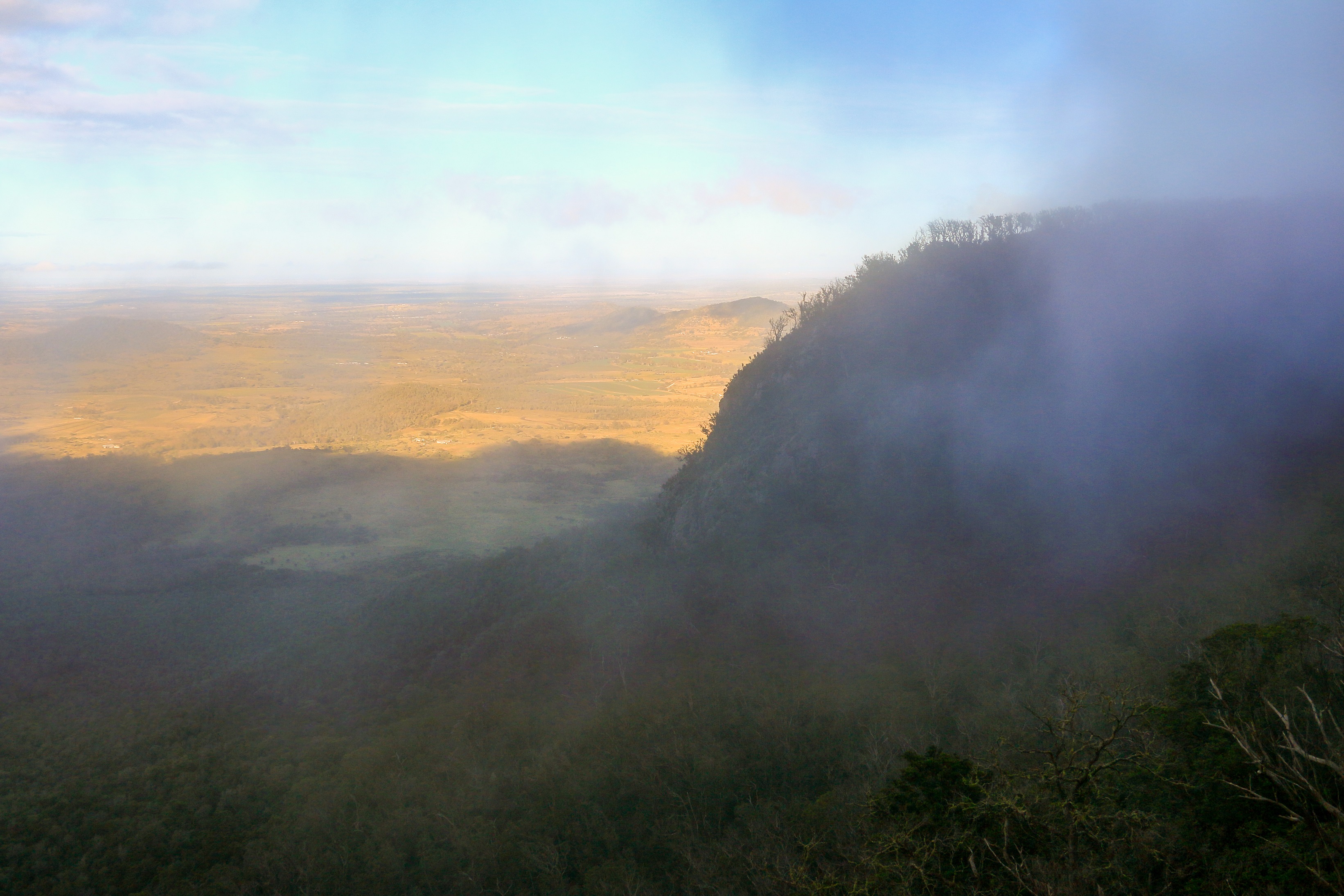


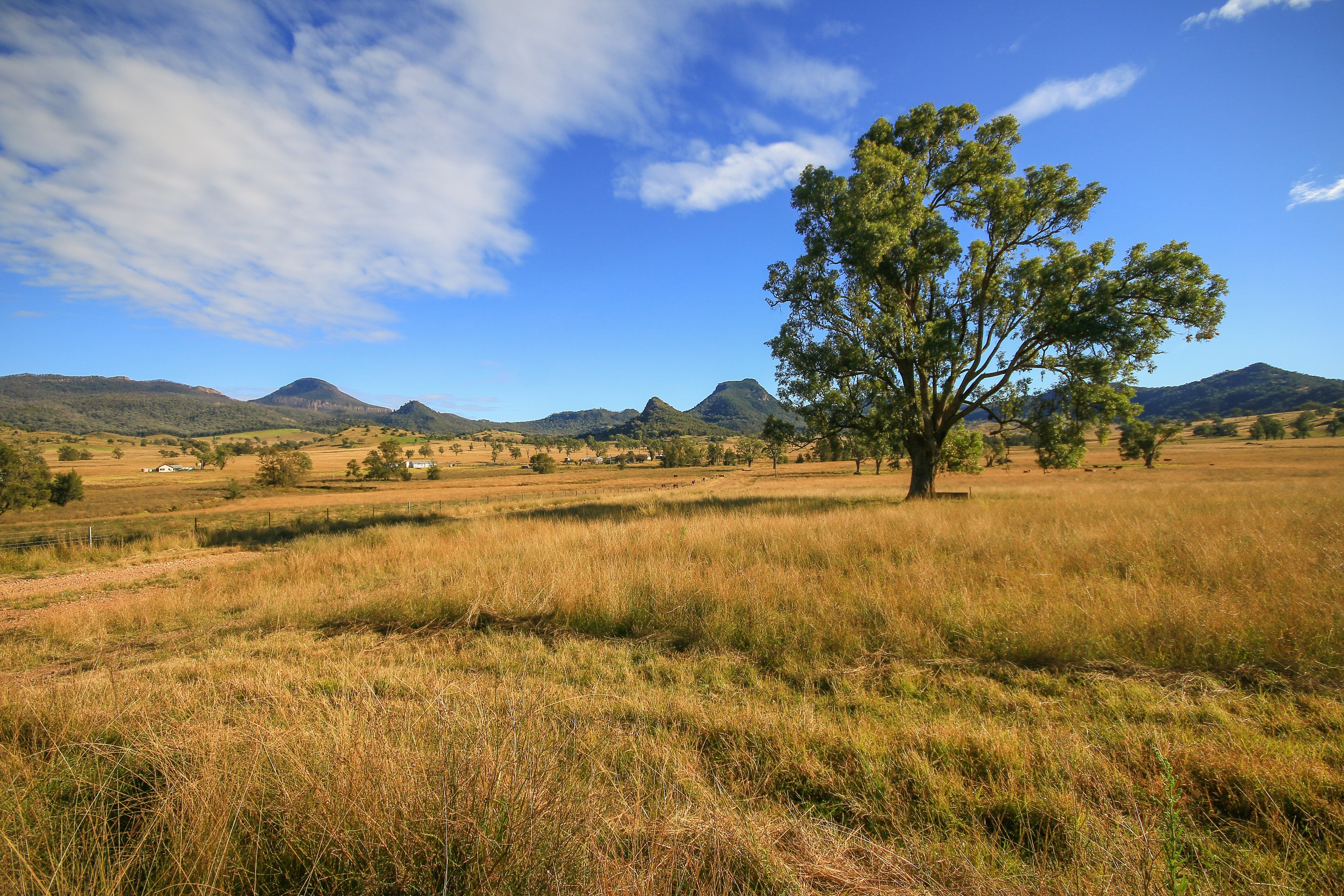


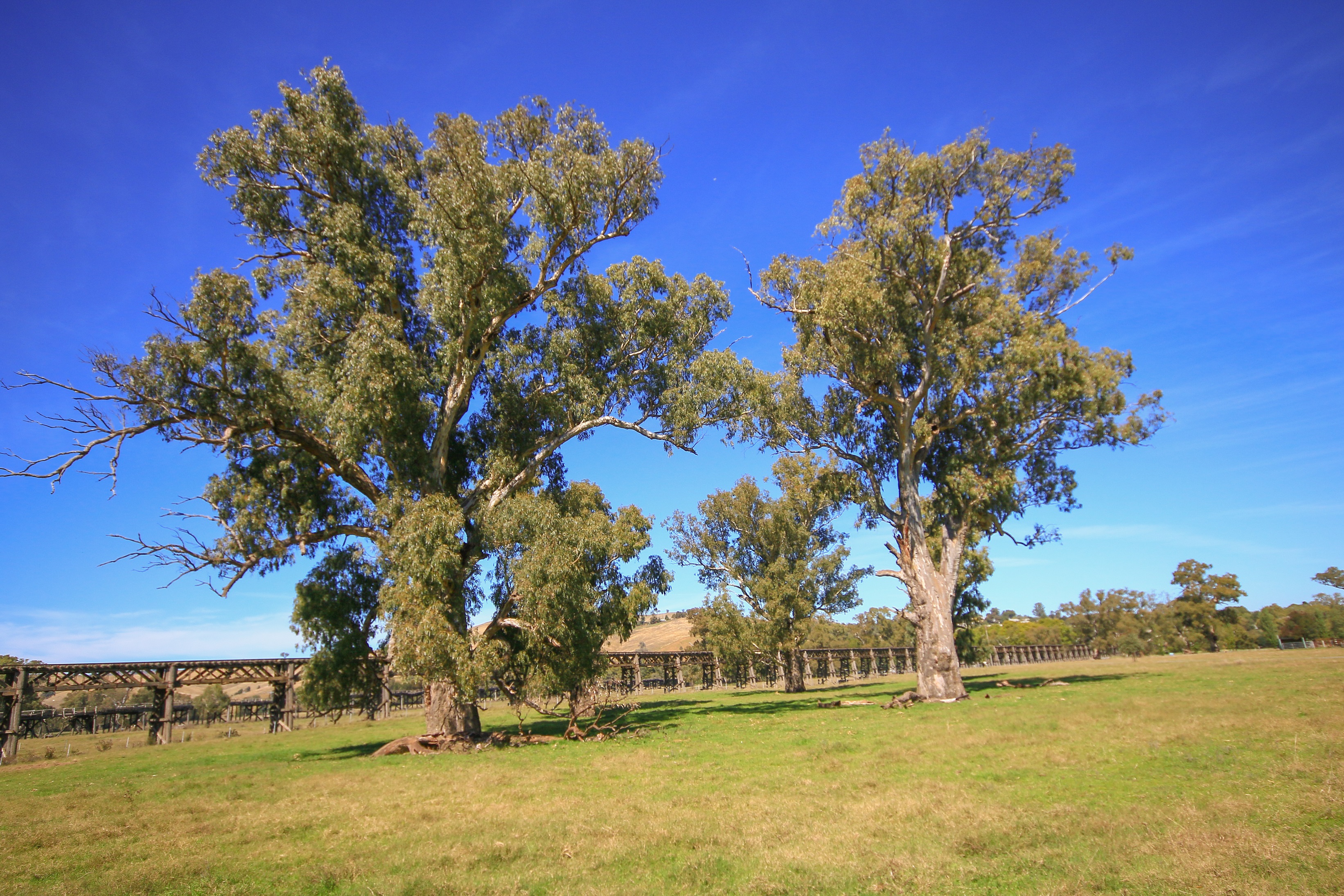


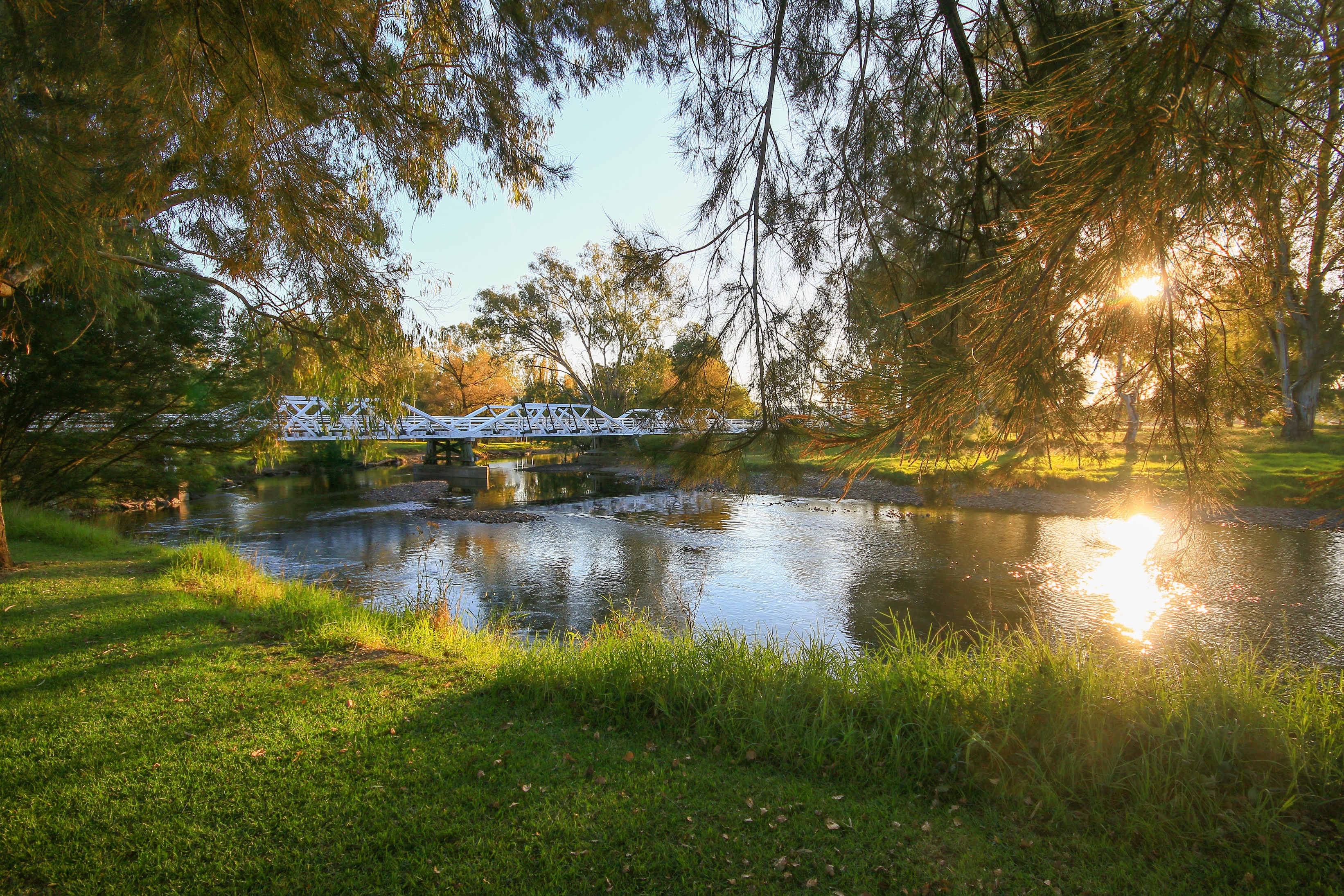
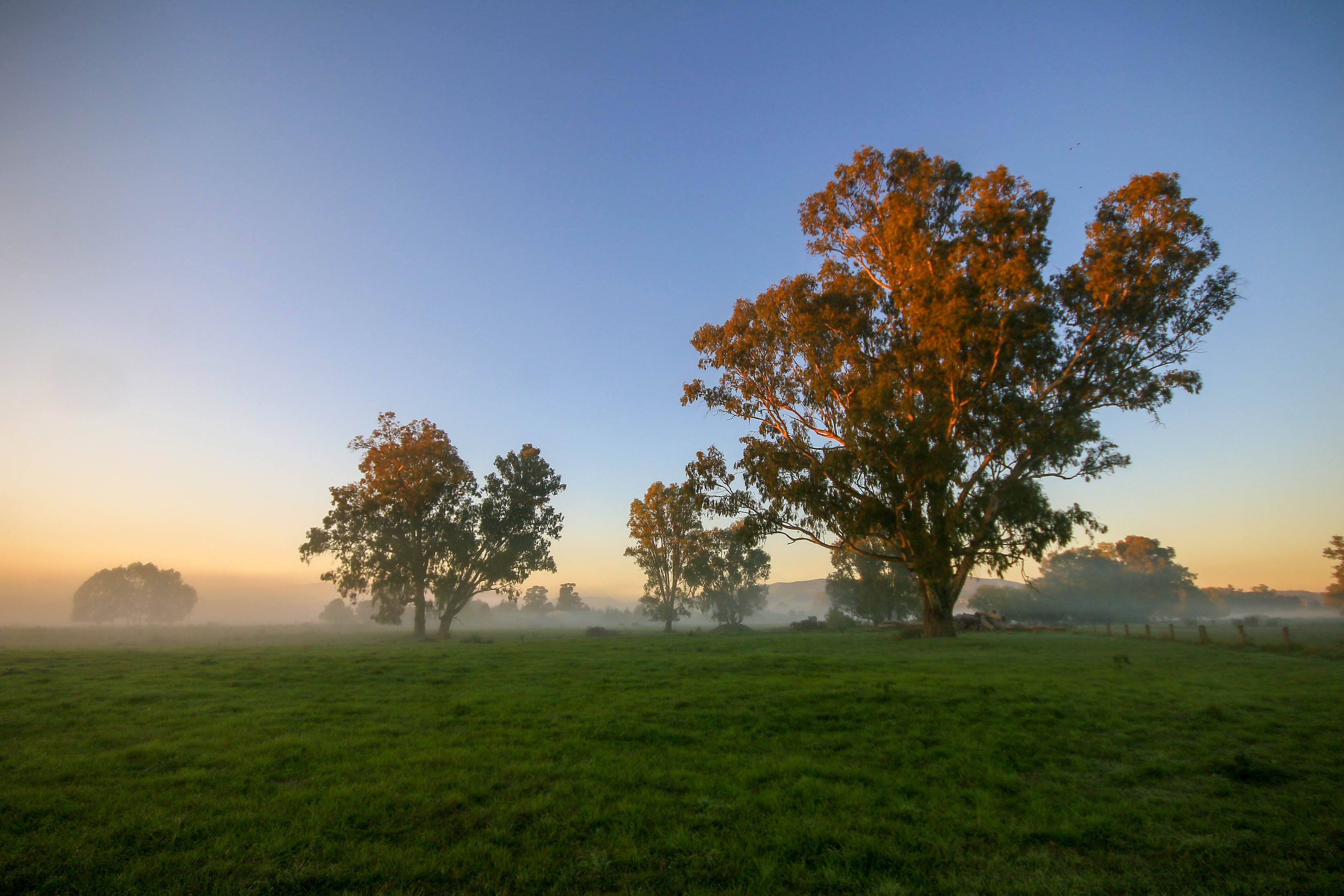
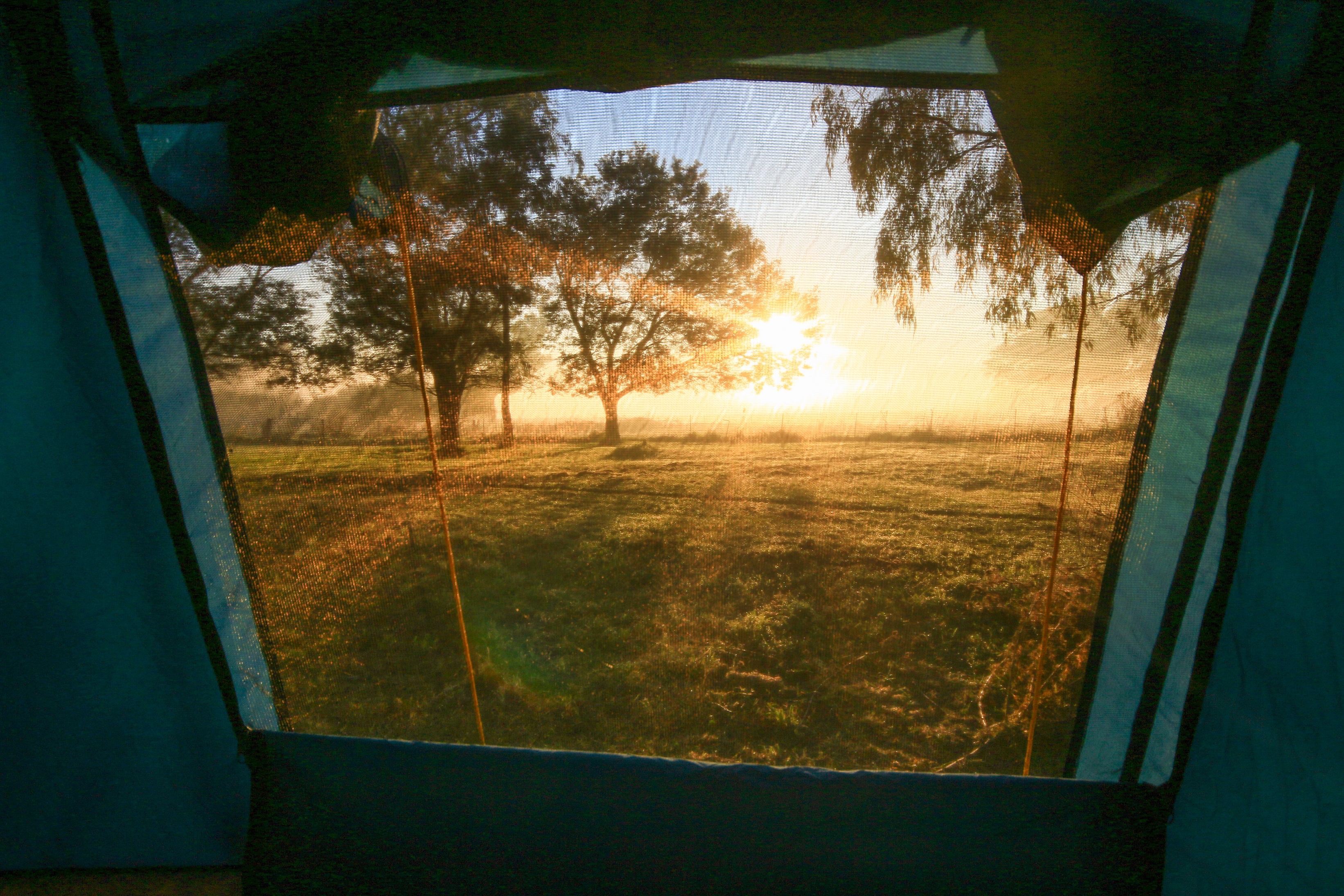

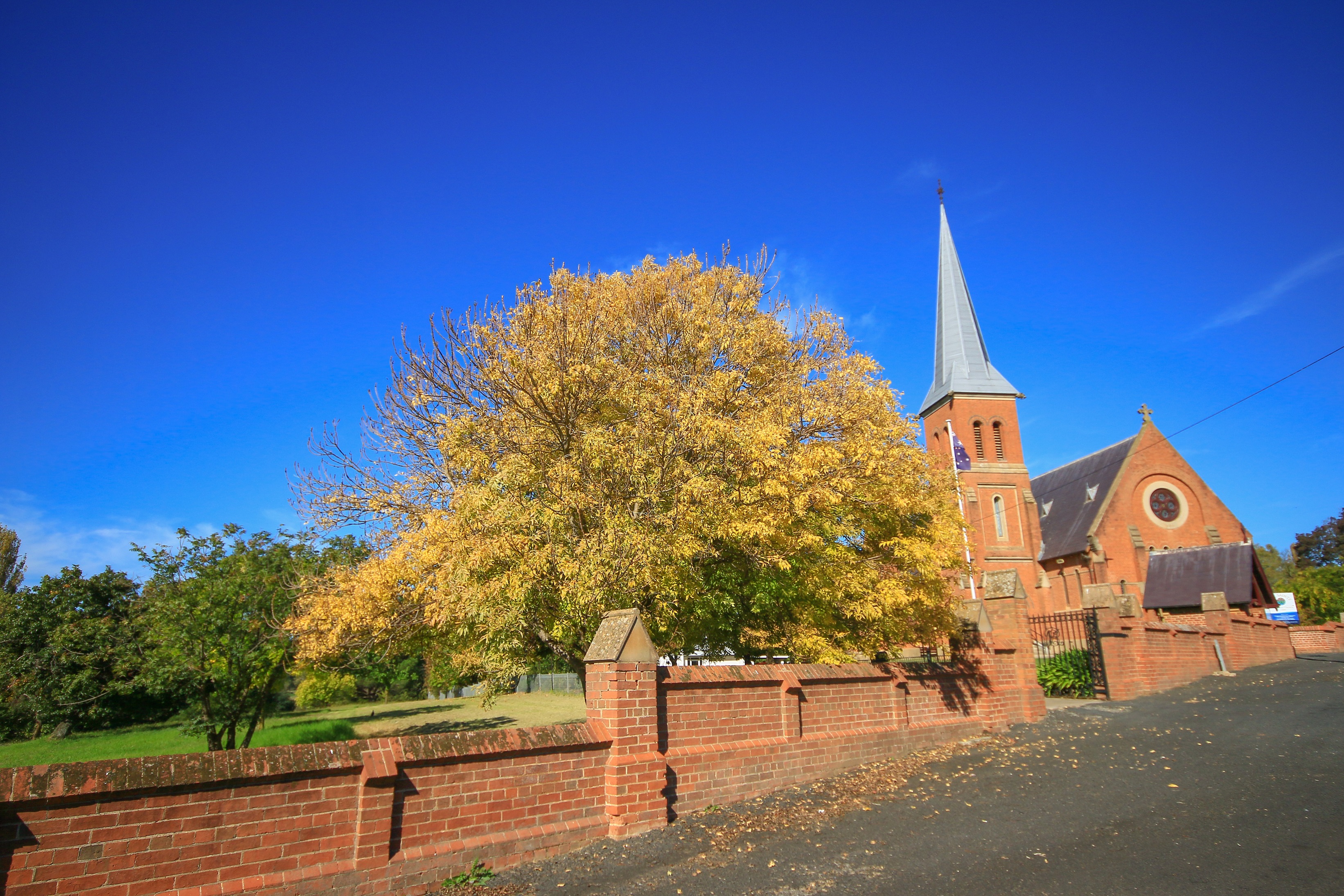
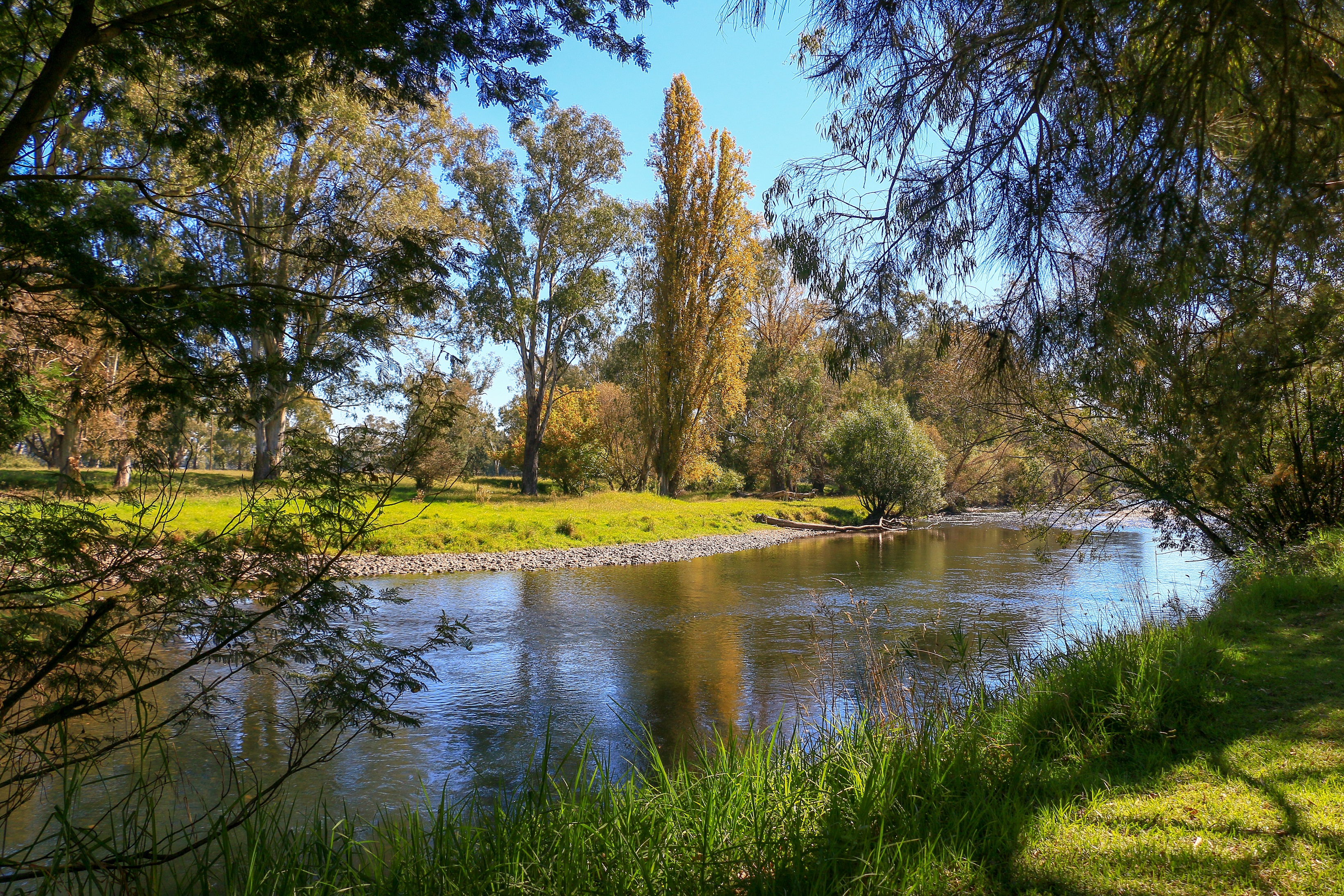


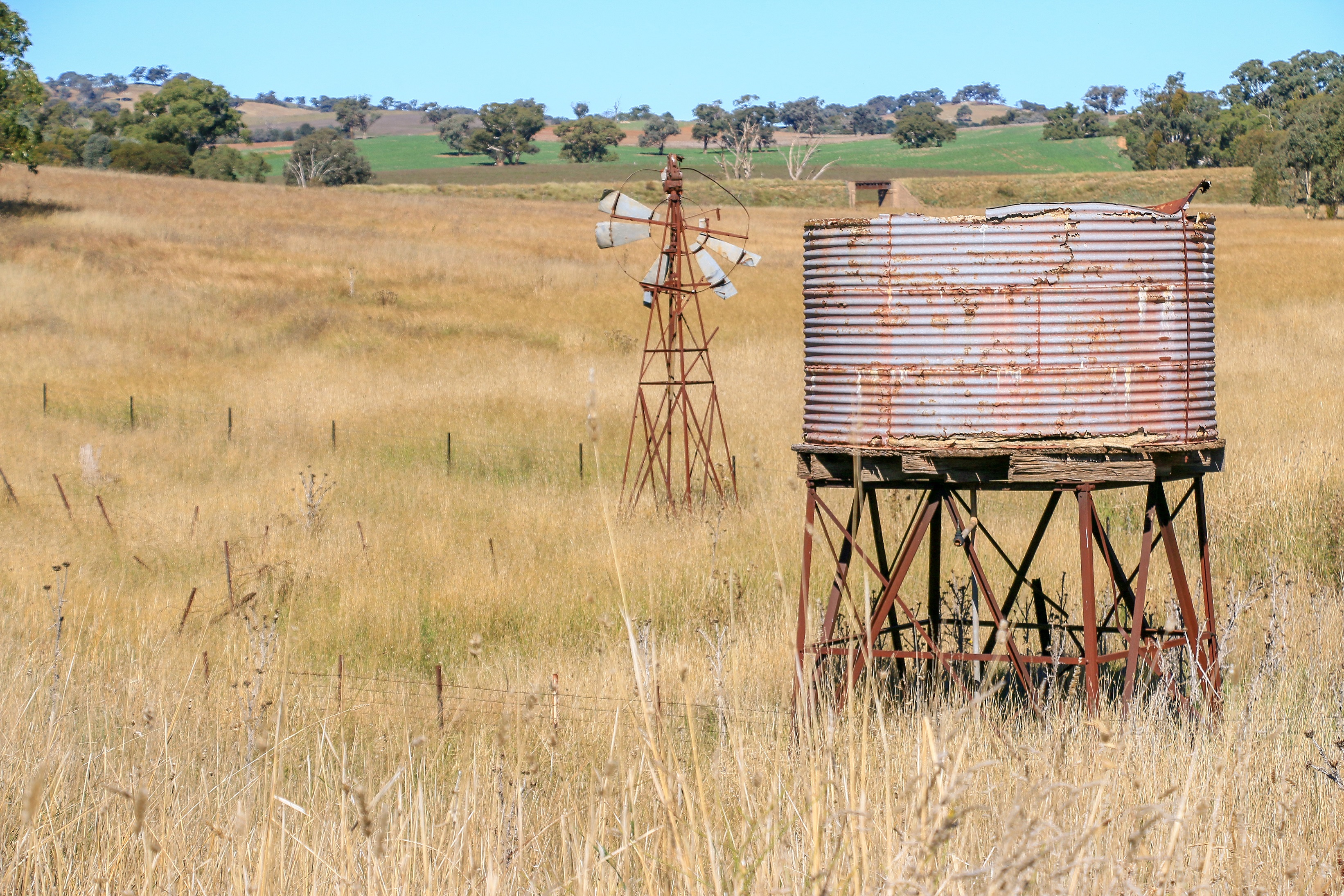


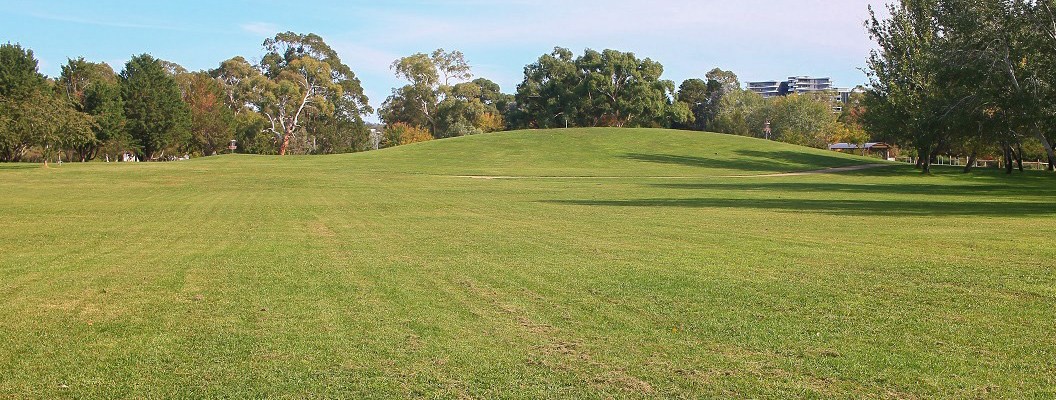
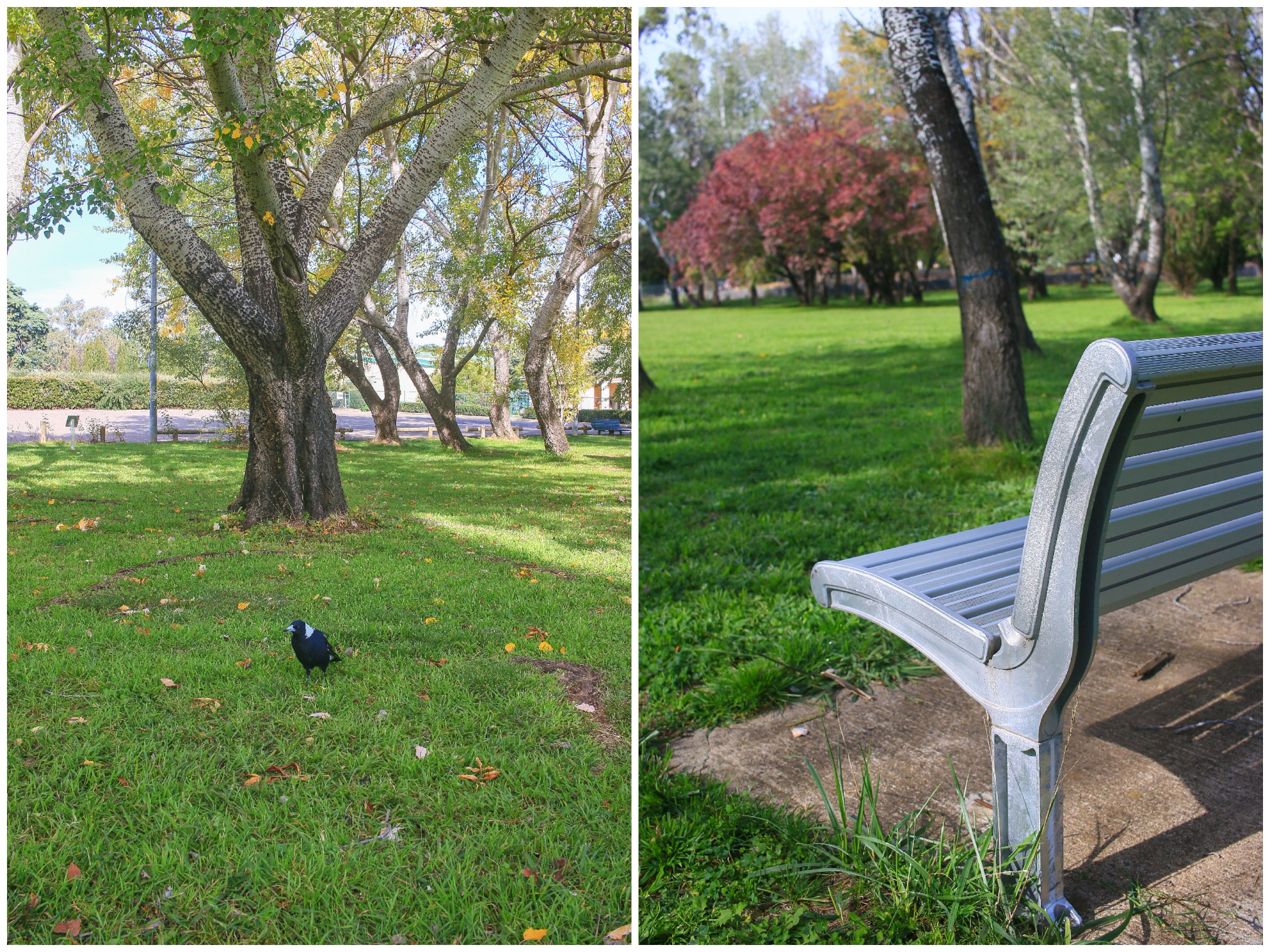
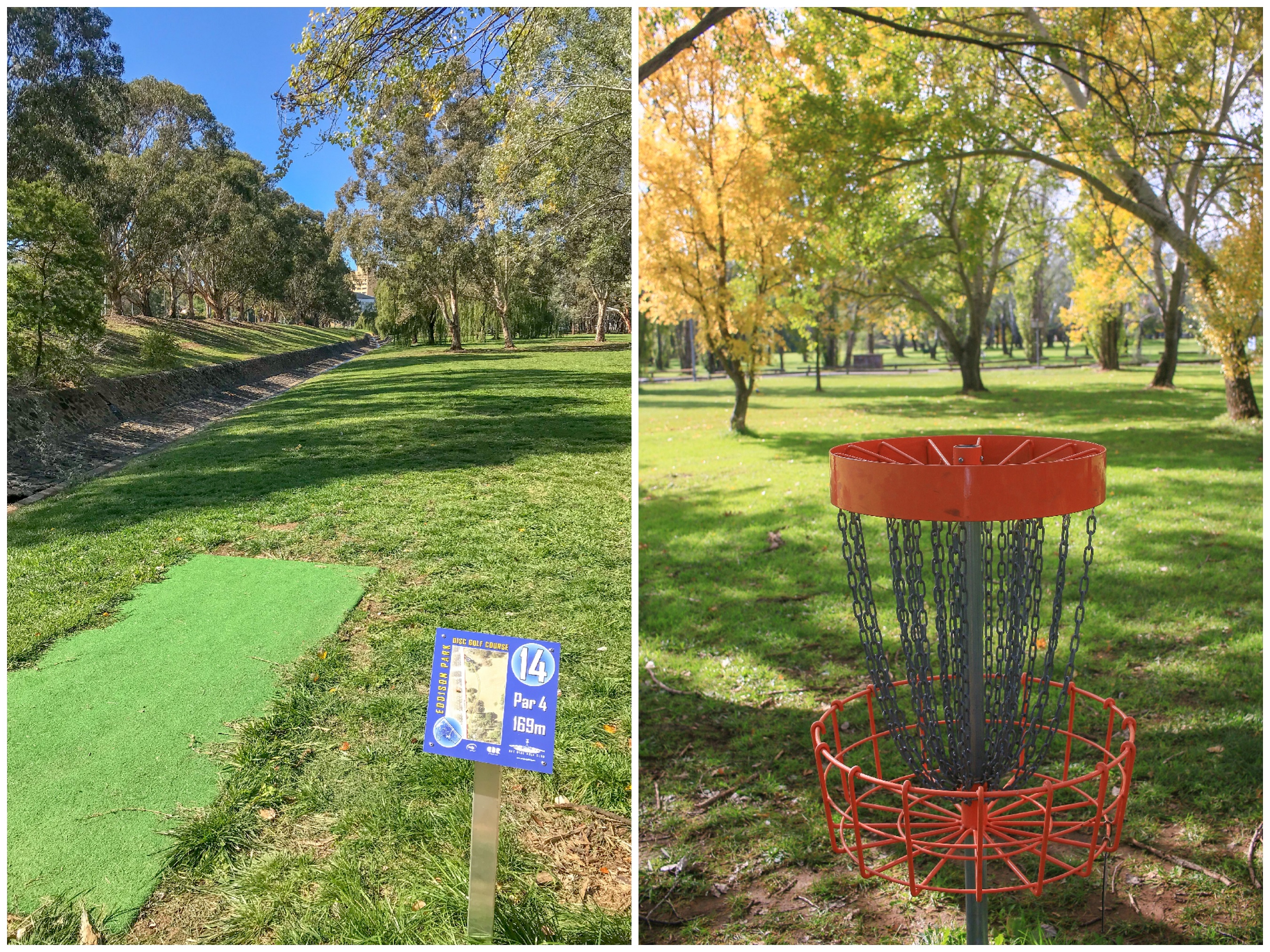
 It’s not all magpie terror, bin Frisbee and occasional canals in my park. No, there are plenty of structured entertainment opportunities, from workout contraptions dotted along the path at intervals, to swings, slides, tunnels and a concrete skate park. I don’t tend to linger here lest people get the wrong impression. I also avoid the skate park, determined to avoid catching baggy pants, hormones, acne and that kind of thing.
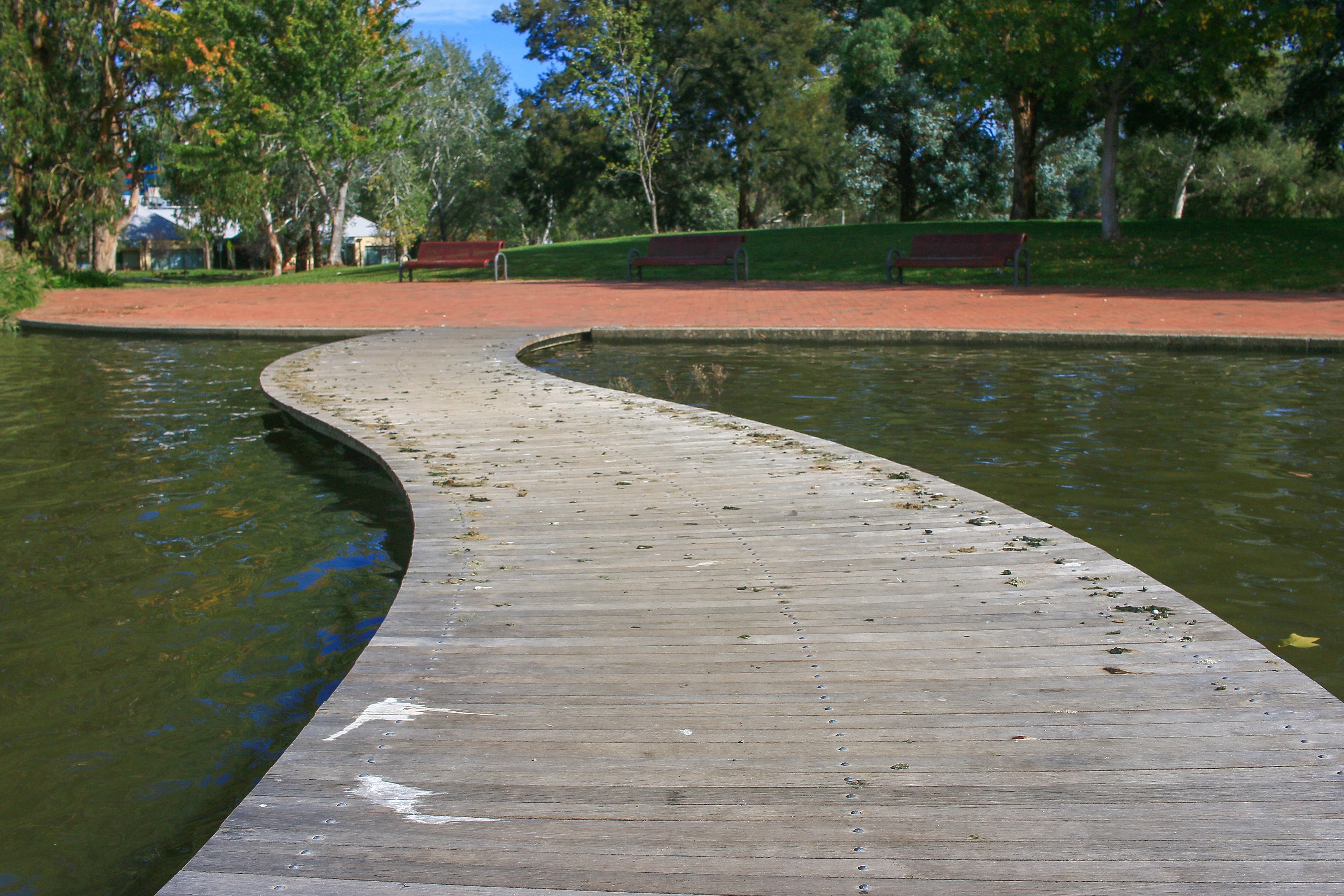

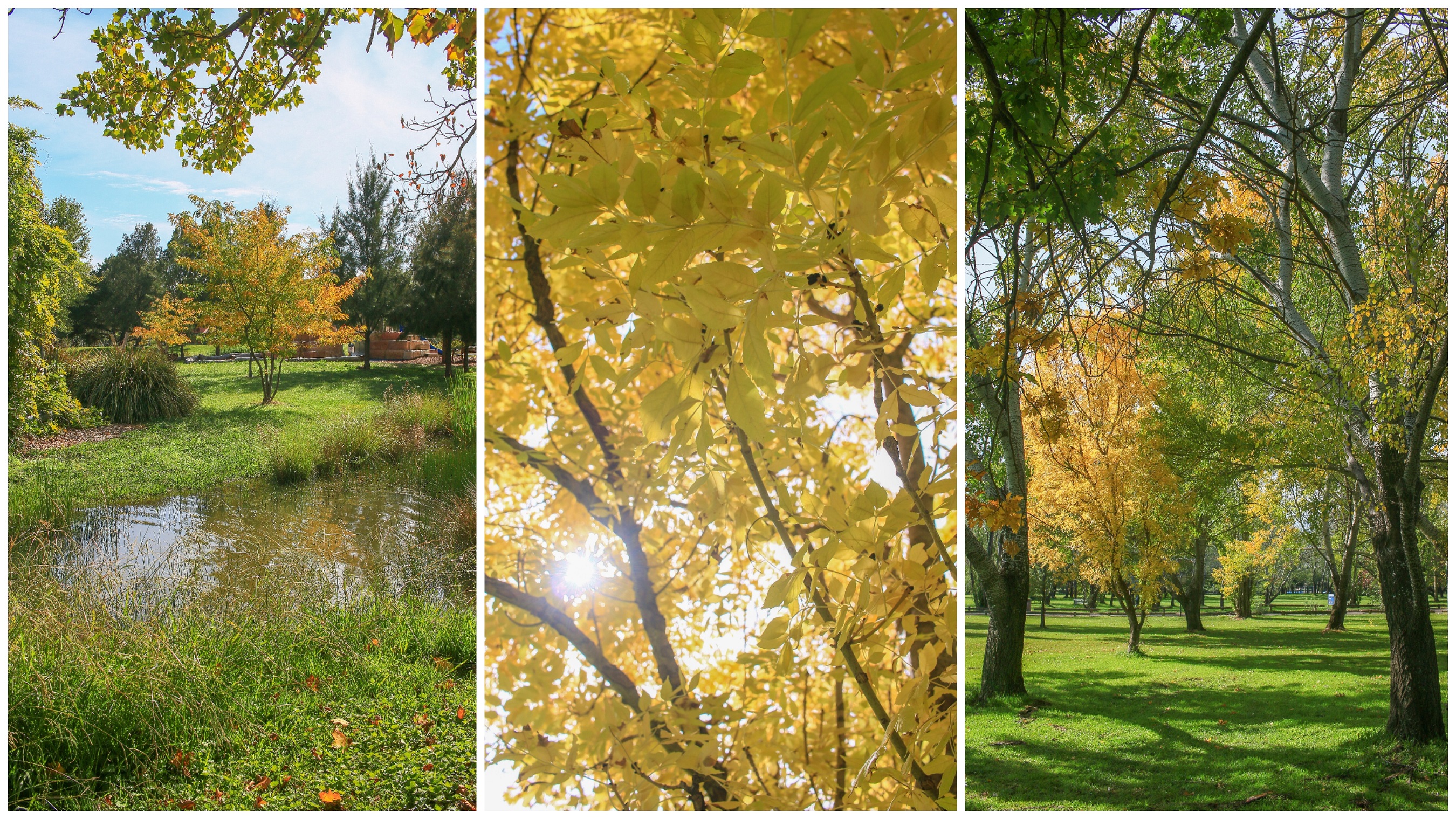 —————————————–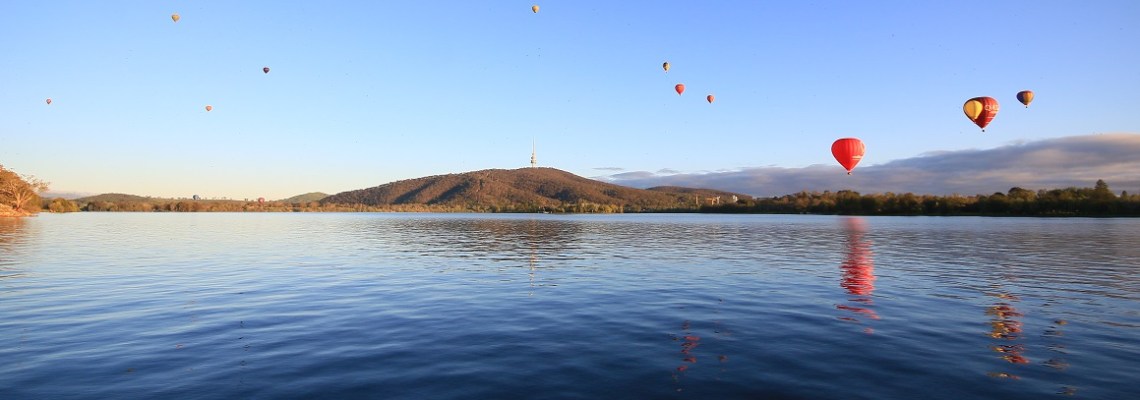


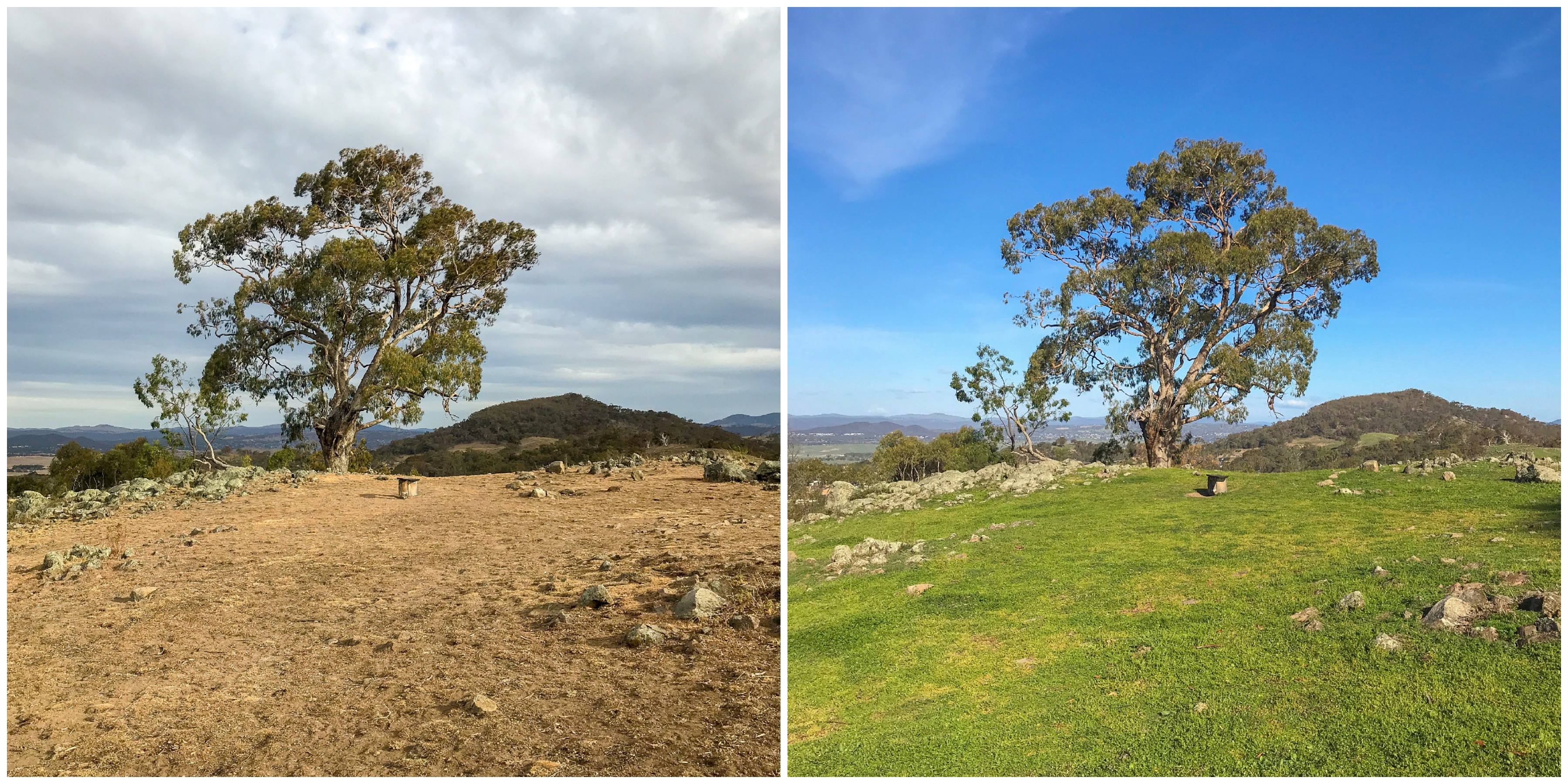


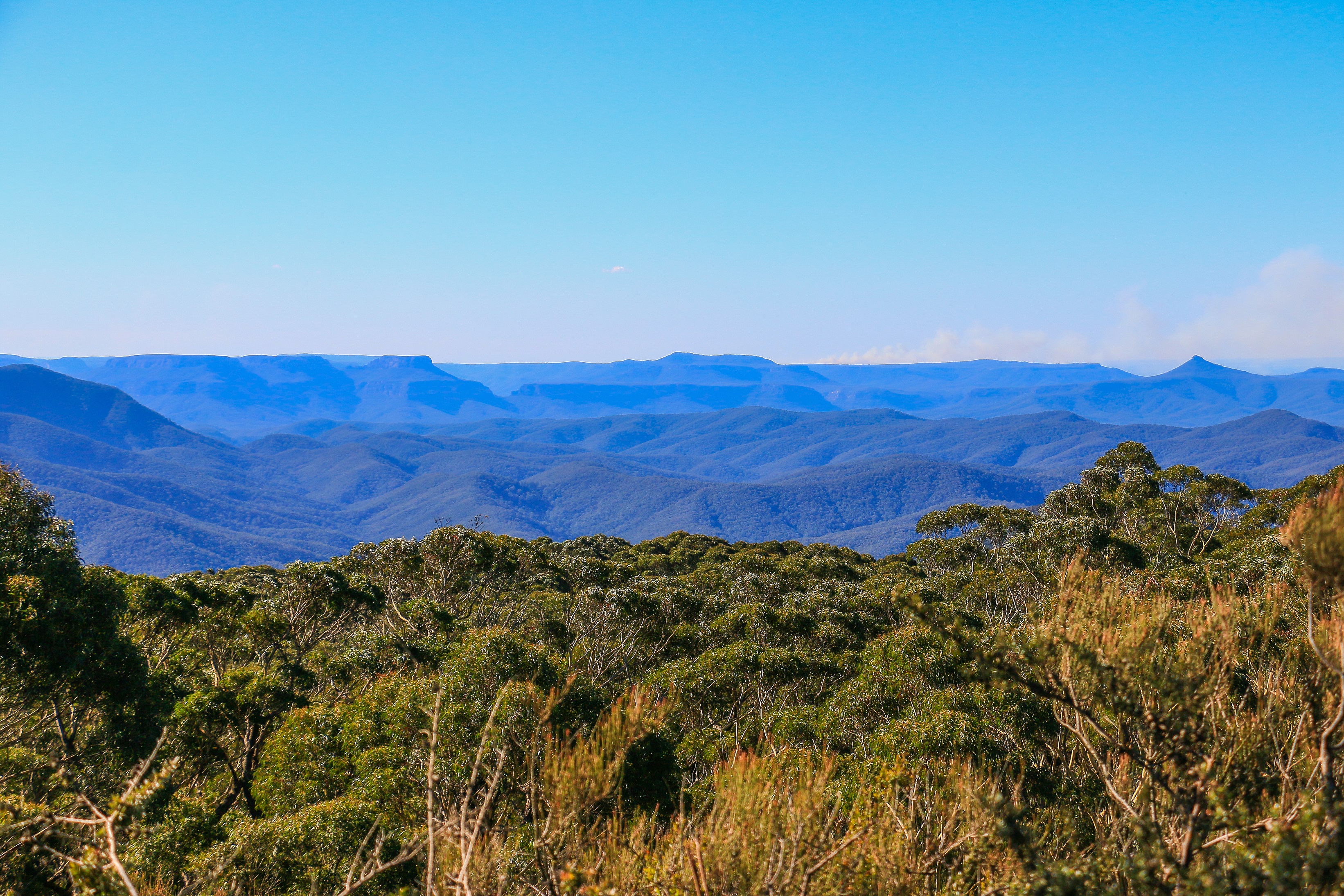
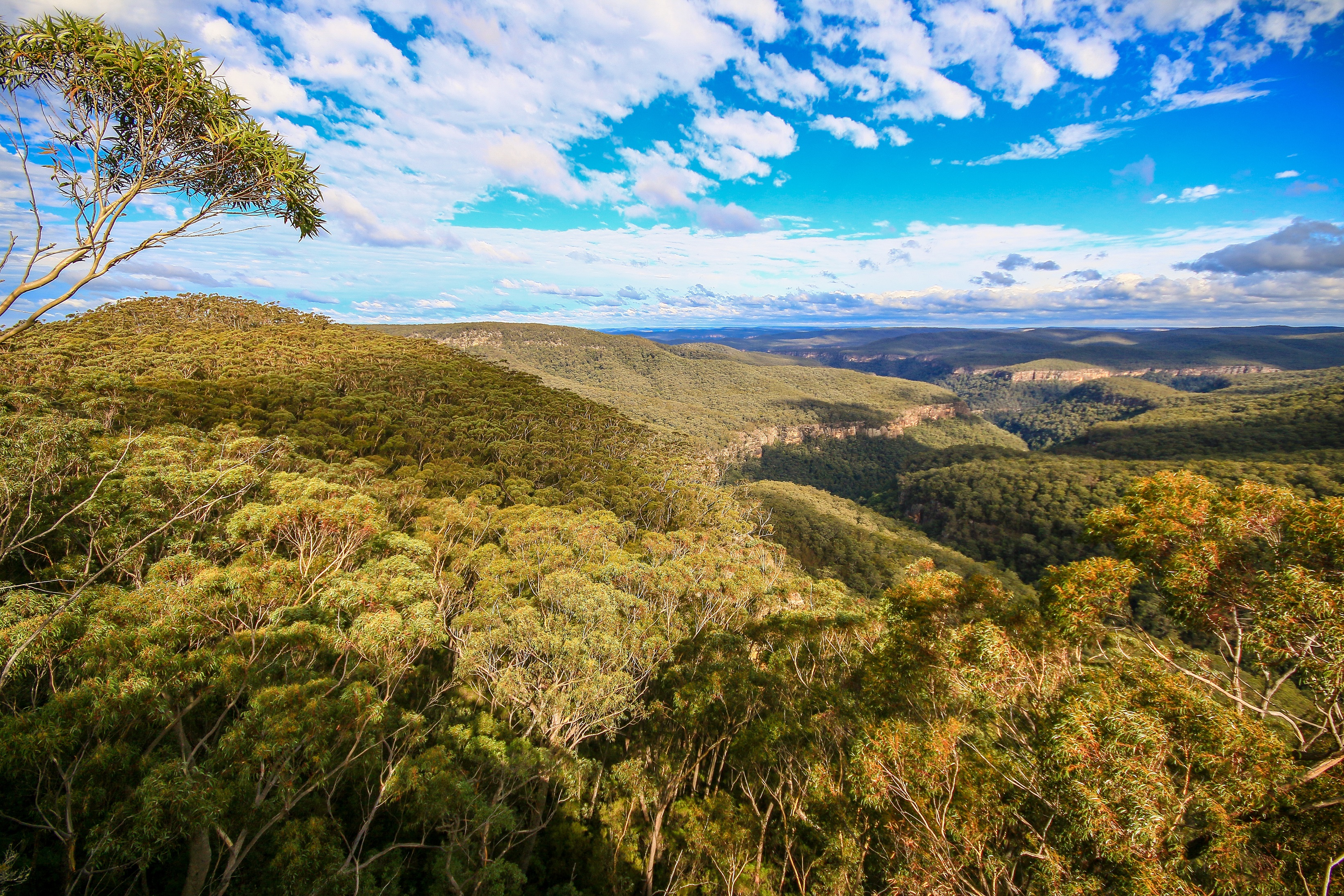

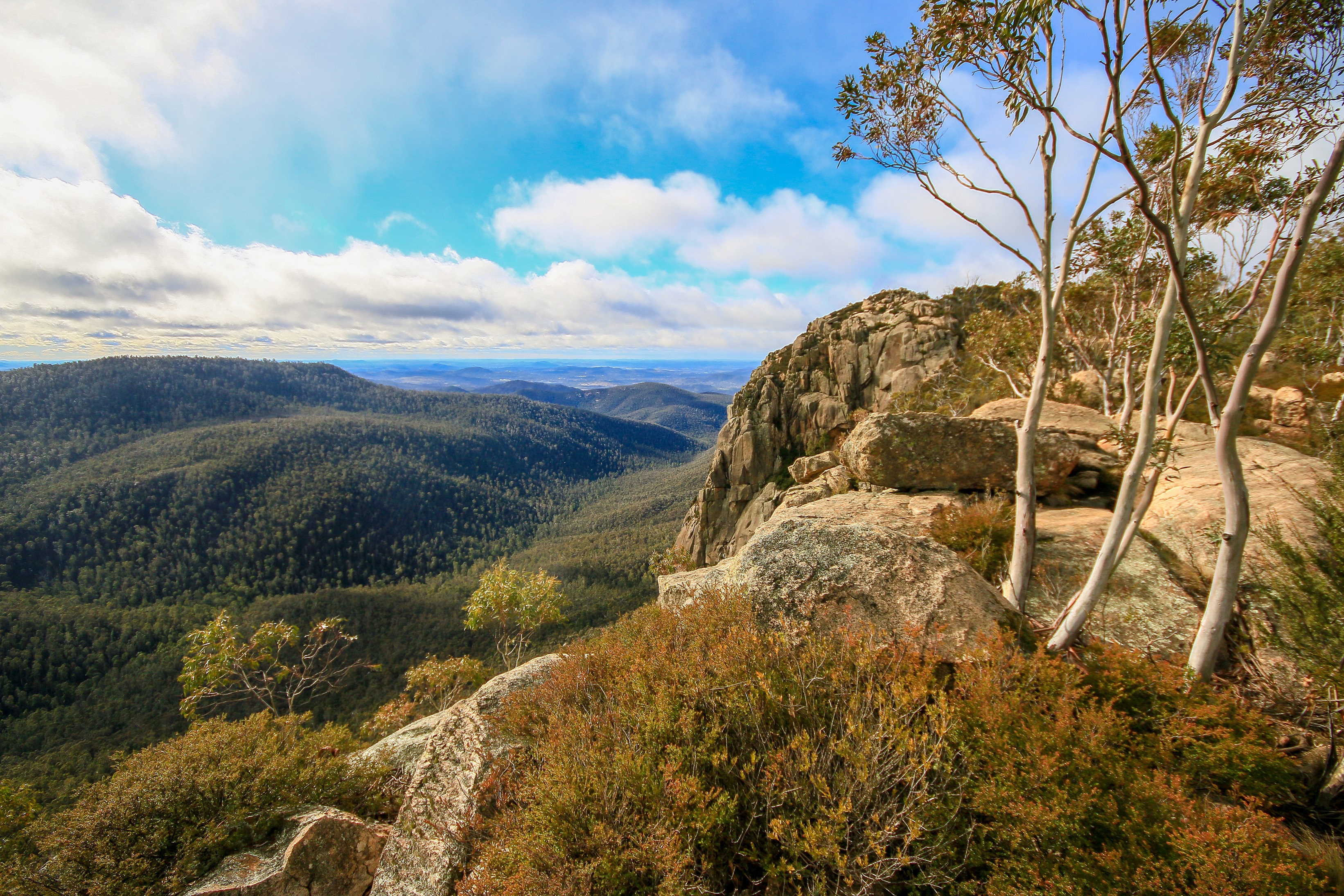
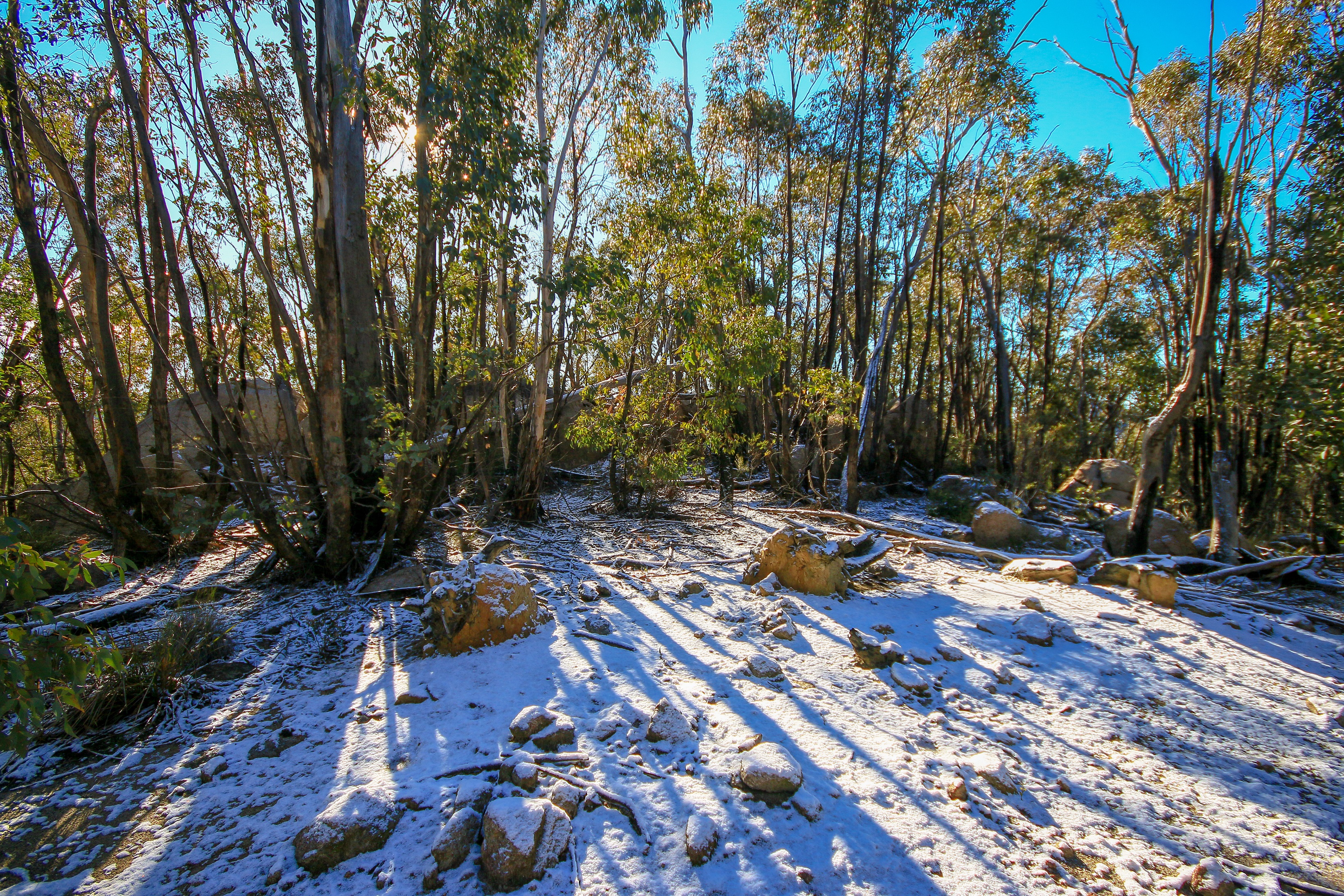
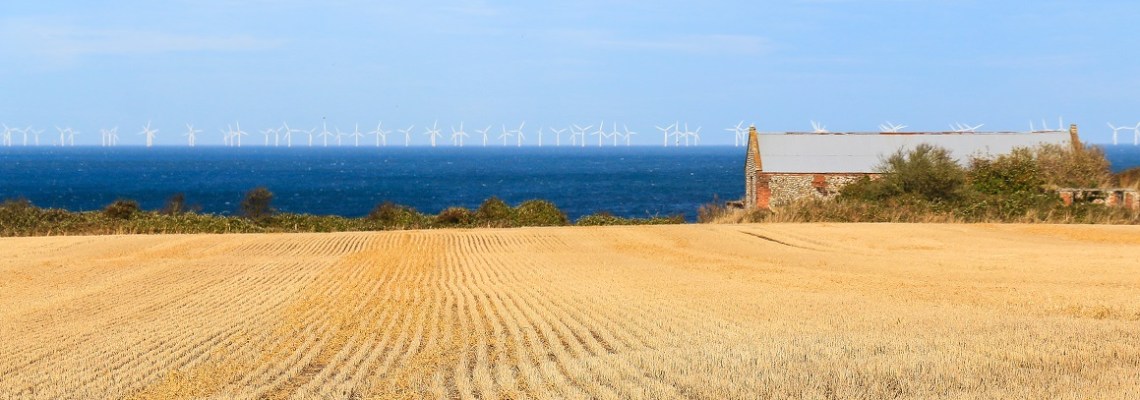
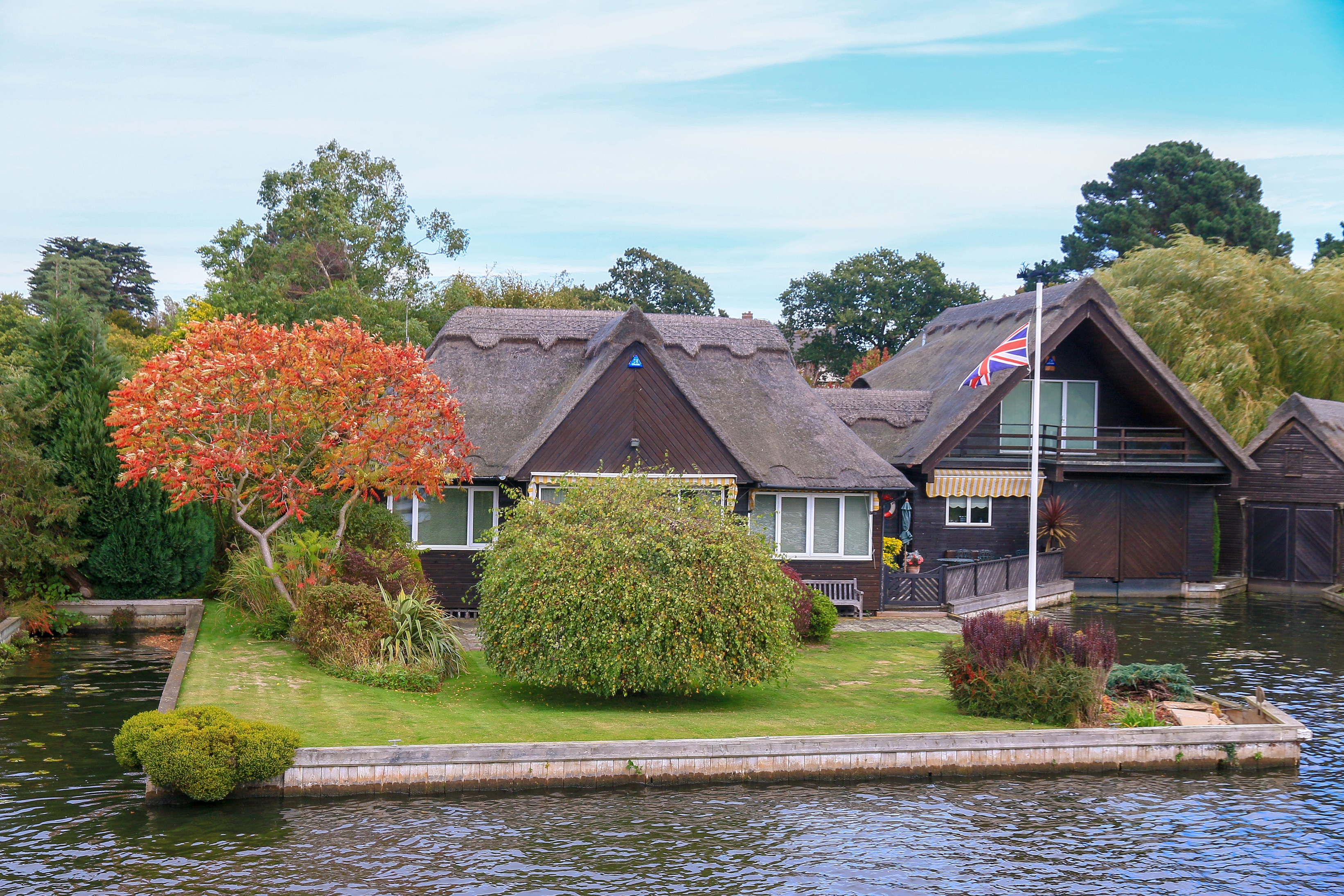


 …And just like that the world spins and you fight against it for a day or so in this never-never land of cold air and reclining seats and unappealing movies and rice with two lumps of what might be chicken. Dessert is more of a highlight because it involves – somewhat poetically – Salcombe Dairy Ice Cream. Here I am on a Singapore Airlines A380 headed for Australia and dessert comes from a little patch of paradise on the south coast of Devon. In that taste of creamy cherry are the lush meadows and deep blue seas of home.
  At some point the world becomes tropical. There are bright lights, acres of glass and miles of travellators. You could buy a Rolex or a roti with some weird money. It is five in the morning and people are eating dinner. You are somewhere in the world at some point in time but not much of it makes sense. If only it was all a dream, the relaxing sound of running water and floating butterflies lulling you into restful sleep…


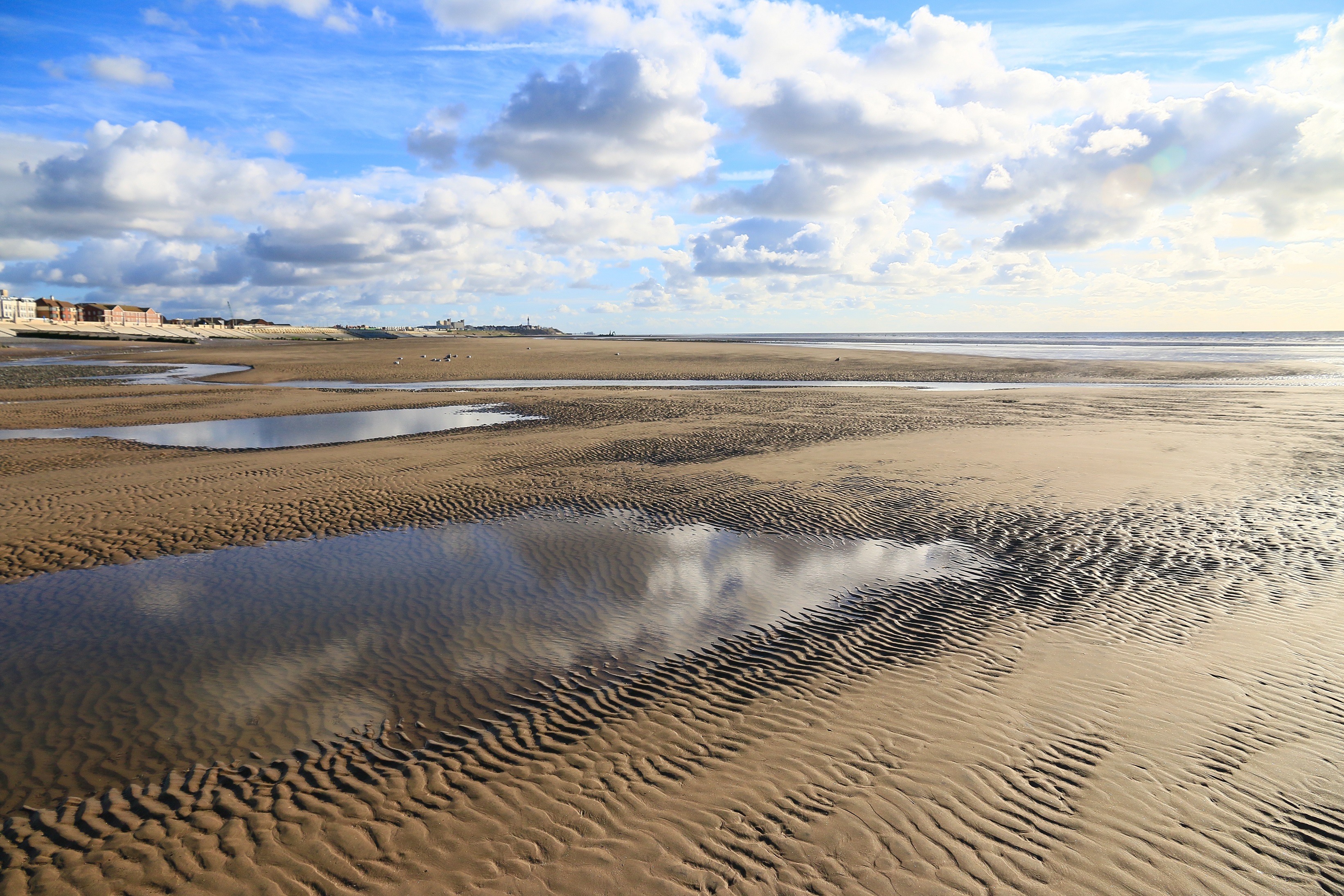
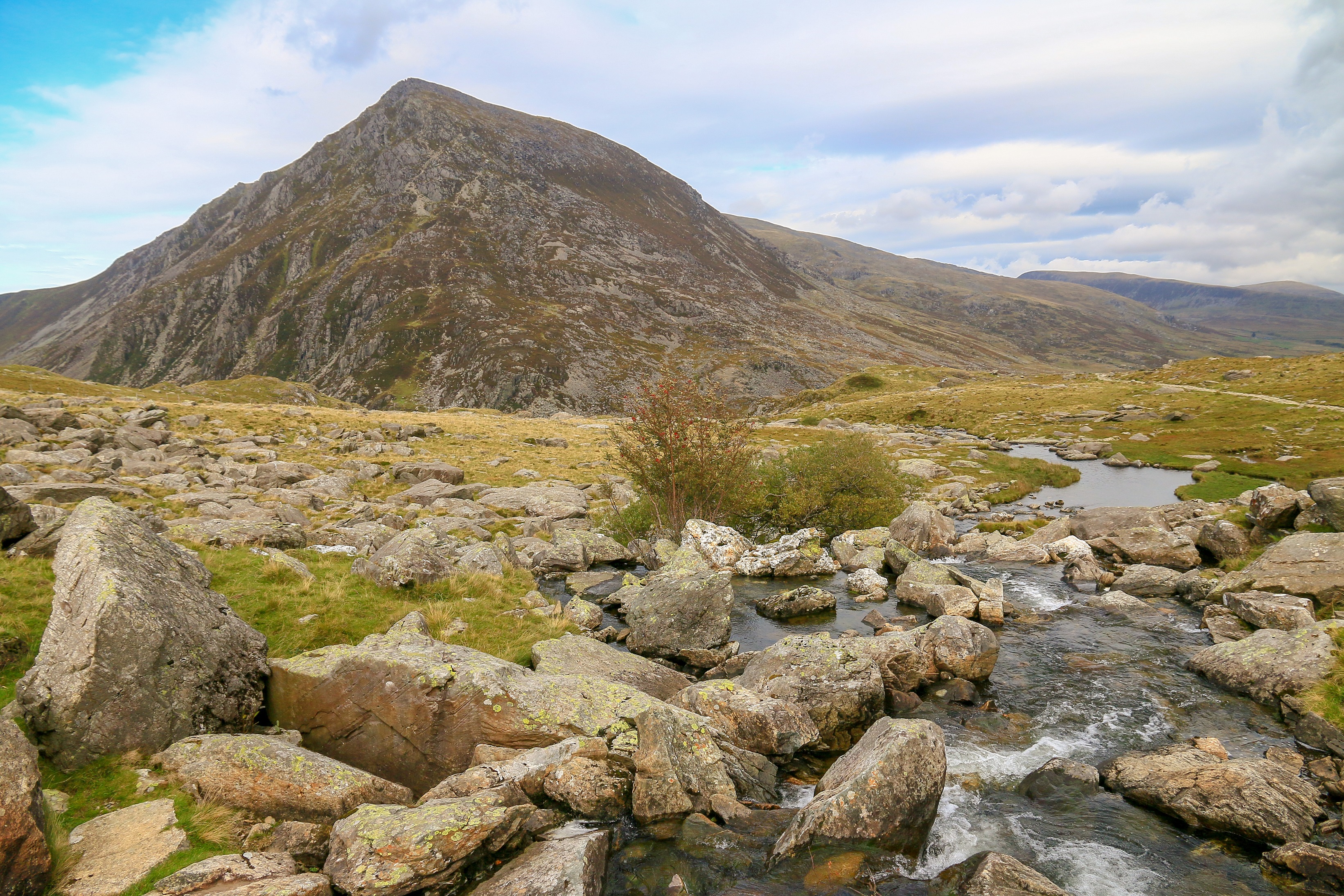
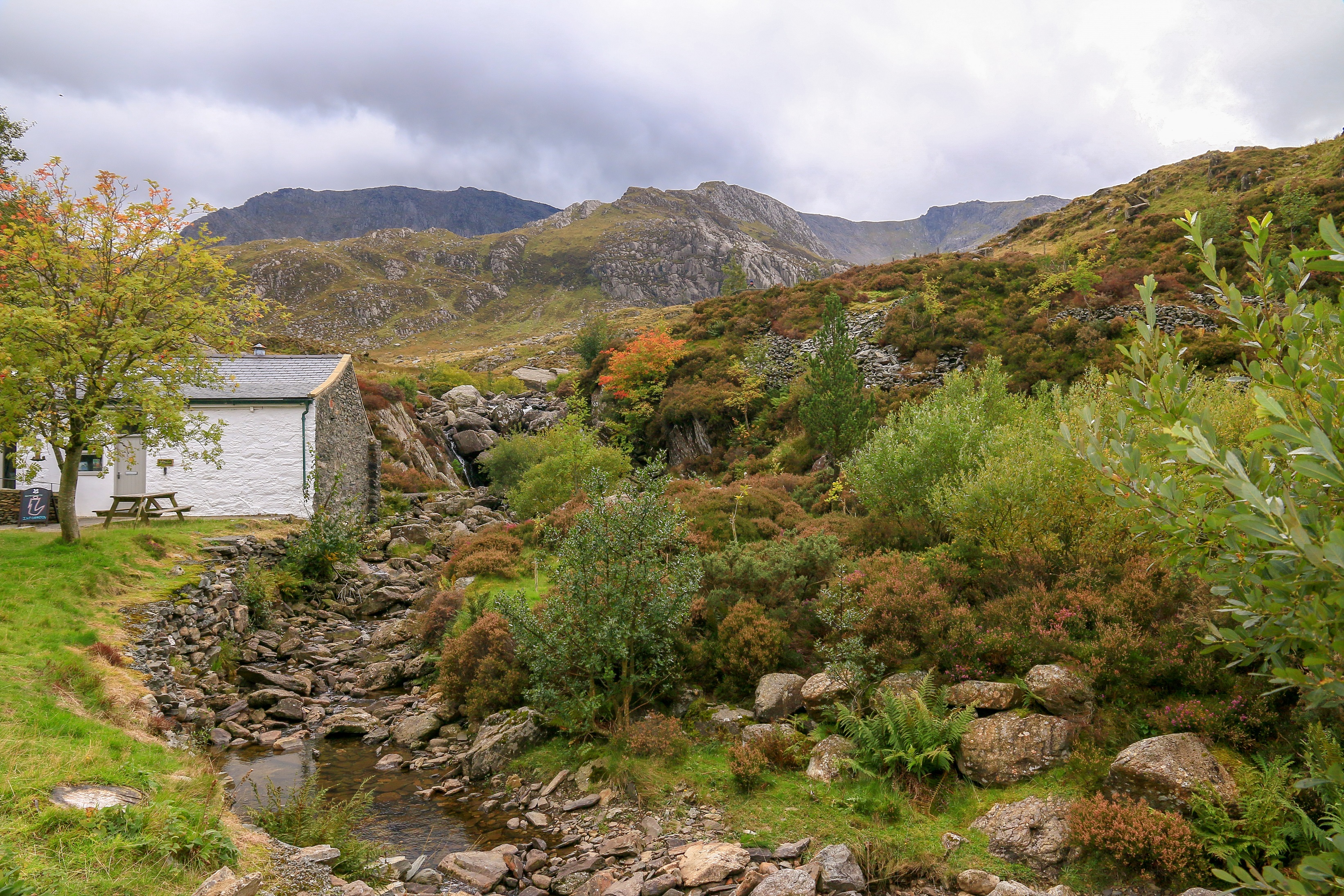
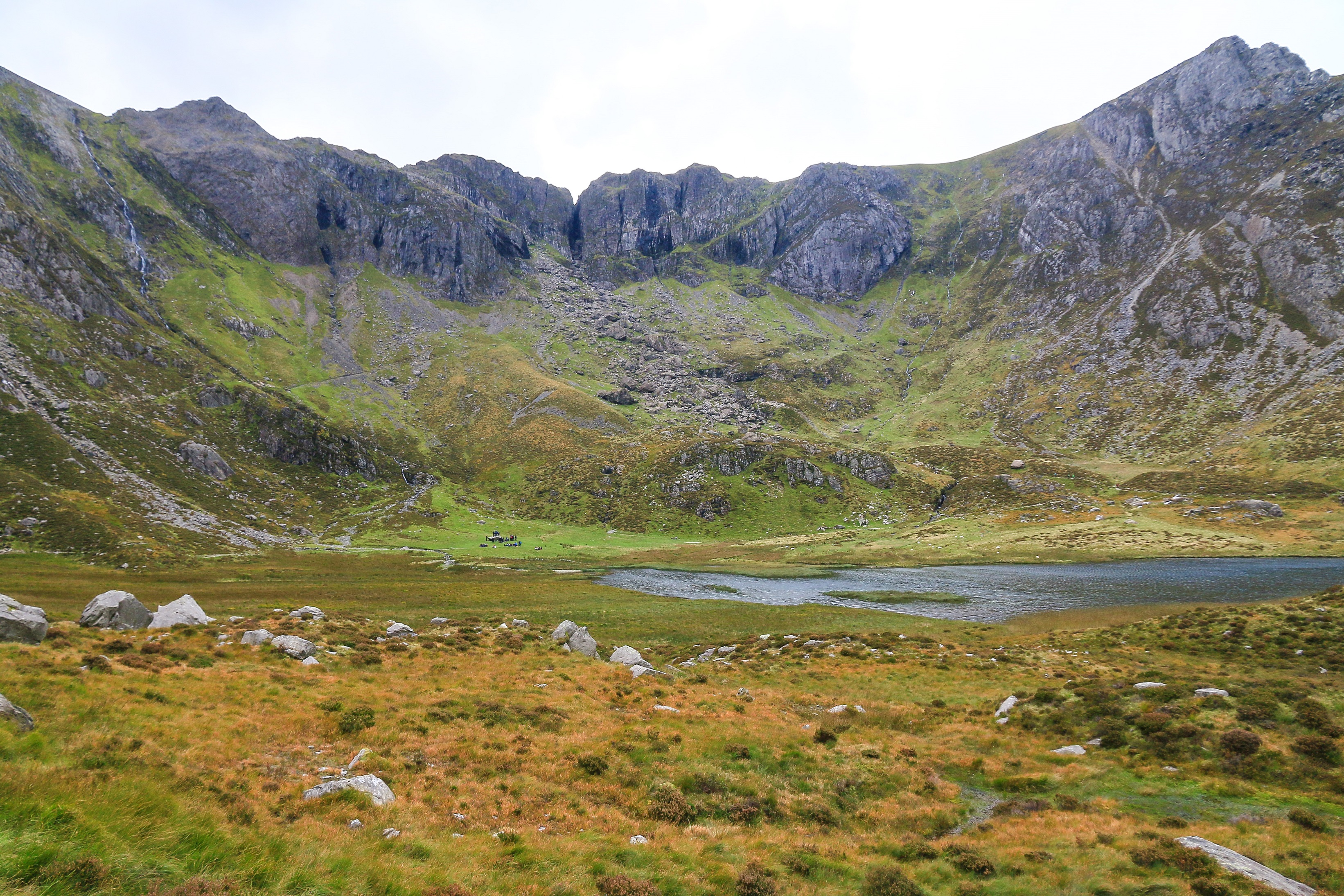
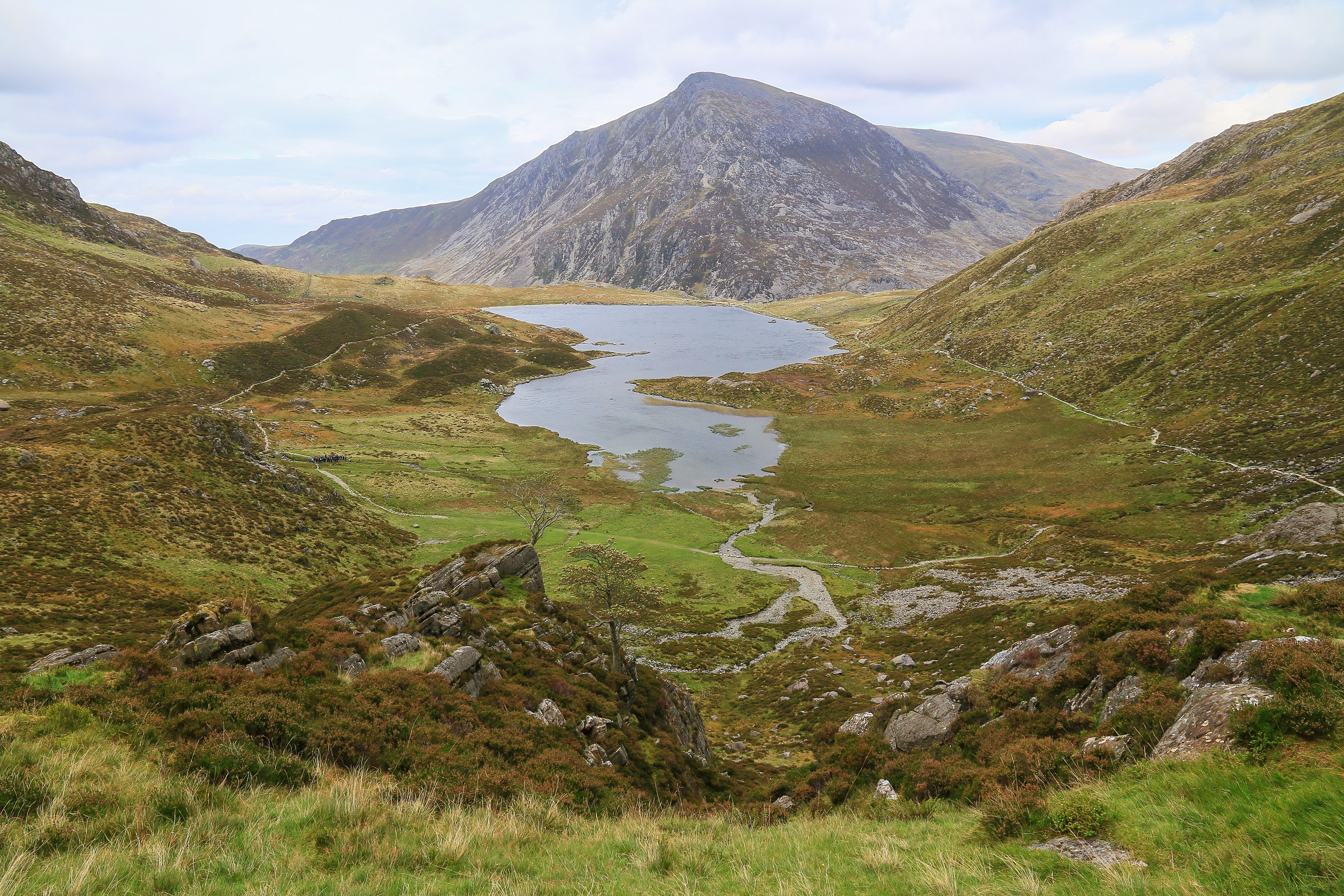


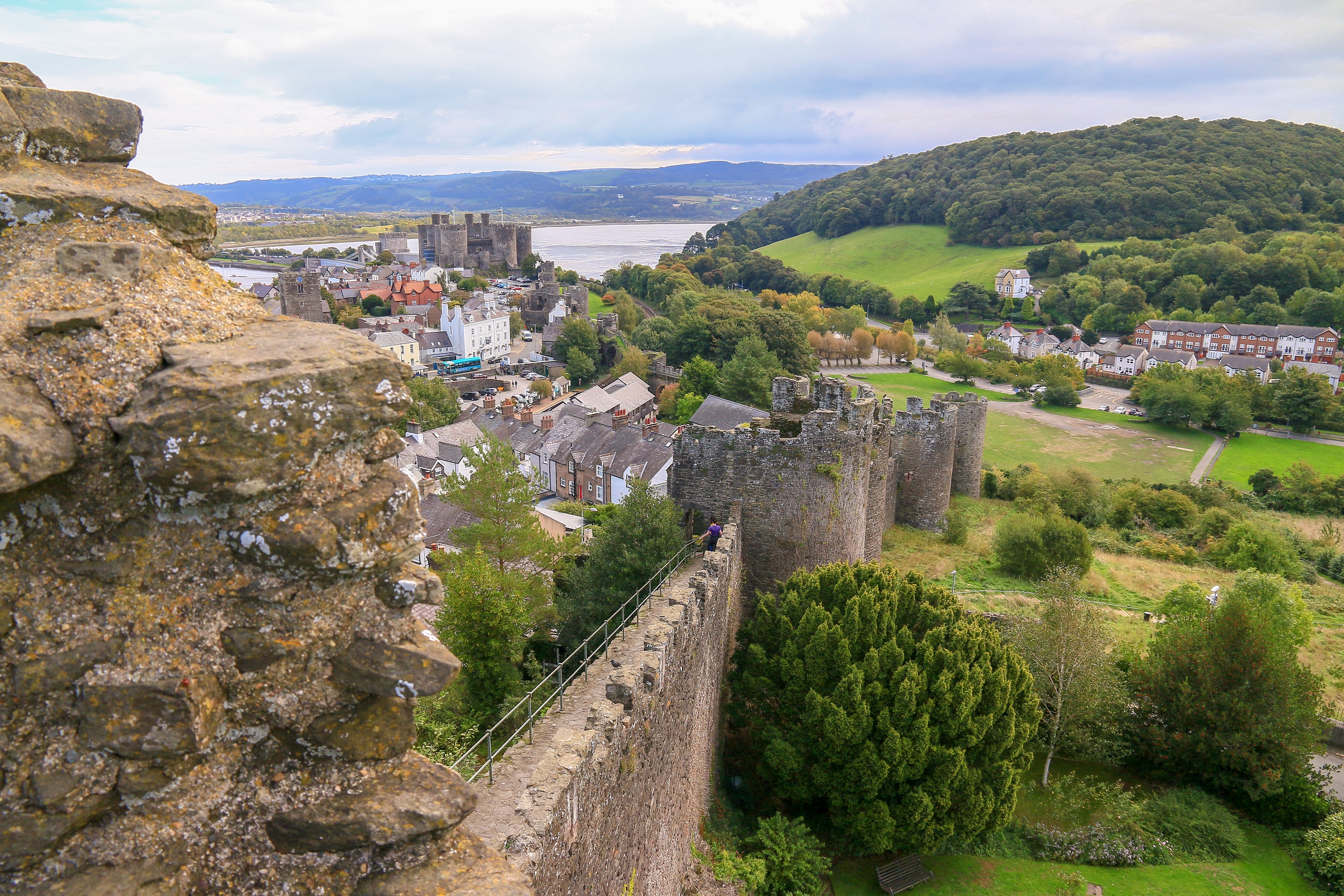
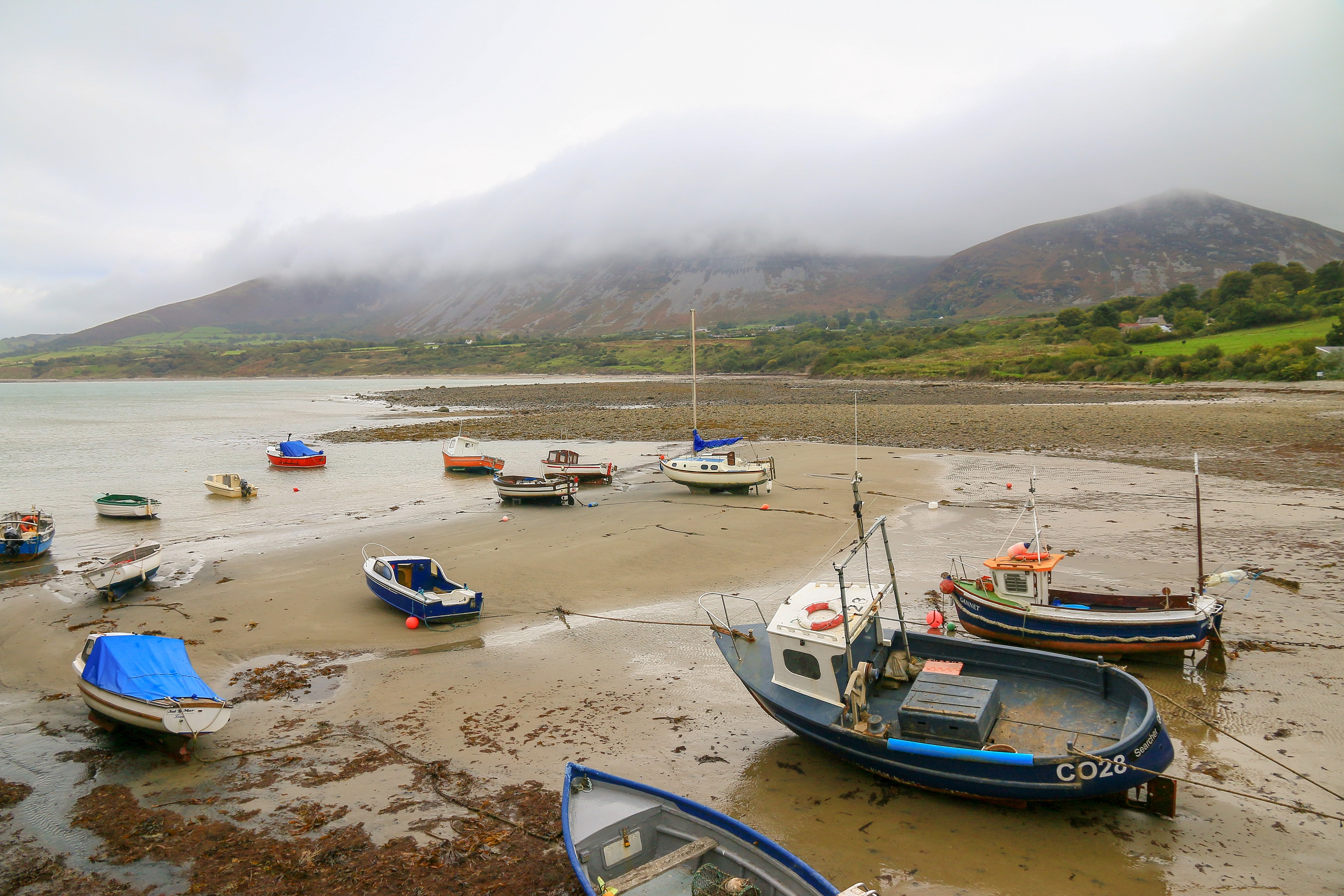
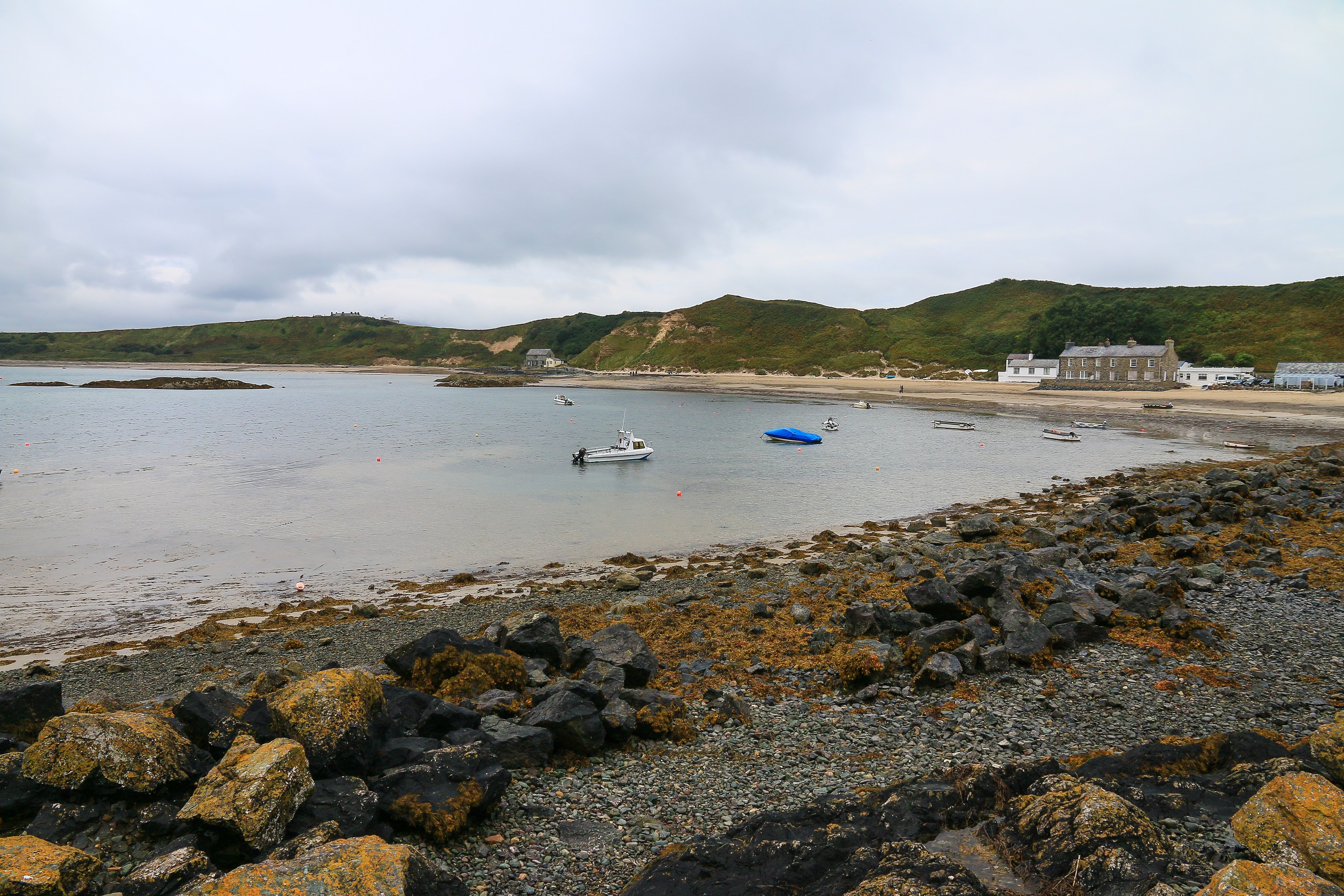

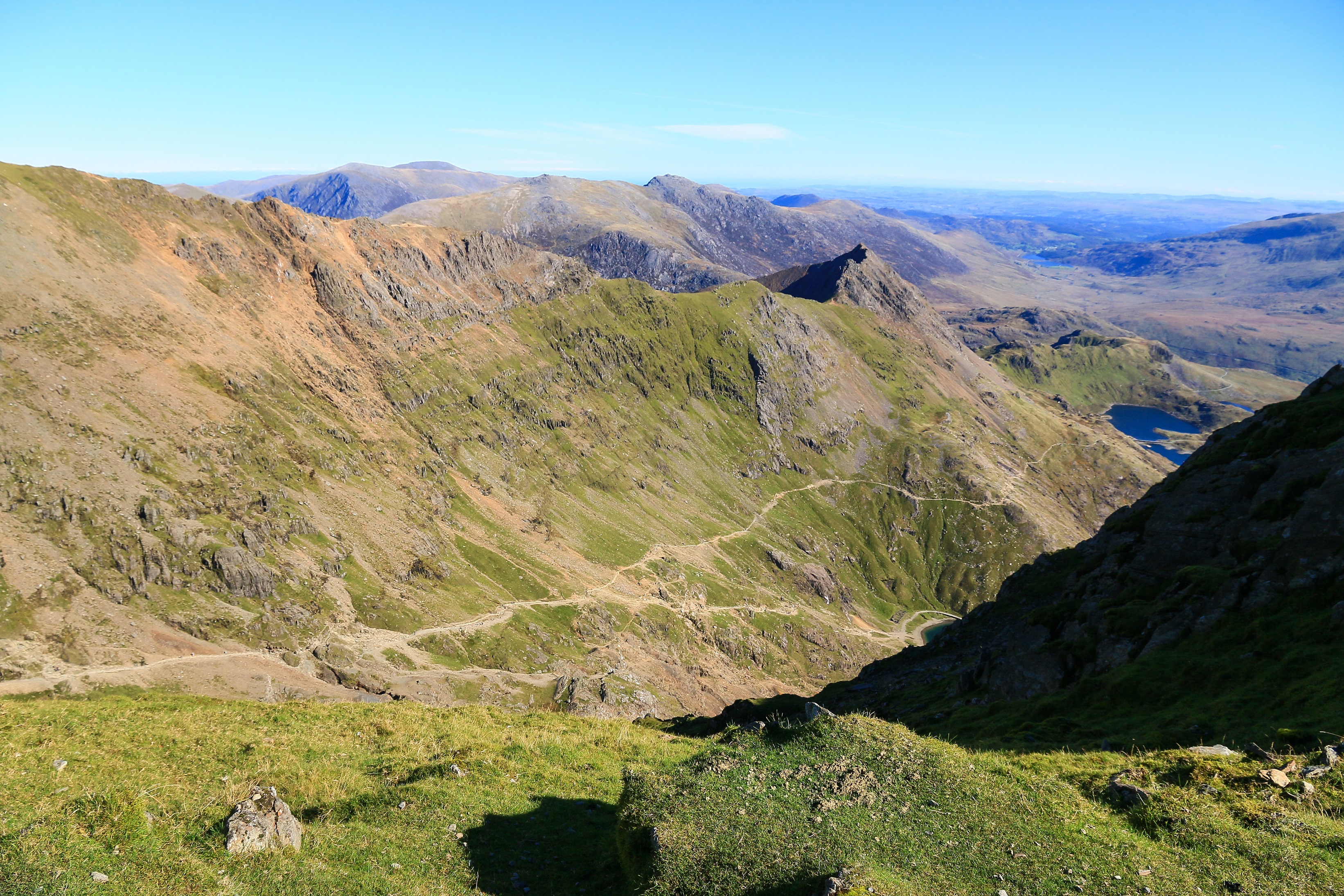


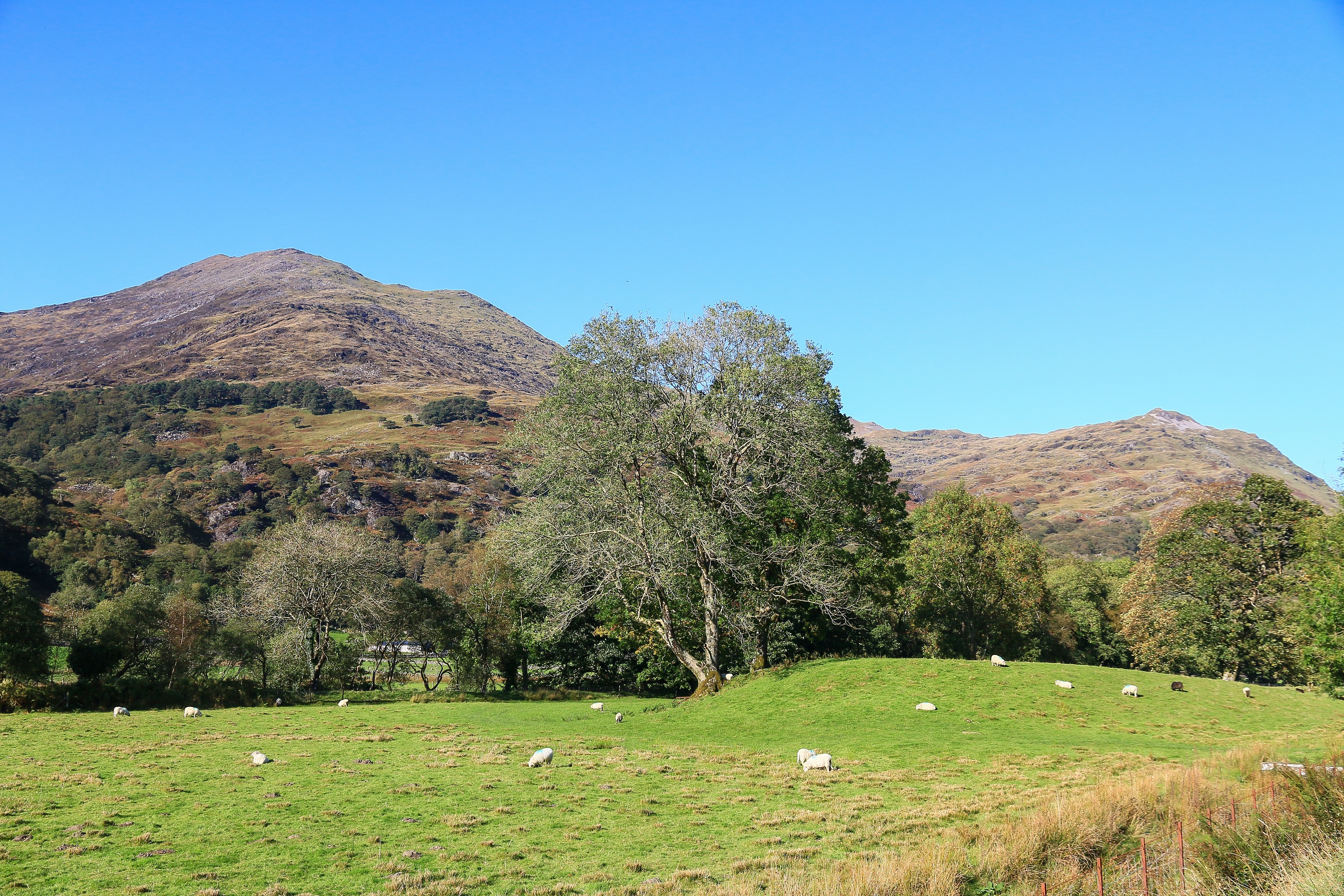
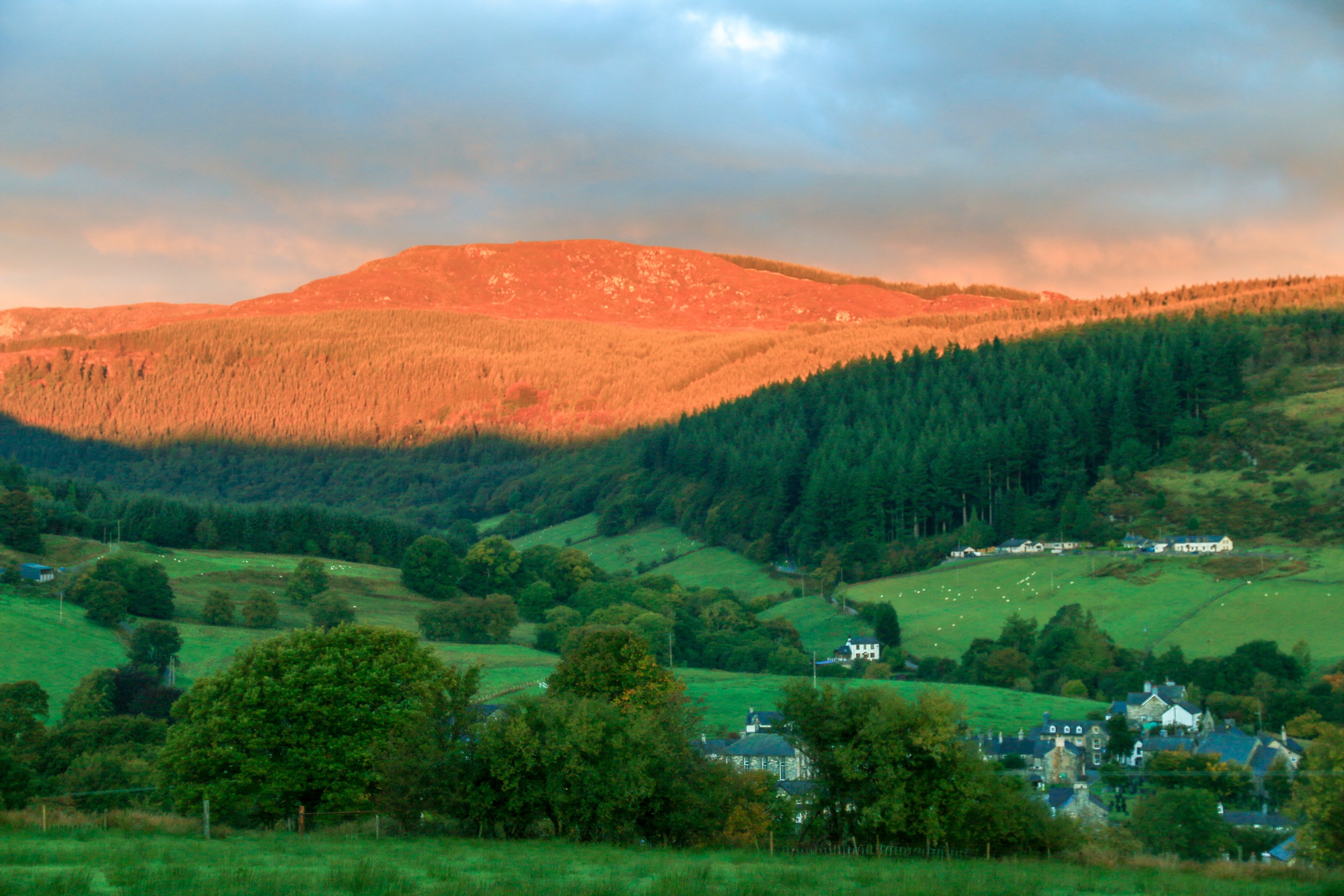
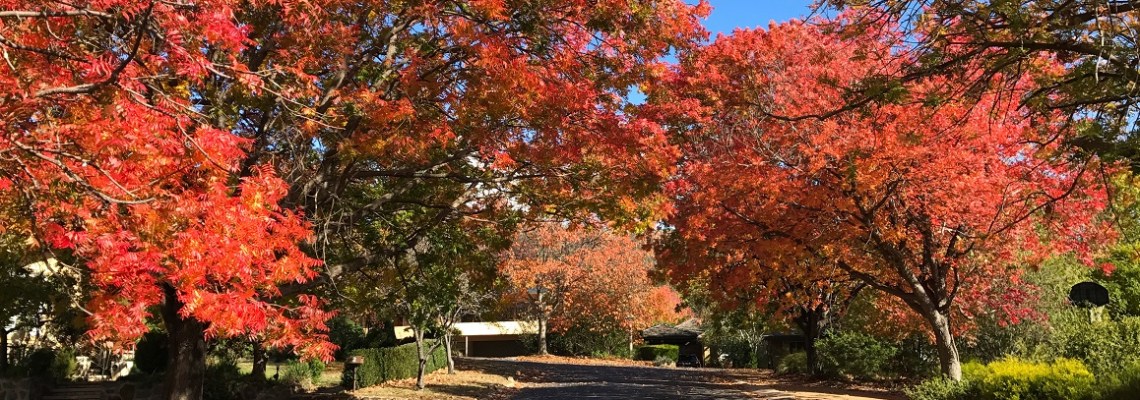


 In truth, the walk up the Yerrabri Track in Namadgi National Park was only part of a bigger equation. An equation whose solution was a delicious bird roll or two. N+J*OzNP(vt)+C0les=br. It’s a concept that has evolved from very preliminary experiments at the New Years’ Test in Sydney, refined to perhaps its ultimate manifestation on the top of Mount Kosciuszko. Replicated many times since, it is now a requisite of any encounter between Jill and I. Recently, each of us have tried to outdo one another in the bird roll stakes and today, on a rocky platform overlooking peak serenity of an abundant emptiness, I may have taken the lead. For now.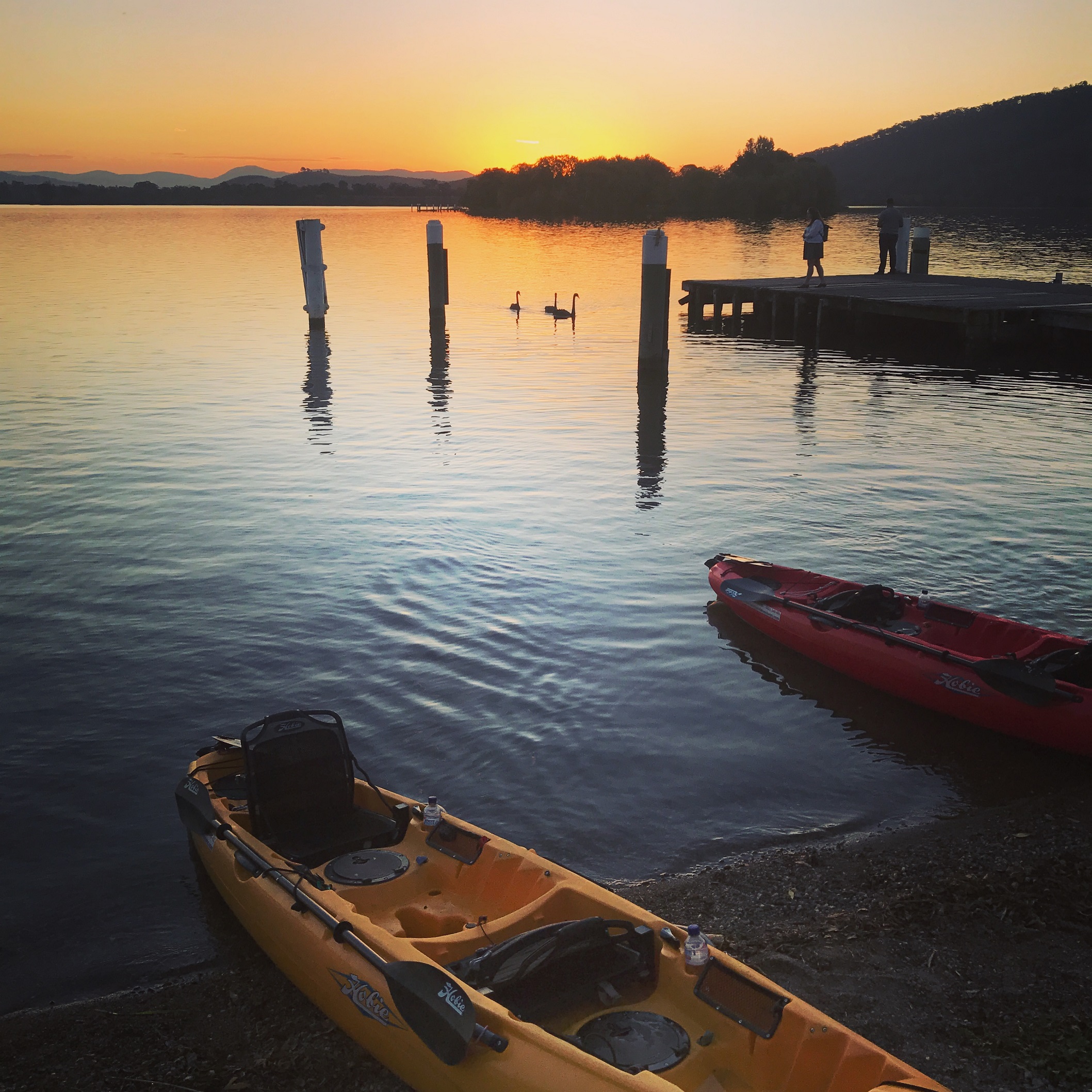
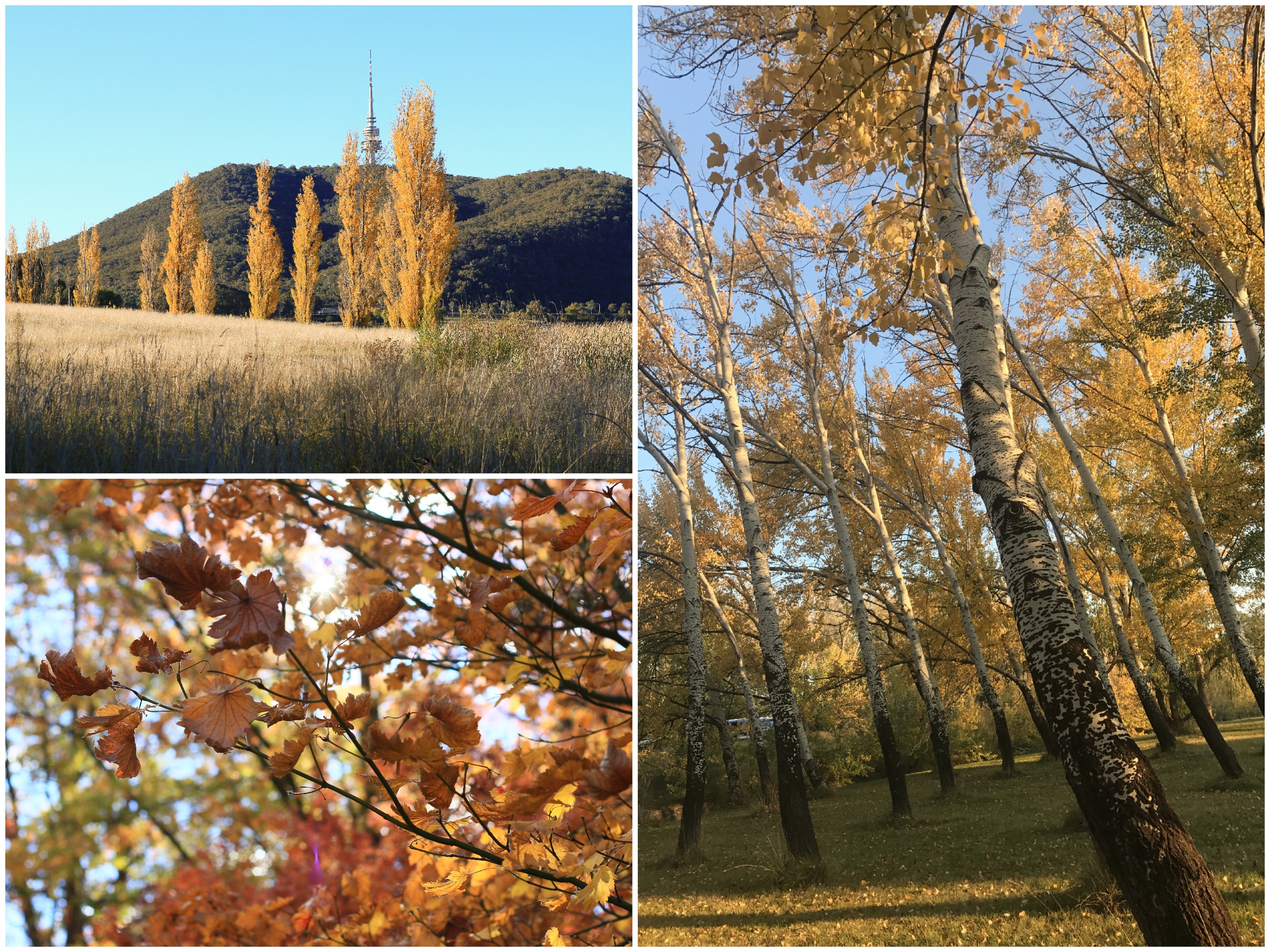

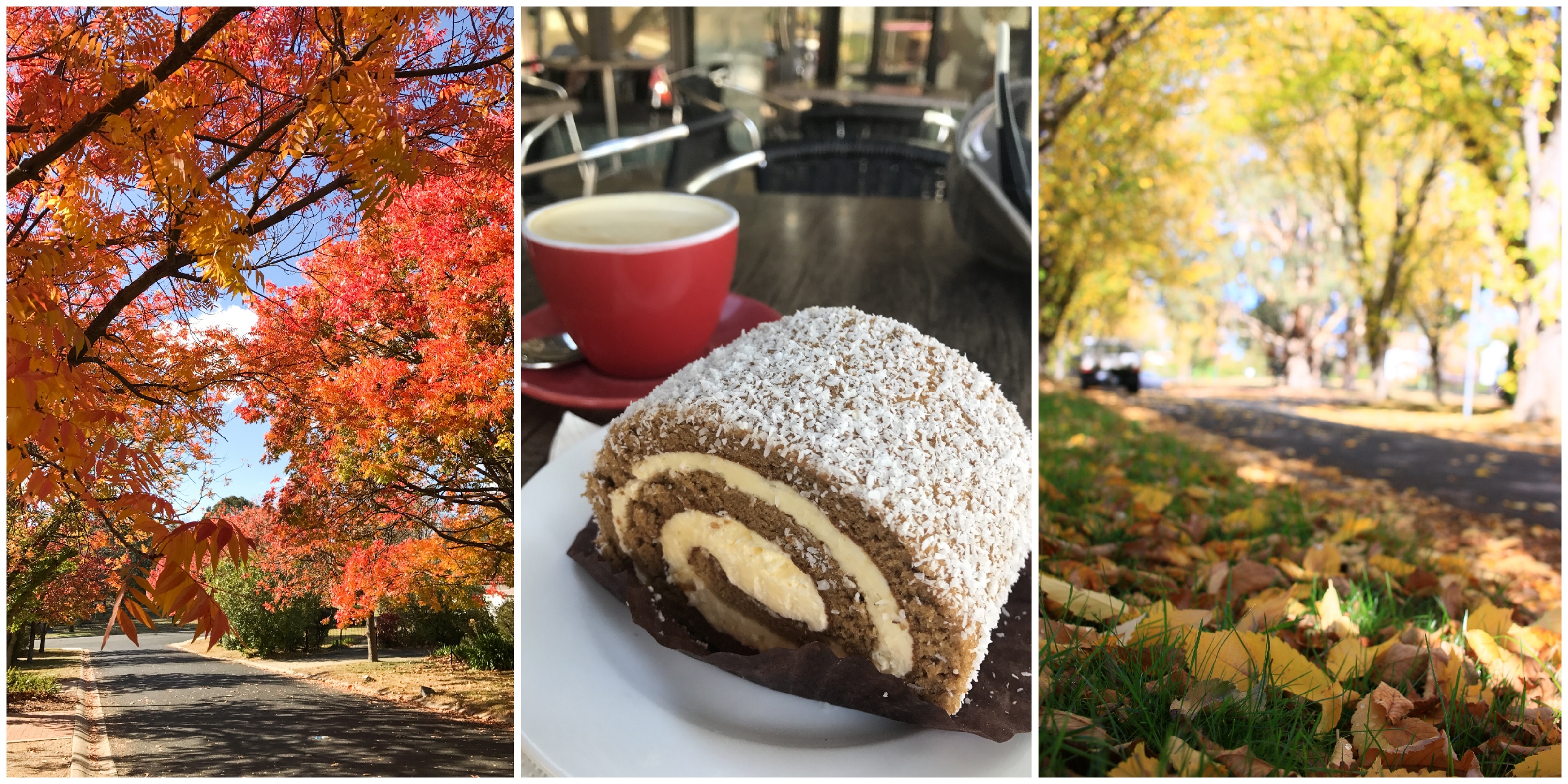

 Landing at Tullamarine, Melbourne was grey and damp. It’s June, it’s Melbourne. I was about as surprised as I would be if the UK Conservative Party decided to dump everyone in the shit rather than get on with governing twice in the space of a year. The wind was strong, my crappy hire car was far from stable, but at least I was heading away from the clouds on the drive north to Bendigo.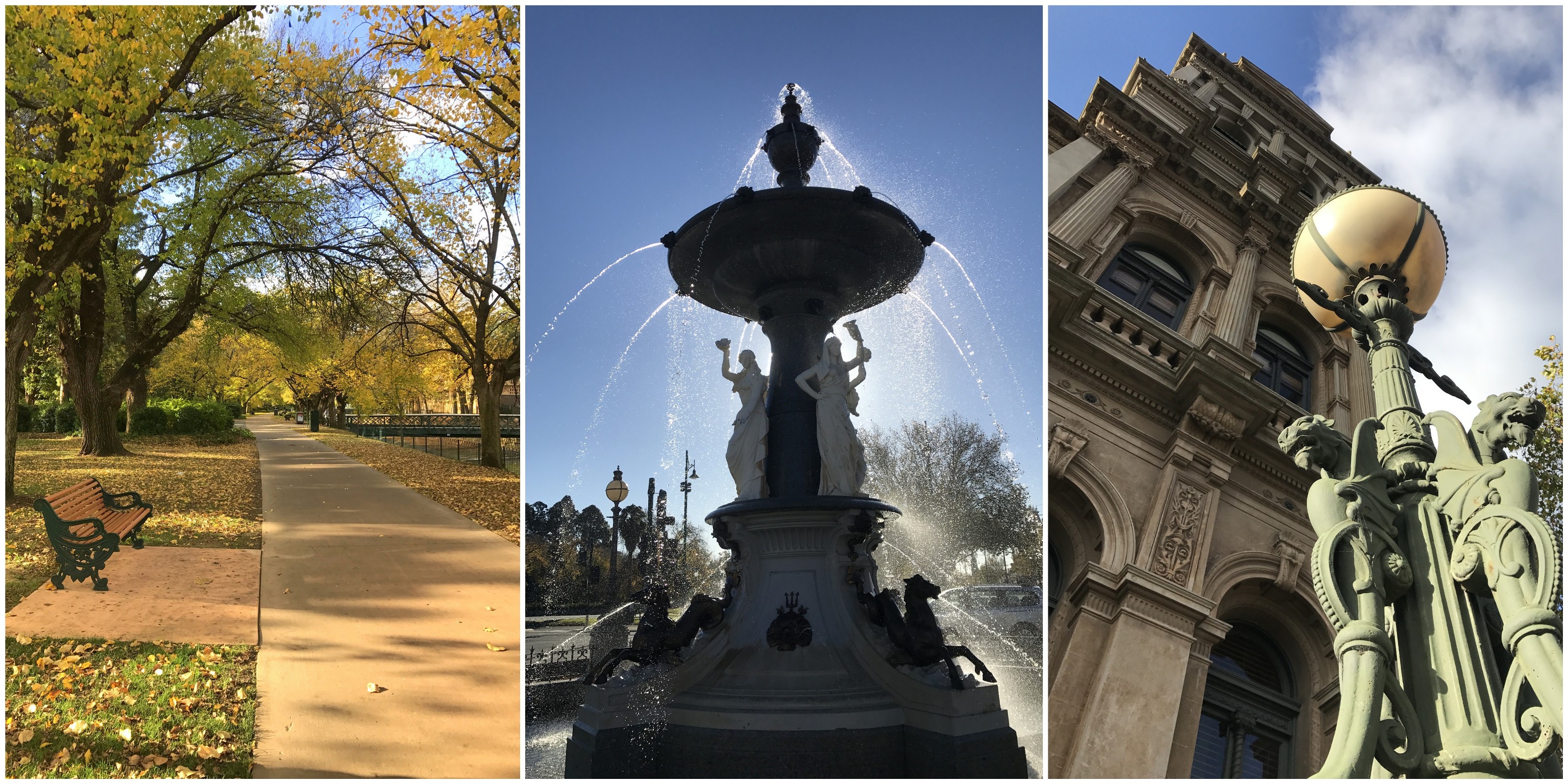


 Anyway, such have been my ramblings in Victoria over the years I wasn’t actually sure if I had been to the top of Mount Macedon before. It turns out that I hadn’t, unless I really don’t remember the upward crawl into roads lined with ever more spindly and pathetic-looking gum trees, the view of expansive plains below and a giant golden cross constructed to appease the wrath of the almighty.
 It was chilly up here, but I knew I was on my way back to Canberra so it wasn’t going to get any better. And for the second time in succession, my dawdling was beginning to make it touch and go that I would make my flight. Maybe I’ll learn, or maybe I’ll just nudge a little over the speed limit and swear at every idiot who dares to pull out at a roundabout and get in my way. It seems to work, and so this gold rush came to a successful frenetic end, antidote to the sedate charm of Victorian Victoria.
 gbpilgrim