June

[Best read in David Attenborough style]: As the temperature cools in the southern part of the Australian land mass, the first signs of an incredible migration start to appear. Senior males of the species are spotted in pockets along the coast, struggling to grasp with the multiple tasks and devices which will propel them north. Reserves are gathered to a state of surplus, and a battle for alpha male superiority subtly ensues, a contest which will last across the season.

But here, it is the female that rules. Freshly groomed and adorned for the long journey, small numbers congregate. While not always harmonious, they band together for the greater good, bound by a common aim: maintaining survival, comfort, and subjugation over their once proud male partners. Hunting out and often gathering the food, directing the placement of shelters, maintaining the hygiene and lustre of their coats. In groups characterised by auburn dyed hair and expensive designer spectacles funded by generous tax breaks, these females underpin the mass migration that takes place.

And so, in June, across the more northerly coasts of this great continent, the grey nomads begin to cluster. They flock in their thousands to known waterholes. Sites like Carnarvon are almost overwhelmed by the influx, its banana-rich pastures transformed into shanty towns and its pharmacy inundated. The males continue to display in a parade of sandals, white socks and short shorts but, predictably, with little impact. After a while they retreat to seek out fish and engage in ablutions, but there is still competitiveness over the size and strength of their equipment. Some will settle here, and see another winter through with their mate. But others, with stronger torque and deeper reserves, will head on, north to the next great gathering place.

[Back to normal voice in your head]: My first significant encounter with a mass gathering of grey nomads was back down in southern Australia, in a pleasantly ambient March. It was apparent that Mudgee – a NSW country town standing out from many of the others thanks to pastoral affluence and providores – was an alluring spot for ripening baby boomers to hook up their motor homes. A caravan park beside the river, close to town, with excellent ablutions that may have won an award for hottest power showers in the west was always going to prove popular. And so it was that the mini street blocks dumped onto a meadow were crammed with a veritable mix of shiny white coaches and ramshackle fibros, often adorned with an auburn-topped lady in a folding chair reading through her expensive spectacles while a rangy male figure stumbled around trying to figure out how to empty the septic tank.

June01Campers, as so often, were an afterthought. Allocation to a small patch of grass that possibly classifies as a verge. Sited next to the river, but with the downsides of an adjacent public right of way and numerous biting insects. As ever, placed in the most open and prominent position so that all can look on in bemusement at the canvas contraptions that somehow you and your companion manage to be sleeping quite comfortably in. Swags were always a source of much fascination and eternal debate amongst the nomads, with lively discussions around one’s own ability to survive in such a thing and – on occasions lubricated by grape juice and a great Aussie irreverence – the possibility of sexual intercourse in such a structure [i].

Deflecting much of this attention and offering comradeship against the rows of Grand Adventurer 3000s and solar-panelled satellite dishes tuned into Today Tonight, one other person was braving the use of canvas in Mudgee. And quite amazingly it was one of the greyest of the grey nomads, a dear old lady cycling all over Australia towing her belongings, one of which was a stuffed dog [ii]. There is always someone or something to ruin your sweeping generalisations and lazy stereotypes, darn it. Anyway, being one of the few persons on site to actually need the kitchen facilities (I say kitchen, but think sink and a few tables under a picnic shelter), it was discovered over breakfast that she was in need of a cataract operation, possibly because she hadn’t invested in a pair of those expensive designer spectacles. And with a few delightfully cutting comments about the extravagance of $100,000 motor homes, she loaded up and wobbled on to the next stop down what I hope she knew was the main road.

We never did come across this cycling legend again, something I am pleased about in one sense because I had horror images of finding her happily peddling down the wrong way of the M5, the stuffed dog the only one alert to the situation, a terrified expression on its face. But it is quite possible – indeed highly likely – that you will encounter the same nomads, recognise the same Grand Adventurer 3000s, bump into the same old guy off to the ablutions for his dump, during the migration season.

June02Rob and Sue – well we think they were called Rob and Sue so that is how they became known – spotted us first. Apparently I had overtaken their car and trailer about ten times that day on the most boring stretch of road to cross the Nullarbor. I can’t say I noticed, because that boring stretch of road was so soporific that senses became dulled, and the caravans and trailers all took on a likeness and started talking to me and whispering sweet nothings as I hazily overtook them at 140kph, all entirely safely as pink elephants blew champagne bubbles through their trunks and out into the endless sky. But over a roast lamb fiesta in the quite delightful Fraser Range Station that night, they recognised us. I suspect a shiny blue Outback with a roof box and what were relatively young people inside (it’s all relative) were a more distinctive site. And as Rob recounted being overtaken ten times that day by some young hoons in a Subaru, my mind tried to recall whether any of those manoeuvres were in any way dodgy [iii].

Rob and Sue were quite lovely, in that quite lovely way where everything is quite lovely. Kind of like the quite lovely aunt and uncle who would have a quite lovely lovingly kept home and would happily let you stay for a lovely dinner and sleep in their quite lovely spare room. They were younger nomads; indeed there was a chance that Rob might still go back to work after their little test of the waters. They didn’t even have a proper motor home, just one of those plain trailers that somehow transforms itself into a suite at The Ritz. I’m sure they didn’t quite see themselves in the same mould as the wildebeestian hordes of socks and sandals and designer spectacles, and were glad to speak to some youth for a change [iv].

Anyway, the next day as the end of the Nullarbor beckoned, we passed Rob and Sue a few more times as part of that drive-rest-stop-drive tango, but now always with a friendly flash of lights and gesture to the pink elephants blowing bubbles in the sky. We marginally missed each other down in Cape Le Grand National Park near Esperance, a fact I discovered when we came from opposite directions to cross in the quite amazing Fitzgerald River National Park [v]. Later, I think they may have been a few vehicles in front of us at some lights in Denmark. And we fully expected to bump into each other once more, migrating north up the west coast of WA. So it was with some disappointment that Rob and Sue vanished into the great tarmac ribbon on red dirt, never to be seen or considered to possibly be stalking us again.

I reckon they were always a few days ahead, due to us lingering around in some backwater like Perth, finally drinking good coffee and wasting time in its breweries and beachside cafes. They were not there among the few souls braving the annoyingly icy waters of Shark Bay to see dolphins being fed; neither did they emerge from the masses crammed into the favelas of Carnarvon, a site which appeared to be only one step removed from a season finale of The Walking Dead; perhaps they weren’t brave enough to stop at the the very rustic setting of Quobba Station or enjoy the jackaroo appeal of Bullara Station, even though a few alternative, non-stereotypical nomads could.

June03

[And so, back to Attenborough]: In the northwest corner of Western Australia, Exmouth is the next staging post for the nomads. Here though, they come up against some younger bucks who could represent a threat to their existence: outsiders from France and other wild lands with extravagant plaits and body features that are proudly displayed, yet to sag. Competing for prime locations next to the ocean from which to alternately strum guitars and read books, there is an uneasy peace between the two groups. As the fine weather holds, an air of acceptance persists and the species cohabit side by side, with Derek very friendly towards young Amelie much to the disapproving over-the-spectacles glare of Margaret.

[Cue crack of lighting and thunder rumble scene, signifying, uh-oh, trouble]: But an unseasonal low pressure storm approaches. Some hunker down, others retreat to the cheapest motel to make the most of the downtime and look at some research publications and transfer the content into an excel spreadsheet in order to save the world. Trouble and coffee brews.

As the rains continue, the wily nomads now sense their opportunity. Secretly unhitching the power and emptying septic tanks in the quiet of dawn, a convoy gathers on the one and only main road of Exmouth. Emboldened by their superior torque and sixteen speed automatic military-spec drive, the nomads traverse the flood plains to settle in drier and warmer climes. Basking in Broome in tinted designer spectacles, they leave behind a melee of Wicked campervans bedecked with misogyny and potentially fatal odours. The grand migration of the common grey nomad carries on unstoppable, and we leave them on their endless roaming and return south.

——————————————–

[i] Important interpretative note: by ‘possibility’ I refer to consideration of the practicalities of such actions being feasible in such a structure, rather than a request to give it a try!

[ii] Now, I am no Lance Armstrong, but I would imagine that you would do everything possible to minimise weight when cycling across Australia. Apart from those important coke cans for transporting syringes of unicorn blood.

[iii] I mean, we could have been singing out loud to songs from Eurovision 2012 or something. For instance: https://www.youtube.com/watch?v=O_9QaVC-NKw or https://www.youtube.com/watch?v=mrIaxnjeJ58

[iv] If there is one thing to be said for surrounding yourself with grey nomads it is that wonderful feeling of being made to feel a youngster again. Having said that, typically we were the first to bed and departed the site the next morning before many of the older ones had stirred!

[v] If ever you have chance, go there.

12 Months Australia Driving Society & Culture

Queenslander

Ask an Australian to say “Dirk Drongo is making his debut for the Maroons” and you will realise you are indeed in Australia. The fact that Dirk Drongo is making his dayboo for the Murowns will not only secretly appal the smug little English teacher lurking inside of you, but you will also wonder why this is front page news on the Courier Mail. Apparently, it’s all to do with a game of rugby or – preposterously – football as it is called. Not the FIFA type of football in which you kick a ball at an open goal only to see it diverted by a mysterious sheik into a pit of money built by exploited foreign labour. No, the rugby league type of football, in which scandals are much more unsophisticated affairs involving parties on balconies that somehow always seem to get out of hand and end up with contrite media conferences in which apologies are made for any offence caused.

Having spent a substantial amount of time in Queensland recently it was a relief to escape a few hours before the Murowns played the Blues in something called State of Origin. It was possibly the only relief, because Queensland appears to be quite beautiful this time of year, decorated with clear blue skies and radiant, twenty degree-plus warmth. As a couple of nights of minus five await, and the citizens of Canberra adorn themselves as if on an expedition to the Antarctic, my spirit is lifted by the thought of Brisbane on the horizon once again.

qldmay01

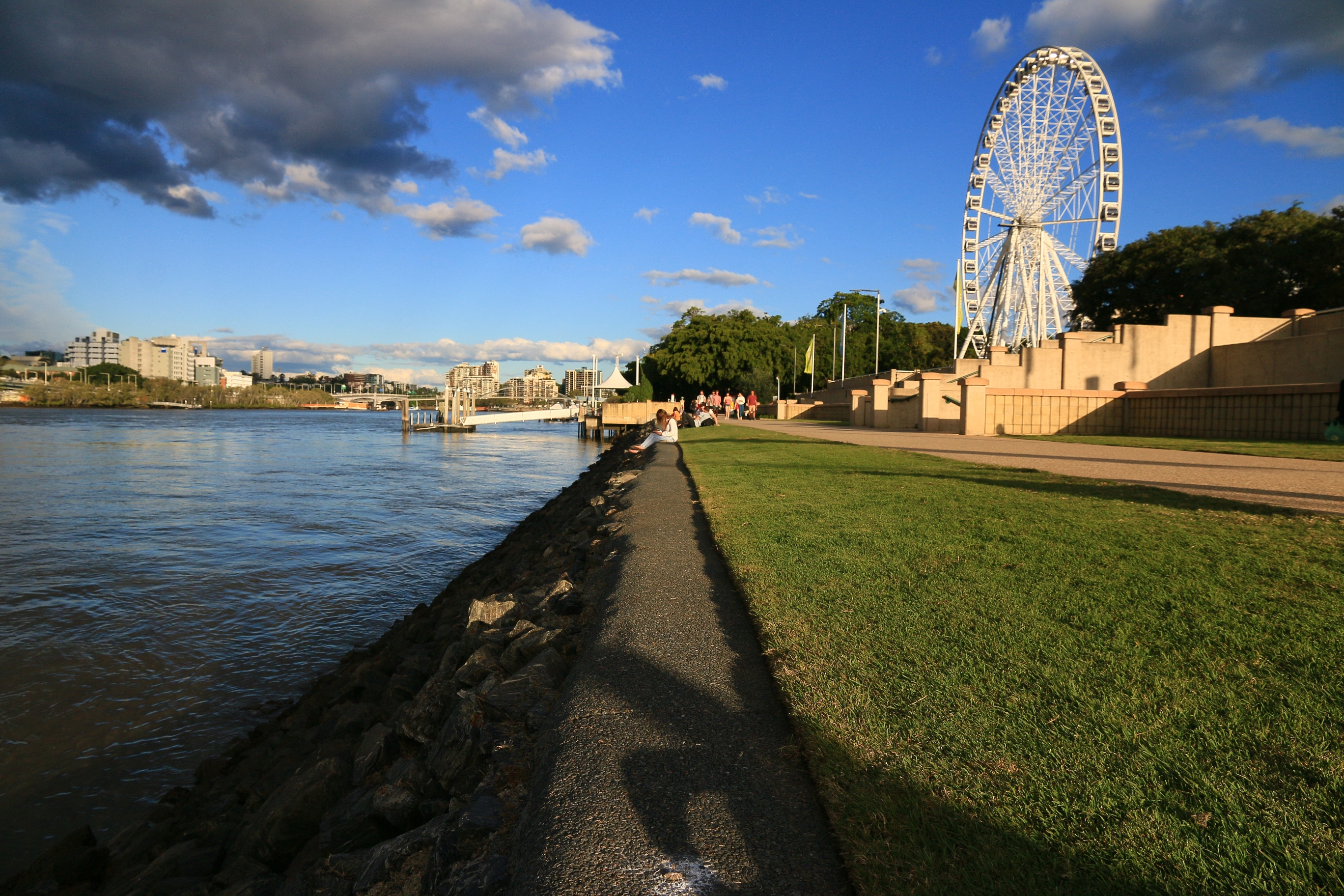
qldmay03While locals will vehemently disagree, it is quite possible to live in Brisbane without a jumper. Mine came off emerging from the plane, although I did put it on again one morning, just to appear less of an outsider. Meandering around amongst the city towers and along the river, a touch of summer lingers forever: clusters of dark green foliage dwell under a weight of blooming extravagance; sweat is apparently still a thing here; and the official State costume of thongs and boardies can be easily detected in the outdoor swimming pools of Southbank.

There are of course many upsides to this, and one of them is ice cream. And flat whites that remain a pleasure to sip alfresco. Sure, some overzealous cafe owners may have blasted on the outdoor heaters so that you too can relive those heady summers of Marble Bar, but the coffee is at least of reasonable metropolitan standard. It seems to taste blander than that in Canberra, but then maybe I just don’t know the right spots…always a first world curse of first world business trips.

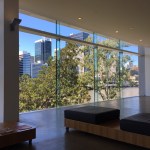
qldmay02A good spot with or without coffee is GOMA, the Gallery of Modern Art. Probably without coffee, because that would have been condensed into an essence of cold-dripped Columbian syrup and daubed on the walls to spell out a series of Japanese characters that make no sense whatsoever, but have deep, deep, meaning, hmmm. Still, I love the building in which such work sits, and there is something immensely satisfying in cloaking your laptop bag for an hour and transitioning to a world away from depth interviews and strategically coloured bar charts.

qldmay04Moving down now a cultural gear or ten, it is on to the Gold Coast. One could argue that the height of culture in the Gold Coast is the all-you-can-eat seafood buffet on the 71st level of a tower in Surfers Paradise. But here dwells the Australian dream on steroids, and many people lap it up like State of Origin players and…well…steroids. Here, you can live in a big white house in a gated community on a reclaimed island, be woken up at 5am by a cacophony of lorikeets and get all your tax minimisation forms done by seven. Then you can go for a power walk by the beach, enjoy a weak soy latte, and engage in a round of golf at the Princess Palmer Palace Retreat and Country Club Theme Park. Later, after listening to a radio station called Hot Tomato, it is quite possible to head out as the shadows of towers infringe upon the sand, surfing in your very own paradise.

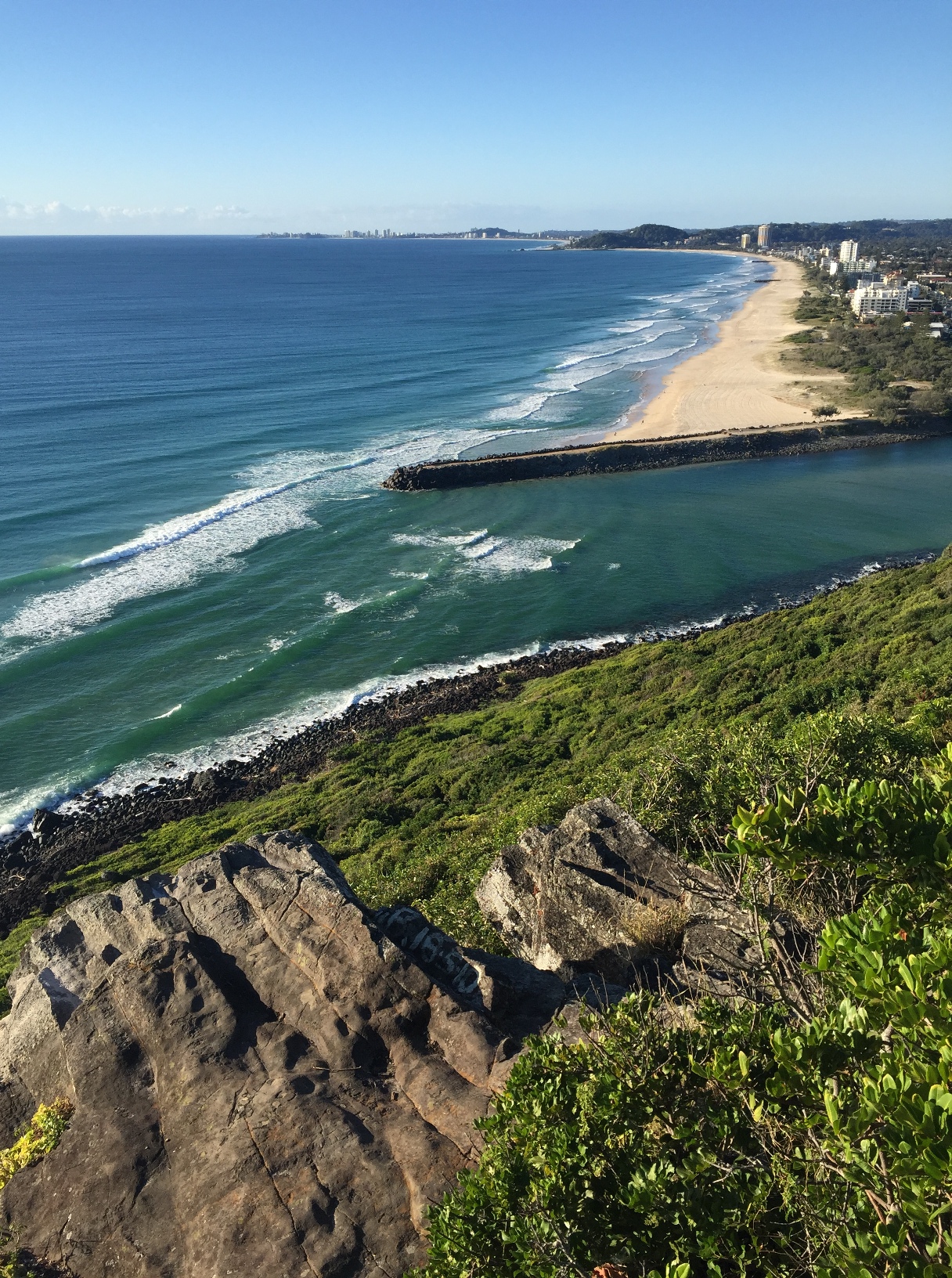
qldmay05I have always said I don’t mind the Gold Coast and I still think that way. I’m sure my inner Brit arrives here and sees a stretch of white sand, a modern and affluent city-cum-holiday resort, with good food and reasonable coffee. I love nothing more than an all-you-can-eat challenge, a power walk up Burleigh Heads in guilt, and the pronunciation of tomato on Hot Tomato driving back. And, of course, more than anything, it really does seem to be twenty-four degrees in winter.

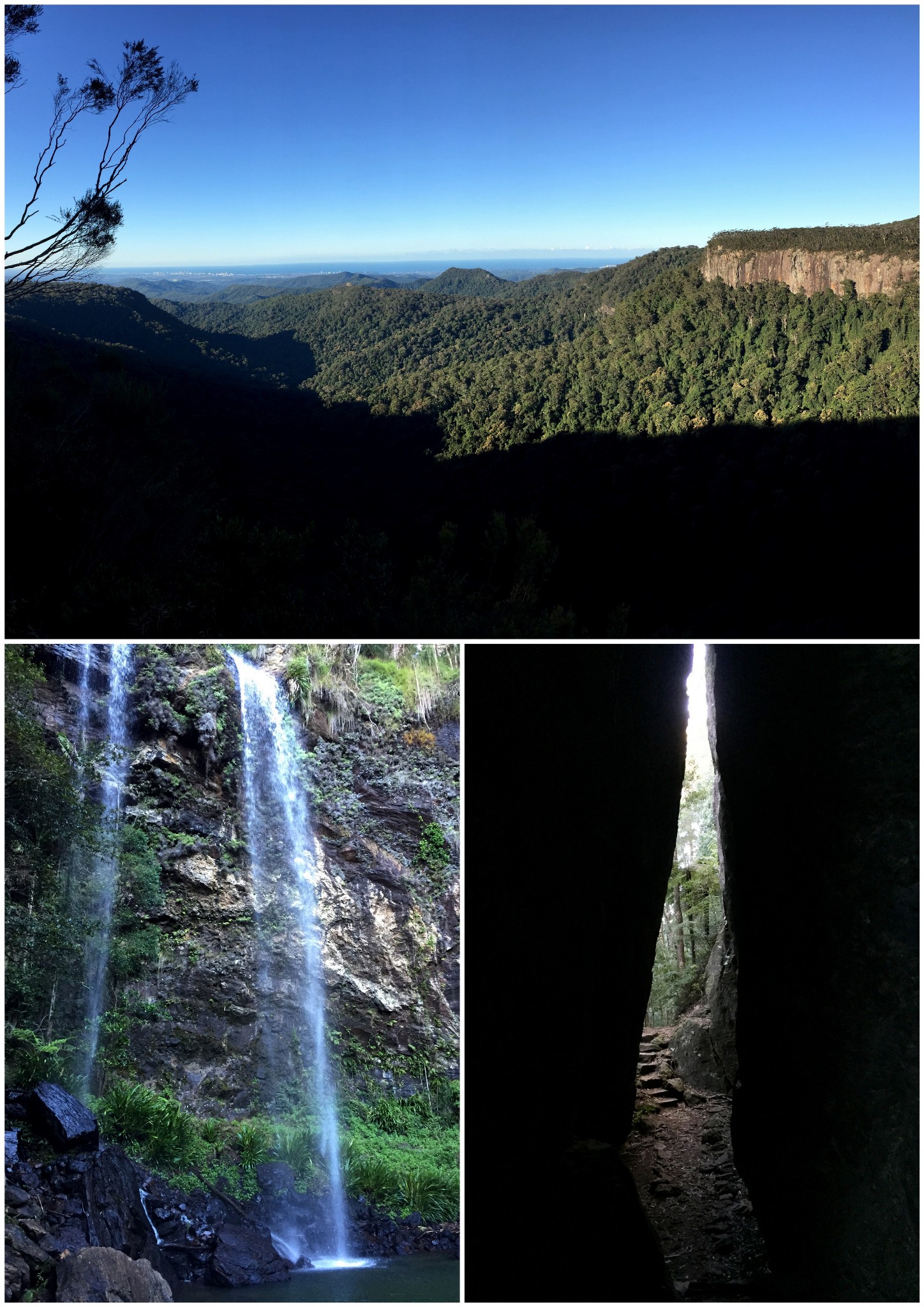
qldmay06Away from the surfers there is still a paradise. Towers and condos and gated communities drift away and roads rise into a hinterland. Side-stepping villages of token tweeness mixed with essential oils, Springbrook National Park stands guard over the landscape, one lofty remnant of a massive, ancient caldera. Stunning lookouts? Check. Plunging waterfalls? Check. Rainforest? Check. Bitumen? Check. Good walking trails? Check. Still with proximity to coffee, cake and ice cream? Check. Funny rat-like marsupials unlikely to cause significant damage as you drive down the hill at twilight? Check.  Springbrook is probably one of the best national parks I have ever been to, and now twice in my life.

qldmay08I would happily go back a third time, and then I would actually remember to bring my proper camera. You see, these travels in Queensland have been for business which came to be mixed – thanks to clever scheduling and a will to make up time on weekends – with pleasure. But I travelled with business in mind and today’s blog is brought to you in conjunction with the iphone 6. It has a good camera…hell…it’s a great camera considering it is one tiny little part of a slender and stylish lifestyle enhancement device ((c) Apple Marketing 101). But it cannot make waterfalls flow ghostly ribbons of white.

Neither can it do justice to the best of all lookouts, which is aptly marked on the map and road signs as Best of All Lookout. But then any camera would struggle with the scale and grandeur (not to mention the shade and light complications of 4:30 on a winter’s afternoon). I came here before in 2007, the lookout stubbornly shrouded in the clouds. Today, not one fouled the sky, allowing the late sunlight to project its glow upon Mount Warning, and a chill to emerge in the shade to prepare me for a return to Canberra.

qldmay10

qldmay11The Gold Coast airport was but a twenty minute drive from where I was staying, but I detoured a few hours. With a flight later in the day there was one other branch of Springbrook to revisit. Again, part of the joy is getting there, again blessedly on bitumen, but winding around west of the escarpment and into a valley of the dinosaurs. Lush and green, it’s an alternative route across into New South Wales, the border a genuine high pass which throws you up and over into the verdant Tweed Valley. It is a landscape that, beyond cane and bamboo and no trespassing signs, one cannot help but suspect is dotted with marijuana.

qldmay12A natural high just before the border is Natural Bridge, which again is best captured with a proper camera on a slow shutter speed. Nevertheless, the walk through rainforest is of agreeable length while the falls – plunging down a hole in the rock and out through a cave – cannot fail to thrill. In the valley, in the shade, it is again quite cool and Canberra feels closer.

Over in New South Wales, Murwillumbah sits amongst the sugar cane and feels a lot less glitzy than the Gold Coast. There seems to be good coffee on offer and a fine brownie to keep me going, not laden with local produce – apart from sugar – as far as I am aware. Following the Tweed back to the coast, the tower blocks and marinas soon again emerge, and that lost world, that lost valley of earlier seem all the more remarkable in contrast. And with contrasts clear, like the light and dark from the Best of All Lookout, it is time to put the jumper back on and head south.

Australia Green Bogey Photography Uncategorized Walking

With age goes wisdom

If you haven’t got anything nice to say don’t say anything at all, said like no politician in the history of the world ever. This becomes apparent in the brief snatches of news footage or articles I have intermittently stumbled across in relation to the UK election. So, from what I can make out, some commie wonk stumbled when feeding a shiny-faced posh man a bacon sandwich, who choked upon hearing Scotland are going to build a big high speed rail bridge bypassing England to Europe, but turned up to the NHS only to find it riddled with BBC bias and a wealthy man of the people chuffing a cigar hand-crafted by Romanians he secretly keeps in his shed. Meanwhile, some woman had a baby, which like happens every minute of every day of every year. Oh Britain, how I miss you.

All this leads me to say that I don’t have much to say; not because there is nothing nice to say, but really since things (unlike Election 2015, oh yes!) are fairly mundane. The biggest event was having all four wisdom teeth – intricately shaped at angles in the kind of x-ray you see in medical journals – extracted. Convalescence was aided by frozen peas, warm soup, and gentle walks around the leafy, crunchy, rainbow suburban streets.

apr00

apr07Like Batman getting my powers back, things progressed at a steady pace: work was sadly possible but also happily income-giving; hills could be walked up; soup became mashed potato became fish curry became shepherd’s pie…until finally I could mercifully manage a bacon sandwich. The bike could be pedalled, when the variable weather was having a good day. And wine could be safely drunk, useful when on a charming tour of Lerida Estate two weeks post-wisdom.

apr01

ANZAC day came and went with its usual amalgamation of touching remembrance, freedom- embracing alcoholism, and political posturing. This year, one hundred years after Gallipoli, there were more TV dramatisations and politicians posturing than ever. I spotted in Target the day before that you could buy a ‘Camp Gallipoli’ swag. Yes, you too can sleep out like the ANZACS, though I presume without the cloying mud, stench of death, and general sense of imperial-driven futility.

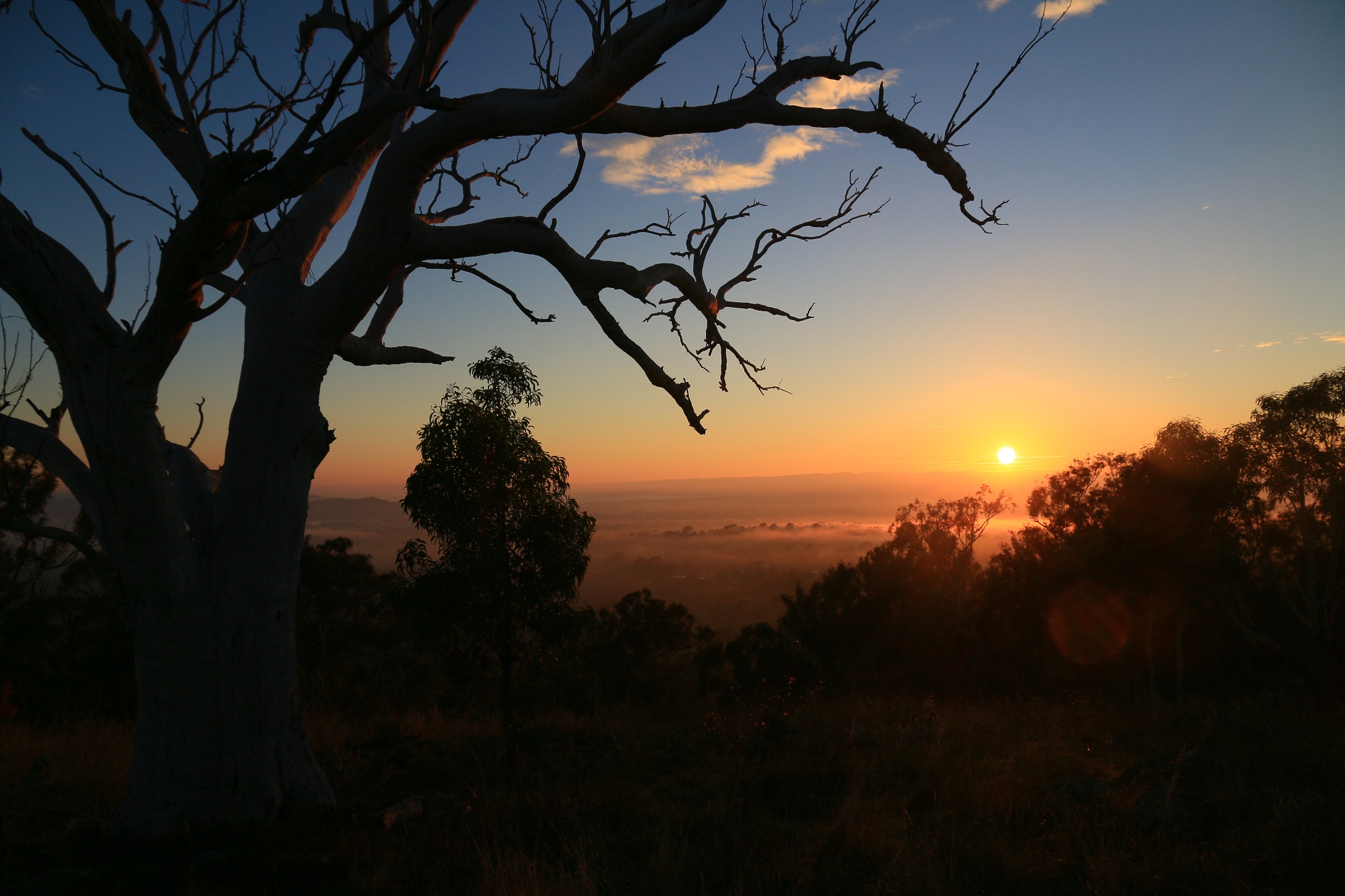
The dawn service – a genuinely poignant and worthy lamentation for the death and sacrifice of war – was attended by something like 120,000 people. Too late to the party, I stood alone, upon a nearby hill, the sun rising above the early mist of dawn as magpies uttered melodies, and the shadow of gums were given new life. Standing to see the sun, lucky.

apr05

apr06

And with that I really can’t think of anything else to be said.

Australia Green Bogey Photography Walking

April

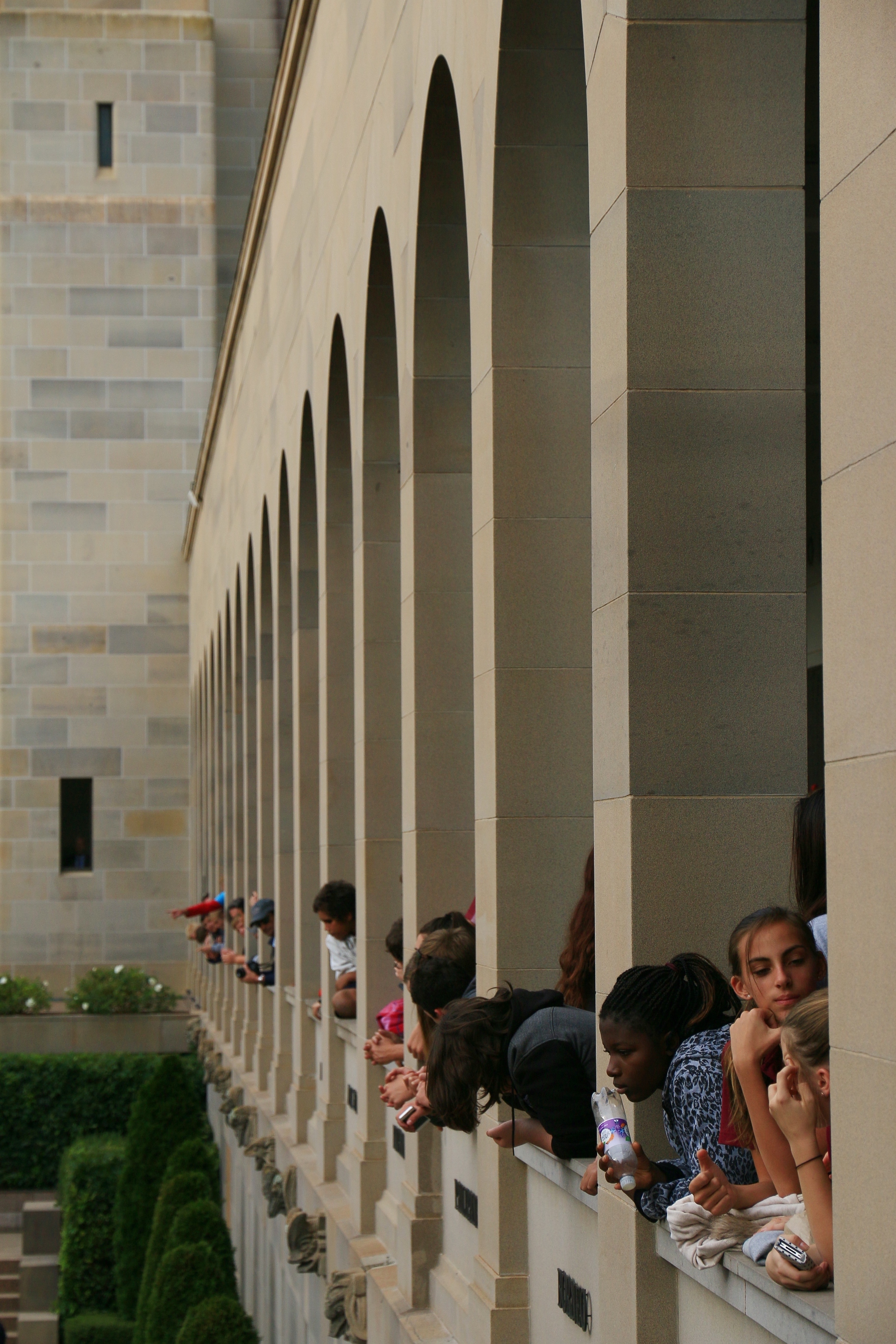
Upon the outside steps, schoolchildren gather in awkwardness and relief, escaping the restrictive solemnity and required reverence of a place venerating death. The air is filled with youthful chatter, indecipherable in a squawkish flurry of hopes, dreams and no-good insolence. It is another age, in which hashtags were yesterday’s news and that which came before unfathomably remote. Yet still the human condition presupposes that one of their names may just, despairingly, return to this spot.

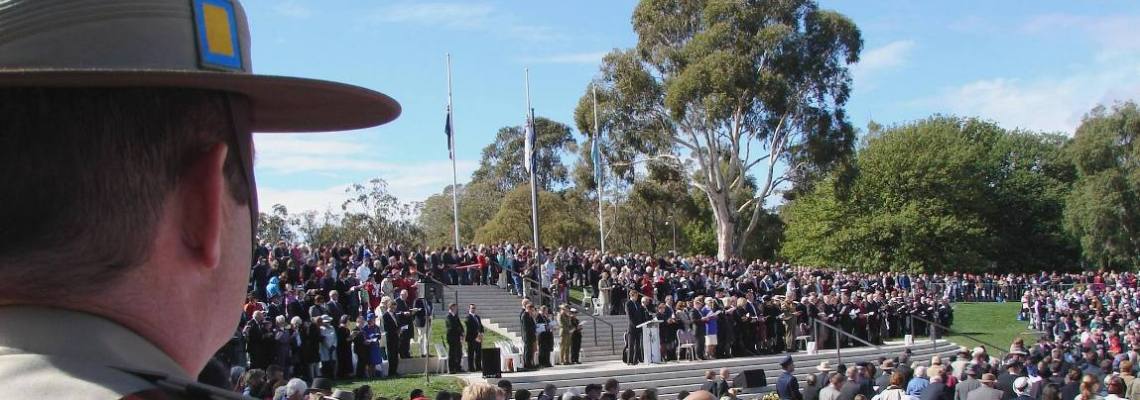
apr01In a gathering gloaming, reassembly occurs along the arches and steps, their backs to the names of the fallen. Arms dangling from the tedium of patience drift over the letters spelling out Korea and Timor and Gallipoli. A man speaks; a bagpipe plays in mournful strangulation. A story is told of one person’s life, the end of which is predictable only in the all too early and violent a termination. Finally, a man in uniform blares out The Last Post and one begins to wonder whether the humble bugle is ever used for anything else. As the concluding brassy notes fade into the cockatoo skies, the rumble of coach engines spark up, seemingly anxious to return their hormonal payload to Sydney and Wagga and Bairnsdale as soon as they can.

A scene like this takes place practically every day at the Australian War Memorial in Canberra, just before closing. In addition to the several hundred present – composed of tourists, locals, and a scattering of uniformed dignitaries, as well as the bundles of schoolkids fulfilling a rite of passage – the ceremony is now live streamed on the memorial’s website. Like the moment’s silence each evening at RSL clubs, it is a physical act aiming to encapsulate those immortal three words: Lest We Forget. And at the going down of the sun, after a visit loosely planned as research for this piece, I was moved, somewhat surprisingly given the desensitisation that comes with distance and time.

War commemoration is awkward. It makes us feel awkward, conflicted even. It is a world of contradictions and hypocrisy. A multi-million dollar industry in which battle sites and memorials can become numbers on a bucket list, stops on a coach tour [i]. We publicly lament the sacrifice, the loss, the needlessness, yet people are still in conflict, losing their lives as we do this. We celebrate victories and make heroes of some, of us, and villains of others, of them. We may question the purpose of daily services such as those at the War Memorial, wondering if they are put on for the tourist experience, a kind of ‘dawn-service-lite’, to ensure visitor number KPIs and funding requirements are met. We are right to question, for blind faith may lead us down the path of ignorance and subservience that has led to past wrongs. Yet it can be uncomfortable to do so, in the context of – quite justifiably – a reverence and respect for many millions of individuals who died because of war.

April in Australia (and, one assumes, New Zealand) heralds the annual peak in our fascination with war commemoration. ANZAC Day is an annual fixture in the antipodean calendar, unmoving and unstinting on the 25th April, reflecting the anniversary of the first mass landing of allied troops from down under onto the rocky shores of Gallipoli in 1915. And because we venerate the reaching of a century – from Steve Smith to the Queen Mother to a national capital – ANZAC Day 2015 is set to be more of a blockbuster event than ever.

Like Easter, one wonders if ANZAC Day has become somewhat diluted and fragmented with meaning over time: it’s a day off work, a chance to go to Bunnings or be a part of the Harvey Norman ANZAC Day price-busting sale, lest we forget. An opportunity to mow the lawn, gather the leaf litter, or watch the annual AFL match as the slow-cooked lamb melts succulently in the oven and The Last Post rings out again at the G. We may drink to excess and legally gamble on two-up, justifying this as being what the diggers would have wanted (whether they would have wanted the increase in injuries, violence and domestic abuse that this may lead to is doubtful). Nonetheless, we still do remember, and millions of us rise early in the dark or attend mid-morning parades, or even visit overseas sites that would be totally anonymous if it were not for their place as a graveyard of war.

As a sometimes alien sometimes looking in, I do not feel as connected to ANZAC Day as sometimes I feel I am supposed to be. It is not a part of my history; I was not exposed to the ANZAC legend growing up. Despite some semi-studious First World War lessons in secondary school, the Gallipoli campaign was a brief mention somewhere in a text book. From what I know, it strikes me as an absolute shambolic disaster. That this – a sorry slaughter bungled by British commanders and with no far-reaching impact on the wider war effort – is widely considered as the birthplace of modern Australia is, on paper, bewildering. Forget that this negates the presence of one of the oldest continuous cultures on earth, or the development of affluent cities and the taming [ii] of a harsh landscape, or the achievement – in 1901 – of Federation that came with white settlement. Gallipoli also bore all the hallmarks of old empire, in which young Australians (and, incidentally, many more British and Turkish men) were sacrificed in unfailing service to the motherland. A defeat; a wasteful, pointless loss in which Australians blindly followed the orders of a bunch of crusty British superiors. It does not smack strongly of independent nationhood.

It was here though that the ANZAC legend was born and this has since become institutionalised as a turning point in Australia’s view of itself and relationship with the old world. In the run up to the centenary, a surge in earnest documentaries and debates, confected dramatisations, and obscure blog entries by half-wits like me will regurgitate and nuance such arguments, questioning the role of ANZAC Day and what it means to the nation in the twenty-first century [iii]. While the bravery and actions of those in Gallipoli will not be diminished, it is pleasing – if that is the right word in such a context – to see a stronger emphasis shifting towards remembering many more Australians lost on the Western Front, in Asia and across other conflicts. ANZAC Day may well be becoming less about Gallipoli and more about everyone and everything touched by the ruinous proclivities of humankind.

——————————————-
apr02

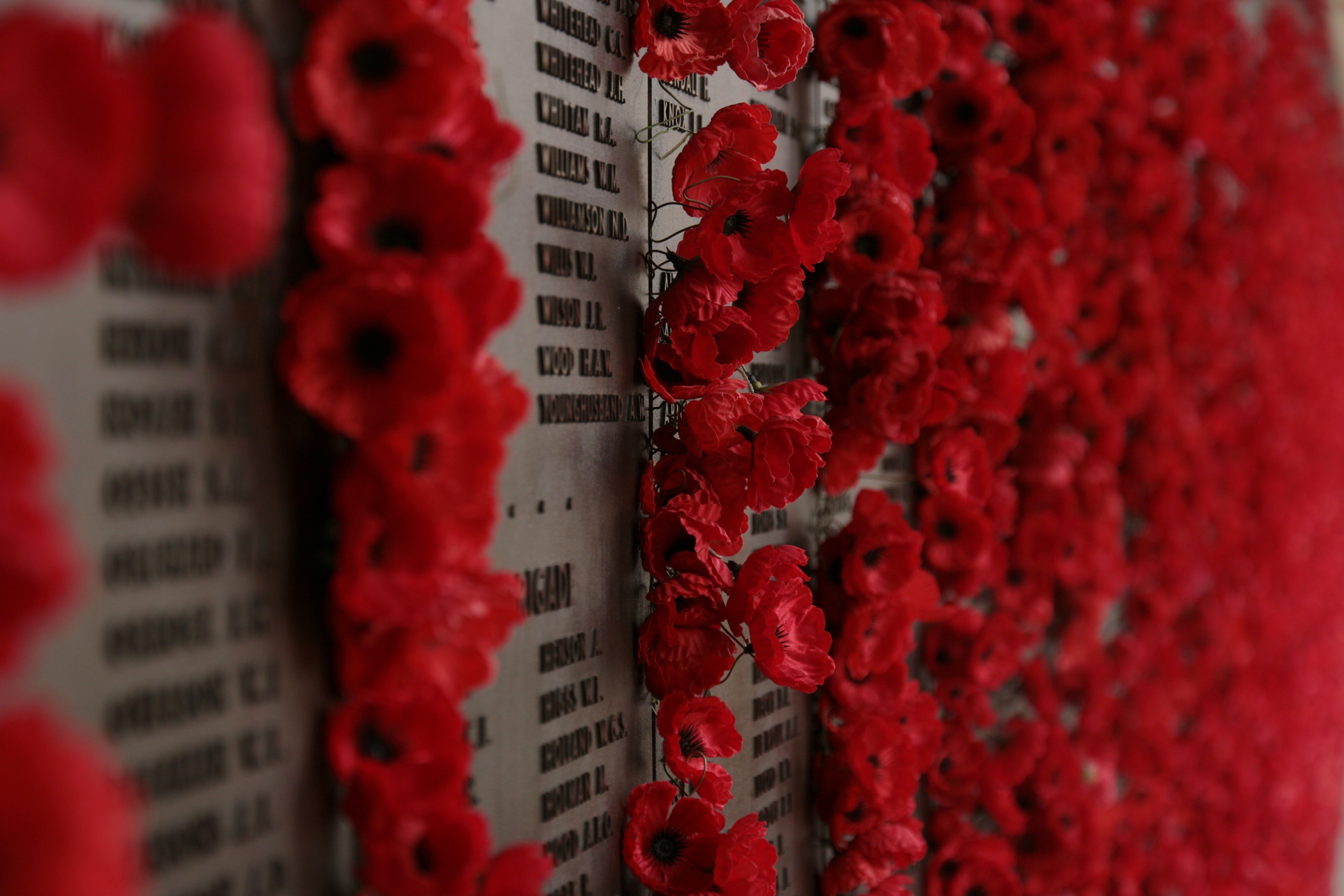
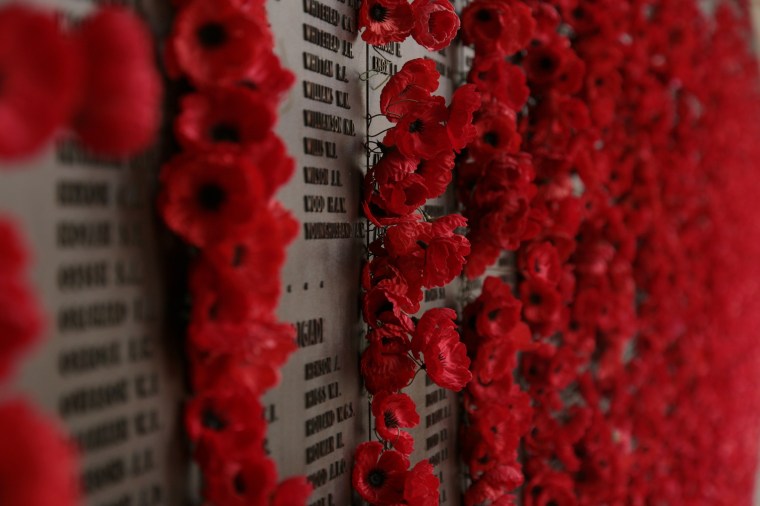
There are approximately 102,000 names embossed upon the roll of honour in the Australian War Memorial. The western colonnade contains those who were killed in the First World War (62,000), while the opposite wall of bronze tablets mark those lost in the Second World War, followed by the post-war wars in Asia and the Middle East. Some, such as Afghanistan, forlornly remain open ended. There is little space remaining for further names to be added, which at least might signify some optimism that never will a mass conflict cause so much loss of life again [iv]. The scale can be overwhelming, so much so that it can distort one’s sense of comprehension, much in the same way that it can be too much for us to conceptualise the number of stars in the universe or the number of Olympic-sized swimming pools in Sydney harbour.

Should it somehow transpire that no more Australians are killed in battle from this day forward, it would still take around 280 years for the Memorial’s daily service (assuming this continues) to tell the individual story of each one of the names on its roll of honour. Against the almost unfathomable mass of loss and sacrifice, it is perhaps the individual stories that are the most telling, the most poignant, and maybe even the most relatable. In more recent visits to the Memorial I have found myself seeking someone with my surname on the wall, placing a poppy nearby to join the clusters of red springing from all available gaps and crevices between panels. To none of these Staffords am I related (as far as I am aware), but it makes me feel slightly less guilt-ridden at being a tourist, and somehow more connected as an outsider. Reflecting on the one may resonate stronger than one hundred thousand.


All that connects us is a name:

Stafford, J.G., 22nd Battalion.

I saw you today upon that wall,

With hundreds of thousands of others to fall

In battle, in war, often in vain,

Sent far from home, you’ll always remain.


You died 59 years before I was born:

The 4th of October, 1917.

Upon Flander’s fields, dispatched in battle,

Sent up to be killed, slaughtered like cattle.

Lain down in Ypres, beyond Menin Gate,

Marked by a white cross, as all with this fate.


Your life in Australia was spent in the country:

Colac, Victoria before moving to Ouyen.

A labourer is all, constructing a wall,

Sweating with toil, tilling the soil,

Getting the call,

To fight a great war.


You were 27 years when leaving Port Melbourne:

Upon the HMAT Hororato.

A girl left in port, named Ivy Jane,

A niece or friend, or once secret flame.

When I was your age, in Australia as well,

I’d discovered a heaven, while you left for hell.


I do not know you, nor do we share blood:

But today you were there, and there I stood.

Thoughtful and thankful, looking for meaning,

You sent me away, stronger belief in,

My fortune and hope, my freedom and joy,

Your name etched a man, and I still a boy.


And, fittingly for such bad First World War poetry, an addendum courtesy of Baldrick:

Boom, boom, boom, boom,

Boom, boom, boom. [v]

——————————————-

apr03

My own experience of ANZAC Day has, thus far, embraced a range of experiences one is expected to engage in. Though I am yet to get inebriated and lose hundreds of dollars gambling, I did once add a shot or two of whiskey to a flask of hot coffee for the dawn service, justifying this as being what the diggers would have wanted of course. Plus it was treacherously cold at that time of day at that time of year, and I suspect I wasn’t the only one with a hip flask handy.

The dawn service is a memorable and genuinely moving experience. Pitch black with icy winds streaming down from the hills, there is sleepy-headed confusion at encountering hundreds of buses and thousands of people, barely visible ants streaming towards the dimly-lit dome of the Australian War Memorial. Candles flicker, readings are aired, silences are held, bugles are played. The singing of Abide With Me is drawn out with such sombreness as to lead to total gut-wrenching despondency. There is no sense of jubilation, no air of celebration. Arguments are forgotten, debates paused; for now, all that matters is remembrance and despair.

Almost imperceptibly the black of night softens and, as Advance Australia Fair concludes the service, a thin, indigo line is visible above Mount Ainslie. Cockatoos shriek in suitable reprise to the final chimes of the national anthem, pursuing the fruits of the gently flaming and fading oaks nearby. The faces of others take form – young, old, white, black, Asian. Top brass military regaled in finery mingle alongside youths still in their bedtime onesies. There is much of beauty in what modern Australia has become, and the debt of gratitude is never more apparent.

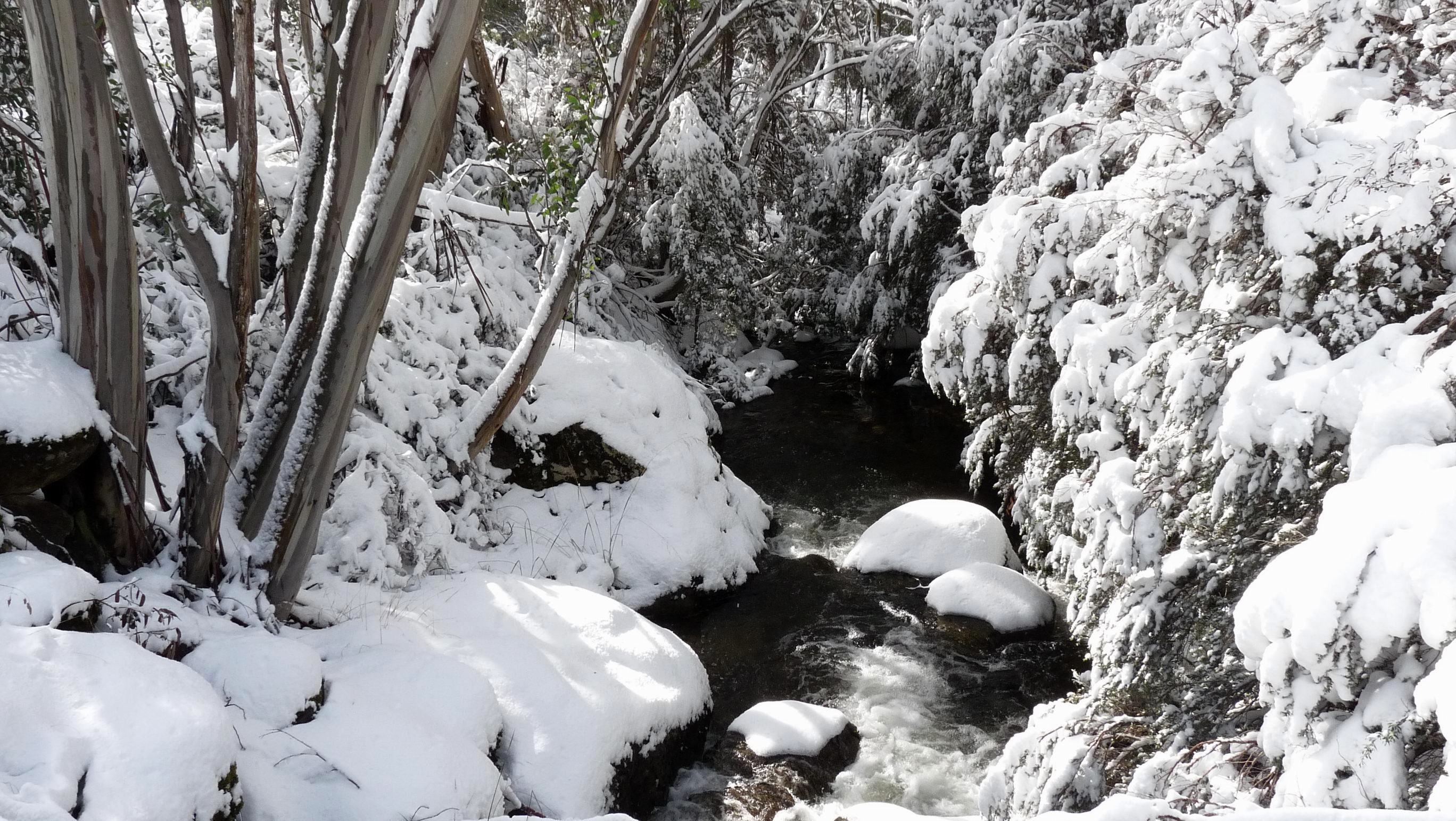
As the Australian capital glows in its autumnal splendour, its citizens and visitors are free to go back to bed, go buy a flat white, go to the pub. They may well go to the later morning ceremony, which includes a parade past various dignitaries with their own entry theme tunes [vi] and the thunderous excitement of a jet flypast. The citizens can now, officially, put on their heating (there was nothing stopping them before apart from a long-held Canberra convention that is regularly flouted). It can be pretty handy, particularly as snow is not unheard of up in the hills and mountains by the end of April. Indeed, one of the most memorable – and surprising – ANZAC Day long weekends I experienced was waking to snow in Thredbo, and enjoying a day of tramping through snowy Eucalyptus forests and warming up with hot chocolates.

All of these freedoms, all of these wonders, all of these hot chocolates are derived from the lottery-winning ticket of life that is being born in or coming to live in Australia. It was not always this easy, neither was it always just or pure or peaceful. But it is what it is, born from an ancient sea and moulded by rainbow serpents, shaped by the ANZACS, the first fleet, the pastoralists and gold diggers, the builders and scientists and mothers and cricketers, the Aborigines, the Dutch, the French, the British, the Chinese, the German. It was, and still is, and long may it continue through a journey of acceptance and evolution, something that would be worth fighting for.


[i] There have been several recent features regarding the (sometimes crass) commercialisation of ANZAC Day. For instance, see http://www.abc.net.au/news/2015-04-16/green-anzacs-lest-we-forget-to-turn-a-buck/6396176?section=ww1 and http://www.themonthly.com.au/blog/james-brown/2014/02/17/1392601420/anzacs-long-shadow-cost-our-national-obsession. Also, check out much of the profiteering here at http://anzacprofit.tumblr.com/

[ii] ‘Taming’ is far too simplistic (and restrictive) to describe white settlement of the land in Australia, but I only have one sentence to play with. One may also consider cultivating, irrigating, clearing, destroying, pillaging, ruining etc etc. I found Don Watson’s The Bush to provide a highly readable synopsis of some of the failings and achievements of settlement, with a detailed understanding of weeds to boot!

[iii] For its part, the state broadcaster – the ABC – has produced a vast resource of ANZAC related content, including much navel-gazing and probably far better researched and written analysis than that included here. See http://www.abc.net.au/news/first-world-war-centenary/

[iv] Alas there is always scope for expansion upon the current site.

[v] The German Guns, by Pte S O Baldrick. See https://www.youtube.com/watch?v=7UKpZxM-c9w

[vi] From memory, the PM gets a quirky little ditty of Waltzing Matilda, the Governor General Advance Australia Fair (or possibly Song of Australia?), any visiting royals hear God Save my mother / grandmother / aunt etc, and a New Zealand representative any song by the Finn brothers.
12 Months Australia Society & Culture

The climate changes

Little things, sometimes performed unconsciously, indicate a time of change. There is the walk for morning coffee, in which you now seek the sunny section of pavement rather than its shady, covered counterpart. At home you have to reach in the darkest depths of your wardrobe for – god forbid – a sweater; only to discover that they are musty and holey and jaded and faded but at least protect against a cooling evening. Scattered on a nearby chair are the vagaries of climate suitable attire in late March: shorts from two days back (27 degrees), and a hoodie from the night before (2 degrees). Tracksuit pants come back into fashion, at least inside the privacy of your own home. Outside, the basil flourishes, at its most bountiful before frost decimation. And, excitedly, thoughts turn to how it can be used with red meats and red wines, frequently together.

Shorts and salads were still the preferred modus operandi for most of March, and suitable for a reasonably easy-going walk on the Settler’s Track down in the remote southern tip of the ACT. A scattering of huts and pastoral remnants speak of a far challenging time, and one can only recoil in fright at the thought of icy winter winds seeping through the gaps in the wooden planks that made for walls. The comforts of a piddling new town called Canberra lay distant, across brown plains upon which a permafrost lingers, gnarly tangles of stunted gums and dense mounds of wattle lining the mud-racked excuse for a road. Today, we had a bit of a sunny picnic and returned to Canberra in air-conditioned comfort in an hour, with only a little part of the road slightly bumpy.

easter02

The climatic downshift has produced more amenable conditions for burning some of this land, doing so in a controlled and measured manner. The intention of this – previously practiced by the original inhabitants of this continent to great success – is to reduce the fuel load for more intensive and damaging fires in the summer months. Thus it is an act of destruction that protects and regenerates, with any luck clearing out tangles of invasive weeds to open the way for more friendly natives.

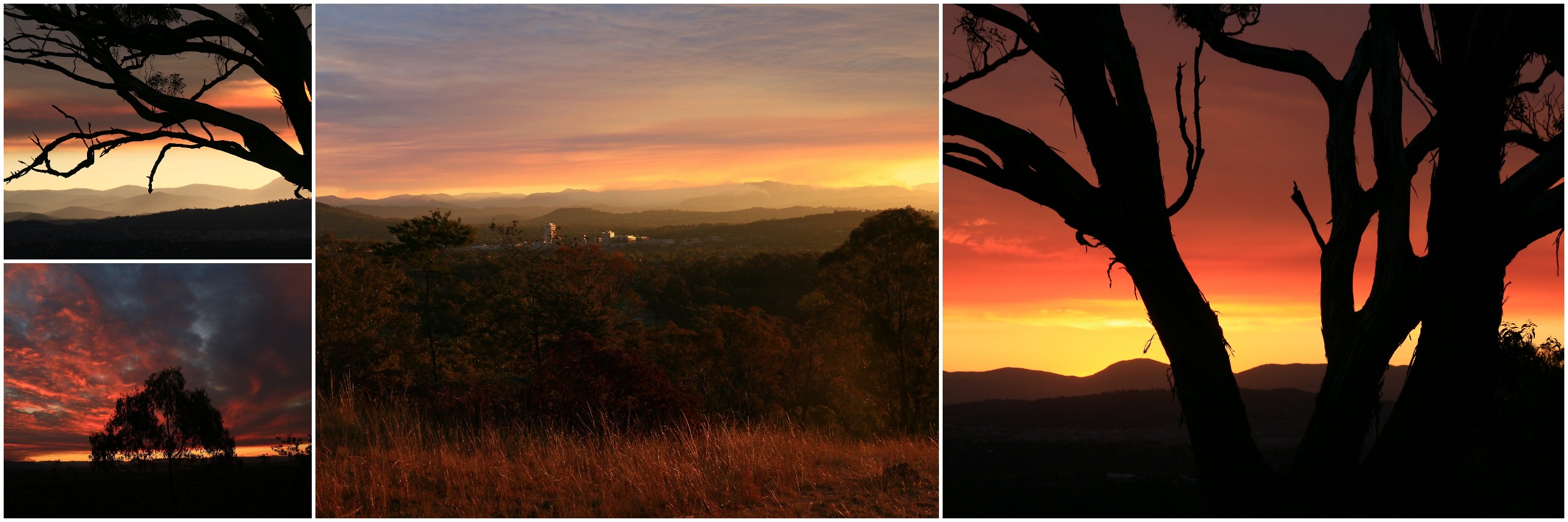
The controlled burns were noticeable this year in their seeming proximity to Canberra. Partly this an illusion, a foreshortening of distance created by the lines of ranges to the west and the hidden deciduous streets of Canberra in between. It is heightened by the smell of smoke in the air but at no point was the largest ugly concrete building in Woden facing any threat, even as plumes of smoke spiralled in the hills behind like some kind of Jurassic Rotorua. Alas, while the ugly tower survives the smoke, the light, the angle of the sun upon its equinox, the time and day and place and year produce some memorable, cherished Redhillian sunsets.

easter03

With the fiery skies appearing earlier each eve, and the increasing need for arm and leg coverings, panic can start to grip the citizens of the national capital. There is alarm that it may get down to fifteen degrees, a temperature in Australia requiring scarves and beanies and carbon intensive wood fires. Concern too that the Australian right to enter the ocean and brag about its perfection to the rest of the world is on the wane. Easter escapes may (though things seem to be changing) herald the last chance to wade in the water of the South Coast. So I thought about going down there over Easter too.

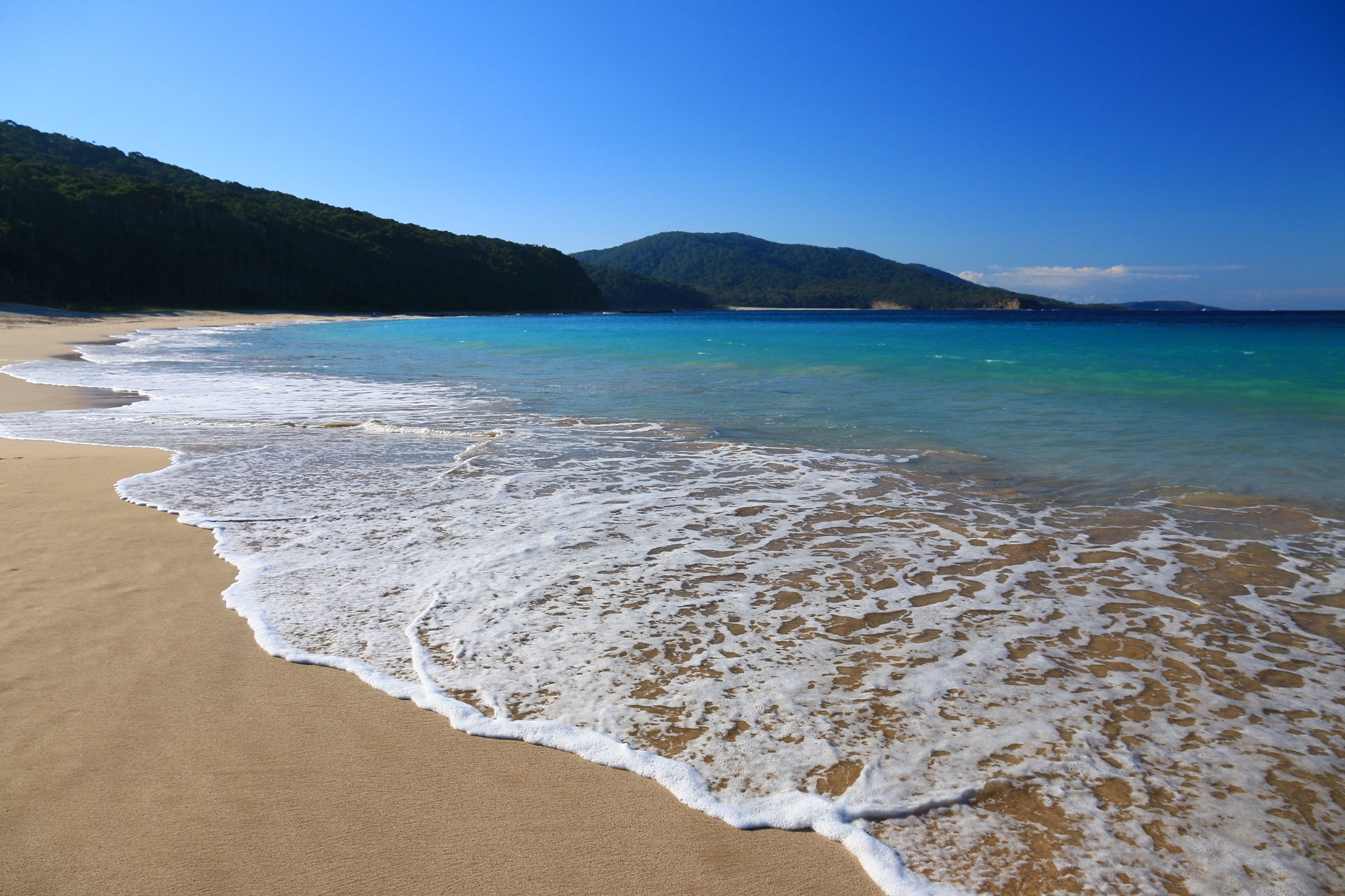
In the end, I changed my mind, and went a few days earlier because the weather was perfect, ideal for a spur of the moment day trip that is only possible with self-employment. Old favourites of Mollymook and Depot Beach, with some fish and chips in between. Shorts and sandals and, yes, gentle wading in the ocean. Something surely to brag about.

easter04

My pre-emptive conniving worked wonders because, in the main, the long Easter weekend was one of those in which Canberra (and the region) did its best to imitate Britain. Two days of cool greyness without a break, then two days of heavy downpours, possibly followed by a debate between seven charm-filled politicians arguing about HIV-laden Europhiles stealing our tax money jobs and murdering badgers with Clarkson or something. Ideal conditions for some reading and lounging and DVD watching and baking and napping. In this context, in this climate, it seemed right that the clocks changed, and – at least from the perspective of time-fixing – winter commenced.

easter05The first morning on winter time turned out to be delightful. For a few hours the clouds went away, and the sun delivered enough radiance for a comfortable period of shorts-wearing. The morning light and air contributed to a Red Hill glow, projecting upon the grass and gum trees and ranging hills in the distance. Rather than signalling a decline, the change of clocks appeared to induce a spurt of wild industriousness. Cockatoos plentiful, screeching from tree to tree; pairs of rosellas flitting amongst branches; galahs flaming; and of course the kangaroos, forever grazing and looking all rather nonplussed about it.

Giving Red Hill the hill a run for its money was Red Hill the suburb. easter06From what seemed to be shaping up to be a relatively mundane autumn – with lots of early browns and leaf losses noticeable – a week which turned from warmth and sunniness to a condition of damp mildness appeared to have fashioned a more elaborate state of affairs. And amongst this fading technicolour the birds lingered too. Foraging and flirting and feasting, the fruitful trees bedecked with gang-gangs.
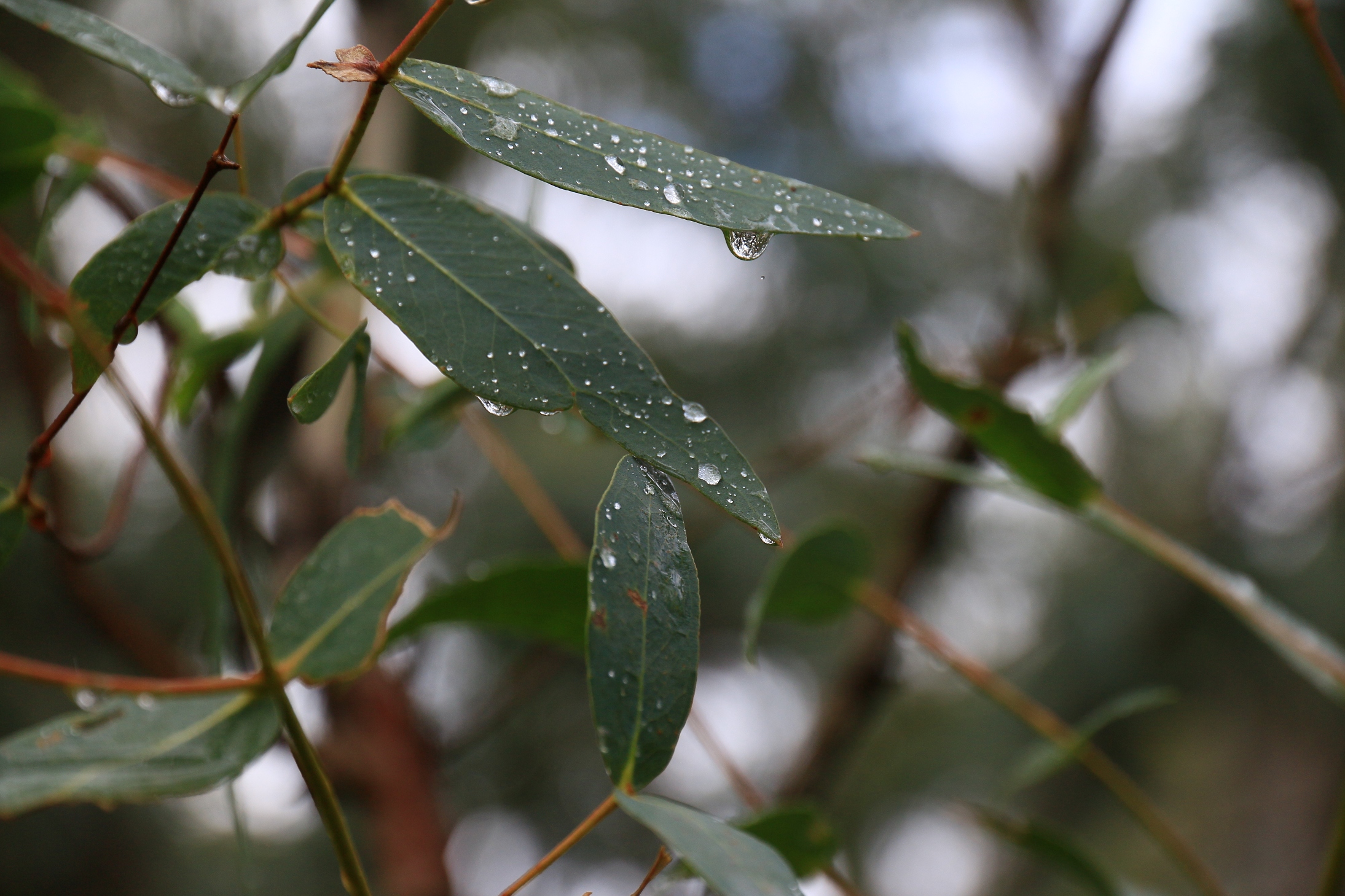
easter07

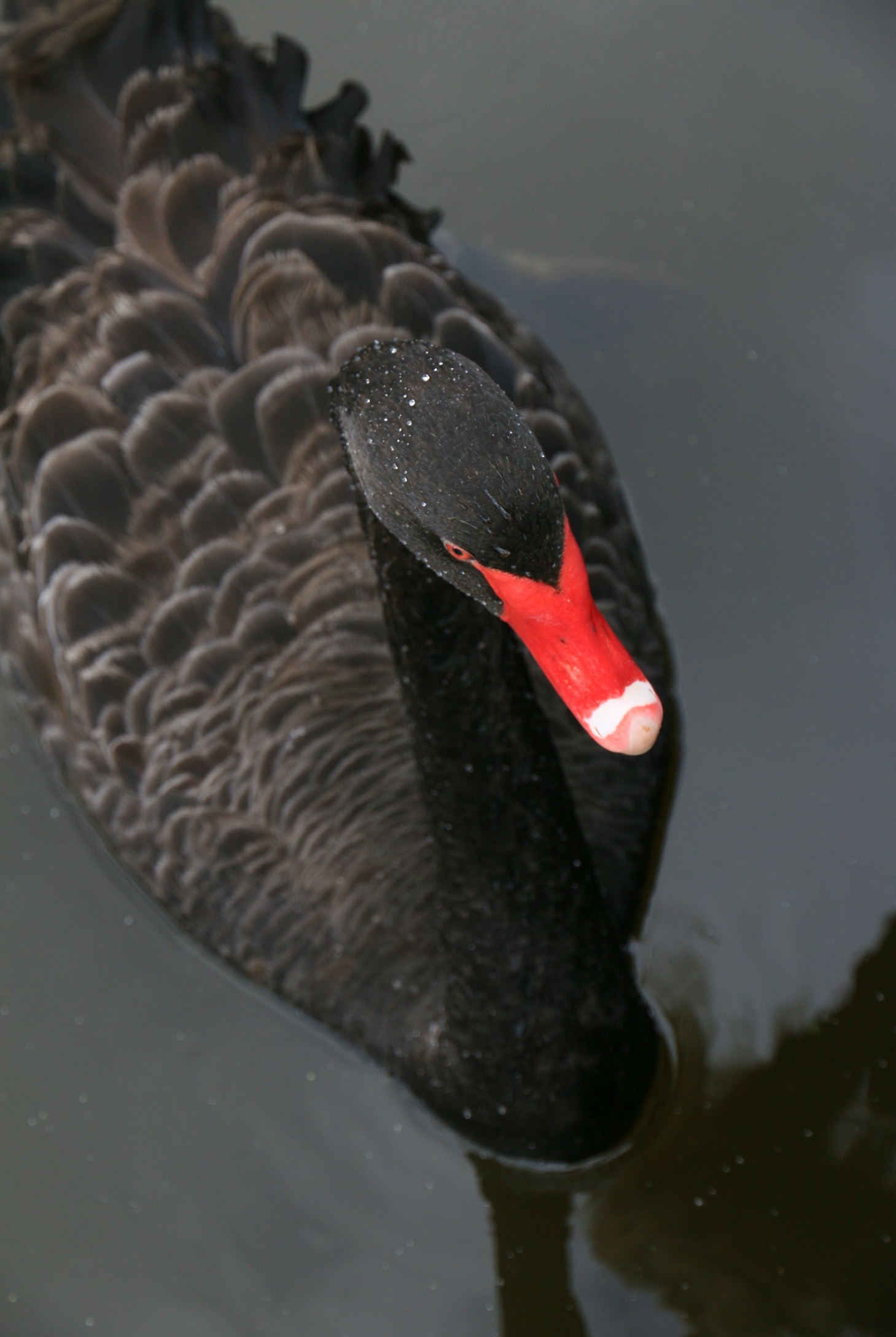
easter09This Easter Sunday suburban sunshine was relatively short-lived. What followed, I guess you could say, were April showers. Thus a planned escapade into escarpment wilderness on Easter Monday became sedated somewhat and, instead, transformed into reasonably gentle ambles within nearby Tidbinbilla. Like suburbia, the wildlife was out in force here too. A few koalas and wallabies sheltered amongst the Peppermint Gums. Swans and pelicans and magpie geese and the duck-billed platypus and platypus-billed duck confirmed that it was nice weather for ducks. Weather that was – well – cold. Cloaked in long trousers, T-shirt, hoodie and raincoat it must have been fifteen degrees or something. And as the sun surprisingly filtered through the rising mist of cloud lifting from the mountains, there was joy in rushing out from the shade of trees and bursting towards its friendly warmth once again.

easter08

Australia Green Bogey Photography Uncategorized Walking

Great divides and sunny coasts

Wagga Wagga. Ballarat. Dubbo. Albury. Bendigo. Rockhampton. Geelong. Bunbury. Mount Gambier. These are the recurrent regional research towns, in which there is sufficient population to extract a small selection of locals to talk about everything from the design on a bottle of shampoo to the delight of doing tax. I have been to each and every one, mostly for business but sometimes for pleasure, and now and again for both. Until this past week though there had been a noticeable absentee from the list, and, as if hearing the crucial number in a game of bingo, the Queensland town of Toowoomba delivered a full house.

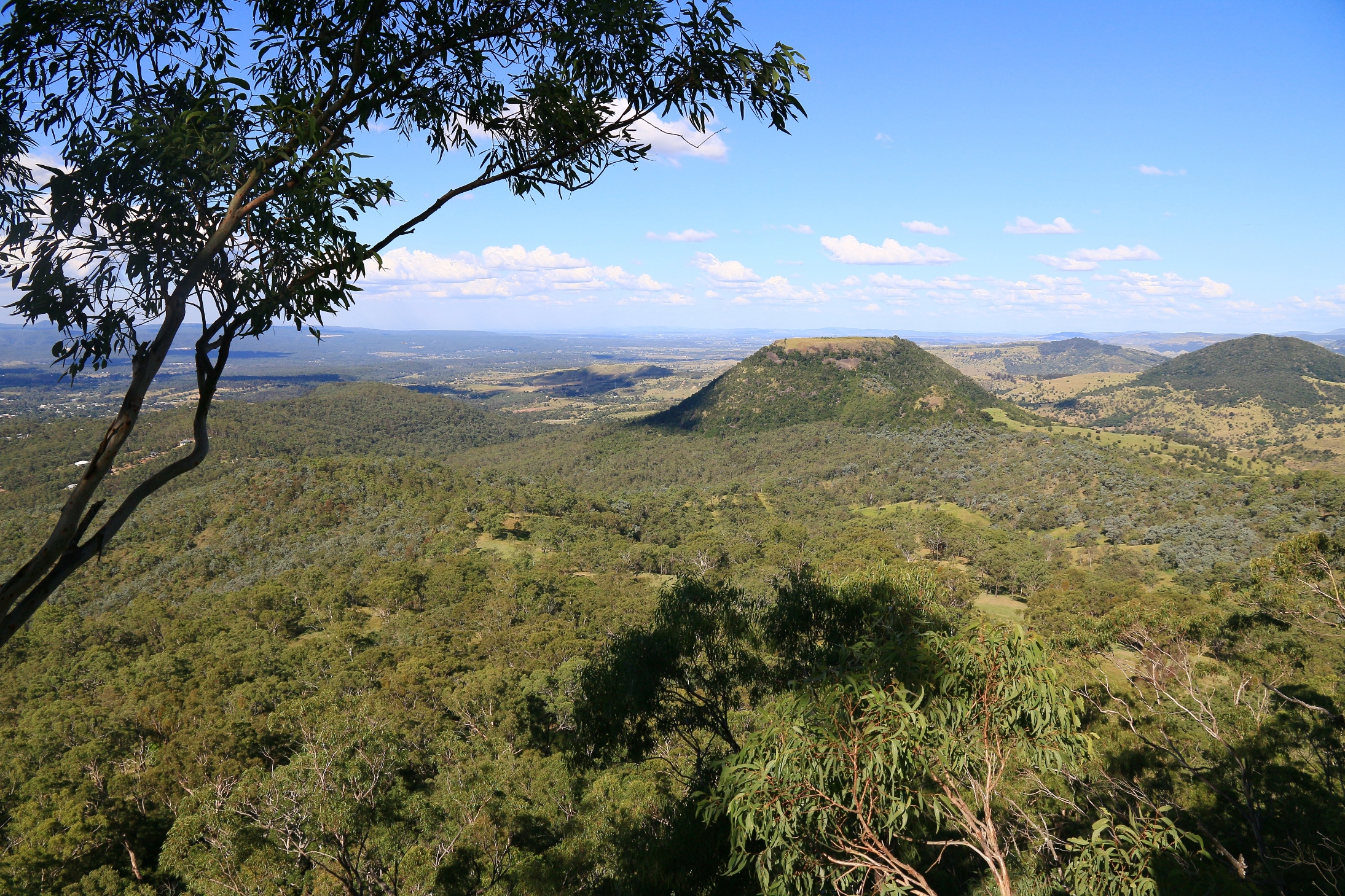
Qld02Toowoomba is a touch inland from Brisbane and, with a sizeable population over a hundred thousand, benefits from good road links, appreciated in the rush that I somehow managed to contrive one working afternoon and evening. It rather dramatically emerges atop the Great Dividing Range, perched on a plateau over this somewhat ill-defined chain of ridges and hills which meanders along the entire eastern fringe of Australia. Thus, the edge of one side of town is adorned with tabletop views as fingers of parkland and bush thrust into the lowland expanse of the Lockyer Valley, cut by hairpins of highway and – because we are in Queensland – no doubt teeming with spiders, snakes, and snag-stained singlets.

Qld03

The emergence of the town is quite sudden; one minute you are chugging up a protracted series of bends through the bush and then, as soon as it levels, suburban concrete and commercial highways spread out west. I suspect it could almost be the modern equivalent of reaching Machu Picchu, with a city that is shielded from view until traversing a final mountain ridge. Once crested, the ancient civilisation of the Supercheap Autans fills intrepid travellers with awe, as the sun sets over the Darling Downs.

Qld01Away from its edges, the remainder of town could easily be Wagga or Ballarat or any other regular research regional resort. There is a city block with some familiar and some uniquely local stores, a typical amalgamation of elegant turn of century buildings and functional blocks. A giant mall draws shoppers from the older town centre while between the two a strategically placed drive-thru Maccas casts its magnet on the alloy wheels of ute-borne bogans and the iron fillings of schoolkids. Amongst this, one small alleyway has been transplanted from Melbourne, adorned with street art and beards making coffee. I stopped by there twice.

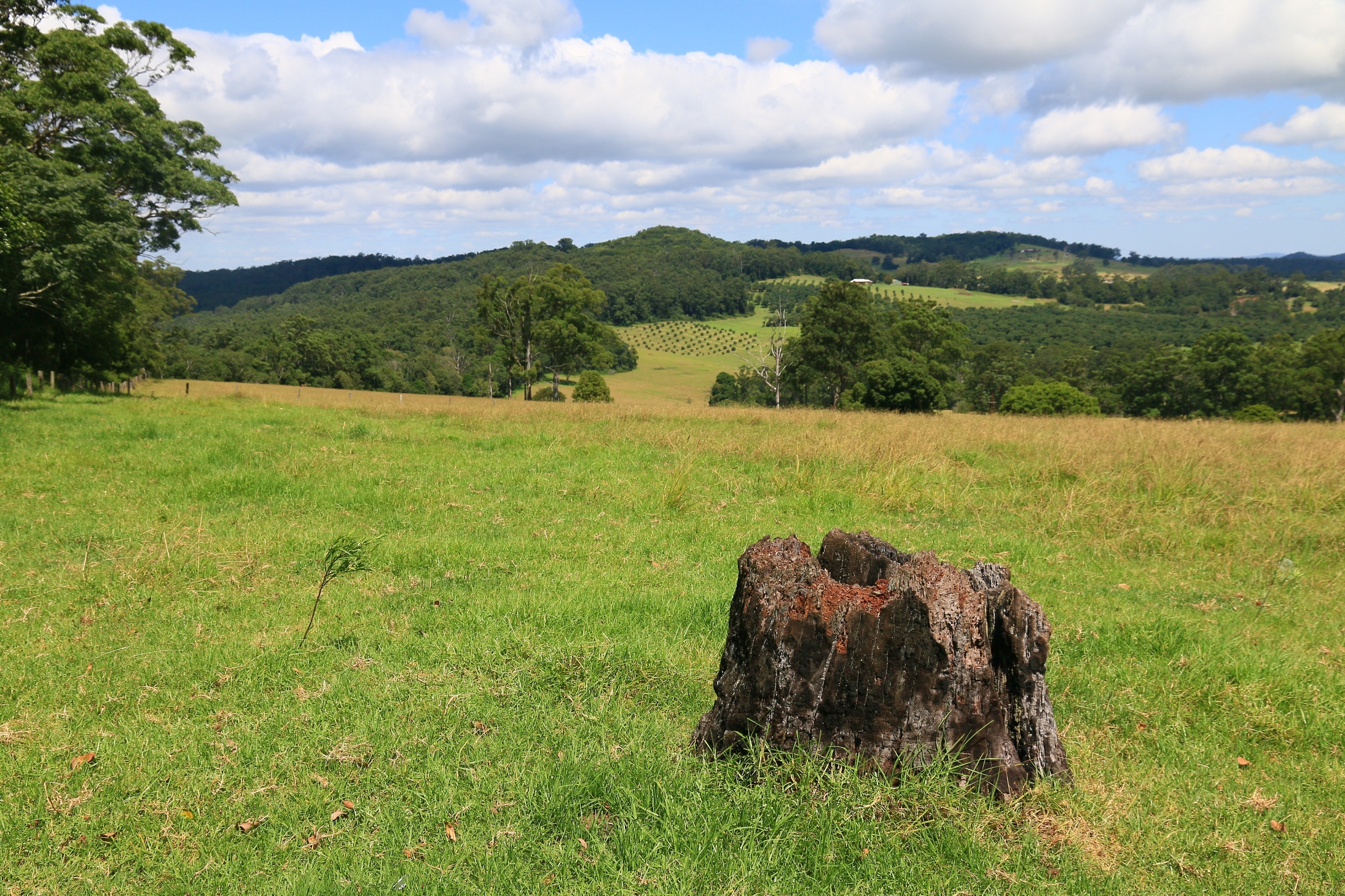
Leaving Toowoomba with a decent coffee and mushroom-focused breakfast, I had a free day to return to Brisbane and decided to take a different route back down. First stop was the small village of Hampton, from where I attained necessary booklets and maps from the tourist information centre. Nearby, Ravensbourne National Park, offered some scenic views of the fairly lush and productive countryside of the region, and the first of several mixed rainforest-bush-type ambles.

QLD04

Heading down to the town of Esk, the road continues in the picturesque Brisbane Valley, fringing the immense Wivenhoe Lake. It was this massive body that bulged with too much water a few years back and released its content into the Brisbane River, causing flooding all the way down to the coast. This was responsible for awful scenes, in which Kevin Rudd – then deposed as PM – waded gleefully through shallow water in his boardies to deliver an empty box of mixed metaphors and cringe-worthy superlatives to despairing locals. Today things were more sedate, though the occasional flood marker and rough strip of tarmac indicated that flood damage is always a risk.

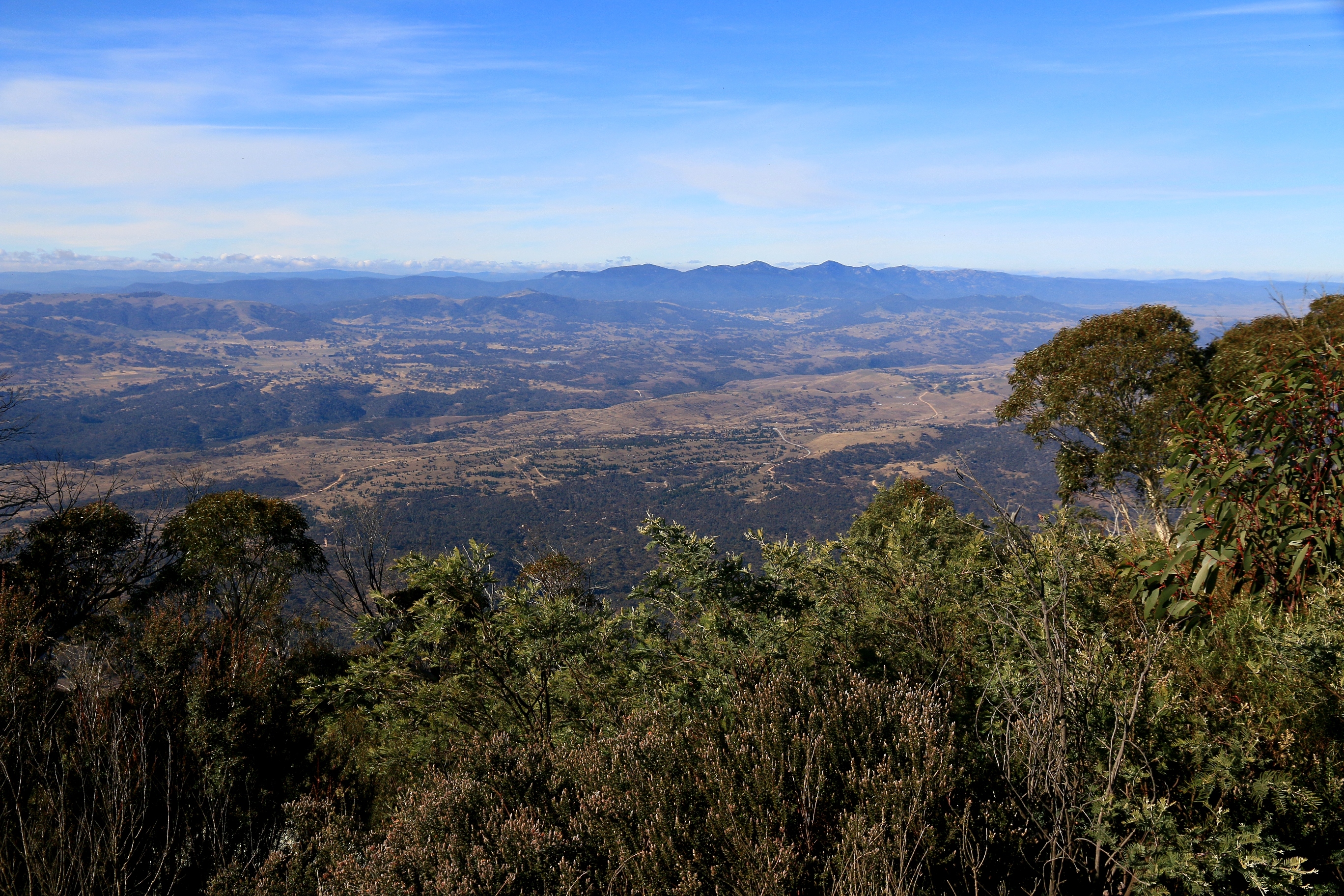
Qld06Above the floodplain, more ranges rise on a very winding and sometimes precipitous alternative route to Brisbane. Crossing through D’Aguilar National Park with a touch of je ne sais quoi and foux du fafa, the road takes in several beautiful viewpoints, patches of subtropical rainforest, and sleepy wood-bedecked villages. Of course I stopped at the viewpoints, and partook of a decent walk through forest near Mount Glorious. Ferns, palms, fig trees and fungus were signals of something a little moister and a touch exotic; a setting in which snakes probably hide to wait for ill-footed southerners, and ants are poised to nibble on fleshy toes. Mercifully, I made it out there alive, accompanied by the rumble of thunder and the sweat of ridiculous humidity.

Qld05

Plunging down away from the rain, the national park ends and immediately Brisbane suburbia grips. There are parallels with the emergence of Toowoomba, as traffic clearways and junctions and shopping malls spring up, traversing The Gap and Ashgrove and a very different kind of Red Hill. The CBD appears, the Brisbane River crossed, and a reminiscent friendship blue sky laksa is taken for old times’ sake. Afterwards, more traffic and concrete and now lights stretch on north, before the city finally gives up, and the motorway allows a speeding up towards the Sunshine Coast.

—————————

From experience I know it is not always sunny on the Sunshine Coast. A now somewhat distant Christmas in particular sticks in the mind. Recently, cyclonic remnants turned fields into mud and streets into streams. This weekend, however, the region was true to its name.

Qld07

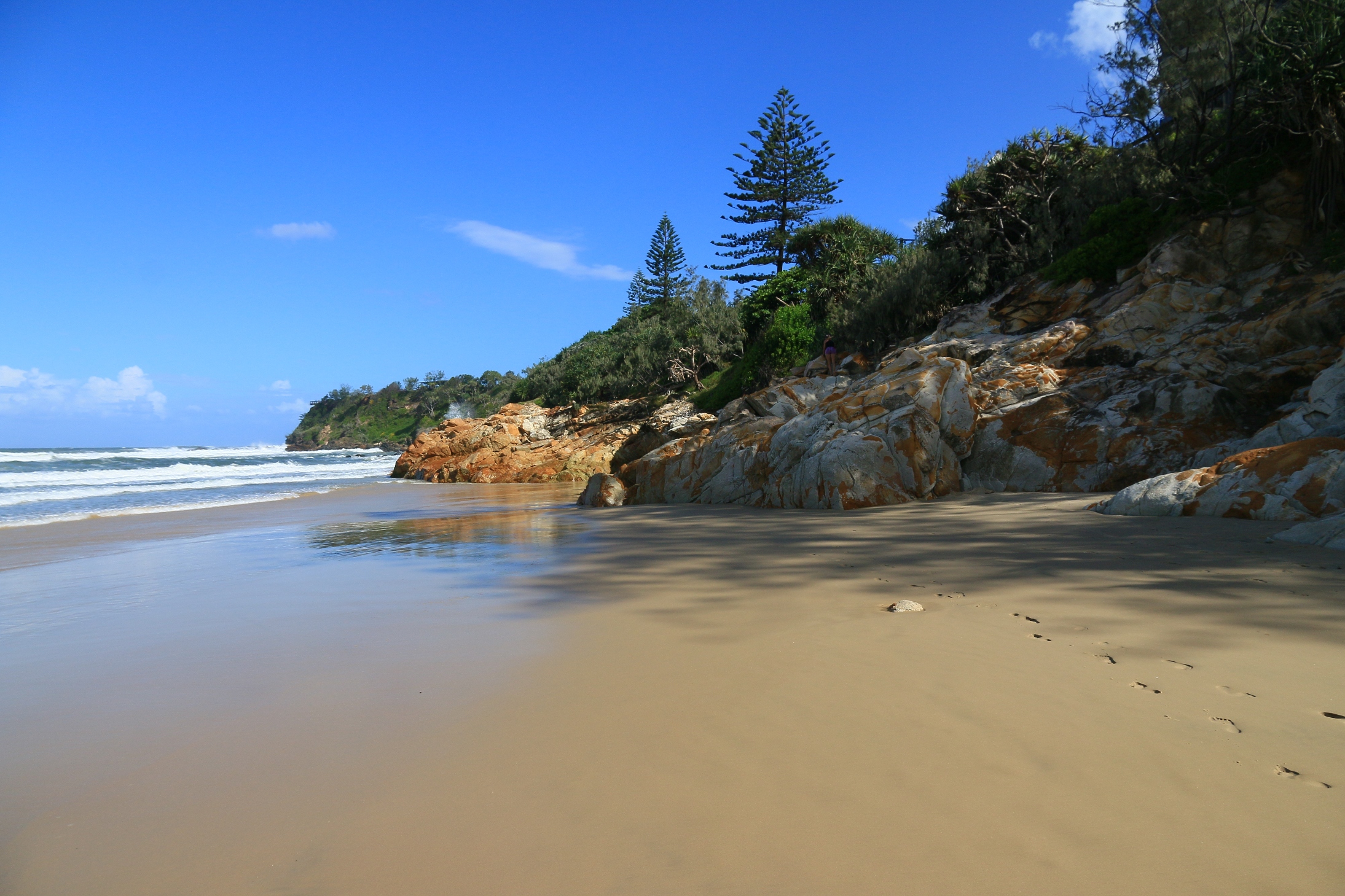
Indeed, it was rather warm. Not drastically higher in temperature than Canberra but with added humidity and night-time sweatiness. Mornings were a bit fresher, meaning that coffee and brunch was not out of the question. But building heat later in the day was more conducive to iced coffees and cold beers, and some relief beside the ocean. In this regard, Coolum Beach at least sounded the part. Certainly, the noticeable sea breeze was causing significant chop on the water and taking some of the perspiration away. Most soothing though was a wade through the ocean itself, as sand and water and feet met in perfect harmony for some brief entanglements of bliss.

Qld08

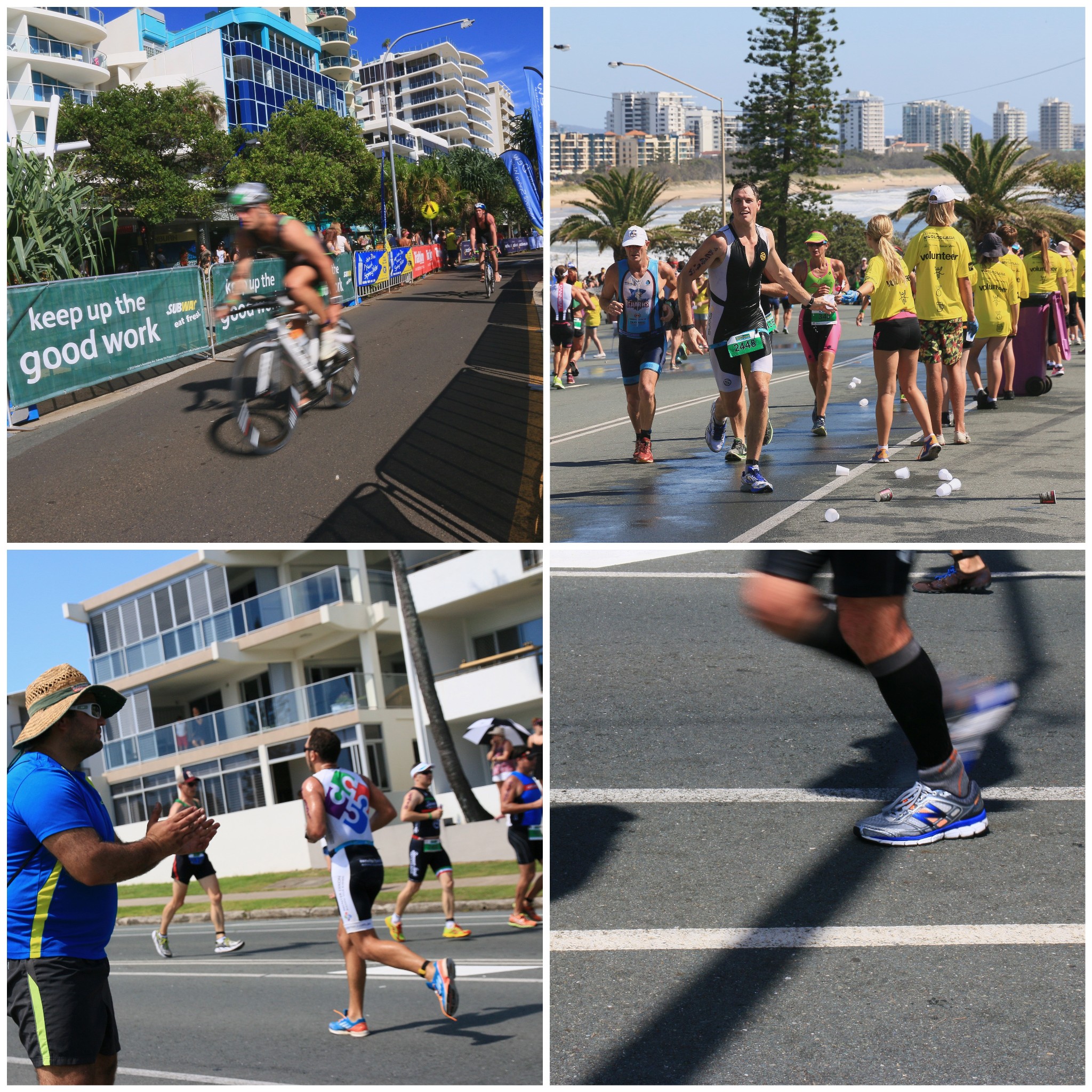
Qld10The last thing I would want to do in this weather is run. Swimming would be okay I suppose, if you could cope with the oversized waves and not get dragged under by sharks or stung by jellyfish or hit by a wayward surfboard. Cycling might be fine too, if you can mainly stick to going down the nine hills plunging from Buderim, breeze flowing through Lycra, and refresh with an iced latte afterwards. But running doesn’t seem to come with any benefits. Nonetheless, thousands of people decided to engage in all this and more in the Mooloolaba Triathlon, taking place on a perfect, breezeless thirty degree Sunday.

It was hard work, conquering breakfast and then standing by the road, seeking shade, occasionally clapping and snapping and still questioning why on earth you would be doing this when there is a beautiful beach and ocean you could surely be having far more enjoyment out of. I guess there is admiration, but not a logical one because the endeavour seems so senseless. Strangely and surprisingly though I quite enjoyed watching some of the triathlon, and took satisfaction in encouraging all sorts of sweaty bodies towards the top of their final hill.

Qld11Needless to say, following all this frivolous activity I had a nap and then an iced coffee in the afternoon. A little bit of work accompanied the iced coffee but the iced coffee just about made that all okay. It also generated a bit of extra energy to do some exercise myself, though more of the sedate sunset walk type than the extreme ironman sweatfest. With daylight fading early, particularly as Queensland are backwards when it comes to moving clocks forward, the signs are of seasons changing. And indeed, on the shores of Mooloolaba, still gently wading through warm waters as the halo of twilight captured the skies, I felt as though this could be the last dose of real summer. It may soon drop below twenty-five degrees and Queenslanders will soon reach for the scarves. And for me, research days in the freezing fog of a Ballarat or Wagga winter are closer to realisation.

Australia Driving Food & Drink Green Bogey Photography

Capitalising

march02Change is in the air. After a more than generous period of retirement, I am on the precipice of embarking on a spell of significant work again. The Treasurer will be happy, though it’s not like I stopped being a consumer. Despite recently spending extortionate amounts on dental treatment (not covered by the much-revered Medicare of course), and purchasing coffee (and sometimes cake) to break up the days a little, the economy is still heading towards possible Armageddon. So the prospect of work lies ahead of me like the Nullarbor, stretching out in hazy uniformity for the rest of my life, only to finally end up at Norseman, which is possibly even worse.

march01Change of a more subtle variety is also noticeable around the neighbourhood. The summer storms appear to have dissipated and – for now at least – Canberra has settled into a golden period of warm days, pleasantly refreshing nights, and big blue skies seemingly typical of March. Leaves are largely unturned, but there is a soft wilting and readiness to transform. Mornings are lighter later, but the wattlebird still manages to indulge in its annoying calls outside my window really early every morning without fail. Meanwhile, the cockatoos are even more voraciously attacking the acorns and itchy-bombs, causing overhead hazards on walks in this suburban wilderness.

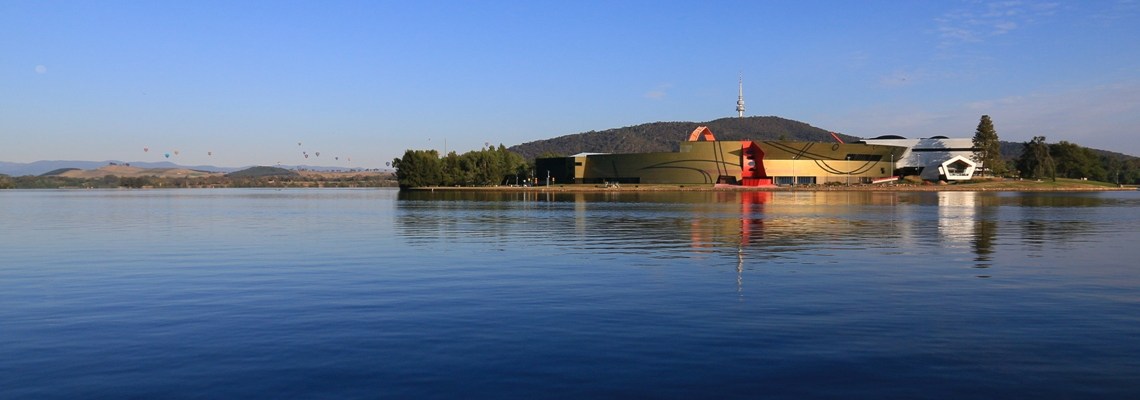
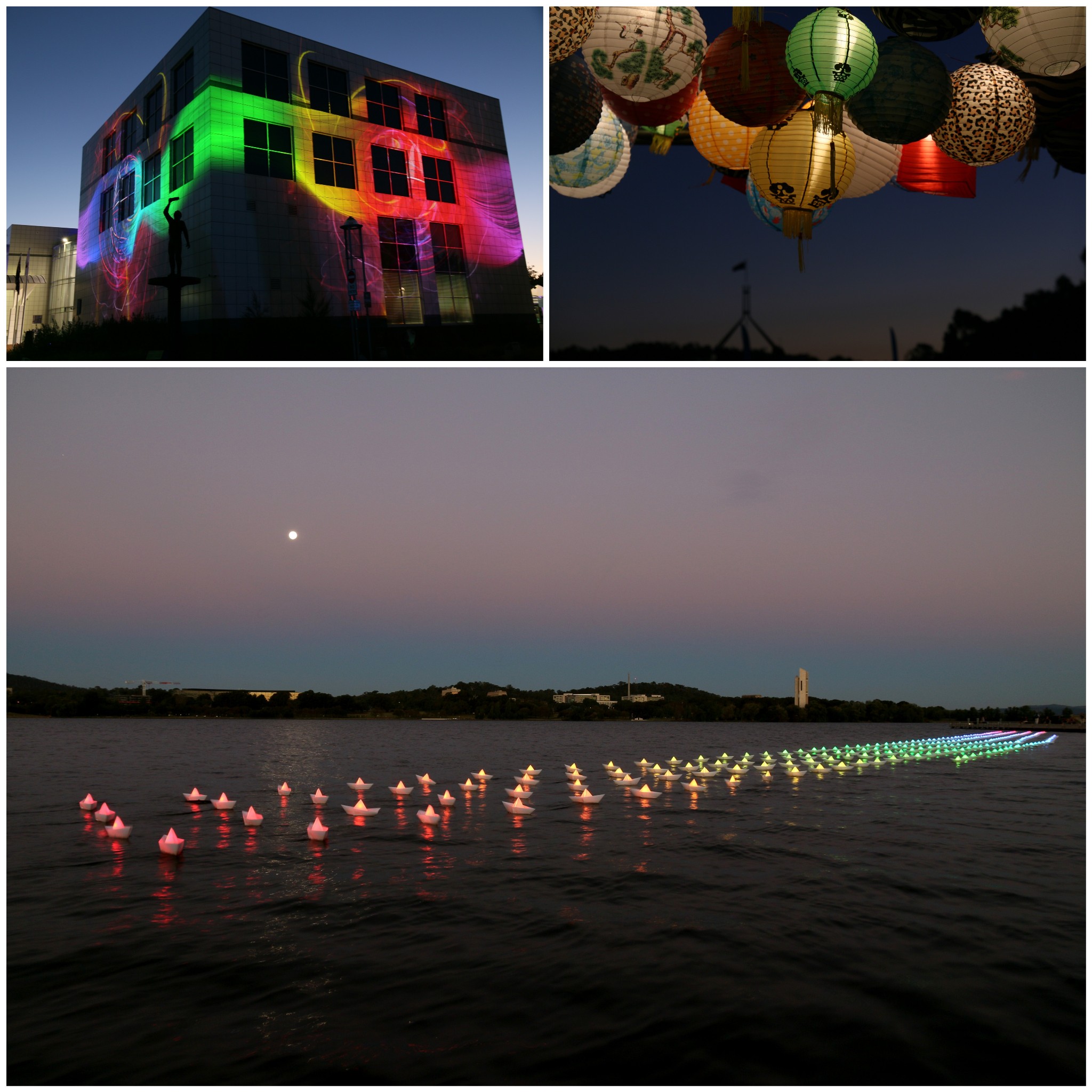
Aligned with the glorious prospect of seasonal transformation is a final, lingering dose of Canberra activity. Enlighten, which appears more popular as the years pass (I was one of those stoic first year visitors before the advent of hipster-conducive noodle markets), always seems to coincide with the finest of nights. Each year brings a new stab at illuminative inventiveness, although one which is usurped this year by that going on within the National Gallery. To stand within an artwork in daggy little protective feet covers and be simultaneously disoriented, uncomfortable and exhilarated by light and space is just a tad different to giant projections of political cartoons on Old Parliament House. Maybe James Turrell can design all of Enlighten next year?

march04

Whatever, the natural light and space of Canberra can be every bit as magical all year round, though there seems increasing clarity and depth as the sun shifts lower on the horizon. Rising early to see the annual balloon extravaganza is a reminder of that hallowed time of the morning before day breaks. The wattlebird may have been carping on for half an hour already, but the indigo sky is only slowly softening, the glow on the eastern horizon building until the first rays of sun blind the eyes, redden the white bark of the gums, and silhouette the parade of tripods seeking to capture it beside the lake. Hundreds of cameras redirected because the balloons are tethered, unable to take off because of too much or too little or too much and too little wind.

march05

march06

Not strong enough wind there is or wind too much in gusts of the force” mutters the giant Yoda balloon. I would trust his wisdom (certainly more than an angry bird or dodo), and thus they remain a picture lingering upon the lawns, surrounded by an always surprisingly large mass for so early in the morning.

march07

Further round the lake, distant in the west, several balloons have made it into the air. I guess wind conditions are more favourable away from a parliamentary area that usually generates a lot of unnecessary hot air. Hot air that has, I guess, indirectly contributed to my own forthcoming increased income tax contribution to save the economy. Hot air piped out of the giant flagpole that will mix with cooler and colder and – eventually – perishing air as the months progress. It was good while it lasted!

Australia Green Bogey Photography

March

March strikes me as a celebratory month. Events include the wedding anniversary of my mum and stepdad, for instance, which tends to slip my mind without fail every year. Likewise, Mother’s Day, which may or may not happen at some point in certain countries. With similar vagueness, Easter might eventuate in March, but this is contingent on some advanced algebraic calculation based on a factor of the day when Jesus rose up to make pancakes on the moon or something. Elsewhere, at the start of the month in Wales, people get all excited about leeks on cheese on toast, drink Brains, and break out in hearty song about Saint Dafydd. Meanwhile, unbeknownst to the rest of Australia (and thus of course the world), the natives of its capital gather to commemorate the city’s founding by promptly and unapologetically fleeing to the coast. There is clearly much to celebrate.

Mar01The biggest cause for chirpiness however – specifically in the northern hemisphere – is the symbolic termination of winter. Sure, it may still rain curtains of icy drizzle from time to time, but it can do so safe in the knowledge that the worse is behind us. Evenings suddenly seem to stretch for longer; the sun, when it can be persuaded to appear, resonates a faint whiff of warmth; daffodils – that most blessed portent of a new season – glow as proudly as a Welshman once did at Cardiff Arms Park. Promise pervades the air.

There is a particular day in March – let’s say the 19th – in which seasonality gets a little carried away with itself. The temperature might reach something freakish like 18°C. The wind temporarily vanishes, leaving the rays of the sun untempered to shower upon beaming faces. A national mood change is palpable as families picnic in parks, people spill out of London pubs short-sleeved, and the first whimpers of charcoal smoke rise from over the neighbour’s fence, ruining the washing on the line that can finally dry properly for the first time since September.

There is ,of course, a wickedness to this day. It is as though a dose of paradise has been granted that will not appear again until at least May, if not July. The irresistible inclemency of an Atlantic front is never too far away and the return to what passes for normalcy leaves you wondering whether yesterday was a dream. Instead, the season builds more subtly, like a light’s dimmer switch being incrementally dialled up as opposed to the classical on and off again manner. But at least March represents a time when someone’s hand is on that dimmer switch, and anticipation about whether the bulb will eventually glow at sixty or a hundred watts is almost as overwhelming as a confused metaphor about electrical illumination.

I would struggle without seasonality. I may be in a minority, given the population growth of the Gold Coast and the increase in beachside Pilates taking place during southern Spanish winters. Here, a quite remarkable assortment of fossils can be spotted, bedecked in sun visors, creaking and contorting in slow motion like a troupe of jaded CP3Os, as if worn down from another hackneyed yet money-spinning outing. Leathery limbs reach tentatively to the skies, embracing the sun that seems forever warm and almost always present. The people here may never wear trousers, or coats, or enclosed shoes ever again. And while it may seem like some fanciful paradise to wake up to blue skies every day, to never feel cold, would it not also eventually feel remorsefully dull, remarkably uneventful, entirely, tediously predictable?

This, I believe, is one of the more common complaints from UK migrants to certain parts of Australia. I’ve seen it on those daytime TV shows – Get a Life Down Under, I’m a Celebrity Get Me Out of Here, Escape to the Country (Just Don’t Come by Boat or You Will End Up in a Concentration Camp on an Impoverished, Mosquito-Infested Island), etc, etc. To some of the locals, such comments just seem to reinforce a lovingly-embraced stereotype related to whinging. But I get it, even though I would try to make the most of endless days of fair weather myself. There is glumness in Britishness – fostered over millennia, permeated by the weather, resolute in the character – that cannot easily be discarded. It is not a bad thing, predominantly because we are skilled at making light of it (indeed, this is something to be celebrated). And, I think, it nurtures appreciation and satisfaction in the simplest of things, such as the emergence of a snowdrop from the earth in early spring [i].

I guess what I am saying, what I am typing, is that March can be so exhilarating in Britain because of what you have been through to get there. Yes, much like the proverbial rollercoaster or, more aptly, the Northern Line, dawdling through what seems an endless toxic darkness to finally emerge into the light and airy park-side setting of East Finchley. Spring and summer, or Woodside Park and High Barnet, lay ahead. And while these will often end up being more disappointing than hoped-for, in March the anticipation is still there, yet to be dashed by John Ketley.

Australia is in many ways a different proposition. The sheer size and variability in the weather means that March could herald heatwaves, cyclones, snowfalls, floods, dust storms, mist patches, and cascades of quokkas and numbats. In small pockets – such as the south east corner with which I am most familiar – there is a parallel cooling and drawing in of nights, and the first vestiges of a prolonged autumn appear. Though there may be some sombreness that summer is on the wane, there is little of the dread associated with a forthcoming northern winter. Partly that’s a result of days that can still exceed thirty degrees but mostly milder, more amiable conditions as a whole. This is the start of a golden period, when pleasant, blue-sky days and refreshing nights stack up one after the other and seem to stretch on into May.

Of course, I write this safe in the knowledge (or 97% confident) that climate change could totally wreck everything I am going on about. Stormy Marches and hot Marches and cyclonic Marches or even snowy Marches could become the new norm. Do I have evidence for this? Well, no, but that doesn’t stop climate sceptics receiving a sycophantic front page diatribe in certain national media, so no harm in including a few words on an obscure blog. While we may (only part) jokingly embrace climate change if it means we can wear union jack shorts in Southend in March, it would be a shame to lose that which is special about the seasonality it offers. Otherwise we’ll just be as bad as the Gold Coast.

I can accept hot days in early March, but it was nearing month’s end in 2013 when myself and a friend decided to persevere with the preparation of bangers and mash during a 38 degree northerly on the southern extremity of the Australian mainland. It is probably one of the biggest collective regrets we have from a three month trip across Australia. Just what were we thinking?! I guess in the joy of food planning and supermarket shopping a few days in advance we didn’t anticipate such furnace-like conditions. Plus we had packed a potato masher as something of a luxury item, so were eager to use it on any possible occasion.

Mar02

The setting was Tidal River, a sprawling campground complex within Wilsons Promontory National Park. It’s popular with Melburnians and wombats, both of whom were in profusion. The wombats were engaged in a faux cultural conversation about the ethics of rainforest regurgitated coffee beans, while the Melburnians contentedly chomped away on the grass and shitted square bricks. The day had passed with the sight and smell of smoke from the lower Strzelecki Ranges, and a coming-close-to-mild-dehydration tramp up to Vereker Outlook. Relief of a kind came from the beautiful white bays and clear waters of the coastline, though even here the brilliance of the sand glared with a resonant heat. General fatigue was high, and the struggle to boil potatoes on a portable gas stove in a strong northerly beside the sea was only made more pleasurable by the numerous flies clearly determined to explore the nasal cavity. This was not quite the idyllic March that I had come to know and love.

Mar03Needless to say, a week later I was freezing my butt off in another Victorian national park, desperately lighting a pile of twigs to ward off the chance of hypothermia. In the golden goldfields around Castlemaine and Bendigo, Creswick and Ballarat, the effect of March was bearing fruit. Planted to gentrify the antiquated avenues and make Englanders feel partly at home, the oaks and elms, beech and poplars, were busy transitioning into autumn shades. The spa town of Daylesford was made for this time of year, its lake happily reflective and the Victorian Victorian streets lined with large-leaved trees that seem to be excited by the end of summer. A refuge for Masterchef cast-offs, there was no doubting that the pork roasted to succulence in a charming old pub was several hundred times better, and a thousand more fitting, than the bangers and mash of past.

Thus, climate change pending, there is much to celebrate about March whether north or south. I am pleased to say that as I write this in Canberra, the sun is shining, it is a predictable 25 degrees and the forecast is set fair. Spring may be yet to truly spring in the UK, but there is an inevitability that it will come. Soon. Two weeks and there may be a freak warm day coming up, so stock up on charcoal before the supermarkets sell out, and beware of white van man with his top inexplicably off. Above all, cherish this most pivotal of months which signifies the start of something new. Love the seasons, and all the incremental change that they deliver. Otherwise, head to the Gold Coast or Lanzarote and dwell in temperate predictability, never to wear long pants ever, ever again.


[i] In making a sweeping generalisation about national character I should caveat: there will still inevitably be a handful of tiresome, grouchy narks who hate the sound of children’s laughter and lament the daffodils emerging on the median strip because they might provide a place for immigrant burglars to hide and spread Ebola. The good thing is everyone else will take the piss out of them. Apart from desperate politicians who seem to focus endlessly on wooing their vote.

12 Months Australia Europe

A mountain to climb

In another week in which the Australian political landscape imploded in much self-generated excitement, it is hard not to be drawn into contributing more electronic graffiti about levels of douchebagness and the chaos and disorder that is certainly not happening again like it did with that other bunch. Nothing to see here, move along now. However, while the world really doesn’t wait with baited breath to figure which “adult” is in charge of the Knightly Order of Her Majesty’s Commonwealth of Australia, the kos12natural landscape is in much less turmoil (unless you listen to those wacky “scientists” with their corroborated, peer-reviewed “research” and years of undisputed empirical “data”). There are, clearly, mountains to climb and some are easier than others.

The Snowy Mountains are very old – older indeed than a snoozing Senator – and have been worn down over millions of years. If they were several millions of years younger they would be more akin to the New Zealand Alps or the Himalayas, but because of their age they have mellowed; they are more rounded, worn down and weather-beaten, skin baked by summer sun and scoured by winter ice. They are, perhaps, the Brecon Beacons down under, with classic U-shaped valleys, remnant moraine and small, glacial tarns.

Having digested various parts of the mountains over the years – embedded deep within Kosciuszko National Park – a one-day walk finally appeared to stitch together the different threads of footsteps past. In particular, the Main Range circuit, nudging 22km in length and looping around the highest country. This included a stretch of six kilometres or so that I had not been on before and which, undoubtedly, was the most spectacular.

So, in pursuit of clear air and with the captain’s picks of two friends for company, let me guide you around the trail in a mostly factual, pictorial and certainly not chaotic or disorderly fashion…

Starting off from Charlotte Pass (1,837m), the track drops substantially to ford the Snowy River (1,717m). The river rises somewhere amongst the boggy marshes 5km upstream, and has gathered enough water by this point to make a crossing on stepping stones sometimes hazardous. Today – still reasonably early on a crystal clear February morning – all was rather placid and safely negotiated without wet feet or soggy sandwiches.

kos01

kos02

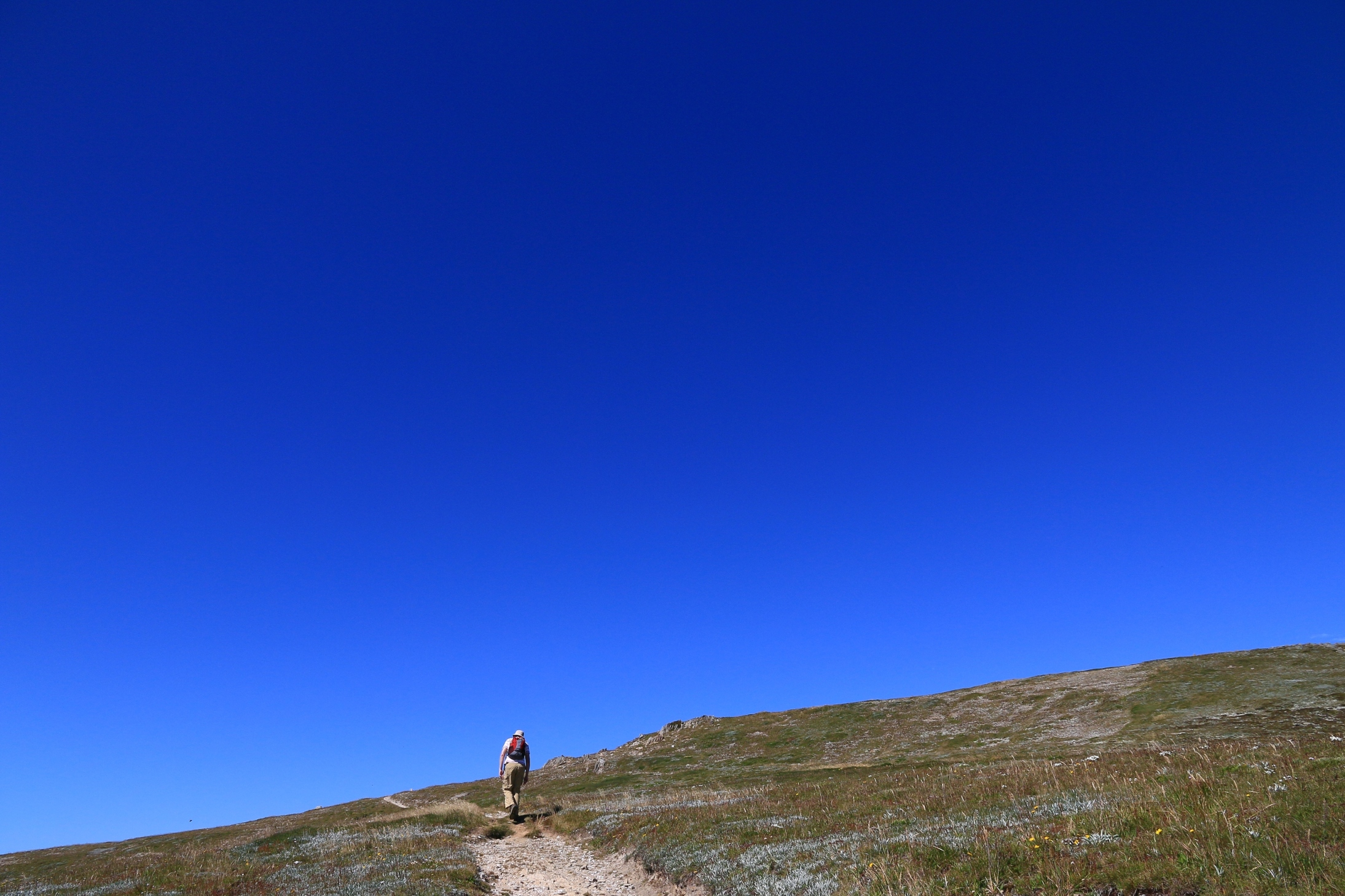
From the river crossing it is unsurprisingly onwards and upwards; in fact the climb, while never too steep, is quite incessant and longer than I remember! However, with altitude the views start to open up, including the sight of Hedley’s Tarn and the ridgelines of the Main Range’s highest peaks.

kos03

After some 300 metres of ascent and four kilometres from the start a view of Blue Lake is attained. Today it is lacking much of a blue colour and the glaring morning sun and a wind whipping across the surface are photogenically challenging! From here though it is not too much further to reach a saddle with the first views of more spectacular jagged mountains and the ranges of blue spreading west. A perfect opportunity for a morning food stop taking in a homemade sausage roll and spot of middle-class hiker’s quiche.

kos04

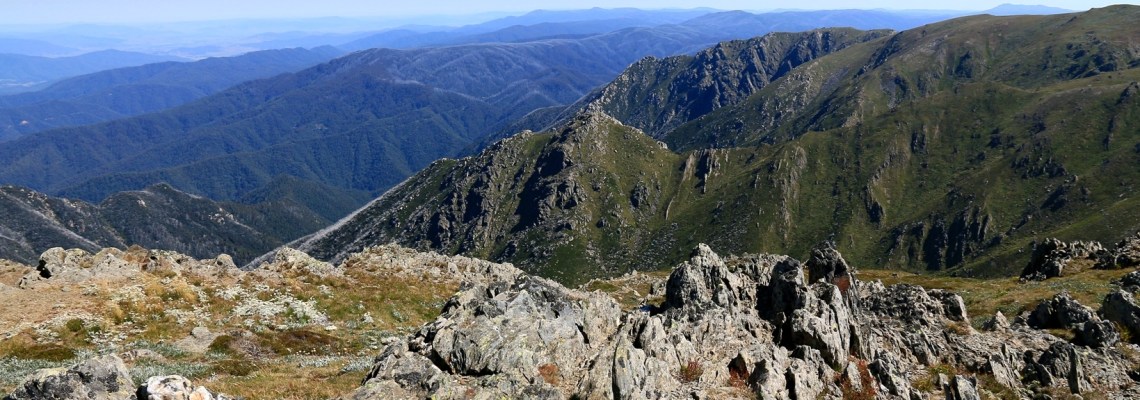
From this point, the trail is all new ground for me and the morning sustenance is useful for the slow climb up to Carruthers Peak (2,139m). The spectacular views continue, and the summit itself affords the first look at Club Lake, as well as the trail following the ridgeline to the rather bland summit of Mount Kosciuszko.

kos06

kos07

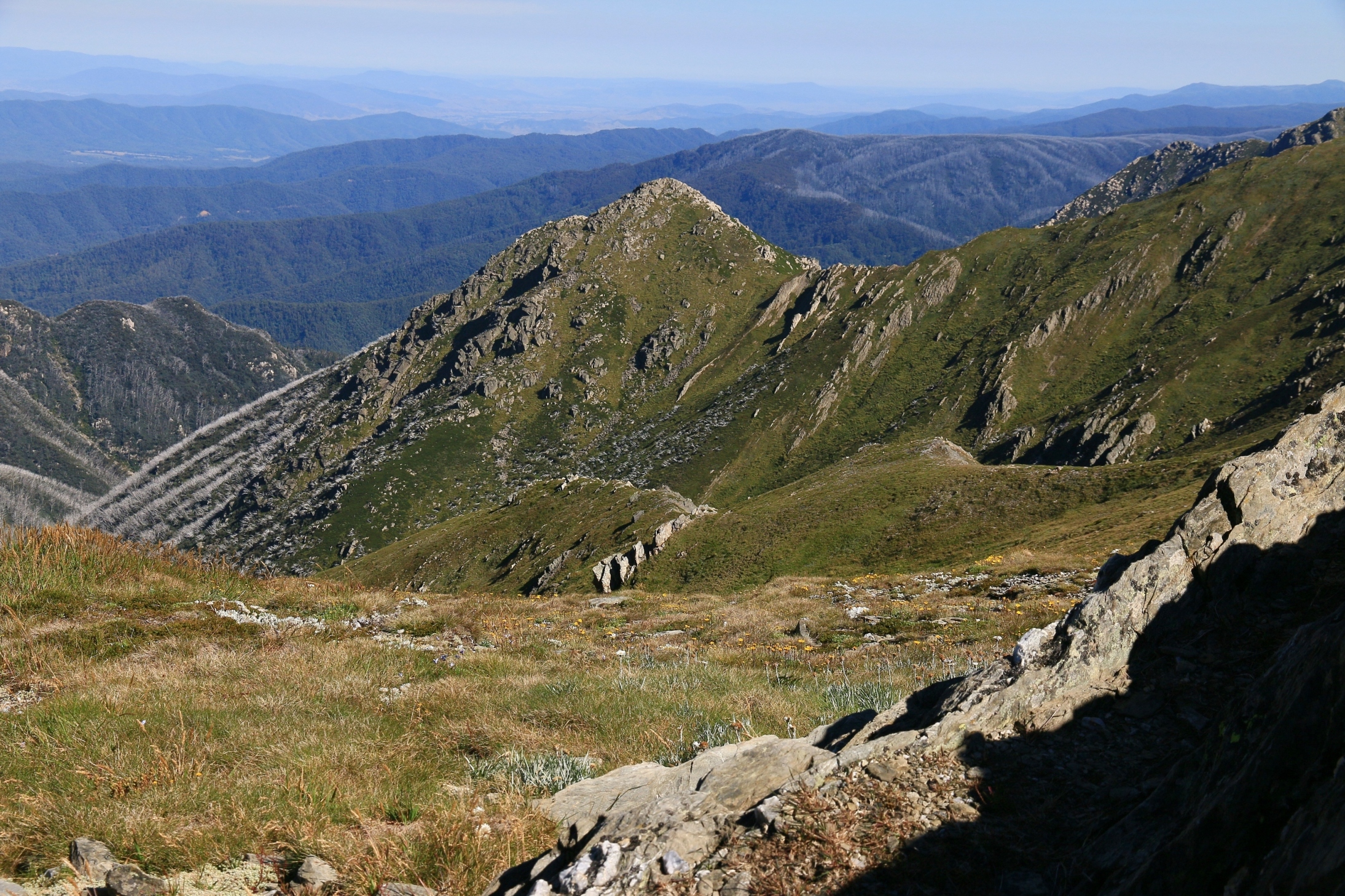
The ridgeline is a joy to follow, with remnant wildflowers, the prominence of Mount Townsend to kos09the right and deep ravines carved by Lady Northcote’s Creek, the mountains seeming to tumble sharply west. I have no idea who Lady Northcote was but if her character was anything like that of the landscape in which she was named, she was probably a bit of a looker, though occasionally bleak and somewhat cutting.
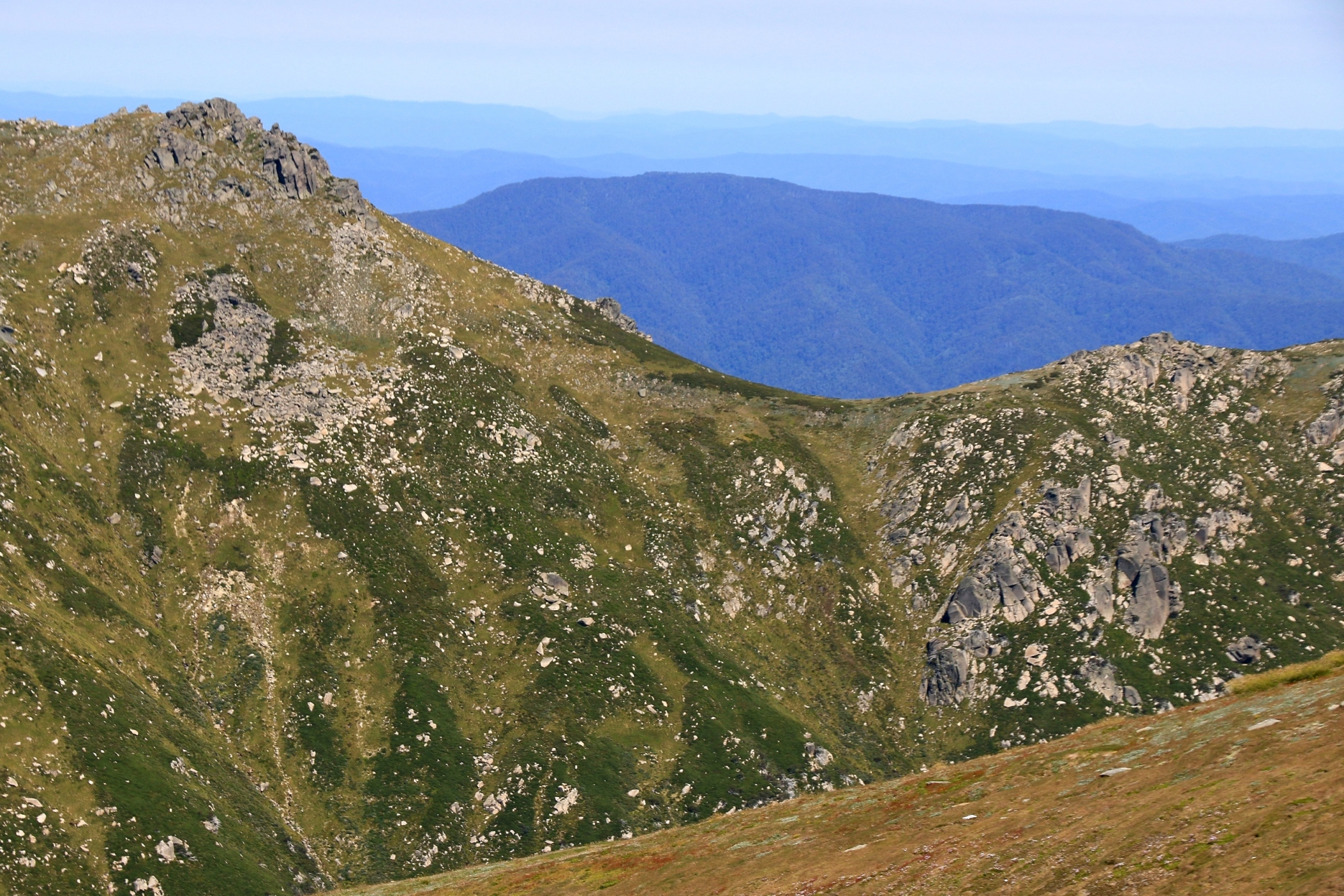
kos08

kos10Before too long Albina Lake emerges, tucked in a sheltered valley seemingly conducive to an array of wildflowers and other alpine plants. The lake looks quite inviting in the warmth and would prove a nice spot for a picnic. It’s about nine kilometres into the walk now, and with the summit of Mount Kosciusko just a few thousand metres distant, we resolve to head on and join the masses carrying their lunch to the top of Australia. On reflection, the best part of the walk is over…though this may be in part because familiar paths will soon be rejoined.
kos11Unfortunately we seem to have gradually descended a little, and the hoick up to the main summit thoroughfare is probably the steepest of the day. We’re not talking rock climbing here, but frequent steps and, by now, quite a penetrating sun. The junction with the main summit trail is like emerging from a country lane onto the M1. Mostly originating from Thredbo, families, fitness freaks and old fogies join us in a steady stream coiling up to the top (2,228m). A medley of Aussie flags and fluoro leggings congregates around the summit marker, and lunching is de rigueur. With homemade hummus and more quiche ours is perhaps one of the more pretentious of picnics!
kos13

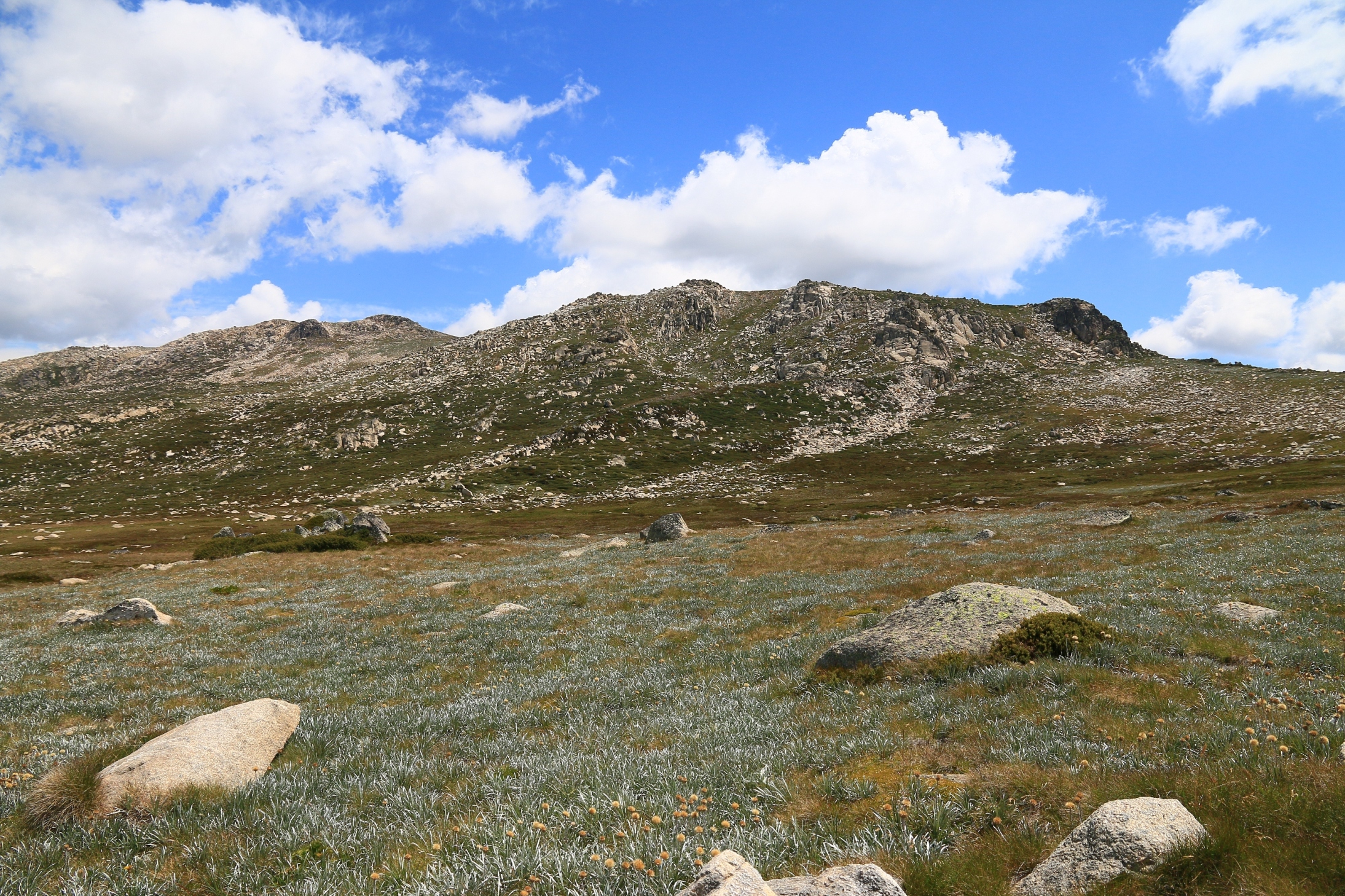
Apart from a little blip it is all downhill from here, some eight and a half kilometres back to Charlotte Pass. From Rawson Pass (2,119m) – which is something akin to the base camp for the kos14summit climb and apparently includes Australia’s highest public toilet – a sedate, well-graded trail makes it all the way back. This is the old summit road and I read that a shuttle bus used to ply along here, part of me wishing it was still running. The open scenery is not unpleasant, but in comparison to other parts of the track and given the gathering weariness this part is a bit of a drag. Markers every kilometre break it up, as does Seaman’s Hut (2,020m) and a more comfortable bridging of the Snowy River with four kilometres remaining.
kos15

Approaching Charlotte Pass, signs of civilisation re-appear – a chairlift and the occasional dark grey metallic huts populated by visitors in winter. The Snowy courses to the left and from across the valley the earlier, kos16upwards trail to Blue Lake looks like an impressive climb! Snow Gums also cluster here, stunted and bending with their striped, smooth bark of chocolate and sand, of black and white. Afternoon clouds are building and the risk of storms hypothesised look as though they will be realised. But, after six and a half hours and 21.9 kilometres, we reach the (relative) safety of a Subaru Outback. Accomplished and relieved, invigorated and weary; trundling another 220km back to Canberra (577m), via Jindabyne caffeine and Cooma steak. From the real Australia and back to the bizarre.
Australia Green Bogey Walking

February

The chill embrace of water was invasive. A pond stretching out in smooth monotone reflected only the dead black trees, clutching and distorting like lost souls grasping for salvation. In places a mist danced, swirls of vapour disappearing and re-emerging within the blink of an eye; drifting towards the pond’s banks and adding burden to the dense brambles and thickets of weed. Here, a lonely black crow occasionally paced, agitating water from the undergrowth and sending it downwards to disturb the silvery veneer. The grass sweeping up to where he stood was sopping, congested with dewdrops longing to be transformed into jewels by an absent sun.  And into this reservoir one more droplet formed, trickling down his scarred cheek and stolen by the air.

The mist on that day one year ago was somehow more startling. It hovered fleetingly down in the small gully at the back of his plot, barely distinguishable in the first light, twisting through the remaining tree ferns like some ghostly serpent of the dreamtime.  He was always up at this hour, surveying the daybreak from the back of his veranda, but not once could he recall mist down there at this time of year. He found the pre-dawn a beautiful, peaceful period, becalmed before the summer sun gathered in ferocity and the winds became energised. It was his time, a secret hour of solace before the industry of human activity discovered the world again and disrupted its placidity.

The first sounds, apart from those of the creaking deck upon which he paced, came from the birds. Usually a lone wattlebird set everything off, calling to its mate and waiting – sometimes forlornly – for a distant reply. Without a response its cry would intensify towards panic, only subdued when an echo rebounded from somewhere amongst the trees lining the road. As the black of night faded indigo and navy blue, the kookaburras stirred; first a guttural warm-up from the lead voice, like that of a car’s ignition struggling to get going on the first attempt. Upon finally starting this lone cackle would act as an alarm call for the others to burst into a cacophony. This seemed to peeve the sulphur-crested cockatoos, shrieking in retort to being rudely awaken. The shrill flits of galahs and rosellas followed, while the currawongs and magpies struggled to be heard in the melee. By time the first red rays of sun glowed upon the upper reaches of the big cabbage gum to his right, an uninterrupted wall of sound flowed through the air and the world was awake again.

A wall of sound greeted him now, walking up Highgate Hill, though little of it emanated from anything other than what man had done. Red double deckers played tag, rumbling up the hill from Archway and swapping places at alternate stops. Occasionally a black cab spirited its way towards the city and fluoro cyclists diced with death on a mad downhill descent. But mostly there were Range Rovers and Landcruisers and a variety of precision-made German-engineered supersized cars perfectly suitable for the rough terrain of north London. Inside, almost unequivocally, a well-groomed mother was returning from the school run, bedecked in a smart-fitting pastel blazer and adorned with large sunglasses.

Overhead, a few pigeons scattered in the skies, continually eclipsed by the roar of jets ascending from Heathrow, veering left as they rose on a repetitive north-easterly track. Many destined to escape the chill. It was perhaps only around four degrees – already incrementally warmer than overnight – but the cold was bitter enough to cause him to be jolted by the heat encased within Sam’s Cafe as he opened the door.

It was only ten in the morning when he had been hit like this last year. Protected by the settler’s schizophrenic garden of apple tree and acacia, fuchsia and grevillea, his blue weatherboard home escaped the worst excesses of summer. Unlatching the back door and opening out its fly screen onto the veranda, he was immediately confronted by a burst of heat; like that of an airplane door closed at Aberdeen and opened again at Alicante. Over the creek he could see his neighbour’s Friesians clustered under the shade of a eucalypt. Their complaining bellows had replaced the melodies of dawn long since passed, with only the intermittent clucking of his chooks competing for attention. As he made his way across to their pen to collect the morning’s yield, a waft of wind stirred in the cabbage gum. This was replicated a minute later by the trees upon the ridge, whipped up in greater fury for ten seconds before dying completely. Gathering up just two eggs – fewer than normal – his throat had dried and any relief from his own saliva was fleeting.

On days like this there was little he could do. Tending to the chooks, clearing the yard of clutter, and undertaking perfunctory checks on the water tank, roof and gutters was about the sum of it. There was nothing for it other than to close all the blinds, reach for the fridge, crack open a beer, and wait for the day to pass. The beer was the medicinal part. The contours of the glass, coated in icy beads of water, were balsam to his ruddy hands. In one fluid gesture he passed the bottle across his forehead, twisted off the cap to release a short, sweet spurt of gas, and brought the rim up to his lips for an indulgent gulp.

Soothed and mellowed, he reached up to the shelf and flicked on the radio, before settling down in a wooden chair that had seen better days. Set to the ABC – as it had been for umpteen years – a young bloke was talking about his experimentations in crop diversification. Several varieties of something called keynwah, he thought they had said. Apparently, he got some of this keynwah sent over from South America and one of its party was delivering promise here in Gippsland. There was good money in it, apparently, and as the talk meandered into yield per hectare, cost inputs and market pricing, he found his eyelids dropping and head becoming heavy, dragged down by a tonne of exotic wholegrain…

…a young Peter Hollingsworth was walking alongside the Thames once again. The brown river was languid, a juxtaposition to the barges and cruisers bustling up and downstream with purpose. It was sunny, though crisp, with a gusty easterly wind whipping under the railway bridges and backstreet arches of Bankside. Next he saw a pint of chocolaty brown ale in front of him, topped off with creamy white foam. It was called something like Black Boar, and was a fine sight to behold. But more striking, more achingly beautiful, more lustfully alluring was the vision of Emily Coniston, animated across the table in delivering a rebuttal to some dandy twerp who dared to suggest she should stick to becoming a housewife and mother. Making out her argument was tough – the crackle of the open fire incessant – but you could tell she was having the better of things, and looked all the finer for it.

The crackling intensified, and slowly the image blurred and vanished. The talk of keynwah had ceased and the radio had lost signal altogether. Slowly rising, Peter switched it off, and went back out to the veranda to check up on what the world was doing. By now, the midday sun was searing and he lingered sparingly in it. Everything was eerily still and quiet. The cows had gone, probably offered refuge in one of the big tin sheds up on the hill. Even the cicadas were subdued, no doubt wallowing amongst the more succulent clumps of grass and weed next to the boundary fence. The chooks were silent too, but faring okay as he ambled down to their pen with extra water. Inside the small shed attached to their run, he noticed four hens snoozing away in the shade, as if the heat was today’s excuse for a typically elongated siesta.

Turning back to the house was when he first noticed a narrow plume of smoke, rising vertically many kilometres distant, up somewhere in the ranges west of Buchan. This was nothing new, the whole country up there so rugged and devoid of human habitation that fires could burn away for months on end.  Twelve years previously he remembered it coming down from the mountains and torching a few sheds and accounting for six cattle and a cat in one of the scattered settlements in the valley. The fire had ravaged an area the size of Belgium, but its damage was mostly temporary, the bush regenerating, as it does, to take on its latest iteration. Even the old couple who lost their cat easily got a new one from the dozens offered by well-meaning do-gooders.

Heading to the back door he looked once more at the smoke, but did not see that of a bushfire simultaneously destroying and rejuvenating a tangled patch of far off high country; instead it was that rising from Battersea Power Station to his west, adding another smoky texture to the otherwise blanket grey sky. Emily was gliding on the ice, reaching out for his hand and guiding him with both a tenderness and passion that was as much about a journey into his heart as it was a helping hand to an Australian unaccustomed to such wintry escapades. His tentativeness and clumsiness eased, so much so that he could finally avert his gaze up from his feet and dwell longer in that carefree smile and the large, brown eyes brimming with life. Only when those eyes reached into his did he stutter once more, crashing to the ground accompanied by the sounds of unbridled, joyous laughter.

A small gust of wind rattled through the cabbage gum, and briefly diverted his attention back to the present. But his mind was now deeply focused on the past. It may have been nearing forty degrees in a rural homestead in the middle of not much at all, but Peter was now transfixed on one magical winter many years ago in a huge, sprawling city on the other side of the world. Retreating inside, he sought out one of those shoeboxes that contain life’s memories. It was buried in a bigger box under souvenir stubby holders and a dream catcher and several bits of key chain and magazines about photography and newspaper pullouts about walking trails and places in South America and recipes for Malaysian curries. Inside, the smell was of an old bookshop in Melbourne, as letters and postcards, photos and train tickets, spilled out onto the kitchen table.

The afternoon passed in a blur of words and images. Three cherished letters, two photo booth pictures, a program from the Old Vic, and a return train ticket from Waterloo to Winchester were the only physical representations Peter retained of his time with Emily Coniston. He read and re-read every sentence in the letters; the first was full of sparkle and suggestion, of hopes and dreams of a life to come. The second, composed a few years later, was more formal, though he detected an occasional playfulness in between lines of her impending marriage to Will Barlow. The third was more recent – sent upon the turn of the millennium – in which fondness for their collective past was painted in such a vividly romantic hue that it was impossible not to rue what might have been.

The train tickets did little justice in capturing the memories of that day. It was a sunny Sunday in early February. The train carriage had been stationed at Waterloo overnight and so, first thing, it was like entering a cold store full of legs of ham hanging from the ceiling. Things warmed a touch as the sun penetrated the carriage, and the white frost-capped roofs of the suburbs slowly began to drip as they passed by. In Winchester, the lawns in front of the cathedral were pocketed white and dewy green, the harsh frostiness lingering where the spire had shadowed the sun. Walking together alongside the old stone walls of the college, they joined arms, offering internal warmth more than sufficient to counter that of the ice layered across the waterway to their right. Warmer still, the hot chocolate shared in a cafe beside the bridge, and the contentedness of being in that place at that time with that person.

A sudden and strong gust rattled the house, causing the shoebox to drop to the floor much in the same way as past memories rapidly evaporated back to the present. For the first time that day, Peter felt a shiver, as if he had been briefly relocated through space and time into that railway carriage on the platform of Waterloo station. The wind whistled again, becoming more persistent and sustained. He could hear the leaves in the gum tree in perpetual motion, the sound as if it were that of a waterfall plunging over the rim of a sandstone cliff. The noises were troublesome, the shrieks and hollers of spirits risen up from the earth, come down from the mountains, and returning from the past.

Outside the situation transformed rapidly, but somehow – and it is hard for him to describe – the next hour passed to Peter in slow motion, in discrete and deliberative moments of time, stitched together like acts from Richard III; a past winter of content soothing what was now becoming a summer of alarm. Before too long, embers began appearing from the west, blazing leaves of eucalyptus oil floating on the sky and whirling downwards to rain on the front porch.  Like the snowflakes floating onto their faces atop Parliament Hill. Each one extinguished before it took hold, as if coming into contact with a rosy cheek reddened all the more with wine. Peter glided calm and assured, as if he had finally perfected the art of ice skating, only on the grass and thistle and weed of the Australian bush. His skates from R.M. Williams and his support, his companionship coming this time from the hosepipe gripped in his hands.

A couple of kilometres out, a wall of flame was now visible upon a ridgeline. Trees in the near distance were touched by the smallest ember and immediately ignited into a fiery vaporous mass. Cockatoos shrieked and fled, their usual brilliance dulled by the smoky air. A kangaroo, eyes panicked and bewildered, clattered into the fence by the road at full force. The cows up in the shed wailed in a desperate high-pitched tone that was marginally more terrifying than that of the wind, or the shriek of the Bakerloo line train coming into the curved platform at Paddington. In an inevitability that was only a matter of time, the cabbage gum caught and Peter found that he was being overwhelmed.

Emily was with him again, grasping the hand that had dropped the hose in panic, and leading him away. Cloaking him in the February of London, guiding him down to the ponds on the Heath. Pausing only to unlatch the chook’s pen, and hearing the birds follow in terror as they fled down the hill. Stripping off in a fit of bravado and alcohol-induced daring to plunge into the icy cold waters of the pond. Laying there in the shallow waters of the creek and being kissed once more, treasuring the feel of her cold, smooth skin upon his. Together in the freezing water as the flames licked overhead, as if in the dead heart of the fire in the pub. Passing through the inferno of hell in the recollection of a heaven. And shedding a tear of happiness into the creek that would eventually run into the sea and cross oceans and find its way back to that pond one year later.

Feb

12 Months Australia Great Britain

Greenish and golden

IMG_6743There comes a point in January when people pause to consider what it means to be Australian. This usually occurs on or around the anniversary of a few hundred boatpeople from Great Britain arriving to “nothing but bush” (to quote the minister for Indigenous Australians and His Lordship Prime Minister of the Monarchical Colony of Australian Subjects). Considered writings of pride, of angst, of hope, of uncertainty litter the newspapers and infiltrate the electronic graffiti of the twittersphere. For the common man – let’s call him Shane – the Australian essence is commemorated through the bite of a lamb chop from a gas barbecue the size of a truck, a youthful discussion of rising intonation about the best 100 songs involving people with beards lamenting at life, or a day in front of the TV watching tennicrickcycletfooty with a so-cold-it-hurts beer.
IMG_6732While I could brave a venture into the question ‘What does it mean to be Australian?’  I neither have the will nor the current brainpower to go down this path. It may be I am suffering from that particularly laconic strand of Australianism that arises specifically at this time of year – the can’t really be arsed is it still the holidays period. I’m also in the dubious position of not really being a proper Australian, not really, even though the flag of my country of birth is still emblazed like some badge of imperial approval upon yours. All I can say is that I feel lucky, immensely lucky, to be a part of you, attached to your deep blue skies, your sandy shores, your withering white gum trees, and your mostly generous and progressive people.

IMG_6759I feel lucky, on most days, to be in Canberra. Yes really! A capital you have built in little over one hundred years from sun and frost-baked plains and bush-tangled hills. You really ought to be a little prouder of this achievement, especially because you have left some of those bush-tangled hills alone. The sweeping roundabouts and nationalist edifices now scattered across the plains are looking particularly fine as well, what with the regular stormy soakings keeping the grass nice and green. A summer of such generous rainfall that it could almost be British. How soothing.

IMG_7049Despite such impertinence, the sun still shines most days here, and for that I am grateful. The slight irony is that I write this looking out of my window on grey accompanied by a cool 17 degrees only. But this is surely a blip, for other days have offered ample warm sunshine before the storms. Conditions in which I can enjoy your verdant lawns and embrace your rising humidity. To climb bushland hills and swing golf clubs very amateurishly. To cycle alongside the water and sip coffee with the hipsters. To be that most Australian of creatures and watch sport; and not just any sport, but cricket, and cricket in an atmosphere of cleverly articulated critique of the opposing English team. Pommie-bashing I think you call it, and too bloody right.

IMG_6717

Despite being curiously enamoured here, I feel lucky that Australia is a very big country beyond its capital. Just up the road, a mere three hours, is where – if you conveniently ignore 50,000 years of human occupation and quite ingenious cultivation and care of the land – it all started. 42 Wallaby Way, Sydney, Australia. Ah Sydney, that icon of iconic sights on iconic marketing campaigns that seek to invoke envy. As much as I try to find holes in it, to unstitch its veneer of perfection, to cut down such a tall poppy, I stumble upon its harbour shores and return to a state of complicit adoration.

IMG_6916

IMG_6752It’s been a little while since I have seen you Sydney, and I enjoyed your company. I enjoyed seeing friends and playing in parks and being temporarily transformed into a mermaid at Greenwich baths. I enjoyed nine more amateurish holes of golf and the cold beer that followed. I enjoyed Bondi lunch and Coogee brunch and Crow’s Nest salted caramel gelato (on two occasions). I enjoyed getting on a boat at Bronte, but, alas, not making it out onto the open sea. And I really, really enjoyed catching the ferry across the harbour on a warm Saturday night and having a few drinks as the sun set behind the old coat hanger and reddened the discarded prawn shells atop its giant typewriter.

IMG_6967

From excess the next morning was consequently less enjoyable, as was the traffic on Military Road, and the frequent T-shirt changing humidity, and just the general busyness of beachside suburbs on warm and sunny January weekends. Such congestion in a continent with vast emptiness is a stark juxtaposition. There is no doubt comfort in this metropolitan hubbub – a civilisation, a taming, a sense of being and belonging to others. Perhaps it is a feeling of security and protection from the wild endless uncertainty of what lies inland that keeps you – that keeps us – mostly clinging onto the coastal extremities.

IMG_7121As a more recent entrant upon this giant landmass I feel blessed that I can maintain a comfortable, civilised, and invariably cultured urban existence while still being easily belittled by nature. I can live in a clean, safe, prosperous city scattered with sweeping roundabouts and take one of the exits towards nothingness. Though for nothingness read abundance. An abundance of gum trees and hills and high plains in Namadgi, from which rocky outcrops pierce an abundant blue sky. A plethora of grasses and wildflowers emerging in swampy hollows, the weeds also thriving in a show of acceptance and egalitarianism. A setting for black cockatoos and butterflies to float in the air, riding the breeze upon which small white clouds cluster and vanish.

IMG_7123IMG_7157

Clouds which may reappear again to water the lawns around the National Gallery, or dispense rain into falls and gorges around Bungonia. Landscapes that were once seas and took 450 million years to come to this. Wildness and natural drama that is but 30 minutes from a coffee and a peppermint slice and an inexplicable giant concrete sheep. The developed and the untamed, living side by side in something hopefully approaching harmony. This is the fortune I feel at being in this place at this time, around Australia Day.

Australia Green Bogey Society & Culture Walking

The twelve themes of Christmas

On twelve days after Christmas, my true love gave to me, another serve of leftover Christmas pudding with valiant Tasmanian attempts at clotted cream. By then it was 2015, and I was thinking that this indulgence really needed to come to an end. But the Australian Christmas seems a more elongated affair, blending as it does with summer holidays which creep all the way to Australia Day at the end of January. I say this every year, but Christmas in Australia is still somewhat bizarre and while I adore the lazy holiday feel and the addition of fine seafood to the agenda, a large part of me craves a good windy winter storm and a good windy dose of roast potatoes and Brussels sprouts.

While there are obvious differences between the Australian and European Christmas experiences, both are obsessed with a crazy excess of food. And so a day or so prior to Christmas I had acquired an esky full of crisps and nuts, chocolates and puddings. A fridge full to capacity with ham and sausage rolls and cream and cheese and (just for a touch of balance) fruit and salad. Longevity was the name of the game for the ham, and the hidden orange Christmas pudding (serves 10), took me alone a whole week to devour. In some way I was glad to see them go, but also a little wistful that they were no longer a part of my life.

Christmas Day itself was a suitably multifarious affair, bringing together the Australian, the Anglo, and the Italian. The day commenced with what any good day should – a walk up Red Hill in preparation for calorific overload – before a relaxing hour of reading and an early shandy with nibbles at home. jan01From then on the eating proceeded with a mostly seafood lunch involving the largest prawns ever created, sweets, desserts, nibbles, barbecue, sweets, snacks, more nibbles, etc. Presents were unwrapped, outdoor chairs were reclined, family discussions were robust. And to cap the day, I came home for a touch more nourishment and a little drink to lubricate the Skype calls to Europe.

By New Year’s Eve, some food stocks were depleting and I needed to buy more provisions from the supermarket to prepare salads and desserts for an excellent few hours of outdoor pool soaking, meaty barbecuing, and, well, dessert-eating. It was here that the tiramisu I made delivered everything I wanted and more; better than the Italians’ creation (soaking time was important after all) and more satisfying than watching the Sydney fireworks on the TV. Is it me, or was someone just shuffling through their iTunes playlist and skipping tracks they didn’t like that much while some crackers went off to fill the night sky with smoke? There was some discussion on the news the next day (post 11am) that London may be giving Sydney a run for its money in the New Year firework stakes. Again, the natural advantage that is that beautiful harbour may well be a cause of complacency.

jan02There have been some natural and arguably more spectacular fireworks anyway. The hot dry summer which occurred in November has now been usurped by a north Queensland period of sunny, sultry mornings building to climatic storms and downpours later in the day. The pattern has been so recurrent that the days are becoming almost entirely tediously predictable, and so activities (unless they involve storm-chasing) are almost best undertaken in the mornings.
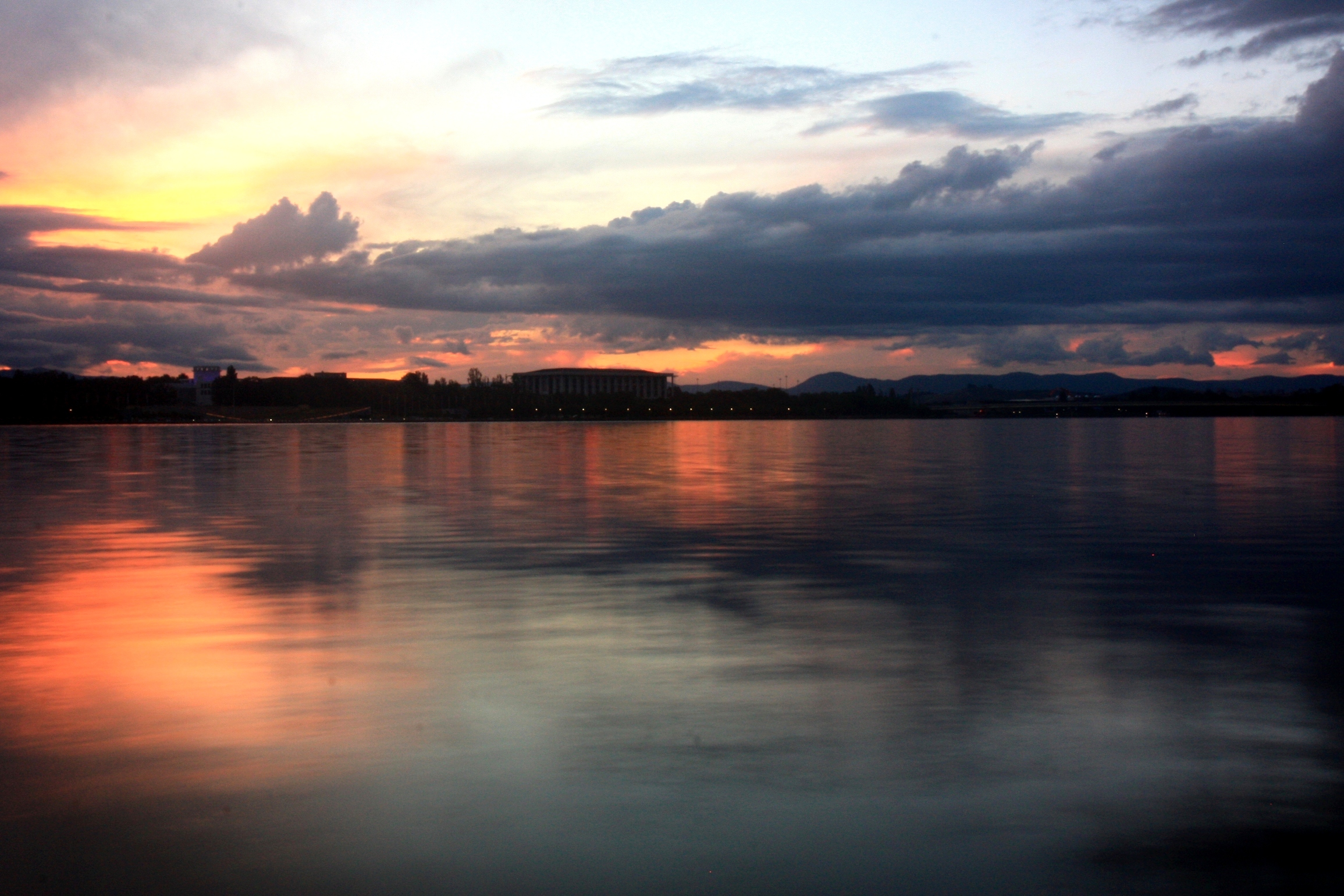
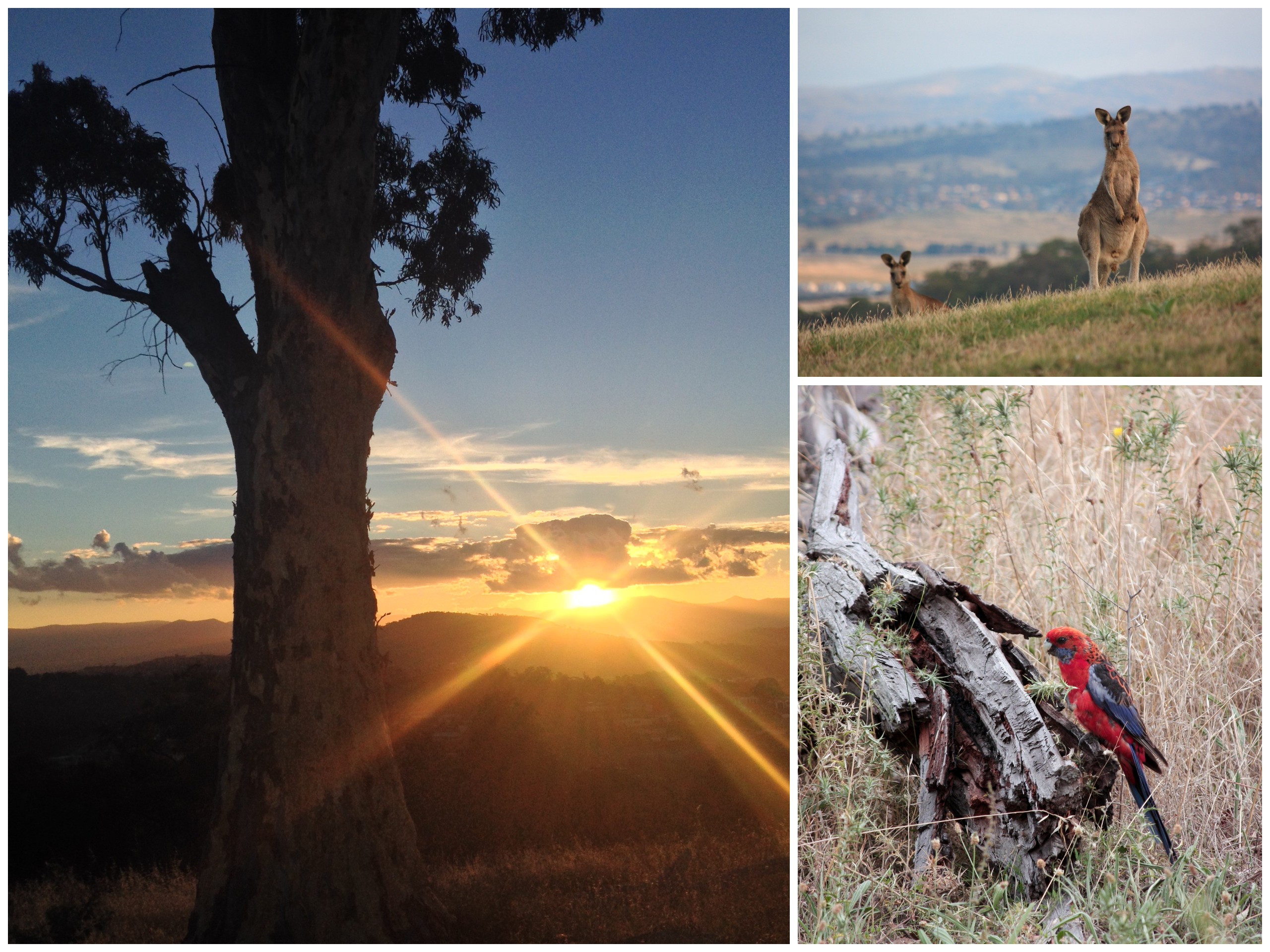
jan03

Fortunately, for the prospect of my cholesterol and obesity levels, I have been able to engage in decent amounts of exercise over the holiday period. In part, this is merely an extension of my normal life and having lots of time to do things in, rather than some hyped-up resolve to get fit. Local walks are a normative feature of the days. Most frequently of course this has involved trips to Red Hill reserve, where all is well with just about everything and everyone. But such has been the excess of free time that I have even sought out walks elsewhere!

jan04

One such place was Cooleman Ridge, which obviously is not as good as Red Hill but – being on the western edge of Canberra – has a more pastoral aspect. Hobby horses and scattered cows dot the fields, still relatively golden despite the stormy interludes. Somewhere yonder the brown waters of the Murrumbidgee laze, splitting the tamed grassland with the bush-tangled upward thrust of the Bullen Range. Further west and the larger mountains of the Brindabellas hit the sky, ever-present and ever-enticing.

jan06

It was up into these hills that a more substantial adventure transpired in between serves of Christmas pudding and tiramisu. A mountain walk along the high borders of the ACT and NSW, taking in the summit of Mount Gingejan07ra (1,855m), offered the perfect antidote to Christmas torpor. And it wasn’t even too difficult – the first six kilometres along a fire trail with interruptions for forest views, bird sightings, flower-filled glades, blue-tongued lizards and lunch beside a rickety mountain hut.

The remaining kilometre to the rocky outcrop capping the mountain was a more steadfastly uphill affair, the trees giving way to grasses and sphagnum moss and more flowery glades and the odd snow gum. The views increasingly opened out to reveal vast wilderness stretching west and south, and even east, at least until you could see the tack-like tower atop Black Mountain, looking diminutive in comparison to the ridges of bushland lain out before it.

jan08

Being in the interlude between Christmas and New Year, the feats of energy required to climb a mountain were intrinsically counterbalanced with a delightful stop on the journey home. Emerging from the car fridge three cool beers, trophies of conquest to accompany crackers, cheese, ham, nuts, dips, vegetables and pickles. Extra weight to provide extra grip as the car wound back down the gravel of Brindabella Road.

Beyond the walks, the bike continues to receive attention and while the category 4 climbs have been a bit absent of late (attempted once in the midst of the Christmas pudding / tiramisu jan09period with less than impressive results), it has been nice to venture lakeside and use a bicycle as a functional means of attaining coffee and shopping. A day spent re-visiting some of the national attractions was ideal by bike, and trips to town are scenic and satisfying, despite the fact that this means entering stores glistening and red-faced.
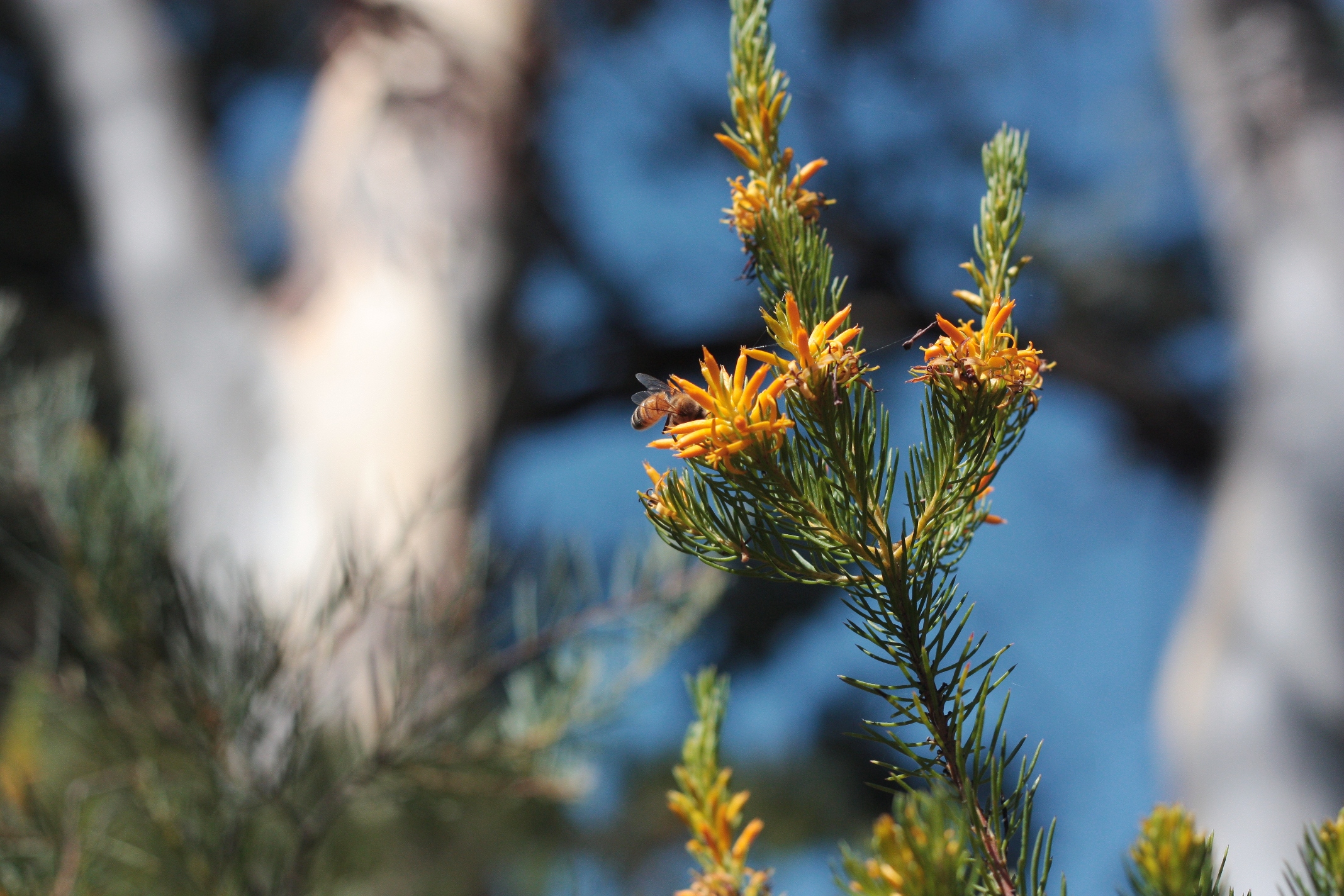
And if all that wasn’t sporty enough, golf has become a feature on the agenda of late, aided by the light evenings and cheaper twilight rates. Surprisingly, my game has been passable and there have even been a few shots to remember. Alas, such is golf that it seems the more you play, the more the bad habits return, and the memory of why this is such an utterly infuriating but addictive endeavour becomes real again.

So it seems that the holidays have been reasonably active, but for every climb up Red Hill there is an afternoon nap. For every pedal along the lake, a stretch out on the settee, reading and infrequently observing cricket in the background. I enjoy this time but also feel sometimes like I should be using it more productively. This is when writing may kick in, whether something inarticulate about my boring life over the Christmas holidays, recollections of trips of the past, or deliberations on the month of January. I’ve found some of the writing to be particularly pleasurable in an old-fashioned pencil and notepad kind of way, from a blanket in the Botanic Gardens to a bench down by the Cotter River. However, the scale of my endeavours has been, at best, average. Prolificacy bears no correlation to time availability.

jan10

Part of the problem has been other distractions. Distractions that are entirely self-created and – if you were to analyse it – may symbolise a deliberate intent to enhance procrastination and delay doing something that sounds like it could entail hard work.  Morning coffee is a distraction, particularly when it has involved trying to find an alternative venue while your regular favourites are closed over the holidays. Visits to the Westfield shopping mall are a distraction, though I feel only I am partly to blame here, having been kindly provided with vouchers to spend. And technology, always a distraction. More so when you spill a whole cup of tea over your iphone and unfortunately have to upgrade, and then spend several days visiting the Westfield shopping mall to get a protective, tea-resistant cover (picking up a takeaway coffee whilst there).

Alas, the interference from technology and its associated expense may mean that time availability will have to decrease at some point reasonably soon. Living off my pre-Christmas earnings will not last forever, as much as I want it to. This is not helped too with the purchase of a new body (for my camera) and an almost slavish desperation to travel to some places sometime in 2015. But still, I have a day at the cricket, a trip to Sydney, and it is Australia Day weekend soon enough. No need to do anything too drastic just yet, the year is still but a baby.

Australia Food & Drink Green Bogey Photography Walking

January

Ingrained in the deepest reaches of my mind sits recollection of a January. Far beyond yesterday’s shopping list is a picture of a crisp clear day on high moorland. Icy cracks and crevices, like fissures of diamond, bond the huge granite boulders thrust up from the core of the Earth. Shallow pools of water are sealed with glass, only splintered with a daring footstep as satisfying as a spoon piercing a Crème Brûlée. Encased in a padding of jumpers and scarves and jackets and gloves, the wind nonetheless manages to lash the face and penetrate the body. Feet lose feeling, yet the rest of the body is invigorated. And as rosiness returns in front of an open fire, like the cold the memories fade, lost again, floating around somewhere amongst the numerous pithy sentences that would undoubtedly make a great book if somehow I could wed them to a narrative.

On the other side of the world, below the equator and quite a bit east, the tilt of the Earth has conspired to produce utopian conditions for flies, ants and mosquitoes. All seem rather attracted to me. As a quest to receive more invites to fancy barbecues and opulent garden parties I may well advertise as a portable insect attractor. Like one of those electric zappers, but with the added bonus of being able to serve drinks, cook meats and deliver witty anecdotes and sarcastic put-downs disguised as sarcasm but quite possibly not. I may well call this emerging enterprise that has literally emerged in the last few minutes, Aussie Mozzie Boy. He takes the angst out of ants.

Here in January a heat hovers and the thought of wearing anything other than shorts ever again seems quite ludicrous. It actually becomes too hot, and the parade of once-sturdy Agapanthus begins to wither, much like a Scotsman on a Melbourne tennis court awarded a succession of daytime matches in the hope of providing another sporting spectacle; that of reddening skin and dehydrated muttering, and a pile of towels so soaked in sweat they could water the vines in the Yarra Valley for the remainder of the year.

The concept of being too hot seems alien, even though it is a frequent ill-informed complaint of an Englishman in an English summer. I once heard a particularly toasty day – the kind accompanied by a generous north-westerly transporting dust and ash and smoke and flies – described in charming vernacular as a “stinker”.  And too bloody right mate. But this idea, that a hot sunny day can really suck, is perverse to an English soul. Now, if it was gloomy and dank and dreary and accompanied by drizzle at around three degrees Celsius, then I would expect that to qualify as a stinker, and I would have probably revelled in as much. Once. But now I am a soft-skinned insect allurer who may start to feel a little chilly in the legs at a garden party once the sun has set and the blood extraction procedure ramps up.

And so we note the theme of contrasts, which is not in the least bit surprising and not at all likely to be recurrent in the context of Australia and England. You say tamaaarhda, I say towmartoe, innit. Seasonality has produced an affectation of difference in January north and south, but what of that which ties us together?  A new calendar, a new year; a clean slate, a fresh page; a resolve to set goals and stride into the year with purpose; and an inevitability that most of us will – at best – be only partially successful. Rated emerging or promising, but never strongly supported.

January is the month of resolutions, from revolutions to evolutions and aspirations about dedications to somehow become superlative. As if you weren’t pretty damn fine in the first place, you endeavour to eat less cake, drink less beer, replace a cigarette with some Lycra and set some vague but worthy ‘life goals’. Inspired but daunted you cope with such change by eating more chocolate, drinking more wine, slowly jogging past the dodgy youth to inhale some suspicious-smelling haze hovering overhead, and revel in the ambiguity of those vague aims for life which can be almost unendingly put off for another time. I say you, but I could easily mean I.

I have nothing against New Year’s resolutions and annual goals, despite being someone who displays a comfortable inadequacy over such gestures. I make them, but in a very hazy manner. Yeah, I intend this year to you know just go with the flow and take opportunities as they come and, yeah, maybe go on a trip somewhere, depending on what the work situation is like, and hinging on some other stuff and things that pan out.

My goals are, in business parlance, far from SMART. But how many of us, unless in the industry of setting crude financial objectives which involve fleecing $200 million out of customers’ superannuation funds by October 2015, are able to set genuine SMART goals? I always struggled with this goal-setting process in the corporate world. I think my main problem was that if I was to be honest and list my genuine goals for work it would be somewhat out of sync with that expected: This year, I would like to make enough money to live comfortably for doing as little work as possible and avoid any responsibility or decision-making unless it enhances my long-term objective of sitting by a pool being fanned with palm fronds by statuesque goddesses immodestly attired. What should of course be spouting out of my mouth in such situations is something about client-centric fulfilment, strategic interactive opportunities for streamlined co-delivery, and some gigantic revenue target to make the overseas shareholders one hundred times richer than they already are. This last one would be implicit across everything if not always overtly stated as such.

Anyway, this has little to do with January as most work goal-setting episodes tend to take place one month before you have to achieve them…so something like November. But we do have our personal resolutions to uphold, made in an alcohol-induced glow in the wee hours of the first day of the year and foolishly blurted out to bystanders in an attempt to make it look like you do have some appetite for self-improvement. Unfortunately, we also choose to do this in January.

In cooling, northern hemispheres, this is akin to climbing a very steep mountain in a blizzard while wearing flip flops and nursing a humungous hangover. Picture the eighth of January for example. The coloured lights of Christmas are but a distant blur and all that remains from the festivities are the dregs of Aunt Agatha’s sherry and a box of those Danish butter biscuits, destined to be re-gifted. You left for work and came home in the dark. In between, the darkness cheerily lifted to a dense drizzly grey. Despite looking innocuous this soaked your new jacket as you popped out from staring at spreadsheets to get a forlorn-looking cheese and onion sandwich from Tesco. Still damp in the evening, it takes you two hours to get home on a congested train because even the points don’t see the point anymore. And for dinner: half a lettuce and a rice cake, followed by a run in the graveyard. All because you made those resolutions.

So unless your aim is to get as depressed as quickly as possible and accumulate a colony of a new species of mould on your clothes, there is a high likelihood that, come February, you’ll be back chuffing away on 40 a day and eating KFC for breakfast. Because how else are you going to make it though this? In Australia, by contrast, again, there is at least some logic to attempting self-improvement in January. The weather is good, fresh fruit and salads are de rigueur, and practically everyone else you see is glowing in an unbelievably self-contented halo of white teeth and good skin. But here, the slippage into obesity and alcoholism that commenced with Christmas lingers through January and into the next month as a constant companion. It is a protracted holiday season, a period in which it is too hot to exercise with any conviction and the beer is too cold to avoid. Resolutions are easily swayed and as enthusiastically broken as the heads of the succulent tiger prawns drawn en masse from The Pacific.

So, in semi-conclusion, is January really the best time to start afresh, a clean slate for setting aspirations and committing to arduous goals? I’d say no, but you would be justified in hypothesising that I would say this for any month of any year. You’d also be justified in accusing me of downright hypocrisy if you take into account the context in which all the above words have been written. I’d call it poetic licence, but lacking much in the way of anything poetic.

So, in an attempt to address this deficiency let me transport you to the Australian high country. January is still in its infancy and here the skies are a deeper blue, the air more comfortable in which to linger. The clear waters of the Snowy River meander in shallow pools and trickling cascades, bridged by a chain of irregular stepping stones. The walk to Australia’s highest point is well-frequented, but the expanse of open moorland and unending skies projects an excess of space. Leftover Christmas food can still be embraced overlooking a small, still tarn. Winding up to the summit, like the coiling of a Swiss railway conquering a pass, countless ridges and folds of land concertina their way toward the horizon. At 2,288 metres, you reach the top of Australia, Mount Kosciuszko. A new year, commenced on a high.

Jan

The cynics amongst you (me included) might then say, “Well, it’s all downhill from here!” But to me, there is something innately appealing about climbing a mountain at the start of the year. The concept of the fresh start is realised through the open vistas, the pure air, and the blank canvas of the fairly indistinguishable landscape of the Australian high country. There is a goal, real and tangible, I daresay even SMART. And then there is the achievement of reaching that goal, and being rewarded for it solely by the beauty and solace of nature. In my eyes, a reward that beats that excuse for a performance related bonus you received at work last year.

So in January, forget cutting back on the cream cakes and fretting about what you are supposed to achieve in the forthcoming year. Just go climb a sun-kissed mountain or tackle an ice-racked tor. The rest of the year will then be a doddle.

For more mountainous inspiration in January or beyond, check out my gallery of various high points near and far

12 Months Australia Society & Culture Walking

Shorts non-personality of the year

Yikes it’s nearly Christmas. It doesn’t feel like Christmas, but there is the smell of smoke in the air so it must be. And 2015 is just around the corner, up the hill and across to the right a bit. One year closer to impending doom from Islamist wind farms and Europhile selfie-taking teens throwing ice cream buckets over old ladies in the concrete parking lots of the Tarkine wilderness. Or something. I get confused from what Rupert tells me I should think.

One thing I can be sure about is that 2014 is coming to an end. If 2013 was the year of unbridled travel, 2014 was almost as static as a static caravan stuck in the mud in Stuckhampton, wearing a fuzzy jumper while watching a crackly TV transmitting a documentary about the Van de Graaff generator and appropriating humour from Blackadder the Third. I daresay 2014 was almost a year of work; there was incontinence to deal with and tax and depression and parents doing things with their kids and interesting accountants and books for sale and other things I probably should not go into too much detail about mainly because I don’t really remember.

But I did travel and I did escape, it was just no 2013. Who knows, maybe odd-numbered years are for being slack and the evens for work? Only time will tell. But as for 2014, what were the highlights, lowlights and fairly average lights in between…

Best stay: Center Parcs, The Lake District

IMG_5623Log cabins in a pine forest, sun dappling through the trees, a red squirrel darting across the branches. Even the shrills of wild children and hypersensitive smoke alarms cannot dampen the environment and your temporary spot within it. Plus a bedroom to myself with a real bed…a relative luxury on trips to the motherland.
Best warm fuzzy moment with vague memories of childhood thrown in: Plymouth Hoe

Sun out, jumper off, cool breeze from the Sound, jumper on. The Gus Honeybun train clacking along with the occasional clang of a bell. Crazy golf, children running around like long-lost maniacs, ice cream with raspberries and clotted cream. So much of my own childhood now being lived out by the next generation of treasured little pirates. Sausage and chips in the gutter with seagulls to fend off. Janners and Frogs blending over Jasperizers. Real street food. Priceless.

IMG_5383

The Remind Me Why I’m in Australia Again Award for Self-Satisfied Contentment: Mollymook Beach

IMG_4875May was a month when winter patiently waited and the outstretched hand of summer never quite let go. Dragging myself away from the glorious technicolour of suburban circles under a bold blue sky, the waters of the Pacific caught me unawares with their warmth and placid demeanour. Mollymook Beach is good at the worst of times. On a calm day in the mid-twenties, with winter around the corner, it is hard to not pinch yourself at the good fortune of being, feet planted in antipodean gold as crystal waters roll caressingly in.

IMG_5884Best meal: Trois Fromages d’Areches

I love fondue. I love Raclette. J’adore Tartiflette. Ménage a trios, anyone? On a rainy summer’s eve in the heart of Alpine cheese country, what better than to be warmed by concentrated lactose blocks and fermented grape juice. A backdrop of French hubbub and je ne sais quoi charm. Cheese to the left of me, fromage to the right, and here I am, stuck in the middle with you and positively wallowing in it like a hunk of stale bread relinquished to the fondue pot.

The Bethany White Commendation for Services to Selfies: Titlis Suspension Bridge

IMG_6358Selfies, selfies everywhere and not a shot to think. Being the only person not from China and not owning a telescopic selfie propulsion system I nonetheless grappled with iphone controls and pouty expressions all the while swaying slightly above a five hundred foot ravine in the snow, ice, and thin air of a Swiss Peak. It sounds like an endeavour worthy of Scott and Mallory, of Fiennes and Kardashian, a feat of suitably slavish worship to the filter in the sky.

IMG_6548The Lance Armstrong Medal for Performing-Enhancing Ingestion of Substances Related to Cycling: Kingston coffees and cakes

Inspired by two wheels in the Lakes, I bought a bike and discovered that exercise is nothing if not a cake enabler. Reluctant to become a middle-aged cliché on two wheels, Lycra still escapes me. But a post lake loop topped with a Kingston coffee and some combination of caramel slice, cronut or wagon wheel is the new norm. Every bite eating into the calories my phone tells me were lost; every sip making me more charmed with those who provide it.

The Pengenna Prize for Cornish Wondrousness: St Agnes Bakery

Sausage rolls are the new pasties. Well, almost. All I can say is that if ever you find yourself within a 5o mile radius of St Agnes in Cornwall, do yourself a favour and pop into the tiniest bakery in the tiniest high street and pick up a sausage roll, plain or flavoured with herbs or onion or garlic or chilli or, well, whatever satisfying variation has been baked that day. Even better, pick up two for the extra energy required to hike over the Beacon and along the tin-scarred, Atlantic-carved, enduringly timeless coastline of this magical corner of the world. And don’t ever go back to Greggs and expect to be happy again.

IMG_5440

Destination of the Year: Canberra

Well, would you Adam and Eve it? The world’s most boring, berated, slated and abhorred capital amongst those who have never been there also happens to be one of the best places in the world to live. Yes, as a tourist destination it is perplexing at best; yes, it could do with a little more caution in its drive to transform everyone and everything into an identikit apartment-owning, pulled pork eating, coffee-sipping post-hipster pop-up; and yes, I probably wouldn’t have chosen this if I had been to – say – Torres del Paine or the Maldives or if it hadn’t rained in Switzerland for the whole of 2014. But I came back to Canberra and je ne regrette rien. Yes, it has a natural sense of space and air and light and changing seasonality that lends a continual beauty to its setting; yes it still fulfils me when one of its resident rosellas darts past or its roos bound into the sunset; and yes, it provides good coffee and pulled pork post-hipster pop-up environments in which you can at least temporarily pretend that you can afford to own one of the identikit apartments rising up from the ground.

End of year

Australia Europe Food & Drink Great Britain Green Bogey

Gee, 37

nov00It has been a while! As Mum reminded me on the phone recently. It feels just a little like a scolding but one understands that not much has happened; or has it? The sedate cosy green of spring has been baked off, culminating in a top of 37 degrees on the day that a pasty, sweaty-faced David Cameron came to town. Haha. I am not sure if this is just some false summer heat build up that then disappears and transitions to cool dreariness, or yet another sign that we are set to break numerous temperature records, burn to cinders and face encroaching desert sand for our gormless self-serving leaders to bury their heads in.

Meanwhile, in other news, it is a pleasure to write about things that come from my head without having to back them up with a reference (Stafford, 2014). Hay has been in the making while the sun has been shining and escapades too far out of Canberra have been put on hold. My yearning for a trip is gathering like the heat, building until it suddenly relents with one welcome bounty of thunder and lightning. I think both will come very soon.

Red Hill has been poetically inspirational, offering as it does an escape to the country within five minutes. At certain points the suburbs disappear, the ugly tall building in Woden hides behind a tree, and a background composition of the Brindabella Hills frames the golden waves of grass littered with rosellas and galahs and the head of a kangaroo poking above like a marsupial periscope. Here, the green of October is now a yellow brown of November, and the westerly sun of an evening is warmly alluring with undertones of menace.

nov01

nov05Elsewhere, my urgings for a road trip take on gentler forms, with small forays out into the fringes of Canberra. One Sunday evening took me out and up to Mount Stromlo; the observatory here a brilliant white egg shell, sitting under the kind of blue sky that extends forever past the moon and into deep space. More down to earth, the landscape of the Murrumbidgee corridor has a touch of African savannah to it, as rolling flaxen grasslands and clusters of trees congregate between looming hills and ridges.

nov04

And a trip to space and Africa would not be complete without a sunset beside a big, tepid lake, teeming with beasties and smells and otherworldly things that probably shouldn’t belong to this earth and which you would rather didn’t chew on your legs.

nov06

Further outings have been on two wheels, four wheels or four wheels plus two wheels with the added option of two legs for little side trips. Inspired by getting in the saddle in the Lake District and approaching that period when you become middle-aged and suddenly decide that you look good in Lycra, I made the decision to purchase a half decent bike. A bike certainly better than my previous bike, because the lumps and bumps of this town seem a lot easier to navigate, albeit at times still requiring a begrudging grimace. I did not buy any Lycra with the bike and am so far resisting, for middle-age can wait just a while yet please.

nov07The bike offers a different means to pop out a get a coffee, to buy some provisions from the supermarket, to become engrossed in maps and altitude profiles and speed statistics. It is a tool that has empowered a re-appreciation of Lake Burley Griffin, with its blessed 28 kilometre cycle path and assortment of inlets and monuments and riverside meadows. It is a magnet for magpies, but they have calmed down somewhat now.

nov08It has taken me around Tidbinbilla, which is a 17 kilometre ribbon of despair and then delight. The despair coming from a succession of what would seem gentle jaunts uphill in a car but feel like the Pyrenees to my pair of knees; the delight the remainder of the loop, through beautiful bushland rarely disturbed by cars. Just the birds, roos and views for companionship before plunging downhill in a mixture of exhilaration and dread. And still no Lycra.

nov09This very morning it was a bike that made it to the top of what I consider my first genuine hill climb. I was wheezing (Lance, hand me some EPO in a coke can, quick!!) but the bike was just fine ambling in the lowest possible gear. Up to the top of Dairy Farmers Hill in the National Arboretum. I climbed it and, after recovering one hour later, could see what I had never seen before: the appeal of going up a hill in a bike. But still no Lycra.

nov10Tracking my rides and speeds and climbs and – supposed – calories burnt, the bike has undoubtedly become a cake and / or ice cream enabler. So, even if you can’t appreciate cycling or would never consider climbing a little hill on two wheels, appreciate it for that. Any positive savings I may have made are generously counteracted with a treat. Sometimes handmade, others times bought.

So, you see, not a lot has happened over the last month really. Just pictures of trees and kangaroos and sunsets and – why of course – cake to blog about again. And all that is just perfectly fine thank you.

Australia Driving Food & Drink Green Bogey Photography Walking