Horsing around

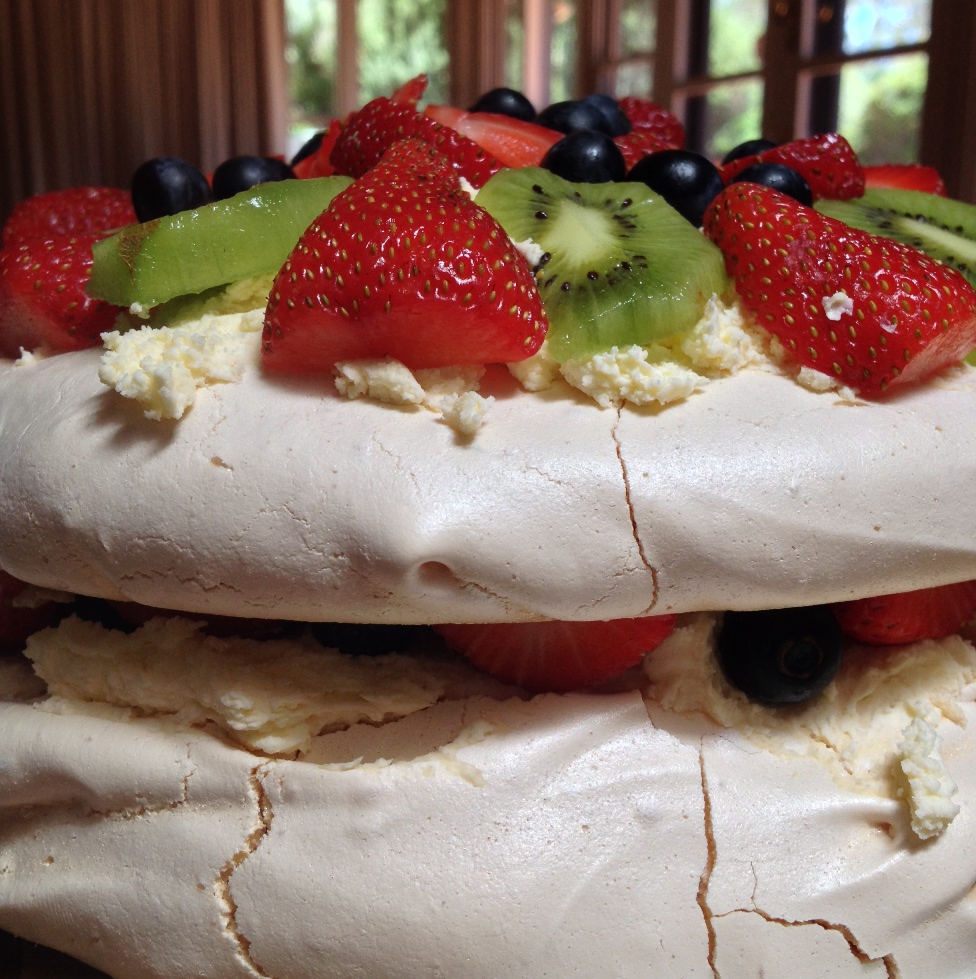
As the Chinese year of the horse arrives it has brought with it a combination of solidly earnest work, galloping around, and figuring out which stable to call home. January holidays lingered and lingered and lingered much like the hot air that became trapped over Canberra; there was only a gradual easing of chilled out pottering about barbecue infested feb03pavlova stoked swimming pool days. To be honest, after several days of not doing that much at all, things were crying out for a cool change – a change of scenery, and a re-acquaintance with the Kings Highway to the coast.

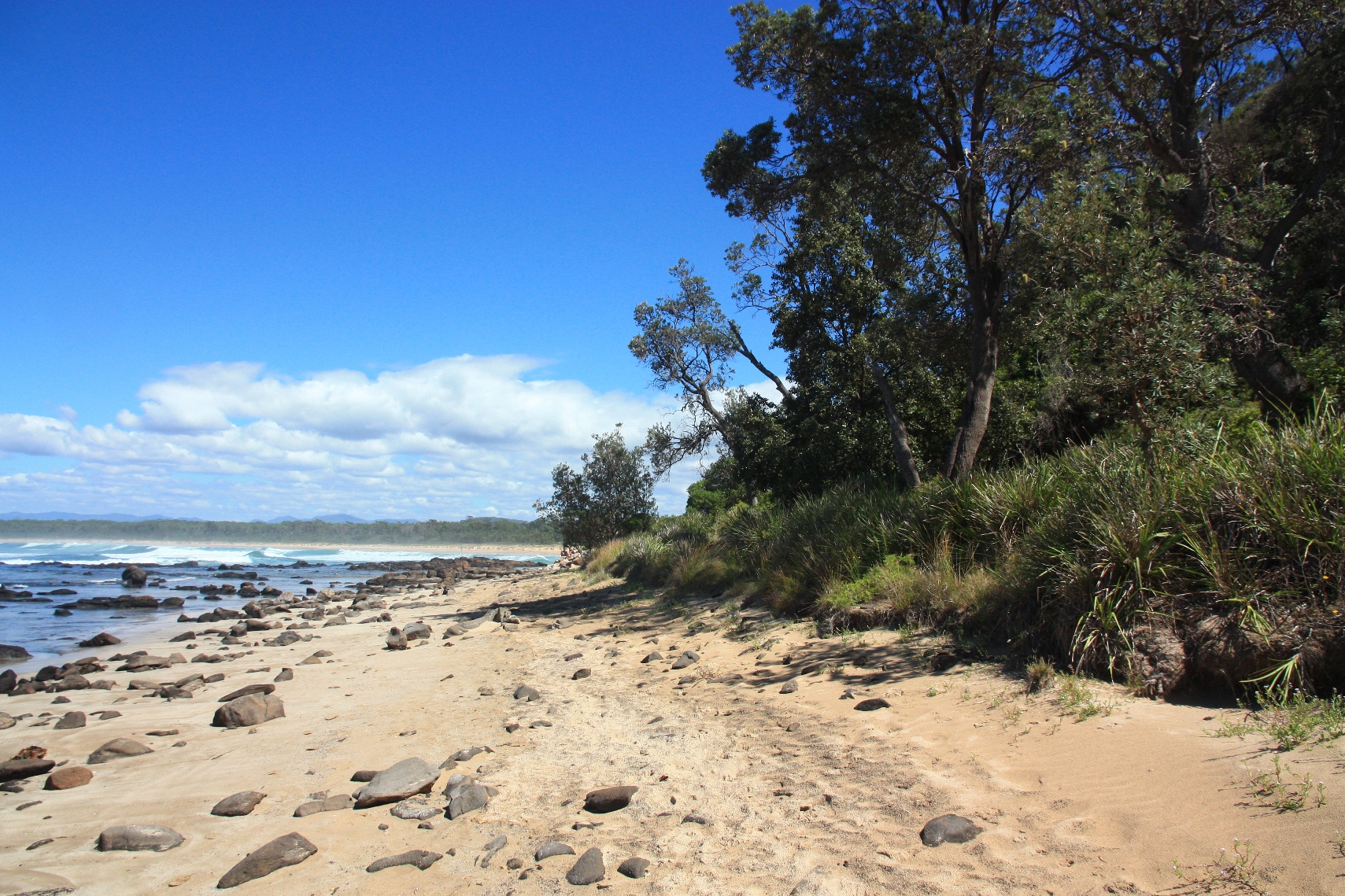
It was but a day trip, but the cloudy coastal skies parted just briefly at Depot Beach and the temperature was just about pleasantly perfect for that shoreline walk around to the sands of Pebbly Beach and back. They are no WA sands, but for being just a couple of hours away, they are a reminder of the good fortune of a capital location.

feb02

In the capital, February arrived and as predictably as floods in a flood plain people returned back to work and wanted some things doing. This is good, for the downward trend in my current account was keen for some reversal. It was a trend heightened by the cost of moving house, of finding a little flat to rent and paying a deposit and needing to populate it with some furnishings and trinkets and things to eat off, and using up petrol for trips to the shopping mall to buy these things, along with the odd frozen yogurt with lots of cookie dough bits. But I am now mostly there, with just a few further acquisitions to make it feel like home.

feb04While it is pool-less and a hefty stroll to decent coffee, the blessing of this place is that it isn’t very far from where I have lived for all of my Canberra life. Nestled amongst the oaks and gums of the suburb of Red Hill, it is a place anticipating awesome autumn wondrousness, a spot from which to navigate a higgle-piggle of crescents and spill out into the foot of the hill itself. The hill that has been there for me for quite some time and continues to offer a concentrated release of nature.

IMG_5497

And of course, the best thing to do when moving house is to coincide furniture-moving and setting up in 38 degrees with a few work meetings and presentations. Being busy is something I need to re-learn, and while I feel comfortable with the way things are heading, the alarming proposition of ironing a shirt (with the new iron from Kmart) for the first time in eight months can be a little much to bear.

So I’m still really just settling in, in many ways. Over the past week I have only spent one night in my flat – in between a work trip to Sydney and another, longer visit to that South Coast. It was a coast that offered little in the way of sun, but the temperature was ambient and the company was fine and there was plenty of opportunity to indulge in food and marginally walk it off on the sands of Malua Bay. And if these lazy days all became a bit too much, you could always pop into Batemans Bay to potter around Kmart again and grab a coffee.

feb06

Of course, as is tradition, the sun returned the day of leaving the coast. Luckily I was able to linger just slightly, and return once more to Broulee in the morning. feb07The first place I ended up when coming down this way in September 2006, a place name plucked out of the air and a glance at the map. A spot in which you are always thanking your good fortune to be in. And wondering, um, should I have rented somewhere here instead?

Yet, not for the first time in my life, I ended up back in Canberra and returned to my new home and did some washing and started writing these words with a cup of tea and twirl and put on the radio and felt quite content. I think I will be quite happy here.

Australia Green Bogey Photography Walking

Yurt

It was like wakening in a miniature circus tent, though with just the one clown stirring from an overnight slumber. Through a plastic window daylight was seeping into the octagonal space, the hard wooden floor radiating sunshine upwards into the plastic dome, like flame rising into a hot air balloon. Through the plastic glare the gentle sheen of the sea glimmered out in the distance, a view broken by dark pine forest and rounded headlands. One or two female deer lazily munched on the green grass in the foreground, as I set to joining them for breakfast.

It is hard to say if this was exactly what I was expecting when I came across an entry for this place in a guidebook many months before. Certainly what transpired captured the atmospheric appeal that came to my imagination back then. It was moving towards winter in Australia and times were spent in windowless offices and pointless meetings as I trudged slowly towards the date when I finally left my job. The sound of a place tucked away on an island in the pristine Pacific Northwest of the US where you could sleep in a yurt had instant allure. It seemed I had become what I never wanted to become and seeking clichéd escapes from ‘executive stress’.

And so, several months later, after visiting Hong Kong and Europe and New York City on my big time out, I landed in Seattle. Initial experiences were far from chilled. By time I had picked up a hire car it was rush hour on the I-5 and there I was in an unfamiliar car in an unfamiliar place on an unfamiliar side of the road. Sweeping through the heart of downtown Seattle I was able to avert my gaze from the weaving cars and merging lanes for just the briefest of moments. To my left, the Space Needle pierced the low cloud, affirming that I was heading in the right direction, north through the fading suburbs and fading light to a place where you can breathe again.

I slept that night under solid roof in one of those steady, unspectacular motels that permeate the highways and byways of the United States. They have beige carpets and brick walls and sturdy wooden sideboards with built in radio alarm clocks and light switches [1]. They have an included breakfast with a choice of three types of cereal dispensed from what were pretty revolutionary cereal dispensers back in the 60s. A choice of crushed cornflake, soggy rice puffs or the contents of the vacuum cleaner bag. Alternatively, you can have some undercooked toast with impossible to spread butter.

They have a laundry with tokens and powder available from the front desk, so that you can put your world-weary clothes through an expensive and time-consuming process in which they become sodden as Bangladesh during the monsoon and then undergo ten minute stints in a huge dryer and eventually come out with only a very incremental change in cleanliness and a lingering damp dog smell. Still, you put one of the clean-ish jumpers on and head out into the fresh air with the hope that at least this one will dry out in the next few hours.

The huge consolation is that Bellingham seems to possess its fair share of fresh, laundry-drying air. Beside the steely waters of Puget Sound, a pleasing boardwalk leads to a pleasing place for coffee with a pleasing-on-the-eye person making it. Elsewhere in town, the occasional deer grazes on someone’s perfectly coloured Y_whatcomprecision cut front lawn. Other deer poke their heads out of the undergrowth in Whatcom Park – named after the dotcom boom which failed to materialise this far north. Maybe. Amazingly, this is like a national park in the middle of the town, with some pretty waterfalls disturbing the peace of the forest.
Close to the border, the vibe feels more Canadian than anywhere else in America, which is a good thing for any executive stress you may have. Actually, Bellingham reminds me more than anywhere of Cypress Creek, the fictional town in The Simpsons acting as the secret base for the fantastical megalomaniac Hank Scorpio. I admit to failing to spot Put-Your-Butt-There on third in the hammock complex in the hammock district. But other than that – mountains and pine forests, chipmunks, lakeside houses and picket fences, secret underground missiles armed and aimed at France – Bellingham ticked all the boxes [2].

Another night under a solid roof led to another included breakfast, though this time with the surprise bonus of slightly stale miniature croissants. They must have been leftover from the annual general meeting of the American-Franco Dwarf Association of Washington State that took place in the conference room the previous evening. Still, I pocketed a few for the journey on what was a sublimely sunny day, warm and clear heading down to Anacortes for a ferry ride.

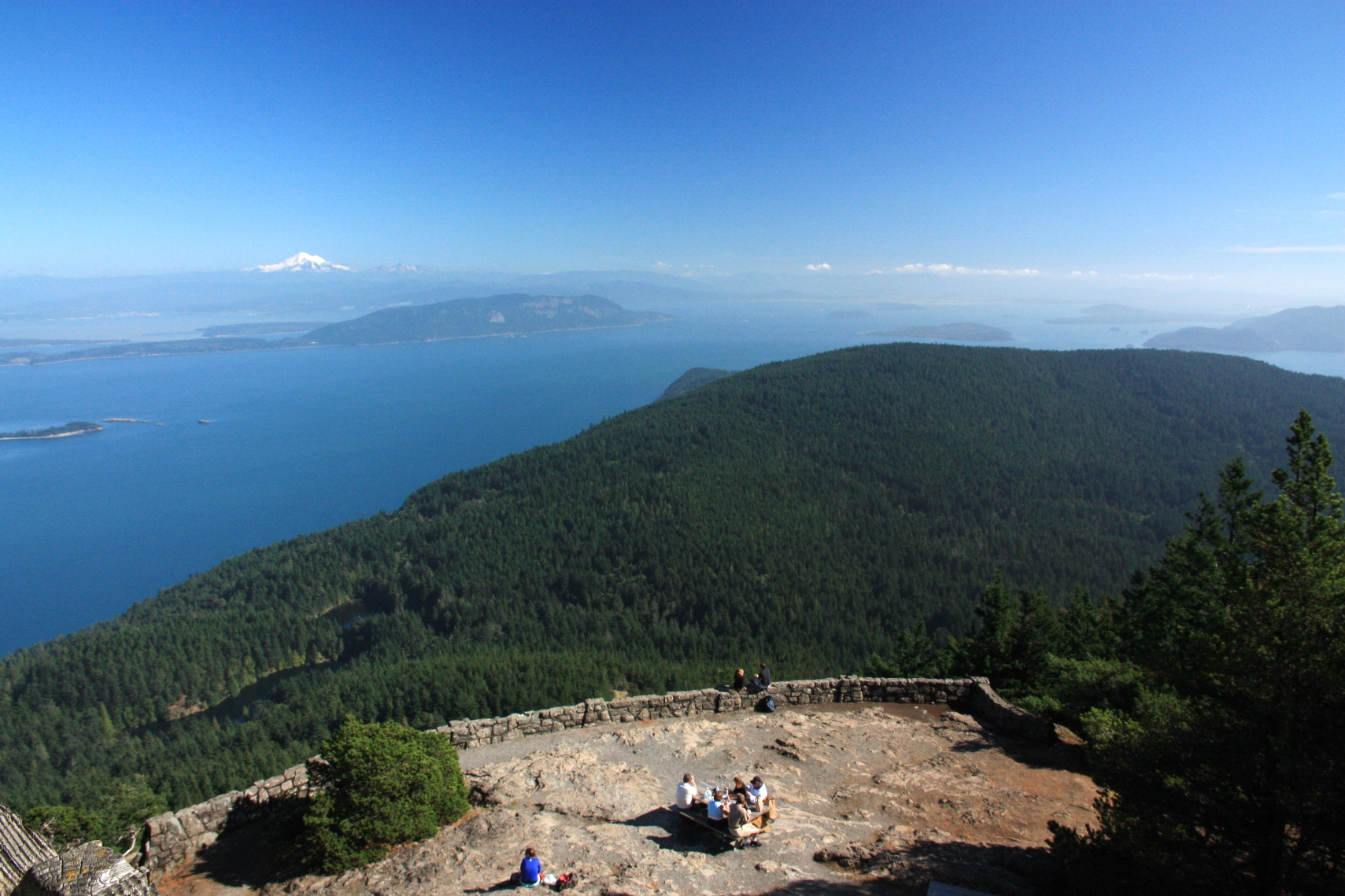
I can imagine, in this weather-laden extremity of America, that the ferry ride across to Orcas Island is rarely as serene as it was on this particular day. Slicing through high definition crystal calm, the ferry’s wake rippled the reflections of the many pine topped isles scattered upon the sound. Secluded bays hosted the occasional rustic dwelling, where the kayak appeared to be vehicle of choice. Between island views the mainland drifted away, but all the while the snowy volcanic peak of Mount Baker gleamed, a blinding white cone penetrating the upper atmosphere.

Disembarkation was a low key affair on Orcas Island, which is the largest of the many San Juan Islands peppering Puget Sound. Given some land mass to play with, the island offers a patchwork of working farmland and wild forest, a contoured landscape of hills and lakes, punctuated by a handful of small but serviceable towns. There is one main road linking the ferry drop off and the towns, with a few side diversions of note. So, after tucking into a pulled pork sandwich at the biggest town, Eastsound, the car took me up and up on a detour to the island’s highest point.

Mount Constitution sounds like somewhere that belongs in the United States, like Capitol Hill and Liberty City and Freedom Fries and Gun-toting Redneck Hill. The name feels solid and a little serious, denoting something which is of grand importance albeit a little dour in the detail. I don’t think any major pieces of legislature would have been signed up here, but I did spot a few written etchings professing Randy’s love for Mary-Jane.

It turns out the peak was in fact named after the USS Constitution which I am assuming plied the waters far down below in the distant past. The waters today are becalmed, a smooth sapphire sheet dotted with emerald islands, lapping at the shores of the mainland, where mammoth mountains rise to form snowy domes suspended in the sky. I can see Canada. I can see the entire Cascade Range sweeping down Washington and even into Oregon. I can see the Olympic Peninsula and its equally lofty heights, perhaps hiding Japan over its lumpy bulk. Above, the sky is as blue as blue sky strategic thinking gets, and far more credible.

Y_const

And so, from such gargantuan immensity I end up in a little yurt on the shores of Doe Bay, on the eastern side of the island. I may well be staying in some place that has the word ‘retreat’ in its name. One or two of the staff have longish hair, and I think they are serving vegetarian food in the cafe. There may be a spiritual yoga class tomorrow morning. But there is no pressure to non-conform. Simply do as you will. Meander the land and come across other yurts or cabins or swags set amongst the trees and cosy glades. Take a book and sit on a rundown bench under a fragrant pine branch, the sound of gently lapping water occasionally pierced by seals or other marine life or a guitar being strummed on some other bench over the bay. Potter about in such a complete carefree daze that you lock yourself out of your yurt and have to call out someone to help you after hours who looks very pregnant and was probably in the middle of eating their dinner but is still absolutely delighted to be of assistance.

Y_doe

Wake up on your birthday in the middle of a structure resembling a giant birthday cake, scattering opened envelopes on the radiant wood floor. Say good morning to the deer munching away on the green grass, shading your eyes from the morning sea glare. Hear the sound of soothing humming coming from the yoga shack. And revel in an absolutely delicious vegetarian breakfast burrito served with approachable charm and humour. The milestone of another year reached and, strangely, I feel ten years younger.


[1] There is always a switch which never seems to operate anything. (Meanwhile, across town, the lights at the ballpark flicker on and off as an unassuming tourist twiddles with knobs in a beige motel).

[2] Unfamiliar to your far too cultured brain? See http://en.wikipedia.org/wiki/You_Only_Move_Twice

Links

Scorpio: http://www.youtube.com/watch?v=9QEsjd1WZuY

Cypress Creek…I mean…Bellingham, WA: http://www.bellingham.org/

The San Juans: http://www.visitsanjuans.com/

Doe Bay Resort and, yes, Retreat: http://doebay.com/

Specifically, pacifically, northwest: http://neiliogb.blogspot.com.au/2011/10/specific-pacific-northwest-blogfest.html

A to Z Driving Food & Drink Photography USA & Canada Walking

Rewind pause fast forward

SydJan01Well how lovely it has been to stand still and sleep in my own bed and pop around the corner to a coffee shop where they know my name. How enjoyable to see familiar faces and some new ones too, sharing an overload of barbecued food and leftover Christmas decadence that never seems to dwindle. How civilised to be able to pop to the National Gallery to see some Lichtenstein and snigger at some political cartoons at Old Parliament House before checking out the roses. How satisfying to traipse up and around pockets of bushland here, there and everywhere and watch the red sunlight fade from Canberra sights and sink over the Brindabellas.

SydJan03

SydJan02Familiar things that became less familiar but are now familiar again. Much like losing badly in the cricket. Lest familiarity brings about too much comfort there are a few doosras thrown in to keep things interesting: new developments in Kingston creating wannabe Gold Coast glamour; minor changes to the aisle configuration of the supermarket; previously unexplored hillocks in the south of Canberra. Plus, of course, the interjection that is Christmas, which is the ultimate break from the norm…apart from the tradition that is a sausage roll, cheesy marmite, cold ham, cheese, pickled onion, cracker tasting plate.

It was actually quite a change to spend Christmas in Canberra; in recent years Sydney has hosted the festivities and provided random assortments of hot beach picnics, torrential downpours and moist grey gloom. Such was the picture again in January for a few days of further catch ups and re-acquaintance. Pleasingly, with time on my hands, I could take a detour from the familiar, yet pretty dull, Hume Motorway and revisit such delights as Fitzroy Falls – currently a thin summer sliver – Kangaroo Valley, Berry and the Illawarra. Again, time for some enjoyment of the old along with discovery of the new – a short rainforest and waterfall walk at Macquarie Pass National Park an additional find in this luscious little corner of New South Wales.

SydJan04

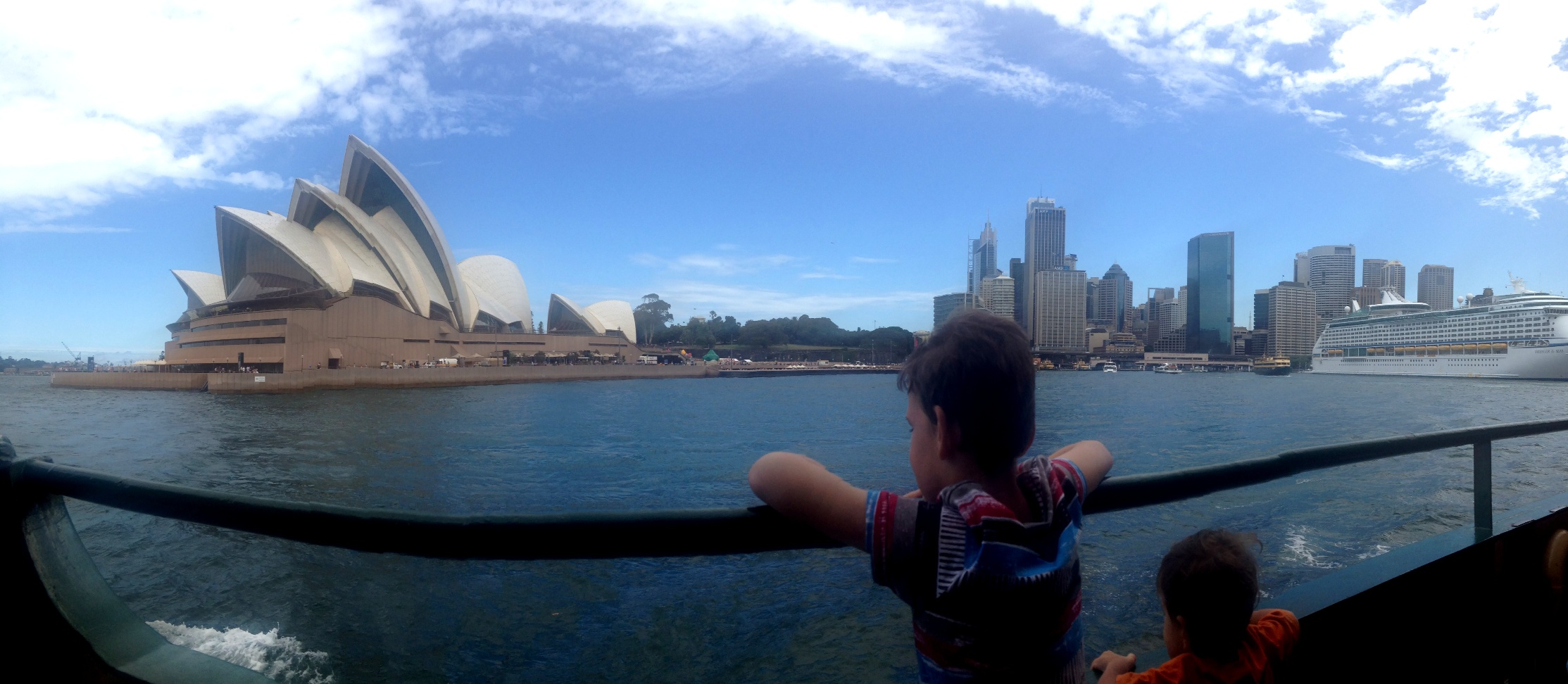
SydJan05Sydney was a mixture of iconic waterside delight blended with a tinge of inner city grime and sweaty congestion. Fortunately staying with friends on both of the plush sides of the harbour I could fairly easily potter down to the water and share it with the millions of other people on holiday. Having been away from here for quite a while there was a little bit more of a tinge of excitement at seeing that bridge and that opera house and an inevitable taking of pictures that have been taken hundreds of times previously. Though wearying in the afternoon warmth, there was a thrill at boarding the Manly ferry, and a rejuvenating half hour ride watching the eastern suburbs pass by, thinking about what ice cream or treat to have back on landfall.

SydJan06

All this is familiar again, but there is still chance to do something new. After gorging on chocolate brownie and cappuccino I was keen to make amends by walking from Manly to Spit Bridge, an up and down tramp following the watery alcoves and rather untainted bushland fringing Middle Harbour. And it is here that you notice that despite being a large city, with concrete overload and oversized cars and millions of people, the geography of Sydney often wins out. Bushland and rainforest pockets are much like they were before boatpeople came, and small inlets offer cosy beaches unreachable by modern means. True, never far away is a luxurious home with a view, and the noise of a freeway as Spit Bridge nears, the harbour a buzzing playground for those pesky boatpeople. But it is also true that in the midst of a city, within sight of its lofty heart, it is a wonder to be able to walk in parts untainted; a wonder that pervades in patches throughout Sydney.

SydJan07

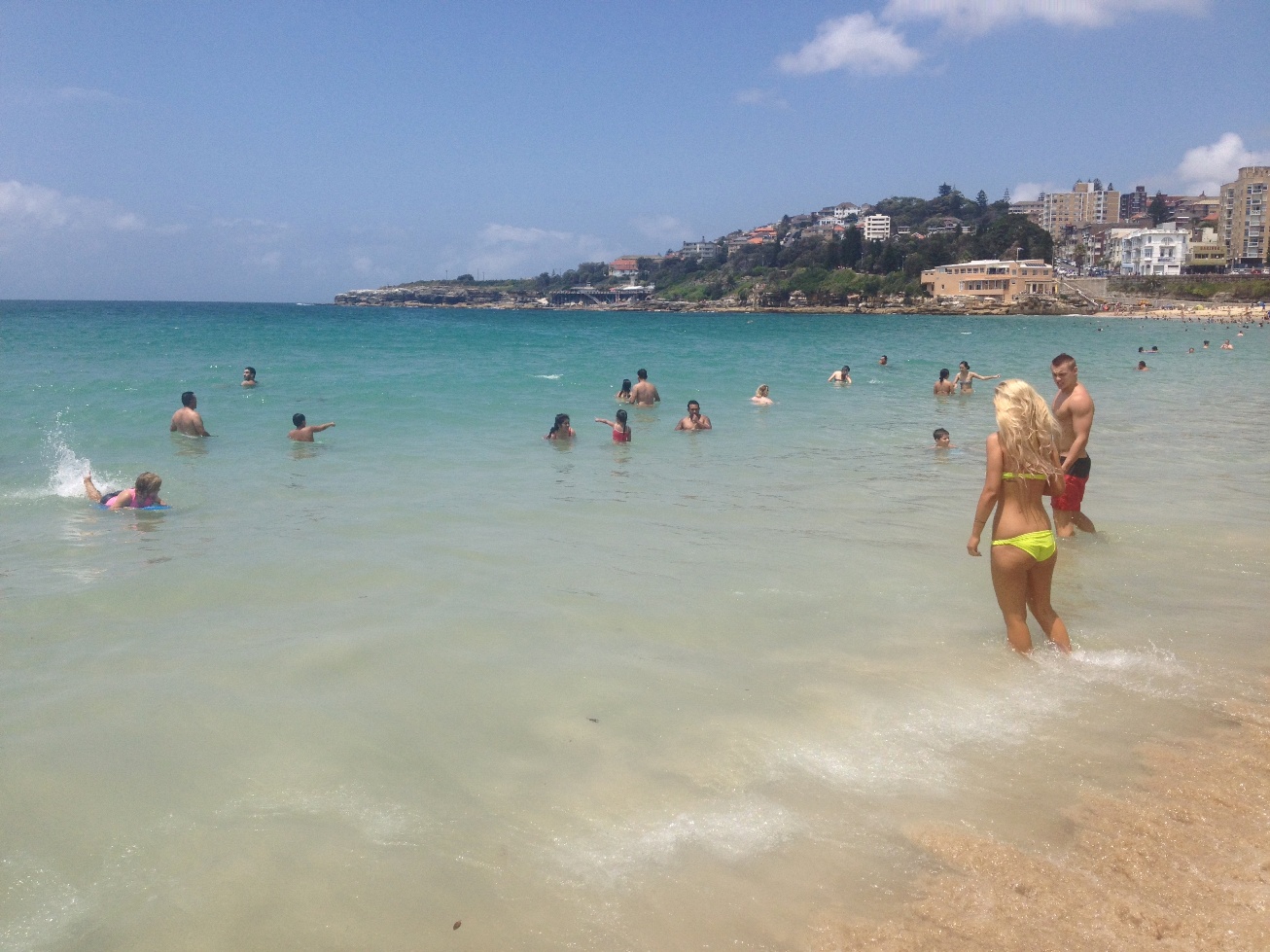
Sydjan08North shore opulence is kept in some rein by its geography of steep hills and snaking inlets. In the Eastern suburbs there is less to get in the way, although large parks and reserves are scattered besides the sea and across to the fringes of the city. This is once again familiar territory with familiar walks down to the ocean and along its beaches and cliffs. It is a place of great appeal, though I think I prefer it in winter on a pleasant sunny day with fewer people and their detritus. Still, there is much to be said for sitting beside Bronte Beach and having a coffee, before dodging ridiculously fit runners all the way to Coogee for lunch.

Sydjan09All this familiarity comes in pretty handy when sizing up a final breakfast before the drive back to Canberra: a tricky choice between the Haloumi Stack and the Love Eggs. It doesn’t really matter, because whatever you choose, you will be full and happy and ready for negotiating the steadily declining state of the M5. Eventually, finally, Sydney will fade and you will be back on a familiar drive which is slightly less boring because you haven’t done it for a while. And with a full belly and a cruisy drive, all that waits are the comforts (and – this week – sweltering discomforts) of a home.

Australia Driving Food & Drink Green Bogey Photography Walking

Waterfalls

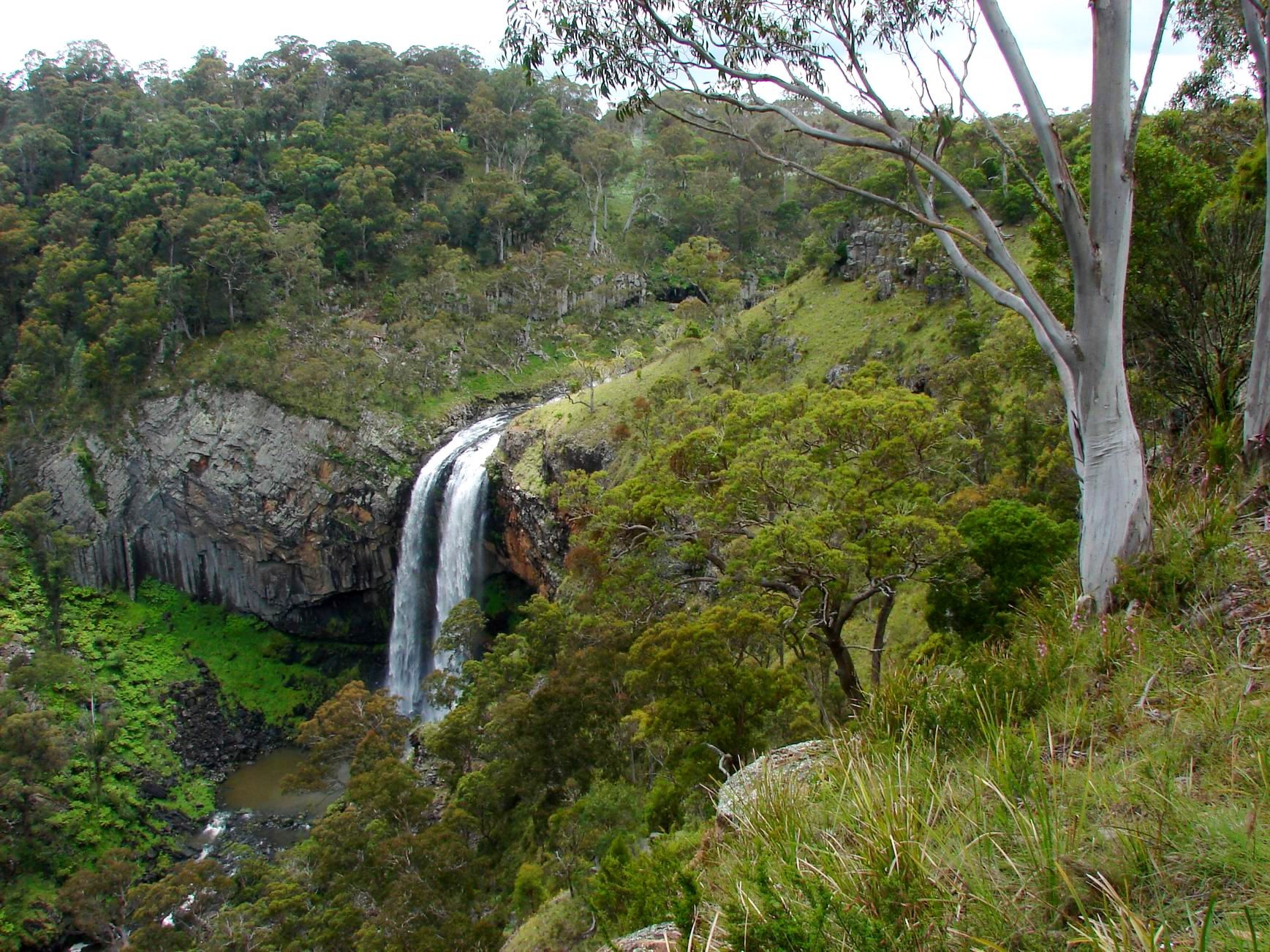
It was always going to be hard for me to steer clear of a road named The Waterfall Way. Linking the tablelands of Australia’s New England to the mid north coast of New South Wales,the twist and turns down to the ocean are regularly punctuated with a chocolate box selection of falls. The stops from west to east are a story in climate and geography. Commencing in a parched landscape of wild gorges and dry bushland, thin strips of silver white water spill off cliff edges and into unseen creeks. High plateaus offer wild flowers and cool forests through which rivers gather speed and depth to forge their way down steps into deep gullies. Moisture picks up closer to the coast, where rainforests form to offer crystal cascades and lush fern pools, and the water speeds into the coastal plain before mellowing broadly to the sea.

With such excess there is a danger of waterfall fatigue: parking up, strolling to a lookout, taking a picture and hopping back in the car for a short journey to the next stop. In fact, the waterfalls continue north in pockets of rainforest tucked amongst ancient volcanic plateaus all the way up into Queensland. In the wonderful natural surroundings of Springbrook National Park it is as if there is one final grand culmination before water sweeps over the Great Dividing Range and into the horror of a Gold Coast horizon. Plunging pristine water toppling over the edge before being becalmed in a complex of gaudy cashed up retirement waterways.

Tucked away before the Gold Coast looms, in the quieter western side of the park, another waterfall tantalises the traveller who crosses the border by the back way. Nestled within a beautiful green valley is the once more imaginatively named Natural Arch, replete with shady pool and shimmering cascade plunging through a tunnel of rock. It’s midway round a processional loop walk through the rainforest, where sun rays filter hazily through the tree ferns and parrots chirp away in the canopy. On a humid summer morning, the cool shade of the forest and continuous thrash of crystal water is the perfect gin ‘n tonic.

—————————–

What is it about waterfalls that are of such appeal that we seek to recreate them in garden features the world over? On balance they are usually very pretty, from elegant slivers to bubbling tiers and tormented torrents of foaming fury. They are, as much as anything, a break from the ordinary…where a placid river or lake suddenly comes to an abrupt halt and decides to throw itself over a cliff. There is an unparalleled feeling of freshness and purity and, often, invigoration from getting close to gallons and gallons of tumbling water. It can make you feel alive. It can make you want to pee.

The power of waterfalls is compelling and is why they are often best viewed after rain, or sustained snowmelt. Yosemite in May is very different to Yosemite in October. Postcards of massive gushing falls in northern Australia can tell a lie for the trickle that often dwindles in the dry season. In the UK, the weather is usually more reliably conducive to year round falls, with new ones springing up across high streets during supposedly exceptional but all too regular winter storms.

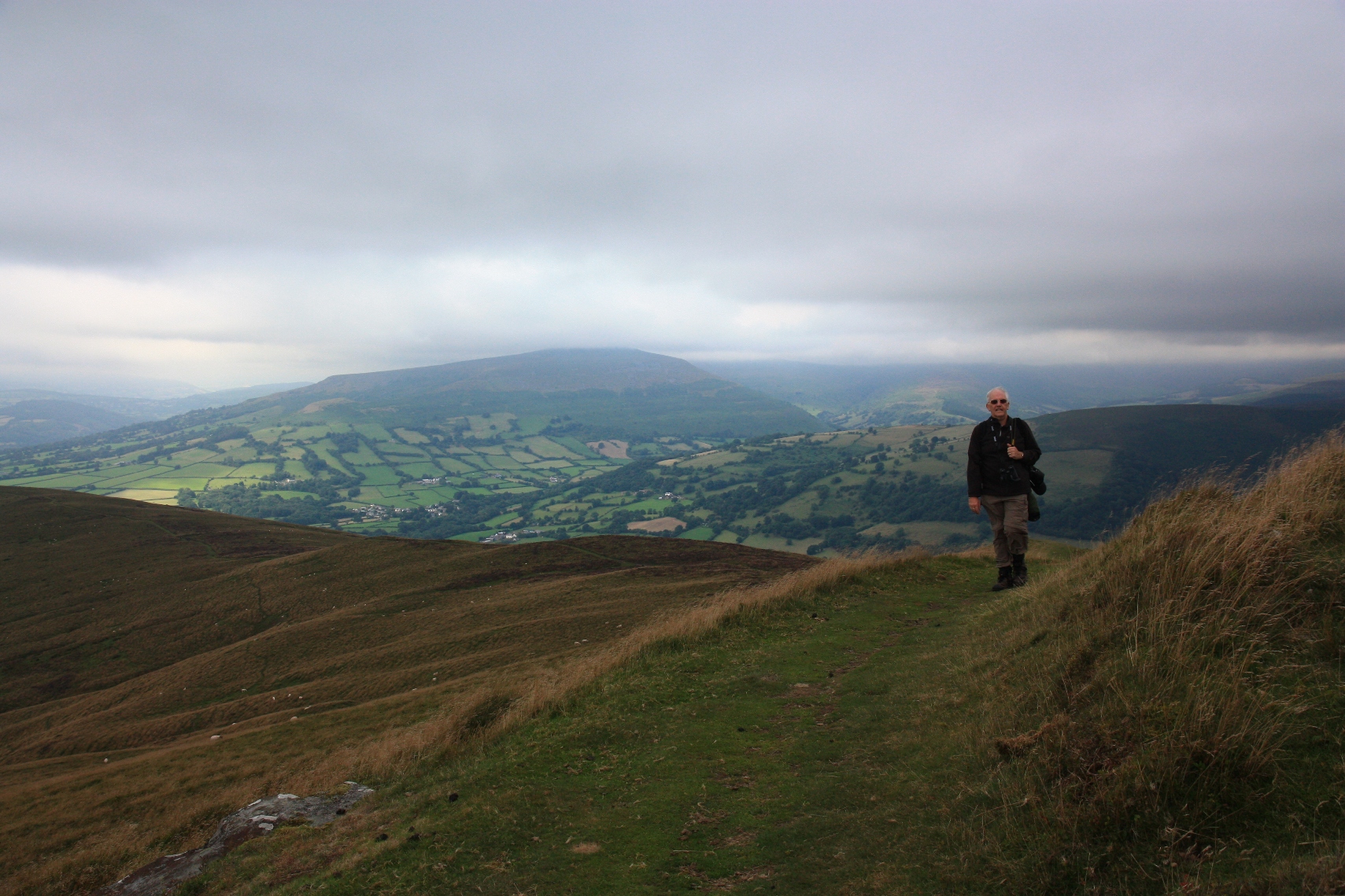
W_wales2013 was one of the better British summers and I felt slightly aggrieved to catch only the tail end of it. Nonetheless it was a balmy 20 degrees or so when I found myself in South Wales towards the end of August, on a different kind of waterfall way. Situated in the Brecon Beacons National Park, this literal tour de force was completed on foot along the Four Waterfalls Walk. For pronunciation lovers out there I can make your day by telling you that this commenced near Ystradfellte and took in a wonderful meander to view (brace yourselves) Sgwd Clwn-gwyn, Sgwd Isaf Clwn-gwyn, Sgwd y Pannwr [1] and Sgwd yr Eira [2].

It sounds like a trite cliché (hey, who doesn’t love a trite cliché), but each fall (or, I assume, sgwd) had its own style and character. Each one builds to the next and the final stop on the itinerary offers the ultimate white water thrill for not especially adrenaline seeking junkies. For, at the curtain falls of Sgwd y Eira, it is quite possible to walk behind the voluminous mass of water plummeting down, and – for some – to take your dog reluctantly along for the ride too. Inevitably there is plenty of spray and you will get wet, but – well – you are in Wales and you will get wet in Wales sooner rather than later. Why not make it here and take the chance to really appreciate the forcefulness of nature. Why not take your ear drums to the brink, pleading for mercy from the explosive, monumental thrash of the gigalitres of water that descend before your eyes? Amazing.

—————————–

Like Wales, Oregon is pretty familiar with rain, confronted as it is with a moist pacific airstream and climatic battle between deserts and mountains. One early October day in Portland is restricted to bookstore meanderings and coffee shop escapes, ducking out between downpours to make it to the next warming hipster refuge. Traversing wet sidewalks through a tangle of black umbrellas and beige raincoats, the city seems enveloped in the cinematic monochrome of a film noir. There is oppressiveness to the rain, something which is accepted and wholeheartedly embraced by its citizens but causes frustration to time-limited visitors like me. There are only so many lattes to sup and bookshelves to roam.

The next day shows marginal improvement – overcast but dry – and seems as good as it will get for an escape into the wilds. Passing the quite possibly interesting town of Boring, there are no views of Mount Hood to be had, rising Fuji-like out of the farmland and forests of the horizon as depicted so tantalisingly in the Lonely Planet picture. Brief glimpses are snatched beside Mirror Lake, with little reflection other than that internalised in relation to being potential early morning bear fodder. Further sneak peeks appear in the rain shadow of the mountain to the east and, here, the sun returns for a while to transform the colours of the fading autumnal forests.

With Mount Hood now somewhere behind, the road ends at the huge barrier of the Columbia River, carving a broad swathe through the Cascade Mountains and splitting Oregon and Washington States. The river has created a mammoth gorge lined with cliffs north and south. And so, with a large river system, significant rainfall, and high cliffs, there is a certainty of a quite spectacular run of waterfalls.

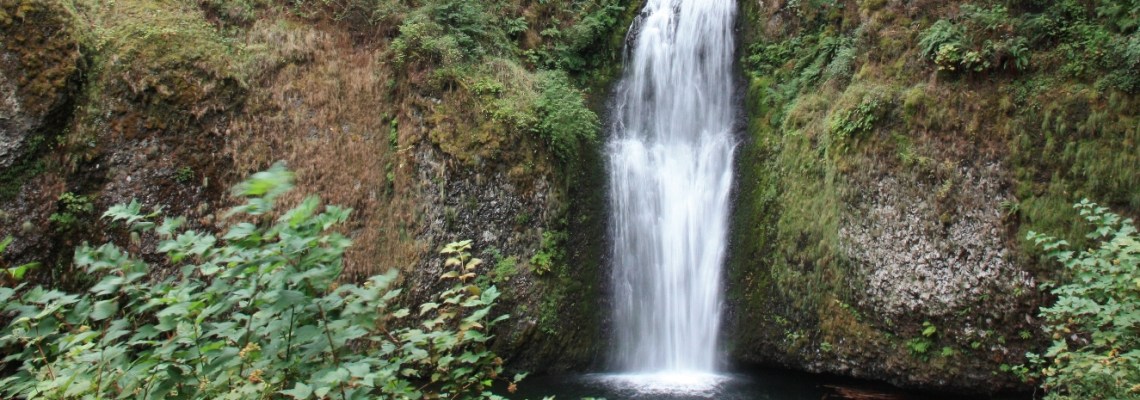
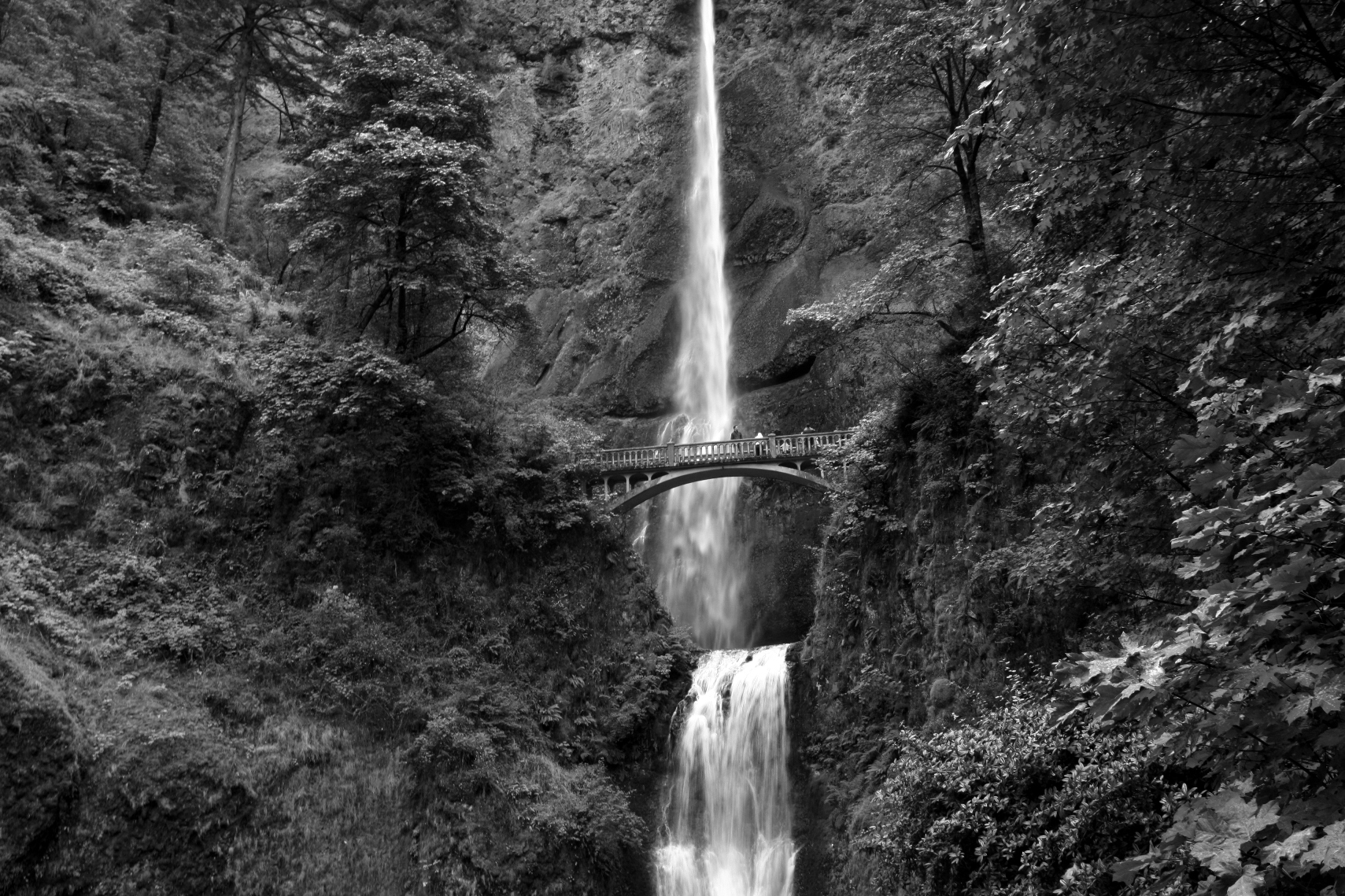
This particular waterfall way is undoubtedly a more developed road than that back in New South Wales, as dual lane sweeping curves follow the river in what is a dream to drive. Of the frequent cascades, it is Multnomah Falls that offers the most iconic sight. For once it seems a human element, an unnatural structure, has enhanced a natural spectacle. Splitting the precipitous double-decker descents of white water is a pedestrian arch bridge, where humans can run from bears and so effectively offer a sense of scale and perspective. Indeed, even the bears would look small opposed to the streaks of water tumbling from somewhere unfathomably high up in the sky.

W_Columbia

—————————–

Finishing a convenient circumnavigation of the globe here I am now back in Canberra. There are few falls here, other than watery concrete features around the angular constructs of the parliamentary triangle. But in a couple of days I will be going up to Sydney and, with time on my hands, I will make it scenic, detouring to Fitzroy Falls in the Southern Highlands. An old reliable favourite, fed by a reservoir and plunging off sandstone into a gum tree valley. A lyrebird may well be imitating the sounds of crashing water and a strong minty eucalyptus scent will pervade the senses. Again, it will be splendid. Because waterfalls are always splendid. But for now, I must come to a halt and stop this gushing about gurgling water and thrashing torrents, soaked in a spray of swirling liquid currents and dramatic downpours. Because now I really, really need to pee.


[1] For anyone with a customised 2014 calendar Christmas present…this one is the front cover!

A to Z Activities Australia Driving Great Britain Photography Places USA & Canada Walking

Viewpoints

We all have viewpoints. Mine tend to be moulded in a woolly leftish laissez-faire egalitarianism which is open to paying extra tax for everyone to be educated, receive healthcare and live in an environment less likely to be heading towards a fiery doom. But I would say that because I am comfortably suckling at the teats of first world capitalist privilege and not really confronted with all the hazards of war, poverty,  illness or being able to cope with a few extra immigrants contributing to our collective prosperity or the alarmist perils of gay people being able to marry. It’s not very 007, but live and let live I say.

Thankfully the world has millions of apolitical viewpoints that are generally unchanging and far more impressive. A physical vista; a snapshot of what lies in front of your eyes every time you look up, back or around the corner. And amongst these scenes are many structured and grandly formalised viewpoints: the tourist lookouts set up for our collective exploration and viewing pleasure. The mountain tops and observation decks, the roadside turn outs and waterfall balconies, the plateau points and tunnel views, the Mecca to the coach tour pilgrims.

Yes, humans seem to adore lookouts and, yes, I am entirely culpable of some kind of sycophantic, unconditional love towards them. On a map my eyes will be drawn to the star or sunny symbol denoting a high point with a view; on the road, a directional sign indicating an overlook will be dutifully, religiously followed; on a trail, the aim will often be the top. Sometimes they will disappoint, other times they will marvel, always they will provide a purposeful sense of exploration and appreciation of the landscape.

A gauge on my viewpoint love-in can be deduced from this blog. It started at the top of the Empire State Building, sporadically flailing around the globe to sublime points and hurricane ridges, taking in fairytale views and homely vistas, reaching snowy high peaks, glacier points, and key summits, pausing for elegant city views before marvelling at wild canyon overlooks. It seems a written piece dedicated to viewpoints is merely an extension of everything that has come before. Surely there can be no lookouts left to look at, no vistas left to visit?

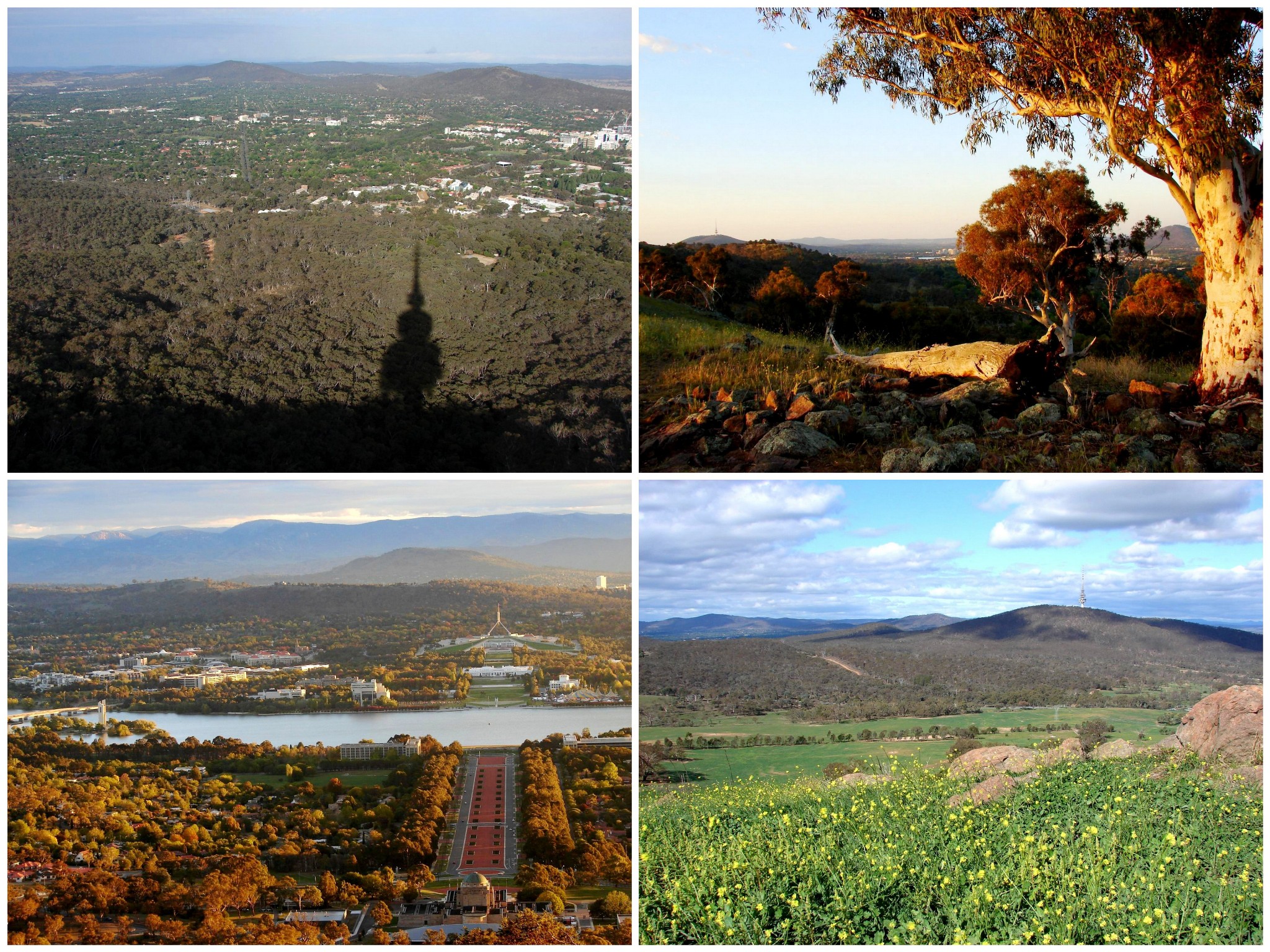
It is perhaps no coincidence that the city in which I (kind of) live is no stranger to viewpoints. On one particular hill, people gather with all sorts of different perspectives and childishly bicker about their views in an effort to cement these into legislation [1]. Still, the good thing is you can escape this nonsense and climb onto the roof of Parliament House for a much better view, noting many other viewpoints rising up within the 360 degree panorama of Canberra.

Phil Liggett, the renowned and rambling voice of cycling, would best describe Canberra’s terrain as ‘lumpy’, akin to those long tortuous days through the Breton countryside. Sure, less verdant and lacking real quality cheese, but rarely a piece of sustained flat on which to take a breather. The geography offers a number of hills, ridges and ‘mountains’, with suburban streets clustered into undulating bowls and smaller hummocks. It’s a landscape of amphitheatres within one bigger colosseum, where numerous viewpoints are the upper circles looking down on a sedate and civilised performance.

I rather cherish these tops, particularly as they usually involve a varied and energetic walk through grasslands and Eucalypt woods, a smattering of kangaroos and darting blurs of birdlife accompanying the trip up. Each hill acts as a beacon calling, a bastion of nature and wildlife with an inevitable, reliably scenic viewpoint at its summit.

V_CBR views

—————————–

There are varying degrees of effort required for the ascent of Canberra’s hills and peaks. This brings us to a consideration of the effort-reward ratio sometimes involved in attaining a view. That is, will the view be worth the effort required to reach it? Sometimes this is blatantly in the positive, such as pulling over on the roadside and easily waddling to a nicely paved lookout over an expanse of wild forest and mountainous outcrops. On other occasions, the effort-reward ratio veers towards the negative that is a plodding, endless haul up a Scottish Munro in the cloying rain to a view of two whole metres of blanket misty white.

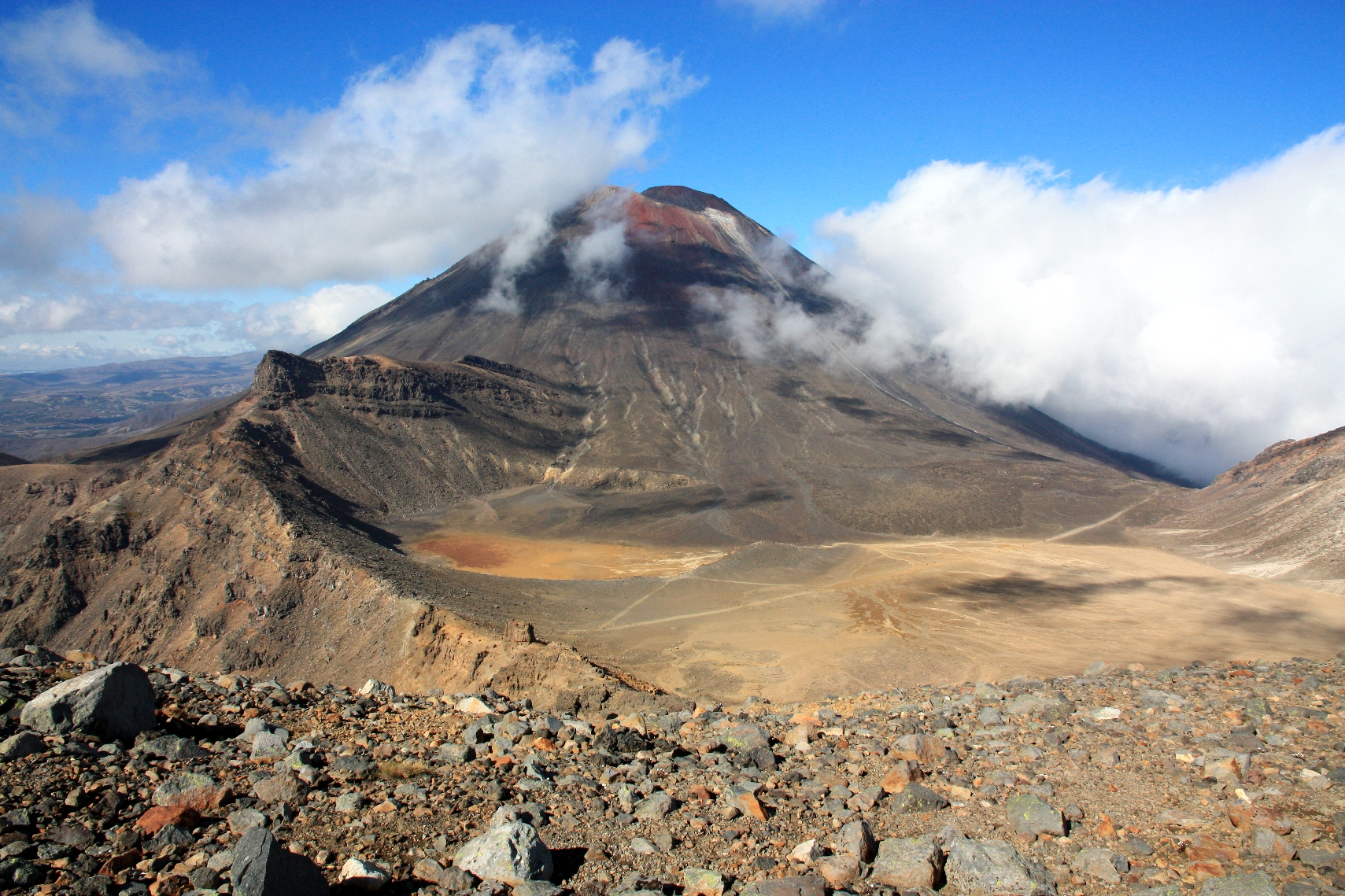
The effort input is – I would say – very high to extreme on the Tongariro Crossing on the north island of New Zealand. To start, there is an alarm call of 4:30am and pre-dawn gloom to navigate the initial gravelly meander along a long, narrowing valley. As the valley nears its end there is an inevitable sense of foreboding about the onward route; it is clear that there can be only one way to continue and, as Yazz & the Plastic Population screams in your head to make things even better, the only way is up. Up along the invitingly named Devil’s Staircase.

Steps and zigzags mark the way from here, but at least the emerging landscape offers the chance to use that little trick of taking a photo every ten paces, more for an intake of oxygen rather than genuine quest for photographic perfection. However, with heart pounding, head dizzying and legs in a brittle strain of tension, even that becomes a bit much to persevere with [2]. The top does come and there is an adrenaline boost of reward, quickly flattened like the astounding lifeless volcanic plateau of the South Crater on which you stand. For this is but a halfway point and over this one ridge another higher one rises.

While the first climb was hard going, at least it was well-graded and decently constructed with switchbacks and steps. On the second, the loose scree and large boulders of an ever narrowing and ever steepening arête have you wishing for a fat hobbit to carry you on his back. But as energetic youth bound their way up and past you without any offers of assistance, there is motivation to continue at your own pace. Effort inputs are maximised for reward outputs that are logarithmic in scale.

The viewpoint from the top of Red Crater is staggering in many ways. Staggering in directions and distance you can see; staggering in the otherworldly landscape of smooth craters and conical peaks and blasted red mountainsides and steaming green pools; staggering in the knowledge that the earth from underneath you could blow up as you bite into a deliciously fulfilling ham sandwich; and staggering because you made it. Here, the big effort makes for exponentially greater rewards.

V_tongariro

—————————–

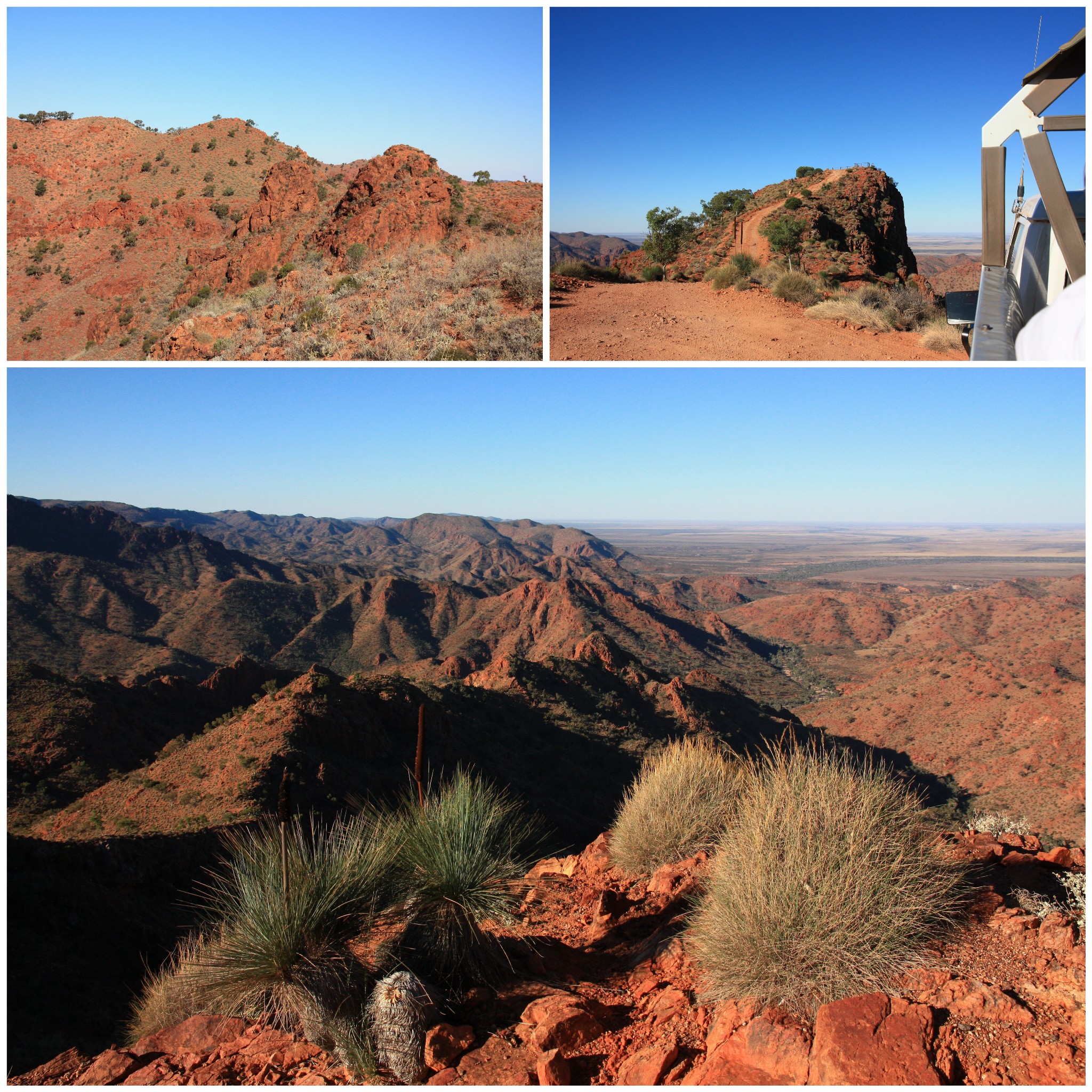
Effort to reach a viewpoint comes in many forms and a final case in point can be illustrated via an afternoon in the Arkaroola Wilderness of South Australia. Indeed, this particular afternoon on a gloriously sunny late autumn day involved sitting down for two hours to reach a pinnacle called Sillers Lookout. Sitting down is surely the easiest thing in the world, but becomes infinitely more difficult when seated sideways in the semi-open back of a 4×4 that is traversing a corrugated rock-scape at precipitous gradients.

Sitting at the back, there is a different physical effort here which fluctuates with an uphill or downhill stretch of ‘road’. Uphill and it is a case of bracing the body from being squashed by the collective ample weight of other passengers and preventing it from falling out of the back; downhill and the effort is on not squashing your fellow passengers too much and falling forward to the front. Beyond these physical endeavours there is the effort to – at various points – make conversation with grey nomads, avoid swallowing flies, concentrate on not being sick, and pretending to be excited that the afternoon tea involves that underwhelming favourite: Lamingtons.

V_arkAll I can say is that it is a good job afternoon tea occurs at the ultimate viewpoint of this ridge top tour. In the afternoon, with the sun lowering it is a quite incredible vista of absolute primitive and earthen wilderness. No doubt shaped by that perennial favourite of ancient inland seabed activity, the scene is a very Australian red, with a very Australian sense of harshness and ferocity, which is somehow very, very beautiful. And despite the different perspectives and world views of the people here to see it this afternoon, it is a viewpoint we can all agree is special…a reward that comes with all good viewpoints.


[1] Meanwhile, journalists lazily refer to ‘Canberra’ as imposing these views on the rest of the country: ‘Canberra slugs unfair tax on mining billionaires’, ‘Canberra scraps science funding’, ‘Canberra hits the hip pocket of working families’. Bloody Canberra, is it any wonder there are so many negative connotations from people who have never been here?

[2] Meanwhile, lithe and energetic teens annoyingly bound their way past and, to add to the enjoyment, you are rudely reminded of ageing.

Links

Bumps in the ACT: http://en.wikipedia.org/wiki/List_of_mountains_in_the_Australian_Capital_Territory

Canberra Nature Park: http://www.tams.act.gov.au/parks-recreation/parks_and_reserves/canberra_nature_park

Tongariro Alpine Crossing: http://www.tongarirocrossing.org.nz/

Tongariro National Park: http://www.doc.govt.nz/parks-and-recreation/national-parks/tongariro/

Carry me Sam: http://lotr.wikia.com/wiki/Mount_Doom

Hold on to your hats: http://www.arkaroola.com.au/ridgetop.php

Some more top views: http://travel.nationalgeographic.com.au/travel/top-10/vistas/#page=1

A to Z Activities Australia Photography Places Walking

E by gum

gum01The Nullarbor is said to be so named because of an absence of trees, i.e. null arbor. The thing is, like other misconceptions that may feature on a jovial edition of QI and set off a high pitched wail, it’s really not so true.  Sure, there are a few bits that are made up mostly of low scrub and saltbush, and some of it is very, very flat. But there are plenty of trees clustered and scattered across the thousand kilometres or so of its reach. Plus there is my own festive Christmas tree dangling in the front of the car, attempting to bring some light and joy to this escapade in monotony.

gum02One of the little treats of heading east is that you gradually get to move your clock forward until eventually you get a reasonable sunrise and pleasant light evenings. Not so at Fraser Range, undoubtedly the nicest stop along the road but still subject to the same peculiar hours as Perth. Hello 4am sunshine, before vanishing into a strangely cool, cloudy day to plough through the rest of Western Australia.

At Eucla, close to the WA / SA border there is the concession of 45 minutes but you have come so far east that it makes little difference. And then, ten minutes down the road you suddenly jump forward 1 hour 45 minutes and should you wish to straddle the border it is quite possible to indulge in your own creation of Back to the Future.

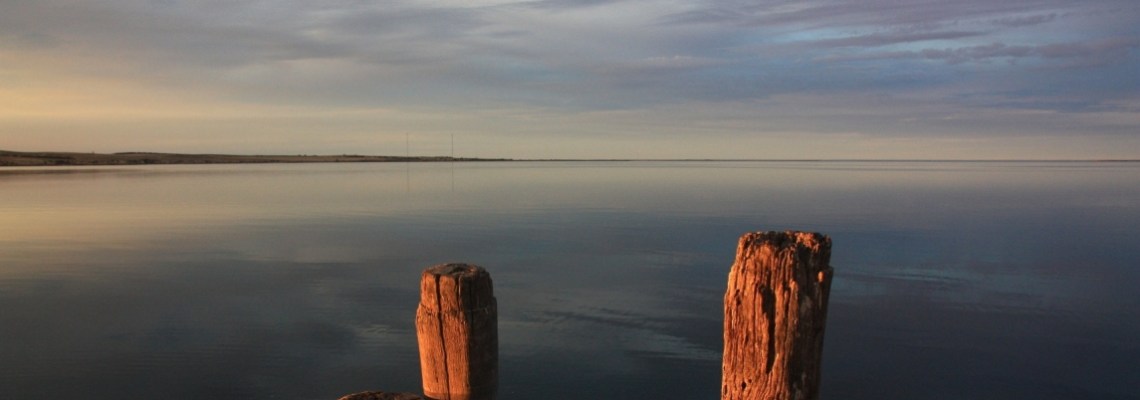
Jumping into South Australia there is a sense that civilisation is returning, but it is still 500kms or so to Ceduna, which is itself a subjective interpretation of civilisation. I’m glad to push on another hour and make it instead to Streaky Bay, for a cooling motel room, a chance to endure cricket on TV and nice, long, light evenings to take in the jetty and glassy calm bay of this glassy calm town.

gum04

It seems the journey is one of milestones – crossing the border, finishing the Nullarbor, reaching the crossroads of Port Augusta and again seeing a kangaroo for the first time in ages. Bushland and hills return and the environment becomes a more familiar, comforting scene of generic southeast Australian. Stopping and appreciating this at Mambray Creek, in Mount Remarkable National Park, is a delight, even if it means being awoken by huge flocks of galahs clattering around the majestic River Red Gums in the morning.

gum05

Adelaide is another milestone and just a few hundred kilometres down the road. I reached the city by way of a small diversion into the northern Yorke Peninsula and a triumvirate of towns – Wallaroo, Moonta and Kadina – at the heart of the Copper Coast. Or ‘Little Cornwall’, a moniker derived from the miners who settled here many moons ago. You would think I would have learnt by now not to get my hopes up with such names, to avoid such disappointments as a ‘Devonshire’ Tea and a ‘Pork’ Pie. But I live in hope that certain culinary heritage items are preserved amongst this flat, agricultural landscape which – apart from the presence of a bit of sea – is nothing like Cornwall.

So it is really not that much of a surprise that despite the slightly cutesy high streets crying out for a charming tea room there is no sign of a cream tea in sight. The closest thing to a scone and jam and clotted cream is a shiny bun with a blob of jam and squirty cream in the middle. Salvation may lie in a traditional pasty, but this is about as traditional as sticking a possum on top of a Christmas tree and singing we wish you a merry Easter. For a start, a pasty tends to have much more meat in and a lot less finely diced carrot please.

Anyway, meanwhile, back in Australia, I reached Adelaide and was glad but slightly daunted by being in a big smoke again. Not that Adelaide is that big or smoky. Indeed, it is rather graceful and refined at its heart. There is decent coffee to have and the fabulous central markets to salivate in and the tram to Glenelg to catch and a short drive to be had to the hills, peppered with wineries and koalas and dinner and conversation waiting. Leaving is a bit sad but there is one final little hill stop in Hahndorf, making amends for a missed German style meat fest opportunity last time around, and a brief reminder of hot summer days in Munich.

After such a lunch it would be a decent idea to nap, but I had new milestones to reach and crossing into Victoria was on the agenda. Three more nights of swagging it, following an inland course close to the Murray River and over the highest hills in the country and down to Canberra. Still 1200km to go but feeling close to the end.

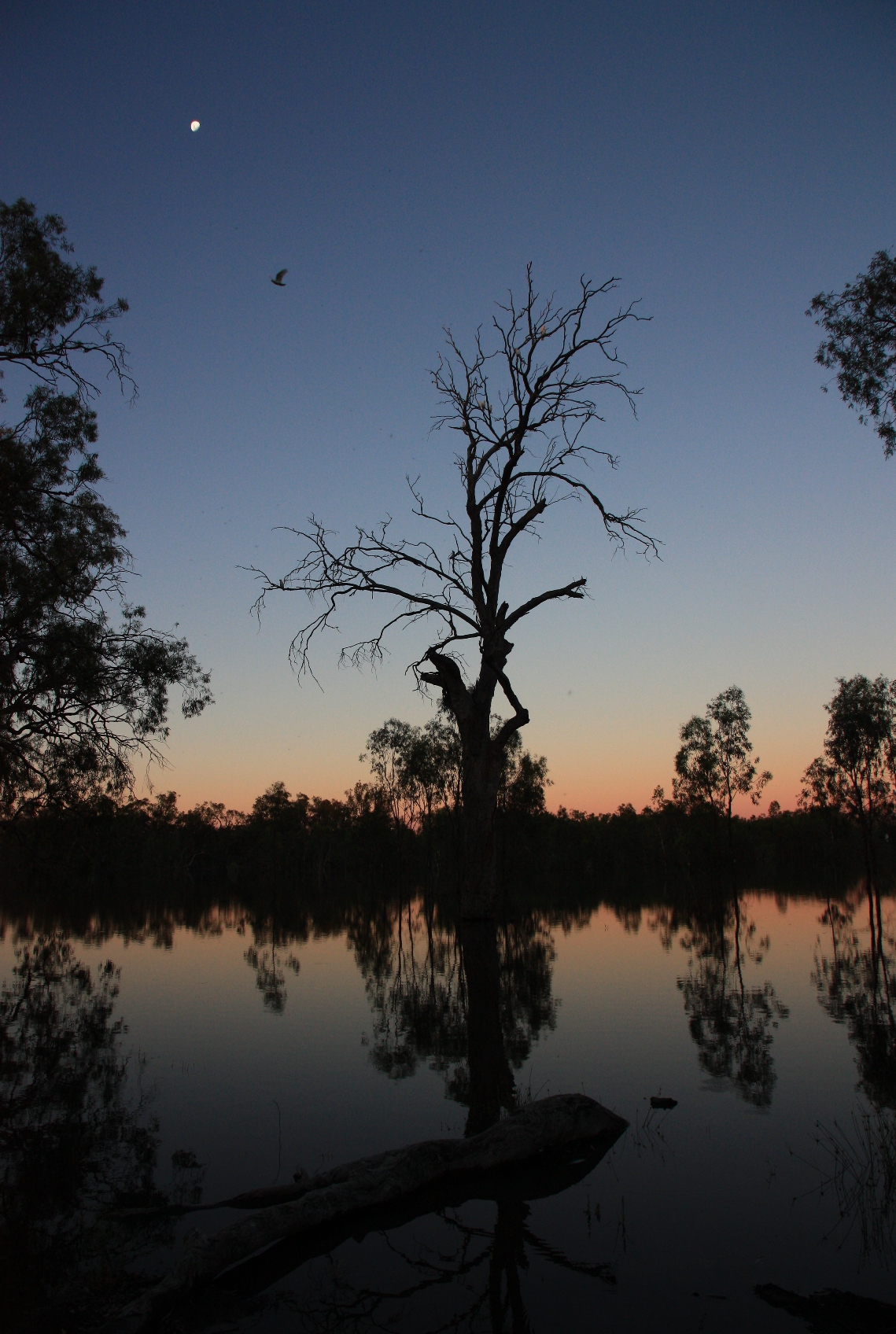
gum06The first stop was among the gums and lakes of Hattah-Kulkyne National Park, a little to the south of Mildura. Here mighty trees rise from the waters, attracting a dense concentration of screeching cockatoos who mercifully quieten down after dusk. They perk up again in the morning, but by now mornings start at a much more reasonable hour.

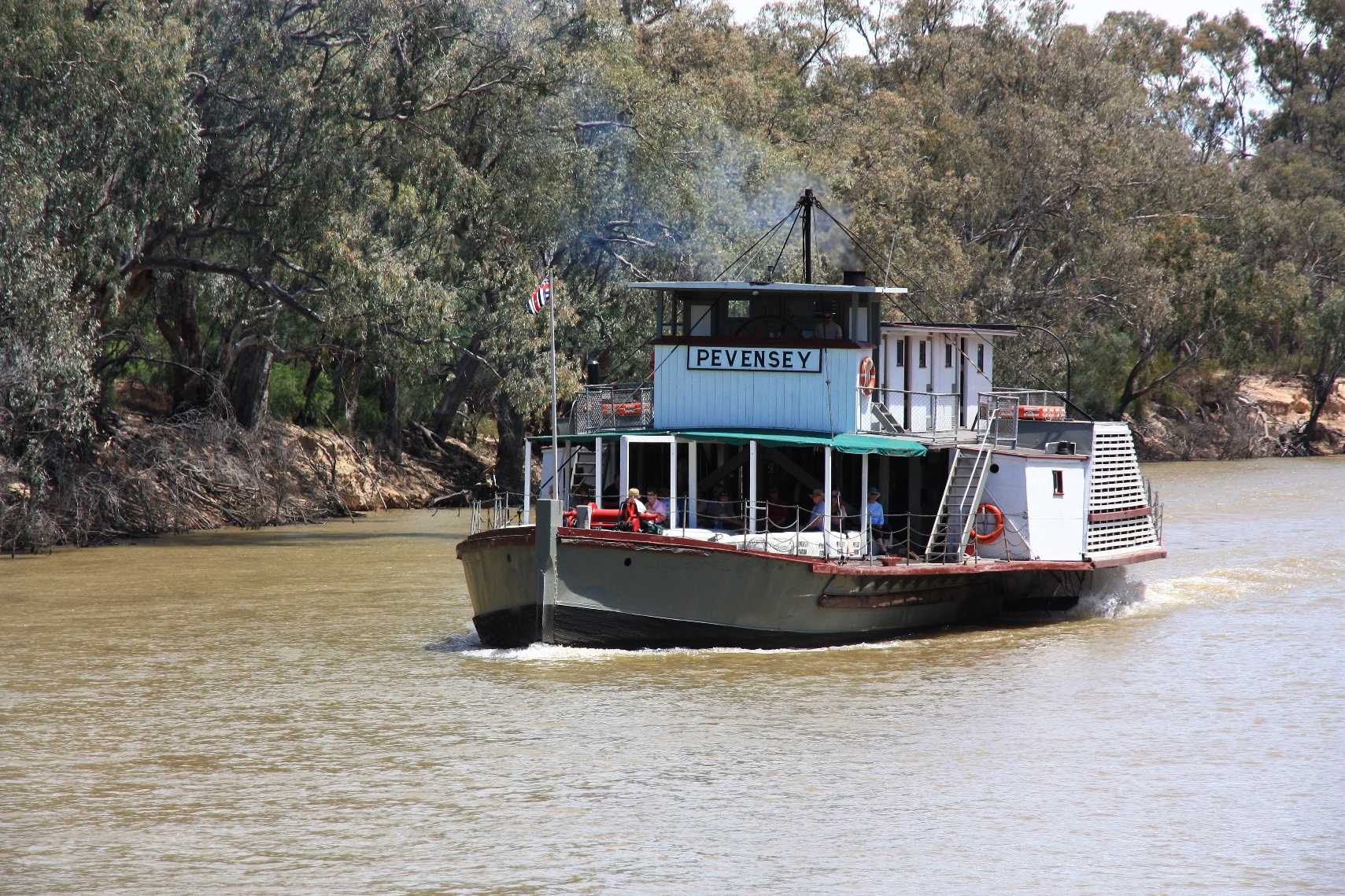
gum07The trees, water and birds combination continues along the length of the Murray, interspersed more frequently with pleasant towns. A reminder that in Victoria country life seems quite amiably civilised. Swan Hill even offered a giant Murray Cod, whilst Echuca evoked steamboat and latticework charm. The thing to do in Echuca is to hop on one of these and cruise upon the river. It made for a pleasant enough hour albeit a little dull.

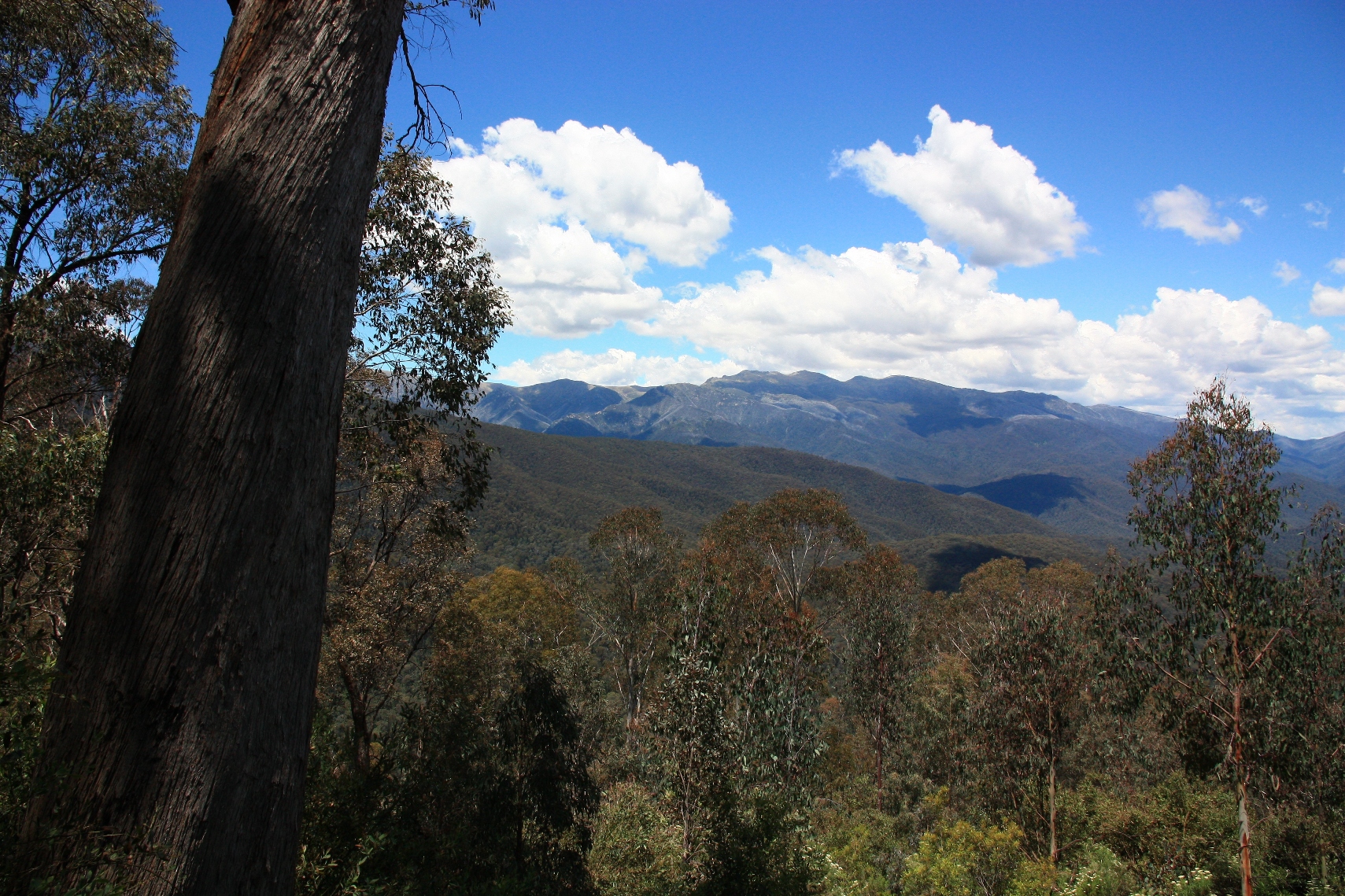
The Murray rises in the Snowy Mountains and by time I reached Wangaratta I was on very much more familiar ground, stocking up on coffee and cake and heading for the hills. It’s a beautiful approach from Wodonga, following the shores of the Hume Dam with golden hills rising and small valleys drifting into New South Wales. The valleys tighten and become more heavily and lushly forested as they shelter beneath the higher ridges of the Main Range of Kosciusko National Park.

gum08

From this western approach it’s quite a twisty ascent over appealing sounding places like Siberia and Dead Horse Gap to a much starker and moodier side. Here a landscape of high moors and glacial hollows is scattered with ghostly snow gums and boggy pools. A world in which leftover snow still stubbornly sticks; a world a long way from Perth where I commenced this journey.

gum09

gum10It was rather nice to get out of the car for a late afternoon walk immersed in this landscape, setting off from Charlotte Pass along the Main Range track, dipping down for a Snowy River crossing and up again to overlook Hedley Tarn and Blue Lake. From here it is really not that far as the crow flies to Canberra. Indeed, continuing along the track just a little further, crossing a couple more slushy white patches, you can look out over the ridges and folds of the ranges to the north and east. It is a vast view and I suspect if you had super Legolas vision you might just be able to make out Black Mountain Tower. So, so close.

gum11

In a somewhat romantic poetic notion it seems fitting that having traversed and explored huge tracts of this huge country over the past year that I finish it, well, not quite at the top but close enough. It feels like Australia is laid out before me and I can survey what I have crossed…from its white beaches to its desert plains, its golden hills to ragged red gorges, its shimmering cities to one pub towns. And yeah, It may well have the most annoying cricket team ever, and make poor attempts at Westcountry produce, and have strange time variations and a few super long dull roads but, other than that, it seems pretty good to me.

Australia Driving Green Bogey Photography

The gift that keeps on giving

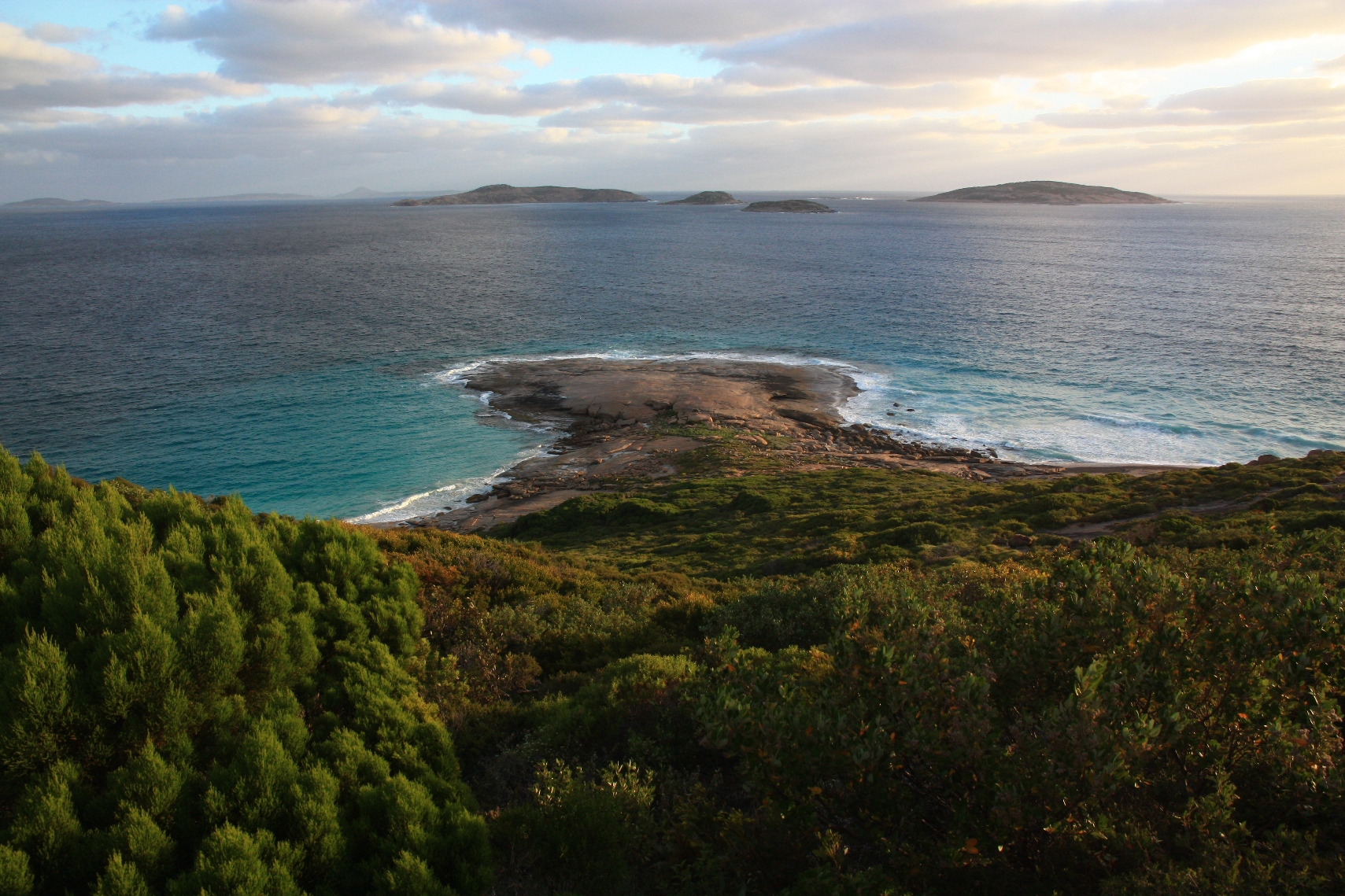
God I love Esperance. So I muttered to myself on several occasions: driving along the spectacular coastal road; lounging on the white sands with a book; strolling with the sound of the Southern Ocean and lowering sun projecting against archipelago islands. God I love Esperance. Grabbing a good coffee by the foreshore; picking up a cake from the bakery; ambling in sandals and passing children on scooters waving to me like I am a long lost uncle.

Surrounded by such natural beauty the town itself is no pristine haven, but I like it like that. There is no false shiny veneer, little pretentious opulence, few signs of excess Noosafication or Byronessence. There is industry and shipping and an inevitable strip of furniture stores and warehouses and garages lining the entryways to town. Most of the houses look a little jaded, a touch, well, daggy. But I like it like that.

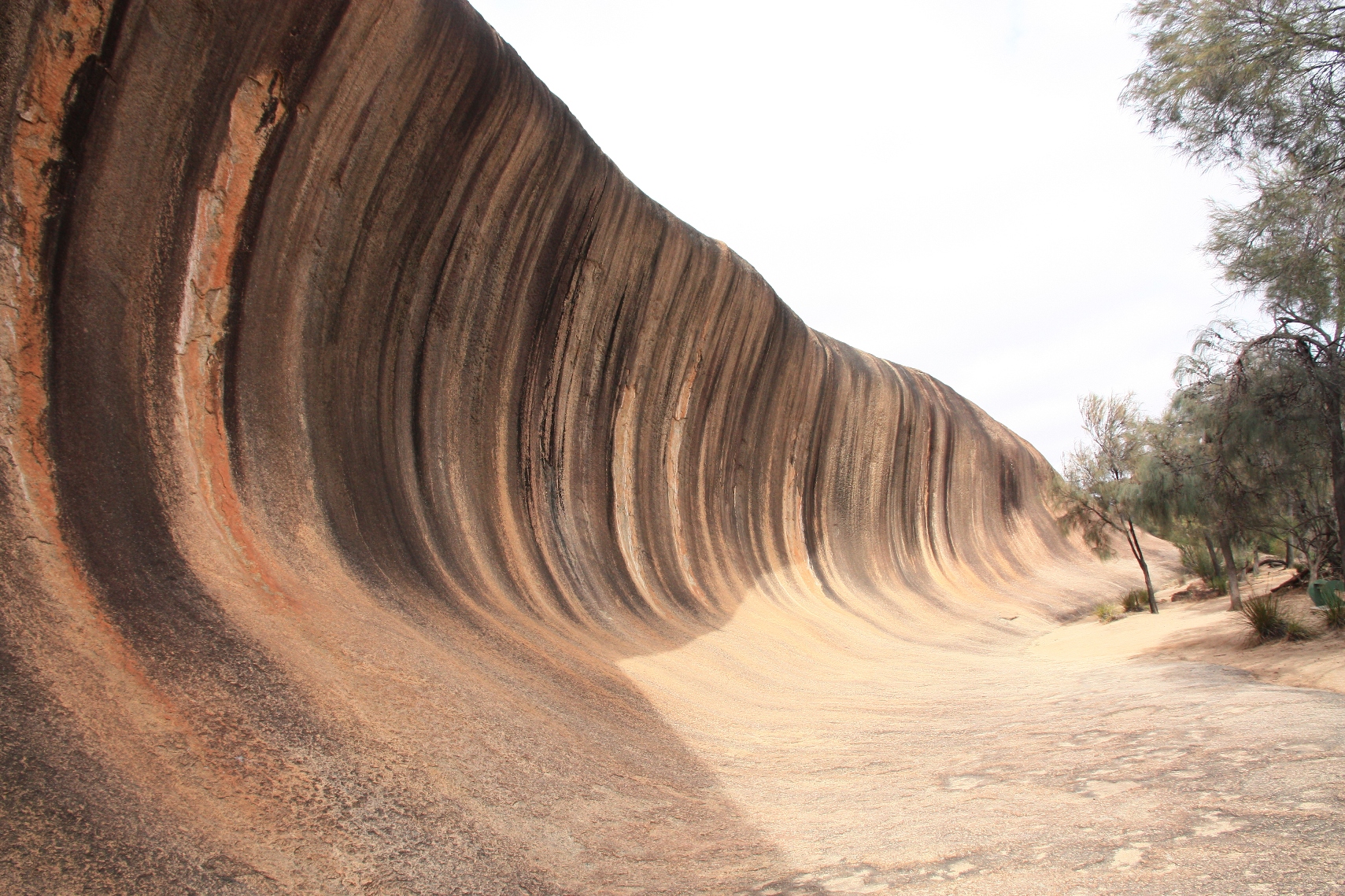
It’s a long way from anywhere else, a complete and fully-functioning oasis at the far end of the habitable coast, an embarrassment of riches before the Nullarbor. Such is the distance I had a stopover from Perth on the way. It was a place called Wave Rock, where there is a rather large rock springing up from baked wheat fields and dry lakes. Part of the rock has eroded into the shape of a wave. I rather liked it.

esp02

Here it was a return to my home…a return to my swag. I slept pretty dreadfully, but then a non-daylight saving sunrise of 4:30am doesn’t help. Stupid WA! Still, it was nice to be among gum trees and galahs again, to wander around and on top of this big rock, to view the endless horizons and big blue skies.

esp01

esp08There was a familiarity at rejoining past roads travelled at Ravensthorpe, and a reminder of the bitterness that is country coffee. Still, the road was slightly different this time, now lined increasingly with bright orange bursts of colour known as WA Christmas Trees. Tis the season I suppose.

Should one be dreaming of a white Christmas then Esperance is not such a bad place to come. Indeed, one set of officials who measure such things have declared Lucky Bay in Cape Le Grand National Park to have the whitest sand in Australia (and yes, another set must have proclaimed Hyams Beach in Jervis Bay the same). I was content, on a few occasions, with some time at Twilight Beach, which appeared perfectly white enough to me.

esp05

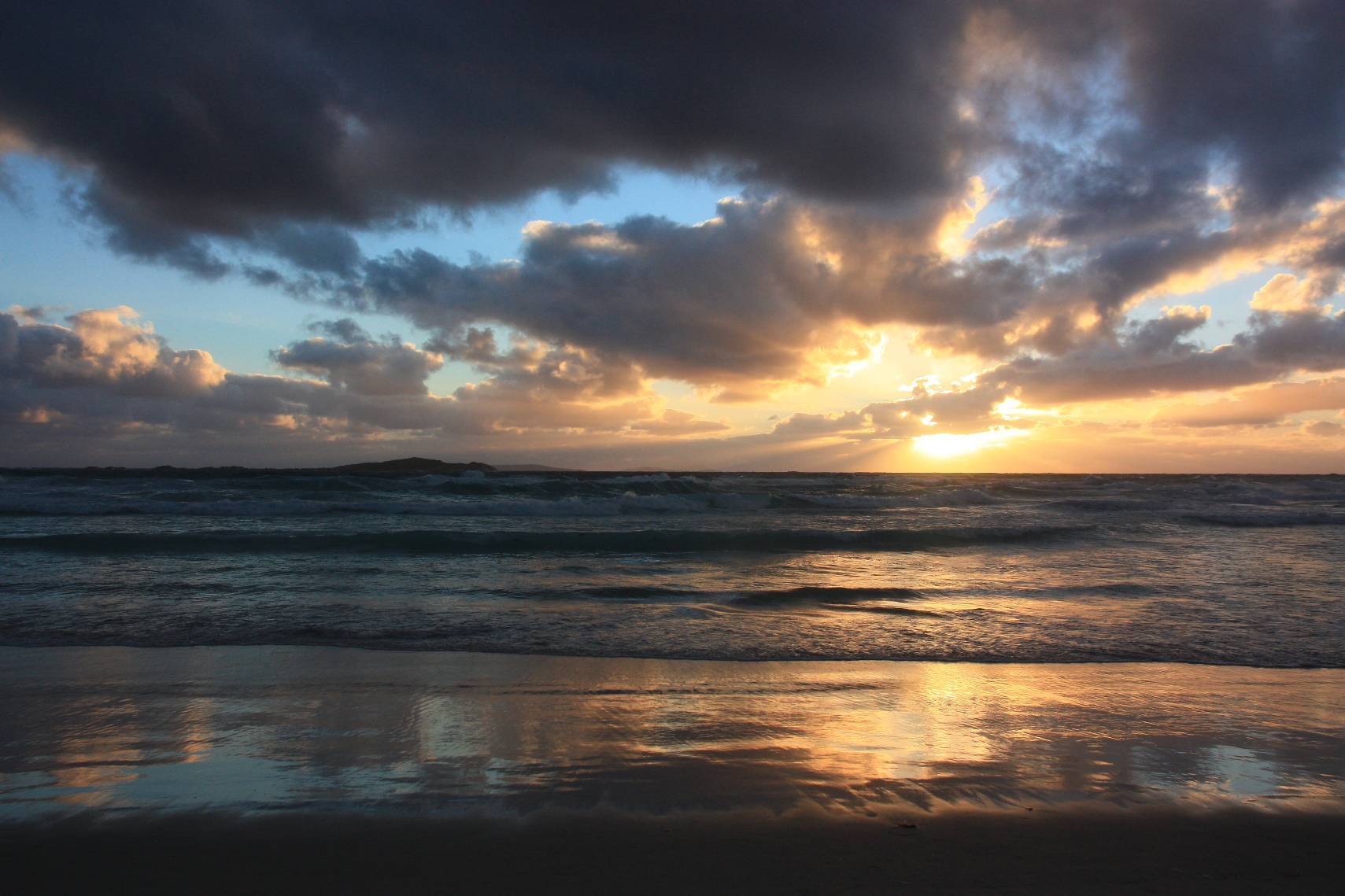
esp07However, arguably the most God I love Esperance moments came further along the coast at Observatory Beach, a more rugged and sweeping bay which on two evenings I had just to myself. I would say this is probably the best evening walk beach in the country, with fairly white sand (but no world record). I love the waves and dunes, the rocks and islands, and the sun filtering in and out of clouds as it sinks to the west.

esp06

Now, one of the considerations for making an assessment over the liveability of various places in Australia is the availability of good coffee. Esperance easily passes the test, whether from the mobile Coffee Cat or the scattering of small, chilled out cafes in the small, chilled out town centre. There are, in addition, decent cake options, some of which I have not tested so it may mean I need to come back. But Esperance is such a long way from anywhere just to visit like that. It makes it hard to leave.

With this in mind, I did see a sign advertised in the petrol station for someone to do four night shifts per week, between 10pm – 6am. How hard could that be? The sign was stuck in the counter window next to the hot sausage rolls. I was seriously tempted.

esp09But I am heading on and the next decent coffee will probably arrive thousands of kilometres away in Adelaide. There is still a huge chunk of Western Australia to re-traverse, but, for me, Western Australia essentially ends here. It has been wonderful, surprising, insightful and colossal. And finishing it here in Esperance, with a final coffee beside the white sands and topaz seas, and the sound of an Australian wicket falling, it is a fairytale ending.

esp10

Australia Green Bogey Photography Walking

Plymouth – Bristol – Geneva – Perth – and so on…

For once, Devon did not farewell me with blue skies and fluffy white clouds and fluffier white sheep scattered on a carpet of rolling green. Darkness and wind and menacing cloudbursts accompanied the passage of dawn along the A38 and onto the M5. My final footsteps on English soil, for now, were along the sodden tarmac of Bristol airport, urging the cattle onto the plane and out of the rain and towards Geneva. In the tumult I dropped my passport – no, even scarier, passports – without knowing about it. Somewhere between aisle 2 and 3 I reckon, recovered by the air stewards and pronounced out loud. Call button pressed, gratitude expressed.

frawa01Geneva and its French environs were more bronze in grey lake cloud, a backdrop to stock up on cheese and cake and final family time. A bright and brisk Saturday morning was fine for some neutral ambling in the stylishly rustic Swiss countryside, dodging blade runners and cross country concrete skiers and tractors and little boys fleeing on scooters. Dinner was tartiflette, but then dinner usually is tartiflette!

frawa02

frawa03The Sunday was a lazy Sunday French style, involving hours of food grazing and gorging on cheese in various states, matching with wines from different parts of the country and conversation from different parts of the planet. From very young cousins to the more senior-oriented, a splendid afternoon and a fine way to say goodbye, even if such times make that even harder.

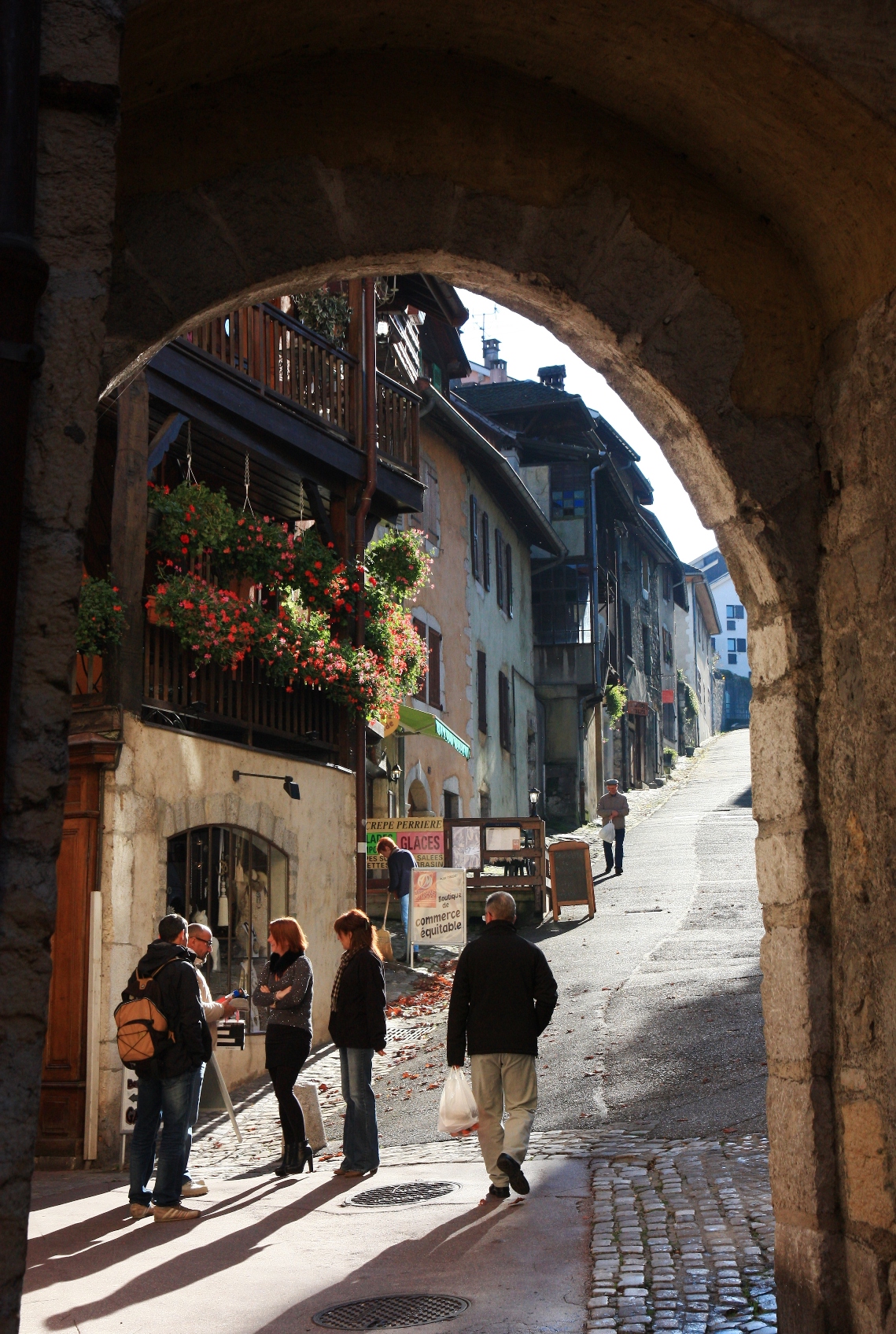
frawa05Not quite the end for me and my exploring however as my very last day in Europe involved spending a lot of time on a bus which should have been a train to propel me to the visual feasts of Annecy. Wandering the lanes and streets as a grey cold gradually lifted, soaking up a very different ambience, a very different backdrop to where I would soon be heading. From Rue des Chateaus to Quiche aux lardons et fromage, past outdoor stalls selling musty old sausages and caravans of unpasteurised cheese, alongside riverside paths lined with shuttered houses and glowing red leaves, this was the time to soak it all up.

frawa04

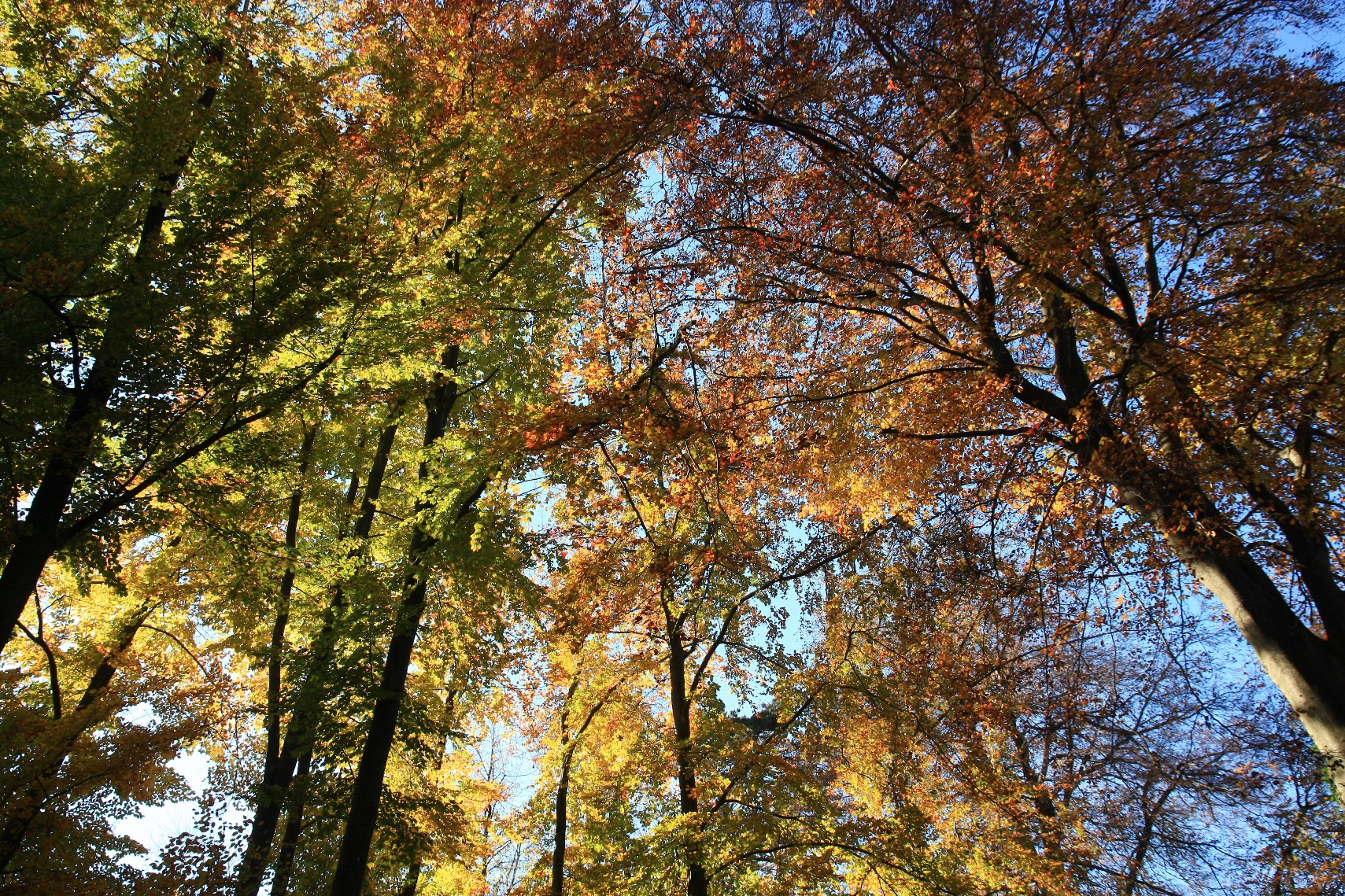
It was also the time to marvel in the landscape of this part of the world which is unlike any I would soon encounter. Escaping the town proved something of an uphill challenge but soon enough I entered the absolute golden delight of the Foret du Cret du Maure. Now sunny and warming up, strenuous work ensued in an effort to find an overview of Lac d’Annecy and not get lost. Thanks to my phone and maps I didn’t get lost, but apart from a few snatches through the trees, a lake view escaped me. Still, having really enjoyed the subtle, colourful transition from summer to winter over the past few months it was quite wonderful to end it in such a dense explosion of green and yellow and red and brown.
frawa06

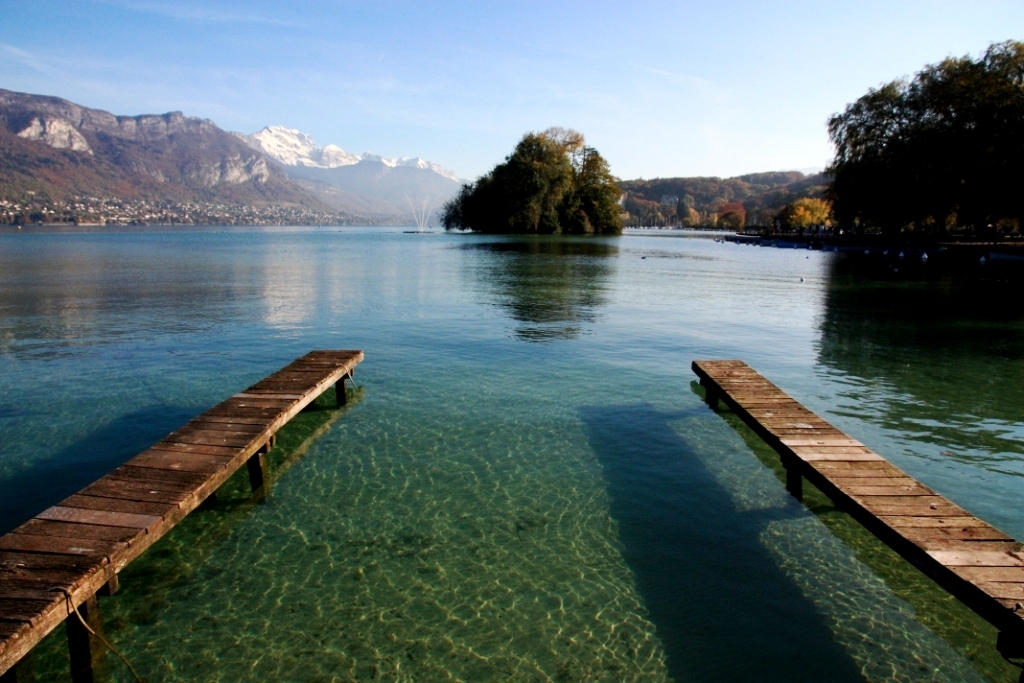
frawa07Back down at lake level the water was much more visible and, now in the latter part of these shortening days, glowing in the clear afternoon air. This is not a landscape I will see for a while, the lake as clear as a coral sea, the mountains snow-capped white as a pristine beach. An aspect warmly regarded with coats and scarves and hats strolling along a genteel, contented promenade…

…the local time is 5:30pm and the temperature is 35 degrees. So said someone several many hours later in a different hemisphere and season. Welcome to Perth, where the international terminal currently leaves much to be desired. Still, it is Australia and I can be welcomed in with my Australian passport that so nearly went astray. There is a new government but, apart from being significantly warmer, much appears the same as I left it. Taxi drivers still wittle on aimlessly about the toll road or monarchy or carbon tax, everything is still ridiculously expensive, and Perth is still some urban lifestyle paradise masquerading as a city.
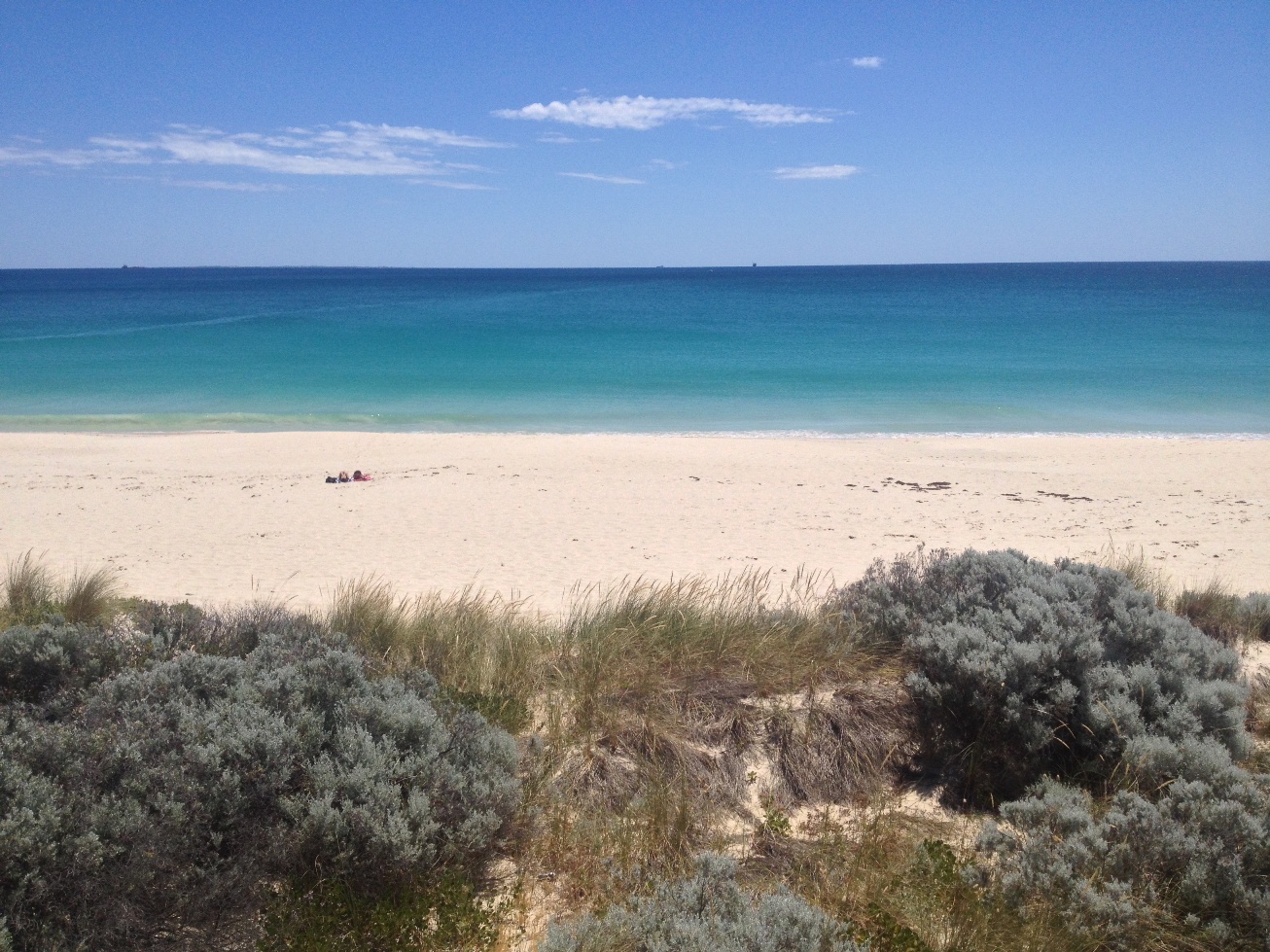
frawa09And so to the beach, or to several beaches, or stretches of one long beach over the course of the next two weeks. With a coffee or book or a huge plate of calamari, accompanying a stroll along the waterline, never far from the mind and just fifteen minutes from the body in a car. Goodness me, these Perthites are blessed with their ocean frontage. What is great about it mind is that it is rarely built up; no graffitied Gold Coast hotels casting morning shadows, no regimented wooden loungers and parasols for hire and cheap fake watches for sale, and plenty of space for dunes and parkland between the sea and the expensive show off homes.

frawa08

frawa12With baking days and arid winds it seems I have missed Spring completely. There is little sign of the much heralded wildflowers of WA on sight around the city’s parks and reserves; even Kings Park, which remains a delight whatever time of day and year, seems fairly subdued as it accepts its fate of another hot, dry summer. However, there are remnants of suburban Jacaranda lining the streets; having spent springs past in Canberra I had totally forgotten about Jacaranda, and how its elegant green leaves burst into purple flower, transforming quiet streets into a flurry of colour and giving them the smell of a new age essential oils and pointless candles shop.

Not every day has involved lolloping on the beach or sniffing trees, as I gradually reorient myself with the more mundane Australia – from work interludes to soulless shopping malls, from slower internet speeds to expensive, but lush, mangoes. A sign that I have been away a long time is in currency, where I say to myself…oh gosh…that Heston Blumenthal Christmas Pudding is twenty-five quid…blimey…oh wait twenty five dollars, that makes it, well, still quite expensive, but, you know, when shopping for essentials for a trip back across Australia you need a Heston Blumenthal Christmas Pudding with you, along with Marmite, Hellman’s Mayonnaise and Heinz English Recipe Baked Beans. Adjusted much?

frawa13And yes indeed part of my time has involved planning the next steps of this journey through life, at least the next few weeks or so. There is an excitement about returning east, tinged with melancholy of letting go of this isolated idyll of the west. Perth and I have become good friends this year and I feel like we will see each other again sometime in due course. And here I leave even better friends who introduced me to my good mate and nurtured and shared and entertained and sledged and made the whole Perth experience easy to fall in love with. So I prefer to think it’s not farewell old chap nor au revoir, but a very Australian see ya later.

frawa11

Australia Europe Green Bogey Photography Walking

Where the grass is always greener

uk01Rain. We give it a bad rap. Wet and splodgy, irritating with its inescapable shroud of damp. An unwanted present from a dreary sky, sent to make boots muddy and ruin plans best laid. A shocking contrast from the sun in Spain that was 20 degrees warmer. But then surely rain is what puts the Great in Britain, our reassuring companion, along with tea and cake.

uk02It is fair to assume that Basingstoke and rain are hardly the most riveting bedfellows, but shops are shops and people are still wearing shorts to go to Tesco. It is hard to let go of the summer and, just for a moment, it returns on a Sunday afternoon at The Vyne. Here, amongst the moist muddy tracks are the autumnal fruits of summer – fungi cascading down mossy brown trunks, spiky green pods spilling out with chestnuts, leaves wafting down onto the ground, coating the forest floor in a layer of browns and yellows. All helped by that cursed rain.

uk03

uk06bRain is no stranger to the southwest of England, as Atlantic fronts begin to form; waiting in the wings to blow in on winds, some strong enough to bring down trees. This is the season where a night can be dramatic, and the next day as placid as a hippy doing yoga on a fluffy white marshmallow. Air blows in clean and fresh and the lowering sun in the southern sky illuminates the greens-turning-brown on magical days.

Magical days are easy to come by in St Agnes, sitting tucked in on the north coast of Cornwall; a prized position to make most of the sun, and the rain, and that wind when it blows on in. Like so many Cornish towns it totters down through a maze of narrow streets to a beach; there are a few pokey shops and – it turns out – a blessed bakery serving the type of sausage rolls I have craved in my mind since seeing one snatched away for someone else’s consumption last year in Hobart. Proper good sausage rolls that are hard to come by in Greggs and Warrens and anywhere in Australia other than one place in Hobart. Possibly.

uk04

uk05Unlike more genteel parts of Cornwall, the landscape here has a raggedy rugged edge to it, peppered with tin mining relics, tinged with a faded glory scoured by eternal weather. The coast path is solid and spectacular, as it always is, heading along to St Agnes Head with views north to Trevose and south along a wave pounded coast towards St Ives. Higher up – atop St Agnes Beacon – an even mightier panorama unfolds, with most of West Cornwall on view, and St Agnes nestled down below, reached by muddy field to complete a memorable circular.

uk06

Magical days are harder to come by holed up in Plymouth library trying to make something up that is of a work-related nature and popping out for mediocre coffee in the hope that just for once it may not be mediocre. Even mediocre coffee can be a welcome distraction though, so when the cloud clears and a sunny afternoon pops up out of the blue the allure to escape is palpable. Luckily there is a very quick escape from the varied charms of Plymouth, by taking a bobbling boat across the Tamar to Mount Edgcumbe.

uk08Here, the meander of autumnal woodlands and fading gardens give way to exposed hilltops, looming high over the Tamar with views spreading out to encompass a Cornish and Devonian sea.  Inland the wide river flows into a border landscape of patchwork fields and secret inlets, punctuated by towns and villages and giving out to rising moorland hills. Herds of deer scarper into nearby woods, aware of your presence and no doubt cognisant of the fact that you would quite like to see some good old fashioned autumnal rutting. Instead, the view will suffice.

uk09

uk07Plonked amongst this idyll is the city of Plymouth, with rows of houses running like dominoes over the lumpy contours of the suburbs, meeting cranes and boats toppling into the river. Its waterfront welcome mat is striking with the Where’s Wally striped beacon of Smeaton’s Tower and a wheel that looks even bigger from afar. Illuminated is a background of moorland, sweeping over the horizon. It is here that you can appreciate the quite blessed setting in which Plymouth sits. Yeah, the city might be a bit crummy and tatty in places, but a turnip growing in a field of flowers is better than a turnip growing in a pile of shit, right?

Another philosophical conclusion I have come to over the last few weeks is, when situated in this part of the world, even when the day is crap, you are having a stinker, work sucks, and other such things, there is the consolation of easy access to clotted cream, jam, scones and tea. This can make a bad day amazing. At Mount Edgcumbe it made a good afternoon sublime.

uk13The hills behind Plymouth spread afar into Dartmoor National Park and this represented what was to become my final outing into the virtual field of flowers surrounding the city. A circular walk from Yelverton offered a perfectly balanced English country composition of riverside woodlands, sheep and cow fields, tumbledown cottages and exposed tors. This amble on the fringe of Plymouth was a pretty decent way to bid it all farewell.

uk11

uk12Spending time here, intermittently from August to November, has obviously allowed me to observe the changing seasons take effect. What once was an uninterrupted blanket of flourishing green is now softening, holes are appearing, and things are shrivelling. A golden brown is slowly but inevitably creeping into the landscape and soon even this will become more spartan and altogether less comforting.

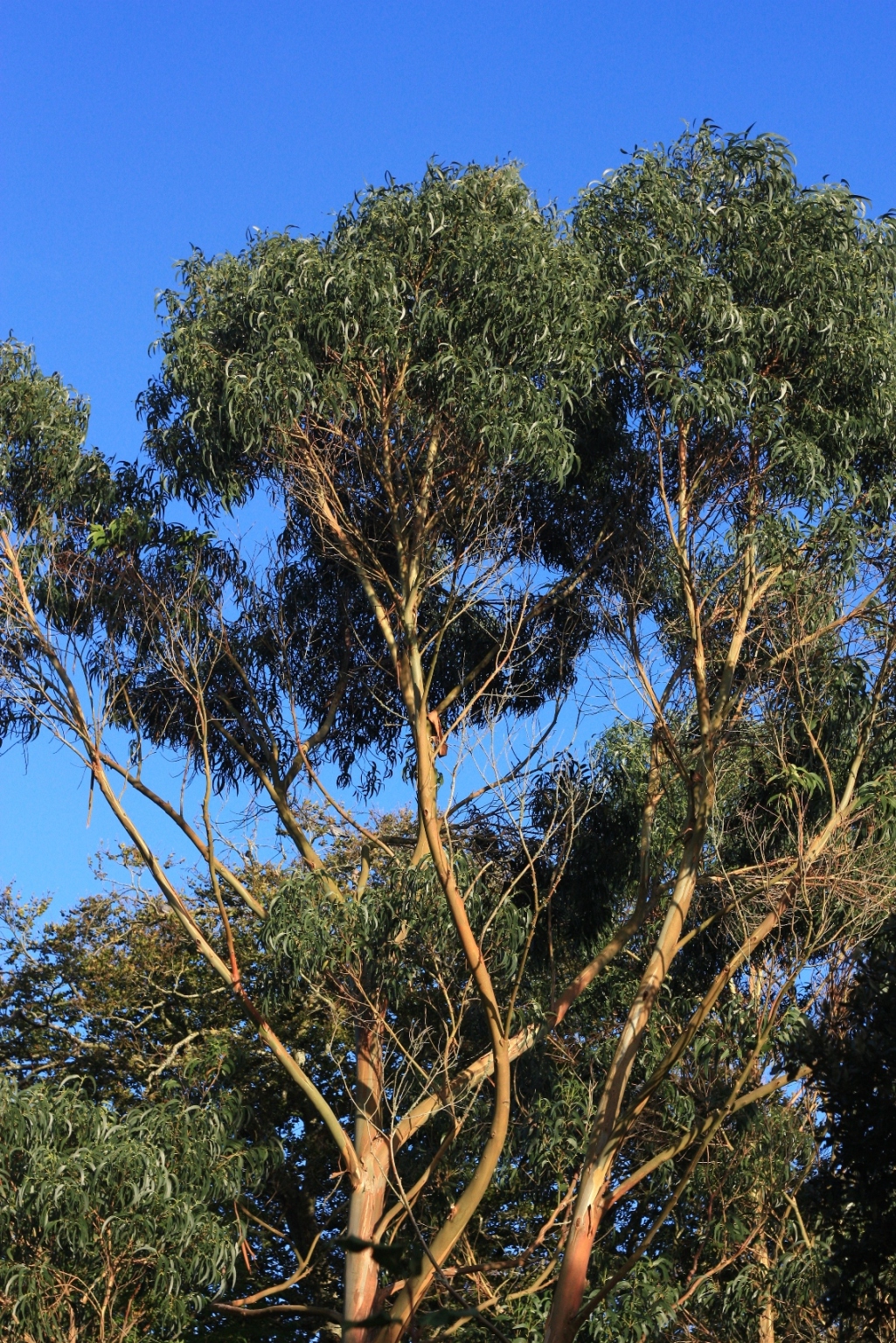
uk14And as the leaves disappear from the trees my southward migration kicks in. It has become a customary route over the last seven years, this time a little later after a little longer than normal. It leaves me with mixed feelings; sad to be leaving one place and excited to be heading to the other. It’s a feeling that comes to life when marvelling in the grand autumnal splendour of Mount Edgcumbe only to come across a couple of Eucalyptus trees shooting up into clear blue sky, aliens in a foreign land. For a moment I am transported, wrapped up against a southwest autumn and looking up at the promise of Australia. The best of both worlds, where leaves do not fall and a cream tea is just around the corner.

Green Bogey Photography Walking

Red

Red is surely the most schizophrenic colour. It is the blood that pumps through our body, and sometimes spills out in horror. It is the heart of the fire that warms us, the fire that can also consume and savage. It shrieks warning and danger, making us stop in our cars and wait for what seems like forever, all for our own safety. Red is the shade of the devil dressed, agitating up an hors category climb in the Alps, pursuing breathless cyclists to the upper limits of their EPO threshold. It’s the colour of love and passion, of Wimbledon strawberries and luscious lips on a glass of Cabernet Sauvignon. It is dry earth and fiery sunsets, timeless and boundless on the horizon.

I would not declare red as my favourite colour, but then I struggle to see how any colour can have superiority over others [1]. When I think about it though I have been drawn to red across my life, starting from the time I was placed in Budoc, the red house at primary school for which I accumulated goodie-two-shoe points and bonus long-jump merits. Since then I have gathered red t-shirts that have become faded through years of devoted use [2]. I do enjoy a glass of red wine, and of course the gooey red jam spread out on a warm scone, the sweet template for a dollop of silky, rich cream. I am clearly enamoured with a place called Red Hill, where I am especially enlivened when an explosive red sunset marks the passing of a day. There is even something ashamedly endearing about that album by Taylor Swift. Like driving a Maserati down a dead-end street.

Forget your green and gold, to me red is synonymous with Australia. It is the colour which paints the emptiness of the country and is most obviously portrayed through the sunset pictures of Uluru featuring on postcards and slick tourism adverts everywhere. It’s a scene embedded in the national consciousness despite – for most – a lived environment of golden beaches and green bushland, silver cities and yellowing countryside.

Ever since moving here an aspiration has seeded and sprouted in my head whereby I tread into fine red sand, baked and cracked by searing afternoon heat. A clutter of rocks and saltbush and spinifex sheltering frilled lizards lies before me. Small gullies weathered by flooding rain weave into the landscape, twisting toward bare, earthy ranges crumpled and folded so that they cast shadows across one another. It is remote; it is a little dangerous; it is the very essence of the heart of Australia. 

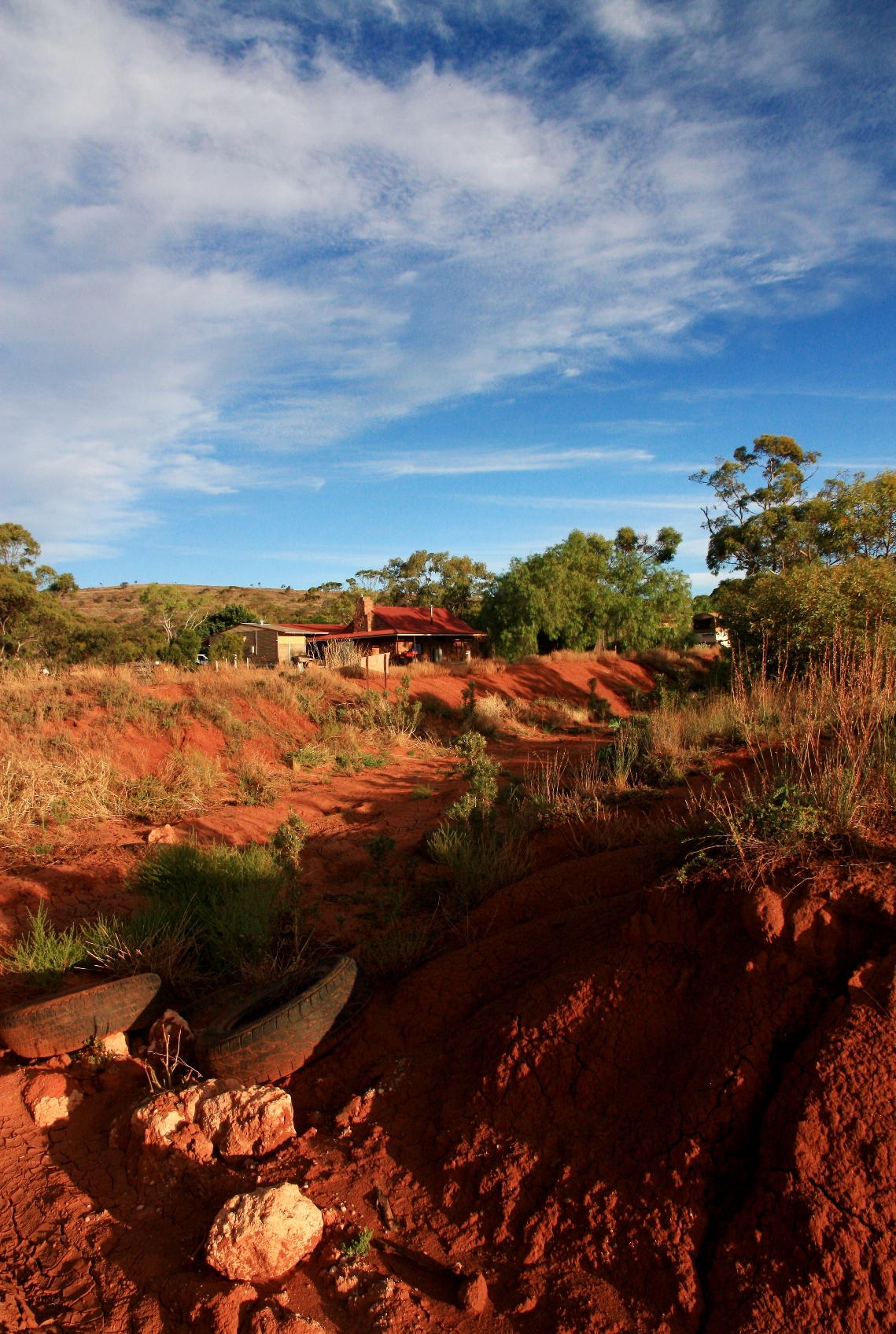
I’ve had a few tasters of this red, from Uluru itself, to giant sand dunes in the NSW outback and a visit of the fabulous Flinders Ranges in South Australia. One particular spot that I have ventured into seems almost wholly red. Pilbara red coats the northwest corner of Australia right down to the stunning blues and whites of its coast. The deep red hues cover a suitably rugged and barren landscape which gets surprisingly hilly at times, rising to the mountainous ridges of the Hammersley Range. Despite some significant intrusions, it retains a remote, untamed and enduring sense.
A gateway to this landscape proved to be Bullara Station. Bullara Station proved to be a surprise. A surprise proved to be most welcome along this sparsely populated stretch of Western Australia. A huge working cattle station, Bullara also offered a rustic camping area. Now, rustic can often be a byword for primitive and inadequate. But in this case it was more charming and quaint, from the moment you were welcomed by the friendly owners to the campfire damper with many who are enamoured enough to linger. The beautiful open top shower shed was surprisingly one of the best places to wash away some of that red dirt.

R_desert

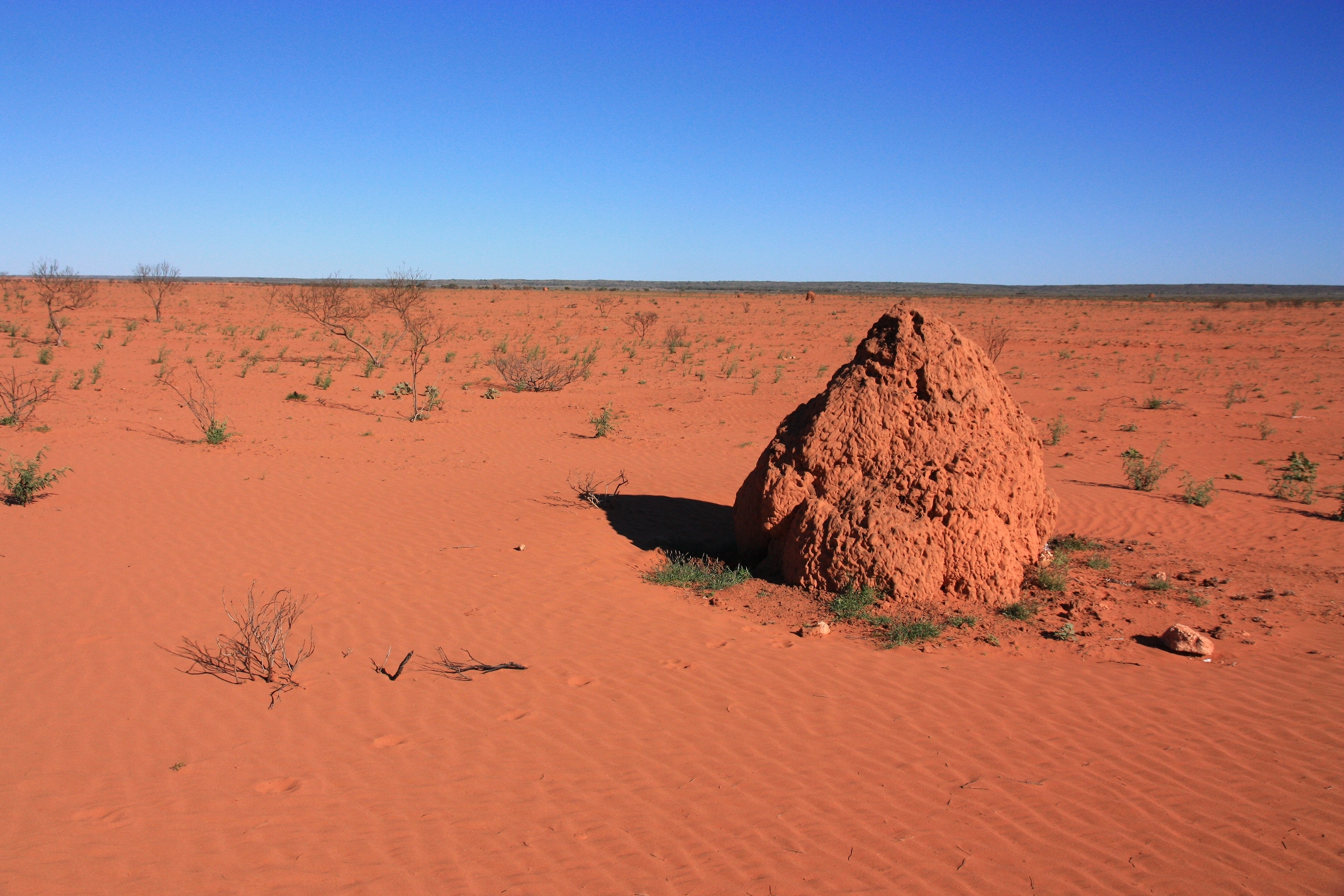
Bullara is – in the context of this vast landscape – but a stone’s throw to the west coast and the sensational coastal colours of Ningaloo Reef. With white sands and shallow turquoise waters, the reef is every bit the tropical idyll you would expect. Yet equally striking here are the desert sands perforated with termite mounds and the upward thrusts of the Cape Range piling up into giant pillars of rock and sliced by dry gorges. This is where the red earth meets the blue sea.

Heading in the opposite direction and inland from Bullara Station it takes some time to find a settlement. Petrol is a premium price to pay to cover the country. Settlements that do spring up are principally established because of the red land around it: red rocks that are mostly dug up and taken away to China.

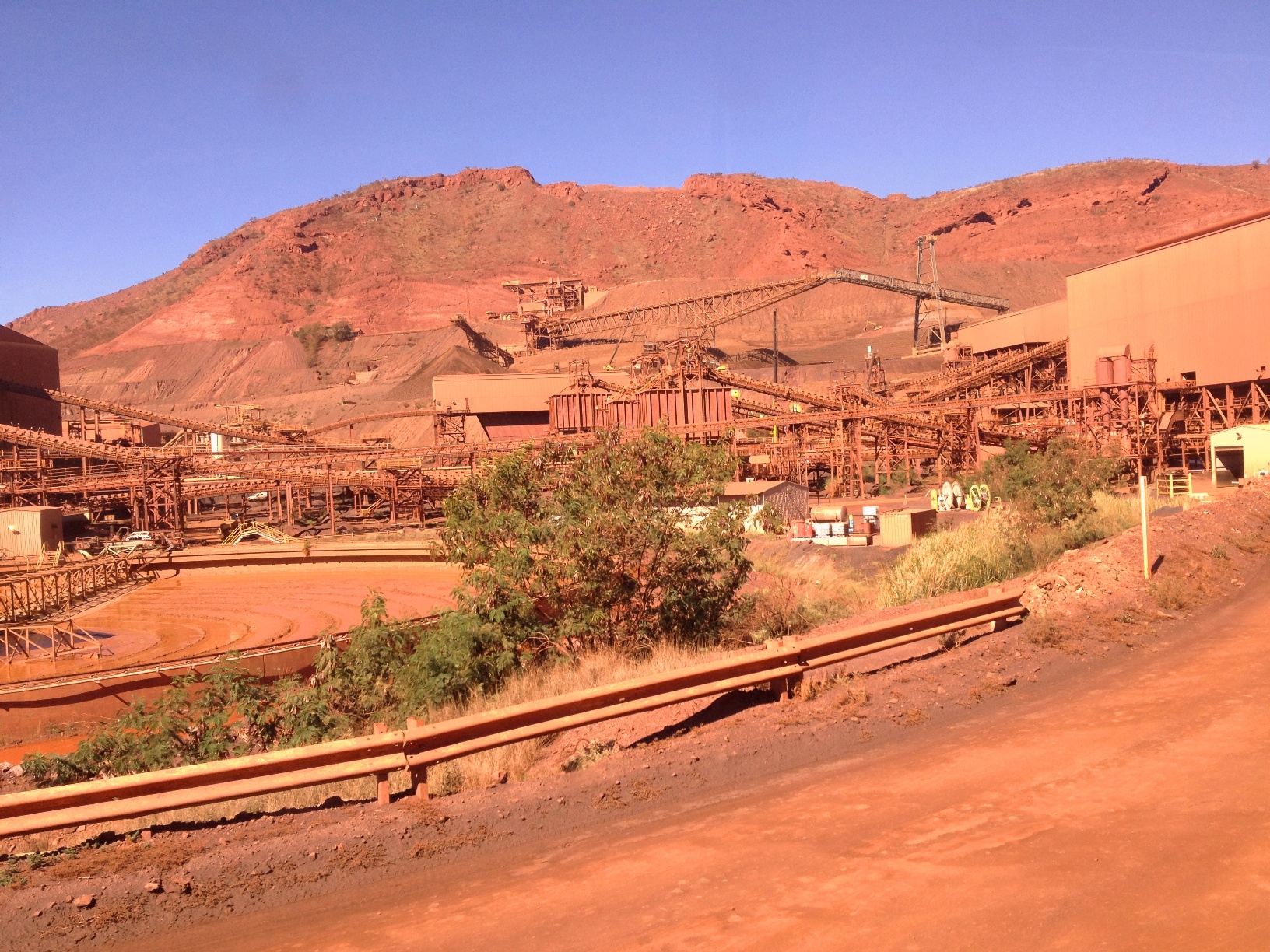
R_mineTom Price is one such spot; a rough replication of a Canberra suburb clustered between deep pits and mountains carved away into a spiral of tiers. The scale of these mines is huge – from giant yellow transporters whose tyres are bigger than me to rows of rocks pilfered from the ground and lined up into varying grades of iron ore. It is both crude and sophisticated, simple and advanced. And while the urban latte sipping ecomentalist in me could take offence at such obliteration, I remind myself that we all use iron, we benefit a great deal from these holes in the ground and, yes, there are plenty of red rocks still to go round.  

Thankfully environmental credentials are restored east of Tom Price, in a swathe of Pilbara red pitted with deep gorges and crumbling upland. Karijini National Park is the jewel in the crown, the ruby in the iron of this russet country. It is where you can step out into the red land and absorb it, along the panoramic cliff edges and down into the heart of quite breathtaking canyons. Rivers and pools add a vibrant green tinge to the valley floors, a ribbon of life flourishing amongst twisting red walls. It’s said that red and green should never be seen, but here it is a perfect arrangement.

Yes it sounds clichéd but this is the real Australia, the realisation of the vision and the aspiration of the fundamental essentials of a red earth country. A grand composition of nature, culminating in the view as four gorges congregate hundred of metres below Oxers Lookout. Millions of years in the making, impenetrable and untainted. Red rocks shaped by land and water and maybe a giant serpent, rocks that have not felt a human’s footstep or handprint and likely never will. This is part of the magic, the wonder, the spirit of Australia. This is the allure of red.

R_karijini


[1] Note to self: avoid vacuous interviews in vacuous magazines

[2] They used to go nicely with my black hair, but now that has become grey and the deep red material has faded, the effect has diminished

A to Z Australia Driving Photography Walking

Oceans

I grew up by the sea. Not in a romanticised way, where snug cottages overlook glistening seas and fishing trawlers bob up and down in weather-worn harbours. Neither in the glamorous manner of those doing it tough in Australia, with their angular beachside houses, all windows and look-at-me decks. In fact I survived growing up without a prized sea view, but the ocean was never too far away. Close enough for seagulls to shriek down the chimney, near enough to feel the brutality of a winter’s storm. Never too distant to walk a pebbly shore and experience the space and light and air that is unique to being on the cusp of an ocean.

You could say that the sea has been in my DNA since I arrived in the world and into the salty air of Plymouth [1]. This makes it all the more surprising that I have not lived within easy reach of the waves for what is now half of my life. I went away to university in the very centre of Britain and then coped with the occasional glimpse of muddy river in London. I moved to Australia – the land of beach bums and surf rescues – and wound up in Canberra; the only capital without prime ocean frontage. I clung to windy days on Lake Burley Griffin, when waves would whip up, and consoled myself with frequent trips to various points on the stunning east coast.

The ocean seems integral to the Australian way of life. Unsurprising given most people live on the more amenable fringe of land closest to the coast, surprising given there is a whole load of land in between [2]. The oceans here – from Pacific to Indian – are oceans apart, and it takes quite some enterprise to bridge the two.

It’s mid-March down in Mallacoota, on the very southeast corner of southeast Australia in southeast Victoria where a southeast wind blows. It’s fairly sedate compared to previous days, a sea breeze in contrast to the cold blasts streaming off the ocean and bombarding the shore with downpours. Around the corner, in Ben Boyd National Park, dirt roads are churned into muddy blancmange leaving a detritus of abandoned cars. I know this because my car nearly joined them, drifting sideways like a drunken celebrity ice skater. Precariously though it made it through to the salvation of tarmac and gleefully crossed the state border to recover in Mallacoota. And what a recovery Mallacoota offered.

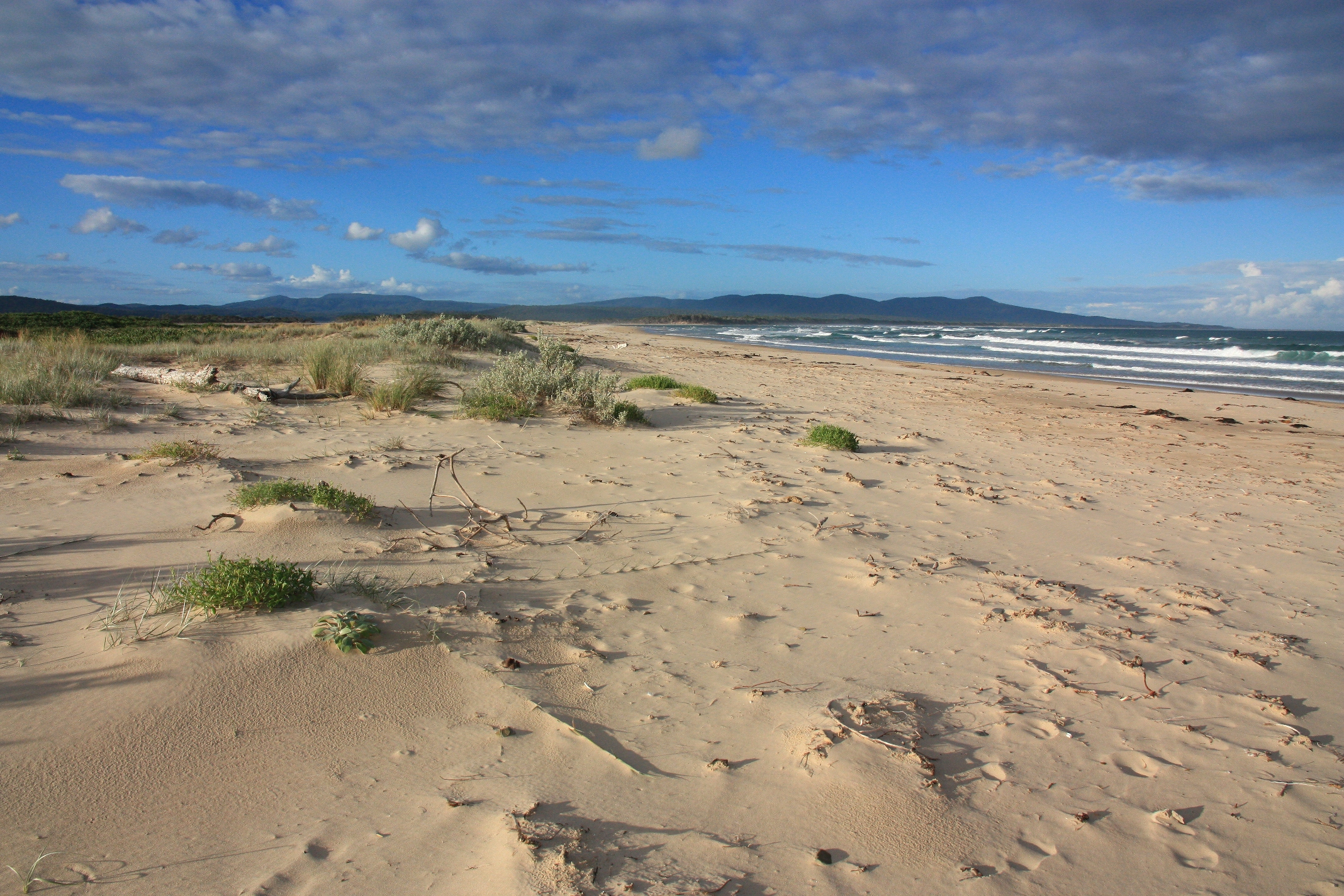
This sparse corner is both rugged and tame; the waves of the Southern Ocean and Tasman Sea conjoin and thrust onto sweeping sands while gargantuan dunes remould themselves on the breeze. Behind, protected and sheltered gleams the expansive surface of Mallacoota Inlet, spilling into creeks densely lined with Eucalypts and Tea Trees and Acacia; quietly lapping at the boardwalks and manicured front of the town. Pelicans and people flock to fish, the more intrepid cycle, run, and fly.

Out on a limb, Mallacoota really is a long way from anywhere, perhaps as wild as it gets along the most populous strip of this huge country. Possessing essentials like a pub, bakery, two small grocery stores, a bakery, hardware store, and – did I mention – bakery, it is self-sufficient, with a long day trip required for Big W and McDonalds and Flight Centre. There’s not a great deal to do, other than interact with the outdoors, to walk, run, cycle, surf, fish, or simply sit in the sun and gaze out across water. I suspect this is part of its appeal.

The constant roar of the ocean is often the only sound to shatter the peace; at least outside of peak summer holiday times when Sydney, Melbourne and Canberra converge along the shores up and down this coast. It’s a sound which may seem appealing, an obvious marker of being close to water, of arriving at the edge of the world. I think on top of this though, the ocean can sound threatening and cruel, daunting in its vastness and unrelenting, unrestrained energy. People may fantasise about going to sleep with the soothing, repetitive sound of the ocean in the background but the reality, particular when a layer of canvas is all that separates you and the outside world, is of an incessant crescendo of noise, amplified in the stillness of night.  

The noise echoes from the cliffs and trees fringing the ocean beach here, which is itself like a thousand other beaches in Australia. In that, it is nothing remarkable, even though it is, objectively, remarkable. Pristine sand and pristine waters, so clean the aroma is pungent with the abundant seaweed and crustaceans and fish. Scattered with the dog walker and fisherman and surfer and yoga practitioner, it is the spot to clear the head and mind, the place to come at the end of day to walk, fish, surf, or contort. It is the spot to feel at one with the world, humbled in insignificance as the sun lowers, the sands blow, and the waves churn out into the eternal horizon.

O_mallacoota

Beyond Mallacoota the southern coastline invariably throws up much more in the way of ocean-sculpted lands. Long beaches of ninety mile and entrances to lakes. Vast promontories and bays, becoming refined with sandcastles and beach huts and docklands and Melbourne. Westward still and curving great ocean roads meet shipwrecked coasts. Lagoons and islands of kangaroo turn upwards to Adelaide, and the waters greet peninsulas fringed with small ports and big jetties. Beyond things return to the empty simplicity of ocean and land, the land meeting ocean, a bight of irresistible force and unmovable object. Beautiful archipelagos emerge and vast sounds appear as civilisation returns, and the ocean weathers colour the corner of the southwest. A corner which turns onto another ocean and signifies the crossing of a continent.   

Some two months later and a lighthouse appears on the horizon, another lighthouse rising elegantly into a softly painted blue sky. Passing through Augusta the coastline takes on an edge-of-the-world charm, as the land narrows between two seas [3]Small bays and coves fringe the leeward side and teeter their way along to Cape Leeuwin, from where the lighthouse surveys the Indian Ocean. Next stop from here: South Africa.

In this prized corner of Western Australia the Indian Ocean is very much like the seas that have come before, knocking out a reassuring rhythm of surf and disappearing into a depth of endlessness. It’s a different ocean but the same country; many kilometres distant but not a million miles apart [4]. Windswept hills slope down and break off into the ocean, broad sands form at river mouths and creeks. Majestic forests revel in moist valleys while vines take advantage of open, sun-soaked slopes. Near this ocean, small settlements and towns still serve flat whites and offer The Australian for all the propaganda you can stomach. The same brands of coolant are available to top up a car which has done much since almost becoming bogged down in mud on the other side of the country, oceans apart.

There are of course subtle differences formed through climate and geology and mankind’s hand. A different array of deadly sharks and jellyfish may well linger in the water, ready to nibble on loonies in wetsuits embracing the epic waves. For the less adventurous, the diversity of the terroir yields different aromas in the Cabernet Sauvignon…perhaps less blackcurrant and pepper and more pomegranate and diesel (though don’t quote me on it). Tourist information signs are a different colour, though nonetheless as mysterious and confusing. And practically every town ends with the letters ‘up’, like Manjimup and Nannup and Whatsup Buttercup.

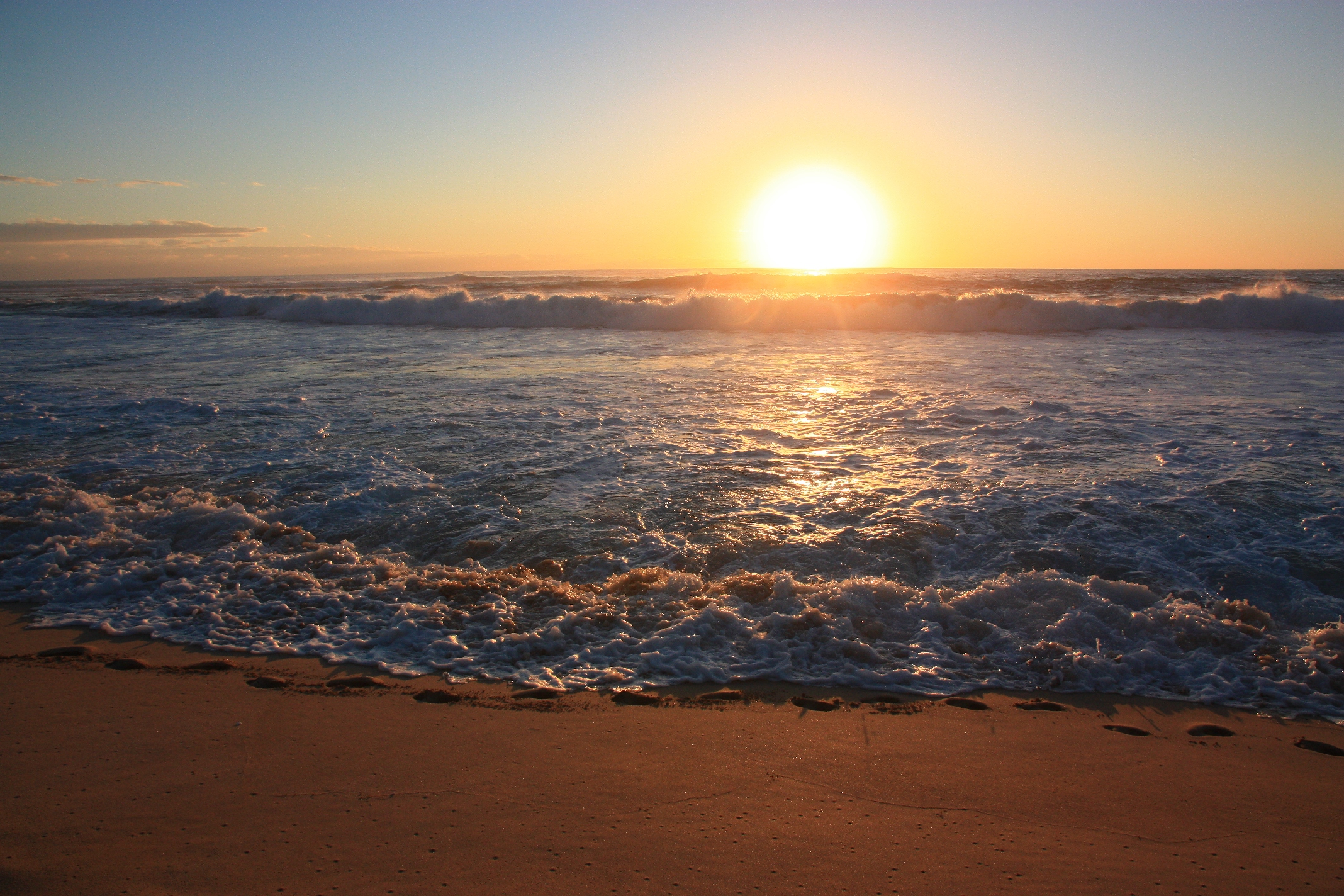
The big contrast – and a satisfying symbol embodying the accomplishment of crossing a continent – is that the sun sets into this ocean. At Yallingup, camped beside the roar of the sea for one last night, Mallacoota is reincarnate, a mirror image of sand, sea and sun. There is just chance, with the now shortened days of May, to amble on the beach as the day draws to a close; to battle through the sands and scarper from waves thrusting up the beach with great flourish; to join the smattering of dog walkers and fishermen and surfers and yoga practitioners, watching as the sun sets into this particular ocean and seals the wax on a momentous journey. A journey that has frequently mingled with the sea along its course, and astonished in scale as it has crossed from ocean to ocean.

O_yallingup


[1] Which is now branded as ‘Britain’s Ocean City’ no less

[2] Is it any wonder the latest Australian Prime Minister is such a visually strident man of the seas, sometimes scarily so?

[3] A charm seemingly being addressed by the construction of a large marina for more boat-owner people…Stop the Boats!

[4] In fact, for me, 17,000 kilometres, but more like 3,500 as the seagull flies.

Links

Britain’s Ocean City: http://www.visitplymouth.co.uk/

Mallacoota visitor information: http://www.visitmallacoota.com.au/

Destination Margaret River:

http://www.westernaustralia.com/en/Destination/Margaret_River/9009633

Wasssssup in Yallingup: http://www.margaretriver.com/regions/1

Another ocean apart: http://www.youtube.com/watch?v=c_e2D2qsaso

A to Z Australia Driving Photography

Neil

Okay, this is not going to be the ultimate in self-absorbed egotism revealing the characteristics and complexities of just one soul among the seven billion on this planet. In fact, it’s not even going to be an analysis of the origins of the name Neil or its equivalents like Niall or Neenoo [1] or, as one Aunt persists in handwritten cards twice a year, Neal. Neither will I look at the many famous Neil’s of popular culture, like Mr Armstrong, Kinnock and the hippy from the Young Ones [2], or linger on the hilarious japes where people might just kneel down after you tell them your name. Instead, in this episode of Neil, I would like to consider the art of getting a picture of oneself, a tenuous link because I am called Neil and when I try to take a picture of myself I am taking a picture of Neil, geddit?

Of course, now I have come to realise that this action has come to be regarded as a ‘selfie’, which is likely to become a ‘selfs’ and then just a general mumble sounding something like ‘sufphs’ as the transformative degeneration of language continues. And I think, well why not, let the young people mess up our language; it’s only fair as we screw over the planet for them, in a period of inaction that will become known as ‘planballs abbottburger’ or something. As long as enough selfies capture the moment the rising sea submerges the Sydney Harbour Bridge everything will be OK.

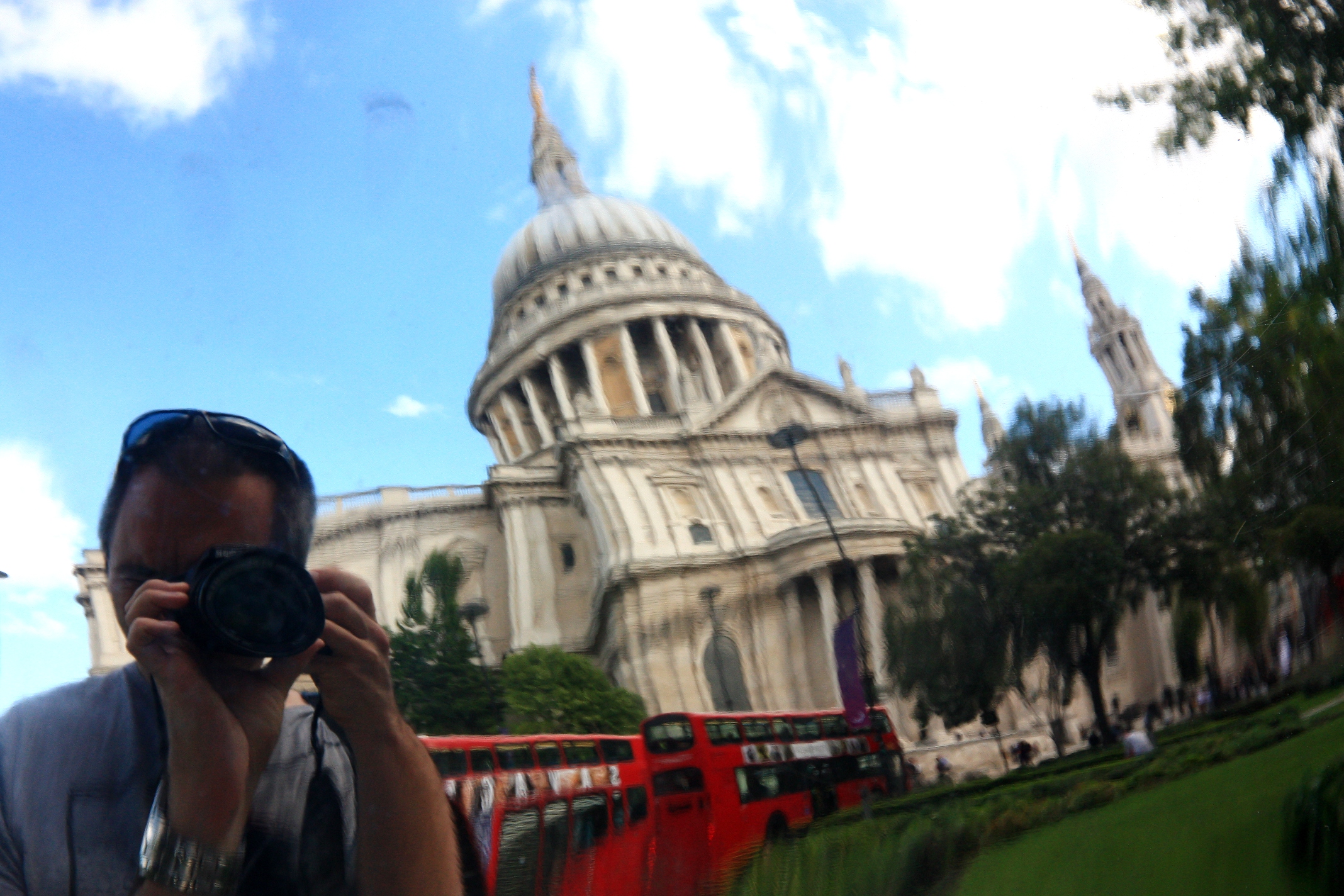
Anyway, the pictures I want to write about are not really selfies in the take a snap of yourself with a shaving cut in the mirror or the pout from above with bum slightly sticking out sense [3]. They are the pictures you seek at landmarks, on holidays or in situ, usually to prove you are alive / around / doing something far more interesting than anyone else who happens to see it on Facebook. They are the pictures that break up the filmstrip capturing one hundred slightly alternate images of the Eiffel Tower, the poses scattered among five hundred mountain views of the north face of the Eiger. They are the profile pictures and the images that can go on a mother’s day card to say, “hey, look at me, here I am, you love me so much here is a picture of me!” In that respect, they are not much different from selfies.

Like most things in life, I’m generally ambivalent towards having pictures taken of my own image. I possess enough vanity to delete those in which my hair looks too grey, my teeth too crooked, and my breasts too flabby. This is a vetting process that becomes increasingly difficult as hair gets greyer, teeth rot and flab gathers. But still, a picture occasionally emerges in which I think I look quite alright…it may not make one of those stupid exclusive for hot people only dating sites, but it’ll pass and has a pretty background of hills or something. It’s wonderful what an amazingly beautiful backdrop can do to distract from an unflattering gut angle.

So, I don’t really go round seeking shots of myself all of the time. Mostly they are meeting a requirement of proving I am alive and well in a location taking lots of pictures of it. For some reason, the fact that you have one hundred and twenty six pictures of the Statue of Liberty is insufficient to prove you were there; only when you are in front of the camera, thrusting your torch arm in the air like a total pilchard, is the shoot complete and future memories can be safely set in archive.

Of course, a big part of the reason that only a very small proportion of the thousands of photos I have include Neil as a subject is that Neil is usually the artist (in an informal and non-commercial sense) and the scene is the subject. My photography is typically a subjective composition of an objective subject, with the objective being to subject the viewer to experience my subjective position from an objective standpoint. And how can you object to something as straightforward a subject as that? I like to capture the world around me from my perspective, and not so much the perspective of me around the world.

The other obvious limiting factor is that frequently I am taking pictures on my own and thus face the perennial challenge of achieving the successful selfie. A chunky DSLR is far less selfie friendly than a phone, a battle of physiology and technology and art. I find a chunky DSLR often leads to a chunky picture of me. Even a phone picture seems to bring out an extra chin, as if the strain of extending an arm and finding the button to press is all too much for the body and brain to deal with. The use of a timer can be an effective way round this, but this is subject to the hope that the camera will stay level on the rock you have balanced it on and then being able to safely scramble over a yawning gap and on to some crumbling rocks, flatten your hair, and smile in ten seconds. Plus my camera decides it will only allow a ten second time delay if you choose a burst of about 12 pictures, resulting in a comical set of identical but slightly different frames in which I get progressively bemused.

N_burst

There is an unspoken etiquette, typically in such populous spots as lookouts and famous landmarks, in which people will mutually take a photo for one another. Often being alone and with a chunky DSLR I frequently get earmarked for this high pressure task. This shot could make or break their visit; either they will look back at the time they were gorgeously posed over a breathtaking valley or recoil in the moment they looked a right munter with eyes closed around some dark grainy landscape that resembles an abandoned nuclear test site. I quite like the pressure, the chance to fiddle with someone else’s camera briefly, and be a part of their trip for a few seconds. And I don’t mind the reciprocal offers that come back, though invariably my unspoken reaction is of a picture produced that is at best ‘alright’.

Part of the reason that the picture is only ‘alright’ is how Neil ends up looking in it. Not so much in terms of hair greyness or breast flabbiness, but more in the composition and pose. I, of course, would have taken it very differently, and imagined that the big mountain would be to the left and I would feature in the bottom right corner; whereas the result is a close up of me in the middle with an overflowing bin expertly captured in the foreground.

As for the pose, well, this is the biggest dilemma. Open toothy smile, closed smirk, moody sulk? Face on, side on, backside on looking out, down, up, inside out? And what to do with those hands?  In pockets, on hips, defensive balls position as if awaiting a free kick, relaxed down the side, laid back on a wall, aloft in celebration, pointing in the middle distance? My two default poses are arms dangling down looking somewhat artificial and uncomfortable or, particularly in dramatic terrain, spread out wide and accompanied with an open-gaped mouth as if I am about to wail out a big ‘TA DA!’

And so, by a process of elimination it turns out the best way to be able to monitor pose, determine composition and retain control over a picture of Neil is to make use of a mirror. Every accomplished selfie obsessed tweeter knows this. But unlike bathrooms and bedrooms, there is a relative dearth of mirrors at tourist sites and attractions around the world. Occasionally though it’s possible to find some random public artwork or street furniture in the right place at the right time. Like around St Paul’s Cathedral in London town, bedecked in a colourful fury of post-Olympian September sunshine. What more can you ask for than an iconic landmark soaring into blue skies as vivid red London buses swirl around its base intermingling with the green remains of summer. Suddenly the scattering of shiny balls lining the pavements nearby are less a random obstruction and more the ultimately funky selfie mirror. Real but distorted, much like London town itself.

N_selfie2

The issue remains that it’s practically impossible to take a reflected picture like this without the camera getting in the way. Heaven forbid the disaster should the flash also decide to burst forth. I’ve tried moving it from my face and to the side, with haphazard results and a much more convoluted pose. Shooting from the hip is an option, but this looks even more bizarre, bordering on the sickly perverse. In the end, I decided I quite liked a) my face hidden and b) the dominance of the camera itself. For this is how you would typically see me, around St Paul’s, slacking off on a sunny September day. This is me in the moment, doing what I love, doing what so many are doing around me. This is Neenoo, Neal, Neil.


[1] This one comes from the land of my niece

[2] Gosh, there really aren’t that many luminaries with my name hey?

[3] Both of which a former Prime Minister of Australia likely performed

Links

I’m Kevin and I’m here to help you shave: http://au.tv.yahoo.com/sunrise/soapbox/article/-/17945464/kevin-rudd-posts-shaving-selfie/

Planballs Abbottburger?: http://www.crikey.com.au/2013/09/03/direct-action-a-gross-waste-and-abbotts-right-to-cap-its-funding/

Propicfails: http://www.heavy.com/social/2013/03/the-20-worst-profile-picture-fails/

If you are really bovverred: http://snapguide.com/guides/take-good-selfies/

St Paul’s: http://www.stpauls.co.uk/

A to Z Europe Photography Society & Culture

Southwest bits blitz (1)

It may be a product of sustained transience but the chance to drop anchor for an undefined period in a familiar place has been of great appeal. And so here I still am – Plymouth, Devon – and only twice so far have I pined for the other side of the world. Once I was in Starbucks and had a drink that had the front to be called coffee. The other time, some dreadful nincompoop and his bumbling mates were taking over Australia, and while I was not missing the crowing and hollering, my inner nerd was bereaved of two party preferred counts, the swings, the coloured maps and the abject head-shaking of democracy where a mandate is claimed when less than half of the population vote for you and, even those who do, probably do not agree with 100% of your policies.

Still, I do intend to return to the country despite a change in the people who nominally run it but don’t really do much at all. You see, at some point here the weather will get continually miserable and the people will get more miserable and I will get miserable with the miserable weather and the miserable people. And then I can return to the land down under which is so fortunate it forgets how fortunate it is. But the people there won’t be miserable because they got what they wanted.

sw02Plymouth can be incredibly miserable but at the moment there is a prolonged ray of sunshine that transforms even the dodgy concrete alleys filled with rubbish bags into an artistic postmodern composition of urban life. The crazy drunks walking the streets become salt of the earth characters and chavved up pram pushers on the bus make for a colourful melee of handbags and hairdos. I’ve heard it said that Australia is just like Britain would be with good weather; not exactly, but the weather can do wonders for a place.

The familiar abounds but every time I return there are incremental changes to the city. Royal William Yard is an obvious one and I have been impressed by the conversion from disused naval quarters to swanky flats and waterside cafes. Devil’s Point provides the picturesque walk to burn off jam and cream filled shortbread from the bakery, and something approaching an alright cappuccino is available on occasion.  On my first visit, in warm Sunday sunshine, I had the momentary feeling that I was back in Australia such was the sparkle, the relaxed buzz, and general air of wellbeing. I even had a flat white, but this was very English.

sw01

sw05Part of the familiarity re-familiarisation process is engaging in the foodstuffs of this part of the world. The issue is, the longer I linger, the less I can justify filling my face. On day 1, cream tea on Dartmoor was ticked off and clotted cream has re-appeared on a number of other opportunities (like when I made treacle tart, yum yum!). But I have also been back to Dartmoor and not eaten cream – something that sounds like progress. Meanwhile Dartmoor continues to captivate through its moods and sweeping vistas.

sw04

sw03The Cornish pasties have bubbled to the surface like oozing hot steak juice through a pastry crust, though only infrequently. Almost every single one I have is a disappointment unless it is from Pengenna Pasties. On which note, I am pleased to have paid a visit to Bude where the queues out of the door and mass munching in the town square are a sure sign of Pengennirvana. This was the undoubted highlight of a bank holiday Monday, which was a reminder of what a bank holiday Monday is all about. Traffic queues, parking hassles, gritty sand packed with feral children and people from Wolverhampton going red in the twenty degree heat. I didn’t really enjoy Bude apart from that pasty.

By contrast another day trip in Cornwall ranks as one of the best I have had this year; a year which, I remind you, has encompassed a tour of New Zealand and a scenic meandering across Australia. A piddly train to Penzance doesn’t rank up there with the journeys but then an open top double-decker through the narrow lanes and warm sunshine of West Penwith brought a sense of adventure to the trip. And this delivered me to Porthcurno and a scene to celebrate, a landscape bejewelled in sand and seas bedecked in a stunning clarity and rare calm.

sw06

sw07This is the pointy end of Cornwall, the pointy end of Britain, and if anyone thinks Britain is a drab, miserable place, well…stick ‘em with the pointy end. This is country best explored on foot, on that magnificent coastal path, a path I followed for seven miles or so around Land’s End and on to Sennen Cove. It is stunning country and every minute was marvellous. Of course, you have to put a little asterisk here and acknowledge that the sun shining makes a world of difference. But even on dank, foggy days or, better still, stormy windswept occasions, it is a natural wonder.

sw08The coast path along here turned out to be pretty good walking too, only dipping down to a cove and climbing arduously up again about four times, which isn’t that bad for Cornwall. A lot of the time you can just follow the cliff line, strolling upon high overlooking clusters of volcanic rock tumbling into clear blue seas, where the occasional trio of seals bob along and seabirds glide on warm air.  Around, the exposed heath is a colour of gorse and heather, a purple and gold that could quite justifiably replace the black and white of the Cornish flag.

sw09

sw11A blip of sorts pops up at Land’s End. While the coastline is appropriately craggy and exposed, the necessary touristification due to popularity takes away a bit from the surrounds. So there are eroded paths down to see grumpy farmyard animals, shops selling fudge made in Wales and tea towels made in China, arcade machines to play and One Direction posters for sale. There are doughnuts and beer and ice cream to buy. Stop. Ice cream. I’ve been walking five and a half miles. Ice cream. It’s mid afternoon. Ice cream. I deserve ice cream.

sw10

Expecting lame, rip-off ice cream I remember it quite fondly as not being particularly lame or too much of a rip off. A popular Cornish brand it had enough creaminess to see me over the last substantial hummock of the path before dropping down to Sennen Cove. I remember coming here about ten years ago, on a mild but foggy old day, the cove sheltering a fine sweep of sand intermingled with cottages and boats. It was deathly quiet then, a sure contrast to today.

Today Sennen was St. Tropez, but thankfully the beach stretches beyond the comfortable confines of the car park. Once over towels and tents and through ball games, the beach widens and empties. The sand is genuinely sandy and the water a clear shade of blue. Surfers attempt to do something in the lumps and bumps of wave that exist on this breathless day while lifesavers watch on. Yes, it is, almost, Australian.

sw12

It’s kind of funny how I look out for a touch of the Australian in Britain and when in Australia the opposite happens. I presume it’s the whole have your cake and eat it syndrome. When both do come together – like in the creamy green hills around Kangaroo Valley or the sunny, civilised sands of Cornwall – it’s something of a marvel. And while misery quotients and government philosophies reach common ground there is little to distinguish one over the other. For now.

Great Britain Green Bogey Photography Walking

Wales tales

Church Stretton. So says a sign on a railway platform midway between somewhere in the Midlands and somewhere in Wales. It has very little relevance to my whole trip apart from the fact that this railway line I have never before taken has stopped briefly in a town that looks so cosily cosseted in the Shropshire Hills that I want to remember it. And perhaps come back and stop and walk atop its hills and meander back through its vales to refresh with a pint of cider in a beer garden of an old stone pub with whitewashed walls and hanging baskets and the noise of contented sheep bleating nearby.

Cwmbran is the station sign at which I disembark, situated in the South Wales valleys and a landscape not without its own hilly charm and abundance of bleating sheep. It can also lay claim to having a supermarket on every roundabout, one of which – Morrisons – is swiftly visited for a few day’s provisions vital for picnic lunches and delicious home-cooked dinners. With me, Dad and Aunty Val, taxi driver and cook, pivotal cogs as ever in creating a fine few days.

Where there are valleys there are hills and it didn’t take long to get amongst them. A drive through a warren of lanes led Dad and I to a spot below a big hill with a Welsh name. This is where I refer to Dad’s Facebook pictures and check what on earth it was called. Twm Balwm, which means top of hill to catapult sheep at English. A short but steep walk confirmed its prominent position for attacking folk, with hazy views over the South Wales coastline, across the Bristol Channel to Somerset and Devon, and north and east back in the direction from which I had come.

Amongst this landscape much water runs and – in places – runs to dramatic effect. The next day, in a corner of the fabulous Brecon Beacons National Park, we followed the course of the Afon Mellte as it made its way from underground to plunge over several rock ledges, each as unpronounceable as the next. Anything billed as the Four Waterfalls Walk is bound to be of appeal, and the falls of (wait for it…) Sgwd Clun-gwyn, Sgwd Isaf Clun-gwyn, Sgwd y Pannwr, and Sgwd yr Eira provided a showcase of white water spectacle.

wal02

wal01From our approach at Glyn Porth the cascades increased in drama, culminating in Sgwd yr Eira, a curtain of water that has carved an overhang through which walkers can walk behind water. Sure Jesus, it’s not quite walking on water but it’s the next best thing. The sound of roaring water over your head, spray peppering clothes and camera lenses, slightly dubious slippy-looking rocks, and small dogs reluctantly getting in the way all add that exciting touch of adventure. And hopefully this adrenaline can just about get you back up the hill for a tasty sandwich and the onward march back to the car.

Considerably less exciting is a stop in a fishing shop in Pontypridd, but it wasn’t too long and Dad got a few birthday goodies so all was still well with the world! Nearby though there was more drama of the Winterfell kind, courtesy of a couple of hours in Caerphilly and its castle. This had everything a good castle should with moats and ramparts and crenulations and spiral staircases up lofty towers and banquet halls and dungeons and catapults. Parts had been restored and renovated, others remained ramshackle, which meant you could really get a sense of what it was like back when Welsh people were catapulting sheep at the English and devious plots of intermarriage and murder were being concocted over a feast of wild boar and spicy cheese on toast.

wal03

No such scheming over dinner, though the roast pork was a welcome substitute for wild boar. Extra potatoes could be justified by the walking earlier in the day, but I think so much was eaten that another walk was to be encouraged the following day. Especially after a tasty slice of cake and a passable coffee in Abergavenny in the morning, prior to a different kind of sugar high.

wal04A walk up to the Sugar Loaf involved some notable uphill drags, cutting across unruly bracken and withering woods, and striking out for the top. Up here, the slight sunniness of the valley in which we started was no more, with a windy, cool bleakness emerging with every step. The clouds were scraping the tops of the Brecon Beacons to the north, and only occasional hollows of pasture glowed with the rays of the sun. But this is high summer, and several other people were still in shorts atop the loaf.

wal05

wal06Of course, the views were far-reaching and rewarding, but it was quite nice to have gravity on your side for a while as others battled up. Down steeply at first but then a gentle descent along a ridge and through an ancient wood, emerging out into some kind of civilisation with farmhouses and tractors and manure. Unfortunately on this circular walk the car was still a fair way around the corner and it suffered (as did we) from that final, unrelenting drag.

Still, it was something of an accomplishment with which to finish this short sojourn in South Wales. Well, not quite finish, for there was a rather large trifle to try and finish back at Aunty Val’s that evening. Already it seemed that much had been achieved off my bucket list – roast, trifle, upland walking, history, trips to Morrisons – in just a couple of days. Indeed, Wales offered a well concocted taste and teaser for the crème de la crème, the emergence into a blue sky Devon. I’m sure the main will be just as good as the starter.

Great Britain Green Bogey Photography Walking

Hallo Italy!

Five hours on a train over the Bavarian Alps, across a thin but very precipitous sliver of Austria, and through the valleys and steep terraces of craggy northern Italy brought me to Bolzano. Or Bozen. Provincial capital of the Alto Adige. Or Sudtirol. You see, borders on a map may be crossed but language is shaped by the contours of the Alps – whether you are in them or out of them, what particular valley you may be in, or which side of the lake you butter your brezel in.

So just because we are in Italy does not mean that German is gone, nein nein nein. Which makes it a bit scheiser for the English-speaking, who are relegated to third in the language stakes and, if my experience is anything to go by, frequently caught out using a mix of all three. Par example (and yes, occasionally I also fall into French as default when any foreign language is involved): “Hallo, una gelato with two scoops, straciatella und caffe latte per favore. Danke.” Surprisingly though everything is understood and luscious ice cream is forthcoming.

dol02As a result I’m not so sure whether you are going to read German or Italian place names in this blog entry. I’m tempted to try and use Italian because they are in Italy, but I am rather fond of Bozen which sounds so pleasingly like a cross between bozo and bogan. Does the name do it justice? Well, I would have said yes at first, as I trudged in searing heat through industrial areas by the river, seeking a funicular to whizz me into the hills, with busy highways and power lines and train tracks crammed into the valley. But I missed the centre at first, an old town with gracious buildings and narrow pedestrian streets, made narrower by market stalls and glass displays for expensive shoes and handbags. Veering toward the Italian, which is naturally less bogan.

dol01

Bozen has three mountain cable car and railway combos whizzing you up into the countryside, and the first I took after that uninspiring walk was up to Colle. The top was still in the tree line but (take note other self-proclaimed lookouts of this world) some smart Alec had built a large wooden tower for viewing pleasure, providing you enjoy steps. From here there were views over Bozen and other foothills leading to the more jagged teeth of the Dolomites. And at the bottom a sunny bar for a beer which was disappointingly less German than much else.

dol03

The Dolomites were my raison d’être for stopping here really, as I had been interested in visiting for a while…I think spurred on by some pictures in a travel supplement or maybe some footage of crazy climbs in the Giro d’Italia. Bozen was a good base, with its cable cars and other transport links, but the Dolomites were a little infuriating to photograph: wrong light so very glary for most of the day, then thundery clouds bubbling up in the afternoon and difficulty lingering in spots very early or very late because of transportation options. It really needs a week to get close and intimate, preferably in June. It is no wonder that the area is a popular spot for multi-day walks, hiking from refuge to pension along the ridges and plains, getting personal with the mountains.

dol04Still, I had two full days and was very keen to make the most of them and the travel card I had bought. The first day I took another cable car from Bozen, impressively up and up over vineyard terraces and pine forests to the undulating plateau of the Renon. At the top a mountain tramway trundled through the undulating hills, past villages and chalets and through forests and fields. Plenty of walking tracks offered chance to meander and get slightly lost but find your way to another path providing balcony views of the glary Dolomites. With wild meadows and the scent of pine needles, it was nothing other than pretty and nourished enough appetite for lunch in a sunny garden sampling local cheese and bacon dumplings with salad.

It’s incredible to think of these Alpine environments being caked in metres of snow and freezing through several months of the year, and thus surprising how full of life they are. I guess it’s a shorter growing season and everything bursts forth rapidly and in generosity, a perfect manifestation of making hay while the sun shines. The steep hills of the region are decked out in rows and rows of vines, occasionally interspersed with orchards. Many look too steep to harvest by machine and I’m not quite sure how people actually make it to some of the farmsteads perched on their lofty terraces. It seems the cable car is the easiest way to view this hidden world, as I head back down into Bozen.

dol05

After a refresh of ice cream and purchasing some dinner time picnic snacks, a bus took me to somewhere in the general vicinity of the Jenesian cable car. Compared to the Renon, which was spacious and flash, this one was pure old school. Which means, by late afternoon, it is a searing glass house on a wire. It has a driver, who speaks to the top on his retro phone with a pleasing old-fashioned ringing bell, and seems happy to squash us in to see if we can all make it without passing out. The relief at the top is palpable, with shade and a beer garden obviously cashing in. In the distance the Dolomites still glare and clouds bubble up high, testament to the heat and humidity of August in Italy.

I was, as I say, keen to make the most of my travel card and, given it runs into the evening, I spent the last section of the day by taking the Renon cable car once more. This was a chance to try and get some good light for pictures and, well, stop on a bench in a forest and eat my bread rolls, cheese and salami sausages. I didn’t stay right until daylight faded, as it had been a long day and I wanted to catch the last bus to my pension, rather than walk up hill for twenty minutes. I had to conserve some energy for tomorrow.

dol06

So the second day was an opportunity to get closer to the toothy peaks of the Dolomites and indulge in some wilder, Alpine walking around the Alpe di Suisi. This, apparently, is the largest upland plateau of its type in Europe, whatever that means. I presume it means the biggest expanse of undulating meadows peppered with farmhouse chalets and wooded valleys, a sea of green lapping up to the sheer cliffs of encircling mountains.  It looks and feels obviously Alpine with the characteristic and pleasing sound of cowbells a sure sign to the ears that this is genuine high country.

dol08

My travel card allowed me to take the sad bus to the town of Suisi. I say sad bus, but it was quite a happy, breezy ride up from the valley, SAD being the name of the local transportation system. This climbed about 600 metres or so from Bozen. From Suisi, a cable car ascended a further 500 metres to Compaccio, and then it was onto a good old fashioned and open to the breeze chairlift propelling me another 400 metres up. What follows from here is an easy, good-natured ramble through the meadows and down past a flower filled hostelry and rustic farmhouses to a wooded valley. Down? Down? Prices may be down, but I want to go up. Up to the Rifugio di Bolzani sitting at around 2,500 metres. Am I lost, or will I need to climb more than I hoped?

dol07The answer was the latter and I have to say it was a bit of a struggle. Once or twice I thought about turning back, the views still wide and grand. Every step up and the view opened up further, but so did the frequency of stopping, ideally in a spot of shade from the sweltering sun. A salami sausage and snatch of pretzel gave fortitude and spurred on by the reward of eating more at the top, I made it.

dol10It’s a bit strange to come up this far and find a fully functioning guest house and restaurant, looking out on the sawtooth ridges of the Dolomites. Washing hangs drying in the breeze and people are decked out with picnics at the outdoor tables. Inside, a team of young people busy themselves cooking and serving food. Curious as to how all this happens, I note a rather archaic looking single wire cable way that must bring up wheels of cheese and kegs of beer. Alas, it does not transport people back down.

dol09

dol11That, for me, requires a weary descent of almost 1,500 metres as I plan to go back to Suisi to catch the sad bus. And so it’s down the entire climb that I made, happy that gravity is on my side but my feet and ankles and legs less content with the constant jarring and braking. Some respite takes place as I turn onto a path through a cool pine forest, but this at some point has to hit the river below and, when it does, it veers down in a torment of curving hairpins. The river and forest and beautiful, but after six hours or so, Suisi cannot come soon enough.

Perhaps with a week, at a cooler time of year, I could have taken things more leisurely. There are certainly many other places the SAD network can take you – on other cable cars and post buses into Switzerland for instance. There are great rides for bikes and cultural things to do too. Now being so distant in Australia I wonder why on earth I did not go away every other weekend when I lived in London. A Ryanair flight at 2am to an airport 3 hours out or Barcelona. Or the Wizz Air jet to Krakow. Or even a week in the Dolomites. Now, with time precious, I am falling into that Australian trap of trying to cover off Europe in a few days!

dol12Still, it’s amazing that you can be out of the Dolomites and into another region within a couple of hours. En route to Milan, I stopped off in the city of Verona for six hours. Five Euros seventy for left luggage the price to pay to see another Italian city. Proper Italian, with weisbier and streusels far behind and nothing but average pizza and pasta in every piazza.

dol13

I spent most of the morning meandering the streets of Verona, centred around Piazza Baz and its arena. The arena is a bit like a poor man’s version of the Colosseum in Rome (I imagine), and far more modern. I suspect it will look quite a sight in the splendour of an evening performance of – inevitably – Romeo and Juliet, but in the day, with set construction and cranes and limited access, I found 6 Euros entry a bit of a rip-off. Nearby gelato was also expensive, but the raspberry flavour was worth every cent.

dol14Verona is definitely a city for taking turns down random alley ways and stumbling across hidden piazzas and generally making it up as you go along. You will come across tourist trappings, such as the balcony where Juliet (who is, remember, a fictional character) was wooed by a horny young Montague. A nearby archway is bedecked in messages of love; inexplicably many of which are for One Direction. Such romantic prose as ‘Take me in any direction Harry’ or ‘I give you one erection One Direction’. How about you take long walk in one direction off very short pier?

dol16Anyway, you will also pass statues of Dante and come across courtyards and church towers and those colourful terraces with window boxes and shutters in perfect harmony. Eventually you’ll likely come across the Adige River, whose level is possibly heightened by tears shed for someone in One Direction getting a girl (or boy) friend. I presume some of these waters also come down from those Dolomites; indeed perhaps the stream I crossed before that long climb eventually finds its way here.

After many days of mountain or city walking, legs and feet are starting to wear, but one final climb is worth it. Steps and steps lead up on the other side of the river to a castle and views over Verona, a city not without charm. An Italian city where they speak Italian, a chance to be anchored in one language and culture for just a while. For tomorrow brings a train through Switzerland, where Italian becomes German becomes French, all armed with pocket knives. Grazie, Danke, Merci.

dol15

Europe Food & Drink Green Bogey Photography Walking