
In the space of an hour I crossed from France to Switzerland to France to Switzerland again. It would’ve been shorter if it weren’t for the fact that Switzerland obscures the presence of France, and France fails to advertise its presence at all. With our hire car eventually returned in a space smaller than – well – a hire car and the assistants nonchalantly watching with a shrug and a keen eye for scratches, it clearly felt like France. Then efficiently down an escalator Dad and I re-entered Switzerland, which was doing its best to imitate France.
Faring Dad well in the tobacco-scented chaos, my train left a minute or two late from Geneva Airport into the city, where I met up with Caroline and encountered more scandalous mayhem queuing for a train ticket. Onwards to Lausanne, where our train was one of only a handful not encountering a delay of five minutes or so. Heads will roll for this, I thought. Perhaps this French-speaking corner of Switzerland is attempting to be more like La Republique, I mused. But with no Orangina.
Michael Portillo would have been as pleased as pink pants to find that the trains were running like clockwork the following day. A good job too as we took eight train journeys (and missed a ferry, oops) to maximise rail pass value and soak up an array of succulent Swiss scenery. The kind of scenery where cows chew happily away to produce creamy chocolate and flavoursome cheese, luring visitors to revel in a pleasant cliché or two.

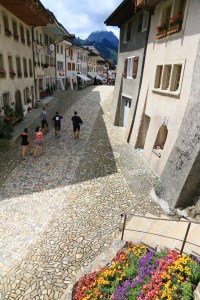 Indeed, many visitors were lured by the smells of the Cailler chocolate factory in Broc; so much so that we skipped the long wait times and went straight to the chocolate tasting (i.e. shop) instead. One bar later we were getting off the train in Gruyeres, straight opposite the fromage factory and down below the castled old town. Undeniably cheesy with a touch of theme park, it is nonetheless a fine spot in which to amble and eat a random picnic from the Coop.
For me, the fifth, sixth and seventh train journeys of the day broke new ground, shifting south from Gruyeres through a scenic valley to the main street of Montbovon. From here, train number six was as delightful as a lime green blazer and yellow trouser combo. Outside, the landscape became increasingly mountainous, idyllically scattered with wooden chalets bathed in baskets of red geranium. Inside, the train was a treasure of wood panelling, art deco lamps and antiquated buffet service. At some point, somewhere, everything became Germanic. Guten tag Gstaad.

Forty minutes in Gstaad was enough to gauge that this was another kind of Gruyeres, the Swiss theme park of gold bullion, creative offshore accounting and thousand dollar sunglasses. There were few cuckoo clocks in sight and even the vending machine at the station offered gourmet meats and diamond-encrusted olives pooped out by a rare Tuscan unicorn which belongs to Her Majesty. The supermarket water was cheap enough though and – I’m sure with more time and exploration – there would be plenty of opportunities to penetrate beyond the slightly false exterior and into nature.
 Retracing some of the route back into the French speaking side of Switzerland, train seven rolled and lulled its way to snoozeville, climbing up through a hole in the rock to emerge way above Lake Geneva. The descent was disorienting as the lake shifted from left to right and eventually lapped at the foot of Montreux. What better way to stretch the legs than to walk along the lake shore in the early evening sunshine, ambling towards a Legoland castle jutting out into the water?
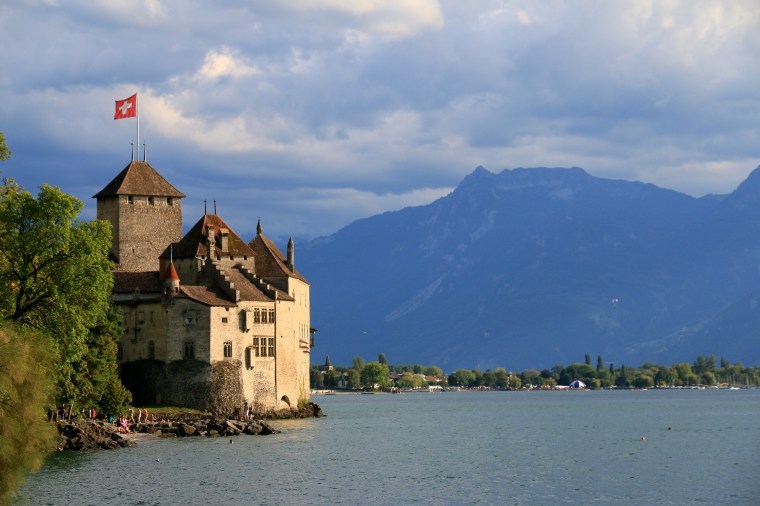
Turns out it was a magical castle that disappears from view only to re-emerge further in the distance the closer you get to it. It may have been a mirage or a hallucinogenic vision created by too much train travel and ice cream. Michael Portillo would’ve had a private boat tour in some reconditioned U-boat; by time we reached the Chateau de Chillon, we missed our ferry back. Oops. Train number eight it is then.
—————————————
 Following an epic day cruising the rails of eastern Switzerland, the next day – Sunday – proved a quieter affair. I mean, it did start with a train, the Lausanne metro transporting us to a dormant university campus and close to more lakeside ambles. Lausanne was emerging to life in its dog walkers and cyclists and rowers and barbecue in the park chefs. It was still rather quiet, in a Canberra-like kind of state.
The parkland serenity of Lausanne was in stark contrast to the triathlon taking place on the streets, an event that seemed to go on for like forever. It was still finishing up after another walk from the edge of the Lavaux vine terraces back into the city. Ice cream and midges accompanied the stroll past small parks, gravelly bays and waterfront homes. More people were out and about this afternoon, topping up tans and a healthy constitution. And still the triathletes finished, not at all concerned about being drug-tested as they sauntered past IOC HQ.
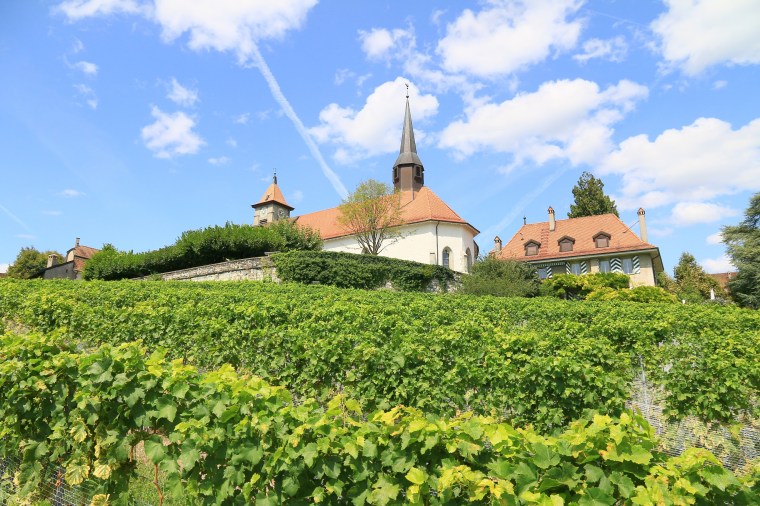
Lausanne proved a good base to spend a few days in Switzerland and I am sure it could offer an agreeable life. There’s probably more to see and more that can be done (just ask our AirBnB host!) but, crucially, did it pass the ‘I could live here test?’ Well, probably…like if you were placed here for work or study or something. There could be far worse spots in which to dwell, even if you don’t like trains or triathlons.
—————————————
After vaguely bestowing some half-arsed compliments to a city that I spent a few days in (hey, this is rigorous Lonely Planet stuff here), Monday was an opportunity to get out of said city and use up our other all-inclusive travel day. Just the three trains and three ferries but these proved more than enough to recover the rail pass expenditure two-fold.
 The trip from Montreux up to Rochers-de-Naye would cost an arm and a leg in itself. Better than cramp and a heart attack that would be the inevitable result of trying to make this journey on foot. Old and old at heart alike were more than happy to board the open air carriages, passing the raffish suburbs of Higher Montreux, up through clusters of chalets and expensive hotel restaurants commanding views of the lake, into pine forest under deep blue skies and out into open meadows way up high. At around two thousand metres in height, panoramas of Switzerland and France abound.

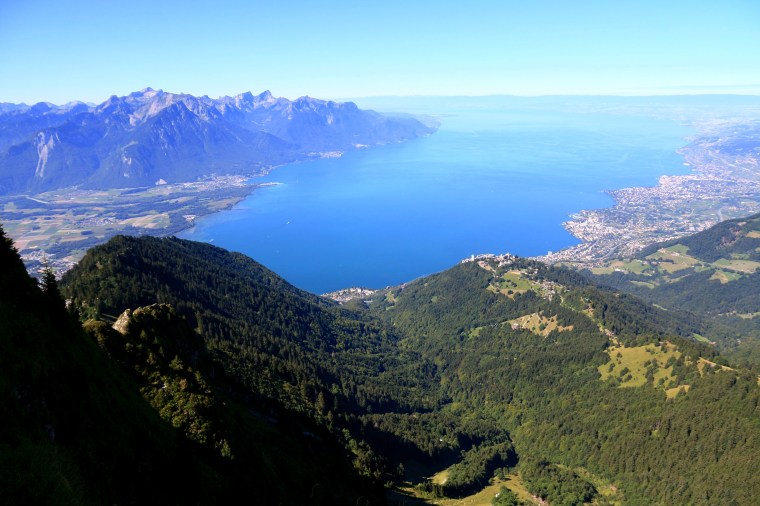
There are plenty of opportunities to take a photo of the approaching train as you wait upon the platform for the ride down. A ride down that pauses somewhere and you see a couple of friends from Canberra on the other train going up! An occurrence almost as random, as bizarre as the Nolan sisters ordering spaghetti bolognaise and chips at a swanky hotel nearby.
Swank is in the air in Montreux, which is a pleasing-on-the-eye, sun-kissed kind of affair seemingly designed for lakeside promenading (as opposed to scrambling frantically for a ferry near a mysteriously disappearing chateau). Today, there was no major rush for our next connection, with time just about right to eat the world’s most expensive bagel and soak up a little of the shoreline ambience. And then, having covered every piece of rail in the area, it was only fitting that we should now take to the water.
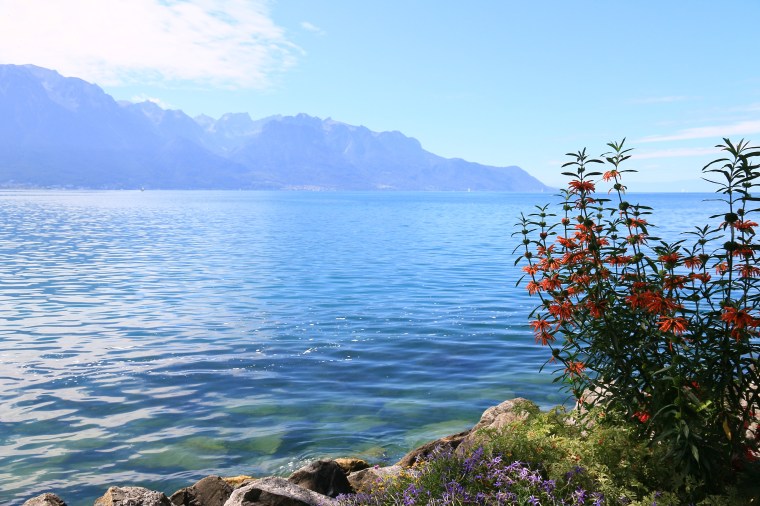
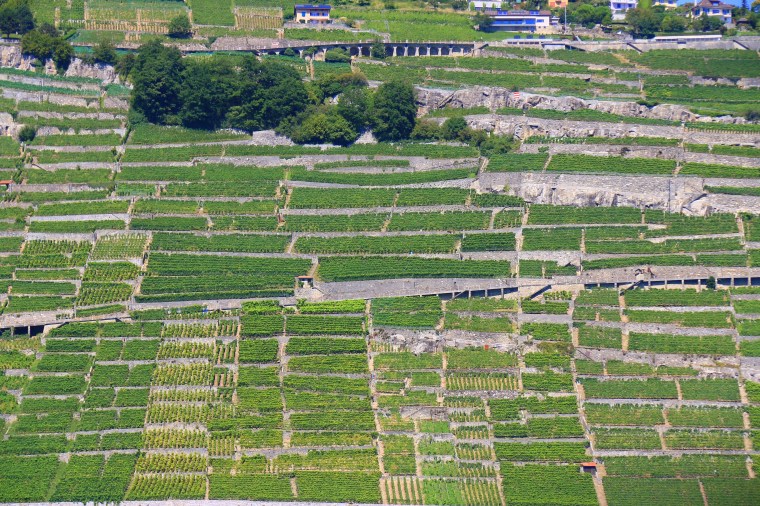
The ride on the lake to Lausanne offered an alternately sunny and hot or shady and cool experience in which to marvel at the mountains, to peer up and pick out the bulbous summit of Rochers-de-Naye, and to appreciate the tumbling green steps of the Lavaux. At Lausanne, an efficient interchange swept us, alongside the omnipresent youngsters of the Wessex Youth Orchestra, on board to a ferry to cross over to Evian, and back again into France.
Evian was more charming than I remember from my one previous visit here. There was great ice cream, crepes and Orangina-au-wasp, pretty shops and houses, a Carrefour full of oddments, little in the way of French litter and dog poop, and – of course – a tap pumping out free water from an ornate unicorn’s mouth or something. Here, an amalgam of curious tourists and mischievous restaurateurs gathered to fill bottles, supping on cool refreshing water that tasted just like water.
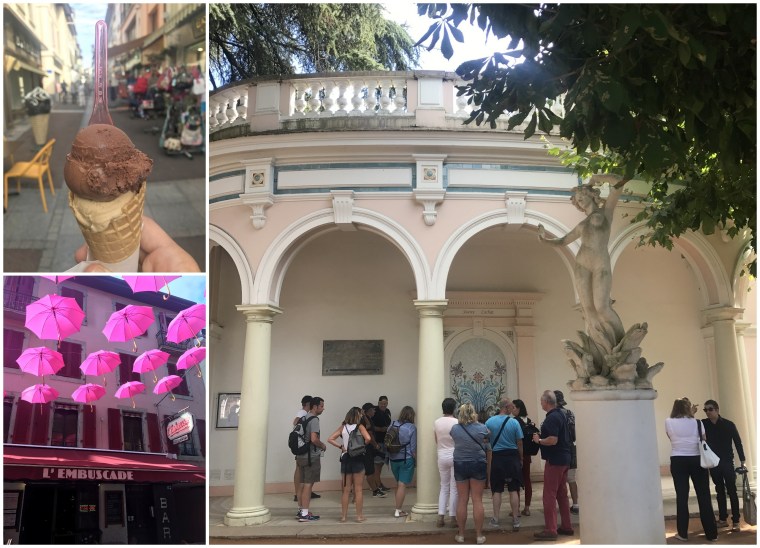
There’s also a free, old-fashioned funicular in Evian and on this trip there was no way we were going to miss out on such a thing! The Wessex Youth Orchestra were also keen; if only they had brought their instruments along we could have had a jaunty rendition of Climb Every Mountain and even less air in which to breathe. They then followed us to an overlook and we buddied up again on the way back down. Key take outs were that not all yoof are horrendous, I don’t miss the awkwardness of those years, thank god we didn’t have phones and social media when I was their age, and where the hell is Wessex anyway?
As the orchestra diminuendoed their way back across to Switzerland we lingered for dinner and a later sailing that coincided with dusk. Leaving France for the fourth time, it was rather sedate and beautiful: the triple-pronged peaks of an Evian bottle fading in the sky, the lights twinkling on around the shore, the calm of the water interrupted by birds and the chop of the ferry. The scene like an ending from some movie, or perhaps the closing credits of a Great Continental railway, bus, funicular, cog train, metro, foot and ferry journey.


 Just when you think you have pretty much seen the French Alps, another gorgeously picturesque valley road veers upwards, speckled with chalets and cyclists, leading to a modest resort town and an inevitable col de something or other once mentioned by Phil Liggett late at night. Saint-Francois-Longchamp is not only pleasingly French sounding but possesses all the jagged scenery and cowbell fields you could hope for. And plenty of those wooden chalets in which to stay avec famille.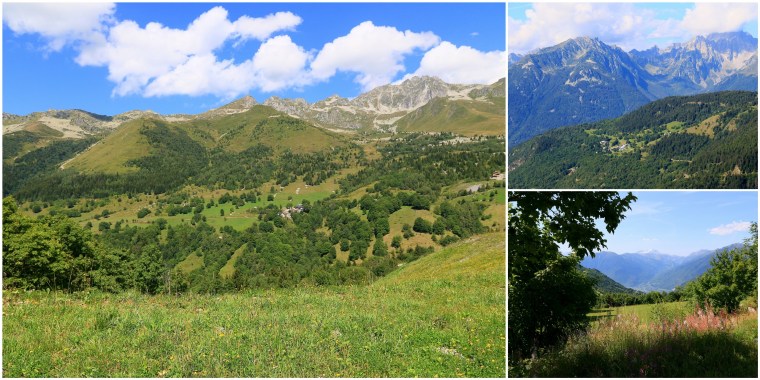
 As things tended to go, footsteps to the boulangerie were typical first thing, followed by a longer walk somewhere someplace prior to or incorporating lunch. Warm afternoons were generally more leisurely before fun, games, and dinner. Dinner obviously incorporated cheese in several forms… another sameness which is in no way whatsoever a bad thing.
 Trips beyond Saint-Footlong-Champignons included the short climb up the hairpins to the Col de la Madeleine (HC). By voiture this was okay; an electric powered bike might have been doable; but pure pedal power seems like pure crazy. Especially from 1500 metres below in the valley of the Arc. I think if I even remotely made part of this climb without dying I would reward myself with trois boules of ice cream. But I didn’t, so just had the ‘two’ instead.

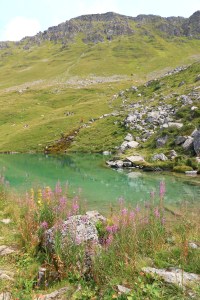 The lakes were small placid affairs, ideal for observing the evolution of tadpoles to gourmet cuisine. Marmot whistles vied for attention with miniscule mosses and macrobugs, while the number of baguettes being simultaneously munched beside the water reached epic proportions around one. But then, you could see the appeal; they really were rather charming spots to eat and wile away a couple of hours up high.
 Despite so much to enjoy it was perhaps the final morning where life in the Alps peaked. From the Col de la Madeleine once more, a cloudless sky provided the obligatory view of a glimmering, gargantuan Mont Blanc. It was a steady companion along a gravel track with views over valleys and peaks as far as the eye could see. I had probably been in some of those, and eaten some of their cheese before.


 It’s kind of a winter thing, a cross-hibernation leisure shut down enforced by financial year leftovers and inevitable doses of bugs that may or may not be flu but love to linger. Canberra has had more than its fair share of cold, but – the last week apart – it has been phenomenally dry, with big clear skies bringing about pleasant afternoons before ruining the whole mood with sharp, sadistic frosts.
 It has been pleasant enough – out of any wind, with a little time spare – for a few walks into the bush. There are Red Hill ramblings of course, but throw in a few Mount Taylor hikes, Black Mountain bush and Botanic Garden explorers, Mount Ainslie parkways, and add a random sprinkling of Cooleman Ridge countryside ambles and Urambi Hills thrills and there’s enough to keep reasonably sane and fit. Especially when the bike is gathering cobwebs.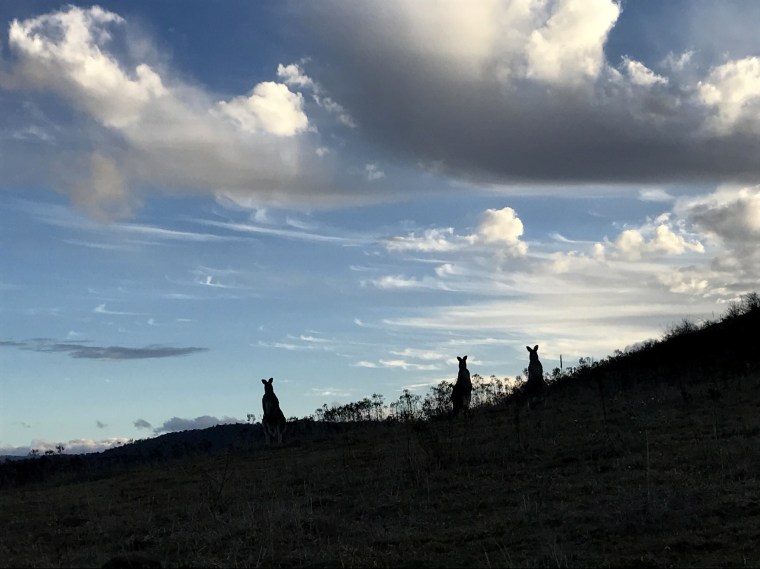


 And a few strategic recommendations for winter? Anything with gravy and a glass of red helps; get out in the warming afternoons even if this means working at night; and, in the midst of analytical bewilderment, book a flight to the UK, where the daytime temperature will probably end up being the same anyway! See you oop North….
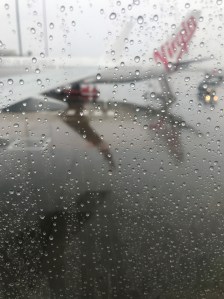 Landing at Tullamarine, Melbourne was grey and damp. It’s June, it’s Melbourne. I was about as surprised as I would be if the UK Conservative Party decided to dump everyone in the shit rather than get on with governing twice in the space of a year. The wind was strong, my crappy hire car was far from stable, but at least I was heading away from the clouds on the drive north to Bendigo.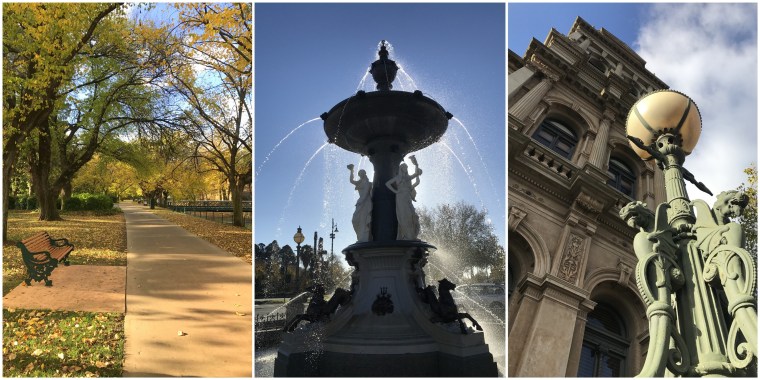


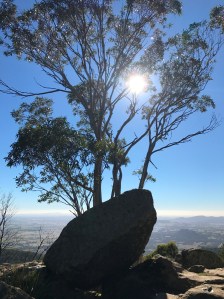 Anyway, such have been my ramblings in Victoria over the years I wasn’t actually sure if I had been to the top of Mount Macedon before. It turns out that I hadn’t, unless I really don’t remember the upward crawl into roads lined with ever more spindly and pathetic-looking gum trees, the view of expansive plains below and a giant golden cross constructed to appease the wrath of the almighty.
 It was chilly up here, but I knew I was on my way back to Canberra so it wasn’t going to get any better. And for the second time in succession, my dawdling was beginning to make it touch and go that I would make my flight. Maybe I’ll learn, or maybe I’ll just nudge a little over the speed limit and swear at every idiot who dares to pull out at a roundabout and get in my way. It seems to work, and so this gold rush came to a successful frenetic end, antidote to the sedate charm of Victorian Victoria.
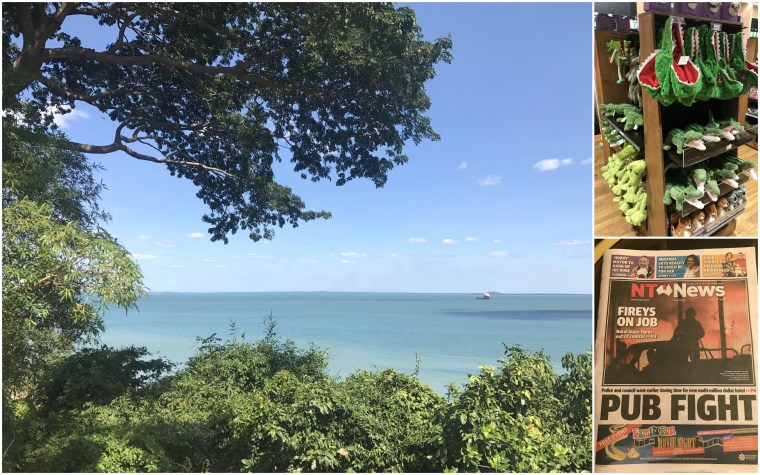
 Having come so far, I was determined to explore beyond Darwin during The Dry, so tacked on an extra night to squeeze in what most people would probably do over two or three days. An early start on Saturday and speed limits of 130km/h help, and I found myself entering Litchfield National Park before ten; just in front of the procession of tour buses (invariably named things like Crocco Tours, The Top End Crocosaurus, NT Outback Crocclebus etc etc) entering the parking area of Florence Falls.


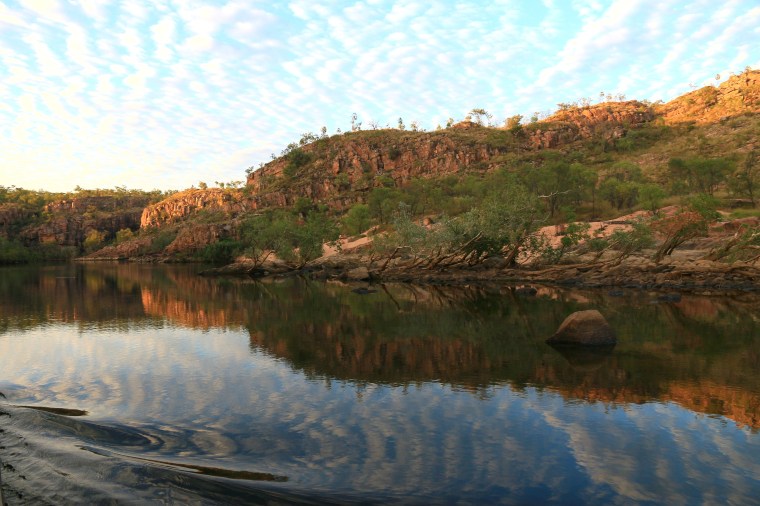


 In 2013 it took me – alongside one of my favourite travel buddies Jill – a good solid couple of months to travel from the east coast of Australia to the west. I remember watching the sun go down over the Indian Ocean somewhere around Yallingup, in the beautiful Margaret River region of Western Australia. It was a touch symbolic, a satisfactory “we have made it” amidst the golden ambience; despite the fact that the engine of the car had knowingly decided to overheat earlier that day.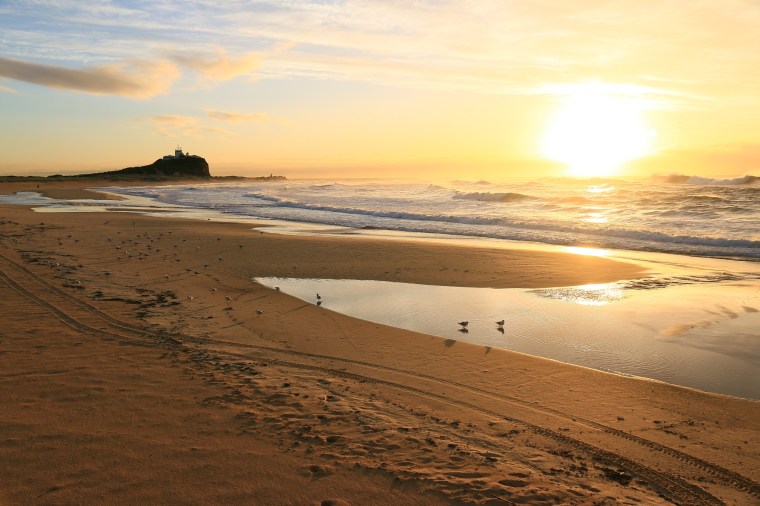
 Just to ensure I clocked off five states and territories on this trip, my route to Adelaide incurred a brief stopover at Melbourne Airport. I had a bit more time on my hands in Adelaide but, barring an hour over lunchtime, the weather was mostly imitating England; cool, cloudy, drizzle interspersed with more frantic spots of rain. I ducked for cover in Rundle St Mall, and lingered in the Central Markets. I called in at Haighs, lured by giant displays of Rocky Road, and ambled under leaden skies through the ring of Parklands encircling the city.
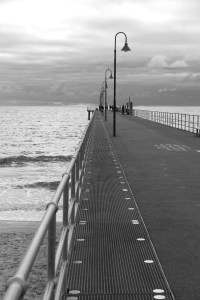 For all its charm and grace, I had seen better days in Adelaide. But at least the rain had stopped by the time I found myself on the tram to Glenelg late Friday afternoon. I was hoping for sunset, but I was guaranteed kebab. Just catching up on another feast down memory lane, and, unlike the sunset, it didn’t disappoint.
 The next day, in a swish of a jet engine I was whisked back to summer, crossing the seas and striking landfall near Esperance. I swear, 30,000 feet below, I could just make out a tiny piece of my heart deposited in the white sands of Twilight Beach. The Wheatbelt passed in considerably less time than the twelve hour drive, and then, before you knew it, Perth hills tumbling down to an archetypal Australian suburbia. Hello Perth! Hello 27 degrees!

 At City Beach I didn’t remember those rather fancy looking eateries and yet another pristinely positioned surf club in Australia. Some money had come into here, but from lord knows where. Perth has slumped somewhat since the state reaped lots of cash from rocks in the ground and lazily rolled about in its lucre. Still, I guess the new restaurants were an investment and they looked pretty busy. I opted for an original: my favourite calamari and chips at Floreat Beach Kiosk, worth the train and bus journey alone.

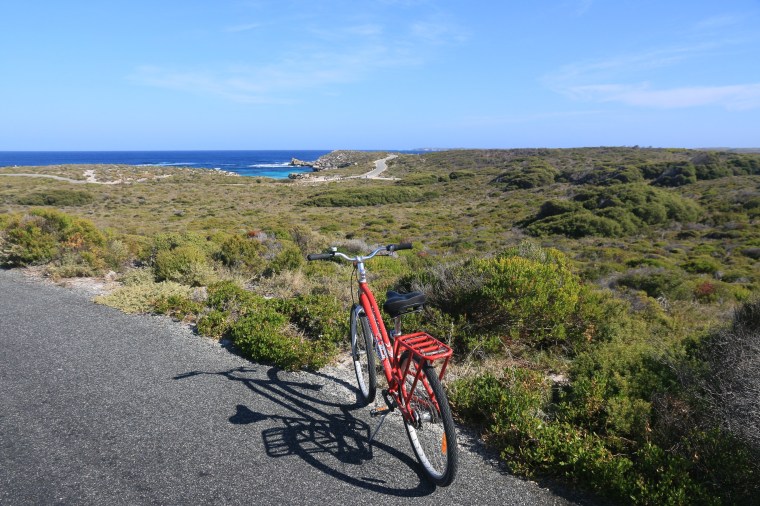
 There is not much more to say about Rotto, apart from glorious beaches and amazingly vivid waters and wonderful sands and beautiful bays and crystal coves. There are some sea-sculpted rock formations in between and – inland – a few smelly stagnant lakes, snake-housing scrub, and one bigger hill on which a lighthouse sits. Around the quay a touch of civility in the form of cafes and shops makes the whole place entirely tolerable as the temperature hovers around a pleasant twenty-six degrees.
 The other main feature of Rottnest Island are the quokkas, who are generally very cute, incredibly tame, and quite keen to get a lick of your ice cream. The main goal of many visitors to the island these days seems to be to achieve the perfect quokka selfie and #quokkaselfie. Seriously, view that hashtag and see what you come across!
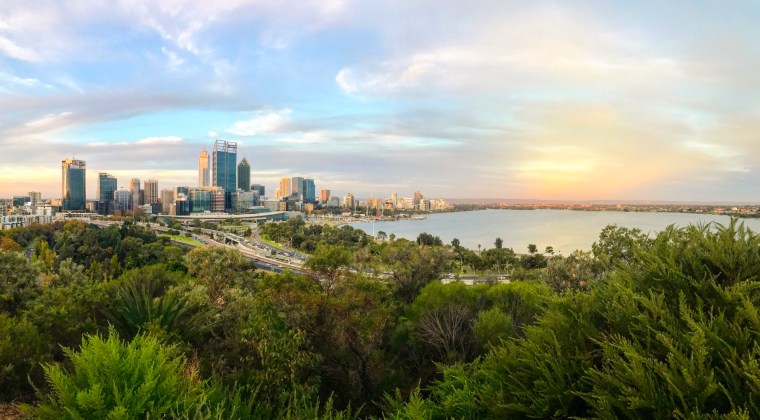
 Essentially, I managed a jaunt into Kings Park one late afternoon, which is undoubtedly one of the biggest assets outside of the beaches that Perth has to offer. It is scenic and sprawling and accessible and full of all those variants and species that are unique to small corners of Western Australia. It’s a reminder of how isolated, how individual, this place is. Yes, there may be Hungry Jacks down the road and Home and Away showing on TV, but there is also a Banksia that only grows on one or two of those giant bluffs of the Stirling Ranges.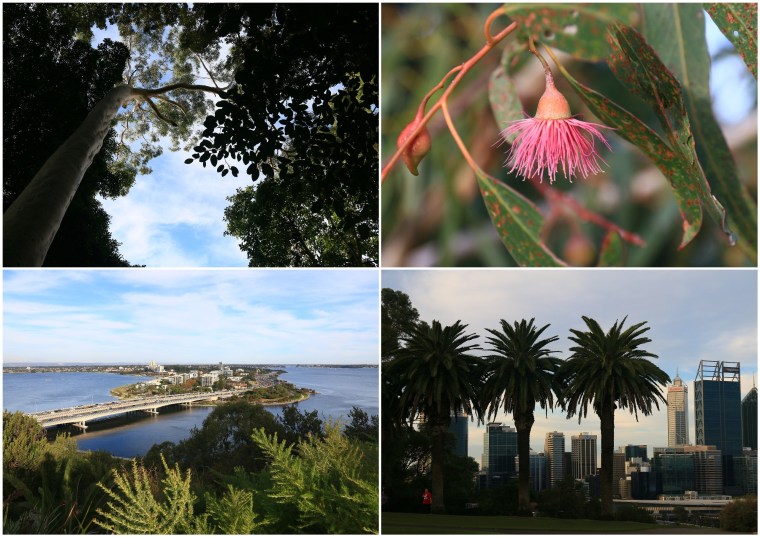

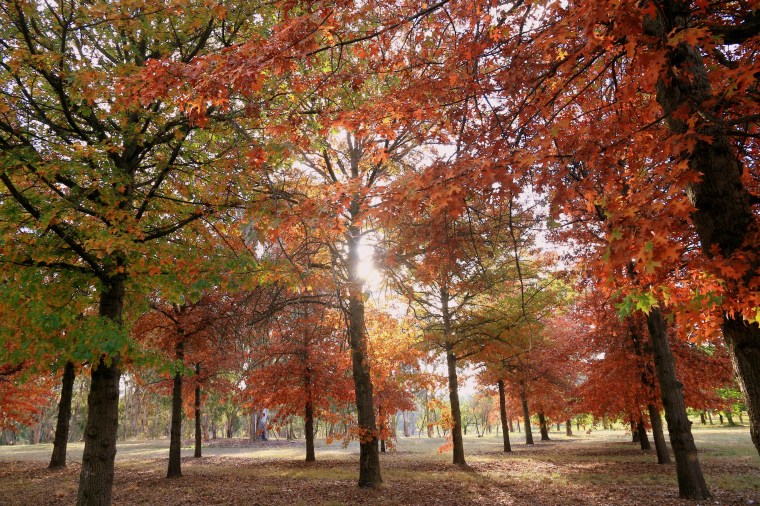
 It is a time to savour suburban walks, in the comfortable pockets of Canberra that will never be in reach. Foresight planted deciduous trees for garden suburbs for genteel homes. As temperatures drop to a level mild and amicable and still warmer than England in a hot flush, the streets now enliven, the crescents glow, the neighbourhoods flourish in a makeover both incremental and dramatic. Go on certain days and a regiment of wheelie bins will parade upon the kerb, afloat in an ocean of nature’s litter.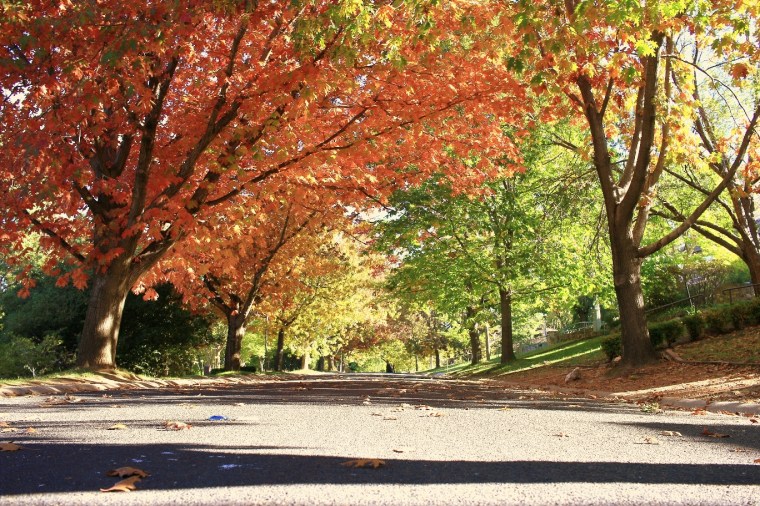
 Easter is the most perfect weekend as the warm kiss of autumn melts any eggs undiscovered by marauding imps. I don’t recall Easter egg hunts as a child; are these more a thing now, coordinated through Facebook groups and discoverable like Pikachu? Waiting until Sunday until you were permitted to make yourself sick on chocolate and then topping up with half price eggs on Monday was more my kind of thing. If I have made any progress in life, then let it be measured by cake, and I can mark the creation of a chocolate and hazelnut meringue as one of my greatest achievements.
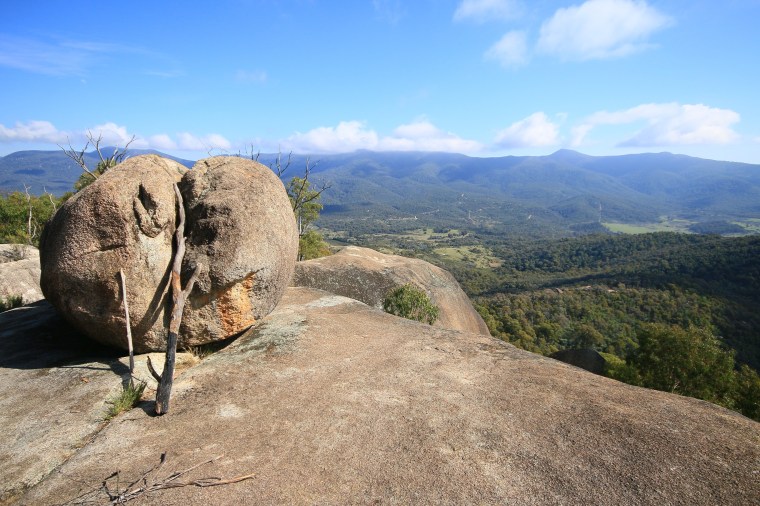
 Here there is the best of both worlds, with coffee available a little further down the road at the Moon Rock Cafe. This is attached to the Deep Space Communication Complex where – in my head at least – gentle mutterings from Professor Brian Cox are transmitted to distant worlds in the hope that it would sufficiently soothe angry aliens from undertaking imminent invasion. If you feel small atop Gibraltar Rocks, here you are infinitesimal, insignificant beyond belief. Yet at the same time, in the warm sun with caffeine and a bonus chocolate egg, your existence is undeniably amazing and incredibly fortunate.

 Tucked away in a quiet corner by Lake Burley Griffin, largely forgotten apart from the odd dog walker and camera wielder, the Lindsay Pryor Arboretum is an unbridled delight. A kaleidoscope of colours adorns the different varieties of oak, elm, birch and poplar. There are no visitor centres and no playgrounds, no cafes and no sculptures. The air is calm, the light soft, the mood understated. Occasional tunnels of foliage play at being England. And you could imagine, under these boughs, a snap election might just be called.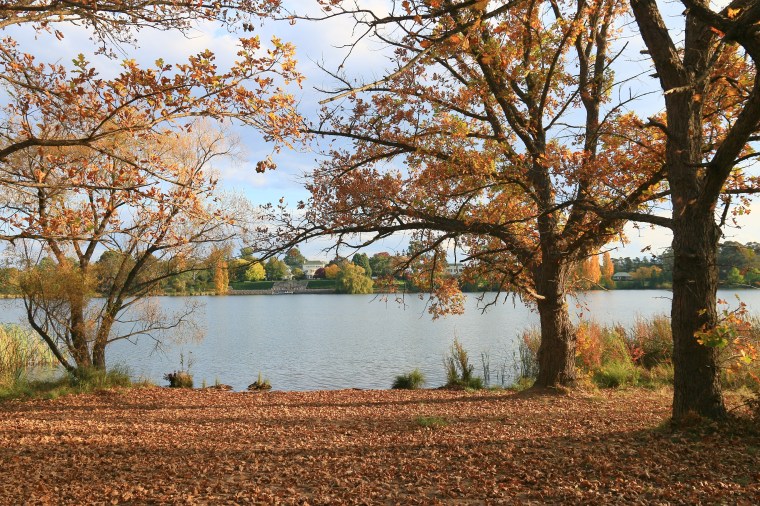

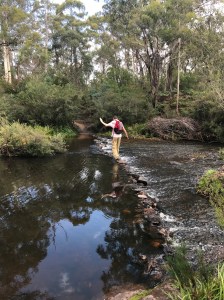 Most people use Braidwood as a coffee and loo stop on the way to the coast. Today however, with my friend Alex in the passenger seat, I was heading a little south into Deua National Park. A brown sign pointed to The Big Hole and Marble Arch, and who doesn’t want to see a big hole and a marble arch? Even if you do have to wade up to your knees in the Shoalhaven River to see these delights.
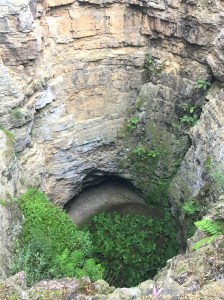 I knew I would be a fan of The Big Hole. Part of the attraction is the name itself, attributed through one of three traditional Australian place-naming techniques: the bleeding obvious (the other two methods being the Aboriginal and the Colonial rip-off). Climbing up and over a ridge, a sign in the midst of nondescript bush points to the hole a hundred metres away. And there it is. A big bloody hole. Seventy metres deep and filled with ferns that are a lot bigger than they look. At the end of the day, what else could you call this?
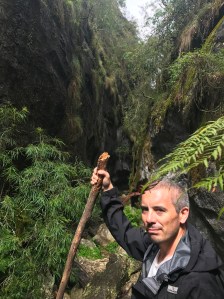 Marble Arch is far less obvious. And a good deal farther, through an annoying shower and down into a valley. In fact I don’t recall an extravagant arch glistening in the rain, just a narrow canyon and underground cave, with a few boulders and soggy pools in the way. Nonetheless it was quite a spectacle, quite an experience, quite an adventure. And quite a climb back up, in the rain.

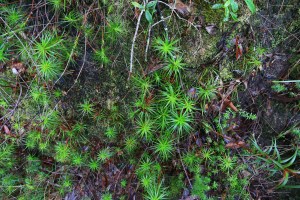 Walking along a gravel road in a landscape tamed by pasture and pricey property, the bush reclaims the country and sweeps down into the valley of Bundanoon Creek. While keen not to go all the way down to the creek (and thus back up), I dropped below the cliff line on the promisingly named Amphitheatre Track. While there are glimpses of the valley and the eastern escarpment through the trees, a lot of the attraction is in the close up, in the miniscule: the seeping moss, the crumbling sandstone, tunnels of ferns and trickling gullies.
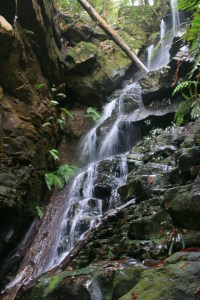 As well as savouring the sights, sounds and smells of the bush, I was on a waterfall mission, confident of success given the recent rains. It didn’t take long to find a trickle of water that had swollen sufficiently to spill through a cleft in the rock, briefly flowing over the path, disappearing into unfathomable depths below. Further gullies provided further cascading water, and such was the sogginess underfoot it was relief at times to emerge from beneath the ferns on slightly higher, drier ground.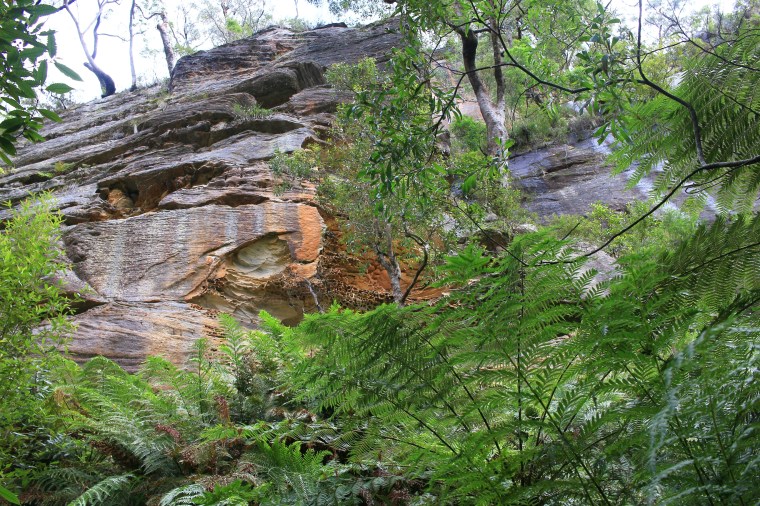
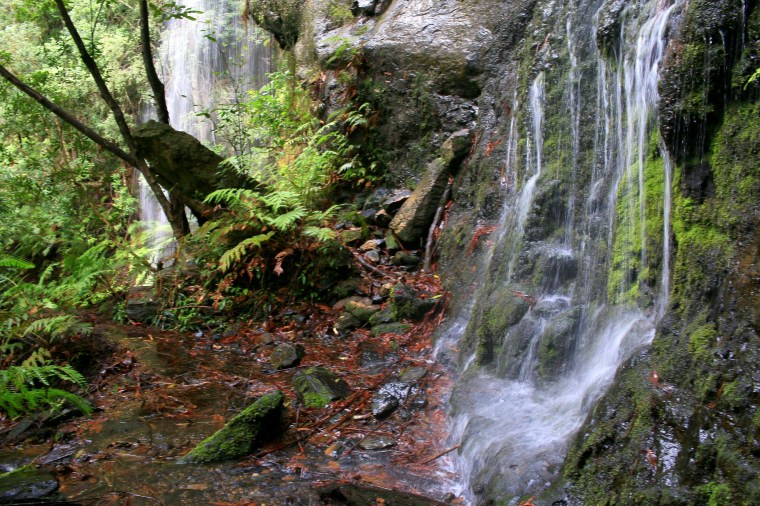

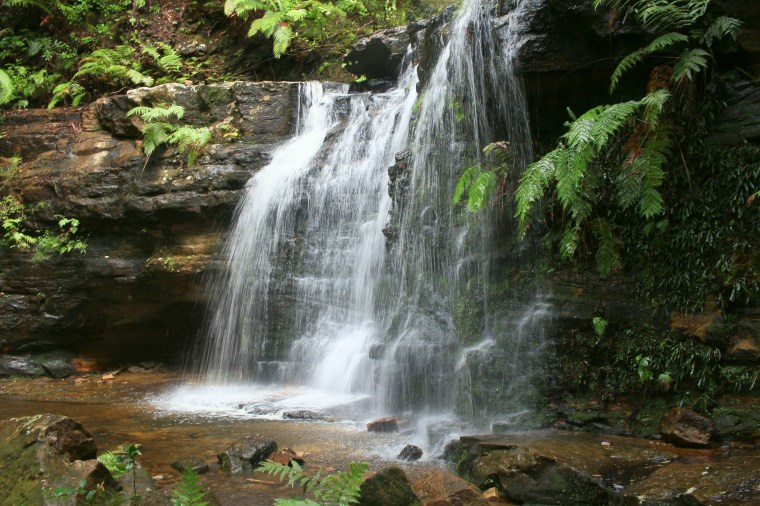
 I was relieved to get back to the car, relieved to be just fifteen minutes from a hearty lunch in Bernie’s Diner. And relieved that the first raindrops of the day hit the windscreen as I closed the car door, raindrops which continued almost all the way home.
 What does one do in a hot summer which features only intermittent work? Well, trips to free air-conditioned sites of interest for a start: the cinema, the library, the gallery, the mall. Occasionally the office, mostly for a coffee and catch up. Bike rides bring a nice breeze early in the day or into the late evenings. And cooling refreshments comfort: my addiction to frozen drinks persisting (but now slowly fading), a cold beer or cider in the evenings, Dare iced coffee and occasionally something a little more extravagant.
 Walks are practically a daily feature (they usually are), often on Red Hill (they usually are). Again, the early mornings or late evenings work best, the low light emphasising the sweeping golden grass and colouring the white trunks of gums a laser red. Sun sinks late over the ranges and smouldering skies are common. This is better evening entertainment than what’s on TV, as post-tennis, post-holiday reality shows make a comeback, spewing forth with abandon.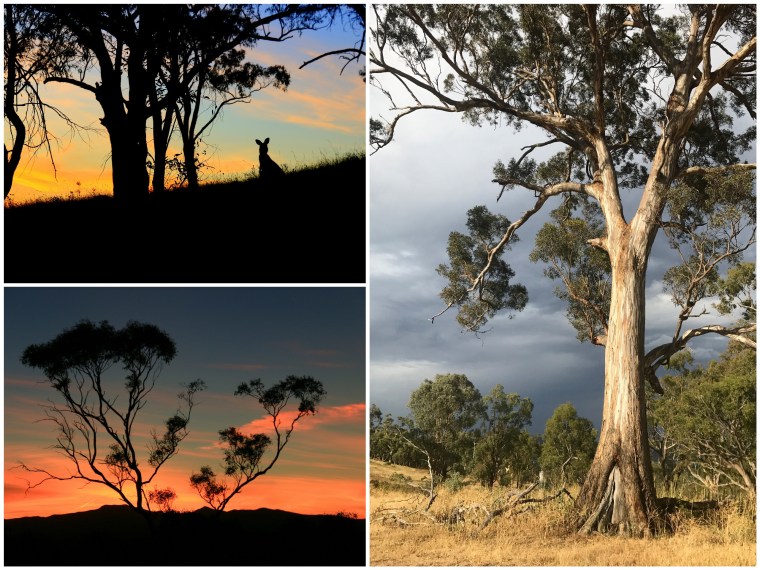
 Daytime strolls are better suited to places such as the Botanic Gardens, where shade is more forthcoming and the rainforest gully drops temperatures by five degrees. Moisture emerges here from the watering, and continues in the cafe serving a fairly average coffee. But to grab a takeaway and sit under a tree reading a book or interview transcripts is a fine way to spend an hour (and improve the experience of reading interview transcripts).
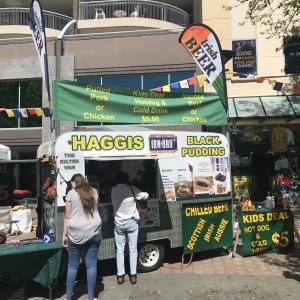 Away from nature for a moment, summer in Canberra also promises event after event as the populace makes the most of the time before entering deep freeze. There are blockbuster exhibitions in the galleries and museums; there are fetes and swimming carnivals and cricket matches all over the suburbs; fireworks, flags and protests in equal measure adorn Australia Day; and the National Multicultural Festival brings oodles of noodles in a celebration of diversity that ought to be protected. In the spirit of inclusion even certain redheads are catered for.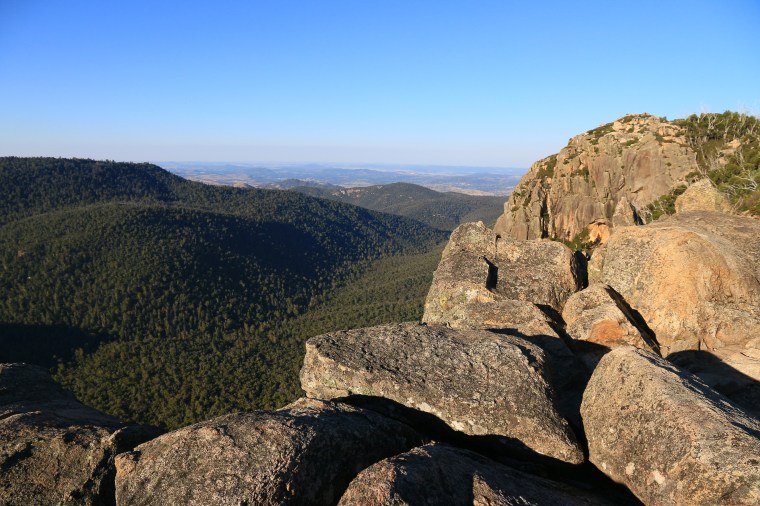
 At Burrinjuck Dam – reached via coffee stop in Yass – water levels are high and this is a natural lure for cursed boatpeople who frolic about in a flurry of jetskis and Chardonnay lunches. Away from the excess surrounding the boat ramp, quieter coves and a cutesy scattering of cottages for those dam workers heralded surprise. And a reasonably flat, empty road on which to have a pedal.
 My how this has grown since I was one of the few to trudge round on a pleasant evening a few years back snapping pictures of a handful of the capital’s illuminated buildings. Now practically every city does something similar on landmarks more well-known. But Canberra’s Enlighten seems to be ever more popular, judging by the crowds streaming from one site to another on a Saturday evening. Many are also here to queue for food in the night markets, which is entirely predictable; after several years you learn to visit midweek and come early, to guarantee delights such as a bao trifecta, Korean chilli pork fries, and deep fried ice cream.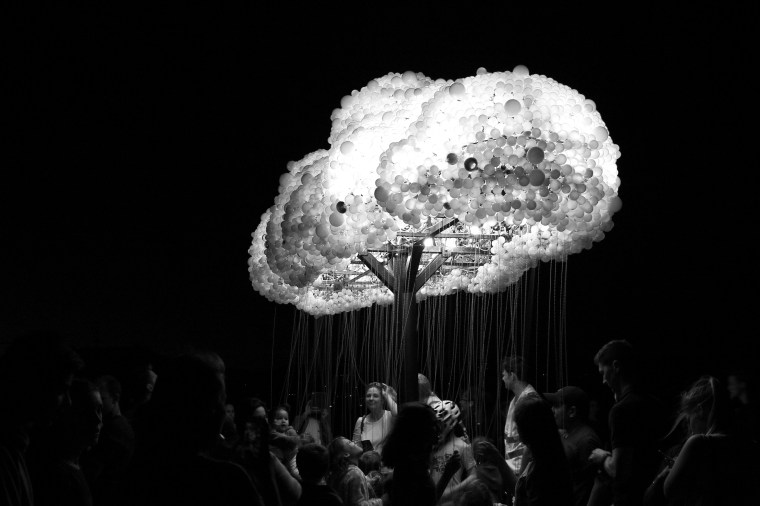
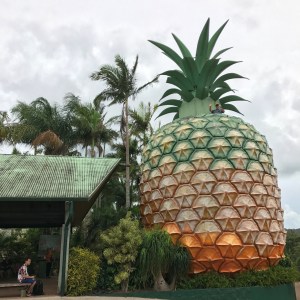 A couple of days on the Sunshine Coast had delivered only intermittent milky doses of sunshine, with homely patches of drizzle persisting throughout my final morning. An obvious light in the dark was the Big Pineapple on the outskirts of Nambour. A possible former plaything of an ex PM and Treasurer of Australia, I felt this was a perfect way to say goodbye to the Sunshine Coast and a suitably symbolic start of another long drive through the heart of Australia.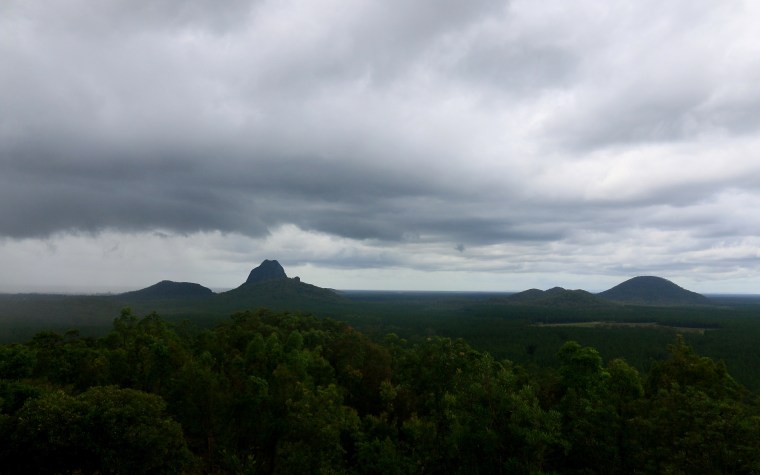
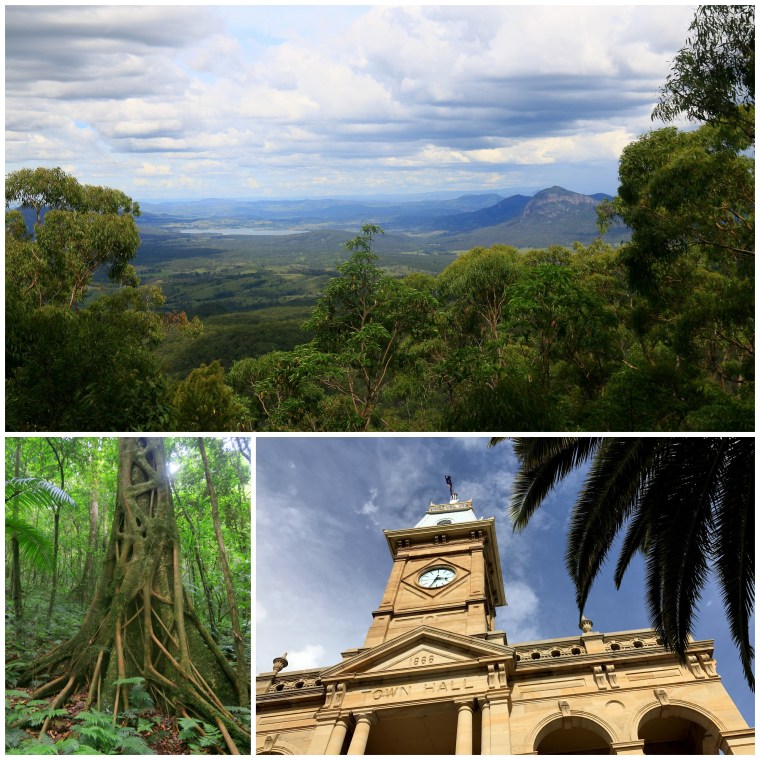
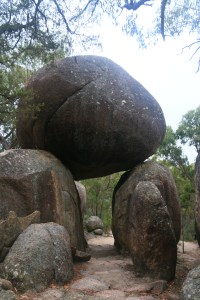 Pausing at Stanthorpe the rain had returned and I made use of mobile coverage to assess the likelihood of getting soaked while camping. It was touch and go but I opted to camp a little south in Girraween National Park. This was unlike a Queensland in any of the brochures…cool, cloudy, a little dank. Clusters of giant boulders dotted the landscape, sitting within short and stubby forest and forming natural terrain for pools of water to form.
 I was definitely the first person to leave the campground the next morning, cognisant of a long day ahead and jumping forward an hour into New South Wales. A lonely road led to Glen Innes, the only memory of which I have is of waiting ages for a coffee and then discovering, driving out of town, that they had decided to put sugar in it. This clouded my opinion of Glen Innes, and driving through the next town of Inverell, I wish I had stopped there instead.
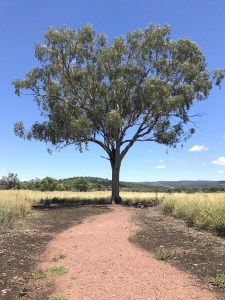 Today, it is a quiet place of solitude and reflection. The chirping of birdsong persists despite searing heat and baked earth. A simple, memorial walk exists, a swirling red path providing points of information and remembrance. There is talk of healing, of coming together of ancestors, of deep remorse and some kind of hope. A hope that, eventually, love does trump hate.
 Entering Warrumbungle National Park, it was pretty clear that a fire had ravaged the area; blackened trunks of trees lined the steep slopes and the road produced a patchy, lumpy ride where the tarmac had no doubt melted. Up one of the hills, some of the buildings of Siding Spring Observatory had suffered damage but the telescopes survived. Well, thank goodness for that…we can still scope out future worlds to inhabit when Fake Lord Emperor Pussy Grabber destroys this one.
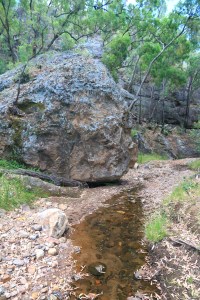 With benefit of doubt perhaps they were not doing the entire Breadknife and Grand High Tops walk. Maybe they were just doing the first part, which was gentle and followed the course of a mostly dry creek bed. This would be a rather fine walk in itself, for it is such an elemental, earthy landscape in which to linger. I wasn’t expecting such enchantment here, such homage to the rugged environments further inland, closer to the desert. There was a bit of Flinders Ranges crossed with The Grampians about this place. Two of my favourite ever spots blended into one.
 The other benefit of starting early was to witness the early rays of sun graze the hilltops and glow through the tree trunks and branches of the bush. I think the angle of an early sun also helped to illuminate some of the spider webs formed between shrubs on either side of the path, requiring a little stooping and contortion to avoid. Being a pioneer has its downsides and I guess if I was later in the day many of these webs would have been smashed by hapless walkers that had come before.
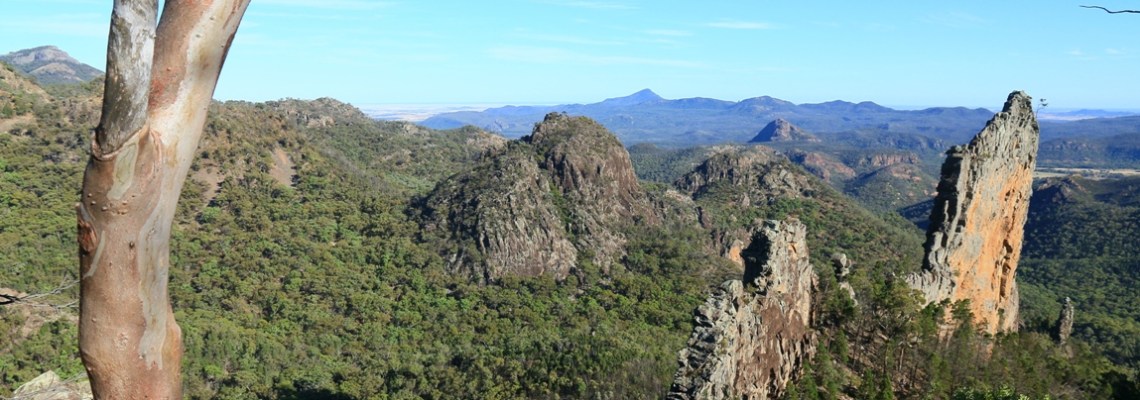
 Inevitably after a couple of kilometres the track climbed, with a steep but nicely constructed path giving way to endless metal steps. This was taking me up towards the Breadknife, so named because of its sheer sided slopes and thin pointed summit thrust into the sky like a scene from Crocodile Dundee in which Mick shows some New York Hoodlum a proper knife. Up close, you couldn’t really see it, but, eventually, when the trees fade away and the rocky floor of the Grand High Tops themselves are underfoot, the knife is there, just one of many rocky crags and rounded lumps rising up from an incredible sea of green.

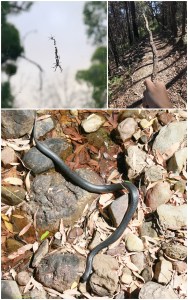 Further down the trail I encountered a young lady throwing rocks at another occupied web. It was one I must have ducked under a couple of hours earlier. She looked terrified and said as much. In trying to comfort and reassure, I told her it was probably the last of them and moved promptly on. She scarpered under the web to continue her walk while I went to look at a deadly snake. Pausing at a little wooden bridge over the dry creek, a beautiful Red-bellied black meandered along the rocks beneath. It was quite mesmerising, until it disappeared out of sight, when it became a snake that I couldn’t see and therefore significantly less appealing.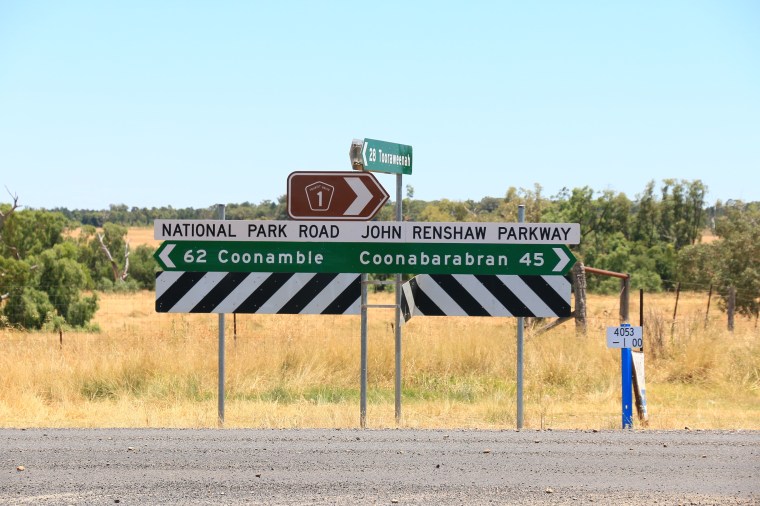
 A couple of hours and I was back in more familiar country. Dubbo is one of my token regional research towns and I had a sense of déjà vu checking into a motel with a plastic cow on a pole out front. But still, a motel, with refurbished rooms, air-conditioning and a king-sized bed. After my morning adventures, what better way to appreciate this scenario than nap.
 The next morning, after obligatory buffet breakfast, I set off on the final stretch of road home. It was a day in which there was little of note. As a commemoration of all things road trip I made a spontaneous stop at a place called Peak Hill. Here I went on a little walk along the perimeter of a big hole in the ground, previously mined for gold. While gold sounds glamorous, it was a hot and dusty walk with countless flies trying to go up my nose and the pervasive smell of urine in the air.
 South of here, Parkes had a more pleasant aroma, decent coffee, and was positively bustling with the prospect of Elvis coming to town. Or thousands of Elvises (or Elvi?) all dressed up for the annual festival, starting in a few days. If ever you needed an encapsulation of randomness this was it. Seeking quirky Elvis sights, many shops were filled with posters for upcoming Elvis impersonation gigs, and a couple of murals were dotted about the town. One, I was informed by a very enthusiastic lady, lit up at night and projected videos and played songs out loud and everything. I should come back tonight she said. I got my coffee and moved on.
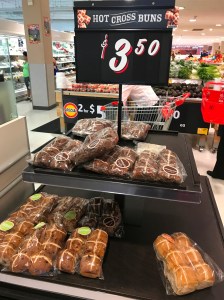 Of the 4,232 kilometres covered on this trip to Queensland and back there were around 50 more to go. Past Poacher’s Pantry where a pre-Christmas lunch lingered in the memory; across the state border and back into capital territory; a roundabout and empty dual carriageway through bush towards home. The city of Canberra is here somewhere, but I could still be out on the open road, in the middle of nowhere. Suburbia and never-ending apartment construction does finally emerge. There are supermarkets in which to replenish supplies, and, crucially, stock up on hot cross buns for Easter.
 In Part 2 of my holiday travels (
 Pausing briefly around the border towns of Tweed Heads and Coolangatta, I decided to head around much of the Gold Coast and enjoy the lumpy patch of verdant paradise that is the hinterland. We crossed the border back into NSW and changed time zone heading up and down to Murwillumbah. Surrounded by fields of sugar cane, half of this year’s yield was in my iced soft drink from KFC in the town. After which we zoomed onwards and upwards.
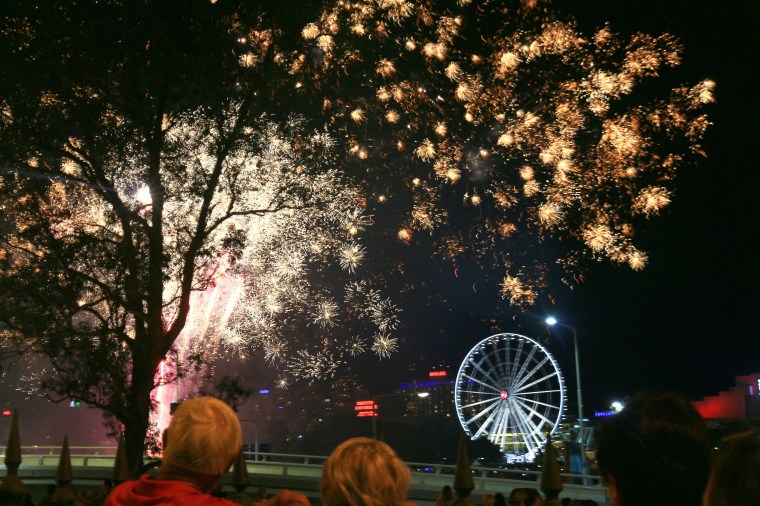
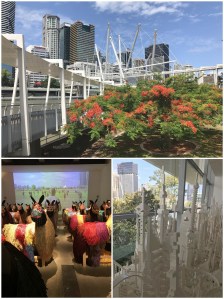 We were staying in a rather pleasant apartment in the CBD, with a bit of river view that was to come in handy for New Year’s Eve. The river was a frequent feature of our ambling, crossing over to South Bank, strolling alongside the Botanic Gardens, heading over to the air-conditioned awesomeness of GOMA. You could see its brown waters from the top of Mount Coot-tha, and you could encounter them at close quarters on the CityCat ferry, travelling under the Story Bridge to New Farm. In fact the river was almost as pervasive as Max Brenner; Caroline keen to get a fix or two before heading back to England, and I happy to tag along.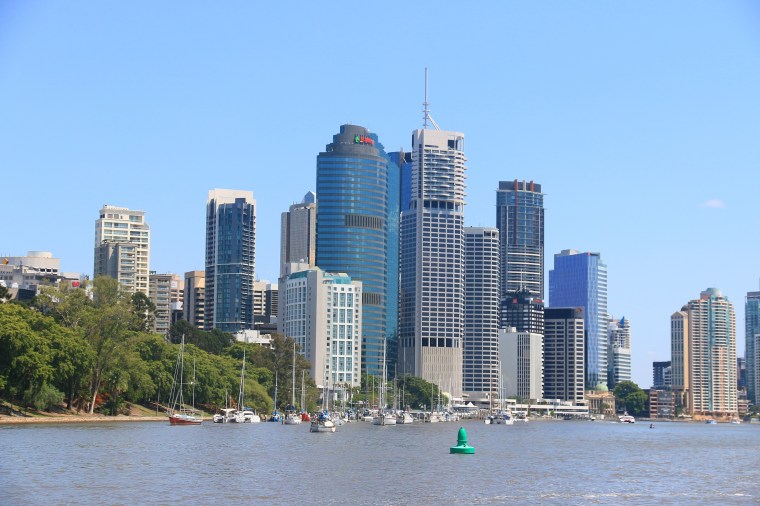
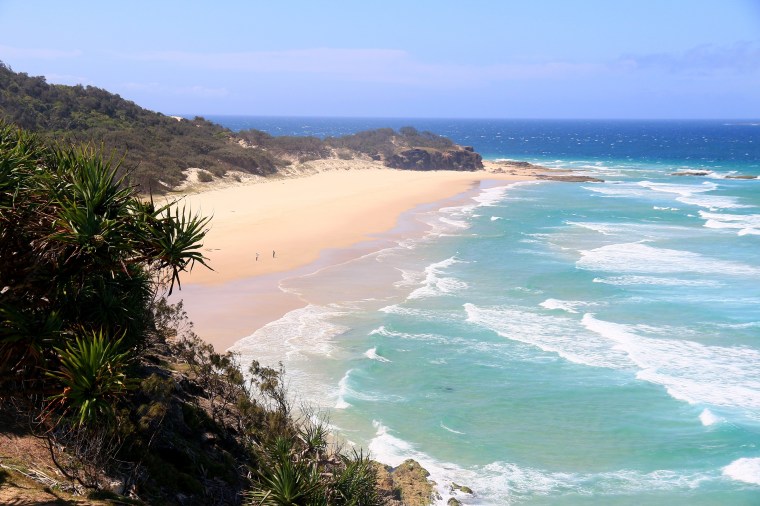
 Ah, island life. A time to kick back and relax. Or wade in stagnant pools with hundreds of kids, or queue endlessly for ice cream, or take a big f*ck off truck onto the sand and ruin the wild ambience. This is what was happening all around, but we still managed to kick back and relax a little at Point Lookout. Before queuing for ice lollies in the world’s most humid shop.
 A taste of what this would be like came at the end of the day, with the sun lowering, a breeze providing relief and a quiet satisfaction milling about the beach near Amity Point. In slanted sunlight kissing sand golden, you could innocently wade in the water happy, only to discover dolphins surfacing mere metres away. Before disappearing as abruptly, leaving only fond memories and countless blurry pictures of ocean on your camera.
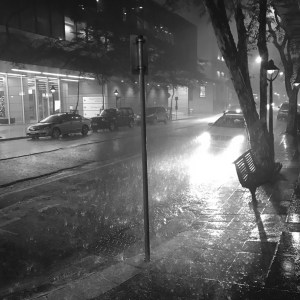 Still, this drizzle is nothing compared to the deluge the previous evening. Sat contentedly eating some Japanese food in the city, we were somewhat oblivious to the torrent of rain that had decided to unleash itself on Brisbane. Only emerging did we witness instant rivers flowing down the mall and citizens racing precariously across streets in their unsuitably thonged feet. We made it back to the apartment, but even with the protection of umbrellas there was considerable dampness.
 So as grey as it was today in Redcliffe, at least you could walk outside without fear of being drowned. And there are always the Bee Gees to brighten things up. It seems the canny council in Redcliffe has recognised the potential cash cow of this association by constructing The Bee Gees Way. Linking two streets, it captures people walking from the car park to the scattering of restaurants by the seafront. More than a woman walked by the pictures, words and videos telling you of their time in Australia and beyond. I guess your willingness to trek out to Redcliffe to see this display may depend on how deep your love is for the hairy triumvirate. I can take or leave them, but I found The Bee Gees Way curiously distracting.
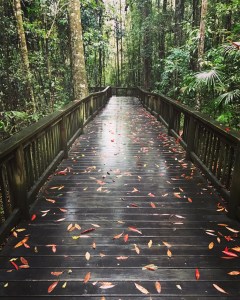 Arriving in Buderim, I made the best of the weather and tried to have a nap. While it was of limited success, the rest refreshed enough for a walk in Buderim Forest Park. Here, the dampness had the effect of illuminating the tangles of rainforest, a grey backdrop to semi-tropical vibrancy. Glistening boardwalks peppered with fallen russet leaves; lustred green foliage and ferns dusted silver with water; and bubbling cascades and falls given impetus by the weather.
 I was only going to stay the one night on the Sunshine Coast, but my weather-induced weariness and the prospect of heading back to the swag tempted me to linger for one more. The extra day was drier, and the sunshine even emerged on occasion. This made the walk up to the top of Mount Coolum somewhat more hellish, but I felt like I had achieved something and could spend the rest of the day eating and being lazy.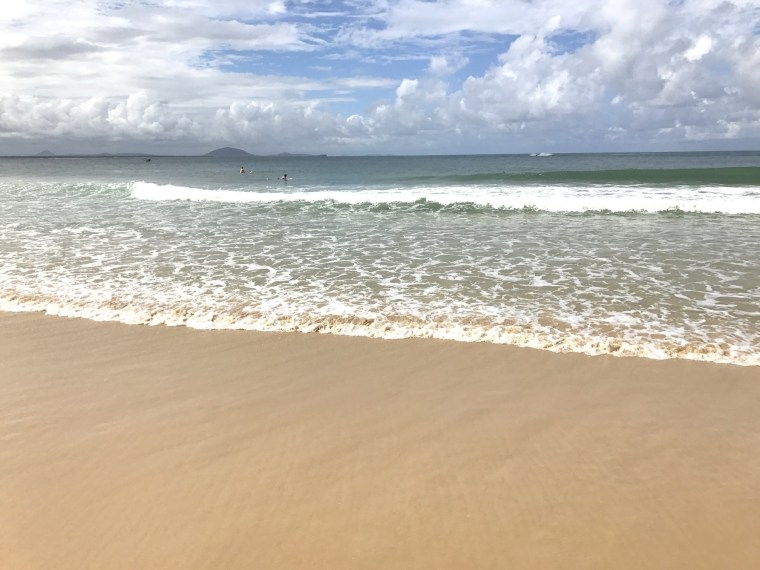
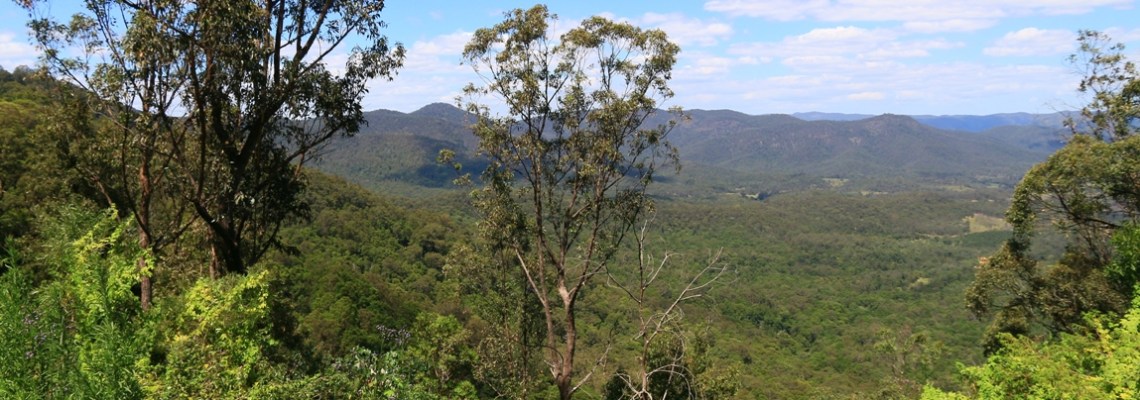
 Christmas Day came and went with little fuss; a suitable blend of English traditions (think paper hats, Christmas pudding and rubbish TV) and Australian holiday (cue swimming pools, prawns and rubbish TV). And the next day like millions across both hemispheres, I hit the road to expand my horizons, meet up with others, and curse at the appalling driving ubiquitous across the highways and byways of the land.
 Setting out, the tones of Jim Maxwell narrating the Boxing Day test helped me along familiar ground to Goulburn and then round the back of the Blue Mountains via Taralga and Oberon. I’m not quite sure when the familiar becomes, well, exotic, but I had never been to Hartley before and I wasn’t expecting to see emus along the roadside. Attempting to quell this confronting change, I popped in for some afternoon tea in the cutesy national trust cafe. Devonshire scones with clearly non-Devonshire cream. Sigh. When will they learn?!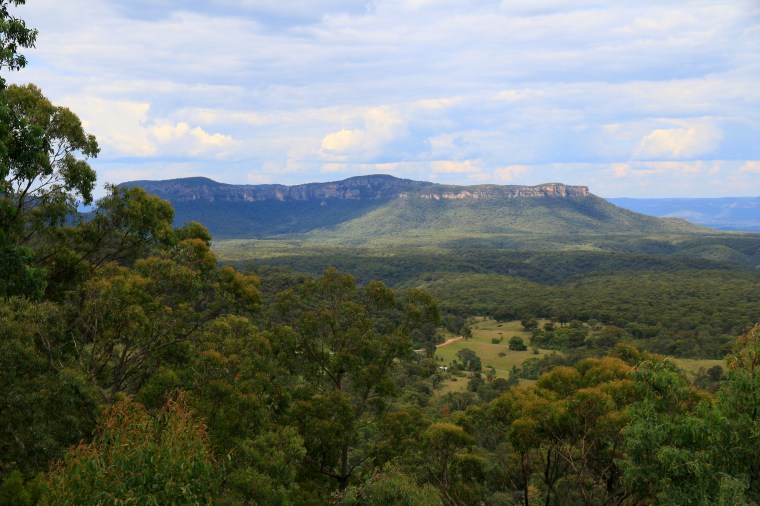
 With the day drawing to a conclusion I had to make haste to my first camp spot, passing through a seemingly deserted Mudgee, and hitting the gravel roads into Goulburn River National Park. Here I surprised myself at how efficiently I made camp, setting up gear which had not seen the light of day for a few years. Yes, the swag was back and loving its natural environment.
 With all this travel and excitement it was easy to forget that it was Christmas time and today was Boxing Day. It certainly didn’t feel like a typical Boxing Day, but I paid a little homage to tradition by boiling up and coarsely mashing some potatoes and carrot, serving it with some ham, and adding a few pickled onions and a pile of Branston. This camp stove and esky creation was a perfect amalgamation of English traditions and Australian summer holiday, a supremely satisfying garnish to this first day.
 But obviously I stop and detour and make inevitable visits to big things like a giant golden guitar in Tamworth. It’s my third time here but I still cannot resist the allure of such a curious, iconic Australian landmark. The car and I refuel, we park up and make lunch of ham sandwiches and crisps. And, comfortably gathering that road trip rhythm, we set off once more, another hundred clicks up the road to Armidale.
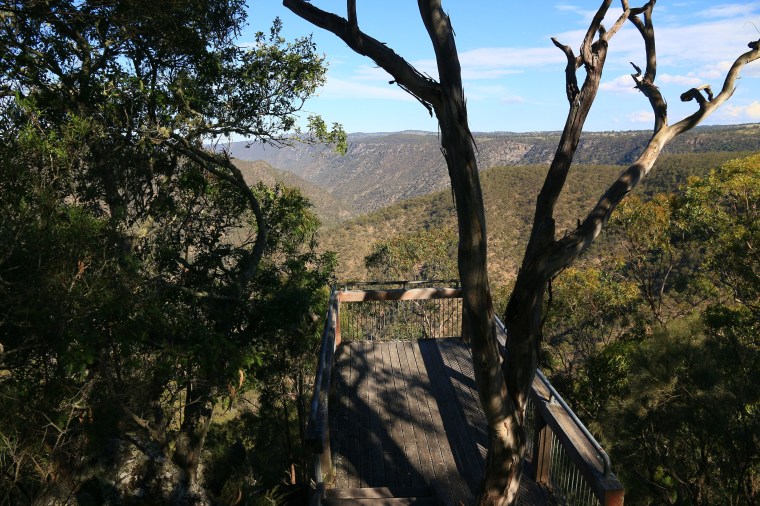
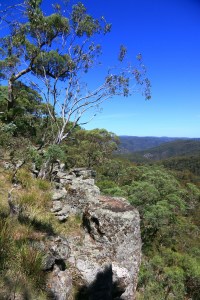 Along the Waterfall Way I could make a mid-morning stop at Ebor Falls, a site I had previously encountered boasting a couple of quite magnificent waterfalls. Today, they were an inferior imitation of what I remembered, reduced to a trickle and hidden in the shadows from the morning sun. But as road stop rest stops go, there was plenty to savour: a gentle shady walk along the valley rim, pockets of wildflowers and patches of birdlife, the smell of the bush. All under the deepest blue skies.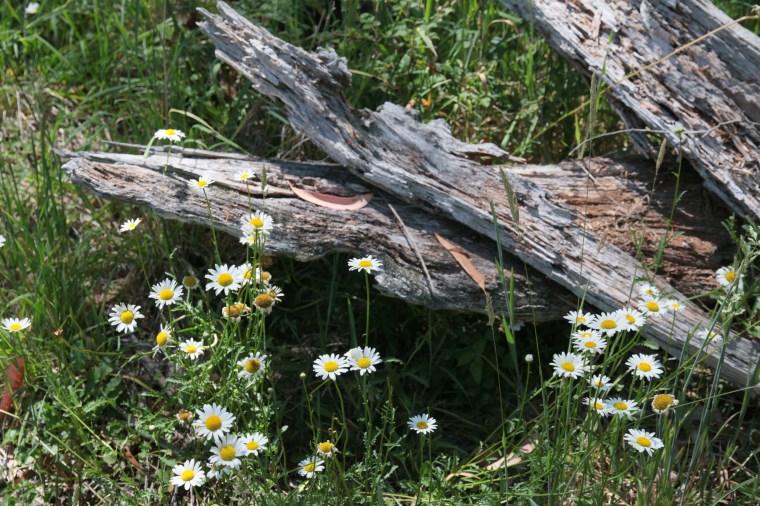
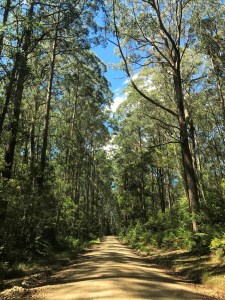 From KFC in Grafton, the car headed through patches of woodland and along the picturesque valley of the Mann River. Rugged ranges loomed, neared and eventually required climbing; like so many roads from the coast to the inland, hairpins and lookouts and massive tree ferns clinging to the eastern escarpment. Atop all this a dirt road led off the highway and plunged into the rainforest of Washpool National Park.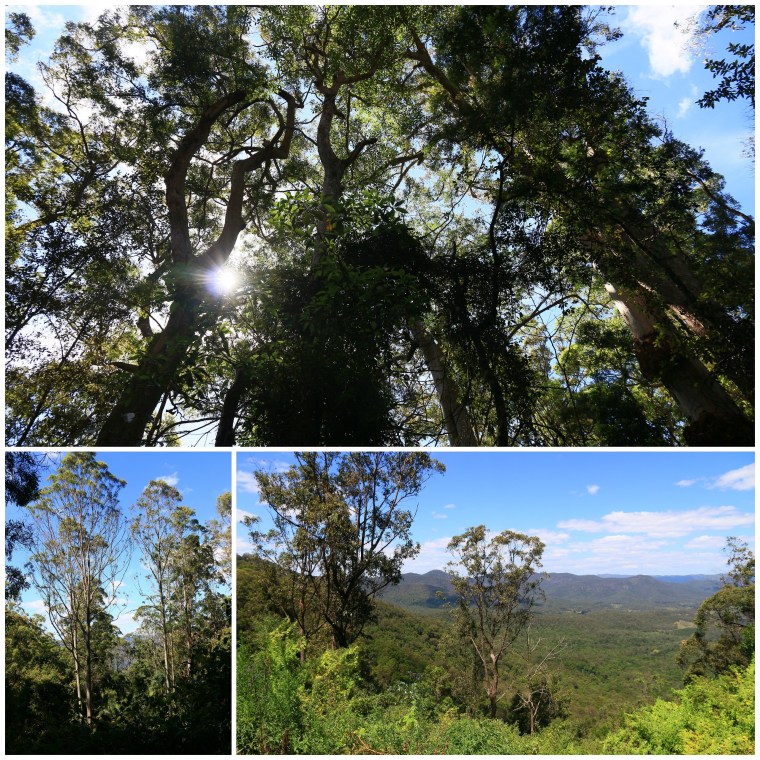
 I felt as though I had earned a beer and decided to take one with me on a brief amble to a lookout near the park entrance. This is the benefit of having everything in the car and, um, the beer would provide hydration if I ended up getting lost or bitten by a snake or something, right? Thankfully the lookout was a mere stroll and the satisfaction of that coldish beer on that bench on those rocks in that peace with that view under early evening skies without the prospect of getting lost and having snakes for company was something to cherish.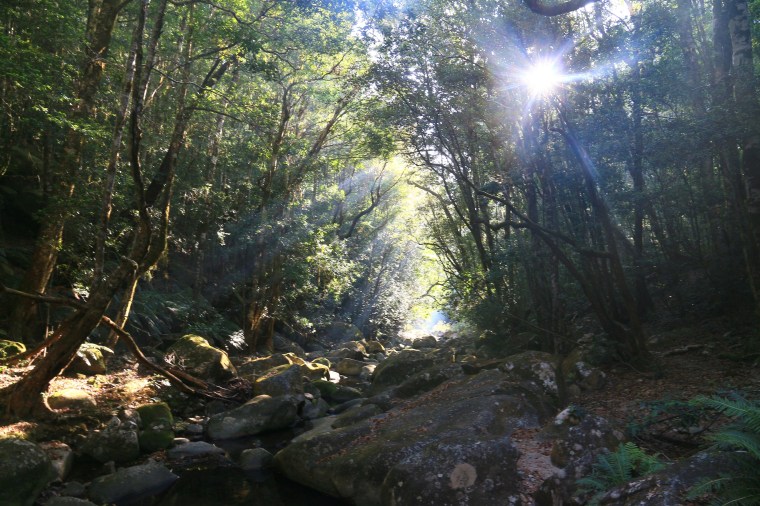
 Before breakfast, before packing up, before moving on once more, I could hatch out of the swag and wake up with the world around me. Virtually from my bed a small trail followed the pristine waters of the creek and looped back through a large stand of Coachwood. The sun gradually made its appearance, shafts of light angling through the trees and shimmering through the ferns onto the water. The creek was clear and cool, and after three nights of camping without a shower, it was tempting to bathe. But I really didn’t want to ruin its purity; my mind turned to the allure of the ocean instead.
 Without going into lurid detail I did wash each day thanks to boiling water and the use of a bucket, an art mastered in the trip of 2013 with Jill. Simultaneously I could make a cuppa, grill some toast and prepare my morning sink. Sure, it wasn’t exactly luxurious or even two star, but it allowed me some confidence to mingle a little with civilisation each day and order a morning coffee, buy petrol and ice. Which is exactly what I did in Grafton after descending from the hills that morning.
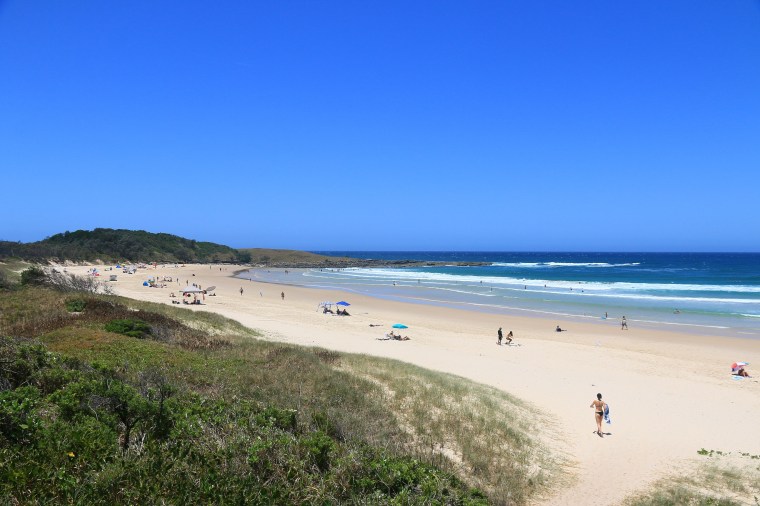
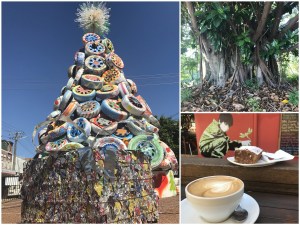 I encountered my first inexplicable traffic jam north of Yamba and speculated that this was being replicated up and down the highway. Still, I only had twenty clicks at a snail’s pace before I could turn off and head to Lismore. Lismore was to herald my proper return to civilisation, something which some people would find surprising in relation to Lismore. But I was to sleep in a proper bed and have a proper shower here, both of which I was quick to enjoy upon arrival. Refreshed and walking Lismore’s unfathomably charming streets, I felt part of normal society again.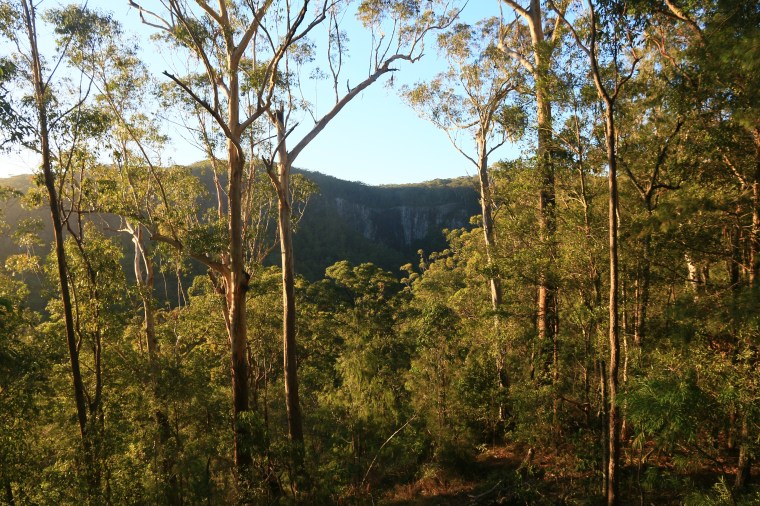

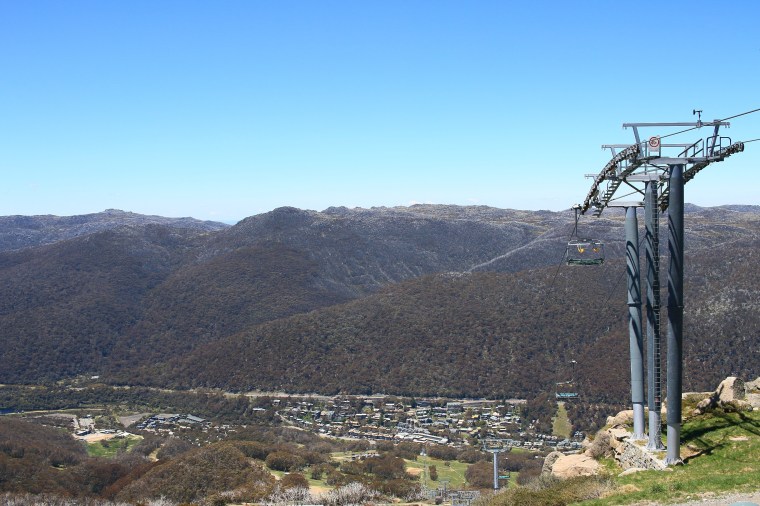
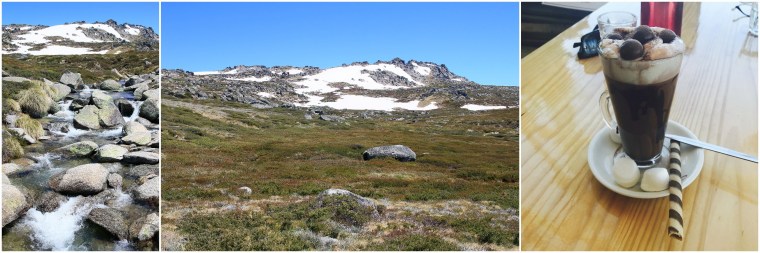
 Because this is Australia the ingeniously named Snowy Mountains are not perennially snowy. However, at the end of November I was not expecting to see so many chunks of frozen icy slush dotting the mountaintops. The snow gave distinction to the ranges, visible just after a picnic in Cooma with Caroline and a potato masher. And moving closer and climbing in altitude, it was possible to walk on a splodge of icy snow at Charlotte Pass, from where more white stuff was visible along the Main Range.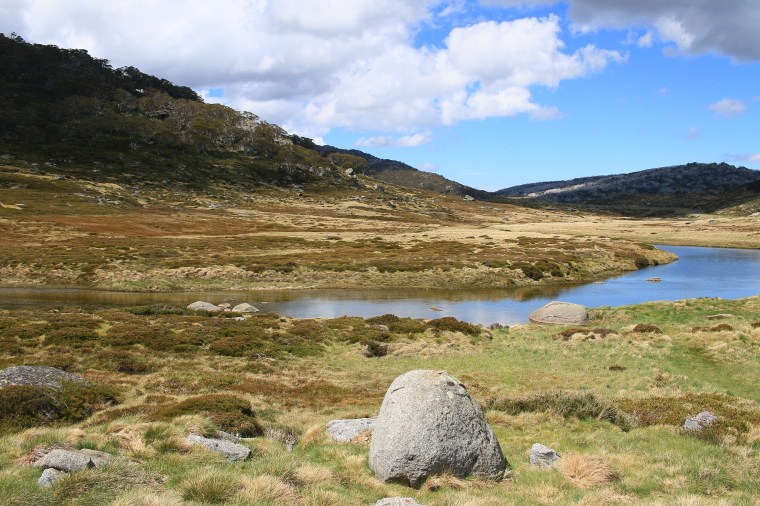
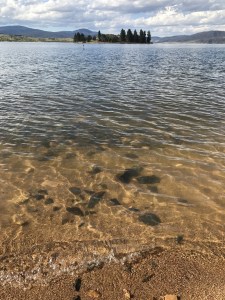 Jindabyne has always proven to be a bit of a pass-through town on the way to the higher mountains. But staying here for two nights offered the chance to explore many of the highlights of the town, including its TWO shopping precincts! While these provide sufficient eating and coffee opportunities, the highlight of Jindabyne is undoubtedly the expansive lake on which it sits. Part Canada, part Lake District, part Australia, it’s a haven for boat owner people and fishy types. But don’t let that put you off…there are also charming parklands and meandering pathways fringing the shore. Benches and picnic tables offer frequent recovery. From here you can watch morning mists hovering over a dead calm mirror, or bask later on in the afternoon warmth. Or live out the end of the day with never-ending hummus and laser red light.

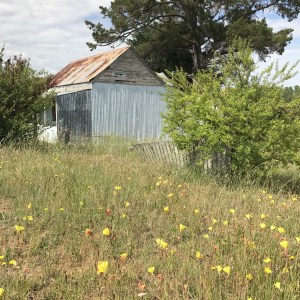 Leaving the high mountains we drove a somewhat convoluted route back to Canberra to provide maximum adventure. First up was a brief pause at Dalgety, a tiny place perched alongside the Snowy River that could have been the capital of Australia. And they say Canberra is quiet! There must be like ten houses, a few cows, and a million flies. But it’s kinda cute nonetheless.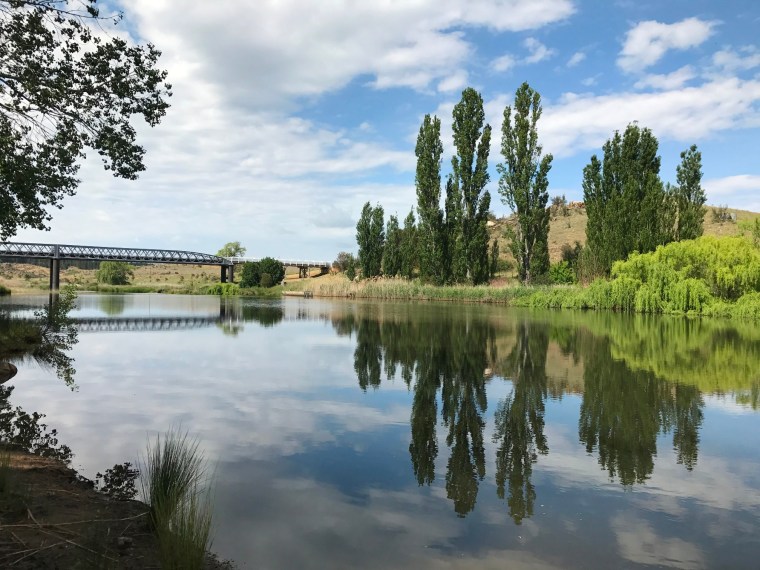
 With the unforeseen temporary closure of the Snowy Hydro Visitor Centre in Cooma, a decision was made to proceed to Adaminaby for lunch instead. And what better way to lunch than next to a great big trout! This was indeed turning into a marvellous, sponteanous adventure and the best (or worst) was yet to come.

 Almost inevitably (and positioned next to water), the first stop straight off the M5 was Coogee. A late afternoon to tread in the sand, sup coffee under a shady tree, and amble to Clovelly and back. Once all this arduousness had passed it was practically dinner time and so a fish and chip takeaway consumed in fading light alongside the beach made perfect sense.
 Moving away from the bronzed bodies beyond Shelly Beach, nature reclaimed the surrounds and people became a rarity. A walk up into North Head rewarded with solace and a refreshing breeze, before leading to a dose of beautiful harbourside discovery. Collins Beach provides the perfect exemplar of the bushland coves littering the shoreline of Sydney’s waters. Gems that make this part of the world exceedingly expensive. But walking here is free.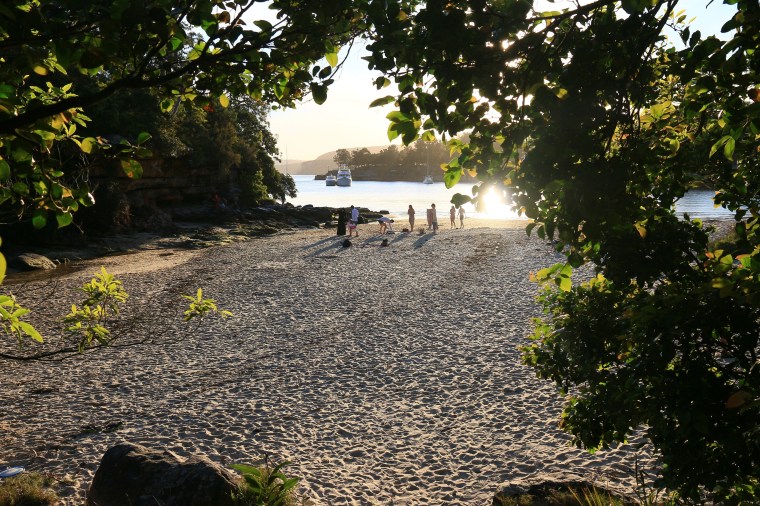
 Well it worked because plenty of people are being lured to the Hills via the Lane Cove Tunnel and M2 toll motorway. It’s heady mix of shopping malls, slightly more affordable housing, faith-based singing and pockets of bushland reserve offer something for everyone. The bushland is my favourite part – discovered one fresh morning in Cumberland State Forest. A tonic before heading to yet another Shopping Mega Centre for top secret work purposes.
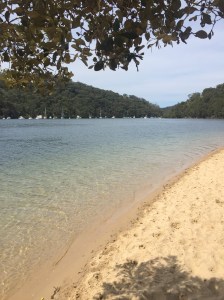 Towards the end of my week criss-crossing the city I ended up in the North Shore and Northern Beaches of Sydney. Indeed my schedule fortuitously terminated in Warringah Mall. While Warringah unfortunately conjures up images of Tony Abbott in Speedos, it’s not all bad. A final interview is finished and I can clock off and drive to nearby Curl Curl beach on a Friday afternoon. I can lie on a towel and try to doze, but become restless and go for a stroll up onto a headland. I can feel relief that the intense week is over and I can start to add up my road toll expenses. I can make plans for dinner at one of my favourite places in Bondi. And I can head home tomorrow, replenished by these opportunities to occasionally exist beside the water.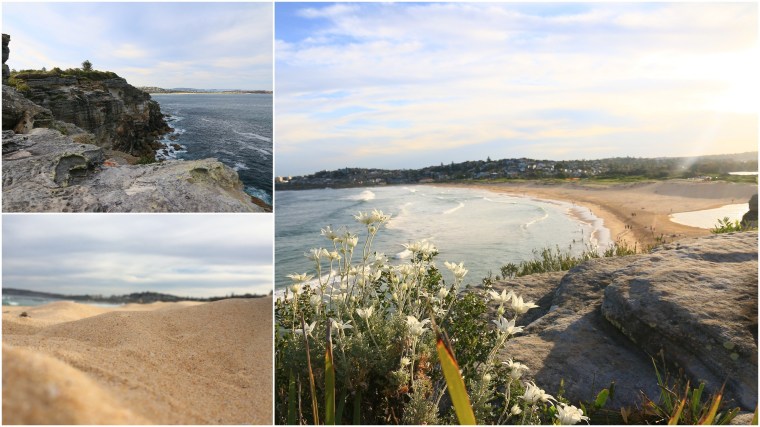

 gbpilgrim