Strategic blue sky comeback

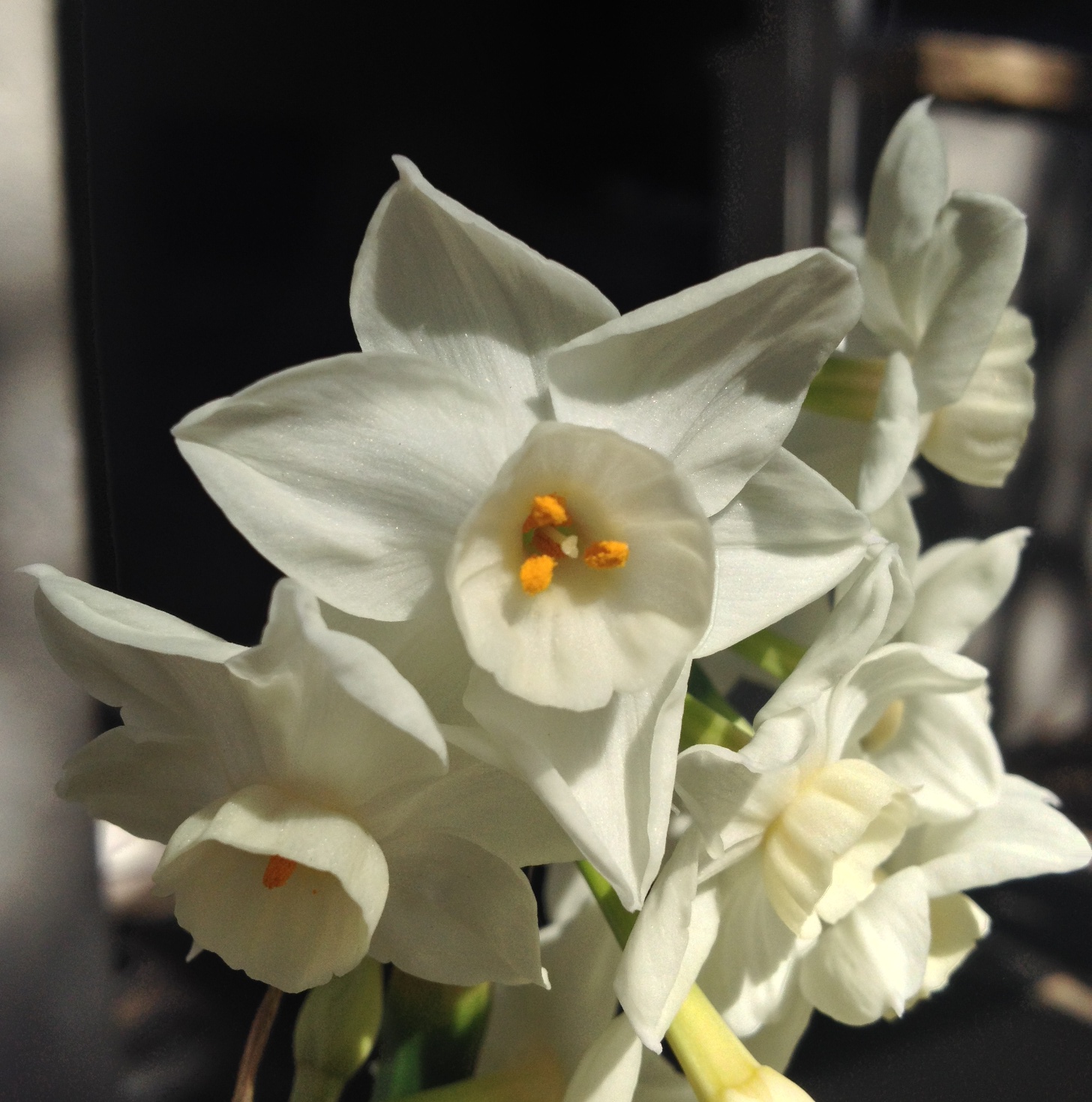
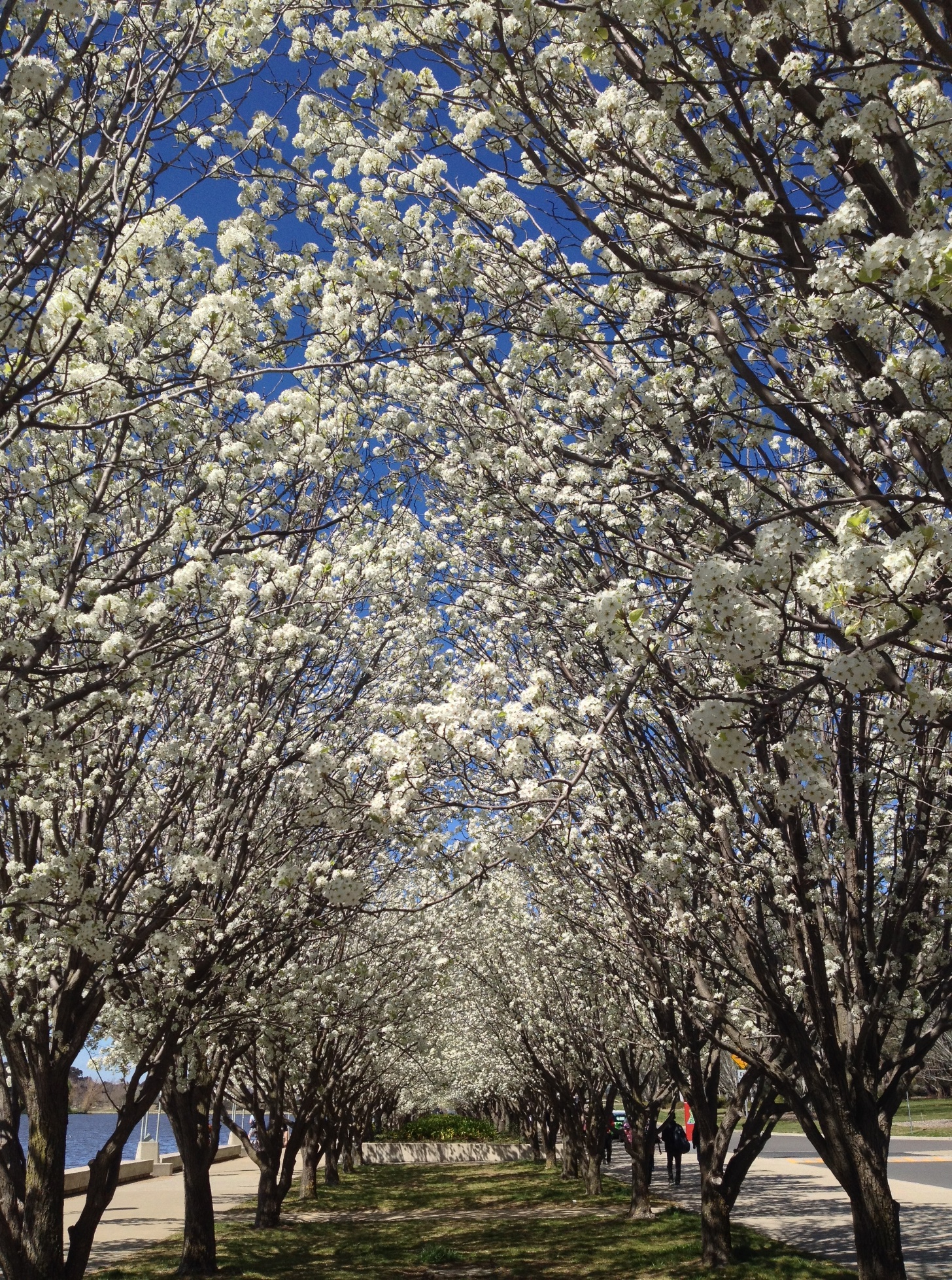
spr01Sometime around May I usually ramble on about the beautiful autumn days, with their deep blue skies and cooling nights, blazing leaves and subtle sunsets. It is tremendous and I am convinced that it is the best season in the national capital. But then, after a hiatus for different seasons in different hemispheres, spring appears and it is hard to argue against it. For what spring has that autumn lacks is the encroachment of warmth, the re-emergence of life, the dawning of hope sailing on an upward curve. Encapsulating this, the daffodils that were just sprouts when I went overseas are transformed, nature performing its perennial magic trick from seed to understated wonder.

spr02Coming back to Australia, to Canberra, at such an opportune time provides an extension of the holiday feeling, coupled with some comforts of homecoming and familiarity. It helped that I overcame jetlag very quickly and had little work for a week or so. Blue skies and comfortable warmth – tempered by a few cold nights to guard against complacency – offered better conditions than, say, Switzerland. And everywhere, things coming to life, waking up, bursting into extravagance. Settings made the more amiable with a good coffee in hand.

Nowhere is nature’s spring display more evident than at the Australian National Botanic Gardens. Well, maybe Floriade, with its millions of tulips and thousands of daffodils, is a contender. But the botanic gardens – as contrived a creation as they are – feel much more natural, an exhibition of Australia’s wacky fauna in an authentic bush setting.

spr03

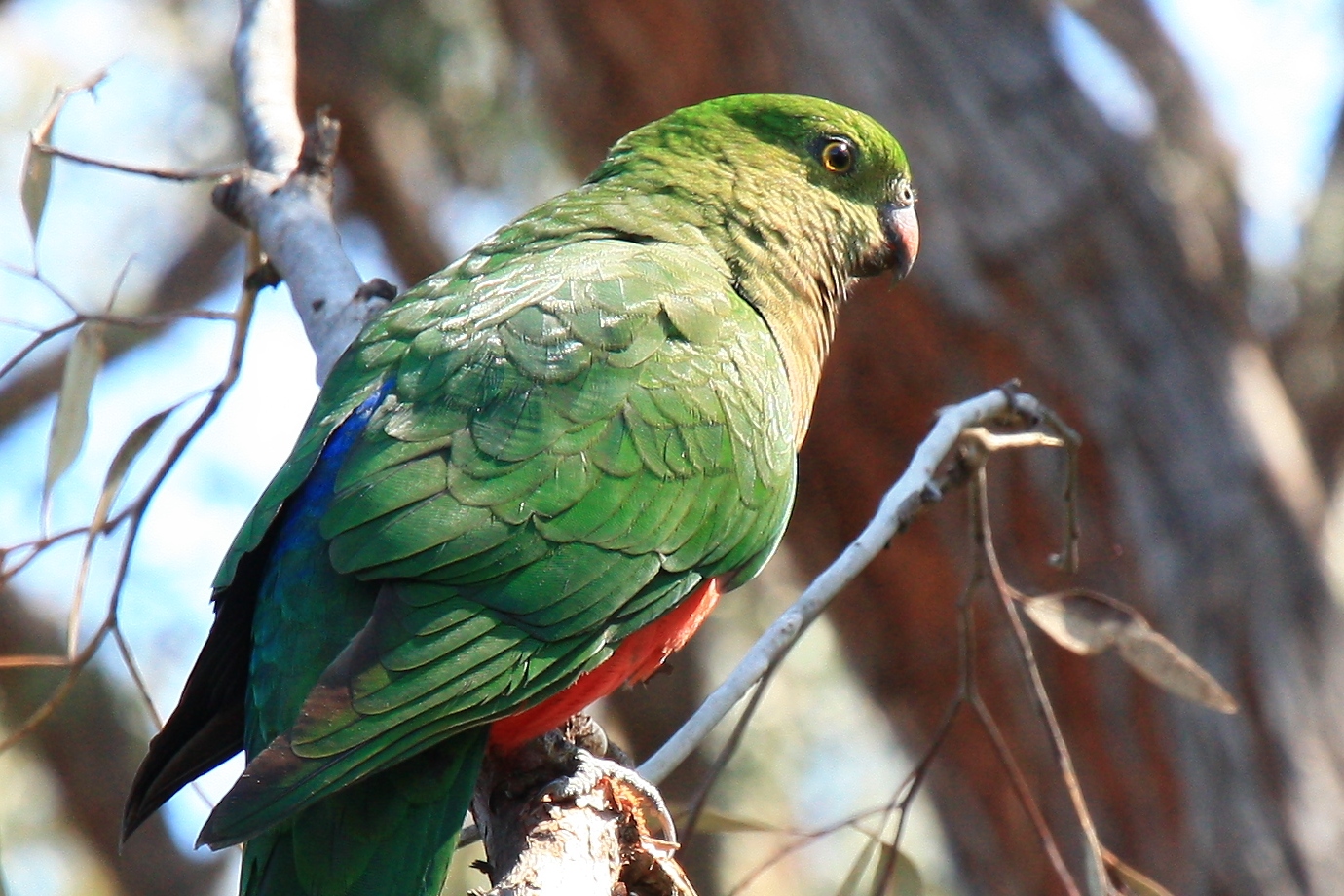
spr04Here, plants were flowering everywhere, colours and fragrance and the buzz of industrious insects pervading the air. One microscopic bug managed to somehow find itself somewhere within my camera lenses, occasionally crawling into the frame. It was whilst sat down in a quiet spot trying to rectify this situation that the king parrots decided to join me, and to show that it’s not just the flowers that have a monopoly on springtime colour.

spr05Should sleepy and sedate little Canberra become a touch crammed with life, the vast wilderness is of course just around the corner. This, like better quality coffee, is one of those very obvious differences that become so sharply contrasted following a trip to Europe. It doesn’t take long to be climbing on a dirt road into the bush, helping to test drive some friend’s new car, pleased that a four wheel drive is actually being used properly and not just for picking up the kids from school. Up on the Mount Franklin Road, very little other than the wild fills the views, and other roads and tracks tempt for another time.

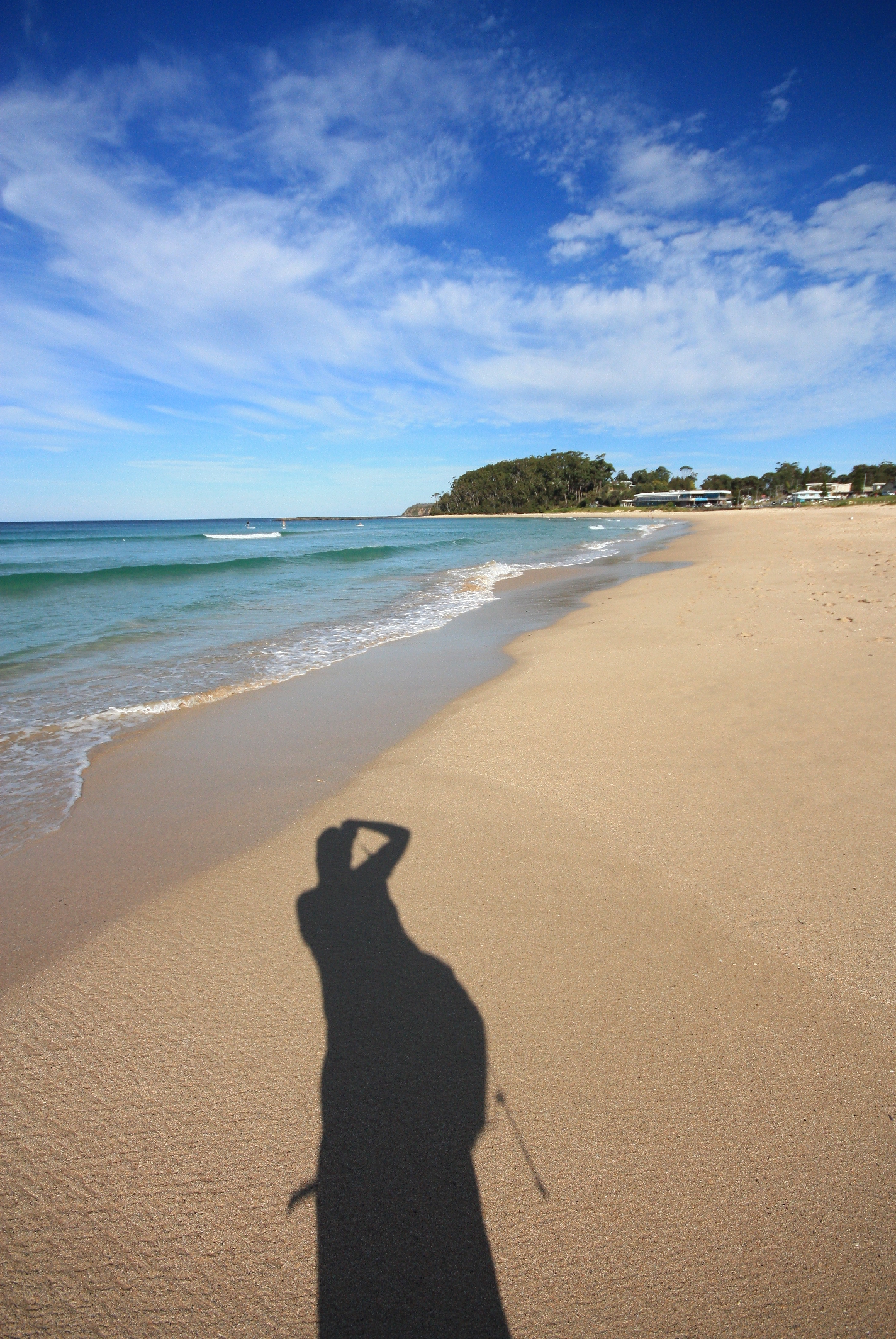
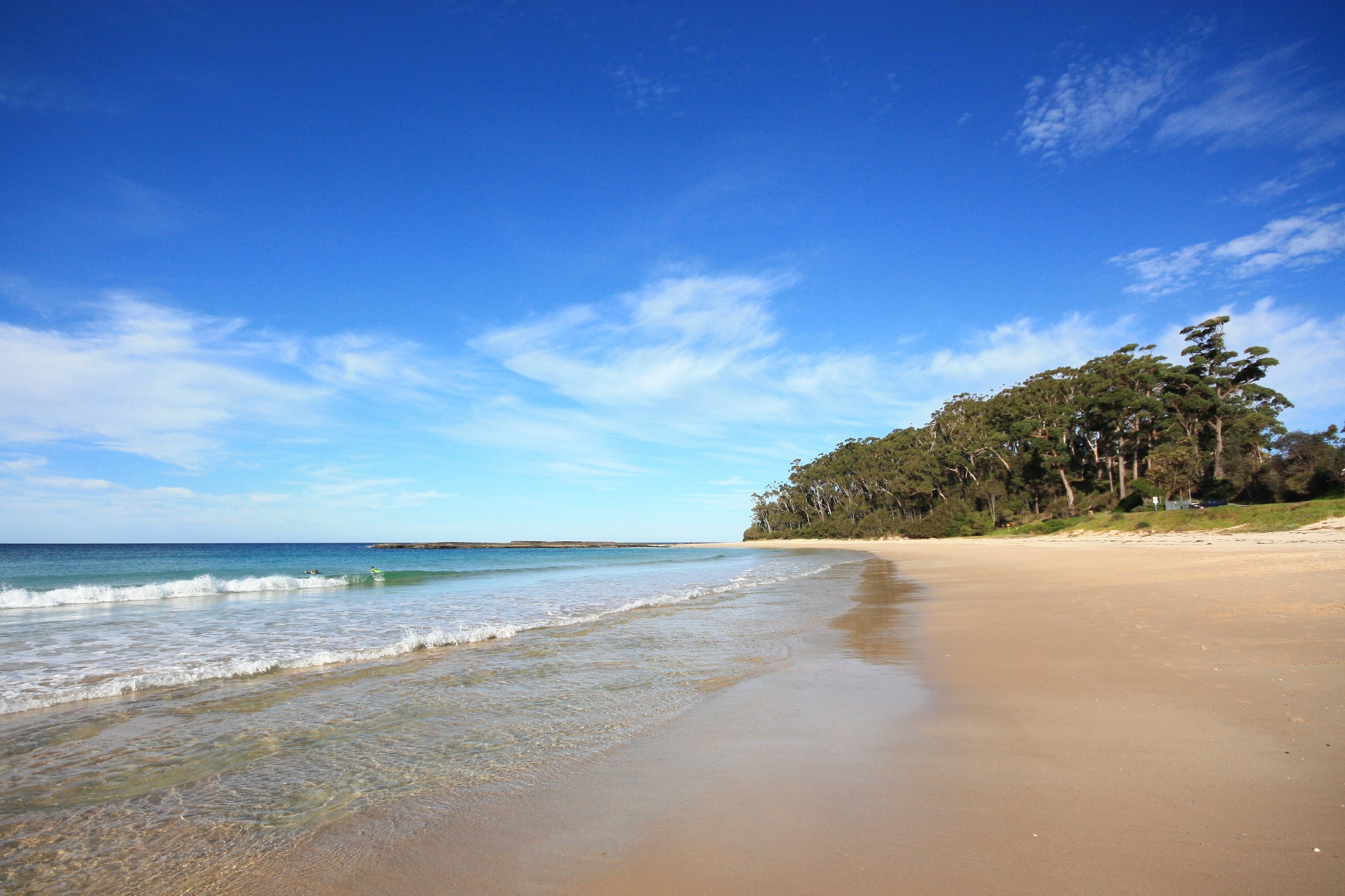
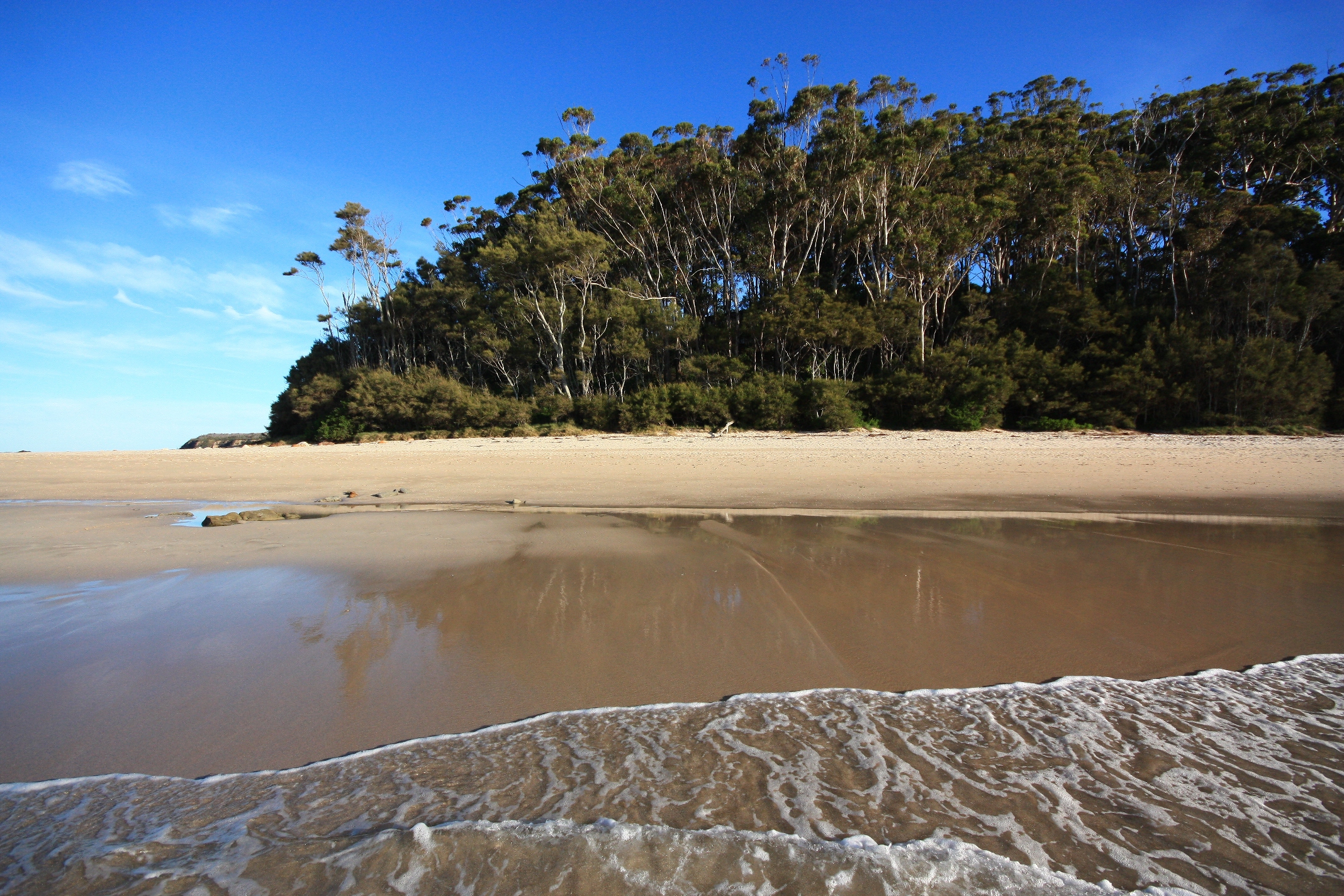
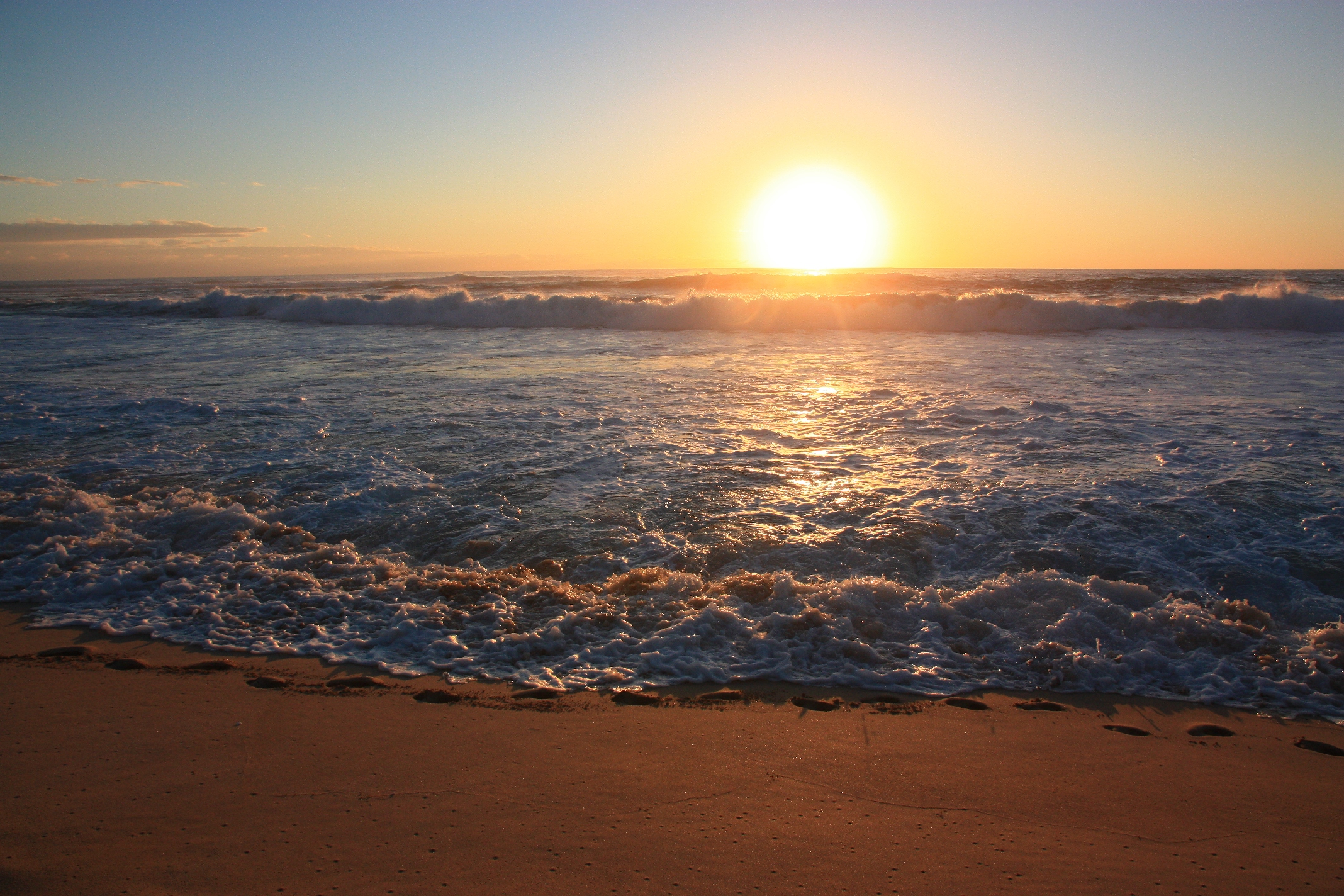
spr07Indeed, I felt the urge myself to get in my own car and make a road trip, since it has been quite a while. In the other direction, the south coast awaits and what better way to see in my birthday than to drink and eat by the water? I decided, fairly last minute, to head down towards Merimbula, stop overnight and, well, drink and eat by the water. It was a route I had not done for some time and, after the very barren plains of the Monaro, the reward of the South East Forests and Bega Valley is welcome. More welcome, perhaps, is the Nimmitabel bakery chicken salad roll on the beach at Tathra, where the south coast is just doing its usual thing of being stunning under a blue sky.

spr08

The rest of the day encompassed some old favourites, favourites that were last visited on the very early stages of some much bigger trip I embarked on in 2013. Back then, after camping next to Ray Mears in Bournda National Park, Merimbula was grey and cool and – later in the day – rain would pummel Ben Boyd National Park to the extent that the roads became slush. Today, well, it was good for shorts and the bellbirds were much happier down on the delightful Pambula River, at the northern edge of the national park.

spr09

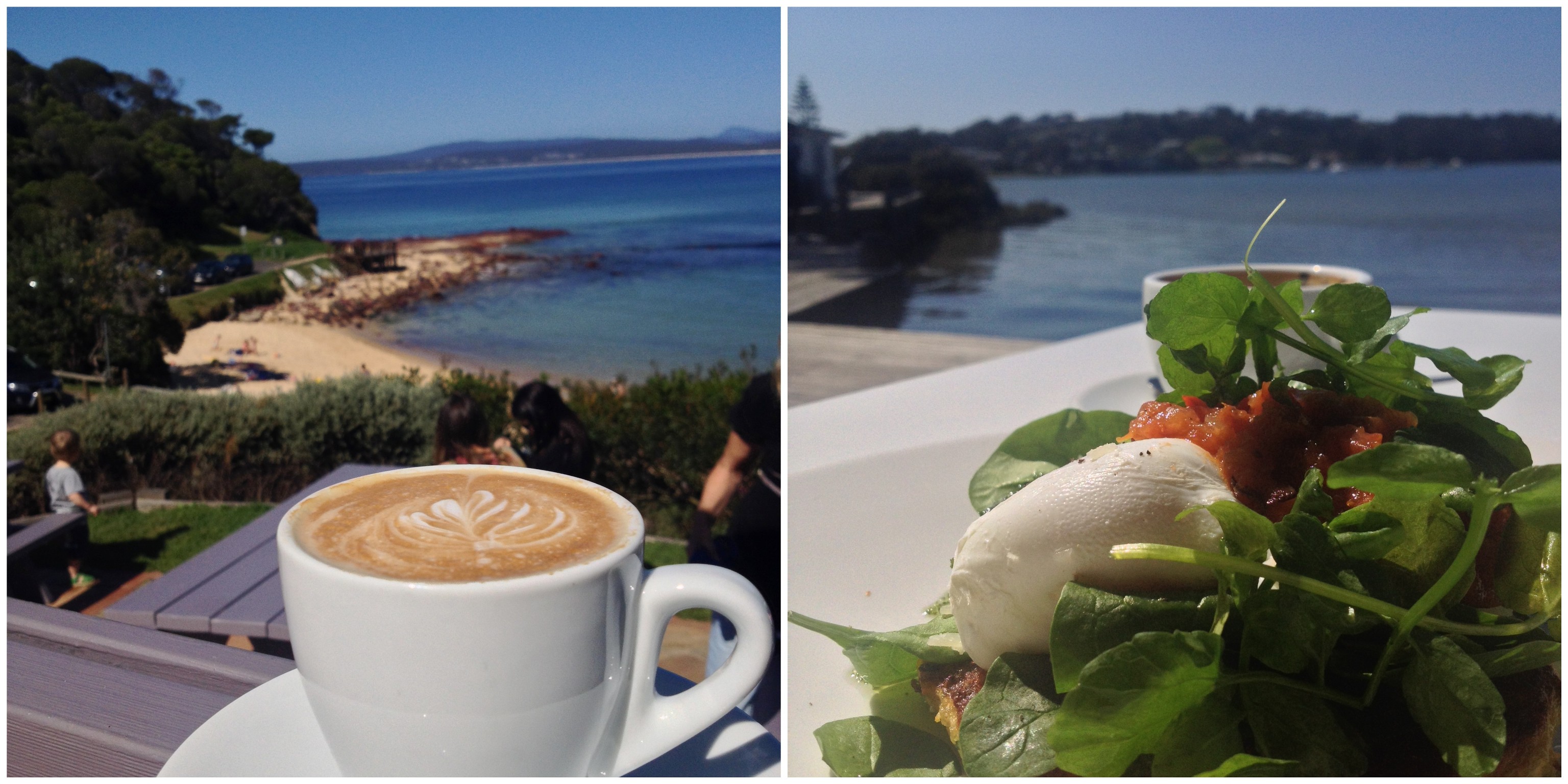
spr10Dinner was fish and chips, obviously. Not as gargantuan as the last time I had fish and chips and not as English – in this case, unfortunately. However, should one pine for English food for too long, there is always a chance to savour the saviour that is a flat white. A flat white the following morning after a gentle walk along Merimbula’s main beach and into its inlet. A flat white served from a beach hut by charmingly hipster-leaning youngsters…the type that usually make the best coffee. A spot in the sun with a flat white overlooking the paddle boarders and swimmers and boat people cutting a course through the opaque sapphire water. A drink to stimulate taste buds and senses for brunch elsewhere beside the water. Happy birthday to me, and welcome back.

spr11

Australia Driving Food & Drink Green Bogey Photography

Escapes

If I, unlike the Treasurer, have my calculations correct, this time last year I was finally departing the brilliant bays of Esperance and cruising onto the wonderfully tucked away Fitzgerald River National Park, on the south coast of Western Australia. In the time between now and my last blog post this year I would have been craning my neck for koalas on Kangaroo Island, eating the best kebab in Glenelg, camping on the Murray, watching huge full moons rise over the dunes of Mungo National Park, bumping along a rutted sandy road to Broken Hill, navigating a sodden Alligator Gorge, walking miles of ancient sea bed in the Flinders Ranges, coffin-dodging in Coffin Bay, using foul language in Fowler’s Bay and doing nothing much at all along the Nullarbor; apart from crossing it.

2014 is quieter and, depending on your point of view, more productive. It was bound to be. The escapes are a little less adventurous and thus I come to the once more excusable void of blog-worthy happenings. Escapes are twenty minute walks for a coffee and hour long end of day circuits of suburban foothills and Redhillian summits. They are welcome escapes from working at home and doing my homework. They are, for the most part, absolutely irresistible, given the quite immaculate daytime weather, the saturated streets and, well, the fact that they are breaks from work. My self-discipline is constantly tested!

may01

may02Along the same lines I have found myself quick to spot something that is desperately needed from the supermarket and this too has offered the chance to take a break and do one of my other favourite things: look at, buy, cook and eat food.  The weather has been amenable here as well, the bonus from cooler nights coming from one pot wonders, roast dinners and, when I can’t be bothered so much, bangers and mash and onion gravy. Ultimate comfort and gratuitously sleazy food shots.

may03As snugly as all this sounds there comes a point when the same old same old gets a little bit too same old. And this triggers a very impromptu escape, one a little longer than an autumnal stroll and not leading to something with gravy at the end. Instead, a drive on the open road and fish and chips by the sea. And, most miraculously of all, a beautiful 24 degrees in which to throw off your trousers and praise the lord!

may06Fortunately for just about everyone I brought some shorts to change into for an amble along Tabourie Beach, the obligatory exercise out of the way before gorging on deep fried batter at Burrill Lake. Driving through Ulladulla I decided to pick Mollymook as my laying down and trying to recover from overeating site. But it was just so nice that I didn’t just lie down and groan, all the while clutching at my swollen paunch; the sweeping sand cried out for many footsteps, some of which veered into the sea.

may07

The sea was, quite miraculously, the warmest I think I have ever known it to be down on the south coast. It may have something to do with currents or Great Barrier Reef dredging or climate change, whatever that is. It was warmer than Esperance, warmer than Fitzgerald River this time last year. And while those spots are something special, they are a trifle inconvenient at 3,200 kilometres distant. Google Maps tells me Esperance would take 34 hours to reach, and that’s without traffic (and, I assume, sleep)! This took a little over two. It is not as great a length, but provides almost as great a feeling. Indeed, it is another great escape (…now cue the music).

may08

Australia Driving Green Bogey Photography

Capital works

I reckon every city and town and village and hamlet should have its own special ‘day’. It should be a time for locals to come together to take stock over what they have collectively achieved and to dream of what can yet be achieved. An opportunity to dress up for those from outside looking in, welcoming others into a collective ample bosom designed to make them say things like “Yeah, you know this really is quite a nice spot.” A symbiotic way for the place to provide something back to its inhabitants, made only possible by its inhabitants putting something into the place.

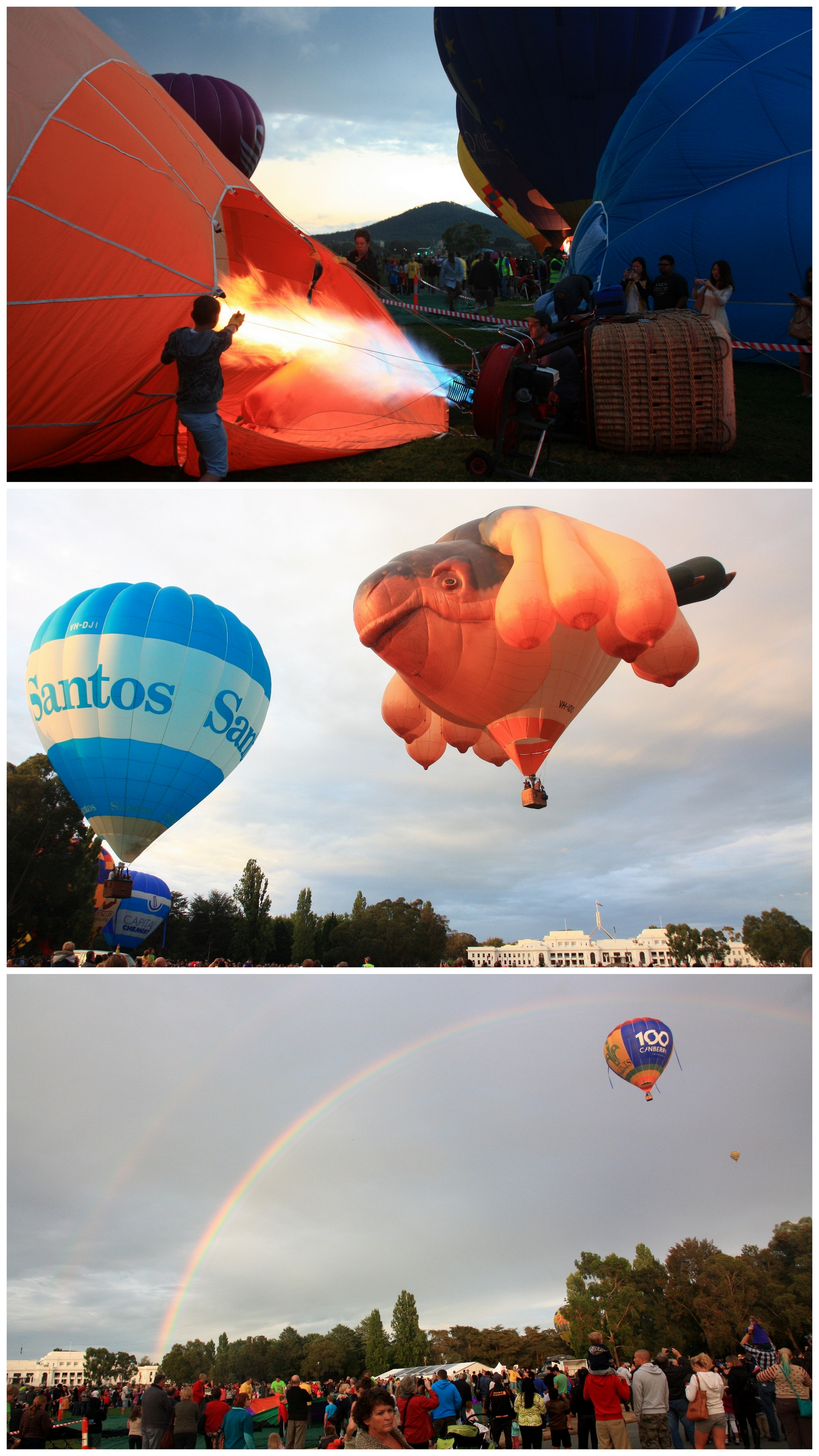
If Canberra Day is anything to go by, such extravagance is elongated over several weeks sometime around March. With the seasons commencing a transition, it is one final agreeable hurrah, a lingering celebration of another summer before thoughts of hibernation and exile set in. It is still warm but the days are shortening, making it an ideal time for pre-dawn balloon ensembles and post-dusk illuminations. You don’t have to get up too early or stay out too late, and you don’t yet have to risk strangulation in a melee of scarves and hats and fleece blankets because it has dropped to something arctic like ten degrees.

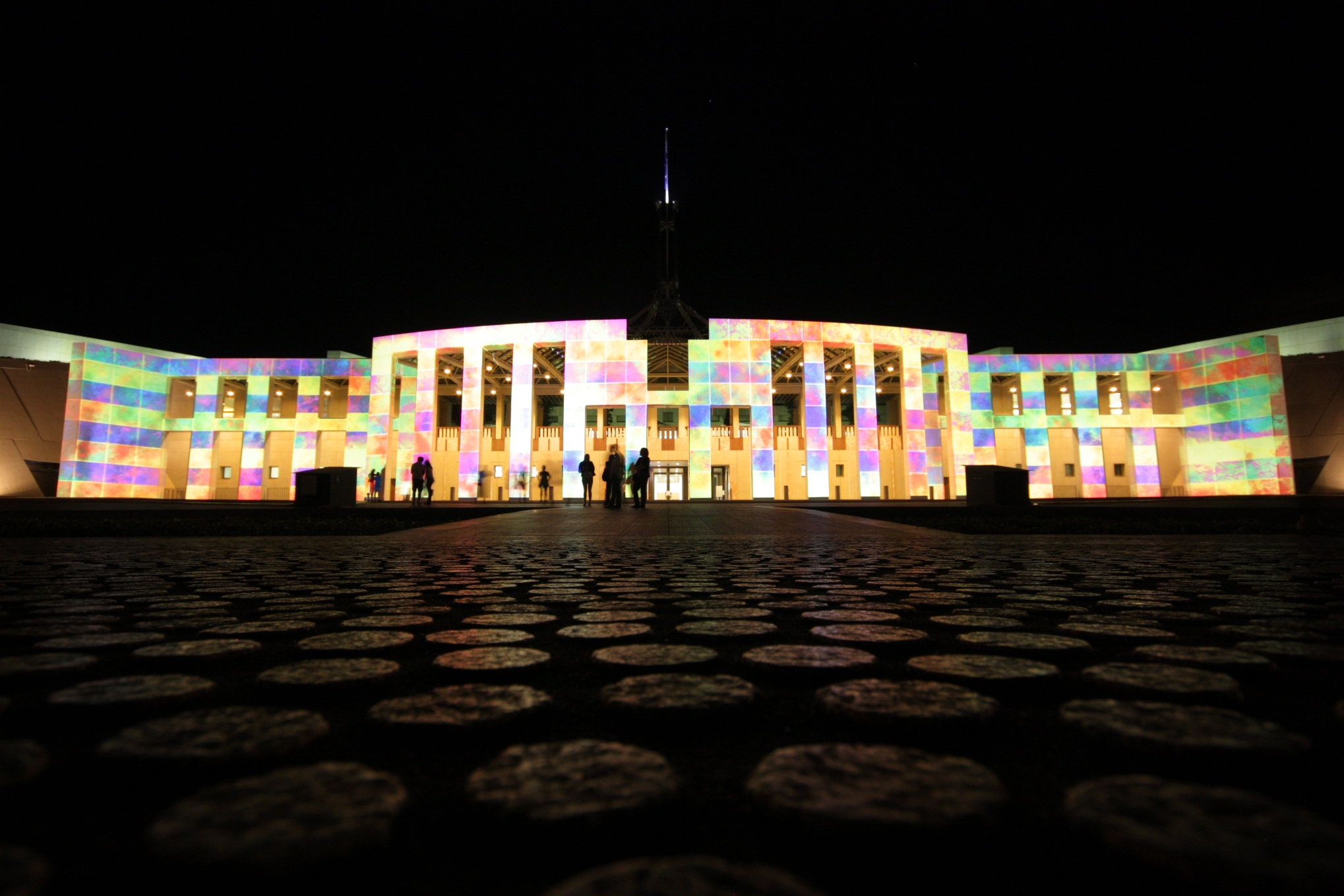
mar03One recent Friday in March offered a sumptuous day of deep blue skies where it was nudging a far from arctic 30 degrees; warmth that seeped into the night and made a very slow amble around the Parliamentary Triangle all the more comfortable. At scattered intervals the huge geometric edifices of the national institutions thrust up as multicoloured beacons, drawing moth-like the throngs of humans revelling in an evening of enlightenment. A beautiful day shifts into a beautiful night.

mar01

mar02

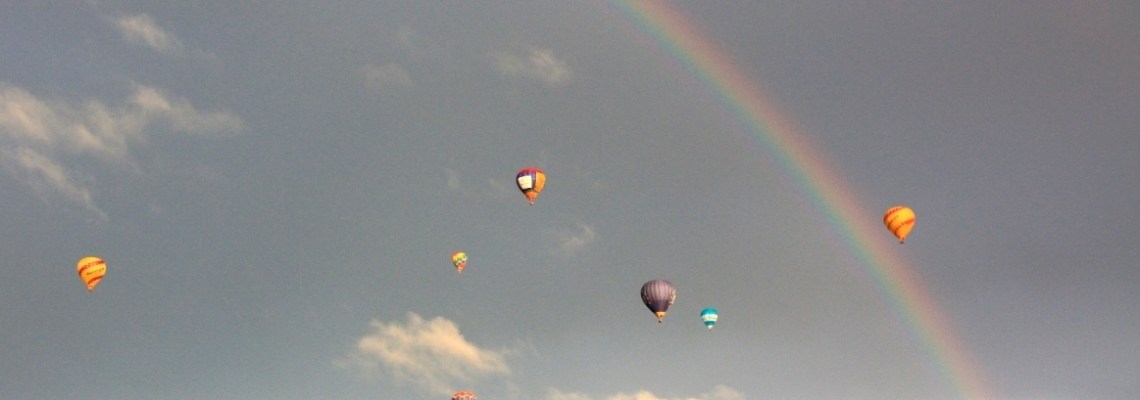
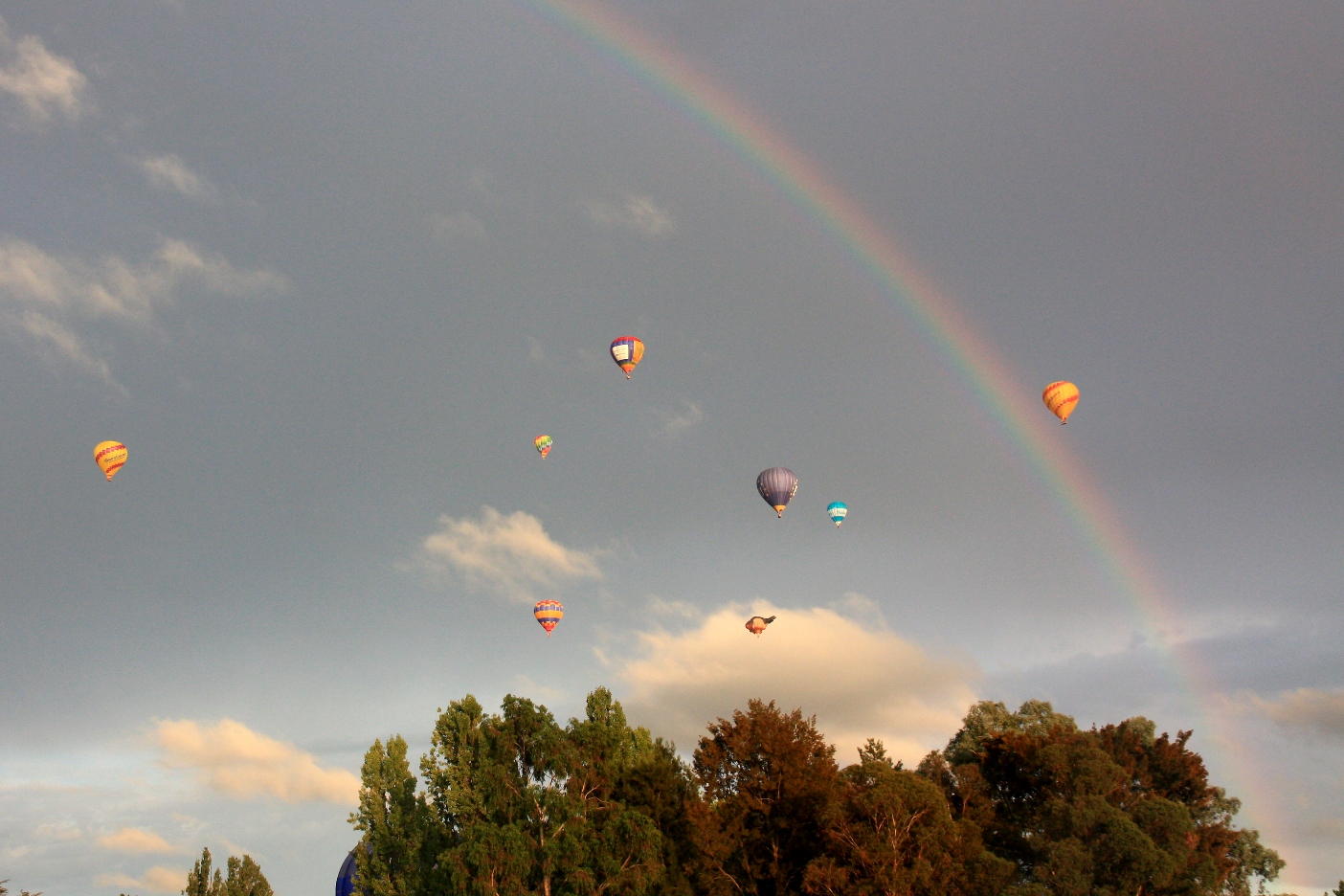
mar04Cooler and with showers threatening, a Sunday morning is cloaked in a pre-dawn gloom. It’s fairly early and the streets are even quieter than usual. It’s that peaceful time of day, a serenity that becomes confronted by parking battles and swarms of people as dawn breaks once more in the Parliamentary Triangle. As quick as the light emerges, balloons rise up from the ground; once flattened tarps smeared across the lawns inflate into rounded bulbs of colour and misshapen eccentricity. The sun sneaks up from the eastern horizon as people wave gleefully from wicker baskets shooting up into the sky. They shouldn’t look so bloody cheerful…they seem to be heading somewhere over the rainbow and into that storm. Oh well, good luck to them, I’m off to grab a coffee.

mar05

Monday, and it’s a public holiday, all to celebrate the 101st birthday of a city. Ironically many use it (with the attaching weekend) to flee the place. It’s as if the Prime Minister has just let off the stinkiest fart known to humankind from the flagpole of Parliament House, causing people to rush out onto the Kings or Federal or Monaro Highways in some sense of manic delirium. They head back later on the Monday, once the air is clear.

mar06bBeing a flexible fellow, and paying attention to the weather forecast, I stayed put until Monday. The day was sunny and I decided – with a spontaneity that still involved making a couple of lists – to head up into the hills for a spot of the old driving-walking-camping experience.  It was an enjoyable drive and involved some new road, taking in the Snowy Mountains Highway to Kiandra and then heading over a lumpy and curvy Alpine Way down to Khancoban. There was even – and this clearly denotes a successful road trip – a big thing at Adaminaby. Little over a hundred kilometres from Canberra and it is shameful that this was my first Big Trout sighting.

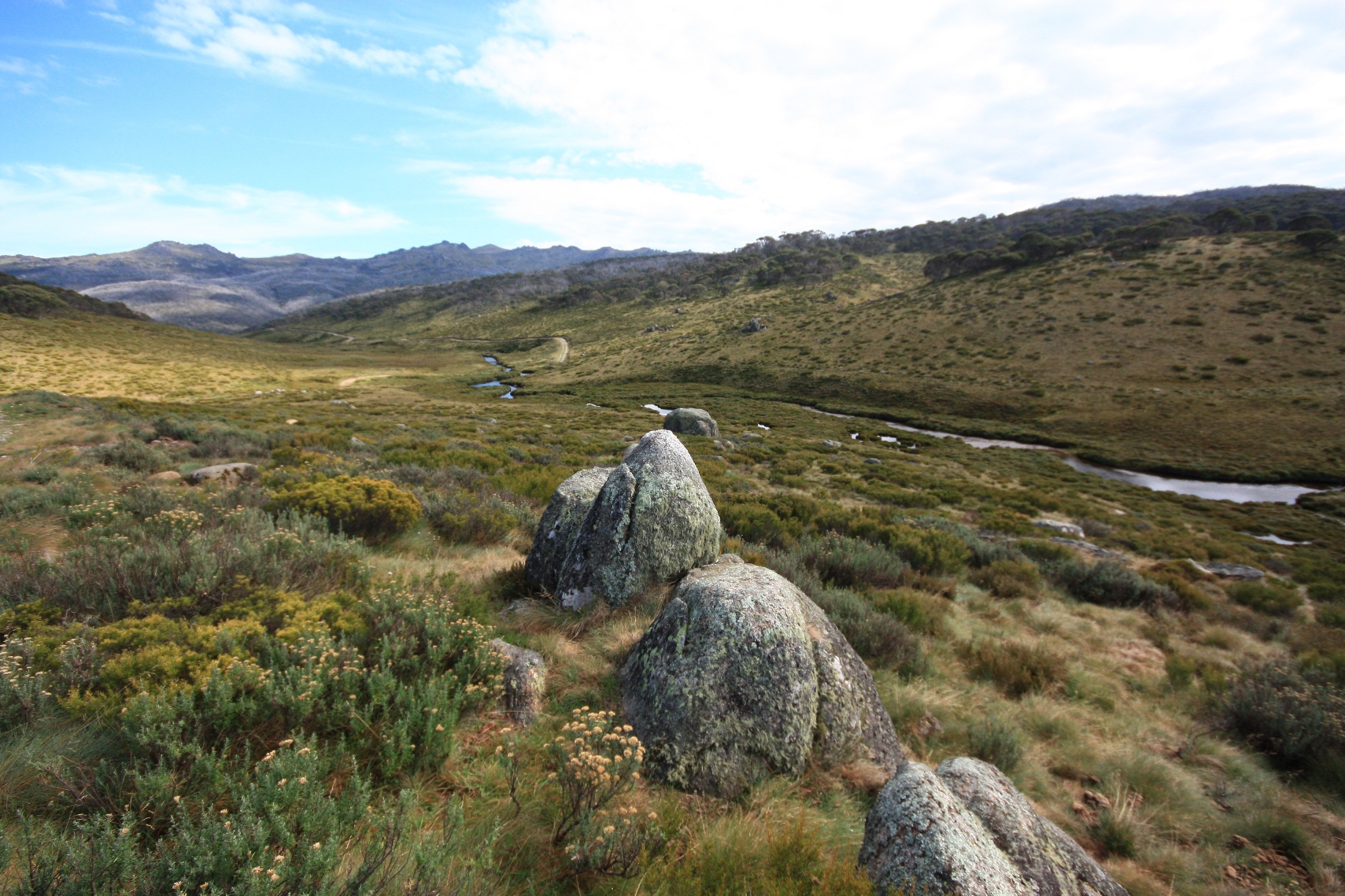
The barren, frost-scarred plains of this eastern side of Kosciuszko National Park gradually transition as you head west, down through a verdant paradise of tall gums and ferns on the wetter, western side. From here, views of the Main Range are a tad more dramatic, captured at the captivating Olsens Lookout. The plunging of streams can be heard rising from the deeply cut valleys, all making their way, eventually, into the Murray River. Before that, at Geehi Flats, waters trundle along the broad Swampy Plains River, offering a genial spot for camping and, quite probably, Big Trout. Until the storm rolls in…

mar06So much for the weather forecast but I guess these are technically mountains and mountains are known to find weather a fickle companion. With rumbles of thunder close, the rain started pretty soon after parking up, before any swag had been resurrected. With no obvious sign of letting up, and with some distance to travel on slippery surfaces to a town that may or may not have a dodgy motel, I decided to complete my intense road test of a Subaru Outback. Just how well do the seats fold down to form a spacious sleeping area?  The answer: well, not too bad…ten extra centimetres of legroom would have been handy but I slept…well…no worse than I would have done in the swag.

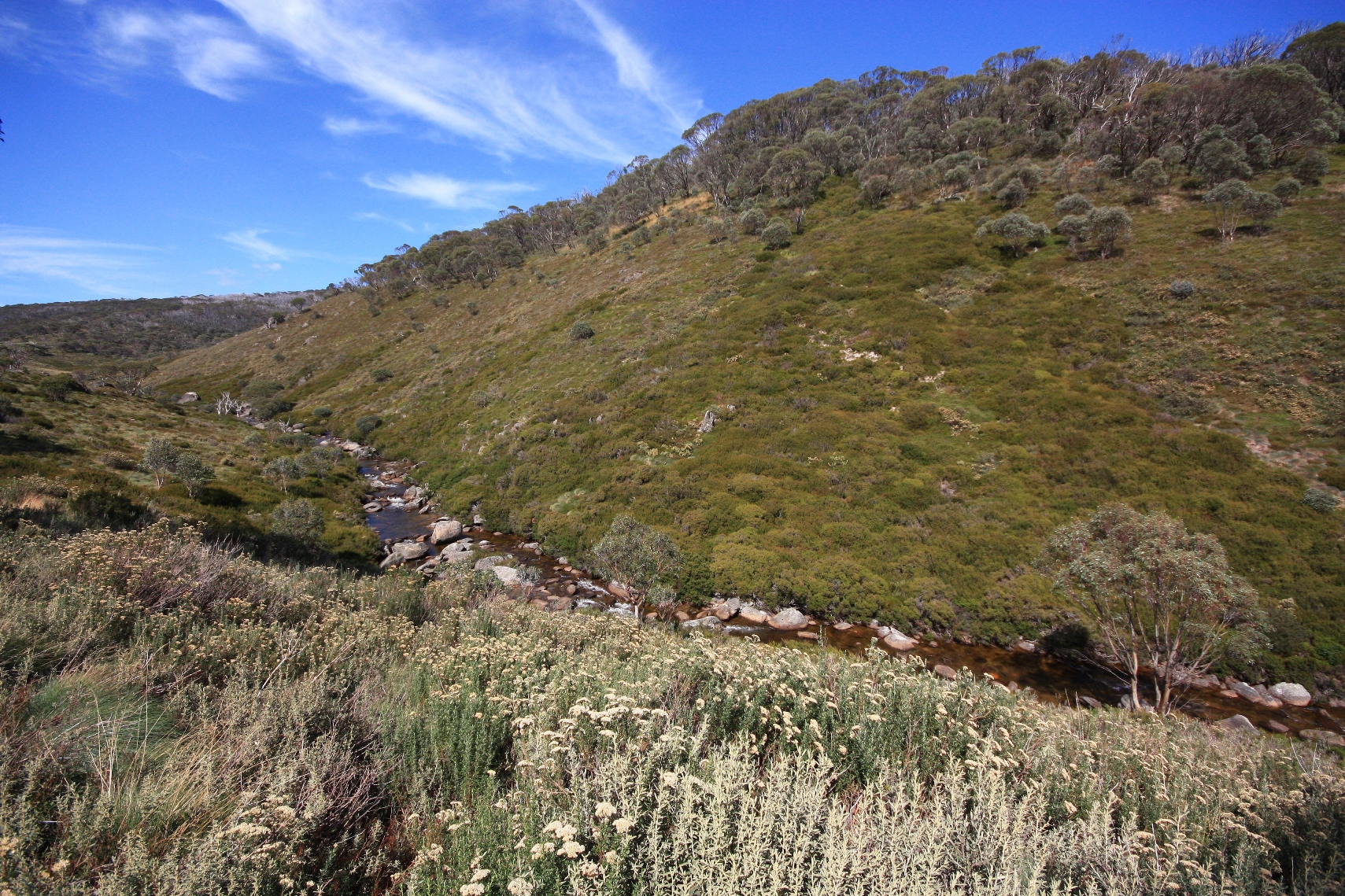
Still, it was nice to stretch the legs the next morning which predictably dawned all damp and misty, but dry and with the sun only very reluctantly breaking through clouds. A drive up over the range and heading back east demonstrated the transformation of plant life once again. Near the road’s highest point at Dead Horse Gap things were more barren once more. Perhaps a surprising spot to take a walk but I was pleased, following the course of the Thredbo River into the Pilot Wilderness, to find myself in somewhere just slightly akin to a Dartmoor valley or a Welsh llanfygwryff-y-pobbblygwrwrochcwm.

mar08

mar09I was heading along the Cascades trail which leads to a hut called – you guessed it – the Cascades Hut. I couldn’t be bothered to go all the way to the hut (18kms return), but made it to Bob’s Ridge and back (shall we say, with a bit of meandering, 10kms). Being a ridge there were some views, west and south into Victoria, though frequently obscured by stunted and bare gum trees.

Anyway, it was nice to partially recreate the feel of a bit of upland Britain. Being in the Australian Alps I was also happy to try and recreate an Alpine mountain sandwich, consisting of bread, cheese and cured meat. Again, it was no fancy ooh la la baguette avec fromage et saucisson, but filled a hole at the very pleasant riverside setting near the end of the walk.

mar10

Of course, on a birthday weekend such as this I need to top off this eating with some birthday cake. I dutifully obliged with a bakery treat in Jindabyne on the way back to Canberra. With a coffee. Borderline country coffee. Which made it undoubted road trip cuisine. Which made a return to Canberra, with its guarantee of good coffee, all the more inviting. And for that, I’m very pleased to wish it a happy birthday indeed.

Australia Driving Green Bogey Photography Walking

Yurt

It was like wakening in a miniature circus tent, though with just the one clown stirring from an overnight slumber. Through a plastic window daylight was seeping into the octagonal space, the hard wooden floor radiating sunshine upwards into the plastic dome, like flame rising into a hot air balloon. Through the plastic glare the gentle sheen of the sea glimmered out in the distance, a view broken by dark pine forest and rounded headlands. One or two female deer lazily munched on the green grass in the foreground, as I set to joining them for breakfast.

It is hard to say if this was exactly what I was expecting when I came across an entry for this place in a guidebook many months before. Certainly what transpired captured the atmospheric appeal that came to my imagination back then. It was moving towards winter in Australia and times were spent in windowless offices and pointless meetings as I trudged slowly towards the date when I finally left my job. The sound of a place tucked away on an island in the pristine Pacific Northwest of the US where you could sleep in a yurt had instant allure. It seemed I had become what I never wanted to become and seeking clichéd escapes from ‘executive stress’.

And so, several months later, after visiting Hong Kong and Europe and New York City on my big time out, I landed in Seattle. Initial experiences were far from chilled. By time I had picked up a hire car it was rush hour on the I-5 and there I was in an unfamiliar car in an unfamiliar place on an unfamiliar side of the road. Sweeping through the heart of downtown Seattle I was able to avert my gaze from the weaving cars and merging lanes for just the briefest of moments. To my left, the Space Needle pierced the low cloud, affirming that I was heading in the right direction, north through the fading suburbs and fading light to a place where you can breathe again.

I slept that night under solid roof in one of those steady, unspectacular motels that permeate the highways and byways of the United States. They have beige carpets and brick walls and sturdy wooden sideboards with built in radio alarm clocks and light switches [1]. They have an included breakfast with a choice of three types of cereal dispensed from what were pretty revolutionary cereal dispensers back in the 60s. A choice of crushed cornflake, soggy rice puffs or the contents of the vacuum cleaner bag. Alternatively, you can have some undercooked toast with impossible to spread butter.

They have a laundry with tokens and powder available from the front desk, so that you can put your world-weary clothes through an expensive and time-consuming process in which they become sodden as Bangladesh during the monsoon and then undergo ten minute stints in a huge dryer and eventually come out with only a very incremental change in cleanliness and a lingering damp dog smell. Still, you put one of the clean-ish jumpers on and head out into the fresh air with the hope that at least this one will dry out in the next few hours.

The huge consolation is that Bellingham seems to possess its fair share of fresh, laundry-drying air. Beside the steely waters of Puget Sound, a pleasing boardwalk leads to a pleasing place for coffee with a pleasing-on-the-eye person making it. Elsewhere in town, the occasional deer grazes on someone’s perfectly coloured Y_whatcomprecision cut front lawn. Other deer poke their heads out of the undergrowth in Whatcom Park – named after the dotcom boom which failed to materialise this far north. Maybe. Amazingly, this is like a national park in the middle of the town, with some pretty waterfalls disturbing the peace of the forest.

Close to the border, the vibe feels more Canadian than anywhere else in America, which is a good thing for any executive stress you may have. Actually, Bellingham reminds me more than anywhere of Cypress Creek, the fictional town in The Simpsons acting as the secret base for the fantastical megalomaniac Hank Scorpio. I admit to failing to spot Put-Your-Butt-There on third in the hammock complex in the hammock district. But other than that – mountains and pine forests, chipmunks, lakeside houses and picket fences, secret underground missiles armed and aimed at France – Bellingham ticked all the boxes [2].

Another night under a solid roof led to another included breakfast, though this time with the surprise bonus of slightly stale miniature croissants. They must have been leftover from the annual general meeting of the American-Franco Dwarf Association of Washington State that took place in the conference room the previous evening. Still, I pocketed a few for the journey on what was a sublimely sunny day, warm and clear heading down to Anacortes for a ferry ride.

I can imagine, in this weather-laden extremity of America, that the ferry ride across to Orcas Island is rarely as serene as it was on this particular day. Slicing through high definition crystal calm, the ferry’s wake rippled the reflections of the many pine topped isles scattered upon the sound. Secluded bays hosted the occasional rustic dwelling, where the kayak appeared to be vehicle of choice. Between island views the mainland drifted away, but all the while the snowy volcanic peak of Mount Baker gleamed, a blinding white cone penetrating the upper atmosphere.

Disembarkation was a low key affair on Orcas Island, which is the largest of the many San Juan Islands peppering Puget Sound. Given some land mass to play with, the island offers a patchwork of working farmland and wild forest, a contoured landscape of hills and lakes, punctuated by a handful of small but serviceable towns. There is one main road linking the ferry drop off and the towns, with a few side diversions of note. So, after tucking into a pulled pork sandwich at the biggest town, Eastsound, the car took me up and up on a detour to the island’s highest point.

Mount Constitution sounds like somewhere that belongs in the United States, like Capitol Hill and Liberty City and Freedom Fries and Gun-toting Redneck Hill. The name feels solid and a little serious, denoting something which is of grand importance albeit a little dour in the detail. I don’t think any major pieces of legislature would have been signed up here, but I did spot a few written etchings professing Randy’s love for Mary-Jane.

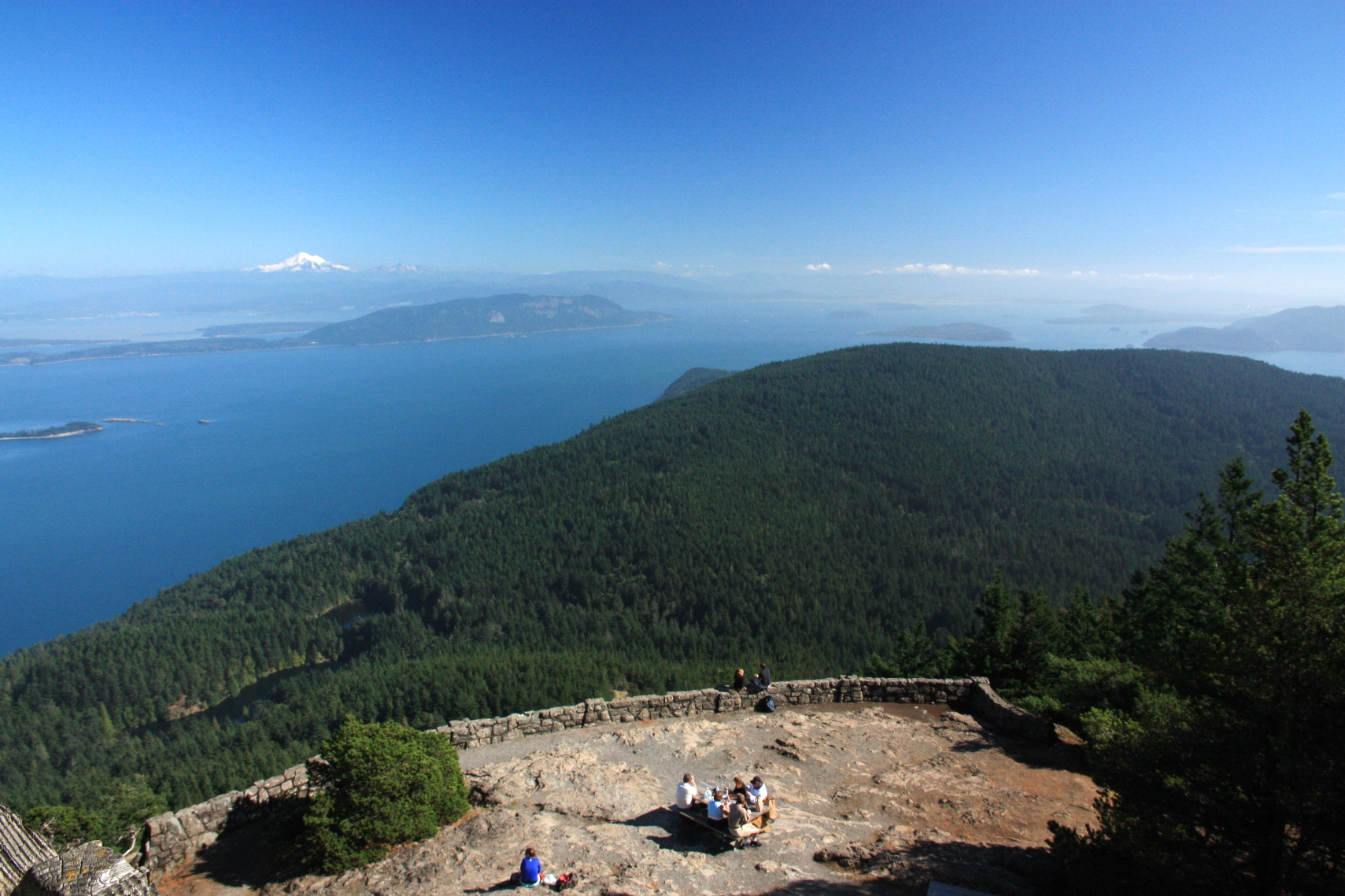
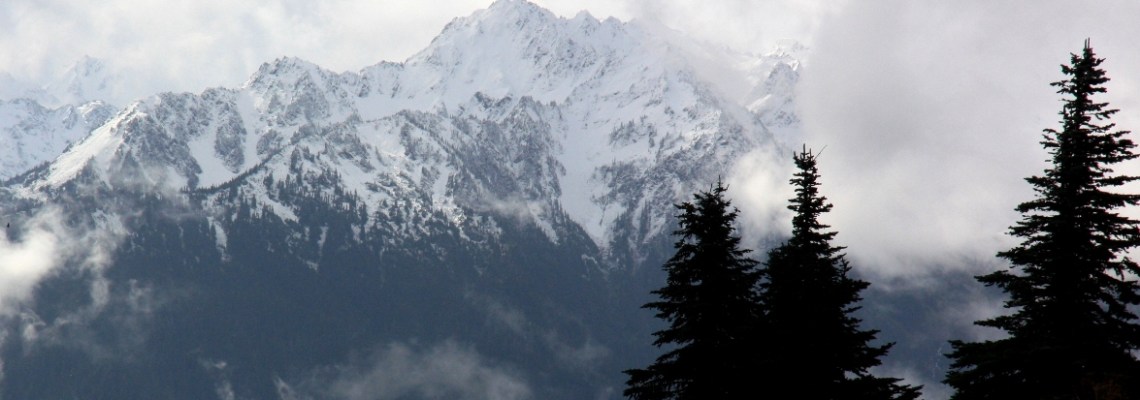
It turns out the peak was in fact named after the USS Constitution which I am assuming plied the waters far down below in the distant past. The waters today are becalmed, a smooth sapphire sheet dotted with emerald islands, lapping at the shores of the mainland, where mammoth mountains rise to form snowy domes suspended in the sky. I can see Canada. I can see the entire Cascade Range sweeping down Washington and even into Oregon. I can see the Olympic Peninsula and its equally lofty heights, perhaps hiding Japan over its lumpy bulk. Above, the sky is as blue as blue sky strategic thinking gets, and far more credible.

Y_const

And so, from such gargantuan immensity I end up in a little yurt on the shores of Doe Bay, on the eastern side of the island. I may well be staying in some place that has the word ‘retreat’ in its name. One or two of the staff have longish hair, and I think they are serving vegetarian food in the cafe. There may be a spiritual yoga class tomorrow morning. But there is no pressure to non-conform. Simply do as you will. Meander the land and come across other yurts or cabins or swags set amongst the trees and cosy glades. Take a book and sit on a rundown bench under a fragrant pine branch, the sound of gently lapping water occasionally pierced by seals or other marine life or a guitar being strummed on some other bench over the bay. Potter about in such a complete carefree daze that you lock yourself out of your yurt and have to call out someone to help you after hours who looks very pregnant and was probably in the middle of eating their dinner but is still absolutely delighted to be of assistance.

Y_doe

Wake up on your birthday in the middle of a structure resembling a giant birthday cake, scattering opened envelopes on the radiant wood floor. Say good morning to the deer munching away on the green grass, shading your eyes from the morning sea glare. Hear the sound of soothing humming coming from the yoga shack. And revel in an absolutely delicious vegetarian breakfast burrito served with approachable charm and humour. The milestone of another year reached and, strangely, I feel ten years younger.


[1] There is always a switch which never seems to operate anything. (Meanwhile, across town, the lights at the ballpark flicker on and off as an unassuming tourist twiddles with knobs in a beige motel).

[2] Unfamiliar to your far too cultured brain? See http://en.wikipedia.org/wiki/You_Only_Move_Twice

Links

Scorpio: http://www.youtube.com/watch?v=9QEsjd1WZuY

Cypress Creek…I mean…Bellingham, WA: http://www.bellingham.org/

The San Juans: http://www.visitsanjuans.com/

Doe Bay Resort and, yes, Retreat: http://doebay.com/

Specifically, pacifically, northwest: http://neiliogb.blogspot.com.au/2011/10/specific-pacific-northwest-blogfest.html

A to Z Driving Food & Drink Photography USA & Canada Walking

Rewind pause fast forward

SydJan01Well how lovely it has been to stand still and sleep in my own bed and pop around the corner to a coffee shop where they know my name. How enjoyable to see familiar faces and some new ones too, sharing an overload of barbecued food and leftover Christmas decadence that never seems to dwindle. How civilised to be able to pop to the National Gallery to see some Lichtenstein and snigger at some political cartoons at Old Parliament House before checking out the roses. How satisfying to traipse up and around pockets of bushland here, there and everywhere and watch the red sunlight fade from Canberra sights and sink over the Brindabellas.

SydJan03

SydJan02Familiar things that became less familiar but are now familiar again. Much like losing badly in the cricket. Lest familiarity brings about too much comfort there are a few doosras thrown in to keep things interesting: new developments in Kingston creating wannabe Gold Coast glamour; minor changes to the aisle configuration of the supermarket; previously unexplored hillocks in the south of Canberra. Plus, of course, the interjection that is Christmas, which is the ultimate break from the norm…apart from the tradition that is a sausage roll, cheesy marmite, cold ham, cheese, pickled onion, cracker tasting plate.

It was actually quite a change to spend Christmas in Canberra; in recent years Sydney has hosted the festivities and provided random assortments of hot beach picnics, torrential downpours and moist grey gloom. Such was the picture again in January for a few days of further catch ups and re-acquaintance. Pleasingly, with time on my hands, I could take a detour from the familiar, yet pretty dull, Hume Motorway and revisit such delights as Fitzroy Falls – currently a thin summer sliver – Kangaroo Valley, Berry and the Illawarra. Again, time for some enjoyment of the old along with discovery of the new – a short rainforest and waterfall walk at Macquarie Pass National Park an additional find in this luscious little corner of New South Wales.

SydJan04

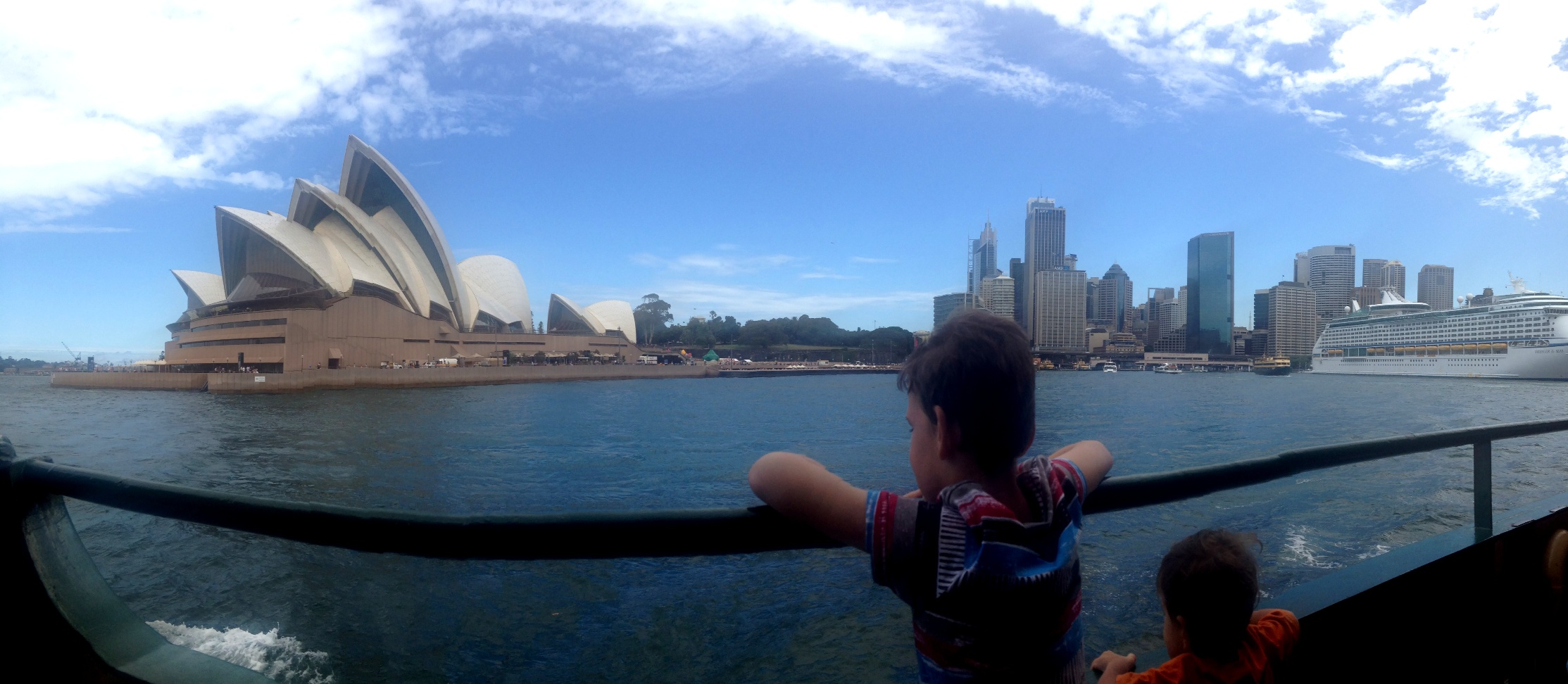
SydJan05Sydney was a mixture of iconic waterside delight blended with a tinge of inner city grime and sweaty congestion. Fortunately staying with friends on both of the plush sides of the harbour I could fairly easily potter down to the water and share it with the millions of other people on holiday. Having been away from here for quite a while there was a little bit more of a tinge of excitement at seeing that bridge and that opera house and an inevitable taking of pictures that have been taken hundreds of times previously. Though wearying in the afternoon warmth, there was a thrill at boarding the Manly ferry, and a rejuvenating half hour ride watching the eastern suburbs pass by, thinking about what ice cream or treat to have back on landfall.

SydJan06

All this is familiar again, but there is still chance to do something new. After gorging on chocolate brownie and cappuccino I was keen to make amends by walking from Manly to Spit Bridge, an up and down tramp following the watery alcoves and rather untainted bushland fringing Middle Harbour. And it is here that you notice that despite being a large city, with concrete overload and oversized cars and millions of people, the geography of Sydney often wins out. Bushland and rainforest pockets are much like they were before boatpeople came, and small inlets offer cosy beaches unreachable by modern means. True, never far away is a luxurious home with a view, and the noise of a freeway as Spit Bridge nears, the harbour a buzzing playground for those pesky boatpeople. But it is also true that in the midst of a city, within sight of its lofty heart, it is a wonder to be able to walk in parts untainted; a wonder that pervades in patches throughout Sydney.

SydJan07

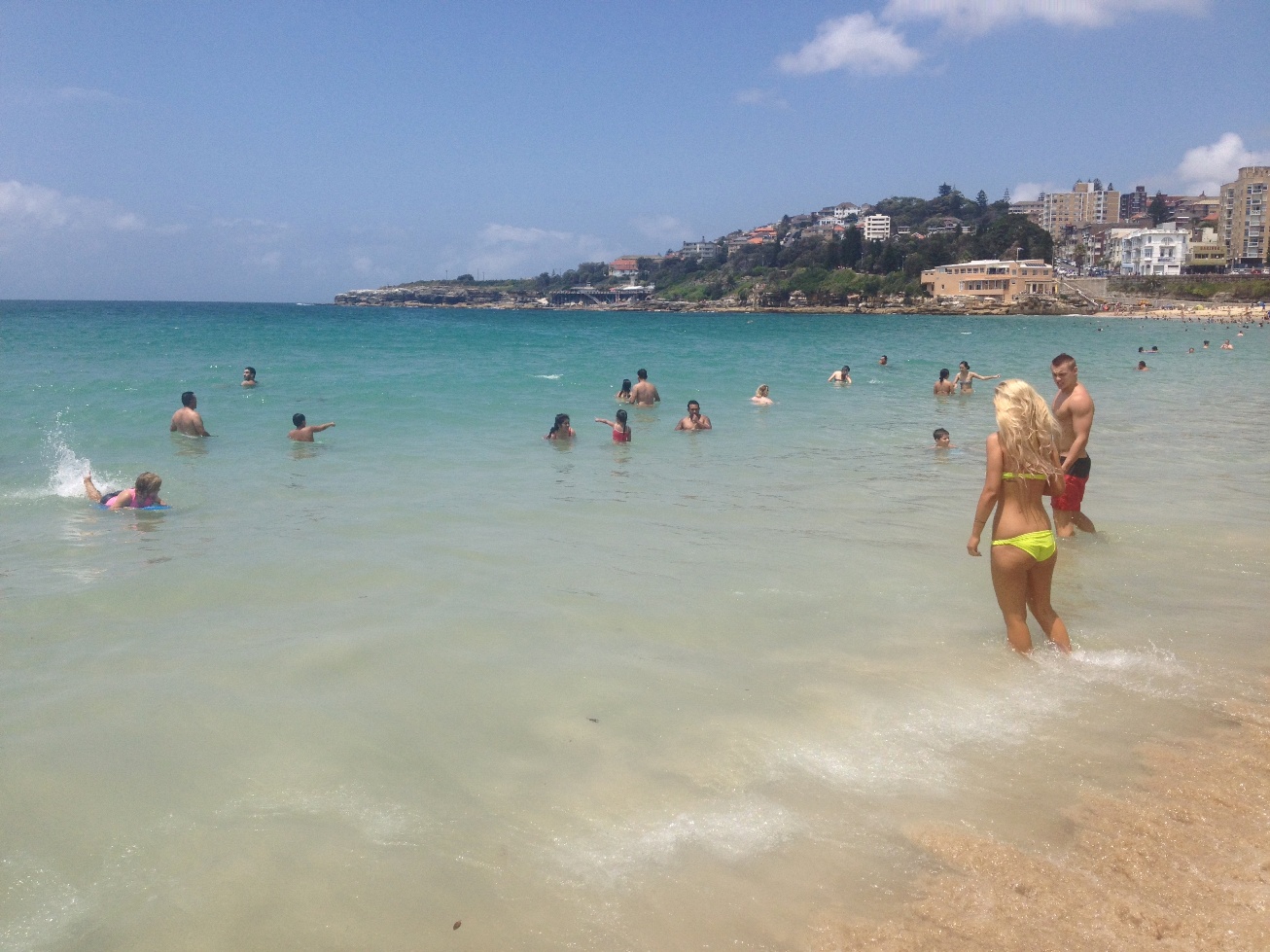
Sydjan08North shore opulence is kept in some rein by its geography of steep hills and snaking inlets. In the Eastern suburbs there is less to get in the way, although large parks and reserves are scattered besides the sea and across to the fringes of the city. This is once again familiar territory with familiar walks down to the ocean and along its beaches and cliffs. It is a place of great appeal, though I think I prefer it in winter on a pleasant sunny day with fewer people and their detritus. Still, there is much to be said for sitting beside Bronte Beach and having a coffee, before dodging ridiculously fit runners all the way to Coogee for lunch.

Sydjan09All this familiarity comes in pretty handy when sizing up a final breakfast before the drive back to Canberra: a tricky choice between the Haloumi Stack and the Love Eggs. It doesn’t really matter, because whatever you choose, you will be full and happy and ready for negotiating the steadily declining state of the M5. Eventually, finally, Sydney will fade and you will be back on a familiar drive which is slightly less boring because you haven’t done it for a while. And with a full belly and a cruisy drive, all that waits are the comforts (and – this week – sweltering discomforts) of a home.

Australia Driving Food & Drink Green Bogey Photography Walking

Waterfalls

It was always going to be hard for me to steer clear of a road named The Waterfall Way. Linking the tablelands of Australia’s New England to the mid north coast of New South Wales,the twist and turns down to the ocean are regularly punctuated with a chocolate box selection of falls. The stops from west to east are a story in climate and geography. Commencing in a parched landscape of wild gorges and dry bushland, thin strips of silver white water spill off cliff edges and into unseen creeks. High plateaus offer wild flowers and cool forests through which rivers gather speed and depth to forge their way down steps into deep gullies. Moisture picks up closer to the coast, where rainforests form to offer crystal cascades and lush fern pools, and the water speeds into the coastal plain before mellowing broadly to the sea.

With such excess there is a danger of waterfall fatigue: parking up, strolling to a lookout, taking a picture and hopping back in the car for a short journey to the next stop. In fact, the waterfalls continue north in pockets of rainforest tucked amongst ancient volcanic plateaus all the way up into Queensland. In the wonderful natural surroundings of Springbrook National Park it is as if there is one final grand culmination before water sweeps over the Great Dividing Range and into the horror of a Gold Coast horizon. Plunging pristine water toppling over the edge before being becalmed in a complex of gaudy cashed up retirement waterways.

Tucked away before the Gold Coast looms, in the quieter western side of the park, another waterfall tantalises the traveller who crosses the border by the back way. Nestled within a beautiful green valley is the once more imaginatively named Natural Arch, replete with shady pool and shimmering cascade plunging through a tunnel of rock. It’s midway round a processional loop walk through the rainforest, where sun rays filter hazily through the tree ferns and parrots chirp away in the canopy. On a humid summer morning, the cool shade of the forest and continuous thrash of crystal water is the perfect gin ‘n tonic.

—————————–

What is it about waterfalls that are of such appeal that we seek to recreate them in garden features the world over? On balance they are usually very pretty, from elegant slivers to bubbling tiers and tormented torrents of foaming fury. They are, as much as anything, a break from the ordinary…where a placid river or lake suddenly comes to an abrupt halt and decides to throw itself over a cliff. There is an unparalleled feeling of freshness and purity and, often, invigoration from getting close to gallons and gallons of tumbling water. It can make you feel alive. It can make you want to pee.

The power of waterfalls is compelling and is why they are often best viewed after rain, or sustained snowmelt. Yosemite in May is very different to Yosemite in October. Postcards of massive gushing falls in northern Australia can tell a lie for the trickle that often dwindles in the dry season. In the UK, the weather is usually more reliably conducive to year round falls, with new ones springing up across high streets during supposedly exceptional but all too regular winter storms.

W_wales2013 was one of the better British summers and I felt slightly aggrieved to catch only the tail end of it. Nonetheless it was a balmy 20 degrees or so when I found myself in South Wales towards the end of August, on a different kind of waterfall way. Situated in the Brecon Beacons National Park, this literal tour de force was completed on foot along the Four Waterfalls Walk. For pronunciation lovers out there I can make your day by telling you that this commenced near Ystradfellte and took in a wonderful meander to view (brace yourselves) Sgwd Clwn-gwyn, Sgwd Isaf Clwn-gwyn, Sgwd y Pannwr [1] and Sgwd yr Eira [2].

It sounds like a trite cliché (hey, who doesn’t love a trite cliché), but each fall (or, I assume, sgwd) had its own style and character. Each one builds to the next and the final stop on the itinerary offers the ultimate white water thrill for not especially adrenaline seeking junkies. For, at the curtain falls of Sgwd y Eira, it is quite possible to walk behind the voluminous mass of water plummeting down, and – for some – to take your dog reluctantly along for the ride too. Inevitably there is plenty of spray and you will get wet, but – well – you are in Wales and you will get wet in Wales sooner rather than later. Why not make it here and take the chance to really appreciate the forcefulness of nature. Why not take your ear drums to the brink, pleading for mercy from the explosive, monumental thrash of the gigalitres of water that descend before your eyes? Amazing.

—————————–

Like Wales, Oregon is pretty familiar with rain, confronted as it is with a moist pacific airstream and climatic battle between deserts and mountains. One early October day in Portland is restricted to bookstore meanderings and coffee shop escapes, ducking out between downpours to make it to the next warming hipster refuge. Traversing wet sidewalks through a tangle of black umbrellas and beige raincoats, the city seems enveloped in the cinematic monochrome of a film noir. There is oppressiveness to the rain, something which is accepted and wholeheartedly embraced by its citizens but causes frustration to time-limited visitors like me. There are only so many lattes to sup and bookshelves to roam.

The next day shows marginal improvement – overcast but dry – and seems as good as it will get for an escape into the wilds. Passing the quite possibly interesting town of Boring, there are no views of Mount Hood to be had, rising Fuji-like out of the farmland and forests of the horizon as depicted so tantalisingly in the Lonely Planet picture. Brief glimpses are snatched beside Mirror Lake, with little reflection other than that internalised in relation to being potential early morning bear fodder. Further sneak peeks appear in the rain shadow of the mountain to the east and, here, the sun returns for a while to transform the colours of the fading autumnal forests.

With Mount Hood now somewhere behind, the road ends at the huge barrier of the Columbia River, carving a broad swathe through the Cascade Mountains and splitting Oregon and Washington States. The river has created a mammoth gorge lined with cliffs north and south. And so, with a large river system, significant rainfall, and high cliffs, there is a certainty of a quite spectacular run of waterfalls.

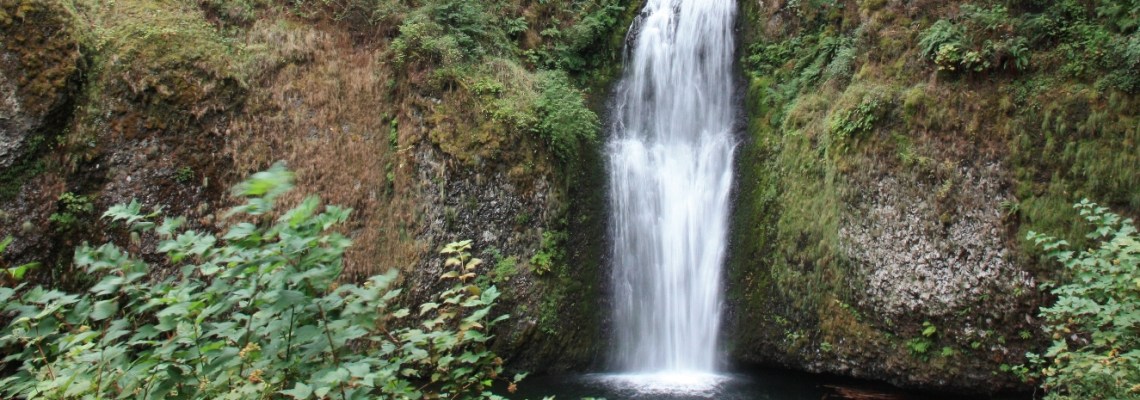
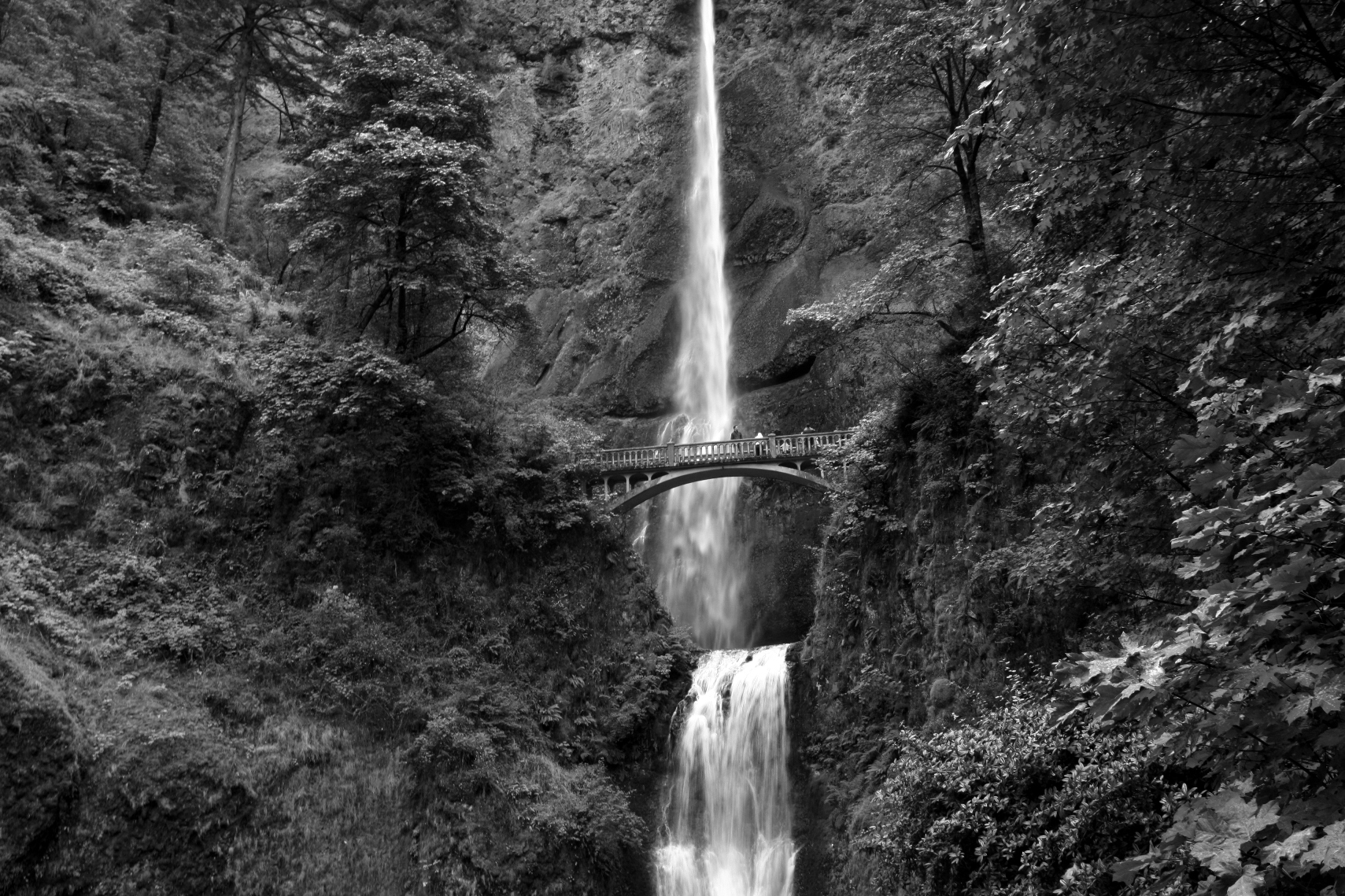
This particular waterfall way is undoubtedly a more developed road than that back in New South Wales, as dual lane sweeping curves follow the river in what is a dream to drive. Of the frequent cascades, it is Multnomah Falls that offers the most iconic sight. For once it seems a human element, an unnatural structure, has enhanced a natural spectacle. Splitting the precipitous double-decker descents of white water is a pedestrian arch bridge, where humans can run from bears and so effectively offer a sense of scale and perspective. Indeed, even the bears would look small opposed to the streaks of water tumbling from somewhere unfathomably high up in the sky.

W_Columbia

—————————–

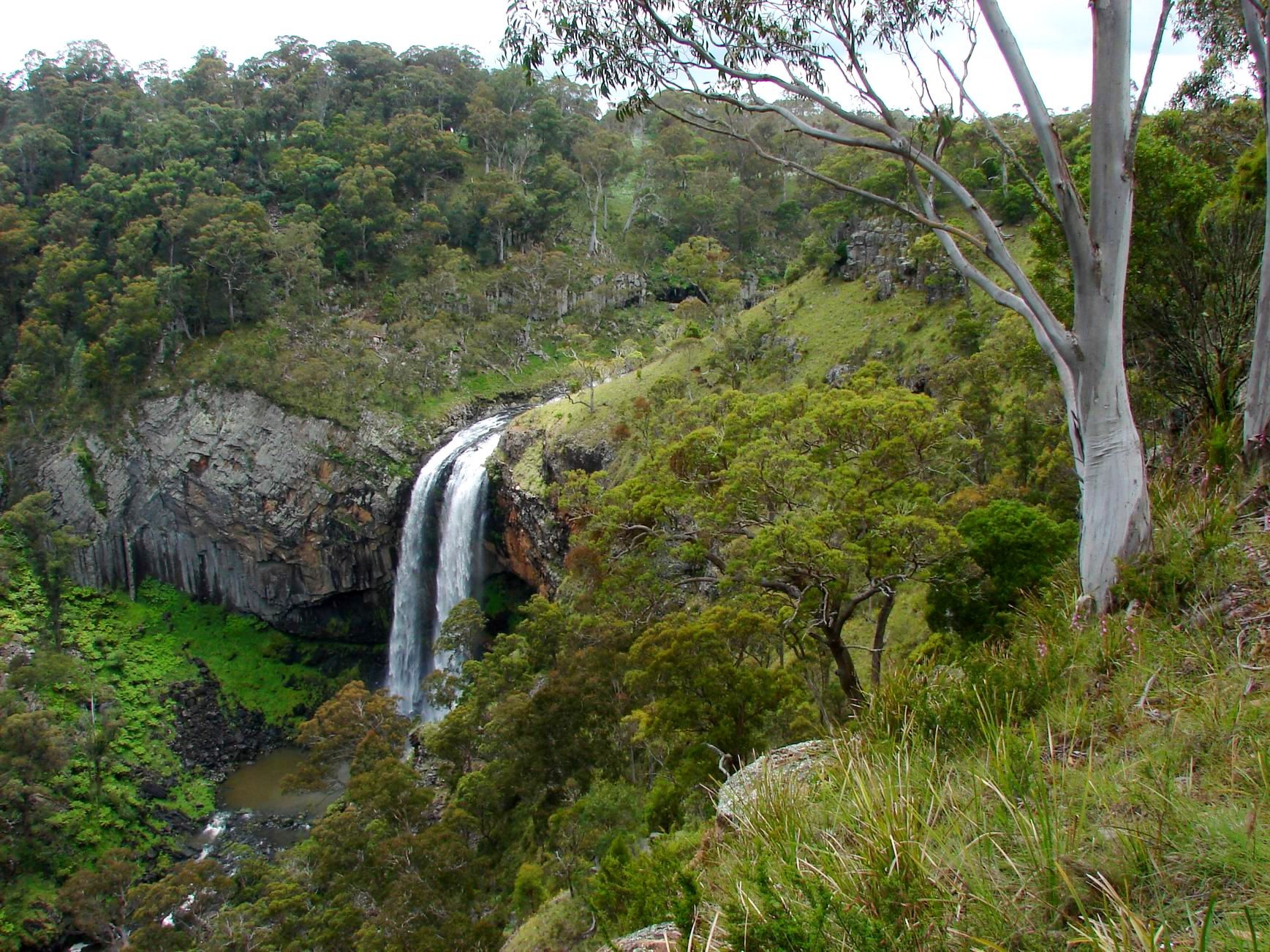
Finishing a convenient circumnavigation of the globe here I am now back in Canberra. There are few falls here, other than watery concrete features around the angular constructs of the parliamentary triangle. But in a couple of days I will be going up to Sydney and, with time on my hands, I will make it scenic, detouring to Fitzroy Falls in the Southern Highlands. An old reliable favourite, fed by a reservoir and plunging off sandstone into a gum tree valley. A lyrebird may well be imitating the sounds of crashing water and a strong minty eucalyptus scent will pervade the senses. Again, it will be splendid. Because waterfalls are always splendid. But for now, I must come to a halt and stop this gushing about gurgling water and thrashing torrents, soaked in a spray of swirling liquid currents and dramatic downpours. Because now I really, really need to pee.


[1] For anyone with a customised 2014 calendar Christmas present…this one is the front cover!

A to Z Activities Australia Driving Great Britain Photography Places USA & Canada Walking

One big year…

2013 – a year of 365 days, 12 months and approximately 52 weeks. A year with four different digits for the first time since 1987. A year in which I made it to ten countries via 12 airports and stayed overnight in…wait for it…121 different locations. A year in which I drove and drove something in excess of 25,000 kilometres, enduring 3 chipped or cracked windscreens and one tyre puncture. A year in which pointless statistics are endlessly available.

But, apart from such statistics, what are the highlights and where can stupidly made-up awards be, well, awarded?

rev01Best stay: Aroona Valley, Flinders Ranges National Park

Anywhere with a pit toilet must be pretty special in so many other ways. Camping amongst the pines and earthy creeks lined with River Red Gums, wonderful walking trails on your doorstep, sunset and sunrise views over the crinkled geography of the Flinders Ranges, all make for a magically rustic stay. Plus the pit toilets were actually reasonably pleasant.

Best walk: far west Cornwall in September

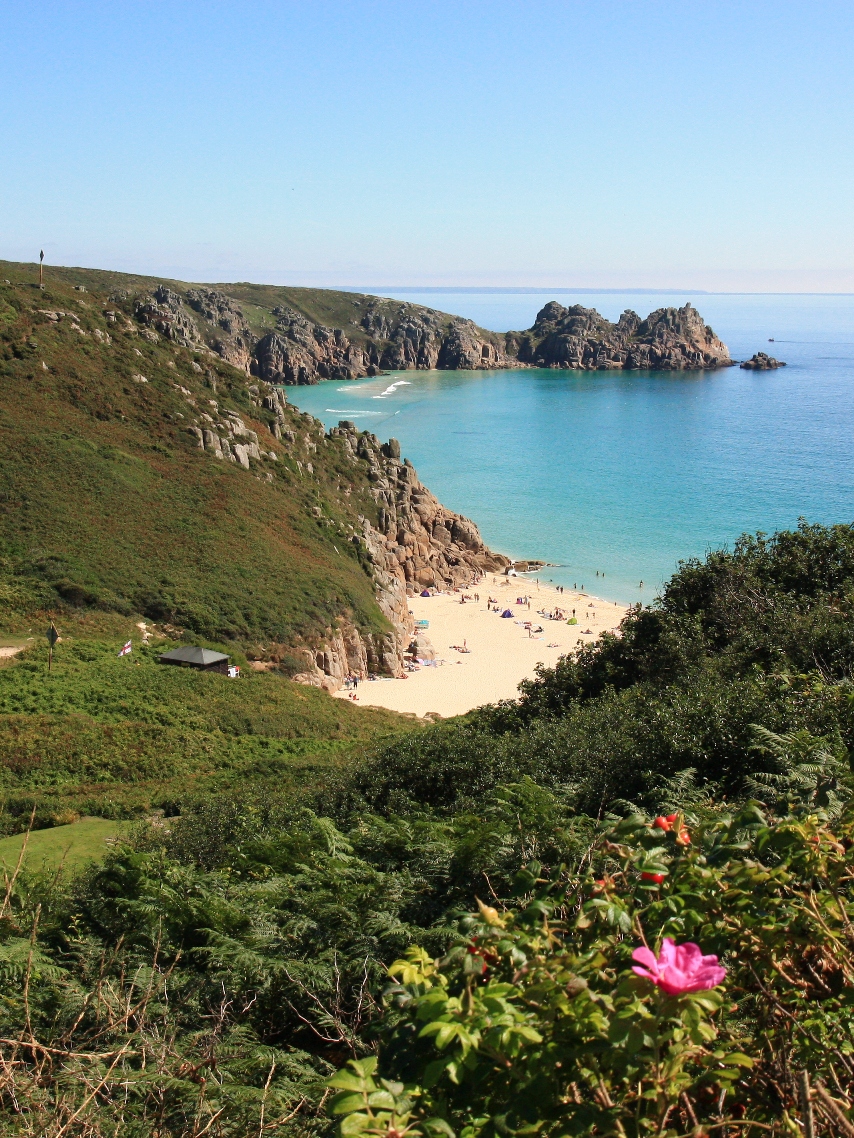
rev02Of all the places, of all the walks, of all the splendid days this was the best. Under warm blue skies, half of the fun came from the open top bus journey to and from the coast path between Porthcurno and Sennen Cove. At Porthcurno a cream tea and splendid outcrop overlooks over sapphire bays set me off to amble along cliff tops cloaked in purple and gold. A pause at Lands End provided ice cream and final propulsion onward to the charms of Sennen Cove and its sweeping golden sands. Hard to match, hard to beat.

Best food experience: camping fry ups

Again proof that the simple things are often the best, some combination of pork sausage, bacon, mushrooms, baked beans, toast, tomatoes and hash brown capped off with HP sauce. Best appreciated following a wearisome day of walks and served somewhere beside the sea off southern Australia.

Best drink experience: the first sip in Munich

rev03Long haul flight dehydration is probably not best solved by a beer; however, Munich makes it hard to resist. Popping to some nearby gardens for air, tucked under the shady trees sits a charming beer garden, serving delicious cooling Weissbier and ridiculously salty but irresistible pretzels. A chance to sit and bask back in summer and embrace the slow realisation that you have made it across the globe.

The NBN award for worthy endeavours that are behind schedule: gbpilgrim.com

In a shameless cross-promotional opportunity, may I refer you to the tales and travails of gbpilgrim.com. Here I set myself the task of writing an alphabetical tour-de-force around the world within the year. But as you would see should you go there I made it to U. Seriously sidetracked, nonetheless I am nearing the end with 21 pieces of beachside / fireside reading this summer / winter.

The Johnson-Haddin award for being really annoying: the Australian fly

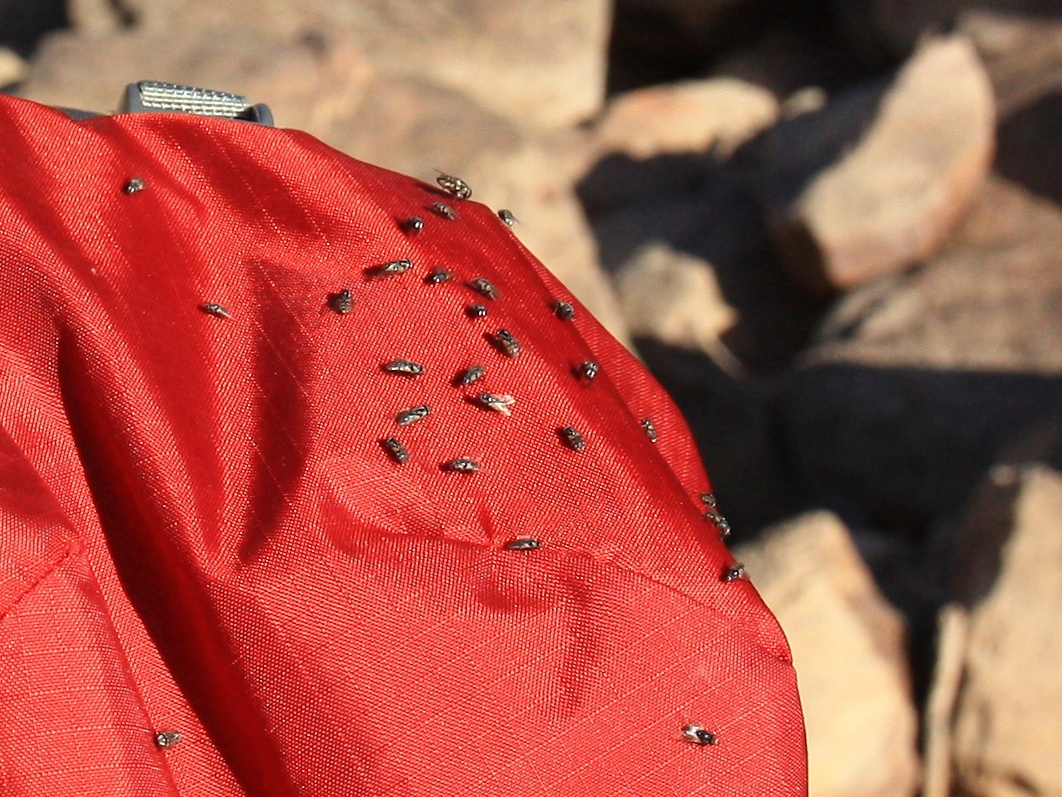
rev04There are many parallels between the Australian cricket team and the swarms of flies that irritate their way across this huge country. In your face, buzzing away, seeming to scarper then coming back in a marauding fashion to head up your nose and down your throat. It is as if the flies peppering the body around Arkaroola are wearing small baggy greens and sprouting dodgy facial hair and a little too much attitude. They may be swatted for a while, but it’s a futile effort and they come back bigger and badder than ever.

Word of the year: ablutions

Ablution. It rolls off the tongue like sheets of wafer-thin toilet paper spilling onto the floor of a damp concrete floor. It sounds as appealing as a thong-clad grandpa shuffling into the toilets for his morning dump. It rolls around like the huge industrial drying machines that leave clothes damp and itchy. Up and down the country, ablutions are servicing the needs of the ageing population living in their deluxe caravans, and offering at least a wry smile for those paying over the odds to camp amongst the awnings and concrete pitches of a mobile shanty town.

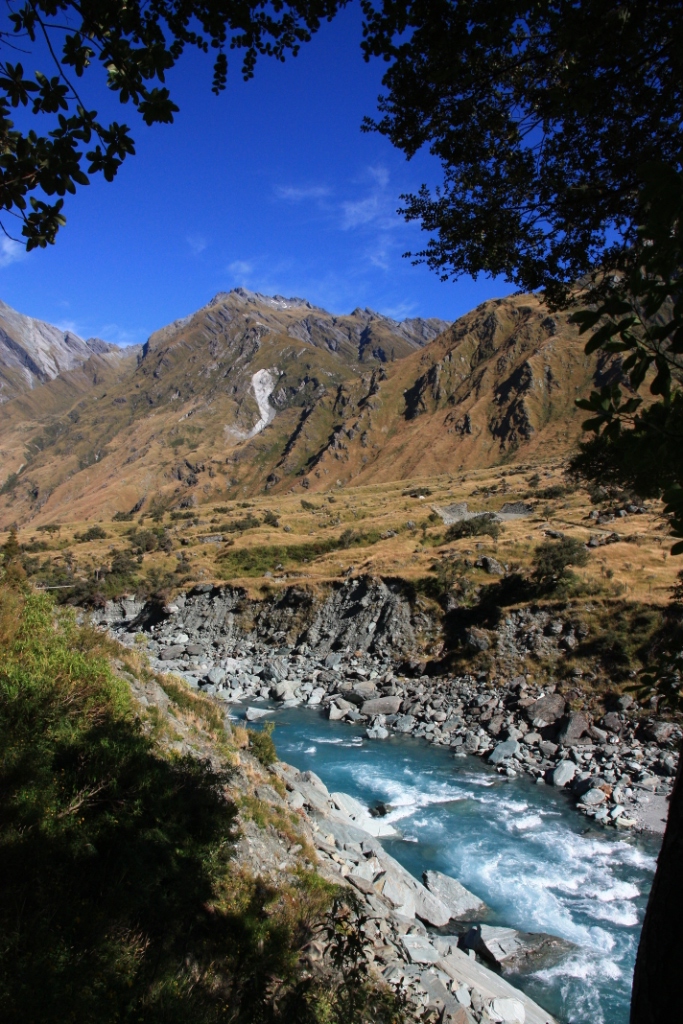
rev05Destination of the year: South Island, New Zealand

Sorry Australia, but New Zealand is simply spectacular at every turn. Nowhere more so than on the south island, where there is a surprising diversity beyond mountains and glacial rivers to a world of ancient forests, grassy meadows, jagged coast and pristine golden bays. All pleasingly accessible and navigable by car, by boat and, most of all, by foot. Somewhere you could happily return to again and again and again.

Australia Driving Europe Food & Drink Great Britain Green Bogey Walking

E by gum

gum01The Nullarbor is said to be so named because of an absence of trees, i.e. null arbor. The thing is, like other misconceptions that may feature on a jovial edition of QI and set off a high pitched wail, it’s really not so true.  Sure, there are a few bits that are made up mostly of low scrub and saltbush, and some of it is very, very flat. But there are plenty of trees clustered and scattered across the thousand kilometres or so of its reach. Plus there is my own festive Christmas tree dangling in the front of the car, attempting to bring some light and joy to this escapade in monotony.

gum02One of the little treats of heading east is that you gradually get to move your clock forward until eventually you get a reasonable sunrise and pleasant light evenings. Not so at Fraser Range, undoubtedly the nicest stop along the road but still subject to the same peculiar hours as Perth. Hello 4am sunshine, before vanishing into a strangely cool, cloudy day to plough through the rest of Western Australia.

At Eucla, close to the WA / SA border there is the concession of 45 minutes but you have come so far east that it makes little difference. And then, ten minutes down the road you suddenly jump forward 1 hour 45 minutes and should you wish to straddle the border it is quite possible to indulge in your own creation of Back to the Future.

Jumping into South Australia there is a sense that civilisation is returning, but it is still 500kms or so to Ceduna, which is itself a subjective interpretation of civilisation. I’m glad to push on another hour and make it instead to Streaky Bay, for a cooling motel room, a chance to endure cricket on TV and nice, long, light evenings to take in the jetty and glassy calm bay of this glassy calm town.

gum04

It seems the journey is one of milestones – crossing the border, finishing the Nullarbor, reaching the crossroads of Port Augusta and again seeing a kangaroo for the first time in ages. Bushland and hills return and the environment becomes a more familiar, comforting scene of generic southeast Australian. Stopping and appreciating this at Mambray Creek, in Mount Remarkable National Park, is a delight, even if it means being awoken by huge flocks of galahs clattering around the majestic River Red Gums in the morning.

gum05

Adelaide is another milestone and just a few hundred kilometres down the road. I reached the city by way of a small diversion into the northern Yorke Peninsula and a triumvirate of towns – Wallaroo, Moonta and Kadina – at the heart of the Copper Coast. Or ‘Little Cornwall’, a moniker derived from the miners who settled here many moons ago. You would think I would have learnt by now not to get my hopes up with such names, to avoid such disappointments as a ‘Devonshire’ Tea and a ‘Pork’ Pie. But I live in hope that certain culinary heritage items are preserved amongst this flat, agricultural landscape which – apart from the presence of a bit of sea – is nothing like Cornwall.

So it is really not that much of a surprise that despite the slightly cutesy high streets crying out for a charming tea room there is no sign of a cream tea in sight. The closest thing to a scone and jam and clotted cream is a shiny bun with a blob of jam and squirty cream in the middle. Salvation may lie in a traditional pasty, but this is about as traditional as sticking a possum on top of a Christmas tree and singing we wish you a merry Easter. For a start, a pasty tends to have much more meat in and a lot less finely diced carrot please.

Anyway, meanwhile, back in Australia, I reached Adelaide and was glad but slightly daunted by being in a big smoke again. Not that Adelaide is that big or smoky. Indeed, it is rather graceful and refined at its heart. There is decent coffee to have and the fabulous central markets to salivate in and the tram to Glenelg to catch and a short drive to be had to the hills, peppered with wineries and koalas and dinner and conversation waiting. Leaving is a bit sad but there is one final little hill stop in Hahndorf, making amends for a missed German style meat fest opportunity last time around, and a brief reminder of hot summer days in Munich.

After such a lunch it would be a decent idea to nap, but I had new milestones to reach and crossing into Victoria was on the agenda. Three more nights of swagging it, following an inland course close to the Murray River and over the highest hills in the country and down to Canberra. Still 1200km to go but feeling close to the end.

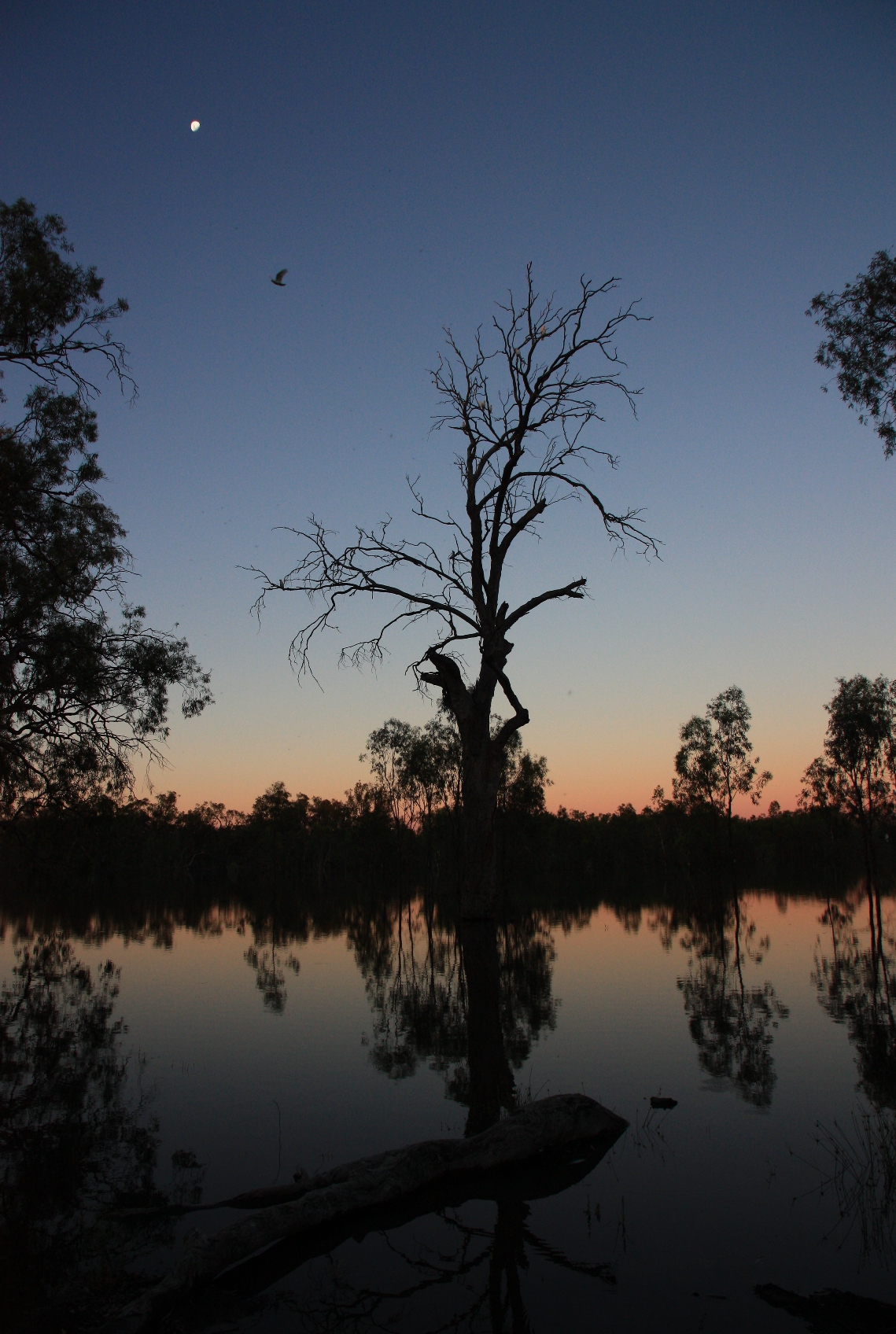
gum06The first stop was among the gums and lakes of Hattah-Kulkyne National Park, a little to the south of Mildura. Here mighty trees rise from the waters, attracting a dense concentration of screeching cockatoos who mercifully quieten down after dusk. They perk up again in the morning, but by now mornings start at a much more reasonable hour.

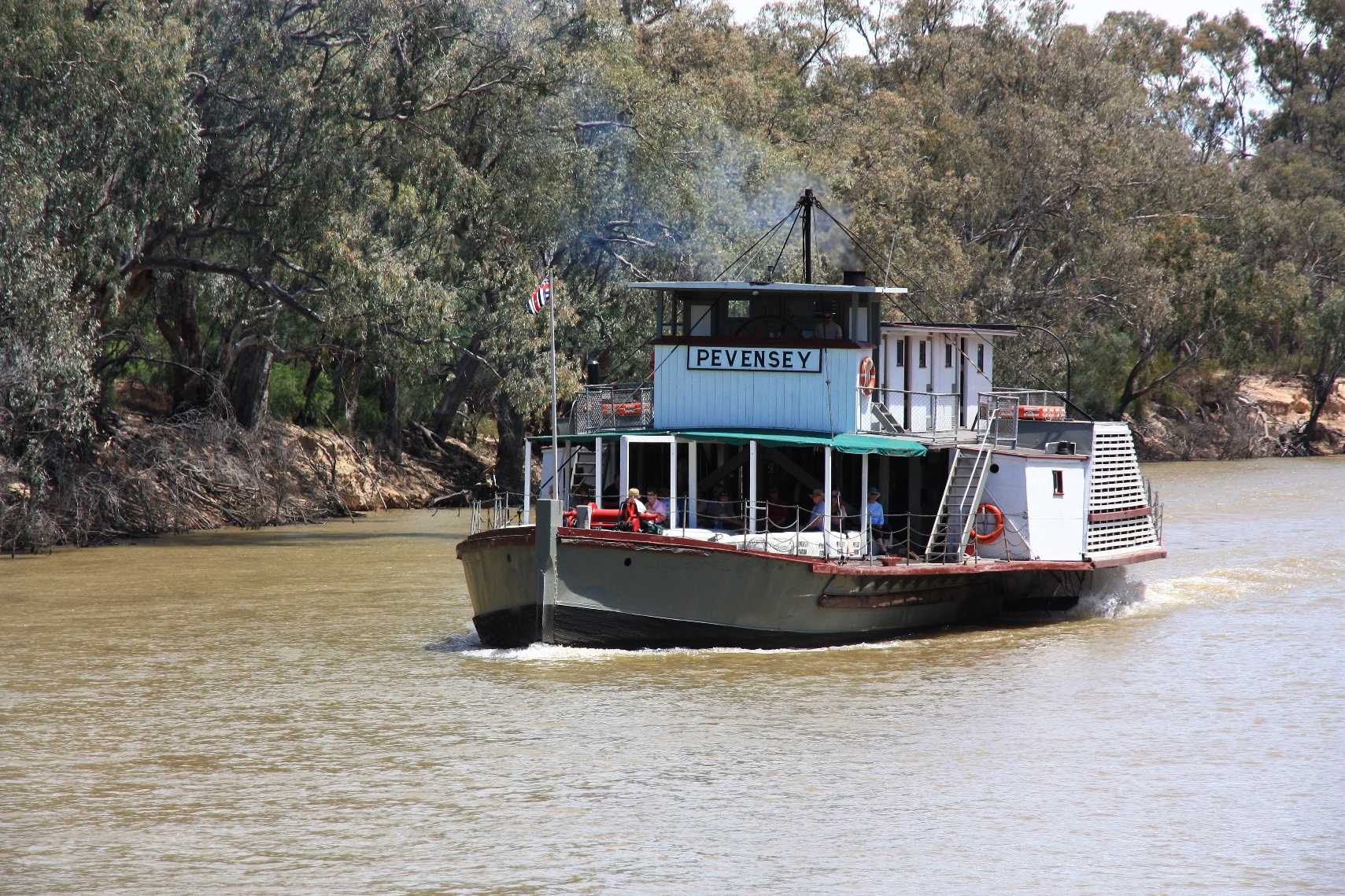
gum07The trees, water and birds combination continues along the length of the Murray, interspersed more frequently with pleasant towns. A reminder that in Victoria country life seems quite amiably civilised. Swan Hill even offered a giant Murray Cod, whilst Echuca evoked steamboat and latticework charm. The thing to do in Echuca is to hop on one of these and cruise upon the river. It made for a pleasant enough hour albeit a little dull.

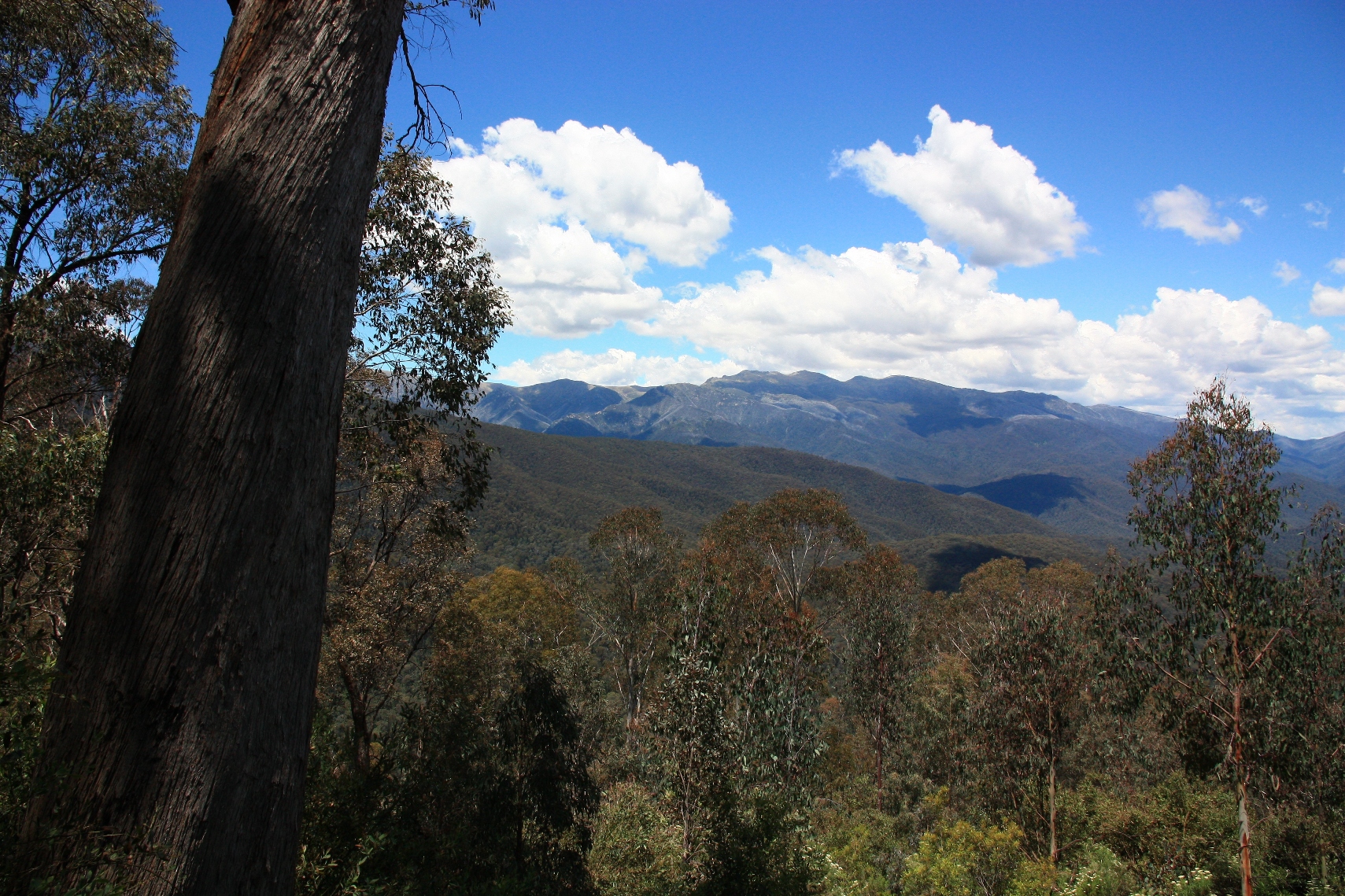
The Murray rises in the Snowy Mountains and by time I reached Wangaratta I was on very much more familiar ground, stocking up on coffee and cake and heading for the hills. It’s a beautiful approach from Wodonga, following the shores of the Hume Dam with golden hills rising and small valleys drifting into New South Wales. The valleys tighten and become more heavily and lushly forested as they shelter beneath the higher ridges of the Main Range of Kosciusko National Park.

gum08

From this western approach it’s quite a twisty ascent over appealing sounding places like Siberia and Dead Horse Gap to a much starker and moodier side. Here a landscape of high moors and glacial hollows is scattered with ghostly snow gums and boggy pools. A world in which leftover snow still stubbornly sticks; a world a long way from Perth where I commenced this journey.

gum09

gum10It was rather nice to get out of the car for a late afternoon walk immersed in this landscape, setting off from Charlotte Pass along the Main Range track, dipping down for a Snowy River crossing and up again to overlook Hedley Tarn and Blue Lake. From here it is really not that far as the crow flies to Canberra. Indeed, continuing along the track just a little further, crossing a couple more slushy white patches, you can look out over the ridges and folds of the ranges to the north and east. It is a vast view and I suspect if you had super Legolas vision you might just be able to make out Black Mountain Tower. So, so close.

gum11

In a somewhat romantic poetic notion it seems fitting that having traversed and explored huge tracts of this huge country over the past year that I finish it, well, not quite at the top but close enough. It feels like Australia is laid out before me and I can survey what I have crossed…from its white beaches to its desert plains, its golden hills to ragged red gorges, its shimmering cities to one pub towns. And yeah, It may well have the most annoying cricket team ever, and make poor attempts at Westcountry produce, and have strange time variations and a few super long dull roads but, other than that, it seems pretty good to me.

Australia Driving Green Bogey Photography

Trek

It is pleasing to know that there is a minibus to transport you around on a Trek America tour. I guess this means Trek America is a bit of a misnomer, given that technically it does not involve complete self propulsion across the continental United States. Despite this, there is still plenty of opportunity for much walking, in between long country drives and Twinkie rest stops.  For me I shall always be thankful, because Trek America trips opened up the vast spectacle of the Western US, and fed early cravings of reasonably civilised first world exploration.

The trips were like all the best parts of an 18-35 holiday – a naive adventure meeting youthful peers from across the globe – without the inflatable doll tequila sessions of a lobster fleshed Magaluf pool. Entertainment was the great outdoors and sharing this with a group of like minds. Yeah you could have beers, yeah there could be frolics, and yeah you could hit the bright lights of, say, downtown Jackson, Wyoming. But the next day, it would be onwards and out there, in the van playing cards, falling asleep, listening to music and reaching another momentous national park for another great trek.

The tours were usually called something like Western Wondrousness Walkabout or Awesome Toursome Adventure, commencing in some B grade airport motel and only getting better from there. The first day would be the time to break ice, to suss out the driver, to acclimatise to a diet of ham salad lunches, to catch up on jetlagged sleep. And then, at some point, the first walk out into the wilds would take place and, outside of the confines of the van, conversation would sparkle and you would all be best mates by the end. Just in time for the campfire cook up, which could be a chilled or fraught occasion depending on your duty. There was always a vegetarian and a fussy eater who couldn’t stand any flavour whatsoever. Toast was always a good backup.

But all was forgotten the next day when out on the road and amongst the mountains and the forests, the canyons and the falls. There would be more rest stops and scenic lookouts, ham salad sandwiches and mix tapes [1]. There would be geysers and moose and mega slick coaches housing mega large Americans touring their super-sized country. Just occasionally, like ships that pass in the night, another Trek America van would criss-cross yours, containing an identical but just slightly different set of characters: a cliquey English couple, a couple of rosy-faced Germans, a leggy tanned female who was the token hottie in the group, one solo Japanese traveller with a big camera, and perhaps one or two people like me, whatever that means. They were the same, but clearly not having as much fun as us. Because nobody could be having as much fun as us.

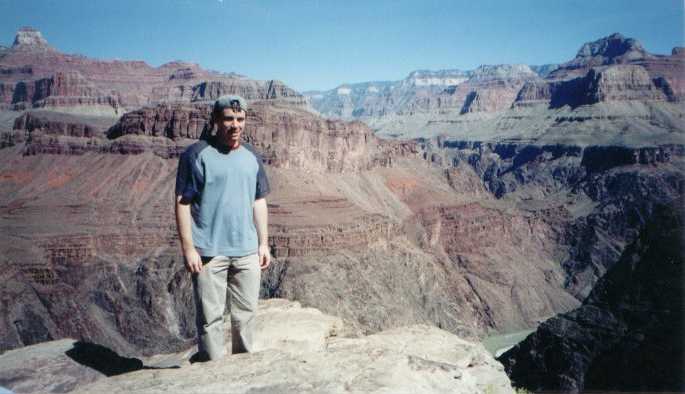
T_platptThat’s because we were out there, in the great outdoors, walking away, trekking at least for a little while, doing what it says on the tin. We were plunging down into the Grand Canyon, zigzagging alongside rocky red cliffs, passing mules and fools in flip flops and vests. We were stretching out along the trail, in small clumps of two or three. Some were looking to set world records; others were looking like they might get lost. We were incrementally arriving at Plateau Point, to eat our premade ham salad sandwich and overlook the mighty Colorado River. We were in awe of the sound, from still a couple of thousand metres below, raging up the slots and chasms, making you feel as though you were riding the water yourself, with a ham salad sandwich in place of a paddle.

We were looking back up at the rim of the canyon and suddenly not having as much fun. Thousands of metres of switchbacks and torment, up and up to the baking hot sky. We would need more than a ham salad sandwich to have the energy for that, but most people brought Twinkies or wiggly jelly worms or peanut butter cookies or perhaps even an apple, but that was less likely. And we all made it, in dribs and drabs, for a sense of achievement that exacerbates contentment over a sunset and beer.

And all would not be forgotten the next day, because you would remember such experiences for a long, long time. Even when you had walked other walks and trekked other treks and dragged out the farewells with extra nights and extra food and extraordinary ludicrousness in Las Vegas. The landscape would linger, the moments would magnify, the experience would play over and over again on the plane home, and you could hear that rushing river rising up in rage once more…

…You hear it again a few years later and you are back in the US. It’s cool and grey and winter is very much just around the corner. Soon, Yellowstone will enter hibernation and be encased in a deep freeze. Steam from geysers sprout up along the valley, a natural sauna in contrast to this chill, windswept ridge. The sound of water is somewhere through the dark pine forests below, carving some other chasm in this country of monumental valleys.

This time you are with another bunch of buddies getting to know one another in tandem with the landscape. The walk down and through the forest passes quickly with chatter, a level of hubbub which will safely keep the bears at bay. For once there are no ham salad sandwiches for the bears to intercept. The day is nearing its end and the sound of water disappears for a little in the stillness of the woods. Suddenly it emerges again as quickly as the forest parts, and the sight of Yellowstone Falls plunging into a gorge of yellowish rocks [2] caps off another memorable and pleasingly circular trek.

T_yellowstone

Campfire nights pass with fussy eating and cold beers. Days blend into a haze of hours on the road, ham salad sandwiches, stops in random towns, turn outs for vistas and walks on rocky trails to stretch the legs. Random memories pertaining to potatoes are retained about the state of Idaho, and there is a stop for Dairy Queen. Finally, the weather is warming up and winter is still a long way from touching the barren, desert lands of Nevada. The sound of icy water would be welcome again, to splash over your face and arms and legs, to wash out the dirt from another sublime walk.

Water sounds and sublime walks are a dominant feature of Yosemite National Park, now in California and nearing the San Francisco end of this particular journey of Western Wondrousness. However, it is October and the gushing falls of June are mostly reduced to a trickle, as if a shower where the tap has not been turned off tightly enough. Nonetheless, we are all again experiencing the most fun ever, having enjoyed a couple of weeks together that now seem the natural way of life. Wake up, make breakfast, pack up, hit the road, stop for a sandwich, make camp, go for a walk. Prepare dinner, eat dinner, have a beer, sleep in a tent and pray that no bears get a whiff of the toothpaste in your mouth.

T_yosemite_smallIn Yosemite there is a break to the routine of sorts, and a day to go off and do whatever the hell we like. Such is the bond instead of going our separate ways many stick together and embark on a trip to Glacier Point and back down to the valley. The going up part is the easiest, transported by shuttle bus and delivered to a spot for the most colossal views of the Sierra Nevada. Looking toy-like thousands of metres below is Yosemite Valley. With binoculars you may be able to spot the bear entering your tent to steal a picnic basket. But you would need very strong binoculars. I just have an old camera with little to no zoom and a lack of technical capability that can do the scene justice.

It is, then, a long way down and every single metre of it is covered on foot. At first things are easy going, following the ridge with breathtaking views out to the east. Half Dome is clear and most suitably named. The landscape is of such grand magnificence that you feel as though it is almost too close, assaulting your senses and about to topple over onto your body. As you descend, the surroundings become more intimate, and trickles of leftover waterfalls scatter into shallow pools and chasms. Such shady, cool spots are more benign and perfect for a ham salad sandwich.

Steps, steps and more steps. Some well maintained like a gentle stairway to the Gallery of Soft Fluffy Cushions, others a rocky rubble leading to the School of Armageddon. Bone-jarring, shin-splitting, ankle-crunching steps. There are thousands of them and towards the end they are incredibly annoying. You can sense this in the stringing out of the group and the reduction in general chatter. Now the focus is on the job at hand: getting this over with and being able to put your feet up with a cold beer in camp.

Finally, when you do get back to camp and put your feet up, you notice legs caked in dust, in stark contrast to the glowing white clean flesh below the sock line. Like a spray on tan that has gone horribly wrong. These brown and white legs ache but the beer is sweet. And you are very happy and perhaps this is because you know this moment on this day will stick with you for a long time. As for all those steps, as for that lengthy walk…well, you can’t complain. It isn’t called Trek America for nothing.


[1] In fact, this was the brief era of the minidisc, which seemed to be enduringly popular in the vans of western US tour groups

[2] From whence came the name Yellowstone

Links

Drive round and walk a bit: http://www.trekamerica.com/

Grand Canyon National Park: http://www.nps.gov/grca/index.htm

Yellowstone National Park: http://www.nps.gov/yell/index.htm

Beware bears: http://www.youtube.com/watch?v=xDg7PaSEq2E

Yosemite National Park: http://www.nps.gov/yose/index.htm

Some of the best from the west: http://www.anseladams.com/

A to Z Activities Driving USA & Canada Walking

Red

Red is surely the most schizophrenic colour. It is the blood that pumps through our body, and sometimes spills out in horror. It is the heart of the fire that warms us, the fire that can also consume and savage. It shrieks warning and danger, making us stop in our cars and wait for what seems like forever, all for our own safety. Red is the shade of the devil dressed, agitating up an hors category climb in the Alps, pursuing breathless cyclists to the upper limits of their EPO threshold. It’s the colour of love and passion, of Wimbledon strawberries and luscious lips on a glass of Cabernet Sauvignon. It is dry earth and fiery sunsets, timeless and boundless on the horizon.

I would not declare red as my favourite colour, but then I struggle to see how any colour can have superiority over others [1]. When I think about it though I have been drawn to red across my life, starting from the time I was placed in Budoc, the red house at primary school for which I accumulated goodie-two-shoe points and bonus long-jump merits. Since then I have gathered red t-shirts that have become faded through years of devoted use [2]. I do enjoy a glass of red wine, and of course the gooey red jam spread out on a warm scone, the sweet template for a dollop of silky, rich cream. I am clearly enamoured with a place called Red Hill, where I am especially enlivened when an explosive red sunset marks the passing of a day. There is even something ashamedly endearing about that album by Taylor Swift. Like driving a Maserati down a dead-end street.

Forget your green and gold, to me red is synonymous with Australia. It is the colour which paints the emptiness of the country and is most obviously portrayed through the sunset pictures of Uluru featuring on postcards and slick tourism adverts everywhere. It’s a scene embedded in the national consciousness despite – for most – a lived environment of golden beaches and green bushland, silver cities and yellowing countryside.

Ever since moving here an aspiration has seeded and sprouted in my head whereby I tread into fine red sand, baked and cracked by searing afternoon heat. A clutter of rocks and saltbush and spinifex sheltering frilled lizards lies before me. Small gullies weathered by flooding rain weave into the landscape, twisting toward bare, earthy ranges crumpled and folded so that they cast shadows across one another. It is remote; it is a little dangerous; it is the very essence of the heart of Australia. 

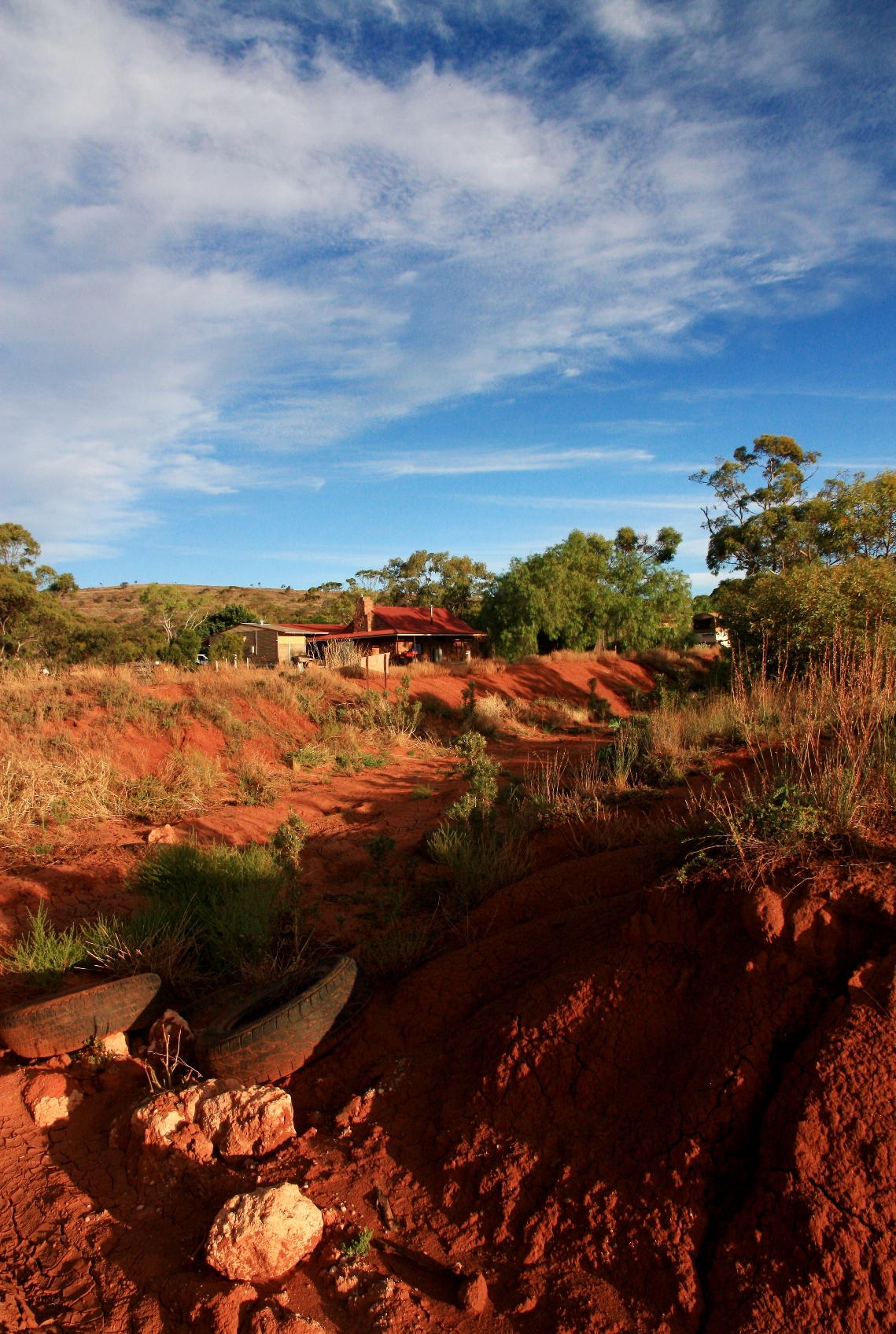
I’ve had a few tasters of this red, from Uluru itself, to giant sand dunes in the NSW outback and a visit of the fabulous Flinders Ranges in South Australia. One particular spot that I have ventured into seems almost wholly red. Pilbara red coats the northwest corner of Australia right down to the stunning blues and whites of its coast. The deep red hues cover a suitably rugged and barren landscape which gets surprisingly hilly at times, rising to the mountainous ridges of the Hammersley Range. Despite some significant intrusions, it retains a remote, untamed and enduring sense.

A gateway to this landscape proved to be Bullara Station. Bullara Station proved to be a surprise. A surprise proved to be most welcome along this sparsely populated stretch of Western Australia. A huge working cattle station, Bullara also offered a rustic camping area. Now, rustic can often be a byword for primitive and inadequate. But in this case it was more charming and quaint, from the moment you were welcomed by the friendly owners to the campfire damper with many who are enamoured enough to linger. The beautiful open top shower shed was surprisingly one of the best places to wash away some of that red dirt.

R_desert

Bullara is – in the context of this vast landscape – but a stone’s throw to the west coast and the sensational coastal colours of Ningaloo Reef. With white sands and shallow turquoise waters, the reef is every bit the tropical idyll you would expect. Yet equally striking here are the desert sands perforated with termite mounds and the upward thrusts of the Cape Range piling up into giant pillars of rock and sliced by dry gorges. This is where the red earth meets the blue sea.

Heading in the opposite direction and inland from Bullara Station it takes some time to find a settlement. Petrol is a premium price to pay to cover the country. Settlements that do spring up are principally established because of the red land around it: red rocks that are mostly dug up and taken away to China.

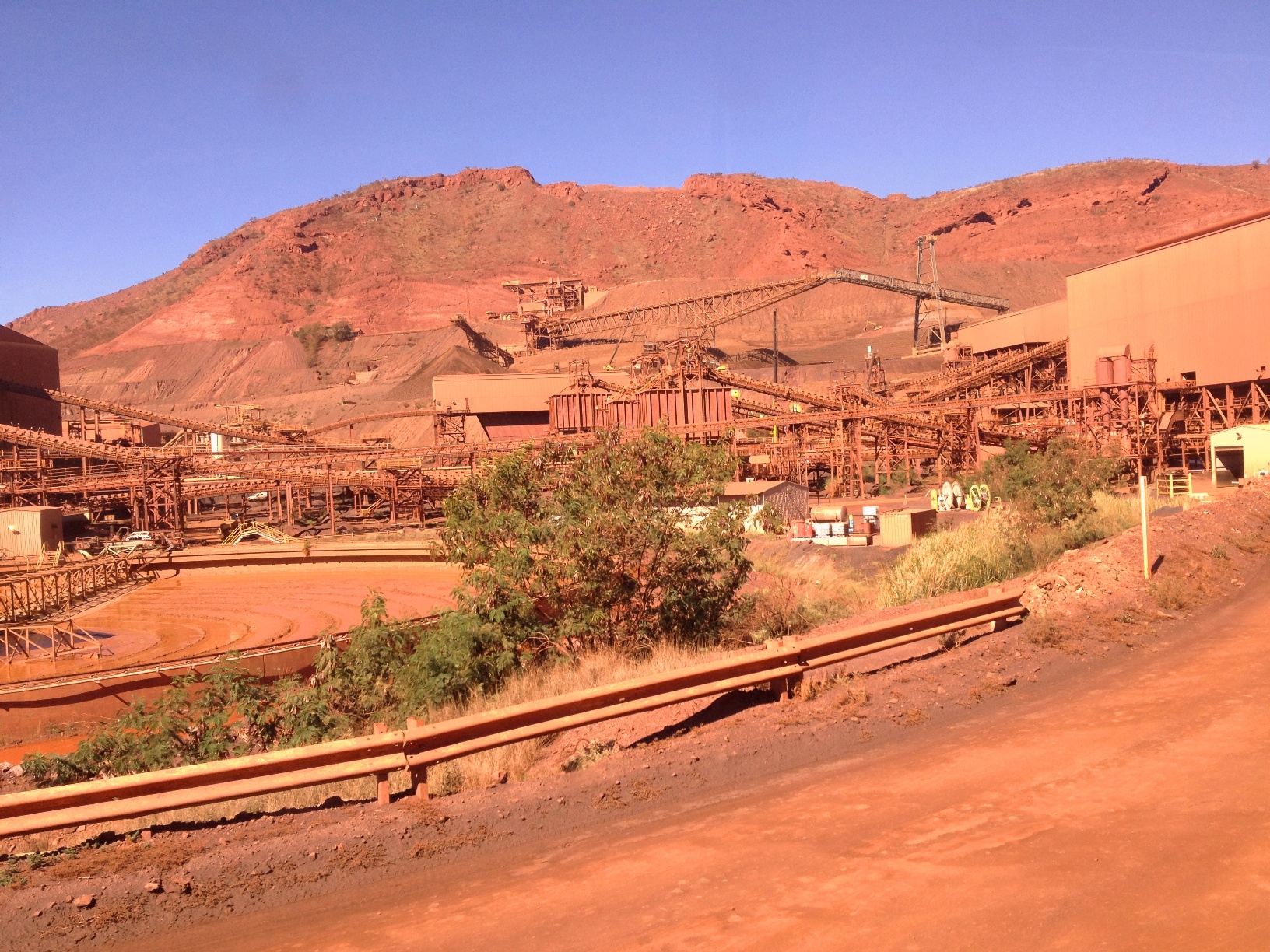
R_mineTom Price is one such spot; a rough replication of a Canberra suburb clustered between deep pits and mountains carved away into a spiral of tiers. The scale of these mines is huge – from giant yellow transporters whose tyres are bigger than me to rows of rocks pilfered from the ground and lined up into varying grades of iron ore. It is both crude and sophisticated, simple and advanced. And while the urban latte sipping ecomentalist in me could take offence at such obliteration, I remind myself that we all use iron, we benefit a great deal from these holes in the ground and, yes, there are plenty of red rocks still to go round.  

Thankfully environmental credentials are restored east of Tom Price, in a swathe of Pilbara red pitted with deep gorges and crumbling upland. Karijini National Park is the jewel in the crown, the ruby in the iron of this russet country. It is where you can step out into the red land and absorb it, along the panoramic cliff edges and down into the heart of quite breathtaking canyons. Rivers and pools add a vibrant green tinge to the valley floors, a ribbon of life flourishing amongst twisting red walls. It’s said that red and green should never be seen, but here it is a perfect arrangement.

Yes it sounds clichéd but this is the real Australia, the realisation of the vision and the aspiration of the fundamental essentials of a red earth country. A grand composition of nature, culminating in the view as four gorges congregate hundred of metres below Oxers Lookout. Millions of years in the making, impenetrable and untainted. Red rocks shaped by land and water and maybe a giant serpent, rocks that have not felt a human’s footstep or handprint and likely never will. This is part of the magic, the wonder, the spirit of Australia. This is the allure of red.

R_karijini


[1] Note to self: avoid vacuous interviews in vacuous magazines

[2] They used to go nicely with my black hair, but now that has become grey and the deep red material has faded, the effect has diminished

A to Z Australia Driving Photography Walking

Hola amigos!

spn02Wary that I may just drift into the comforts of life again in Plymouth and conscious of impending Halloween-related mania, I took a couple of weeks out of this (only slightly) working holiday. The first part involved meeting up and hanging out with friends once more, following which a trip overseas provided some peace and quiet and strangely rare solo time.

A whistle-stop visit to London offered another chance to reacquaint myself with old hang outs and deep connections. Now with young ones to entertain this principally involves visits to the parks of North London, typically on a rota system. It was pleasing to add a different park to the list, within the tranquil leafiness of Highgate Wood. The extra bonus here was that once slides and nets and steps and bars had been exhausted, a little lodge served up fine food to eat al fresco in the sunshine. Similarly, while by no means a new addition, Golders Hill Park delivered gelato to cool down on an astonishingly warm and sheltered park bench the next day.

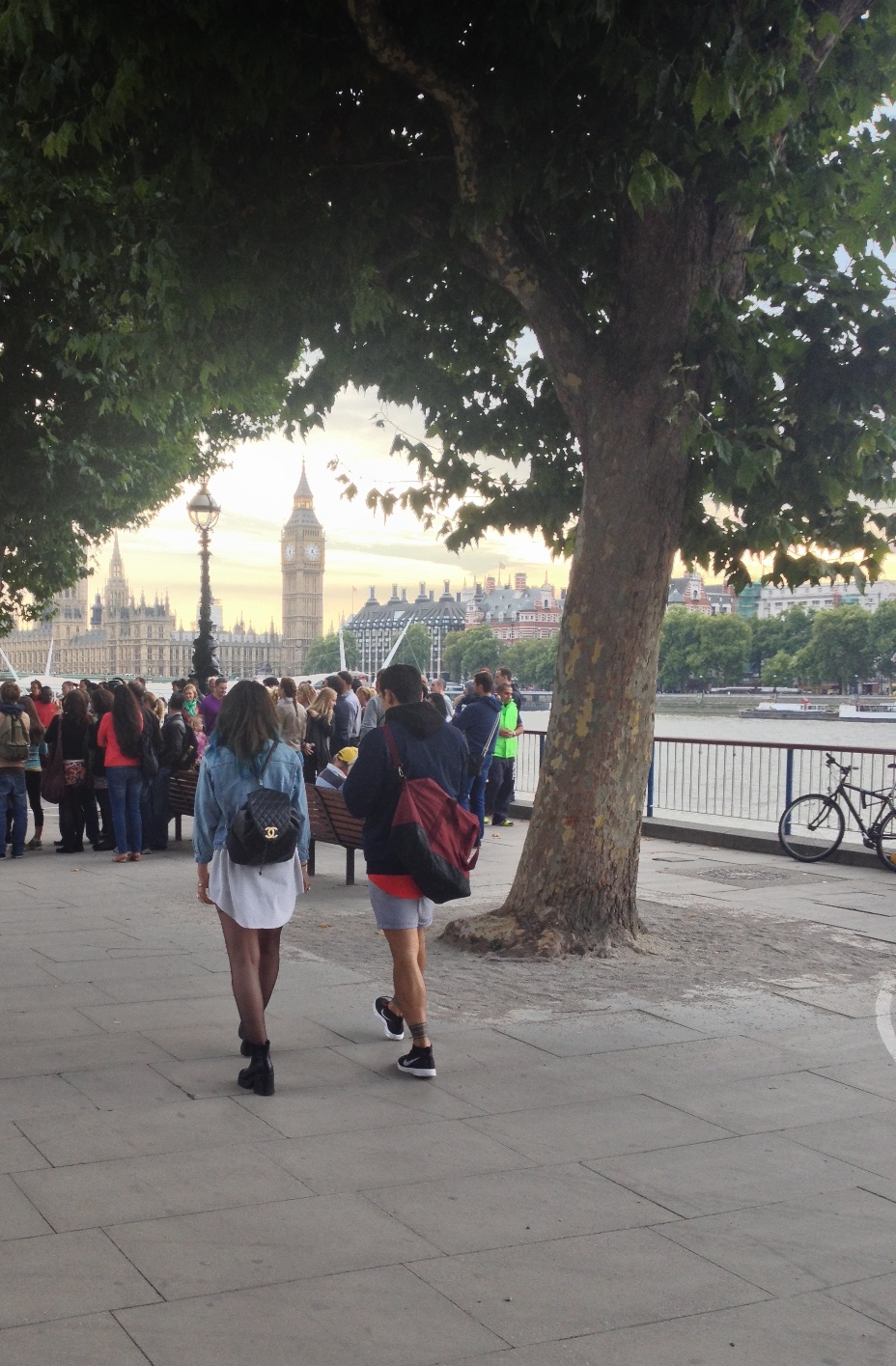
spn01London is quite a different place when you visit and are not subjected to a long daily commute for tedious work and returning home for a late dinner mired in tiredness. Indeed, I was quite happy to take an hour long bus journey, absorbing the sites on the top deck of the number 13 bus from Golders Green: Finchley Road, Swiss Cottage, Lords Cricket Ground, Regents Park, Baker Street, Oxford Street and, my stop, Piccadilly Circus. I was equally content to mill around to Covent Garden and Embankment and cross over to the South Bank for a little, killing time until a get-together in Clapham. I know for sure now that I am officially at a different stage in life to when I was living in London:  waiting for a friend in a pub reading a paper and struggling to block my ears to the awful music that was far too loud. Confirmation of this comes through reminiscing on the tube home with two friends from university who I met half of my lifetime ago.  But this is nothing to despair at.

spn03More old friendships, albeit only for about one third of my lifetime, were enjoyed during a few days in Lytham up in the good old northwest of England near Blackpool. The weather for the first couple of days was better than when I visited in August, allowing opportunity to amble the prom and still try and figure out why so many people come here for their holidays. By midweek it was more typically grey with some rain and a few fleeting rays of sun. This coincided with my birthday, which was further official confirmation that I am of an older generation. Still, in Lytham such is the populace of wrinklies that I generally still feel quite young, and can do impetuous youthful things like play GTA V and watch the end of Breaking Bad like everyone else in the world during this period in history.

spn07It was a grey, drizzly day leaving Lytham and I am very conscious that I will be in England when the calendar turns to November (or Jungfrau). With this in mind, and another way in which I can make myself feel young, I boarded a plane to Spain. Costa Blanca, Quesada, Dona Pepa Pig and a home from home from home sadly less visited. This was an opportunity to wear shorts again, to think a bit more like I was in Australia, albeit with worse coffee and inferior beaches and not as much untainted open space. It was also rather nice to have some time to myself – the first in quite a long time really.

I probably would have gone a bit stir-crazy if it wasn’t for the company of a mouse in the house and a hire car to get around. And so, a few excursions (without the mouse) took in mountain towns and humid clouds, coastal resorts and big rocks, and lovely fragrant forests and views.

spn04The first trip out took me to a few Spanish mountain towns, all with higgledy piggledy streets and churches and squares. At Biar, a medieval castle looks out from the highest point perched upon a lump of rock. A fee of one Euro allows you entrance to the tower where you can get the slowest ever English commentary and walk three flights of stairs to the top. Overlooking the charming little town and fields and hills of rustic terraces, it’s one of the nicer spots in this area.

spn05

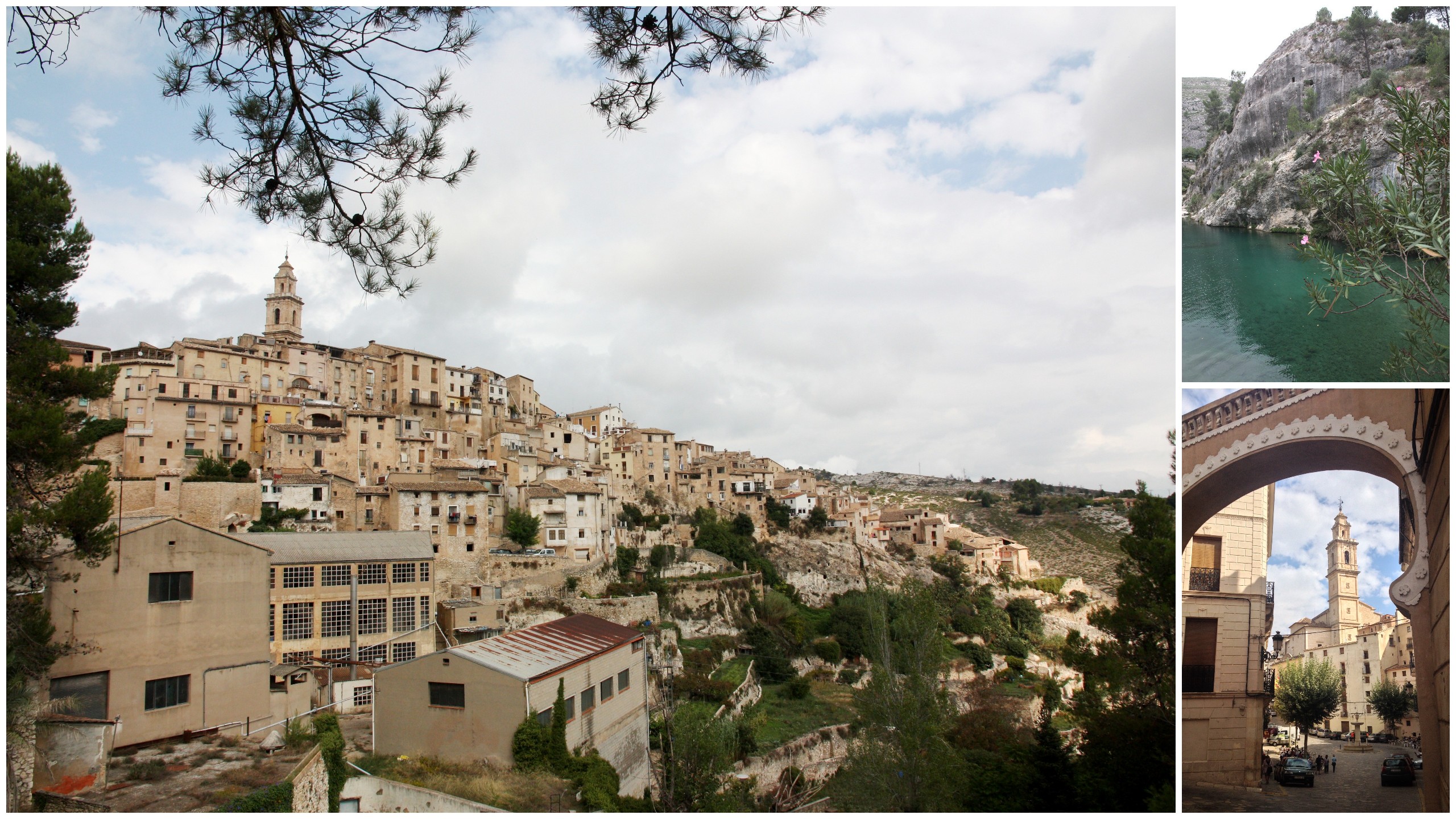
Down the road from here, Bocairent did not feature prominently in any of the guide books I had to hand. Mind you, a lot of this material seems out-of-date as roads have changed names or gone missing altogether. Still, I vaguely recall reading something on an airplane in Australia about this place, so it was worth a stop out of curiosity if nothing else. I gather there are lots of little caves around and, while it took a little finding, the old town was very much in the classic Spanish hillside variety.

spn06

From here I missed my intended turn off the main road but this was one of those fortunate mistakes. The next five kilometres or so, towards Ontinyent, thread through a wonderful limestone gorge, a great road to drive on and a worthwhile stop at some pools of blue called El Pou Clar. They would have sparkled like sapphires in the sun only the sun was getting less and less frequent. In fact, the remainder of the day was blighted by low cloud and a touch of rain on the drive back to Quesada, via Alcoy and Agost.

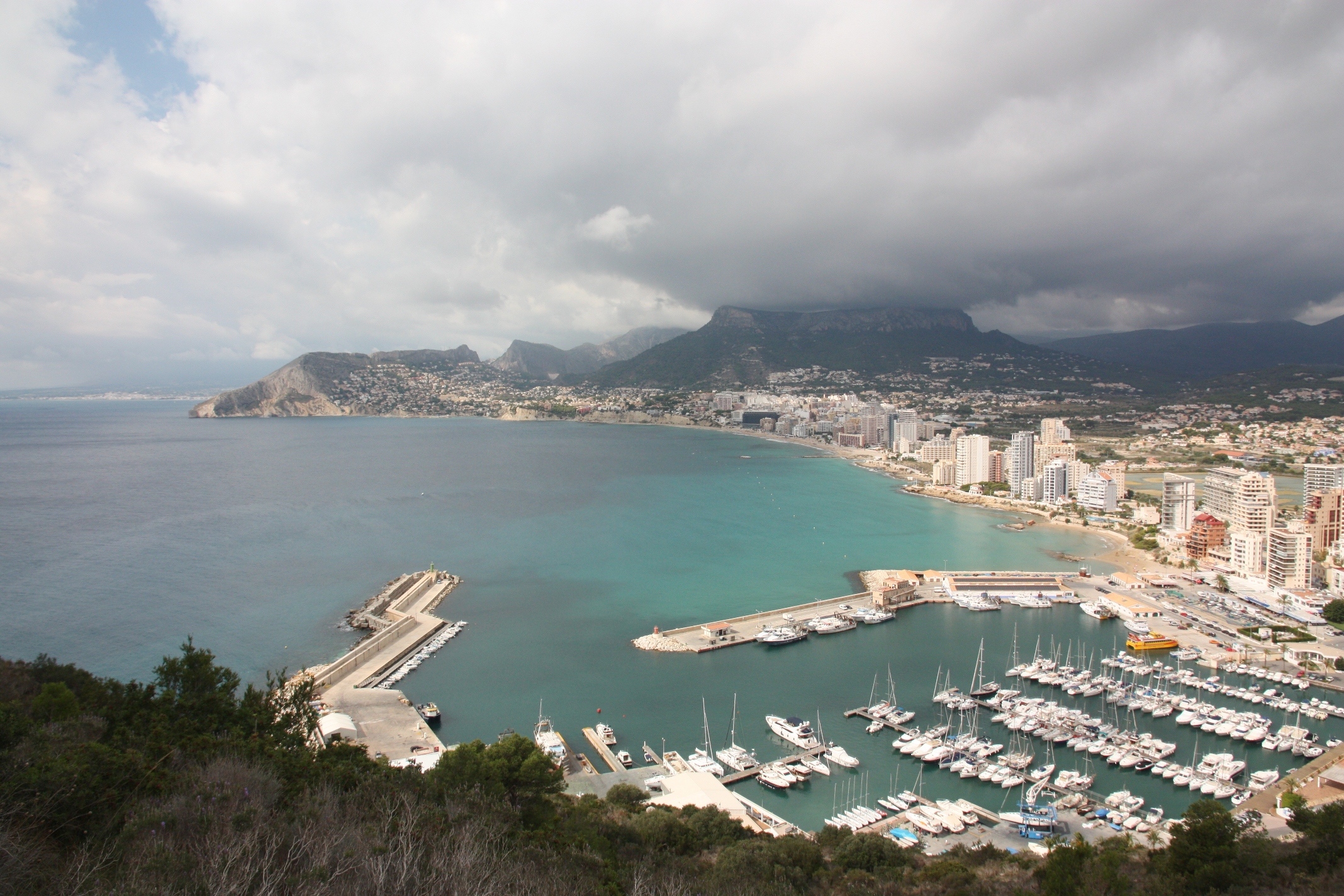
spn08It was a much sunnier start on the second day out, which infuriatingly darkened some 100 kilometres further north around Calpe. Calpe appears to be a typical Costa resort, with a few high rise hotels, a promenade, clusters of apartments and alright kind of beaches. What sets it apart is a huge lump of rock which juts out into the sea at its northern end. It’s called the Penon De Ifach and it turns out you can climb the thing.

The climb is actually a lot easier than you might think looking at the precipitous lump from the bottom. There’s a bit of a tunnel to go through and some fairly consistent scrambling near the top, but apart from that I have to say it made a nice change to find somewhere in this part of Spain where you could actually go for a decent walk in natural surroundings. The very top though is undoubtedly Spanish, with rocks being daubed in graffiti and feral cats pestering and lending a not-so-lovely aroma to the scene. The views of course though are what make it so worthwhile, especially when the sun makes an appearance.

spn09

spn10Despite darkness clinging to the tops of the mountainous interior I left Calpe and headed inland along the Guadalest Valley for the afternoon. Guadalest itself, sheltered by the highest peaks of the Sierra Aitana, remained dry and warm and at times sunny. Certainly warm enough for an ice cream, the Crema Catalana being of particularly fine quality.

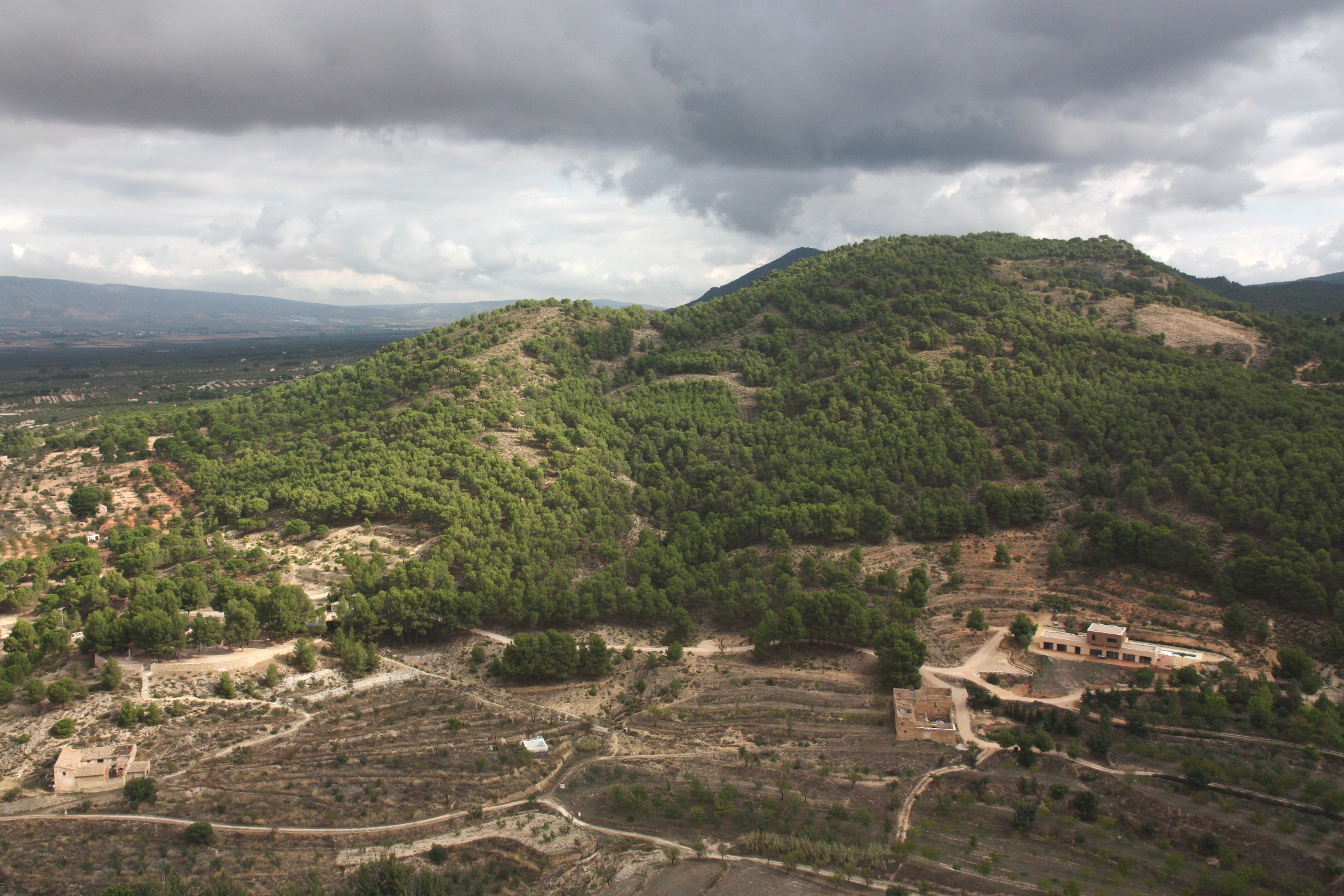
Beyond Guadalest the winding roads empty and there is a great deal of scenery lurking under the clouds. What I find infuriating about this though is that there is rarely a place to stop, a viewpoint, a path, a forest, a trail. A lot of the land looks untouched and empty, barren and wild. Who owns it and looks after it I do not know. It just seems to be there, an intangible expanse of rocky scrub and forest.

It was not until I was back closer to the coast near Villajoyosa that some of the scenery could be accessed, albeit a man-made manifestation at the Embalse de Amadorio. The water colour of these reservoirs is always something to behold. It seems they are of significant allure to locals too, who come here to get amorous and leave cans of energy drink, tissues and empty durex boxes scattered around the car park. Maybe I blame locals too quickly, given we’re not actually too far from Benidorm.

spn11

spn12Pleasingly my final significant trip out managed to bring me to some rare Spanish coastal wilderness and a decent trail leading to a fine viewpoint. It’s the kind of set up you begin to take for granted in Australia or, with its amazing coast path, the southwest of England. Over the hills from the strip of concrete that is La Manga and between here and the port of Cartagena, a small pocket of rugged coastline and fragrant forest testifies to what this area once was like. This is known as Monte de las Cenizas and one of the best things about it is that the park authorities have closed the gravel road up to this lookout. This means it is little visited, little defaced and there is a good three kilometre trail with only a gentle gradient to overcome. And at the end, a reward of distant coastal views and deep blue sea.

This was the little taster of a kind of Australia that I had hoped for in Spain. This, and the ability to be wearing shorts in October. For, thanks to British TV and the Internet I know that things are a-changing. Heatwaves and bushfires are already inflicting Australia (yet this may or may not be climate change, let’s just pretend it isn’t and then it will go away). And, more immediately, winds from the north east are seeping into Britain. Having resisted thus far, I may need to buy (or beg, borrow or steal) a coat. Or perhaps just dress up as a pumpkin.

Driving Europe Food & Drink Great Britain Green Bogey Walking

Petrol

The ball-breaking torque combined with the twin thrust turbo delivers an astonishing rear wheeled hardon that isn’t good. It’s absolutely MASSIVE!” So says Clarkson on almost every episode of Top Gear ever.

Like most of the world, I enjoy Top Gear and the overblown ridiculousness of it all. But I have never really reached the point where the noise of a car gives me an erection. It seems I am in the sensible fuel-efficient compact car school of thought, so mocked by humorous middle aged men with pube hair and jeans and blazer combos. But that’s not to say I don’t enjoy driving, now.

I had an inauspicious start to driving, passing my test in the flattest, quietest town in Britain and then becoming flummoxed with hills and traffic elsewhere. I didn’t particularly enjoy it and practically went out of my way to avoid driving anywhere. It wasn’t until Australia, and a solo work trip where driving was virtually impossible to avoid, that I got behind the wheel again. And since that point things have changed, I feel comfortable and confident [1] and, more than anything, relish the freedom that comes with wheels.

Having a car transformed my relationship with Australia, starting in my home town of Canberra. It says a lot for Canberra’s design that people couldn’t believe I didn’t have a car for a year there. Further, I could make trips down to the beautiful South Coast, or up to Sydney, or into the high country. My love for road trips reignited, and I ended up driving up to Brisbane one Christmas, traversing Tasmania over Easter, then up-scaling to New Zealand which was a mere road test for doing the biggest traverse of all, from one ocean to the other.

For all the wonderful petrol-driven experiences in Australia it’s fair to say that road trips are synonymous with the USA. Kicks on Route 66, fun on Highway 1. Turnpikes and Freeways, Roads to Nowhere. Gas stops and Twinkies, neon signs and drive thru diners. Signs imploring you to get in touch with God, others urging you to get in touch with Hooters. In this great land, Life is a Highway, and you may end up riding it all night long.

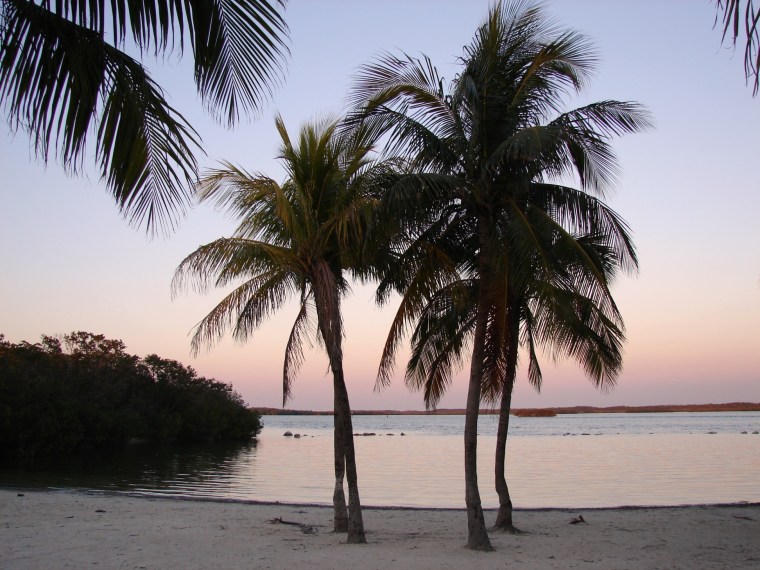
Having only driven once in the USA – a series of amazing meanders around the Pacific Northwest – my road trip experiences here are built on shared journeys, chauffeured around by some willing participant in the process. On more than one occasion this has been my Dad, and on one of these particular occasions we were heading down the length of Florida to its very tip, with my brother making up the family triumvirate. A trip powered by sweetly abrasive gas station coffee and a George Foreman grill.
???????????????????????????????

Florida is the kind of place that can simultaneously be brilliantly amazing and desperately awful. Beyond the Mickey Mouse and McMansions, the summer humidity, the searing oppression of gun-infested sprawls of urban mess, and the inevitable queues for waiting rooms to move on into the afterlife, there is an outdoorsy, pioneering and almost cultural side to Florida. Spanish heritage and space exploration compete with sweeping beaches and a tangle of waterways created by what is one large swamp jutting out into the Gulf of Mexico. And if this gets a little much, there is always a KFC all-you-can-eat buffet in which to convalesce.

Starting somewhere in the outer suburbs of Jacksonville, the state capitol, it’s another gorgeous sunny morning to hit the open road. I say open road, but the freeways and interstates here seem to be continuously cluttered, with tailgating the norm and veering across lanes a requirement for anyone in an oversized SUV. The land is flat and really quite uninteresting, the roads keeping far enough from the coast to enable you to see very little of it. Wal-Mart is passed and I stay conscious. Keeping us going is that sweetened coffee and delicacies from Krispy Kreme. It seems totally in keeping; hopefully there is no illegal sugar driving limit.

A constant on the horizon are the signs for Miami, intermingling with Tampa and Orlando and Fort Lauderdale and other retirement holiday ventures along the way. Lacking the same sense of razzamatazz as signs encountered for San Francisco and Los Angeles on previous trips, there’s still a glamour associated with the concept of Miami – Miami Beach in particular. Thoughts of swanky high rises, neon signs, and art deco beachfronts crawling with souped up Cadillacs and beautiful people. And while this may (or may not) exist, the interstate, as is so typical of US cities, slices its way through a dense fringe of suburban decay, fear, and loathing.

Arriving in a large city after a lazy cruise down a highway is all part of the US road trip experience. Sometimes the cityscape may loom large and you hit its downtown rather abruptly, swept upon a snaking interstate raised above the streets and weaving through glassy skyscrapers. More often than not it’s an elongated process, regularly punctuated by a series of exits with names like Franklin Boulevard, Northwest Latrobe Drive, and George Bush Senior Expressway. Four way intersections become the norm, at each one a drive through cookie dough express and branch of Subs ‘n Shooters to pass the time while you wait for the lights to change.

There usually comes a very crucial point where you need to take an exit to make it on to the road that takes you back out of dodge. This comes with warning five miles out but after that no signs emerge until the very exit, and you have to cross eight lanes to get to it, with no gaps at all in between the SUVs loaded with automatic rocket launchers. The exit is locally known as Slit-throat Alley and you need to fill up on fuel somewhere here, plus you are busting for a pee because you had an oversized Caramel Macchiato from Starbucks. Is it just me, or are US cities incredibly daunting, often intimidating? I have never felt that secure in them with the exception being – you may be surprised – New York City [2].

Anyway, such tests are sent to test us. I seem to remember we made our crucial interchange in Miami, albeit with a distinct tension in the air, relieved as the city faded away in the rear view mirror. Now there were few roads to get lost on and the road trip transformed into a proper old-fashioned one, with single lane byways and scenic turn offs and stupid attractions like Aunt Maisie’s Coral and Humbug Umbrella Shoppe. The coastline also emerged more frequently, inevitable given we were now on the line of islands and cays making up the Florida Keys. Here we could camp and make a fat-reduced dinner with Mr George Foreman, the waterside setting of John Pennekamp State Park a long way metaphorically from Miami.

After a sojourn upon the water, the road trip continued the next day down to Key West, celebrated for being the end of the road and a corporately hippified haunt, out of reach and proudly out of touch with the rest of America. It feels the kind of place where eccentrics and misfits and millionaire investment bankers with a fresh Abercrombie & Fitch T-shirt for each day end up. Every third person walking down the street sports a Hemingwayesque beard, obscuring their Abercrombie & Fitch T-shirt. This is still clearly America, but with a cruisey Caribbean undercurrent.

The sun sets famously off Key West and this is the end of a one-way street, turning back is the only option [3]. Travelling on the other side of the road gives chance to see what was missed on the way down, like the Big Fuck Off Fishing and Boat Shed, the Uppitsarse Links Golf and Country Club, and Fishface Bucket O’Clams Pelican Feeding Centre. Pleasingly there remain extensive reaches of wide open water, shallow and sapphire, clusters of palm trees sprouting up from sandy bays, all within easy reach of the road and encouraging frequent stops.

A mainland of sorts returns after the last span of what is an 100 mile? elongated bridge is crossed north. Distinguishing the mainland is a challenge, since swamps, reeds, pools and channels intersect with a placid shallow sea. This is a sponge of a country, where a wrong turn or a wrong foot will swallow you whole. This is primeval and timeless, and seems to be untainted compared with much of Florida. This is the Everglades.

If Key West was the figurative end of the road, this was the high point. So close to Miami you should be able to hear the gunshots, the Everglades feels peaceful and serene, wrapped in a blanket of tall grass and smothered with mangroves. And far from being a lifeless swamp, the changing levels of water, the changing salinity, and the changing ecosystems thrive with a concentration of life as densely packed as Miami. Here, the Alligators rule the ghetto.

Road tripping really comes alive in national parks, particularly in the US which are typically generous with their access and facilities. In the most popular spots you can drive up and park and sit in your car and eat a cheese biscuit with a spray of cheese in a can on the side and look at the view. Fortunately there are plenty of trails that fewer people take, loops of an hour or two to get away from the car and discover views and animals and rocks and plants. In the Everglades, these loops offer an array of animal life, of birds and butterflies, lizards and dragonflies, and of course the perennial alligator. I was, quite frankly, amazed by it all.

P_FLeverglades

And only now, reflecting, I think of the hypocrisy of marvelling at wonders of nature such as this having burned thousands of tonnes of carbon to get there. I do this all the time, without really thinking about it. To make matters worse, I burn a dollop of extra energy trying to write something about them on a coal-fired laptop.

Still, at least I don’t tend to drive to the shops just round the corner, and I do tend to put my empty plastic bottles into a green bin for someone to do something with, and I definitely don’t waste food or anything like that. Besides, now I can take my lead from the Australian Prime Minister, whose advanced thinking tells us that carbon is an invisible substance of no importance whatsoever and what’s science ever done for us anyway? It’s thinking that probably would not be out of place in southern Florida, where I can thoroughly enjoy the hoon around in a guided propeller boat trip in the swamps bordering the Everglades.

Being hooked on travel, being hooked on road trips means I am even more hooked on petrol. It is the blessing and curse of our times [4]. It enabled me to experience the diversity of Florida, relatively cheaply compared to other countries in the world. It has also propelled me around the more incredible terrain of the Western US. My experience of Australia has transformed with every guzzle from a Coles Express petrol station, and I have spent a small fortune on it. I miss it, despite the best efforts of public transport in Europe. Like Clarkson and Hammond and May, like George W, like him and her and you and that bloke over there, I am addicted.


[1] OK, so comfortable and confident in an automatic. I feel gear changing and clutch control on hills has passed me by.

[2] Why did NYC feel safe? I think several things – it’s more familiar to an outsider thanks to its screen presence, it’s easy to get around and people actually walk on the sidewalks rather than drive everywhere. Plus there are lots of people, many tourists, and there’s safety in numbers. Plus I didn’t get mugged, neither did some hoodlum come up to me and draw a pitiful excuse for a knife, depriving me of the chance to emulate Crocodile Dundee.

[3] Unless you wish to go against the flow and swim to Cuba

[4] Though possibly soon to be usurped by the possession of an Apple product which will lock you into a tortuous love-hate relationship for life.

Links

Powerrrrrrrr: https://www.youtube.com/watch?v=lpDdQaS73eM

Sweet home Alabama: https://www.youtube.com/watch?v=p8St7jj1iFw

Florida Keys tourism: http://www.fla-keys.com/

The Everglades: http://www.nps.gov/ever/index.htm

Now that’s magic: http://www.smh.com.au/federal-politics/political-opinion/a-socalled-market-in-invisible-stuff-the-meaning-of-tony-abbotts-carbon-rhetoric-20130715-2q00e.html

A to Z Driving Food & Drink USA & Canada Walking

Oceans

I grew up by the sea. Not in a romanticised way, where snug cottages overlook glistening seas and fishing trawlers bob up and down in weather-worn harbours. Neither in the glamorous manner of those doing it tough in Australia, with their angular beachside houses, all windows and look-at-me decks. In fact I survived growing up without a prized sea view, but the ocean was never too far away. Close enough for seagulls to shriek down the chimney, near enough to feel the brutality of a winter’s storm. Never too distant to walk a pebbly shore and experience the space and light and air that is unique to being on the cusp of an ocean.

You could say that the sea has been in my DNA since I arrived in the world and into the salty air of Plymouth [1]. This makes it all the more surprising that I have not lived within easy reach of the waves for what is now half of my life. I went away to university in the very centre of Britain and then coped with the occasional glimpse of muddy river in London. I moved to Australia – the land of beach bums and surf rescues – and wound up in Canberra; the only capital without prime ocean frontage. I clung to windy days on Lake Burley Griffin, when waves would whip up, and consoled myself with frequent trips to various points on the stunning east coast.

The ocean seems integral to the Australian way of life. Unsurprising given most people live on the more amenable fringe of land closest to the coast, surprising given there is a whole load of land in between [2]. The oceans here – from Pacific to Indian – are oceans apart, and it takes quite some enterprise to bridge the two.

It’s mid-March down in Mallacoota, on the very southeast corner of southeast Australia in southeast Victoria where a southeast wind blows. It’s fairly sedate compared to previous days, a sea breeze in contrast to the cold blasts streaming off the ocean and bombarding the shore with downpours. Around the corner, in Ben Boyd National Park, dirt roads are churned into muddy blancmange leaving a detritus of abandoned cars. I know this because my car nearly joined them, drifting sideways like a drunken celebrity ice skater. Precariously though it made it through to the salvation of tarmac and gleefully crossed the state border to recover in Mallacoota. And what a recovery Mallacoota offered.

This sparse corner is both rugged and tame; the waves of the Southern Ocean and Tasman Sea conjoin and thrust onto sweeping sands while gargantuan dunes remould themselves on the breeze. Behind, protected and sheltered gleams the expansive surface of Mallacoota Inlet, spilling into creeks densely lined with Eucalypts and Tea Trees and Acacia; quietly lapping at the boardwalks and manicured front of the town. Pelicans and people flock to fish, the more intrepid cycle, run, and fly.

Out on a limb, Mallacoota really is a long way from anywhere, perhaps as wild as it gets along the most populous strip of this huge country. Possessing essentials like a pub, bakery, two small grocery stores, a bakery, hardware store, and – did I mention – bakery, it is self-sufficient, with a long day trip required for Big W and McDonalds and Flight Centre. There’s not a great deal to do, other than interact with the outdoors, to walk, run, cycle, surf, fish, or simply sit in the sun and gaze out across water. I suspect this is part of its appeal.

The constant roar of the ocean is often the only sound to shatter the peace; at least outside of peak summer holiday times when Sydney, Melbourne and Canberra converge along the shores up and down this coast. It’s a sound which may seem appealing, an obvious marker of being close to water, of arriving at the edge of the world. I think on top of this though, the ocean can sound threatening and cruel, daunting in its vastness and unrelenting, unrestrained energy. People may fantasise about going to sleep with the soothing, repetitive sound of the ocean in the background but the reality, particular when a layer of canvas is all that separates you and the outside world, is of an incessant crescendo of noise, amplified in the stillness of night.  

The noise echoes from the cliffs and trees fringing the ocean beach here, which is itself like a thousand other beaches in Australia. In that, it is nothing remarkable, even though it is, objectively, remarkable. Pristine sand and pristine waters, so clean the aroma is pungent with the abundant seaweed and crustaceans and fish. Scattered with the dog walker and fisherman and surfer and yoga practitioner, it is the spot to clear the head and mind, the place to come at the end of day to walk, fish, surf, or contort. It is the spot to feel at one with the world, humbled in insignificance as the sun lowers, the sands blow, and the waves churn out into the eternal horizon.

O_mallacoota

Beyond Mallacoota the southern coastline invariably throws up much more in the way of ocean-sculpted lands. Long beaches of ninety mile and entrances to lakes. Vast promontories and bays, becoming refined with sandcastles and beach huts and docklands and Melbourne. Westward still and curving great ocean roads meet shipwrecked coasts. Lagoons and islands of kangaroo turn upwards to Adelaide, and the waters greet peninsulas fringed with small ports and big jetties. Beyond things return to the empty simplicity of ocean and land, the land meeting ocean, a bight of irresistible force and unmovable object. Beautiful archipelagos emerge and vast sounds appear as civilisation returns, and the ocean weathers colour the corner of the southwest. A corner which turns onto another ocean and signifies the crossing of a continent.   

Some two months later and a lighthouse appears on the horizon, another lighthouse rising elegantly into a softly painted blue sky. Passing through Augusta the coastline takes on an edge-of-the-world charm, as the land narrows between two seas [3]Small bays and coves fringe the leeward side and teeter their way along to Cape Leeuwin, from where the lighthouse surveys the Indian Ocean. Next stop from here: South Africa.

In this prized corner of Western Australia the Indian Ocean is very much like the seas that have come before, knocking out a reassuring rhythm of surf and disappearing into a depth of endlessness. It’s a different ocean but the same country; many kilometres distant but not a million miles apart [4]. Windswept hills slope down and break off into the ocean, broad sands form at river mouths and creeks. Majestic forests revel in moist valleys while vines take advantage of open, sun-soaked slopes. Near this ocean, small settlements and towns still serve flat whites and offer The Australian for all the propaganda you can stomach. The same brands of coolant are available to top up a car which has done much since almost becoming bogged down in mud on the other side of the country, oceans apart.

There are of course subtle differences formed through climate and geology and mankind’s hand. A different array of deadly sharks and jellyfish may well linger in the water, ready to nibble on loonies in wetsuits embracing the epic waves. For the less adventurous, the diversity of the terroir yields different aromas in the Cabernet Sauvignon…perhaps less blackcurrant and pepper and more pomegranate and diesel (though don’t quote me on it). Tourist information signs are a different colour, though nonetheless as mysterious and confusing. And practically every town ends with the letters ‘up’, like Manjimup and Nannup and Whatsup Buttercup.

The big contrast – and a satisfying symbol embodying the accomplishment of crossing a continent – is that the sun sets into this ocean. At Yallingup, camped beside the roar of the sea for one last night, Mallacoota is reincarnate, a mirror image of sand, sea and sun. There is just chance, with the now shortened days of May, to amble on the beach as the day draws to a close; to battle through the sands and scarper from waves thrusting up the beach with great flourish; to join the smattering of dog walkers and fishermen and surfers and yoga practitioners, watching as the sun sets into this particular ocean and seals the wax on a momentous journey. A journey that has frequently mingled with the sea along its course, and astonished in scale as it has crossed from ocean to ocean.

O_yallingup


[1] Which is now branded as ‘Britain’s Ocean City’ no less

[2] Is it any wonder the latest Australian Prime Minister is such a visually strident man of the seas, sometimes scarily so?

[3] A charm seemingly being addressed by the construction of a large marina for more boat-owner people…Stop the Boats!

[4] In fact, for me, 17,000 kilometres, but more like 3,500 as the seagull flies.

Links

Britain’s Ocean City: http://www.visitplymouth.co.uk/

Mallacoota visitor information: http://www.visitmallacoota.com.au/

Destination Margaret River:

http://www.westernaustralia.com/en/Destination/Margaret_River/9009633

Wasssssup in Yallingup: http://www.margaretriver.com/regions/1

Another ocean apart: http://www.youtube.com/watch?v=c_e2D2qsaso

A to Z Australia Driving Photography

Momentum

I do tend to like a song that builds; one that’s all tender and melancholy to begin, subtle layers of sound layered with every soft verse until they rise into a crashing crescendo of strings and vocals and guitars and tambourines and bassoons and triangles and maracas and backing singers, passing out in an epic conclusion. Well, I didn’t expect that, may be your reaction if you hadn’t listened to it a hundred times already. What could have been so dreary gradually gains pace and noise, rhythm and harmony, and comes with a climax that makes you feel good and want to cry out loud. Which you sometimes do when not in company or stopped at traffic lights.

There are many parallels to be had between music and travel. Both offer the chance of escape, an exposure to culture, and a form of enjoyment (or annoyance!). We often listen to music while we travel and we often travel while listening to music. Indeed, catch any bus or train today and see if you can spot anyone who is not attached to a small electronic device by some white wires sticking out of their ears or a pair of oversize earmuffs like they are some kind of Craig David wannabe. Craaaaaiiiiiiiig David. And like a good piece of music (i.e. not Craig David), can there be anything better than travel experiences that gather an unexpectedly irresistible momentum and culminate in an ecstatic high? Transformative moments which end with you pinching yourself to check that they really happened?

Well, picture the scene on the far south coast of New Zealand, in a picturesque swathe of countryside and coast making up The Catlins. Alas today, like many days no doubt, is grey and a constant chill wind blows off an iron sea. Mist and drizzle occasionally grips the rocky tumult of the seashore and hovers among dense, dark forests. It’s Waitangi Day, a national holiday, but there is little sign of people gathering in revelry, the area remote and sparsely inhabited. It feels as though banjo-plucking will be echoing through the rolling valleys as the van propels itself on the few remaining drops of petrol in its tank. But that would perhaps be a bit too chirpy a soundtrack for this uninspiring morning.

It’s been a few days like this now…swishing wipers down to Dunedin and braving gaps in weather to look at seals and seabirds, admiring their resolve to make a bombarded clump of grey rock their home. Home for me has mostly been the van and it smells damp. It’s also almost out of petrol now, but there is a town or two coming up. The first offers a small garage but a wonky handwritten sign tells me I would have better luck going to the next stop along. It’s only twenty kilometres, but lights, heating, radio and lead foot driving are all dispelled while the red warning light continues to taunt me. And these valiant attempts mean that the van makes it to a town with another closed petrol station.

This is the low, and there has got to be a way to climb out of it. At the other end of town from the petrol station that is also a visitor centre and shop and fishing bait store and whatever else not being offered for sale today, is a house that has a banner for ice cream beside the road. I’m not sure whether this is a shop or cafe or just someone’s shed with a few trinkets in. I didn’t see any ice cream, but then I wasn’t really looking. The owner – we shall call him Pat (because I don’t remember his name) – looks bemused when asked whether the petrol station is open. “Well, if it don’t look like it’s open I guess it’s not open”. For once, endearing Kiwi frankness not very endearing. “I’ll call Nigel”.

Whoever Nigel was he wasn’t so keen to speak to Pat, the phone line mysteriously cutting out on the first contact attempt. Things looked bleak, while my exterior has a forlorn look about it, inside I was quietly sobbing. This would not be a great place to stay for another night…and it was barely 10am. Behind his beard Pat could sense this, so he tried another call and this time successfully woke Nigel from his hungover slumber. Nigel, it turns out, could fill our car with petrol. Begrudgingly so and clearly needing another beer to kick start his day, but he gave up some liquid gold (at a commensurate price) nevertheless. Nigel and Pat, two unlikely saviours, a solid backing coming in to give thrust to this song of a day.

So it was that the van comfortably made its way to Invercargill where it could properly fill up its tank on petrol and cruise past the disproportionate amount of drive-through liquor stores which do a roaring trade [1]. M_catsInvercargill represented a line in the sand and from here the journey was west and north. Straight out of a Tolkien tale, the town of Riverton was a necessary pit stop that became late morning tea. If Pat and Nigel kick-started the van, this was the sugar comfort hit that kick-started the endorphins.

Somewhere between Riverton and Te Anau the sun emerged, weakly at first but increasing in frequency, offering a pleasant symphony of colour and warmth across the landscape. This was turning into a very different day, a day where you need to change into shorts at Te Anau itself, because it is warm and clear and sparkling. A day where you need to savour a ham sandwich beside the beautiful lake but avoid lingering too long because it can still get even better. From here, Fiordland National Park is waiting.

There is a dead end road from Te Anau, but it is no dead end of discarded breeze blocks and tumbleweed tottering in the wind. Its terminus is Milford Sound and the route to it must rank as one of the most awe-inspiring in the world. The scenery is so grand it will make Gandalf look small, as the road follows valley and plain, fringes a series of small lakes and eventually has to cut through the mountains to get down to the precipitous chasm of water that is Milford Sound.

It is a journey where you want to pull over at every available opportunity and take a dozen photos and pinch yourself again because it is so inexplicably sunny and warm and better than what could have been. Eglinton Valley is a perfect place to do this, with its broad plain of swaying gold grass tantalising you to loll around in it like you are five again. Or, as is often the case in such mountainous terrain, break out like Julie Andrews and proclaim the hills to be alive. But I can save that for a higher vantage, a reward for a walk and a lofty paradise in the late afternoon sun.

Can there be anything better to do than getting out in this environment on foot, leaving the van far behind and below. A walk. A hike. A tramp! Who would have thought it this morning? It’s a bit of a climb but sure and steady, inspiration added by being on a section of the Routeburn Track, one of New Zealand’s premier multi-day tramps. With forest at first there is little to see beyond the dark green boughs and flourishing fronds. It is cool and shady, serene and ancient. Occasional glimpses sight the road down in the valley or tops of mountains still a long way above. Then, all of a sudden, the vegetation clears and you are reaching the crescendo.

A few more steep zigzags and you emerge onto a rolling plateau – Key Summit [2] – where the hills do seem to be alive with the sound of music. Small tarns pepper the bright green grass and forests continue to spread over and along the hillsides. The late afternoon sun, still warm and pristine, highlights the pleasingly rocky Humboldt Range as it disappears north and east. The bright light battles with towering peaks that plummet to the west, down into the waters of the fiords and Tasman Sea. Far below, the van sits with half a tank of petrol, happy to rest and sit vacant and linger in memories of Nigel.

M_keysummit

It’s an immense ending to an indifferent start, a reminder that things change for the better all of the time. You may have gotten out of bed the wrong side or endured a period of drab drizzle, but the sun does always shine again.[3] And shine again it did for many more days on that trip of New Zealand – on Milford Sound the next day and into the mountains after, glistening off the amazing bays of Abel Tasman and striking dramatic light on the volcanic doom of the north island. Indeed, such is its remarkableness it doesn’t take much to gain momentum in New Zealand. Just a little bit of petrol and some good tunes along the way.


[1] They do call this region ‘The Scotland of the South’ after all.

[2] I don’t think named after New Zealand’s current Prime Minister

[3] At least for something crazy like 500 billion years or whatever Brian Cox said in some documentary, by which time we would have easily destroyed everything anyway

Links

The kitty kat Catlins: http://www.catlins.org.nz/

Amazing Fiordland: http://www.doc.govt.nz/parks-and-recreation/national-parks/fiordland/

Dirty tramp: http://www.doc.govt.nz/parks-and-recreation/tracks-and-walks/fiordland/northern-fiordland/routeburn-track/

Route to Routeburn: http://neiliogb.blogspot.it/2013/02/finding-me-marbles-christchurch-to.html

A to Z Driving Walking

Kangaroo country

Nothing can be quintessentially more Australian than the sight of a man in a cork hat and grubby white singlet riding a kangaroo to work. Apart from a man on a kangaroo in a cork hat and grubby white singlet hopping over lethal spiders and snakes while fleeing a bushfire with a rescued koala, only to get to the safety of the beach and discovering a shark infested bay peppered with box jellyfish, causing a bunch of boofheads to gingerly enter the water in thongs to retrieve their cricket ball with one hand because the other is grasping onto a stubby of VB like it is the last bottle of insipid but undoubtedly cold beer in the world.

Of course, all of that is nonsense [1], lest I be sued by VB which is a popular and well-loved beer in certain areas and so well-loved it appears on the shirts of the Australian cricket team, which perhaps speaks for itself in so many ways. What is undeniable is that the kangaroo is an icon, so much so that it appears on the national airline and encourages you to buy home grown products. If you ask someone overseas to mention the three things that come to mind when they think of Australia, they will most likely say beaches, kangaroos, and punitive policies for people fleeing persecution and seeking asylum, dressed up as a concern for their safety and not really about winning votes from a cluster of the population who have an underlying xenophobia stemming from their own challenges in paying the mortgage on a home which is unnecessarily big for their needs and encountering traffic on the way to Kmart, thus displacing the blame for this onto others who are widely vilified and helpless to stand up for themselves [2]. Still, we have nice beaches and lots of open space for kangaroos, so it’s worth defending right?

The kangaroo was here long before the first boat people arrived to overrun the country and its culture. A popular myth is that ‘kangaroo’ meant something like ‘I don’t know’ or ‘I don’t understand’ when Cook, Banks et al enquired of local Aboriginals what on earth this peculiar creature was. Like all good myths it has subsequently been debunked [3] but you can understand why it still does the rounds. It’s a convenient story that encapsulates the sense of the bizarre, the other-worldly, the weirdness of the flora and fauna that was encountered by the first boat people. A befuddlement that continues to this day as more people spill, primarily, out of international airport terminals and come face to face with Australia.

Initially you could be forgiven for thinking that Australia is a sunnier, newer, even happier [4] version of the UK, with a US touch of the gargantuan about it. But what sets it apart as wholly unique, exquisitely exotic is its flora and fauna. The kangaroo, perhaps in conjunction with wily white Eucalypt trees and shrieking cockatoos, is the readily available, easily accessible face of the Australian bush, and a long, long way from distant, familiar lands. Perhaps that is why, even after seven years, the sight of a kangaroo bounding out of the trees and across golden grasslands brings a smile to my face and, still, a sense of wonder.
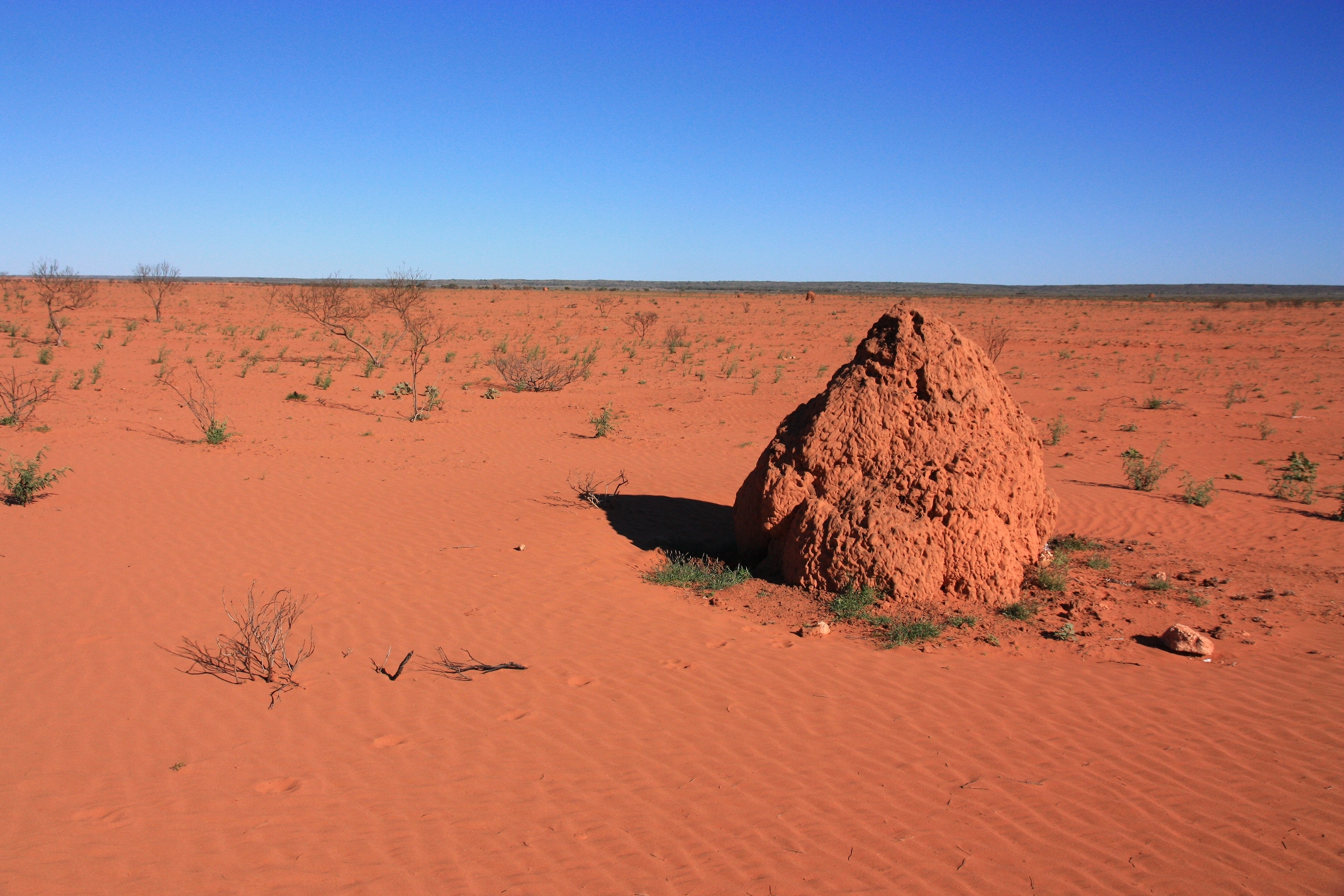
I cannot write about these experiences and this topic without covering time on Red Hill, Canberra. I may have written about this place before. I came across it three days into arrival in Australia, fighting a fight against deep afternoon jetlag driven sleep. Determined not to fall into a coma and then awake all night, I set out along charming suburban streets on one of those beautiful, clear, warming late winter afternoons. It could have almost been an old English summer. Gradually climbing in altitude and property price, the streets ended abruptly as the very richest backed their way onto the grassland and steeply rising bush of Red Hill Reserve. Without intricate knowledge of paths and trails I headed straight up, short and steep to the lookout cafe. Here I viewed Canberra from high for the first time, had a coffee and saw a handful of Eastern Grey Kangaroos milling about without much of a care in the world (much like myself really).

Since that day I almost always saw kangaroos at Red Hill, particularly as I was wont to wander there of an evening. Huge mobs would gather in the grassier patches at the bottom while others would linger along the ridge up high. Mothers and their kids would eye me with suspicion or, perhaps, familiarity. A stand-off ensued, one waiting for the other to move on. But I often emerged the victor in these early days, because I would have my camera with me, and everyone knows that as soon as you bring your camera up to your eye to take a picture of some wildlife, the wildlife flees.

K_kangaroos

Certainly it was hard to restrain myself from taking a picture every time I saw a kangaroo. It was a natural reaction because back then it was all so extraordinary and therefore entirely warranted. Increasing familiarity has restrained my picture-taking compulsion since. In fact, I don’t tend to take my camera up Red Hill anymore…hell…I don’t even go up Red Hill anymore, since I am presently 3,000 kilometres west and it is a trifle inconvenient. However, frequently armed with camera elsewhere a kangaroo or dozen have popped into view. They emerge within the context of a wider landscape, as natural as, well, a man in a cork hat and grubby white singlet. They undoubtedly add something to the mood, grounding the scene in something that is so very obviously Australian. And thus, still, so very exciting.

————————————————-

Kosciuszko National Park is one of Australia’s great national parks, taking in vast swathes of upland country and river valleys in New South Wales. In winter the highest parts are caked in snow, in summer all parts are swathed in flies. It’s a fairly unique environment for Australia, which is mostly dry, brown and flat. Termed alpine, it is not so in the sense of being blessed with gigantic peaks and glaciers; instead ridges and clumpy mounts offer a scene more akin to the rounded peaks of northern and western Britain [5]. It is an ecosystem that is all-encompassing, from rare possums and miniature toads in the boggy bare stretches high up, to common wombats and kangaroos and all of their derivatives [6] in the bush and plains further down. 

Kosciuszko is not so far from Canberra but on one occasion, having spent some time working in the town of Albury, I approached it from the west. It was a long weekend of high country meandering, through the northeast of Victoria and into New South Wales before crossing the Main Range and ploughing on more familiar roads back to Canberra. Approaching the end of March the landscape was in a state of transition, from the dry, warm summer to freezing cold winter nights and winds and rains and occasional snows. The hairpin drive up Mount Buffalo – the closest thing Australia has to an Alpe d’Huez – came with freezing fog that cleared to warm sunshine. The valley town of Bright was commencing its ascent into blushing autumn saturation and wood-fired air. And the trudge along an endless ridge towards Mount Feathertop was blanketed in cloud, a stark contrast to the clear fresh vale below.

Crossing into New South Wales and finally into Kosciuszko National Park, there is eventually a sense that these are proper mountains and not big hills, as the highest points of the Main Range, glowing in the sun above the tree line, rise up more dramatically from this western vantage. The road on this side twists and turns along a narrowing river valley, the dense green bushland plummeting down the hillsides occasionally broken by huge pipes belonging to the mammoth Snowy River Hydro scheme. At some point the road rises and crosses the range at the evocatively named Dead Horse Gap, but before this tortuous ascent, there is respite at Geehi Flats.

Geehi Flats appears like some hidden valley idyll, where the opaque water of the Swampy Plains River broadens and a swathe of grassland punctures the dark green tangle of gum trees. A spacious area along the river offers rustic camp spots and opportunity to amble. At the northern end a couple of old wooden huts testify to exploration and discovery and, now abandoned, the harsh realities of surviving in the high country [7]. Within this clearing the afternoon sunshine illuminates the rise up to the Main Range and onwards to the white cotton wool clouds hovering above. And as I stare at the serenity, a large Eastern Grey kangaroo stares back. Suddenly I feel like the intruder.

K_kossyroo

On the face of it, it is nothing remarkable…a sighting of an animal that I have seen hundreds of times before and so common in an area where it is protected to thrive. But in the landscape, in the setting, in the primitive high country context it feels very special, like I am the first white man to see it and it is the first kangaroo to see a white man. It is so amazed that it even lingers while I take a photo. It’s a chunky unit, but it is meagre within the scale of the whole, minor against the vast wildness of the scene. Yet here it sits entirely natural, a perfect foreground marker within the larger composition of my vista. What lies before me is Australia and I am reminded at how fortunate I am to be a part of it. Still a land of untapped discovery, of boundless space and unknown potential, it is something to cherish, to protect, and to share. And while the kangaroo is perhaps the pinnacle of the adaptive powers of evolution, as Australians we can still be much, much better than this.


[1] Clearly we only ride kangaroos around on the weekends for leisure, duh. Else the ute wouldn’t get much use.

[2] See http://www.guardian.co.uk/world/2013/jul/22/captain-rudd-australia-depths-shame for just one well-written, reasoned commentary on Australian Government approaches to ‘boat people’.

[3] Not by the team at Mythbusters I hasten to add, but by (and I quote Wikipedia) linguist John B. Haviland in his research with the Guugu Yimithirr people.

[4] I am unsure about this at the current time of writing, with a UK heatwave and cricket team in the ascendancy.

[5] However, rising above 2000 metres it is far higher than anything in Britain, a boast many Australians like to boast about.

[6] By which I mean the whole raft of hopping marsupial type things like wallabies, wallaroos, euros, jackeroos, jillaroos, brucearoos, kangabies, roosabies, poosaloosaroos etc etc

[7] Like camping overnight, when the warm daytime temperature plummets quite dramatically and uncomfortably

Links

All you ever needed to know: http://en.wikipedia.org/wiki/Kangaroo

Everyone’s favourite: http://www.youtube.com/watch?v=uRQnrY5V-rY

Walk the hill: http://www.tams.act.gov.au/__data/assets/pdf_file/0010/390592/cnpmapredhill.pdf

Kosciuszko National Park:

http://www.environment.nsw.gov.au/nationalparks/parkhome.aspx?id=n0018

Hi, country: http://neiliogb.blogspot.com.au/2012/03/hi-country.html

Stop the votes: http://www.amnesty.org.au/refugees/comments/24019/

A to Z Australia Driving Photography Society & Culture Walking