Do you ever get asked to recount the favourite part of your holiday? Or to share the best thing about <insert multifaceted, dynamic, diverse country you have just visited>? Usually it’s a question posed upon returning home when people want to take an interest but not too much interest. And it’s a struggle to answer.
As an indecisive Libran who treasures so many little things and rarely chooses favourites unless they come from Cadbury, I find it an infuriating question. Just one thing? However, in true contrarian fashion, this year I may just have settled on something. As memories fade with each day, one that stands out stronger than the rest, when time could happily stand still.
I won’t head there yet because I’m going to resume talking about the weather. A gorgeous morning in Plymouth, clear and calm skies offering the best beach prospect of the entire trip. When Plymouth shines usually the South Hams shine stronger. So there is an even greater feeling of despondency as we drift through sunny villages towards a distinct band of cloud. ‘Typical’ is the exasperated utterance of choice. Why didn’t we go west?!
With glimmers of promise becoming sparser, we decamp at Kingsbridge under an atmosphere of light grey. The mission here is to get a bite to eat, and what a mission when there are nine of us. Still, I was surprised to find quite the high street tucked away from the quay, rising up in a Totnes kind of vein. Not enough bakeries and tea shops but I’d already done some noteworthy coffee and cake down by the bus stop.
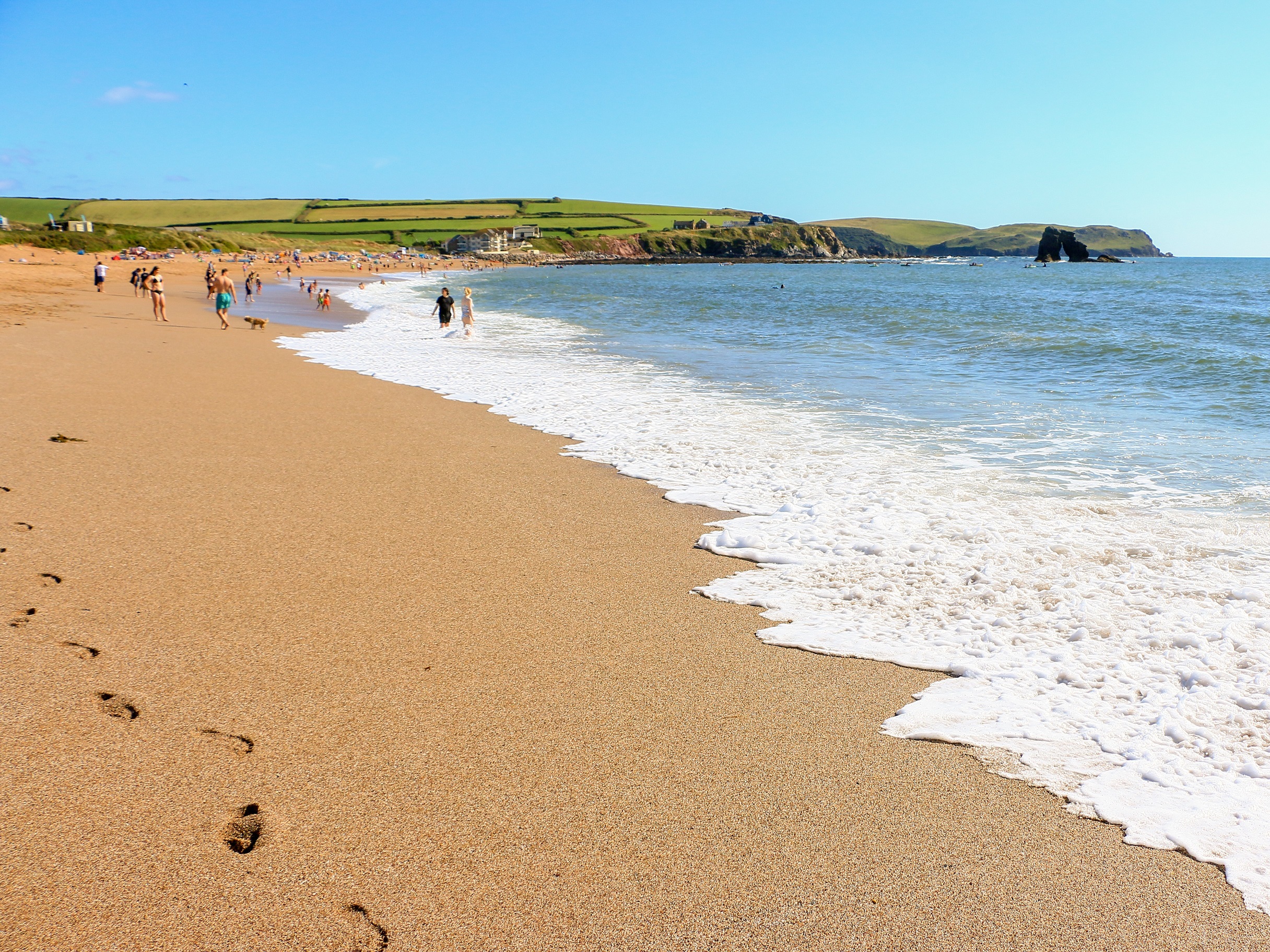
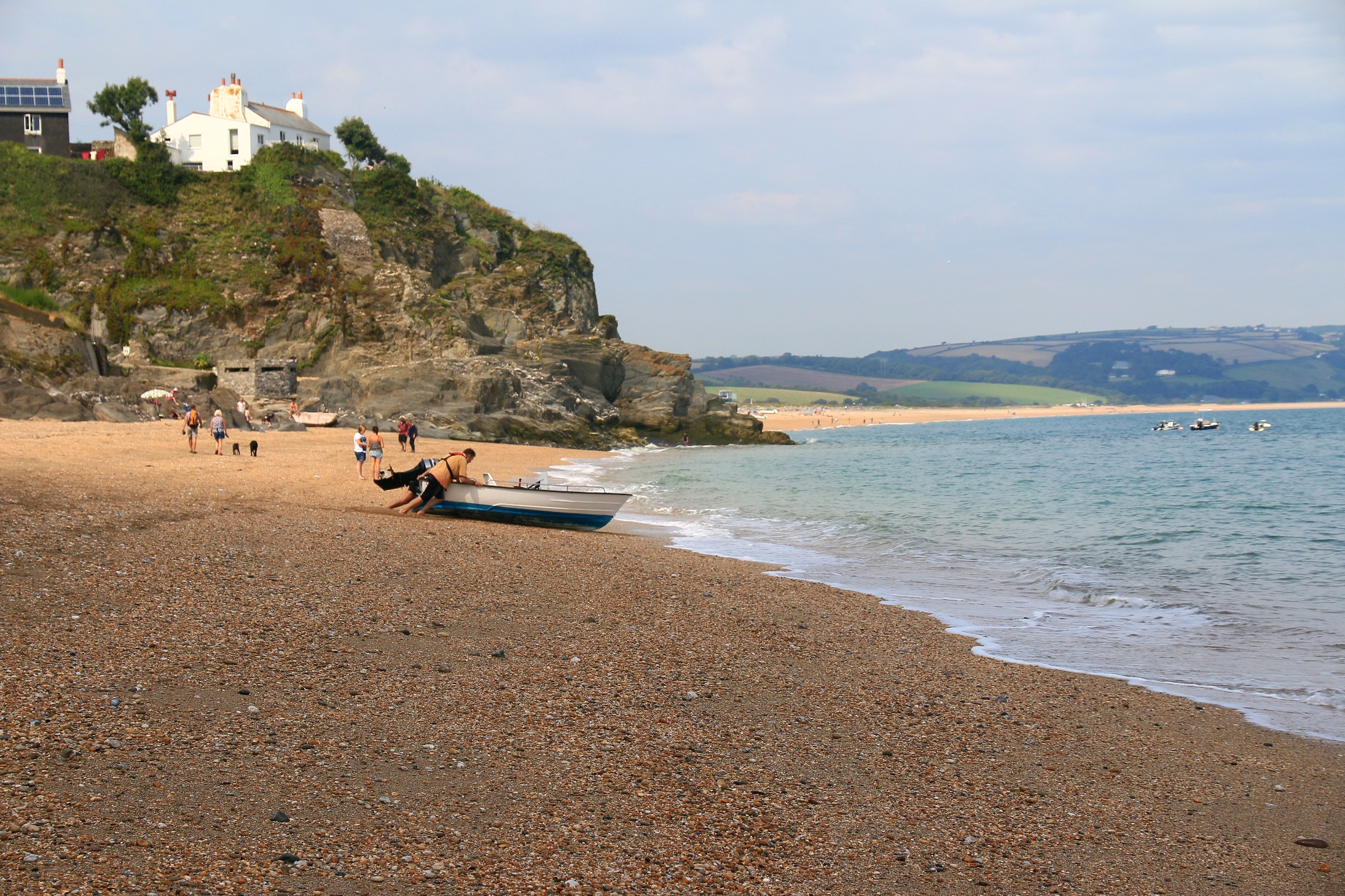
The cloud was lingering as we arrived at Thurlestone, a site steadily establishing itself as the South Devon go-to beach of choice, mainly because of reasonable parking and accessibility which was made all the stronger by bringing a footstool for that one last big step down to the sand. The beach here is essentially one end of South Milton and while that area involves regimented National Trust-controlled fleecing and pop up Instabars, this quieter side has more of a traditional bury your kids in a hole after they have mild hypothermia from the water kind of vibe.
Certainly my tippy toe experience ascertained hypothermia would take a matter of minutes. But at least in one direction there was hope on the horizon with acres of overhead blue progressively creeping closer. Finally bright spells transform to basking weather, when the outside temperature is marginally warmer than the sea.
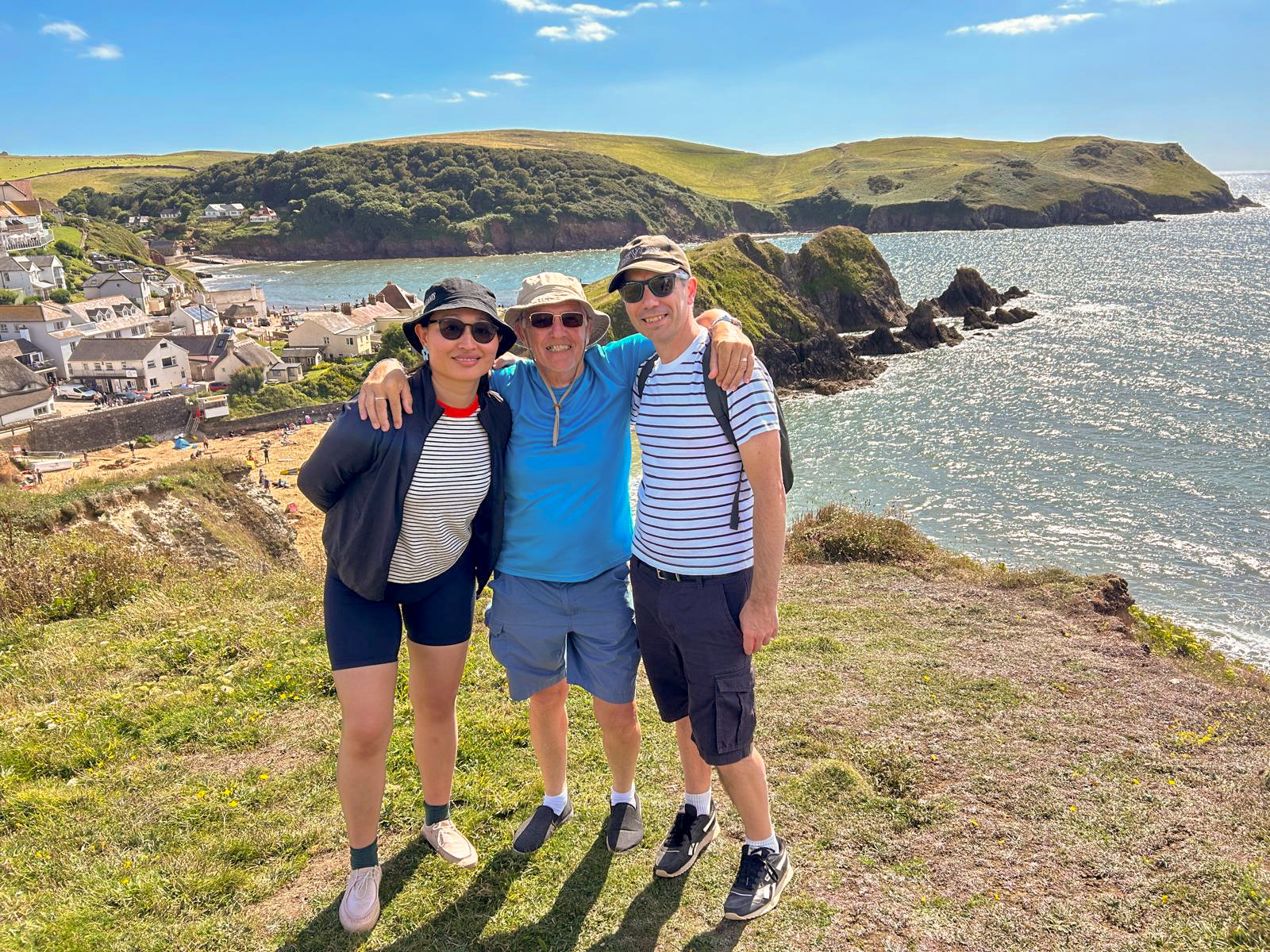
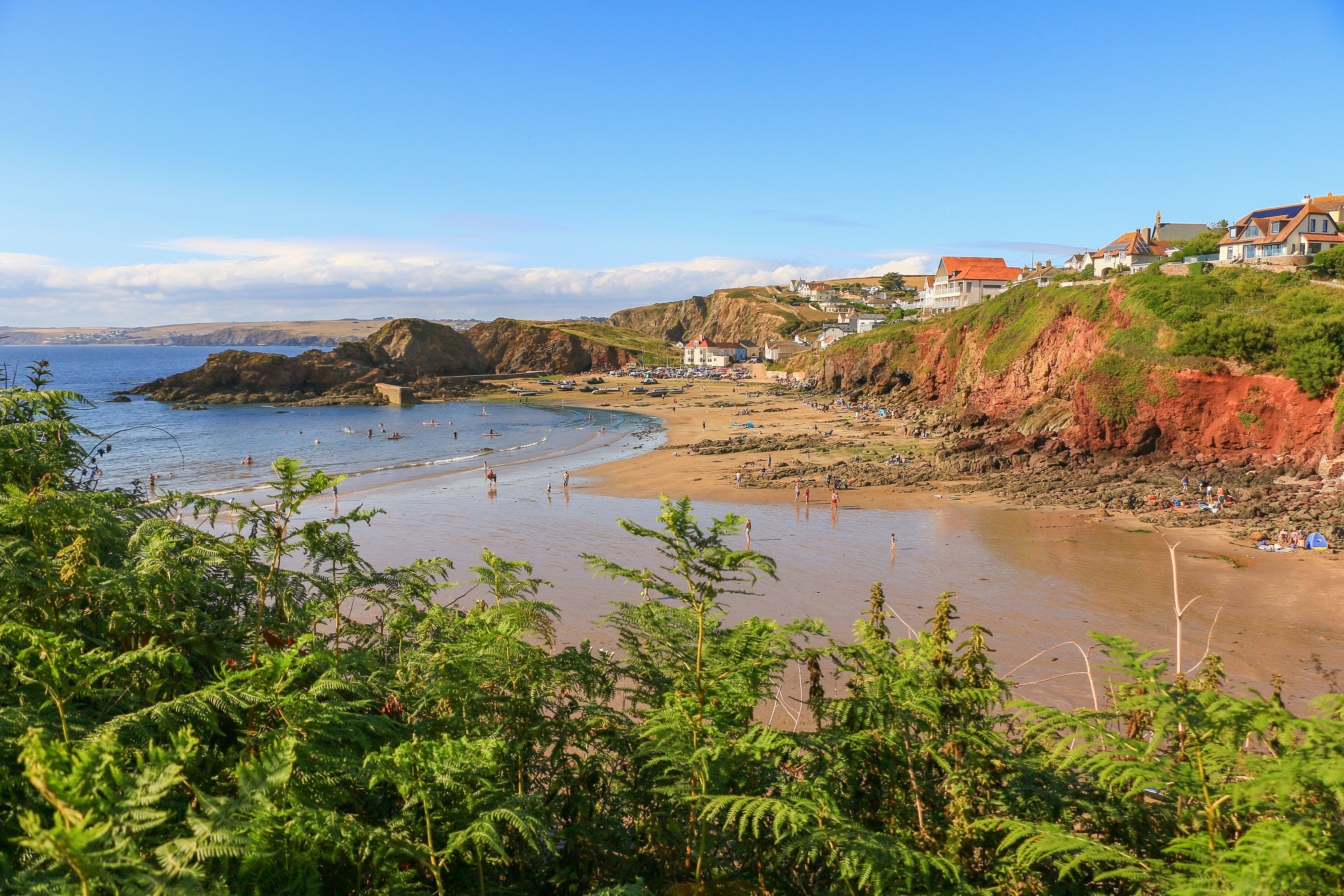
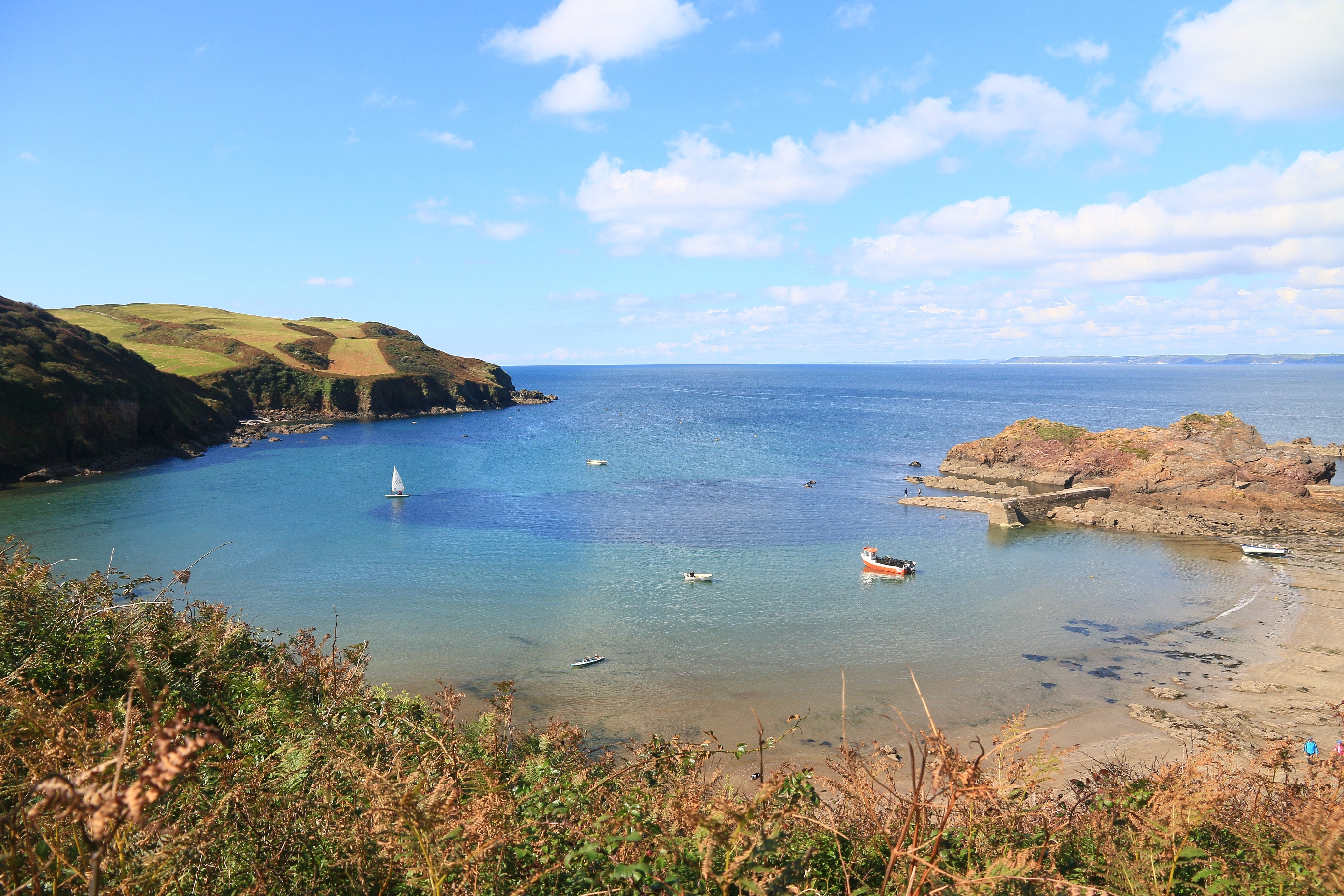
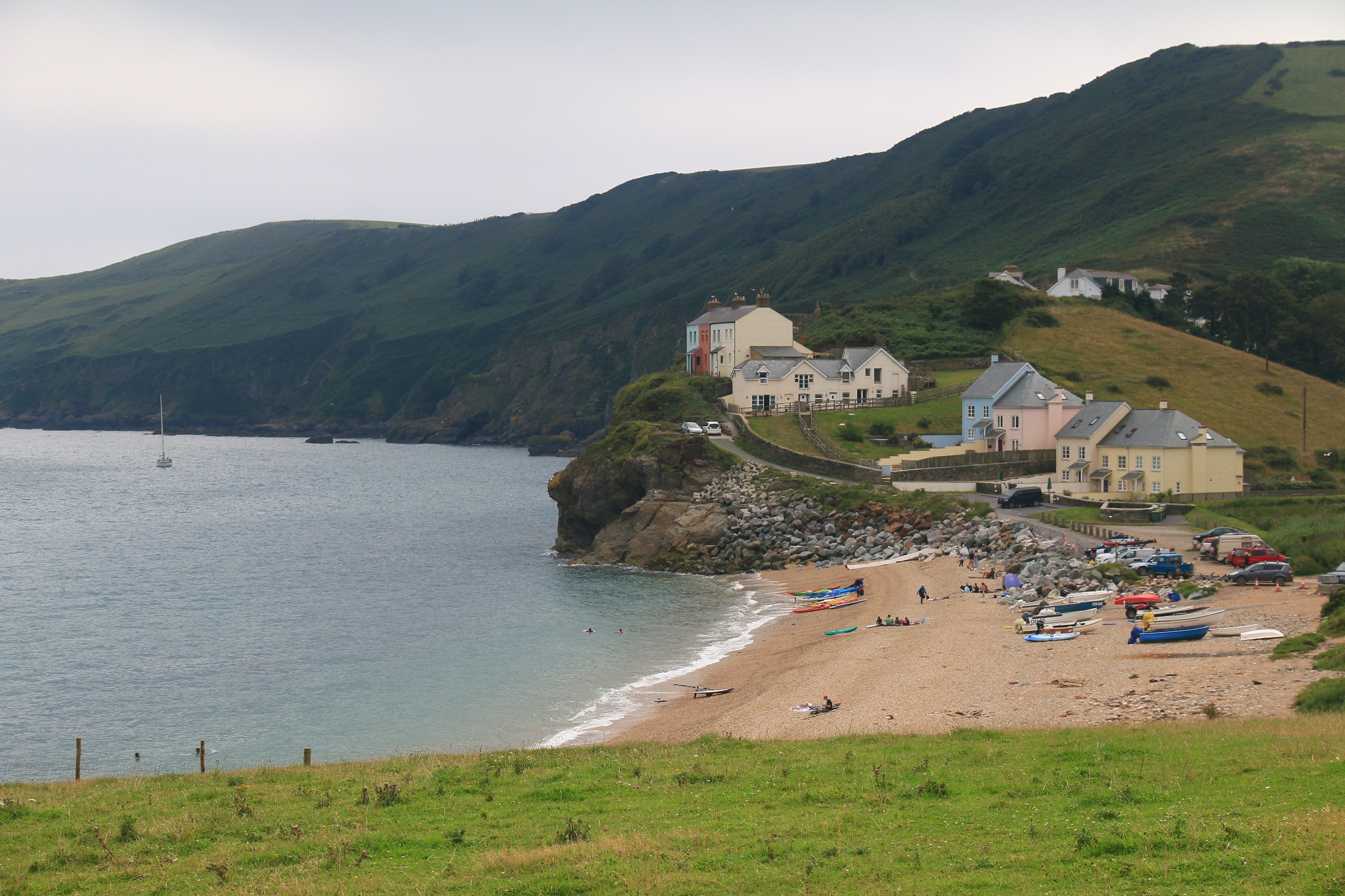
Hope was also on the other horizon, or just over a headland. This meant navigating an increasingly naked stretch of South Milton, admiring some highland cows and other bovines. A couple of undulations later and we overlook HopeCove, bustling and bursting, a long way from my first acquaintance with the place a couple of decades ago on a cool and cloudy late winter’s day.
There are a few memories from Hope Cove, the most enduring being on that first occasion, retreating to an empty pub and becoming acquainted with the joys of a perfectly baked treacle tart paired with local clotted cream. It’s something that hasn’t been replicated or improved on since. Today, the pub is busy and treacle tart is absent from the menu. I make do with a dollop of Salcombe Dairy from the general store. There will be sweeter, creamier days ahead.
And so that brings us to Trago Mills, undoubtedly not the highlight of the trip but a necessary forerunner. A space to wait out some time as the day warms up, the sunshine bringing extra sweetness to massive trays of strawberries for a pound. I once remember a friendly debate with an Australian when I lauded the superiority of English berries. And while I concede the blueberries and raspberries are broadly on a par, I challenge anyone in Australia to come up with a strawberry as succulent as that of an English summer. My partner, Avery, says she will never eat an Australian one again. We both can’t handle the disappointment.
What goes with strawberries I hear you say? Cream. Cream also goes with treacle tart and brownie and ice cream and plum pudding and meringue and anything really. Scones of course are the natural partner, a marriage made often in Devon. There is always a risk that the second time round will not live up to the first, but I doth my cap to Lustleigh. And forever will pay it homage.
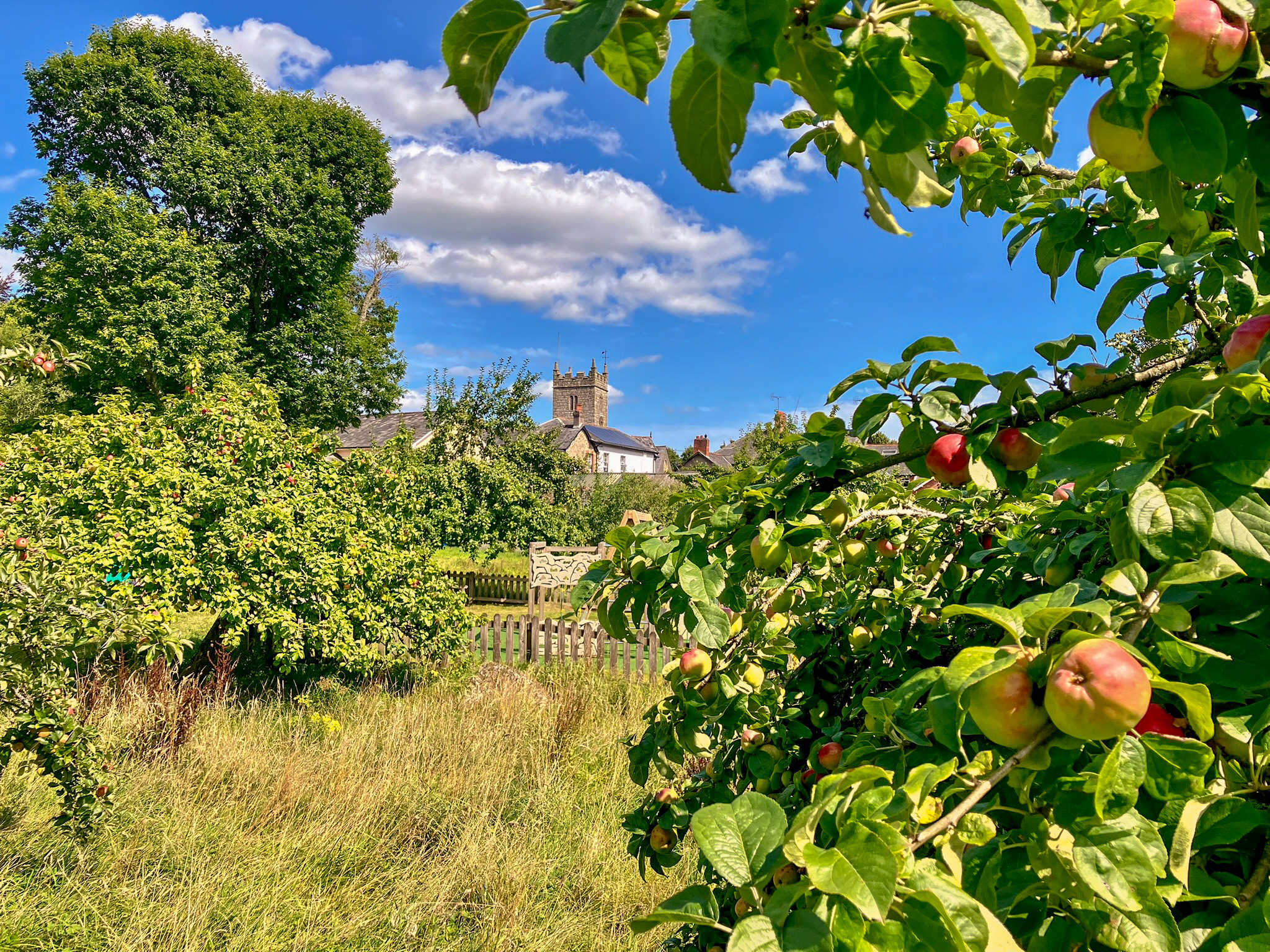
This is an occasion that lingers, but in a way which sets up a perfect moment in time, a perfect holiday memory. Sated in warm sunshine, meandering along the brook in the village orchard. Through clumps of apples, the swings and benches and thatched roofs and church spire cluster around a tearoom. Avery and I wander, attracted by the vivid blue and green demoiselle zipping above the water. Spread out, family are equally soaking in their own little thing, their own quiet corner of contentment. Time feels like it stands still here and you very much wish you could stand still with it. But we have to move on, there are questions to face.
It’s not the most refined accent. I mean you’re never gonna hear James Bond strut into the Monte Carlo casino and loudly proclaim “tooe fowzund orn red me luverr an whyul yer at itt get me a razzbrie jinn an tonik and a monsder, ulryte.”
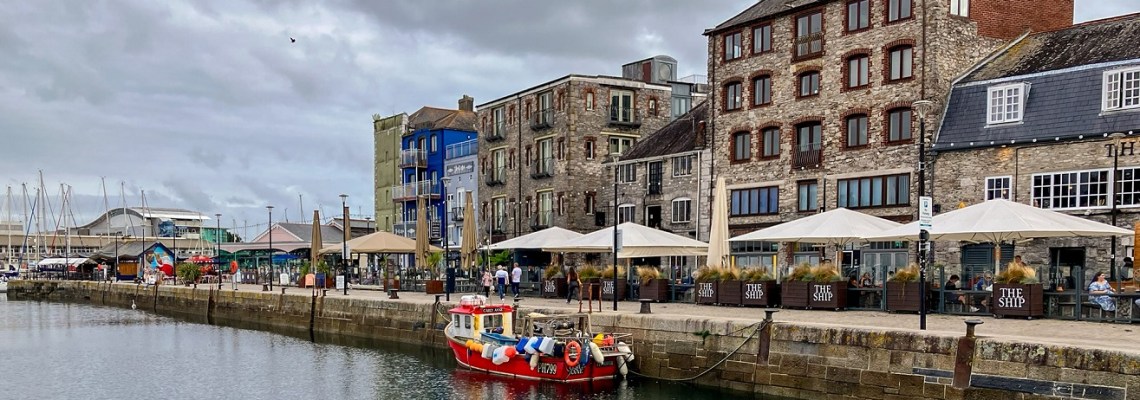
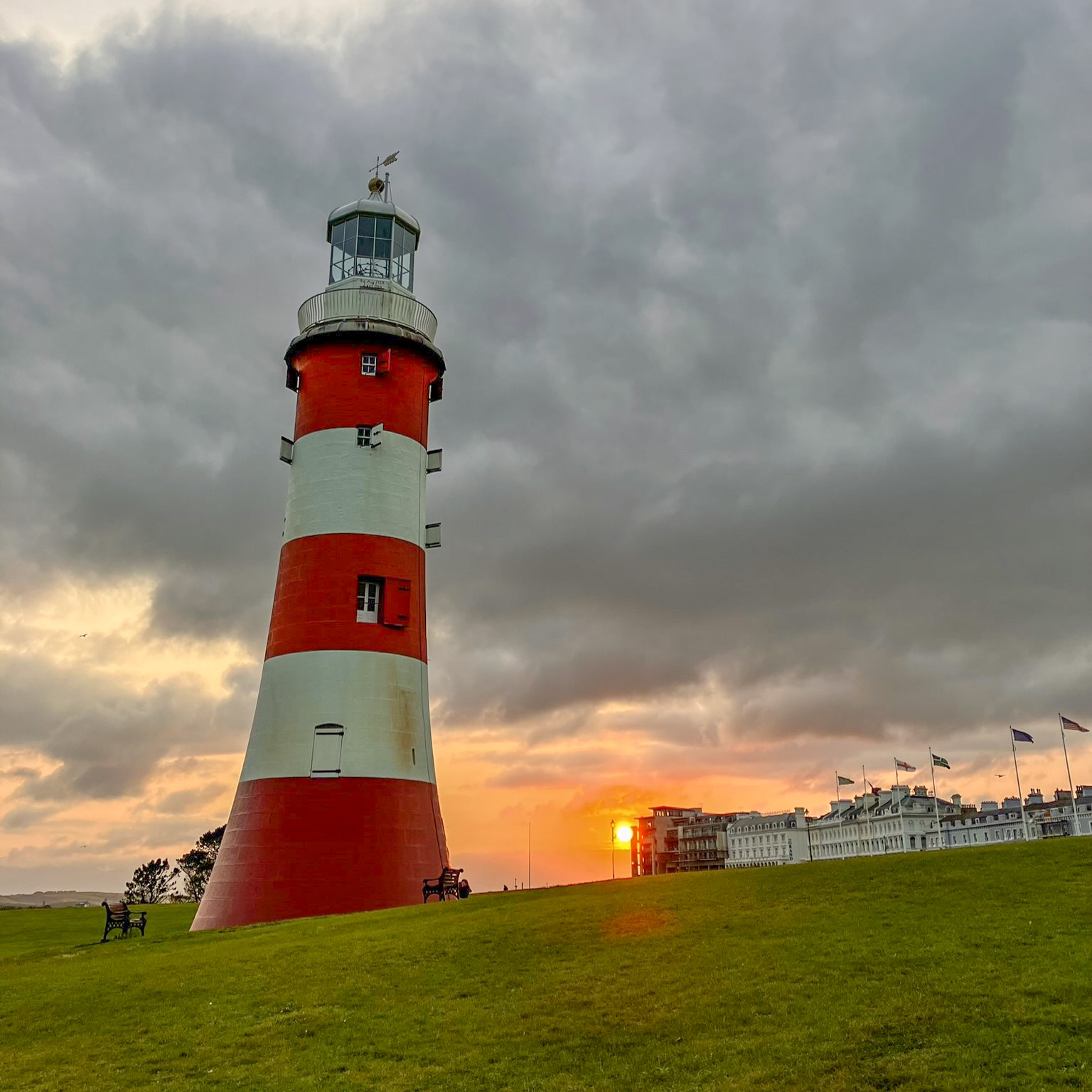
Strolling on The Hoe for what seems the umpteenth time, there is nonetheless something welcoming and endearing and genuinely warm in those Janner conversations. From the gentle ribbing of old fellas on the bowling green to the underdressed sass of bored teens flirting with each other like primitive amoeba beside the red and white lighthouse, Welcome to Plymouth. So often a staging post, but also a refuge.
I was exploring The Hoe again on my thrice daily walk from the Crowne Plaza hotel, an unexpected but probably not surprising Covid ‘holiday’ (yes, remember that?!). Booked hastily and not inexpensively with sketchy Wi-Fi I was hopeful for a sea view and comforting extras but, apart from a fluffy dressing gown, we were greeted with concrete wall vistas and an experiment in faded 80s minimalism. All very Plymouth. But still, at least the window opened slightly and I had an outlet into the world.
The need for fresh air was paramount, the problem being the howling winds buffeting against brutalist architecture at three in the morning. It has been rare on this trip to experience a still day, equally as rare to feel hot. At best I think I have felt pleasantly warm three times: an afternoon at Thurlestone, utopia revisited in Lustleigh, and in a tiny Cornish microclimate.
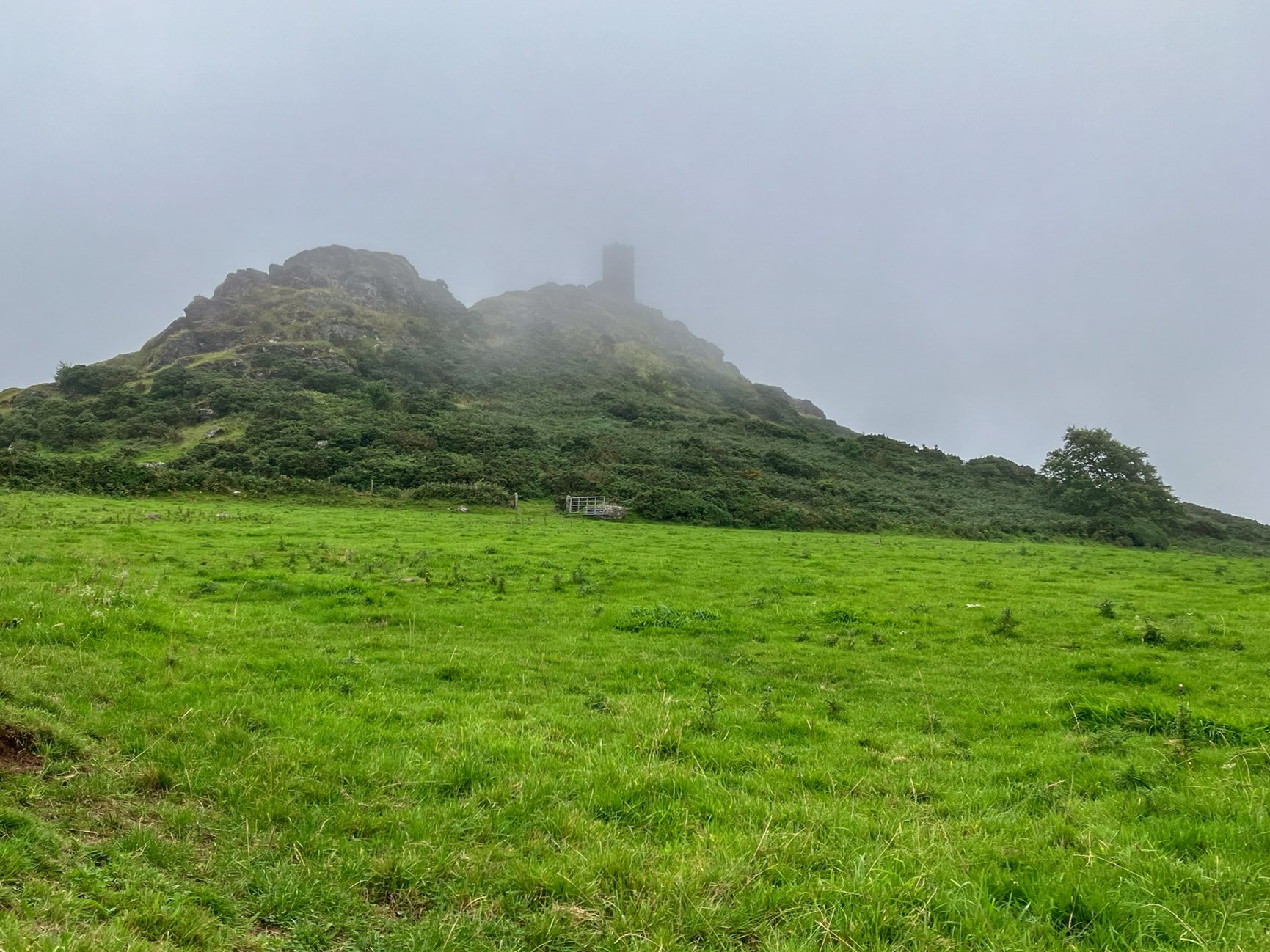
I’ll tell you about them in time but, for now, let’s journey up to Brentor. A landmark church sitting atop a rocky outcrop from which there are sweeping views of Dartmoor and half of Cornwall. Visible as we sauntered around Yelverton, disappearing as we whizzed to its base. As murky and disappointing as a coffee van beverage. One might kindly describe both as atmospheric and moody. Or perhaps just typical.
Still, give it a couple of hours and a helping of Tavistock chilli and all will be swell. Post-lunch sunshine beams down on glowing moorland and hazy glades. Cows amble nonchalantly across the tarmac while sheep chill out on the grass. German caravans pause on single track lanes to admire the zeitgeist.
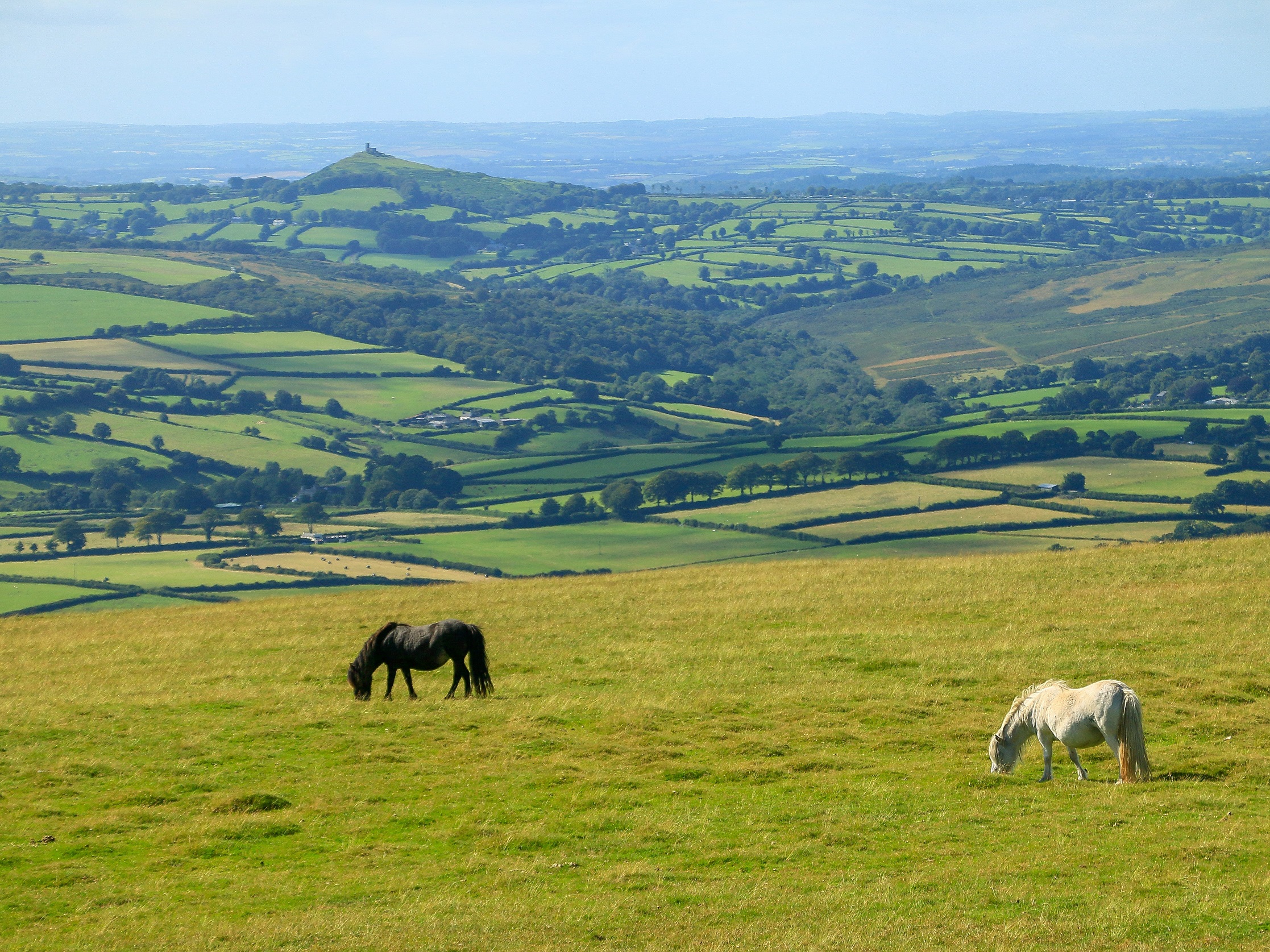
My brother sates himself on Willys before we soak up the splendour from Cox Tor. Gorse and granite and ponies pepper the surrounds, leading to outlooks upon a wildness that is rare for these isles. As the uplands creep down into river valleys and patchwork fields, an outpost stands resolute in the west. The unmistakable landmark of Brentor, aglow.
Downhill and back in Plymouth there continue intermittent spells of sunshine with which to grasp some form of hope. I quickly adjust to checking the BBC weather app and buy into the unfounded optimism that is going out without an extra layer in August. And briefly it seems the right call, as sun breaks through on the Barbican and we can sup on okay coffee as oversized seagulls strut their stuff and oversized men in green shirts strut theirs.
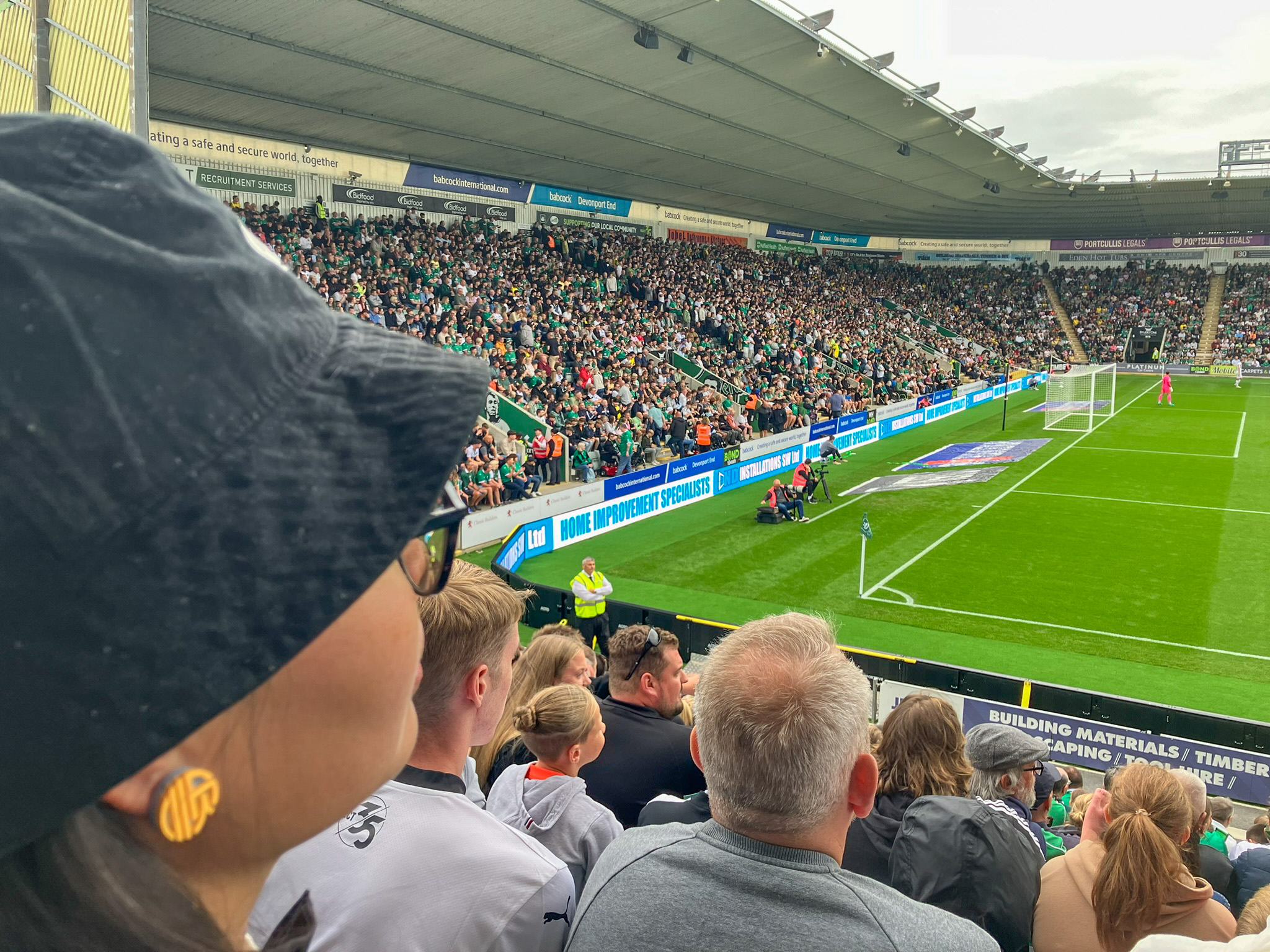
Then we head to Argyle and a gloom sets in. A chill wind, a portent of life under Rooney perhaps? Sure we have a padded seat and two free, unsurprisingly mediocre pasties, but that wind is reminiscent of a 0-0 draw in February against Grimsby rather than a lively one-all in August versus Hull. I have been there countless times.
I sit and wonder what Avery thinks of thousands of grown men and women belting out Janners? A what-the-heck moment both incredulous and incredible. I sense some awe and bemusement, and she embraces the moment by pulling on a recently purchased argyle top. Mostly because of that chill.
Travelling with someone coming to England for the first time you can tend to forget all this is a little weird. Like meal deals and massive bumblebees and little dogs on trains heading for a day out in the drizzle. Not to mention the size of those seagulls. All I notice that’s different are bottle tops no longer separable from their hosts. Out of habit, I endeavour to tear them apart anyway, frequent dribble resulting on my pants.
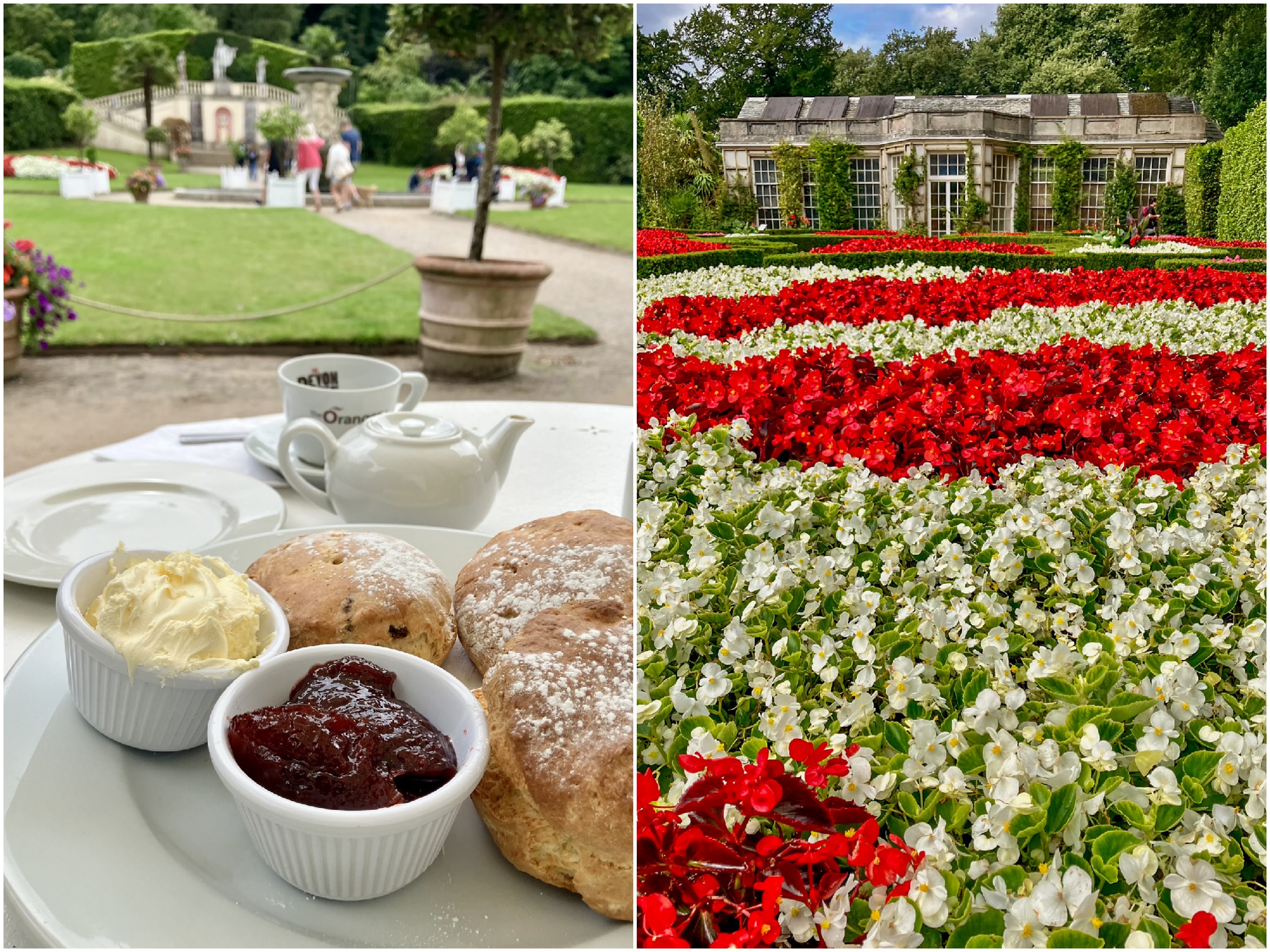
A local trait I may have lost is to not put too much trust in the weather forecast, although this results in occasional merry times when it surpasses expectations as well as the regular underperformance. Scones in a shower at Mount Edgecumbe? Why not, especially since this is the last such occasion (scones not showers) for the year. And the sun will radiate in the thousands of flowers and the warmth of loved ones anyway.
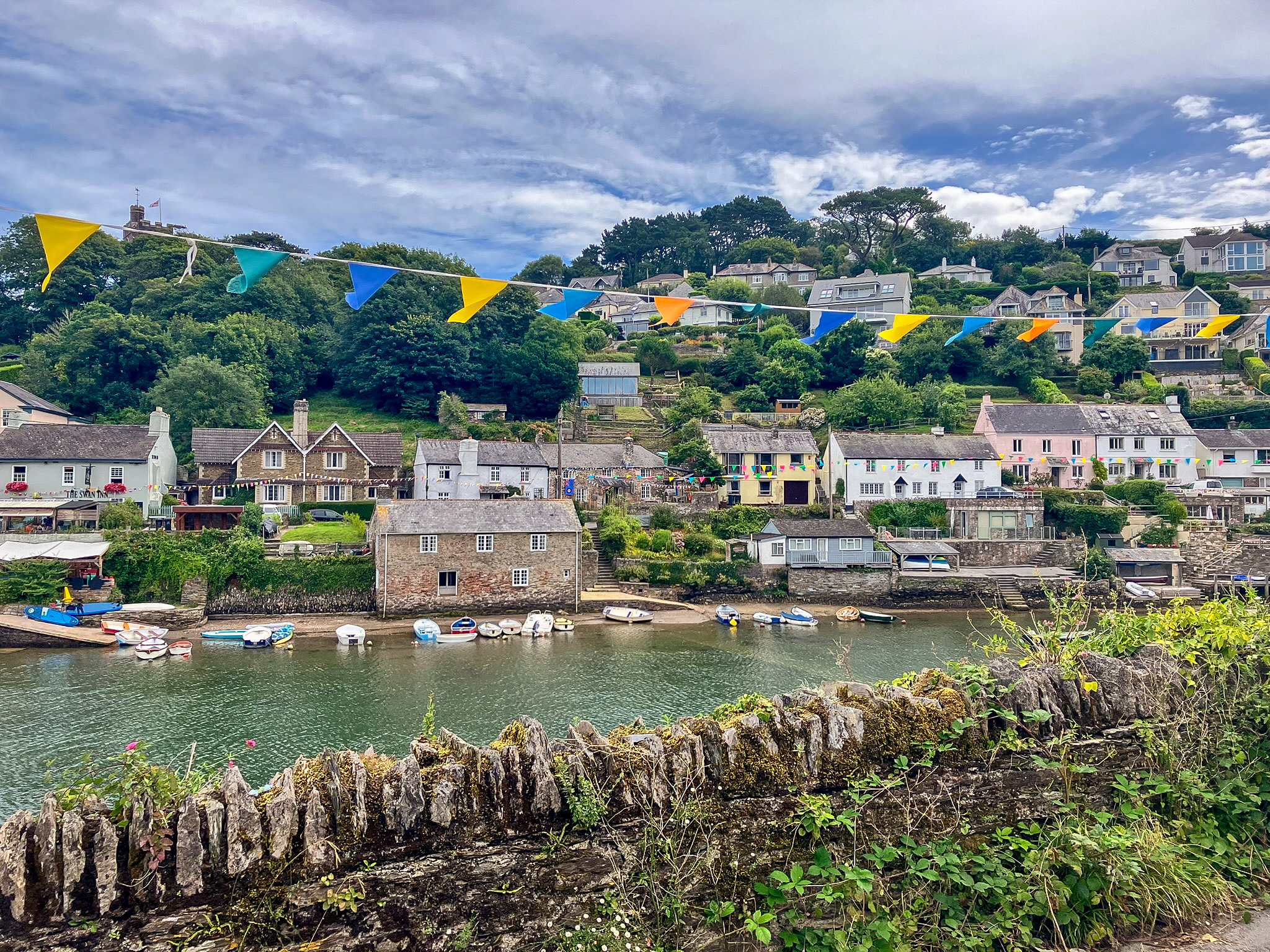
Having low expectations is the birthright of a Plymothian (and is most manifest when it comes to Argyle). So it is a merry time in and around Noss Mayo when the clouds hold back. A walk of such dear character, of such Devonian charm. Farmhouses (or Airbnbs) surrounded by fields of wheat, cows and sheep peeking above the hedgerows, true blue sea and green, green grass, cottages, flowers and bunting galore. A pub on the water, a Ploughman’s and some local murky brew like Otter’s Arse. All just in time before the sumptuous plop of a first raindrop.
The rain sets in on the Barbican. We hunker down in a café and bike shop, optimistic about the chances of decent coffee when it’s associated with Lycra. It’s not bad; the flat whites remain too small and strong and the lattes a little weak. All they need to do is find that middle ground. Maybe one or two more years.
I’ll be back to taste. Next week, next year. Always Plymouth, Janners, Seagulls and all. Semper Fidelis.
Devon can be many things. A terrible processed meat in the deli counter at Coles. A fast bowler from the nineties. A hotbed of interbreeding rivalry between two cities. An hour of everybody’s time wasted in Escape to the Country. An elongated farmyard on the way to Cornwall. But, always, a sprawling canvas in which are sewn indelible gems, both sparkling and subtle.
The subtle, hidden ones are of course the best. These are the unassuming pockets that do their best impression of Tolkien’s Shire, before all that weird dark wizardry and multiple three hour orcfests came knocking at the door. Think thatched homes and fluffy rabbits and green hills and apple orchards and beady-eyed locals with distorted feet, living under an angle of sun that always casts a golden hue.
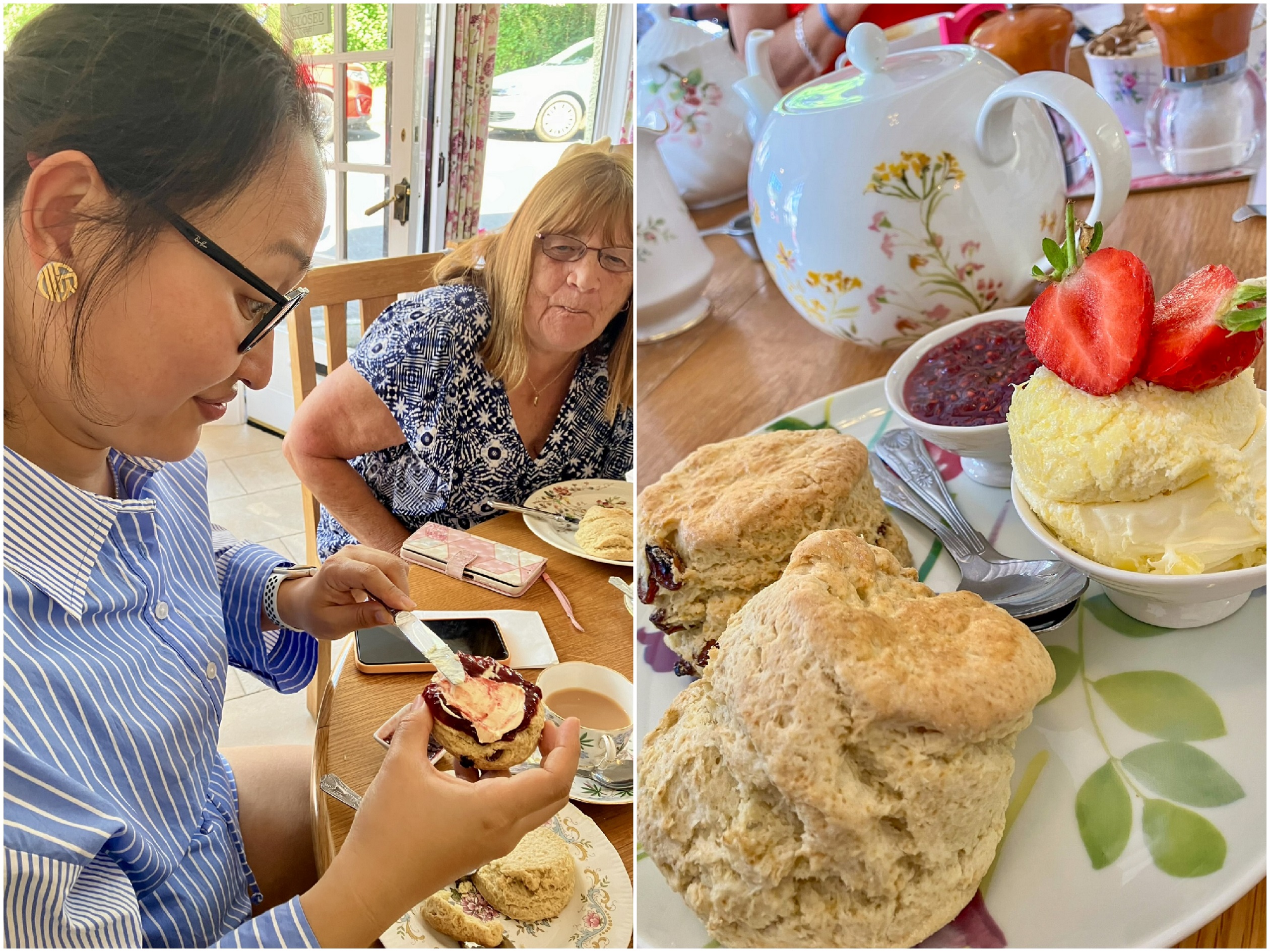
In a county that does a commendable impression of The Shire, it is perhaps apt that I should find myself on a special quest. Allied with a peculiar looking fellowship seeking out a special ring…of luxuriant clotted cream smeared atop treacly strawberry jam coating a fluffy, crunchy, warm cloud of a scone. It has been some mission.
Where to find this precious, last sighted many years ago lost in the valley of Badgeres Holte? Perhaps nestled among the shapely hills and sinewy estuaries of the South Hams? Possibly, but it is far too easy to get distracted by hog roast baps on the way to Thurlestone. And on glorious days beside the sea, ice cream is usually the natural order of events.
The quilted green squares of the South Hams do their best to go on forever (especially if you are driving the A379 in August), but from vantage points you can see the uplands of Dartmoor. Here it can often feel a bit more Mordor, particularly wedged between cold walls of granite as mists swirl, gusts of wind making diagonal raindrops feel like a thousand steel barbs. You’d quite fancy a dip in Mount Doom frankly.
Protection though comes in the valleys and the inns, one of which offers up one of the stingiest serves of cream tea in the whole of Devon. You can have silver platters and waistcoats all you like, but a dainty teaspoon of cream for three people is never going to fulfil a quest. Or sustain enough until a Toby Carvery.
Perhaps the pickings are too thin upon this high wilderness or perhaps this is just some benefit of Brexit or whatever (yes I went there, too soon?). There is an untrammelled and capacious beauty in the high moor, but it is somehow at its very best, at its most precious, where the outreaches of civilisation and cultivation lap at the rocky tors and sheep-strewn bracken. This could be a state of mind as much an aesthetic, reassurance that down in the fields there is life, possibly even grazing cows, and maybe a café with a nice scone.
The area around Sheepstor is such an area and one I am happy to take footsteps within time and again. Late afternoon and into evening it was pleasing to share it with fellow adventurers, though our end destination on this occasion was wholesome food and ale in the Walkhampton Inn. Another welcome staging post to add to the list of options when travelling through this way.
And so the end of the journey draws closer. It would have been difficult to eventually fulfil this quest without the insight and companionship of others. Like those who did their research among indistinguishable five star reviews proclaiming every cream tea anywhere “the best one I’ve ever had” only for reality to reveal a dry, crumbly, measly mess. And for those who – during the course of quite a few years – accompanied me to pokey cafes in seaside towns or faced National Trust disappointment or journeyed with hope through the Shire to encounter a dry, crumbly, measly mess.
And then there are also those who drove me to a small village in the borderlands between the countryside and the moor.
A small village out of Hobbiton central casting, centred around a church green, fringed by a babbling brook glistening in the golden sun. Birds and butterflies flit from stone walls to thatched roofs while walkers pass through on their way to higher places. Quiet, unassuming, charming and with a small, unpretentious, homely café in the heart. Or should I say – even better – tea room. Screw your gold disappeary ring, bring me one of those cream teas right now.
Among the excitement, among the relief there is deep sadness that there are people who cannot join us as we complete the mission. They certainly were wholesome advocates of such adventure and had their fair share of memorable bites and dollops through the years. Lovers of Devon, the Shire and the very simple amalgam of people and nature together, the simple amalgam too of jam and cream. We eat – and we eat a lot with joy and with heart and possibly with some clogged up heart as well – in their honour. Together, it is very, very precious.
Devon. It feels far from ambrosial when hunting for chicken wings among the half-empty shelves of Lidl on Union Street. Outside, cars circle a small concrete plot as people embark on their quest to endure the least amount of walking possible. Further along the street, once grand facades appear sullen and decrepit, run down by time and indifference. Only pigeons call them home, foraging on the pickings of kebab spilling out like the desperation and menace exiting shady clubs in those dark, seedy hours.
Pan out from Union Street, across the shanty town of cash-in-hand workshops and inevitable vape shops and things will begin to change. Urban renewal they may call it or – worse – gentrification, as if in some way what had gone before was base and unworthy. Waterside apartments in Millbay, loft conversions in Stonehouse, renovated terraces in West Hoe. Far from the wages of a labourer or carer or teacher. But at least they can still afford a bag of chips and a round of crazy golf at West Hoe Park.
And Plymouth Hoe itself acts as a great leveller, a place where anyone can stroll, picnic, kick a ball, or gather in a cluster with several other yoof and create tiktoks. Old ladies may wild swim and Vodka Dave may dance and most people can get a coffee of bitter tears that may mercifully be saved with cake. The sun may shine and, sat beside the glistening water of Plymouth Sound, one may wonder if anything could really be that much finer. Especially when visible in the distance pockets of ambrosia await.
Immediately out of the city limits a web of narrow lanes burrow through trees and hedgerows to places like Heybrook Bay, Bovisand, Down Thomas and Wembury. Wembury is by far the largest of the lot, a virtual suburb of Plymouth renowned for its untamed beach and extortionate parking. Many Plymothians make the trip here but only tight arses like me park up in the village, content to embrace a longer, circular walk promising a different perspective.
I was heading past garden allotments and lone cottages once more towards the River Yealm. This is a river whose waters I have so many times witnessed from the other side. The side with lofty views atop the summit of Revelstoke Drive. The side with densely packed woodland cascading down to sea level. The side with a narrow lane leading to the charms of Noss Mayo and its creekside inns.
Hello from the other side. A similar world of bobbing boats and shingle shores, of dense thickets and a scattering of homes, sitting as neatly into the landscape as they do in my mind when it turns to an idyllic life of fantasy. You could summon a ferry out of nowhere to cross to the pub, but I’ll leave that for another time. And taste the caustic coffee beside Wembury Beach instead.
Not that the Ship Inn was to be bypassed altogether, an addendum for a sunny afternoon in a summer of sunny afternoons. A Friday beer o’clock escape, when you can briefly picture this as your local. Tribute and a pack of pork scratchings among the minions and the millionaires. All the time, the tide imperceptibly creeping in to imperil the cars of those from out of town.
When it comes to millionaires, you’d be hard pressed to encounter a denser population than on the streets of Salcombe. Well, not the streets per se but the grand designs surrounded by moats of lush exotics overlooking sparkling bays. And if not found on wooden deckchairs in the garden absorbed in the Daily Mail, the likelihood is of frequent sightings upon those opal waters below, sweater and chinos all aboard the MV Smug.
With some world-beating inflation in the UK, I could just about afford a millionaires shortbread from M&S. However I opted instead for a bag of Monster Munch left over from some far off Tesco meal deal. Still, with those pickled onion morsels come million dollar views, situated around the corner and down towards Soar Mill Cove. The coastline here is about as dramatic as it gets in South Devon, all ups and downs and ups again. The cove – in its sheltered enclave with raggedy rocky outcrops and see-through waters – a kind of mini Kynance. Only without the million dollar parking fees.
There are, of course, other priceless coves down this way. Conjuring the prospect of Friday night dinner down by the sea, I persuaded someone else to drive down the A379 for a change (thanks Steve). This came with the omnipresent soundtrack of my niece, Brooke, but at least afforded me the chance to be drawn into views of beautiful countryside, stone bridges, tunnels of trees and the wilds of upland Dartmoor in the distance.
We all disembarked at Hope Cove which seems caught somewhere between a rustic fishing village of lobster pots and an upmarket resort of eco-pods. For a while you can play at millionaire here too, taking a perch for some refreshment overlooking the bay. And the coast path is always free. Dinner, however, seems another prospect, with the few places around busy and focusing on menus of the hand-caught goujon of Start Bay Sea Bass served with a melange of Rosemary-flecked Kipfler potatoes and wild lemon-infused baby samphire variety. A pizza on the beach or something would’ve been nice.
So, feeling increasingly hangry, we shifted a few miles up the road to the biggest town around – Kingsbridge. To emphasise its size, Kingsbridge boasts a Tesco and a Morrisons, plus several pubs, restaurants and takeaways. We practically did a tour of them all, before ending back at the first place we saw next to the car park. Of course. But this was pretty close to the town square and quay, and we sat outside alongside summer holiday vibes and terrific weather. The only downer was the early closure of the Salcombe Dairy Ice Cream booth. Off home to count their millions.
I did eventually manage to ingest some Salcombe Dairy at a predictably inflationary price. It came as icing on top of a final Devon cake of a day. A concoction that is so wonderful and blessed but tinged with a background air of melancholy that comes with imminent farewell. For once, the goal wasn’t really to gorge on cake, just the icing on top.
There were cakey temptations at Heron Valley Cider Farm, where it was too early for a cider but perfectly suitable for a coffee. Signs that I had been here for two months were starting to show in the agreeableness of the coffee, an agreeableness that was only usurped by the luscious setting. What is it again? Green, green grass, blue, blue sky? Thank you Heart, as continually always two months on.
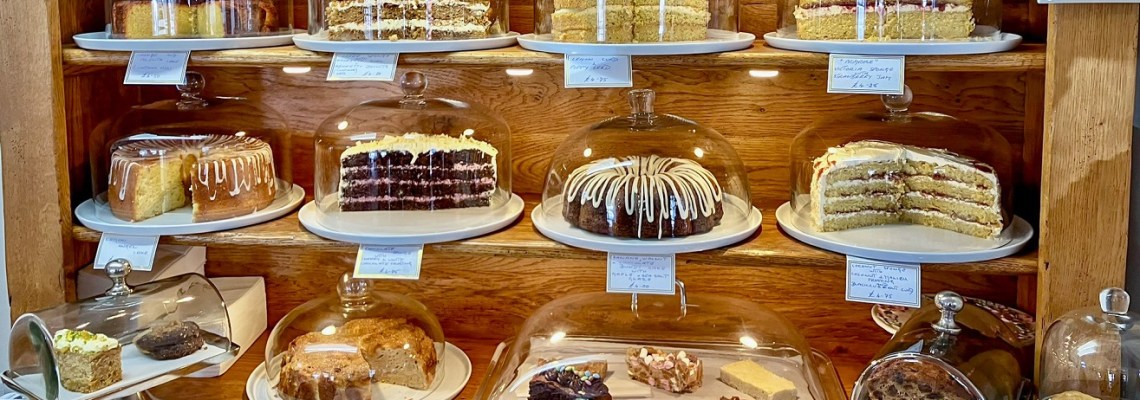
Now, normally finding myself with Mum in such a location around eleven o’clock in the morning I would feel obliged to support local business by purchasing one of the many slices and treats arranged on the counter. Mum would murmur things like “oh I probably shouldn’t” and then we’d look at each other with a knowing glance that I would quickly succumb. “Oh sod it, I’m on holiday” I would say, mildly aware that it’s not the best idea when it’s a two month holiday.
Yet today, of all days, I was steadfast. A coffee was enough. But before I pat myself on the back too much, it’s only because lunch was a mere matter of miles down the road.
Farm shops can be funny affairs. In the golden days before Google you would turn up never quite sure whether you’d encounter a smorgasbord of local delights or a few cartons of mismatched eggs next to a pile of withered green beans. Nowadays, the more savvy enterprises promote their wares with funky Instagram stories and filtered Facebook posts.
So I knew beforehand that as well as eggs and green beans and no doubt meat, Aune Valley Meat, just outside of Loddiswell, advertised a hog roast bap in their Valley View Café. I would usually bemoan the strict ordering times and a lengthy wait but this just served to amplify pangs of hunger to the point of drool. And when the food eventually arrives upon its wooden board (oh dear), salivation soon becomes salvation.
Like Beaufort in Beaufort and Pizza in a Piazza, that additional ten percent elevating the taste all comes from the terroir. Those lush, bounteous hills of the South Hams that – thankfully – are not dotted with potential future hams. At least not from our vantage. The Devon flag flutters, the tractors make hay, the tourist caravans tentatively inch past towards their constricted destiny.
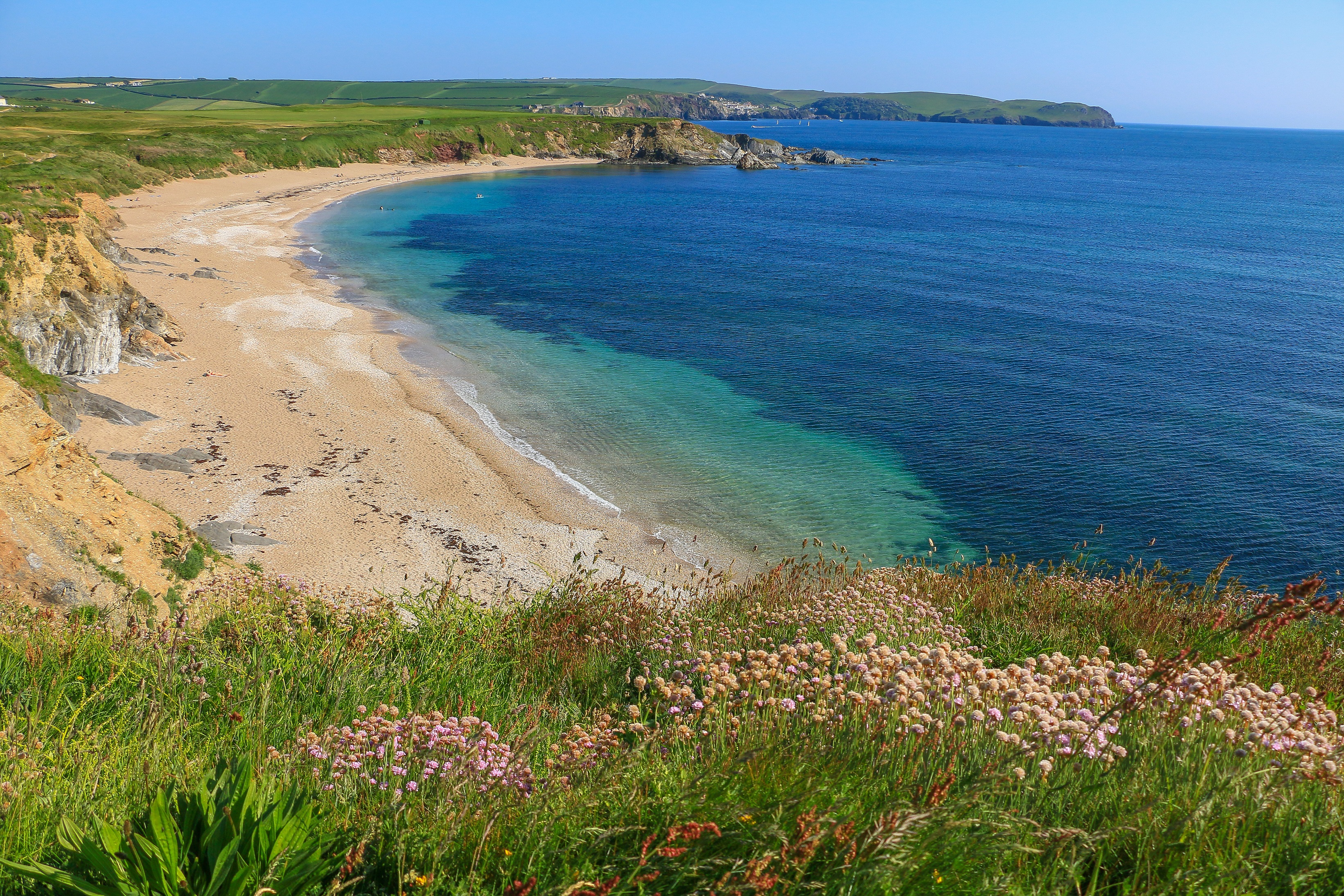
Moving south, the terroir of the sea tends to induce thoughts of fish and chips and ice cream. Given the scale of lunch, the fish and chips are quickly ruled out, but perhaps there can be an ice cream in the offing. First, some recovery on the beach at Thurlestone, where crystal waters once again tempt with Caribbean vibes. Caribbean in colour only.
Unwilling to freeze in the ocean for long, I hotfoot it along the coast path. That enduring friend who I shall miss as much as anything. It takes me past Thurlestone Golf Course, adding the hazard of wayward balls to the potential to stumble off a hundred foot cliffs. Looking west, I see the distinctive mount of Burgh Island and, further still, the entrance into Plymouth Sound. Rame Head, Cornwall sticks out beyond. But let us not speak of Cornwall here.
In the other Devon direction lies Hope Cove, Bolt Tail and then Salcombe. I discover their dairy ice cream has made it this way, just along from Thurlestone at South Milton Sands. But its arrival is only in tubs and only in the most preposterous National Trust café I have ever come across. For here, not scones and jam nor crisps and sandwiches. But alcoholic drinks and a DJ. This is what happens when Boris Johnson becomes PM, I tell you. Not that he was actually doing much at the time, but nobody seemed to notice.
Boris and Carrie might have been there as the tunes began to bang and the bouncers evicted non-patrons from the wooden tables outside. It seemed that kind of place. Locals need not apply, except between the months of September and May. Just stick to the farms, thank you very much.
The hog roast roll at Valley View Farm felt a long way from a chicken wing hunt in the heart of Union Street. But wondrously they really aren’t so far apart. And that is probably why the people of Plymouth – unbeknownst to many of them – find themselves in one of the most fortunate locations in the UK.
I thought I was done with Devon with that final day out, but an uplifting Saturday morning and a spare hour encouraged me to see the sea here one more time. I whizzed through Plymstock and around Staddon Heights to Bovisand. Here, warm sunshine beamed down upon a grassy bank as I lingered over another agreeable coffee. A couple of small, sheltered coves welcomed a handful of bathers and boarders who were welcoming the weekend. Life was as sweet as Ambrosia Devon Custard.
It felt like we were here in a forever summer and none of us wanted it to end. Could not every morning be as agreeable as this? Can we not just press pause and dwell in this unreal reality? But time and tide move on, seasons shift, people come and people go. And I had to get back to Plymouth one last time to barbecue those bloody chicken wings.
Is December 25 any more than an arbitrary date? That one day where it was decided the shops would be shut and we should horde food as if the end of the world was nigh (possibly true). That one day when we all pretend to love Brussels sprouts and Christmas pudding. That one day when instead of miserable news on the radio in the morning, there is earnest preaching and high-pitched singing about miraculous events from afar. That one day when we are supposed to gather with loved ones. That one day to share things before the next lockdown.
I will happily oblige in the festivity and jolliness of December 25 and even tolerate a few Brussels sprouts as long as there is enough gravy to mask their evil. I shall do so again this year, perhaps taking in a prawn or two and a glass of chilled wine as I sweat profusely under a thirty degree sun. It should be pleasant enough, but in reality I feel like I have had my Christmas Day in 2021 already.
To be frank, by time it reaches November 28 in the UK it feels like you should all bloody well have had your Christmas Day by now! For weeks beforehand, the same five Christmas songs have been playing ad infinitum on Heart. Soft toy carrots have been flying out the doors of Aldi. Christmas lights from Poundland sparkle and shimmer outside every three or four houses as you drive down the street. Shopping is madness and the insanity of retail staff bombarded by Christmas music is plain to see.
Besides, the Christmas Day of November 28 2021 was one of the most magical in years. It was a day that dawned crisp and clear in the little town of Plymouth. All was calm. All was bright. While magical mother elves stayed at home to prepare a feast, I set off across the rolling green fields of South Devon. Follow the car. It stopped initially in some free parking alongside the river in Dartmouth. For a coffee before getting going, out onto the infinite gift that is the South West Coast Path.
It is here that I need to bring in a fictional character who wears bright clothes, often bellows with much jollity and possibly keeps a list of good and naughty children in a little red book. Naturally, I always thought of Michael Portillo as a bit of a posh tory twerp. But in his reinvention as doyen of trains and intrepid traveller who displays surprising warmth and rapport with the people he comes across, he is – well – incredibly likeable.
During the latter half of the year in Australia a show came on which was – for me at least – dream lockdown viewing (naturally it was on SBS). Michael Portillo going on a walk along the South West Coast Path. It was a bit of a departure from train japes Michael. A COVID-era Michael, who was wistful and introspective and possessing of fewer lime green jackets. It was simply a guy going for a walk along the most beautiful path in the world. On my country.
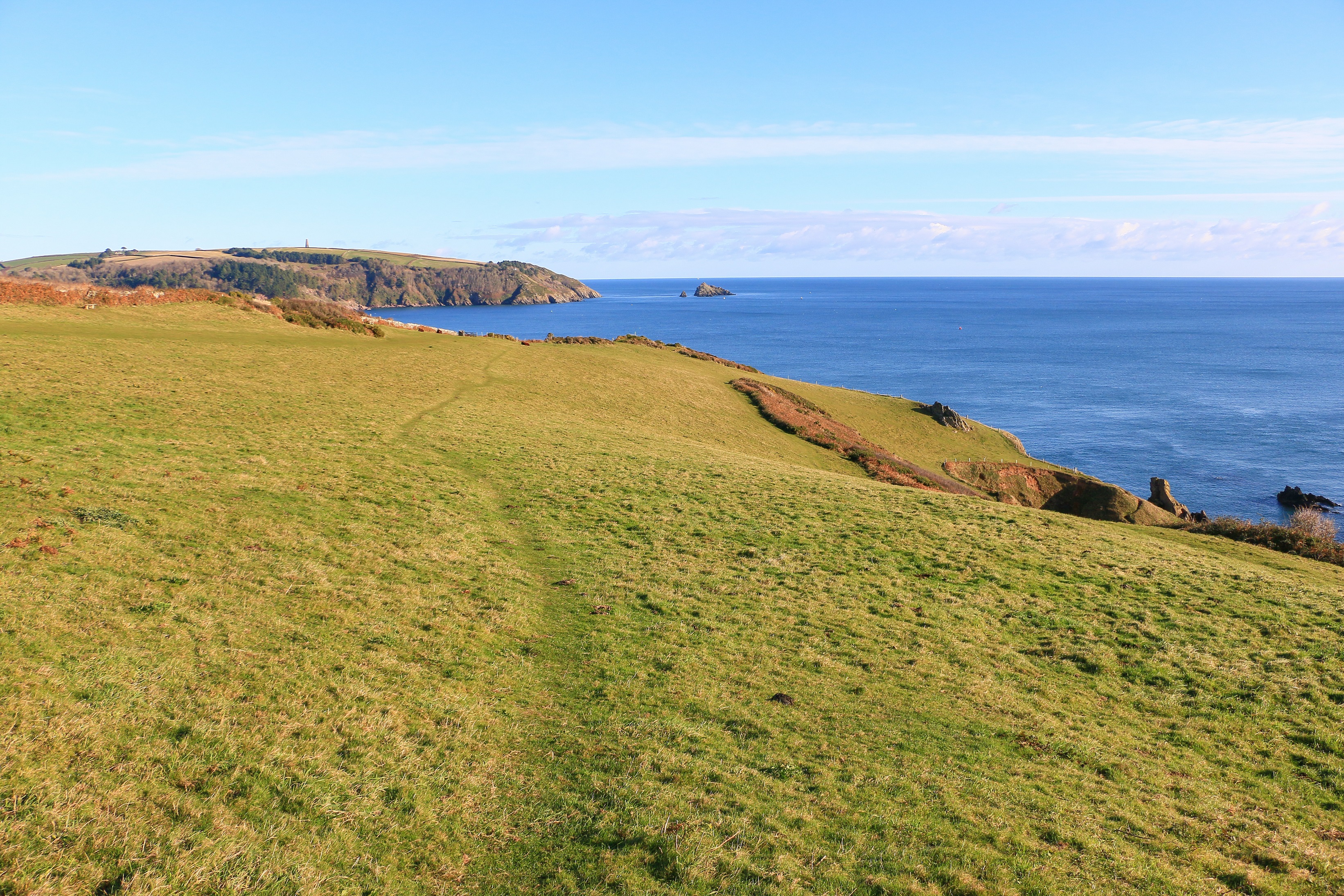
I remember an episode that commenced at Start Point and finished on the edge of Dartmouth, and the scenes on my walk today followed a small part of the same route. I set off from a car park at a spot called Little Dartmouth, quickly connecting to the coast path. There was an unmatched tranquillity about today, from the placid blue of the sea to the gentle undulations of the fields. Occasional sail boats emerged out of the Dart. Cows grazed contentedly. Robins flitted and chirped unseen among the browned hedges and trees.
After a delectable snack on a delectable bench overlooking serenity, the path soon led to Michael’s massive pole – a signpost at a junction ensuring everyone is kept on track. Only weirdoes like me would give this a second glance, but the signpost boasts a unique feature – installed by M.P. 2021. In locked down Canberra, taking comfort sharing in Michael’s frequent torment (somehow, a pleasant walk on a gorgeous coast path is way outside of his Kensington & Chelsea comfort zone), I thought there would be something fitting about making the pilgrimage to this spot. In many ways, it was still unbelievable that I could be here, just a few weeks on.
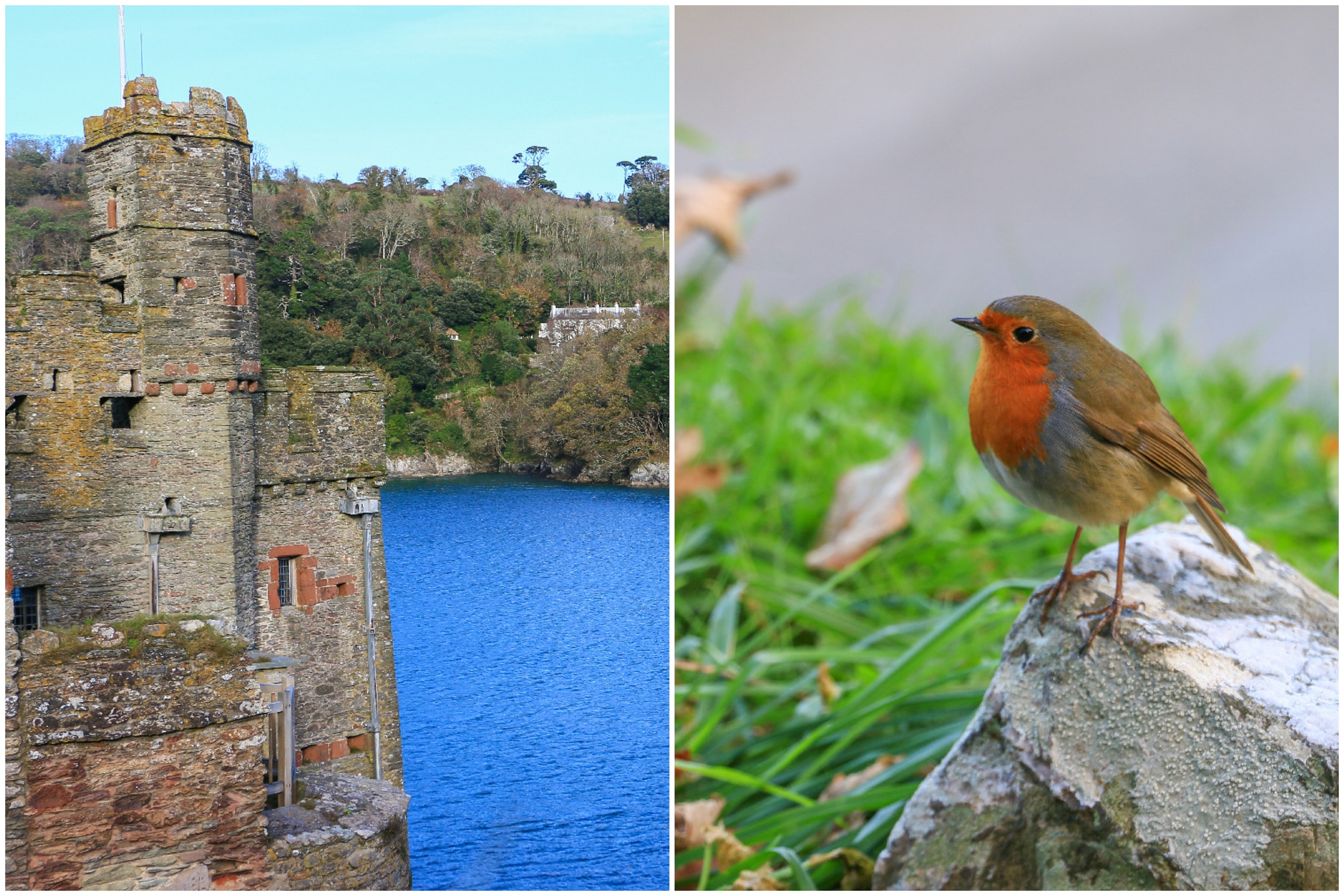
Anyway, no camera crews and gold-plated chauffeur driven cars for me, I must trudge on. Before long the path turns from the sea and follows the Dart estuary. Here, the other main motive for my walk today emerges – Dartmouth Castle and, more specifically, the presence of a café. I opt for the safety of a cup of tea and pick up some form of caramel and chocolate and biscuit. Many others are doing the same, sat outside overlooking the river from a generous array of benches. Attracted by my crumbs, a robin comes to offer company. And I am reminded how I shouldn’t eat too much and ruin my dinner.
Luckily, there is a fair chance to walk off some of the food with a steep climb up to Gallants Bower, an old hill fort offering lofty views back towards Dartmouth and, of course, out to sea. With this effort and the still sparkling afternoon sunshine I am actually starting to feel quite warm. For what I believe was the only time outdoors on this trip, I peel down to just a jumper.
I should get a move on for a date with another jumper though. Whenever the last time I was here during Christmas (maybe 2015?), I was lovingly gifted a Christmas jumper. It’s not the kind of thing that suits Australia and so it has sat gathering that musty smell in a drawer in a small room in Plymouth. In many ways I am surprised it is getting more than the one use, thankful that it is allowing me to fit in with the other elves who assemble for our Christmas dinner.
Roast pork and potatoes and parsnips. Veggies and stuffing and gravy. Pigs in blankets with crappy crackers and paper hats. That warm, rosy feeling of bodies crammed in a small space accompanying wine and noise and condensation on the windows. The lights, the very many sparkling lights. Secret Santa presents adding to the complexities of fitting everything in a suitcase. Funny quizzes and roaring, unstoppable, contagious laughter. Comfort and joy and belonging, providing culmination to a Most Perfect day which has been so long, too long, in coming. The gift of family and home. Merry November 28.
I love how there are so many different roads meandering through the English countryside, linking villages that you never knew existed; undistinguishable places called something like Dompywell Saddlebag or West Northclumptonbrook, typically boasting a new speed bump and a church roof appeal from the 1980s. It’s a situation converse to Australia, where a few main roads emanate from the cities and towns, off which a handful of mysterious dirt tracks disperse into nothing. Setting off from home for a country drive in Australia is exhausted in four or five trips. Whereas in England the possibilities seem infinite.
When I say roads, of course, most are only a little wider than a Nissan Micra, especially in Devon, where they are also frequently clogged with tractors. Farming is still king – I think – in the South Hams, though tourism, teashops and production of Let’s Escape To Buy An Expensive Seaside Residence With Five Bedrooms And A Private Mooring On The Estuary To Get Through Our Retirement In The Sun TV shows prosper.
When the sun does appear, there is hardly anywhere more contented; there must be some primeval appeal in the lusciousness of those voluptuous green hills and snaking river valleys, the sheen of golden sands recently cleansed by the ebb and flow of a shimmering sea.
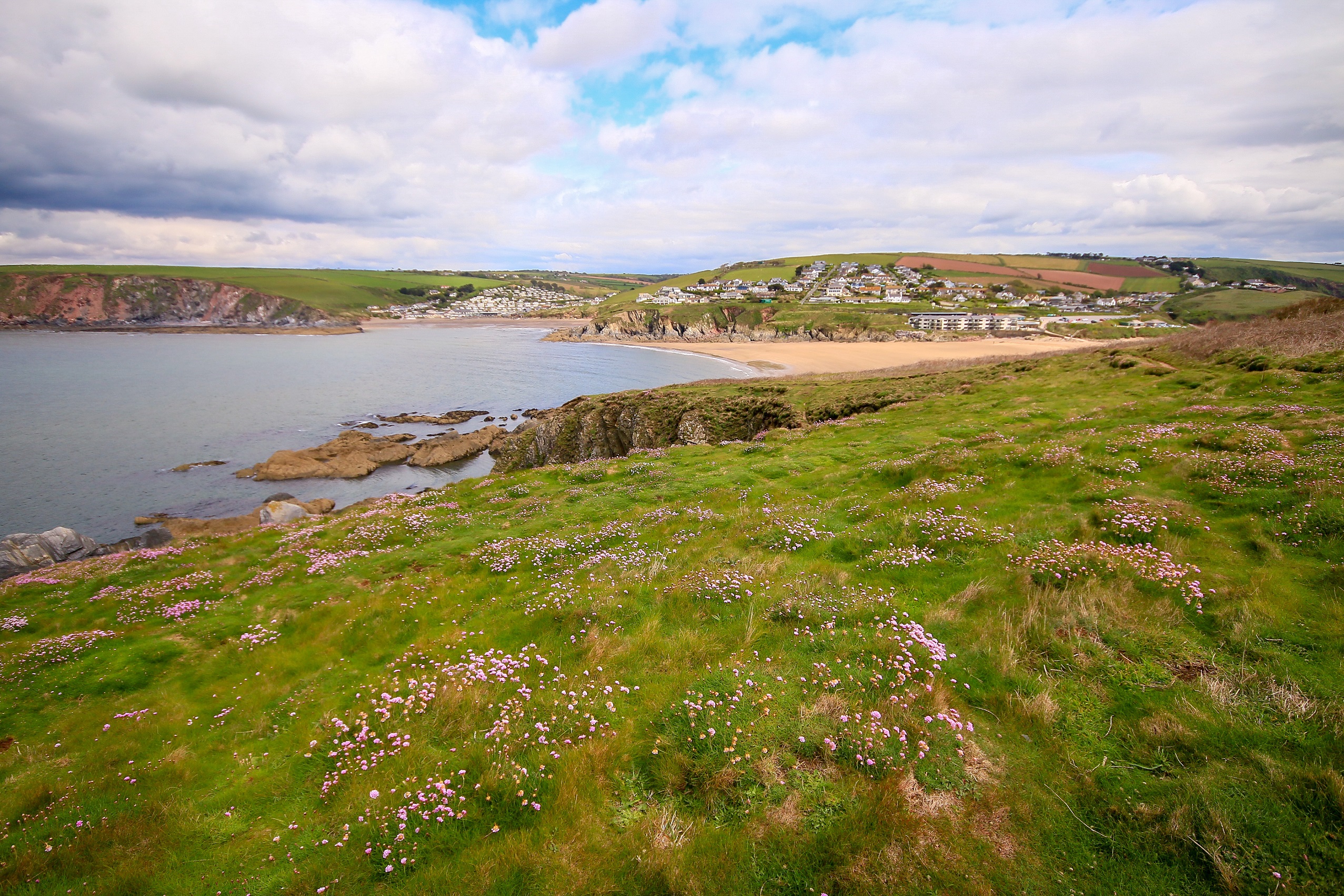
Remembering this is England, the sun of course doesn’t always shine and in the spring-like indecision that is early May it can be a fickle environment in which to salivate. At Bigbury-on-Sea, raincoats, fleeces and hot chocolates might be required while waiting for a break in the clouds. Temptation abounds to get back in the car and turn around; but you’ve paid for that parking now and you are British, and you’ll courageously stick it out like MEPs campaigning against their very existence (Customary Brexit Reference: tick). You have to be patient staying in this particular part of the world, but the benefits in doing so are clear and tangible.
A bit further down the A-road mostly suitable for two cars to pass, the town of Salcombe boasts a rather desirable ambience, even on another cloudy and cool day. Tucked inside the Kingsbridge Estuary it has some of the most golden sand and emerald water around, lapping at elegant houses and dense woodland thickets. There is a palpable sense of envy from the smattering of visitors strolling past the homes and gardens perched with lofty views across the water. I could live here, we all bitterly seethe in our heads.
No doubt many of the loftier residents of Salcombe were in jovial mood; not only from their elevated perch surveying the ambling peasants seeking a cheap pasty, but with the news of a royal baby to join the ranks. Does it have a name yet? I can’t even remember. Have the Daily Mail criticised the parents yet? Oh probably.
One of the perks of Salcombe are the options for food and drink, many of which come with waterside tables and a brief taste of refinement. Mum and I commenced the day at North Sands and a somewhat quirky café – The Winking Prawn – serving coffee (and for future reference, buffet breakfast). We then did the amble along the water and fancy homes to the town centre, where the usual offerings of pastry products, ice creams, pub food, overpriced crab bits and line caught organic fish goujons with quadruple cooked fondant sweet potato discs were up for grabs. Probably the best looking things were a tray of Chelsea Buns in a bakery, swiftly bagged and taken home for trouncing the Arsenal.
Really, it should have been a day for a Salcombe Dairy ice cream, the delicious embodiment of the verdant landscape all around. But after a bone-chilling ferry ride to South Sands, the moment had gone. Perhaps for another day.
—————————————————–
Plymouth to Dartmouth is not the quickest affair despite only being around 30 miles apart. One option includes the tortuous A379 through thatched villages that become irretrievably clogged in battles between buses and B&M Bargains trucks – threading a camel through the eye of a needle is a doddle by comparison. Or there is the route via Totnes, which seems a bit too zig-zaggy to appear logical. An alternative cut through just past Avonwick was a new discovery that proved highly effective on the way almost there, and highly ridiculous on the way back.
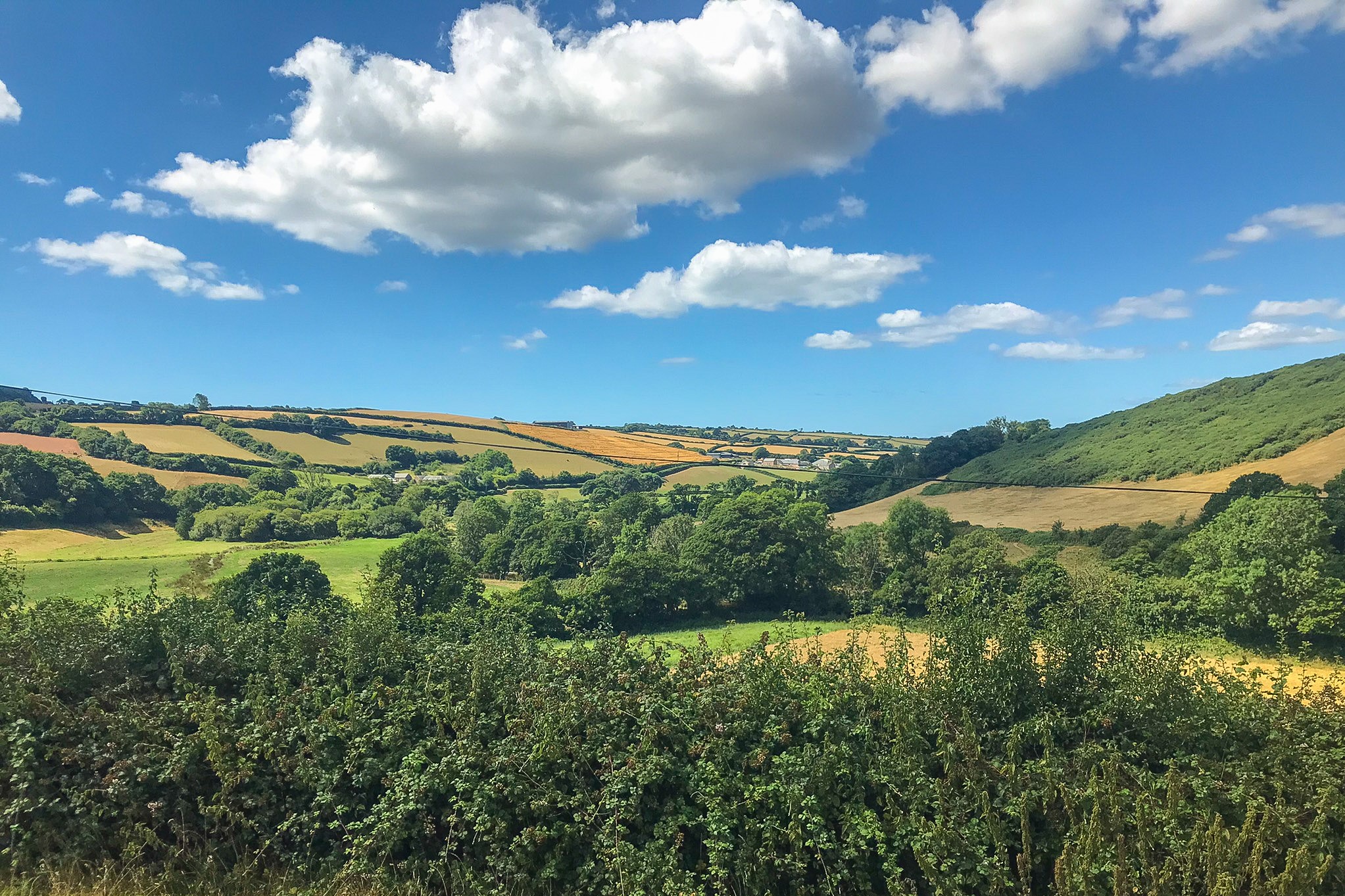
One of the joys of that cut through, in the morning at least, was finding yet another road that took me through even more unknown villages as pretty as a picture, following river valleys and archetypal ten foot hedgerows and fields of newly minted lambs. The sun was shining too, and my meteorological calculations to head east appeared to be paying off.
It was also joyous to have a functioning car, without an exhaust dangling onto the road and probably projecting sparks onto the windscreen of a doddery couple heading to the post office. This happened later, on the A3122 at Collaton Cross, about a mile after the BP garage and before Woodlands Adventure Park. Details etched into my brain to guide the saviour that was the breakdown truck towards us.
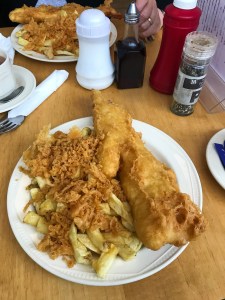
And so, the unexpected and unplanned once again yields some of the most memorable moments. Waiting in a small layby among the gorgeous fields of Devon in the warming sunshine could be worse. Being patched up and guided to Totnes for repairs by endearing locals eager to provide a helping hand (and earn some pennies) proved heart-warming. Spending a few hours in Totnes, charmed and enlightened by good coffee, markets overflowing with abundance and leafy riverside walks. And the satisfaction of rediscovering batter bits with malt vinegar (good work Mum!)
Killing time in Totnes wasn’t too much of a chore in the end, and it was partway along a path following the River Dart that we got the call that the car was fit and ready. It had been an eventful day covering a lot of ground, but I was determined to head to where I had originally planned, several hours earlier. Another slice of succulent South Devon that oozes curvaceously into the sea.
Such are the ample proportions of the landscape here that the coast path between Strete and Blackpool Sands struggles to keep to the coast. The barriers are too immense, and the trail cuts inland as it dips down towards the bay. But this too is something of a blessing, for not only do you make it without falling to an inevitable death into the sea, but you become once again immersed into a countryside apparently so utopian. Farming must still be productive here, despite the temptation to become a campsite or a tearoom or a paddock for some pampered hobby horses.
The coast path comes back to the shore via a row of thatched cottages that could have almost been deliberately placed there to charm dewy-eyed tourists like myself. The fine shingle of Blackpool Sands lends a bright and airy light even through the sunshine of the morning is rare. And down near the shingle, a café, winding down for the day has some Salcombe Dairy on tap.
After fish and chips and batter bits there is hardly need for additional gluttony. But this is a land of overindulgence, of profligate abundance, blessed with more than its ample share of what makes life good. And I still have one of those gorgeous hills to climb to get back to the car, a climb that is incessant and delightful and my own private nirvana full of ice cream and South Devon. A climb and a day entirely, wonderfully, exhausting.
Britain excels in that insipid low cloud misty drizzle. It lends the country a rather depressing air, accentuating the abundant greyness of post-way concrete city centres and dimming the allure of the countryside. Dampness saturates to the bone, and you can see why comfort is taken in massive cups of abysmal coffee and, at least, sumptuous cake. As a native such conditions provoke familiarity, but as a visitor it’s as frustrating as hell.
Part of the annoyance is you can never tell when and where it will strike, how long it will last, and whether it’s shrouded in gloom five miles down the road. Sometimes the world around you can disappear totally and the futility of a trip out seems complete. Like when driving out of dreary Plymouth, passing through murky Modbury and still wondering where the South Hams has gone. Usually this corner of Devon is better.
But we know that Hope is on the horizon and it comes first with a slightly whiter patch of cloud. Maybe a small sphere of light pierces through, like a torch low on batteries being shone through a winter duvet. Gaps increase and suddenly a pale blue splodge of sky appears overhead. And then it happens oh so quickly, the cloud vanishing without trace. And you stand there bewildered. Bewildered, and deliriously happy.
More often than not this is not the case, but today delirious happiness ensued. Indeed, for a couple of hours on the South Devon coast I had not seen England with as much clarity this year. Perhaps it is the deep blue of the seas around here, invariably pummelling the fierce outcrops around Bolt Head. Or the generally fine air of Salcombe tucked away inside the estuary.
While the vision was clear and fresh, the smell was far from it. At least not upon parking at East Soar, sited amongst the fertile fields of Devon in September. Cows had clearly been in action and silage was readily ripening, whipped up by the sea breeze.
There were farms to traverse on this walk towards the coast path but happily the smell had eased by time we reached a pile of barns, sheds and cottages providing a variety of rustic lodging. Within this enclave was The Tea Barn, which looked suitably delightful if only we hadn’t come from Plymouth on the back of an all-you-can-eat Chinese buffet.
And then, the coast, with its deep blue seas, sandy coves and rocky outcrops. Starehole Bottom seems as sumptuously titillating an English place name as you can get, a crevice between two mounds leading down towards the water. With shelter from wind, it was getting warm in this valley and I kind of wished my bottom was clad in shorts rather than jeans. The water too, looking inviting.
What goes down generally comes up again, and from Starehole Bay we climbed towards Bolt Head itself. The pinnacle so to speak, looking back over the bay and across the estuary all the way along to Start Point. This is the kind of deliriously happy, pinch yourself moment that you get post-murk. One where it is virtually impossible to believe that there was nothing to see an hour before.
The scenery and amazement at such scenery being so visible, being so wondrous, continues around the corner as we slowly head back in a loop towards the car park. The last vestiges of heather and sweeping gold of flowering gorse add an extra splash of colour on this most brilliantly saturated afternoon. Leaving the clifftops high above the sea, only bovine-induced pungency can prove more overwhelming.
Could I end this day, this once dreary day, any better? This morning – actually even at two o’clock this afternoon – I would have had myself committed if I said I would be bathing in the sun, drinking a cold shandy, lounging in shorts. But with the regular dreariness of Great Britain you need to retain that hope. And in South Devon, we are of course blessed with hope. Hope indeed.
Devon, oh Devon. Rolling hills, white fluffy clouds in a blue sky, white fluffy sheep in a green field, the deep blue sea shimmering in a haze of paradise. Oh yes, the picture-perfect Devon of custard cans. Such were my thoughts on the first day back here as gales lashed rain sideways upon a window in gritty Plymouth city, the smell of roast dinner the only comfort. It’s good to be back.
That stormy day has been the exception rather than the rule but, while there have been some blessed interludes, the predominant feature has been cloud. Cloud and cream and catch ups and cars to get used to ferrying family and escaping Emmerdale.
Like practically everyone else in this sceptred isle I have been paying frequent visits to the BBC Weather website, analysing the hourly chance of sunshine breaking through the milky clouds and estimating with a little skill, experience, and luck, where the gaps could emerge. And the success rate hasn’t been so bad.
Noss Mayo is a reliable friend. I know its lanes and paths well – meandering up past happy farms, coursing loftily above the sea, before weaving down underneath a green canopy as jaunty boats upon the Yealm begin to break through. I know where to crawl tentatively around which corners of single-track lane to avoid a head-on crash. I know sunny spells can be more likely to emerge here. And I know where to park and where not to.
Well, I thought I did, unless there is a fete on and the compact car park becomes overwhelmed to the extent that a complex series of nine point turns on a 20% gradient is required to squeeze in next to a wall against which you can’t open the door necessitating an undignified scramble over the passenger seat. I guess ferret racing, wellie throwing, and cake tasting is an enduringly popular attraction in Devon.
Despite this bank holiday anomaly, the rest of Noss was as pleasing as ever. Happy farms, lofty sea views, jaunty boats, that kind of thing. The sun even broke through. Customarily, I had half a pint at the end but – given things had been slightly awry from the start – made a controversial visit to The Swan rather than The Ship. From where that time-honoured tradition of watching unknowingly parked cars become submerged by the rising tide could play out.
After Noss Mayo, greyness came and went for much of the week and my continued scrutiny of the BBC Weather page started to wane as it became clear that they didn’t really know what was going on. The supposed sunny mornings were cloudy, cloudy afternoons became bright, and once in a while shorts might have been tolerable in the same day that you were wearing a fleece and long trousers and struggling to see through drizzle.
In an effort to get out with the sun and conveniently avoid a pile of tripe being served up in The Woolpack, an evening on Dartmoor produced a fine end to an otherwise dull day. The drive itself proved an adventure in threading a car through lanes hemmed in by characteristic ten-foot-high hedgerows on roads I did not now. Disorientation is never far away. Happily, I ended up on Harford Moor Gate, an area I had never previously accessed and one which led to a yomp over open moorland burnished golden by the lowering sun.
I set out for a random tor in the distance with the nebulous but entirely logical aim of seeing what was over the other side. Avoiding anguished cow bellows and boggy hollows, it turned out the other side had more open moorland and little else. On a whim, I headed for another pile of rocks a few hundred metres south. And there it was, the view of South Devon and its patchwork fading in the dying light.
The sun was heading back into a band of grey on the western horizon, but before it did I managed to make it back to my first tor to say farewell. Farewell again.
The by now notorious BBC Weather page continued to largely offer the ambiguous white cloud symbol. Always a few days into the future, perhaps some sun. Always offering a little hope. And finally delivering.
Still in the school summer holidays I feared Hope Cove in the South Hams would be largely inaccessible. Farmers would have seen the blue sky and decided to secretly annoy everyone by undertaking essential tractor on road affairs. Grockles would be flocking to car parks, caravans would be wedged between quaint red post boxes and quaint red phone boxes, kids and dogs would be running amok in a melange of buckets, balls and bowls of water that I always trip over. How, exactly, is the tranquillity?
But I was surprised. We got a park. We got a spot on the small beach cove. We got an ice cream. And we got a blue sky that was very comfortable for shorts and a walk along the South West Coast Path. That tranquillity? It’s pretty fine thanks.
Leaving the bubbling hubbub of Hope behind, I headed up towards Bolt Tail for magical views back to town and over the sapphire calm of the bay. There is little that is more joyous than traipsing on the trails of the coast path when it is like this. Nowhere in the world.
For now, here was Devon. Devon, oh Devon. Rolling hills, white fluffy clouds in a blue sky, white fluffy sheep in a green field, the deep blue sea shimmering in a haze of paradise. Oh yes, the picture-perfect Devon of custard cans. Such were my thoughts surrounded by hope. It’s good to be back.
And so, over a month since I last had a cream tea I can bring myself to write about pockets of Devon explored and re-explored in 2017. It’s not that I have been avoiding it out of separation anxiety, as such. Just rude work interruptions punctuated by apathy and good sunshine. I love to get outside every day if I can, and being raised in Devon I am pre-programmed to do that whenever it is dry and reasonably pleasant. So writing a blog post in front of a screen in Australia when there are magpies to swoop at me and sunburn to frazzle requires a commitment far beyond my genetic capability.
Now it is gently raining in Canberra, something which it largely failed to do in my first week in Devon. The second spell made up for that a bit, but even then there were suitable gaps to encourage a punt on winning a hole in the cloud. But that first week, wow. Could Devon look any finer?
Apart from the blip of Plymouth and a few other towns of much less note, the southern half of Devon is dominated by Dartmoor and the South Hams; one a National Park, the other a designated Area of Outstanding Natural Beauty. And like an indecisive lump trying to pick between a cream tea and fish and chips I flitted from one to the other at regular intervals. There was plenty, as ever, to savour.
Dartmoor is relatively convenient from the home base in Plymouth. I say that despite seemingly endless road works and traffic lights and, of course, speed bumps and congestion caused by people flocking to superstores and drive throughs on their way to the homeware warehome. But once you’ve got to that last roundabout and whizzed past the Dartmoor Diner, it’s like your inner dog is released; nose through a small gap in the window, full of anticipation and impatience, and – possibly for more deviant types – panting at the prospect of free-roaming sheep.
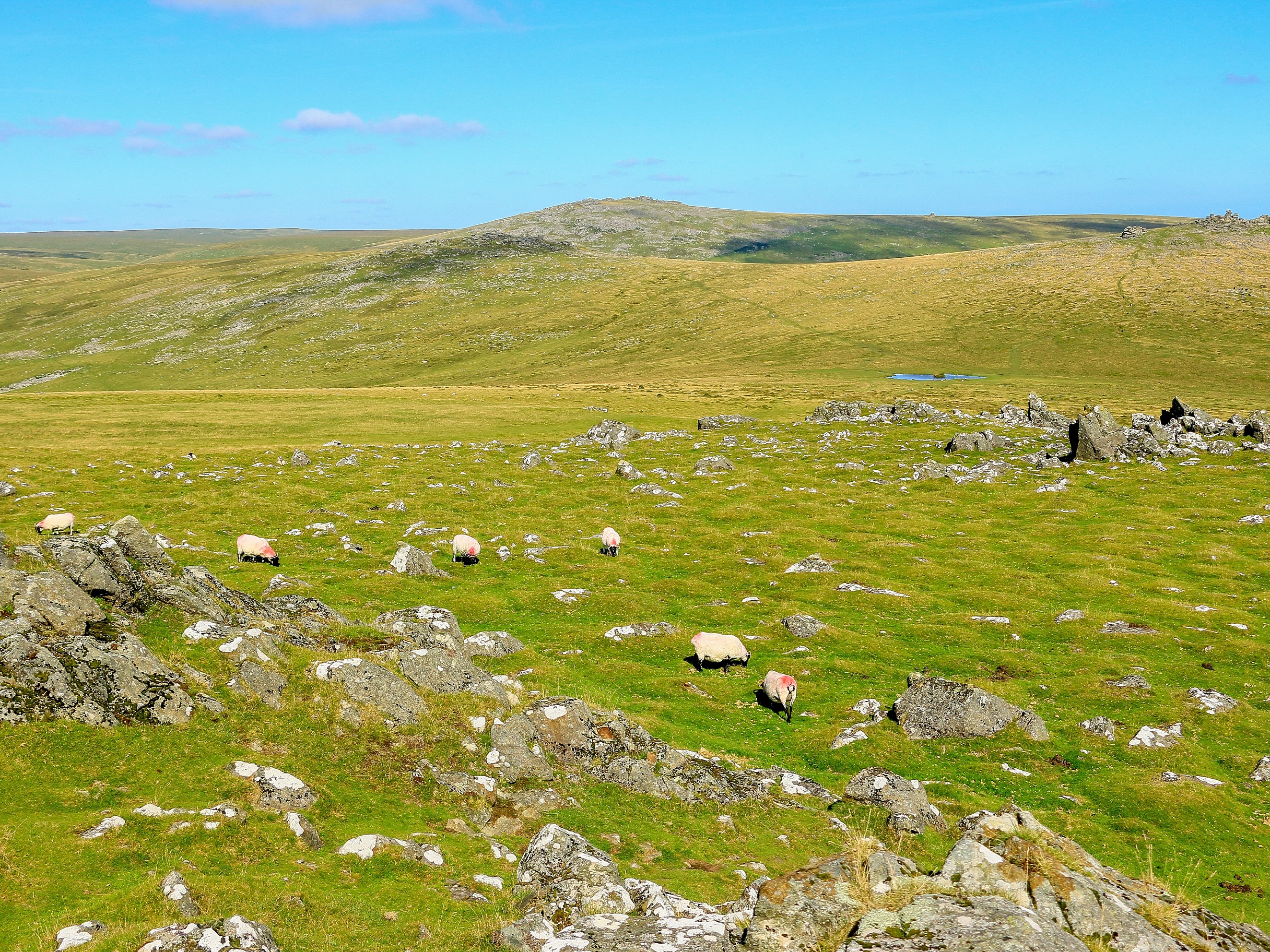
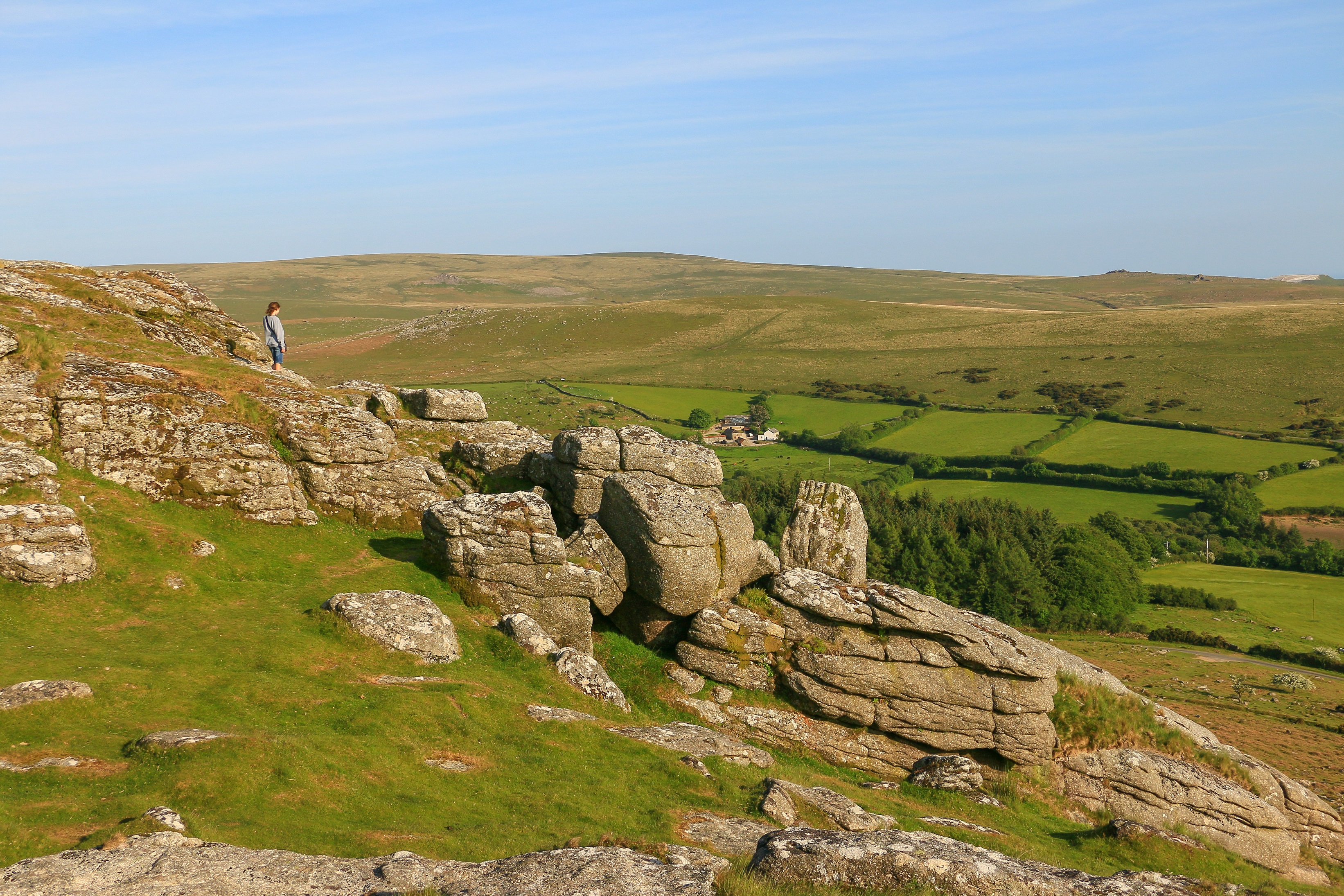
On the road to Burrator, the sheep are out in force, arse sticking out into the tarmac, head tucked into a giant gorse bush, oblivious to the fact that there are two cars coming at opposite directions on a lane built for one. Further on, a few sheep mill about in the foot of Sheepstor, just so they can pose for clichéd photos and get in the way of cars trying to park. Better to get out on foot though, and take in a stretch of reservoir, country lane, farm and hamlet aesthetic, before climbing the wilder, granite strewn hill itself. It’s a route I’ve taken a few times now and strikes me as a wonderful bona fide welcome back to Devon.
Journeying into the South Hams also presents traffic perils, often in the form of a grumpy farmer at the helm of a tractor revelling in sticking two proverbial fingers up to everyone else. Peak season for this would be August, when holidaymakers increase traffic by a factor of ten thousand. Add in twelve foot high hedgerows on single track roads down to car parks with a capacity of twenty spaces and you begin to get the picture.
It’s in this mix that a little local knowledge and strategic blue sky thinking can come in handy. For instance, set off later in the day, when the tide happens to be out anyway (as you would have diligently checked on Spotlight the night before). Try to avoid the A379 as much as possible if at all possible. Not very possible, but possibly possible if you consider the A38 and cut down at some point, such as through Ermington. Avoid Modbury and head down to Mothecombe. Where you will have cheaper post-3pm parking and plenty of sand left for everyone.
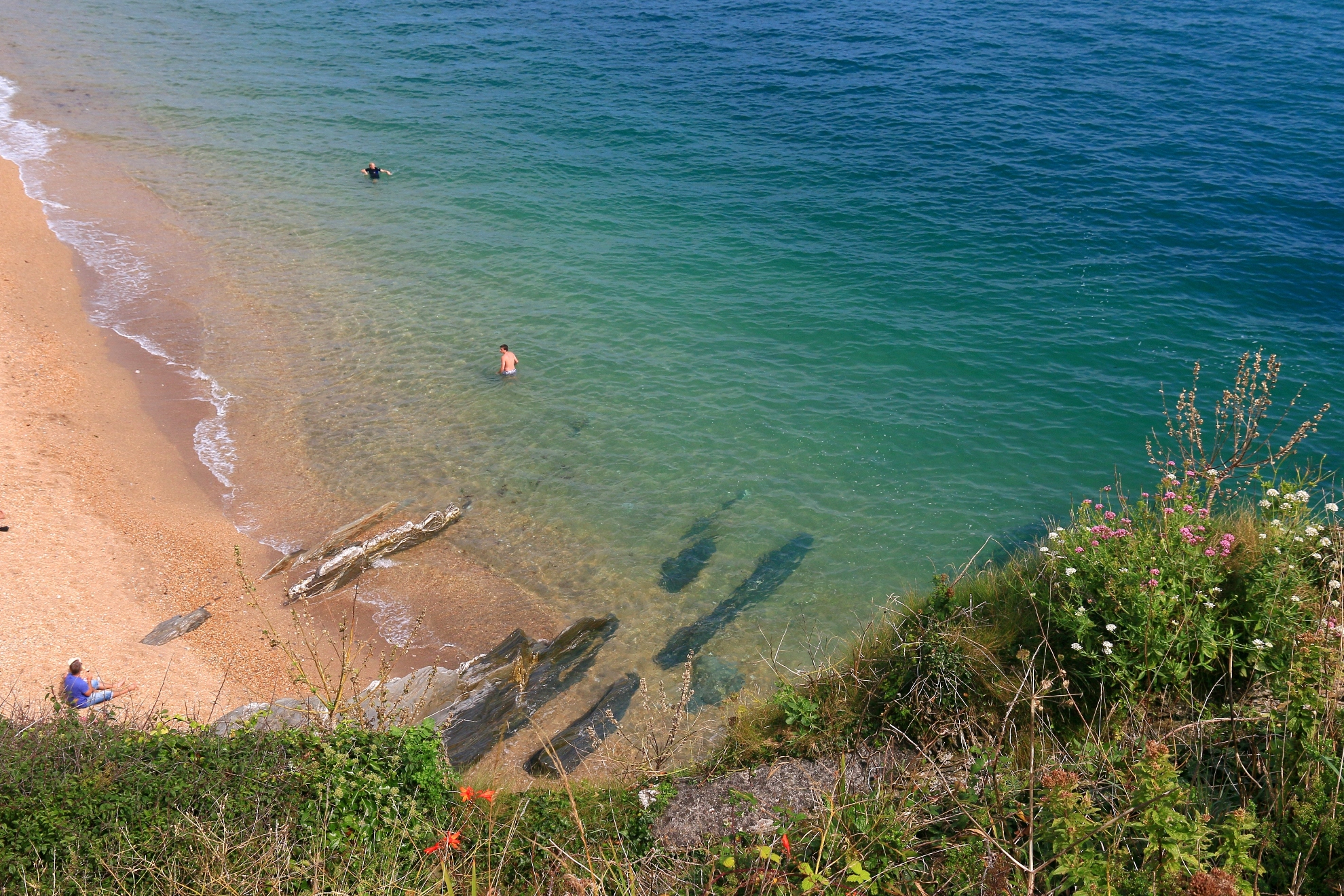
It really is in a delightful setting, Mothecombe; the tranquil shallows of the River Erme meandering out to sea, the sandy banks and rock pools revealed at low tide, the sheltered, undeveloped bay with gentle waves and translucent waters. Such appealing waters that people were in there swimming and I got the shock of my life when I put my own feet in. Not the usual, anticipated shock of oh my god what are they doing this is f*****g freezing, but a slight eyebrow raising oh this is actually tolerable for a bit up to ankle height I guess. No wonder the roads are so busy.
If that was Devon in the joyous throes of summer, my final week (after an interlude in other parts of the UK) was very much an autumn affair. The most overused word of that week was blustery, closely followed by changeable and showery. On Dartmoor, the scene was moodier, more forbidding, occasionally bleak. But Dartmoor does bleakness to such great effect; in fact bleakness really is its preferred state.
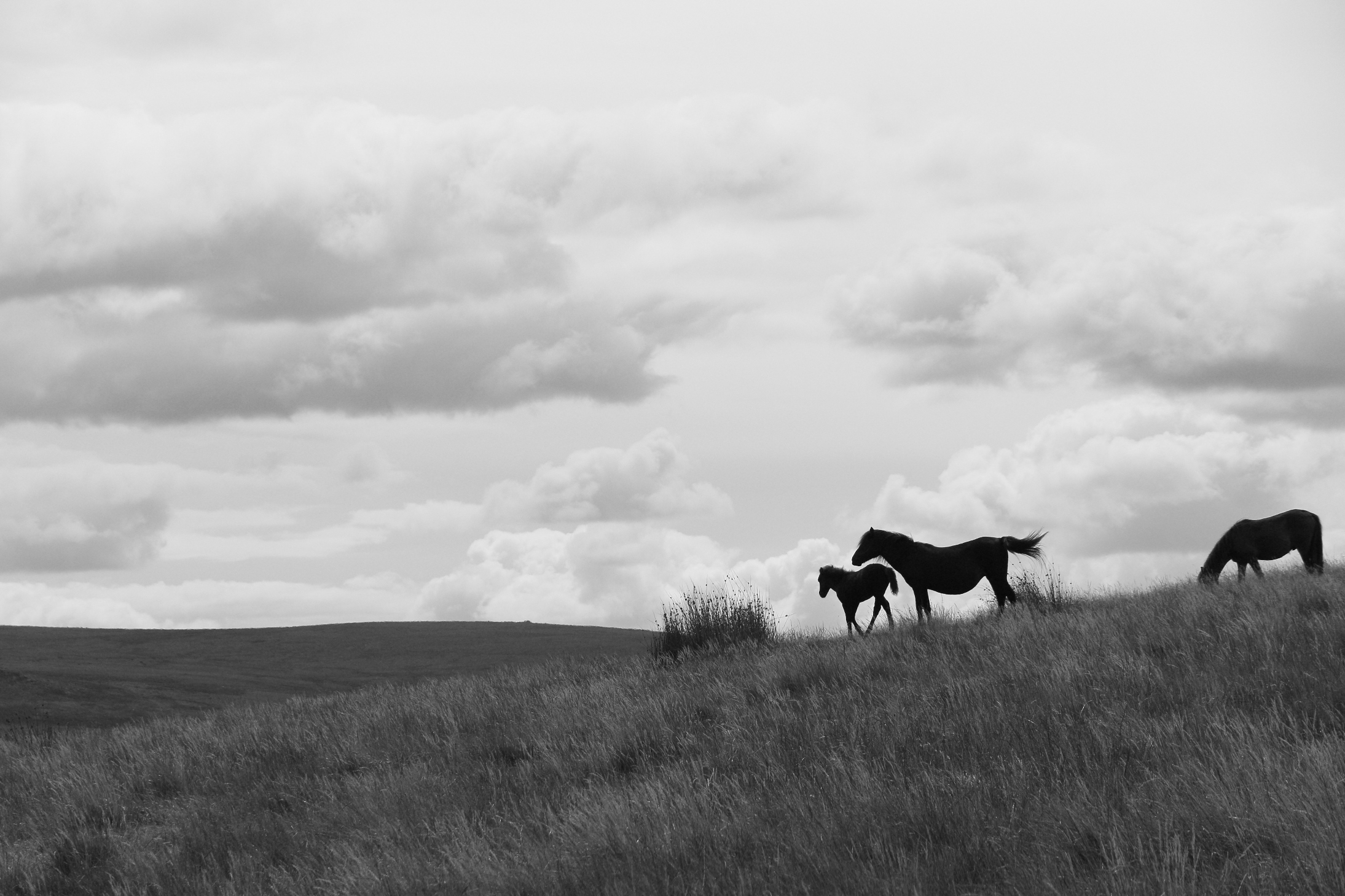
Following a day of showers merging into longer spells of rain I was keen to get outdoors when a longer spell of rain appeared to have passed leaving a few showers behind. I was in the habit of checking the weather radar by now, and took a bit of a gamble on a potential gap in the way things were tracking. Out around Sharpitor, as cloudbursts pummelled the Tamar Valley and a black doom sat unyielding beyond Princetown, some late sunshine pierced the skies and set the landscape aglow. Sheltering from the cold wind, I stood insignificant within expansive moorland and raggedy tors, alternately shining golden in sun or darkened by racing clouds. Barring the occasional car on the main road crossing the moor, it was just me and the sheep and a pony or two to witness it. I felt as though I had struck gold.
There was less good fortune back in the South Hams, where a Harvester I had pictured in my head didn’t exist and lunch ended up somewhere down the road and over the hill and a little further along from the tiny hamlet of traditional dining hours. This wasn’t terrible, for outside the intermittent showers had done their let’s merge into a longer spell of rain thing and ducks revelled in the whole experience. But essentially I am an optimist and British…an entirely contradictory thing I know, apart from when it comes to the weather. There is something in our character that makes us look up at the skies and sigh with a grudging acceptance before donning sexy pac a macs and trudging on regardless. On to the eternal hope that is Noss Mayo.
And you know what? In a turn of events that no good travel writer would ever make up, it pretty much stayed raining albeit with some slight easing off for about five minutes. Thankfully the Ship Inn had some funky outdoor pods to huddle together and drink hot chocolate in – think three quarters hamster ball in Teletubbie land – and with the tide being in (well checked, sir), the scene was not one of stinking tidal sludge. Indeed, it was rather serenely pretty under a comfort blanket of cloud.
Instead, Hope was on the horizon the next day, my very last day in Devon. Hope, just down the now more placid A379 and a rollercoaster lane of twelve foot high hedgerows. Hope, where there is parking for twenty cars and a few spaces to spare. Hope, set into its namesake cove surrounded by steep wooded cliffs iced with undulating pasture. Hope, sat in warm September sun outside the Hope and Anchor with half a Tribute and in the Salcombe Dairy ice cream taking the bitter edge away. Bittersweet is Hope on days like these. Days when Devon couldn’t – again – look, smell, taste, and feel any finer.
The eternal battle between Devon and Cornwall hinges on the correct approach to bedeck a scone. Cream then jam, jam then cream? Does it really matter when both are so god damn delicious? Well, clearly the answer is yes and, clearly, Cornwall wins.
It may seem a trifling matter, but the fight for sconepremacy reflects something far deeper in the southwest psyche. That is, which is the better county? Unlike the scone debate, this question cannot be so easily resolved. In my mind at least it is on a par with assessing the merits of England and Australia and as complex as Tony Blair being the logical person you’d hire to bring about peace in the Middle East. And you know what, I think the answer to this conundrum may be to appreciate each as equals, and revel in the fact that they are both pretty good anyway, particularly as scones are plentiful in whichever county.
For balance only the leftist BBC conspirators could dream of, let me now present some recent evidence for the case of Devon (given my last entry was Cornish). Specifically, the southern and western part of Devon within reasonable proximity to Plymouth. The other stuff doesn’t really matter, mostly because the pong from Exeter ruins it. And this is the stuff that is close to home.
The best mayo:
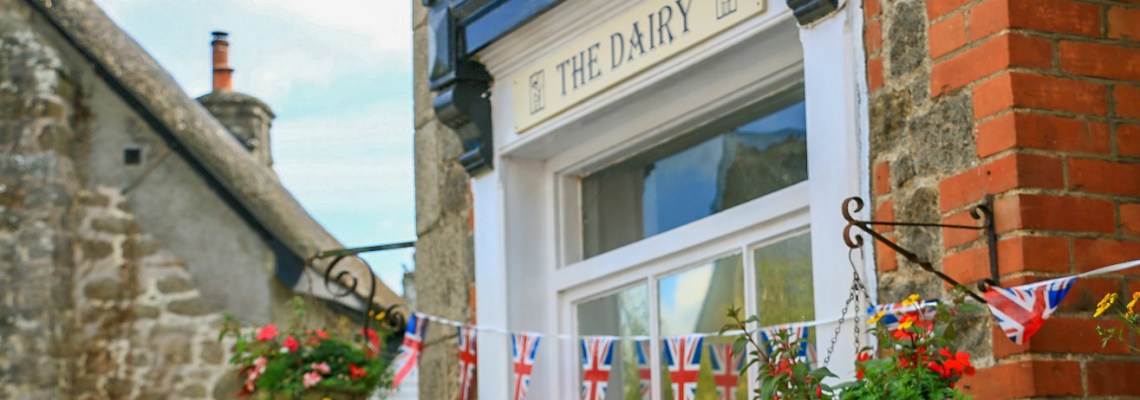
Hellmans and Simon despair, for Noss Mayo is the winner and may well take out loveliest village in Devon competition. Just a short run out from Plymouth via a maze of ten foot hedgerows, it’s a place of peace and serenity and that colourful bunting that is just about in every village in the southwest. Cottages with names like Anchor’s Rest and Primrose Lodge scatter haphazardly down to the water, while home grown asparagus sits next to an honesty box and a bowl of water for passing dogs.
An additional perk of Noss Mayo is the perfectly blended walk of seaside cliffs, creamy pastures, flourishing woods and boat-a-bobbing creek. A loop walk that can – should you wish – be completed at a relaxed, ambling pace. Just watch out for frenetic foreigners high on sunshine and the scent of silage.
Oh, and did I mention there’s a pub? I probably have, several times in the past. It’s positioned perfectly towards the end of that walk, at the heart of the village, jutting out into the water (or…at low tide, the slightly less idyllic mud). The pub is arguably the jewel in the crown of Noss Mayo and I can now recommend the fish and chips as well as the selection of ales. Experience suggests this may not assist the final climb back up to the car, but it will likely have you coming back for more.
A nice set of hams:
Outside of Noss, there could well be many other contenders for Devon’s loveliest village yet to be discovered. It’s a fair bet that a bulk of these will also be in the South Hams, the luscious, rolling countryside tumbling down from the moors and into the glittering ocean. Various rivers cut their course through the hills, passing thatched roofs and church spires on their way out into the sea, itself fringed with shallow sandbanks and undulating dunes.
Of course, the weather cannot always be relied upon to generate the picture postcard that I have so feebly conveyed. And when the sun does shine in summer, the village of Modbury can transform into a car park. Beaches such as South MiltonSands become busily popular, but there is enough room to play cricket and tentatively wade into the inviting but tepid ocean. Escaping humanity remains a possibility, with the ever glorious southwest coast path providing hope to reach Hope. Meanwhile, the increasing proximity to Salcombe means that the ice cream from its dairy becomes commonplace.
The loveliest village could actually lie along the stretch of road between Kingsbridge and Dartmouth in the South Hams. The problem is that it is difficult to assess, since negotiating each village by car requires a shot in the dark, following by a wait and a reverse, and a punt around the next corner before a tractor bears down on you followed by an unfeasible double decker bus, which is wedged in next to the pub that would be nice to have an ale at if there was somewhere you could park and be able to get out again, without hitting any ramblers lurking in gargantuan hedgerows. Despite its obvious perils, driving on this apparent A road is marvellously endearing.
I think it may be nine miles from Kingsbridge to Torcross but it can feel five hundred, and five hundred more. Torcross sits at the southern end of Slapton Sands, so named because the sands were obviously slapped on a ship and sent miles away, leaving only pebbles and more pebbles. Smooth and colourful and cleansing, they lend the seascape a pristine hue, and – if you don’t look too closely – the beach does appear as though it could pass muster in Australia.
Like everywhere around this way, there is good walking to be had. Over the hill to Beesands with its less photogenic beach, and on to Hallsands, precariously awaiting the next winter storm. Beyond Hallsands the waters of Start Bay curve their way against precipitous slopes, topped with radio masts, sea mists and happy cows, giving way at Start Point.
I could push on to there today, but the hills get steep, my legs say no, and I still have the potential car parks of Dartmouth and Totnes to negotiate before getting home. One small mercy is that the tide is now out, and the hill between Beesands and Torcross can be circumnavigated via the millions of pebbles. Who needs sand all the time anyway Cornwall? It just ends up in every crack and crevice.
Moor scones available:
While the South Hams possess the requisite balance of thatched cottage to rolling pasture to pebbly beach, the somewhat tamed landscape eventually gives up and transitions to the wild uplands of Dartmoor National Park. Now this is truly on the doorstep. One minute you are navigating hapless drivers attempting to cross a roundabout to get to Tesco, the next you are passing hapless drivers braking sharply and pulling into the Dartmoor Diner. Civilisation may well linger, but it is quite possible to see nothing or no-one obviously man-made for lengthy periods of time when out on the moor.
For many Dartmoor is Plymouth’s playground, where you can stroll, frolic in a river, cycle, have an ice cream, walk the dogs, and fantasise about hairy hands. For me too it is something of a Red Hill surrogate. Though clearly not quite as close (i.e. 5 minutes), there are hills to climb and views to be had and, if you squint hard enough (very hard), the sheep may take on the resemblance of a grazing kangaroo.
Just around the corner though (maybe 5 minutes with a good run of lights and a Bugatti Veyron) is the River Plym. Gathering down from the moors, the Plym gently meanders its way through leafy woodlands on its way to Plymouth Sound. One minute you are in an industrial estate, the next the lane narrows into a hobbit hole and you are bathed in shadowy leafiness. Again, children frolic, people cycle and dogs yap. Some (dogs) may even become potential kidnap victims due to ridiculous cuteness.
Plymbridge offers an easy escape – from Plymouth, from Asda, from endless episodes of Emmerdale. And it reminds you, quite simply and quite easily, how really lovely it can be to be in Devon. In fact, just as lovely as Cornwall.
















 No doubt many of the loftier residents of Salcombe were in jovial mood; not only from their elevated perch surveying the ambling peasants seeking a cheap pasty, but with the news of a royal baby to join the ranks. Does it have a name yet? I can’t even remember. Have the Daily Mail criticised the parents yet? Oh probably.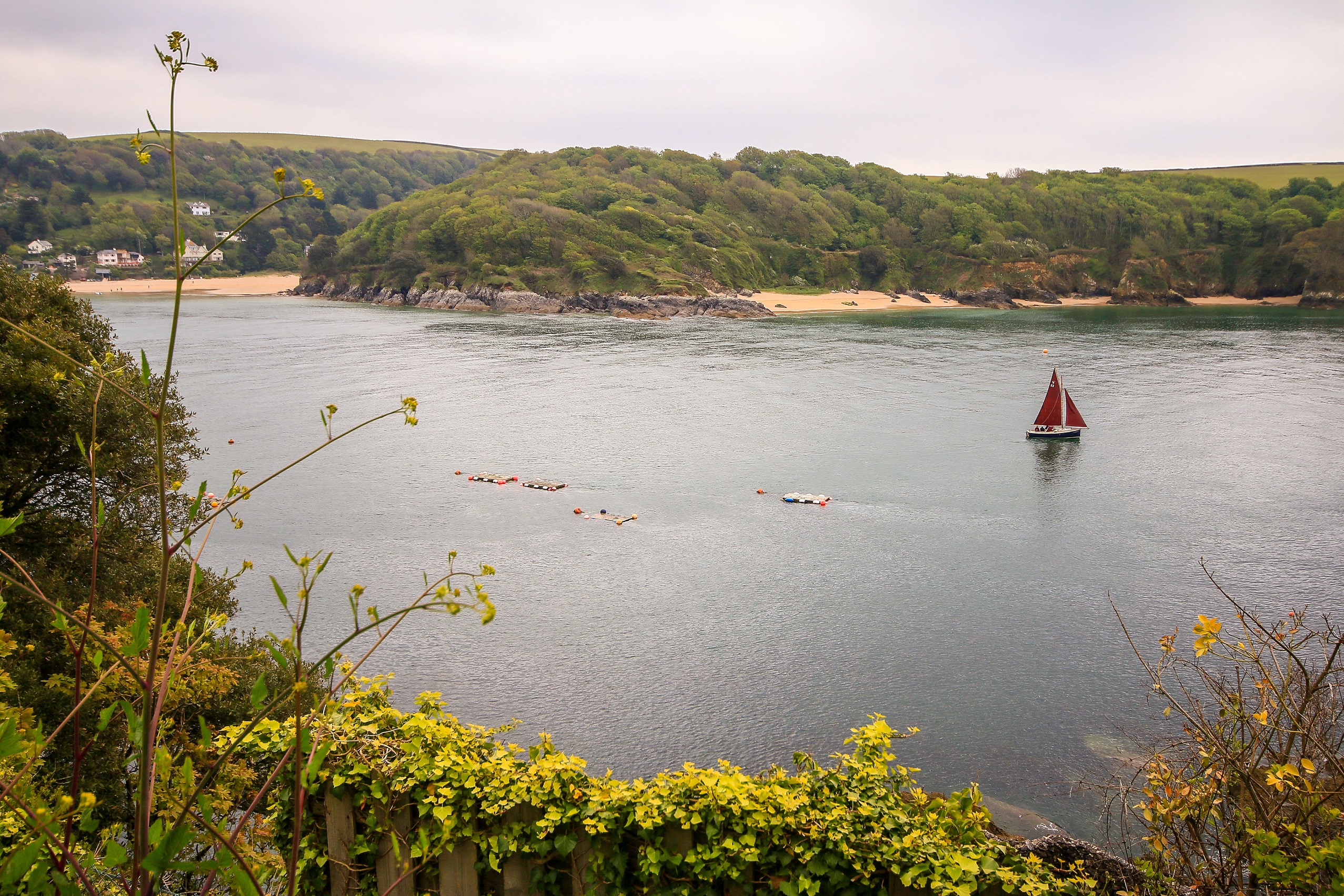
 And so, the unexpected and unplanned once again yields some of the most memorable moments. Waiting in a small layby among the gorgeous fields of Devon in the warming sunshine could be worse. Being patched up and guided to Totnes for repairs by endearing locals eager to provide a helping hand (and earn some pennies) proved heart-warming. Spending a few hours in Totnes, charmed and enlightened by good coffee, markets overflowing with abundance and leafy riverside walks. And the satisfaction of rediscovering batter bits with malt vinegar (good work Mum!)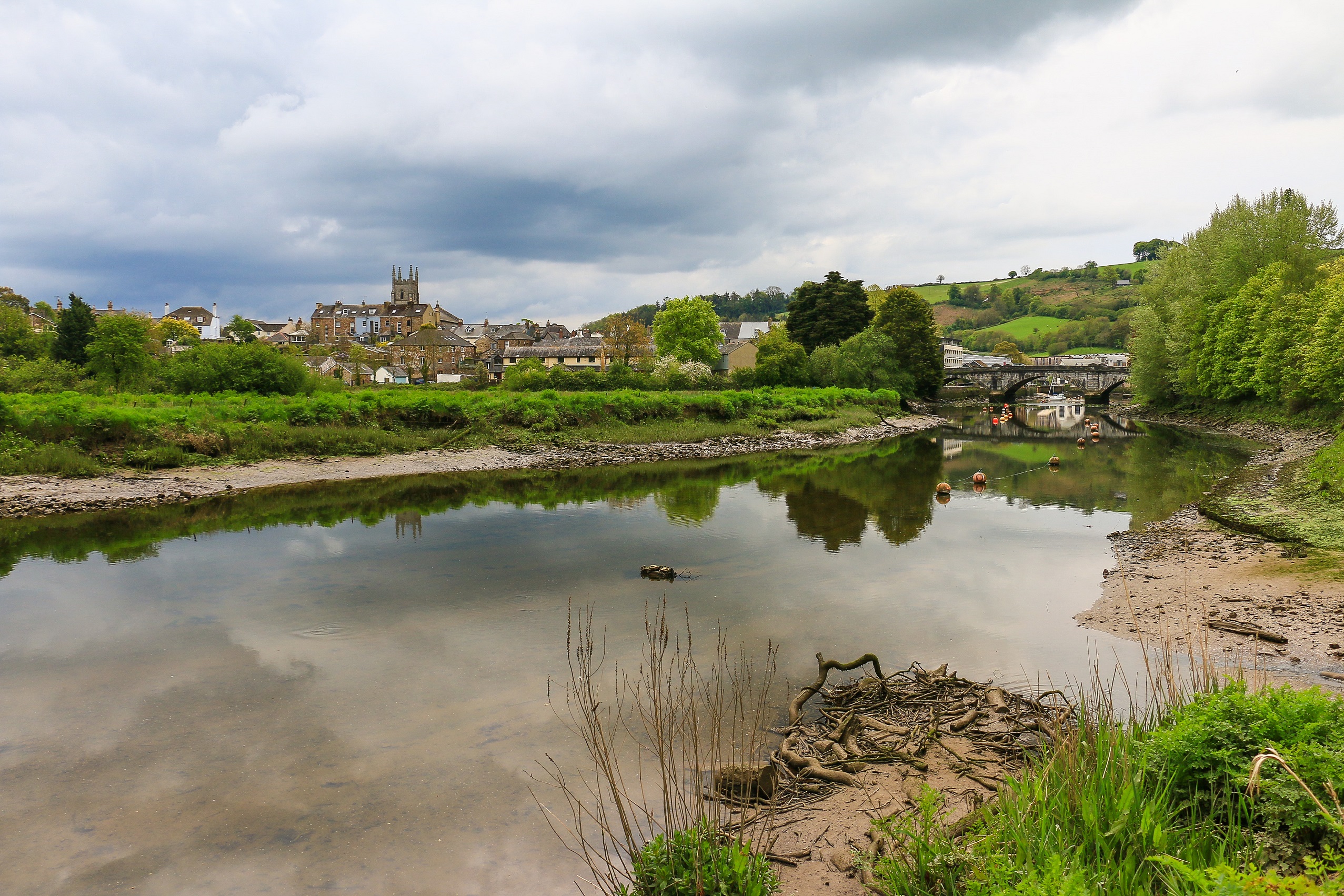
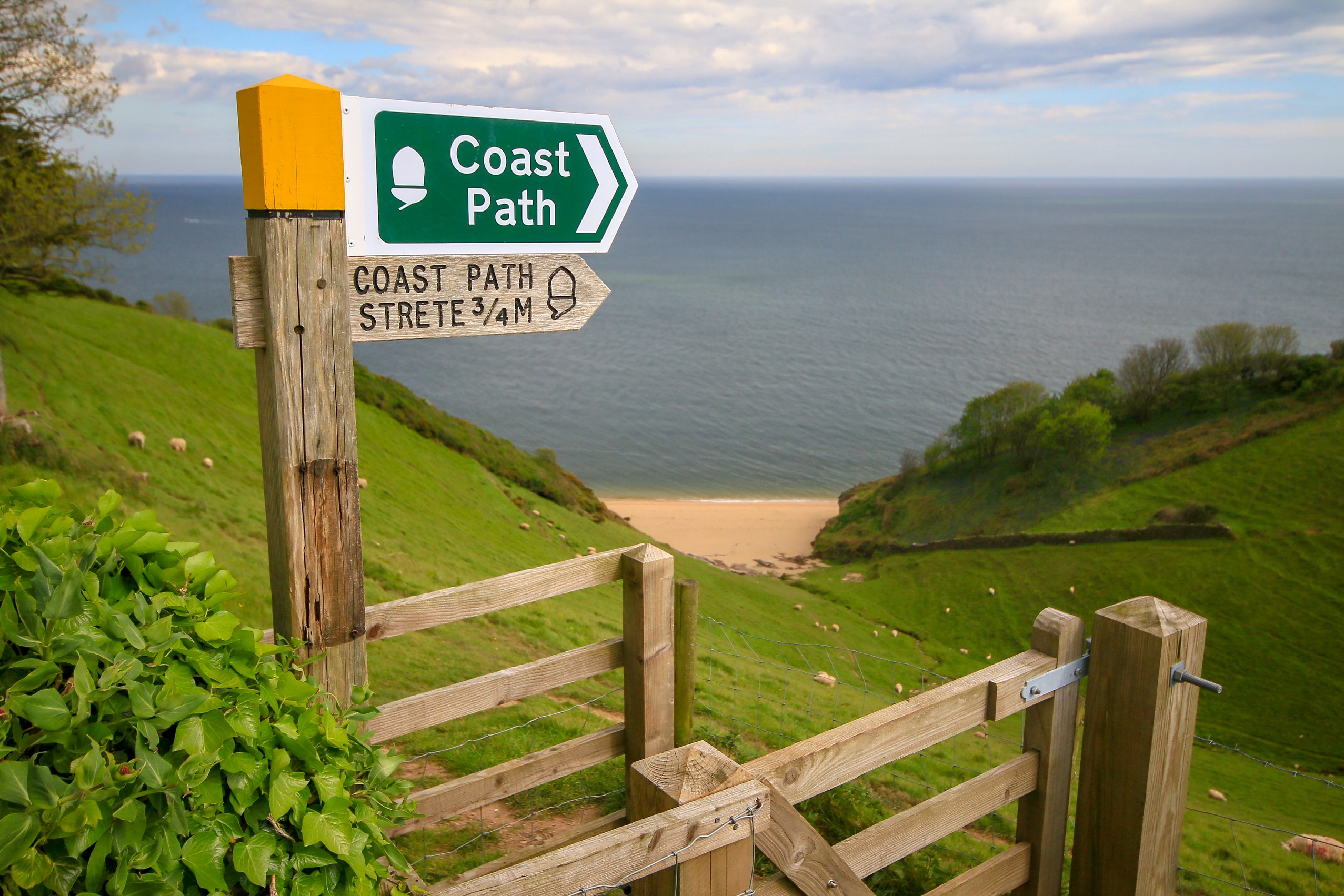
 Such are the ample proportions of the landscape here that the coast path between Strete and Blackpool Sands struggles to keep to the coast. The barriers are too immense, and the trail cuts inland as it dips down towards the bay. But this too is something of a blessing, for not only do you make it without falling to an inevitable death into the sea, but you become once again immersed into a countryside apparently so utopian. Farming must still be productive here, despite the temptation to become a campsite or a tearoom or a paddock for some pampered hobby horses.

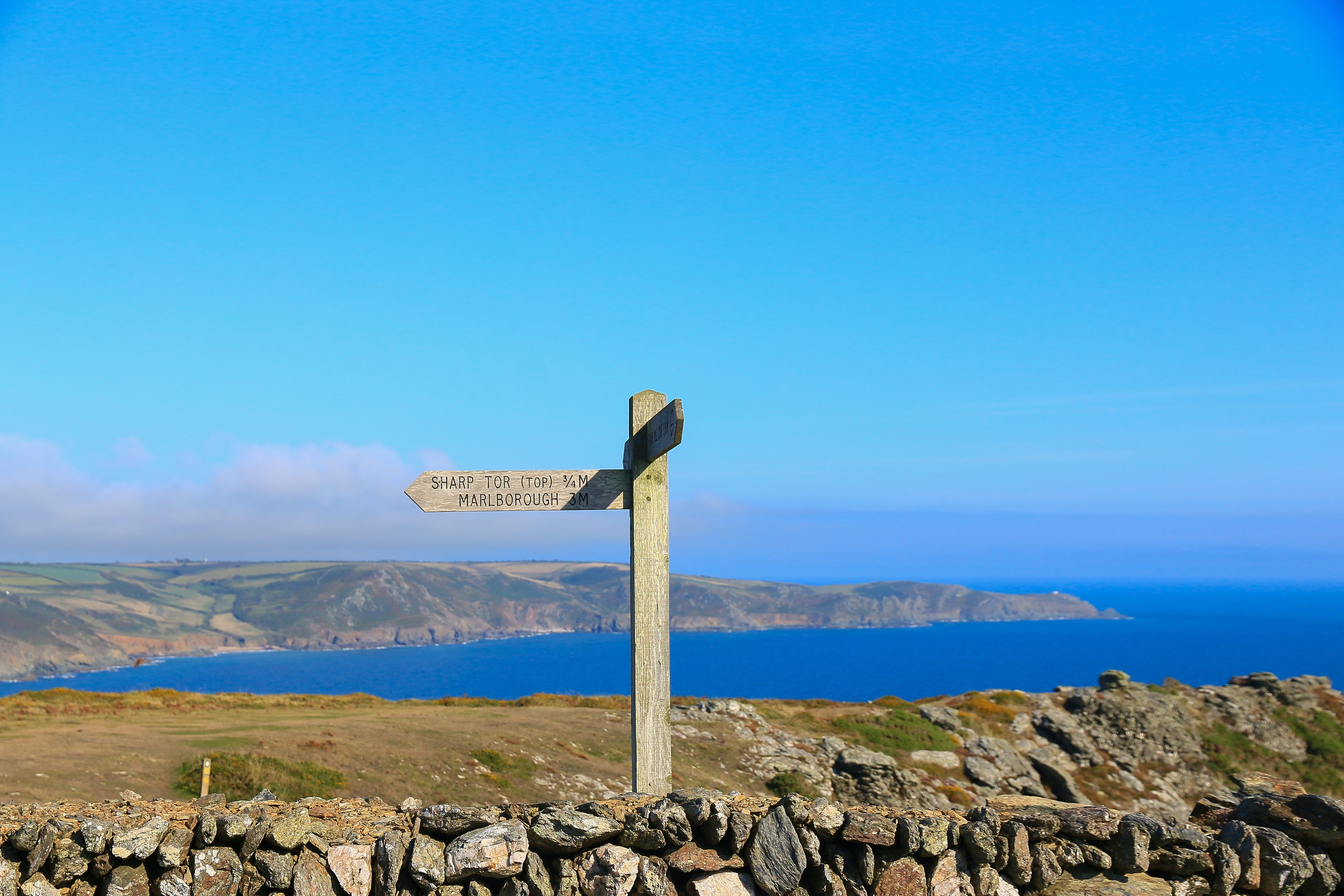


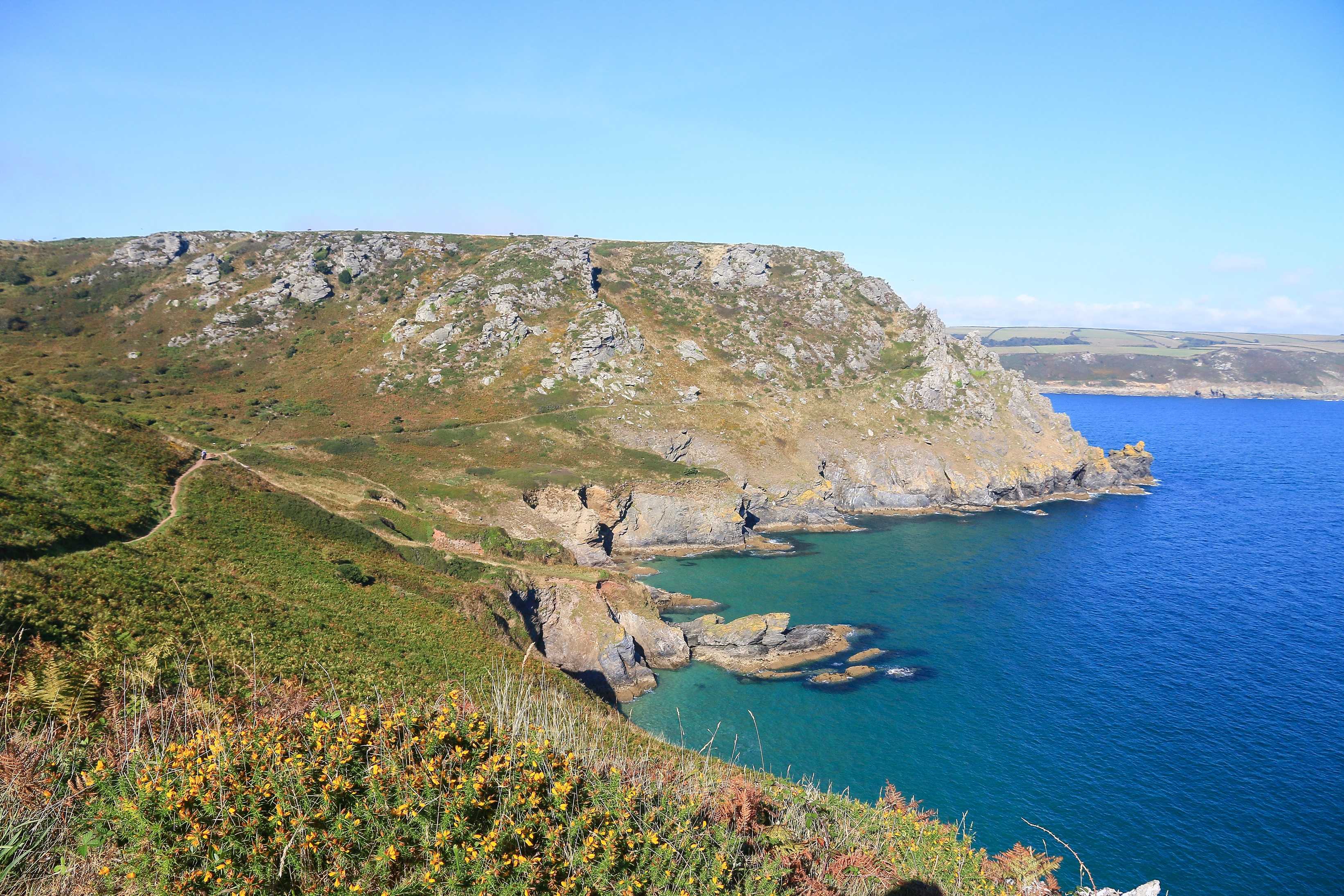
 The scenery and amazement at such scenery being so visible, being so wondrous, continues around the corner as we slowly head back in a loop towards the car park. The last vestiges of heather and sweeping gold of flowering gorse add an extra splash of colour on this most brilliantly saturated afternoon. Leaving the clifftops high above the sea, only bovine-induced pungency can prove more overwhelming.
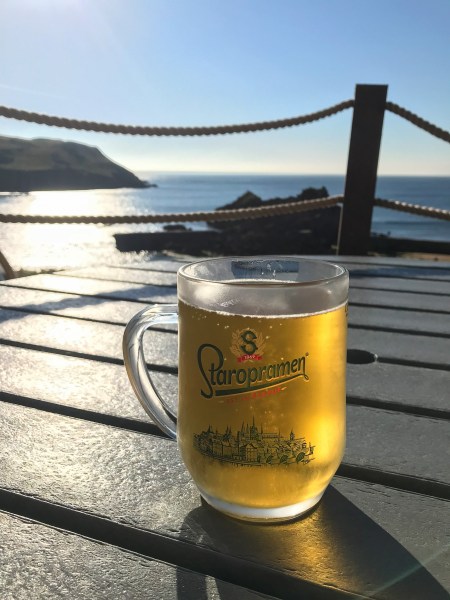 Could I end this day, this once dreary day, any better? This morning – actually even at two o’clock this afternoon – I would have had myself committed if I said I would be bathing in the sun, drinking a cold shandy, lounging in shorts. But with the regular dreariness of Great Britain you need to retain that hope. And in South Devon, we are of course blessed with hope. Hope indeed.


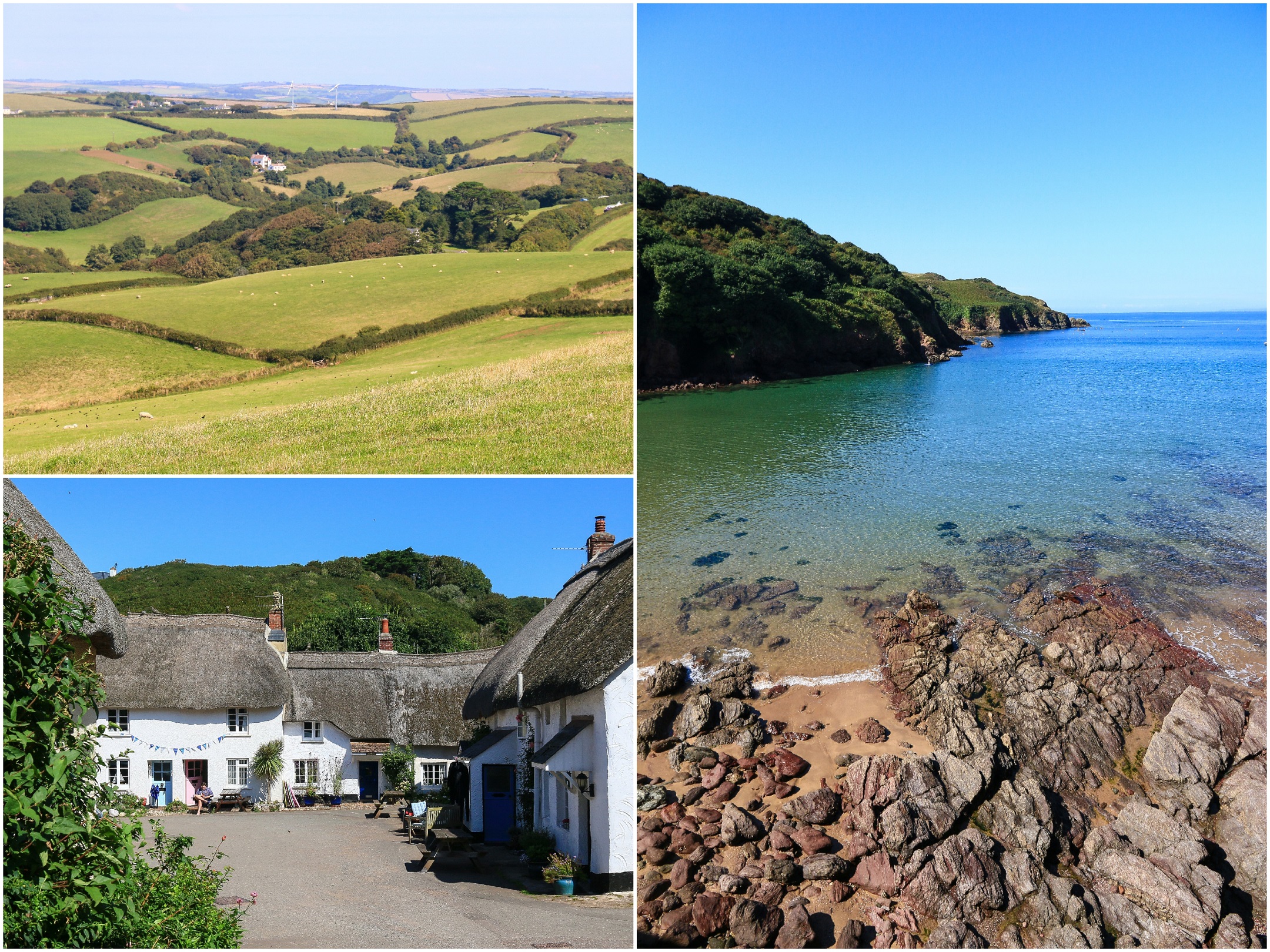
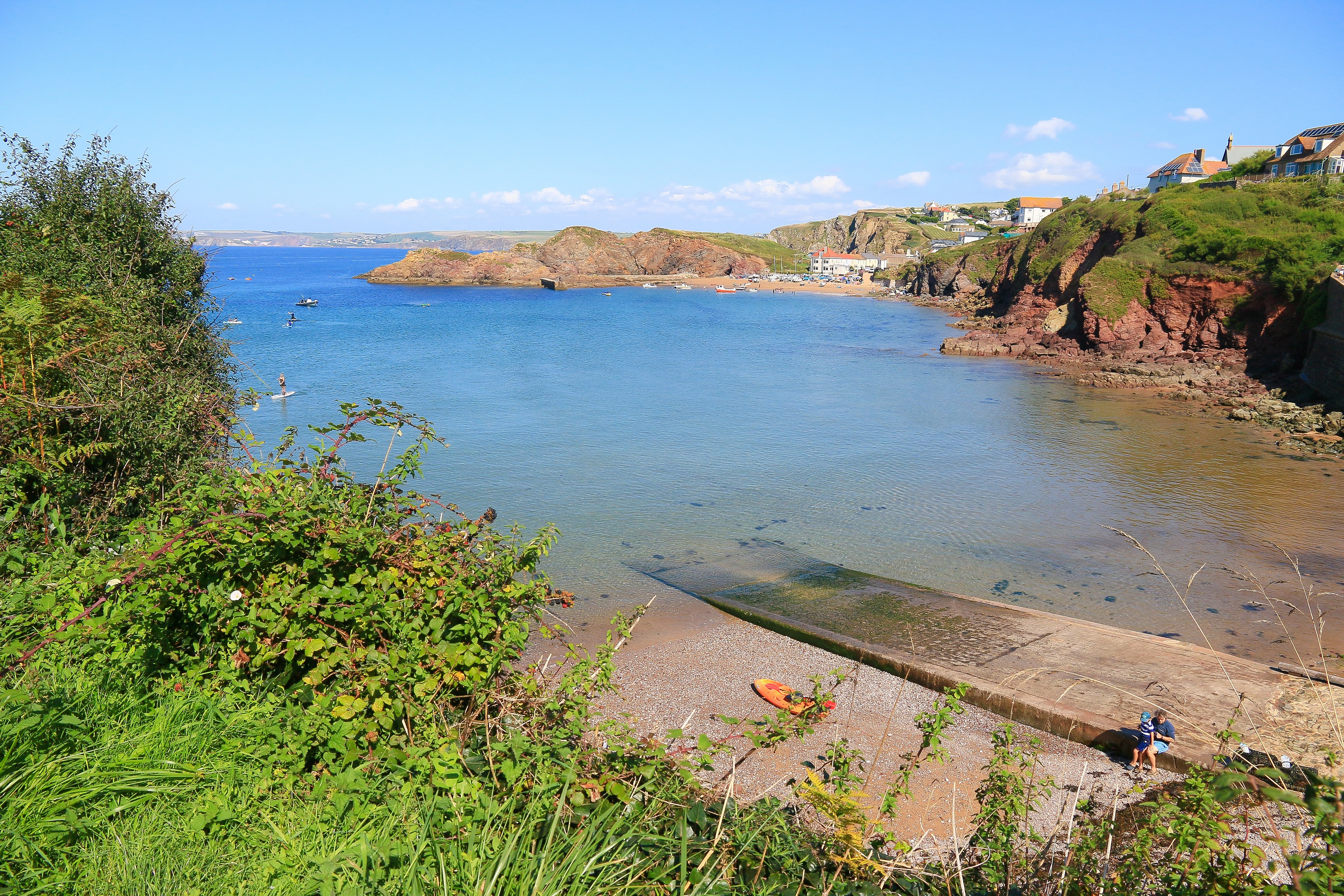


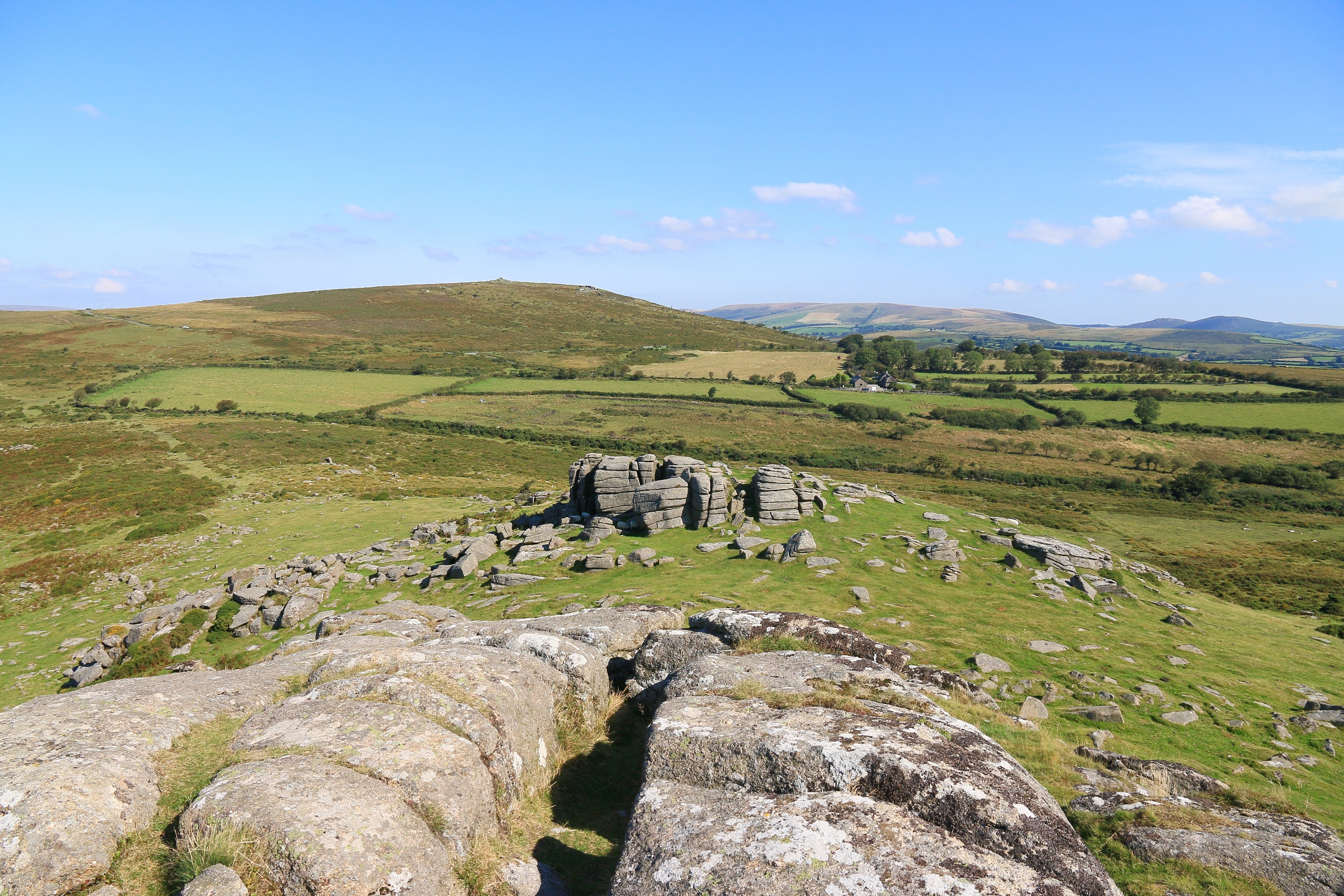
 On the road to Burrator, the sheep are out in force, arse sticking out into the tarmac, head tucked into a giant gorse bush, oblivious to the fact that there are two cars coming at opposite directions on a lane built for one. Further on, a few sheep mill about in the foot of Sheepstor, just so they can pose for clichéd photos and get in the way of cars trying to park. Better to get out on foot though, and take in a stretch of reservoir, country lane, farm and hamlet aesthetic, before climbing the wilder, granite strewn hill itself. It’s a route I’ve taken a few times now and strikes me as a wonderful bona fide welcome back to Devon.
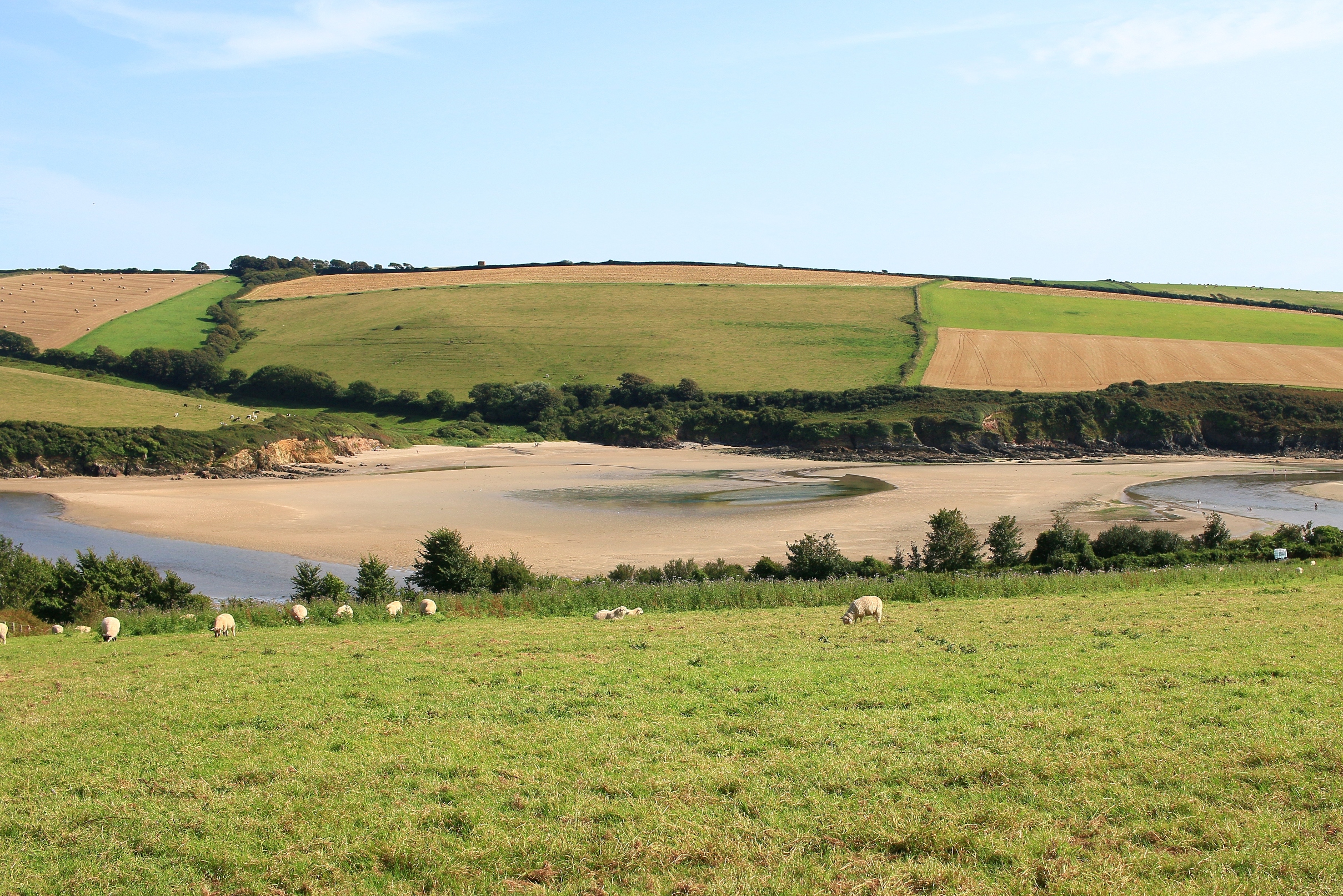
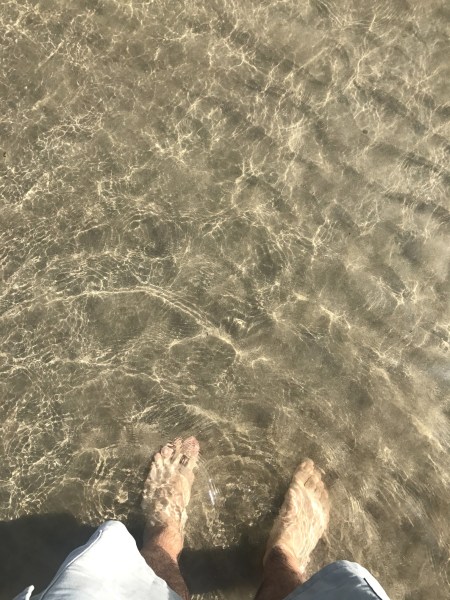 It really is in a delightful setting, Mothecombe; the tranquil shallows of the River Erme meandering out to sea, the sandy banks and rock pools revealed at low tide, the sheltered, undeveloped bay with gentle waves and translucent waters. Such appealing waters that people were in there swimming and I got the shock of my life when I put my own feet in. Not the usual, anticipated shock of oh my god what are they doing this is f*****g freezing, but a slight eyebrow raising oh this is actually tolerable for a bit up to ankle height I guess. No wonder the roads are so busy.
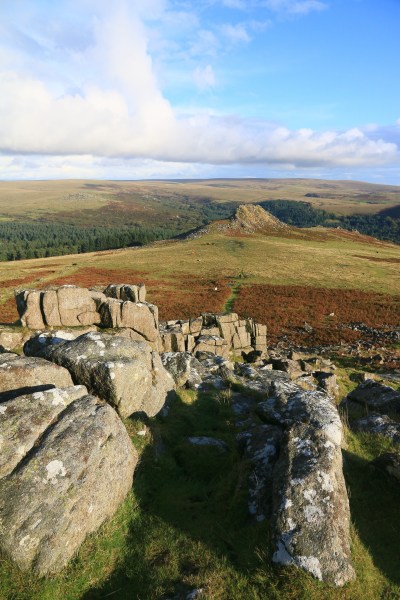 Following a day of showers merging into longer spells of rain I was keen to get outdoors when a longer spell of rain appeared to have passed leaving a few showers behind. I was in the habit of checking the weather radar by now, and took a bit of a gamble on a potential gap in the way things were tracking. Out around Sharpitor, as cloudbursts pummelled the Tamar Valley and a black doom sat unyielding beyond Princetown, some late sunshine pierced the skies and set the landscape aglow. Sheltering from the cold wind, I stood insignificant within expansive moorland and raggedy tors, alternately shining golden in sun or darkened by racing clouds. Barring the occasional car on the main road crossing the moor, it was just me and the sheep and a pony or two to witness it. I felt as though I had struck gold.
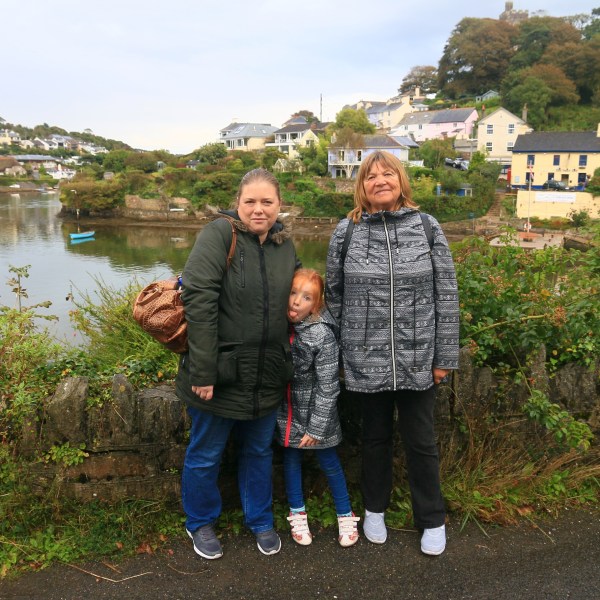 And you know what? In a turn of events that no good travel writer would ever make up, it pretty much stayed raining albeit with some slight easing off for about five minutes. Thankfully the Ship Inn had some funky outdoor pods to huddle together and drink hot chocolate in – think three quarters hamster ball in Teletubbie land – and with the tide being in (well checked, sir), the scene was not one of stinking tidal sludge. Indeed, it was rather serenely pretty under a comfort blanket of cloud.





 gbpilgrim