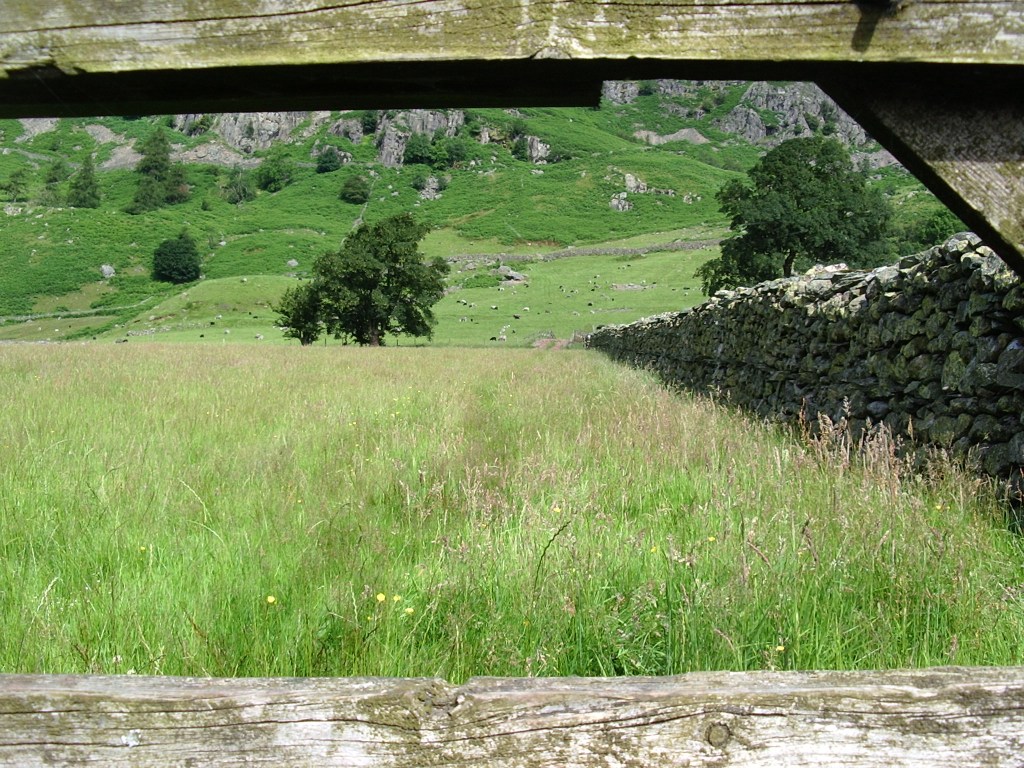
Trailing

Something didn’t sit right with me. Trying to get to sleep in a single bed on creaking, turn-of-the-century floorboards. Below, a bar serving the last of the whooping and hollering, the cackling shriek of a drunk Australian lady all the more painful when you know you need rest. Mind ticking over like the cycle of a misaligned wheel.

The remnants of merriment below had cowboy vibes. With Gucci trimmings. Equally at home in Fortitude Valley as downtown Linville, partying like they are 1999. On a night in 2023 when Australia received what to me at least felt a simple, unremarkable request from a broad representation of its first peoples for them to actually matter and said “yeah nah we’re alright thanks”. Whooping and hollering – as innocent as it may have been – struck a dissonant chord. And I edged closer to sleep with doubts about what it meant to be crossing country the next day.

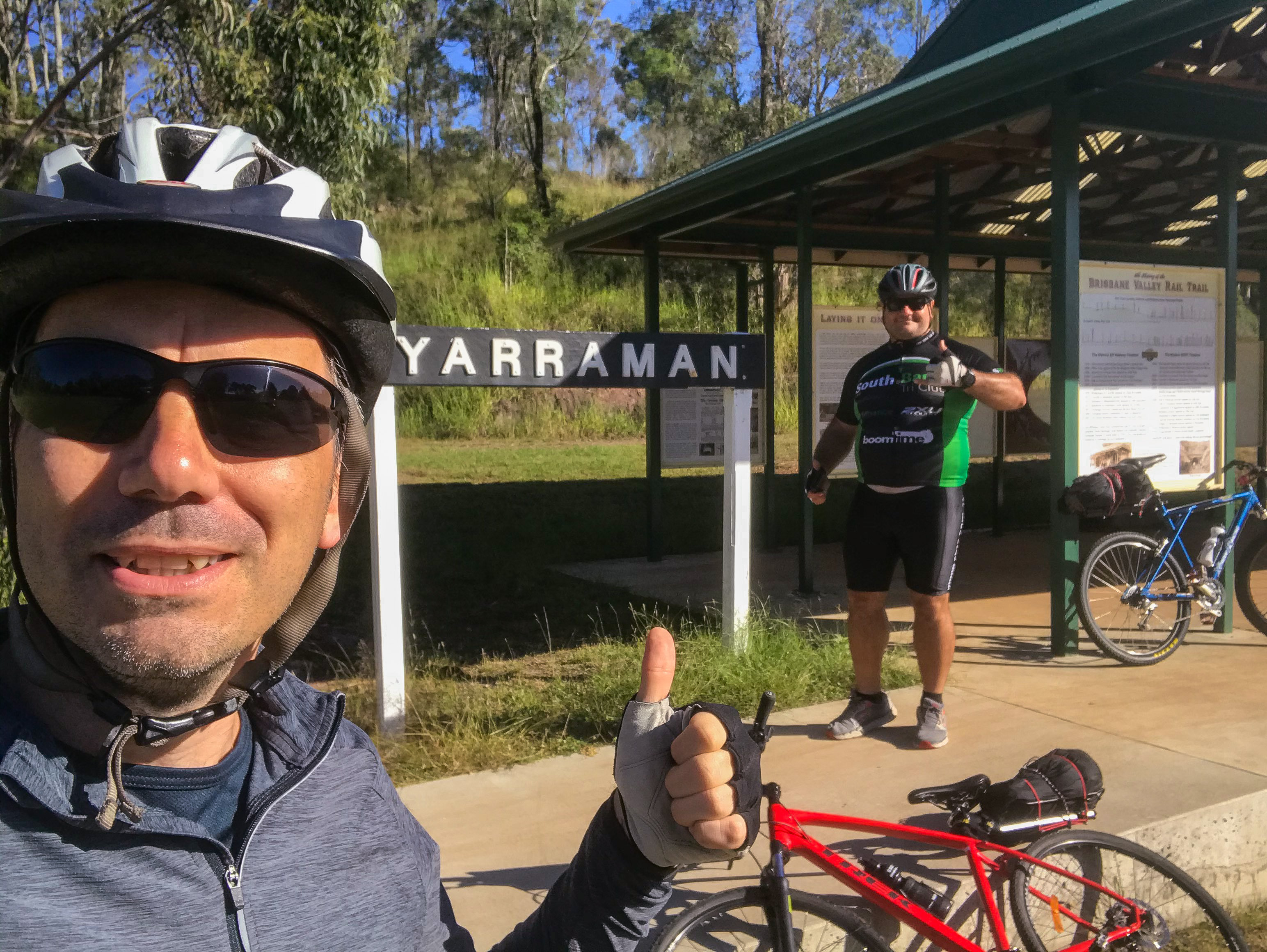
The Brisbane Valley Rail Trail (Part II) traverses Waka Waka Country and Yuggera Country – or at least I think as much based on the little I can glean from local council pages. Today proclaimed as the longest continual recreational trail in Australia (if not the southern hemisphere), it intermittently welcomes people on bikes and horses and feet to roughly follow the course of a disused railway line from Yarraman – deep in the electorate of Maranoa – to the fringes of Ipswich. A manifestation of intrusion and industry and inevitable decline once quick riches had been cut down, torn, eradicated and washed from the earth.

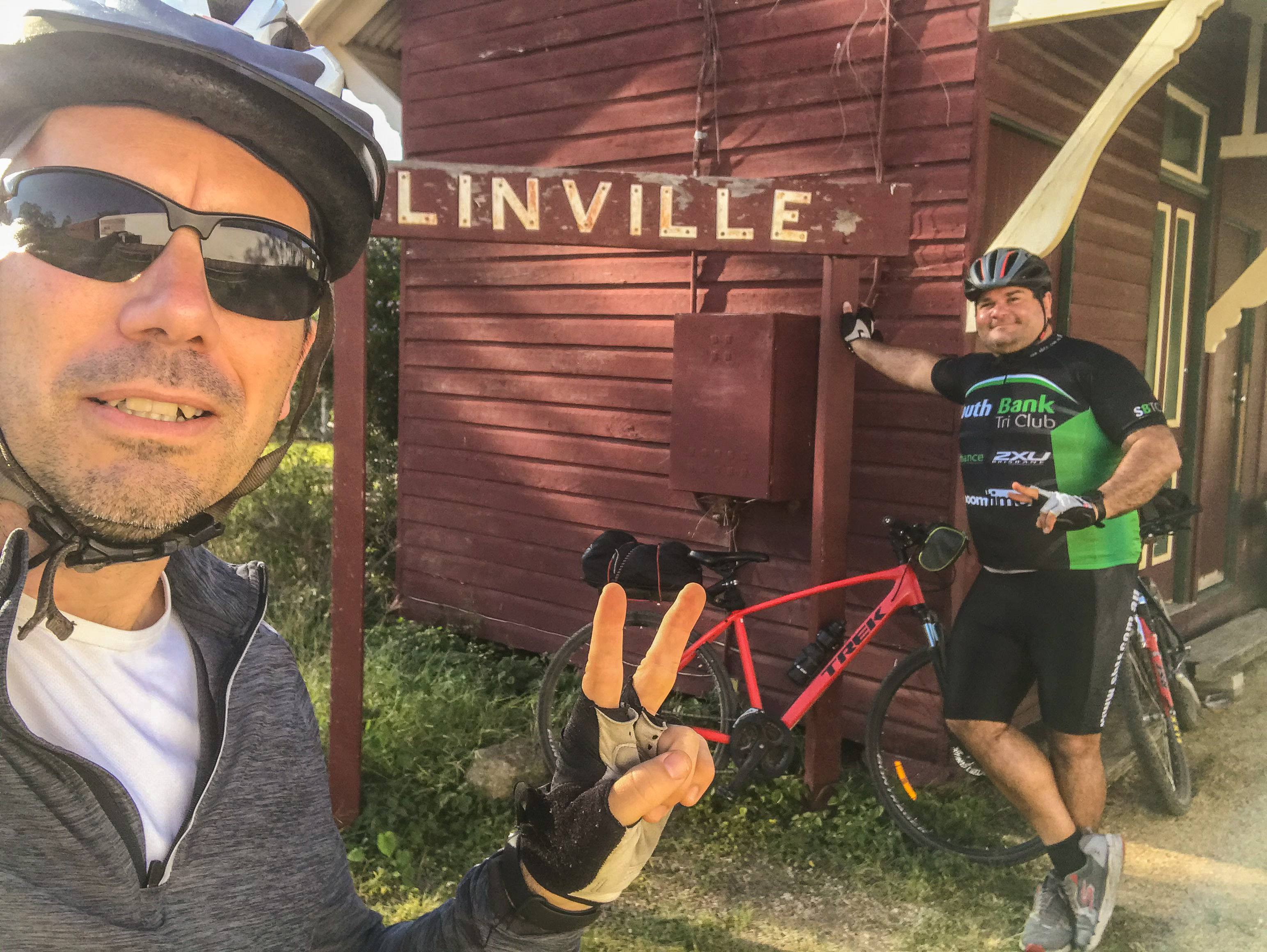
In a sign of hope and rejuvenation the old rail line is now transformed into a place where people can come together on a shared journey, even if some of the newer locals remain deeply conspiratorial. Avid readers may realise this is my second time along it (and with my back now going through all sorts of agony it’ll probably be the last). From a pair of lone rangers we doubled in size as a group of four. Not quite MAMILS but only really lacking the Lycra. Starting off on brand by getting confused over where to start.

In many ways the first 20 kilometres is the hardest, adjusting to seats and handlebars and pedals and pace and the actual realisation of exercise. Things are a little undulating and already hot, and the approach to Blackbutt seems to drag on forever. But eventually bakery rejuvenation occurs, some tuning and top ups ensue, and we are full steam ahead.

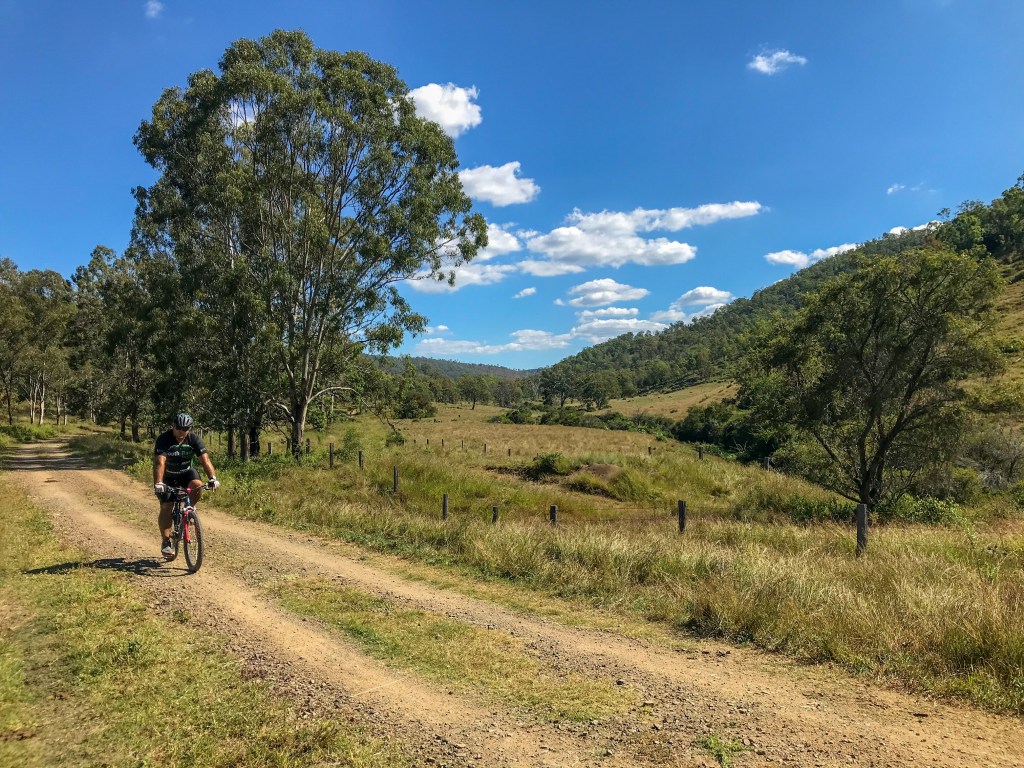
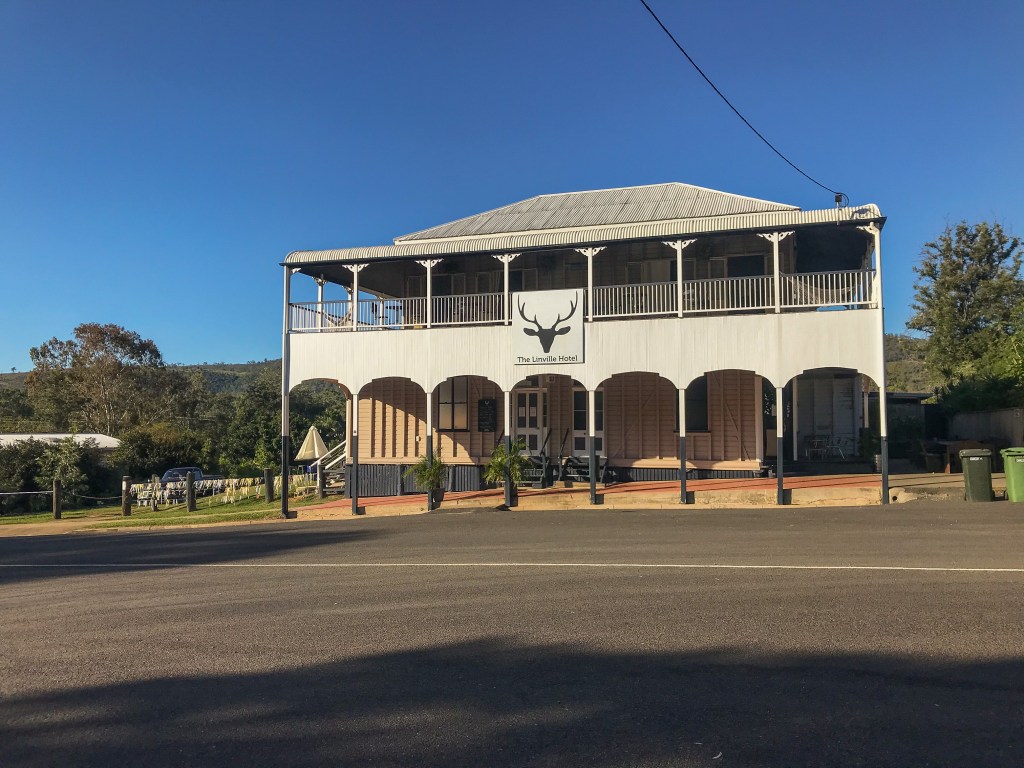
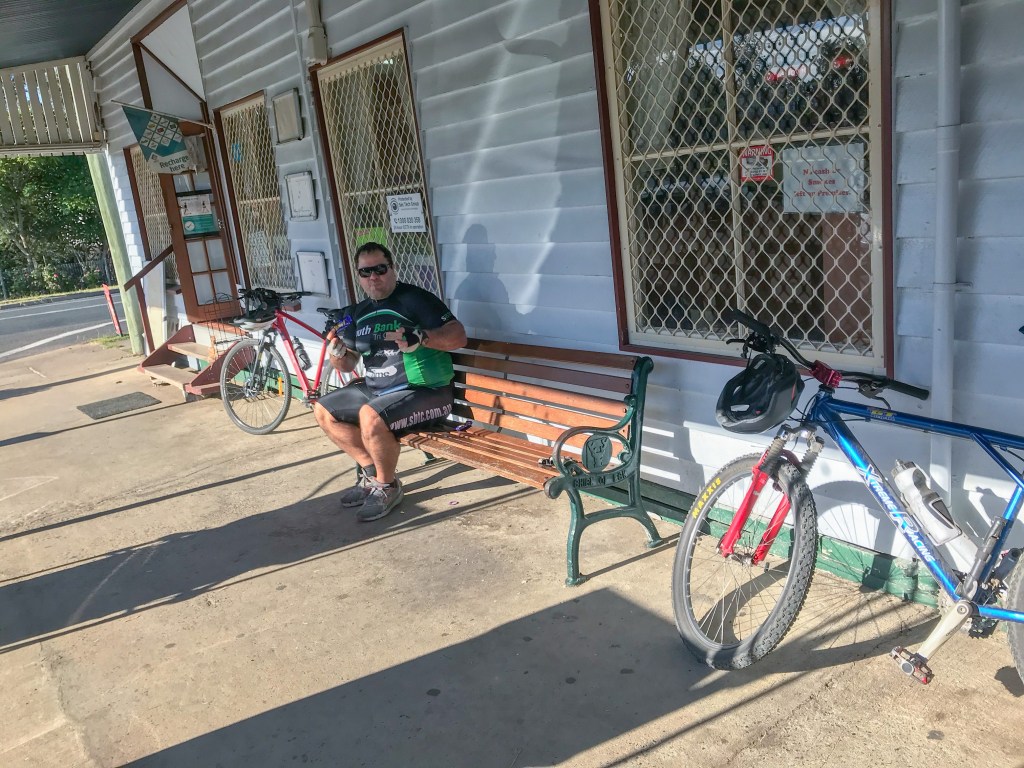
The run to Linville is mostly bliss if a little jarring in places. Forest creeps in on both sides and the gradient works in your favour too. The breeze of momentum keeps you cool and a slice from Blackbutt survives well enough to sugar-rush the journey east. Beaming white in the afternoon sun, the Linville Hotel is a very beacon of balustrades and cold beer. The store next door a welcome purveyor of ice cream.

After a little recovery, day all too soon turns into night because Queensland doesn’t bother with daylight saving (probably because it is seen as another way the government are trying to control you with 5G vaccines or whatever). As much as I try, I cannot find the ideal beer to accompany a local steak and a background band mostly playing the entire catalogue of Crowded House. Only at the end, as encore way past their bedtime, do they strike up Farnham’s Voice. I cannot tell if this is a brave call, a lost opportunity, or a musical smirk.

Linville is in a pretty position among rugged hills, folded and contorted and topped with natural Australiana. Just beyond a few of the folds you’ll find Kilcoy, where in 1842 flour was laced with strychnine and given to a large group of Aboriginal people by two shepherds at a squatters station. Reports – like many of the time – are vague and swept under the carpet. At least sixty Aboriginal people were killed. A death pudding massacre.

I share this clearly not for entertainment or as a segue into some cycling incident but merely to share it, to acknowledge and make it known. I had no idea, freewheeling downhill, what happened among those hills until I got back home and decided to look into the Aboriginal origins and history of the country I had just crossed. Where the squatters came first, farms and forestry followed, towns and people sprung up and eventually a rail line was constructed. Large swathes of land were stripped of trees, including the unique Bunya Pine, which only now exists in small pockets to the west. Worse, the land was largely stripped of its inhabitants, sent to missions if not a fate more terminal.

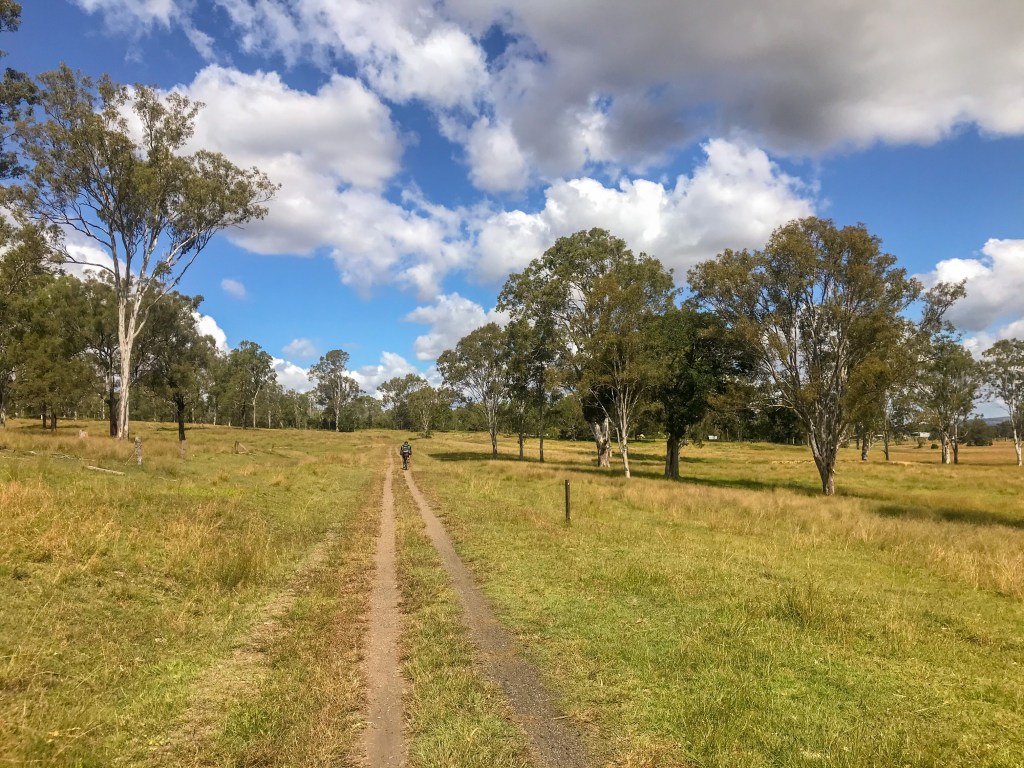
The second day of pedalling through the present and the past is more open and exposed, the cursed removal of trees a bane to modern day cyclists exposed to the searing sun. Already the land looks a bit sick and brown from the latest evolution of drought. There are few animals, other than the occasional cluster of cows hunkering down under a lone tree or dilapidated shed.

There are also a few magpies and – miraculously – they are leaving me alone while going for the other mamils in my crew. This is wonderful, so much so that I whizz on and almost decapitate a snake that I didn’t even see until after I passed it. I feel somewhat blessed and incredibly fortunate in hindsight. It’s like they knew or something.

The towns – or what pass for towns – tick off at fairly regular intervals. Early on there is Moore with its three cafes, of which one only seems to be open and doing a good trade in weirdness and antipathy. It was here I discovered a publication called The Light which from a brief glance before I felt the urge to use it for toilet paper proclaims to shine a light on all things the establishment don’t want you to know. Likely bankrolled by such establishment figures as Rinehart, Hanson, Palmer and co.

Next along from Moore, after one of the bigger climbs of the trail is Harlin, which appears little more than a pub and a servo. Still, giant bottles of knock-off Gatorade are welcome, as is the cooling 90 metres of the Yimbun tunnel a little further on. It’s a good place to pause, adjust padding and apply sunscreen before persevering with more open, baked-earth riding to Toogoolawah.

You know Toogoolawah is – in relative terms – big because it has a choice of two pubs for lunch as well as a sprinkle of cafes. Closer to the highway you can even find some homemade fudge and maybe decent coffee but the old rail line has other places in mind. With a local recommendation we decamp outside a pub and have a hearty lunch in the shade. Pizza topped with so much topping it takes a while to discover the base. Welcome and delicious, but I am wondering how all that salami, olives, capsicum, tomato, feta, mozzarella, parsley and bread, pepped up by a lemonade, is going to sit.

There was a bit of gas departing Toogoolawah, an uphill grind but one that I quite enjoyed. Dropping into a nice low gear and spinning gently, consistently, without any real rush to get anywhere. Bare country eventually cedes to a line of boundary eucalypts that accompany us to a cutting where the railway peaks, and it’s downhill from there. Suddenly speed is a thing again, the ruts and stones bouncier, gripping on to handlebars that much tighter, the air flow providing welcome ventilation. In hindsight it feels like this all the way to Esk, but there was definitely still pedalling involved.

I was a little concerned about getting to Esk around 3pm, just as everything was no doubt closing. But a new addition along the BVRT, a very BVRT business in fact, was kicking on into a Sunday arvo session. Brisbane Valley Roasters no doubt attracts the hairy mamil with single origin roasts and cold brews and almond milk. There are bike racks and large wooden benches and probably some of those fake succulents you get from IKEA. After such high dose rustic rural, you may temporarily feel an inner Melbourne vibe, or at least central Tuggeranong.

But then Esk happens. For some reason today all the staff appear to be about 14. There are no lightly bearded hipsters or man buns dosing double shots and feathering foam. I opt for an iced coffee anyway, given the heat outside which is now well into the thirties. A solo performer mistunes his guitar and is gearing up for some gently grating entertainment, supported by a handful of friends and family. A lady from out of town accosts us and talks about love and secret hideaways up on the Darling Downs and how hard she has worked all her life and that young people don’t know what hard work looks like and they should stop buying avocados or something. I fear 5G radiation PayPal vaccines might be next. Still, at least it’s not sitting, working, sweating on a bike.

I assumed all the young people of Esk were working at Brisbane Valley Roasters that day, but it turns out there are even more of them in the IGA. I suppose as well as providing cheap labour for hard-working business owners it’s something for young people to do other than vape. And they’re all rather friendly in the IGA, even as Jason – by now high on morphine or something – rambles on about (and looks like) the Esk Yowie while I am trying to buy some reduced price tabbouleh from the girl behind the deli counter. Young people are nothing if not resilient in the face of the weirdness they encounter.

Dinner turns out to be an IGA affair since the pub is closed and the Thai is also – due to unforeseen events – closed. We stock up on food, too much food, for breakfast as well. Thinking, quite rightly, that nowhere will be open at five in the morning. And also thinking, quite wrongly, that we could eat two apple crumble cakes reduced to 99 cents, along with several pots of yogurt, cereal bars, a tree of bananas and a two kilo bag of rolled oats at five in the morning.

It is an uncivilised hour to rise but the final day is also the biggest and longest. And some of us have a train, and plane, to catch. While initially confronting, the early hour is by far the best on the bike. The light glowing soft, the air calm and cool and infused with that dewy, earthy fragrance of something akin to dried straw and peppermint. The trail is subdued too, enclosed by forest pretty much for the whole 20 kilometres to Coominya.

The last of the bananas disappears at Coominya, meaning I force myself to buy a chocolate éclair from the bakery at Lowood, a little further down the line. Brisbane feels closer now, the river widening, water to rinse off the humidity, feed the production of insipid beer, pressure wash four million Toyota Hiluxes. Yet after Fernvale and its supposed amazing pies, there is little to interrupt until reaching the very edge of Ipswich.

In the bush and scrub around here, 12 Aboriginal people were killed in 1843 when they were pursued by a vigilante group of soldiers, settlers and stockmen, seeking reprisal following the battle of ‘One Tree Hill.’ We all cruise on by unknowing and unthinking. An ignorance that is all too common, all too often the easiest option, the path of least resistance. Because if you don’t know you won’t actually feel impelled to reconcile.

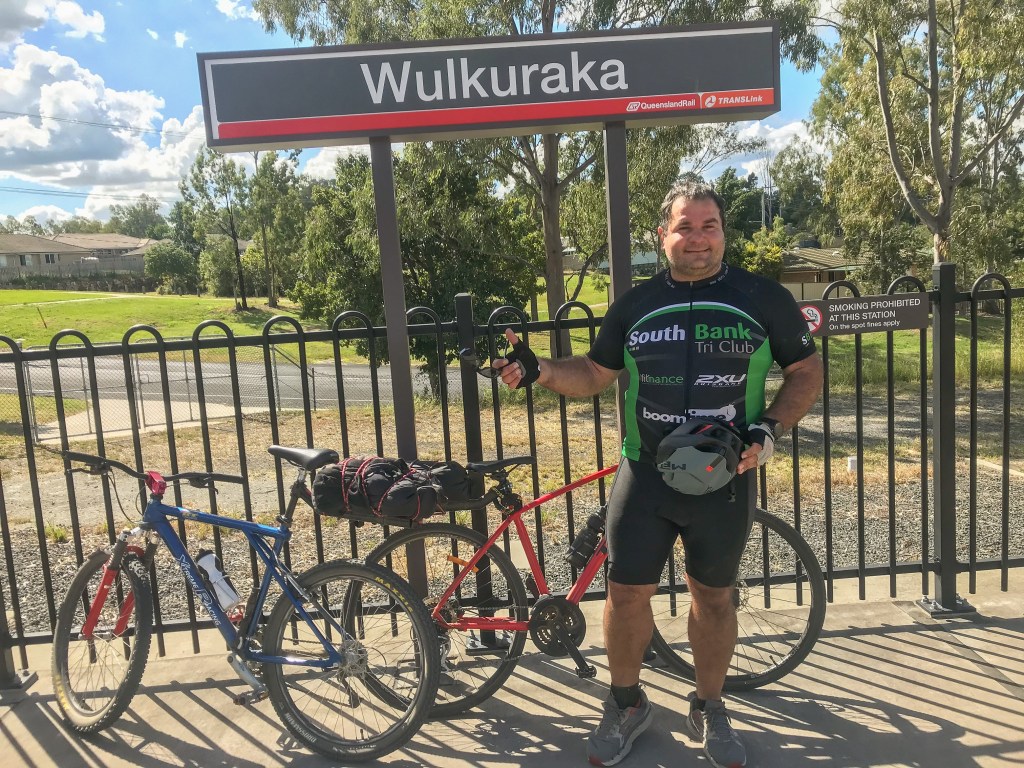
Wulkuraka – an Aboriginal word meaning either red flowering gum or plenty of kookaburras. I see neither today, but they are assuredly there somewhere. Holding on, adapting, waiting to burst forth and laugh. May well they laugh at a troupe of four sweaty middle aged men trying to cross a finish line in tandem, the youngest with a wheelie. Having crossed country where, despite it all, there is embedded in the earth and the sky a profound resilience. Something which can never be washed away, tunnelled through or eroded. A line much older, deeper and enduring. Always.

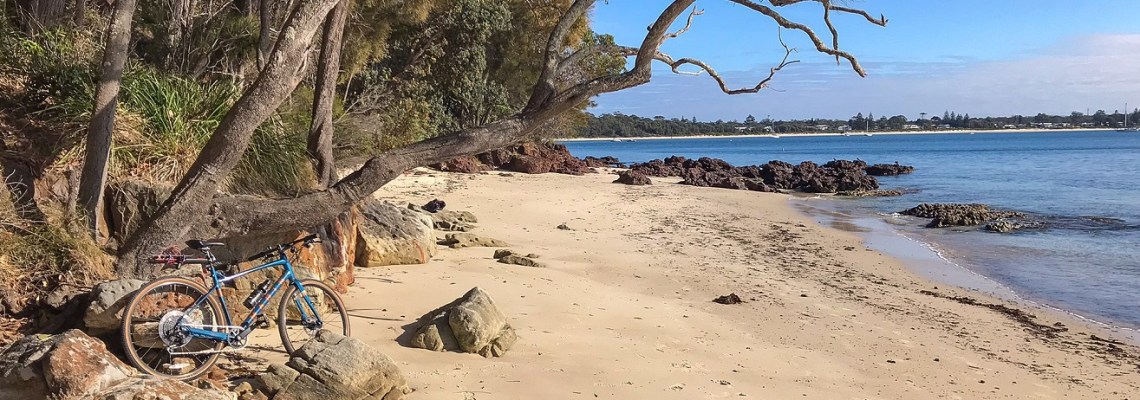
Australia Green Bogey

Life cycles

While closing an impromptu trip to England with cream tea nirvana may convey the archetypal happy ending, life – even curated online life – isn’t as simple as that. Endings are rarely happy affairs otherwise they would just keep on going. And more often than not, an end is also a beginning and a middle and any other indeterminate point on the march of civilisation, a turn of the wheel in the cycle of life.

It’s nice when that cycle is electric powered, even if this may ultimately lead to the downfall of civilisation. There is nothing like the fillip of pressing a switch to give you a boost at the very moment you are flagging. Especially when one of those switches says TURBO.

I always thought of Salisbury Plain as flat. The clue’s in the name after all. It should be a doddle to cycle through, barring confrontation with tanks and gunfire. But tanks need steep inclines to be put through their paces and bullets have to travel uphill or something. The plain is far from plain.

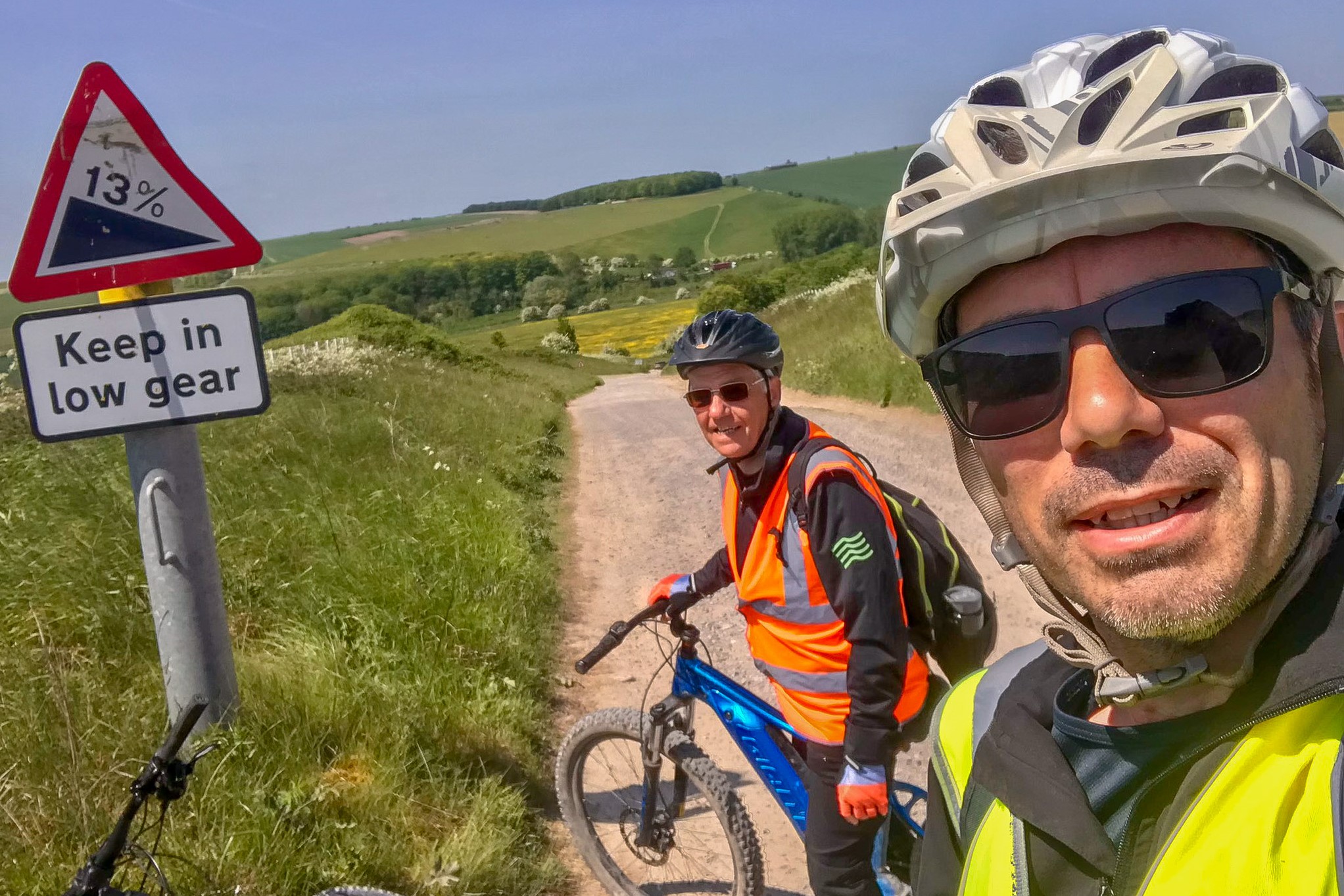
And so, when offered the services of an e-bike to join that of my Dad’s, I was happy to give it a whirl. Funnily enough, pride and that old man in Lycra tut-tutting in my head made me pedal au naturale for as long as possible. But when you flick that switch there is no stopping you.

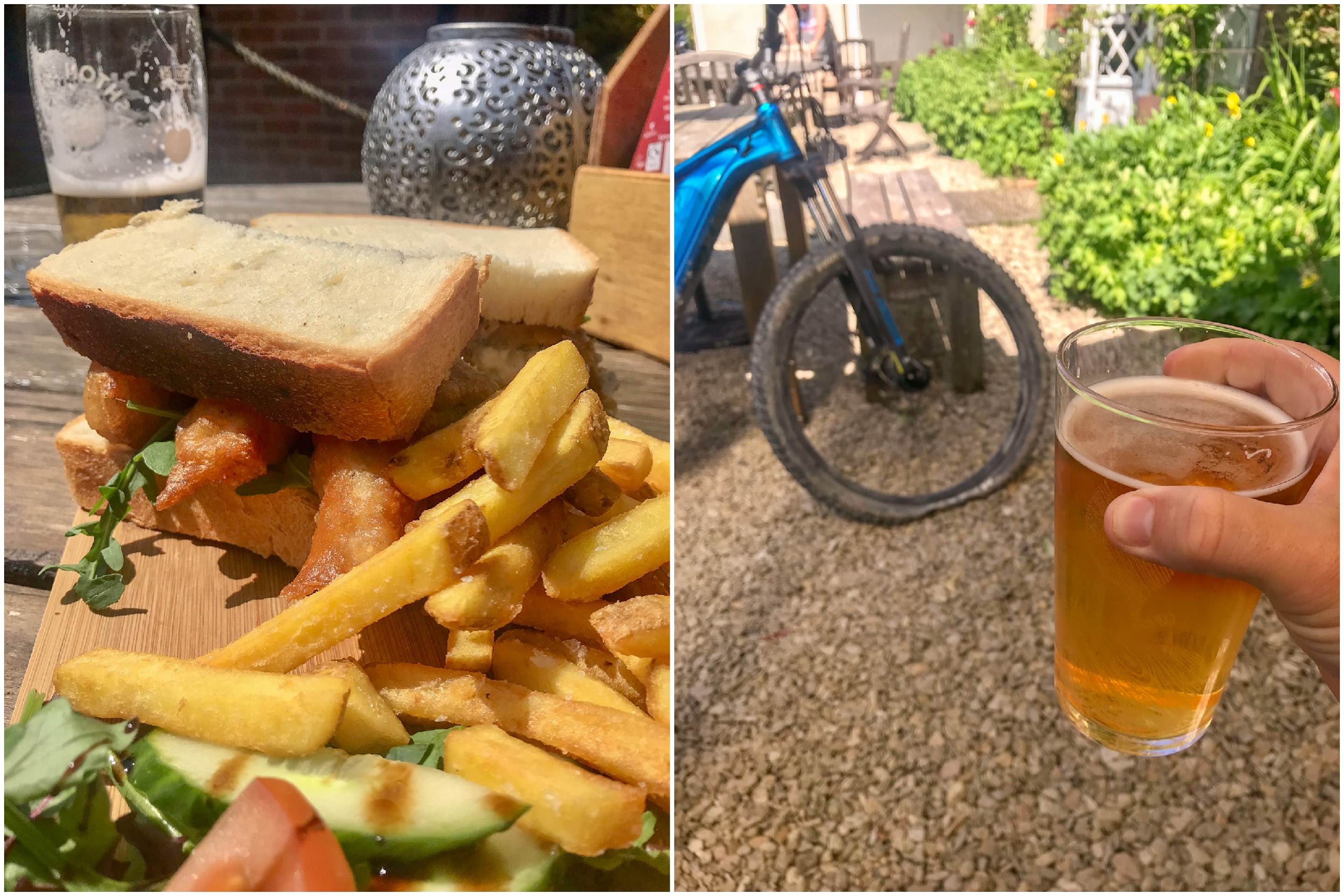
I was quite the passenger that day, in more ways than one. Usually in awe at my map memory, if was to retrace our route across the plain I’d be as lost as a ray of sunshine in Manchester. Each chalky track seems to lead down to a tangled thicket then up past a copse and left towards some squaddies and then 180 degrees avoiding gunfire and then straight through a paddock before joining what looks like where we were an hour ago. Somehow this 3D puzzle spits you out in a village and you find yourself recuperating with a cider and delicious battered fish sandwich.

It was worth all the pedalling (and quite frequent button pushing) to be in that pub garden. British country pubs in the sunshine are really like nowhere else. I wasn’t expecting to be in another one an hour or so later, but even e-bikes get punctures. And unfortunately the pub was the nearest point of refuge as Dad turbocharged his way to the rescue vehicle.


Fast forward a few turns of the wheel and white chalk becomes white sand, fish sandwiches become fish cocktails, and electrical assistance becomes all my own willpower.

Returning to a classic bicycle has been tough, any incline – however short – feeling like a mission to reach base camp. Maybe riding in Australia is just more of a challenge, what with the limited number of proper teashops, the higher proportion of fit athletic types putting you to shame, and near certain harassment by magpies.

From sweating in Salisbury Plain my first foray back on the bike in Canberra was a freezing affair. Okay, maybe seven degrees but there are simply not enough layers to shield the core from that breeze which whips up no matter what direction you face. I struggled for barely ten flat kilometres, and that included a stop for coffee and a M&S mostly chocolate biscuit.

But over time, on those rare occasions when the temperature makes it into double figures and the wind is below 15kph, I have been getting more acclimatised to cycling without electric again. Just little jaunts two or three times a week. A few more inclines, but nothing too steep. And still coffees and biscuits.

It’ll be handy for the bike legs to come back as I feel like my car might be stuffed! Something with the electrics, the transmission, the gears. Not as simple as a flick of a switch, the crank of a derailleur and a couple of allez.

I may have harmed it going to and from Jervis Bay, not that it screwed up at the time. Perhaps it didn’t like the moisture as the first rain in weeks dampened activities for the journey down and back again. Still, the Sunday was sunny, if not reaching the globally heated summits of earlier that week. And with reasonable enough winds there was an opportunity to once again revert to pedal power.

In my head it was flat between Sanctuary Point and Vincentia but I hadn’t been to Jervis Bay in many years. The reality is more lumpen but can I just put it on record that I made it up that hill whereas the younger, fitter-looking guy who whizzed past me on the flat got off and walked. I probably have a bigger rear cassette.

Between Vincentia and Huskisson it is all bliss. There are more young, fit athletic types but also oldies shuffling and dawdling and standing in the middle of the cycle path chatting to other boomtime babies with their designer glasses and designer dogs. The route follows the coast, all beautiful bays and turquoise waters and that eye-watering white sand. Plenty of escapes for a bike to bask.

Of course returning to Sanctuary Point required a good coffee and biscuit as well as inching over a couple of those lumps again. I almost didn’t make it but figured I could reward myself with two potato scallops to go with lunch as a reward. The downhill stretch begins.

Post-lunch fatigue was inevitable and, looking for a turbo boost, I switched to foot power to amble along a stretch of the White Sands Walk. Boasting majestic bays punctuated by lush, tall eucalypt forest, I would definitely put this in the top ten. It’s the kind of walk that would make one of those TV shows where some minor but amiable celebrity type goes for a walk, meets a few random nerds, and hangs about in a hidden World War Two bunker that they just discovered. (Talking of this genre, now Nick Knowles is titting about on trains…I mean how many middle aged white English men need to show us how to ride a train?!)

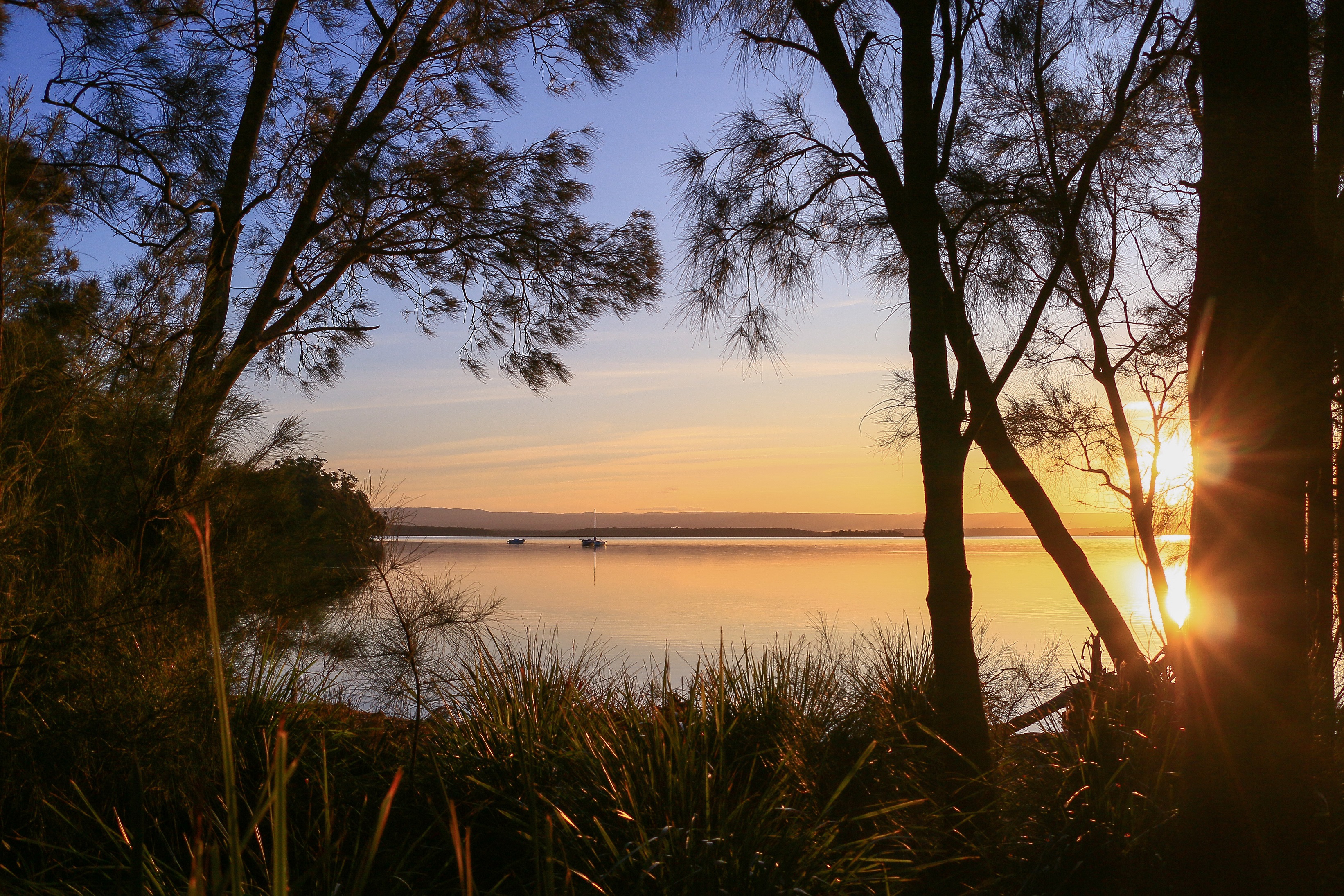
One of the best things about being here on a late Sunday afternoon is that most people have by now returned to Sydney or Canberra or Nowra or Wollongong. And, with my legs and feet now pretty much out of gas I was starting to blend in well with the retired locals. I used my last dose of energy to make it down beside the basin in Sanctuary Point, sit on a bench with a flask of tea, and watch the sun sink. Dipping behind the hills as if thinking it was some kind of ending. Just another turn of the wheel.

Australia Food & Drink Great Britain Green Bogey Photography

Under the shadows

And so, that year that everyone was so looking forward to when it commenced draws to a close. If the sequels to 2020 continue to pan out like the Police Academy series then we are all in for a very unamusing time. Unless you’re really into these boorish characters, crass jokes and ridiculous plotlines.

Despite its ups and downs, I was surprised to be able to find myself for a couple of weeks at the latter part of 2021 in the United Kingdom. So thank you lax borders and frequent flyer points and negative lateral flow tests and annual leave build up and, most of all, thank you science. It was a bonus trip, taken with a wariness that things could so easily change again and again.

It was amazing and I would do it all over again. This, despite the shadow of coronavirus always lurking in the background, sometimes coming to the fore. At times – such as high upon a clifftop overlooking the Atlantic, roaring with laughter during an early Christmas gathering, scouring verdant countryside for lens hoods – the pandemic disappeared altogether. At others – shopping for cards in an almighty hurry, shoving swabs up my nose, double-masking when others breathe “freedom” – it was all that was going on.

The journey back to Australia is never really a good one and pandemic travel adds an extra layer of crap. Which is exactly what was lathered all over my hands from a Great Western Railway dispenser at Plymouth station. Awaiting a train to Exeter masks were – mostly – back in fashion but no-one was rocking the dual surgical-cloth combo quite like me.

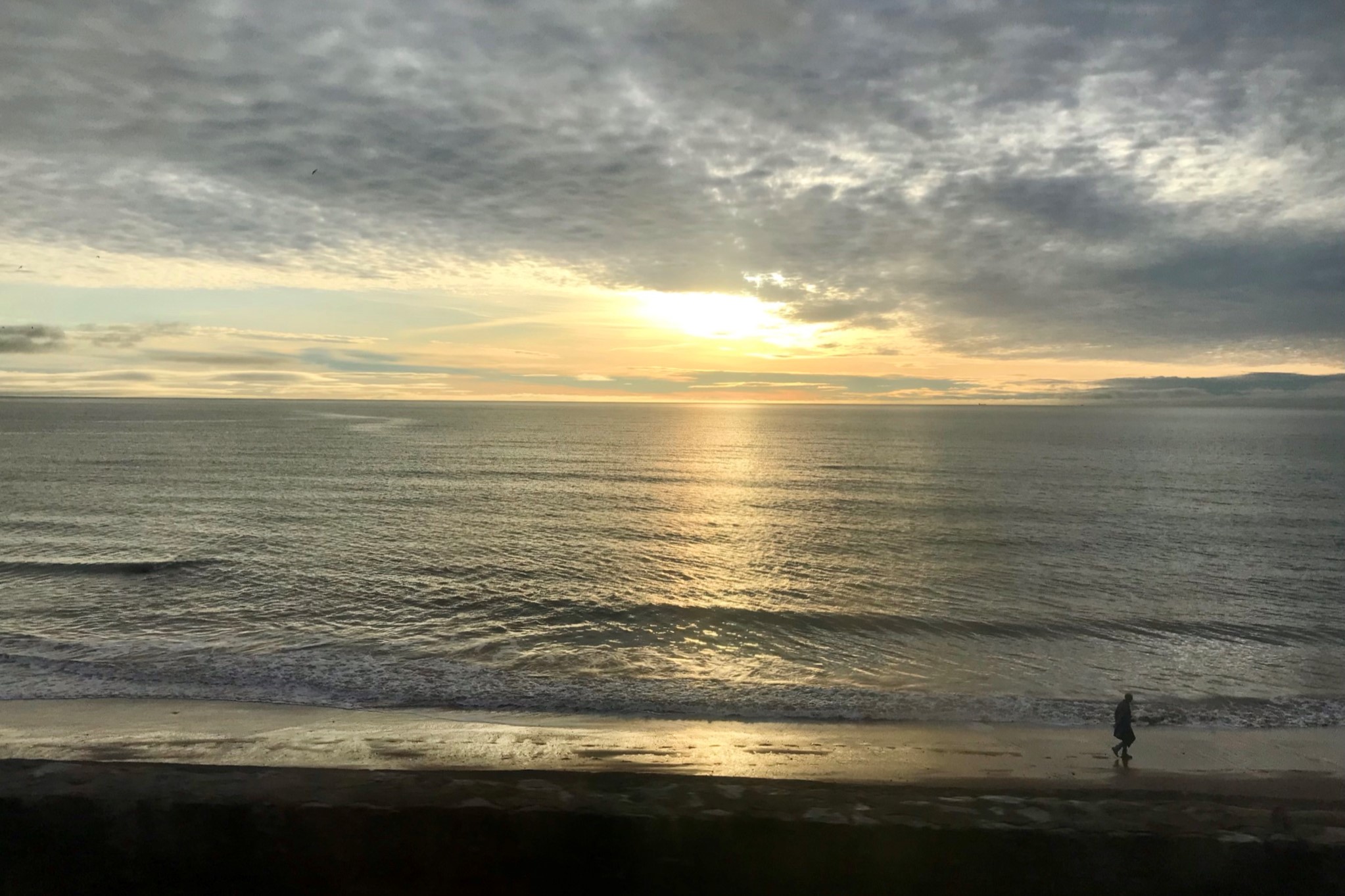
Eschewing my reserved seat for a quieter clump further down the carriage, it was a peaceful journey twisting through the ambrosia of South Devon. Along the Teign the low winter sun inched into the sky and flickered golden upon the caps of gentle waves as we wound towards Dawlish. A silhouette upon the beach swiftly passed by and I felt a yearning to swap places.

At Exeter a breath of fresh air before trundling on through a litany of country villages and towns straight out of Wessex – Whimple, Sherborne, Templecombe, Tisbury, and then finally Salisbury. For a meeting with Dad, a bakery and – yes – a PCR test.

At £99 (AU$200) I was expecting a gold plated swab and free lollipop, not a tiny pharmacy offering a ten second poke up the nose. Oh well, hopefully it will get me on a plane to Australia within the mandatory 72 hours. Hopefully.

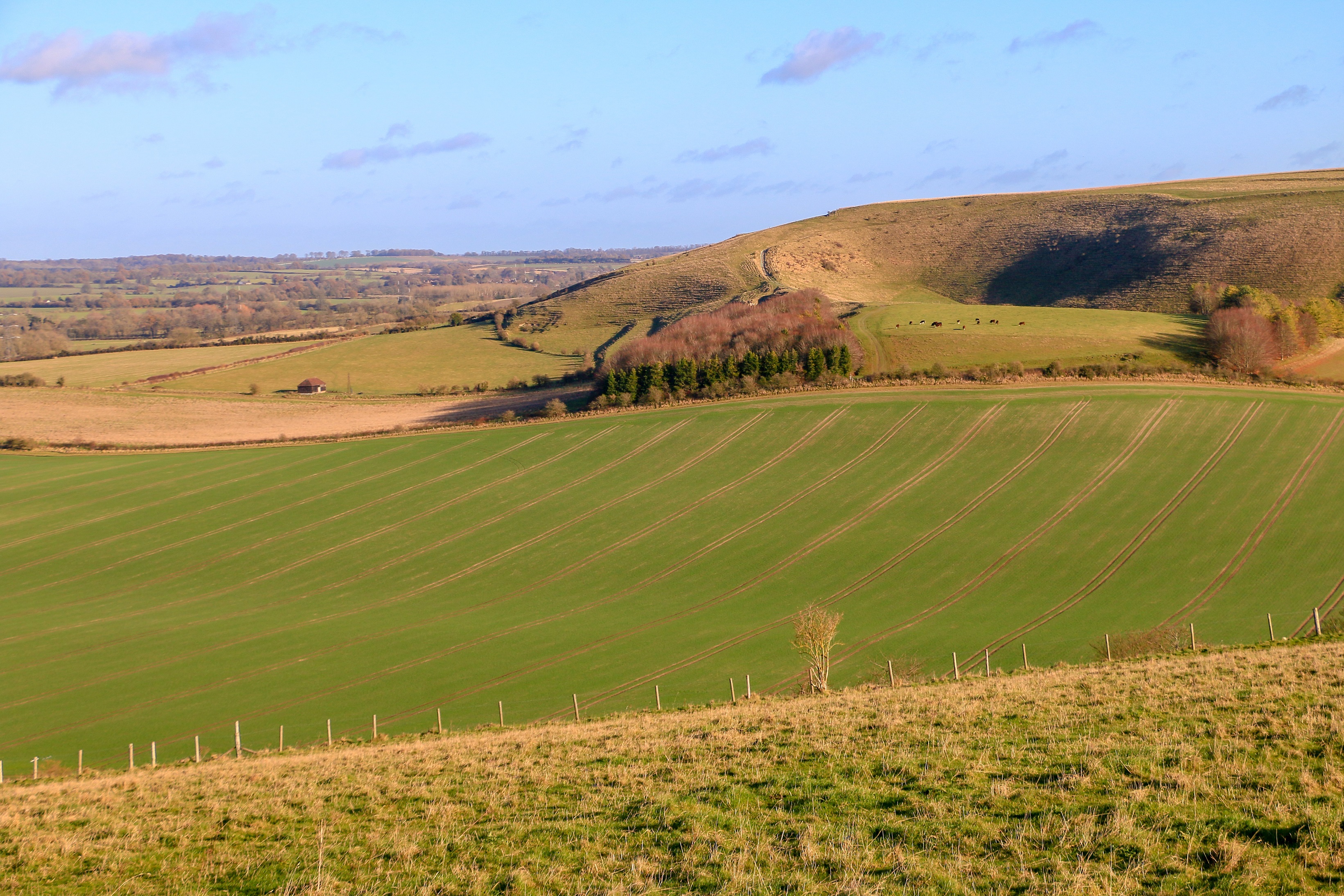
I stayed with Dad and Sonia for a couple of days, happily partaking in Tartiflette traditions and Saturday night quiz shows. The main activity was a delightful Wiltshire walk around the Vale of Pewsey, that ultimate pre-departure injection of countryside England, of green and pleasant, of great outdoors. Of surprising blue skies masking a chill winter wind.

Much of the route took us along the top of a characteristic chalk down, plunging curvaceously into rich, bounteous farming country. Beyond far-reaching vistas over loveliness, memorable features included a white horse, old burial mounds, brambles, crawling through gaps in a fence and slipping in cow-trodden mud. Oh and did I mention the Belgian Bun? Should’ve brought a flask though.

Despite blue skies, winter finally touched me with its bone-chilling menace. This occurred right about the time Dad lost a lens hood. Buffeted by the arctic, layered up with everything I had, unable to feel my nose. What the bloody hell am I doing? My mind switching to Australia.

It is quite feasible that some people in Pewsey felt that I should have stayed put in Australia. I dunno, spending my Dad’s money in their out-of-the-way town on instant hot chocolate. And while I can appreciate perspectives on non-existent pandemic control at the borders, I couldn’t help but feel this was borne from a place of zero foreigners whatsoever. Perhaps, Little Britain style, a deluge of vomit ensued after my revelation that I was over here from Australia.

Not that anyone appeared to be really minding a pandemic the next day at Honeystreet Mill. Full tables feasting on bacon and eggs and sausages and beans and mushrooms and toast, emanating vapours with every loud voice and legume fart. I had come here with cake in mind, but it was hard to look past English bacon and sausages and HP sauce one last time. And besides, they do take away.

And so, packing cake, the journey continues onto that great city of London, steeped in drenching drizzle. It was a scaled-back visit in keeping with the times: one night only in a Paddington hotel, enabling an early start to the airport the next day. The hotel was everything you would expect of a Paddington terrace: behind the elegant façade, a labyrinthine warren of creaking floors and random stairs and polite notices. Washing muddy shoes in the shower wasn’t one of them.

For the remains of the day I endeavoured to make two brief encounters. This necessitated an adventure ride on the Underground to get to North London. From Edgware Road I hopped on the Circle Line which in my experience has always been a voyage that never seems to go anywhere in a hurry. On the plus side – I reasoned – it’s a subterranean affair, with opportunities for fresh air to mingle as you wait for no good reason at Baker Street. Occupying time, mask-counting is the new Metro-reading, and I would say an average of six and a half out of ten managed to comply on the Circle Line.

From Kings Cross I hopped onto the deeper, murkier Northern Line once more. Here I positioned myself by the windows at the end of a carriage to allow that sooty centuries-old air to take on my twin mask protection. I guess there are probably traces of the Spanish flu down here, along with Churchill’s cigar smoke and aromas from a Wimpy burger.

Maybe I just got lucky, but it was quiet, with mask-wearing approaching nine out of ten heading to those affluent, sensible suburbs of the north. The emerging light after Highgate never fails to bring relief, despite having done this trip hundreds upon hundreds of times in the past. And soon, at East Finchley, I hopped off into the late afternoon air.

The skies had brightened a little, prior to their disappearance into night. Cognisant of being on an aeroplane for days, I was keen to walk and talk with Caroline, aided by the thoughtful and cherished gift of some M&S chocolate biscuits. Through Cherry Tree Wood I remarked how I vaguely remembered walking this way once to Muswell Hill and lo and behold after not having a clue where we were heading we ended up in Muswell Hill. From there it wouldn’t have been so far to the Ally Pally but the drizzle set in once again and the pub sounded a better prospect.

Despite all the ridiculous nonsense spouted about freedom days and the sanctity of pubs from our self-styled post-war yearning libertarian warriors I rather enjoyed my two pints in the pub with an old friend. It just felt, well, normal. Like old days, like old lives. Yes we had our masks at the ready and sat far from the smattering of patrons, but it was almost as if a pandemic didn’t exist. Despite talking for 80% of the time about the bloody pandemic. I guess the alcohol maybe went to my head, but I remember that hour with much fondness.

I also remember dinner with much fondness, again propped up by a glass or two of wine and the company of more old friends. It was all too brief with Melita and Geoff and Orla and how I yearned to just linger and crash on the sofa and get up the next morning to walk to Victoria Park or up to North Finchley Sainsbury’s for hummus, edamame and more wine. The hope is for this sometime in 2022…

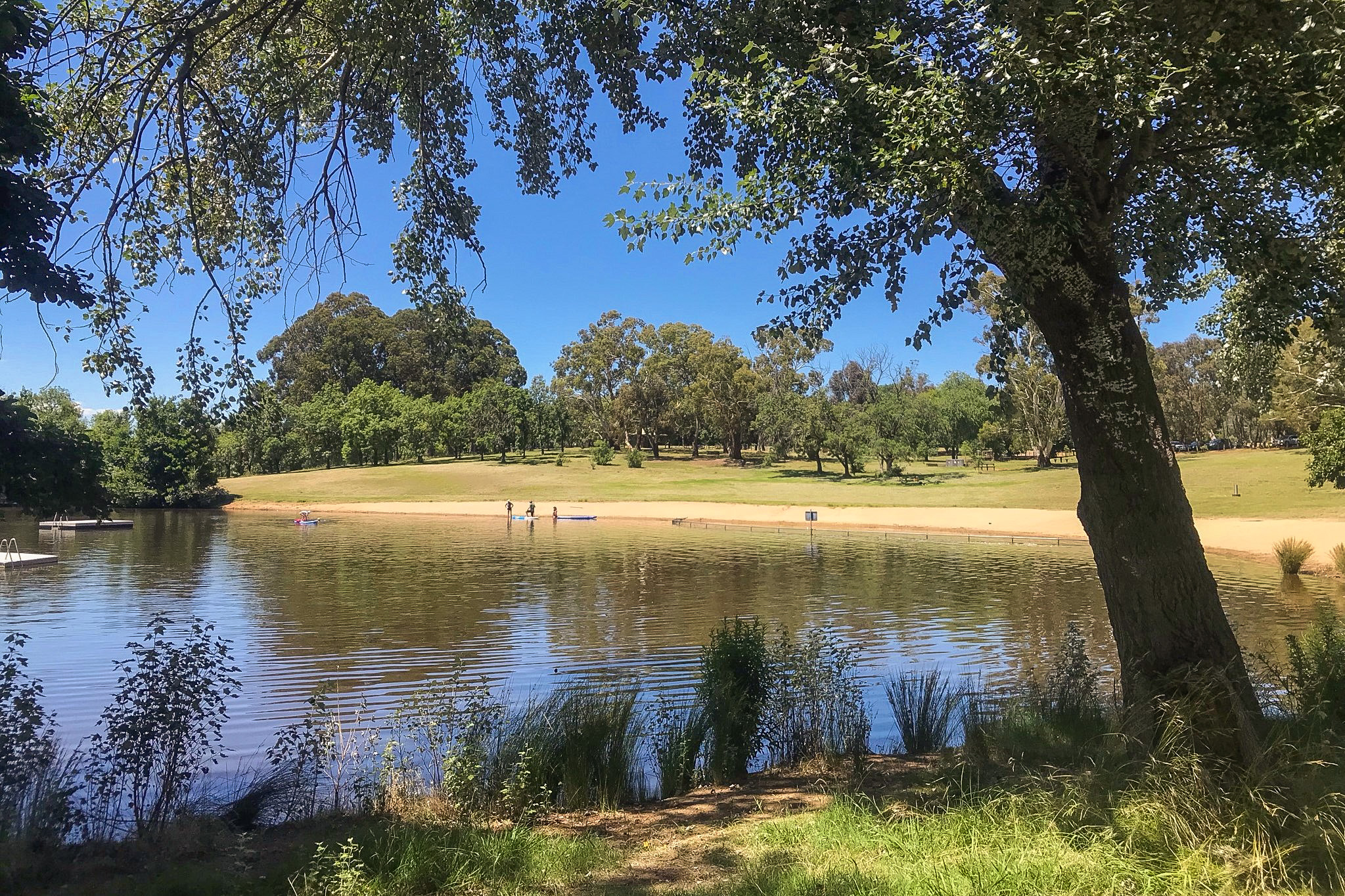
The final day of 2021 finds me sat writing this under a shady tree beside a lakeside bay in Canberra, Australia. A few families are scattered upon what counts for a beach, while a fluoro-white cockatoo shrieks from somewhere within a tall eucalyptus. Nursing me along, I managed to find one of the few coffee shops open – an Omicron lover’s dream – to pick up a takeaway. Accompanying shortbread comes courtesy of M&S at Terminal 3 of Heathrow. I had a lot of time at Terminal 3.

But I made it. After a PCR test, a cancelled flight, an airport hotel with buffet food, early coach pick-ups with whinging people, a nonstop coughing, nose-blowing man, Darwin, Sydney, driving down the highway to Canberra, three days of home quarantine followed by another bonus four, two more PCR tests and about six lateral flows. Horrible jet lag and a tired achy feeling that just wants to linger. Delights at being back and some disappointments. It was worth it all.

For the duration of my flight I was sat next to a well-masked older lady who was off to Sydney to see her son, his partner, and their son. A boy born under the shadow of COVID-19. This was her third attempt and I shouldn’t have been surprised at the obscenities flowing from her mouth at the first aborted take off. She just wanted to see her grandson for the very first time.

For ourselves and for others. This is why we do it and would do it all again. All the time holding on to the hope in our hearts that some sequels are better than the original.

Food & Drink Great Britain Green Bogey Photography Walking

Great Continental Rail Trail Journeys

The last time I heard the word ‘gooch’ as incessantly, an English batsman was stroking the Indians all over Lords. That was 1990. I also remember a reoccurrence when the same player was famously dismissed for handling the ball. Today, gently rising out of Toogoolawah, two hours west of Brisbane, gooch and ball handling were once again all the rage.

A stop was called for by my good friend and biking companion, Jason. Problems in the perineum that would culminate in what will only be known as the ‘Lowood Incident’. As improvised comfort was applied and jiggled, I started to contemplate whether we would need to radio in the rescue chopper.

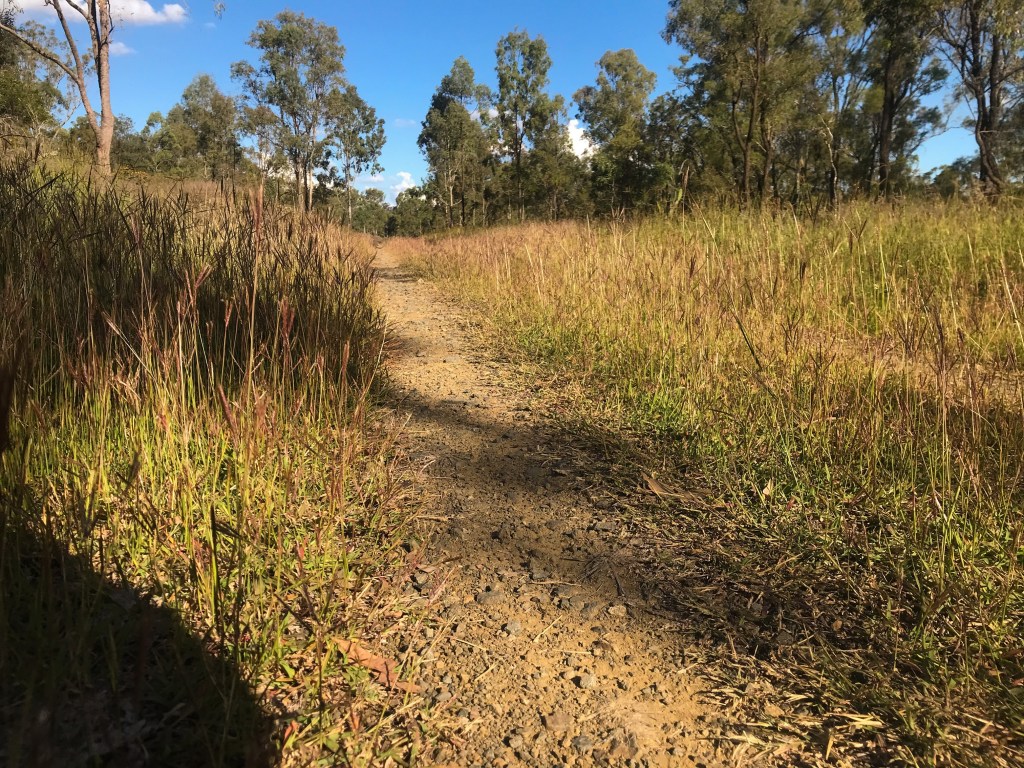
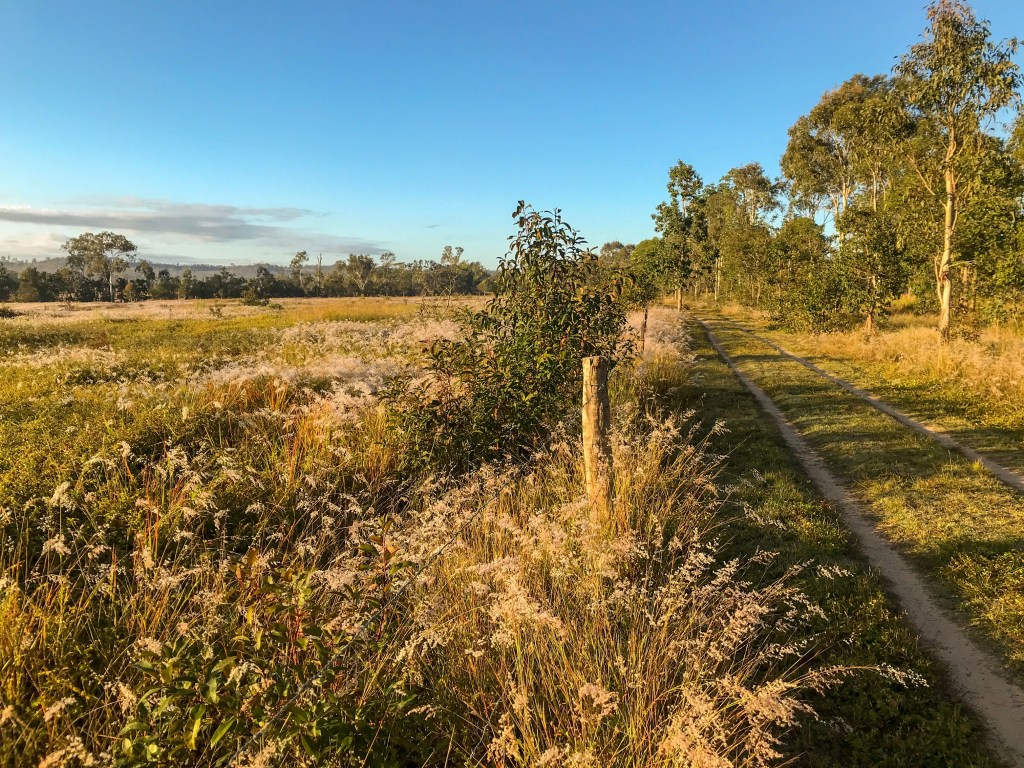
But waiting patiently I was enjoying the break. It had been a decent upward grind after lunch. The sun was warm and glowing gold the long grass of summer. Small eucalypts lined the route, interspersed with westward views over gently undulating farmland. My bike was coping well. Despite almost falling asleep over a burger, I was coping okay. This was brilliant.

I had never heard of the Brisbane Valley Rail Trail until Jason mentioned it virtually every time we spoke over the phone. I don’t know if it was one of those things you just say, never really expecting anything to eventuate. But one day I just thought sure, why not. Or words to that effect. And this whole trip was basically arranged around it.

We took a leisurely three days to cover the 161 kilometre route by bike, retracing a rail line that commenced construction in 1884 and was finally made redundant in 1991. Today, it has been transformed into the longest recreational rail trail in Australia for use by walkers, horses and – mostly – bikes. While I never succumbed, Lycra and gooch cures are never far away.

Day 1: Yarraman – Linville (42 kms)

It took the best part of two hours to drive from Caloundra to the start line (thanks Fiona!). Over rainforest-lined passes, high above fields of mist, past bakeries that are worth making a note of for later, we reached Yarraman to face the unknown. Yes, riding a bike is like riding a bike but riding a bike on a three day bike ride is another matter.

Yarraman was still fairly quiet, though the people we did encounter were keen for a natter. Being ANZAC Day, a small dawn service had been and gone, and one old guy offered reminisces about days gone by in this small neck of the woods. He had taken the train many moons ago when joining the air force. Thus a brief history of the operation of the Brisbane Valley Line ensued. The conversation culminated with him contemplating riding the line once more, e-bike assisted of course.

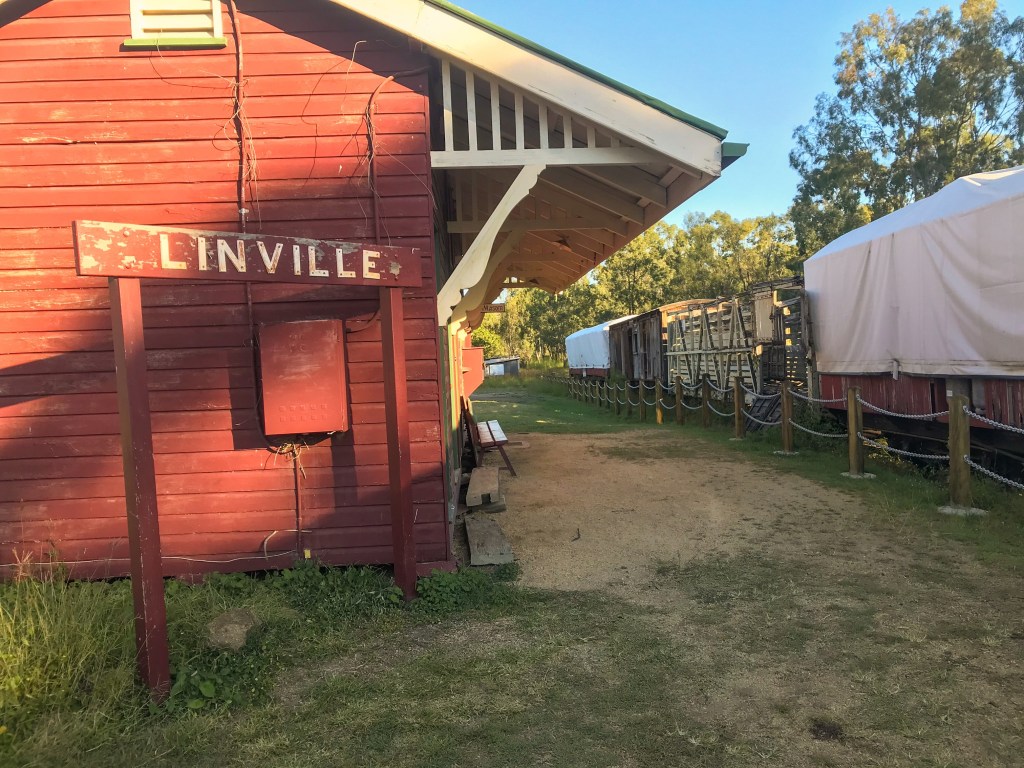
We passed up the opportunity to indulge in coffee and bakery items at Yarraman, instead pursuing these goals in Blackbutt once at least a few calories had been discharged. And so the exercise commenced just out of town beside the old rail station, highly visible remnants of the line that pop up in practically every settlement along the way. Blue skies, still air, a fairly smooth dirt track accompanied by that first shot of endorphin from anticipation of what may lay ahead. 

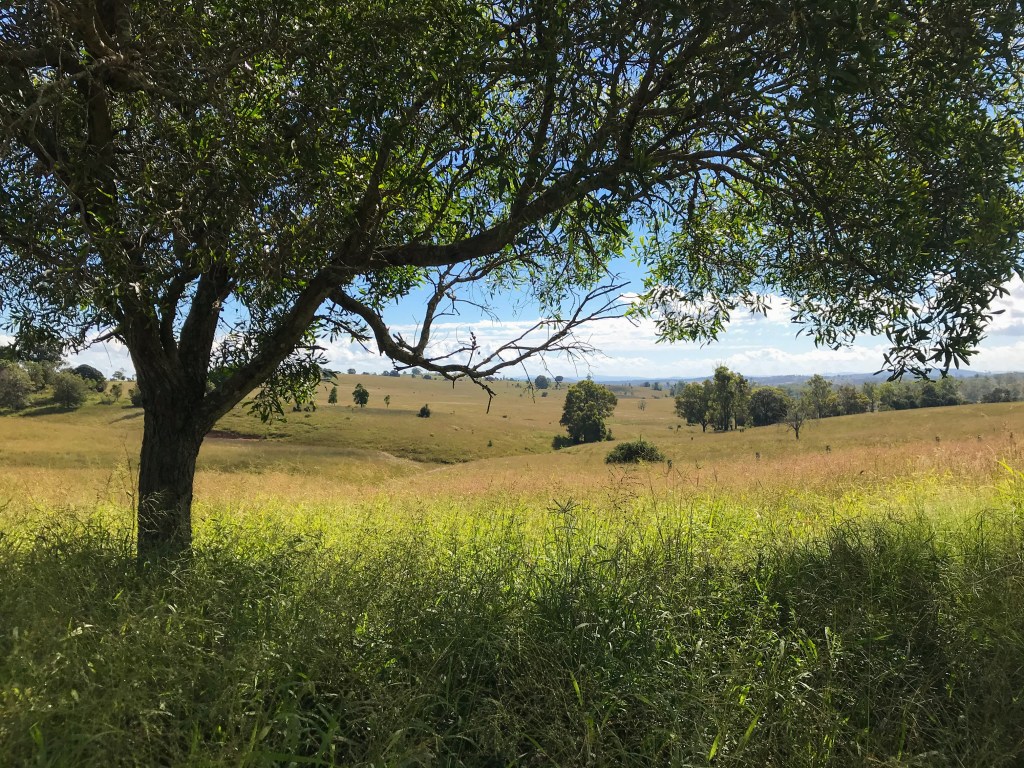
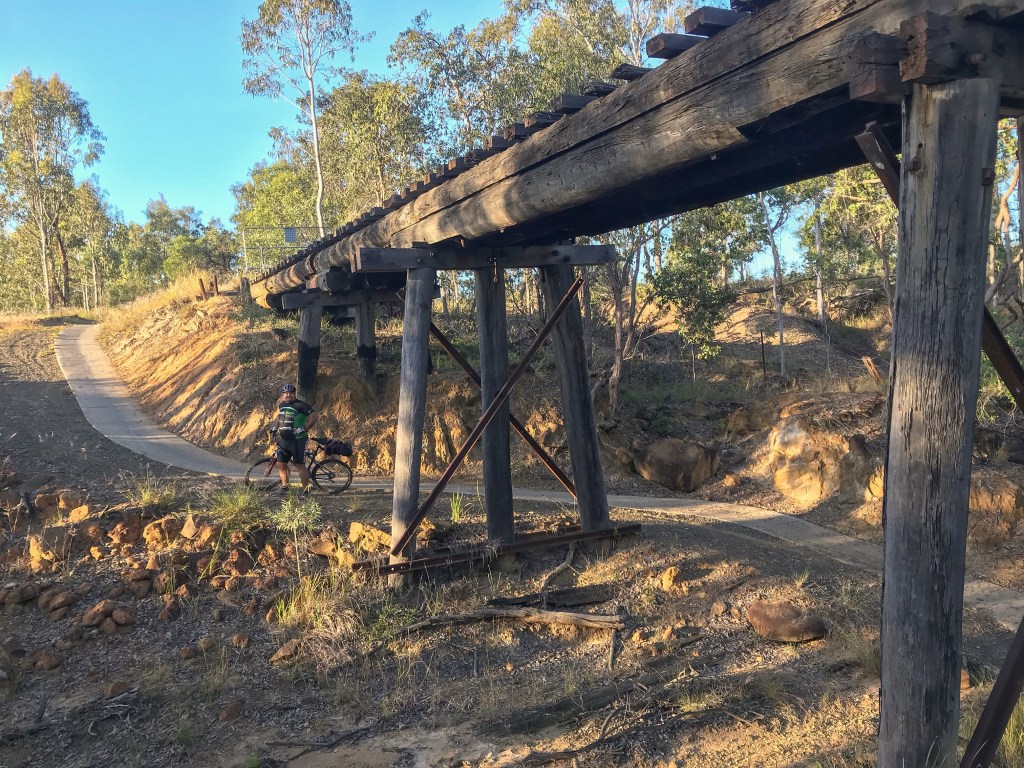
And so, we rode through avenues of low eucalyptus, alongside green pasture dotted with spiky xanthorrhoea, and through a number of rockier cuttings keeping things relatively flat. Earlier in Yarraman, the old fella rambled on about the bridges on the rail line and wondered if they were still standing. The answer quickly became clear and that answer was – for the most part – no. After cruising with only gentle effort, the downs and ups of gullylife often come as a bit of a jolt to the system.

The vibe along the trail was congenial and we passed a few other cyclists with friendly g’days and broad smiles. A few times the trail briefly transported me to a nice summer’s day in southern England, a passing resemblance nurtured by fields of corn and tunnels of trees. The idyll was quickly shaken by the gullies, the gravel, and the sound of Chinooks and Apaches putting on a flypast specifically for us. 

It had taken well over an hour to get to Blackbutt which was – after the trail thus far – a veritable feast of civilisation. People were assembling for the 11am memorial service, many with padded butts and bulging Lycra. This naturally resulted in high demand for coffee. So high, in fact, that the cafe we had chosen failed to deliver it.

It seems churlish to bemoan the absence of coffee in the context of wartime remembrance, but I cannot deny how deflated I felt. One of the attractions to this ride – probably even the number one thing impelling me forward – was the frequent prospect of stopping for coffee and cake. How leisurely, how civilised, how conforming to popular stereotypes of butt-padded middle aged manliness. 

But the parade passed and wreaths were laid without a hot mug of country flat white. As they do, Last Posts, Abide With Me, and sombre silence touched the right note. The special guest speaker spent a good few minutes talking to the point that his time to talk had been controversially curtailed (I can only imagine the political machinations going on in Blackbutt RSL). Meanwhile, someone posting video of the service to the local Facebook page bemoaned the fact that everyone else was using up the local 4G and quite possibly catching coronavirus from the rays. 

You don’t get these quirks at the Australian War Memorial and that is why the ANZAC service in Blackbutt was such a memorable event. Above all, it radiated with the warmth of smalltown community: flags half-mast against the backdrop of XXXX signs on the pub; the high street closed off as trucks carrying cattle detour behind the small memorial; a procession featuring schoolkids, scouts, guides, old troopers and the Country Women’s Association, all waving to family members lining the route. Meanwhile some lucky butt-padded cyclists sup on their coffee.

No offence to New Zealand, but we snuck out of Blackbutt as the ceremony was nearing an end with its national anthem. I was keen to get moving before the rush of people re-joined the trail. We also had to reach the pub before it closed for the day.

Fortunately, most of the trail to Linville was downhill, through Benarkin State Forest. This induced a little adrenaline, gathering speed and negotiating clean lines and avoiding small rocks. My back end decided it wanted to head sideways on a few occasions, but speed and gravity and not particularly flash bike-handling skills kept things upright. Almost as satisfying as staying in one piece was the sight of pedallers grinding their way up towards Blackbutt and being thankful that this was not you.
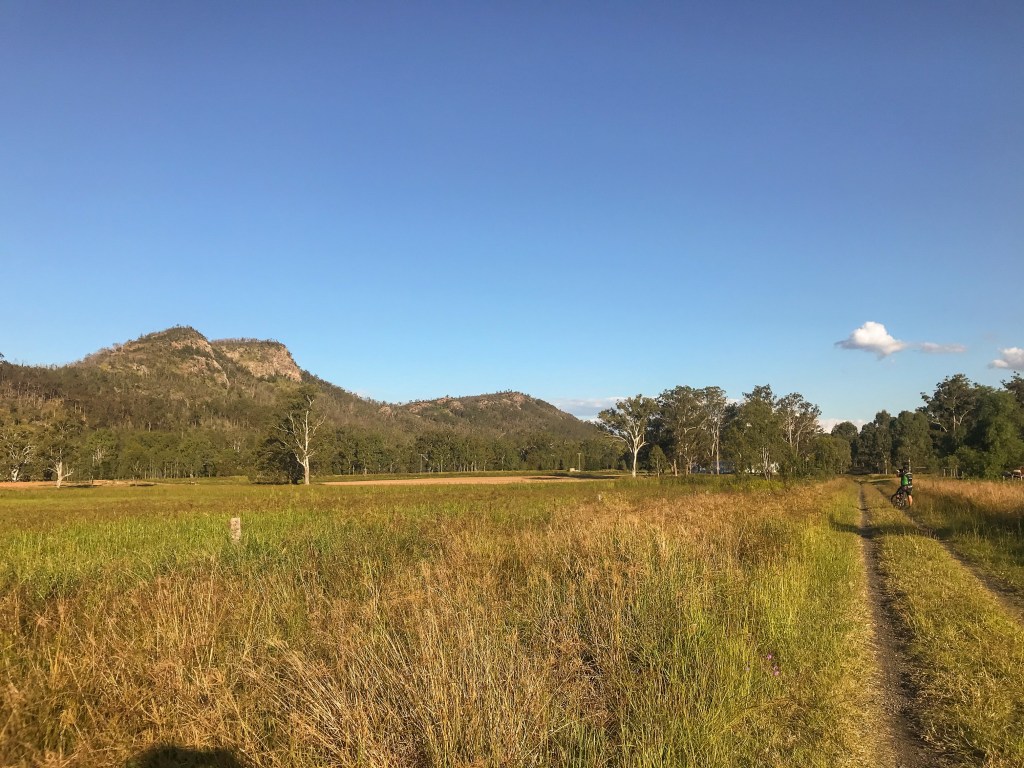
Eventually the forest opens out and the landscape presents itself as rugged and unkempt. In fact, it’s probably the most enclosed part of the whole trail, where you truly feel like you are carving your way through a steep-sided valley. As the hills part, farmland again emerges, shacks appear, caravans gather for extended coronavirus holidays, and in front of you, shining like a temple, is the Linville Hotel.

The first thing that was obvious about the Linville Hotel was that the tradition of sitting around drinking on ANZAC Day was very much alive and well. Out the front, a multicoloured arrangement of frames and wheels gathered in what looked like one almighty tangle. Motorbikes glimmered in the sun. Classic cars posed with their rooftops down. City folk had come for the drive. Or the pedal.

The Linville Hotel proved every bit the Australian country pub and a little more. Chicken Schnitzel lunch was accompanied by local brews. Wooden verandas and wonky floorboards looked out over sleek parasols and hipster guitarists. Old signs mingled with largely ignored QR codes. Upstairs, rooms provided accommodation and already the century old balustrade was subject to Lycra decoupage.   

Closing at three, the pub transformed into a peaceful oasis, one in which I envisioned a post-shower nap that never materialised. Jason, naturally, had no problems. I instead popped out and explored the town, taking all of five minutes. It struck me that Linville would struggle to get passing trade if it were not for the rail trail. That, and the free camping area densely populated with COVID nomads.

So, the first day of the BVRT had been safely negotiated and all was well with the bike, the bike rack, the butt padding, and the humans. Until that pounding headache and fatigue and rush down to the toilet block to empty the mish-mashed contents of my stomach. In a dramatic turn of events, would I make it through only one day? Would we need to call in the medics? Would I ever get a goddam coffee on this trail?

Day 2: Linville – Esk (52 kms)

I guess the header gives it away. I survived. In fact I somehow prospered. This was the best of days: no rush to get anywhere, me, my bike, my mate, the sun, a massive coffee, and some other foodstuffs thrown in and not thrown up. 

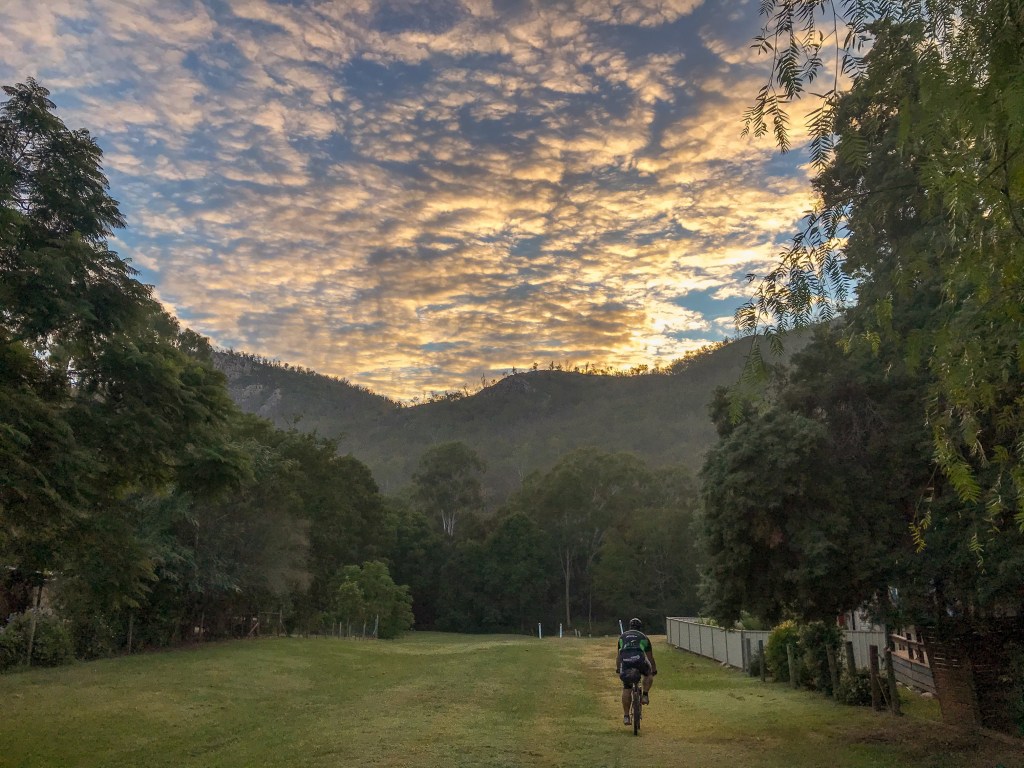
The day commenced with a rising sun over a patchwork of mist from the top floor of the Linville Hotel. The sun kissed its first light on the Lycra bunting, dangling like the dismembered ghosts of cyclists past. Gradually the shadowy figures disappeared as small groups set off. We were the second last to go, just an e-bike left charging for those who have the power to linger.

It was a good start, especially as the first stop – Moore – was only seven kilometres down the road. I say road, but of course I mean trail, which continued to be decorated by avenues of eucalyptus and interrupted by deep gullies.

Moore appears even smaller than Linville yet boasts three places offering coffee. Wary of yesterday, I pray we choose the right one. In the end, the coffee comes, which is an improvement at least. It’s one of the biggest cups of coffee I’ve ever had in Australia, more akin to the stupid sizes you get as standard in those awful chains in the UK. In its gigantic bucket, the coffee took an age to cool down, but at least a second breakfast sausage roll kept me replenished.

After Moore, the landscape opens up considerably; wide fields undulate gently towards more prominent ranges while patches of forest become fewer and farther between. The trail even takes in some steeper rises which I’m sure weren’t part of the original railway line. Like the train in Dumbo – I think I can I think I can – I am elated with my first KOM achievement.

Another notable rise appears on the outskirts of Harlin, the next town of sorts along the way. Again I am pleased that I make it but also pleased to see some seats and a shelter at the top. It’s a bustling hive of activity as wheels spin, chains are cleaned, and flasks of tea are drunk. A gathering of older riders have made it all the way from Bundaberg or Rockhampton or somewhere like that (I forget), this now their eighteenth day on a bike. I don’t quite feel as smug having managed to overtake a couple of them on the way up.

We seem to play tag with this group for the rest of the ride. The trail’s kind of like that. All the time, in cafes and pubs, on picnic tables and in parks, you see people you think you have probably seen before but often can’t quite remember. Typically exchanges involve the matter of where you have come from and where you are going, intended bakery stops, occasional technical bike talk that goes over my head, and – increasingly – saddle sore. You leave it all out on the trail.

In these entanglements I figure we are perhaps a little more memorable to others. I say we but I mean Jason, masterfully contoured within his Boomtime bodysuit; I’m just that nondescript guy accompanying the big unit. Sometimes setting tempo on a gradual rise, other times trying to keep up on flowing descents. Organising accommodation and strategising food stops. Encouraging progress to the next town for running remediation. Hang on…I sound like a bloody domestique!

After Harlin I find myself pacing us past a rider and on towards a landmark. A damp dark hole doesn’t sound like much of a tourist attraction, but this is Yimbun Railway Tunnel, constructed in 1910. It’s the only tunnel on the entire length of the trail and I am pleased to see it, given my initial horror approaching what looked like an unscalable hill. Stops for photos and cooees are all the rage.

On the other side we progressed onward to Toogoolawah where it was most definitely time for some lunch. Our hilltop friends from earlier were encamped at a couple of shady picnic tables feasting on the provisions they had carried. Travelling light, we sought out a business that would feed us. This proved harder than one might expect – being a public holiday, the town was almost desolate. Salvation was once again in the form of the pub, and a pretty decent burger.

It was at the pub that I struggled to stay awake and was uncertain how I would manage to start out all over again. Rooms in the inn certainly had an appeal. I was also being bothered by an energy company desperately trying to cling onto my business after taking my money for many years without the slightest pretence of customer service. This is largely irrelevant and uninteresting until it got to the point where I was pleased to get back on the bike to escape a world of 4G.

Back to the simple life where it was just you, a bike, and a mate bringing things to a halt in an attempt to increase comfort. The trail rose steadily from Toogoolawah for quite some time before a delightful plunge down the other side. With time pushing on, the afternoon presented the countryside in a warm, attractive light. By the time we reached Esk, there wasn’t so much left. 

Usually you’d think 52kms would only take a gentle three hours. But factor in gravel, gully crossings, stops to take pictures of cows, the time required to wait for a ridiculous sized mug of coffee and then drink it, distractions with energy sales sharks, and – progressively – pauses for gooch care, and you have a full day out.

It’s more tiring than you think too. Which may explain why I called Jason a moron outside the IGA for just assuming it would be open forever. We joked about it afterwards, ate mediocre food at the local pub and capped things off with mugs of ice cream in a motel room. I’m sure this is exactly how riders experience the Tour de France. Especially the domestiques.

Day 3: Esk – Wulkuraka (67 kms)

Okay, this may sound like I had lost by mind but there were times on the third day where I literally felt like an express train. No, more like one of those old clapped-out British Rail stopping services between Basingstoke and London Waterloo with the heavy slam shut doors. There was something about the slow acceleration, easing away and eventually building to a steady pace as we progressed through the trees between Esk and Coominya. Once on the blessed descent from Mount Hallen, speeds were probably matching those of the 8:07am to Woking.

We had departed Esk early as we – literally – had a real train to catch. The sun was only just rising above the horizon and it was more than fresh. But the plus side of this was the wonderful golden light over fields of grassy tussock, dewy spider webs, and the splendid nose-clearing aroma of gum trees embracing the day.

The section from Esk to Coominya is the longest without any civilisation and a large part of it cuts through the bush. By time you reach Coominya, you are more than ready for a coffee and treat. But good luck with that. Google Maps told me of a place called the Blue Teapot Café but unless I got my map-reading wrong (which is extremely unlikely), it appeared to be a petrol station / tackle shop / muffler supplier / chiko roll purveyor. They did have reduced price Cadbury Twirls though, more disintegrate than melt in the mouth.

Fortunately, Lowood is an entirely different proposition and just a further 12 kilometres on. We once more came across our old friends from Rockaberg and the going was pretty good on a well-groomed, mostly flat section. With the D’Aguilar Range rising up on the eastern horizon, there was a sense that Brisbane wasn’t too far away. Just over those hills.

Perhaps it was all to do with timing, but Lowood proved the liveliest town along the trail. There was of course a bakery, but we went upmarket and sat down in the local café instead. Across the road, a well-tended park and amenities offered comfort and convenience for the weary rider. A water bubbler provided a refill while I waited for Jason to do whatever he was doing.   

Lowood also brings you closer to the Brisbane River as it feeds out of Lake Wivenhoe. You never really ride next to it, but at least there are a few glimpses here and there, just to remind you that – oh yeah – this is the Brisbane Valley Rail Trail. Compared to life at the other end, the landscape is much more open and there is feeling of settlement and civilisation accumulating. Indeed, the next town – Fernvale – is only a further eight kilometres.

I had heard several times – in those exchanges between BVRT veterans – that the Fernvale Bakery had some seriously good pies. So continuing our poor food choices we decided to have brunch instead. It was okay, but nothing to write home in a blog about. Hanging like a shadow over the experience, too, was the sense that we needed to get moving to catch that train.

Further delays around the public toilets in Fernvale allowed me to catch up with another rider who recognised us. Apparently, he was on the table opposite at the pub in Esk. He had been carrying everything – camping gear and all – on his back and was very much looking forward to the end. I felt fortunate to have stayed in proper rooms and for buying a $16 bike rack from Kmart. The best investment ever, cheaper than an underwhelming brunch. 

Nonetheless we were all at that point where the end couldn’t come soon enough. It was a further 23kms from Fernvale to Wulkuraka and much of the novelty and thrill had worn off. Some of the track was quite sandy and while it never reared up like an Alpe d’Huez, there was this endless perception of drag. At one point, some naughty trail bikes came at us from the other direction and you knew suburban Ipswich must be close.

A sign indicating 5.2km to Wulkuraka rears out of smooth white concrete. The bike trail has become a modern, formed bike path and it’s the shot in the arm needed. We reach speeds previously unfathomable, picking up slipstream until the interruptions of traffic islands and a final little upward thrust. The penultimate hundred metres navigates the pavement alongside a row of compact townhouses. Ticker tape, fireworks, applauding admirers fail to materialise. There’s not even a sign.

Still, we have made it. We made it! I had my doubts at times. But I think there were so many things to keep us going. The green and pleasant countryside, which is never going to take your breath away but comforts like a mild June day along the lanes of Southern England. The towns and businesses, feeding us and watering us and giving us a mixed bag of dining experiences that could do better. The public amenities and tiny stores offering hope and comfort to ease accumulating ailments. The many other riders, offering this amazing feeling of camaraderie and shared experience.

And, of course, mateship made it one of the most memorable trips ever. The big unit. The boomtime body-suited, gooch-afflicted, cow-whispering Jason. You were there at the end, still batting strong and keeping me going. For every one of the 161 kilometres, the 2,300 metres up and the 2,600 down, it was an absolute pleasure to have you by my side. Or ten metres behind, making adjustments.

Australia Green Bogey

Farmers

I doubt the young lady taking my order was convinced. “Please may I have the Farmer’s Lunch please thank you? Thanks. How would I like it? I guess on a plate would be a good start, do you have these here yet? Oh, you mean the steak? Um… (killing a few seconds considering whether I should plump for rare like the locals) medium-rare please. Thank you.”

“Y’aint no farmer love are ya?”

“Yeah nah. I’ll be sitting next to the CWA ladies playing bingo if that’s okay? Thanks.”

Cowra, New South Wales, Saturday 21st November 2020 and not all of the above was true. I did order a Farmer’s Lunch and I did opt for medium-rare, but it was served to me without disdain. At least outwardly. You didn’t need to be a farmer to order it; only my internal voice was screaming out “FRAUD”.

I found myself here after much procrastination. Determined to embark on something of a mini road trip over the weekend I spent the previous few evenings plotting routes and stops largely based around where I could support the local economy. Given I was heading into the country, surely there would be a nice country pub with hearty fare and a cold beer? I pictured a shady garden perhaps, leading up to an arrangement of latticework and wood-flooring. Locals in Slim Dusty hats shading craggy, sunbeaten faces glanced up at me with a twinkle in the eye. A large fan whirred silently over a shelf crammed with ten-year-old bottles of Scotch. Above the fireplace, a framed blue jersey of some ex-footballer who once scored a field goal in Origin.

Perhaps such idyll exists, but I’m yet to find it. Still, air conditioning and keno was comforting as temperatures soared into the high 30s in Cowra. And the Farmer’s Lunch – steak, sausages, eggs and chips – was worth all that hard yakka sitting in a machine pressing a few buttons. Just like the farmers busily harvesting their grain.

Earlier that morning I had driven up from Canberra in time for a coffee stop in Boorowa. After a previous visit in early spring it was notable how much the green had already diminished, long grasses browning off after a couple of weeks of warm, drier weather. Boorowa was nonetheless as charming as before, though the coffee stop didn’t quite live up to previous highs. I feel like it was under new ownership and lacked the same, welcoming community hubbub. On my way back to the car, another café promised for the next visit.

While Boorowa was still feeling jaunty under a gentle morning breeze, a little further up the road in Murringo the withering inland heat began to bite. Crackly yellow grass, searing bitumen, and the piercing symphony of cicadas. It had been a while since it was like this.

There wasn’t much to Murringo, other than a place where you can go and check out some whips. But it was cute all the same and the drive through Murringo Gap was pleasing with its hay bales and narrowing valley slopes. On cooler days I could see a cycle ride heading through here, but maybe that’s not until autumn now.

I was hoping to swiftly reach Conimbla National Park for a walk before the heat of the day kicked in. Arriving in a remote and empty patch of dirt, the clock on my car signalled a few minutes before midday. Mad dogs and Englishmen and all that. It was the kind of walk in which I could disappear down a ravine to be eaten by snakes before discovery three weeks later. I took some solace in the fact that the lady tending her allotment down in the valley eyed me warily as I drove past – surely she would send help? Or send in the boys with pitchforks?

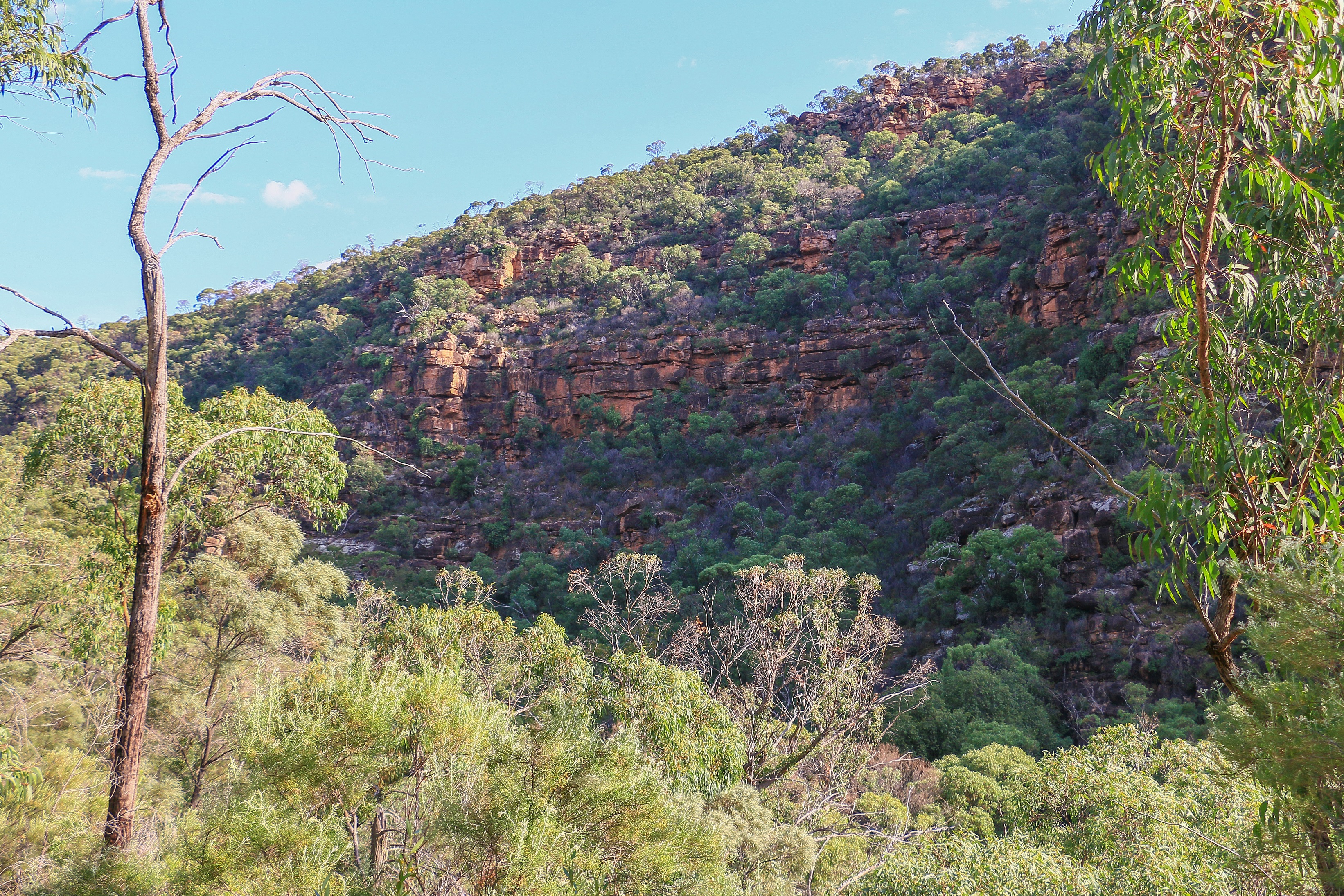
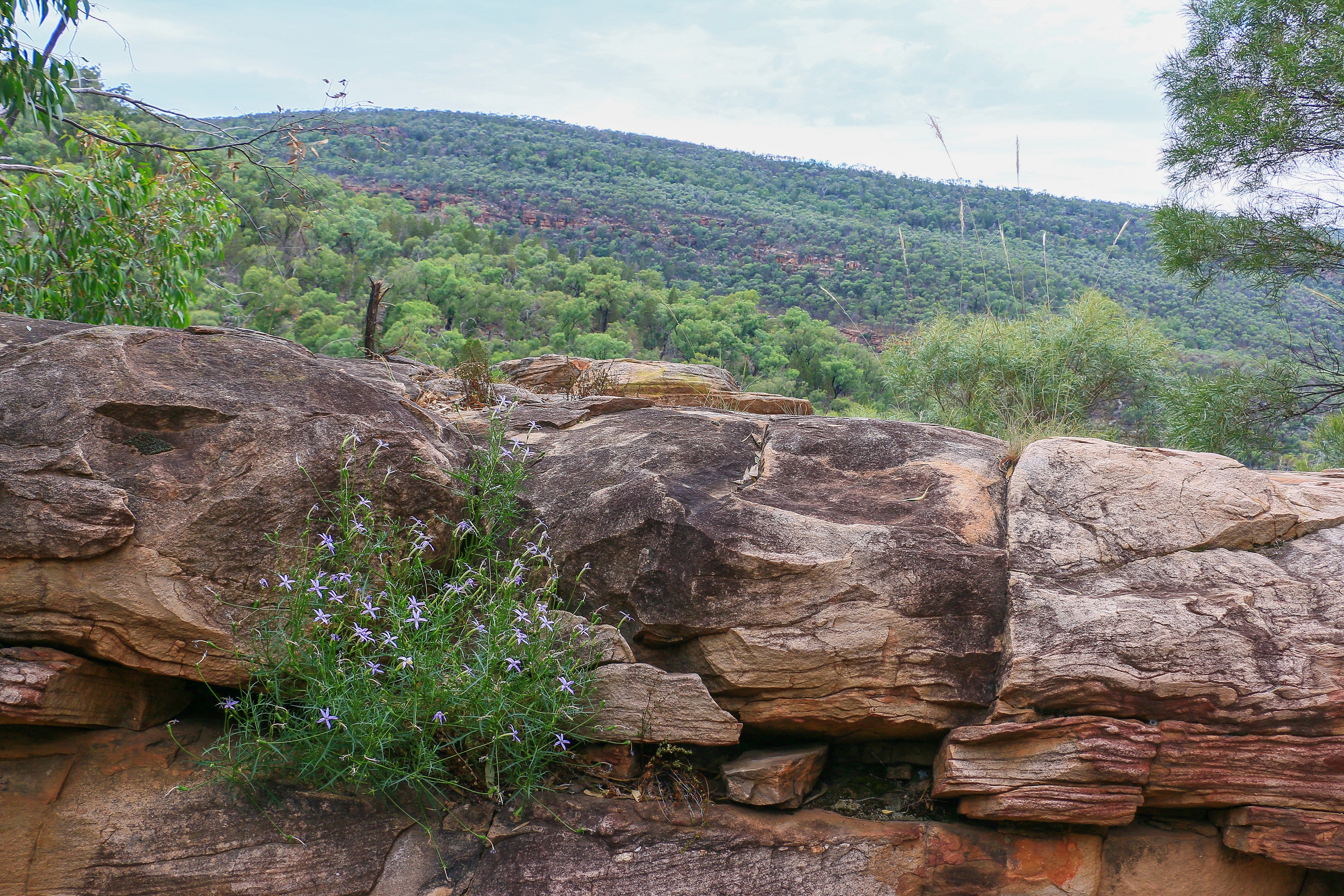
Spoiler alert: I survived. Was it worth it? Maybe. The highlight was a lookout midway along, offering views over a small valley. Trees of Eucalyptus mingled with black cypress pine, presenting a speckled green landscape under the fierce blue sky. Swathes of native bluebell offered comfort along the trail, tempered by the expectation that I could step on a snake hidden amongst such jolly thickets at any moment. I didn’t.

In fact I survived to make lunch. Through fields of grain and hills of sheep, the road entered Cowra to a fanfare of agricultural supplies and heavy machinery, giving way to the range of motels, fuel and fast food that heralds the fringe of a regional town centre. Across the Lachlan River, the first pub. With its Farmer’s Lunch and aircon.

With a hot afternoon in store it was tempting to linger with a cold beer in hand. But I wanted to make Grenfell and after that my home for the night. Through those hours the car was the most comfortable place to be, though I stopped in Canowindra and the even smaller settlement of Gooloogong along the way. Both seemingly at siesta or more permanently asleep.

Grenfell offered a little more excitement, though mainly in the form of petrol under a dollar and exemplary public toilets. As I filled up with cheap petrol a sign promoting whippy thickshakes took my fancy. It would likely be the only source of such nutrition still open, so I took the plunge and navigated the whole complexity of a make-your-own thickshake within a servo.

First figure out which of the various range of cups to use, then add your syrup flavour of choice. Beware the lively caramel which spurts out of its dispenser and onto your shoes. Try and find some tissue to wipe this mess up and then fail to locate a bin to dispose of carnage. Now, add the whippy content from the machine that kicks into action after first releasing a dubious watery dribble. Then try to stop this process before it flows over the cup and creates more mess. Finally, add some more syrup because you’re gonna need it after this. Attempt to mix together with a straw and add a plastic lid which doesn’t really fit. Make your way to the counter where the lady looks on slightly incredulous, texting her mate at the same time as taking your money. Still, petrol under a dollar a litre people!  

With a cup sticking to my hands I couldn’t really drive again until I contracted severe brain freeze and cleaned up properly in those exquisite toilets. It gave me the chance to idle along Grenfell’s main street. I daresay on a Saturday morning it’s a bustling little place. People parking at the required reverse-in 45 degree angle (I think I was more 60, but overlooked bringing my protractor), picking up bread from Mick’s Bakery or Chris’s Bakery or the Empire Bakery by David. There is clearly a testosterone-fuelled bakery-war taking place in Grenfell. All jumbo sausage rolls at six paces and mince tarts.

Apart from a few youth loitering as Henry Lawson looked on, I was the only one out on the streets. Occasional utes reversed in at 45 degrees to pop into the IGA. This was where half the town was, a queue forming for hot chooks and lotto.

The other half of the population appeared to be at some kind of gathering beside an old railway station as I made my way out of town. For a few seconds I hoped I might have stumbled upon a rodeo or something involving giant pumpkins. But all I could see were a few food trucks that looked as if they had migrated from Canberra for the day and a small cluster of people not doing much at all. I moved on.

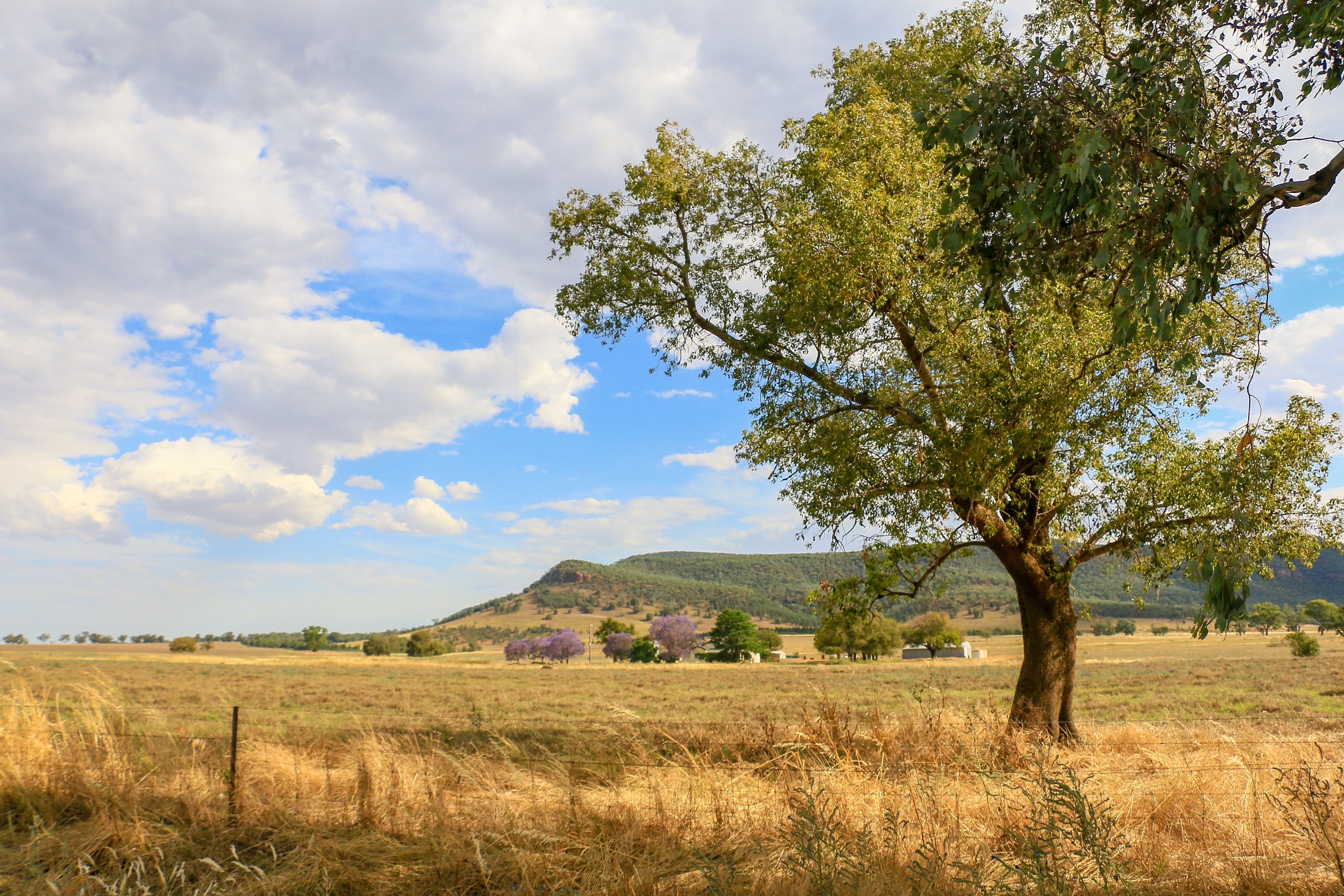
West of Grenfell, the sweeping fields of grain were undergoing various stages of collection. In the distance, a small plume of dust pinpointed a header hard at work. Rising abruptly from this widescreen landscape, striking by contrast, an island of bushland and rugged outcrops of rock. Uncleared, uncultivated, protected from the squatters and the pastoralists and the farmers by its very presence.

This was clearly Weddin Mountains National Park and my bed for the night. It was a new one for me, surprising in a way given its little over two hundred clicks from home. I can probably thank COVID for coming across it – coastal avoidance, travel limitations, appreciation of what is within two hundred clicks of home.

Setting up camp in a flash – more of this shortly – I set out to explore, hopeful that by 6pm the temperature would have started to drop a little and I would be blessed by golden light. The information board at Ben Halls Campground informed me of several trails from here. Against one – Lynchs Loop Trail – someone had appended in handwritten block capitals ‘RETURN THE SAME WAY YOU GO UP. THE PATH BEYOND IS NOT SAFE.’ Another promised cool shady gullies and waterfalls and no ad hoc Trumpian warnings, so I opted for that.

The Bertha’s Gully trail did indeed proceed up a gully, but I had managed to perfectly time things so that I was seared by the westerly sun. It must have been 40+ in that gully, sheltered from any breeze, clambering up boulders, conscious of snakes. The trail was quite rough, victim in part to the generous spring which has delivered a profusion of growth. Various spiky plants penetrated my legs and shoes and socks, creating a sensation every ten seconds that I was being eaten by ants. Yet despite all this, pausing for the nectar that is a chilled Berry Gatorade from Grenfell IGA, there was an elemental beauty to the place.

I think the Gatorade saved my life, finishing the last drops closer to the campground beside Ben Halls Cave. I was too spent to read the detail, but I assume Ben Hall was one of those celebrated reprobates who stole some sheep, robbed stagecoaches, shot some police, and vehemently denied homoerotic gatherings of brotherhood under precipitous cliff faces in the middle of a winter’s night.

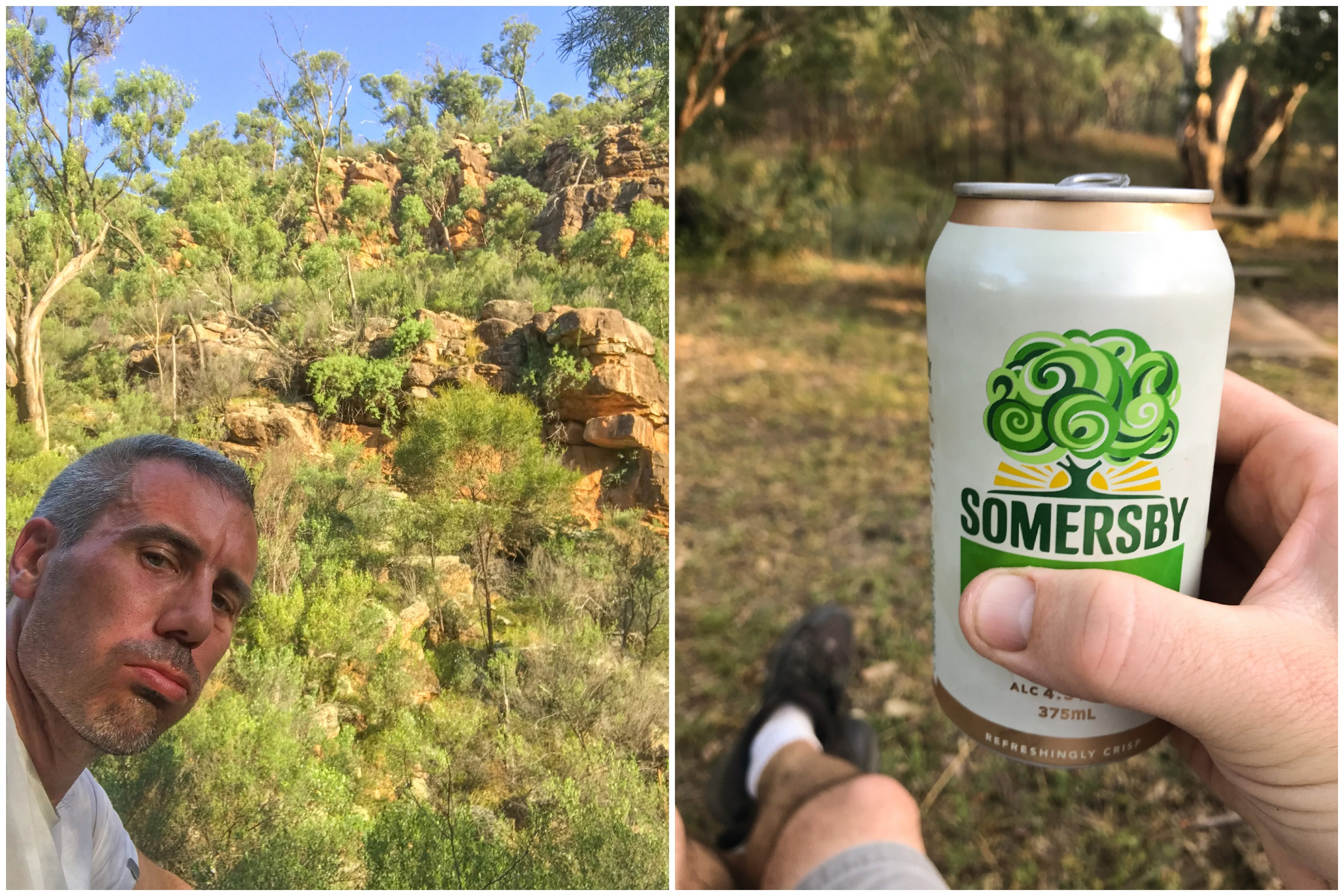
There was likely no need for spooning tonight. It was still hot when I arrived back to my camp chair and yet another disappointingly insipid Australian cider. In many ways it was the best of ciders, the worst of ciders. As refreshing as my sweat to the flies. I had forgotten about the flies and for a while it appeared they had forgotten about me. Until the time had come to relax with a cold cider.

I feel like every six months or so I have the urge to camp to be reminded of how arduous camping can be, the result of which is putting camping off for another six months or so. This time I thought I was making life easier by not really camping but sleeping in my car. This was a bit of a trial, but I had managed to remove and fold down seats to create space for my swag mattress. This padded by an old quilt created a perfectly spacious, comfortable area. Crucially I could stretch out fully from head to toe. My other less successful invention was the mosquito netting affixed on one of the rear windows by Velcro and Blu Tack.

I awoke after fitful sleep, still hot and greeted by the sound of a mosquito buzzing in my ear. Pilot test lessons: for some reason sleeping with your head at the back of the car is more comfortable. Get some better netting and use it on not one but two windows. Bring a tent just in case. Always, always consider a motel.

What you don’t usually get from a motel though is the experience of waking up at first light to a dawn chorus of joyous singing and painful shrieking. You don’t usually receive a refreshing essence from eucalypts releasing minty vapours in the cool of dawn. You are rarely greeted by an audience of kangaroos and their young, slightly startled to find that there is a person in that car around which they have been chomping overnight. You don’t have the options of a pit toilet or a tree.

Not feeling especially refreshed at six in the morning I was pleased to find that the iced coffee from Grenfell IGA was still reasonable in the car fridge. My original plan was to embrace the coolest part of the day by walking up Basin Gully to Eualdrie Lookout – billed as a ‘challenging’ and ‘adventurous’ hike, this time in printed information provided by the NSW National Parks and Wildlife Service. But rated as a Grade 5 hike (the most challenging) and weary as I was, I made the very sensible decision to give it a miss. What could I do instead? Oh, yes, that’s right, that shorter, mysterious Lynchs Loop.

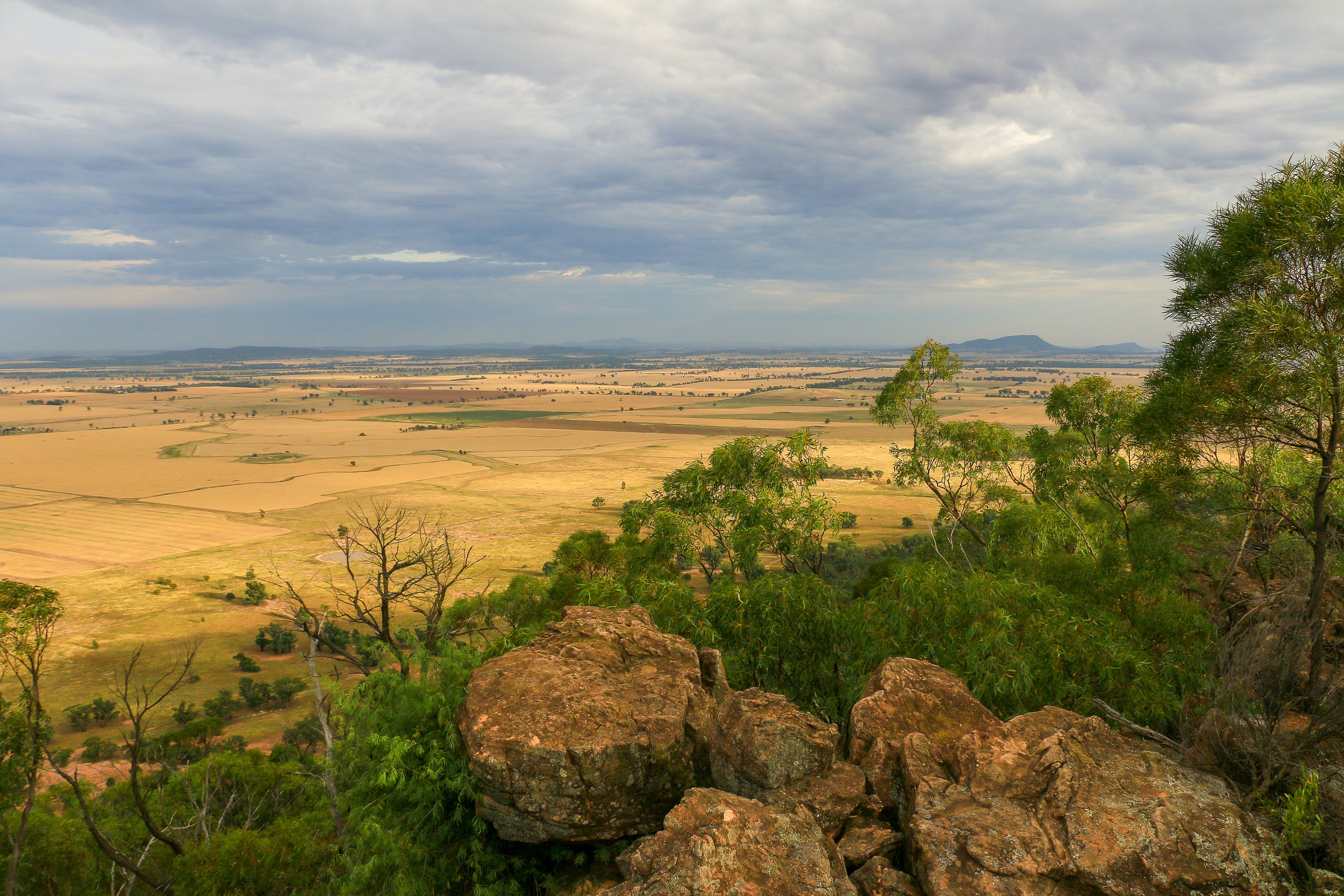
Armed with a big stick for breaking any spider webs in front of me, I climbed steadily up through grassy woodlands, occasionally interrupted by a rocky boulder. Each step revealing more of the valley in which the campground sat and, beyond that, the plains to the west. At a junction, a trail led off to an overlook perched upon the very edge of the national park. Beyond, a view into vastness.

Scattered pools of sunlight breaking through the clouds shifted upon an endless canvas of gold. The meandering of watercourses was clearly etched into the land, as if a giant serpent had indeed been at work. Distant, only another hill rising incongruently from this flat agricultural tablecloth. Perched here, not another soul in the world. This is why it is worth it.

Enlivened and spirited by such moments, I decided to carry on the loop trail to see how unsafe it really was. The answer was NOT AT ALL. The route descended but other than a few rocks everything was gentle. All I can assume is whoever had written that strident piece of public information had done so after heavy rain – the remaining section of the trail crossed a largely dry creek which would no doubt tumble with vigour once or twice a year.

Leaving Weddin Mountains, I passed through Grenfell once again, failing to stop for a thickshake or to use its exemplary toilets. It wasn’t until Young that I embraced the luxury of running water once more. Young sits at the centre of the Hilltops region and the town itself lives up to this name. It seems whichever way you enter Young, it will be done from a height as your car winds its way down into the centre.

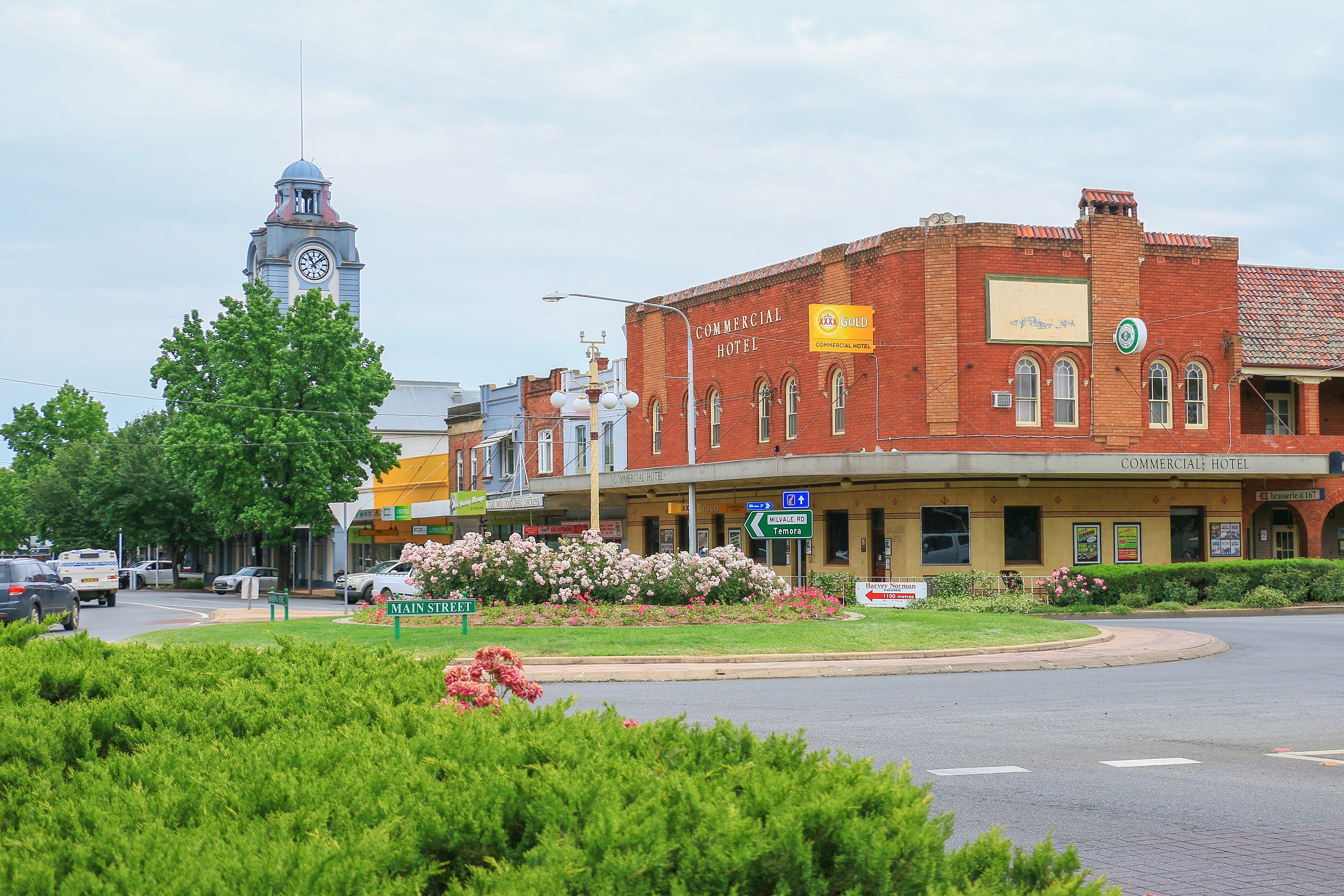
The centre of town – on a Sunday morning – was almost as devoid of habitation as Grenfell. Though larger, the high street also looked a bit rough-edged, run down, lacking the same faded elegance as its counterpart to the north. I always thought of Young as fairly well-to-do, set in a rich, productive landscape with a cherry on top.

This perception of Young returned upon entering a homewares store that featured a café, or more accurately a café that featured a selection of things for the home that are largely unnecessary. The café was busy with young, attractive people, extended families, and the local police collecting takeaway coffees and muffins. I felt fortunate to nab a table, close to the entrance where people were gathering in close proximity to register their presence on the off chance they had COVID.   

It is quite an adjustment from sleeping in a car in the middle of nowhere to eating eggs benedict with pulled pork and an apple cider hollandaise in an upmarket homewares café. I felt and looked out of place, possibly because I was not wearing my hat indoors like the tens of identikit males with sculpted beards, black T-shirt and shorts and designer caps. They probably even had a shower this morning, show-offs.

The coffee was good and the brunch was delicious, albeit tarnished by the other great event of our times. What is it with being served only one slice of toast these days?! Two eggs and a pile of other stuff lumped onto one slice of toast. For something like twenty dollars. I don’t care if your toast is handcrafted sourdough whose airy bubbles are formed by unicorn farts, please may I have two of them?

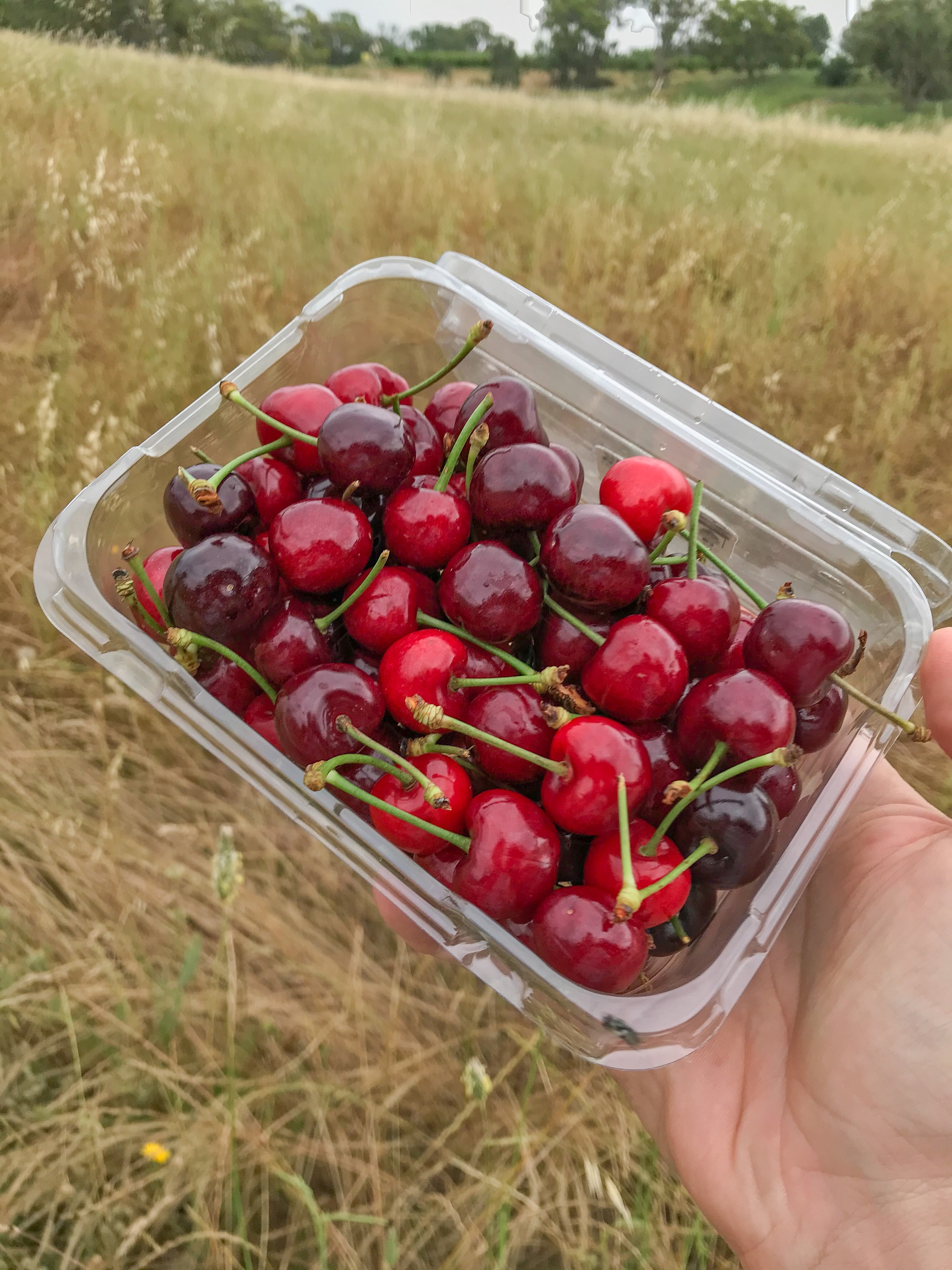
The one slice of toast may have worked in my favour if the planets had aligned. Young is famous (in Australia at least) for cherries, harvested at this time of year and finding their way to many a Christmas table. There is even a National Cherry Festival, which may have occurred this very weekend if it wasn’t for the lingering presence of a microscopic virus. Each year, breakfast news weathermen arrive in Young to pick cherries and tell us how many tonnes are being shipped across Australia before informing of an impending heatwave. Apart from this year.

Nonetheless, the cherries and still growing and are still – despite a scarcity of backpackers to exploit – being picked. Many of the orchards offer pick your own and I had read of one that also had a café selling cherry pie. Surely the perfect ending before heading back, the cherry pie on the icing on the cake? As long as you book ahead.

For it turns out such is the renown of cherry season and such is the limitation of visitation numbers during 2020 that my intended destination was full. No more entry. Turn around and go away. Carrot cake down the road in Binalong will have to do.

Happily, starting the journey home I came across a small outdoor market in the settlement of Wombat, around which many of the orchards are based. There was a mobile coffee van, and a plant stall, and that stand promoting turmeric as the cure-all for the world’s ailments. Something colourful and knitted emanated from another corner as you amble past and try not to make eye contact. And there, out of the back of the van, the punnets of cherries. Picked yesterday just around the corner.

You cannot come to Young at this time of year and not buy cherries. Much as you cannot come into this part of the world and not be impressed, not be thankful for the people labouring to bring food to your table. Or to relish the stops in small towns withering in the heat, hiding poets and bakers and bushrangers among elegant facades and restless youth. And perhaps the most impressive of all, you cannot be indifferent to those natural islands, remnants of a distant past, witnesses to a longstanding culture, rising up in defiance to the industrial plains.

Australia Driving Food & Drink Green Bogey Photography Walking

London Grammer

There is comfort to be had in the depressing grey shades of Heathrow Airport, a reassuring tinge of concrete and pessimism. But what’s this? People here seem a little perkier than usual, a bit more easy-going. A touch nonchalant perhaps, purposefully blinding themselves as they near the edge of a self-inflicted precipice made worse by those purportedly born to rule. That heatwave they have gone on and on about must have made life bearable again.

LDN01That heatwave was turning into a thing of the past by the time I made it onto England’s shores, and things will be reassuringly back to normal soon. Its legacy will emerge through inflatable pools from Argos gathering cobwebs in sheds up and down the land, frozen Calippo slushes, and a chance for rose-tinted reminiscence of that famous summer before the storm (or sunny skies with fluffy white clouds and unicorns pooing golden trade deals) of Brexit. Plus blackberries, lots of blackberries.

LDN02Regardless of sunshine or headwinds there will always be tea and cake or in this case coffee and cake. You could be forgiven for thinking coffee might be overtaking tea in popularity in the UK given the rampant reproduction of godawful Costa Coffee shops every fifty metres, with their godawful massive mugs and godawful patrons thinking this thing they are drinking is the height of sophistication and really isn’t godawful. Give it a week and I’ll be with them. But today, an independent café in swanky South Kensington and coffee that was not at all deitybad.
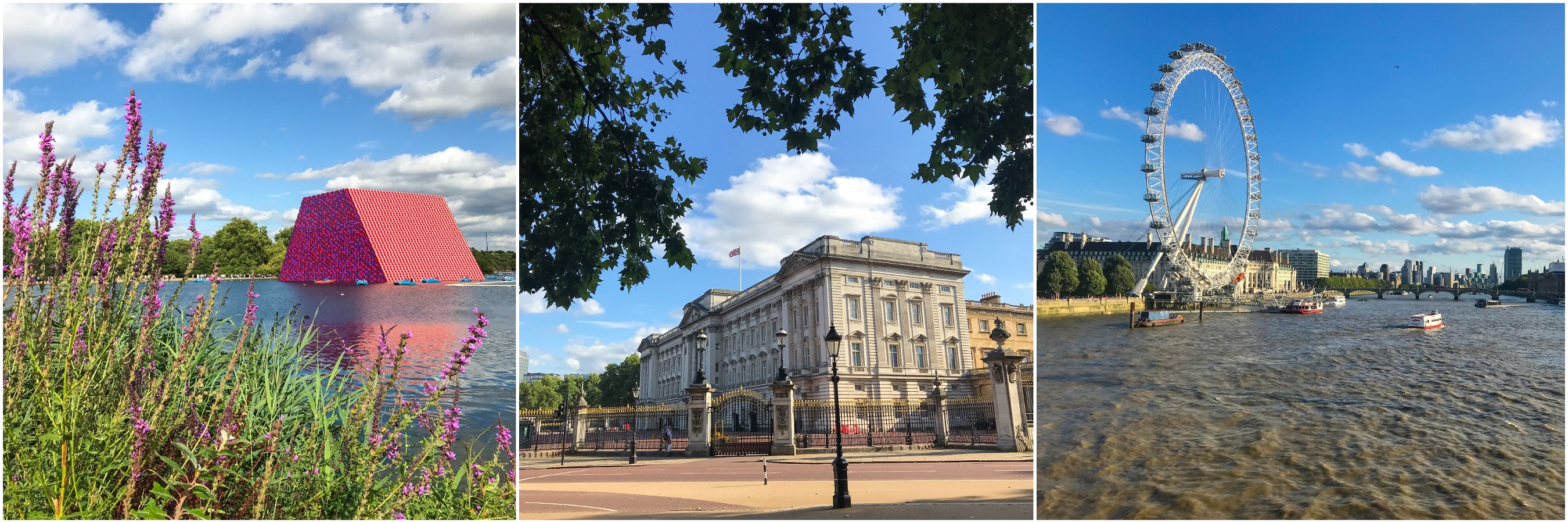
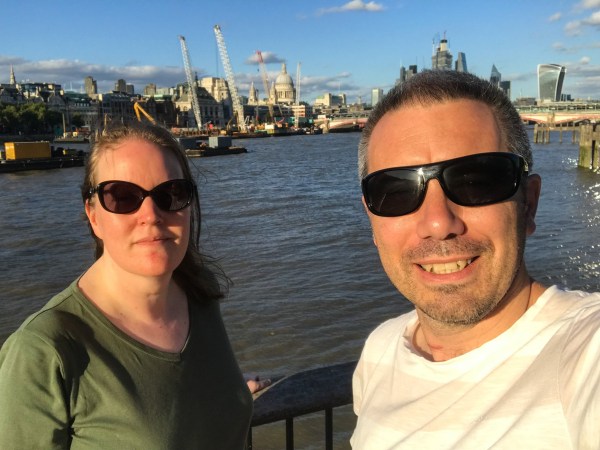
Cake commenced a Sunday afternoon that was an absolute delight, sunny skies banishing the grey and encouraging an ambient amble with my friend Caroline through London’s parks and parades. With the warmth building again and many people still in holiday mode, the vibe was convivial and quite un-London like. Almost European, dare I say Nigel and Boris and Jacob et al.

LDN03

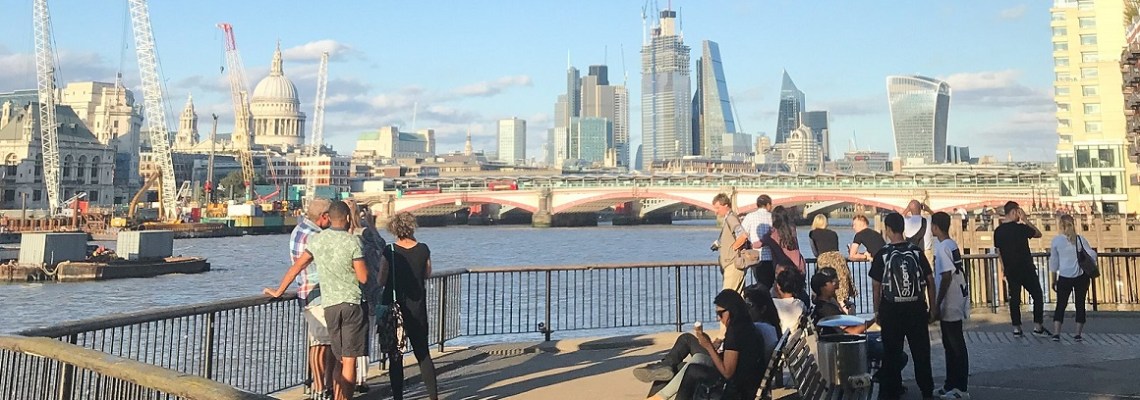
There was biking and boating and picnicking through Hyde Park, selfies and group gatherings around the Palace and Whitehall, and the languid saunter of families and friends matching the slow march of the ever-brown Thames. That is, until all was disrupted by some kind of urban party boat, the Stormzy Steamer or something. But once that blitzed downstream to pick up Jezza, life was once again grand and London was the finest place in the world for a little bit.

LDN05

LDN04One of the pleasures of returning to London goes beyond famous sights, cake, and hearing people speaking with like proper English accents innit. There are the familiarities of place and person, reconnecting with treasured friends, perusing past haunts and – especially fresh off the boat – attempting to retune into the current Britannic zeitgeist. Spending time with Caroline helped a great deal in this regard, and with many steps across London and the Zone 5 countryside, there was much to discover; a veritable bullseye of a weekend, tru dat.
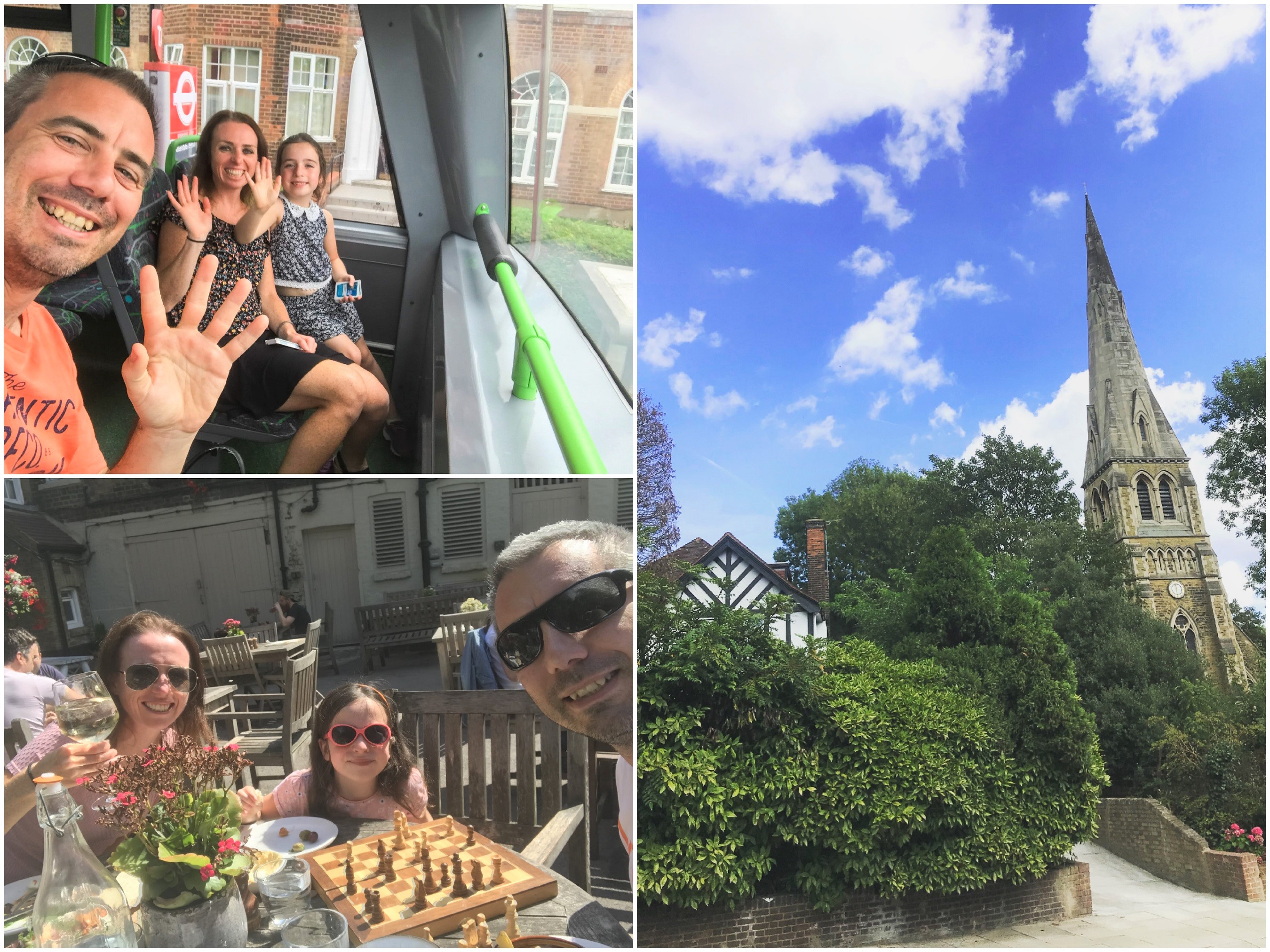
From Zone 5 to Zone 4, and a return to Finchley and a return to a friend I have now known for more than half my life. We graduated twenty years ago goddammit and don’t look a day older. More like years and years. And there was charming Orla, my chess-playing pub lunch pal, who has always been enjoyable company across the parks of North London. I may have a sense of two homes, but they make this feel like coming home.

LDN06

Lunch in leafy Highgate while wearing shorts was hard to beat. The heatwave – or at least a minor, cooler version of it – was back. And here, happy with a beer in a pub garden, I could see how easy the grey could fade into the background, and the light, the glorious, English light, could shine through.

Great Britain Green Bogey Society & Culture

Hope and some glory

And so, over a month since I last had a cream tea I can bring myself to write about pockets of Devon explored and re-explored in 2017. It’s not that I have been avoiding it out of separation anxiety, as such. Just rude work interruptions punctuated by apathy and good sunshine. I love to get outside every day if I can, and being raised in Devon I am pre-programmed to do that whenever it is dry and reasonably pleasant. So writing a blog post in front of a screen in Australia when there are magpies to swoop at me and sunburn to frazzle requires a commitment far beyond my genetic capability.

Now it is gently raining in Canberra, something which it largely failed to do in my first week in Devon. The second spell made up for that a bit, but even then there were suitable gaps to encourage a punt on winning a hole in the cloud.  But that first week, wow. Could Devon look any finer?

dv00

Apart from the blip of Plymouth and a few other towns of much less note, the southern half of Devon is dominated by Dartmoor and the South Hams; one a National Park, the other a designated Area of Outstanding Natural Beauty. And like an indecisive lump trying to pick between a cream tea and fish and chips I flitted from one to the other at regular intervals. There was plenty, as ever, to savour.

Dartmoor is relatively convenient from the home base in Plymouth. I say that despite seemingly endless road works and traffic lights and, of course, speed bumps and congestion caused by people flocking to superstores and drive throughs on their way to the homeware warehome. But once you’ve got to that last roundabout and whizzed past the Dartmoor Diner, it’s like your inner dog is released; nose through a small gap in the window, full of anticipation and impatience, and – possibly for more deviant types – panting at the prospect of free-roaming sheep.

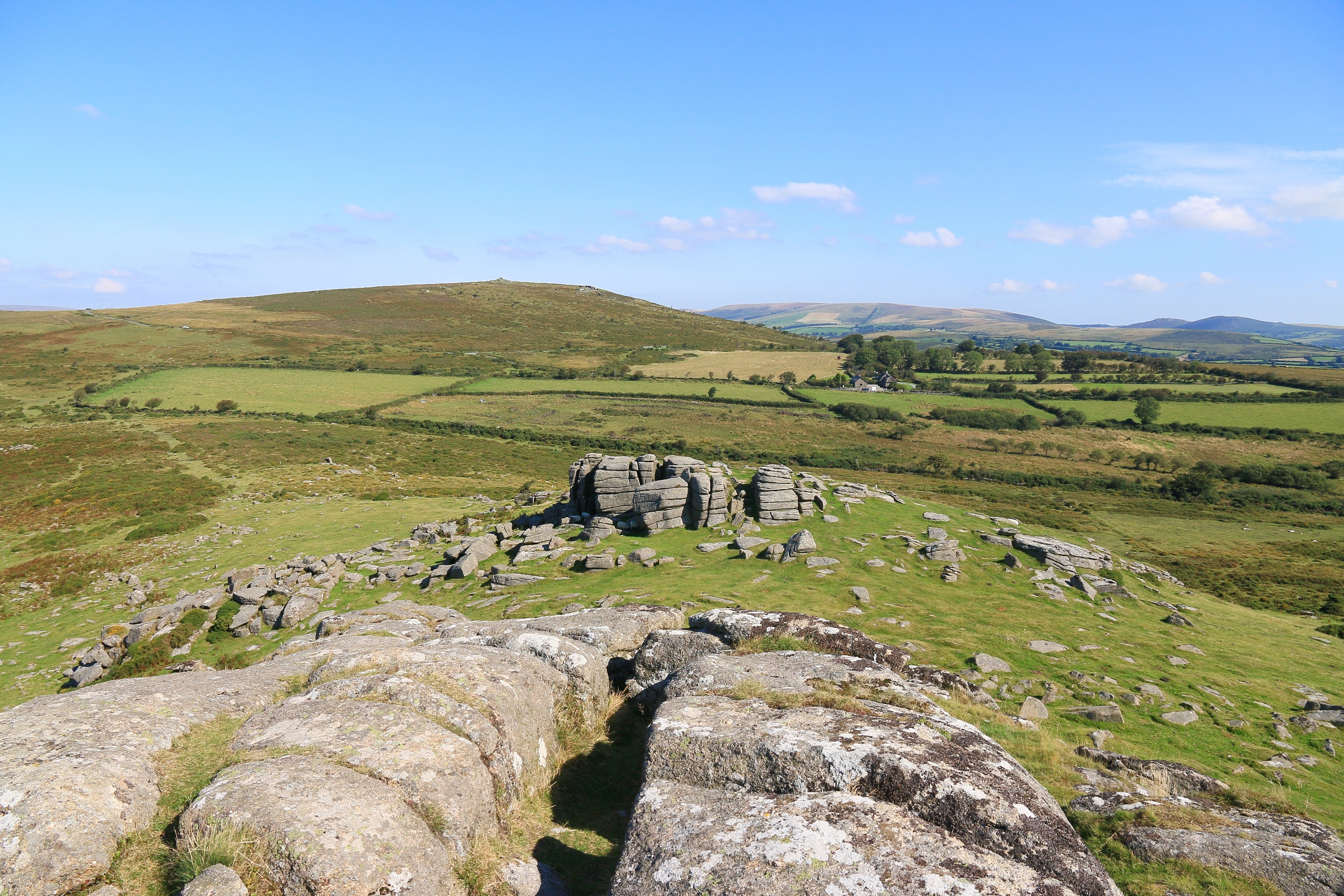
dv01On the road to Burrator, the sheep are out in force, arse sticking out into the tarmac, head tucked into a giant gorse bush, oblivious to the fact that there are two cars coming at opposite directions on a lane built for one. Further on, a few sheep mill about in the foot of Sheepstor, just so they can pose for clichéd photos and get in the way of cars trying to park. Better to get out on foot though, and take in a stretch of reservoir, country lane, farm and hamlet aesthetic, before climbing the wilder, granite strewn hill itself. It’s a route I’ve taken a few times now and strikes me as a wonderful bona fide welcome back to Devon.
dv02

Journeying into the South Hams also presents traffic perils, often in the form of a grumpy farmer at the helm of a tractor revelling in sticking two proverbial fingers up to everyone else. Peak season for this would be August, when holidaymakers increase traffic by a factor of ten thousand. Add in twelve foot high hedgerows on single track roads down to car parks with a capacity of twenty spaces and you begin to get the picture.

It’s in this mix that a little local knowledge and strategic blue sky thinking can come in handy. For instance, set off later in the day, when the tide happens to be out anyway (as you would have diligently checked on Spotlight the night before). Try to avoid the A379 as much as possible if at all possible. Not very possible, but possibly possible if you consider the A38 and cut down at some point, such as through Ermington. Avoid Modbury and head down to Mothecombe. Where you will have cheaper post-3pm parking and plenty of sand left for everyone.

dv03

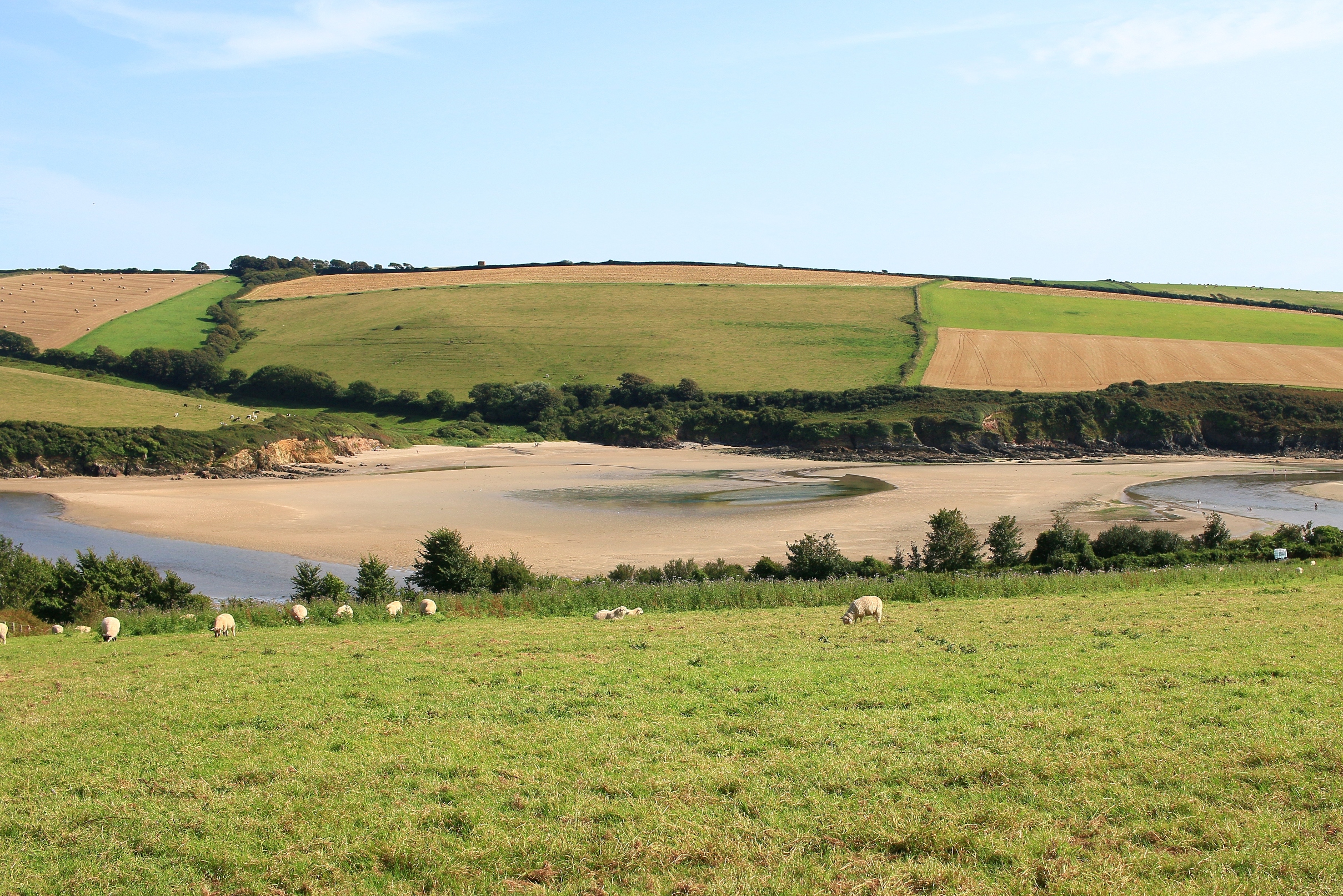
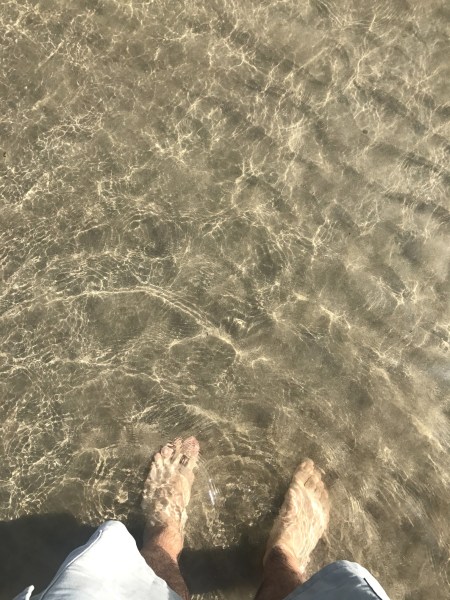
dv04It really is in a delightful setting, Mothecombe; the tranquil shallows of the River Erme meandering out to sea, the sandy banks and rock pools revealed at low tide, the sheltered, undeveloped bay with gentle waves and translucent waters. Such appealing waters that people were in there swimming and I got the shock of my life when I put my own feet in. Not the usual, anticipated shock of oh my god what are they doing this is f*****g freezing, but a slight eyebrow raising oh this is actually tolerable for a bit up to ankle height I guess. No wonder the roads are so busy.
dv05

If that was Devon in the joyous throes of summer, my final week (after an interlude in other parts of the UK) was very much an autumn affair. The most overused word of that week was blustery, closely followed by changeable and showery. On Dartmoor, the scene was moodier, more forbidding, occasionally bleak. But Dartmoor does bleakness to such great effect; in fact bleakness really is its preferred state.

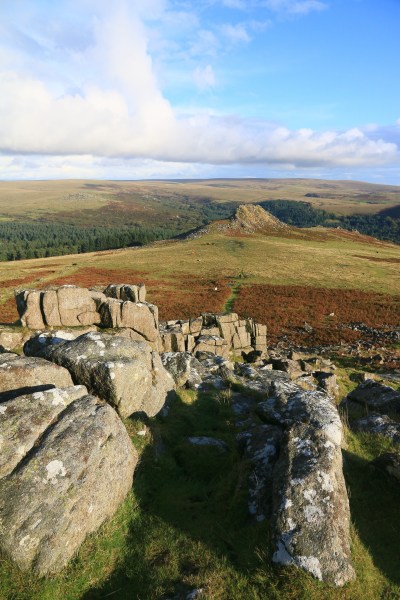
dv07Following a day of showers merging into longer spells of rain I was keen to get outdoors when a longer spell of rain appeared to have passed leaving a few showers behind. I was in the habit of checking the weather radar by now, and took a bit of a gamble on a potential gap in the way things were tracking. Out around Sharpitor, as cloudbursts pummelled the Tamar Valley and a black doom sat unyielding beyond Princetown, some late sunshine pierced the skies and set the landscape aglow. Sheltering from the cold wind, I stood insignificant within expansive moorland and raggedy tors, alternately shining golden in sun or darkened by racing clouds. Barring the occasional car on the main road crossing the moor, it was just me and the sheep and a pony or two to witness it. I felt as though I had struck gold.
dv08

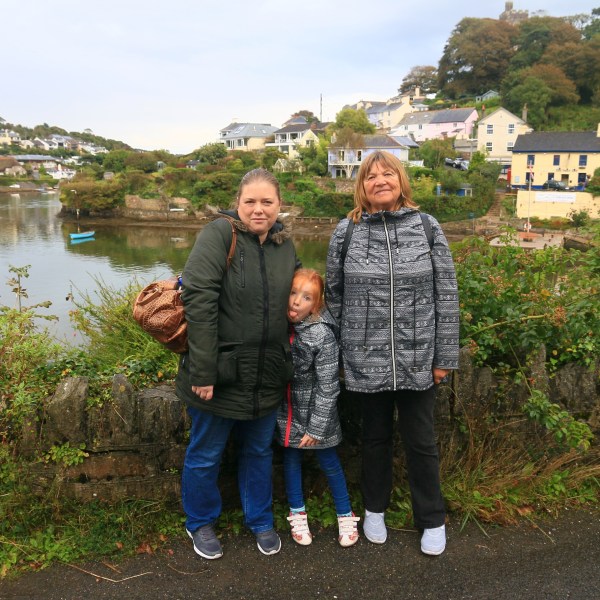
There was less good fortune back in the South Hams, where a Harvester I had pictured in my head didn’t exist and lunch ended up somewhere down the road and over the hill and a little further along from the tiny hamlet of traditional dining hours. This wasn’t terrible, for outside the intermittent showers had done their let’s merge into a longer spell of rain thing and ducks revelled in the whole experience. But essentially I am an optimist and British…an entirely contradictory thing I know, apart from when it comes to the weather. There is something in our character that makes us look up at the skies and sigh with a grudging acceptance before donning sexy pac a macs and trudging on regardless. On to the eternal hope that is Noss Mayo.

dv10And you know what? In a turn of events that no good travel writer would ever make up, it pretty much stayed raining albeit with some slight easing off for about five minutes. Thankfully the Ship Inn had some funky outdoor pods to huddle together and drink hot chocolate in – think three quarters hamster ball in Teletubbie land – and with the tide being in (well checked, sir), the scene was not one of stinking tidal sludge. Indeed, it was rather serenely pretty under a comfort blanket of cloud.
dv09

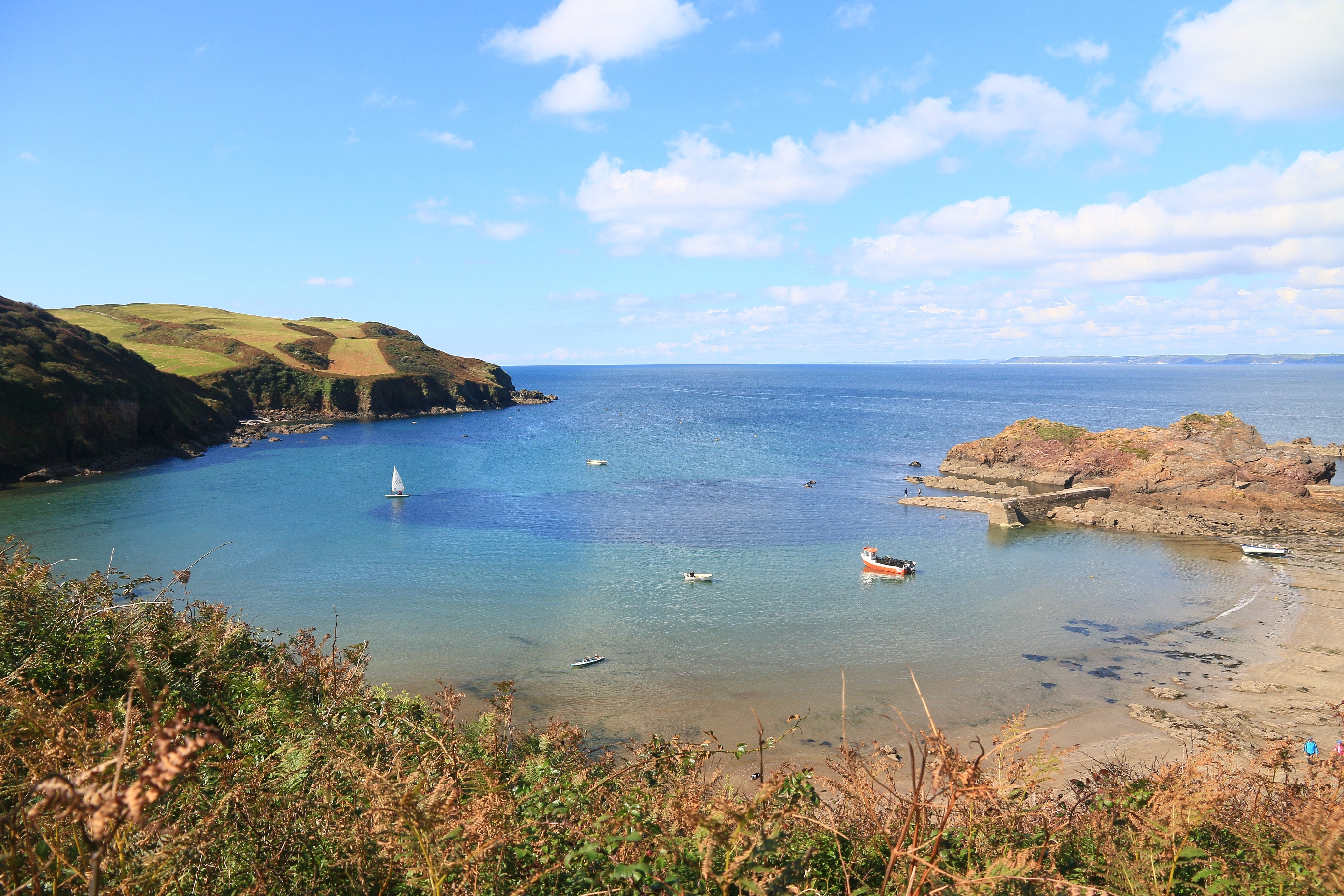
Instead, Hope was on the horizon the next day, my very last day in Devon. Hope, just down the now more placid A379 and a rollercoaster lane of twelve foot high hedgerows. Hope, where there is parking for twenty cars and a few spaces to spare. Hope, set into its namesake cove surrounded by steep wooded cliffs iced with undulating pasture. Hope, sat in warm September sun outside the Hope and Anchor with half a Tribute and in the Salcombe Dairy ice cream taking the bitter edge away. Bittersweet is Hope on days like these. Days when Devon couldn’t – again – look, smell, taste, and feel any finer.

dv11

Food & Drink Great Britain Green Bogey Photography Walking

Beery

As an Anglo-Australian male in his thirties it is inevitable that beer has accompanied me on many occasions on the road and at home. At such times when one needs to know, like a doctor’s interrogation or unethically intrusive job interview, I’d declare myself one of these ‘social drinker’ types. From what I can tell, a social drinker is someone who grabs a beer or two when the mood fancies – to celebrate, relax, or navigate slightly awkward moments – or just when it’s the only thing cold in the fridge and you just can’t be arsed to scrape ice out of the freezer. Very occasionally the charming delight that you become after such social drinking turns sour (usually thanks to the beer being ‘off’ or some such), and imbalance and language difficulties can ensue.

The sage philosopher, Homer [1], remarked of beer as a “temporary solution,” in easing the challenging realities of existence. This temporary solution is also uncannily permanent around the world in which we travel, providing a readily available, relatively cheap source of comfort and joy. Though naturally something of a haze, I can look back on my life and recall a number of places and experiences that have been enhanced by beer or, broadening the spectrum a little, a good glass of wine or a tangy local cider or a holiday water style G&T. Often the drink is the icing on the cake, the encapsulation of a special moment. At other times it’s invariably been an antiseptic, painkiller or narcotic.

 B_beer montage

A proven value of beer when travelling is in how it can transform the first shy mumblings of disparate individuals on a tour group into one animated tribe. While the first day of such trips may have been spent quietly on the bus in little cliques of friendship pairs, the second day is typically dominated by shared tales of what scandal befell Jared and Janelle, and frequent hilarious stops for Lance to chunder like the man he is from down under. Meanwhile the tour guide acts like this has never happened before and this group is – based on the escapades of the previous night – simply the most awesome ever [2]. Multiply this all by several days and nights and you are left with a teary, hollow feeling that you will never be as one again when the trip is over and that Lance’s chunder is now but a trickle down some distant highway. This may sound like a young persons’ rite of passage, but I daresay the same happens on more senior and old at heart tours, just replace ‘beer’ with ‘wine’ and ‘chunder’ with ‘incontinence’.

Unless you happen to spend a large part of your time meandering in the Middle East, beer is an international language, demonstrated by the fact that almost every country has its own version. Within countries, different regions produce their own local brew and it can be a strong marker of local identity. Obviously one of the joys of travel is sampling local food and drink and I’ll always look to a local beer if I can, unless I have already discovered its similarity to the secretion of a small flying insect, or “gnat’s piss” as it is sometimes described. The trick for the traveller is to know the local beer sensitivities, so as not to order some nancy fruity lager with low carbohydrates in the North East of England or the culturally offensive XXXX from Queensland in anywhere but Queensland [3].

Moving from England to Australia in 2006 I have gradually come to learn the sensitivities of what must be two of the most rampant beer swilling nations. My biggest faux pas was when fresh off the boat and still subject to irritants like Shane Warne. Tasked with getting some beers in for Friday work drinks I grabbed a crate of stubbies from the local Bottle-O [4] only to be chided for their warmth. The stubbies felt pretty cold but that was in fact ambient air-conditioning temperature and not arctic freezer temperature, which was how the locals preferred it. And now, after six years or so, that’s how I like it, perhaps because it’s the only way to subvert the lack of taste.

Beer has been part of my cultural integration and a means to become accepted as a bona fide Australian. A barbecue with awful slimy sausages does not feel right without a beer in hand, cloaked in a tacky stubby holder. Mercifully, even those who were subject to my warm stubbies have become good friends, and I have since shared drinks with them fresh out of the chillers of a 7-11 in Hong Kong, wandering party streets with beer in hand, inevitable ending up in Maccers at night’s end. This was one of those experiences where the beer must have been ‘off’, since a malaise lingered for the rest of my stay there.

Australian beer consumption seems natural in the outdoors, huddled around a barbecue, the droning of cricket commentators in the background. It’s also a good accompaniment beside the sea, tasting even better after an active day of exploring and coasting. One such memory stands out when I was in the Margaret River region of Western Australia. Here, after a blissful drive south from Perth, the day’s end saw me at Prevelly, a low key settlement on the coast, popular for surfing or just hanging out like a surfer. The headland here is actually called Surfer’s Point, and this particular evening it was jam packed with people of a dreadlocked and slightly skanky looking nature, plus their groupies. Inexplicably, many were clambering over the rocks with what looked like ironing boards to bob up and down in the water at prime shark feeding time. Others were returning from the water, getting changed with very little discretion around their beat up vans. There wasn’t just the one full moon that night.

Positioned the other side of the headland was another cove where the Margaret River itself came to a halt against the sand. With a sandy beach, sun disappearing over the ocean, full moon rising over the river, ambient temperature and vibe and one beer lugged several kilometres in the pocket of my shorts, the scene was set. Twisting the bottle top of my beer and nirvana was within sight. Apart from the fact that the bottle top wouldn’t twist off. It was one of those fancy boutique beers requiring a bottle opener. I could have cried.

In such circumstances one finds oneself thinking what Bear Grylls would do? But given I neither had a film crew nor nearby hotel in which I was actually staying, I was forced to reassess and consider what would MacGyver do? The answer lay in the use of keys, a wooden stick from an ice lolly, a bit of rock and willpower. After ten minutes it finally opened, the first gassy hiss like the sound of 80,000 fans at the MCG cheering. It was now slightly warm but I obviously didn’t mind and the beer went down like the sun and the mood climbed like the moon.

B_marg2 B_marg1

While offering spectacular outdoor beer moments like this, Australia has generally disappointed in its indoor drinking environment. Pubs are often bland behemoths with tacky decor and goddam awful pokies, an attached bistro offering an array of equally dull and not as cheap as it should be food. As a result, I love returning to the UK to duck into any one of its dark and dingy drinking holes and remember an archetypal rainy day in London a few years back where, killing time before meeting friends, the only answer was to pop into a random hostelry, drink a couple of warming ales and write postcards. Perversely, pubs in the UK tend to have better beer gardens too, perhaps a result of the local obsession with hanging baskets and, well, opportunities to drink away the misery on every street corner.

An English speciality is the country pub, often offering a roaring fireside, wooden tables and outdoor hanging baskets. Beers range from generic chemical concoctions to the occasional guest ale brewed in the local cowshed. It’ll be called something like Olde Spotted Dick or Malted Slipperypipe. To soak it up you can sample a menu ranging from cheesy garlic bread to cheesy lasagne to cheesy chips and perhaps even cheesy peas [5]. There will be an aroma of stale beer mixed with cow dung. And you’ll generally be made to feel welcome because everyone in there has been inebriated since 1972 and cannot be bothered anymore.

One very lovely country pub moment that I remember was in the equally lovely Lake District in northwest England. For a country as small and crammed as England it is remarkable how much of it has an alluring pastoral air and sense of light and space. In this regard, the Lake District is an absolute gem. On a surprisingly sunny and warm late summer’s day, with the farmers making hay and the sheep bleating contentedly, a small pub along the country lanes of Langdale offered up not a beer but a beautifully of-the-moment cider. Despite repeated attempts, that first cider on that first night could not be beaten. It was the official start of the holiday, the ‘we have arrived’ moment and perfectly set up a week of discovery and delight.

B_lakes

Would such moments have been the same without alcohol? One would like to think so, purely to reassure oneself that they are not dependent on booze. But in reality I don’t think a glass of lemonade would have cut it. Good beers (and ciders) emerge at the end of good days; they are both rewards and tonics. They can lift a moment from average to good, good to exceptional. And they trigger associated memories of time and place. They are the beer goggles that help us to look back on moments with a rose-tinted air. Sure, let us not overdo it, but let us also not dismiss beer as just another vice. Remember kids, drink responsibly, and if you can’t, best to head off on a Contiki tour with Lance.


[1] J Simpson, not the ancient Greek dude

[2] To argue against this point, see https://gbpilgrim.com/2012/12/15/a/

[3] With the wonders of marketing however it is very acceptable to have the ‘Australian’ Fosters in England, but do not drink it (if you even find it) in Australia!

[4] Translated, for those of you who speak English, as ‘I purchased a 24 pack of beer bottles from the beer shop / off licence / liquor store’

A to Z Australia Food & Drink Great Britain Society & Culture