Strategic blue sky comeback

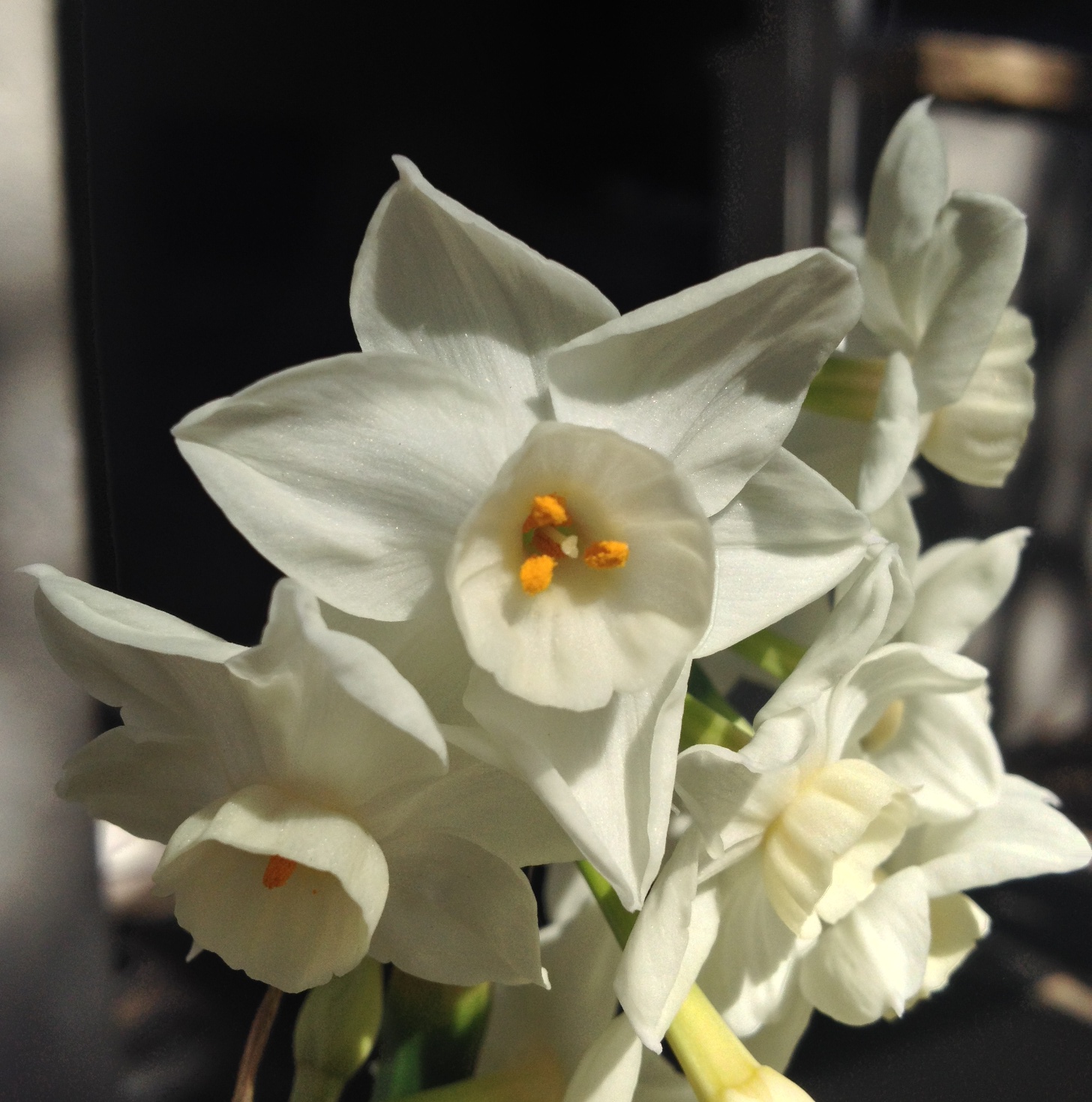
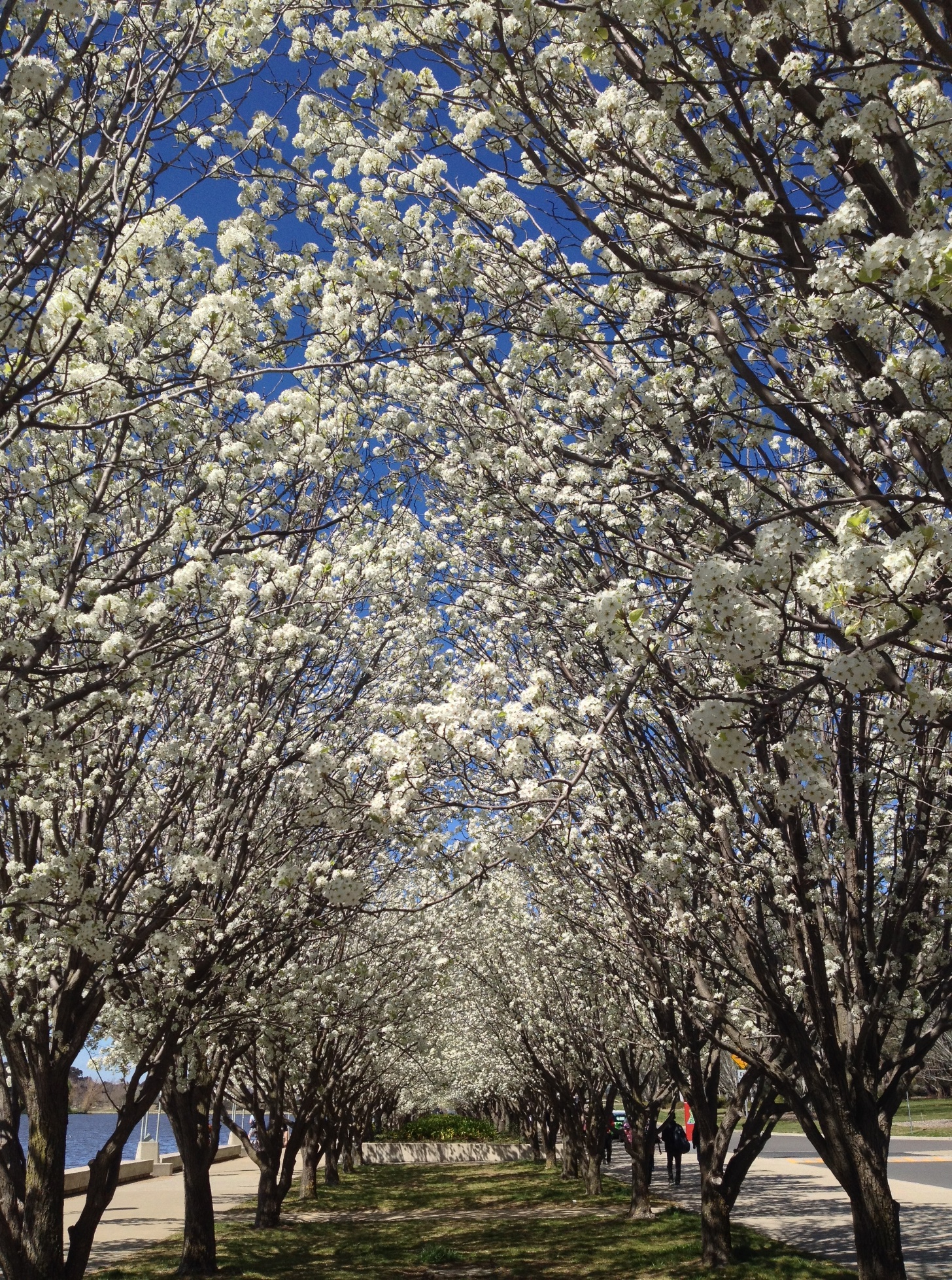
spr01Sometime around May I usually ramble on about the beautiful autumn days, with their deep blue skies and cooling nights, blazing leaves and subtle sunsets. It is tremendous and I am convinced that it is the best season in the national capital. But then, after a hiatus for different seasons in different hemispheres, spring appears and it is hard to argue against it. For what spring has that autumn lacks is the encroachment of warmth, the re-emergence of life, the dawning of hope sailing on an upward curve. Encapsulating this, the daffodils that were just sprouts when I went overseas are transformed, nature performing its perennial magic trick from seed to understated wonder.

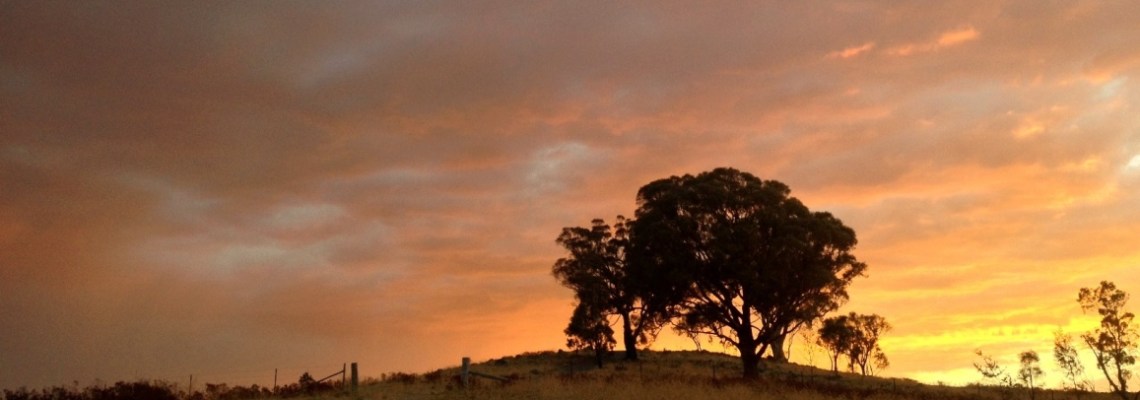
spr02Coming back to Australia, to Canberra, at such an opportune time provides an extension of the holiday feeling, coupled with some comforts of homecoming and familiarity. It helped that I overcame jetlag very quickly and had little work for a week or so. Blue skies and comfortable warmth – tempered by a few cold nights to guard against complacency – offered better conditions than, say, Switzerland. And everywhere, things coming to life, waking up, bursting into extravagance. Settings made the more amiable with a good coffee in hand.

Nowhere is nature’s spring display more evident than at the Australian National Botanic Gardens. Well, maybe Floriade, with its millions of tulips and thousands of daffodils, is a contender. But the botanic gardens – as contrived a creation as they are – feel much more natural, an exhibition of Australia’s wacky fauna in an authentic bush setting.

spr03

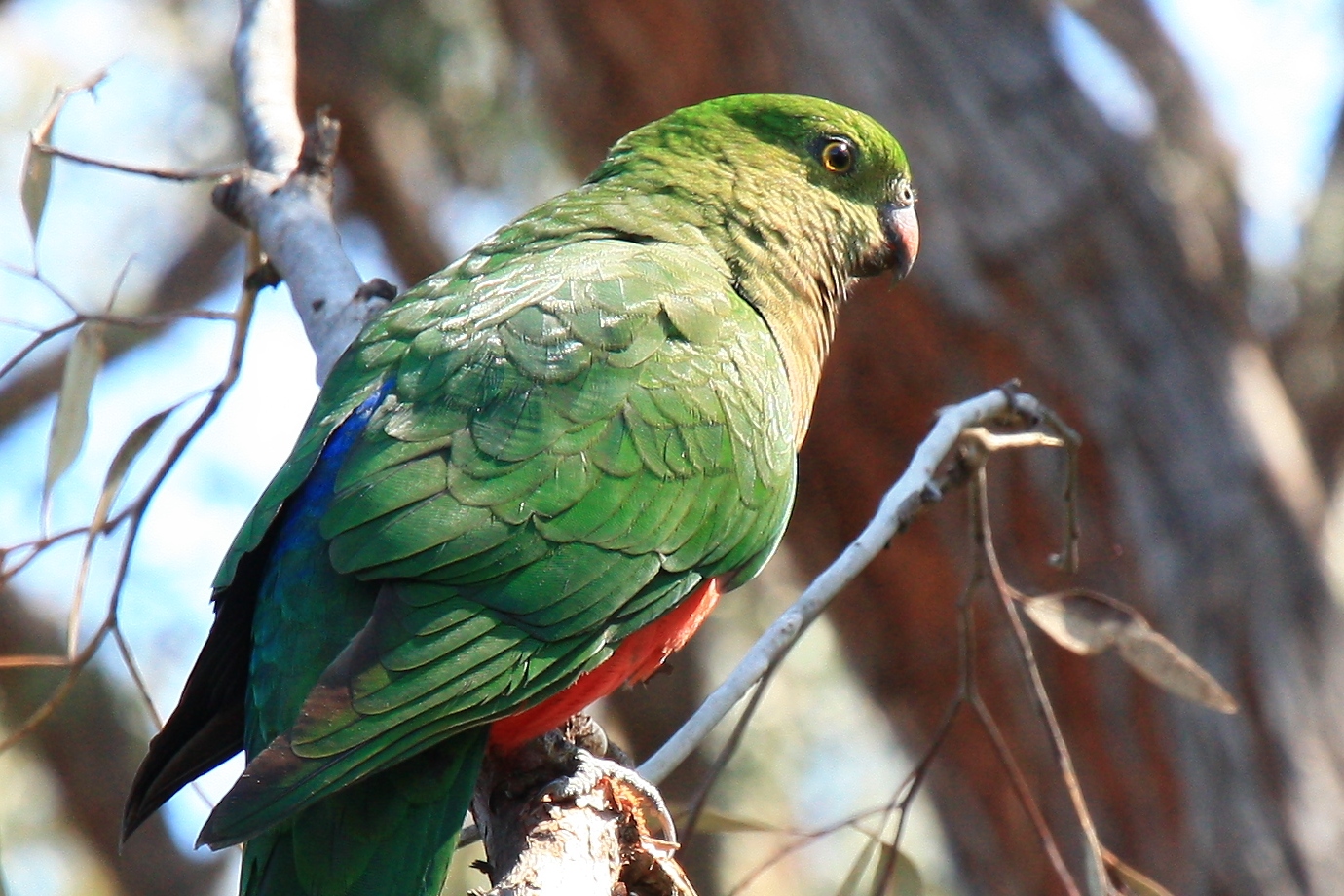
spr04Here, plants were flowering everywhere, colours and fragrance and the buzz of industrious insects pervading the air. One microscopic bug managed to somehow find itself somewhere within my camera lenses, occasionally crawling into the frame. It was whilst sat down in a quiet spot trying to rectify this situation that the king parrots decided to join me, and to show that it’s not just the flowers that have a monopoly on springtime colour.

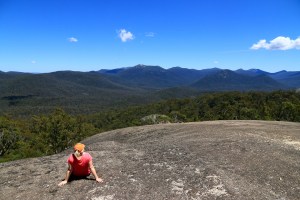
spr05Should sleepy and sedate little Canberra become a touch crammed with life, the vast wilderness is of course just around the corner. This, like better quality coffee, is one of those very obvious differences that become so sharply contrasted following a trip to Europe. It doesn’t take long to be climbing on a dirt road into the bush, helping to test drive some friend’s new car, pleased that a four wheel drive is actually being used properly and not just for picking up the kids from school. Up on the Mount Franklin Road, very little other than the wild fills the views, and other roads and tracks tempt for another time.

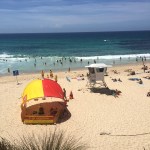
spr07Indeed, I felt the urge myself to get in my own car and make a road trip, since it has been quite a while. In the other direction, the south coast awaits and what better way to see in my birthday than to drink and eat by the water? I decided, fairly last minute, to head down towards Merimbula, stop overnight and, well, drink and eat by the water. It was a route I had not done for some time and, after the very barren plains of the Monaro, the reward of the South East Forests and Bega Valley is welcome. More welcome, perhaps, is the Nimmitabel bakery chicken salad roll on the beach at Tathra, where the south coast is just doing its usual thing of being stunning under a blue sky.

spr08

The rest of the day encompassed some old favourites, favourites that were last visited on the very early stages of some much bigger trip I embarked on in 2013. Back then, after camping next to Ray Mears in Bournda National Park, Merimbula was grey and cool and – later in the day – rain would pummel Ben Boyd National Park to the extent that the roads became slush. Today, well, it was good for shorts and the bellbirds were much happier down on the delightful Pambula River, at the northern edge of the national park.

spr09

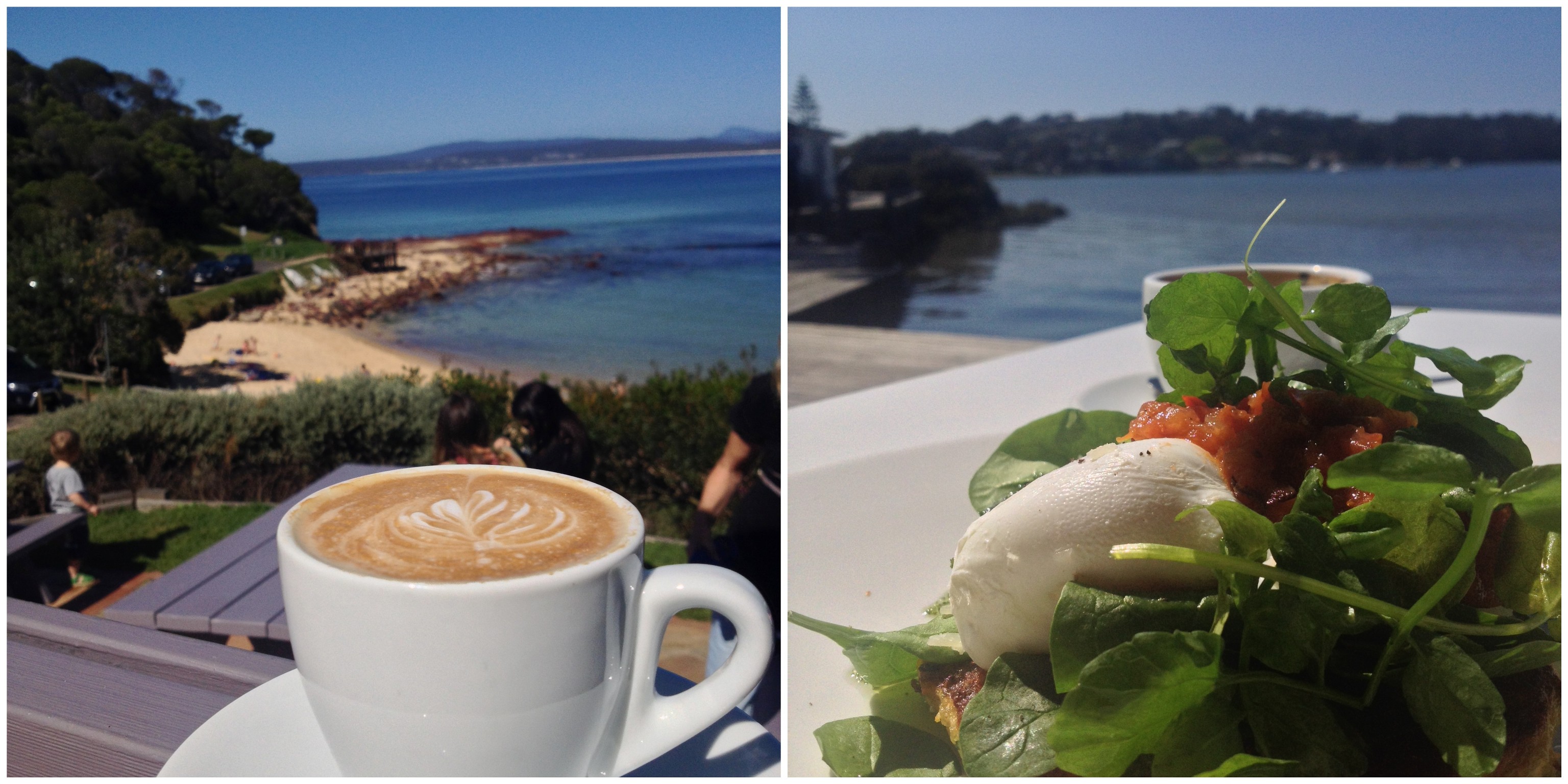
spr10Dinner was fish and chips, obviously. Not as gargantuan as the last time I had fish and chips and not as English – in this case, unfortunately. However, should one pine for English food for too long, there is always a chance to savour the saviour that is a flat white. A flat white the following morning after a gentle walk along Merimbula’s main beach and into its inlet. A flat white served from a beach hut by charmingly hipster-leaning youngsters…the type that usually make the best coffee. A spot in the sun with a flat white overlooking the paddle boarders and swimmers and boat people cutting a course through the opaque sapphire water. A drink to stimulate taste buds and senses for brunch elsewhere beside the water. Happy birthday to me, and welcome back.

spr11

Australia Driving Food & Drink Green Bogey Photography

Escapes

If I, unlike the Treasurer, have my calculations correct, this time last year I was finally departing the brilliant bays of Esperance and cruising onto the wonderfully tucked away Fitzgerald River National Park, on the south coast of Western Australia. In the time between now and my last blog post this year I would have been craning my neck for koalas on Kangaroo Island, eating the best kebab in Glenelg, camping on the Murray, watching huge full moons rise over the dunes of Mungo National Park, bumping along a rutted sandy road to Broken Hill, navigating a sodden Alligator Gorge, walking miles of ancient sea bed in the Flinders Ranges, coffin-dodging in Coffin Bay, using foul language in Fowler’s Bay and doing nothing much at all along the Nullarbor; apart from crossing it.

2014 is quieter and, depending on your point of view, more productive. It was bound to be. The escapes are a little less adventurous and thus I come to the once more excusable void of blog-worthy happenings. Escapes are twenty minute walks for a coffee and hour long end of day circuits of suburban foothills and Redhillian summits. They are welcome escapes from working at home and doing my homework. They are, for the most part, absolutely irresistible, given the quite immaculate daytime weather, the saturated streets and, well, the fact that they are breaks from work. My self-discipline is constantly tested!

may01

may02Along the same lines I have found myself quick to spot something that is desperately needed from the supermarket and this too has offered the chance to take a break and do one of my other favourite things: look at, buy, cook and eat food.  The weather has been amenable here as well, the bonus from cooler nights coming from one pot wonders, roast dinners and, when I can’t be bothered so much, bangers and mash and onion gravy. Ultimate comfort and gratuitously sleazy food shots.

may03As snugly as all this sounds there comes a point when the same old same old gets a little bit too same old. And this triggers a very impromptu escape, one a little longer than an autumnal stroll and not leading to something with gravy at the end. Instead, a drive on the open road and fish and chips by the sea. And, most miraculously of all, a beautiful 24 degrees in which to throw off your trousers and praise the lord!

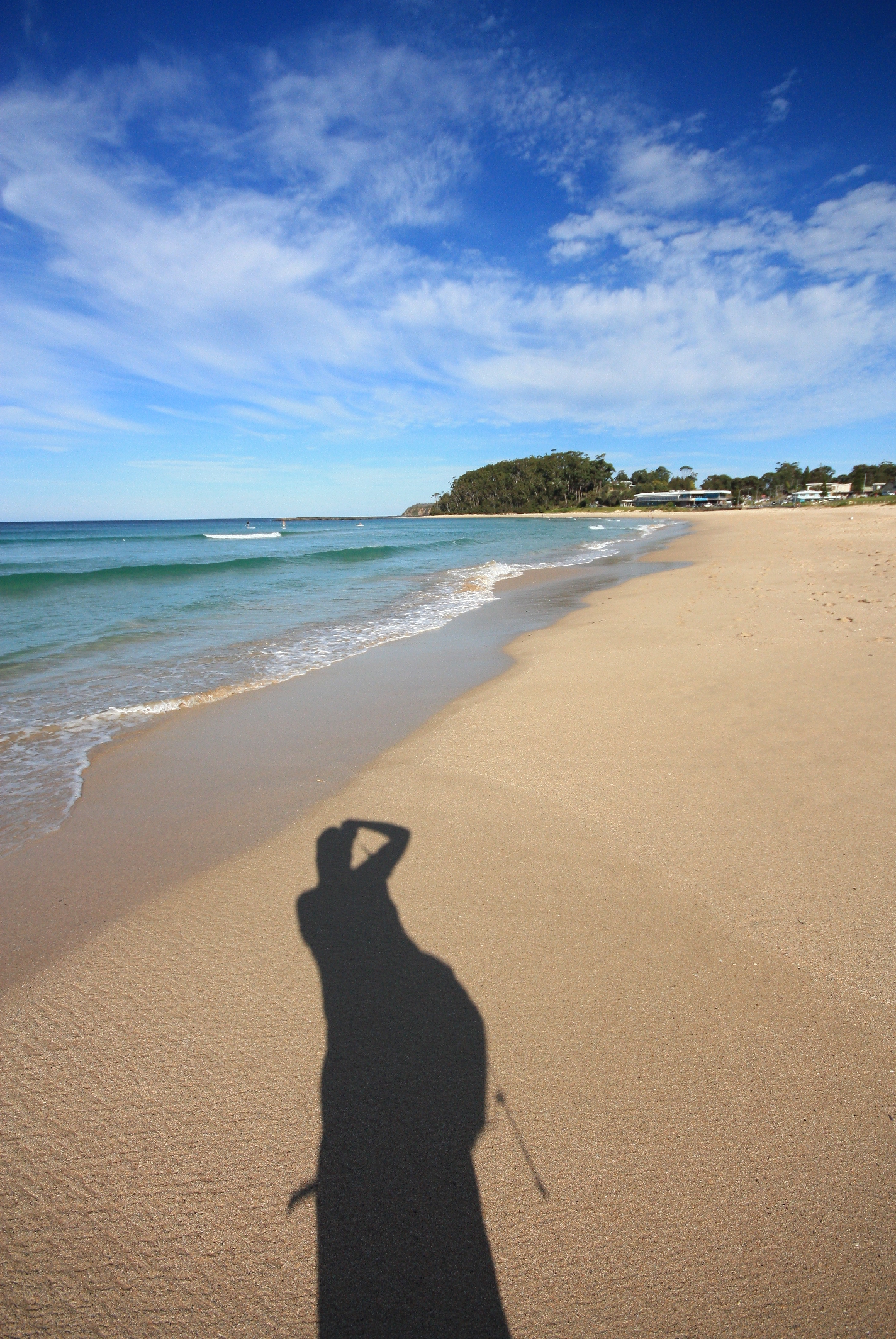
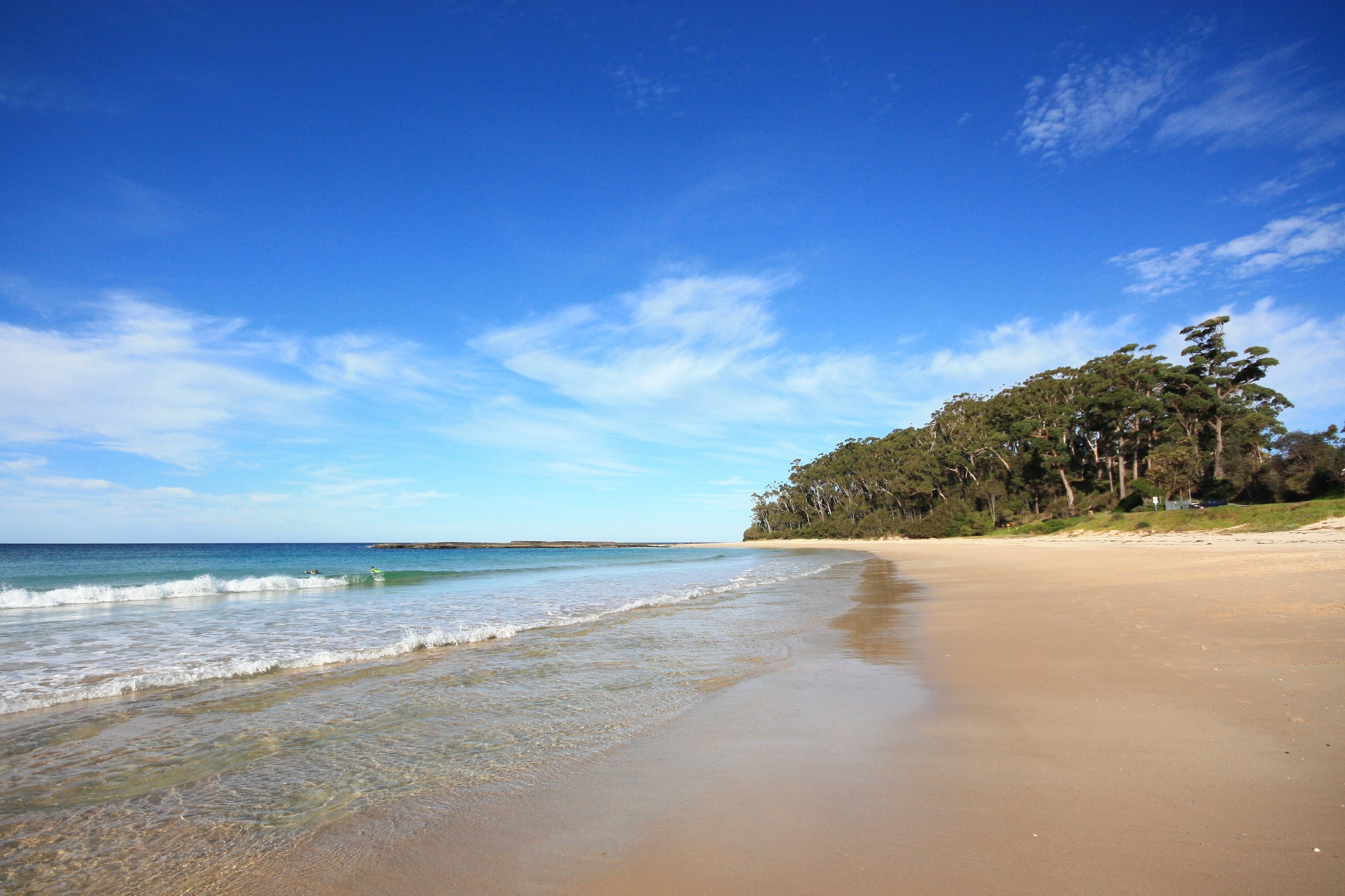
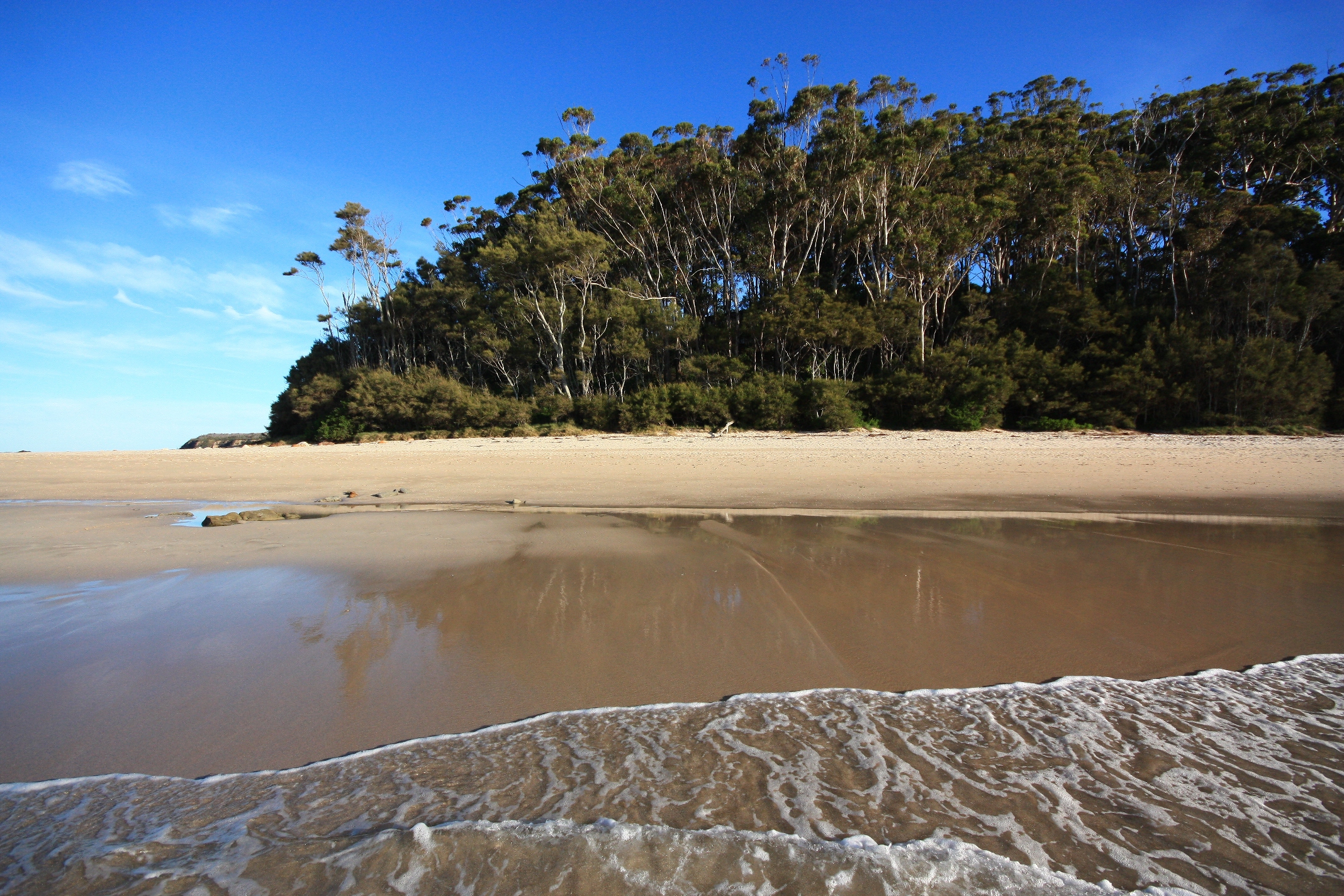
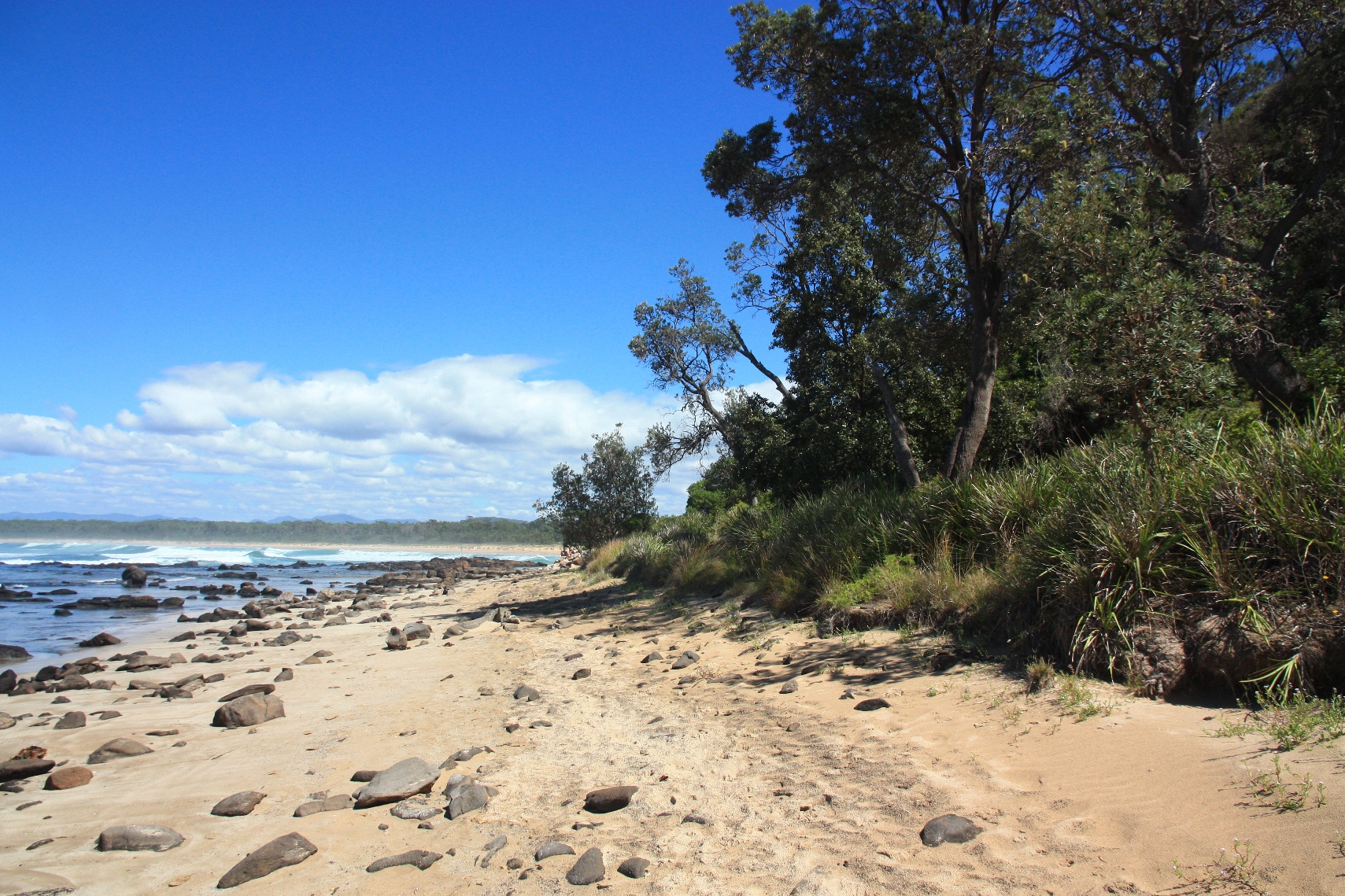
may06Fortunately for just about everyone I brought some shorts to change into for an amble along Tabourie Beach, the obligatory exercise out of the way before gorging on deep fried batter at Burrill Lake. Driving through Ulladulla I decided to pick Mollymook as my laying down and trying to recover from overeating site. But it was just so nice that I didn’t just lie down and groan, all the while clutching at my swollen paunch; the sweeping sand cried out for many footsteps, some of which veered into the sea.

may07

The sea was, quite miraculously, the warmest I think I have ever known it to be down on the south coast. It may have something to do with currents or Great Barrier Reef dredging or climate change, whatever that is. It was warmer than Esperance, warmer than Fitzgerald River this time last year. And while those spots are something special, they are a trifle inconvenient at 3,200 kilometres distant. Google Maps tells me Esperance would take 34 hours to reach, and that’s without traffic (and, I assume, sleep)! This took a little over two. It is not as great a length, but provides almost as great a feeling. Indeed, it is another great escape (…now cue the music).

may08

Australia Driving Green Bogey Photography

Capital works

I reckon every city and town and village and hamlet should have its own special ‘day’. It should be a time for locals to come together to take stock over what they have collectively achieved and to dream of what can yet be achieved. An opportunity to dress up for those from outside looking in, welcoming others into a collective ample bosom designed to make them say things like “Yeah, you know this really is quite a nice spot.” A symbiotic way for the place to provide something back to its inhabitants, made only possible by its inhabitants putting something into the place.

If Canberra Day is anything to go by, such extravagance is elongated over several weeks sometime around March. With the seasons commencing a transition, it is one final agreeable hurrah, a lingering celebration of another summer before thoughts of hibernation and exile set in. It is still warm but the days are shortening, making it an ideal time for pre-dawn balloon ensembles and post-dusk illuminations. You don’t have to get up too early or stay out too late, and you don’t yet have to risk strangulation in a melee of scarves and hats and fleece blankets because it has dropped to something arctic like ten degrees.

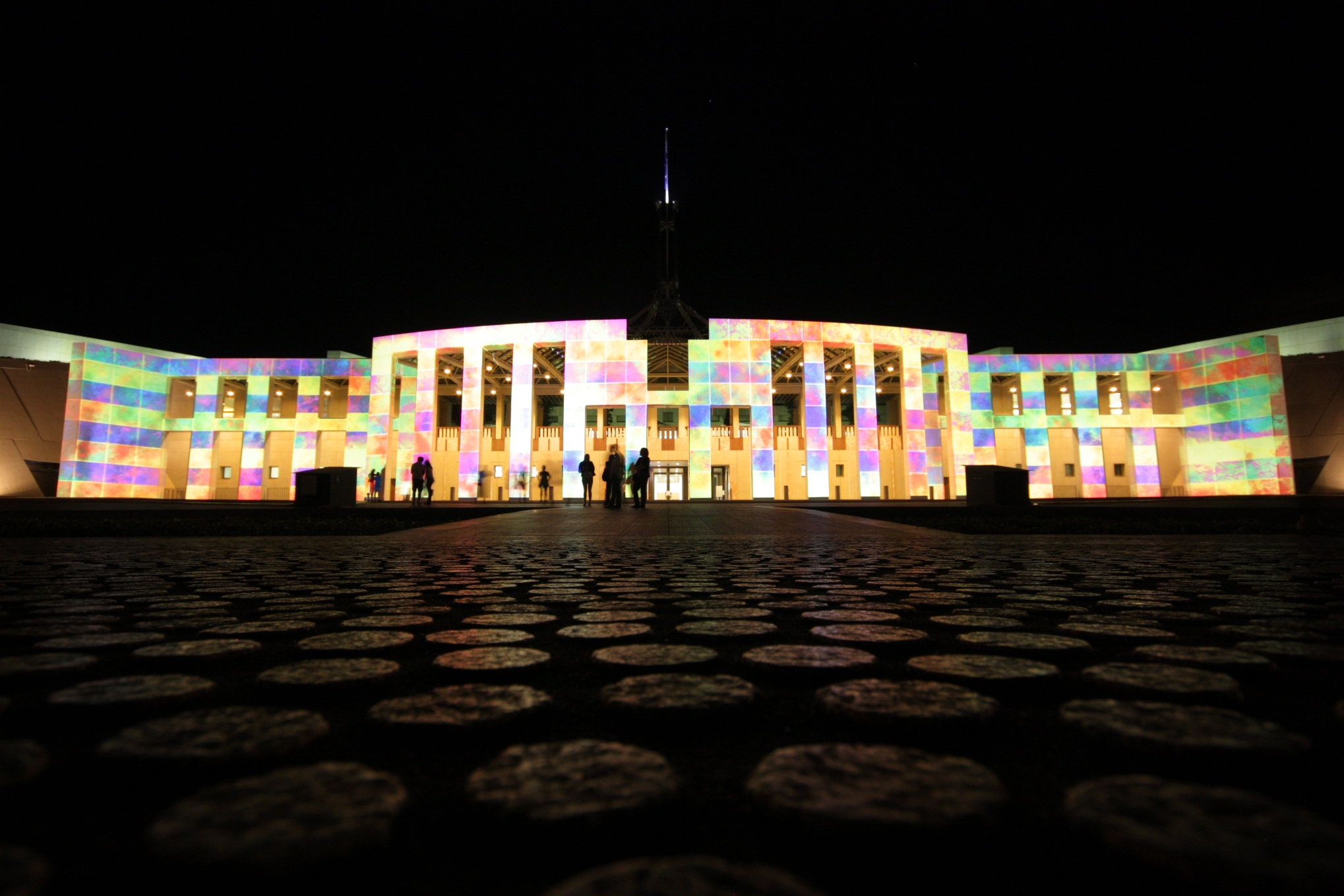
mar03One recent Friday in March offered a sumptuous day of deep blue skies where it was nudging a far from arctic 30 degrees; warmth that seeped into the night and made a very slow amble around the Parliamentary Triangle all the more comfortable. At scattered intervals the huge geometric edifices of the national institutions thrust up as multicoloured beacons, drawing moth-like the throngs of humans revelling in an evening of enlightenment. A beautiful day shifts into a beautiful night.

mar01

mar02

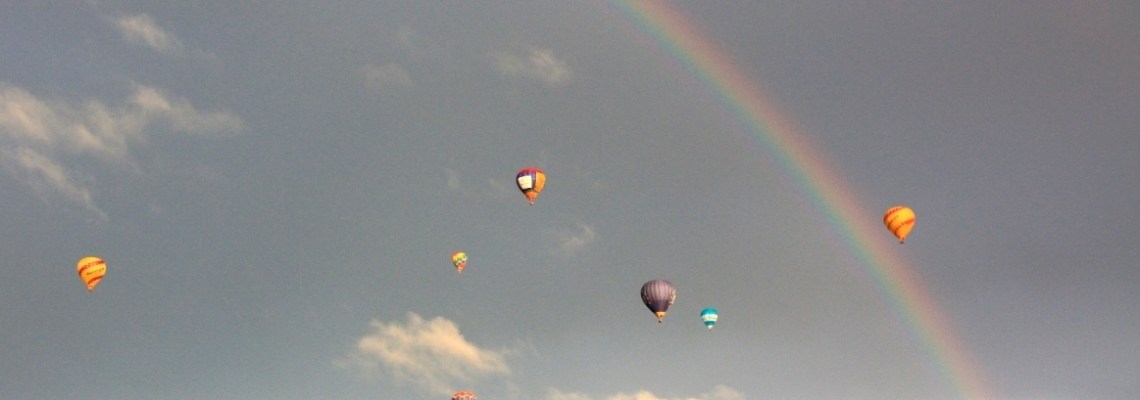
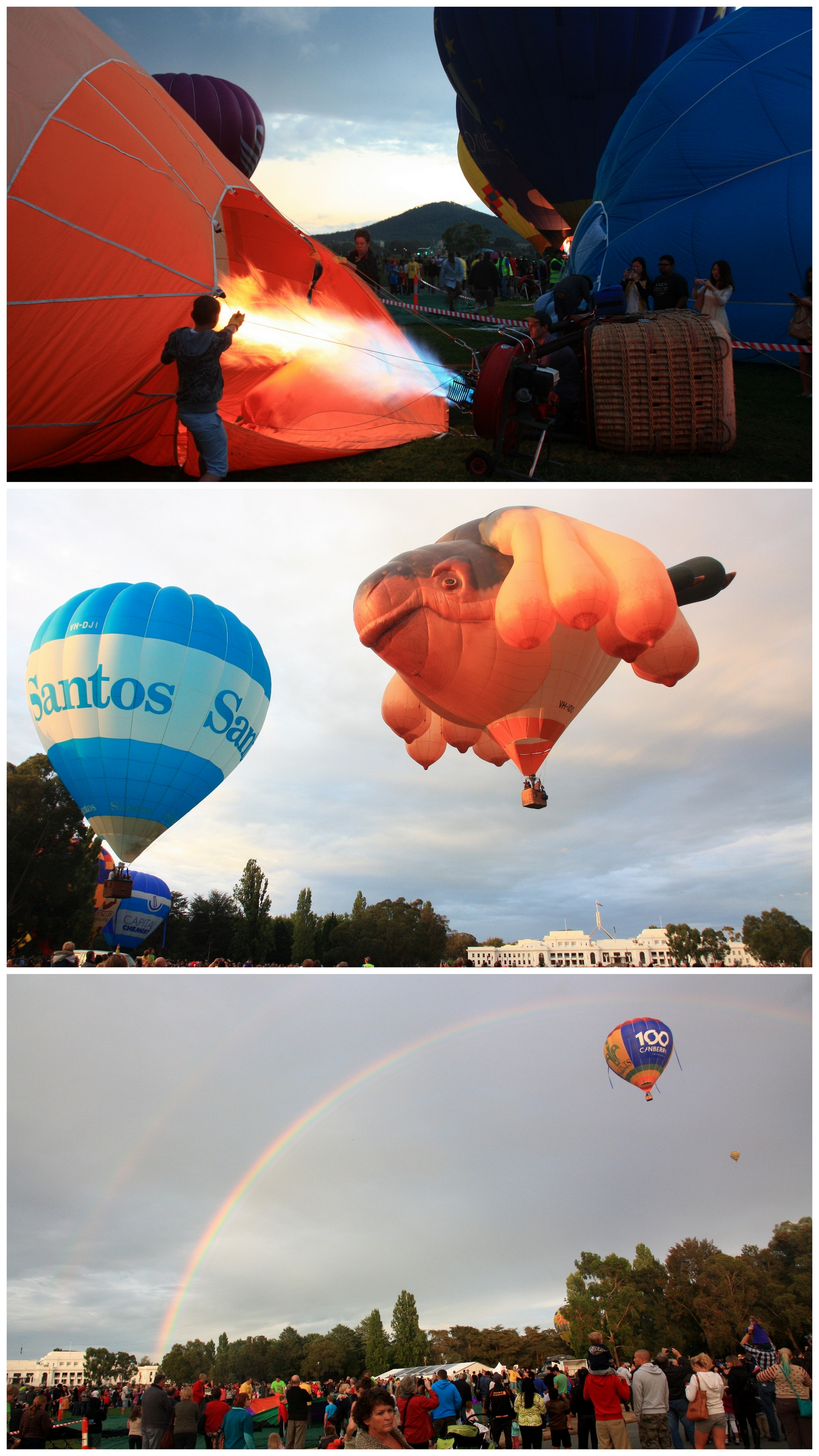
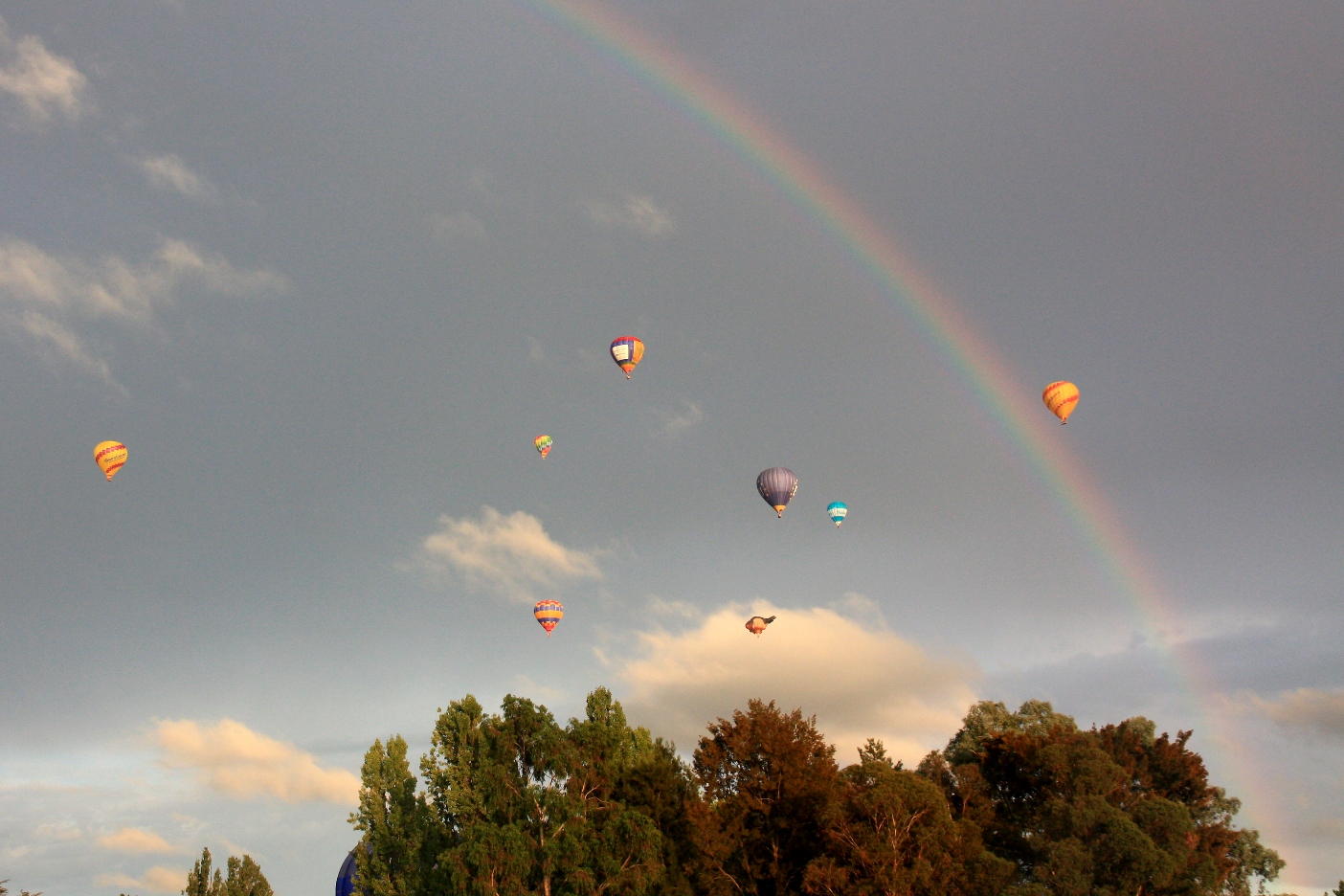
mar04Cooler and with showers threatening, a Sunday morning is cloaked in a pre-dawn gloom. It’s fairly early and the streets are even quieter than usual. It’s that peaceful time of day, a serenity that becomes confronted by parking battles and swarms of people as dawn breaks once more in the Parliamentary Triangle. As quick as the light emerges, balloons rise up from the ground; once flattened tarps smeared across the lawns inflate into rounded bulbs of colour and misshapen eccentricity. The sun sneaks up from the eastern horizon as people wave gleefully from wicker baskets shooting up into the sky. They shouldn’t look so bloody cheerful…they seem to be heading somewhere over the rainbow and into that storm. Oh well, good luck to them, I’m off to grab a coffee.

mar05

Monday, and it’s a public holiday, all to celebrate the 101st birthday of a city. Ironically many use it (with the attaching weekend) to flee the place. It’s as if the Prime Minister has just let off the stinkiest fart known to humankind from the flagpole of Parliament House, causing people to rush out onto the Kings or Federal or Monaro Highways in some sense of manic delirium. They head back later on the Monday, once the air is clear.

mar06bBeing a flexible fellow, and paying attention to the weather forecast, I stayed put until Monday. The day was sunny and I decided – with a spontaneity that still involved making a couple of lists – to head up into the hills for a spot of the old driving-walking-camping experience.  It was an enjoyable drive and involved some new road, taking in the Snowy Mountains Highway to Kiandra and then heading over a lumpy and curvy Alpine Way down to Khancoban. There was even – and this clearly denotes a successful road trip – a big thing at Adaminaby. Little over a hundred kilometres from Canberra and it is shameful that this was my first Big Trout sighting.

The barren, frost-scarred plains of this eastern side of Kosciuszko National Park gradually transition as you head west, down through a verdant paradise of tall gums and ferns on the wetter, western side. From here, views of the Main Range are a tad more dramatic, captured at the captivating Olsens Lookout. The plunging of streams can be heard rising from the deeply cut valleys, all making their way, eventually, into the Murray River. Before that, at Geehi Flats, waters trundle along the broad Swampy Plains River, offering a genial spot for camping and, quite probably, Big Trout. Until the storm rolls in…

mar06So much for the weather forecast but I guess these are technically mountains and mountains are known to find weather a fickle companion. With rumbles of thunder close, the rain started pretty soon after parking up, before any swag had been resurrected. With no obvious sign of letting up, and with some distance to travel on slippery surfaces to a town that may or may not have a dodgy motel, I decided to complete my intense road test of a Subaru Outback. Just how well do the seats fold down to form a spacious sleeping area?  The answer: well, not too bad…ten extra centimetres of legroom would have been handy but I slept…well…no worse than I would have done in the swag.

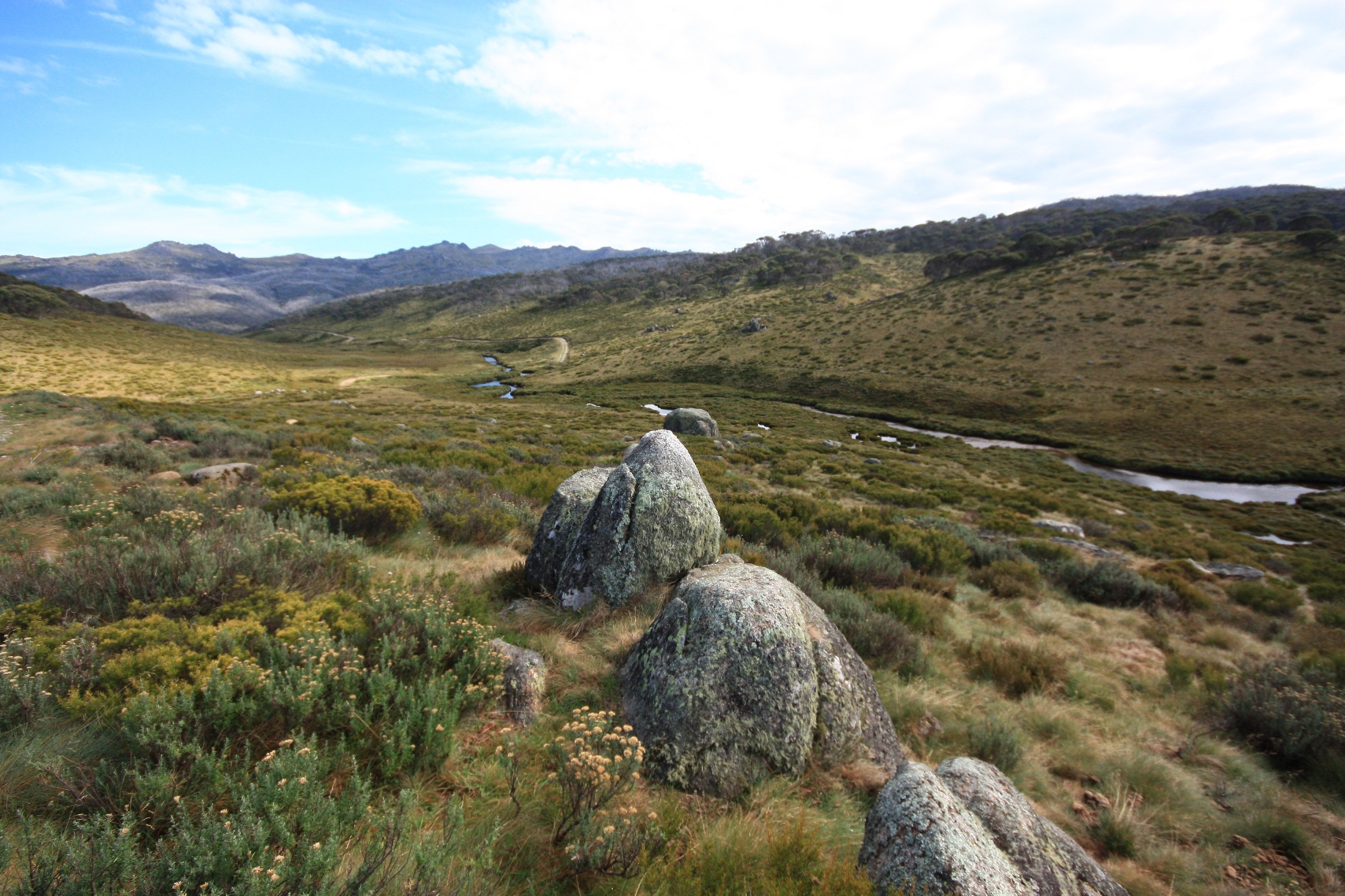
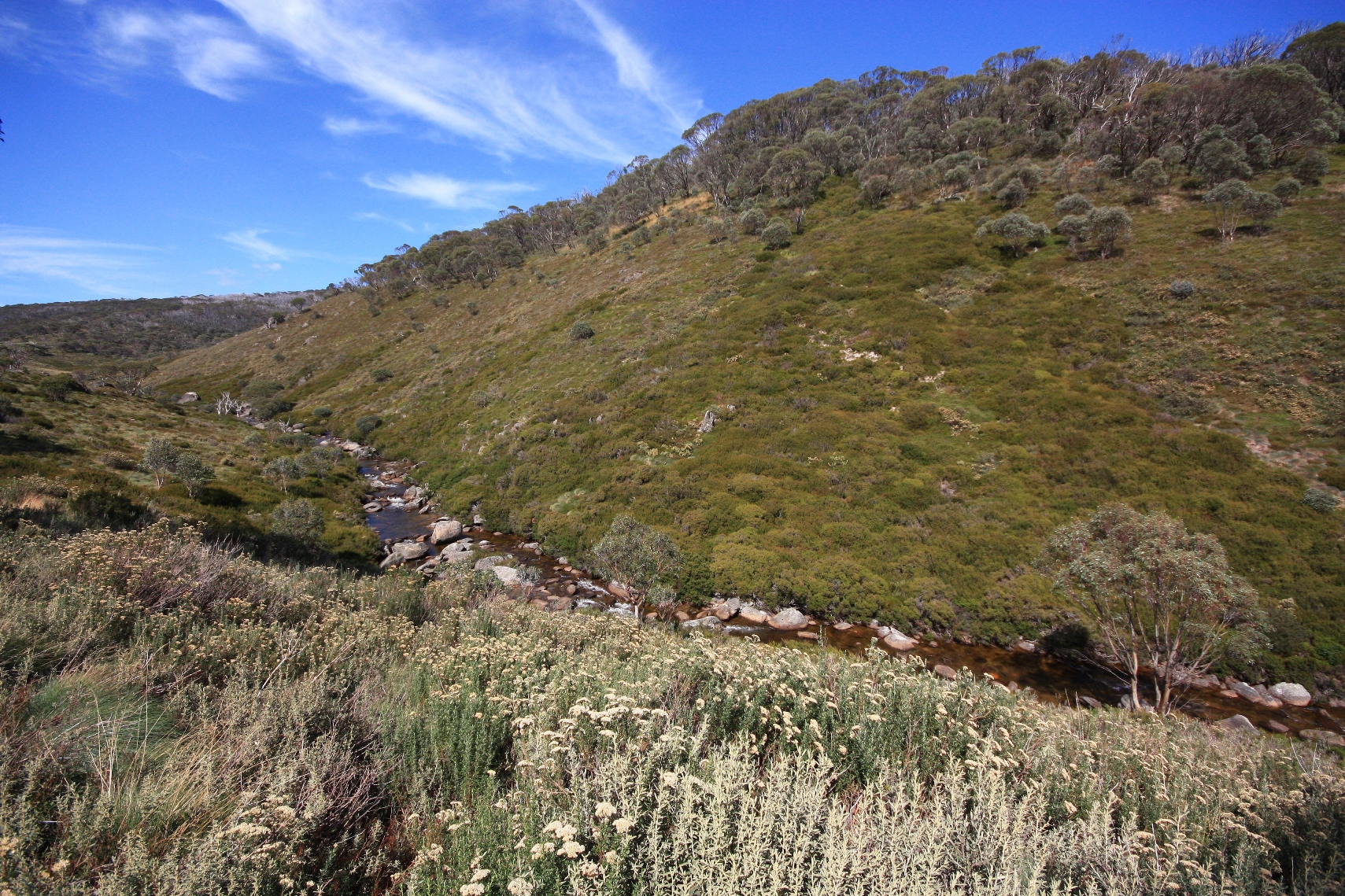
Still, it was nice to stretch the legs the next morning which predictably dawned all damp and misty, but dry and with the sun only very reluctantly breaking through clouds. A drive up over the range and heading back east demonstrated the transformation of plant life once again. Near the road’s highest point at Dead Horse Gap things were more barren once more. Perhaps a surprising spot to take a walk but I was pleased, following the course of the Thredbo River into the Pilot Wilderness, to find myself in somewhere just slightly akin to a Dartmoor valley or a Welsh llanfygwryff-y-pobbblygwrwrochcwm.

mar08

mar09I was heading along the Cascades trail which leads to a hut called – you guessed it – the Cascades Hut. I couldn’t be bothered to go all the way to the hut (18kms return), but made it to Bob’s Ridge and back (shall we say, with a bit of meandering, 10kms). Being a ridge there were some views, west and south into Victoria, though frequently obscured by stunted and bare gum trees.

Anyway, it was nice to partially recreate the feel of a bit of upland Britain. Being in the Australian Alps I was also happy to try and recreate an Alpine mountain sandwich, consisting of bread, cheese and cured meat. Again, it was no fancy ooh la la baguette avec fromage et saucisson, but filled a hole at the very pleasant riverside setting near the end of the walk.

mar10

Of course, on a birthday weekend such as this I need to top off this eating with some birthday cake. I dutifully obliged with a bakery treat in Jindabyne on the way back to Canberra. With a coffee. Borderline country coffee. Which made it undoubted road trip cuisine. Which made a return to Canberra, with its guarantee of good coffee, all the more inviting. And for that, I’m very pleased to wish it a happy birthday indeed.

Australia Driving Green Bogey Photography Walking

Horsing around

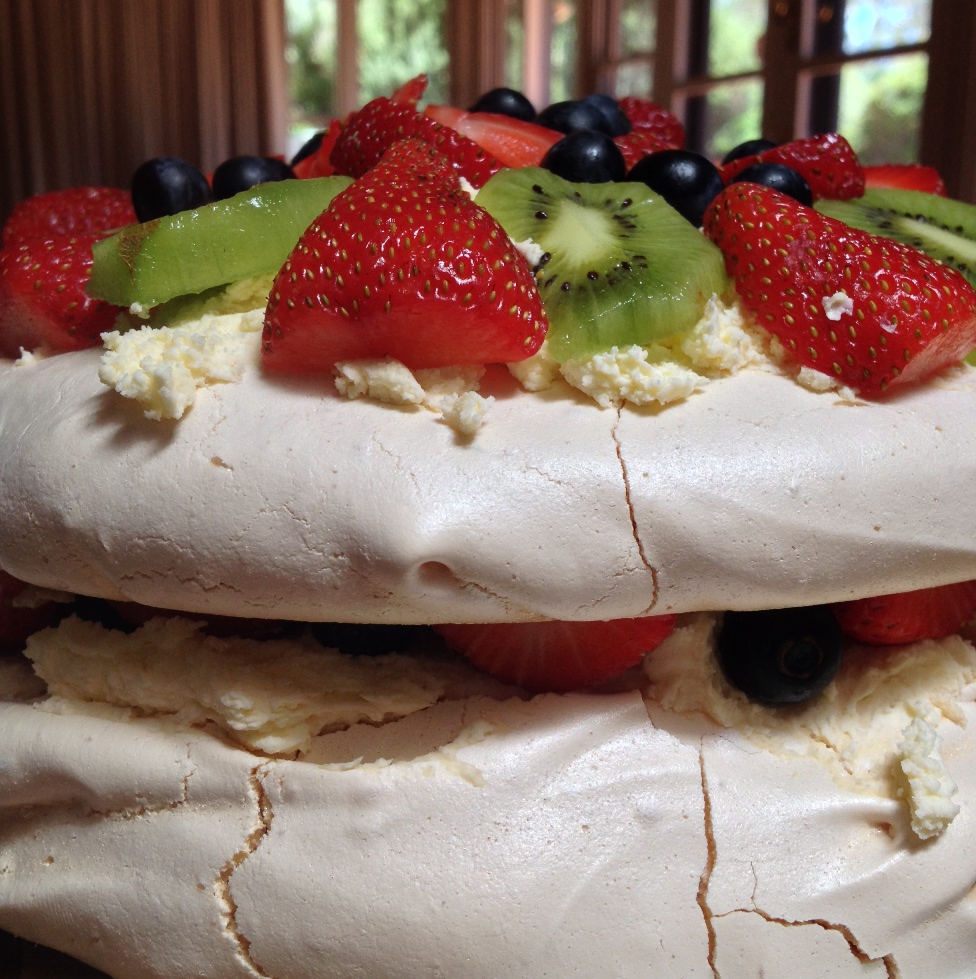
As the Chinese year of the horse arrives it has brought with it a combination of solidly earnest work, galloping around, and figuring out which stable to call home. January holidays lingered and lingered and lingered much like the hot air that became trapped over Canberra; there was only a gradual easing of chilled out pottering about barbecue infested feb03pavlova stoked swimming pool days. To be honest, after several days of not doing that much at all, things were crying out for a cool change – a change of scenery, and a re-acquaintance with the Kings Highway to the coast.

It was but a day trip, but the cloudy coastal skies parted just briefly at Depot Beach and the temperature was just about pleasantly perfect for that shoreline walk around to the sands of Pebbly Beach and back. They are no WA sands, but for being just a couple of hours away, they are a reminder of the good fortune of a capital location.

feb02

In the capital, February arrived and as predictably as floods in a flood plain people returned back to work and wanted some things doing. This is good, for the downward trend in my current account was keen for some reversal. It was a trend heightened by the cost of moving house, of finding a little flat to rent and paying a deposit and needing to populate it with some furnishings and trinkets and things to eat off, and using up petrol for trips to the shopping mall to buy these things, along with the odd frozen yogurt with lots of cookie dough bits. But I am now mostly there, with just a few further acquisitions to make it feel like home.

feb04While it is pool-less and a hefty stroll to decent coffee, the blessing of this place is that it isn’t very far from where I have lived for all of my Canberra life. Nestled amongst the oaks and gums of the suburb of Red Hill, it is a place anticipating awesome autumn wondrousness, a spot from which to navigate a higgle-piggle of crescents and spill out into the foot of the hill itself. The hill that has been there for me for quite some time and continues to offer a concentrated release of nature.

IMG_5497

And of course, the best thing to do when moving house is to coincide furniture-moving and setting up in 38 degrees with a few work meetings and presentations. Being busy is something I need to re-learn, and while I feel comfortable with the way things are heading, the alarming proposition of ironing a shirt (with the new iron from Kmart) for the first time in eight months can be a little much to bear.

So I’m still really just settling in, in many ways. Over the past week I have only spent one night in my flat – in between a work trip to Sydney and another, longer visit to that South Coast. It was a coast that offered little in the way of sun, but the temperature was ambient and the company was fine and there was plenty of opportunity to indulge in food and marginally walk it off on the sands of Malua Bay. And if these lazy days all became a bit too much, you could always pop into Batemans Bay to potter around Kmart again and grab a coffee.

feb06

Of course, as is tradition, the sun returned the day of leaving the coast. Luckily I was able to linger just slightly, and return once more to Broulee in the morning. feb07The first place I ended up when coming down this way in September 2006, a place name plucked out of the air and a glance at the map. A spot in which you are always thanking your good fortune to be in. And wondering, um, should I have rented somewhere here instead?

Yet, not for the first time in my life, I ended up back in Canberra and returned to my new home and did some washing and started writing these words with a cup of tea and twirl and put on the radio and felt quite content. I think I will be quite happy here.

Australia Green Bogey Photography Walking

Rewind pause fast forward

SydJan01Well how lovely it has been to stand still and sleep in my own bed and pop around the corner to a coffee shop where they know my name. How enjoyable to see familiar faces and some new ones too, sharing an overload of barbecued food and leftover Christmas decadence that never seems to dwindle. How civilised to be able to pop to the National Gallery to see some Lichtenstein and snigger at some political cartoons at Old Parliament House before checking out the roses. How satisfying to traipse up and around pockets of bushland here, there and everywhere and watch the red sunlight fade from Canberra sights and sink over the Brindabellas.

SydJan03

SydJan02Familiar things that became less familiar but are now familiar again. Much like losing badly in the cricket. Lest familiarity brings about too much comfort there are a few doosras thrown in to keep things interesting: new developments in Kingston creating wannabe Gold Coast glamour; minor changes to the aisle configuration of the supermarket; previously unexplored hillocks in the south of Canberra. Plus, of course, the interjection that is Christmas, which is the ultimate break from the norm…apart from the tradition that is a sausage roll, cheesy marmite, cold ham, cheese, pickled onion, cracker tasting plate.

It was actually quite a change to spend Christmas in Canberra; in recent years Sydney has hosted the festivities and provided random assortments of hot beach picnics, torrential downpours and moist grey gloom. Such was the picture again in January for a few days of further catch ups and re-acquaintance. Pleasingly, with time on my hands, I could take a detour from the familiar, yet pretty dull, Hume Motorway and revisit such delights as Fitzroy Falls – currently a thin summer sliver – Kangaroo Valley, Berry and the Illawarra. Again, time for some enjoyment of the old along with discovery of the new – a short rainforest and waterfall walk at Macquarie Pass National Park an additional find in this luscious little corner of New South Wales.

SydJan04

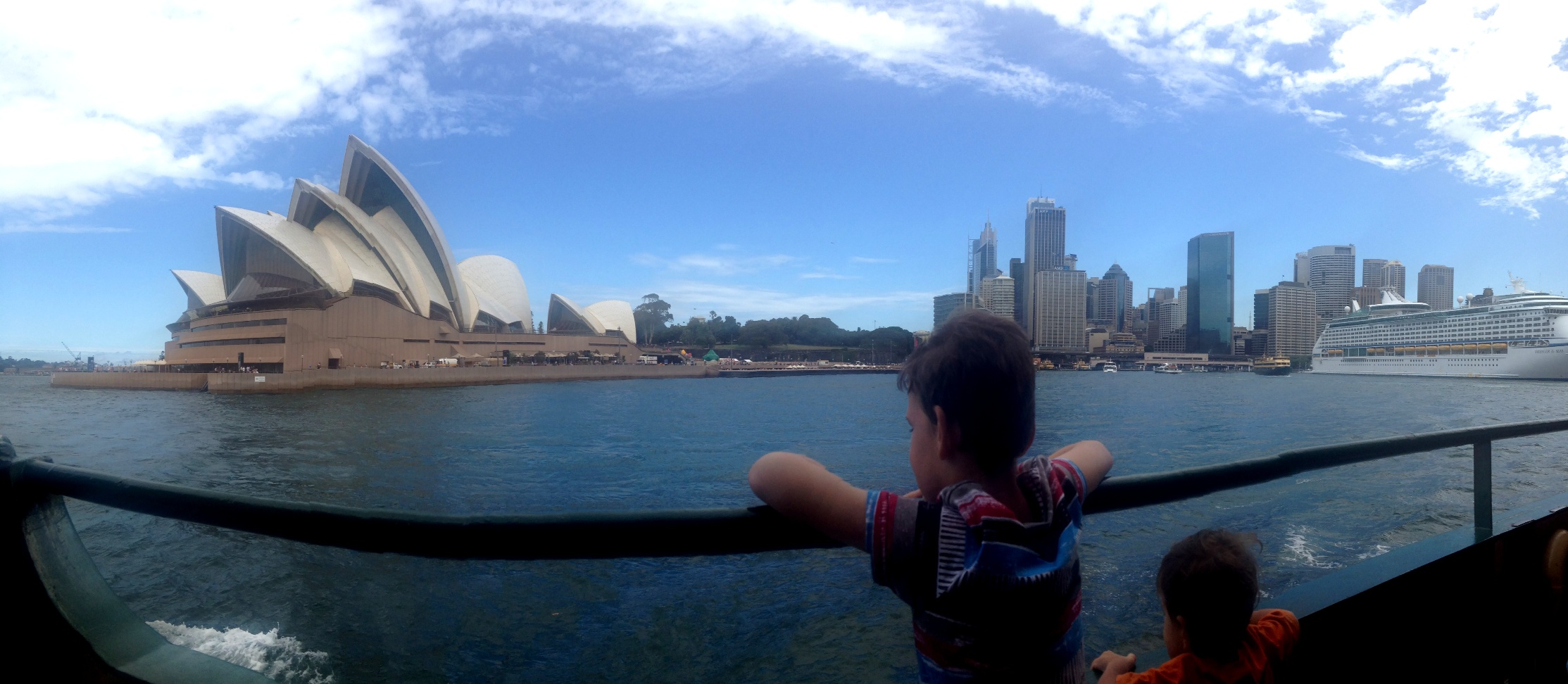
SydJan05Sydney was a mixture of iconic waterside delight blended with a tinge of inner city grime and sweaty congestion. Fortunately staying with friends on both of the plush sides of the harbour I could fairly easily potter down to the water and share it with the millions of other people on holiday. Having been away from here for quite a while there was a little bit more of a tinge of excitement at seeing that bridge and that opera house and an inevitable taking of pictures that have been taken hundreds of times previously. Though wearying in the afternoon warmth, there was a thrill at boarding the Manly ferry, and a rejuvenating half hour ride watching the eastern suburbs pass by, thinking about what ice cream or treat to have back on landfall.

SydJan06

All this is familiar again, but there is still chance to do something new. After gorging on chocolate brownie and cappuccino I was keen to make amends by walking from Manly to Spit Bridge, an up and down tramp following the watery alcoves and rather untainted bushland fringing Middle Harbour. And it is here that you notice that despite being a large city, with concrete overload and oversized cars and millions of people, the geography of Sydney often wins out. Bushland and rainforest pockets are much like they were before boatpeople came, and small inlets offer cosy beaches unreachable by modern means. True, never far away is a luxurious home with a view, and the noise of a freeway as Spit Bridge nears, the harbour a buzzing playground for those pesky boatpeople. But it is also true that in the midst of a city, within sight of its lofty heart, it is a wonder to be able to walk in parts untainted; a wonder that pervades in patches throughout Sydney.

SydJan07

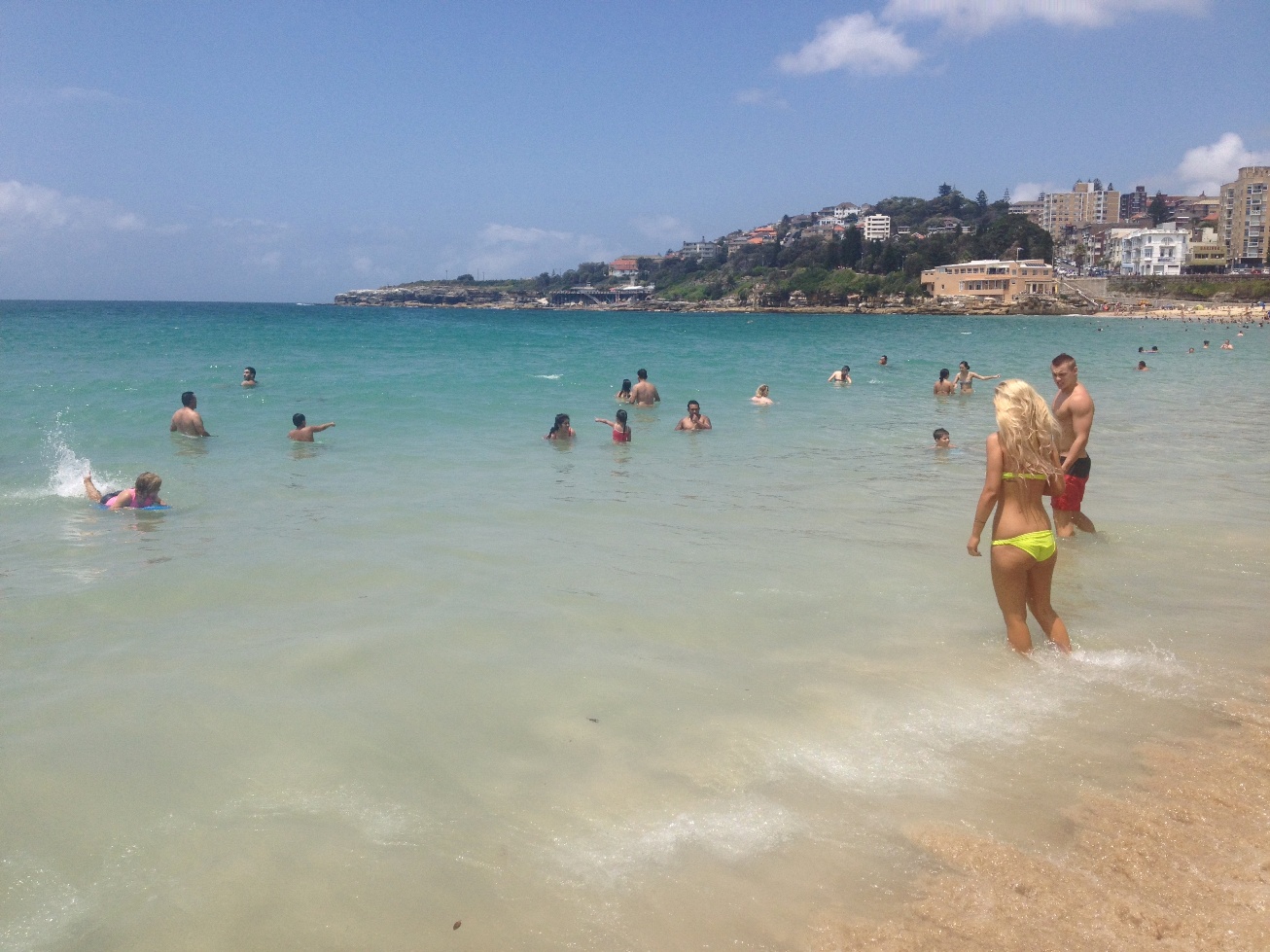
Sydjan08North shore opulence is kept in some rein by its geography of steep hills and snaking inlets. In the Eastern suburbs there is less to get in the way, although large parks and reserves are scattered besides the sea and across to the fringes of the city. This is once again familiar territory with familiar walks down to the ocean and along its beaches and cliffs. It is a place of great appeal, though I think I prefer it in winter on a pleasant sunny day with fewer people and their detritus. Still, there is much to be said for sitting beside Bronte Beach and having a coffee, before dodging ridiculously fit runners all the way to Coogee for lunch.

Sydjan09All this familiarity comes in pretty handy when sizing up a final breakfast before the drive back to Canberra: a tricky choice between the Haloumi Stack and the Love Eggs. It doesn’t really matter, because whatever you choose, you will be full and happy and ready for negotiating the steadily declining state of the M5. Eventually, finally, Sydney will fade and you will be back on a familiar drive which is slightly less boring because you haven’t done it for a while. And with a full belly and a cruisy drive, all that waits are the comforts (and – this week – sweltering discomforts) of a home.

Australia Driving Food & Drink Green Bogey Photography Walking

Waterfalls

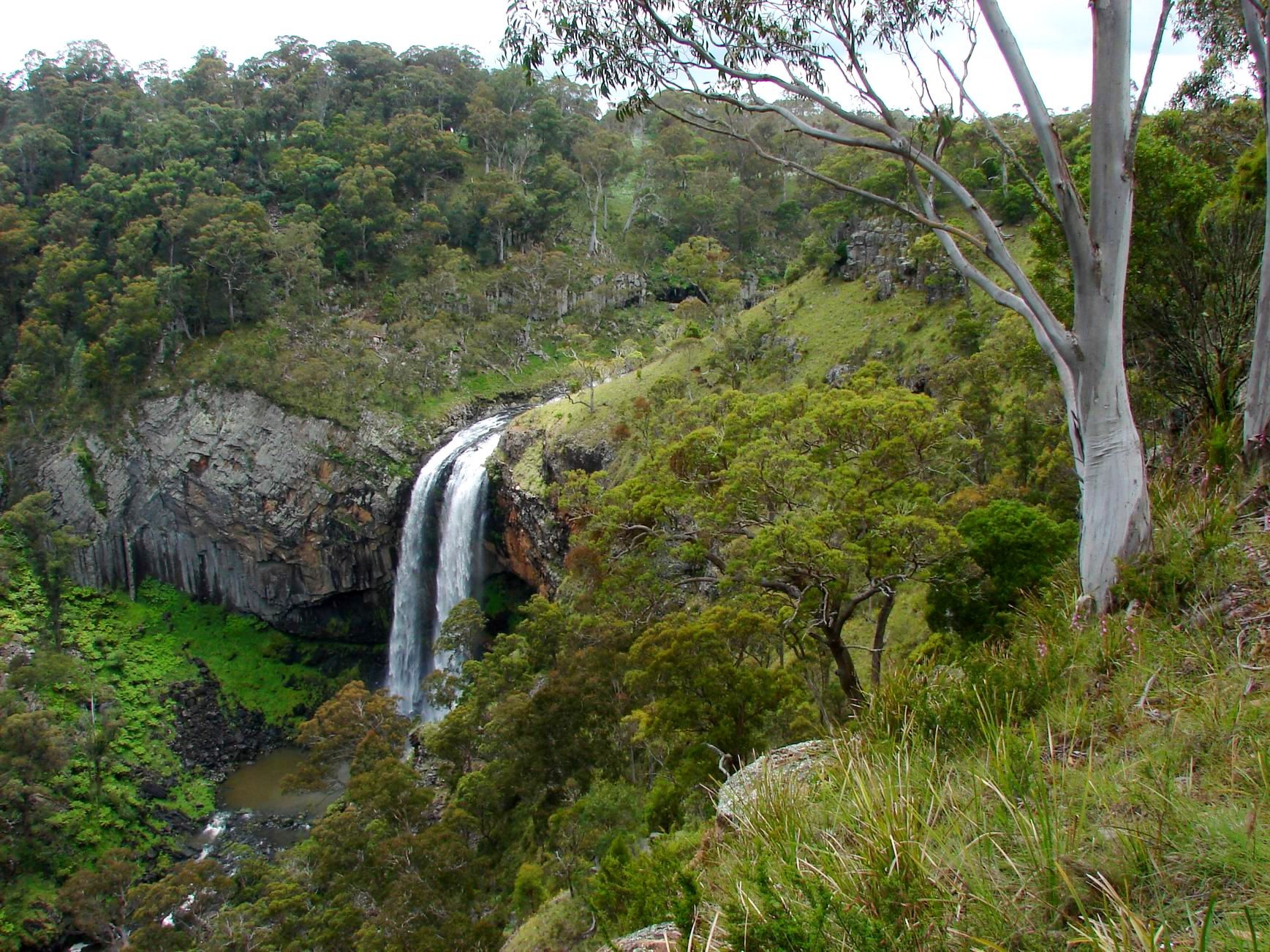
It was always going to be hard for me to steer clear of a road named The Waterfall Way. Linking the tablelands of Australia’s New England to the mid north coast of New South Wales,the twist and turns down to the ocean are regularly punctuated with a chocolate box selection of falls. The stops from west to east are a story in climate and geography. Commencing in a parched landscape of wild gorges and dry bushland, thin strips of silver white water spill off cliff edges and into unseen creeks. High plateaus offer wild flowers and cool forests through which rivers gather speed and depth to forge their way down steps into deep gullies. Moisture picks up closer to the coast, where rainforests form to offer crystal cascades and lush fern pools, and the water speeds into the coastal plain before mellowing broadly to the sea.

With such excess there is a danger of waterfall fatigue: parking up, strolling to a lookout, taking a picture and hopping back in the car for a short journey to the next stop. In fact, the waterfalls continue north in pockets of rainforest tucked amongst ancient volcanic plateaus all the way up into Queensland. In the wonderful natural surroundings of Springbrook National Park it is as if there is one final grand culmination before water sweeps over the Great Dividing Range and into the horror of a Gold Coast horizon. Plunging pristine water toppling over the edge before being becalmed in a complex of gaudy cashed up retirement waterways.

Tucked away before the Gold Coast looms, in the quieter western side of the park, another waterfall tantalises the traveller who crosses the border by the back way. Nestled within a beautiful green valley is the once more imaginatively named Natural Arch, replete with shady pool and shimmering cascade plunging through a tunnel of rock. It’s midway round a processional loop walk through the rainforest, where sun rays filter hazily through the tree ferns and parrots chirp away in the canopy. On a humid summer morning, the cool shade of the forest and continuous thrash of crystal water is the perfect gin ‘n tonic.

—————————–

What is it about waterfalls that are of such appeal that we seek to recreate them in garden features the world over? On balance they are usually very pretty, from elegant slivers to bubbling tiers and tormented torrents of foaming fury. They are, as much as anything, a break from the ordinary…where a placid river or lake suddenly comes to an abrupt halt and decides to throw itself over a cliff. There is an unparalleled feeling of freshness and purity and, often, invigoration from getting close to gallons and gallons of tumbling water. It can make you feel alive. It can make you want to pee.

The power of waterfalls is compelling and is why they are often best viewed after rain, or sustained snowmelt. Yosemite in May is very different to Yosemite in October. Postcards of massive gushing falls in northern Australia can tell a lie for the trickle that often dwindles in the dry season. In the UK, the weather is usually more reliably conducive to year round falls, with new ones springing up across high streets during supposedly exceptional but all too regular winter storms.

W_wales2013 was one of the better British summers and I felt slightly aggrieved to catch only the tail end of it. Nonetheless it was a balmy 20 degrees or so when I found myself in South Wales towards the end of August, on a different kind of waterfall way. Situated in the Brecon Beacons National Park, this literal tour de force was completed on foot along the Four Waterfalls Walk. For pronunciation lovers out there I can make your day by telling you that this commenced near Ystradfellte and took in a wonderful meander to view (brace yourselves) Sgwd Clwn-gwyn, Sgwd Isaf Clwn-gwyn, Sgwd y Pannwr [1] and Sgwd yr Eira [2].

It sounds like a trite cliché (hey, who doesn’t love a trite cliché), but each fall (or, I assume, sgwd) had its own style and character. Each one builds to the next and the final stop on the itinerary offers the ultimate white water thrill for not especially adrenaline seeking junkies. For, at the curtain falls of Sgwd y Eira, it is quite possible to walk behind the voluminous mass of water plummeting down, and – for some – to take your dog reluctantly along for the ride too. Inevitably there is plenty of spray and you will get wet, but – well – you are in Wales and you will get wet in Wales sooner rather than later. Why not make it here and take the chance to really appreciate the forcefulness of nature. Why not take your ear drums to the brink, pleading for mercy from the explosive, monumental thrash of the gigalitres of water that descend before your eyes? Amazing.

—————————–

Like Wales, Oregon is pretty familiar with rain, confronted as it is with a moist pacific airstream and climatic battle between deserts and mountains. One early October day in Portland is restricted to bookstore meanderings and coffee shop escapes, ducking out between downpours to make it to the next warming hipster refuge. Traversing wet sidewalks through a tangle of black umbrellas and beige raincoats, the city seems enveloped in the cinematic monochrome of a film noir. There is oppressiveness to the rain, something which is accepted and wholeheartedly embraced by its citizens but causes frustration to time-limited visitors like me. There are only so many lattes to sup and bookshelves to roam.

The next day shows marginal improvement – overcast but dry – and seems as good as it will get for an escape into the wilds. Passing the quite possibly interesting town of Boring, there are no views of Mount Hood to be had, rising Fuji-like out of the farmland and forests of the horizon as depicted so tantalisingly in the Lonely Planet picture. Brief glimpses are snatched beside Mirror Lake, with little reflection other than that internalised in relation to being potential early morning bear fodder. Further sneak peeks appear in the rain shadow of the mountain to the east and, here, the sun returns for a while to transform the colours of the fading autumnal forests.

With Mount Hood now somewhere behind, the road ends at the huge barrier of the Columbia River, carving a broad swathe through the Cascade Mountains and splitting Oregon and Washington States. The river has created a mammoth gorge lined with cliffs north and south. And so, with a large river system, significant rainfall, and high cliffs, there is a certainty of a quite spectacular run of waterfalls.

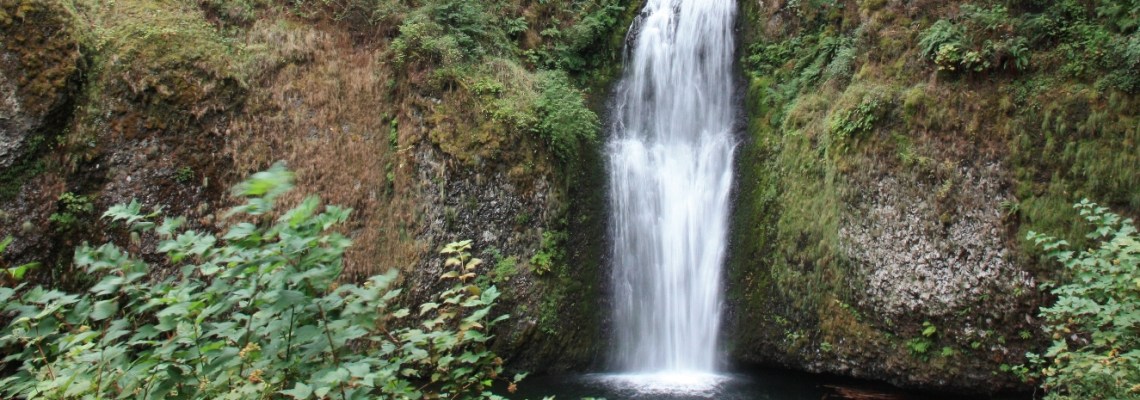
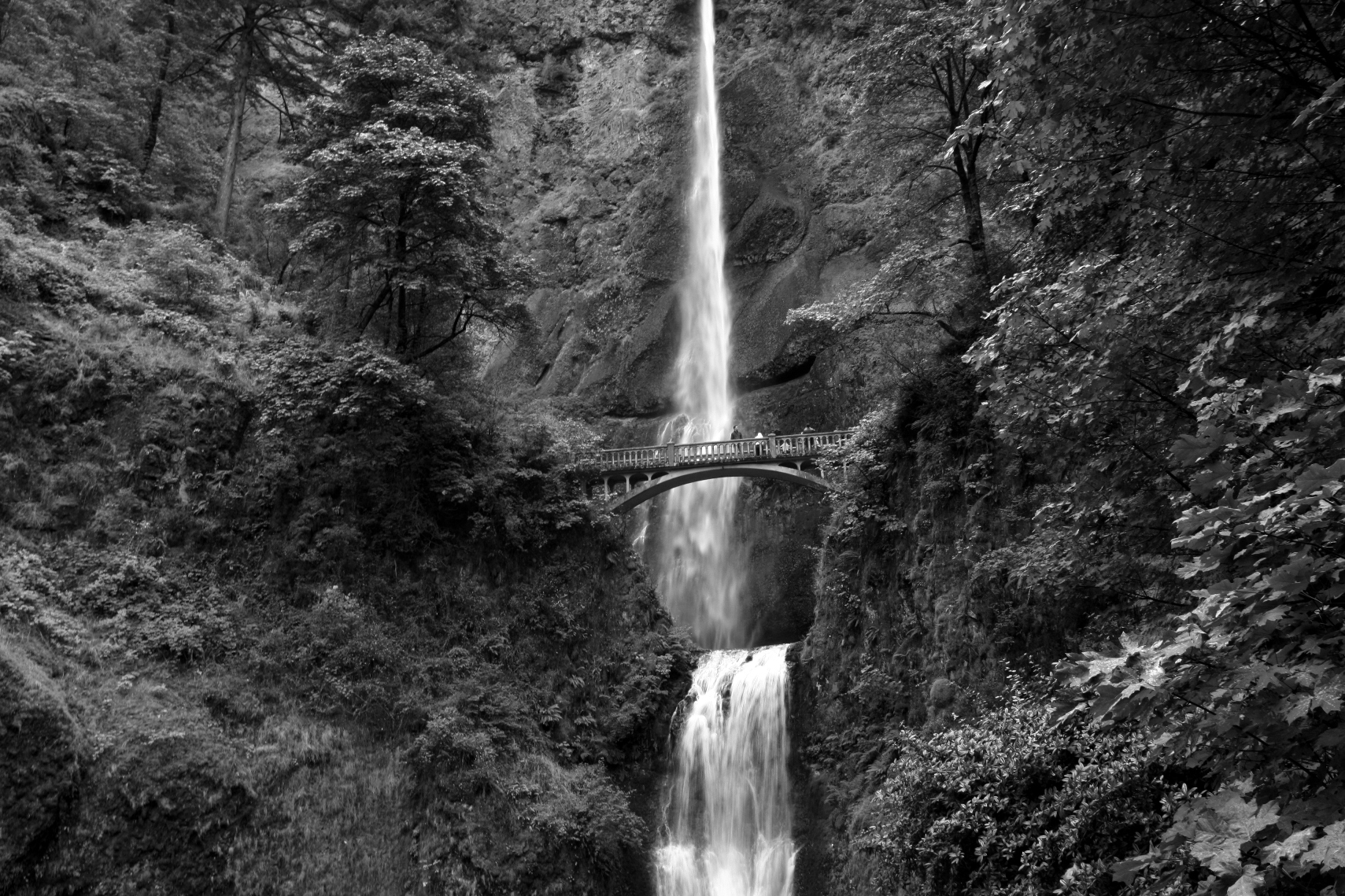
This particular waterfall way is undoubtedly a more developed road than that back in New South Wales, as dual lane sweeping curves follow the river in what is a dream to drive. Of the frequent cascades, it is Multnomah Falls that offers the most iconic sight. For once it seems a human element, an unnatural structure, has enhanced a natural spectacle. Splitting the precipitous double-decker descents of white water is a pedestrian arch bridge, where humans can run from bears and so effectively offer a sense of scale and perspective. Indeed, even the bears would look small opposed to the streaks of water tumbling from somewhere unfathomably high up in the sky.

W_Columbia

—————————–

Finishing a convenient circumnavigation of the globe here I am now back in Canberra. There are few falls here, other than watery concrete features around the angular constructs of the parliamentary triangle. But in a couple of days I will be going up to Sydney and, with time on my hands, I will make it scenic, detouring to Fitzroy Falls in the Southern Highlands. An old reliable favourite, fed by a reservoir and plunging off sandstone into a gum tree valley. A lyrebird may well be imitating the sounds of crashing water and a strong minty eucalyptus scent will pervade the senses. Again, it will be splendid. Because waterfalls are always splendid. But for now, I must come to a halt and stop this gushing about gurgling water and thrashing torrents, soaked in a spray of swirling liquid currents and dramatic downpours. Because now I really, really need to pee.


[1] For anyone with a customised 2014 calendar Christmas present…this one is the front cover!

A to Z Activities Australia Driving Great Britain Photography Places USA & Canada Walking

E by gum

gum01The Nullarbor is said to be so named because of an absence of trees, i.e. null arbor. The thing is, like other misconceptions that may feature on a jovial edition of QI and set off a high pitched wail, it’s really not so true.  Sure, there are a few bits that are made up mostly of low scrub and saltbush, and some of it is very, very flat. But there are plenty of trees clustered and scattered across the thousand kilometres or so of its reach. Plus there is my own festive Christmas tree dangling in the front of the car, attempting to bring some light and joy to this escapade in monotony.

gum02One of the little treats of heading east is that you gradually get to move your clock forward until eventually you get a reasonable sunrise and pleasant light evenings. Not so at Fraser Range, undoubtedly the nicest stop along the road but still subject to the same peculiar hours as Perth. Hello 4am sunshine, before vanishing into a strangely cool, cloudy day to plough through the rest of Western Australia.

At Eucla, close to the WA / SA border there is the concession of 45 minutes but you have come so far east that it makes little difference. And then, ten minutes down the road you suddenly jump forward 1 hour 45 minutes and should you wish to straddle the border it is quite possible to indulge in your own creation of Back to the Future.

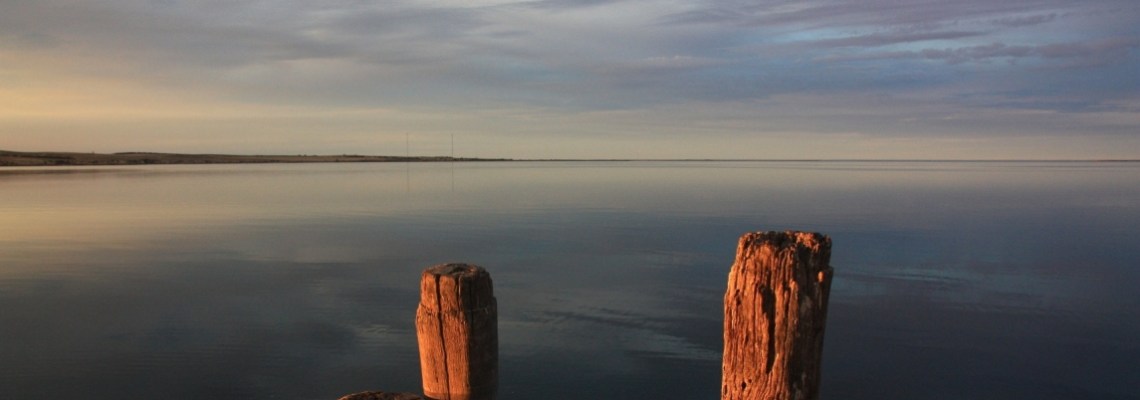
Jumping into South Australia there is a sense that civilisation is returning, but it is still 500kms or so to Ceduna, which is itself a subjective interpretation of civilisation. I’m glad to push on another hour and make it instead to Streaky Bay, for a cooling motel room, a chance to endure cricket on TV and nice, long, light evenings to take in the jetty and glassy calm bay of this glassy calm town.

gum04

It seems the journey is one of milestones – crossing the border, finishing the Nullarbor, reaching the crossroads of Port Augusta and again seeing a kangaroo for the first time in ages. Bushland and hills return and the environment becomes a more familiar, comforting scene of generic southeast Australian. Stopping and appreciating this at Mambray Creek, in Mount Remarkable National Park, is a delight, even if it means being awoken by huge flocks of galahs clattering around the majestic River Red Gums in the morning.

gum05

Adelaide is another milestone and just a few hundred kilometres down the road. I reached the city by way of a small diversion into the northern Yorke Peninsula and a triumvirate of towns – Wallaroo, Moonta and Kadina – at the heart of the Copper Coast. Or ‘Little Cornwall’, a moniker derived from the miners who settled here many moons ago. You would think I would have learnt by now not to get my hopes up with such names, to avoid such disappointments as a ‘Devonshire’ Tea and a ‘Pork’ Pie. But I live in hope that certain culinary heritage items are preserved amongst this flat, agricultural landscape which – apart from the presence of a bit of sea – is nothing like Cornwall.

So it is really not that much of a surprise that despite the slightly cutesy high streets crying out for a charming tea room there is no sign of a cream tea in sight. The closest thing to a scone and jam and clotted cream is a shiny bun with a blob of jam and squirty cream in the middle. Salvation may lie in a traditional pasty, but this is about as traditional as sticking a possum on top of a Christmas tree and singing we wish you a merry Easter. For a start, a pasty tends to have much more meat in and a lot less finely diced carrot please.

Anyway, meanwhile, back in Australia, I reached Adelaide and was glad but slightly daunted by being in a big smoke again. Not that Adelaide is that big or smoky. Indeed, it is rather graceful and refined at its heart. There is decent coffee to have and the fabulous central markets to salivate in and the tram to Glenelg to catch and a short drive to be had to the hills, peppered with wineries and koalas and dinner and conversation waiting. Leaving is a bit sad but there is one final little hill stop in Hahndorf, making amends for a missed German style meat fest opportunity last time around, and a brief reminder of hot summer days in Munich.

After such a lunch it would be a decent idea to nap, but I had new milestones to reach and crossing into Victoria was on the agenda. Three more nights of swagging it, following an inland course close to the Murray River and over the highest hills in the country and down to Canberra. Still 1200km to go but feeling close to the end.

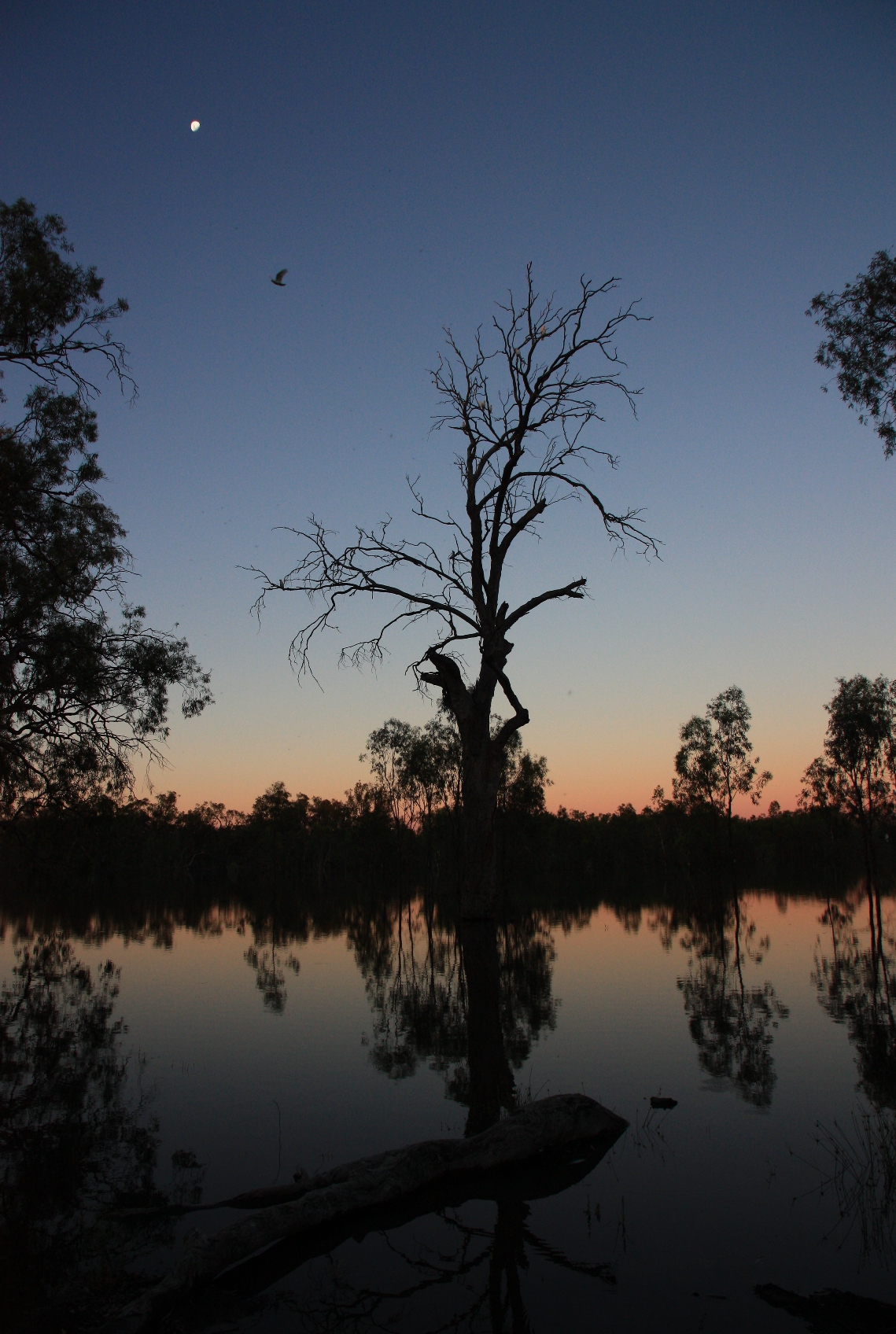
gum06The first stop was among the gums and lakes of Hattah-Kulkyne National Park, a little to the south of Mildura. Here mighty trees rise from the waters, attracting a dense concentration of screeching cockatoos who mercifully quieten down after dusk. They perk up again in the morning, but by now mornings start at a much more reasonable hour.

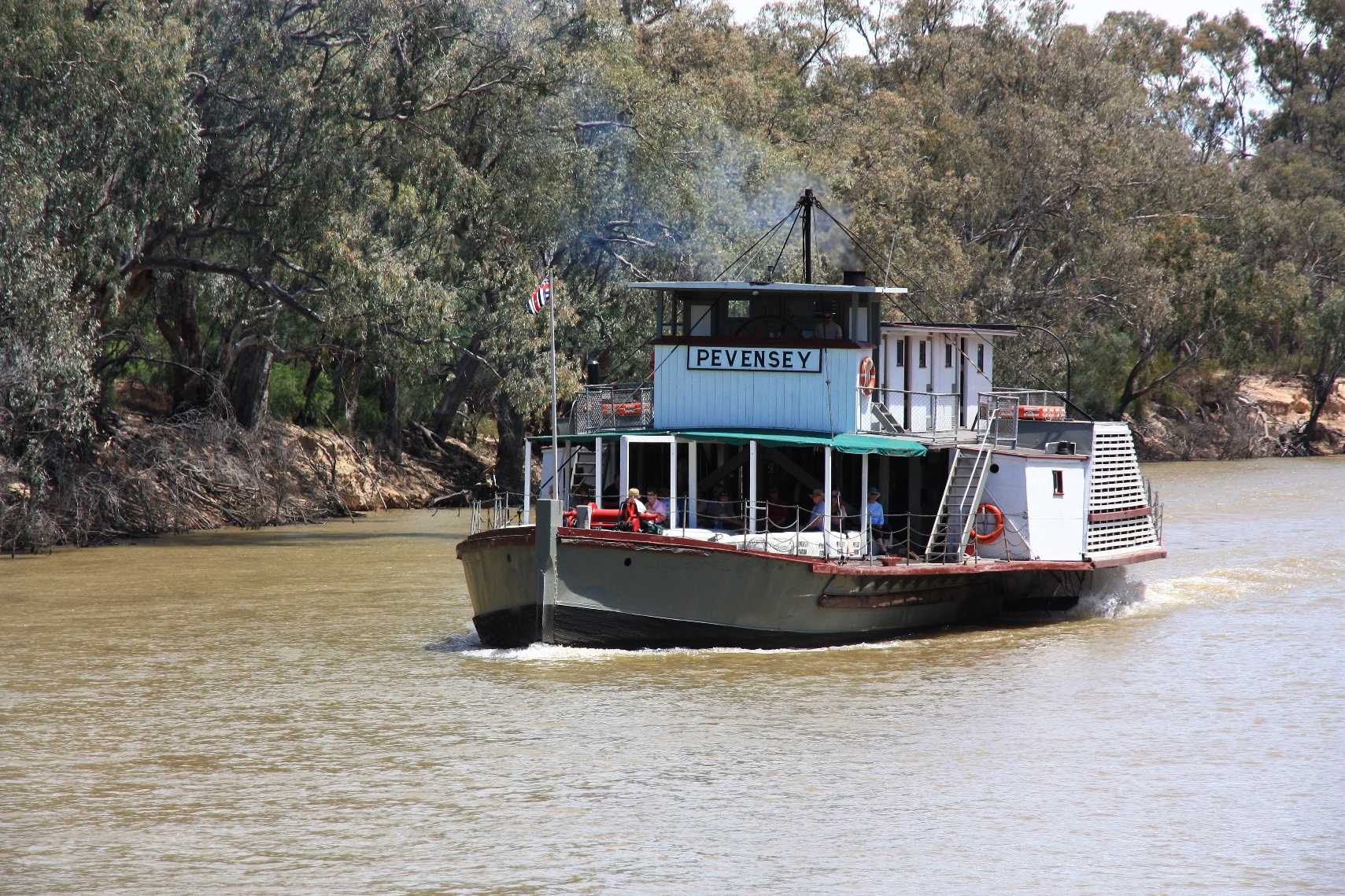
gum07The trees, water and birds combination continues along the length of the Murray, interspersed more frequently with pleasant towns. A reminder that in Victoria country life seems quite amiably civilised. Swan Hill even offered a giant Murray Cod, whilst Echuca evoked steamboat and latticework charm. The thing to do in Echuca is to hop on one of these and cruise upon the river. It made for a pleasant enough hour albeit a little dull.

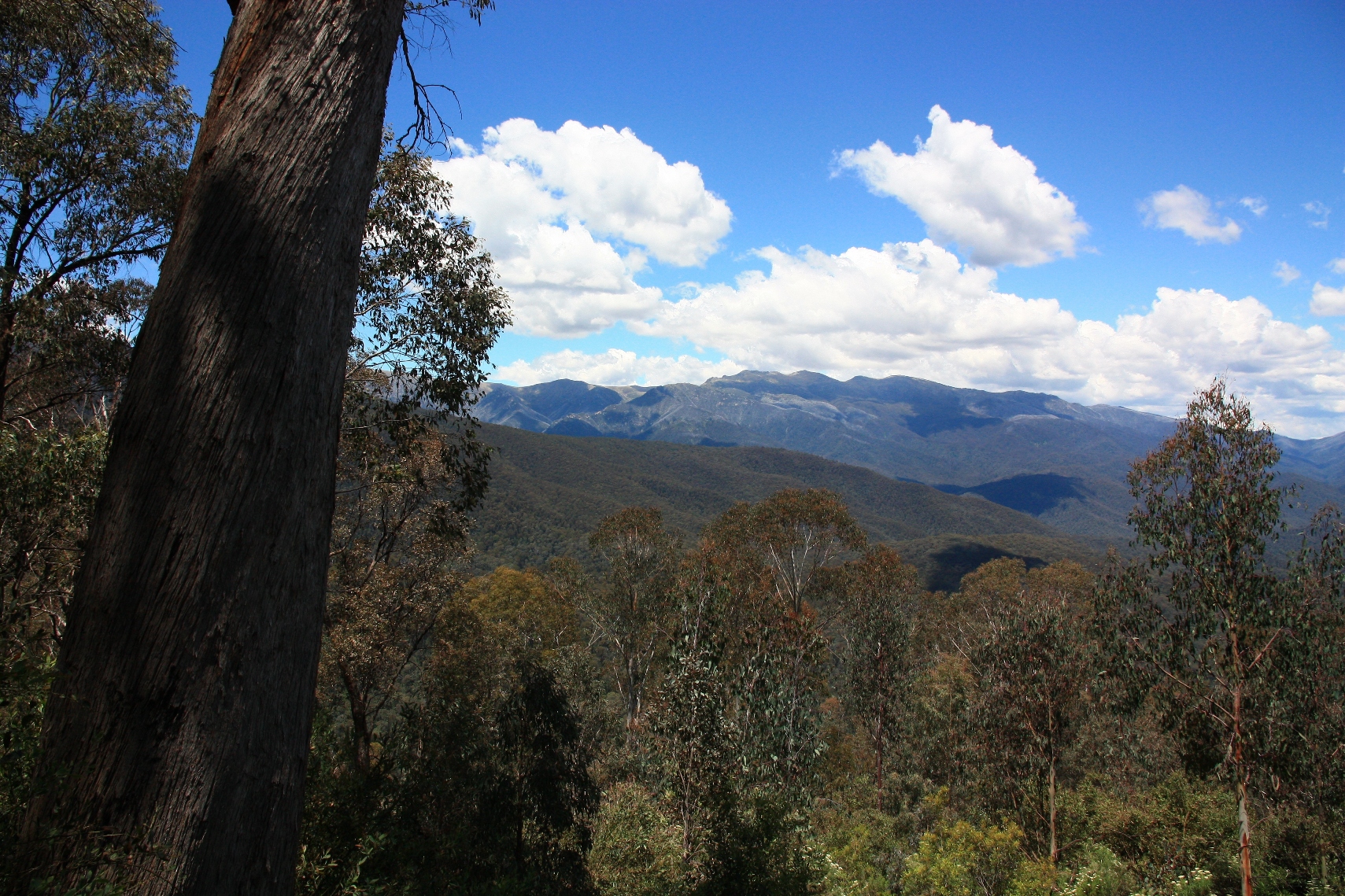
The Murray rises in the Snowy Mountains and by time I reached Wangaratta I was on very much more familiar ground, stocking up on coffee and cake and heading for the hills. It’s a beautiful approach from Wodonga, following the shores of the Hume Dam with golden hills rising and small valleys drifting into New South Wales. The valleys tighten and become more heavily and lushly forested as they shelter beneath the higher ridges of the Main Range of Kosciusko National Park.

gum08

From this western approach it’s quite a twisty ascent over appealing sounding places like Siberia and Dead Horse Gap to a much starker and moodier side. Here a landscape of high moors and glacial hollows is scattered with ghostly snow gums and boggy pools. A world in which leftover snow still stubbornly sticks; a world a long way from Perth where I commenced this journey.

gum09

gum10It was rather nice to get out of the car for a late afternoon walk immersed in this landscape, setting off from Charlotte Pass along the Main Range track, dipping down for a Snowy River crossing and up again to overlook Hedley Tarn and Blue Lake. From here it is really not that far as the crow flies to Canberra. Indeed, continuing along the track just a little further, crossing a couple more slushy white patches, you can look out over the ridges and folds of the ranges to the north and east. It is a vast view and I suspect if you had super Legolas vision you might just be able to make out Black Mountain Tower. So, so close.

gum11

In a somewhat romantic poetic notion it seems fitting that having traversed and explored huge tracts of this huge country over the past year that I finish it, well, not quite at the top but close enough. It feels like Australia is laid out before me and I can survey what I have crossed…from its white beaches to its desert plains, its golden hills to ragged red gorges, its shimmering cities to one pub towns. And yeah, It may well have the most annoying cricket team ever, and make poor attempts at Westcountry produce, and have strange time variations and a few super long dull roads but, other than that, it seems pretty good to me.

Australia Driving Green Bogey Photography

Kangaroo country

Nothing can be quintessentially more Australian than the sight of a man in a cork hat and grubby white singlet riding a kangaroo to work. Apart from a man on a kangaroo in a cork hat and grubby white singlet hopping over lethal spiders and snakes while fleeing a bushfire with a rescued koala, only to get to the safety of the beach and discovering a shark infested bay peppered with box jellyfish, causing a bunch of boofheads to gingerly enter the water in thongs to retrieve their cricket ball with one hand because the other is grasping onto a stubby of VB like it is the last bottle of insipid but undoubtedly cold beer in the world.

Of course, all of that is nonsense [1], lest I be sued by VB which is a popular and well-loved beer in certain areas and so well-loved it appears on the shirts of the Australian cricket team, which perhaps speaks for itself in so many ways. What is undeniable is that the kangaroo is an icon, so much so that it appears on the national airline and encourages you to buy home grown products. If you ask someone overseas to mention the three things that come to mind when they think of Australia, they will most likely say beaches, kangaroos, and punitive policies for people fleeing persecution and seeking asylum, dressed up as a concern for their safety and not really about winning votes from a cluster of the population who have an underlying xenophobia stemming from their own challenges in paying the mortgage on a home which is unnecessarily big for their needs and encountering traffic on the way to Kmart, thus displacing the blame for this onto others who are widely vilified and helpless to stand up for themselves [2]. Still, we have nice beaches and lots of open space for kangaroos, so it’s worth defending right?

The kangaroo was here long before the first boat people arrived to overrun the country and its culture. A popular myth is that ‘kangaroo’ meant something like ‘I don’t know’ or ‘I don’t understand’ when Cook, Banks et al enquired of local Aboriginals what on earth this peculiar creature was. Like all good myths it has subsequently been debunked [3] but you can understand why it still does the rounds. It’s a convenient story that encapsulates the sense of the bizarre, the other-worldly, the weirdness of the flora and fauna that was encountered by the first boat people. A befuddlement that continues to this day as more people spill, primarily, out of international airport terminals and come face to face with Australia.

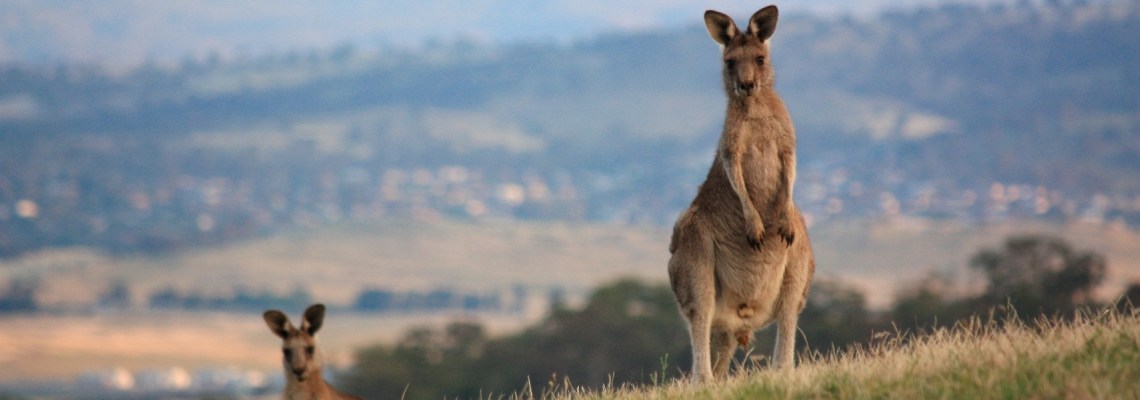
Initially you could be forgiven for thinking that Australia is a sunnier, newer, even happier [4] version of the UK, with a US touch of the gargantuan about it. But what sets it apart as wholly unique, exquisitely exotic is its flora and fauna. The kangaroo, perhaps in conjunction with wily white Eucalypt trees and shrieking cockatoos, is the readily available, easily accessible face of the Australian bush, and a long, long way from distant, familiar lands. Perhaps that is why, even after seven years, the sight of a kangaroo bounding out of the trees and across golden grasslands brings a smile to my face and, still, a sense of wonder.

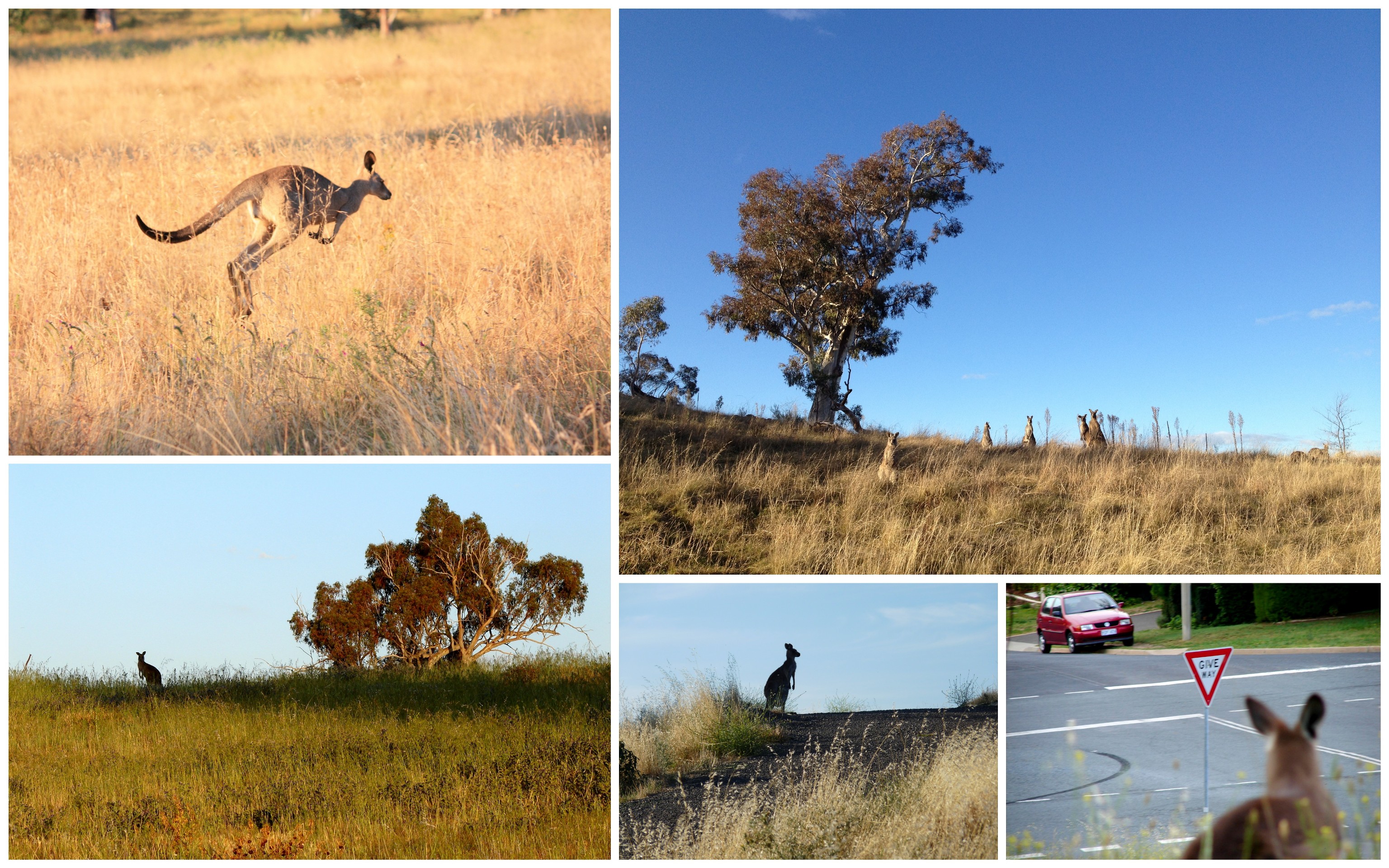
I cannot write about these experiences and this topic without covering time on Red Hill, Canberra. I may have written about this place before. I came across it three days into arrival in Australia, fighting a fight against deep afternoon jetlag driven sleep. Determined not to fall into a coma and then awake all night, I set out along charming suburban streets on one of those beautiful, clear, warming late winter afternoons. It could have almost been an old English summer. Gradually climbing in altitude and property price, the streets ended abruptly as the very richest backed their way onto the grassland and steeply rising bush of Red Hill Reserve. Without intricate knowledge of paths and trails I headed straight up, short and steep to the lookout cafe. Here I viewed Canberra from high for the first time, had a coffee and saw a handful of Eastern Grey Kangaroos milling about without much of a care in the world (much like myself really).

Since that day I almost always saw kangaroos at Red Hill, particularly as I was wont to wander there of an evening. Huge mobs would gather in the grassier patches at the bottom while others would linger along the ridge up high. Mothers and their kids would eye me with suspicion or, perhaps, familiarity. A stand-off ensued, one waiting for the other to move on. But I often emerged the victor in these early days, because I would have my camera with me, and everyone knows that as soon as you bring your camera up to your eye to take a picture of some wildlife, the wildlife flees.

K_kangaroos

Certainly it was hard to restrain myself from taking a picture every time I saw a kangaroo. It was a natural reaction because back then it was all so extraordinary and therefore entirely warranted. Increasing familiarity has restrained my picture-taking compulsion since. In fact, I don’t tend to take my camera up Red Hill anymore…hell…I don’t even go up Red Hill anymore, since I am presently 3,000 kilometres west and it is a trifle inconvenient. However, frequently armed with camera elsewhere a kangaroo or dozen have popped into view. They emerge within the context of a wider landscape, as natural as, well, a man in a cork hat and grubby white singlet. They undoubtedly add something to the mood, grounding the scene in something that is so very obviously Australian. And thus, still, so very exciting.

————————————————-

Kosciuszko National Park is one of Australia’s great national parks, taking in vast swathes of upland country and river valleys in New South Wales. In winter the highest parts are caked in snow, in summer all parts are swathed in flies. It’s a fairly unique environment for Australia, which is mostly dry, brown and flat. Termed alpine, it is not so in the sense of being blessed with gigantic peaks and glaciers; instead ridges and clumpy mounts offer a scene more akin to the rounded peaks of northern and western Britain [5]. It is an ecosystem that is all-encompassing, from rare possums and miniature toads in the boggy bare stretches high up, to common wombats and kangaroos and all of their derivatives [6] in the bush and plains further down. 

Kosciuszko is not so far from Canberra but on one occasion, having spent some time working in the town of Albury, I approached it from the west. It was a long weekend of high country meandering, through the northeast of Victoria and into New South Wales before crossing the Main Range and ploughing on more familiar roads back to Canberra. Approaching the end of March the landscape was in a state of transition, from the dry, warm summer to freezing cold winter nights and winds and rains and occasional snows. The hairpin drive up Mount Buffalo – the closest thing Australia has to an Alpe d’Huez – came with freezing fog that cleared to warm sunshine. The valley town of Bright was commencing its ascent into blushing autumn saturation and wood-fired air. And the trudge along an endless ridge towards Mount Feathertop was blanketed in cloud, a stark contrast to the clear fresh vale below.

Crossing into New South Wales and finally into Kosciuszko National Park, there is eventually a sense that these are proper mountains and not big hills, as the highest points of the Main Range, glowing in the sun above the tree line, rise up more dramatically from this western vantage. The road on this side twists and turns along a narrowing river valley, the dense green bushland plummeting down the hillsides occasionally broken by huge pipes belonging to the mammoth Snowy River Hydro scheme. At some point the road rises and crosses the range at the evocatively named Dead Horse Gap, but before this tortuous ascent, there is respite at Geehi Flats.

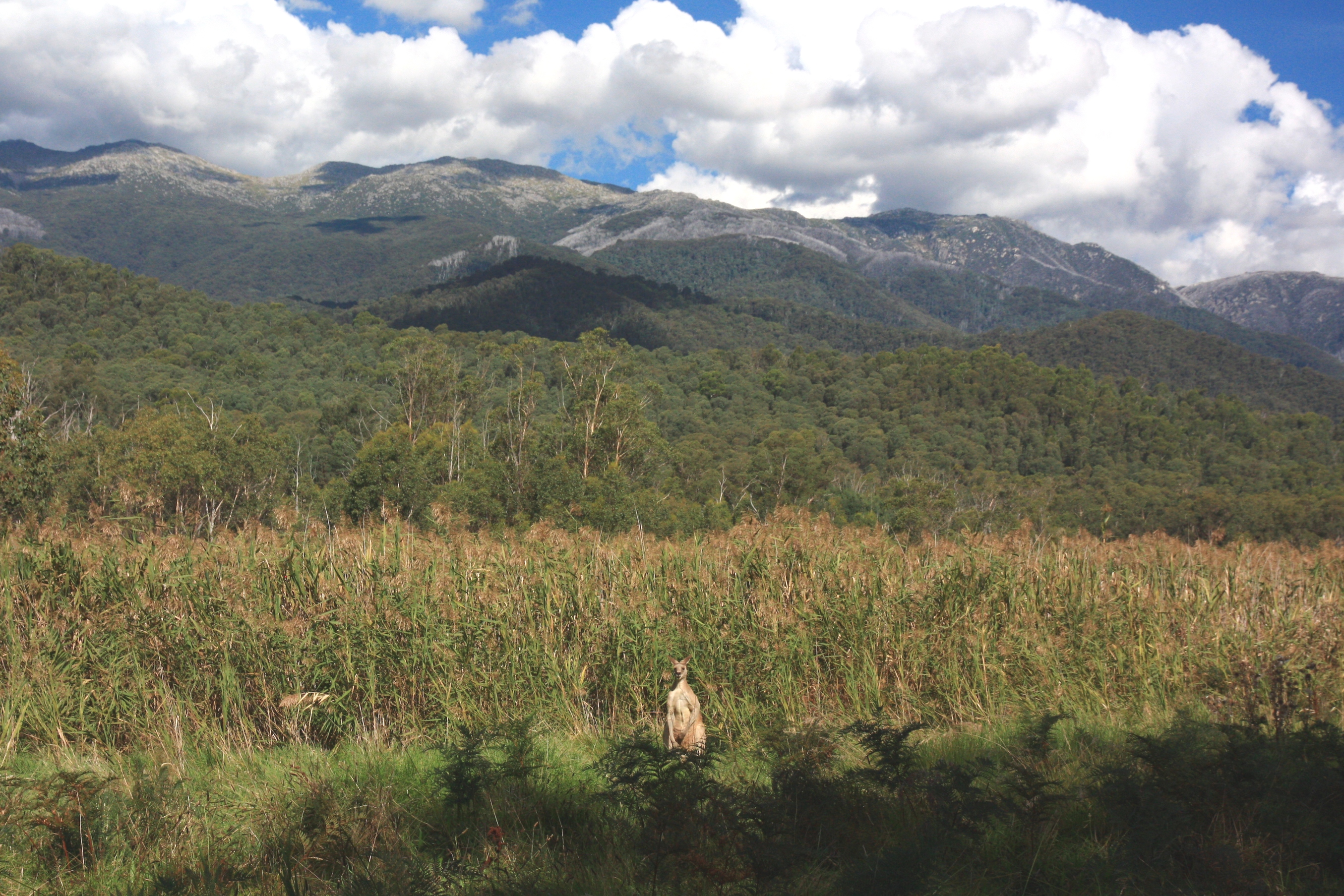
Geehi Flats appears like some hidden valley idyll, where the opaque water of the Swampy Plains River broadens and a swathe of grassland punctures the dark green tangle of gum trees. A spacious area along the river offers rustic camp spots and opportunity to amble. At the northern end a couple of old wooden huts testify to exploration and discovery and, now abandoned, the harsh realities of surviving in the high country [7]. Within this clearing the afternoon sunshine illuminates the rise up to the Main Range and onwards to the white cotton wool clouds hovering above. And as I stare at the serenity, a large Eastern Grey kangaroo stares back. Suddenly I feel like the intruder.

K_kossyroo

On the face of it, it is nothing remarkable…a sighting of an animal that I have seen hundreds of times before and so common in an area where it is protected to thrive. But in the landscape, in the setting, in the primitive high country context it feels very special, like I am the first white man to see it and it is the first kangaroo to see a white man. It is so amazed that it even lingers while I take a photo. It’s a chunky unit, but it is meagre within the scale of the whole, minor against the vast wildness of the scene. Yet here it sits entirely natural, a perfect foreground marker within the larger composition of my vista. What lies before me is Australia and I am reminded at how fortunate I am to be a part of it. Still a land of untapped discovery, of boundless space and unknown potential, it is something to cherish, to protect, and to share. And while the kangaroo is perhaps the pinnacle of the adaptive powers of evolution, as Australians we can still be much, much better than this.


[1] Clearly we only ride kangaroos around on the weekends for leisure, duh. Else the ute wouldn’t get much use.

[2] See http://www.guardian.co.uk/world/2013/jul/22/captain-rudd-australia-depths-shame for just one well-written, reasoned commentary on Australian Government approaches to ‘boat people’.

[3] Not by the team at Mythbusters I hasten to add, but by (and I quote Wikipedia) linguist John B. Haviland in his research with the Guugu Yimithirr people.

[4] I am unsure about this at the current time of writing, with a UK heatwave and cricket team in the ascendancy.

[5] However, rising above 2000 metres it is far higher than anything in Britain, a boast many Australians like to boast about.

[6] By which I mean the whole raft of hopping marsupial type things like wallabies, wallaroos, euros, jackeroos, jillaroos, brucearoos, kangabies, roosabies, poosaloosaroos etc etc

[7] Like camping overnight, when the warm daytime temperature plummets quite dramatically and uncomfortably

Links

All you ever needed to know: http://en.wikipedia.org/wiki/Kangaroo

Everyone’s favourite: http://www.youtube.com/watch?v=uRQnrY5V-rY

Walk the hill: http://www.tams.act.gov.au/__data/assets/pdf_file/0010/390592/cnpmapredhill.pdf

Kosciuszko National Park:

http://www.environment.nsw.gov.au/nationalparks/parkhome.aspx?id=n0018

Hi, country: http://neiliogb.blogspot.com.au/2012/03/hi-country.html

Stop the votes: http://www.amnesty.org.au/refugees/comments/24019/

A to Z Australia Driving Photography Society & Culture Walking

Awesome!

Well what a jolly upbeat place to start, no doubt setting the scene for the boundless enthusiasm that lies ahead. So, in order to put an immediate dampener on things, let me tell you some problems with this word and its application in the world of travel.  For far too long, far too many people, myself included, have liberally used a simple ‘awesome’ to reflect or describe an experience which, while probably very good, perhaps exhilarating, maybe fun depending on company, was technically not inspiring of our awe. Akin to Australian misogynists trolling their way through the hate media in 2012, overuse has diluted its impact. Awesome is no longer quite as awesome.

And who should we blame for such degradation of our language? Well, as every reasoned, fact-based opinion piece would purport, young people and social media of course! I suppose while we are thinking along such lines then we might also point the finger at any combination of immigrants, foreigners, boatpeople, sandpeople, wookies, orcs and trolls. Bloggers, who may fit in any or all of the above categories, are no doubt entirely culpable.

Of course, this is all assuming that we have to blame someone or something, which tends to be the way these days, rather than accept that things change for better or worse and that language is merely an extension of our natural evolution. Besides, I also think we could rule out young people in the blame game, simply because “awesome” sounds so 1990s. A bit like “cool’. Which naturally brings me on to New Zealand.

Nowhere, simply nowhere, have I heard the word “awesome” used to describe so many mundane things…

How were your fish and chips? Awesome, thanks. Cool [1]

How did you sleep last night? Not bad thanks. Awesome

What do you think of the Hobbit movie? Yeah absolutely awesome Peter Jacksons a legend bro

It may be because New Zealanders – who I truly believe are one of the nicest, warmest peoples on this planet – are naturally happy and optimistic souls (the counterargument, typically from boorish Aussies, would be that they are easily pleased). The irony of this is that New Zealand probably contains the most genuinely awesome sights and experiences per capita of anywhere in the world. Yes, experiencing a silent, dawn reflection on the glass water of Milford Sound probably is awesome; the extent to which your lamb chop is seasoned really shouldn’t be.

I am willing to cede that awesomeness is entirely subjective. Perhaps, indeed, a well seasoned lamb chop (which is important) could be awesome when one finds oneself ravenously craving salty meatiness. Thus in travel we will all come across different things that we find awesome. Not just incredible sights but experiences and emotions that pop up in the right place at the right time. The combination of physical place and emotional connection is often the most magical. One can trigger the other. For me, a physicality that is almost impossible to fathom and epic in scale is usually awesome [2]. It is something that is rightly awe-inspiring and as such generates an emotional reaction. Emotions ranging from bewilderment to wonderment. A sense of one’s own time and place in a grander narrative.

Awesome travel experiences should be impossible to fully convey through words and pictures. Which, with a sense of inevitability, I shall now attempt to do, reflecting on two very different environments. One is man-made, the other crafted by the hand of nature.

————————————————–

A_New York

When it comes to epic environments of a man-made scale I’d argue it would be hard to look beyond New York City and the landscape of Manhattan Island in particular. Everyone should visit and everyone should easily find an awesome moment. There is incredulity attached to the place, simply in how a muddy island has evolved over little more than two centuries to become, and I plagiarise, one hell of a town. A testament to human survival, endeavour, ingenuity and skill. A reflection too on human frailty, failings and fears. This may be how far we, as humanity, have come, both in good and bad ways.

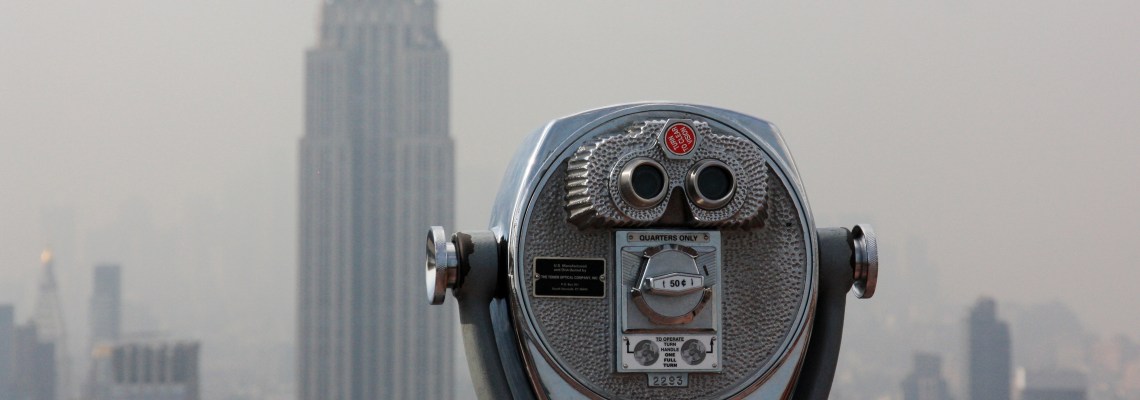
Even from atop the very highest buildings the city is impossible to fathom (remember this being a key requisite of my definition of awesomeness). At my time of visit (2011), the Empire State Building represented the highest point in the city and the experience from the 86th floor around dusk was incredible. Each city block a melding of concrete, steel and glass, bubbling upwards like the most majestic capitalist stalagmites. Each block ringed by a dotted artwork of moving yellow taxis, police cars, black and white suits, turning to streams of candescent red and yellow as darkness falls. This scene replicated and nuanced many times over, forming a feast for the eyes of gargantuan proportions.

There is more to this experience than the visual epic. The sound is at one singular and plural; a constant background hum punctuated by sirens wailing, drills whirring, concrete blocks piling, delivery vans unloading. For all I can make out, the mutterings of individual conversations and transactions rise up – “Get me a bagel schmuck”, “Siphon residual profits into offshore hedge fund now”, “Aw gee, that’s so awesome” – and meld together to form an indistinct, indecipherable story. Yet it is also a soundtrack that is – comparative to the streets below – soft and mellow, calming and reassuring, like a doctor with a good bedside manner, telling you it’s only a cold and will go away in a couple of days.

Without wishing to sound entirely blasphemous or indeed egotistical, it is possibly the closest you can physically feel to playing God. Here I am, overlooking the chaotic order the ant like humans have made. They seem to have done pretty well, but I’m not quite so sure where they are heading with all of this. Still, if it mostly keeps them out of trouble then I’ll let them get on with it, for now. I do wonder if their structures and movements and lights flickering on as darkness approaches are a brazen act of defiance to the nature I have created. But I’ll just make sure the sun goes down and comes up again, throw in some random weather and inevitable seasons. And let them see what they can do about that – ha!

I think it’s this realisation that you are both atop a pinnacle of human endeavour yet still at the mercy of the world around you that makes the top of the Empire State Building genuinely awesome. Coming at dusk accentuates this feeling, the changing colours reminding you that not even humankind can change the revolution of our planet and relationship to other bodies within the solar system (yet!). Despite what we have achieved, parading in such an obvious fashion below you, we cannot completely change the world. And that is a merciful thought. It adds to the relief at being so high, up away from the city, taking a breather from the millions below, yet remaining connected to them. And, gee, it’s a tonic for a great view.

————————————————–

A_bluemtns

Great views abound in the Blue Mountains of New South Wales in Australia. Before I go any further here I should reiterate the guide book lines: they are not actually mountains and they are not really blue, unless Bernard Manning has been resurrected in the wattle to yell out random profanities. Don’t expect high alpine drama of ragged granite shards and snow-capped peaks here. And, despite its very real wilderness, don’t be thinking you’ll be entirely escaping the clutches of mankind, given the most common way to see the place is along the not-so-Great Western Highway, with typically nondescript towns and Sydney style traffic. However, what is really awesome is the fact that you can walk down the streets of several of these towns and come to a rather abrupt halt. Or you could, should you really want to, carry on and topple many hundreds of metres down to join millions of Eucalyptus trees sweeping their way through valleys, tucking up like broccoli textured blankets against sheer sandstone cliffs, sheltering crazy birds and possums and snakes and spiders. A world before we were here.

Even though it may seem about as far away from New York City as the former planet Pluto, there are parallels between the two, conveniently suggesting common threads exist in my take on awesomeness. Sandstone pinnacles thrust upwards like the Empire State Building. Down below, a tree-filled pattern of regular irregularity. Sounds drift up, only, this time, the sirens are the echoes of bellbirds and the cackles of kookaburras and cockatoos. You are once more God-like, and with a sense of befuddlement at the sheer comprehension of what is set out below.

Out there remains wilderness, all still remarkably close to a sprawling city of over four million people. The ‘mountains’ remain an effective barrier to the seemingly endless sprawl, with shoots of Sydney forced south and north to new suburbs promising ample land and countryside but without really being in Sydney at all. The suburbs are unwittingly following the route of a few cows that escaped around 200 years earlier in search of pasture; cows that eventually found their way around the mountains, unlike the intrepid explorers who thought they could just head west in a straight line, endlessly naming everything that got in their way after themselves. Can we deduce that cows are smarter than many 18th century British colonial dandies? Surely not.

From the small towns that emerged once the explorers had stumbled across the mountains (only with the essential assistance of the local Aborigines) there are many vantage points to peer out into the void of the Grose Valley (to the north) and Jamison Valley (to the south) [3]. Some of these lookouts are grand, glamorous affairs, with safety rails and public toilets, information placards and tame rosellas. Echo Point in Katoomba is the most obvious yet still it offers a dramatically photogenic vista. You may find it awesome.

For the record, I find Sublime Point, further along to the east offers greater potential for an awesome experience. It’s harder to reach and thus you are more likely to experience it on your own, just you and the world for company. You are especially likely to have it to yourself at 6am in June, the wind piercing the bones and shaping bleary-eyed hallucinations of the valley mist into a soft, warming duvet. It is elemental, timeless and boundless. And as the first laser beams of sun hit the sandstone and the birdsong strikes upwards from within the mist, it is sublime, it is awesome.


[1] Everything that is awesome is also cool. Some things that are cool may not be awesome.

[2] Perhaps “epic” is in fact the modern day “awesome”, particularly since it requires fewer characters in a tweet.

[3] Further west there is the Megalong Valley, since tamed and given over to farming shortly after someone came up with its inspired choice of name.

Links

Speak like a New Zealander: http://www.statravel.com.au/new-zealand-language.htm

The Empire State Building: http://www.esbnyc.com/

Me and NYC: http://neiliogb.blogspot.com.au/2011/10/spreading-news.html

Bernard John Manning: http://www.bernardmanning.com/

Destination NSW – Blue Mountains: http://www.visitnsw.com/destinations/blue-mountains?gclid=CMzA4_uUmbQCFcohpQodCiYA-g

Crossing the Mountains: http://www.sl.nsw.gov.au/discover_collections/history_nation/exploration/blue_mountains/index.html

Sublime times: http://neiliogb.blogspot.com.au/2011/06/sublime-points.html

A to Z Australia Photography Society & Culture USA & Canada