It feels like an entire Prime Minister ago that I fumbled around with the English language and strung a few words together to put on this interwebs thing. Has much been happening? It rained a bit. There’s some dubious football tournament going on. Twitterred. Trumped. And lately all the right kinds of Farages appear to getting their snowflake-patterned knickers in a twist about some insipid doco on Netflix.
If only I had a palace to turn to. Alas my tenure at Castle Easty in the Kingdom of Wodenne is drawing to a close. Usurpers with gold and all that. Leaving me with the most taxing endeavour for the chronic procrastinator: choices and decisions.
Will I stay in this area with its colourful storm drain network and ever changing traffic circulation? To head to the Westfield or the park or the shady cemetery. Or to wander further into suburban bush, passing emerald greens and into the calming of Red Hill reserve. And onward still to Mugga Mugga and those flask tea log-filled sanctuaries.
Or shall I go west? Life is peaceful there. Especially when you reach the suburban perimeter and cross into countryside. The Ridge at Cooleman proving the very precipice between Canberra on one side and the mountains on the other. Creep downhill, towards the sunset, and a whole city disappears.
It’s a city that – to some surprise – is marching purposefully towards half a million souls. And some lost ones too (I blame the roundabouts). In the north, a recent paddock is maturing into a modern and vibrant centre. There are neat townhouses and shiny high rises and – occasionally – the quarter acre block. Light rail eases into Gungahlin marketplace, cafés bustle beside Yerrabi Pond. Cycle lanes fan out towards Harrison and Throsby and Forde and then they come to an end. Halted since 1994 by the superb parrot and foresight that is Mulligans Flat and Goorooyarroo. So just take a bike that copes with gravel.
The Old Coach Road that passes through Mulligans Flat was the main stage route between Yass and Queanbeyan back in the 1800s. Today it mostly carries echidnas. But, to the east, across the border, Queanbeyan endures. A New South Wales suburb, an Annemasse to a Geneva, complete with different registration plates and cheaper petrol. Could I live in a completely different kind of state?
The answer is kind of yes for at least a bit I think, and, who knows, maybe longer. You tend to get more bang for your buck in Queanbeyan, plus a town centre that if not charming at least pays homage to an inland country town. Riverside parklands provide some breathing space while Mount Jerrabomberra offers a necessary dose of eucalyptus infused altitude with laughter.
Looking back across to Canberra there is another region nestled somewhere between those ridges. The Tuggeranong Valley, a deep south of solid suburbs lapping at a rising town centre. This deep south, a beautiful south? Perhaps upon pockets of the lake with the strikingly proximate mountains beyond. Or standing atop the hummocks of Urambi Hills high above the Murrumbidgee. And back down by its ample waters at Pine Island.
North, south, east, west or simply in the middle? I think almost anywhere would be fine. As long as there is a spot for a walk, a vista around the corner and a decent coffee shop with optional cake. If only I could be more fussy, if only I could narrow things down. But that would whittle down the choices, simplify the decisions. And what kind of chronic procrastinator would I then turn out to be?
So it turns out my last blog post was premature. As I left the UK, the dystopian psychodrama of Who Wants To Run The Country Into Disrepair appeared to be finally coming to a conclusion. But lo and behold it seems we only reached the credits of the extended opening episode of Season 6. Brought to you by the writers that gave us Black Mirror amped up twenty-four hours a day on LSD. God only knows how the denouement of this one goes.
Talking of writing, I see there has been much criticism of The Crown of late for making stuff up but seriously you couldn’t make this shit up. And now we have the prospect of a comeback about as endearing as the return of Kevin Spacey.
With its revolving door of Prime Ministers and warm, elongated summer full of crispy grass and fire dangers, the UK has been doing a fine job imitating Australia. All that is left is cheating at cricket and making proper coffee. Meanwhile, Australia feels more and more akin to England these days. Overblown commemoration of a monarch, escalating lettuce prices, train strikes and days in which the only hope is for a slight chink in the rain. Car picnics will multiply and tea and Digestives will soothe. If only the strawberries were better.
When I bathed in morning sun by the sea in Dorset I knew the next time I would gaze upon the ocean it would be from an Australian shore. Passing through storms, over washed out rainforest roads to a beach in Kiama. A cool breeze whipping off the surf, relieved with spells of sunshine. It was all a bit Devonesque.
I’m pretty sure I read Kiama was one of those places that had a decent pandemic…if you sold or managed to buy a property here. One of those places with tidy shops, decent cafés and a railway station. A fine work from home destination, where you can head for a lunchtime run to the Blowhole and pop on a train to Sydney for an important meeting about advertising.
Today the trains were running, though not quite on time. I was commuting to Wollongong for a glimpse of many more wheels rotating at far greater speeds. The train trundles along like a Home Counties stopping service, only with Australia-scale double decker carriages and that unique easy-going flexible seating. At Wollongong station, bright red hibiscus belies the pretence of being anywhere else.
For a whole week the city of Wollongong was hosting the UCI World Road Cycling Championships, an annual event that is usually far more comfortable threading through venerable piazzas and over short, sharp cotes topped with a medieval church (although next year, Glasgow). Rarely have these elite athletes whizzed past a suburban Supercheap Auto under the ferocious defence of a newly parented magpie. Wout van aaaaaaagghhhht.
Still, they made a good fist of it and today was the turn of the women’s elite road race riders to run the gauntlet. After some scenic made-for-TV coastal ambling and a climb up into the verdant escarpment, the race route made multiple laps of a Wollongong city circuit. With each lap taking around half an hour there was just enough time to intersperse glimpses of a frenetic bundle of colour and energy with coffee and cake, ice cream, fish and chips.
When I broke for fish and chips the heavens well and truly opened again. Seeking protection to feast under a Norfolk Pine, I was astonished to observe a seagull warding off other numerous seagulls and leaving me in relative peace. In what kind of world does this happen? Certainly not back in Swanage.
With the last chip, the shower had passed and the sun came back out as the race reached a conclusion along the Champs du Marine Drive. Two hundred metres from the line, some people whooshed on by and that was that, for today. Back to the station, back on the train, back to Kiama, and back over an alarming mountain of more gushing rain in the pitch black. I felt my car handled it as well as an Alaphilippe, and was pleased to safely bed down to that classic Australian sound of rain on the tin roof of a Ford Territory.
I was camping in Kangaroo Valley, mainly because I couldn’t really find anywhere closer to stay at a reasonable price. This came with added benefits though, including Fitzroy Falls on the way down and a Sunday morning in which disappointing mist quickly lifted to leave glorious blue skies. Ringed by rugged rainforest mesa, its a landscape burgeoning with abundance, a valley carpeted with pasture as green as anything in Devon. It really is quite the enchanted spot.
It was a bit of a shame I couldn’t linger longer now that the weather was fine, but I had another train to catch. The road over the mountain to Berry was much better with light and sun, leading to the bonus of great coffee and pastries in Berry itself. Since I was last here a bypass for the Princes Highway has opened up but Berry itself doesn’t seem to have suffered. It is still, after all, within Sydney Weekender and mass wedding party range.
Unlike yesterday I skirted around Kiama and instead caught the train from Albion Park. This is the kind of area where Australia more closely resembles the United States: freeways and intersections, monotone warehouses, concrete car parks, fast food strips. For later I note a KFC and a servo with cheap petrol, something to help me up over the Illawarra Highway towards Canberra. For now, more frenetic two wheel action was in store.
Today was the jewel in the crown, the World Men’s Elite Road Race. I think the kilometres covered would take them back to Canberra if they wished, but instead more scenic coastal roads, lofty escarpment, and seemingly endless laps of that Wollongong circuit.
Thus I was able to position myself in various spots to watch them stream by, thinning and stretching with the revolution of every lap. Coffee and ice cream and fish and chips was harder to come by as I moved into the suburbs and it was with great envy that I passed parties on decks and could smell the aroma of barbecue lunches. For the most part I lingered in and around Ramah Avenue, a Ramsay Street of clichés beamed to the world. Seventies concrete brick homes, Utes in the drive, magpies warbling from atop bottle green gums. In between laps some hoons played cricket in the street.
Unlike Ramsay Street though Ramah Avenue possesses fifteen percent gradients, which made it a hotspot for crowds with cow bells, fancy dress dinosaurs, imitation devils. At times, cyclists would pass by slowly, though still – to my despair – at a speed I can just about muster on the flat. With each repetition the weariest fall back and you can sense their eyes roll at yet another climb. Dripping with sweat, thoughts perhaps turning to those snags on the barbecue and a cold one at number 52.
Eventually one of them pops clear. A frontrunner who can no longer be caught. A diminutive Belgian, a rising star. Remco, a racer who looks about 12 but acts in a way far more mature than many who should really know better. Real inspiration, real leadership, a long, long way from a Big, Big Dog. And let’s just hope I’m not too premature about that.
Do you ever linger long enough to wonder whether this is the last time you will ever see something again? We pass through, move on, find the next thing all too quickly, rarely pausing to contemplate a moment that will most likely never recur. To do so can be confronting and, deep down, we simply assume – or hope – that this will not be the end.
I can relate to these ponderings on a recent, spontaneous trip down to the the far south coast of New South Wales. Unexpectedly treading along the white sands of the Pambula River once more. A cool but sunny Monday morning when I could pretend at being retired and living my best franking-credit fuelled coast life. Replete with eastern sunrises, fish and chip quests, wooden boardwalks and sand in toes.
I first came across these shallow sapphire waters in December 2006, enamoured with the trill of bellbirds and the dazzling contours of tide and land. Discovering the depths of Australia for essentially the very first time, one of several south coast missions with Georgina who was doing the very same. I materialised in the same place many times since: with Jill in 2013, prior to our off-road slip-sliding drama in Ben Boyd National Park; with Dad and Michael on our way to the border in 2018; a day or two before bushfire calamity at the end of 2019; and, the last time, sheltering from a sea breeze as I munched on fish and chips from Wheelers.
Each one of those visits may have been the last. But here I am again in May 2022. Sharing the place with a couple of fishermen missing all the action in the middle of the river and an old codger and his dog, sporting an unkempt slept-in-car look but quite probably owning one of those houses commanding an outlook over Eden. He remarks on the frenzy of fish coming to the surface, a sight still so remarkable as to catch the attention of even visitors more regular than I.
Like the glittery dance of fish breaching water, there are other jewels to be had down this way. In fact, it’s an embarrassment of riches. After the morning at the river I head back into Merimbula. The night before had seen me navigate its boardwalk until dusk, filling in time before picking up some fish and chips (verdict: a bit underwhelming, sadly). As time-fillers go it wasn’t a bad option, with a few remnants of laser-like sun infiltrating the mangroves and reflecting off rows of oyster bed. There is something so soothing about stepping out on a boardwalk, even as some jog off in a breathless frenzy.
Today I am looking to reacquaint myself with another blast from the past: a coffee and bacon and egg roll nestling within the sparkling cove at Bar Beach. The coffee was everything a perfect coffee should be in such a setting; all too often, advantageous spots such as these yield disappointing fare. But not here. Chilled vibes, friendly baristas, a scattered mix of retirees, young Mums, ambos on a break, fishing type. Drinking it all in.
However, since this is 2022, not everything can be quite so exemplary. I note with alarm that the bacon and egg roll has been crossed out on the chalkboard menu. I set off for a walk to figure out how to recover from such news, passing a food delivery truck on the way up the hill which provides a glimmer of hope. It’s hope that stays with me as I glimpse the estuary through the trees, the beach through the scrub, the ocean through massive orb spider conglomerations. Ducking low under one final palatial web back to the kiosk. Where I now notice a sign on the counter proclaiming no food at all.
Things cannot exactly always be the same as before. And divergence throws up different pleasures and opportunities for new delights. Certainly, eating a couple of – admittedly pricey – takeaway sushi rolls in my comfy fold up chair upon the sheltered sands in the sun was a pretty decent way to spend my remaining few hours on the coast. And the lighter lunch makes a forthcoming stop, another repeat, at Nimmitabel Bakery all the more necessary. Shame.
With cake in mind, I say adieu to these crystal waters once again. Crossing country through Cathcart and Bemboka and up the big hill to Nimmitabel. Struck by the verdurous landscape spilling over the horizon in every direction. Embraced by green with a sense of manure, it only takes a few gears to imagine myself driving in the midst of Devon. There again. By fate, magnetism, and sheer good luck, once more coming back to something I love.
Until recently, the last time I witnessed the ocean it was obediently marching towards the stoic cliff line of North Cornwall. A showery, blustery day unsurprising in early December, as fickle and mean-spirited as the lack of warming jacket potatoes and the distribution of parking tickets. Utterly glorious but only in fleeting spells between disenchantment.
It’s not that I haven’t wanted to see the sea again. But fate and circumstance have been unpredictable allies, regularly conspiring to deliver huge volumes of rain along eastern Australia, more often than not over the course of a whole weekend. Floods, landslips, surges, maelstrom. The usual 2022 kind of stuff really.
Canberra, naturally, has been a little more protected from the onslaught, feasting its way through annual festivities towards the ambience of autumn. But there’s only so many gum trees and mountain vistas and cafes on bike rides and lake reflections one can digest before yearning for a saltier breeze. Waiting, watching, hoping for a porthole.
And finally there is a Sunday in April. A Sunday following several more days of heavy rain but a window nonetheless. A Sunday when I hotfooted it east with haste, bypassing the regulation coffee stop in Braidwood so that I could enjoy one instead on the sand. From Mossy Point down to Broulee. Regulation muffin making for a vision realised.
Broulee is always a good bet, boasting a selection of beaches and bays, aforementioned coffee (and muffin), and a diverting walk around its not quite island. Here it’s not all fine white sand and azure water, but slabs of rock, stunted scrub and seaweed lending a dose of unkempt nature to proceedings.
Indeed, with the generous gift of La Niña there is plenty of seaweed to mar those paradisiacal sands, the water a distinctly browner shade than normal from all the run off. But under blue skies today, who’s complaining?
With a spot of dawdling and reading and milling around to give the muffin at least some time to digest, I headed onto Moruya to source some fish and chips for lunch. Or fish cocktails and a potato scallop to be precise. The cocktails – all crunch outside and softness within – are to be commended, the scallop – all undercooked insipidness – to be fed to the gulls.
Still, the food was more than enough to propel me towards a post lunch lull and I had visions of fading in and out of consciousness on a sheltered bay somewhere nearby. On name alone, Lilli Pilli Beach tempted me towards it and I settled on the sand with hope, only to be distracted by a cool, funnelling breeze and pooey wafts from a stagnant creek. This motivated me to move and explore among the wonderful spotted gums above the bay.
Trying again for a final dose of utopia I pulled off the road at McKenzies Beach. This was more like it: no smells, no wind, and the rhythmic throb of surf as it meets the crescent of fine, south coast sand. And while there was no nap to be had, I sat contentedly, sun on back, reading about some lady cycling around France eating cake. There is no shame to have an escape within an escape, especially when it involves patisserie.
Back in the very present, I finished a chapter atop the Col de Joux Plane and cast imprints of my feet in the sand. Greeting the ocean and wading ankle deep. Thinking the next time they touch the sea, they may well be half a world away.
Is anyone else fed up of living in ‘interesting times’? If there wasn’t the death of a rock icon followed by the self-harm of isolationism followed by the election of a rabble-rousing orange manbaby preceding the onset of catastrophic bushfires coming just before the spread of a deadly virus leading into wild lockdown parties before another calamitous war broke out would things really have been that boring? It’s no wonder many people my age seem to hanker back to the 1990s, when the biggest deal was Jennifer Aniston’s hairdo.
If you are seeking uninteresting times, you could look no further than a long drive from Canberra to Coonamble and back, especially if this takes you through Dubbo. Admittedly that would make for some pretty uninspiring content, but there is comfort and reassurance to be had in the boring. I just don’t know how I will stay awake though, and it’s probably the same for you, dear reader, as well. So, in an effort to entertain all round, I contrived to make the journey into one big loop, extending the kilometres but exposing myself to some new tarmac – and dirt – along the way.
The first of the new ground was along blacktop through rugged Karst country, taking me from Abercrombie Caves down into the fertile plains around Bathurst. I could have detoured around Mount Panorama the right way while I was here, but time was pushing on and I was getting low on fuel. Stopping at a nearby servo offering the cheapest E10 for miles around, I became the proud owner of the most expensive tank of petrol I have ever bought. Until next week.
As the last glowing oranges and indigo hues of sky gave way to a starry night, I settled down for the evening in Sofala. By settling down I mean parking my car in a free camping area next to the Turon River, eating salad and cold pizza in the front seat, before clambering into the back and onto an air mattress. For a night of sweet cheesy dreams, eventually.
Sofala is one of those tiny places whose glory days have long passed. The glory days being – like many of the settlements in this region – the discovery of rich deposits of gold. Information boards display grainy black and white images and describe a bustling town featuring stage coaches and banks and theatres and, naturally, several raucous hostelries. Today, the high street is a sedate affair offering understated charm and just the one, currently lifeless pub.
It turns out there is gold remaining just out of town, or at least the same glow emanating alongside the river. Water has scoured a course deep into the earth, leaving precipitous cliffs towering high above the mirrorlike pools of the Turon. Known locally as Wallaby Rocks (as indicated by a small, hand painted sign), this came as a total surprise, an interesting feature of an interesting drive that you wouldn’t have known about without passing this way.
I was heading up towards Hill End, another settlement grown rich on the sunlight shimmer of minerals. Today it is preserved by NSW National Parks as a historic site, a village of the past functioning in the present. And so there is an old pub that still operates as a pub, a general store that still operates as a general store, and a scattering of private residences with owners doing the usual mowing and chook-feeding and sitting on creaky wooden verandas. I expected a more bustling affair here, but on a Friday morning it felt like I was the only visitor, a conspicuous sight wandering the streets and peering into people’s gardens.
If nothing else, the village is aptly named, clustering at the end of a long plateau above the deep valley of that Turon River. This results in the promise of three separate lookouts and though not quite of a scale of – say – the Blue Mountains or Kosciuszko, they offered fine views of the golden, rolling countryside. Vistas that were, I suppose, somewhat interesting.
From Hill End I took a lengthy, winding road down towards Mudgee. This would be one of the more interesting towns along the route but cognisant of making progress north and noting the fact that I had stayed there before, I eschewed the town centre and made for lunch in Gulgong instead. The lunch would not be as fancy or as overpriced, but it was satisfying enough on a shady bench in a town that appeared to be rooted in the 1950s. Or maybe 80s. Golden times, whenever they were.
With every kilometre the level of interest along the road peters out, the landscape flattening and becoming dominated by grain. A painted silo at Dunedoo testifies to its abundance alongside the effort of these towns to generate some form of tourism through silo art. Further along at Mendooran there isn’t even a silo to justify stopping, but I stop anyway, grabbing a country coffee and slice of carrot cake to appease the bitterness of the coffee.
It is perhaps the plainness of these plains, today frazzled hot and windy, that makes the volcanic pinnacles and rugged chasms of Warrumbungle National Park all the more interesting. More than interesting in fact. Spectacular. I’ve said it before and I’ll say it again, I love this place and its very magnetism makes it impossible to drive on by. The view from Tooraweenah beseeches: come hither.
I should be making for dinner in Coonamble but cannot quite turn left. Sure it is thirty-five degrees, but the midday sun is well and truly a thing of the past and the return of trees to the landscape should offer some shade. Besides, I need to do something more interesting today, something other than largely sitting on my arse as Australia passes by. Climbing more than a thousands steps to Fans Horizon and marvelling in a conglomeration of sweat and awe at an incredible landscape is pretty interesting.
Prior experience of Warrumbungle National Park alerted me to the presence of showers in the campground, something I was thankful to use before completing the final leg to Coonamble. Last time I came here, the town had quite the aroma courtesy of the mouse plague. I didn’t want to be the one bringing that reminder to its townsfolk today. And be turned away for dinner.
And what a dinner, as always. The interest here is less Coonamble but more friendship and warmth and good food and loud voices and love. From twilight walks along the flat roads with my dear friend Norz, to tales of sand-blown motorbike adventures and potential pizza toppings with Howard. And then there is the joyous company of a two year old, one minute impelling me to drag race him in a plastic toy car, the next inventing the new sport of whisk tennis.
There are some mildly interesting things in Coonamble, including a painted silo, the nickname hall of fame, and the languid brown ribbon of the Castlereagh River. This time I discovered the weir, some new metal emus (competing with the Galahs of Gulargambone), an impromptu water park at the pub, and consumption of a different slice at the only café open on a Sunday. It’s not much, but it doesn’t matter.
There were some surprises remaining out of town, most notably the splendid Sculptures in the Scrub. Tucked away in The Pilliga, the setting was unexpected: a fine, forested gorge whose escarpment is punctuated by artistic installations of meaning and connection. I always thought of The Pilliga as one big flat sandy forest, a landscape of monotony that would imperil any who should veer off its dirt roads. Here, you can feel things which are rich and timeless.
Just a stone’s throw away is Pilliga Pottery, but only if you’re a crow or galah. The generous rains of this summer meant the fording of a creek was out of the question, with further unknowns awaiting beyond. So, an hour and a half later, on mostly sealed road via Baradine and Coonabarabran, we were finally feasting on pizza and drinking out of earthenware cups. Another little enclave hidden in the woods, perfect to bunker down from the world.
Interestingly enough, in many ways the world was also here. The terracotta and tiled roofs and earthen walls evoked a late lunch in Spain, pre-siesta. The scattering of outbuildings and cars and rusted trinkets could be backwoods America. And then, as well as pizza on the menu, there was Bratwurst and Sauerkraut to be enjoyed. The reason became clear hearing staff converse in German, a multigenerational family thriving in The Pilliga. A veritable United Nations, without the veto power of a deluded kleptocracy.
And so, we return to those interesting times. Via Warren and Trangie and Forbes and Cowra and Murrumbateman and Moscow. With more time, Warren warrants greater exploration, particularly among the fringes of the reinvigorated Macquarie Marshes. Back in big sky grain country, Trangie may warrant a return purely for cake. I paused in Forbes for a late lunch, one of the last remaining towns of the Central West that I had yet to visit. This too had charm, elegant municipal buildings rising up among a town centre boasting a fifties Cadillac drive-in vibe. Elvis does live just up the road after all.
From Cowra the road is more familiar and home is on the horizon. Interest fades and thoughts turn from the rear-view mirror to what lays ahead. Hopefully avoiding the Highway to Hell.
Freedom. We hear much about its supposed decline. Personally, I’d quite appreciate the freedom not to be exposed to a bunch of conspiracy nutjobs freely protesting about their lack of freedom and flaunting their undeniable individuality through exemplary selfishness. The freedom not to have my head done in.
Sometimes you just want to say “oh f*ck off” and sometimes I do just that when a news story about freedumb fighters forcing cancellation of a charity book fair or abusing a masked-up pensioner or accosting a sixteen year old in a supermarket trying to support the safety of the community gets an airing on the radio. Seriously fuck right off you fucking freeloading fuckwits. Excuse the language but free speech and all that yeah.
At other times it would be nice just to get away from it all, lose radio reception, lose phone signal, lose the presence of moronic people. A solace fairly easily achieved on a comfortable drive down to Kosciuszko National Park and then via your own two feet. Nature, fresh air, rugged wilderness, freedom from freedom.
On the pursuit of freedom I’ve been finding appeal in the idea of multi-day walks of late (or bike rides). Admittedly most of that appeal gravitates towards the South West Coast Path or the Hadrian’s Wall Path or the Cleveland Way or any other number of routes traversed by Portillo, Humble, Green, Reeve, Robinson et al. and delivered to me via the SBS evening schedule. The kind of walk where you can stop after a mile for tea and cake, pushing on for a lunchtime pasty before reaching a quaint coastal village for a pint, feed and cosy room for the night.
Thanks largely to its wildness and locking up of much of the land, such walking experiences are harder to find in Australia. Instead, multi-day hikes are more intrepid affairs requiring the portage of camping gear and emergency beacons and snake bite kits. I would probably quite like these too, if I had a Sherpa. Many people head into Kosciuszko to do as much, and the cars parked at the trail head in Guthega on a Friday indicate some are out there now.
I too park my car up to join the Illawong Walk, slightly anxious about leaving my new second-hand toy overnight. My backpack too is full, but compact in size. Mostly it contains a change of clothes and extra layers and, of course, a flask of tea and accompanying treat from a Jindabyne bakery. Passing the upper stretches of Guthega Dam, through herbaceous meadows and spiky wildflowers, it doesn’t take long to reach the suspension bridge across the Snowy River. An opportune spot for tea and cake already.
I had first come here almost a year to the day. Back then it was warmer and glowing, a delightful surprise full of sunshine, vanilla-honey aromas and Sound of Music earworms*. At the bridge I noticed a new track under construction. Destined for Charlotte Pass. And one year later it is clear. It is free. It leads – sort of – to a hotel.
And so the walk continues to follow the Snowy as it meanders through open valleys and rising hills ever nearer to its source. While at times the vistas are expansive, at others the experience feels enclosed, contained, inching through tunnels of achingly beautiful and impossibly smooth snow gum. Alpine flowers form in clusters of white and yellow and pink. From near and far, the crystal waters of the river alternate between wide, placid pools and frenetic ribbons of white.
The walking is good and never especially steep, with much of the route marked by a metal walkway elevated from the ground to protect the rare and fragile environment underneath. Its newness is clear and sometimes you feel as if you are the first to tread its course. There are other people testing it out, but even these are few and far between.
Closer to Charlotte Pass people become a more common occurrence as the trail intersects with the Main Range circuit. More familiar views open up, from the stepping stones across the river to the outline of the trail weaving upwards towards Blue Lake and Mount Carruthers. One of these rounded humps is Mount Kosciuszko itself, so indistinct and underwhelming as the nation’s highest summit. But this is still a lumpy topography, something I am reminded of once again in that arduous push up to the parking area at Charlotte Pass.
Charlotte Pass village is nothing more than a cluster of ski lodges and cabins which are no doubt a lot more abuzz in winter. It’s another kilometre or two down the road, a fairly uninspiring drag that will be worse in the morning when walking in reverse. At the road junction down to the village a truck displays a massive red billboard promoting food, drinks and coffee. The one and only thing open.
This is the Stillwell Hotel and it also has beds for the night. It becomes clear pretty quickly that I am the only guest. I find it strange and sad that these places are so dead in summer, given the access to many walking routes and biking opportunities and extreme running and perhaps some fishing and possibly just a lovely picnic amongst the wildflowers. Still, at least there is something open (this is an improvement on past years) and there is food and drink being served. For me, a pizza overburdened with cheese will hit the mark, and provide catering for lunch tomorrow.
I theorised I could make this a proper multi-day walk by heading to Thredbo the next day, stopping over at another inn for the night. But there wasn’t much room, Thredbo now the mountain biking mecca and hosting some x-games rad-fest over the weekend. Instead, my hiking adventure merely involved a walk back to the car along the same route. Still, there are new perspectives to be had from a different angle.
Not that I could see the next morning, negotiating the incessant upward angle to the end of the road high in the clouds. Mist and drizzle swept into the valley, adding to the bleakness of Charlotte Pass village and its Stephen King feels. I decked myself out in every layer I owned, hood pulled up and wedged tight by a hat. A few cars passed as I lumbered my way toward the parking area, and I wondered if they thought I was some intrepid adventurer and / or serial killer.
Many, many cars are parked here and it is interesting to see how many days they have booked to be in the national park. Expiry dates on windscreens provide entertainment in the mist and you wonder how those people with three days left are going out in the wild. Other people are just here for the day, and a few gaggles embark optimistically for the lofty summits somewhere out there.
They should be fine. As I re-join the trail back to Guthega the clouds are starting to break up and passing glimpses of hillside and snow-dotted summit provide hope. The dour, swirling air seems to accentuate the beauty of the snow gums and the fragrant shrubs and the pin pricks of delicate flowers scattered among them. Small spider webs are bejewelled by the rain. The river sounds closer and reassuring, a clarion call to guide through the grey.
With a gradual descent the clouds rise and there are pockets of blue sky ahead. A series of summits are illuminated bright, bare hills erupting in shattered outcrops of rock. There is a sense of Dartmoor at times, and in other places a sense of Wales. But no refreshments in a cosy teashop a mile away.
Instead I have my flask and a big bar of KitKat, though it took some time to locate a suitable rock to sit on for morning tea. Further on, past the suspension bridge and close to the car, I finish up the pizza. By now, there are many more people setting out on a Saturday, lugging hefty backpacks with rolls of canvas and sleeping bags and kitchen utensils. Seeking their own freedom.
I am unsure why the final half a kilometre of a long walk always involves a ridiculous uphill drag. I probably could have parked closer. But I am pleased to see my car there, and pleased to see that it opens and starts. Now I am free to drive and free to stop in Jindabyne again and free to fill up with the very opposite of free petrol. Freely cruising up the Monaro and back to my home in Canberra, free of vaccine mandates and usually free of morons. Until they arrive from elsewhere. Both sitting in the nation’s parliament and camping at Exhibition Park. Strangely doing, pretty much, whatever they like.
* current earworm: Hasselhoff. Freedom. Oh, you too?
Trains and schedules go together like trains and – well – Michael Portillo. Sometimes these schedules are fastidious affairs as in Switzerland, while at other times they are indicative aspirations, such as upon the platform of St. Budeaux Ferry Road. The problem with fastidiousness is the absolute carnage when it all goes wrong, like that time when a few trains into Geneva were running ten minutes late. You could see the terror in the faces of panicked locals as they reached for their mobiles to share the drama with loved ones and remediate the knock on effects of being late for an overpriced dinner. Quelle horreur!
When rail lines have faded into obscurity and decades of bureaucracy and nimbyism have finally been overcome to transform them into a gentle thoroughfare for people power, you wouldn’t think schedules really matter. They certainly don’t appear on the jauntily repainted railway sheds and hastily assembled flower beds signifying the start of the line. But schedules matter on a rail trail, because you really need to time that break for morning coffee and cake.
This is why, on a sunny Sunday morning in January, I embarked on the Tumbarumba to Rosewood Rail Trail by going from Rosewood to Tumbarumba. Or to be more precise, Rosewood to Tumbarumba Bakery, the only cake stop in town. Twenty one and a half kilometres to burn a few calories, work up a hunger, and hopefully enjoy some pleasant pedalling as the countryside passes by.
It is astonishing to think this is the only rail trail in New South Wales. While the state once again proclaims its own exceptionalism in leading Australia out of the COVID-19 pandemic (by ensuring everyone gets infected and supports the economic activity of Chemist Warehouse), it is a laggard in the rail trail stakes. Compared with the mighty 145km Brisbane Valley Rail Trail, this effort is a wee path. But what it loses in scale, it makes up for in quality.
I’d say the route is comprised of three parts, though given I am doing the return journey make that six. From Rosewood, the going is easy, fuelled by that initial excitement which makes life on a bike feel good. Rolling hills that could have been transplanted from Devon snuggly descend to flat pasture. Horses and cows and sheep and tractors can all be sighted along the way. Accompanying the trail, the meander of Mannus Creek sparkles in the early morning sun and all of this is undeniably bucolic.
Eventually the trail crosses over Mannus Creek and the landscape opens up considerably. Already warm, I pause in the shadow under the bridge to feast on an orange. Surely this is a fruit that tastes one hundred times better as an accompaniment to exercise. Those half time oranges sure do make sense. But there’s another fruit appearing upon the horizon, with rows of grapevines cloaking the curves of a more distant range of hills.
The going is more exposed now and the incline seems – though imperceptible to the naked eye – more wearying. While the grapes never do quite make it down to the trail there is a blueberry farm on the other side promoting goods for sale. But even this is a little detour and I decide the sound of a gunshot from that general vicinity is enough to motivate continued pedalling. With little on offer between Rosewood and Tumbarumba, I do think there is a missed opportunity here: a pop up stall with fresh blueberries and chilled champagne.
Along the final stretch into Tumbarumba I could use some effervescence. It is uphill all the way, though uphill in that long, circuitous drag of an old rail line manner. But pleasingly it is also a bit more wooded and the passing shade and scent of eucalypts is welcome. You also start to come across more signs of humanity – walkers, people tending to chooks in a smallholding, the sounds and smells of timber being processed.
The trail terminates on the edge of town, high above the shops. So while the plunge down to the high street is most welcome, this – for me – is also of concern for the return. I can see some walking in my future. But in the present it is 10:24, perfectly on schedule to buy a coffee and apple turnover from the bakery. Oh and a real thing Coke and another cheap one dollar slice for the road.
There wasn’t really much to Tumbarumba but I was pleased to find a shady bench in a shady park with shady conveniences. It is the largest town around but that really isn’t saying too much. Still, it seemed amiable and well-kept and it wouldn’t be a bad place to linger longer. But of course I had a schedule to keep: the 11:17 to Rosewood.
Naturally the return was the inverse of everything that has gone before, though with a different angle it is amazing what else you can see. Best of all was the instant downhill where I really didn’t have to expend one kilojoule of fresh cream for five or six kilometres. After that, the earlier enthusiasm drains under a midday sun, and you start to develop a hatred of the e-bikers out for a jolly. My bike seems heavier, the chain rougher, the gears more grinding. Meanwhile my right knee creaks and my butt definitely feels more tender.
I was pleased for a shady rest spot to finish off my performance enhancing Coke at Wolseley Park Station. This was one of several stations that sprouted up to service the local farms, helping to foster small communities with a post office and village school and a dairy and a mechanics institute. If only those mechanics were on hand today to fine tune my derailleur. Still, at least the cows were still about, making some dubious noises. With five kilometres left, my mind turned to lunch.
The steak sandwich at Gone Barny in Rosewood was everything I had dreamed of and more. The more being the side of delicious, deep fried chips. I think, with my extras, this was one of the most expensive items on the menu, at a mere $15. It won’t win Michelin Stars (though that Michelin Man does look partial to a few chips), but as good, honest, tasty food goes, this was an outright winner.
Did I earn this feast after 43 kilometres, a large coffee, a larger apple turnover, a full-on coke, an orange and a few Vegemite Shapes? Oh I doubt it, but the whole point of doing these rail trails is to support these small regional towns, right? Gone Barny is a case in point. Now I leave full, feeling accomplished. Ready to schedule the next one.
Well, this hot vaxxed summer thing ain’t exactly going to plan is it. More like a tepid damp squib. I suppose it’s all that hope and promise unfulfilled which jars the most. There were supposed to be unlimited hugs and nonstop parties, the kinds of things almost all of us have gone without for two years. Instead we get to spend the summer cooped up with Uncle Omi enduring The Ashes.
If Christmas were a Christmas present it would have been the kind of one you tactfully accept and immediately place on the regift pile, hoping that the next one finally brings you that shiny bike you’ve had your eye on. In the end I did well for Christmas gifts, mainly because I embraced that newfound mantra of individual responsibility and thought f**k it. New belt, new shoes, new car. If only I could get some new rapid antigen tests.
So the belt, I mean car. Ford Territory. 2009. Immaculate. Judging by its condition it may well actually have been in the care of one careful lady owner. It’s still in the state where I feel guilty about loading it with a bike and treading in half of Red Hill in the footwell. Today I ate a muffin with the utmost caution, catching and recycling crumbs off my lap. I bet no-one has even thought about the prospect of sleeping in it.
As test drives go, the journey from Canberra to Tumbarumba via Gundagai is quite the examination. Though to tell the truth, everything was so smooth and cruisy I was feeling very sedate by the time I reached Murrumbateman and picked up a coffee. And muffin.
At Coolac, a few random beeps enlivened events. I still have no idea what they were all about but my best guess is speed cameras. Such are the joys of discovery, frequently embodied in the age-old use of windscreen wipers to indicate.
Turning off the Hume Highway, the first encounter with dirt came on a short stretch down to AdelongFallsGoldMillRuins. It was nice to reach the parking area without every bump in the road flowing through my hands and arms and shoulders and back. The only alarm was the slight residue of dust on the shiny white exterior, again besmirching its untainted soul.
The falls were busy, but this was a warm Saturday and it soon became clear there were plenty of swimming holes and replenishing rapids along the river. I’m not quite sure where all these people came from given the size of Adelong itself; I guess passing through, touring, going on extended test drives and the like. Still, it was a nice spot to pause and amble and eat a sandwich from my fridge plugged into one of three power outlets available.
Through Batlow and Tumbarumba I was reminded of Saturday afternoons in small town Australia, where small towns become even smaller. Barely an IGA and a sleepy pub open to distract from the nothing much going on at all. It feels all very siesta like, as lackadaisical as the large Australian flag hanging limply in the front yard of a wooden cottage.
And what else to do but naturally acquiesce to the next part of the test drive experience: sleep. The excess of space in the Territory provides the option to lie flat. To lie flat parked under a shady tree, the open back door framing views of a burbling river as chirpy wrens and a delightful breeze induce that state of lolling semi-consciousness. Everything working as it should.
I had parked at Paddy’s River Flats, where a free campground attracted plenty of others with the allure of flushing toilets and hot water. Other than one or two tents, most visitors were equipped with opulent caravans and big rigs and six ring barbecues and diesel generators and that most prized accessory of the dyed hair nomad, the satellite dish. The fact that I could just about arrange seats in a car to lie flat seemed relatively insignificant.
Without a TV I was content to make a cup of tea and sit in my chair beside the river for a while. I would have gone for a drive to explore some more but I was reluctant to risk losing this prime waterfront location. Lessons for next time, where bringing a tent – even if half-heartedly assembled – would at least allow me to mark my territory.
Unable to sit and do nothing for too long, I set off on a walk downstream where there was the promise of some waterfalls. Unfortunately the track to reach them had fallen into considerable disrepair following floods and fires, and it simply became too much to try and bush bash my way through. The road near the campground was quiet and I walked along this for a while instead, soaking up the golden hour as vistas opened up.
It was disappointing not to see the falls but there was another way, another time. An episode in which the Territory really felt at home, really felt like it started to belong. Seeing me through a reasonably comfortable night, the car took me along the road to the falls, twisting downwards to a parking area among the eucalypts. The first orange light of the rising sun lit up a picnic table and beckoned me to have breakfast and a cup of tea. The whistle of the shiny green kettle was poor competition for the sound of thundering water rising from somewhere deep below.
And what a spectacle Paddy’s River Falls turned out to be, that classic Australia assemblage of escarpment and water and generous growth fed by never-ending spray. A wonderful, inspiring culmination to this test drive that evokes the promise of more adventures, more enchantments, more new territory to come.
Now all that is left is to retrieve the bike also comfortably stored in the back, and adventure on two wheels instead. But that is a story, a gift, for another day.
Two weeks on holiday normally wouldn’t be such a strange thing. But it seems a pretty big deal these days. In the world BC, holidays would involve a month crisscrossing the UK in search of friends, family, scones and ales. Plus a European side trip featuring alps of snow and mountains of cheese. One day I’ll make it home again.
However, over the years I’ve come to think of home as more than a singular physicality. There are homes and, following the big bike ride, I needed to somehow find my way from Point B – Caloundra in Queensland – to Point A – Home, Canberra.
It had been a hectic holiday really, and I had visions of a couple of days nestled beside the ocean in some mild clime with good coffee. Perhaps a pool to soothe aching muscles. And a regular ice cream jaunt in the afternoon before taking in the final golden light of sundown. Alas, the weather forecast didn’t look especially conducive to this fantasy so – once again – I opted for the John Denver approach to travelling home.
Still, this wasn’t before at least taking in the sand and water on the Sunshine Coast. It was a brief foray, in between heavy showers and ocean chop at Alexandra Headland. Nearby, the Sunshine Plaza didn’t really offer a brighter disposition but eventually I located some much sought after rocky road. For later.
Faring Jason well with the understanding that we will one day again reunite for rail trail cycling magnificence, I fired up the four wheels and headed west. The road home was all smooth to start, taking me back – as it happened – into a land previously criss-crossed on two wheels. The second time around offered an opportunity to right some wrongs.
The first was pausing to marvel at the Kilcoy Yowie, which I had failed to note when we drove through here on the way to start our bike ride. It’s just, well, I cannot really explain. Further on, once more in Blackbutt, I called into the bakery where I scored a coffee and was confronted with the kind of display that causes indecisive cake-lovers like me to break out in a cold sweat. I think I went for sticky date fudge slice when pressed.
After the kilometre zero of Yarraman, the road led on towards Kingaroy. The extent of my knowledge about Kingaroy is absolute peanuts. Which is pretty spot on, given the area is famed for the cultivation of kernels. When in Kingaroy, Go Nuts is not the motto on the town sign, but you should at least stop by the Peanut Van. And if you want a taste of the manic, pop to the local Woolworths.
I was stocking up for the return to camping with a laser-like focus on making it as minimal effort as possible. Banana for breakfast. Packet soup for dinner, with a carrot and five frozen gyoza to add some bulk. Tent popped up, cooking by torchlight would never be so satisfying, and soup proved perfect in the cold.
At altitude in Bunya Mountains National Park it was surprising how cold things were, given I was still in Queensland. The Bunya Mountains rise up distinctly from the surrounding plains, a wild island among the productive downs. It is very much an island of biodiversity, illustrated by the large swathes of unique Bunya Pine. These giant, Monkey Puzzle type trees only grow naturally here and in a few smaller, dispersed pockets further north.
The trees yield massive cones which offered good tucker for Aboriginal Australians. When I see one in the small visitor centre, I am relieved my walking for the day has finished. Not only do you need to be wary of snakes, spiders, ticks, and stinging trees, but giant bloody cones falling on your noggin as well.
I absorbed the Bunya Mountains with a nice loop walk through dense forest, following lush gullies and creeks and occasionally peering out of the woods to see Queensland below. The gentle chirping of birds was a constant, but the dappled light and dark undergrowth made it impossible to sight any of the blighters. The forest had the becalmed air and melody of one of those meditation soundtracks cobbled together on Spotify by a bearded man wearing loose flowery pants.
Not that this led to a relaxing night. While I managed to get fairly snug, gusts of wind provoked regular rattling of canvas. With fitful rest, I rose early the next morning to discover my head in the clouds. With patience, this would rise and fall in swirls, chinks in the gloom revealing a sunny day unfolding for the Darling Downs.
Gravity would propel my car that way, rapidly plunging from the Bunya Mountains towards Dalby, where the day was indeed sunny. Dalby seems every bit a forgettable town, neither obviously appalling nor exceptionally outstanding. This is perfectly encapsulated by the popularity of a Coffee Club and Brumby’s Bakery on the high street.
Out of Dalby, large cotton fields once again spilled out towards the horizon. It is one of the regrets of the trip that I never managed to find a spot where I could brake abruptly and take a photo of them. Instead, here’s a metal yabbie at Moonie next to tennis courts and much sought after public toilets.
Moonie was little more than a junction on the way to Goondiwindi, a border town receiving attention over the past year for its checkpoints ensuring Queenslanders are kept safe from nasty viruses prior to a state election. As a border town it possesses all the essentials, retaining the chain store vibe of Dalby for passers-by who simply yearn for a bit of predictability. For lunch I grabbed some takeaway from Red Rooster, before a fuel stop and then a frozen coke from McDonalds to take me into New South Wales.
Crossing the border, one step closer to home. Yet still a million miles away. It certainly felt that way once my frozen coke had run out and I found myself on a bumpy road through endless fields of grain. The road – between Boggabilla and Warialda – was doing few favours to my left shoulder and arm, which had now developed post-cycling strain and pain.
In my ideal version of today I was reaching Bingara by two, allowing time for a relaxing nap before a potter around. But I’ve continued to underestimate Australia and the quest of driving across it. It was pretty much four when I checked into a motel – cheap, basic but welcoming in a countrified beige blanket kind of way. And not camping. One of the two double beds still looked good for a nap.
I vaguely remember passing through Bingara on another trip back from Queensland, the town now an intersection with the past. That time around I had come through Inverell and Myall Creek on my way to Narrabri and the Warrumbungles. Again attempting to cover a million miles in a day, I didn’t even stop here, but remember it conveyed a surprising rustic charm.
In the remaining light of day I therefore walked down to the Gwydir River and back into town where clusters of tradie and caravanning couples were gathering for Friday night dinner outside the pub. Along the high street, trees turned auburn signalled the passage of time and place that had gone on since I left home. And with the sun dipping over the hills, there was a tangible chill in the air. And plenty of chilli on my pizza.
Bingara enjoys a fine setting, nestled in a valley backed by rolling ranges. It’s technically in New England and feels that little bit closer to civilisation, if civilisation is Tamworth. I took in the surrounds from a lookout high upon one of many hills, wondering if I could see my destination. But that was still a long way off.
The road between Bingara and Narrabri must surely rank as a hidden gem. In between the two towns, the crazy volcanic landscape of Mount Kaputar National Park infiltrates, regularly revealing golden panoramas and rugged lumps thrust upward from the horizon. It’s one of those landscapes that makes you want to stop at regular intervals, eating yet again into your estimated journey time.
With a lunch date in the diary, I didn’t really have time to pause. I was in two minds whether to stop at Sawn Rocks, but being only a few hundred metres walk from the car park I figured I could squeeze such spectacle in. This is one of Australia’s best ‘organ-pipe’ rock formations, created in geological tumult and chaos. An experience I’m sure my car was feeling for the rest of the day.
I am not going to profess to taking it any faster than 110kph of course as I progressed towards Narrabri. The sacrifice for Sawn Rocks was no coffee in Narrabri and no wee in Wee Waa. By time I reached the small settlement of Pilliga I was more than ready to pause for some brief relief.
Pilliga is – shock horror – in the heart of The Pilliga, a vast, largely flat plain of sprawling dry forest and sandy soil. At one point – and I may have been hallucinating by that stage – I passed three camels. There was no chance to stop, and I’m not entirely sure if they were on a large farm or simply roaming wild. But the fact that you can easily imagine them roaming wild here says everything about the type of environment you are in.
Talking of wildlife, did I expect to find myself in Coonamble again? Well, yes, but I never expected I would be so ecstatic at reaching the place. Oh, there’s that spot I got chased by rabid dogs. Over there, the only café open on Sunday. There’s the river, languid and brown. The supermarket with the chemical mice killer aroma. The partly constructed public toilets embroiled in drama. And the home just out of town where I can again feel at home.
My plans were vague and uncertain and once pork belly was mentioned for dinner I knew this would be my spot for the night. Before dinner, lunch, a mere 45 minutes out of town. The Armatree Hotel is the best pub in town, the only pub in town, practically the only building in town. It has character and authenticity soaking through the wooden floorboards, corrugated iron bar, and XXXX on tap. Out back, the outback. And a beer garden, lively with get togethers and celebration of another week fulfilled.
I like the fact that I can come away from the Armatree Hotel having chatted to an old codger in a ten gallon cowboy hat while we both emptied the contents of our bladders. “Great place out here, hey”. Sure is mate, sure is.
After a restorative night, it finally was time for a homecoming. Coonamble to Canberra in one hit is a pretty lengthy affair but once through Dubbo (and a much-needed stop for coffee), the drive was pretty enjoyable. The weather had closed in and rain was falling as I reached Molong, giving the place an added autumnal melancholy. All across the Central West, trees were exploding crimson and gold in small towns like Cudal and on toward Cowra.
The rain had stopped and things were brighter by time I reached fairly familiar territory in Cowra. Not so long to go now. Just need a final country coffee to push me on, eclipsed by a delicious treat…because I am still on holiday after all. Just about. Down the road, Boorowa. Then Yass. Murrumbateman. Hall. And at last, home.
You’d have to be slightly crazy to drive six hours just to visit the Gilgandra Rural Museum. Yet craziness is exactly the vibe. Assembled outside, various mechanical contraptions seek to separate wheat from chaff or draw water from the ground or power the transistor radio of old Sheepwash Charley of Dunedoo. Among the pioneering relics, random two-dimensional figures play out a scene which probably didn’t make the final cut of the original Ned Kelly movie. All the while, the incredible Man on the Thunder Box remains impassive.
I didn’t travel six hours for the Gilgandra Rural Museum, but paused for one final stop before setting out for Coonamble. For me, Gilgandra signified a final outpost of familiarity if not necessarily civilisation. Along the way, more gentrified country towns like Boorowa and Cowra and Molong had breezed on by. A stop in Wellington illuminated both the charm and economic fragility of life in a country town, while the major centre of Dubbo came with all the drawn out trappings of tractor dealerships, coffee clubs and chequered fashion wear.
It was after Dubbo that I first encountered a finger or two. A single raised pinky from fellow drivers attempting to overcome the boredom of the Newell Highway. They obviously hadn’t stopped at the Gilgandra Rural Museum for there was little cheer or energy in their movements. More an obliging duty to signify they are alive and to acknowledge the presence of other lifeforms.
It is never clear when, where or why the finger zone starts or ends. Remoteness plays a key role, but then some areas of barren desolation barely provoke a twitch. This confuses me to the extent that some people get the finger, others get a V sign, others a full hand and, when I have faced enough rejection for one day, the rest receive absolutely nothing. One of the worst feelings in the world is being too late to acknowledge a cheerfully waving man in an akubra as he whizzes by south, just because you have been spurned one too many a time.
Another hour of this kept me mildly entertained as I broke new ground on the Castlereagh Highway. Occasionally the road’s namesake river snaked nearby, sandy with pools of water nurturing gum trees and fields of weedy yellow flowers. Corrugated metal galahs counted down the approach to Gulargambone, while a fence emblazoned with a big G’DAY greeted me as I left town. Late in the day, Coonamble embraced me with fiery skies and the smell of mice disinfectant.
I had come to Coonamble as part of a bigger trip on my way to Queensland. And while there was distraction in its artistic water tower and a sense of disappointment in its Nickname Hall of Fame (not even being so bad to be good), the main purpose of the stopover was to visit old – and young – friends.
And so good food, company, and row row row your boat was the main order of events, delivered in abundance. I did sample hot coffee from both local cafes and discovered the intricacies of a remote town of 2,000 people where everyone knows everyone else’s business.
One late afternoon I even went for a little bike ride, which was quite delightful at first, cruising along flat countryside lanes and discovering a peaceful spot by the river. Then I ended up in town and got chased quite aggressively by the obligatory roaming hounds. The full Coonamble experience.
One of the plus points to Coonamble is its proximity (at least in regional Australia terms) to Warrumbungle National Park. A jumble of volcanic lumps and spires rise up prominently from the flat surrounds, tantalising from afar in every direction. A dirt road takes us to a spectacular reveal of this massif from the west, before becoming more deeply immersed into the heart of the park.
I’ve done longer, signature hikes here before but with little Henry enjoying shooing flies in a backpack we take on a shorter walk to Tara Cave. Still, it’s a delight featuring a small creek crossing and burgeoning bushland, rising up to reach an interesting shelter with signs of tool-sharpening from many centuries before David Bowie put on some red shoes and danced. And being in the north west of the park, a balcony view reveals the splendid panorama of this wonderful land.
On the other side of the Warrumbungles is the town of Coonabarabran. I discover this is known locally as ‘Coona’, even by the Coonamble locals who might also claim that moniker. Coona is a pleasant enough place, with an extravagantly decorated and tasty Chinese restaurant and – the piece de resistance – a Woolworths. Coming from Coonamble, there is something utopian about entering a supermarket with fresh produce and aisle upon aisle of comforting familiarity. Like a child in a candy shop. Or Francois in a fromagerie.
And so, a final fresh dinner on Sunday night and another fine breakfast the following morning sets me up for the journey ahead. It’s a long and lonely road, and I feel a touch flat about leaving a world of comfort and companionship. After an hour or so, Walgett appears, which is hardly the kind of place to lift a funk. Fuel, toilet, and a crossing of the Barwon River at least interrupt the journey.
The river is fascinating in its own way – still partly in flood thanks to storms several weeks ago in an area many hundreds of kilometres distant. Waters progress at the rate of Australia’s vaccine roll out, gradually collecting into wide channels and floodplains, seeping slowly through the interior. Eventually these waters will meet the Darling, which will meet the Murray and then find their way to enter the Southern Ocean southeast of Adelaide. They are taking a far more leisurely trip than me.
After the Barwon, the landscape alternates between wide flat expanses of saltbush and clusters of hardy eucalyptus forming around further pools of floodwater. Emu sightings are becoming commonplace and as I near Lightning Ridge, the most astounding sighting yet: an emu comprised of steel girders, car parts and a whole VW Beetle. Stanley the Emu is – according to Tripadvisor – only number 8 of 17 things to do in Lightning Ridge. I clearly need to take the short detour to visit this place.
Lightning Ridge is not just a flashy name but offers some genuine drawcards. There are artesian bore baths and a house made of bottles and – probably the best of the lot – a gallery featuring Australian classics from John Murray. I almost buy a signed print of a rich red sky over a dusty outback road to remember my trip by, but figure it is far too early in the trip. Damage from dust or mice or man-eating snakes would probably become its fate.
A spot of fossicking may provide some funding for such works of art though. Lightning Ridge is best known for its opals, which have been heavily mined and continue to be sought after today. All around town, deposits of rock form in small mounds and people still come to set up a home among the pickings. Corrugated metal and rust are a predominant theme which, set into a glaring white earth and fierce sky, offer a certain Mad Max vibe.
Seriously hoping Mel Gibson is not out in town harassing people I decide it’s time to move on and head north. Well into uncharted territory, even finger waves become few and far between on the way to the Queensland border. In the middle of nowhere, a giant billboard featuring smug people on an idyllic white beach blares “WELCOME TO QUEENSLAND”. A few kilometres further on in Hebel, a ramshackle pub bedecked with golden signs for the insipid state beer confirms the change.
It feels like Queenslanders are – in this part at least – not so much into the finger waves. Perhaps they notice my ACT plates and are suspicious of southerners with their lattes and COVID-19 outbreaks. Gradually the barren landscape around the border appears to become more tamed, more cultivated. Cattle studs, sheep farms, giant silos. I notice fluffy white patches lining the side of the road and correctly deduce the presence of cotton farms. All I really know about cotton is that it is very water-intensive and seems at odds with the land I have come through. But that’s utter Balonne.
I’m not exactly sure how you pronounce Balonne, but it is the big river of the area, part of that same system which will end up in the seas off South Australia. I initially encounter it in the town of St. George, the first place of any size in my progress north. The river lends St. George a somewhat graceful air and no doubt a certain prosperity from cotton and other crops. It’s the kind of spot – at four in the afternoon – that would be perfect as a stop for the night, but I haven’t really made any plans. I decide a cup of tea and slice of Christmas cake will be enough to spur me on for another hour to camp.
Thus I arrive in Surat as the daylight fades. While escaping ferocious heat is a benefit of travelling at this time of year, the downside is the early sinking of the sun. I decide setting up the tent in the dark would be too much of a palaver, so organise my car so that I can sleep in the back. A process which also involved much palaver. But somehow, after 550km on the road, I manage a reasonable, comfortable night of sleep.
As the morning light emerges, I am pleased with my choice of accommodation. The free camping spot in Surat is spacious and shady, next to the river and includes the luxury of a well-kept toilet block with clean, running water. I think havens like this are a good idea for tiny towns in which you probably wouldn’t stop otherwise. Especially for those weary travellers who are in need of a coffee.
Crossing the Balonne again I walk over towards town and follow the course of the river through well-kept parkland with well-kept barbecues and well-kept playgrounds. I am starting to notice just about everything in Surat is well-kept. There is a clear civic pride and welcoming air around the place that you wouldn’t really imagine by just looking at it on the map.
The main street – which is also the Carnarvon Highway – boasts a swanky looking grocery store, a pub and motel, a small museum, a few civic buildings, and a number of bottle trees. I noticed a few of these last night on the drive up and they are impressive specimens which conjure up a touch of African exoticism.
There is also a café doubling up as providore-cum-giftware shop. It’s still before nine in the morning but the sticky date and walnut cake looks too good to pass up, and I feel obliged to support the local economy given the free accommodation. That is, once I finally download ‘Check In QLD’ to add to the growing array of pandemic-related apps cluttering my phone.
I was keen to linger with coffee and cake until nine to poke my head into the museum opposite. This appeared from the outside to boast a little bit of everything. And indeed there was everything from old bottles and wool specimens to bushrangers and drovers around a campfire. A supplementary aquarium contained species from the Balonne and an adjacent art gallery was crammed full of work from one person which can most generously be described as eclectic.
The centrepiece however – and main claim to Surat – is being the setting for the last ever regular service of a Cobb & Co stagecoach in 1924. While life in an old Subaru can seem a little uncomfortable, these coach rides were another matter altogether. Passengers were able to pay handsomely for the privilege of freeing bogged wheels, clambering in tight spaces to shelter from storms, delivering post, opening and closing gates, and occasionally wading through flooded creeks and streams.
Such ardours meant the journeys were slow, and changing stations popped up along the way for a swap out of horses, crew, packages, and people. Cups of tea and plates of scones might have been arranged or accommodation for the night provided if it was getting late. Kind of like a nicer version of a Travelodge on the M42.
While the form of transport might have evolved over the years, it felt like Surat – this most unexpected of well-kept towns – was still engaged in such a modus operandi. Allowing weary travellers like me to take stock and convalesce, to rest heads and bodies, to receive generous nourishment. And most critically, to recover our worn out pinkies so that we can suitably venture out once more into the finger zone.
It is beyond doubt that coronavirus has altered our perception of the exotic. Whether it be Gundagai or the garden centre, there is much greater thrill to be had in what was once so mundane. I kind of like this revived appreciation for what is immediately around us, as we persevere in seeking out that which can still be discovered. A new view, a different seat, a random town. Or even just a change in how we think about the same place.
My first impressions of the Snowy Mountains in Australia were underwhelming; being neither snowy nor particularly mountainous. With more than a passing resemblance to Wales, it was a bit odd in 2006 to come all this way for – well – Wales. But a few years ago, back when such things were possible, I had a brilliant time in North Wales. And in the context of what is and isn’t possible today, the Snowy Mountains seem to eclipse even a perfect hike to Snowdon.
A multitude of brown tourist signs and a $17 entrance fee help to create an expectation around Kosciuszko National Park. A spacious campground in a peaceful setting at Island Bend adds to the holiday feels. It’s only for the one night but when you have an instant tent, one night is as good as a holiday. An hour later, with instant tent finally erect, a cold beer is clearly required.
But this is no place to sit and drink beer all day, well not for me at least. In between a reasonable night of comfortable sleep, there is the Welsh countryside to explore. And, oh boyo, does it deliver far much more in 2021.
Illawong Walk
Smitten at six in the evening. I think this walk was as much about an ambience, a mood as it was about the open upland panoramas and shimmering river views. It was about the pure sound of that river and the glow of the light. It was about a subtle fragrance like jasmine tea, emanating from the small shrubs and grasses through which a narrow track forged. It was about finding a little lodge perched into the hillside and reaching a swing bridge which would take those more intrepid further. It was about a time and place in which each new step came with the thrill of discovery.
The walk starts in Guthega, one of those small clusters of lodges and chalets which counts as a village up this way. Bustling in winter, these places are weirdly soulless in summer, relative ghost towns seemingly abandoned as a result of a nuclear meltdown or similar. Only occasional voices from balconies hinted at a weekending populace, and numerous cars and trucks formed towards the trailhead, many destined to greet their owners returning from overnight jaunts in the wilderness.
Guthega also exists I suspect due to the dam, where the Snowy River is first brought to a halt on its journey to Marlo. It will be tampered with and drawn from many times on its way to Gippsland, but above the Dam it is truly free to roam. It’s a freedom that rubs off on those who follow it.
The trail officially comes to a terminus at Illawong Lodge, the small building tucked into the hillside. It looks and feels idyllic right at this moment, gazing out over the valley as the sun sinks low. A cold, amber ale would be perfect followed by a bed for the night, but my bed is presumably still standing back at Island Bend.
There is one last hurrah, just down from the lodge. The swing bridge across the river acts as a landmark, a destination, a place to be daring and frolic and to possibly carry on along unofficial, unformed ways. The landscape certainly does its best to suck you in further, and perhaps one day it will. Near the bridge, a new path appears to be undergoing construction, following the river further into the wild to someplace somewhere. There is still more to discover.
Main Range with diversion
I have climbed Mount Kosciusko several times and while there is much to enjoy it’s barely an achievement to rival Kilimanjaro or K2. The route from Thredbo, cable car-assisted, is a family-friendly jaunt, while the quickest way from Charlotte Pass follows a wide trail that incrementally rises without much of a fanfare. By far the best route is to follow the Main Range, crossing the Snowy River and rising to a ridgeline over 2000 metres which plunges over to the west.
Up with the kookaburras I reached Charlotte Pass for brekkie and a cuppa on the most exquisite balcony, the first rays of sun hitting the lofty heights out in front of me. I was heading for somewhere in that direction but hadn’t particularly finalised where. My main desire was to reach a point where I could marvel at the spectacular Western Fall disappearing into the horizon. Carruthers Peak or Mount Twynam would more than suffice.
Immediately the trail is a joy, largely because you are heading downhill to that free-running Snowy River. Halfway down, I encounter another new track being constructed and – guess what – find that it will lead east to Illawong Lodge. An accompanying notice suggests this is part of a planned multi-day walking track and I can again picture a night at that lodge with a cold amber ale on the deck.
For now, I have the Snowy to cross without a swing bridge. A series of boulders offer stepping stones, with only one jagged pyramid causing some complexity. After that, it is easy and getting to the other side without making an absolute tit of yourself in front of experienced hikers coming down from a night in the wilds is almost as satisfying as simply being here.
It is a good job life is sweet because there follows an incessant drag uphill and the prominent hulk of Carruthers Peak (2,145m) still seems a long way off. Along the way, the view down to Blue Lake offers a break and not long after the trail reaches the point at which the landscape plummets dramatically over the other side. It is a spectacular view, heightened by the big reveal as you come over the rise.
It is at this point that the Main Range trail veers left, and you can trace its outline steepening up to the lofty heights of Carruthers. To the right, an old, faint four wheel drive track is not promoted but neither is it barred. My research tells me this leads towards Mount Twynam (2,195m) and while I may not make it that high, I can at least aim for a rocky outcrop closer by.
There, mosses and flowers and hills upon hills upon hills stretching into the distance. Among these hills, the nearby Mount Sentinel stands out as the most jagged, traditional-looking mountain. This could be discovered one day too, but I would like someone else to come along for the ride, as a safeguard.
As tempted as I was to push on from this outcrop, I also figured I had reached my goal for the day with such epic vistas. I had also run out of sunscreen and broken my seven dollar sunglasses, so there was good sense in deciding to return before the day raced towards high noon. Good sense continued with a sandwich stop closer to Blue Lake, a baguette loaded with ham and brie beside a glacial cirque conjuring the pretence of France. C’etait la vie.
After such good sense at not being sucked in by the landscape at previous points, the sandwich gave me fortitude to have a nosy closer to Blue Lake. And then a faint track led towards Hedley Tarn before it simply vanished.
I spent a good 40 minutes trying to figure out a way back across to the Main Range trail, barely a kilometre away and visible thanks to its regular flow of people walking up and down. Encountering boulders and impenetrable shrubs I eventually resigned myself to retracing steps the way I had come.
All this extra energy consumed, and a sun now high in the sky, made me fearful for the final surge: the re-crossing of the Snowy and that godawful climb back up to Charlotte Pass. But in the end, it wasn’t so bad. The other half of my sandwich boosted the energy, and strategic photo stops offered necessary breathers.
While there is pleasure in an ending, those final stops proved bittersweet; captivated with the wild beauty and melancholy that it would soon be left behind. If it takes a pandemic to make me realise how special a place Kosciuszko National Park is, let’s please not have more pandemics. But instead let’s try and remember what it is like to cherish that which we had previously overlooked. Like Wales.
Many of Men at Work’s lyrics from that infamous song are undoubtedly insane. And for a sparsely populated continental land mass frequently sun-baked and on the very fringes of survival, there are legitimate question marks about its plentifulness. Plenty in size and scale and cultural history. Plenty in coal and iron ore and brazen luck. Plenty in toilet roll, despite everything.
Today, in the natural world around me, there appears again this land of plenty. Turn back a year and there would have been much head-shaking at such a thought. A cruel fantasy. But since that point, we’ve had plenty of rain resulting in plenty of growth leading to plenty of productivity. Not all of this is welcome, with rabbits and mice and locusts replicating at the rate of viruses in Kent. And the plentiful fruits of this rejuvenation are proving challenging to reap without a stream of acquiescent backpackers.
Still, “she’ll be apples” as they say. Surprising apples if you find yourself on a road between Bundanoon and Marulan. I was heading back from a day of plenty when I spotted a small sign saying ‘Big Apple’ pointing to the left. Already astounded by the incredible-in-so-many ways Big Potato, the apple emerged as a more subtle dessert.
Giant fruits and vegetables are apt in the Southern Highlands given the land is – for the most part – rich farming country. Babe was also filmed around here, combining perfectly with some of the local apple sauce and roast spuds. I could see snatches of Babe country throughout, supercharged by the verdant green rolling landscape, scattered with fine weatherboard homes and lacy verandas. Such is the well-groomed nature of this land, that it comes as a dramatic contrast when the countryside falls suddenly towards the sea. Delivering plenty.
This happens at Carrington Falls, situated within Budderoo National Park to the south of Robertson. It was a misty, head-in-the-clouds morning, the kind that lends itself to Jurassic Park moments. Tall white trees disappear into the clouds, giant ferns at their base dripping with beads of moisture. The air smells earthy and rich, peppered with wafts of cool mint. Only the fizzing sound of water signals a break in this most stagnant of scenes.
Several lookouts provide the wow factor, the intake of breath, the magnetic allure of millions of litres of water falling fifty metres into a deep pool. It is unclear whether the mist swirling through the eucalypts are remnants of waterfall or lowering fingers of cloud. I suppose they are all part of the same big cycle taking on different forms. Steaming glasses and feeding natural spectacles.
I’m surprised by how busy the place is on a cool, damp Monday. A steady flow of visitors park up, loop along the lookouts and leave again. Most pause for a picture or two, alternating between ultra-serious brooding to comical selfies. One senior lady poses with what looks like a car windscreen shade over her head, arranged to resemble Mickey Mouse ears. The youth – students from Wollongong I suspect – brave the waters of the creek before they succumb to gravity.
There is another turn off near Carrington Falls that suggests further valley lookouts. I head to the first and closest, greeted with even denser mist and a disappearing view. Fine rain is now falling and – for February – it’s cold.
Back near the car and now thinking of a warming lunch, a sign points to something called Nellie’s Glen. It’s only a hundred metres, which is hardly going to delay the arrival of comfort food. And what a pleasant surprise this turned out to be, a gorgeous pool fed by gently cascading waters. The kind of place on a warmer day to soak and swim and avoid water dragons and hope that leeches aren’t longing for a bit of attachment.
With other lookouts and a campground I feel there is unfinished business in Budderoo National Park. But my mind – and stomach – has become fixated on pie. At the junction with the Illawarra Highway stands the self-proclaimed ‘World Famous Robertson Pie Shop’. Have you heard of it over there? It looks exactly the kind of place that would disappoint and end up on the news as a COVID hotspot. A pie of plenty instead came at the Robertson Pub, no doubt known as The Robbo, oppo the big potato.
It was perfect weather for pie and mash and gravy, washed down by a surprisingly good local ale whose name I sadly do not recall. Such feasting naturally induces a contented lethargy that makes the thought of further activity, further driving, further walking, further gazing at amazing, just that little bit less enticing. But I had to get home somehow, and there was still a waterfall way to go.
Thus the afternoon heralded Belmore Falls, a double delight viewed from afar. Some people had managed to find closer views next to the top of the falls and a couple – spied through my zoom lens – had made their way between upper and lower falls. I figured, judging by the size and athleticism of said couple, that it couldn’t be too hard to reach, though how they did so remains very much a mystery. Perhaps abseiling or helicopters were involved.
The drive from Belmore Falls to Fitzroy Falls proved joyful, a pocket of pure Babes country starting to welcome a brighter, afternoon sky. At Fitzroy Falls itself – the trustiest and most accessible of the waterfalls in this area – I felt a little as though I was going through the motions, but walked and stopped and took photos and gazed out in awe nonetheless. As well as both Fitzroy and Twin Falls adding to the daily tally, the view into the Yarrunga Valley never fails to enchant.
By the time I passed through Exeter and Bundanoon and abruptly turned to the left in Tallong, the sun had started to reassert itself and offer some welcome warmth. Better conditions for ripening apples I would imagine, and less potato friendly. A landscape now drier and more typical of great swathes of eastern Australia.
As a final stop before joining the highway I detoured to Long Point Lookout, where a spur of land thrusts itself out into an incredible wilderness. Below, some five hundred metres, the Shoalhaven River turns 180 degrees, carving out the steep hills and ravines which disappear off into the distance. All that water has to lead somewhere, and the Shoalhaven is quite a remarkable gathering of natural forces.
I spent a good half hour at this spot, as the late afternoon light cast itself in fits and starts upon the scene. Not one other car, not one other person stopped by during that time. Somewhere else, in another continent, in another country I couldn’t imagine such absence, such indifference. It would be a highlight, a spectacle, hustling with people and coaches and tacky souvenirs.
Here, it was as if no-one else knew. Here, in a country of vast open space, of forests and gorges still existing untouched, still largely unexploited, it was nothing special. Just another view, just another scene, just another place. And surely that is what makes it a land of plenty, he said, smiling with a Vegemite sandwich.
I doubt the young lady taking my order was convinced. “Please may I have the Farmer’s Lunch please thank you? Thanks. How would I like it? I guess on a plate would be a good start, do you have these here yet? Oh, you mean the steak? Um… (killing a few seconds considering whether I should plump for rare like the locals) medium-rare please. Thank you.”
“Y’aint no farmer love are ya?”
“Yeah nah. I’ll be sitting next to the CWA ladies playing bingo if that’s okay? Thanks.”
Cowra, New South Wales, Saturday 21st November 2020 and not all of the above was true. I did order a Farmer’s Lunch and I did opt for medium-rare, but it was served to me without disdain. At least outwardly. You didn’t need to be a farmer to order it; only my internal voice was screaming out “FRAUD”.
I found myself here after much procrastination. Determined to embark on something of a mini road trip over the weekend I spent the previous few evenings plotting routes and stops largely based around where I could support the local economy. Given I was heading into the country, surely there would be a nice country pub with hearty fare and a cold beer? I pictured a shady garden perhaps, leading up to an arrangement of latticework and wood-flooring. Locals in Slim Dusty hats shading craggy, sunbeaten faces glanced up at me with a twinkle in the eye. A large fan whirred silently over a shelf crammed with ten-year-old bottles of Scotch. Above the fireplace, a framed blue jersey of some ex-footballer who once scored a field goal in Origin.
Perhaps such idyll exists, but I’m yet to find it. Still, air conditioning and keno was comforting as temperatures soared into the high 30s in Cowra. And the Farmer’s Lunch – steak, sausages, eggs and chips – was worth all that hard yakka sitting in a machine pressing a few buttons. Just like the farmers busily harvesting their grain.
Earlier that morning I had driven up from Canberra in time for a coffee stop in Boorowa. After a previous visit in early spring it was notable how much the green had already diminished, long grasses browning off after a couple of weeks of warm, drier weather. Boorowa was nonetheless as charming as before, though the coffee stop didn’t quite live up to previous highs. I feel like it was under new ownership and lacked the same, welcoming community hubbub. On my way back to the car, another café promised for the next visit.
While Boorowa was still feeling jaunty under a gentle morning breeze, a little further up the road in Murringo the withering inland heat began to bite. Crackly yellow grass, searing bitumen, and the piercing symphony of cicadas. It had been a while since it was like this.
There wasn’t much to Murringo, other than a place where you can go and check out some whips. But it was cute all the same and the drive through Murringo Gap was pleasing with its hay bales and narrowing valley slopes. On cooler days I could see a cycle ride heading through here, but maybe that’s not until autumn now.
I was hoping to swiftly reach Conimbla National Park for a walk before the heat of the day kicked in. Arriving in a remote and empty patch of dirt, the clock on my car signalled a few minutes before midday. Mad dogs and Englishmen and all that. It was the kind of walk in which I could disappear down a ravine to be eaten by snakes before discovery three weeks later. I took some solace in the fact that the lady tending her allotment down in the valley eyed me warily as I drove past – surely she would send help? Or send in the boys with pitchforks?
Spoiler alert: I survived. Was it worth it? Maybe. The highlight was a lookout midway along, offering views over a small valley. Trees of Eucalyptus mingled with black cypress pine, presenting a speckled green landscape under the fierce blue sky. Swathes of native bluebell offered comfort along the trail, tempered by the expectation that I could step on a snake hidden amongst such jolly thickets at any moment. I didn’t.
In fact I survived to make lunch. Through fields of grain and hills of sheep, the road entered Cowra to a fanfare of agricultural supplies and heavy machinery, giving way to the range of motels, fuel and fast food that heralds the fringe of a regional town centre. Across the Lachlan River, the first pub. With its Farmer’s Lunch and aircon.
With a hot afternoon in store it was tempting to linger with a cold beer in hand. But I wanted to make Grenfell and after that my home for the night. Through those hours the car was the most comfortable place to be, though I stopped in Canowindra and the even smaller settlement of Gooloogong along the way. Both seemingly at siesta or more permanently asleep.
Grenfell offered a little more excitement, though mainly in the form of petrol under a dollar and exemplary public toilets. As I filled up with cheap petrol a sign promoting whippy thickshakes took my fancy. It would likely be the only source of such nutrition still open, so I took the plunge and navigated the whole complexity of a make-your-own thickshake within a servo.
First figure out which of the various range of cups to use, then add your syrup flavour of choice. Beware the lively caramel which spurts out of its dispenser and onto your shoes. Try and find some tissue to wipe this mess up and then fail to locate a bin to dispose of carnage. Now, add the whippy content from the machine that kicks into action after first releasing a dubious watery dribble. Then try to stop this process before it flows over the cup and creates more mess. Finally, add some more syrup because you’re gonna need it after this. Attempt to mix together with a straw and add a plastic lid which doesn’t really fit. Make your way to the counter where the lady looks on slightly incredulous, texting her mate at the same time as taking your money. Still, petrol under a dollar a litre people!
With a cup sticking to my hands I couldn’t really drive again until I contracted severe brain freeze and cleaned up properly in those exquisite toilets. It gave me the chance to idle along Grenfell’s main street. I daresay on a Saturday morning it’s a bustling little place. People parking at the required reverse-in 45 degree angle (I think I was more 60, but overlooked bringing my protractor), picking up bread from Mick’s Bakery or Chris’s Bakery or the Empire Bakery by David. There is clearly a testosterone-fuelled bakery-war taking place in Grenfell. All jumbo sausage rolls at six paces and mince tarts.
Apart from a few youth loitering as Henry Lawson looked on, I was the only one out on the streets. Occasional utes reversed in at 45 degrees to pop into the IGA. This was where half the town was, a queue forming for hot chooks and lotto.
The other half of the population appeared to be at some kind of gathering beside an old railway station as I made my way out of town. For a few seconds I hoped I might have stumbled upon a rodeo or something involving giant pumpkins. But all I could see were a few food trucks that looked as if they had migrated from Canberra for the day and a small cluster of people not doing much at all. I moved on.
West of Grenfell, the sweeping fields of grain were undergoing various stages of collection. In the distance, a small plume of dust pinpointed a header hard at work. Rising abruptly from this widescreen landscape, striking by contrast, an island of bushland and rugged outcrops of rock. Uncleared, uncultivated, protected from the squatters and the pastoralists and the farmers by its very presence.
This was clearly Weddin Mountains National Park and my bed for the night. It was a new one for me, surprising in a way given its little over two hundred clicks from home. I can probably thank COVID for coming across it – coastal avoidance, travel limitations, appreciation of what is within two hundred clicks of home.
Setting up camp in a flash – more of this shortly – I set out to explore, hopeful that by 6pm the temperature would have started to drop a little and I would be blessed by golden light. The information board at Ben Halls Campground informed me of several trails from here. Against one – Lynchs Loop Trail – someone had appended in handwritten block capitals ‘RETURN THE SAME WAY YOU GO UP. THE PATH BEYOND IS NOT SAFE.’ Another promised cool shady gullies and waterfalls and no ad hoc Trumpian warnings, so I opted for that.
The Bertha’s Gully trail did indeed proceed up a gully, but I had managed to perfectly time things so that I was seared by the westerly sun. It must have been 40+ in that gully, sheltered from any breeze, clambering up boulders, conscious of snakes. The trail was quite rough, victim in part to the generous spring which has delivered a profusion of growth. Various spiky plants penetrated my legs and shoes and socks, creating a sensation every ten seconds that I was being eaten by ants. Yet despite all this, pausing for the nectar that is a chilled Berry Gatorade from Grenfell IGA, there was an elemental beauty to the place.
I think the Gatorade saved my life, finishing the last drops closer to the campground beside Ben Halls Cave. I was too spent to read the detail, but I assume Ben Hall was one of those celebrated reprobates who stole some sheep, robbed stagecoaches, shot some police, and vehemently denied homoerotic gatherings of brotherhood under precipitous cliff faces in the middle of a winter’s night.
There was likely no need for spooning tonight. It was still hot when I arrived back to my camp chair and yet another disappointingly insipid Australian cider. In many ways it was the best of ciders, the worst of ciders. As refreshing as my sweat to the flies. I had forgotten about the flies and for a while it appeared they had forgotten about me. Until the time had come to relax with a cold cider.
I feel like every six months or so I have the urge to camp to be reminded of how arduous camping can be, the result of which is putting camping off for another six months or so. This time I thought I was making life easier by not really camping but sleeping in my car. This was a bit of a trial, but I had managed to remove and fold down seats to create space for my swag mattress. This padded by an old quilt created a perfectly spacious, comfortable area. Crucially I could stretch out fully from head to toe. My other less successful invention was the mosquito netting affixed on one of the rear windows by Velcro and Blu Tack.
I awoke after fitful sleep, still hot and greeted by the sound of a mosquito buzzing in my ear. Pilot test lessons: for some reason sleeping with your head at the back of the car is more comfortable. Get some better netting and use it on not one but two windows. Bring a tent just in case. Always, always consider a motel.
What you don’t usually get from a motel though is the experience of waking up at first light to a dawn chorus of joyous singing and painful shrieking. You don’t usually receive a refreshing essence from eucalypts releasing minty vapours in the cool of dawn. You are rarely greeted by an audience of kangaroos and their young, slightly startled to find that there is a person in that car around which they have been chomping overnight. You don’t have the options of a pit toilet or a tree.
Not feeling especially refreshed at six in the morning I was pleased to find that the iced coffee from Grenfell IGA was still reasonable in the car fridge. My original plan was to embrace the coolest part of the day by walking up Basin Gully to Eualdrie Lookout – billed as a ‘challenging’ and ‘adventurous’ hike, this time in printed information provided by the NSW National Parks and Wildlife Service. But rated as a Grade 5 hike (the most challenging) and weary as I was, I made the very sensible decision to give it a miss. What could I do instead? Oh, yes, that’s right, that shorter, mysterious Lynchs Loop.
Armed with a big stick for breaking any spider webs in front of me, I climbed steadily up through grassy woodlands, occasionally interrupted by a rocky boulder. Each step revealing more of the valley in which the campground sat and, beyond that, the plains to the west. At a junction, a trail led off to an overlook perched upon the very edge of the national park. Beyond, a view into vastness.
Scattered pools of sunlight breaking through the clouds shifted upon an endless canvas of gold. The meandering of watercourses was clearly etched into the land, as if a giant serpent had indeed been at work. Distant, only another hill rising incongruently from this flat agricultural tablecloth. Perched here, not another soul in the world. This is why it is worth it.
Enlivened and spirited by such moments, I decided to carry on the loop trail to see how unsafe it really was. The answer was NOT AT ALL. The route descended but other than a few rocks everything was gentle. All I can assume is whoever had written that strident piece of public information had done so after heavy rain – the remaining section of the trail crossed a largely dry creek which would no doubt tumble with vigour once or twice a year.
Leaving Weddin Mountains, I passed through Grenfell once again, failing to stop for a thickshake or to use its exemplary toilets. It wasn’t until Young that I embraced the luxury of running water once more. Young sits at the centre of the Hilltops region and the town itself lives up to this name. It seems whichever way you enter Young, it will be done from a height as your car winds its way down into the centre.
The centre of town – on a Sunday morning – was almost as devoid of habitation as Grenfell. Though larger, the high street also looked a bit rough-edged, run down, lacking the same faded elegance as its counterpart to the north. I always thought of Young as fairly well-to-do, set in a rich, productive landscape with a cherry on top.
This perception of Young returned upon entering a homewares store that featured a café, or more accurately a café that featured a selection of things for the home that are largely unnecessary. The café was busy with young, attractive people, extended families, and the local police collecting takeaway coffees and muffins. I felt fortunate to nab a table, close to the entrance where people were gathering in close proximity to register their presence on the off chance they had COVID.
It is quite an adjustment from sleeping in a car in the middle of nowhere to eating eggs benedict with pulled pork and an apple cider hollandaise in an upmarket homewares café. I felt and looked out of place, possibly because I was not wearing my hat indoors like the tens of identikit males with sculpted beards, black T-shirt and shorts and designer caps. They probably even had a shower this morning, show-offs.
The coffee was good and the brunch was delicious, albeit tarnished by the other great event of our times. What is it with being served only one slice of toast these days?! Two eggs and a pile of other stuff lumped onto one slice of toast. For something like twenty dollars. I don’t care if your toast is handcrafted sourdough whose airy bubbles are formed by unicorn farts, please may I have two of them?
The one slice of toast may have worked in my favour if the planets had aligned. Young is famous (in Australia at least) for cherries, harvested at this time of year and finding their way to many a Christmas table. There is even a National Cherry Festival, which may have occurred this very weekend if it wasn’t for the lingering presence of a microscopic virus. Each year, breakfast news weathermen arrive in Young to pick cherries and tell us how many tonnes are being shipped across Australia before informing of an impending heatwave. Apart from this year.
Nonetheless, the cherries and still growing and are still – despite a scarcity of backpackers to exploit – being picked. Many of the orchards offer pick your own and I had read of one that also had a café selling cherry pie. Surely the perfect ending before heading back, the cherry pie on the icing on the cake? As long as you book ahead.
For it turns out such is the renown of cherry season and such is the limitation of visitation numbers during 2020 that my intended destination was full. No more entry. Turn around and go away. Carrot cake down the road in Binalong will have to do.
Happily, starting the journey home I came across a small outdoor market in the settlement of Wombat, around which many of the orchards are based. There was a mobile coffee van, and a plant stall, and that stand promoting turmeric as the cure-all for the world’s ailments. Something colourful and knitted emanated from another corner as you amble past and try not to make eye contact. And there, out of the back of the van, the punnets of cherries. Picked yesterday just around the corner.
You cannot come to Young at this time of year and not buy cherries. Much as you cannot come into this part of the world and not be impressed, not be thankful for the people labouring to bring food to your table. Or to relish the stops in small towns withering in the heat, hiding poets and bakers and bushrangers among elegant facades and restless youth. And perhaps the most impressive of all, you cannot be indifferent to those natural islands, remnants of a distant past, witnesses to a longstanding culture, rising up in defiance to the industrial plains.
Take me over the crossing, deliver me through the shadow of trees, inch me up to a subtle divide. The very precipice falling into a mountain creek, hidden somewhere within this big, open country.
Water
Water water everywhere, and not a drop to waste. The new, passing abnormal, flushing the land clean of years of dust and bone. Reflecting the sky, saturating the fields, imitating an English meadow. Putting the good back into the Goodradigbee.
Life
Life goes on. Gentle and serene, noisy and frenetic. Humans endeavour. Sheep shelter. Birds poise ready for attack. The productivity of spring seems unstoppable, like the clouds motoring through the sky. Life goes on to prosper, with a little push.
Abundance
It is a fleeting passage of abundance. An embarrassment of riches that is as disconcerting as its painful absence. Bounteous panoramas, generous horizons, good country. Make hay.
What is it with people wanting to know about my Christmas holidays? Block out your leave on the leave planner ASAP; HQ would like to know who is around over December and January; Put a bottle of sherry and a mince pie out underneath your reverse cycle air-conditioning if you are going away.
Sorry, have you not heard WE ARE IN THE MIDST OF A PANDEMIC? I can’t make plans at the best of times, give me a break.
A break would be wonderful. There are all sorts of places I would love to go. But come December 24th, when Americans are gathering around log fires of looted furniture and Brits are off to the pub between the hours of 1825 and 1918 except on Tuesdays in Wetherspoons in Barnard Castle, who knows what will be possible? If things really go awry, the Australian news networks may have to rerun last year’s story on how many tonnes of prawns were sold at Sydney Fish Market. I doubt if anyone would notice the difference.
If unprecedented quickly became the word of the year by March, then staycation has been steadily building in the top ten. Other emerging contenders include drug cocktail, unhinged and orange. Indeed, if you look at Instagram fairly regularly it seems that a staycation is becoming quite the thing: book a swanky hotel five minutes from home, lazily graze on avocado eggs for brunch, and top it off with an electric scooter experience upon the foreshore. If you’re lucky you may get a bonus swab shoved into your brains a fortnight later. It’s just like when we used to get the holiday photos back from the chemist.
Lose the swanky hotel, replace avocado eggs with caramel slice, swap out electric scooter with pedal-powered bike and I feel like I have been living a drawn out staycation this entire year. During this era (for it very much feels like an era) I have discovered and rediscovered many a gem in the Australian Capital Territory, from the Murrumbidgee River to Mulligans Flat. But even Canberra is going to struggle to host a staycation for a year.
Days out help. Days out are the new four week overseas holiday sharing food and hugging people. The embrace of local countryside, continuing to flabbergast in its uncharacteristic green, is a welcome one, even when it’s conjuring a wistful mirage of England. Purple Paterson’s Curse and yellow Cape Weed blight the landscape as if heather and gorse. Birds chirrup gaily while simultaneously waiting on a tree branch with murderous intent. Some splendid country towns feel more alive in spite of everything. I feel the pull of these places more than ever. In fact, I think I might even have a road tripping country holiday. If I make plans.
This pull of the country, this allure of the road had me heading off on my most ambitious staycayawayday yet. A good solid two hours down to Jindabyne, in the foot of the Snowy Mountains. I was even considering stopping the night, camping somewhere along the Snowy River. If it were not for the fact that it was a long weekend during school holidays and everywhere was booked out, then I probably would have. If only I could make plans.
Still, the drive to Jindabyne offered a little distraction – calling in at Royalla for free noodles and farewells, pausing in Berridale for an early lunch, and stopping off on the eastern edge of Lake Jindabyne for hearty views. Snow was still visible upon the Main Range, yet it was warming up steadily to highs in the mid-twenties. A day out in shorts had me longing for something more than a staycation. It had the feeling of holidays.
Passing through Jindabyne I entered the very fringe of Kosciuszko National Park, just over the Thredbo River. I didn’t really want to go further up the road into the snow, mainly because I was keen to avoid the hit of a $29 entry fee. The river would be a pleasant place to spend an hour or two, killing time while I wait for winds to please die down so I can go on my bike by the lake pretty please.
Sheltered by steep banks of eucalyptus, the air here was deceptively calm, a striking juxtaposition to the thrashing water flowing downstream. It’s the kind of noise that evokes the pristine, blocking out everything else around and bringing on the urge to pee. A few fly fishers had chanced upon the waters gambling for trout, unconcerned about becoming damp.
Further along, all is again calm, and I spy a grassy glade on which to linger. I’ve followed the Pallaibo Track a couple of kilometres into a clearing, the river penetrating upstream into a steeper sided valley. Following the river into the mountains, a newly laid gravel track loops and winds into the forest. The cambered curves signal this is not only or not even for pedestrians. This is the Lower Thredbo Valley Trail, a thoroughfare for mountain bikes.
Only there are no mountain bikes today. From what I can tell it is still closed for construction work, another one of those stimulus packages conveniently appearing in a marginal electorate. As the hit and miss state of stimulus packages go, it’s one I can get on board with; mountain biking is a pretty good bet to bring in visitors spending money on things like accommodation, food and emergency helicopter evacuation to Canberra Hospital.
A case in point: me spending money on coffee and carrot cake in a Jindabyne café, making my dedicated contribution to the local economy. Following this I set out on my bike along a much more genteel lakeside path. The wind had dropped a touch, but this only served to encourage thousands of horrendous bugs to congregate. I thought for a while my face may come to resemble the front windscreen of a car crossing the Nullarbor.
The nice and easy bike path eventually disappeared to be replaced by a supposedly nice and easy mountain bike trail. Lacking fat tyres and killer protection I wasn’t entirely sure what I would face but, apart from a few rocky nuisances, things were pretty plain sailing. Cows to the left of me, lake views to the right there were fleeting moments of joy that seem to only come on two wheels. Several tranquil bays passed by, culminating at Hatchery Bay where yet more anglers chanced their arm. This was the turn point and the start of the trip home.
Back home for another night home. Yet I was pleased not to be camping here, at least not on the shores of Lake Jindabyne. The campground was building into a frenzy, an escalating shanty town of awnings and eskies and people lounging on ten dollar Big W chairs with a beer in hand. I noted most of the number plates were from NSW – I guess ACT folk mainly escape down the coast. As much as I’m sure it will all be fine, you cannot picture such scenes without a little niggle of coronavirus in the back of your mind.
Watching the sun disappear into clouds on the western horizon, I bade farewell to Jindabyne for a drive through the dark. Really pushing a staycation to the limits. But it was an easy drive, and I was surprised to find the roads so quiet, most people obviously bedding down for the whole weekend.
Midway along the trip I paused in Cooma to support the local economy, including its service station and a deserted KFC. Eating those six wicked wings in my dark car parked on the widest street in the world might sound like I have plumbed new depths. But I have to say they were thoroughly delicious, all washed down by a frozen raspberry lemonade. Finger lickin’ – with antiseptic wipes – good. Who knows – wicked wings for Christmas lunch? Anything is possible without plans.
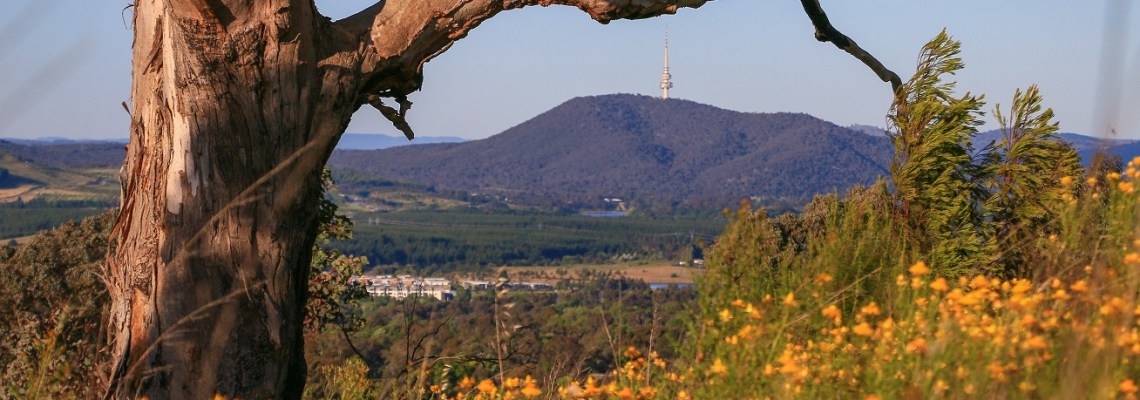
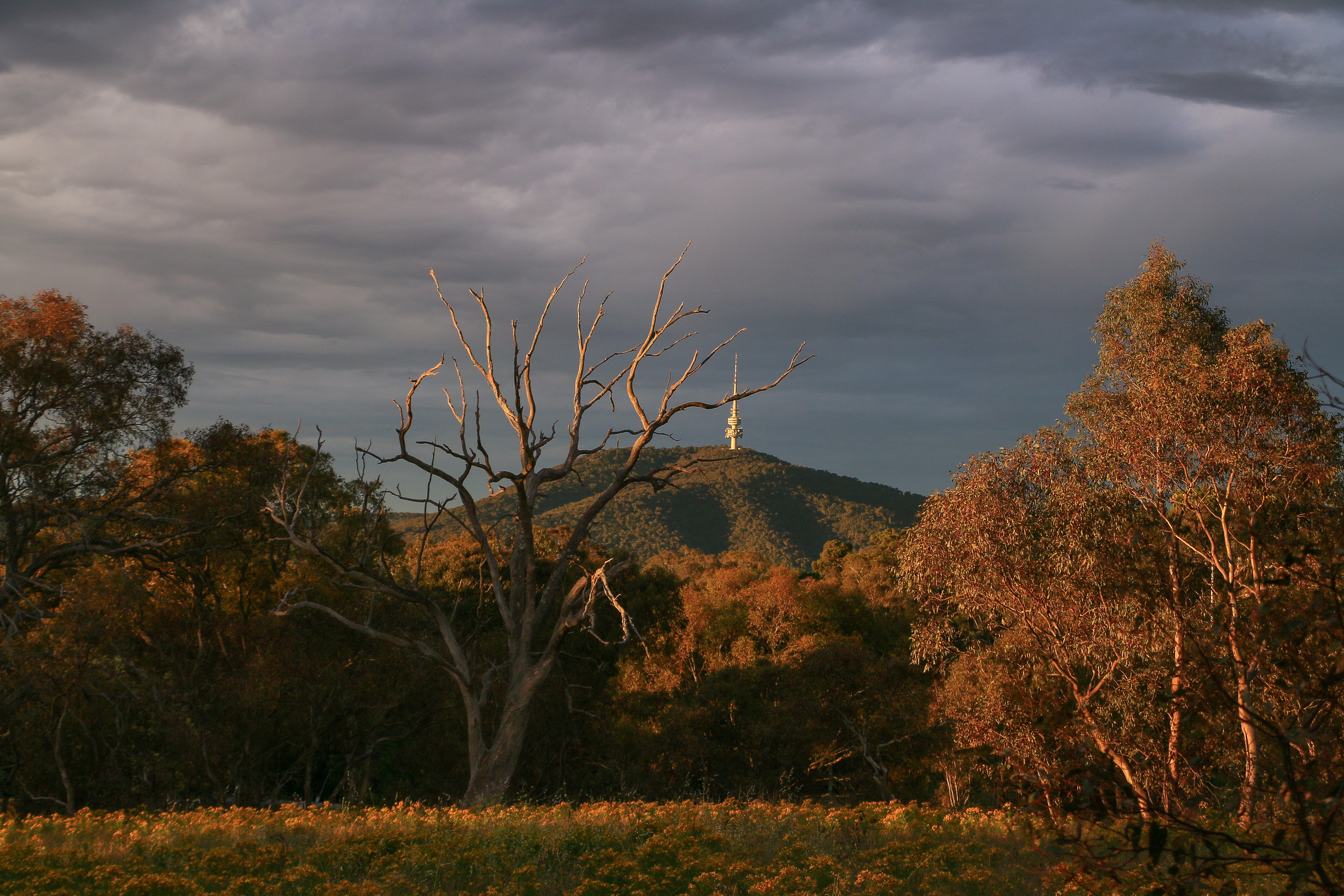


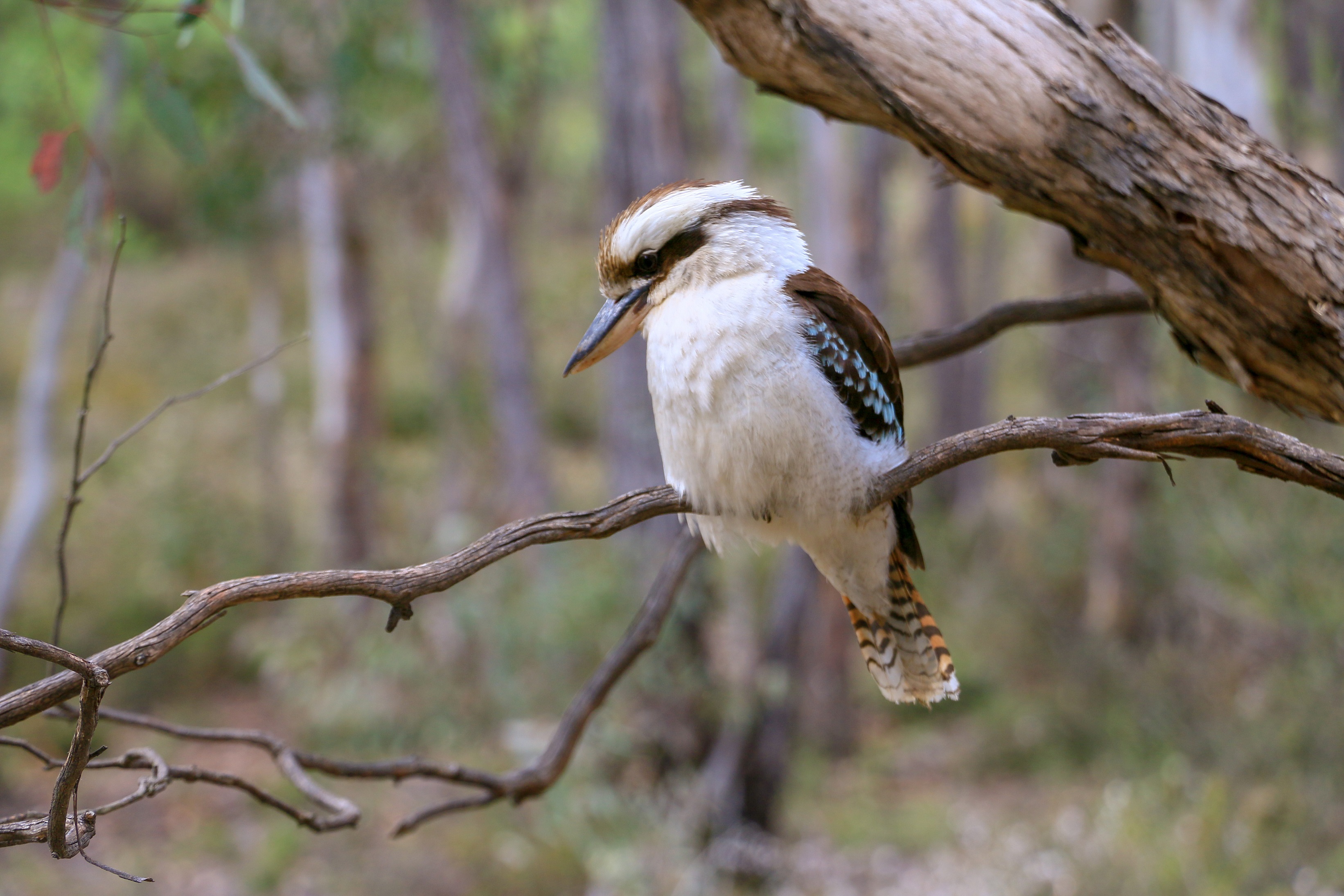

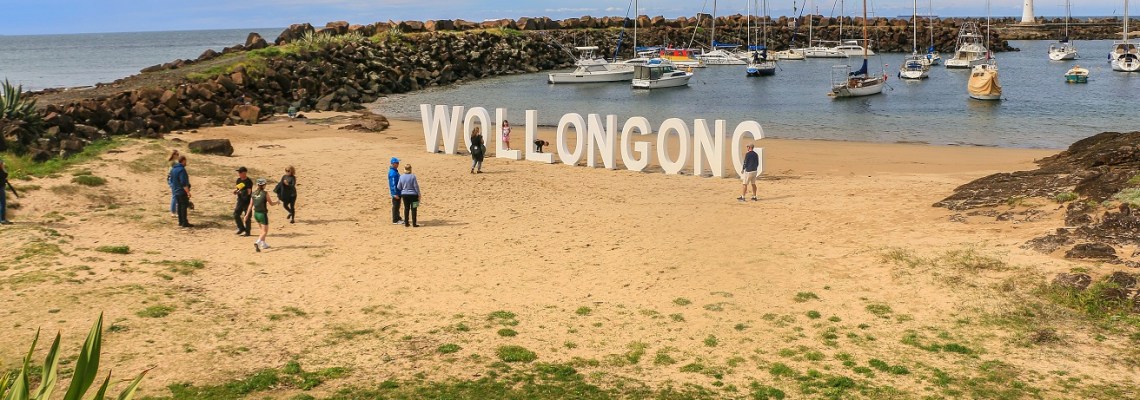


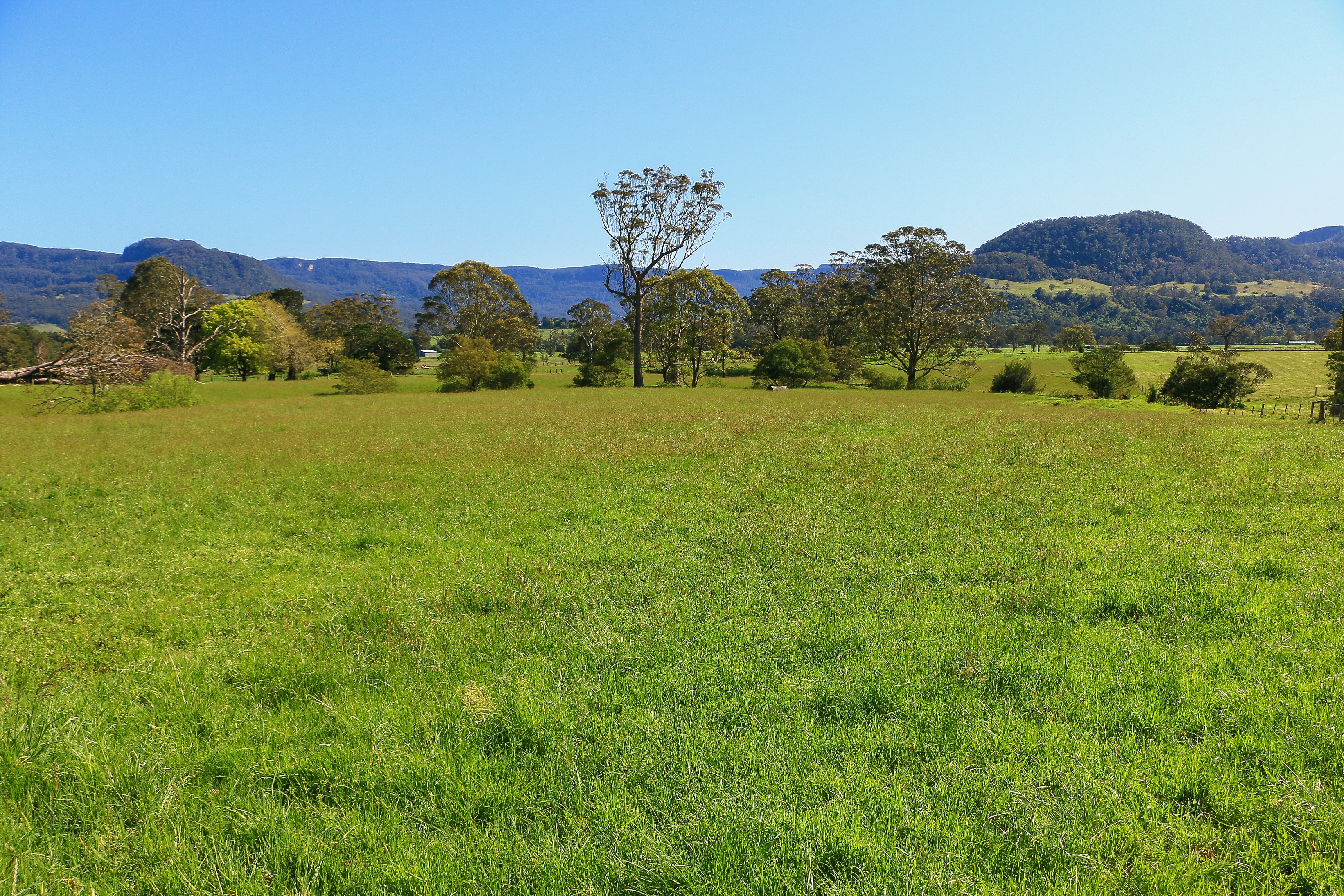
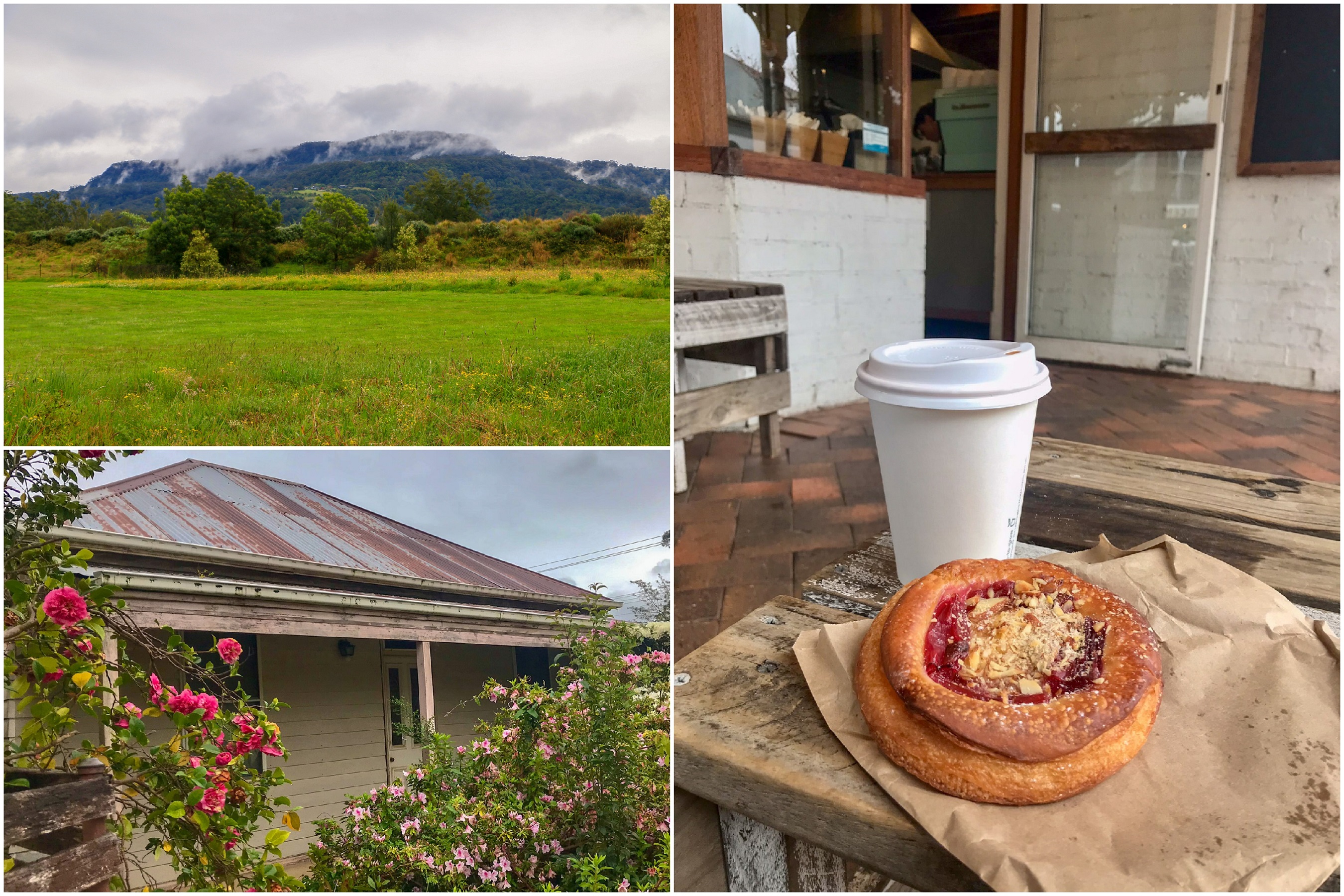

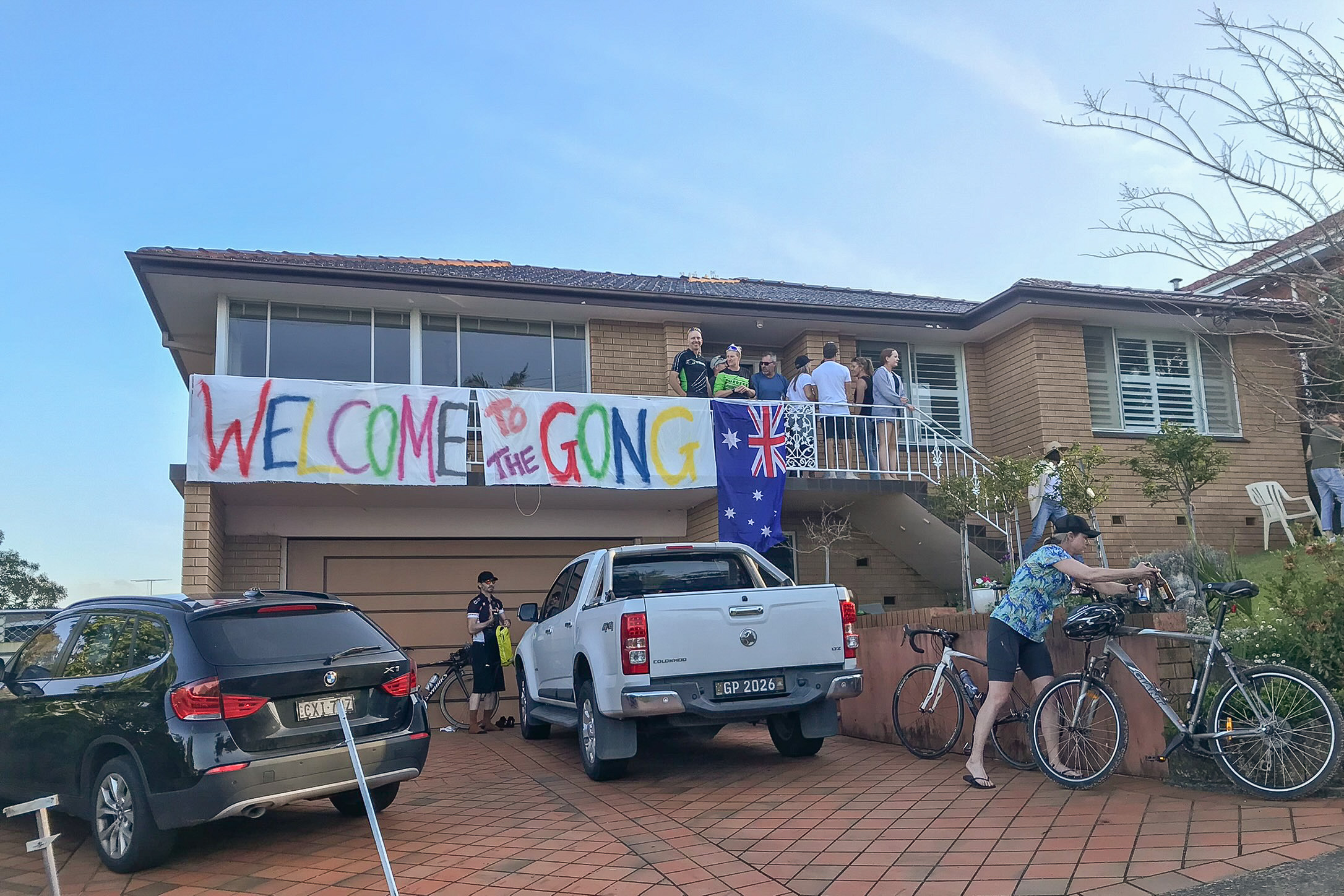
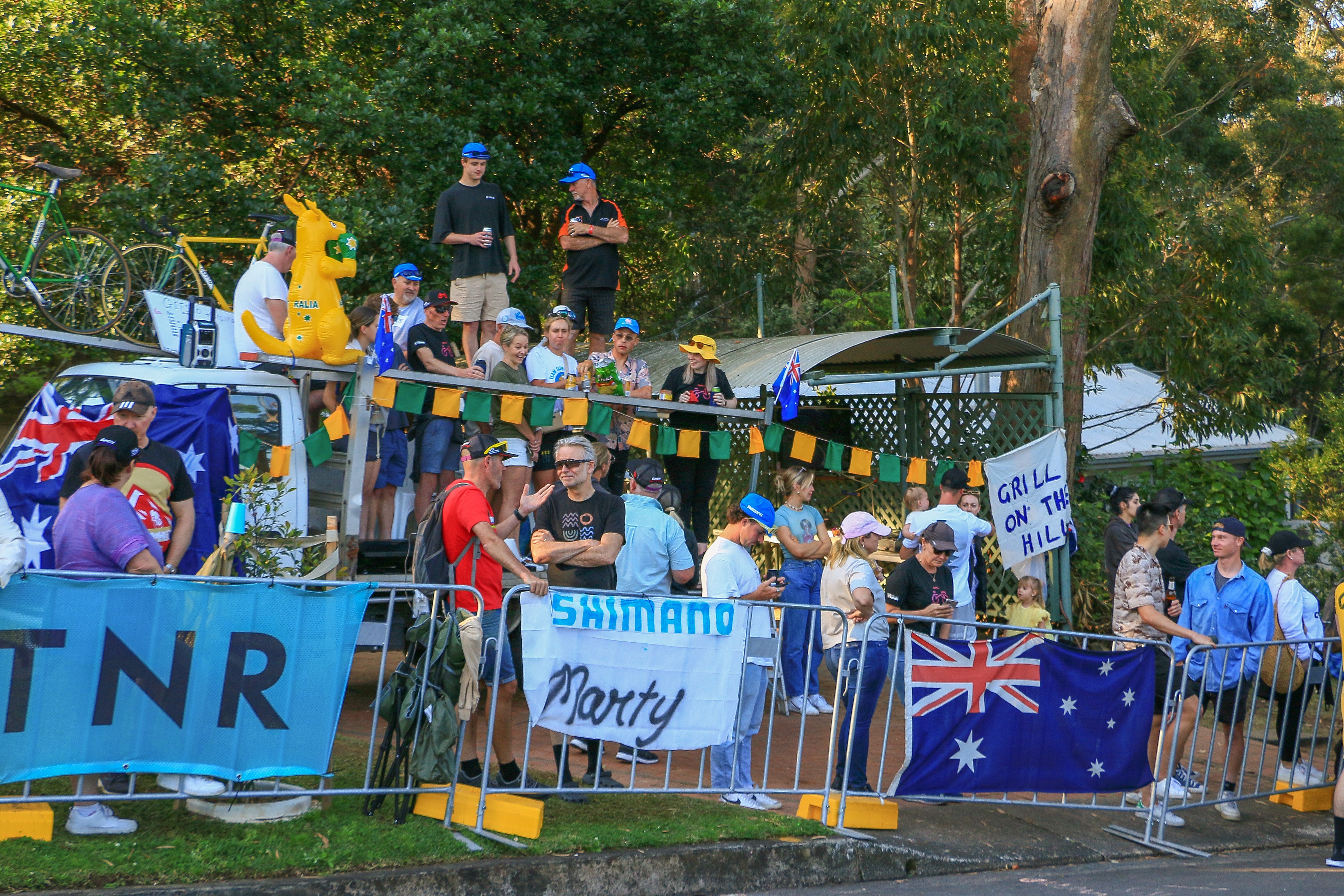
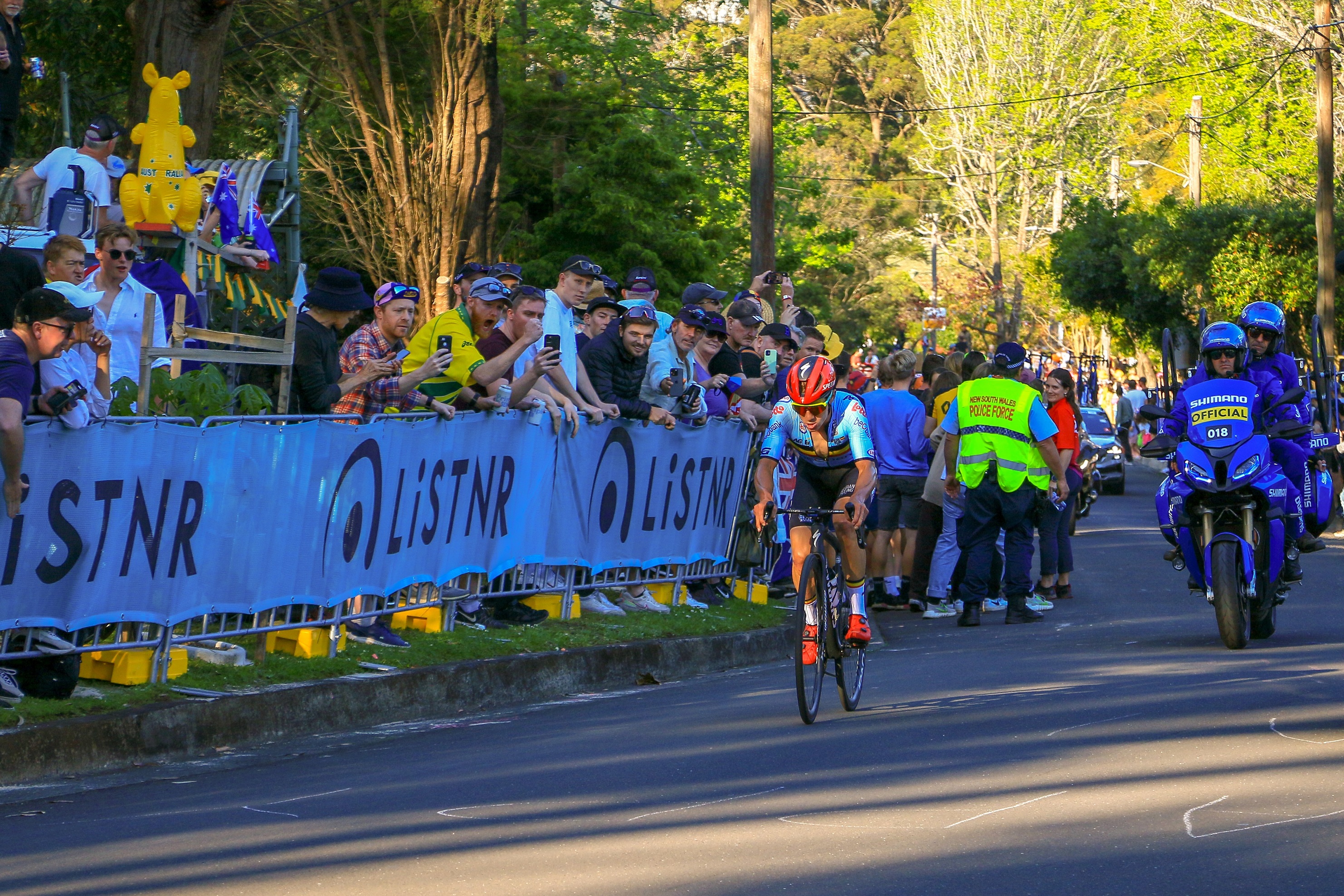
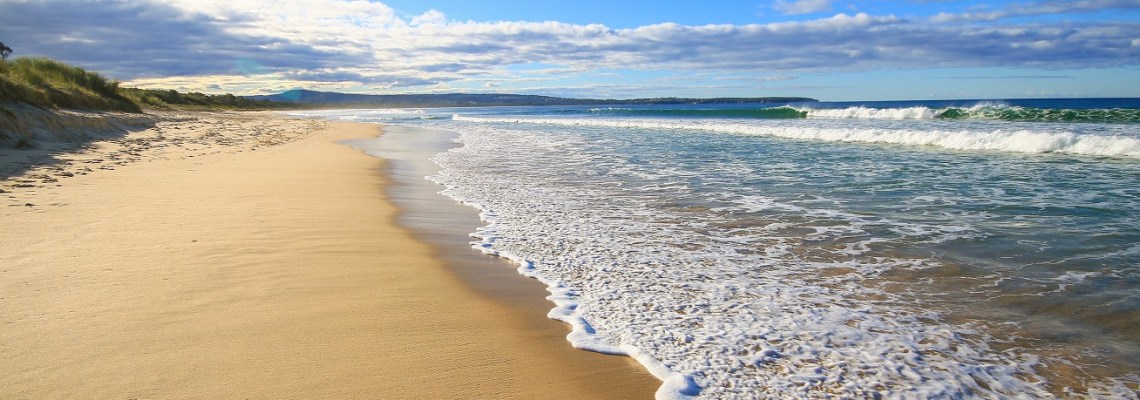


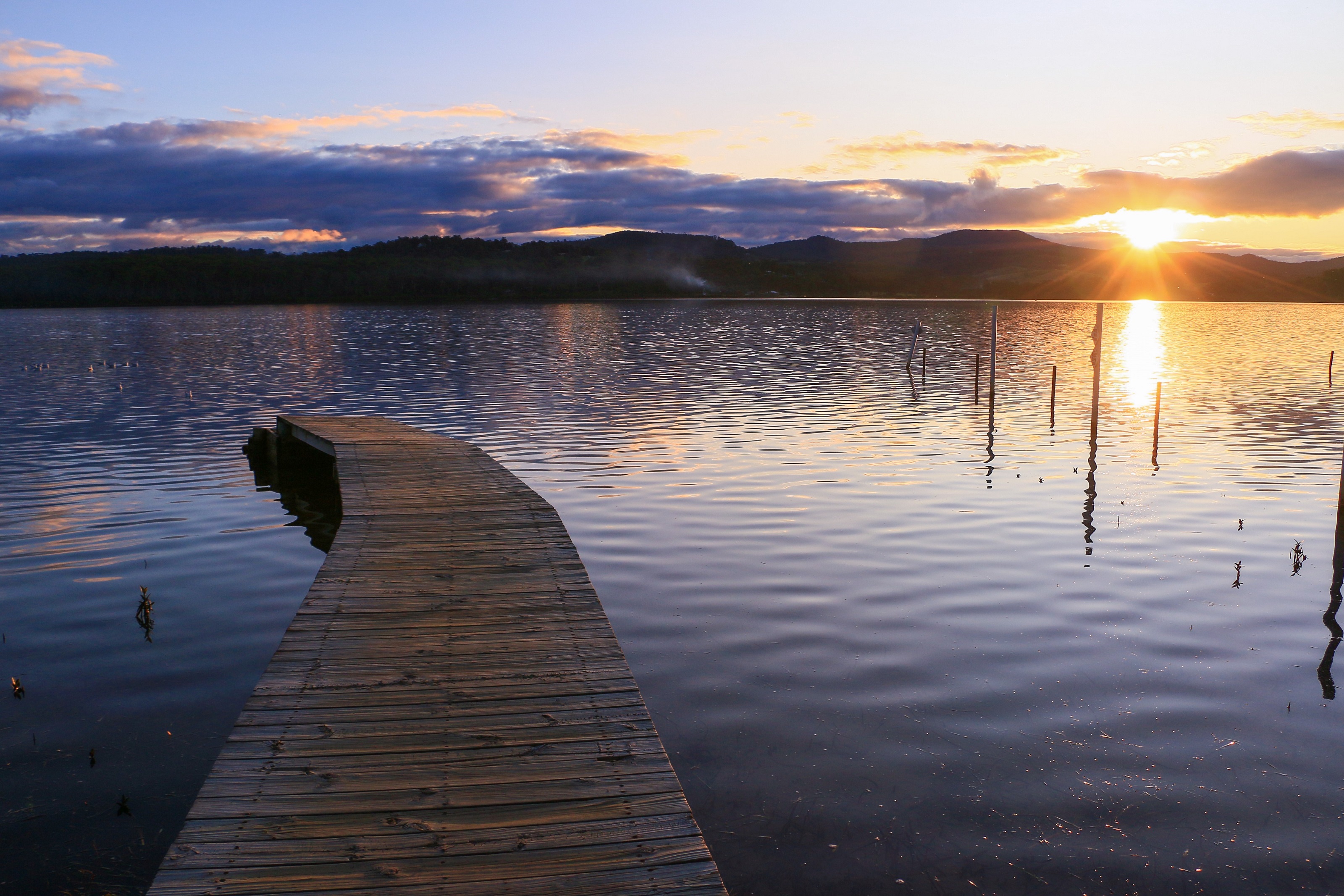

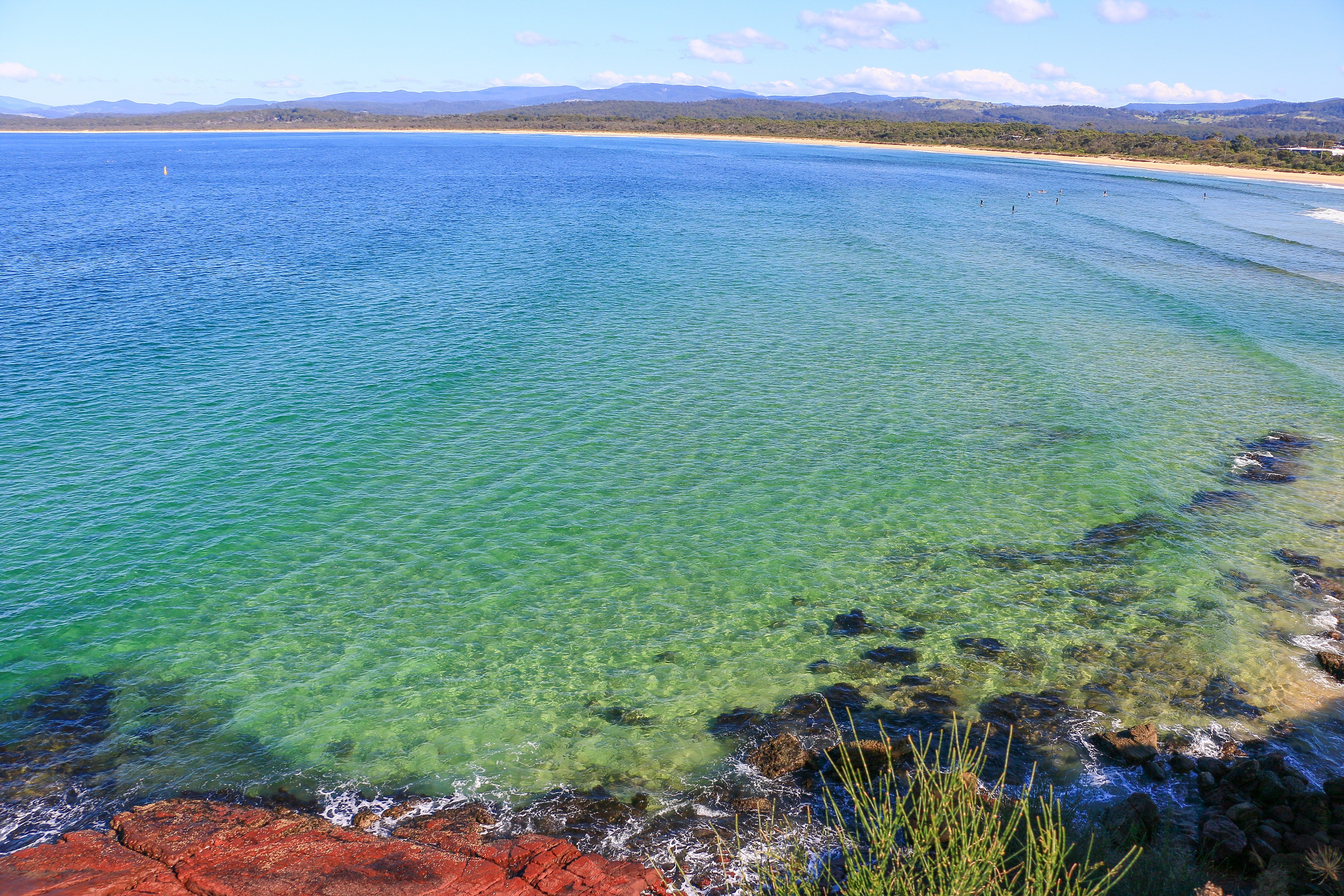


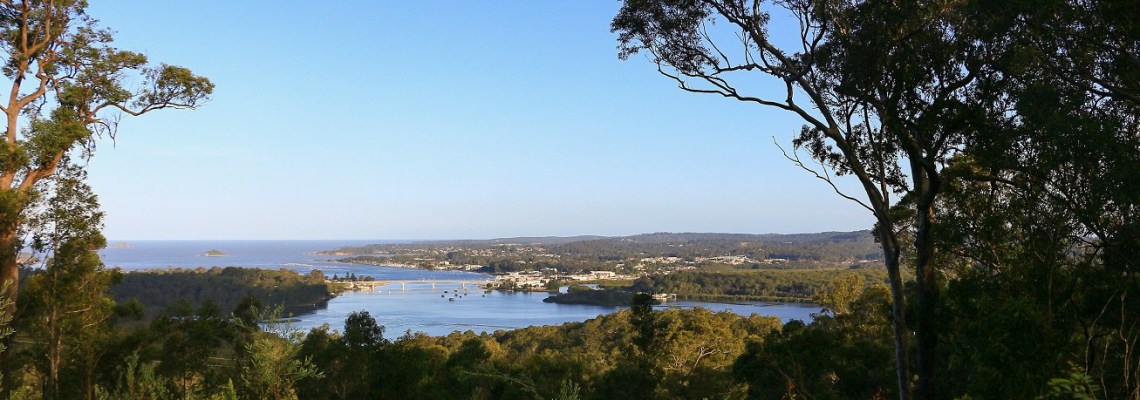

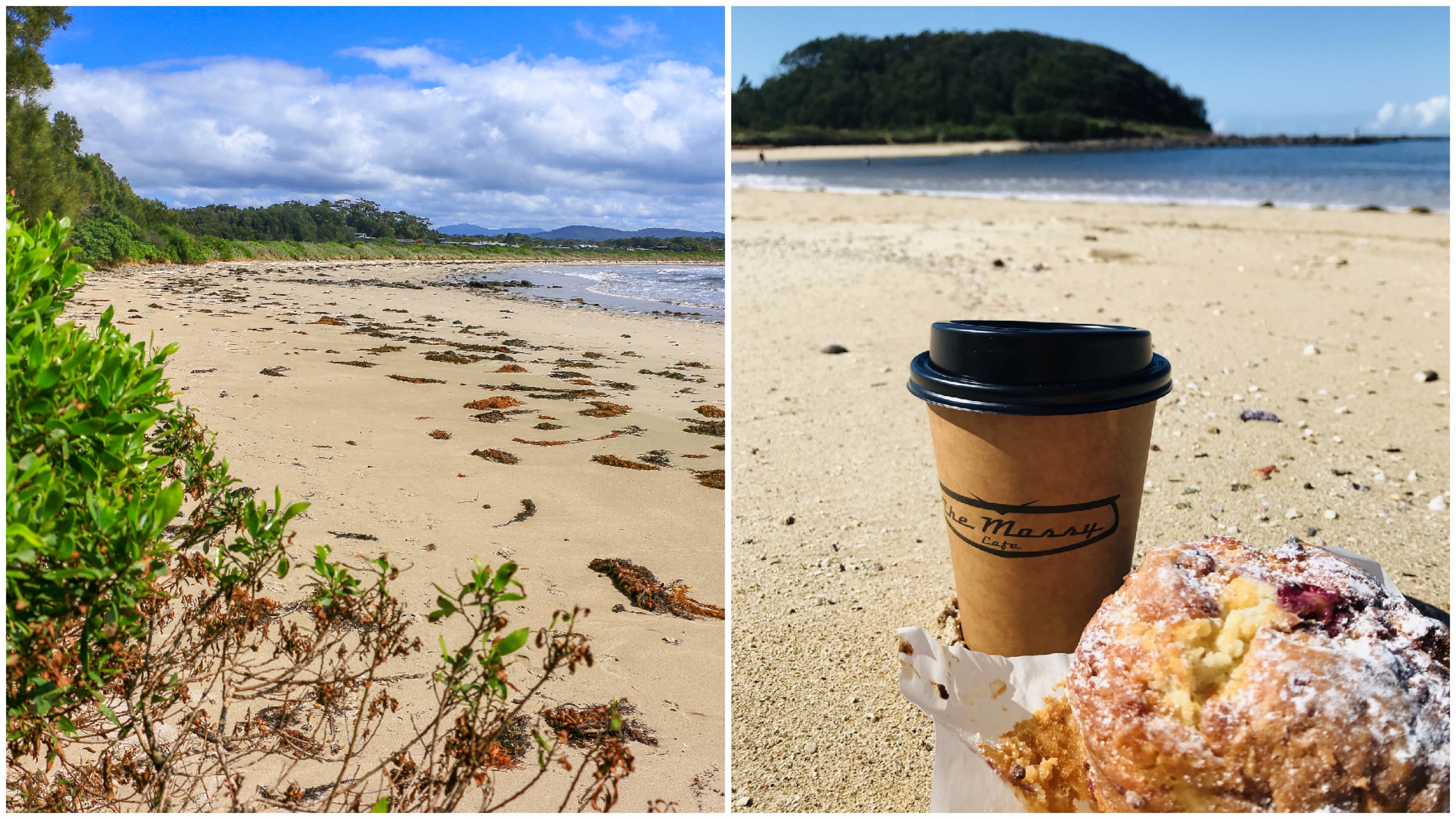


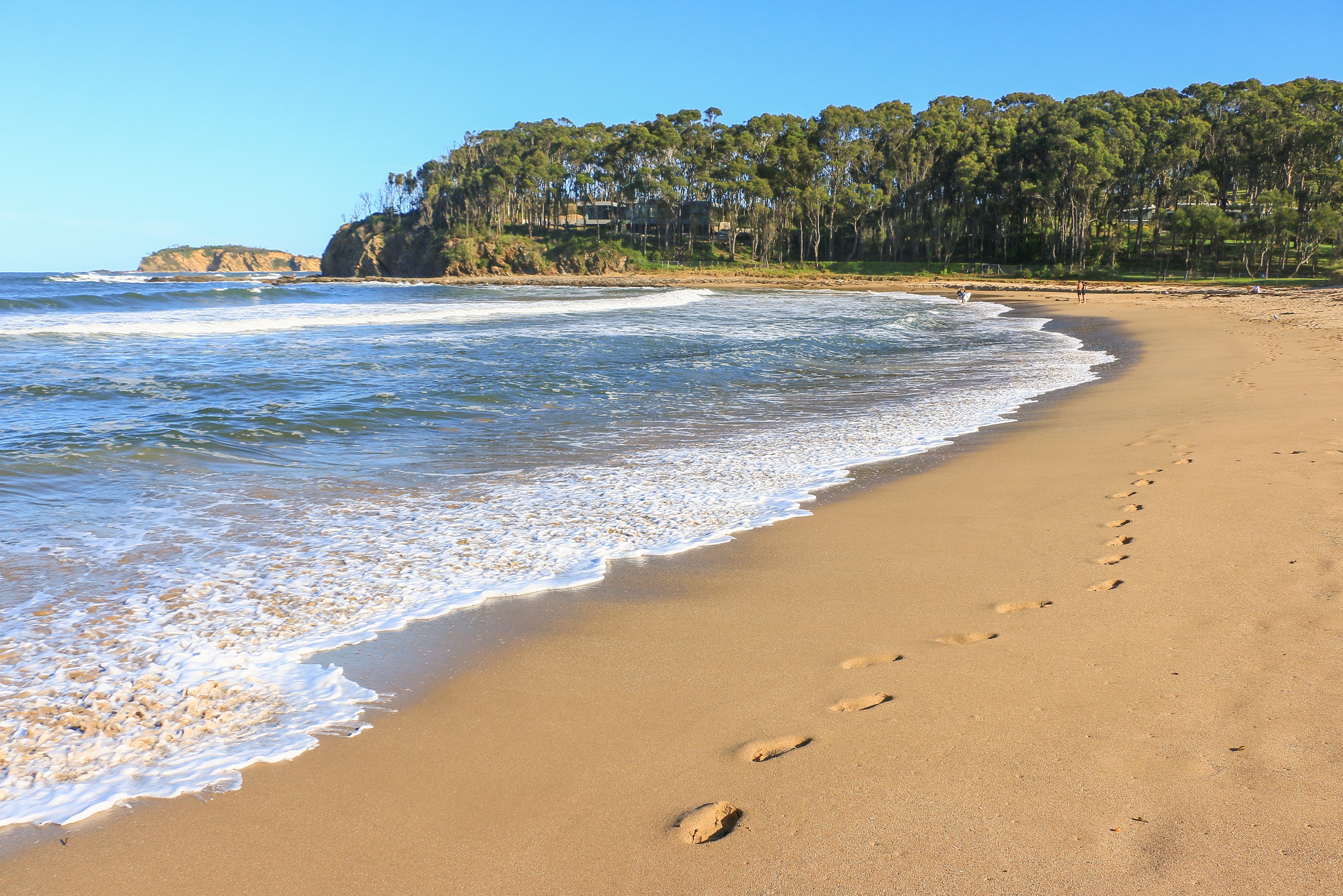
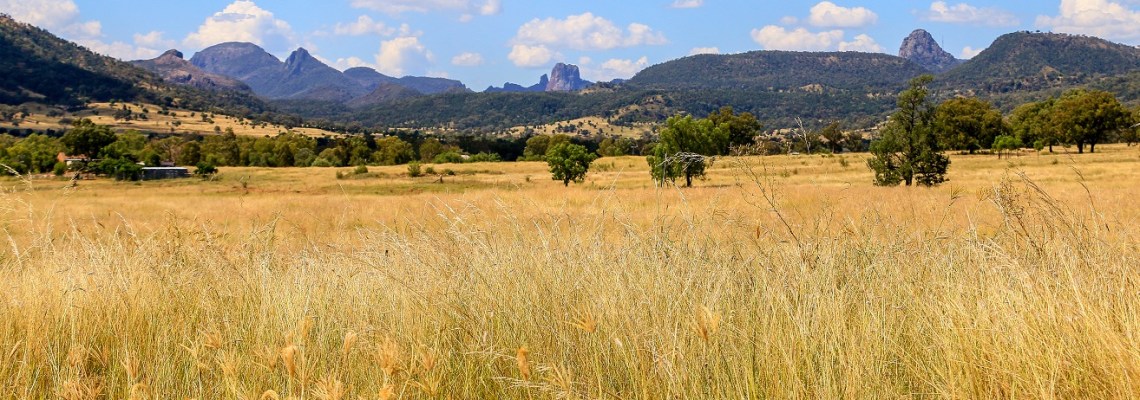

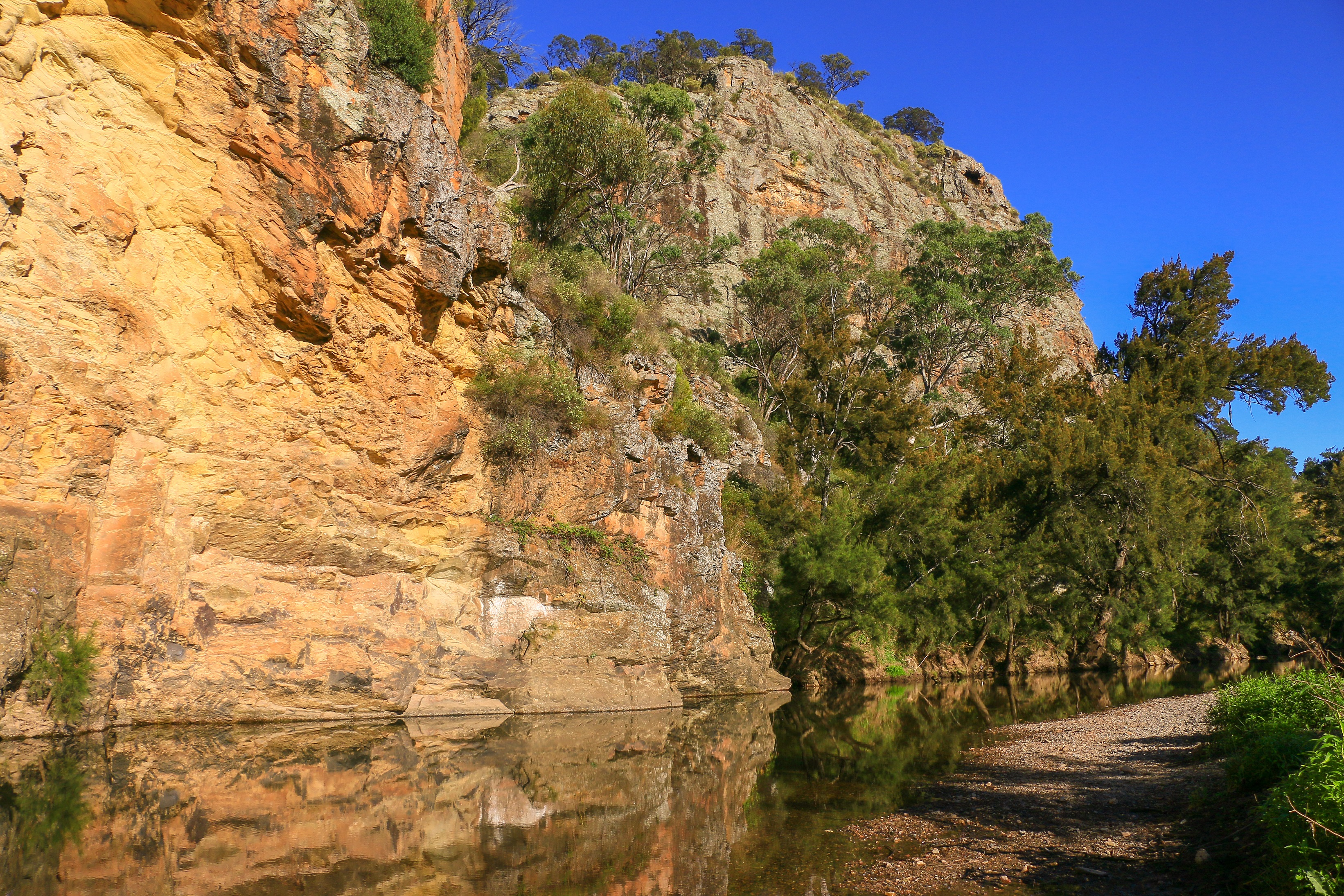
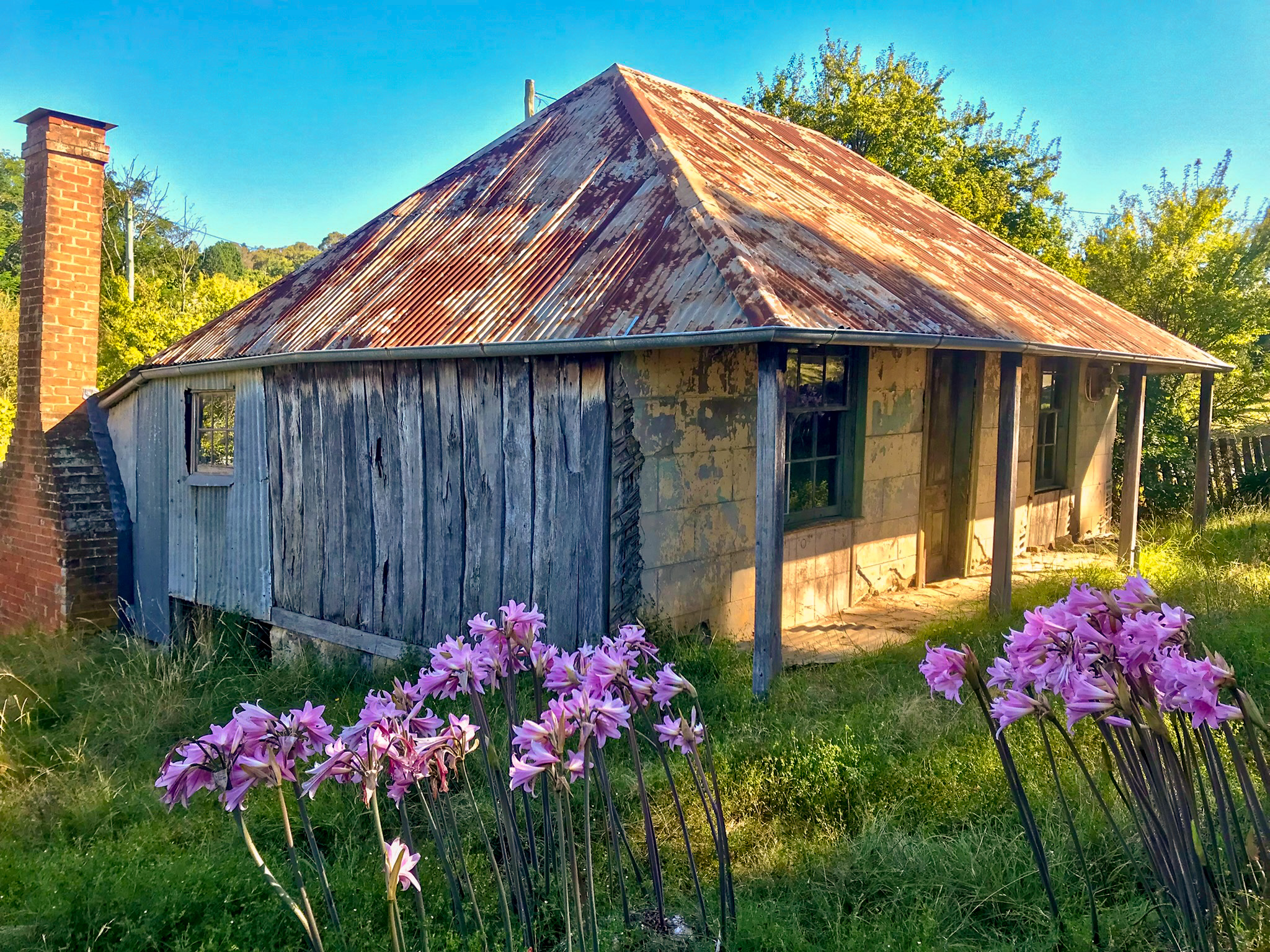
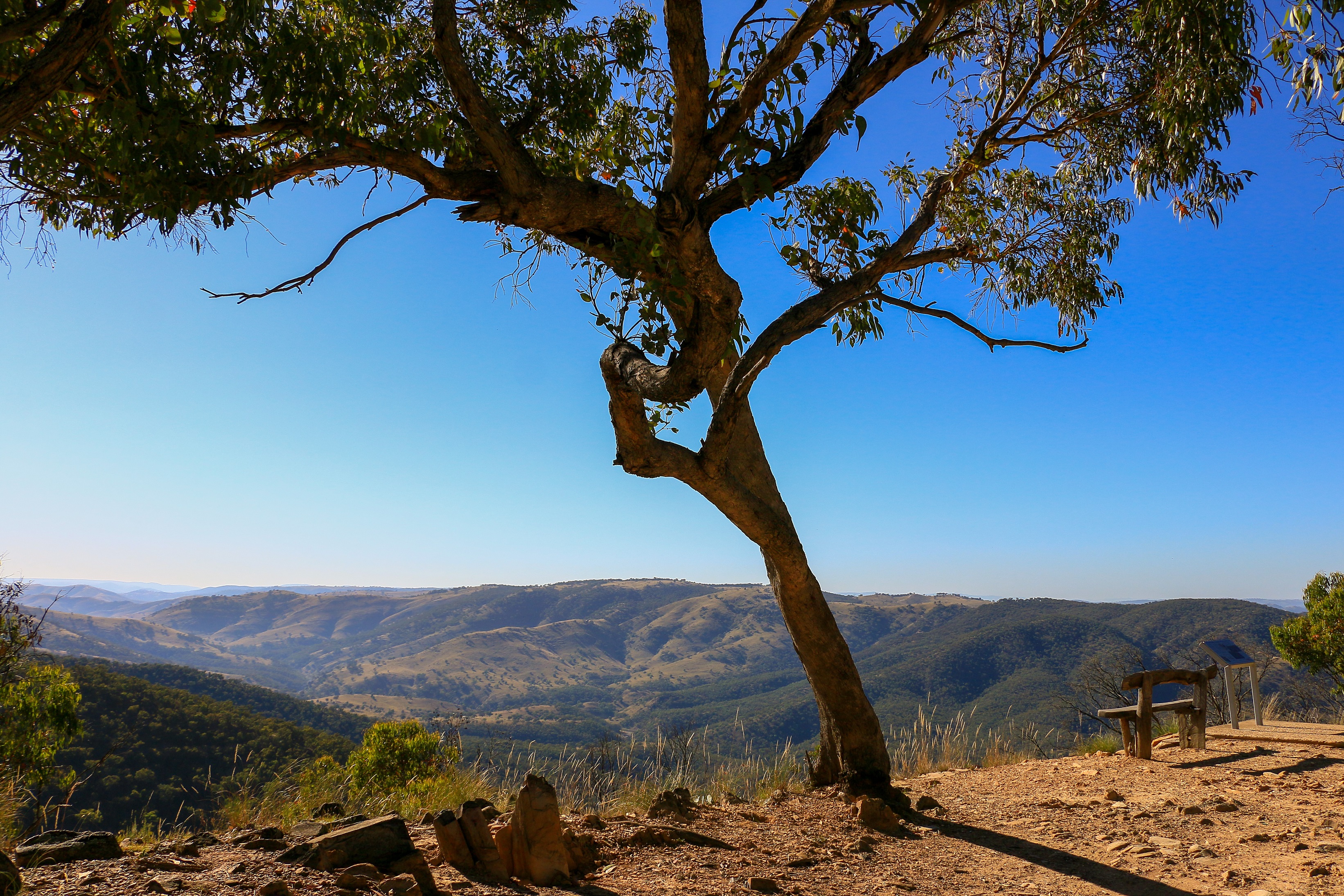
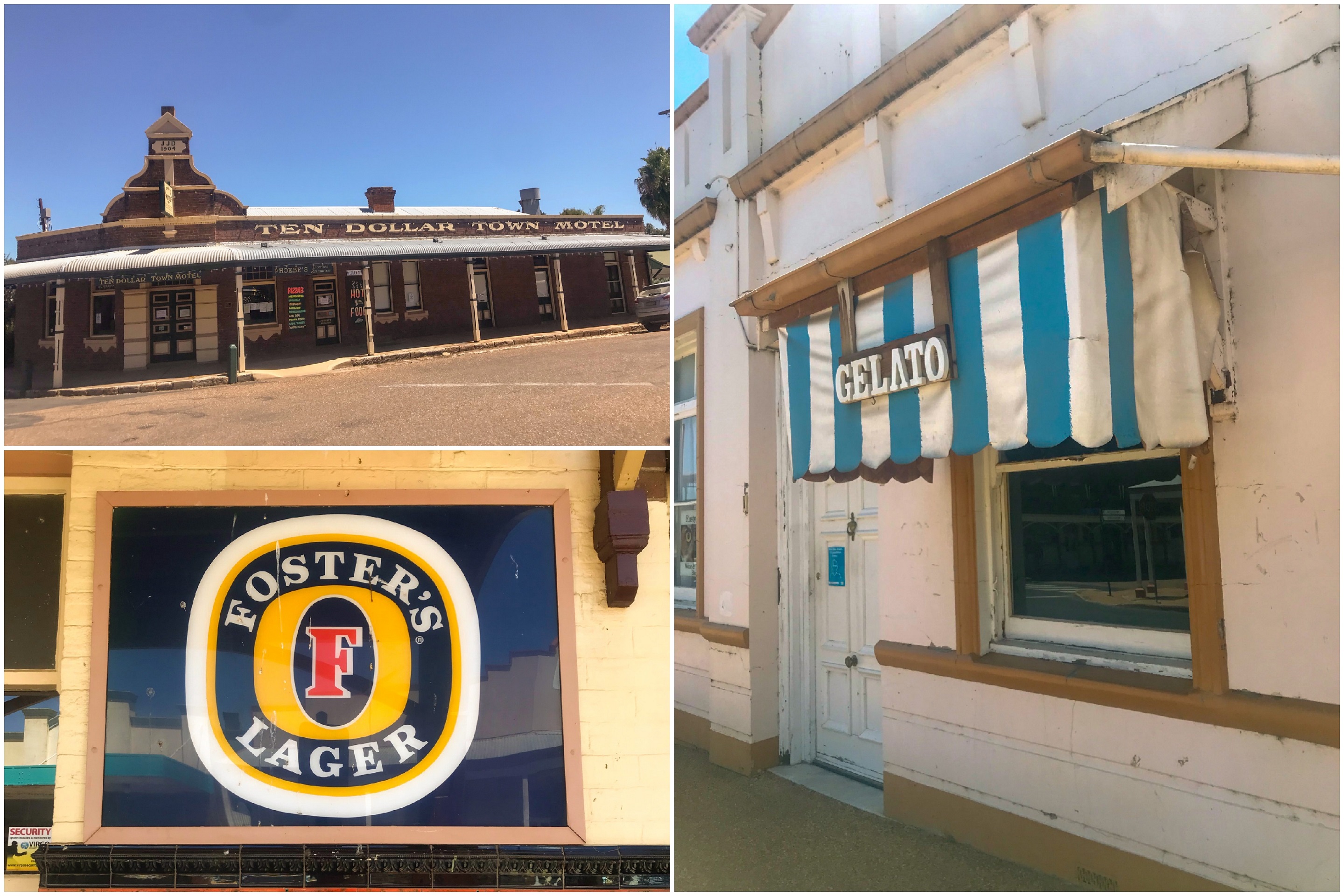
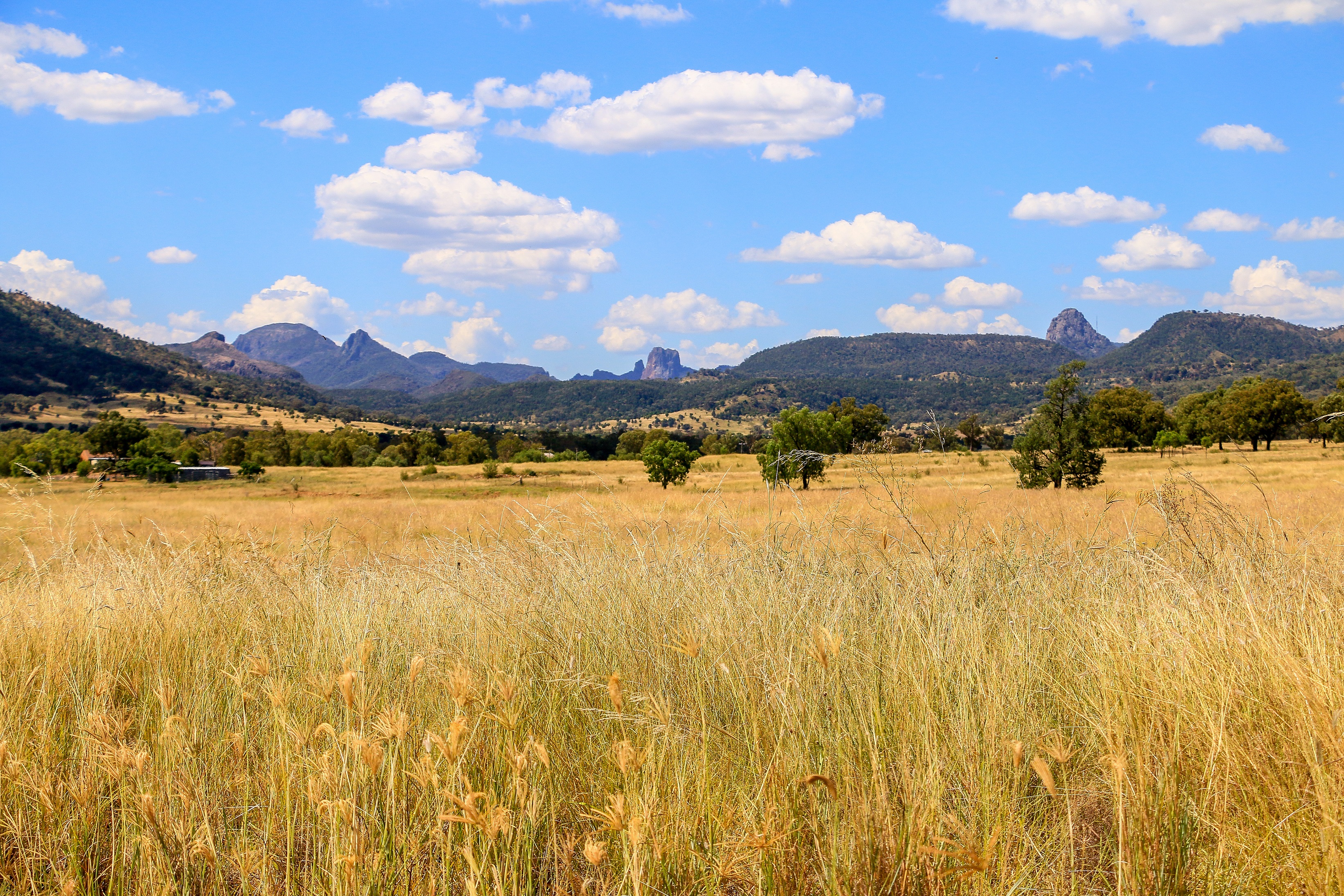


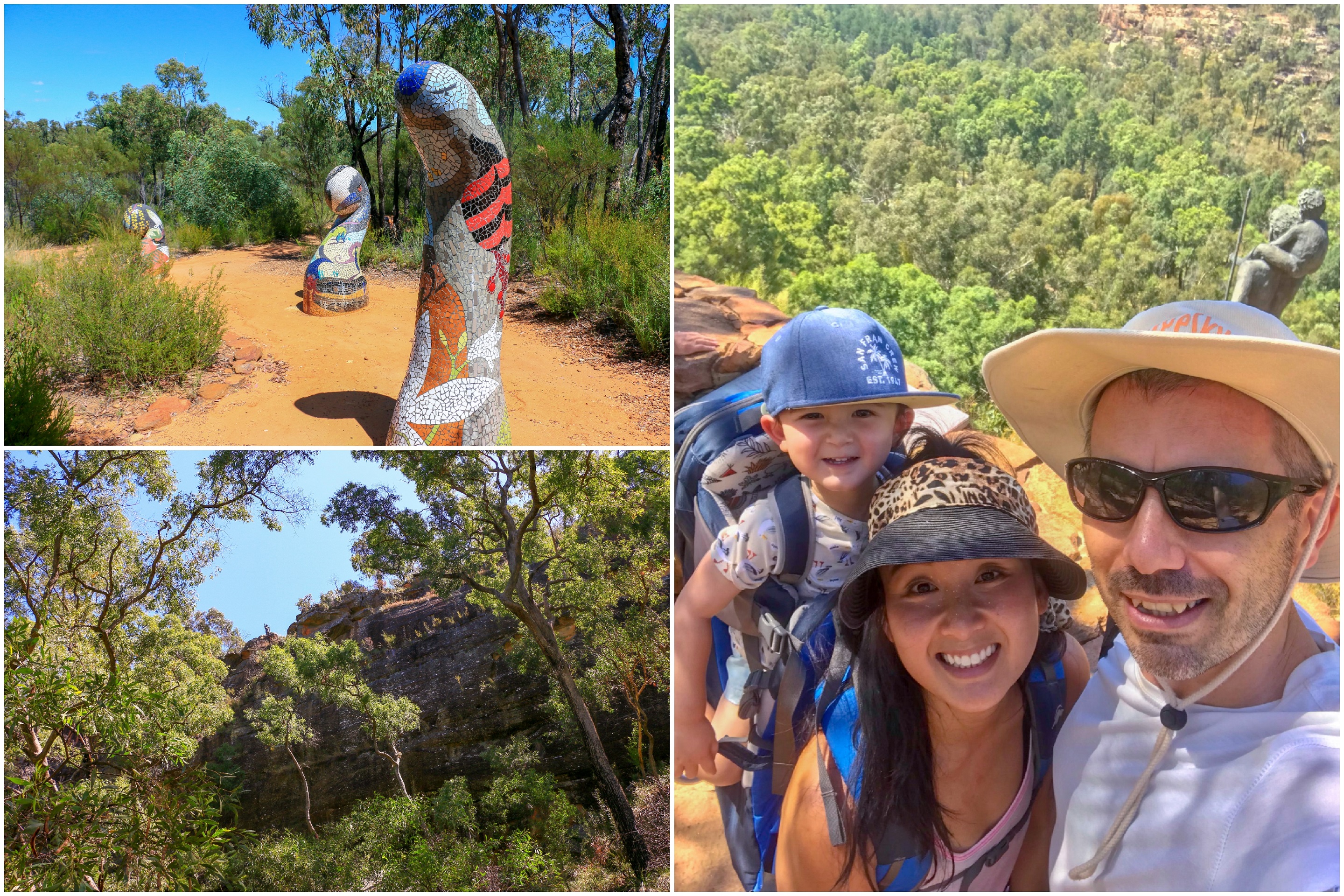

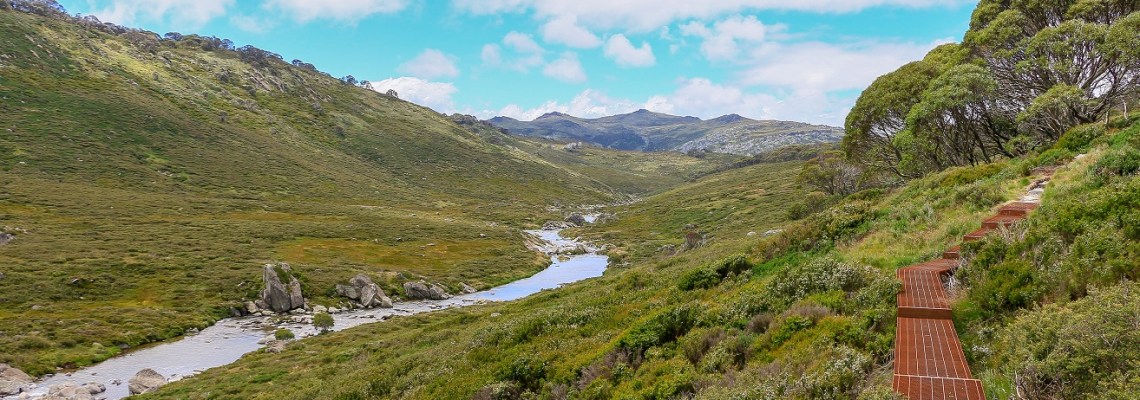
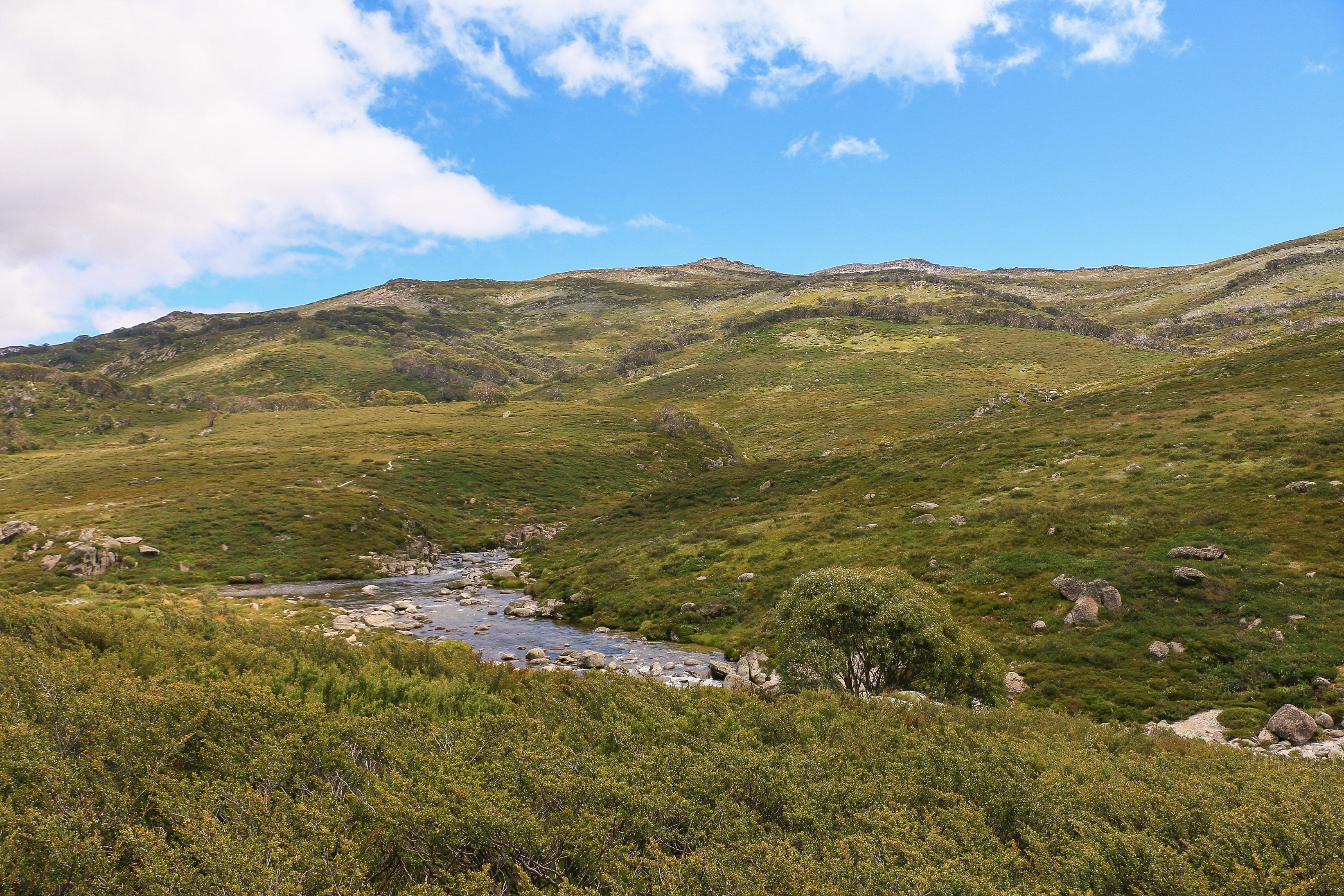


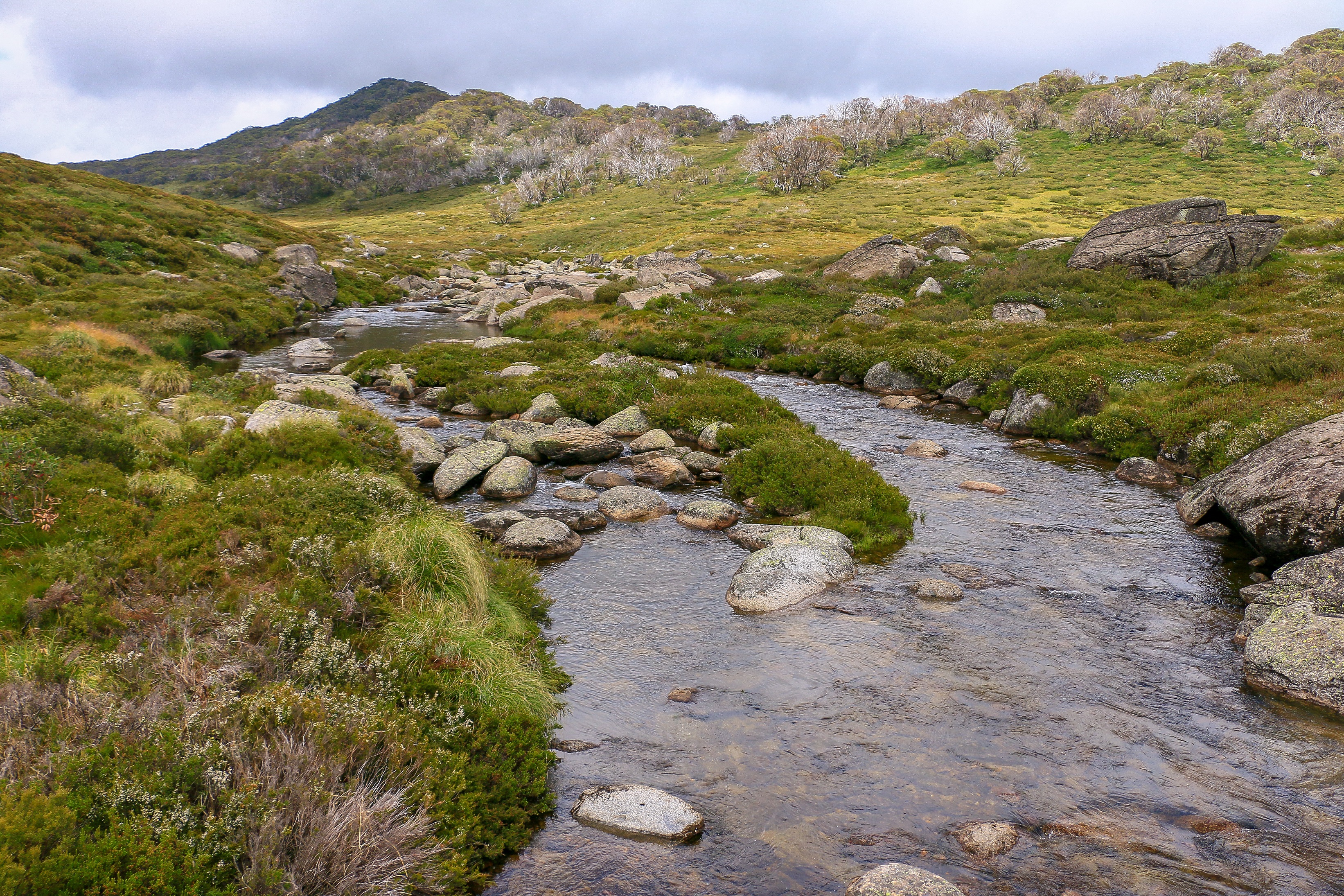


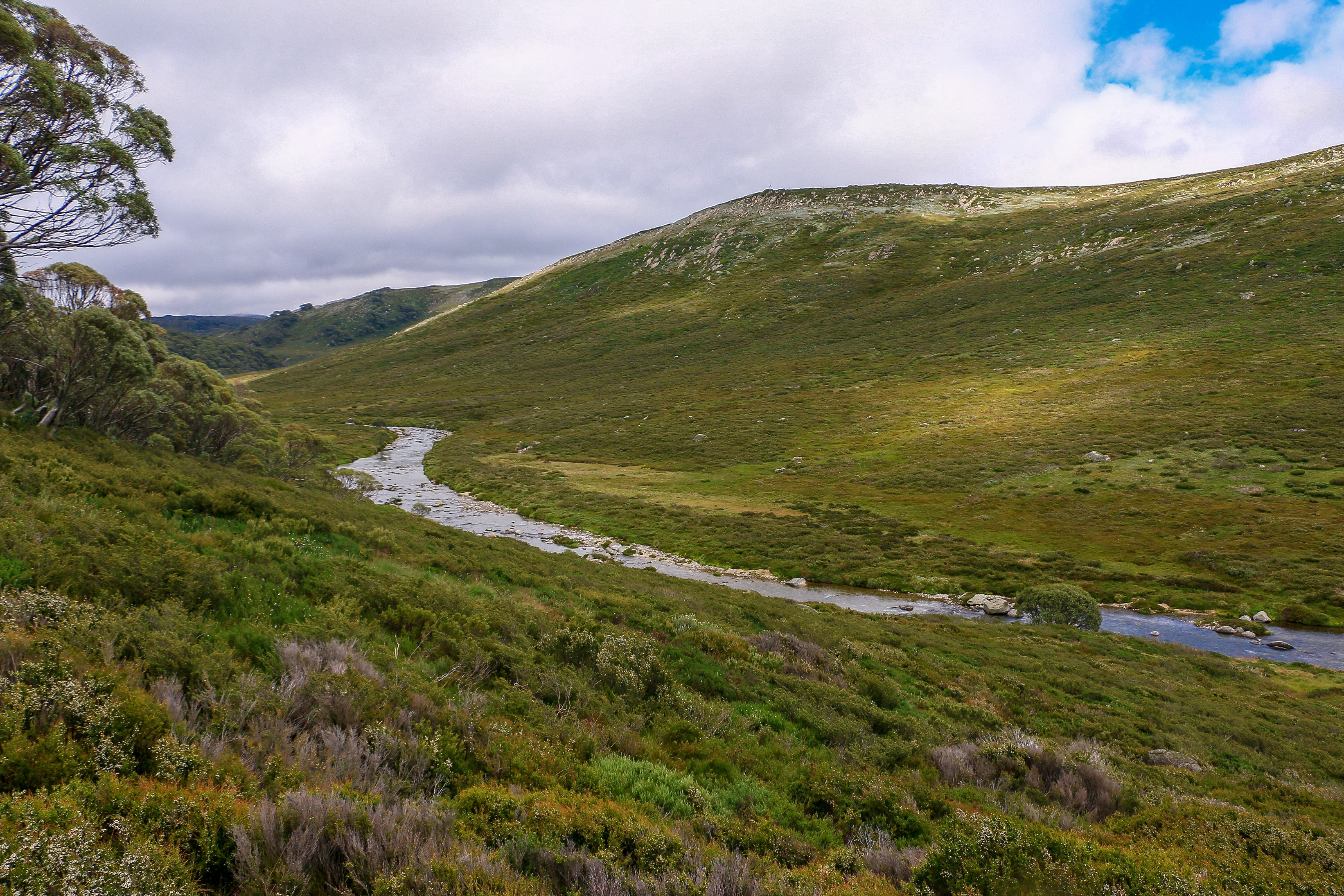

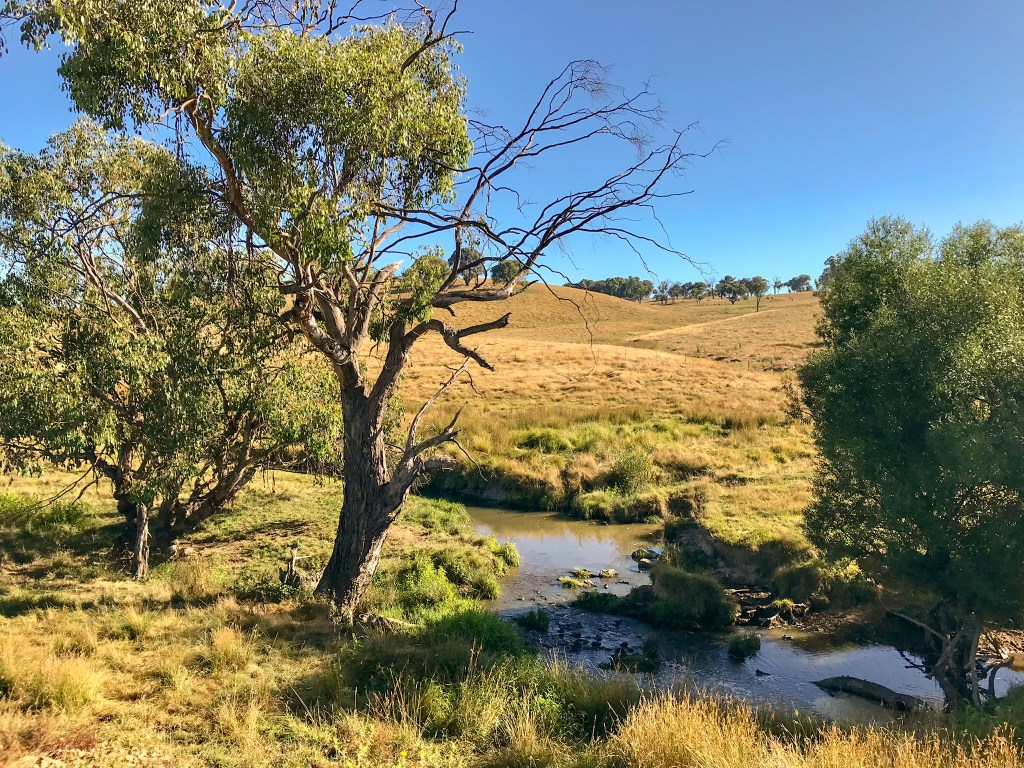
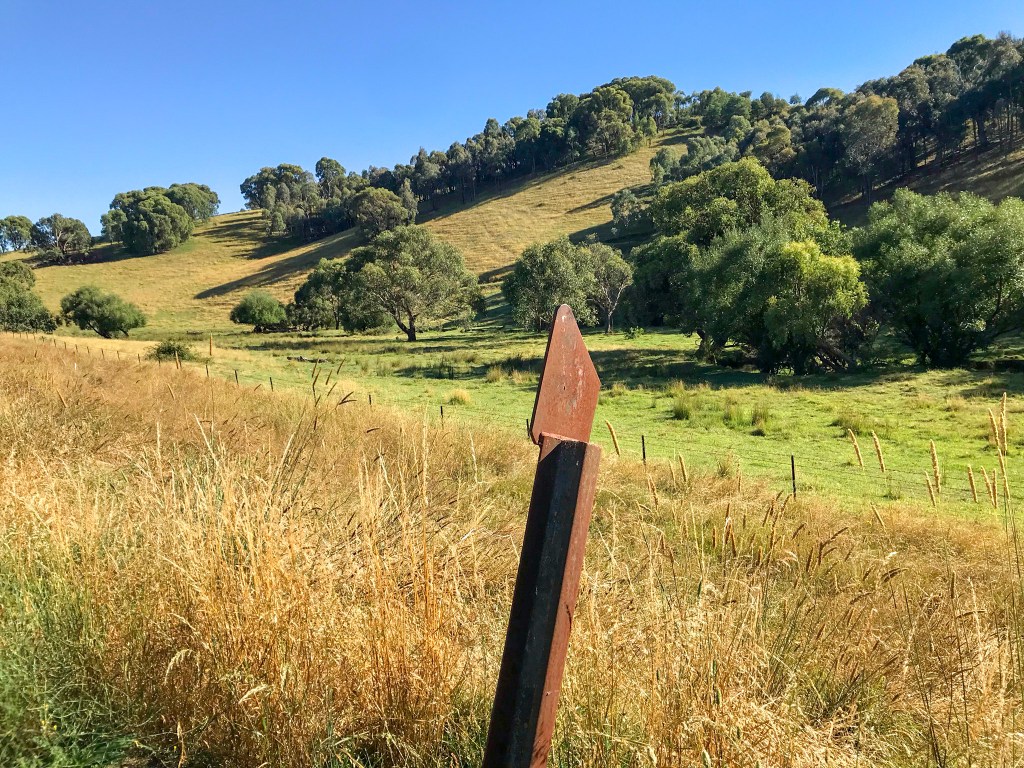


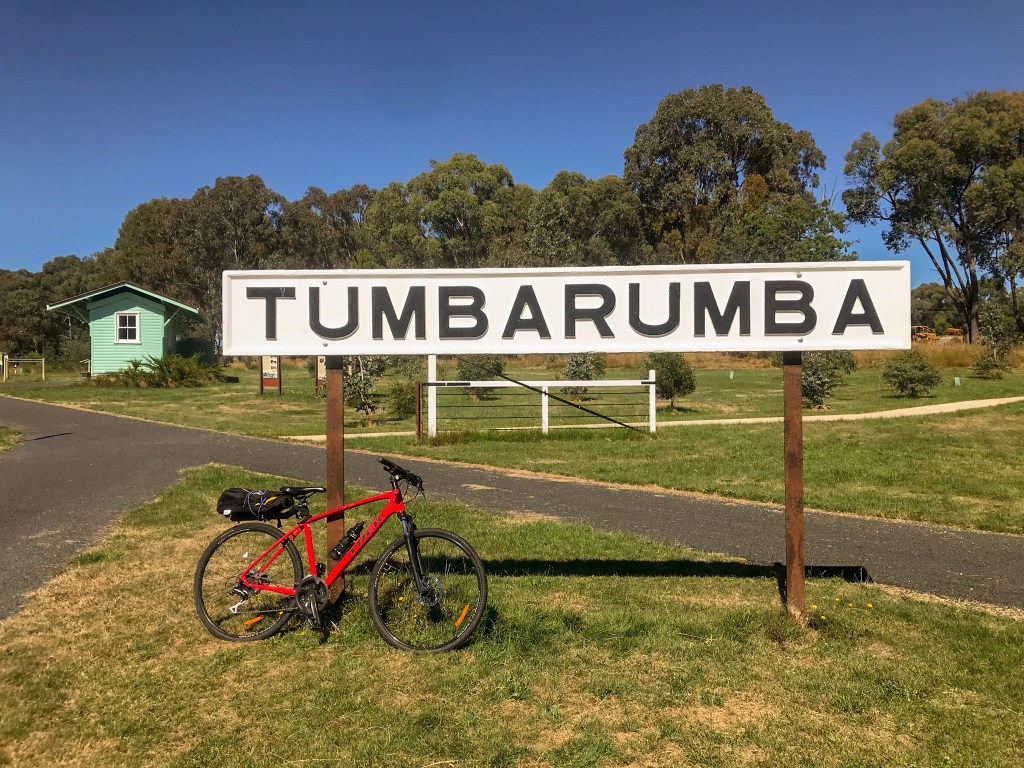

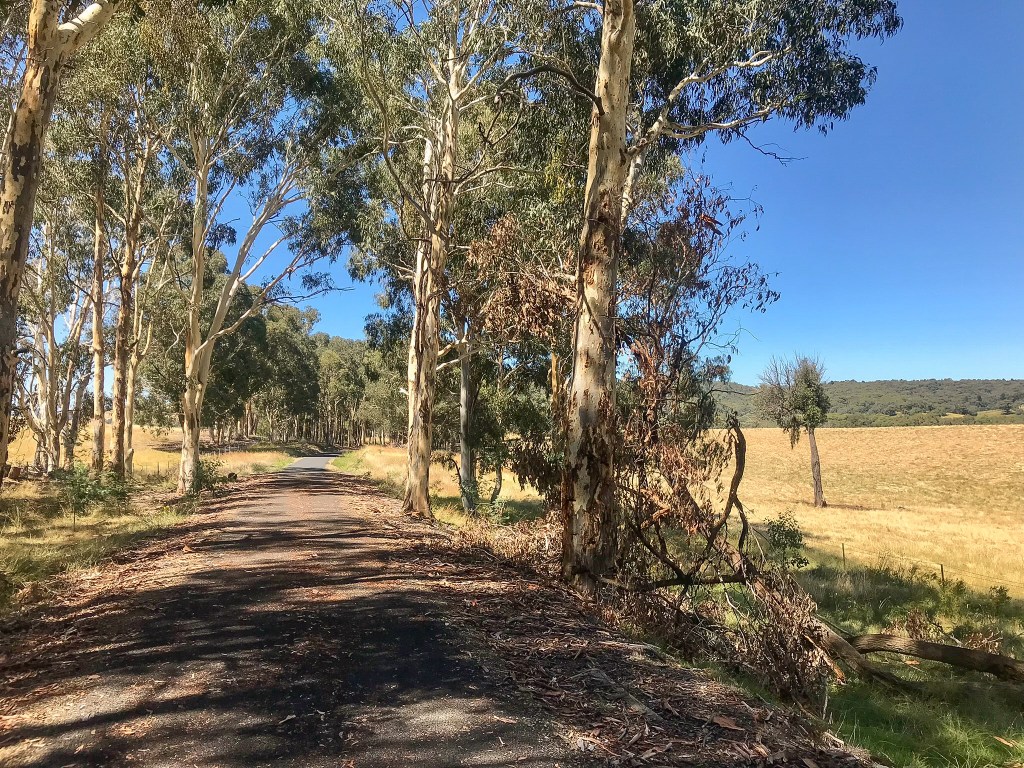

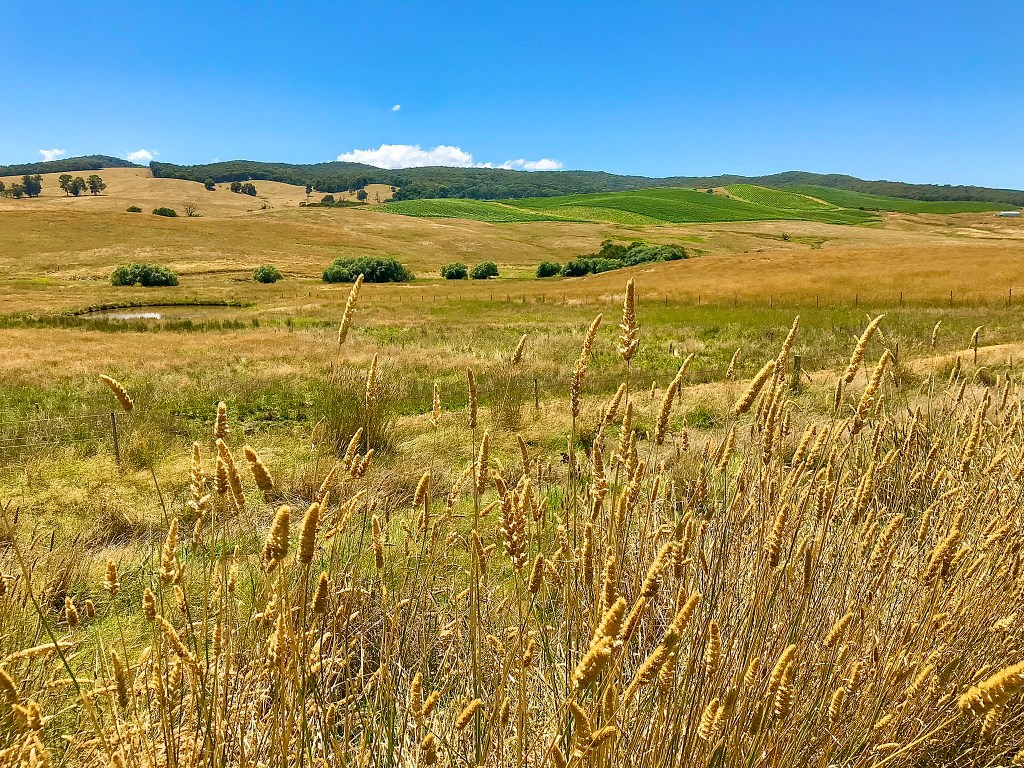


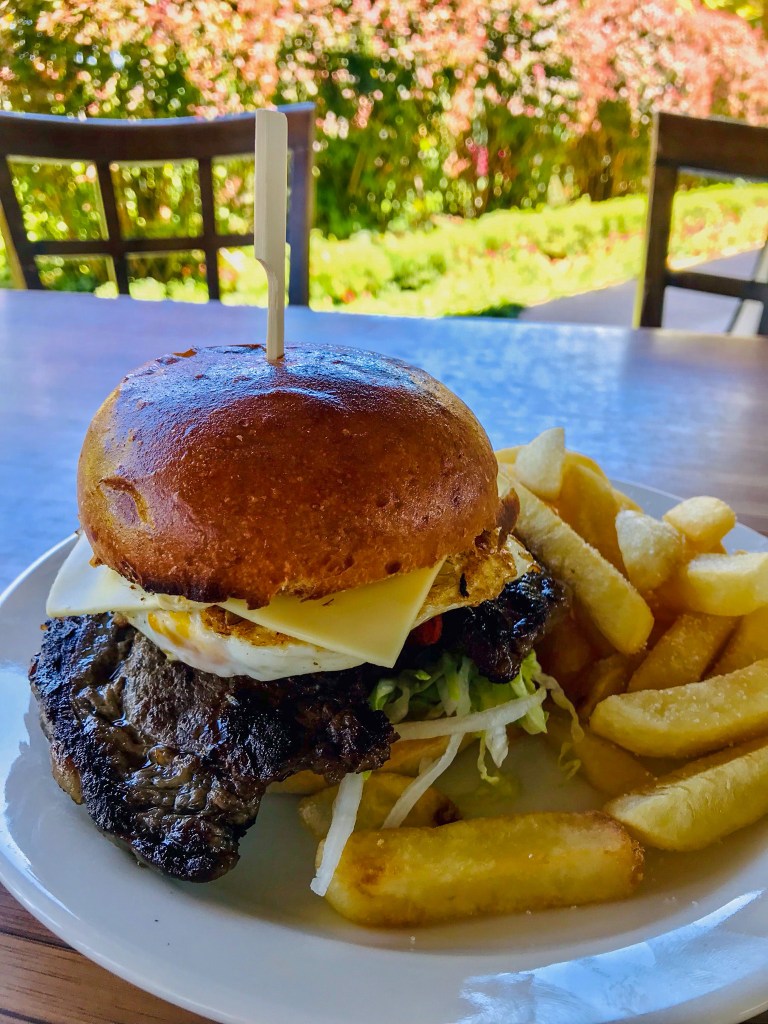

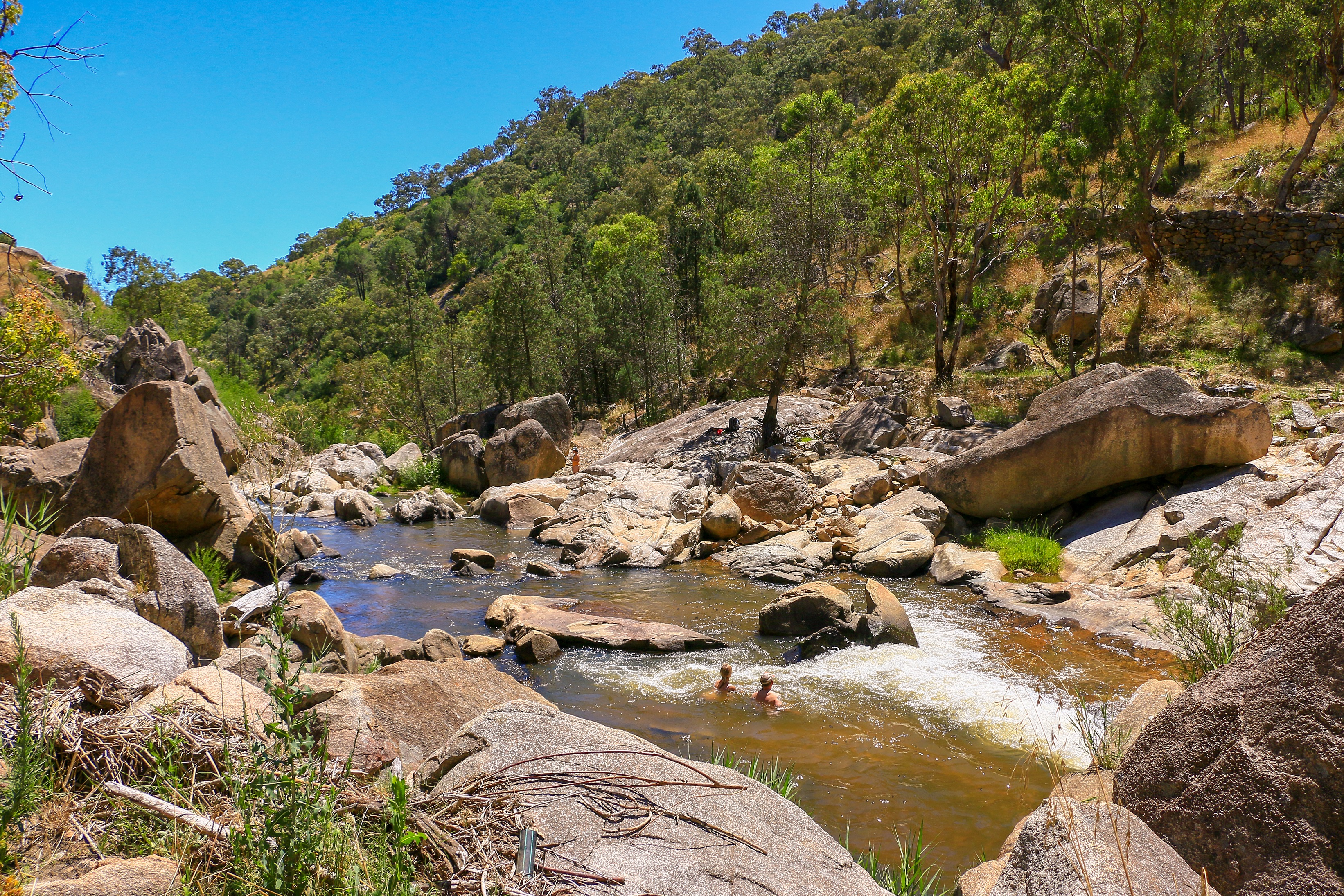


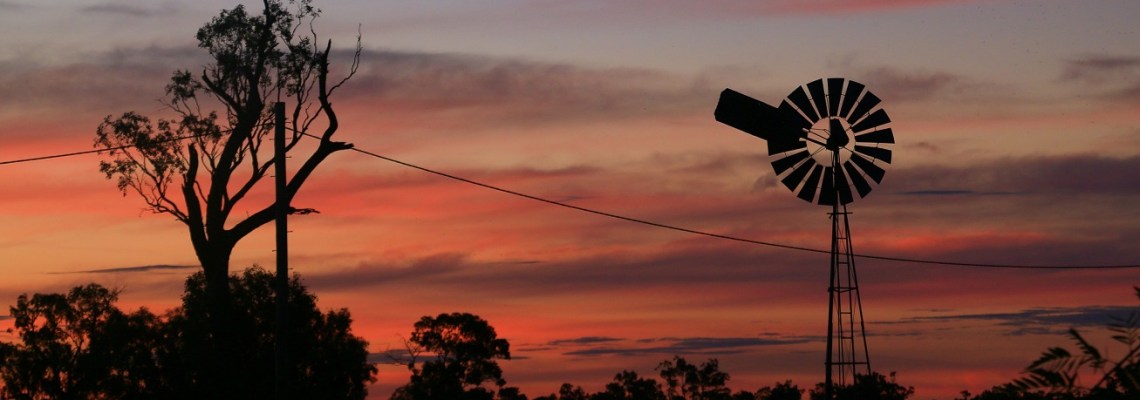

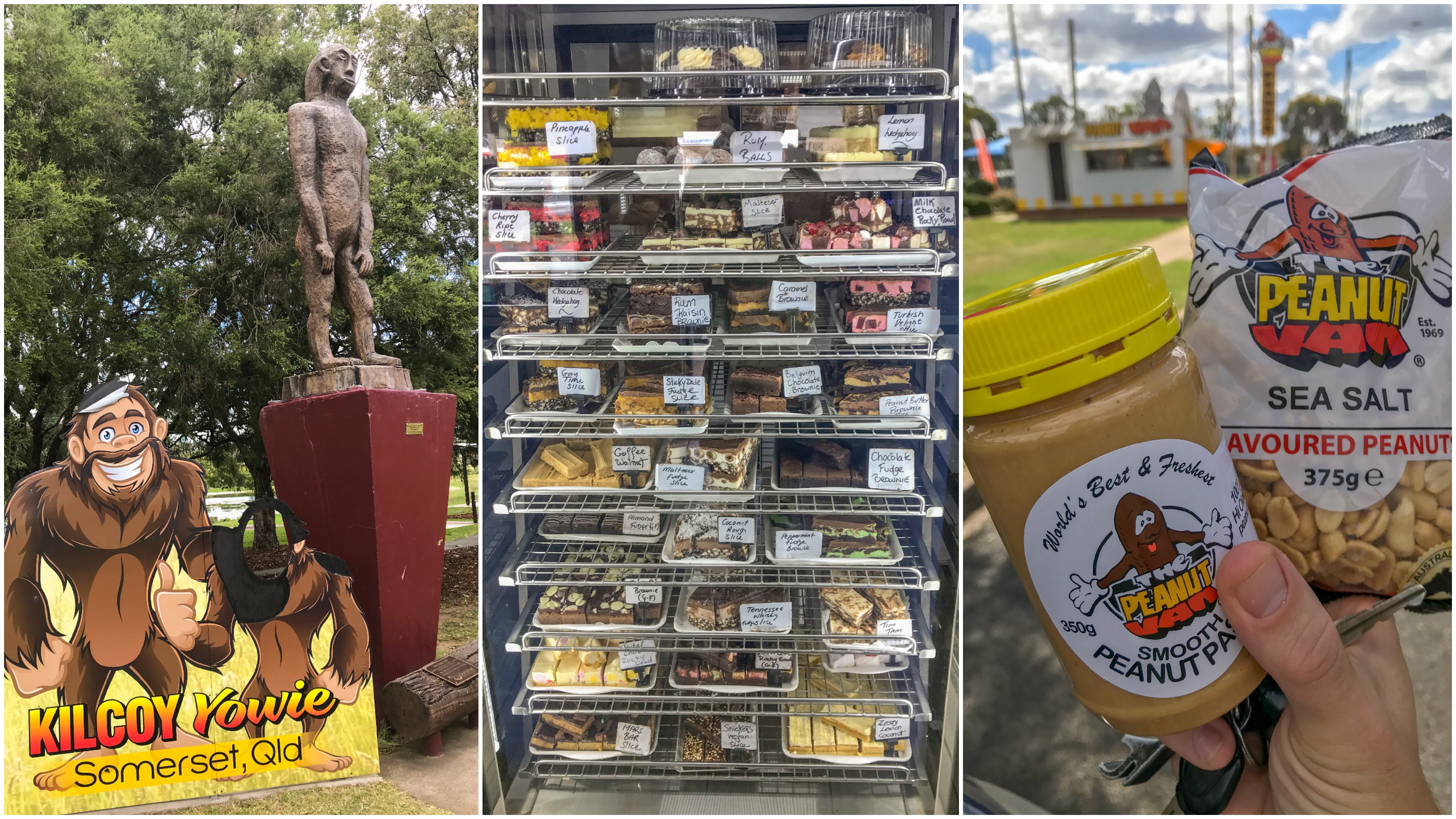


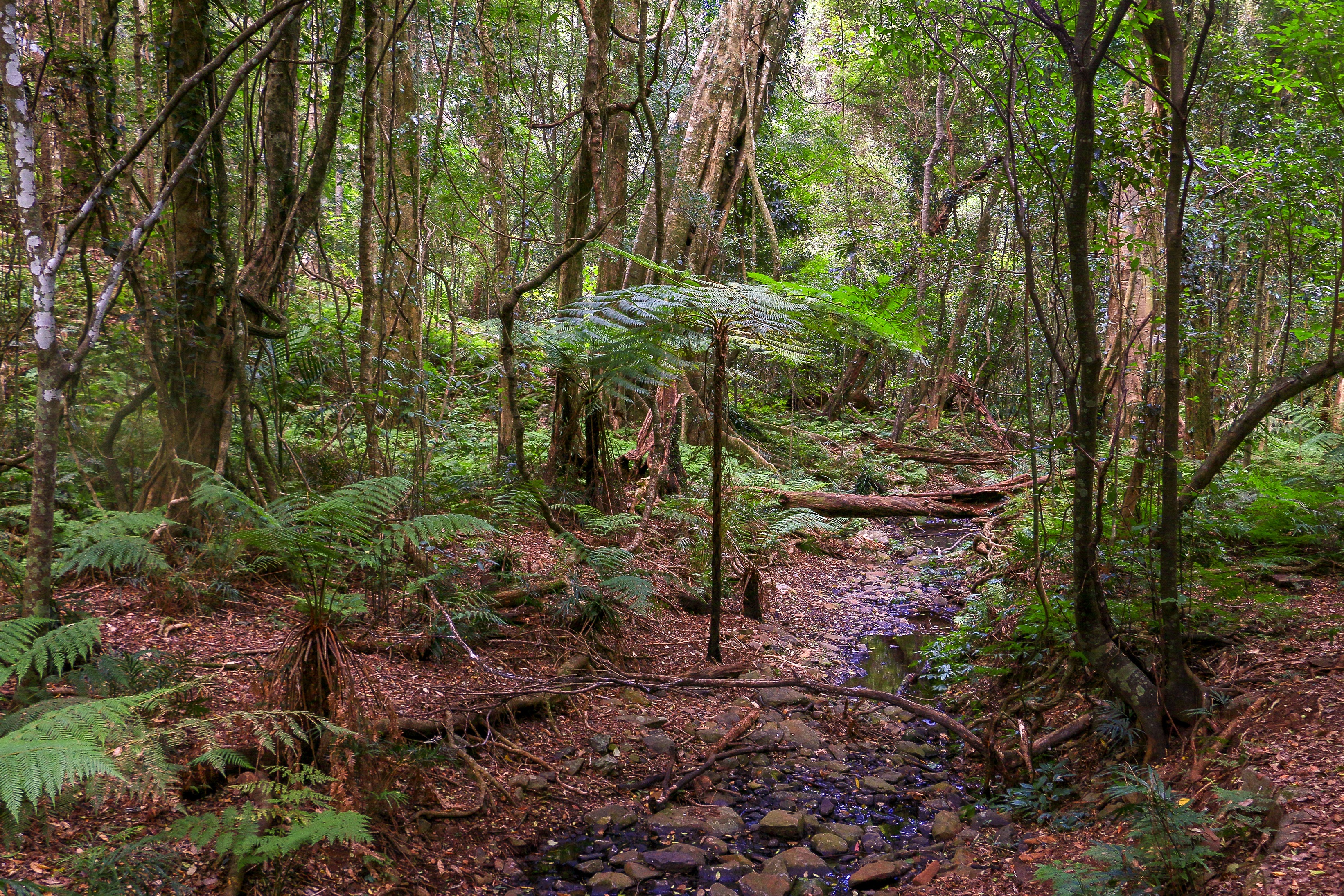
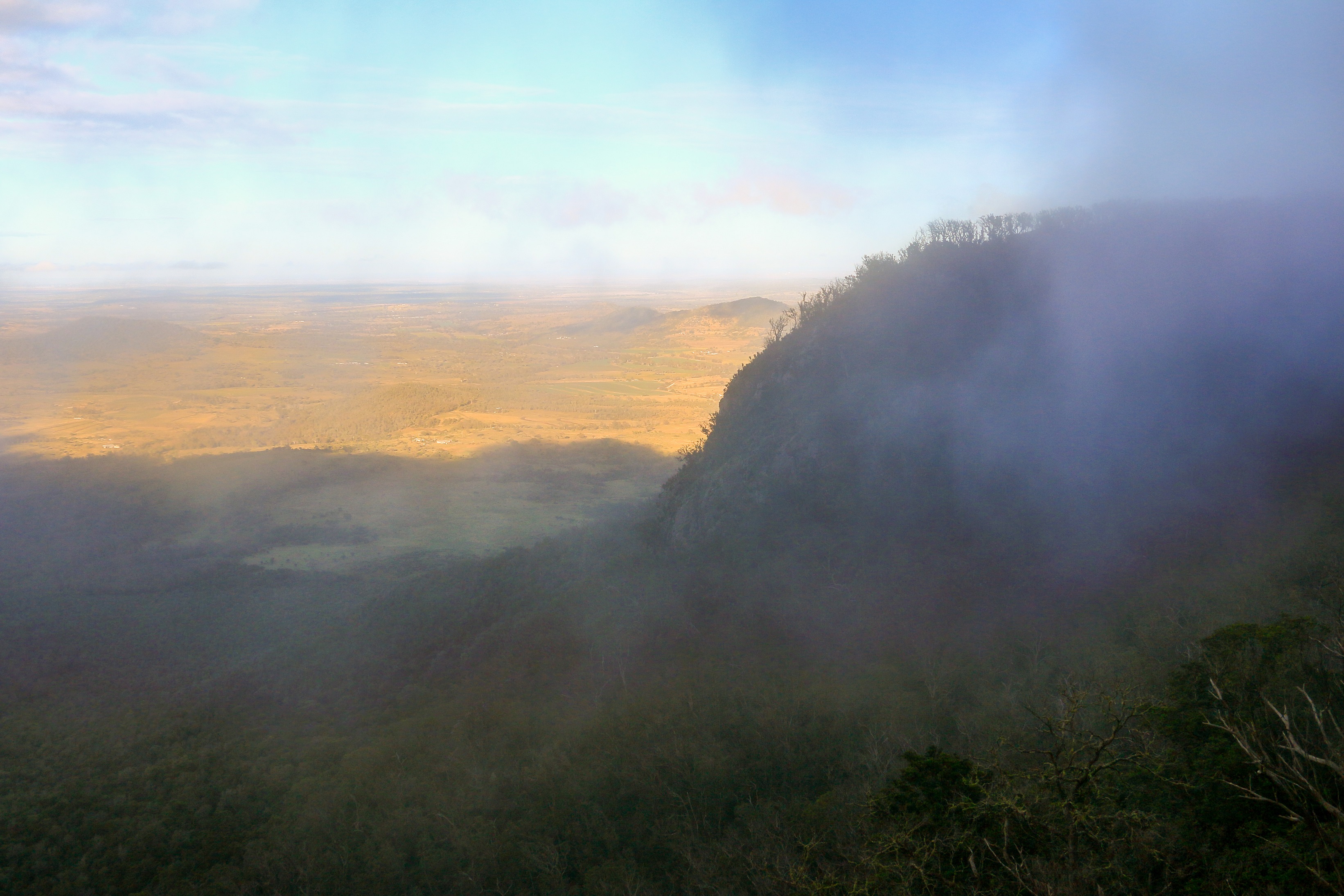


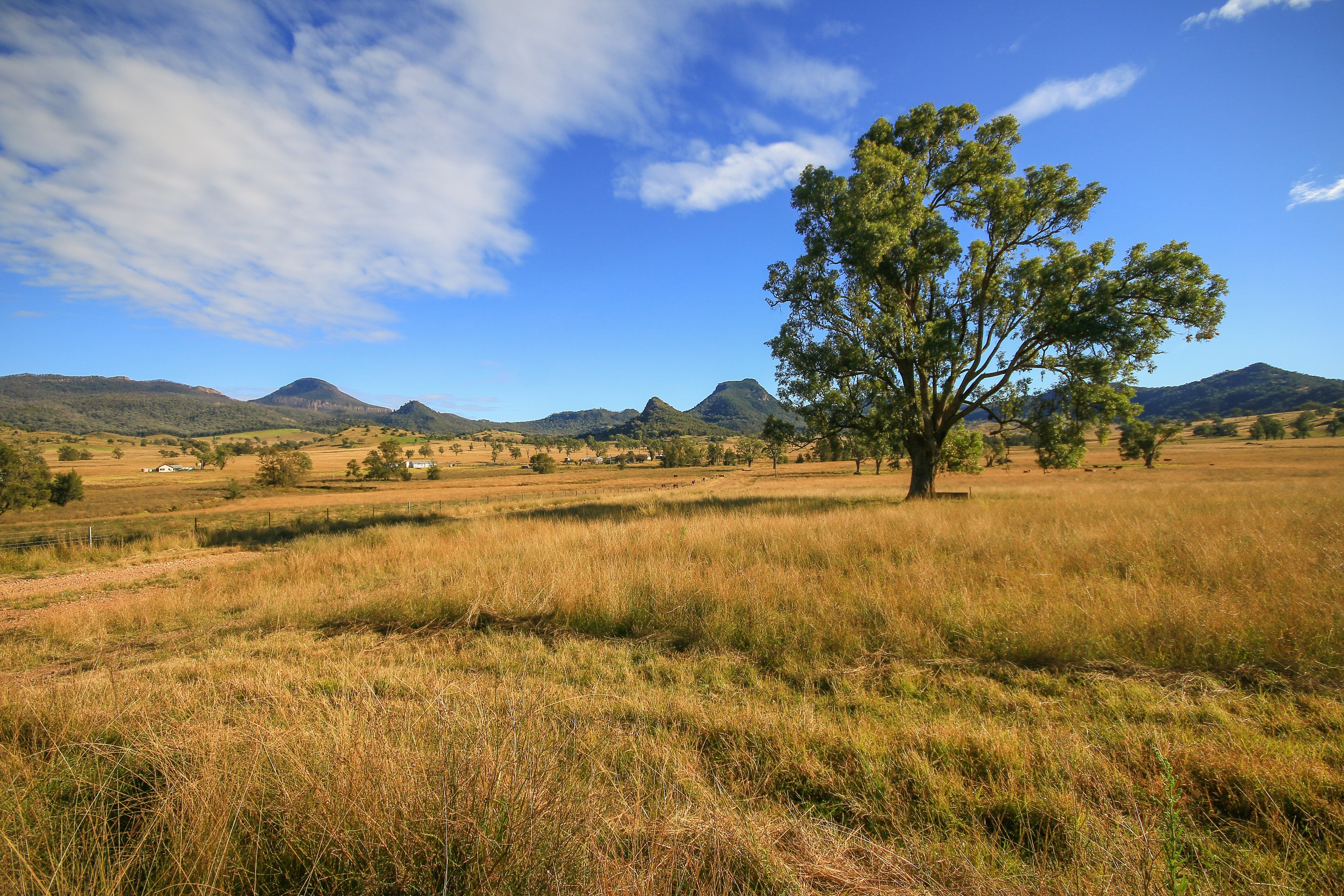


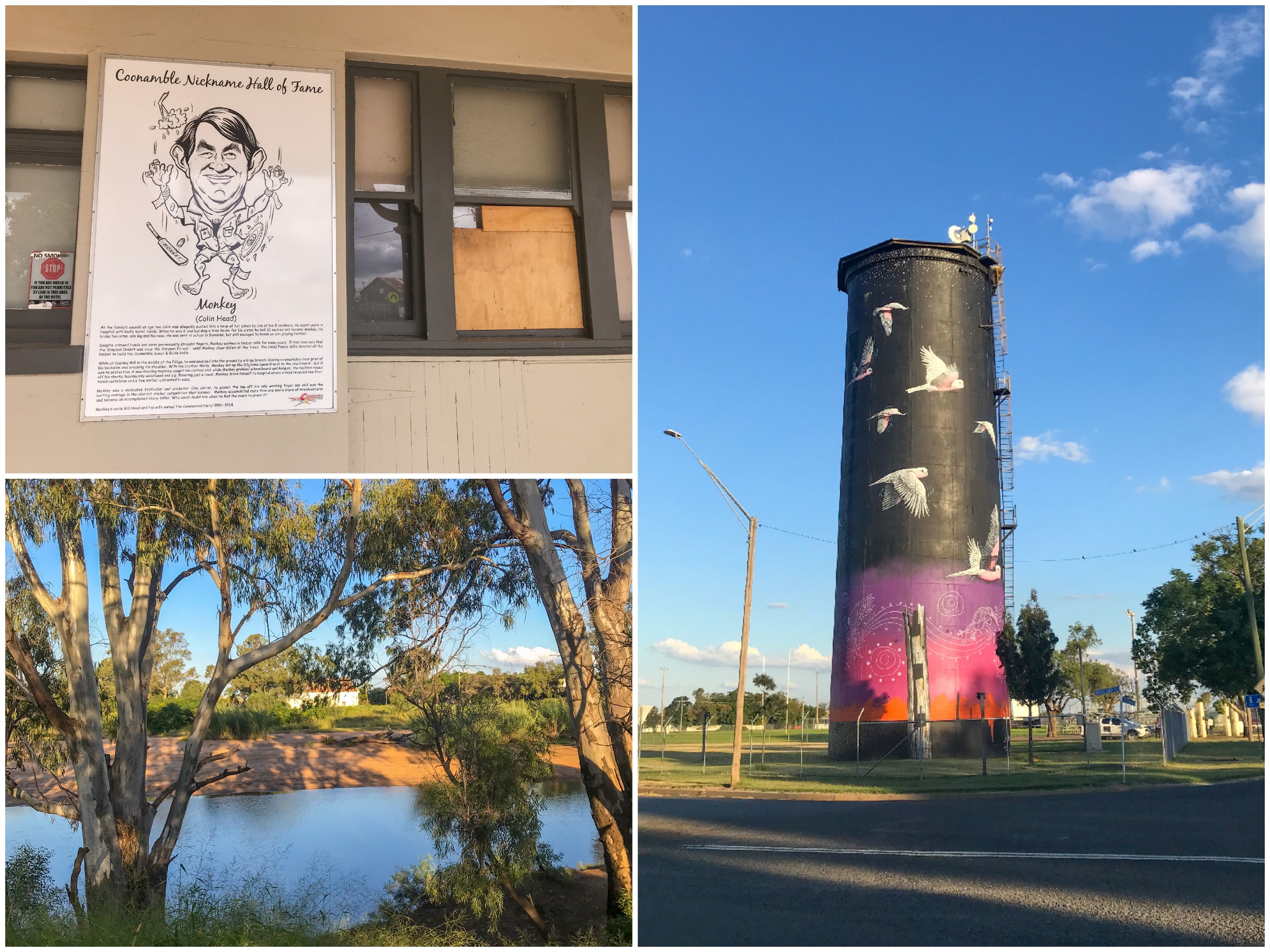


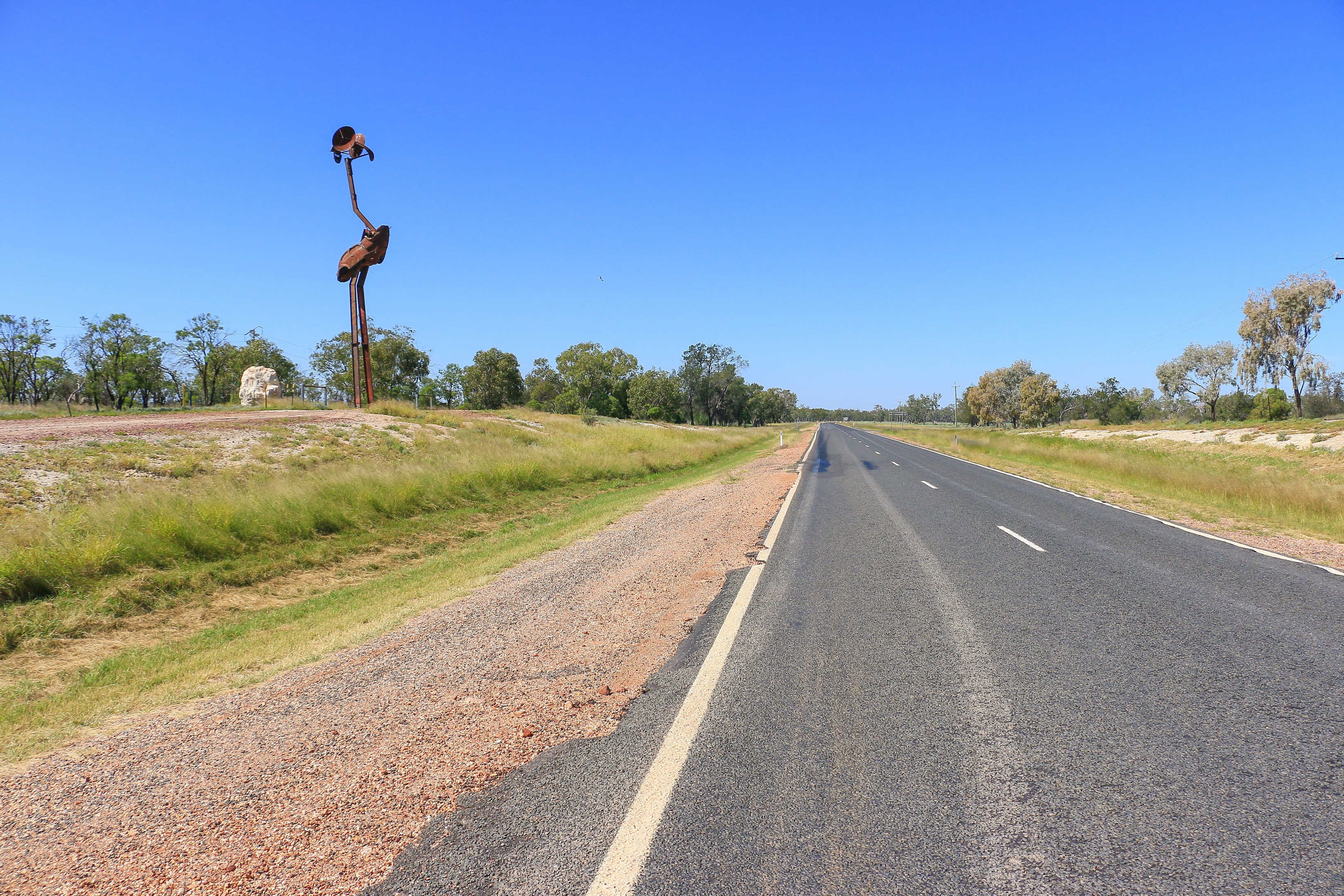

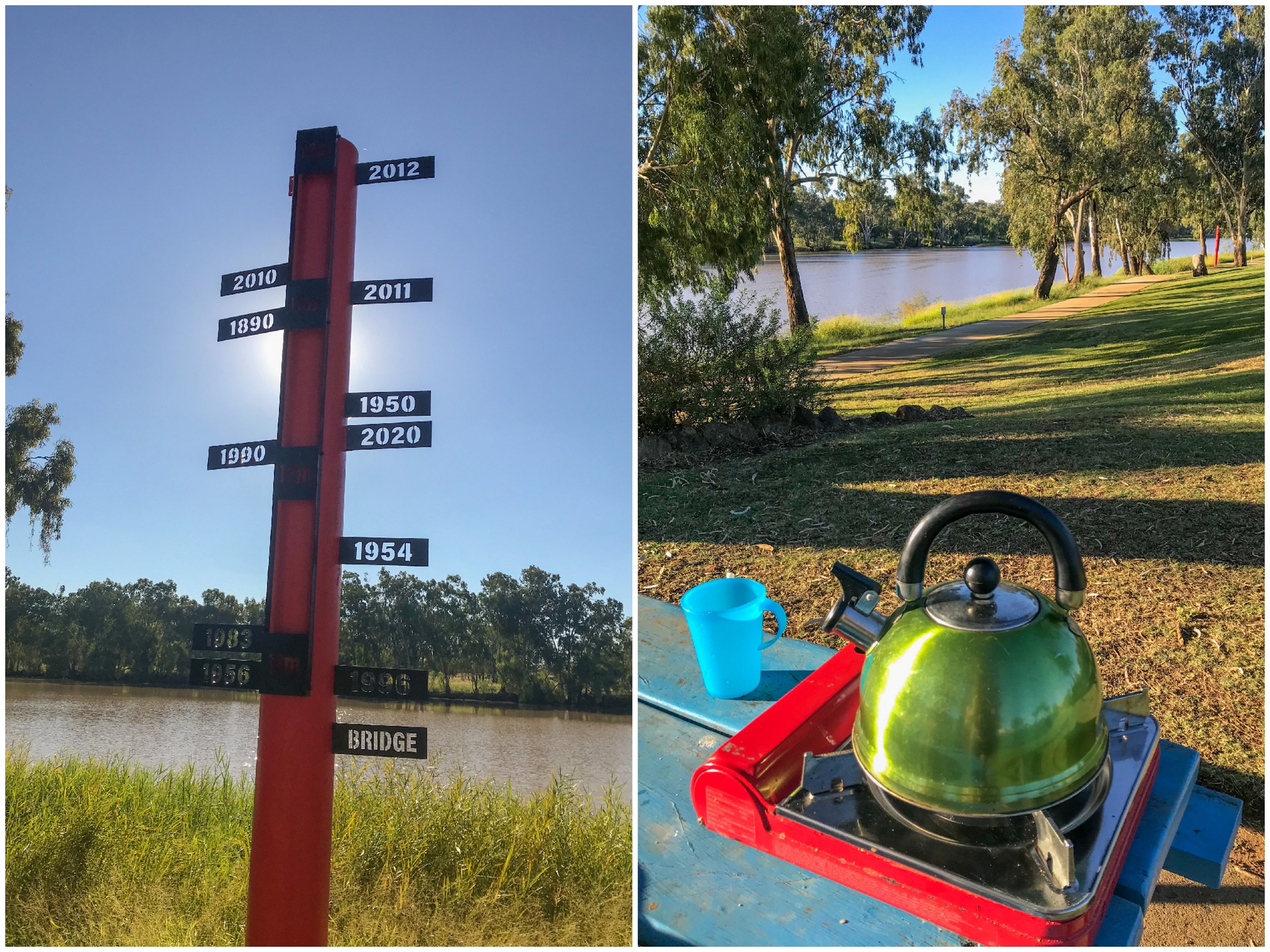

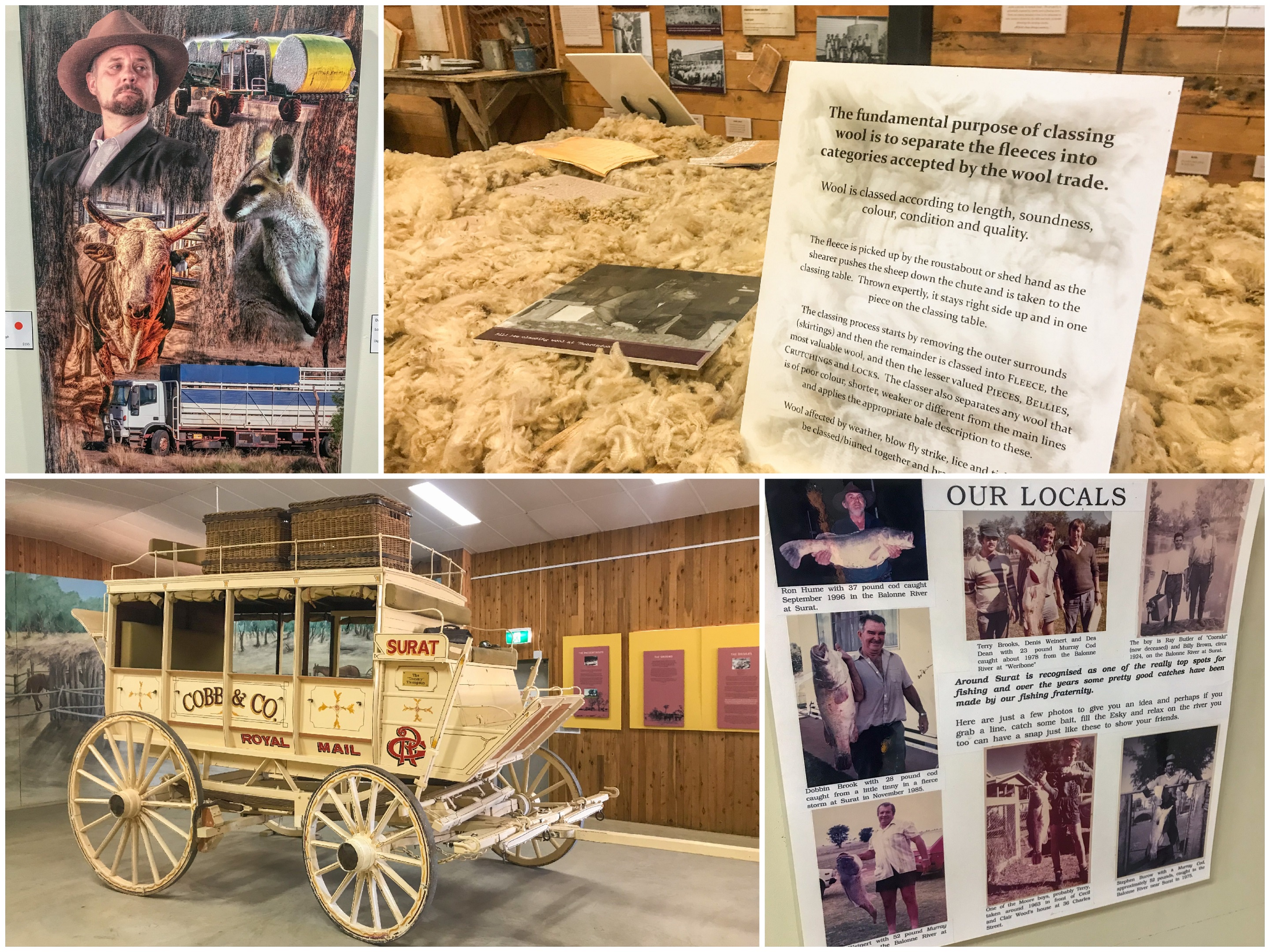
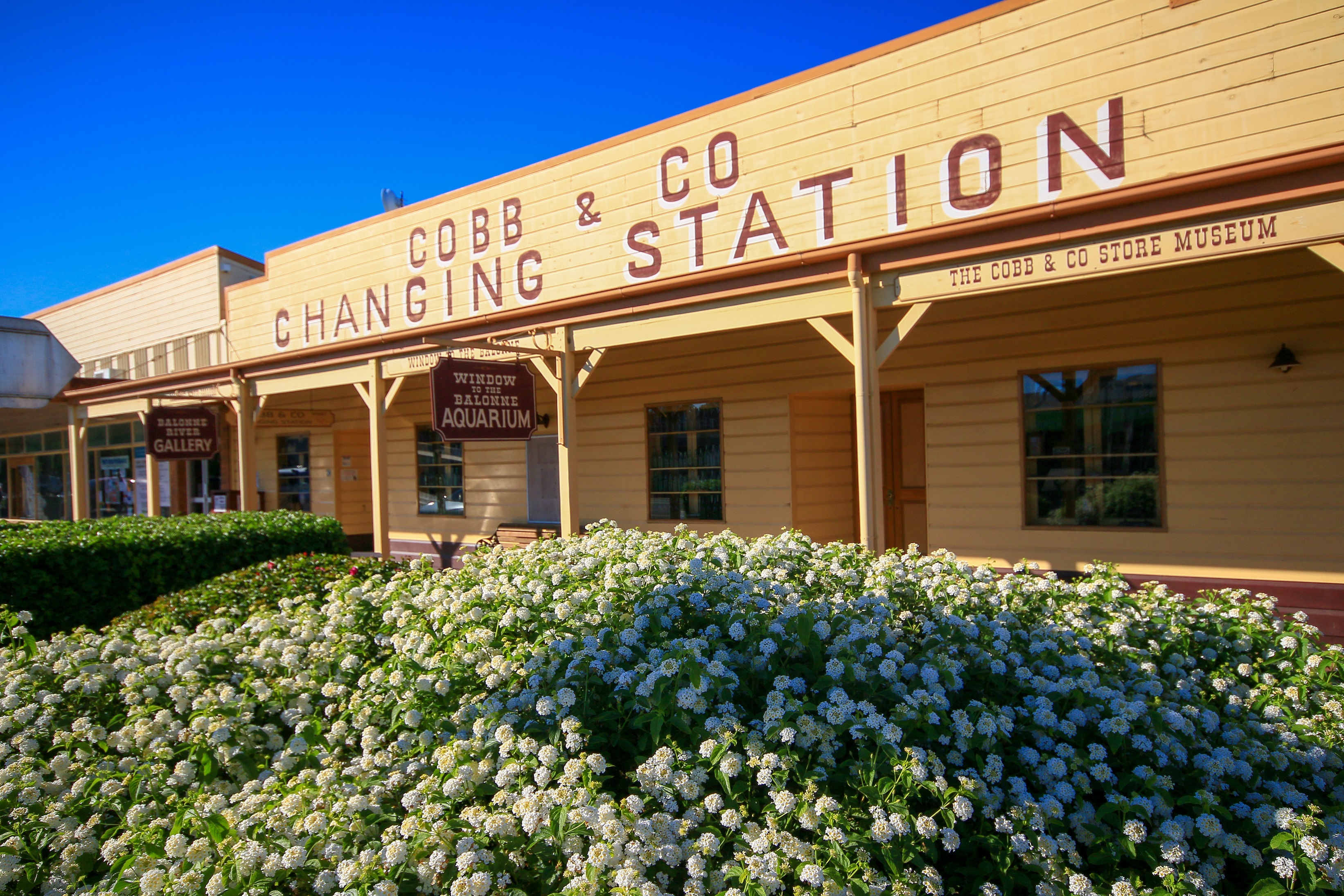


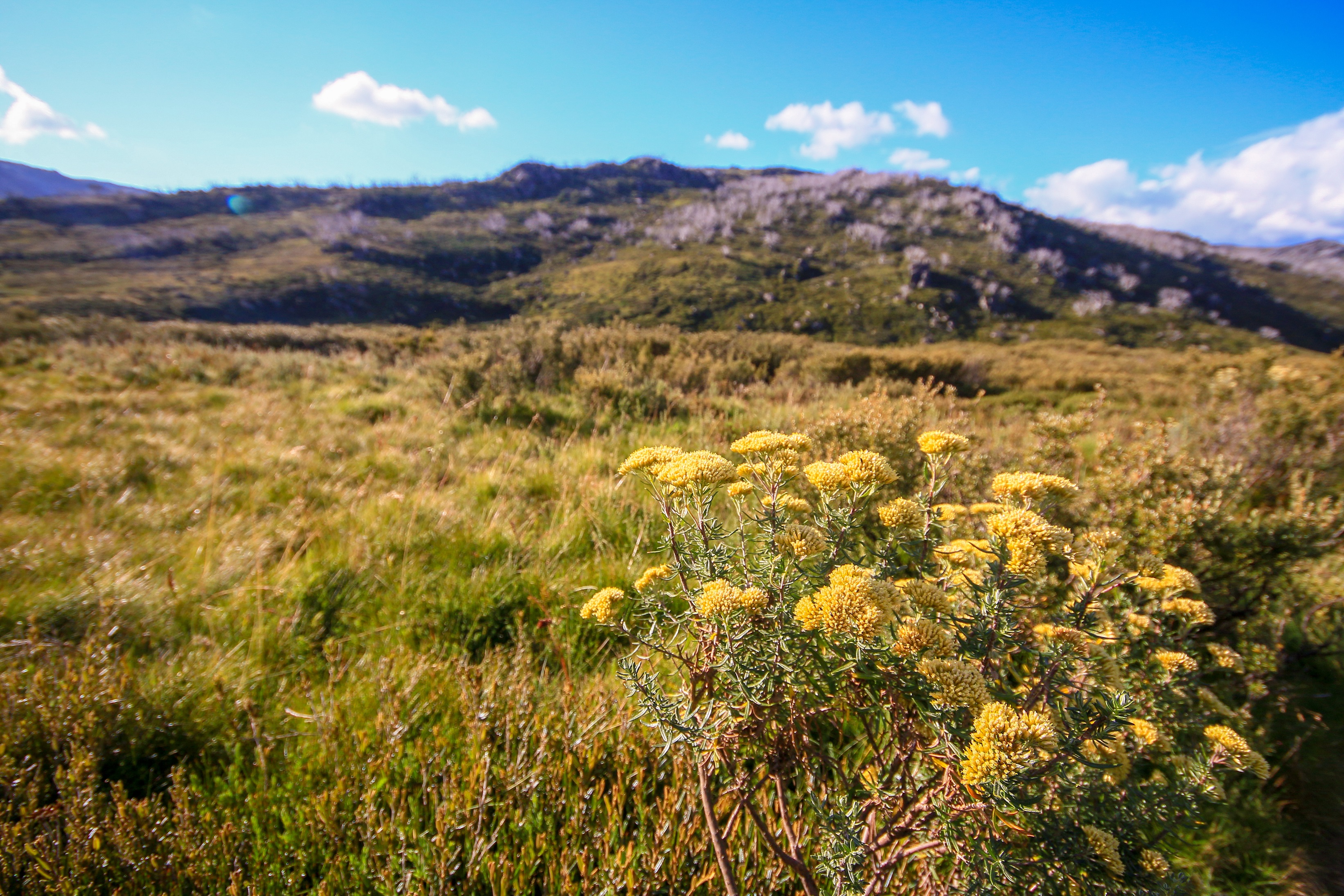
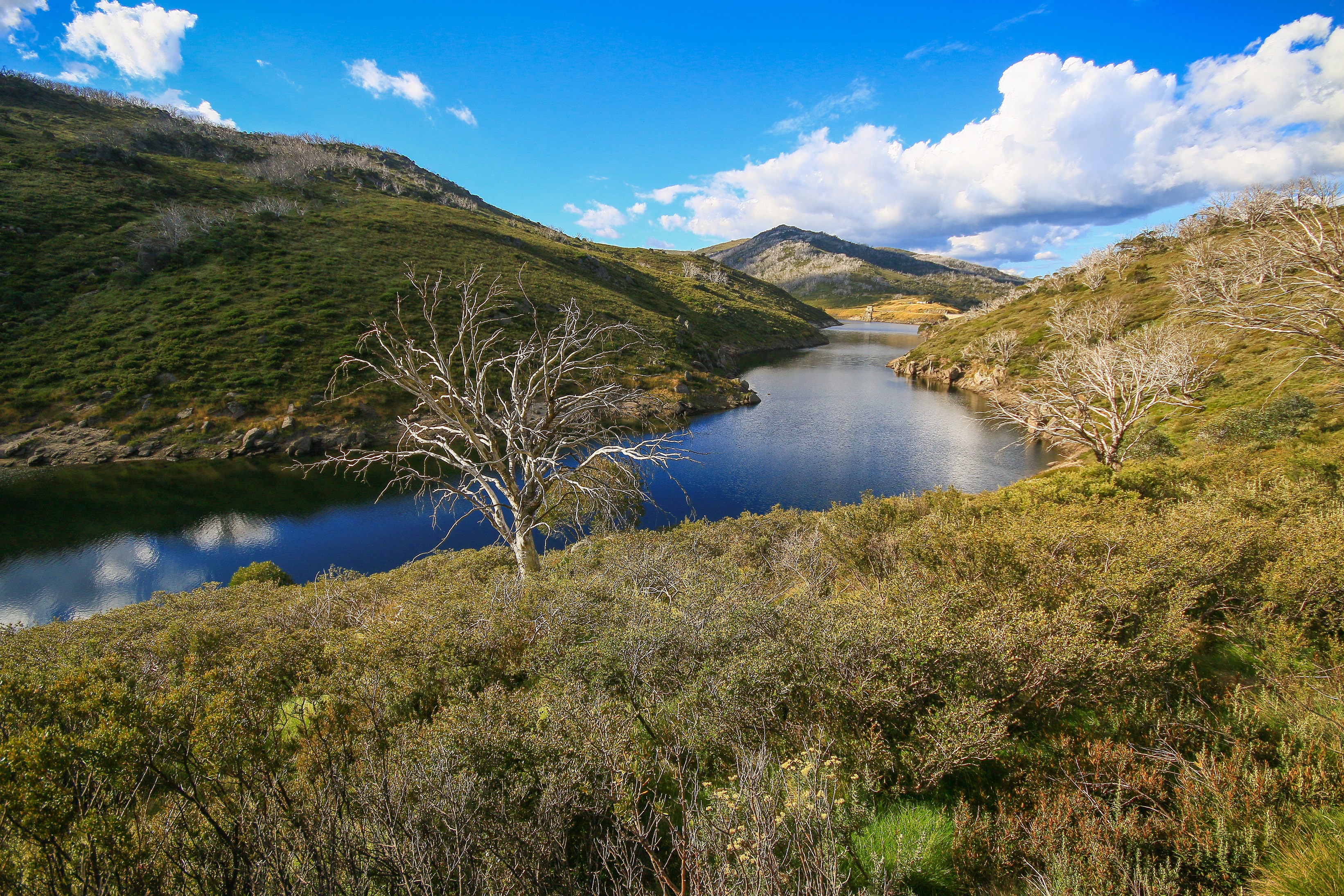


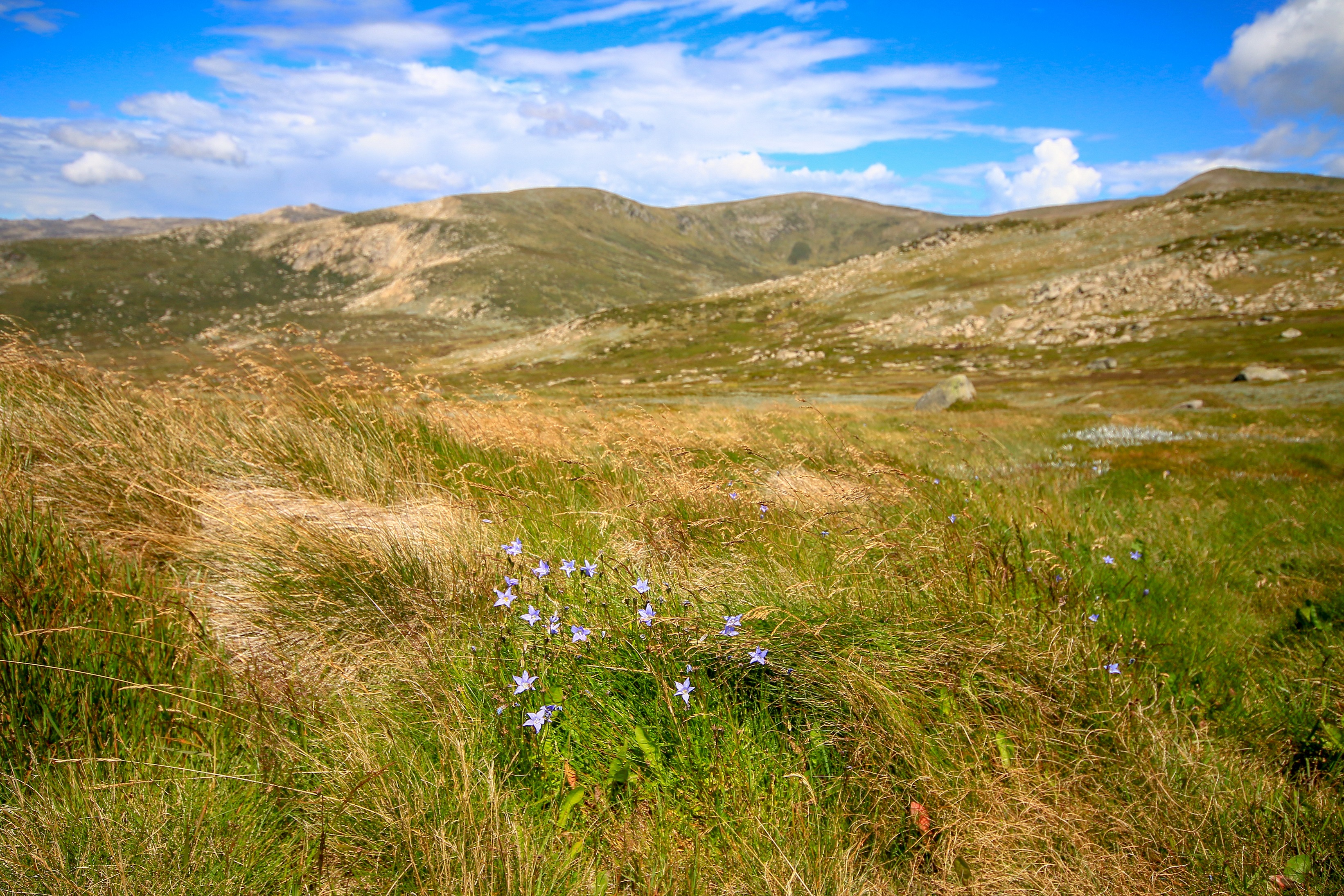
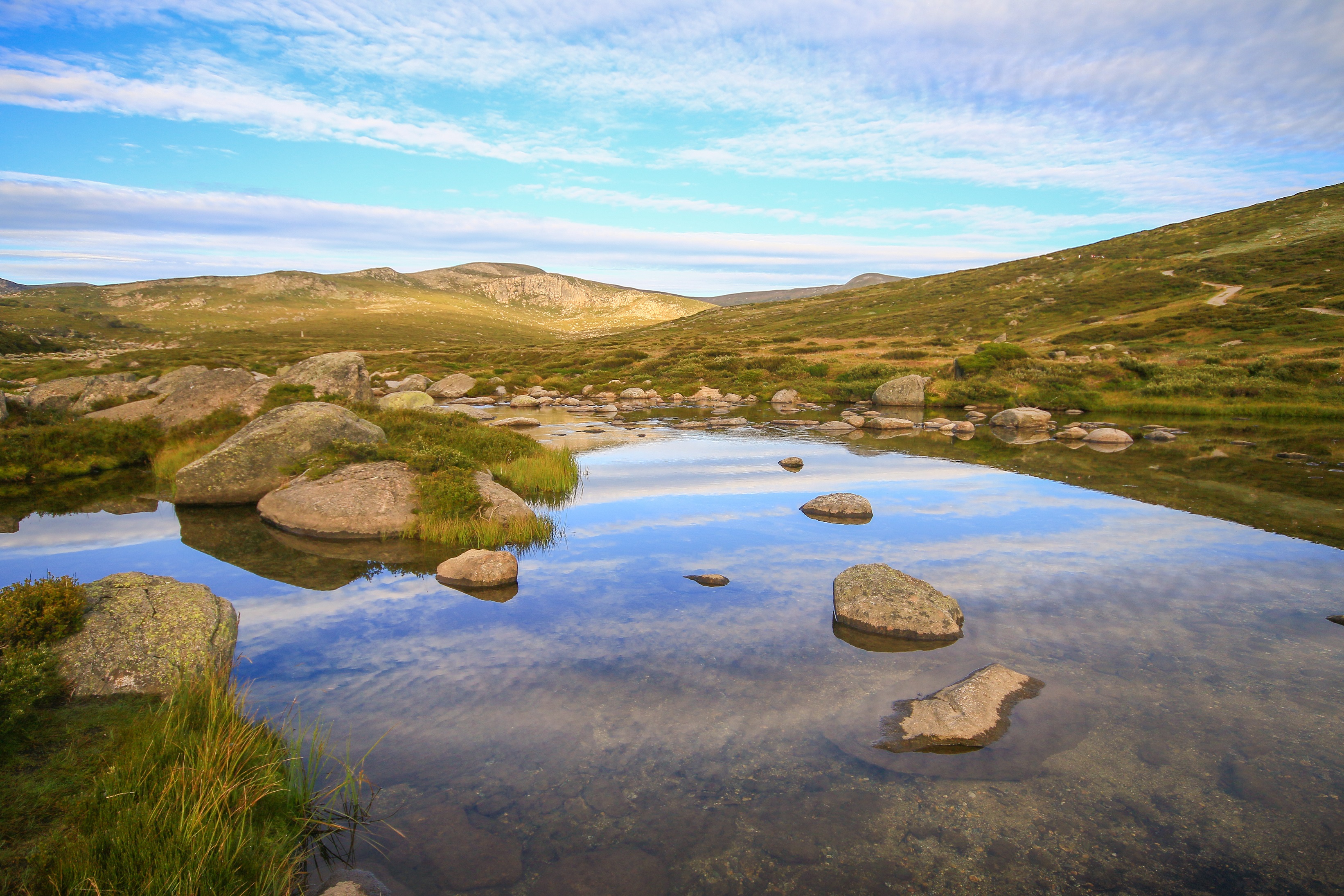


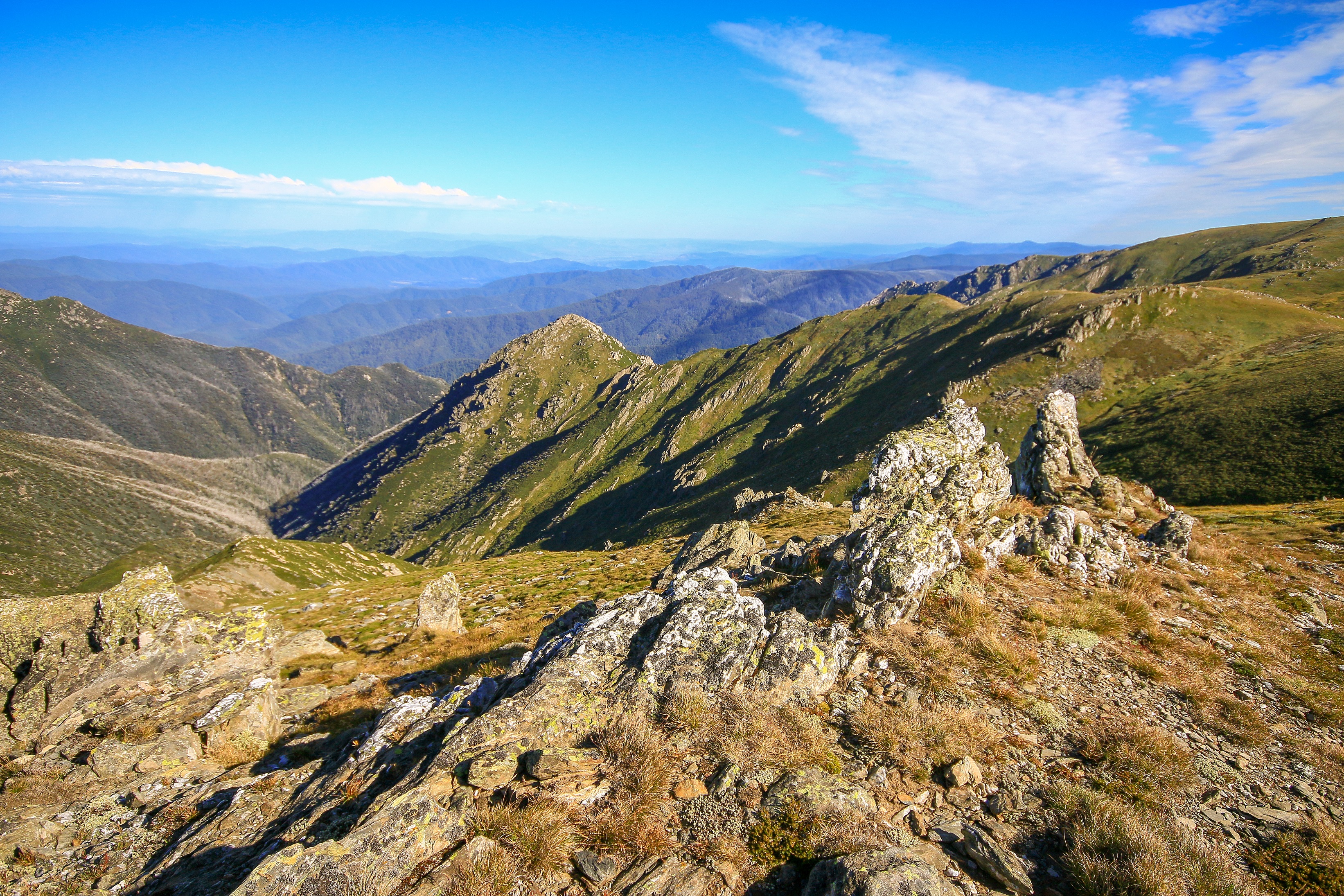
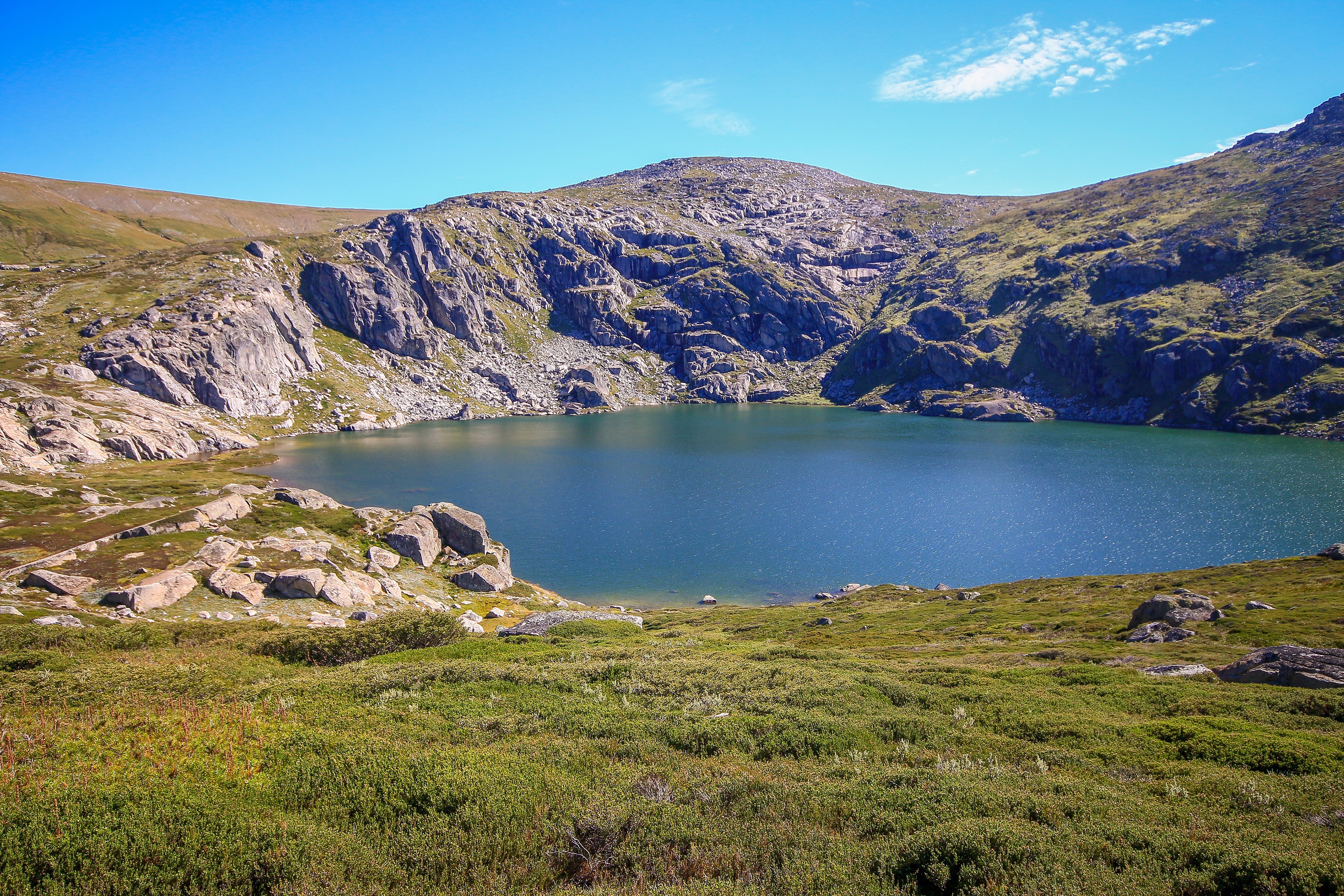
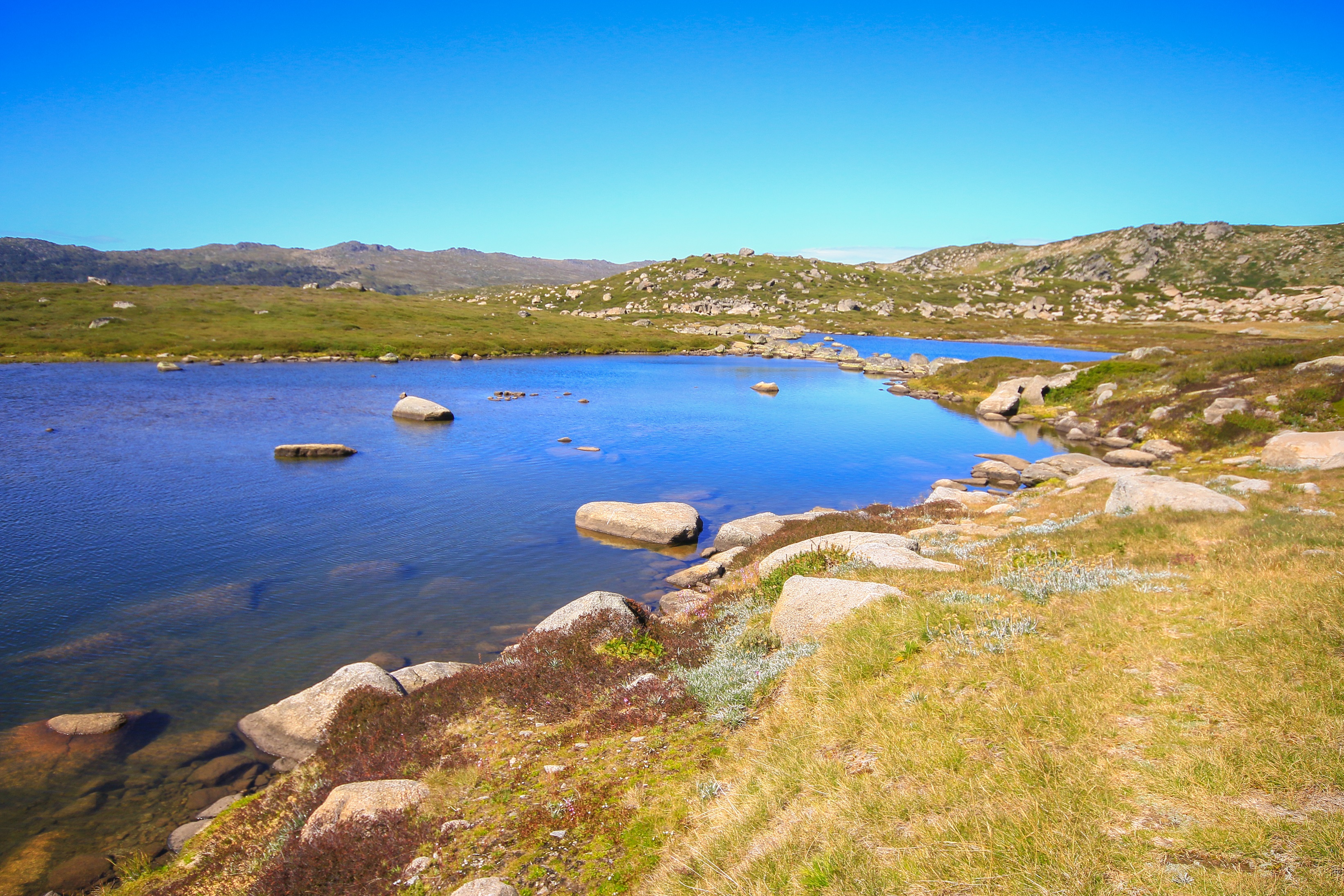

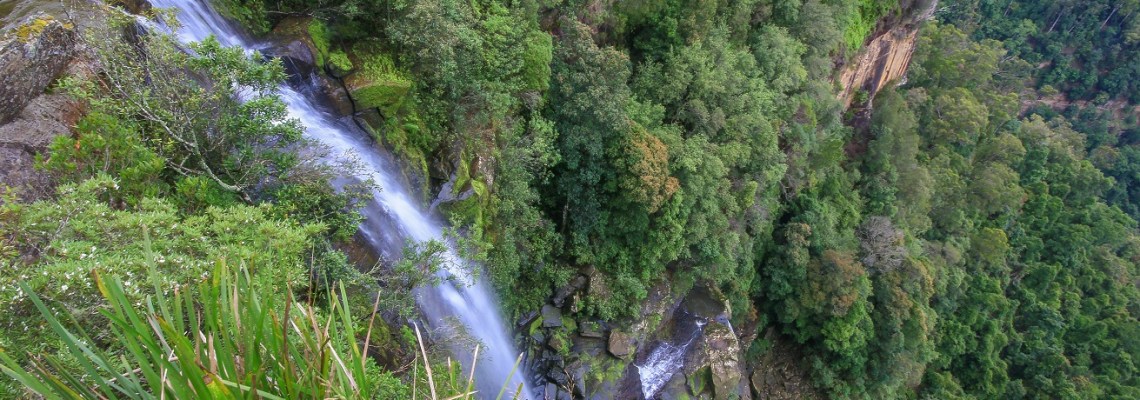
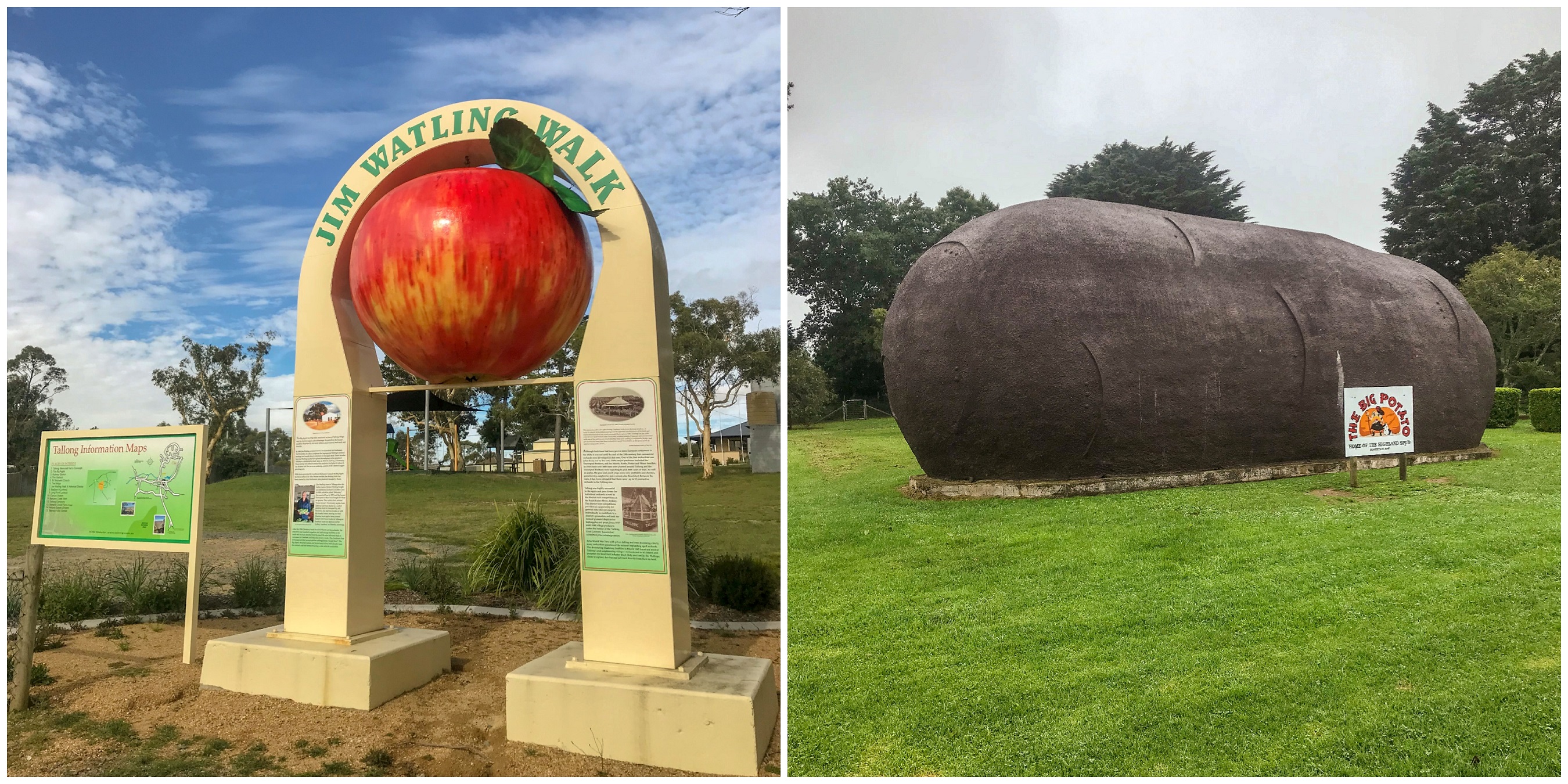
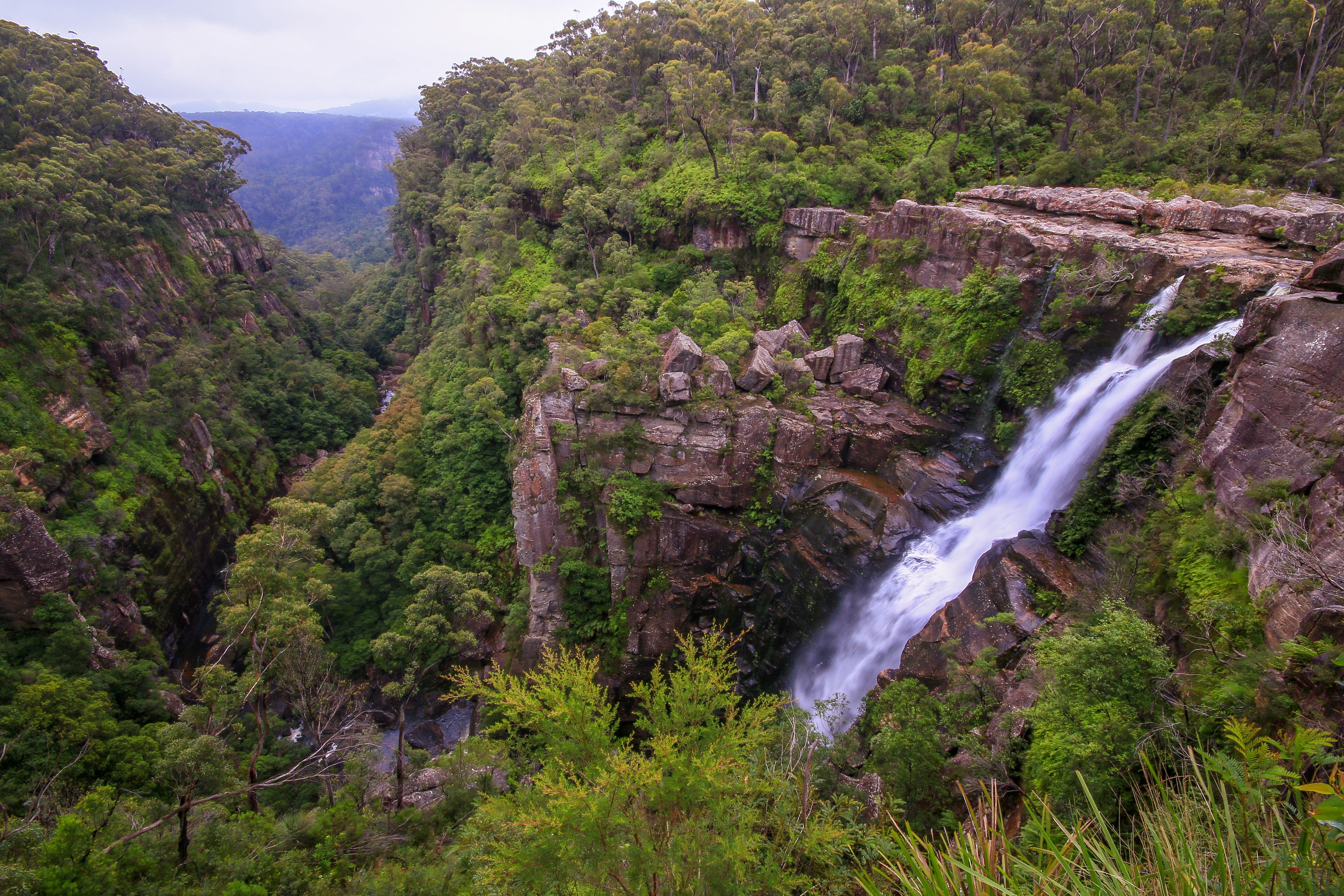

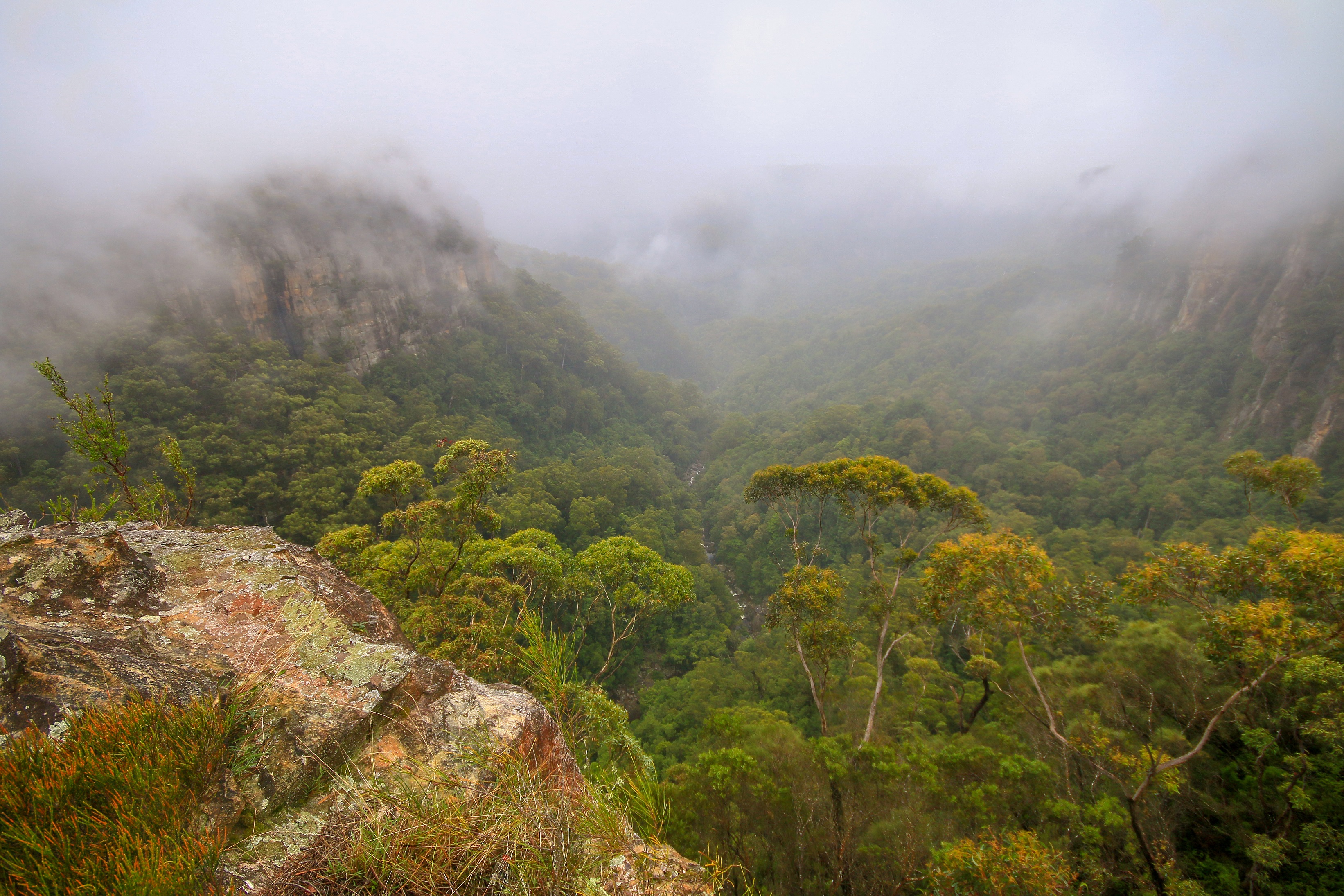

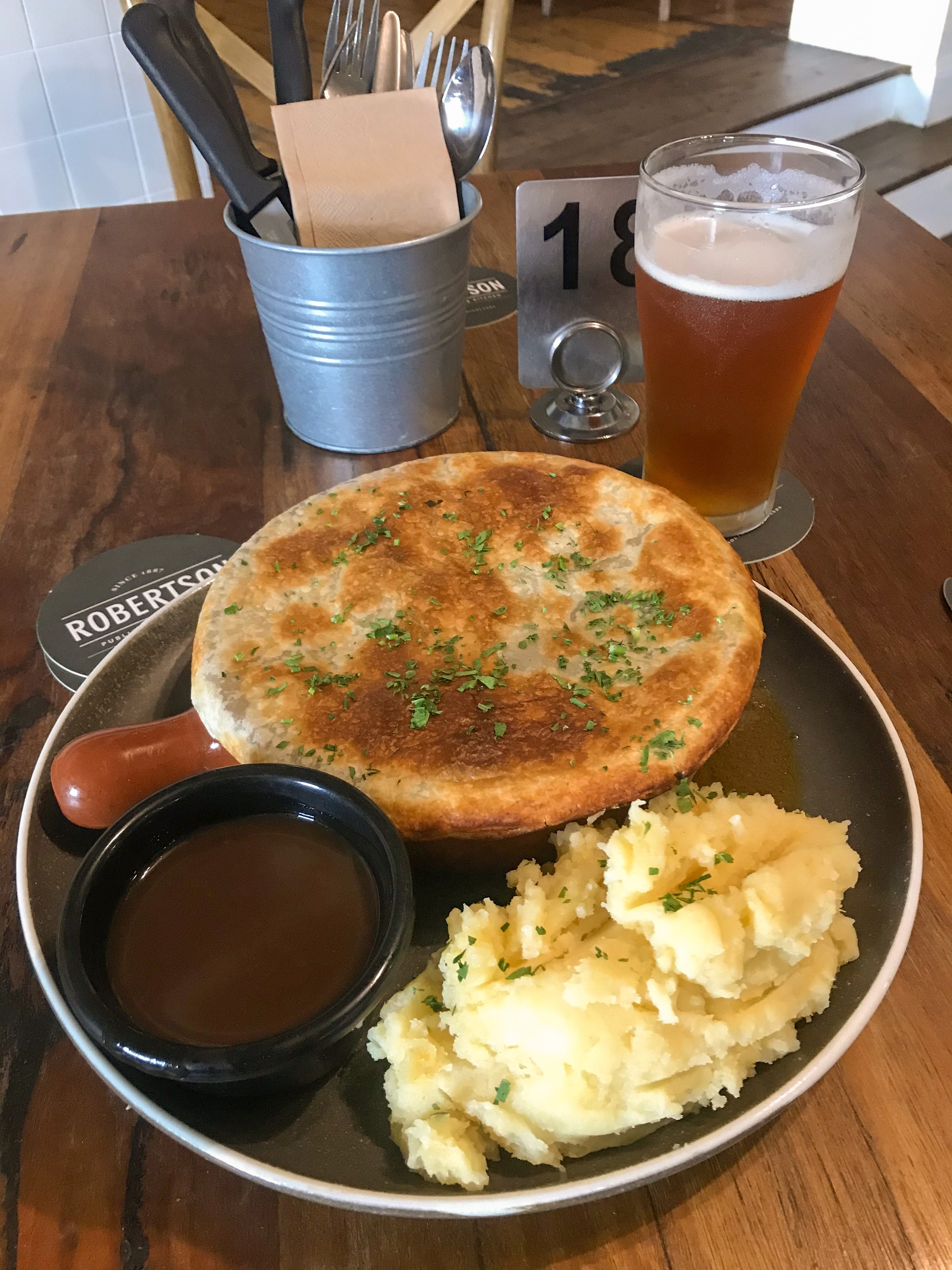
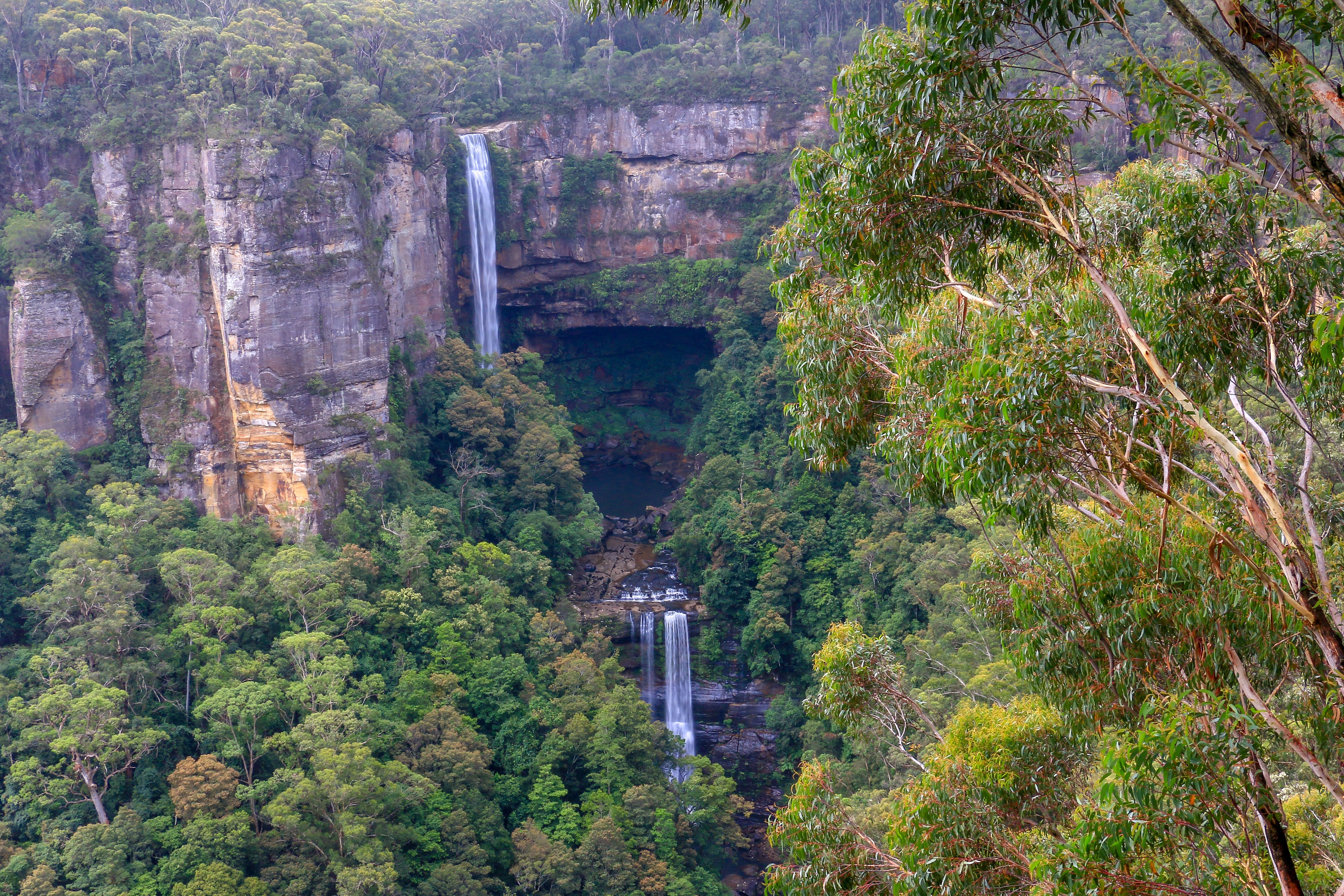
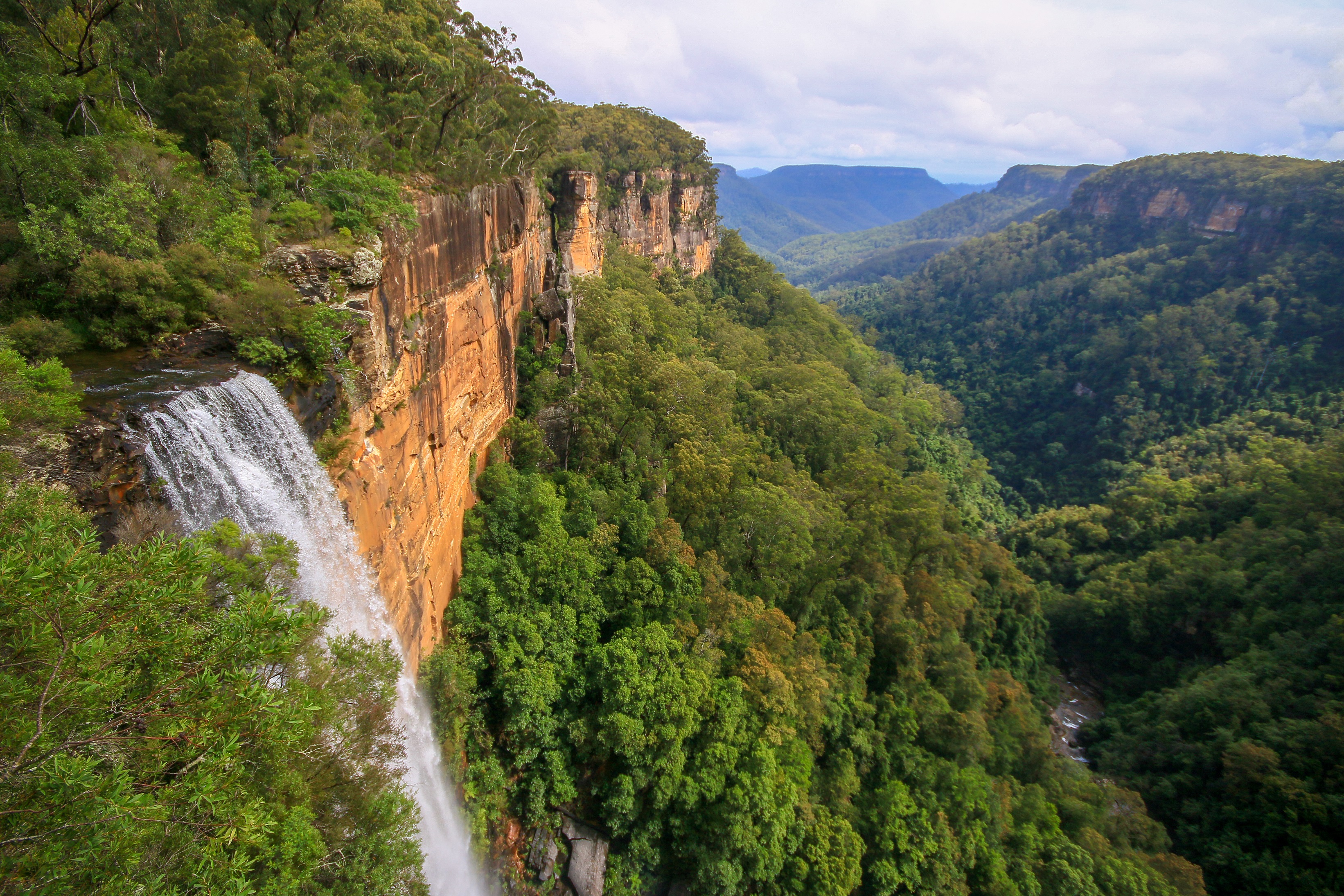


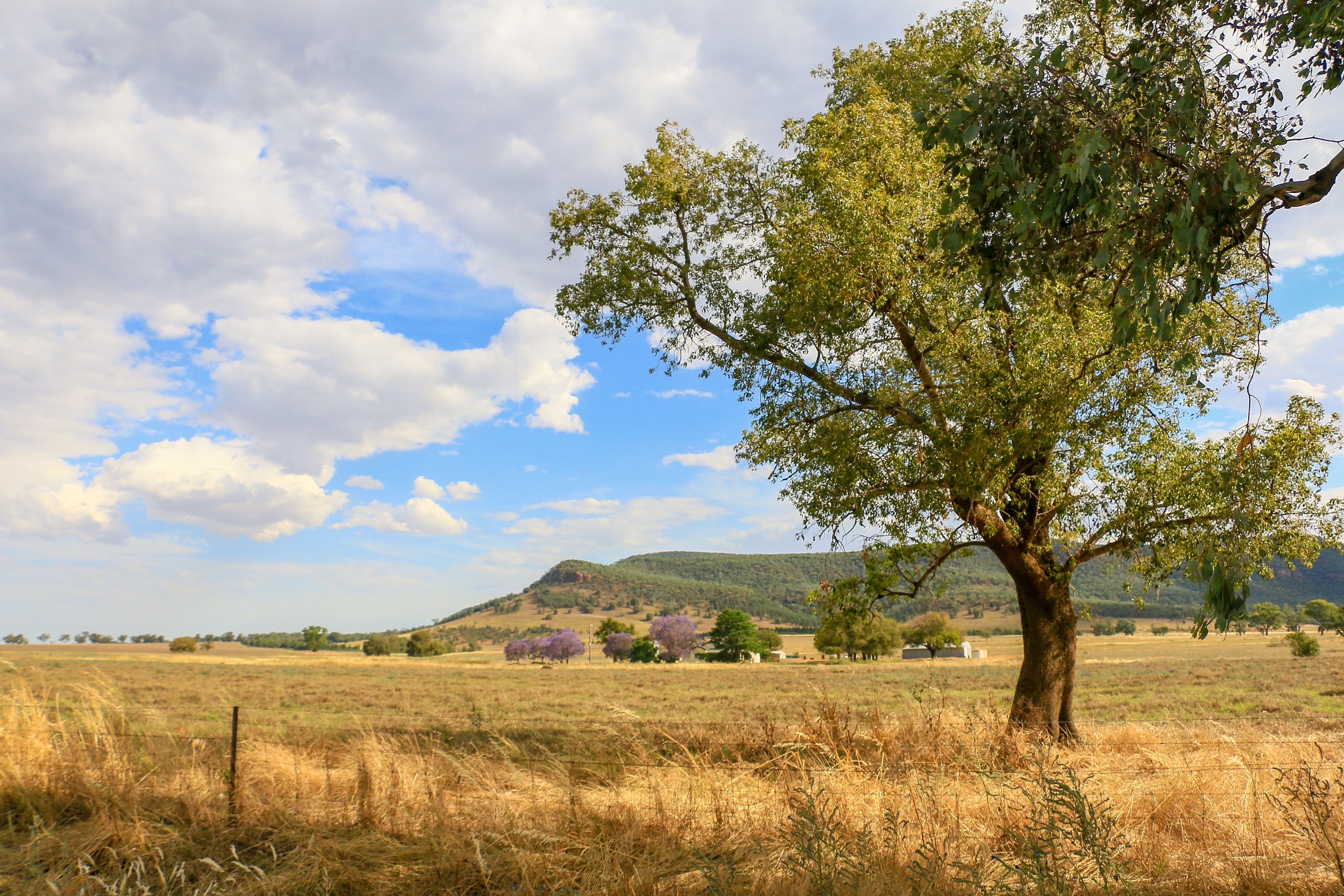
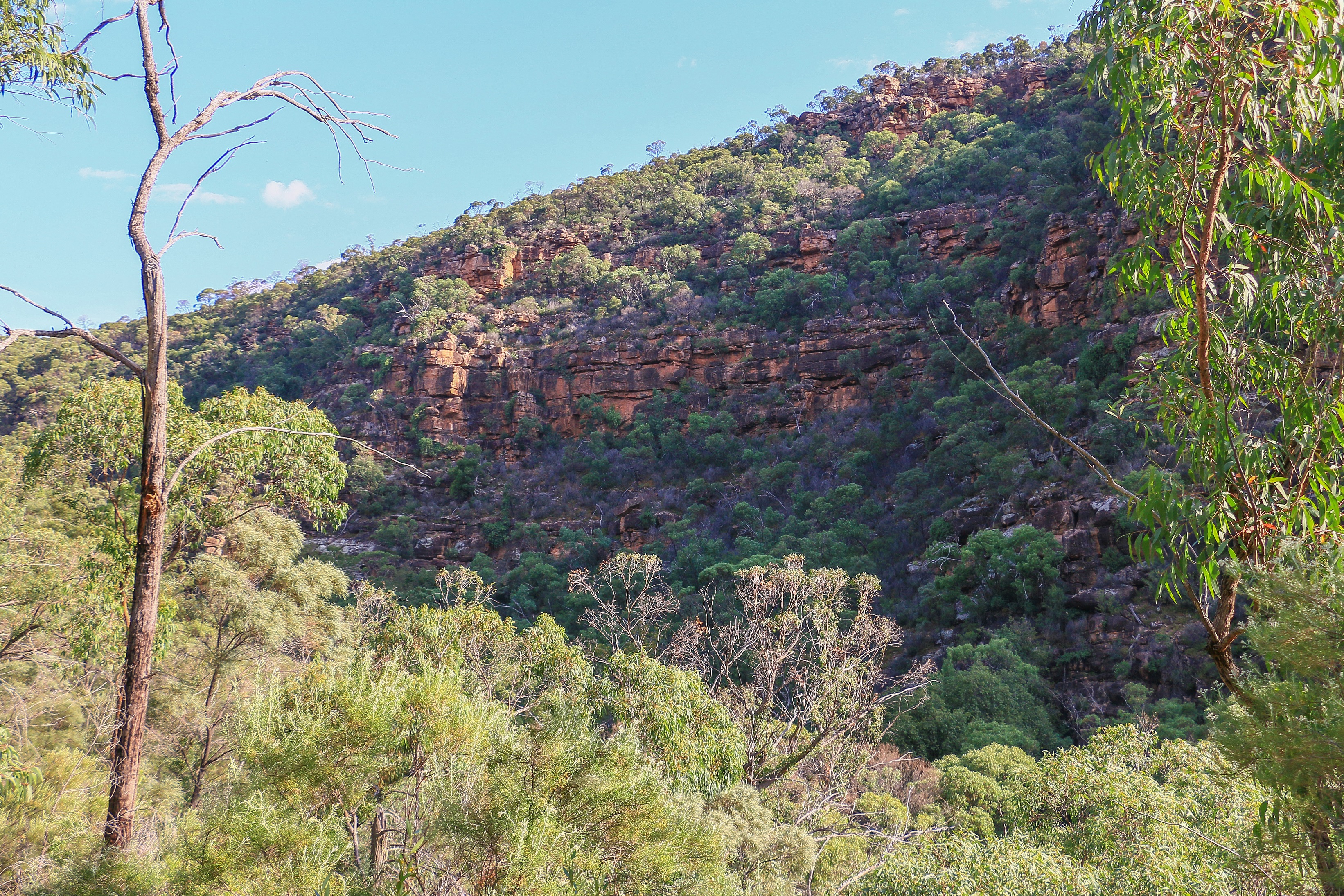
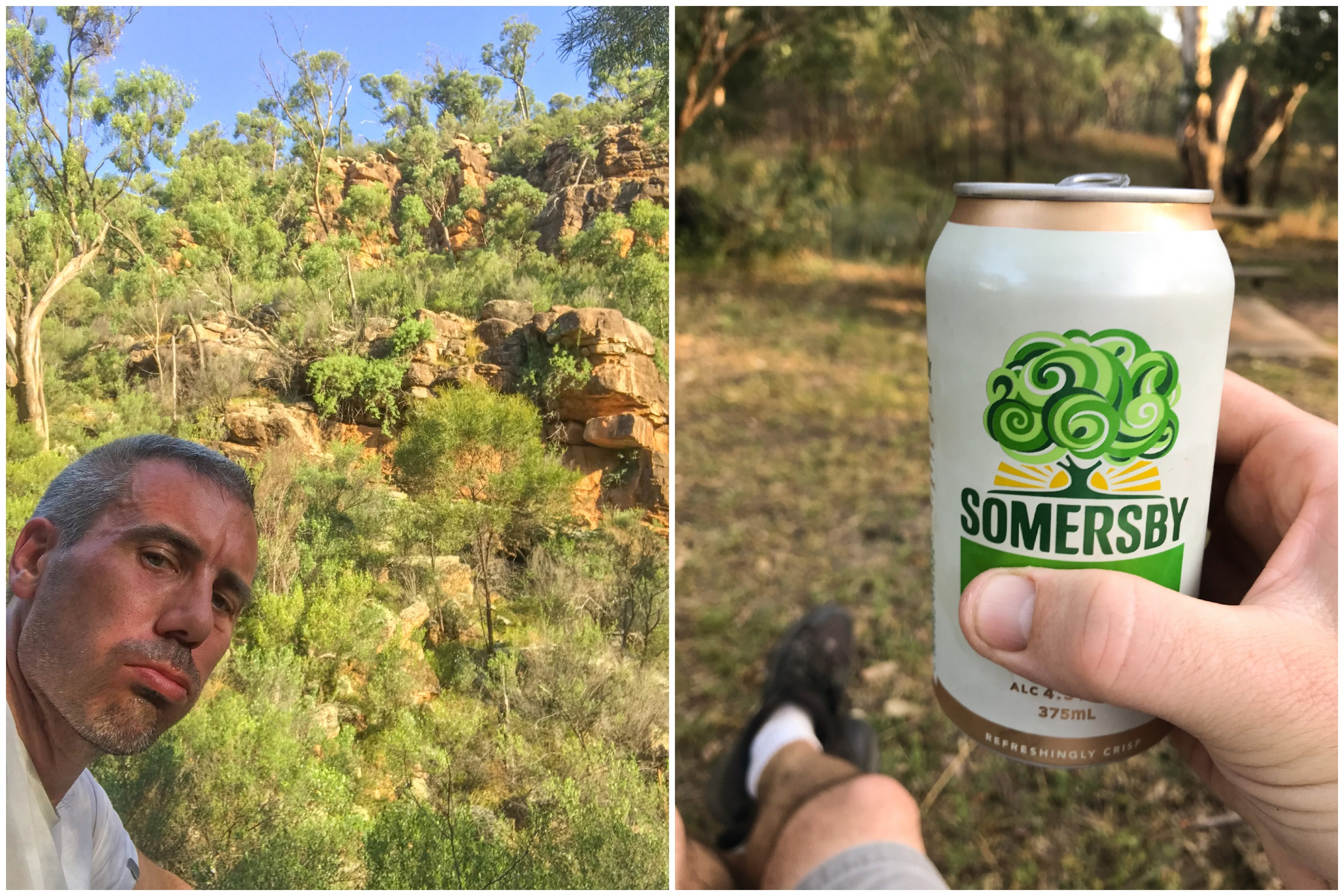
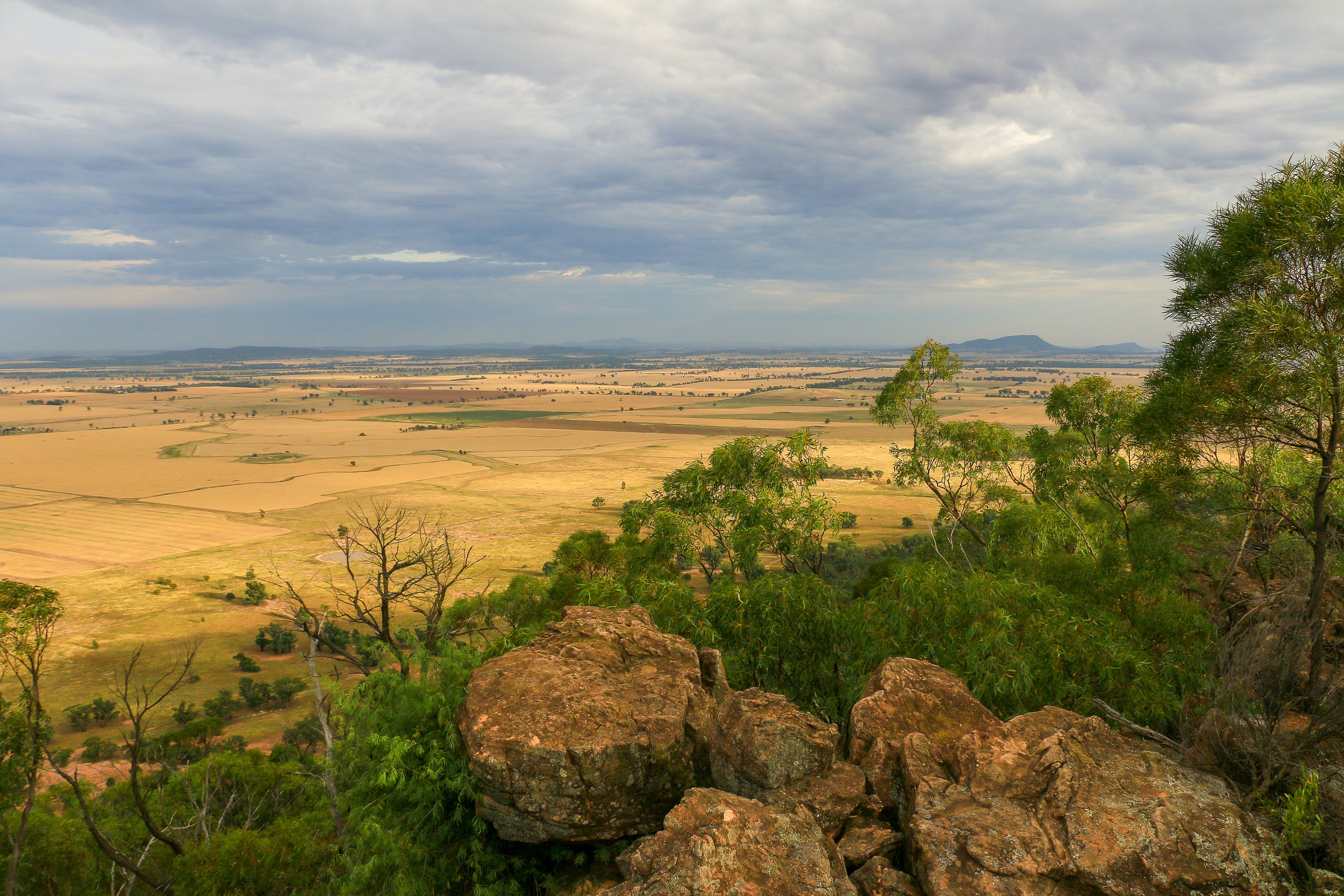

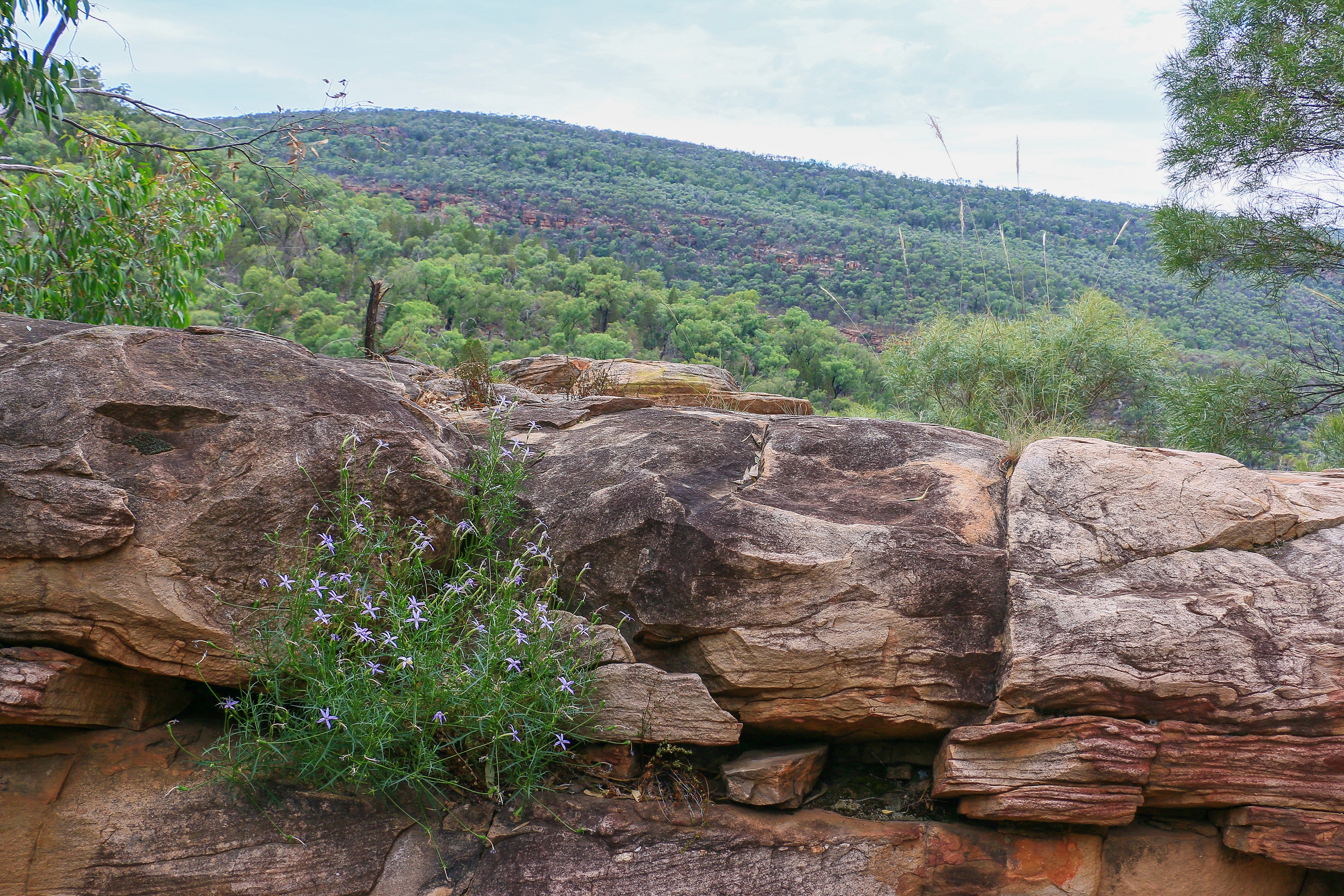
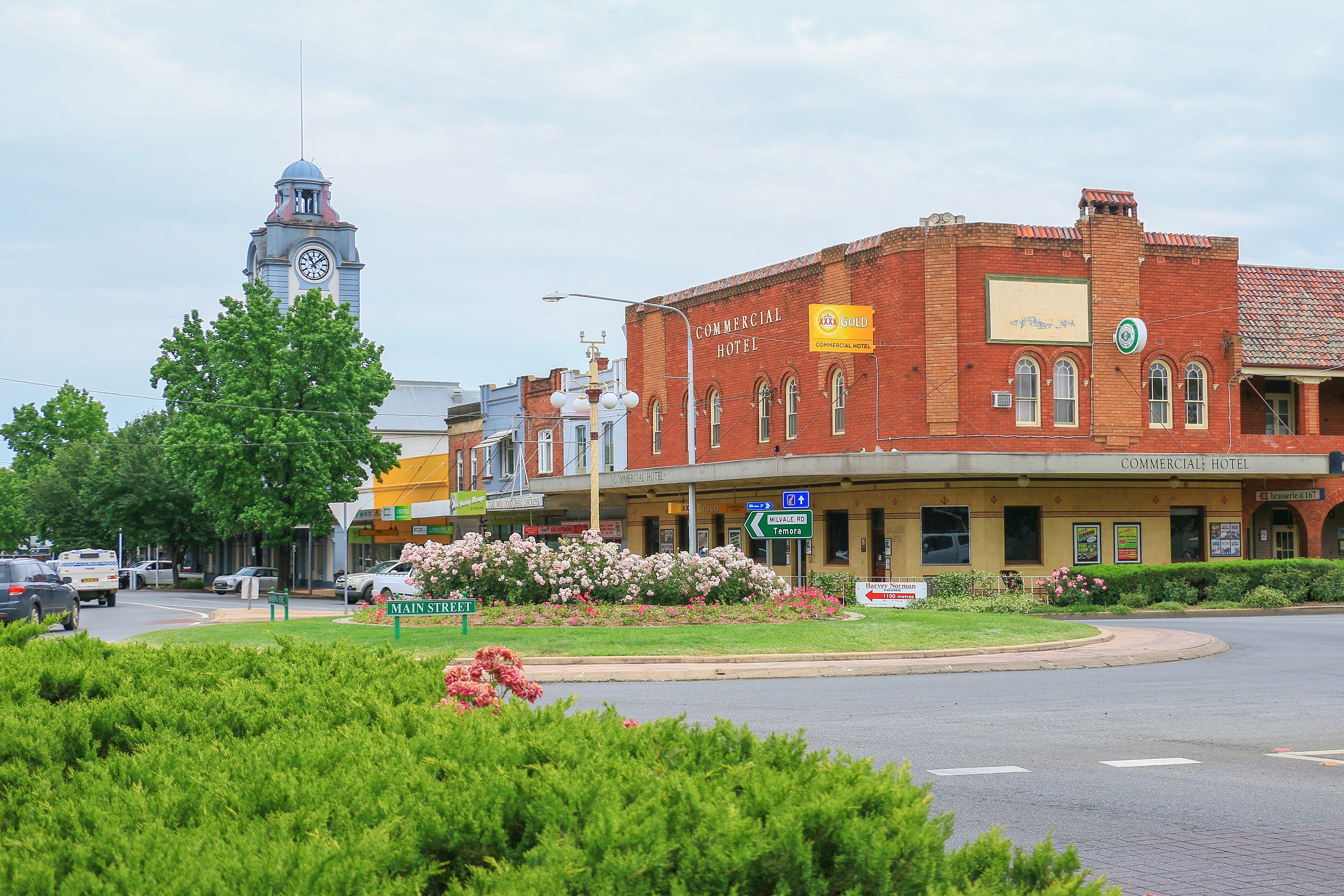
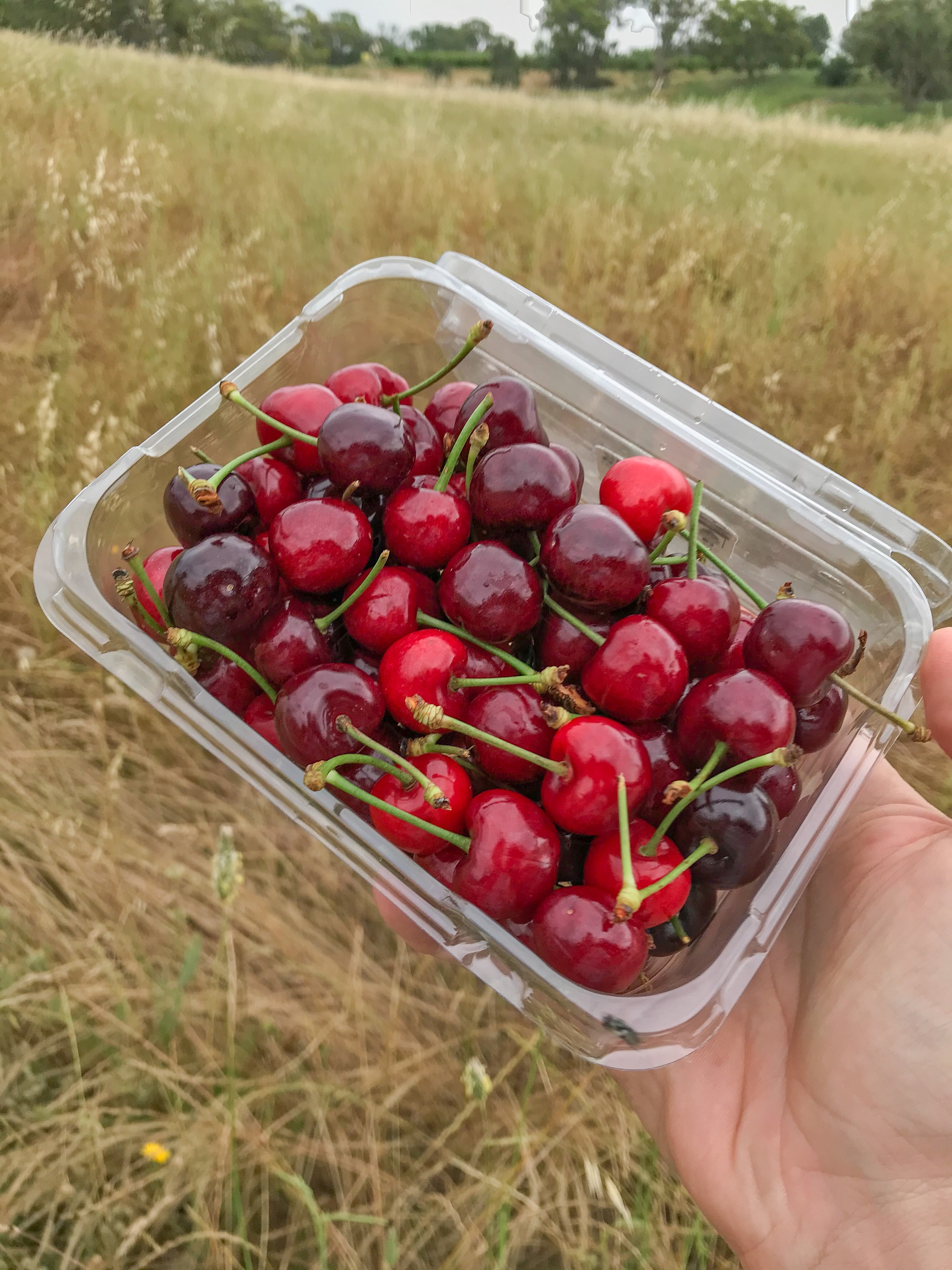

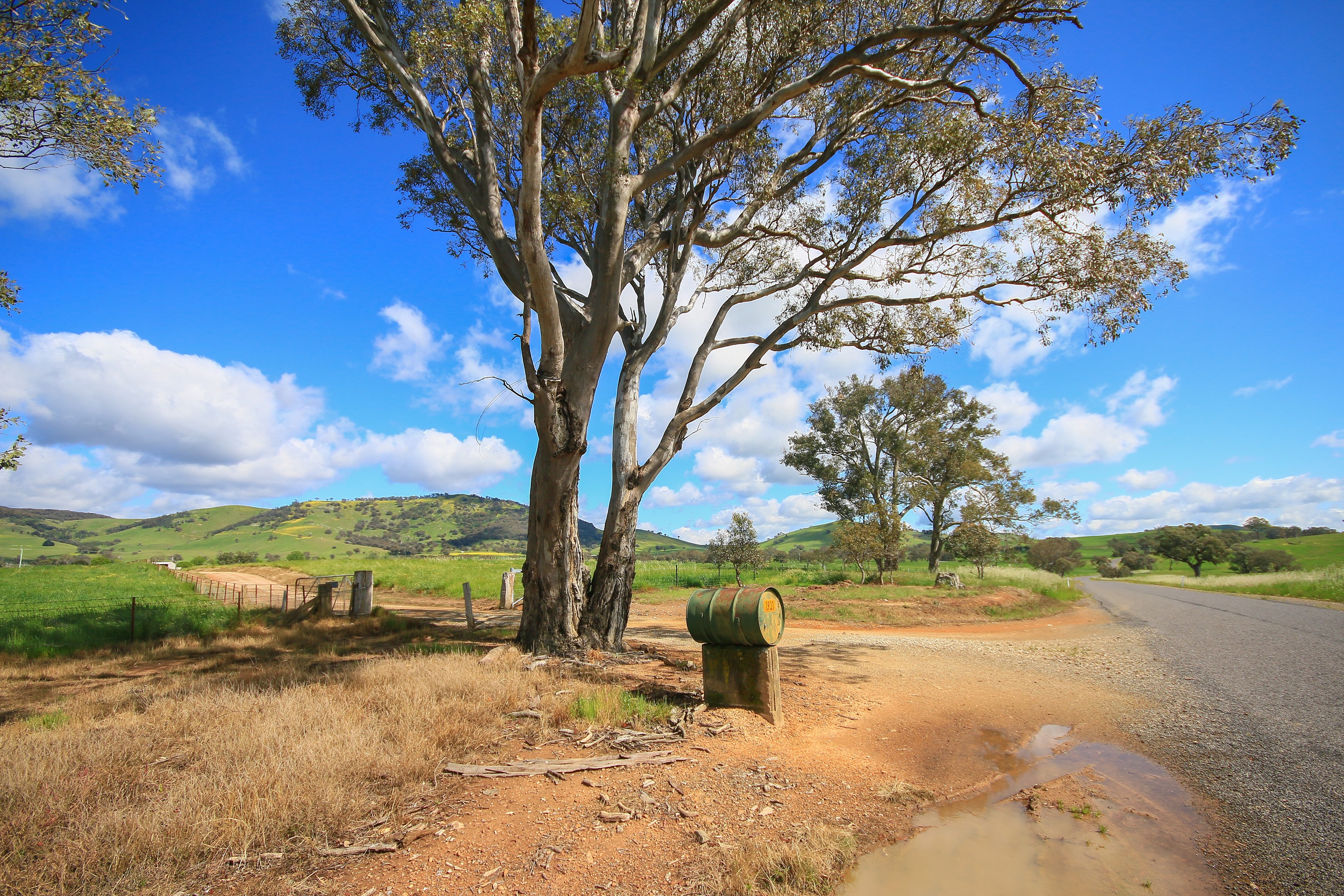


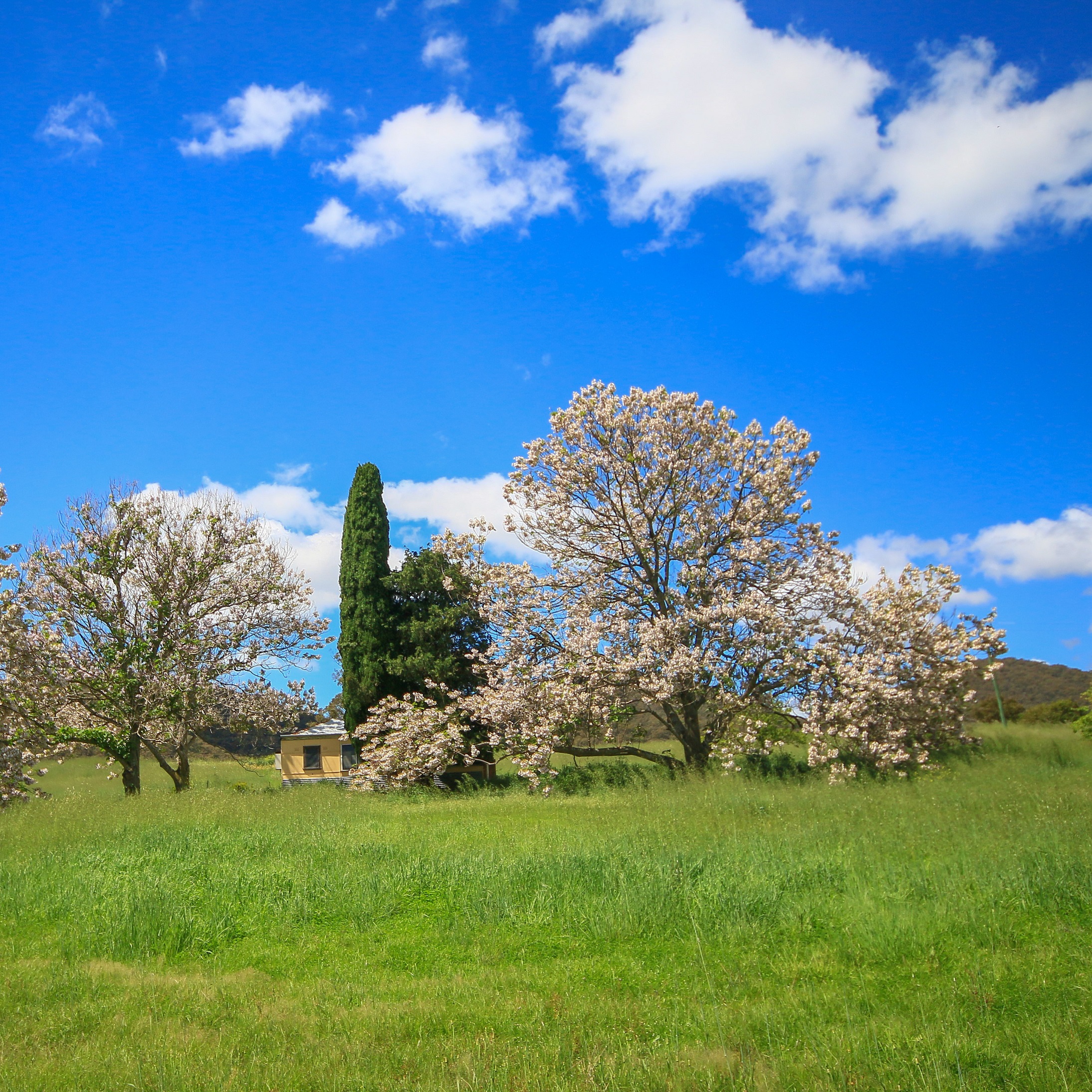
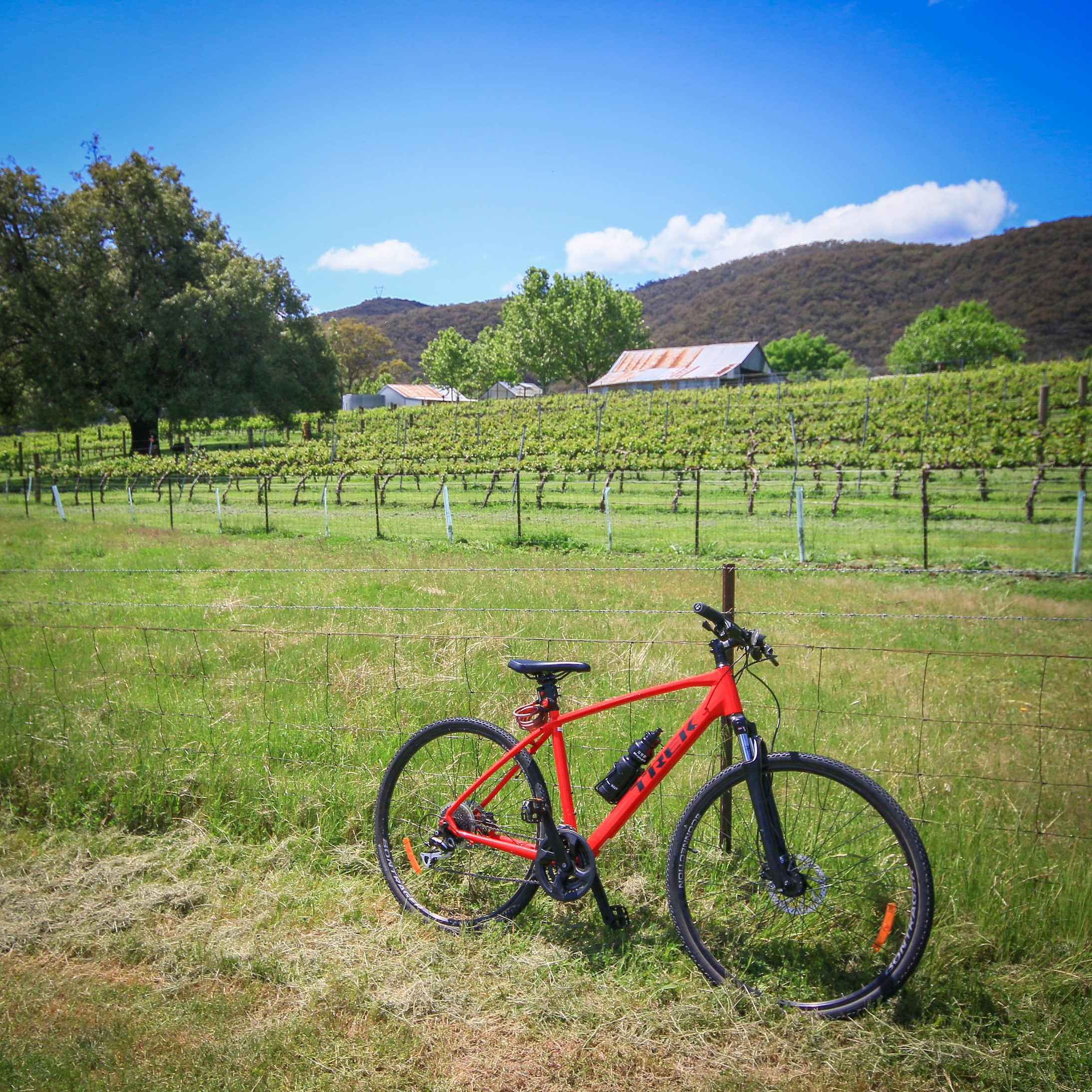

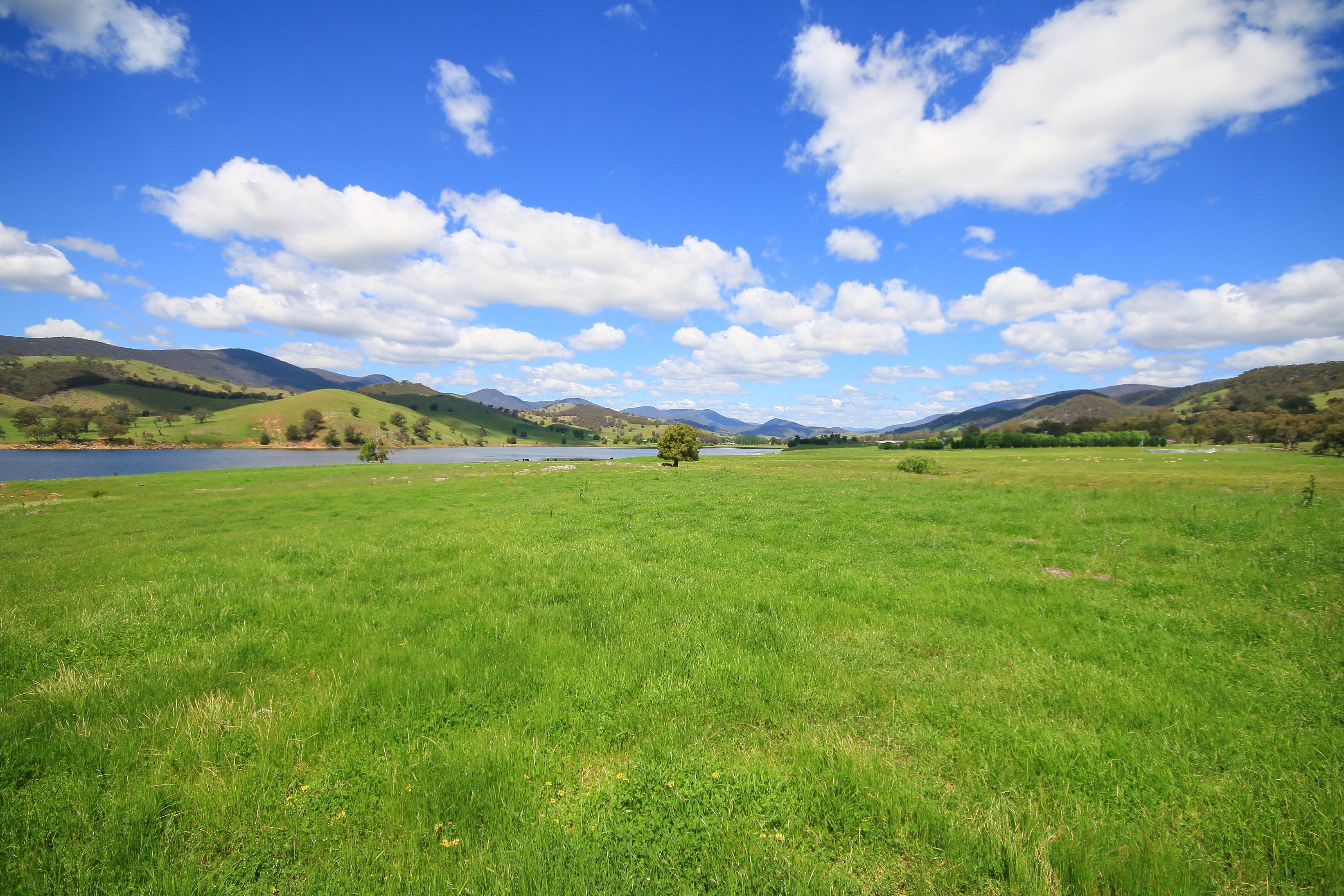

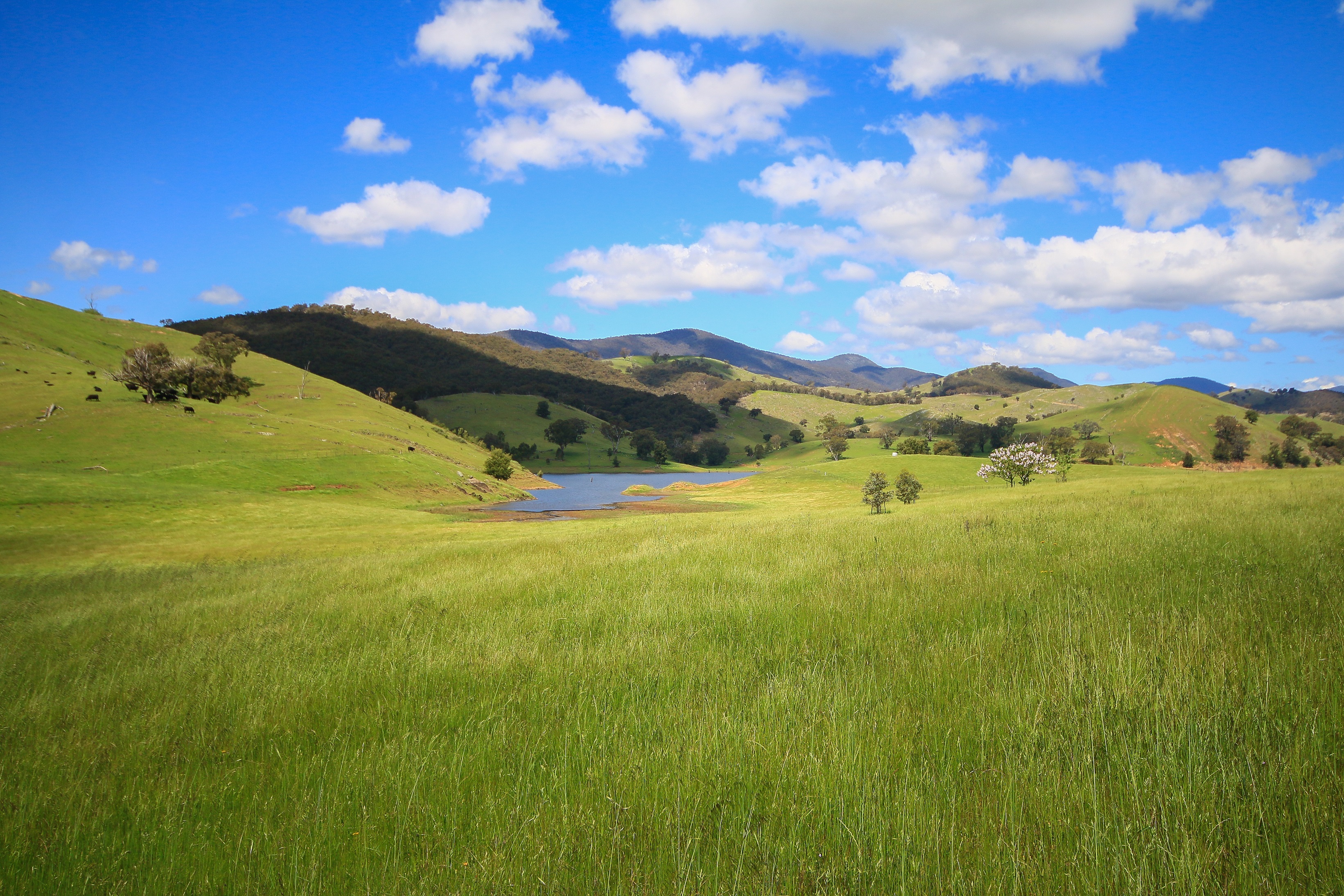


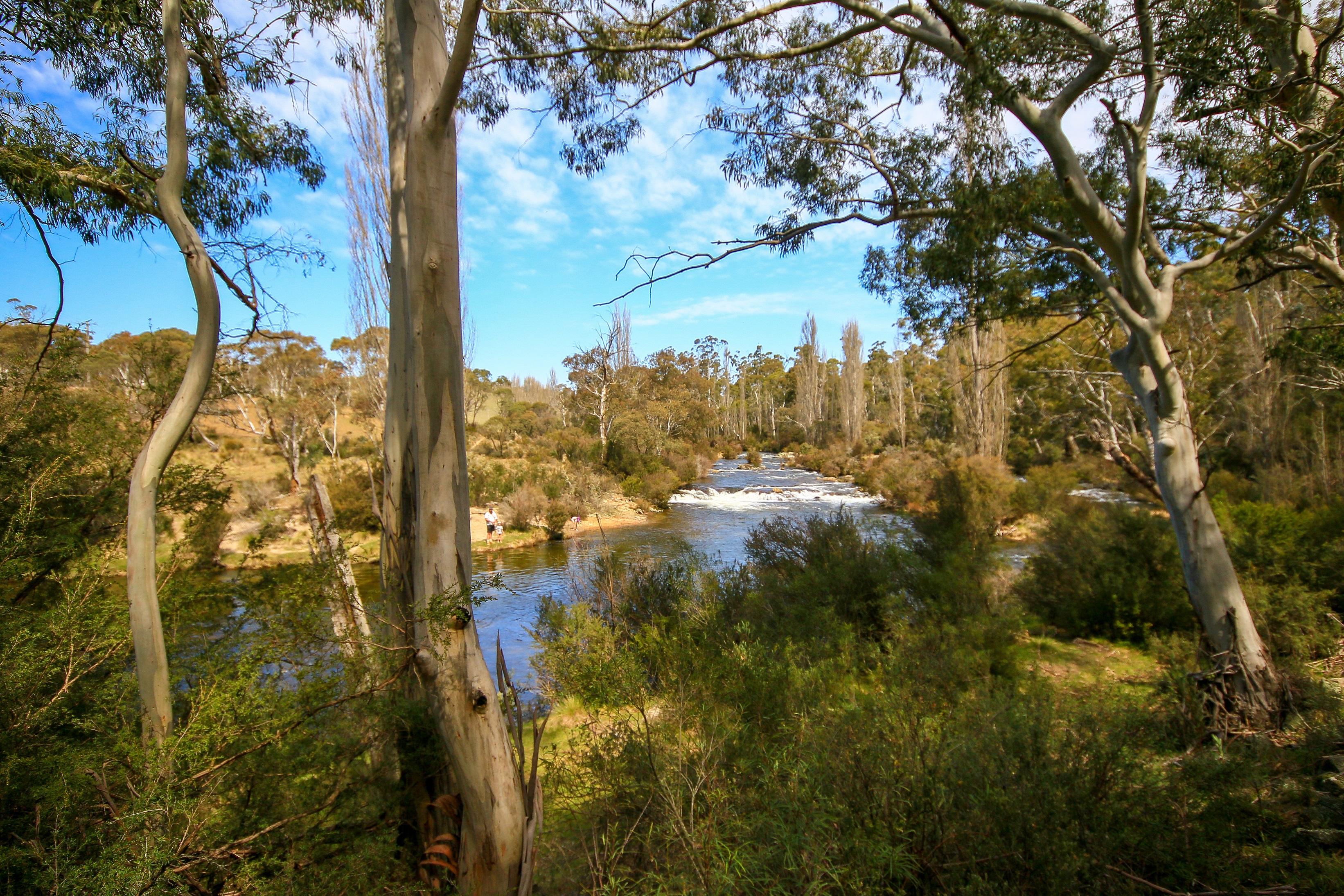

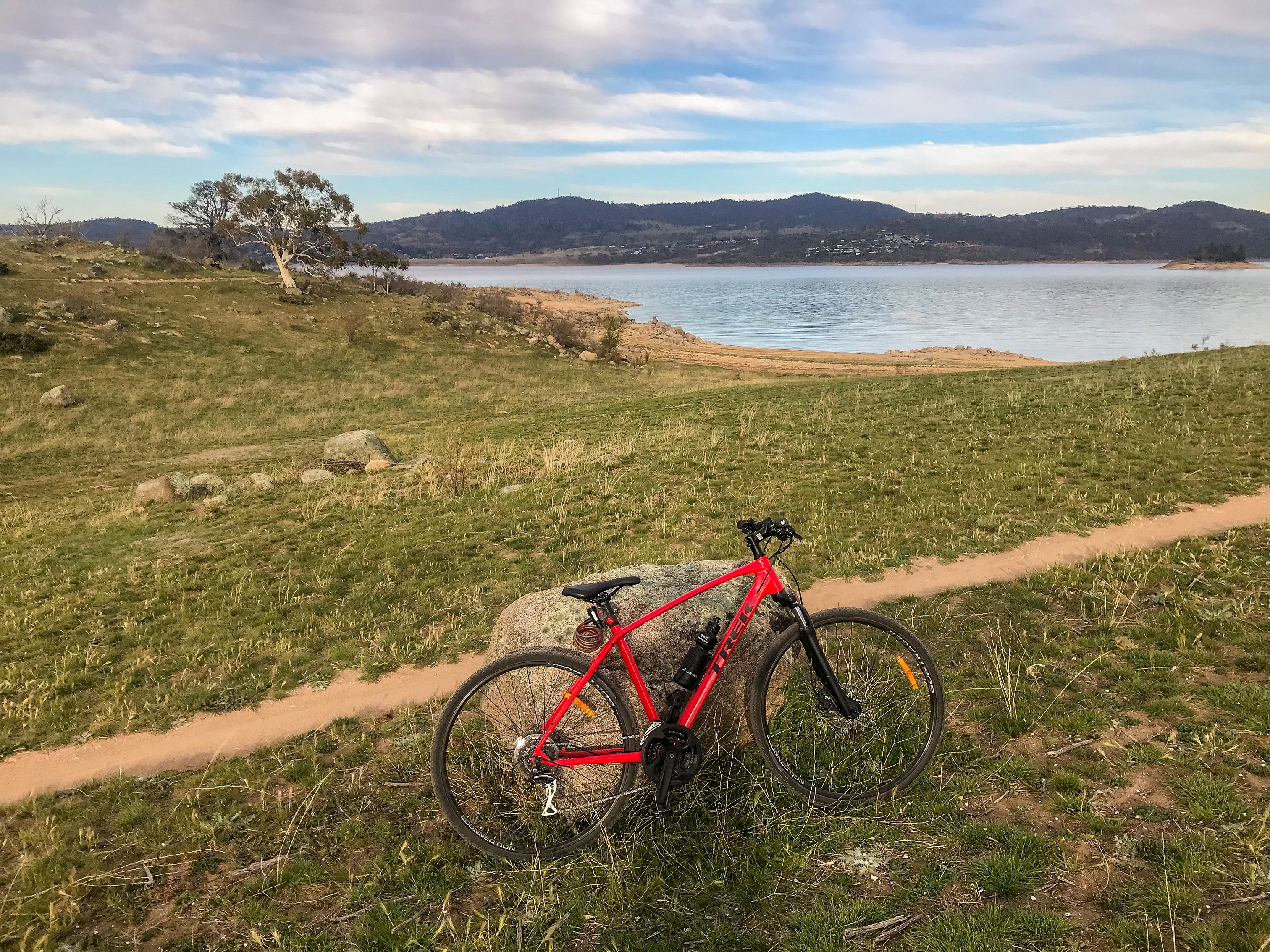
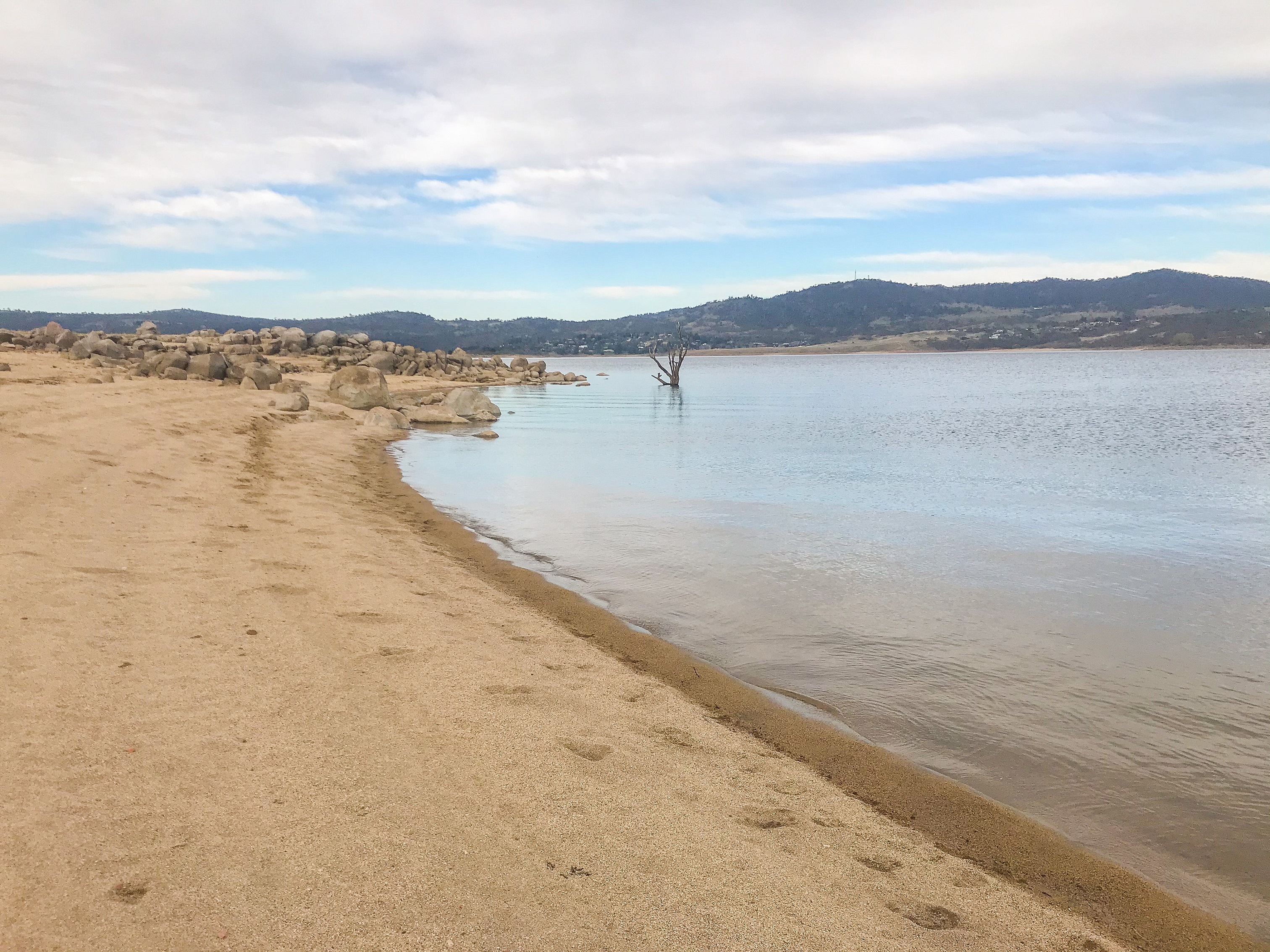
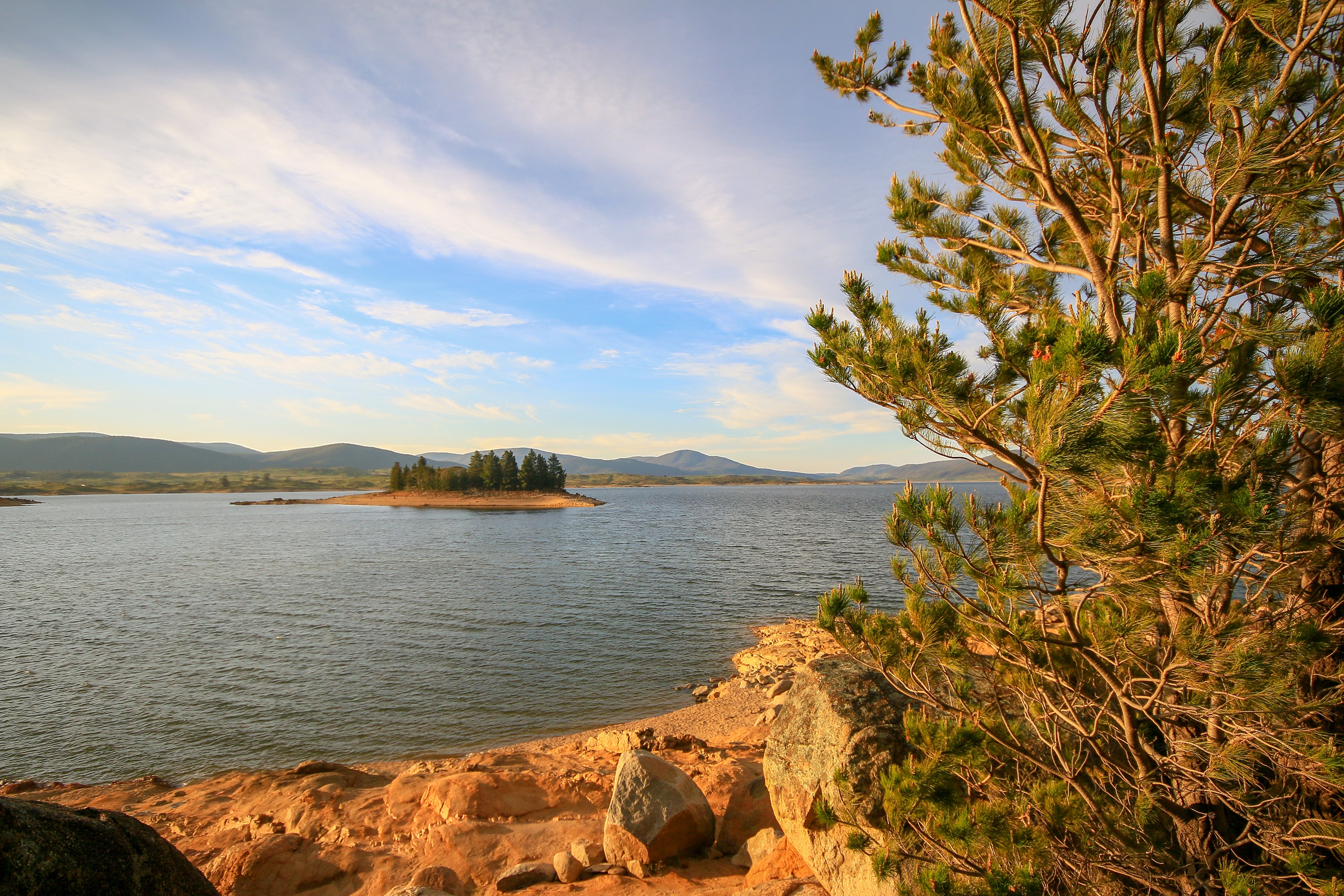
 gbpilgrim