It’s not the most refined accent. I mean you’re never gonna hear James Bond strut into the Monte Carlo casino and loudly proclaim “tooe fowzund orn red me luverr an whyul yer at itt get me a razzbrie jinn an tonik and a monsder, ulryte.”
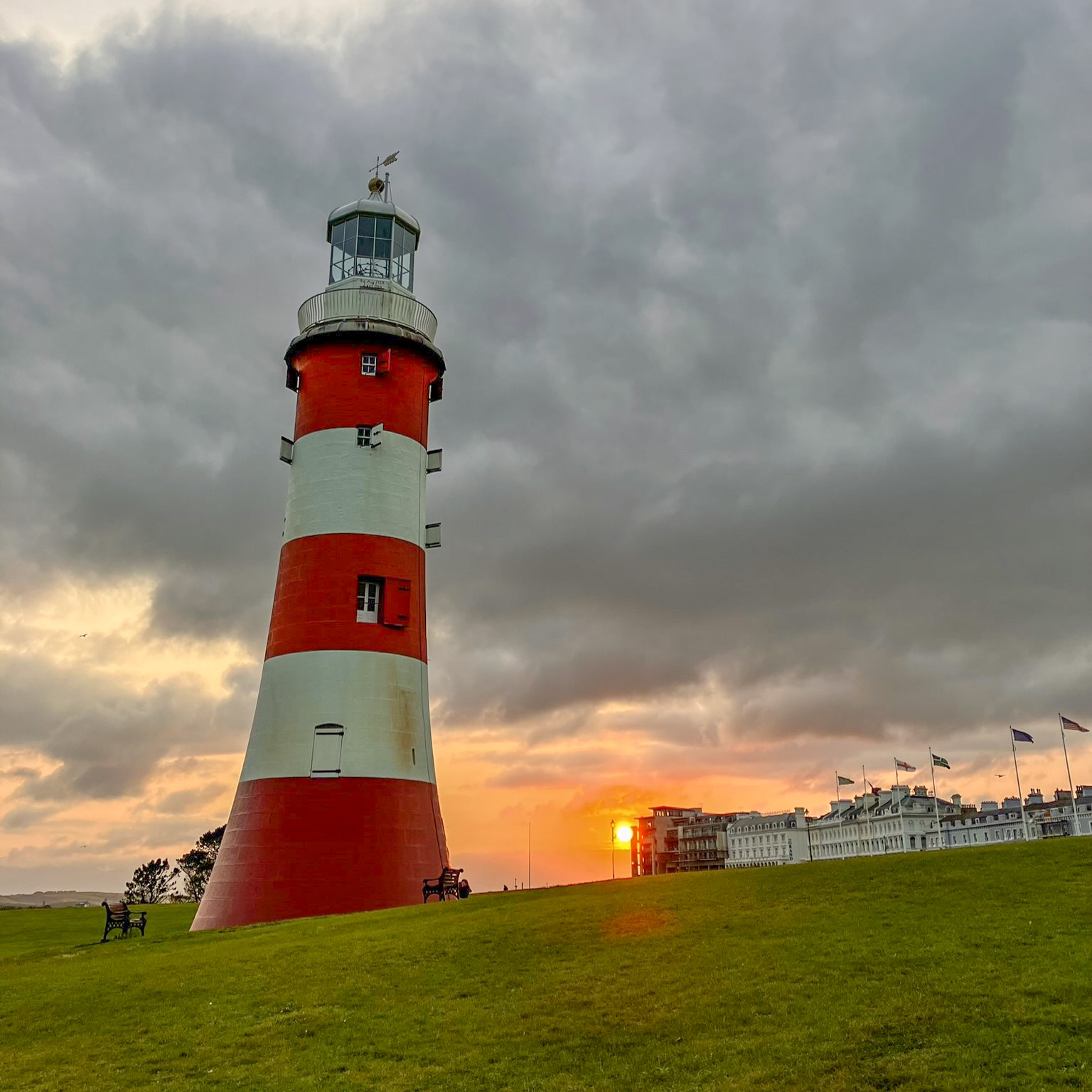
Strolling on The Hoe for what seems the umpteenth time, there is nonetheless something welcoming and endearing and genuinely warm in those Janner conversations. From the gentle ribbing of old fellas on the bowling green to the underdressed sass of bored teens flirting with each other like primitive amoeba beside the red and white lighthouse, Welcome to Plymouth. So often a staging post, but also a refuge.
I was exploring The Hoe again on my thrice daily walk from the Crowne Plaza hotel, an unexpected but probably not surprising Covid ‘holiday’ (yes, remember that?!). Booked hastily and not inexpensively with sketchy Wi-Fi I was hopeful for a sea view and comforting extras but, apart from a fluffy dressing gown, we were greeted with concrete wall vistas and an experiment in faded 80s minimalism. All very Plymouth. But still, at least the window opened slightly and I had an outlet into the world.
The need for fresh air was paramount, the problem being the howling winds buffeting against brutalist architecture at three in the morning. It has been rare on this trip to experience a still day, equally as rare to feel hot. At best I think I have felt pleasantly warm three times: an afternoon at Thurlestone, utopia revisited in Lustleigh, and in a tiny Cornish microclimate.
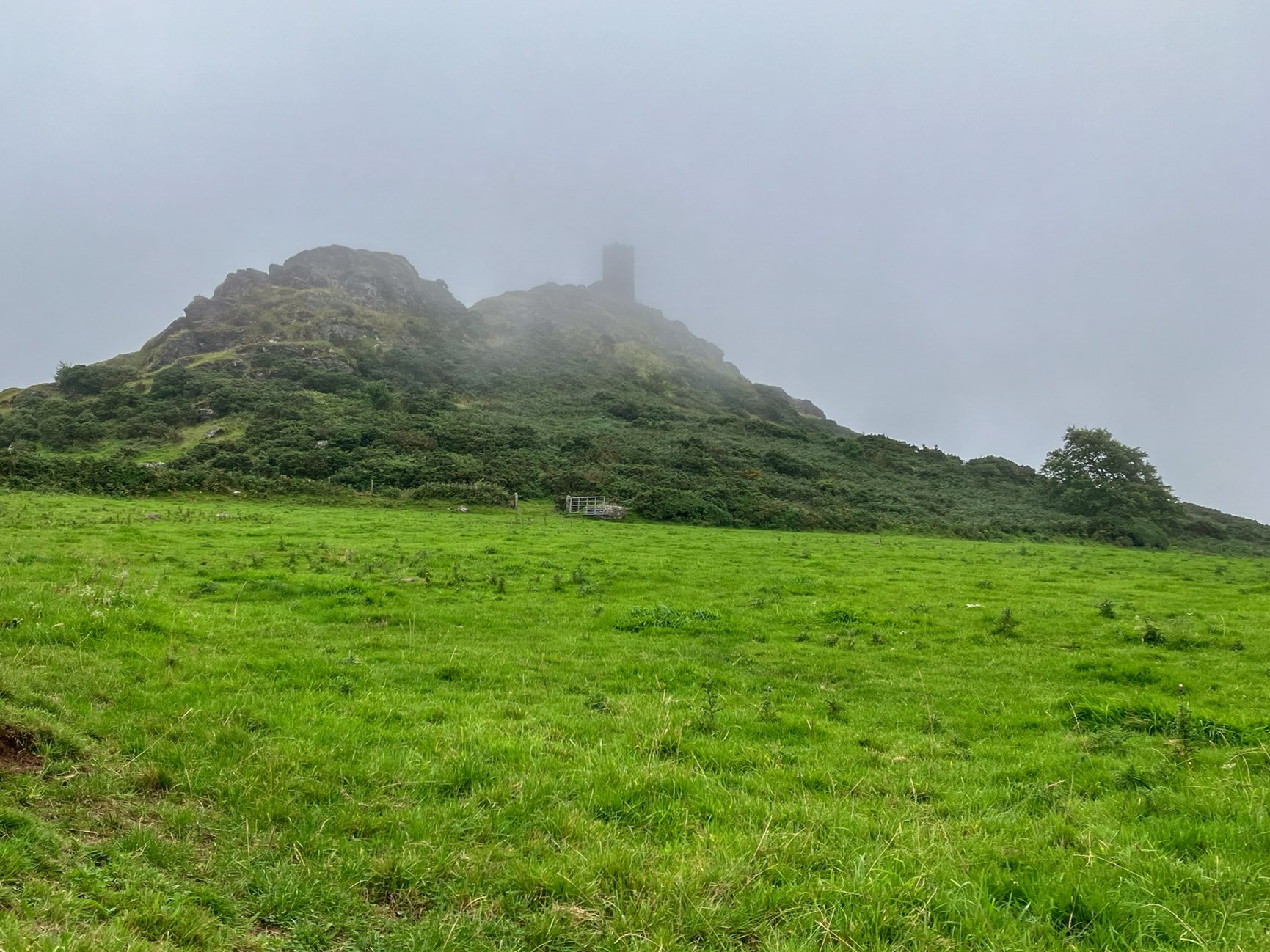
I’ll tell you about them in time but, for now, let’s journey up to Brentor. A landmark church sitting atop a rocky outcrop from which there are sweeping views of Dartmoor and half of Cornwall. Visible as we sauntered around Yelverton, disappearing as we whizzed to its base. As murky and disappointing as a coffee van beverage. One might kindly describe both as atmospheric and moody. Or perhaps just typical.
Still, give it a couple of hours and a helping of Tavistock chilli and all will be swell. Post-lunch sunshine beams down on glowing moorland and hazy glades. Cows amble nonchalantly across the tarmac while sheep chill out on the grass. German caravans pause on single track lanes to admire the zeitgeist.
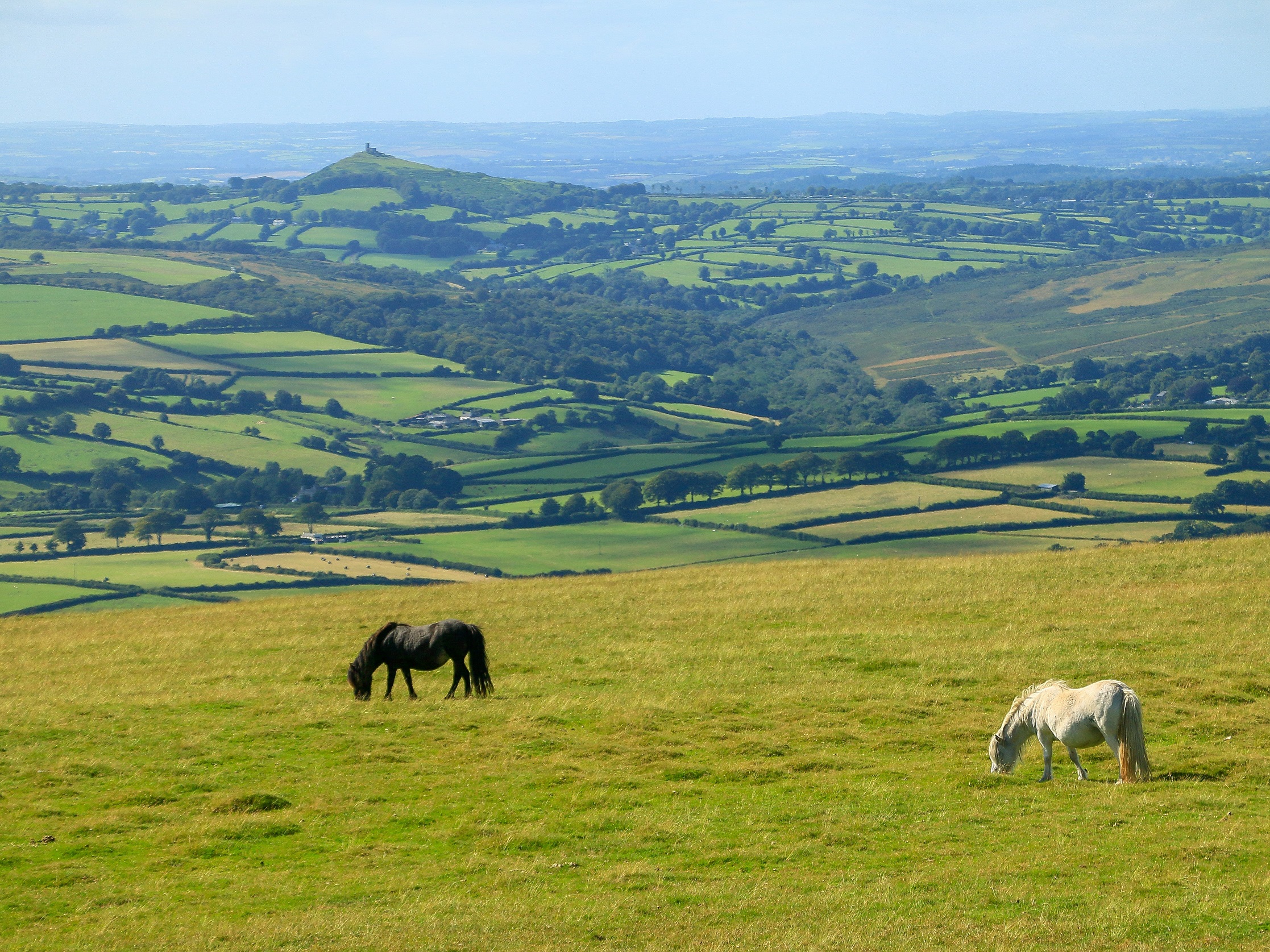
My brother sates himself on Willys before we soak up the splendour from Cox Tor. Gorse and granite and ponies pepper the surrounds, leading to outlooks upon a wildness that is rare for these isles. As the uplands creep down into river valleys and patchwork fields, an outpost stands resolute in the west. The unmistakable landmark of Brentor, aglow.
Downhill and back in Plymouth there continue intermittent spells of sunshine with which to grasp some form of hope. I quickly adjust to checking the BBC weather app and buy into the unfounded optimism that is going out without an extra layer in August. And briefly it seems the right call, as sun breaks through on the Barbican and we can sup on okay coffee as oversized seagulls strut their stuff and oversized men in green shirts strut theirs.
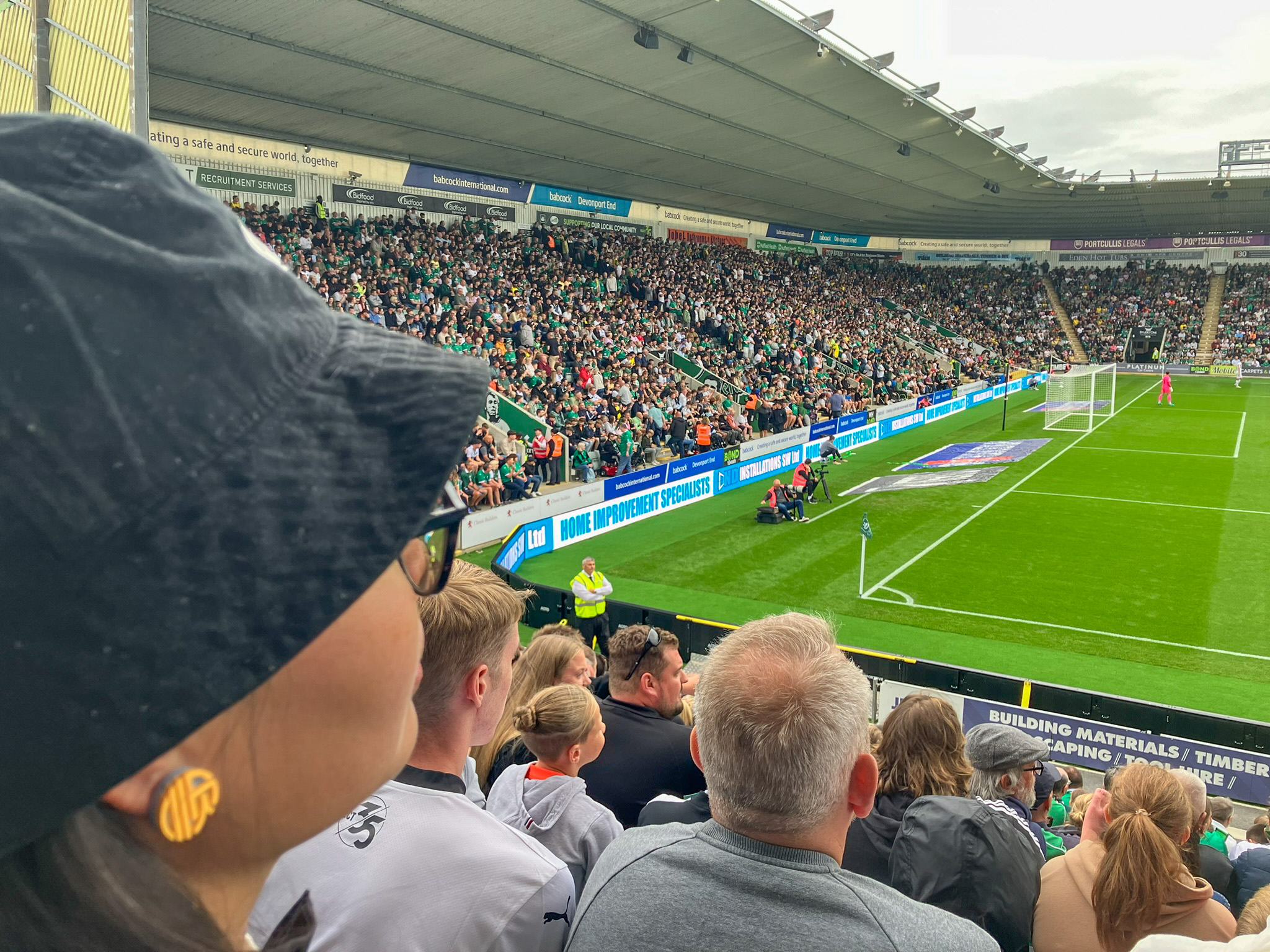
Then we head to Argyle and a gloom sets in. A chill wind, a portent of life under Rooney perhaps? Sure we have a padded seat and two free, unsurprisingly mediocre pasties, but that wind is reminiscent of a 0-0 draw in February against Grimsby rather than a lively one-all in August versus Hull. I have been there countless times.
I sit and wonder what Avery thinks of thousands of grown men and women belting out Janners? A what-the-heck moment both incredulous and incredible. I sense some awe and bemusement, and she embraces the moment by pulling on a recently purchased argyle top. Mostly because of that chill.
Travelling with someone coming to England for the first time you can tend to forget all this is a little weird. Like meal deals and massive bumblebees and little dogs on trains heading for a day out in the drizzle. Not to mention the size of those seagulls. All I notice that’s different are bottle tops no longer separable from their hosts. Out of habit, I endeavour to tear them apart anyway, frequent dribble resulting on my pants.
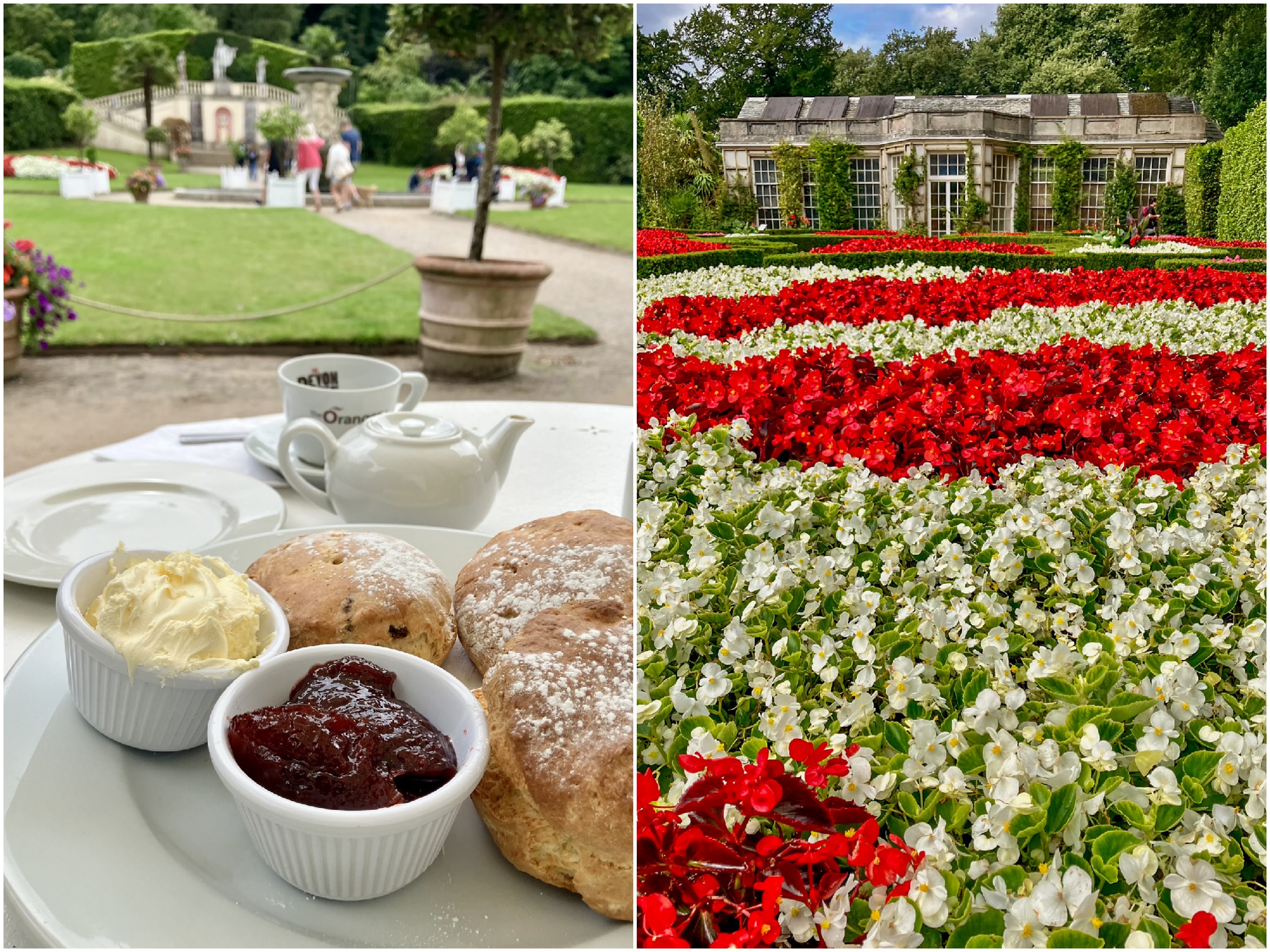
A local trait I may have lost is to not put too much trust in the weather forecast, although this results in occasional merry times when it surpasses expectations as well as the regular underperformance. Scones in a shower at Mount Edgecumbe? Why not, especially since this is the last such occasion (scones not showers) for the year. And the sun will radiate in the thousands of flowers and the warmth of loved ones anyway.
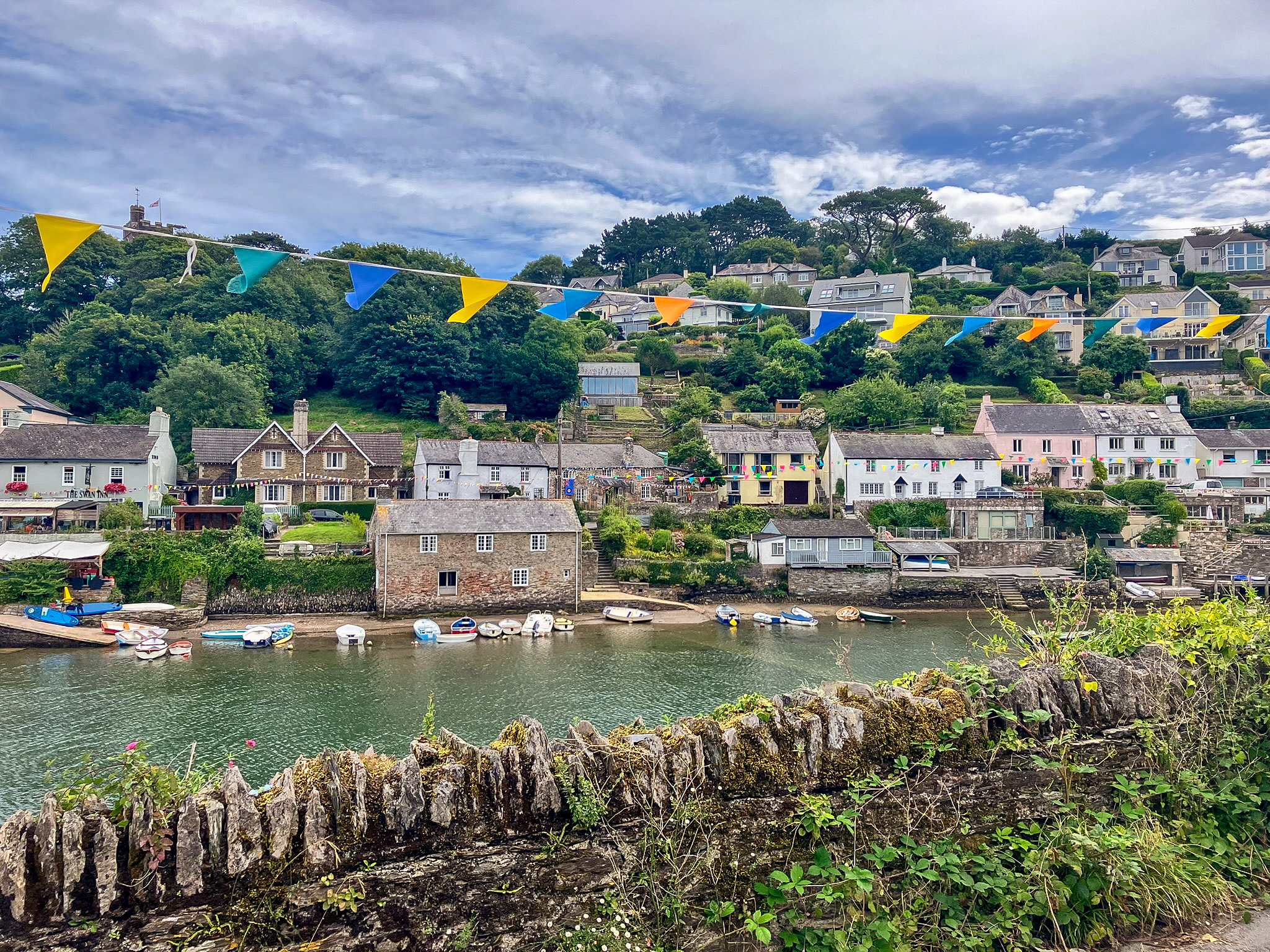
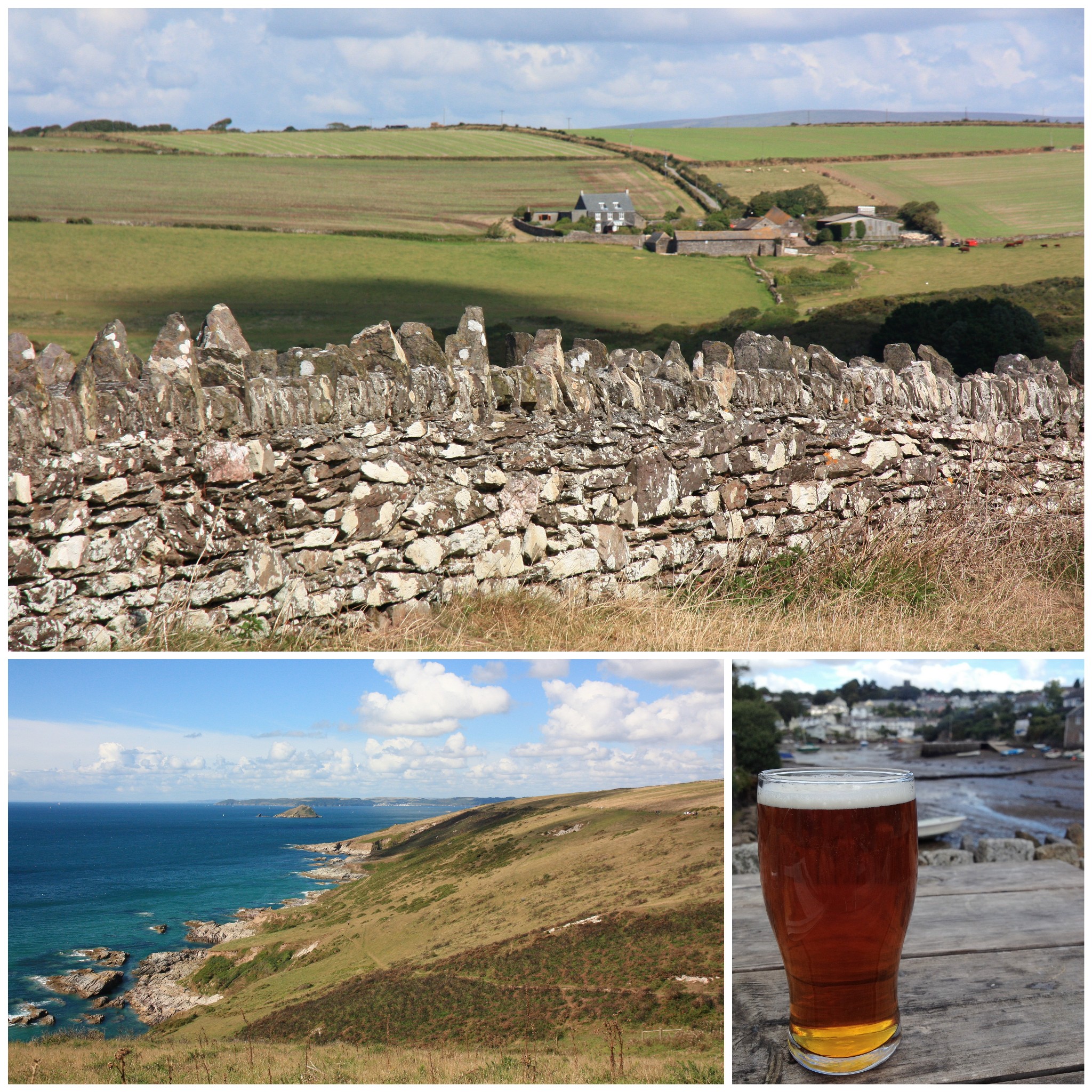
Having low expectations is the birthright of a Plymothian (and is most manifest when it comes to Argyle). So it is a merry time in and around Noss Mayo when the clouds hold back. A walk of such dear character, of such Devonian charm. Farmhouses (or Airbnbs) surrounded by fields of wheat, cows and sheep peeking above the hedgerows, true blue sea and green, green grass, cottages, flowers and bunting galore. A pub on the water, a Ploughman’s and some local murky brew like Otter’s Arse. All just in time before the sumptuous plop of a first raindrop.
The rain sets in on the Barbican. We hunker down in a café and bike shop, optimistic about the chances of decent coffee when it’s associated with Lycra. It’s not bad; the flat whites remain too small and strong and the lattes a little weak. All they need to do is find that middle ground. Maybe one or two more years.
I’ll be back to taste. Next week, next year. Always Plymouth, Janners, Seagulls and all. Semper Fidelis.
Devon. It feels far from ambrosial when hunting for chicken wings among the half-empty shelves of Lidl on Union Street. Outside, cars circle a small concrete plot as people embark on their quest to endure the least amount of walking possible. Further along the street, once grand facades appear sullen and decrepit, run down by time and indifference. Only pigeons call them home, foraging on the pickings of kebab spilling out like the desperation and menace exiting shady clubs in those dark, seedy hours.
Pan out from Union Street, across the shanty town of cash-in-hand workshops and inevitable vape shops and things will begin to change. Urban renewal they may call it or – worse – gentrification, as if in some way what had gone before was base and unworthy. Waterside apartments in Millbay, loft conversions in Stonehouse, renovated terraces in West Hoe. Far from the wages of a labourer or carer or teacher. But at least they can still afford a bag of chips and a round of crazy golf at West Hoe Park.
And Plymouth Hoe itself acts as a great leveller, a place where anyone can stroll, picnic, kick a ball, or gather in a cluster with several other yoof and create tiktoks. Old ladies may wild swim and Vodka Dave may dance and most people can get a coffee of bitter tears that may mercifully be saved with cake. The sun may shine and, sat beside the glistening water of Plymouth Sound, one may wonder if anything could really be that much finer. Especially when visible in the distance pockets of ambrosia await.
Immediately out of the city limits a web of narrow lanes burrow through trees and hedgerows to places like Heybrook Bay, Bovisand, Down Thomas and Wembury. Wembury is by far the largest of the lot, a virtual suburb of Plymouth renowned for its untamed beach and extortionate parking. Many Plymothians make the trip here but only tight arses like me park up in the village, content to embrace a longer, circular walk promising a different perspective.
I was heading past garden allotments and lone cottages once more towards the River Yealm. This is a river whose waters I have so many times witnessed from the other side. The side with lofty views atop the summit of Revelstoke Drive. The side with densely packed woodland cascading down to sea level. The side with a narrow lane leading to the charms of Noss Mayo and its creekside inns.
Hello from the other side. A similar world of bobbing boats and shingle shores, of dense thickets and a scattering of homes, sitting as neatly into the landscape as they do in my mind when it turns to an idyllic life of fantasy. You could summon a ferry out of nowhere to cross to the pub, but I’ll leave that for another time. And taste the caustic coffee beside Wembury Beach instead.
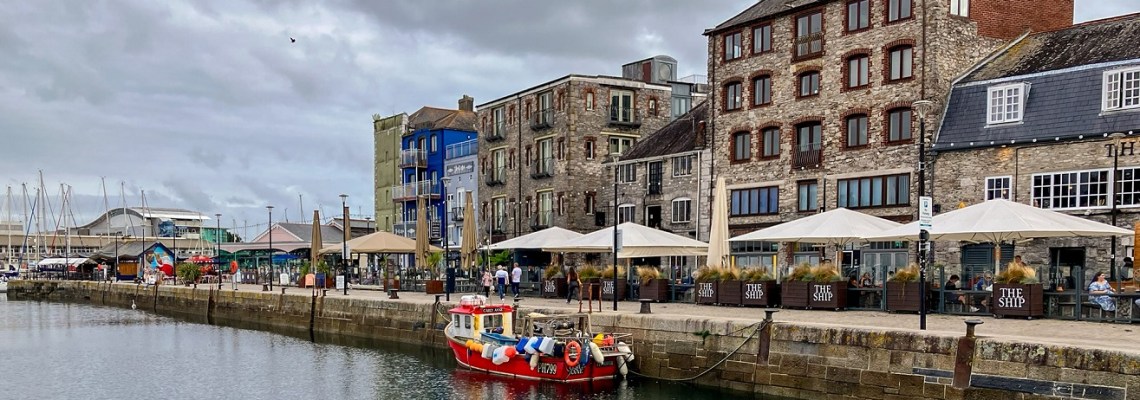
Not that the Ship Inn was to be bypassed altogether, an addendum for a sunny afternoon in a summer of sunny afternoons. A Friday beer o’clock escape, when you can briefly picture this as your local. Tribute and a pack of pork scratchings among the minions and the millionaires. All the time, the tide imperceptibly creeping in to imperil the cars of those from out of town.
When it comes to millionaires, you’d be hard pressed to encounter a denser population than on the streets of Salcombe. Well, not the streets per se but the grand designs surrounded by moats of lush exotics overlooking sparkling bays. And if not found on wooden deckchairs in the garden absorbed in the Daily Mail, the likelihood is of frequent sightings upon those opal waters below, sweater and chinos all aboard the MV Smug.
With some world-beating inflation in the UK, I could just about afford a millionaires shortbread from M&S. However I opted instead for a bag of Monster Munch left over from some far off Tesco meal deal. Still, with those pickled onion morsels come million dollar views, situated around the corner and down towards Soar Mill Cove. The coastline here is about as dramatic as it gets in South Devon, all ups and downs and ups again. The cove – in its sheltered enclave with raggedy rocky outcrops and see-through waters – a kind of mini Kynance. Only without the million dollar parking fees.
There are, of course, other priceless coves down this way. Conjuring the prospect of Friday night dinner down by the sea, I persuaded someone else to drive down the A379 for a change (thanks Steve). This came with the omnipresent soundtrack of my niece, Brooke, but at least afforded me the chance to be drawn into views of beautiful countryside, stone bridges, tunnels of trees and the wilds of upland Dartmoor in the distance.
We all disembarked at Hope Cove which seems caught somewhere between a rustic fishing village of lobster pots and an upmarket resort of eco-pods. For a while you can play at millionaire here too, taking a perch for some refreshment overlooking the bay. And the coast path is always free. Dinner, however, seems another prospect, with the few places around busy and focusing on menus of the hand-caught goujon of Start Bay Sea Bass served with a melange of Rosemary-flecked Kipfler potatoes and wild lemon-infused baby samphire variety. A pizza on the beach or something would’ve been nice.
So, feeling increasingly hangry, we shifted a few miles up the road to the biggest town around – Kingsbridge. To emphasise its size, Kingsbridge boasts a Tesco and a Morrisons, plus several pubs, restaurants and takeaways. We practically did a tour of them all, before ending back at the first place we saw next to the car park. Of course. But this was pretty close to the town square and quay, and we sat outside alongside summer holiday vibes and terrific weather. The only downer was the early closure of the Salcombe Dairy Ice Cream booth. Off home to count their millions.
I did eventually manage to ingest some Salcombe Dairy at a predictably inflationary price. It came as icing on top of a final Devon cake of a day. A concoction that is so wonderful and blessed but tinged with a background air of melancholy that comes with imminent farewell. For once, the goal wasn’t really to gorge on cake, just the icing on top.
There were cakey temptations at Heron Valley Cider Farm, where it was too early for a cider but perfectly suitable for a coffee. Signs that I had been here for two months were starting to show in the agreeableness of the coffee, an agreeableness that was only usurped by the luscious setting. What is it again? Green, green grass, blue, blue sky? Thank you Heart, as continually always two months on.
Now, normally finding myself with Mum in such a location around eleven o’clock in the morning I would feel obliged to support local business by purchasing one of the many slices and treats arranged on the counter. Mum would murmur things like “oh I probably shouldn’t” and then we’d look at each other with a knowing glance that I would quickly succumb. “Oh sod it, I’m on holiday” I would say, mildly aware that it’s not the best idea when it’s a two month holiday.
Yet today, of all days, I was steadfast. A coffee was enough. But before I pat myself on the back too much, it’s only because lunch was a mere matter of miles down the road.
Farm shops can be funny affairs. In the golden days before Google you would turn up never quite sure whether you’d encounter a smorgasbord of local delights or a few cartons of mismatched eggs next to a pile of withered green beans. Nowadays, the more savvy enterprises promote their wares with funky Instagram stories and filtered Facebook posts.
So I knew beforehand that as well as eggs and green beans and no doubt meat, Aune Valley Meat, just outside of Loddiswell, advertised a hog roast bap in their Valley View Café. I would usually bemoan the strict ordering times and a lengthy wait but this just served to amplify pangs of hunger to the point of drool. And when the food eventually arrives upon its wooden board (oh dear), salivation soon becomes salvation.
Like Beaufort in Beaufort and Pizza in a Piazza, that additional ten percent elevating the taste all comes from the terroir. Those lush, bounteous hills of the South Hams that – thankfully – are not dotted with potential future hams. At least not from our vantage. The Devon flag flutters, the tractors make hay, the tourist caravans tentatively inch past towards their constricted destiny.
Moving south, the terroir of the sea tends to induce thoughts of fish and chips and ice cream. Given the scale of lunch, the fish and chips are quickly ruled out, but perhaps there can be an ice cream in the offing. First, some recovery on the beach at Thurlestone, where crystal waters once again tempt with Caribbean vibes. Caribbean in colour only.
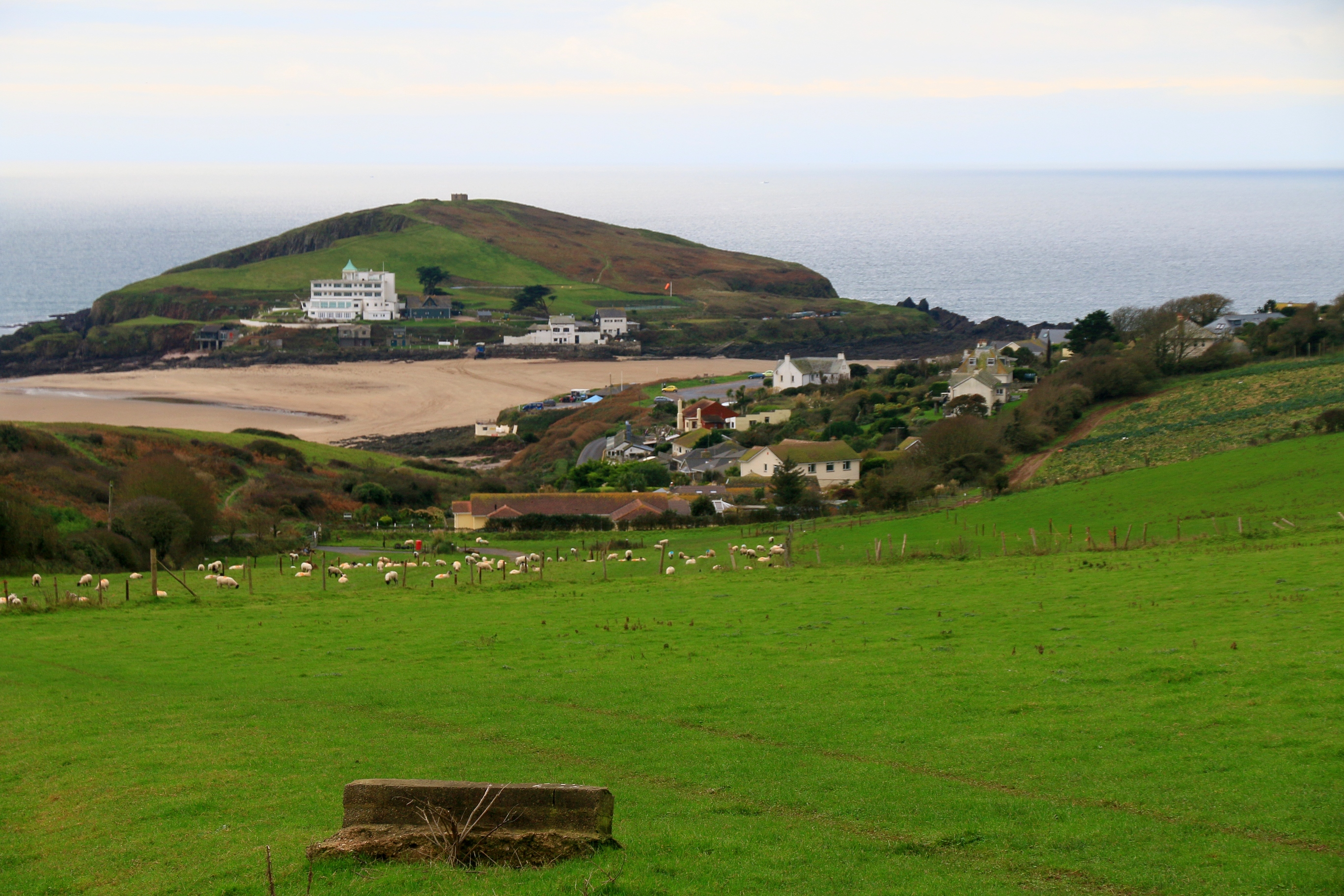
Unwilling to freeze in the ocean for long, I hotfoot it along the coast path. That enduring friend who I shall miss as much as anything. It takes me past Thurlestone Golf Course, adding the hazard of wayward balls to the potential to stumble off a hundred foot cliffs. Looking west, I see the distinctive mount of Burgh Island and, further still, the entrance into Plymouth Sound. Rame Head, Cornwall sticks out beyond. But let us not speak of Cornwall here.
In the other Devon direction lies Hope Cove, Bolt Tail and then Salcombe. I discover their dairy ice cream has made it this way, just along from Thurlestone at South Milton Sands. But its arrival is only in tubs and only in the most preposterous National Trust café I have ever come across. For here, not scones and jam nor crisps and sandwiches. But alcoholic drinks and a DJ. This is what happens when Boris Johnson becomes PM, I tell you. Not that he was actually doing much at the time, but nobody seemed to notice.
Boris and Carrie might have been there as the tunes began to bang and the bouncers evicted non-patrons from the wooden tables outside. It seemed that kind of place. Locals need not apply, except between the months of September and May. Just stick to the farms, thank you very much.
The hog roast roll at Valley View Farm felt a long way from a chicken wing hunt in the heart of Union Street. But wondrously they really aren’t so far apart. And that is probably why the people of Plymouth – unbeknownst to many of them – find themselves in one of the most fortunate locations in the UK.
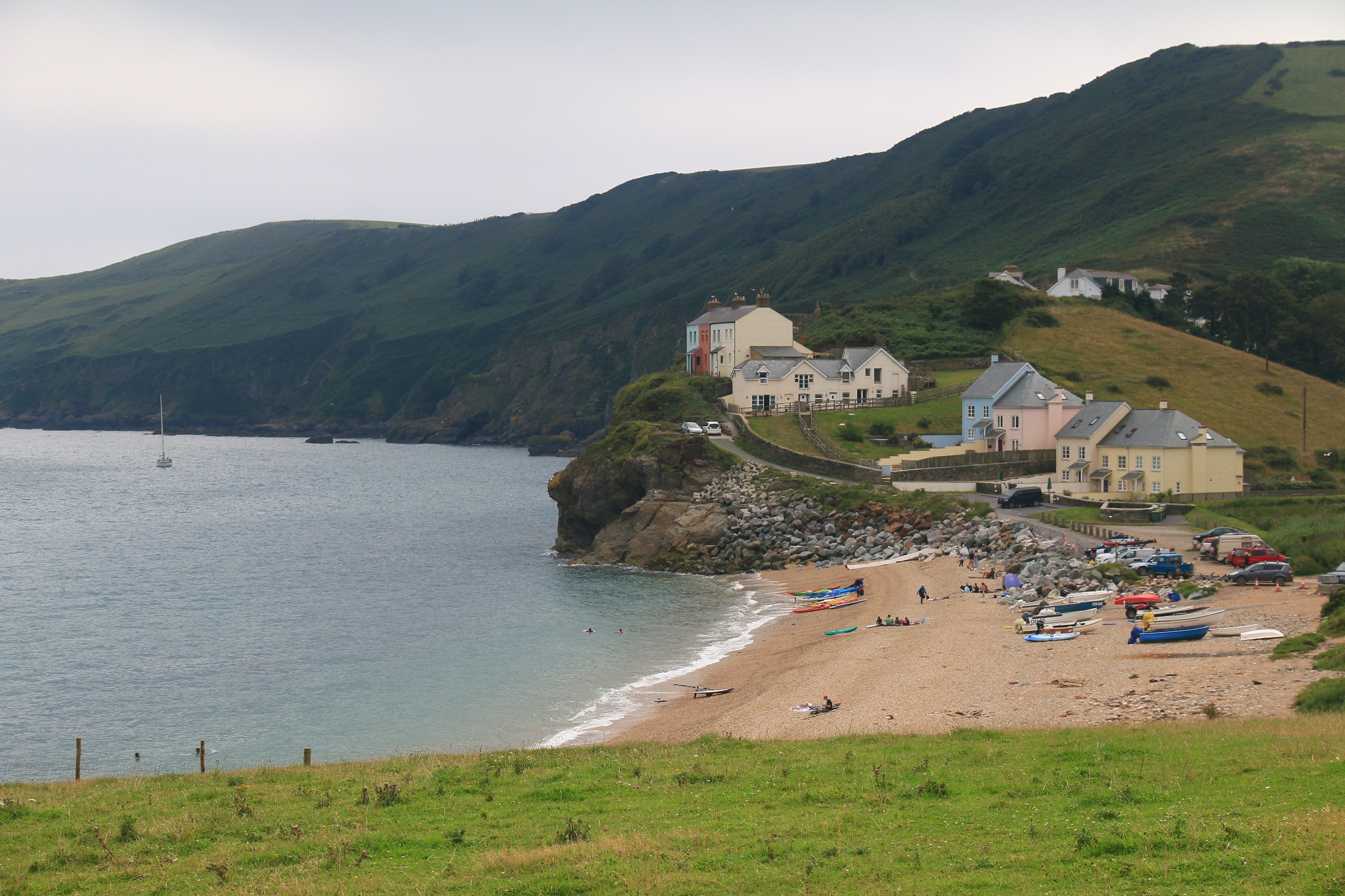
I thought I was done with Devon with that final day out, but an uplifting Saturday morning and a spare hour encouraged me to see the sea here one more time. I whizzed through Plymstock and around Staddon Heights to Bovisand. Here, warm sunshine beamed down upon a grassy bank as I lingered over another agreeable coffee. A couple of small, sheltered coves welcomed a handful of bathers and boarders who were welcoming the weekend. Life was as sweet as Ambrosia Devon Custard.
It felt like we were here in a forever summer and none of us wanted it to end. Could not every morning be as agreeable as this? Can we not just press pause and dwell in this unreal reality? But time and tide move on, seasons shift, people come and people go. And I had to get back to Plymouth one last time to barbecue those bloody chicken wings.
Devon, oh Devon. Rolling hills, white fluffy clouds in a blue sky, white fluffy sheep in a green field, the deep blue sea shimmering in a haze of paradise. Oh yes, the picture-perfect Devon of custard cans. Such were my thoughts on the first day back here as gales lashed rain sideways upon a window in gritty Plymouth city, the smell of roast dinner the only comfort. It’s good to be back.
That stormy day has been the exception rather than the rule but, while there have been some blessed interludes, the predominant feature has been cloud. Cloud and cream and catch ups and cars to get used to ferrying family and escaping Emmerdale.
Like practically everyone else in this sceptred isle I have been paying frequent visits to the BBC Weather website, analysing the hourly chance of sunshine breaking through the milky clouds and estimating with a little skill, experience, and luck, where the gaps could emerge. And the success rate hasn’t been so bad.
Noss Mayo is a reliable friend. I know its lanes and paths well – meandering up past happy farms, coursing loftily above the sea, before weaving down underneath a green canopy as jaunty boats upon the Yealm begin to break through. I know where to crawl tentatively around which corners of single-track lane to avoid a head-on crash. I know sunny spells can be more likely to emerge here. And I know where to park and where not to.
Well, I thought I did, unless there is a fete on and the compact car park becomes overwhelmed to the extent that a complex series of nine point turns on a 20% gradient is required to squeeze in next to a wall against which you can’t open the door necessitating an undignified scramble over the passenger seat. I guess ferret racing, wellie throwing, and cake tasting is an enduringly popular attraction in Devon.
Despite this bank holiday anomaly, the rest of Noss was as pleasing as ever. Happy farms, lofty sea views, jaunty boats, that kind of thing. The sun even broke through. Customarily, I had half a pint at the end but – given things had been slightly awry from the start – made a controversial visit to The Swan rather than The Ship. From where that time-honoured tradition of watching unknowingly parked cars become submerged by the rising tide could play out.
After Noss Mayo, greyness came and went for much of the week and my continued scrutiny of the BBC Weather page started to wane as it became clear that they didn’t really know what was going on. The supposed sunny mornings were cloudy, cloudy afternoons became bright, and once in a while shorts might have been tolerable in the same day that you were wearing a fleece and long trousers and struggling to see through drizzle.
In an effort to get out with the sun and conveniently avoid a pile of tripe being served up in The Woolpack, an evening on Dartmoor produced a fine end to an otherwise dull day. The drive itself proved an adventure in threading a car through lanes hemmed in by characteristic ten-foot-high hedgerows on roads I did not now. Disorientation is never far away. Happily, I ended up on Harford Moor Gate, an area I had never previously accessed and one which led to a yomp over open moorland burnished golden by the lowering sun.
I set out for a random tor in the distance with the nebulous but entirely logical aim of seeing what was over the other side. Avoiding anguished cow bellows and boggy hollows, it turned out the other side had more open moorland and little else. On a whim, I headed for another pile of rocks a few hundred metres south. And there it was, the view of South Devon and its patchwork fading in the dying light.
The sun was heading back into a band of grey on the western horizon, but before it did I managed to make it back to my first tor to say farewell. Farewell again.
The by now notorious BBC Weather page continued to largely offer the ambiguous white cloud symbol. Always a few days into the future, perhaps some sun. Always offering a little hope. And finally delivering.
Still in the school summer holidays I feared Hope Cove in the South Hams would be largely inaccessible. Farmers would have seen the blue sky and decided to secretly annoy everyone by undertaking essential tractor on road affairs. Grockles would be flocking to car parks, caravans would be wedged between quaint red post boxes and quaint red phone boxes, kids and dogs would be running amok in a melange of buckets, balls and bowls of water that I always trip over. How, exactly, is the tranquillity?
But I was surprised. We got a park. We got a spot on the small beach cove. We got an ice cream. And we got a blue sky that was very comfortable for shorts and a walk along the South West Coast Path. That tranquillity? It’s pretty fine thanks.
Leaving the bubbling hubbub of Hope behind, I headed up towards Bolt Tail for magical views back to town and over the sapphire calm of the bay. There is little that is more joyous than traipsing on the trails of the coast path when it is like this. Nowhere in the world.
For now, here was Devon. Devon, oh Devon. Rolling hills, white fluffy clouds in a blue sky, white fluffy sheep in a green field, the deep blue sea shimmering in a haze of paradise. Oh yes, the picture-perfect Devon of custard cans. Such were my thoughts surrounded by hope. It’s good to be back.
And so, over a month since I last had a cream tea I can bring myself to write about pockets of Devon explored and re-explored in 2017. It’s not that I have been avoiding it out of separation anxiety, as such. Just rude work interruptions punctuated by apathy and good sunshine. I love to get outside every day if I can, and being raised in Devon I am pre-programmed to do that whenever it is dry and reasonably pleasant. So writing a blog post in front of a screen in Australia when there are magpies to swoop at me and sunburn to frazzle requires a commitment far beyond my genetic capability.
Now it is gently raining in Canberra, something which it largely failed to do in my first week in Devon. The second spell made up for that a bit, but even then there were suitable gaps to encourage a punt on winning a hole in the cloud. But that first week, wow. Could Devon look any finer?
Apart from the blip of Plymouth and a few other towns of much less note, the southern half of Devon is dominated by Dartmoor and the South Hams; one a National Park, the other a designated Area of Outstanding Natural Beauty. And like an indecisive lump trying to pick between a cream tea and fish and chips I flitted from one to the other at regular intervals. There was plenty, as ever, to savour.
Dartmoor is relatively convenient from the home base in Plymouth. I say that despite seemingly endless road works and traffic lights and, of course, speed bumps and congestion caused by people flocking to superstores and drive throughs on their way to the homeware warehome. But once you’ve got to that last roundabout and whizzed past the Dartmoor Diner, it’s like your inner dog is released; nose through a small gap in the window, full of anticipation and impatience, and – possibly for more deviant types – panting at the prospect of free-roaming sheep.
On the road to Burrator, the sheep are out in force, arse sticking out into the tarmac, head tucked into a giant gorse bush, oblivious to the fact that there are two cars coming at opposite directions on a lane built for one. Further on, a few sheep mill about in the foot of Sheepstor, just so they can pose for clichéd photos and get in the way of cars trying to park. Better to get out on foot though, and take in a stretch of reservoir, country lane, farm and hamlet aesthetic, before climbing the wilder, granite strewn hill itself. It’s a route I’ve taken a few times now and strikes me as a wonderful bona fide welcome back to Devon.
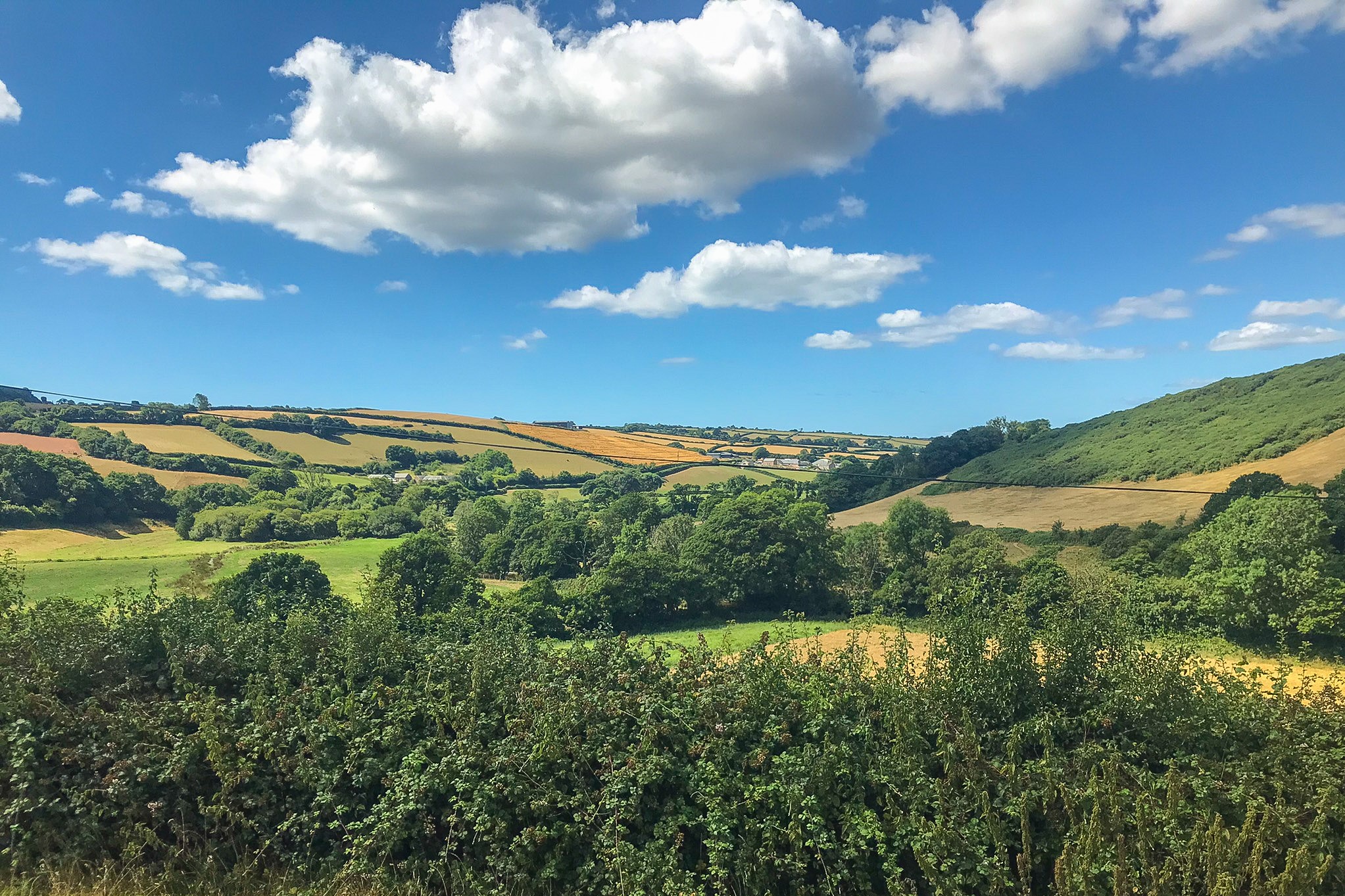
Journeying into the South Hams also presents traffic perils, often in the form of a grumpy farmer at the helm of a tractor revelling in sticking two proverbial fingers up to everyone else. Peak season for this would be August, when holidaymakers increase traffic by a factor of ten thousand. Add in twelve foot high hedgerows on single track roads down to car parks with a capacity of twenty spaces and you begin to get the picture.
It’s in this mix that a little local knowledge and strategic blue sky thinking can come in handy. For instance, set off later in the day, when the tide happens to be out anyway (as you would have diligently checked on Spotlight the night before). Try to avoid the A379 as much as possible if at all possible. Not very possible, but possibly possible if you consider the A38 and cut down at some point, such as through Ermington. Avoid Modbury and head down to Mothecombe. Where you will have cheaper post-3pm parking and plenty of sand left for everyone.
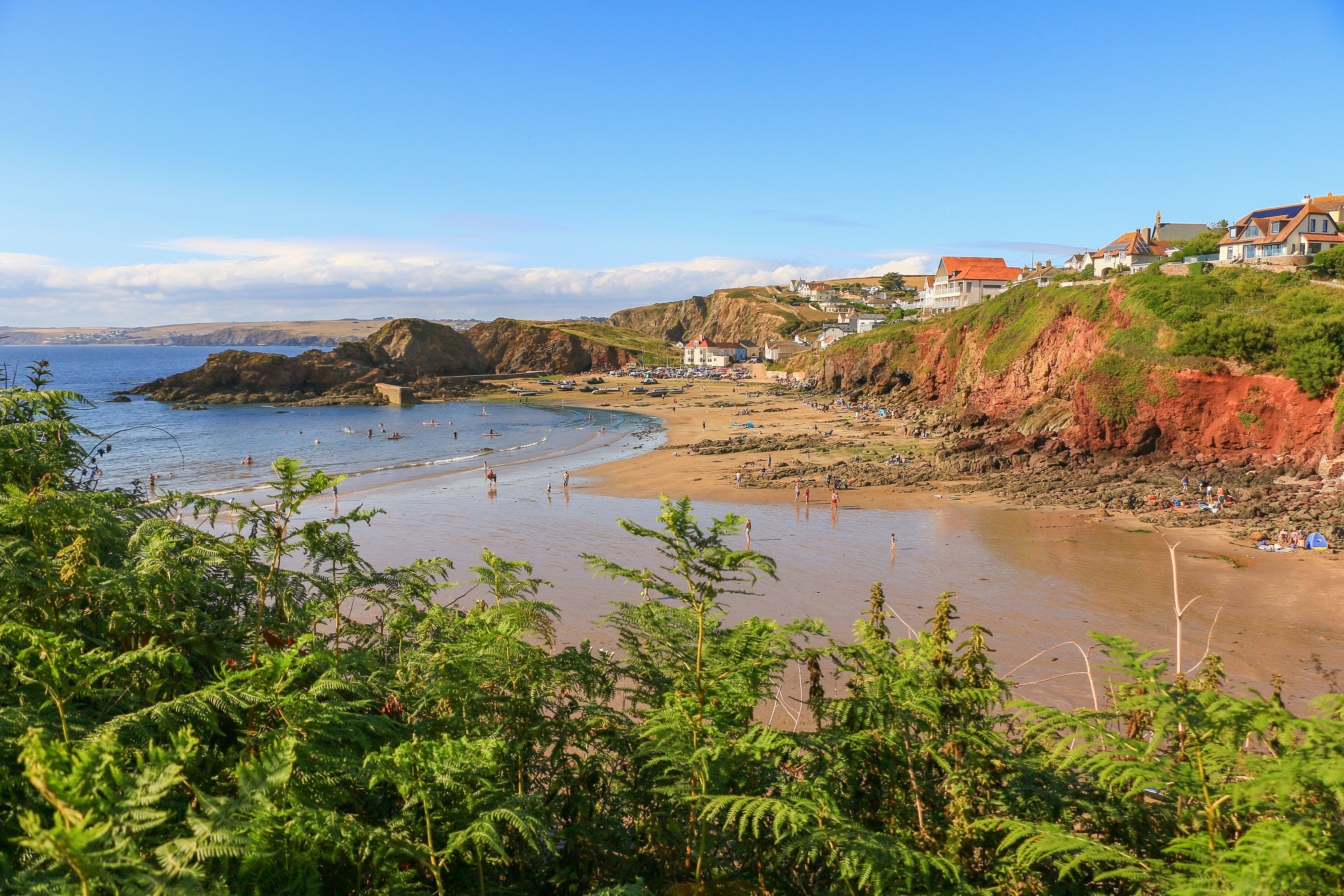
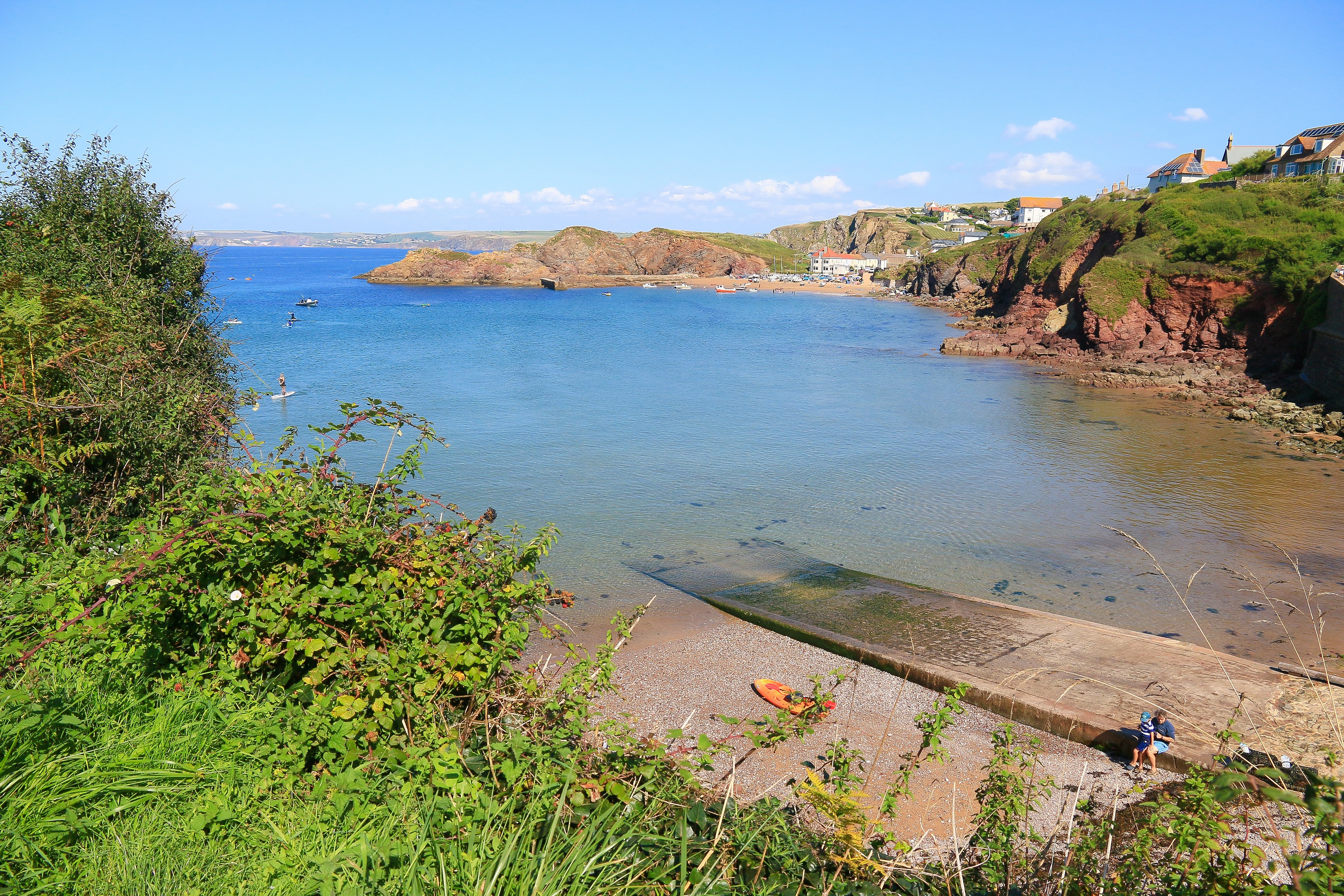
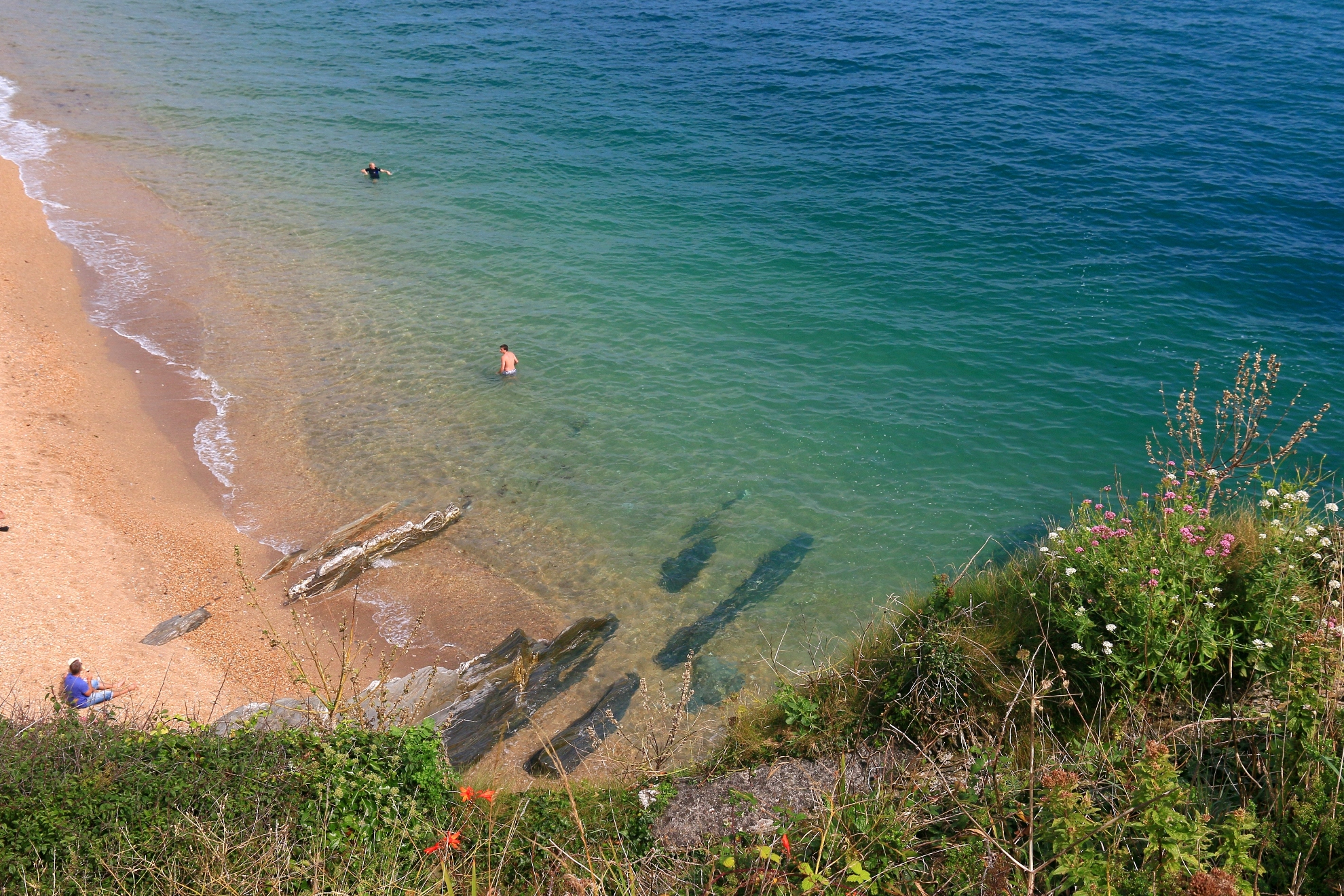
It really is in a delightful setting, Mothecombe; the tranquil shallows of the River Erme meandering out to sea, the sandy banks and rock pools revealed at low tide, the sheltered, undeveloped bay with gentle waves and translucent waters. Such appealing waters that people were in there swimming and I got the shock of my life when I put my own feet in. Not the usual, anticipated shock of oh my god what are they doing this is f*****g freezing, but a slight eyebrow raising oh this is actually tolerable for a bit up to ankle height I guess. No wonder the roads are so busy.
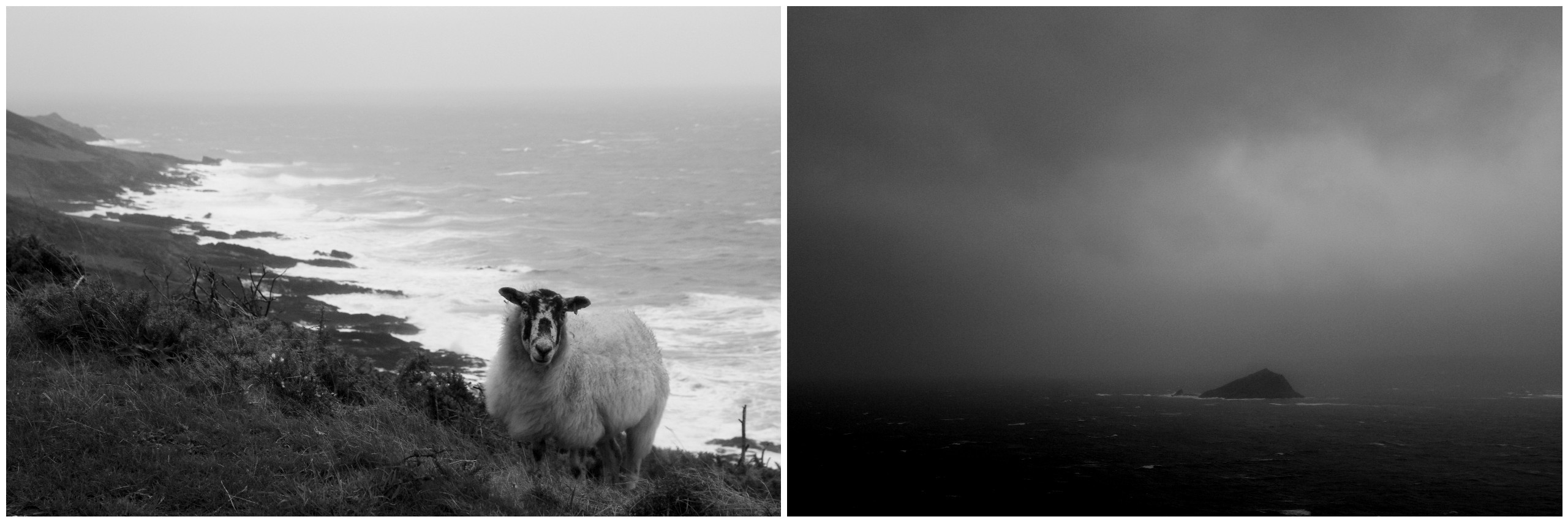
If that was Devon in the joyous throes of summer, my final week (after an interlude in other parts of the UK) was very much an autumn affair. The most overused word of that week was blustery, closely followed by changeable and showery. On Dartmoor, the scene was moodier, more forbidding, occasionally bleak. But Dartmoor does bleakness to such great effect; in fact bleakness really is its preferred state.
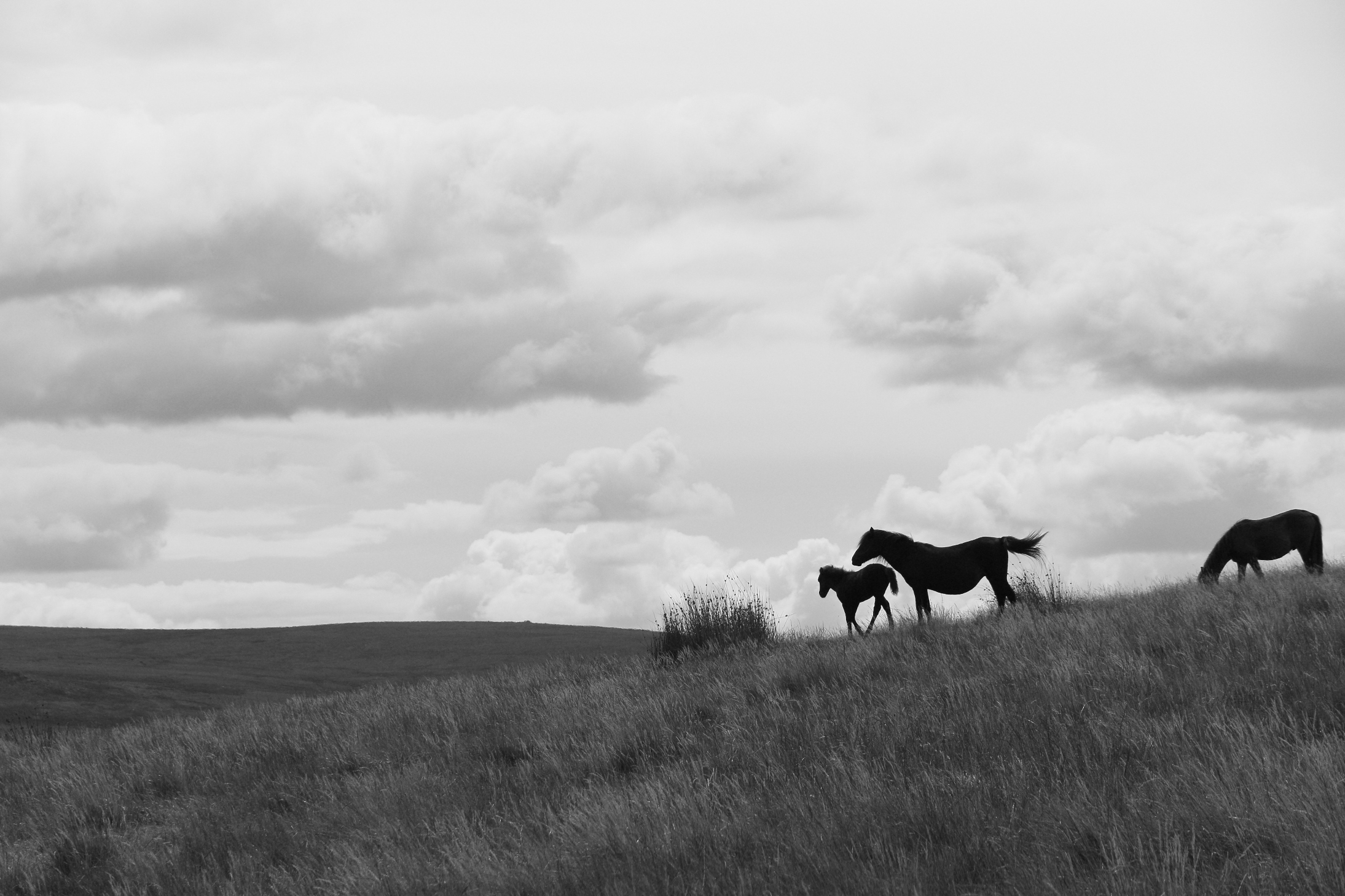
Following a day of showers merging into longer spells of rain I was keen to get outdoors when a longer spell of rain appeared to have passed leaving a few showers behind. I was in the habit of checking the weather radar by now, and took a bit of a gamble on a potential gap in the way things were tracking. Out around Sharpitor, as cloudbursts pummelled the Tamar Valley and a black doom sat unyielding beyond Princetown, some late sunshine pierced the skies and set the landscape aglow. Sheltering from the cold wind, I stood insignificant within expansive moorland and raggedy tors, alternately shining golden in sun or darkened by racing clouds. Barring the occasional car on the main road crossing the moor, it was just me and the sheep and a pony or two to witness it. I felt as though I had struck gold.
There was less good fortune back in the South Hams, where a Harvester I had pictured in my head didn’t exist and lunch ended up somewhere down the road and over the hill and a little further along from the tiny hamlet of traditional dining hours. This wasn’t terrible, for outside the intermittent showers had done their let’s merge into a longer spell of rain thing and ducks revelled in the whole experience. But essentially I am an optimist and British…an entirely contradictory thing I know, apart from when it comes to the weather. There is something in our character that makes us look up at the skies and sigh with a grudging acceptance before donning sexy pac a macs and trudging on regardless. On to the eternal hope that is Noss Mayo.
And you know what? In a turn of events that no good travel writer would ever make up, it pretty much stayed raining albeit with some slight easing off for about five minutes. Thankfully the Ship Inn had some funky outdoor pods to huddle together and drink hot chocolate in – think three quarters hamster ball in Teletubbie land – and with the tide being in (well checked, sir), the scene was not one of stinking tidal sludge. Indeed, it was rather serenely pretty under a comfort blanket of cloud.
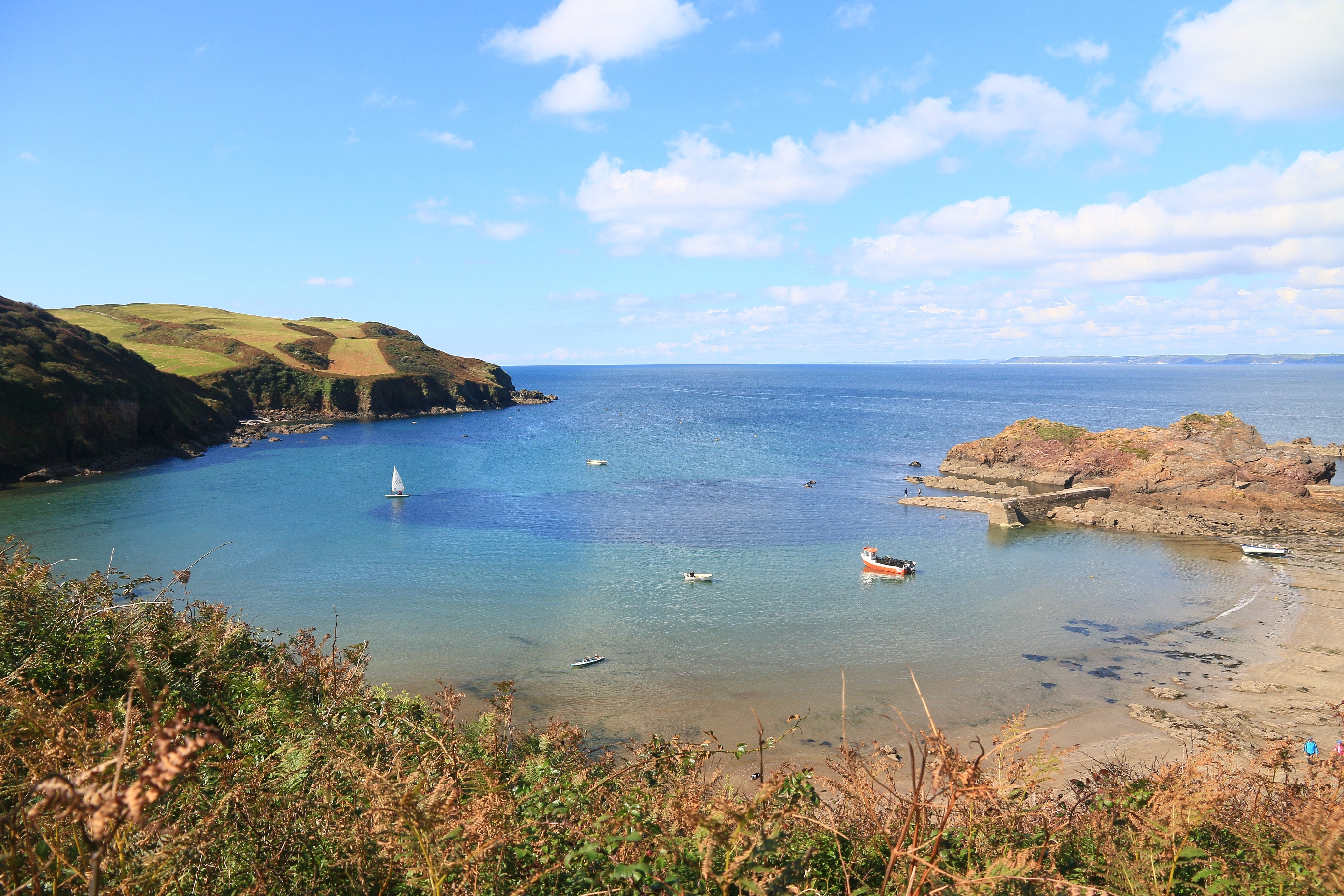
Instead, Hope was on the horizon the next day, my very last day in Devon. Hope, just down the now more placid A379 and a rollercoaster lane of twelve foot high hedgerows. Hope, where there is parking for twenty cars and a few spaces to spare. Hope, set into its namesake cove surrounded by steep wooded cliffs iced with undulating pasture. Hope, sat in warm September sun outside the Hope and Anchor with half a Tribute and in the Salcombe Dairy ice cream taking the bitter edge away. Bittersweet is Hope on days like these. Days when Devon couldn’t – again – look, smell, taste, and feel any finer.
Every once in a while I pick up on a sign that I have been in Britain for a lengthy time. The coffee becomes more tolerable and I seek out a Costa. I engage in the politics, once finding myself watching Andrew Marr on a Sunday morning and invariably tutting and name-calling towards an array of politicians (just like a Sunday morning with Bazza and co in Australia). I also develop greater familiarity with popular culture, aware at least of which predictable warbler might remain in X Factor and who ends up eating cockroaches in the Gold Coast hinterland. I am persuaded that Ant and Dec can actually be quite funny. And reminded that most of the press remains dire, particularly for non-xenophobic lefties.
If anything, weather fixation intensifies and I obsessively scramble to watch the national forecast on BBC breakfast every morning. And then the local one ten minutes later. Absorbing, calculating, praying in hope that there will be a clearer slot in between graphical blues and greens depicting more rain. I doubt that I have used the word ‘dank’ in Australia, but here it re-enters my lexicon. It was inevitable, but it still comes as a disappointment.
I later discovered that November was the gloomiest on record which is absolutely brilliant isn’t it? Bright spells were as rare as succulent oak trees in a delightfully scorching sun-blasted desert. Any glimmer of blue (or white or less grey grey) prompted me to seek the outdoors. Sunshine and squally showers meant a good day, like on an outing to Newquay with Mum.
I would naturally avoid Newquay in the summer, jammed as it would be with school holiday sun-seekers stumbling over surfboards and clinging to caravans. Out of season is a different proposition though, with Fistral Beach sparse and surfers unwilling to venture upon seas whipped into meringue peaks. An out-of-season foam party streams onto the sand as a continuous crashing soundtrack booms in from the Atlantic.
It is – to be sure – bracing, but seems more purposeful than hunkering down to watch endless episodes of Pointless. We pursue the headland for the 360 degree views and a ragged crossroads of wind and water and land. Shelter is close and welcoming, provided by another Stein enterprise which can comfortably survive a winter with fish and chips and bread and tea specials.
Post-batter and it is back through the foam party and across to Pentire Headland. Similar to before, angled walking is required to puncture through a north-westerly headwind; pausing still to take a photo requires strength and agility. Waves crash on three sides and filter into the beach at Crantock. A distant squall promptly bears down and sends us scurrying for the car. The rain is back, and the blue sky gone again.
My standards of what constitutes a good day in November have lowered, indeed plummeted. A grey morning triggers a return to Noss Mayo, an oft-visited haven but never so late in the year. What once was quaint is turned dour, the sheep peppering the coast questioning their existence and the yachts of the estuary creaking in ghostly wails. Bleakness envelops and a downpour drenches me before I could seek refuge in The Ship Inn. Posh people hog the fire with a sense of entitlement. Times have changed but some things haven’t.
The weather folk on TV keep trying to sound cheerful, gleefully informing us that it is unusually mild for the time of year, before presenting a summary of the week ahead featuring words like “unsettled”, “rain at times”, “overcast”, and “winds increasing”. So it came as something of a surprise to wake one Saturday morning to find a frost on the car windscreen, hastily scraped off in an attempt to enjoy the blue skies before the clouds encroached and it became “overcast” again.
The moors were looking stunning in such rarefied light, swathes of bracken glowing bronze and raggedy silver outcrops piercing a deep blue. Not everywhere was shimmering though, the sun sitting on such a low trajectory that hollows and recesses struggled to shake off the shade. Thus on a nice sunny day I find myself in a chilly, dark chasm, following a beautiful watercourse in Lydford Gorge to the foot of White Lady Falls. A very reliable supply of water (i.e. Britain) ensures the falls plunge with suitable grace and power, offsetting the annoying lack of sunlight in the valley.
With the trees rapidly denuding it seems that autumn is fast dwindling away into winter, even if the temperature is hardly playing ball. It starts to feel like Christmas is of course a-coming, although the shops have been full of Christmas since September. I cannot remember there being so many TV adverts for Christmas food, Christmas presents, Christmas drinks, Christmas movies, Christmas jumpers and Christmas music. I thought it would be nice to stay in the UK for Christmas, but this overabundance is starting to drive me mad. I guess that is part of the whole Christmas experience too!
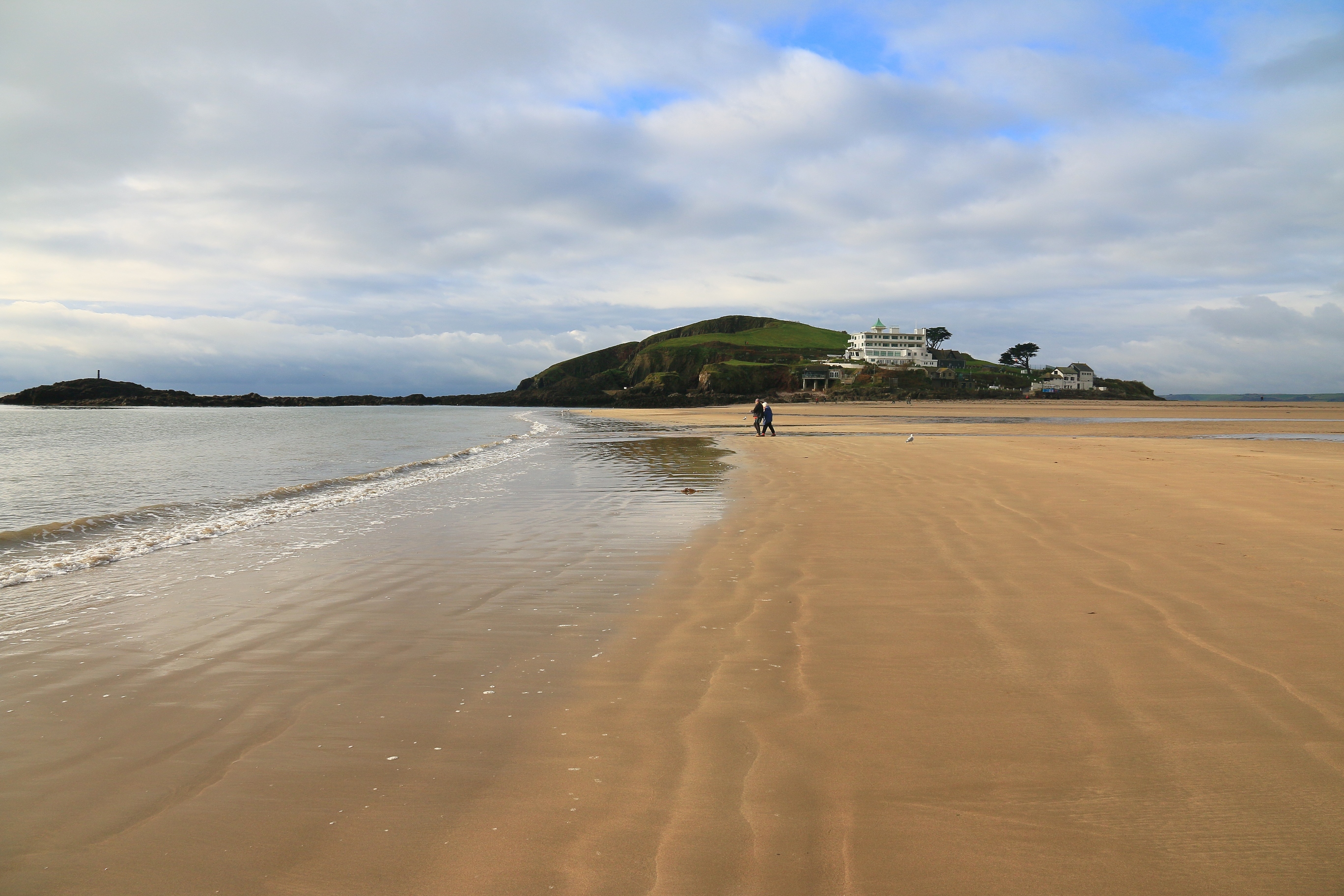
Chances of a white Christmas appear non-existent, unless you escape to a seascape brimful of foamy fury. Unlike Newquay and the north coast, stretches of the south coast may not cut it for impromptu seafoamball fights, thanks to protection from Atlantic surge. Beaches like Bantham and Bigbury are generally more sedate affairs and miraculously the sun may break through the white cloud thanks to the shelter of the hills. At low tide, miles of sand act as a barrier to the elements and afford safe, non-muddy footing for bracing strolls.
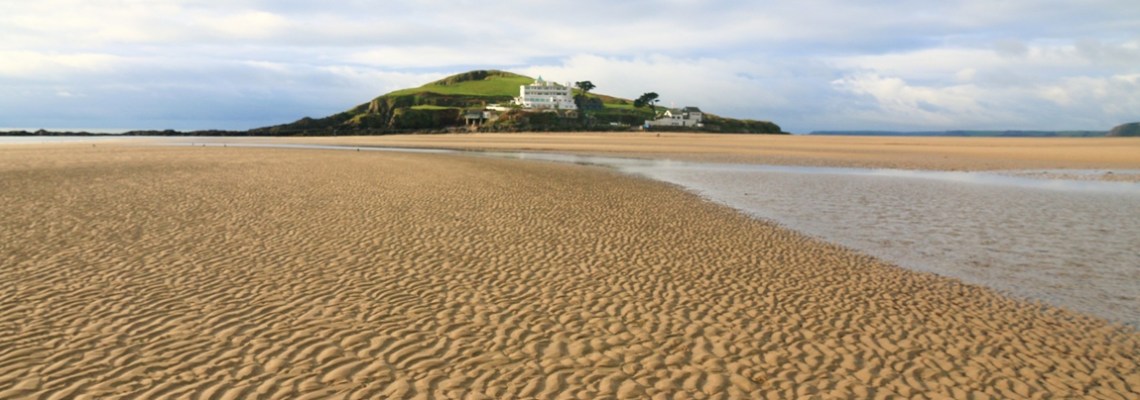
Burgh Island is the centrepiece of this quaint corner of South Devon and easily accessed when the tide is out. Catch it at the wrong time and you’ll be faced with a giant tractor ride or a perishing wade through water surging in from left and right. Or maybe wait it out with a cocktail in the artiest deco hotel of them all. Alas, my re-acclimatisation means I am used to paying attention to the tide times along with the weather forecast and miss out on cocktails and tractors.
Despite the predominant cloud, despite the withering trees, despite the headwinds and squalls and muddy tracks, despite the gloomiest November on record, there is just a little charm and delight to be found. A few hours like those in Bigbury, or Newquay, or at Lydford make a world of difference. They are rare interludes, and may not be enough to persuade me I could do a whole November again. But then it could be a lot worse, it could be December instead…
The eternal battle between Devon and Cornwall hinges on the correct approach to bedeck a scone. Cream then jam, jam then cream? Does it really matter when both are so god damn delicious? Well, clearly the answer is yes and, clearly, Cornwall wins.
It may seem a trifling matter, but the fight for sconepremacy reflects something far deeper in the southwest psyche. That is, which is the better county? Unlike the scone debate, this question cannot be so easily resolved. In my mind at least it is on a par with assessing the merits of England and Australia and as complex as Tony Blair being the logical person you’d hire to bring about peace in the Middle East. And you know what, I think the answer to this conundrum may be to appreciate each as equals, and revel in the fact that they are both pretty good anyway, particularly as scones are plentiful in whichever county.
For balance only the leftist BBC conspirators could dream of, let me now present some recent evidence for the case of Devon (given my last entry was Cornish). Specifically, the southern and western part of Devon within reasonable proximity to Plymouth. The other stuff doesn’t really matter, mostly because the pong from Exeter ruins it. And this is the stuff that is close to home.
The best mayo:
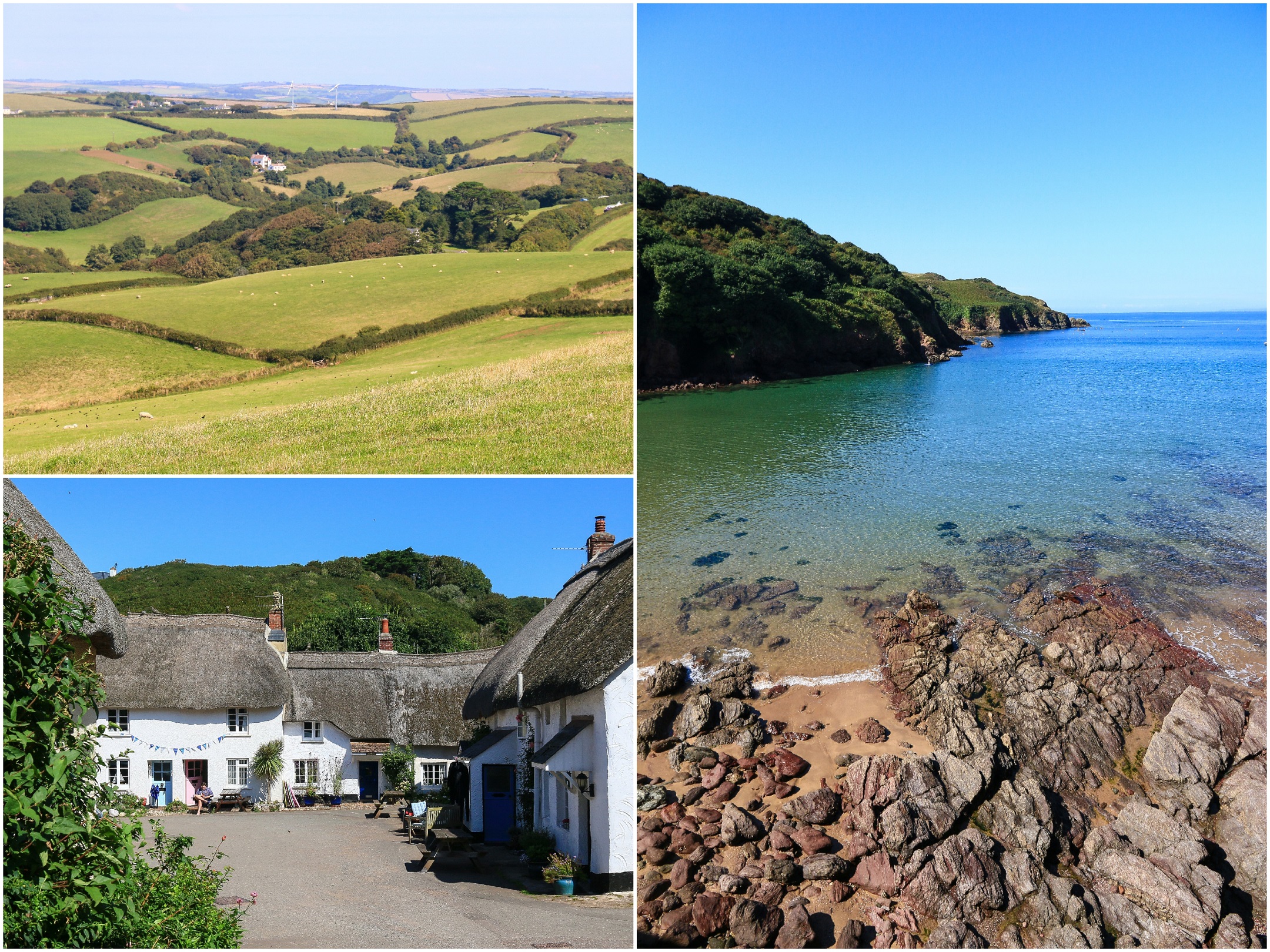
Hellmans and Simon despair, for Noss Mayo is the winner and may well take out loveliest village in Devon competition. Just a short run out from Plymouth via a maze of ten foot hedgerows, it’s a place of peace and serenity and that colourful bunting that is just about in every village in the southwest. Cottages with names like Anchor’s Rest and Primrose Lodge scatter haphazardly down to the water, while home grown asparagus sits next to an honesty box and a bowl of water for passing dogs.
An additional perk of Noss Mayo is the perfectly blended walk of seaside cliffs, creamy pastures, flourishing woods and boat-a-bobbing creek. A loop walk that can – should you wish – be completed at a relaxed, ambling pace. Just watch out for frenetic foreigners high on sunshine and the scent of silage.
Oh, and did I mention there’s a pub? I probably have, several times in the past. It’s positioned perfectly towards the end of that walk, at the heart of the village, jutting out into the water (or…at low tide, the slightly less idyllic mud). The pub is arguably the jewel in the crown of Noss Mayo and I can now recommend the fish and chips as well as the selection of ales. Experience suggests this may not assist the final climb back up to the car, but it will likely have you coming back for more.
A nice set of hams:
Outside of Noss, there could well be many other contenders for Devon’s loveliest village yet to be discovered. It’s a fair bet that a bulk of these will also be in the South Hams, the luscious, rolling countryside tumbling down from the moors and into the glittering ocean. Various rivers cut their course through the hills, passing thatched roofs and church spires on their way out into the sea, itself fringed with shallow sandbanks and undulating dunes.
Of course, the weather cannot always be relied upon to generate the picture postcard that I have so feebly conveyed. And when the sun does shine in summer, the village of Modbury can transform into a car park. Beaches such as South MiltonSands become busily popular, but there is enough room to play cricket and tentatively wade into the inviting but tepid ocean. Escaping humanity remains a possibility, with the ever glorious southwest coast path providing hope to reach Hope. Meanwhile, the increasing proximity to Salcombe means that the ice cream from its dairy becomes commonplace.
The loveliest village could actually lie along the stretch of road between Kingsbridge and Dartmouth in the South Hams. The problem is that it is difficult to assess, since negotiating each village by car requires a shot in the dark, following by a wait and a reverse, and a punt around the next corner before a tractor bears down on you followed by an unfeasible double decker bus, which is wedged in next to the pub that would be nice to have an ale at if there was somewhere you could park and be able to get out again, without hitting any ramblers lurking in gargantuan hedgerows. Despite its obvious perils, driving on this apparent A road is marvellously endearing.
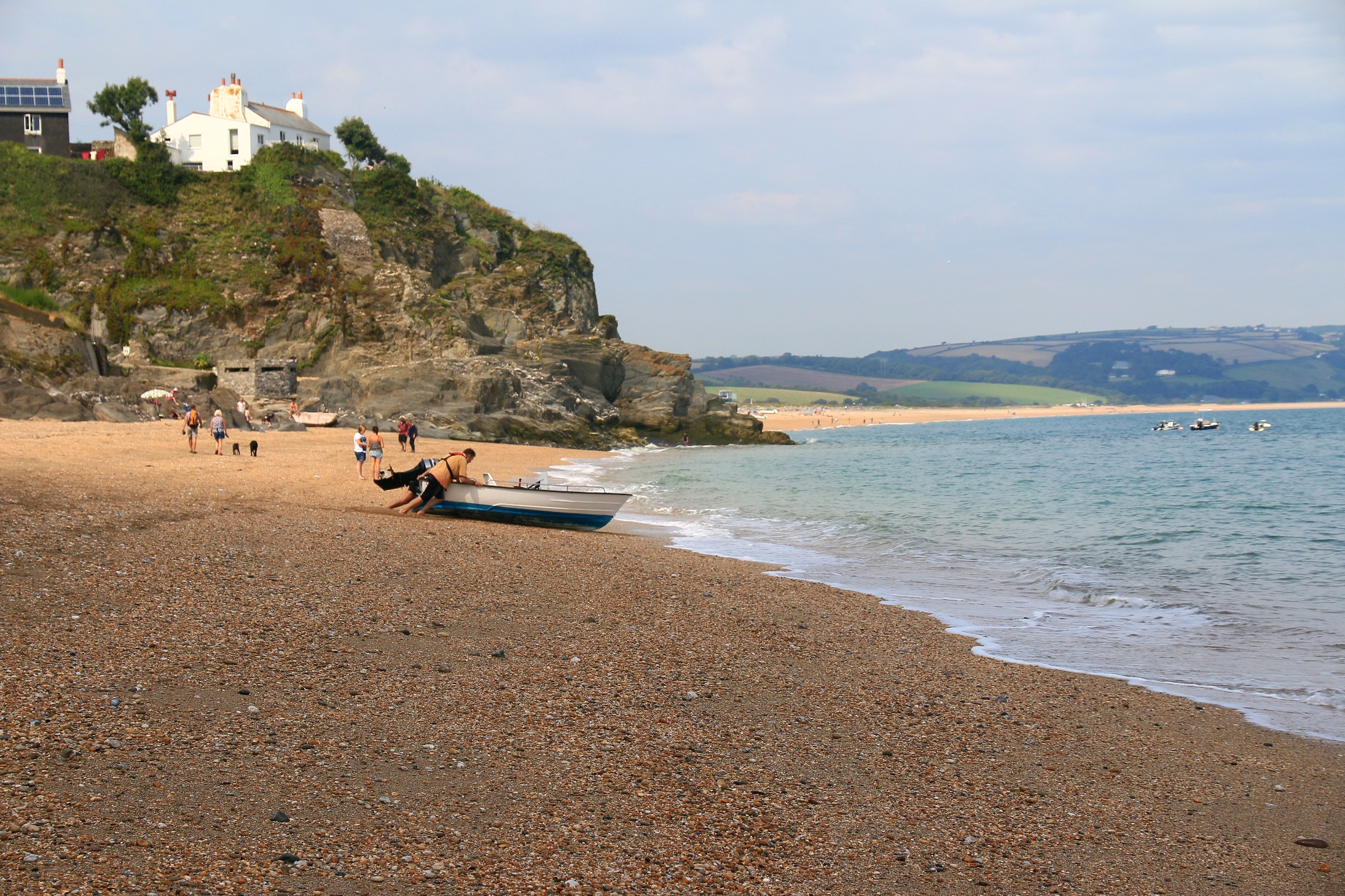
I think it may be nine miles from Kingsbridge to Torcross but it can feel five hundred, and five hundred more. Torcross sits at the southern end of Slapton Sands, so named because the sands were obviously slapped on a ship and sent miles away, leaving only pebbles and more pebbles. Smooth and colourful and cleansing, they lend the seascape a pristine hue, and – if you don’t look too closely – the beach does appear as though it could pass muster in Australia.
Like everywhere around this way, there is good walking to be had. Over the hill to Beesands with its less photogenic beach, and on to Hallsands, precariously awaiting the next winter storm. Beyond Hallsands the waters of Start Bay curve their way against precipitous slopes, topped with radio masts, sea mists and happy cows, giving way at Start Point.
I could push on to there today, but the hills get steep, my legs say no, and I still have the potential car parks of Dartmouth and Totnes to negotiate before getting home. One small mercy is that the tide is now out, and the hill between Beesands and Torcross can be circumnavigated via the millions of pebbles. Who needs sand all the time anyway Cornwall? It just ends up in every crack and crevice.
Moor scones available:
While the South Hams possess the requisite balance of thatched cottage to rolling pasture to pebbly beach, the somewhat tamed landscape eventually gives up and transitions to the wild uplands of Dartmoor National Park. Now this is truly on the doorstep. One minute you are navigating hapless drivers attempting to cross a roundabout to get to Tesco, the next you are passing hapless drivers braking sharply and pulling into the Dartmoor Diner. Civilisation may well linger, but it is quite possible to see nothing or no-one obviously man-made for lengthy periods of time when out on the moor.
For many Dartmoor is Plymouth’s playground, where you can stroll, frolic in a river, cycle, have an ice cream, walk the dogs, and fantasise about hairy hands. For me too it is something of a Red Hill surrogate. Though clearly not quite as close (i.e. 5 minutes), there are hills to climb and views to be had and, if you squint hard enough (very hard), the sheep may take on the resemblance of a grazing kangaroo.
Just around the corner though (maybe 5 minutes with a good run of lights and a Bugatti Veyron) is the River Plym. Gathering down from the moors, the Plym gently meanders its way through leafy woodlands on its way to Plymouth Sound. One minute you are in an industrial estate, the next the lane narrows into a hobbit hole and you are bathed in shadowy leafiness. Again, children frolic, people cycle and dogs yap. Some (dogs) may even become potential kidnap victims due to ridiculous cuteness.
Plymbridge offers an easy escape – from Plymouth, from Asda, from endless episodes of Emmerdale. And it reminds you, quite simply and quite easily, how really lovely it can be to be in Devon. In fact, just as lovely as Cornwall.
Recently I saw the first mention of Britain being warmer than Spain. It was on the Yahoo homepage, somewhere between top ten tips to pout like a trout and a twitter post from Taylor Swift that you would, apparently, never believe. Somewhere or someone called Yahoo is not a place I would naturally go for in-depth analysis of the factors underpinning the fragmentation of the Middle East or the precise dimensions of Kim Kardashian’s behind, both of which may be somehow inextricably linked. But a long time ago, in a galaxy far, far away, I created an email address there and occasionally get distracted by evil click-baiters now preying on people who are slightly bored enough to be checking their email.
Anyway, today, Britain was warmer than Spain, and adorned with attractive young ladies baring skin on a strip of pebbles next to some murky water. The pronouncement of this statement is, of course, as much a feature of British summertime as Wimbledon and a plate of Cumberland sausages infused with burnt charcoal. It blares out why go overseas when you can roast yourself red here? Given a clear pathway towards Brexit forged in the desperate need for a PM to save his shiny, pampered skin, and what with the incredulous love-in for UKIP and Nigel Farage (whose own skin is tanned to the extent that it can only have been achieved with European influence), it is a statement that is arguably as popular as ever [i]. Yeah, who needs Spain anyway, what with its nasty weather and cheap prescriptions and high-speed trains and bargain-basement villas and welfare and services readily available to millions of British expatriates?
Back to this article…I am not sure where in Spain somewhere in Britain was warmer than. It could have been the top of the Picos de Europa being compared with a 1980s British Railway carriage in which the heating has always been on. I suspect it was more likely a temperate resort – usually a Malaga or a Benidorm, or perhaps a more northerly Costa Brava – being compared with an equally delightful place like Gravesend or Hastings. Regardless of its pitfalls, the story was clear: the weather was actually quite nice for the first time in ages.
It may be this that I most miss about Britain. When I see numerous Facebook posts like “Loving this sunny weather” and “Baking in the garden” and even – god forbid – “Sitting in the shade because it’s too hot”, I want to be a part of it, there in my jumper, wondering what all the fuss is about. No, seriously, with acclimatisation still pretty instantaneous I’d be there in my shorts and chomping on a plate of burnt Cumberland sausages with the rest of them.
It really is true how eighteen degrees feels much warmer in Britain than it does in Australia. And in May, equilibrium strikes: Plymouth and Canberra will likely attain similar maximum temperatures. But while one is on the rise (or at least fairly steady), the other is quickly descending into Arctic despair, judging by the attire of locals and their desperate protestations of hypothermia. Thus, despite the same temperatures it is not unusual to come across adjacent posts on Facebook informing me that it is too hot to sit in the sun and that I should be wrapped up in a Merino wool thermal Snuggie with accompanying solar-warmed Ugg boots.
Notwithstanding such distorted equilibrium, and a withering autumnal beauty stretching across Canberra, I’d still rather be in Britain in May. Which is a tad ironic when I think I have only been back to Britain in May once, and then propelled primarily by a wedding. I suspect a big reason for this absence is the level of work sprouting from every orifice of the Government, in a crazy cash splurge that could rival a Channel Seven teatime quiz. Spending is temporarily back in fashion in order to receive the same budget funding, the leftovers of which can be spent frantically again this time next year. Thus Mad May, as I quickly discovered it to be known, is a perennial – but welcome travel-funding – feature of my life.
And so it is that my European trips usually take place from July at the earliest, once the financial year has wrapped up. But, as I say, I did manage a May trip once without the Government here collapsing, and it was truly a beauty. Okay, there was some rain – you expect that – and I may have needed a jumper once or twice, but there were also barbecued Cumberland sausages, early season strawberries so much better than any from down under, and one or two days in which it was okay to wear shorts. Add the inevitable industrial doses of clotted cream to a backdrop of pure green fields and wooded river valleys, and you have the recipe for success (and possibly a heart attack).
I remember the green most of all. Catching a suburban rattler from London Waterloo through the Surrey heath and into Hampshire, the rail line part tunnel of branch and leaf, the hedgerows maintained by the clipping blade that is the express to Southampton. The woodlands glowing chartreuse, as a gentle sun dapples its light onto sweeping clusters of bluebells. The cocoon of light and leaves offering a greenhouse in which sweaters can be comfortably removed. In the open, fields of yellow canola interspersed with succulent pasture for cows and hilly outcrops for sheep stretch south and west. Despite intrusions of modernity, there is a timelessness to it.
In Devon, the county may have been made for May. Here, the whole landscape is the epitome of the Ambrosia custard can. There is a sense of new endeavour in the rolling hills, a scene of rapid natural productivity in the woodlands, and an audible tinkling of rivers and streams as they make their way towards the estuaries and inlets of the coast. The city of Plymouth is something of a black spot amongst this utopia, but even here you cannot ignore the sweeping green grass of the Hoe, the headlands plunging into the glittering waters of the Sound, and the grasses, flowers, and weeds flourishing in the cracks of the pavements and the neglected council estate gardens.
Not far from Plymouth, largely tucked away from civilisation, Noss Mayo exudes a loveliness that is probably repeated up and down the south coast of Devon. Here, I could brave shorts, chomp on fresh strawberries, feel the warmth reflecting off the blue seas, and cool down again through the shadowy banks of the Yealm. I could hike up to the church and wallow in more bluebells and daffodils and buttercups and daisies. I could let gravity take me back down to the creek for a cold cider or warm beer beside the water, as boats of red and blue sit in the tidal mud, and the sporadic appearance of a bus may or may not feature. Sitting waiting without a care, floating butterflies will make friends and transform into wasps and shake me from my rose-tinted moment of paradise. Like impending Atlantic weather fronts, wasps are wont to do that [ii].
And so back in the real world, the British May may be heaven one day and a drearier version of hell the next. But at least it is not winter anymore and the prospects for a good day again soon appear credible. As the rain plummets onto the broken concrete Plymouth streets and buses of damp people in damp coats on damp seats grind their way up the hills, I have a vision of beautiful people in Canberra drinking flat whites, wrapped up against the perishing eighteen degree days, thinking about what dubious investments they can make before the end of the financial year. Mums sup lattes as their kids crunch amongst the oak leaves, hipsters go about perfecting their hair, beard, and top button arrangements, and tradies roll around in the lucre of non-stop apartment-building. I may long for the colour, the coffee, the air. But there are no bluebell glades, and only the prospect of several frosty months and a period of intense labour for companionship.
In Canberra, in May, there will be no headlines jubilantly celebrating temperatures warmer than the Costa del Sol. And that is surely reason enough to turn minds back to the north.
[i] Of course, the very recent 2015 UK General Election demonstrated Little England was still going strong, sticking two fingers up to those pesky Scots what with their crazy ideas of equity and – well – caring and compassion for the less rich, and cementing an in-out-shake it all about referendum on participation in the EU. As for UKIP, well, 3,881,129 people must see something, I’m just not sure what, and whether this something is really the panacea to solving all their woes. Nonetheless, Mr. Farage can at least now go work on his tan.
The inevitable happened. It rained. And became a bit cold. On the plus side I think I found a good coffee but cannot be sure because it was a mocha. It helped comfort against the cold, which actually hasn’t been bad at all. Indeed, it is far from doom and gloom (yet), with still warm early autumn days and sunshine enough to counter the occasional days of murk. And such seasonal randomness swings my mood and affection, from absolutely, undoubtedly in love with where I am for a moment, and then still in love with it but begrudgingly so the next.
In the immediate confines of Plymouth I have taken to short forays to catch the views from the top of the hill nearby, over the Tamar and into Cornwall. In the other direction, enjoyable visits to Devonport Park, starting to brown just a little but doing so in an elegant manner. Mostly these forays are a good escape from soaps on TV, while the weather is still light enough to escape. Family add a welcome, warm distraction, when they are not glued to the soaps.
Escapes further afield have been possible, in a large part made easier by proximity to Devonport railway station. For instance, this at least makes the trip to Padstow slightly easier, connecting from the train onto a bus at Bodmin Parkway. I say connecting, but their timings don’t really connect amazingly well, so you just have to go into the cute cafe on the platform and eat homemade coffee and walnut cake. You just have to.
Not that you need sustenance to keep you going because Padstow is synonymous with Rick Stein and, apart from being able to eat the man himself, you can pretty much take your pick from his products: fancy seafood, good old fashioned fish ‘n chips, pasties, pies, breads, meringues, tarts, shellfish, ice cream. Beyond the world of the Steins there are numerous cafes, bakeries, pubs and ice cream vendors in the town. With money, you will never go hungry.
For all the cashing-in it is undoubtedly good for Padstow and the surrounding area. And I’m sure if you asked Rick Stein where his favourite place in the world is, of all the places he has been, from France to Asia to Mollymook, he will say Padstow. And why not, why not at all?
The Devonport – Bodmin Parkway rail route offers up another lovely option, without a bus connection. This means that it’s hard to justify coffee and walnut cake but you can take solace with a National Trust cafe instead. A walk of a couple of miles, tracing the River Fowey through verdant woodland and leading along a broad tree-lined drive takes you to Lanhydrock House.
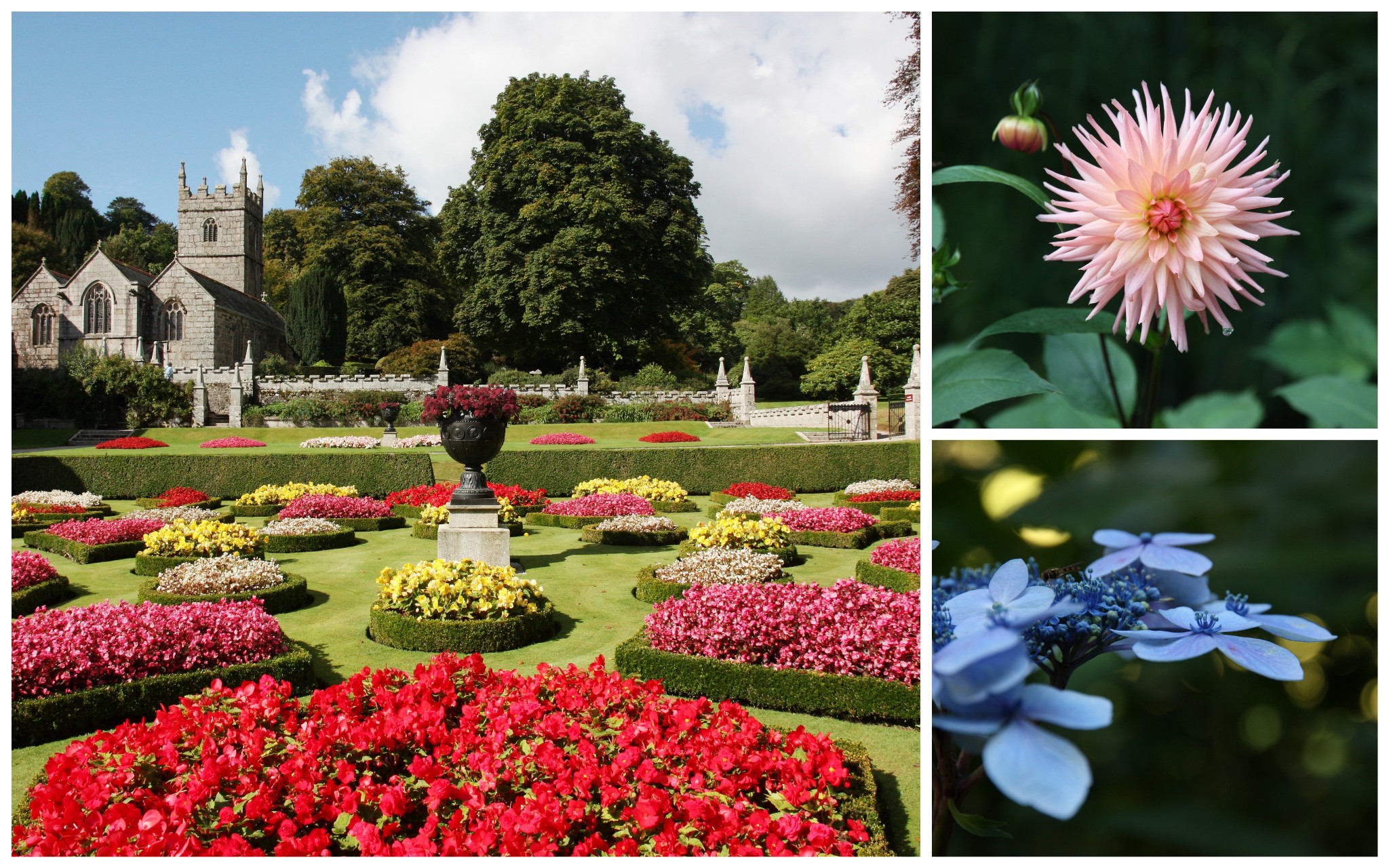
At Lanhydrock there are gardens doing their utmost to remain in summer and a sneaky side gate or too in which you can enter without paying. Well, it’s not like I was deliberately avoiding having to pay for 10 minutes wander around a garden, and I did spend money on a caramel slice and coffee afterwards. So just keep calm and carry on, as they all say in these places I think.
In these places I have been a while now, which means a clear routine has set in, particularly in the mornings. A folding up of bed and shifting of table is then followed by a cup of tea and a watch of BBC Breakfast News. The weather forecast maintains interest and days and weeks are planned around what the smiley weatherwoman decides is happening. A cool, blustery day means trips to town and hanging out in the library to do some writing of some kind. A sunny day is greeted with the enthusiasm that comes with the expectation of this being the last of the year.
On what I thought would be the last sunny day of the year I shifted to bus travel and a bumbling ride to Noss Mayo in Devon. This is now just one of those established jaunts that tends to fit into the annual southwest pilgrimage. Not so many miles from Plymouth it nonetheless takes a while to reach, as the bus frequently stops and reverses for other vehicles to squeeze between it and the ten foot high hedgerows. Practically scraping the walls of pastel cottages, the bus arrives beside Noss Creek and a pleasantly varied walk of an hour or so: coast, farms, woods, creek, boats, pub, beer. And then back on the bus through the rabbit warren of the South Hams to Plymouth. Such is the blessing of living in this part of the world.
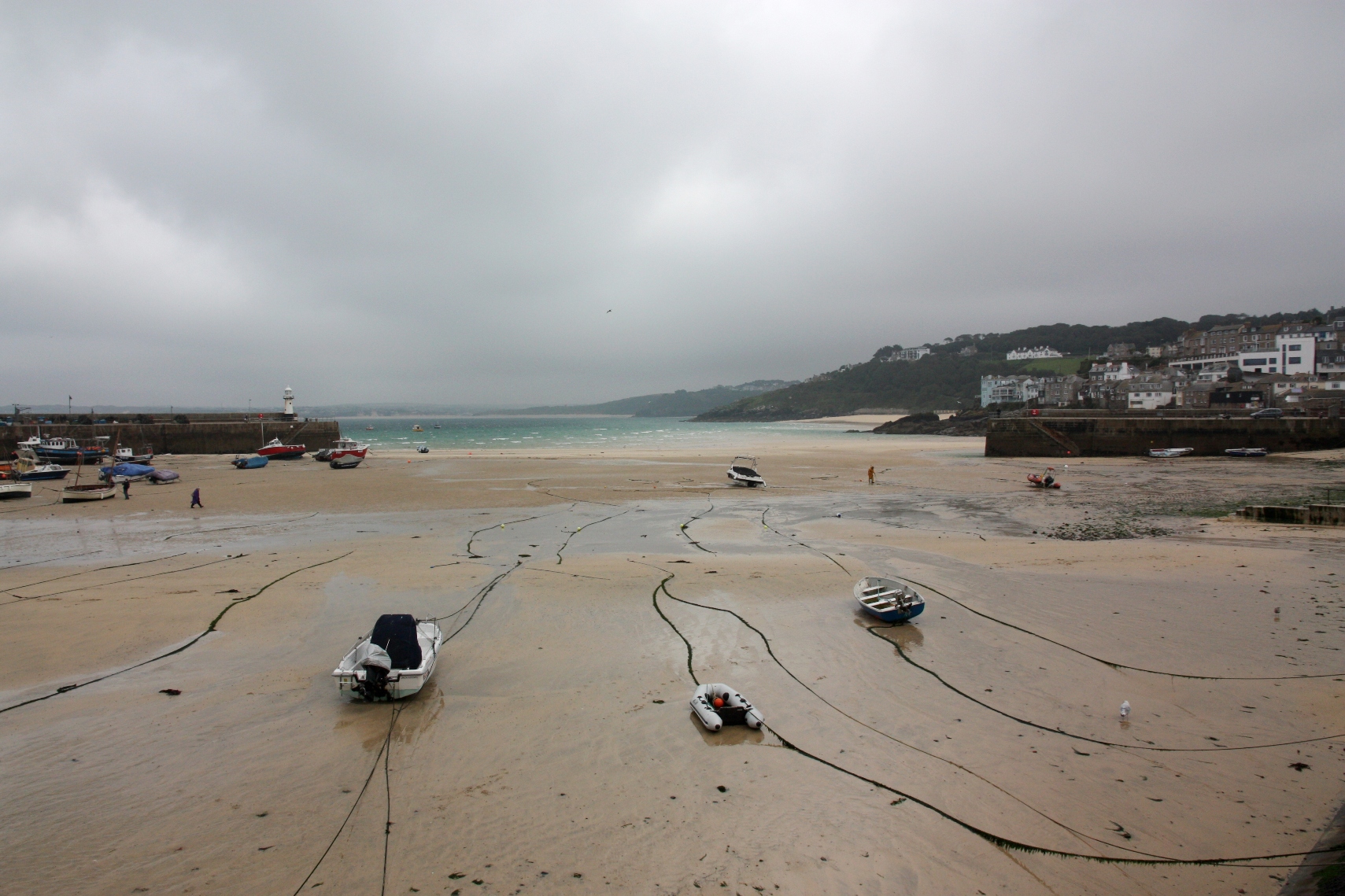
The sun failed to shine on the far west of Cornwall despite it being a day which I thought might be the last sunny one of the year. Quite possibly the lamest high pressure system in the history of the world covered the British Isles and daubed it in low cloud and mist. And so, unlike my last trip down to this pointy end, St Ives was blanketed in a grey melancholy, with a cold wind picking up off the bay, the only comfort coming from a Pengenna pasty and that good mocha I mentioned before.
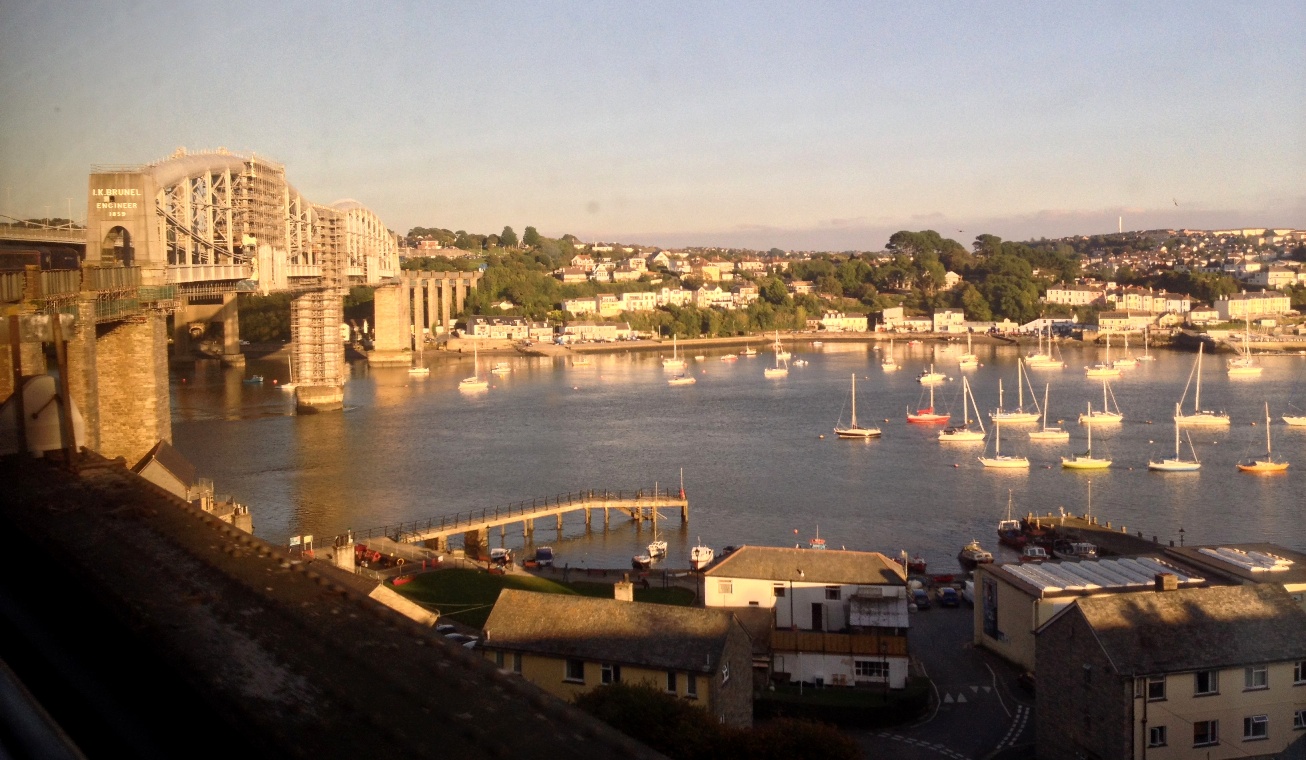
Things were no better on the southern coastline around Mounts Bay, that is until the train pulled out of Penzance Station at four o’clock and the cloud parted over Marazion and continued on to Truro and such brilliant blue skies as befitting the last sunny day of the year continued all the way into Plymouth. You could say it was frustrating and you would be right, but the train ride back was two hours of blissful enjoyment and appreciation of Cornwall.
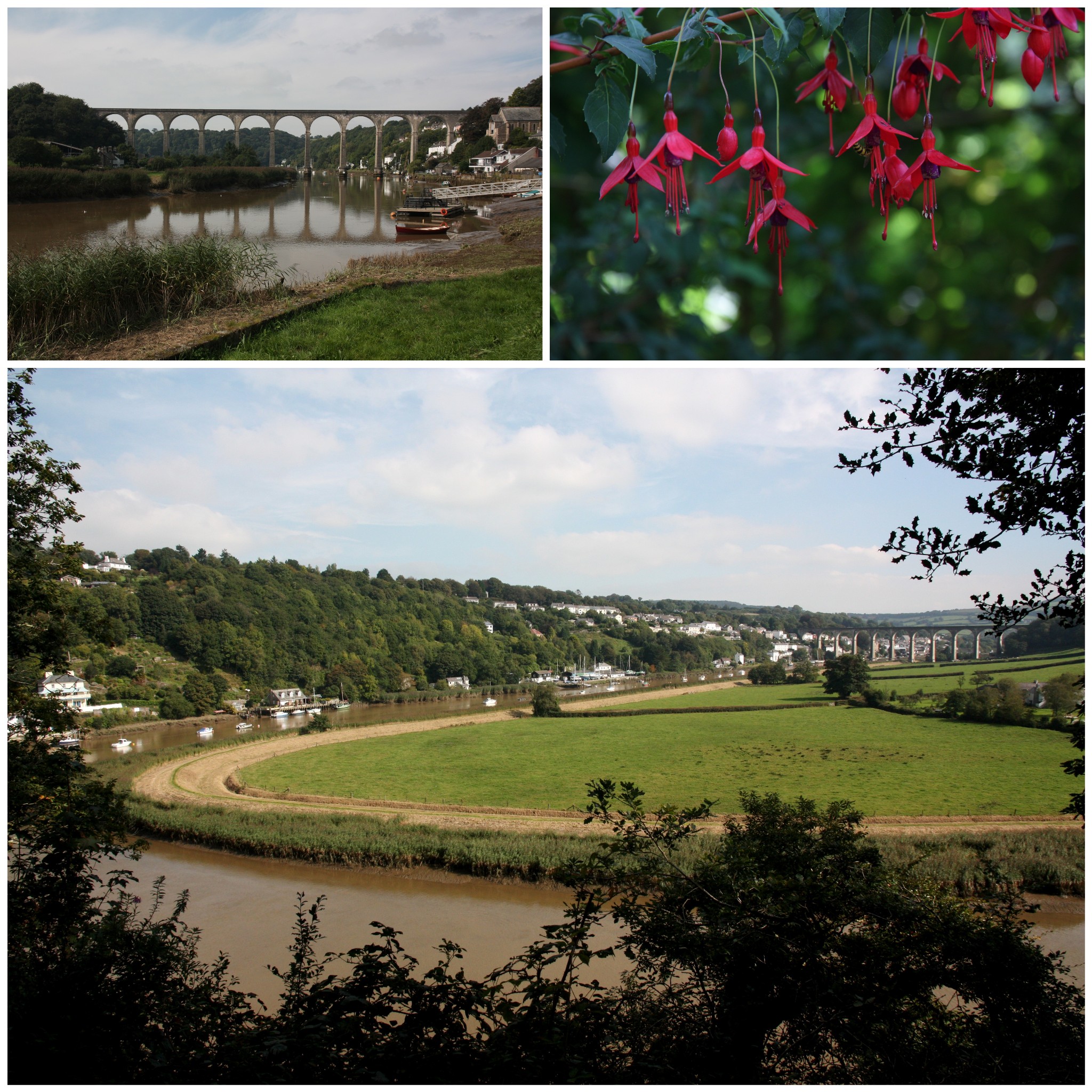
The next day dawned, well, sunny. Very sunny indeed, and warm despite the end of September creeping ever closer. While the cloud filled in a little the warmth endured and offered up a couple of hours of unbelievable shorts wearing. This was in Calstock, on another train trundling up the Tamar Valley. The main attraction, apart from the snaking tidal river, impressive viaduct and waterside cottages, is Cotehele House and its wooded estate sloping down to the water. It’s a peaceful, sedate corner of the world, again just a stone’s throw – or train ride – from Devonport.
And so you see, while it did rain and it has been cold, this has generally been the exception rather than the rule. My last day here, before I disappear elsewhere for a while, involved shorts-wearing for goodness sake! And when shorts can be worn there is no rush to cross continents, not just yet. Not until we have that last sunny day of the year at least.
I grew up in Devon, England. On paper it may sound idyllic for Devon surely conjures images of rolling green hills and tinkling rivers, bobbling their way down to the sea past thatched cottages and fields of sheep and cow [1]. The image is ingrained on a can of Ambrosia custard, a can which may be spotted overflowing from a pile of black bin bags in a grimy back lane of Plymouth, Devon, as I endeavour to find the shortest route home from school, avoiding the dog mess and scary people hanging around the dreary Thatcher-era jobcentre. The can is eventually collected by a wearily underpaid and grizzled local, transporting it by diesel truck to a stinking pile of garbage, where seagulls scavenge for bits of leftover pastie and people scavenge for usable second hand furniture and car boot trinkets. When it comes to custard cans, what you see is not exactly everything that you get.
That is not to say the custard can is a total fabrication, and the idyllic Devon does exist in spades, particularly once you get out of some of the more run down parts of its towns and cities. Within fifteen minutes of that cobbled back alley I can be on the edge of Dartmoor, with the rolling hills spanning ever higher until they become barren and sparse, topping out with crumbling rocks that eventually give up pushing their way out of the earth and tumble downwards over the steep hillside, like a very very slow moving volcanic eruption of granite. Here lie rocks that I once had the dubious pleasure of measuring for a geography field trip on the kind of day where misty rain sits stagnant in the air and soaks you to the bone. Still, it was so worth it to learn that there was some correlation between the size of the granite rocks and their position on the hillside [2].
By now you may be thinking this is all rather nice but what has any of this got to do with the letter C? It all seems to be a bit D like, rambling on about Devon and Dartmoor. And while there is something to be said for a double D it is not conducive to the order and logic that you have set yourself with this quite possibly pointless time-wasting task of writing something about each bloody letter of the alphabet like you are some magic floating pencil on Sesame Street. However, to you naysayers I pronounce that it is a truth universally acknowledged that when I return to Devon from wherever I have been lately I make a beeline for one thing: cream. Thick, yellow dollops of local clotted cream, with jam and scones and tea, or treacle tart, or ice cream and raspberries, or, well, just about anything. This exercise is not solely restricted to Devon, and the county of Cornwall can also be cleverly incorporated. Cornwall, custard cans, cream, coagulated coronaries. That’s clearly more like it.
Though I could lovingly list out the top ten cream tea moments or some such, I want to first draw out an expanded definition of creaminess, without degenerating into smutty innuendo too much. I think creamy can be appropriately used as an adjective to describe the landscape of Devon and Cornwall as it can nowhere else, in its cosy seaside villages, its wooded river valleys and rolling quilt of comforting green hills. In a Fifty Sheds type way [3], you can definitely have a ‘creamy’ experience, squeezing through tight country lanes to go for an invigorating stride in the countryside, butterflies and bees milling about in the dappled sunlight as tits and warblers penetrate the air. This is a rich and verdant landscape that produces, and is thus encapsulated, in that dollop of smooth, silky heart attack.
Incidentally, I love how, being at the extremes of the country, Devon and Cornwall have taken cream to the max by making it ‘clotted’ or, if you like, ‘extreme cream’. I think there is an embodiment of local spirit and independence here, the fact that some bumpkins have done something a little against the grain, taking unpasteurised cream and simmering it and skimming the very richest part off the top for themselves. They have undoubtedly created something to be targeted in future obesity campaigns and crackdowns by Brussels Bureaucrats as writers to the Daily Mail letters page would have us get in a flap about. But I don’t think they will get anywhere, for locals will resist in a barrage of fine Westcountry accents: “Arh sod it, a lil bid a cream wownt urt yer now, willett?”
If I was to pick one spot in Devon that is particularly creamy to me (though I should caution, not in a cream my pants sense) it would be the small village of Noss Mayo. It’s only a short jaunt from Plymouth but another world entirely; a cluster of cosy coloured cottages cascading down a narrow wooded valley to meet the gently bobbing boats on Noss Creek. Here lies a starting and finishing point for a fairly easy yet delightful walk that captures an archetypal, timeless Devon. There are country lanes rising past fields of sheep and hay and dotted islands of buttercups. There is the coastal headland, from where you can look far down to splintered rock fingers reaching out at the shimmering blue water. There is the estuary and river, which is fringed with copious, flourishing woodland, and then the creek itself, upon which sits a perfect pub. The only thing lacking – ironically – is a cream tea, which the pub never seems to offer, though a cider is recompense, especially since it too handily begins with a C.
For a full on Devon Cream Tea there are some fond memories past, but for a regularly reliable, convenient experience in a still quite blissful setting it would be hard to beat the endeavours of the Badgers Holt Tearooms on Dartmoor. At something of a tourist honeypot on the River Dart, here they simply make the cream the star, with scones and jam mere portals for the thick pale yellow cream piled high in a china bowl. A similar experience more off the beaten track – though I cannot vouch for its reliability having only been there once – was found at the Fingle Bridge Inn, visiting a few years back with my brother and his partner on one of our once regular cream-seeking excursions. We would go on these day trips for a good walk and some sightseeing, though secretly we all knew it was mostly about the cream tea and the other things were just diverting time-fillers!
Alas such creaminess is rarer these days. Being based in Australia will do that, where a Devonshire Tea frequently comes with squirty cream from a can (I kid you not!), and variations of ‘Australian style’ clotted cream are more milk-like than anything else [4]. The problem is the antipodean distaste for bacteria, by way of unpasteurised milk products, which I assume are considered a risk to the unique flora and fauna of this nation. So, rather than enjoying a fine cream tea and letting microbes run riot through the wild streets of Vaucluse, we destroy the country by pillaging its resources and selling them all on the cheap to China. Times have moved on. It is, after all, the Asian Century.
A redeeming feature of Australia is that they do generally make good use of cream when it comes to a Pavlova. In fact, the Christmas just past provided a perfect example, confirming that you can never have too much cream on a Pavlova because there is fresh fruit involved and that is healthy, right? Other countries too do not fare so badly. In Slovenia, there is Bled cake, which practically involves three inches of whipped cream sandwiched between two light pastry layers. In France there are any number of pastries involving some intricate creamy surprise; or think of Crème de Chantilly atop a Mont Blanc size ice cream. And in Switzerland there is La Crème de Gruyere…
Gruyere is noted of course for another dairy based product, which itself could form an entirely different and probably more entertaining entry under the letter C. And true to form I will fondly remember the fondue in the immaculate medieval town square and the odd, and thus very Swiss, self-guided tour though the cheese factory [5]. Gruyere feels a bit like a concocted Swiss fantasy, designed atop a hill to lure cheese eating tourists. Surrounding mountains are not as grand as elsewhere, but offer a teaser of what lies beyond, a more manageable scene of hills and lakes, vines and meadows, rather than the eye-goggling and neck bracing spires and hulks of the high Alps. It has its requisite fill of castles and churches, courtyards and window boxes, cafes and gift shops. It is, then, perfect coach tour day trip territory.
It was partly a result of arriving early to miss most of the hordes that my brother and I found ourselves with time to spare before it could be deemed acceptable to eat lunch and drink wine. It must have been before eleven or something. Having explored all that the town had to offer, walking from one end to the other, even down a little out of the way to a church, and climbing town walls, and still with time to kill, we headed to a cafe that looked like it was kind of open maybe; well, at least the waitress let us in though without much of a welcome. A coffee was a good call (now there is another C I could write about with very much less detriment to Australia). This was nothing special in itself, very un-Australian in fact, which makes sense given we are in Switzerland remember. But it did come with a little chocolate cup, filled with this Crème de Gruyere stuff.
At this point the mind plays a trick as it’s naively thinking, hmm, this could taste a little weird, I mean Gruyere cream, Gruyere is a cheese, right, and this is cream from it or something, like the dregs once all the lumpy bits have been squeezed out?! I doubt if this is anywhere near true, but that’s what the mind associates with Gruyere. The stupid mind needs to stop being so lazy in its word association and just think that, well, actually, it’s just another product from those very well cared for, loved and happy cows chewing those lush meadows with the flavours of 31 different grass, herb and flower species or something. It only turns a little cheesy when you buy too much to take home and it gets neglected after a few days because you have been snowed under eating far too many other treats, many of which are also dairy based. Calcium deficiency cannot be a problem here.
Anyway, it was a delightful little nugget in a delightful setting, which is often the case with the best cream based experiences. Perhaps this stems from being able to appreciate a direct link between your surroundings and the produce in front of you; in fact there may even be cows mooing in the background as you collapse with a blocked artery and the ambulance arrives. The cows keep on mooing regardless, continuing to produce a very basic ingredient that is turned by man into all sorts of delight. I think good cream is a result of good country, happy, contented animals and people with respect for traditions and tasty food. Traditions such as jam first then cream, or cream first and…or… well, who cares, just whop it on there and shove it in your mouth me lover. That’s how we do it in the Westcountry.
[1] Lately, some of these tinkling rivers have grown to large brown lakes, cutting off Devon from the rest of the world and, sadly, inundating many homes
[2] Smaller rocks had managed to flee further down the hill. I think. The mist made it hard to tell, not to mention the 25 years that have since passed.
[4] One notable exception is from a small dairy in Tasmania, whose name I am not going to mention for fear of their products always being sold out when I look for them.
[5] Completing the clichés that day were a mountain cog train ride and chocolate factory tour. It was thus an amazing day.
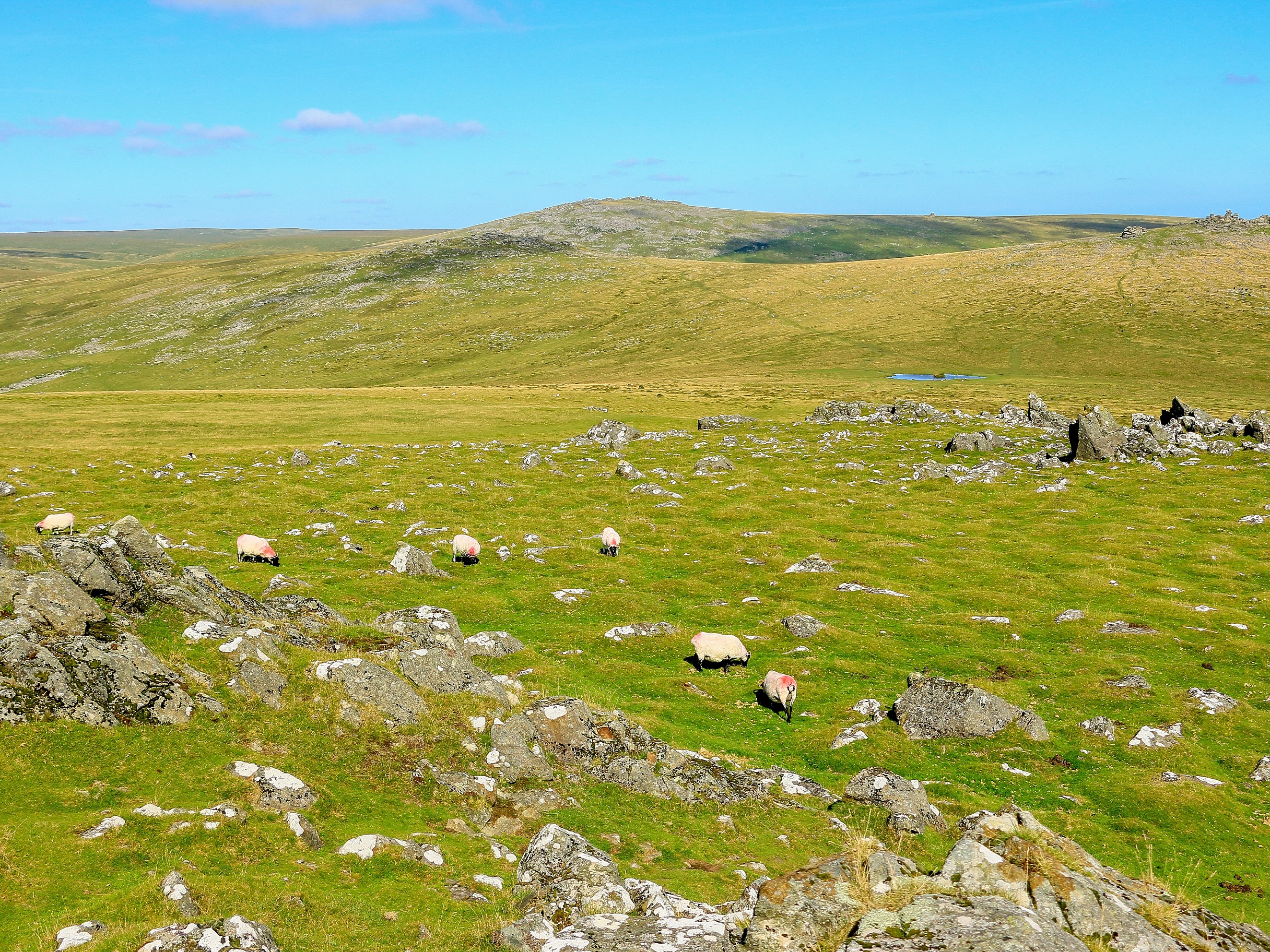








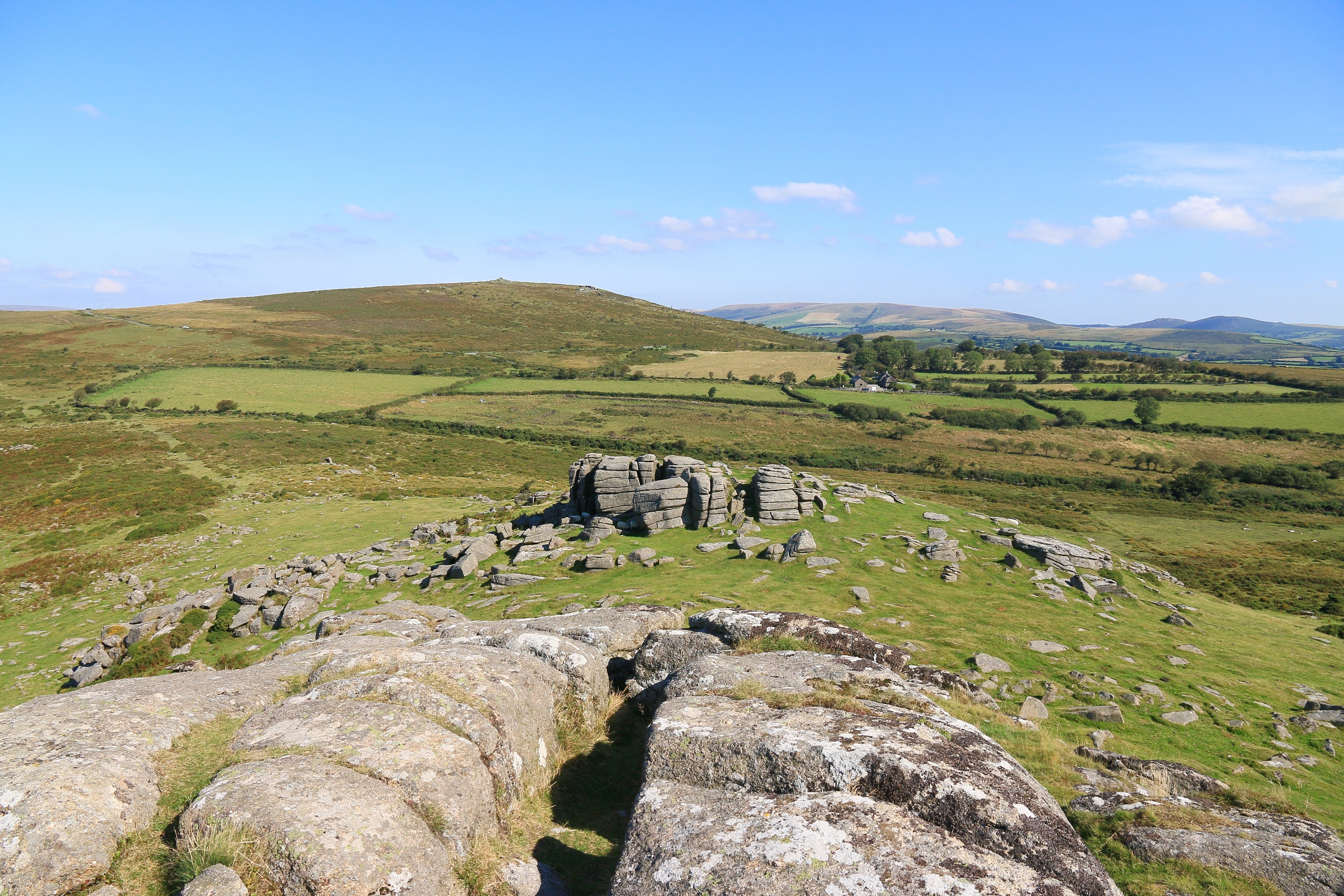
 On the road to Burrator, the sheep are out in force, arse sticking out into the tarmac, head tucked into a giant gorse bush, oblivious to the fact that there are two cars coming at opposite directions on a lane built for one. Further on, a few sheep mill about in the foot of Sheepstor, just so they can pose for clichéd photos and get in the way of cars trying to park. Better to get out on foot though, and take in a stretch of reservoir, country lane, farm and hamlet aesthetic, before climbing the wilder, granite strewn hill itself. It’s a route I’ve taken a few times now and strikes me as a wonderful bona fide welcome back to Devon.
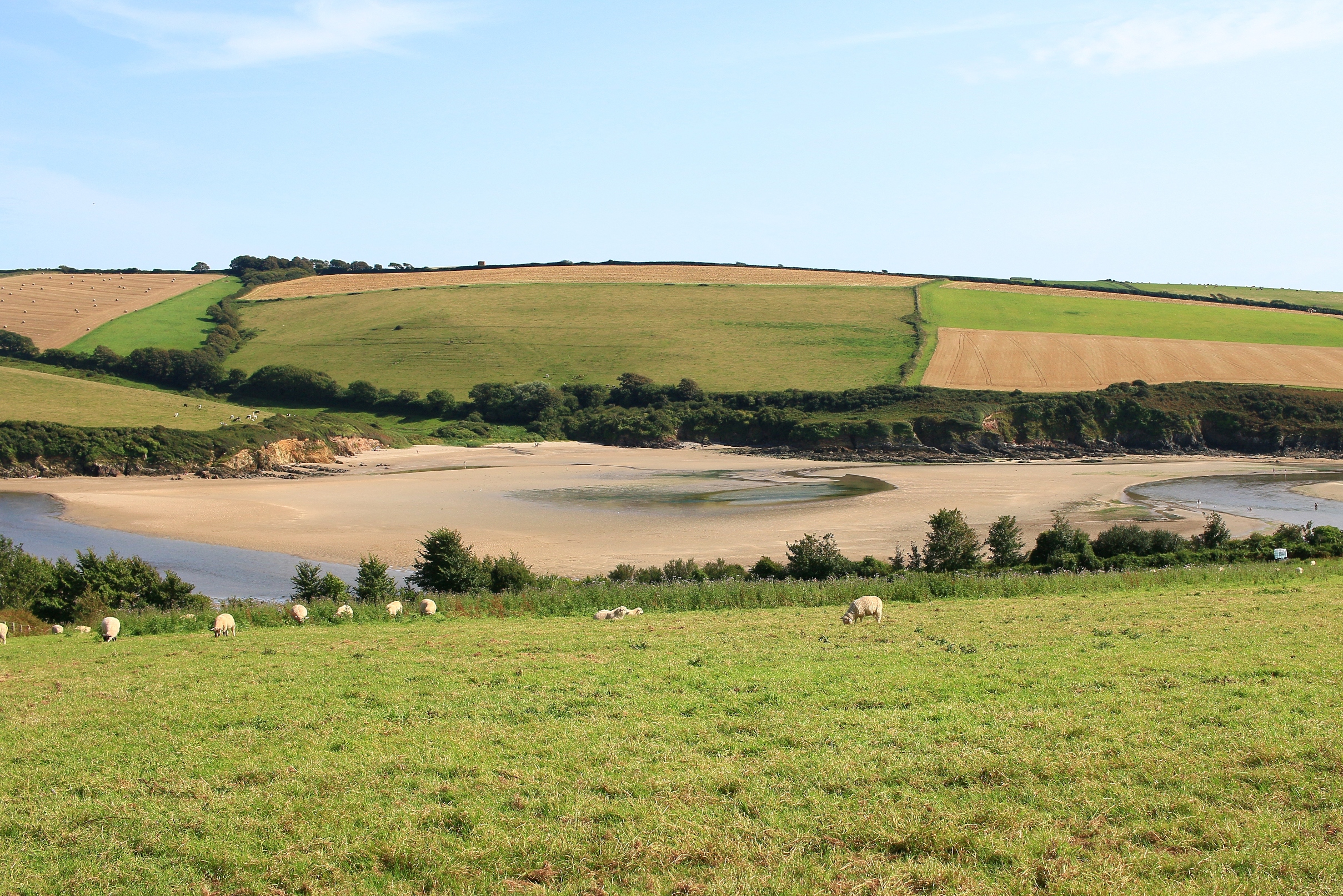
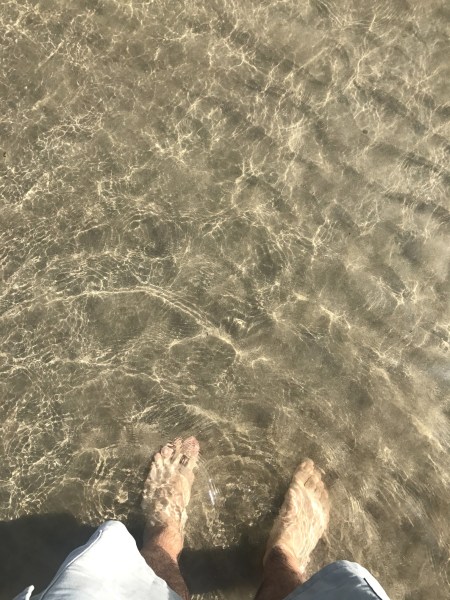 It really is in a delightful setting, Mothecombe; the tranquil shallows of the River Erme meandering out to sea, the sandy banks and rock pools revealed at low tide, the sheltered, undeveloped bay with gentle waves and translucent waters. Such appealing waters that people were in there swimming and I got the shock of my life when I put my own feet in. Not the usual, anticipated shock of oh my god what are they doing this is f*****g freezing, but a slight eyebrow raising oh this is actually tolerable for a bit up to ankle height I guess. No wonder the roads are so busy.
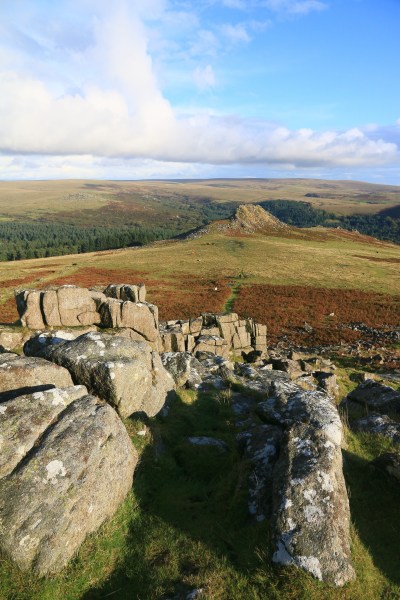 Following a day of showers merging into longer spells of rain I was keen to get outdoors when a longer spell of rain appeared to have passed leaving a few showers behind. I was in the habit of checking the weather radar by now, and took a bit of a gamble on a potential gap in the way things were tracking. Out around Sharpitor, as cloudbursts pummelled the Tamar Valley and a black doom sat unyielding beyond Princetown, some late sunshine pierced the skies and set the landscape aglow. Sheltering from the cold wind, I stood insignificant within expansive moorland and raggedy tors, alternately shining golden in sun or darkened by racing clouds. Barring the occasional car on the main road crossing the moor, it was just me and the sheep and a pony or two to witness it. I felt as though I had struck gold.
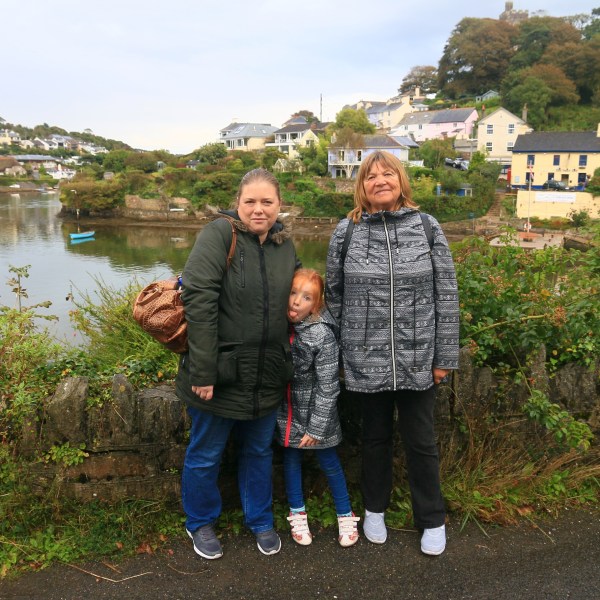 And you know what? In a turn of events that no good travel writer would ever make up, it pretty much stayed raining albeit with some slight easing off for about five minutes. Thankfully the Ship Inn had some funky outdoor pods to huddle together and drink hot chocolate in – think three quarters hamster ball in Teletubbie land – and with the tide being in (well checked, sir), the scene was not one of stinking tidal sludge. Indeed, it was rather serenely pretty under a comfort blanket of cloud.



















 gbpilgrim