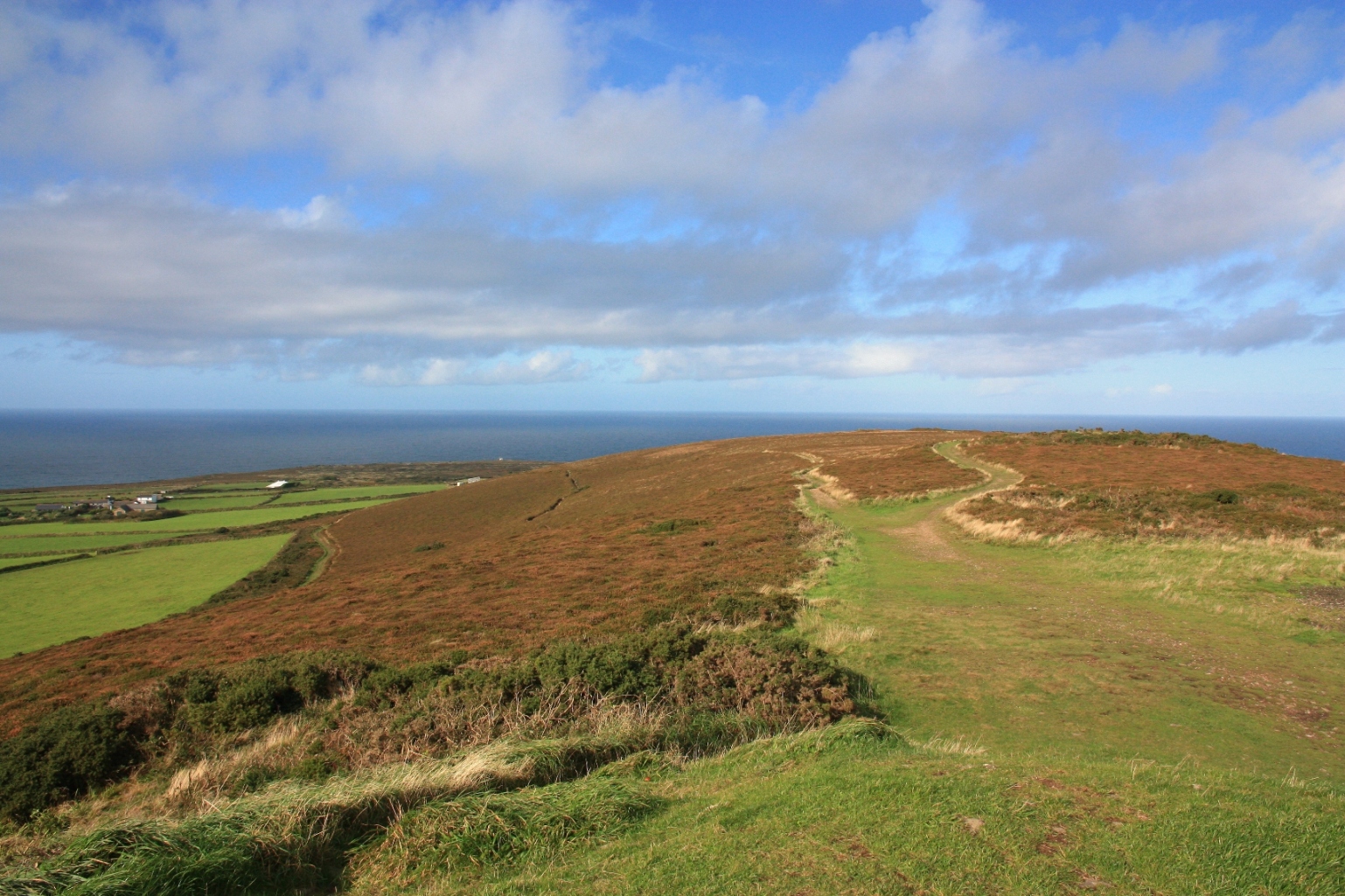
Just over the hills yet far away there is a landscape of sweeping upland plains, forested ridges and snaking river gorges. Wild Brumbies gallop gracefully across the grasslands or socialise under the shade of a clutch of gum trees. Kangaroos on a family outing peer up out of the golden tufts, looking fairly nonplussed about it all. Cockatoos predictably shriek and magpies chime sweet melodies. The skies are big and low and can almost be touched.

The Cooleman Plain is about 50 kilometres from downtown Canberra, as the cockatoo flies. For us humans with four decent and independently operating wheels, it takes about 200, detouring south to pass round the Brindabella Mountains. The ride is scenic heading down the length of Namadgi National Park. The border crossing into NSW is modest, marked more strikingly by a deterioration of road surface than anything else. And then the joy of tarmac in Adaminaby is only eclipsed by the sight of the Big Trout.
Other than a giant fibre glass trout there is not much to distract in Adaminaby, so you head promptly in what seems to be – finally – the right direction. Kiandra – an abandoned high country settlement spurred on by gold – sits bleak amongst boggy plains and barren ridges. There is a touch of upland England in the vista, that same sparse striking beauty available in the high parts of Dartmoor or the Peak District. But the gum trees tell you this is unmistakably Australia, as you head down into the sheltered green valley housing the Yarrongobilly Caves.
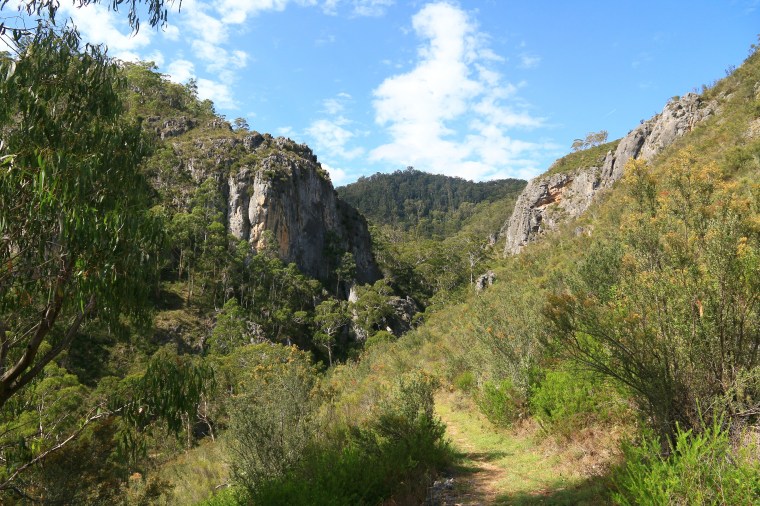
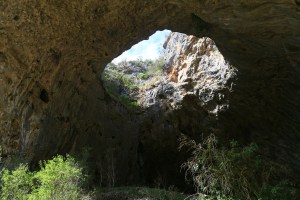 I have been here before, but that was almost ten years ago. Almost ten years, when I first arrived to live in Australia, intending to stay for a year! I couldn’t remember much of it, though the giant hole in the ceiling of one cave opening triggered something approaching recollection. But the river walk must have been new, at least for my feet, and the thermal pool – a steady 27 degrees all year – offered surprise and consideration for wintertime lolling.

Back up the chasm and across from Yarrangobilly, the upland plains stretch out north and east, interrupted occasionally by hilly islands of trees and the long barrier of the not-so-distant Brindabellas. I am heading towards Canberra again and almost expect to catch a glimpse of the needle tower on Black Mountain. But of course I don’t, the high peaks of Bimberi, Gingera and Ginini standing in the way. I have been up there, and it seems oh so close.
By now the day is moving towards an end and there is a wonderful aura in the light, filtering at an angle onto the grasses and gums of the Cooleman Plain. Keen to take a walk in this golden hour I follow the dirt road towards the remnants of Coolamine Homestead. There is no-one else around and I daresay the Brumbies are more attuned to seeing cars hurtling past than humans gently ambling. A couple seem protective, endlessly circling, snorting, staring me down in an effort to keep me away. I am wary but they allow me passage.

Coolamine Homestead is one of many that dot the highlands within and around Kosciuszko National Park. Practically all are now abandoned, the toil of work and life in such isolated and unforgiving climes proving too much to sustain. Coolamine is at least restored and, with this, promises a certain cosiness and tranquillity, at least on such a beautiful March evening as this. But you just know the winters will be harsh, the life lonely, the work unviable. Plus there is no mobile signal to be able to do anything whatsoever, a sad indictment of modernity that I resentfully find challenging now.
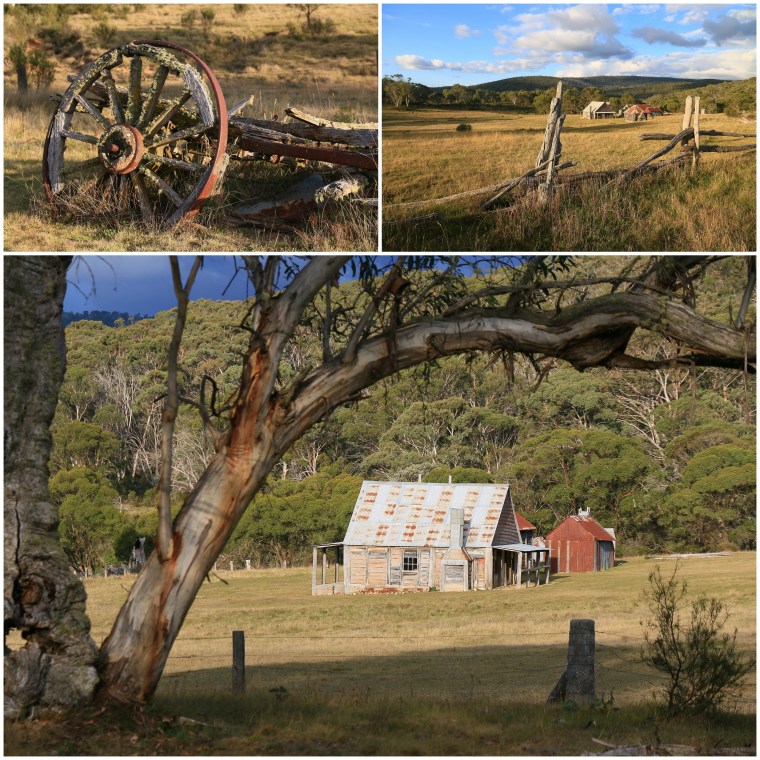
At nearby Cooleman Mountain I set up camp for the night without any signal, without any other people, without the comfort of civilisation. It is perhaps because of this that setting up mostly involves shifting things around in my car to accommodate a swag mattress. For some reason I don’t fancy sleeping outdoors – the remoteness, the impending chill, the inevitable, sopping morning dew. The cocoon of the car feels protective. I’m not entirely sure watching an episode of The Walking Dead on my laptop in the dark shell of my car in the middle of an empty forest without anyone else nearby is smart. But I do anyway, and no zombies bang on the window during a fitful night’s sleep.
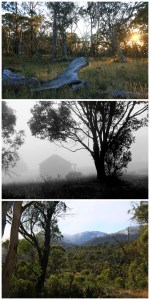 Age must be affecting me because I am questioning the sanity of camping, even if I have copped out by reverting to the back of the car. Every little thing requires pre-planning and organising, extra time and increased awkwardness. It is effectively homelessness, perhaps more so when you sleep in the car. But then, in the morning, as the misty murk of pre-dawn is dispersed by a welcoming sun, as the deathly still air fills with birdsong, as the wattle and grasses shimmer silver with dew, as you witness the birth of a new day a part of this nature, you know why you do it.
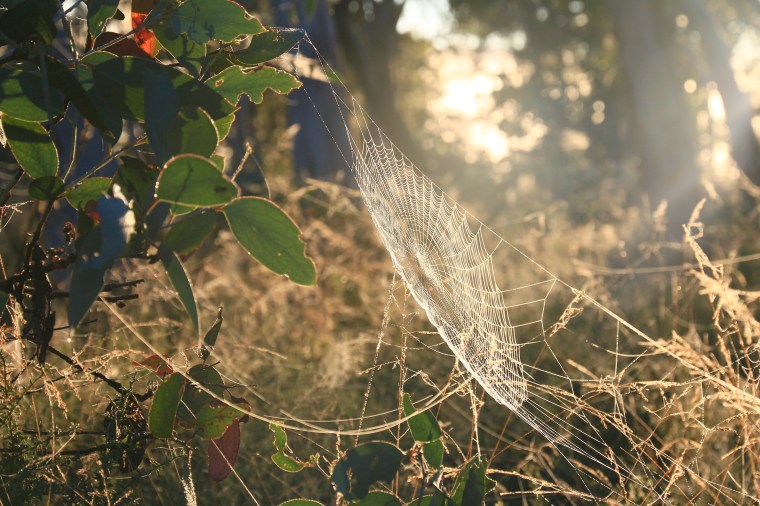
The pre-dawn murk took a little longer to clear down in the plain, and shifting my car back to the homestead required slow and steady navigation through the mist. Setting off from here by foot I resumed my journey along the dirt track towards Blue Waterholes. Ever closer to the ACT border, the mist quickly lifted to show off the backside of the Brindabellas and then, before them, the steep-sided river banks and gorges which filter water down to the very fish-friendly Goodradigbee.
 It is, in theory, possible to clamber your way to the Goodradigbee, but this seems almost as difficult as pronouncing it. Beyond the scenic Blue Waterholes (which enjoyed relative popularity and happy interaction with fellow humans), river crossings and the narrow pass of Clarke Gorge make it too much for someone who is already warm and weary, and has been told to beware of snakes in happy interactions with fellow humans.

Luckily, Nichols Gorge is more family friendly but I daresay unlikely to be any less suited to snakes. I didn’t see any in the end, which is surprising given the many heated rocks of the dry creek bed and the tumbling gorge walls. The walk is pleasant, though today it seems to drag a little. The surroundings certainly offer something distinctive: with a tinge of red and a few more eucalypts it could be within the cherished Flinders Ranges. Not just across the border from the ACT, tantalising close to views of the Black Mountain tower.

Of course, getting back to see the Black Mountain tower requires a three hour drive and, as I launch up from the gorge and back out onto the unprotected expanse of Cooleman Plain, I reward myself with a cheese-filled baguette, true mountain walking food. This will keep me going until Adaminaby, where I can pause and refresh with a giant trout. And that will nourish enough to rumble along the dirt, across the border and over the hills, back to a place not really very, very far away. At least as the cockatoo flies, or, indeed, as the Brumby gallops.












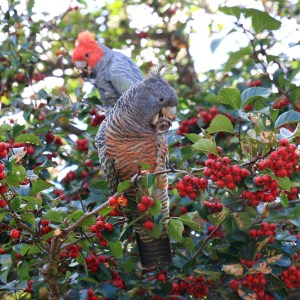 From what seemed to be shaping up to be a relatively mundane autumn – with lots of early browns and leaf losses noticeable – a week which turned from warmth and sunniness to a condition of damp mildness appeared to have fashioned a more elaborate state of affairs. And amongst this fading technicolour the birds lingered too. Foraging and flirting and feasting, the fruitful trees bedecked with gang-gangs.