The golden days

Is anyone else fed up of living in ‘interesting times’? If there wasn’t the death of a rock icon followed by the self-harm of isolationism followed by the election of a rabble-rousing orange manbaby preceding the onset of catastrophic bushfires coming just before the spread of a deadly virus leading into wild lockdown parties before another calamitous war broke out would things really have been that boring? It’s no wonder many people my age seem to hanker back to the 1990s, when the biggest deal was Jennifer Aniston’s hairdo.

If you are seeking uninteresting times, you could look no further than a long drive from Canberra to Coonamble and back, especially if this takes you through Dubbo. Admittedly that would make for some pretty uninspiring content, but there is comfort and reassurance to be had in the boring. I just don’t know how I will stay awake though, and it’s probably the same for you, dear reader, as well. So, in an effort to entertain all round, I contrived to make the journey into one big loop, extending the kilometres but exposing myself to some new tarmac – and dirt – along the way.

The first of the new ground was along blacktop through rugged Karst country, taking me from Abercrombie Caves down into the fertile plains around Bathurst. I could have detoured around Mount Panorama the right way while I was here, but time was pushing on and I was getting low on fuel. Stopping at a nearby servo offering the cheapest E10 for miles around, I became the proud owner of the most expensive tank of petrol I have ever bought. Until next week.

As the last glowing oranges and indigo hues of sky gave way to a starry night, I settled down for the evening in Sofala. By settling down I mean parking my car in a free camping area next to the Turon River, eating salad and cold pizza in the front seat, before clambering into the back and onto an air mattress. For a night of sweet cheesy dreams, eventually.

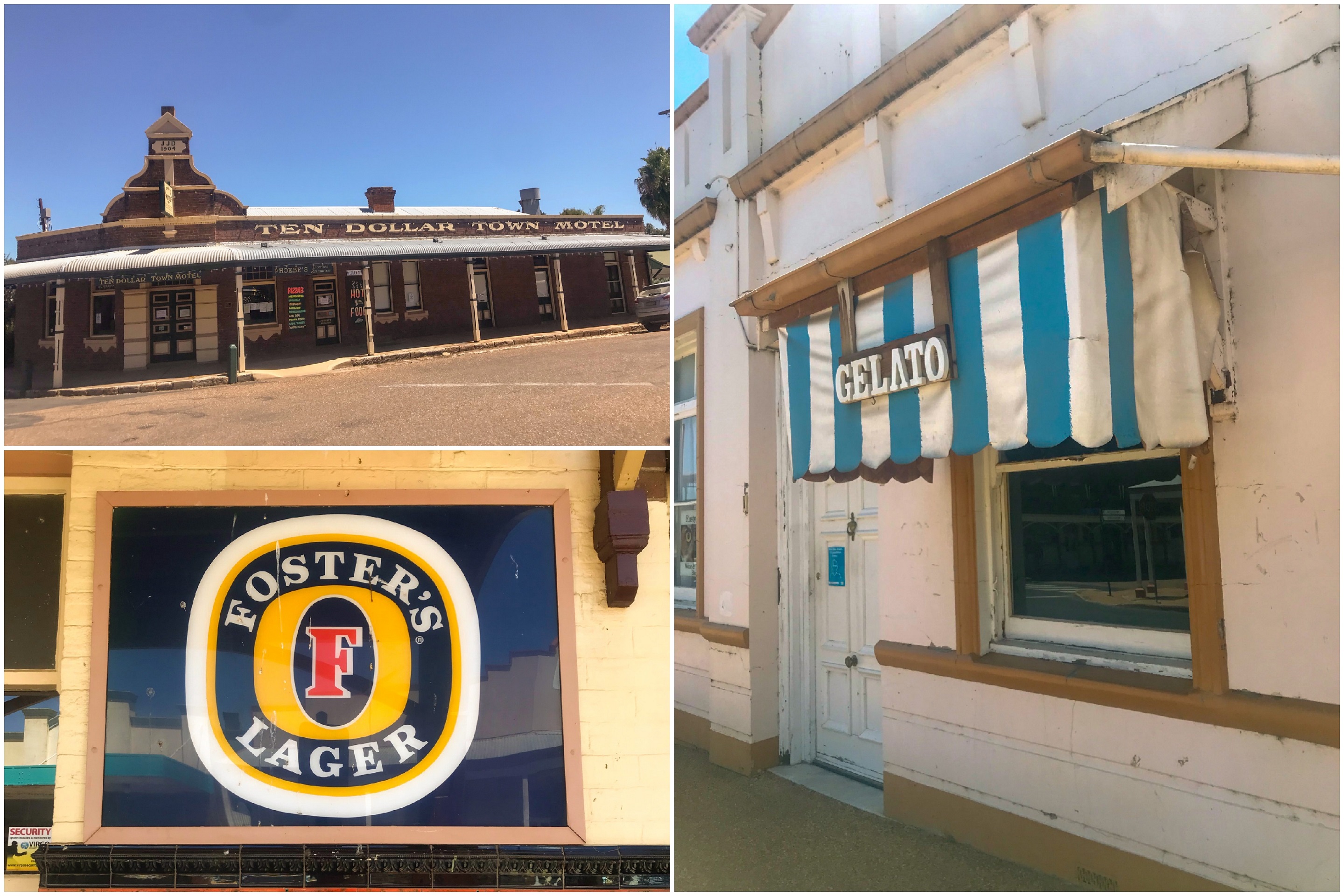
Sofala is one of those tiny places whose glory days have long passed. The glory days being – like many of the settlements in this region – the discovery of rich deposits of gold. Information boards display grainy black and white images and describe a bustling town featuring stage coaches and banks and theatres and, naturally, several raucous hostelries. Today, the high street is a sedate affair offering understated charm and just the one, currently lifeless pub.

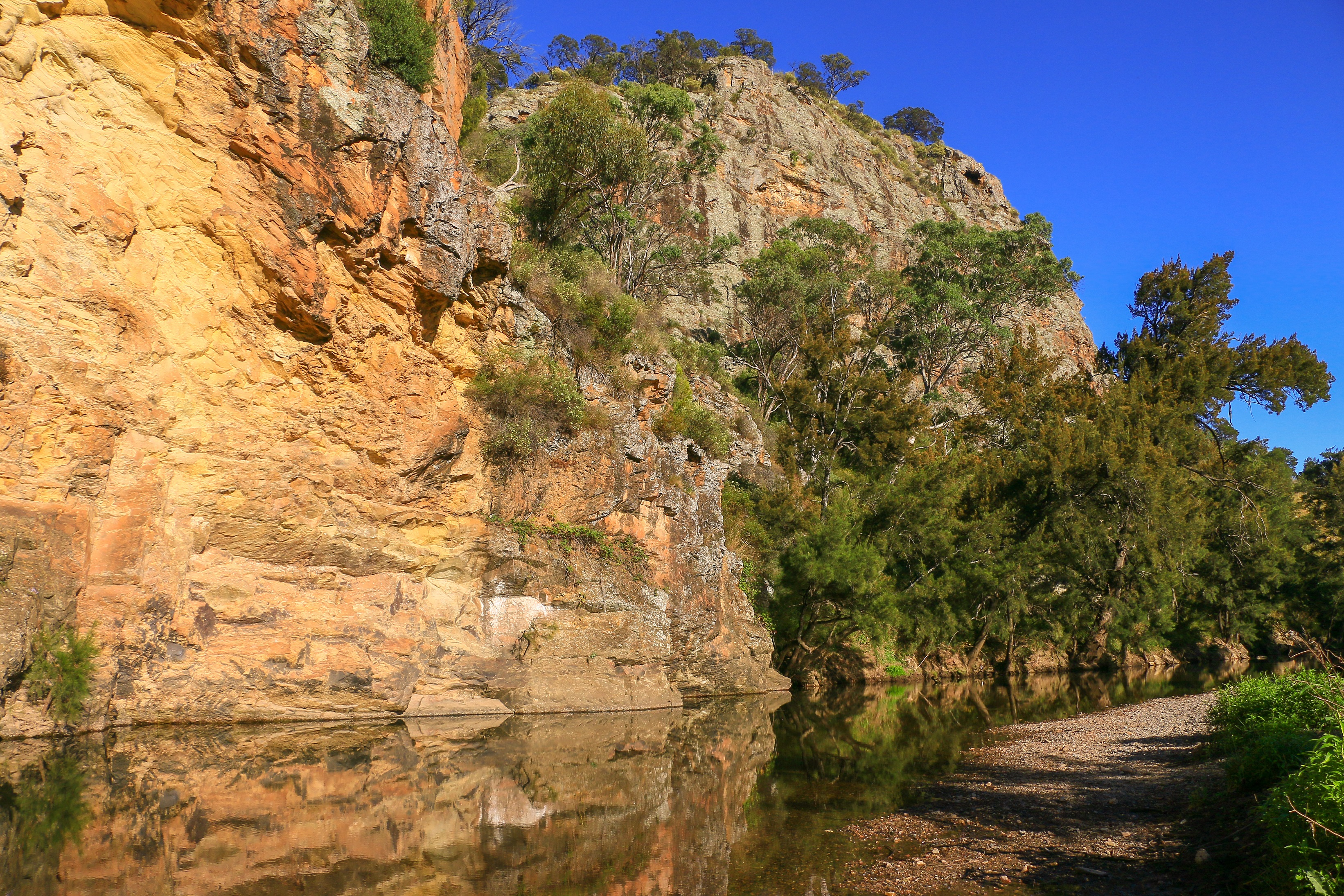
It turns out there is gold remaining just out of town, or at least the same glow emanating alongside the river. Water has scoured a course deep into the earth, leaving precipitous cliffs towering high above the mirrorlike pools of the Turon. Known locally as Wallaby Rocks (as indicated by a small, hand painted sign), this came as a total surprise, an interesting feature of an interesting drive that you wouldn’t have known about without passing this way.
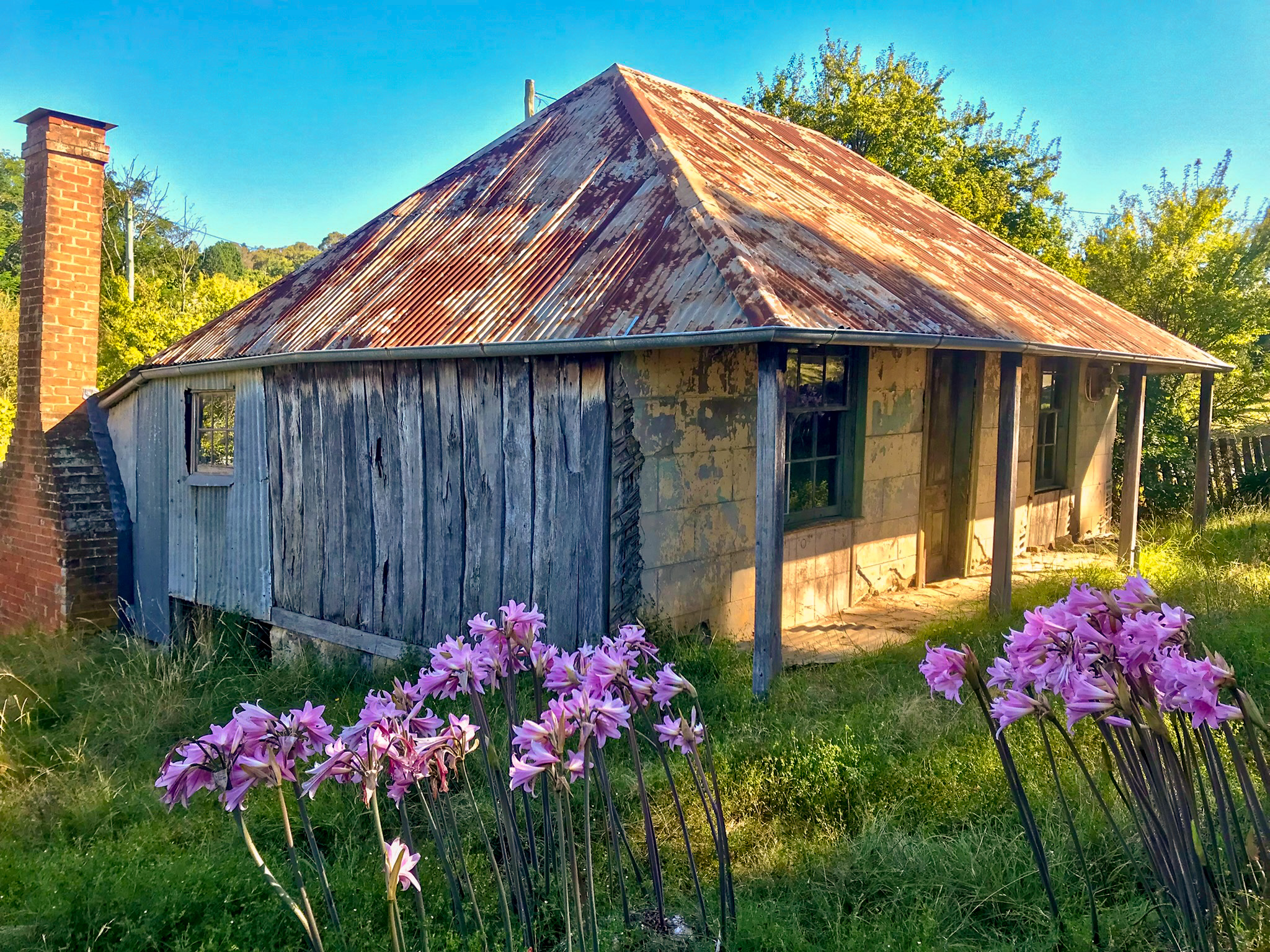
I was heading up towards Hill End, another settlement grown rich on the sunlight shimmer of minerals. Today it is preserved by NSW National Parks as a historic site, a village of the past functioning in the present. And so there is an old pub that still operates as a pub, a general store that still operates as a general store, and a scattering of private residences with owners doing the usual mowing and chook-feeding and sitting on creaky wooden verandas. I expected a more bustling affair here, but on a Friday morning it felt like I was the only visitor, a conspicuous sight wandering the streets and peering into people’s gardens.
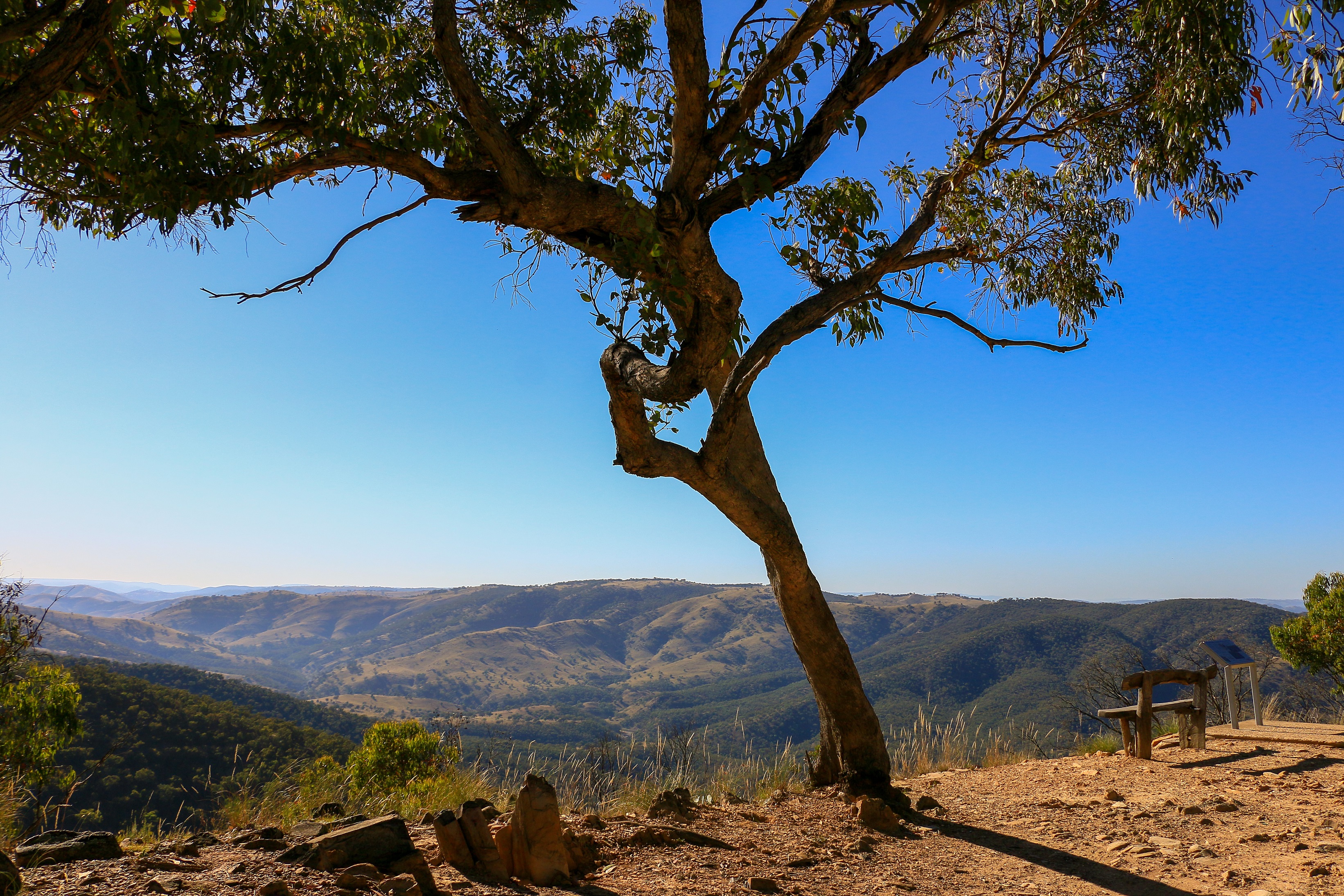
If nothing else, the village is aptly named, clustering at the end of a long plateau above the deep valley of that Turon River. This results in the promise of three separate lookouts and though not quite of a scale of – say – the Blue Mountains or Kosciuszko, they offered fine views of the golden, rolling countryside. Vistas that were, I suppose, somewhat interesting.

From Hill End I took a lengthy, winding road down towards Mudgee. This would be one of the more interesting towns along the route but cognisant of making progress north and noting the fact that I had stayed there before, I eschewed the town centre and made for lunch in Gulgong instead. The lunch would not be as fancy or as overpriced, but it was satisfying enough on a shady bench in a town that appeared to be rooted in the 1950s. Or maybe 80s. Golden times, whenever they were.
With every kilometre the level of interest along the road peters out, the landscape flattening and becoming dominated by grain. A painted silo at Dunedoo testifies to its abundance alongside the effort of these towns to generate some form of tourism through silo art. Further along at Mendooran there isn’t even a silo to justify stopping, but I stop anyway, grabbing a country coffee and slice of carrot cake to appease the bitterness of the coffee.

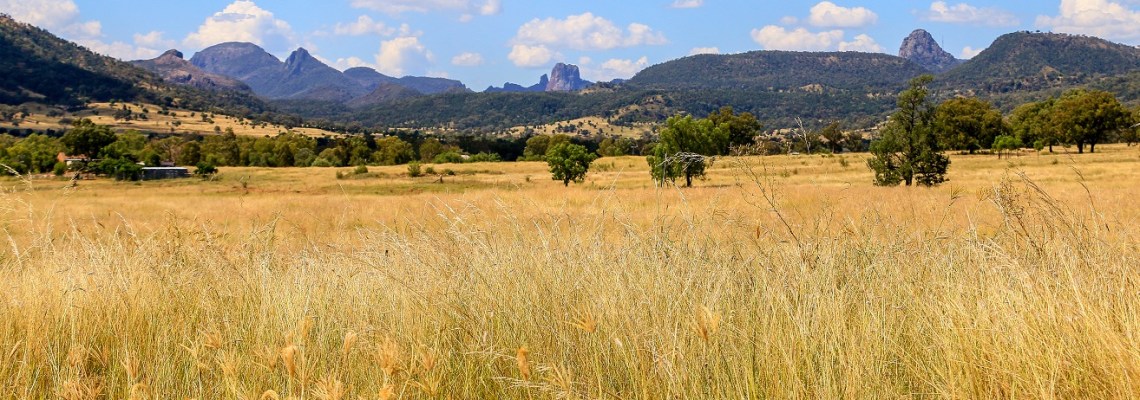
It is perhaps the plainness of these plains, today frazzled hot and windy, that makes the volcanic pinnacles and rugged chasms of Warrumbungle National Park all the more interesting. More than interesting in fact. Spectacular. I’ve said it before and I’ll say it again, I love this place and its very magnetism makes it impossible to drive on by. The view from Tooraweenah beseeches: come hither.
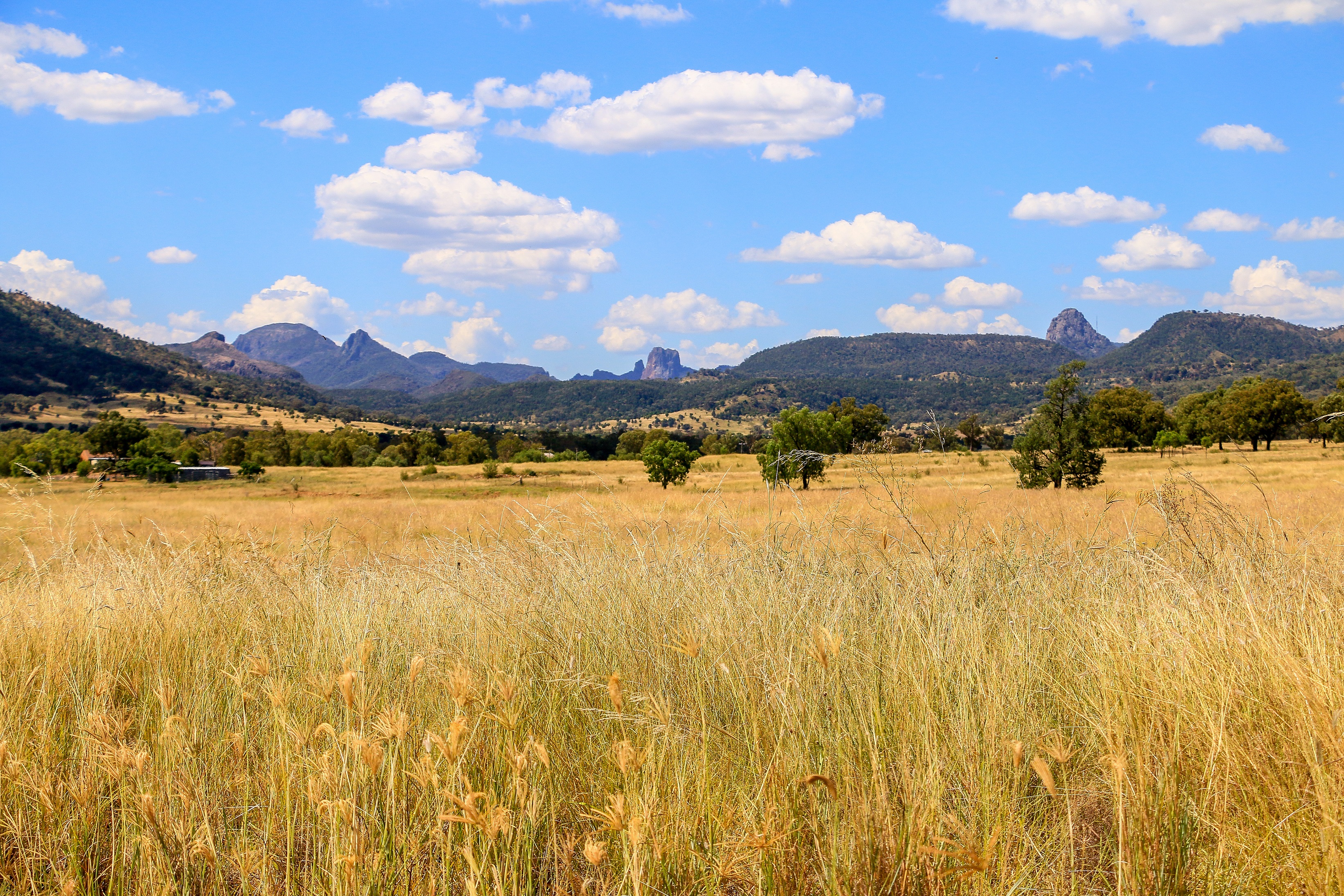
I should be making for dinner in Coonamble but cannot quite turn left. Sure it is thirty-five degrees, but the midday sun is well and truly a thing of the past and the return of trees to the landscape should offer some shade. Besides, I need to do something more interesting today, something other than largely sitting on my arse as Australia passes by. Climbing more than a thousands steps to Fans Horizon and marvelling in a conglomeration of sweat and awe at an incredible landscape is pretty interesting.

Prior experience of Warrumbungle National Park alerted me to the presence of showers in the campground, something I was thankful to use before completing the final leg to Coonamble. Last time I came here, the town had quite the aroma courtesy of the mouse plague. I didn’t want to be the one bringing that reminder to its townsfolk today. And be turned away for dinner.

And what a dinner, as always. The interest here is less Coonamble but more friendship and warmth and good food and loud voices and love. From twilight walks along the flat roads with my dear friend Norz, to tales of sand-blown motorbike adventures and potential pizza toppings with Howard. And then there is the joyous company of a two year old, one minute impelling me to drag race him in a plastic toy car, the next inventing the new sport of whisk tennis.

There are some mildly interesting things in Coonamble, including a painted silo, the nickname hall of fame, and the languid brown ribbon of the Castlereagh River. This time I discovered the weir, some new metal emus (competing with the Galahs of Gulargambone), an impromptu water park at the pub, and consumption of a different slice at the only café open on a Sunday. It’s not much, but it doesn’t matter.

There were some surprises remaining out of town, most notably the splendid Sculptures in the Scrub. Tucked away in The Pilliga, the setting was unexpected: a fine, forested gorge whose escarpment is punctuated by artistic installations of meaning and connection. I always thought of The Pilliga as one big flat sandy forest, a landscape of monotony that would imperil any who should veer off its dirt roads. Here, you can feel things which are rich and timeless.

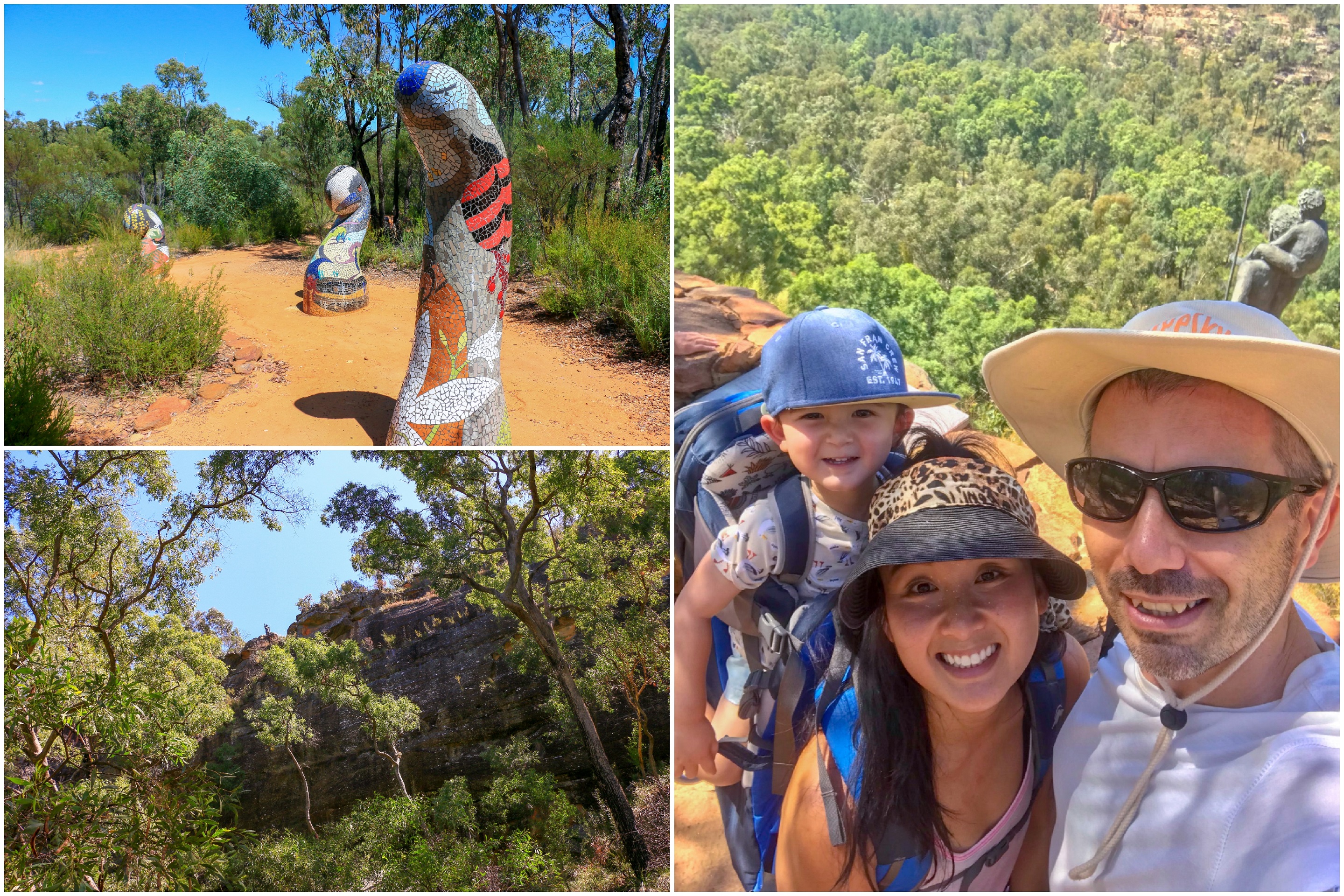
Just a stone’s throw away is Pilliga Pottery, but only if you’re a crow or galah. The generous rains of this summer meant the fording of a creek was out of the question, with further unknowns awaiting beyond. So, an hour and a half later, on mostly sealed road via Baradine and Coonabarabran, we were finally feasting on pizza and drinking out of earthenware cups. Another little enclave hidden in the woods, perfect to bunker down from the world.

Interestingly enough, in many ways the world was also here. The terracotta and tiled roofs and earthen walls evoked a late lunch in Spain, pre-siesta. The scattering of outbuildings and cars and rusted trinkets could be backwoods America. And then, as well as pizza on the menu, there was Bratwurst and Sauerkraut to be enjoyed. The reason became clear hearing staff converse in German, a multigenerational family thriving in The Pilliga. A veritable United Nations, without the veto power of a deluded kleptocracy.

And so, we return to those interesting times. Via Warren and Trangie and Forbes and Cowra and Murrumbateman and Moscow. With more time, Warren warrants greater exploration, particularly among the fringes of the reinvigorated Macquarie Marshes. Back in big sky grain country, Trangie may warrant a return purely for cake. I paused in Forbes for a late lunch, one of the last remaining towns of the Central West that I had yet to visit. This too had charm, elegant municipal buildings rising up among a town centre boasting a fifties Cadillac drive-in vibe. Elvis does live just up the road after all.

From Cowra the road is more familiar and home is on the horizon. Interest fades and thoughts turn from the rear-view mirror to what lays ahead. Hopefully avoiding the Highway to Hell.

Australia Driving Food & Drink Green Bogey Photography Walking

Gold rush

Compared with the mostly endless expanse of the Northern Territory and Western Australia, the southern state of Victoria is far more manageable to grasp. With its rolling green hills and web of country roads punctuated by amenable towns, it feels more familiar; cosy even. Don’t get me wrong, Victoria has some rugged and remote places and its share of foreboding bushland and bleak emptiness. But there’s usually a bakery and decent coffee stop within a 50 kilometre radius or less. Which I’m sure you’ll agree is very important indeed.

bendi01Landing at Tullamarine, Melbourne was grey and damp. It’s June, it’s Melbourne. I was about as surprised as I would be if the UK Conservative Party decided to dump everyone in the shit rather than get on with governing twice in the space of a year. The wind was strong, my crappy hire car was far from stable, but at least I was heading away from the clouds on the drive north to Bendigo.
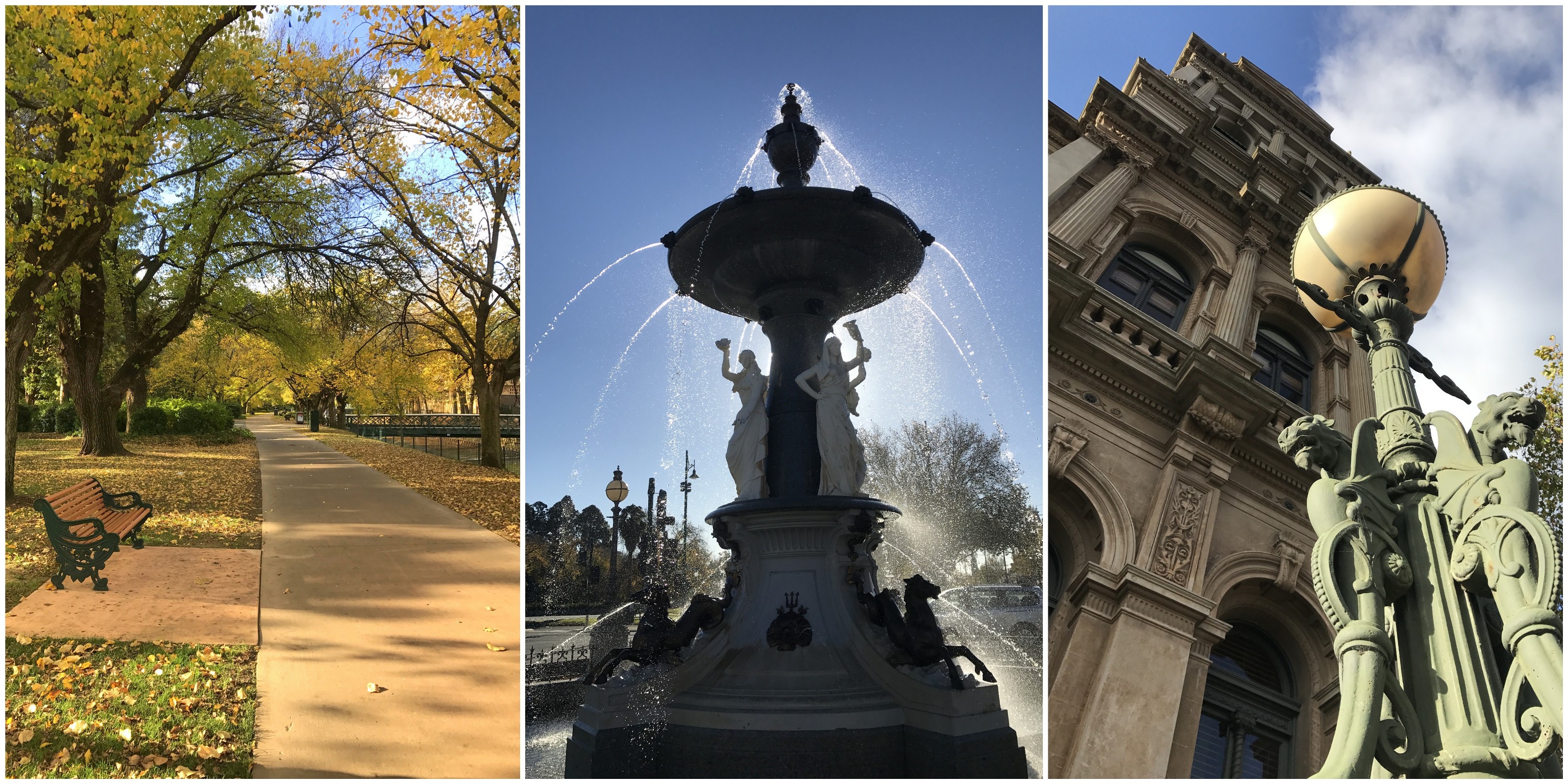
Bendigo is almost the archetypal Victorian regional town. It’s a decent size so you can have your fair share of Harvey Norman and Maccas. But it’s also one of a string of towns born from the gold rush of the 1850s. This means there is a legacy of grace and charm, funded by glimmering rocks and transformed into ornate Victorian buildings, elegant parklands, and pompous statues. With a prominent effigy of Queen Victoria it could be the Daily Mail’s utopia, but I think that does an injustice to the fine people of Bendigo, and the fact that they at least have moved on from the 1800s.

bendi02a

I was here for work, but one of the advantages of having a work appointment in a cafe was the ready availability of cakeage. With an hour or so in between appointments, I walked a little bit off exploring the centre of town and parklands, discovering remnants of autumn, embellishments in iron and stone, and opulent fountains inducing the urgency to seek relief. I also came across a tower on a hill which, naturally, I had to climb for the view. With the rather prominent spire of the Catholic Cathedral punctuating the air and an array of functional buildings interspersed with green, I figured I could be in Exeter or something. Only without the knobbers.

bendi04

The next day I had the drive back to the airport to look forward to, squeezing in a decent breakfast and coffee courtesy of proximity to Melbourne. With a little time to spare, I returned via a network of country roads rather than the freeway, which was heavily populated with end of financial year traffic cones.

In keeping with recent reminisces from 2013, I paused briefly at the village of Maldon, which is somewhat cutesy and somewhat boasting an oversupply of antique shops and useless trinkets for a place of its size. It looks like the type of high street that should have a good bakery, but I didn’t really find one, so pushed on to Castlemaine, which had a bakery but this didn’t look particularly inspiring. Still, the coffee was getting even better as the number of kilometres from Melbourne decreased.

bendi06

Veering off the main road to head up to the top of Mount Macedon, I paused in Woodend, which had a bakery that looked more the kind of thing I was after. I mean, it was called a bakehouse for goodness sake, which is something that every fine Victorian should celebrate. I purchased an overpriced wrap and inevitable caramel slice, one of which I ate rapidly at the top of the hill, the other gorged on the flight home.  The wrap fulfilled a functional purpose, the slice an emotional one.

bendi07Anyway, such have been my ramblings in Victoria over the years I wasn’t actually sure if I had been to the top of Mount Macedon before. It turns out that I hadn’t, unless I really don’t remember the upward crawl into roads lined with ever more spindly and pathetic-looking gum trees, the view of expansive plains below and a giant golden cross constructed to appease the wrath of the almighty.

bendi08It was chilly up here, but I knew I was on my way back to Canberra so it wasn’t going to get any better. And for the second time in succession, my dawdling was beginning to make it touch and go that I would make my flight. Maybe I’ll learn, or maybe I’ll just nudge a little over the speed limit and swear at every idiot who dares to pull out at a roundabout and get in my way. It seems to work, and so this gold rush came to a successful frenetic end, antidote to the sedate charm of Victorian Victoria.

Australia Driving Food & Drink Green Bogey

March

March strikes me as a celebratory month. Events include the wedding anniversary of my mum and stepdad, for instance, which tends to slip my mind without fail every year. Likewise, Mother’s Day, which may or may not happen at some point in certain countries. With similar vagueness, Easter might eventuate in March, but this is contingent on some advanced algebraic calculation based on a factor of the day when Jesus rose up to make pancakes on the moon or something. Elsewhere, at the start of the month in Wales, people get all excited about leeks on cheese on toast, drink Brains, and break out in hearty song about Saint Dafydd. Meanwhile, unbeknownst to the rest of Australia (and thus of course the world), the natives of its capital gather to commemorate the city’s founding by promptly and unapologetically fleeing to the coast. There is clearly much to celebrate.

Mar01The biggest cause for chirpiness however – specifically in the northern hemisphere – is the symbolic termination of winter. Sure, it may still rain curtains of icy drizzle from time to time, but it can do so safe in the knowledge that the worse is behind us. Evenings suddenly seem to stretch for longer; the sun, when it can be persuaded to appear, resonates a faint whiff of warmth; daffodils – that most blessed portent of a new season – glow as proudly as a Welshman once did at Cardiff Arms Park. Promise pervades the air.

There is a particular day in March – let’s say the 19th – in which seasonality gets a little carried away with itself. The temperature might reach something freakish like 18°C. The wind temporarily vanishes, leaving the rays of the sun untempered to shower upon beaming faces. A national mood change is palpable as families picnic in parks, people spill out of London pubs short-sleeved, and the first whimpers of charcoal smoke rise from over the neighbour’s fence, ruining the washing on the line that can finally dry properly for the first time since September.

There is ,of course, a wickedness to this day. It is as though a dose of paradise has been granted that will not appear again until at least May, if not July. The irresistible inclemency of an Atlantic front is never too far away and the return to what passes for normalcy leaves you wondering whether yesterday was a dream. Instead, the season builds more subtly, like a light’s dimmer switch being incrementally dialled up as opposed to the classical on and off again manner. But at least March represents a time when someone’s hand is on that dimmer switch, and anticipation about whether the bulb will eventually glow at sixty or a hundred watts is almost as overwhelming as a confused metaphor about electrical illumination.

I would struggle without seasonality. I may be in a minority, given the population growth of the Gold Coast and the increase in beachside Pilates taking place during southern Spanish winters. Here, a quite remarkable assortment of fossils can be spotted, bedecked in sun visors, creaking and contorting in slow motion like a troupe of jaded CP3Os, as if worn down from another hackneyed yet money-spinning outing. Leathery limbs reach tentatively to the skies, embracing the sun that seems forever warm and almost always present. The people here may never wear trousers, or coats, or enclosed shoes ever again. And while it may seem like some fanciful paradise to wake up to blue skies every day, to never feel cold, would it not also eventually feel remorsefully dull, remarkably uneventful, entirely, tediously predictable?

This, I believe, is one of the more common complaints from UK migrants to certain parts of Australia. I’ve seen it on those daytime TV shows – Get a Life Down Under, I’m a Celebrity Get Me Out of Here, Escape to the Country (Just Don’t Come by Boat or You Will End Up in a Concentration Camp on an Impoverished, Mosquito-Infested Island), etc, etc. To some of the locals, such comments just seem to reinforce a lovingly-embraced stereotype related to whinging. But I get it, even though I would try to make the most of endless days of fair weather myself. There is glumness in Britishness – fostered over millennia, permeated by the weather, resolute in the character – that cannot easily be discarded. It is not a bad thing, predominantly because we are skilled at making light of it (indeed, this is something to be celebrated). And, I think, it nurtures appreciation and satisfaction in the simplest of things, such as the emergence of a snowdrop from the earth in early spring [i].

I guess what I am saying, what I am typing, is that March can be so exhilarating in Britain because of what you have been through to get there. Yes, much like the proverbial rollercoaster or, more aptly, the Northern Line, dawdling through what seems an endless toxic darkness to finally emerge into the light and airy park-side setting of East Finchley. Spring and summer, or Woodside Park and High Barnet, lay ahead. And while these will often end up being more disappointing than hoped-for, in March the anticipation is still there, yet to be dashed by John Ketley.

Australia is in many ways a different proposition. The sheer size and variability in the weather means that March could herald heatwaves, cyclones, snowfalls, floods, dust storms, mist patches, and cascades of quokkas and numbats. In small pockets – such as the south east corner with which I am most familiar – there is a parallel cooling and drawing in of nights, and the first vestiges of a prolonged autumn appear. Though there may be some sombreness that summer is on the wane, there is little of the dread associated with a forthcoming northern winter. Partly that’s a result of days that can still exceed thirty degrees but mostly milder, more amiable conditions as a whole. This is the start of a golden period, when pleasant, blue-sky days and refreshing nights stack up one after the other and seem to stretch on into May.

Of course, I write this safe in the knowledge (or 97% confident) that climate change could totally wreck everything I am going on about. Stormy Marches and hot Marches and cyclonic Marches or even snowy Marches could become the new norm. Do I have evidence for this? Well, no, but that doesn’t stop climate sceptics receiving a sycophantic front page diatribe in certain national media, so no harm in including a few words on an obscure blog. While we may (only part) jokingly embrace climate change if it means we can wear union jack shorts in Southend in March, it would be a shame to lose that which is special about the seasonality it offers. Otherwise we’ll just be as bad as the Gold Coast.

I can accept hot days in early March, but it was nearing month’s end in 2013 when myself and a friend decided to persevere with the preparation of bangers and mash during a 38 degree northerly on the southern extremity of the Australian mainland. It is probably one of the biggest collective regrets we have from a three month trip across Australia. Just what were we thinking?! I guess in the joy of food planning and supermarket shopping a few days in advance we didn’t anticipate such furnace-like conditions. Plus we had packed a potato masher as something of a luxury item, so were eager to use it on any possible occasion.

Mar02

The setting was Tidal River, a sprawling campground complex within Wilsons Promontory National Park. It’s popular with Melburnians and wombats, both of whom were in profusion. The wombats were engaged in a faux cultural conversation about the ethics of rainforest regurgitated coffee beans, while the Melburnians contentedly chomped away on the grass and shitted square bricks. The day had passed with the sight and smell of smoke from the lower Strzelecki Ranges, and a coming-close-to-mild-dehydration tramp up to Vereker Outlook. Relief of a kind came from the beautiful white bays and clear waters of the coastline, though even here the brilliance of the sand glared with a resonant heat. General fatigue was high, and the struggle to boil potatoes on a portable gas stove in a strong northerly beside the sea was only made more pleasurable by the numerous flies clearly determined to explore the nasal cavity. This was not quite the idyllic March that I had come to know and love.

Mar03Needless to say, a week later I was freezing my butt off in another Victorian national park, desperately lighting a pile of twigs to ward off the chance of hypothermia. In the golden goldfields around Castlemaine and Bendigo, Creswick and Ballarat, the effect of March was bearing fruit. Planted to gentrify the antiquated avenues and make Englanders feel partly at home, the oaks and elms, beech and poplars, were busy transitioning into autumn shades. The spa town of Daylesford was made for this time of year, its lake happily reflective and the Victorian Victorian streets lined with large-leaved trees that seem to be excited by the end of summer. A refuge for Masterchef cast-offs, there was no doubting that the pork roasted to succulence in a charming old pub was several hundred times better, and a thousand more fitting, than the bangers and mash of past.

Thus, climate change pending, there is much to celebrate about March whether north or south. I am pleased to say that as I write this in Canberra, the sun is shining, it is a predictable 25 degrees and the forecast is set fair. Spring may be yet to truly spring in the UK, but there is an inevitability that it will come. Soon. Two weeks and there may be a freak warm day coming up, so stock up on charcoal before the supermarkets sell out, and beware of white van man with his top inexplicably off. Above all, cherish this most pivotal of months which signifies the start of something new. Love the seasons, and all the incremental change that they deliver. Otherwise, head to the Gold Coast or Lanzarote and dwell in temperate predictability, never to wear long pants ever, ever again.


[i] In making a sweeping generalisation about national character I should caveat: there will still inevitably be a handful of tiresome, grouchy narks who hate the sound of children’s laughter and lament the daffodils emerging on the median strip because they might provide a place for immigrant burglars to hide and spread Ebola. The good thing is everyone else will take the piss out of them. Apart from desperate politicians who seem to focus endlessly on wooing their vote.

12 Months Australia Europe