Trailing

Something didn’t sit right with me. Trying to get to sleep in a single bed on creaking, turn-of-the-century floorboards. Below, a bar serving the last of the whooping and hollering, the cackling shriek of a drunk Australian lady all the more painful when you know you need rest. Mind ticking over like the cycle of a misaligned wheel.

The remnants of merriment below had cowboy vibes. With Gucci trimmings. Equally at home in Fortitude Valley as downtown Linville, partying like they are 1999. On a night in 2023 when Australia received what to me at least felt a simple, unremarkable request from a broad representation of its first peoples for them to actually matter and said “yeah nah we’re alright thanks”. Whooping and hollering – as innocent as it may have been – struck a dissonant chord. And I edged closer to sleep with doubts about what it meant to be crossing country the next day.

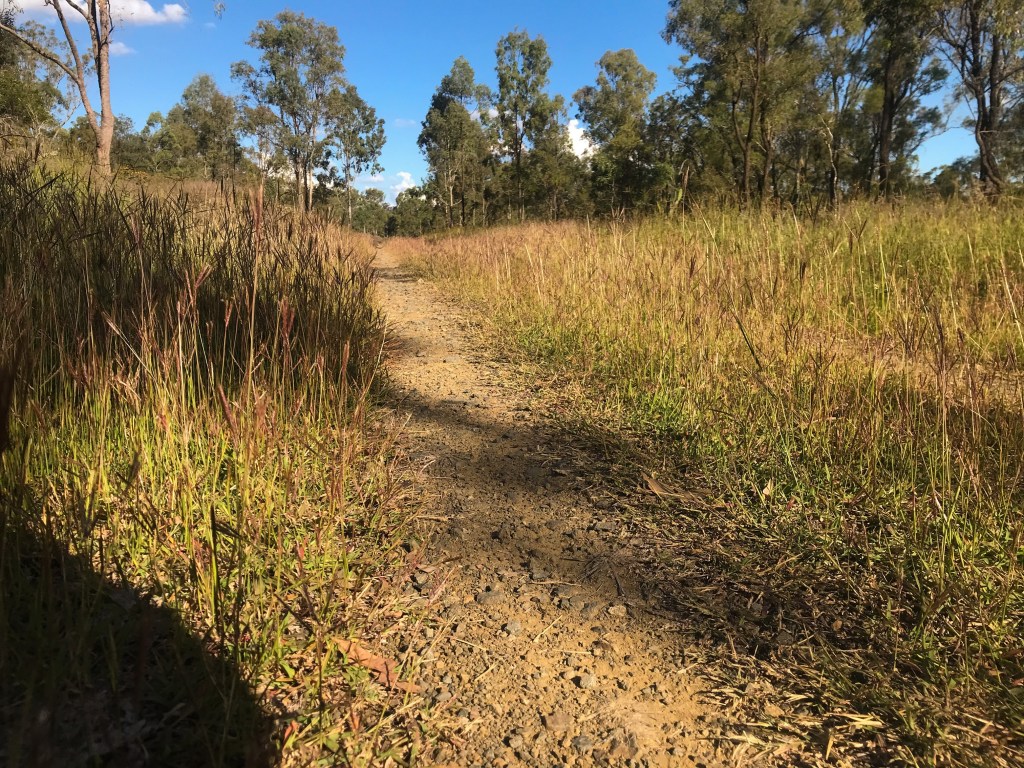
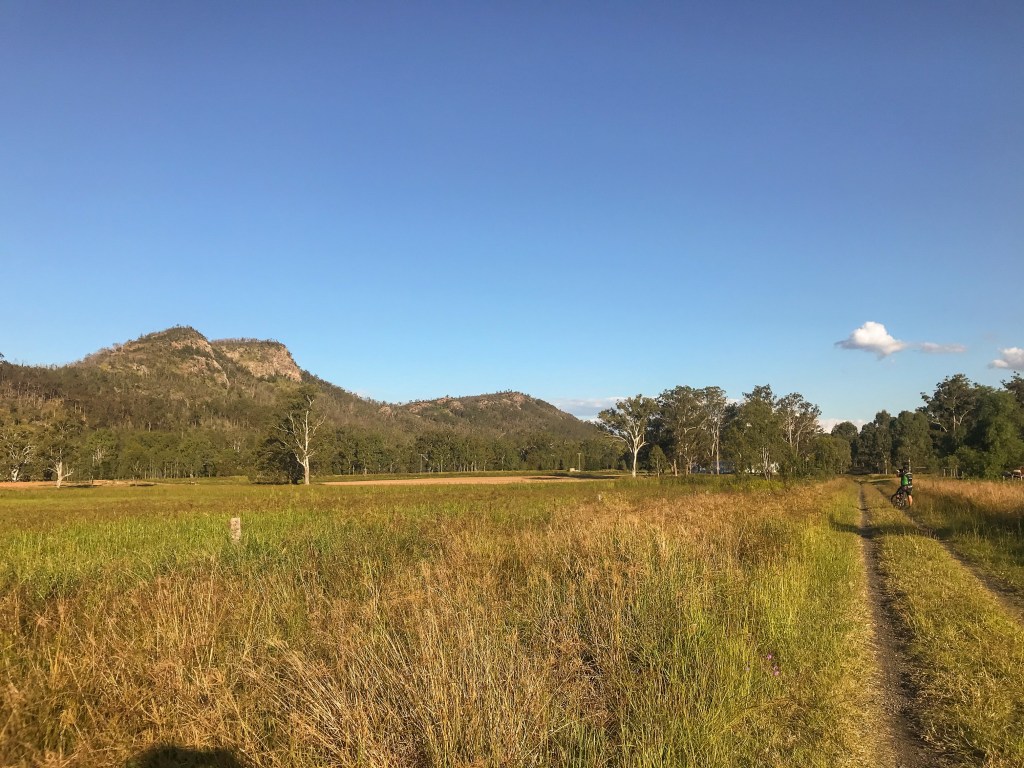
The Brisbane Valley Rail Trail (Part II) traverses Waka Waka Country and Yuggera Country – or at least I think as much based on the little I can glean from local council pages. Today proclaimed as the longest continual recreational trail in Australia (if not the southern hemisphere), it intermittently welcomes people on bikes and horses and feet to roughly follow the course of a disused railway line from Yarraman – deep in the electorate of Maranoa – to the fringes of Ipswich. A manifestation of intrusion and industry and inevitable decline once quick riches had been cut down, torn, eradicated and washed from the earth.

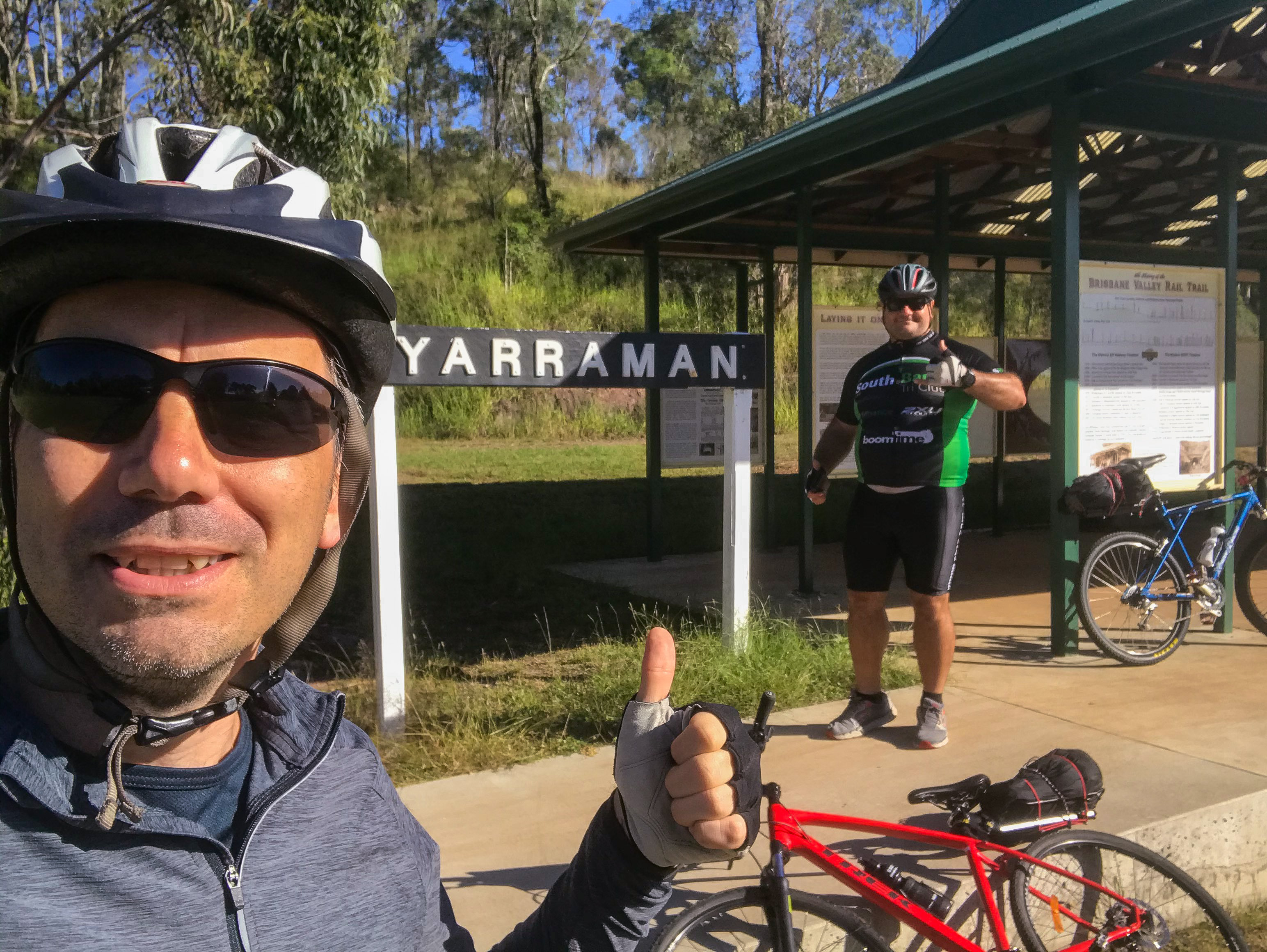
In a sign of hope and rejuvenation the old rail line is now transformed into a place where people can come together on a shared journey, even if some of the newer locals remain deeply conspiratorial. Avid readers may realise this is my second time along it (and with my back now going through all sorts of agony it’ll probably be the last). From a pair of lone rangers we doubled in size as a group of four. Not quite MAMILS but only really lacking the Lycra. Starting off on brand by getting confused over where to start.

In many ways the first 20 kilometres is the hardest, adjusting to seats and handlebars and pedals and pace and the actual realisation of exercise. Things are a little undulating and already hot, and the approach to Blackbutt seems to drag on forever. But eventually bakery rejuvenation occurs, some tuning and top ups ensue, and we are full steam ahead.

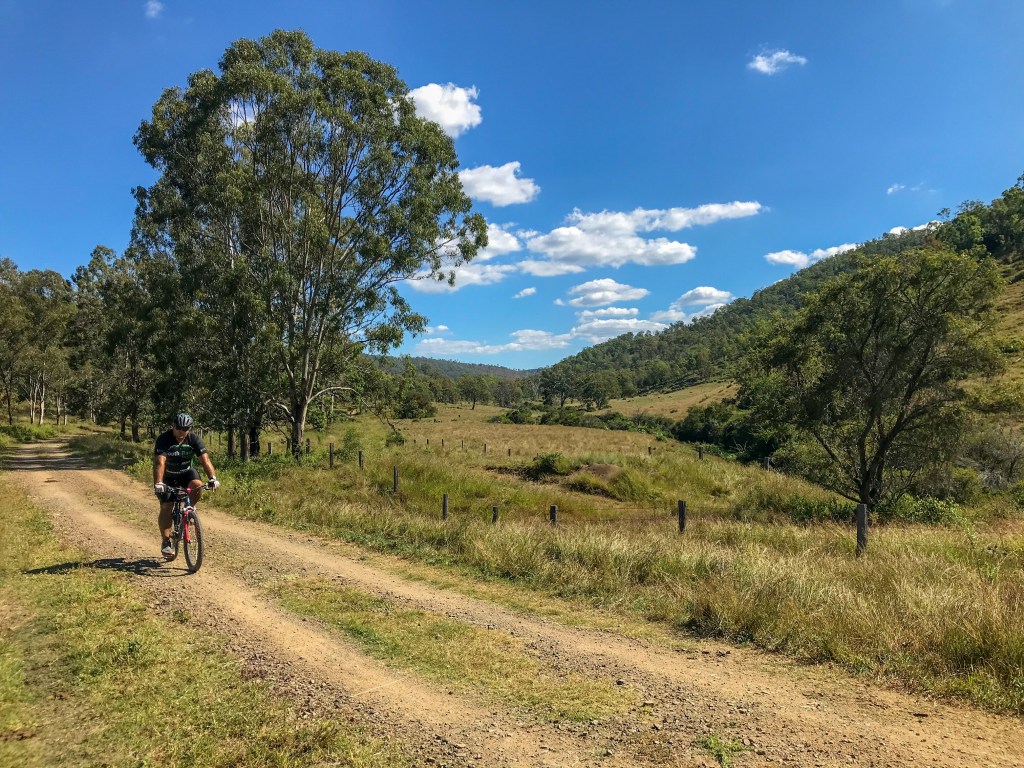
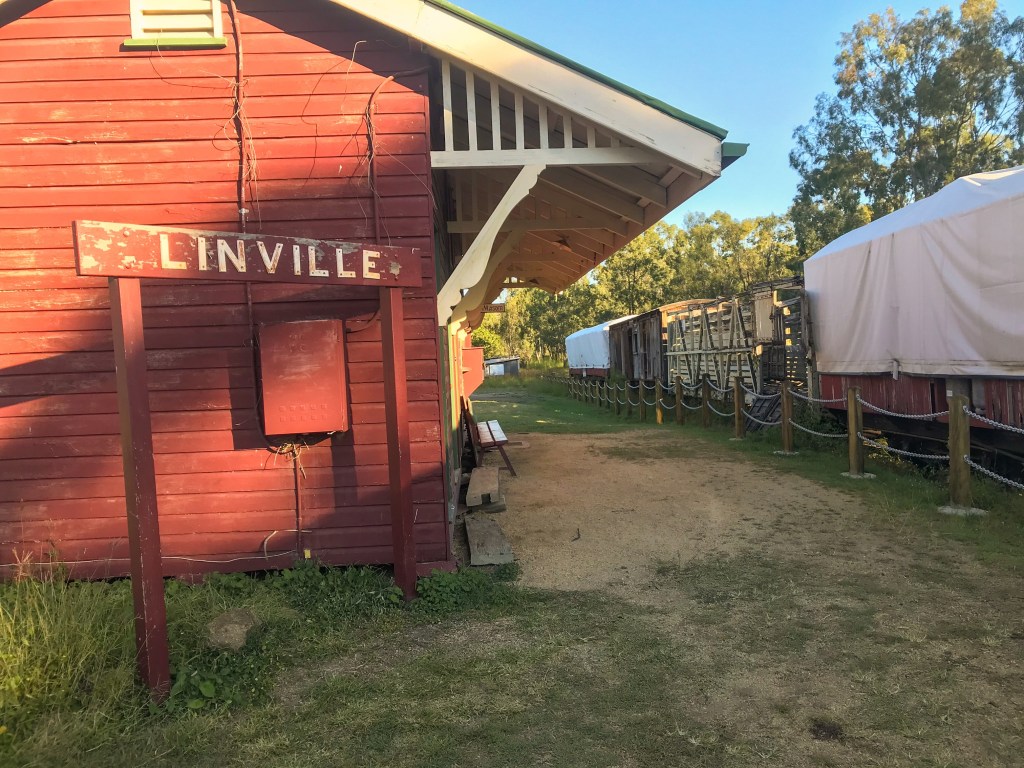
The run to Linville is mostly bliss if a little jarring in places. Forest creeps in on both sides and the gradient works in your favour too. The breeze of momentum keeps you cool and a slice from Blackbutt survives well enough to sugar-rush the journey east. Beaming white in the afternoon sun, the Linville Hotel is a very beacon of balustrades and cold beer. The store next door a welcome purveyor of ice cream.

After a little recovery, day all too soon turns into night because Queensland doesn’t bother with daylight saving (probably because it is seen as another way the government are trying to control you with 5G vaccines or whatever). As much as I try, I cannot find the ideal beer to accompany a local steak and a background band mostly playing the entire catalogue of Crowded House. Only at the end, as encore way past their bedtime, do they strike up Farnham’s Voice. I cannot tell if this is a brave call, a lost opportunity, or a musical smirk.

Linville is in a pretty position among rugged hills, folded and contorted and topped with natural Australiana. Just beyond a few of the folds you’ll find Kilcoy, where in 1842 flour was laced with strychnine and given to a large group of Aboriginal people by two shepherds at a squatters station. Reports – like many of the time – are vague and swept under the carpet. At least sixty Aboriginal people were killed. A death pudding massacre.

I share this clearly not for entertainment or as a segue into some cycling incident but merely to share it, to acknowledge and make it known. I had no idea, freewheeling downhill, what happened among those hills until I got back home and decided to look into the Aboriginal origins and history of the country I had just crossed. Where the squatters came first, farms and forestry followed, towns and people sprung up and eventually a rail line was constructed. Large swathes of land were stripped of trees, including the unique Bunya Pine, which only now exists in small pockets to the west. Worse, the land was largely stripped of its inhabitants, sent to missions if not a fate more terminal.

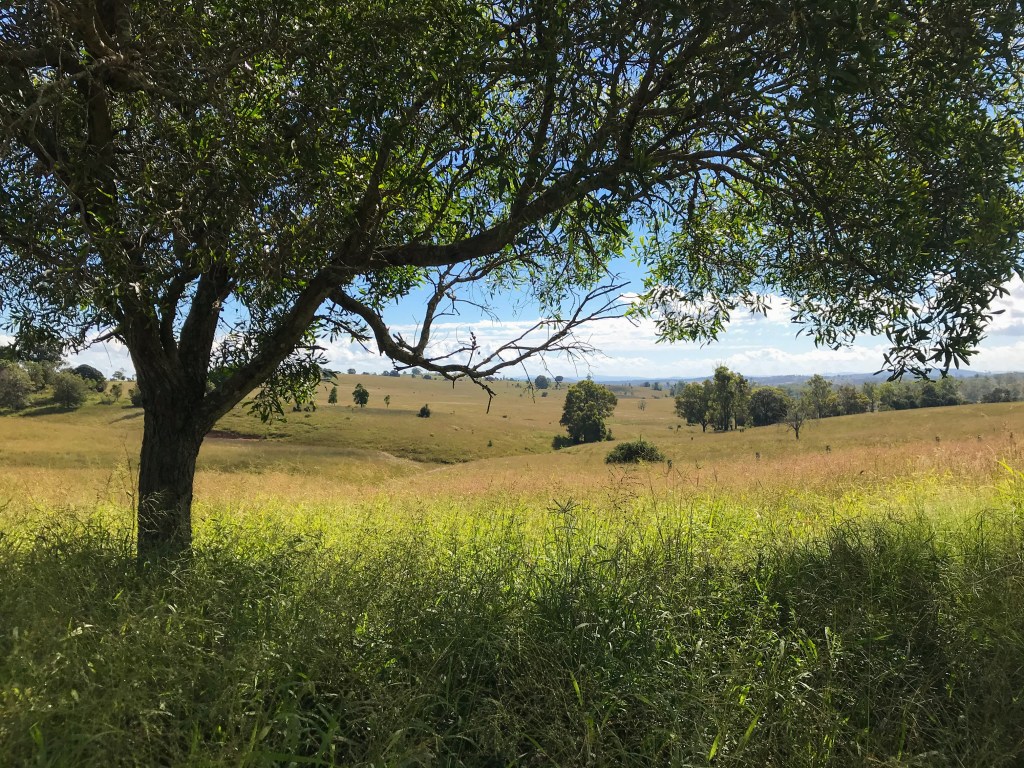
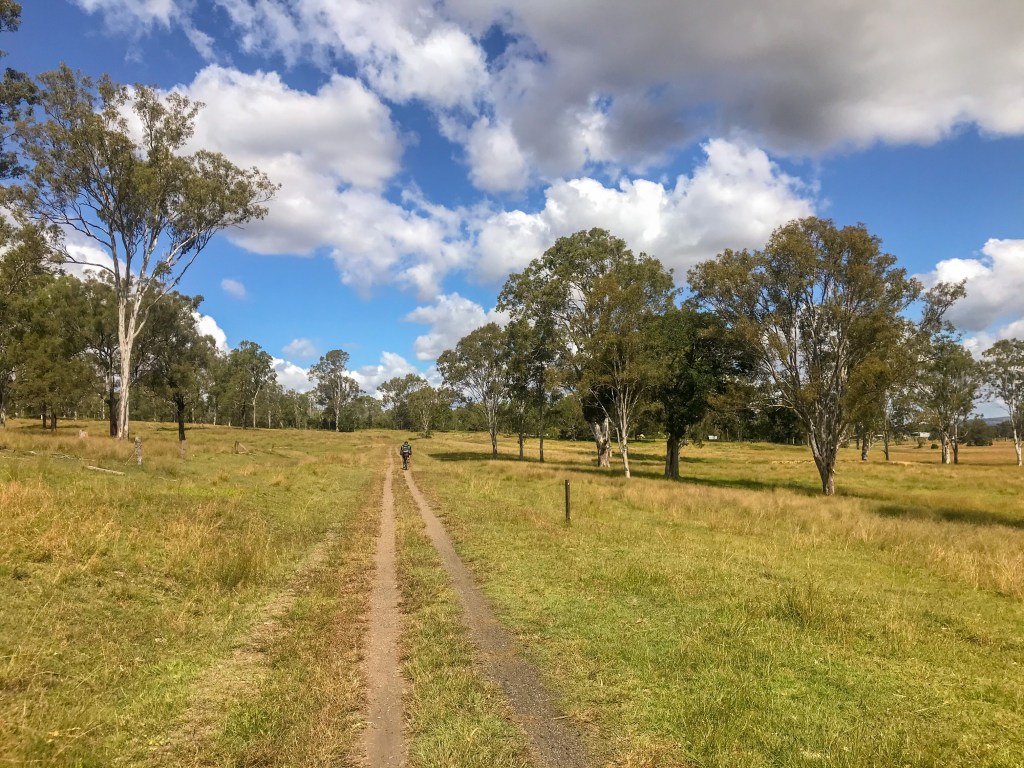
The second day of pedalling through the present and the past is more open and exposed, the cursed removal of trees a bane to modern day cyclists exposed to the searing sun. Already the land looks a bit sick and brown from the latest evolution of drought. There are few animals, other than the occasional cluster of cows hunkering down under a lone tree or dilapidated shed.

There are also a few magpies and – miraculously – they are leaving me alone while going for the other mamils in my crew. This is wonderful, so much so that I whizz on and almost decapitate a snake that I didn’t even see until after I passed it. I feel somewhat blessed and incredibly fortunate in hindsight. It’s like they knew or something.

The towns – or what pass for towns – tick off at fairly regular intervals. Early on there is Moore with its three cafes, of which one only seems to be open and doing a good trade in weirdness and antipathy. It was here I discovered a publication called The Light which from a brief glance before I felt the urge to use it for toilet paper proclaims to shine a light on all things the establishment don’t want you to know. Likely bankrolled by such establishment figures as Rinehart, Hanson, Palmer and co.

Next along from Moore, after one of the bigger climbs of the trail is Harlin, which appears little more than a pub and a servo. Still, giant bottles of knock-off Gatorade are welcome, as is the cooling 90 metres of the Yimbun tunnel a little further on. It’s a good place to pause, adjust padding and apply sunscreen before persevering with more open, baked-earth riding to Toogoolawah.

You know Toogoolawah is – in relative terms – big because it has a choice of two pubs for lunch as well as a sprinkle of cafes. Closer to the highway you can even find some homemade fudge and maybe decent coffee but the old rail line has other places in mind. With a local recommendation we decamp outside a pub and have a hearty lunch in the shade. Pizza topped with so much topping it takes a while to discover the base. Welcome and delicious, but I am wondering how all that salami, olives, capsicum, tomato, feta, mozzarella, parsley and bread, pepped up by a lemonade, is going to sit.

There was a bit of gas departing Toogoolawah, an uphill grind but one that I quite enjoyed. Dropping into a nice low gear and spinning gently, consistently, without any real rush to get anywhere. Bare country eventually cedes to a line of boundary eucalypts that accompany us to a cutting where the railway peaks, and it’s downhill from there. Suddenly speed is a thing again, the ruts and stones bouncier, gripping on to handlebars that much tighter, the air flow providing welcome ventilation. In hindsight it feels like this all the way to Esk, but there was definitely still pedalling involved.

I was a little concerned about getting to Esk around 3pm, just as everything was no doubt closing. But a new addition along the BVRT, a very BVRT business in fact, was kicking on into a Sunday arvo session. Brisbane Valley Roasters no doubt attracts the hairy mamil with single origin roasts and cold brews and almond milk. There are bike racks and large wooden benches and probably some of those fake succulents you get from IKEA. After such high dose rustic rural, you may temporarily feel an inner Melbourne vibe, or at least central Tuggeranong.

But then Esk happens. For some reason today all the staff appear to be about 14. There are no lightly bearded hipsters or man buns dosing double shots and feathering foam. I opt for an iced coffee anyway, given the heat outside which is now well into the thirties. A solo performer mistunes his guitar and is gearing up for some gently grating entertainment, supported by a handful of friends and family. A lady from out of town accosts us and talks about love and secret hideaways up on the Darling Downs and how hard she has worked all her life and that young people don’t know what hard work looks like and they should stop buying avocados or something. I fear 5G radiation PayPal vaccines might be next. Still, at least it’s not sitting, working, sweating on a bike.

I assumed all the young people of Esk were working at Brisbane Valley Roasters that day, but it turns out there are even more of them in the IGA. I suppose as well as providing cheap labour for hard-working business owners it’s something for young people to do other than vape. And they’re all rather friendly in the IGA, even as Jason – by now high on morphine or something – rambles on about (and looks like) the Esk Yowie while I am trying to buy some reduced price tabbouleh from the girl behind the deli counter. Young people are nothing if not resilient in the face of the weirdness they encounter.

Dinner turns out to be an IGA affair since the pub is closed and the Thai is also – due to unforeseen events – closed. We stock up on food, too much food, for breakfast as well. Thinking, quite rightly, that nowhere will be open at five in the morning. And also thinking, quite wrongly, that we could eat two apple crumble cakes reduced to 99 cents, along with several pots of yogurt, cereal bars, a tree of bananas and a two kilo bag of rolled oats at five in the morning.

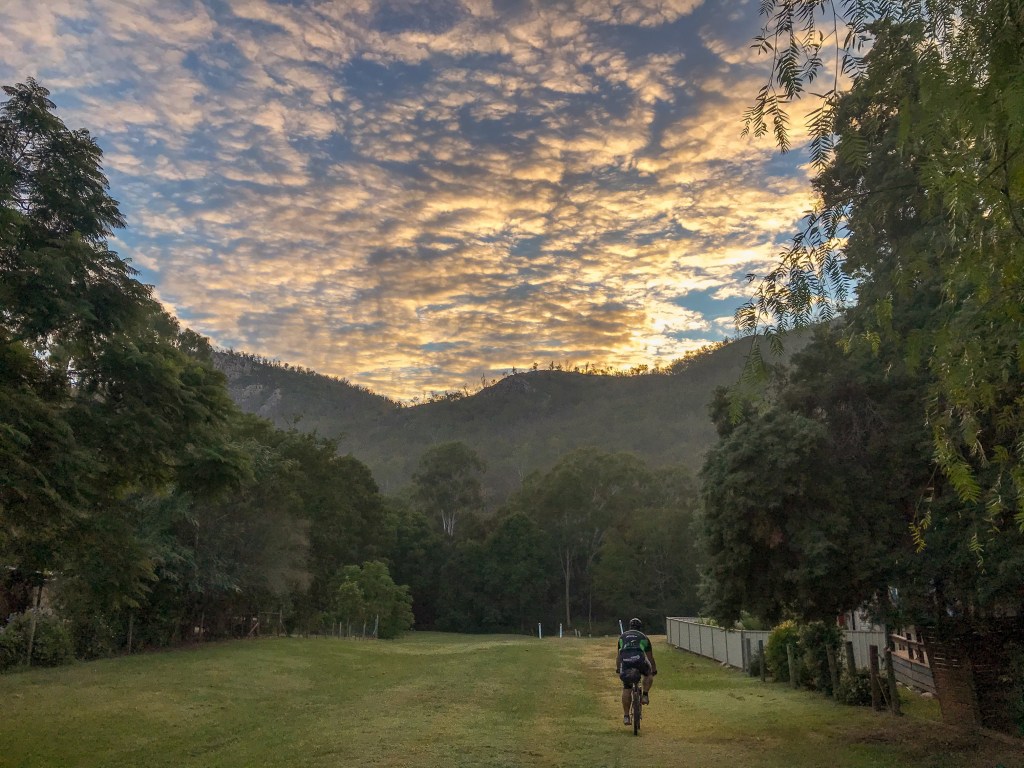
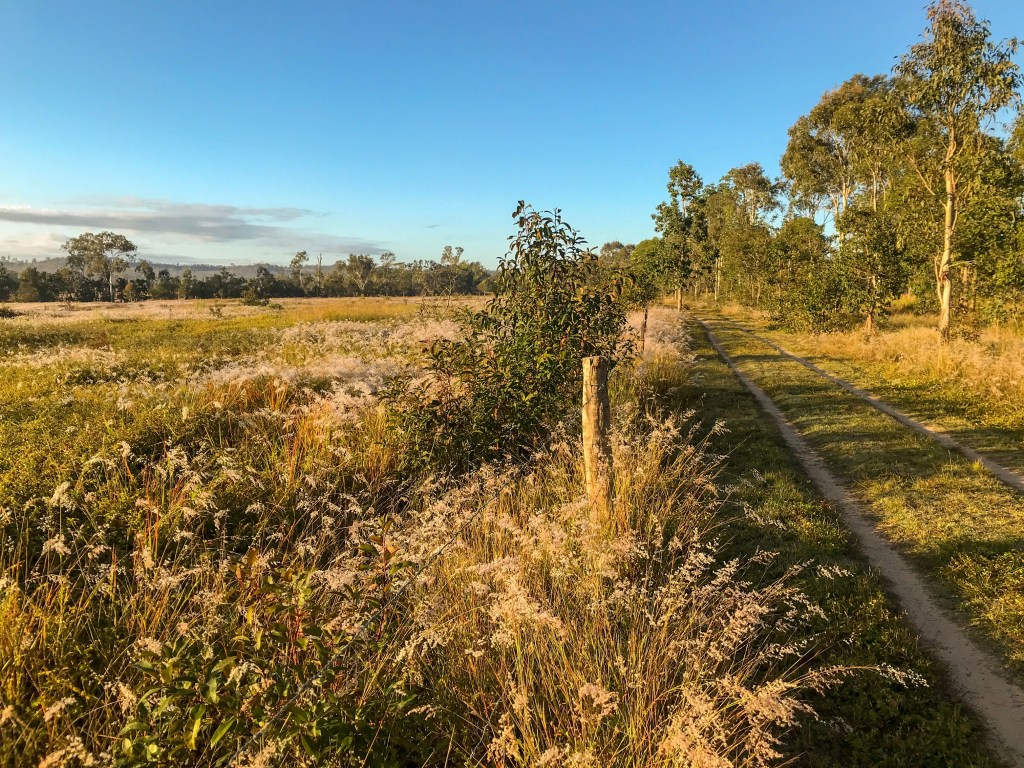
It is an uncivilised hour to rise but the final day is also the biggest and longest. And some of us have a train, and plane, to catch. While initially confronting, the early hour is by far the best on the bike. The light glowing soft, the air calm and cool and infused with that dewy, earthy fragrance of something akin to dried straw and peppermint. The trail is subdued too, enclosed by forest pretty much for the whole 20 kilometres to Coominya.

The last of the bananas disappears at Coominya, meaning I force myself to buy a chocolate éclair from the bakery at Lowood, a little further down the line. Brisbane feels closer now, the river widening, water to rinse off the humidity, feed the production of insipid beer, pressure wash four million Toyota Hiluxes. Yet after Fernvale and its supposed amazing pies, there is little to interrupt until reaching the very edge of Ipswich.

In the bush and scrub around here, 12 Aboriginal people were killed in 1843 when they were pursued by a vigilante group of soldiers, settlers and stockmen, seeking reprisal following the battle of ‘One Tree Hill.’ We all cruise on by unknowing and unthinking. An ignorance that is all too common, all too often the easiest option, the path of least resistance. Because if you don’t know you won’t actually feel impelled to reconcile.

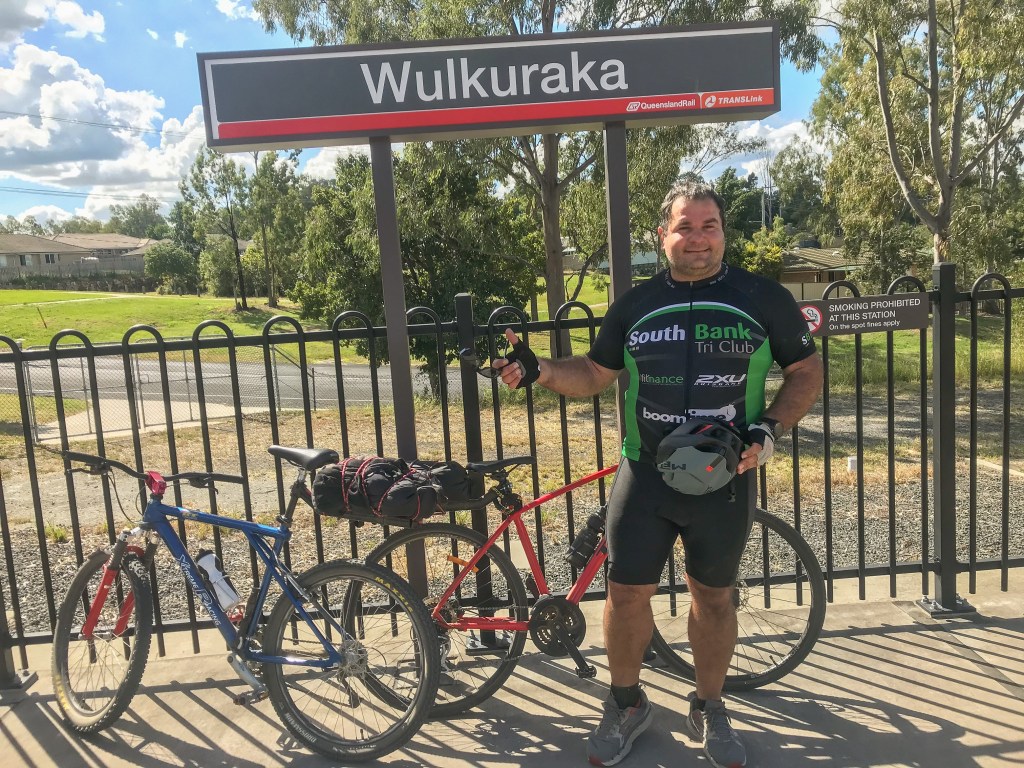
Wulkuraka – an Aboriginal word meaning either red flowering gum or plenty of kookaburras. I see neither today, but they are assuredly there somewhere. Holding on, adapting, waiting to burst forth and laugh. May well they laugh at a troupe of four sweaty middle aged men trying to cross a finish line in tandem, the youngest with a wheelie. Having crossed country where, despite it all, there is embedded in the earth and the sky a profound resilience. Something which can never be washed away, tunnelled through or eroded. A line much older, deeper and enduring. Always.

Australia Green Bogey

Grenful

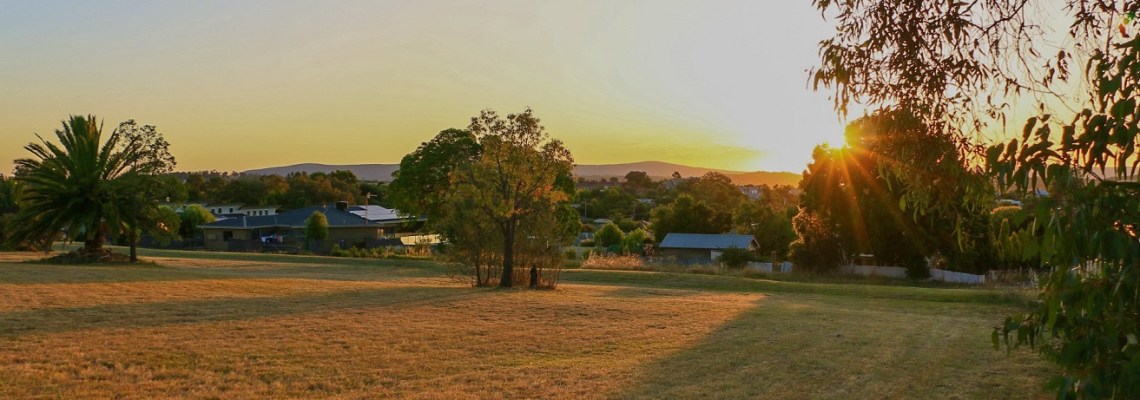
I cannot believe I totally missed the big pick and pan. I mean, it’s not like the town of Grenfell is burgeoning with tourist sights. Yes, there are the archetypal painted silos, an old railway station and various manifestations of Henry Lawson, but that’s barely enough curiosity to fill a week. I’ll have to go back.

For the many billions of people unaware, Grenfell is situated in Central West New South Wales, a crossroads (or roundabout) between Young and Forbes, Cowra and West Wyalong. In many ways you may find it indistinct from all those other towns which regularly pop up every fifty clicks or so. In this indeterminate swathe of country, only gentrified Orange and an Elvis-upped Parkes may rise above the fields of canola, waiting to be cut down.

Still, I wasn’t really in Grenfell for touristing. Just being homeless and getting my laundry done, just like the good old days. Working remotely and staying with dear friends. Being grateful. And frequently offering entertainment for a three-year-old.

Oh to be three in Grenfell, where the world must seem full of stimulus. For us adults there is the Main Street and its chain of pubs which offer their own unique character. For me, it was hard to beat the Railway for its old school ice cold midis, the same again please on a warming summer afternoon. Quietly infiltrating a semicircle of locals with hats propping up the bar, one eye on the cricket.

In between work breaks and play breaks I sampled the local country coffee, taking on board various recommendations. I dunno, I think my friends have been living here too long because not once was I any more than mildly accepting of the coffee quality. I could blame the skim milk, but what else is token recompense for a caramel slice?

Given the abundance of caramel slice, I was pleased that among the essential items of life filling my car (clothes, water, mobile office) I had managed to fit in a bike. The roads of Grenfell are quiet and mostly flat and trips to the Main Street become more inviting with a breeze. The week endured hot, with early mornings proving the most comfortable for galahs and humans alike.

Yet it was a couple of evening rides that garnered more joy, despite the heat and surprising hilliness on the way to Company Dam. Three’s company you see, even if my two buddies, Howard and Henry, are benefiting from electric power. It was nice up here, replenished by La Niña rains and golden evening sunshine. Plus it was (mostly) downhill all the way to ice creams at the servo.

Servos – formerly known as petrol stations – tend to take on extra responsibilities in country towns such as Grenfell. For as well as U91 and chamois, you can usually buy an array of deep fried beige coloured goods: hot chips, chiko rolls, potato scallops, meat pies, fish bites. Most of the home cooking I was treated to was excellent but occasional chips on the side never hurt anyone.

Indeed, chips on the side were a highlight on the one foray out of Grenfell, to the neighbouring and larger town of Cowra (size being measured by the presence of Maccas and Aldi). In between, Conimbla National Park punctuates the farmland and proves both bountiful and sparse.

It is highly probable that both Norz and I were the only people walking the only tracks in the park that morning, the Wallaby linking up with the Ironbark. Beautiful swathes of flannel flower were a highlight but the other vegetation was tending towards the spiky and overgrown. Throw in a few spiderwebs for added spice and I was satisfied at my choice of long-legged activewear. Norz, on the other hand, had prioritised temperature control. The resultant encounters between nature and bare leg frequently provoking a soundtrack of short, sharp oohs and ows.

At least there was a lookout, and morning tea strawberries. The view a less dramatic and more modest interpretation of gorges visited in the past. Devoid of humans other than us two, it was a sensation to be replicated down in Cowra on a Sunday lunchtime.

I once had a nice pub lunch in Cowra but it must have been on a Saturday. Today, pub closed. Norz heard of a cute cafe that had recently started up, today closed. An ad hoc Aldi charcuterie or McAussie burger? Or the local chook shop on the main road, which appeared to at least be open? How can you look past chips on the side, with chicken salt.

In servos and chook shops and old fashioned bars with the cricket on in the background and average coffee and building heat and (admittedly overlooked) big things, it turns out this week in country NSW was fulfilling the quota of much that is regional, rural and remote. And when it came time to leave, I felt like I was only just getting used to there being nothing much going on at all. The journey back to Canberra heralded relative hustle and bustle and more trawling through the stairwells and cupboards of open homes. While the most open home of the lot, a home of warmth and friendship, was fading away in the rear view mirror. Until next time.

Australia Driving Food & Drink Green Bogey

The golden days

Is anyone else fed up of living in ‘interesting times’? If there wasn’t the death of a rock icon followed by the self-harm of isolationism followed by the election of a rabble-rousing orange manbaby preceding the onset of catastrophic bushfires coming just before the spread of a deadly virus leading into wild lockdown parties before another calamitous war broke out would things really have been that boring? It’s no wonder many people my age seem to hanker back to the 1990s, when the biggest deal was Jennifer Aniston’s hairdo.

If you are seeking uninteresting times, you could look no further than a long drive from Canberra to Coonamble and back, especially if this takes you through Dubbo. Admittedly that would make for some pretty uninspiring content, but there is comfort and reassurance to be had in the boring. I just don’t know how I will stay awake though, and it’s probably the same for you, dear reader, as well. So, in an effort to entertain all round, I contrived to make the journey into one big loop, extending the kilometres but exposing myself to some new tarmac – and dirt – along the way.

The first of the new ground was along blacktop through rugged Karst country, taking me from Abercrombie Caves down into the fertile plains around Bathurst. I could have detoured around Mount Panorama the right way while I was here, but time was pushing on and I was getting low on fuel. Stopping at a nearby servo offering the cheapest E10 for miles around, I became the proud owner of the most expensive tank of petrol I have ever bought. Until next week.

As the last glowing oranges and indigo hues of sky gave way to a starry night, I settled down for the evening in Sofala. By settling down I mean parking my car in a free camping area next to the Turon River, eating salad and cold pizza in the front seat, before clambering into the back and onto an air mattress. For a night of sweet cheesy dreams, eventually.

Sofala is one of those tiny places whose glory days have long passed. The glory days being – like many of the settlements in this region – the discovery of rich deposits of gold. Information boards display grainy black and white images and describe a bustling town featuring stage coaches and banks and theatres and, naturally, several raucous hostelries. Today, the high street is a sedate affair offering understated charm and just the one, currently lifeless pub.

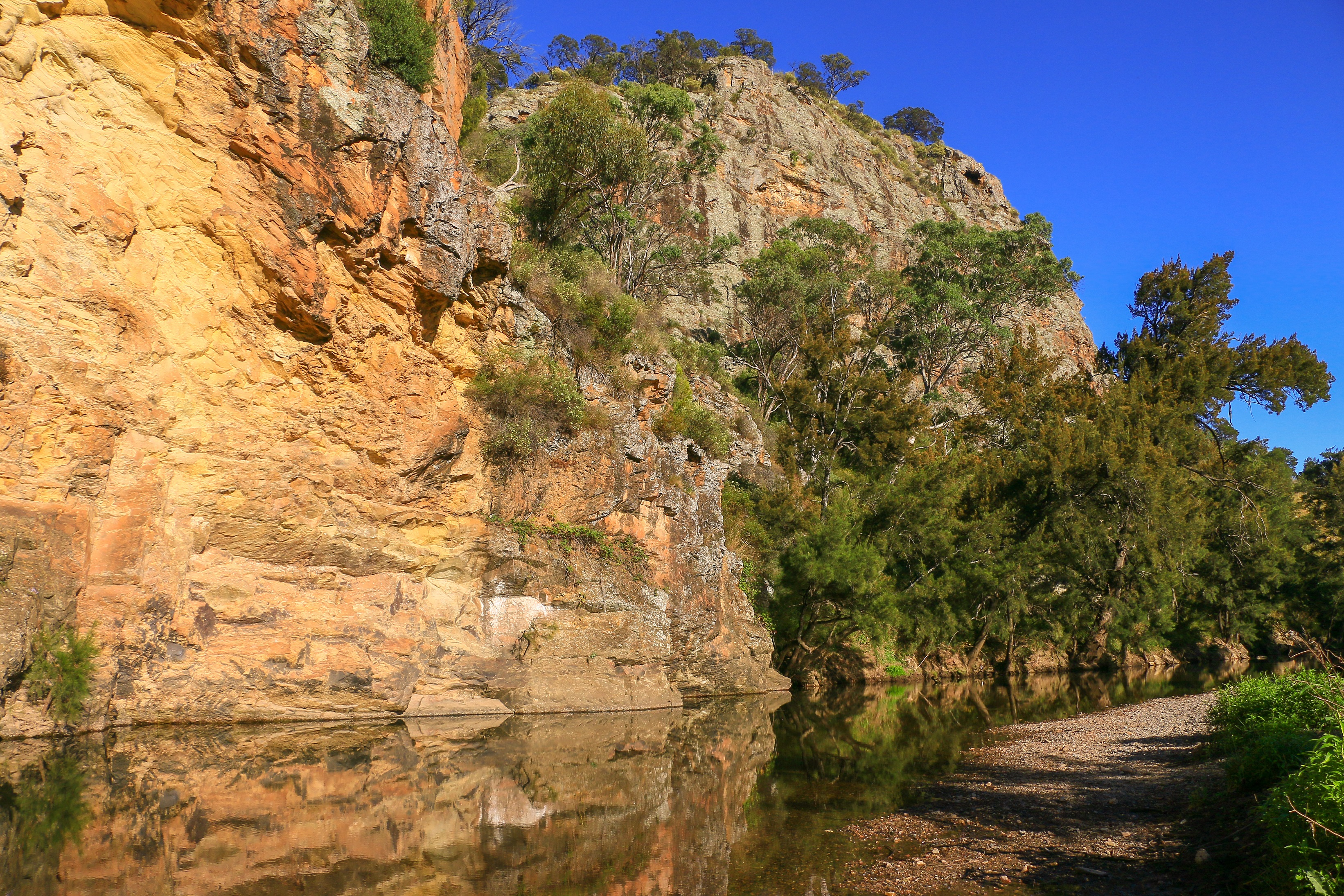
It turns out there is gold remaining just out of town, or at least the same glow emanating alongside the river. Water has scoured a course deep into the earth, leaving precipitous cliffs towering high above the mirrorlike pools of the Turon. Known locally as Wallaby Rocks (as indicated by a small, hand painted sign), this came as a total surprise, an interesting feature of an interesting drive that you wouldn’t have known about without passing this way.

I was heading up towards Hill End, another settlement grown rich on the sunlight shimmer of minerals. Today it is preserved by NSW National Parks as a historic site, a village of the past functioning in the present. And so there is an old pub that still operates as a pub, a general store that still operates as a general store, and a scattering of private residences with owners doing the usual mowing and chook-feeding and sitting on creaky wooden verandas. I expected a more bustling affair here, but on a Friday morning it felt like I was the only visitor, a conspicuous sight wandering the streets and peering into people’s gardens.

If nothing else, the village is aptly named, clustering at the end of a long plateau above the deep valley of that Turon River. This results in the promise of three separate lookouts and though not quite of a scale of – say – the Blue Mountains or Kosciuszko, they offered fine views of the golden, rolling countryside. Vistas that were, I suppose, somewhat interesting.

From Hill End I took a lengthy, winding road down towards Mudgee. This would be one of the more interesting towns along the route but cognisant of making progress north and noting the fact that I had stayed there before, I eschewed the town centre and made for lunch in Gulgong instead. The lunch would not be as fancy or as overpriced, but it was satisfying enough on a shady bench in a town that appeared to be rooted in the 1950s. Or maybe 80s. Golden times, whenever they were.

With every kilometre the level of interest along the road peters out, the landscape flattening and becoming dominated by grain. A painted silo at Dunedoo testifies to its abundance alongside the effort of these towns to generate some form of tourism through silo art. Further along at Mendooran there isn’t even a silo to justify stopping, but I stop anyway, grabbing a country coffee and slice of carrot cake to appease the bitterness of the coffee.

It is perhaps the plainness of these plains, today frazzled hot and windy, that makes the volcanic pinnacles and rugged chasms of Warrumbungle National Park all the more interesting. More than interesting in fact. Spectacular. I’ve said it before and I’ll say it again, I love this place and its very magnetism makes it impossible to drive on by. The view from Tooraweenah beseeches: come hither.

I should be making for dinner in Coonamble but cannot quite turn left. Sure it is thirty-five degrees, but the midday sun is well and truly a thing of the past and the return of trees to the landscape should offer some shade. Besides, I need to do something more interesting today, something other than largely sitting on my arse as Australia passes by. Climbing more than a thousands steps to Fans Horizon and marvelling in a conglomeration of sweat and awe at an incredible landscape is pretty interesting.

Prior experience of Warrumbungle National Park alerted me to the presence of showers in the campground, something I was thankful to use before completing the final leg to Coonamble. Last time I came here, the town had quite the aroma courtesy of the mouse plague. I didn’t want to be the one bringing that reminder to its townsfolk today. And be turned away for dinner.

And what a dinner, as always. The interest here is less Coonamble but more friendship and warmth and good food and loud voices and love. From twilight walks along the flat roads with my dear friend Norz, to tales of sand-blown motorbike adventures and potential pizza toppings with Howard. And then there is the joyous company of a two year old, one minute impelling me to drag race him in a plastic toy car, the next inventing the new sport of whisk tennis.
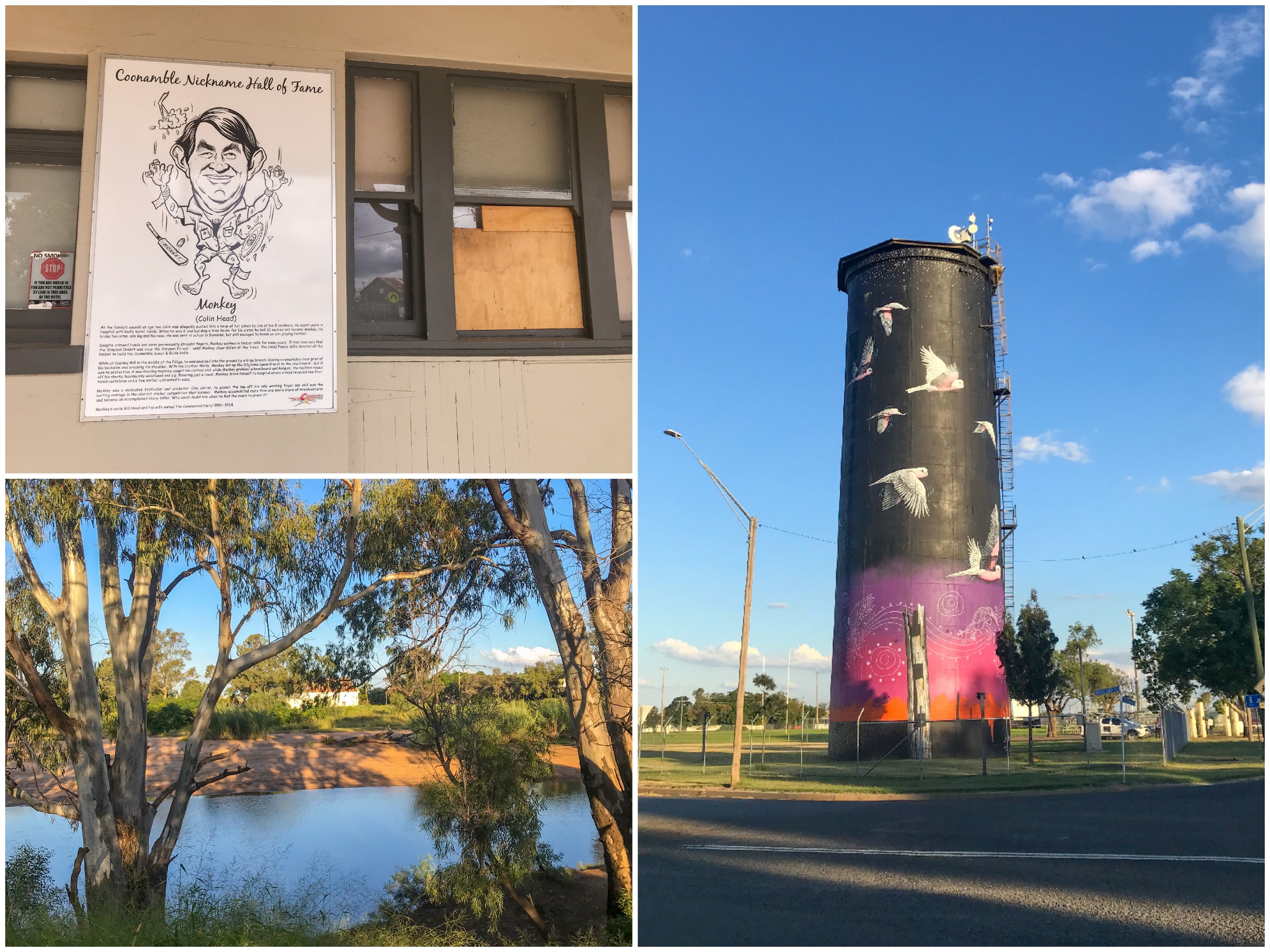
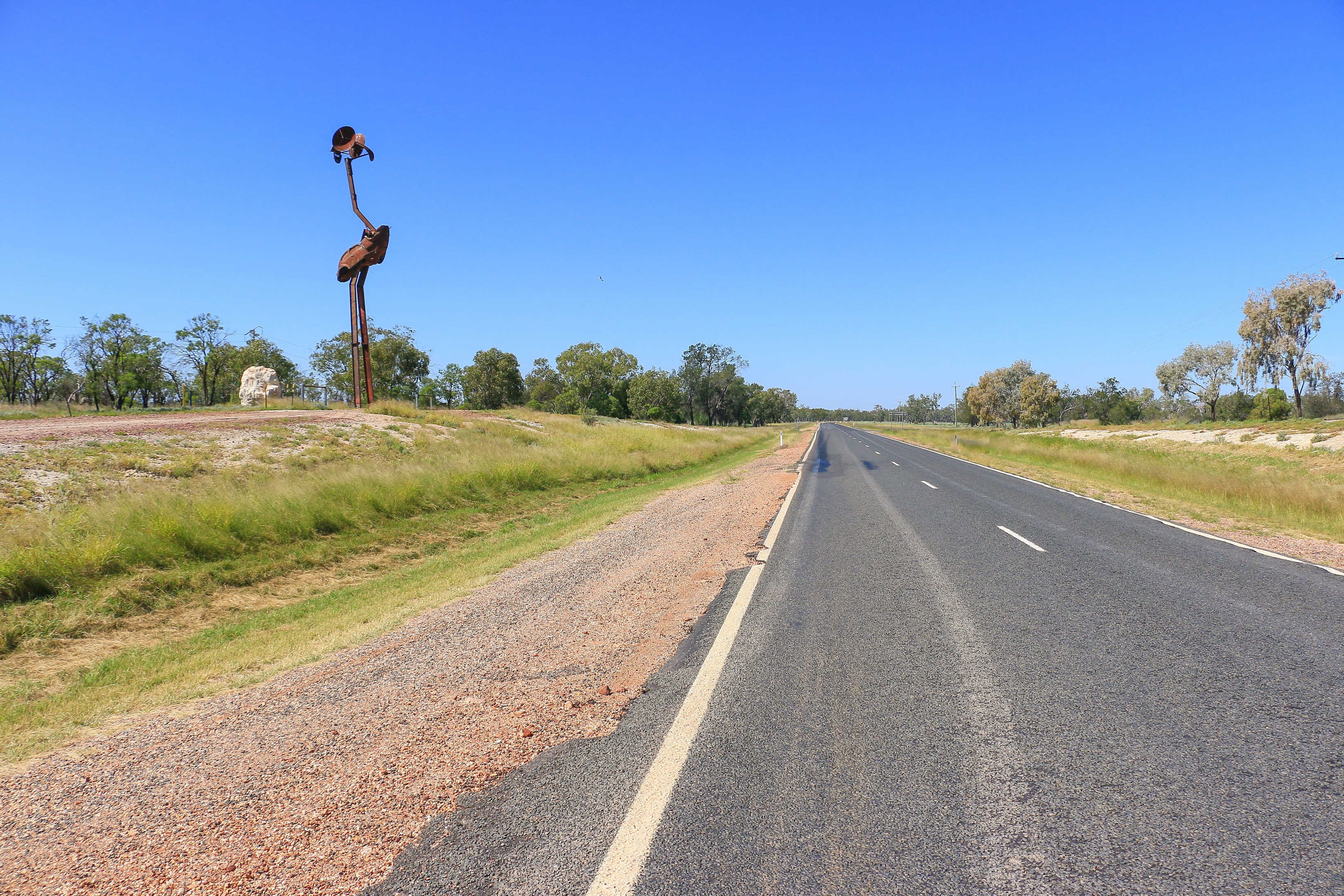
There are some mildly interesting things in Coonamble, including a painted silo, the nickname hall of fame, and the languid brown ribbon of the Castlereagh River. This time I discovered the weir, some new metal emus (competing with the Galahs of Gulargambone), an impromptu water park at the pub, and consumption of a different slice at the only café open on a Sunday. It’s not much, but it doesn’t matter.

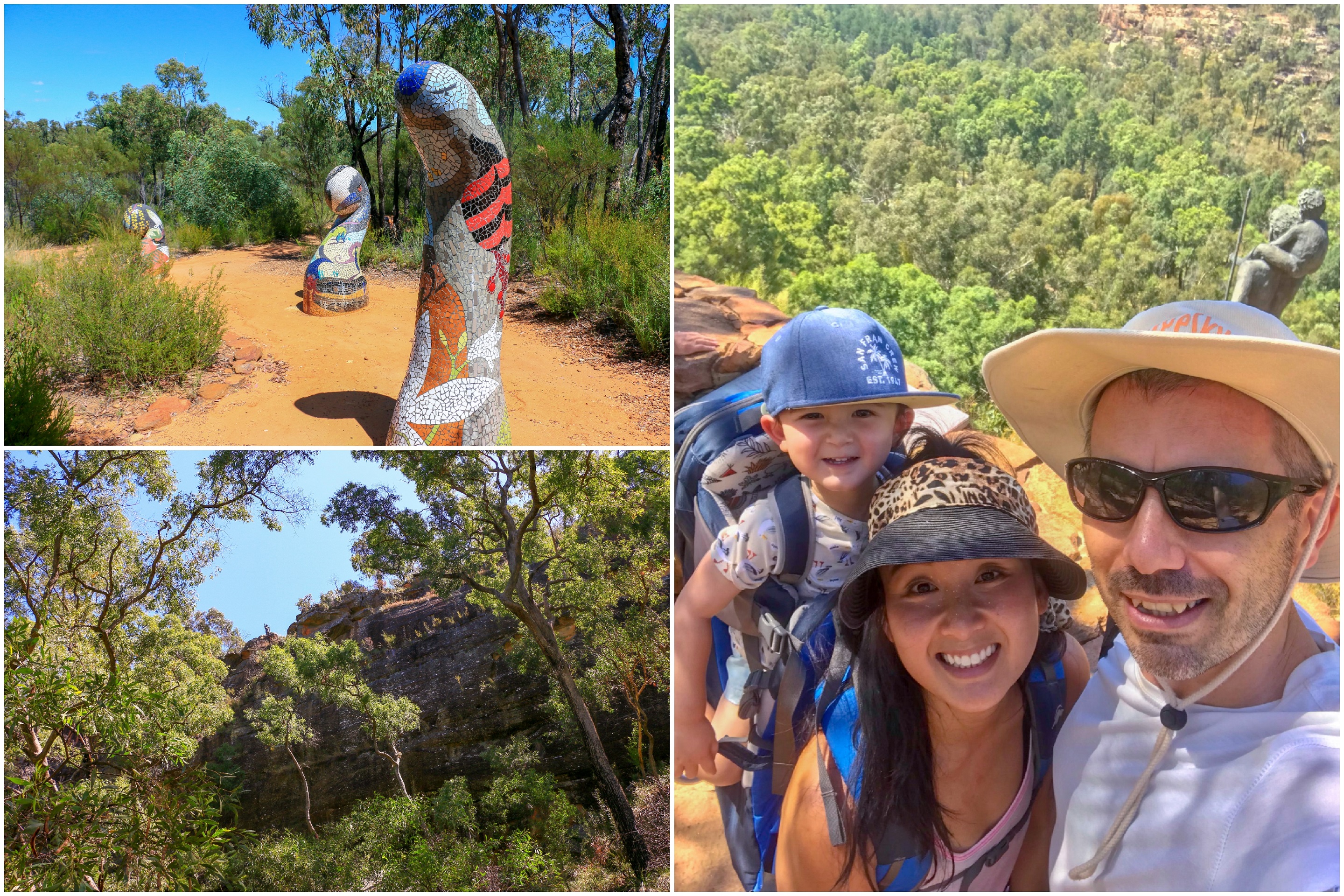
There were some surprises remaining out of town, most notably the splendid Sculptures in the Scrub. Tucked away in The Pilliga, the setting was unexpected: a fine, forested gorge whose escarpment is punctuated by artistic installations of meaning and connection. I always thought of The Pilliga as one big flat sandy forest, a landscape of monotony that would imperil any who should veer off its dirt roads. Here, you can feel things which are rich and timeless.

Just a stone’s throw away is Pilliga Pottery, but only if you’re a crow or galah. The generous rains of this summer meant the fording of a creek was out of the question, with further unknowns awaiting beyond. So, an hour and a half later, on mostly sealed road via Baradine and Coonabarabran, we were finally feasting on pizza and drinking out of earthenware cups. Another little enclave hidden in the woods, perfect to bunker down from the world.

Interestingly enough, in many ways the world was also here. The terracotta and tiled roofs and earthen walls evoked a late lunch in Spain, pre-siesta. The scattering of outbuildings and cars and rusted trinkets could be backwoods America. And then, as well as pizza on the menu, there was Bratwurst and Sauerkraut to be enjoyed. The reason became clear hearing staff converse in German, a multigenerational family thriving in The Pilliga. A veritable United Nations, without the veto power of a deluded kleptocracy.

And so, we return to those interesting times. Via Warren and Trangie and Forbes and Cowra and Murrumbateman and Moscow. With more time, Warren warrants greater exploration, particularly among the fringes of the reinvigorated Macquarie Marshes. Back in big sky grain country, Trangie may warrant a return purely for cake. I paused in Forbes for a late lunch, one of the last remaining towns of the Central West that I had yet to visit. This too had charm, elegant municipal buildings rising up among a town centre boasting a fifties Cadillac drive-in vibe. Elvis does live just up the road after all.

From Cowra the road is more familiar and home is on the horizon. Interest fades and thoughts turn from the rear-view mirror to what lays ahead. Hopefully avoiding the Highway to Hell.

Australia Driving Food & Drink Green Bogey Photography Walking

Under the shadows

And so, that year that everyone was so looking forward to when it commenced draws to a close. If the sequels to 2020 continue to pan out like the Police Academy series then we are all in for a very unamusing time. Unless you’re really into these boorish characters, crass jokes and ridiculous plotlines.

Despite its ups and downs, I was surprised to be able to find myself for a couple of weeks at the latter part of 2021 in the United Kingdom. So thank you lax borders and frequent flyer points and negative lateral flow tests and annual leave build up and, most of all, thank you science. It was a bonus trip, taken with a wariness that things could so easily change again and again.

It was amazing and I would do it all over again. This, despite the shadow of coronavirus always lurking in the background, sometimes coming to the fore. At times – such as high upon a clifftop overlooking the Atlantic, roaring with laughter during an early Christmas gathering, scouring verdant countryside for lens hoods – the pandemic disappeared altogether. At others – shopping for cards in an almighty hurry, shoving swabs up my nose, double-masking when others breathe “freedom” – it was all that was going on.

The journey back to Australia is never really a good one and pandemic travel adds an extra layer of crap. Which is exactly what was lathered all over my hands from a Great Western Railway dispenser at Plymouth station. Awaiting a train to Exeter masks were – mostly – back in fashion but no-one was rocking the dual surgical-cloth combo quite like me.

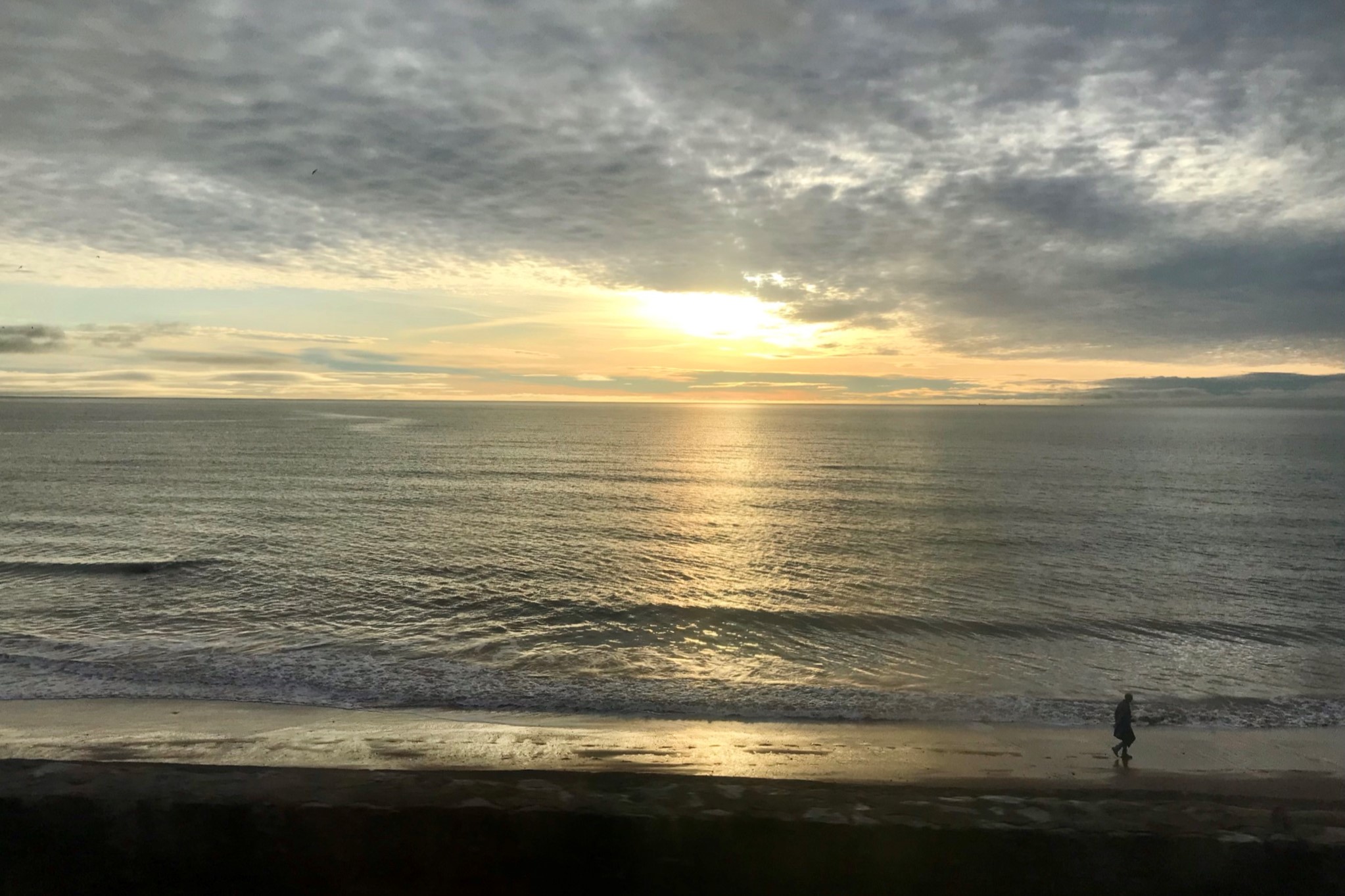
Eschewing my reserved seat for a quieter clump further down the carriage, it was a peaceful journey twisting through the ambrosia of South Devon. Along the Teign the low winter sun inched into the sky and flickered golden upon the caps of gentle waves as we wound towards Dawlish. A silhouette upon the beach swiftly passed by and I felt a yearning to swap places.

At Exeter a breath of fresh air before trundling on through a litany of country villages and towns straight out of Wessex – Whimple, Sherborne, Templecombe, Tisbury, and then finally Salisbury. For a meeting with Dad, a bakery and – yes – a PCR test.

At £99 (AU$200) I was expecting a gold plated swab and free lollipop, not a tiny pharmacy offering a ten second poke up the nose. Oh well, hopefully it will get me on a plane to Australia within the mandatory 72 hours. Hopefully.

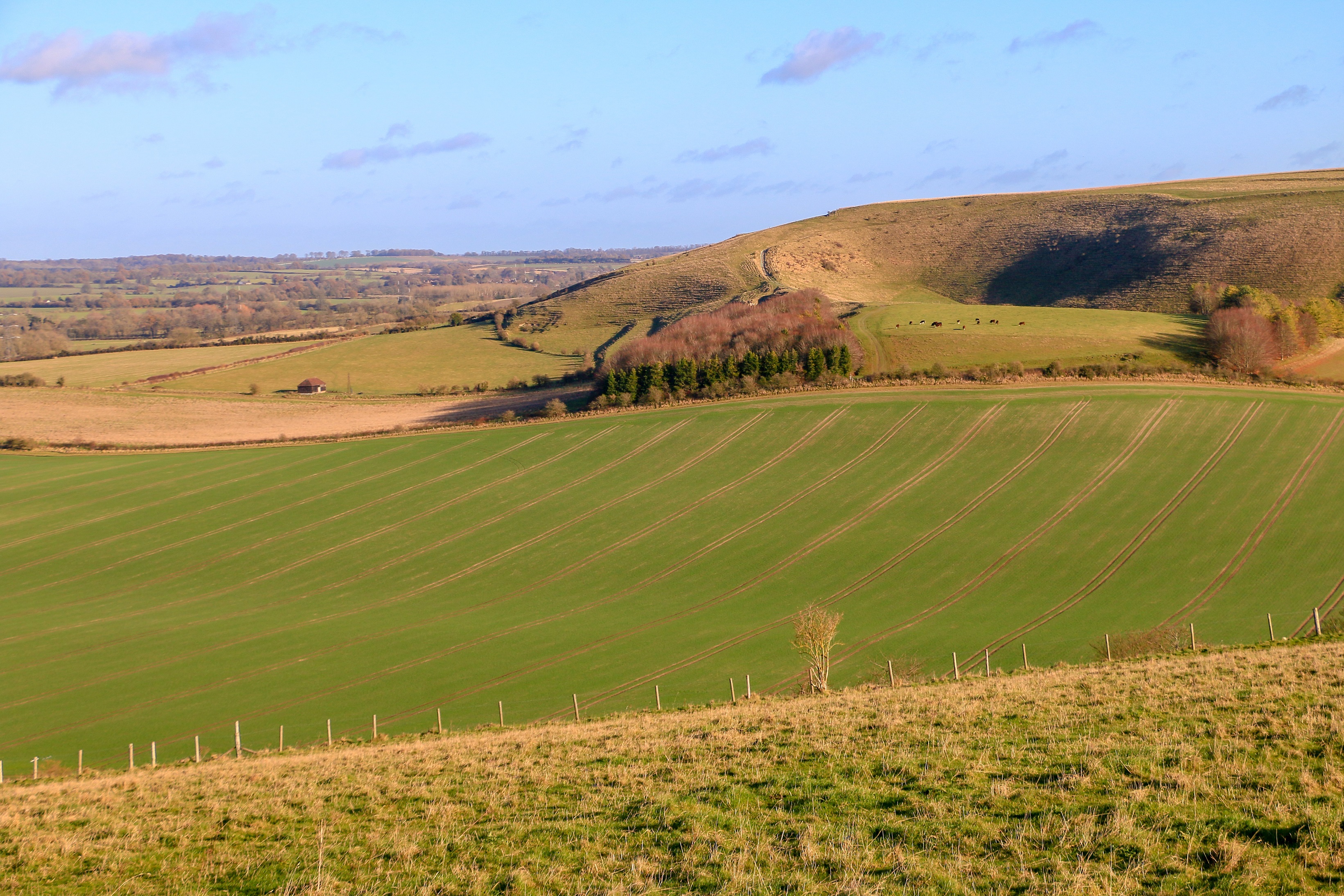
I stayed with Dad and Sonia for a couple of days, happily partaking in Tartiflette traditions and Saturday night quiz shows. The main activity was a delightful Wiltshire walk around the Vale of Pewsey, that ultimate pre-departure injection of countryside England, of green and pleasant, of great outdoors. Of surprising blue skies masking a chill winter wind.

Much of the route took us along the top of a characteristic chalk down, plunging curvaceously into rich, bounteous farming country. Beyond far-reaching vistas over loveliness, memorable features included a white horse, old burial mounds, brambles, crawling through gaps in a fence and slipping in cow-trodden mud. Oh and did I mention the Belgian Bun? Should’ve brought a flask though.

Despite blue skies, winter finally touched me with its bone-chilling menace. This occurred right about the time Dad lost a lens hood. Buffeted by the arctic, layered up with everything I had, unable to feel my nose. What the bloody hell am I doing? My mind switching to Australia.

It is quite feasible that some people in Pewsey felt that I should have stayed put in Australia. I dunno, spending my Dad’s money in their out-of-the-way town on instant hot chocolate. And while I can appreciate perspectives on non-existent pandemic control at the borders, I couldn’t help but feel this was borne from a place of zero foreigners whatsoever. Perhaps, Little Britain style, a deluge of vomit ensued after my revelation that I was over here from Australia.

Not that anyone appeared to be really minding a pandemic the next day at Honeystreet Mill. Full tables feasting on bacon and eggs and sausages and beans and mushrooms and toast, emanating vapours with every loud voice and legume fart. I had come here with cake in mind, but it was hard to look past English bacon and sausages and HP sauce one last time. And besides, they do take away.

And so, packing cake, the journey continues onto that great city of London, steeped in drenching drizzle. It was a scaled-back visit in keeping with the times: one night only in a Paddington hotel, enabling an early start to the airport the next day. The hotel was everything you would expect of a Paddington terrace: behind the elegant façade, a labyrinthine warren of creaking floors and random stairs and polite notices. Washing muddy shoes in the shower wasn’t one of them.

For the remains of the day I endeavoured to make two brief encounters. This necessitated an adventure ride on the Underground to get to North London. From Edgware Road I hopped on the Circle Line which in my experience has always been a voyage that never seems to go anywhere in a hurry. On the plus side – I reasoned – it’s a subterranean affair, with opportunities for fresh air to mingle as you wait for no good reason at Baker Street. Occupying time, mask-counting is the new Metro-reading, and I would say an average of six and a half out of ten managed to comply on the Circle Line.

From Kings Cross I hopped onto the deeper, murkier Northern Line once more. Here I positioned myself by the windows at the end of a carriage to allow that sooty centuries-old air to take on my twin mask protection. I guess there are probably traces of the Spanish flu down here, along with Churchill’s cigar smoke and aromas from a Wimpy burger.

Maybe I just got lucky, but it was quiet, with mask-wearing approaching nine out of ten heading to those affluent, sensible suburbs of the north. The emerging light after Highgate never fails to bring relief, despite having done this trip hundreds upon hundreds of times in the past. And soon, at East Finchley, I hopped off into the late afternoon air.

The skies had brightened a little, prior to their disappearance into night. Cognisant of being on an aeroplane for days, I was keen to walk and talk with Caroline, aided by the thoughtful and cherished gift of some M&S chocolate biscuits. Through Cherry Tree Wood I remarked how I vaguely remembered walking this way once to Muswell Hill and lo and behold after not having a clue where we were heading we ended up in Muswell Hill. From there it wouldn’t have been so far to the Ally Pally but the drizzle set in once again and the pub sounded a better prospect.

Despite all the ridiculous nonsense spouted about freedom days and the sanctity of pubs from our self-styled post-war yearning libertarian warriors I rather enjoyed my two pints in the pub with an old friend. It just felt, well, normal. Like old days, like old lives. Yes we had our masks at the ready and sat far from the smattering of patrons, but it was almost as if a pandemic didn’t exist. Despite talking for 80% of the time about the bloody pandemic. I guess the alcohol maybe went to my head, but I remember that hour with much fondness.

I also remember dinner with much fondness, again propped up by a glass or two of wine and the company of more old friends. It was all too brief with Melita and Geoff and Orla and how I yearned to just linger and crash on the sofa and get up the next morning to walk to Victoria Park or up to North Finchley Sainsbury’s for hummus, edamame and more wine. The hope is for this sometime in 2022…

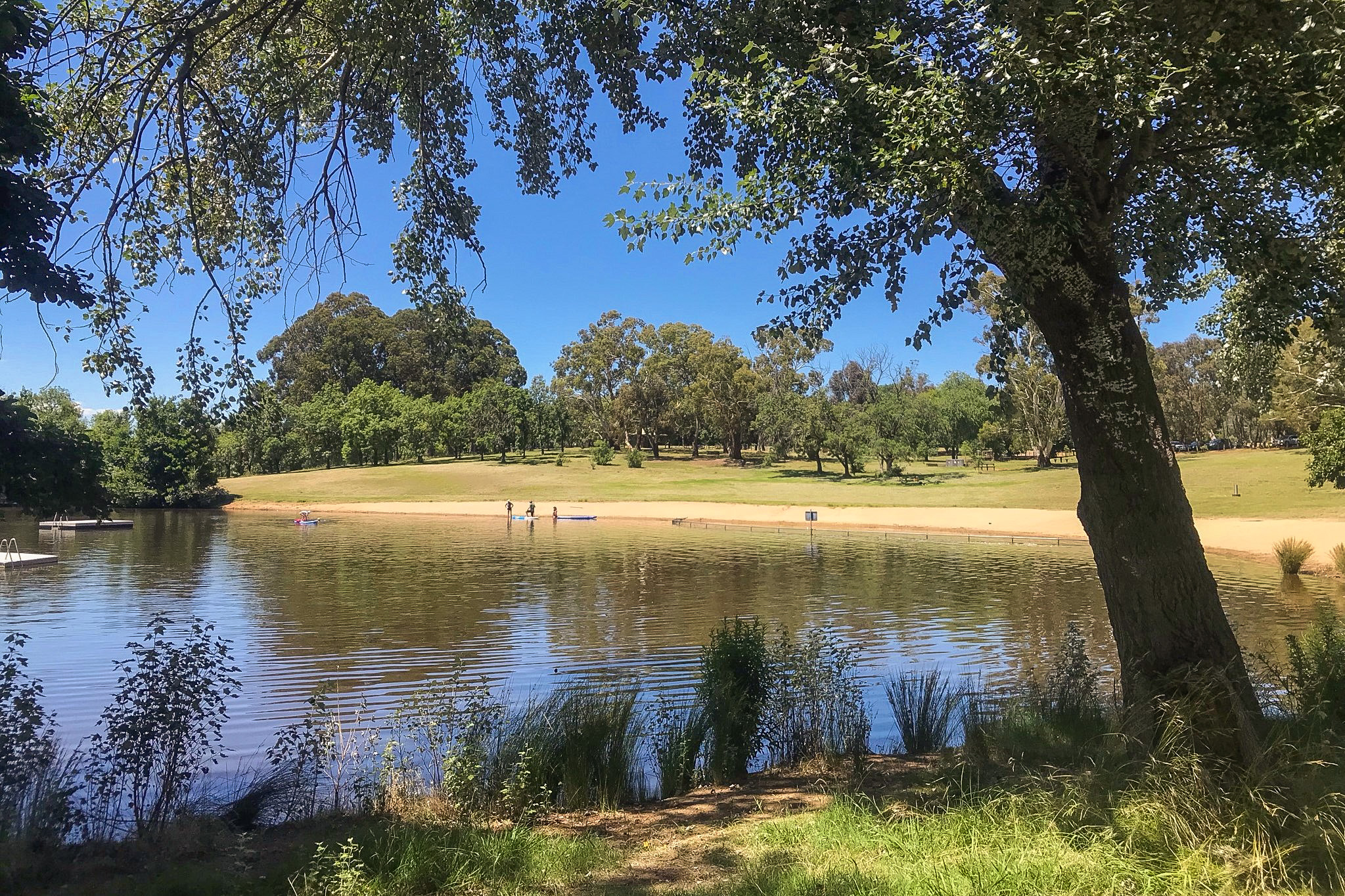
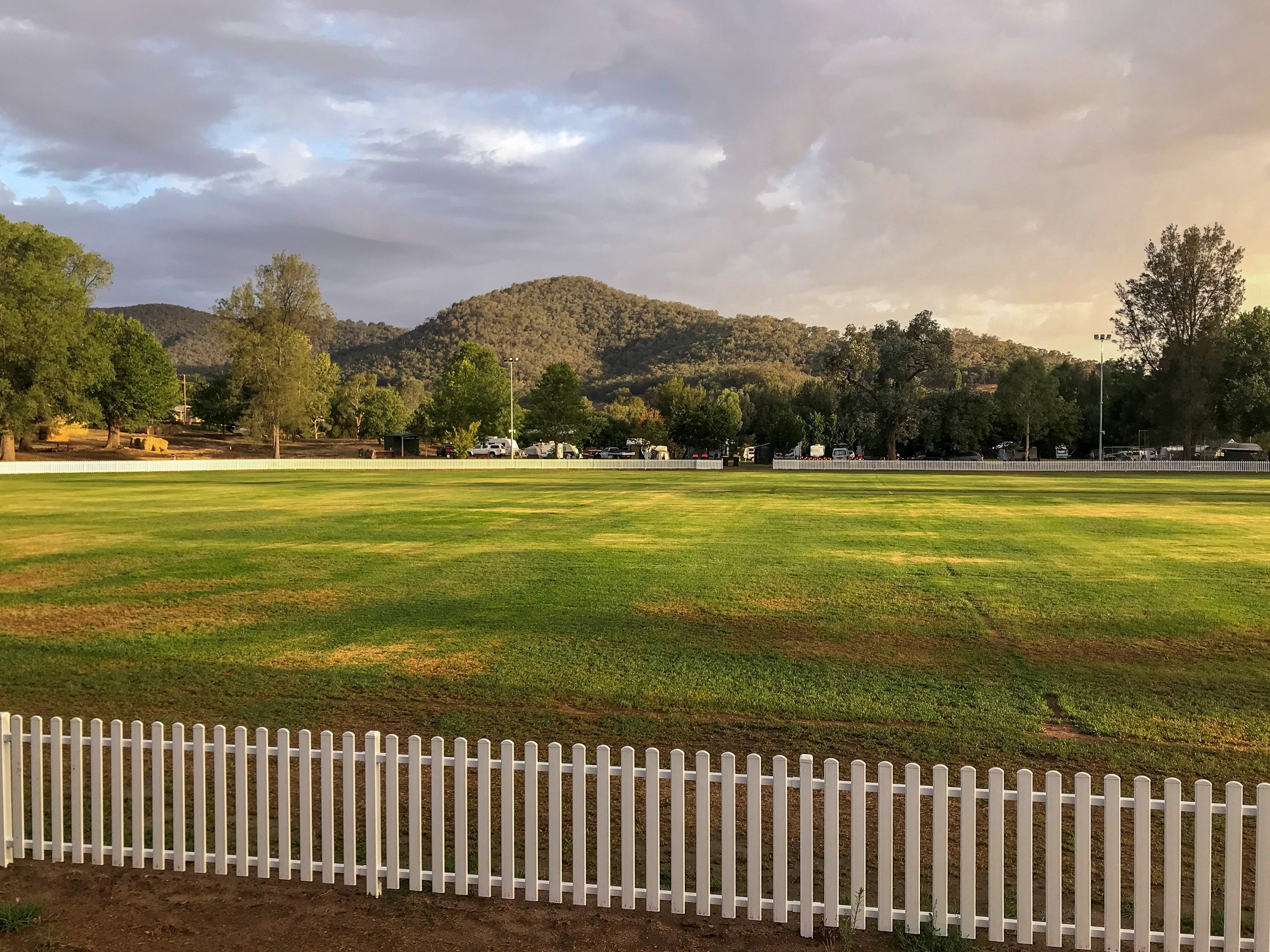
The final day of 2021 finds me sat writing this under a shady tree beside a lakeside bay in Canberra, Australia. A few families are scattered upon what counts for a beach, while a fluoro-white cockatoo shrieks from somewhere within a tall eucalyptus. Nursing me along, I managed to find one of the few coffee shops open – an Omicron lover’s dream – to pick up a takeaway. Accompanying shortbread comes courtesy of M&S at Terminal 3 of Heathrow. I had a lot of time at Terminal 3.

But I made it. After a PCR test, a cancelled flight, an airport hotel with buffet food, early coach pick-ups with whinging people, a nonstop coughing, nose-blowing man, Darwin, Sydney, driving down the highway to Canberra, three days of home quarantine followed by another bonus four, two more PCR tests and about six lateral flows. Horrible jet lag and a tired achy feeling that just wants to linger. Delights at being back and some disappointments. It was worth it all.

For the duration of my flight I was sat next to a well-masked older lady who was off to Sydney to see her son, his partner, and their son. A boy born under the shadow of COVID-19. This was her third attempt and I shouldn’t have been surprised at the obscenities flowing from her mouth at the first aborted take off. She just wanted to see her grandson for the very first time.

For ourselves and for others. This is why we do it and would do it all again. All the time holding on to the hope in our hearts that some sequels are better than the original.

Food & Drink Great Britain Green Bogey Photography Walking

Great Continental Rail Trail Journeys

The last time I heard the word ‘gooch’ as incessantly, an English batsman was stroking the Indians all over Lords. That was 1990. I also remember a reoccurrence when the same player was famously dismissed for handling the ball. Today, gently rising out of Toogoolawah, two hours west of Brisbane, gooch and ball handling were once again all the rage.

A stop was called for by my good friend and biking companion, Jason. Problems in the perineum that would culminate in what will only be known as the ‘Lowood Incident’. As improvised comfort was applied and jiggled, I started to contemplate whether we would need to radio in the rescue chopper.

But waiting patiently I was enjoying the break. It had been a decent upward grind after lunch. The sun was warm and glowing gold the long grass of summer. Small eucalypts lined the route, interspersed with westward views over gently undulating farmland. My bike was coping well. Despite almost falling asleep over a burger, I was coping okay. This was brilliant.

I had never heard of the Brisbane Valley Rail Trail until Jason mentioned it virtually every time we spoke over the phone. I don’t know if it was one of those things you just say, never really expecting anything to eventuate. But one day I just thought sure, why not. Or words to that effect. And this whole trip was basically arranged around it.

We took a leisurely three days to cover the 161 kilometre route by bike, retracing a rail line that commenced construction in 1884 and was finally made redundant in 1991. Today, it has been transformed into the longest recreational rail trail in Australia for use by walkers, horses and – mostly – bikes. While I never succumbed, Lycra and gooch cures are never far away.

Day 1: Yarraman – Linville (42 kms)

It took the best part of two hours to drive from Caloundra to the start line (thanks Fiona!). Over rainforest-lined passes, high above fields of mist, past bakeries that are worth making a note of for later, we reached Yarraman to face the unknown. Yes, riding a bike is like riding a bike but riding a bike on a three day bike ride is another matter.

Yarraman was still fairly quiet, though the people we did encounter were keen for a natter. Being ANZAC Day, a small dawn service had been and gone, and one old guy offered reminisces about days gone by in this small neck of the woods. He had taken the train many moons ago when joining the air force. Thus a brief history of the operation of the Brisbane Valley Line ensued. The conversation culminated with him contemplating riding the line once more, e-bike assisted of course.

We passed up the opportunity to indulge in coffee and bakery items at Yarraman, instead pursuing these goals in Blackbutt once at least a few calories had been discharged. And so the exercise commenced just out of town beside the old rail station, highly visible remnants of the line that pop up in practically every settlement along the way. Blue skies, still air, a fairly smooth dirt track accompanied by that first shot of endorphin from anticipation of what may lay ahead. 

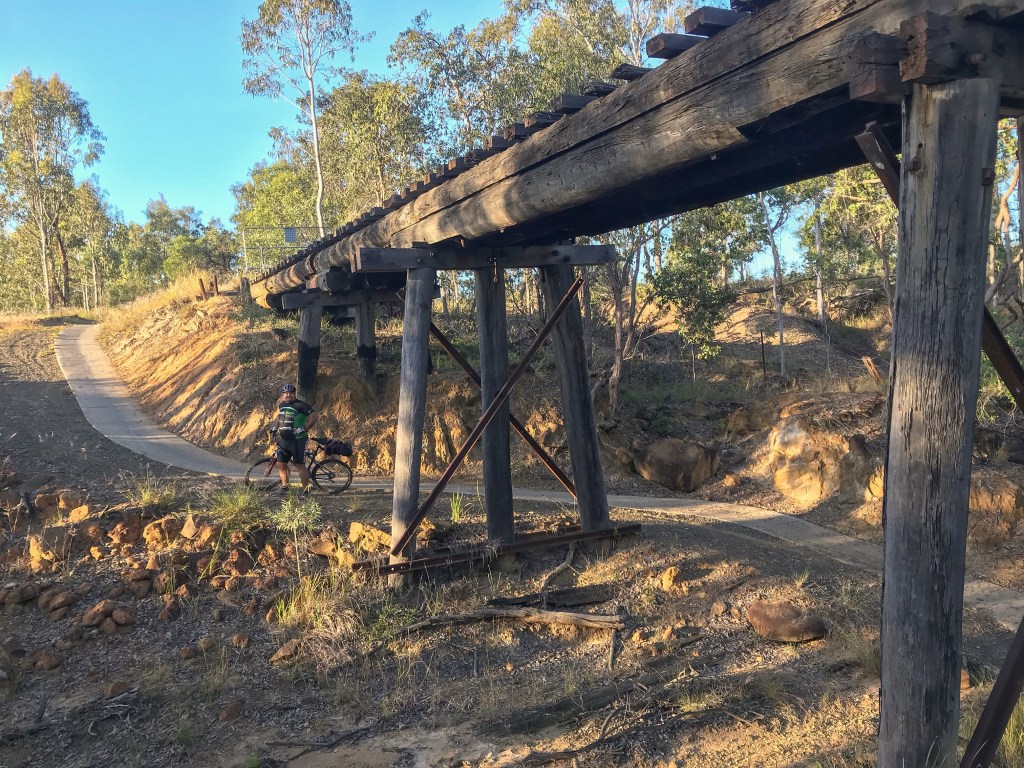
And so, we rode through avenues of low eucalyptus, alongside green pasture dotted with spiky xanthorrhoea, and through a number of rockier cuttings keeping things relatively flat. Earlier in Yarraman, the old fella rambled on about the bridges on the rail line and wondered if they were still standing. The answer quickly became clear and that answer was – for the most part – no. After cruising with only gentle effort, the downs and ups of gullylife often come as a bit of a jolt to the system.

The vibe along the trail was congenial and we passed a few other cyclists with friendly g’days and broad smiles. A few times the trail briefly transported me to a nice summer’s day in southern England, a passing resemblance nurtured by fields of corn and tunnels of trees. The idyll was quickly shaken by the gullies, the gravel, and the sound of Chinooks and Apaches putting on a flypast specifically for us. 

It had taken well over an hour to get to Blackbutt which was – after the trail thus far – a veritable feast of civilisation. People were assembling for the 11am memorial service, many with padded butts and bulging Lycra. This naturally resulted in high demand for coffee. So high, in fact, that the cafe we had chosen failed to deliver it.

It seems churlish to bemoan the absence of coffee in the context of wartime remembrance, but I cannot deny how deflated I felt. One of the attractions to this ride – probably even the number one thing impelling me forward – was the frequent prospect of stopping for coffee and cake. How leisurely, how civilised, how conforming to popular stereotypes of butt-padded middle aged manliness. 

But the parade passed and wreaths were laid without a hot mug of country flat white. As they do, Last Posts, Abide With Me, and sombre silence touched the right note. The special guest speaker spent a good few minutes talking to the point that his time to talk had been controversially curtailed (I can only imagine the political machinations going on in Blackbutt RSL). Meanwhile, someone posting video of the service to the local Facebook page bemoaned the fact that everyone else was using up the local 4G and quite possibly catching coronavirus from the rays. 
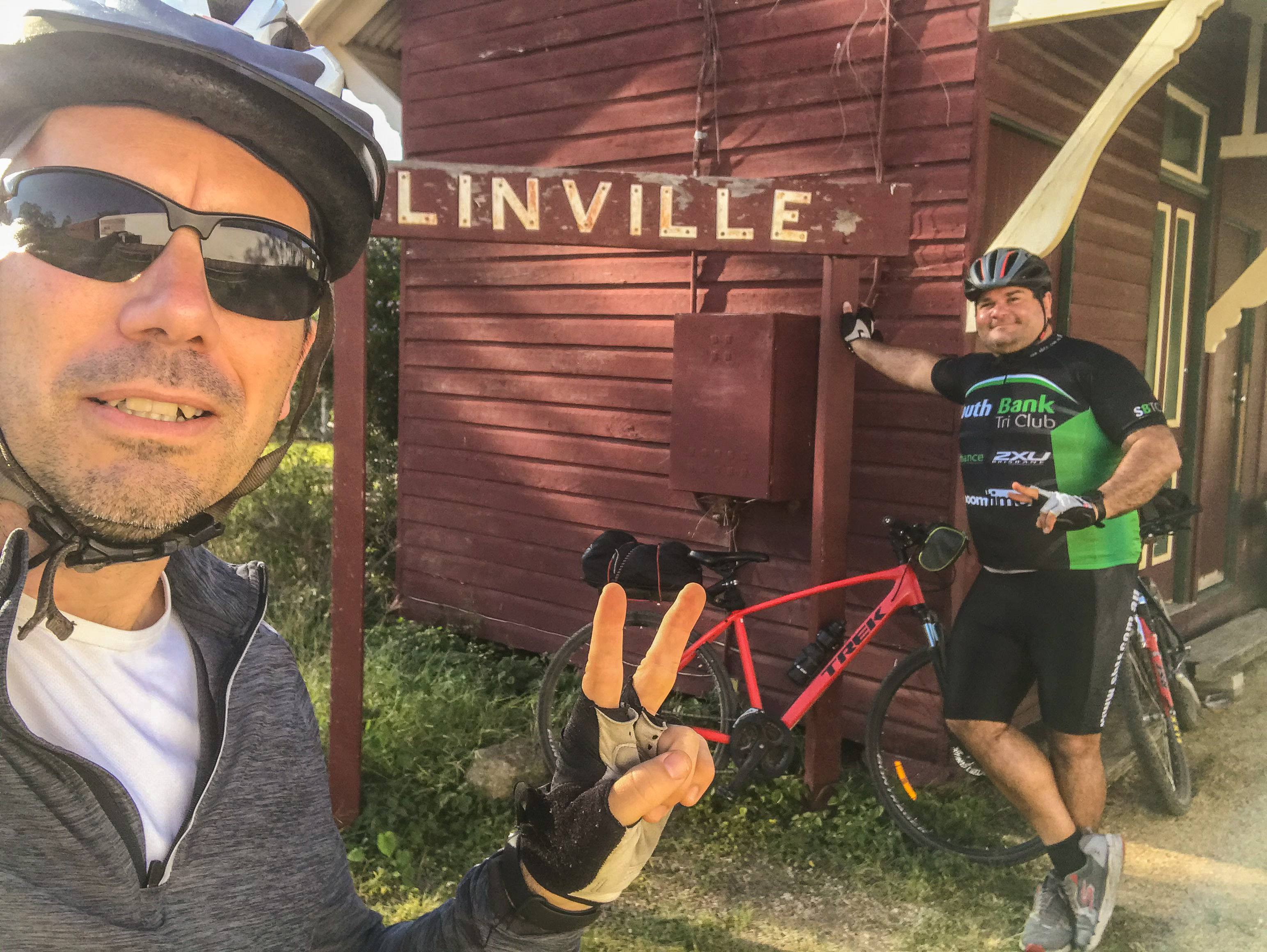
You don’t get these quirks at the Australian War Memorial and that is why the ANZAC service in Blackbutt was such a memorable event. Above all, it radiated with the warmth of smalltown community: flags half-mast against the backdrop of XXXX signs on the pub; the high street closed off as trucks carrying cattle detour behind the small memorial; a procession featuring schoolkids, scouts, guides, old troopers and the Country Women’s Association, all waving to family members lining the route. Meanwhile some lucky butt-padded cyclists sup on their coffee.

No offence to New Zealand, but we snuck out of Blackbutt as the ceremony was nearing an end with its national anthem. I was keen to get moving before the rush of people re-joined the trail. We also had to reach the pub before it closed for the day.

Fortunately, most of the trail to Linville was downhill, through Benarkin State Forest. This induced a little adrenaline, gathering speed and negotiating clean lines and avoiding small rocks. My back end decided it wanted to head sideways on a few occasions, but speed and gravity and not particularly flash bike-handling skills kept things upright. Almost as satisfying as staying in one piece was the sight of pedallers grinding their way up towards Blackbutt and being thankful that this was not you.

Eventually the forest opens out and the landscape presents itself as rugged and unkempt. In fact, it’s probably the most enclosed part of the whole trail, where you truly feel like you are carving your way through a steep-sided valley. As the hills part, farmland again emerges, shacks appear, caravans gather for extended coronavirus holidays, and in front of you, shining like a temple, is the Linville Hotel.

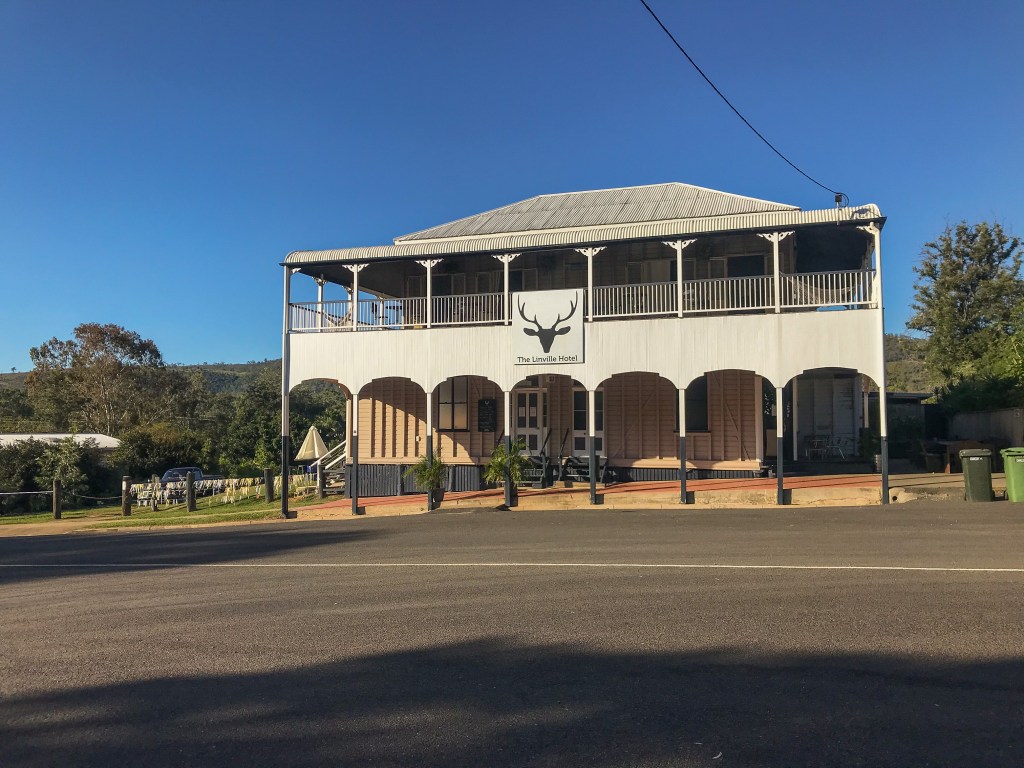
The first thing that was obvious about the Linville Hotel was that the tradition of sitting around drinking on ANZAC Day was very much alive and well. Out the front, a multicoloured arrangement of frames and wheels gathered in what looked like one almighty tangle. Motorbikes glimmered in the sun. Classic cars posed with their rooftops down. City folk had come for the drive. Or the pedal.

The Linville Hotel proved every bit the Australian country pub and a little more. Chicken Schnitzel lunch was accompanied by local brews. Wooden verandas and wonky floorboards looked out over sleek parasols and hipster guitarists. Old signs mingled with largely ignored QR codes. Upstairs, rooms provided accommodation and already the century old balustrade was subject to Lycra decoupage.   

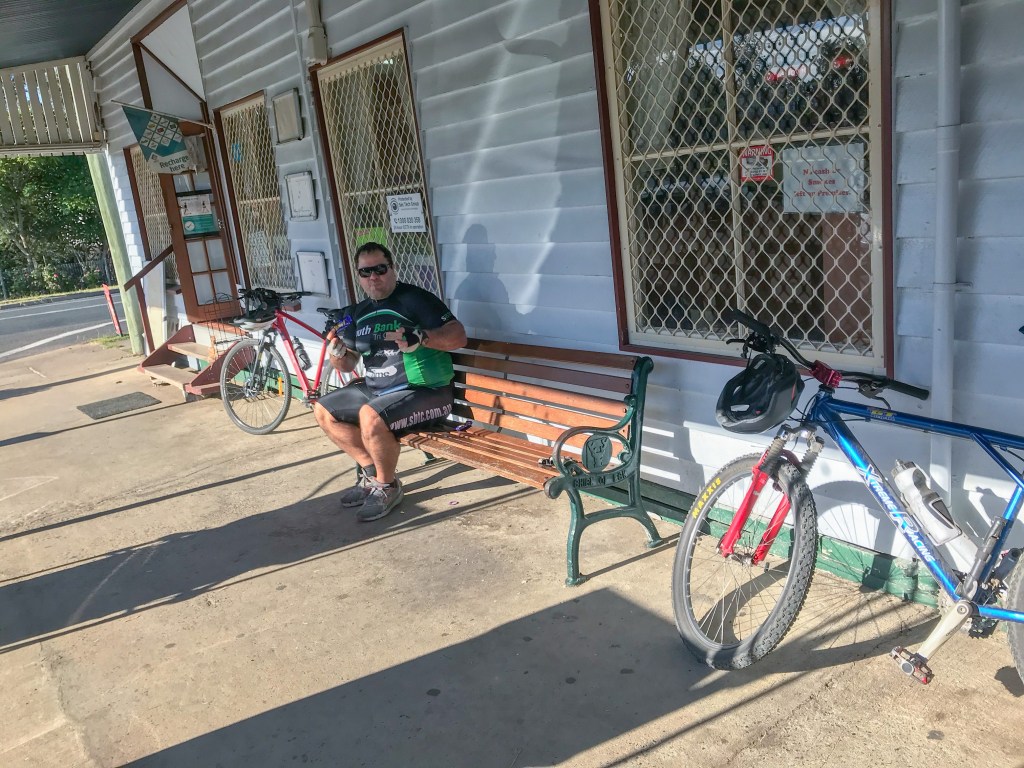
Closing at three, the pub transformed into a peaceful oasis, one in which I envisioned a post-shower nap that never materialised. Jason, naturally, had no problems. I instead popped out and explored the town, taking all of five minutes. It struck me that Linville would struggle to get passing trade if it were not for the rail trail. That, and the free camping area densely populated with COVID nomads.

So, the first day of the BVRT had been safely negotiated and all was well with the bike, the bike rack, the butt padding, and the humans. Until that pounding headache and fatigue and rush down to the toilet block to empty the mish-mashed contents of my stomach. In a dramatic turn of events, would I make it through only one day? Would we need to call in the medics? Would I ever get a goddam coffee on this trail?

Day 2: Linville – Esk (52 kms)

I guess the header gives it away. I survived. In fact I somehow prospered. This was the best of days: no rush to get anywhere, me, my bike, my mate, the sun, a massive coffee, and some other foodstuffs thrown in and not thrown up. 

The day commenced with a rising sun over a patchwork of mist from the top floor of the Linville Hotel. The sun kissed its first light on the Lycra bunting, dangling like the dismembered ghosts of cyclists past. Gradually the shadowy figures disappeared as small groups set off. We were the second last to go, just an e-bike left charging for those who have the power to linger.

It was a good start, especially as the first stop – Moore – was only seven kilometres down the road. I say road, but of course I mean trail, which continued to be decorated by avenues of eucalyptus and interrupted by deep gullies.

Moore appears even smaller than Linville yet boasts three places offering coffee. Wary of yesterday, I pray we choose the right one. In the end, the coffee comes, which is an improvement at least. It’s one of the biggest cups of coffee I’ve ever had in Australia, more akin to the stupid sizes you get as standard in those awful chains in the UK. In its gigantic bucket, the coffee took an age to cool down, but at least a second breakfast sausage roll kept me replenished.

After Moore, the landscape opens up considerably; wide fields undulate gently towards more prominent ranges while patches of forest become fewer and farther between. The trail even takes in some steeper rises which I’m sure weren’t part of the original railway line. Like the train in Dumbo – I think I can I think I can – I am elated with my first KOM achievement.

Another notable rise appears on the outskirts of Harlin, the next town of sorts along the way. Again I am pleased that I make it but also pleased to see some seats and a shelter at the top. It’s a bustling hive of activity as wheels spin, chains are cleaned, and flasks of tea are drunk. A gathering of older riders have made it all the way from Bundaberg or Rockhampton or somewhere like that (I forget), this now their eighteenth day on a bike. I don’t quite feel as smug having managed to overtake a couple of them on the way up.

We seem to play tag with this group for the rest of the ride. The trail’s kind of like that. All the time, in cafes and pubs, on picnic tables and in parks, you see people you think you have probably seen before but often can’t quite remember. Typically exchanges involve the matter of where you have come from and where you are going, intended bakery stops, occasional technical bike talk that goes over my head, and – increasingly – saddle sore. You leave it all out on the trail.

In these entanglements I figure we are perhaps a little more memorable to others. I say we but I mean Jason, masterfully contoured within his Boomtime bodysuit; I’m just that nondescript guy accompanying the big unit. Sometimes setting tempo on a gradual rise, other times trying to keep up on flowing descents. Organising accommodation and strategising food stops. Encouraging progress to the next town for running remediation. Hang on…I sound like a bloody domestique!

After Harlin I find myself pacing us past a rider and on towards a landmark. A damp dark hole doesn’t sound like much of a tourist attraction, but this is Yimbun Railway Tunnel, constructed in 1910. It’s the only tunnel on the entire length of the trail and I am pleased to see it, given my initial horror approaching what looked like an unscalable hill. Stops for photos and cooees are all the rage.

On the other side we progressed onward to Toogoolawah where it was most definitely time for some lunch. Our hilltop friends from earlier were encamped at a couple of shady picnic tables feasting on the provisions they had carried. Travelling light, we sought out a business that would feed us. This proved harder than one might expect – being a public holiday, the town was almost desolate. Salvation was once again in the form of the pub, and a pretty decent burger.

It was at the pub that I struggled to stay awake and was uncertain how I would manage to start out all over again. Rooms in the inn certainly had an appeal. I was also being bothered by an energy company desperately trying to cling onto my business after taking my money for many years without the slightest pretence of customer service. This is largely irrelevant and uninteresting until it got to the point where I was pleased to get back on the bike to escape a world of 4G.

Back to the simple life where it was just you, a bike, and a mate bringing things to a halt in an attempt to increase comfort. The trail rose steadily from Toogoolawah for quite some time before a delightful plunge down the other side. With time pushing on, the afternoon presented the countryside in a warm, attractive light. By the time we reached Esk, there wasn’t so much left. 

Usually you’d think 52kms would only take a gentle three hours. But factor in gravel, gully crossings, stops to take pictures of cows, the time required to wait for a ridiculous sized mug of coffee and then drink it, distractions with energy sales sharks, and – progressively – pauses for gooch care, and you have a full day out.

It’s more tiring than you think too. Which may explain why I called Jason a moron outside the IGA for just assuming it would be open forever. We joked about it afterwards, ate mediocre food at the local pub and capped things off with mugs of ice cream in a motel room. I’m sure this is exactly how riders experience the Tour de France. Especially the domestiques.

Day 3: Esk – Wulkuraka (67 kms)

Okay, this may sound like I had lost by mind but there were times on the third day where I literally felt like an express train. No, more like one of those old clapped-out British Rail stopping services between Basingstoke and London Waterloo with the heavy slam shut doors. There was something about the slow acceleration, easing away and eventually building to a steady pace as we progressed through the trees between Esk and Coominya. Once on the blessed descent from Mount Hallen, speeds were probably matching those of the 8:07am to Woking.

We had departed Esk early as we – literally – had a real train to catch. The sun was only just rising above the horizon and it was more than fresh. But the plus side of this was the wonderful golden light over fields of grassy tussock, dewy spider webs, and the splendid nose-clearing aroma of gum trees embracing the day.

The section from Esk to Coominya is the longest without any civilisation and a large part of it cuts through the bush. By time you reach Coominya, you are more than ready for a coffee and treat. But good luck with that. Google Maps told me of a place called the Blue Teapot Café but unless I got my map-reading wrong (which is extremely unlikely), it appeared to be a petrol station / tackle shop / muffler supplier / chiko roll purveyor. They did have reduced price Cadbury Twirls though, more disintegrate than melt in the mouth.

Fortunately, Lowood is an entirely different proposition and just a further 12 kilometres on. We once more came across our old friends from Rockaberg and the going was pretty good on a well-groomed, mostly flat section. With the D’Aguilar Range rising up on the eastern horizon, there was a sense that Brisbane wasn’t too far away. Just over those hills.

Perhaps it was all to do with timing, but Lowood proved the liveliest town along the trail. There was of course a bakery, but we went upmarket and sat down in the local café instead. Across the road, a well-tended park and amenities offered comfort and convenience for the weary rider. A water bubbler provided a refill while I waited for Jason to do whatever he was doing.   

Lowood also brings you closer to the Brisbane River as it feeds out of Lake Wivenhoe. You never really ride next to it, but at least there are a few glimpses here and there, just to remind you that – oh yeah – this is the Brisbane Valley Rail Trail. Compared to life at the other end, the landscape is much more open and there is feeling of settlement and civilisation accumulating. Indeed, the next town – Fernvale – is only a further eight kilometres.

I had heard several times – in those exchanges between BVRT veterans – that the Fernvale Bakery had some seriously good pies. So continuing our poor food choices we decided to have brunch instead. It was okay, but nothing to write home in a blog about. Hanging like a shadow over the experience, too, was the sense that we needed to get moving to catch that train.

Further delays around the public toilets in Fernvale allowed me to catch up with another rider who recognised us. Apparently, he was on the table opposite at the pub in Esk. He had been carrying everything – camping gear and all – on his back and was very much looking forward to the end. I felt fortunate to have stayed in proper rooms and for buying a $16 bike rack from Kmart. The best investment ever, cheaper than an underwhelming brunch. 

Nonetheless we were all at that point where the end couldn’t come soon enough. It was a further 23kms from Fernvale to Wulkuraka and much of the novelty and thrill had worn off. Some of the track was quite sandy and while it never reared up like an Alpe d’Huez, there was this endless perception of drag. At one point, some naughty trail bikes came at us from the other direction and you knew suburban Ipswich must be close.

A sign indicating 5.2km to Wulkuraka rears out of smooth white concrete. The bike trail has become a modern, formed bike path and it’s the shot in the arm needed. We reach speeds previously unfathomable, picking up slipstream until the interruptions of traffic islands and a final little upward thrust. The penultimate hundred metres navigates the pavement alongside a row of compact townhouses. Ticker tape, fireworks, applauding admirers fail to materialise. There’s not even a sign.

Still, we have made it. We made it! I had my doubts at times. But I think there were so many things to keep us going. The green and pleasant countryside, which is never going to take your breath away but comforts like a mild June day along the lanes of Southern England. The towns and businesses, feeding us and watering us and giving us a mixed bag of dining experiences that could do better. The public amenities and tiny stores offering hope and comfort to ease accumulating ailments. The many other riders, offering this amazing feeling of camaraderie and shared experience.

And, of course, mateship made it one of the most memorable trips ever. The big unit. The boomtime body-suited, gooch-afflicted, cow-whispering Jason. You were there at the end, still batting strong and keeping me going. For every one of the 161 kilometres, the 2,300 metres up and the 2,600 down, it was an absolute pleasure to have you by my side. Or ten metres behind, making adjustments.

Australia Green Bogey

Entering the finger zone

You’d have to be slightly crazy to drive six hours just to visit the Gilgandra Rural Museum. Yet craziness is exactly the vibe. Assembled outside, various mechanical contraptions seek to separate wheat from chaff or draw water from the ground or power the transistor radio of old Sheepwash Charley of Dunedoo. Among the pioneering relics, random two-dimensional figures play out a scene which probably didn’t make the final cut of the original Ned Kelly movie. All the while, the incredible Man on the Thunder Box remains impassive.

I didn’t travel six hours for the Gilgandra Rural Museum, but paused for one final stop before setting out for Coonamble. For me, Gilgandra signified a final outpost of familiarity if not necessarily civilisation. Along the way, more gentrified country towns like Boorowa and Cowra and Molong had breezed on by. A stop in Wellington illuminated both the charm and economic fragility of life in a country town, while the major centre of Dubbo came with all the drawn out trappings of tractor dealerships, coffee clubs and chequered fashion wear.

It was after Dubbo that I first encountered a finger or two. A single raised pinky from fellow drivers attempting to overcome the boredom of the Newell Highway. They obviously hadn’t stopped at the Gilgandra Rural Museum for there was little cheer or energy in their movements. More an obliging duty to signify they are alive and to acknowledge the presence of other lifeforms.  

It is never clear when, where or why the finger zone starts or ends. Remoteness plays a key role, but then some areas of barren desolation barely provoke a twitch. This confuses me to the extent that some people get the finger, others get a V sign, others a full hand and, when I have faced enough rejection for one day, the rest receive absolutely nothing. One of the worst feelings in the world is being too late to acknowledge a cheerfully waving man in an akubra as he whizzes by south, just because you have been spurned one too many a time.

Another hour of this kept me mildly entertained as I broke new ground on the Castlereagh Highway. Occasionally the road’s namesake river snaked nearby, sandy with pools of water nurturing gum trees and fields of weedy yellow flowers. Corrugated metal galahs counted down the approach to Gulargambone, while a fence emblazoned with a big G’DAY greeted me as I left town. Late in the day, Coonamble embraced me with fiery skies and the smell of mice disinfectant.      

I had come to Coonamble as part of a bigger trip on my way to Queensland. And while there was distraction in its artistic water tower and a sense of disappointment in its Nickname Hall of Fame (not even being so bad to be good), the main purpose of the stopover was to visit old – and young – friends.

And so good food, company, and row row row your boat was the main order of events, delivered in abundance. I did sample hot coffee from both local cafes and discovered the intricacies of a remote town of 2,000 people where everyone knows everyone else’s business.

One late afternoon I even went for a little bike ride, which was quite delightful at first, cruising along flat countryside lanes and discovering a peaceful spot by the river. Then I ended up in town and got chased quite aggressively by the obligatory roaming hounds. The full Coonamble experience.

One of the plus points to Coonamble is its proximity (at least in regional Australia terms) to Warrumbungle National Park. A jumble of volcanic lumps and spires rise up prominently from the flat surrounds, tantalising from afar in every direction. A dirt road takes us to a spectacular reveal of this massif from the west, before becoming more deeply immersed into the heart of the park.

I’ve done longer, signature hikes here before but with little Henry enjoying shooing flies in a backpack we take on a shorter walk to Tara Cave. Still, it’s a delight featuring a small creek crossing and burgeoning bushland, rising up to reach an interesting shelter with signs of tool-sharpening from many centuries before David Bowie put on some red shoes and danced. And being in the north west of the park, a balcony view reveals the splendid panorama of this wonderful land.  

On the other side of the Warrumbungles is the town of Coonabarabran. I discover this is known locally as ‘Coona’, even by the Coonamble locals who might also claim that moniker. Coona is a pleasant enough place, with an extravagantly decorated and tasty Chinese restaurant and – the piece de resistance – a Woolworths. Coming from Coonamble, there is something utopian about entering a supermarket with fresh produce and aisle upon aisle of comforting familiarity. Like a child in a candy shop. Or Francois in a fromagerie.

And so, a final fresh dinner on Sunday night and another fine breakfast the following morning sets me up for the journey ahead. It’s a long and lonely road, and I feel a touch flat about leaving a world of comfort and companionship. After an hour or so, Walgett appears, which is hardly the kind of place to lift a funk. Fuel, toilet, and a crossing of the Barwon River at least interrupt the journey.

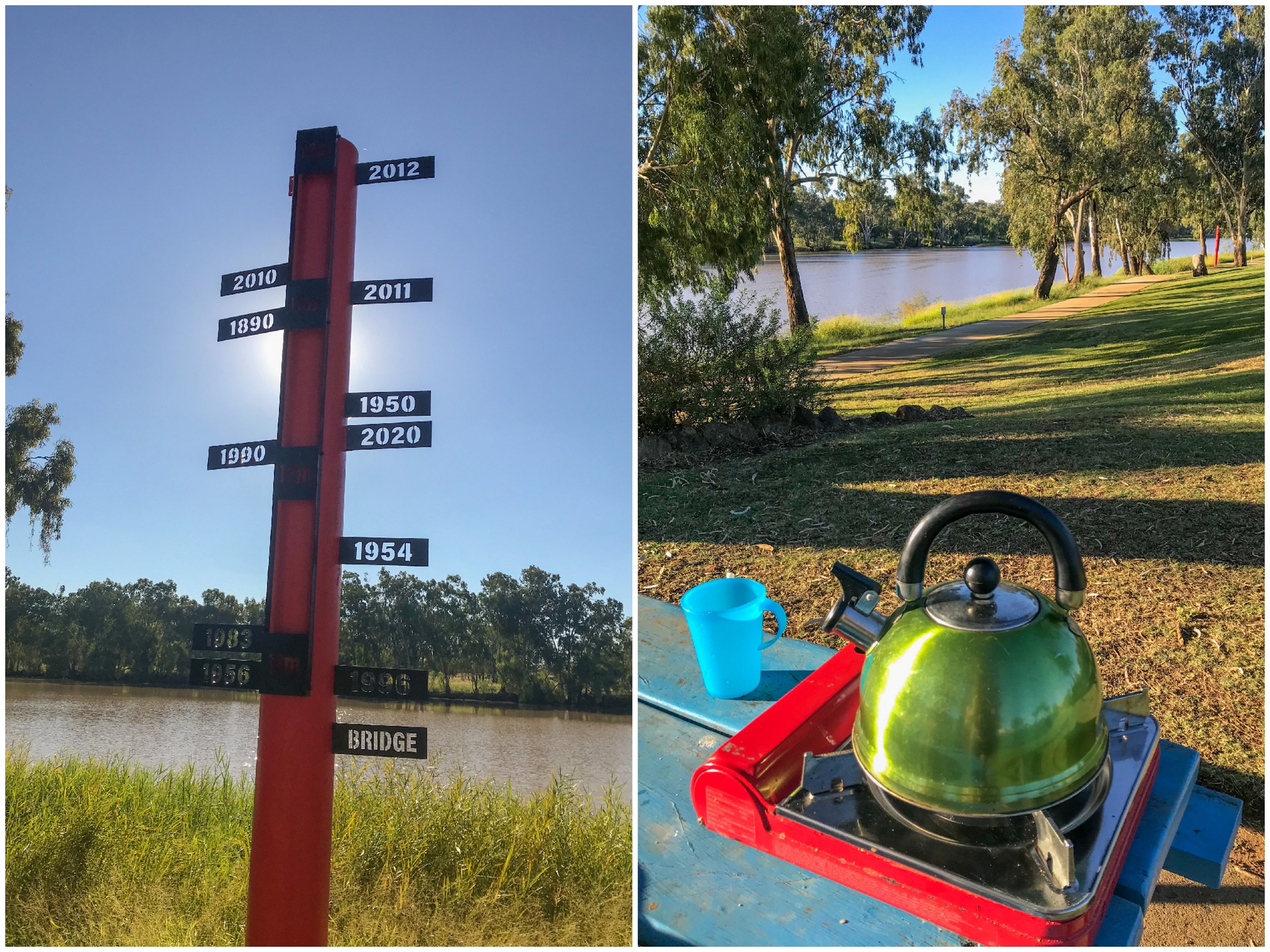
The river is fascinating in its own way – still partly in flood thanks to storms several weeks ago in an area many hundreds of kilometres distant. Waters progress at the rate of Australia’s vaccine roll out, gradually collecting into wide channels and floodplains, seeping slowly through the interior. Eventually these waters will meet the Darling, which will meet the Murray and then find their way to enter the Southern Ocean southeast of Adelaide. They are taking a far more leisurely trip than me.

After the Barwon, the landscape alternates between wide flat expanses of saltbush and clusters of hardy eucalyptus forming around further pools of floodwater. Emu sightings are becoming commonplace and as I near Lightning Ridge, the most astounding sighting yet: an emu comprised of steel girders, car parts and a whole VW Beetle. Stanley the Emu is – according to Tripadvisor – only number 8 of 17 things to do in Lightning Ridge. I clearly need to take the short detour to visit this place.

Lightning Ridge is not just a flashy name but offers some genuine drawcards. There are artesian bore baths and a house made of bottles and – probably the best of the lot – a gallery featuring Australian classics from John Murray. I almost buy a signed print of a rich red sky over a dusty outback road to remember my trip by, but figure it is far too early in the trip. Damage from dust or mice or man-eating snakes would probably become its fate.

A spot of fossicking may provide some funding for such works of art though. Lightning Ridge is best known for its opals, which have been heavily mined and continue to be sought after today. All around town, deposits of rock form in small mounds and people still come to set up a home among the pickings. Corrugated metal and rust are a predominant theme which, set into a glaring white earth and fierce sky, offer a certain Mad Max vibe.

Seriously hoping Mel Gibson is not out in town harassing people I decide it’s time to move on and head north. Well into uncharted territory, even finger waves become few and far between on the way to the Queensland border. In the middle of nowhere, a giant billboard featuring smug people on an idyllic white beach blares “WELCOME TO QUEENSLAND”. A few kilometres further on in Hebel, a ramshackle pub bedecked with golden signs for the insipid state beer confirms the change.

It feels like Queenslanders are – in this part at least – not so much into the finger waves. Perhaps they notice my ACT plates and are suspicious of southerners with their lattes and COVID-19 outbreaks. Gradually the barren landscape around the border appears to become more tamed, more cultivated. Cattle studs, sheep farms, giant silos. I notice fluffy white patches lining the side of the road and correctly deduce the presence of cotton farms. All I really know about cotton is that it is very water-intensive and seems at odds with the land I have come through. But that’s utter Balonne.

I’m not exactly sure how you pronounce Balonne, but it is the big river of the area, part of that same system which will end up in the seas off South Australia. I initially encounter it in the town of St. George, the first place of any size in my progress north. The river lends St. George a somewhat graceful air and no doubt a certain prosperity from cotton and other crops. It’s the kind of spot – at four in the afternoon – that would be perfect as a stop for the night, but I haven’t really made any plans. I decide a cup of tea and slice of Christmas cake will be enough to spur me on for another hour to camp.

Thus I arrive in Surat as the daylight fades. While escaping ferocious heat is a benefit of travelling at this time of year, the downside is the early sinking of the sun. I decide setting up the tent in the dark would be too much of a palaver, so organise my car so that I can sleep in the back. A process which also involved much palaver. But somehow, after 550km on the road, I manage a reasonable, comfortable night of sleep.

As the morning light emerges, I am pleased with my choice of accommodation. The free camping spot in Surat is spacious and shady, next to the river and includes the luxury of a well-kept toilet block with clean, running water. I think havens like this are a good idea for tiny towns in which you probably wouldn’t stop otherwise. Especially for those weary travellers who are in need of a coffee.

Crossing the Balonne again I walk over towards town and follow the course of the river through well-kept parkland with well-kept barbecues and well-kept playgrounds. I am starting to notice just about everything in Surat is well-kept. There is a clear civic pride and welcoming air around the place that you wouldn’t really imagine by just looking at it on the map. 

The main street – which is also the Carnarvon Highway – boasts a swanky looking grocery store, a pub and motel, a small museum, a few civic buildings, and a number of bottle trees. I noticed a few of these last night on the drive up and they are impressive specimens which conjure up a touch of African exoticism.

There is also a café doubling up as providore-cum-giftware shop. It’s still before nine in the morning but the sticky date and walnut cake looks too good to pass up, and I feel obliged to support the local economy given the free accommodation. That is, once I finally download ‘Check In QLD’ to add to the growing array of pandemic-related apps cluttering my phone.

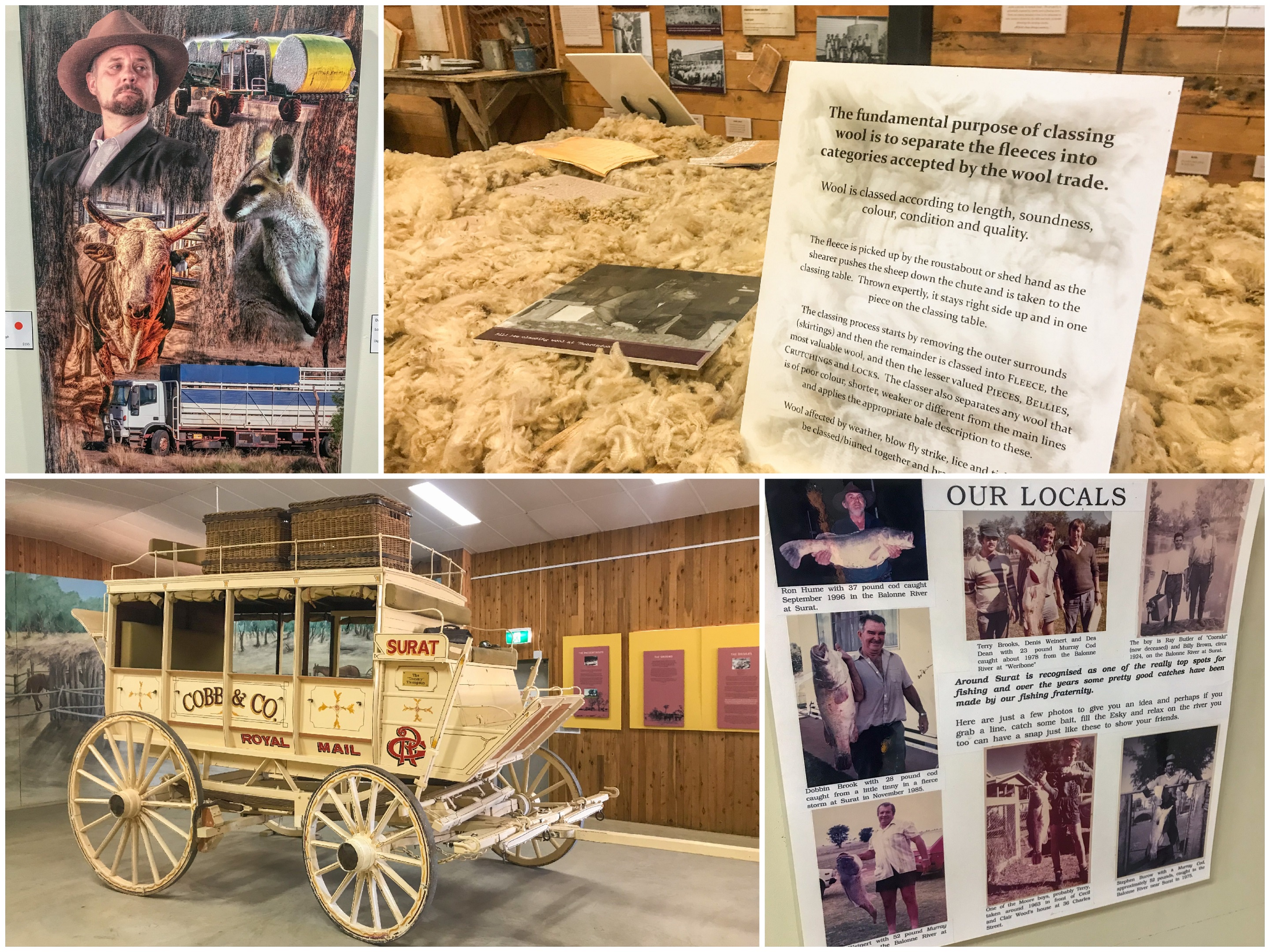
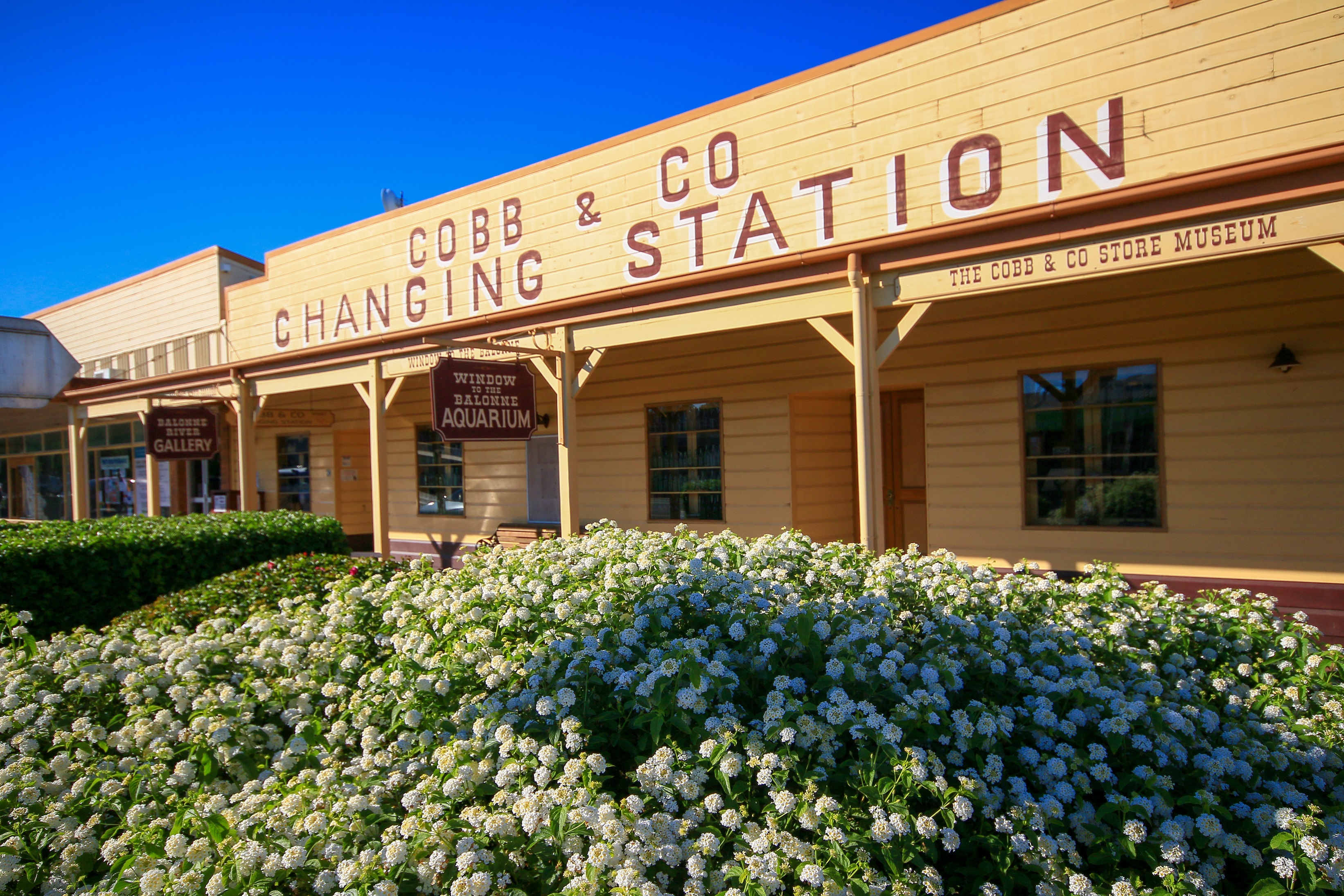
I was keen to linger with coffee and cake until nine to poke my head into the museum opposite. This appeared from the outside to boast a little bit of everything. And indeed there was everything from old bottles and wool specimens to bushrangers and drovers around a campfire. A supplementary aquarium contained species from the Balonne and an adjacent art gallery was crammed full of work from one person which can most generously be described as eclectic.

The centrepiece however – and main claim to Surat – is being the setting for the last ever regular service of a Cobb & Co stagecoach in 1924. While life in an old Subaru can seem a little uncomfortable, these coach rides were another matter altogether. Passengers were able to pay handsomely for the privilege of freeing bogged wheels, clambering in tight spaces to shelter from storms, delivering post, opening and closing gates, and occasionally wading through flooded creeks and streams.

Such ardours meant the journeys were slow, and changing stations popped up along the way for a swap out of horses, crew, packages, and people. Cups of tea and plates of scones might have been arranged or accommodation for the night provided if it was getting late. Kind of like a nicer version of a Travelodge on the M42.

While the form of transport might have evolved over the years, it felt like Surat – this most unexpected of well-kept towns – was still engaged in such a modus operandi. Allowing weary travellers like me to take stock and convalesce, to rest heads and bodies, to receive generous nourishment. And most critically, to recover our worn out pinkies so that we can suitably venture out once more into the finger zone.

Australia Driving Food & Drink Green Bogey Photography Walking

Recovering

I was hoping this really would be the final instalment of a bushfire trilogy. I had written an intro all about the process of relief and recovery, the goodness that sprouts forth as communities pull together, the hope again blossoming like sprigs of green emerging on a forest floor. And lo and behold I drove back home and observed a large plume of smoke rising over the mountains southwest of Canberra. An endless summer marching on. Ten thousand hectares and counting; like Star Wars, there may be more to come.

But recovery is taking place and I think it’s useful to focus on this. Huge amounts of money have been donated, food and clothes given away, houses opened up to strangers. We take our empty eskies down to the coast, we have benefit concerts and tennis rallies, we construct boxes for wildlife to nest in. We pull together, many as one. The best of us on display.

It was inspiring to come across such compassion this past week as I sought out something I could do, anything. This found me on the road to Gundagai and beyond, heading to a BlazeAid camp in Adelong. BlazeAid is a volunteer-led organisation which works with farmers and their families in areas impacted by natural disaster, helping them to repair their property with a focus on damaged fencing. I have never done anything like it. But I definitely will again.

blz01

The road from Gundagai was all golden Australian summer, rolling countryside featuring large paddocks baked by the sun. Recent rainfall and violent storms seemingly doing little to break the drought. While parched, there was little sign of the destruction and devastation of fire as I made my way towards Tumut. The blackness was somewhere beyond.

I arrived at the BlazeAid camp in Adelong, which was based at the local showground. More on this later but suffice to say it was all somewhat larger than I had expected. After signing away my life and setting up my tent, dinner was provided and an update on the day’s activities was made. Dessert was had. And with an early start beckoning, people dissolved into their caravans, tents and swags hopefully to sleep. Something which evaded me for a long while, reinforcing the latter day struggle that camping is proving to be.

blz10

With a kookaburra alarm clock, a large cooked breakfast and a healthy dose of organised chaos, I was off with a small group of others to a farm somewhere in the hills around Batlow. Batlow is in the midst of a massive swathe of scorched land and the town was isolated at the peak of the firestorm. Several outlying properties are now crumpled, tortured heaps of metal and brick, the shells of cars parked outside. The petrol station in town is a ruin.

Heading up the nearby Gilmore Valley the scene was at first all rather idyllic – good farming country that would not have looked out of place in northern England. And then the first bare and blackened hillside appears on the horizon, like the shadow cast by a massive thundercloud. And before long it is all around.

blz02

Climbing up and up a muddy road we reach the home of Paul and Andrea which is – mercifully – fully intact. You can see how close they were to devastation, the garden shrubs singed and charred like overzealously grilled broccoli. We are introduced to Smiley, a farmhand who has that high country man from Snowy River look about him. The hut he was living in didn’t fare so well, wrecked and ruined and taking most of his possessions with it. His ute survived along with a few salvaged remains.

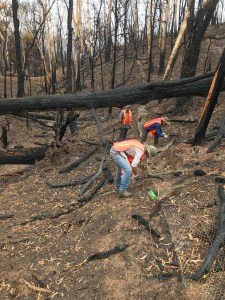
We drive across a few bare paddocks and into the forest. Trees stand like charcoal sticks, branches down but eventually likely to prosper again. The forest floor is another matter: a bare wasteland of ash, like the remnants of a barbecue the day after the night before, spreading out in every direction. The compensation that it has cleared the weeds seemingly a small offset in the greater loss of habitat. And the loss of product – the farm up here produces pure eucalyptus oil, which will take several years to become productive again.

blz04

Among this alien landscape there were – of course – long lines of fencing. Some standing, but most bent and broken and needing repair. I was reminded of why we had come up here. The task was to clear the fencing so that new stuff could be eventually put down in its place. This involved a lot of snipping of wires with cutters of varying quality and the pulling out of fence poles with a fence post pulling contraption. I quite liked the post pulling – more so than the snipping – even though some of the sixty-five year old poles were stubborn to yield.

blz03Focusing on the task at hand, the surrealness of the environment fades away, until you occasionally pause and look up again and take stock. Among the ash, small piles of fence post and a carpet of wire lay ready to be gathered in machines by Smiley and Paul. Our team of four alternate tasks, to relieve various aching muscles and torment others yet to be abused. I’m the youngest and glad of the experience of more practical, hands-on kind of folk who offer good advice and warm conversation. Smiley throws in the odd tip, alongside a healthy dose of banter. He suggests I work for Scomo and this is a bait it’s hard not to take.

There is immense satisfaction at seeing the visible fruits of your labour. We work our way down alongside the perimeter track in increasingly precipitous terrain. The sun is heating up and I’m glad when our team leader decides to call it a day. Sweaty, coated in grey ash, there is a perverse pleasure in acquiring the symbols of a hard day’s toil. You don’t get this writing reports.

blz05

The next day offered more of the same but better. Better because we had a better idea of what we were doing. Better because it was cooler and more overcast. Better because we had a better pair of snippers. And, above all, better because we got to interact more with Paul, Andrea and Smiley.

Partly this was a consequence of the weather, as gusty winds mid-morning prompted a decision to leave the forested area for fear of collapsing trees and branches weakened by the fire. A small stretch of open fencing beside a dam provided a little workout but, when that was done, morning tea was declared. I like morning tea.

blz08

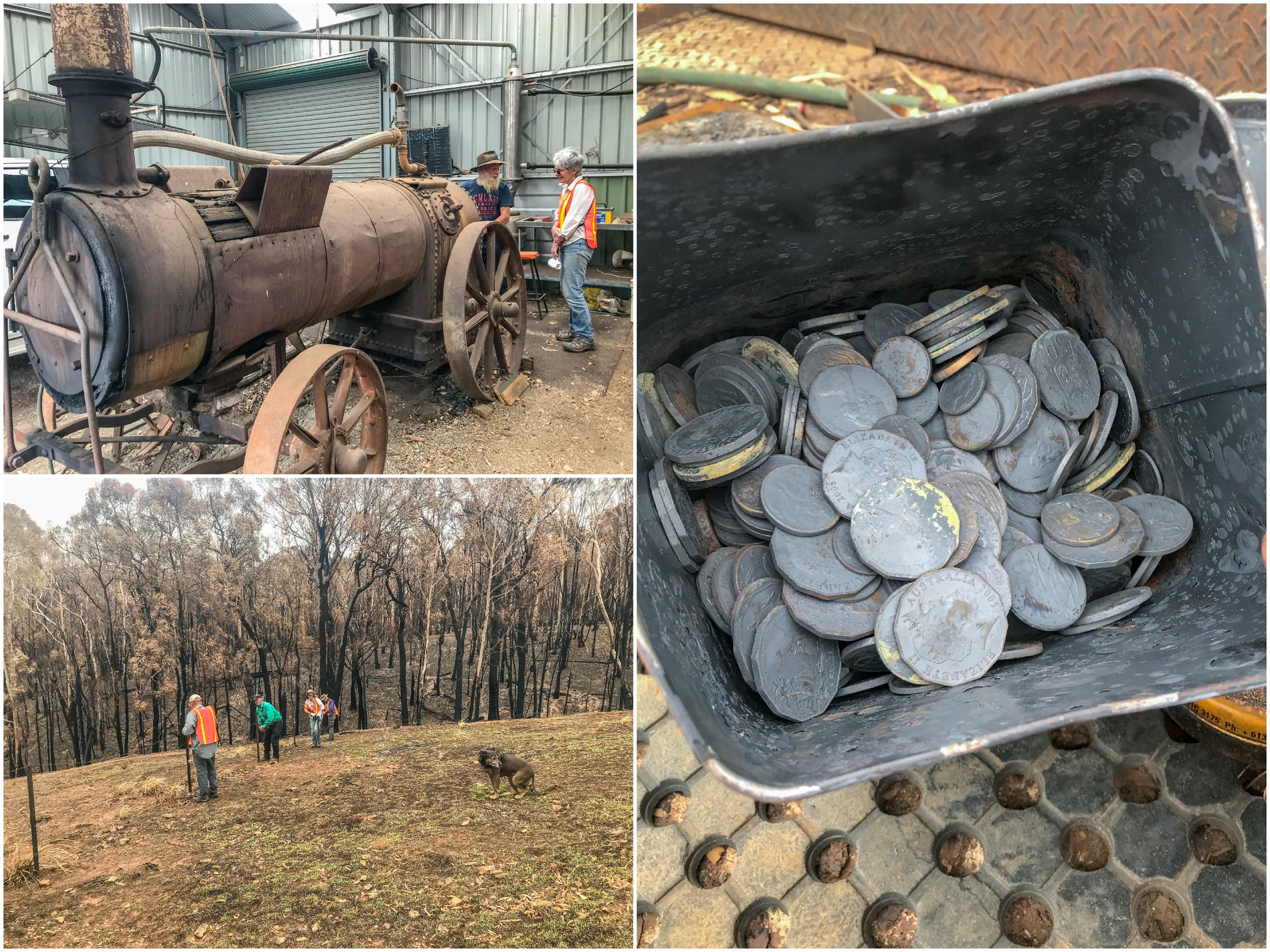
It was over an elongated morning tea that we got to find out a bit more about life on the farm, the people living on this land and their recent experiences as these lives came under threat. Andrea guided us around the garden, pointing out what it was like before flame lapped at the borders. Smiley pointed us towards various contraptions that went into extracting the eucalyptus oil, included a century old steam engine acting as the driving force. And we learned about Paul’s craftsmanship creating gnarly old walking sticks simply with a sheet of sandpaper and a glass of Port.

blz06

They are nothing if not creative, resourceful people, sensitive of the land that they live in. You feel – you hope – this will stand them in good stead moving beyond the fires. You know that this is what probably saved their lives.

Inevitably the conversation moves towards January 4th and the days before and after. There was a sense of inevitability about the fire coming and Paul highlights that the waiting was one of the worst things about it. Days of anxiety and alarm that came from forewarning and a frank admission from the fire service that, if they were to stay, they would be on their own. During this time, busying themselves with preparations: clearing the land of debris, felling overhanging branches, watering down around the house and sheds. Getting the car packed with essentials should they need to flee. Watching. Waiting. For what seems like an eternity.

Eventually it appears on the western horizon. They talk – and it feels an almost cathartic exchange – of defending their home as the fire lapped at its doors from three sides. Erratic, violent wind changes pushing the front from the west, the north and the south. The noise terrifying. Raining embers igniting bushes and trees around them. Sprinklers on the roof previously used to clear snow now somehow sputter enough to dampen sparks. The power goes out but – mercifully – the generator kicks in and the water pumps persist.

It is the longest, darkest day, one they freely admit they would never face down again. Barely was there time for a breather, though Smiley managed to take five and puff on a rollie. Paul captured this image on his phone and chuckles: if ever there was a sign of an addict that was it. Chuffing away as smoke surrounded.

He probably deserved a ciggie, his hut lost along with many of his possessions, his ute still bearing a few scorch marks from the moment he fled. On the back were some salvaged items, including a charred tin of loose change, the coins inside faded and melded to grey. Hopefully still legal tender – there is a fair amount in there, though the dollars no longer shine gold.

Smiley fondly recalls his home in a hollow among, but not right next to, the trees. It was always ten degrees cooler, he says, natural air conditioning and breeze. Snug in winter. A place of peace and solitude. He’s now in a caravan which they managed to pick up at a bargain price – for this he feels lucky. Lucky! But he hankers for a hut again and intends to rebuild in another nearby pocket of paradise.

blz07If that isn’t inspiration enough to get back out to finish our job, I don’t know what is. The gusty change of the morning has subsided and we venture back into the forest, working methodically uphill towards the boundary of the property with the forestry road. Someone spots a red belly, thankfully not me. The fence is horizontal here, and the pole puller contraption largely redundant until they can be bent upright.

As we approach our last stretch of fence to clear, rumbles of thunder echo through the forest from the west. Large spots of rain begin to plop into the ash and earth and upon our hats and gloves and hi-vis vests. The last post is pulled and we march back to the vehicles as the heavens open. It is but a shower, but a heavy shower and every little helps.

Before departing Paul invites us back to the house, offering a cold beer and a gift pack of eucalyptus products. Andrea and Smiley join us, as do the two dogs, keen for a spot of attention from strangers. Or those who were once strangers, but who now chat away like old friends. Mates helping mates.

blz09

Of course, it is now abundantly clear that BlazeAid is about more than just fencing. It’s about connection and conversation, and a manifestation of community looking out for one another, through good times and bad. It’s not really charity, nor is it solely a case of do-gooders looking to do good and boast about it on social media. Everyone gets something out of it: practical, tangible skills, connection and interaction with different people, sore backs and filthy clothes, and the opportunity to enter some of the most beautiful lands within Australia, as savaged as they are.

It seems a bit strange to say in the context in which it takes place, but there is a feelgood factor around the experience. The atmosphere at camp is both soberly reflective and celebratory. Teary eyes are never far away. Inspiration is on tap. People from all walks of life, across the ages, from all over Australia and beyond, come together over dinner, swap tales from the day, share the stories of farmers and their families, reel off the length of fence cleared or erected.

Dinner itself is an achievement, a carb-filled wonderland engineered by an angelic mix of locals and visitors giving their time to tray bake and slow cook and whip cream and take receipt of an endless donation of cakes from CWAs and Rotaries and Mums. If I stay any longer, I’ll get fat. They keep offering me biscuits and caramel slices and passionfruit tarts. Manual labour can only burn off so many calories.

blz11

I do stay one more day. One more cooked breakfast, one more hearty dinner, one more day of snipping and pulling and – this time – rolling up wire and starting to put brand new fence poles into the ground on a different property. The temptation to stay another day kicks in too, especially as the farmer promises to cook up a BBQ lunch the next day, the centrepiece being his 11 month aged beef nurtured on this land.

But my body, and my lack of sleep, tells me no. I struggle to clean my teeth, the grip and motion jarring on my hands and my shoulders and my chest. Writing is also pained, as I finally sign out and walk out to my car to begin the journey home.

As I do so, new arrivals are emerging for the long Australia Day weekend. A minibus of Afghan refugees from Shepparton set up their tents. A couple from Queensland offload supplies from their caravan. Teenagers from Wagga help to sort out donations. German backpackers encourage an international kickabout on the oval.

BlazeAid veterans wonder at it all. Unprecedented events resulting in unprecedented kindness. Not from superheroes, but from everyday people. Recovery belonging to us all, the community, now and in the months and years ahead.

blz13

 —————————

Please check out www.blazeaid.com.au for all the details and camps currently in operation across several states. They will be running for many months.

Anyone can do it. Like me you don’t need to have any particular skills. Just a keenness to get involved and learn. Some people are great snippers, others are wonderful sausage sizzlers. All are needed and all are valued. It’s worth it just for the bounteous dinners and home baked cakes! It’s rewarding and enriching and it will be the best thing you have done in a long time, I promise.


Australia Green Bogey Photography

Warming

It is a fact truer than anything to have ever come out of the British Prime Minister’s mouth that I will always take up an opportunity to work in Brisbane in July. While the locals may gripe about the icy depths of winter where overnight it might just slip below double digits and require a good for humanity coal fire, I’ve packed two pairs of shorts. And just the one jumper.

brs01And a raincoat. For it is even truer that Queensland is far from beautiful one day, perfect the next; a dubious marketing slogan dreamt up by mediocrities that continues apace in the supposed Sunshine Coast, a place frequently sodden by epic downpours and possessing a clammy mildew befitting the swampy subtropics. Saturday here was so damp that the highlight was a doughnut, and even that wasn’t much of a highlight, more a triumph of social marketing style over substance.

brs02Queensland: pissing down one day, sweaty the next. The sweatiness emerging on Sunday as the sun makes an appearance, triggering rising heat and rampant moisture. Liquid particles are lifted by ocean gusts, filtered ineffectually through the thrum of air conditioning to congregate in damp surf club carpets. Puddles among snake-infested flood plain linger, waiting for passing birds and passing property developers to drain. The ubiquitous HiLux secretes fluids while idling outside Red Rooster, as a leftover billboard of some redneck running for parliament gazes down approvingly. Just thank the lord or some other unelected deity that it is not yet high summer.

Indeed, the sweatiness is relatively tolerable this time of year and is alleviated by the pleasure of wearing shorts in midwinter.  As dark clouds sweep north to reveal a sky of blue, there is an hour of pleasant sunshine on the coast, a welcome companion on a bare-legged walk along the beach and promenade to Mooloolaba. I rest at Alex Heads watching sandcastles being built and surfers being demolished, and sharks being hidden just out of site. Probably. It’s not even a whole day let alone an entirety of existence, but for a few moments it seems that things are beautiful, tending towards perfect.

brs03

Somewhat annoyingly the sunshine was a sign of an improving pattern of weather as I returned to Brisbane and the prospect of work. On the plus side, there was a bit of downtime and a later flight back to Canberra on the warmest day of the week, giving me the opportunity to don shorts once again, while all around me wore coats. And then there was the hotel I was staying in, which was rather fine with its rooftop pool and terrace overlooking the ever rising city and the ever flowing brown of the Brisbane River.

brs04

Actually, the hotel was somewhat funky and felt more like a spot for special treat bogan holidays and shadowy foreign gambling syndicates fast-tracked by Border Force than a place where weary businesspeople rest their weary heads. In my room there was a wine fridge, the TV was in the mirror (what?!), and there were a series of illuminated switches that operated a configuration of lights that I never was able to master. Switches that glow in the dark and give a sense of Chernobyl as you try to sleep. Only the lift was more luminescent, alternating between being in a Daft Punk video and a fish tank of the Barrier Reef before it got bleached.

Walking out of the lift and onto the street was a sure way to ease a headache, especially as outside it was warm and sunny and just oozing that relaxed vibe that comes with a level of warmth and sunniness. Think how England feels when the misery of flooding rain and gloom dissipates for a freakish sunny day, golden and mild after months of despair and before the impending furnace of yet another unseasonal heat plume from the African colonies. A bit like that.

The Brisbane River acts as something of a waymarker wandering the city, guiding you along South Bank and its gardens and galleries, channelling you across to the north with angular bridges and sweeping curves. Disappearing as you cut across the CBD with its blocks of one-way-street and chirruping pedestrian crossings, before emerging again in an amalgam of mangroves at the terminus of the Botanic Gardens.

brs05

Back across the river, the cliffs of Kangaroo Point provide fine city views as well as clichéd place name delight for international visitors to post. Some people abseil down the cliffs, others look up from the riverside path below. All try to avoid getting run over by yet another dork on one of the city’s electric scooters. Most sit and wait and contemplate what it would be like to be on a scooter, as the sun goes down on another day in Queensland.

brs06

And for me, as darkness descends, it is back to the light. The florid light of that lift going up to the many lights that I cannot figure out how to arrange in my hotel room, the switches for which will light up at night as a constant reminder that they have won. Along the way, the lights of the city flicker on, as the temperature drops below twenty.

brs07

After a few days here I rummage in my bag for that one jumper. It’s starting to get a tad cool, just a little off being perfectly comfortable. I could survive without it, but I did pack it after all, and it would be a shame to carry it all this way and not put it to use. For the first time in Brisbane, I seem to fit in. Now all I need is a scooter to carry me off into the night, towards the light.

Australia Food & Drink Green Bogey Photography Walking

Lazy swing

Perfect timing is an almost impossible feat for golfing hacks like me. To successfully synchronise arms and legs and shoulders and heads and buttocks and toes to make contact with a little ball in such a way as to propel it hundreds of metres straight into the yonder. Or, more likely for an annual swinger like me, veer off into the never never.

Perfect timing beyond golf can be equally tricky – think roast dinners with overcooked veg, last minute flurries of activity for work deadlines following weeks of procrastination, deals for departing continents. But, of course, the reason such a concept exists is because once the timing does work out, everything is just about, well, perfect.

And so, on a Sunday afternoon following a frenetic couple of weeks, I found myself with two friends – Alex and Michael – down in Tuross Heads on the South Coast of NSW. Late afternoon sunlight illuminating yet another typical stretch of typically Australian sand, typically devoid of humans and their typical detritus. Water in late March about perfect for a paddle, and a clutch of cold beers in the bag.

tur01

tur02This proved an aperitif for the perfectly timed stroll beside the water to the Pickled Octopus Café, where we availed ourselves of a pristine outdoor table lapping at the glassy calm of the inlet. Fish and chip orders arrived as the daylight turned to dusk, each munch of deep fried saltiness coinciding with a deepening of colours and escalation of heavenly drama. A moment when nothing else can distract and nothing else really matters. Timing again exquisite.

tur03

The dawning of the next day heralded great opportunity for timing to go awry. Featuring my annual attempt at playing golf, it was however more about the setting than frequent futile attempts to make a small ball go into a small hole. Narooma’s dramatic oceanside holes and its winding course through tall eucalypts and saline creeks set the scene.

The 3rd hole is probably the most renowned landmark, requiring a shot over the ocean to a green among the cliffs. To my utmost surprise, following a very rocky start, I launched the ball high and true, landing 10 feet to the right of the pin. The pride of making par only matched by a birdie on the 17th. A little perfect timing amongst much that was off.

tur04

Nevertheless, the views along the way offered plenty to treasure, a perfect blue sky day when it is easy to get distracted from the tee or green or your wayward shot with the panorama of ocean. Empty sweeps of sand, crumbling wave-pounded cliffs, pebbly coves peppered with plastic golf balls destined to pollute the ocean. I did my very best to save the whales (see above).

tur05

tur06Back in Tuross Heads, it really is a little nugget of a place, especially when you visit out of holidays and weekends when it is neither ferociously scorched by bogan summers or coated in a wintry ghost town gloom. I’d say the perfect time, perfectly timed, would be around the end of March and early April. And here we were, April 2, sat out on the deck of the Boatshed, drinking a coffee and thinking how lucky the local retirees were. But we were there too, and very thankful for that; lucky to able to have this to enjoy no matter how brief.

This would be a great spot to take out a kayak, but perhaps that’s for another perfect time. The exertions of the annual golf escapade meant slightly sore shoulders and backs and a preference for something a little more leisurely. Anywhere around here there is always a beach, or an inlet, or a patch of fragrant gum forest in which to wander.

tur07

There are serious tracks that go on a long way, up to campsites and coves and more headlands and tracts of wilderness. Will it always be like this? Heaven only knows. You don’t see it changing too much anytime soon, but it will. For now, the footsteps in the sand back to the car linger for a fleeting moment, the briefest moment of time in the grand story of our world. Insignificant imprints, but for those who left them to be blown and swept away, a perfectly timed point in time.

tur08

Australia Food & Drink Green Bogey Photography

Transitional

There was a somewhat fitting addendum to my journey in supposedly great Britain, a transitional phase elongating the journey between two hemispheres. Norfolk is rarely likened to Australia – though it is the driest region of the UK and famously has an in-breeding rate some hick towns in the outback might aspire to. Yet being here felt one step closer, one step nearer to that other home down under.

Norfolk is now home to Jill, someone who I associate with so much of Australia, having covered many miles together crossing a wide brown land. And so, a weekend here had parallels: coastal walks, bird rolls, coffee and cake, and an infestation of boatpeople. The Broads, like a Noosa Everglades of tangled waterways, is plied by extravagant cruisers and basic tinnies, festooned with birdlife, and regularly adorned with waterfront retreats. Very Australian; though here, little Englanders can live on their very own island and control their borders until their hearts are content.

back01

It is quite possible to get a roast dinner in Australia; even when it is forty degrees there will be waterfront homes boasting a chook in the fan-assisted humidifying oven, accompanied by roasted vegetables that undoubtedly include pumpkin. While the roast dinner may be a relic of colonisation, its pure deliciousness has helped it to endure as a great British export, even if it does become bastardised with pumpkin or somehow cooked on the barbie with a can of beer up its arse. But the roast is best fitting in its true home: a cosy pub on a grey day.

It is also quite possible to get coffee in England; even if you are truly desperate there will be a Costa Express at the servo down dale. The thing is, you really need to have cake with it to compensate for the likelihood of receiving a giant cup of hot liquid somewhere in the range of blandly mediocre to bitterly dreadful. I can adapt to this situation, but the thought of returning to Australia and having a coffee fills me with a little cheer.

England or Australia, Jill and I always do our very best to eat and drink well.

back02

The good thing is we traditionally tended to walk such things off with potters around Sydney Harbour or ascents of Grampian hills. A Saturday spent on the North Norfolk coast offered conditions for a good old bushwalk, with typical weather to boot: warm winds and clear skies probably bringing temperatures I had not felt since August. Centred around the sprawling estate of Sheringham Park, the walk including lush forests, lofty lookouts, dried out pastures and placid seas. The pebbly beaches are far from Bondi, but they can equally host a tasty bird roll picnic.

back03

This landscape was naturally far from Australian, but it was also a slightly different type of England, distanced from that familiar land of heavily undulating green plunging into the Atlantic. I was no longer home on my way home, still happily soaking up lingering remnants of what is great about Britain but preparing my mind to embrace Australia again. A long transition was in play, like that of the leaves around me, gradually drifting away towards their winter…

back04

——————————————

back05…And just like that the world spins and you fight against it for a day or so in this never-never land of cold air and reclining seats and unappealing movies and rice with two lumps of what might be chicken. Dessert is more of a highlight because it involves – somewhat poetically – Salcombe Dairy Ice Cream. Here I am on a Singapore Airlines A380 headed for Australia and dessert comes from a little patch of paradise on the south coast of Devon. In that taste of creamy cherry are the lush meadows and deep blue seas of home. I can see Bolt Head, as clear as day.

back06At some point the world becomes tropical. There are bright lights, acres of glass and miles of travellators. You could buy a Rolex or a roti with some weird money. It is five in the morning and people are eating dinner. You are somewhere in the world at some point in time but not much of it makes sense. If only it was all a dream, the relaxing sound of running water and floating butterflies lulling you into restful sleep…

——————————————

…restful sleep feels like such an unrealistic aspiration. You are back in your own bed, surrounded by your own comforts, but even the 3am sounds of a boring discussion on Radio National do not cause eyes or mind to yield. It can be tough, that first week being back, but it can also be filled with joy.

The joy of finally getting the journey done counts for a lot. But there are also those home comforts, a re-acquaintance with certain foods, my car starting, a new but familiar environment, the coffee…the coffee and the sun and catch ups with friends over coffee in the sun.

As I leave one autumn, the promise of spring pervades, amply exemplified in the lavender going crazy and weeds liberally taking over my garden.  Everywhere flowers and blooms and fresh green buds, from the manicured terrain of the Parliamentary Triangle to the sprawling native treasures of the Botanic Gardens. Shorts are more often than not feasible under frequent blue skies.

back07

back08

Maybe it’s the season, but the blue skies you find in Australia do not seem to exist in the same way in the UK, in Europe. They are bigger and bluer here, more intense and infinitesimal. They create boldness and vibrance rather than subtlety and nuance. They can make the landscape appear stark and saturated. This difference like a polarising filter thrown over my eyes.

Only as the longer days edge towards their end does the light soften, but even then there are hues of summery gold and laser red projecting onto hills, eucalypts and rapidly rising apartment windows. The sun does its reliable trick of shifting forever west as the world turns, west to embrace the rest of the world, the world from where I have come. A sun forever shared across the miles, permanently, naturally transitional.

back09

Australia Great Britain Green Bogey

Sweaty New Year

Happy 2017! We made it, and what a year it promises to be. Among the highlights there’s the spectacle of a new President making Americans grate again, the joy of figuring out what the bleedin eck you are actually going to do now Great Britain, and the potential for Plymouth Argyle Football Club to slip from a promotion spot into play off misery. In spite of this I’m sure there are plenty of good things to look forward to though, like Plymouth Argyle winning promotion. And cheese. Cheese will still feature. It will also be the hottest year in history, so get your swimmers and thongs on people. The world will turn into an eternal Queensland. And wouldn’t that be just, well, bananas.

To Vegas

xb01In Part 2 of my holiday travels (Part 1 is here), we return to Lismore where I slept the night in a proper bed and once again cherished the presence of a shower. I sorted out my car just a little, grabbed a coffee and then went to see a great big prawn. As you do. The prawn is in Ballina, and so is the ocean. Not that they put the prawn next to the ocean; no, it’s more at home in the Bunnings car park, warily eyeing off the sausage sizzle. Nothing could be more Australian and it brings a tear to my eye.

Fortunately, Ballina also had an English presence to prevent me from transforming into a drongo with a mullet, singlet and ute. Caroline joined me for this part of the trip and onto Brisbane for the New Year. The first impromptu stop was Thursday Island Plantation just out of town and I can’t imagine too many drongos head this way for a tea tree fix.

xb02Pausing briefly around the border towns of Tweed Heads and Coolangatta, I decided to head around much of the Gold Coast and enjoy the lumpy patch of verdant paradise that is the hinterland. We crossed the border back into NSW and changed time zone heading up and down to Murwillumbah. Surrounded by fields of sugar cane, half of this year’s yield was in my iced soft drink from KFC in the town. After which we zoomed onwards and upwards.

Cresting the road it was back into Queensland and – just a little further on – Natural Bridge. I think I came here a couple of years back and forgot my camera. It was quieter and cooler then, and there were fewer tools with mullets and singlets walking down slippery steps in thongs. Oh well, it is the summer holidays I guess. And the falls do tend to appease any minor irritants.

xb03

From here it was down to Nerang and back on the main road. A main road with motorway services and everything…surely worth a stop for Anglo-Australian comparison. And fuel, to take us past the suburbs, across the river, and into the midst of the city of Brisbane.

Here is New Year

xb06We were staying in a rather pleasant apartment in the CBD, with a bit of river view that was to come in handy for New Year’s Eve. The river was a frequent feature of our ambling, crossing over to South Bank, strolling alongside the Botanic Gardens, heading over to the air-conditioned awesomeness of GOMA. You could see its brown waters from the top of Mount Coot-tha, and you could encounter them at close quarters on the CityCat ferry, travelling under the Story Bridge to New Farm. In fact the river was almost as pervasive as Max Brenner; Caroline keen to get a fix or two before heading back to England, and I happy to tag along.

xb04

Much of this was familiar ground and, to be honest, is far more pleasurable to experience in the less humid yet still low to mid-twenties winter; that period of the year when locals laughably wear scarves and eat soup! Yet at the end of December, sweatiness was unavoidable, flowing down backs and probably finding its way into the Brisbane River. Dripping en masse during New Year’s Eve fireworks, watched in a family friendly manner at 8:30 along the riverbank and, more comfortably, from the balcony at midnight.

xb05

New year, new places. Starting with a drive to the shores of Moreton Bay at Cleveland. And then on a ferry for a pleasant ride to North Stradbroke Island. Or, to make things simpler, Straddie.

xb08

xb07Ah, island life. A time to kick back and relax. Or wade in stagnant pools with hundreds of kids, or queue endlessly for ice cream, or take a big f*ck off truck onto the sand and ruin the wild ambience. This is what was happening all around, but we still managed to kick back and relax a little at Point Lookout. Before queuing for ice lollies in the world’s most humid shop.

xb09

Straddie is another one of those places that would be even better in winter, when the holiday masses are at school and the humidity is less fearsome. It certainly has spectacular ocean beaches and striking coastal scenery, some of it possibly still untouched by every four-wheel drive in Queensland.

xb10A taste of what this would be like came at the end of the day, with the sun lowering, a breeze providing relief and a quiet satisfaction milling about the beach near Amity Point. In slanted sunlight kissing sand golden, you could innocently wade in the water happy, only to discover dolphins surfacing mere metres away. Before disappearing as abruptly, leaving only fond memories and countless blurry pictures of ocean on your camera.

If it goes on like this, maybe 2017 won’t be so bad after all.

Tuesday Night Fever

Did you know the Bee Gees from the Isle of Man and Manchester who probably spent most of their life in the USA are Australian? Yes it’s true, and they spent some of their formative years in the bay side suburb of Redcliffe. In places, you can see the English likeness, with an elegant pier and a waterfront walkway for genteel promenading. The weather today, too, is akin to a drizzly summer’s day in Bournemouth and, like England, there are hardy people bathing in the lido. Despite being quite cooler, sweatiness lingers.

xb11Still, this drizzle is nothing compared to the deluge the previous evening. Sat contentedly eating some Japanese food in the city, we were somewhat oblivious to the torrent of rain that had decided to unleash itself on Brisbane. Only emerging did we witness instant rivers flowing down the mall and citizens racing precariously across streets in their unsuitably thonged feet. We made it back to the apartment, but even with the protection of umbrellas there was considerable dampness.

xb12So as grey as it was today in Redcliffe, at least you could walk outside without fear of being drowned. And there are always the Bee Gees to brighten things up. It seems the canny council in Redcliffe has recognised the potential cash cow of this association by constructing The Bee Gees Way. Linking two streets, it captures people walking from the car park to the scattering of restaurants by the seafront. More than a woman walked by the pictures, words and videos telling you of their time in Australia and beyond. I guess your willingness to trek out to Redcliffe to see this display may depend on how deep your love is for the hairy triumvirate. I can take or leave them, but I found The Bee Gees Way curiously distracting.

For Caroline, on her last night in Australia, could it get any better? Well, maybe if the World Darts Championships Final from the Ally Pally was on when we got back to the apartment. But – inexplicably – provincial basketball appeared. Alas, we’ll have to make do with a final visit to Max Brenner for some chocolate indulgence to round out the trip.

Sometime Sunny Coast

A leaden morning farewelled Caroline at Brisbane Airport and it was time for me to chase the drizzle up the coast. I thought about stopping and having a walk somewhere within the Glasshouse Mountains, but you could barely see the things. Randomly I drove to Bribie Island, just for something to do, taking in the Floridian waterways and pausing for a coffee at Woorim Beach. In the grey it was more Skegness than Sunshine State.

xb14Arriving in Buderim, I made the best of the weather and tried to have a nap. While it was of limited success, the rest refreshed enough for a walk in Buderim Forest Park. Here, the dampness had the effect of illuminating the tangles of rainforest, a grey backdrop to semi-tropical vibrancy. Glistening boardwalks peppered with fallen russet leaves; lustred green foliage and ferns dusted silver with water; and bubbling cascades and falls given impetus by the weather.

xb15

xb13I was only going to stay the one night on the Sunshine Coast, but my weather-induced weariness and the prospect of heading back to the swag tempted me to linger for one more. The extra day was drier, and the sunshine even emerged on occasion. This made the walk up to the top of Mount Coolum somewhat more hellish, but I felt like I had achieved something and could spend the rest of the day eating and being lazy.

Given this was as far north as I would come, and I was about to head back inland, I felt the need to indulge in a ceremonial wade in the ocean. Mooloolaba granted me this wish, the ocean cleansing my feet and ankles and even my legs. That was perfectly sufficient; beyond that, bigger waves and potential sharks. I had done what everyone does in Queensland in the summer holidays. Now I could leave and commence my less conventional trip back home.

xb16

Australia Food & Drink Green Bogey Photography

Gold at heart

The Olympics! I haven’t mentioned the Olympics and how good it was to see most of it on TV in the UK. Complete with the kind of partisan coverage that I love exemplarily executed by the Beeb. Great Britain, Second, Who needs Europe anyway, rah rah rah, put out the bunting. My how we have grown to love bunting!

And so to the capital of gargantuan bunting, a city that at times was an emotional and physical drain on me but is now an absolute tonic to visit. I swear the underground seems to work better nowadays, everything seems a tad cleaner and a bit less grey, the spirit is more open, eclectic, progressive, and now – as a visitor – I can see that London truly is one of the world’s greatest cities.

lon03

Being the August bank holiday weekend I was flummoxed to find myself in shorts on a balcony in the outer suburbs of London with friends Caroline and Jill (note: above picture is not from that balcony!). With this warmth it could have been Bondi, apart from the lack of sand, good coffee, and film crews desperately waiting for the next hapless backpacker to get caught in a rip. But at least there was cake, no kids for a couple of days, and a generous array of pre-birthday celebration antics mysteriously planned. Wild times ahead!

lon01First up on a perfect day we scaled the heights of 20 Fenchurch Street. By elevator of course, up to the Sky Garden of the building popularly known as the Walkie-Talkie. No bungee jumping, no glass-bottom floor, no zip wire…just astounding views over London, shady ferns, comfy sofas and another predictably poor coffee.
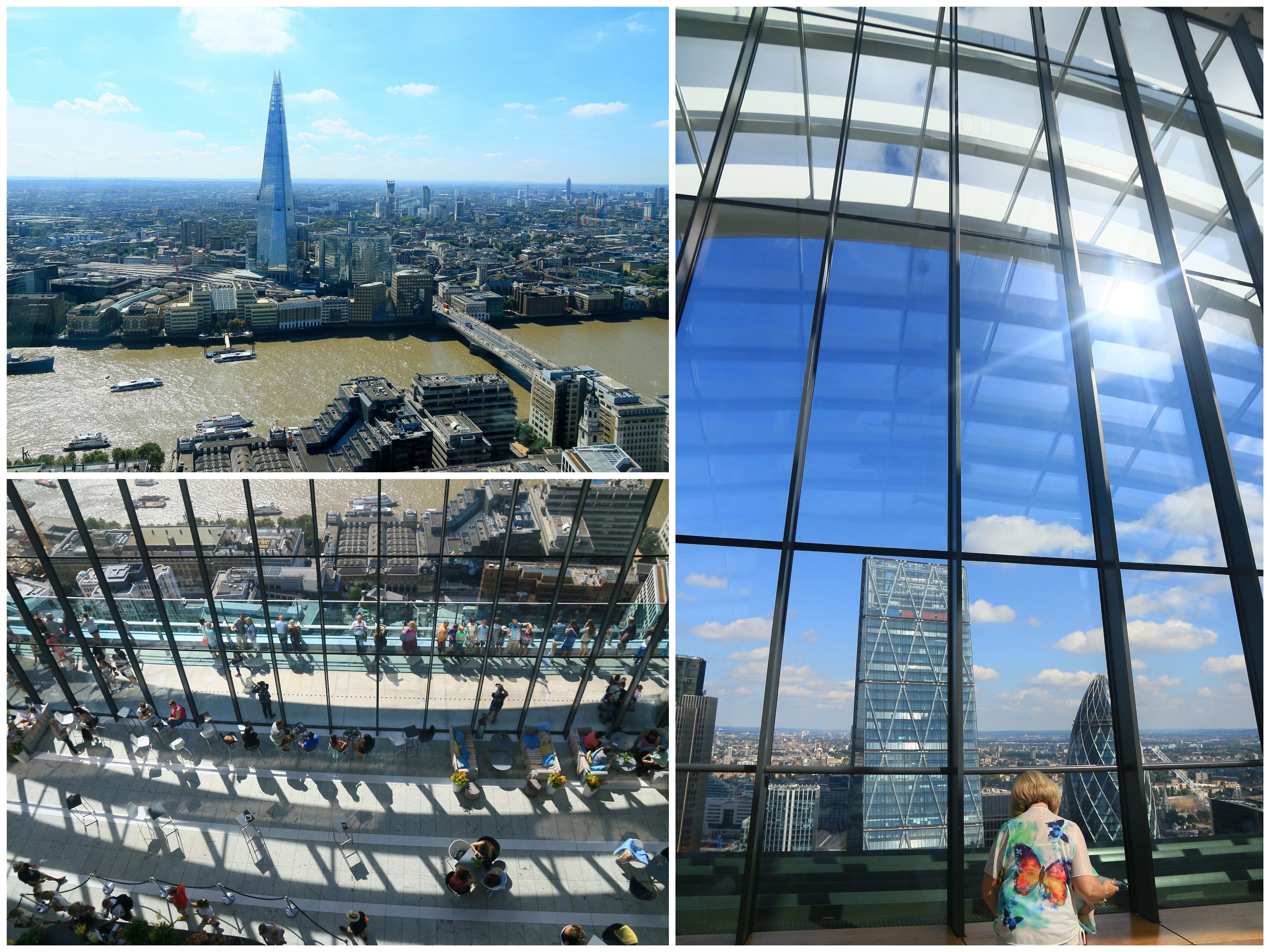
lon02

Back down amongst the hustle and bustle of the streets we grabbed some suitably middle class lunch involving hummus before embarking on a mystery journey on the meandering tentacles of the District Line. One of the fun aspects of this journey was not being told anything about where we were going or what we were doing, apart from dire warnings that I might get wet. All a hilarious ruse to baffle an old man as potential options disappeared with each tube stop, finally dwindling to something in Richmond or Kew Gardens. And at Kew Gardens Station, we abruptly bolted for the exit.

lon05I am wondering if there is any finer place than Kew Gardens on such a beautiful late summer’s day. For not only are there acres of manicured lawn, generous pockets of woodland bursting green, and a profligate array of multihued flowerbeds, but you can also play guess the airline. In the cloudless sky, the parade of jets coming into land at Heathrow provides a distracting guessing game when one finds oneself eating ice cream under the shade of a tree. The funny thing was, we didn’t seem to be the only ones playing it.
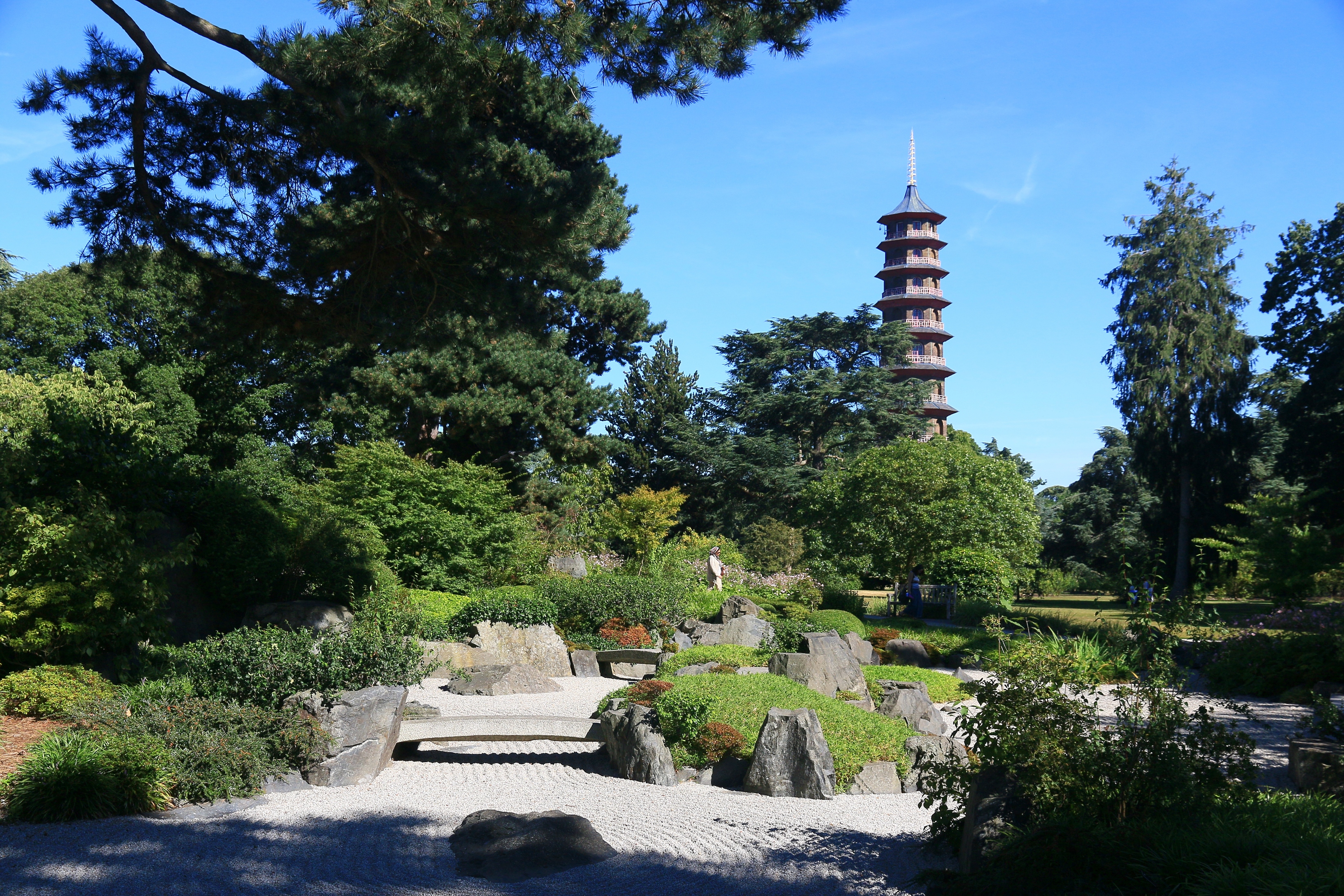
lon04

lon06But back to earth. We must have walked a fair few miles around the gardens but at regular intervals there was an opportunity to dwell, a chance to linger. A gallery here, a cafe there, a grand house beyond the trees. Sculptures and water features and artworks to do with bees, in which human drones obediently infiltrate the hive out of nothing more than curiosity.

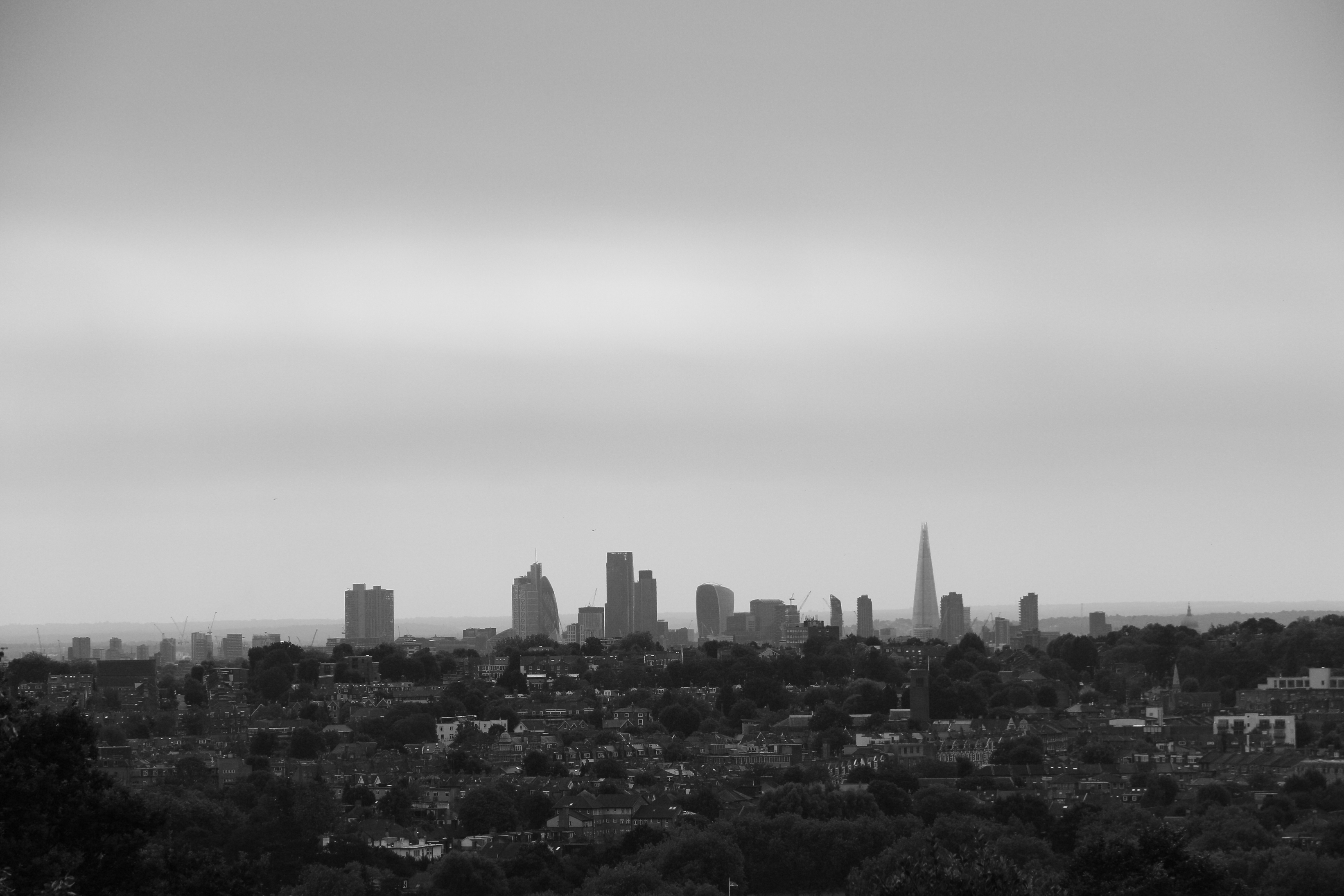
lon07

Then there are the glasshouses. Today it feels like there is no need for hot, tropical climates, but it’s fair to say that the weather is rarely this good. Orchids, palms, lily pads…climb some stairs and you can even go bananas. This would be a good winter refuge.

lon08

And finally, almost as cavernous is the gift shop. Which in gift shop terms is reasonably respectable, with tasteful botanic tea towel prints and encyclopaedic tomes relating to the history of the fennel seed. It would be a decent place to buy Christmas presents for those people you really have difficulty buying presents for. Adding to its appeal in all seasons, we concurred that buying an annual membership pass for Kew Gardens would be a worthwhile purchase if you didn’t live, say, 12,000 miles away.

One thing is for sure – people living in and around the gardens could no doubt afford it. And should they dare to venture out of their generous and elegantly proportioned homes they could entertain themselves besides the river. The Thames of course, dotted with a pub or two on the Chiswick side. An ale by the water, sat comfortably outside as the daylight faded, all supplemented by a dose of fish and chips. This has been a good, a great, a golden day.

—————————-

Such a day set a high bar to live up to and the following proved a quirkier affair. Exploits of yesterday had induced a dash of weariness but we still successfully ate some food, walked in a park, shopped, laid on a picnic blanket, and got House of Love wedged into our brains.

First up was a trip to the palace – Alexandra Palace or Ally Pally as those in the know call it. Views from here reflect back on where we were yesterday. You could see the Walkie-Talkie, but none of us could remember seeing Alexandra Palace when we were up there. I guess because there was so much of distraction in between from the other vantage.

lon09

In the parade of pre-birthday surprises I feared an onset of painful embarrassment upon the ice rink situated in the palace. But I needn’t have feared, because there was a much more suitable food festival nearby. Offering a few free samples, mostly of the alcoholic variety, it was enough to induce a craving for an organic grain fed pork sausage and onion ciabatta. As you do near Muswell Hill.

Alright, alright, everything’s gonna be alright because somehow we ended up at Walthamstow Central, East 17. Mystified as to why, there were claims of passing Bryan Harvey’s house, seeing the place where shell suited fashions were purchased, crossing the road that the group’s dog got run over on. Or something. But it turns out this part of the world is renowned for more than a former greyhound stadium and chavesque low brow Take That. William Morris did some things with design for wallpapers and turned into a raving socialist. And this was all recollected in his once grand house and gardens, way beyond the reach of the plebs.

lon10Another surprise in this area was the presence of something called Walthamstow Village. While no thatched cottage idyll in the South Hams of Devon, it possessed that quiet street, classic brickwork, church green feel of a London village, with some similarity to more celebrated haunts such as Highgate and Hampstead. Plus there was somewhere to buy ice cream, relief on another generously warm day.

And so as in so many a tale of mine it comes back to food. The final evening of this tour – exquisitely planned and executed – encapsulated a picnic within the virtual countryside of Trent Park. And for this the unfurling of a picnic blanket – a feature of so many of these get-togethers. Under planes a little too high to turn into a game, a mixed meze straight outta North London. This was pure gold at heart.

Food & Drink Great Britain Green Bogey Photography Society & Culture