Many of Men at Work’s lyrics from that infamous song are undoubtedly insane. And for a sparsely populated continental land mass frequently sun-baked and on the very fringes of survival, there are legitimate question marks about its plentifulness. Plenty in size and scale and cultural history. Plenty in coal and iron ore and brazen luck. Plenty in toilet roll, despite everything.
Today, in the natural world around me, there appears again this land of plenty. Turn back a year and there would have been much head-shaking at such a thought. A cruel fantasy. But since that point, we’ve had plenty of rain resulting in plenty of growth leading to plenty of productivity. Not all of this is welcome, with rabbits and mice and locusts replicating at the rate of viruses in Kent. And the plentiful fruits of this rejuvenation are proving challenging to reap without a stream of acquiescent backpackers.
Still, “she’ll be apples” as they say. Surprising apples if you find yourself on a road between Bundanoon and Marulan. I was heading back from a day of plenty when I spotted a small sign saying ‘Big Apple’ pointing to the left. Already astounded by the incredible-in-so-many ways Big Potato, the apple emerged as a more subtle dessert.
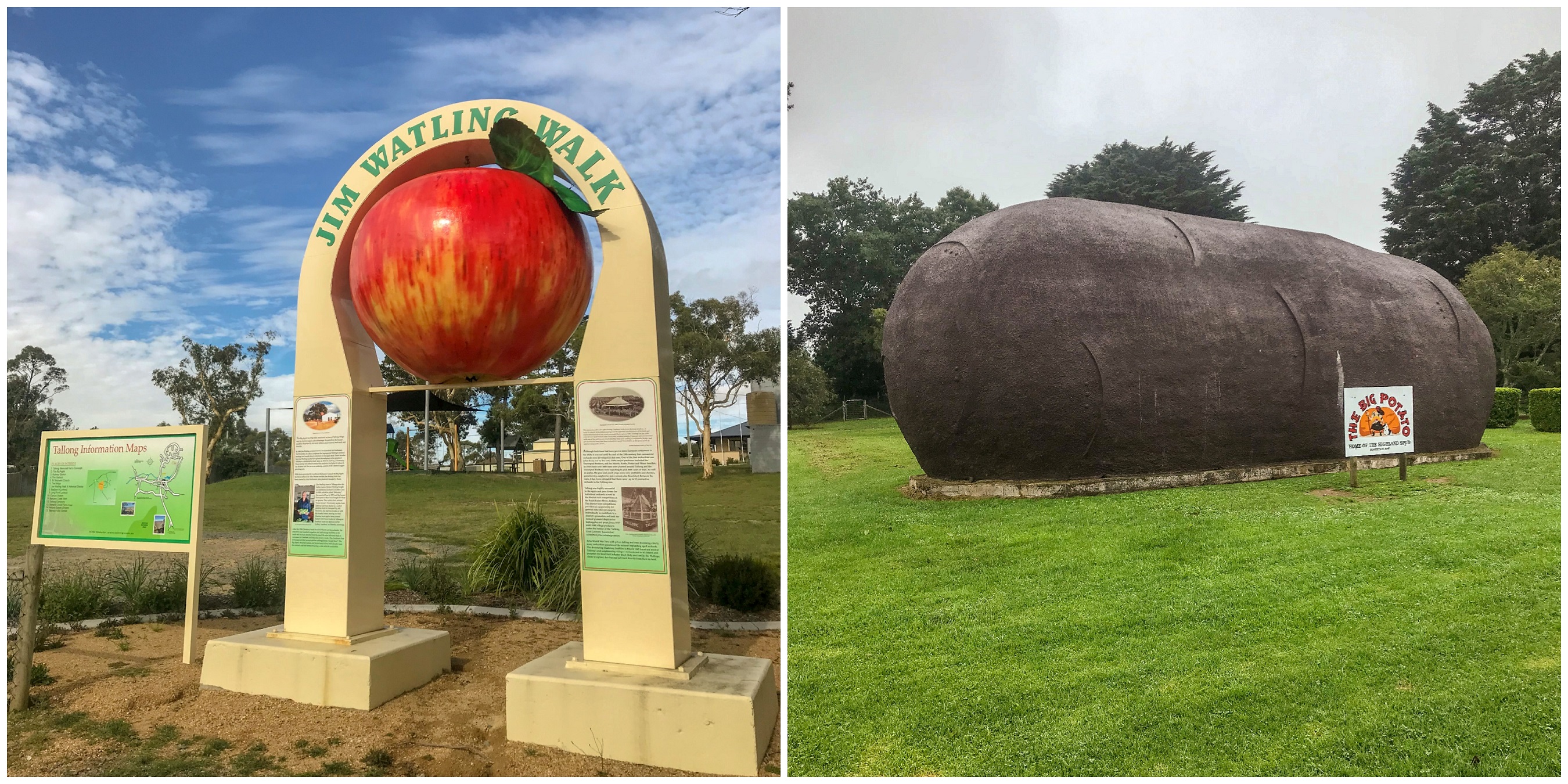
Giant fruits and vegetables are apt in the Southern Highlands given the land is – for the most part – rich farming country. Babe was also filmed around here, combining perfectly with some of the local apple sauce and roast spuds. I could see snatches of Babe country throughout, supercharged by the verdant green rolling landscape, scattered with fine weatherboard homes and lacy verandas. Such is the well-groomed nature of this land, that it comes as a dramatic contrast when the countryside falls suddenly towards the sea. Delivering plenty.
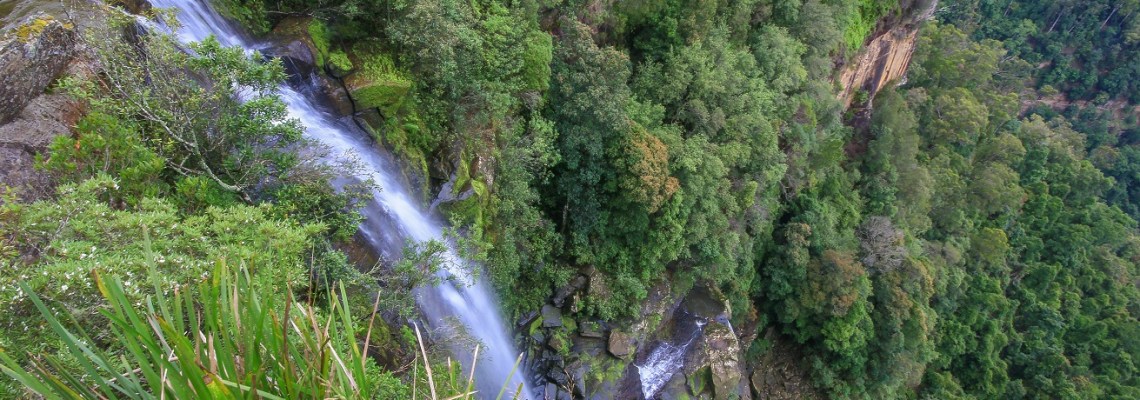
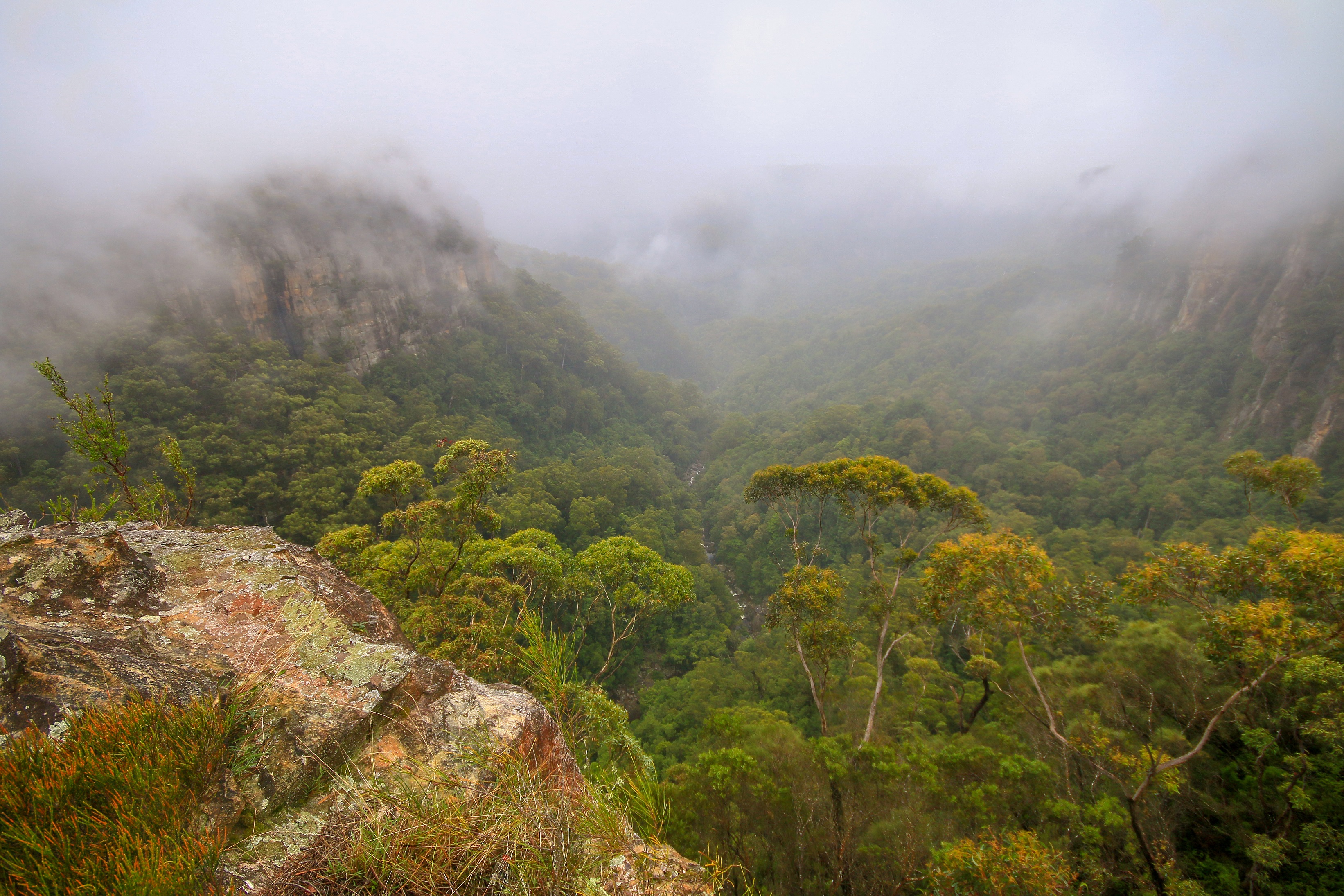
This happens at Carrington Falls, situated within Budderoo National Park to the south of Robertson. It was a misty, head-in-the-clouds morning, the kind that lends itself to Jurassic Park moments. Tall white trees disappear into the clouds, giant ferns at their base dripping with beads of moisture. The air smells earthy and rich, peppered with wafts of cool mint. Only the fizzing sound of water signals a break in this most stagnant of scenes.
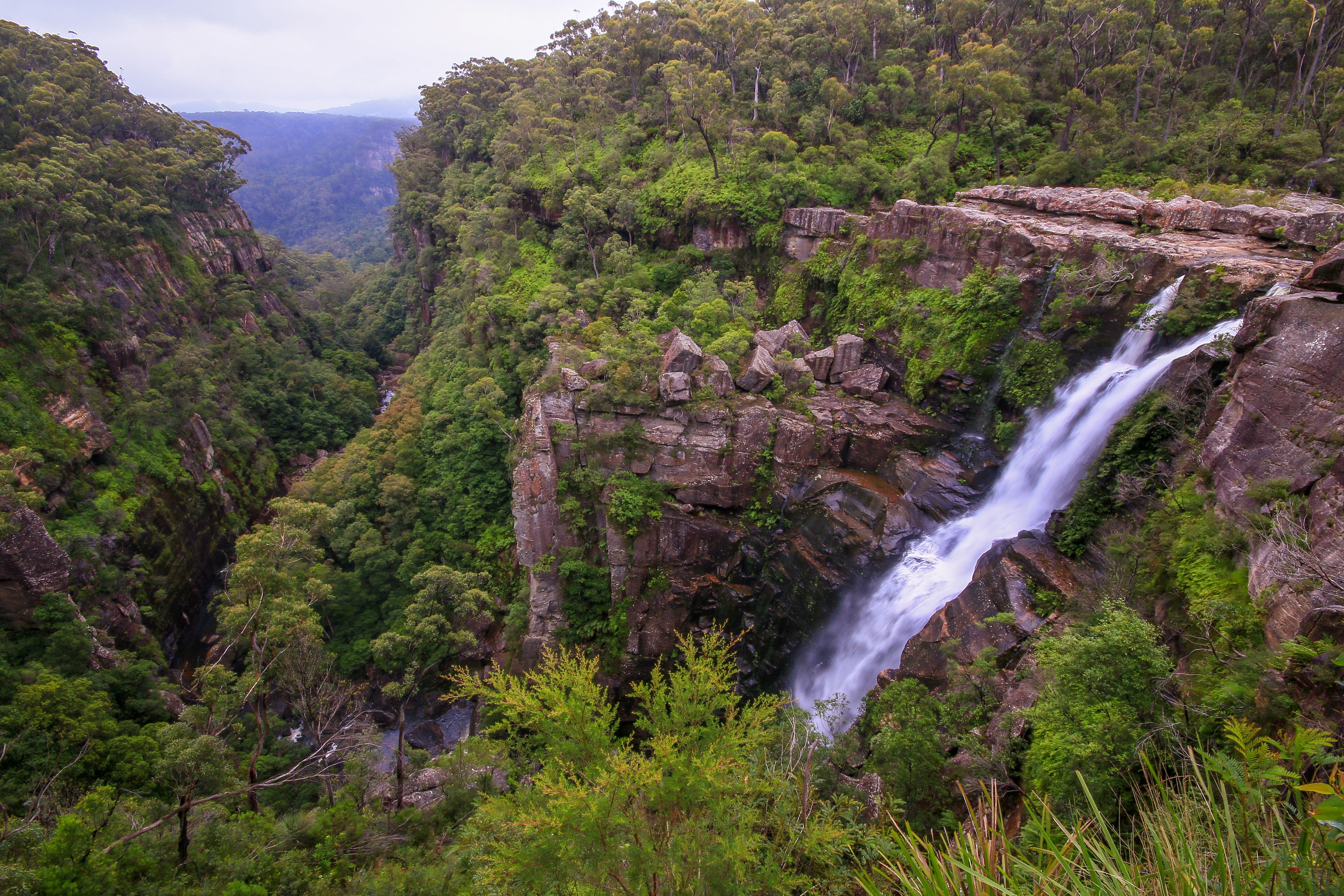
Several lookouts provide the wow factor, the intake of breath, the magnetic allure of millions of litres of water falling fifty metres into a deep pool. It is unclear whether the mist swirling through the eucalypts are remnants of waterfall or lowering fingers of cloud. I suppose they are all part of the same big cycle taking on different forms. Steaming glasses and feeding natural spectacles.

I’m surprised by how busy the place is on a cool, damp Monday. A steady flow of visitors park up, loop along the lookouts and leave again. Most pause for a picture or two, alternating between ultra-serious brooding to comical selfies. One senior lady poses with what looks like a car windscreen shade over her head, arranged to resemble Mickey Mouse ears. The youth – students from Wollongong I suspect – brave the waters of the creek before they succumb to gravity.
There is another turn off near Carrington Falls that suggests further valley lookouts. I head to the first and closest, greeted with even denser mist and a disappearing view. Fine rain is now falling and – for February – it’s cold.
Back near the car and now thinking of a warming lunch, a sign points to something called Nellie’s Glen. It’s only a hundred metres, which is hardly going to delay the arrival of comfort food. And what a pleasant surprise this turned out to be, a gorgeous pool fed by gently cascading waters. The kind of place on a warmer day to soak and swim and avoid water dragons and hope that leeches aren’t longing for a bit of attachment.

With other lookouts and a campground I feel there is unfinished business in Budderoo National Park. But my mind – and stomach – has become fixated on pie. At the junction with the Illawarra Highway stands the self-proclaimed ‘World Famous Robertson Pie Shop’. Have you heard of it over there? It looks exactly the kind of place that would disappoint and end up on the news as a COVID hotspot. A pie of plenty instead came at the Robertson Pub, no doubt known as The Robbo, oppo the big potato.
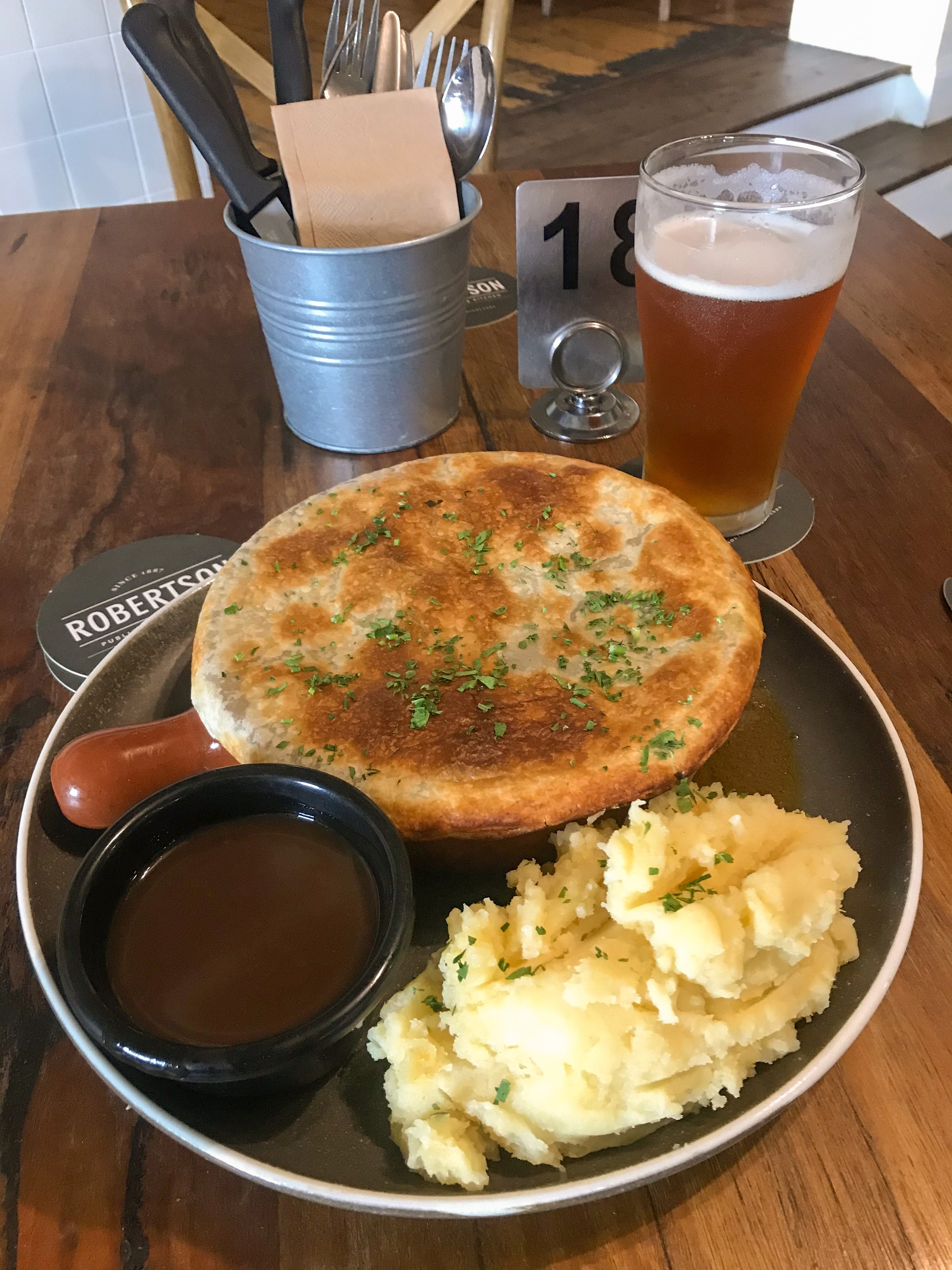
It was perfect weather for pie and mash and gravy, washed down by a surprisingly good local ale whose name I sadly do not recall. Such feasting naturally induces a contented lethargy that makes the thought of further activity, further driving, further walking, further gazing at amazing, just that little bit less enticing. But I had to get home somehow, and there was still a waterfall way to go.
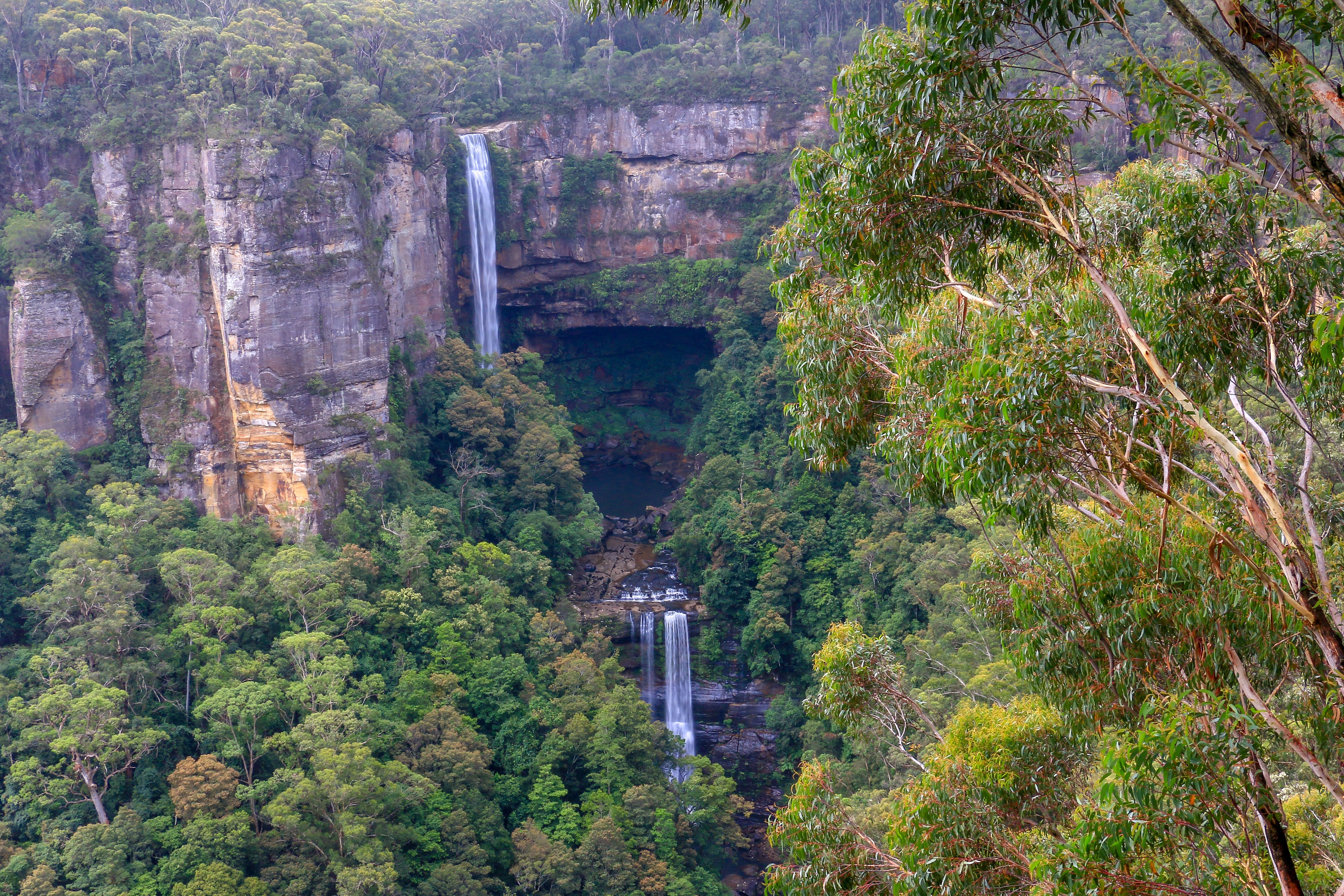
Thus the afternoon heralded Belmore Falls, a double delight viewed from afar. Some people had managed to find closer views next to the top of the falls and a couple – spied through my zoom lens – had made their way between upper and lower falls. I figured, judging by the size and athleticism of said couple, that it couldn’t be too hard to reach, though how they did so remains very much a mystery. Perhaps abseiling or helicopters were involved.
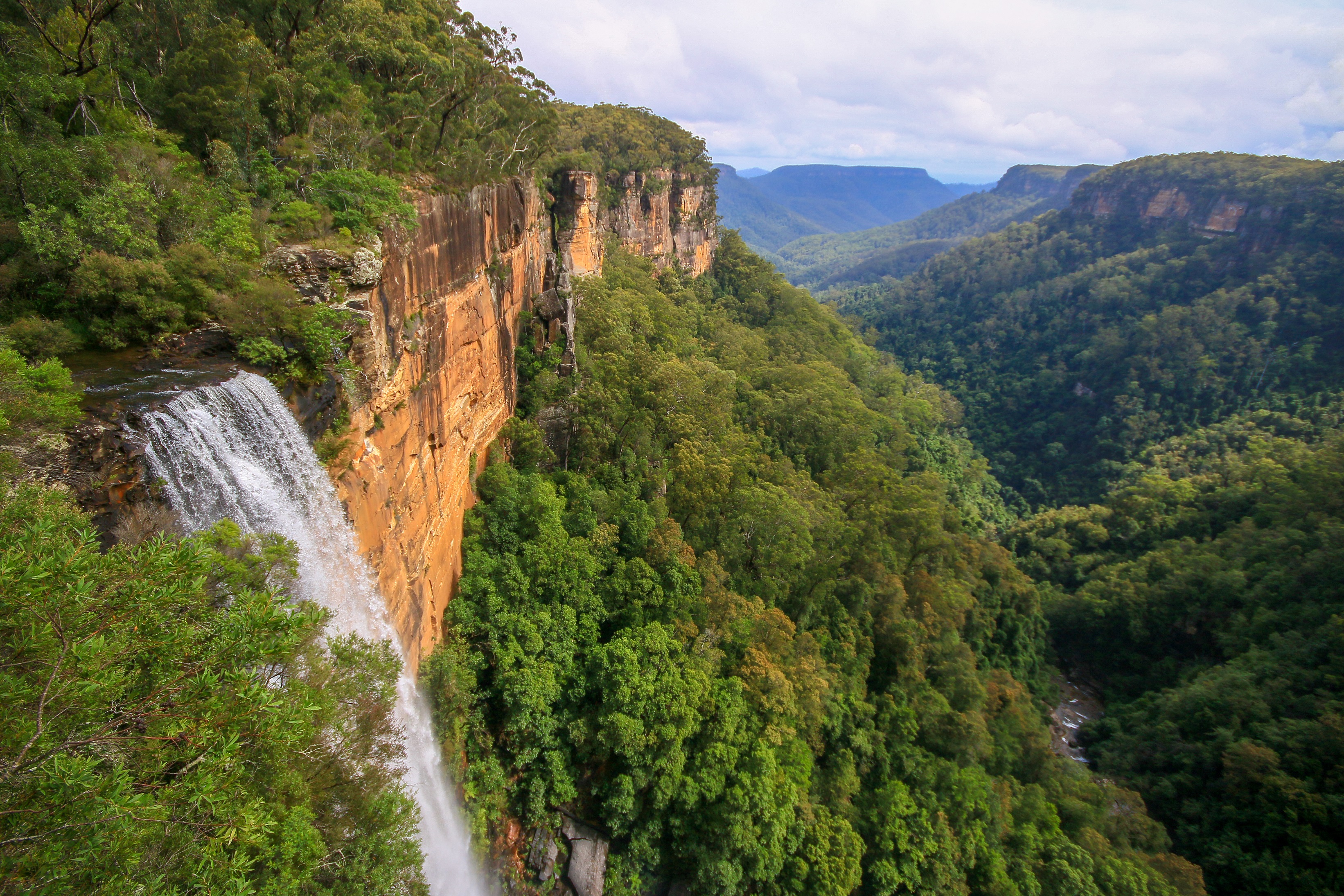
The drive from Belmore Falls to Fitzroy Falls proved joyful, a pocket of pure Babes country starting to welcome a brighter, afternoon sky. At Fitzroy Falls itself – the trustiest and most accessible of the waterfalls in this area – I felt a little as though I was going through the motions, but walked and stopped and took photos and gazed out in awe nonetheless. As well as both Fitzroy and Twin Falls adding to the daily tally, the view into the Yarrunga Valley never fails to enchant.

By the time I passed through Exeter and Bundanoon and abruptly turned to the left in Tallong, the sun had started to reassert itself and offer some welcome warmth. Better conditions for ripening apples I would imagine, and less potato friendly. A landscape now drier and more typical of great swathes of eastern Australia.
As a final stop before joining the highway I detoured to Long Point Lookout, where a spur of land thrusts itself out into an incredible wilderness. Below, some five hundred metres, the Shoalhaven River turns 180 degrees, carving out the steep hills and ravines which disappear off into the distance. All that water has to lead somewhere, and the Shoalhaven is quite a remarkable gathering of natural forces.
I spent a good half hour at this spot, as the late afternoon light cast itself in fits and starts upon the scene. Not one other car, not one other person stopped by during that time. Somewhere else, in another continent, in another country I couldn’t imagine such absence, such indifference. It would be a highlight, a spectacle, hustling with people and coaches and tacky souvenirs.

Here, it was as if no-one else knew. Here, in a country of vast open space, of forests and gorges still existing untouched, still largely unexploited, it was nothing special. Just another view, just another scene, just another place. And surely that is what makes it a land of plenty, he said, smiling with a Vegemite sandwich.


 Nearby, the sleepy hamlet of Port Quin is celebrating in its sheltered spot, nestled between the hills that ooze out along its harbour to suddenly plunge into the Atlantic. A walk out to a headland marking the entrance to this enclave is a touch more blustery; the reward solitude and drama and vistas that make the heart sing and the heart ache. And ice cream that makes the heart say uh-oh we’re in Cornwall again aren’t we, better brace ourselves.
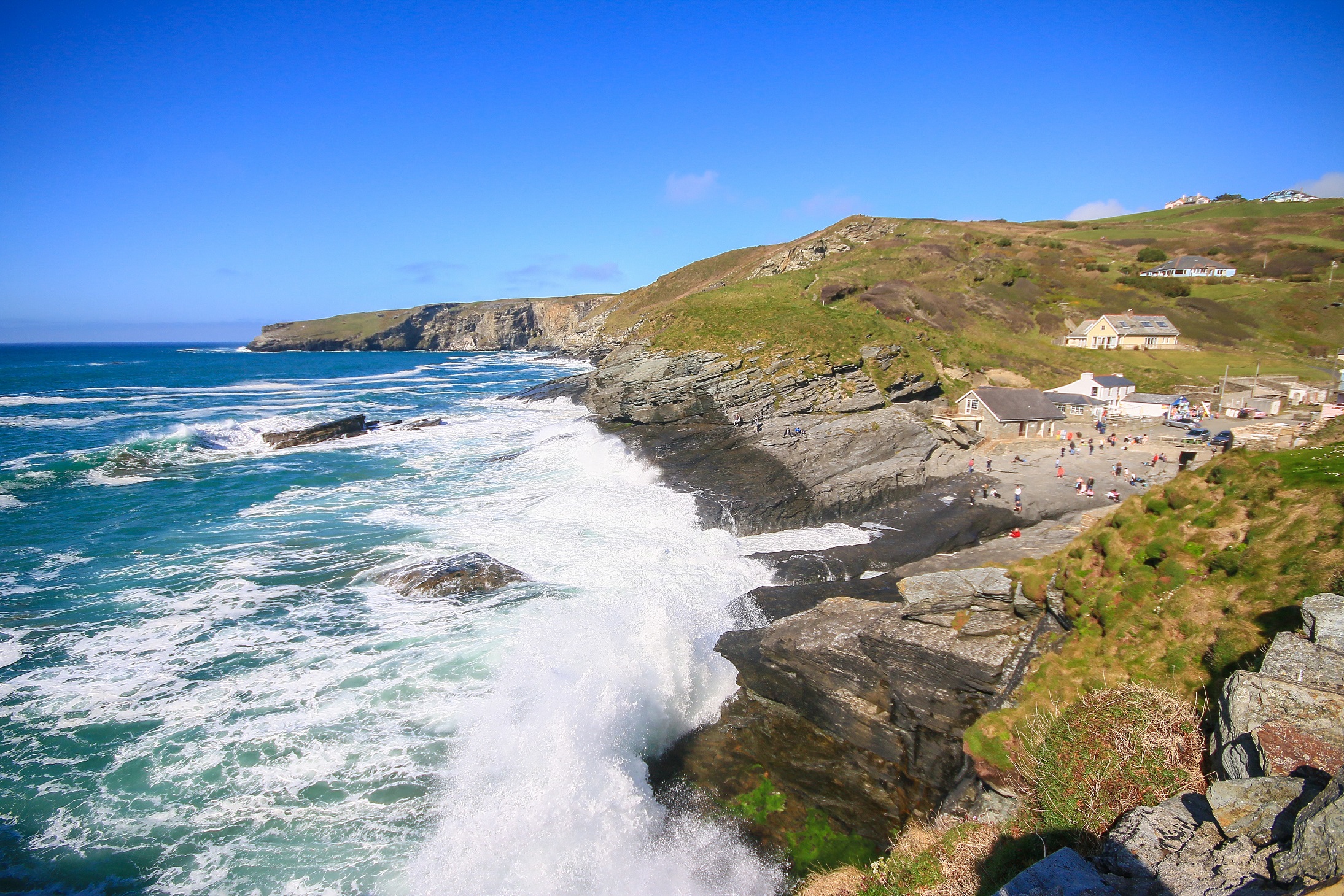
 A little above The Strand, under wonderful, warming sun perched a wonderful pub overlooking the ocean. A pub that served up a local tribute, a tribute to the seas and skies, the clifftops and harbours, the wind and rain and storms and sun. The seasons battering and bathing and cajoling and churning the charisma and spirit into this magical Cornish land. Spring has arrived, and so have I. Cheers.

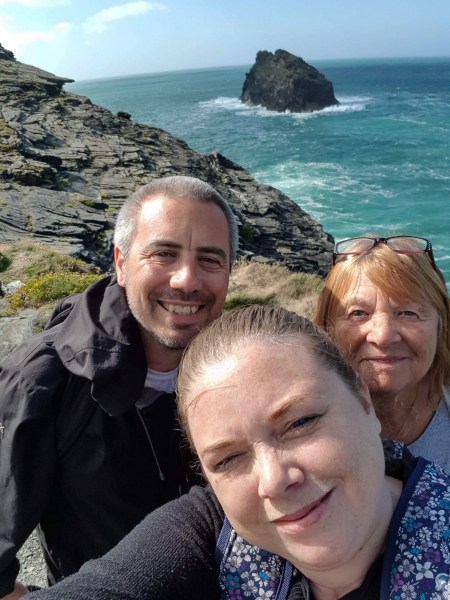 With its prominent headlands, Boscastle offers a sense of protection from the great expanse beyond. There’s a cosiness to the village, which is a formidable asset in attracting people down its B roads. Nearby Tintagel doesn’t possess as much cosiness but instead relies on tenuous associations with King Arthur, Pengenna Pasties and – until recently – Granny Wobblys Fudge Pantry. Sadly, this year it seems Granny Wobbly has retired, along with her legendary fudge making abilities and fudge crumble ice cream (ice cream + clotted cream + fudge). Suddenly Tintagel seems devoid of purpose and Boscastle wins.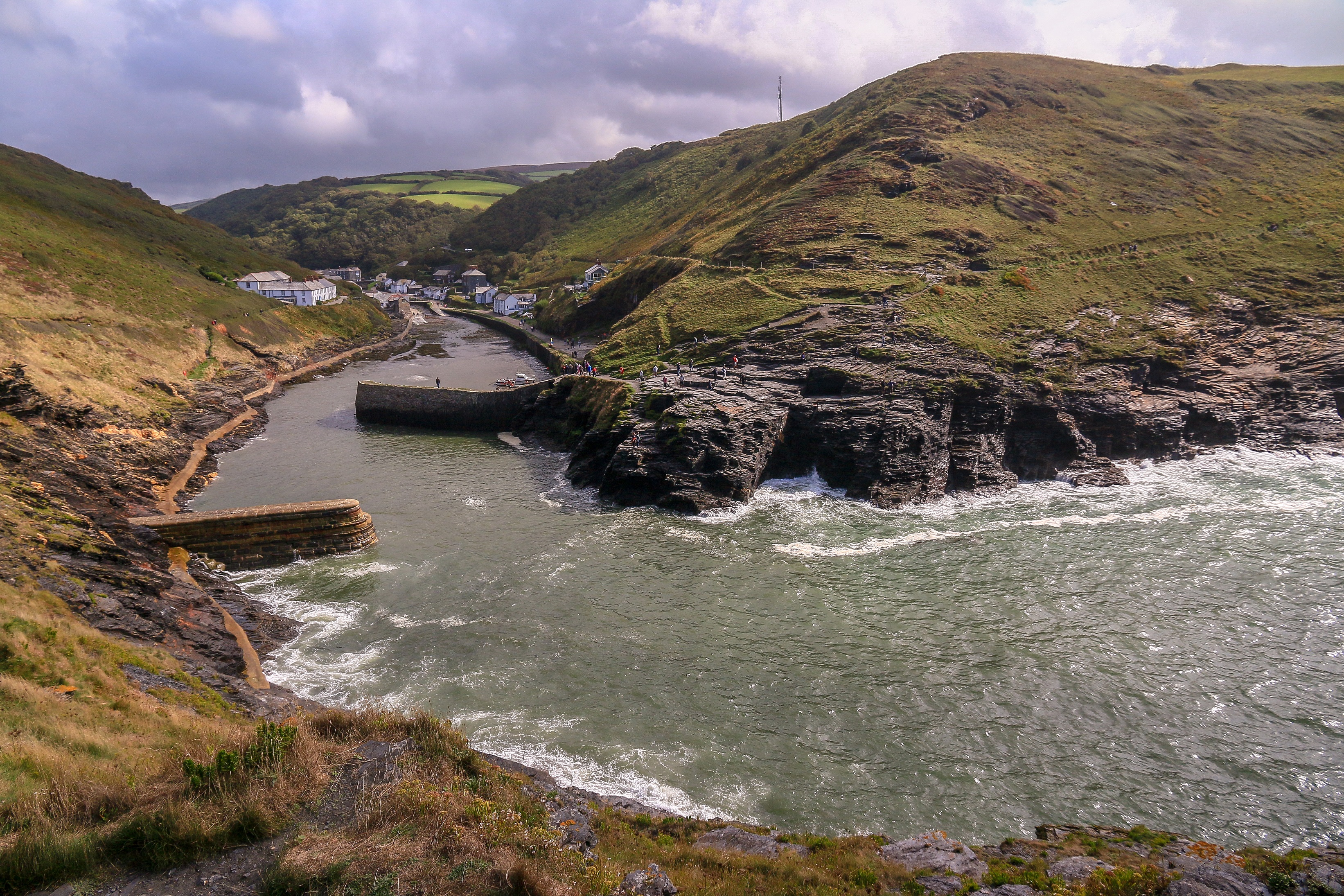
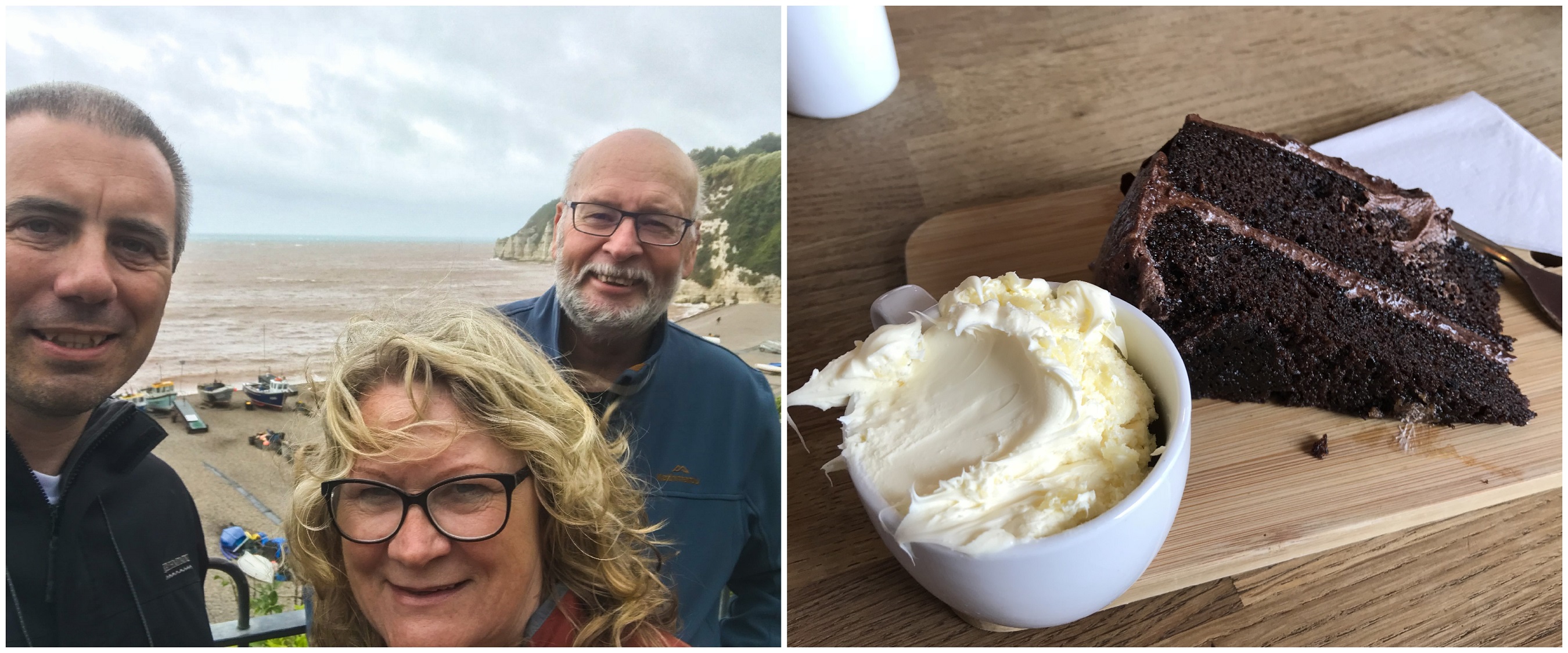

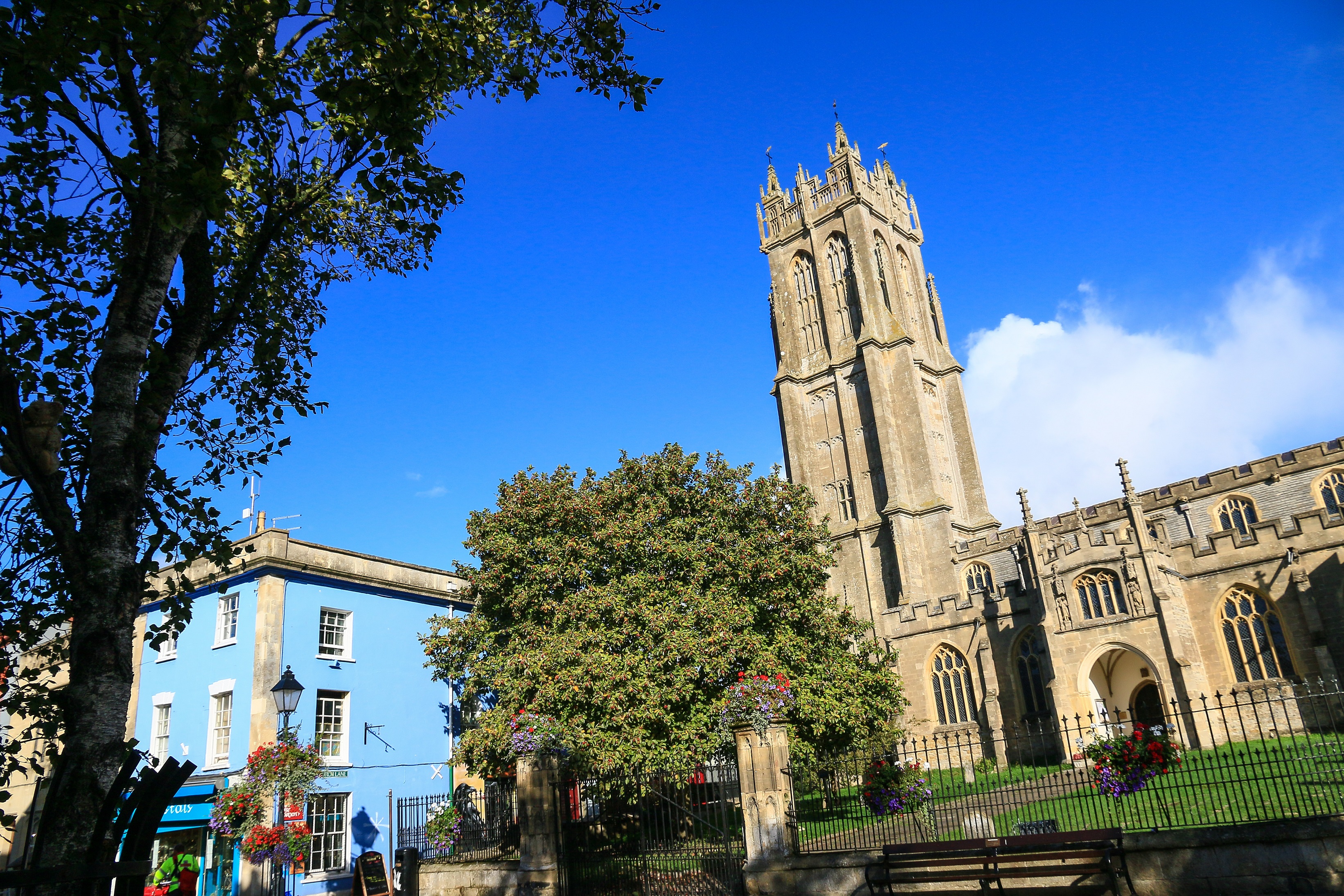


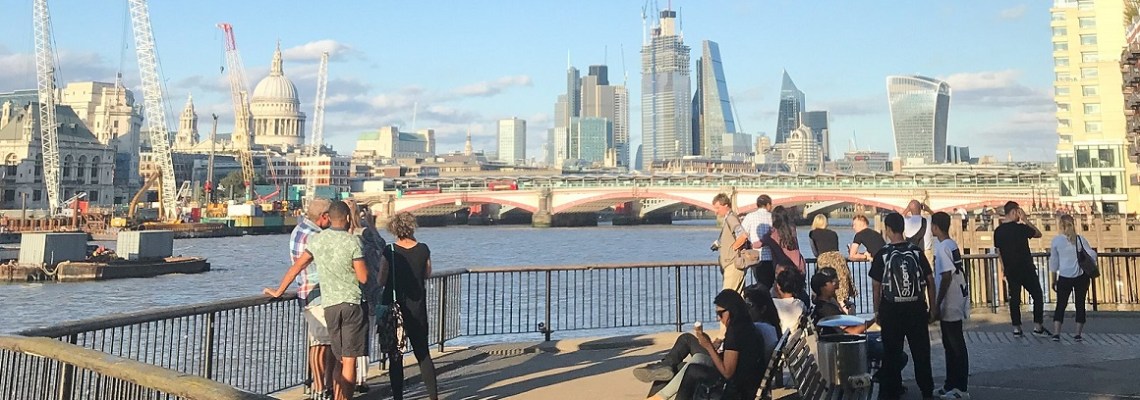
 That heatwave was turning into a thing of the past by the time I made it onto England’s shores, and things will be reassuringly back to normal soon. Its legacy will emerge through inflatable pools from Argos gathering cobwebs in sheds up and down the land, frozen Calippo slushes, and a chance for rose-tinted reminiscence of that famous summer before the storm (or sunny skies with fluffy white clouds and unicorns pooing golden trade deals) of Brexit. Plus blackberries, lots of blackberries.
 Regardless of sunshine or headwinds there will always be tea and cake or in this case coffee and cake. You could be forgiven for thinking coffee might be overtaking tea in popularity in the UK given the rampant reproduction of godawful Costa Coffee shops every fifty metres, with their godawful massive mugs and godawful patrons thinking this thing they are drinking is the height of sophistication and really isn’t godawful. Give it a week and I’ll be with them. But today, an independent café in swanky South Kensington and coffee that was not at all deitybad.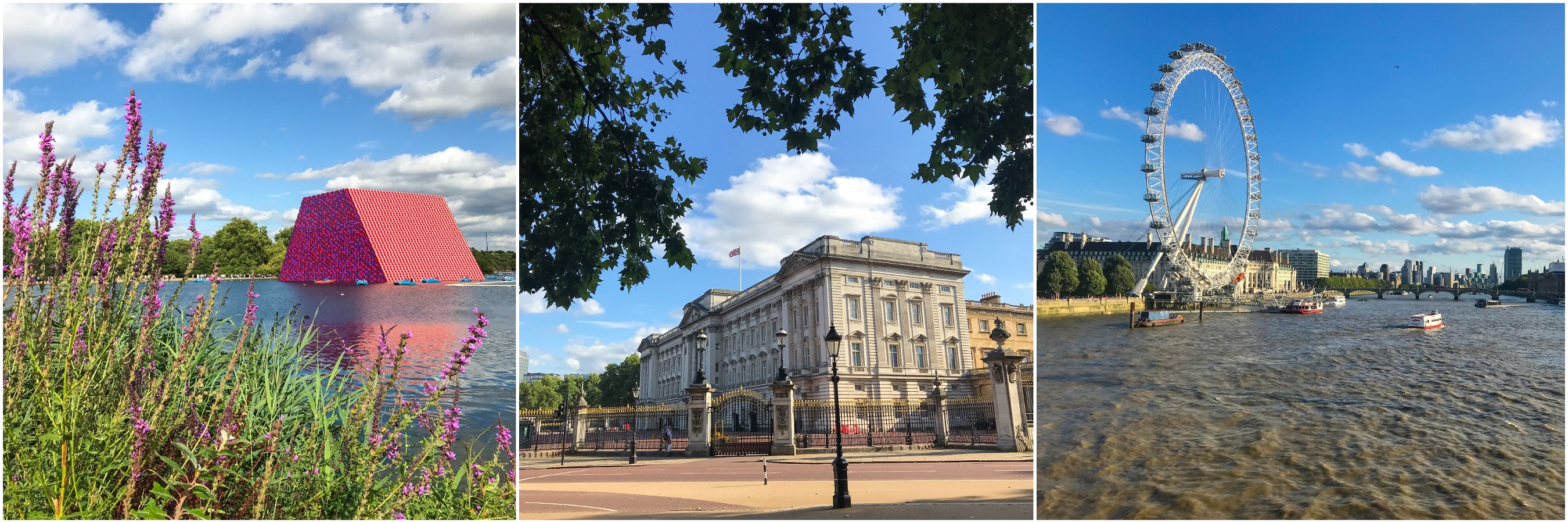

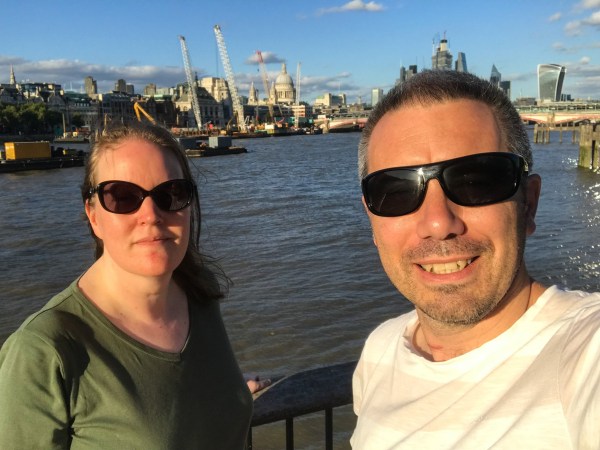 One of the pleasures of returning to London goes beyond famous sights, cake, and hearing people speaking with like proper English accents innit. There are the familiarities of place and person, reconnecting with treasured friends, perusing past haunts and – especially fresh off the boat – attempting to retune into the current Britannic zeitgeist. Spending time with Caroline helped a great deal in this regard, and with many steps across London and the Zone 5 countryside, there was much to discover; a veritable bullseye of a weekend, tru dat.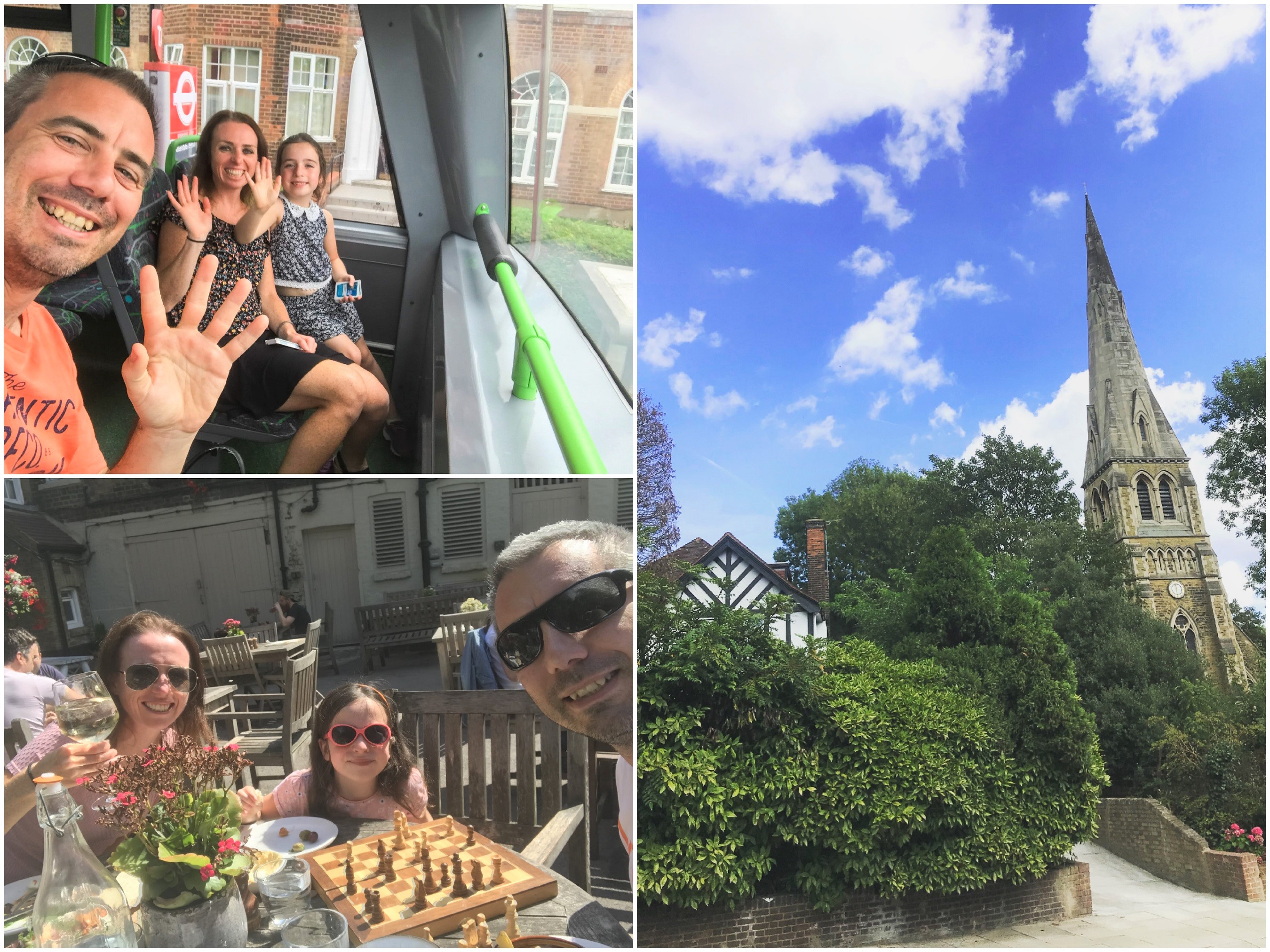

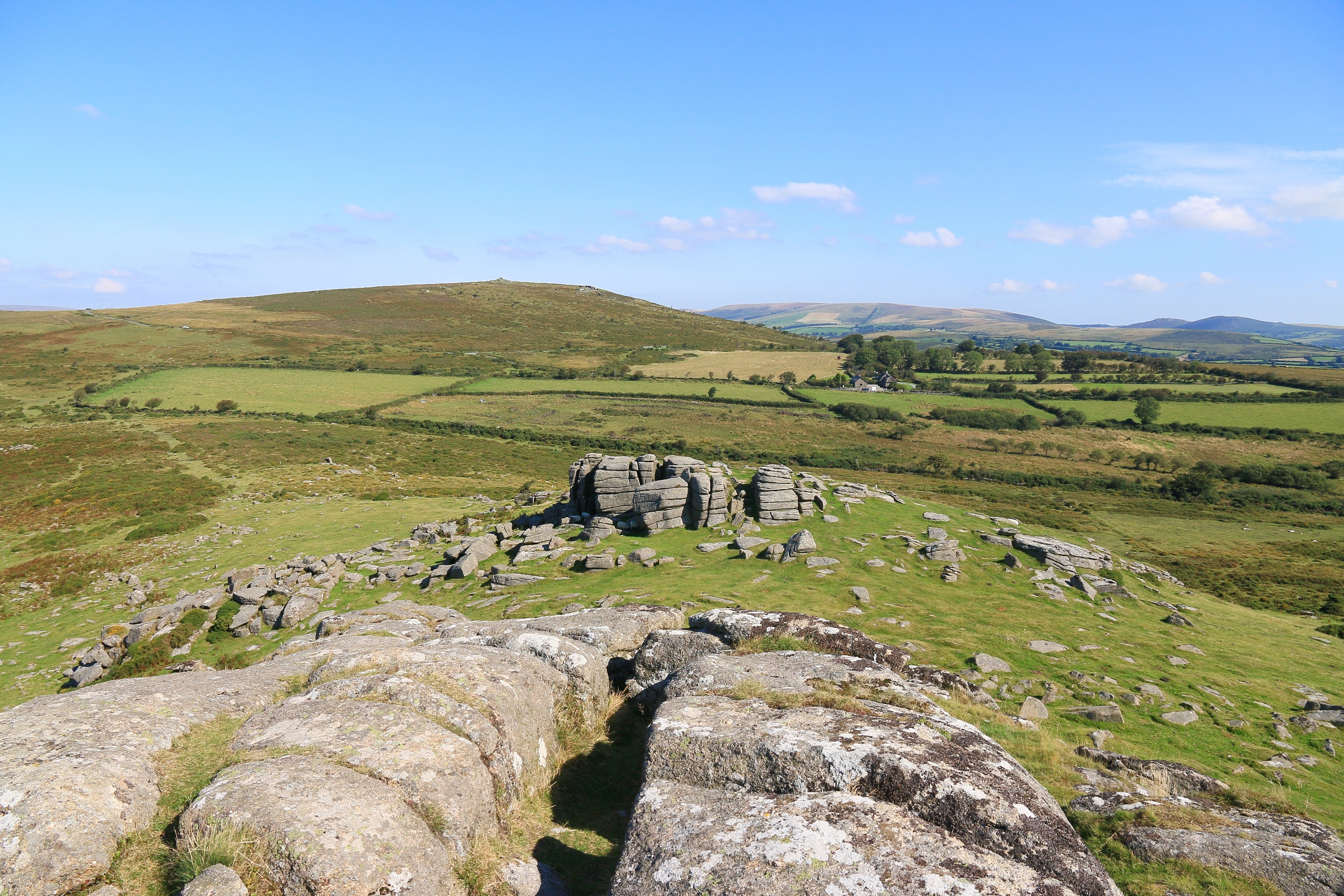
 On the road to Burrator, the sheep are out in force, arse sticking out into the tarmac, head tucked into a giant gorse bush, oblivious to the fact that there are two cars coming at opposite directions on a lane built for one. Further on, a few sheep mill about in the foot of Sheepstor, just so they can pose for clichéd photos and get in the way of cars trying to park. Better to get out on foot though, and take in a stretch of reservoir, country lane, farm and hamlet aesthetic, before climbing the wilder, granite strewn hill itself. It’s a route I’ve taken a few times now and strikes me as a wonderful bona fide welcome back to Devon.
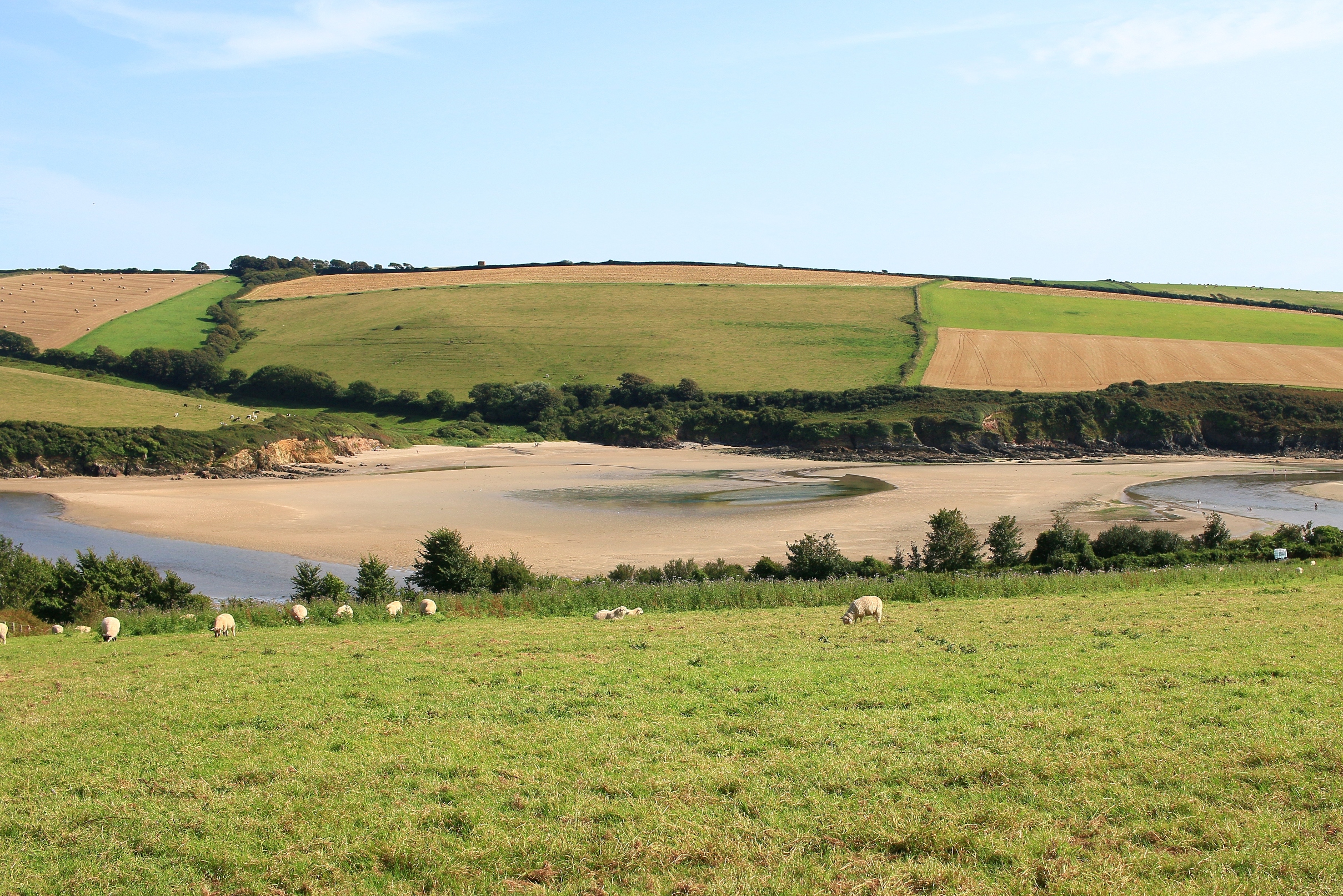
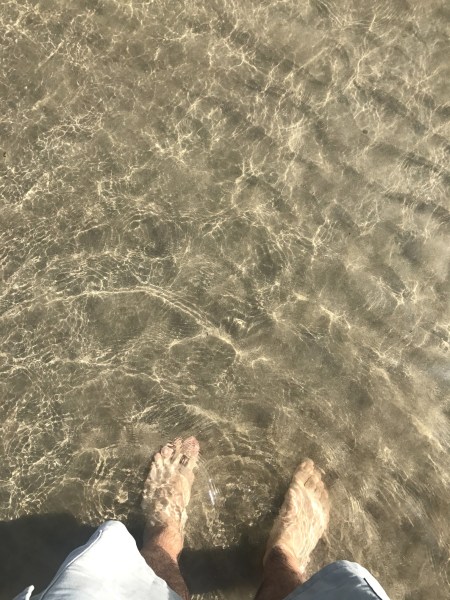 It really is in a delightful setting, Mothecombe; the tranquil shallows of the River Erme meandering out to sea, the sandy banks and rock pools revealed at low tide, the sheltered, undeveloped bay with gentle waves and translucent waters. Such appealing waters that people were in there swimming and I got the shock of my life when I put my own feet in. Not the usual, anticipated shock of oh my god what are they doing this is f*****g freezing, but a slight eyebrow raising oh this is actually tolerable for a bit up to ankle height I guess. No wonder the roads are so busy.
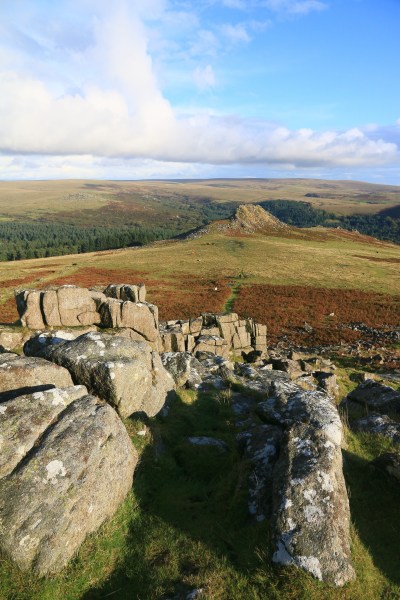 Following a day of showers merging into longer spells of rain I was keen to get outdoors when a longer spell of rain appeared to have passed leaving a few showers behind. I was in the habit of checking the weather radar by now, and took a bit of a gamble on a potential gap in the way things were tracking. Out around Sharpitor, as cloudbursts pummelled the Tamar Valley and a black doom sat unyielding beyond Princetown, some late sunshine pierced the skies and set the landscape aglow. Sheltering from the cold wind, I stood insignificant within expansive moorland and raggedy tors, alternately shining golden in sun or darkened by racing clouds. Barring the occasional car on the main road crossing the moor, it was just me and the sheep and a pony or two to witness it. I felt as though I had struck gold.
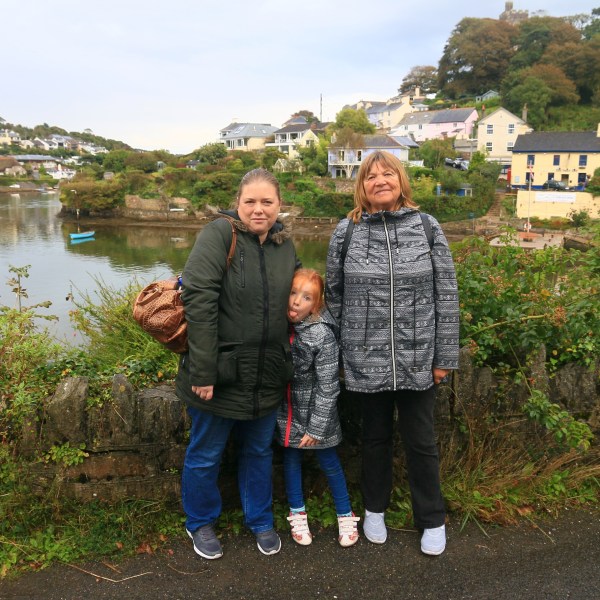 And you know what? In a turn of events that no good travel writer would ever make up, it pretty much stayed raining albeit with some slight easing off for about five minutes. Thankfully the Ship Inn had some funky outdoor pods to huddle together and drink hot chocolate in – think three quarters hamster ball in Teletubbie land – and with the tide being in (well checked, sir), the scene was not one of stinking tidal sludge. Indeed, it was rather serenely pretty under a comfort blanket of cloud.
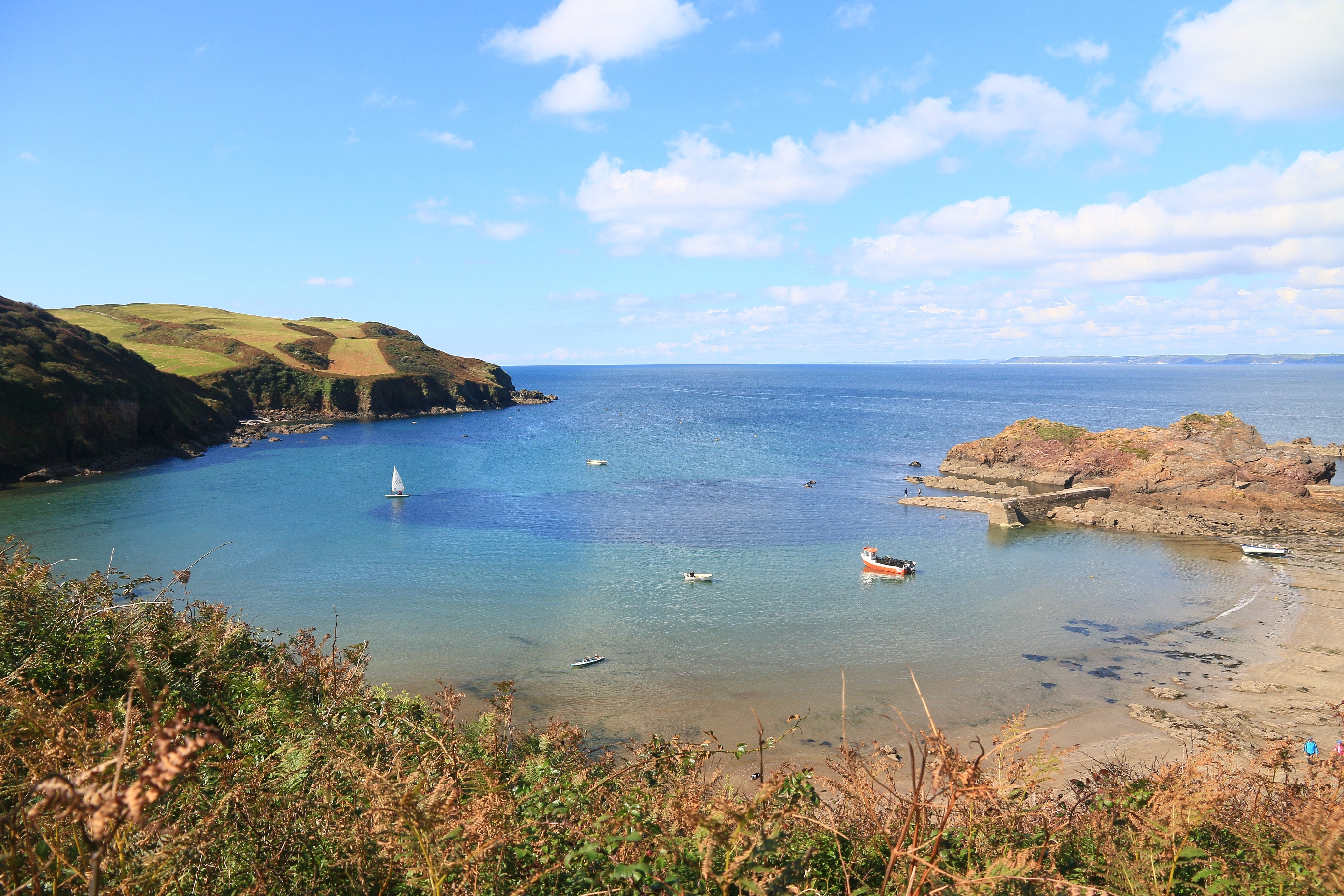

 I remember arriving back from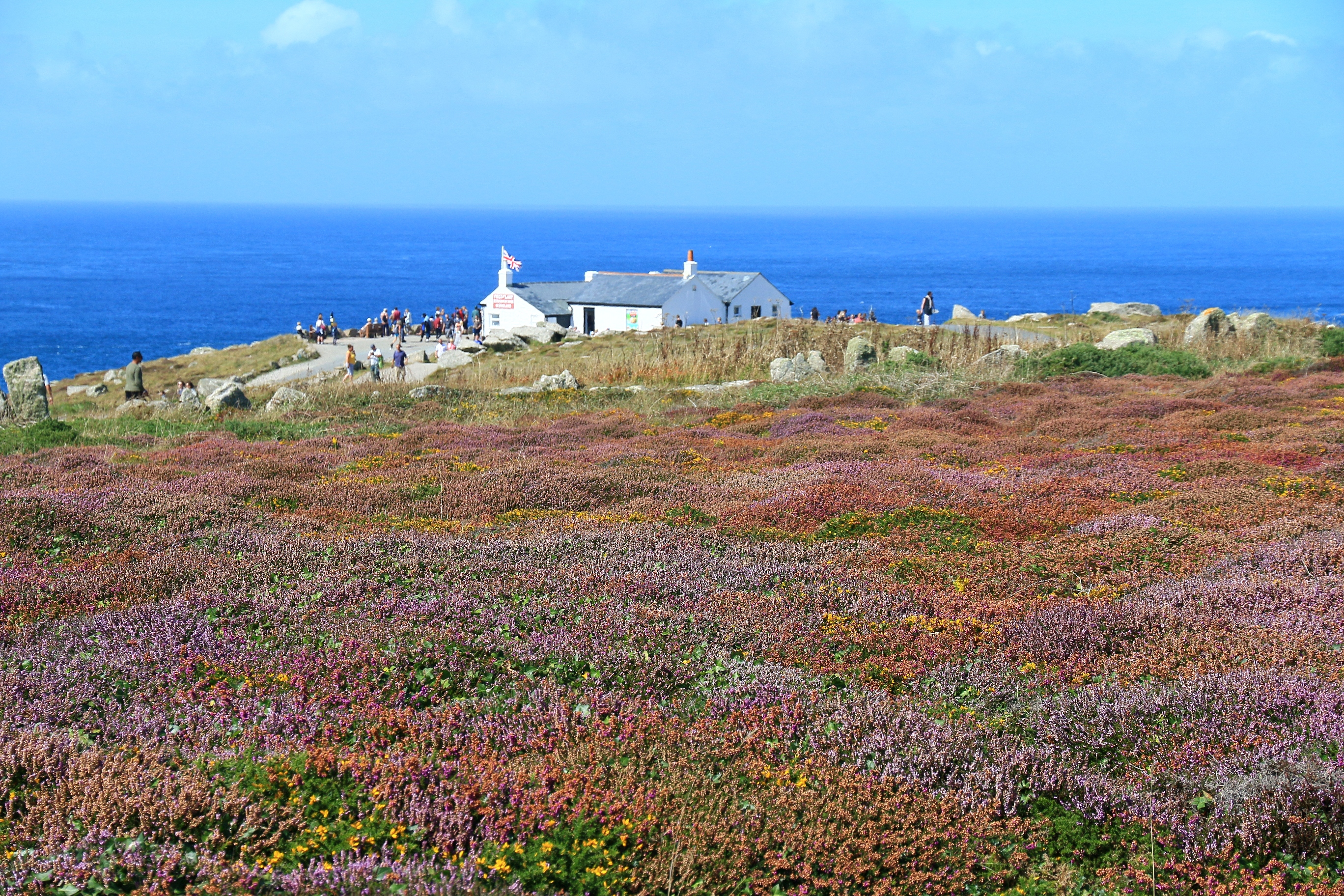
 Practically round the corner from Land’s End is Sennen Cove. Though most of the Land’s End crowd have filtered out, the beach remains busy and tiny car parks are amply populated with people eternally waiting for someone else to move. But beyond the main drag the alleys are cosily quiet, and the coast path is trampled in only an infrequent fashion by jolly people with beaming smiles. I may have been one of them.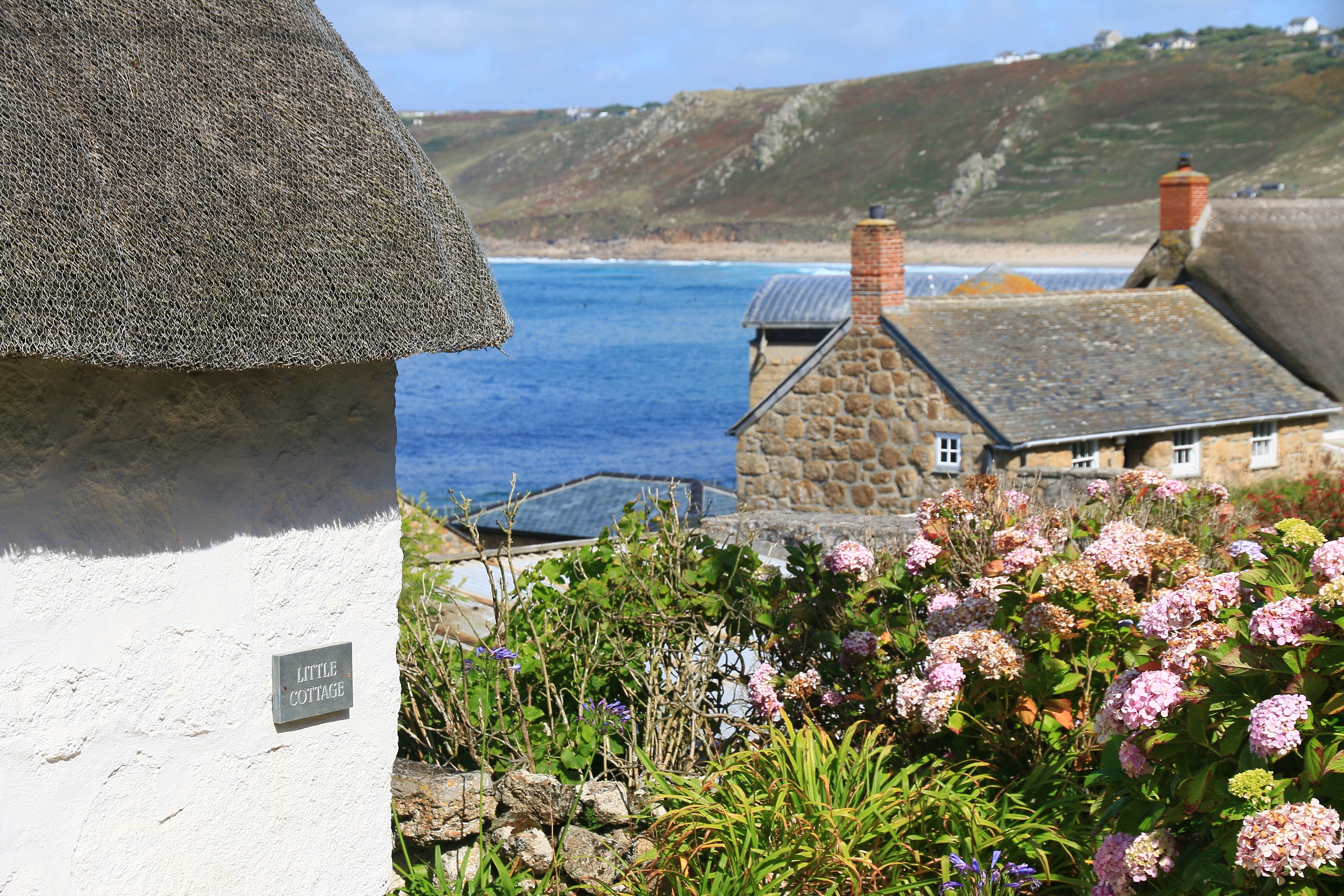
 Further along the path the beach empties out, disappearing altogether as a small headland perforates the arc of Whitesand Bay. There are rocks to clamber over and a tightening of the sea against the land. It’s just a small inconvenience when you round a corner and discover another bay, another beach, another dream that you might want to pinch yourself from. If anywhere in the UK is ever going to get close to a rugged beach of southern New South Wales, then maybe Gwynver Beach is the one.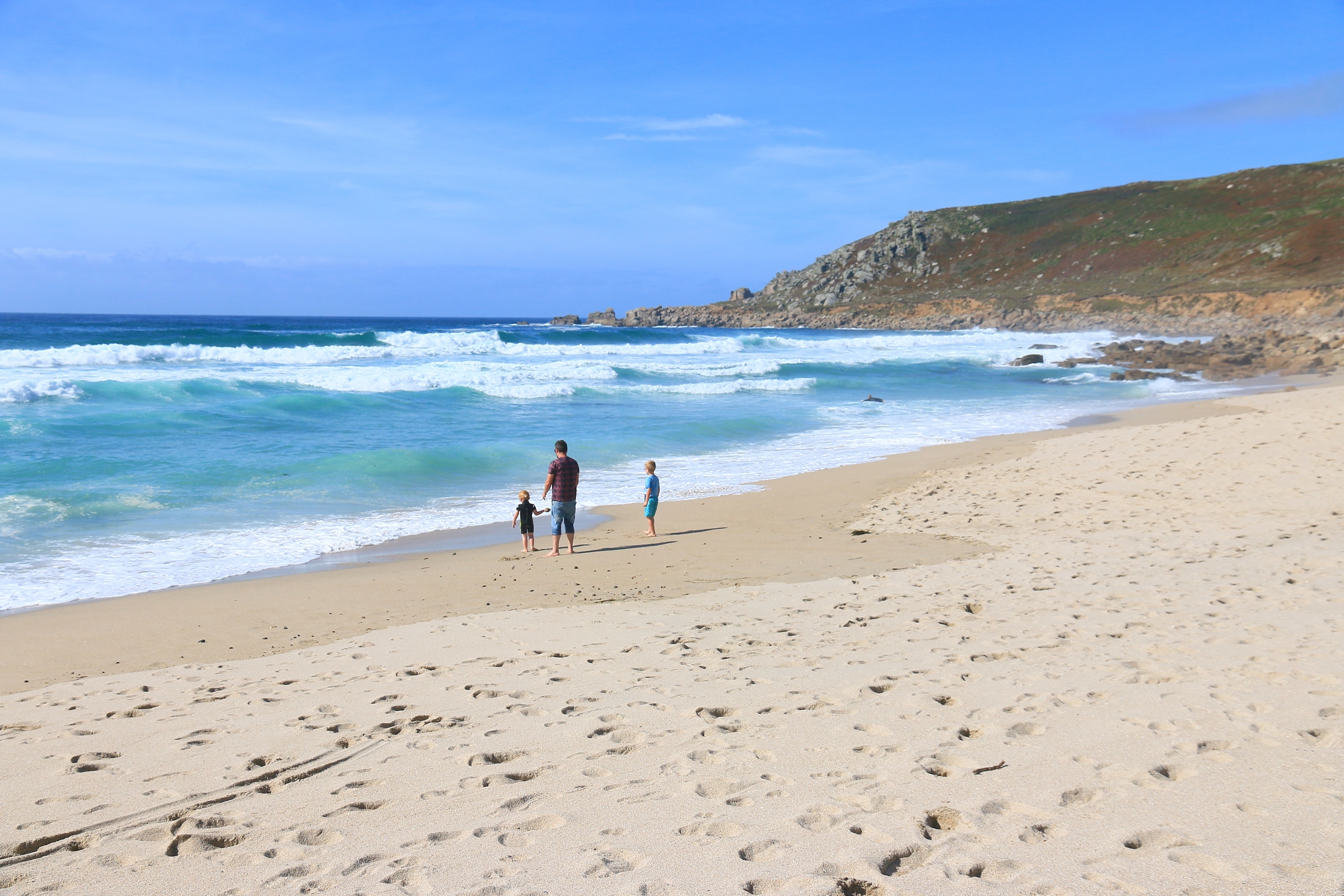


 Such as a pint. A pint of Doom Bar in a Doom Bar glass in an independent, old school pub perched on the edge of Cornwall, the edge of England, maybe even the edge of civilisation (though that is debatable more than ever these days). Can there be any better way to toast an exemplary Cornish Day than waiting for the bus like this?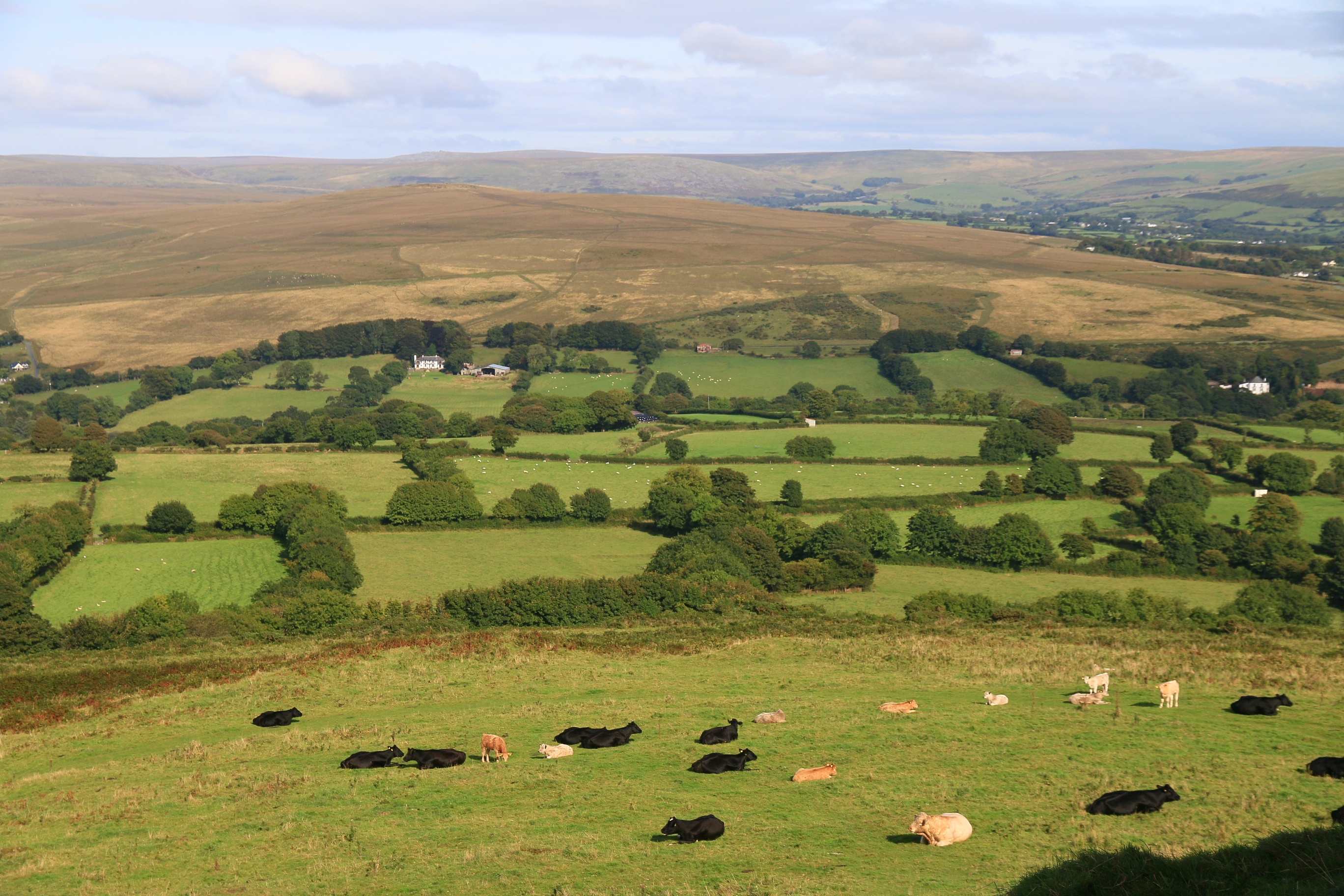








 gbpilgrim