
March strikes me as a celebratory month. Events include the wedding anniversary of my mum and stepdad, for instance, which tends to slip my mind without fail every year. Likewise, Mother’s Day, which may or may not happen at some point in certain countries. With similar vagueness, Easter might eventuate in March, but this is contingent on some advanced algebraic calculation based on a factor of the day when Jesus rose up to make pancakes on the moon or something. Elsewhere, at the start of the month in Wales, people get all excited about leeks on cheese on toast, drink Brains, and break out in hearty song about Saint Dafydd. Meanwhile, unbeknownst to the rest of Australia (and thus of course the world), the natives of its capital gather to commemorate the city’s founding by promptly and unapologetically fleeing to the coast. There is clearly much to celebrate.
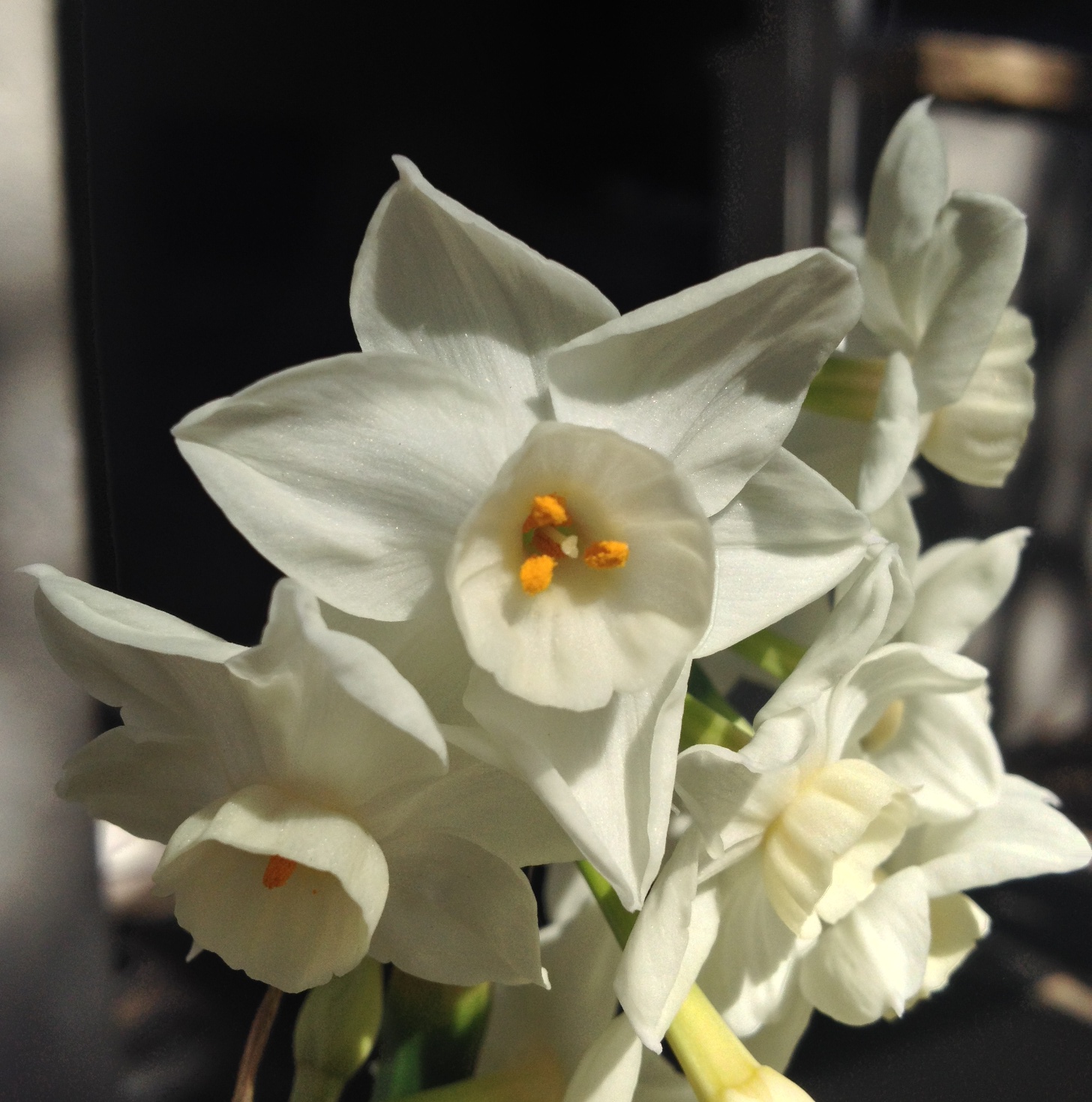
 The biggest cause for chirpiness however – specifically in the northern hemisphere – is the symbolic termination of winter. Sure, it may still rain curtains of icy drizzle from time to time, but it can do so safe in the knowledge that the worse is behind us. Evenings suddenly seem to stretch for longer; the sun, when it can be persuaded to appear, resonates a faint whiff of warmth; daffodils – that most blessed portent of a new season – glow as proudly as a Welshman once did at Cardiff Arms Park. Promise pervades the air.
There is a particular day in March – let’s say the 19th – in which seasonality gets a little carried away with itself. The temperature might reach something freakish like 18°C. The wind temporarily vanishes, leaving the rays of the sun untempered to shower upon beaming faces. A national mood change is palpable as families picnic in parks, people spill out of London pubs short-sleeved, and the first whimpers of charcoal smoke rise from over the neighbour’s fence, ruining the washing on the line that can finally dry properly for the first time since September.
There is ,of course, a wickedness to this day. It is as though a dose of paradise has been granted that will not appear again until at least May, if not July. The irresistible inclemency of an Atlantic front is never too far away and the return to what passes for normalcy leaves you wondering whether yesterday was a dream. Instead, the season builds more subtly, like a light’s dimmer switch being incrementally dialled up as opposed to the classical on and off again manner. But at least March represents a time when someone’s hand is on that dimmer switch, and anticipation about whether the bulb will eventually glow at sixty or a hundred watts is almost as overwhelming as a confused metaphor about electrical illumination.
I would struggle without seasonality. I may be in a minority, given the population growth of the Gold Coast and the increase in beachside Pilates taking place during southern Spanish winters. Here, a quite remarkable assortment of fossils can be spotted, bedecked in sun visors, creaking and contorting in slow motion like a troupe of jaded CP3Os, as if worn down from another hackneyed yet money-spinning outing. Leathery limbs reach tentatively to the skies, embracing the sun that seems forever warm and almost always present. The people here may never wear trousers, or coats, or enclosed shoes ever again. And while it may seem like some fanciful paradise to wake up to blue skies every day, to never feel cold, would it not also eventually feel remorsefully dull, remarkably uneventful, entirely, tediously predictable?
This, I believe, is one of the more common complaints from UK migrants to certain parts of Australia. I’ve seen it on those daytime TV shows – Get a Life Down Under, I’m a Celebrity Get Me Out of Here, Escape to the Country (Just Don’t Come by Boat or You Will End Up in a Concentration Camp on an Impoverished, Mosquito-Infested Island), etc, etc. To some of the locals, such comments just seem to reinforce a lovingly-embraced stereotype related to whinging. But I get it, even though I would try to make the most of endless days of fair weather myself. There is glumness in Britishness – fostered over millennia, permeated by the weather, resolute in the character – that cannot easily be discarded. It is not a bad thing, predominantly because we are skilled at making light of it (indeed, this is something to be celebrated). And, I think, it nurtures appreciation and satisfaction in the simplest of things, such as the emergence of a snowdrop from the earth in early spring [i].
I guess what I am saying, what I am typing, is that March can be so exhilarating in Britain because of what you have been through to get there. Yes, much like the proverbial rollercoaster or, more aptly, the Northern Line, dawdling through what seems an endless toxic darkness to finally emerge into the light and airy park-side setting of East Finchley. Spring and summer, or Woodside Park and High Barnet, lay ahead. And while these will often end up being more disappointing than hoped-for, in March the anticipation is still there, yet to be dashed by John Ketley.
Australia is in many ways a different proposition. The sheer size and variability in the weather means that March could herald heatwaves, cyclones, snowfalls, floods, dust storms, mist patches, and cascades of quokkas and numbats. In small pockets – such as the south east corner with which I am most familiar – there is a parallel cooling and drawing in of nights, and the first vestiges of a prolonged autumn appear. Though there may be some sombreness that summer is on the wane, there is little of the dread associated with a forthcoming northern winter. Partly that’s a result of days that can still exceed thirty degrees but mostly milder, more amiable conditions as a whole. This is the start of a golden period, when pleasant, blue-sky days and refreshing nights stack up one after the other and seem to stretch on into May.
Of course, I write this safe in the knowledge (or 97% confident) that climate change could totally wreck everything I am going on about. Stormy Marches and hot Marches and cyclonic Marches or even snowy Marches could become the new norm. Do I have evidence for this? Well, no, but that doesn’t stop climate sceptics receiving a sycophantic front page diatribe in certain national media, so no harm in including a few words on an obscure blog. While we may (only part) jokingly embrace climate change if it means we can wear union jack shorts in Southend in March, it would be a shame to lose that which is special about the seasonality it offers. Otherwise we’ll just be as bad as the Gold Coast.
I can accept hot days in early March, but it was nearing month’s end in 2013 when myself and a friend decided to persevere with the preparation of bangers and mash during a 38 degree northerly on the southern extremity of the Australian mainland. It is probably one of the biggest collective regrets we have from a three month trip across Australia. Just what were we thinking?! I guess in the joy of food planning and supermarket shopping a few days in advance we didn’t anticipate such furnace-like conditions. Plus we had packed a potato masher as something of a luxury item, so were eager to use it on any possible occasion.

The setting was Tidal River, a sprawling campground complex within Wilsons Promontory National Park. It’s popular with Melburnians and wombats, both of whom were in profusion. The wombats were engaged in a faux cultural conversation about the ethics of rainforest regurgitated coffee beans, while the Melburnians contentedly chomped away on the grass and shitted square bricks. The day had passed with the sight and smell of smoke from the lower Strzelecki Ranges, and a coming-close-to-mild-dehydration tramp up to Vereker Outlook. Relief of a kind came from the beautiful white bays and clear waters of the coastline, though even here the brilliance of the sand glared with a resonant heat. General fatigue was high, and the struggle to boil potatoes on a portable gas stove in a strong northerly beside the sea was only made more pleasurable by the numerous flies clearly determined to explore the nasal cavity. This was not quite the idyllic March that I had come to know and love.
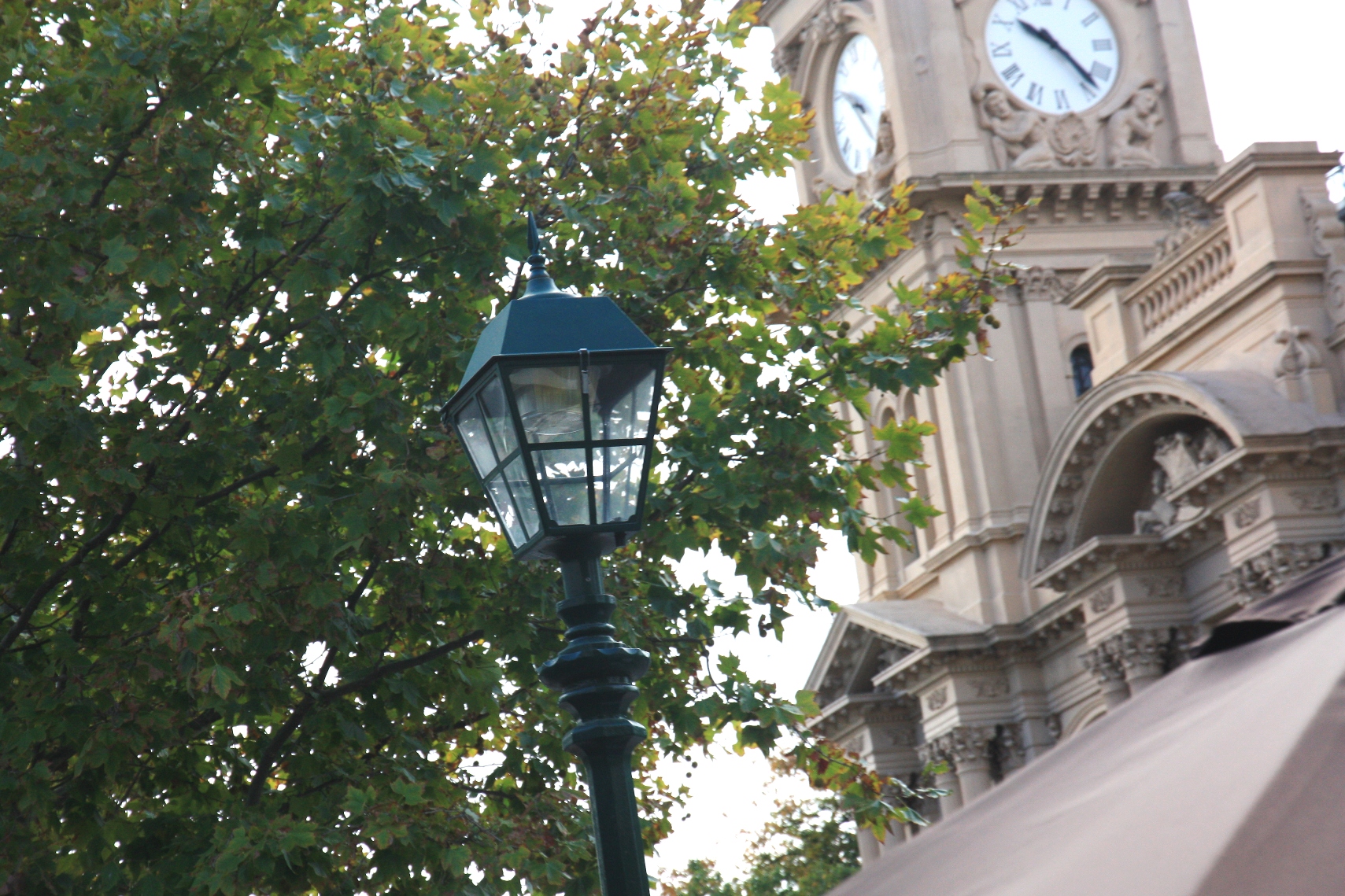 Needless to say, a week later I was freezing my butt off in another Victorian national park, desperately lighting a pile of twigs to ward off the chance of hypothermia. In the golden goldfields around Castlemaine and Bendigo, Creswick and Ballarat, the effect of March was bearing fruit. Planted to gentrify the antiquated avenues and make Englanders feel partly at home, the oaks and elms, beech and poplars, were busy transitioning into autumn shades. The spa town of Daylesford was made for this time of year, its lake happily reflective and the Victorian Victorian streets lined with large-leaved trees that seem to be excited by the end of summer. A refuge for Masterchef cast-offs, there was no doubting that the pork roasted to succulence in a charming old pub was several hundred times better, and a thousand more fitting, than the bangers and mash of past.
Thus, climate change pending, there is much to celebrate about March whether north or south. I am pleased to say that as I write this in Canberra, the sun is shining, it is a predictable 25 degrees and the forecast is set fair. Spring may be yet to truly spring in the UK, but there is an inevitability that it will come. Soon. Two weeks and there may be a freak warm day coming up, so stock up on charcoal before the supermarkets sell out, and beware of white van man with his top inexplicably off. Above all, cherish this most pivotal of months which signifies the start of something new. Love the seasons, and all the incremental change that they deliver. Otherwise, head to the Gold Coast or Lanzarote and dwell in temperate predictability, never to wear long pants ever, ever again.
[i] In making a sweeping generalisation about national character I should caveat: there will still inevitably be a handful of tiresome, grouchy narks who hate the sound of children’s laughter and lament the daffodils emerging on the median strip because they might provide a place for immigrant burglars to hide and spread Ebola. The good thing is everyone else will take the piss out of them. Apart from desperate politicians who seem to focus endlessly on wooing their vote.
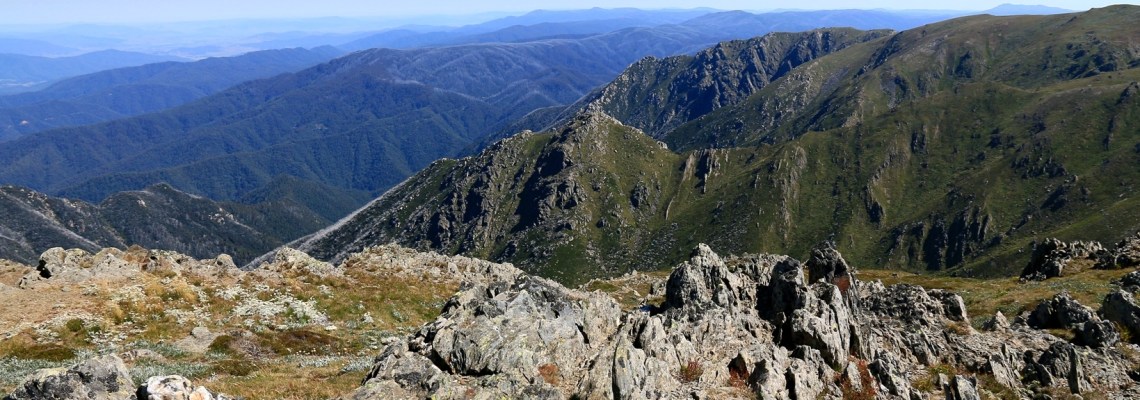
 natural landscape is in much less turmoil (unless you listen to those wacky “scientists” with their corroborated, peer-reviewed “research” and years of undisputed empirical “data”). There are, clearly, mountains to climb and some are easier than others.


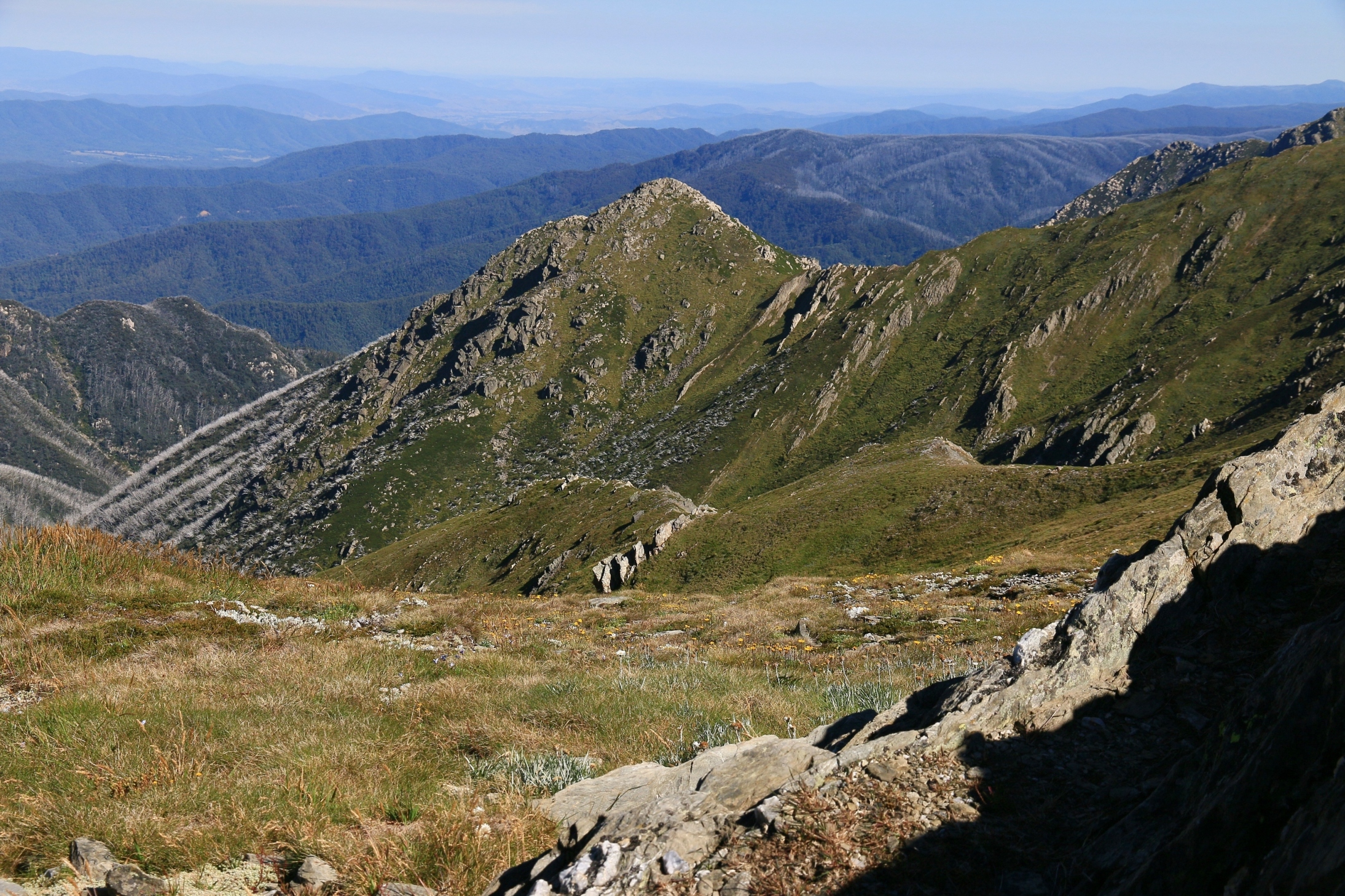
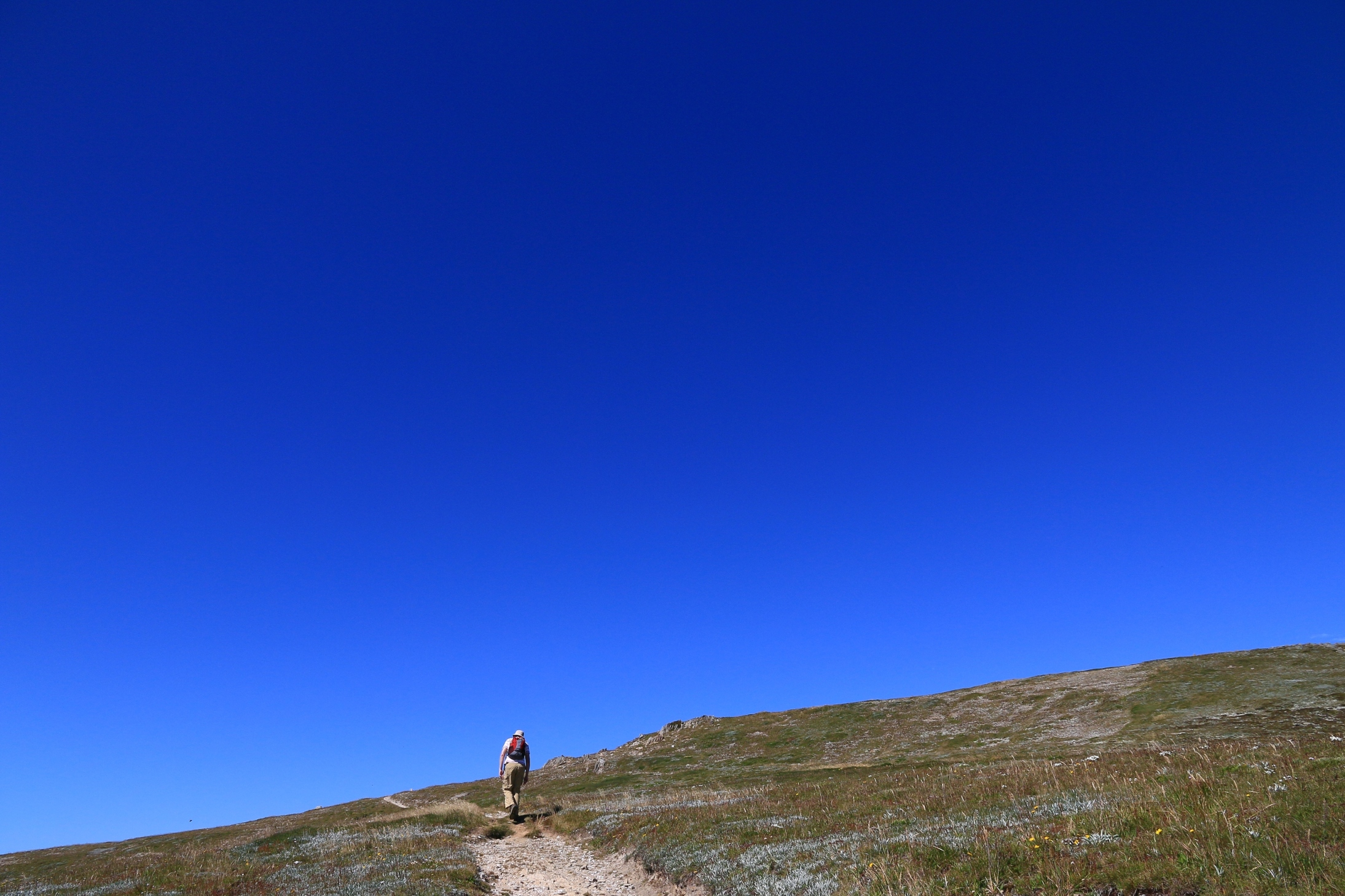

 the right and deep ravines carved by Lady Northcote’s Creek, the mountains seeming to tumble sharply west. I have no idea who Lady Northcote was but if her character was anything like that of the landscape in which she was named, she was probably a bit of a looker, though occasionally bleak and somewhat cutting.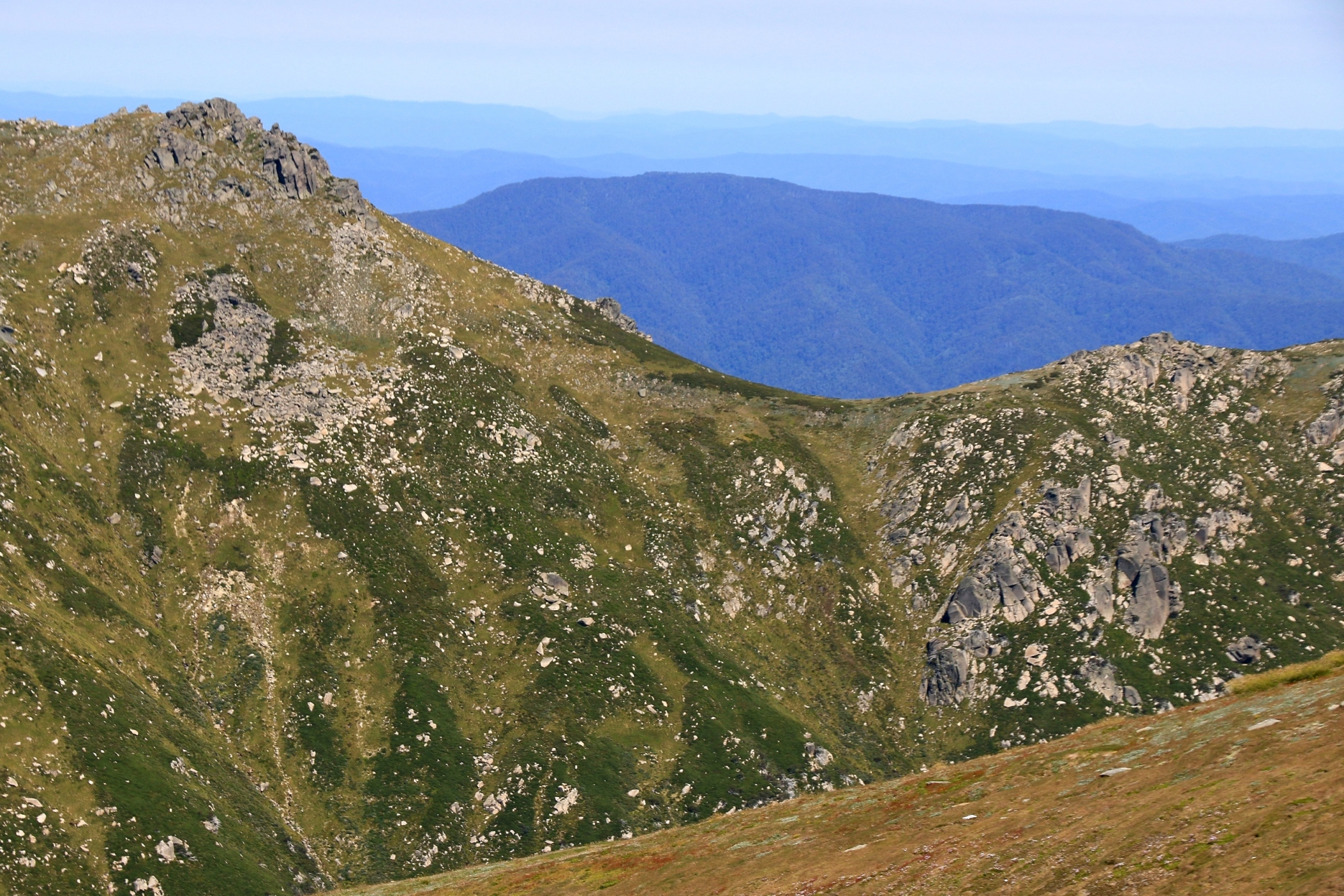
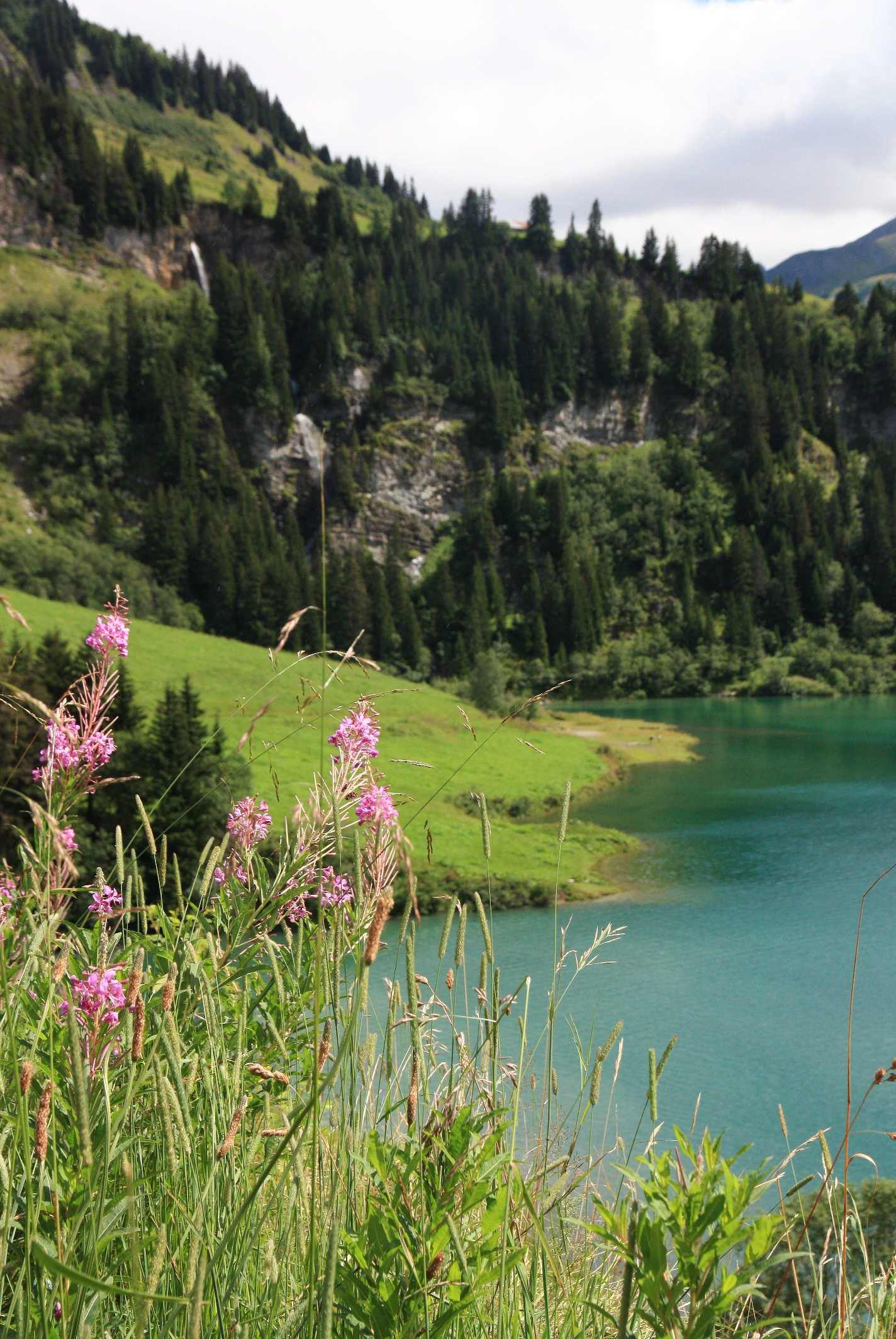
 Before too long Albina Lake emerges, tucked in a sheltered valley seemingly conducive to an array of wildflowers and other alpine plants. The lake looks quite inviting in the warmth and would prove a nice spot for a picnic. It’s about nine kilometres into the walk now, and with the summit of Mount Kosciusko just a few thousand metres distant, we resolve to head on and join the masses carrying their lunch to the top of Australia. On reflection, the best part of the walk is over…though this may be in part because familiar paths will soon be rejoined.
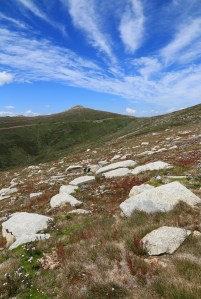 Unfortunately we seem to have gradually descended a little, and the hoick up to the main summit thoroughfare is probably the steepest of the day. We’re not talking rock climbing here, but frequent steps and, by now, quite a penetrating sun. The junction with the main summit trail is like emerging from a country lane onto the M1. Mostly originating from Thredbo, families, fitness freaks and old fogies join us in a steady stream coiling up to the top (2,228m). A medley of Aussie flags and fluoro leggings congregates around the summit marker, and lunching is de rigueur. With homemade hummus and more quiche ours is perhaps one of the more pretentious of picnics!
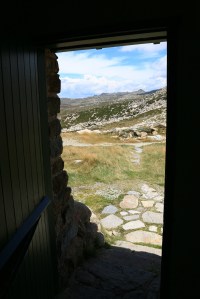 summit climb and apparently includes Australia’s highest public toilet – a sedate, well-graded trail makes it all the way back. This is the old summit road and I read that a shuttle bus used to ply along here, part of me wishing it was still running. The open scenery is not unpleasant, but in comparison to other parts of the track and given the gathering weariness this part is a bit of a drag. Markers every kilometre break it up, as does Seaman’s Hut (2,020m) and a more comfortable bridging of the Snowy River with four kilometres remaining.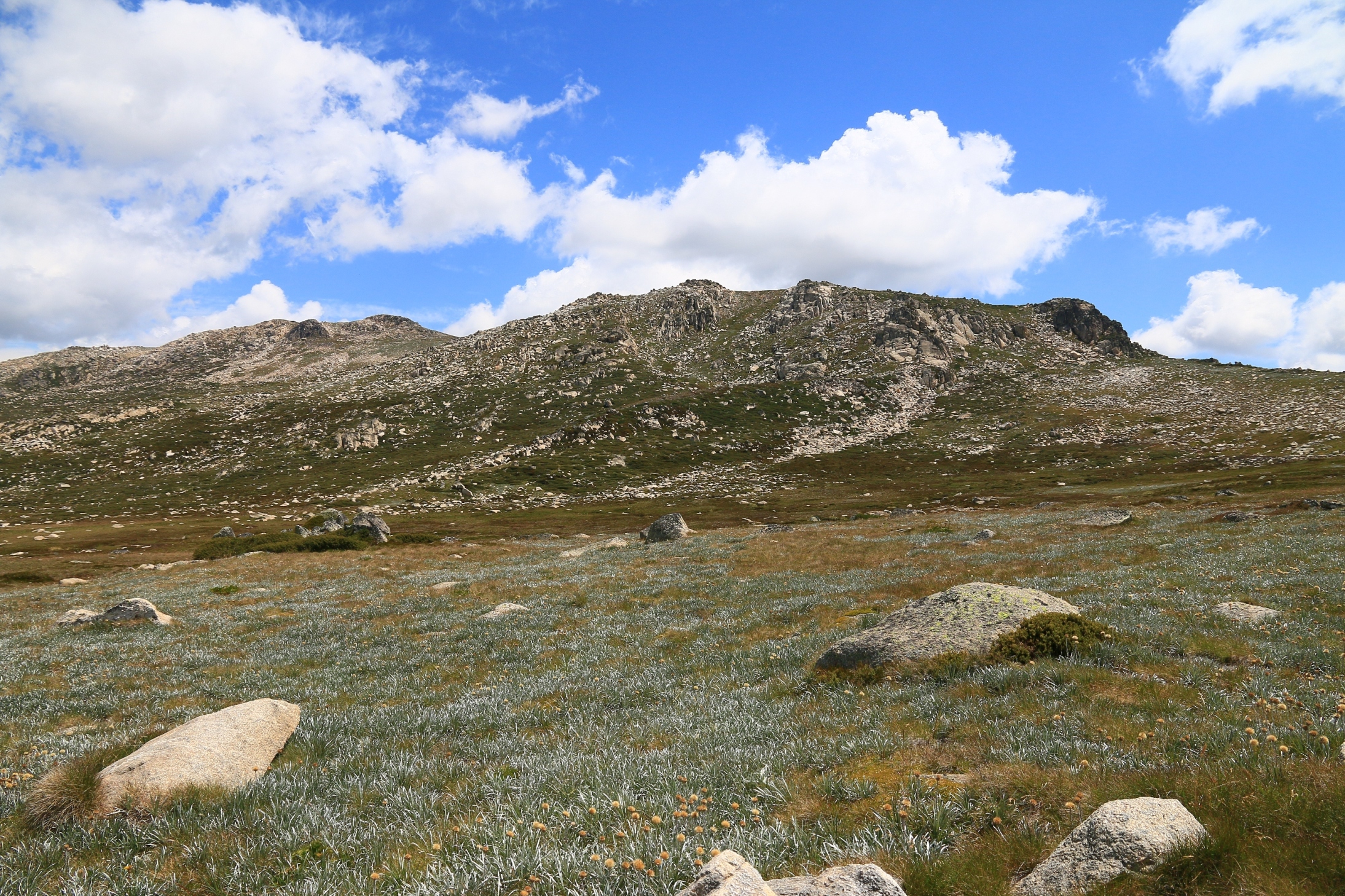
 upwards trail to Blue Lake looks like an impressive climb! Snow Gums also cluster here, stunted and bending with their striped, smooth bark of chocolate and sand, of black and white. Afternoon clouds are building and the risk of storms hypothesised look as though they will be realised. But, after six and a half hours and 21.9 kilometres, we reach the (relative) safety of a Subaru Outback. Accomplished and relieved, invigorated and weary; trundling another 220km back to Canberra (577m), via Jindabyne caffeine and Cooma steak. From the real Australia and back to the bizarre.

 There comes a point in January when people pause to consider what it means to be Australian. This usually occurs on or around the anniversary of a few hundred boatpeople from Great Britain arriving to “nothing but bush” (to quote the minister for Indigenous Australians and His Lordship Prime Minister of the Monarchical Colony of Australian Subjects). Considered writings of pride, of angst, of hope, of uncertainty litter the newspapers and infiltrate the electronic graffiti of the twittersphere. For the common man – let’s call him Shane – the Australian essence is commemorated through the bite of a lamb chop from a gas barbecue the size of a truck, a youthful discussion of rising intonation about the best 100 songs involving people with beards lamenting at life, or a day in front of the TV watching tennicrickcycletfooty with a so-cold-it-hurts beer.
 While I could brave a venture into the question ‘What does it mean to be Australian?’ I neither have the will nor the current brainpower to go down this path. It may be I am suffering from that particularly laconic strand of Australianism that arises specifically at this time of year – the can’t really be arsed is it still the holidays period. I’m also in the dubious position of not really being a proper Australian, not really, even though the flag of my country of birth is still emblazed like some badge of imperial approval upon yours. All I can say is that I feel lucky, immensely lucky, to be a part of you, attached to your deep blue skies, your sandy shores, your withering white gum trees, and your mostly generous and progressive people.
 I feel lucky, on most days, to be in Canberra. Yes really! A capital you have built in little over one hundred years from sun and frost-baked plains and bush-tangled hills. You really ought to be a little prouder of this achievement, especially because you have left some of those bush-tangled hills alone. The sweeping roundabouts and nationalist edifices now scattered across the plains are looking particularly fine as well, what with the regular stormy soakings keeping the grass nice and green. A summer of such generous rainfall that it could almost be British. How soothing.
 Despite such impertinence, the sun still shines most days here, and for that I am grateful. The slight irony is that I write this looking out of my window on grey accompanied by a cool 17 degrees only. But this is surely a blip, for other days have offered ample warm sunshine before the storms. Conditions in which I can enjoy your verdant lawns and embrace your rising humidity. To climb bushland hills and swing golf clubs very amateurishly. To cycle alongside the water and sip coffee with the hipsters. To be that most Australian of creatures and watch sport; and not just any sport, but cricket, and cricket in an atmosphere of cleverly articulated critique of the opposing English team. Pommie-bashing I think you call it, and too bloody right.


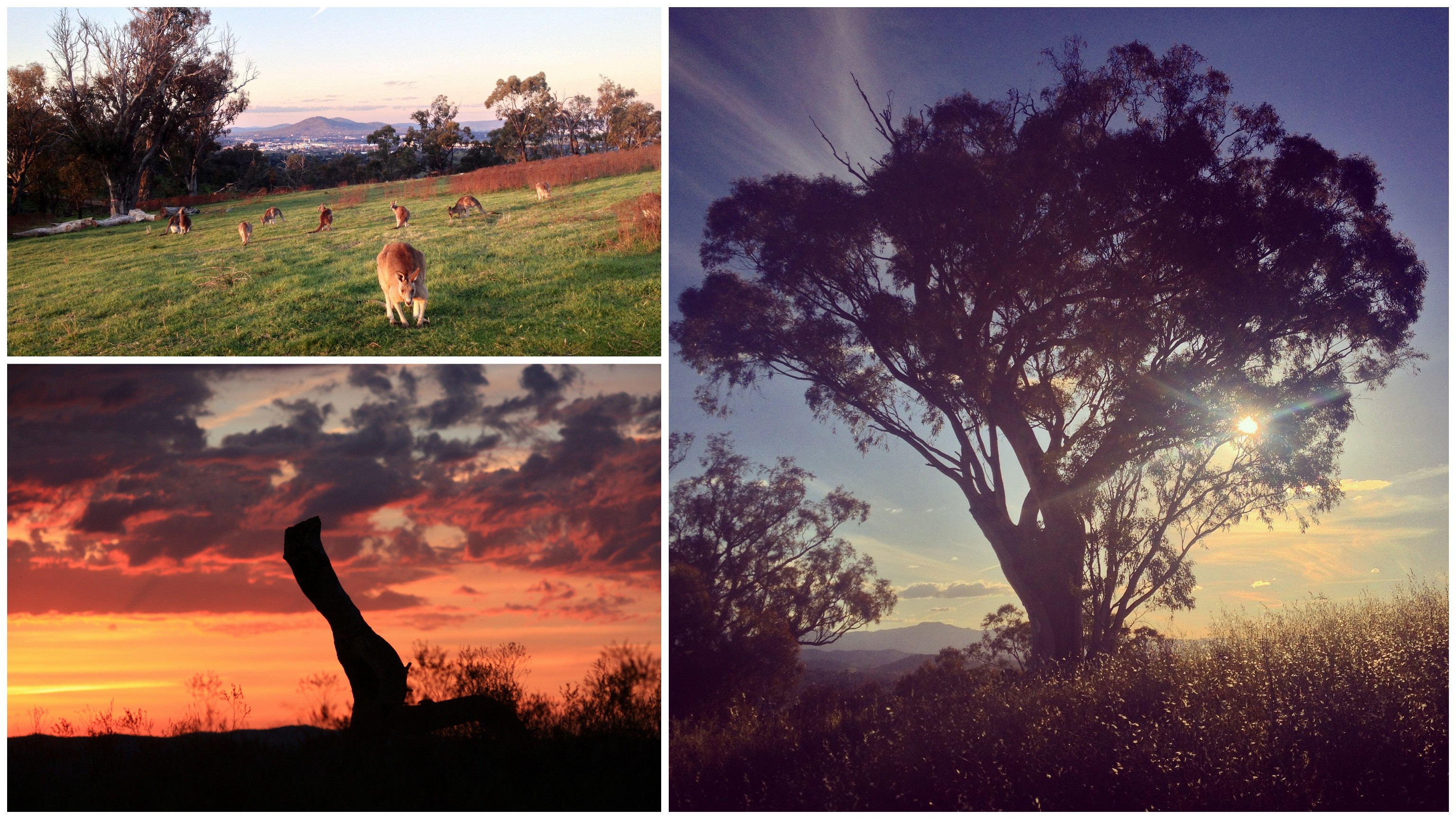
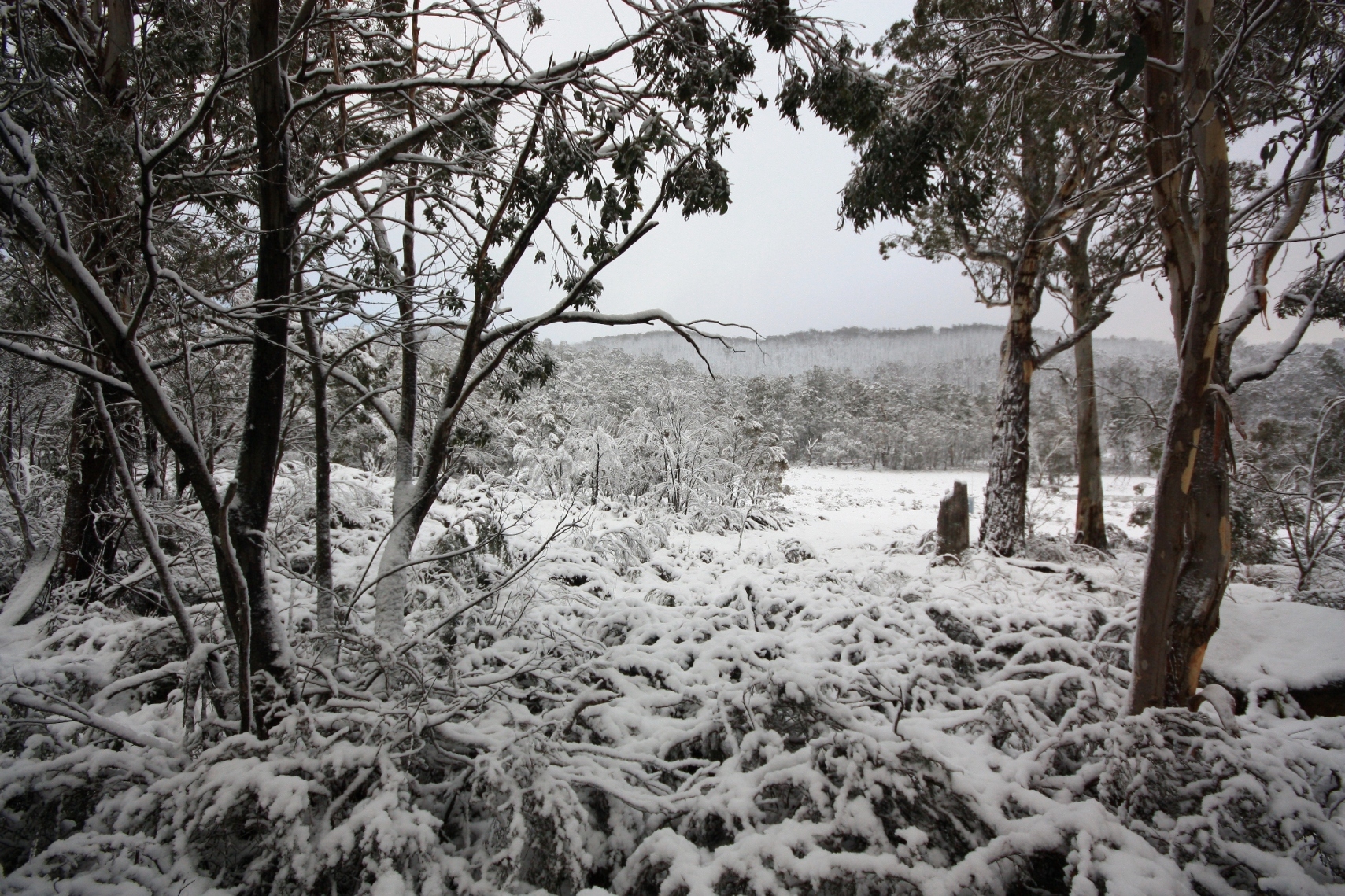
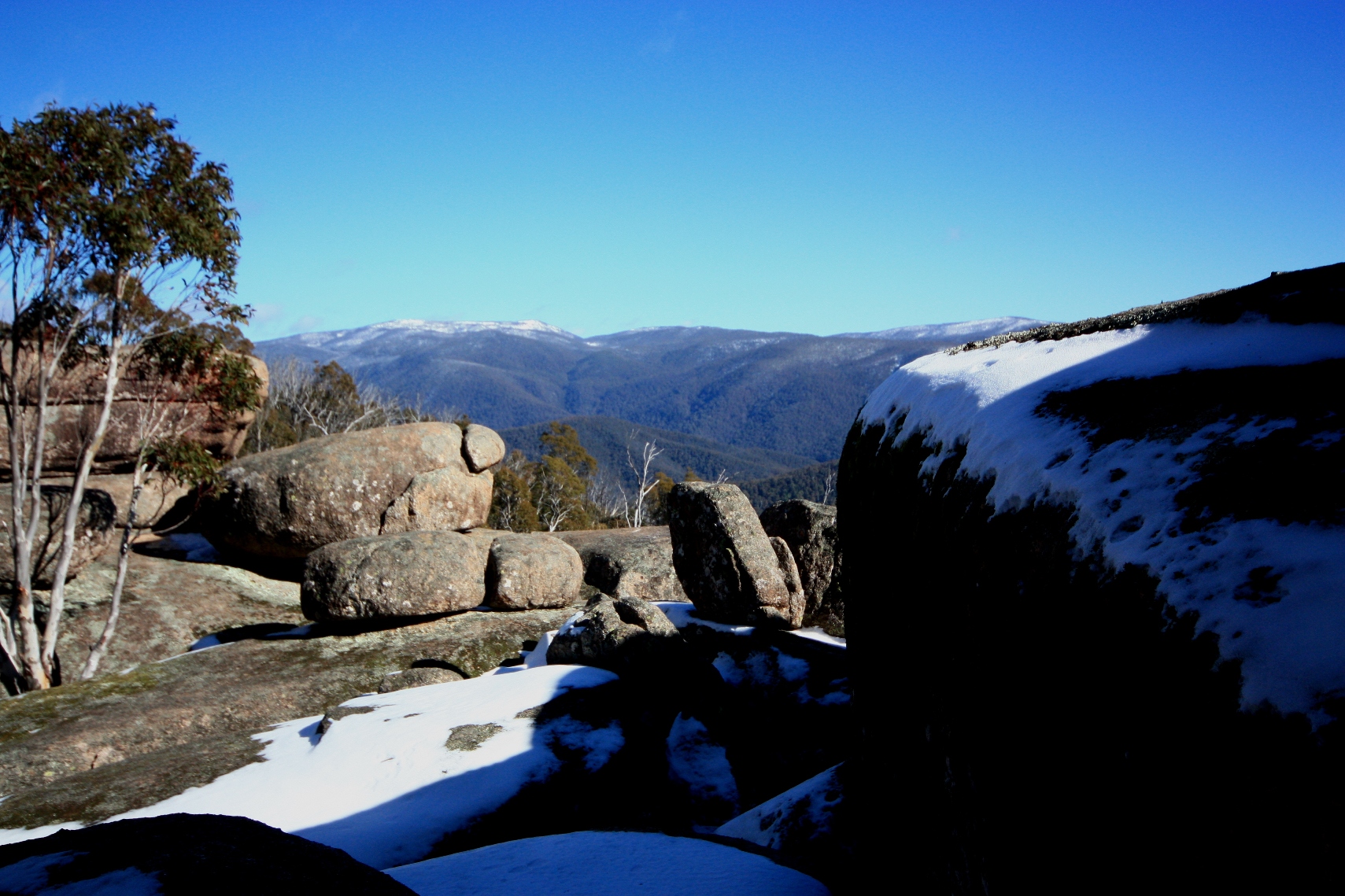
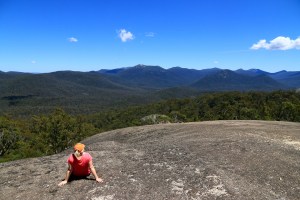 As a more recent entrant upon this giant landmass I feel blessed that I can maintain a comfortable, civilised, and invariably cultured urban existence while still being easily belittled by nature. I can live in a clean, safe, prosperous city scattered with sweeping roundabouts and take one of the exits towards nothingness. Though for nothingness read abundance. An abundance of gum trees and hills and high plains in Namadgi, from which rocky outcrops pierce an abundant blue sky. A plethora of grasses and wildflowers emerging in swampy hollows, the weeds also thriving in a show of acceptance and egalitarianism. A setting for black cockatoos and butterflies to float in the air, riding the breeze upon which small white clouds cluster and vanish.


 From then on the eating proceeded with a mostly seafood lunch involving the largest prawns ever created, sweets, desserts, nibbles, barbecue, sweets, snacks, more nibbles, etc. Presents were unwrapped, outdoor chairs were reclined, family discussions were robust. And to cap the day, I came home for a touch more nourishment and a little drink to lubricate the Skype calls to Europe.
 There have been some natural and arguably more spectacular fireworks anyway. The hot dry summer which occurred in November has now been usurped by a north Queensland period of sunny, sultry mornings building to climatic storms and downpours later in the day. The pattern has been so recurrent that the days are becoming almost entirely tediously predictable, and so activities (unless they involve storm-chasing) are almost best undertaken in the mornings.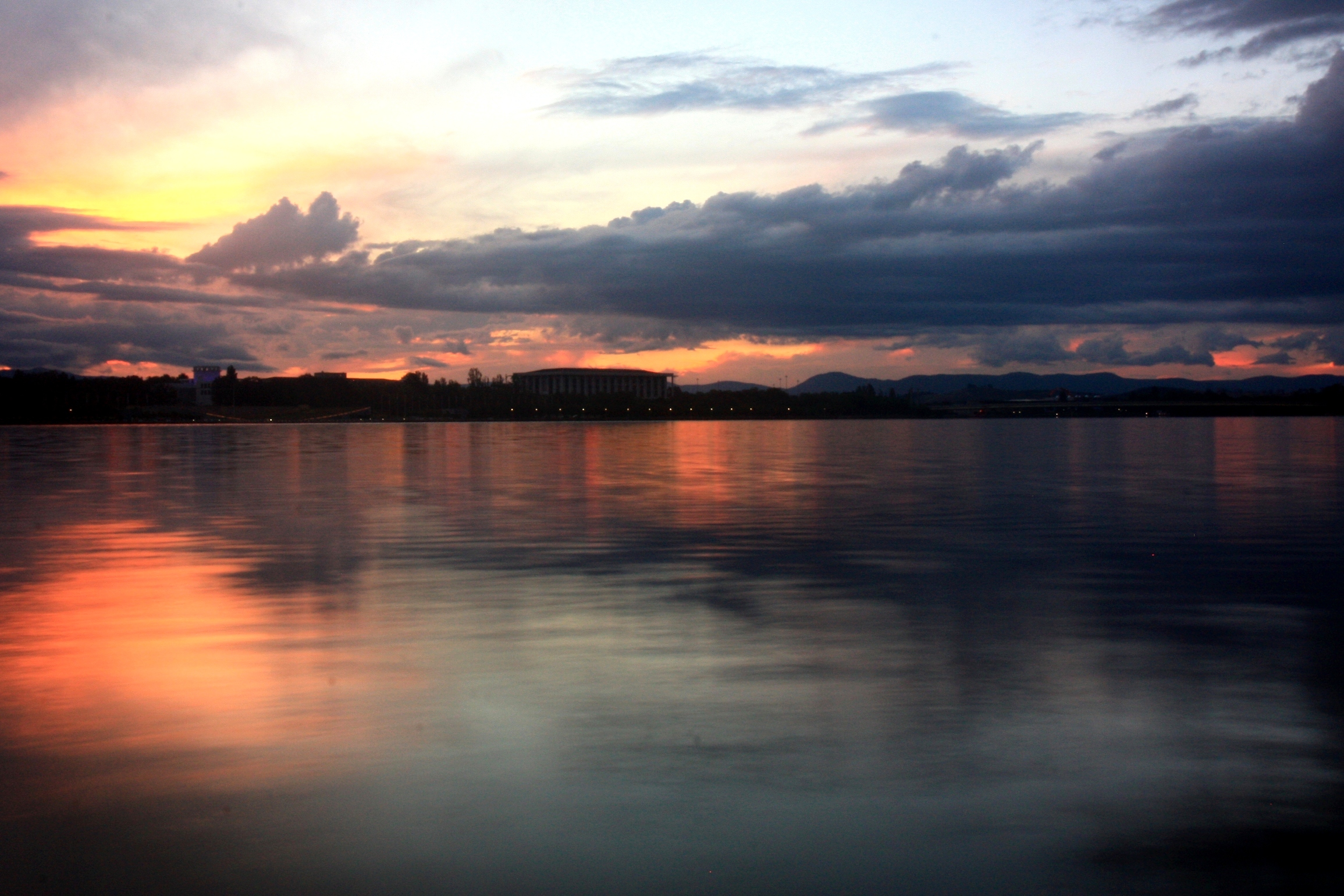
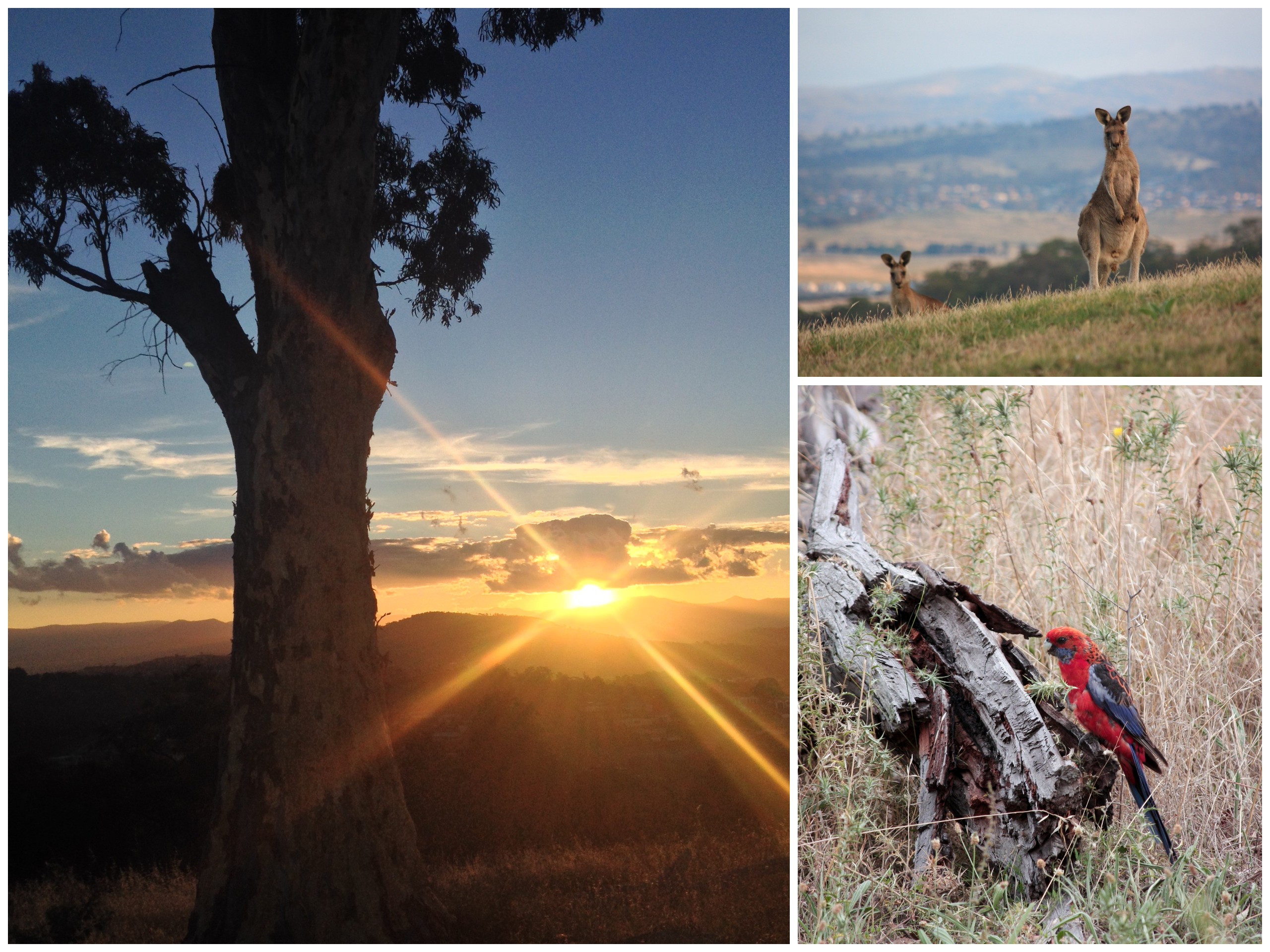

 ra (1,855m), offered the perfect antidote to Christmas torpor. And it wasn’t even too difficult – the first six kilometres along a fire trail with interruptions for forest views, bird sightings, flower-filled glades, blue-tongued lizards and lunch beside a rickety mountain hut.
 period with less than impressive results), it has been nice to venture lakeside and use a bicycle as a functional means of attaining coffee and shopping. A day spent re-visiting some of the national attractions was ideal by bike, and trips to town are scenic and satisfying, despite the fact that this means entering stores glistening and red-faced.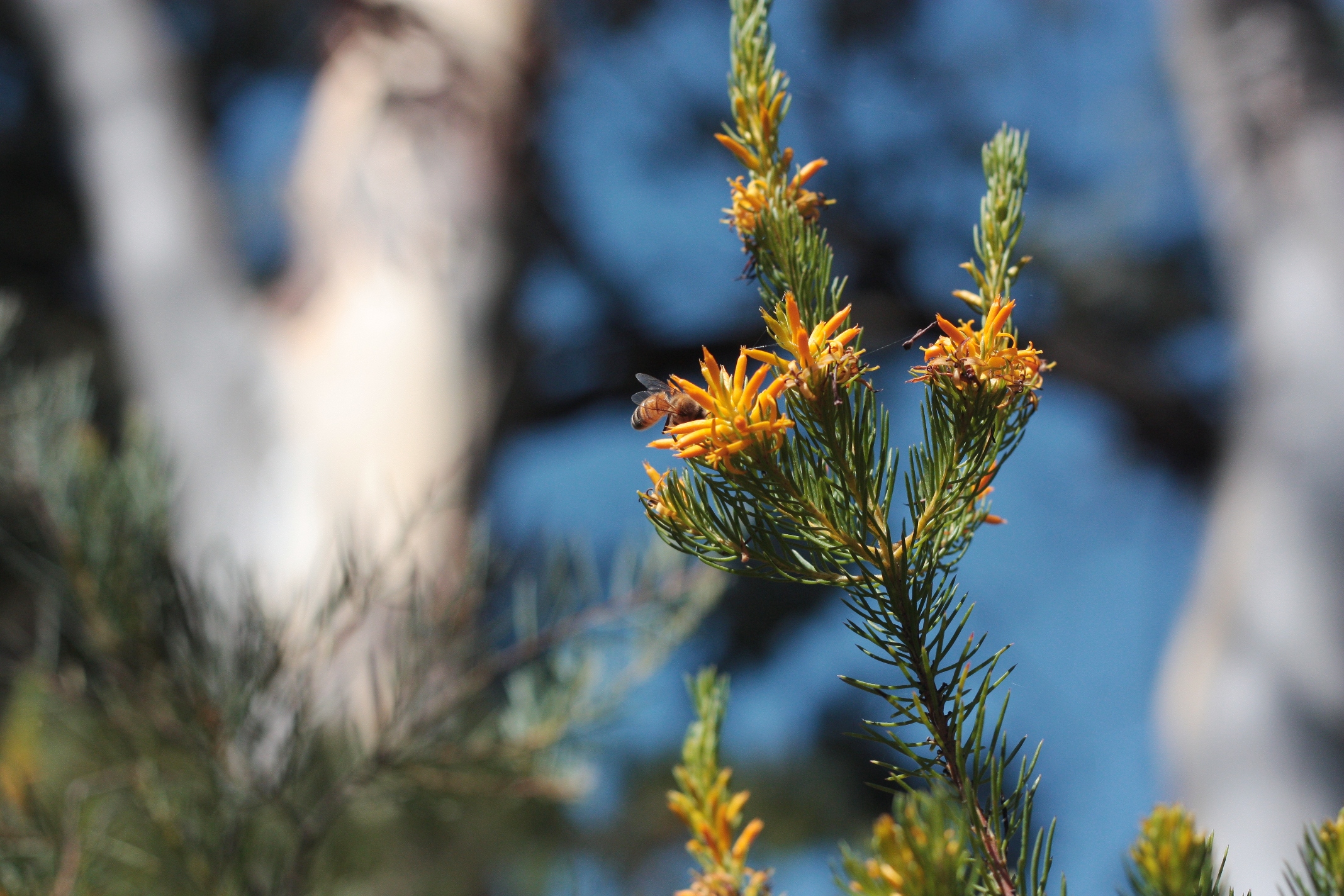

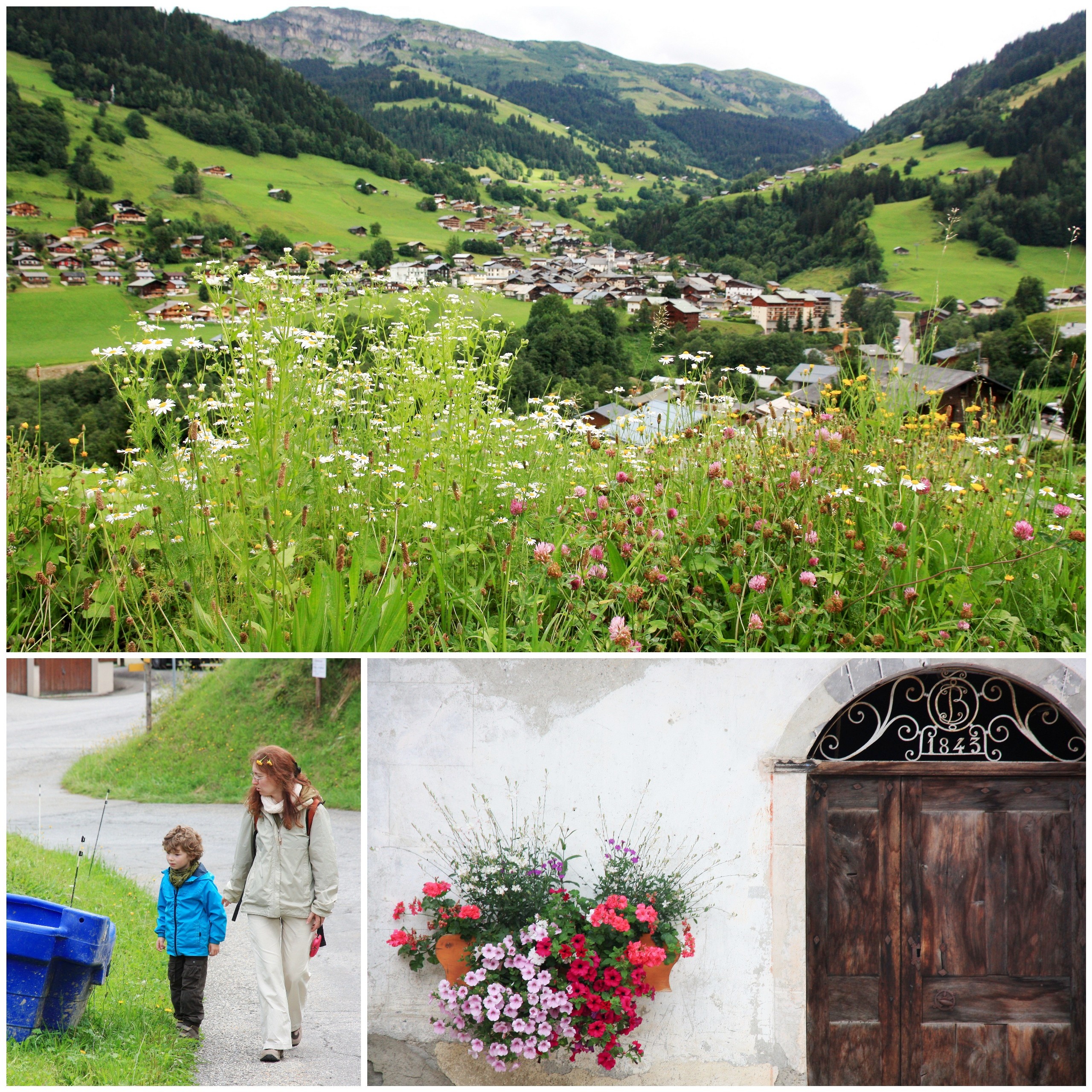
 Log cabins in a pine forest, sun dappling through the trees, a red squirrel darting across the branches. Even the shrills of wild children and hypersensitive smoke alarms cannot dampen the environment and your temporary spot within it. Plus a bedroom to myself with a real bed…a relative luxury on trips to the motherland.

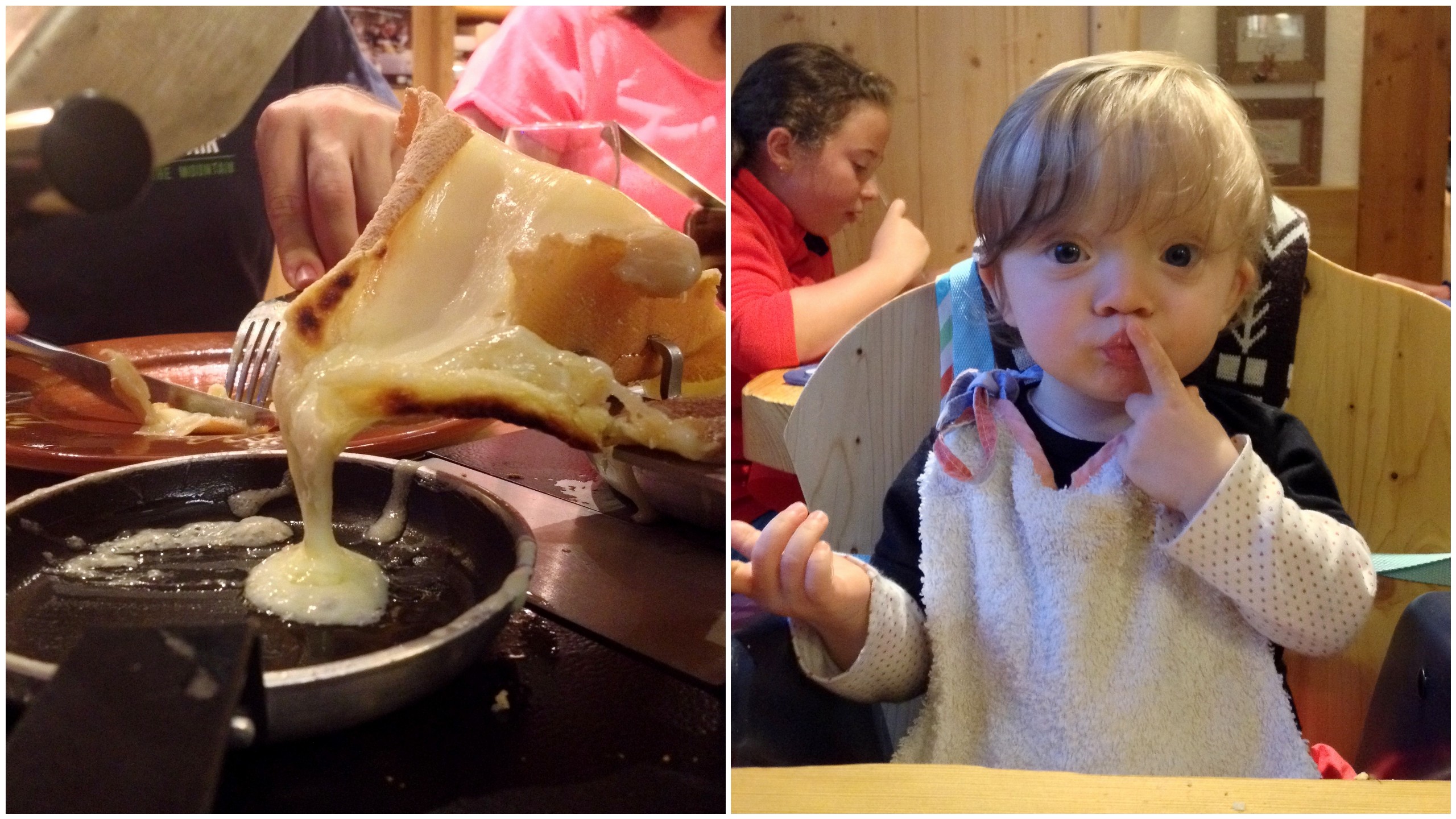
 Best meal: Trois Fromages d’Areches
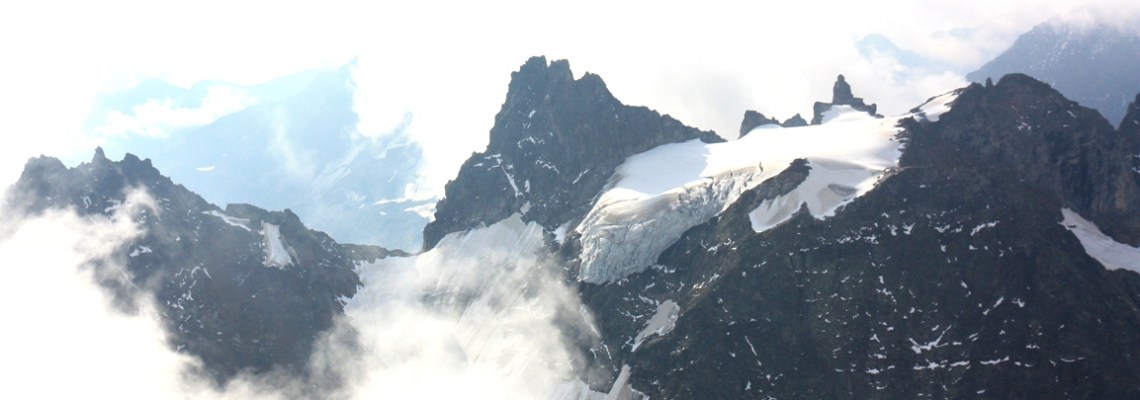
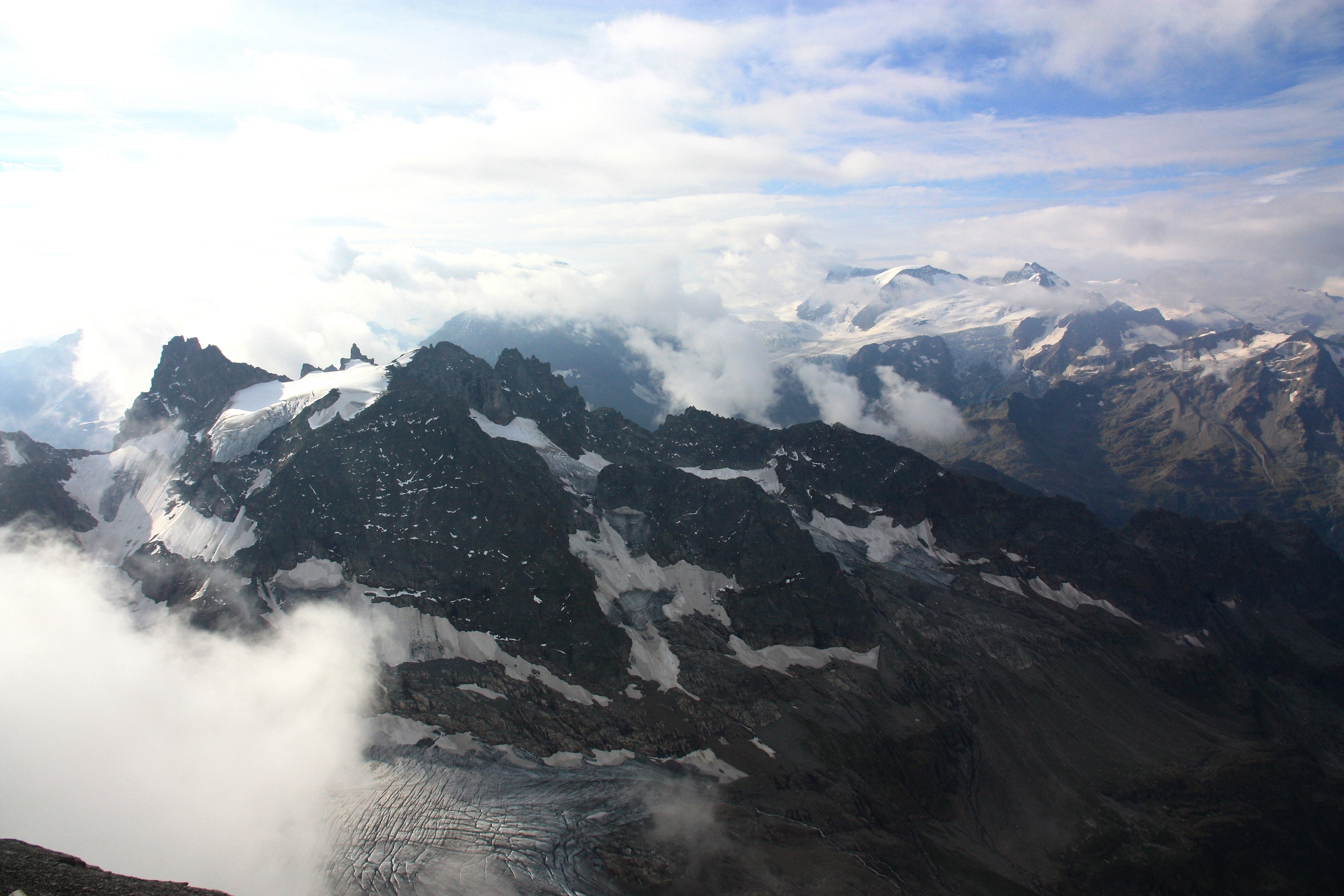
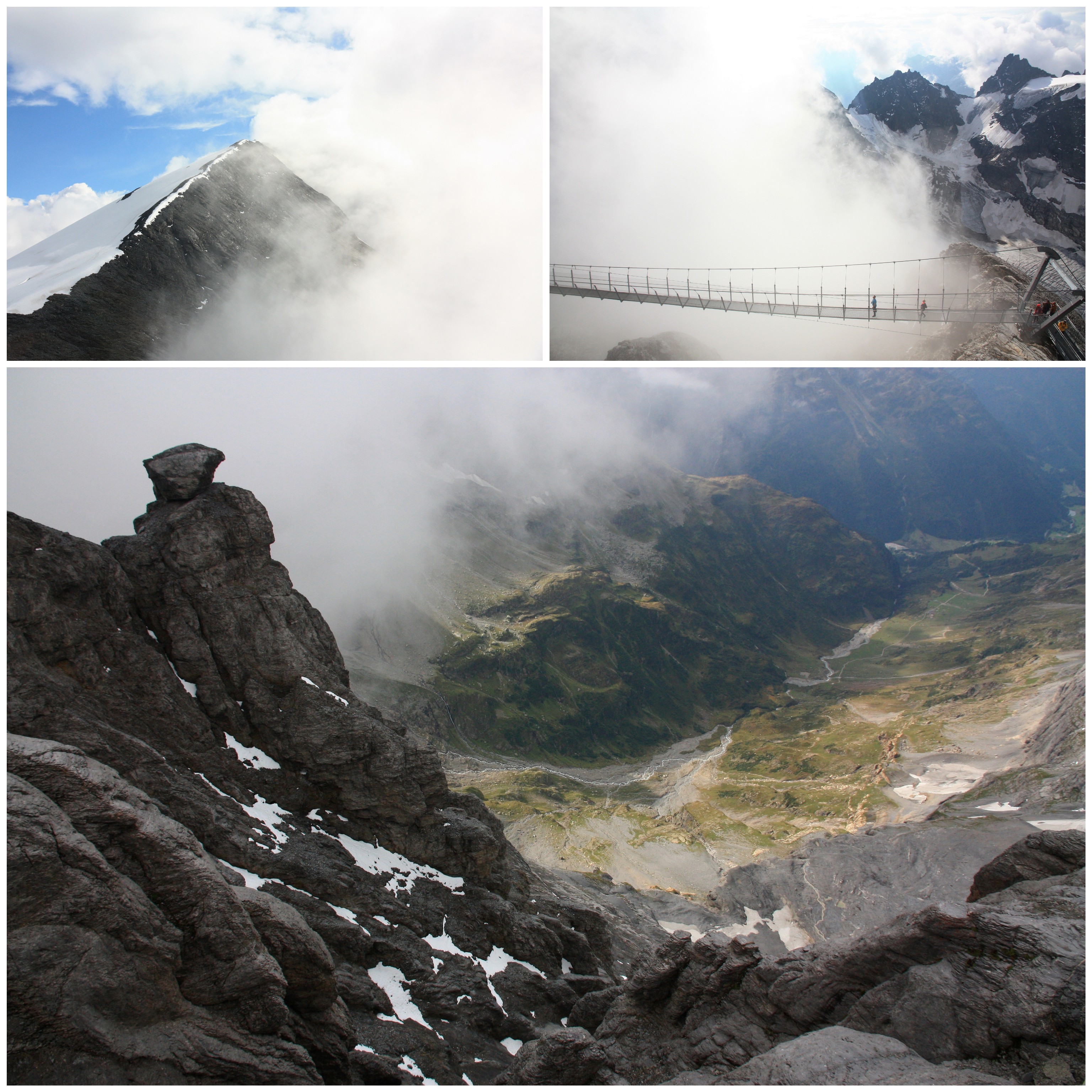
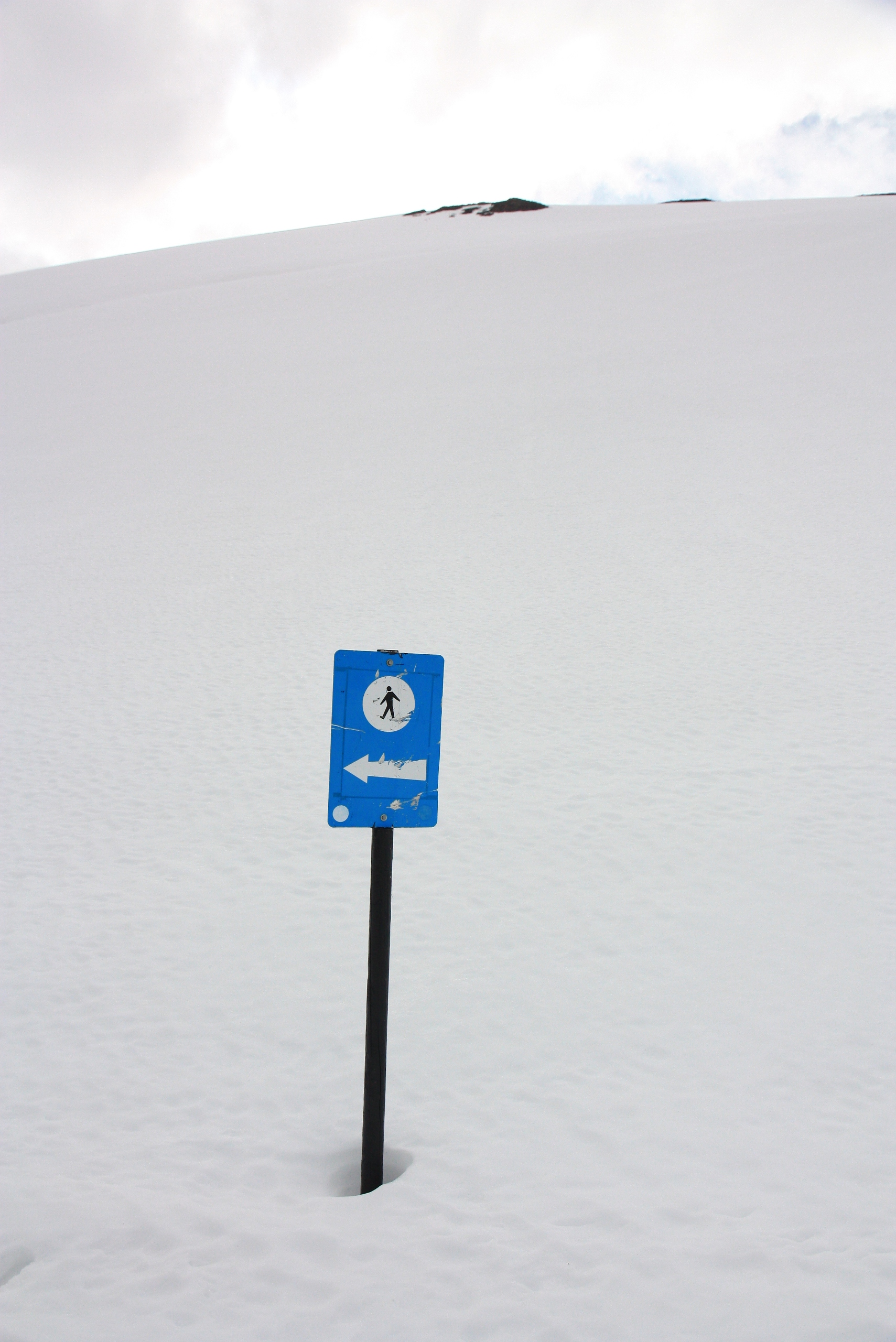
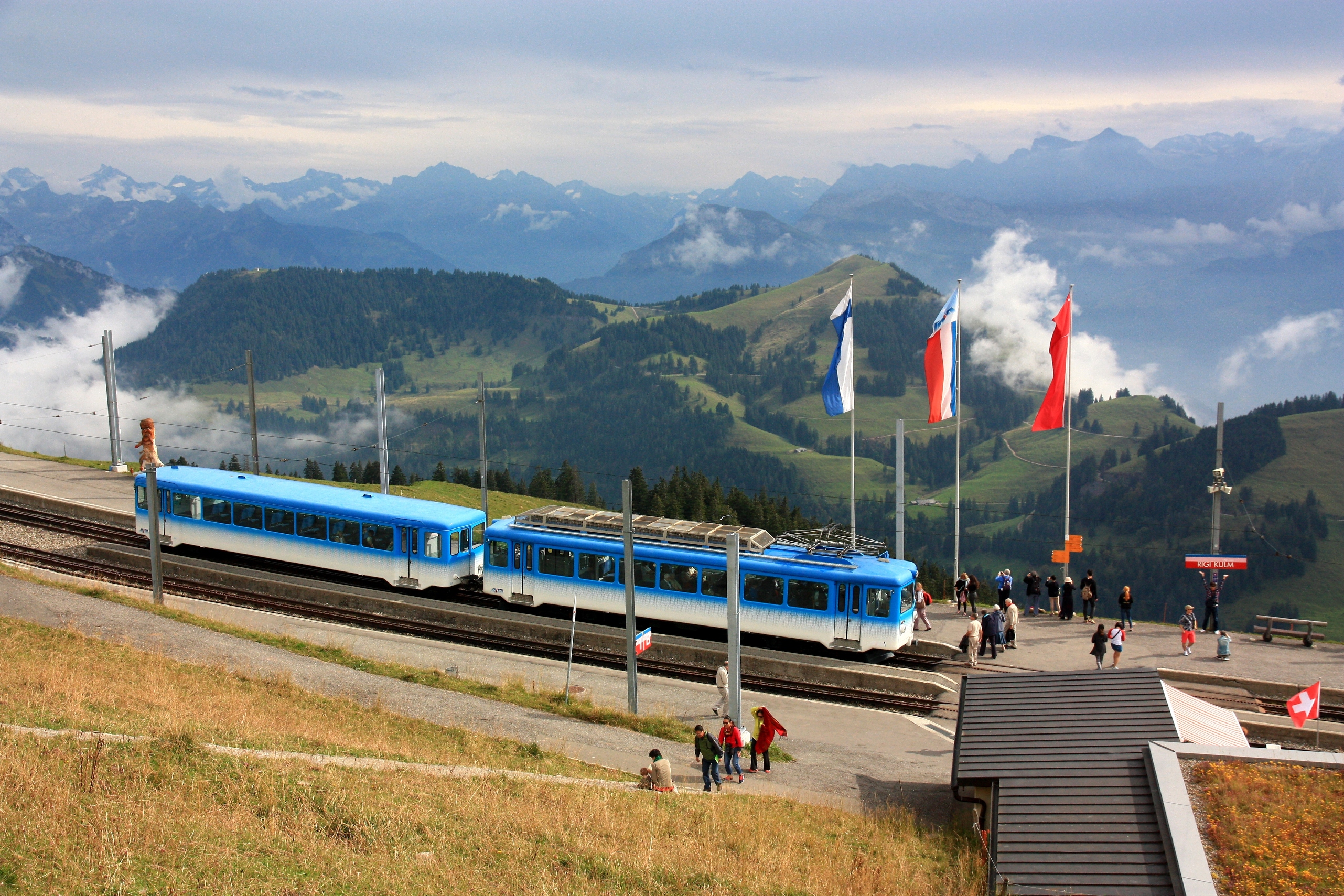
 Selfies, selfies everywhere and not a shot to think. Being the only person not from China and not owning a telescopic selfie propulsion system I nonetheless grappled with iphone controls and pouty expressions all the while swaying slightly above a five hundred foot ravine in the snow, ice, and thin air of a Swiss Peak. It sounds like an endeavour worthy of Scott and Mallory, of Fiennes and Kardashian, a feat of suitably slavish worship to the filter in the sky.
 The Lance Armstrong Medal for Performing-Enhancing Ingestion of Substances Related to Cycling: Kingston coffees and cakes






































 gbpilgrim