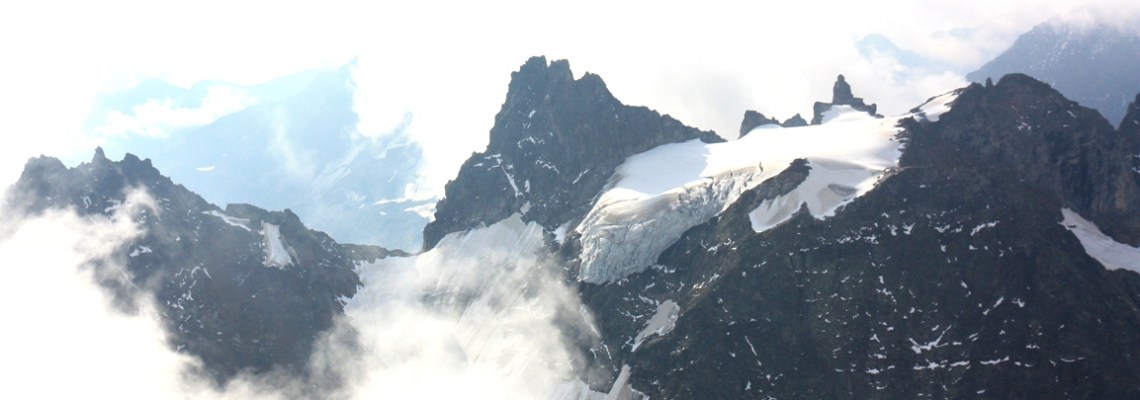
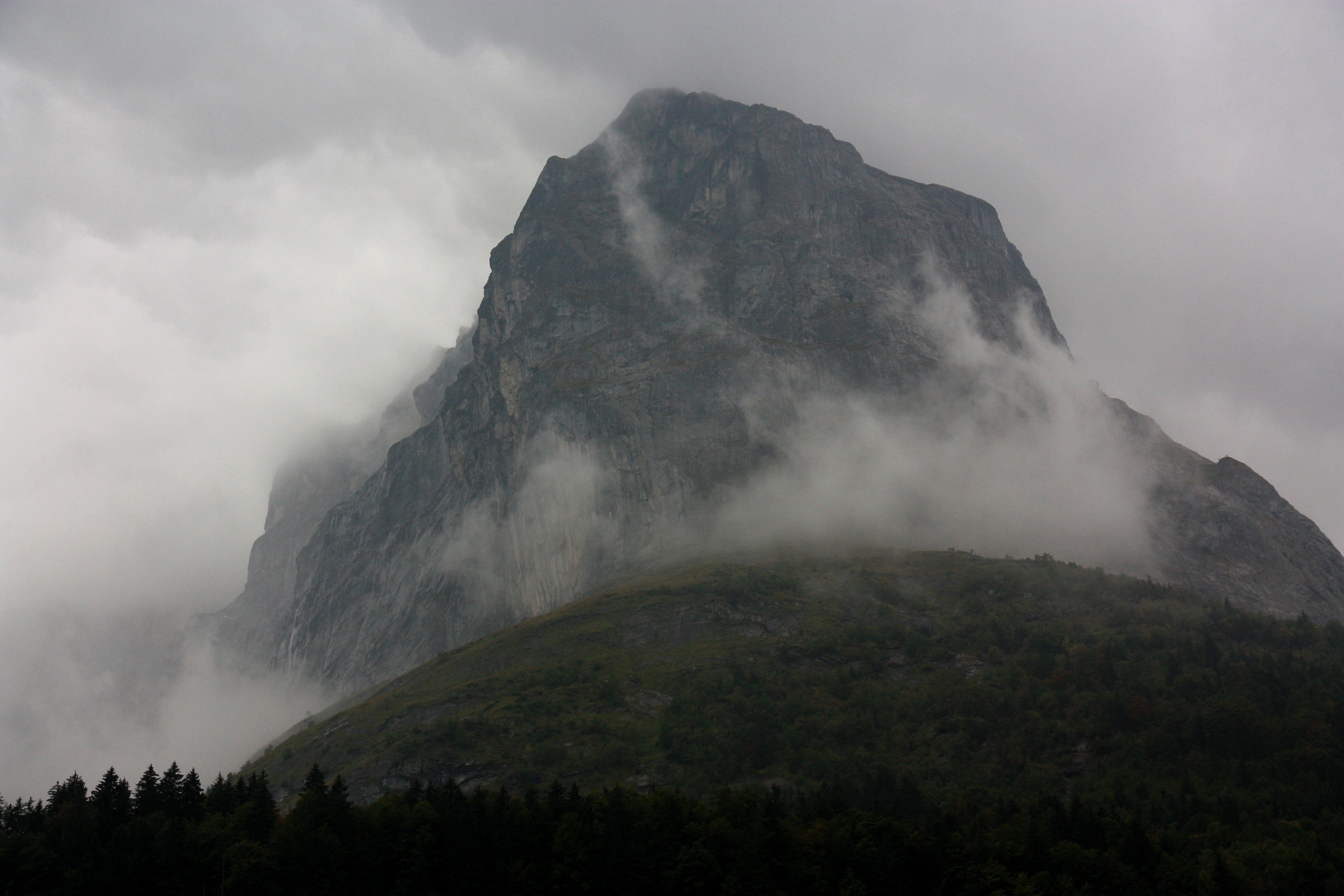
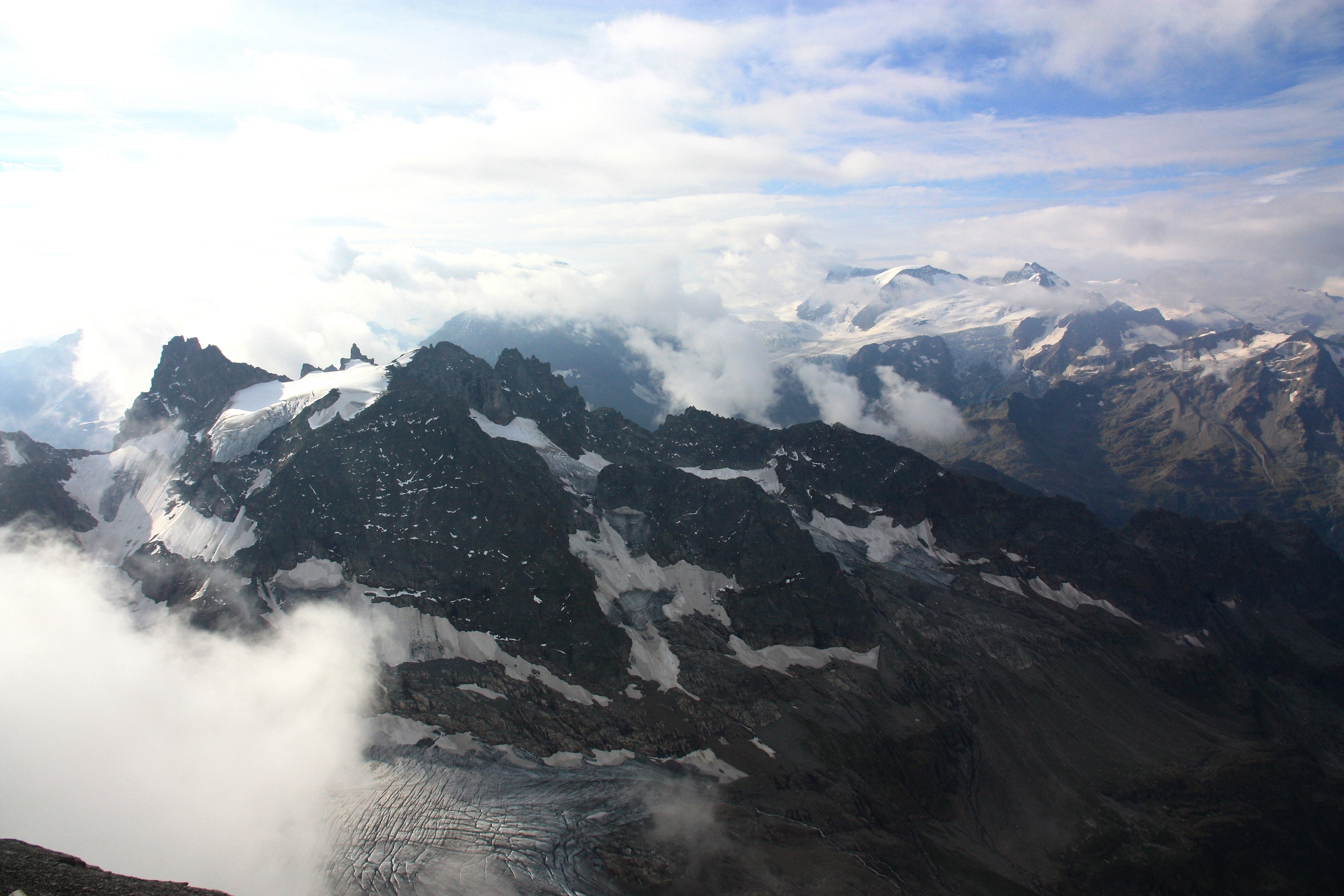
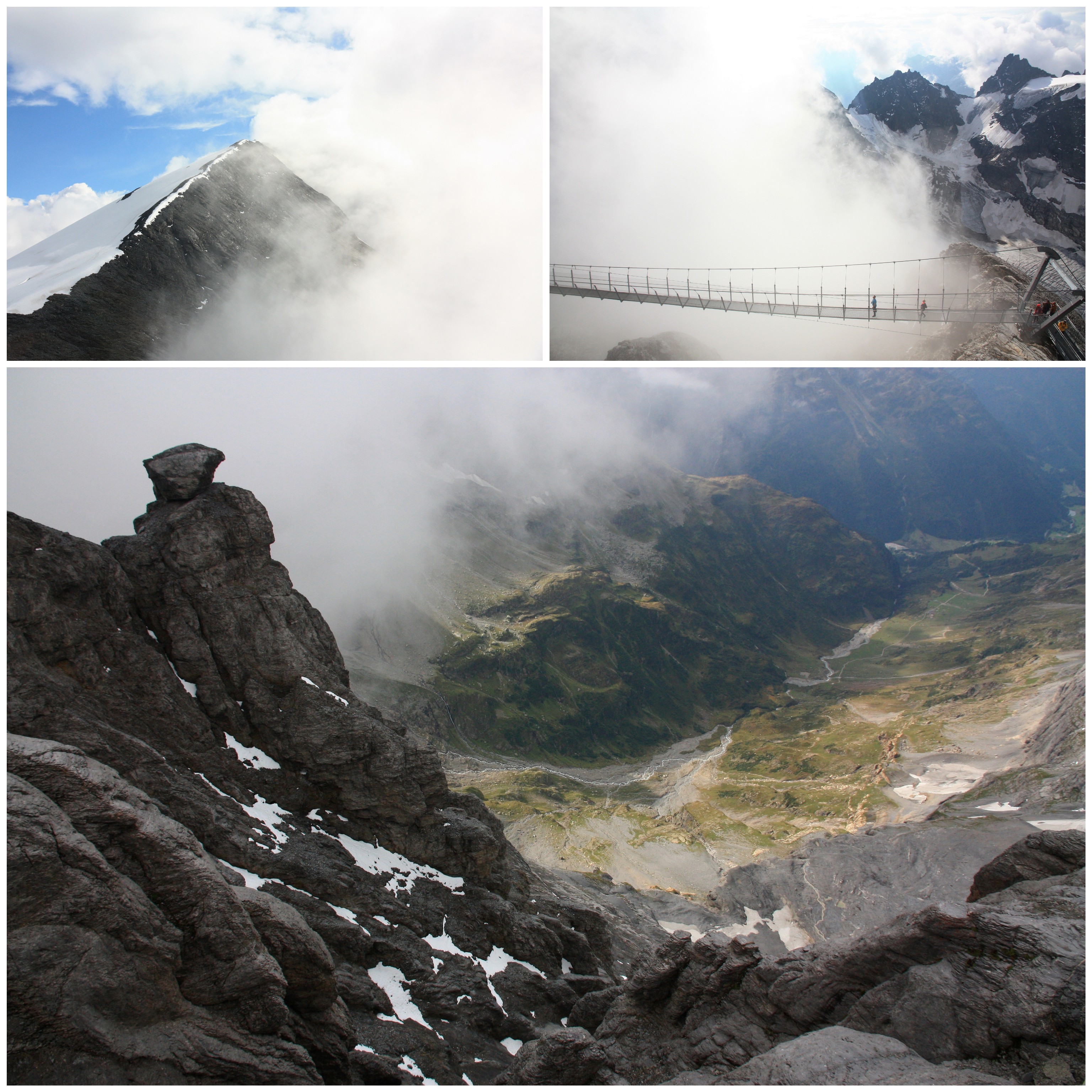
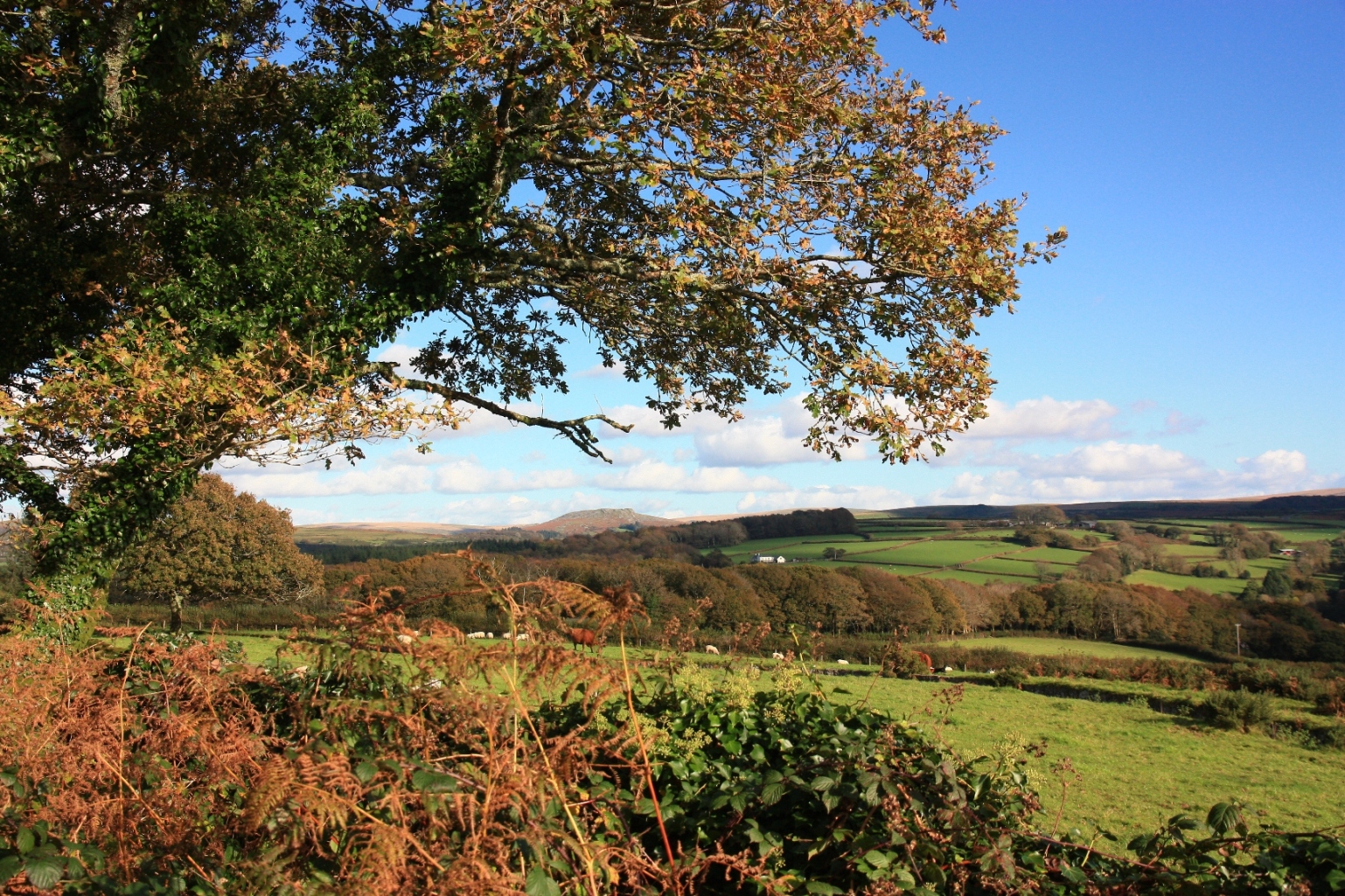
I’m an Australian, Get Me Outta Here?!

Every once in a while I pick up on a sign that I have been in Britain for a lengthy time. The coffee becomes more tolerable and I seek out a Costa. I engage in the politics, once finding myself watching Andrew Marr on a Sunday morning and invariably tutting and name-calling towards an array of politicians (just like a Sunday morning with Bazza and co in Australia). I also develop greater familiarity with popular culture, aware at least of which predictable warbler might remain in X Factor and who ends up eating cockroaches in the Gold Coast hinterland. I am persuaded that Ant and Dec can actually be quite funny. And reminded that most of the press remains dire, particularly for non-xenophobic lefties.

If anything, weather fixation intensifies and I obsessively scramble to watch the national forecast on BBC breakfast every morning. And then the local one ten minutes later. Absorbing, calculating, praying in hope that there will be a clearer slot in between graphical blues and greens depicting more rain. I doubt that I have used the word ‘dank’ in Australia, but here it re-enters my lexicon. It was inevitable, but it still comes as a disappointment.

I later discovered that November was the gloomiest on record which is absolutely brilliant isn’t it? Bright spells were as rare as succulent oak trees in a delightfully scorching sun-blasted desert. Any glimmer of blue (or white or less grey grey) prompted me to seek the outdoors. Sunshine and squally showers meant a good day, like on an outing to Newquay with Mum.

nov01

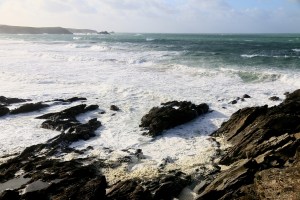
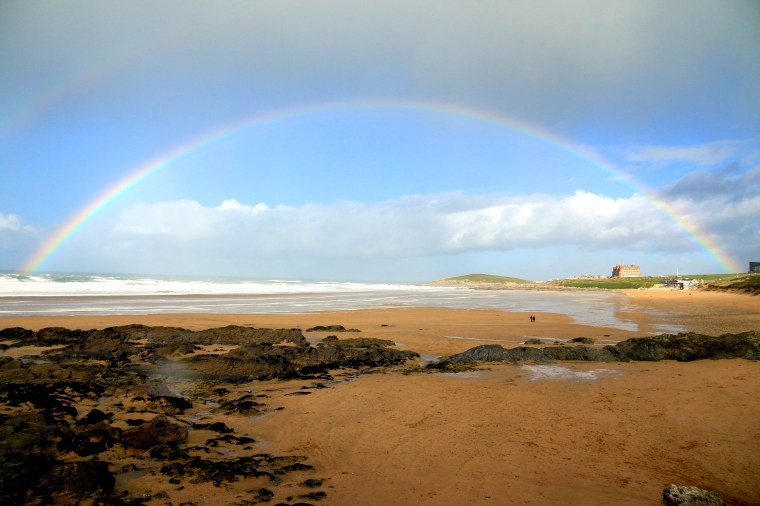
I would naturally avoid Newquay in the summer, jammed as it would be with school holiday sun-seekers stumbling over surfboards and clinging to caravans. Out of season is a different proposition though, with Fistral Beach sparse and surfers unwilling to venture upon seas whipped into meringue peaks. An out-of-season foam party streams onto the sand as a continuous crashing soundtrack booms in from the Atlantic.

nov02

nov03It is – to be sure – bracing, but seems more purposeful than hunkering down to watch endless episodes of Pointless. We pursue the headland for the 360 degree views and a ragged crossroads of wind and water and land. Shelter is close and welcoming, provided by another Stein enterprise which can comfortably survive a winter with fish and chips and bread and tea specials.

Post-batter and it is back through the foam party and across to Pentire Headland. Similar to before, angled walking is required to puncture through a north-westerly headwind; pausing still to take a photo requires strength and agility. Waves crash on three sides and filter into the beach at Crantock. A distant squall promptly bears down and sends us scurrying for the car. The rain is back, and the blue sky gone again.

nov04

My standards of what constitutes a good day in November have lowered, indeed plummeted. A grey morning triggers a return to Noss Mayo, an oft-visited haven but never so late in the year. What once was quaint is turned dour, the sheep peppering the coast questioning their existence and the yachts of the estuary creaking in ghostly wails. Bleakness envelops and a downpour drenches me before I could seek refuge in The Ship Inn. Posh people hog the fire with a sense of entitlement. Times have changed but some things haven’t.

nov05

The weather folk on TV keep trying to sound cheerful, gleefully informing us that it is unusually mild for the time of year, before presenting a summary of the week ahead featuring words like “unsettled”, “rain at times”, “overcast”, and “winds increasing”. So it came as something of a surprise to wake one Saturday morning to find a frost on the car windscreen, hastily scraped off in an attempt to enjoy the blue skies before the clouds encroached and it became “overcast” again.

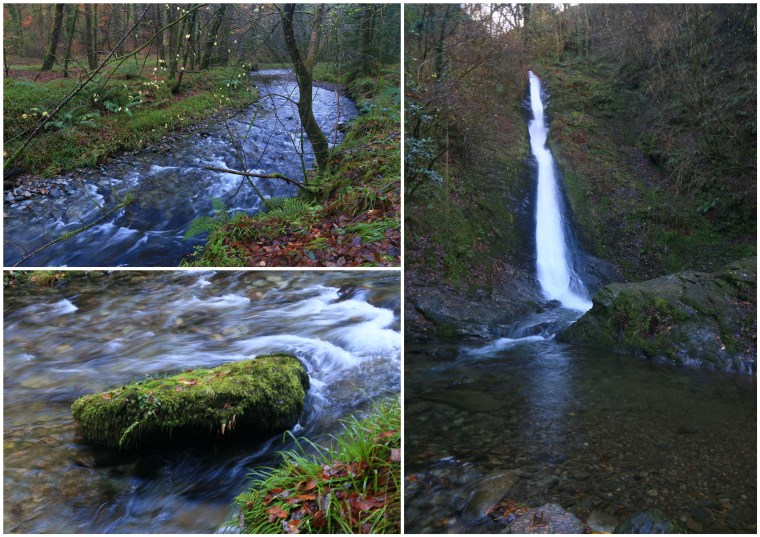
The moors were looking stunning in such rarefied light, swathes of bracken glowing bronze and raggedy silver outcrops piercing a deep blue. Not everywhere was shimmering though, the sun sitting on such a low trajectory that hollows and recesses struggled to shake off the shade. Thus on a nice sunny day I find myself in a chilly, dark chasm, following a beautiful watercourse in Lydford Gorge to the foot of White Lady Falls. A very reliable supply of water (i.e. Britain) ensures the falls plunge with suitable grace and power, offsetting the annoying lack of sunlight in the valley.

nov07

nov06With the trees rapidly denuding it seems that autumn is fast dwindling away into winter, even if the temperature is hardly playing ball. It starts to feel like Christmas is of course a-coming, although the shops have been full of Christmas since September. I cannot remember there being so many TV adverts for Christmas food, Christmas presents, Christmas drinks, Christmas movies, Christmas jumpers and Christmas music. I thought it would be nice to stay in the UK for Christmas, but this overabundance is starting to drive me mad. I guess that is part of the whole Christmas experience too!

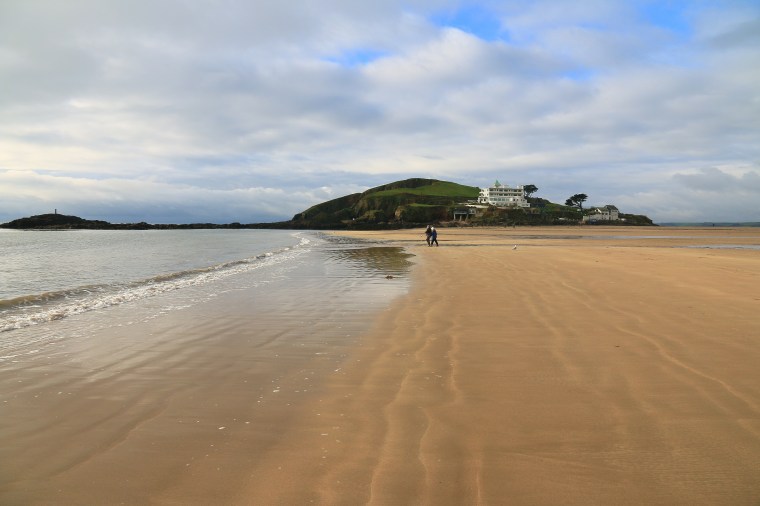
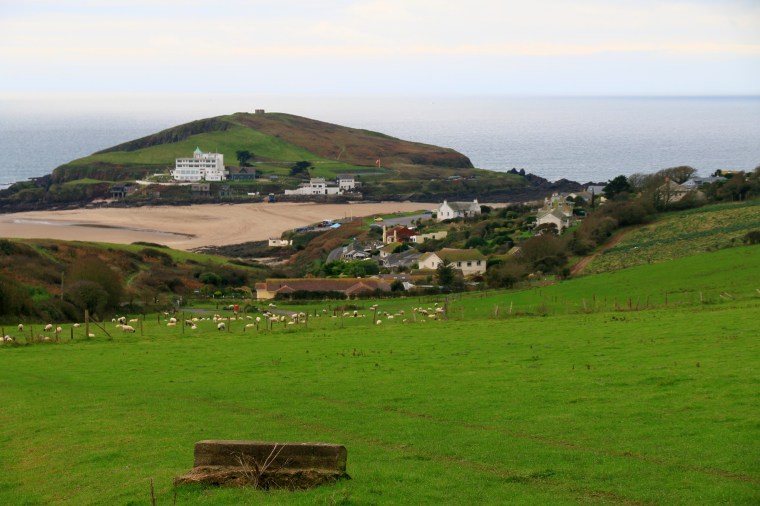
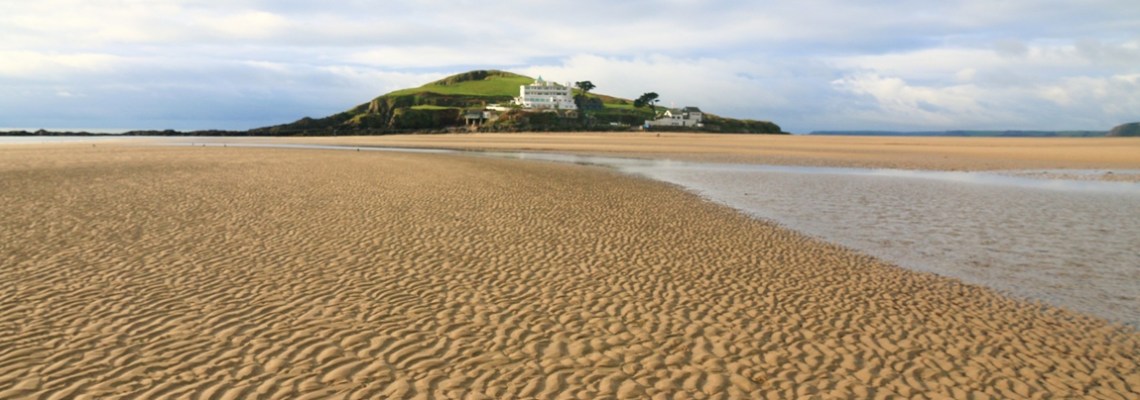
Chances of a white Christmas appear non-existent, unless you escape to a seascape brimful of foamy fury. Unlike Newquay and the north coast, stretches of the south coast may not cut it for impromptu seafoamball fights, thanks to protection from Atlantic surge. Beaches like Bantham and Bigbury are generally more sedate affairs and miraculously the sun may break through the white cloud thanks to the shelter of the hills. At low tide, miles of sand act as a barrier to the elements and afford safe, non-muddy footing for bracing strolls.

nov08

nov09Burgh Island is the centrepiece of this quaint corner of South Devon and easily accessed when the tide is out. Catch it at the wrong time and you’ll be faced with a giant tractor ride or a perishing wade through water surging in from left and right. Or maybe wait it out with a cocktail in the artiest deco hotel of them all. Alas, my re-acclimatisation means I am used to paying attention to the tide times along with the weather forecast and miss out on cocktails and tractors.

Despite the predominant cloud, despite the withering trees, despite the headwinds and squalls and muddy tracks, despite the gloomiest November on record, there is just a little charm and delight to be found. A few hours like those in Bigbury, or Newquay, or at Lydford make a world of difference. They are rare interludes, and may not be enough to persuade me I could do a whole November again. But then it could be a lot worse, it could be December instead…

nov10

Great Britain Green Bogey Photography Society & Culture Walking

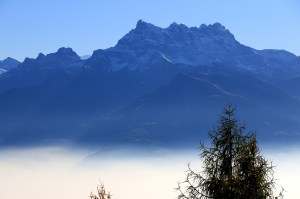
Nuage magique

In further news not westcountry, here are some more pictures and jumbled words from a recent trip to the Geneva suburbs of France and the French bit of Switzerland. Family connections make such trips possible and while this can raise some minor irritations – think early starts, couch sleeps, tricky post-dinner cheese decisions – there are more positives than negatives. Like family fun at six in the morning, afternoon naps on a comfy couch when all is quiet, and fulfilling post-dinner cheese decisions.

Fr01

In addition there is the location, which provides access to two countries and cultures and some very hilly ground. I feel like I have at one explored much and touched only little over multiple visits. New settings emerge like the sun through the lake cloud, while old haunts linger, much like the lake cloud. Thus, in conclusion, the lake cloud is very variable and largely unpredictable in late autumn and sets the tone for the disposition of the day. Linger in cold dreariness or bask in pleasant, warm sunshine. Just be prepared to deal with it one way or another…

1. Disconnect sensory and logic-processing synapses

It looks like a pile of gloom. It sounds like a pile of gloom. It smells like a pile of gloom. It is not necessarily a pile of gloom, though it could be actually. Or maybe not. What is dark and leaden at the start of the 61 bus ride can be clear and airy at the end of it. Now, I know the 61 bus ride feels like an eternity for some, but not so long to make this transition conventional. You think there is no way under the (non-existent) sun that this pile of gloom will shift today, and it does. In the twinkle of a traffic light, your body which was in winter is now firmly in autumn and possibly just absorbing a residual hint of summer.

Fr02

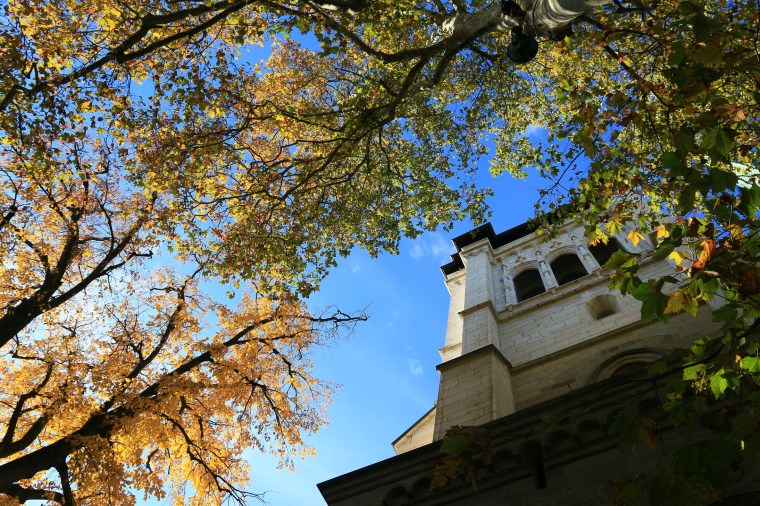
Fr03Of course, this is marvellous given such abysmal expectations. You find yourself beside the lake in Geneva all sapphire and topaz crystal. Leaves are ablaze with afternoon sun. A walk up into the old town warms the body further, despite its narrow cobbled streets in the permanent shadow of expensive jewellery shops and even more expensive solicitors. The Saleve – which didn’t exist before – punctures the horizon from the Promenade de la Treille. Children play merrily, students philosophise lazily, lovers embrace amorously. Where is the gloom? None of this makes sense.

Fr04

2. Ascension

There is wisdom to be had in the words of Yazz and the Plastic Population. It may take many hairpins and navigation through the inside of a big damp cloud, but go up and you may just end up above the weather.

It was looking doubtful climbing up to a car park in the shadow of Les Voirons, a lumpy ridge rising to highs of 1400 metres. Only in the last few kinks of road did the mistiness glow bright and dissipate. Even then, occasional wisps of cloud hovered over the road surface, as if a smoke machine was spewing out its final puffs from a distant eighties dance-pop-funk performance.

In the clear air, churned up tracks through the forest conveyed a sense of truffle hunting, rabid dogs, and people with shotguns. After piddling about along these tracks for a little while, the only way was to ascend, bay-ay-beee. Up through millions of discarded leaves, into a clearing and views of the sea; a brilliant white sea lapping at the shores of craggy peaks and ice-capped spires. The very top of the Saleve a small desert island floating in this blinding ocean.

Fr05

Fr06There was something very satisfying about being above the cloud, in brilliant blue skies, knowing that it was well miserable down there. As if you had stuck two fingers up to the weather and, for once, outsmarted it. Haha, yes weather, you are no match for altitude, mwahahahaaa! All your stupid cloud is doing is reflecting the sun and making me incredibly warm, so that I can cope in a T-shirt. And in making the valleys disappear, you accentuate the purity of the view, the drama and scale of the stunning panorama of the Mont Blanc massif. Yeah, screw you, cloud.

Fr08

3. Just eat

Sunday lunches are often best when they are lingering affairs, embellished with hearty food and infused with wine. They are the perfect antidote to grey skies and uninspiring temperatures, a strip of crispy crackling in a pile of over-boiled cabbage. Perhaps in the case of this particularly Sunday lunch it was the heat from the Raclette-melting contraption (it probably has a local name, like raclettesiennierre-de-montagne-lardonass) that generated just enough upward convection to part the clouds towards the end of the day.

Fr09Cue some reluctant shifting of our own lardonasses for a welcome amble in the nearby Swiss section of countryside. Golden light casts a serene glow on everything and everyone. A crispness in the air is refreshing and helps to dilute the strong odours of cheese. The cloud has gone again, and – in such endless skies reaching to the stars – it is hard to believe that it will so easily return.

Fr10

4. Try a different country

Okay, so perhaps Switzerland has all of the sunshine, what with millions of fancy penknives slashing at the cloud and all. So, with a free day out to use up courtesy of my rail pass I was able to penetrate deeper into the country and seek out its sunnier spots.

Fr11First, with cloud embedded deep into the valleys, I had to escape up once more. From the town of Vevey, a gleaming commuter train elegantly curves its way past chalets and chateaus to the suburb of Blonay. Here, a change of train (waiting on the other platform, naturally) shifts into a steeper grade through forest and occasional hamlets to Les Pleiades. Nothing much is at this terminus, apart from open meadows, scientific contraptions, and labourers preparing for the winter. But it is a spot well above the cloud, which sits snugly in its lake-filled indent, a luminescent glacier of cotton wool.

Numerous jet trails pierce the clear blue sky and it is warm again. This is the sunny side of Switzerland, all rolling green meadows and dotted villages. Happy to linger, I gradually stroll down, passing a small fromagerie and a couple of holiday chalets a louer. A barn sits empty, the cows having descended for the winter, the sound of their bells occasionally echoing up the valley. I move down too, only from what seems an alpine summer and back to a winter by the lake.

Fr12

———————————————-

My original plan was to hop on a boat cruise from Vevey, a sedate and civilised way to soak up the charm of the Riviera towns and the drama of the rising mountains. While some hazy breaks hinted at a clearing it was still predominantly grey; not quite the scene I had pictured in which I lazed contentedly on a wooden deck, the lowering sun illuminating the surrounding mountains. So instead – with free travel at my fingertips – I jumped on a train for twenty minutes to Aigle.

One of the problems with free travel and chronic indecision is deciding what to do with the free travel that you have decided to buy. At Aigle, two tempting options wait and time, really, for only one. Platform 13 and a train to Les Diablerets, Platform 14 Leysin. Both equipped to move upwards and no doubt deliver another hearty dose of gorgeous Swissness. One leaving in four minutes, the other in six…time barely sufficient for decision-making.

Jumping on the first to depart (Les Diablerets), the carriages immediately turned into a tram and clunked through the streets of the town. I caught a glimpse of the chateau on Aigle’s edge, and promptly jumped off at the first stop. There would be no time to visit that as well as Les Diablerets, so I crossed a road and caught the following train to Leysin.

Fr14With the sun now out in Aigle there was less imperative to climb, but the train relentlessly lumbered upwards. Surprisingly there was deception in that valley sunshine, as it became clear once up high that a layer of haze hovered at around 800 metres. The sunny valley was no longer visible, despite it being sunny when down there. What kind of sorcery was this?

Leysin itself appeared to possess charm and utility, no doubt bustling in winter and thriving in summer. In early November things were a little devoid of life apart from clusters of students, neatly attired, mostly Asian, receiving an expensive Swiss education in a school with a view. A few joined me on the train back down, through that mysterious haze which was only visible from above.

Fr13

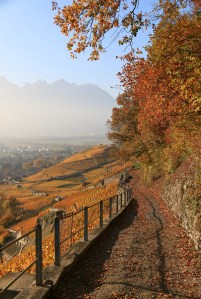
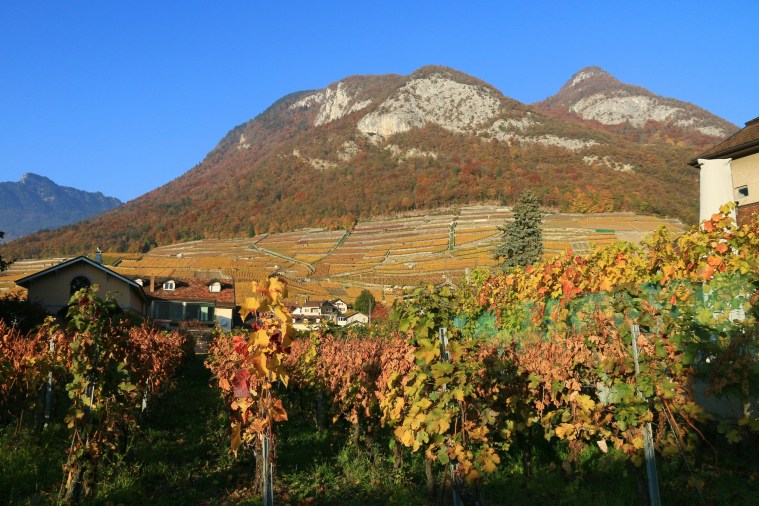
In time-honoured tradition I hopped off the train a couple of stops early, prior to it reaching Aigle level. I had noticed on the way up the glimmering terraces adorned with rows of vines, golden in the peculiar autumn sunshine. The chateau would be visible below, and there must be a walk down, because a carriage of younger schoolkids disembarked here on the way up.

Fr15I have no idea how all those schoolkids assembled on the platform, such as it was: two square paving slabs dangling over one of the walls cascading down in giant steps towards the valley. What looked like some kind of drainage channel passed steeply under the rail track; the only other person to disembark informing me that this was the road-cum-path. And despite this initial steepness, it was a glorious walk, mostly following the small chemins used to transport grapes and labour. Occasional houses adjoined the route, each proudly displaying the name of the vigneron and date of establishment. One or two tempted with open doorways, while outside a couple of workers toasted a hard day’s winemaking with a crisp glass of white.

Fr16

Fr17With the light lowering in the clear (???) sky, there was barely chance to visit Aigle’s picturesque chateau before it would be cast into shadow. While sunset time was a little way off, the narrowing of the valley and the proximity of gargantuan mountaintops meant that it would soon kiss this part of the world goodbye. Darkness would return, and with it, the infamous foggy shroud of dank.

5. Suck it up, cheese boy

There is only so much successful blue sky strategising that one can manage, and fortuitous decision-making will eventually turn sour. While I loved practically everything about an overnight stay up from Vevey in the village of Chexbres – king-sized bed, amazing shower, big screen TV with 832 channels in English, French, German, Italian, Spanish, Russian, Arabic, Cornish, Swisshornian – the balcony view was not one of them. Beyond vine terraces and tightly packed village roofs floating in the mist a sparkling blue lake had disappeared.

With a midday checkout I dawdled for as long as possible for things to clear but today was not going to happen. On top of the low cloud, some medium level cloud and then some high cloud, with a few spots of rain and little hope of sun. I faced a cloud lasagne with bits of Switzerland oozing through the layers. Suck it up, cheese boy.

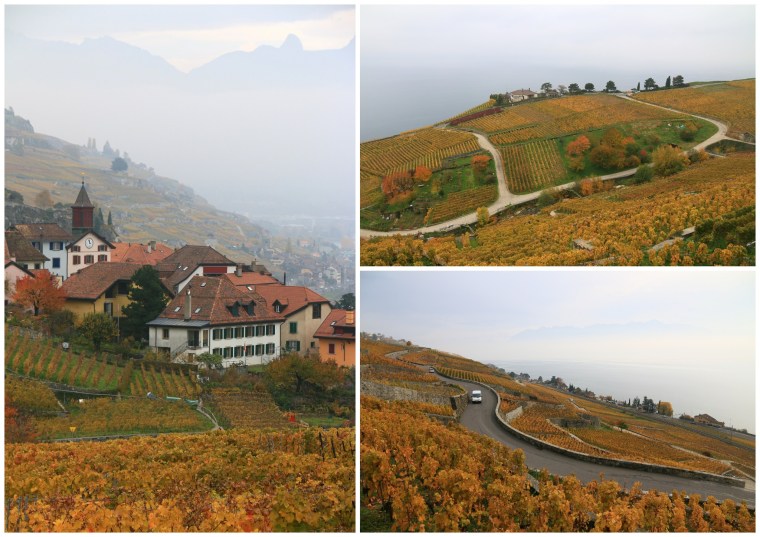
Still, the setting – in the heart of the Lavaux wine region – was very pretty, just that more subdued than the previous afternoon in similar terrain around Aigle. Wine has been grown here for donkey’s years, probably with the use of donkeys on the steep-sided terraces, frisked by slavering monks gagging for their next tipple. Today, a few mechanical contraptions – steep narrow-gauge rail tracks like fairground rides, convoluted water sprinklers, grape conveyor belts – have evolved, but much must still be managed and picked by hand.

Fr18

A network of chemins provides gentle and mostly traffic-free walking across appellations, between villages, and – occasionally – directly through the rows of vines themselves. It’s such easy and serene walking that you can comfortably end up strolling all the way into Lausanne. I practically did in the hope that the sun would shine as the hour lengthened. And, towards the end, the milkiest hint of sunlight filtered through the cloud levels, briefly giving the impression of a vast lake below, and high mountains beyond.

Fr19

A large patch of blue sky greeted me as I arrived back into Geneva’s train station. It seemed – from my limited recent experience – uncharacteristic that Geneva would be clear while further up the lake it remained damp and grey. Little of the day remained to enjoy it, but the light illuminated the final 61 bus ride back to Annemasse. And it provided a salient reminder that there is only so much you can do to predict, manage, and deal with the infamous wintry shroud of Lake Geneva.

Europe Food & Drink Green Bogey Photography Society & Culture Walking

Seventh Heaven

I experience inevitable pangs of longing as pictures of Floriade, flat whites and thongs in thirty degrees Celsius begin to infiltrate my Instagram feed. Suddenly (and quite dramatically this year it seems) the balance tips and before you know it the people of Canberra will be cycling blissfully along the lake in bushfire smoke. I would be quite happy to throw on some shorts, pedal down to Penny University for a coffee, pop back to Manuka for some takeaway Mees Sushi rolls, have a nap if the squawking birds allow, and then watch the shadows lengthen on Red Hill. Still, I could fairly easily be doing that this time next week if I chose to.

The day will come, but not yet. There have been, and still are, plenty of good reasons to linger in the northern hemisphere. The recent weather has been better than it was in August, though the days shorten and wind now has a bite. As September trickled into October, autumn itself appeared on hold. Seven days with barely a cloud, and even those were as fluffily white as the sheep. Seven days in which I again got distracted. Seriously…

Sunday

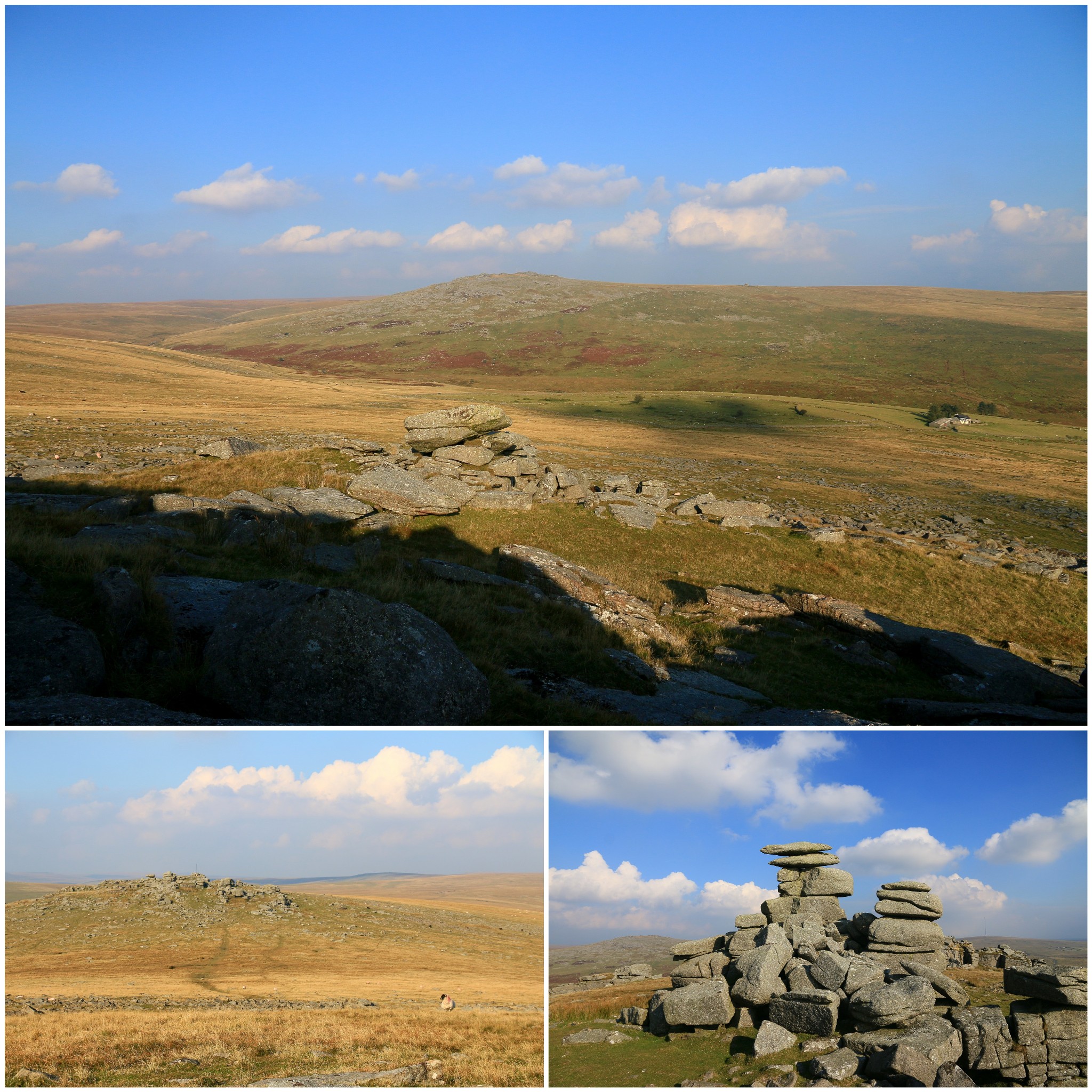
A morning walk on the moors, what better way to absorb the clear air and open space? Intending to go to one spot, I ended up at another, but that can often be the way with Dartmoor. Squeezing through Horrabridge and up to Whitchurch Down, the setting looked exquisite enough to not need go any further.

mag01

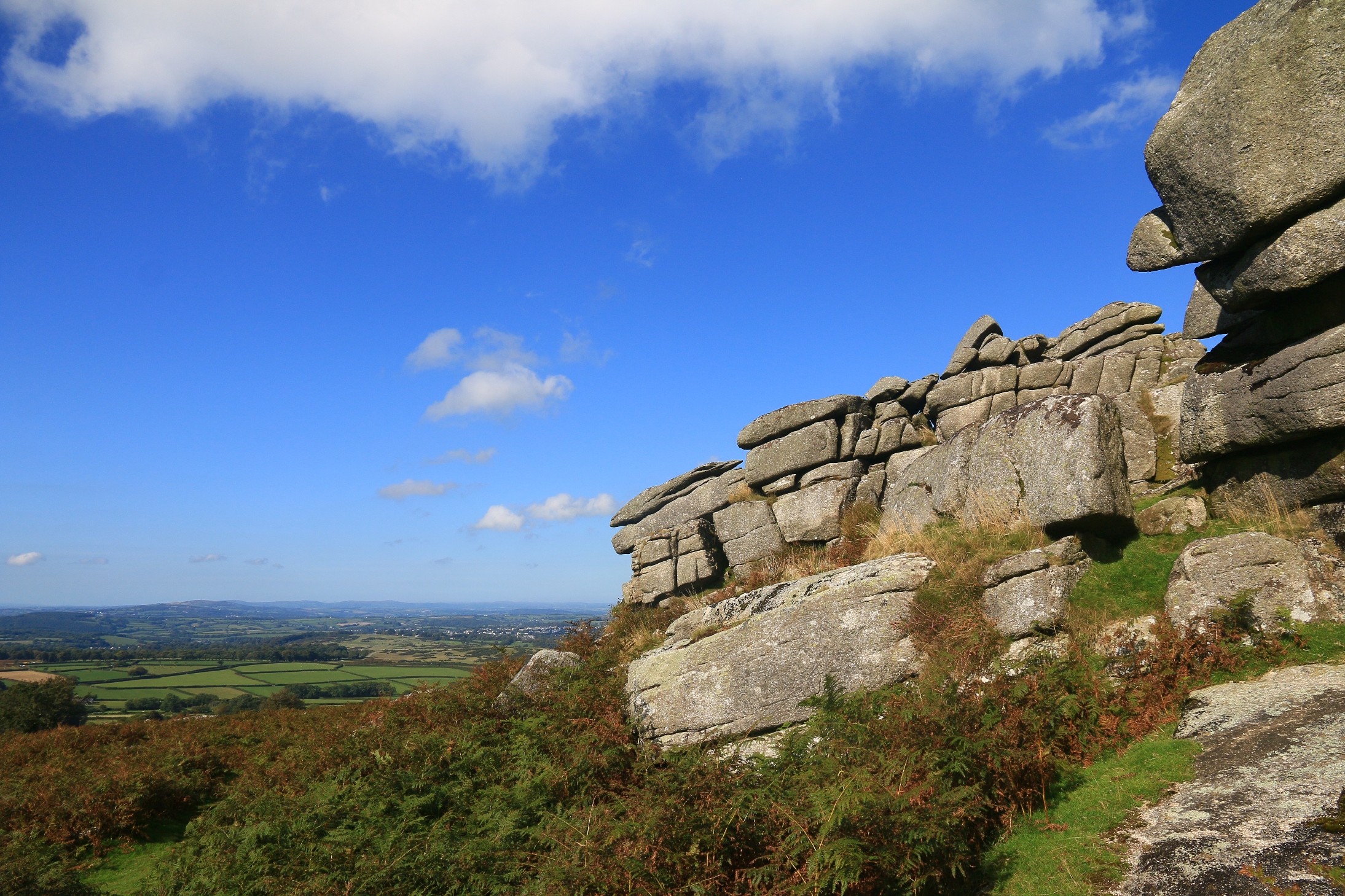
I think I ended up climbing to a clump of rocks known as Pew Tor but I didn’t know this at the time. It seems apt, since several rows of disorderly granite offered exemplary seating to watch proceedings across to Merivale and Great Mis Tor and down the moor into the Tavy and Tamar Valleys. Brentor was there (again) as were the beacons of Bodmin Moor across the border. A seat for a Sunday morning service I don’t mind attending.

mag02

mag03

Monday

I had duties to perform but duties that only served to add an extra layer of holiday feeling not at all conducive to working. The A38 and M5 – often a scene of holiday hell – acted as a gateway to Bristol Airport and temporary disposal of the parents. I could’ve just turned around and come back to revel in my newly found again freedom, but that little stretch of road between the M5 and Bristol Airport is just so lush that it seems a waste to pass it by. Especially when I can zip off my legs, eat ice cream and toil atop Cheddar Gorge.

mag04

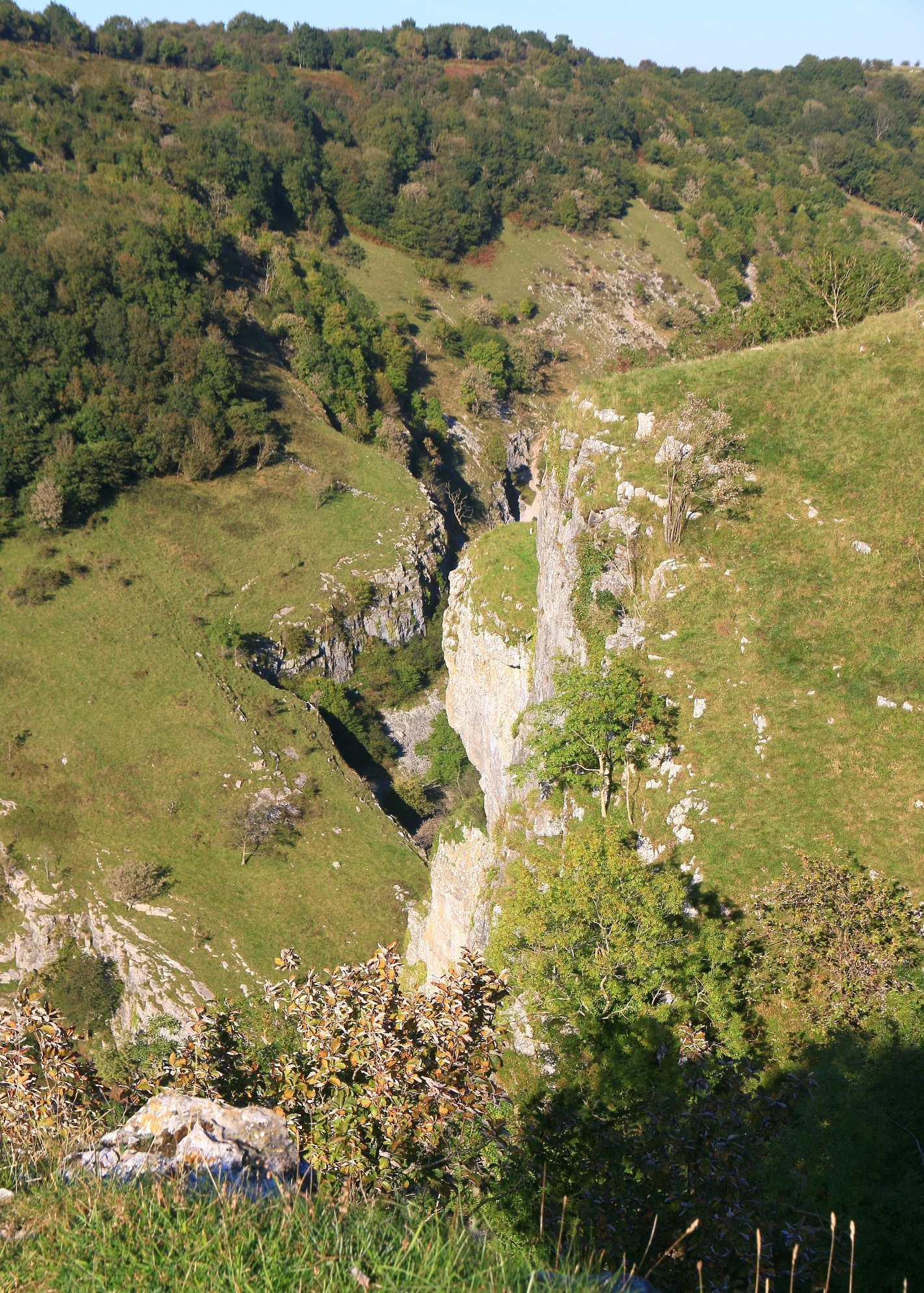
mag05Steep climbs made a warm sun feel hot. Only brief glimpses of gorge and harsh but inevitable comparison with the many amazing chasms of Australia put this one close to the wrong side of the effort-reward ratio. Still, the rolling Mendips and glary Somerset levels offered an appealing backdrop, and the effort was ample to justify a wedge of clothbound, cave matured, genuine Cheddar.

mag06Anyway, the weather was of course A-MAZE-BALLS and I may have added to my dirty tan. It certainly did not feel like autumn, despite a few sneaky clues emerging in shadier spots.  Who needs Ibiza? Even the drive back on the M5 and A38 was quite a pleasure, as if one was heading west on holiday oneself. Which one pretty much was.

Such gloriousness spurred me to an impromptu, upwards detour as the sun lowered across Devon. Up to Haytor to see the last, laser hues of sunlight projected Uluru-like on the grey granite. Shorts still on, but not exactly appropriate. Cooler nights ahead, but clear and calm days to linger.

mag07

mag08

Tuesday

For balance, I completed some chores and did some work. But by about four o’clock that became tiresome and the sun was still taunting me through the window. So I hopped over on the Torpoint ferry to Whitsand Bay, parked up and walked out to Rame Head.

mag09

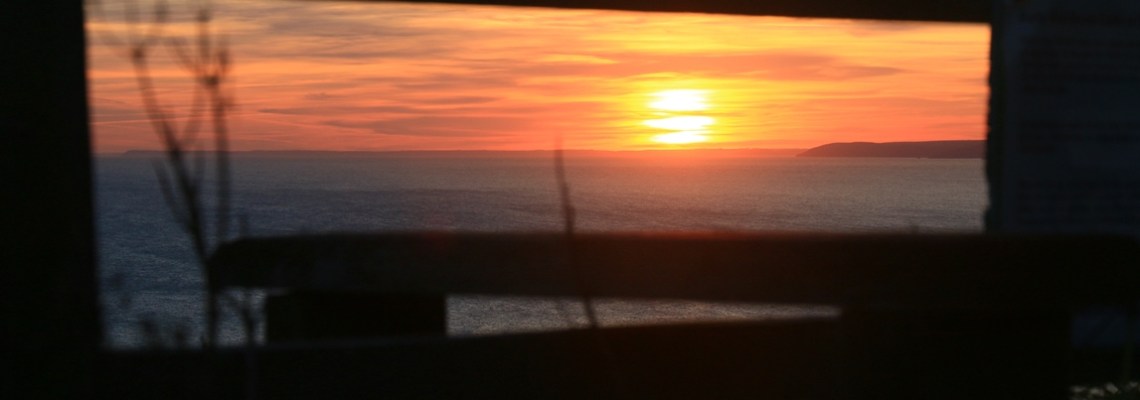
mag10What gorgeousness in the shelter of the east wind, the sunlight cast low upon the rugged line of cliffs stretching to Looe. What good fortune to still be able to do this so late in the day, after being unusually productive. And what a nice spot to watch the sun go out again, the end of another year accomplished.

Wednesday

If I was to design my own exemplary birthday present it would probably involve a sparkling drive across the rolling countryside of eastern Cornwall. I would reach the north coast at Boscastle, where I would sip on a reasonable coffee by the water before moving on to Tintagel for a more than reasonable pasty. Crumbly fudge may also be picked up via this route as an optional but inevitable extra. Interspersed between the eating would be cliff top walks under a big blue sky, the sound of ocean waves rising from the caves and coves of the coastline. Yes, the coffee could be still better, and the weather still warmer, but I sense a contentment of such simple things with age. Tintagel Island my cake, a steak and stilton pasty the candle on top.

mag11

Thursday

mag12Older, wiser, even more prone to daytime napping, I again used the day in a semi-productive manner with frequent interruptions. A few spots of cloud came and went and the hours ticked on by to leave me with yet another end of day outing. Somewhere handy and close would do the job, and while the inlets of Plymouth Sound and cars of the city are detrimental to handiness, the views from nearby Jennycliff still manage to do the job. Goodbye sunshine, see you again tomorrow.

mag13

Friday

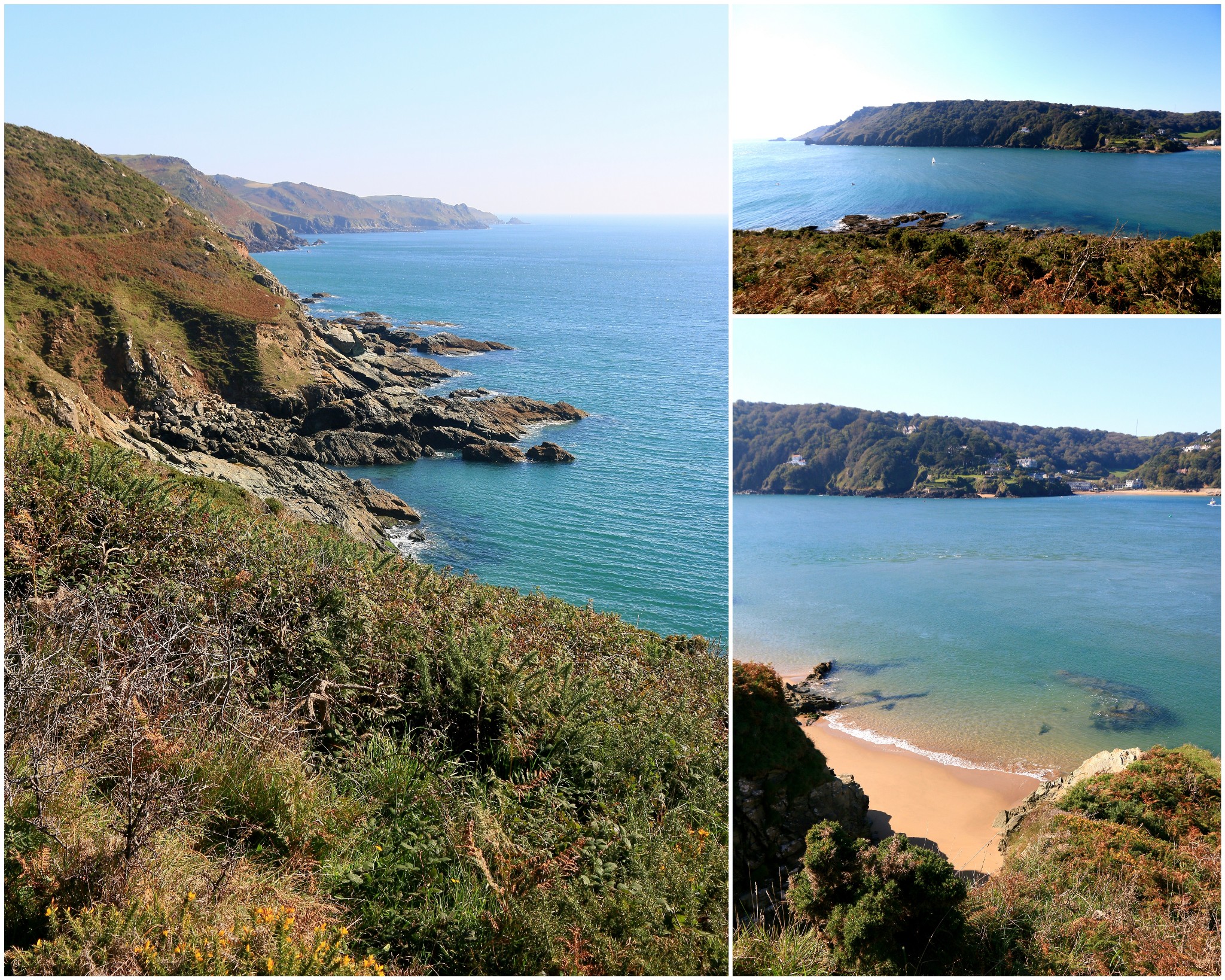
Having barely ventured outside of the Plymouth city borders yesterday (a few steps on the coast path veering into the South Hams), corrective action was necessary on what was shaping into yet another sunny and mild day. This fine weather is getting tediously predictable, yet I still feel the urge to make as much of it as I can, because surely tomorrow will be worse. And so, ship shape and Bristol fashion, it’s off to Salcombe we go.

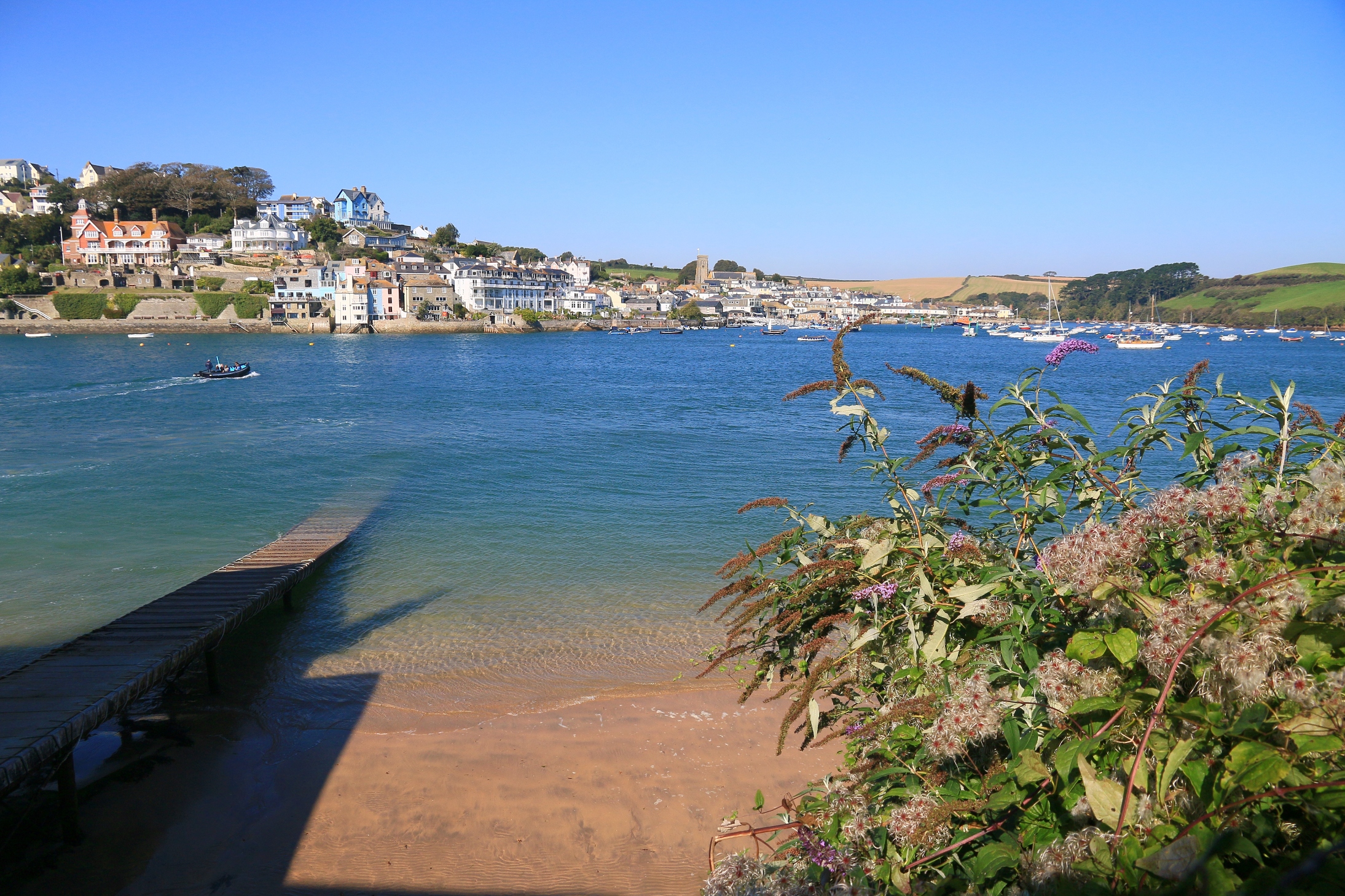
mag14I think it’s fair to make a sweeping generalisation and say that Salcombe is in a more upmarket corner of Devon. Upmarket in the ships ahoy, jolly poor showing by the English against those Colonials I say dear boy mode. The Daily Mail is the predominant manifesto of choice amongst a bowls club of stripy sweaters keeping a keen eye on the watery horizon for any unwanted intruders. And, across the river – at East Portlemouth – high fences of hydrangeas protect expensive views and private beaches.

mag15

mag16Thankfully there are access points for commoners who make the effort. The ferry – manned by a servant with pleasingly gruff countenance – bobs back and forth to link town with East Port (as the locals probably call it). The fine, golden sand of Mill Bay is perfectly accessible, as long as you abide by the many rules and regulations set out on the Charter of Public Citizen Access as endorsed by the Board of Her Majesty’s Quarterdecks and Royal Commonwealth Bridge Club. The National Trust – a more agreeable British institution – have usurped some of the land nearby for all to use, and this takes you round to a couple more secluded bays and out back into the wilds.

mag17Now, the clipped hedges and accents fade, paralleled by a spilling out of protected estuary into untamed sea. A yacht bravely ventures out past Bolt Head and into the deep blue. A sea which is looking fairly placid today, reflecting much warmth towards bare cliffs and making me legless for the second time in a week. For some reason I am reminded of a tiny stretch of rare undeveloped Spanish coast between Cartagena and La Manga. Warm, barren, secluded. A palette seemingly burnished by the sun.

There are a few people for company out in the wilds, especially upon reaching Gara Rock Beach. An old man on some rocks seems to glare at me as if I was wearing a fluorescent pink onesie emblazoned with the words ‘LOOK AT ME’ or something. Only when he gets the binoculars out do I realise his penchant for birdlife, and my likely noisy clambering disturbing a pair of superb tits. A scattering of people bathe on the sands, while fellow ramblers wheeze their way up to the cafe seventy five metres above.

mag18

Ah the cafe. I am back in Salcombe, with its crayfish pine nut salads and cedar-pressed Prosecco, served on a deck all wood planks and reinforced glass. Torn between two worlds, I resist and plough on down through woodland with my homemade cheese and ham and – a little in keeping – avocado sandwich. Back in town, an ice cream from Salcombe Dairy perfectly caps it off, a delight that anyone can most definitely enjoy on a day such as this.

Saturday

And so we are back where we began. Or, to be precise, back where I had intended to begin a week ago: at the top of Pork Hill between Tavistock and Merivale and heading into the heart of empty, high Dartmoor. Late day light replaces that of mid morning, but the scene is much the same. Perhaps the grass is a little more yellow and the bogs a little less swampy. The sheep are thirsty and the ponies unfathomably shelter in early October shadows. Small white clouds swiftly pass on the steady breeze, projecting speckles of shadow on a landscape devoid of much at all. One small farmhouse lingers in the fringe lands of the valley. Tors rupture and balance in a haphazard jigsaw of granite. At Roos Tor, there are no roos to be seen, but I am perfectly fine with that. For now, in such magic weather, with such a magic week, there is nowhere better.

mag19

(Sunday: It was cloudy, I napped and had roast dinner)

Food & Drink Great Britain Green Bogey Photography Walking

Capitalising

march02Change is in the air. After a more than generous period of retirement, I am on the precipice of embarking on a spell of significant work again. The Treasurer will be happy, though it’s not like I stopped being a consumer. Despite recently spending extortionate amounts on dental treatment (not covered by the much-revered Medicare of course), and purchasing coffee (and sometimes cake) to break up the days a little, the economy is still heading towards possible Armageddon. So the prospect of work lies ahead of me like the Nullarbor, stretching out in hazy uniformity for the rest of my life, only to finally end up at Norseman, which is possibly even worse.

march01Change of a more subtle variety is also noticeable around the neighbourhood. The summer storms appear to have dissipated and – for now at least – Canberra has settled into a golden period of warm days, pleasantly refreshing nights, and big blue skies seemingly typical of March. Leaves are largely unturned, but there is a soft wilting and readiness to transform. Mornings are lighter later, but the wattlebird still manages to indulge in its annoying calls outside my window really early every morning without fail. Meanwhile, the cockatoos are even more voraciously attacking the acorns and itchy-bombs, causing overhead hazards on walks in this suburban wilderness.

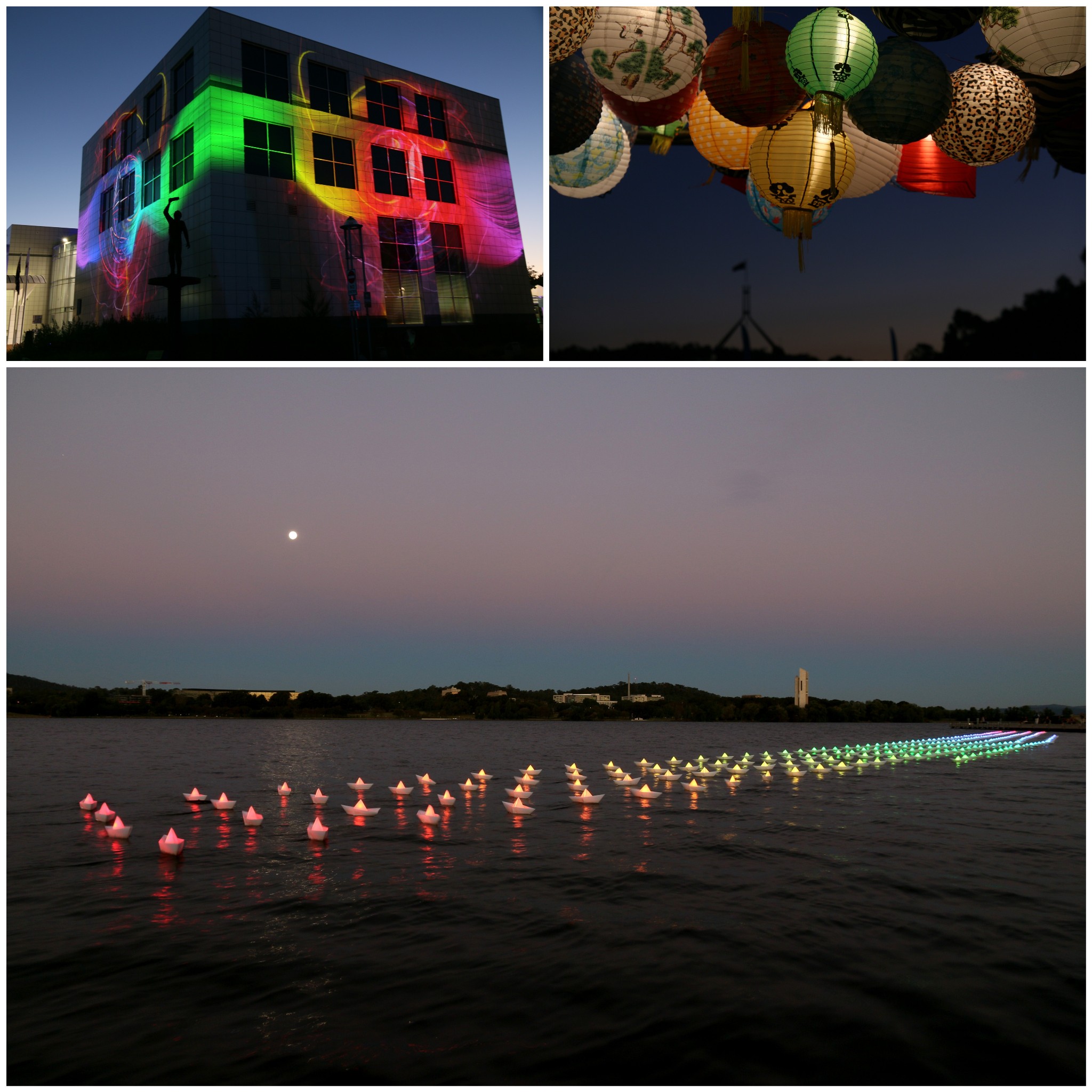
Aligned with the glorious prospect of seasonal transformation is a final, lingering dose of Canberra activity. Enlighten, which appears more popular as the years pass (I was one of those stoic first year visitors before the advent of hipster-conducive noodle markets), always seems to coincide with the finest of nights. Each year brings a new stab at illuminative inventiveness, although one which is usurped this year by that going on within the National Gallery. To stand within an artwork in daggy little protective feet covers and be simultaneously disoriented, uncomfortable and exhilarated by light and space is just a tad different to giant projections of political cartoons on Old Parliament House. Maybe James Turrell can design all of Enlighten next year?

march04

Whatever, the natural light and space of Canberra can be every bit as magical all year round, though there seems increasing clarity and depth as the sun shifts lower on the horizon. Rising early to see the annual balloon extravaganza is a reminder of that hallowed time of the morning before day breaks. The wattlebird may have been carping on for half an hour already, but the indigo sky is only slowly softening, the glow on the eastern horizon building until the first rays of sun blind the eyes, redden the white bark of the gums, and silhouette the parade of tripods seeking to capture it beside the lake. Hundreds of cameras redirected because the balloons are tethered, unable to take off because of too much or too little or too much and too little wind.

march05

march06

Not strong enough wind there is or wind too much in gusts of the force” mutters the giant Yoda balloon. I would trust his wisdom (certainly more than an angry bird or dodo), and thus they remain a picture lingering upon the lawns, surrounded by an always surprisingly large mass for so early in the morning.

march07

Further round the lake, distant in the west, several balloons have made it into the air. I guess wind conditions are more favourable away from a parliamentary area that usually generates a lot of unnecessary hot air. Hot air that has, I guess, indirectly contributed to my own forthcoming increased income tax contribution to save the economy. Hot air piped out of the giant flagpole that will mix with cooler and colder and – eventually – perishing air as the months progress. It was good while it lasted!

Australia Green Bogey Photography

March

March strikes me as a celebratory month. Events include the wedding anniversary of my mum and stepdad, for instance, which tends to slip my mind without fail every year. Likewise, Mother’s Day, which may or may not happen at some point in certain countries. With similar vagueness, Easter might eventuate in March, but this is contingent on some advanced algebraic calculation based on a factor of the day when Jesus rose up to make pancakes on the moon or something. Elsewhere, at the start of the month in Wales, people get all excited about leeks on cheese on toast, drink Brains, and break out in hearty song about Saint Dafydd. Meanwhile, unbeknownst to the rest of Australia (and thus of course the world), the natives of its capital gather to commemorate the city’s founding by promptly and unapologetically fleeing to the coast. There is clearly much to celebrate.

Mar01The biggest cause for chirpiness however – specifically in the northern hemisphere – is the symbolic termination of winter. Sure, it may still rain curtains of icy drizzle from time to time, but it can do so safe in the knowledge that the worse is behind us. Evenings suddenly seem to stretch for longer; the sun, when it can be persuaded to appear, resonates a faint whiff of warmth; daffodils – that most blessed portent of a new season – glow as proudly as a Welshman once did at Cardiff Arms Park. Promise pervades the air.

There is a particular day in March – let’s say the 19th – in which seasonality gets a little carried away with itself. The temperature might reach something freakish like 18°C. The wind temporarily vanishes, leaving the rays of the sun untempered to shower upon beaming faces. A national mood change is palpable as families picnic in parks, people spill out of London pubs short-sleeved, and the first whimpers of charcoal smoke rise from over the neighbour’s fence, ruining the washing on the line that can finally dry properly for the first time since September.

There is ,of course, a wickedness to this day. It is as though a dose of paradise has been granted that will not appear again until at least May, if not July. The irresistible inclemency of an Atlantic front is never too far away and the return to what passes for normalcy leaves you wondering whether yesterday was a dream. Instead, the season builds more subtly, like a light’s dimmer switch being incrementally dialled up as opposed to the classical on and off again manner. But at least March represents a time when someone’s hand is on that dimmer switch, and anticipation about whether the bulb will eventually glow at sixty or a hundred watts is almost as overwhelming as a confused metaphor about electrical illumination.

I would struggle without seasonality. I may be in a minority, given the population growth of the Gold Coast and the increase in beachside Pilates taking place during southern Spanish winters. Here, a quite remarkable assortment of fossils can be spotted, bedecked in sun visors, creaking and contorting in slow motion like a troupe of jaded CP3Os, as if worn down from another hackneyed yet money-spinning outing. Leathery limbs reach tentatively to the skies, embracing the sun that seems forever warm and almost always present. The people here may never wear trousers, or coats, or enclosed shoes ever again. And while it may seem like some fanciful paradise to wake up to blue skies every day, to never feel cold, would it not also eventually feel remorsefully dull, remarkably uneventful, entirely, tediously predictable?

This, I believe, is one of the more common complaints from UK migrants to certain parts of Australia. I’ve seen it on those daytime TV shows – Get a Life Down Under, I’m a Celebrity Get Me Out of Here, Escape to the Country (Just Don’t Come by Boat or You Will End Up in a Concentration Camp on an Impoverished, Mosquito-Infested Island), etc, etc. To some of the locals, such comments just seem to reinforce a lovingly-embraced stereotype related to whinging. But I get it, even though I would try to make the most of endless days of fair weather myself. There is glumness in Britishness – fostered over millennia, permeated by the weather, resolute in the character – that cannot easily be discarded. It is not a bad thing, predominantly because we are skilled at making light of it (indeed, this is something to be celebrated). And, I think, it nurtures appreciation and satisfaction in the simplest of things, such as the emergence of a snowdrop from the earth in early spring [i].

I guess what I am saying, what I am typing, is that March can be so exhilarating in Britain because of what you have been through to get there. Yes, much like the proverbial rollercoaster or, more aptly, the Northern Line, dawdling through what seems an endless toxic darkness to finally emerge into the light and airy park-side setting of East Finchley. Spring and summer, or Woodside Park and High Barnet, lay ahead. And while these will often end up being more disappointing than hoped-for, in March the anticipation is still there, yet to be dashed by John Ketley.

Australia is in many ways a different proposition. The sheer size and variability in the weather means that March could herald heatwaves, cyclones, snowfalls, floods, dust storms, mist patches, and cascades of quokkas and numbats. In small pockets – such as the south east corner with which I am most familiar – there is a parallel cooling and drawing in of nights, and the first vestiges of a prolonged autumn appear. Though there may be some sombreness that summer is on the wane, there is little of the dread associated with a forthcoming northern winter. Partly that’s a result of days that can still exceed thirty degrees but mostly milder, more amiable conditions as a whole. This is the start of a golden period, when pleasant, blue-sky days and refreshing nights stack up one after the other and seem to stretch on into May.

Of course, I write this safe in the knowledge (or 97% confident) that climate change could totally wreck everything I am going on about. Stormy Marches and hot Marches and cyclonic Marches or even snowy Marches could become the new norm. Do I have evidence for this? Well, no, but that doesn’t stop climate sceptics receiving a sycophantic front page diatribe in certain national media, so no harm in including a few words on an obscure blog. While we may (only part) jokingly embrace climate change if it means we can wear union jack shorts in Southend in March, it would be a shame to lose that which is special about the seasonality it offers. Otherwise we’ll just be as bad as the Gold Coast.

I can accept hot days in early March, but it was nearing month’s end in 2013 when myself and a friend decided to persevere with the preparation of bangers and mash during a 38 degree northerly on the southern extremity of the Australian mainland. It is probably one of the biggest collective regrets we have from a three month trip across Australia. Just what were we thinking?! I guess in the joy of food planning and supermarket shopping a few days in advance we didn’t anticipate such furnace-like conditions. Plus we had packed a potato masher as something of a luxury item, so were eager to use it on any possible occasion.

Mar02

The setting was Tidal River, a sprawling campground complex within Wilsons Promontory National Park. It’s popular with Melburnians and wombats, both of whom were in profusion. The wombats were engaged in a faux cultural conversation about the ethics of rainforest regurgitated coffee beans, while the Melburnians contentedly chomped away on the grass and shitted square bricks. The day had passed with the sight and smell of smoke from the lower Strzelecki Ranges, and a coming-close-to-mild-dehydration tramp up to Vereker Outlook. Relief of a kind came from the beautiful white bays and clear waters of the coastline, though even here the brilliance of the sand glared with a resonant heat. General fatigue was high, and the struggle to boil potatoes on a portable gas stove in a strong northerly beside the sea was only made more pleasurable by the numerous flies clearly determined to explore the nasal cavity. This was not quite the idyllic March that I had come to know and love.

Mar03Needless to say, a week later I was freezing my butt off in another Victorian national park, desperately lighting a pile of twigs to ward off the chance of hypothermia. In the golden goldfields around Castlemaine and Bendigo, Creswick and Ballarat, the effect of March was bearing fruit. Planted to gentrify the antiquated avenues and make Englanders feel partly at home, the oaks and elms, beech and poplars, were busy transitioning into autumn shades. The spa town of Daylesford was made for this time of year, its lake happily reflective and the Victorian Victorian streets lined with large-leaved trees that seem to be excited by the end of summer. A refuge for Masterchef cast-offs, there was no doubting that the pork roasted to succulence in a charming old pub was several hundred times better, and a thousand more fitting, than the bangers and mash of past.

Thus, climate change pending, there is much to celebrate about March whether north or south. I am pleased to say that as I write this in Canberra, the sun is shining, it is a predictable 25 degrees and the forecast is set fair. Spring may be yet to truly spring in the UK, but there is an inevitability that it will come. Soon. Two weeks and there may be a freak warm day coming up, so stock up on charcoal before the supermarkets sell out, and beware of white van man with his top inexplicably off. Above all, cherish this most pivotal of months which signifies the start of something new. Love the seasons, and all the incremental change that they deliver. Otherwise, head to the Gold Coast or Lanzarote and dwell in temperate predictability, never to wear long pants ever, ever again.


[i] In making a sweeping generalisation about national character I should caveat: there will still inevitably be a handful of tiresome, grouchy narks who hate the sound of children’s laughter and lament the daffodils emerging on the median strip because they might provide a place for immigrant burglars to hide and spread Ebola. The good thing is everyone else will take the piss out of them. Apart from desperate politicians who seem to focus endlessly on wooing their vote.

12 Months Australia Europe

The twelve themes of Christmas

On twelve days after Christmas, my true love gave to me, another serve of leftover Christmas pudding with valiant Tasmanian attempts at clotted cream. By then it was 2015, and I was thinking that this indulgence really needed to come to an end. But the Australian Christmas seems a more elongated affair, blending as it does with summer holidays which creep all the way to Australia Day at the end of January. I say this every year, but Christmas in Australia is still somewhat bizarre and while I adore the lazy holiday feel and the addition of fine seafood to the agenda, a large part of me craves a good windy winter storm and a good windy dose of roast potatoes and Brussels sprouts.

While there are obvious differences between the Australian and European Christmas experiences, both are obsessed with a crazy excess of food. And so a day or so prior to Christmas I had acquired an esky full of crisps and nuts, chocolates and puddings. A fridge full to capacity with ham and sausage rolls and cream and cheese and (just for a touch of balance) fruit and salad. Longevity was the name of the game for the ham, and the hidden orange Christmas pudding (serves 10), took me alone a whole week to devour. In some way I was glad to see them go, but also a little wistful that they were no longer a part of my life.

Christmas Day itself was a suitably multifarious affair, bringing together the Australian, the Anglo, and the Italian. The day commenced with what any good day should – a walk up Red Hill in preparation for calorific overload – before a relaxing hour of reading and an early shandy with nibbles at home. jan01From then on the eating proceeded with a mostly seafood lunch involving the largest prawns ever created, sweets, desserts, nibbles, barbecue, sweets, snacks, more nibbles, etc. Presents were unwrapped, outdoor chairs were reclined, family discussions were robust. And to cap the day, I came home for a touch more nourishment and a little drink to lubricate the Skype calls to Europe.

By New Year’s Eve, some food stocks were depleting and I needed to buy more provisions from the supermarket to prepare salads and desserts for an excellent few hours of outdoor pool soaking, meaty barbecuing, and, well, dessert-eating. It was here that the tiramisu I made delivered everything I wanted and more; better than the Italians’ creation (soaking time was important after all) and more satisfying than watching the Sydney fireworks on the TV. Is it me, or was someone just shuffling through their iTunes playlist and skipping tracks they didn’t like that much while some crackers went off to fill the night sky with smoke? There was some discussion on the news the next day (post 11am) that London may be giving Sydney a run for its money in the New Year firework stakes. Again, the natural advantage that is that beautiful harbour may well be a cause of complacency.

jan02There have been some natural and arguably more spectacular fireworks anyway. The hot dry summer which occurred in November has now been usurped by a north Queensland period of sunny, sultry mornings building to climatic storms and downpours later in the day. The pattern has been so recurrent that the days are becoming almost entirely tediously predictable, and so activities (unless they involve storm-chasing) are almost best undertaken in the mornings.

jan03

Fortunately, for the prospect of my cholesterol and obesity levels, I have been able to engage in decent amounts of exercise over the holiday period. In part, this is merely an extension of my normal life and having lots of time to do things in, rather than some hyped-up resolve to get fit. Local walks are a normative feature of the days. Most frequently of course this has involved trips to Red Hill reserve, where all is well with just about everything and everyone. But such has been the excess of free time that I have even sought out walks elsewhere!

jan04

One such place was Cooleman Ridge, which obviously is not as good as Red Hill but – being on the western edge of Canberra – has a more pastoral aspect. Hobby horses and scattered cows dot the fields, still relatively golden despite the stormy interludes. Somewhere yonder the brown waters of the Murrumbidgee laze, splitting the tamed grassland with the bush-tangled upward thrust of the Bullen Range. Further west and the larger mountains of the Brindabellas hit the sky, ever-present and ever-enticing.

jan06

It was up into these hills that a more substantial adventure transpired in between serves of Christmas pudding and tiramisu. A mountain walk along the high borders of the ACT and NSW, taking in the summit of Mount Gingejan07ra (1,855m), offered the perfect antidote to Christmas torpor. And it wasn’t even too difficult – the first six kilometres along a fire trail with interruptions for forest views, bird sightings, flower-filled glades, blue-tongued lizards and lunch beside a rickety mountain hut.

The remaining kilometre to the rocky outcrop capping the mountain was a more steadfastly uphill affair, the trees giving way to grasses and sphagnum moss and more flowery glades and the odd snow gum. The views increasingly opened out to reveal vast wilderness stretching west and south, and even east, at least until you could see the tack-like tower atop Black Mountain, looking diminutive in comparison to the ridges of bushland lain out before it.

jan08

Being in the interlude between Christmas and New Year, the feats of energy required to climb a mountain were intrinsically counterbalanced with a delightful stop on the journey home. Emerging from the car fridge three cool beers, trophies of conquest to accompany crackers, cheese, ham, nuts, dips, vegetables and pickles. Extra weight to provide extra grip as the car wound back down the gravel of Brindabella Road.

Beyond the walks, the bike continues to receive attention and while the category 4 climbs have been a bit absent of late (attempted once in the midst of the Christmas pudding / tiramisu jan09period with less than impressive results), it has been nice to venture lakeside and use a bicycle as a functional means of attaining coffee and shopping. A day spent re-visiting some of the national attractions was ideal by bike, and trips to town are scenic and satisfying, despite the fact that this means entering stores glistening and red-faced.

And if all that wasn’t sporty enough, golf has become a feature on the agenda of late, aided by the light evenings and cheaper twilight rates. Surprisingly, my game has been passable and there have even been a few shots to remember. Alas, such is golf that it seems the more you play, the more the bad habits return, and the memory of why this is such an utterly infuriating but addictive endeavour becomes real again.

So it seems that the holidays have been reasonably active, but for every climb up Red Hill there is an afternoon nap. For every pedal along the lake, a stretch out on the settee, reading and infrequently observing cricket in the background. I enjoy this time but also feel sometimes like I should be using it more productively. This is when writing may kick in, whether something inarticulate about my boring life over the Christmas holidays, recollections of trips of the past, or deliberations on the month of January. I’ve found some of the writing to be particularly pleasurable in an old-fashioned pencil and notepad kind of way, from a blanket in the Botanic Gardens to a bench down by the Cotter River. However, the scale of my endeavours has been, at best, average. Prolificacy bears no correlation to time availability.

jan10

Part of the problem has been other distractions. Distractions that are entirely self-created and – if you were to analyse it – may symbolise a deliberate intent to enhance procrastination and delay doing something that sounds like it could entail hard work.  Morning coffee is a distraction, particularly when it has involved trying to find an alternative venue while your regular favourites are closed over the holidays. Visits to the Westfield shopping mall are a distraction, though I feel only I am partly to blame here, having been kindly provided with vouchers to spend. And technology, always a distraction. More so when you spill a whole cup of tea over your iphone and unfortunately have to upgrade, and then spend several days visiting the Westfield shopping mall to get a protective, tea-resistant cover (picking up a takeaway coffee whilst there).

Alas, the interference from technology and its associated expense may mean that time availability will have to decrease at some point reasonably soon. Living off my pre-Christmas earnings will not last forever, as much as I want it to. This is not helped too with the purchase of a new body (for my camera) and an almost slavish desperation to travel to some places sometime in 2015. But still, I have a day at the cricket, a trip to Sydney, and it is Australia Day weekend soon enough. No need to do anything too drastic just yet, the year is still but a baby.

Australia Food & Drink Green Bogey Photography Walking

Show and Tell

ch13What started in the Alps finished in the Alps, with the cloud from four weeks back seemingly, stubbornly, static. It would wait until the day after I would leave to clear and then reveal deep blue skies under which spectacular chains of icily jagged mountaintops glow. I know this for I have been blessed many times in the Alps with such weather and its associated gargantuan views (plus I checked the webcams once I left just to be really irritated). Alas, this year it was not meant to be and I had realistic expectations of a few days in Switzerland; whatever the weather I would do my best to make full use of my Tell Pass – a golden ticket allowing access to many mountain trains, cable cars, chairlifts and the stock standard complex of railways conquering central Switzerland. I think I got my money’s worth…

Trip 1: Zurich Airport-Lucerne-Engelberg

‘Engelberg Humdinger’ would likely have been the hilarious title of this blog post given perfect weather. In planning a few days to end my trip (seeing I was flying out of Zurich), I was seeking a reasonably accessible spot in a mountain valley with various lifts up into the high country and opportunity for blissful Alpine walks. Somehow I came across Engelberg which appeared to fit the criteria, tucked into a valley south of Lucerne and encircled by mountains reaching up in the sky to 3,000 metres or so.

Arriving into Zurich, the weather was warm and bright enough and the train zipped through comfortable commuter towns and villages chock full – I assume – of affluent bankers and cuckoo-clock makers. In an hour, Lucerne emerged as pretty as a picture, the train looping alongside the river and parking itself close to the shores of its beautiful, far-reaching blue-green lake. No time for sightseeing but enough time to grab a salami pretzel sandwich from my old friends at Brezelkonig and hop aboard the Engelberg express.

Fringing the lake at first and then meandering into a valley, mountains began to increase in stature and presence and nomenclature…somewhere up there is the Stanserhorn, accessible via a cable car and deserving of pronunciation in a zany butch German accent. Finally, through a long, dark tunnel, up and up the train goes until it emerges into Engelberg. The sun now down for the day, the last glow of purple sky illuminates jagged mountain apexes, while a valley cluttered with wooden chalets curves along to their base. This fits the bill.

Trip 2: Engelberg-Trubsee-Titlis

ch01The next morning dawned clear and calm and I was incredibly excited about that. Thirty minutes later, eating a steadfast breakfast involving bread and cheese and cold cuts, much of the blue sky had filled in. However, there was enough hope – and predictions that this might be the best weather day – to attempt the trip up to Mount Titlis, summiting at 3,239 metres.
ch02Now, this may sound like the start of some intrepid adventure: hiking through wild meadows, scrambling across rocks, crawling under ice caves, and braving perishing blizzards. However, this is Switzerland and I had my Tell Pass, which comfortably took me almost to the top. First, a gentle cable car up to Trubsee (1,796m); here, the valley was still visible and pockets of sun endured. Next, a larger cable car swung its way up into the clouds at Stand (2,428m), each sway accompanied by a huge oooooooh-aaagghhhh from the hundreds of Asian tourists packed in. Finally, the last stretch takes place in – get this – a cable car that rotates 360 degrees. It’s kind of fun, weird, and in no way whatsoever disconcerting.
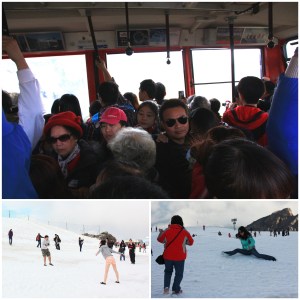
ch03The top – or the top of the cable car (3,028m) – was a little James Bond like, though not quite as James Bond like as the Schilthorn. Despite being up here fairly early in the day I was not alone; indeed, those hundreds of Asian tourists were now happily engaged in various conformist and non-conformist photo poses. Many selfies transpired, several of which were taken with the aid of some extendable stick-like gadget which holds the camera phone out at a distance without the need for arms. It’s fair to say that whoever invented this contraption is, like the loom band man, now extraordinarily minted.
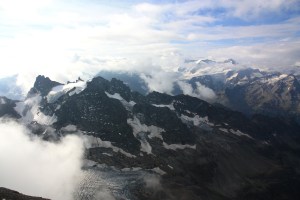
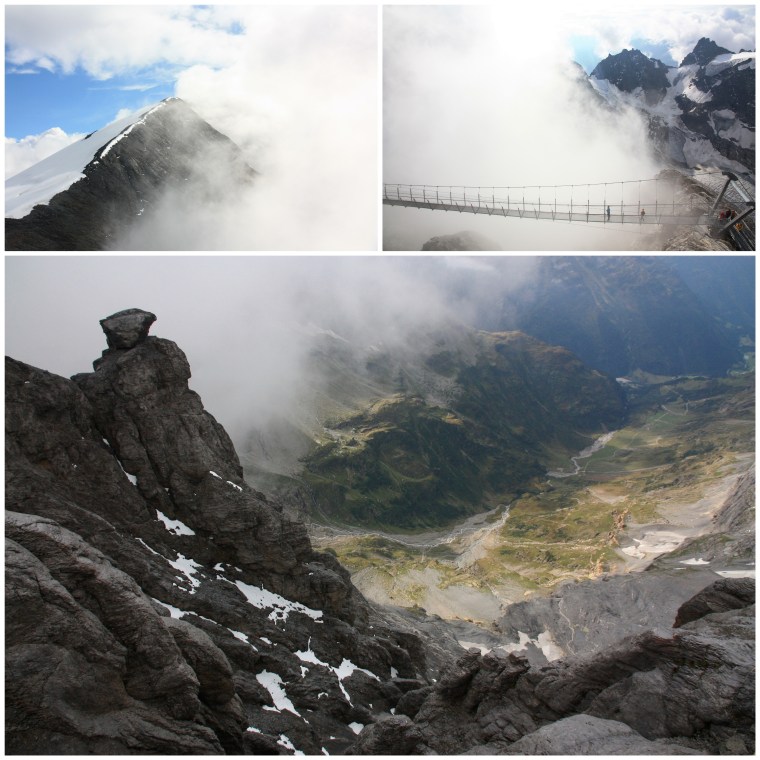
ch04The altitude made walking a little difficult at first but I ventured out onto the slushy snowy ice-like material covering the ground, avoiding people posing for selfies and looking for a view. There was a view. Then there wasn’t. Then there was again. Then a little hole appeared over there, then it filled in again, but another hole formed elsewhere. A few times I stood above the weather, above the clouds where nothing could be seen below. Then, more extensive holes in the cloud would appear and snatches of a mountain range, glimpses of a valley, and snippets of a glacier would emerge. Given I was not expecting to see beyond my nose, it was exhilaratingly breathtaking.
ch05

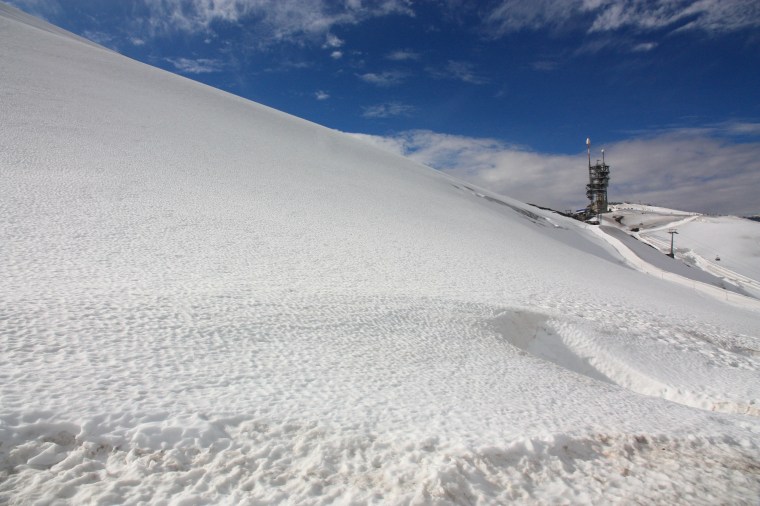
ch07Beyond the hordes of seemingly photogenic tourists, a groomed track led to some other overlook that was rarely visited. Only a kilometre round trip, but it was hard walking. Any downhill dips involved a gentle slide into some slush, hoping that the snow was not particularly deep or covering some unknown crevasse. Slight inclines uphill were arduous and oxygen-sapping. A couple of Aussies coming back advised me to stick to the path which I was planning on doing anyway thank you very much. They had gone ‘off-piste’ and sunk up to their waste. They were probably in thongs too. Not following their footsteps, I ended safely at an overlook, looking over nothing much other than cloud below. However, around and above, a large patch of blue sky had appeared and, for a few minutes, I found myself in a pleasantly warm, quiet and calm, summer winter wonderland.
ch06

By the time I made it back to the safety of the cable car complex, cloud had started to fill in more extensively and any gaps were infrequent. Completing every other distraction (including a stroll through an ice cave, a chairlift over some crevasses, and a walk across a suspension bridge spanning a poop-inducing long drop), I headed back down. Now mid-morning, many people were still coming up and I was not sure what, if anything, they would now see.

Trip 3: Engelberg-Lucerne-Vitznau-Rigi-Goldau-Lucerne-Engelberg

I was hoping the weather would hold so that I could engage in one of those lovely Alpine walks involving meadows and flowers and lakes and cows and probably strong hard cheese and salami for lunch; I had spied a couple of small lakes, joined by a fairly even trail and a cable car for the uphill bit which seemed ideal for the job. It would have started from Trubsee, where I waited for 15 minutes to see if the heavy rain now falling would abate. It did not, and all the bad weather was coming over the mountain and falling here. Distant, somewhere I think towards Lucerne, was a large patch of blue sky, but it had no intention of coming this way. So I sought it out instead.
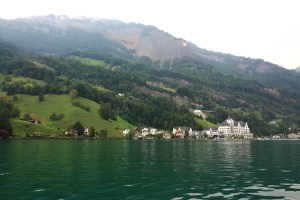
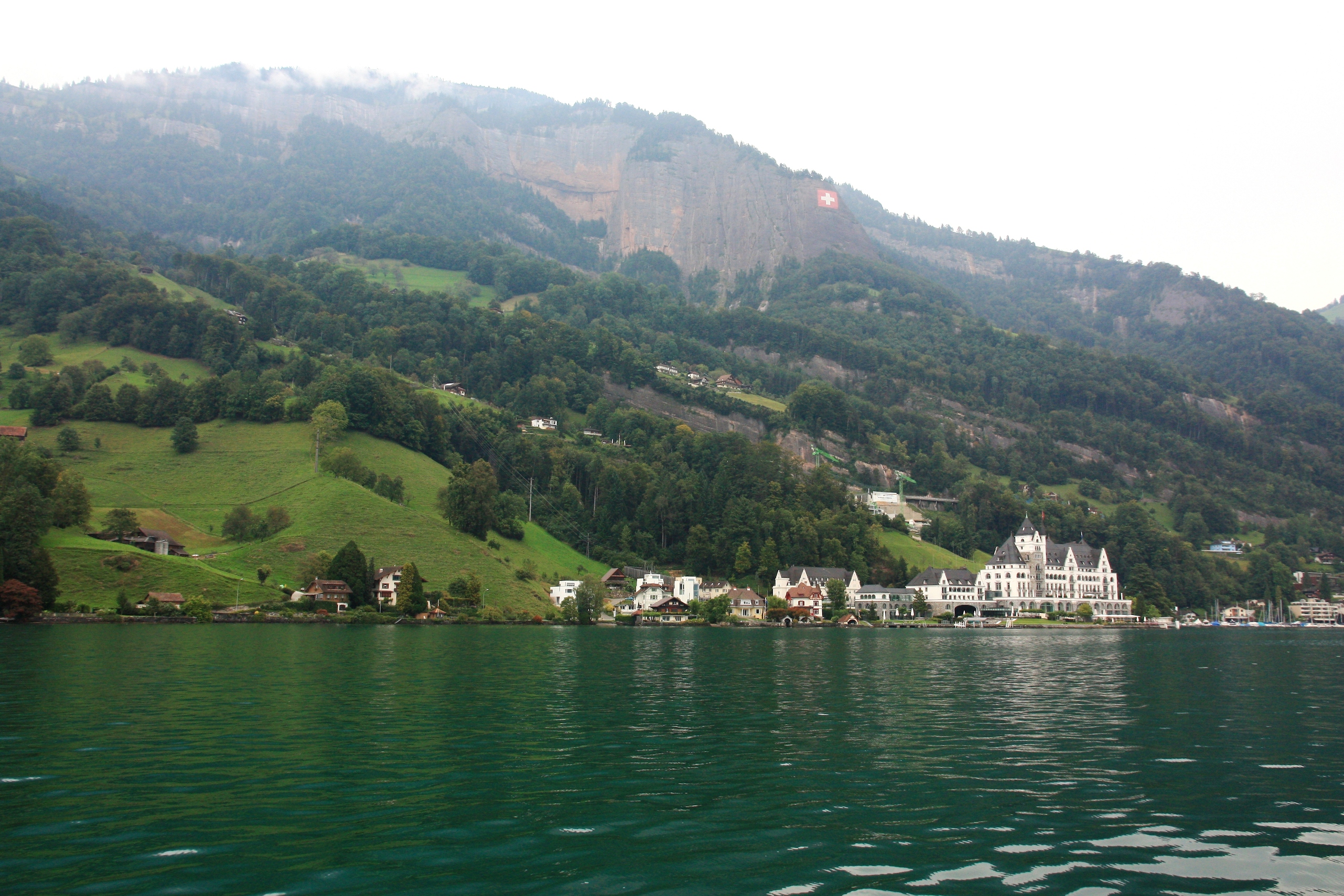
ch08Not for the first time I found myself in Lucerne and this time taking a boat (included in the pass of course) to Vitznau. I had made this trip before, in the glorious, warm, late September sunshine of 2012, and it was stunningly beautiful. Today it was just fairly beautiful, a tad cooler and covered by white cloud with the occasional brighter spot as the sun threatened to emerge.

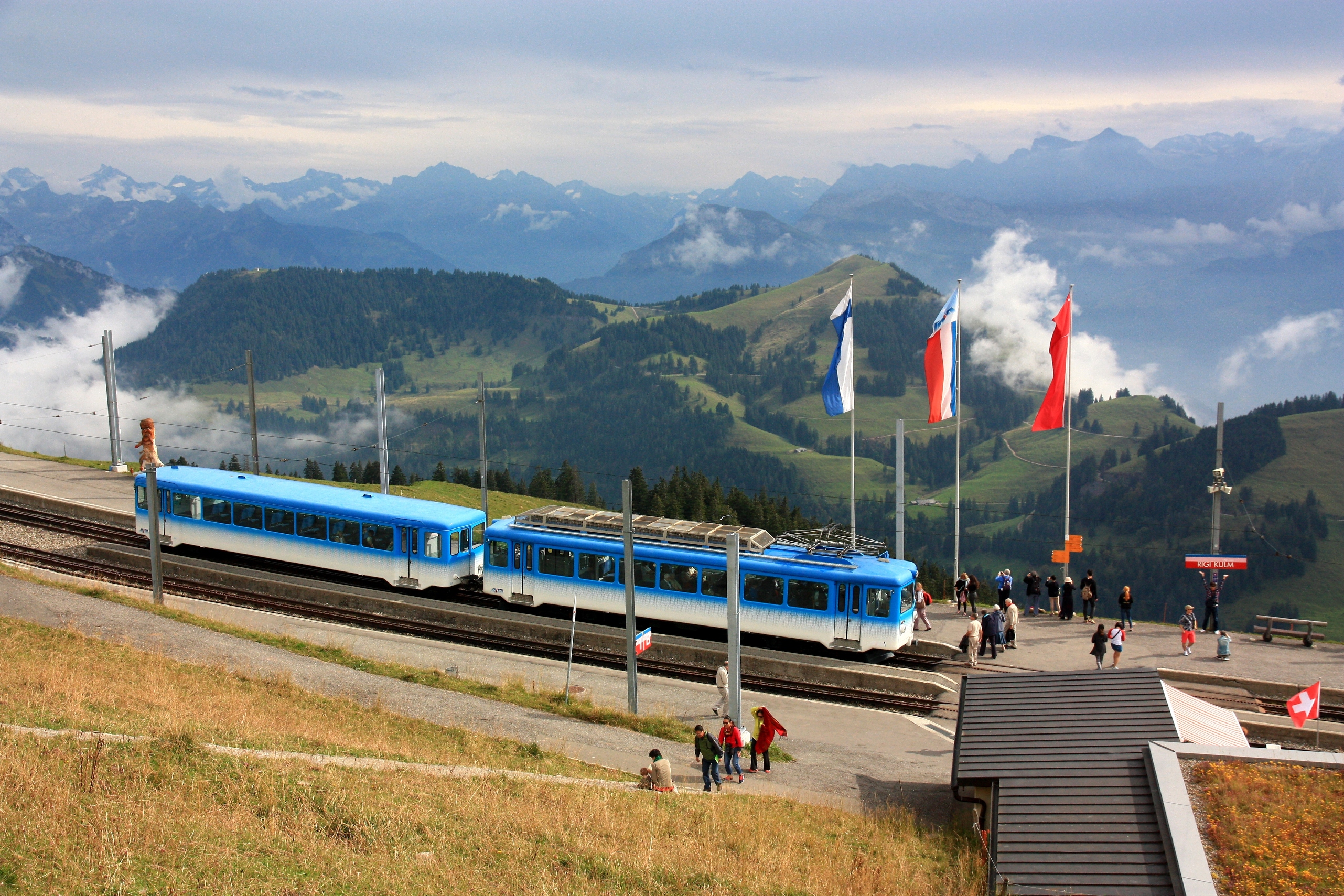
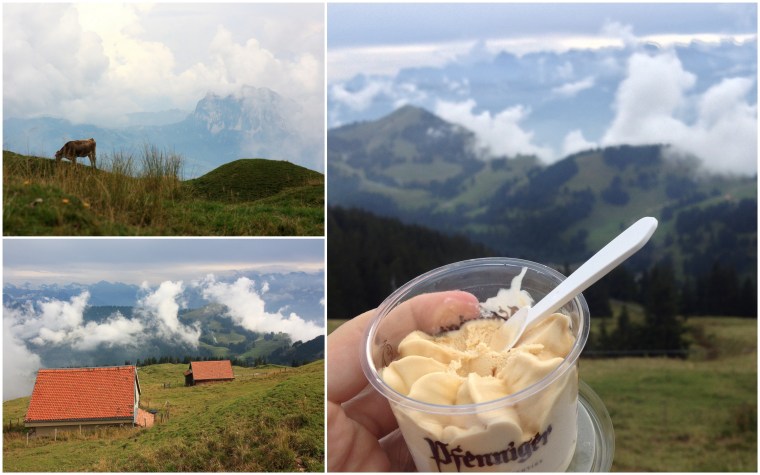
ch09Previously I had 50 minutes to spare in Vitznau before the return boat trip; today, I could go further, taking the mountain cogwheel railway up to Rigi Kulm. This is proclaimed as the first such railway in Europe and it retains a classically elegant air. Trundling up, any views of Lake Lucerne fade away into haze, and small hamlets, forests, meadows and waterfalls compete for attention. Occasionally, schoolkids on their way home hop off at random points. This sure beats the school bus.

Rigi Kulm stands at a modest 1,798 metres above sea level, but the information leaflet proclaims that you can see thirteen lakes from here and points as far as Germany and France. While of course this was not so much the case today, there was a gap in the sky and some overhead sunshine that reminded of the warmth brought by summer. It was sufficiently balmy for an ice cream and I even managed a brief Alpine walk with the cows, down to a lower cogwheel station where I caught the train down the other side of the mountain, to Goldau. All the while, mountain tops flitted through the haze as Lake Lucerne disappeared under the weight of clouds, occasionally billowing up and over one side of the mountain like steam from a kettle.
ch09b

Goldau took me back to Lucerne which again took me back to Engelberg, where the roads were still fairly wet and everything was a tad sodden. All in all, I had done well today. Very well indeed.

Trip 4: Engelberg-Brunni

After yesterday’s extensive escapades I was actually keen to minimise my travel today and stick within the valley and perhaps hop on a chairlift to undertake one of those Alpine walks I may have mentioned already. It looks so obvious on the fold out map of Engelberg: walk up the valley, jump on a cable car here, do a circular walk on this plateau, come back down, have some lunch, go back up somewhere else and have another walk back down into the valley to round off the day.

Breakfast time and Engelberg had disappeared. There was nothing to see from the window apart from a vision of grey-white. Drizzle floated haphazardly in the air. The one other couple chomping breakfast at the same time as me also stared out of the window with a sullen look of inevitable despair. Helpfully, in the corner, there was the Engelberg TV channel showing various webcams atop mountains and cable car stations. Turns out the cloud reached 2,000 and 3,000 metres as well. Still, we can be nothing but hopelessly optimistic having spent a small fortune to stay in Switzerland; carry on regardless, looking for small trinkets of hope – a brief whitening of the greyness of the cloud, a murky dark fleeting vision of some trees over the other side of the valley – that may herald a turnaround in the weather.

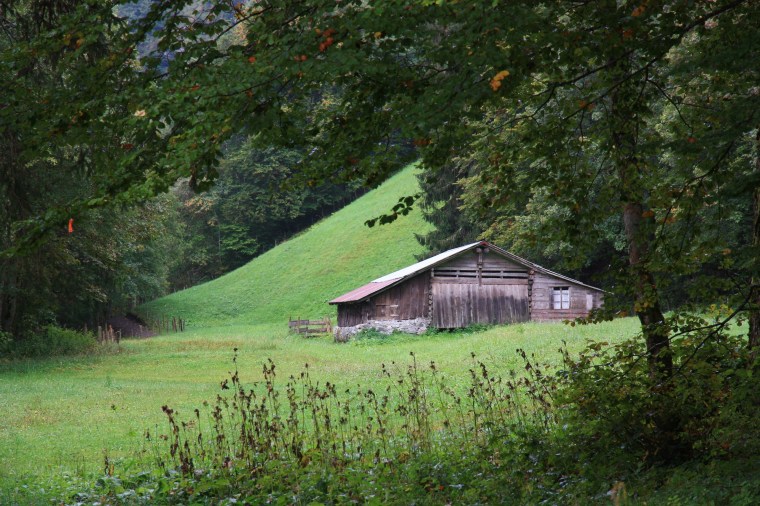
ch10Indeed, things had cleared a little by time I had got myself ready to stroll up the valley. That is to say, stuff was at least visible, including the steadily tumbling river, the dark foreboding forest, and the occasional cosy glade. A golf course, treacherously criss-crossing the river at cunningly placed intervals, held some appeal, particularly as the drizzle had briefly ceased. A man was out blowing leaves around his chalet in Wasserfall, a sure sign that things were to clear, right? But at Wasserfall, water fell, and the Furenalp cable car I had hoped would propel me to a sunny walk seemed a pointless endeavour.
ch11

Instead I walked a different way back to Engelberg and in the hour or so taken, the sun had peeked through and delivered instant warmth. Furenalp was now probably bathed in sun but I was no longer anywhere close. An alternative route up into the hills presented itself closer into town, via the Brunni cable car.  And while the initial rise presented some hopeful sun-glazed valley views, the top was shrouded in murk. I could wait it out in the cold, or go back down and eat lunch. I was hungry and pork schnitzel, chips and salad in the Co-op restaurant sated me greater.

Trip 5: Engelberg-Furenalp

Retiring for an hour or so back at my hotel, I watched the loop of Engelberg information on the TV channel. Sunny pictures with happy families frolicking in rivers; beautiful people getting expensive spa treatments to a backdrop of dazzling snow-capped peaks; webcams showing nothing much at all. Except, hang on, Furenalp. There was a shadow, as if it was above the clouds.

Chasing the sun once more – or at least the potential for something clear – I hopped on one of the hourly shuttle buses and then the cable car. This was a less extravagant operation than Titlis. One small cabin travelling up every half hour or so, or, to be honest, just on request from the dear lady sat in the kiosk. I was the only soul, the wire shooting up towards a large rock face and into the clouds. Only, thanks to the webcam viewed now quite some time ago, there was a chance I would make it above them. The ride was something quite spectacular, rising steeply in line with the rocks, grazing pine forest and revealing hidden crevices where pools from weeping cascades formed. At some point the world disappeared and, out of nowhere, the top station emerged.

ch12It was wet, windy, cold and cloudy. There was nothing to see, apart from a closed restaurant that would be amazing on a sunny day. Determined to make something of it I walked a little. The rain had stopped and, occasionally, visibility would increase to something like 50 metres. The trails were not that well marked though, and, as the clouds billowed in and obscured any landmarks I made the decision that I did not want to be that stupid English tourist who goes missing and requires an intensive search and rescue effort. Sometimes, we must come down to be able to go up.

Trip 6: Engelberg-Brunni again

Breakfast time again. Engelberg had disappeared again. I had some of that pretzel like bread with salami, egg and cheese again. I was leaving today, eventually for Australia. But I had lots of time before my evening flight, and wondered what I could exactly do with it.

Appropriately dawdling in my room, Engelberg TV in the background, it was as I was squishing dirty pants into my luggage that the loop of webcams came on. Titlis, no. Stand and Trubsee, no. Furenalp, no. Brunni lower station, no. Brunni top station, er, maybe I guess.  After the next round of adverts with blue skies and happy people, the webcams again, and more hope. A small lake. Some shadows. Enough to take a chance…if nothing else to kill some time.

And so, for about thirty minutes I had a dose of Switzerland that I had yearned for all along. The final chair lift ride up to the top station of Brunni was a delight, the warming sun coming from my right. Long shadows of cows formed on the succulent pasture below, their occasional moos and tinkling bells the only sound. Views of peaks and, just now and again, glimpses of the top of Titlis across the other side of the still shrouded valley. I wish I could have lingered longer, but travel requirements meant I needed to leave. And the chair lift down was infinitely less delightful now, as the cold, grey cloud enveloped everything around once more.

ch14

Trip 7: Engelberg-Lucerne-Alpnachstad-Pilatus-Alpnachstad-Lucerne

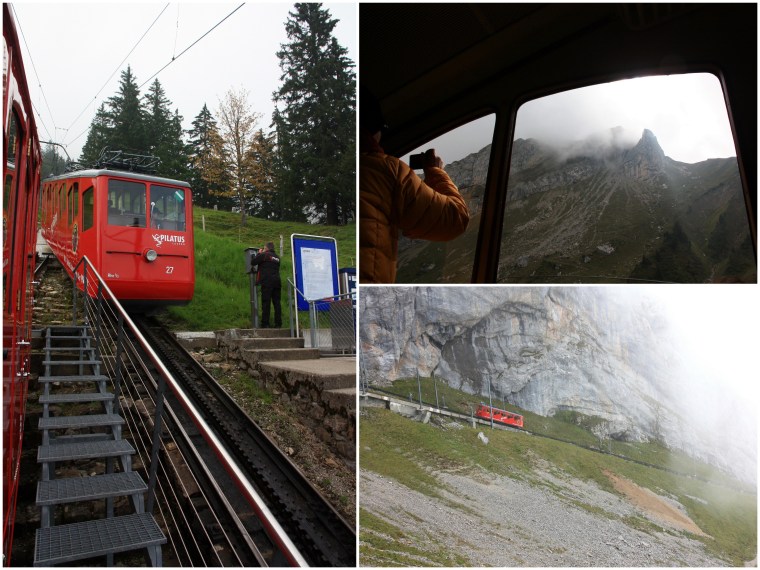
So, farewell Engelberg, I am sure you are fantastic in a proper summer and provide an excellent base for so much that is around. I had one other target on my Tell Pass list and, filled with hope that the Brunni blue skies could extend as the day progressed, I returned to Lucerne. From here, it was once more onto a boat and out onto the lake, this time heading in a different direction to Alpnachstad. At Alpnachstad, the base of the steepest cogwheel train in the world, conquering gradients of up to 48% to Mount Pilatus (2,128m) – Lucerne’s mountain.

Now this experience is as much, if not more, about the journey as it is the destination; particularly today when the summit was, yawningly predictably, cloaked in the clouds. Each single carriage train is built for the job, separate compartments rising with the slope in a staggered series of steps. Looking up through the driver’s window the track rises stupendously steeply; looking down out the back and you are left wondering quite exactly how this gravity defiance all works. I assume something to do with the cogs, steadily clicking out a rhythm at a gentle, sleep-lulling pace.
ch15

At the summit complex I found myself – not for the first time – looking at the postcards with all the stupendous views. But I wasn’t upset or dejected or even that frustrated that no such scene presented to me today. It was a shame, I would say to myself, but nonetheless I had a really enjoyable time. I mean, there’s much to like about a walk out to a viewpoint to admire the shifting fog of clouds, plenty to ponder while navigating the slippy rocks with a (thankfully fenced off) drop on either side, and ample satisfaction from a cup of coffee and chocolate brownie back in the warmth. Plus, there is still the sheer wonderment of the trip back down to come.

Trip 8: Lucerne-Zurich Airport

ch17The remaining few hours of this trip in Europe were whiled away in perhaps one of its most elegant, picturesque, and sumptuous small cities: Lucerne. It had been a conduit, hub, and pretzel provider for the past few days but now, as the sun gently began to filter through the late afternoon cloud, it offered a healthy last dose of European je ne sais quoi. Thus the time skipped by alongside waterways and through cobbled streets, admiring window boxes brim with flowers, crossing old bridges, dodging cyclists, and fleeing from specific corners where the thousands of smokers seem to gather.
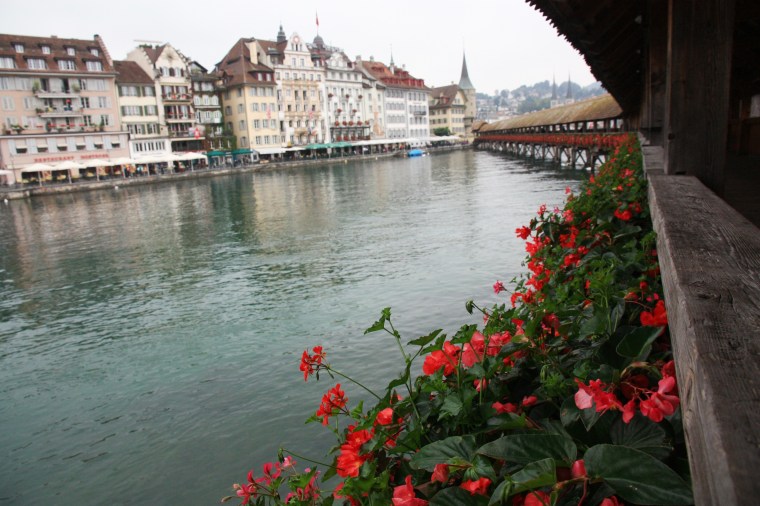
ch16

I had been in Lucerne before – in 2012, in hot sunshine – but it was just as charming, and even more comfortable to explore on this much cooler, cloudier day. Like last time, I made it up to remains of the old town wall and castle, where snatches of Lake Lucerne and distant mountains appear through the gaps in the ramparts, yonder the old rooftops and leafy trees scattering down towards the water. The top of Pilatus was still shrouded in a haze, but certainly much of the murk had lifted. Probably upon boarding the train to Zurich, the top would emerge, a final tease of a farewell to what could have been.

Somewhat lethargic and bored of weather angst, part of me was ready for it to be over. But – with an impending trip cooped up in an airplane to cover half the globe – I was also reluctant to leave. Tomorrow it may be brighter and, if not, I could always easily return to the UK where the Indians were having a summer or something, though Britain First were probably getting a bit upset that the Indians had stolen the summer and posting something with grammatically flawed menace on Facebook for people to like. A shamelessly opportunistic emigrant and immigrant, my own tomorrow was a long way off, but I knew that when it came, it would emerge with blue skies and a nice flat white. A scene from which I could happily savour the numerous journeys I had just had the fortune, the pleasure, the freedom of travel, to experience.
Europe Green Bogey Photography Walking

Ou est l’ete?

fra01Apparently, Canberra experienced quite a few nights in a row below -5 degrees, plummeting to -8 on one occasion. In my last week prior to escaping to the northern hemisphere this felt bearable, safe in the knowledge that I would be heading into summer. Another comfort came from the days, which were utterly gorgeous, clear as crystal and with a hint of spring in the still, sunny, wattle seed air. Such an embarrassment of blue sky riches seemed excessive and, pottering around Red Hill for one last time before the trip, I yearned to bottle just a little of it to take with me.

There was plenty of blue sky above the clouds, I assume, on the longest Sunday ever. Commencing at 3am Sydney time it finished around 11pm Zurich time. This equates to 28 hours, and that’s just the part for which I was, alas for the large majority, awake. Still, it is a means to an end and Zurich was warm with thunderstorms gathering and had giant pretzels readily available for an evening snack.

From Zurich the next day I enjoyed the calm seamlessness of Swiss rail to transfer to Geneva. Heavy overnight rain had given way to cloud and drizzle, with a spot of blue sky emerging to engineer hope, followed by a windy squall to dampen it all. Little was different by the time I rocked up in Annecy, much to the dismay of the French bus station man who was unable to sit down on the wet benches and so instead decided to regale me with tales of the summer holiday travels of his entire lifetime in this area oblivious to the fact that I could barely understand what on earth he was babbling on about. Which part of je ne comprends pas do you not understand?
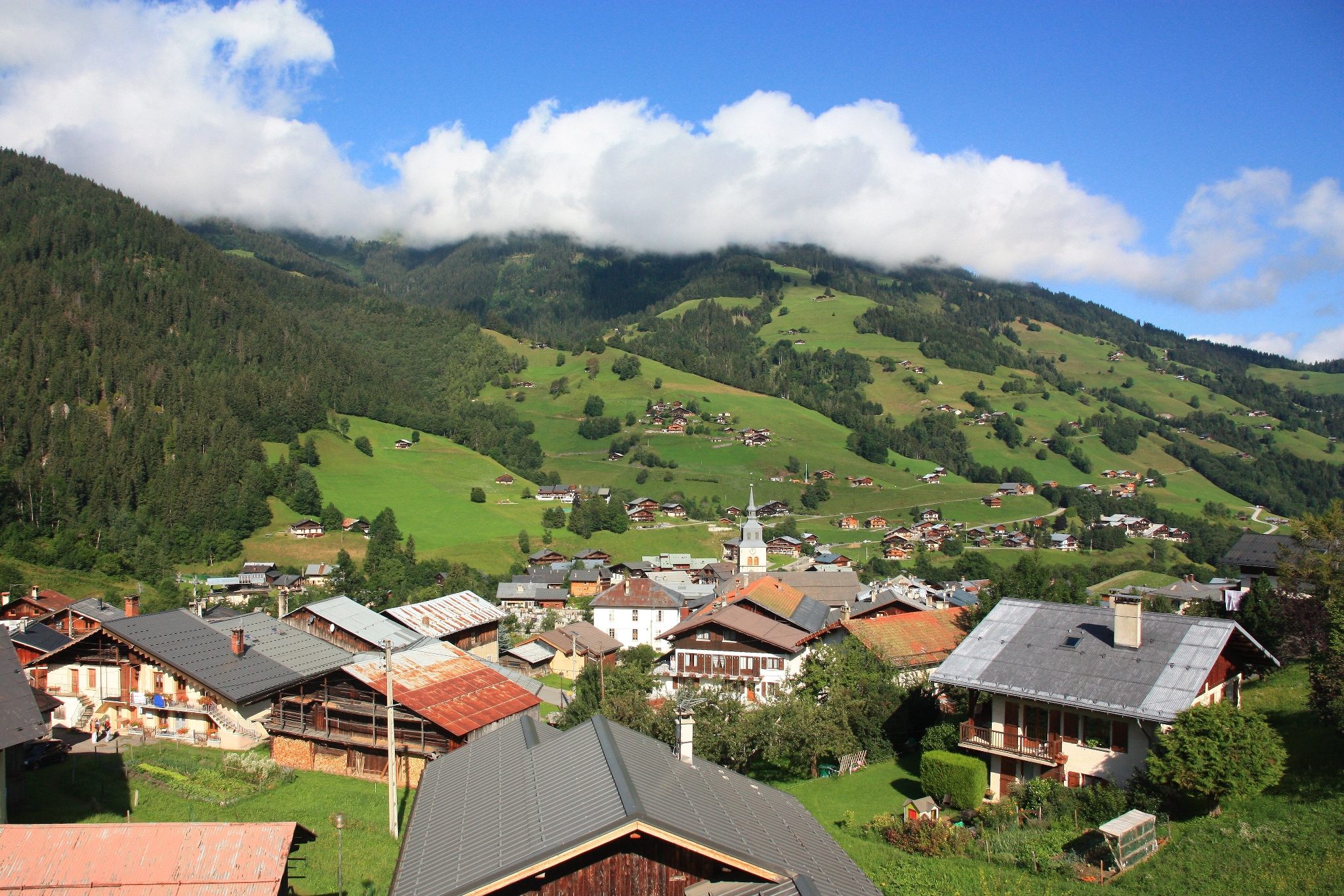
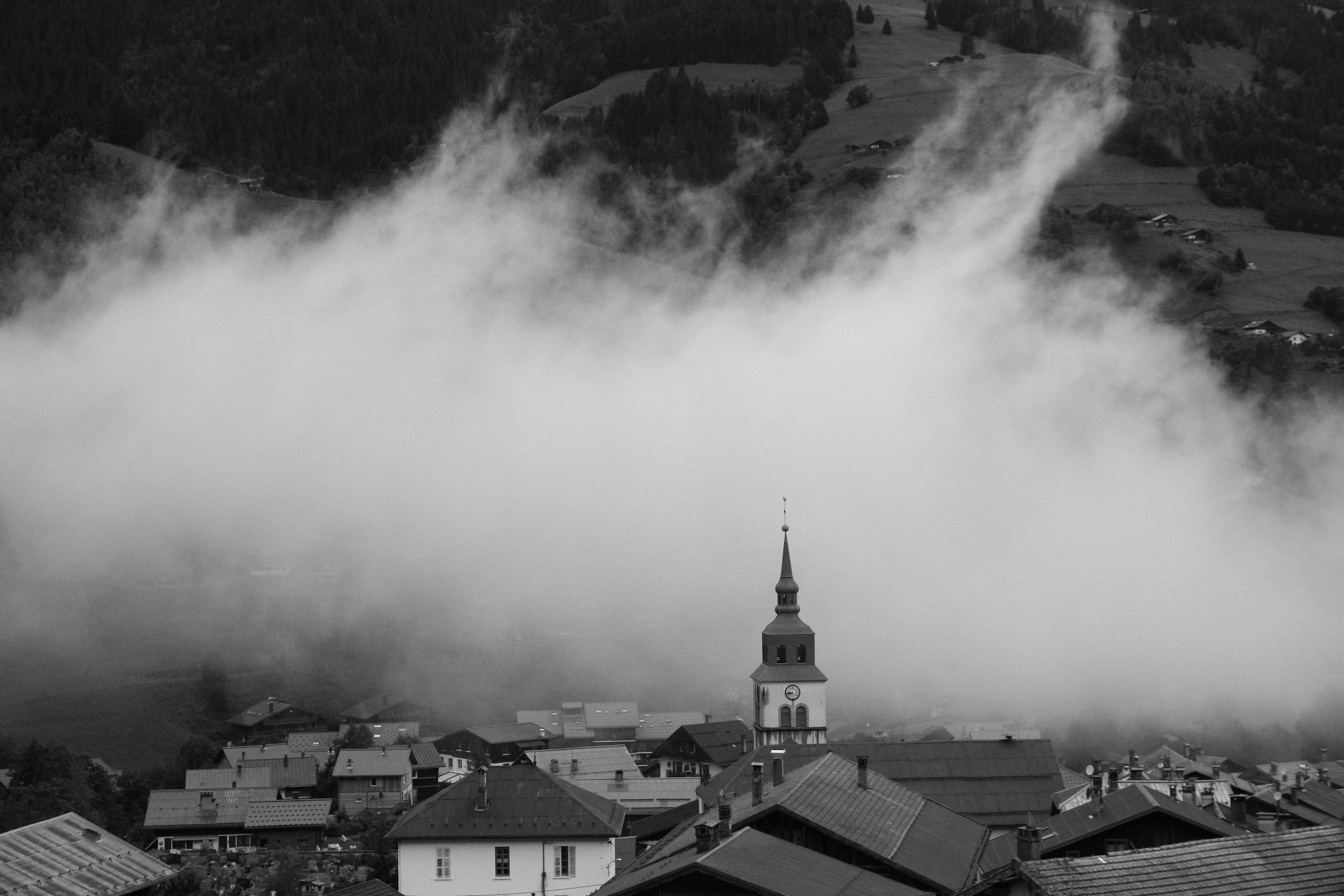
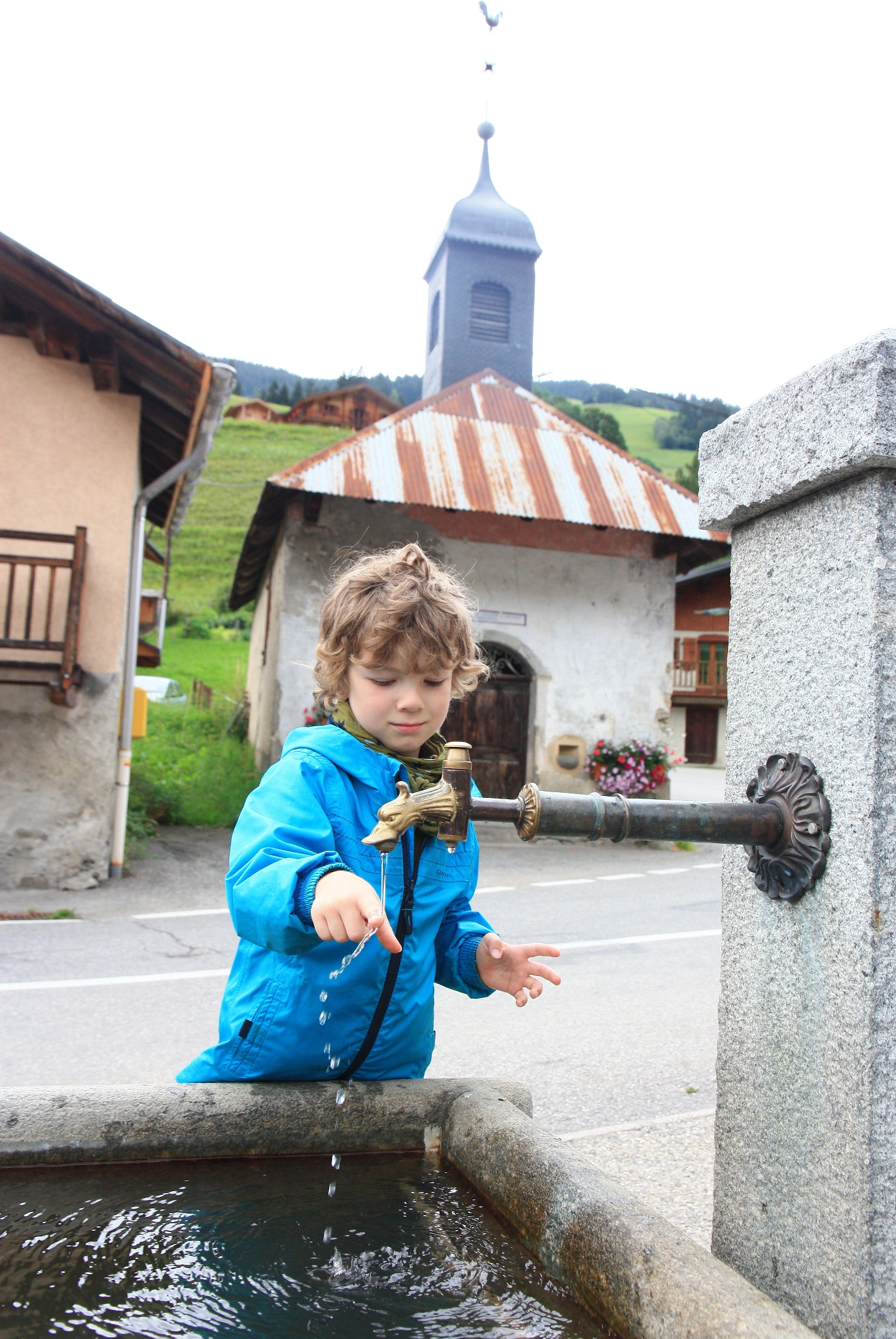
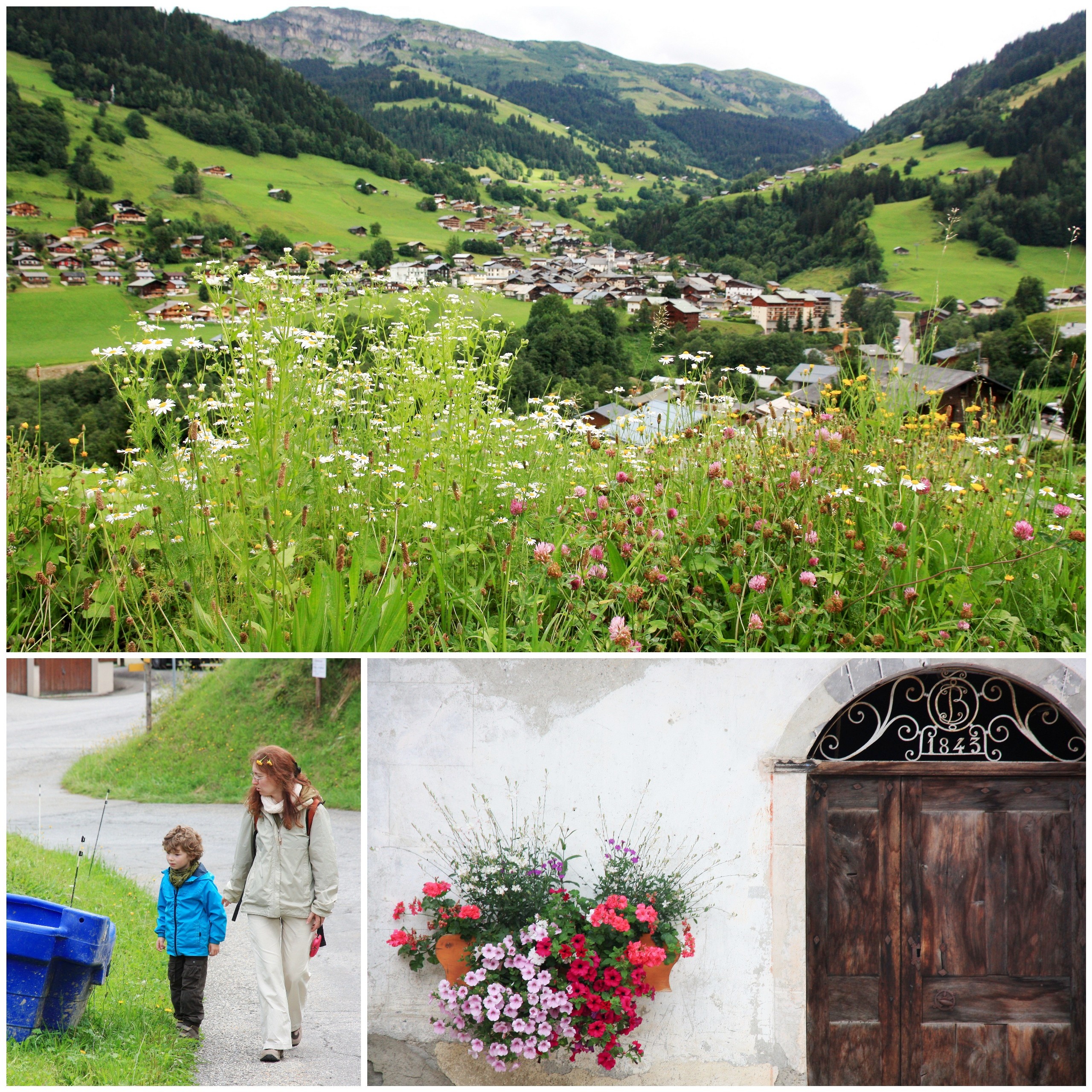
Things lifted as the last part of my journey took place in English in the comfort of a car and with brightening skies…south to Albertville and then up into the mountain valleys of Beaufort and, finally, after a disjointed 48 hours, Areches. If ever there was an archetype for Quaint Alpine Village Design Course 101 this was it: a central church from which ramshackle chalets radiated up and down the slopes; village life decorated with flowers and fountains, vegetable gardens, and hens wandering the streets; the boulangerie tucked away on the narrow main street alongside the delicatessen; and, should all be quiet, the sound of cowbells emanating from the green meadows around.

The view from our digs could embrace this all and, bathed in sunlight the next morning, my fears that the worrying weather of the Tour de France was a settled summer pattern dispelled like the morning clouds over Le Grand Mont.

fra02

fra03A little walk nearby through forest and alongside a tumbling stream felt like it was going to be the first of many, the dappled sunlight a joy but doing little to dry out the oft muddy track. Sunshine was maintained through to lunch time and a picnic baguette in Le Planey avec les familles. A picnic baguette that was wonderful in the main due to the Beaufort within. These cheeses always seem to taste their very best consumed in their area of origin. Like the fish and chips by the sea effect.

Le Planey possesses one of the two summer chairlifts that are sporadically open in the area. Today it was ouvert (apart from a break for lunch, understandably) and propelling people up to around 1900 metres. Views of the mountains and valleys are easily on offer from here, although the very highest, Mont Blanc of course, was now penetrating into the slowly greying sky. It’s no Red Hill, but it sure is pretty.

fra04

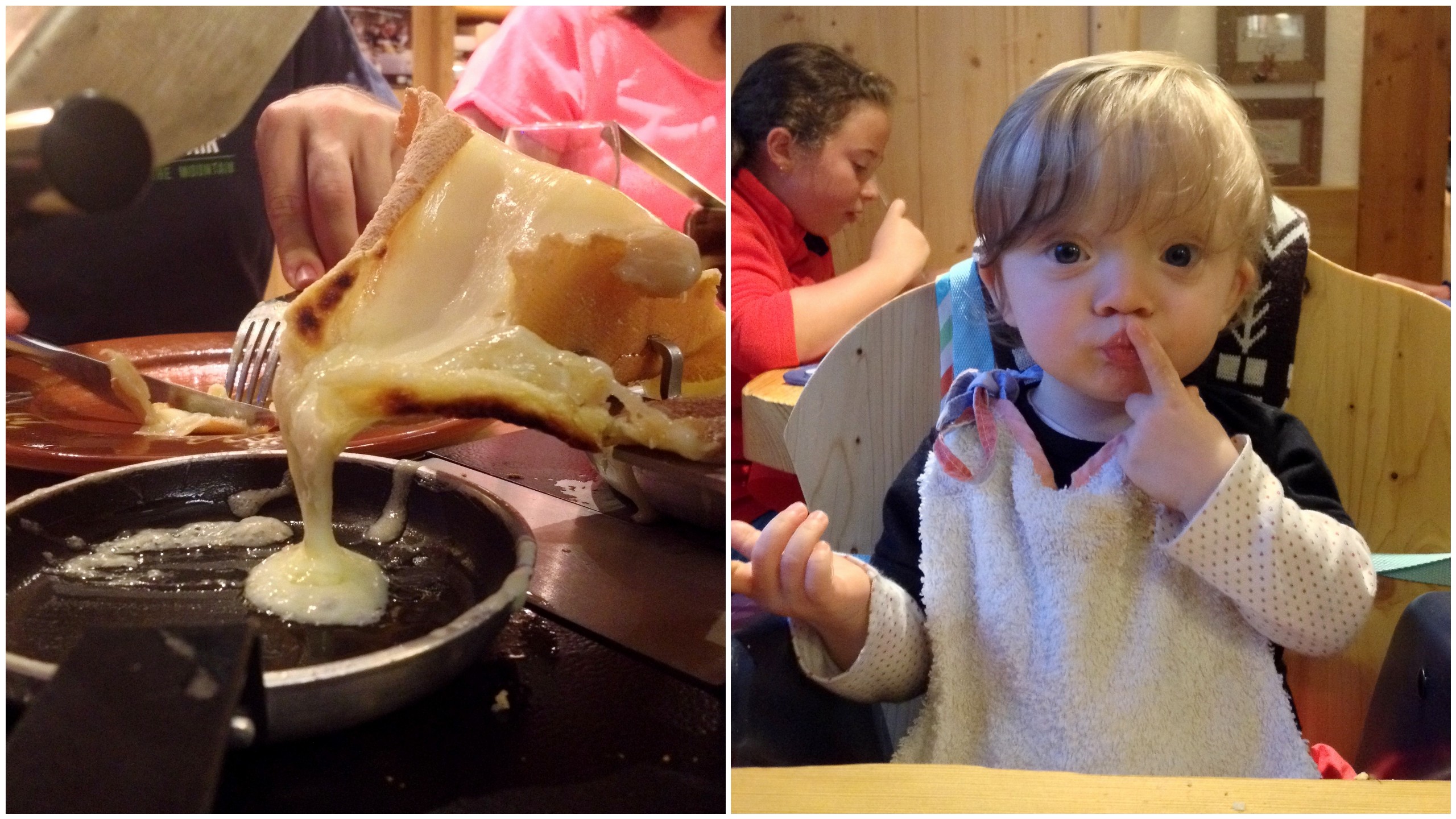
It was not long after descending that the rain arrived; first a few spots nothing more than a minor irritant, then a steady downpour beating out a consistent rhythm on the trees and chalet roofs. On the plus side, it is good weather to hunker down in a cosy restaurant and eat dishes that involve one or more of the following: cheese, potatoes, cheese, bacon, cheese, onions, cheese, wine, cold cuts, cheese, and a splash more wine. And thus through the magic of sharing I was able to partake in the Savoie triumvirate of Fondue, Raclette, and Tartiflette all in the one sitting. Cue inevitable X-rated cheese shot.

fra05

fra06The remaining few days involved plenty more rain and plenty more frustration at the ever-changing cloudscape that could be comfortably viewed from the living room window. There was also, of course, plenty more cheese, the making of which could be viewed in Beaufort, upon dashing from the marketplace to the co-operative in undoubtedly the heaviest deluge of the week. Drying off in the elevator, I swear cheesy aromas had been deliberately piped into it. Either that or a pair of smelly old socks had been inadvertently lost in the escape hatch.

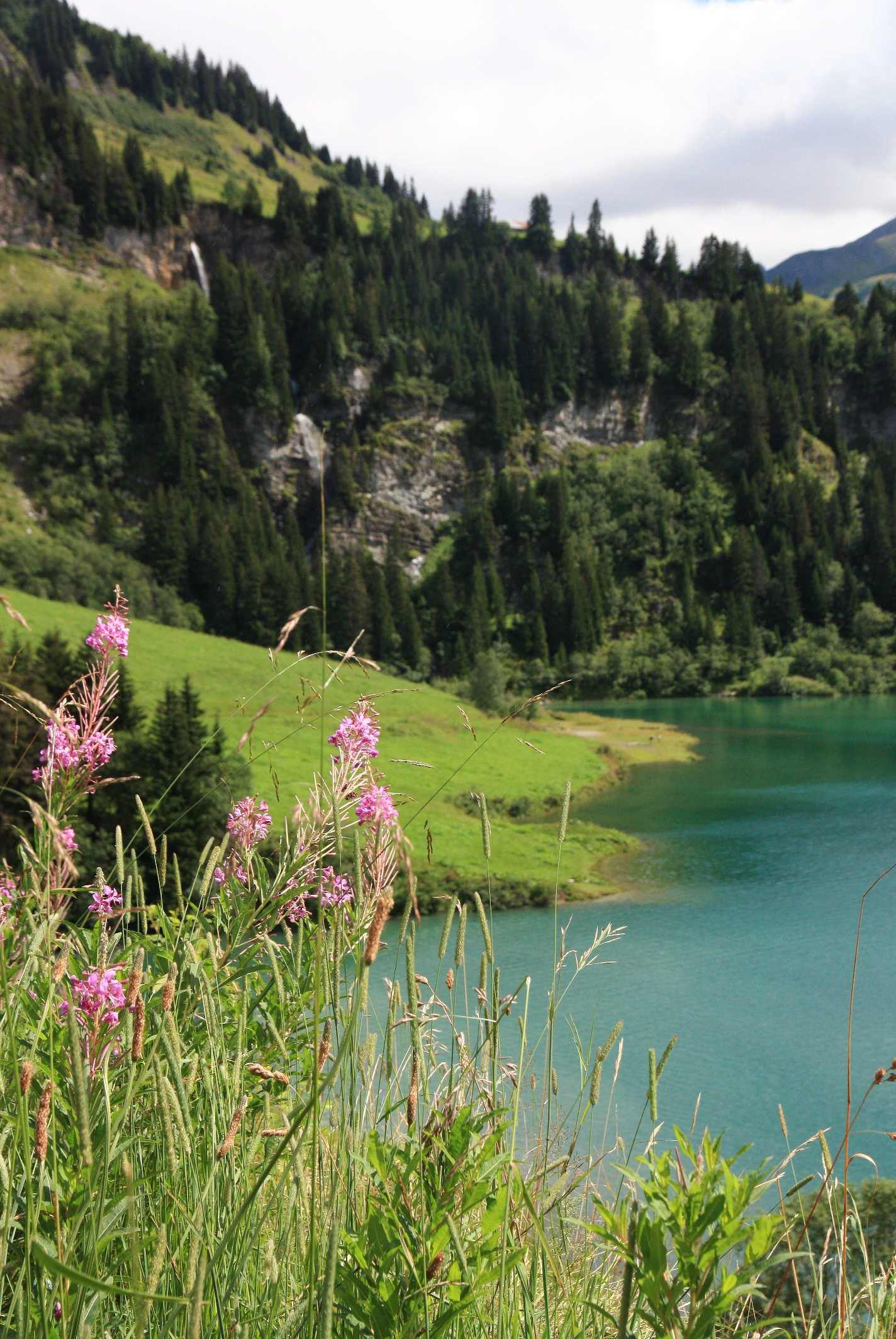
fra07There were further forays into nature to be had and – indeed – further bursts of occasional sun. A trip to the beautiful Lac de Saint-Guerin was a race against time before the sunny pocket was once more filled. Briefly, just briefly, it dazzled in sheer Alpine loveliness, that is turquoise water, bright green meadows dotted with flowers, dark green coniferous forest, and rising, rising, mountain peaks. Peaks from which brooding grey clouds return to deliver their annoying life-giving wateriness once more.

The other chairlift opened on the Thursday and I took that in the dry, walking quite steeply up to a spot called Tete de Cuvy. Nearing 2000 metres here, the table d’orientation promised 360 degree views with Mont Blanc as a centrepiece. But, you guessed it, little is on view when in clouds like this. In the effort-reward ratio stakes, it was a walk that veered a little too strongly into the effort column, so moan moan, grumble grumble.

I shall quit grumbling about the weather even though this is a genetic predisposition of Britishness for which you must please understand. Because, you know what, Areches was a lovely spot with some lovely moments. Yes it was chilly and quite probably colder than Canberra on descending the chairlift, but, at a lower altitude, the sun had poked through for a little while. It was peaceful and calm and glowing and pine-fresh fragrant and all those nice things that occasionally come together into a wholesome whole. I may have been clinging on for dear life on a cold steel coat hanger swaying down a mountain, but it was indeed well worth clinging on to. Hell yeah, I may even let one hand loose to take a picture as I descend, adrenaline junkie that I am.

fra09

fra10Safely back in the valley, I was able to calm myself down with a coffee and cake, before the family rejoined and we set off on an afternoon amble in this Alpine idyll. Relatively clement conditions accompanied a meander though the Areches ‘suburbs’, zigzagging their way up the slopes in a series of hairpins, giving way to larger plots and bigger views and farmland pastures with cows. The cows, I hasten to add, were sat down, giving further credence to their weather forecasting expertise.

fra11

Their forecast was more a medium range one, for the late afternoon and evening cleared to the clearest it had been and I even wore sunglasses back to the village for a final Tartiflette*. The skies gave hope for one final morning before departure; I could picture gargantuan panoramas under deep blue skies, the white of the Mont Blanc massive shimmering into the air, a landscape of lakes and ridges and rocks and valleys. But the cows were right. Il pleut. Someone really has stolen the French summer. All one can hope is that the 2014 vintage leads to such green pasture to provide the most spectacular fromage yet.

* though I predict Angliflette avec Reblochon de Tesco could be on the cards.

Europe Food & Drink Green Bogey Walking

Icing sugar sprinkles

In three weeks time my inevitable annual trip to the northern hemisphere will have commenced. That is, barring the outbreak of world war three or whatever else the supposedly evolutionary pinnacle that is humankind has cocked up. I am, of course, looking forward to it; not only for cheese and family and summery walks and clotted cream and friends and pork pies and a few spots of gorgeousness, but also to have some interesting blog content and potential calendar pictures gathered!

Fortunately just the odd foray in this massive place called Australia keeps things ticking over on here. But, more so, the changing seasons become a theme, a response to (relatively) being in situ and watching the world around me change. And the seasons are a-changeable, something which may, or may not, support the wild ramblings of those crazed climate warriors, aka pretty much everyone in the profession of science. Scientists, with their fact and reason and logic, what have they ever done for us anyway!

snow00

Winter in Canberra is a curious beast. Blissful sunny days can be as pleasant as any a spring day in southern England, and you can still rightfully take a somewhat bemused perspective on the common discourse of winter, taking place in snug coffee shops amongst people with double quilted scarves and rapidly disappearing Ushankas. Call that a knife, er, I mean call that cold? You know nothing Bruce. But then when that sun goes, down for the night, or behind steel grey clouds blown from the west, winter reminds us of its chill.

snow10I may not know through typical absence, but winter here this year seems to be a little less sunny and with a touch more in the way of squally bitter winds coming off the mountains and hills. Indeed, the Brindabella Ranges have more than once now had a nice dusting of snow, all accessible in about 40 minutes or so, depending on the high likelihood of traffic.

I wish the snow came down further to coat the city streets and make new Senators even more querulous about their decision to become a Senator, compelled to sit in Canberra in midwinter. I mean, if we are going to have a winter to endure, at least make it a fairytale one with snowy streets and people frolicking with their sleds and drinking mulled wine and perhaps even indulging in warming things like cheese fondue around a log fire. At least that was the sentiment I was trying to convey when the ABC News reporter accosted me amongst the beautiful white world of Corin Forest and understandably left me on the cutting-room floor.

snow01

One of the many good things about snow is that it is one of only two words in the English language that is associated with being dumped. We have had several good dumps recently, up in the hills, and I returned once more over the weekend to see what had been dumped. Unlike the first foray there was no ABC News crew around but, more importantly, the sun was out in one of those sublimely blue sky days that only come in winter. The snow had melted somewhat – the dump was on Thursday I think, but then, who keeps track of their dumps? – though pockets remained to enliven the forest.
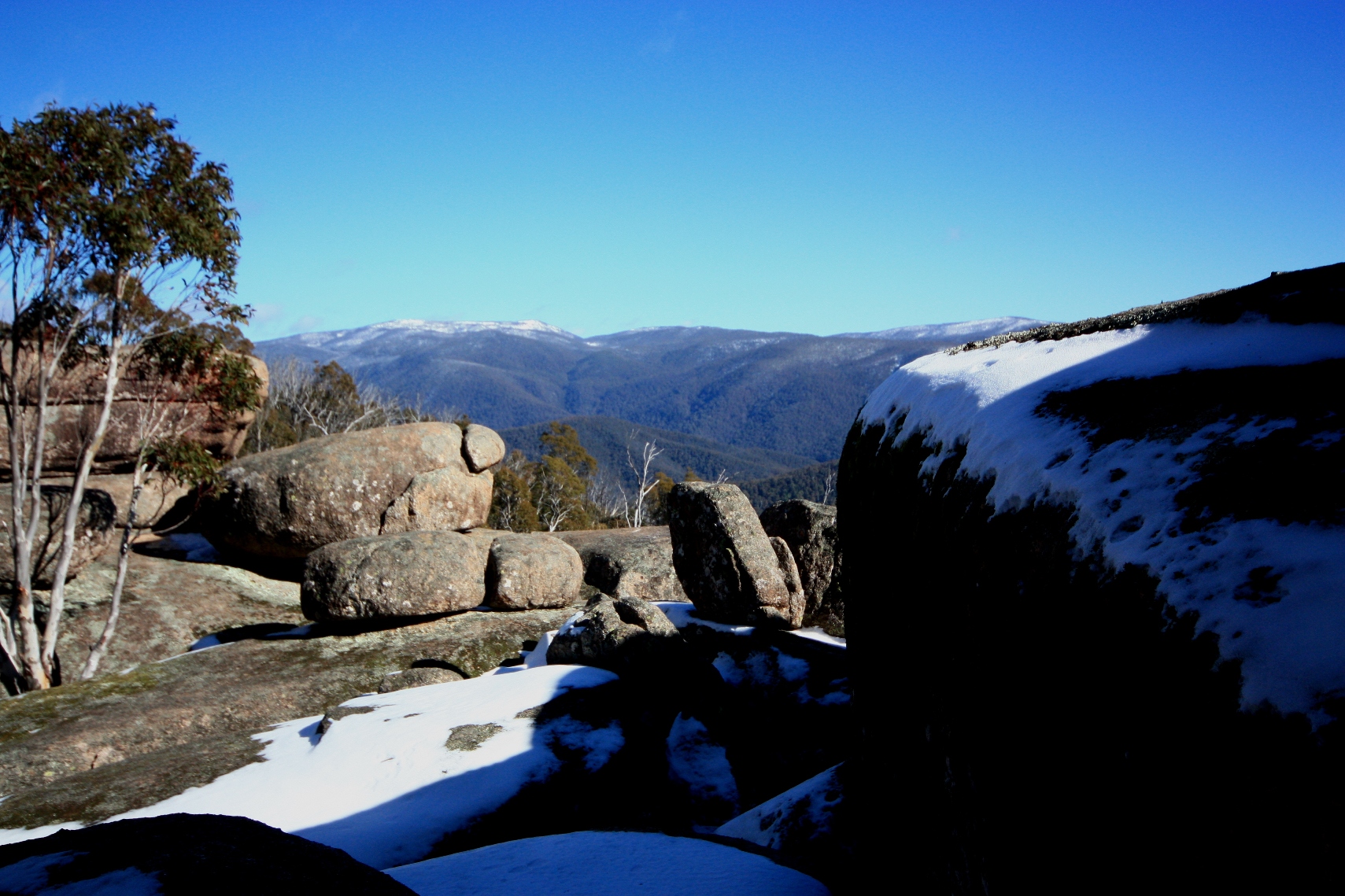
snow11

snow07Frozen paths gradually thawed into that horrid mud slime as I made my way to the outlook at Square Rock. It can be a drag, that walk, but the snow made it clearly more distinctive than usual, offering up plenty of natural rest breaks to stop and take stock, to hear the birds, to spy the wattle, and to breathe in the eucalypt air. And then there is a reward at the top, where that blue sky meets the icing sugar dusted mountains, endless gum trees filling the void below. It is a fine stop for a couple of digestives and a Freddo Frog basking on a squarish rock.

snow06

And so, that is winter, perhaps the winter blog post. I think I made it fairly wintry, given the constraints of wintriness that exist in Australia. Next for me will be summer, though including likely rainstorms and snow lying around higher alpine climes, followed by spring and then summer again. I told you the climate was topsy-turvy, and I’m not even a scientist!

Australia Green Bogey Photography Walking

Totally (un)tropical taste

Turns out Sean Bean was right before he had his head chopped off all that time ago (very old spoiler alert!). Winter was definitely coming. Genius prediction, much like Mystic Meg predicting someone with the letter A in their name will win some unspecified amount of money on the lottery. Of the same level of insight as the Australian Prime Minister telling us that conflict is not just about goodies v baddies but sometimes baddies v baddies, bang bang you’re dead nah nah nah nah nah.

Yes, winter has come, though still a temperate south of the wall kind of winter. Chill morning fog and darkness before five. A fortnight long cold which cycles between varying levels of mucus and ear blockage and throat irritation and is happy to never quite go away. Slow cooked beef and tom yum soups and the occasional hot chocolate to soothe things down. A time when images beamed at crazy hours of the night from northern – or indeed equatorial – climes are a somehow compelling, comforting companion.

tv01As Brazil shakes its booty, the tropics are never sexier. So it was with a tinge of disappointment that I rocked up in Townsville, north of the Tropic of Capricorn, to find a fine imitation of a wet weekend in Morecambe. Even the locals were aghast and – predictably given a ‘chill’ 19 degrees or so – wrapped up in cardigans and these strange and rare things known as trousers. Crazy weather they said. Climate change they uttered. Wahhhh you’re from Canberra you’re mad I could never cope with that I like the warmth and being near the sea and lolling around too much they exclaimed incredulously.

tv03So what to do on a wet weekend in Townsville? Trudge along the ever fine esplanade in your waterproof and realise that maybe you should buy some new shoes that don’t absorb quite so much water. Marvel at the views of Magnetic Island which emerge in between cloudbursts and drizzle fronts. Attempt to have an alfresco coffee as wind sweeps in sideways rain. Soak up the Great Barrier Reef, presented in aquarium form, and battle with thousands of kids to look at a faaaaaaahkin shaaaaaaak.

tv02

By Tuesday (when I had work to do) the rain had stopped, and then Wednesday (the day I left) it was back to sunny skies. This meant that – while an excursion across to Maggie was now off the cards – I could at least get out a little, and savour just a smidgeon of that tropical taste. I climbed Castle Hill, invariably described as a pink granite monolith and plonked right in the middle of the city. Just like Rio, I thought, as I clambered up the many, many steep and arduous steps to the top. No giant Jesus at the summit, but some fat guy in shorts was there. He had driven up on the road, to marvel at the views still submerged under a mackerel sky.

tv04

tv05I was pleased to exercise, just so I could eat guilt free on the waterfront; indeed, I think the eating side of things was the most satisfactory part of this tropical foray. The sun managed to accompany a delicious lunchtime salt & pepper calamari salad on Tuesday and a sweet corn pancake and bacon brunch was the perfect gap filler until my flight home on Wednesday. I squeezed in a coffee or too, some soggy fish n chips, and, right near the end, a beachside gelato. The tropics had returned, the sexiness was back.

tv06And with just an hour or two to spare I could take those idyllic palm tree beach shots, and capture the fragrant green tinge of a city lumped around hills. I could walk in shorts (yes shorts!) along the very excellent Strand – a perfect seaside promenade punctuated with eating and drinking stops in between sandy bays. I could pretend, should I wish, to have had a sublime tropical getaway and delete all the pictures of rain on my iphone. I could happily linger until September.

tv07

tv08But then, returning towards my hotel and a taxi to the airport, a snake came up to me and said something like, “Neil, you don’t want to stay here. The air force planes are too noisy. The coffee could be better. There are sharks. And mosquitoes just waiting to eat your succulent English blood. Backpackers will overwhelm us, plus there are people obsessed about some stupid annual rugby league match. Oh, there are some snakes too. They might not be as nice as me.” Sage advice, insightful predictions. And so I scampered off to the airport and wee wee wee wee all the way home, all the way home to winter.

Australia Green Bogey

The rains of Canberra

rains7Today I set out to prove that a picture does not always tell a thousand words. That’s because every picture here will show a pleasingly sunny state of affairs whilst in this guff of words and nonsense I will harp on about the rain. The last month or so has been pretty wet, or, as I fondly remember overheard last year in New Zealand, a but wit. This may, or may not, account for a lack of activity writing about things and taking pretty pictures; this, and an uncharacteristic propensity for hard labour.

rains4One week was pretty much written off with insipid dullness, peppered with blanket drizzle and occasional cloudy breaks. Another – spent working in Sydney – was invariably grey with a spot of rain and the odd fleeting sighting of white cloud. I suppose it is good working weather, and good whinging weather. Everyone says I should be use to it (whinging or the weather?), being from England, ho ho ho. But as I respond with varying degrees of snarkiness, I didn’t come to Australia for this! Mind you, there is something to be said for re-experiencing a very British style perseverance through the gloom to genuinely revel in the brighter interludes.

It all began sometime in March, when it was still fairly sultry with generous thunderstorms. Soaked and saturated, an early Saturday morning heralded the first fogs of the season, parting and re-forming as the sun battled to force its way through. It offered a beautiful accompaniment all the way down into Namadgi National Park and the Orroral Valley. From here, I astounded myself by walking 18 kilometres and being back in time for lunch; a circular walk up the valley and back down along a ridge. And I stayed dry throughout, with some liberal provision of sunshine to still redden my face.

rains2

Towards the end of March, a week came and went in which the sun barely materialised at all. It was a frustrating week, with only opportunity for short, raincoat-clad ambles around the withering suburban streets in between the fronts of drizzle that were passing through. It was a week in which to read, to binge watch DVDs, to escape to coffee shops and come home with the smell of beef stew in the oven. There are always some plus sides to be had.

rains5For two or three hours at the end of that week, the clouds said goodbye for a while and blue sky reminded us of what a wonderful thing it is. I made off to the Botanic Gardens, a place in which it is hard to tire, especially when beaming in such wholesome sunshine. Ironically, the sprinklers decided the rainforest needed a little more rain to mist the place up. The desert garden was feeling a little out of place, but the plants were as happy as could be. And, sat in the sun for a while before it once more passed, so was I.

Canberra does not have a monopoly on rain and Sydney too was on good terms with cloud and precipitation. There was something nice about being there though, and milling about purposefully in the city like some suited up hotshot. One dry evening allowed a stroll down to Circular Quay, where even cloud cannot diminish the twinkling lights of the city, the bridge and the opera house upon the harbour. And though coffee choices that I made were a little below par, there was some good glamorous Westfield food court eating (for once, not being sarcastic here: Pitt St Mall provided a delicious roast pork dinner with, for once, ample crackling, plus there was a rather fine burger with the best chips ever and also a visit to the David Jones food hall for agreeable takeaway cake eating options).

It was a long old week and I was looking forward to returning home to Canberra, despite a weekend forecast for rain at times, clearing. Majestically, the clearing happened sooner rather than later and that was a week ago. Since then it has been how autumn should be. Imperious, a blue sky clarity sharpened by the fluffy white of small passing clouds. Pleasant temperatures, dipping in the evening just for the enjoyment of heartening dinners and snug sleeps. Green, so green, incredibly brought home by the flight back over this wide green land. And blushing at the seams as the colours of autumn magically weave their way into the streets and leave me staring up at trees being ransacked by birds.  It takes the rains to make this happen, for we must pass through the darkness, to reach the light.

rains01

Australia Green Bogey Photography Walking

Umbrella

We need to talk about the weather. It’s part of my DNA: within one of my chromosomes that have also determined a reticence to introduce myself to strangers and a fondness for orderly queues linger a few cells dedicated to obsessing about the weather. I think they may be GB cells. They surfaced when I was relatively young and manifested themselves in an early career goal to be a weatherman. A rough outline of the southwest of England was etched on a sheet of A4 and stuck on the inside of my cupboard door. Other bits of paper were cut up and made into various symbols for sun, cloud, thunder, snow and rain, to be stuck on the map with blu-tac. The rain symbols tended to get worn out the quickest.

The association with rain makes it natural for me to see the umbrella as a very British thing, whether jauntily swinging along with pinstripes and bowler hats, colourfully huddled together overlooking a covered up centre court, or propelling erstwhile nannies across the streets of London to shove spoonfuls of sugar down children’s throats. However a quick bit of research (i.e. scanning Wikipedia and not really reading much of it) suggests the brolly goes back to ancient empires but – get this – it was used to shade Egyptian cats or something from the fiery orb of the angry celestial sun god (like I say, I didn’t really read much of it). Shade from the sun? In the UK? Even Mary Poppins made more purposeful use of an umbrella than that!

I have also vaguely potentially read somewhere that the Eskimos have fifty different words for snow; in the UK a similar linguistic phenomenon exists for wet stuff from the sky. So on any one day across the British Isles it could be raining, drizzling, mizzling, spitting, chucking it down, pouring, precipitating, suffering deluges, downpours, cloudbursts and sheets of rain, and, fantastically, raining cats and dogs. Which is all a bit Shih Tzu. Meanwhile in France it just pleuts and pleuts.

The crazy thing with all of this watery bombardment is that the umbrella is frequently useless, turned inside out by the howling gales kindly delivered by Atlantic storms. There is no more iconic sight than a mangled umbrella dumped despairingly into a bin on a railway station platform. Because you have been there yourself, you can easily picture the struggle that befell its former owner and the sodden mess in which he or she arrived at work, uncomfortably damp for the rest of the day. Hence the alternative or additional and very fashionable cagoule…the tasteful pack-a-mac, which I am pleased to discover is of British origin [1].

Something else distinctly British is a summer trip to the seaside for a picnic in the car. Outside the sea and sky are leaden and the mid teens temperature is quelled by a cooling hurricane and squalls of rain. Inside, cheese and cucumber sandwiches are squashed and soggy while the windows are steaming up. Clothes are sticking to bodies and bodies are sticking to other bodies wedged in like slightly more animated sardines. All the time pack-a-macs are at the ready for when the rain becomes slightly less heavy and a scramble along the promenade to the dilapidated pier can be braved.

The good thing from familiarity is that Britain is generally prepared for rain and carries on carrying on regardless. There are always things to do for ‘rainy days’ such as popping out for tea and cake, or sheltering in the dark protective womb of a U_monkeysmedieval tavern, warmed by warm ale. There are amusements and fudge making demonstrations and bric-a-brac sales in the village hall, with more tea and cake thrown in. There are theme parks and zoos, where even the monkeys have the good sense to seek shelter while humans negotiate driving rain and wade through puddles to come and look at them [2].

By contrast of course Australia has this sunny image of Lara Bingle on a Whitsunday Beach sounding dumb and asking you where the bloody hell you are [3]. It would surprise some people that it does actually rain in Australia, a fact not usually depicted in adverts for that local beer that everyone drinks…what is it…Fosters or something. Neither, unfortunately, does a test match get washed out. Instead, sun-baked pitches form chasms that swallow English batsmen whole, and the only rain is that of plaudits lauded by the partisan commentary towards Mitchell bloody Johnson.

Still, there is a tendency to assume that when it comes to the weather, she’ll be right. Plans can be made for weeks in advance with the assumption that all is going to be dry and sunny. Wet weather contingency plans rarely feature and, then, if it does rain or even just a few grey clouds appear, whole events are cancelled and people shelter in their suburban homes drinking Fosters and watching Lara Bingle be Lara Bingle. I just think, when it comes to a little bit of rain, Australians are…well how to put this delicately…a bit soft, like Mitchell bloody Johnson before he had that fearsome moustache and bowled a few lucky long hops that got wickets.

I can of course include myself in this catch all generalisation of Australians. I too have become accustomed to assuming that days will be dry, which makes it even more frustrating when rain appears. Summer weekends down the coast can be grey and cool and interspersed with rain, which at least makes for a nice car picnic. Sydney can live for weeks with easterlies blowing of the ocean and dumping moisture in endless waves. And in Darwin, well, in Darwin they have a whole season dedicated to rain: the wet…

My one and only visit to Darwin came in February. February: the peak of a hot Aussie summer, when even locals are getting bored of barbecue prawns and one day cricket. But while most of the country basks in a self-satisfied glow, up in the north it is the time when most people in Darwin, if they weren’t already, go mad. The ‘wet’ is a typically Australian to-the-point description of the summer weather in the tropics, a few months shrouded in monsoonal lows and the occasional cyclone. It delivers warm, humid rain, a climate for steamed up glasses and camera lenses and consistent dampness that never goes away. It seems to me, quite horrid.

Holed up in a hotel room it appears as though the rain never eases, never stops for the briefest of interludes. There is no waiting for it to pass and so you have to embrace the wet, taking a tokenistic umbrella which will make very little difference to how damp you actually become. Leaving the sanctum of air-conditioning the humidity is instantly sapping, the pavements and roads and gutters a sheen of water, a danger zone for human aquaplaning and thong blow outs and hidden crocs. But you still push on for an ice cream regardless.

Out of Darwin the landscape is transformed by the season and it seems ninety nine percent of the haphazard interior road network is under water. In Litchfield National Park a bitumen road somehow survives above fields of sodden brown, transporting you to waterfalls that roar like a space shuttle during lift off. Hiking requires some wading – the water is warm and only mildly tumultuous where winter paths usually meander. Goodness only knows what sort of things are in there with you, but there is enough ground above water to stop and observe and inch your way closer to pools that would be idyllic for swimming if there wasn’t ten billion gigalitres of water plummeting off a cliff and directly into them.

Elsewhere, Kakadu National Park is one of the most well-known and iconic preserves in Australia, encapsulating a blend of tropical jungle, vast wetlands and rugged rocky outcrops daubed with ancient art. Here again much is under water and many roads are closed off until at least June. A few lesser sights and vistas remain accessible and it even seems to stay dry for a bit too. Walking among the landscape feels a little less soggy and it is easier to appreciate the wonderful composition of vivid green long grasses, contorted trees, and rocky outcrops. Even the waterholes are calmer and more inviting, save for the signs that say something along the lines of ‘whilst we have done our best to clear this area of crocodiles there can be no guarantee that a six metre monster called George has not moved into the area and is looking forward to tasting foolish tourist flesh.’

U_NT

Despite what turns out here to be a drier interlude it remains handy to keep an umbrella at hand. The rain is sure to return [4]. Not only will the umbrella help with this imminent rainfall but, in conjunction with a fetching cagoule, it can maintain a clear British connection and sense of identity in an alien, slightly hostile environment. Plus should George the six metre croc appear, the cagoule can be thrown over his thrashing jaws and his eyes can be poked with the umbrella’s pointy end. And then of course, even if that fails (which I doubt), there is chance of a Mary Poppins style escape over the floods and far away to a world of diabetic, tooth-decayed children. Back, of course, to the umbrella’s natural home: Great Britain.


[1] Again, according to Wikipedia…and who am I to argue with an important ministerial source of information. See http://en.wikipedia.org/wiki/Cagoule

[2] This could be where the theory of evolution goes awry.

[3] Perhaps more evidence of evolution gone awry.

[4] Unless it happens to be one random day in the middle of the year when the big tap is turned off and the ‘dry’ commences…which is all a bit weird

Links

Another great day to be beside the seaside: http://www.youtube.com/watch?v=3X4chzObTFY

Way to get around: http://www.youtube.com/watch?v=5BHoDW9f7vY

NT tourism: http://www.travelnt.com/

Mad as cut snakes: http://www.heraldsun.com.au/news/national/croctastic-nt-news-devotes-front-page-to-five-crocodile-stories-on-one-day/story-fndo48ca-1226509077565

A to Z Australia Great Britain Walking

Where the grass is always greener

uk01Rain. We give it a bad rap. Wet and splodgy, irritating with its inescapable shroud of damp. An unwanted present from a dreary sky, sent to make boots muddy and ruin plans best laid. A shocking contrast from the sun in Spain that was 20 degrees warmer. But then surely rain is what puts the Great in Britain, our reassuring companion, along with tea and cake.

uk02It is fair to assume that Basingstoke and rain are hardly the most riveting bedfellows, but shops are shops and people are still wearing shorts to go to Tesco. It is hard to let go of the summer and, just for a moment, it returns on a Sunday afternoon at The Vyne. Here, amongst the moist muddy tracks are the autumnal fruits of summer – fungi cascading down mossy brown trunks, spiky green pods spilling out with chestnuts, leaves wafting down onto the ground, coating the forest floor in a layer of browns and yellows. All helped by that cursed rain.

uk03

uk06bRain is no stranger to the southwest of England, as Atlantic fronts begin to form; waiting in the wings to blow in on winds, some strong enough to bring down trees. This is the season where a night can be dramatic, and the next day as placid as a hippy doing yoga on a fluffy white marshmallow. Air blows in clean and fresh and the lowering sun in the southern sky illuminates the greens-turning-brown on magical days.

Magical days are easy to come by in St Agnes, sitting tucked in on the north coast of Cornwall; a prized position to make most of the sun, and the rain, and that wind when it blows on in. Like so many Cornish towns it totters down through a maze of narrow streets to a beach; there are a few pokey shops and – it turns out – a blessed bakery serving the type of sausage rolls I have craved in my mind since seeing one snatched away for someone else’s consumption last year in Hobart. Proper good sausage rolls that are hard to come by in Greggs and Warrens and anywhere in Australia other than one place in Hobart. Possibly.

uk04

uk05Unlike more genteel parts of Cornwall, the landscape here has a raggedy rugged edge to it, peppered with tin mining relics, tinged with a faded glory scoured by eternal weather. The coast path is solid and spectacular, as it always is, heading along to St Agnes Head with views north to Trevose and south along a wave pounded coast towards St Ives. Higher up – atop St Agnes Beacon – an even mightier panorama unfolds, with most of West Cornwall on view, and St Agnes nestled down below, reached by muddy field to complete a memorable circular.

uk06

Magical days are harder to come by holed up in Plymouth library trying to make something up that is of a work-related nature and popping out for mediocre coffee in the hope that just for once it may not be mediocre. Even mediocre coffee can be a welcome distraction though, so when the cloud clears and a sunny afternoon pops up out of the blue the allure to escape is palpable. Luckily there is a very quick escape from the varied charms of Plymouth, by taking a bobbling boat across the Tamar to Mount Edgcumbe.

uk08Here, the meander of autumnal woodlands and fading gardens give way to exposed hilltops, looming high over the Tamar with views spreading out to encompass a Cornish and Devonian sea.  Inland the wide river flows into a border landscape of patchwork fields and secret inlets, punctuated by towns and villages and giving out to rising moorland hills. Herds of deer scarper into nearby woods, aware of your presence and no doubt cognisant of the fact that you would quite like to see some good old fashioned autumnal rutting. Instead, the view will suffice.

uk09

uk07Plonked amongst this idyll is the city of Plymouth, with rows of houses running like dominoes over the lumpy contours of the suburbs, meeting cranes and boats toppling into the river. Its waterfront welcome mat is striking with the Where’s Wally striped beacon of Smeaton’s Tower and a wheel that looks even bigger from afar. Illuminated is a background of moorland, sweeping over the horizon. It is here that you can appreciate the quite blessed setting in which Plymouth sits. Yeah, the city might be a bit crummy and tatty in places, but a turnip growing in a field of flowers is better than a turnip growing in a pile of shit, right?

Another philosophical conclusion I have come to over the last few weeks is, when situated in this part of the world, even when the day is crap, you are having a stinker, work sucks, and other such things, there is the consolation of easy access to clotted cream, jam, scones and tea. This can make a bad day amazing. At Mount Edgcumbe it made a good afternoon sublime.

uk13The hills behind Plymouth spread afar into Dartmoor National Park and this represented what was to become my final outing into the virtual field of flowers surrounding the city. A circular walk from Yelverton offered a perfectly balanced English country composition of riverside woodlands, sheep and cow fields, tumbledown cottages and exposed tors. This amble on the fringe of Plymouth was a pretty decent way to bid it all farewell.

uk11

uk12Spending time here, intermittently from August to November, has obviously allowed me to observe the changing seasons take effect. What once was an uninterrupted blanket of flourishing green is now softening, holes are appearing, and things are shrivelling. A golden brown is slowly but inevitably creeping into the landscape and soon even this will become more spartan and altogether less comforting.

uk14And as the leaves disappear from the trees my southward migration kicks in. It has become a customary route over the last seven years, this time a little later after a little longer than normal. It leaves me with mixed feelings; sad to be leaving one place and excited to be heading to the other. It’s a feeling that comes to life when marvelling in the grand autumnal splendour of Mount Edgcumbe only to come across a couple of Eucalyptus trees shooting up into clear blue sky, aliens in a foreign land. For a moment I am transported, wrapped up against a southwest autumn and looking up at the promise of Australia. The best of both worlds, where leaves do not fall and a cream tea is just around the corner.

Green Bogey Photography Walking

Elements

The problem with travelling around the Pacific Northwest, at any time of year, is the range of gear you need to have on hand ‘just in case’. October especially is the most transformational of months, where one summer day can cling on with a happy warmth and calm, only to be usurped the following dawn by the approach of tempestuous rain fronts delivering the first mountain snows. Shorts and sunhats become wellies and waterproofs.

The joy of travelling around the Pacific Northwest, at any time of year, is the range of weather and landscapes you can enjoy. There appear a seemingly endless combination of elements to experience, even in a compacted space and time. There may be clear calm days on the placid sounds around the San Juan Islands, only a distant whale shattering the glassy surface of water. Further down the coast, chilling winds and squally storms may be thrashing at the sweeping Oregon beaches, delivering driftwood with the salty foam, and sandblasting stooped figures that mingle amongst the shores. Rainforests are shrouded in misty cloud, soaking up like a sponge the contents of the Pacific Ocean, while woodlands of toilet fresh pine offer up sunny glades of grazing deer and dappled riverbanks. Rising up, alpine lakes and meadows of flowers glow in the sun, shadowed by the sky-scraping volcanic peaks of the Cascades, whose heights can quickly draw clouds like a magnet and absorb massive dumps of snow. Beyond their reach, barren desert lands carved with rocky canyons and dusty plateaus stretch away into the east.

E_pumpkinIt was rain that was on the cards one early October morning in Sammamish, a pleasant surburban satellite town east of Seattle. Thoughts of Halloween were emerging, as pumpkins peppered manicured gardens and witches brooms disturbed the wholesome air. The previous day’s joyously warm sunshine was rapidly fading and indoor activity was sensible, hence I headed towards Paine Field, where some of man’s achievements can be marvelled at in the Boeing factory [1]. Here, colossal sheds and colossal gift shops house incredible components and machines and plastic cups with curly straws. Huge underground service channels burrow their way through the complex, sheltered from the fickle elements that are a part of life in Washington State.

A short plane ride or, in my case, a circuitous journey west of here lies the Olympic Peninsula. If Paine Field provides an impressive depiction of what can be done by humans, the Olympic Peninsula is a reminder that nature is equally as showy. At its southerly end, the state capital Olympia has that gracious, fading air of autumn. Grey clouds hover but rain abates; instead leaves fall from the sky like paper planes zigzagging silently on the breeze, congregating into quivering puddles of red, green and yellow. Trench coats and trilbies are not out of place around the parliament, a domed building so reminiscent of capitol hills across the land. Despite being the capital of Washington, it feels like a town on the fringes, out of the way and barely featuring on the national consciousness. An outpost from Seattle and a staging post for the wilderness to the north.

Daylight seems to have barely greeted us as it disappears in the evening, and a night stop close to Lake Quinault beckons. A composite of faded green shades cloaked in mist, raindrops rippling on the water, people and animals in temporary hibernation. A pleasant riverside motel appears somewhat more foreboding in this atmosphere, but it is a refuge in which to shelter under blankets and be thankful that you have a roof over your head and pizza around the corner. A roof that amplifies every raindrop that sweeps in throughout the night, thrown around by the wind and launched onto surfaces with incessant force.

The next day begins no better, as water continues to permeate deep dark spruce forests and transform walking tracks into haphazardly sculpted rivulets. The car now is the refuge, pushing through one final heavy squall on its way to the coast. Here, things are clearer, the wind whipping clouds at great speed away from the sun. But dampness remains the theme, mighty waves of the Pacific driving up the sand and coating endless piles of driftwood with a tidal surge. My feet, caught up between a rock and a hard place, are not escapable from the water at Second Beach, but the sun is now warming and consoling, and a change of shoes is but a short trek away. The end of the world feel at La Push is now contradicted by the bright and breezy elements around.

E_pacific

Back inland, the light fades and mists once more mingle in between trees. The Hoh Rainforest is a rainforest by name and a rainy forest by nature. I did not see any Hohs. I would imagine it would feel unnatural here on a dry and sunny day. Sponges of moss stifle trees and grow bloated with water. Beards hang down from their branches, and the trees take on a life of their own, like some terrifying monster from a Scooby Doo cartoon [2]. The air has an edge of intimidation to it, a slight feeling that you are trespassing on a very ancient, primeval world. You should take a few photos and leave things be. Otherwise the trees may come and get you.

Hoh rainforest     E_hoh1

Contrast elevates the small town of Port Angeles to a thriving metropolis. Traffic lights and a small city block, supermarkets and docks, a place to feel comfortable for the night. And awaken to a dry start where the sun rises from the east, illuminating Vancouver Island across the Strait. The rising sun does not take long to be swallowed up by a leaden sky, and rainbows form somewhere between the US and Canada, like some symbolic hand-holding hippy statement of peace and free trade. Mountains behind me reach into the clouds, their height cannot be fathomed as they vanish into the sky. But there is a road you can follow that will take you there to find out.

On days of dubious looking weather, Hurricane Ridge does not sound the most appealing place in the world by name alone. But rising from sea level to 5000 feet certainly offers an uplifting experience and one in which you finally come head to head with the elements that have been your friend and foe on the peninsula. Of course, the change in altitude also brings change in vegetation and landscape; mildly undulating pine valleys become steeper and barer, clinging to rocky cliff tops and giving way to alpine meadows. Just after 4000 feet, as life becomes sparser and bleaker, so too does the weather and it is not long, as you climb at a steady gradient, before the car roof kisses the bottom of cloud, and then disappears into it altogether. One less Toyota Prius on view to the world.

I imagine the views from here are tremendous, the ecosystem rare and unique and blessed, a pinnacle within a peninsula so raggedly variedly beautiful. But the elements have indeed been fickle and today, as days deepen into October, there is one final affront: snow. A whiteout of gentle proportions that is at least recompense for the murky vista. A scene from Christmas come two months early, dusted icing covering fir trees, icicles forming at their edges, the satisfying crunch of virgin snow underfoot.

E_hurricaneridge

A visitor’s centre offers shelter from the cold and all the amusement that a 3D contour map and short video film can provide. Which is, for me, actually quite a lot of amusement. The map a chance to at least imagine what it might look like outside, and which peaks lie in which direction. The film a chance to see what it looks like outside, on a far superior summer’s day, where marmots prance amongst the flowers and lucky tourists come to admire the peaks in all directions. But today no magical transformation upon leaving the small cinema, a transformation that had happened a couple of weeks earlier in similar circumstances around Mount St Helens, when the landscape emerged out of the clouds as the curtains wound back to reveal a ravaged peak. Here still nothing.

It did not take long to descend to be in the clear again, but the very tops of mountains stubbornly refused to separate themselves from the layer of cloud. With typically grudging optimism I gave it one more shot, ascended again, and was amazed that things had improved. You could now see about 20 metres into the distance rather than 10. But this was an improvement, and a trend was setting in. Suddenly you could sense cloud formation and movement rather than a uniform whiteness. Elements were changing again. And while the vista did not exactly become cinematographic, gaps formed and meadows appeared, snow started to fade and drip from trees, peaks became visible through the windows of clarity. It was enough to send you off back to Seattle content, pleased that the elements had at least offered up some compromise.

Of course the next day was beautifully sunny again and, from downtown Seattle, across Puget Sound, the mountains of the Olympic Peninsula shone bright. This was not the first dalliance with mountain sightings that had come back to taunt me the next day: Mount Baker, Mount Rainier, Mount Hood and, now, Mount Olympus all giving up little in my presence but shining out from further afield. There was warmth back in the air and the need to discard of a sweater. The elements were once again dictating the terms in this corner of the world. Setting moods and scenes and sartorial choices. Making every hour of every day different. Shaping the variation, colouring the land, enriching the environment. And continuing to make packing a conundrum for those who have the good fortune to visit it.


[1] Where some of the first Dreamliners were coming towards the end of the production line. I had nothing to do with it.

Links

Olympic Peninsula Info: http://www.olympicpeninsula.org/

Olympic National Park: http://www.nps.gov/olym/index.htm

Hoh Rainforest: http://www.nps.gov/olym/planyourvisit/visiting-the-hoh.htm

Quiluete Nation La Push: http://www.quileutenation.org/

Hurricane Ridge webcam: http://www.nps.gov/olym/photosmultimedia/hurricane-ridge-webcam.htm

Specific Pacific Northwest Blogfest:

http://neiliogb.blogspot.com.au/2011/10/specific-pacific-northwest-blogfest.html

A to Z Driving Photography USA & Canada Walking