Lizard bites (second helping)

What do you do when you visit an epicentre of ice cream? Um, order a massive burger cooked in a wood-fired oven which – circa 2012 – is topped with pulled pork? We were sat at Roskilly’s farm shop on the eastern side of The Lizard. Purveyors of decent ice cream across Cornwall. But, for once, I wasn’t in the mood for that. And there would be plenty of other times.

It may have been that creamy coffee in the morning that satisfied my dairy quota. Sips of goodness in Coverack, overlooking one of those archetypal harbours bedecked with jaunty fishing boats tipping slightly askew on low tide mud. A stone’s throw across from the dream home cottage that had just been sold.
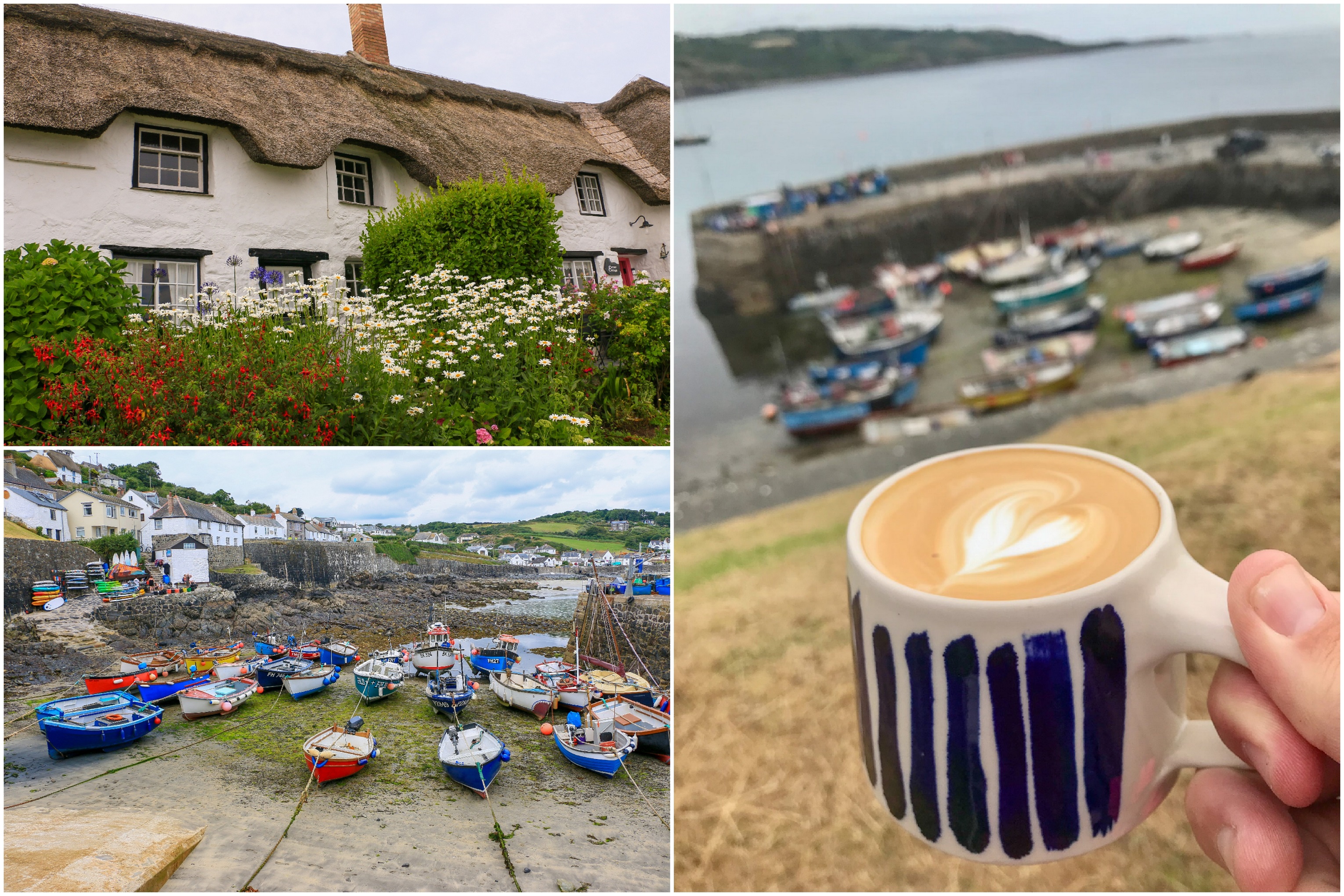
I began to have fantasies of a life here, doing a spot of work in that cottage before popping across the road for a mid-morning drink. Perhaps then a bit more work, a nap and, at day’s end, a trip to a beach. In this utopia, I’d likely head to the wonderful beaches on the western side of The Lizard. But there would be plenty of other options of things to do, places to see, things to eat, closer to home.

One of them would be around Kennack Sands, over which our temporary home for a week was perched. This was far from a dream Coverack cottage, just two six-berth caravans that were a squeeze for ten. But like all good caravans, every little nook was optimised, every fold-up bed assembly a triumph of geometry, every passing of one another in the kitchen an elegant pirouette.

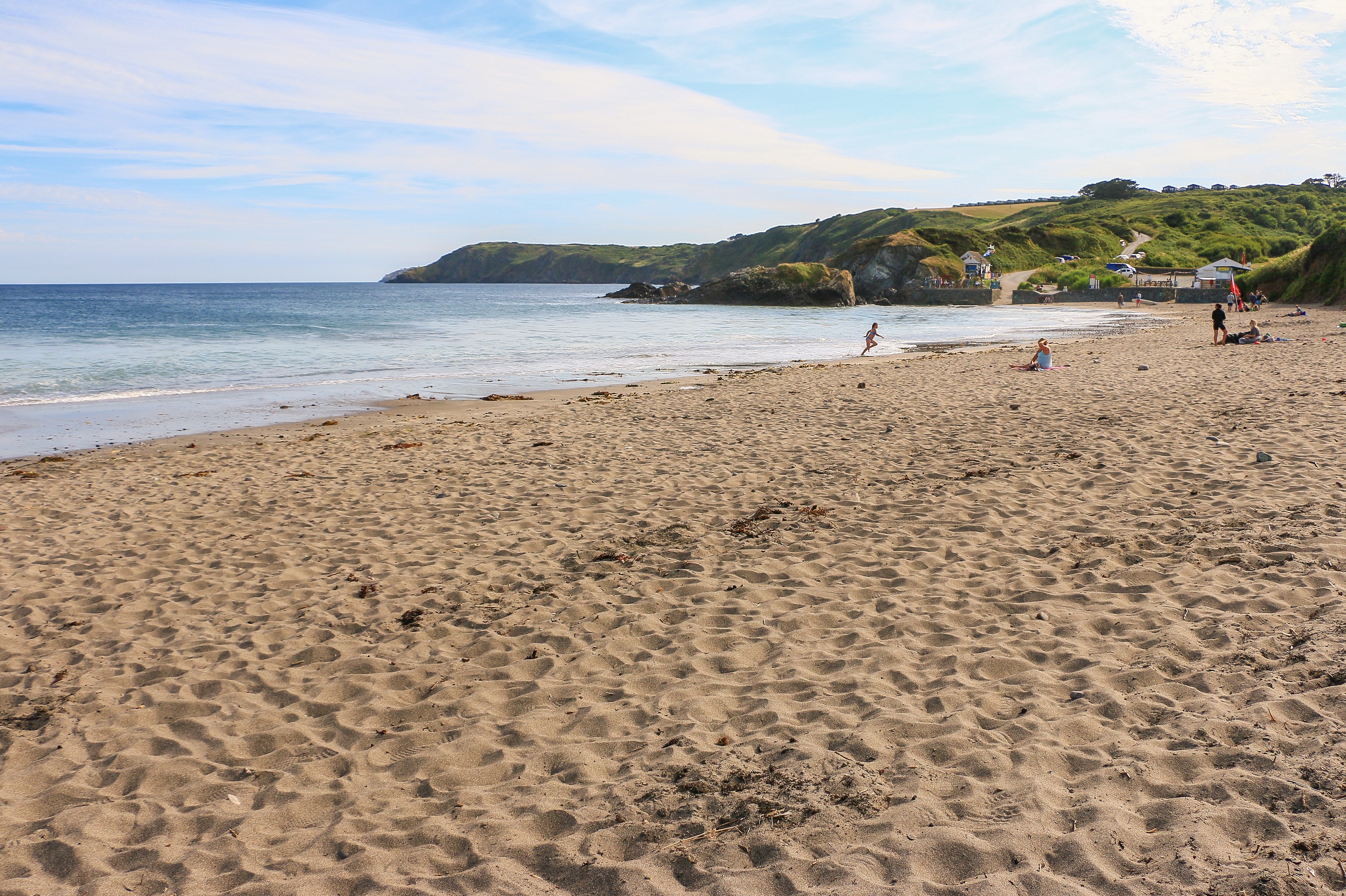
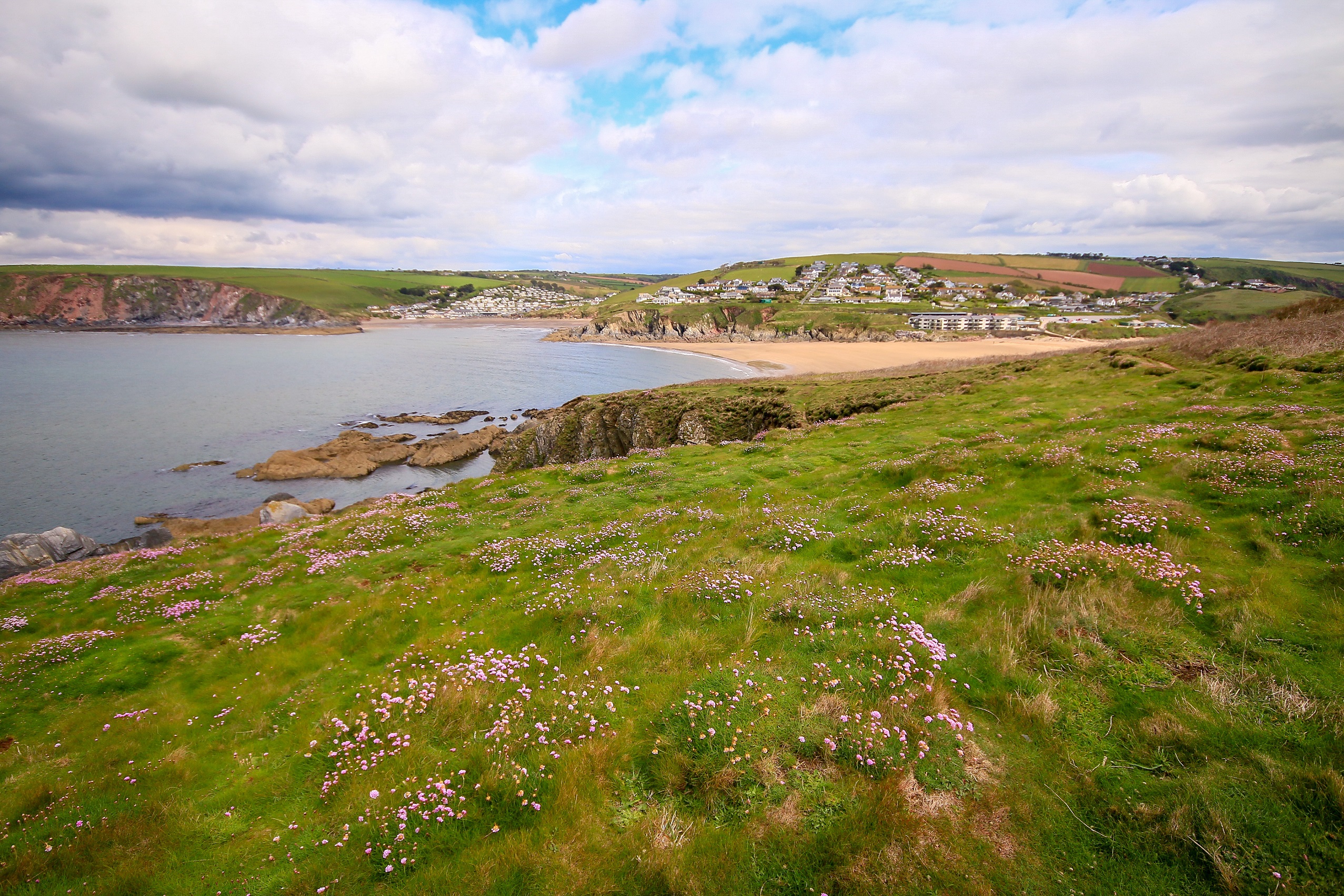
Down the hill, Kennack Sands themselves were less golden than elsewhere but still fine and generous and largely remaining at the mercy of nature. This meant the occasional jellyfish sighting among clear, sometimes warm waters, as well as frequent dog walkers at the start and end of each day. Among the more memorable human sightings was a mass gathering of booty shaking one day and an irksome guitar dude with a three song repertoire on another.

Needless to say, escape via the coast path was always on hand. One afternoon found me on a solo walk up and down towards – but not all the way to – Coverack. After days of family time, the peace was eerie and it felt a lonesome endeavour along a hardy, unkempt landscape. Fellow walkers were few and far between and I found myself yearning for times of mass booty shaking and beach boules.

Companionship was aplenty in the other direction, five of us walking along the coast path from our caravan park to the small village of Cadgwith. Along the way some diverting remnants of serpentine mining at Poltesco – a rare rock type that is abundant on The Lizard. More abundance flowed alongside generous meadows and stony bays kissed by a sparkling sea.
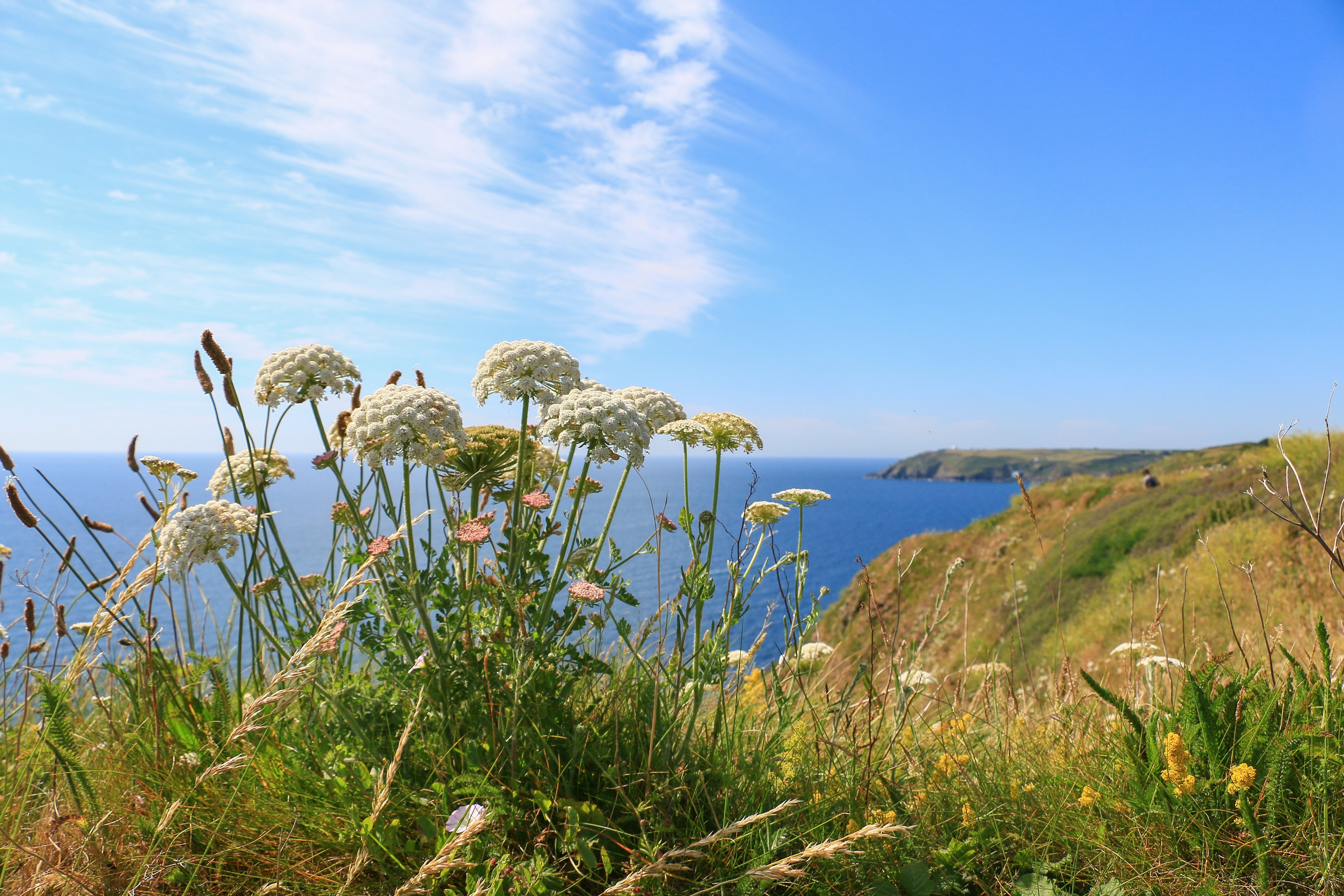
Cadgwith itself makes Coverack seem a metropolis, the village focused around a small shingle inlet on which sit a cluster of working boats. At one point there is that distinctive odour of salt and seaweed and fish guts, pungent and evocative at the same time. Fortunately it is fleeting and doesn’t dissuade ice cream refreshment. I was aghast to find out that my niece, Joy, wasn’t a massive ice cream fan and opted for a fishing net instead. But the rest of us made up for it, multiple times.

Give a girl an ice cream and she may eat for a day, but give her a fishing net and she can eat for a lifetime. Maybe. Probably easier to head to Lizard village though and pick up fish and chips. Tender, juicy cod, crisp golden batter and amazing chips made from Cornish new potatoes, soaking up lashings of malt vinegar.
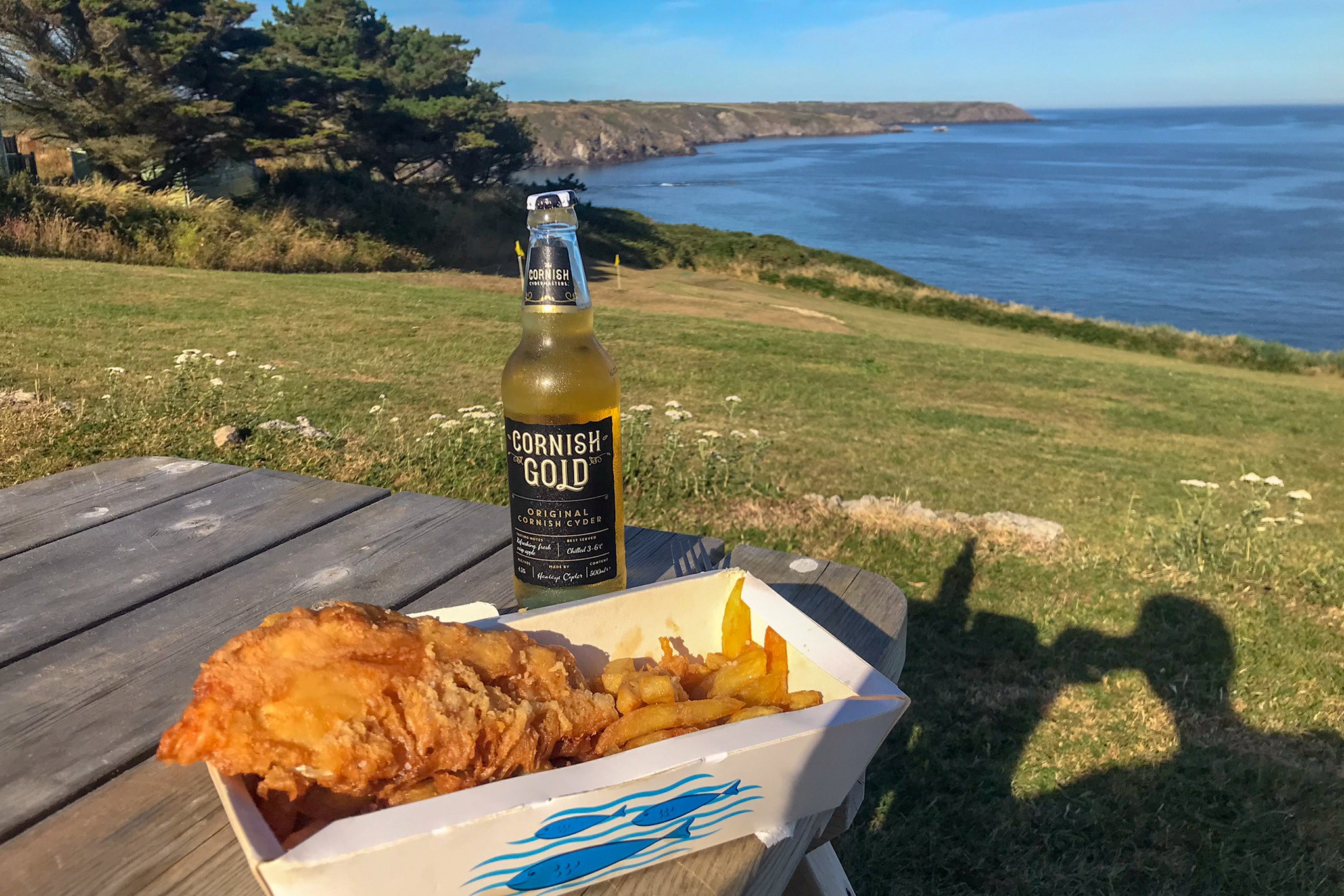
Other than a fish and chip shop I didn’t get a chance to explore Lizard further. My impression was of a place where you could source ample food along with a fair share of useless tat. And be in a situation where you can march off in any direction and discover wonder.

A little south of the village, Lizard Point itself represents the most southerly position on mainland UK. There exists an appropriate edge of world vibe – beaming white lighthouse, cottages hunkered into rocks, rampant rabbits upon tightly shorn grass and a couple of businesses proclaiming themselves as the most southerly spot you can get a cup of tea. As the land plunges into sea and the sun sinks west, spectacle.
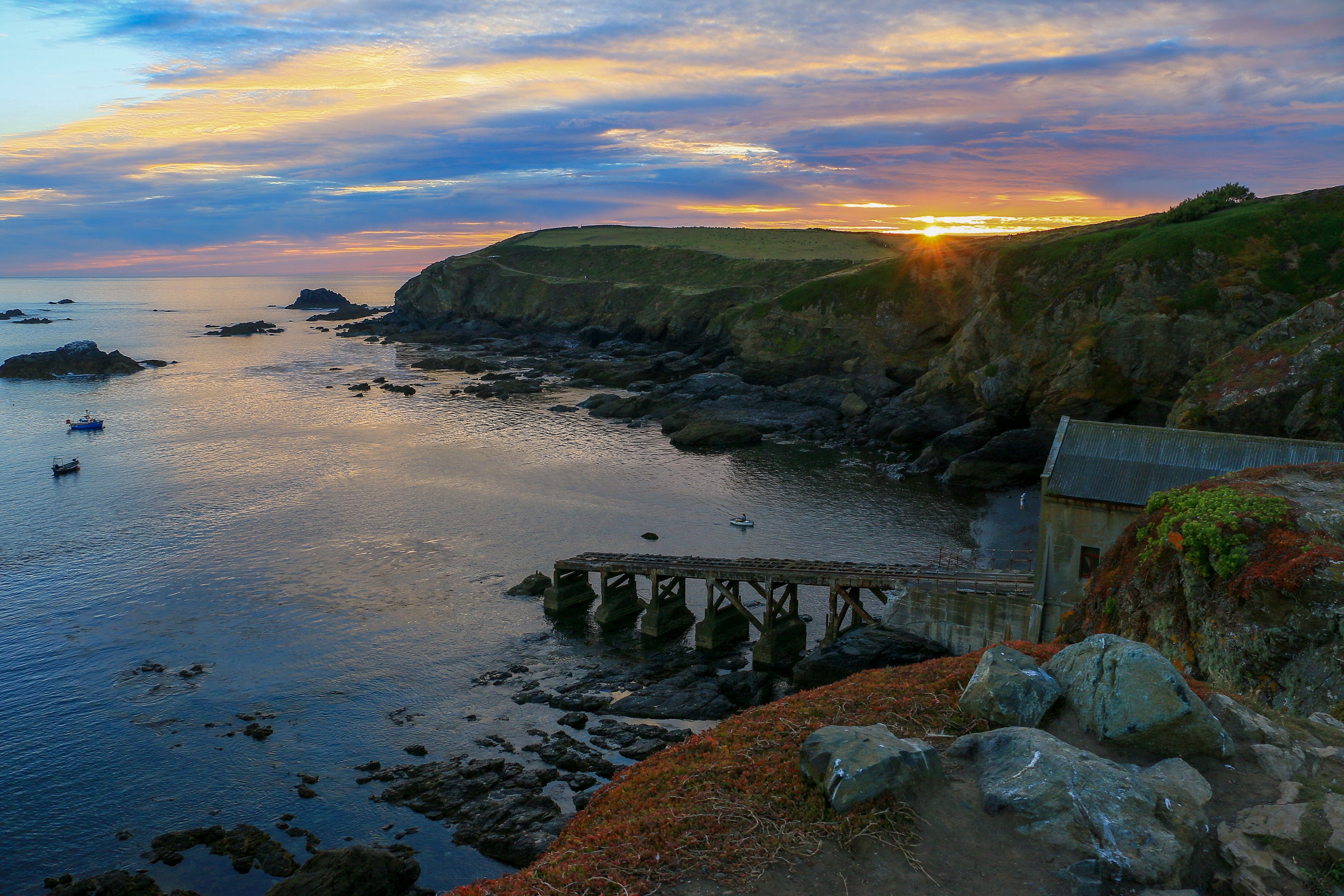
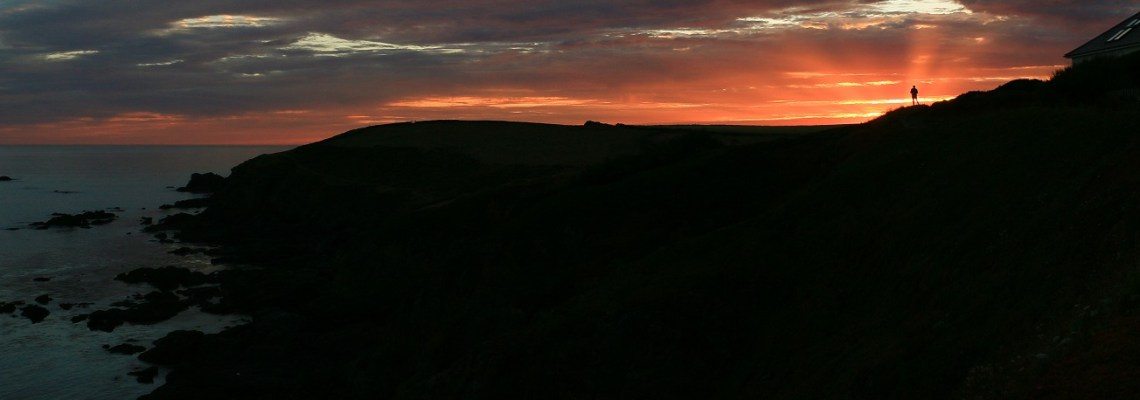
We were blessed to witness a couple of sundowns around Lizard Point. A time when the warmth of the day started to fade, and the summer grasses began to breathe. I remember distinctly here for the first time an Australian odour, an almost impossible to describe earthy freshness that comes after a hard day baking under the sun. As if the land is singing in relief.

The very last sunset accompanied our final night. A night to try and use up all those naughty food bits we had accumulated in the week, including two tubs of ice cream from the local farm shop. A night to not be lactose intolerant. A night to count blessings. A night to lament the prospect of leaving tomorrow. And, like the sun coming up again in the morning, to contemplate doing it all over again.

Food & Drink Great Britain Green Bogey Photography Walking

Down on the south coast

Apparently, the Cornish pasty has been a feature of the British diet since the 14th century. Originally the preserve of rich inbred gentry it wasn’t until the 18th century that the pasty became a nourishing treat for the masses. Today, go to any coastal town or village in Cornwall and the pervasiveness of pasties for the people persists.

In some spots the choice can appear bewildering. This includes the chainstorisation of Britain making its presence felt at heavily branded outlets offering crafted goods from industrial Solihull. But at the other end of the scale, it’s possible you may stumble across bona fide nooks hidden down narrow passageways, replete with evocative odours and large steel trays of steaming hot goodness fresh from the oven.

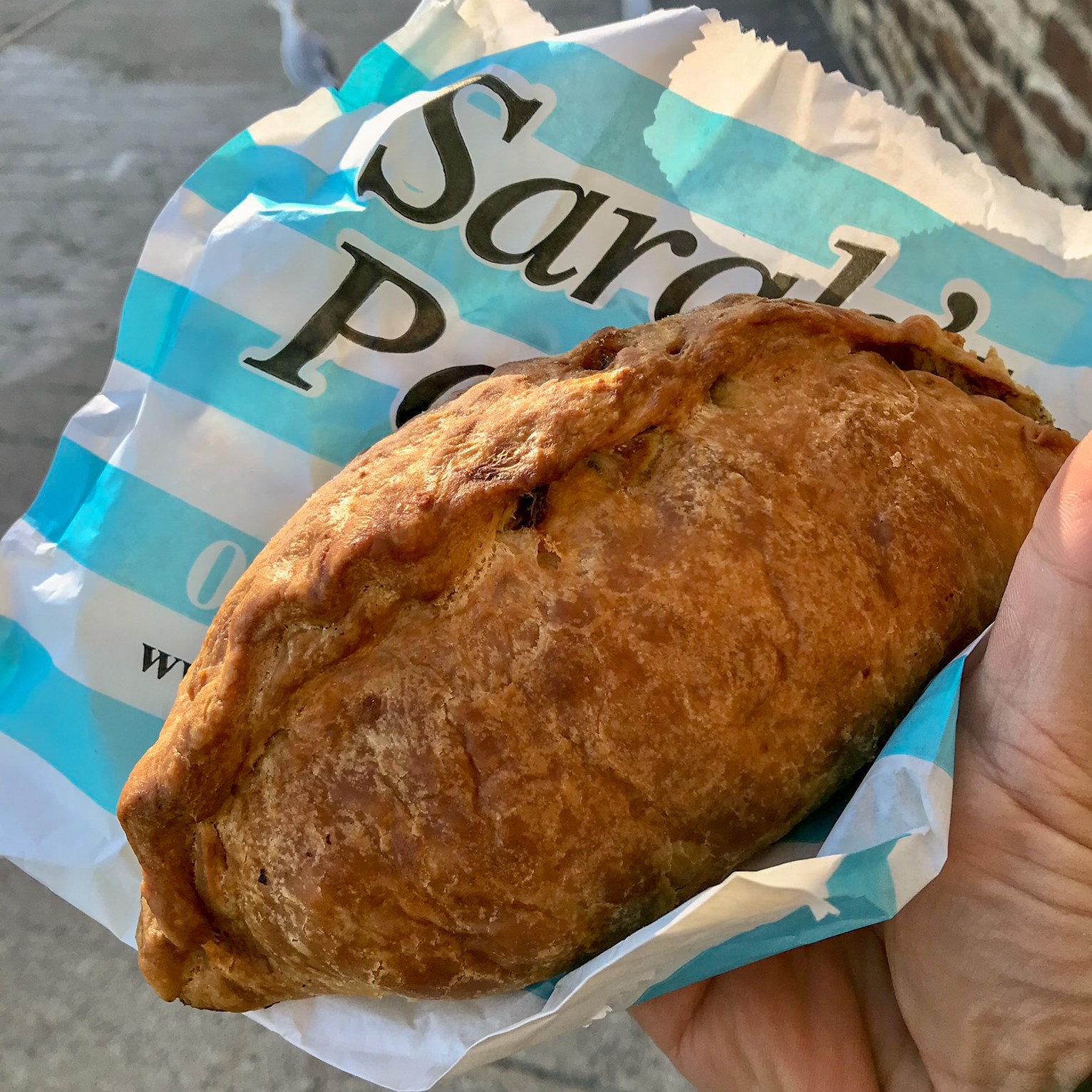
Looe has such a place (along with the odd chain) and it’s become a site of regular pilgrimage, competing with a cream tea in the what-will-Neil-eat-first adventure. Today – a Monday at the end of November – Looe is unusually becalmed. Indeed, many shops and eateries are closed. But thankfully Sarah’s is trading and offering a few remaining pasties as the day nears half one. Despite tending towards lukewarm, a two and a half year gap in this experience generates immense delight with that first bite.

Eating beside the seafront, the tide is low. Apart from the beach, this doesn’t exactly provide the most favourable impression of Looe. The river estuary empties to leave a patchwork of boats tilting high and dry. Salty seaweed spreads across oozing mud, offering a pungency almost as bad as the aroma of entrails swept from the fish market. And of course, everywhere, seagulls lurk desperate for winter pasties few and far between.

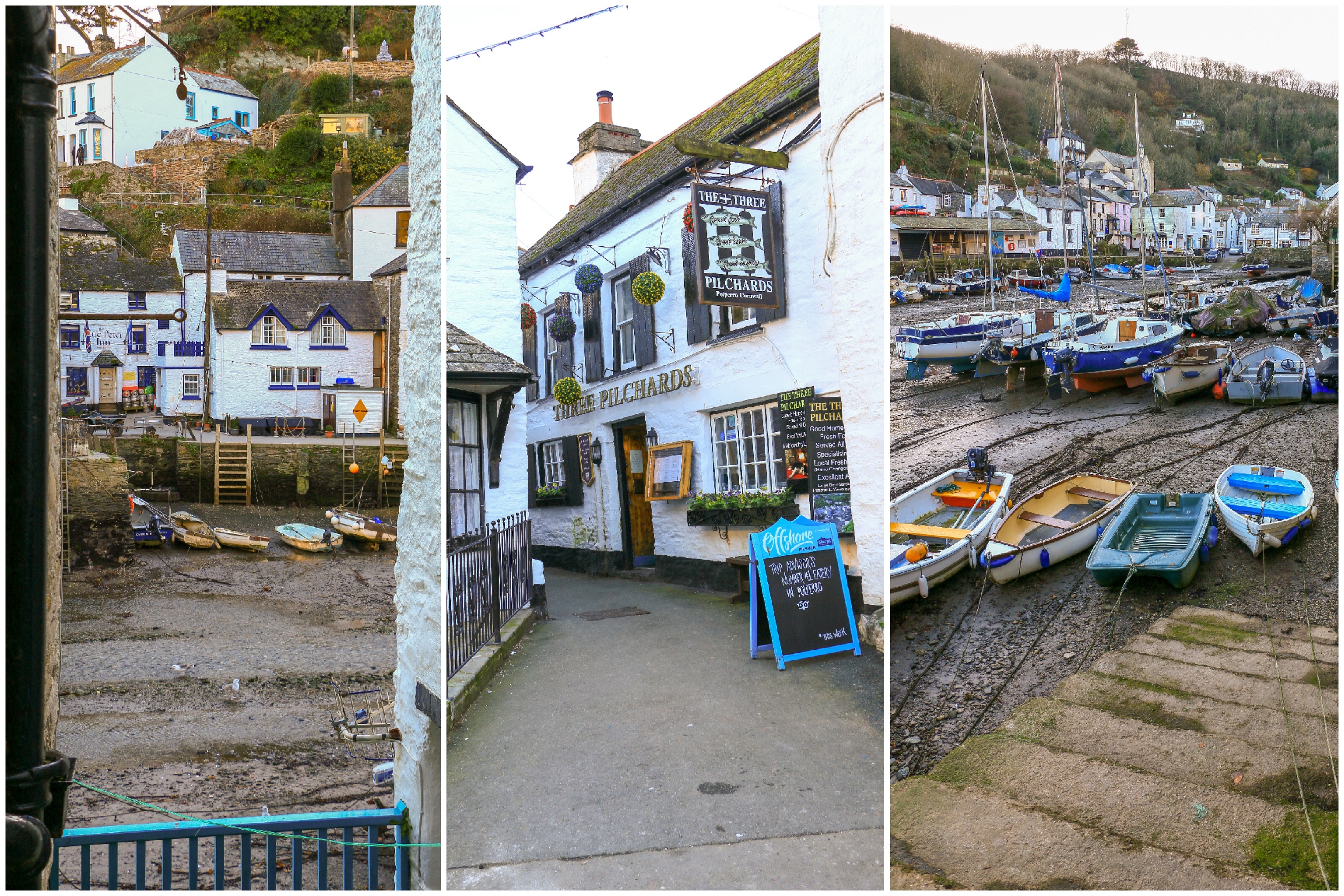
So, after a pause to collect further delicacies at Roly’s Fudge, Mum and I hot foot it out of town and head on to Polperro. This is – on paper – a more charming prospect though one you’d do well to steer clear of in the height of summer. That’s why I thought we could give it a shot today.

Indeed Polperro was quiet. Deathly quiet. Barely anything was open but this didn’t deter two very Polperro occurrences. First, we have the sight of a delivery van somehow trying to squeeze through a gap between whitewashed cottages as locals roll their eyes knowingly at one another. And secondly, there remains the rip-off parking on a cold grey day in November when jack all is open.

I expected non-summertime parking rates but forgot this was Polperro where the emphasis appears to be on doing everything possible to deter day trippers. As one of a handful, I felt a touch conspicuous trawling the streets with my camera and decided it was a good day to warm my head with a Plymouth Argyle beanie and thus parade – admittedly Devonian – credentials.

In low sun, the beanie was a handy addition as half of the village sat in perennial shade. While a series of cute cottages on the east side of the harbour beamed in fine, holiday-let whitewash, others faded into the dark and damp recesses of an impending winter. Striding out to the headland I could see Mum sat on a bench on the quay in the last receding corner of sun. And with a brief hello to the South West Coast Path, I set off back down through the shade to join her.

By now we were both thinking afternoon treat, or at least a coffee beside the tidal mud. But of course, nothing suitable was open. Being here in November was to prove both a blessing and a curse; cherishing the lack of bother and stress associated with thousands of tourists, taking advantage of quicker than usual drives and – sometimes – free parking, yet being more at mercy to the weather and missing out on some of the usual local treats and delicacies (I never did end up having an ice cream for instance).

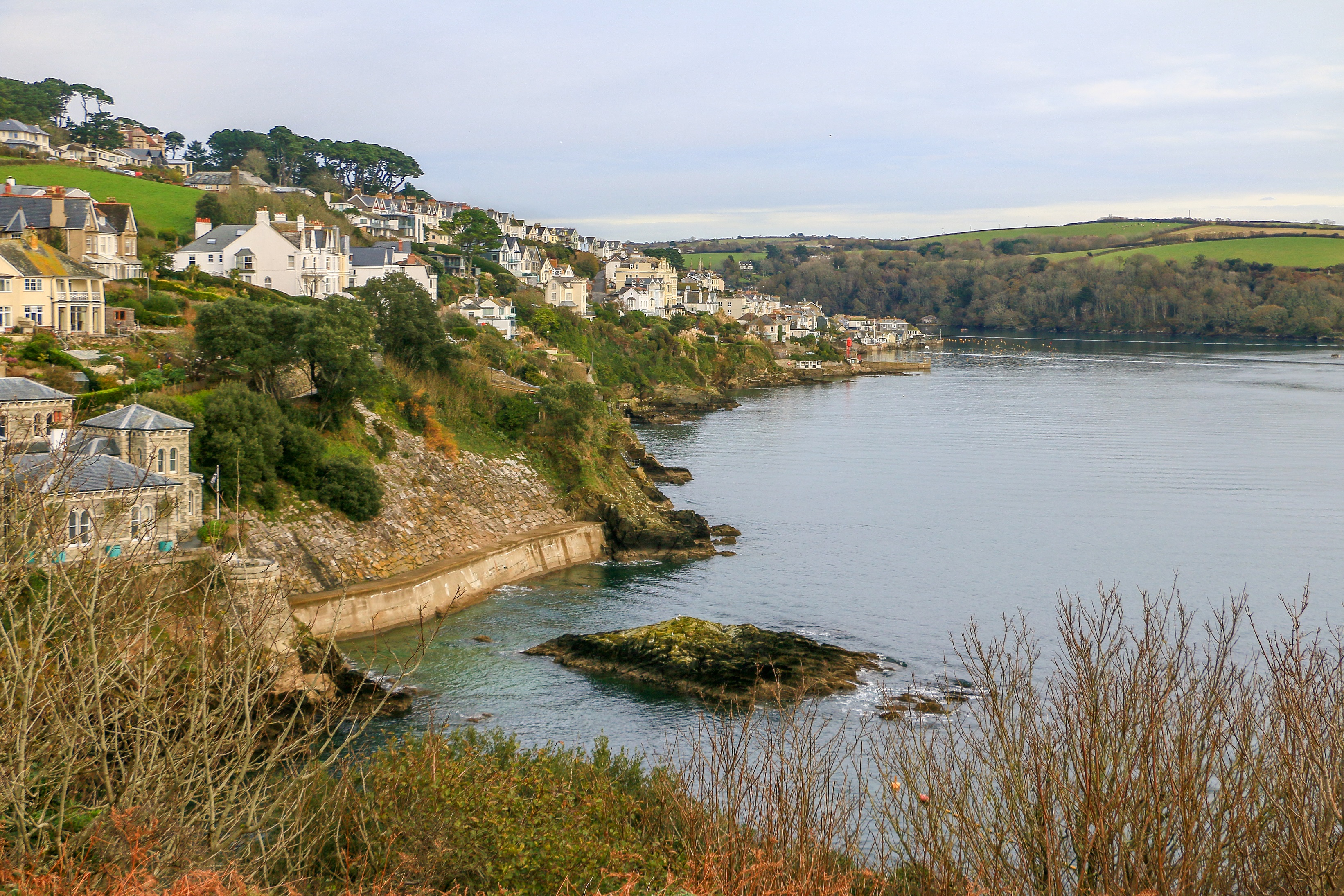
A similar picture played out a little further along the south coast on a different jaunt to Fowey. At picturesque Readymoney Cove, where I parked nearby for free, the kiosk supposedly open year round was obviously shut. Yet I was able to drive through the town and park again by the water, a prospect unfathomable in summer. Here at least a few spots were open and a coffee carried through attractive streets to a riverside bench offered contentment.

Lunch was a different matter, in brief taking in the disavowal of cold pasties in Fowey, a fruitless search for something in Lostwithiel and dismissal of a covidy café at a hoity toity garden centre (seriously, why not let us sit outside?). As a result, lunchtime had been and gone and options were running out. The last real opportunity was to return to Looe.

If you’ve actually been reading any of this babble you would know a pasty was a possibility here. But I was concerned at what would be left on the tray and how warm it might be. And the clock was clearly ticking over towards afternoon cream tea territory. So, we took a punt off the main drag, up a small hill. A short deviation that I’m sure will be repeated again. Daisy’s Café added to the what-will-Neil-eat-first adventure list. Making Looe the place where a wicked dilemma can finally be resolved: is it possible to have a pasty and cream tea on the same day? Roll on 2022!

Food & Drink Great Britain Green Bogey

Marvellous

Late Friday afternoon on the road between Braidwood and Bungendore and the wind is buffeting my car as it trundles into the sleety clouds of winter. I’m returning from the coast, where two hours before I was eating lunch on a sheltered cove saturated in warm sunshine. It’s a slightly weary drive and, for some reason, I decide to play The Lightning Seeds for probably the first time in twenty years.

After several jaunty, scousish ditties that sound identical, the sage words of Alan Hansen and Jimmy Hill emerge as the infectious, glorious, deprecating anthem that is Three Lions blares out. I cannot listen to this without bobbing my head a little, chanting, smiling like a Cheshire Cat. As much as you might try. It’s Coming Home! At least I hope so, in light of the possible blizzard up ahead.

It’s Coming Home. Euro 96. An era that now feels halcyon, days when the Donald and BJ were still complete dicks but at least not complete dicks inexplicably leading disunited states and precarious kingdoms. Back in 1996, John Major was trundling his way towards the end of years of Tory rule, a regime which now somehow seems sane and reasonable. The Spice Girls were zig-a-zag-ahing and both Mitchells were polishing their heads behind the bar of the Queen Vic. I was completing my first year of university, undistracted by a phone, immune from the ranting coalescence of conspiracy lunatics on the internet.

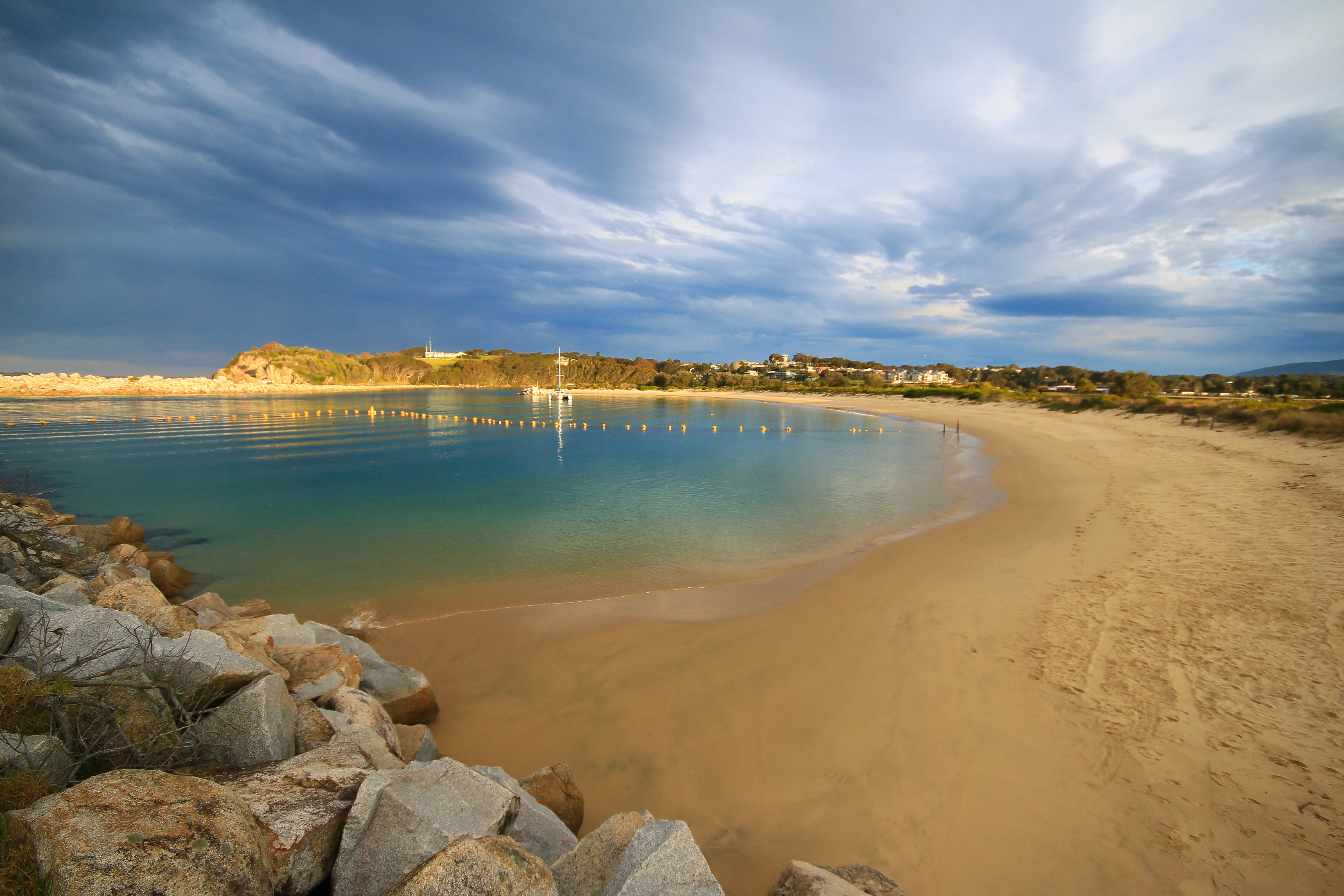
I don’t remember that much about my university course (who does?), but in a convoluted way which coincidentally brings us back to the present I suppose it led me to be in the South Coast NSW town of Narooma on a mild, golden evening in August 2019. I studied, I got a job, I travelled, I went back to that job, I transferred to Australia with that job and I ended up on a boardwalk meandering past calm and clear waters toward the ocean.

nar01

nar02Did I ever imagine back in 1996 that I would be gazing out to the Pacific hoping to sight a whale? Meandering downhill alongside gardens strewn with exotic plants and colourful birds? Wandering past parks dotted with electric barbecues and sinks for dealing with the entrails of fish? Who would have thought I would have previously parred the treacherous Bogey Hole of that golf course wedged between the town and the plunging cliffs of the coastline? Certainly not me, or anyone else, which is why I bring it up again.
nar04

Even with its ageing hackers, Narooma is a pretty quiet kind of place, especially in a midweek in winter when the temperature has dipped to something around nineteen degrees. It’s tough going, having to put a light jumper on as the sun disappears behind Gulaga, pondering whether to have fish and chips for dinner or wait until tomorrow.

nar03

———————————————-

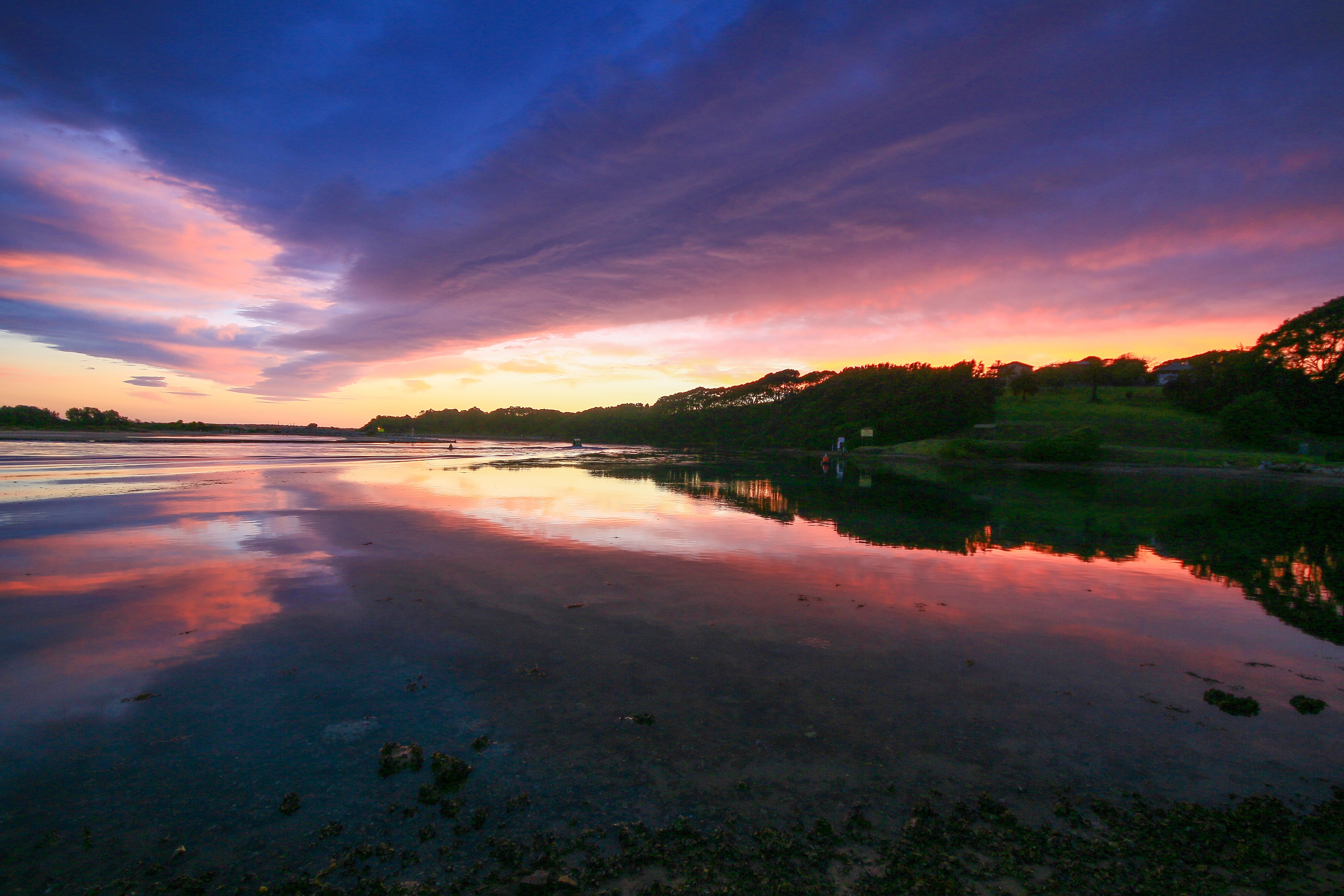
While I know Narooma pretty well, the first night in a strange place always seems to lead to a fitful sleep, even when you’ve opted to forego fish and chips. Waking too early the next day, the murmurings of RN Breakfast do little to inspire or send me back to doze, so I head out into the dark. I love this time of day, especially beside the ocean; facing east as the black fades to blue and grey and red and yellow, and shafts of sunlight glitter off the sea. The sun kisses the layers of morning cloud, spreading to the tops of trees, and illuminating the coffee shop on the hill. A beacon which makes the reward of an early start in Australia all the better.

nar05

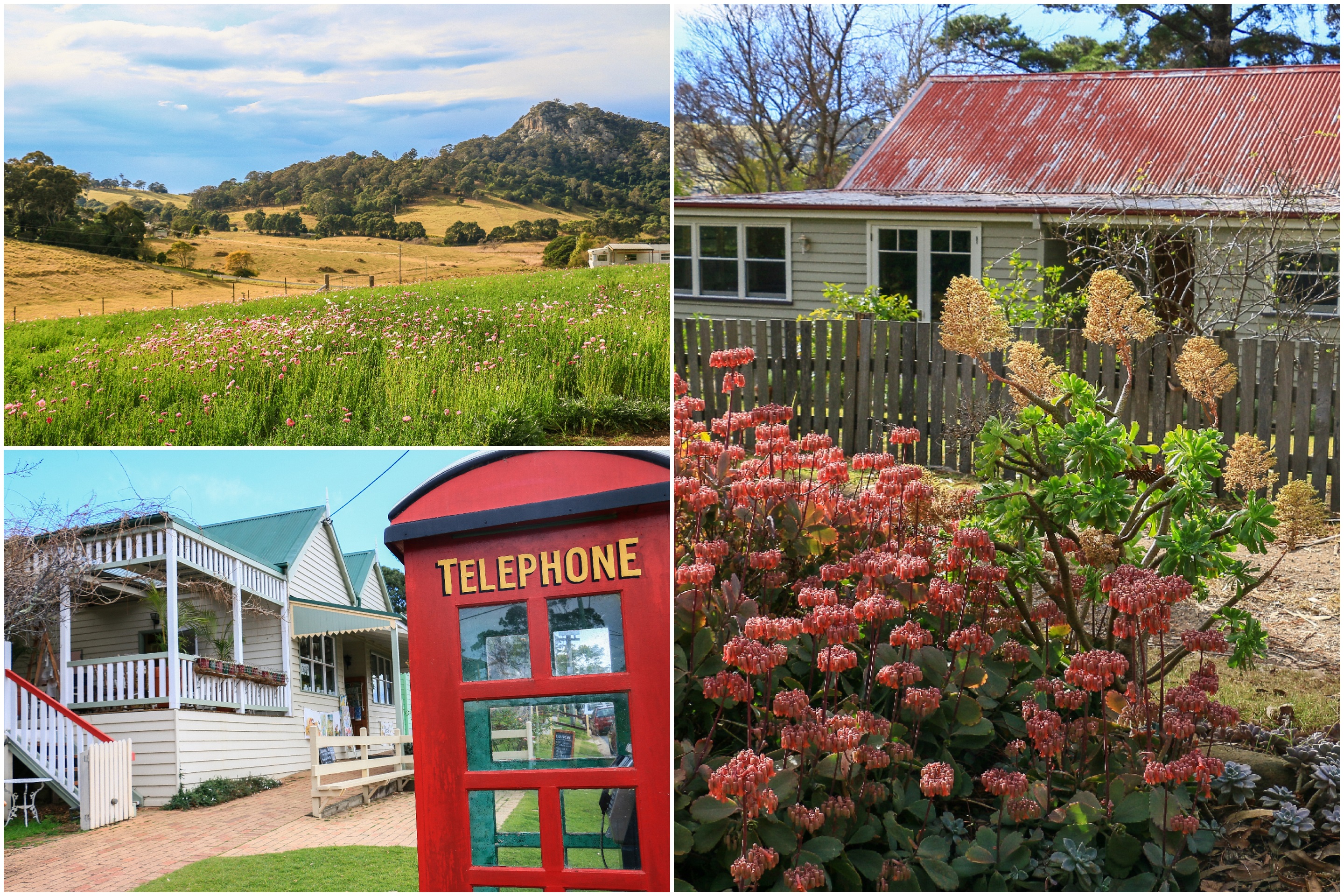
With plenty of the day still ahead I took the car for a little explore south of Narooma, stopping first in the so-good-they-named-it-twice hamlet of Tilba Tilba before heading on to the relative bustle of Central Tilba. This is a corner of the county oozing genuine charm, with plenty of tin roofs and lacework awnings, flower-filled yards and rustic leftovers. By Australian standards it’s usually a green and lush place as well, which is great for local dairy products; but even here the drought looked to be taking its yellowing toll.

nar06

Given my early start it was probably pushing it to head to the bakery in Central Tilba for local produce straight away, so I took a gentle amble along the track which eventually leads to the top of Gulaga, the dominant, forest-clad peak of the area, spiritually significant to the local Yuin people. You can walk to the top, but I wasn’t really in the mood and I heard that summit views were lacking. The valley was perfectly happy enough.

nar07

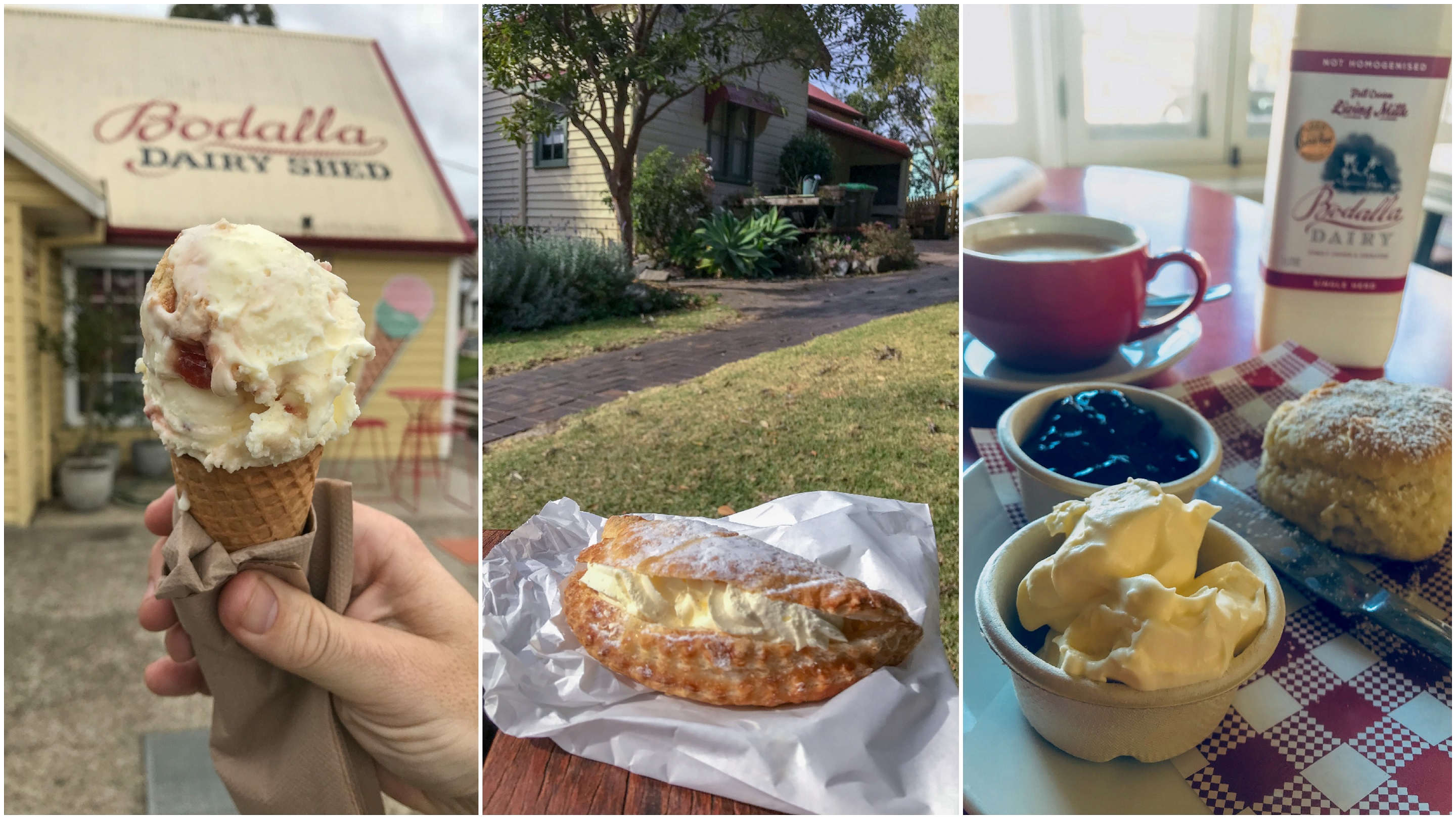
Did I mention dairy products? One of my favourite topics which, back in 1996, probably didn’t come with any moral distaste from ethically sourced eco-vegan leftists typing away on their not-so-pure iPhones. I guess at a philosophical level, there is valid debate as to whether we can still have our cake and eat it? At an individual level, the answer was a resounding yes. Not only in Tilba, home to Jersey Cows and related outputs. But also in Bodalla, a pitstop on my journey into and out of Narooma and for all journeys this way in the future. Wednesday, Thursday, Friday.

nar07a

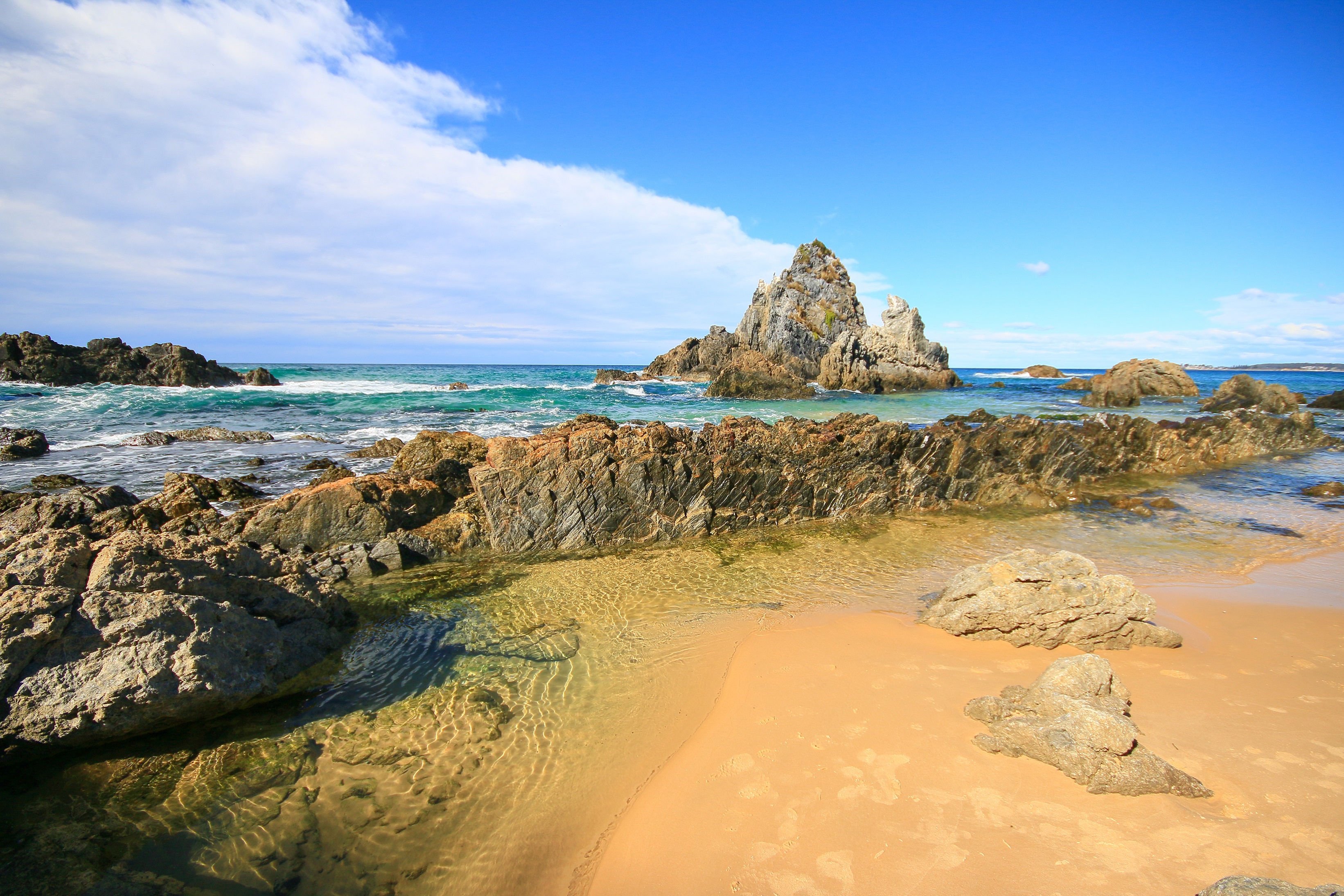
South of Tilba, the main highway veers off towards Bermagui, along a splendid road of eucalyptus forest and the shores of Wallaga Lake. The maps indicate a few coastal rock formations here, names suggesting a likeness to horses and camels which enticed me to explore with the hope of discovering an Australian Durdle Door or Bedruthan Step. While there was not quite the same grandeur, the coastal scenery, now bathed in warm sunshine, proved a tonic after that massive apple turnover.

It was pleasing to discover I was on part of the ‘Great South Coast Walk’ according to a few signposts. This doesn’t appear to be an official trail but may yet develop into something more formal. One of my bugbears with Australia is that it doesn’t seem to have the same right to roam philosophy as the UK. Huge tracts of land are locked up in private hands or just downright inaccessible unless you have Ray Mears on hand with a machete and / or a big gas guzzling ute. Being able to just rock up anywhere on the coast and walk has an appeal unmatched. See, for example, South West Coast Path.

nar08

nar09

It was along this walk, overlooking the expanse of Wallaga Lake, that I learnt of another resemblance in the landscape around here. Gulaga is a pregnant woman, partly explaining its significance to the Yuin people who were here well, well before 1996. Today, its fertility abounds as a cluster of whales drift down the coast, mother and calf distant white caps sporadically splashing in the rich waters.

I probably wouldn’t have spotted the whales if it wasn’t for a couple of retired locals staked out on a headland near Horse Head Rock. For me, this is usually the most successful method of spotting wildlife. If you’re driving in country Australia and a cluster of people have pulled over to look up at a tree, there’s a fair chance you’ll get to see a koala. The other way you tend to discover local wildlife is when you nearly run it over. Beware Wombats.

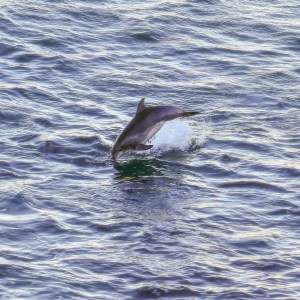
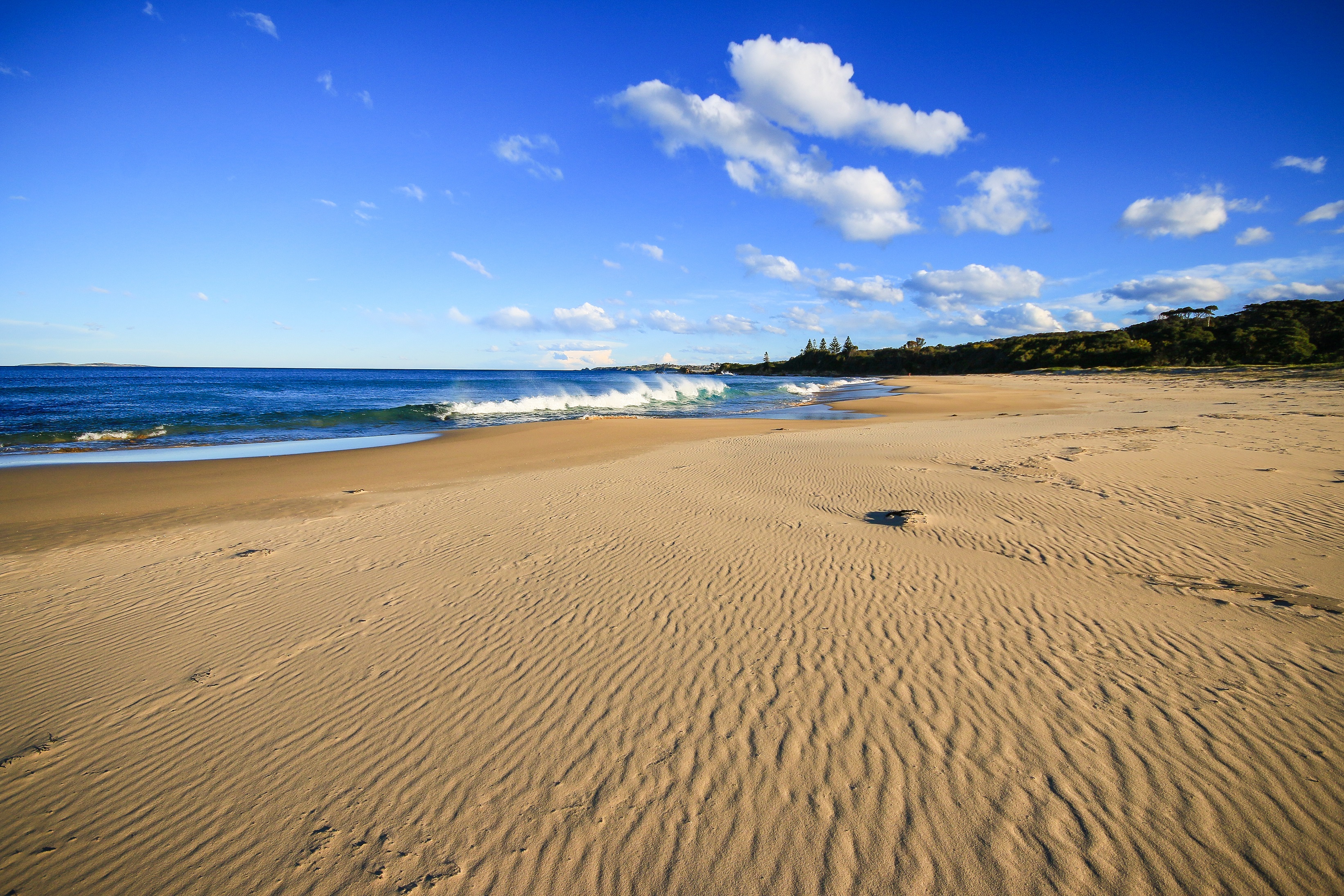
nar11Spurred on by earlier whale sightings I ended the day back up near Narooma, taking a scenic coastal drive alongside Dalmeny and Kianga which boasts several panoramic viewing platforms along the way. The platforms are sited in between yet more pristine bays that you can have all to yourself. It was at the last of these points that I glanced a surfing dolphin, followed by a few more and a few more still. Passing below, there must have been around twenty dolphins, tracking north on a feeding mission. A whole two football teams.
nar10

———————————————-

I doubt I would have seen dolphins in 1996. Nor would I be questioning the prospect of snow in August, even counting for British weather. Today, this was a possibility heading back to Canberra thanks to a vigorous succession of cold fronts coming from the Antarctic. My solution was to linger down on the coast for as long as possible.

It was undoubtedly windy, but the skies were blue and with a little shelter you could sit comfortably in a light sweater or even T-shirt. Neither of which were really possible in the blustery settings of Cullendulla Creek and the nearby Eurobodalla Botanic Gardens, but these were attractive diversions nonetheless. At the gardens, the stronger gusts were a tad alarming and it felt only a matter of time before a branch would fall on my head. Mercifully it didn’t, and the march towards Spring carried on.

nar12

nar13

Just north of Batemans Bay – and the road junction back to Canberra – the graceful, tall spotted eucalypts of Murramarang National Park were probably less appealing to walk through today. Especially when picking a walk that follows a ridgeline facing the bay, directly exposed to the strong southwesterlies. The crashing chaos, the constant buffeting, the noise and fury do not entice a pause to look up and marvel. Impulsion instead for a brisk pace and the hope of respite on the other side. And what gentle and idyllic contrast this proves.

nar14

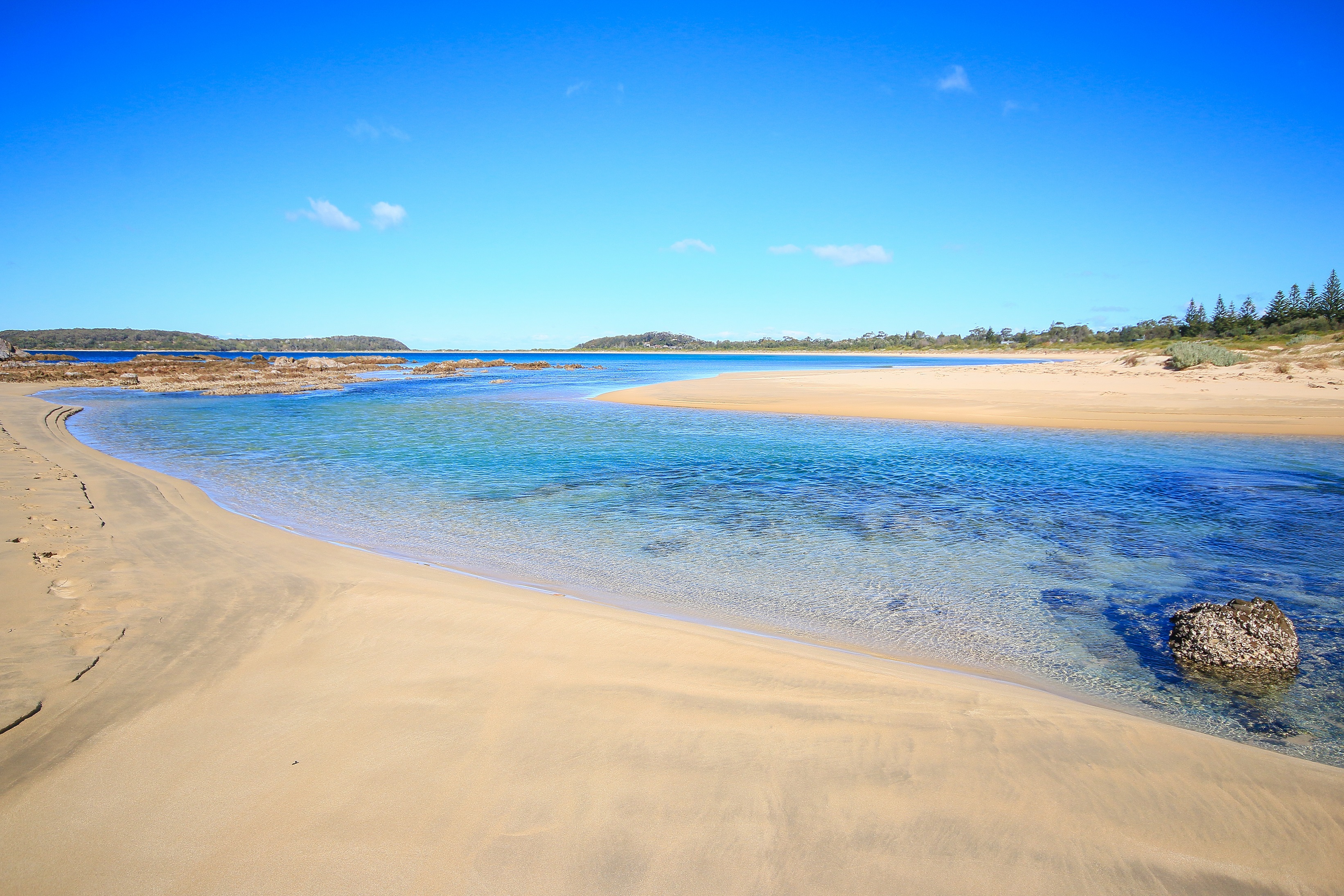
A bay with no-one and nothing. Nothing but calm clear waters, untouched sand and the backing of a gently whispering bush. A driftwood log, downed in some other storm and also finding its way to this paradise, is now a perfect setting for a late lunch. The breathlessness is not only in the air, the warmth not only on the outside. Perhaps even in 2019, these are still the days, this is still the life.

nar15


Australia Food & Drink Green Bogey Photography Walking

Exhausting

I love how there are so many different roads meandering through the English countryside, linking villages that you never knew existed; undistinguishable places called something like Dompywell Saddlebag or West Northclumptonbrook, typically boasting a new speed bump and a church roof appeal from the 1980s. It’s a situation converse to Australia, where a few main roads emanate from the cities and towns, off which a handful of mysterious dirt tracks disperse into nothing. Setting off from home for a country drive in Australia is exhausted in four or five trips. Whereas in England the possibilities seem infinite.

When I say roads, of course, most are only a little wider than a Nissan Micra, especially in Devon, where they are also frequently clogged with tractors. Farming is still king – I think – in the South Hams, though tourism, teashops and production of Let’s Escape To Buy An Expensive Seaside Residence With Five Bedrooms And A Private Mooring On The Estuary To Get Through Our Retirement In The Sun TV shows prosper.

When the sun does appear, there is hardly anywhere more contented; there must be some primeval appeal in the lusciousness of those voluptuous green hills and snaking river valleys, the sheen of golden sands recently cleansed by the ebb and flow of a shimmering sea.

sd02

Remembering this is England, the sun of course doesn’t always shine and in the spring-like indecision that is early May it can be a fickle environment in which to salivate. At Bigbury-on-Sea, raincoats, fleeces and hot chocolates might be required while waiting for a break in the clouds. Temptation abounds to get back in the car and turn around; but you’ve paid for that parking now and you are British, and you’ll courageously stick it out like MEPs campaigning against their very existence (Customary Brexit Reference: tick). You have to be patient staying in this particular part of the world, but the benefits in doing so are clear and tangible.

sd01

A bit further down the A-road mostly suitable for two cars to pass, the town of Salcombe boasts a rather desirable ambience, even on another cloudy and cool day. Tucked inside the Kingsbridge Estuary it has some of the most golden sand and emerald water around, lapping at elegant houses and dense woodland thickets. There is a palpable sense of envy from the smattering of visitors strolling past the homes and gardens perched with lofty views across the water. I could live here, we all bitterly seethe in our heads.

sd03

sd04No doubt many of the loftier residents of Salcombe were in jovial mood; not only from their elevated perch surveying the ambling peasants seeking a cheap pasty, but with the news of a royal baby to join the ranks. Does it have a name yet? I can’t even remember. Have the Daily Mail criticised the parents yet? Oh probably.
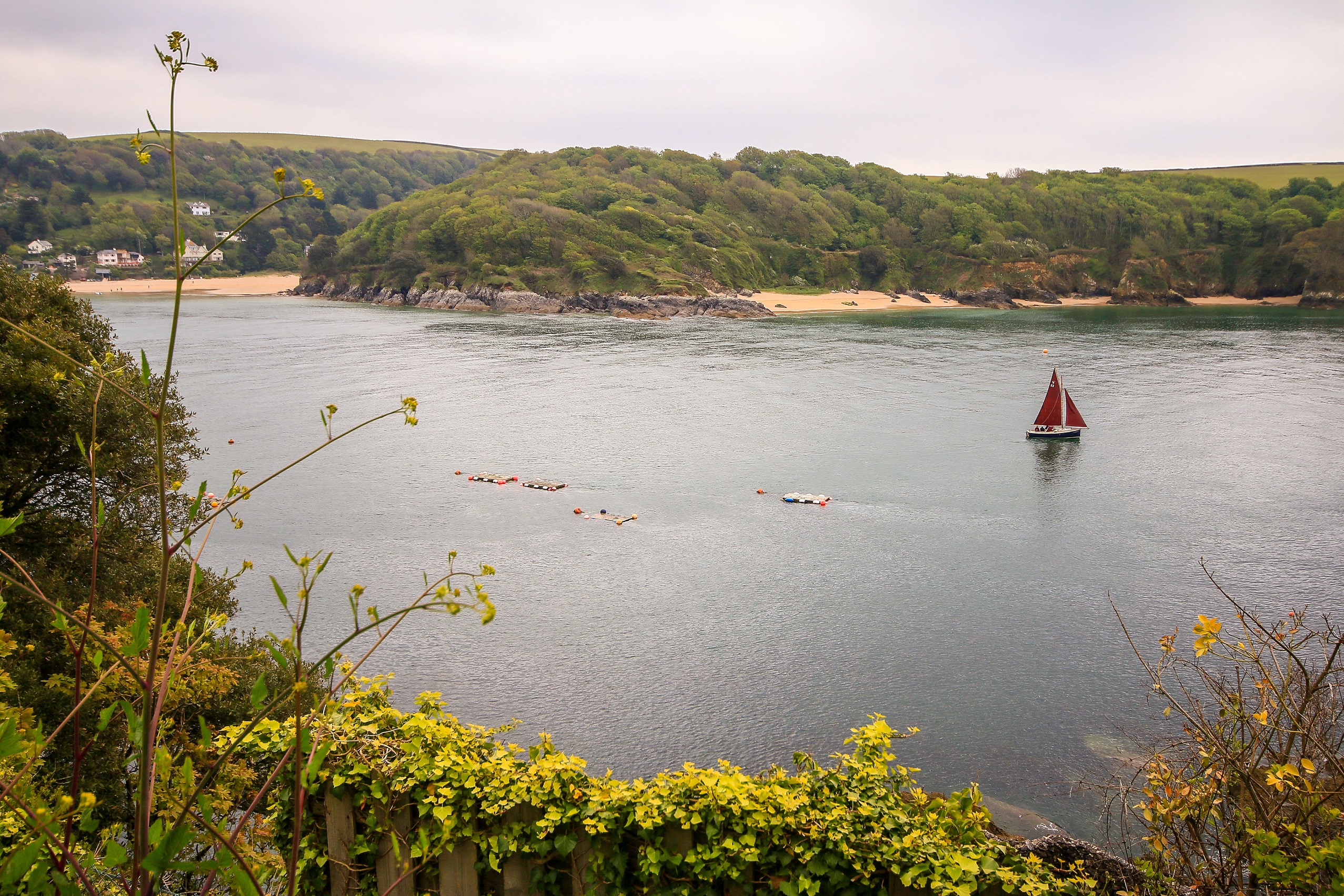
One of the perks of Salcombe are the options for food and drink, many of which come with waterside tables and a brief taste of refinement. Mum and I commenced the day at North Sands and a somewhat quirky café – The Winking Prawn – serving coffee (and for future reference, buffet breakfast). We then did the amble along the water and fancy homes to the town centre, where the usual offerings of pastry products, ice creams, pub food, overpriced crab bits and line caught organic fish goujons with quadruple cooked fondant sweet potato discs were up for grabs. Probably the best looking things were a tray of Chelsea Buns in a bakery, swiftly bagged and taken home for trouncing the Arsenal.

sd05

Really, it should have been a day for a Salcombe Dairy ice cream, the delicious embodiment of the verdant landscape all around. But after a bone-chilling ferry ride to South Sands, the moment had gone. Perhaps for another day.

—————————————————–

Plymouth to Dartmouth is not the quickest affair despite only being around 30 miles apart. One option includes the tortuous A379 through thatched villages that become irretrievably clogged in battles between buses and B&M Bargains trucks – threading a camel through the eye of a needle is a doddle by comparison. Or there is the route via Totnes, which seems a bit too zig-zaggy to appear logical. An alternative cut through just past Avonwick was a new discovery that proved highly effective on the way almost there, and highly ridiculous on the way back.

One of the joys of that cut through, in the morning at least, was finding yet another road that took me through even more unknown villages as pretty as a picture, following river valleys and archetypal ten foot hedgerows and fields of newly minted lambs. The sun was shining too, and my meteorological calculations to head east appeared to be paying off.

It was also joyous to have a functioning car, without an exhaust dangling onto the road and probably projecting sparks onto the windscreen of a doddery couple heading to the post office. This happened later, on the A3122 at Collaton Cross, about a mile after the BP garage and before Woodlands Adventure Park. Details etched into my brain to guide the saviour that was the breakdown truck towards us.

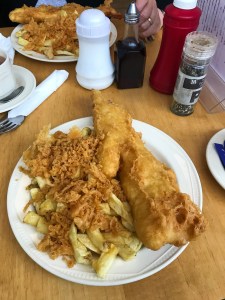
sd07And so, the unexpected and unplanned once again yields some of the most memorable moments. Waiting in a small layby among the gorgeous fields of Devon in the warming sunshine could be worse. Being patched up and guided to Totnes for repairs by endearing locals eager to provide a helping hand (and earn some pennies) proved heart-warming. Spending a few hours in Totnes, charmed and enlightened by good coffee, markets overflowing with abundance and leafy riverside walks. And the satisfaction of rediscovering batter bits with malt vinegar (good work Mum!)
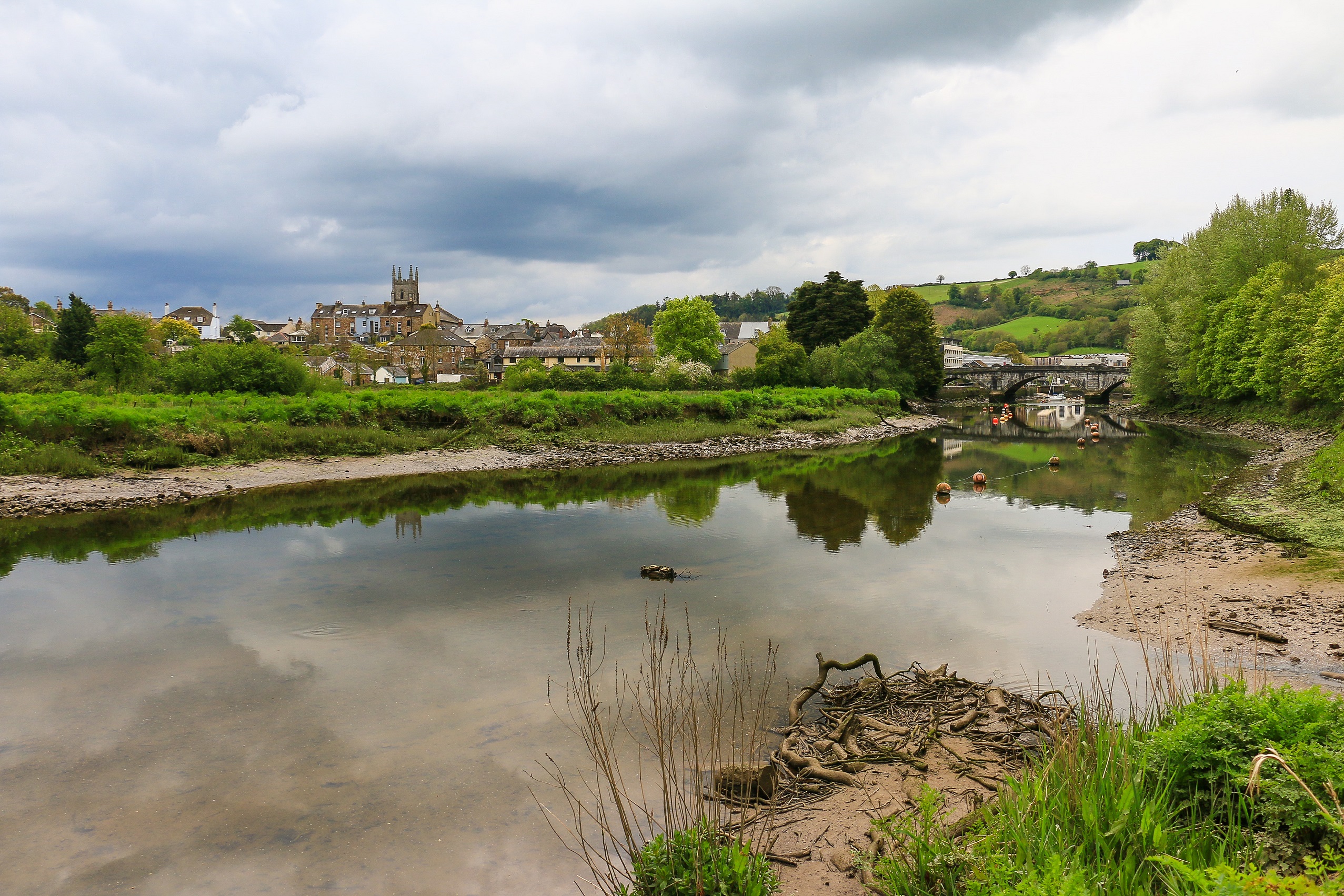
sd06

Killing time in Totnes wasn’t too much of a chore in the end, and it was partway along a path following the River Dart that we got the call that the car was fit and ready. It had been an eventful day covering a lot of ground, but I was determined to head to where I had originally planned, several hours earlier. Another slice of succulent South Devon that oozes curvaceously into the sea.

sd10

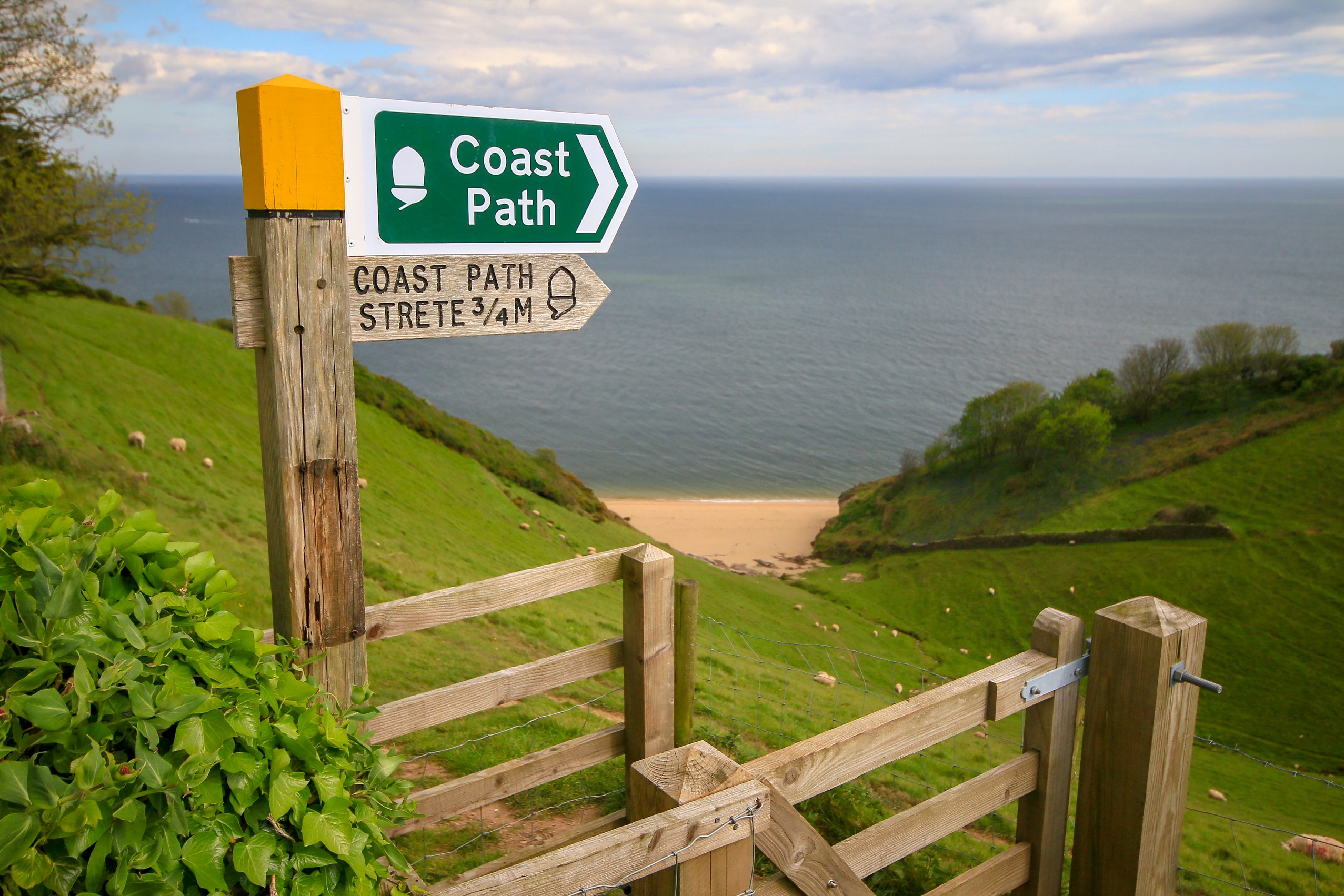
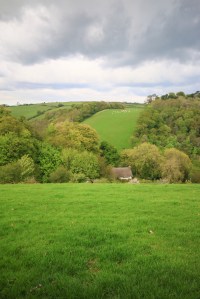
sd09Such are the ample proportions of the landscape here that the coast path between Strete and Blackpool Sands struggles to keep to the coast. The barriers are too immense, and the trail cuts inland as it dips down towards the bay. But this too is something of a blessing, for not only do you make it without falling to an inevitable death into the sea, but you become once again immersed into a countryside apparently so  utopian. Farming must still be productive here, despite the temptation to become a campsite or a tearoom or a paddock for some pampered hobby horses.

The coast path comes back to the shore via a row of thatched cottages that could have almost been deliberately placed there to charm dewy-eyed tourists like myself. The fine shingle of Blackpool Sands lends a bright and airy light even through the sunshine of the morning is rare. And down near the shingle, a café, winding down for the day has some Salcombe Dairy on tap.

sd08

After fish and chips and batter bits there is hardly need for additional gluttony. But this is a land of overindulgence, of profligate abundance, blessed with more than its ample share of what makes life good. And I still have one of those gorgeous hills to climb to get back to the car, a climb that is incessant and delightful and my own private nirvana full of ice cream and South Devon. A climb and a day entirely, wonderfully, exhausting.

Food & Drink Great Britain Green Bogey Photography Walking