Cornwall. Finally a chance to soak up the landscape and imbibe the delicacies. And not just any old Cornwall, but West Cornwall, where the Atlantic and Channel come to blows against heaving granite battlements. Sandy residue forms into gold and emerald bays while fishing boats scatter out to the deeper, bluer sea. Tin mines and stony relics dot gorse and heather uplands, granite thrust from the earth like blades from an iron throne. In the towns and villages, lobster pots and window boxes and coloured stone walls lean into constricted, sinewy lanes. A sometime paradise challenged in August by a voluminous throng.
After some brighter weekend weather it was a dreary Monday morning travelling west, a race against time before a band of rain once more made landfall on British shores. And by time we reached St. Erth, archetypal summer scenes packed in on platform 3 for the branch line to St. Ives. People and dogs and pushchairs in raincoats, laden with paraphernalia for a day at the beach. Simultaneously muttering variations of “it’s not too bad.”
Given the weather it seemed St. Ives was the best option for us to while away a few hours before we could check in. I was hesitant, but what other options were there? Join the masses of masses pretty much doing the same thing.
Despite the gloom, there was an undeniable vividness in the waters trundling along the rails beside the bay, an essence of palm tree and other exotica exuding warm vibes and expensive lettings. And there were even a few surprise sunny breaks, as if the skies wanted to tell you, look, this could be the French Riviera, oui?

That was about as good as it got. St. Ives proved 90% summer holiday horror show, 10% charm. That 10% largely came from the first glimpse of colour at Porthminster Beach, a brief beam of sunlight in the sandy harbour, and a fortuitous walk for fifty metres along a side street absent of cars wondering where the hell they were going and pedestrians from the West Midlands pretty much doing the same.
Otherwise it was all dreadful battles through crowded streets, seagull angst, soggy sandwiches in a squall, and a lacklustre coffee in the only café with any space whatsoever (compounded by sightings of spectacular cake on the way back, an opportunity missed). Still, at least the Co-op was okay, and goodness knows what else we might have picked up in St. Ives apart from some bananas and emergency crisps.

Boarding the 15:06 to Lelant was a relief as heavier rain set in. Such inclement conditions meant we could explore the entire confines of our Airbnb. This wasted two minutes but uncovered the world’s noisiest wine fridge and an inexplicable absence of toiletries. And while blissfully quiet outside, the downside to staying in Lelant was that we couldn’t stock up on provisions. No shop or petrol station but at least there was a pub. Priorities.
I don’t know if it was the pub, the train, or the cool, damp weather that made Avery wake up with a sore throat the next day. But we are blaming St. Ives because, well, the place hasn’t been pilloried enough already. Heaving, horrid, infested, infectious St. Ives.
Given she wasn’t feeling so well, my plans for a busy schedule of sightseeing, of stunning, sandy waters and epic landscapes and most of all some treasured coast path on the edge of Britain were put on a back burner. We headed instead for a seemingly more sedate experience at St. Michael’s Mount.
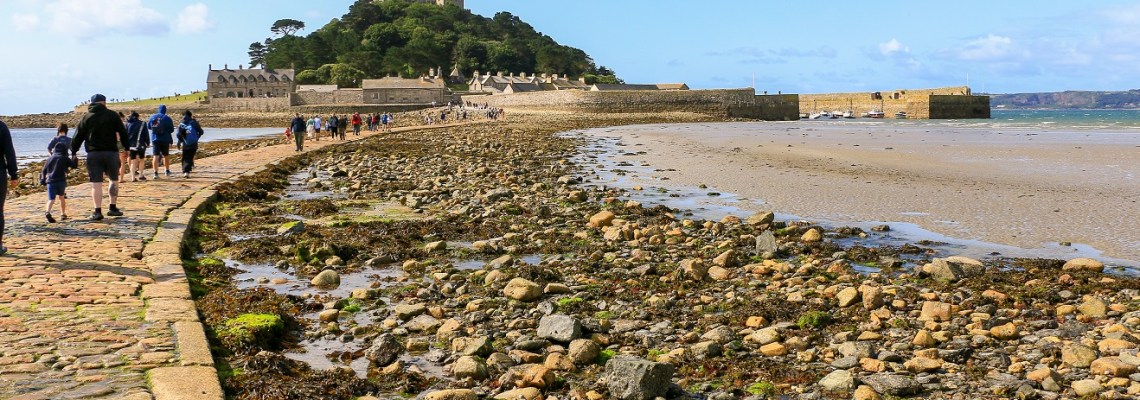
This island sure has a presence, loftily rising out of the shallows of Mount’s Bay as we double decker bus it down towards Marazion. The bus naturally inches its wing mirrors between stone walls and parked cars, depositing us near flat, tidal sands leading out towards the Mount. The sea is out and still receding, meaning we can try not to slip up on the causeway. But before that, there is a queue to get on it. And much expense, naturally.
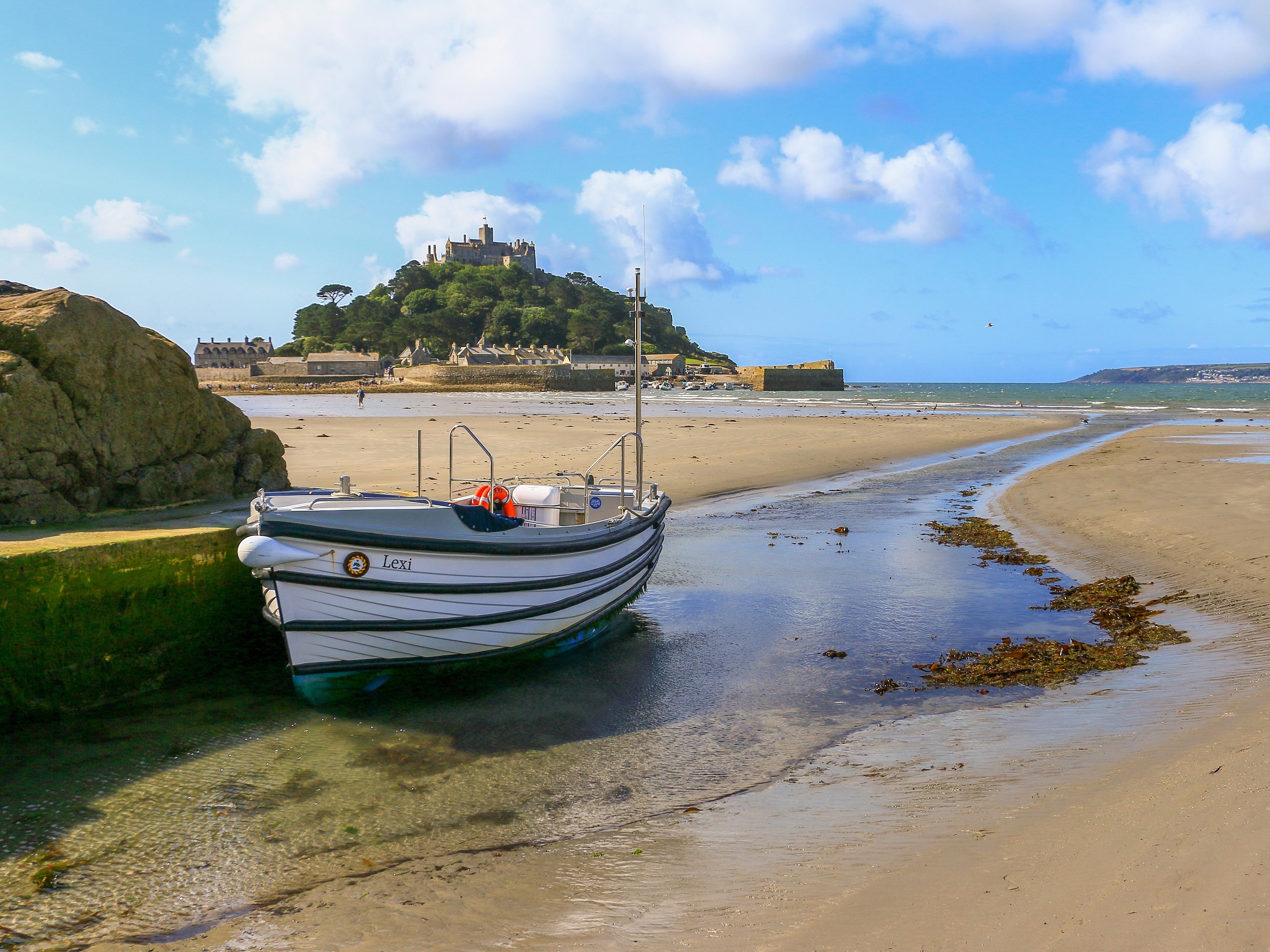
Arriving on the shores of the island is like transporting yourself to Kings Landing, only with a couple of coloured plastic tokens for entry instead of a lust for jousting and regicide. Immediately there is a shop and café and we make use of the latter before joining the trail up to the castle. Once more, finding myself treading in the footsteps of Portillo, Lumley, Humble, Robinson et al.
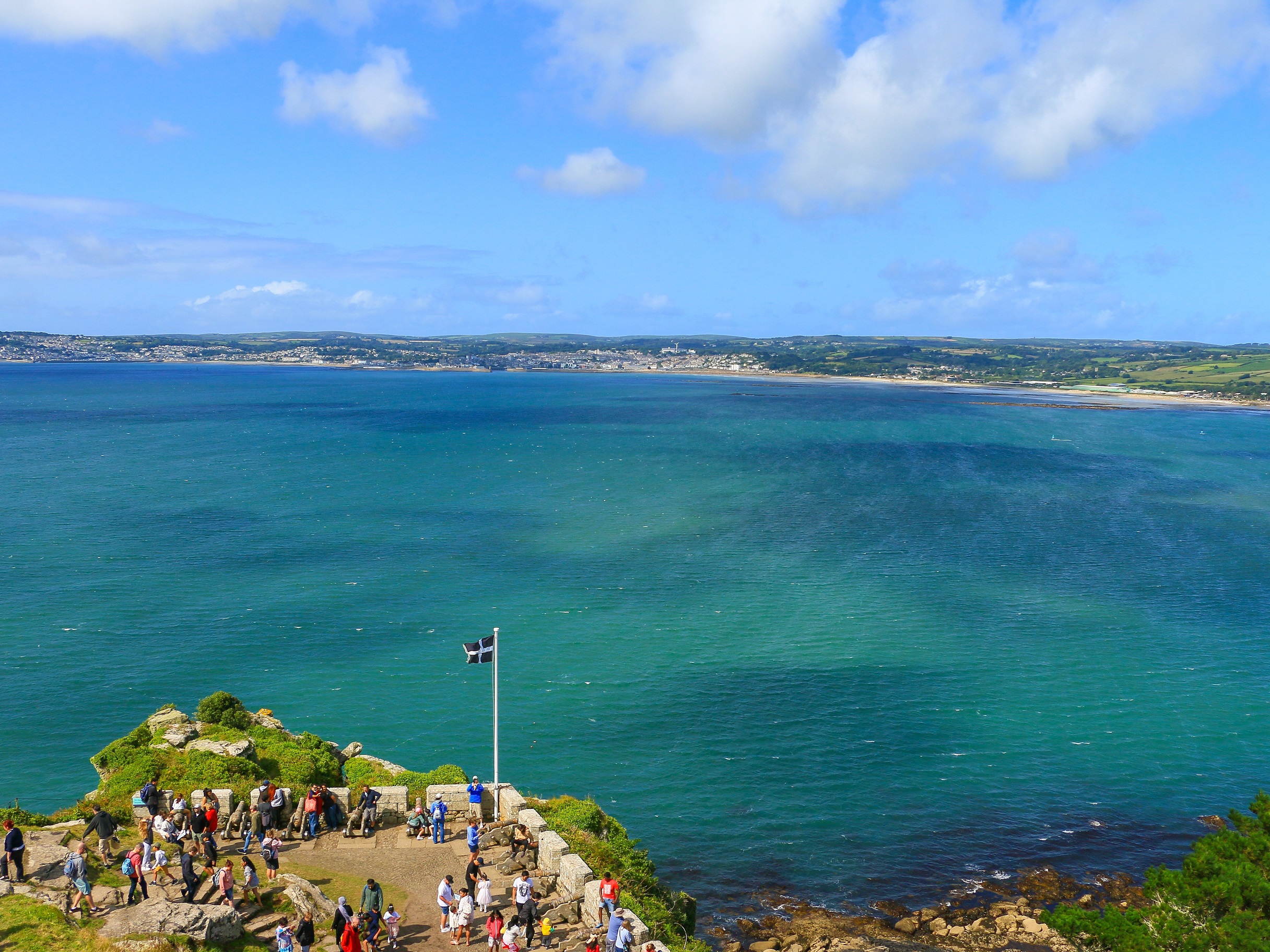
Of course, those guys tend to receive exclusive, unimpeded access with a personal tour from Lord Wazenose of Loftingsnout, who points out the many previous family owners and esteemed visitors hanging on the walls. There are a lot of them, and a lot of walls and it is indeed a thoroughly fascinating place to wander around, even without a personalised talking-to from the establishment. Occasionally the procession of people breaks and you get a room all to yourself to imagine being an aristocrat. And, even in a crowd, space never feels far away with breathless, blustery views over the seas and much of Cornwall. An egalitarian outlook.
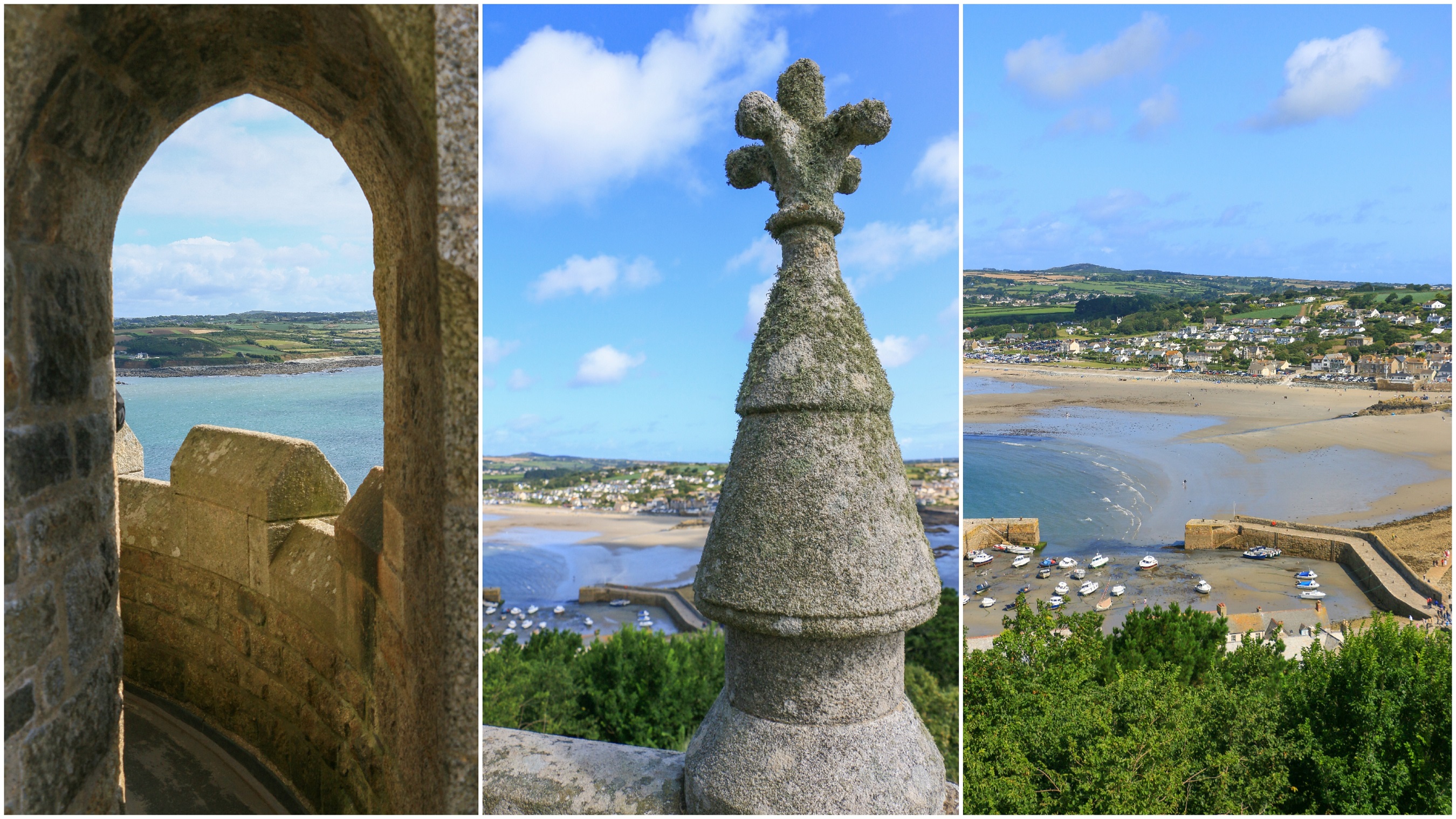
It was a bright but cool day, cool everywhere but the rather exotic gardens spilling down the southern ramparts. The contrast in temperature was akin to exiting an easyJet flight from Manchester to Granada. And the plants here were themselves pretending to be thriving in the Alhambra rather than growing just off the A30 near Long Rock.
With most of the West Midlands by now accumulating on the island it all started to feel a bit St. Ives. And with the tide on its way in, we headed back to the mainland and another huge queue for a pasty, some cheese straws, a couple of drinks and a tote bag decorated with pasties. The pasty was fulfilling, more than satisfying a quota or two but I felt a bit rushed to eat at least half of it before the bus arrived. I needn’t have worried. In fact, it would have been prudent to save some lest we become emaciated on a bench in Marazion, two skeletal remains still waiting for the Land’s End Coaster, a seagull picking away at any remaining sinew.

Before the bus didn’t arrive for more than two hours I was still marginally hopeful of an early evening sunset jaunt. Get back, have a nap, hop on a later bus to transport us along the rugged north coast to Botallack, and marvel at the golden light projecting onto the rocks and waves and iconic Cornish landmarks. But the lesson learnt is that there’s no point making plans based off a bus timetable in August.
In the end we just got a bus, any bus, which deposited us in Penzance. The plus side to this was we could pick up some reduced price snacks from Tesco Express and – tucked away in a dusty corner filled with spiderwebs in Boots – a pack of Covid tests. To think these were all such a must-have accessory circa 2021.
Back at the bus station it was with expected irony that the Lands End Coaster via Marazion was waiting. I have no idea if this was the 12:30 or 1:30 or 2:30 or 3:30 but it left at 4. And it stopped at Marazion, picking up two older ladies who I recognised from our time at the bus stop, looking slightly more emaciated than before. Eventually we got ‘home’, wiped away the day with no toiletries and started the process of reluctant snacking.
A tad infuriated at how the day had panned out, thank goodness for a five minute walk to Porthkidney Sands. Along a leafy lane, past the chocolate box stonework charm of St Uny’s Church, across the alluring fairways of West Cornwall Golf Club, over grassy dune hummocks in which a rail line somehow weaved. The tide was in, but there was still some sand. And some waves. And some birds. And very, very few people. A chance to breathe again, to experience the magical in West Cornwall. Definitely feeling positive. Both of us.

 gbpilgrim