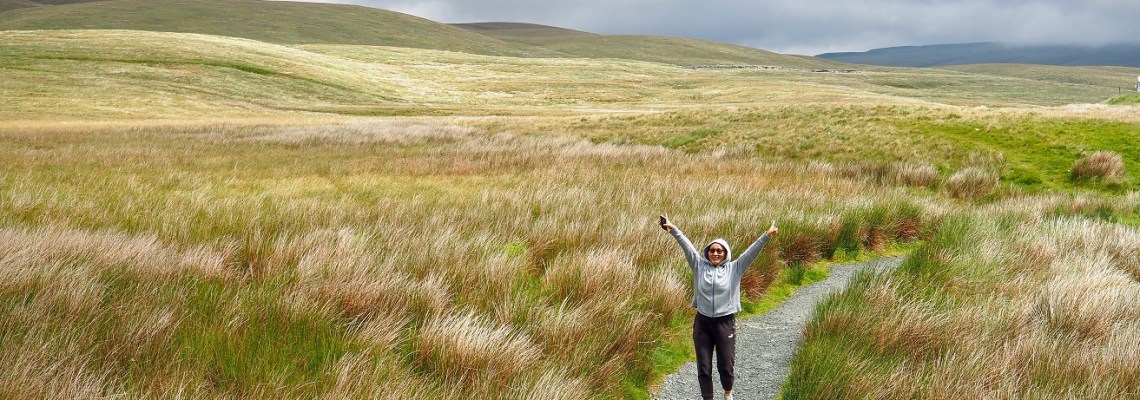
A person with arms raised in the middle of nowhere

Cracking

There is nothing more British than an opening sentence about the weather. And nothing more British than weather which has you sweltering in a London backyard with charcoal aromas one day and freezing your arse off in a tumbledown seaside resort the next.

Britain doesn’t quite have the same climate regions as Australia – think tropical and desert and temperate and alpine. But it does have the North, a land where train stations are always freezing, hotpots and brews keep wildlings sated and 18 degrees is positively balmy. It’s a different kind of eet, reet?

Imagine all you had to look forward to was a summer holiday in Blackpool. In a Travelodge. Next to the Pleasure Beach. To be sure, there are enough rollercoasters to fill a week and enough fish and chip and donut combos to fill an obesity clinic. In a fleeting visit, we managed two hours of rides and an escape for pub grub with a dear friend.

A brown sea next to a promenade

The drive south along the promenade is a journey of transitions. From the grimy Bleasdalesque terraces and windswept tackorama of Blackpool South, things pick up towards St. Annes, yet giant sand dudes are still dotted with empty cans of Monster. Onward, the understated main street of Ansdell is almost the sweet spot. Go any further and you are into Lytham w*nker territory.

While this journey offered a 15 minute encapsulation of the British class system, Wallace and Gromit’s Thrill-O-Matic offered four minutes of fun and silliness. Which is far more satisfying on a holiday. And set the wheels in motion for A Most Notable Detour.

Green fields, dry stone walls, and dark barren hills

We were off to The Lake District by way of Wensleydale. The many positives of this included leaving the M6 to plunge into fine, single track countryside and encountering roadside services far superior to a Costa and Greggs. Crossing from Lancashire into Yorkshire, that most happy of road trip staples popped up in Ingleton – an independent and delicious bakery – boosting moods for the climb up into the Yorkshire Dales.

In a scene oft to be repeated over coming days, I felt as though I was driving across a Postman Pat landscape. Drystone walls and dotted sheep lace the valleys, yielding to desolate brown-green hilltops and low cloud. At Ribblehead, the model train set comes to life with its standout viaduct and the 12:07 to Carlisle inching its way into the mist. It is bleak and summery cold and definitively Yorkshire. Mustn’t grumble.
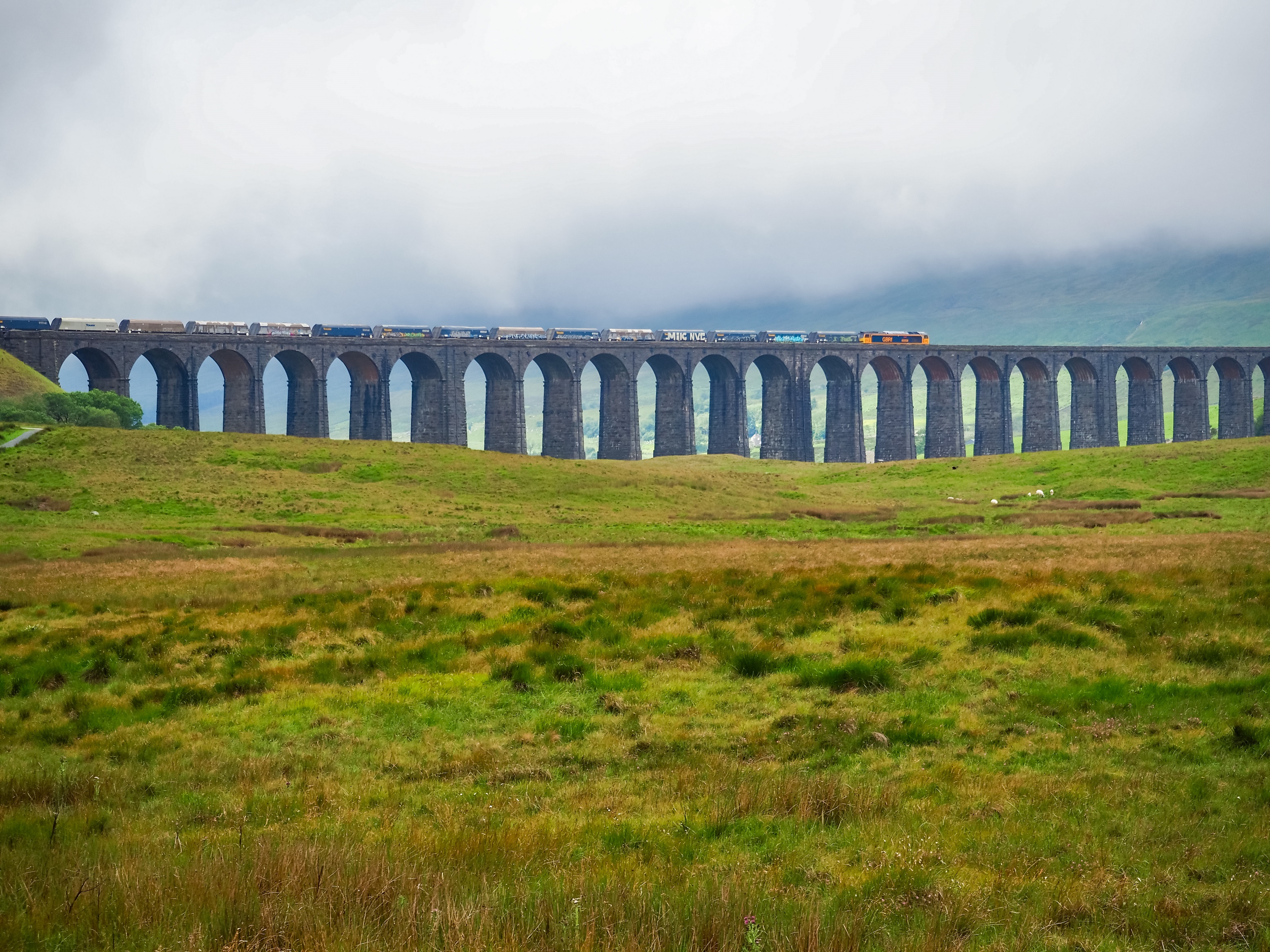
A wide viaduct with a train crossing into low clouds

The scenery as we overlook Hawes is a bit more of the cosier Yorkshire Tea variety. Things seem brighter and less foreboding, a sanctuary from the moors where you foresee being welcomed with a strong brew and fruit bun. As a result, Hawes is bustling and parking is tricky. But many are not here for tea or fruit buns. Instead, cheese. Served with extra cheese.

Hawes equates to Wensleydale which is inextricably linked to Wallace and Gromit. They don’t labour the point but it is quite likely that a couple of gurning plasticine figures saved this creamery from extinction. Cranberries can only go so far.
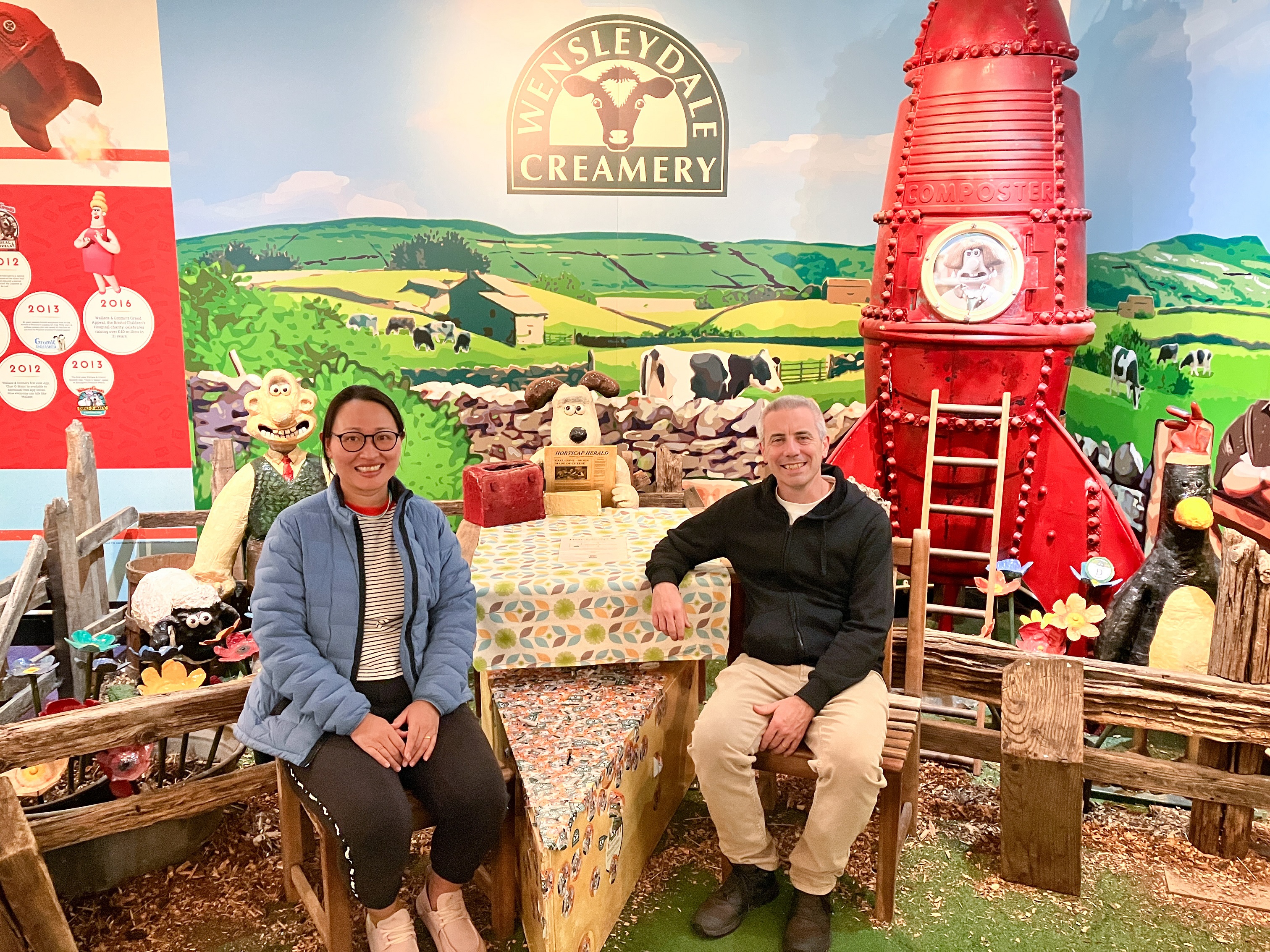
Several gurning plasticine fools

We wouldn’t be here today if I hadn’t introduced Avery to Vengeance Most Fowl. I was pleased to find cheese without fruit though, and enjoyed the light-hearted cheese-making demonstration and learning about the history of the industry in this area. Two words: French Monks. As it so often is. The road to heaven is obviously lined with fine wine and pungent cheese.

The road to Cumbria is a slow and winding one but breathtaking in a downbeat, overcast kind of way. We reach the M6 again and briefly take it south, bypassing Kendal and reaching the hills above Windermere. The skies are looking more cheery and it is a relief late in the day, after a sublime pub pie laced with cheese, to wander not at all lonely in breaking cloud.

A walker in the fields with sheep and a small village in the background

…………………………………

It is inevitable that lyrical waxing flows with many a visit to the Lake District. It is the crumpled lay of the land that arranges itself into lofty fells and sinuous valleys. It is the patchwork necklaces of stone walls marshalling flecks of sheep. It is the wooded glades and butterflied meadows, the babbling brooks and glassy meres. It is an old cottage and a pub and a church spire.

High mountains above a narrow green valley dotted with cows

It is probably not a gargantuan coach causing mayhem on The Struggle. I mean, the clue’s in the name and if that’s not enough a sign impishly advises of 25% gradients. Perhaps the coach was doing what we were doing though, escaping the parking lot that was the A591 between Bowness and Ambleside, detouring via Kirkstone Pass. It was a pleasant detour with some wonderful views to pass the time as a coach inches its way past opposing vehicles.

Eschewing Ambleside we amble along concrete in Grasmere, hotfooting it to famed gingerbread and an interminable wait for a coffee. The UK coffee update 2025 is much the same – avoid dreadful chains and it’s a coin toss between acceptability and dreadfulness. Though I am finding the creaminess of oat milk can mask some of the bitterest tears.

Someone in the cafe remarks it is busy today because the weather is good. I can only assume because it is not raining. We pace back to the car under cool, leaden skies and decide in such jovial weather there’s nothing better than being out on the water. Derwent Water in fact, layered and wrapped in coats, sheltering under flimsy caps, refreshing spray cooling the only bare bit of skin peeping out.

But it is hard to look away, particularly at the mountains in the distance, one protrusion piercing the cloud and flooding its upper reaches in sunshine. Perhaps there is a surprise in store after all, though not at Surprise View which is entirely as telegraphed. It’s a fine outlook over Derwent Water and beyond and a good spot to eat a lunch involving Co-op crisps and caramelised onion infused Wensleydale. Cracking.

A lady looking out over a large lake

With two W&G days in a row I thought we were having a break, only to be more surprised than the surprise at Surprise View to pass a cyclist wearing a Lycra jersey emblazoned with the face of Gromit. There was a fair chance the cyclist was gurning like Wallace too, embarking on the climb up to Honister Pass. With clouds parting, here was the Lake District providing elevated beauty and drama all the way down to Buttermere.

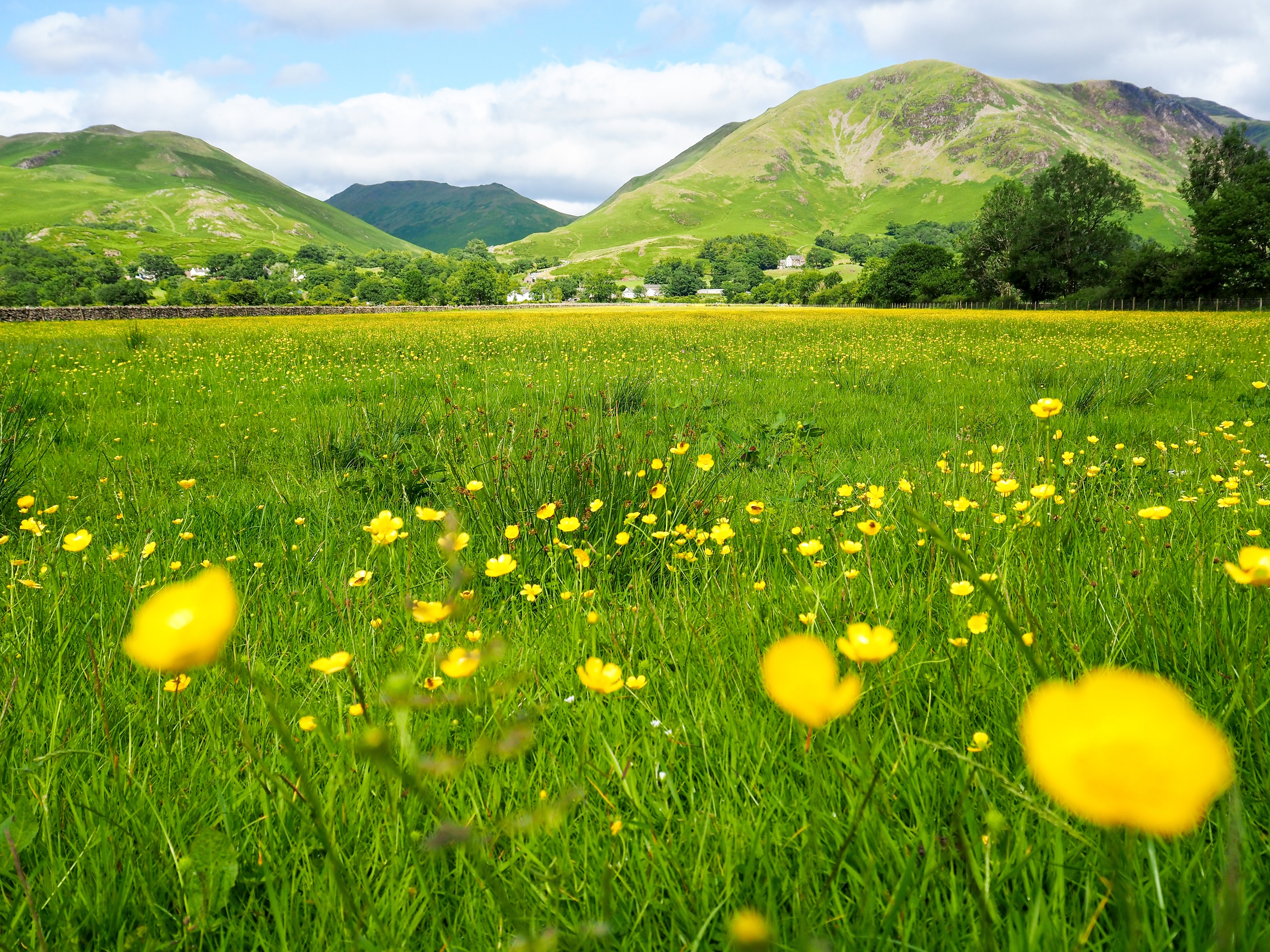
Sometimes a name can overpromise but Buttermere is every bit the delight it sounds. Water smooth as a knife, meadows plump with buttercups and bees and butterflies, cows cheerily chewing away, transforming green grass into ice cream and cakes and tea and – as Avery was subjected to – dire coffee. The cosiness of the place is heightened by the wild heights all around, deflecting the clouds to form a golden paradise. There is even that Buttermere tree.

A lone tree sticking out of a lake with mountains in the background

Ice cream, butterflies and bees

A field of buttercups in the sunshine with green mountains in the background

It would have been appealing to stay overnight here but it is overly popular and overly small. Queues for the bus suggested some may be in for an unintended night; we took solace in the hire car and an out-of-the-way B&B a little further north. This took us through more glorious scenery fringing Crummock Water before bravely praying for no oncoming tractors among the lanes around Brackenthwaite and Thwackwaite. Splendidly Northern names if a little lisp unfriendly.

On nearby place names, it is fairly obvious that Cockermouth is going to be pronounced Cockermuth. But there is something about Cockermouth that makes one forget and – to the despair of locals – often results in both a hard ‘Cock’ coming out with a hard ‘Mouth’. And accompanying tittering.

Before things get too hot to handle let’s go to the reality of Cockermouth: Sainsbury’s in the drizzle. While a Sainsbury’s was a welcome sight (and sign of civilisation), the drizzle was not. It was a dampness that persisted overnight and into the next morning, on which we returned into town to post a pack of biscuits. I never expected sending a pack of biscuits would take longer than an hour and require more security questions than entry into the West Wing. But at least it passed time for the drizzle to lighten and the cloud to lift.

Plunging back down into Loweswater there was an optimism returning with the reemergence of hills and languid liquid shores. With some urgency to get out into it all, we devoured a Sainos meal deal for lunch and headed for the hills.
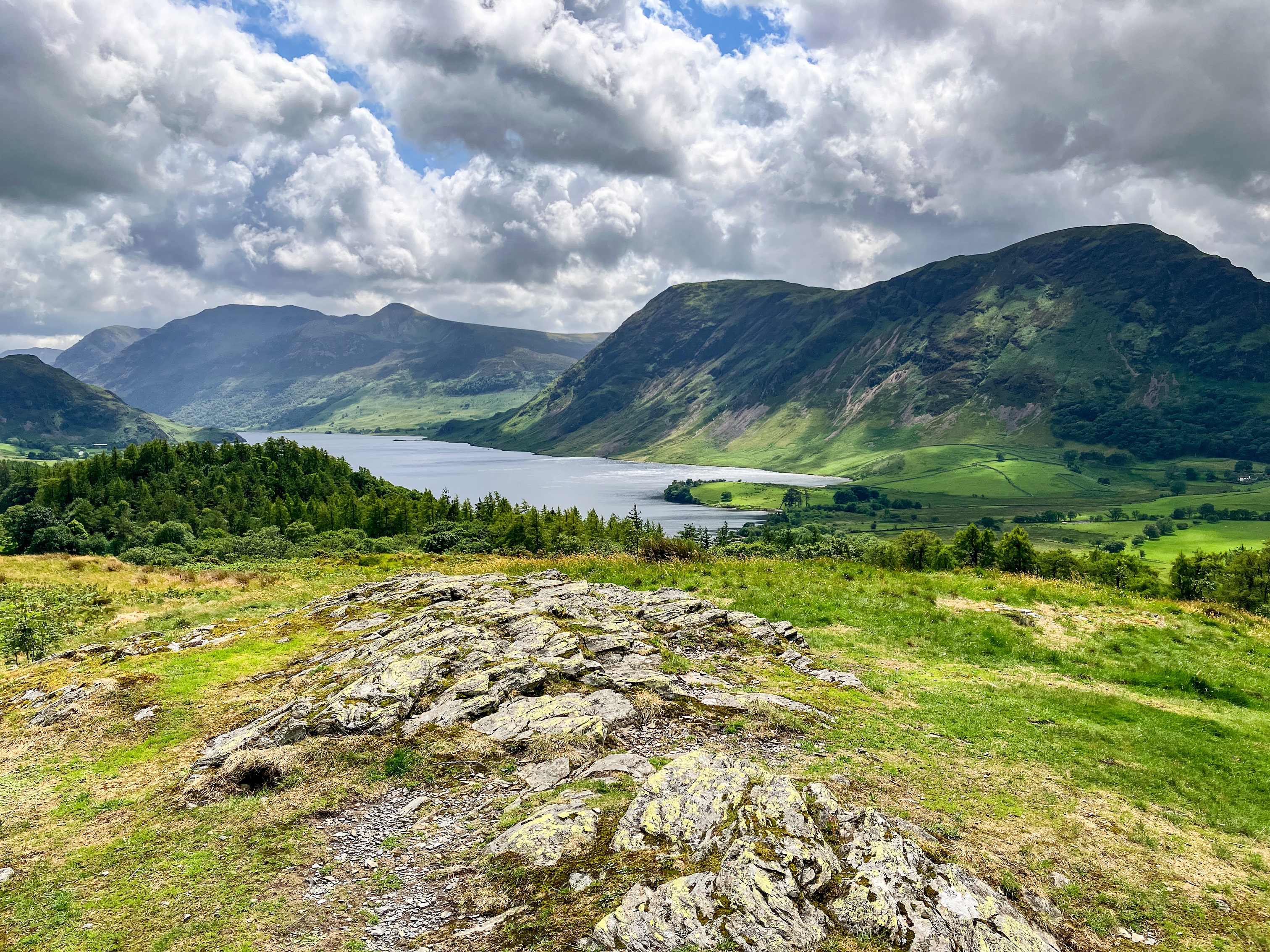
A view from a summit of a sweeping lake surrounded by rugged high hills

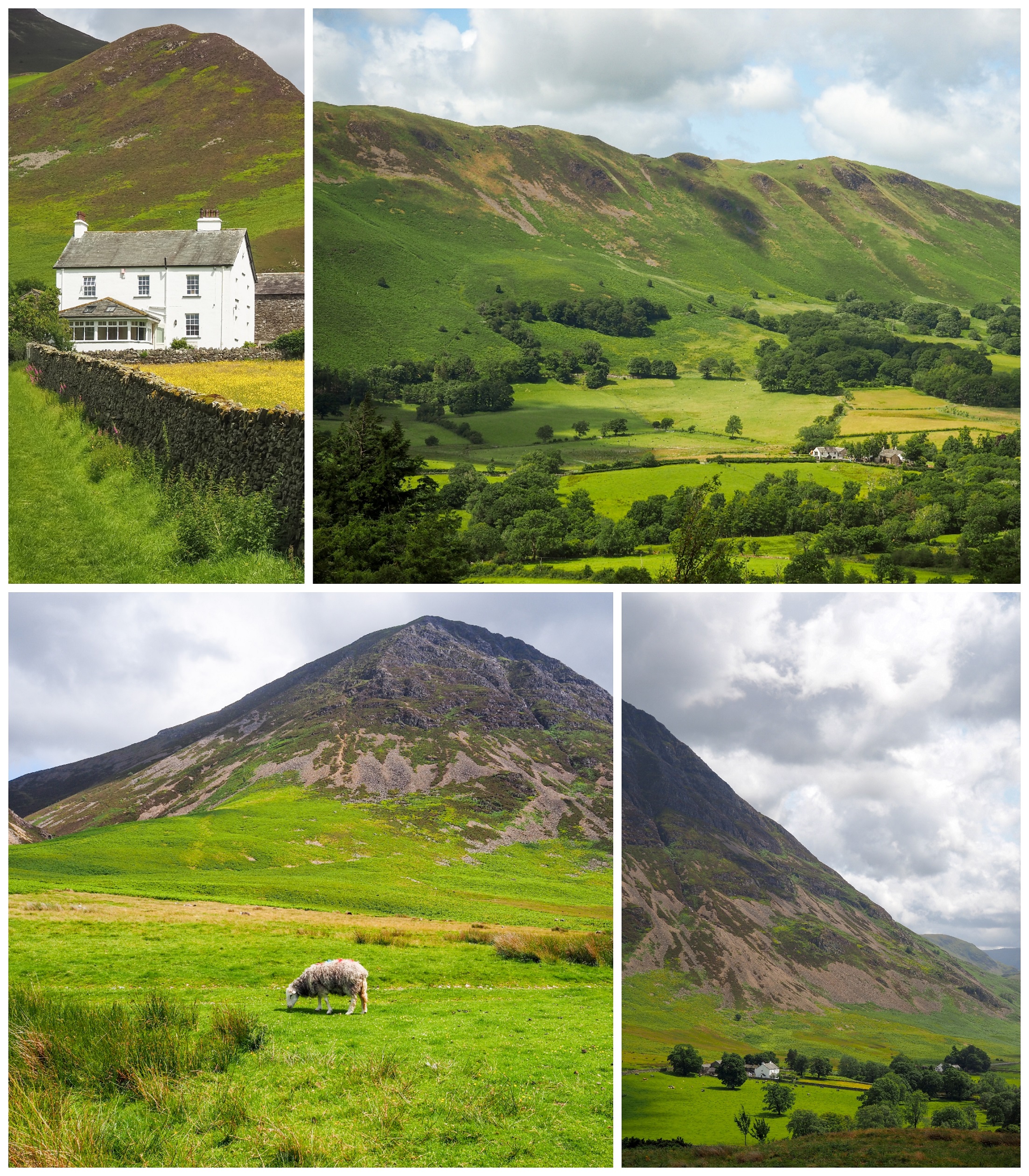
Pastoral scenes of farmhouses, fields and hills

While this wasn’t really the day for high moors and ridgetops we managed to get above the canopy at Brackenthwaite Hows for some lovely, quintessential Lake District vistas. South of us the sun was sparkling off Crummock Water, bisecting the steep-sided fells of Grasmoor and Mellbreak. Scattered amongst this drama, seemingly in miniature, occasional farmhouses fringed with cows and sheep. A serene scene abruptly punctuated by RAF jets flying a hundred metres overhead. Both breathtaking and almost pant pooping.

There was much to get confused about when talking about the air force and Aira Force but we made it there in the end. This was via a spontaneous tea stop – which always makes for a good stop – at Whinlatter Forest. And while I wouldn’t call it the full-on cream tea it would have been rude not to opt for the scone and jam and cream, with a cup of tea, safe in the knowledge that greater greatness awaits.
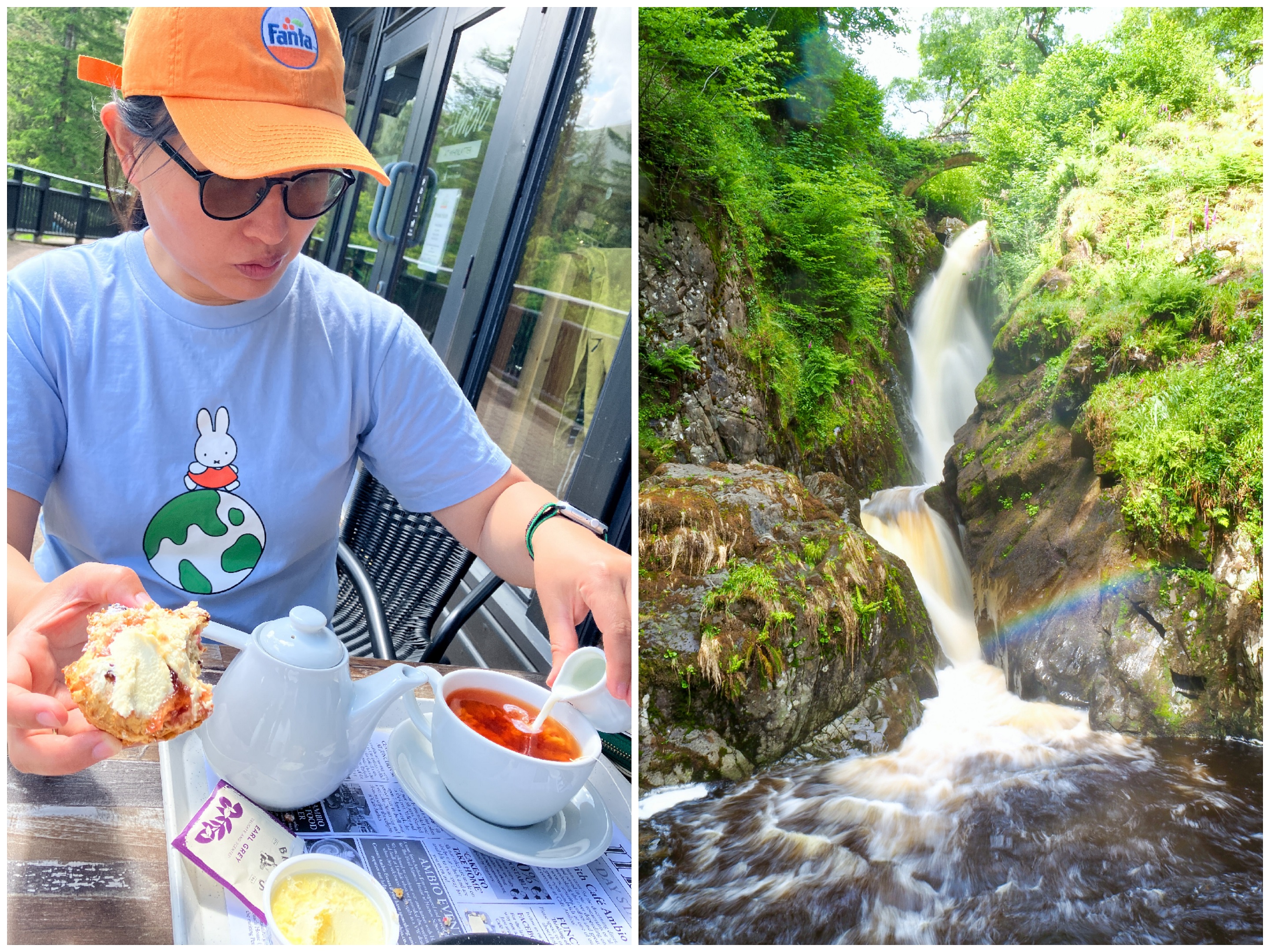
Tea, scones and a waterfall

By the time we reached Aira Force it was late afternoon (only another 7 hours of daylight remaining folks). A good time to arrive given some of the crowds had dissipated and a subsidised National Trust parking spot was easy to find. The woodland and the falls were undeniably lovely, even if my lovelier wife went on to utilise this spot to both puerile and hilarious effect.

I come from a land down chunder

We had come this way, beside the shores of Ullswater, to locate a mysterious field on the top of a hill for a spot of serious dogging. I think that’s the term they use. No, wait, shepherding. Ironically, as we drove up a small lane, the Skoda was doing its own piece of shepherding as three dumb ewes tottered before us. Greeting us beside a gate, a farmer’s son looked bemused. Ah, city folk.

Upon this hill it was blustery and cool, and we had to layer up in everything we had. But it was a charming and enlightening hour or so, greeting an array of border collies (surely the best type of dog) and a friendly, attention-seeking Old English Sheepdog. The dogs were lined up roughly in age and a demonstration ensued of different skills and instincts, supported by Come Bys and Aways and remarkable variations of whistling. There was talk of farming and nature and the intertwining of the two, of thousands of hens eggs a day and farm shops and the bond between one man and his dogs. All the while, the sheep looked dumb and all I could focus on going round my head was Kaleb and I Can’t Stand Sheep.

Sheepdogs, farmer, sheep

After sweltering in balmy London not so long ago, it was fair to say we were freezing by the end of the sheepdog demonstration. I couldn’t feel my feet and my ears felt like two flattened crumpets that had got lost down the freezer two years ago. But this was a wonderful place and wonderful time, and there was a cosy pub not too far down the road to cap off our final night. Further down the road the M6, Preston, Wales, Plymouth. Some Equally Notable Detours yet to come.

A road winding down into a valley from a high mountain pass
Driving Food & Drink Great Britain Green Bogey Photography Walking

Up and down under

Yes it’s that time of the year again where I feel contractually obliged to say something, anything, about Australia. Have I been here so long that delightful sandy weekends and forays into that once mythical bush are so run-of-the-mill? Usurped by exotic escapes to Tavistock, ambles through brambles in Wiltshire, train station sandwiches in Preston?

I went to Sydney fairly recently and it hardly warrants a paragraph. To be fair it was a fleeting visit offering little new or enticing other than a convenient Gelato Messina. No ferry ride, no beach bums, just a quick visit to see the Opera House in the drizzle. And a sigh of relief farewelling the marching tentacles of Campbelltown.

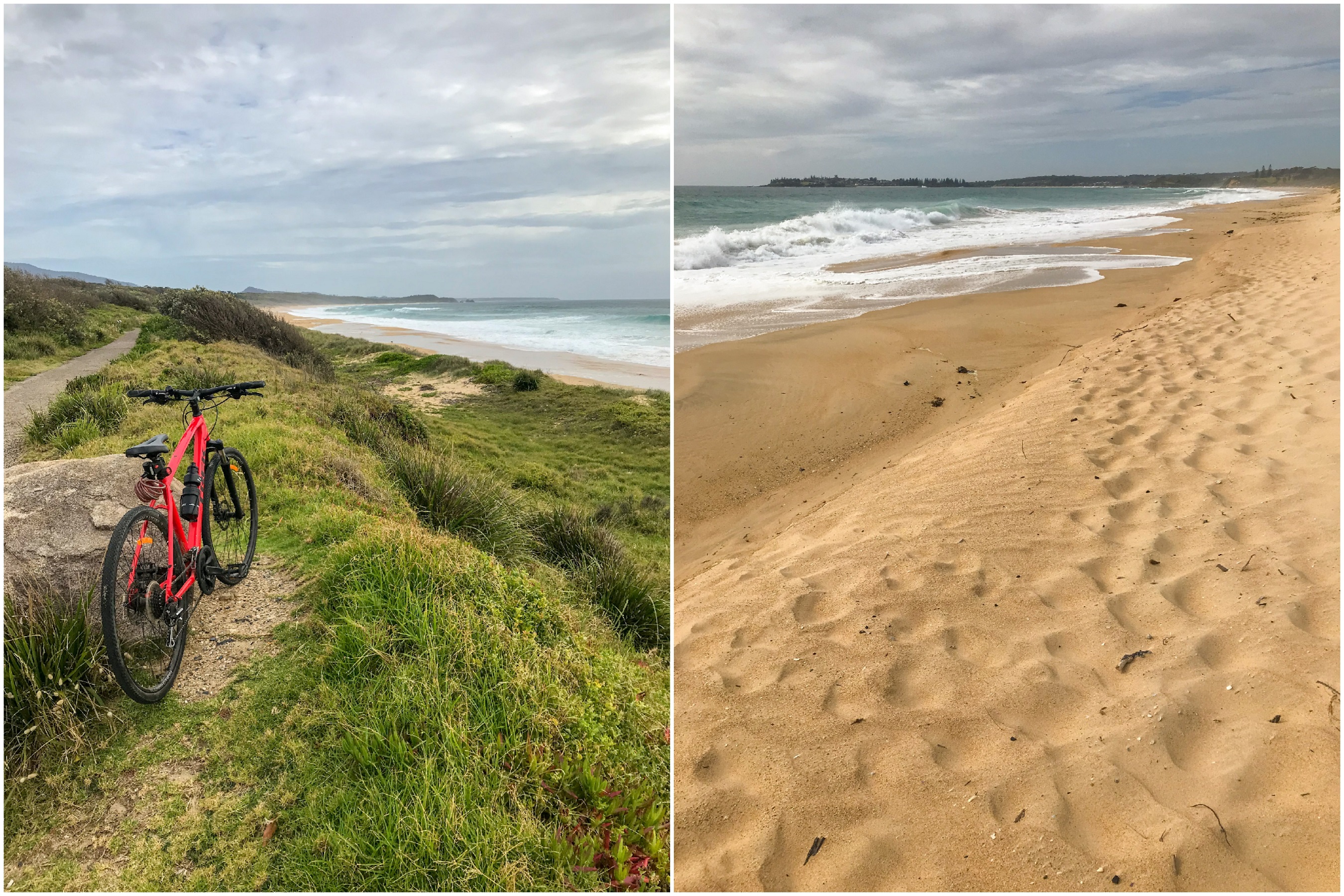
a sandy beach with waves from the ocean

If Sydney seems all a bit of a chore these days there is sufficient antidote down on the south coast. Even if you do exactly the same things over and over again. The Braidwood coffee, the Tuross Boatshed, the Bodalla Dairy. Little appetite left to wander indecisively around Bermagui Woollies. Waiting to be inspired by a quick sale.

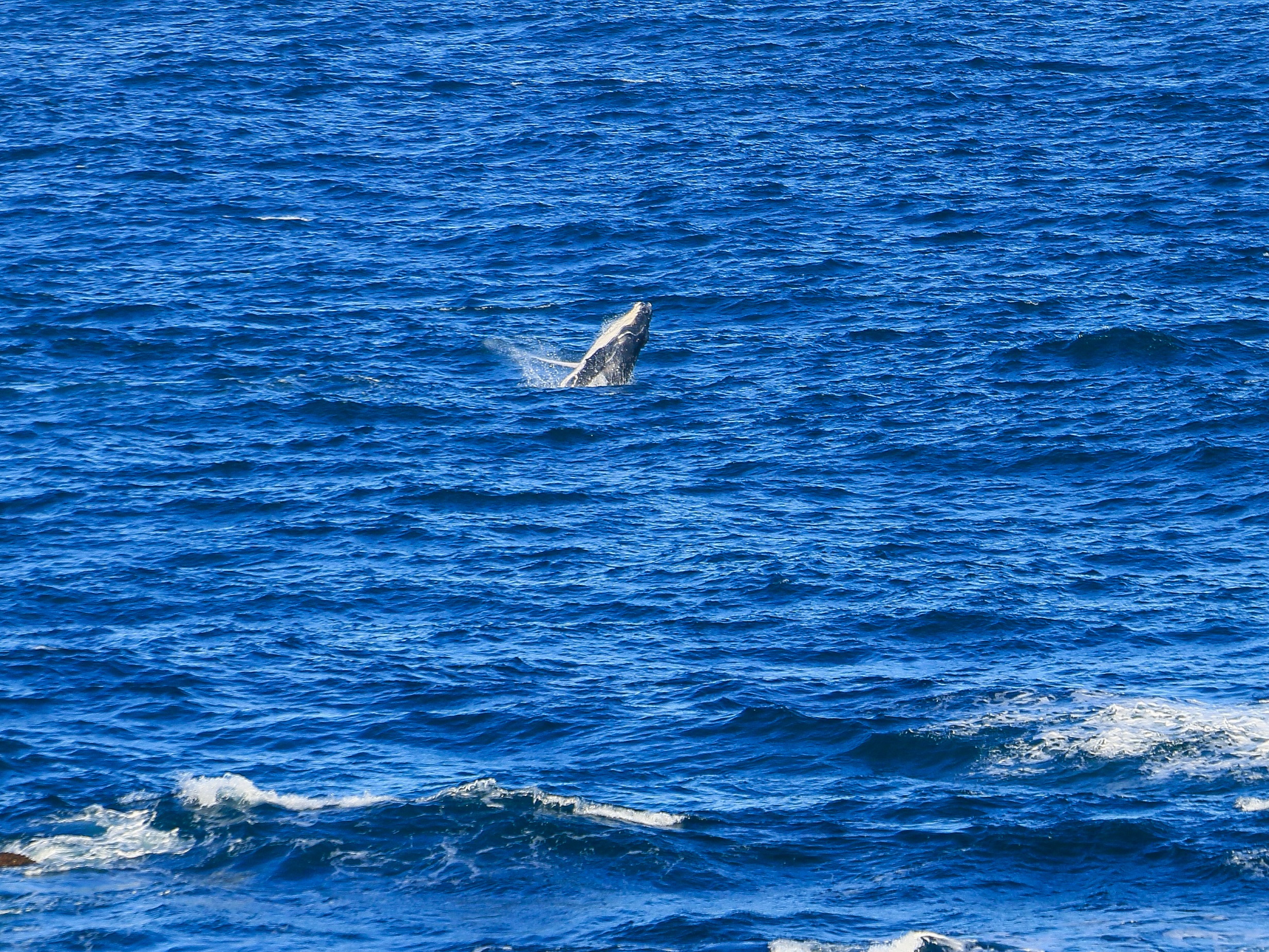
After all those stops on the way down I feel like the size of a whale but then I see a whale and it makes me feel better about myself. I see a lot of whales in fact, both out on the open water and from numerous outlooks on dry land. None of them breach Free Willy style but there are plenty of flapping fins and tails to keep things just the right side of awe-inspiring.

An image of a whale in a deep blue ocean

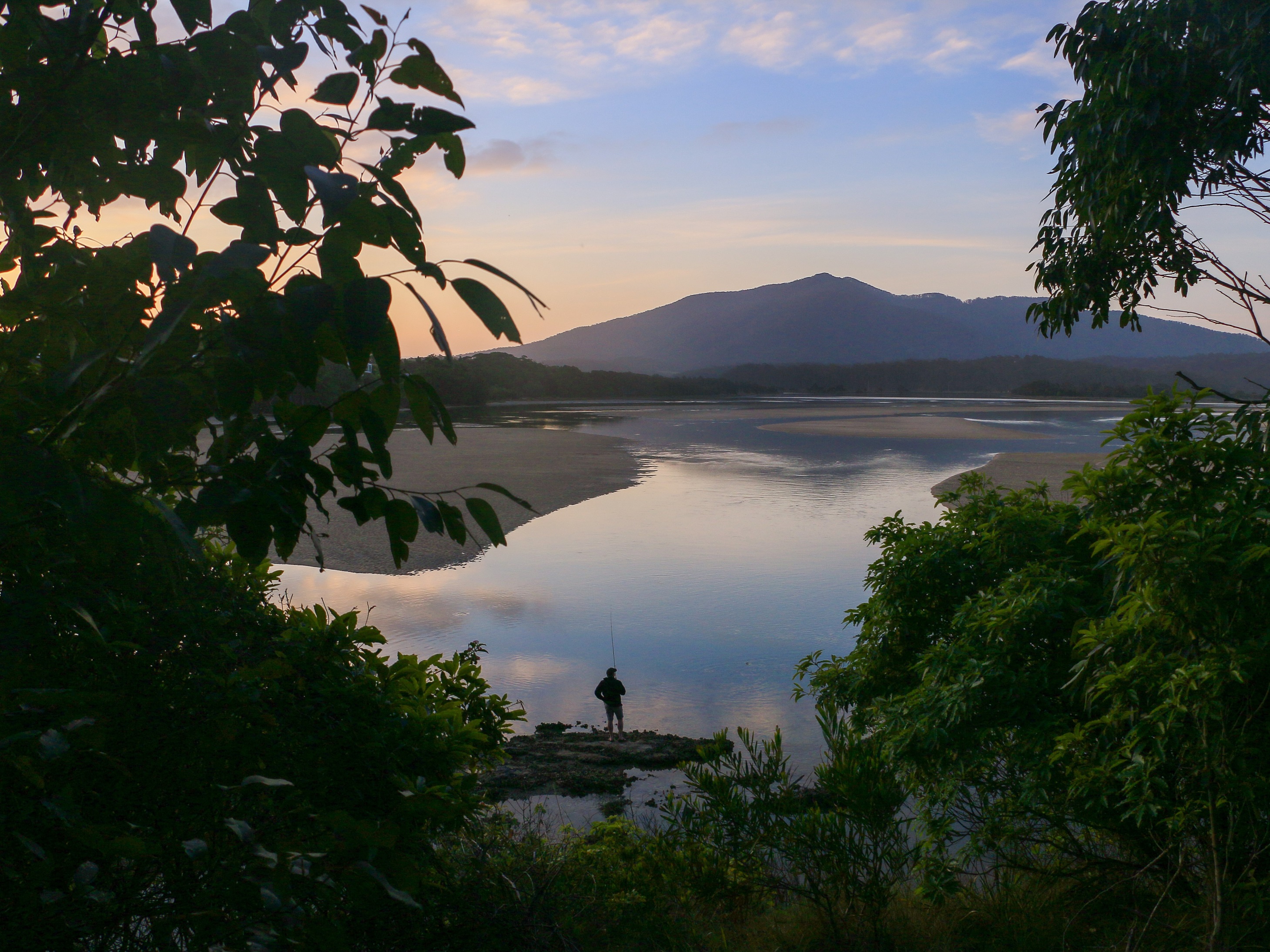
The best vantage came around the Blue Pools of Bermagui, further consolidating the town’s position as the most likely to make you say ah sod it let’s quit this place and run an Airbnb/mushroom farm/Chinese import business on the coast instead. Judging by the postcards on a board outside Honorbread, it seems others have done similar, though largely with a tantric meditation crystal hemp cleansing forest kind of ambition.

A man fishing with a mountain in the background

The board is well-read given the wait for coffee on a public holiday weekend. I fondly remember a quieter time here, when I managed to nab a very fine pain aux raisins to take onto the beach along with coffee and Dad. No such luck this time thanks to the irritating cliché of a man in front of me deliberating like a moron on which exotic unpronounceable pastry morsel to take away and then opting for that last “snail”. A disaster. I was bitter, resentful, hateful and I still haven’t found a decent pain aux raisins since.

This includes in the hometown of Canberra. For which I hear you ask, what of Canberra? Well, still infinitely liveable, mildly interesting, a little needy but well stocked with common browns. I have enjoyed a few Monday mornings at the Botanic Gardens, a pale imitation of my father in pursuit of butterflies. Peak rice flower action precipitated an attempt to grow one at home, but so far all I have observed upon it is a single, unaccompanied, inevitable common brown.

Butterflies on a pink flower

The tomato experiments are going better and – in recent days as we near the frightful weather outside of Christmas – are cheerily ripening. Fruits like plump baubles on a wilting wreath, waiting to be ransacked by a possum. The surreal juxtapositions of the festive season down under.

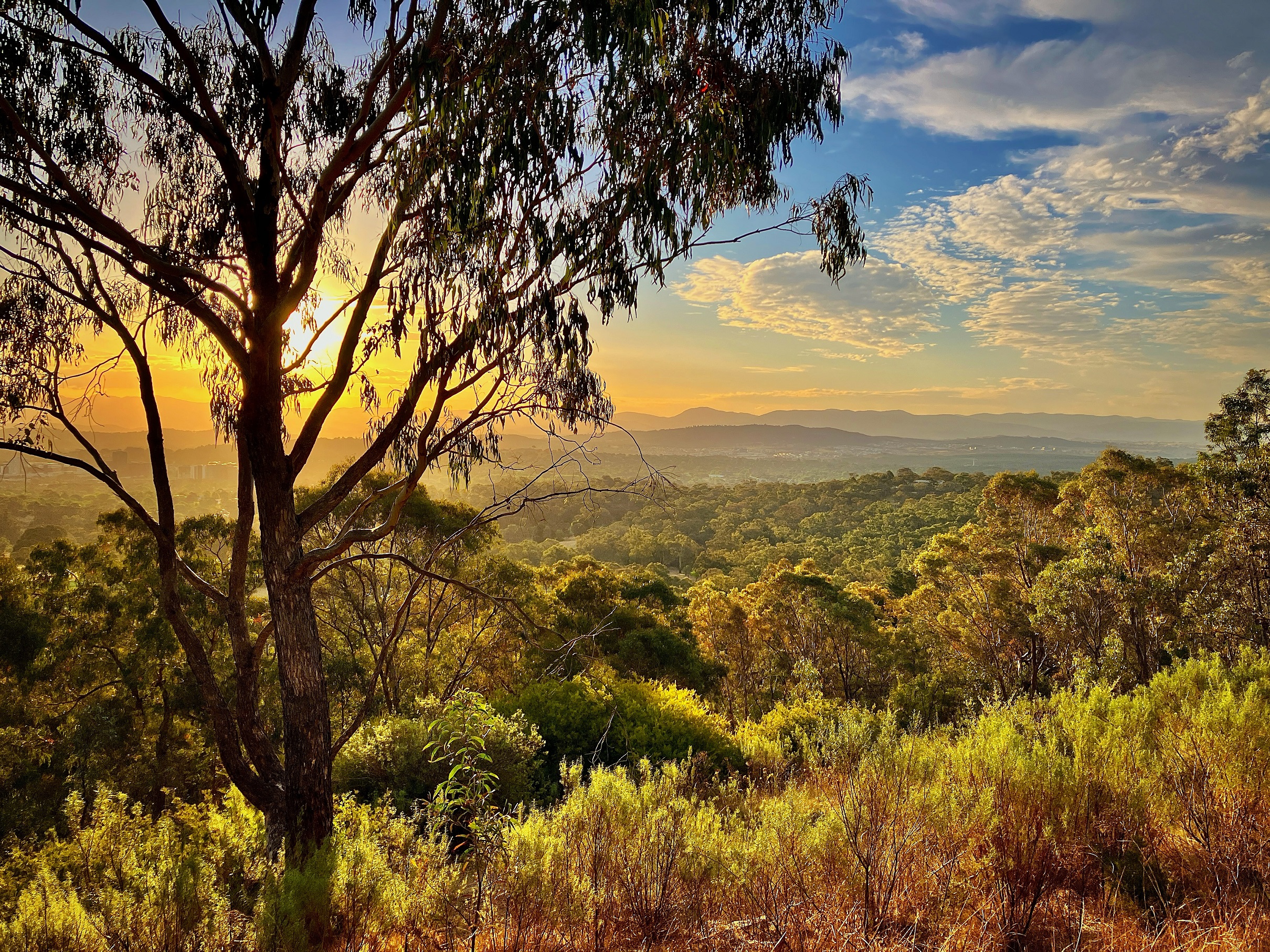
It is almost midsummer and I have pumped out a batch of cheesy marmites and about two million gingerbread men from the oven. One Christmas event at a winery was cooled by a slight breeze, another to come will require icy liquid relief. There is officially a heatwave, but what to make of such declarations in December. I just feel sorry for all the Westfield Santas, even with their air conditioned red satin thrones.

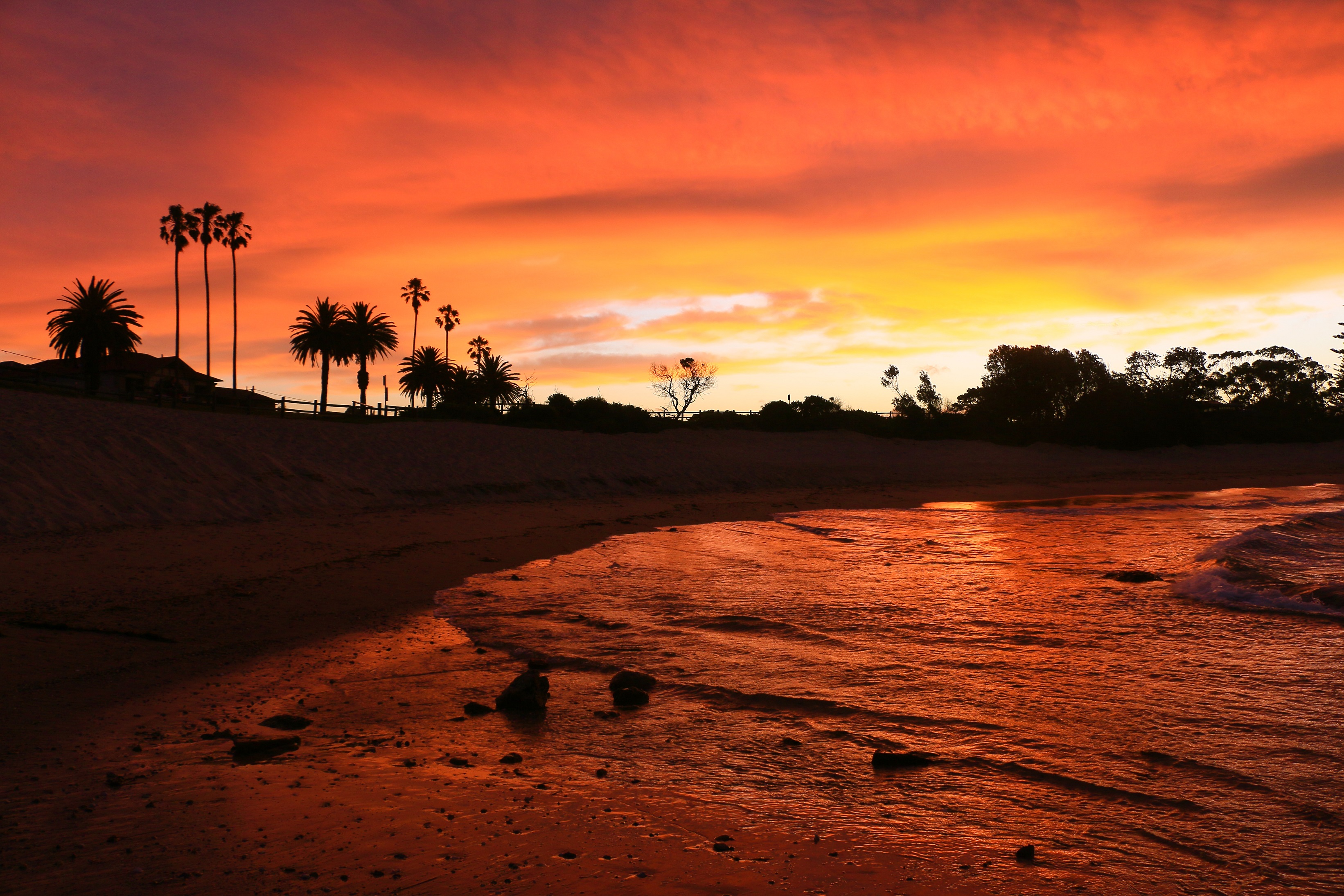
Sunset over forest and hills

Maybe the coast will offer relief. And prawns. Let’s hope so, for a few days prior to that 25th of December. So whether it’s in humdrum Australia or exotic England with your crazy storms and hype around minor celebrities ballroom dancing or eating kangaroo testicles on the Gold Coast, have a good one. 2025 promises much of something or other. Whether it makes the blog or not is another matter.

Merry Christmas!

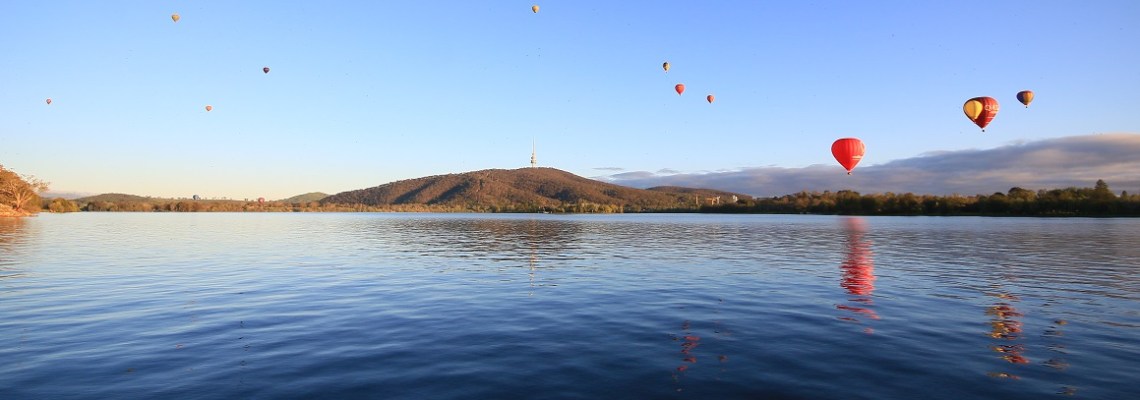
A mountain with a tower reflected in a lake
Australia Food & Drink Green Bogey Photography

Bean there, done that

It is funny how an arbitrary line on the map can make such a difference to how things feel. Like totally new government feels. Different planning rules and street signs and higher rates and corflutes advocating for the next new candidate for the next new government. It’s not quite the transformation one feels walking from France into Switzerland, but welcome to Queanbeyan, New South Wales.

Somehow in Queanbeyan the gardens feel more exotic. As if it is longing to be part of the South Coast while ignoring the spectre of winter frosts. Dusk welcomes shrieking rainbow lorikeets while engine braking emanates from the trunk road heading through town. Surprisingly cute tin and weatherboard cottages compete for space with the sturdy brick brown blocks of flats lining the river. Buzzing waterfront taqueria contrast with a roundabout Red Rooster.

This is the juxtaposition of Queanbo life. A not quite Canberra suburb, a not quite country NSW town. A probable temporary life for me, though there have been a few properties that could have cut the mustard to make it last longer. You do get more bang for your buck, but at what cost?

Okay, well rates are set to increase by more than 60% over the next three years. The Queanbeyan River can sometimes flood. Everywhere else seems just that little greater, gas-guzzling distance away. And – at least where I’ve been staying – I just haven’t had the same level of greenery from the door.

I did find a reasonable coffee shop where you can get a large coffee for less than a fiver. Yet this little miracle means walking a little along the Kings Highway and then deviating through Brad Haddin Oval where you are reminded of the irritating deeds of Brad Haddin.

It’s a graceful and elegant oval set among large shady trees. Old folk from a nearby retirement complex play bowls and shuffle upon the tennis courts. It doesn’t really feel like Brad Haddin but perhaps he has mellowed too, joining the likes of Glenn McGrath and Mitchell Johnson as somehow thoroughly likeable chaps. I have doubts if Nathan Lyon will ever get there.

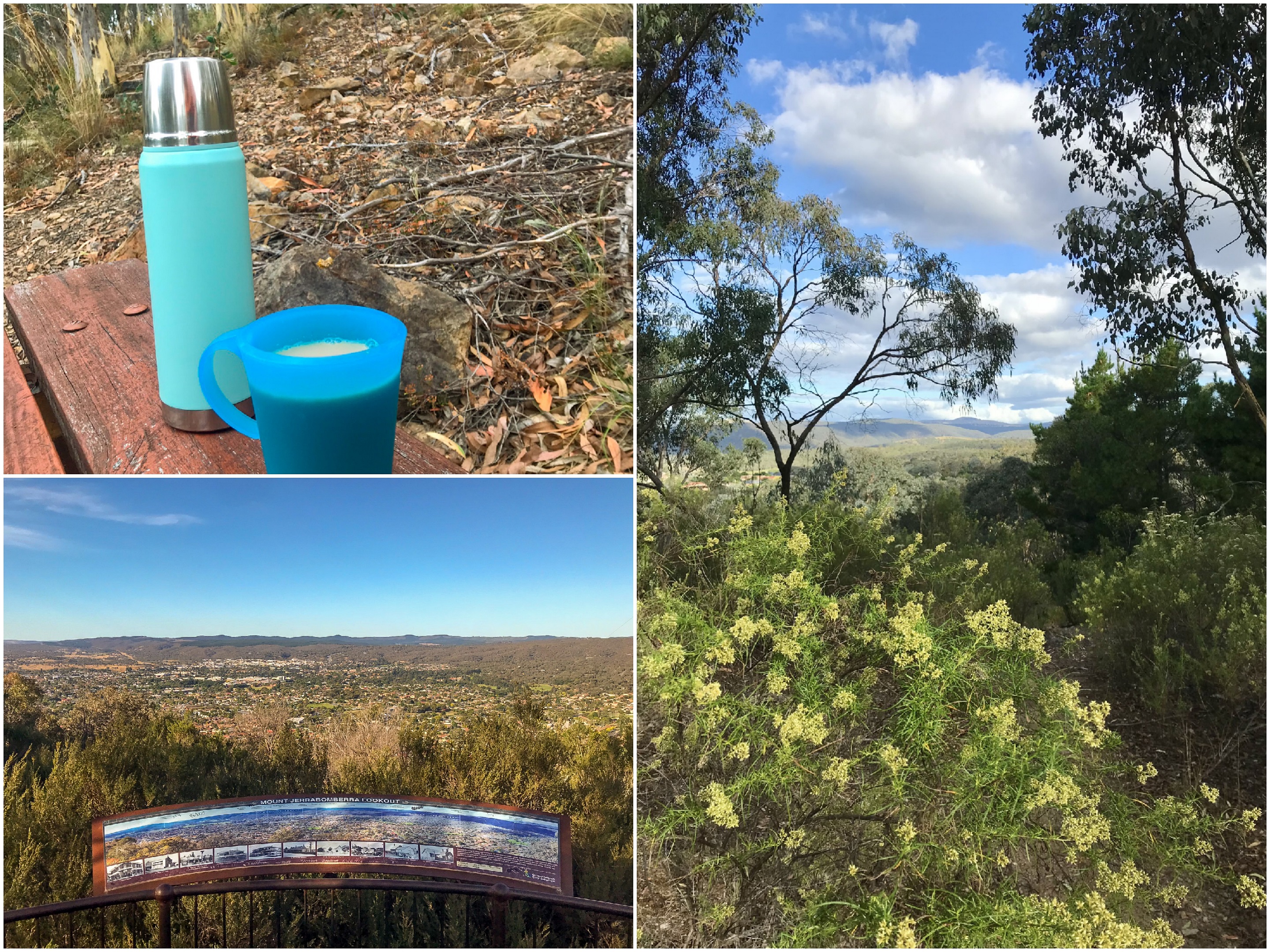
Perhaps Queanbeyan will feel the same to me, if and when it is no longer in my face like an amped up baggy green rage fest. I’m sure also when I leave someone will have come up with the bright idea of putting a café somewhere between the town centre and Jerrabomberra, providing the opportunity to grab a morning coffee and head into the bush. For now, flask tea is the best option.

Mount Jerrabomberra has proven the proverbially island in the sea. I had walked it once, gently rising along the main fire trail to a summit view and radio transmitter. But there are many random tracks veering off here and there, a spaghetti network offering infinite choose your own adventure.

Even the bush seems a little different here. Maybe it is the geology or the aspect or the way in which it is or is not managed. But one thing it has in common with many a neighbour is the encroachment of sprawling suburbs, trees spilling downhill to lap at a new road, a new Aldi, a new McMansion.

Apparently the land rates in Jerrabomberra are some of the highest in the country. Technically this is a Queanbeyan suburb but feels as much as it actually is over the hill and far away. What strikes me, more than anything, is that it has a stronger Canberra air. I think in the grassy median strips and footpaths between the backs of houses, and the engineered waterways and looping crescents, moulded to the hilly contours of the land. There is even a lake, albeit small, albeit with palm trees and an island that could well be Mar-a-Lago down under.

There are secrets here to be unearthed. Transecting that fringe between the mansions and the wilderness, a lushly green gully, a flowery scent of undergrowth, a deepening expanse of gum trees and acacia. The forest seems to push on, becoming more impenetrable as you go, perhaps heading ever eastward all the way to the ranges and the coast. Or maybe coming up against Googong.

Googong is the newer Jerrabomberra, the modern type where the larger houses take up pretty much all of their small block and where a scattering of townhouses offer as much floor space as an apartment at twice the price. What’s the cost of stairs and a garage?

It took until my last Friday night of Queanbo life to make it to Googong, or more precisely the fringes of Googong, bypassed to reach its namesake dam. This is no ornamental pond with palm trees or cultivated lake with coffee shops, but an expansive, Windermere-esque ribbon of water running many miles from north to south. The Lake District parallels may come as a stretch but there was something comforting and lovely strolling upon its shores under golden evening light.

Critics may jape that this is the best view in Queanbeyan, mainly because Queanbeyan is a long way behind your back. How do I feel about the place after almost an eight week stay? The welcome to town signpost sums it up well: Country living, city benefits, though I’d argue there are also city annoyances to add to the list. But in the ultimate test of the ‘could I live here?’ conundrum, I was pleased to enjoy a decent coffee one final morning, served up from my regular go-to café. Where, just before I depart, they finally remember my name.

Australia Green Bogey Walking

A tale of two valleys

Well, I hope you had yourself a merry little Christmas. In a clear sign of ageing gracefully I was pleased to unpack a new, lightweight, bagless, cordless vacuum cleaner and a brand new thermos flask in pastel hues. I think part of the joy was in unpacking something rather than packing it up. Other festive highlights included a love-hate relationship with a ham (I’m so over you) and sitting in the dark in the middle of the day. I haven’t felt so hot since being in, um, England.

So it seems I’m at the point where vacuum cleaners are exciting, too much heat is wearisome and I find ample satisfaction in ambling around the NSW town of Tumut. It was noticeable how many times I was asked Why Tumut?, including from the Airbnb host making money from people actually staying in the town of Tumut. But it’s just nice. Cute and a little cosy, I could live here in something actually affordable. There is a decent café and a Woollies and an awful McDonalds all out of Caramilk McFlurries but most of all there is the river swishing fulsome through leafy parkland and cow-filled meadows.

The Tumut River joins the Murrumbidgee River which joins the Murray River, feeding gigalitres of water downstream during the La Niña spring. For once there is almost too much water, and too much Dorothea Mackellar, espoused by the usual suspects to justify this as normal. Even my pretty little Tumut is not immune.

Feeding into the Tumut River, the Goobarragandra shows signs of flood in its flattened banks and weedy debris. It’s been a lovely drive through luscious countryside to Thomas Boyd Campsite and a trailhead for the Hume and Hovell. I walk a little of the track, barely decipherable through tall, snake-infested grass. It’s okay but nothing to write poetry about.

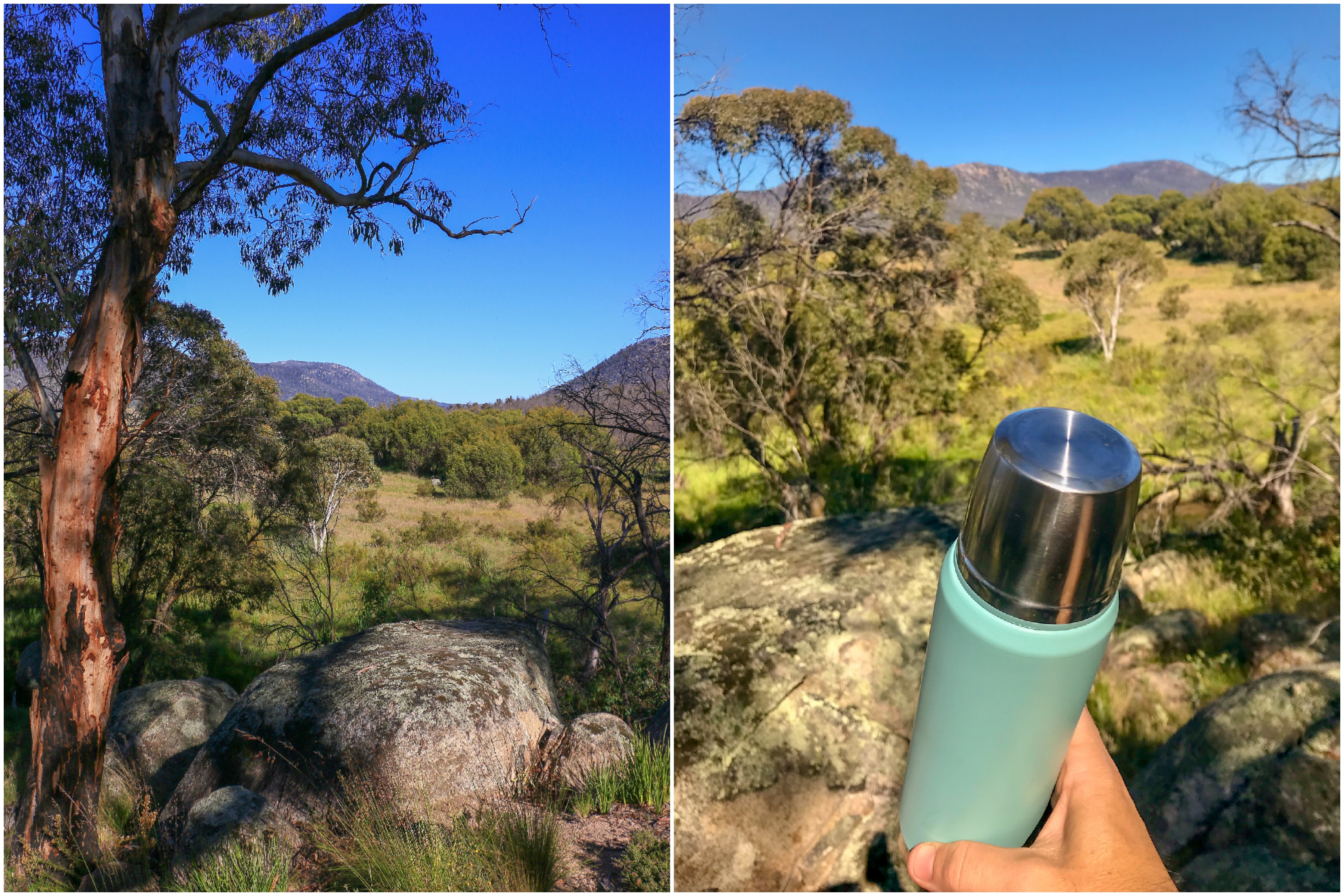
I pause for coffee (in an old flask) and a Macadamia slice purchased from Gundagai bakery. And decide the best means to perk things up – and fulfil the clichés of middle age – is to hop on the bike.

Flat and sun-kissed, the going is joyous as the road nears the banks of the river, seemingly wilder and more dramatic than it was around the campground. Grassy plains yield to undulating meadows, the shadows from cotton wool clouds projecting onto higher, bush cloaked peaks.

All too soon the river meanders away from the road and those undulations kick in. I climb one and decide that will be enough. And dream of Christmas futures when I can unpack an e-bike.


Is another sign of getting old waking up with the kookaburras? I certainly have evidence to support this theory but then there are also those outliers. Or inliers, so to speak.

In truth the Christmas break has produced some relative lie ins, but this has been countered by a desire to get out early before the furnace is at full force. So there have been a few mornings where instead of sedately lying in bed listening to Radio National and sipping tea I have hopped and skipped out into the bush.

I entered Namadgi National Park around seven and was surprised to find a number of cars at the visitor centre. I suspect they had smartly set out for Mount Tennent while it was still cool and fresh. I wasn’t going to join them, instead heading further south to a rendezvous with a creek.

I do believe the Rendezvous Creek walk is one of the few marked trails in Namadgi I have never set foot on before. And with relatively low expectations (I find that can be the best approach here) I discovered utter delight. At first shady and fragrant, the trail opens out into a hills are alive style valley. The only sound being the rustle of grass in the breeze, the trickle of water, and the buzz of the great Australian blowfly.

Who needs touchscreens and Twitter and endless ham and Michael Buble schmaltz and David Warner tons and lightweight vacuum cleaners and Caramilk McFlurries when you can simply be blessed with the vastness of nature, the blueness of the sky and the buzz of a fly? But allow me one modern day indulgence. Make that two. A brand new pastel flask filled with tea and a Walkers shortbread mince pie. Well, it is Christmas after all.

Australia Driving Green Bogey Walking

Lizard bites

The it’s too hot brigade have been out in force lately. The worrying thing is they are probably right. More worryingly, I have caught myself occasionally joining them. This, along with an increasing tolerance of British coffee and quietly muttered acceptance of noisy people in the quiet carriage, suggests I am getting more comfortable on these shores. Apart from when it is too hot of course.

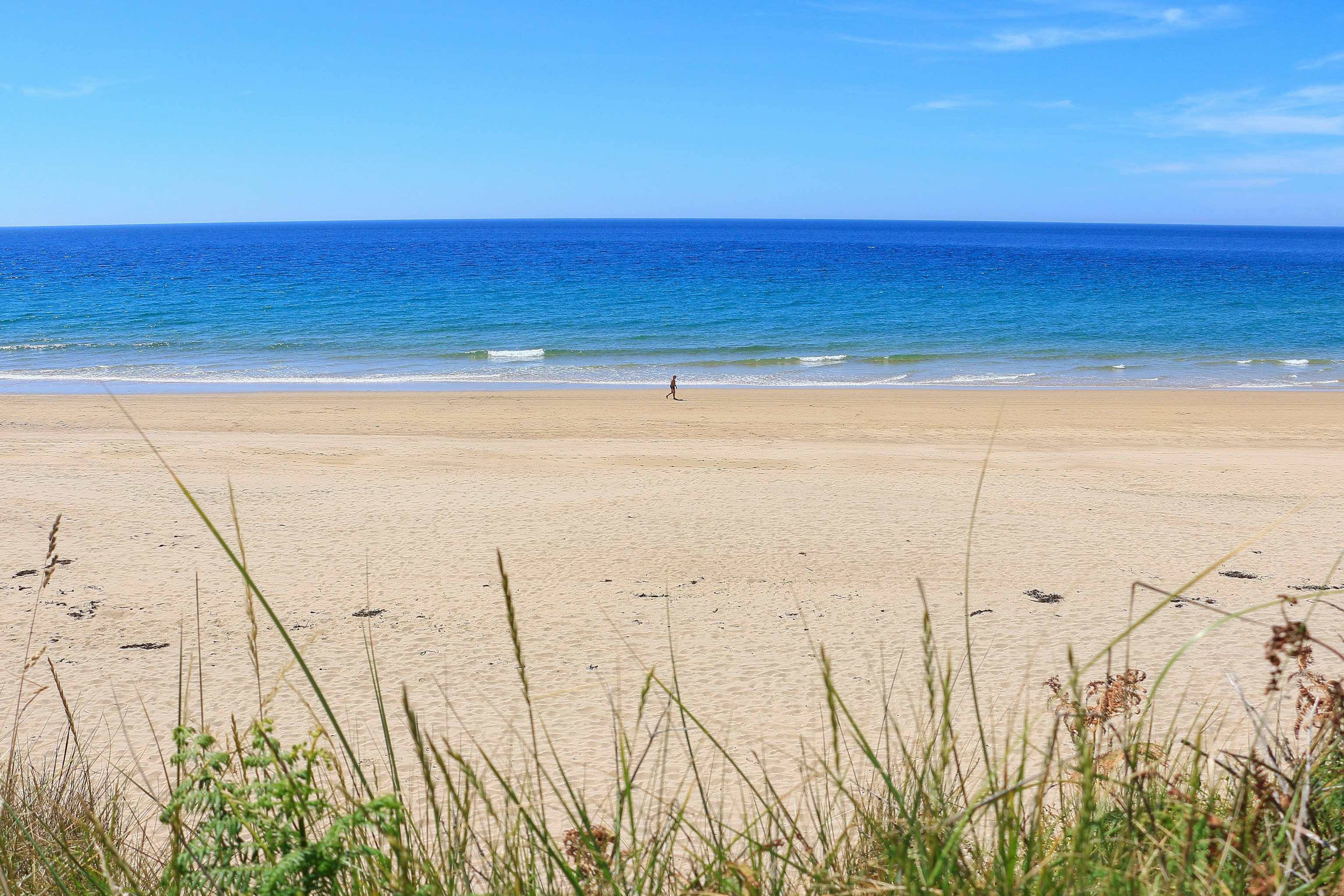
The heat would be more agreeable if Britain boasted fine sandy bays and crystal clear coves, a setting for languid summer holidays and Mediterranean vibes. Perhaps with some tapas, gelato and meze thrown in. Let me introduce you, then, to The Lizard.

Down in far west Cornwall, The Lizard is an area where the southernmost chunk of mainland Britain tapers into the ocean. With water on both sides there is a veritable array of beaches and bays, harbours and headlands to choose from. And it is on its western shore, facing the Atlantic as it feeds into Mounts Bay, where some of the finest sights and sands can be found.

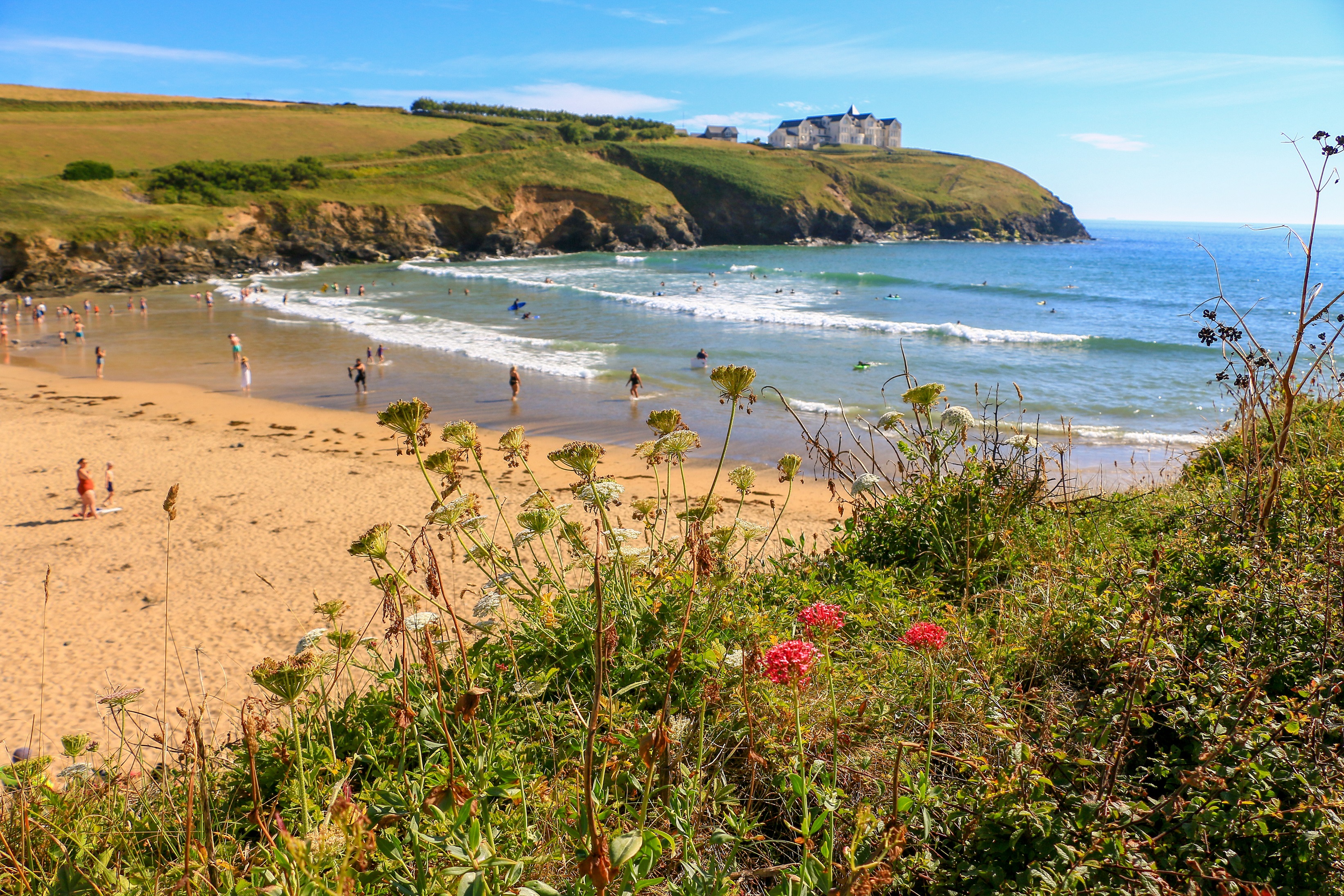
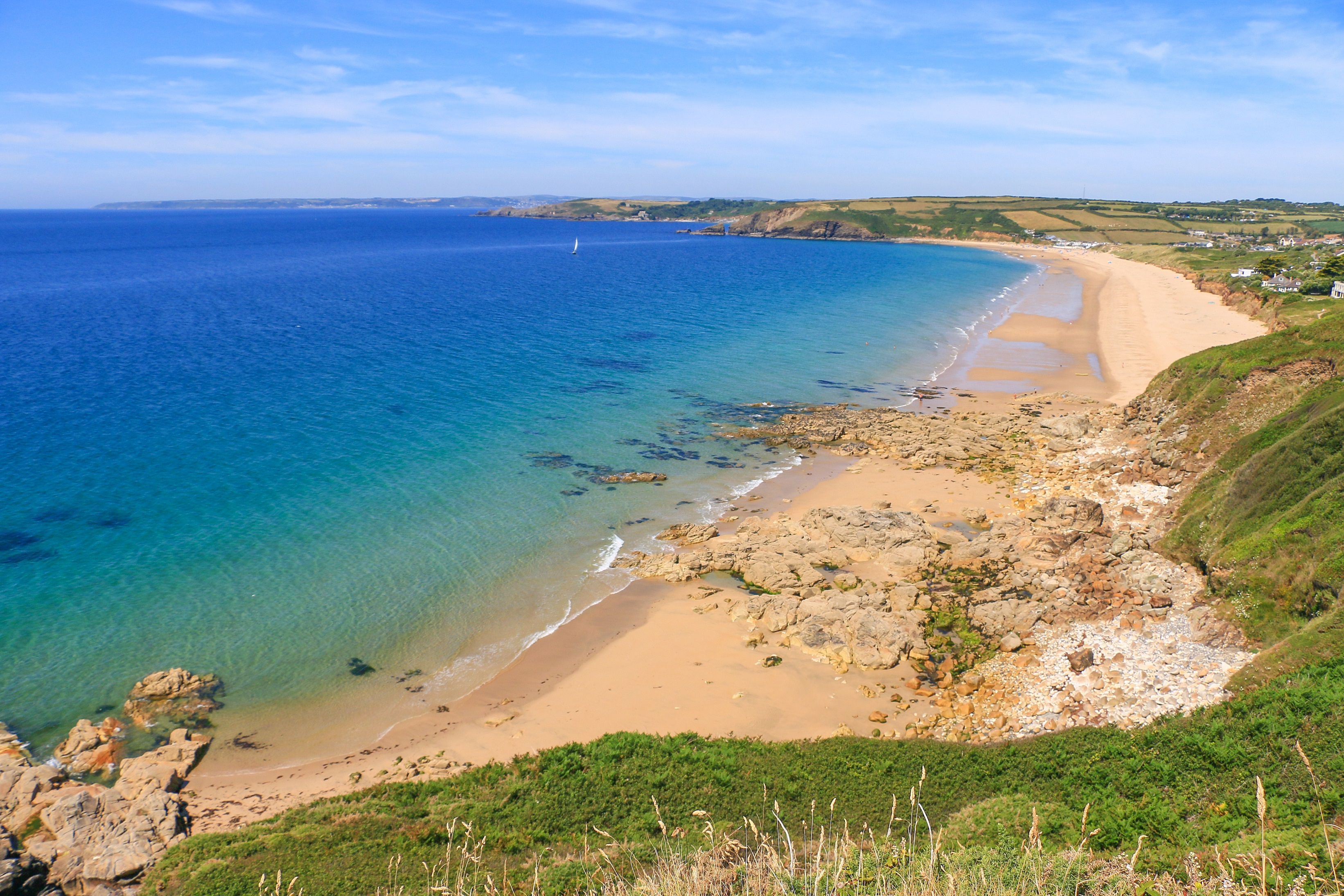
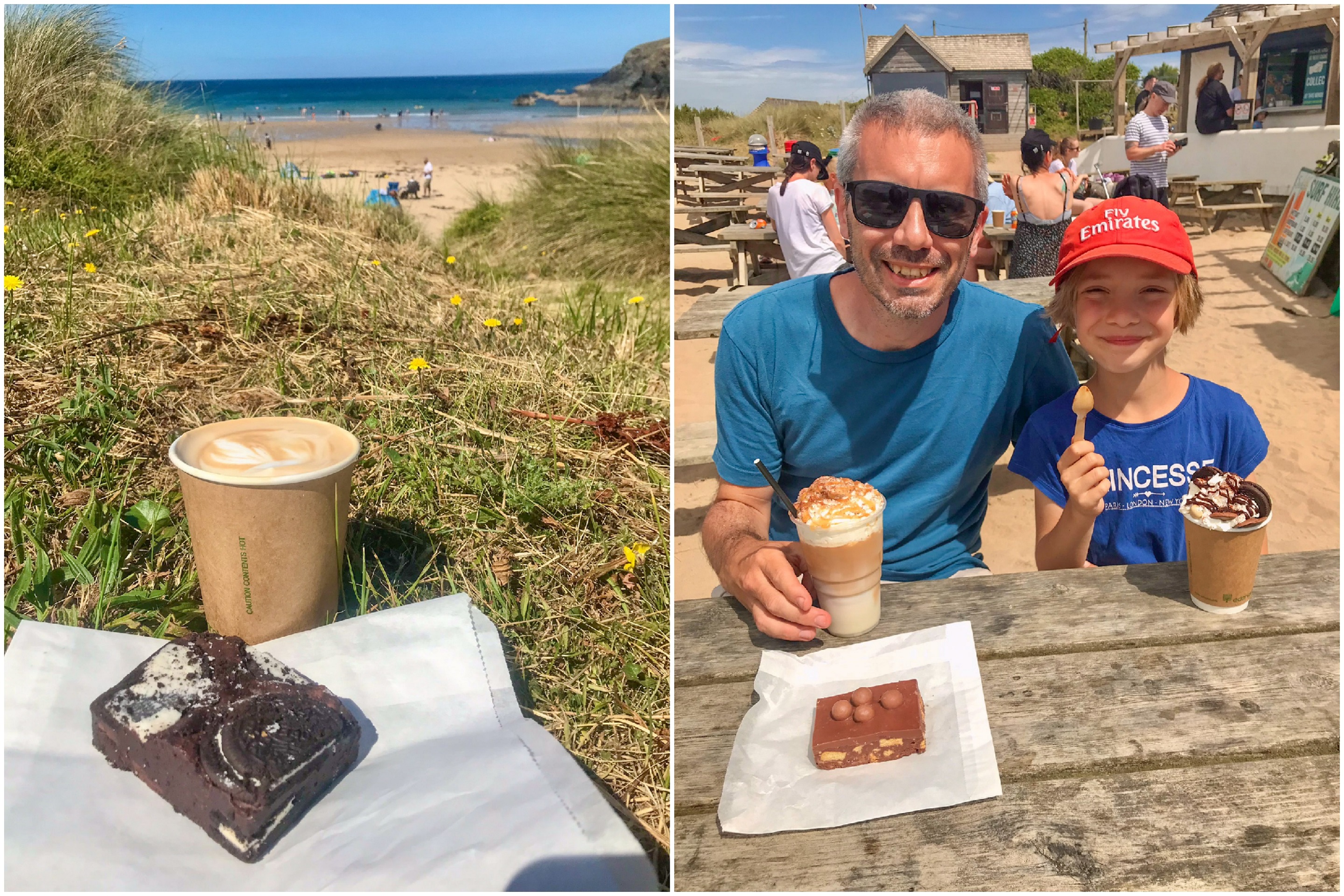
The very first morning of a week-long family holiday provides some pinch yourself moments at Poldhu Cove. I must confess, like so many other annoying tourists, it was Instagram that thrust Poldhu into my consciousness. What entranced me were the golden sands, blue waters and white swirls of cream decorated with all sorts of gooeyness atop a hot chocolate. The excellent Poldhu Beach Café has a slight Aussie vibe perched upon the sand, delivering decent coffee, brownies and down to earth chit-chat. It felt very much peak dream home.

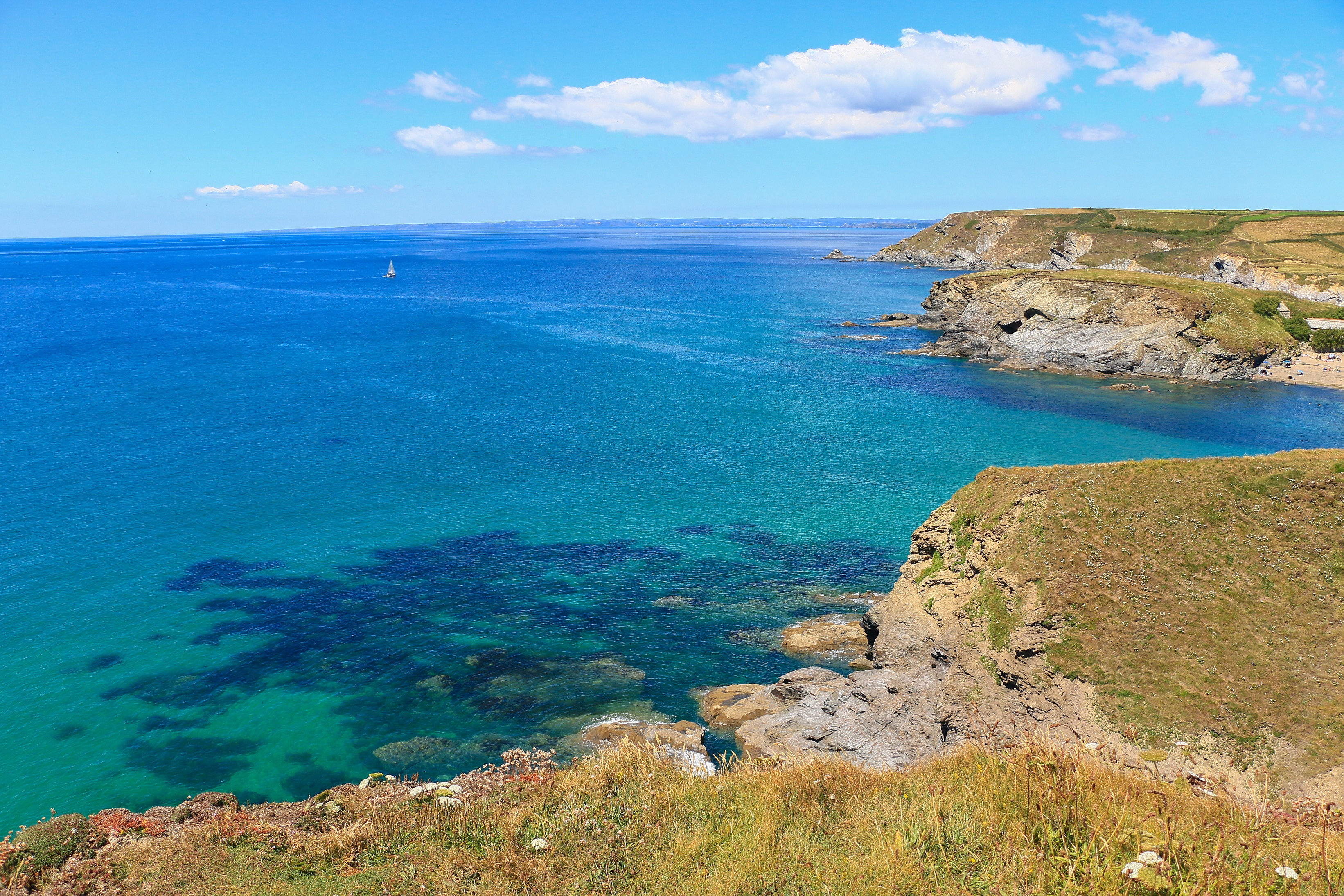
Either side of the cove the outlook becomes even more idyllic as the transparency of the water shines, magnifying the outline of rocky reefs and diffusing the shadows of colourful paddle boards upon the seabed. On shore, the cliffs rise, coated in a swathe of still-green grass and wildflowers flourishing under the sun. The coastline tracks toward the horizon on either side, encasing a welcoming expanse of Cornish perfection. It felt very much peak dream home.

Beyond the northern headland to Poldhu, the next bay along – Church Cove – has a more old school air. Grittier sands, seaweed, emboldened National Trust parking attendants. The presence of the old church wedged between rock and sea oozes tradition and heritage. Lichen-infused gravestones suggest at whole generations of fisherfolk and farmers of centuries past, whose ancestors probably still plough their fields and rent their shepherd’s huts today. The surrounding greens of Mullion Golf Club nestle perfectly, as if they have sat in this landscape forever.

Also fitting in, The National Trust run a small kiosk at Church Cove. Naturally. A pleasant enough mini-menu of Bakewell slices, cheese and onion crisps and ham salad sandwiches. But when you know what is just around the next corner, a short up and down across coast path heaven, then why linger. Especially when you have a partner in crime.


I found myself eating alone overlooking Praa Sands but still wasn’t complaining. While some rosy-hued patrons were already on the booze Magaloof style, I contented myself with coffee and a rocky road. Not Poldhu quality but you could have anything here on a day like today and still feel you had won the lottery. Eat in the view, drink up the ambience.

Praa Sands is a long golden bay, increasingly marvellous as the tide rolls out. Forget the Med, think Australia. Near the car parks, caravan parks, shops and cafes it could be a bit of a Bondi on Boxing Day. But the farther you move away, the closer you come to a NSW south coast style stretch of empty beach.

It’s quite a trek from west to east, but with sand between toes and tepid clear waters lapping at them, the footsteps pass with ease. Eventually Praa Sands can go no further, coming against Rinsey Head, over which the South West Coast Path once more meanders. The scenery becomes a more classic Cornwall, capped off by the archetypal abandoned tin mine. Wheal Prosper. We certainly will.

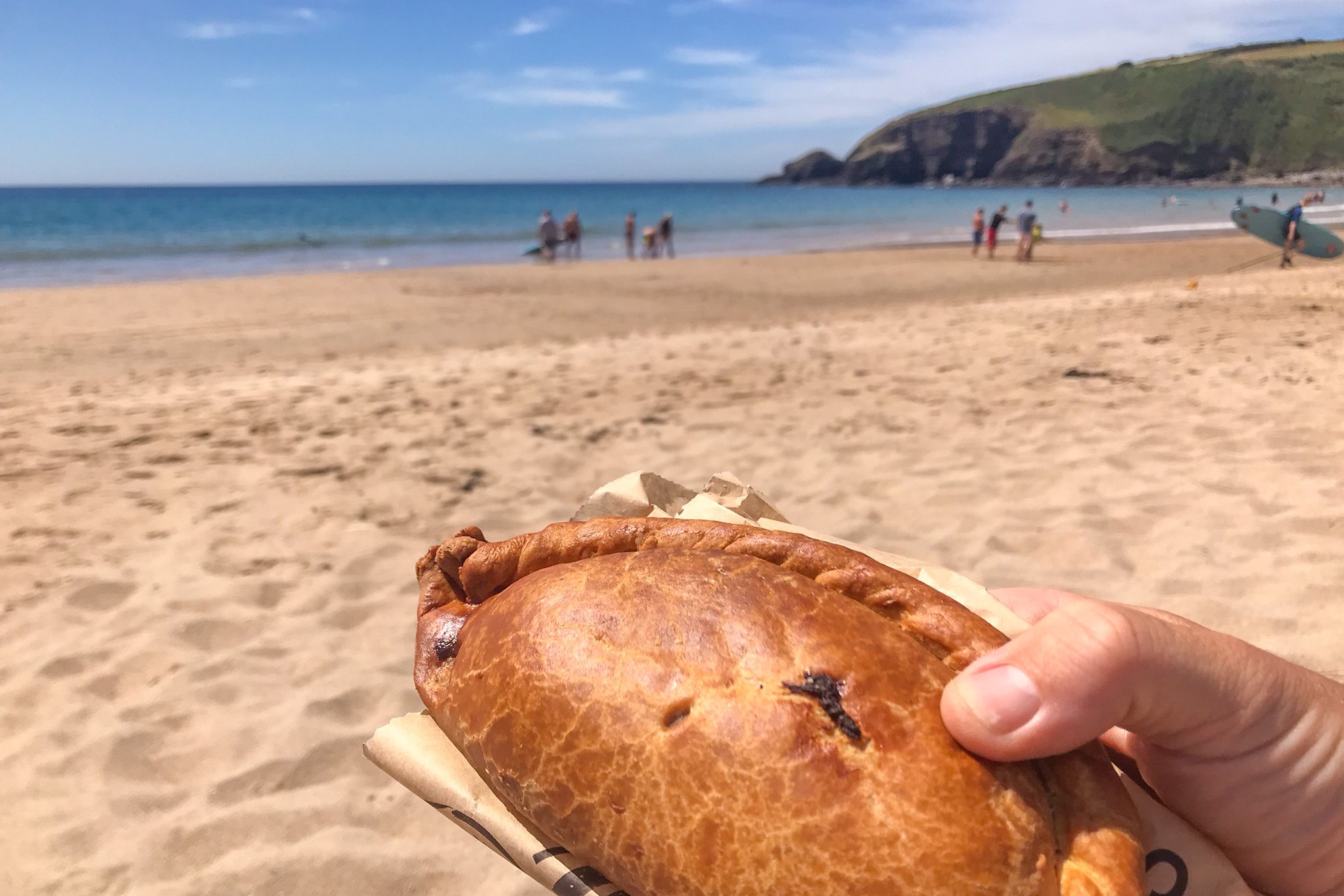
And confirming that, despite best efforts, this is not really the Med or Australia, how about a pasty back on the beach? Proving this is 100% pure Kernow.


Like pasties, I doubt you would find a bag of pork scratchings on a tapas menu, salty fatty fodder to accompany a pint of St. Austell Tribute. Still, I can easily envisage pints and pork products down on the Costa del Sol. Gammons eating bacon with tea and Estrella.

We were snacking in a pub garden in Mullion, a prelude to ending the day down in Mullion Cove. The small cobbled harbour here almost seems an impossibility. Wedged into the towering coastline, it feels like a tiny fissure in an almighty, unyielding wall. Sanctuary from violent winter storms might only be cursory, sparing. Yet here the harbour still stands, and to stand here is to feel on the very precipice.

Somehow there is a way up from the nook of the harbour, via another goat track section of the coast path. It’s open country, ideal for rabbits and birds of prey eating rabbits and walkers just casually wandering and falling down an unseen ravine. Compared to those fine sandy beaches elsewhere the ocean in front is a less inviting prospect, though arguably more beguiling. A swirling canvas captivating and luring smugglers and pirates and hardy fisherman’s friends of yesteryear.

Illuminating it all, the reddening sun drifts towards a watery horizon, setting closer to ten o’clock in this incredible summer. Glazing the sea and the land and the sky. And kissing our faces a shade of gammon.


And so, the final Lizard bite (part I) culminates in the perfect encapsulation of everything that has gone before: Kynance Cove, with bonus half a pasty.

In recent years, Kynance has become prey to a combination of Poldark Disease and Instagramitis, developing mythical, bucket-list status. All too frequently I am presented with short video clips set to jaunty music showing half-naked people frolicking in crystal waters, often with the caption “CAN YOU BELIEVE THIS IS ENGLAND!!!!!!”. As tedious as these become after constant repetition, they have a point. Kynance is an undoubted jewel in a very lavish crown.

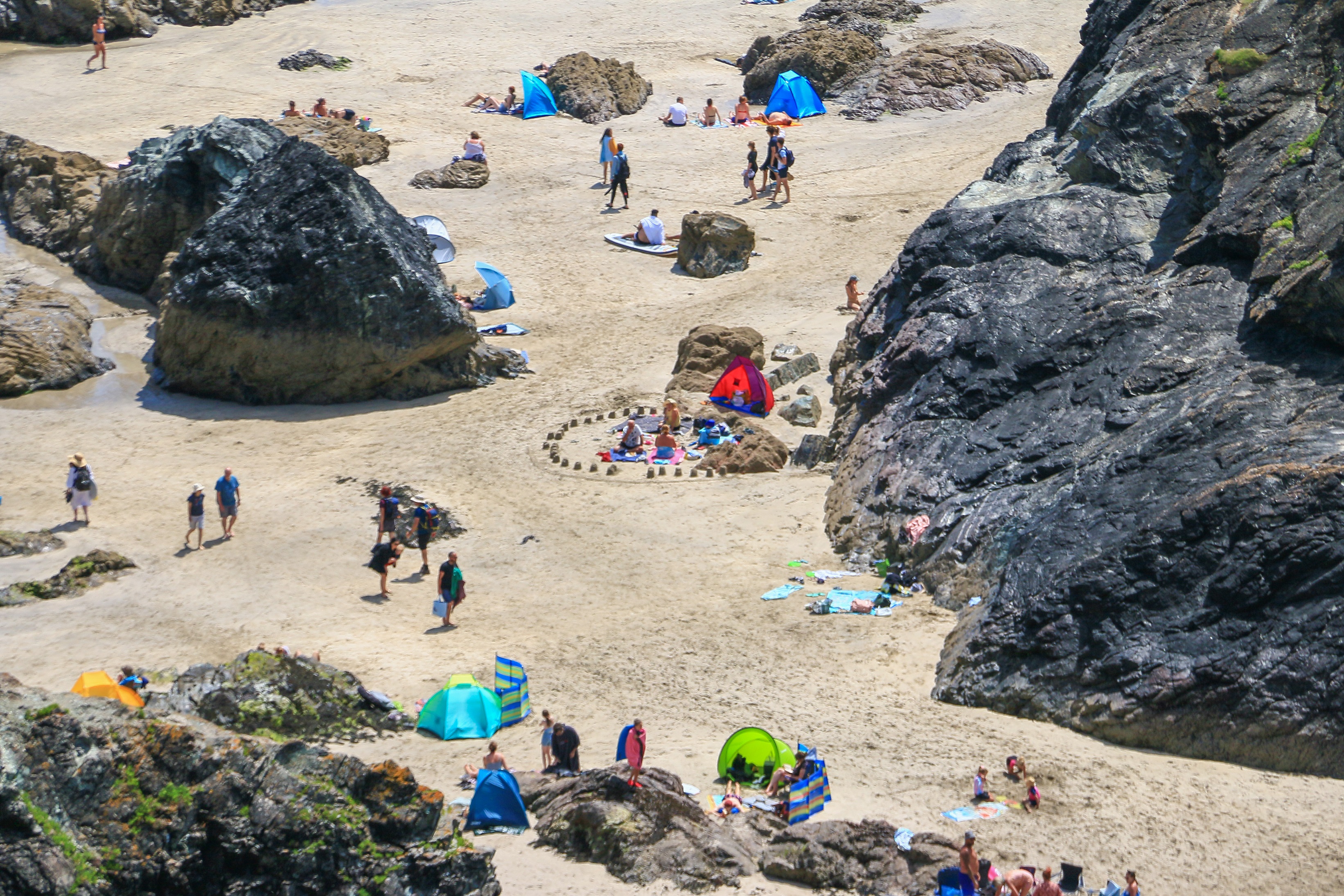
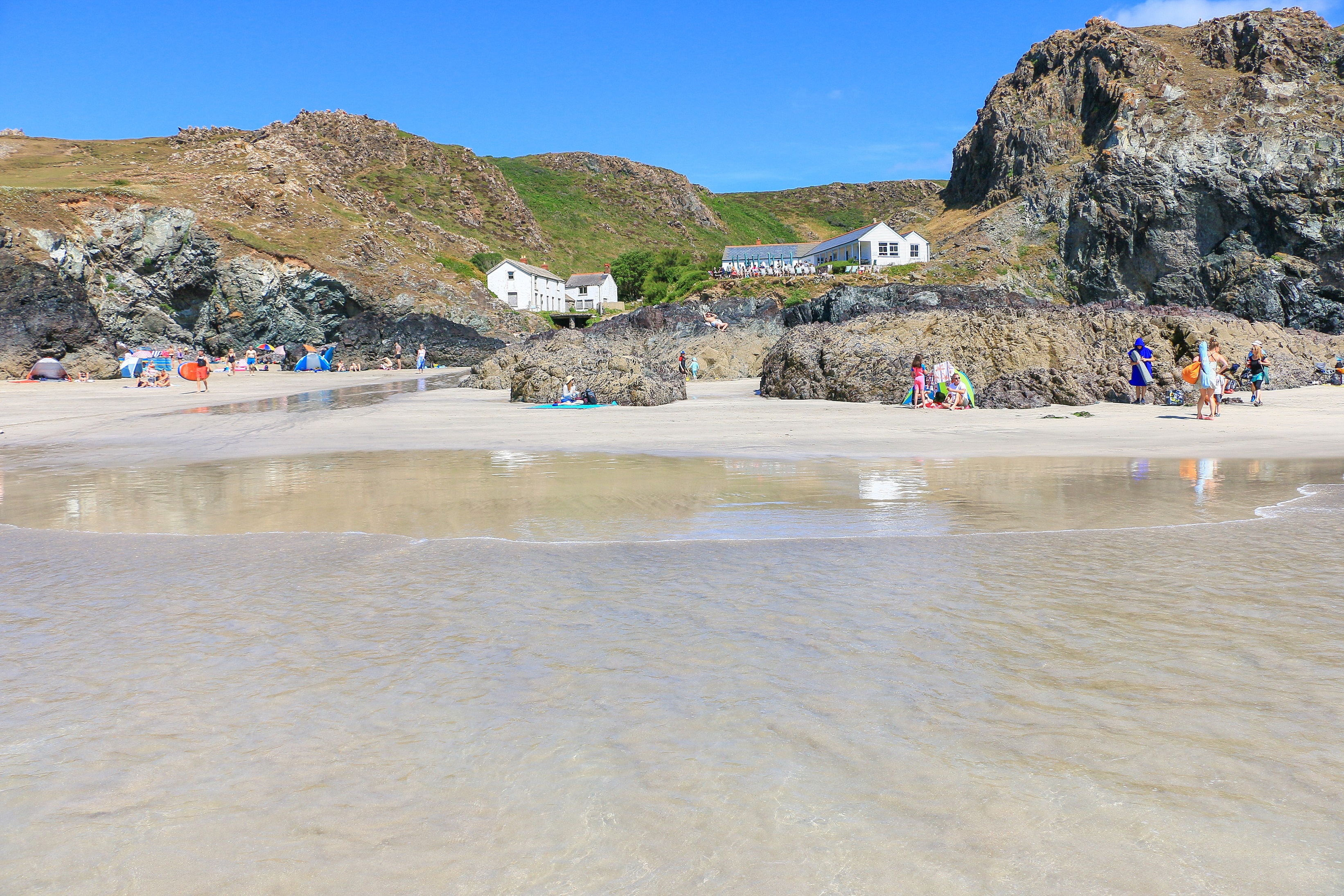
The good news is that despite a warm sunny day in July propelling many vehicles to the National Trust car park, the scale of Kynance Cove is sufficient to maintain a sense of space and serenity. This is especially the case with the tide on its way out, revealing wider stretches of sand, secret nooks and unexpected crannies. In spite of everything anyone can find their own little wonderful spot of paradise.

Still, the kids built a fortress of sandcastles on the beach to keep wandering Scousers at bay, encircling our clan from marauding invaders and video influencers. Not that I sat within it for long spells, keen to just potter up and down and in and out and via the NT café for a mediocre coffee and slice of carrot cake.

Views from up high once again highlight the drama and spectacle of nature, as huge lumps of rock appear as they have been thrown haphazardly into translucent waters and edged with golden sand. The people who once seemed many and varied at sea level morph into colourful speckles, dots on a more expansive landscape. But, with a bit of zoom, that family fortress is still visible.

As I descended to sea level to join them, still a bit peckish, I was delighted to find I had been gifted half a pasty. Originating from the locally ubiquitous Ann’s Pasties, it must have been a product of Kynance proportions for there remained a substantial lunch in front of me. Gorgeous, and at least it wasn’t too hot.

Food & Drink Great Britain Green Bogey Photography

Freefalling

There is a quaint tradition that takes place in Australia around every three years. Puffed up on bombast and / or desperation, the Prime Minister of the day boards a private jet to Canberra before being chauffeured through its leafy streets to tea with the Governor-General (almost ubiquitously a retired military general). He (almost ubiquitously a he) asks the Governor-General to dissolve parliament and allow for a general election. Outside, the nation celebrates in one almighty eye roll and stocks up on paracetamol to get through a six week headache.

In 2022 when we have all been Zooming and Teamsing and FaceTiming like forever, this ritual seems quite the preposterous exercise. Not to mention overly excessive in the use of fossil fuels. But the mining donors will love it and, of course, the media lap it up. Cue live coverage of the Prime Ministerial jet landing, the man himself ushered into a shiny white car, frenzied speculation about what weekend voting will fall on and the odd reference to a democracy sausage (like the sausage sizzle at Bunnings, tastes awful and often comes with a sick feeling several hours later).

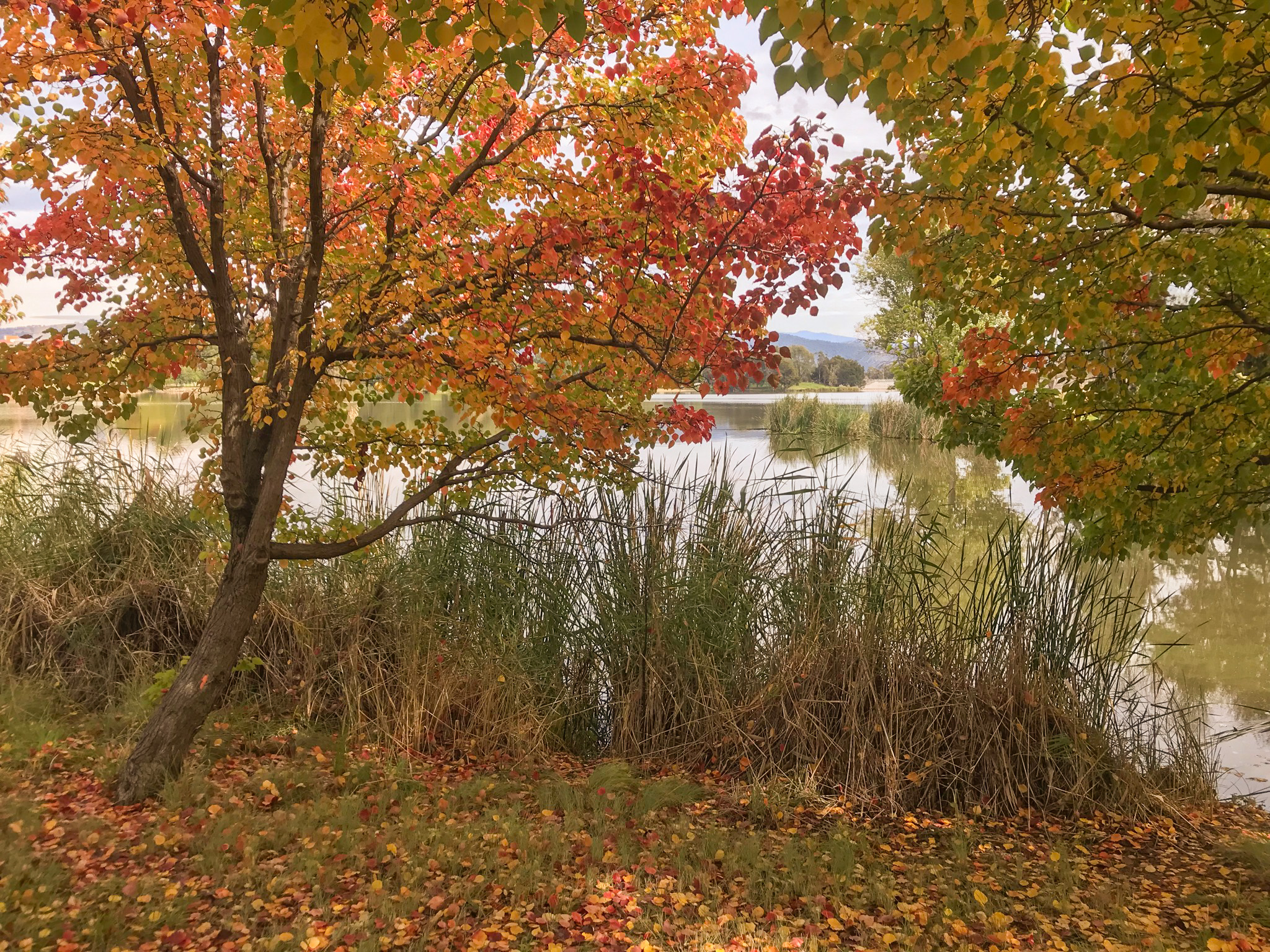
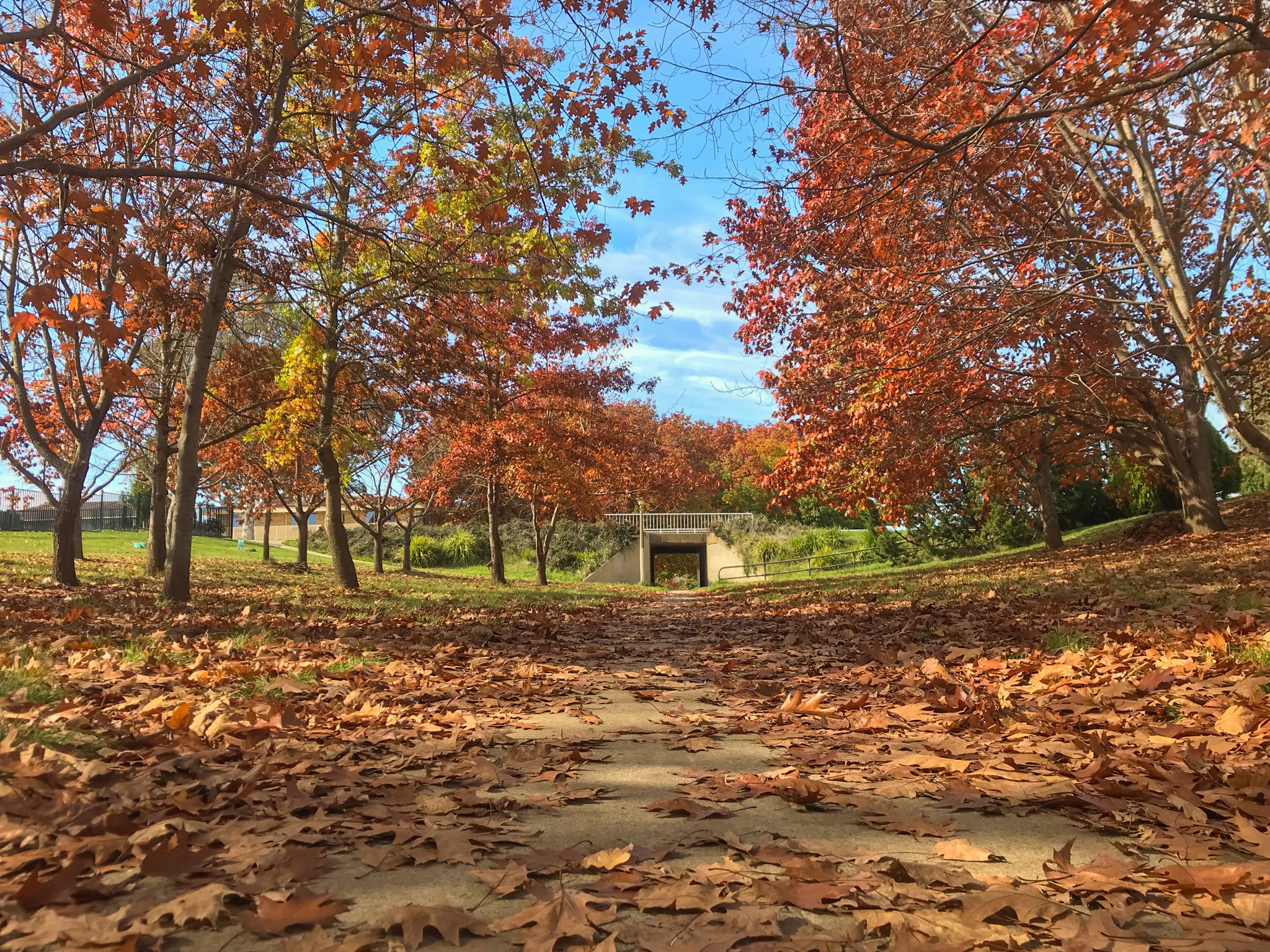
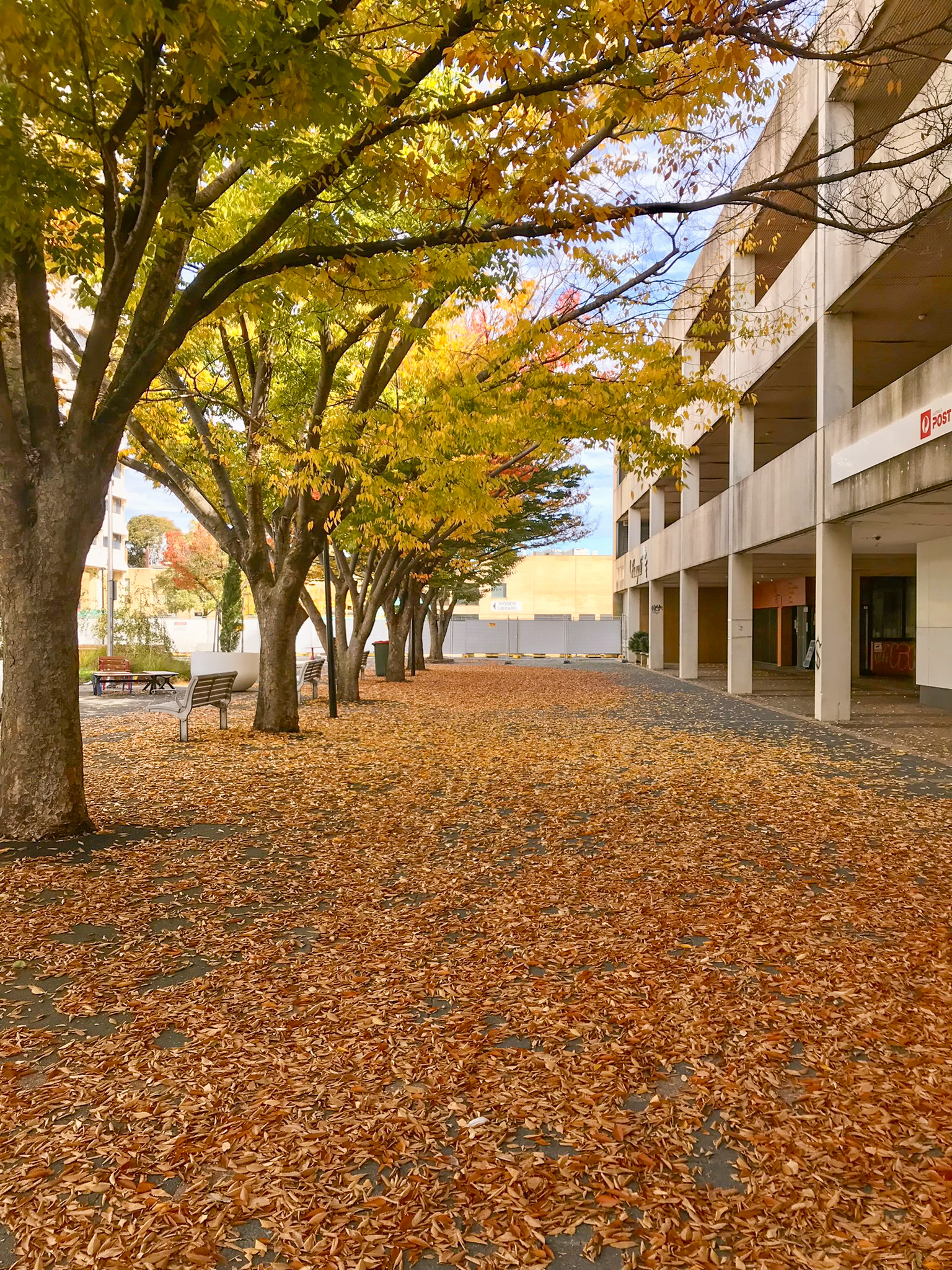
Should the PM look up before pressing the flesh with the GG he might notice the beautiful tree-lined avenue of Dunrossil Drive. A road that – like the GG – gets its moment in the sun every three years. Spring elections will be accompanied by a tunnel of vibrant, lime green. Autumns, the golden shimmer of industrious nature gently on the wane. Cycles of nature and political fortune.

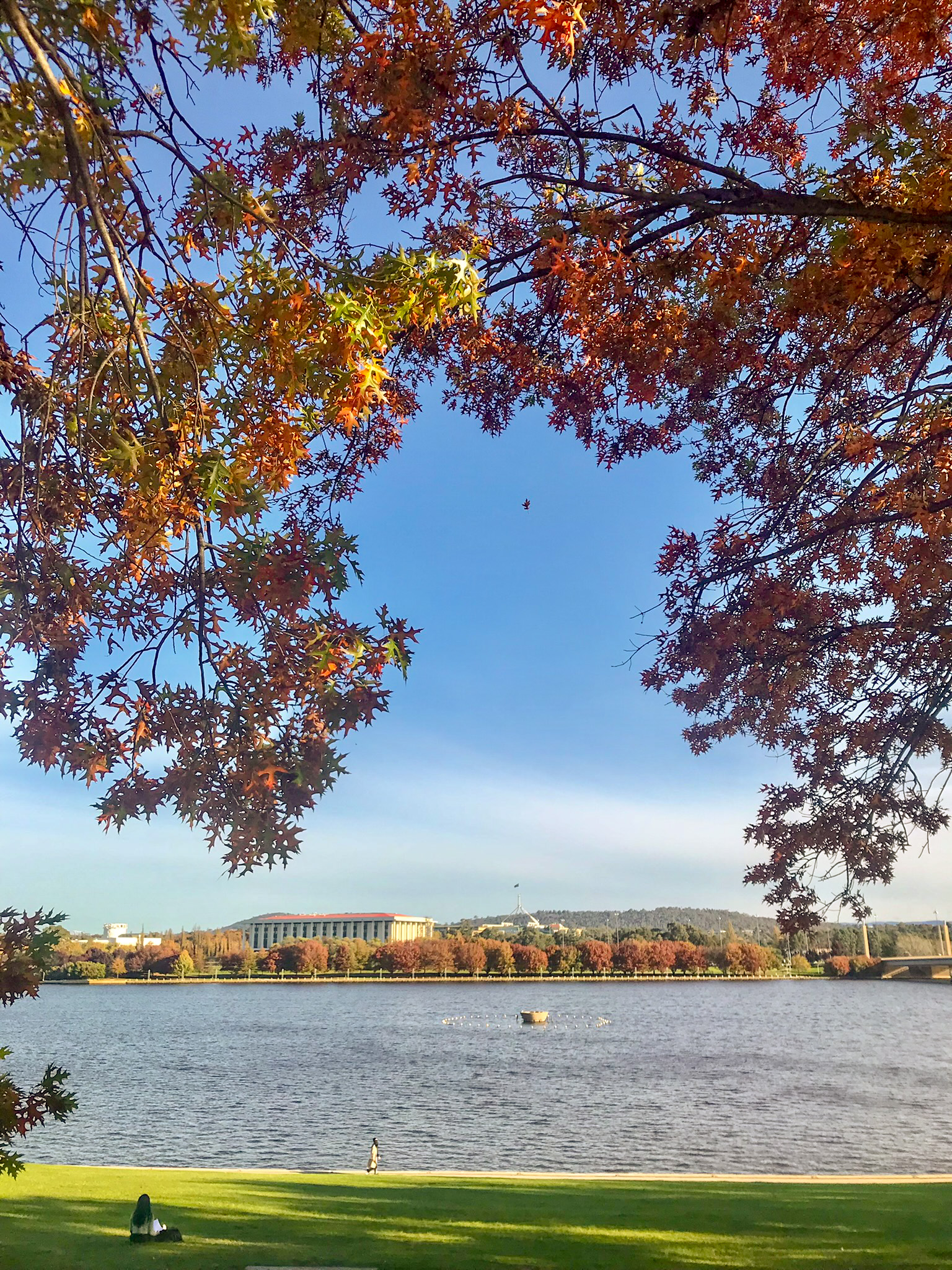
If the Prime Minister is anything like me (hopefully not), he will get out of his car and walk around taking surreptitious pictures of suburban streets with his phone. Every March, April and May they stack up, a photo reel transitioning from green and yellowing hues to fluorescent pinks and purples. Every now and then a picture of a cake interrupts the timeline.

Some of the photos manage in landscape but more often than not portrait mode is required, creeping ever backward and breathing in to fit the entire scene in frame. Should the Prime Minister find himself in such a situation he might want to beware of falling backwards into a hedge or car park or sports hall or absence of policy on women’s equality or word salad on climate change. But admiring the scene, how good is this climate change?

As the days, dress ups, press conferences and weeks pass, the Prime Minister may or may not make it back to see the Governor-General to get sworn in or (should this transpire) hopefully sworn at. By then, the colours of the capital would have faded some more, the trees along Dunrossil Drive depositing a crisp confetti to be scattered by the wake of a Comcar. And the Prime Minister and his cabinet and his members and his friends and his lobbyists and his mentors and his donors will be stuck in Canberra in the freezing fog. A beautiful thing.

Australia Green Bogey Photography

The golden days

Is anyone else fed up of living in ‘interesting times’? If there wasn’t the death of a rock icon followed by the self-harm of isolationism followed by the election of a rabble-rousing orange manbaby preceding the onset of catastrophic bushfires coming just before the spread of a deadly virus leading into wild lockdown parties before another calamitous war broke out would things really have been that boring? It’s no wonder many people my age seem to hanker back to the 1990s, when the biggest deal was Jennifer Aniston’s hairdo.

If you are seeking uninteresting times, you could look no further than a long drive from Canberra to Coonamble and back, especially if this takes you through Dubbo. Admittedly that would make for some pretty uninspiring content, but there is comfort and reassurance to be had in the boring. I just don’t know how I will stay awake though, and it’s probably the same for you, dear reader, as well. So, in an effort to entertain all round, I contrived to make the journey into one big loop, extending the kilometres but exposing myself to some new tarmac – and dirt – along the way.

The first of the new ground was along blacktop through rugged Karst country, taking me from Abercrombie Caves down into the fertile plains around Bathurst. I could have detoured around Mount Panorama the right way while I was here, but time was pushing on and I was getting low on fuel. Stopping at a nearby servo offering the cheapest E10 for miles around, I became the proud owner of the most expensive tank of petrol I have ever bought. Until next week.

As the last glowing oranges and indigo hues of sky gave way to a starry night, I settled down for the evening in Sofala. By settling down I mean parking my car in a free camping area next to the Turon River, eating salad and cold pizza in the front seat, before clambering into the back and onto an air mattress. For a night of sweet cheesy dreams, eventually.

Sofala is one of those tiny places whose glory days have long passed. The glory days being – like many of the settlements in this region – the discovery of rich deposits of gold. Information boards display grainy black and white images and describe a bustling town featuring stage coaches and banks and theatres and, naturally, several raucous hostelries. Today, the high street is a sedate affair offering understated charm and just the one, currently lifeless pub.

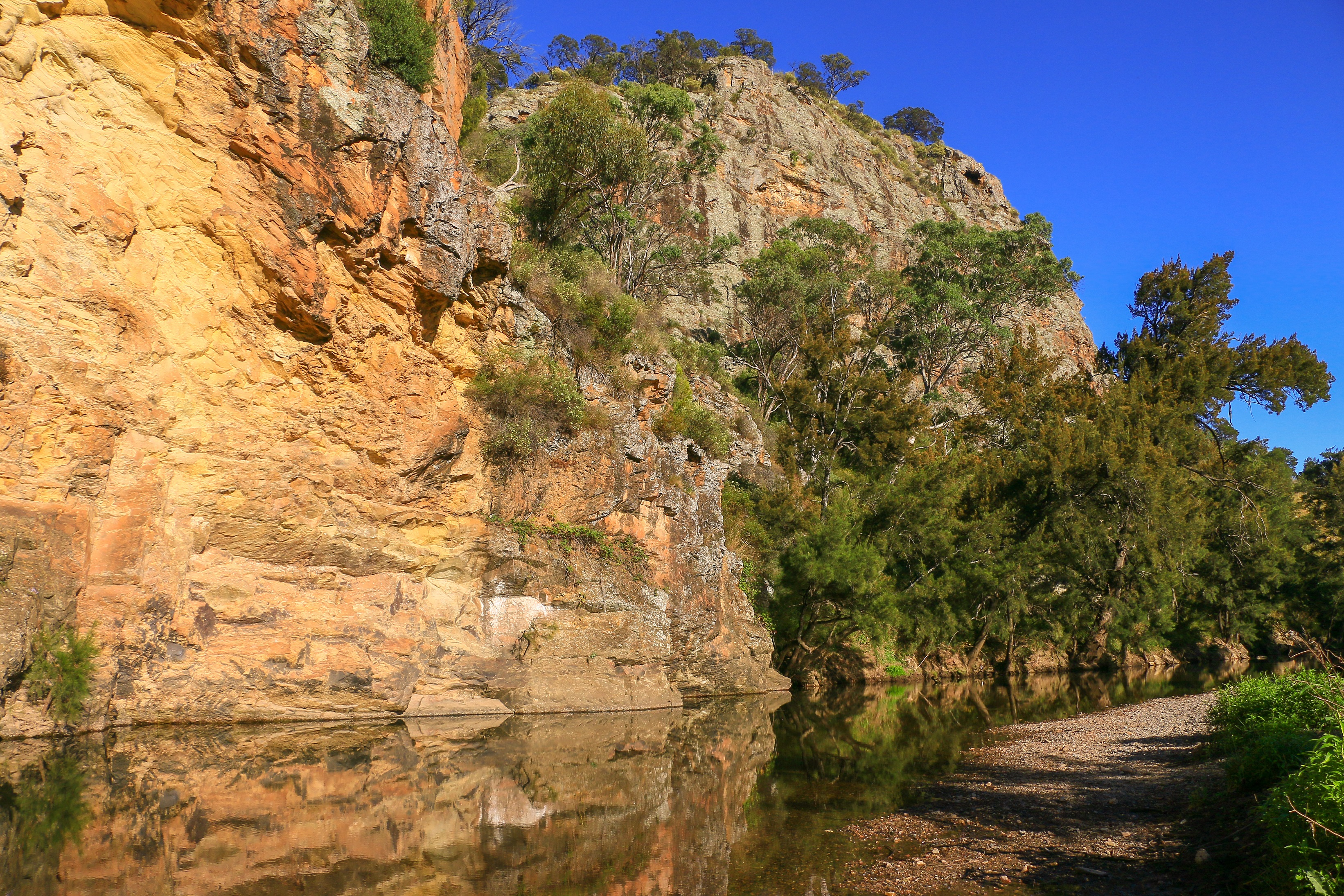
It turns out there is gold remaining just out of town, or at least the same glow emanating alongside the river. Water has scoured a course deep into the earth, leaving precipitous cliffs towering high above the mirrorlike pools of the Turon. Known locally as Wallaby Rocks (as indicated by a small, hand painted sign), this came as a total surprise, an interesting feature of an interesting drive that you wouldn’t have known about without passing this way.

I was heading up towards Hill End, another settlement grown rich on the sunlight shimmer of minerals. Today it is preserved by NSW National Parks as a historic site, a village of the past functioning in the present. And so there is an old pub that still operates as a pub, a general store that still operates as a general store, and a scattering of private residences with owners doing the usual mowing and chook-feeding and sitting on creaky wooden verandas. I expected a more bustling affair here, but on a Friday morning it felt like I was the only visitor, a conspicuous sight wandering the streets and peering into people’s gardens.

If nothing else, the village is aptly named, clustering at the end of a long plateau above the deep valley of that Turon River. This results in the promise of three separate lookouts and though not quite of a scale of – say – the Blue Mountains or Kosciuszko, they offered fine views of the golden, rolling countryside. Vistas that were, I suppose, somewhat interesting.

From Hill End I took a lengthy, winding road down towards Mudgee. This would be one of the more interesting towns along the route but cognisant of making progress north and noting the fact that I had stayed there before, I eschewed the town centre and made for lunch in Gulgong instead. The lunch would not be as fancy or as overpriced, but it was satisfying enough on a shady bench in a town that appeared to be rooted in the 1950s. Or maybe 80s. Golden times, whenever they were.

With every kilometre the level of interest along the road peters out, the landscape flattening and becoming dominated by grain. A painted silo at Dunedoo testifies to its abundance alongside the effort of these towns to generate some form of tourism through silo art. Further along at Mendooran there isn’t even a silo to justify stopping, but I stop anyway, grabbing a country coffee and slice of carrot cake to appease the bitterness of the coffee.

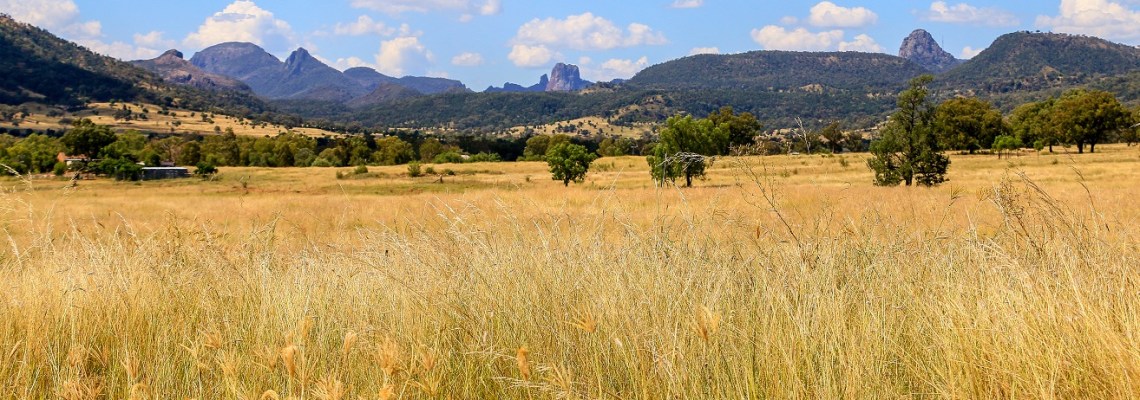
It is perhaps the plainness of these plains, today frazzled hot and windy, that makes the volcanic pinnacles and rugged chasms of Warrumbungle National Park all the more interesting. More than interesting in fact. Spectacular. I’ve said it before and I’ll say it again, I love this place and its very magnetism makes it impossible to drive on by. The view from Tooraweenah beseeches: come hither.

I should be making for dinner in Coonamble but cannot quite turn left. Sure it is thirty-five degrees, but the midday sun is well and truly a thing of the past and the return of trees to the landscape should offer some shade. Besides, I need to do something more interesting today, something other than largely sitting on my arse as Australia passes by. Climbing more than a thousands steps to Fans Horizon and marvelling in a conglomeration of sweat and awe at an incredible landscape is pretty interesting.

Prior experience of Warrumbungle National Park alerted me to the presence of showers in the campground, something I was thankful to use before completing the final leg to Coonamble. Last time I came here, the town had quite the aroma courtesy of the mouse plague. I didn’t want to be the one bringing that reminder to its townsfolk today. And be turned away for dinner.

And what a dinner, as always. The interest here is less Coonamble but more friendship and warmth and good food and loud voices and love. From twilight walks along the flat roads with my dear friend Norz, to tales of sand-blown motorbike adventures and potential pizza toppings with Howard. And then there is the joyous company of a two year old, one minute impelling me to drag race him in a plastic toy car, the next inventing the new sport of whisk tennis.

There are some mildly interesting things in Coonamble, including a painted silo, the nickname hall of fame, and the languid brown ribbon of the Castlereagh River. This time I discovered the weir, some new metal emus (competing with the Galahs of Gulargambone), an impromptu water park at the pub, and consumption of a different slice at the only café open on a Sunday. It’s not much, but it doesn’t matter.

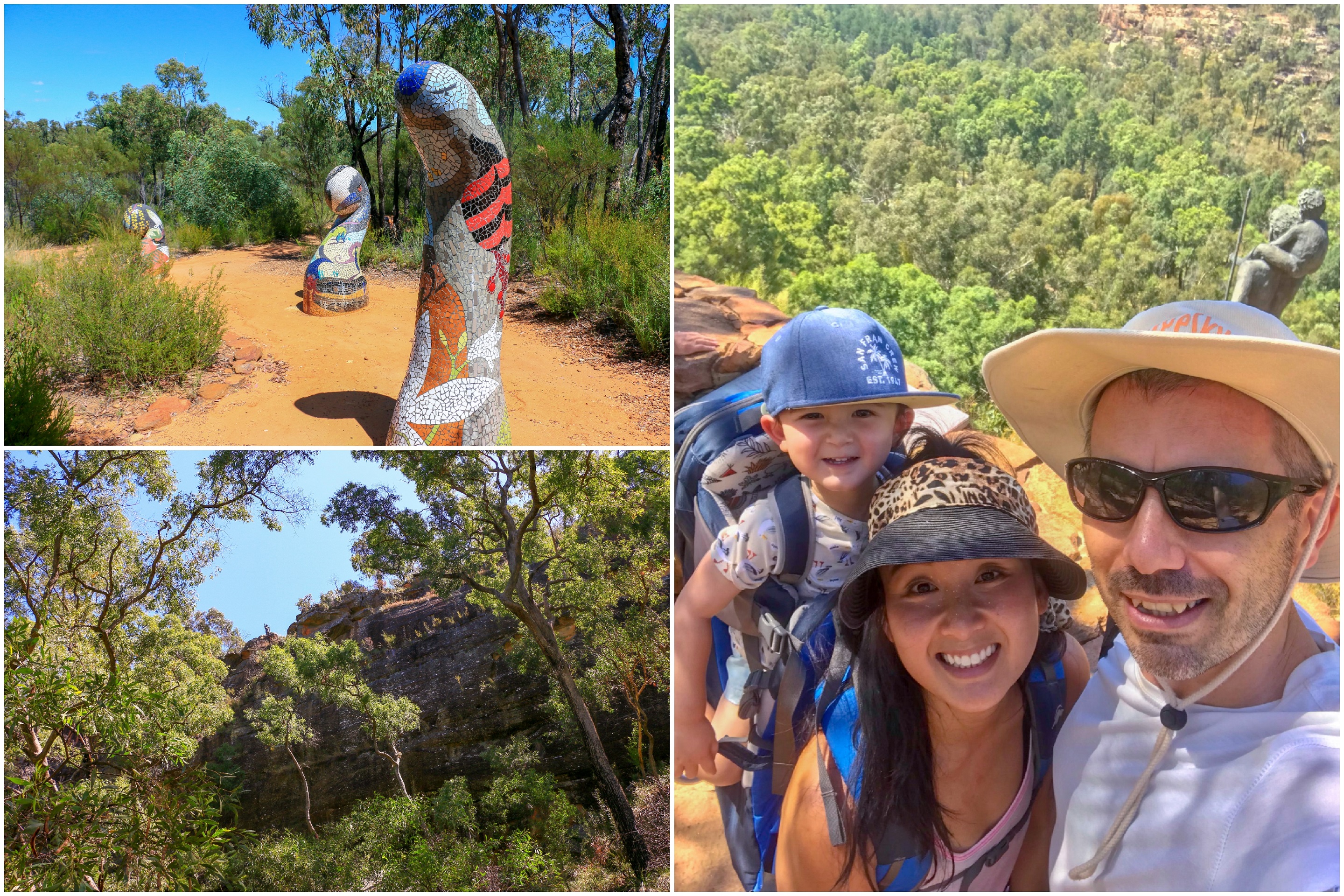
There were some surprises remaining out of town, most notably the splendid Sculptures in the Scrub. Tucked away in The Pilliga, the setting was unexpected: a fine, forested gorge whose escarpment is punctuated by artistic installations of meaning and connection. I always thought of The Pilliga as one big flat sandy forest, a landscape of monotony that would imperil any who should veer off its dirt roads. Here, you can feel things which are rich and timeless.

Just a stone’s throw away is Pilliga Pottery, but only if you’re a crow or galah. The generous rains of this summer meant the fording of a creek was out of the question, with further unknowns awaiting beyond. So, an hour and a half later, on mostly sealed road via Baradine and Coonabarabran, we were finally feasting on pizza and drinking out of earthenware cups. Another little enclave hidden in the woods, perfect to bunker down from the world.

Interestingly enough, in many ways the world was also here. The terracotta and tiled roofs and earthen walls evoked a late lunch in Spain, pre-siesta. The scattering of outbuildings and cars and rusted trinkets could be backwoods America. And then, as well as pizza on the menu, there was Bratwurst and Sauerkraut to be enjoyed. The reason became clear hearing staff converse in German, a multigenerational family thriving in The Pilliga. A veritable United Nations, without the veto power of a deluded kleptocracy.

And so, we return to those interesting times. Via Warren and Trangie and Forbes and Cowra and Murrumbateman and Moscow. With more time, Warren warrants greater exploration, particularly among the fringes of the reinvigorated Macquarie Marshes. Back in big sky grain country, Trangie may warrant a return purely for cake. I paused in Forbes for a late lunch, one of the last remaining towns of the Central West that I had yet to visit. This too had charm, elegant municipal buildings rising up among a town centre boasting a fifties Cadillac drive-in vibe. Elvis does live just up the road after all.

From Cowra the road is more familiar and home is on the horizon. Interest fades and thoughts turn from the rear-view mirror to what lays ahead. Hopefully avoiding the Highway to Hell.

Australia Driving Food & Drink Green Bogey Photography Walking

Still well

Freedom. We hear much about its supposed decline. Personally, I’d quite appreciate the freedom not to be exposed to a bunch of conspiracy nutjobs freely protesting about their lack of freedom and flaunting their undeniable individuality through exemplary selfishness. The freedom not to have my head done in.

Sometimes you just want to say “oh f*ck off” and sometimes I do just that when a news story about freedumb fighters forcing cancellation of a charity book fair or abusing a masked-up pensioner or accosting a sixteen year old in a supermarket trying to support the safety of the community gets an airing on the radio. Seriously fuck right off you fucking freeloading fuckwits. Excuse the language but free speech and all that yeah.

At other times it would be nice just to get away from it all, lose radio reception, lose phone signal, lose the presence of moronic people. A solace fairly easily achieved on a comfortable drive down to Kosciuszko National Park and then via your own two feet. Nature, fresh air, rugged wilderness, freedom from freedom.

On the pursuit of freedom I’ve been finding appeal in the idea of multi-day walks of late (or bike rides). Admittedly most of that appeal gravitates towards the South West Coast Path or the Hadrian’s Wall Path or the Cleveland Way or any other number of routes traversed by Portillo, Humble, Green, Reeve, Robinson et al. and delivered to me via the SBS evening schedule. The kind of walk where you can stop after a mile for tea and cake, pushing on for a lunchtime pasty before reaching a quaint coastal village for a pint, feed and cosy room for the night.

Thanks largely to its wildness and locking up of much of the land, such walking experiences are harder to find in Australia. Instead, multi-day hikes are more intrepid affairs requiring the portage of camping gear and emergency beacons and snake bite kits. I would probably quite like these too, if I had a Sherpa. Many people head into Kosciuszko to do as much, and the cars parked at the trail head in Guthega on a Friday indicate some are out there now.

I too park my car up to join the Illawong Walk, slightly anxious about leaving my new second-hand toy overnight. My backpack too is full, but compact in size. Mostly it contains a change of clothes and extra layers and, of course, a flask of tea and accompanying treat from a Jindabyne bakery. Passing the upper stretches of Guthega Dam, through herbaceous meadows and spiky wildflowers, it doesn’t take long to reach the suspension bridge across the Snowy River. An opportune spot for tea and cake already.

I had first come here almost a year to the day. Back then it was warmer and glowing, a delightful surprise full of sunshine, vanilla-honey aromas and Sound of Music earworms*. At the bridge I noticed a new track under construction. Destined for Charlotte Pass. And one year later it is clear. It is free. It leads – sort of – to a hotel.

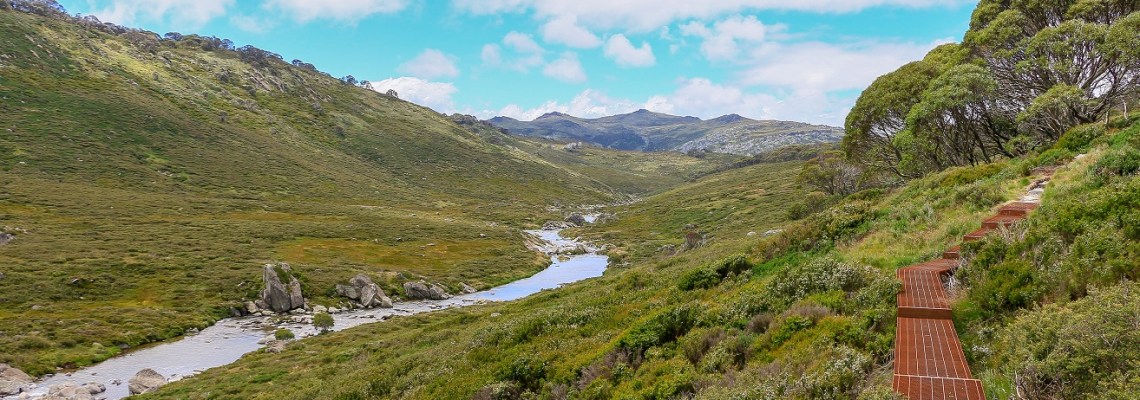
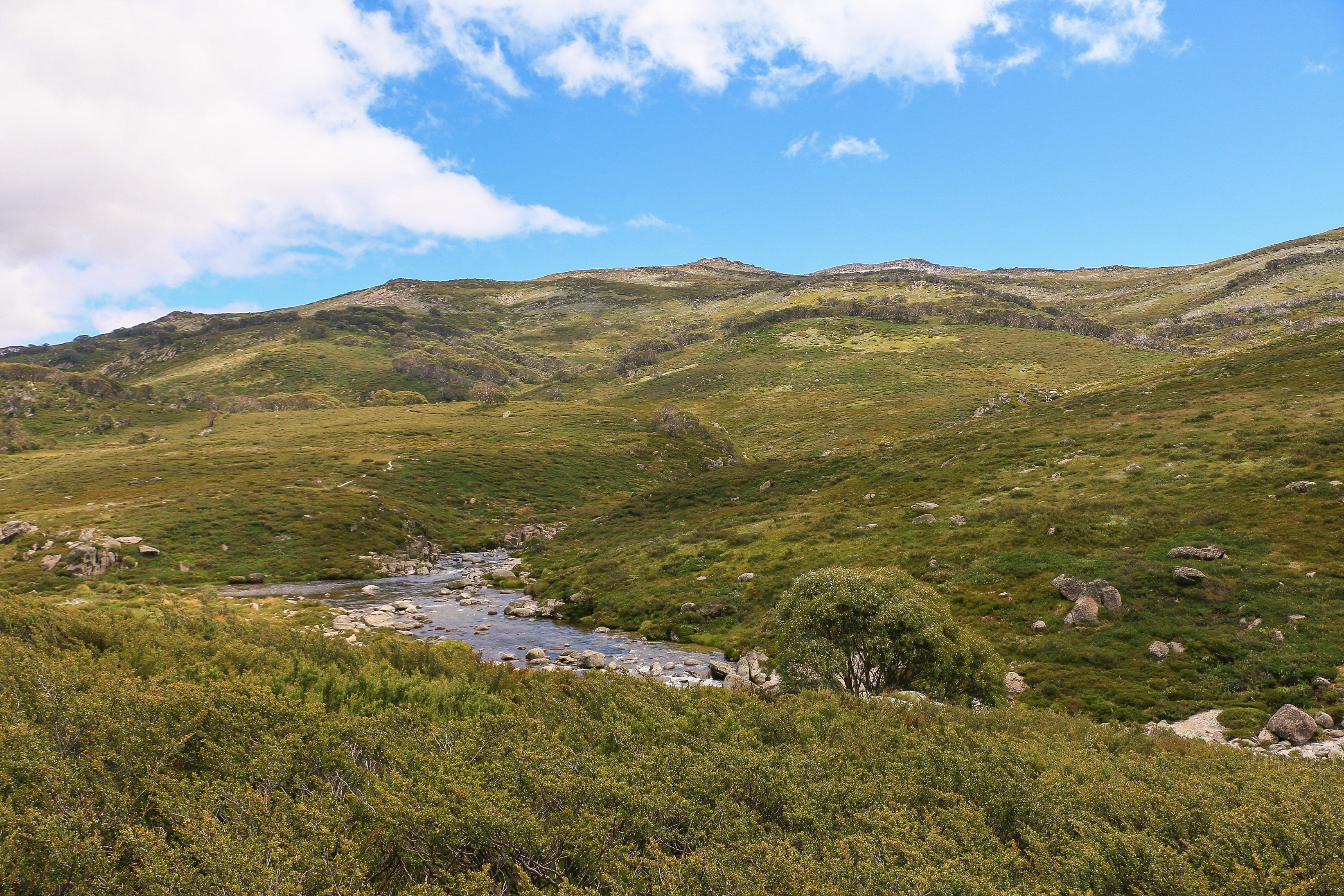
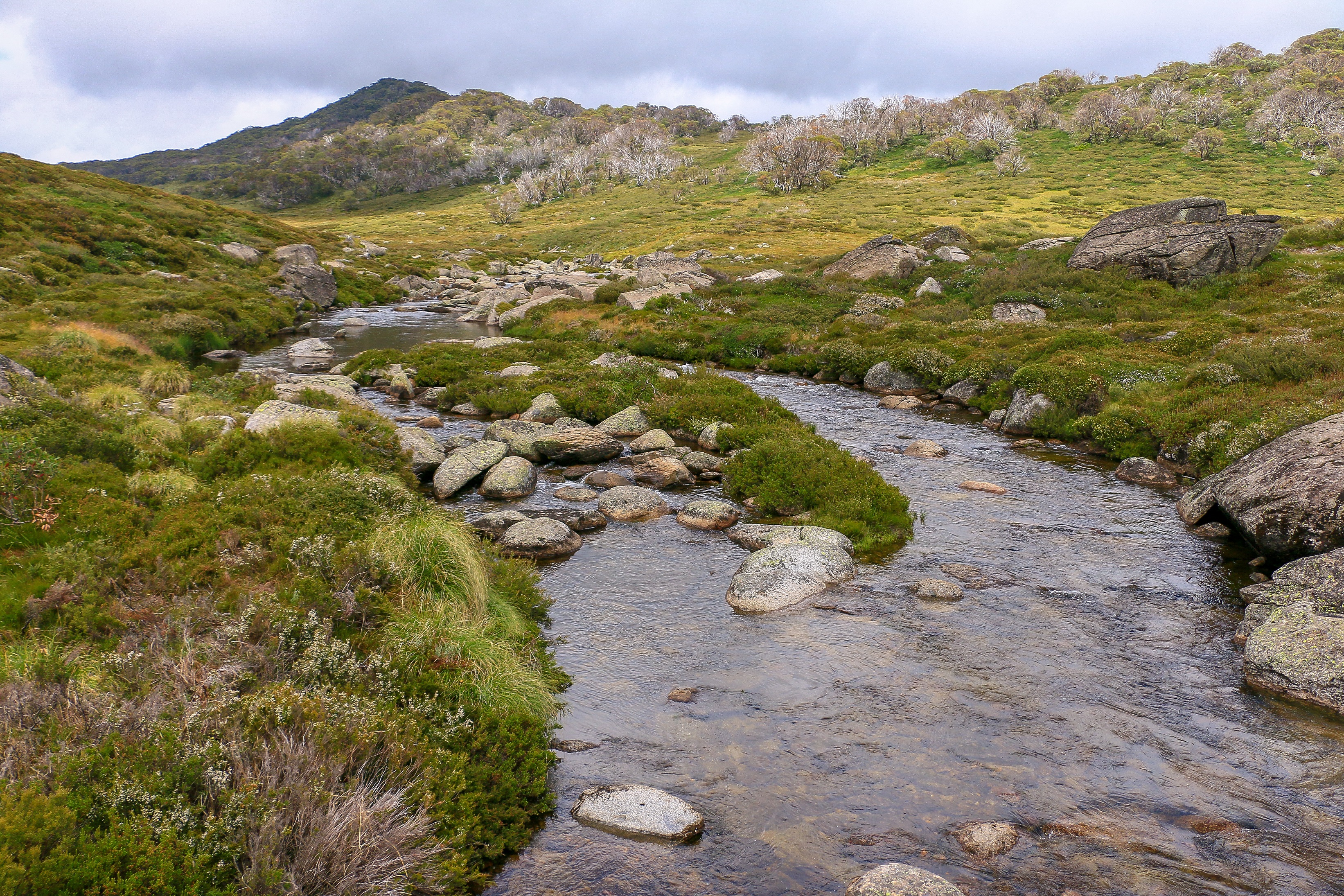
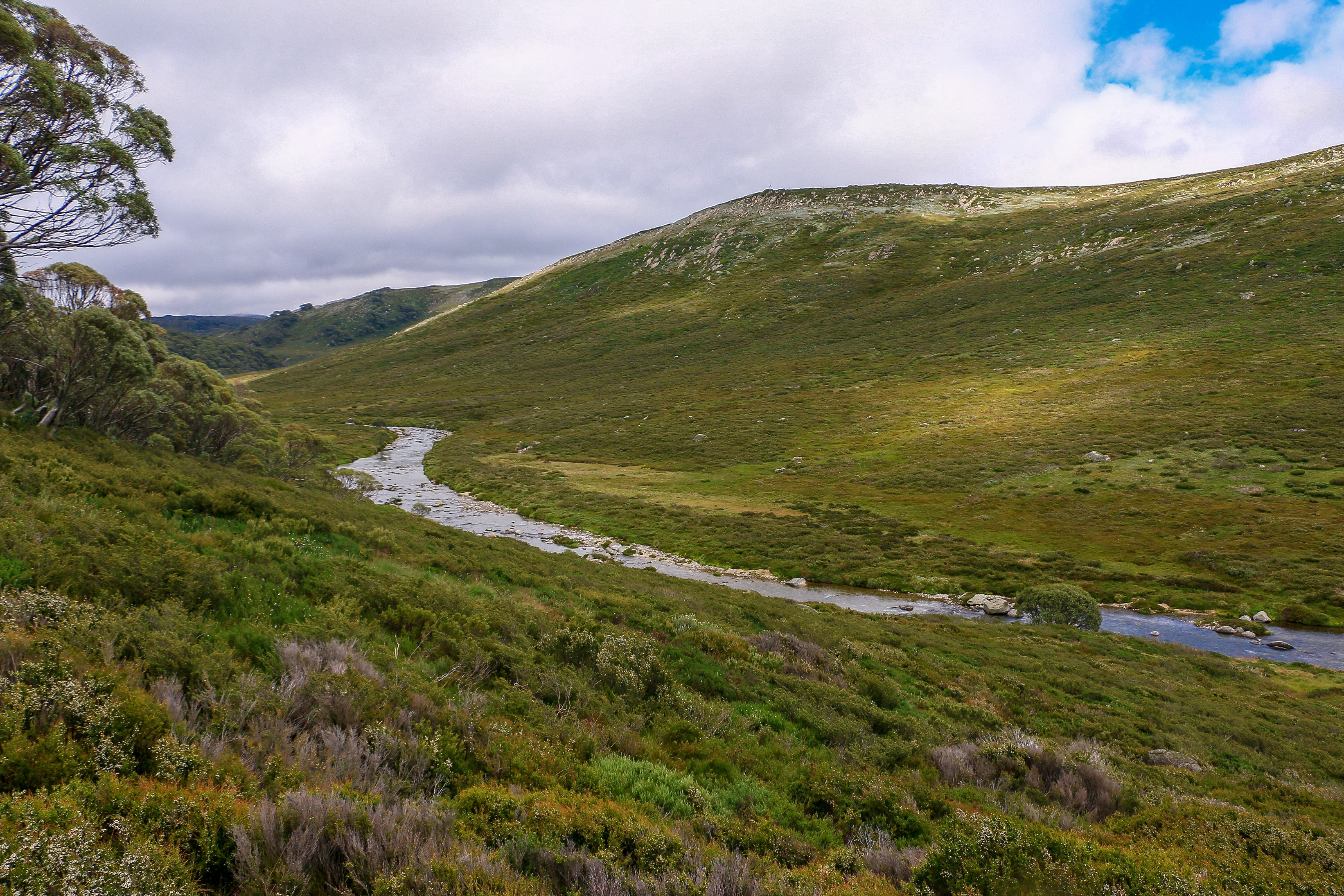
And so the walk continues to follow the Snowy as it meanders through open valleys and rising hills ever nearer to its source. While at times the vistas are expansive, at others the experience feels enclosed, contained, inching through tunnels of achingly beautiful and impossibly smooth snow gum. Alpine flowers form in clusters of white and yellow and pink. From near and far, the crystal waters of the river alternate between wide, placid pools and frenetic ribbons of white.

The walking is good and never especially steep, with much of the route marked by a metal walkway elevated from the ground to protect the rare and fragile environment underneath. Its newness is clear and sometimes you feel as if you are the first to tread its course. There are other people testing it out, but even these are few and far between.

Closer to Charlotte Pass people become a more common occurrence as the trail intersects with the Main Range circuit. More familiar views open up, from the stepping stones across the river to the outline of the trail weaving upwards towards Blue Lake and Mount Carruthers. One of these rounded humps is Mount Kosciuszko itself, so indistinct and underwhelming as the nation’s highest summit. But this is still a lumpy topography, something I am reminded of once again in that arduous push up to the parking area at Charlotte Pass.

Charlotte Pass village is nothing more than a cluster of ski lodges and cabins which are no doubt a lot more abuzz in winter. It’s another kilometre or two down the road, a fairly uninspiring drag that will be worse in the morning when walking in reverse. At the road junction down to the village a truck displays a massive red billboard promoting food, drinks and coffee. The one and only thing open.

This is the Stillwell Hotel and it also has beds for the night. It becomes clear pretty quickly that I am the only guest. I find it strange and sad that these places are so dead in summer, given the access to many walking routes and biking opportunities and extreme running and perhaps some fishing and possibly just a lovely picnic amongst the wildflowers. Still, at least there is something open (this is an improvement on past years) and there is food and drink being served. For me, a pizza overburdened with cheese will hit the mark, and provide catering for lunch tomorrow.

I theorised I could make this a proper multi-day walk by heading to Thredbo the next day, stopping over at another inn for the night. But there wasn’t much room, Thredbo now the mountain biking mecca and hosting some x-games rad-fest over the weekend. Instead, my hiking adventure merely involved a walk back to the car along the same route. Still, there are new perspectives to be had from a different angle.

Not that I could see the next morning, negotiating the incessant upward angle to the end of the road high in the clouds. Mist and drizzle swept into the valley, adding to the bleakness of Charlotte Pass village and its Stephen King feels. I decked myself out in every layer I owned, hood pulled up and wedged tight by a hat. A few cars passed as I lumbered my way toward the parking area, and I wondered if they thought I was some intrepid adventurer and / or serial killer.

Many, many cars are parked here and it is interesting to see how many days they have booked to be in the national park. Expiry dates on windscreens provide entertainment in the mist and you wonder how those people with three days left are going out in the wild. Other people are just here for the day, and a few gaggles embark optimistically for the lofty summits somewhere out there.

They should be fine. As I re-join the trail back to Guthega the clouds are starting to break up and passing glimpses of hillside and snow-dotted summit provide hope. The dour, swirling air seems to accentuate the beauty of the snow gums and the fragrant shrubs and the pin pricks of delicate flowers scattered among them. Small spider webs are bejewelled by the rain. The river sounds closer and reassuring, a clarion call to guide through the grey.

With a gradual descent the clouds rise and there are pockets of blue sky ahead. A series of summits are illuminated bright, bare hills erupting in shattered outcrops of rock. There is a sense of Dartmoor at times, and in other places a sense of Wales. But no refreshments in a cosy teashop a mile away.

Instead I have my flask and a big bar of KitKat, though it took some time to locate a suitable rock to sit on for morning tea. Further on, past the suspension bridge and close to the car, I finish up the pizza. By now, there are many more people setting out on a Saturday, lugging hefty backpacks with rolls of canvas and sleeping bags and kitchen utensils. Seeking their own freedom.

I am unsure why the final half a kilometre of a long walk always involves a ridiculous uphill drag. I probably could have parked closer. But I am pleased to see my car there, and pleased to see that it opens and starts. Now I am free to drive and free to stop in Jindabyne again and free to fill up with the very opposite of free petrol. Freely cruising up the Monaro and back to my home in Canberra, free of vaccine mandates and usually free of morons. Until they arrive from elsewhere. Both sitting in the nation’s parliament and camping at Exhibition Park. Strangely doing, pretty much, whatever they like.

* current earworm: Hasselhoff. Freedom. Oh, you too?

Australia Green Bogey Walking

The 0832 to Tumbarumba

Trains and schedules go together like trains and – well – Michael Portillo. Sometimes these schedules are fastidious affairs as in Switzerland, while at other times they are indicative aspirations, such as upon the platform of St. Budeaux Ferry Road. The problem with fastidiousness is the absolute carnage when it all goes wrong, like that time when a few trains into Geneva were running ten minutes late. You could see the terror in the faces of panicked locals as they reached for their mobiles to share the drama with loved ones and remediate the knock on effects of being late for an overpriced dinner. Quelle horreur!

When rail lines have faded into obscurity and decades of bureaucracy and nimbyism have finally been overcome to transform them into a gentle thoroughfare for people power, you wouldn’t think schedules really matter. They certainly don’t appear on the jauntily repainted railway sheds and hastily assembled flower beds signifying the start of the line. But schedules matter on a rail trail, because you really need to time that break for morning coffee and cake.

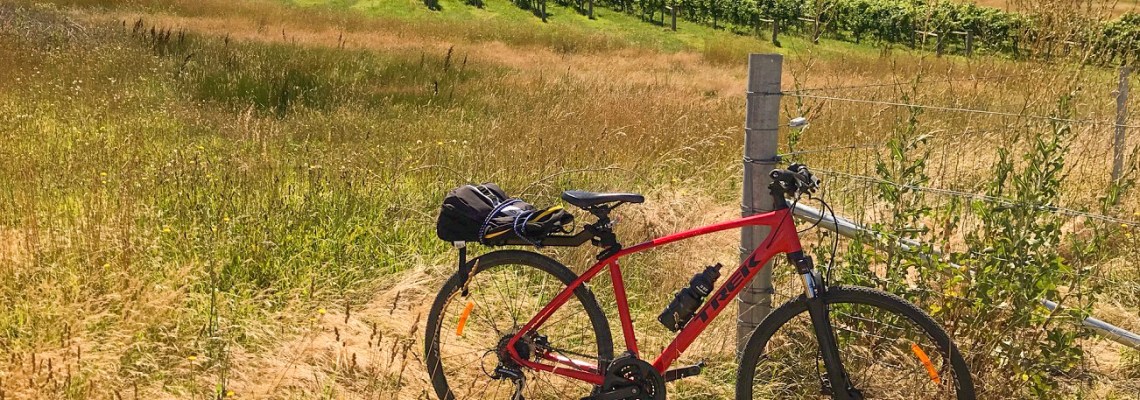
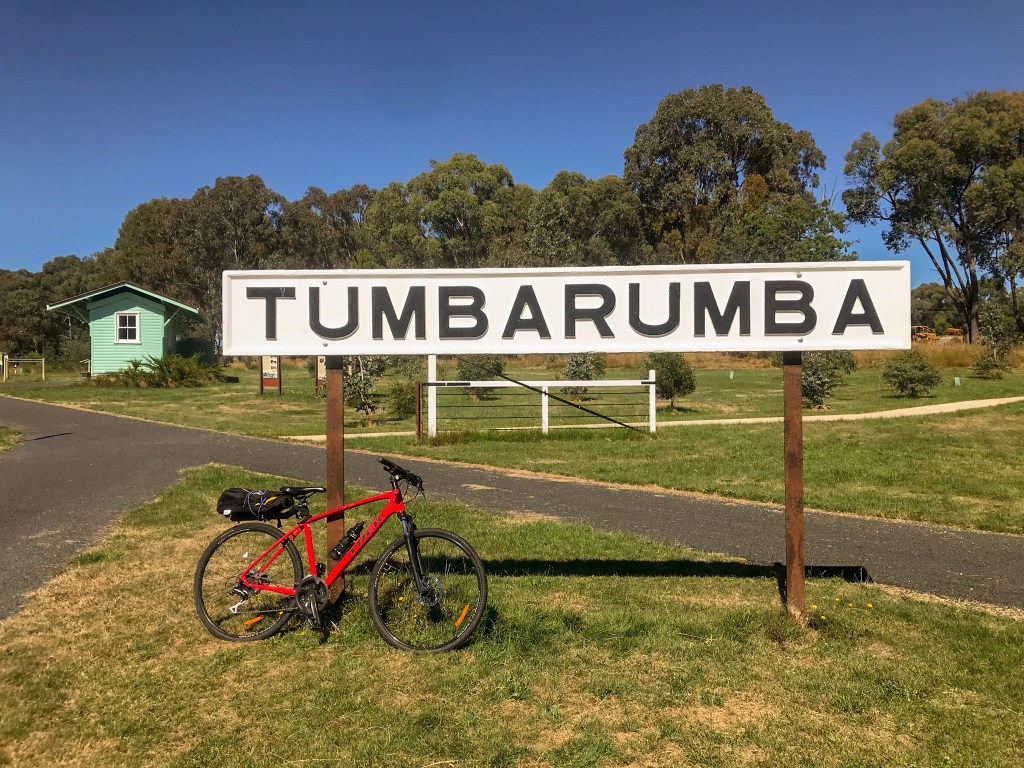
This is why, on a sunny Sunday morning in January, I embarked on the Tumbarumba to Rosewood Rail Trail by going from Rosewood to Tumbarumba. Or to be more precise, Rosewood to Tumbarumba Bakery, the only cake stop in town. Twenty one and a half kilometres to burn a few calories, work up a hunger, and hopefully enjoy some pleasant pedalling as the countryside passes by.

It is astonishing to think this is the only rail trail in New South Wales. While the state once again proclaims its own exceptionalism in leading Australia out of the COVID-19 pandemic (by ensuring everyone gets infected and supports the economic activity of Chemist Warehouse), it is a laggard in the rail trail stakes. Compared with the mighty 145km Brisbane Valley Rail Trail, this effort is a wee path. But what it loses in scale, it makes up for in quality.

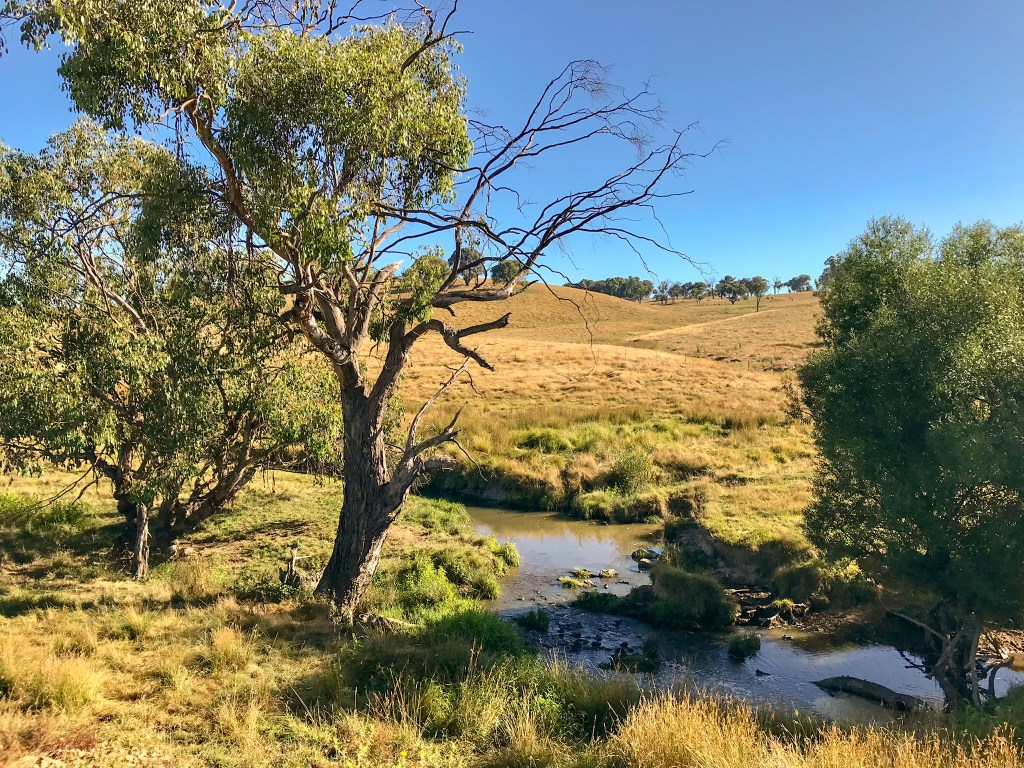
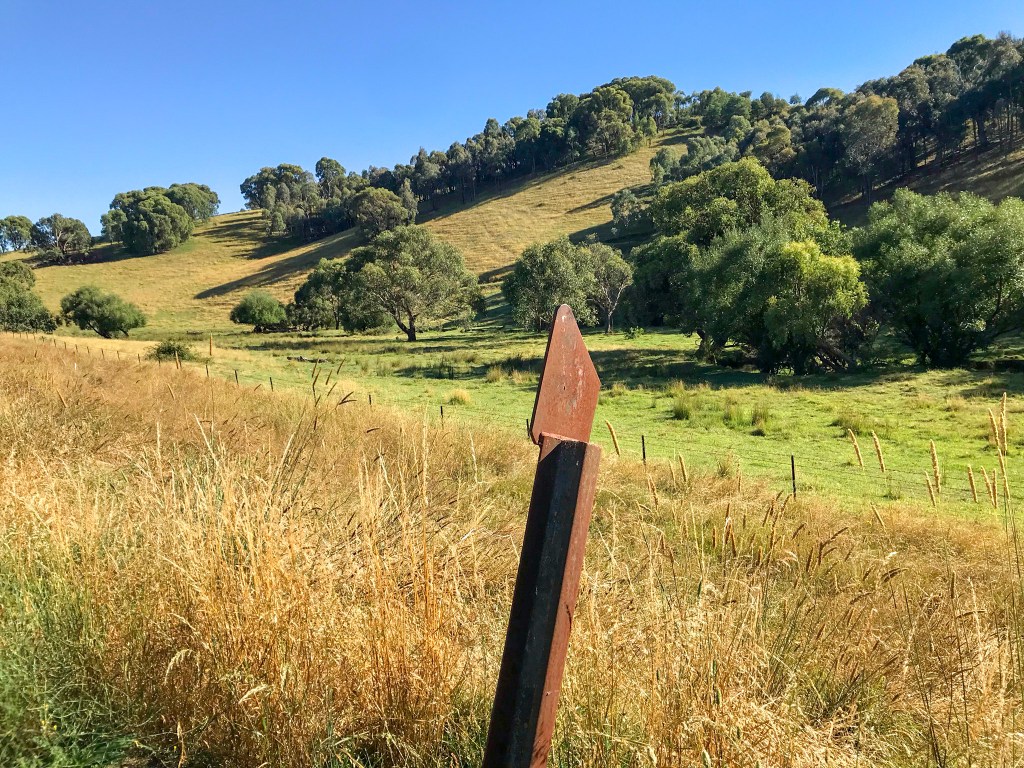
I’d say the route is comprised of three parts, though given I am doing the return journey make that six. From Rosewood, the going is easy, fuelled by that initial excitement which makes life on a bike feel good. Rolling hills that could have been transplanted from Devon snuggly descend to flat pasture. Horses and cows and sheep and tractors can all be sighted along the way. Accompanying the trail, the meander of Mannus Creek sparkles in the early morning sun and all of this is undeniably bucolic.

Eventually the trail crosses over Mannus Creek and the landscape opens up considerably. Already warm, I pause in the shadow under the bridge to feast on an orange. Surely this is a fruit that tastes one hundred times better as an accompaniment to exercise. Those half time oranges sure do make sense. But there’s another fruit appearing upon the horizon, with rows of grapevines cloaking the curves of a more distant range of hills.

The going is more exposed now and the incline seems – though imperceptible to the naked eye – more wearying. While the grapes never do quite make it down to the trail there is a blueberry farm on the other side promoting goods for sale. But even this is a little detour and I decide the sound of a gunshot from that general vicinity is enough to motivate continued pedalling. With little on offer between Rosewood and Tumbarumba, I do think there is a missed opportunity here: a pop up stall with fresh blueberries and chilled champagne.

Along the final stretch into Tumbarumba I could use some effervescence. It is uphill all the way, though uphill in that long, circuitous drag of an old rail line manner. But pleasingly it is also a bit more wooded and the passing shade and scent of eucalypts is welcome. You also start to come across more signs of humanity – walkers, people tending to chooks in a smallholding, the sounds and smells of timber being processed.

The trail terminates on the edge of town, high above the shops. So while the plunge down to the high street is most welcome, this – for me – is also of concern for the return. I can see some walking in my future. But in the present it is 10:24, perfectly on schedule to buy a coffee and apple turnover from the bakery. Oh and a real thing Coke and another cheap one dollar slice for the road.

There wasn’t really much to Tumbarumba but I was pleased to find a shady bench in a shady park with shady conveniences. It is the largest town around but that really isn’t saying too much. Still, it seemed amiable and well-kept and it wouldn’t be a bad place to linger longer. But of course I had a schedule to keep: the 11:17 to Rosewood.

Naturally the return was the inverse of everything that has gone before, though with a different angle it is amazing what else you can see. Best of all was the instant downhill where I really didn’t have to expend one kilojoule of fresh cream for five or six kilometres. After that, the earlier enthusiasm drains under a midday sun, and you start to develop a hatred of the e-bikers out for a jolly. My bike seems heavier, the chain rougher, the gears more grinding. Meanwhile my right knee creaks and my butt definitely feels more tender.

I was pleased for a shady rest spot to finish off my performance enhancing Coke at Wolseley Park Station. This was one of several stations that sprouted up to service the local farms, helping to foster small communities with a post office and village school and a dairy and a mechanics institute. If only those mechanics were on hand today to fine tune my derailleur. Still, at least the cows were still about, making some dubious noises. With five kilometres left, my mind turned to lunch.

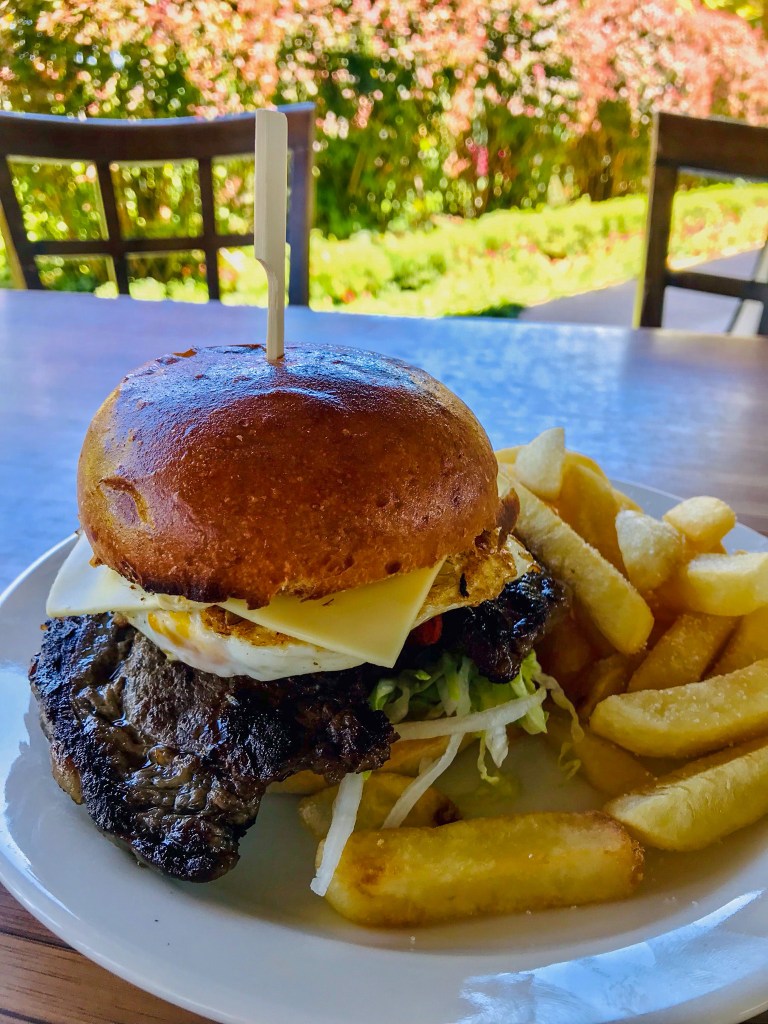
The steak sandwich at Gone Barny in Rosewood was everything I had dreamed of and more. The more being the side of delicious, deep fried chips. I think, with my extras, this was one of the most expensive items on the menu, at a mere $15. It won’t win Michelin Stars (though that Michelin Man does look partial to a few chips), but as good, honest, tasty food goes, this was an outright winner.

Did I earn this feast after 43 kilometres, a large coffee, a larger apple turnover, a full-on coke, an orange and a few Vegemite Shapes? Oh I doubt it, but the whole point of doing these rail trails is to support these small regional towns, right? Gone Barny is a case in point. Now I leave full, feeling accomplished. Ready to schedule the next one.

Australia Green Bogey

New territories

Well, this hot vaxxed summer thing ain’t exactly going to plan is it. More like a tepid damp squib. I suppose it’s all that hope and promise unfulfilled which jars the most. There were supposed to be unlimited hugs and nonstop parties, the kinds of things almost all of us have gone without for two years. Instead we get to spend the summer cooped up with Uncle Omi enduring The Ashes.

If Christmas were a Christmas present it would have been the kind of one you tactfully accept and immediately place on the regift pile, hoping that the next one finally brings you that shiny bike you’ve had your eye on. In the end I did well for Christmas gifts, mainly because I embraced that newfound mantra of individual responsibility and thought f**k it. New belt, new shoes, new car. If only I could get some new rapid antigen tests.

So the belt, I mean car. Ford Territory. 2009. Immaculate. Judging by its condition it may well actually have been in the care of one careful lady owner. It’s still in the state where I feel guilty about loading it with a bike and treading in half of Red Hill in the footwell. Today I ate a muffin with the utmost caution, catching and recycling crumbs off my lap. I bet no-one has even thought about the prospect of sleeping in it.

As test drives go, the journey from Canberra to Tumbarumba via Gundagai is quite the examination. Though to tell the truth, everything was so smooth and cruisy I was feeling very sedate by the time I reached Murrumbateman and picked up a coffee. And muffin.

At Coolac, a few random beeps enlivened events. I still have no idea what they were all about but my best guess is speed cameras. Such are the joys of discovery, frequently embodied in the age-old use of windscreen wipers to indicate.

Turning off the Hume Highway, the first encounter with dirt came on a short stretch down to Adelong Falls Gold Mill Ruins. It was nice to reach the parking area without every bump in the road flowing through my hands and arms and shoulders and back. The only alarm was the slight residue of dust on the shiny white exterior, again besmirching its untainted soul.

The falls were busy, but this was a warm Saturday and it soon became clear there were plenty of swimming holes and replenishing rapids along the river. I’m not quite sure where all these people came from given the size of Adelong itself; I guess passing through, touring, going on extended test drives and the like. Still, it was a nice spot to pause and amble and eat a sandwich from my fridge plugged into one of three power outlets available.

Through Batlow and Tumbarumba I was reminded of Saturday afternoons in small town Australia, where small towns become even smaller. Barely an IGA and a sleepy pub open to distract from the nothing much going on at all. It feels all very siesta like, as lackadaisical as the large Australian flag hanging limply in the front yard of a wooden cottage.

And what else to do but naturally acquiesce to the next part of the test drive experience: sleep. The excess of space in the Territory provides the option to lie flat. To lie flat parked under a shady tree, the open back door framing views of a burbling river as chirpy wrens and a delightful breeze induce that state of lolling semi-consciousness. Everything working as it should.

I had parked at Paddy’s River Flats, where a free campground attracted plenty of others with the allure of flushing toilets and hot water. Other than one or two tents, most visitors were equipped with opulent caravans and big rigs and six ring barbecues and diesel generators and that most prized accessory of the dyed hair nomad, the satellite dish. The fact that I could just about arrange seats in a car to lie flat seemed relatively insignificant.

Without a TV I was content to make a cup of tea and sit in my chair beside the river for a while. I would have gone for a drive to explore some more but I was reluctant to risk losing this prime waterfront location. Lessons for next time, where bringing a tent – even if half-heartedly assembled – would at least allow me to mark my territory.

Unable to sit and do nothing for too long, I set off on a walk downstream where there was the promise of some waterfalls. Unfortunately the track to reach them had fallen into considerable disrepair following floods and fires, and it simply became too much to try and bush bash my way through. The road near the campground was quiet and I walked along this for a while instead, soaking up the golden hour as vistas opened up.

It was disappointing not to see the falls but there was another way, another time. An episode in which the Territory really felt at home, really felt like it started to belong. Seeing me through a reasonably comfortable night, the car took me along the road to the falls, twisting downwards to a parking area among the eucalypts. The first orange light of the rising sun lit up a picnic table and beckoned me to have breakfast and a cup of tea. The whistle of the shiny green kettle was poor competition for the sound of thundering water rising from somewhere deep below.

And what a spectacle Paddy’s River Falls turned out to be, that classic Australia assemblage of escarpment and water and generous growth fed by never-ending spray. A wonderful, inspiring culmination to this test drive that evokes the promise of more adventures, more enchantments, more new territory to come.
Now all that is left is to retrieve the bike also comfortably stored in the back, and adventure on two wheels instead. But that is a story, a gift, for another day.

Australia Driving Green Bogey

Dipsy

Over the hills and far away, everyone come out to play. One. Two. Three. Four. Thousand.

Such are the conical lumps and bumps of the countryside around Jugiong, you never know what you might find down a rabbit hole. Today, it is bursting at the seams with all sorts of characters, the village swollen with trippers pausing for drinks, pastries, ice creams, chocolate eggs. It is Good Friday and, even so, I am astonished. I have never seen the Hume Highway so busy.

It’s the kind of day where you could get hot and cross sat on your buns waiting an interminable time for a coffee. Unless you cheekily pop around the corner to the Jam Factory Outlet. And leave the gourmet country mecca that has become Jugiong raking in the cash.

It is heartening to see. Down the road a little, Coolac is the precise antithesis. A one street kind of town with a forty year old Holden parked eternally outside the pub. A Memorial Hall hosts a little life as a couple of old dears negotiate the keys and lights. Outside, the picket-fenced oval surprises given the difficulty in conjuring enough people for a cricket team. It seems more likely a host to rusty tractors and bizarre sculptures made from hay. I kind of like Coolac.

I’m detouring off the Hume and am making my way to Gundagai via a scenic route. One year on and surely I must be getting close to traversing all the sealed highways and byways of the Hilltops region. This one is a beauty, at times narrowing to a single track nestled into steep-sided embankments following the Murrumbidgee. Other traffic is a rare sight, only increasing as I approach Gundagai from the south.

I was originally thinking of camping by the river here. As I cross over the town’s rickety bridge, I glance down to see an accumulating complex of trailers and awnings and canvas-themed opulence. I feel relieved and slightly smug at the thought of booking somewhere quieter in Tumut instead. Well, I think it should be quieter.

So Gundagai becomes simply a pause for lunch. It sounds ridiculously middle class, but one of my camping road trip staples has become homemade quiche. It’s hearty, tasty fare and means I don’t have to lug my whole box of camp kitchen paraphernalia with me. Okay, it might make it hard for me to ingratiate myself with certain other types of campground people, but it sure does use up the out-of-date eggs.

I’ve never really dwelt for long in Gundagai. The town is clearly shaped by the Murrumbidgee, with the coloured roofs of houses rising up a series of hills like a scattering of Lego bricks. The floodplain divides and is sensibly reserved for non-essential infrastructure such as a golf course, a park, and the campground. Two old bridges indicate the perils of flood, suitably ramshackle as they pass by clusters of stately river red gum. You sense the trees will be here long after man-made debris has finally washed away.

And so on to the campground in Tumut which was – yikes – just as busy as everywhere else. This one was situated on a farm alongside the banks of the Tumut River, a natural attraction to fishers and kayakers and people who simply like to empty the contents of an esky while lounging to the sound of soft rock classics on endless rotation.

Occasionally I like to ride my bicycle and – after putting up the ‘instant’ tent in one of the better times yet – was keen to immerse myself in the surrounding countryside. Enclosed within a broad river valley I assumed the riding would be pretty flat and for the most part that was the case. Still, any incline was unwelcome in the late afternoon warmth, nearing thirty degrees.

On the northern side of the valley I headed towards Lacmalac, which was really just a cluster of farm buildings with hints of charming homestead within manicured garden. Occasional wafts of silage reminded of Devon, but then a giant southern cross reinforced the Australian condition. Crossing water at Little River, it was all Devon again, embodied in a rolling hill which was simply too steep for me to pedal.

In one of the quieter moments I realised that bike-riding is quite the bipolar experience. The inclines are irritating and often lack enjoyment. But then crest the top and the downhill is all exhilaration and relief. Flat stretches are simple compromise, somewhere in between. Most of the way back to Tumut was as flat as a pancake, along – oh I see – Tumut Flats Road.

With the sinking western sun in my face it was a relief to reach a little oasis called Tumut Junction. This is no Clapham or Spaghetti, but the point at which the Tumut River splits with the Goobarragandra. Lovingly manicured by the Lions Club, it would have been a wonderful place to linger longer. But daylight was fading and I still had a little way to go, crossing the bridge built in 1893 and returning through town to the campsite.

I returned to find a camp trailer had squeezed into the little space between me and the group of let’s-see-who-can-talk-the loudest millennials. On the other side, the medley of Jimmy Barnes and Fleetwood Mac continued without pause. Fires were being lit everywhere, including one that had been arranged crazily close to my car.

Now, I can see advantages in writing off a 21 year old car, but I really would like it to stay intact for a while longer. So I shifted it a little further away as we all jovially chuckled how I could always have driven it into the river if it caught fire haw haw haw. Safe and settled, I lounged beside the river with a cold beer and a conspicuous slice of quiche. 

It’s about this time, as darkness descends, that you begin to wonder how you will fill a couple of hours before bed. There is always plenty of phaff associated with camping to pass much of that period – sort out food and drinks and dishes, arrange bed, piddle about with various items in the car, ensuring you have everything you might ever need in the middle of the night.

There is also the ‘guess who will be the most annoying neighbour’ game to play. It wasn’t going to be the trailer couple. Despite their fondness for arson, they were rather civilised, quaffing rose and engaging in chit chat. The obvious contenders would be the gang of millennials all a hootin’ and a hollerin’. But as soon as one young lady said she was off to bed after throwing up, silence descended.

Apart from the faint sound of Midnight Oil accompanied by the clink of another empty bottle returning to its carton.

It was way past two by the time I properly got to sleep but at least I had a relative lie in, waking around seven on the final morning of daylight saving. It was still before sunrise and I was glad to find a child making a racket proximate to the late night soft rockers. Outside the scene was ethereal, a light mist floating inches above the ground. Standing within the haze, the silhouettes of eucalypts competed with the stick figures of humanity queuing for the long drop.

Thankfully, the mist didn’t survive too long as the sun rose to bathe the countryside an early gold. It was to be a crucial weapon in my operation to achieve a dry canvas by ten in the morning. A contraption of car doors, chair and bike slowly aired the flysheet while I shook the beads of moisture out of various flaps. It was the closest thing to having a morning shower. 

In the absence of the camp kitchen box I didn’t get a morning cuppa, but at least found comfort with a cold hot cross bun in bed. By time everything was dry and packed up, coffee in Tumut was essential, this time accompanied by a big breakfast that kept me going for most of the day.

I spent the remainder of the morning exploring a little more around Tumut, finding it just as charming as on previous occasions. While not peaking yet, the passage of autumn was undeniably playing its hand, the yellows and ambers first to appear within riverside parks and along quiet country lanes.

Pleasantly warm and breathless, there was temptation again to jump on the bike. But I was weary, and the amble was more in keeping with my mood. Goodness knows how I am going to accomplish 162kms over three days in a few weeks. My only comfort is that I feel more prepared and bike-fit than others due to embark on that journey.

For now, soak up the tranquillity back at the Junction. What a delightful spot this would be for a picnic, if only I was hungry. I really do think in the yet-to-be-published Exploration of Regional Towns Within a Few Hours of the National Capital During the Coronavirus (COVID-19) Pandemic, Tumut would be up there in the top three. Unless there are other places unknown.

For instance, what about Cootamundra? Having only skirted once before I decided to head home in a larger loop: from Tumut to Gundagai and up to Cootamundra before tracking back via Harden along the Burley Griffin Way to Yass. I had already checked out cake opportunities in Cootamundra to justify the extra drive.

Coota, in its inevitably abridged nomenclature, will not make my top three, unless you are reading the yet-to-be-published Regional Towns Within a Few Hours of the National Capital Still Stuck in the 1950s. The town seems harmless enough, but it was very much of the everything closed on a Saturday afternoon persuasion.

With Coota Hot Bake shut, a few stragglers were heading to Woolworths for their daily bread. Even here, the sounds from a busker gave off a mangled Buddy Holly vibe. I entered the one café open – well, it said it was open despite looking deserted – and eventually found some humans. An old guy clearly way beyond retirement age diligently sprayed tables with disinfectant. He was keen to regale me with the events of the day, which were allegedly incredibly hectic. Over four hundred cups of coffee he said. So many people on the roads he claimed. It is hard to imagine.

In my Cootamundra, I can imagine bumping into Donald Bradman at Coota Hot Bake. All chipper and strutting like a peacock in his flat cap, shouting at the young lady behind the counter that the knots in his knot rolls are not knotted enough. If she was smart, she’d reply that unfortunately the bake was 0.06 degrees too low today, hence the knot rolls not being so perfect after all.

The Don is very much alive in Cootamundra, as the town does all it can to milk the fact that he was born here. Indeed, as advertised, you can “Stand in the very room the Don was born” at the modest but pretty little cottage on the edge of town. Next door is a spot promoting rare and unusual cricketing memorabilia, perhaps like those awful collages of Warnie lolloping around the crease that used to be pushed at viewers on Nine’s Wide World of Sport.

Closer to the town centre, in a lovely shady park, is Captain’s Walk. If Donaldmania is irksome for an Englishman weaned on a diet of capitulating pommie wickets and smirking Australian assassins with beer guts, then this is not an enjoyable walk at all. Busts of every Australian cricket captain are arranged here, though it is not true to say that Steven Smith’s nose was smoothed down with a sheet of sandpaper hidden in my pants.

Passing the head of Greg Chappell inches above the grass, I departed Cootamundra before pausing in Harden for fuel and a much needed frozen sugar slush. Harden was one of those places already featured in Exploration of Regional Towns Within a Few Hours of the National Capital During the Coronavirus (COVID-19) Pandemic back in spring, when the canola was all a riot. Population 2,030 it is quite the feat to have a town which stretches on for what seems like forever along the main road.

When you finally do leave town, it’s a really pleasant drive with pleasant countryside and pleasant curves. Encountering unpleasant roadwork at one point I decided why not pull into the “Historic Village of Galong” just because it was there. Naturally even quieter than Coota I felt as though a few eyes were peering through old wooden windows at this interloper. Perhaps a banjo string being tightened. It is no Jugiong.

Yet in the afternoon sun, unseasonably hot once again, sleepiness seemed the perfect state of affairs. I could’ve quite happily joined the village for a siesta. All four of us. But I didn’t. There is Binalong and Bowning and Yass and Murrumbateman still to come before the sun will set in the sky. And then it really will be time to say goodbye. Bye-bye!

Australia Driving Food & Drink Green Bogey

For higher

It is beyond doubt that coronavirus has altered our perception of the exotic. Whether it be Gundagai or the garden centre, there is much greater thrill to be had in what was once so mundane. I kind of like this revived appreciation for what is immediately around us, as we persevere in seeking out that which can still be discovered. A new view, a different seat, a random town. Or even just a change in how we think about the same place.

My first impressions of the Snowy Mountains in Australia were underwhelming; being neither snowy nor particularly mountainous. With more than a passing resemblance to Wales, it was a bit odd in 2006 to come all this way for – well – Wales. But a few years ago, back when such things were possible, I had a brilliant time in North Wales. And in the context of what is and isn’t possible today, the Snowy Mountains seem to eclipse even a perfect hike to Snowdon.

A multitude of brown tourist signs and a $17 entrance fee help to create an expectation around Kosciuszko National Park. A spacious campground in a peaceful setting at Island Bend adds to the holiday feels. It’s only for the one night but when you have an instant tent, one night is as good as a holiday. An hour later, with instant tent finally erect, a cold beer is clearly required.

But this is no place to sit and drink beer all day, well not for me at least. In between a reasonable night of comfortable sleep, there is the Welsh countryside to explore. And, oh boyo, does it deliver far much more in 2021.

Illawong Walk

Smitten at six in the evening. I think this walk was as much about an ambience, a mood as it was about the open upland panoramas and shimmering river views. It was about the pure sound of that river and the glow of the light. It was about a subtle fragrance like jasmine tea, emanating from the small shrubs and grasses through which a narrow track forged. It was about finding a little lodge perched into the hillside and reaching a swing bridge which would take those more intrepid further. It was about a time and place in which each new step came with the thrill of discovery.

The walk starts in Guthega, one of those small clusters of lodges and chalets which counts as a village up this way. Bustling in winter, these places are weirdly soulless in summer, relative ghost towns seemingly abandoned as a result of a nuclear meltdown or similar. Only occasional voices from balconies hinted at a weekending populace, and numerous cars and trucks formed towards the trailhead, many destined to greet their owners returning from overnight jaunts in the wilderness.

Guthega also exists I suspect due to the dam, where the Snowy River is first brought to a halt on its journey to Marlo. It will be tampered with and drawn from many times on its way to Gippsland, but above the Dam it is truly free to roam. It’s a freedom that rubs off on those who follow it.

The trail officially comes to a terminus at Illawong Lodge, the small building tucked into the hillside. It looks and feels idyllic right at this moment, gazing out over the valley as the sun sinks low. A cold, amber ale would be perfect followed by a bed for the night, but my bed is presumably still standing back at Island Bend.

There is one last hurrah, just down from the lodge. The swing bridge across the river acts as a landmark, a destination, a place to be daring and frolic and to possibly carry on along unofficial, unformed ways. The landscape certainly does its best to suck you in further, and perhaps one day it will. Near the bridge, a new path appears to be undergoing construction, following the river further into the wild to someplace somewhere. There is still more to discover.

Main Range with diversion

I have climbed Mount Kosciusko several times and while there is much to enjoy it’s barely an achievement to rival Kilimanjaro or K2. The route from Thredbo, cable car-assisted, is a family-friendly jaunt, while the quickest way from Charlotte Pass follows a wide trail that incrementally rises without much of a fanfare. By far the best route is to follow the Main Range, crossing the Snowy River and rising to a ridgeline over 2000 metres which plunges over to the west.

Up with the kookaburras I reached Charlotte Pass for brekkie and a cuppa on the most exquisite balcony, the first rays of sun hitting the lofty heights out in front of me. I was heading for somewhere in that direction but hadn’t particularly finalised where. My main desire was to reach a point where I could marvel at the spectacular Western Fall disappearing into the horizon. Carruthers Peak or Mount Twynam would more than suffice.

Immediately the trail is a joy, largely because you are heading downhill to that free-running Snowy River. Halfway down, I encounter another new track being constructed and – guess what – find that it will lead east to Illawong Lodge. An accompanying notice suggests this is part of a planned multi-day walking track and I can again picture a night at that lodge with a cold amber ale on the deck.

For now, I have the Snowy to cross without a swing bridge. A series of boulders offer stepping stones, with only one jagged pyramid causing some complexity. After that, it is easy and getting to the other side without making an absolute tit of yourself in front of experienced hikers coming down from a night in the wilds is almost as satisfying as simply being here.

It is a good job life is sweet because there follows an incessant drag uphill and the prominent hulk of Carruthers Peak (2,145m) still seems a long way off. Along the way, the view down to Blue Lake offers a break and not long after the trail reaches the point at which the landscape plummets dramatically over the other side. It is a spectacular view, heightened by the big reveal as you come over the rise.

It is at this point that the Main Range trail veers left, and you can trace its outline steepening up to the lofty heights of Carruthers. To the right, an old, faint four wheel drive track is not promoted but neither is it barred. My research tells me this leads towards Mount Twynam (2,195m) and while I may not make it that high, I can at least aim for a rocky outcrop closer by.

There, mosses and flowers and hills upon hills upon hills stretching into the distance. Among these hills, the nearby Mount Sentinel stands out as the most jagged, traditional-looking mountain. This could be discovered one day too, but I would like someone else to come along for the ride, as a safeguard.

As tempted as I was to push on from this outcrop, I also figured I had reached my goal for the day with such epic vistas. I had also run out of sunscreen and broken my seven dollar sunglasses, so there was good sense in deciding to return before the day raced towards high noon. Good sense continued with a sandwich stop closer to Blue Lake, a baguette loaded with ham and brie beside a glacial cirque conjuring the pretence of France. C’etait la vie.

After such good sense at not being sucked in by the landscape at previous points, the sandwich gave me fortitude to have a nosy closer to Blue Lake. And then a faint track led towards Hedley Tarn before it simply vanished.

I spent a good 40 minutes trying to figure out a way back across to the Main Range trail, barely a kilometre away and visible thanks to its regular flow of people walking up and down. Encountering boulders and impenetrable shrubs I eventually resigned myself to retracing steps the way I had come.

All this extra energy consumed, and a sun now high in the sky, made me fearful for the final surge: the re-crossing of the Snowy and that godawful climb back up to Charlotte Pass. But in the end, it wasn’t so bad. The other half of my sandwich boosted the energy, and strategic photo stops offered necessary breathers.

While there is pleasure in an ending, those final stops proved bittersweet; captivated with the wild beauty and melancholy that it would soon be left behind. If it takes a pandemic to make me realise how special a place Kosciuszko National Park is, let’s please not have more pandemics. But instead let’s try and remember what it is like to cherish that which we had previously overlooked. Like Wales.

Australia Green Bogey Photography Walking

A year of discovery

This morning I ploughed headlong towards frustration after being unable to discover where I had stored a series of empty jars. Receptacles for random concoctions of cream, fruit and sugar, hopeful Jars of Joy 2020. I reckon I shifted them somewhere back in March, clearing space for tins of tomatoes and dried lentils full of grit.

Fruitless, I gave up and went for a walk. Half an hour later I found myself in the comforting arms of countryside, reflecting on how this has actually been – astonishingly – a year of discovery. Fringing a paintball play area, rising up through pines giving off an essence of Christmas, straddling the divide between the Capital Territory and New South Wales.

Border Walks could become the 2021 sequel to 2020’s Centenary Trail. Just don’t hop over the border if you want to visit <insert as appropriate depending on the hour of the day>.

It really is quite astonishing how a year of restriction has somehow enforced greater discovery. A more immersive experience of place. Not just in the country roads and country towns, the trails and bike rides, the parks and reserves. I have also discovered exactly how long it takes to use a roll of toilet paper, how to use my phone to read QR codes and – earlier in the year – the threshold for hazardous air quality. It’s been quite the ride.    

It’s crazy to think this time last year we were enduring a ferocity of fire and fury. But not forgotten. The recent whistling of easterly wind changes bringing cool air around dusk prompts memories of orange skies and choking campfire smells. The scars linger not so far from home.

In the 2020 spirit of discovery, and with an eye to having a short break before mass holiday superspreading madness, I passed through several areas that were decimated a year ago on my way to the coast. The top of Clyde Mountain still astonishes in – today – a damp misty haze. Vivid ferns and tangled vines twist their way around solid black trunks. It is still too early to tell if some of these trees will ever make it back. 
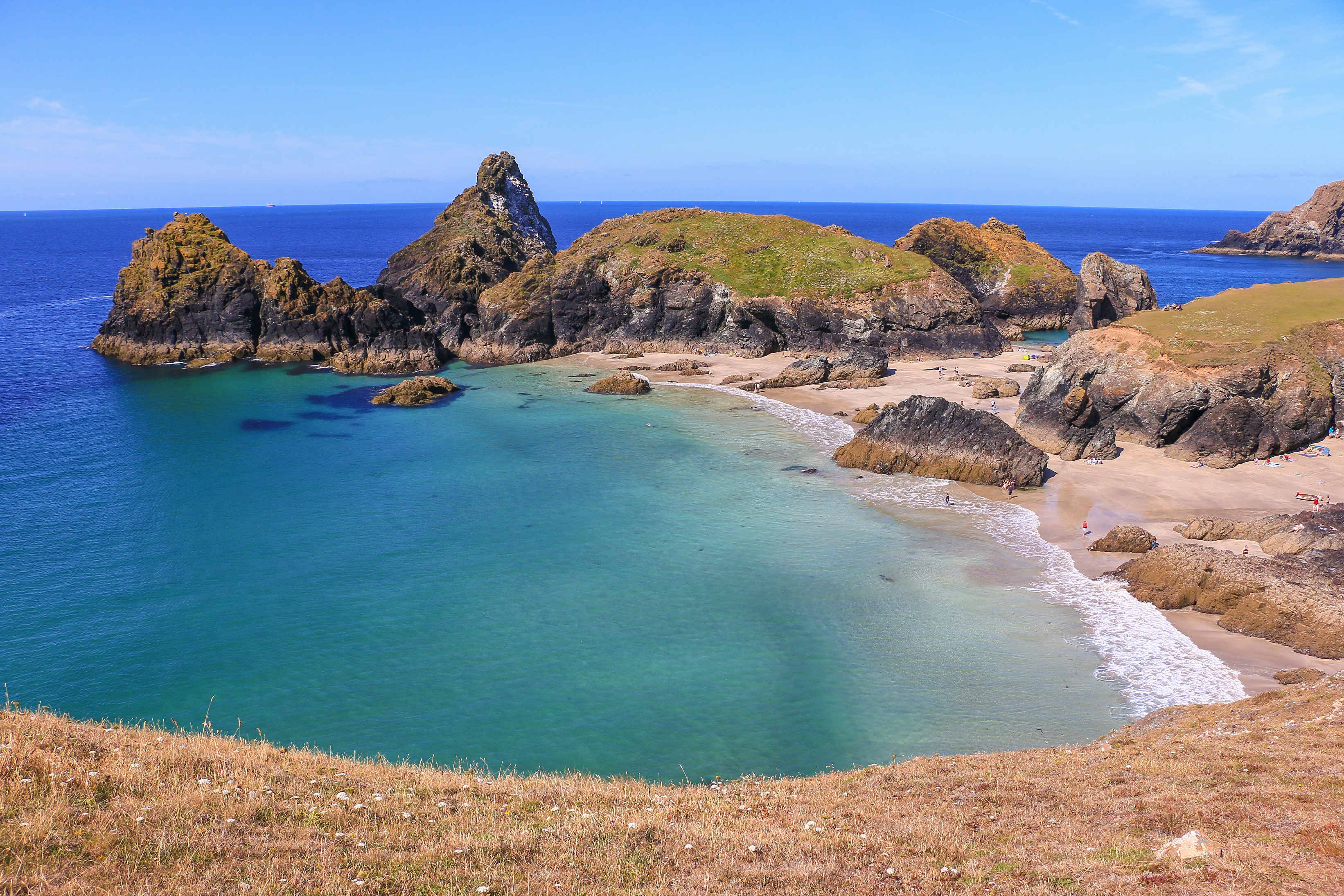
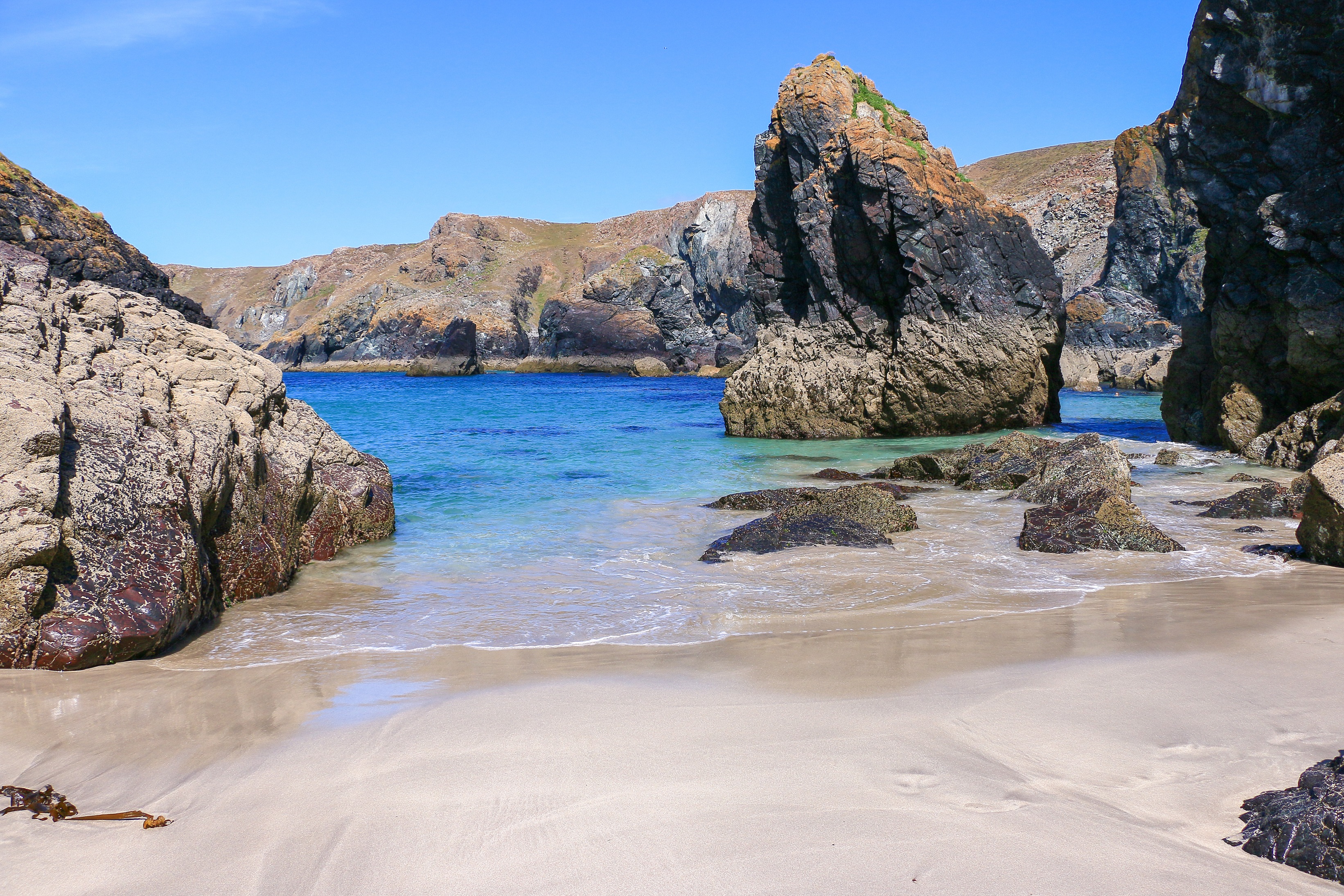
Down the hill I stop briefly in Batemans Bay, where an impressive new bridge is spanning the Clyde. An altered horizon which – from a certain angle if you squint a bit – resembles the Brooklyn Bridge. Sun emerges from behind the showers that have been accompanying me all morning, continuing their work of recovery and subterfuge.

I’m heading for a couple of nights in Bermagui, some 125 kilometres further south. The extra distance worth it to escape the worst of the Canberra holiday set. And, of course, for the opportunity to discover, since I have only ever passed through this small town in the past.

What did I find? Well, it has one high street boasting the contrasting styles of Bazza’s Hot Bread and Boneless Vegetarian Café. It is fringed by a lovely headland area full of green space and convenient benches to gaze out to the ocean. And just yards from a vegan soy latte is the most perfect bay of white sand. From Horseshoe Bay, the dominant hulk of Gulaga lends the scene a tropical Queensland kind of air.

Either side of Bermi, the coastline is punctuated by largely pristine inlets and lakes, ideal for waterbirds and kayaks and the whole area is popular with fisherfolk. BCF buckets and ragged singlets are incongruent with the shiny, expensive boats parked outside Woolworths. A sizeable wharf provides anchorage, the fetid smell of stagnant salt water and fish guts detectable in the air. The promise of fish and chips and ice cream makes this a blight worth bearing.  

One of the annoying things I discovered about Bermagui was that the fish and chip shop closes at 7pm. I discovered this around 7:07pm. Even more unfathomable, the ice cream spot – while I was there at least – closes at 5. I suppose, true to form, 2020 wouldn’t be 2020 without a couple of disappointments; I’ll just have to pivot.

As it turned out, in my extensive, laborious investigation I came to the personal conclusion that the ice cream from Bodalla Dairy was superior to Bermagui’s Gelati Clinic anyway. It tastes creamier and the flavours are more interesting. Not to mention the cute setting, in the midst of what has returned to being lush, green countryside. You feel as though the cows are creating magic just out the back. In situ, it’s similar to how Beaufort cheese tastes better in Beaufort.

I am reminded of a show on TV this week in which Rick Stein worked his way through eight courses featuring local cheese in a rustic auberge in the Jura. If ever a moment had me longing for international travel again that was it. Not exactly equivalent but probably as good as it gets, Australia has Tilba Tilba. So good they named it twice.

I really adore Tilba and I’m pretty sure a big part of that is the presence of a creamery bringing the goodness of Jersey cows to fruit. I’ve never actually seen the Jersey cows, but you can sense it’s good pasture, even more so a year on from drought. In the foot of Gulaga, there is a bounteousness here that is unparalleled south of the Queensland border.

Gulaga is especially significant to the Yuin People, particularly women. Even for these Anglo, invader eyes of mine there is an inescapable presence to the mountain. It draws you in, looming up behind the decorative facades of colonial cottages, appearing between rocky boulders in the landscape, spilling down into rainforest gullies and thickets of long grass, teeming with a cacophony of cicadas and the flutter of giant butterflies. Host to hundreds of snakes.      

I was delighted to not encounter any snakes on a new walk that I just happened to stumble across, like so many great discoveries in this great southern land. One day I might just stumble across a massive gold nugget like one of those lucky bastards. Today, a loop walk through fields of green will do well enough. Finished off with a few golden purchases in the dairy.

South of Tilba, the Princes Highway skirts Gulaga and heads inland on its way to Bega. Before now I have always taken the alternative coastal route, via Bermagui and Tathra. And so, conveniently drawing on an overly-contrived theme, I found myself discovering a new piece of road. Destined for a date with a bevy of pretty ladies.

In fair Verona, where we lay our scene, I greet an old friend who used to help me undertake research with young people. I’m not sure it’s such a leap from this to keeping around a hundred alpacas in champion order. At Wedgetail Rise Alpacas, Annemarie takes me on a guided tour of a landscape that wouldn’t be too out of place in our native lands. Apart from some still too obvious discrepancies.

Verona is situated between Cobargo and Quaama, small villages that have become synonymous with our Black Summer. While the great green cover-up continues apace, it is not hard to see the brutal impact still lingering on the ridges and penetrating through the gullies. The comeback is patchy, the torment of weeds opportunistically filling the void to add a further challenge. The characteristic isolated brick chimney stack, that potent symbol of devastation, is never far away.

In Cobargo itself it is hard not to sense a community still in shock, still slowly rebounding. I can only imagine how the permanent presence of blackened hills plays on the psyche. While much of the main street stands, vacant plots tell of the randomness of fire.

If ever there was justification for my mission to support local communities through coffee and cake, then surely it was here. And – oh look – there’s a second-hand bookshop. Christmas presents from a community-run endeavour like this trump K Mart hands down. And, in a somewhat pleasing memory of life before 2020, they only accept cash.

My remaining time down on the coast was largely filled with discovering ways to fill time before it was acceptable to have lunch, when the fish and chip shop would actually be open. A final hurrah before making my way back home, a necessary item on the coast trip checklist. Another earnest sacrifice to contribute to the local economy.

The last morning was overcast but calm and within my car I had a little red rocket on two wheels. One of the big discoveries of 2020 is a) how beautiful my bike poses in random locations and b) how there is a freedom that comes with a ride which doesn’t quite happen on two feet or four wheels. The unimpressive pace of my cycling is just about perfect to gain some decent ground while never going too fast to make the surroundings whizz by in a blur.

Quite wonderfully a cycle path cut a swathe through Bermagui onto a quiet road leading up and down to Haywards Beach. Greeting me, a rugged, sweeping stretch of sand flanked by dunes and low shrubs. Where the road came to an end, a decent trail – part worn tarmac and fine gravel – followed the bay. Curls of crystal surf competed for attention with overhanging branches. Beyond, I found myself heading towards Wallaga Lake and yet more waterside attractions. The turnaround point came at a headland where a midden of shells proved testament to the abundance of this area. Abundance in which I could now quite justifiably indulge back in Bermagui.

And so, as the sun goes down on the year and the battering that is 2020 disappears in a pile of batter, we can only hope that the next year heralds something of an improvement. And while 2020 is a year we may well be super keen to forget, let us not easily disregard the many good things, the many discoveries that we have all made in our own little way. Among the ashes, among the difficulties, the resilience, the humanity, the nuggets of joy. Or jars of joy. If only I could find the bloody things.    

Australia Driving Food & Drink Green Bogey Photography

Uplift

Outside is looking remarkable. Outside is looking beautiful. An almost pinch-yourself-is-this-actually-real kind of sensation. One bringing delight rather than dread.

I was sat on a random log the other day, pleasant late afternoon sunshine nourishing the world. Rarely do I sit and stop and watch all the things going on around me: the ants milling about productively, transporting their wares in selfless community organisation; the magpie creeping from one spot of grass to the other, surveying for delicacies, a curious sideways look at my presence; the chirrup, somewhere, of two crimson rosellas, partners for life. The world going about its business.

There is an astonishment in this landscape of such verdant abundance. Where so recently it was so barren. The resilience of nature bearing fruit, flourishing again.

As well as sitting on random logs I randomly tried to capture this transition, this journey, this bounce back. Scrolling my phone for past images, dusty and brown. Attempting to line up positions and angles and replicating shots. Not always easy to know exactly where you have gone before. Fiddling about so much that sometimes it’s just far easier, far more satisfying to give up, sit on a log, and just watch the world.

cont05

The Bullen Range and Brindabellas from Cooleman Ridge, 6 weeks apart

cont04

Remember the smoke?!

cont01

Scenes from Red Hill – 1

cont02

Scenes from Red Hill – 2

cont03

Scenes from Red Hill – 3, with random logs

Australia Green Bogey Photography Walking