Trailing

Something didn’t sit right with me. Trying to get to sleep in a single bed on creaking, turn-of-the-century floorboards. Below, a bar serving the last of the whooping and hollering, the cackling shriek of a drunk Australian lady all the more painful when you know you need rest. Mind ticking over like the cycle of a misaligned wheel.

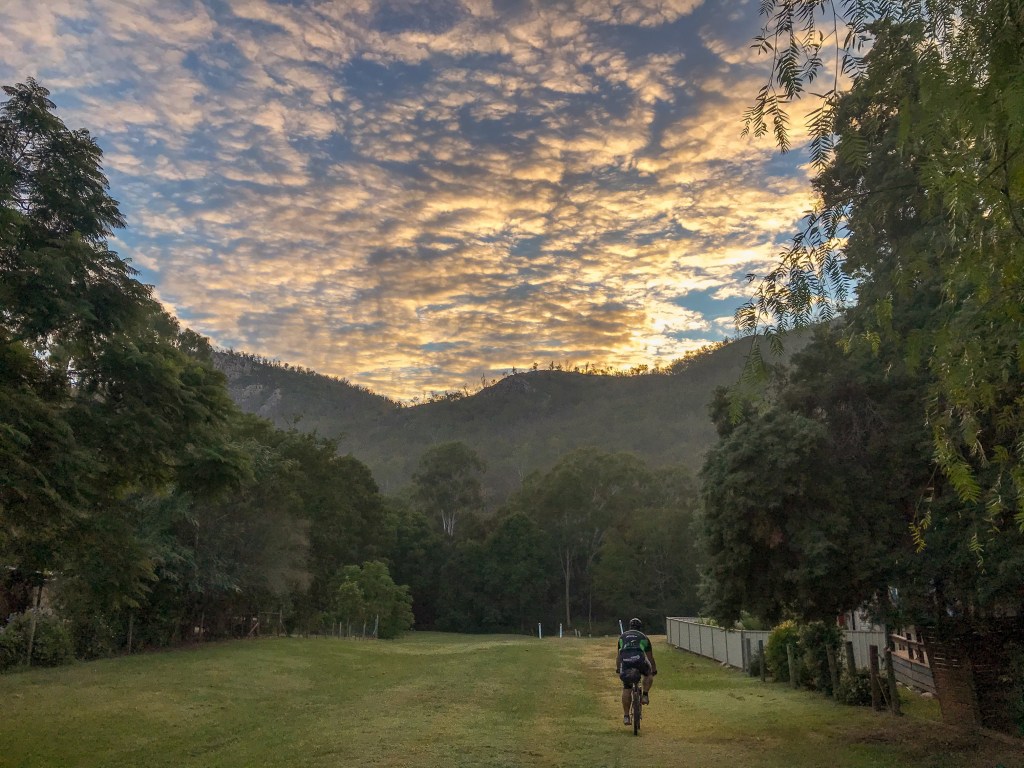
The remnants of merriment below had cowboy vibes. With Gucci trimmings. Equally at home in Fortitude Valley as downtown Linville, partying like they are 1999. On a night in 2023 when Australia received what to me at least felt a simple, unremarkable request from a broad representation of its first peoples for them to actually matter and said “yeah nah we’re alright thanks”. Whooping and hollering – as innocent as it may have been – struck a dissonant chord. And I edged closer to sleep with doubts about what it meant to be crossing country the next day.

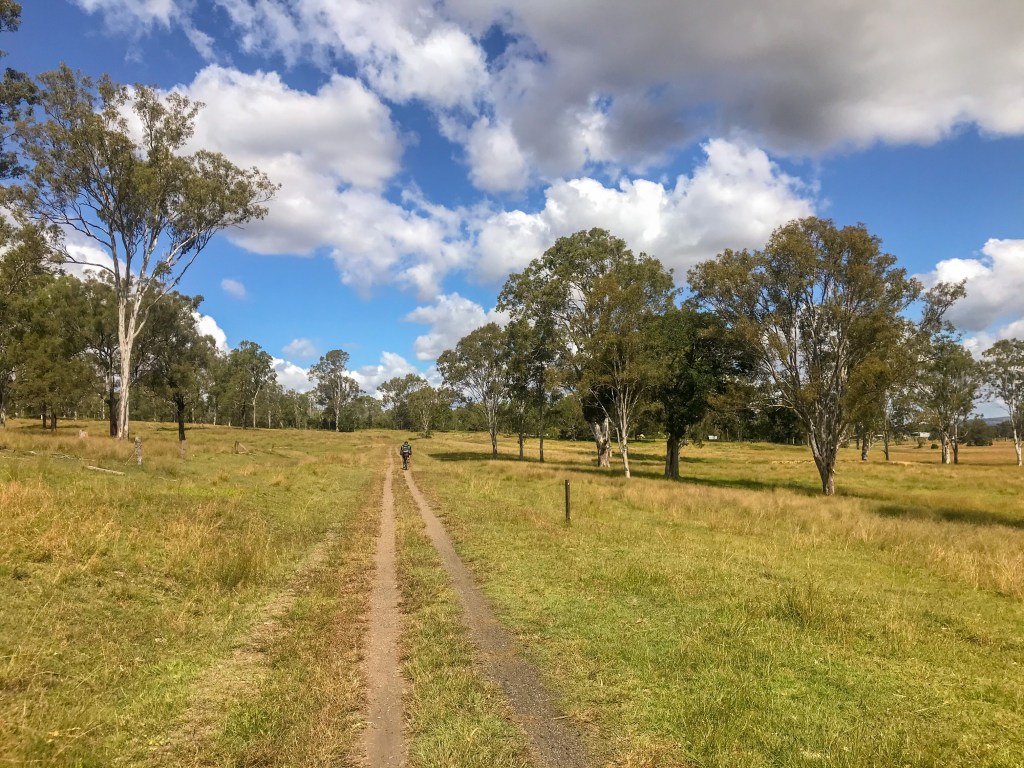
The Brisbane Valley Rail Trail (Part II) traverses Waka Waka Country and Yuggera Country – or at least I think as much based on the little I can glean from local council pages. Today proclaimed as the longest continual recreational trail in Australia (if not the southern hemisphere), it intermittently welcomes people on bikes and horses and feet to roughly follow the course of a disused railway line from Yarraman – deep in the electorate of Maranoa – to the fringes of Ipswich. A manifestation of intrusion and industry and inevitable decline once quick riches had been cut down, torn, eradicated and washed from the earth.

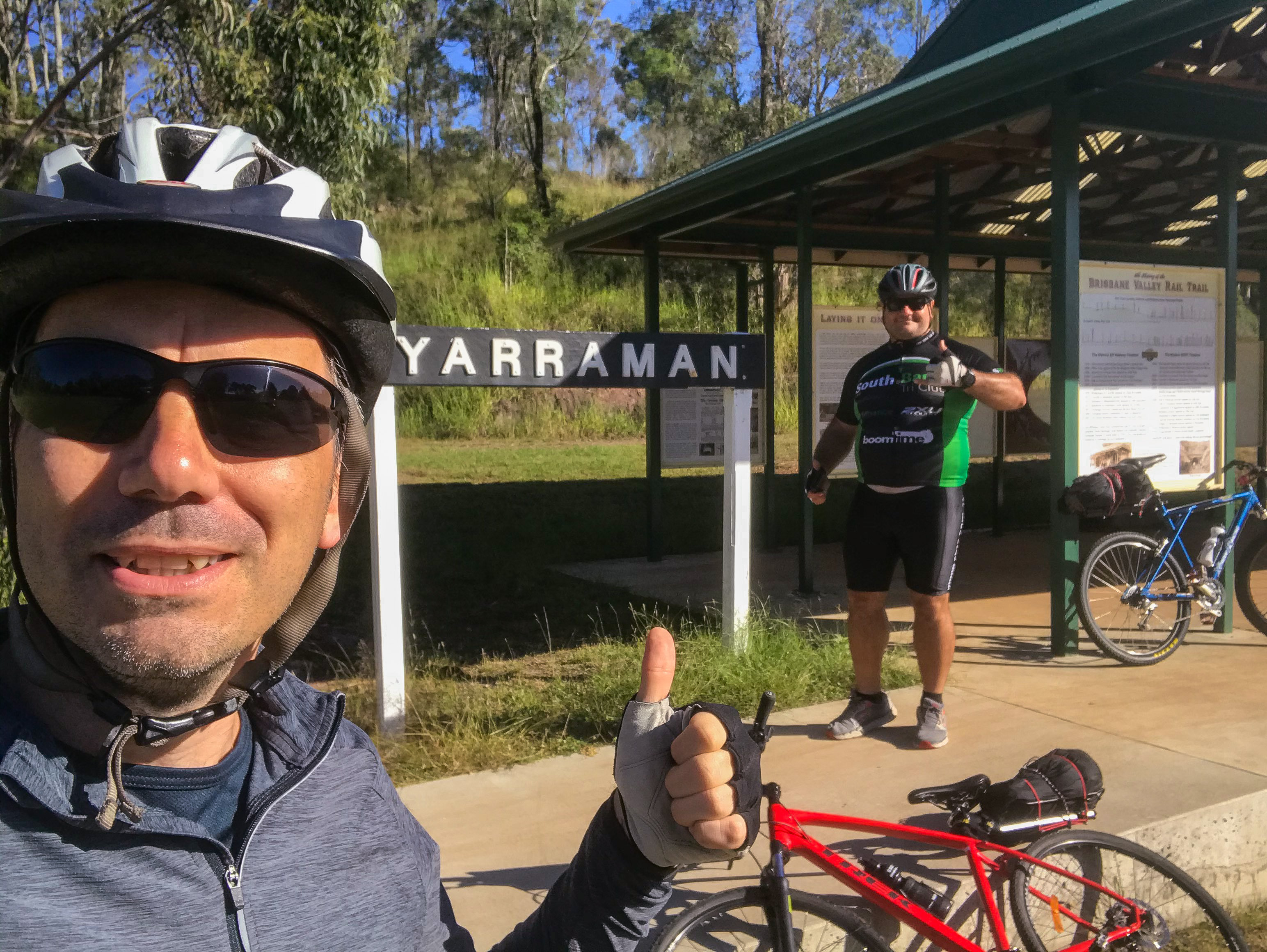
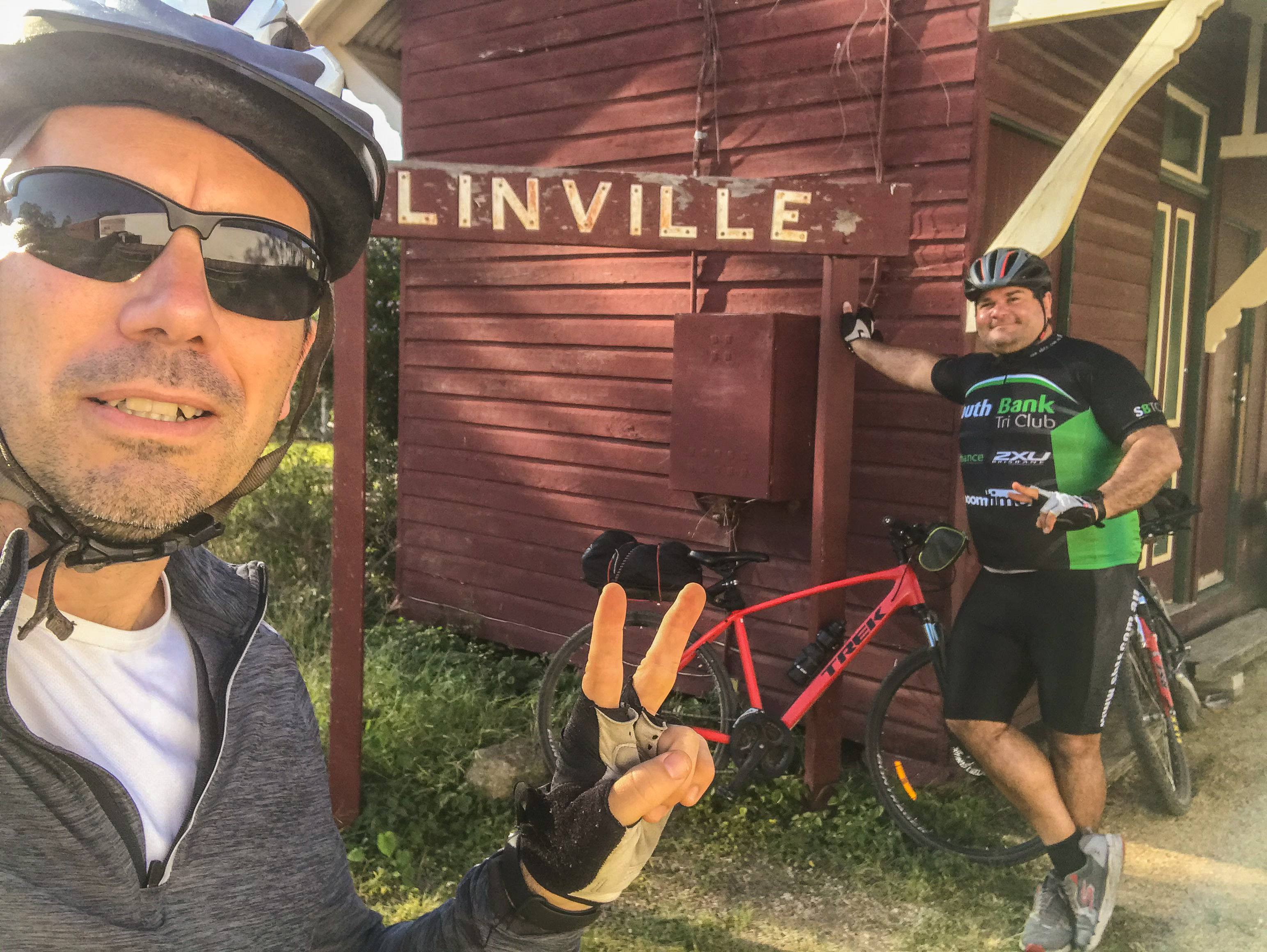
In a sign of hope and rejuvenation the old rail line is now transformed into a place where people can come together on a shared journey, even if some of the newer locals remain deeply conspiratorial. Avid readers may realise this is my second time along it (and with my back now going through all sorts of agony it’ll probably be the last). From a pair of lone rangers we doubled in size as a group of four. Not quite MAMILS but only really lacking the Lycra. Starting off on brand by getting confused over where to start.

In many ways the first 20 kilometres is the hardest, adjusting to seats and handlebars and pedals and pace and the actual realisation of exercise. Things are a little undulating and already hot, and the approach to Blackbutt seems to drag on forever. But eventually bakery rejuvenation occurs, some tuning and top ups ensue, and we are full steam ahead.

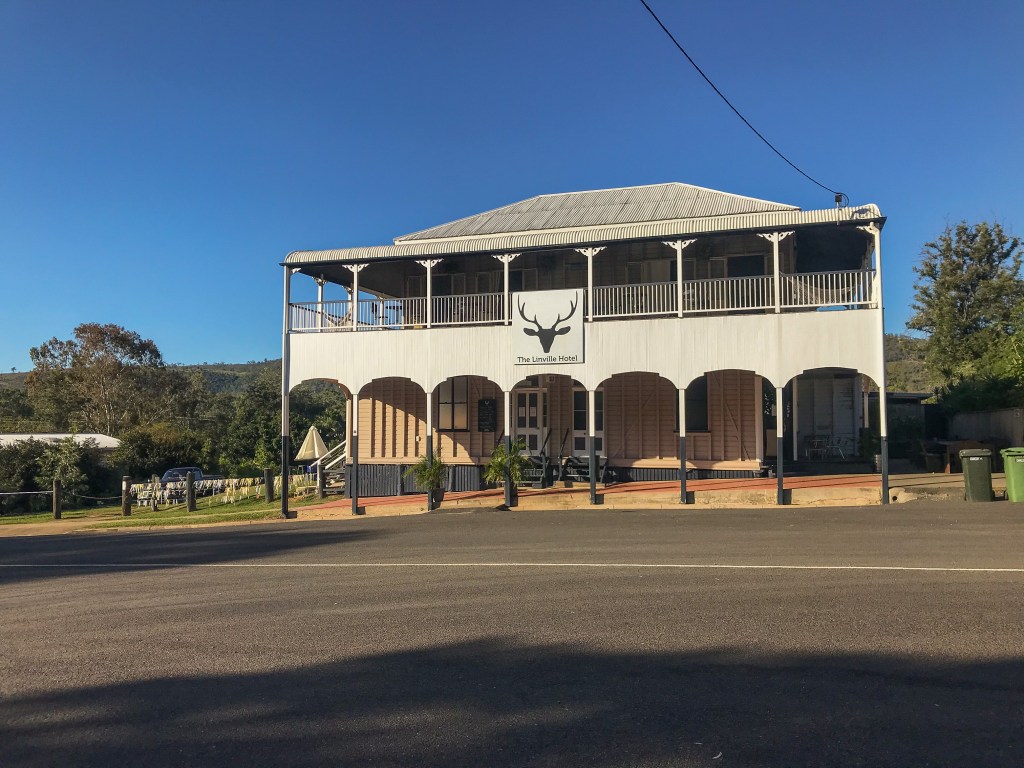
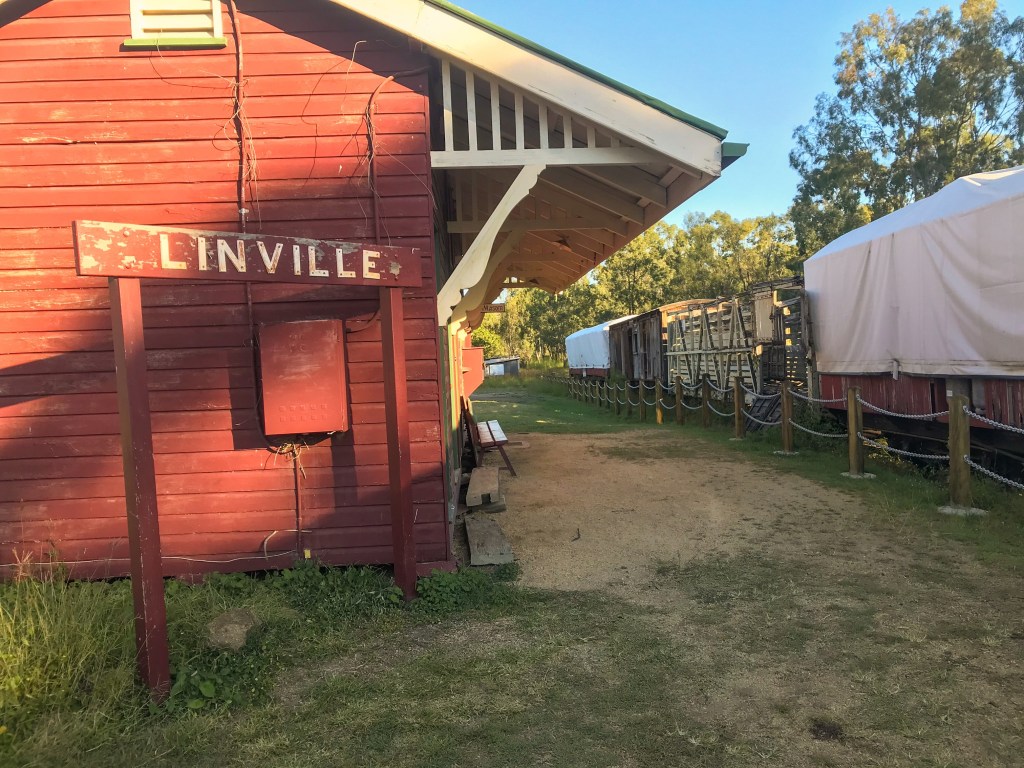
The run to Linville is mostly bliss if a little jarring in places. Forest creeps in on both sides and the gradient works in your favour too. The breeze of momentum keeps you cool and a slice from Blackbutt survives well enough to sugar-rush the journey east. Beaming white in the afternoon sun, the Linville Hotel is a very beacon of balustrades and cold beer. The store next door a welcome purveyor of ice cream.

After a little recovery, day all too soon turns into night because Queensland doesn’t bother with daylight saving (probably because it is seen as another way the government are trying to control you with 5G vaccines or whatever). As much as I try, I cannot find the ideal beer to accompany a local steak and a background band mostly playing the entire catalogue of Crowded House. Only at the end, as encore way past their bedtime, do they strike up Farnham’s Voice. I cannot tell if this is a brave call, a lost opportunity, or a musical smirk.

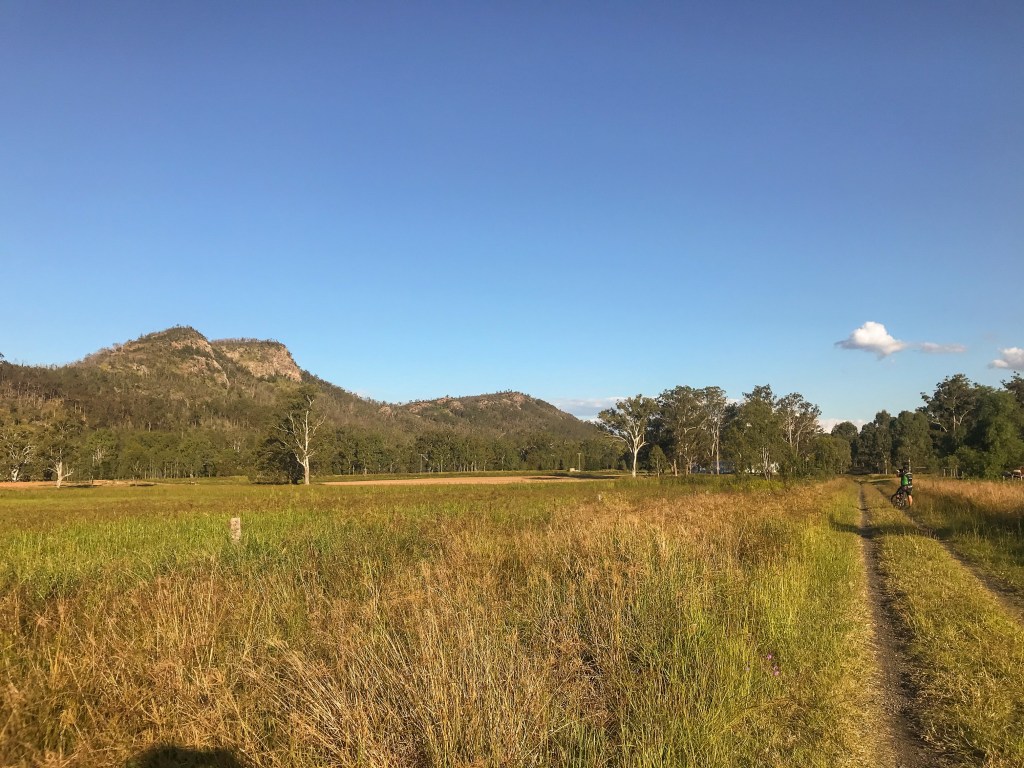
Linville is in a pretty position among rugged hills, folded and contorted and topped with natural Australiana. Just beyond a few of the folds you’ll find Kilcoy, where in 1842 flour was laced with strychnine and given to a large group of Aboriginal people by two shepherds at a squatters station. Reports – like many of the time – are vague and swept under the carpet. At least sixty Aboriginal people were killed. A death pudding massacre.

I share this clearly not for entertainment or as a segue into some cycling incident but merely to share it, to acknowledge and make it known. I had no idea, freewheeling downhill, what happened among those hills until I got back home and decided to look into the Aboriginal origins and history of the country I had just crossed. Where the squatters came first, farms and forestry followed, towns and people sprung up and eventually a rail line was constructed. Large swathes of land were stripped of trees, including the unique Bunya Pine, which only now exists in small pockets to the west. Worse, the land was largely stripped of its inhabitants, sent to missions if not a fate more terminal.

The second day of pedalling through the present and the past is more open and exposed, the cursed removal of trees a bane to modern day cyclists exposed to the searing sun. Already the land looks a bit sick and brown from the latest evolution of drought. There are few animals, other than the occasional cluster of cows hunkering down under a lone tree or dilapidated shed.

There are also a few magpies and – miraculously – they are leaving me alone while going for the other mamils in my crew. This is wonderful, so much so that I whizz on and almost decapitate a snake that I didn’t even see until after I passed it. I feel somewhat blessed and incredibly fortunate in hindsight. It’s like they knew or something.

The towns – or what pass for towns – tick off at fairly regular intervals. Early on there is Moore with its three cafes, of which one only seems to be open and doing a good trade in weirdness and antipathy. It was here I discovered a publication called The Light which from a brief glance before I felt the urge to use it for toilet paper proclaims to shine a light on all things the establishment don’t want you to know. Likely bankrolled by such establishment figures as Rinehart, Hanson, Palmer and co.

Next along from Moore, after one of the bigger climbs of the trail is Harlin, which appears little more than a pub and a servo. Still, giant bottles of knock-off Gatorade are welcome, as is the cooling 90 metres of the Yimbun tunnel a little further on. It’s a good place to pause, adjust padding and apply sunscreen before persevering with more open, baked-earth riding to Toogoolawah.

You know Toogoolawah is – in relative terms – big because it has a choice of two pubs for lunch as well as a sprinkle of cafes. Closer to the highway you can even find some homemade fudge and maybe decent coffee but the old rail line has other places in mind. With a local recommendation we decamp outside a pub and have a hearty lunch in the shade. Pizza topped with so much topping it takes a while to discover the base. Welcome and delicious, but I am wondering how all that salami, olives, capsicum, tomato, feta, mozzarella, parsley and bread, pepped up by a lemonade, is going to sit.

There was a bit of gas departing Toogoolawah, an uphill grind but one that I quite enjoyed. Dropping into a nice low gear and spinning gently, consistently, without any real rush to get anywhere. Bare country eventually cedes to a line of boundary eucalypts that accompany us to a cutting where the railway peaks, and it’s downhill from there. Suddenly speed is a thing again, the ruts and stones bouncier, gripping on to handlebars that much tighter, the air flow providing welcome ventilation. In hindsight it feels like this all the way to Esk, but there was definitely still pedalling involved.

I was a little concerned about getting to Esk around 3pm, just as everything was no doubt closing. But a new addition along the BVRT, a very BVRT business in fact, was kicking on into a Sunday arvo session. Brisbane Valley Roasters no doubt attracts the hairy mamil with single origin roasts and cold brews and almond milk. There are bike racks and large wooden benches and probably some of those fake succulents you get from IKEA. After such high dose rustic rural, you may temporarily feel an inner Melbourne vibe, or at least central Tuggeranong.

But then Esk happens. For some reason today all the staff appear to be about 14. There are no lightly bearded hipsters or man buns dosing double shots and feathering foam. I opt for an iced coffee anyway, given the heat outside which is now well into the thirties. A solo performer mistunes his guitar and is gearing up for some gently grating entertainment, supported by a handful of friends and family. A lady from out of town accosts us and talks about love and secret hideaways up on the Darling Downs and how hard she has worked all her life and that young people don’t know what hard work looks like and they should stop buying avocados or something. I fear 5G radiation PayPal vaccines might be next. Still, at least it’s not sitting, working, sweating on a bike.

I assumed all the young people of Esk were working at Brisbane Valley Roasters that day, but it turns out there are even more of them in the IGA. I suppose as well as providing cheap labour for hard-working business owners it’s something for young people to do other than vape. And they’re all rather friendly in the IGA, even as Jason – by now high on morphine or something – rambles on about (and looks like) the Esk Yowie while I am trying to buy some reduced price tabbouleh from the girl behind the deli counter. Young people are nothing if not resilient in the face of the weirdness they encounter.

Dinner turns out to be an IGA affair since the pub is closed and the Thai is also – due to unforeseen events – closed. We stock up on food, too much food, for breakfast as well. Thinking, quite rightly, that nowhere will be open at five in the morning. And also thinking, quite wrongly, that we could eat two apple crumble cakes reduced to 99 cents, along with several pots of yogurt, cereal bars, a tree of bananas and a two kilo bag of rolled oats at five in the morning.

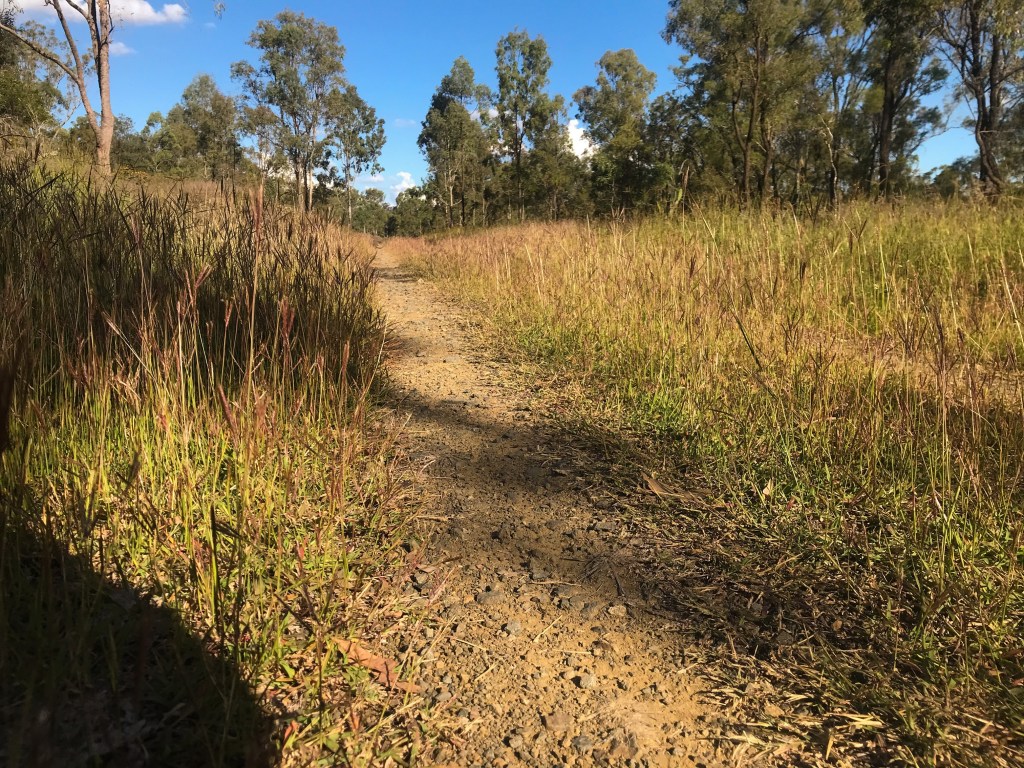
It is an uncivilised hour to rise but the final day is also the biggest and longest. And some of us have a train, and plane, to catch. While initially confronting, the early hour is by far the best on the bike. The light glowing soft, the air calm and cool and infused with that dewy, earthy fragrance of something akin to dried straw and peppermint. The trail is subdued too, enclosed by forest pretty much for the whole 20 kilometres to Coominya.

The last of the bananas disappears at Coominya, meaning I force myself to buy a chocolate éclair from the bakery at Lowood, a little further down the line. Brisbane feels closer now, the river widening, water to rinse off the humidity, feed the production of insipid beer, pressure wash four million Toyota Hiluxes. Yet after Fernvale and its supposed amazing pies, there is little to interrupt until reaching the very edge of Ipswich.

In the bush and scrub around here, 12 Aboriginal people were killed in 1843 when they were pursued by a vigilante group of soldiers, settlers and stockmen, seeking reprisal following the battle of ‘One Tree Hill.’ We all cruise on by unknowing and unthinking. An ignorance that is all too common, all too often the easiest option, the path of least resistance. Because if you don’t know you won’t actually feel impelled to reconcile.

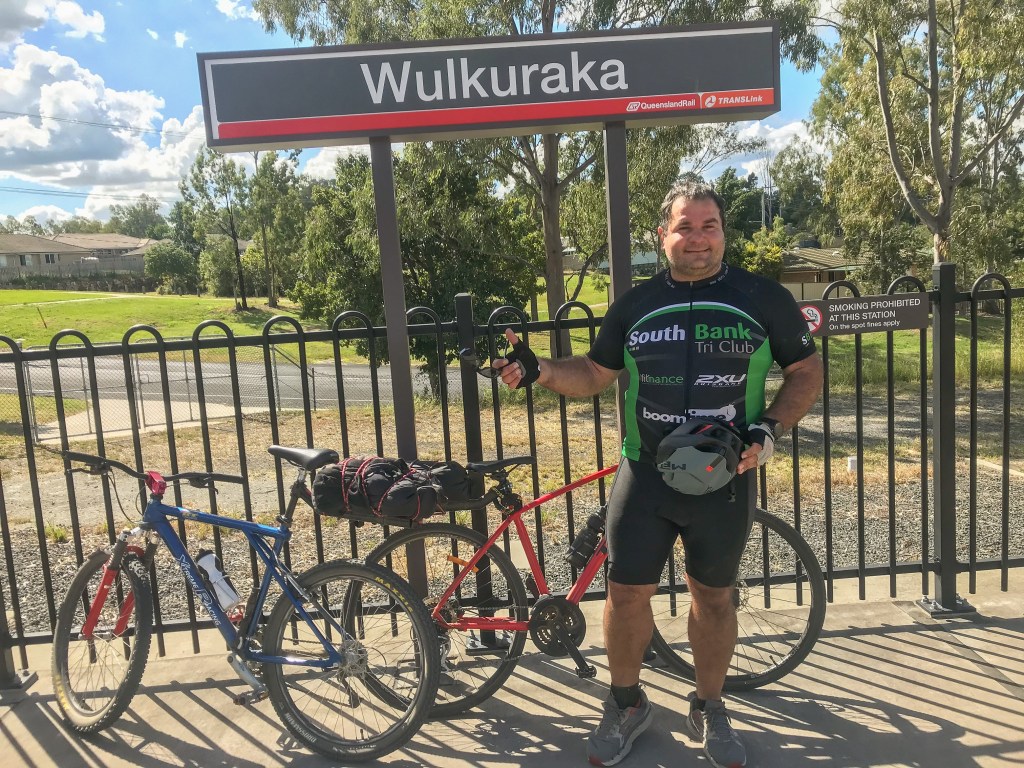
Wulkuraka – an Aboriginal word meaning either red flowering gum or plenty of kookaburras. I see neither today, but they are assuredly there somewhere. Holding on, adapting, waiting to burst forth and laugh. May well they laugh at a troupe of four sweaty middle aged men trying to cross a finish line in tandem, the youngest with a wheelie. Having crossed country where, despite it all, there is embedded in the earth and the sky a profound resilience. Something which can never be washed away, tunnelled through or eroded. A line much older, deeper and enduring. Always.

Australia Green Bogey

Great Continental Rail Trail Journeys

The last time I heard the word ‘gooch’ as incessantly, an English batsman was stroking the Indians all over Lords. That was 1990. I also remember a reoccurrence when the same player was famously dismissed for handling the ball. Today, gently rising out of Toogoolawah, two hours west of Brisbane, gooch and ball handling were once again all the rage.

A stop was called for by my good friend and biking companion, Jason. Problems in the perineum that would culminate in what will only be known as the ‘Lowood Incident’. As improvised comfort was applied and jiggled, I started to contemplate whether we would need to radio in the rescue chopper.

But waiting patiently I was enjoying the break. It had been a decent upward grind after lunch. The sun was warm and glowing gold the long grass of summer. Small eucalypts lined the route, interspersed with westward views over gently undulating farmland. My bike was coping well. Despite almost falling asleep over a burger, I was coping okay. This was brilliant.

I had never heard of the Brisbane Valley Rail Trail until Jason mentioned it virtually every time we spoke over the phone. I don’t know if it was one of those things you just say, never really expecting anything to eventuate. But one day I just thought sure, why not. Or words to that effect. And this whole trip was basically arranged around it.

We took a leisurely three days to cover the 161 kilometre route by bike, retracing a rail line that commenced construction in 1884 and was finally made redundant in 1991. Today, it has been transformed into the longest recreational rail trail in Australia for use by walkers, horses and – mostly – bikes. While I never succumbed, Lycra and gooch cures are never far away.

Day 1: Yarraman – Linville (42 kms)

It took the best part of two hours to drive from Caloundra to the start line (thanks Fiona!). Over rainforest-lined passes, high above fields of mist, past bakeries that are worth making a note of for later, we reached Yarraman to face the unknown. Yes, riding a bike is like riding a bike but riding a bike on a three day bike ride is another matter.

Yarraman was still fairly quiet, though the people we did encounter were keen for a natter. Being ANZAC Day, a small dawn service had been and gone, and one old guy offered reminisces about days gone by in this small neck of the woods. He had taken the train many moons ago when joining the air force. Thus a brief history of the operation of the Brisbane Valley Line ensued. The conversation culminated with him contemplating riding the line once more, e-bike assisted of course.

We passed up the opportunity to indulge in coffee and bakery items at Yarraman, instead pursuing these goals in Blackbutt once at least a few calories had been discharged. And so the exercise commenced just out of town beside the old rail station, highly visible remnants of the line that pop up in practically every settlement along the way. Blue skies, still air, a fairly smooth dirt track accompanied by that first shot of endorphin from anticipation of what may lay ahead. 

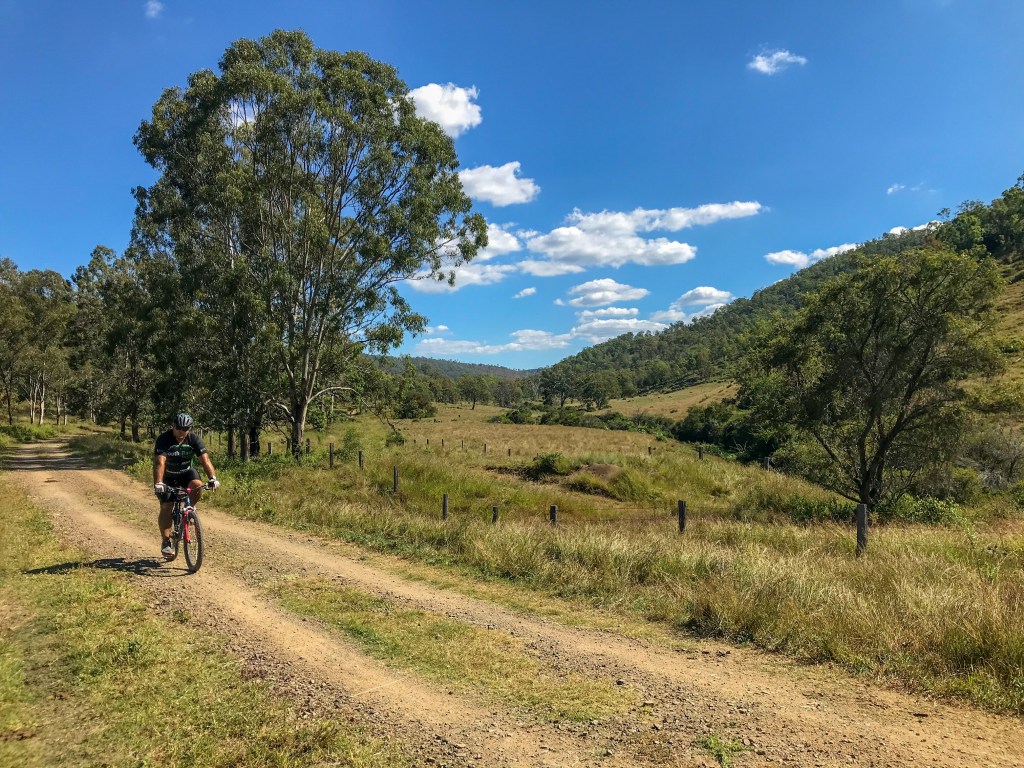
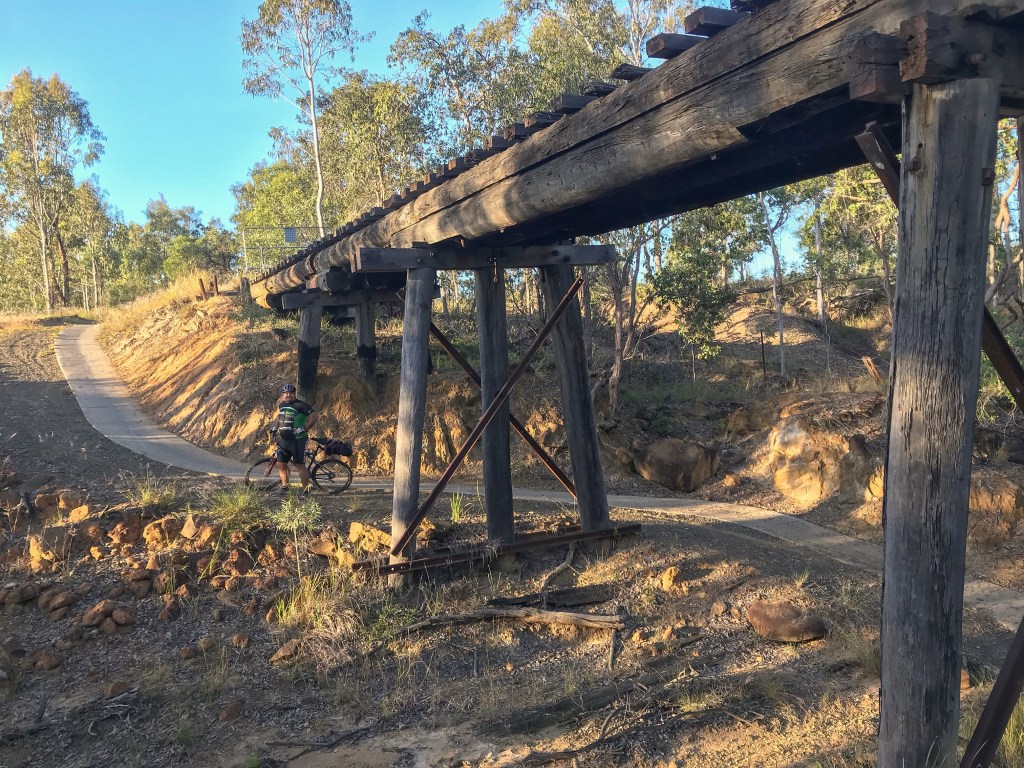
And so, we rode through avenues of low eucalyptus, alongside green pasture dotted with spiky xanthorrhoea, and through a number of rockier cuttings keeping things relatively flat. Earlier in Yarraman, the old fella rambled on about the bridges on the rail line and wondered if they were still standing. The answer quickly became clear and that answer was – for the most part – no. After cruising with only gentle effort, the downs and ups of gullylife often come as a bit of a jolt to the system.

The vibe along the trail was congenial and we passed a few other cyclists with friendly g’days and broad smiles. A few times the trail briefly transported me to a nice summer’s day in southern England, a passing resemblance nurtured by fields of corn and tunnels of trees. The idyll was quickly shaken by the gullies, the gravel, and the sound of Chinooks and Apaches putting on a flypast specifically for us. 

It had taken well over an hour to get to Blackbutt which was – after the trail thus far – a veritable feast of civilisation. People were assembling for the 11am memorial service, many with padded butts and bulging Lycra. This naturally resulted in high demand for coffee. So high, in fact, that the cafe we had chosen failed to deliver it.

It seems churlish to bemoan the absence of coffee in the context of wartime remembrance, but I cannot deny how deflated I felt. One of the attractions to this ride – probably even the number one thing impelling me forward – was the frequent prospect of stopping for coffee and cake. How leisurely, how civilised, how conforming to popular stereotypes of butt-padded middle aged manliness. 

But the parade passed and wreaths were laid without a hot mug of country flat white. As they do, Last Posts, Abide With Me, and sombre silence touched the right note. The special guest speaker spent a good few minutes talking to the point that his time to talk had been controversially curtailed (I can only imagine the political machinations going on in Blackbutt RSL). Meanwhile, someone posting video of the service to the local Facebook page bemoaned the fact that everyone else was using up the local 4G and quite possibly catching coronavirus from the rays. 

You don’t get these quirks at the Australian War Memorial and that is why the ANZAC service in Blackbutt was such a memorable event. Above all, it radiated with the warmth of smalltown community: flags half-mast against the backdrop of XXXX signs on the pub; the high street closed off as trucks carrying cattle detour behind the small memorial; a procession featuring schoolkids, scouts, guides, old troopers and the Country Women’s Association, all waving to family members lining the route. Meanwhile some lucky butt-padded cyclists sup on their coffee.

No offence to New Zealand, but we snuck out of Blackbutt as the ceremony was nearing an end with its national anthem. I was keen to get moving before the rush of people re-joined the trail. We also had to reach the pub before it closed for the day.

Fortunately, most of the trail to Linville was downhill, through Benarkin State Forest. This induced a little adrenaline, gathering speed and negotiating clean lines and avoiding small rocks. My back end decided it wanted to head sideways on a few occasions, but speed and gravity and not particularly flash bike-handling skills kept things upright. Almost as satisfying as staying in one piece was the sight of pedallers grinding their way up towards Blackbutt and being thankful that this was not you.

Eventually the forest opens out and the landscape presents itself as rugged and unkempt. In fact, it’s probably the most enclosed part of the whole trail, where you truly feel like you are carving your way through a steep-sided valley. As the hills part, farmland again emerges, shacks appear, caravans gather for extended coronavirus holidays, and in front of you, shining like a temple, is the Linville Hotel.

The first thing that was obvious about the Linville Hotel was that the tradition of sitting around drinking on ANZAC Day was very much alive and well. Out the front, a multicoloured arrangement of frames and wheels gathered in what looked like one almighty tangle. Motorbikes glimmered in the sun. Classic cars posed with their rooftops down. City folk had come for the drive. Or the pedal.

The Linville Hotel proved every bit the Australian country pub and a little more. Chicken Schnitzel lunch was accompanied by local brews. Wooden verandas and wonky floorboards looked out over sleek parasols and hipster guitarists. Old signs mingled with largely ignored QR codes. Upstairs, rooms provided accommodation and already the century old balustrade was subject to Lycra decoupage.   

Closing at three, the pub transformed into a peaceful oasis, one in which I envisioned a post-shower nap that never materialised. Jason, naturally, had no problems. I instead popped out and explored the town, taking all of five minutes. It struck me that Linville would struggle to get passing trade if it were not for the rail trail. That, and the free camping area densely populated with COVID nomads.

So, the first day of the BVRT had been safely negotiated and all was well with the bike, the bike rack, the butt padding, and the humans. Until that pounding headache and fatigue and rush down to the toilet block to empty the mish-mashed contents of my stomach. In a dramatic turn of events, would I make it through only one day? Would we need to call in the medics? Would I ever get a goddam coffee on this trail?

Day 2: Linville – Esk (52 kms)

I guess the header gives it away. I survived. In fact I somehow prospered. This was the best of days: no rush to get anywhere, me, my bike, my mate, the sun, a massive coffee, and some other foodstuffs thrown in and not thrown up. 

The day commenced with a rising sun over a patchwork of mist from the top floor of the Linville Hotel. The sun kissed its first light on the Lycra bunting, dangling like the dismembered ghosts of cyclists past. Gradually the shadowy figures disappeared as small groups set off. We were the second last to go, just an e-bike left charging for those who have the power to linger.

It was a good start, especially as the first stop – Moore – was only seven kilometres down the road. I say road, but of course I mean trail, which continued to be decorated by avenues of eucalyptus and interrupted by deep gullies.

Moore appears even smaller than Linville yet boasts three places offering coffee. Wary of yesterday, I pray we choose the right one. In the end, the coffee comes, which is an improvement at least. It’s one of the biggest cups of coffee I’ve ever had in Australia, more akin to the stupid sizes you get as standard in those awful chains in the UK. In its gigantic bucket, the coffee took an age to cool down, but at least a second breakfast sausage roll kept me replenished.

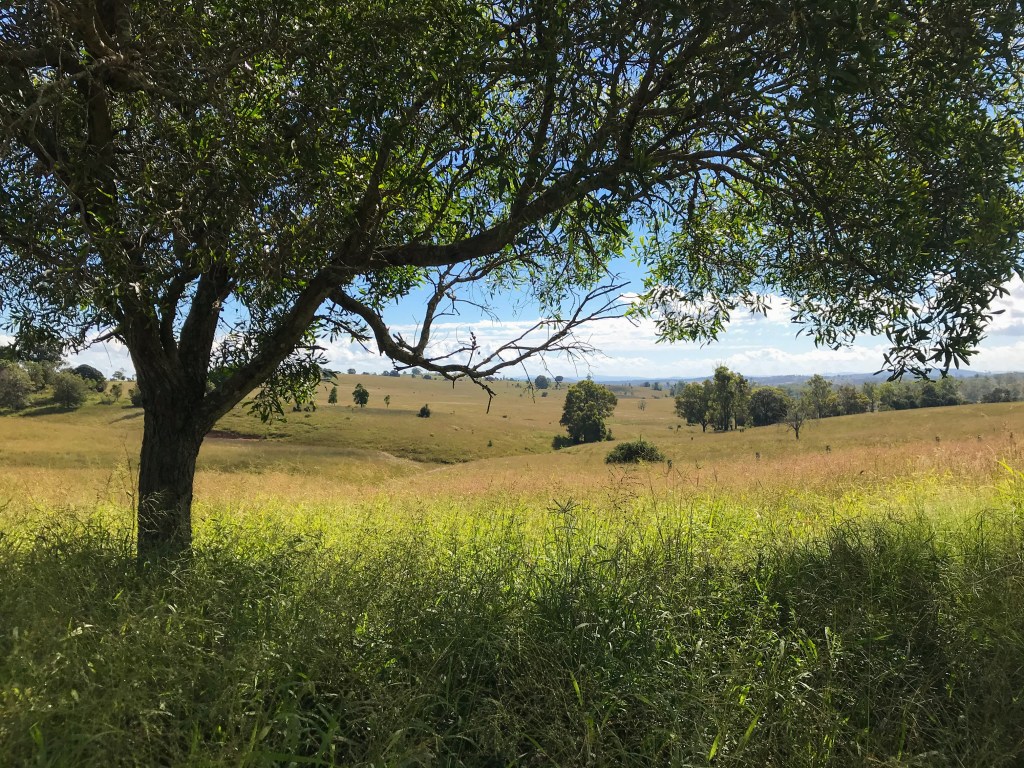
After Moore, the landscape opens up considerably; wide fields undulate gently towards more prominent ranges while patches of forest become fewer and farther between. The trail even takes in some steeper rises which I’m sure weren’t part of the original railway line. Like the train in Dumbo – I think I can I think I can – I am elated with my first KOM achievement.

Another notable rise appears on the outskirts of Harlin, the next town of sorts along the way. Again I am pleased that I make it but also pleased to see some seats and a shelter at the top. It’s a bustling hive of activity as wheels spin, chains are cleaned, and flasks of tea are drunk. A gathering of older riders have made it all the way from Bundaberg or Rockhampton or somewhere like that (I forget), this now their eighteenth day on a bike. I don’t quite feel as smug having managed to overtake a couple of them on the way up.

We seem to play tag with this group for the rest of the ride. The trail’s kind of like that. All the time, in cafes and pubs, on picnic tables and in parks, you see people you think you have probably seen before but often can’t quite remember. Typically exchanges involve the matter of where you have come from and where you are going, intended bakery stops, occasional technical bike talk that goes over my head, and – increasingly – saddle sore. You leave it all out on the trail.

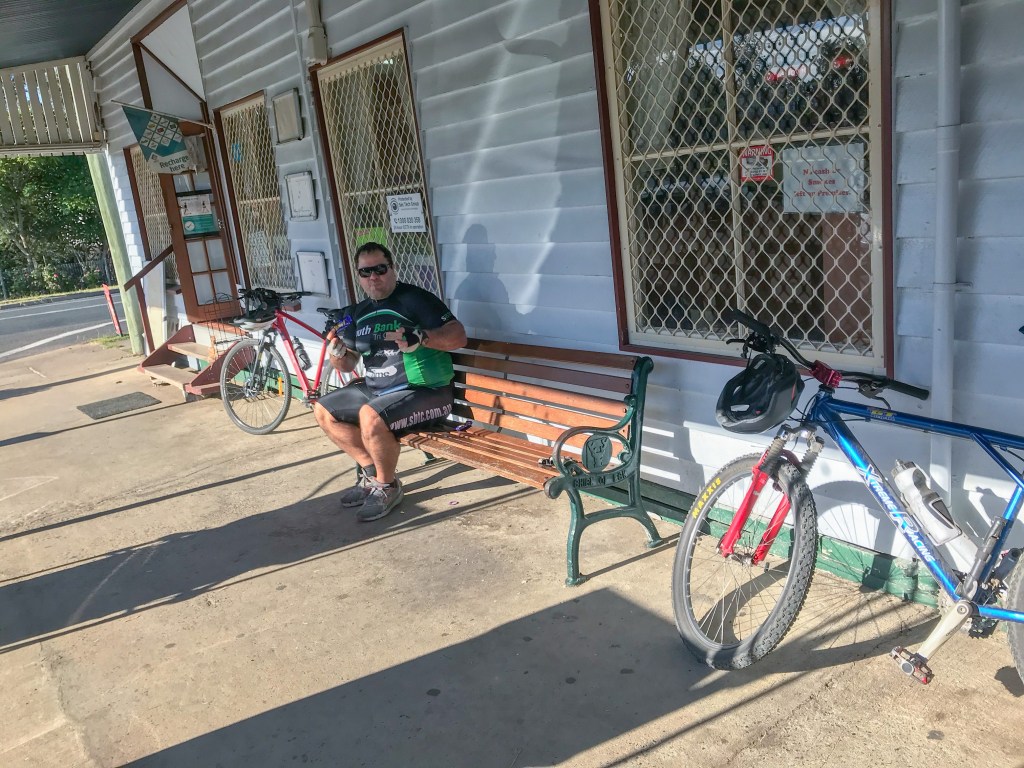
In these entanglements I figure we are perhaps a little more memorable to others. I say we but I mean Jason, masterfully contoured within his Boomtime bodysuit; I’m just that nondescript guy accompanying the big unit. Sometimes setting tempo on a gradual rise, other times trying to keep up on flowing descents. Organising accommodation and strategising food stops. Encouraging progress to the next town for running remediation. Hang on…I sound like a bloody domestique!

After Harlin I find myself pacing us past a rider and on towards a landmark. A damp dark hole doesn’t sound like much of a tourist attraction, but this is Yimbun Railway Tunnel, constructed in 1910. It’s the only tunnel on the entire length of the trail and I am pleased to see it, given my initial horror approaching what looked like an unscalable hill. Stops for photos and cooees are all the rage.

On the other side we progressed onward to Toogoolawah where it was most definitely time for some lunch. Our hilltop friends from earlier were encamped at a couple of shady picnic tables feasting on the provisions they had carried. Travelling light, we sought out a business that would feed us. This proved harder than one might expect – being a public holiday, the town was almost desolate. Salvation was once again in the form of the pub, and a pretty decent burger.

It was at the pub that I struggled to stay awake and was uncertain how I would manage to start out all over again. Rooms in the inn certainly had an appeal. I was also being bothered by an energy company desperately trying to cling onto my business after taking my money for many years without the slightest pretence of customer service. This is largely irrelevant and uninteresting until it got to the point where I was pleased to get back on the bike to escape a world of 4G.

Back to the simple life where it was just you, a bike, and a mate bringing things to a halt in an attempt to increase comfort. The trail rose steadily from Toogoolawah for quite some time before a delightful plunge down the other side. With time pushing on, the afternoon presented the countryside in a warm, attractive light. By the time we reached Esk, there wasn’t so much left. 

Usually you’d think 52kms would only take a gentle three hours. But factor in gravel, gully crossings, stops to take pictures of cows, the time required to wait for a ridiculous sized mug of coffee and then drink it, distractions with energy sales sharks, and – progressively – pauses for gooch care, and you have a full day out.

It’s more tiring than you think too. Which may explain why I called Jason a moron outside the IGA for just assuming it would be open forever. We joked about it afterwards, ate mediocre food at the local pub and capped things off with mugs of ice cream in a motel room. I’m sure this is exactly how riders experience the Tour de France. Especially the domestiques.

Day 3: Esk – Wulkuraka (67 kms)

Okay, this may sound like I had lost by mind but there were times on the third day where I literally felt like an express train. No, more like one of those old clapped-out British Rail stopping services between Basingstoke and London Waterloo with the heavy slam shut doors. There was something about the slow acceleration, easing away and eventually building to a steady pace as we progressed through the trees between Esk and Coominya. Once on the blessed descent from Mount Hallen, speeds were probably matching those of the 8:07am to Woking.

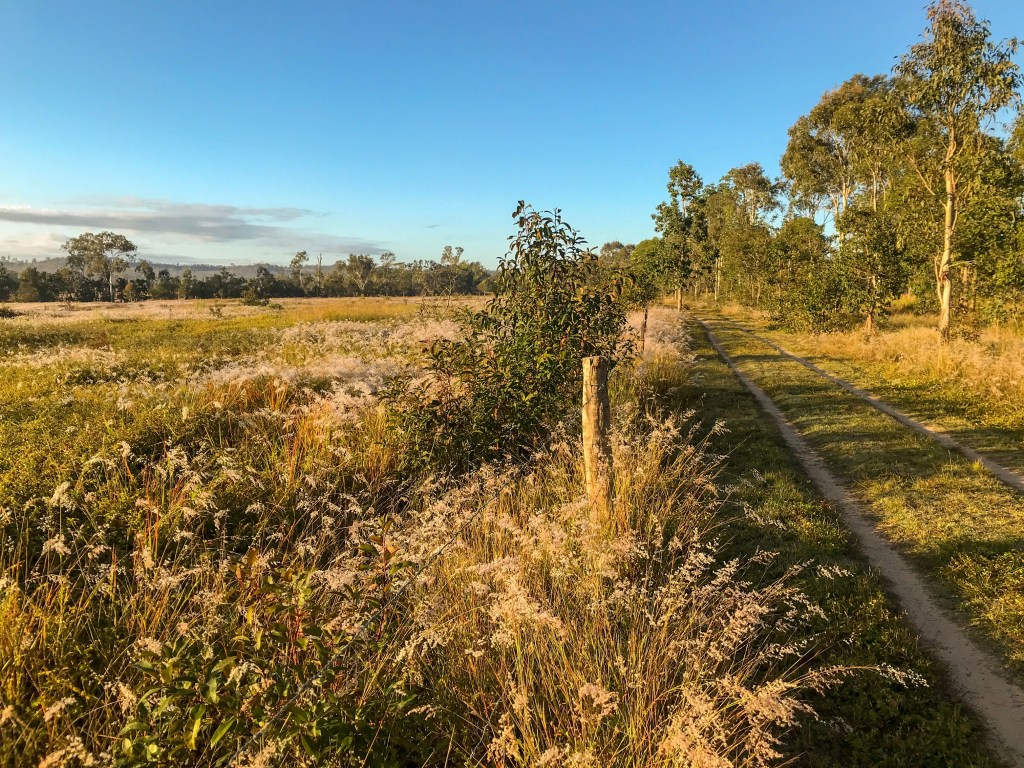
We had departed Esk early as we – literally – had a real train to catch. The sun was only just rising above the horizon and it was more than fresh. But the plus side of this was the wonderful golden light over fields of grassy tussock, dewy spider webs, and the splendid nose-clearing aroma of gum trees embracing the day.

The section from Esk to Coominya is the longest without any civilisation and a large part of it cuts through the bush. By time you reach Coominya, you are more than ready for a coffee and treat. But good luck with that. Google Maps told me of a place called the Blue Teapot Café but unless I got my map-reading wrong (which is extremely unlikely), it appeared to be a petrol station / tackle shop / muffler supplier / chiko roll purveyor. They did have reduced price Cadbury Twirls though, more disintegrate than melt in the mouth.

Fortunately, Lowood is an entirely different proposition and just a further 12 kilometres on. We once more came across our old friends from Rockaberg and the going was pretty good on a well-groomed, mostly flat section. With the D’Aguilar Range rising up on the eastern horizon, there was a sense that Brisbane wasn’t too far away. Just over those hills.

Perhaps it was all to do with timing, but Lowood proved the liveliest town along the trail. There was of course a bakery, but we went upmarket and sat down in the local café instead. Across the road, a well-tended park and amenities offered comfort and convenience for the weary rider. A water bubbler provided a refill while I waited for Jason to do whatever he was doing.   

Lowood also brings you closer to the Brisbane River as it feeds out of Lake Wivenhoe. You never really ride next to it, but at least there are a few glimpses here and there, just to remind you that – oh yeah – this is the Brisbane Valley Rail Trail. Compared to life at the other end, the landscape is much more open and there is feeling of settlement and civilisation accumulating. Indeed, the next town – Fernvale – is only a further eight kilometres.

I had heard several times – in those exchanges between BVRT veterans – that the Fernvale Bakery had some seriously good pies. So continuing our poor food choices we decided to have brunch instead. It was okay, but nothing to write home in a blog about. Hanging like a shadow over the experience, too, was the sense that we needed to get moving to catch that train.

Further delays around the public toilets in Fernvale allowed me to catch up with another rider who recognised us. Apparently, he was on the table opposite at the pub in Esk. He had been carrying everything – camping gear and all – on his back and was very much looking forward to the end. I felt fortunate to have stayed in proper rooms and for buying a $16 bike rack from Kmart. The best investment ever, cheaper than an underwhelming brunch. 

Nonetheless we were all at that point where the end couldn’t come soon enough. It was a further 23kms from Fernvale to Wulkuraka and much of the novelty and thrill had worn off. Some of the track was quite sandy and while it never reared up like an Alpe d’Huez, there was this endless perception of drag. At one point, some naughty trail bikes came at us from the other direction and you knew suburban Ipswich must be close.

A sign indicating 5.2km to Wulkuraka rears out of smooth white concrete. The bike trail has become a modern, formed bike path and it’s the shot in the arm needed. We reach speeds previously unfathomable, picking up slipstream until the interruptions of traffic islands and a final little upward thrust. The penultimate hundred metres navigates the pavement alongside a row of compact townhouses. Ticker tape, fireworks, applauding admirers fail to materialise. There’s not even a sign.

Still, we have made it. We made it! I had my doubts at times. But I think there were so many things to keep us going. The green and pleasant countryside, which is never going to take your breath away but comforts like a mild June day along the lanes of Southern England. The towns and businesses, feeding us and watering us and giving us a mixed bag of dining experiences that could do better. The public amenities and tiny stores offering hope and comfort to ease accumulating ailments. The many other riders, offering this amazing feeling of camaraderie and shared experience.

And, of course, mateship made it one of the most memorable trips ever. The big unit. The boomtime body-suited, gooch-afflicted, cow-whispering Jason. You were there at the end, still batting strong and keeping me going. For every one of the 161 kilometres, the 2,300 metres up and the 2,600 down, it was an absolute pleasure to have you by my side. Or ten metres behind, making adjustments.

Australia Green Bogey