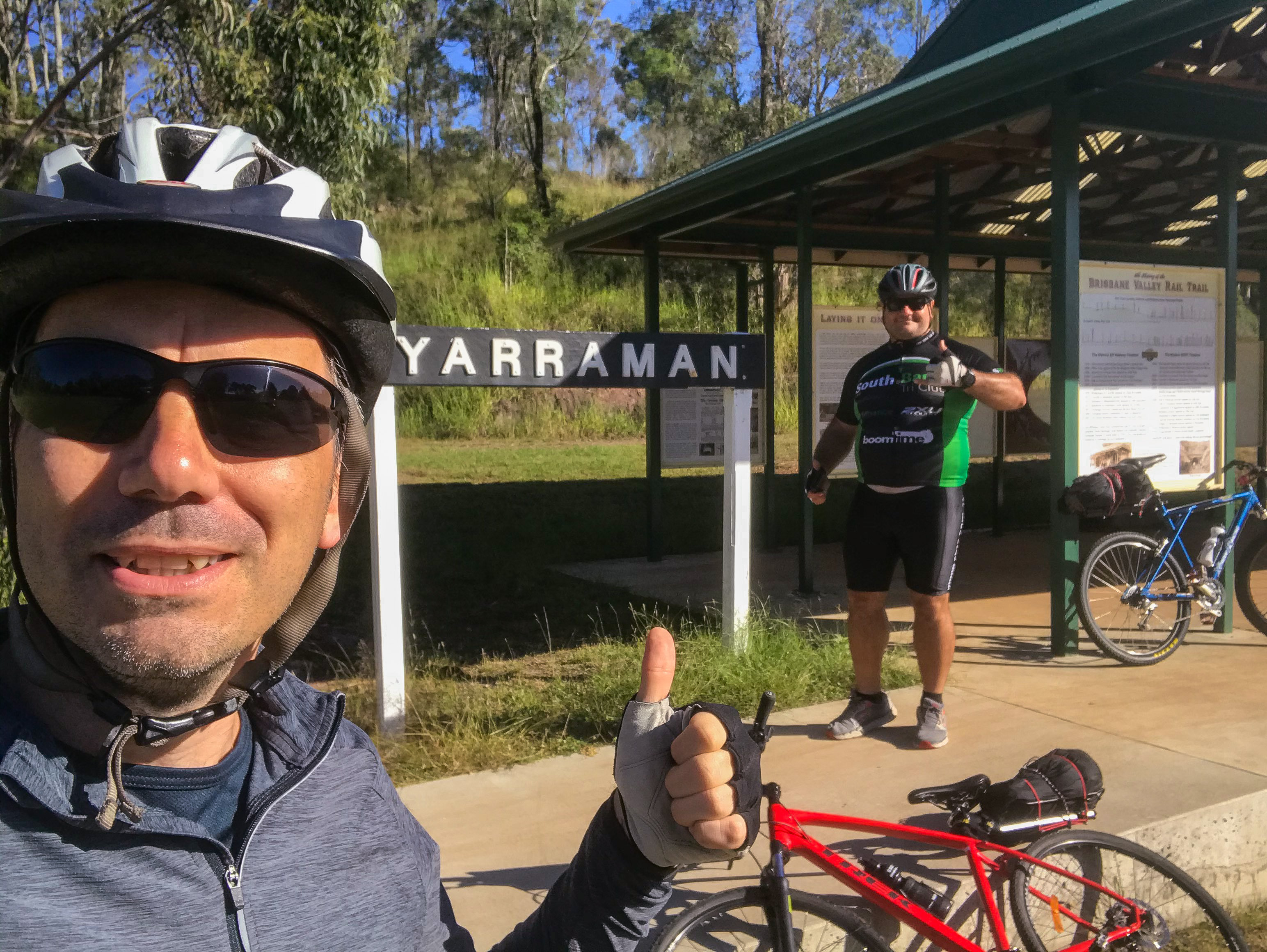
Trailing

Something didn’t sit right with me. Trying to get to sleep in a single bed on creaking, turn-of-the-century floorboards. Below, a bar serving the last of the whooping and hollering, the cackling shriek of a drunk Australian lady all the more painful when you know you need rest. Mind ticking over like the cycle of a misaligned wheel.

The remnants of merriment below had cowboy vibes. With Gucci trimmings. Equally at home in Fortitude Valley as downtown Linville, partying like they are 1999. On a night in 2023 when Australia received what to me at least felt a simple, unremarkable request from a broad representation of its first peoples for them to actually matter and said “yeah nah we’re alright thanks”. Whooping and hollering – as innocent as it may have been – struck a dissonant chord. And I edged closer to sleep with doubts about what it meant to be crossing country the next day.

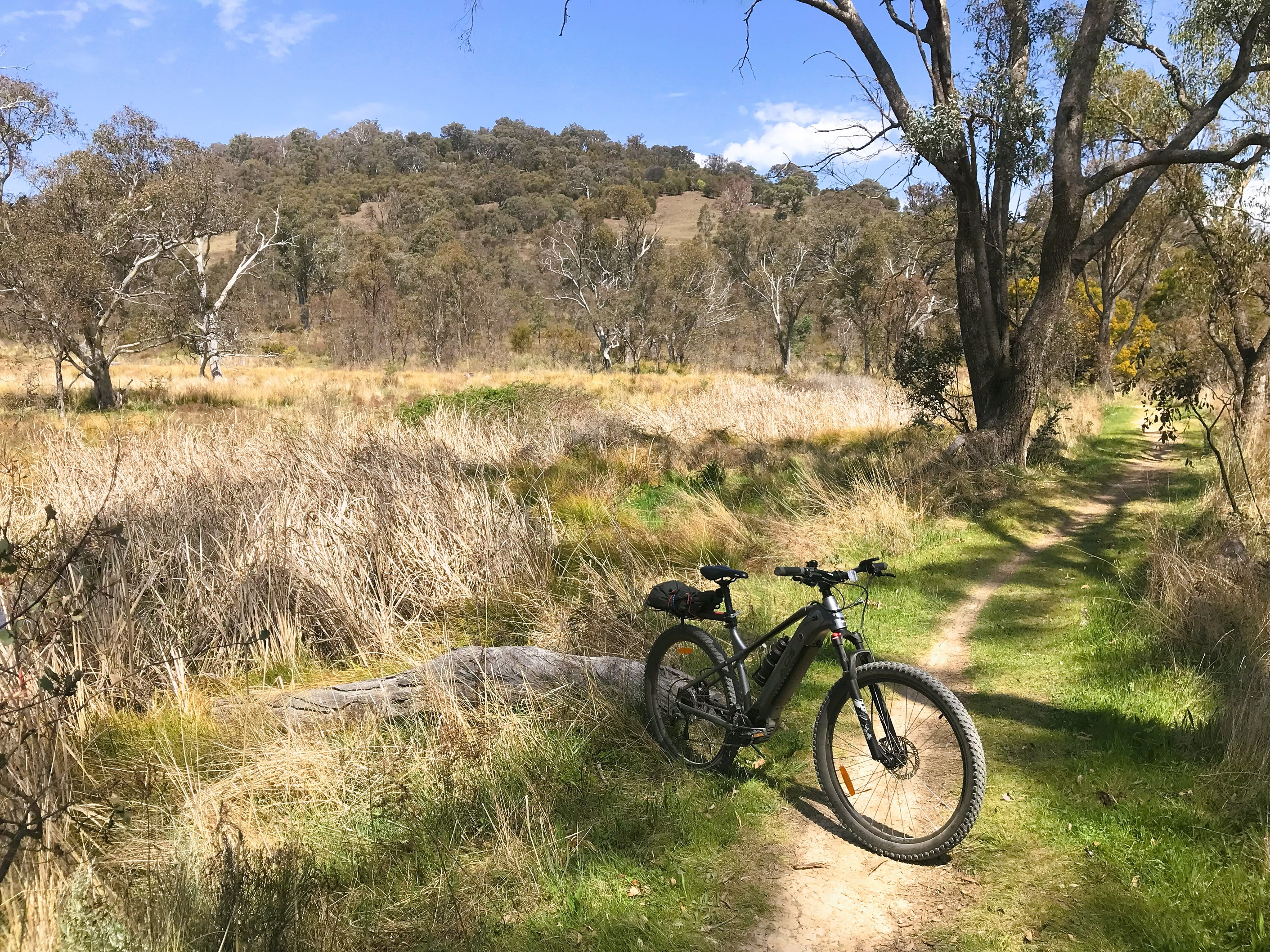
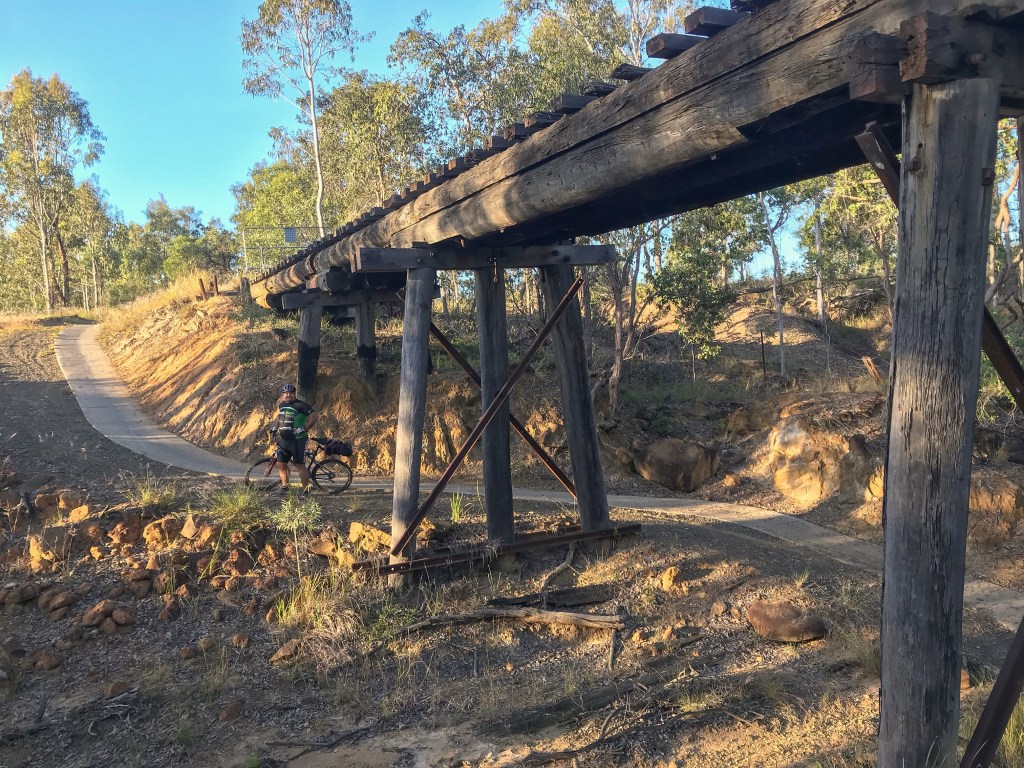
The Brisbane Valley Rail Trail (Part II) traverses Waka Waka Country and Yuggera Country – or at least I think as much based on the little I can glean from local council pages. Today proclaimed as the longest continual recreational trail in Australia (if not the southern hemisphere), it intermittently welcomes people on bikes and horses and feet to roughly follow the course of a disused railway line from Yarraman – deep in the electorate of Maranoa – to the fringes of Ipswich. A manifestation of intrusion and industry and inevitable decline once quick riches had been cut down, torn, eradicated and washed from the earth.

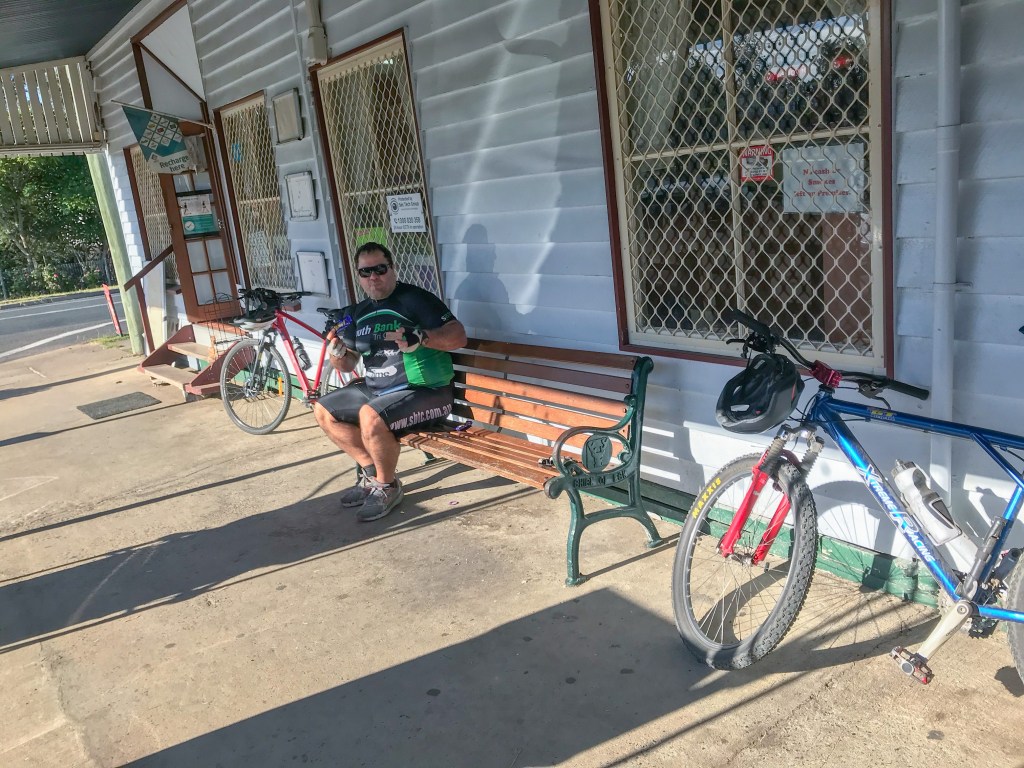
In a sign of hope and rejuvenation the old rail line is now transformed into a place where people can come together on a shared journey, even if some of the newer locals remain deeply conspiratorial. Avid readers may realise this is my second time along it (and with my back now going through all sorts of agony it’ll probably be the last). From a pair of lone rangers we doubled in size as a group of four. Not quite MAMILS but only really lacking the Lycra. Starting off on brand by getting confused over where to start.

In many ways the first 20 kilometres is the hardest, adjusting to seats and handlebars and pedals and pace and the actual realisation of exercise. Things are a little undulating and already hot, and the approach to Blackbutt seems to drag on forever. But eventually bakery rejuvenation occurs, some tuning and top ups ensue, and we are full steam ahead.

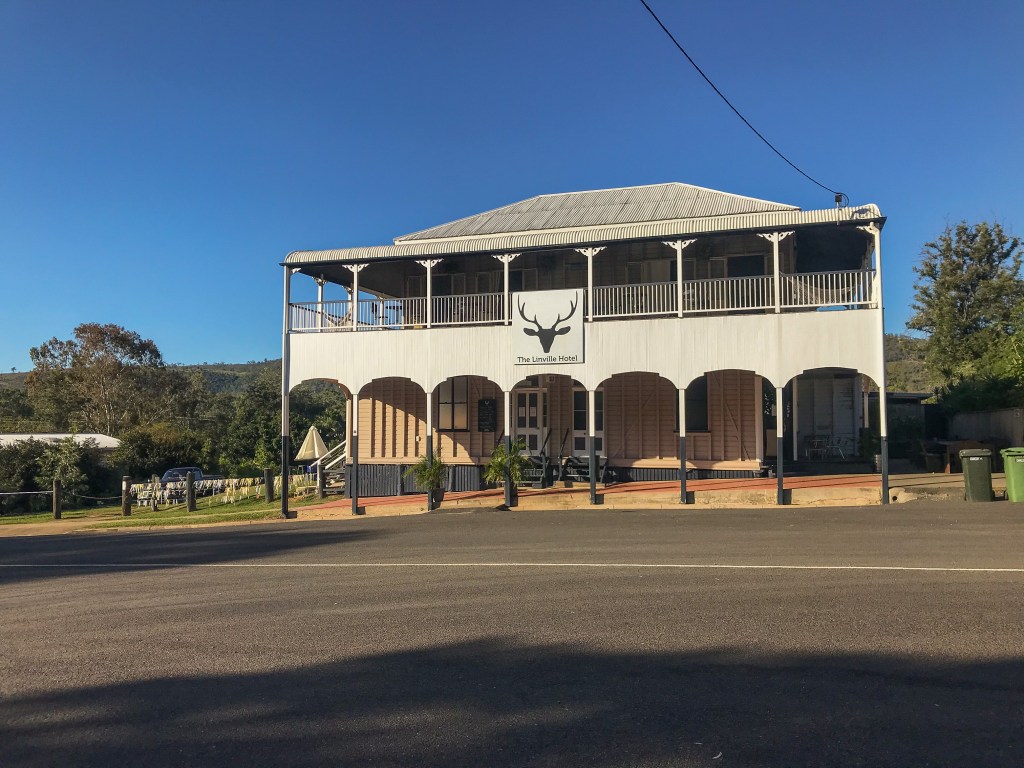
The run to Linville is mostly bliss if a little jarring in places. Forest creeps in on both sides and the gradient works in your favour too. The breeze of momentum keeps you cool and a slice from Blackbutt survives well enough to sugar-rush the journey east. Beaming white in the afternoon sun, the Linville Hotel is a very beacon of balustrades and cold beer. The store next door a welcome purveyor of ice cream.

After a little recovery, day all too soon turns into night because Queensland doesn’t bother with daylight saving (probably because it is seen as another way the government are trying to control you with 5G vaccines or whatever). As much as I try, I cannot find the ideal beer to accompany a local steak and a background band mostly playing the entire catalogue of Crowded House. Only at the end, as encore way past their bedtime, do they strike up Farnham’s Voice. I cannot tell if this is a brave call, a lost opportunity, or a musical smirk.

Linville is in a pretty position among rugged hills, folded and contorted and topped with natural Australiana. Just beyond a few of the folds you’ll find Kilcoy, where in 1842 flour was laced with strychnine and given to a large group of Aboriginal people by two shepherds at a squatters station. Reports – like many of the time – are vague and swept under the carpet. At least sixty Aboriginal people were killed. A death pudding massacre.

I share this clearly not for entertainment or as a segue into some cycling incident but merely to share it, to acknowledge and make it known. I had no idea, freewheeling downhill, what happened among those hills until I got back home and decided to look into the Aboriginal origins and history of the country I had just crossed. Where the squatters came first, farms and forestry followed, towns and people sprung up and eventually a rail line was constructed. Large swathes of land were stripped of trees, including the unique Bunya Pine, which only now exists in small pockets to the west. Worse, the land was largely stripped of its inhabitants, sent to missions if not a fate more terminal.

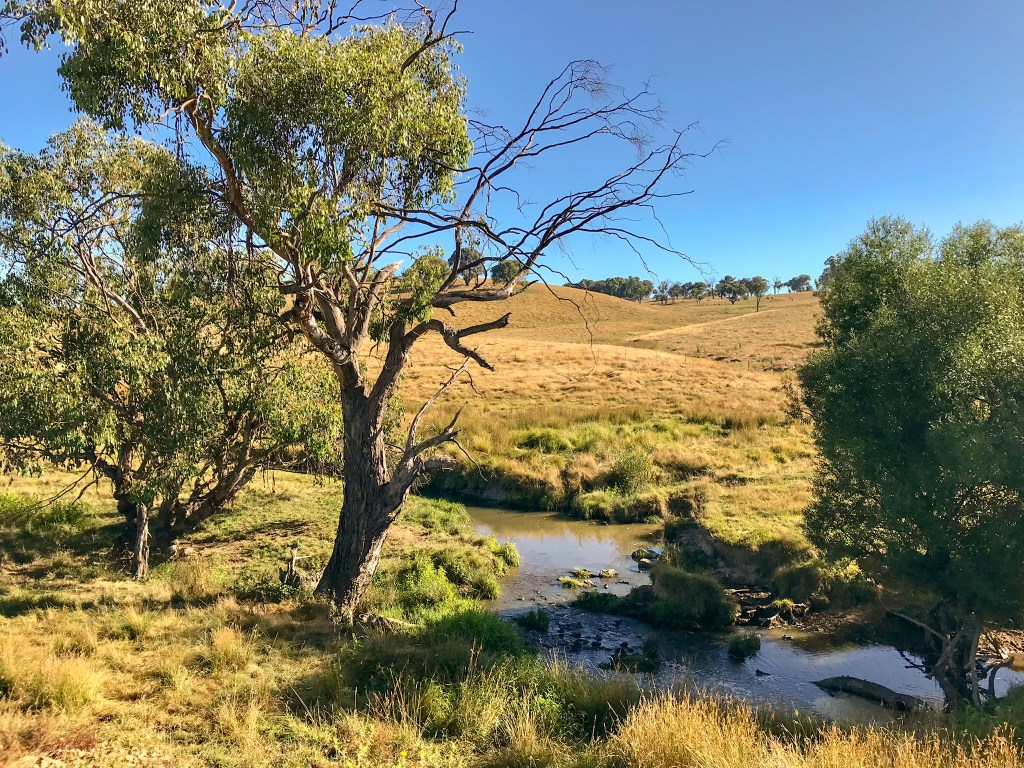
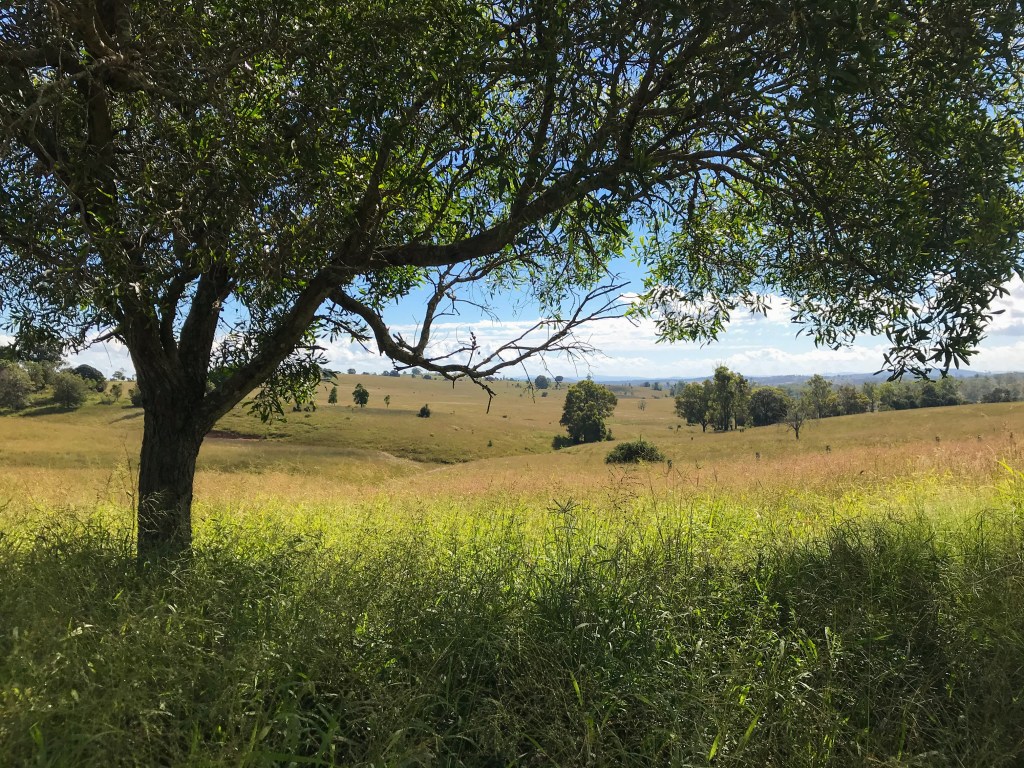
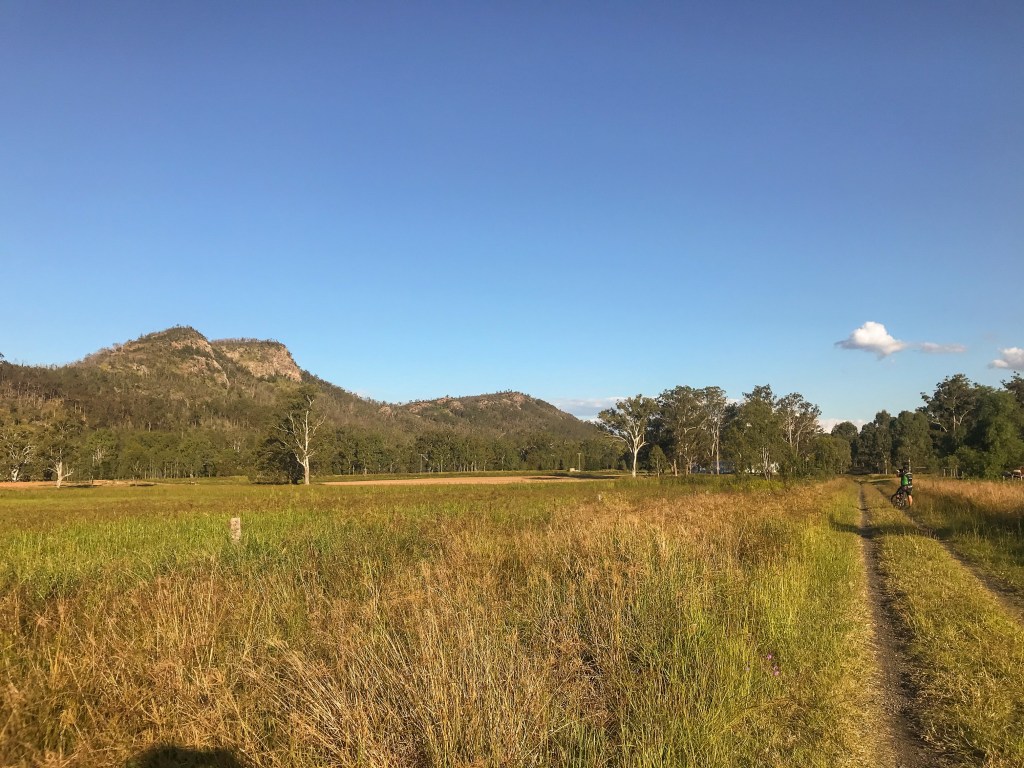
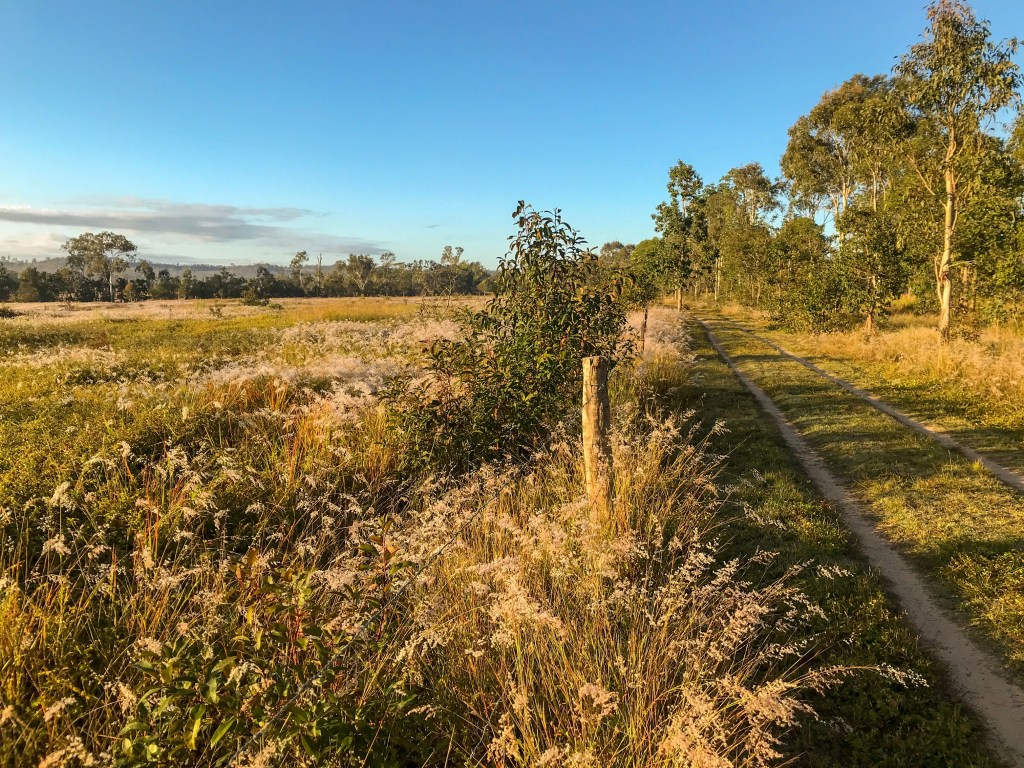
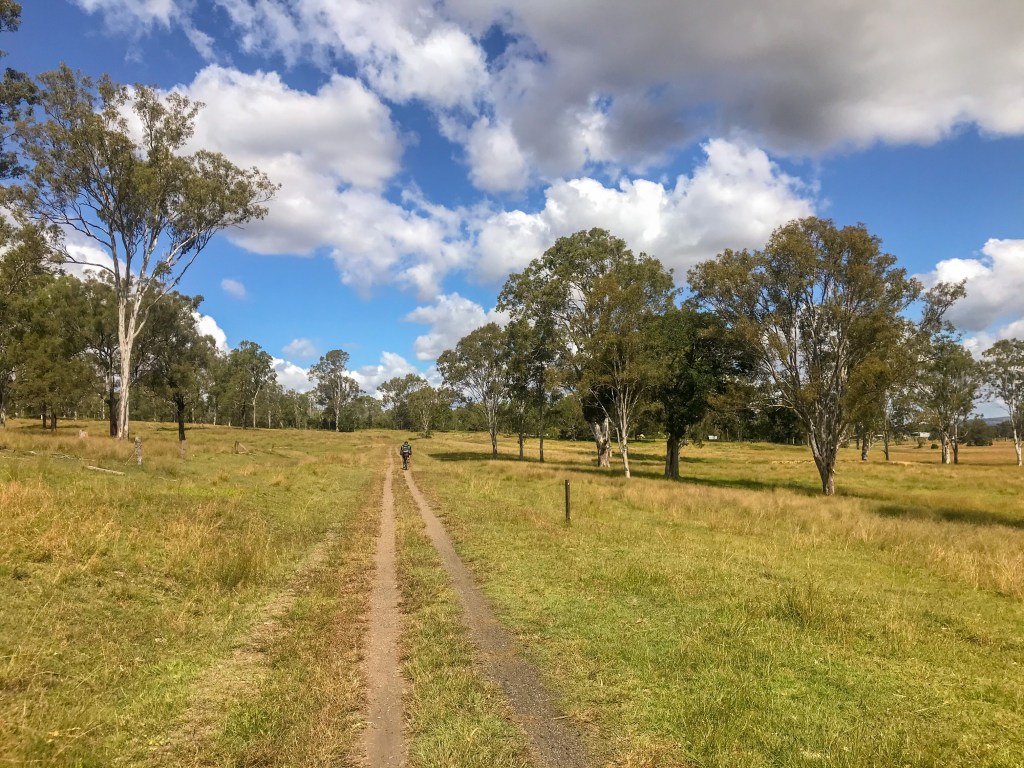
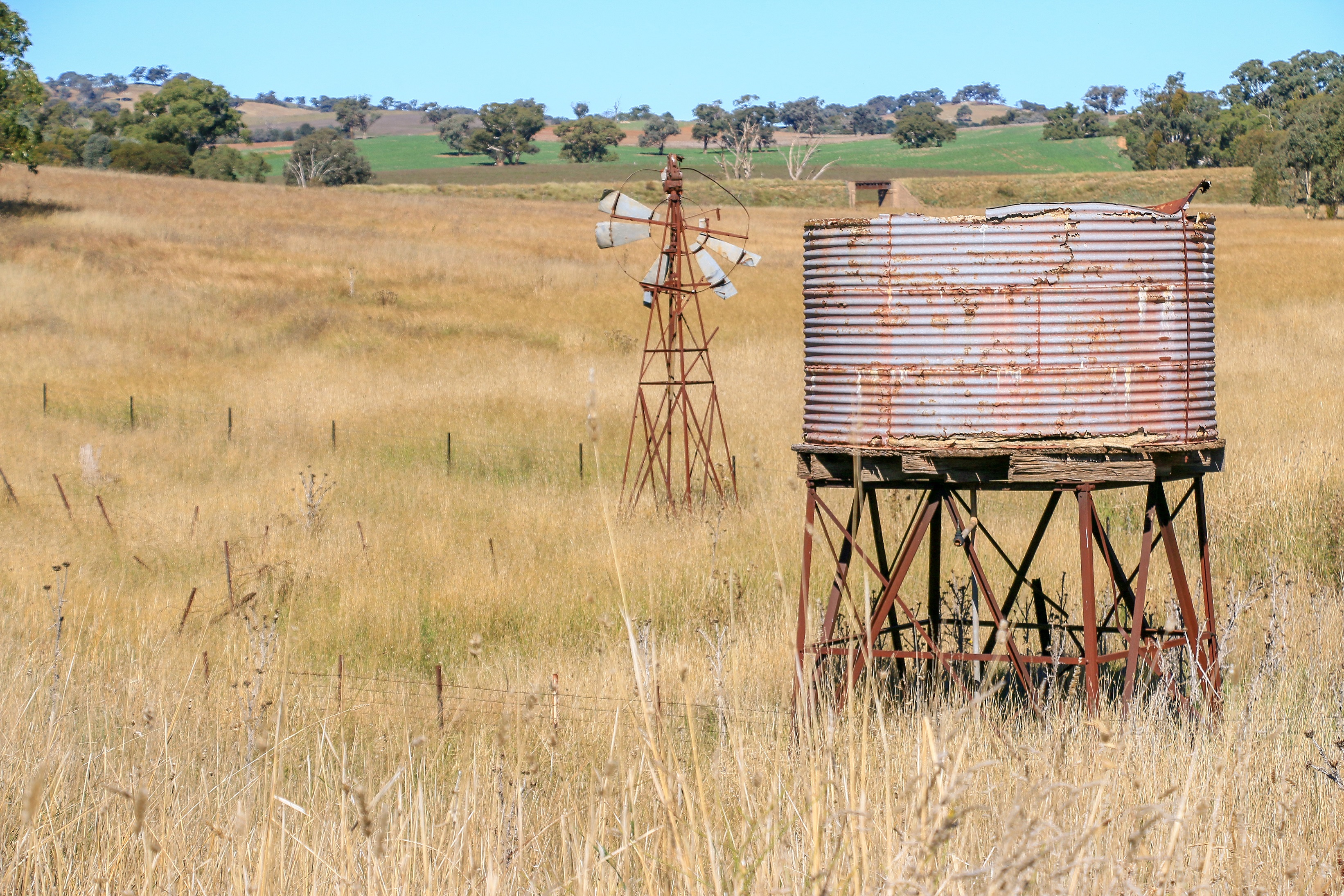
The second day of pedalling through the present and the past is more open and exposed, the cursed removal of trees a bane to modern day cyclists exposed to the searing sun. Already the land looks a bit sick and brown from the latest evolution of drought. There are few animals, other than the occasional cluster of cows hunkering down under a lone tree or dilapidated shed.

There are also a few magpies and – miraculously – they are leaving me alone while going for the other mamils in my crew. This is wonderful, so much so that I whizz on and almost decapitate a snake that I didn’t even see until after I passed it. I feel somewhat blessed and incredibly fortunate in hindsight. It’s like they knew or something.

The towns – or what pass for towns – tick off at fairly regular intervals. Early on there is Moore with its three cafes, of which one only seems to be open and doing a good trade in weirdness and antipathy. It was here I discovered a publication called The Light which from a brief glance before I felt the urge to use it for toilet paper proclaims to shine a light on all things the establishment don’t want you to know. Likely bankrolled by such establishment figures as Rinehart, Hanson, Palmer and co.

Next along from Moore, after one of the bigger climbs of the trail is Harlin, which appears little more than a pub and a servo. Still, giant bottles of knock-off Gatorade are welcome, as is the cooling 90 metres of the Yimbun tunnel a little further on. It’s a good place to pause, adjust padding and apply sunscreen before persevering with more open, baked-earth riding to Toogoolawah.

You know Toogoolawah is – in relative terms – big because it has a choice of two pubs for lunch as well as a sprinkle of cafes. Closer to the highway you can even find some homemade fudge and maybe decent coffee but the old rail line has other places in mind. With a local recommendation we decamp outside a pub and have a hearty lunch in the shade. Pizza topped with so much topping it takes a while to discover the base. Welcome and delicious, but I am wondering how all that salami, olives, capsicum, tomato, feta, mozzarella, parsley and bread, pepped up by a lemonade, is going to sit.

There was a bit of gas departing Toogoolawah, an uphill grind but one that I quite enjoyed. Dropping into a nice low gear and spinning gently, consistently, without any real rush to get anywhere. Bare country eventually cedes to a line of boundary eucalypts that accompany us to a cutting where the railway peaks, and it’s downhill from there. Suddenly speed is a thing again, the ruts and stones bouncier, gripping on to handlebars that much tighter, the air flow providing welcome ventilation. In hindsight it feels like this all the way to Esk, but there was definitely still pedalling involved.

I was a little concerned about getting to Esk around 3pm, just as everything was no doubt closing. But a new addition along the BVRT, a very BVRT business in fact, was kicking on into a Sunday arvo session. Brisbane Valley Roasters no doubt attracts the hairy mamil with single origin roasts and cold brews and almond milk. There are bike racks and large wooden benches and probably some of those fake succulents you get from IKEA. After such high dose rustic rural, you may temporarily feel an inner Melbourne vibe, or at least central Tuggeranong.

But then Esk happens. For some reason today all the staff appear to be about 14. There are no lightly bearded hipsters or man buns dosing double shots and feathering foam. I opt for an iced coffee anyway, given the heat outside which is now well into the thirties. A solo performer mistunes his guitar and is gearing up for some gently grating entertainment, supported by a handful of friends and family. A lady from out of town accosts us and talks about love and secret hideaways up on the Darling Downs and how hard she has worked all her life and that young people don’t know what hard work looks like and they should stop buying avocados or something. I fear 5G radiation PayPal vaccines might be next. Still, at least it’s not sitting, working, sweating on a bike.

I assumed all the young people of Esk were working at Brisbane Valley Roasters that day, but it turns out there are even more of them in the IGA. I suppose as well as providing cheap labour for hard-working business owners it’s something for young people to do other than vape. And they’re all rather friendly in the IGA, even as Jason – by now high on morphine or something – rambles on about (and looks like) the Esk Yowie while I am trying to buy some reduced price tabbouleh from the girl behind the deli counter. Young people are nothing if not resilient in the face of the weirdness they encounter.

Dinner turns out to be an IGA affair since the pub is closed and the Thai is also – due to unforeseen events – closed. We stock up on food, too much food, for breakfast as well. Thinking, quite rightly, that nowhere will be open at five in the morning. And also thinking, quite wrongly, that we could eat two apple crumble cakes reduced to 99 cents, along with several pots of yogurt, cereal bars, a tree of bananas and a two kilo bag of rolled oats at five in the morning.

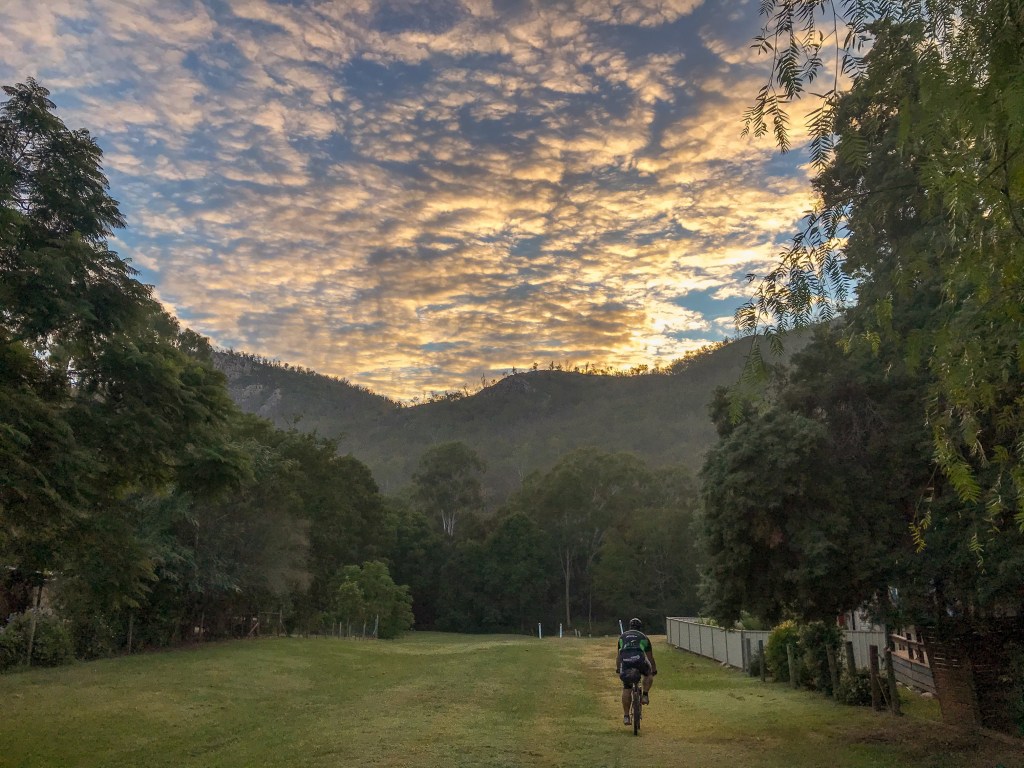
It is an uncivilised hour to rise but the final day is also the biggest and longest. And some of us have a train, and plane, to catch. While initially confronting, the early hour is by far the best on the bike. The light glowing soft, the air calm and cool and infused with that dewy, earthy fragrance of something akin to dried straw and peppermint. The trail is subdued too, enclosed by forest pretty much for the whole 20 kilometres to Coominya.

The last of the bananas disappears at Coominya, meaning I force myself to buy a chocolate éclair from the bakery at Lowood, a little further down the line. Brisbane feels closer now, the river widening, water to rinse off the humidity, feed the production of insipid beer, pressure wash four million Toyota Hiluxes. Yet after Fernvale and its supposed amazing pies, there is little to interrupt until reaching the very edge of Ipswich.

In the bush and scrub around here, 12 Aboriginal people were killed in 1843 when they were pursued by a vigilante group of soldiers, settlers and stockmen, seeking reprisal following the battle of ‘One Tree Hill.’ We all cruise on by unknowing and unthinking. An ignorance that is all too common, all too often the easiest option, the path of least resistance. Because if you don’t know you won’t actually feel impelled to reconcile.

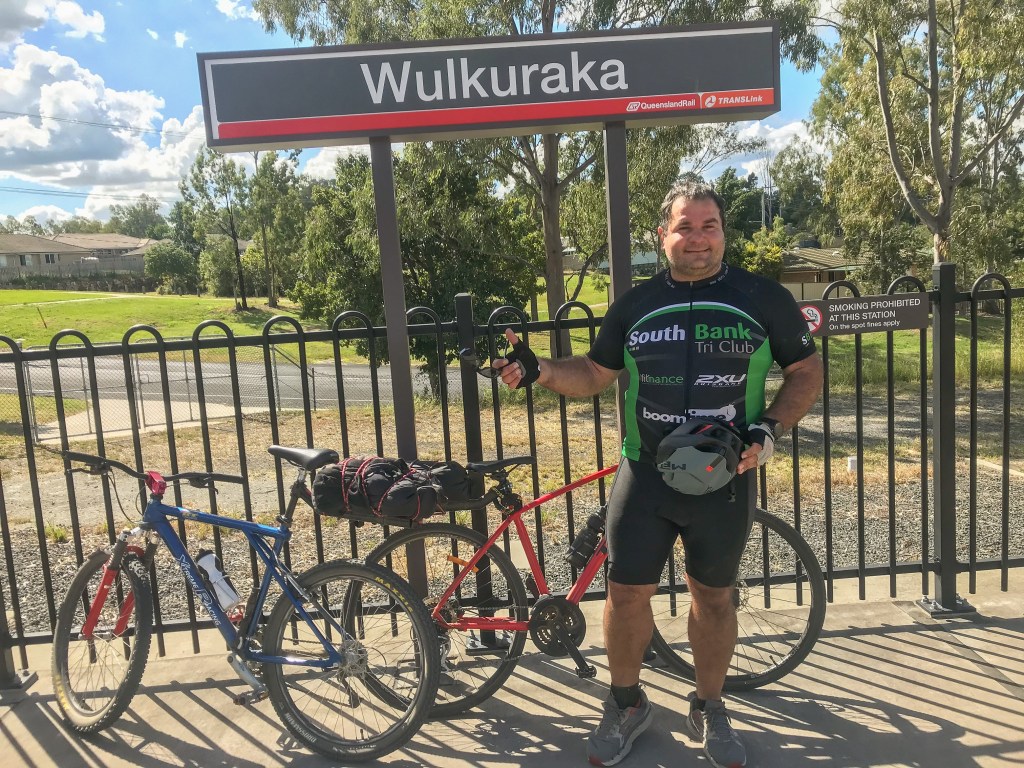
Wulkuraka – an Aboriginal word meaning either red flowering gum or plenty of kookaburras. I see neither today, but they are assuredly there somewhere. Holding on, adapting, waiting to burst forth and laugh. May well they laugh at a troupe of four sweaty middle aged men trying to cross a finish line in tandem, the youngest with a wheelie. Having crossed country where, despite it all, there is embedded in the earth and the sky a profound resilience. Something which can never be washed away, tunnelled through or eroded. A line much older, deeper and enduring. Always.

Australia Green Bogey

Road to nowhere

In the scheme of things, in the scheme of the last 18 months, the loss of a car is just a small bump in the road. Perhaps that’s why I felt the tiniest tingle of relief as it was loaded on a trailer for a sliver of cash. Effectively a burden gone, another potential disaster-in-waiting purged. Plus who wants to pay for petrol at the moment anyway?

So with an empty carport and a sliver of cash I am left wondering what does one do with cash these days? Wave it in front of a card reader? Hide it under the mattress? Feed it in stages into the soulless void of a self-service surveillance checkout? I know I could put it in the bank, but that would involve a drive to the nearest branch in Wollongong and, well, see above.

No hasty decisions. The last time I made a hasty decision I bought a car and that didn’t go so well. I think the purchase came about as an expensive alternative to comfort eating after the ultimate, exquisitely executed ghosting. Buyers Beware. A spoonful of newfound adventure and fresh horizons, with the mid forties option of sleeping in the back. I slept in the back three times at $3,333 a night, and never very well.

So I don’t really have fond memories of that car, not in the same way as the almost as demanding Outback. And thus the day it went on that trailer it was almost like a release. And I could just go for a walk instead…

A walk first through the cemetery, my gateway from home to Woden storm drains and the afterlife. The vibe pretty much the same at both. Between, the purgatory of brutalist office block festering in diesel bus fumes and detours. Yonder the pearly gates of Westfield.

But I am not heading in that direction just now. Instead, life and joy and wonder. Sunlight and flowers and bees. Simple pleasures you see on foot, absorbed at a natural pace. Suburban magnolia peeking above fences, wattlebirds clucking in the callistemon, the honeyed smells of acacia. A hum of spring release and endeavour, all the way to the golf course.

A man talks loudly on his phone, the sound of a work call in between the wattle and magpies. We have all done it but I feel slightly irked by this intrusion. As if this spectacle of life, this annual miracle of rebirth is simply a backdrop ignored for talk of Gantt charts and stakeholder management.

Technology huh. Like this whole lane assist thing that new cars seem to think you want. Along with no key and handbrake. Welcome to 2023, I feel, as I take advantage of a bargain rental deal for the weekend. Cue a logistical feast of car-based activities, including Bunnings and IKEA and a drive to the tip. But there’s also a bit of time for at least a mini road trip.

Trying to manoeuvre around potholes in spite of lane assist I head south into Namadgi National Park. For all of Canberra’s interwoven parks and hills I want to feel that wilderness, that overpowering sense of nothing but me and the world. No cars, no phones, no storm drains. That almost but not quite realisation of being the first to tread into something undisturbed.

I’m in the Orroral Valley, which has in reality been quite disturbed by former homesteads and satellite tracking stations and – in 2020 – an army helicopter sparking a bushfire that went on to impact 80% of the park. If you didn’t know it you might not notice today, but a closer look reveals burnt stumps, scarred trees and charred stones.

From here I’m swiftly rising above the valley and eventually into another more untampered. Over a rise bedecked with fresh eucalyptus and large granite boulders and into the sinewy hollow of Nursery Creek. I like to think so named as a place where nature and life can breathe and evolve into something remarkable. Though probably more likely a place name claimed by an invading pastoralist slightly drunk and reminiscing about some nurse he once harassed in downtown Gundagai.

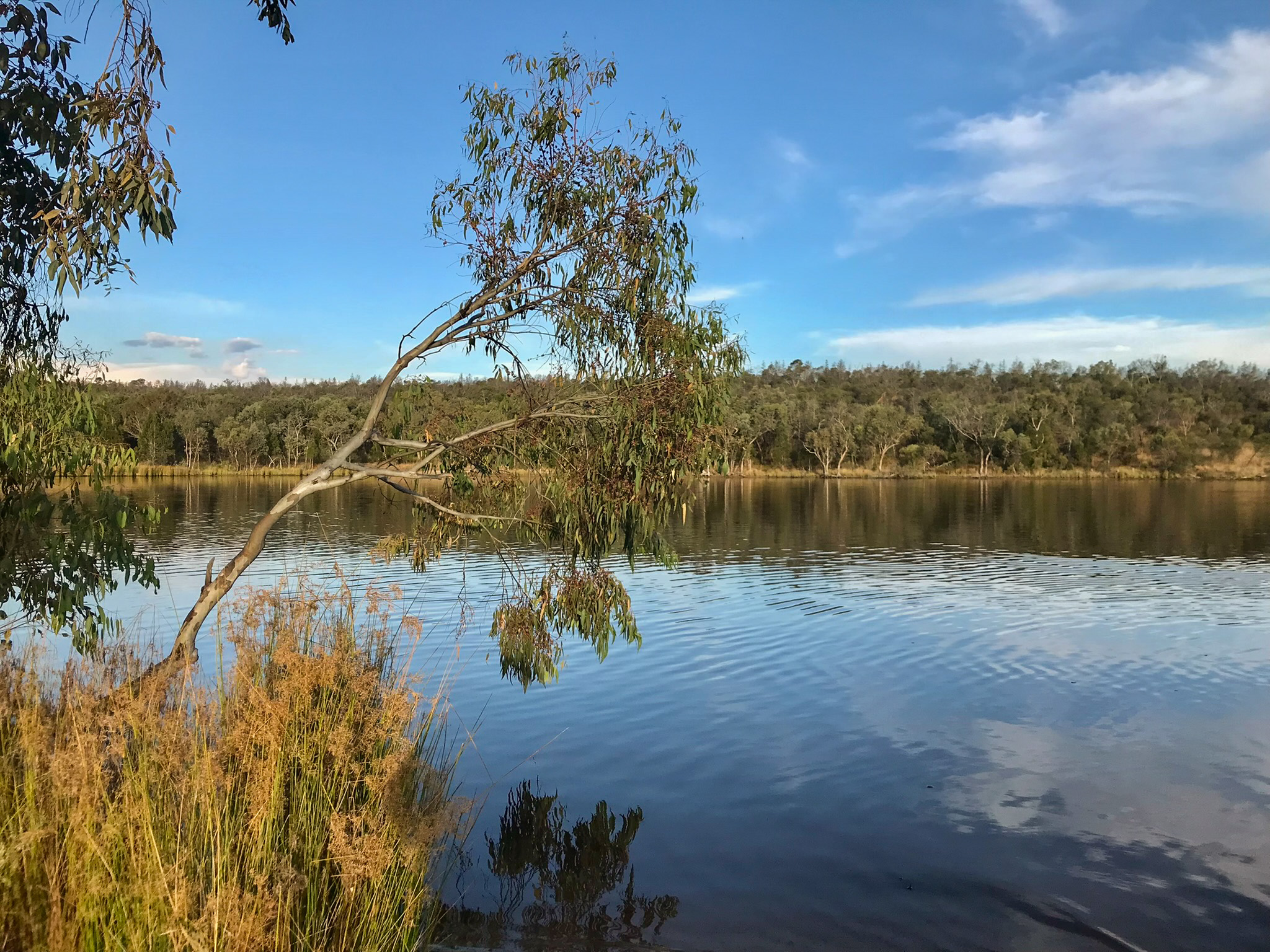
The walk ends at Nursery Swamp, which doesn’t feel particularly swampy today. Late winter has been dry, almost as dry as the sandwich I force down on the end of trail bench. A couple of scarlet robins espy me from a small bush, knowing there will be crumbs. Keeping a watchful distance until I depart. Sweet, and less in your face than a magpie.

Yes, those spring magpies. On the first warm day of the season I took my lunch out to a nearby bench to eat it in the sun, only to be harassed by a magpie. On a lovely, golden afternoon in Mulligans Flat, peace and contentment was obliterated in one fell swoop from a magpie. On the bike, well, I think one ride notched up a double figure attack count from more than one magpie.

It was a long ride to be fair. A part training part test ride. No hasty decisions when it comes to a car, but reckless abandon when it comes to a bike. An e-bike no less. Free of registration costs and petrol costs and faulty transmission (though maybe a dodgy Shimano) plus not enough room to sleep in the back.

Yes I’m not yet 50 and yes I will still use my other, conventional bike as well. But I feel this can take me further and higher and faster. Expand my horizons. And, with food and coffee stops, probably expand my waist. Among the losses, there’s still something to gain.

Australia Green Bogey Walking

Life cycles

While closing an impromptu trip to England with cream tea nirvana may convey the archetypal happy ending, life – even curated online life – isn’t as simple as that. Endings are rarely happy affairs otherwise they would just keep on going. And more often than not, an end is also a beginning and a middle and any other indeterminate point on the march of civilisation, a turn of the wheel in the cycle of life.

It’s nice when that cycle is electric powered, even if this may ultimately lead to the downfall of civilisation. There is nothing like the fillip of pressing a switch to give you a boost at the very moment you are flagging. Especially when one of those switches says TURBO.

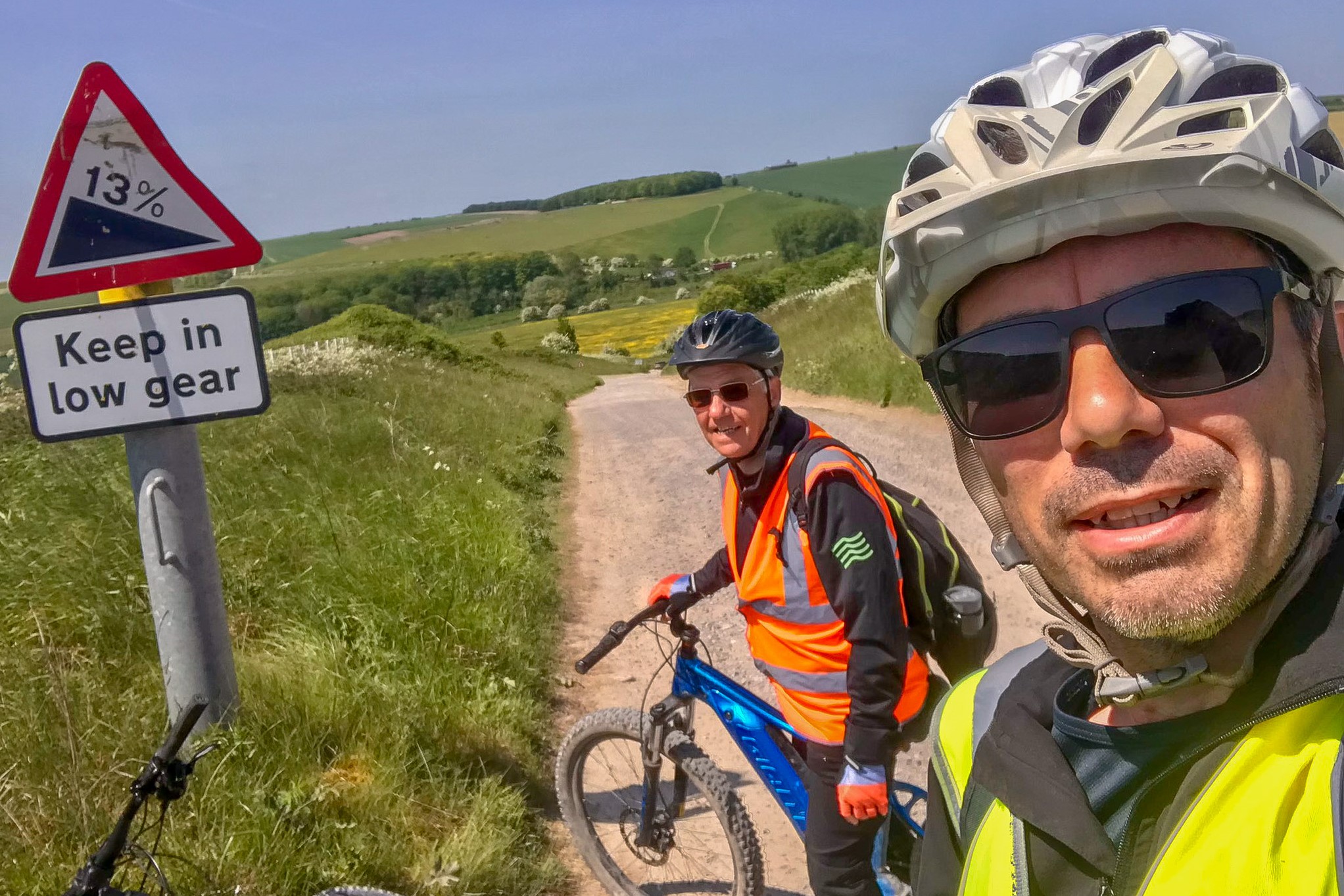
I always thought of Salisbury Plain as flat. The clue’s in the name after all. It should be a doddle to cycle through, barring confrontation with tanks and gunfire. But tanks need steep inclines to be put through their paces and bullets have to travel uphill or something. The plain is far from plain.

And so, when offered the services of an e-bike to join that of my Dad’s, I was happy to give it a whirl. Funnily enough, pride and that old man in Lycra tut-tutting in my head made me pedal au naturale for as long as possible. But when you flick that switch there is no stopping you.

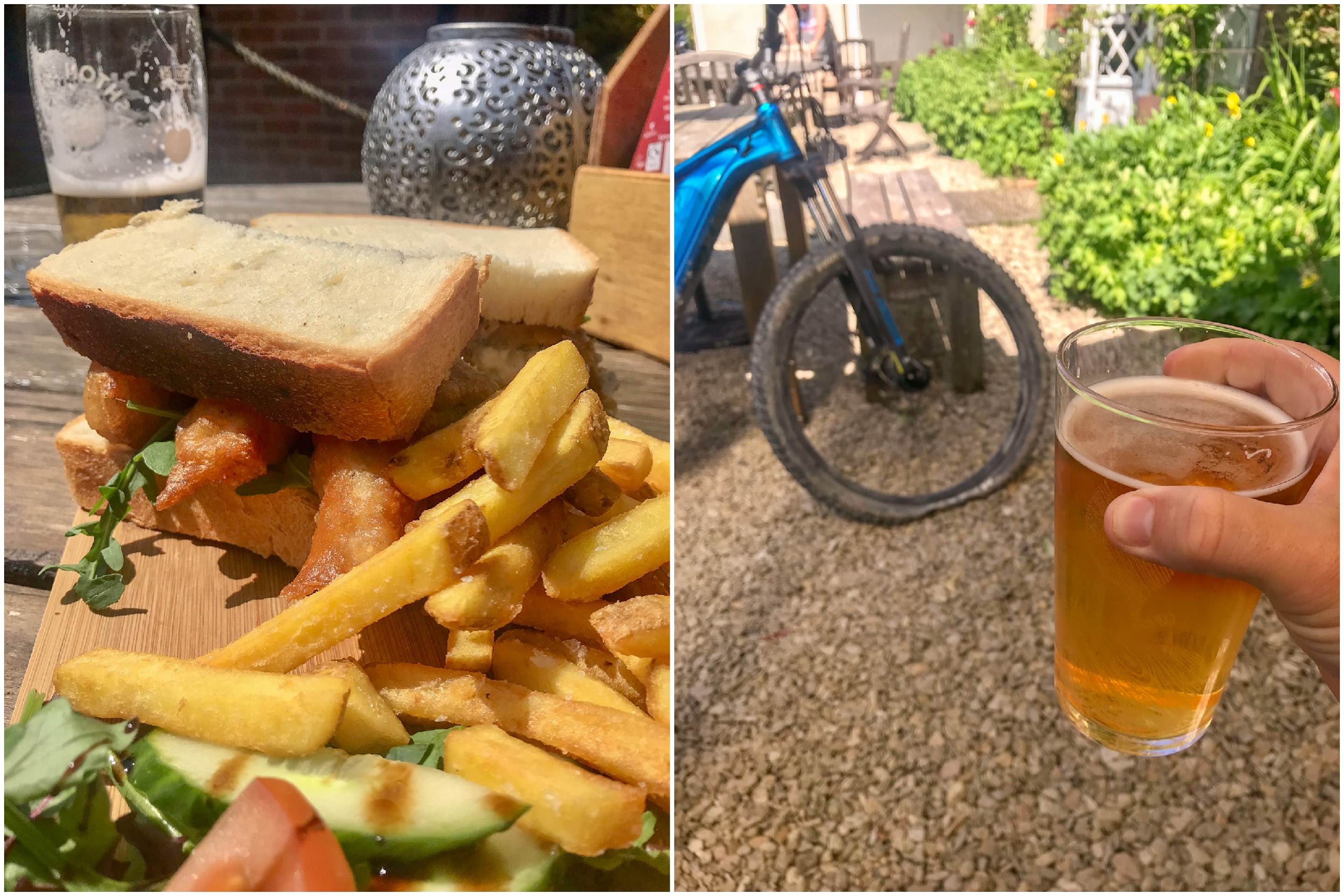
I was quite the passenger that day, in more ways than one. Usually in awe at my map memory, if was to retrace our route across the plain I’d be as lost as a ray of sunshine in Manchester. Each chalky track seems to lead down to a tangled thicket then up past a copse and left towards some squaddies and then 180 degrees avoiding gunfire and then straight through a paddock before joining what looks like where we were an hour ago. Somehow this 3D puzzle spits you out in a village and you find yourself recuperating with a cider and delicious battered fish sandwich.

It was worth all the pedalling (and quite frequent button pushing) to be in that pub garden. British country pubs in the sunshine are really like nowhere else. I wasn’t expecting to be in another one an hour or so later, but even e-bikes get punctures. And unfortunately the pub was the nearest point of refuge as Dad turbocharged his way to the rescue vehicle.


Fast forward a few turns of the wheel and white chalk becomes white sand, fish sandwiches become fish cocktails, and electrical assistance becomes all my own willpower.

Returning to a classic bicycle has been tough, any incline – however short – feeling like a mission to reach base camp. Maybe riding in Australia is just more of a challenge, what with the limited number of proper teashops, the higher proportion of fit athletic types putting you to shame, and near certain harassment by magpies.

From sweating in Salisbury Plain my first foray back on the bike in Canberra was a freezing affair. Okay, maybe seven degrees but there are simply not enough layers to shield the core from that breeze which whips up no matter what direction you face. I struggled for barely ten flat kilometres, and that included a stop for coffee and a M&S mostly chocolate biscuit.

But over time, on those rare occasions when the temperature makes it into double figures and the wind is below 15kph, I have been getting more acclimatised to cycling without electric again. Just little jaunts two or three times a week. A few more inclines, but nothing too steep. And still coffees and biscuits.

It’ll be handy for the bike legs to come back as I feel like my car might be stuffed! Something with the electrics, the transmission, the gears. Not as simple as a flick of a switch, the crank of a derailleur and a couple of allez.

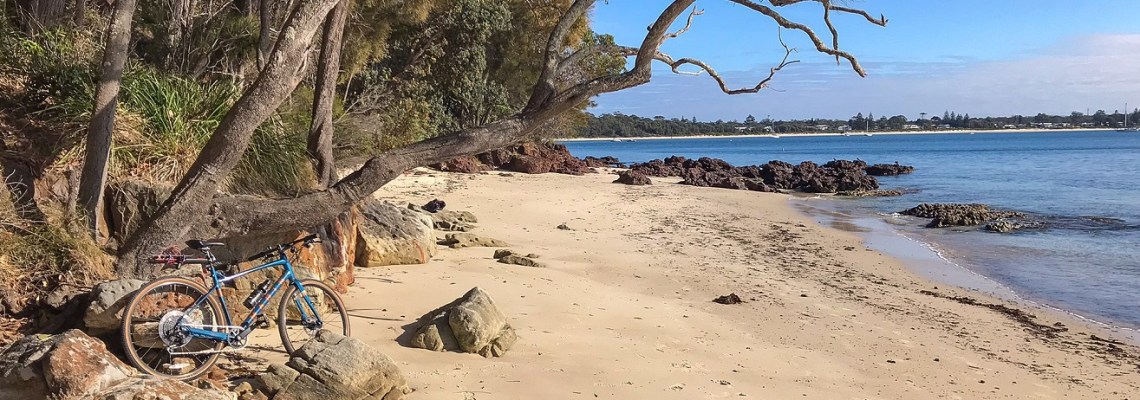
I may have harmed it going to and from Jervis Bay, not that it screwed up at the time. Perhaps it didn’t like the moisture as the first rain in weeks dampened activities for the journey down and back again. Still, the Sunday was sunny, if not reaching the globally heated summits of earlier that week. And with reasonable enough winds there was an opportunity to once again revert to pedal power.

In my head it was flat between Sanctuary Point and Vincentia but I hadn’t been to Jervis Bay in many years. The reality is more lumpen but can I just put it on record that I made it up that hill whereas the younger, fitter-looking guy who whizzed past me on the flat got off and walked. I probably have a bigger rear cassette.

Between Vincentia and Huskisson it is all bliss. There are more young, fit athletic types but also oldies shuffling and dawdling and standing in the middle of the cycle path chatting to other boomtime babies with their designer glasses and designer dogs. The route follows the coast, all beautiful bays and turquoise waters and that eye-watering white sand. Plenty of escapes for a bike to bask.

Of course returning to Sanctuary Point required a good coffee and biscuit as well as inching over a couple of those lumps again. I almost didn’t make it but figured I could reward myself with two potato scallops to go with lunch as a reward. The downhill stretch begins.

Post-lunch fatigue was inevitable and, looking for a turbo boost, I switched to foot power to amble along a stretch of the White Sands Walk. Boasting majestic bays punctuated by lush, tall eucalypt forest, I would definitely put this in the top ten. It’s the kind of walk that would make one of those TV shows where some minor but amiable celebrity type goes for a walk, meets a few random nerds, and hangs about in a hidden World War Two bunker that they just discovered. (Talking of this genre, now Nick Knowles is titting about on trains…I mean how many middle aged white English men need to show us how to ride a train?!)

One of the best things about being here on a late Sunday afternoon is that most people have by now returned to Sydney or Canberra or Nowra or Wollongong. And, with my legs and feet now pretty much out of gas I was starting to blend in well with the retired locals. I used my last dose of energy to make it down beside the basin in Sanctuary Point, sit on a bench with a flask of tea, and watch the sun sink. Dipping behind the hills as if thinking it was some kind of ending. Just another turn of the wheel.

Australia Food & Drink Great Britain Green Bogey Photography

Home and Away

Drilling into brick ain’t easy. But at least it’s – via a series of chunky payments over 360 weeks – my brick. The small hole above the bathroom window where I eventually gave up proving to be an imprint. My signature. The final flourish being the calls to the tradies that follow.

I did fix a wonky cupboard door, rip up a small piece of carpet, revitalise a cooktop and cleanse a stained sink. And I did manage to find a good plumber to repair a leaky tap and got some people around to do measures and quotes and hopefully install new flooring. The flooring has taken on an almost mythical quality, the promised sunlit uplands of when I finally feel I can properly unpack and organise rooms. At the moment, it’s somewhere on a ship trying to get into Sydney.

I think the delineation between non-homeownership and homeownership must be how many times I have been to Bunnings in the last month. It may be double figures though not once have I succumbed to a slimy morsel of cooked entrails with onions loosely encased in a slice of bread. I’ve been to Ikea three times and Kmart at least the same, plus some carpet showrooms and the expensive kitchenware section of David Jones, to browse. It is like I have entered a parallel universe I never knew existed, where a few hundred dollars here and there is offloaded with hardly the bat of an eyelid.

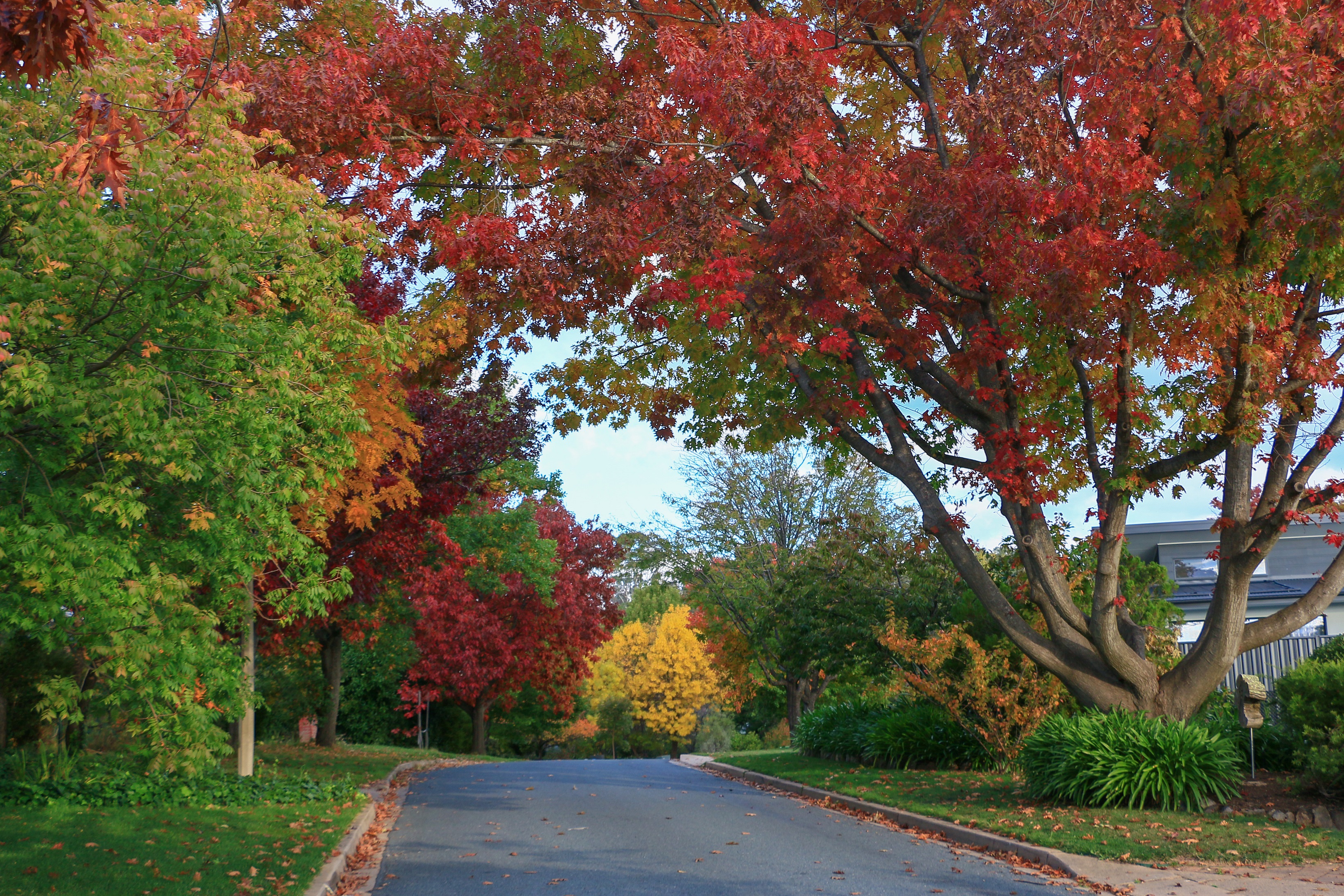
In the meantime, the regular universe has been doing its thing. In my neighbourhood there are some tall dark conifers under which sit a carpet of needles and the occasional crazy person. But there are also some wonderful deciduous trees putting on a rainbow spectacle as the Canberra autumn seeps in. The red and green king parrots blend into the canopy, only startling with delight when whizzing overhead. The cockatoos are voracious, wanton in their pursuit of abundant, nutty delicacies. Leafy detritus scatters the ground.

A week or two of still days in the low twenties has offered much. It’s great for a bushwalk and I took the opportunity of a somewhat back to normal Saturday to head up into the hills. It had been quite some time since I had last walked from Corin Forest out to Square Rock, fresh and pepperminty in the morning sun. At the rock, expansive views west and a flask of tea to go with a Creme Egg. Before popping into Bunnings in Tuggers on the way home.

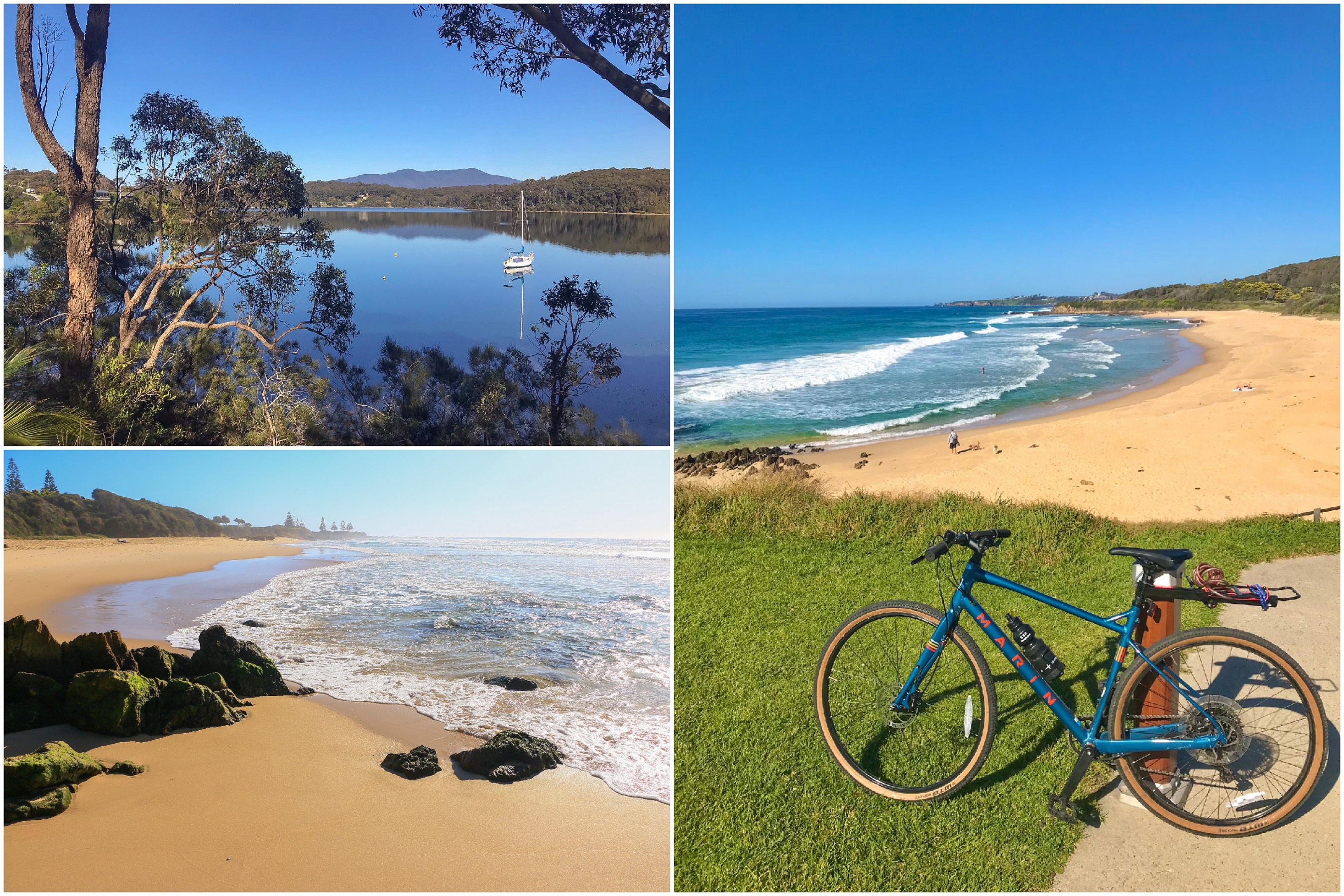
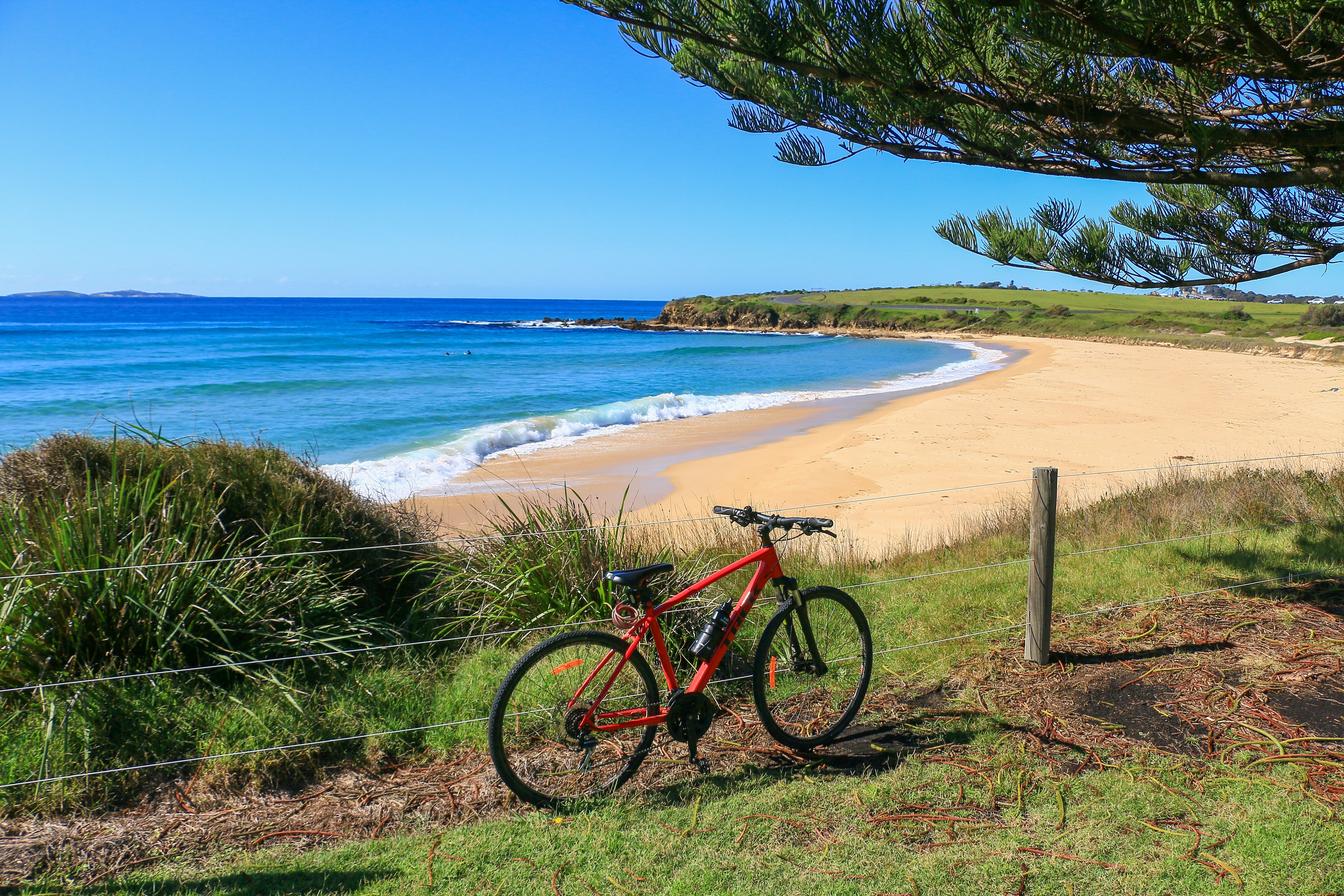
A couple of four day weekends have propelled April into even more genial heights. While the first over Easter was a bit of a homestay, the second turned into a tale of two weekends, with Monday and Tuesday enjoyed on the South Coast. Narooma was my last minute overnighter, hastily arranged when I decided I was too tired and achy and old to camp. This at least meant plenty of room in the back for the bike, to burn off some of the cakes / ice cream / fish and chips via beautiful boardwalks.

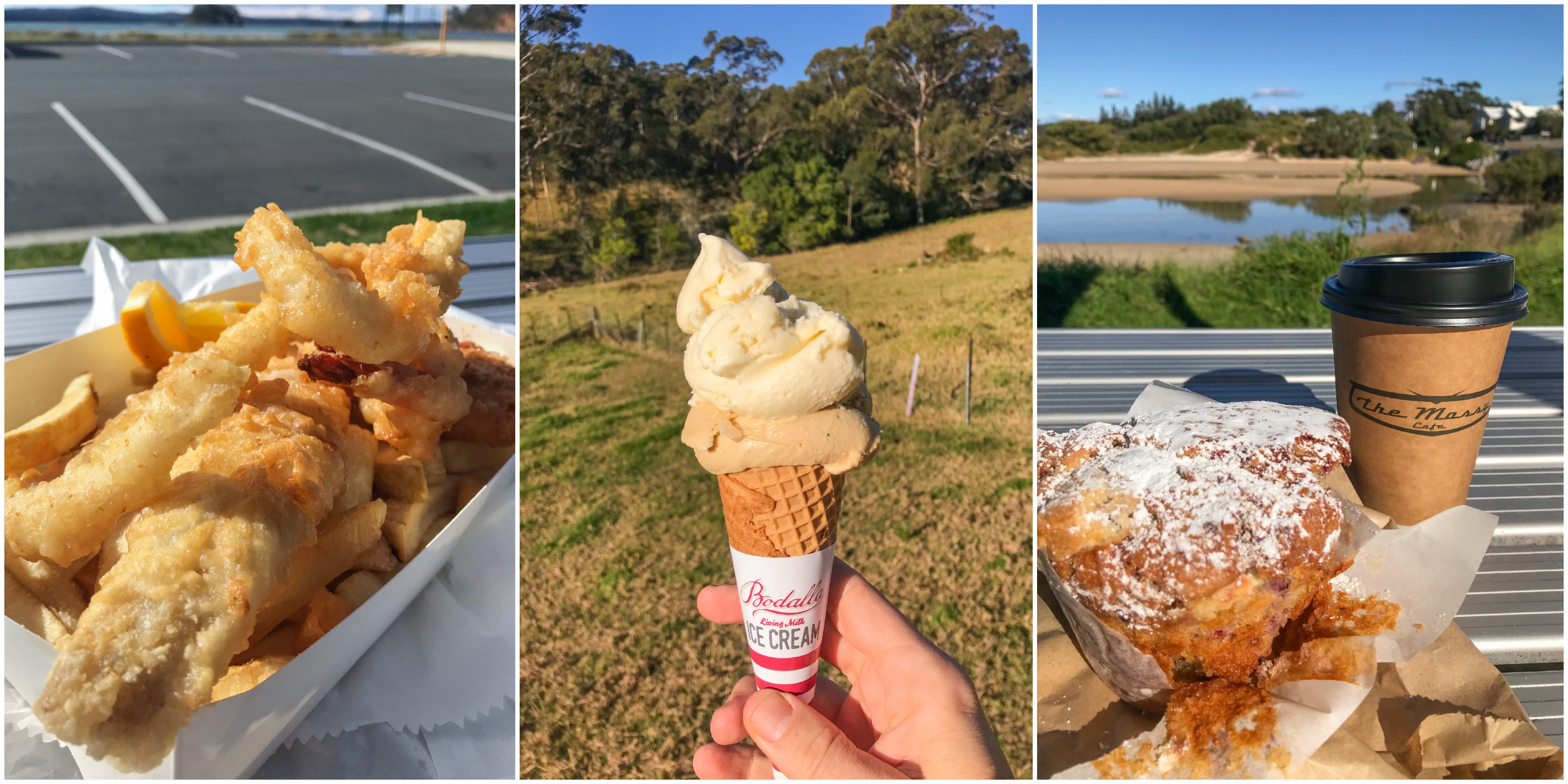
Cognisant of Tuesday being a public holiday I was especially keen to feast on staples on the Monday lest everything be closed the next day. Setting out early meant perfect timing for coffee and a muffin in Mossy Point, enjoyed down on the public jetty. For the most part this was a picture-perfect setting for sipping and munching and soaking up the salty air, prior to the appearance of a wet dog keen to get in on some of the muffin action. I’m not sure if the remainder of my coffee comprised half dog seawater blend.

Next on the agenda after a morning coffee stop was lunch so really I needed to create at least a little time and exercise between the two. A diversion to Moruya Heads offered up a fine way to fill in the gap, taking in golden bays, tranquil lagoons and a blend of dilapidated shacks and multimillion dollar homes. This a scene practically replicated up and down the coast, including in the next town down, Tuross Head.

The Boatshed in Tuross Head caters for prince and pauper alike. While most people drive and park up for a spot of lunch, the more fabulous way would be to pull up in your boat while a member of staff hands out your seafood platter from the deck. If more people were doing this there may actually be somewhere to sit, but I contentedly took mine away anyway, around the corner and beside the lake. The one disappointment being the depletion of salt and pepper calamari from the menu. As I waited for mine to cook, piles of chips topped with calamari taunted me as they were delivered to happy people sitting on sunny tables.

I resolved to make amends with ice cream, filling the next gap between eats with a small but sometimes steep bike ride beside the Tuross beachfront. The ice cream came further down the road in Bodalla. An obligatory stop when anywhere slightly within the vicinity. It never fails to disappoint and I made the point of checking if they were open Anzac Day as well. Store that one in your back pocket.

With a heavier car I eventually make it to Narooma as the afternoon was heading into that moment of low light and lengthening shadows. Enough time to wander beside Wagonga Inlet as it twists its way towards Bar Beach and the small, hazardous outlet into the ocean. In the calmer waters, resident seals await patiently for leftovers from the fishing boats returning from the sea, or maybe to munch on dark chocolate digestives instead. Whatever floats your boat. And I think about the necessity of a light, leafy dinner.

While I missed the dawn services of Anzac Day, I arose early enough to sample the warming glow of a rising sun reflecting off the sea. With barely a breath it would’ve been inexcusable not to ride my bike along the waterways and Oceanside beaches up towards Dalmeny. And back again to Narooma where what I think is a fairly new cafe fulfilled my hopes for simple, waterfront coffee sips.

All that was left was to paddle in the ocean, lie on a beach, eat another ice cream and meet up with friends in Malua Bay before the journey home. Waiting for me there an unexpected delivery of flat pack furniture. Still flat and still packed, ready for that tremendous day when they can be assembled on a fake oak floor. Hoping to make it into the world without any more careless signatures – unless I need to anchor them to the wall.

Australia Food & Drink Green Bogey Photography

Grenful

I cannot believe I totally missed the big pick and pan. I mean, it’s not like the town of Grenfell is burgeoning with tourist sights. Yes, there are the archetypal painted silos, an old railway station and various manifestations of Henry Lawson, but that’s barely enough curiosity to fill a week. I’ll have to go back.

For the many billions of people unaware, Grenfell is situated in Central West New South Wales, a crossroads (or roundabout) between Young and Forbes, Cowra and West Wyalong. In many ways you may find it indistinct from all those other towns which regularly pop up every fifty clicks or so. In this indeterminate swathe of country, only gentrified Orange and an Elvis-upped Parkes may rise above the fields of canola, waiting to be cut down.

Still, I wasn’t really in Grenfell for touristing. Just being homeless and getting my laundry done, just like the good old days. Working remotely and staying with dear friends. Being grateful. And frequently offering entertainment for a three-year-old.

Oh to be three in Grenfell, where the world must seem full of stimulus. For us adults there is the Main Street and its chain of pubs which offer their own unique character. For me, it was hard to beat the Railway for its old school ice cold midis, the same again please on a warming summer afternoon. Quietly infiltrating a semicircle of locals with hats propping up the bar, one eye on the cricket.

In between work breaks and play breaks I sampled the local country coffee, taking on board various recommendations. I dunno, I think my friends have been living here too long because not once was I any more than mildly accepting of the coffee quality. I could blame the skim milk, but what else is token recompense for a caramel slice?

Given the abundance of caramel slice, I was pleased that among the essential items of life filling my car (clothes, water, mobile office) I had managed to fit in a bike. The roads of Grenfell are quiet and mostly flat and trips to the Main Street become more inviting with a breeze. The week endured hot, with early mornings proving the most comfortable for galahs and humans alike.

Yet it was a couple of evening rides that garnered more joy, despite the heat and surprising hilliness on the way to Company Dam. Three’s company you see, even if my two buddies, Howard and Henry, are benefiting from electric power. It was nice up here, replenished by La Niña rains and golden evening sunshine. Plus it was (mostly) downhill all the way to ice creams at the servo.

Servos – formerly known as petrol stations – tend to take on extra responsibilities in country towns such as Grenfell. For as well as U91 and chamois, you can usually buy an array of deep fried beige coloured goods: hot chips, chiko rolls, potato scallops, meat pies, fish bites. Most of the home cooking I was treated to was excellent but occasional chips on the side never hurt anyone.

Indeed, chips on the side were a highlight on the one foray out of Grenfell, to the neighbouring and larger town of Cowra (size being measured by the presence of Maccas and Aldi). In between, Conimbla National Park punctuates the farmland and proves both bountiful and sparse.

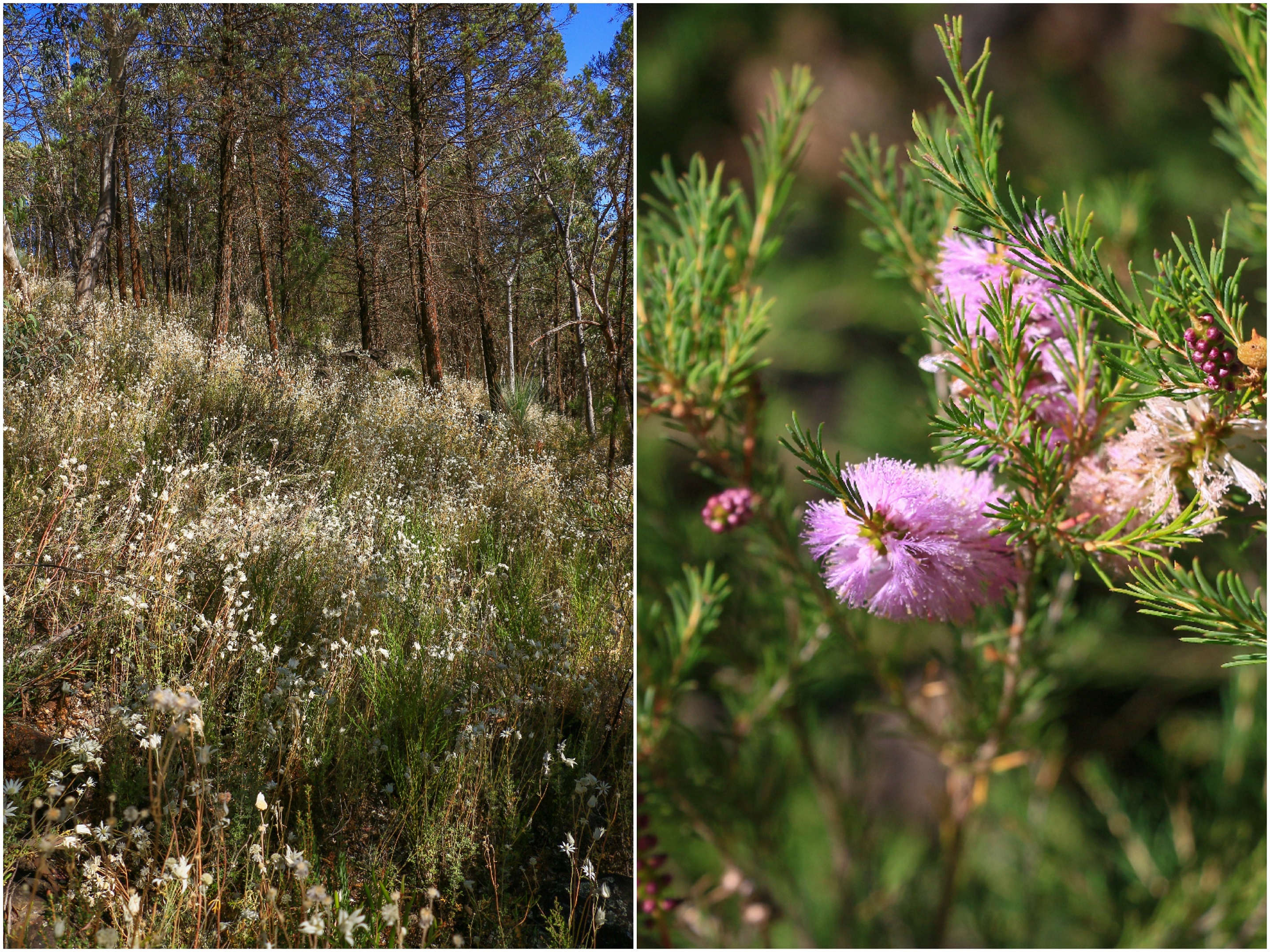
It is highly probable that both Norz and I were the only people walking the only tracks in the park that morning, the Wallaby linking up with the Ironbark. Beautiful swathes of flannel flower were a highlight but the other vegetation was tending towards the spiky and overgrown. Throw in a few spiderwebs for added spice and I was satisfied at my choice of long-legged activewear. Norz, on the other hand, had prioritised temperature control. The resultant encounters between nature and bare leg frequently provoking a soundtrack of short, sharp oohs and ows.

At least there was a lookout, and morning tea strawberries. The view a less dramatic and more modest interpretation of gorges visited in the past. Devoid of humans other than us two, it was a sensation to be replicated down in Cowra on a Sunday lunchtime.

I once had a nice pub lunch in Cowra but it must have been on a Saturday. Today, pub closed. Norz heard of a cute cafe that had recently started up, today closed. An ad hoc Aldi charcuterie or McAussie burger? Or the local chook shop on the main road, which appeared to at least be open? How can you look past chips on the side, with chicken salt.

In servos and chook shops and old fashioned bars with the cricket on in the background and average coffee and building heat and (admittedly overlooked) big things, it turns out this week in country NSW was fulfilling the quota of much that is regional, rural and remote. And when it came time to leave, I felt like I was only just getting used to there being nothing much going on at all. The journey back to Canberra heralded relative hustle and bustle and more trawling through the stairwells and cupboards of open homes. While the most open home of the lot, a home of warmth and friendship, was fading away in the rear view mirror. Until next time.

Australia Driving Food & Drink Green Bogey

A tale of two valleys

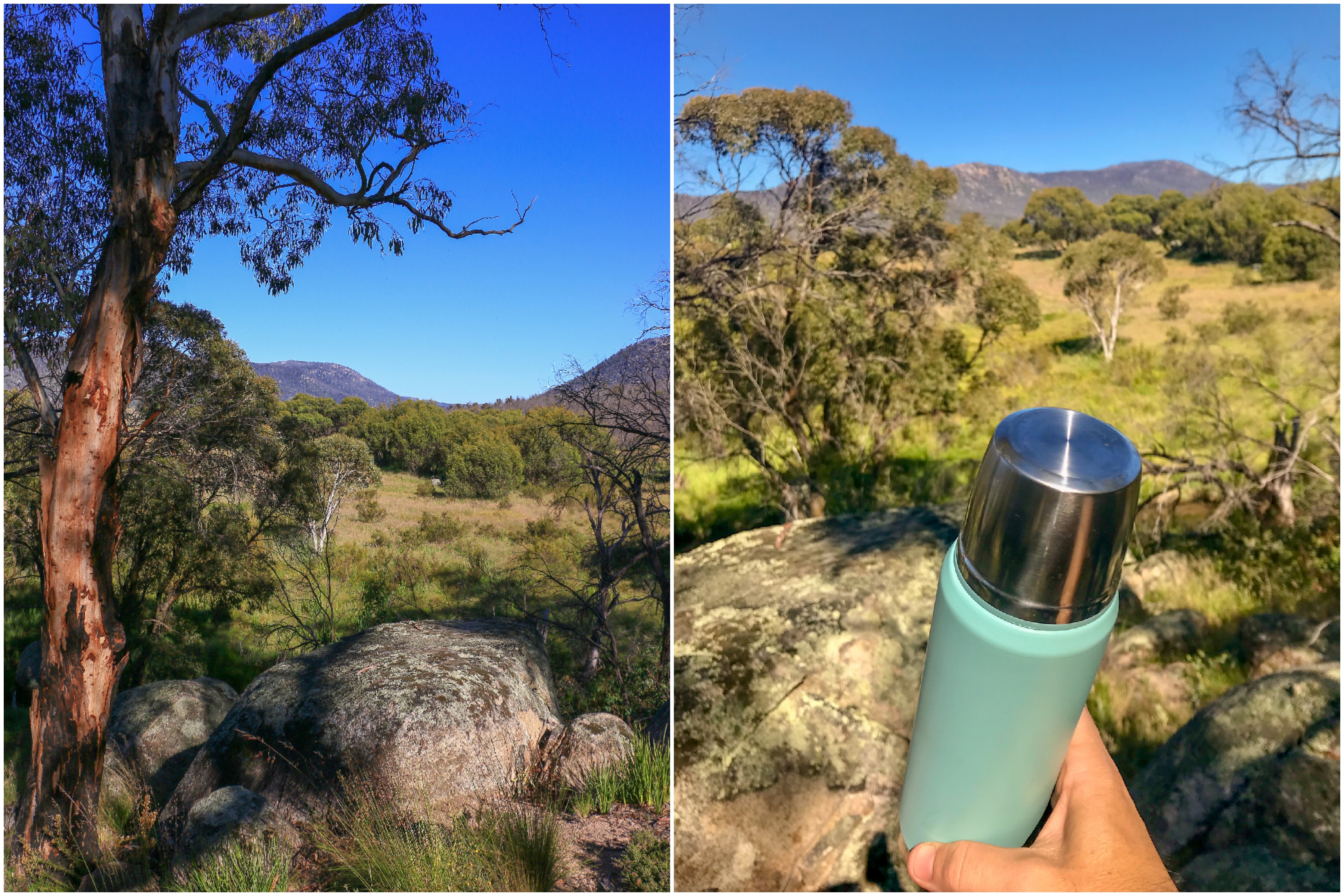
Well, I hope you had yourself a merry little Christmas. In a clear sign of ageing gracefully I was pleased to unpack a new, lightweight, bagless, cordless vacuum cleaner and a brand new thermos flask in pastel hues. I think part of the joy was in unpacking something rather than packing it up. Other festive highlights included a love-hate relationship with a ham (I’m so over you) and sitting in the dark in the middle of the day. I haven’t felt so hot since being in, um, England.

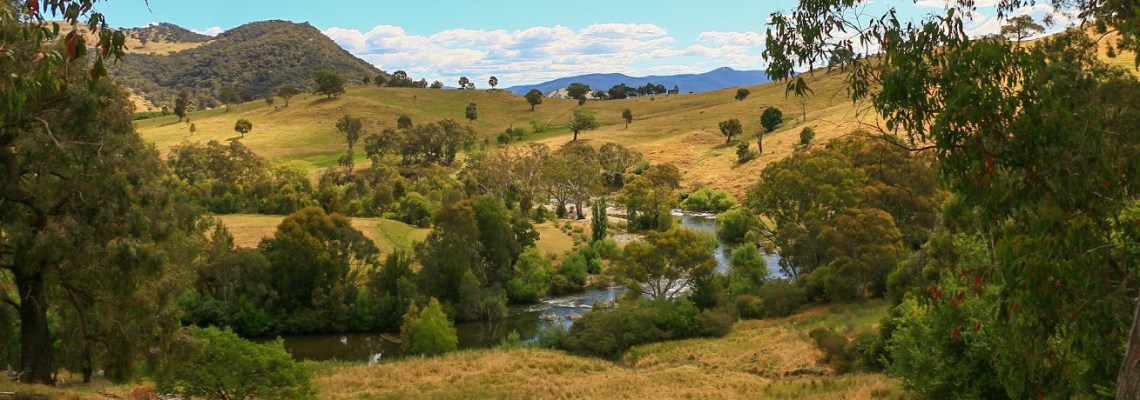
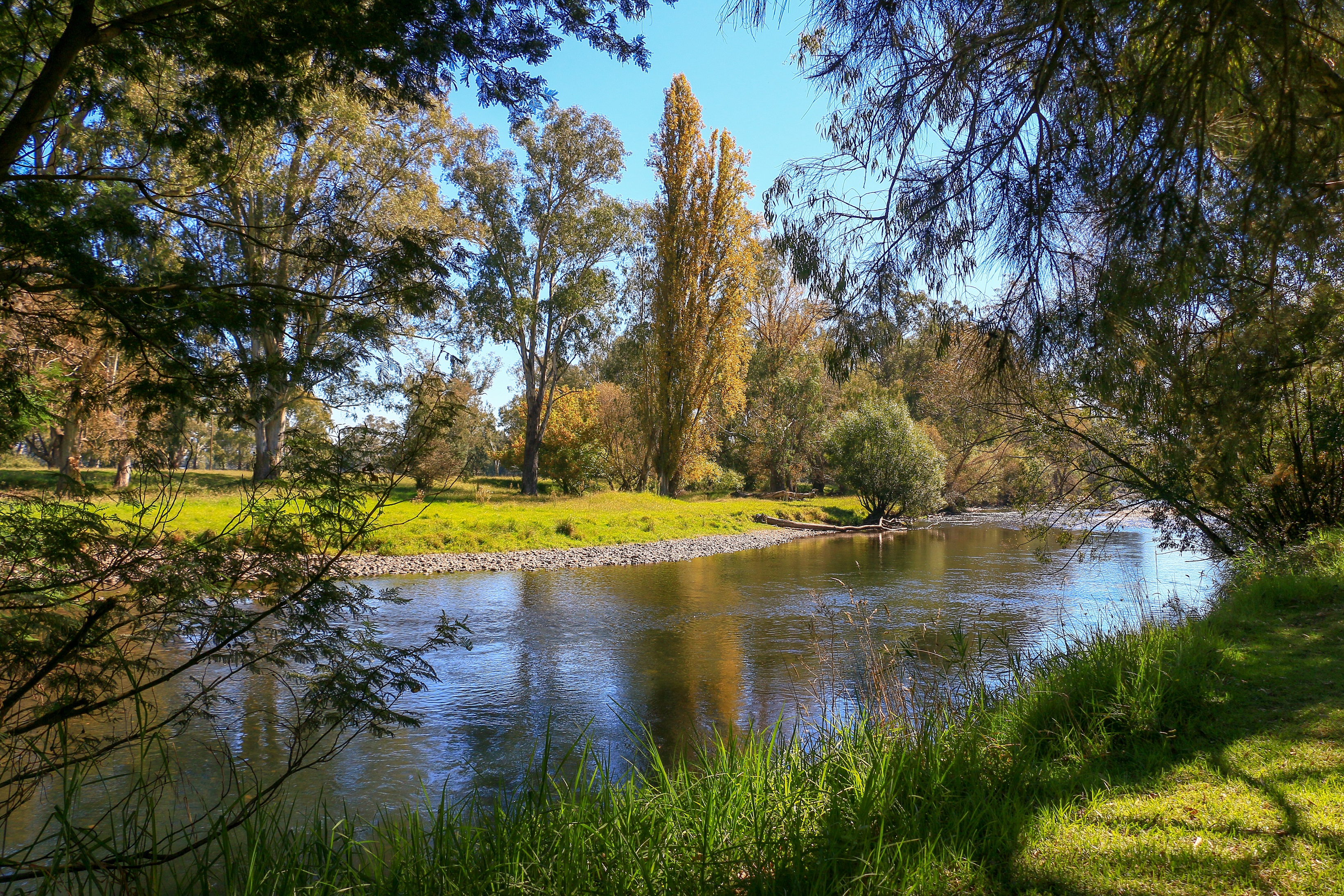
So it seems I’m at the point where vacuum cleaners are exciting, too much heat is wearisome and I find ample satisfaction in ambling around the NSW town of Tumut. It was noticeable how many times I was asked Why Tumut?, including from the Airbnb host making money from people actually staying in the town of Tumut. But it’s just nice. Cute and a little cosy, I could live here in something actually affordable. There is a decent café and a Woollies and an awful McDonalds all out of Caramilk McFlurries but most of all there is the river swishing fulsome through leafy parkland and cow-filled meadows.

The Tumut River joins the Murrumbidgee River which joins the Murray River, feeding gigalitres of water downstream during the La Niña spring. For once there is almost too much water, and too much Dorothea Mackellar, espoused by the usual suspects to justify this as normal. Even my pretty little Tumut is not immune.

Feeding into the Tumut River, the Goobarragandra shows signs of flood in its flattened banks and weedy debris. It’s been a lovely drive through luscious countryside to Thomas Boyd Campsite and a trailhead for the Hume and Hovell. I walk a little of the track, barely decipherable through tall, snake-infested grass. It’s okay but nothing to write poetry about.

I pause for coffee (in an old flask) and a Macadamia slice purchased from Gundagai bakery. And decide the best means to perk things up – and fulfil the clichés of middle age – is to hop on the bike.

Flat and sun-kissed, the going is joyous as the road nears the banks of the river, seemingly wilder and more dramatic than it was around the campground. Grassy plains yield to undulating meadows, the shadows from cotton wool clouds projecting onto higher, bush cloaked peaks.

All too soon the river meanders away from the road and those undulations kick in. I climb one and decide that will be enough. And dream of Christmas futures when I can unpack an e-bike.


Is another sign of getting old waking up with the kookaburras? I certainly have evidence to support this theory but then there are also those outliers. Or inliers, so to speak.

In truth the Christmas break has produced some relative lie ins, but this has been countered by a desire to get out early before the furnace is at full force. So there have been a few mornings where instead of sedately lying in bed listening to Radio National and sipping tea I have hopped and skipped out into the bush.

I entered Namadgi National Park around seven and was surprised to find a number of cars at the visitor centre. I suspect they had smartly set out for Mount Tennent while it was still cool and fresh. I wasn’t going to join them, instead heading further south to a rendezvous with a creek.

I do believe the Rendezvous Creek walk is one of the few marked trails in Namadgi I have never set foot on before. And with relatively low expectations (I find that can be the best approach here) I discovered utter delight. At first shady and fragrant, the trail opens out into a hills are alive style valley. The only sound being the rustle of grass in the breeze, the trickle of water, and the buzz of the great Australian blowfly.

Who needs touchscreens and Twitter and endless ham and Michael Buble schmaltz and David Warner tons and lightweight vacuum cleaners and Caramilk McFlurries when you can simply be blessed with the vastness of nature, the blueness of the sky and the buzz of a fly? But allow me one modern day indulgence. Make that two. A brand new pastel flask filled with tea and a Walkers shortbread mince pie. Well, it is Christmas after all.

Australia Driving Green Bogey Walking

Moving somewhere

So it turns out my last blog post was premature. As I left the UK, the dystopian psychodrama of Who Wants To Run The Country Into Disrepair appeared to be finally coming to a conclusion. But lo and behold it seems we only reached the credits of the extended opening episode of Season 6. Brought to you by the writers that gave us Black Mirror amped up twenty-four hours a day on LSD. God only knows how the denouement of this one goes.

Talking of writing, I see there has been much criticism of The Crown of late for making stuff up but seriously you couldn’t make this shit up. And now we have the prospect of a comeback about as endearing as the return of Kevin Spacey.

With its revolving door of Prime Ministers and warm, elongated summer full of crispy grass and fire dangers, the UK has been doing a fine job imitating Australia. All that is left is cheating at cricket and making proper coffee. Meanwhile, Australia feels more and more akin to England these days. Overblown commemoration of a monarch, escalating lettuce prices, train strikes and days in which the only hope is for a slight chink in the rain. Car picnics will multiply and tea and Digestives will soothe. If only the strawberries were better.

When I bathed in morning sun by the sea in Dorset I knew the next time I would gaze upon the ocean it would be from an Australian shore. Passing through storms, over washed out rainforest roads to a beach in Kiama. A cool breeze whipping off the surf, relieved with spells of sunshine. It was all a bit Devonesque.

I’m pretty sure I read Kiama was one of those places that had a decent pandemic…if you sold or managed to buy a property here. One of those places with tidy shops, decent cafés and a railway station. A fine work from home destination, where you can head for a lunchtime run to the Blowhole and pop on a train to Sydney for an important meeting about advertising.

Today the trains were running, though not quite on time. I was commuting to Wollongong for a glimpse of many more wheels rotating at far greater speeds. The train trundles along like a Home Counties stopping service, only with Australia-scale double decker carriages and that unique easy-going flexible seating. At Wollongong station, bright red hibiscus belies the pretence of being anywhere else.

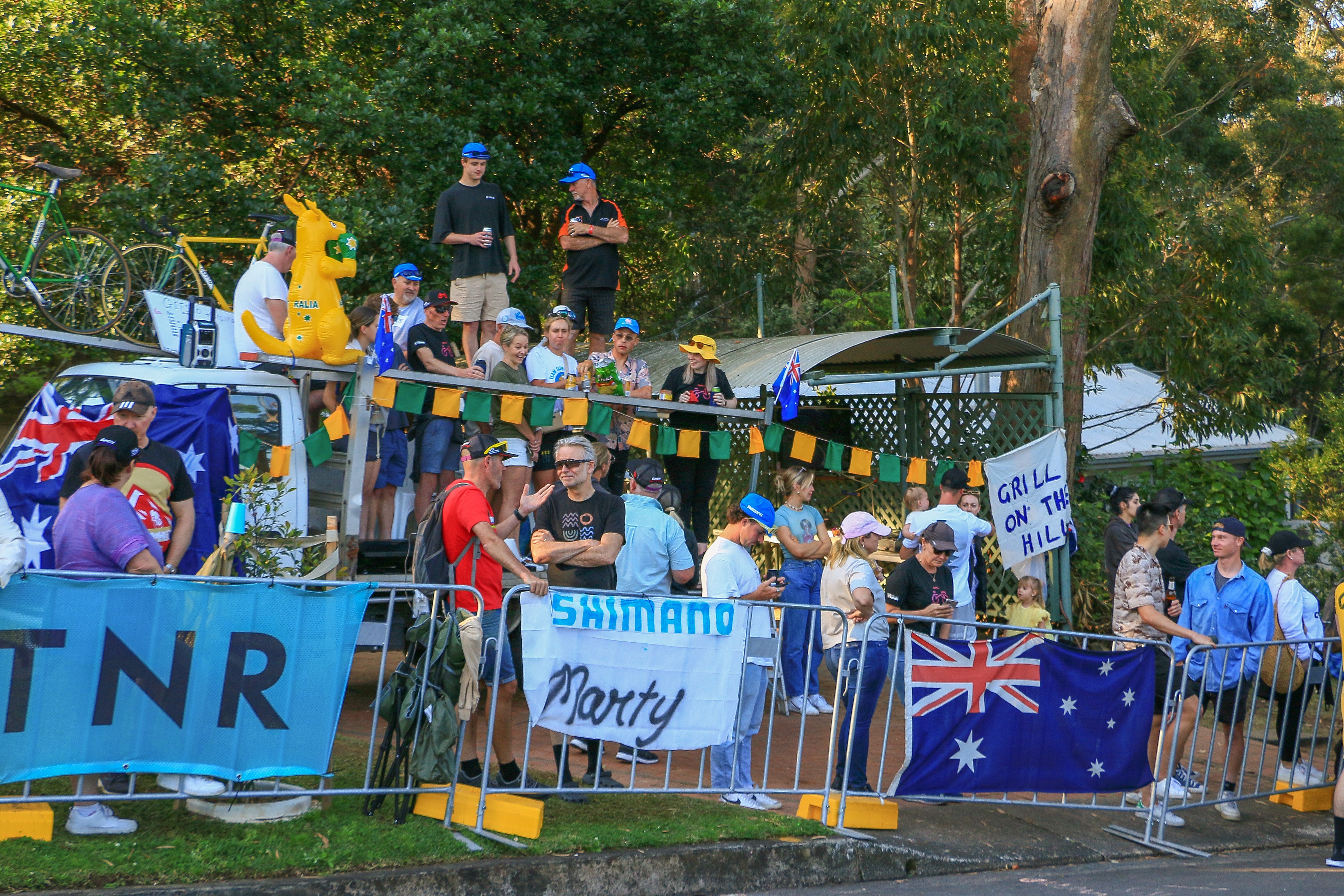
For a whole week the city of Wollongong was hosting the UCI World Road Cycling Championships, an annual event that is usually far more comfortable threading through venerable piazzas and over short, sharp cotes topped with a medieval church (although next year, Glasgow). Rarely have these elite athletes whizzed past a suburban Supercheap Auto under the ferocious defence of a newly parented magpie. Wout van aaaaaaagghhhht.

Still, they made a good fist of it and today was the turn of the women’s elite road race riders to run the gauntlet. After some scenic made-for-TV coastal ambling and a climb up into the verdant escarpment, the race route made multiple laps of a Wollongong city circuit. With each lap taking around half an hour there was just enough time to intersperse glimpses of a frenetic bundle of colour and energy with coffee and cake, ice cream, fish and chips.

When I broke for fish and chips the heavens well and truly opened again. Seeking protection to feast under a Norfolk Pine, I was astonished to observe a seagull warding off other numerous seagulls and leaving me in relative peace. In what kind of world does this happen? Certainly not back in Swanage.

With the last chip, the shower had passed and the sun came back out as the race reached a conclusion along the Champs du Marine Drive. Two hundred metres from the line, some people whooshed on by and that was that, for today. Back to the station, back on the train, back to Kiama, and back over an alarming mountain of more gushing rain in the pitch black. I felt my car handled it as well as an Alaphilippe, and was pleased to safely bed down to that classic Australian sound of rain on the tin roof of a Ford Territory.

I was camping in Kangaroo Valley, mainly because I couldn’t really find anywhere closer to stay at a reasonable price. This came with added benefits though, including Fitzroy Falls on the way down and a Sunday morning in which disappointing mist quickly lifted to leave glorious blue skies. Ringed by rugged rainforest mesa, its a landscape burgeoning with abundance, a valley carpeted with pasture as green as anything in Devon. It really is quite the enchanted spot.

It was a bit of a shame I couldn’t linger longer now that the weather was fine, but I had another train to catch. The road over the mountain to Berry was much better with light and sun, leading to the bonus of great coffee and pastries in Berry itself. Since I was last here a bypass for the Princes Highway has opened up but Berry itself doesn’t seem to have suffered. It is still, after all, within Sydney Weekender and mass wedding party range.

Unlike yesterday I skirted around Kiama and instead caught the train from Albion Park. This is the kind of area where Australia more closely resembles the United States: freeways and intersections, monotone warehouses, concrete car parks, fast food strips. For later I note a KFC and a servo with cheap petrol, something to help me up over the Illawarra Highway towards Canberra. For now, more frenetic two wheel action was in store.

Today was the jewel in the crown, the World Men’s Elite Road Race. I think the kilometres covered would take them back to Canberra if they wished, but instead more scenic coastal roads, lofty escarpment, and seemingly endless laps of that Wollongong circuit.

Thus I was able to position myself in various spots to watch them stream by, thinning and stretching with the revolution of every lap. Coffee and ice cream and fish and chips was harder to come by as I moved into the suburbs and it was with great envy that I passed parties on decks and could smell the aroma of barbecue lunches. For the most part I lingered in and around Ramah Avenue, a Ramsay Street of clichés beamed to the world. Seventies concrete brick homes, Utes in the drive, magpies warbling from atop bottle green gums. In between laps some hoons played cricket in the street.

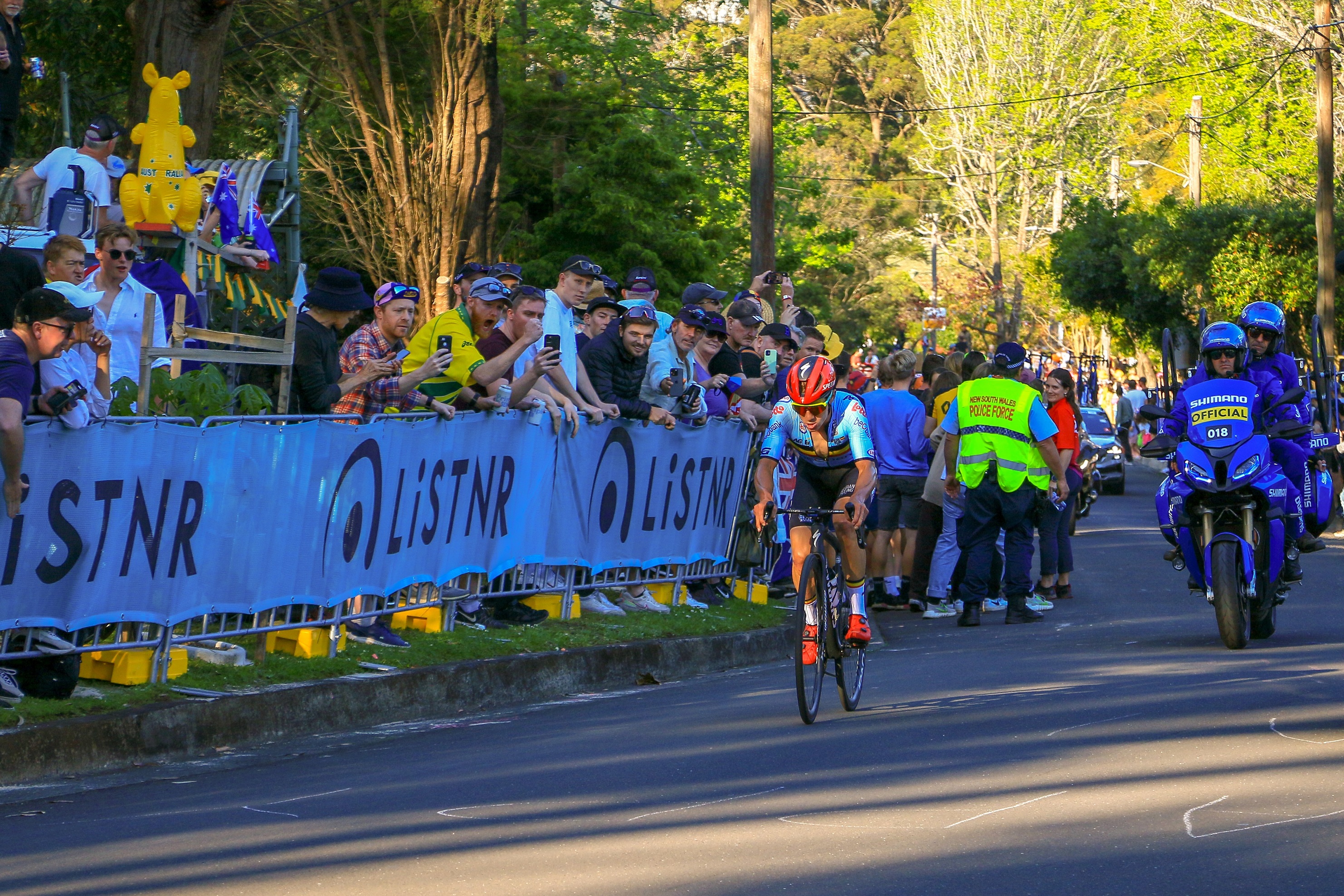
Unlike Ramsay Street though Ramah Avenue possesses fifteen percent gradients, which made it a hotspot for crowds with cow bells, fancy dress dinosaurs, imitation devils. At times, cyclists would pass by slowly, though still – to my despair – at a speed I can just about muster on the flat. With each repetition the weariest fall back and you can sense their eyes roll at yet another climb. Dripping with sweat, thoughts perhaps turning to those snags on the barbecue and a cold one at number 52.

Eventually one of them pops clear. A frontrunner who can no longer be caught. A diminutive Belgian, a rising star. Remco, a racer who looks about 12 but acts in a way far more mature than many who should really know better. Real inspiration, real leadership, a long, long way from a Big, Big Dog. And let’s just hope I’m not too premature about that.

Australia Green Bogey

The 0832 to Tumbarumba

Trains and schedules go together like trains and – well – Michael Portillo. Sometimes these schedules are fastidious affairs as in Switzerland, while at other times they are indicative aspirations, such as upon the platform of St. Budeaux Ferry Road. The problem with fastidiousness is the absolute carnage when it all goes wrong, like that time when a few trains into Geneva were running ten minutes late. You could see the terror in the faces of panicked locals as they reached for their mobiles to share the drama with loved ones and remediate the knock on effects of being late for an overpriced dinner. Quelle horreur!

When rail lines have faded into obscurity and decades of bureaucracy and nimbyism have finally been overcome to transform them into a gentle thoroughfare for people power, you wouldn’t think schedules really matter. They certainly don’t appear on the jauntily repainted railway sheds and hastily assembled flower beds signifying the start of the line. But schedules matter on a rail trail, because you really need to time that break for morning coffee and cake.

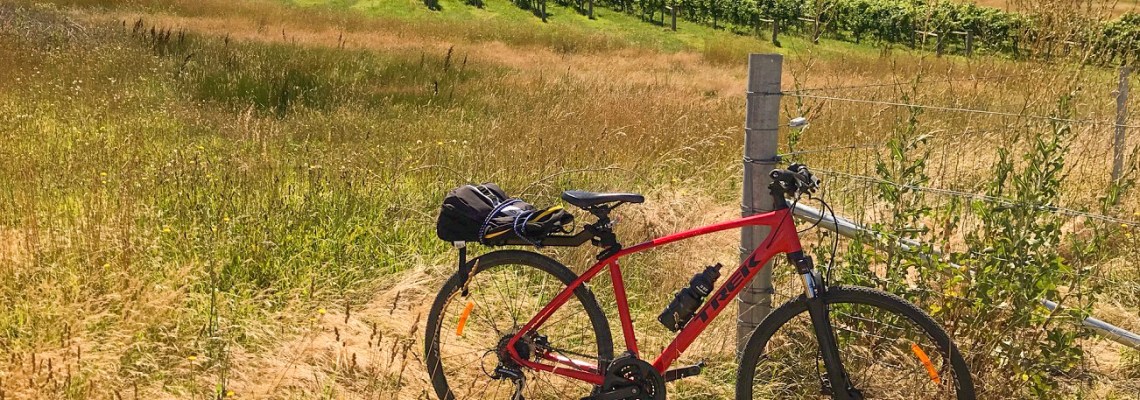
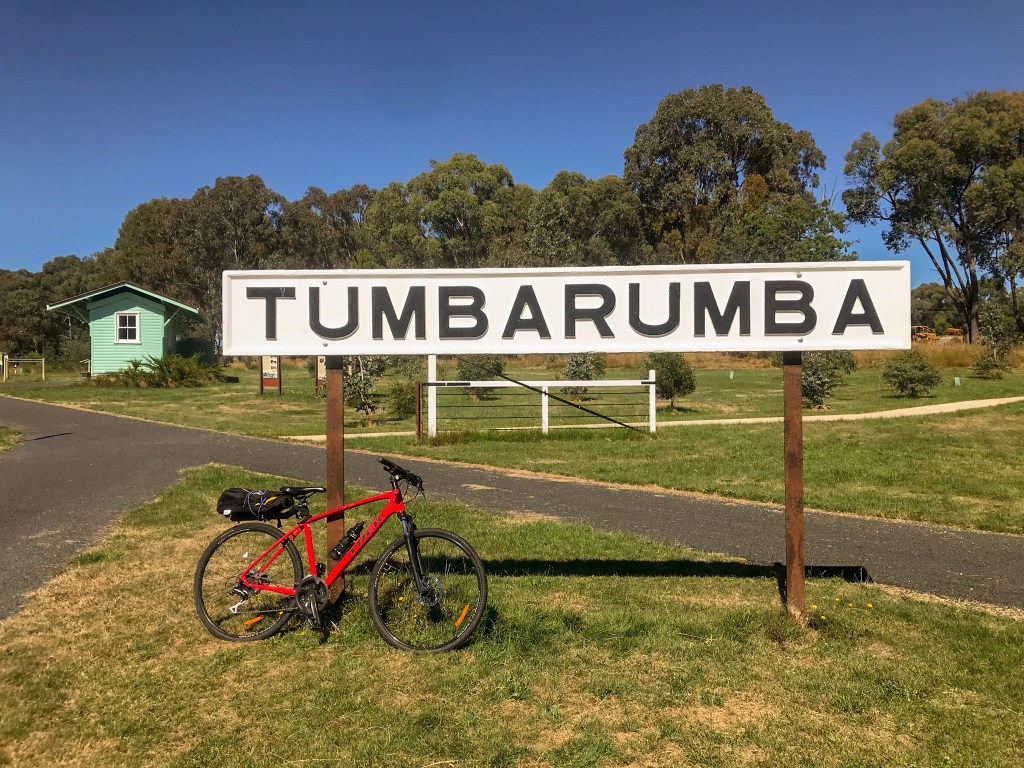
This is why, on a sunny Sunday morning in January, I embarked on the Tumbarumba to Rosewood Rail Trail by going from Rosewood to Tumbarumba. Or to be more precise, Rosewood to Tumbarumba Bakery, the only cake stop in town. Twenty one and a half kilometres to burn a few calories, work up a hunger, and hopefully enjoy some pleasant pedalling as the countryside passes by.

It is astonishing to think this is the only rail trail in New South Wales. While the state once again proclaims its own exceptionalism in leading Australia out of the COVID-19 pandemic (by ensuring everyone gets infected and supports the economic activity of Chemist Warehouse), it is a laggard in the rail trail stakes. Compared with the mighty 145km Brisbane Valley Rail Trail, this effort is a wee path. But what it loses in scale, it makes up for in quality.

I’d say the route is comprised of three parts, though given I am doing the return journey make that six. From Rosewood, the going is easy, fuelled by that initial excitement which makes life on a bike feel good. Rolling hills that could have been transplanted from Devon snuggly descend to flat pasture. Horses and cows and sheep and tractors can all be sighted along the way. Accompanying the trail, the meander of Mannus Creek sparkles in the early morning sun and all of this is undeniably bucolic.

Eventually the trail crosses over Mannus Creek and the landscape opens up considerably. Already warm, I pause in the shadow under the bridge to feast on an orange. Surely this is a fruit that tastes one hundred times better as an accompaniment to exercise. Those half time oranges sure do make sense. But there’s another fruit appearing upon the horizon, with rows of grapevines cloaking the curves of a more distant range of hills.

The going is more exposed now and the incline seems – though imperceptible to the naked eye – more wearying. While the grapes never do quite make it down to the trail there is a blueberry farm on the other side promoting goods for sale. But even this is a little detour and I decide the sound of a gunshot from that general vicinity is enough to motivate continued pedalling. With little on offer between Rosewood and Tumbarumba, I do think there is a missed opportunity here: a pop up stall with fresh blueberries and chilled champagne.

Along the final stretch into Tumbarumba I could use some effervescence. It is uphill all the way, though uphill in that long, circuitous drag of an old rail line manner. But pleasingly it is also a bit more wooded and the passing shade and scent of eucalypts is welcome. You also start to come across more signs of humanity – walkers, people tending to chooks in a smallholding, the sounds and smells of timber being processed.

The trail terminates on the edge of town, high above the shops. So while the plunge down to the high street is most welcome, this – for me – is also of concern for the return. I can see some walking in my future. But in the present it is 10:24, perfectly on schedule to buy a coffee and apple turnover from the bakery. Oh and a real thing Coke and another cheap one dollar slice for the road.

There wasn’t really much to Tumbarumba but I was pleased to find a shady bench in a shady park with shady conveniences. It is the largest town around but that really isn’t saying too much. Still, it seemed amiable and well-kept and it wouldn’t be a bad place to linger longer. But of course I had a schedule to keep: the 11:17 to Rosewood.

Naturally the return was the inverse of everything that has gone before, though with a different angle it is amazing what else you can see. Best of all was the instant downhill where I really didn’t have to expend one kilojoule of fresh cream for five or six kilometres. After that, the earlier enthusiasm drains under a midday sun, and you start to develop a hatred of the e-bikers out for a jolly. My bike seems heavier, the chain rougher, the gears more grinding. Meanwhile my right knee creaks and my butt definitely feels more tender.

I was pleased for a shady rest spot to finish off my performance enhancing Coke at Wolseley Park Station. This was one of several stations that sprouted up to service the local farms, helping to foster small communities with a post office and village school and a dairy and a mechanics institute. If only those mechanics were on hand today to fine tune my derailleur. Still, at least the cows were still about, making some dubious noises. With five kilometres left, my mind turned to lunch.

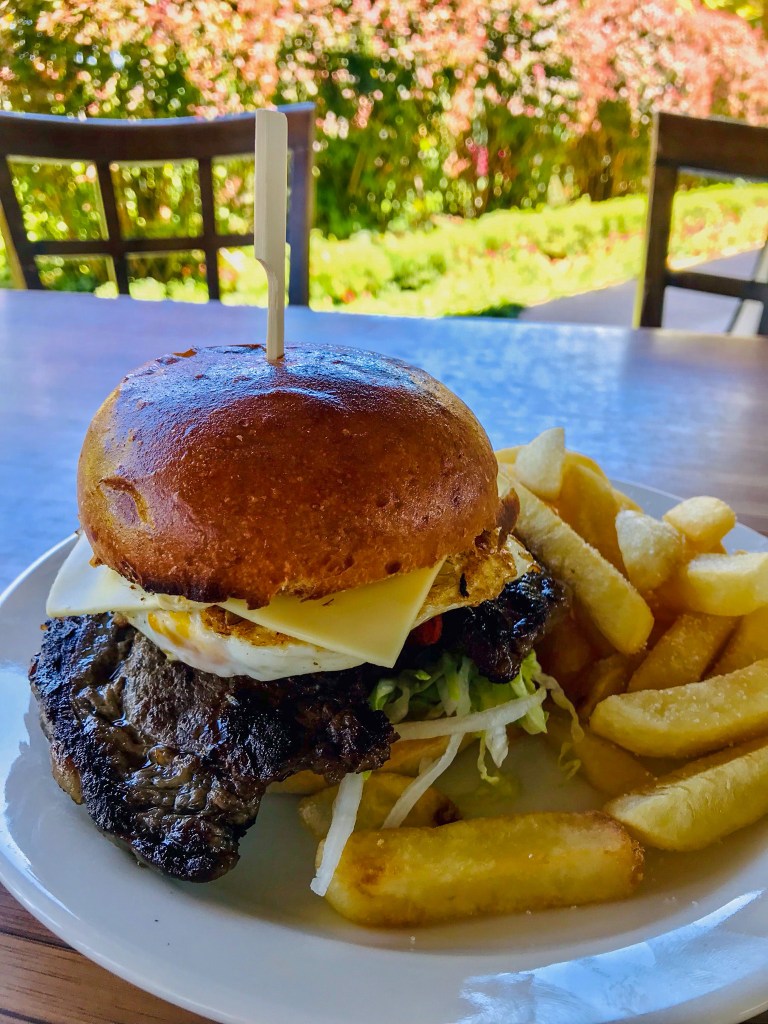
The steak sandwich at Gone Barny in Rosewood was everything I had dreamed of and more. The more being the side of delicious, deep fried chips. I think, with my extras, this was one of the most expensive items on the menu, at a mere $15. It won’t win Michelin Stars (though that Michelin Man does look partial to a few chips), but as good, honest, tasty food goes, this was an outright winner.

Did I earn this feast after 43 kilometres, a large coffee, a larger apple turnover, a full-on coke, an orange and a few Vegemite Shapes? Oh I doubt it, but the whole point of doing these rail trails is to support these small regional towns, right? Gone Barny is a case in point. Now I leave full, feeling accomplished. Ready to schedule the next one.

Australia Green Bogey

Off track

Maybe it’s just me, but I can’t say I’m especially fond of a cracked phone screen on top of a magpie attack on top of an earthquake on top of a lockdown on top of a pandemic. Served up with a hearty dollop of impending nuclear Armageddon intersecting with blistering fire and dust super tornados. No, Wednesday you didn’t particularly rock my world.

Frankly, out of all those, the bloody magpie irks me the most. How dare you take away the satisfaction and soothing of my allotted outdoor exercise time in lovely spring sunshine. And mean another pathway is added to the blacklist. The pathways are busy enough as they are with all these people in various states of mask undress discovering pathways for the very first time. Why don’t you attack them, stupid magpie? Oh, that’s right, you remember me, but yet conveniently you don’t remember how I have never once tried to steal your babies in all those years, you bloody shit.

If there is any positive, the magpie at least adds a bit of frisson to another daily outing in the same part of suburbia. Six weeks in, the confines of living within a vague radius or region are starting to grate. There are only so many times – for instance – you can wander upon Red Hill without getting weary of the same route. On the most recent occasion, I found myself annoyed with an endless procession of joggers and dogs not on leads and family gatherings. Eroding the sensations usually associated with an escape to and immersion in nature. Sounds, sights, space shrinking.

An actual problem looking for a solution, I find myself more often than not heading off track. A little out of the way. Not exactly bush-bashing, more weaving between weeds. There are still a few spots in which to escape around the Woden zone. I probably shouldn’t share them here but figure a readership of six people – many of whom are not in Canberra – is not going to cause a sudden ruination of my life. If it does, I’ll know who to blame. And set that magpie upon you…

The Old Mugga Mugga Way

If Red Hill is akin to Fitness First every goddam afternoon, Mount Mugga Mugga Reserve is more like that rusty bench press underneath a pile of boxes at the back of the garage. Fringing the weirdness of O’Malley, it seems the varied diplomats and consuls who inhabit the area rarely go out to exercise. Perhaps like most aliens they have been cowed by those great tales of deadly inhabitants of the Australian bush. Preferring the safety and comfort of their own little piece of soil.

The Centenary Trail runs through the reserve and introduced me to the area back in the good old days of 2020. A few people still come and go along this thoroughfare but it’s simple to veer off onto a number of faint tracks and choose your own adventure. The landscape is a very Canberra mix of weedy incursions and precious Yellow Box-Blakely’s Red Gum grassy woodland, replete with gnarly old eucalypts and their generous, homely hollows.

One particular tree has fallen, and I have taken to it on several occasions to perch and drink tea from a flask and eat a treat and watch Gang-gangs fly past while kangaroos graze and deadly inhabitants of the Australian bush lurk in the crevices of the fallen tree on which I am sat.

The whole flask of tea thing has become another more frequent happening in my life in recent weeks; I don’t know why I haven’t thought of it much before. Perhaps I simply wasn’t quite of an age. But pandemics and magpie attacks have a way of adding on the years, transforming a simple flask of tea in the middle of the bush into something that feels much more precious.

Isaacs Off Piste Ridge

Mount Mugga Mugga itself is scarred by a quarry and the summit appears fenced off, thus remaining that rare Canberra hill not trampled upon by my own two feet. Yet it’s just one lump in a broad range extending from Red Hill south towards the Tuggeranong Valley. Adjoining Mugga Mugga, Isaacs Ridge proves popular for its pine trails and dog walks and boasts an archetypal trig marker summit loop with 360 degree views.

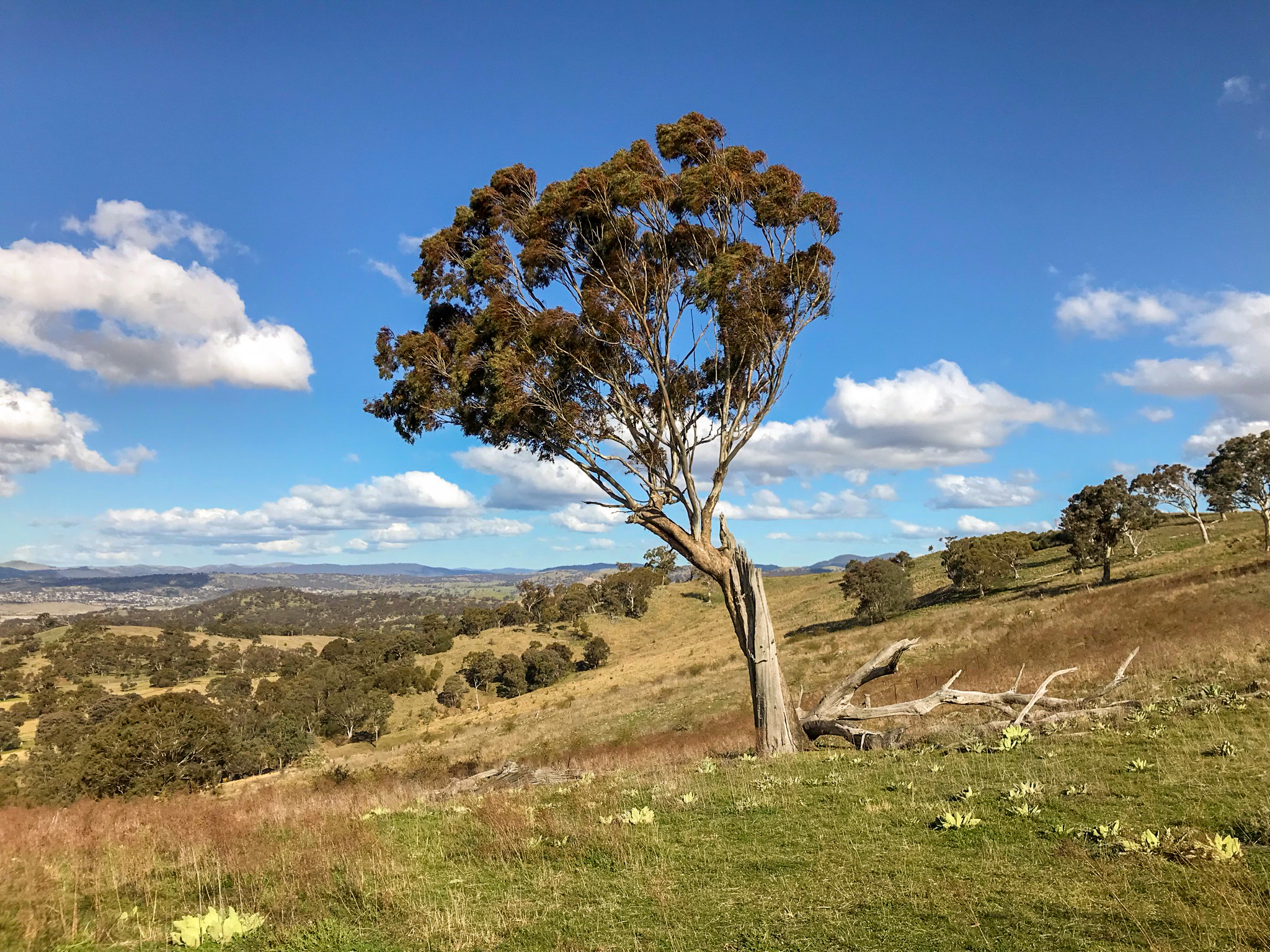
That all sounds a bit mainstream for me at the moment, so I veer off the fine balcony trail lapping at the foot of the ridge and decide to head up cross country. There is a very faint track at first, which slowly blends into a landscape of open grassland and rocky scrub. Over a false summit, a field of thistly plants remains quelled by winter – give it a month or two and the going will come with greater hazard. A random copse of casuarina appears as if some long-forgotten scientific experiment, offering a landmark to follow slowly upwards to the top of the ridge. And lo and behold, a photogenic gum tree, with some fallen logs for a rest (and possible tea).

From here, there are views east to that far off land of New South Wales. There is countryside and Mugga Lane and quarrying work and possibly even just a little part of the tip. But mostly it’s countryside. There is also the white trig marker visible to the south, acting as a beacon to aim for, navigating the rocky boulders and grasses of the ridge and returning to the mainstream.

The Murrumbidgee Vista Rocky Outcrop

For several weeks, Cooleman Ridge was proving one of those ambiguous places in the application and interpretation of local coronavirus restrictions. Is it in the Woden, Weston and Molonglo region or is it Tuggeranong? Is it within five kilometres of home or six and a half or eight? The answers are yes and sometimes you just have to ask the question does it actually matter?

One of those days was a lunchtime and instead of a flask of tea I packed up some crackers, nuts and cheese and went on a quest for the perfect place to snack. Eschewing the usual, well-defined summit rocks and strategically-situated benches I veered off towards a hillock I had eyed up in the past. A few gum trees stood atop resistant, hosting flurries of wattlebird and passing rosellas. Imagine by delight that under one of them was the perfectly positioned, home-crafted seat.

Someone had been here before looking for the ideal situation to escape to the country. A kindred spirit. And if a backdrop of lush farmland cloaking a river valley beneath forested hills isn’t enough, check out those crackers and cheese and nuts from Kingaroy. Off track snack pack perfection.

The Oakey Dokey Hill with bonus Hummock

Along with off track adventures one of the permissible things I have been doing virtually every day is picking up a takeaway coffee. It is the stuff of contact tracing nightmares and triggers the inner COVID police in me every time. Quit loitering. Stand away from me. Stop touching your face. Don’t order multiple coffees with various shades of milk for your entire bubble.

I’m also – naturally given current confines – alternating my takeaways between a mere handful of proximate cafes, constantly hoping they fail to materialise on the exposure site listing. In Lyons, Stand By Me offers something that is walkable from home and – should I wish to venture further – can be incorporated on a climb of Oakey Hill.

Of the six hilly nature reserves forming a horseshoe around the Woden Valley, Oakey Hill is probably the least fashionable and most unkempt. Power pylons compete with decommissioned water reservoirs and temporary fencing. The flora seems more degraded, more weedy, more battered and bruised by the elements. Still, there is a nice bench beside the trig marker if it’s vacant and a little used side track that offers good views out to the mountains.

Across from the reserve, a green corridor lines the divide between Lyons and Curtin. From here, more slivers of green penetrate into suburbia, one of which hosts a determinedly vicious magpie. Nowadays I avoid that particular route and instead continue around the outside of Curtin on a track that at one point takes on the appearance of pasture. It forms part of what has become a fairly regular ten kilometre bike jaunt which culminates in a different takeaway coffee at Red Brick.

Along this way, at the back of Curtin, there is a hummock which takes me away too. Behind, fences protect garden refuges with trampolines and lemon trees and potting sheds and shrubs of shady bottlebrush. But in front there are fields of green and skies of blue. On the horizon, the distinctive angles of the Brindabellas promise at much more freedom. And I am whisked away to a place far from busily exercising humans and irritating magpies and daily case numbers and limited coffee options. I am taken again off track.

Australia Green Bogey Walking

Dream times

Do you remember the time when you could leave footprints in the sand to melt away with the tide? Or take walks within forests as the sun scatters golden through a canopy of spotted gum? Can you recall when you could linger on a bench to feast on deep fried fruits of the sea? And what about that period when Australia really was the place to be?

Footsteps in the sand

I do, but it feels a long time ago, even though it was little over a month. With opportunity and freedom I had journeyed to the coast, cognisant of wintry weather in Canberra and the pervasive feeling that you might not be able to do this again. For a while.

I had found a quiet kind of place to stay in North Durras. The kind of place you might hunker down to see out a pandemic. A place where the biggest drama at this point in time was the wind, though where small reminders of far more disastrous natural events stir the mind. The wind quelled the temperature and whipped up sandy frenzy, but it was still an improvement on Canberra. And an invigorating reminder of the power of nature.

A view of a small town next to the beach with forested hills in the background

Not that I was thanking the wind when the power went down, just as I was about to settle into an evening escaping on a tour around France. I had to read and that felt like hard work when you really just want to lounge as lazily as possible. Thank goodness for the lights coming back on and the Col de Tourmalet.

Around North Durras I made friends with some King Parrots and Kangaroos, explored the sands and forests, and found my way wandering along the waterways as they infiltrate inland. Always across the channel, signs of South Durras peeked above the scrub and I wondered if there was a strong rivalry between the two. The South were probably boastful of having a shop while the North derided snooty Canberra-by-Sea.

Kangaroos hopping on some grass next to the ocean

Just for a while I had to remove myself from such unlikely drama. It was Saturday morning, and I was hoping for that perfect combination of sheltered sunshine and oceanside coffee strolling. I aimed for Bawley Point, noting some positive signs in my research: small bays protected from the south-easterly; a coffee caravan on a headland with a strong showing on TripAdvisor; Canberra-by-Sea.

At least the bays were sublime.

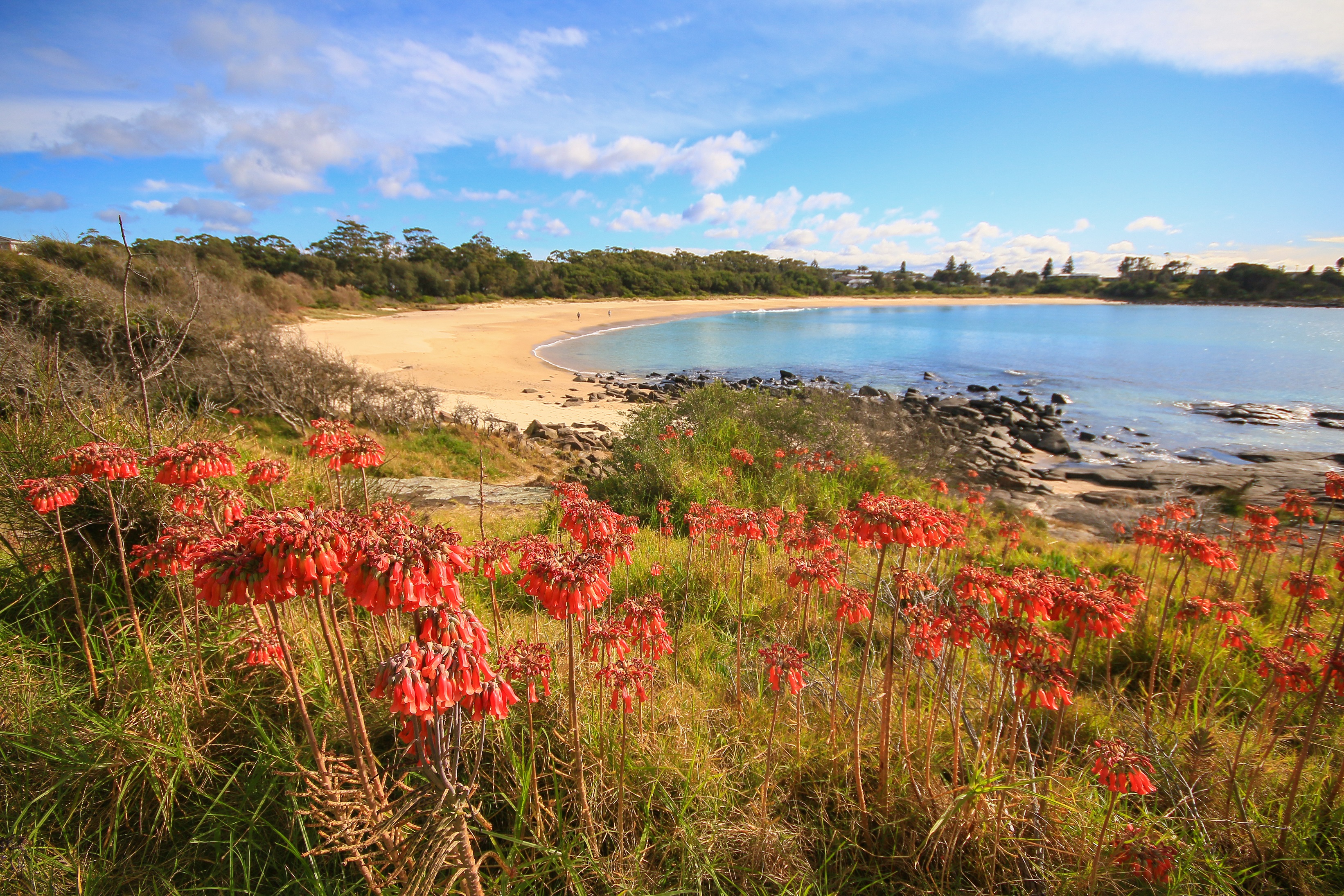
A beach with some red flowers in the foreground

For some reason, the thought crossed my mind that Barry Cassidy had a holiday home in Bawley Point and hung out with Mike Bowers while Heather was off on some back road cracking a horse whip with Old Reggie Mundoon of Canowindra. This will mean nothing to any English readers, and most Australians too. Anyway, I think I remember this because Mike posted a picture of plumes of smoke from Bazza’s ample deck around the Christmas of 2019.

I could’ve watched Barry’s successors waffle on about ineptitude and continue to needlessly debate the pros and cons of lockdowns on the ABC on Sunday morning. But why do that when I can just take a few steps from my cabin and expose myself to a world of beautiful calm. From the abundant forest full of melodies to the glassy clear water stretching across to the south. No wind and a beaming radiance to lift the soul.

Sunlight shining through a forest
An inlet next to the ocean

This would be a fine place to ride out a pandemic, though it could handle a decent café otherwise I may not survive. To ensure an improvement on the day before I left North Durras and drove south to Mossy Point, where there is a reliable spot for coffee. And a raspberry and white chocolate muffin. Just because.

The day was continuing to sparkle, and I was in no rush to head back home. With hardly a breath of wind it would’ve been the perfect day for a bike ride. Perhaps heading from Moruya along the river and out through pasture towards the ocean at Moruya Heads. You could pack some lunch and eat it in a sheltered bay, glistening under warm sunshine. Good job I packed my bike and prized $16 bike rack.

A red bike next to a river
A bike on a sandy beach with the ocean in the background

Doesn’t it look nice?

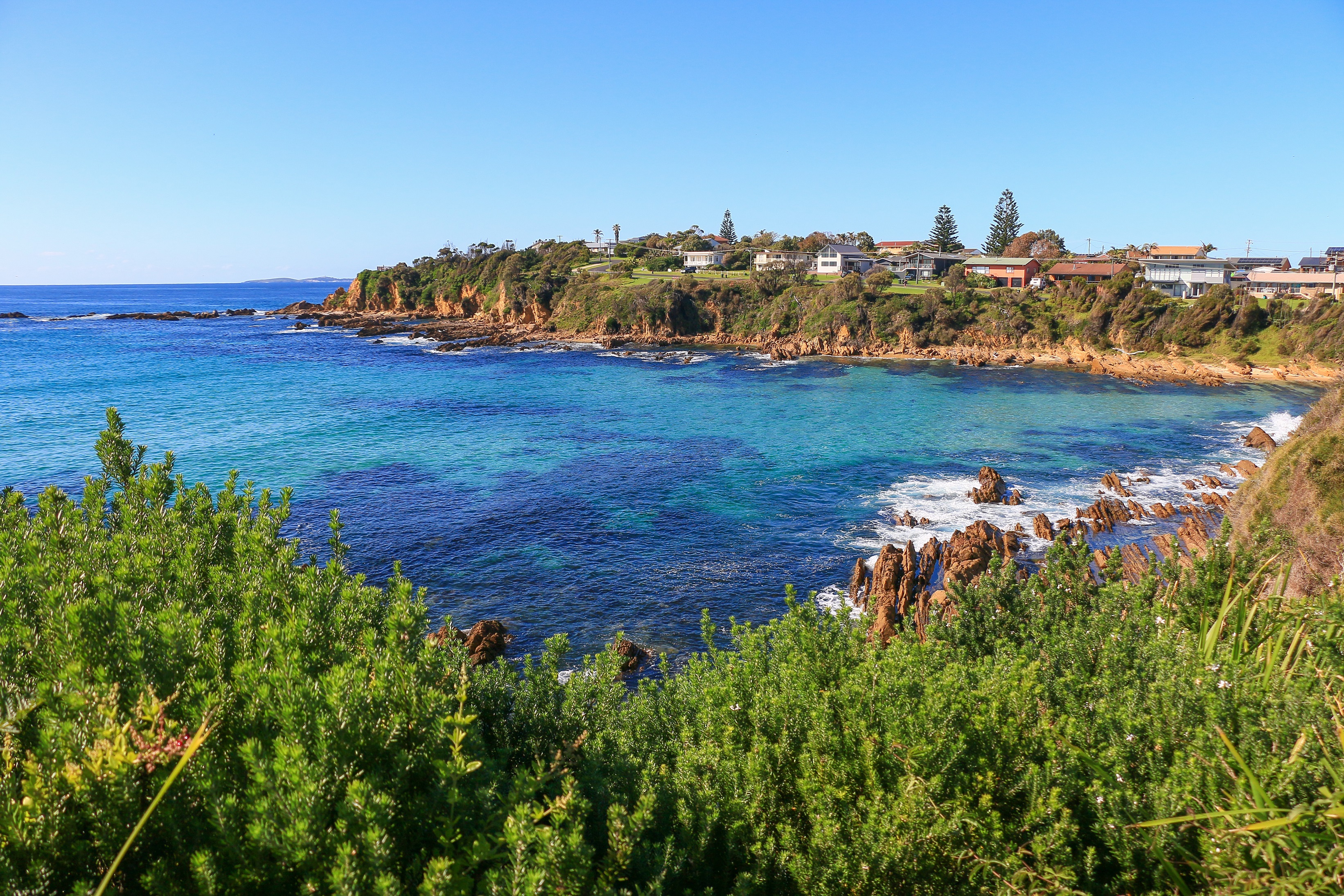
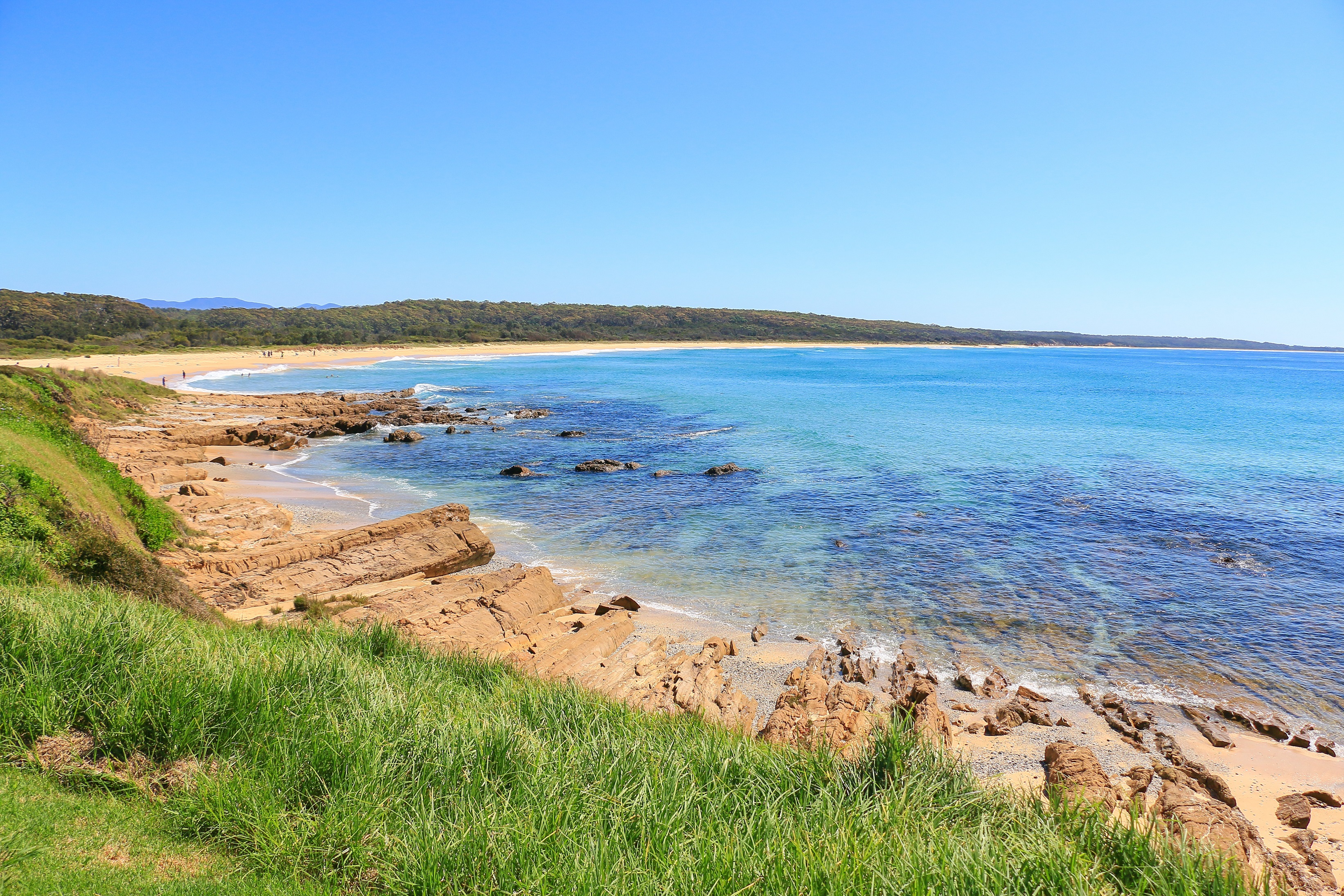
There was a beach at Moruya Heads – Shelly Beach – that offered the kind of nirvana that would prove an entirely effective crescendo to a piece of writing. The very essence of what I was seeking on this little break to the south coast of New South Wales in winter. Comfort, delight, beauty, and a quiet spot to sit in a T-shirt. I could have gone full shorts, but none were packed.

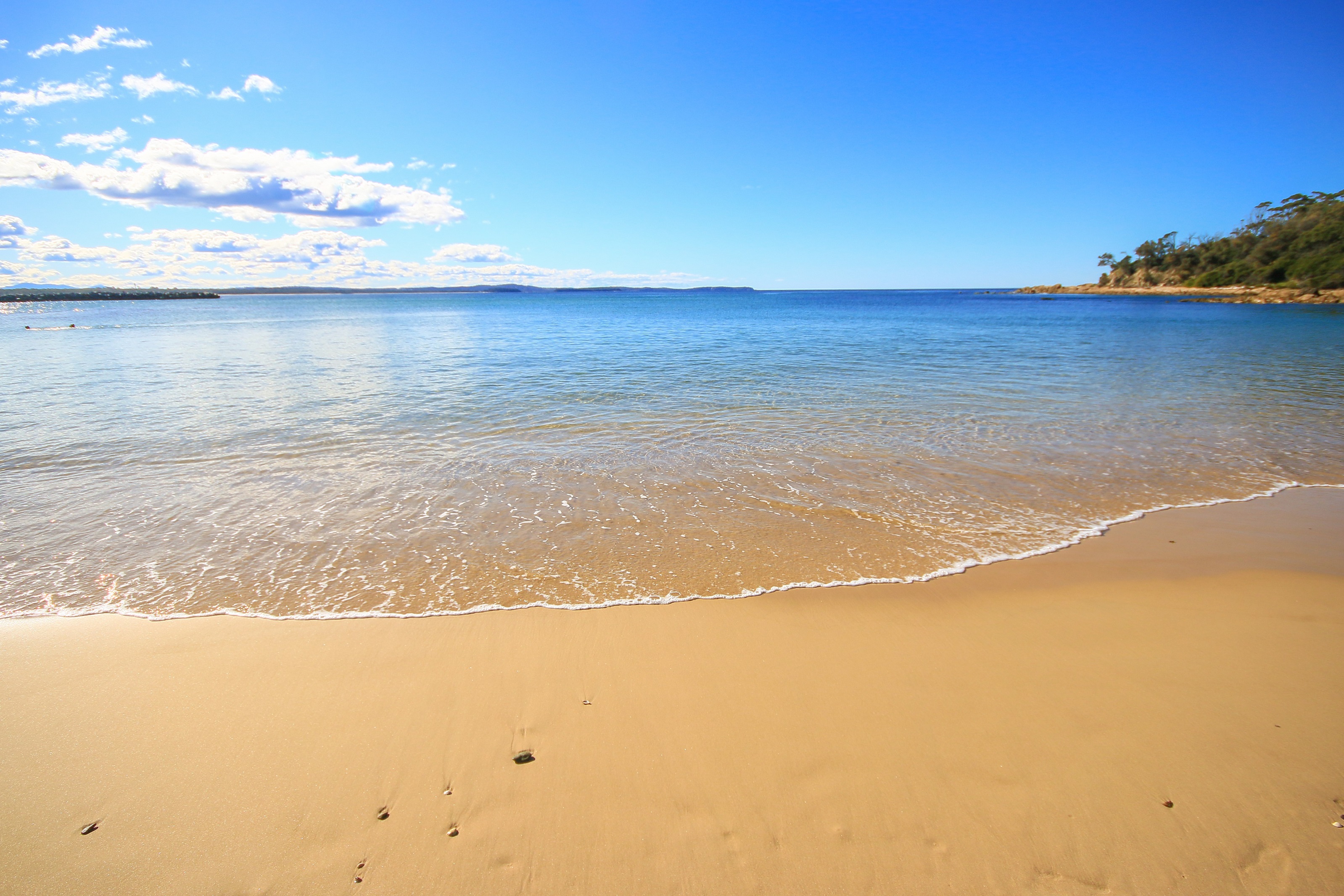
A beach and clear ocean

An ice cream would’ve hit the spot too, but I had to cycle back to Moruya – including over what felt like a mini Tourmalet – and then drive a fifty kilometre round trip. I mean, I didn’t have to take a fifty kilometre round trip but no, really I did. I’d done fish and chips, I’d done coffee by the sea and now I needed a double shot of Bodalla Dairy.

Another moment to treasure, to add to the bank of dream times to remember. And to look forward to when they are there to spoil us again.

Picture of fish and chips, ice cream and coffee

Australia Food & Drink Green Bogey Photography Walking

Great Continental Rail Trail Journeys

The last time I heard the word ‘gooch’ as incessantly, an English batsman was stroking the Indians all over Lords. That was 1990. I also remember a reoccurrence when the same player was famously dismissed for handling the ball. Today, gently rising out of Toogoolawah, two hours west of Brisbane, gooch and ball handling were once again all the rage.

A stop was called for by my good friend and biking companion, Jason. Problems in the perineum that would culminate in what will only be known as the ‘Lowood Incident’. As improvised comfort was applied and jiggled, I started to contemplate whether we would need to radio in the rescue chopper.

But waiting patiently I was enjoying the break. It had been a decent upward grind after lunch. The sun was warm and glowing gold the long grass of summer. Small eucalypts lined the route, interspersed with westward views over gently undulating farmland. My bike was coping well. Despite almost falling asleep over a burger, I was coping okay. This was brilliant.

I had never heard of the Brisbane Valley Rail Trail until Jason mentioned it virtually every time we spoke over the phone. I don’t know if it was one of those things you just say, never really expecting anything to eventuate. But one day I just thought sure, why not. Or words to that effect. And this whole trip was basically arranged around it.

We took a leisurely three days to cover the 161 kilometre route by bike, retracing a rail line that commenced construction in 1884 and was finally made redundant in 1991. Today, it has been transformed into the longest recreational rail trail in Australia for use by walkers, horses and – mostly – bikes. While I never succumbed, Lycra and gooch cures are never far away.

Day 1: Yarraman – Linville (42 kms)

It took the best part of two hours to drive from Caloundra to the start line (thanks Fiona!). Over rainforest-lined passes, high above fields of mist, past bakeries that are worth making a note of for later, we reached Yarraman to face the unknown. Yes, riding a bike is like riding a bike but riding a bike on a three day bike ride is another matter.

Yarraman was still fairly quiet, though the people we did encounter were keen for a natter. Being ANZAC Day, a small dawn service had been and gone, and one old guy offered reminisces about days gone by in this small neck of the woods. He had taken the train many moons ago when joining the air force. Thus a brief history of the operation of the Brisbane Valley Line ensued. The conversation culminated with him contemplating riding the line once more, e-bike assisted of course.

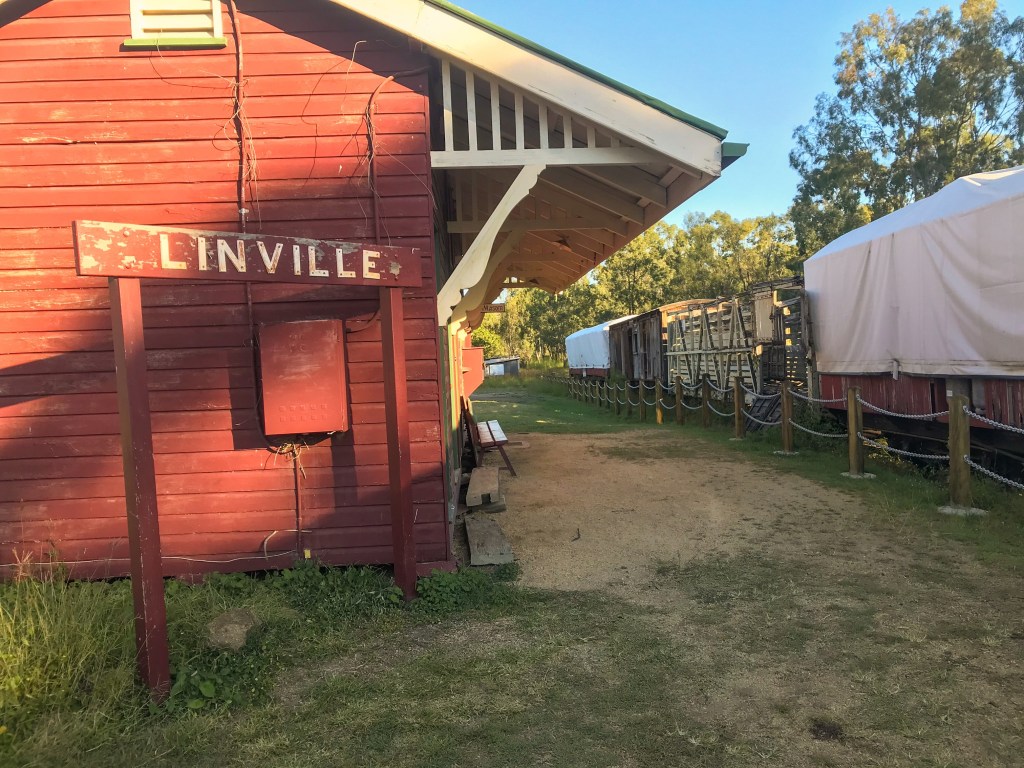
We passed up the opportunity to indulge in coffee and bakery items at Yarraman, instead pursuing these goals in Blackbutt once at least a few calories had been discharged. And so the exercise commenced just out of town beside the old rail station, highly visible remnants of the line that pop up in practically every settlement along the way. Blue skies, still air, a fairly smooth dirt track accompanied by that first shot of endorphin from anticipation of what may lay ahead. 

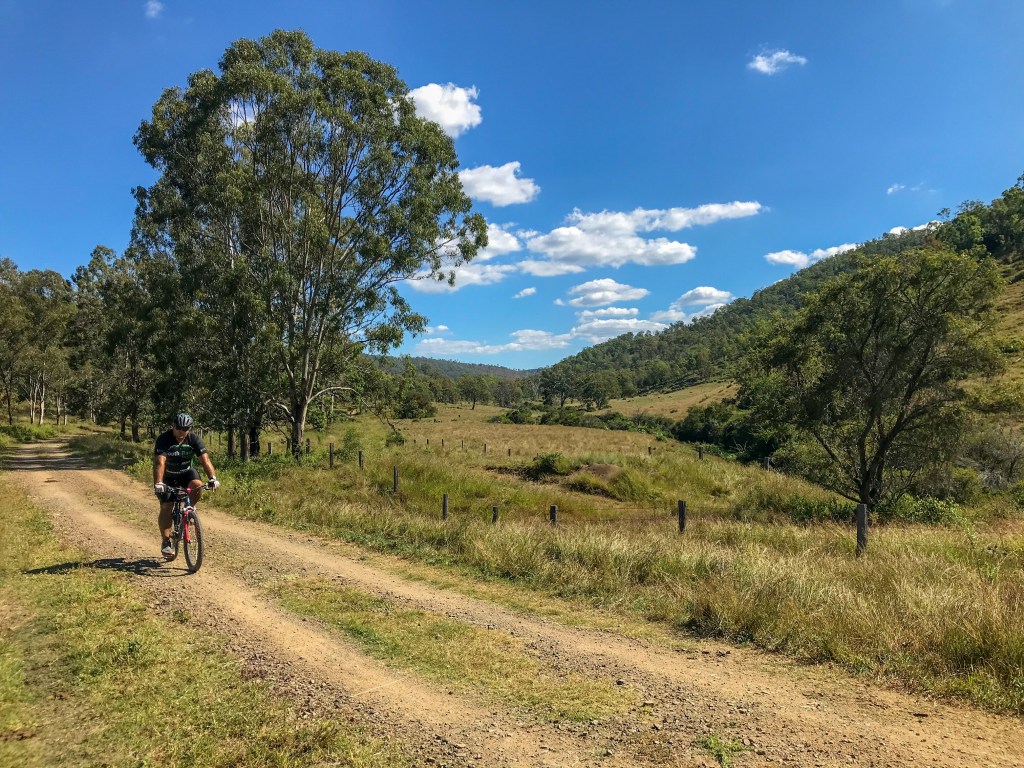
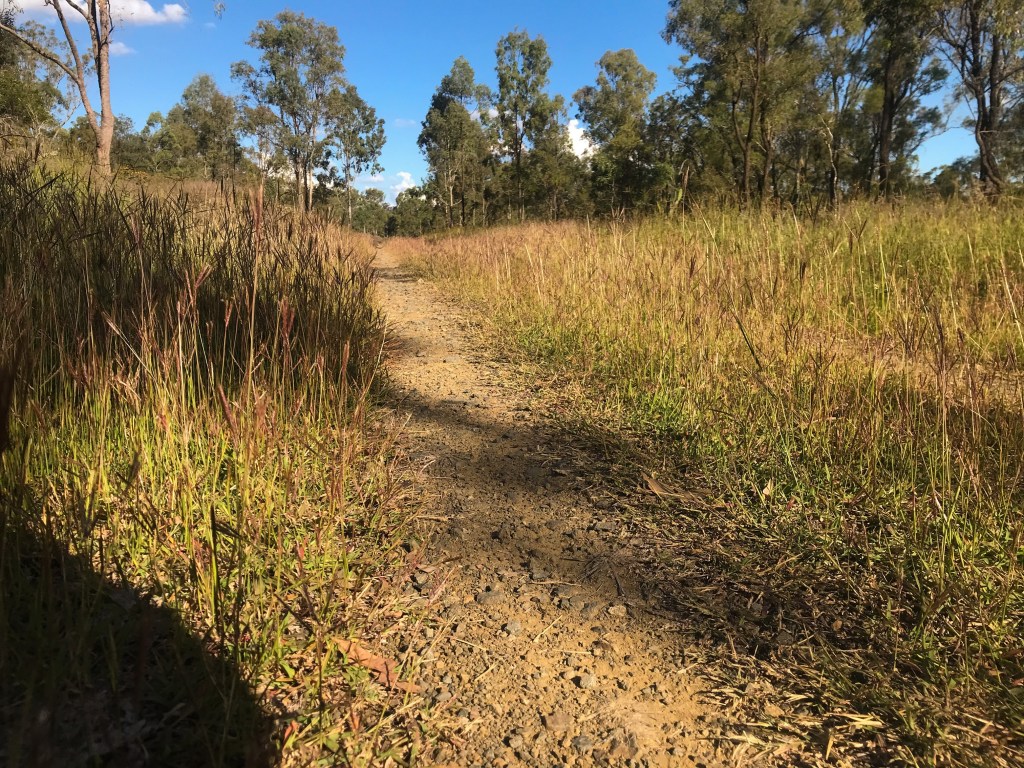
And so, we rode through avenues of low eucalyptus, alongside green pasture dotted with spiky xanthorrhoea, and through a number of rockier cuttings keeping things relatively flat. Earlier in Yarraman, the old fella rambled on about the bridges on the rail line and wondered if they were still standing. The answer quickly became clear and that answer was – for the most part – no. After cruising with only gentle effort, the downs and ups of gullylife often come as a bit of a jolt to the system.

The vibe along the trail was congenial and we passed a few other cyclists with friendly g’days and broad smiles. A few times the trail briefly transported me to a nice summer’s day in southern England, a passing resemblance nurtured by fields of corn and tunnels of trees. The idyll was quickly shaken by the gullies, the gravel, and the sound of Chinooks and Apaches putting on a flypast specifically for us. 

It had taken well over an hour to get to Blackbutt which was – after the trail thus far – a veritable feast of civilisation. People were assembling for the 11am memorial service, many with padded butts and bulging Lycra. This naturally resulted in high demand for coffee. So high, in fact, that the cafe we had chosen failed to deliver it.

It seems churlish to bemoan the absence of coffee in the context of wartime remembrance, but I cannot deny how deflated I felt. One of the attractions to this ride – probably even the number one thing impelling me forward – was the frequent prospect of stopping for coffee and cake. How leisurely, how civilised, how conforming to popular stereotypes of butt-padded middle aged manliness. 

But the parade passed and wreaths were laid without a hot mug of country flat white. As they do, Last Posts, Abide With Me, and sombre silence touched the right note. The special guest speaker spent a good few minutes talking to the point that his time to talk had been controversially curtailed (I can only imagine the political machinations going on in Blackbutt RSL). Meanwhile, someone posting video of the service to the local Facebook page bemoaned the fact that everyone else was using up the local 4G and quite possibly catching coronavirus from the rays. 

You don’t get these quirks at the Australian War Memorial and that is why the ANZAC service in Blackbutt was such a memorable event. Above all, it radiated with the warmth of smalltown community: flags half-mast against the backdrop of XXXX signs on the pub; the high street closed off as trucks carrying cattle detour behind the small memorial; a procession featuring schoolkids, scouts, guides, old troopers and the Country Women’s Association, all waving to family members lining the route. Meanwhile some lucky butt-padded cyclists sup on their coffee.

No offence to New Zealand, but we snuck out of Blackbutt as the ceremony was nearing an end with its national anthem. I was keen to get moving before the rush of people re-joined the trail. We also had to reach the pub before it closed for the day.

Fortunately, most of the trail to Linville was downhill, through Benarkin State Forest. This induced a little adrenaline, gathering speed and negotiating clean lines and avoiding small rocks. My back end decided it wanted to head sideways on a few occasions, but speed and gravity and not particularly flash bike-handling skills kept things upright. Almost as satisfying as staying in one piece was the sight of pedallers grinding their way up towards Blackbutt and being thankful that this was not you.

Eventually the forest opens out and the landscape presents itself as rugged and unkempt. In fact, it’s probably the most enclosed part of the whole trail, where you truly feel like you are carving your way through a steep-sided valley. As the hills part, farmland again emerges, shacks appear, caravans gather for extended coronavirus holidays, and in front of you, shining like a temple, is the Linville Hotel.

The first thing that was obvious about the Linville Hotel was that the tradition of sitting around drinking on ANZAC Day was very much alive and well. Out the front, a multicoloured arrangement of frames and wheels gathered in what looked like one almighty tangle. Motorbikes glimmered in the sun. Classic cars posed with their rooftops down. City folk had come for the drive. Or the pedal.

The Linville Hotel proved every bit the Australian country pub and a little more. Chicken Schnitzel lunch was accompanied by local brews. Wooden verandas and wonky floorboards looked out over sleek parasols and hipster guitarists. Old signs mingled with largely ignored QR codes. Upstairs, rooms provided accommodation and already the century old balustrade was subject to Lycra decoupage.   

Closing at three, the pub transformed into a peaceful oasis, one in which I envisioned a post-shower nap that never materialised. Jason, naturally, had no problems. I instead popped out and explored the town, taking all of five minutes. It struck me that Linville would struggle to get passing trade if it were not for the rail trail. That, and the free camping area densely populated with COVID nomads.

So, the first day of the BVRT had been safely negotiated and all was well with the bike, the bike rack, the butt padding, and the humans. Until that pounding headache and fatigue and rush down to the toilet block to empty the mish-mashed contents of my stomach. In a dramatic turn of events, would I make it through only one day? Would we need to call in the medics? Would I ever get a goddam coffee on this trail?

Day 2: Linville – Esk (52 kms)

I guess the header gives it away. I survived. In fact I somehow prospered. This was the best of days: no rush to get anywhere, me, my bike, my mate, the sun, a massive coffee, and some other foodstuffs thrown in and not thrown up. 

The day commenced with a rising sun over a patchwork of mist from the top floor of the Linville Hotel. The sun kissed its first light on the Lycra bunting, dangling like the dismembered ghosts of cyclists past. Gradually the shadowy figures disappeared as small groups set off. We were the second last to go, just an e-bike left charging for those who have the power to linger.

It was a good start, especially as the first stop – Moore – was only seven kilometres down the road. I say road, but of course I mean trail, which continued to be decorated by avenues of eucalyptus and interrupted by deep gullies.

Moore appears even smaller than Linville yet boasts three places offering coffee. Wary of yesterday, I pray we choose the right one. In the end, the coffee comes, which is an improvement at least. It’s one of the biggest cups of coffee I’ve ever had in Australia, more akin to the stupid sizes you get as standard in those awful chains in the UK. In its gigantic bucket, the coffee took an age to cool down, but at least a second breakfast sausage roll kept me replenished.

After Moore, the landscape opens up considerably; wide fields undulate gently towards more prominent ranges while patches of forest become fewer and farther between. The trail even takes in some steeper rises which I’m sure weren’t part of the original railway line. Like the train in Dumbo – I think I can I think I can – I am elated with my first KOM achievement.

Another notable rise appears on the outskirts of Harlin, the next town of sorts along the way. Again I am pleased that I make it but also pleased to see some seats and a shelter at the top. It’s a bustling hive of activity as wheels spin, chains are cleaned, and flasks of tea are drunk. A gathering of older riders have made it all the way from Bundaberg or Rockhampton or somewhere like that (I forget), this now their eighteenth day on a bike. I don’t quite feel as smug having managed to overtake a couple of them on the way up.

We seem to play tag with this group for the rest of the ride. The trail’s kind of like that. All the time, in cafes and pubs, on picnic tables and in parks, you see people you think you have probably seen before but often can’t quite remember. Typically exchanges involve the matter of where you have come from and where you are going, intended bakery stops, occasional technical bike talk that goes over my head, and – increasingly – saddle sore. You leave it all out on the trail.

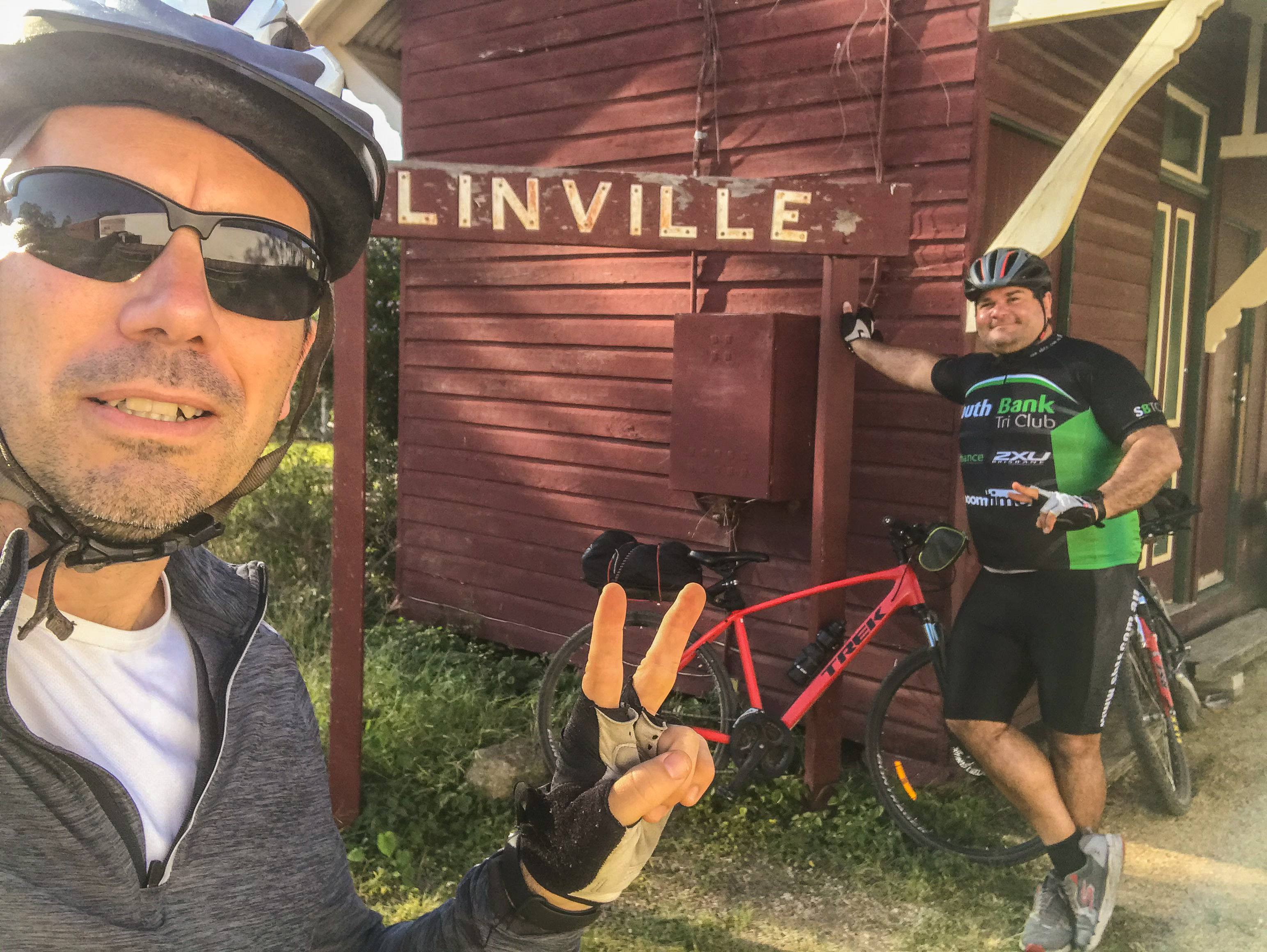
In these entanglements I figure we are perhaps a little more memorable to others. I say we but I mean Jason, masterfully contoured within his Boomtime bodysuit; I’m just that nondescript guy accompanying the big unit. Sometimes setting tempo on a gradual rise, other times trying to keep up on flowing descents. Organising accommodation and strategising food stops. Encouraging progress to the next town for running remediation. Hang on…I sound like a bloody domestique!

After Harlin I find myself pacing us past a rider and on towards a landmark. A damp dark hole doesn’t sound like much of a tourist attraction, but this is Yimbun Railway Tunnel, constructed in 1910. It’s the only tunnel on the entire length of the trail and I am pleased to see it, given my initial horror approaching what looked like an unscalable hill. Stops for photos and cooees are all the rage.

On the other side we progressed onward to Toogoolawah where it was most definitely time for some lunch. Our hilltop friends from earlier were encamped at a couple of shady picnic tables feasting on the provisions they had carried. Travelling light, we sought out a business that would feed us. This proved harder than one might expect – being a public holiday, the town was almost desolate. Salvation was once again in the form of the pub, and a pretty decent burger.

It was at the pub that I struggled to stay awake and was uncertain how I would manage to start out all over again. Rooms in the inn certainly had an appeal. I was also being bothered by an energy company desperately trying to cling onto my business after taking my money for many years without the slightest pretence of customer service. This is largely irrelevant and uninteresting until it got to the point where I was pleased to get back on the bike to escape a world of 4G.

Back to the simple life where it was just you, a bike, and a mate bringing things to a halt in an attempt to increase comfort. The trail rose steadily from Toogoolawah for quite some time before a delightful plunge down the other side. With time pushing on, the afternoon presented the countryside in a warm, attractive light. By the time we reached Esk, there wasn’t so much left. 

Usually you’d think 52kms would only take a gentle three hours. But factor in gravel, gully crossings, stops to take pictures of cows, the time required to wait for a ridiculous sized mug of coffee and then drink it, distractions with energy sales sharks, and – progressively – pauses for gooch care, and you have a full day out.

It’s more tiring than you think too. Which may explain why I called Jason a moron outside the IGA for just assuming it would be open forever. We joked about it afterwards, ate mediocre food at the local pub and capped things off with mugs of ice cream in a motel room. I’m sure this is exactly how riders experience the Tour de France. Especially the domestiques.

Day 3: Esk – Wulkuraka (67 kms)

Okay, this may sound like I had lost by mind but there were times on the third day where I literally felt like an express train. No, more like one of those old clapped-out British Rail stopping services between Basingstoke and London Waterloo with the heavy slam shut doors. There was something about the slow acceleration, easing away and eventually building to a steady pace as we progressed through the trees between Esk and Coominya. Once on the blessed descent from Mount Hallen, speeds were probably matching those of the 8:07am to Woking.

We had departed Esk early as we – literally – had a real train to catch. The sun was only just rising above the horizon and it was more than fresh. But the plus side of this was the wonderful golden light over fields of grassy tussock, dewy spider webs, and the splendid nose-clearing aroma of gum trees embracing the day.

The section from Esk to Coominya is the longest without any civilisation and a large part of it cuts through the bush. By time you reach Coominya, you are more than ready for a coffee and treat. But good luck with that. Google Maps told me of a place called the Blue Teapot Café but unless I got my map-reading wrong (which is extremely unlikely), it appeared to be a petrol station / tackle shop / muffler supplier / chiko roll purveyor. They did have reduced price Cadbury Twirls though, more disintegrate than melt in the mouth.

Fortunately, Lowood is an entirely different proposition and just a further 12 kilometres on. We once more came across our old friends from Rockaberg and the going was pretty good on a well-groomed, mostly flat section. With the D’Aguilar Range rising up on the eastern horizon, there was a sense that Brisbane wasn’t too far away. Just over those hills.

Perhaps it was all to do with timing, but Lowood proved the liveliest town along the trail. There was of course a bakery, but we went upmarket and sat down in the local café instead. Across the road, a well-tended park and amenities offered comfort and convenience for the weary rider. A water bubbler provided a refill while I waited for Jason to do whatever he was doing.   

Lowood also brings you closer to the Brisbane River as it feeds out of Lake Wivenhoe. You never really ride next to it, but at least there are a few glimpses here and there, just to remind you that – oh yeah – this is the Brisbane Valley Rail Trail. Compared to life at the other end, the landscape is much more open and there is feeling of settlement and civilisation accumulating. Indeed, the next town – Fernvale – is only a further eight kilometres.

I had heard several times – in those exchanges between BVRT veterans – that the Fernvale Bakery had some seriously good pies. So continuing our poor food choices we decided to have brunch instead. It was okay, but nothing to write home in a blog about. Hanging like a shadow over the experience, too, was the sense that we needed to get moving to catch that train.

Further delays around the public toilets in Fernvale allowed me to catch up with another rider who recognised us. Apparently, he was on the table opposite at the pub in Esk. He had been carrying everything – camping gear and all – on his back and was very much looking forward to the end. I felt fortunate to have stayed in proper rooms and for buying a $16 bike rack from Kmart. The best investment ever, cheaper than an underwhelming brunch. 

Nonetheless we were all at that point where the end couldn’t come soon enough. It was a further 23kms from Fernvale to Wulkuraka and much of the novelty and thrill had worn off. Some of the track was quite sandy and while it never reared up like an Alpe d’Huez, there was this endless perception of drag. At one point, some naughty trail bikes came at us from the other direction and you knew suburban Ipswich must be close.

A sign indicating 5.2km to Wulkuraka rears out of smooth white concrete. The bike trail has become a modern, formed bike path and it’s the shot in the arm needed. We reach speeds previously unfathomable, picking up slipstream until the interruptions of traffic islands and a final little upward thrust. The penultimate hundred metres navigates the pavement alongside a row of compact townhouses. Ticker tape, fireworks, applauding admirers fail to materialise. There’s not even a sign.

Still, we have made it. We made it! I had my doubts at times. But I think there were so many things to keep us going. The green and pleasant countryside, which is never going to take your breath away but comforts like a mild June day along the lanes of Southern England. The towns and businesses, feeding us and watering us and giving us a mixed bag of dining experiences that could do better. The public amenities and tiny stores offering hope and comfort to ease accumulating ailments. The many other riders, offering this amazing feeling of camaraderie and shared experience.

And, of course, mateship made it one of the most memorable trips ever. The big unit. The boomtime body-suited, gooch-afflicted, cow-whispering Jason. You were there at the end, still batting strong and keeping me going. For every one of the 161 kilometres, the 2,300 metres up and the 2,600 down, it was an absolute pleasure to have you by my side. Or ten metres behind, making adjustments.

Australia Green Bogey

Stimulants

I had entered the point of no return. Doors closing behind me, confronted by a depleted selection of pre-cooked yellow food. A smoky, greasy vapour emanated from behind the counter. Around one of the square Formica tables, a trio of young people huddled around a carton of chips.

I had rolled into Injune desperate for a pick-me-up to push me on to the end of the road. For coffee this was the last outpost. And like a rabbit in headlights I was now captive. I had to order. Miraculously, I spotted a handwritten note on one of those fluorescent orange stars. Iced latte for $5.50. Coffee, ice, and milk which surely wouldn’t turn into a complete hash. Relief. A safer proposition than the risk of first degree burns.

Happily – should you find yourself in the situation – you’ll find iced latte and a pack of 39 cent custard creams from Aldi a winning combination on the Carnarvon Highway between Injune and Rolleston. It propels you into a more interesting landscape with plateaus rising up to the east and west. The road, finally, allows a speed limit of 110kph. And then you turn off, to fulfil a few goals and dreams.

I remember when Carnarvon National Park first piqued my interest. It was in a Qantas magazine, back when flying was more of a thing. I was probably on the last plane out of Sydney after some stupid meeting, feasting on two crackers and a vomit-coloured dip. A double-page photograph of intricately textured sandstone, a dark narrow fissure, vibrant green ferns, and the dizzying perspective provided by a human figure felt a long way away. 

It’s a credit to that Qantas magazine that they managed to condense Carnarvon National Park into a few glossy pages. It’s also a credit to the professional photographers who managed to fit it all in. The vast, monotone plains in the surrounding landscape truly situate this as an oasis. The solitude required to get there leads to stimulus galore.

Hyper-stimulation first emerges a few kilometres outside the park. People and Hiluxes amass, caravans are adorned with satellite dishes, trailers, awnings and everything including the kitchen sink. There may even be – in the middle of Queensland – a large boat or two. Instantly I know this is not my type of campground. But there is little other choice and I set up home for two nights, conscious of beady eyes judging my unfolding canvas.

Many of the people I talk to are here for a week, maybe two. They can afford to spend whole days sitting in a fold-up chair playing candy crush. I have one complete day to head into the gorge, go as far as I can, and turn back again. One whole day that is immense in so many ways.

My phone tells me it was a 41,397 step kind of day, taking me along 29.1 kilometres. It was a day that started around six in the morning, when I parked up near the visitor centre. There was an orderly-looking campground here but for some reason it is only open during school holidays. Still, I took advantage of one of the many tables to make a cuppa and eat some breakfast, free from the guilt of disturbing the old folk getting their beauty sleep.

The walk starts with a sign of things to come: a crossing of Carnarvon Creek via a series of stepping stones. The first crossing is easy, reassuring everyone who finds themselves on this path to strike out further into the wilderness. Others later on require a bit more planning and a touch of blind faith. But don’t let this put you off. Just grab a big stick and think of the reward.

The gorge is said to extend for 30 kilometres, but the day walk goes as far as Big Bend, where there is a carry-in campground for those intrepid enough to explore further. Along the way, nature has created a series of incredible rock features, shady pools, and slot canyons, while original inhabitants have left their own mark. It is these spectacles – reached via shortish detours from the main trail – that create a natural itinerary to the walk, numbered like stops on a coach tour. Only here, self-propulsion is the required vehicle, and the only souvenir stands are those that assemble within your mind. And do they sure etch their way into it…

Moss Garden

Reaching the first stop seems to take forever, but I think that comes down to an eagerness to get there. It’s akin to sitting in the back of the car as a child, heading for a day at the beach. The side track also requires a little creek crossing and climbing of steps, penetrating into a small, fern-filled gully.

What can I say about the Moss Garden? It’s mossy and moist, fed by a narrow creek spilling into several clear pools. It’s the kind of garden that might be constructed at some expense in a billionaire megalomaniac’s estate, funded by worker exploitation and home shopping. Or constructed in the airport of some oil rich emirate to show off to the world. But nothing contrived here, just thousands and thousands of years of nature. Water, rock, vegetation. Gathering in blissful harmony.

Amphitheatre

If the Moss Garden was beautiful in a serene kind of way, the Amphitheatre is, fittingly, all head-shaking drama. I think this is the setting for that double-page spread in the Qantas magazine many years back and you would need to be a professional photographer with a mega-wide angle lens and tripod and hours of patience waiting for the right light to come anywhere close to evoking the feeling of being in this place.

At first, you wouldn’t expect much. Nothing to see here. But walking towards giant luminous sandstone walls you notice a small doorway at their foot. And a series of metal steps up to the entrance. It is a crack perhaps little more than a metre, a corridor into a cavernous courtyard of wonder. Above, a small window to the sky, afoot a delicate display of vibrant ferns. It cries out for a massive “COOEE!” but somehow feels too reverential for that. A handful of people, myself included, just sit and soak it all in.   

Art Gallery

The National Gallery of Australia is much more accessible and has a better café than the Art Gallery in Carnarvon Gorge. But you won’t find a 62 metre natural sandstone wall featuring over 2,000 engravings, ochre stencils, and free-hand paintings. The stencilling is considered to be some of the finest and most-sophisticated of its kind in their world.

This sacred spot serves a reminder that this is the land of the Bidjara and Karingbal People, and you are lucky enough to be here for a fleeting moment in time.  

Cathedral Cave

Many people culminate their walk at the Art Gallery fulfilled, turning around and heading back home for an afternoon rest. The next stop up the gorge is four kilometres distant, and the track grading increases a notch on the scale. There are more stones to traverse and one creek crossing in particular requires a degree in trigonometry and dose of good fortune.

I’m glad I pushed on though, for this section is perhaps the most scenic. The main trail sticks closer to the rocky course of Carnarvon Creek, and sheer-sided multicoloured outcrops begin to press in on both sides. Palms and ferns and eucalyptus gather in the valley, nurturing colourful butterfly and chirpy birds, while emerald pools attract fast-moving dragonfly.

As a destination, Cathedral Cave undoubtedly has a spiritual quality, hosting further displays of Aboriginal art. It also possesses that echoey ambience formed from the hollow of a massive rock overhang. A chamber of secrets. Peaceful and shady, the benches situated opposite the walls encourage lingering. A rest before the return journey.  

Boowinda Gorge

But don’t turn around! After Cathedral Cave, it’s a kilometre or so on to the end of the trail at Big Bend, but I neither had the energy nor the desire to visit a camping area. Just 200 metres on from Cathedral Cave, however, another dry creek cuts in from the west. At first, it’s nothing special, just an unending collection of large pebbles that make walking a little more taxing. But pursue further and you enter Boowinda Gorge.

This I found the most staggering spectacle of the day. I can’t really explain. Nature has formed something that engineering genius and billions of dollars would struggle to replicate. Curving walls, pebble paths, ferns and trees flourishing where chinks of light again emerge. And I had it all to myself.

————————–

I’m all for saving the best to last, especially when it comes to roast dinners. But what goes up must come down and, as much as I tried to conjure up a helicopter taxi from Big Bend, the return journey needed to be undertaken. On the plus side, things were still incredibly scenic the second time around, stepping stone confidence was sky-high, and I had a few Aldi custard creams to perk me up when needed.

There was also Wards Canyon, one of the stops between the Amphitheatre and Art Gallery which I had saved for the journey home. As lovely as this was – think more small cascades and rocky walled gullies – I can’t help but think my impression was overshadowed by weariness and the wonders that had gone before. It also took a bit of a climb and used up the last custard cream.

To get back to the car, I started to concentrate more on the little things. Some of the butterflies that would never settle. The blur of small birds flitting between shrubs. The red and blue dragonflies hovering above water. The people passing me by, saying G’day and inquiring just how much further it was to so and so. Push on, I encouraged, and don’t miss Boowinda Gorge.

In all honesty though, the last hour turned into a bit of a drag. There were a surprising number of steps and undulations that I didn’t notice in my excited state on the way out. The light was now brighter, the heat of the day well and truly upon us. Creek crossings were less an adventure, more a chore. My feet hurt.

Towards the end I was pretty much walking at the same pace as a man a hundred metres in front of me. It came as no great surprise when he let out a thank feck kind of “yahoo” upon sighting the visitor centre. I didn’t need empathy training to totally get it.

And so my walk in Carnarvon Gorge, years in the making, had reached its conclusion. I felt happy and fulfilled and in desperate need of a shower, cup of tea, slice of Christmas cake and a nap. Unfortunately, Takarakka ‘Bush Resort’ had other ideas. I returned to find I had neighbours, sat outside their caravan under the awning, playing candy crush and listening to the radio. Other neighbours were setting up with a clink of a camp kitchen here and a thud of a mallet there. Four-by-fours rocked up every few minutes, engines idling as they checked in at reception. The shower, tea and cake were divine. The nap non-existent.

At least I slept well that night. Very well, for tenting. Still, I was awake before sunrise so made a bit of noise and headed up a track to a nearby hill. A few other people were there, including a dad with a wide-awake baby and a couple of what I would say are younger boomers. The sunrise was – fleetingly – dramatic, while the younger boomers were lovely.

We chatted for a good while. They had arrived yesterday and were staying for a week. I was off to 1770 today. I passed on my tips and wished them a wonderful stay. They wished me well for my big bike ride. We parted, me feeling a little more favourable towards caravanning boomers, and them possibly thinking he is never going to manage that bike ride. Maybe.

Keen to get moving, and also keen to avoid the amenities block that was always dirty whenever I had to use it, I passed up the opportunity of a shower and hit the road. Yet instead of turning left, back to the highway, I veered right. I had come so far and something was bugging me. This had been years in the making, and when would I ever be here again?

When I arrived in Carnarvon National Park on Tuesday afternoon, I used the last of the daylight to explore a short walking trail along Mickey Creek. It was a simple and – in hindsight – relatively undramatic stroll. But that is only until the formed trail ends. 

A bag left on a rock signalled I wouldn’t be the only one transitioning from a gentle amble to a rock-hopping adventure. Beyond the stones and the ferns, an entrance led into a narrowing gap. Walls closing in, the sound of ‘oohs’ and ‘ahs’ travelling down the chasm encouraged further exploration.

There was only really one spot that was a little challenging – in that I might get my feet wet. But I could do it. And so could my sunrise friends who I met again on the way out. So much better than just sitting outside your caravan playing candy crush. We both agreed, and I felt envious of the wondrous discoveries that still awaited them.

Farewell friends, and farewell finally this most magnificent oasis.

————————–

That could have been a good ending, but the road never ends. Neither does this blog post but all I can say if you are labouring is just imagine living and breathing it as opposed to a mere skim-read in your PJs.

After endeavours at Carnarvon, I planned a bit of R&R on the Queensland coast, 550km away. Worryingly I was desperate for a coffee by time I reached Rolleston, only a hundred clicks in. Even more worryingly, Rolleston didn’t look up to much. But beside the public toilets in a park, a cute caravan had popped up selling coffee and a few light snacks. The owner was charming and chatty, and I really really really wanted her coffee to be good. But scalding hot country ways are always difficult to cast off.

There is little to note between Rolleston and Biloela. The road, almost arrow straight, offers frequent car stopping bays and I realise these are essentially unofficial toilet stops as I recycle my coffee in a hedge. The highlight of this section of the road should really be the town of Banana, in Banana Shire. Yet, there is no comedy sized fibro banana or Banana World Theme Park incorporating Mango Village. A large sign erected for losers like me actually informs the world that Banana was named after a big bullock. Surrounded by coalfields, this is peak QLD.

Sadly, the only thing I knew of Biloela was the Australian Government’s really tough posturing to lock up a couple with two young children who were seeking asylum here. They now sit festering on an offshore island. The #hometobilo movement made me feel warm towards Biloela. The family in question had become part of the community, and the community part of them. They simply want their community back.

I didn’t find out much more about Biloela in my brief stop there. It didn’t seem the most appealing place, but then it is far more appealing than – say – a war zone or dictatorship inclined to ethnic-cleansing. Petrol was cheaper here, and I was surprised at the quality of coffee and a slice from the bakery – this is more like it. Road trip essentials.

Almost as Australian-sounding as locking up dark-skinned people seeking protection is the Bruce Highway. For me, it was a bit of a milestone, a sign that I had reached the Queensland coast. But like most highways along the east coast, the ocean is still miles away. And, hitting the highway south of Gladstone, the Towns of Agnes Water and Seventeen-Seventy were still 90 minutes away. 

A sign that I was pretty much over the drive came when I didn’t even stop for a ‘big crab’ at Miriam Vale. It wasn’t that big, looking more like an elaborate shop sign than anything. And I don’t really like crab, stemming I think from my brother taunting me with crab claws as a kid. The same can be said for peanut butter, but I did at least stab his hand with a fork when he tried to steal some of my chips.

————————–

1770 clearly stands out from the crowd just by being a number. That was some good marketing by Lieutenant Cook and Joe Banks when they decided to make their second stop in Australia at this spot; I think Joe had seen some plants that took his fancy. If you look on the map, you will see a marker for the 1770 toilets, which you can only hope have been updated since they visited.

Confusingly 1770 has the postcode of 4667. So – in a remarkable turnaround for Australian abbreviation – it is often spelled out as Seventeen-Seventy. It also typically gets lumped together with its southern neighbour, Agnes Water. And I was staying on a campground between the two. Let me tell you the joy of driving past tents and awnings and trailers to take up home in a cabin with a double bed and kitchen and bathroom. The closest I will ever get to feeling all North Shore Sydney.

And so, with good rest, I had a lovely day in the Towns of Agnes Water and Seventeen-Seventy. In preparation for what is to come, I decided to explore it by bike. There were beaches and lookouts and a lovely coffee in some lovely gardens, embellished with sweet baklava. It was the best coffee in a long while, a clear indication this is a coastal location on the up.

Beyond the coffee stop, I was delighted by the Paperbark Forest Boardwalk. It wasn’t especially long but well worth the additional cycle up a small incline. Among the stands of paperbark, butterflies frequently floated and birds sang with joy. A nice way to get off the two wheels and stretch the legs.

Being beside the coast I had long targeted fish and chips during my stay here, which I gorged on beside the water on the wharf in 1770. Gorging again. The downside to this was that it required an uphill climb back to my cabin and a post-lunch nap. Later in the day, I returned to 1770 by car, and walked out to the headland, hopeful, like many others, that sundown would put on a decent show.

Now Saturday morning, I had been travelling for little over a week. I’d be leaving the ocean today and in memory of this I felt that getting a takeaway coffee first thing and sipping it on the beach would be a perfect moment. Situated next to a waterfront campground, the coffee took an age but when it came it was everything I had hoped for. Order and civilisation were being restored.

And so, next up Caloundra and then the Brisbane Valley Rail Trail. Heading south, I briefly paused in Bundaberg, picking up some provisions and a gift for my cycling buddy, Jason. Never would a $16 bike rack from Kmart prove so popular.

My final stop was in Childers, one last pause before hitting the elongated development of the Sunshine Coast. I had arrived, it would seem, in a town of coffee extremism. Ten minutes out of town, billboards implored me to stop at The Drunk Bean or Insane Caffeine. Nine hundred kilometres after Injune, the sound of coffee insanity appealed. It had largely been madness the whole way.

Australia Driving Green Bogey Photography Walking

Dipsy

Over the hills and far away, everyone come out to play. One. Two. Three. Four. Thousand.

Such are the conical lumps and bumps of the countryside around Jugiong, you never know what you might find down a rabbit hole. Today, it is bursting at the seams with all sorts of characters, the village swollen with trippers pausing for drinks, pastries, ice creams, chocolate eggs. It is Good Friday and, even so, I am astonished. I have never seen the Hume Highway so busy.

It’s the kind of day where you could get hot and cross sat on your buns waiting an interminable time for a coffee. Unless you cheekily pop around the corner to the Jam Factory Outlet. And leave the gourmet country mecca that has become Jugiong raking in the cash.

It is heartening to see. Down the road a little, Coolac is the precise antithesis. A one street kind of town with a forty year old Holden parked eternally outside the pub. A Memorial Hall hosts a little life as a couple of old dears negotiate the keys and lights. Outside, the picket-fenced oval surprises given the difficulty in conjuring enough people for a cricket team. It seems more likely a host to rusty tractors and bizarre sculptures made from hay. I kind of like Coolac.

I’m detouring off the Hume and am making my way to Gundagai via a scenic route. One year on and surely I must be getting close to traversing all the sealed highways and byways of the Hilltops region. This one is a beauty, at times narrowing to a single track nestled into steep-sided embankments following the Murrumbidgee. Other traffic is a rare sight, only increasing as I approach Gundagai from the south.

I was originally thinking of camping by the river here. As I cross over the town’s rickety bridge, I glance down to see an accumulating complex of trailers and awnings and canvas-themed opulence. I feel relieved and slightly smug at the thought of booking somewhere quieter in Tumut instead. Well, I think it should be quieter.

So Gundagai becomes simply a pause for lunch. It sounds ridiculously middle class, but one of my camping road trip staples has become homemade quiche. It’s hearty, tasty fare and means I don’t have to lug my whole box of camp kitchen paraphernalia with me. Okay, it might make it hard for me to ingratiate myself with certain other types of campground people, but it sure does use up the out-of-date eggs.

I’ve never really dwelt for long in Gundagai. The town is clearly shaped by the Murrumbidgee, with the coloured roofs of houses rising up a series of hills like a scattering of Lego bricks. The floodplain divides and is sensibly reserved for non-essential infrastructure such as a golf course, a park, and the campground. Two old bridges indicate the perils of flood, suitably ramshackle as they pass by clusters of stately river red gum. You sense the trees will be here long after man-made debris has finally washed away.

And so on to the campground in Tumut which was – yikes – just as busy as everywhere else. This one was situated on a farm alongside the banks of the Tumut River, a natural attraction to fishers and kayakers and people who simply like to empty the contents of an esky while lounging to the sound of soft rock classics on endless rotation.

Occasionally I like to ride my bicycle and – after putting up the ‘instant’ tent in one of the better times yet – was keen to immerse myself in the surrounding countryside. Enclosed within a broad river valley I assumed the riding would be pretty flat and for the most part that was the case. Still, any incline was unwelcome in the late afternoon warmth, nearing thirty degrees.

On the northern side of the valley I headed towards Lacmalac, which was really just a cluster of farm buildings with hints of charming homestead within manicured garden. Occasional wafts of silage reminded of Devon, but then a giant southern cross reinforced the Australian condition. Crossing water at Little River, it was all Devon again, embodied in a rolling hill which was simply too steep for me to pedal.

In one of the quieter moments I realised that bike-riding is quite the bipolar experience. The inclines are irritating and often lack enjoyment. But then crest the top and the downhill is all exhilaration and relief. Flat stretches are simple compromise, somewhere in between. Most of the way back to Tumut was as flat as a pancake, along – oh I see – Tumut Flats Road.

With the sinking western sun in my face it was a relief to reach a little oasis called Tumut Junction. This is no Clapham or Spaghetti, but the point at which the Tumut River splits with the Goobarragandra. Lovingly manicured by the Lions Club, it would have been a wonderful place to linger longer. But daylight was fading and I still had a little way to go, crossing the bridge built in 1893 and returning through town to the campsite.

I returned to find a camp trailer had squeezed into the little space between me and the group of let’s-see-who-can-talk-the loudest millennials. On the other side, the medley of Jimmy Barnes and Fleetwood Mac continued without pause. Fires were being lit everywhere, including one that had been arranged crazily close to my car.

Now, I can see advantages in writing off a 21 year old car, but I really would like it to stay intact for a while longer. So I shifted it a little further away as we all jovially chuckled how I could always have driven it into the river if it caught fire haw haw haw. Safe and settled, I lounged beside the river with a cold beer and a conspicuous slice of quiche. 

It’s about this time, as darkness descends, that you begin to wonder how you will fill a couple of hours before bed. There is always plenty of phaff associated with camping to pass much of that period – sort out food and drinks and dishes, arrange bed, piddle about with various items in the car, ensuring you have everything you might ever need in the middle of the night.

There is also the ‘guess who will be the most annoying neighbour’ game to play. It wasn’t going to be the trailer couple. Despite their fondness for arson, they were rather civilised, quaffing rose and engaging in chit chat. The obvious contenders would be the gang of millennials all a hootin’ and a hollerin’. But as soon as one young lady said she was off to bed after throwing up, silence descended.

Apart from the faint sound of Midnight Oil accompanied by the clink of another empty bottle returning to its carton.

It was way past two by the time I properly got to sleep but at least I had a relative lie in, waking around seven on the final morning of daylight saving. It was still before sunrise and I was glad to find a child making a racket proximate to the late night soft rockers. Outside the scene was ethereal, a light mist floating inches above the ground. Standing within the haze, the silhouettes of eucalypts competed with the stick figures of humanity queuing for the long drop.

Thankfully, the mist didn’t survive too long as the sun rose to bathe the countryside an early gold. It was to be a crucial weapon in my operation to achieve a dry canvas by ten in the morning. A contraption of car doors, chair and bike slowly aired the flysheet while I shook the beads of moisture out of various flaps. It was the closest thing to having a morning shower. 

In the absence of the camp kitchen box I didn’t get a morning cuppa, but at least found comfort with a cold hot cross bun in bed. By time everything was dry and packed up, coffee in Tumut was essential, this time accompanied by a big breakfast that kept me going for most of the day.

I spent the remainder of the morning exploring a little more around Tumut, finding it just as charming as on previous occasions. While not peaking yet, the passage of autumn was undeniably playing its hand, the yellows and ambers first to appear within riverside parks and along quiet country lanes.

Pleasantly warm and breathless, there was temptation again to jump on the bike. But I was weary, and the amble was more in keeping with my mood. Goodness knows how I am going to accomplish 162kms over three days in a few weeks. My only comfort is that I feel more prepared and bike-fit than others due to embark on that journey.

For now, soak up the tranquillity back at the Junction. What a delightful spot this would be for a picnic, if only I was hungry. I really do think in the yet-to-be-published Exploration of Regional Towns Within a Few Hours of the National Capital During the Coronavirus (COVID-19) Pandemic, Tumut would be up there in the top three. Unless there are other places unknown.

For instance, what about Cootamundra? Having only skirted once before I decided to head home in a larger loop: from Tumut to Gundagai and up to Cootamundra before tracking back via Harden along the Burley Griffin Way to Yass. I had already checked out cake opportunities in Cootamundra to justify the extra drive.

Coota, in its inevitably abridged nomenclature, will not make my top three, unless you are reading the yet-to-be-published Regional Towns Within a Few Hours of the National Capital Still Stuck in the 1950s. The town seems harmless enough, but it was very much of the everything closed on a Saturday afternoon persuasion.

With Coota Hot Bake shut, a few stragglers were heading to Woolworths for their daily bread. Even here, the sounds from a busker gave off a mangled Buddy Holly vibe. I entered the one café open – well, it said it was open despite looking deserted – and eventually found some humans. An old guy clearly way beyond retirement age diligently sprayed tables with disinfectant. He was keen to regale me with the events of the day, which were allegedly incredibly hectic. Over four hundred cups of coffee he said. So many people on the roads he claimed. It is hard to imagine.

In my Cootamundra, I can imagine bumping into Donald Bradman at Coota Hot Bake. All chipper and strutting like a peacock in his flat cap, shouting at the young lady behind the counter that the knots in his knot rolls are not knotted enough. If she was smart, she’d reply that unfortunately the bake was 0.06 degrees too low today, hence the knot rolls not being so perfect after all.

The Don is very much alive in Cootamundra, as the town does all it can to milk the fact that he was born here. Indeed, as advertised, you can “Stand in the very room the Don was born” at the modest but pretty little cottage on the edge of town. Next door is a spot promoting rare and unusual cricketing memorabilia, perhaps like those awful collages of Warnie lolloping around the crease that used to be pushed at viewers on Nine’s Wide World of Sport.

Closer to the town centre, in a lovely shady park, is Captain’s Walk. If Donaldmania is irksome for an Englishman weaned on a diet of capitulating pommie wickets and smirking Australian assassins with beer guts, then this is not an enjoyable walk at all. Busts of every Australian cricket captain are arranged here, though it is not true to say that Steven Smith’s nose was smoothed down with a sheet of sandpaper hidden in my pants.

Passing the head of Greg Chappell inches above the grass, I departed Cootamundra before pausing in Harden for fuel and a much needed frozen sugar slush. Harden was one of those places already featured in Exploration of Regional Towns Within a Few Hours of the National Capital During the Coronavirus (COVID-19) Pandemic back in spring, when the canola was all a riot. Population 2,030 it is quite the feat to have a town which stretches on for what seems like forever along the main road.

When you finally do leave town, it’s a really pleasant drive with pleasant countryside and pleasant curves. Encountering unpleasant roadwork at one point I decided why not pull into the “Historic Village of Galong” just because it was there. Naturally even quieter than Coota I felt as though a few eyes were peering through old wooden windows at this interloper. Perhaps a banjo string being tightened. It is no Jugiong.

Yet in the afternoon sun, unseasonably hot once again, sleepiness seemed the perfect state of affairs. I could’ve quite happily joined the village for a siesta. All four of us. But I didn’t. There is Binalong and Bowning and Yass and Murrumbateman still to come before the sun will set in the sky. And then it really will be time to say goodbye. Bye-bye!

Australia Driving Food & Drink Green Bogey

Pain and pleasure

There is much comedic value in a torn pair of pantaloons. I’m sure for the wallabies it was simply poetic justice. Why detour many miles when you can simply climb a locked gate? And catch your shorts and rip them apart and walk back to your car desperate not to bump into anyone and feel the need to explain to them that you were just spying on the sex lives of wallabies. Pouch empty you say?

I will not elaborate further, other than to say the consequences of these misdemeanours included spending a Sunday lunchtime trying not to overhear the intricate details of random strangers (gammy ankles, shingles, a scratchy throat but not been tested), receiving a shot in the arm that isn’t actually the one I really, really want, and making a late dash to the coast at four in the afternoon.

With inclement weather it was always going to be a last minute affair and my procrastination barometer finally tipped over the edge when it stopped raining and I saw that Tuross Boatshed would be one of the few fish and chip outlets open on a Monday. And thus I dashed through Bungendore, whizzed through Braidwood, shot through Batemans Bay, paused briefly in Moruya, and almost sped past the turn off for Brou Lake. I am now rather pleased I spent $700 fixing my brakes.

Among the beautiful spotted gums betwixt ocean and lake, a national park campground offered the kind of real estate that only someone juiced up on old school superannuation perks and franking credits could dream of. A few of them were here, I figure, sheltering within cavernous COVID-safe caravans and gathering to compare fishing spots. I had the option of sleep in a twenty year old Subaru Outback with shining brake discs or a $200 tent.

Cognisant of time and the fading light, the mattress in the back would have been a reasonable option, especially as I was keen to get some exercise while I could still see. But a home among the gum trees just looked so appealing. Plus I had an ‘instant’ tent after all. And so, as an orange glow finally emerged on the western horizon through the trees, the final peg slid into leafy, yielding ground.

After a stroll and video call 12,000 miles away on the beach, it was pitch black by time I returned for dinner. Fortunately, I had foraged in Moruya Woolworths for a simple gourmet affair of reduced price potato, egg and bacon salad, some leafy lettuce, and a nutritious pack of mini cabanossi. Yes, it was so good even the local possums gathered around the car.

I also had some wine, which may have contributed to the amazing-for-camping feat of falling asleep almost instantaneously. This would have been worthy of celebration if I hadn’t woken around 1am and stayed awake to the sound of the sea for another couple of hours. Oceanside real estate is so overrated.

Of course, you can forgive the incessant roaring truck of an ocean when you wake after a few more hours to stumble upon the sand. With everyone else still snoring away, it’s just you and the pounding surf patiently waiting for the sun to rise. Things are surprisingly chilly and you’re glad you went for the camp style classic hoodie under fleece mismatch. In the cold, the sun seems to take forever to emerge, obscured by that perpetual band of cloud on the distant horizon. Even the birds are starting to get tetchy. But then, all is forgiven again.

They are a fleeting five minutes when – paradoxically – the world seems to stand still. When the land and sea and sky glow amber as one. When nature briefly pauses to take it all in and say thank you. Before getting on with business.

—————————

With the sun now higher in the sky I arrive in Dalmeny and endeavour to spin at something a bit lower than 1,600 km/h. More like 8, by time I dawdle and pause at bays and clifftops along the coastal path towards Narooma. I decided to throw my bike in the back of the car and now I am rather glad I did. The path is consistently gorgeous and the weather now mild with only a gentle breeze.

The sandy bays and azure coves appear with as much frequency as old men walking dogs. Dalmeny seems to be full of them this morning, dispatched from getting under the feet of their long-suffering partners. At times they congregate for a chat in the middle of the shared path, seemingly oblivious to the sound of a bell ringing with increasing panic. Startled perhaps at the sight of someone below the age of seventy.

Helpfully for these chaps and others there are little reminders everywhere to ‘scoop a poop’ when out and about with your furry friend. I feel like this was a Kanye West lyric once and – while disturbed – it also makes me feel at least a little younger than the average. 

Narooma was a touch more youthful and surprisingly busy for a Monday; I noticed an inordinate number of campervans and caravans and car conversions around Bar Beach. With calm clear waters, pelicans and rays, a boardwalk and a hole in the rock that looks like Australia just across the mouth of the inlet, it has everything going for #vanlife. Apart from much being open on a Monday.

Still, the cycle path continues into town along the quite wonderful Mill Bay boardwalk. There is a pleasing rattle of wheel on wood as you pass over the water, distracted by boats and crabs and fisherfolk. Across the bridge spanning Wagonga Inlet, a café that is actually open proves a milestone of sorts. All that is left is to drink up, turn around and do it all again.

—————————

The natural course of events would have resulted in a muffin or caramel slice with coffee in Narooma, but with nothing jumping out and saying “Eat Me” I was content to reserve space for other things. I had, after all, been propelled down this way with thoughts of crispy, salty, fishy batter upon the shores of Tuross Lake. Not that this would have been my first choice but – you guessed it – waterside options in Narooma were closed.

Back in the car, I bypassed the campground and made straight for Tuross, enjoying a long stretch of roadwork along the way. The slower trundle made for observations not normally captured at a hundred kilometres an hour: over Stony Creek, into Bodalla, past the turn off for Potato Point. Here, a sign for a very big and not that bad kind of shop caught my attention. Partly the fact that I had been uttering Potato Point in an Irish lilt for the last five minutes made this feel distinctly Father Ted

It seems you’re never too far from something a bit odd driving through this craggy island of Australia and perhaps the concentrated parameters of COVID travel have placed such oddities into greater focus. I would never, for instance, usually stop to appreciate a replica pink plane crashing into the ground next to a service station. Nor would I even usually consider buying the sadly defunct and derelict Big Cheese complex in Bodalla. Okay, I lie. It is the ultimate dream.

For now, foodstuffs other than cheese were on my mind and all roads point to potatoes, with fish. The Boatshed at Tuross Lake appears the epitome of the general affluence and good fortune that is Australia. Perched on the water under a big blue sky, boats pull up for a six pack of salt and pepper squid. Mature age cyclists signal their arrival with too-tight clothing and the signature clickety-clack of cleats and soy lattes all round. Spritely retirees discuss the appearance of flathead and mullet while out of the water the fish emerges deep-fried and without any malt vinegar. This is – almost – the life.

While most depart lunch for ample homes with double garages and soft beige décor, I still had a tent standing. For this I was rather glad, not only banishing any lingering damp but offering a cocoon in which to briefly nap. Lolling off to the birds and ocean never felt so relaxing. This is – perhaps – the life. 

Refreshed I packed up the tent in impressive time, keen to squeeze in one last thing before returning to a more permanent home. Make that two more things. It dawned on me that I hadn’t even set my feet into the sea. Right about now seemed perfect, especially since the ocean is probably at its warmest at this point in the year. The clear salt water soothed toes and ankles and maybe even knees, but mercifully kept shy of my wallaby-induced fence intrusion.

I should have lingered and in hindsight I should definitely have lingered for another ten minutes at least. But that last thing on the agenda was pressing, and I was concerned I would miss out. With each visit it becomes clear to me that the ice cream at Bodalla Dairy is the absolute best in at least the whole of the radius of coronavirus wanderings from Canberra. If not the southern hemisphere. I could taste a little Devon in it, infusing with the Devon in me*.

As she scooped two generous dollops – one coffee and wattle seed, the other hokey-pokey – the lady taking my electronic money gave me a tender, heartfelt “thank you so much.” As if my custom would somehow make the difference, perhaps allowing them to expand into the sadly defunct Big Cheese complex. But as I replied, taking on board the present and the past 24 hours, in spite of ripped shorts and tetanus dead arm, the pleasure was all mine.

* for the benefit of Antipodean acquaintances I should clarify I mean the English county of Devon, rather than the shocking variety of ham. That would be disgusting.

Australia Driving Food & Drink Green Bogey Photography

A year of discovery

This morning I ploughed headlong towards frustration after being unable to discover where I had stored a series of empty jars. Receptacles for random concoctions of cream, fruit and sugar, hopeful Jars of Joy 2020. I reckon I shifted them somewhere back in March, clearing space for tins of tomatoes and dried lentils full of grit.

Fruitless, I gave up and went for a walk. Half an hour later I found myself in the comforting arms of countryside, reflecting on how this has actually been – astonishingly – a year of discovery. Fringing a paintball play area, rising up through pines giving off an essence of Christmas, straddling the divide between the Capital Territory and New South Wales.

Border Walks could become the 2021 sequel to 2020’s Centenary Trail. Just don’t hop over the border if you want to visit <insert as appropriate depending on the hour of the day>.

It really is quite astonishing how a year of restriction has somehow enforced greater discovery. A more immersive experience of place. Not just in the country roads and country towns, the trails and bike rides, the parks and reserves. I have also discovered exactly how long it takes to use a roll of toilet paper, how to use my phone to read QR codes and – earlier in the year – the threshold for hazardous air quality. It’s been quite the ride.    

It’s crazy to think this time last year we were enduring a ferocity of fire and fury. But not forgotten. The recent whistling of easterly wind changes bringing cool air around dusk prompts memories of orange skies and choking campfire smells. The scars linger not so far from home.

In the 2020 spirit of discovery, and with an eye to having a short break before mass holiday superspreading madness, I passed through several areas that were decimated a year ago on my way to the coast. The top of Clyde Mountain still astonishes in – today – a damp misty haze. Vivid ferns and tangled vines twist their way around solid black trunks. It is still too early to tell if some of these trees will ever make it back. 

Down the hill I stop briefly in Batemans Bay, where an impressive new bridge is spanning the Clyde. An altered horizon which – from a certain angle if you squint a bit – resembles the Brooklyn Bridge. Sun emerges from behind the showers that have been accompanying me all morning, continuing their work of recovery and subterfuge.

I’m heading for a couple of nights in Bermagui, some 125 kilometres further south. The extra distance worth it to escape the worst of the Canberra holiday set. And, of course, for the opportunity to discover, since I have only ever passed through this small town in the past.

What did I find? Well, it has one high street boasting the contrasting styles of Bazza’s Hot Bread and Boneless Vegetarian Café. It is fringed by a lovely headland area full of green space and convenient benches to gaze out to the ocean. And just yards from a vegan soy latte is the most perfect bay of white sand. From Horseshoe Bay, the dominant hulk of Gulaga lends the scene a tropical Queensland kind of air.

Either side of Bermi, the coastline is punctuated by largely pristine inlets and lakes, ideal for waterbirds and kayaks and the whole area is popular with fisherfolk. BCF buckets and ragged singlets are incongruent with the shiny, expensive boats parked outside Woolworths. A sizeable wharf provides anchorage, the fetid smell of stagnant salt water and fish guts detectable in the air. The promise of fish and chips and ice cream makes this a blight worth bearing.  

One of the annoying things I discovered about Bermagui was that the fish and chip shop closes at 7pm. I discovered this around 7:07pm. Even more unfathomable, the ice cream spot – while I was there at least – closes at 5. I suppose, true to form, 2020 wouldn’t be 2020 without a couple of disappointments; I’ll just have to pivot.

As it turned out, in my extensive, laborious investigation I came to the personal conclusion that the ice cream from Bodalla Dairy was superior to Bermagui’s Gelati Clinic anyway. It tastes creamier and the flavours are more interesting. Not to mention the cute setting, in the midst of what has returned to being lush, green countryside. You feel as though the cows are creating magic just out the back. In situ, it’s similar to how Beaufort cheese tastes better in Beaufort.

I am reminded of a show on TV this week in which Rick Stein worked his way through eight courses featuring local cheese in a rustic auberge in the Jura. If ever a moment had me longing for international travel again that was it. Not exactly equivalent but probably as good as it gets, Australia has Tilba Tilba. So good they named it twice.

I really adore Tilba and I’m pretty sure a big part of that is the presence of a creamery bringing the goodness of Jersey cows to fruit. I’ve never actually seen the Jersey cows, but you can sense it’s good pasture, even more so a year on from drought. In the foot of Gulaga, there is a bounteousness here that is unparalleled south of the Queensland border.

Gulaga is especially significant to the Yuin People, particularly women. Even for these Anglo, invader eyes of mine there is an inescapable presence to the mountain. It draws you in, looming up behind the decorative facades of colonial cottages, appearing between rocky boulders in the landscape, spilling down into rainforest gullies and thickets of long grass, teeming with a cacophony of cicadas and the flutter of giant butterflies. Host to hundreds of snakes.      

I was delighted to not encounter any snakes on a new walk that I just happened to stumble across, like so many great discoveries in this great southern land. One day I might just stumble across a massive gold nugget like one of those lucky bastards. Today, a loop walk through fields of green will do well enough. Finished off with a few golden purchases in the dairy.

South of Tilba, the Princes Highway skirts Gulaga and heads inland on its way to Bega. Before now I have always taken the alternative coastal route, via Bermagui and Tathra. And so, conveniently drawing on an overly-contrived theme, I found myself discovering a new piece of road. Destined for a date with a bevy of pretty ladies.

In fair Verona, where we lay our scene, I greet an old friend who used to help me undertake research with young people. I’m not sure it’s such a leap from this to keeping around a hundred alpacas in champion order. At Wedgetail Rise Alpacas, Annemarie takes me on a guided tour of a landscape that wouldn’t be too out of place in our native lands. Apart from some still too obvious discrepancies.

Verona is situated between Cobargo and Quaama, small villages that have become synonymous with our Black Summer. While the great green cover-up continues apace, it is not hard to see the brutal impact still lingering on the ridges and penetrating through the gullies. The comeback is patchy, the torment of weeds opportunistically filling the void to add a further challenge. The characteristic isolated brick chimney stack, that potent symbol of devastation, is never far away.

In Cobargo itself it is hard not to sense a community still in shock, still slowly rebounding. I can only imagine how the permanent presence of blackened hills plays on the psyche. While much of the main street stands, vacant plots tell of the randomness of fire.

If ever there was justification for my mission to support local communities through coffee and cake, then surely it was here. And – oh look – there’s a second-hand bookshop. Christmas presents from a community-run endeavour like this trump K Mart hands down. And, in a somewhat pleasing memory of life before 2020, they only accept cash.

My remaining time down on the coast was largely filled with discovering ways to fill time before it was acceptable to have lunch, when the fish and chip shop would actually be open. A final hurrah before making my way back home, a necessary item on the coast trip checklist. Another earnest sacrifice to contribute to the local economy.

The last morning was overcast but calm and within my car I had a little red rocket on two wheels. One of the big discoveries of 2020 is a) how beautiful my bike poses in random locations and b) how there is a freedom that comes with a ride which doesn’t quite happen on two feet or four wheels. The unimpressive pace of my cycling is just about perfect to gain some decent ground while never going too fast to make the surroundings whizz by in a blur.

Quite wonderfully a cycle path cut a swathe through Bermagui onto a quiet road leading up and down to Haywards Beach. Greeting me, a rugged, sweeping stretch of sand flanked by dunes and low shrubs. Where the road came to an end, a decent trail – part worn tarmac and fine gravel – followed the bay. Curls of crystal surf competed for attention with overhanging branches. Beyond, I found myself heading towards Wallaga Lake and yet more waterside attractions. The turnaround point came at a headland where a midden of shells proved testament to the abundance of this area. Abundance in which I could now quite justifiably indulge back in Bermagui.

And so, as the sun goes down on the year and the battering that is 2020 disappears in a pile of batter, we can only hope that the next year heralds something of an improvement. And while 2020 is a year we may well be super keen to forget, let us not easily disregard the many good things, the many discoveries that we have all made in our own little way. Among the ashes, among the difficulties, the resilience, the humanity, the nuggets of joy. Or jars of joy. If only I could find the bloody things.    

Australia Driving Food & Drink Green Bogey Photography