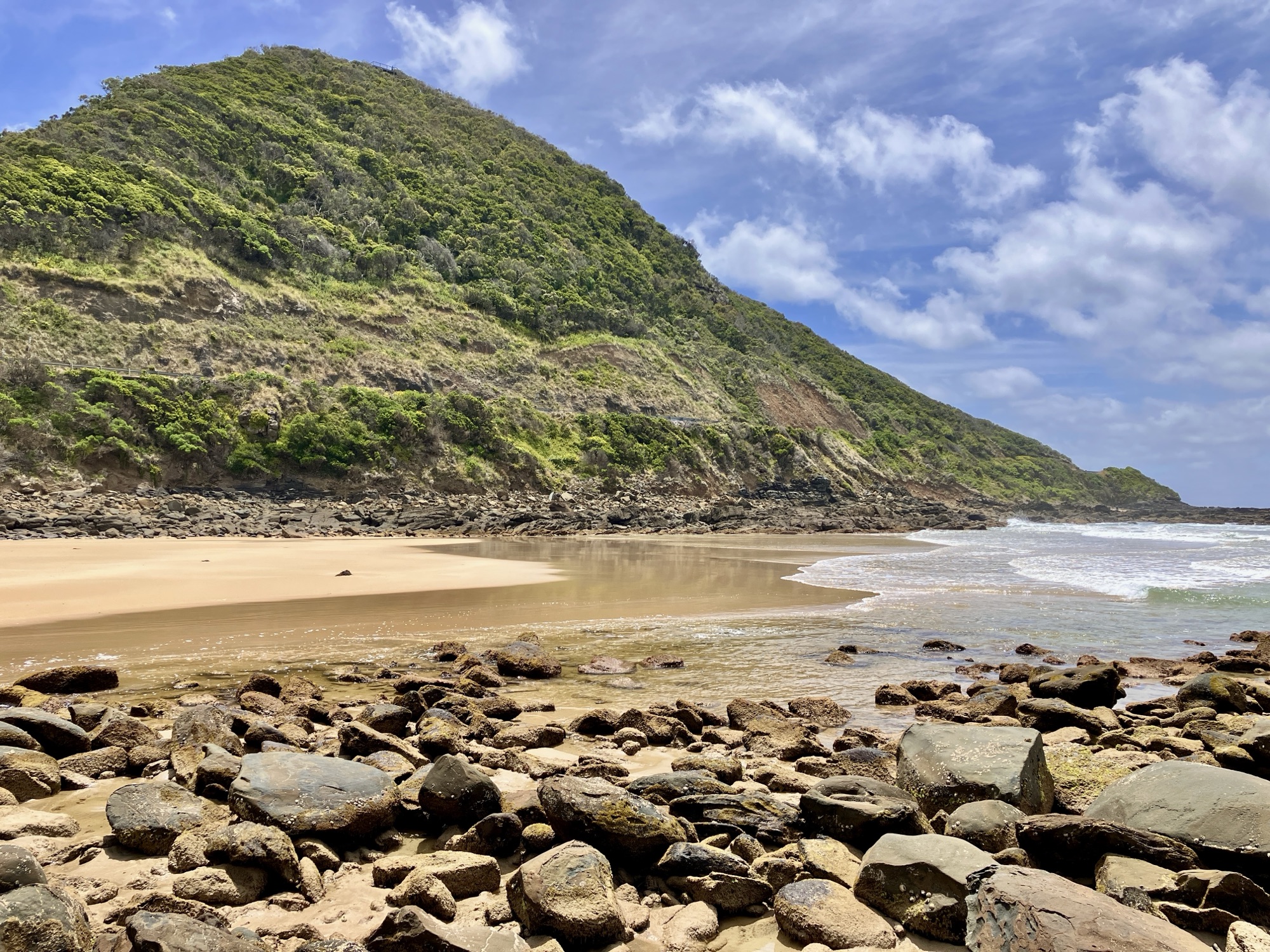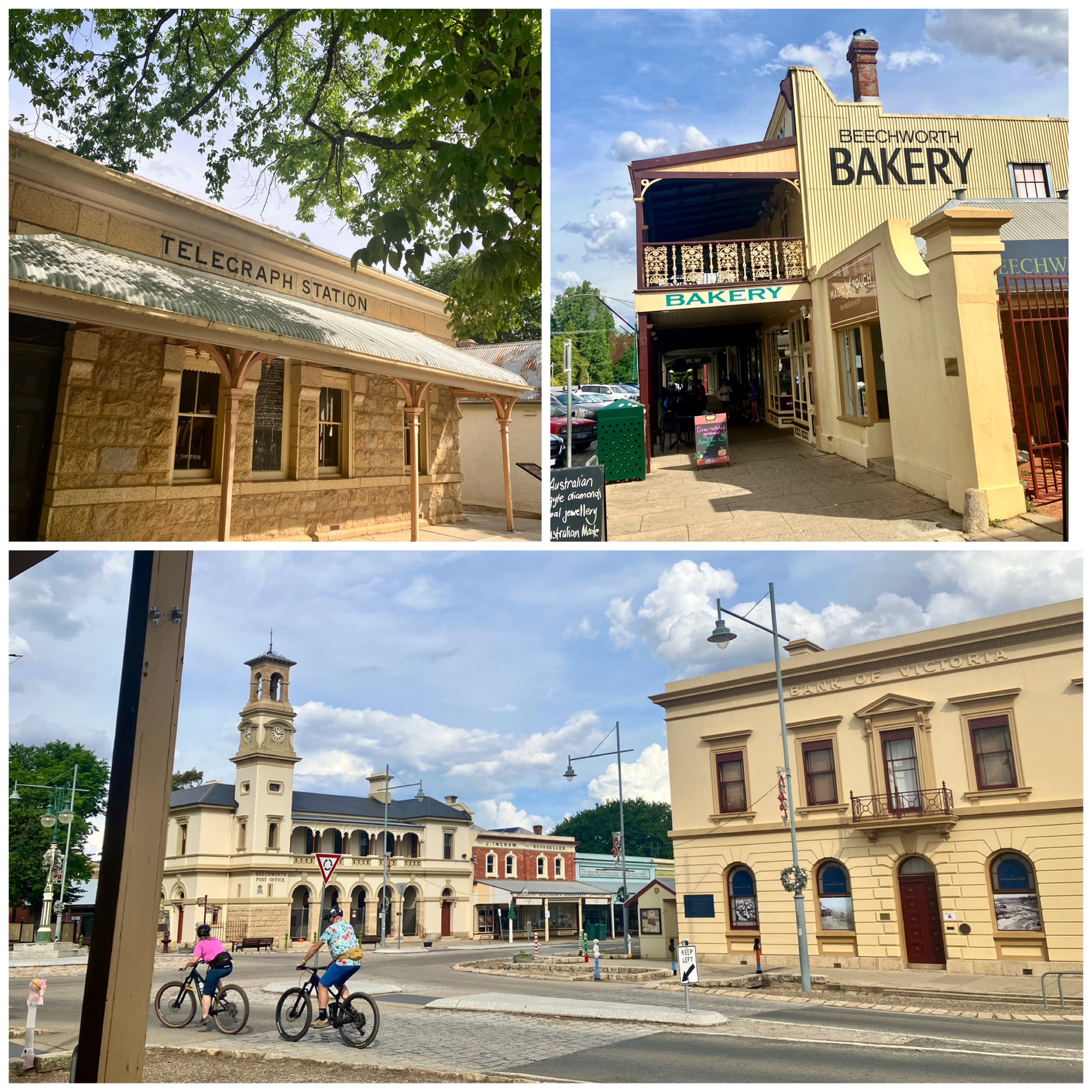
Bowlin’

As I disconcertingly approach twenty years in Australia I forget how many times I have been exposed to “the most highly anticipated Ashes series in history.” Only to be either irritated and / or bored senseless within the time it takes to make a dubious TV umpiring decision.

So, here we are again.

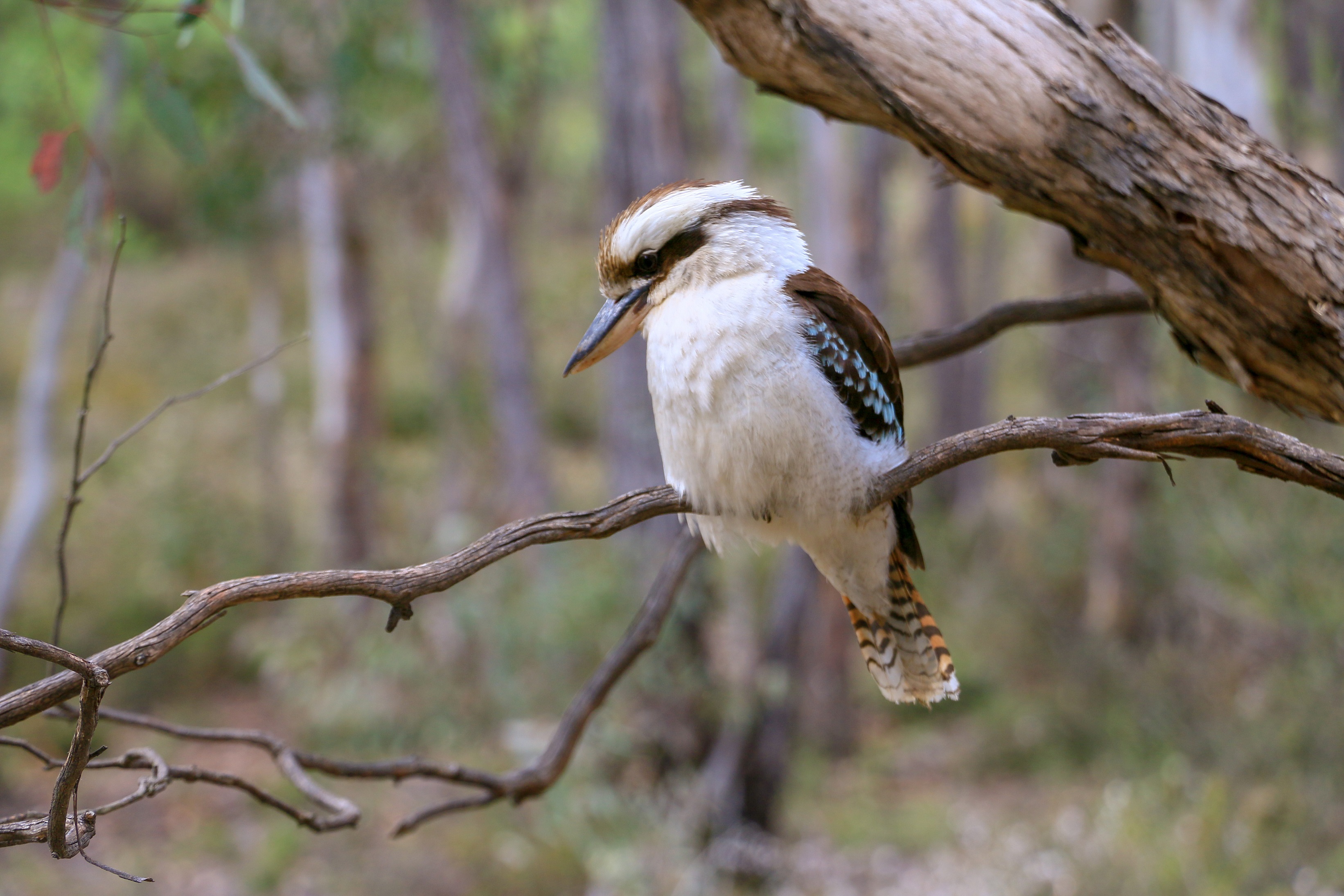
It’s funny how Australia (the cricket team) has irked me over the years, causing me to seek solace in Australia (the country). Give it thirty minutes or so among the gum trees and almost all is forgiven Warnie, Gillie, Mitcho, Smithy, Patty, Garry, and usually some guy slapping it about on “dayboo”. Even if the kookaburras knowingly cackle to rub salt in the wound (or sandpaper on the balls).

Meanwhile, the only time I get to wax lyrical about England is here on these pages, when I am focused on sharing the latest updates on pasties from Cornwall and vistas from a coast path. Indeed, there seems to be more English content for AI to regurgitate to the level of an eight-year-old than there is antipodean. Perhaps because England feels so exotic these days, what with its M&S biscuits and quirky place names and increasingly chaotic populist edginess.

Corners of Australia offer sanctuary from much of the nonsense, helped in part by third world internet and mobile blackspots. Purer, halcyonesque days of sandy toes and salty air, of flip flops floating on the incoming tide as whales flap within a deep blue sea. Places where some numpty on Facebook will film a short video montage to the title of ‘It kills me when people come to Australia and miss this pristine secret hideaway.’ If that’s what bloody well kills you then a) wait until you hear about the snakes and b) please, be my guest.

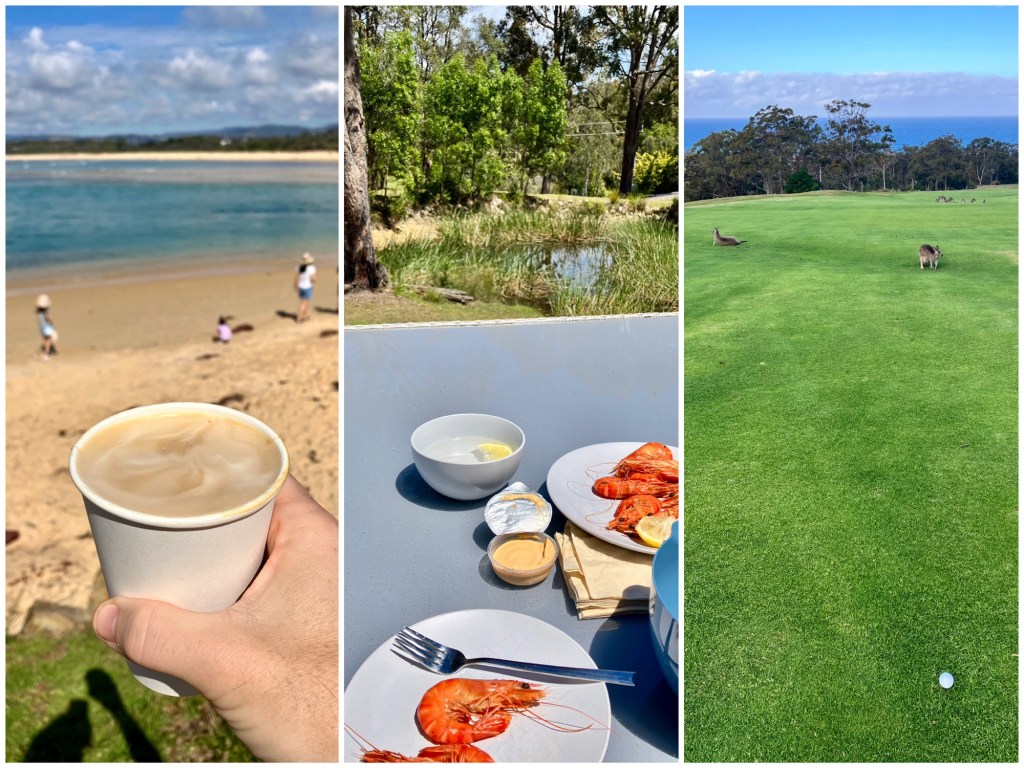
Since those sojourns in England we have been to the south coast of NSW at least three times by my reckoning. Twice in or around Tathra, where whales thrash their way down the Pacific Highway and prawns land upon the plate. There are friends to catch up with and walks through spotted gums to serpentine lagoons. And trips north or south to an array of small, unassuming coastal towns.

Eden made a change, a place I had not walked upon for several years but reassuringly familiar. There have been catastrophic fires and a pandemic and Trump x 2 and still the prospect over Twofold Bay is soothing to the soul. There is a lost paradise about this place, hidden within the rough edges.

Hidden too, the Bundian Way. An ancient 365km pathway from Turemulerrer (Twofold Bay) to the mountain ranges of Targangal (Mount Kosciuszko) that Aboriginal people from Yuin, Ngarigo, Jaitmathang, Bidawal Country have walked for thousands of years. Now rising in consciousness again following an impressive book and the development of an easy, accessible, beautiful couple of kilometres to start.

On the topic of hidden paradises, a golf course next to the sea would tick many boxes, especially for English cricketers busily training. Just north of Merimbula, Tura Beach has one, although the sea often remains hidden behind dunes and tea tree and banksia. These hazards are supplemented by protective plovers and swampy ponds and numerous retirees doddering along with their dogs. I never realised the entirety of Tura Beach was effectively a Goodwin retirement village.

Still, I might qualify soon. And being ‘of an age’, I have been trying to get into the swing of things again. This includes packing my golf clubs in the car and bringing them along for a coastal trip in the hope my darling wife will fancy a break from me and I’ll kill this time by hacking at a little white ball with a metal rod.

In hindsight perhaps I would have been better off with a siesta too. The recovery shots seem to be my forte, but then I get plenty of practice. Why don’t I just pretend I am smacking a low shot under some trees all of the time?

I could try fishing instead. Which takes me now to Mollymook and a tenuous link with Stein and his seafood cookery. Last time here we stayed above his restaurant overlooking the ocean eating noodles in a cup. This time, we stayed down in the Pavillion, eating at the golf club bistro. I guess, barring the noodles, this was a more downmarket affair.

This is possibly the most privileged paragraph ever written but I guess the problem with staying at Bannister’s Pavillion after previously staying at Bannister’s By The Sea is that you had previously stayed at Bannister’s By The Sea. The comedown is like being, say, 1/105 at lunch and then bowled out for 164. I mean the rooftop pool is pretty and that but what is with all the random gurgling and banging and knocking? Not to mention the parade of 5am Ford Rangers commuting back to the eastern suburbs of Sydney on a Monday morning just outside your room.

But, well, happy birthday me. The sun came out and the pool was inviting enough to dip in and we travelled a road well-travelled to get back home with familiar highlights along the way. Like Bendalong Bays and Kangaroo Valleys and Fitzroy Falls and Bundanoon Bakes. Familiarities becoming more familiar than scones and cream and Tesco and paying for air and countryside pubs. They, like test match wins, are the rarities. They the exotic.

Australia Food & Drink Green Bogey Photography Walking

The old appreciation post

Stuck in Sydney traffic? Bored of South Coast beaches? Looking for terrific sunsets and nation-leading coffee? Then you’re in for a treat courtesy of yet another Canberra appreciation post, taking on both familiar perspectives and fresh views.

With Mum staying here for a significant duration I was pleased to see she quickly adapted to the local custom of a morning flat white and was equally as fond of lakeside ambles, bushland meanders and golden sunsets. I was also pleased Canberra was able to throw on a few shows and spectacles involving balloons, lights and fireworks. Oh – and apart from one stormy afternoon – finally some proper summer weather.

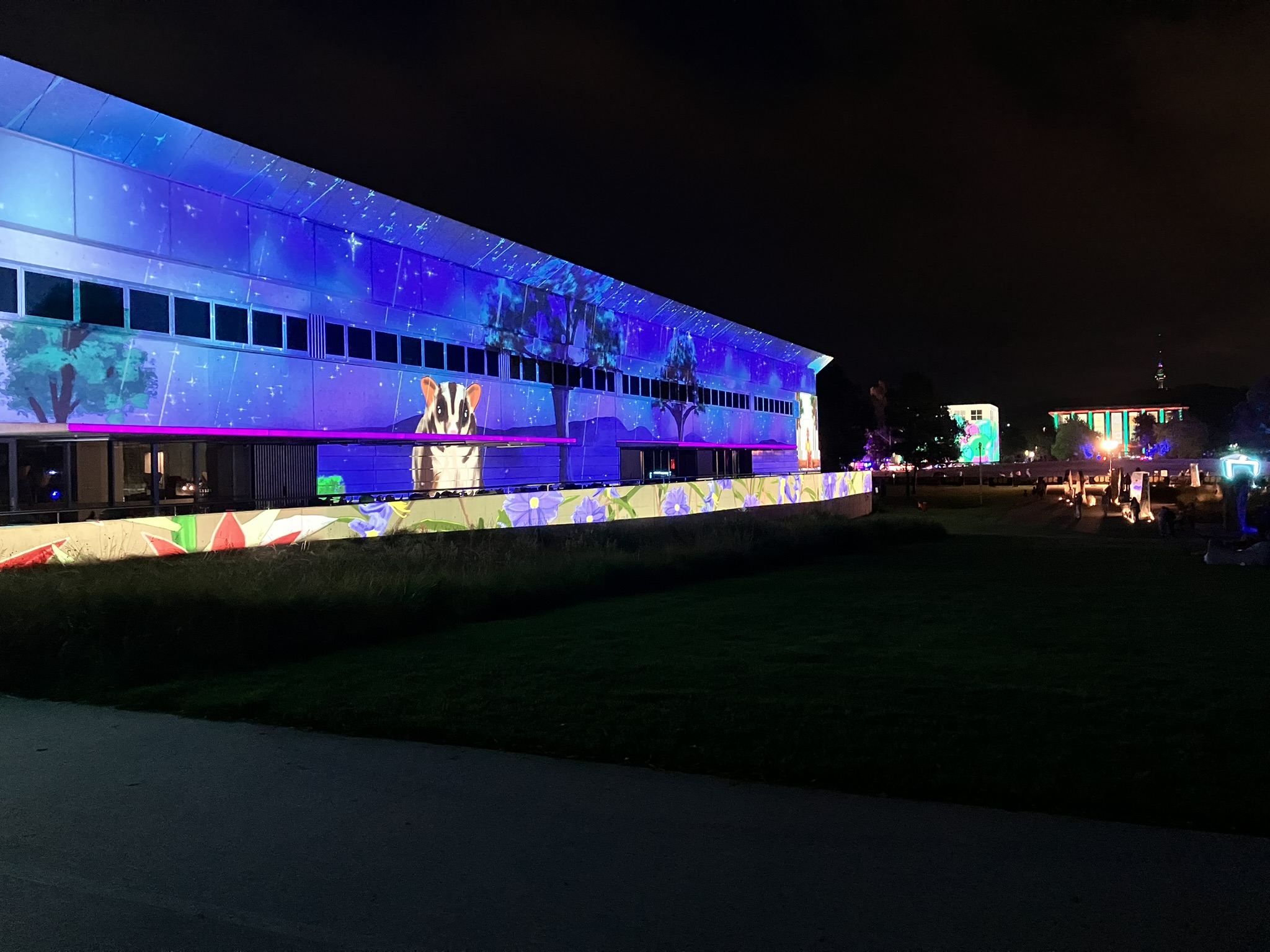
A building illuminated at night

The Canberra day begins for many with a labradoodle walk, a run or a cycle. More often than not mine is a cup of tea in bed first. The absolute shock of not having time for a cup of tea, throwing on some clothes and scrambling out in the dark shakes the very foundations of the household. And with usually quiet avenues peppered with SUVs, things are definitely amiss. I can’t even park close to where I want to, as if this was like Sydney or something.

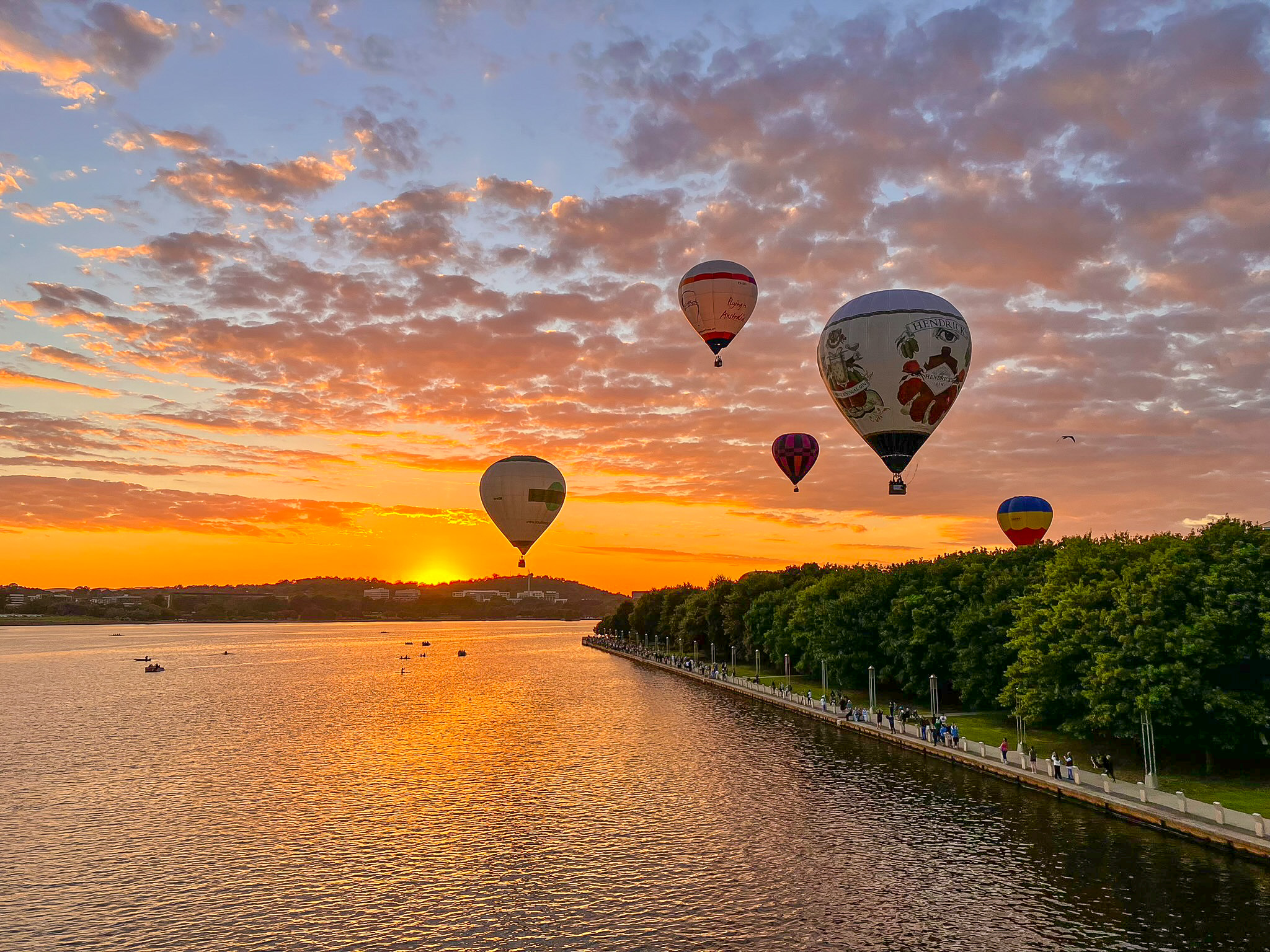
From a distant parking spot the sky gently warms and people throng and inflatable bits of fabric fill with hot air, popping into the sunrise, drifting over the misty vapours of Lake Burley Griffin, perilously bound for a close encounter with the sharp needle of Telstra Tower. It is the balloon spectacular and it never fails to be spectacular, especially so when it is topped off with a long-awaited coffee and breakfast.

Balloons rising over a lake

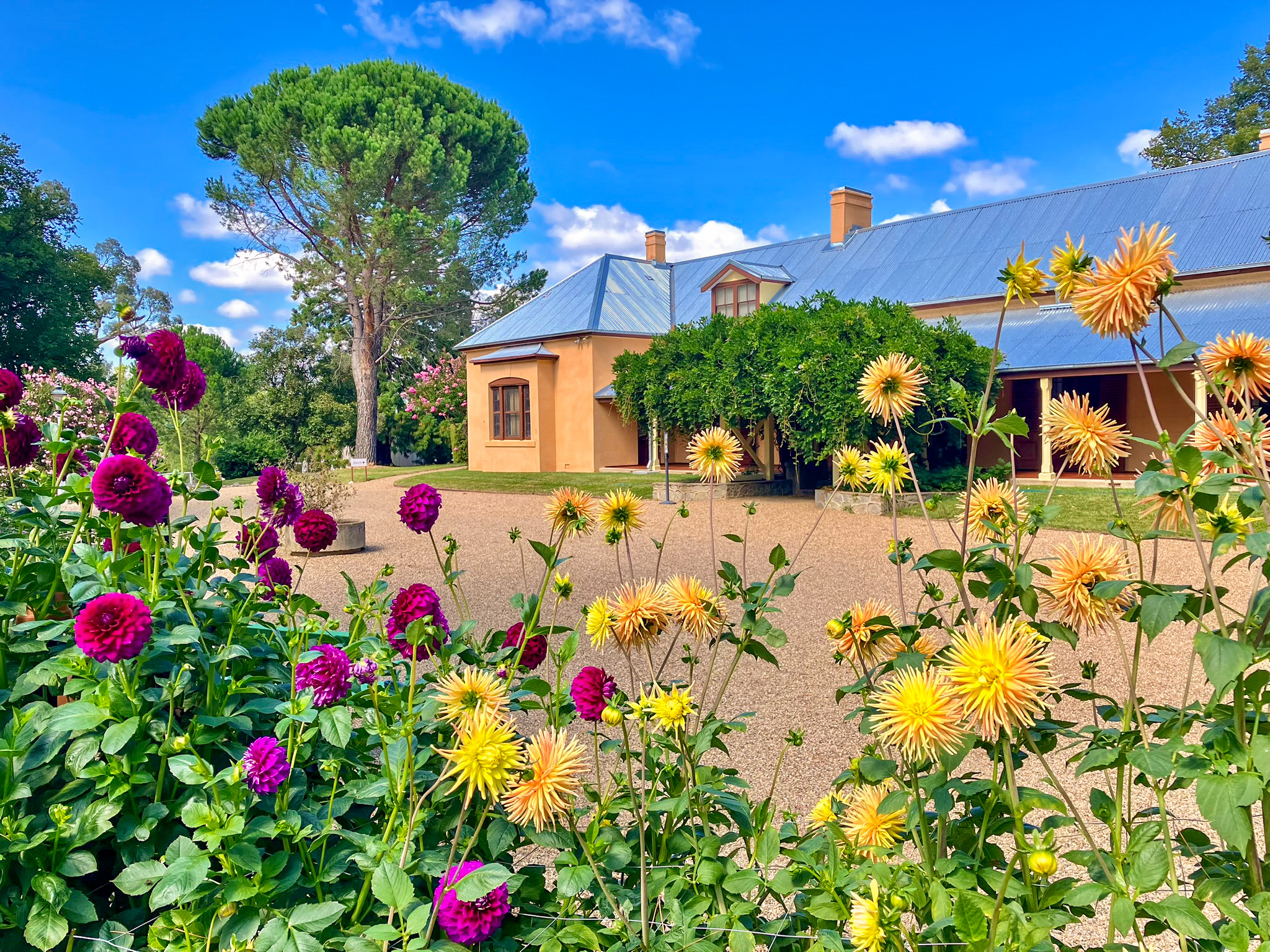
Later coffees are more typical and a particular favourite for Mum was an iced version down by the lake. Curtin proved reliable, often tied in with a quick pop into Coles. Even the poorer coffees – such as at the perennially disappointing Lanyon Homestead – were compensated by sunshine and flowers and the fact this was still better than 95% of British establishments.

Flowers in front of a cottage

Lanyon would be a prime cream tea location, though that would deliver inevitable disappointment too. But other local foodstuffs excel and tempt. From Banh Mi to Kingsleys to ice cream from Messina, there are numerous dollops of delight which often pose the question, where can I get one of these at home?

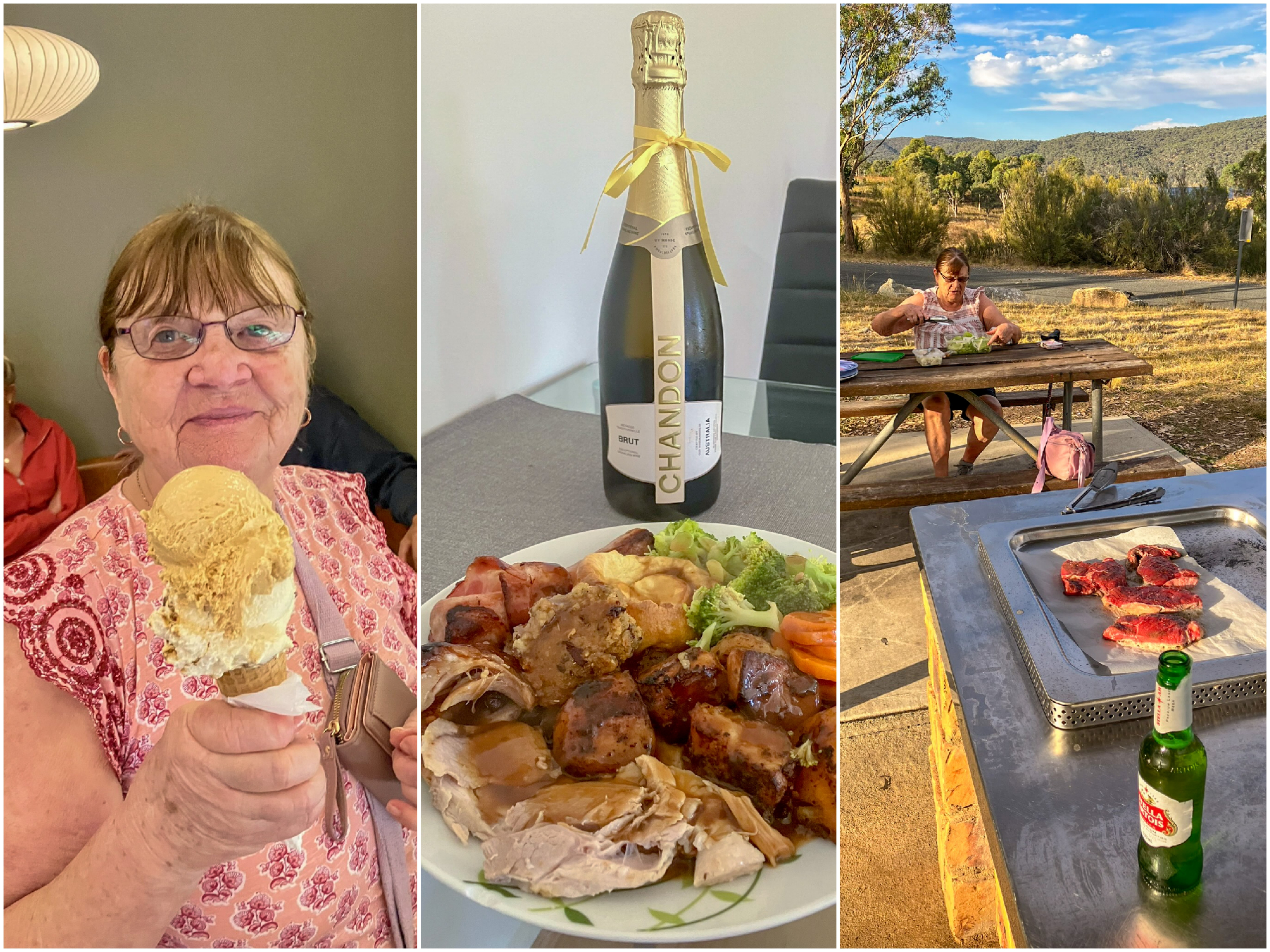
Ice cream, roast dinner, BBQ

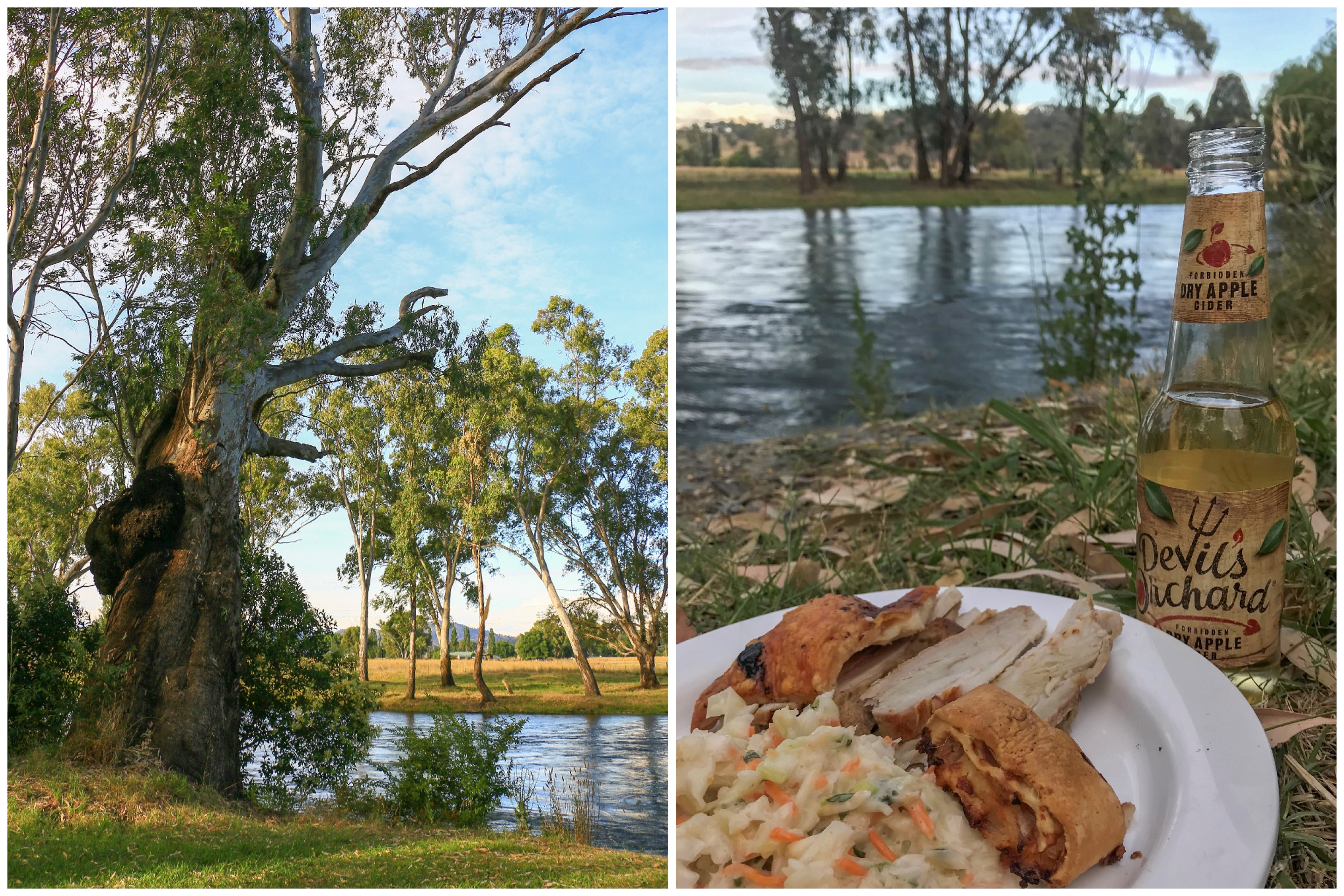
At other times, it is the home-cooked variety of cuisine which provides content. A belated Christmas dinner from Mum feels both right and wrong in 30 degree heat but there is – as always – no room remaining for Christmas pudding. More climate-friendly BBQs – whether on the balcony or beside a river – are always popular; public BBQs another wonderful asset of the lucky country which can’t really get a run ‘back home’.

Fish and chips are more contestable in the culinary Ashes. In Australia we experience usually excellent seafood frequently let down by salty fries lacking malt vinegar. Mum is astounded that they don’t do proper chips and they don’t do proper vinegar, so much so that it becomes a FaceTime conversation piece with the relloes back home. But it’s only a small blip on a golden evening at Snapper & Co. If only I remembered to bring the bottle of malt vinegar gifted by Dad.

As the polite seagulls dissipate (another win for Australia), the sky glows in that most typical Canberra flourish. One of several satisfying sunsets as daylight savings stretches on towards the end of March. With each rise and fall, there is only a hint of coolness after dark and a slight yellowing in the canopy.

Sunset sky over a mountain

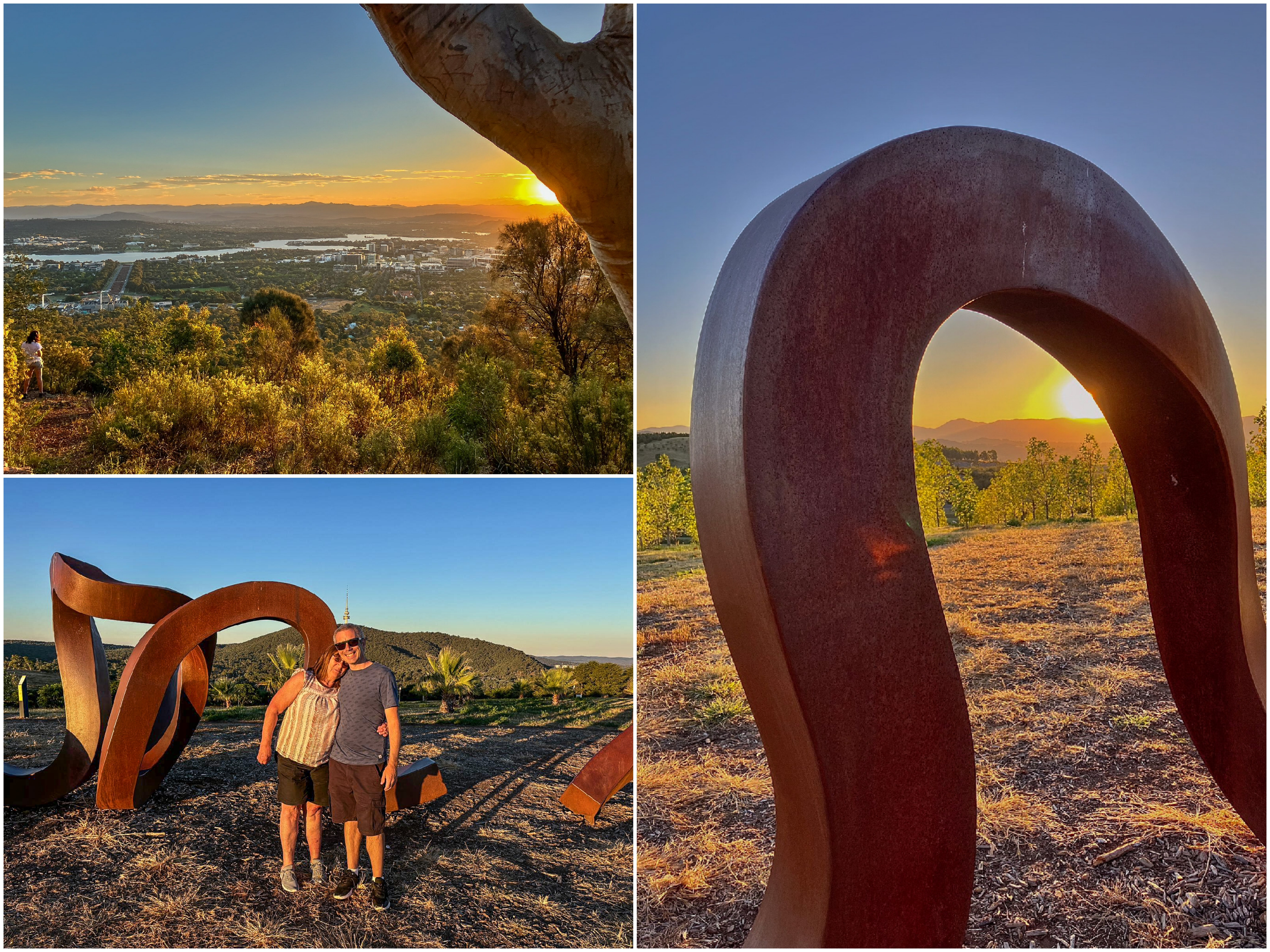
A selection of images at sunset

From late summer to early autumn the changes are only subtle as temperatures remain steady and some of the coffees remain iced. But the clocks tick and the calendar turns and nature knows this is a time in which to make hay, to harvest, to revel in abundance and prepare to turn your thoughts to the prospect of a winter.

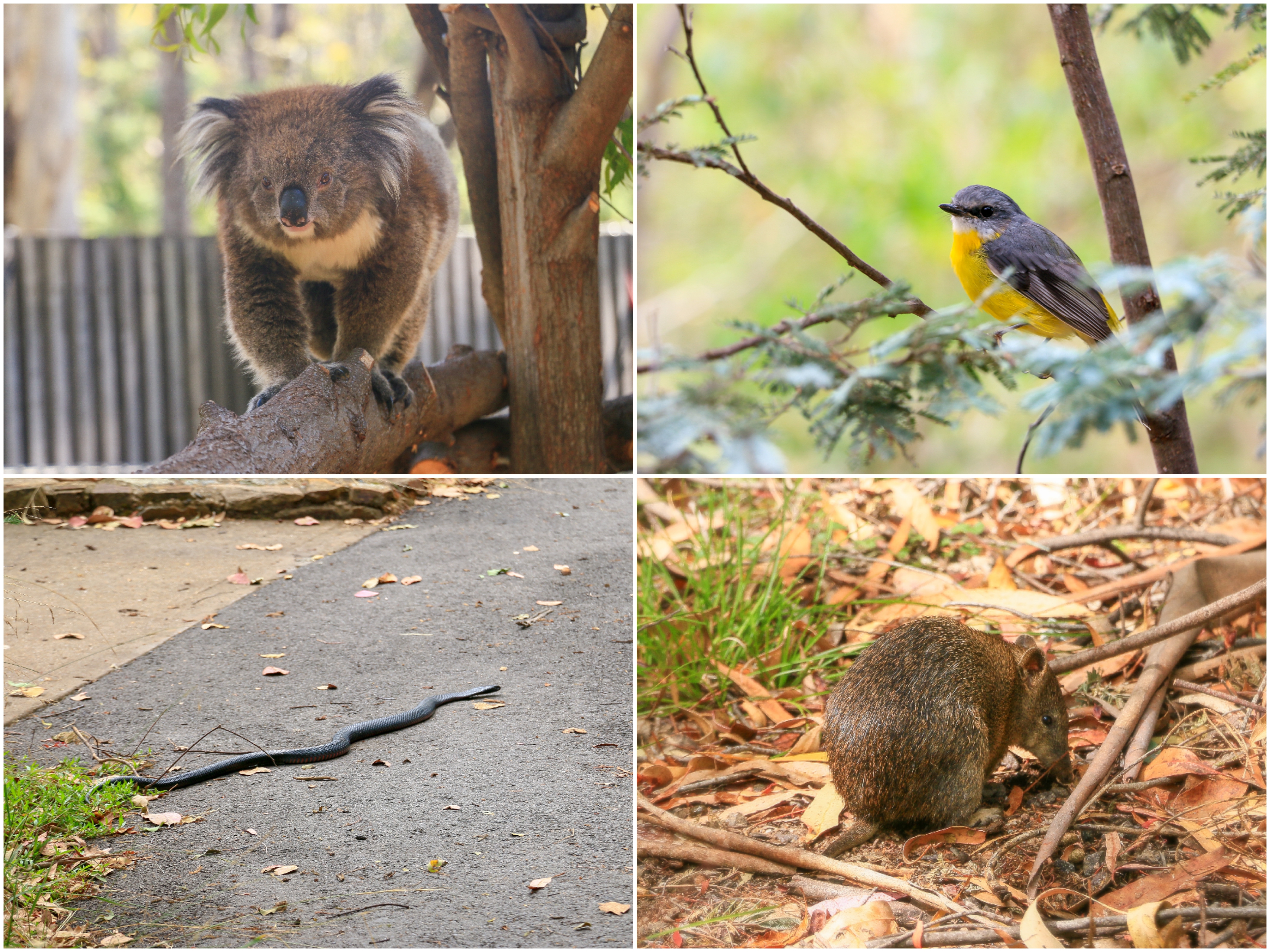
On the fringes of Canberra, Tidbinbilla offers a couple of immersions into the natural Australia, a literal sanctuary in which this weird and wonderful land can do its thing. In late February, the same table at which I sat with Dad is now hosting an evening picnic with quiche and bubbles. In late March, the same type of snake is again putting on a display for British tourists to tell tales back home.

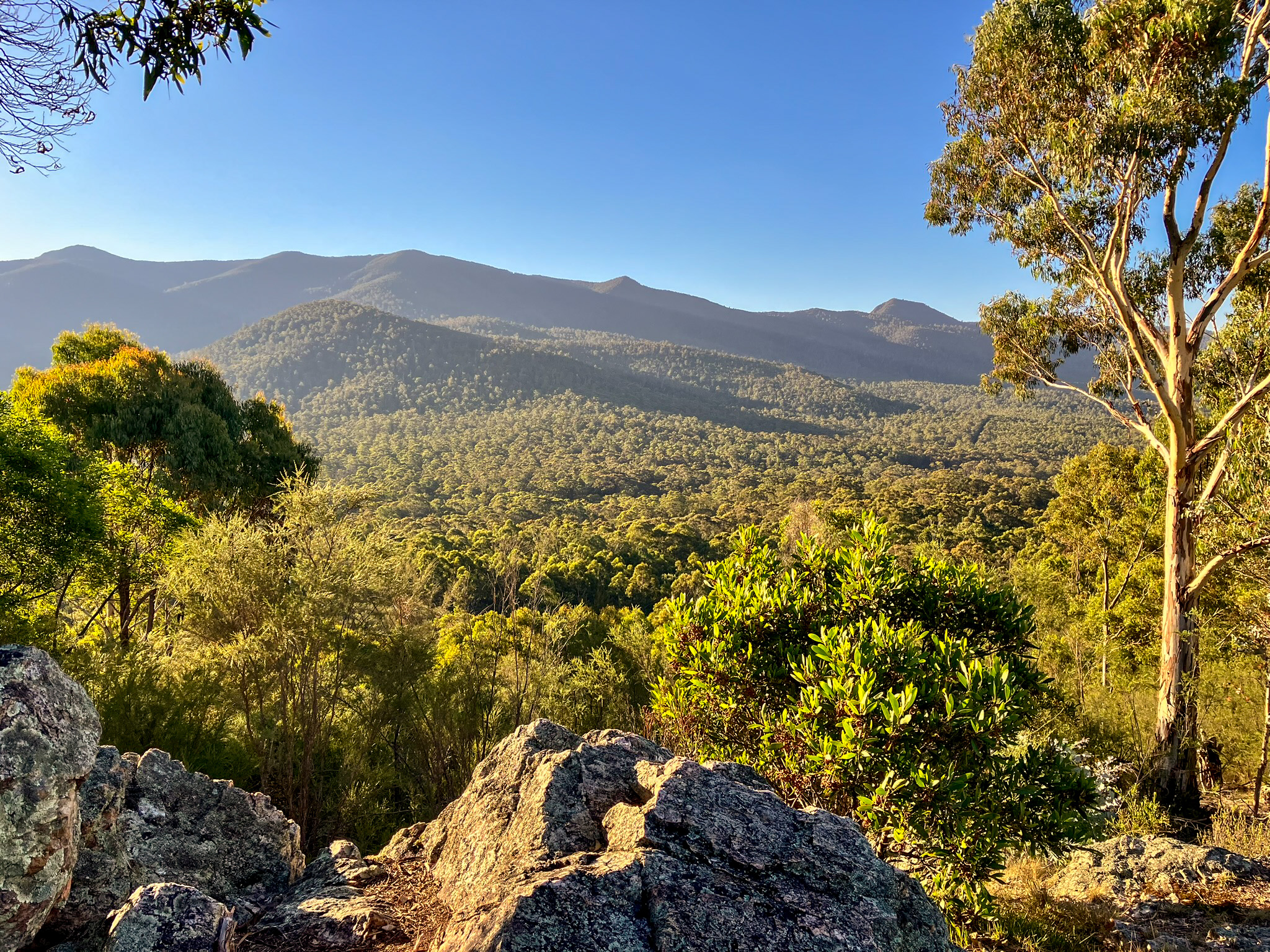
A landscape of mountains and forest

And if snakes ain’t your thing there are cuddlier critters to hit you in the face with the realisation, the dream that you are here in Australia. The birds chime and squawk in different tones and melodies. The lizards bask uncaged. The flies occasionally irk. And the platypus remain mysterious.

A koala, bird, snake and potaroo

From here, half an hour to coffee, half an hour to cuisine, half an hour to home. Doorsteps rarely get any better.

Australia Food & Drink Green Bogey Photography

Composing

I’ve skipped a bit. A deficit of time rivalled by that of inspiration. But I seem to have discovered a free half hour without internet on a veranda in western Victoria. Sat within a world which spurs me to wax lyrical. In offline mode.

The veranda is on the outskirts of Halls Gap in The Grampians. While I was napping, Dad has disappeared to stalk emus or swear at Common Browns I presume. He’s been in Australia for nearly six weeks and to chronicle everything will be a feat never accomplished. But this chunk feels manageable and interesting and special. And, like many of our stops to get here, bite-sized.

The Grampians – Gariwerd – proves antidote to Melbourne which itself is antidote to Canberra. Initially I loved the in-your-face life and buzz and noise and food and even the humidity with a freakish shower. But then it all got too much, tipping over the edge at a Big Bash cricket mess at the MCG, where feral kids run hyper on additives and everyone seems to be engaged in some kind of White Lightning inspired disco.

Plus the weather turned cool and grey, the coffee was, meh, just coffee Melbourne get over it, and I felt ready again for the volume to be dialled down. Which it is right now, other than for the singing of birds and a grown man swearing at butterflies in the distance.

Gariwerd is absolutely my cup of tea, and I like cups of tea. There are multiple lookouts for a start, walks in nature, plunging cascades and – yes get excited people – rock formations. Often these are all combined in the same place, in just the most perfect arrangement. Laid out as they always have been, and always will be.

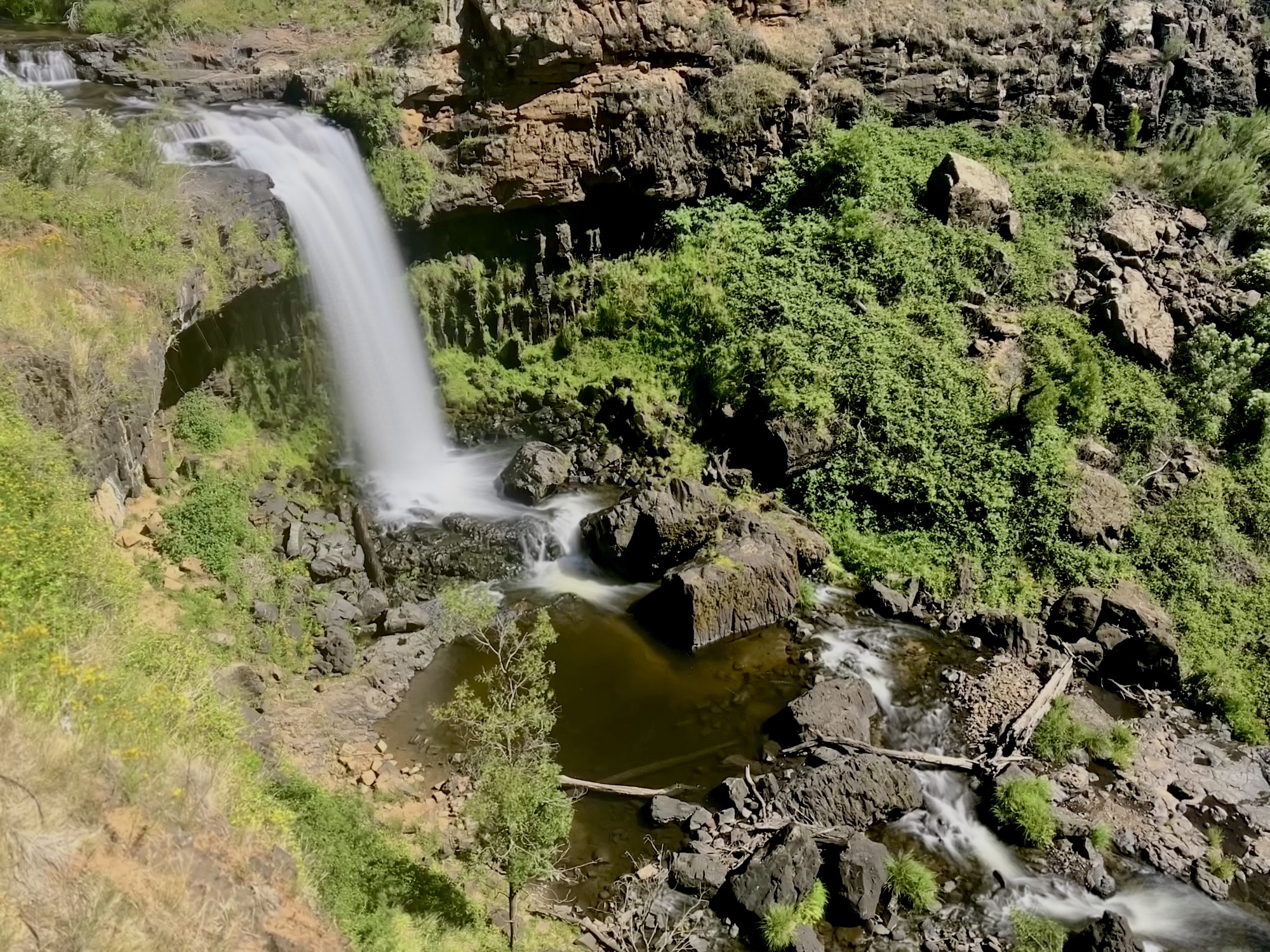
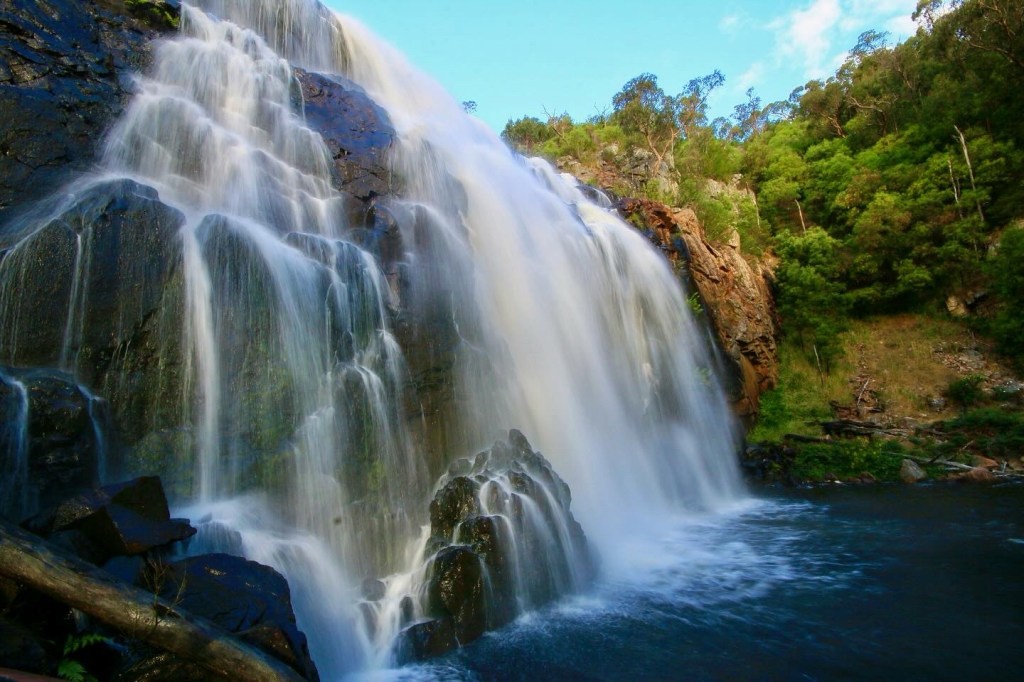
Here, nature charts its course and writes its own story. And like the Mackenzie River deep in the heart of the bush, it’s a story of twists and turns, serenity and drama. Then, at some point, it all comes crashing down. The Mackenzie Falls.

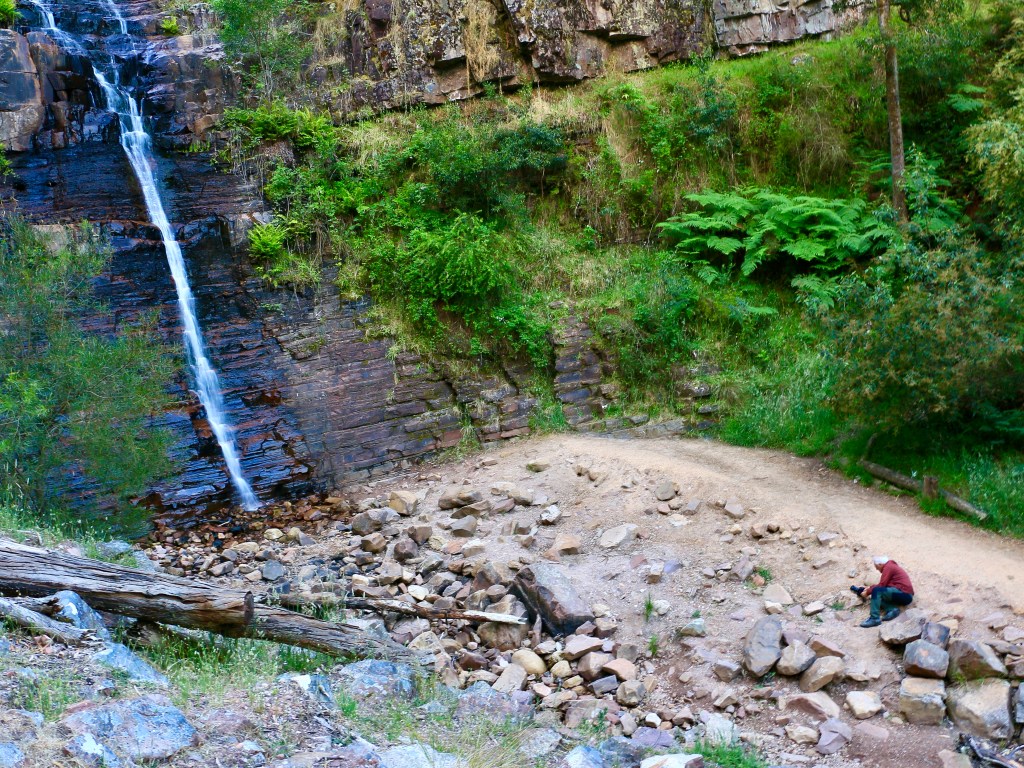
As stories go I feel like Dad could have an exhibition of the most beautiful waterfalls of Australia from this trip. And in a poky alcove on the side I would be allocated a small section for grainy photos called behind the scenes of the beautiful waterfalls of Australia exhibition. These would largely feature a man with white hair and a red hoodie hunched beside a borrowed tripod in front of a water feature. Included will be one or two of my own attempts, just for comparative purposes. Craft and patience versus laziness and luck.

Since I had taken a few happy snaps and went off exploring downriver, I missed the slightly awkward moment where a young chap got down on one knee to propose to his partner, Dad off to the side. He was probably waiting for a guy with a camera and tripod to leave, but could delay no more. Fair play, it’s a good spot to ask a girl to marry you but if they had been on the ball they could have booked a wedding photographer at the same time.

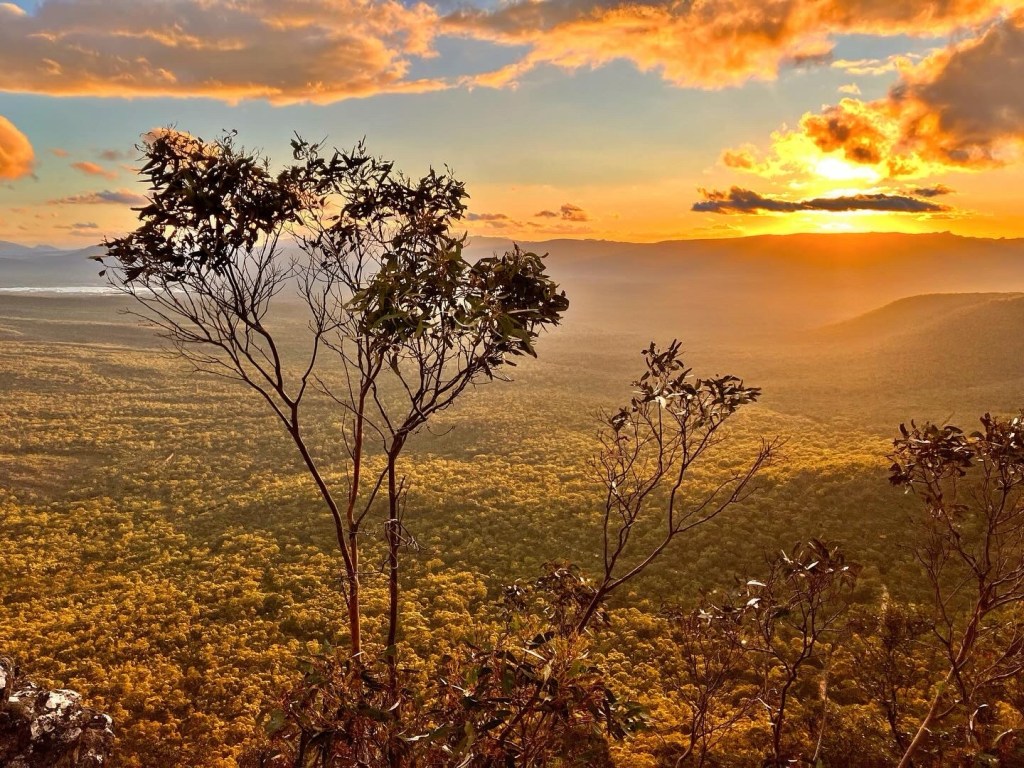
As the lovers moved on to chart their own story, our honeymoon took on spectacle with grandstand views. From Reid’s Lookout and The Balconies, it is impossible not to marvel at the scale and essence of Gariwerd. A sea of wilderness lapping at encircling zigzag ranges, the sun sinking lower to spark the landscape aglow. You don’t really expect this approaching a few hills from the plains around Ararat.

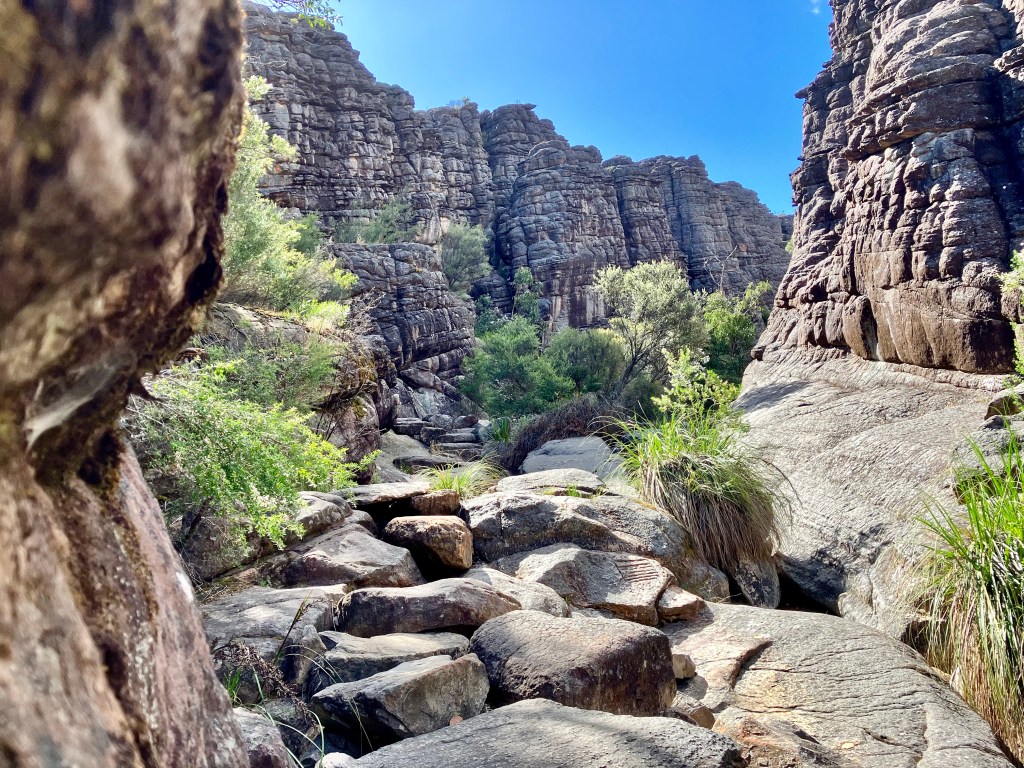
It is vast, and breathtakingly epic. Yet there are so many intimate spaces and contemplative spots. The Grand Canyon proves grand, but in a different way. Nature’s brickwork is masterfully constructed with a water feature and exotic plantings. The narrowing walls cocoon and seem to concentrate calm and peace and a certain spirituality. It doesn’t take much to feel connected to the eons of time and the billions of stories past. To feel the land is part of you and you part of it. To follow footsteps special and sacred.

Modern day footsteps appear to largely belong to lithe German backpackers packing it all in. Or families of ten alighting from a Kia Carnival, emerging ever more incredulously like props from Mary Poppin’s bag. The steps they take, we take, are many and often upward. The Pinnacle is a pinnacle of sorts for all sorts. A craggy protrusion overlooking Halls Gap, the final few hundred metres taking longer than expected, navigating boulders and crevices and fellow walkers. Many, including Dad and I, stop for lunch. Others inch out to perilous outcrops for unforgettable photos. All leaving crumbs for future pasts.

Crumbs which scatter and seep into the earth, ground in by the footsteps that follow. Washing out in heavy rains, joining many other leftover tales on their way to a creek. Meandering around shrubs and wallabies, cutting a swathe in the rock, gathering and spilling over a cliff face. A sliver of water splitting an ancient amphitheatre, a silver band reuniting with life in the forest. There, a red hoodie huddles over a camera and composes. The final serene score of a most exquisite symphony.

Australia Green Bogey Photography Walking

Road to nowhere

In the scheme of things, in the scheme of the last 18 months, the loss of a car is just a small bump in the road. Perhaps that’s why I felt the tiniest tingle of relief as it was loaded on a trailer for a sliver of cash. Effectively a burden gone, another potential disaster-in-waiting purged. Plus who wants to pay for petrol at the moment anyway?

So with an empty carport and a sliver of cash I am left wondering what does one do with cash these days? Wave it in front of a card reader? Hide it under the mattress? Feed it in stages into the soulless void of a self-service surveillance checkout? I know I could put it in the bank, but that would involve a drive to the nearest branch in Wollongong and, well, see above.

No hasty decisions. The last time I made a hasty decision I bought a car and that didn’t go so well. I think the purchase came about as an expensive alternative to comfort eating after the ultimate, exquisitely executed ghosting. Buyers Beware. A spoonful of newfound adventure and fresh horizons, with the mid forties option of sleeping in the back. I slept in the back three times at $3,333 a night, and never very well.

So I don’t really have fond memories of that car, not in the same way as the almost as demanding Outback. And thus the day it went on that trailer it was almost like a release. And I could just go for a walk instead…

A walk first through the cemetery, my gateway from home to Woden storm drains and the afterlife. The vibe pretty much the same at both. Between, the purgatory of brutalist office block festering in diesel bus fumes and detours. Yonder the pearly gates of Westfield.

But I am not heading in that direction just now. Instead, life and joy and wonder. Sunlight and flowers and bees. Simple pleasures you see on foot, absorbed at a natural pace. Suburban magnolia peeking above fences, wattlebirds clucking in the callistemon, the honeyed smells of acacia. A hum of spring release and endeavour, all the way to the golf course.

A man talks loudly on his phone, the sound of a work call in between the wattle and magpies. We have all done it but I feel slightly irked by this intrusion. As if this spectacle of life, this annual miracle of rebirth is simply a backdrop ignored for talk of Gantt charts and stakeholder management.

Technology huh. Like this whole lane assist thing that new cars seem to think you want. Along with no key and handbrake. Welcome to 2023, I feel, as I take advantage of a bargain rental deal for the weekend. Cue a logistical feast of car-based activities, including Bunnings and IKEA and a drive to the tip. But there’s also a bit of time for at least a mini road trip.

Trying to manoeuvre around potholes in spite of lane assist I head south into Namadgi National Park. For all of Canberra’s interwoven parks and hills I want to feel that wilderness, that overpowering sense of nothing but me and the world. No cars, no phones, no storm drains. That almost but not quite realisation of being the first to tread into something undisturbed.

I’m in the Orroral Valley, which has in reality been quite disturbed by former homesteads and satellite tracking stations and – in 2020 – an army helicopter sparking a bushfire that went on to impact 80% of the park. If you didn’t know it you might not notice today, but a closer look reveals burnt stumps, scarred trees and charred stones.

From here I’m swiftly rising above the valley and eventually into another more untampered. Over a rise bedecked with fresh eucalyptus and large granite boulders and into the sinewy hollow of Nursery Creek. I like to think so named as a place where nature and life can breathe and evolve into something remarkable. Though probably more likely a place name claimed by an invading pastoralist slightly drunk and reminiscing about some nurse he once harassed in downtown Gundagai.

The walk ends at Nursery Swamp, which doesn’t feel particularly swampy today. Late winter has been dry, almost as dry as the sandwich I force down on the end of trail bench. A couple of scarlet robins espy me from a small bush, knowing there will be crumbs. Keeping a watchful distance until I depart. Sweet, and less in your face than a magpie.

Yes, those spring magpies. On the first warm day of the season I took my lunch out to a nearby bench to eat it in the sun, only to be harassed by a magpie. On a lovely, golden afternoon in Mulligans Flat, peace and contentment was obliterated in one fell swoop from a magpie. On the bike, well, I think one ride notched up a double figure attack count from more than one magpie.

It was a long ride to be fair. A part training part test ride. No hasty decisions when it comes to a car, but reckless abandon when it comes to a bike. An e-bike no less. Free of registration costs and petrol costs and faulty transmission (though maybe a dodgy Shimano) plus not enough room to sleep in the back.

Yes I’m not yet 50 and yes I will still use my other, conventional bike as well. But I feel this can take me further and higher and faster. Expand my horizons. And, with food and coffee stops, probably expand my waist. Among the losses, there’s still something to gain.

Australia Green Bogey Walking

Moving around

It feels like an entire Prime Minister ago that I fumbled around with the English language and strung a few words together to put on this interwebs thing. Has much been happening? It rained a bit. There’s some dubious football tournament going on. Twitterred. Trumped. And lately all the right kinds of Farages appear to getting their snowflake-patterned knickers in a twist about some insipid doco on Netflix.

If only I had a palace to turn to. Alas my tenure at Castle Easty in the Kingdom of Wodenne is drawing to a close. Usurpers with gold and all that. Leaving me with the most taxing endeavour for the chronic procrastinator: choices and decisions.

Will I stay in this area with its colourful storm drain network and ever changing traffic circulation? To head to the Westfield or the park or the shady cemetery. Or to wander further into suburban bush, passing emerald greens and into the calming of Red Hill reserve. And onward still to Mugga Mugga and those flask tea log-filled sanctuaries.

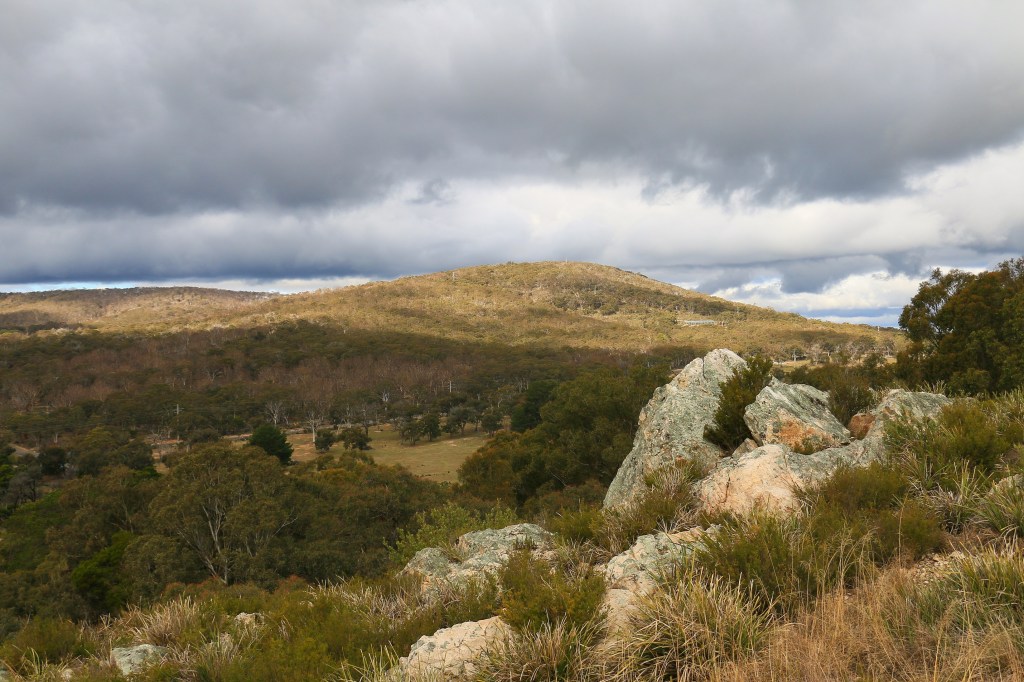
Or shall I go west? Life is peaceful there. Especially when you reach the suburban perimeter and cross into countryside. The Ridge at Cooleman proving the very precipice between Canberra on one side and the mountains on the other. Creep downhill, towards the sunset, and a whole city disappears.

It’s a city that – to some surprise – is marching purposefully towards half a million souls. And some lost ones too (I blame the roundabouts). In the north, a recent paddock is maturing into a modern and vibrant centre. There are neat townhouses and shiny high rises and – occasionally – the quarter acre block. Light rail eases into Gungahlin marketplace, cafés bustle beside Yerrabi Pond. Cycle lanes fan out towards Harrison and Throsby and Forde and then they come to an end. Halted since 1994 by the superb parrot and foresight that is Mulligans Flat and Goorooyarroo. So just take a bike that copes with gravel.

The Old Coach Road that passes through Mulligans Flat was the main stage route between Yass and Queanbeyan back in the 1800s. Today it mostly carries echidnas. But, to the east, across the border, Queanbeyan endures. A New South Wales suburb, an Annemasse to a Geneva, complete with different registration plates and cheaper petrol. Could I live in a completely different kind of state?

The answer is kind of yes for at least a bit I think, and, who knows, maybe longer. You tend to get more bang for your buck in Queanbeyan, plus a town centre that if not charming at least pays homage to an inland country town. Riverside parklands provide some breathing space while Mount Jerrabomberra offers a necessary dose of eucalyptus infused altitude with laughter.

Looking back across to Canberra there is another region nestled somewhere between those ridges. The Tuggeranong Valley, a deep south of solid suburbs lapping at a rising town centre. This deep south, a beautiful south? Perhaps upon pockets of the lake with the strikingly proximate mountains beyond. Or standing atop the hummocks of Urambi Hills high above the Murrumbidgee. And back down by its ample waters at Pine Island.

North, south, east, west or simply in the middle? I think almost anywhere would be fine. As long as there is a spot for a walk, a vista around the corner and a decent coffee shop with optional cake. If only I could be more fussy, if only I could narrow things down. But that would whittle down the choices, simplify the decisions. And what kind of chronic procrastinator would I then turn out to be?

Australia Green Bogey

The golden days

Is anyone else fed up of living in ‘interesting times’? If there wasn’t the death of a rock icon followed by the self-harm of isolationism followed by the election of a rabble-rousing orange manbaby preceding the onset of catastrophic bushfires coming just before the spread of a deadly virus leading into wild lockdown parties before another calamitous war broke out would things really have been that boring? It’s no wonder many people my age seem to hanker back to the 1990s, when the biggest deal was Jennifer Aniston’s hairdo.

If you are seeking uninteresting times, you could look no further than a long drive from Canberra to Coonamble and back, especially if this takes you through Dubbo. Admittedly that would make for some pretty uninspiring content, but there is comfort and reassurance to be had in the boring. I just don’t know how I will stay awake though, and it’s probably the same for you, dear reader, as well. So, in an effort to entertain all round, I contrived to make the journey into one big loop, extending the kilometres but exposing myself to some new tarmac – and dirt – along the way.

The first of the new ground was along blacktop through rugged Karst country, taking me from Abercrombie Caves down into the fertile plains around Bathurst. I could have detoured around Mount Panorama the right way while I was here, but time was pushing on and I was getting low on fuel. Stopping at a nearby servo offering the cheapest E10 for miles around, I became the proud owner of the most expensive tank of petrol I have ever bought. Until next week.

As the last glowing oranges and indigo hues of sky gave way to a starry night, I settled down for the evening in Sofala. By settling down I mean parking my car in a free camping area next to the Turon River, eating salad and cold pizza in the front seat, before clambering into the back and onto an air mattress. For a night of sweet cheesy dreams, eventually.

Sofala is one of those tiny places whose glory days have long passed. The glory days being – like many of the settlements in this region – the discovery of rich deposits of gold. Information boards display grainy black and white images and describe a bustling town featuring stage coaches and banks and theatres and, naturally, several raucous hostelries. Today, the high street is a sedate affair offering understated charm and just the one, currently lifeless pub.

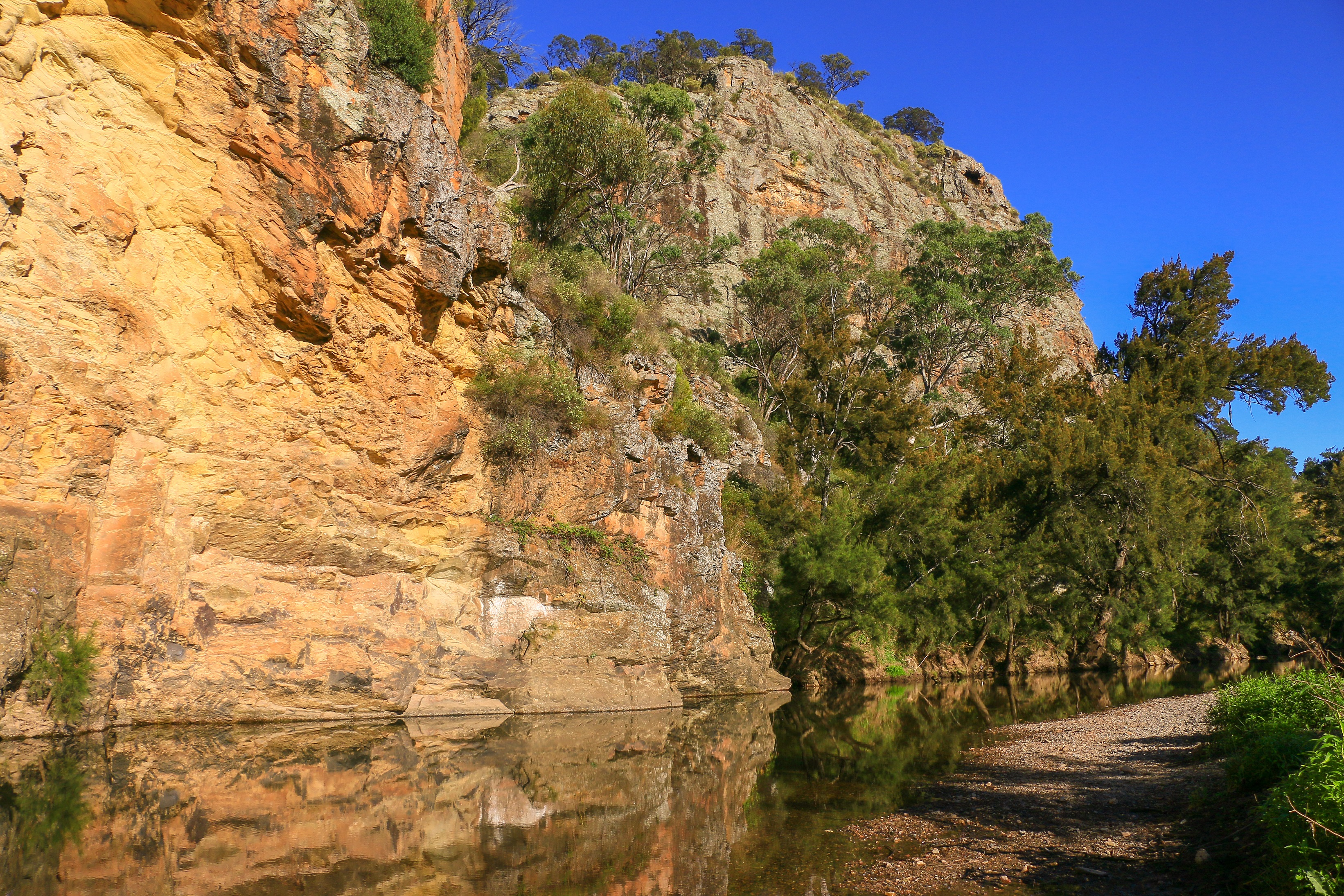
It turns out there is gold remaining just out of town, or at least the same glow emanating alongside the river. Water has scoured a course deep into the earth, leaving precipitous cliffs towering high above the mirrorlike pools of the Turon. Known locally as Wallaby Rocks (as indicated by a small, hand painted sign), this came as a total surprise, an interesting feature of an interesting drive that you wouldn’t have known about without passing this way.

I was heading up towards Hill End, another settlement grown rich on the sunlight shimmer of minerals. Today it is preserved by NSW National Parks as a historic site, a village of the past functioning in the present. And so there is an old pub that still operates as a pub, a general store that still operates as a general store, and a scattering of private residences with owners doing the usual mowing and chook-feeding and sitting on creaky wooden verandas. I expected a more bustling affair here, but on a Friday morning it felt like I was the only visitor, a conspicuous sight wandering the streets and peering into people’s gardens.

If nothing else, the village is aptly named, clustering at the end of a long plateau above the deep valley of that Turon River. This results in the promise of three separate lookouts and though not quite of a scale of – say – the Blue Mountains or Kosciuszko, they offered fine views of the golden, rolling countryside. Vistas that were, I suppose, somewhat interesting.

From Hill End I took a lengthy, winding road down towards Mudgee. This would be one of the more interesting towns along the route but cognisant of making progress north and noting the fact that I had stayed there before, I eschewed the town centre and made for lunch in Gulgong instead. The lunch would not be as fancy or as overpriced, but it was satisfying enough on a shady bench in a town that appeared to be rooted in the 1950s. Or maybe 80s. Golden times, whenever they were.

With every kilometre the level of interest along the road peters out, the landscape flattening and becoming dominated by grain. A painted silo at Dunedoo testifies to its abundance alongside the effort of these towns to generate some form of tourism through silo art. Further along at Mendooran there isn’t even a silo to justify stopping, but I stop anyway, grabbing a country coffee and slice of carrot cake to appease the bitterness of the coffee.

It is perhaps the plainness of these plains, today frazzled hot and windy, that makes the volcanic pinnacles and rugged chasms of Warrumbungle National Park all the more interesting. More than interesting in fact. Spectacular. I’ve said it before and I’ll say it again, I love this place and its very magnetism makes it impossible to drive on by. The view from Tooraweenah beseeches: come hither.

I should be making for dinner in Coonamble but cannot quite turn left. Sure it is thirty-five degrees, but the midday sun is well and truly a thing of the past and the return of trees to the landscape should offer some shade. Besides, I need to do something more interesting today, something other than largely sitting on my arse as Australia passes by. Climbing more than a thousands steps to Fans Horizon and marvelling in a conglomeration of sweat and awe at an incredible landscape is pretty interesting.

Prior experience of Warrumbungle National Park alerted me to the presence of showers in the campground, something I was thankful to use before completing the final leg to Coonamble. Last time I came here, the town had quite the aroma courtesy of the mouse plague. I didn’t want to be the one bringing that reminder to its townsfolk today. And be turned away for dinner.

And what a dinner, as always. The interest here is less Coonamble but more friendship and warmth and good food and loud voices and love. From twilight walks along the flat roads with my dear friend Norz, to tales of sand-blown motorbike adventures and potential pizza toppings with Howard. And then there is the joyous company of a two year old, one minute impelling me to drag race him in a plastic toy car, the next inventing the new sport of whisk tennis.

There are some mildly interesting things in Coonamble, including a painted silo, the nickname hall of fame, and the languid brown ribbon of the Castlereagh River. This time I discovered the weir, some new metal emus (competing with the Galahs of Gulargambone), an impromptu water park at the pub, and consumption of a different slice at the only café open on a Sunday. It’s not much, but it doesn’t matter.

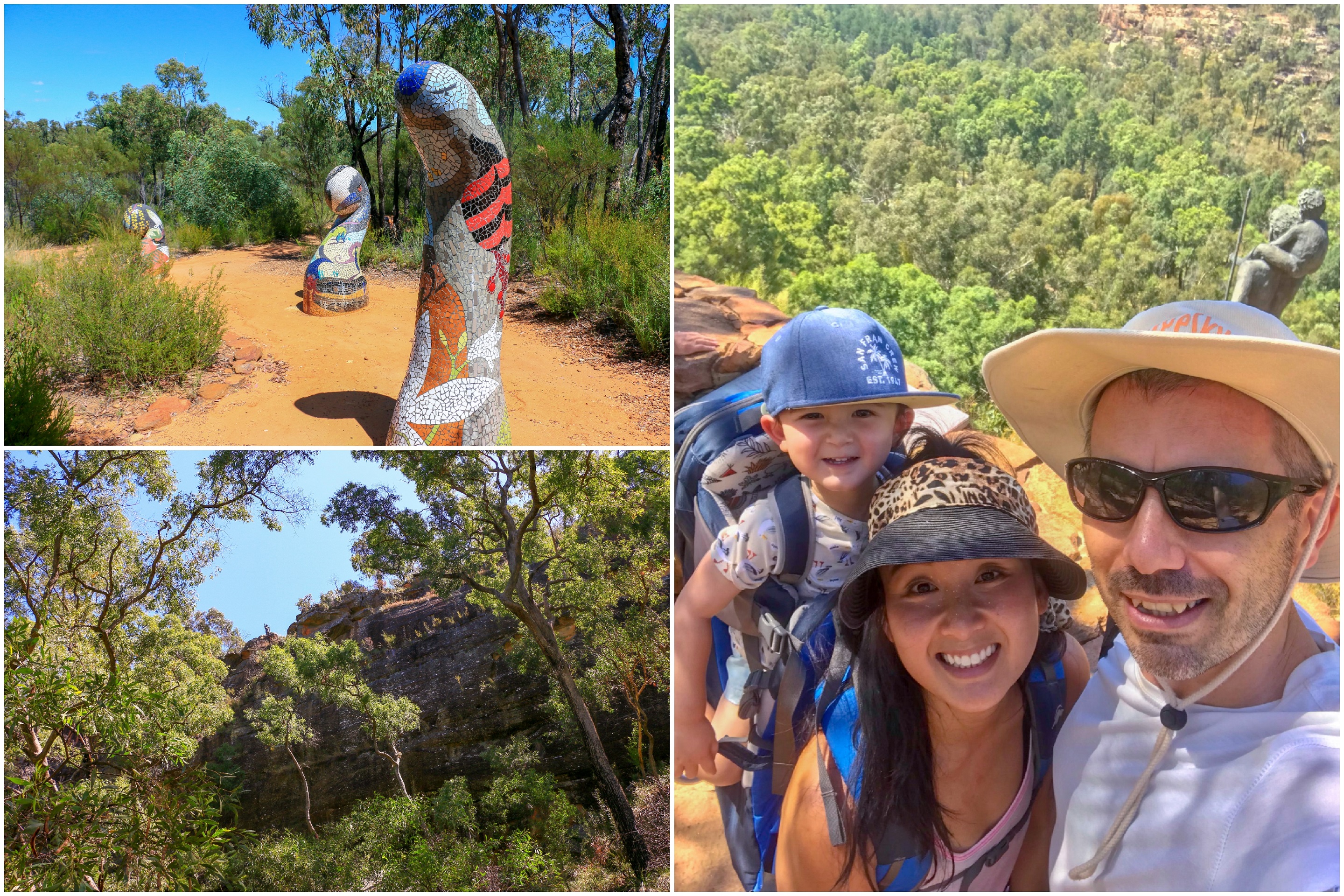
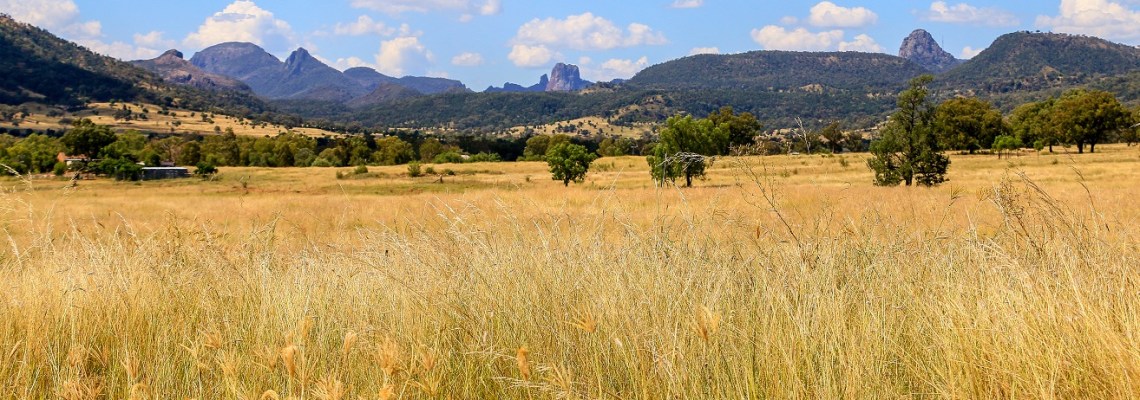
There were some surprises remaining out of town, most notably the splendid Sculptures in the Scrub. Tucked away in The Pilliga, the setting was unexpected: a fine, forested gorge whose escarpment is punctuated by artistic installations of meaning and connection. I always thought of The Pilliga as one big flat sandy forest, a landscape of monotony that would imperil any who should veer off its dirt roads. Here, you can feel things which are rich and timeless.
Just a stone’s throw away is Pilliga Pottery, but only if you’re a crow or galah. The generous rains of this summer meant the fording of a creek was out of the question, with further unknowns awaiting beyond. So, an hour and a half later, on mostly sealed road via Baradine and Coonabarabran, we were finally feasting on pizza and drinking out of earthenware cups. Another little enclave hidden in the woods, perfect to bunker down from the world.

Interestingly enough, in many ways the world was also here. The terracotta and tiled roofs and earthen walls evoked a late lunch in Spain, pre-siesta. The scattering of outbuildings and cars and rusted trinkets could be backwoods America. And then, as well as pizza on the menu, there was Bratwurst and Sauerkraut to be enjoyed. The reason became clear hearing staff converse in German, a multigenerational family thriving in The Pilliga. A veritable United Nations, without the veto power of a deluded kleptocracy.

And so, we return to those interesting times. Via Warren and Trangie and Forbes and Cowra and Murrumbateman and Moscow. With more time, Warren warrants greater exploration, particularly among the fringes of the reinvigorated Macquarie Marshes. Back in big sky grain country, Trangie may warrant a return purely for cake. I paused in Forbes for a late lunch, one of the last remaining towns of the Central West that I had yet to visit. This too had charm, elegant municipal buildings rising up among a town centre boasting a fifties Cadillac drive-in vibe. Elvis does live just up the road after all.

From Cowra the road is more familiar and home is on the horizon. Interest fades and thoughts turn from the rear-view mirror to what lays ahead. Hopefully avoiding the Highway to Hell.

Australia Driving Food & Drink Green Bogey Photography Walking

Off track

Maybe it’s just me, but I can’t say I’m especially fond of a cracked phone screen on top of a magpie attack on top of an earthquake on top of a lockdown on top of a pandemic. Served up with a hearty dollop of impending nuclear Armageddon intersecting with blistering fire and dust super tornados. No, Wednesday you didn’t particularly rock my world.

Frankly, out of all those, the bloody magpie irks me the most. How dare you take away the satisfaction and soothing of my allotted outdoor exercise time in lovely spring sunshine. And mean another pathway is added to the blacklist. The pathways are busy enough as they are with all these people in various states of mask undress discovering pathways for the very first time. Why don’t you attack them, stupid magpie? Oh, that’s right, you remember me, but yet conveniently you don’t remember how I have never once tried to steal your babies in all those years, you bloody shit.

If there is any positive, the magpie at least adds a bit of frisson to another daily outing in the same part of suburbia. Six weeks in, the confines of living within a vague radius or region are starting to grate. There are only so many times – for instance – you can wander upon Red Hill without getting weary of the same route. On the most recent occasion, I found myself annoyed with an endless procession of joggers and dogs not on leads and family gatherings. Eroding the sensations usually associated with an escape to and immersion in nature. Sounds, sights, space shrinking.

An actual problem looking for a solution, I find myself more often than not heading off track. A little out of the way. Not exactly bush-bashing, more weaving between weeds. There are still a few spots in which to escape around the Woden zone. I probably shouldn’t share them here but figure a readership of six people – many of whom are not in Canberra – is not going to cause a sudden ruination of my life. If it does, I’ll know who to blame. And set that magpie upon you…

The Old Mugga Mugga Way

If Red Hill is akin to Fitness First every goddam afternoon, Mount Mugga Mugga Reserve is more like that rusty bench press underneath a pile of boxes at the back of the garage. Fringing the weirdness of O’Malley, it seems the varied diplomats and consuls who inhabit the area rarely go out to exercise. Perhaps like most aliens they have been cowed by those great tales of deadly inhabitants of the Australian bush. Preferring the safety and comfort of their own little piece of soil.

The Centenary Trail runs through the reserve and introduced me to the area back in the good old days of 2020. A few people still come and go along this thoroughfare but it’s simple to veer off onto a number of faint tracks and choose your own adventure. The landscape is a very Canberra mix of weedy incursions and precious Yellow Box-Blakely’s Red Gum grassy woodland, replete with gnarly old eucalypts and their generous, homely hollows.

One particular tree has fallen, and I have taken to it on several occasions to perch and drink tea from a flask and eat a treat and watch Gang-gangs fly past while kangaroos graze and deadly inhabitants of the Australian bush lurk in the crevices of the fallen tree on which I am sat.

The whole flask of tea thing has become another more frequent happening in my life in recent weeks; I don’t know why I haven’t thought of it much before. Perhaps I simply wasn’t quite of an age. But pandemics and magpie attacks have a way of adding on the years, transforming a simple flask of tea in the middle of the bush into something that feels much more precious.

Isaacs Off Piste Ridge

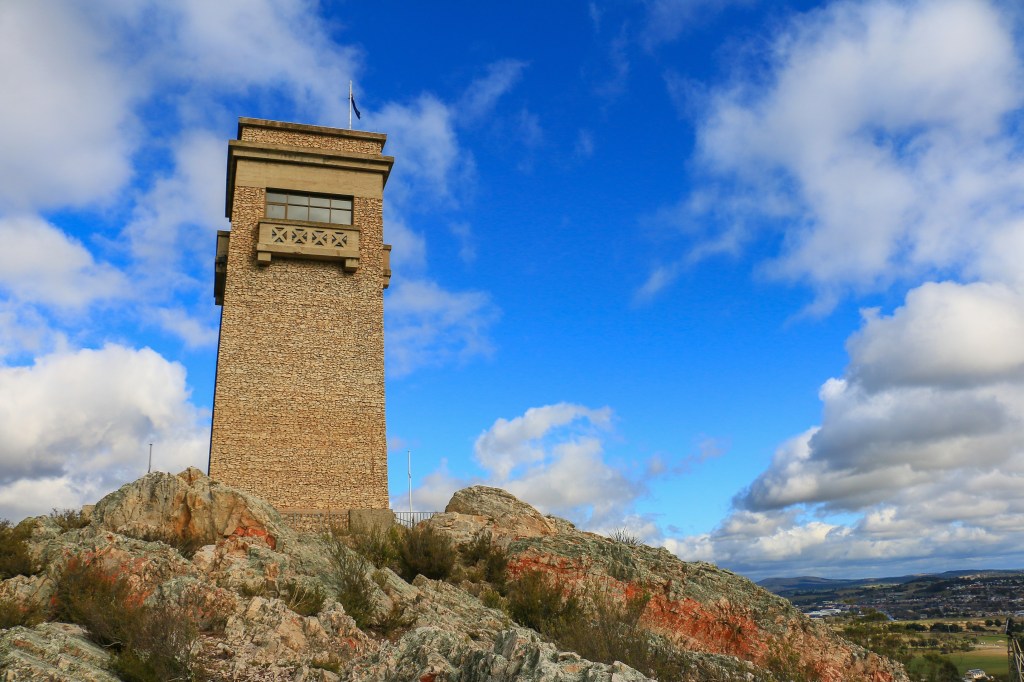
Mount Mugga Mugga itself is scarred by a quarry and the summit appears fenced off, thus remaining that rare Canberra hill not trampled upon by my own two feet. Yet it’s just one lump in a broad range extending from Red Hill south towards the Tuggeranong Valley. Adjoining Mugga Mugga, Isaacs Ridge proves popular for its pine trails and dog walks and boasts an archetypal trig marker summit loop with 360 degree views.

That all sounds a bit mainstream for me at the moment, so I veer off the fine balcony trail lapping at the foot of the ridge and decide to head up cross country. There is a very faint track at first, which slowly blends into a landscape of open grassland and rocky scrub. Over a false summit, a field of thistly plants remains quelled by winter – give it a month or two and the going will come with greater hazard. A random copse of casuarina appears as if some long-forgotten scientific experiment, offering a landmark to follow slowly upwards to the top of the ridge. And lo and behold, a photogenic gum tree, with some fallen logs for a rest (and possible tea).

From here, there are views east to that far off land of New South Wales. There is countryside and Mugga Lane and quarrying work and possibly even just a little part of the tip. But mostly it’s countryside. There is also the white trig marker visible to the south, acting as a beacon to aim for, navigating the rocky boulders and grasses of the ridge and returning to the mainstream.

The Murrumbidgee Vista Rocky Outcrop

For several weeks, Cooleman Ridge was proving one of those ambiguous places in the application and interpretation of local coronavirus restrictions. Is it in the Woden, Weston and Molonglo region or is it Tuggeranong? Is it within five kilometres of home or six and a half or eight? The answers are yes and sometimes you just have to ask the question does it actually matter?

One of those days was a lunchtime and instead of a flask of tea I packed up some crackers, nuts and cheese and went on a quest for the perfect place to snack. Eschewing the usual, well-defined summit rocks and strategically-situated benches I veered off towards a hillock I had eyed up in the past. A few gum trees stood atop resistant, hosting flurries of wattlebird and passing rosellas. Imagine by delight that under one of them was the perfectly positioned, home-crafted seat.

Someone had been here before looking for the ideal situation to escape to the country. A kindred spirit. And if a backdrop of lush farmland cloaking a river valley beneath forested hills isn’t enough, check out those crackers and cheese and nuts from Kingaroy. Off track snack pack perfection.

The Oakey Dokey Hill with bonus Hummock

Along with off track adventures one of the permissible things I have been doing virtually every day is picking up a takeaway coffee. It is the stuff of contact tracing nightmares and triggers the inner COVID police in me every time. Quit loitering. Stand away from me. Stop touching your face. Don’t order multiple coffees with various shades of milk for your entire bubble.

I’m also – naturally given current confines – alternating my takeaways between a mere handful of proximate cafes, constantly hoping they fail to materialise on the exposure site listing. In Lyons, Stand By Me offers something that is walkable from home and – should I wish to venture further – can be incorporated on a climb of Oakey Hill.

Of the six hilly nature reserves forming a horseshoe around the Woden Valley, Oakey Hill is probably the least fashionable and most unkempt. Power pylons compete with decommissioned water reservoirs and temporary fencing. The flora seems more degraded, more weedy, more battered and bruised by the elements. Still, there is a nice bench beside the trig marker if it’s vacant and a little used side track that offers good views out to the mountains.

Across from the reserve, a green corridor lines the divide between Lyons and Curtin. From here, more slivers of green penetrate into suburbia, one of which hosts a determinedly vicious magpie. Nowadays I avoid that particular route and instead continue around the outside of Curtin on a track that at one point takes on the appearance of pasture. It forms part of what has become a fairly regular ten kilometre bike jaunt which culminates in a different takeaway coffee at Red Brick.

Along this way, at the back of Curtin, there is a hummock which takes me away too. Behind, fences protect garden refuges with trampolines and lemon trees and potting sheds and shrubs of shady bottlebrush. But in front there are fields of green and skies of blue. On the horizon, the distinctive angles of the Brindabellas promise at much more freedom. And I am whisked away to a place far from busily exercising humans and irritating magpies and daily case numbers and limited coffee options. I am taken again off track.

Australia Green Bogey Walking

Dream times

Do you remember the time when you could leave footprints in the sand to melt away with the tide? Or take walks within forests as the sun scatters golden through a canopy of spotted gum? Can you recall when you could linger on a bench to feast on deep fried fruits of the sea? And what about that period when Australia really was the place to be?

Footsteps in the sand

I do, but it feels a long time ago, even though it was little over a month. With opportunity and freedom I had journeyed to the coast, cognisant of wintry weather in Canberra and the pervasive feeling that you might not be able to do this again. For a while.

I had found a quiet kind of place to stay in North Durras. The kind of place you might hunker down to see out a pandemic. A place where the biggest drama at this point in time was the wind, though where small reminders of far more disastrous natural events stir the mind. The wind quelled the temperature and whipped up sandy frenzy, but it was still an improvement on Canberra. And an invigorating reminder of the power of nature.

A view of a small town next to the beach with forested hills in the background

Not that I was thanking the wind when the power went down, just as I was about to settle into an evening escaping on a tour around France. I had to read and that felt like hard work when you really just want to lounge as lazily as possible. Thank goodness for the lights coming back on and the Col de Tourmalet.

Around North Durras I made friends with some King Parrots and Kangaroos, explored the sands and forests, and found my way wandering along the waterways as they infiltrate inland. Always across the channel, signs of South Durras peeked above the scrub and I wondered if there was a strong rivalry between the two. The South were probably boastful of having a shop while the North derided snooty Canberra-by-Sea.

Kangaroos hopping on some grass next to the ocean

Just for a while I had to remove myself from such unlikely drama. It was Saturday morning, and I was hoping for that perfect combination of sheltered sunshine and oceanside coffee strolling. I aimed for Bawley Point, noting some positive signs in my research: small bays protected from the south-easterly; a coffee caravan on a headland with a strong showing on TripAdvisor; Canberra-by-Sea.

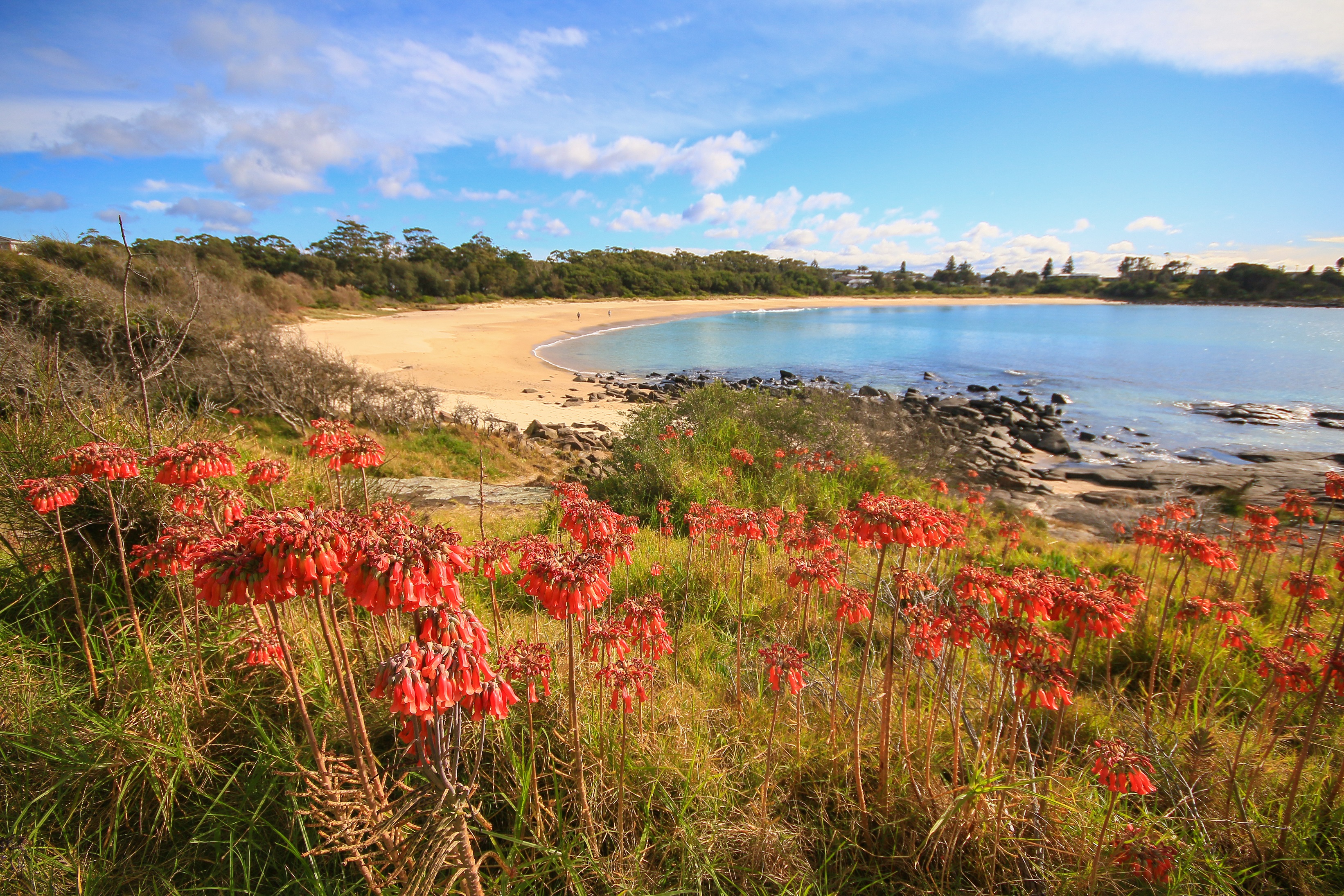
At least the bays were sublime.

A beach with some red flowers in the foreground

For some reason, the thought crossed my mind that Barry Cassidy had a holiday home in Bawley Point and hung out with Mike Bowers while Heather was off on some back road cracking a horse whip with Old Reggie Mundoon of Canowindra. This will mean nothing to any English readers, and most Australians too. Anyway, I think I remember this because Mike posted a picture of plumes of smoke from Bazza’s ample deck around the Christmas of 2019.

I could’ve watched Barry’s successors waffle on about ineptitude and continue to needlessly debate the pros and cons of lockdowns on the ABC on Sunday morning. But why do that when I can just take a few steps from my cabin and expose myself to a world of beautiful calm. From the abundant forest full of melodies to the glassy clear water stretching across to the south. No wind and a beaming radiance to lift the soul.

Sunlight shining through a forest
An inlet next to the ocean

This would be a fine place to ride out a pandemic, though it could handle a decent café otherwise I may not survive. To ensure an improvement on the day before I left North Durras and drove south to Mossy Point, where there is a reliable spot for coffee. And a raspberry and white chocolate muffin. Just because.

The day was continuing to sparkle, and I was in no rush to head back home. With hardly a breath of wind it would’ve been the perfect day for a bike ride. Perhaps heading from Moruya along the river and out through pasture towards the ocean at Moruya Heads. You could pack some lunch and eat it in a sheltered bay, glistening under warm sunshine. Good job I packed my bike and prized $16 bike rack.

A red bike next to a river
A bike on a sandy beach with the ocean in the background

Doesn’t it look nice?

There was a beach at Moruya Heads – Shelly Beach – that offered the kind of nirvana that would prove an entirely effective crescendo to a piece of writing. The very essence of what I was seeking on this little break to the south coast of New South Wales in winter. Comfort, delight, beauty, and a quiet spot to sit in a T-shirt. I could have gone full shorts, but none were packed.

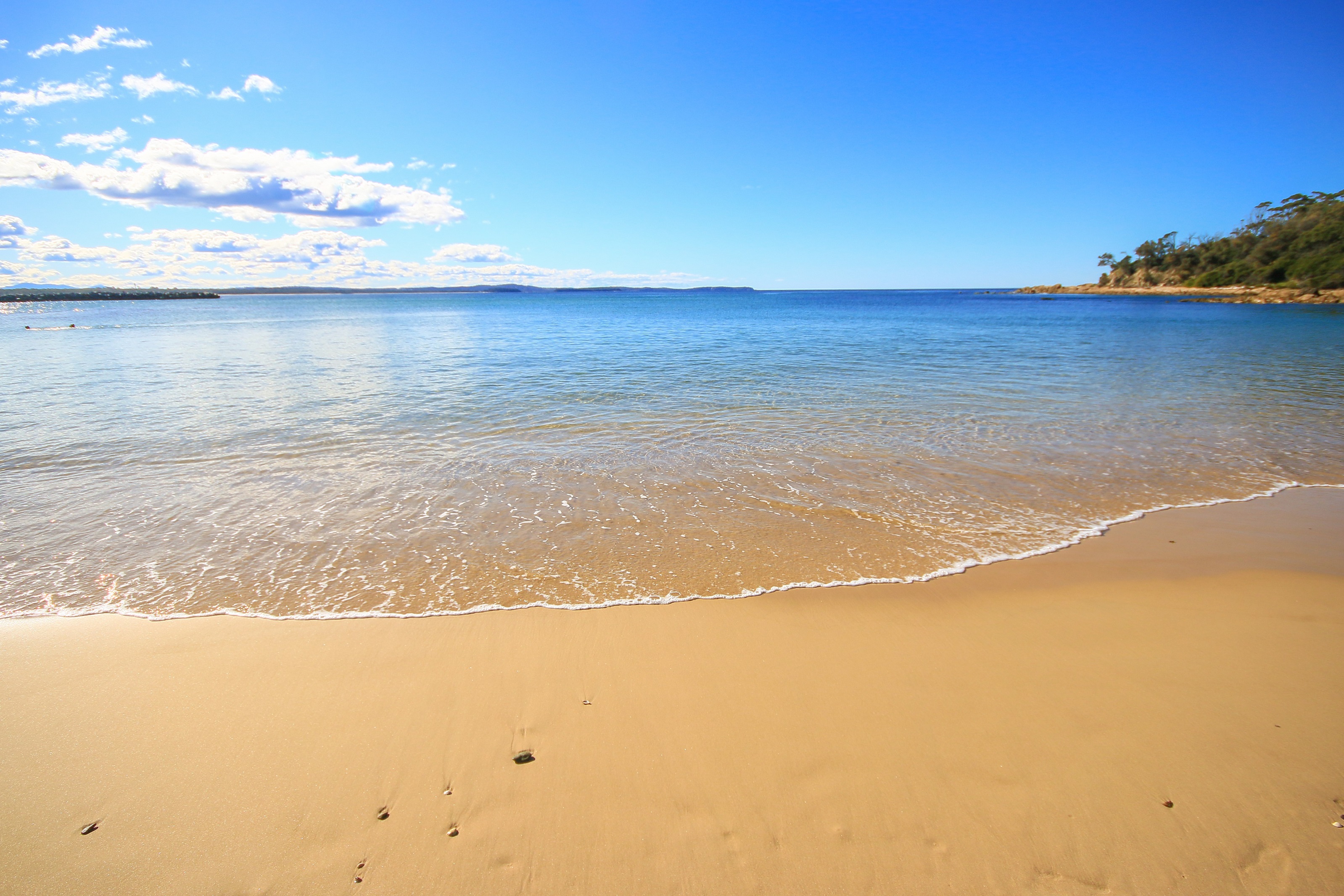
A beach and clear ocean

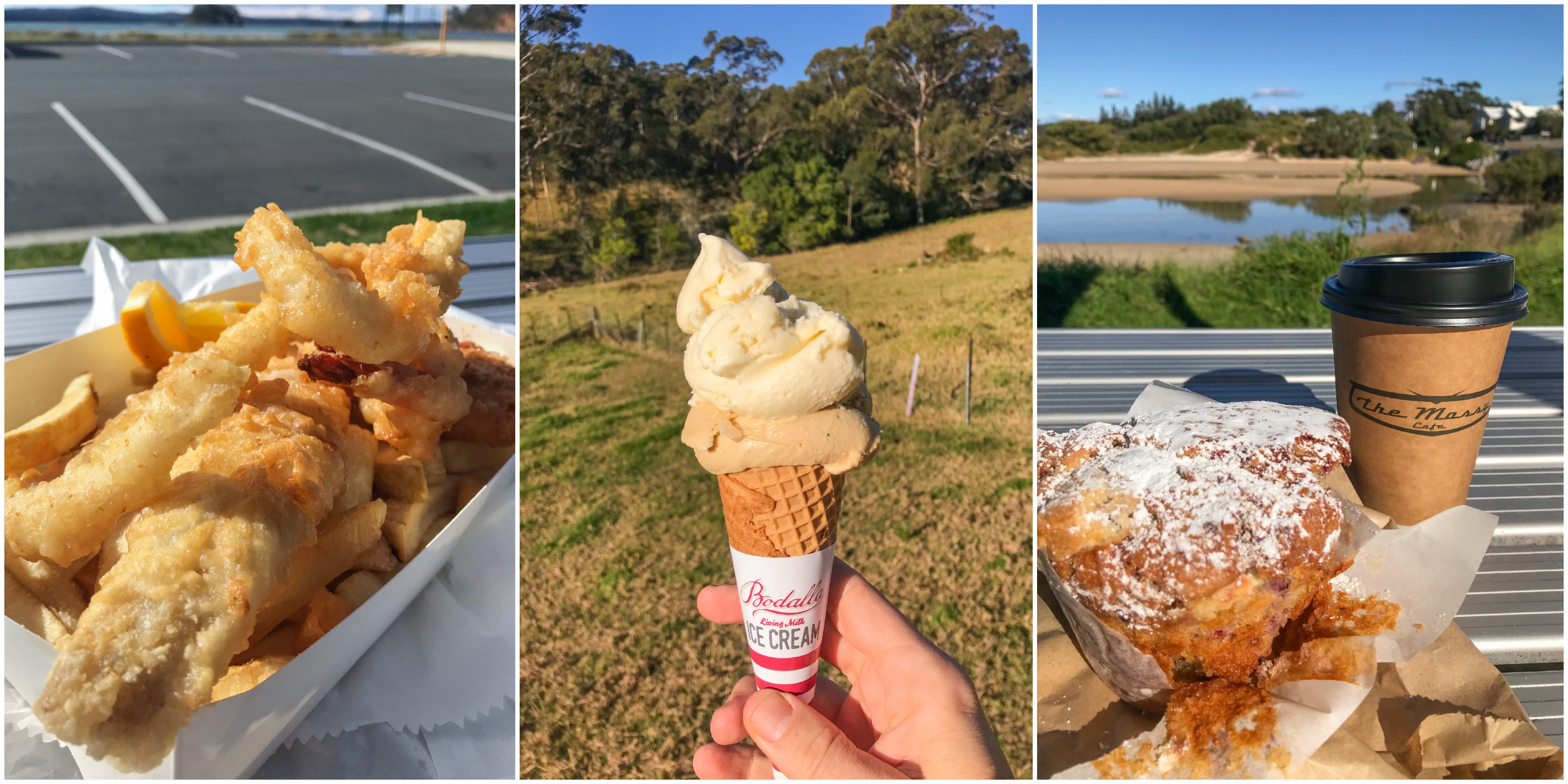
An ice cream would’ve hit the spot too, but I had to cycle back to Moruya – including over what felt like a mini Tourmalet – and then drive a fifty kilometre round trip. I mean, I didn’t have to take a fifty kilometre round trip but no, really I did. I’d done fish and chips, I’d done coffee by the sea and now I needed a double shot of Bodalla Dairy.

Another moment to treasure, to add to the bank of dream times to remember. And to look forward to when they are there to spoil us again.

Picture of fish and chips, ice cream and coffee

Australia Food & Drink Green Bogey Photography Walking

Tour de ACT

The buzz. The excitement. The nerves. The never-in-my-lifetime strangeness underpinned by a back catalogue of disappointment. The sense of hope, exhilaration, and gut-wrenching drama more often than not deflated by events. The inevitable post-mortem punditry and scapegoating and resignation and acceptance. But maybe – just maybe – this time will be different.

If ever there was a weekend to finally come home this would be it. But I’ll be in bed, 12,000 miles away, turning on the bright lights of a laptop at five in the morning. Thinking about Italian coffee and chocolate digestives to perk me up. Minus three degrees in my shirt.

It’s a bed in a home that I haven’t written about for a good half a year, what with other more exciting jaunts. Canberra is still here, still going through its motions, still – touching wood – absent of coronavirus despite the best efforts of our neighbours. Still understated and beguiling, fortunate and free. Offering abundant life and opportunity if only you should look.

Over that time, Canberra has been doing what Canberra does, transitioning slowly but surely through the bursts of colour of autumn towards morning fogs which (usually) lift to reveal brilliant blue afternoons. It’s the time of year when continental superspreading sporting events disrupt sleep and sub-zero mornings add to the challenge of getting out from under the doona. A time when travel bubbles pop and masks finally become a thing. But do not despair. There is always fresh air.

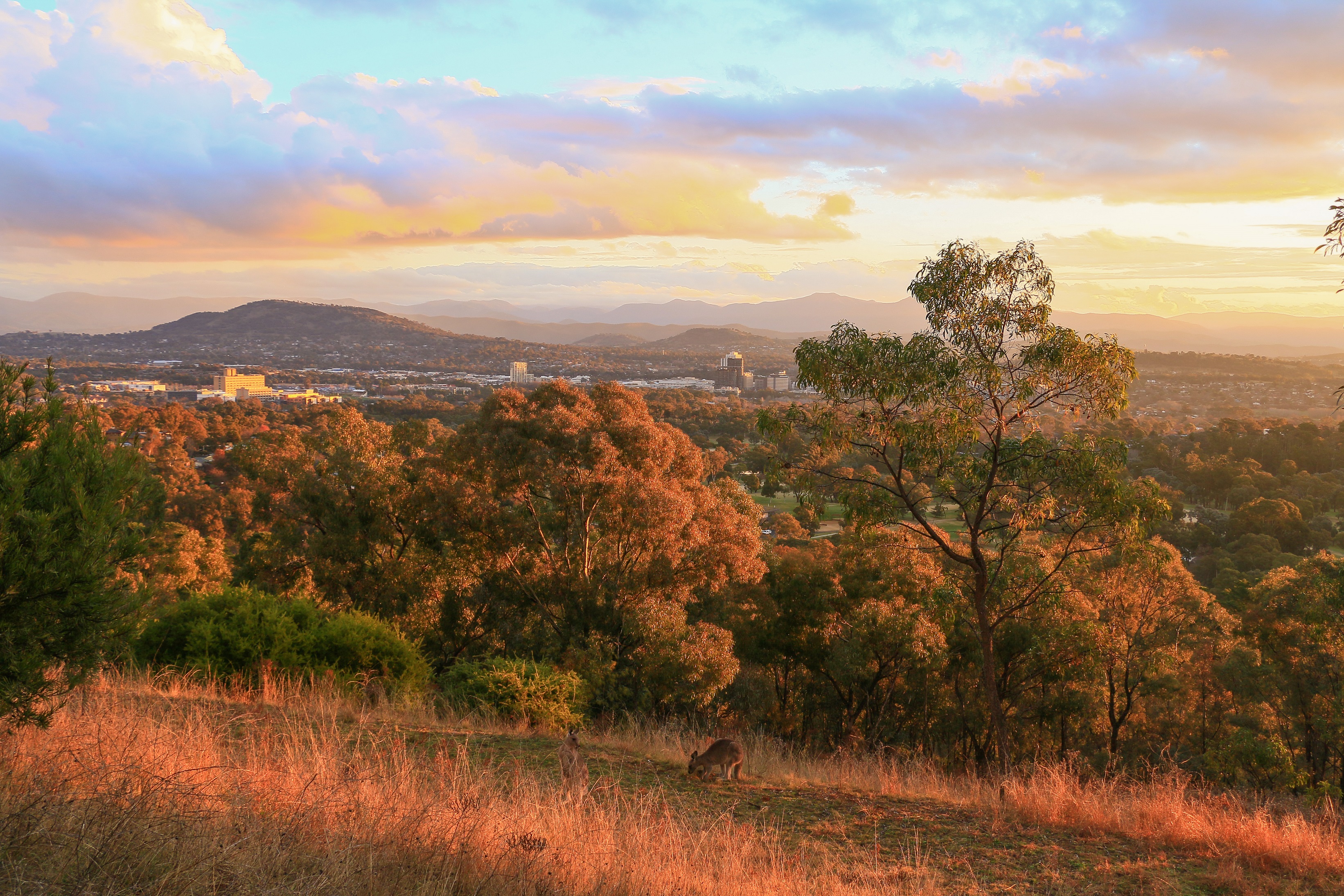
From the reliable vistas atop Red Hill, a quick jaunt up the road once the laptop powers down. Winter light always doing something special just before five in the afternoon. A warm angelic glow spreads over the rising towers of Woden, the hospital and the Pfizer vaccination hub. Kangaroos munch unaware. Some things change and some things don’t.

A sunset scene over Woden and the hills

Rapidly contesting with Red Hill as my favourite nature reserve, Cooleman Ridge offers great reward for minimal effort. Fringing the west of Weston, the reserve boasts fine views back over Canberra but the real splendour is on the other side. Paddock. Hills. Forest. Mountains. A Murrumbidgee Valley creation. With suburban sprawl and hoonish echoes fading behind the ridge, it is a country walk in a city. And because so much of the Australian countryside is shamefully locked behind fence and gate and no trespassing signs, this is a real treasure. 
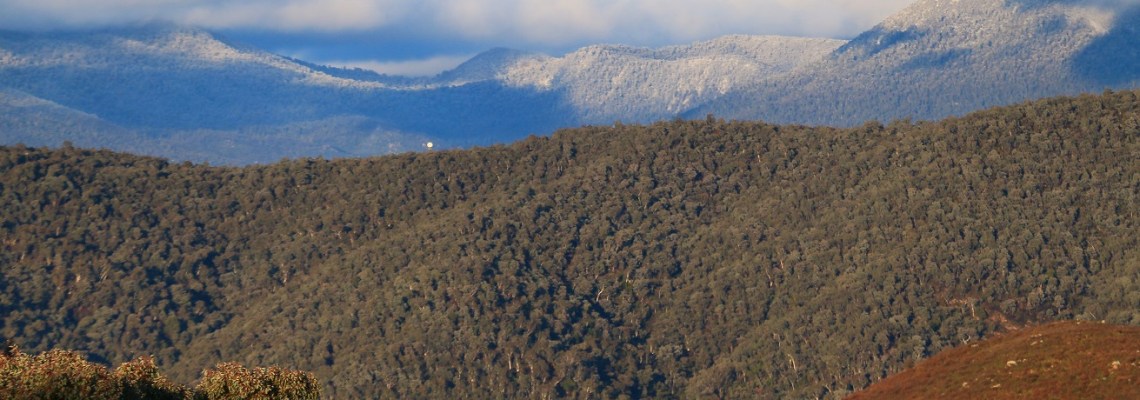
A view of mountain ranges and countryside

The treasures of Mulligans Flat are perhaps a little less obvious – and much more likely to emerge at night. But this place is a sanctuary for humans and animals alike. It is another place that has grown on me through a pandemic, from the initial Centenary Trail crossing to volunteer tasks hassling echidnas and wallabies and turtles. As is oft-mentioned on a twilight tour, the dams were dry back when we were enshrouded in smoke. Today they come alive. 

Sunset reflection in a dam

A bigger dam sits further west, lapping at a much bigger wilderness. When you stop and think about it, it is quite something that you can be picking up a good coffee at the neighbourhood shops and fifteen minutes later staring out towards this. Cotter Dam vistas shrink and stretch as you rise further into the sky, reaching a new summit at Mount McDonald.

A large reservoir surrounded by forest and hills

Another new summit is added to my life experience when I take the dirt trail up to Mount Jerrabomberra. I have ventured beyond Canberra, though only just, and only before the latest Bondi-fed outbreak (just in case some paramilitary border goon decides this is reason enough to bar me from Western Australia for twenty years). I have come to Queanbeyan for the rare opportunity of coffee and cake at three in the afternoon, discovering a café that actually opens beyond two. Why is this not more of a thing? Especially when you can easily walk a few crumbs off afterwards.

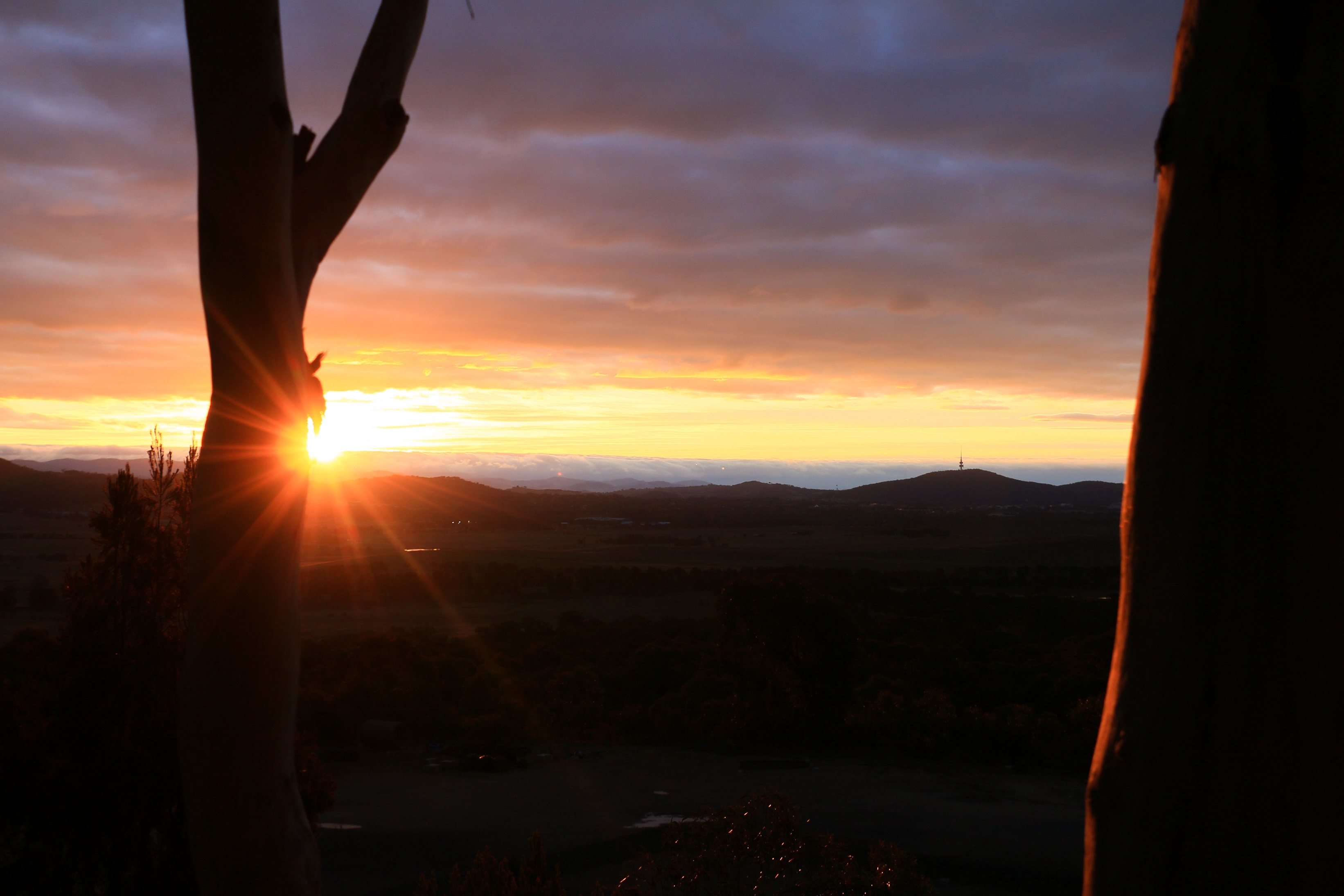
Last rays of sun over the silhouette of a landscape

It is becoming harder to discover new things like this in the backyard, but I am not there yet; Coronavirus may have to last another twenty years for that to materialise, something I would dearly love not to happen. I would love instead to walk in the Alps again, to hike along the downs of southern England chasing butterflies, to stroll through the Barbican and up to Plymouth Hoe, snaffling some fudge and an ice cream along the way.

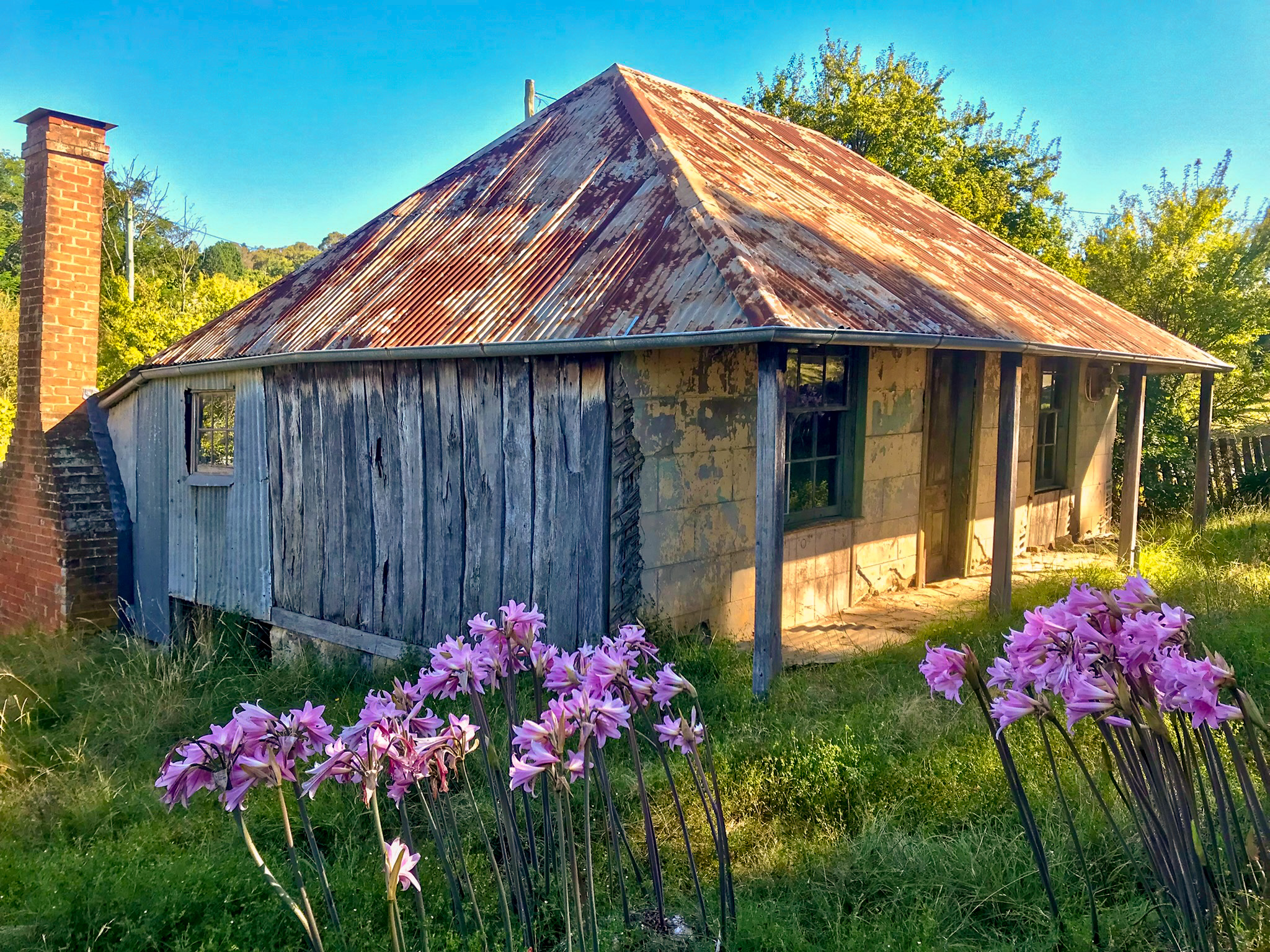
But do not despair. I discover a winter’s walk alongside the clear water of the Tidbinbilla River, striking out through green forest singing in the aromas of fresh peppermint. Occasional early wattle pops golden and soothes like honey. There are views towards rocky crags and precipitous ridges and – down the track – a little home: Nil Desperandum. It has been restored to cuteness and if only they had a kettle with some tea and perhaps freshly baked scones waiting, the walk back wouldn’t have seemed such a chore.

A homestead set within forested hills

Nil desperandum. Whenever or whatever might come home, do not despair.

Australia Green Bogey Photography Walking

Great Continental Rail Trail Journeys

The last time I heard the word ‘gooch’ as incessantly, an English batsman was stroking the Indians all over Lords. That was 1990. I also remember a reoccurrence when the same player was famously dismissed for handling the ball. Today, gently rising out of Toogoolawah, two hours west of Brisbane, gooch and ball handling were once again all the rage.

A stop was called for by my good friend and biking companion, Jason. Problems in the perineum that would culminate in what will only be known as the ‘Lowood Incident’. As improvised comfort was applied and jiggled, I started to contemplate whether we would need to radio in the rescue chopper.
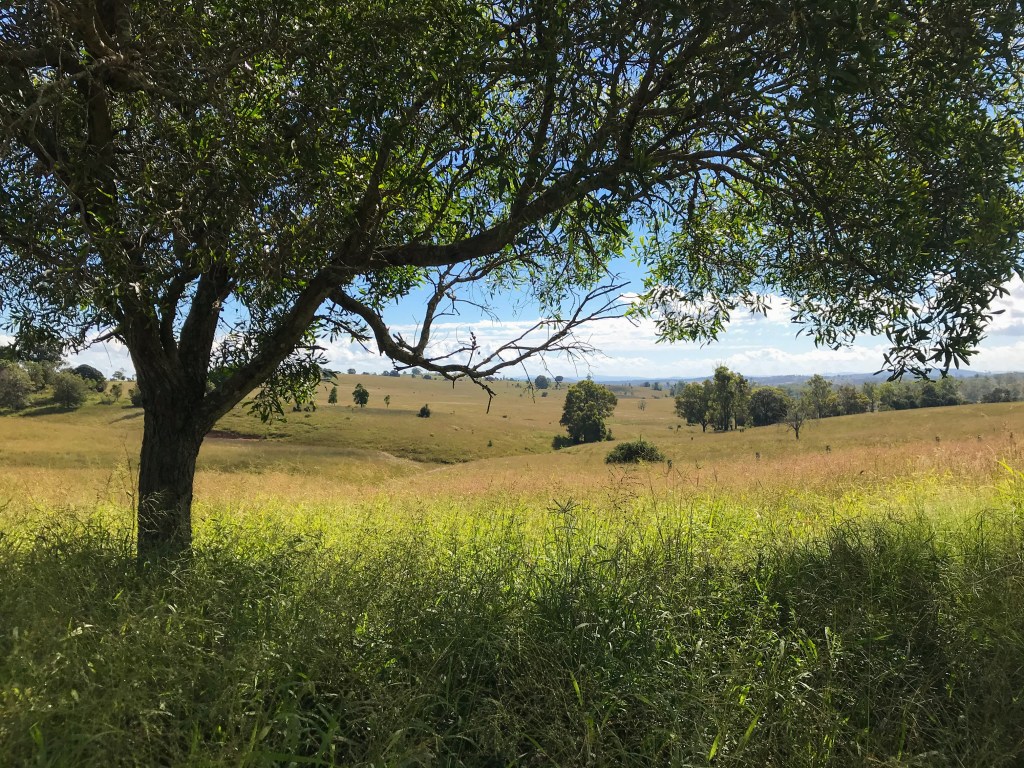
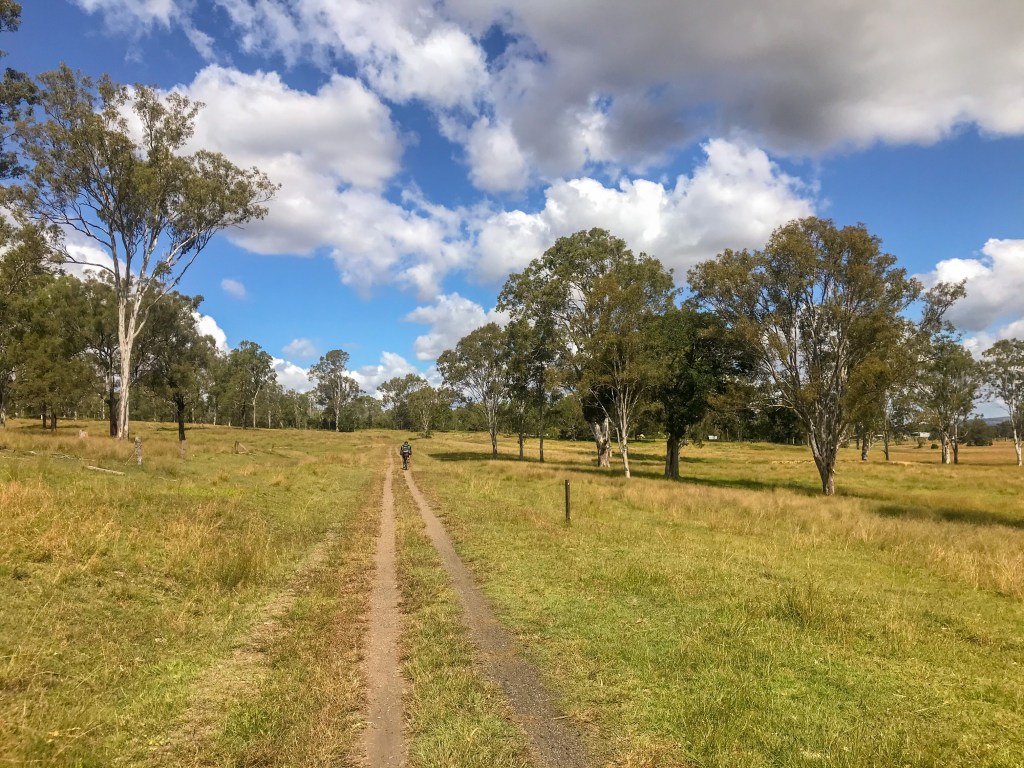
But waiting patiently I was enjoying the break. It had been a decent upward grind after lunch. The sun was warm and glowing gold the long grass of summer. Small eucalypts lined the route, interspersed with westward views over gently undulating farmland. My bike was coping well. Despite almost falling asleep over a burger, I was coping okay. This was brilliant.

I had never heard of the Brisbane Valley Rail Trail until Jason mentioned it virtually every time we spoke over the phone. I don’t know if it was one of those things you just say, never really expecting anything to eventuate. But one day I just thought sure, why not. Or words to that effect. And this whole trip was basically arranged around it.

We took a leisurely three days to cover the 161 kilometre route by bike, retracing a rail line that commenced construction in 1884 and was finally made redundant in 1991. Today, it has been transformed into the longest recreational rail trail in Australia for use by walkers, horses and – mostly – bikes. While I never succumbed, Lycra and gooch cures are never far away.

Day 1: Yarraman – Linville (42 kms)

It took the best part of two hours to drive from Caloundra to the start line (thanks Fiona!). Over rainforest-lined passes, high above fields of mist, past bakeries that are worth making a note of for later, we reached Yarraman to face the unknown. Yes, riding a bike is like riding a bike but riding a bike on a three day bike ride is another matter.
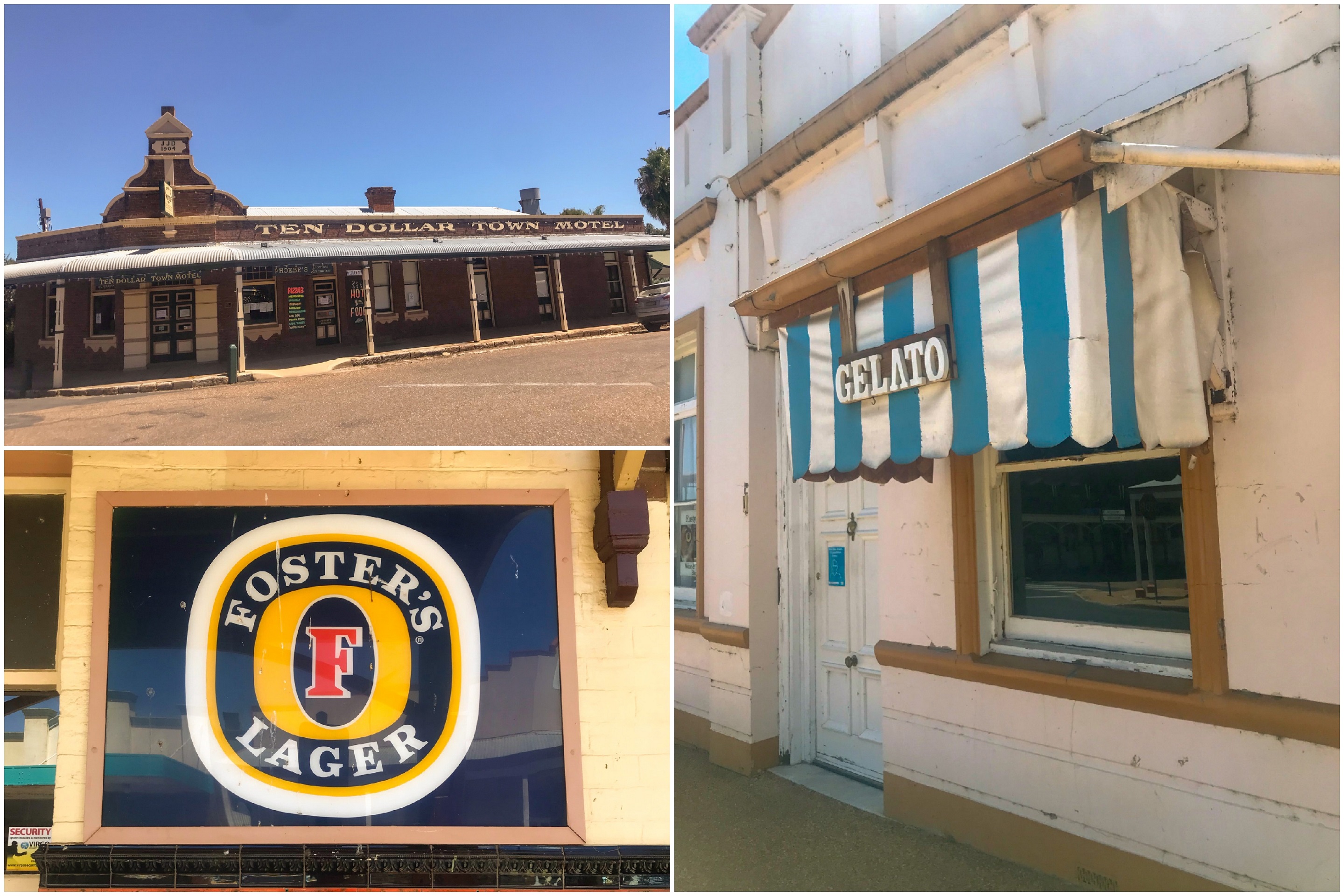
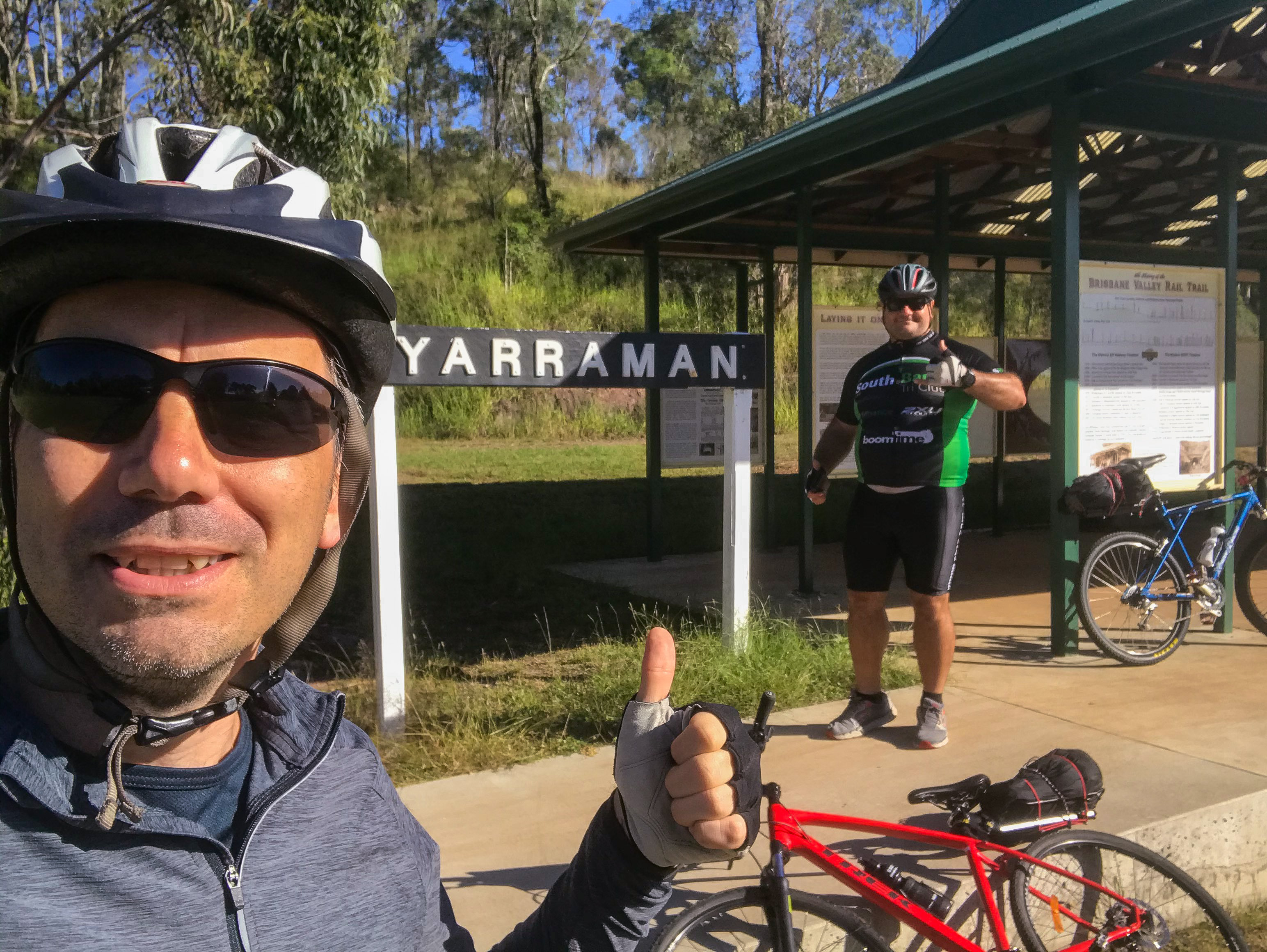
Yarraman was still fairly quiet, though the people we did encounter were keen for a natter. Being ANZAC Day, a small dawn service had been and gone, and one old guy offered reminisces about days gone by in this small neck of the woods. He had taken the train many moons ago when joining the air force. Thus a brief history of the operation of the Brisbane Valley Line ensued. The conversation culminated with him contemplating riding the line once more, e-bike assisted of course.

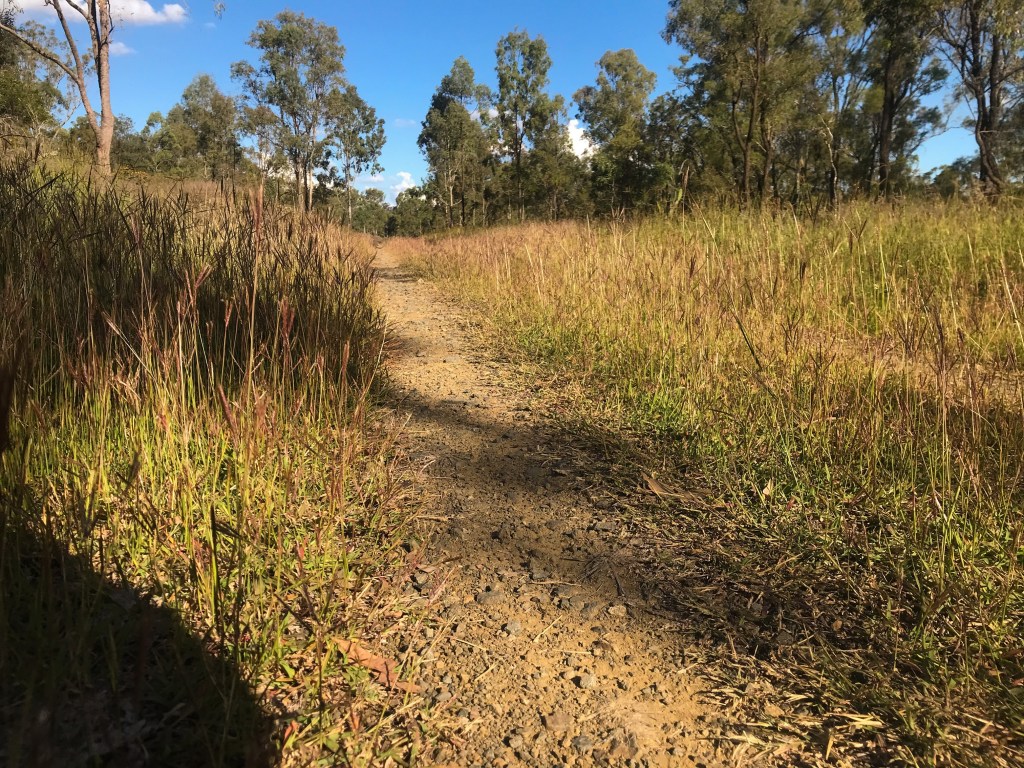
We passed up the opportunity to indulge in coffee and bakery items at Yarraman, instead pursuing these goals in Blackbutt once at least a few calories had been discharged. And so the exercise commenced just out of town beside the old rail station, highly visible remnants of the line that pop up in practically every settlement along the way. Blue skies, still air, a fairly smooth dirt track accompanied by that first shot of endorphin from anticipation of what may lay ahead. 

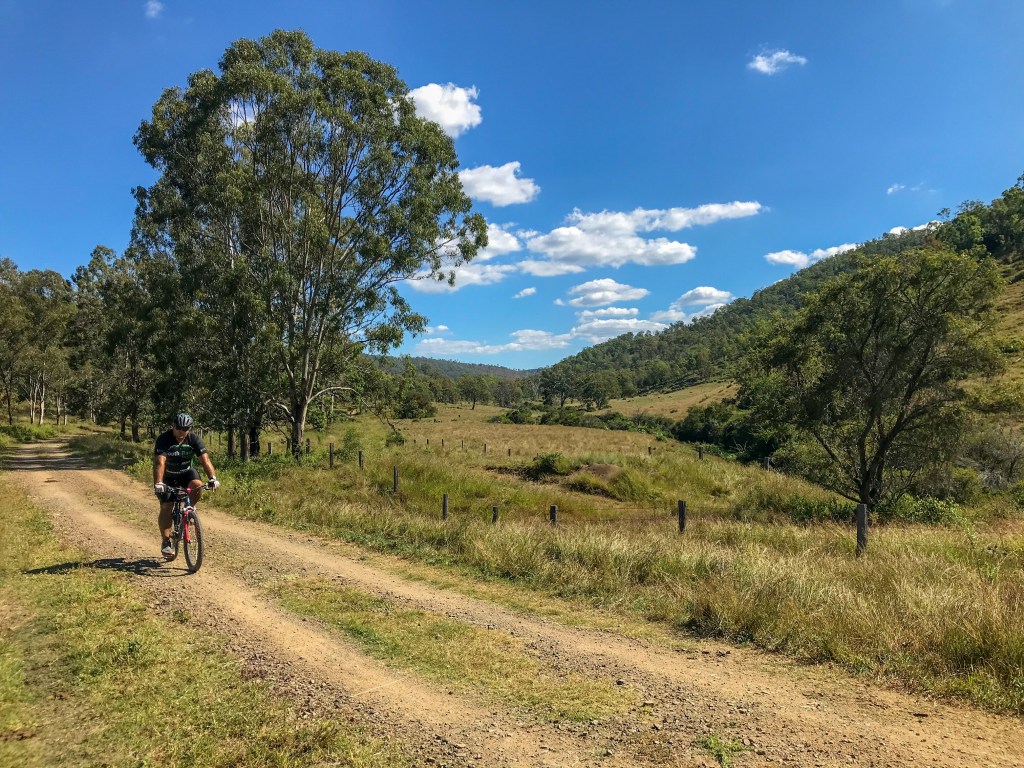
And so, we rode through avenues of low eucalyptus, alongside green pasture dotted with spiky xanthorrhoea, and through a number of rockier cuttings keeping things relatively flat. Earlier in Yarraman, the old fella rambled on about the bridges on the rail line and wondered if they were still standing. The answer quickly became clear and that answer was – for the most part – no. After cruising with only gentle effort, the downs and ups of gullylife often come as a bit of a jolt to the system.

The vibe along the trail was congenial and we passed a few other cyclists with friendly g’days and broad smiles. A few times the trail briefly transported me to a nice summer’s day in southern England, a passing resemblance nurtured by fields of corn and tunnels of trees. The idyll was quickly shaken by the gullies, the gravel, and the sound of Chinooks and Apaches putting on a flypast specifically for us. 

It had taken well over an hour to get to Blackbutt which was – after the trail thus far – a veritable feast of civilisation. People were assembling for the 11am memorial service, many with padded butts and bulging Lycra. This naturally resulted in high demand for coffee. So high, in fact, that the cafe we had chosen failed to deliver it.

It seems churlish to bemoan the absence of coffee in the context of wartime remembrance, but I cannot deny how deflated I felt. One of the attractions to this ride – probably even the number one thing impelling me forward – was the frequent prospect of stopping for coffee and cake. How leisurely, how civilised, how conforming to popular stereotypes of butt-padded middle aged manliness. 

But the parade passed and wreaths were laid without a hot mug of country flat white. As they do, Last Posts, Abide With Me, and sombre silence touched the right note. The special guest speaker spent a good few minutes talking to the point that his time to talk had been controversially curtailed (I can only imagine the political machinations going on in Blackbutt RSL). Meanwhile, someone posting video of the service to the local Facebook page bemoaned the fact that everyone else was using up the local 4G and quite possibly catching coronavirus from the rays. 

You don’t get these quirks at the Australian War Memorial and that is why the ANZAC service in Blackbutt was such a memorable event. Above all, it radiated with the warmth of smalltown community: flags half-mast against the backdrop of XXXX signs on the pub; the high street closed off as trucks carrying cattle detour behind the small memorial; a procession featuring schoolkids, scouts, guides, old troopers and the Country Women’s Association, all waving to family members lining the route. Meanwhile some lucky butt-padded cyclists sup on their coffee.

No offence to New Zealand, but we snuck out of Blackbutt as the ceremony was nearing an end with its national anthem. I was keen to get moving before the rush of people re-joined the trail. We also had to reach the pub before it closed for the day.

Fortunately, most of the trail to Linville was downhill, through Benarkin State Forest. This induced a little adrenaline, gathering speed and negotiating clean lines and avoiding small rocks. My back end decided it wanted to head sideways on a few occasions, but speed and gravity and not particularly flash bike-handling skills kept things upright. Almost as satisfying as staying in one piece was the sight of pedallers grinding their way up towards Blackbutt and being thankful that this was not you.

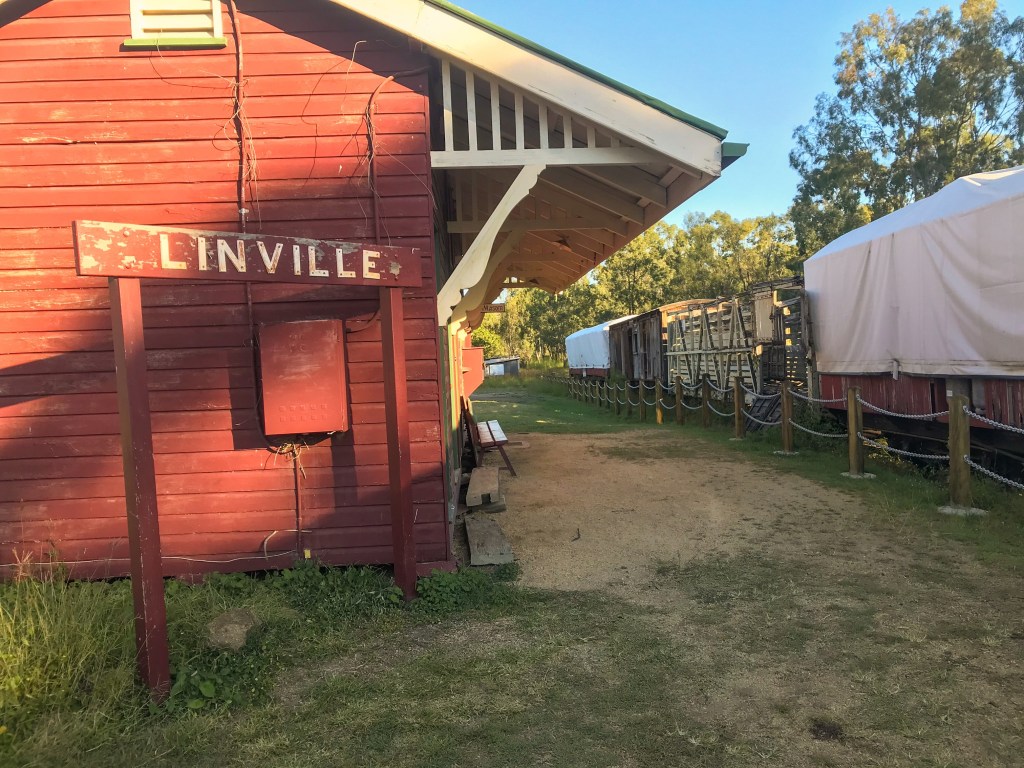
Eventually the forest opens out and the landscape presents itself as rugged and unkempt. In fact, it’s probably the most enclosed part of the whole trail, where you truly feel like you are carving your way through a steep-sided valley. As the hills part, farmland again emerges, shacks appear, caravans gather for extended coronavirus holidays, and in front of you, shining like a temple, is the Linville Hotel.

The first thing that was obvious about the Linville Hotel was that the tradition of sitting around drinking on ANZAC Day was very much alive and well. Out the front, a multicoloured arrangement of frames and wheels gathered in what looked like one almighty tangle. Motorbikes glimmered in the sun. Classic cars posed with their rooftops down. City folk had come for the drive. Or the pedal.

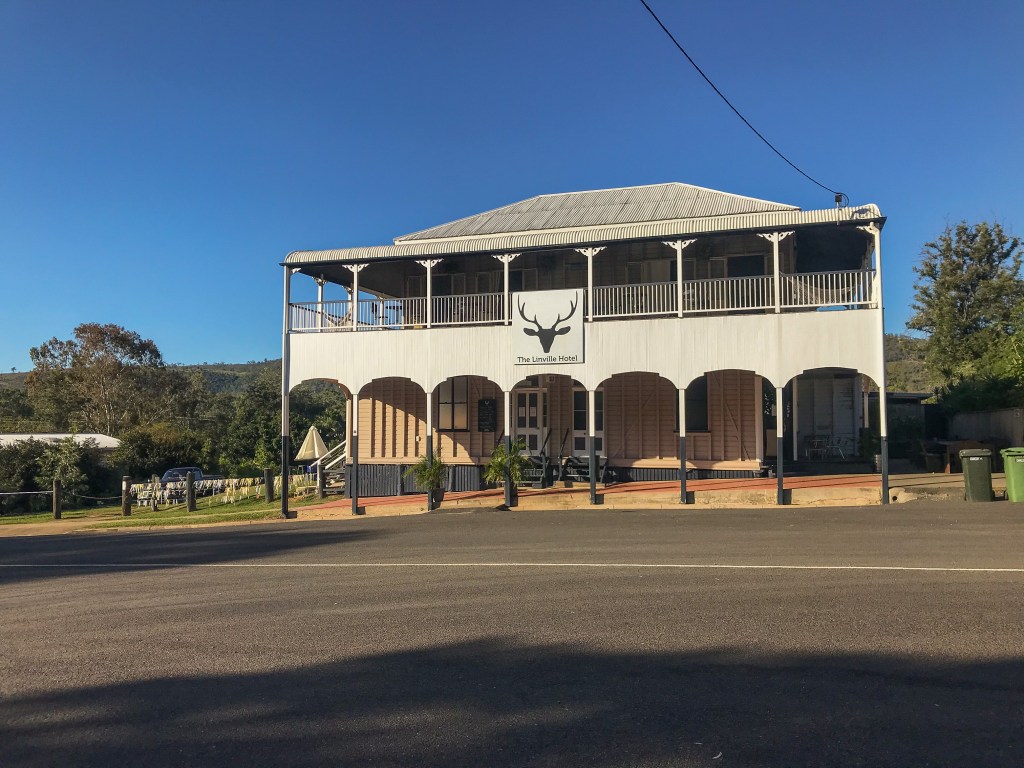
The Linville Hotel proved every bit the Australian country pub and a little more. Chicken Schnitzel lunch was accompanied by local brews. Wooden verandas and wonky floorboards looked out over sleek parasols and hipster guitarists. Old signs mingled with largely ignored QR codes. Upstairs, rooms provided accommodation and already the century old balustrade was subject to Lycra decoupage.   

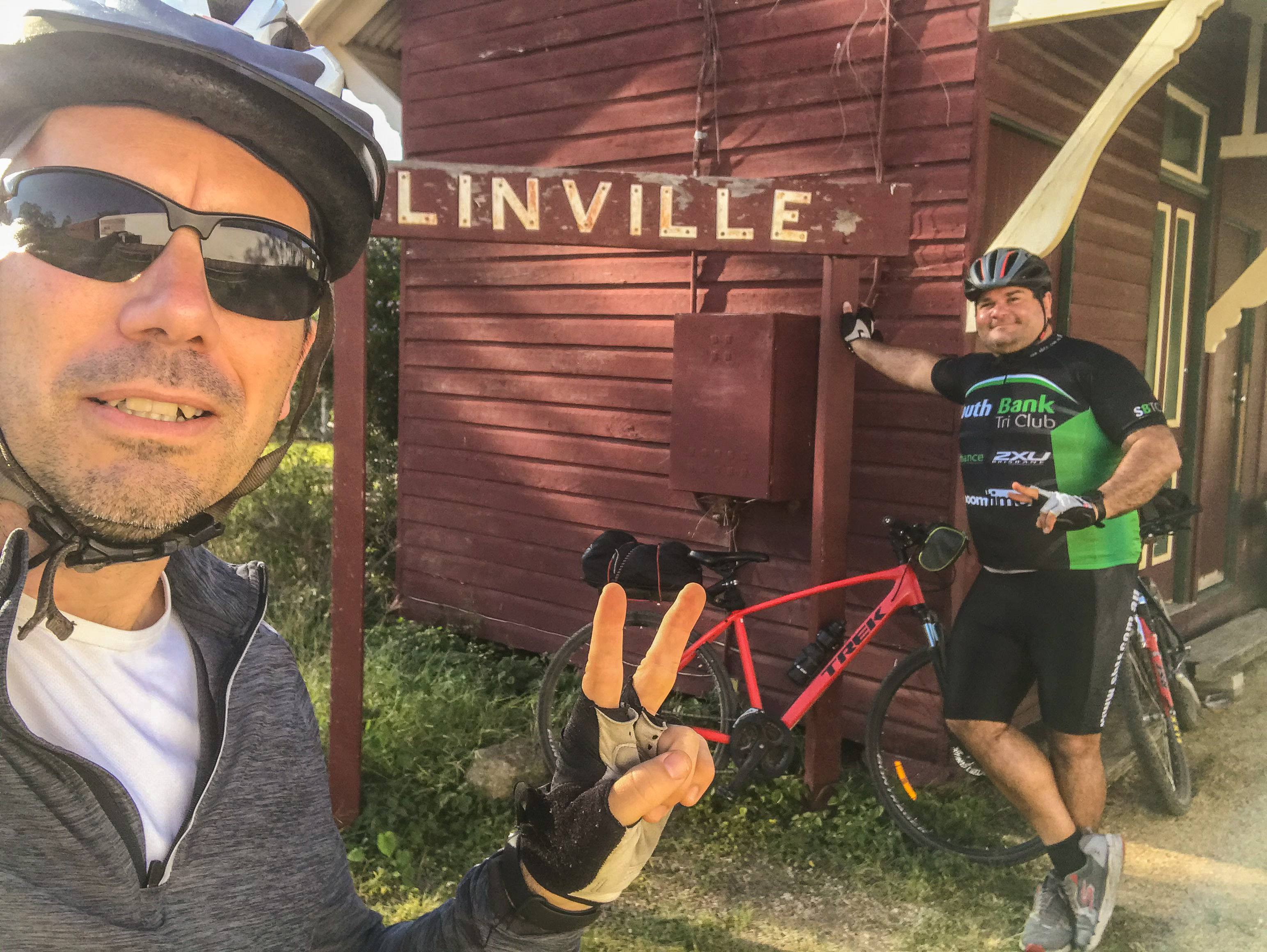
Closing at three, the pub transformed into a peaceful oasis, one in which I envisioned a post-shower nap that never materialised. Jason, naturally, had no problems. I instead popped out and explored the town, taking all of five minutes. It struck me that Linville would struggle to get passing trade if it were not for the rail trail. That, and the free camping area densely populated with COVID nomads.

So, the first day of the BVRT had been safely negotiated and all was well with the bike, the bike rack, the butt padding, and the humans. Until that pounding headache and fatigue and rush down to the toilet block to empty the mish-mashed contents of my stomach. In a dramatic turn of events, would I make it through only one day? Would we need to call in the medics? Would I ever get a goddam coffee on this trail?

Day 2: Linville – Esk (52 kms)

I guess the header gives it away. I survived. In fact I somehow prospered. This was the best of days: no rush to get anywhere, me, my bike, my mate, the sun, a massive coffee, and some other foodstuffs thrown in and not thrown up. 

The day commenced with a rising sun over a patchwork of mist from the top floor of the Linville Hotel. The sun kissed its first light on the Lycra bunting, dangling like the dismembered ghosts of cyclists past. Gradually the shadowy figures disappeared as small groups set off. We were the second last to go, just an e-bike left charging for those who have the power to linger.

It was a good start, especially as the first stop – Moore – was only seven kilometres down the road. I say road, but of course I mean trail, which continued to be decorated by avenues of eucalyptus and interrupted by deep gullies.

Moore appears even smaller than Linville yet boasts three places offering coffee. Wary of yesterday, I pray we choose the right one. In the end, the coffee comes, which is an improvement at least. It’s one of the biggest cups of coffee I’ve ever had in Australia, more akin to the stupid sizes you get as standard in those awful chains in the UK. In its gigantic bucket, the coffee took an age to cool down, but at least a second breakfast sausage roll kept me replenished.

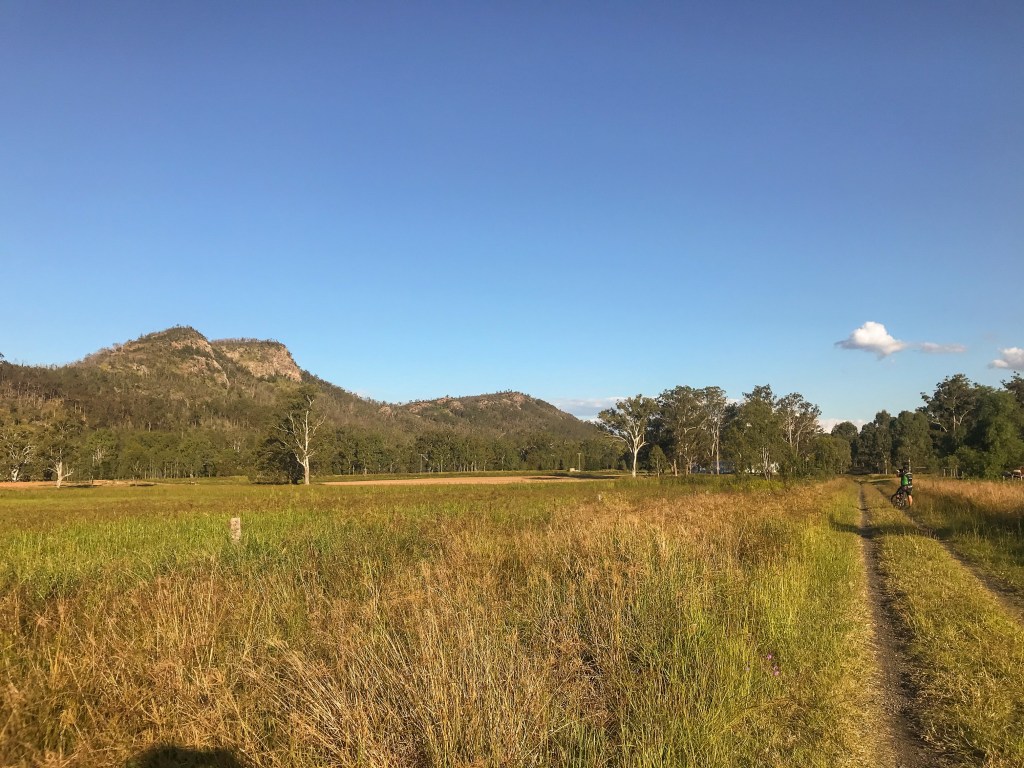
After Moore, the landscape opens up considerably; wide fields undulate gently towards more prominent ranges while patches of forest become fewer and farther between. The trail even takes in some steeper rises which I’m sure weren’t part of the original railway line. Like the train in Dumbo – I think I can I think I can – I am elated with my first KOM achievement.

Another notable rise appears on the outskirts of Harlin, the next town of sorts along the way. Again I am pleased that I make it but also pleased to see some seats and a shelter at the top. It’s a bustling hive of activity as wheels spin, chains are cleaned, and flasks of tea are drunk. A gathering of older riders have made it all the way from Bundaberg or Rockhampton or somewhere like that (I forget), this now their eighteenth day on a bike. I don’t quite feel as smug having managed to overtake a couple of them on the way up.

We seem to play tag with this group for the rest of the ride. The trail’s kind of like that. All the time, in cafes and pubs, on picnic tables and in parks, you see people you think you have probably seen before but often can’t quite remember. Typically exchanges involve the matter of where you have come from and where you are going, intended bakery stops, occasional technical bike talk that goes over my head, and – increasingly – saddle sore. You leave it all out on the trail.

In these entanglements I figure we are perhaps a little more memorable to others. I say we but I mean Jason, masterfully contoured within his Boomtime bodysuit; I’m just that nondescript guy accompanying the big unit. Sometimes setting tempo on a gradual rise, other times trying to keep up on flowing descents. Organising accommodation and strategising food stops. Encouraging progress to the next town for running remediation. Hang on…I sound like a bloody domestique!

After Harlin I find myself pacing us past a rider and on towards a landmark. A damp dark hole doesn’t sound like much of a tourist attraction, but this is Yimbun Railway Tunnel, constructed in 1910. It’s the only tunnel on the entire length of the trail and I am pleased to see it, given my initial horror approaching what looked like an unscalable hill. Stops for photos and cooees are all the rage.

On the other side we progressed onward to Toogoolawah where it was most definitely time for some lunch. Our hilltop friends from earlier were encamped at a couple of shady picnic tables feasting on the provisions they had carried. Travelling light, we sought out a business that would feed us. This proved harder than one might expect – being a public holiday, the town was almost desolate. Salvation was once again in the form of the pub, and a pretty decent burger.

It was at the pub that I struggled to stay awake and was uncertain how I would manage to start out all over again. Rooms in the inn certainly had an appeal. I was also being bothered by an energy company desperately trying to cling onto my business after taking my money for many years without the slightest pretence of customer service. This is largely irrelevant and uninteresting until it got to the point where I was pleased to get back on the bike to escape a world of 4G.

Back to the simple life where it was just you, a bike, and a mate bringing things to a halt in an attempt to increase comfort. The trail rose steadily from Toogoolawah for quite some time before a delightful plunge down the other side. With time pushing on, the afternoon presented the countryside in a warm, attractive light. By the time we reached Esk, there wasn’t so much left. 

Usually you’d think 52kms would only take a gentle three hours. But factor in gravel, gully crossings, stops to take pictures of cows, the time required to wait for a ridiculous sized mug of coffee and then drink it, distractions with energy sales sharks, and – progressively – pauses for gooch care, and you have a full day out.

It’s more tiring than you think too. Which may explain why I called Jason a moron outside the IGA for just assuming it would be open forever. We joked about it afterwards, ate mediocre food at the local pub and capped things off with mugs of ice cream in a motel room. I’m sure this is exactly how riders experience the Tour de France. Especially the domestiques.

Day 3: Esk – Wulkuraka (67 kms)

Okay, this may sound like I had lost by mind but there were times on the third day where I literally felt like an express train. No, more like one of those old clapped-out British Rail stopping services between Basingstoke and London Waterloo with the heavy slam shut doors. There was something about the slow acceleration, easing away and eventually building to a steady pace as we progressed through the trees between Esk and Coominya. Once on the blessed descent from Mount Hallen, speeds were probably matching those of the 8:07am to Woking.

We had departed Esk early as we – literally – had a real train to catch. The sun was only just rising above the horizon and it was more than fresh. But the plus side of this was the wonderful golden light over fields of grassy tussock, dewy spider webs, and the splendid nose-clearing aroma of gum trees embracing the day.

The section from Esk to Coominya is the longest without any civilisation and a large part of it cuts through the bush. By time you reach Coominya, you are more than ready for a coffee and treat. But good luck with that. Google Maps told me of a place called the Blue Teapot Café but unless I got my map-reading wrong (which is extremely unlikely), it appeared to be a petrol station / tackle shop / muffler supplier / chiko roll purveyor. They did have reduced price Cadbury Twirls though, more disintegrate than melt in the mouth.

Fortunately, Lowood is an entirely different proposition and just a further 12 kilometres on. We once more came across our old friends from Rockaberg and the going was pretty good on a well-groomed, mostly flat section. With the D’Aguilar Range rising up on the eastern horizon, there was a sense that Brisbane wasn’t too far away. Just over those hills.
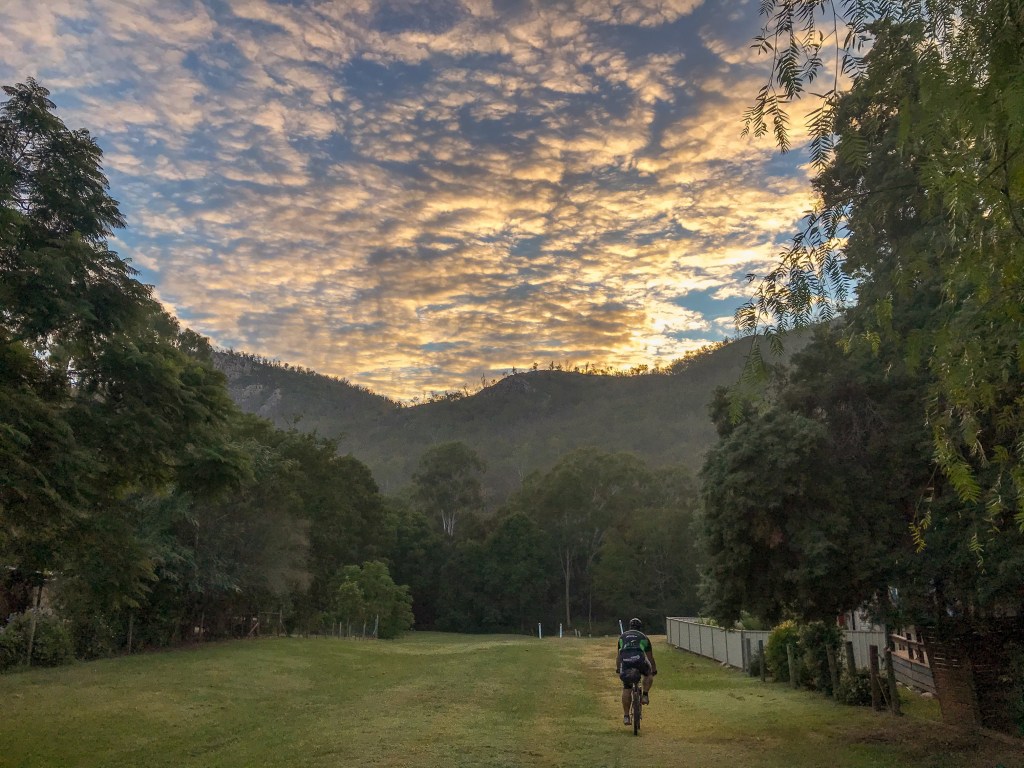
Perhaps it was all to do with timing, but Lowood proved the liveliest town along the trail. There was of course a bakery, but we went upmarket and sat down in the local café instead. Across the road, a well-tended park and amenities offered comfort and convenience for the weary rider. A water bubbler provided a refill while I waited for Jason to do whatever he was doing.   

Lowood also brings you closer to the Brisbane River as it feeds out of Lake Wivenhoe. You never really ride next to it, but at least there are a few glimpses here and there, just to remind you that – oh yeah – this is the Brisbane Valley Rail Trail. Compared to life at the other end, the landscape is much more open and there is feeling of settlement and civilisation accumulating. Indeed, the next town – Fernvale – is only a further eight kilometres.

I had heard several times – in those exchanges between BVRT veterans – that the Fernvale Bakery had some seriously good pies. So continuing our poor food choices we decided to have brunch instead. It was okay, but nothing to write home in a blog about. Hanging like a shadow over the experience, too, was the sense that we needed to get moving to catch that train.

Further delays around the public toilets in Fernvale allowed me to catch up with another rider who recognised us. Apparently, he was on the table opposite at the pub in Esk. He had been carrying everything – camping gear and all – on his back and was very much looking forward to the end. I felt fortunate to have stayed in proper rooms and for buying a $16 bike rack from Kmart. The best investment ever, cheaper than an underwhelming brunch. 

Nonetheless we were all at that point where the end couldn’t come soon enough. It was a further 23kms from Fernvale to Wulkuraka and much of the novelty and thrill had worn off. Some of the track was quite sandy and while it never reared up like an Alpe d’Huez, there was this endless perception of drag. At one point, some naughty trail bikes came at us from the other direction and you knew suburban Ipswich must be close.

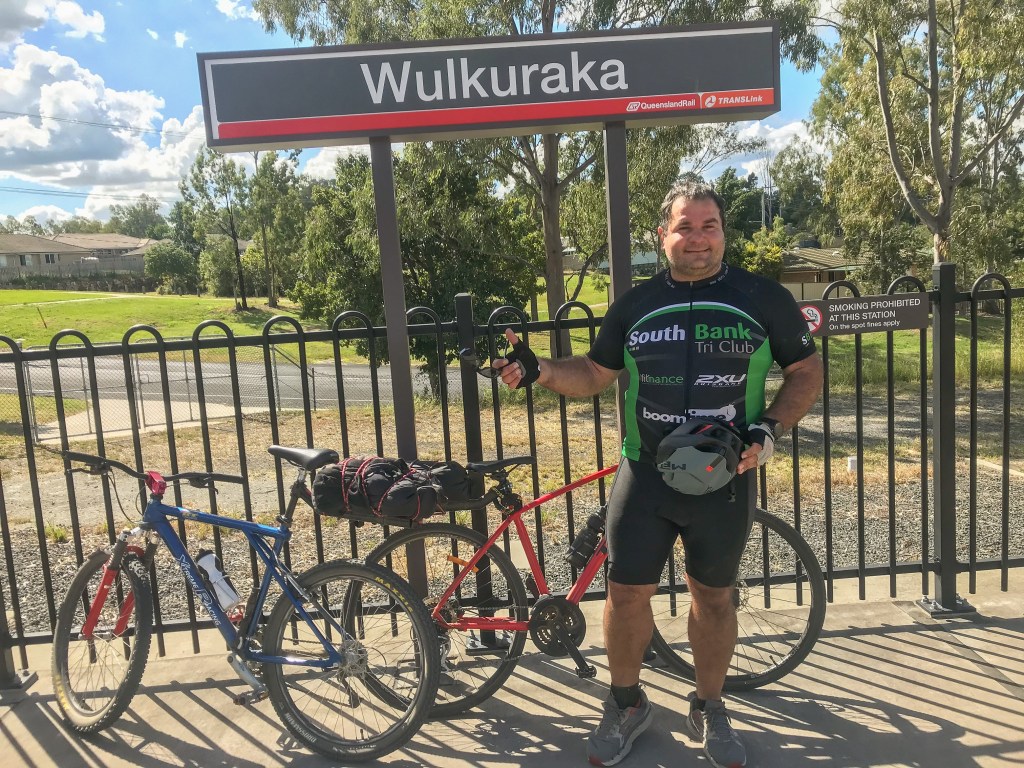
A sign indicating 5.2km to Wulkuraka rears out of smooth white concrete. The bike trail has become a modern, formed bike path and it’s the shot in the arm needed. We reach speeds previously unfathomable, picking up slipstream until the interruptions of traffic islands and a final little upward thrust. The penultimate hundred metres navigates the pavement alongside a row of compact townhouses. Ticker tape, fireworks, applauding admirers fail to materialise. There’s not even a sign.

Still, we have made it. We made it! I had my doubts at times. But I think there were so many things to keep us going. The green and pleasant countryside, which is never going to take your breath away but comforts like a mild June day along the lanes of Southern England. The towns and businesses, feeding us and watering us and giving us a mixed bag of dining experiences that could do better. The public amenities and tiny stores offering hope and comfort to ease accumulating ailments. The many other riders, offering this amazing feeling of camaraderie and shared experience.

And, of course, mateship made it one of the most memorable trips ever. The big unit. The boomtime body-suited, gooch-afflicted, cow-whispering Jason. You were there at the end, still batting strong and keeping me going. For every one of the 161 kilometres, the 2,300 metres up and the 2,600 down, it was an absolute pleasure to have you by my side. Or ten metres behind, making adjustments.

Australia Green Bogey

Plenty

Many of Men at Work’s lyrics from that infamous song are undoubtedly insane. And for a sparsely populated continental land mass frequently sun-baked and on the very fringes of survival, there are legitimate question marks about its plentifulness. Plenty in size and scale and cultural history. Plenty in coal and iron ore and brazen luck. Plenty in toilet roll, despite everything.

Today, in the natural world around me, there appears again this land of plenty. Turn back a year and there would have been much head-shaking at such a thought. A cruel fantasy. But since that point, we’ve had plenty of rain resulting in plenty of growth leading to plenty of productivity. Not all of this is welcome, with rabbits and mice and locusts replicating at the rate of viruses in Kent. And the plentiful fruits of this rejuvenation are proving challenging to reap without a stream of acquiescent backpackers.

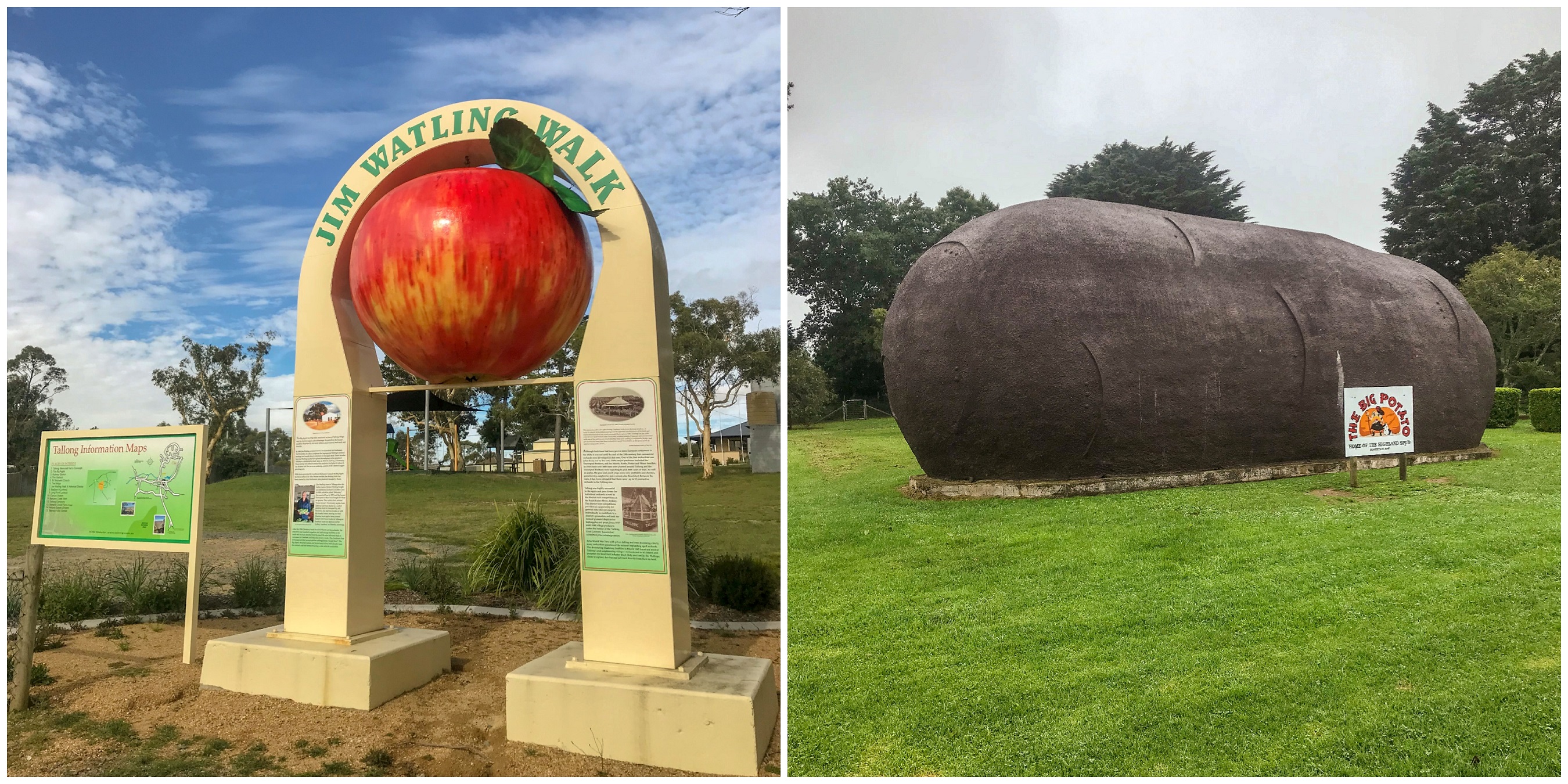
Still, “she’ll be apples” as they say. Surprising apples if you find yourself on a road between Bundanoon and Marulan. I was heading back from a day of plenty when I spotted a small sign saying ‘Big Apple’ pointing to the left. Already astounded by the incredible-in-so-many ways Big Potato, the apple emerged as a more subtle dessert.

Giant fruits and vegetables are apt in the Southern Highlands given the land is – for the most part – rich farming country. Babe was also filmed around here, combining perfectly with some of the local apple sauce and roast spuds. I could see snatches of Babe country throughout, supercharged by the verdant green rolling landscape, scattered with fine weatherboard homes and lacy verandas. Such is the well-groomed nature of this land, that it comes as a dramatic contrast when the countryside falls suddenly towards the sea. Delivering plenty.

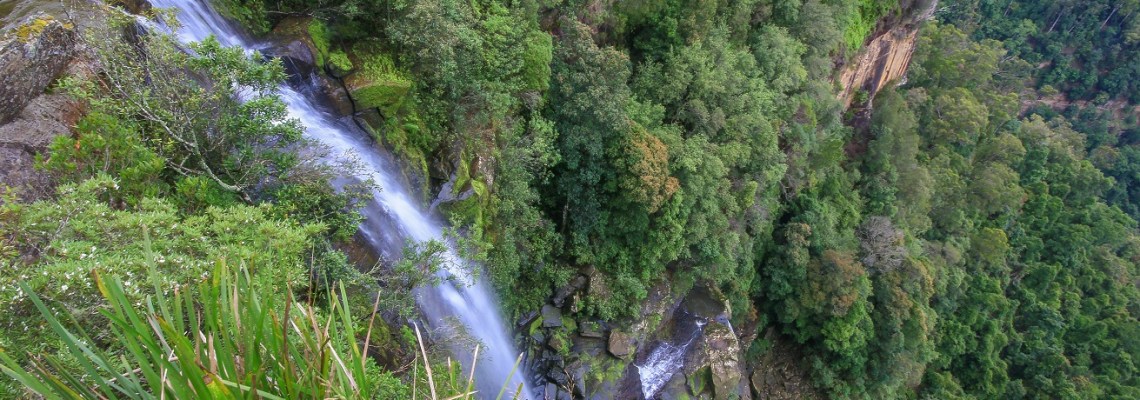
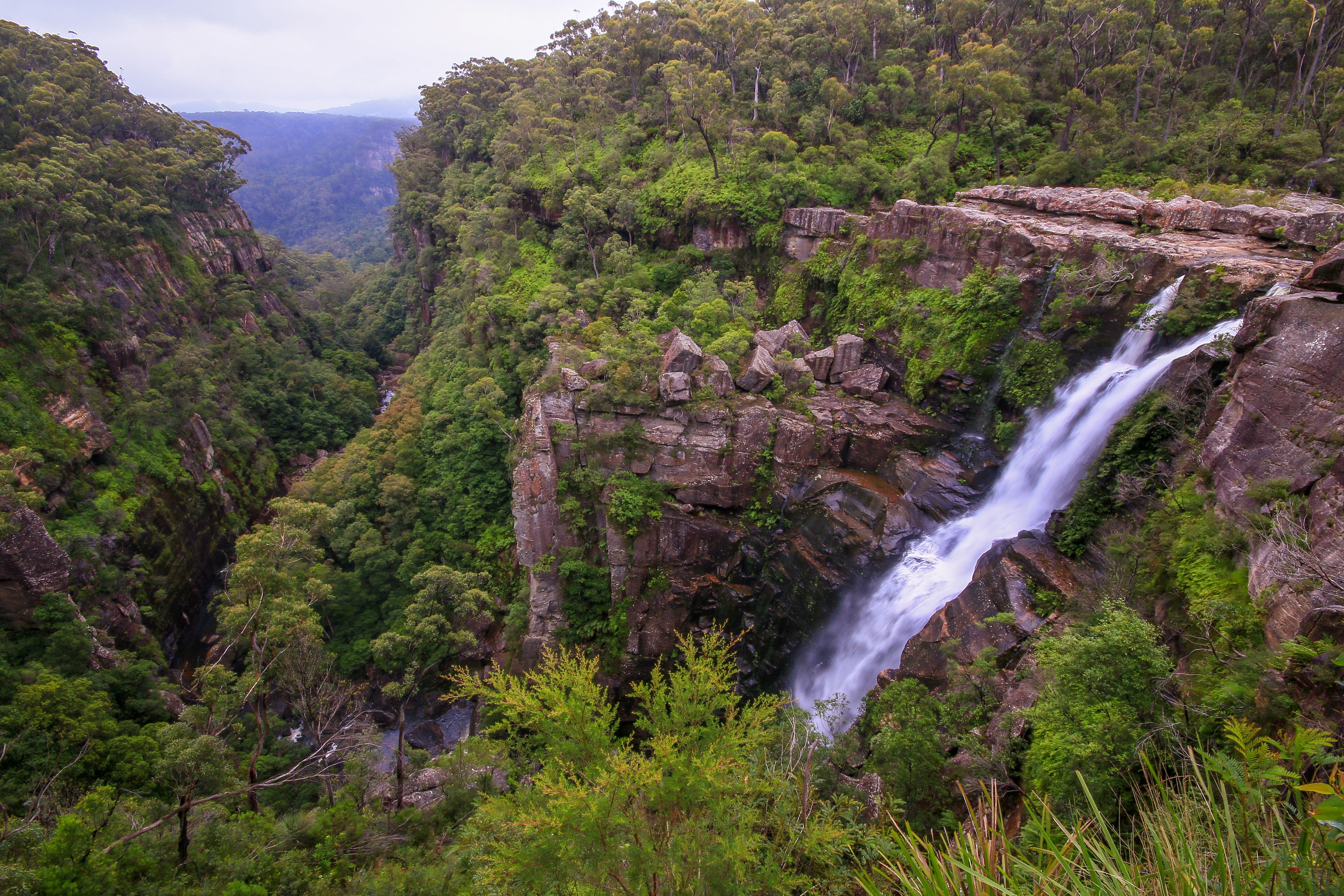
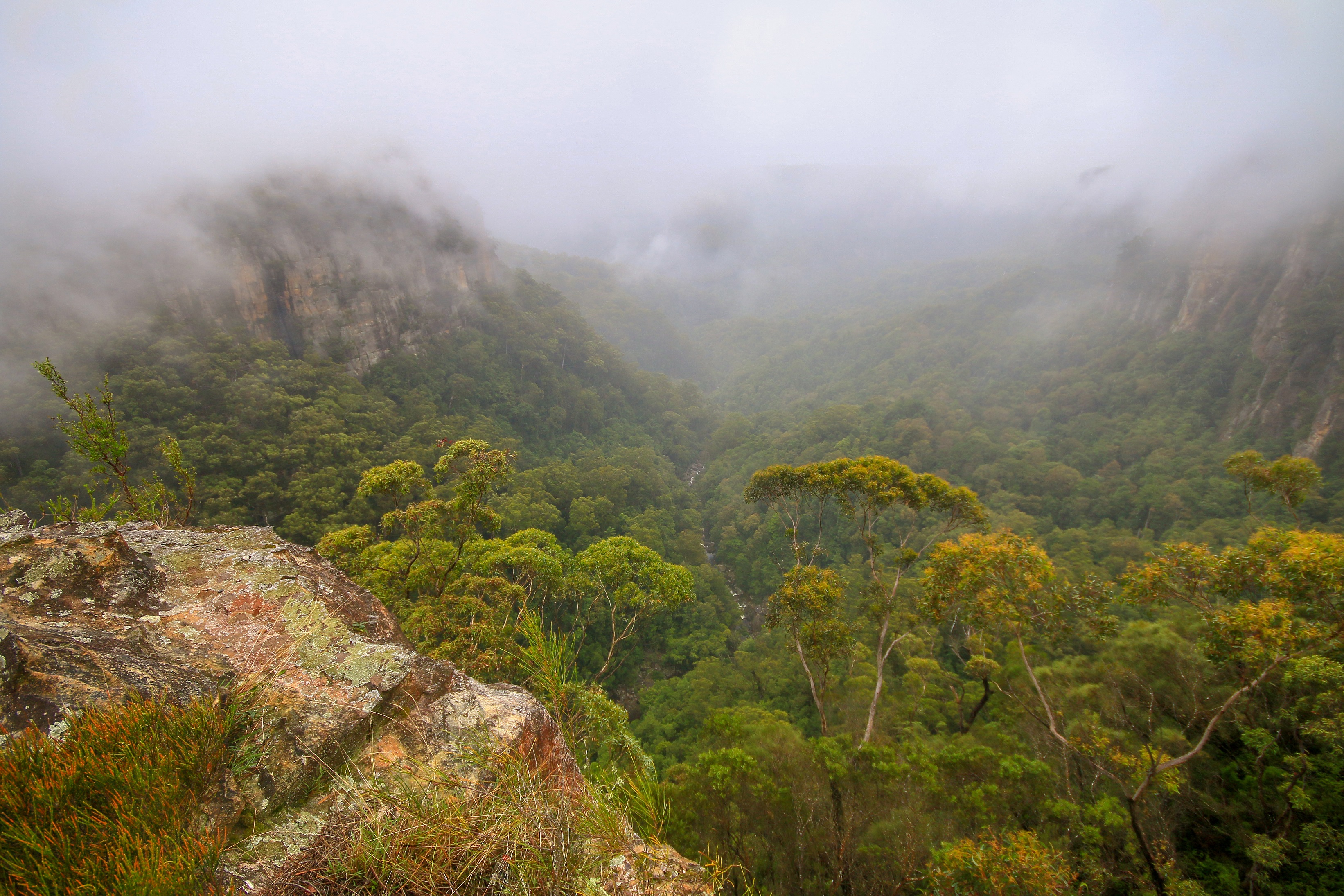
This happens at Carrington Falls, situated within Budderoo National Park to the south of Robertson. It was a misty, head-in-the-clouds morning, the kind that lends itself to Jurassic Park moments. Tall white trees disappear into the clouds, giant ferns at their base dripping with beads of moisture. The air smells earthy and rich, peppered with wafts of cool mint. Only the fizzing sound of water signals a break in this most stagnant of scenes.

Several lookouts provide the wow factor, the intake of breath, the magnetic allure of millions of litres of water falling fifty metres into a deep pool. It is unclear whether the mist swirling through the eucalypts are remnants of waterfall or lowering fingers of cloud. I suppose they are all part of the same big cycle taking on different forms. Steaming glasses and feeding natural spectacles.

I’m surprised by how busy the place is on a cool, damp Monday. A steady flow of visitors park up, loop along the lookouts and leave again. Most pause for a picture or two, alternating between ultra-serious brooding to comical selfies. One senior lady poses with what looks like a car windscreen shade over her head, arranged to resemble Mickey Mouse ears. The youth – students from Wollongong I suspect – brave the waters of the creek before they succumb to gravity.

There is another turn off near Carrington Falls that suggests further valley lookouts. I head to the first and closest, greeted with even denser mist and a disappearing view. Fine rain is now falling and – for February – it’s cold.

Back near the car and now thinking of a warming lunch, a sign points to something called Nellie’s Glen. It’s only a hundred metres, which is hardly going to delay the arrival of comfort food. And what a pleasant surprise this turned out to be, a gorgeous pool fed by gently cascading waters. The kind of place on a warmer day to soak and swim and avoid water dragons and hope that leeches aren’t longing for a bit of attachment.  

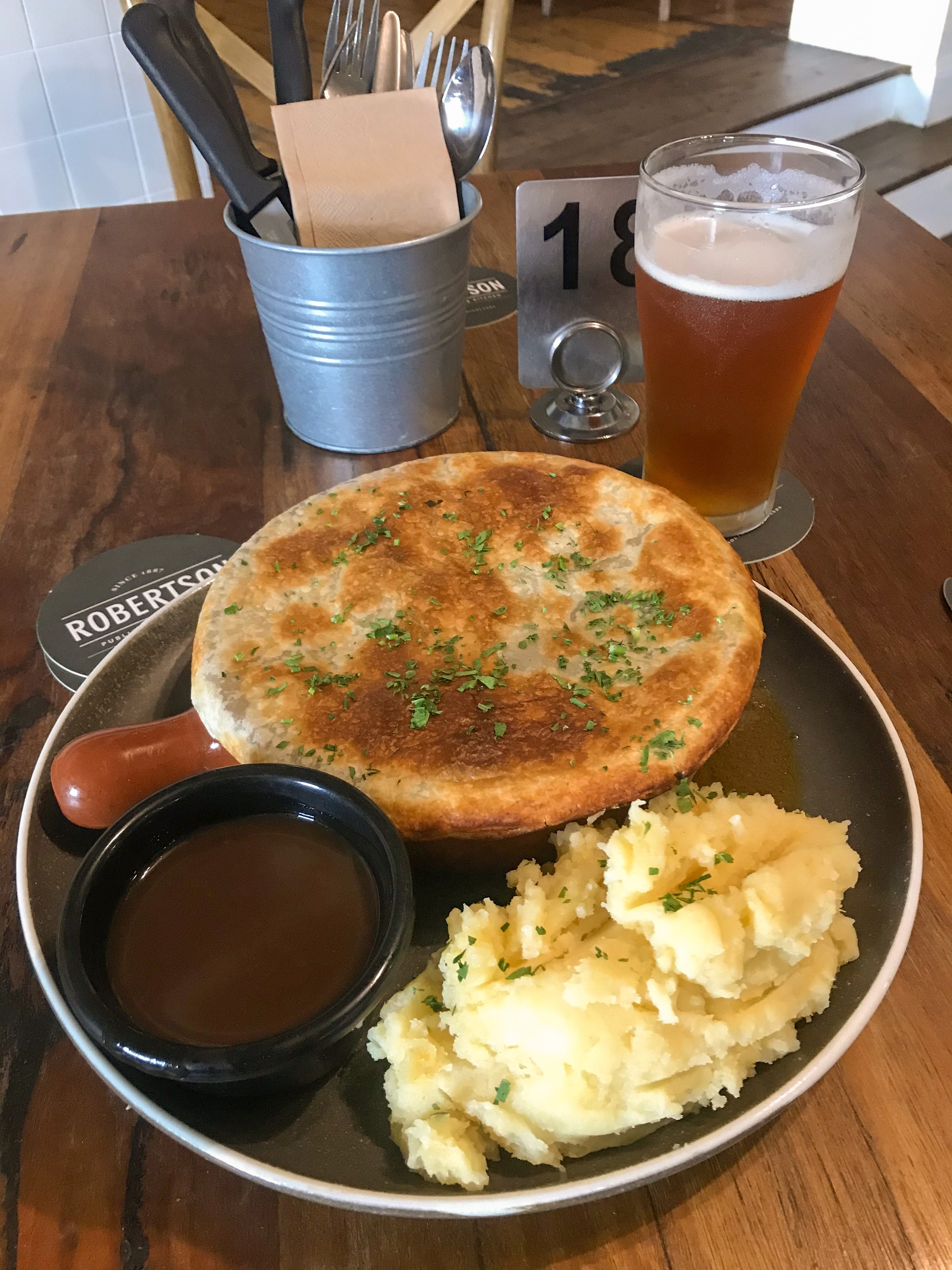
With other lookouts and a campground I feel there is unfinished business in Budderoo National Park. But my mind – and stomach – has become fixated on pie. At the junction with the Illawarra Highway stands the self-proclaimed ‘World Famous Robertson Pie Shop’. Have you heard of it over there? It looks exactly the kind of place that would disappoint and end up on the news as a COVID hotspot. A pie of plenty instead came at the Robertson Pub, no doubt known as The Robbo, oppo the big potato.

It was perfect weather for pie and mash and gravy, washed down by a surprisingly good local ale whose name I sadly do not recall. Such feasting naturally induces a contented lethargy that makes the thought of further activity, further driving, further walking, further gazing at amazing, just that little bit less enticing. But I had to get home somehow, and there was still a waterfall way to go.

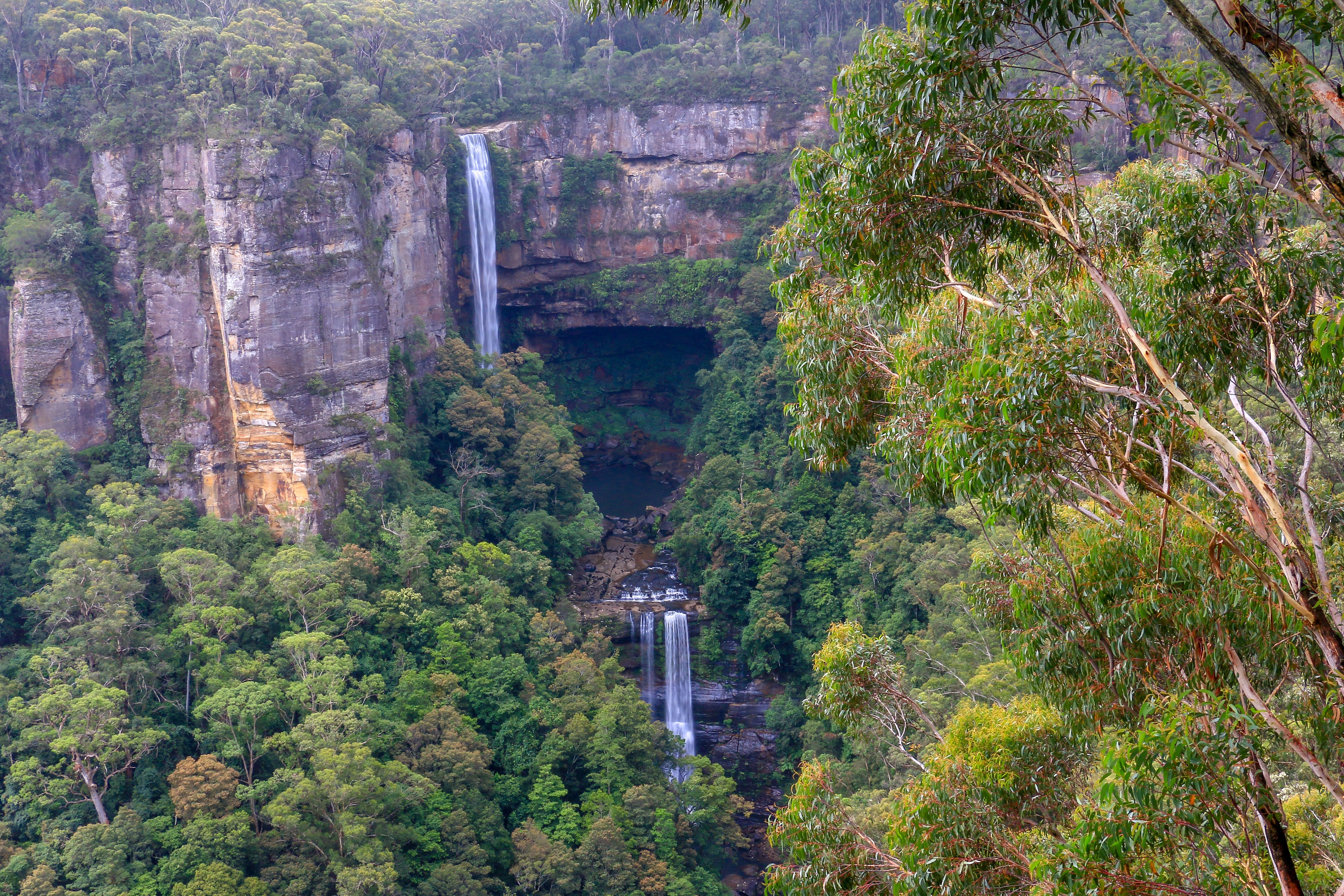
Thus the afternoon heralded Belmore Falls, a double delight viewed from afar. Some people had managed to find closer views next to the top of the falls and a couple – spied through my zoom lens – had made their way between upper and lower falls. I figured, judging by the size and athleticism of said couple, that it couldn’t be too hard to reach, though how they did so remains very much a mystery. Perhaps abseiling or helicopters were involved.

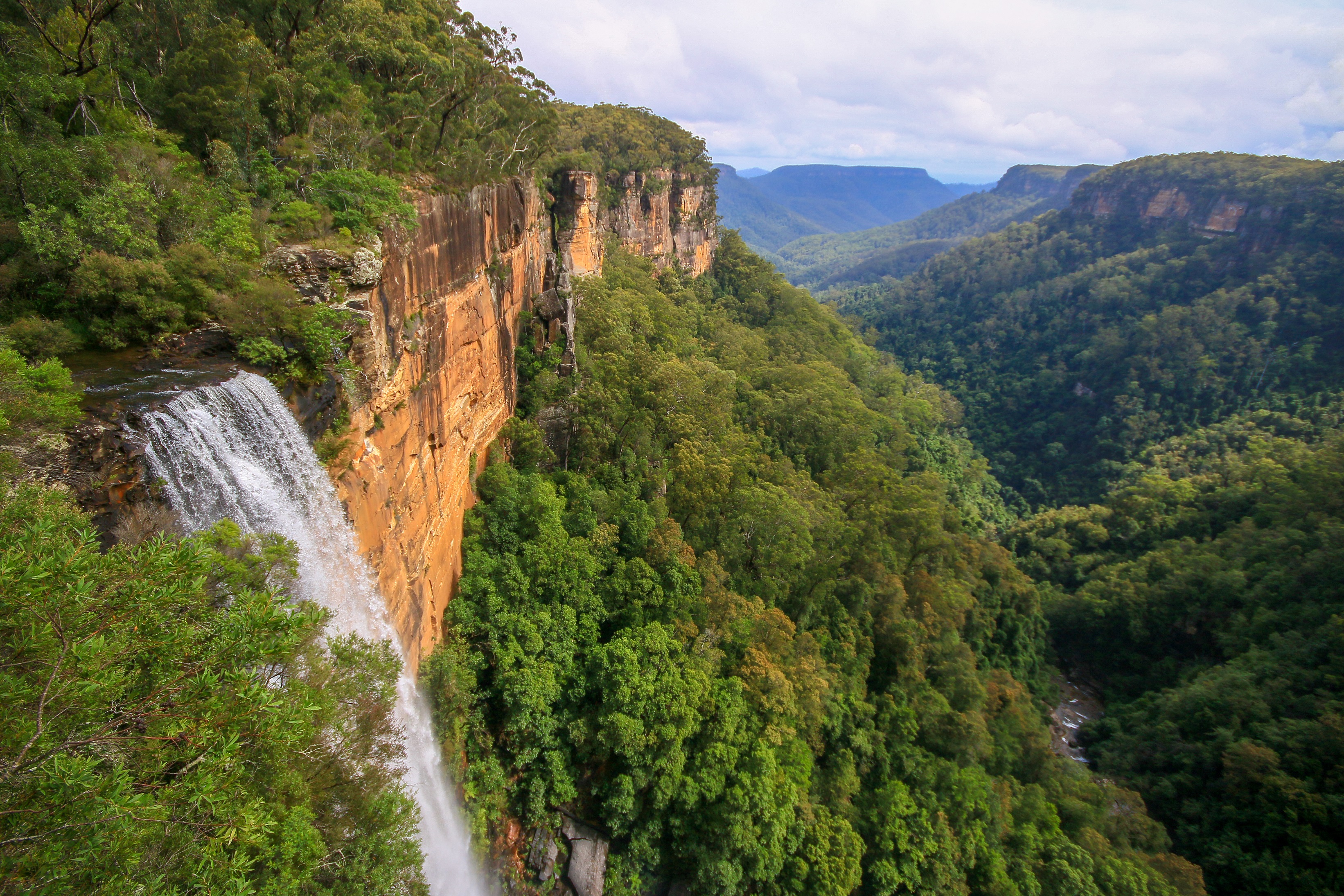
The drive from Belmore Falls to Fitzroy Falls proved joyful, a pocket of pure Babes country starting to welcome a brighter, afternoon sky. At Fitzroy Falls itself – the trustiest and most accessible of the waterfalls in this area – I felt a little as though I was going through the motions, but walked and stopped and took photos and gazed out in awe nonetheless. As well as both Fitzroy and Twin Falls adding to the daily tally, the view into the Yarrunga Valley never fails to enchant.

By the time I passed through Exeter and Bundanoon and abruptly turned to the left in Tallong, the sun had started to reassert itself and offer some welcome warmth. Better conditions for ripening apples I would imagine, and less potato friendly. A landscape now drier and more typical of great swathes of eastern Australia.

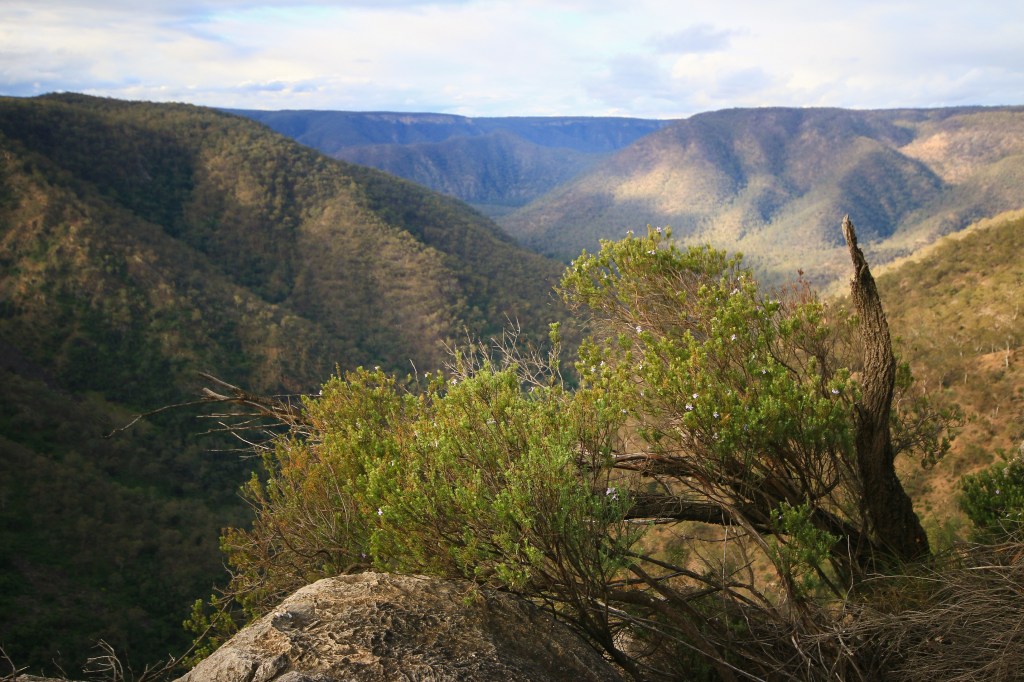
As a final stop before joining the highway I detoured to Long Point Lookout, where a spur of land thrusts itself out into an incredible wilderness. Below, some five hundred metres, the Shoalhaven River turns 180 degrees, carving out the steep hills and ravines which disappear off into the distance. All that water has to lead somewhere, and the Shoalhaven is quite a remarkable gathering of natural forces.

I spent a good half hour at this spot, as the late afternoon light cast itself in fits and starts upon the scene. Not one other car, not one other person stopped by during that time. Somewhere else, in another continent, in another country I couldn’t imagine such absence, such indifference. It would be a highlight, a spectacle, hustling with people and coaches and tacky souvenirs.

Here, it was as if no-one else knew. Here, in a country of vast open space, of forests and gorges still existing untouched, still largely unexploited, it was nothing special. Just another view, just another scene, just another place. And surely that is what makes it a land of plenty, he said, smiling with a Vegemite sandwich.

Australia Driving Food & Drink Green Bogey Photography Walking

Covers

The return of the traditional road trip has been another much vaunted consequence of our most recent history. With nowhere to flee overseas, we are discovering our homelands, our paddocks, our backyards. A large proportion of this adventuring has been undertaken in kitted out camper vans, luxury coaches, or simply a mattress in the back of a beat up station wagon. Canvas roofs have blossomed in trodden fields of green, the sound of mallets beating tent pegs as widespread as cicadas.

Initially when the pandemic hit, and uncertainty was rife, I thought I could do this if it came down to it. Fruit would need to be picked somewhere or fences would still be in need of repair. Possessing a swag, small dome tent and station wagon, sleeping options could be mixed and matched, while the trusty camp kitchen box could cater again for bangers and mash in thirty five degrees. There is a dreamy, deep rose-tinted quality to these visions, one that conveniently overlooks the discomfort, the dirt, the sweat and the toil.

As it turned out, I was lucky enough to be able to sit in front of a computer all day and receive the compensation of a regular income. But these wistful visions of a nomadic life have never quite gone away. The compromise has been day trips into the country, eventually culminating in a night on a mattress in the back of a beat up station wagon. Another night became aborted because – well – I could just make it home, and I began to question my commitment to life almost under the stars.

Yet a new year brings new resolution so we are led to believe, and with the prospect of more distant travel still a distant prospect there is logic to be had in persevering. What if I could make 2021 – or at least the warmest parts of 2021 – the year of the camping weekend? Could this provide – in its own way – a new purpose to fill the void that is the Centenary Trail?

Only time and possibly this blog will tell, but with this idea still racing through my mind like an out-of-control hamster wheel I swiftly purchased a new tent online. Click and collect from BCF in two hours.

I have always poured scorn on BCF, mainly because their adverts of boating, camping, and fishing escapades are layered thick with Australian drongoism. Like you can’t boat, camp or fish if you went to university. Or it is simply unheard of to do these things and care about the environment and refugees and good coffee at the same time. Only blokes in thongs with a nasal dislike of political correctness can go boating, camping, fishing. 

I suspect I read too much into it. The process was very efficient. The lady in Fyshwick who handed me my tent was perfectly lovely. A new tent to add to the swag, the 2 person dome, and the mattress in the back of a beat up station wagon.

You may well ask why I even need another tent and I would say that what I need is something that doesn’t give me as much of an excuse to turn back for home. Something that – as I march towards wisdom over youthfulness – is less of an ordeal. What I need is something more akin to glamping than it is to homelessness.

And so that is how I found myself erecting a brand new ‘instant’ four person tent at Mount Clear Campground in the southern part of Namadgi National Park last Sunday. With my pristine tent, deluxe airbed, comfy lounge chair, I looked every part the newbie amateur who had just splashed out on some shiny things for Christmas. Not the hardened traveller who had done three months in a swag and persevered with bangers and mash in thirty-five degree heat.

Only the rumpled, irregular mallet hints at greater experience. With this in hand I pleasingly managed to erect the tent quickly and efficiently, as though I knew what I was doing. To say it is an instant tent is probably an overstatement once you take into account pegs and guy ropes and – should you wish – a shady awning. But it was a reasonably simple erection, and I was happy to find ample room for my deluxe mattress and comfy chair and body standing in an upright position.
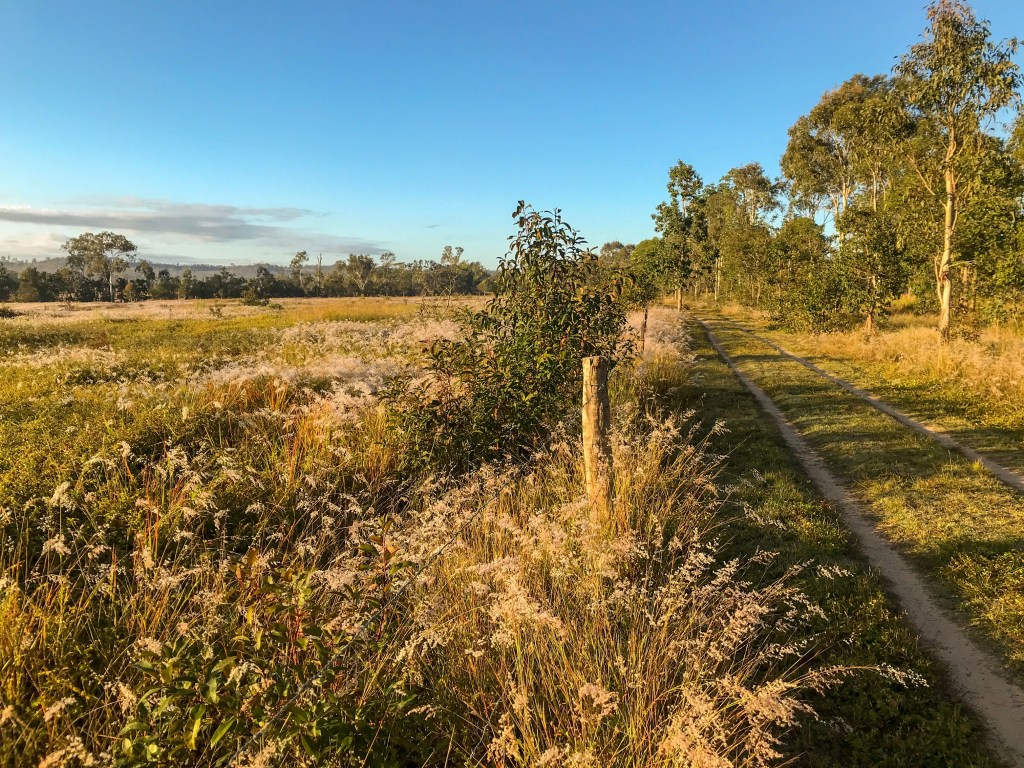
The more taxing part was choosing where to pitch the thing, given so many lovely-looking spots. In this respect, an estimation of neighbours is instantly required – deciding between a cluster of boomers and a foursome of millennials, while a BCF loyalist blares out some country and his kids run amok. All potentially troublesome, yet also reassuringly present.    

In the end I inched slightly closer to the millennials, which ended up a mistake when they decided to stay up around the campfire until after one. But a home is a home and not only did it stay upright and protect and comfort, but it also came with some of the most generous backyard within our little capital territory.

From settler’s huts to magical vistas, over swampy plains and through one year charred trees. An urge to pee brings staggering night skies, turning to gold as birds and boomers rise. There’s a hike through meadows, there’s wading through a creek, recovering with camp stove coffee and old Christmas cake. And then replenished, full on nature’s bounty, there’s a home to dismantle, and achievement to take.

The tent managed to fit back in its bag.  

Australia Driving Green Bogey Photography Walking

One year

The Tumut River is proving a soothing spot. In spite of its swift flow, fed from the elongated dams of the Snowy Mountains, there is something becalming being upon its banks. Boasting more of an aquamarine shade than the sedimentary highways of the Murrumbidgee and Murray, it is a waterway begging to be paddled or fished. Or simply enjoyed from under the shade of a majestic River Red Gum – as long as you can overlook the fact that these trees have the pesky habit of randomly dropping their hefty limbs.     

Various tributaries wind their way over fertile plains enjoyed by cattle and horses, mystery roads leading off into hidden valleys with panoramic landscapes. In Tumut itself, the river transforms what would be a pleasant enough little town into something more beguiling. Sitting among green parkland below the town centre, there may me a little part of water meadow England evoked. If you ignore the cackle of the cockatoos.

It was just under a year ago that I found myself here being rejuvenated after a day of hard labour pulling down fences in the hills behind. Sit in Tumut today and you would be hard pressed to imagine how fraught it would have been on January 4th, 2020. Approaching from the west, the Dunns Road Fire ravaged through Batlow and the Green Hills, cresting the Snubba Range and spilling down to and over Blowering Dam. It went on to merge with other large fires in the area, sweeping through pristine sections of Kosciusko National Park and the Snowy Valleys, before lapping at the edges of the ACT.

One year later I found myself in Pioneer Park sitting beside the river once again. It shows what an absolutely legendary year 2020 turned out to be that I had forgotten exactly where the fires had hit. No longer obsessively checking Fires Near Me I thought, for some reason, that the Dunns Road Fire had stopped on the western shores of Blowering Dam. Driving south from Tumut, it didn’t take too long to realise my oversight.

For sure, the western side of the dam is still quite a shock. Made up of plantation forest, the hillsides remain largely bare, apart from the blackened matchsticks of pine. Somewhere up there on the ridgetop, I wonder how Paul and Andrea are going on their farm, and whether Smiley has cheerily constructed a new hut. Hopefully the fences are still standing.

Down on the water, there is a somewhat normal scene of socially-distanced summer holidays playing out – all gargantuan encampments and four wheel drives and boat trailers. An emu pokes its head above the undergrowth, no doubt fleeing the meltdown of a toddler who just really doesn’t want to go anywhere near the water thank you very much. They seem to be everywhere.

Along the southern end of Blowering Dam, the impact of a year ago becomes clear as blackened trunks spread upwards to the east. There is regrowth, but it is thinned-out vegetation, revealing rocky, barren outcrops that probably haven’t been visible for years. Jounama Creek – a spot for camping and walking potential – seems less appealing than I expected, and I drive on.

From here it is quite the climb to Black Perry Lookout. Offering an impressive view out into the Bogong Wilderness, an information board makes it clear just how different things looked before the fires. In the picture, the peaks are still there, but cloaked in a swathe of lush green foliage like some kind of Jurassic Park. The picture also – frustratingly – features a much crisper, bluer sky than so far today. Both will come back, I hope.

The lookout is naturally a popular stop for trucks and caravans and trailers to catch their breath. One caravan seems to have had enough and the NRMA are being called. A clutch of potbelly bikers convey that menacing grizzled look that frequently becomes undermined by softly spoken, friendly chatter. One young guy appears anxious, on the phone to try and arrange a permit to access the ACT. Fire knows no boundaries and, for all we can try, neither does COVID.

My plan was to walk to a place called Landers Falls Lookout, lured by the promise of both falls and a lookout. It was either a ten kilometre there and back again or a swift 1.6km stop off from a four wheel drive parking area. I initially figured my car would be okay – it usually is – and inched down a big dipper of a rockfest. The way onward looked equally awful and – new year, no new words – I decided it was best to pivot. Back to the parking area for inadequate cars.

And so a longer walk ensued, but I’m glad about my decision. The car probably would have made it, but it might also have got two punctures, a broken exhaust, and a hazardous brake disc failure. Plus it was interesting and rewarding to tread quietly through this recovering forest, one year on.
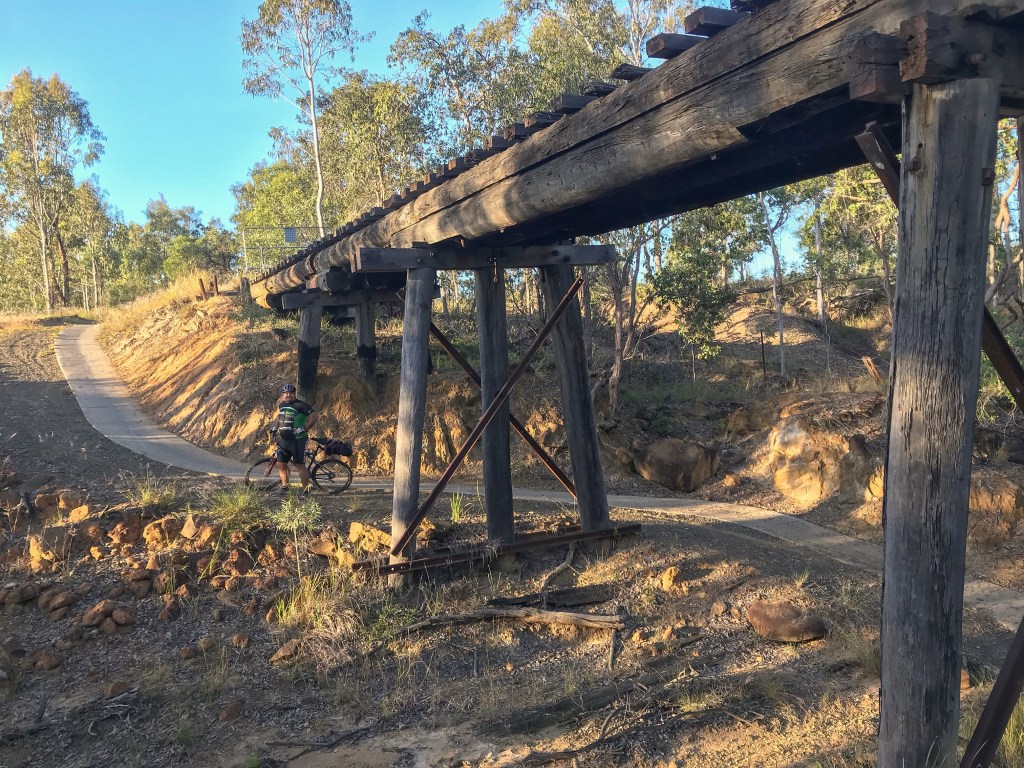
What strikes you most in such worlds is the contrast between still very visible, jet black tree trunks and an overflowing understorey of grasses and shrubs and ferns and flowers. Where the two combine, witness the surreal procession of epicormic growth winding up into the canopy (before a certain pandemic, epicormic was probably the word of the year). The crowns of trees are still deciding whether or not they will come back, a process that will take more than just a year.

My initial fear that I would be sharing this walk with a procession of hoons in souped-up Hiluxes doing it the lazy way were unfounded. Probably because they don’t like to get their shiny blue paintwork dirty. Midway along one vehicle did pass, accompanied by the obligatory exchange of waves. Him thanking me for standing aside, me thanking him for the dust. At least there weren’t too many flies to elevate the experience further. Yet.

There was, in fact, a peacefulness in the forest. In patches the silence was punctuated by gentle birdsong – apart from the easy to spot pair of Rosellas, mostly this heralded from those little indistinguishable critters that hide in the undergrowth. Occasional rustles in the grass signified a lizard or bug or potential snake. I felt a bit more accepting of a snake sighting today, thinking it might liven things up. But it never happened.

This is not without giving the snakes ample opportunity, regularly veering off track to snap pictures of grasses and logs and flowers.

From the 4WD parking area, a non-vehicular route leads over Landers Creek and up towards a couple of lookouts. The sound of running water was a good omen for the falls, as was the vertical climb for a vista. Away from the creek, the undergrowth rapidly diminished, replaced by bare rock, charcoal logs and gravel. Exposed, barren, humid, the perfect time for the flies to welcome me in droves.

I deleted several shots from my camera because of photobombing flies. When you get a clear shot, the first lookout offers panoramic views towards Talbingo Dam, the course of the creek winding down towards its shores. In the near distance, a second lookout appears even more precariously perched upon a towering outcrop.

At this second vantage, the falls become visible and form quite an impressive drop, even in the relative dryness of summer. The landscape is an otherworldly array of arid browns and fluorescent green, the steep hillside opposite lined with black spikes like hairs standing to end. The aerial perspective from this vantage is mesmerising and I enjoy it with a cold pork and pickle and fly sandwich.

Lingering for a while allowed me to pick out some of the minutiae: individual tree trunks clinging to a rock face; coils of epicormic growth leading to barren white crowns; cliffs streaked black; a cluster of ferns glowing luxuriant in a hollow. It was as if I was Google Earth or something.

Lest I get a godlike complex high above, I managed to get a little lost on the way back down. I find every rock and burnt log looks pretty much the same. But following the creek I found my way once again to the 4WD car park and onward much further to my own car. Nearing the end of the trail I passed a family with three kids setting off, satisfied that I’m not the only one with an inadequate vehicle.
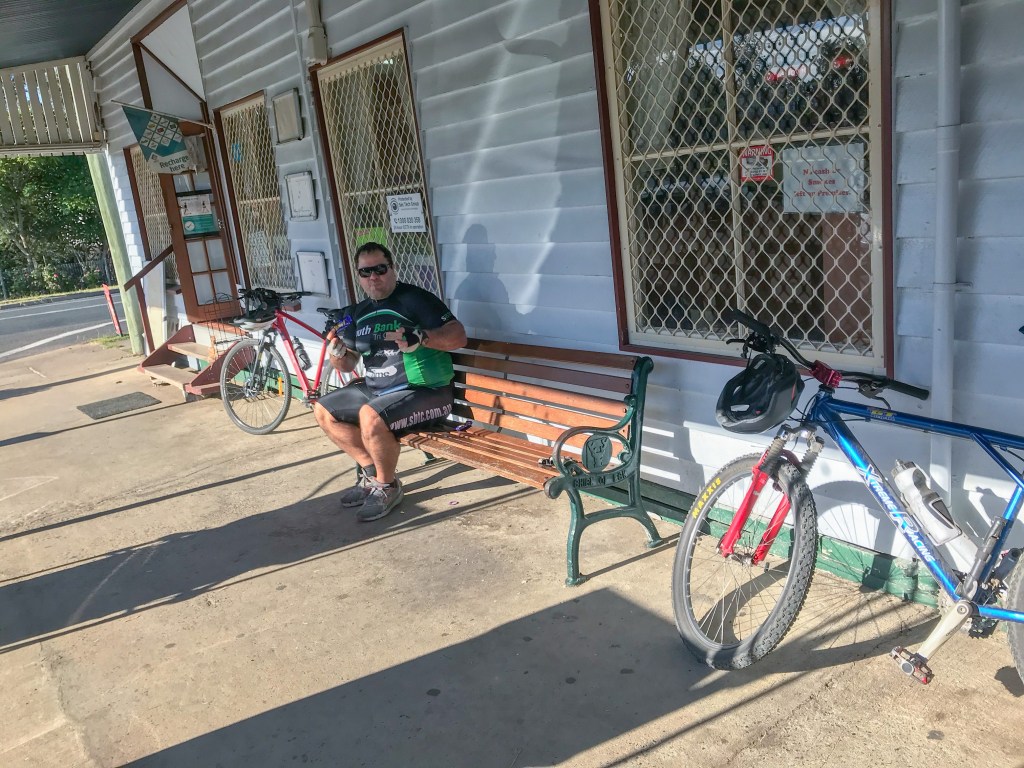
Back in civilisation it was very much that time of the day when ice cream is mandatory. Civilisation is hard to come by, but the small township of Talbingo offers one of those amazing supermarkets that sells everything from tinned food to drill bits to crates of beer to chiko rolls to two year old editions of Angler’s Almanac. It also houses the post office, tourist information centre and a photocopier. Though lacking gourmet ice cream, a Honeycomb Maxibon on the shores of Jounama Pondage provided sufficient sustenance.

Ignoring the burnt trees on the other side there was a touch of the Lake District in the grassy foreshore and rounded hills disappearing off into the horizon. Blue skies and fluffy white clouds completed the Wordworthian idyll. Again, a year ago, Talbingo was far from it.

From English lakes to Spanish sierras, a journey of disastrous superspreading madness only now restricted by fanciful wartime yearning to regain a supposedly lost independence. Here, the European mirage took the form of a solitary, short drive down the road towards Talbingo Dam. On one side, a panorama of barren ridges and spindly trees, dusty earth and searing sun. A glass of Rioja and a siesta would go down well, but I must move on.

The dam itself has the requisite boat ramp where the road terminates. Here, a wide gravel parking area was solidly packed with trailers and those four wheel drives so suited to the walking trails around this way. A regular flow of vessels with names like Crusader 3000 and She’ll Be Right were being lowered into or dragged from the water. Outboards buzzed and jet skis thrashed and bins were overflowing with the remains of picnics and beers. Behold the domain of the boatpeople.

I was planning on camping in such an environment, albeit further north on the shores of Blowering Dam. But throughout the day there was something going on in my head looking for excuses to get out of it. Heat building. Risk of storms. Boat people. Perhaps the final straw was the realisation that I had left my salad in the fridge at home and would have to resort to a dinner of cold pork and disappointing pastry. I could survive, but would it be worth it?

Procrastinating around a greener, untarnished landscape with views to Blowering Cliffs, I figured I could drive into Tumut and procrastinate some more, while also picking up salad to complicate the decision-making process even further. If I had made a New Year’s Resolution to be more decisive – which I hadn’t – I would have failed already – which I didn’t.

Tumut was just that little bit closer to home and I was willing to embrace a two and a half hour drive into the evening, weighed against the likelihood that I would struggle to be sleeping anyway if I was to stay and camp. Hot water, comfy bed, a flushing toilet v lumpy mattress, strange noises and a long drop. Next time I head off with the intention of camping I need to exceed at least a three hour radius from home.

Je ne regrette rien, as they say in the aisles of Tumut Woollies, for not only did I manage to get my salad fix (albeit in the form of calorific coleslaw), but I also finally snaffled a half price Christmas cake. And then I took to that riverside, wandering and eyeing up future opportunities to explore before settling upon a delightful dinner spot.

There are places I’ll remember. Soothing. Becalming. Rejuvenating. Nourishing. Like a shot in the arm.

Australia Driving Food & Drink Green Bogey Photography Walking

Golly Gosh

Traditionally, the end of June has come to resemble a key juncture in my life: the culmination of the financial year acting as impetus for all sorts of project completions and invoice requirements and quick-turnaround work tasks. Traditionally.

Traditionally I would also, thanks to this purple patch, begin turning my attention to a trip overseas, to Europe, escaping some of winter and connecting again with treasured family and friends. Traditional cream teas would compete with a traditional trip to Looe for a pasty and a traditional offload of dirty laundry to Mum.

But tradition has been chucked out of the window. Of a twenty storey building. Then trampled over by a herd of elephants before being set on fire alongside a car park full of dumpsters. Attempts at home made pasties and Tilba cream prove B-grade substitutes. I continue to do my own laundry. The end-of-financial-year hubbub is subdued.

In many previous years it would have been unimaginable heading for a day out on the 29th June. Unless it was to a beige motel to complete some frantic discussion about something of great importance with eight citizens of Goulburn. All to get the country perspective. Perhaps it was some innate response mechanism propelling me up the Federal Highway today. To get another country perspective.

In COVID escapes from Canberra I think things peaked with a day on the South Coast. A trip to Goulburn was never really going to compete, even if I could stop off at Collector again for coffee. Still, I managed to find a couple of attractions along with a decent, good value spot to pick up some treats for later. Which always helps.

At Marsden Weir, the Wollondilly River forms an attractive body of water by which to amble. On a kink in the river, the sturdy red brick building of the Goulburn Historic Waterworks adds even more spice. There is a touch of Victorian endeavour about it – quite a rarity in Australia – and you can imagine Tony Robinson visiting it on his fourteenth series of Mildly Interesting Places in Regional New South Wales. He would explain how the waterworks were constructed in 1885 and form – wait for it – the “only complete, steam powered municipal water supply left in its original location, in the Southern Hemisphere.” Quite a lot of caveats to prominence there.

Being a weekday in midwinter and almost the end of the tax year there were just a handful of curious souls nosing around at the waterworks. You could – though – imagine banks of people in summer, supping locally-brewed ales and indulging in hearty lunches by the water. Perhaps a nearby cottage would supply cream teas and coffee and walnut cake. This is all in my dreams of course; nothing of the like seems to happen here. But perhaps it should be the way forward when we can all meet again.

Another prominent sight sits atop a hill which I have often glimpsed at a hundred and ten kilometres an hour on the way to Sydney. This is the Rocky Hill War Memorial Tower and there is a road up to its base. The tower was constructed in 1925 and you can walk to the top – after an application of hand sanitiser – to take in the scene. This provides a fine overview of Goulburn, spreading out on the southwestern side of the rail line. In the foreground, Goulburn East has its own, historic village feel going on, segregated from the rest of town by wetlands and a golf course. If I were to live in Goulburn, perhaps I would choose here; it just seems to have a touch more charm.

I ate my takeaway lunch overlooking the landscape from the hill and mulled over what to do for the remainder of the day. Being only lunchtime, I had seemingly exhausted the sights of Goulburn, with the obvious exception of the Big Merino. North of the tower some attractive bushland hills promise exploration but seem devoid of any walking trails. Far better to head to somewhere reliable, somewhere familiar, somewhere spectacular.

Bungonia National Park is probably the closest manifestation of rugged sandstone gorge country to Canberra and – of course – Goulburn. It is a landscape typical of much of the country surrounding the Sydney Basin, with heroic rivers carving out precipitous cliffs and deep ravines. As well as millions of eucalyptus, these landscapes are home to a few of my favourite things, including numerous lookouts.

Having been here several times before, I initially took a walk on the Orange Track. It’s probably the least exciting of the trails but offers a fairly easy stroll through open forest to a pleasant enough view in between the trees. You can tell it’s not going to be the most dramatic walk since the description suggests you might see a koala – surely only there to try and keep the kids occupied. What struck me more than anything was the absolute peace and quiet. Perhaps this was balm to the freneticism and clamour of downtown Goulburn.

It was supposed to be a sunny day today, but any mid-morning brightness had largely disappeared to a layer of white and grey. There were even a few spots of rain as I neared Bungonia Lookdown. Here, a platform leads out towards and dangles over the valley. It is a captivating, spectacular scene dramatically ruined by a quarry nestled in a hilltop to the north. But retaining focus on the valley, a few miracle shafts of sunlight suddenly appear to conjure up some kind of prehistoric lost world.

There is even a hint of rainbow in the air, but this quickly fades along with the sun and the rain. Yet I feel brightened and warmed by this visit and an appreciation once again of how lucky I am to be here today. To have this sort of wilderness on your doorstep. If you consider a ninety minute drive via the city of Goulburn your doorstep.

While Bungonia definitely lifted the day, there was clear benefit in stopping in Goulburn which became realised at my final stop. Adams Lookout provides another stunning view into Bungonia and – in particular – the narrow defile of Slot Canyon. There was something about the squidgy datey syrupy oaty nutty sugary slice that I had bought earlier that lifted things to another level. I daresay I would travel to Goulburn again to get my hands on one.

It was no cream tea but just the tonic to power me home. I even found a different route back which surprised me by being sealed the whole way – down to Tarago and back on familiar roads from Bungendore. Thus to experience the wonders of Bungonia you could actually avoid Goulburn entirely. Though I doubt if I will. I feel more likely a new experience, a new tradition has now been born.

Australia Driving Food & Drink Green Bogey Photography Walking

Uplift

Outside is looking remarkable. Outside is looking beautiful. An almost pinch-yourself-is-this-actually-real kind of sensation. One bringing delight rather than dread.

I was sat on a random log the other day, pleasant late afternoon sunshine nourishing the world. Rarely do I sit and stop and watch all the things going on around me: the ants milling about productively, transporting their wares in selfless community organisation; the magpie creeping from one spot of grass to the other, surveying for delicacies, a curious sideways look at my presence; the chirrup, somewhere, of two crimson rosellas, partners for life. The world going about its business.

There is an astonishment in this landscape of such verdant abundance. Where so recently it was so barren. The resilience of nature bearing fruit, flourishing again.

As well as sitting on random logs I randomly tried to capture this transition, this journey, this bounce back. Scrolling my phone for past images, dusty and brown. Attempting to line up positions and angles and replicating shots. Not always easy to know exactly where you have gone before. Fiddling about so much that sometimes it’s just far easier, far more satisfying to give up, sit on a log, and just watch the world.

cont05

The Bullen Range and Brindabellas from Cooleman Ridge, 6 weeks apart

cont04

Remember the smoke?!

cont01

Scenes from Red Hill – 1

cont02

Scenes from Red Hill – 2

cont03

Scenes from Red Hill – 3, with random logs

Australia Green Bogey Photography Walking