Trailing

Something didn’t sit right with me. Trying to get to sleep in a single bed on creaking, turn-of-the-century floorboards. Below, a bar serving the last of the whooping and hollering, the cackling shriek of a drunk Australian lady all the more painful when you know you need rest. Mind ticking over like the cycle of a misaligned wheel.

The remnants of merriment below had cowboy vibes. With Gucci trimmings. Equally at home in Fortitude Valley as downtown Linville, partying like they are 1999. On a night in 2023 when Australia received what to me at least felt a simple, unremarkable request from a broad representation of its first peoples for them to actually matter and said “yeah nah we’re alright thanks”. Whooping and hollering – as innocent as it may have been – struck a dissonant chord. And I edged closer to sleep with doubts about what it meant to be crossing country the next day.

The Brisbane Valley Rail Trail (Part II) traverses Waka Waka Country and Yuggera Country – or at least I think as much based on the little I can glean from local council pages. Today proclaimed as the longest continual recreational trail in Australia (if not the southern hemisphere), it intermittently welcomes people on bikes and horses and feet to roughly follow the course of a disused railway line from Yarraman – deep in the electorate of Maranoa – to the fringes of Ipswich. A manifestation of intrusion and industry and inevitable decline once quick riches had been cut down, torn, eradicated and washed from the earth.

In a sign of hope and rejuvenation the old rail line is now transformed into a place where people can come together on a shared journey, even if some of the newer locals remain deeply conspiratorial. Avid readers may realise this is my second time along it (and with my back now going through all sorts of agony it’ll probably be the last). From a pair of lone rangers we doubled in size as a group of four. Not quite MAMILS but only really lacking the Lycra. Starting off on brand by getting confused over where to start.

In many ways the first 20 kilometres is the hardest, adjusting to seats and handlebars and pedals and pace and the actual realisation of exercise. Things are a little undulating and already hot, and the approach to Blackbutt seems to drag on forever. But eventually bakery rejuvenation occurs, some tuning and top ups ensue, and we are full steam ahead.

The run to Linville is mostly bliss if a little jarring in places. Forest creeps in on both sides and the gradient works in your favour too. The breeze of momentum keeps you cool and a slice from Blackbutt survives well enough to sugar-rush the journey east. Beaming white in the afternoon sun, the Linville Hotel is a very beacon of balustrades and cold beer. The store next door a welcome purveyor of ice cream.

After a little recovery, day all too soon turns into night because Queensland doesn’t bother with daylight saving (probably because it is seen as another way the government are trying to control you with 5G vaccines or whatever). As much as I try, I cannot find the ideal beer to accompany a local steak and a background band mostly playing the entire catalogue of Crowded House. Only at the end, as encore way past their bedtime, do they strike up Farnham’s Voice. I cannot tell if this is a brave call, a lost opportunity, or a musical smirk.

Linville is in a pretty position among rugged hills, folded and contorted and topped with natural Australiana. Just beyond a few of the folds you’ll find Kilcoy, where in 1842 flour was laced with strychnine and given to a large group of Aboriginal people by two shepherds at a squatters station. Reports – like many of the time – are vague and swept under the carpet. At least sixty Aboriginal people were killed. A death pudding massacre.

I share this clearly not for entertainment or as a segue into some cycling incident but merely to share it, to acknowledge and make it known. I had no idea, freewheeling downhill, what happened among those hills until I got back home and decided to look into the Aboriginal origins and history of the country I had just crossed. Where the squatters came first, farms and forestry followed, towns and people sprung up and eventually a rail line was constructed. Large swathes of land were stripped of trees, including the unique Bunya Pine, which only now exists in small pockets to the west. Worse, the land was largely stripped of its inhabitants, sent to missions if not a fate more terminal.

The second day of pedalling through the present and the past is more open and exposed, the cursed removal of trees a bane to modern day cyclists exposed to the searing sun. Already the land looks a bit sick and brown from the latest evolution of drought. There are few animals, other than the occasional cluster of cows hunkering down under a lone tree or dilapidated shed.

There are also a few magpies and – miraculously – they are leaving me alone while going for the other mamils in my crew. This is wonderful, so much so that I whizz on and almost decapitate a snake that I didn’t even see until after I passed it. I feel somewhat blessed and incredibly fortunate in hindsight. It’s like they knew or something.

The towns – or what pass for towns – tick off at fairly regular intervals. Early on there is Moore with its three cafes, of which one only seems to be open and doing a good trade in weirdness and antipathy. It was here I discovered a publication called The Light which from a brief glance before I felt the urge to use it for toilet paper proclaims to shine a light on all things the establishment don’t want you to know. Likely bankrolled by such establishment figures as Rinehart, Hanson, Palmer and co.

Next along from Moore, after one of the bigger climbs of the trail is Harlin, which appears little more than a pub and a servo. Still, giant bottles of knock-off Gatorade are welcome, as is the cooling 90 metres of the Yimbun tunnel a little further on. It’s a good place to pause, adjust padding and apply sunscreen before persevering with more open, baked-earth riding to Toogoolawah.

You know Toogoolawah is – in relative terms – big because it has a choice of two pubs for lunch as well as a sprinkle of cafes. Closer to the highway you can even find some homemade fudge and maybe decent coffee but the old rail line has other places in mind. With a local recommendation we decamp outside a pub and have a hearty lunch in the shade. Pizza topped with so much topping it takes a while to discover the base. Welcome and delicious, but I am wondering how all that salami, olives, capsicum, tomato, feta, mozzarella, parsley and bread, pepped up by a lemonade, is going to sit.

There was a bit of gas departing Toogoolawah, an uphill grind but one that I quite enjoyed. Dropping into a nice low gear and spinning gently, consistently, without any real rush to get anywhere. Bare country eventually cedes to a line of boundary eucalypts that accompany us to a cutting where the railway peaks, and it’s downhill from there. Suddenly speed is a thing again, the ruts and stones bouncier, gripping on to handlebars that much tighter, the air flow providing welcome ventilation. In hindsight it feels like this all the way to Esk, but there was definitely still pedalling involved.

I was a little concerned about getting to Esk around 3pm, just as everything was no doubt closing. But a new addition along the BVRT, a very BVRT business in fact, was kicking on into a Sunday arvo session. Brisbane Valley Roasters no doubt attracts the hairy mamil with single origin roasts and cold brews and almond milk. There are bike racks and large wooden benches and probably some of those fake succulents you get from IKEA. After such high dose rustic rural, you may temporarily feel an inner Melbourne vibe, or at least central Tuggeranong.

But then Esk happens. For some reason today all the staff appear to be about 14. There are no lightly bearded hipsters or man buns dosing double shots and feathering foam. I opt for an iced coffee anyway, given the heat outside which is now well into the thirties. A solo performer mistunes his guitar and is gearing up for some gently grating entertainment, supported by a handful of friends and family. A lady from out of town accosts us and talks about love and secret hideaways up on the Darling Downs and how hard she has worked all her life and that young people don’t know what hard work looks like and they should stop buying avocados or something. I fear 5G radiation PayPal vaccines might be next. Still, at least it’s not sitting, working, sweating on a bike.

I assumed all the young people of Esk were working at Brisbane Valley Roasters that day, but it turns out there are even more of them in the IGA. I suppose as well as providing cheap labour for hard-working business owners it’s something for young people to do other than vape. And they’re all rather friendly in the IGA, even as Jason – by now high on morphine or something – rambles on about (and looks like) the Esk Yowie while I am trying to buy some reduced price tabbouleh from the girl behind the deli counter. Young people are nothing if not resilient in the face of the weirdness they encounter.

Dinner turns out to be an IGA affair since the pub is closed and the Thai is also – due to unforeseen events – closed. We stock up on food, too much food, for breakfast as well. Thinking, quite rightly, that nowhere will be open at five in the morning. And also thinking, quite wrongly, that we could eat two apple crumble cakes reduced to 99 cents, along with several pots of yogurt, cereal bars, a tree of bananas and a two kilo bag of rolled oats at five in the morning.

It is an uncivilised hour to rise but the final day is also the biggest and longest. And some of us have a train, and plane, to catch. While initially confronting, the early hour is by far the best on the bike. The light glowing soft, the air calm and cool and infused with that dewy, earthy fragrance of something akin to dried straw and peppermint. The trail is subdued too, enclosed by forest pretty much for the whole 20 kilometres to Coominya.

The last of the bananas disappears at Coominya, meaning I force myself to buy a chocolate éclair from the bakery at Lowood, a little further down the line. Brisbane feels closer now, the river widening, water to rinse off the humidity, feed the production of insipid beer, pressure wash four million Toyota Hiluxes. Yet after Fernvale and its supposed amazing pies, there is little to interrupt until reaching the very edge of Ipswich.

In the bush and scrub around here, 12 Aboriginal people were killed in 1843 when they were pursued by a vigilante group of soldiers, settlers and stockmen, seeking reprisal following the battle of ‘One Tree Hill.’ We all cruise on by unknowing and unthinking. An ignorance that is all too common, all too often the easiest option, the path of least resistance. Because if you don’t know you won’t actually feel impelled to reconcile.

Wulkuraka – an Aboriginal word meaning either red flowering gum or plenty of kookaburras. I see neither today, but they are assuredly there somewhere. Holding on, adapting, waiting to burst forth and laugh. May well they laugh at a troupe of four sweaty middle aged men trying to cross a finish line in tandem, the youngest with a wheelie. Having crossed country where, despite it all, there is embedded in the earth and the sky a profound resilience. Something which can never be washed away, tunnelled through or eroded. A line much older, deeper and enduring. Always.

Australia Green Bogey

Stimulants

I had entered the point of no return. Doors closing behind me, confronted by a depleted selection of pre-cooked yellow food. A smoky, greasy vapour emanated from behind the counter. Around one of the square Formica tables, a trio of young people huddled around a carton of chips.

I had rolled into Injune desperate for a pick-me-up to push me on to the end of the road. For coffee this was the last outpost. And like a rabbit in headlights I was now captive. I had to order. Miraculously, I spotted a handwritten note on one of those fluorescent orange stars. Iced latte for $5.50. Coffee, ice, and milk which surely wouldn’t turn into a complete hash. Relief. A safer proposition than the risk of first degree burns.

Happily – should you find yourself in the situation – you’ll find iced latte and a pack of 39 cent custard creams from Aldi a winning combination on the Carnarvon Highway between Injune and Rolleston. It propels you into a more interesting landscape with plateaus rising up to the east and west. The road, finally, allows a speed limit of 110kph. And then you turn off, to fulfil a few goals and dreams.

I remember when Carnarvon National Park first piqued my interest. It was in a Qantas magazine, back when flying was more of a thing. I was probably on the last plane out of Sydney after some stupid meeting, feasting on two crackers and a vomit-coloured dip. A double-page photograph of intricately textured sandstone, a dark narrow fissure, vibrant green ferns, and the dizzying perspective provided by a human figure felt a long way away. 

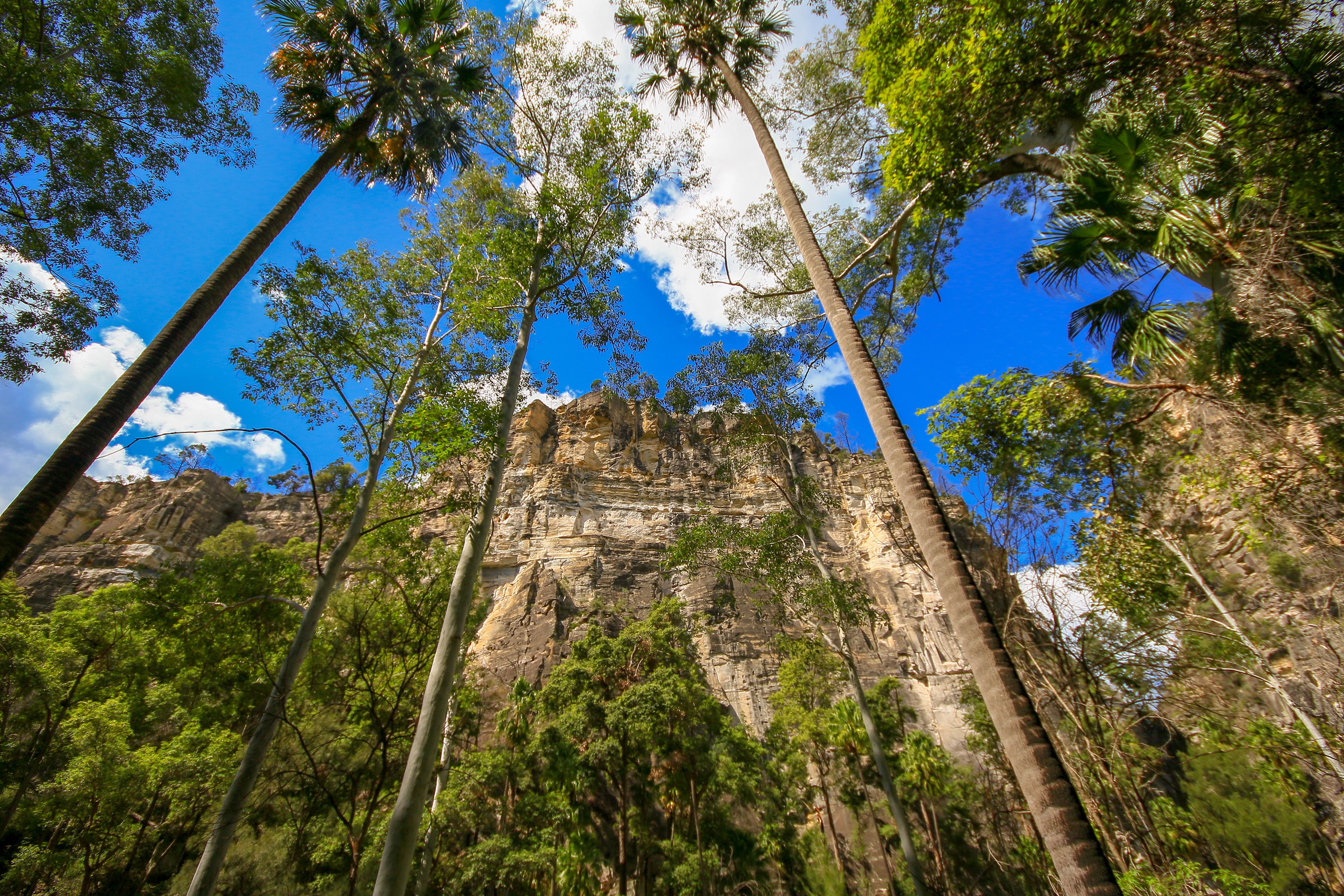
It’s a credit to that Qantas magazine that they managed to condense Carnarvon National Park into a few glossy pages. It’s also a credit to the professional photographers who managed to fit it all in. The vast, monotone plains in the surrounding landscape truly situate this as an oasis. The solitude required to get there leads to stimulus galore.

Hyper-stimulation first emerges a few kilometres outside the park. People and Hiluxes amass, caravans are adorned with satellite dishes, trailers, awnings and everything including the kitchen sink. There may even be – in the middle of Queensland – a large boat or two. Instantly I know this is not my type of campground. But there is little other choice and I set up home for two nights, conscious of beady eyes judging my unfolding canvas.

Many of the people I talk to are here for a week, maybe two. They can afford to spend whole days sitting in a fold-up chair playing candy crush. I have one complete day to head into the gorge, go as far as I can, and turn back again. One whole day that is immense in so many ways.

My phone tells me it was a 41,397 step kind of day, taking me along 29.1 kilometres. It was a day that started around six in the morning, when I parked up near the visitor centre. There was an orderly-looking campground here but for some reason it is only open during school holidays. Still, I took advantage of one of the many tables to make a cuppa and eat some breakfast, free from the guilt of disturbing the old folk getting their beauty sleep.

The walk starts with a sign of things to come: a crossing of Carnarvon Creek via a series of stepping stones. The first crossing is easy, reassuring everyone who finds themselves on this path to strike out further into the wilderness. Others later on require a bit more planning and a touch of blind faith. But don’t let this put you off. Just grab a big stick and think of the reward.

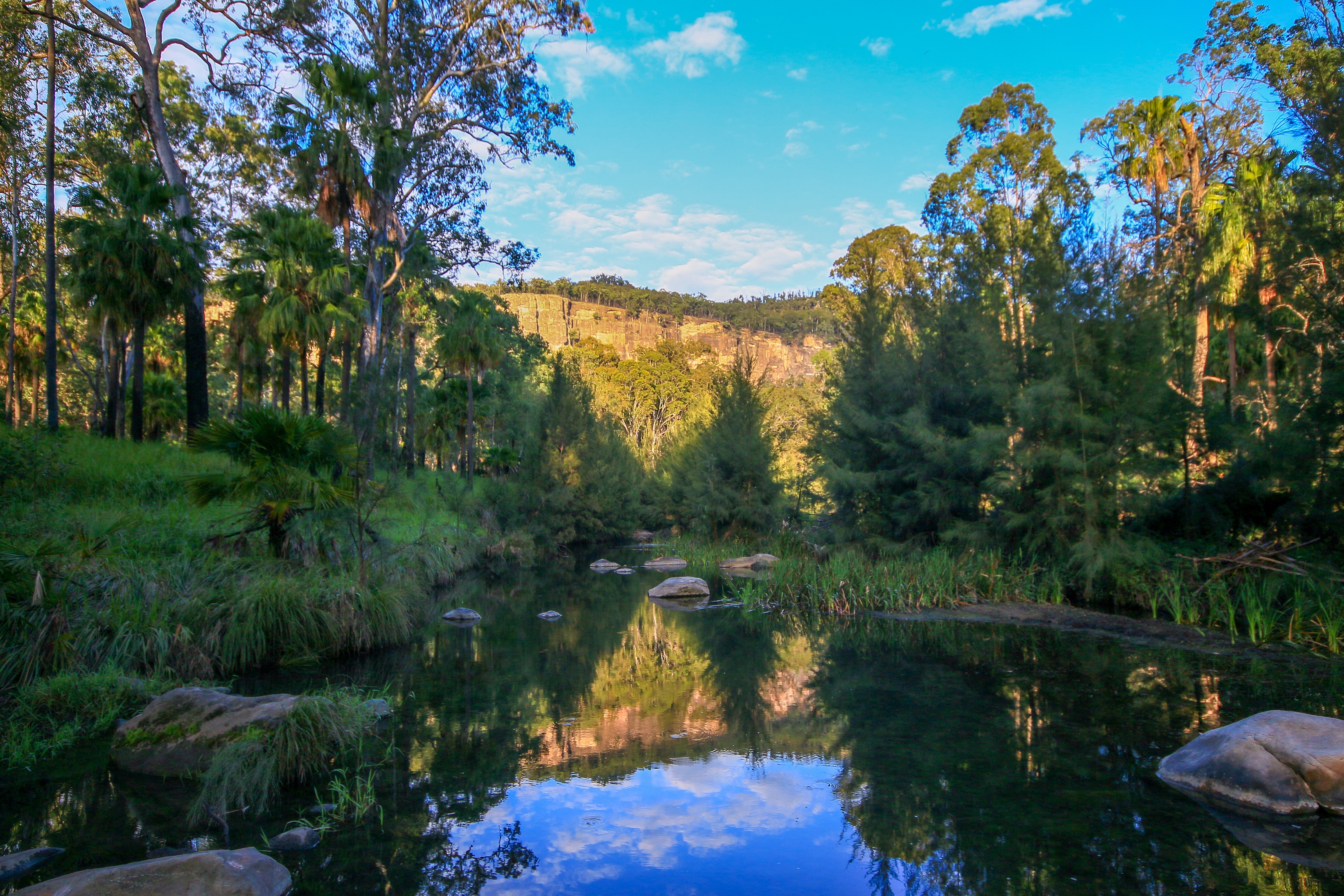
The gorge is said to extend for 30 kilometres, but the day walk goes as far as Big Bend, where there is a carry-in campground for those intrepid enough to explore further. Along the way, nature has created a series of incredible rock features, shady pools, and slot canyons, while original inhabitants have left their own mark. It is these spectacles – reached via shortish detours from the main trail – that create a natural itinerary to the walk, numbered like stops on a coach tour. Only here, self-propulsion is the required vehicle, and the only souvenir stands are those that assemble within your mind. And do they sure etch their way into it…

Moss Garden

Reaching the first stop seems to take forever, but I think that comes down to an eagerness to get there. It’s akin to sitting in the back of the car as a child, heading for a day at the beach. The side track also requires a little creek crossing and climbing of steps, penetrating into a small, fern-filled gully.

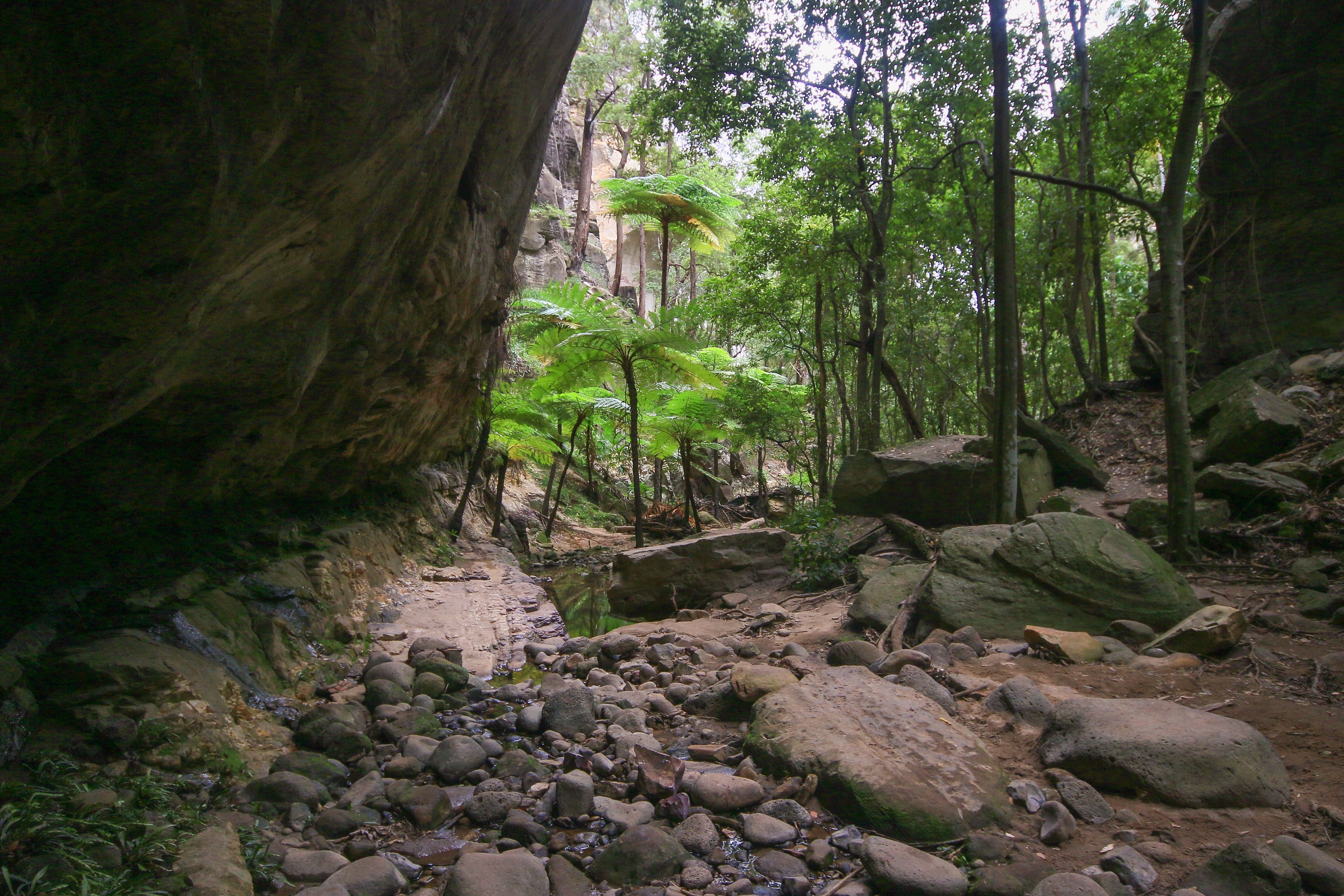
What can I say about the Moss Garden? It’s mossy and moist, fed by a narrow creek spilling into several clear pools. It’s the kind of garden that might be constructed at some expense in a billionaire megalomaniac’s estate, funded by worker exploitation and home shopping. Or constructed in the airport of some oil rich emirate to show off to the world. But nothing contrived here, just thousands and thousands of years of nature. Water, rock, vegetation. Gathering in blissful harmony.

Amphitheatre

If the Moss Garden was beautiful in a serene kind of way, the Amphitheatre is, fittingly, all head-shaking drama. I think this is the setting for that double-page spread in the Qantas magazine many years back and you would need to be a professional photographer with a mega-wide angle lens and tripod and hours of patience waiting for the right light to come anywhere close to evoking the feeling of being in this place.

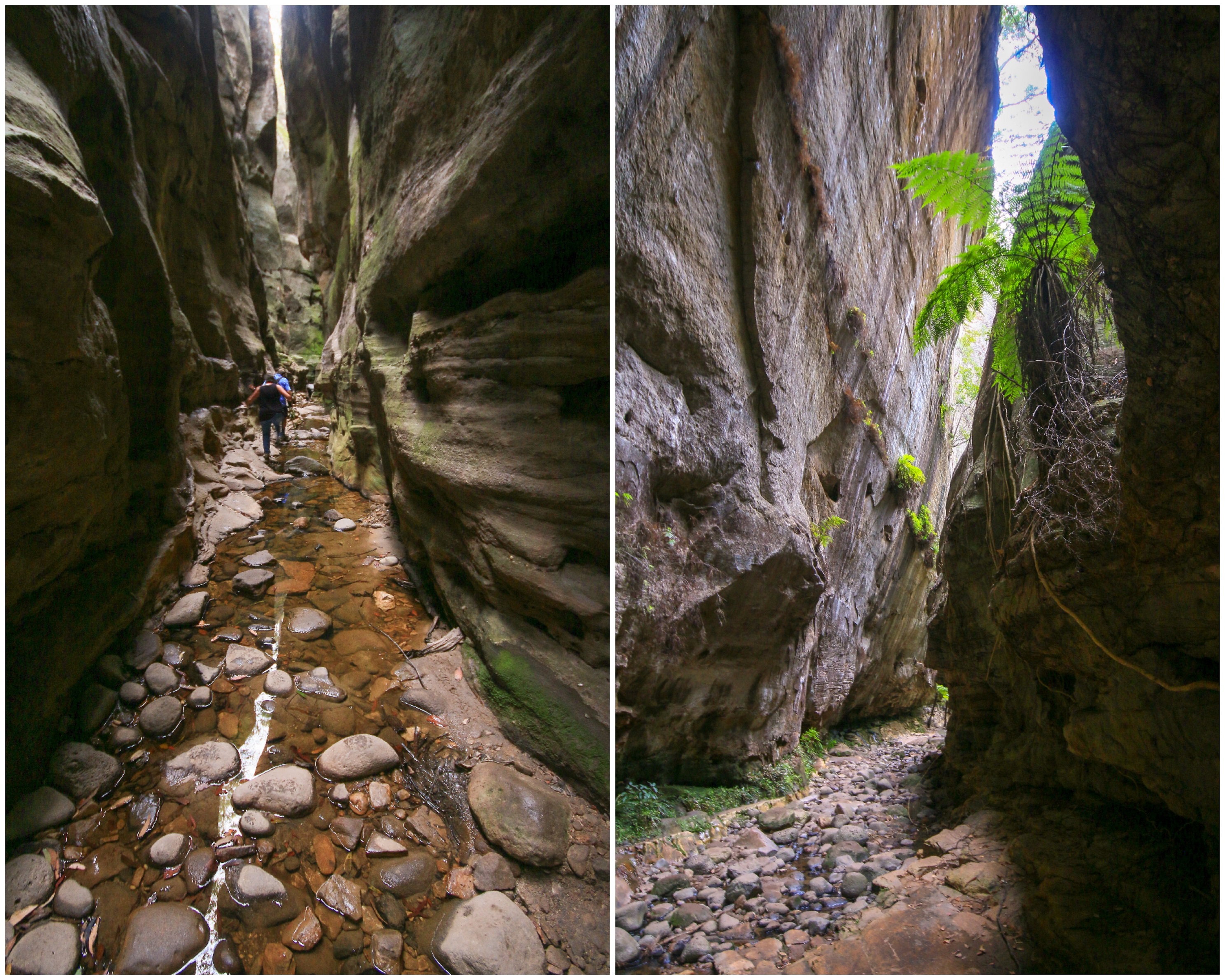
At first, you wouldn’t expect much. Nothing to see here. But walking towards giant luminous sandstone walls you notice a small doorway at their foot. And a series of metal steps up to the entrance. It is a crack perhaps little more than a metre, a corridor into a cavernous courtyard of wonder. Above, a small window to the sky, afoot a delicate display of vibrant ferns. It cries out for a massive “COOEE!” but somehow feels too reverential for that. A handful of people, myself included, just sit and soak it all in.   

Art Gallery

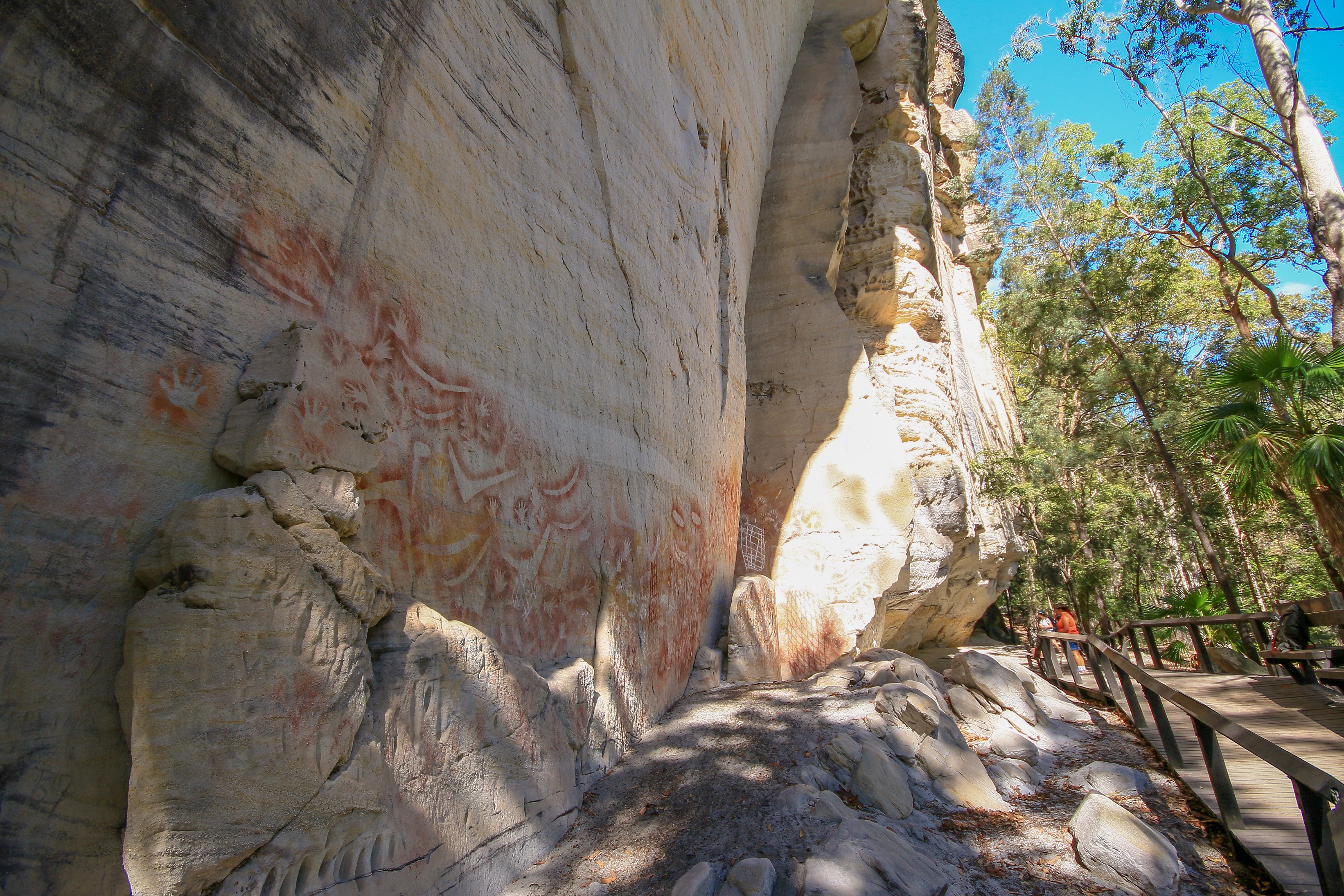
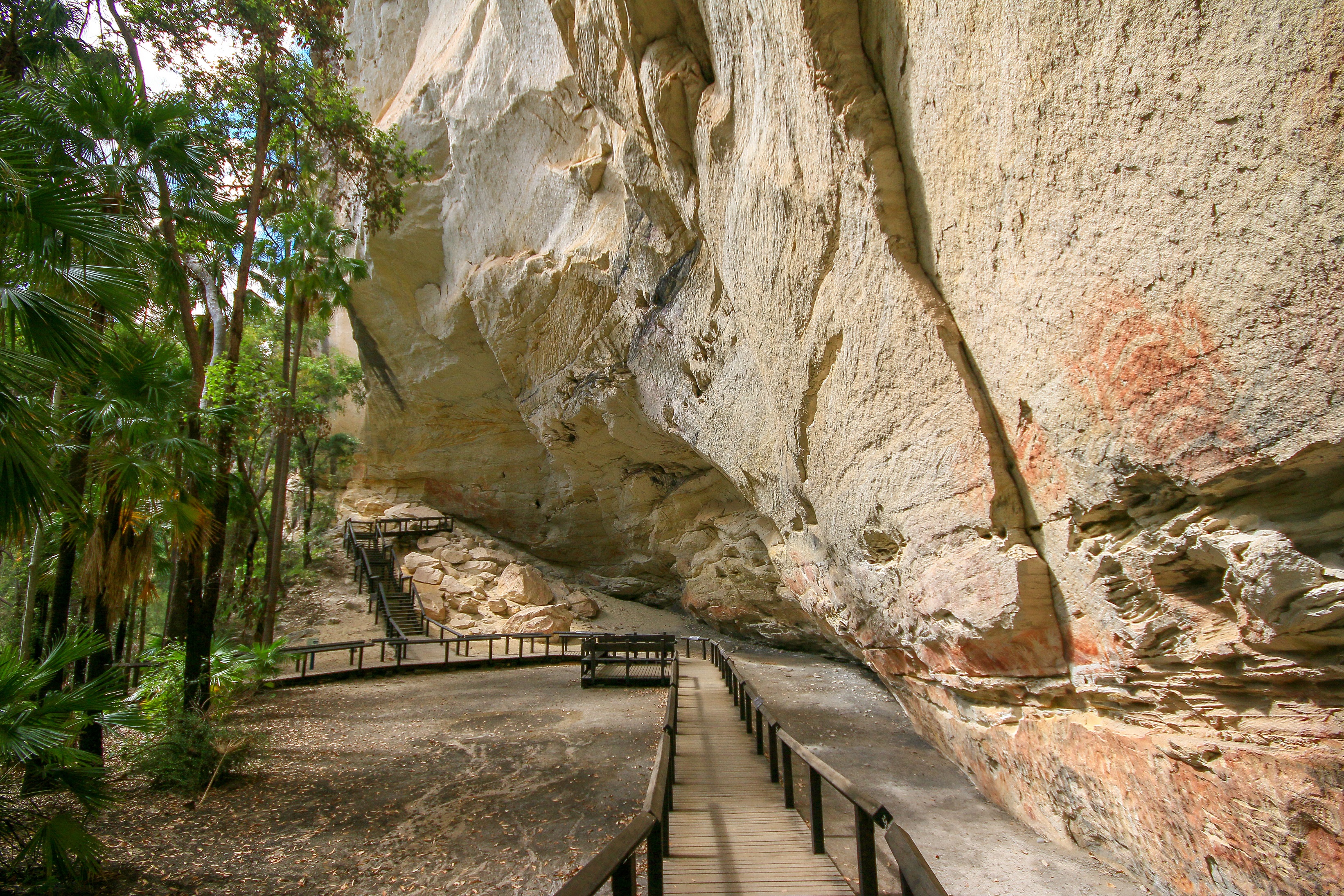
The National Gallery of Australia is much more accessible and has a better café than the Art Gallery in Carnarvon Gorge. But you won’t find a 62 metre natural sandstone wall featuring over 2,000 engravings, ochre stencils, and free-hand paintings. The stencilling is considered to be some of the finest and most-sophisticated of its kind in their world.

This sacred spot serves a reminder that this is the land of the Bidjara and Karingbal People, and you are lucky enough to be here for a fleeting moment in time.  

Cathedral Cave

Many people culminate their walk at the Art Gallery fulfilled, turning around and heading back home for an afternoon rest. The next stop up the gorge is four kilometres distant, and the track grading increases a notch on the scale. There are more stones to traverse and one creek crossing in particular requires a degree in trigonometry and dose of good fortune.

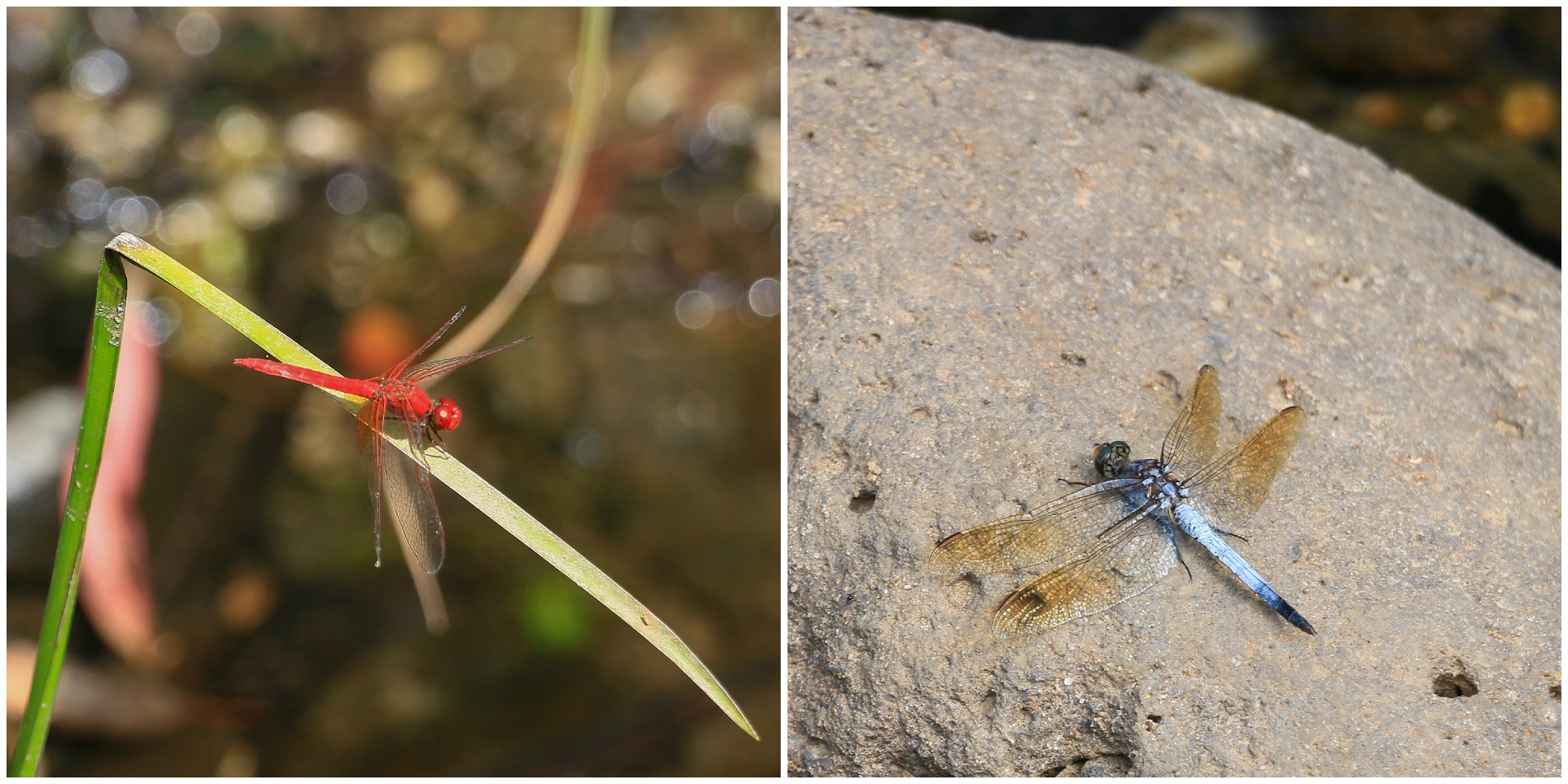
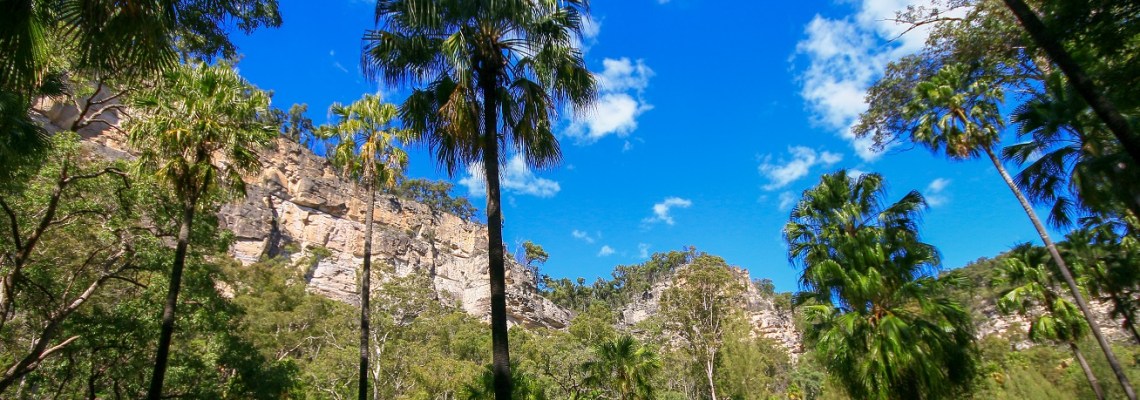
I’m glad I pushed on though, for this section is perhaps the most scenic. The main trail sticks closer to the rocky course of Carnarvon Creek, and sheer-sided multicoloured outcrops begin to press in on both sides. Palms and ferns and eucalyptus gather in the valley, nurturing colourful butterfly and chirpy birds, while emerald pools attract fast-moving dragonfly.

As a destination, Cathedral Cave undoubtedly has a spiritual quality, hosting further displays of Aboriginal art. It also possesses that echoey ambience formed from the hollow of a massive rock overhang. A chamber of secrets. Peaceful and shady, the benches situated opposite the walls encourage lingering. A rest before the return journey.  

Boowinda Gorge

But don’t turn around! After Cathedral Cave, it’s a kilometre or so on to the end of the trail at Big Bend, but I neither had the energy nor the desire to visit a camping area. Just 200 metres on from Cathedral Cave, however, another dry creek cuts in from the west. At first, it’s nothing special, just an unending collection of large pebbles that make walking a little more taxing. But pursue further and you enter Boowinda Gorge.

This I found the most staggering spectacle of the day. I can’t really explain. Nature has formed something that engineering genius and billions of dollars would struggle to replicate. Curving walls, pebble paths, ferns and trees flourishing where chinks of light again emerge. And I had it all to myself.

————————–

I’m all for saving the best to last, especially when it comes to roast dinners. But what goes up must come down and, as much as I tried to conjure up a helicopter taxi from Big Bend, the return journey needed to be undertaken. On the plus side, things were still incredibly scenic the second time around, stepping stone confidence was sky-high, and I had a few Aldi custard creams to perk me up when needed.

There was also Wards Canyon, one of the stops between the Amphitheatre and Art Gallery which I had saved for the journey home. As lovely as this was – think more small cascades and rocky walled gullies – I can’t help but think my impression was overshadowed by weariness and the wonders that had gone before. It also took a bit of a climb and used up the last custard cream.

To get back to the car, I started to concentrate more on the little things. Some of the butterflies that would never settle. The blur of small birds flitting between shrubs. The red and blue dragonflies hovering above water. The people passing me by, saying G’day and inquiring just how much further it was to so and so. Push on, I encouraged, and don’t miss Boowinda Gorge.

In all honesty though, the last hour turned into a bit of a drag. There were a surprising number of steps and undulations that I didn’t notice in my excited state on the way out. The light was now brighter, the heat of the day well and truly upon us. Creek crossings were less an adventure, more a chore. My feet hurt.

Towards the end I was pretty much walking at the same pace as a man a hundred metres in front of me. It came as no great surprise when he let out a thank feck kind of “yahoo” upon sighting the visitor centre. I didn’t need empathy training to totally get it.

And so my walk in Carnarvon Gorge, years in the making, had reached its conclusion. I felt happy and fulfilled and in desperate need of a shower, cup of tea, slice of Christmas cake and a nap. Unfortunately, Takarakka ‘Bush Resort’ had other ideas. I returned to find I had neighbours, sat outside their caravan under the awning, playing candy crush and listening to the radio. Other neighbours were setting up with a clink of a camp kitchen here and a thud of a mallet there. Four-by-fours rocked up every few minutes, engines idling as they checked in at reception. The shower, tea and cake were divine. The nap non-existent.

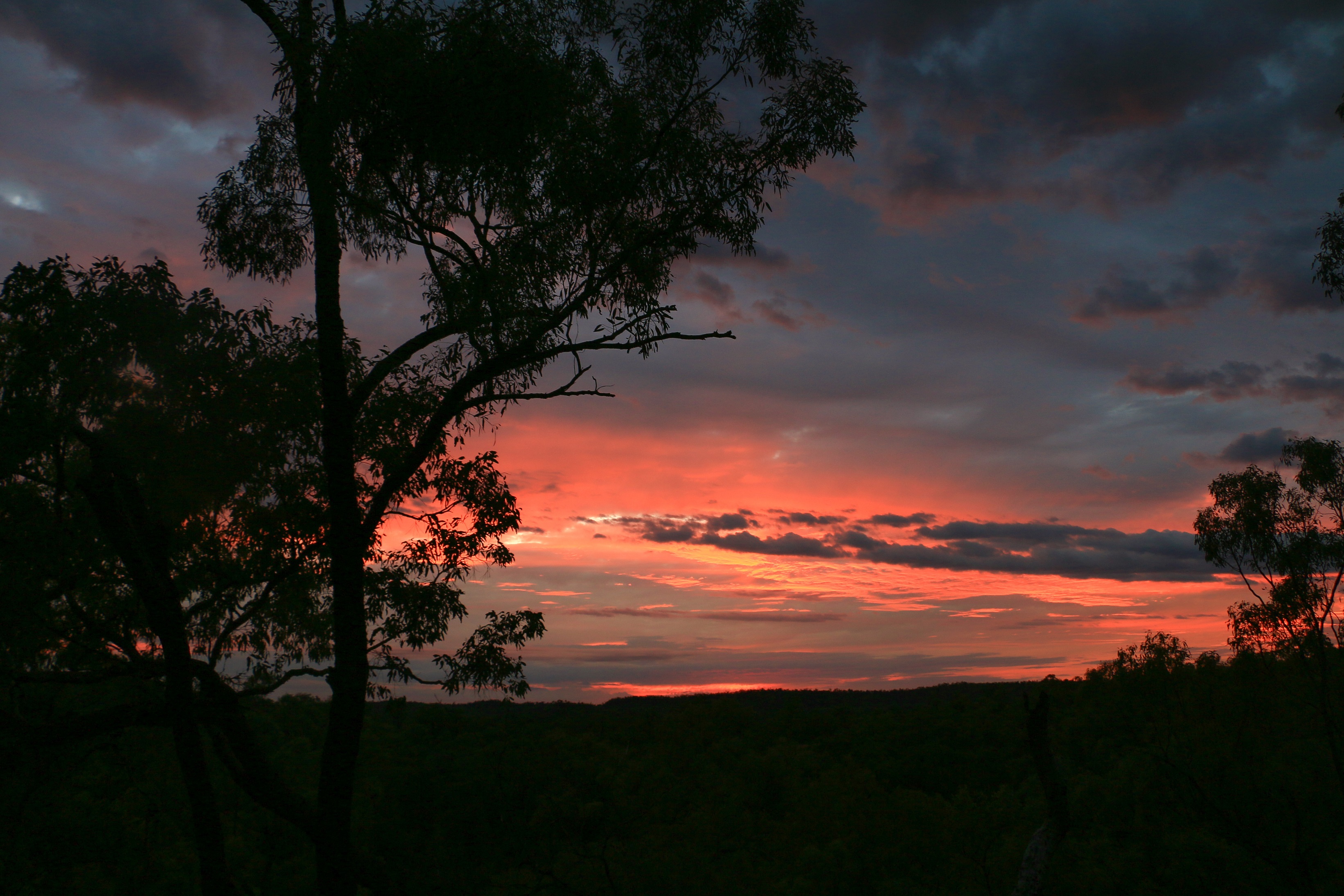
At least I slept well that night. Very well, for tenting. Still, I was awake before sunrise so made a bit of noise and headed up a track to a nearby hill. A few other people were there, including a dad with a wide-awake baby and a couple of what I would say are younger boomers. The sunrise was – fleetingly – dramatic, while the younger boomers were lovely.

We chatted for a good while. They had arrived yesterday and were staying for a week. I was off to 1770 today. I passed on my tips and wished them a wonderful stay. They wished me well for my big bike ride. We parted, me feeling a little more favourable towards caravanning boomers, and them possibly thinking he is never going to manage that bike ride. Maybe.

Keen to get moving, and also keen to avoid the amenities block that was always dirty whenever I had to use it, I passed up the opportunity of a shower and hit the road. Yet instead of turning left, back to the highway, I veered right. I had come so far and something was bugging me. This had been years in the making, and when would I ever be here again?

When I arrived in Carnarvon National Park on Tuesday afternoon, I used the last of the daylight to explore a short walking trail along Mickey Creek. It was a simple and – in hindsight – relatively undramatic stroll. But that is only until the formed trail ends. 

A bag left on a rock signalled I wouldn’t be the only one transitioning from a gentle amble to a rock-hopping adventure. Beyond the stones and the ferns, an entrance led into a narrowing gap. Walls closing in, the sound of ‘oohs’ and ‘ahs’ travelling down the chasm encouraged further exploration.

There was only really one spot that was a little challenging – in that I might get my feet wet. But I could do it. And so could my sunrise friends who I met again on the way out. So much better than just sitting outside your caravan playing candy crush. We both agreed, and I felt envious of the wondrous discoveries that still awaited them.

Farewell friends, and farewell finally this most magnificent oasis.

————————–

That could have been a good ending, but the road never ends. Neither does this blog post but all I can say if you are labouring is just imagine living and breathing it as opposed to a mere skim-read in your PJs.

After endeavours at Carnarvon, I planned a bit of R&R on the Queensland coast, 550km away. Worryingly I was desperate for a coffee by time I reached Rolleston, only a hundred clicks in. Even more worryingly, Rolleston didn’t look up to much. But beside the public toilets in a park, a cute caravan had popped up selling coffee and a few light snacks. The owner was charming and chatty, and I really really really wanted her coffee to be good. But scalding hot country ways are always difficult to cast off.

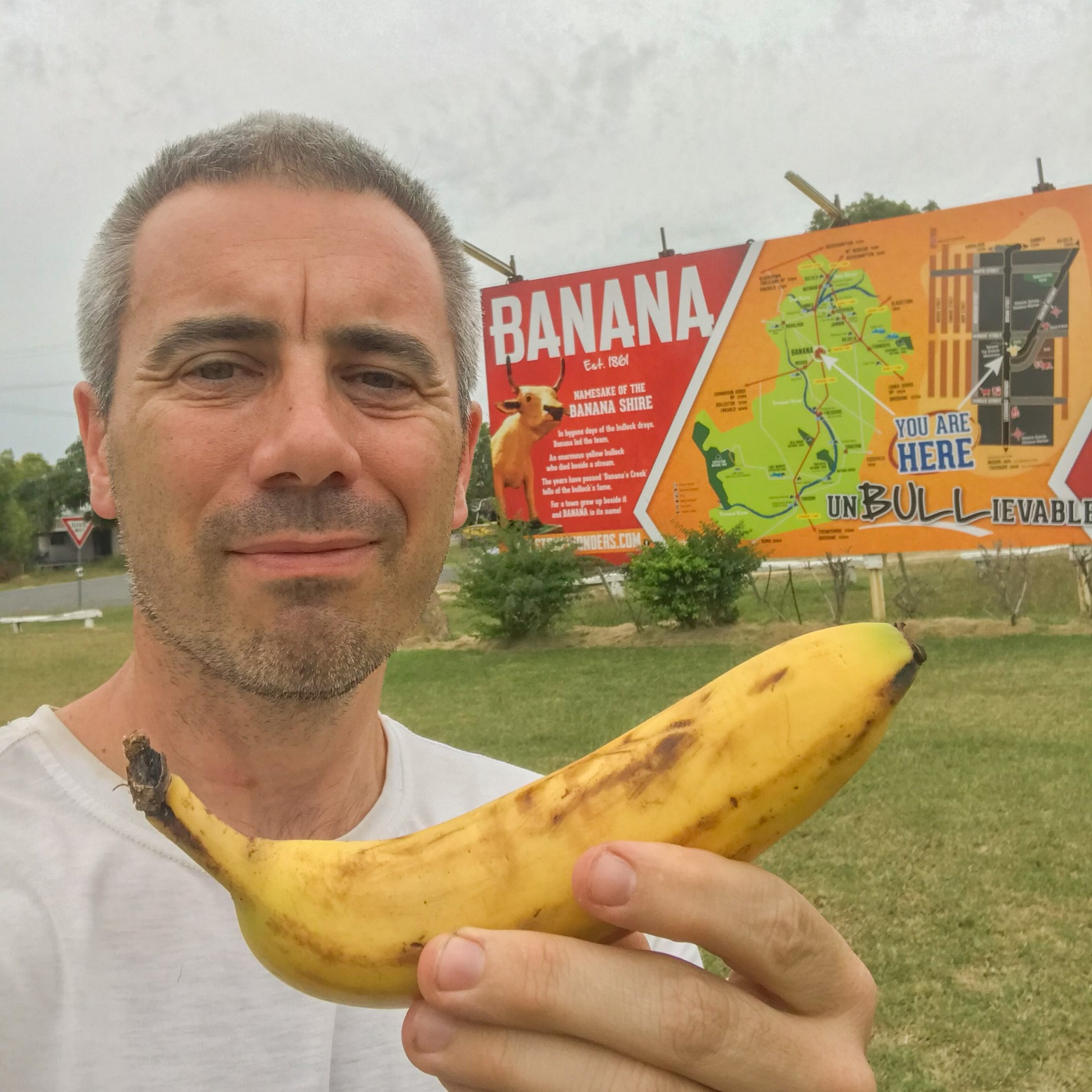
There is little to note between Rolleston and Biloela. The road, almost arrow straight, offers frequent car stopping bays and I realise these are essentially unofficial toilet stops as I recycle my coffee in a hedge. The highlight of this section of the road should really be the town of Banana, in Banana Shire. Yet, there is no comedy sized fibro banana or Banana World Theme Park incorporating Mango Village. A large sign erected for losers like me actually informs the world that Banana was named after a big bullock. Surrounded by coalfields, this is peak QLD.

Sadly, the only thing I knew of Biloela was the Australian Government’s really tough posturing to lock up a couple with two young children who were seeking asylum here. They now sit festering on an offshore island. The #hometobilo movement made me feel warm towards Biloela. The family in question had become part of the community, and the community part of them. They simply want their community back.

I didn’t find out much more about Biloela in my brief stop there. It didn’t seem the most appealing place, but then it is far more appealing than – say – a war zone or dictatorship inclined to ethnic-cleansing. Petrol was cheaper here, and I was surprised at the quality of coffee and a slice from the bakery – this is more like it. Road trip essentials.

Almost as Australian-sounding as locking up dark-skinned people seeking protection is the Bruce Highway. For me, it was a bit of a milestone, a sign that I had reached the Queensland coast. But like most highways along the east coast, the ocean is still miles away. And, hitting the highway south of Gladstone, the Towns of Agnes Water and Seventeen-Seventy were still 90 minutes away. 

A sign that I was pretty much over the drive came when I didn’t even stop for a ‘big crab’ at Miriam Vale. It wasn’t that big, looking more like an elaborate shop sign than anything. And I don’t really like crab, stemming I think from my brother taunting me with crab claws as a kid. The same can be said for peanut butter, but I did at least stab his hand with a fork when he tried to steal some of my chips.

————————–

1770 clearly stands out from the crowd just by being a number. That was some good marketing by Lieutenant Cook and Joe Banks when they decided to make their second stop in Australia at this spot; I think Joe had seen some plants that took his fancy. If you look on the map, you will see a marker for the 1770 toilets, which you can only hope have been updated since they visited.

Confusingly 1770 has the postcode of 4667. So – in a remarkable turnaround for Australian abbreviation – it is often spelled out as Seventeen-Seventy. It also typically gets lumped together with its southern neighbour, Agnes Water. And I was staying on a campground between the two. Let me tell you the joy of driving past tents and awnings and trailers to take up home in a cabin with a double bed and kitchen and bathroom. The closest I will ever get to feeling all North Shore Sydney.

And so, with good rest, I had a lovely day in the Towns of Agnes Water and Seventeen-Seventy. In preparation for what is to come, I decided to explore it by bike. There were beaches and lookouts and a lovely coffee in some lovely gardens, embellished with sweet baklava. It was the best coffee in a long while, a clear indication this is a coastal location on the up.

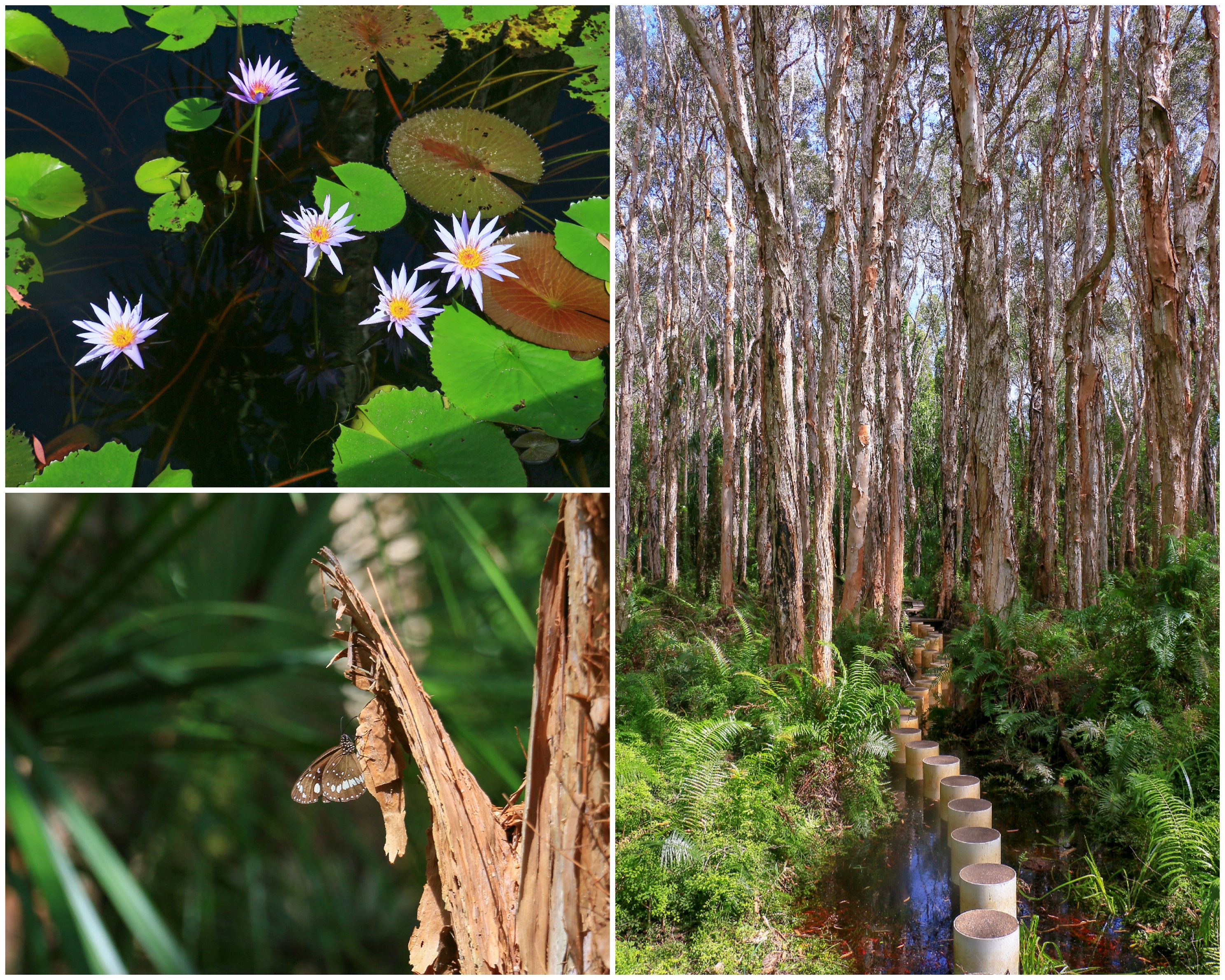
Beyond the coffee stop, I was delighted by the Paperbark Forest Boardwalk. It wasn’t especially long but well worth the additional cycle up a small incline. Among the stands of paperbark, butterflies frequently floated and birds sang with joy. A nice way to get off the two wheels and stretch the legs.

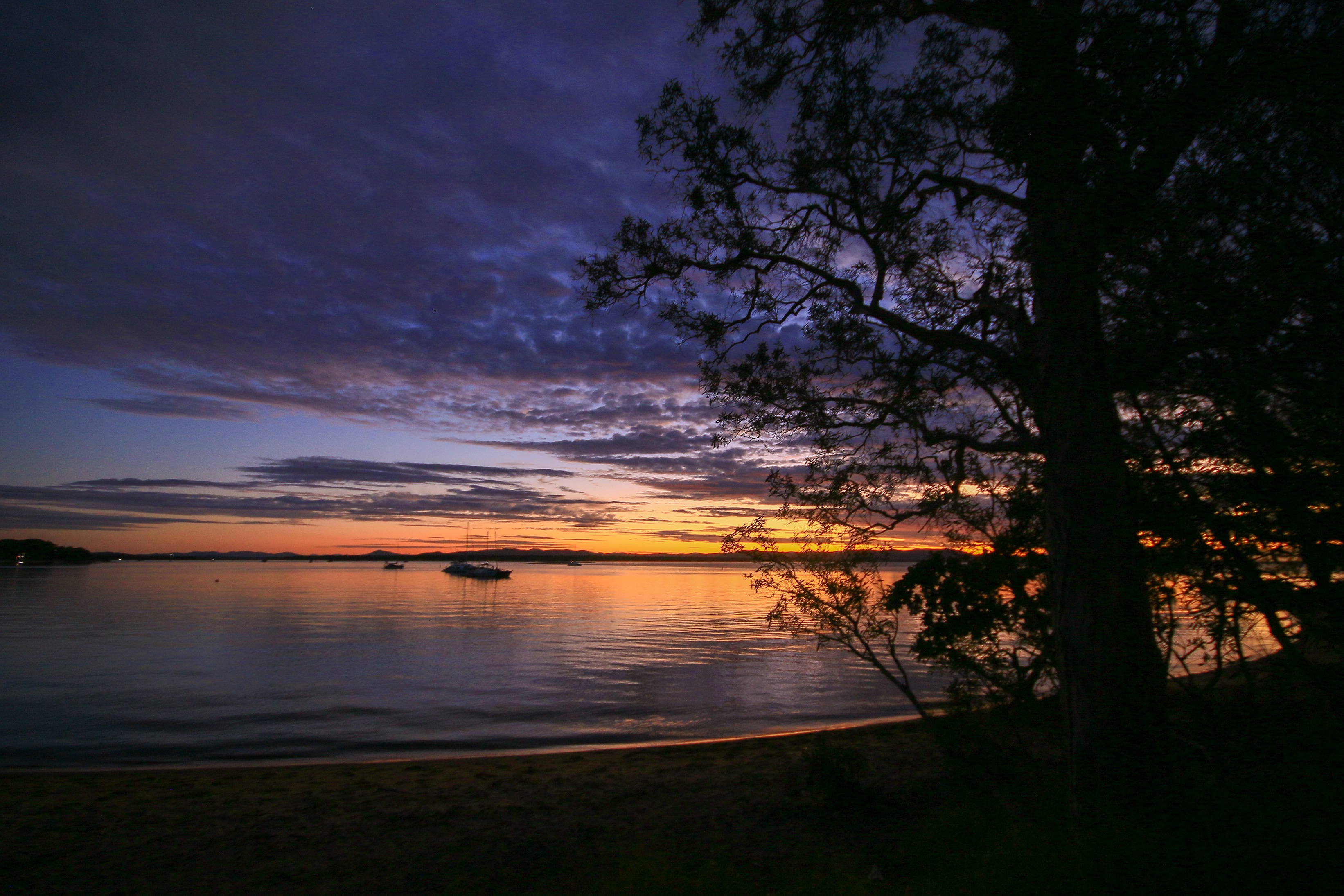
Being beside the coast I had long targeted fish and chips during my stay here, which I gorged on beside the water on the wharf in 1770. Gorging again. The downside to this was that it required an uphill climb back to my cabin and a post-lunch nap. Later in the day, I returned to 1770 by car, and walked out to the headland, hopeful, like many others, that sundown would put on a decent show.

Now Saturday morning, I had been travelling for little over a week. I’d be leaving the ocean today and in memory of this I felt that getting a takeaway coffee first thing and sipping it on the beach would be a perfect moment. Situated next to a waterfront campground, the coffee took an age but when it came it was everything I had hoped for. Order and civilisation were being restored.

And so, next up Caloundra and then the Brisbane Valley Rail Trail. Heading south, I briefly paused in Bundaberg, picking up some provisions and a gift for my cycling buddy, Jason. Never would a $16 bike rack from Kmart prove so popular.

My final stop was in Childers, one last pause before hitting the elongated development of the Sunshine Coast. I had arrived, it would seem, in a town of coffee extremism. Ten minutes out of town, billboards implored me to stop at The Drunk Bean or Insane Caffeine. Nine hundred kilometres after Injune, the sound of coffee insanity appealed. It had largely been madness the whole way.

Australia Driving Green Bogey Photography Walking