What do you do when you visit an epicentre of ice cream? Um, order a massive burger cooked in a wood-fired oven which – circa 2012 – is topped with pulled pork? We were sat at Roskilly’s farm shop on the eastern side of The Lizard. Purveyors of decent ice cream across Cornwall. But, for once, I wasn’t in the mood for that. And there would be plenty of other times.
It may have been that creamy coffee in the morning that satisfied my dairy quota. Sips of goodness in Coverack, overlooking one of those archetypal harbours bedecked with jaunty fishing boats tipping slightly askew on low tide mud. A stone’s throw across from the dream home cottage that had just been sold.
I began to have fantasies of a life here, doing a spot of work in that cottage before popping across the road for a mid-morning drink. Perhaps then a bit more work, a nap and, at day’s end, a trip to a beach. In this utopia, I’d likely head to the wonderful beaches on the western side of The Lizard. But there would be plenty of other options of things to do, places to see, things to eat, closer to home.
One of them would be around Kennack Sands, over which our temporary home for a week was perched. This was far from a dream Coverack cottage, just two six-berth caravans that were a squeeze for ten. But like all good caravans, every little nook was optimised, every fold-up bed assembly a triumph of geometry, every passing of one another in the kitchen an elegant pirouette.
Down the hill, Kennack Sands themselves were less golden than elsewhere but still fine and generous and largely remaining at the mercy of nature. This meant the occasional jellyfish sighting among clear, sometimes warm waters, as well as frequent dog walkers at the start and end of each day. Among the more memorable human sightings was a mass gathering of booty shaking one day and an irksome guitar dude with a three song repertoire on another.
Needless to say, escape via the coast path was always on hand. One afternoon found me on a solo walk up and down towards – but not all the way to – Coverack. After days of family time, the peace was eerie and it felt a lonesome endeavour along a hardy, unkempt landscape. Fellow walkers were few and far between and I found myself yearning for times of mass booty shaking and beach boules.
Companionship was aplenty in the other direction, five of us walking along the coast path from our caravan park to the small village of Cadgwith. Along the way some diverting remnants of serpentine mining at Poltesco – a rare rock type that is abundant on The Lizard. More abundance flowed alongside generous meadows and stony bays kissed by a sparkling sea.
Cadgwith itself makes Coverack seem a metropolis, the village focused around a small shingle inlet on which sit a cluster of working boats. At one point there is that distinctive odour of salt and seaweed and fish guts, pungent and evocative at the same time. Fortunately it is fleeting and doesn’t dissuade ice cream refreshment. I was aghast to find out that my niece, Joy, wasn’t a massive ice cream fan and opted for a fishing net instead. But the rest of us made up for it, multiple times.
Give a girl an ice cream and she may eat for a day, but give her a fishing net and she can eat for a lifetime. Maybe. Probably easier to head to Lizard village though and pick up fish and chips. Tender, juicy cod, crisp golden batter and amazing chips made from Cornish new potatoes, soaking up lashings of malt vinegar.
Other than a fish and chip shop I didn’t get a chance to explore Lizard further. My impression was of a place where you could source ample food along with a fair share of useless tat. And be in a situation where you can march off in any direction and discover wonder.
A little south of the village, Lizard Point itself represents the most southerly position on mainland UK. There exists an appropriate edge of world vibe – beaming white lighthouse, cottages hunkered into rocks, rampant rabbits upon tightly shorn grass and a couple of businesses proclaiming themselves as the most southerly spot you can get a cup of tea. As the land plunges into sea and the sun sinks west, spectacle.
We were blessed to witness a couple of sundowns around Lizard Point. A time when the warmth of the day started to fade, and the summer grasses began to breathe. I remember distinctly here for the first time an Australian odour, an almost impossible to describe earthy freshness that comes after a hard day baking under the sun. As if the land is singing in relief.
The very last sunset accompanied our final night. A night to try and use up all those naughty food bits we had accumulated in the week, including two tubs of ice cream from the local farm shop. A night to not be lactose intolerant. A night to count blessings. A night to lament the prospect of leaving tomorrow. And, like the sun coming up again in the morning, to contemplate doing it all over again.
The it’s too hot brigade have been out in force lately. The worrying thing is they are probably right. More worryingly, I have caught myself occasionally joining them. This, along with an increasing tolerance of British coffee and quietly muttered acceptance of noisy people in the quiet carriage, suggests I am getting more comfortable on these shores. Apart from when it is too hot of course.
The heat would be more agreeable if Britain boasted fine sandy bays and crystal clear coves, a setting for languid summer holidays and Mediterranean vibes. Perhaps with some tapas, gelato and meze thrown in. Let me introduce you, then, to The Lizard.
Down in far west Cornwall, TheLizard is an area where the southernmost chunk of mainland Britain tapers into the ocean. With water on both sides there is a veritable array of beaches and bays, harbours and headlands to choose from. And it is on its western shore, facing the Atlantic as it feeds into Mounts Bay, where some of the finest sights and sands can be found.
The very first morning of a week-long family holiday provides some pinch yourself moments at PoldhuCove. I must confess, like so many other annoying tourists, it was Instagram that thrust Poldhu into my consciousness. What entranced me were the golden sands, blue waters and white swirls of cream decorated with all sorts of gooeyness atop a hot chocolate. The excellent Poldhu Beach Café has a slight Aussie vibe perched upon the sand, delivering decent coffee, brownies and down to earth chit-chat. It felt very much peak dream home.
Either side of the cove the outlook becomes even more idyllic as the transparency of the water shines, magnifying the outline of rocky reefs and diffusing the shadows of colourful paddle boards upon the seabed. On shore, the cliffs rise, coated in a swathe of still-green grass and wildflowers flourishing under the sun. The coastline tracks toward the horizon on either side, encasing a welcoming expanse of Cornish perfection. It felt very much peak dream home.
Beyond the northern headland to Poldhu, the next bay along – ChurchCove – has a more old school air. Grittier sands, seaweed, emboldened National Trust parking attendants. The presence of the old church wedged between rock and sea oozes tradition and heritage. Lichen-infused gravestones suggest at whole generations of fisherfolk and farmers of centuries past, whose ancestors probably still plough their fields and rent their shepherd’s huts today. The surrounding greens of Mullion Golf Club nestle perfectly, as if they have sat in this landscape forever.
Also fitting in, The National Trust run a small kiosk at Church Cove. Naturally. A pleasant enough mini-menu of Bakewell slices, cheese and onion crisps and ham salad sandwiches. But when you know what is just around the next corner, a short up and down across coast path heaven, then why linger. Especially when you have a partner in crime.
I found myself eating alone overlooking Praa Sands but still wasn’t complaining. While some rosy-hued patrons were already on the booze Magaloof style, I contented myself with coffee and a rocky road. Not Poldhu quality but you could have anything here on a day like today and still feel you had won the lottery. Eat in the view, drink up the ambience.
Praa Sands is a long golden bay, increasingly marvellous as the tide rolls out. Forget the Med, think Australia. Near the car parks, caravan parks, shops and cafes it could be a bit of a Bondi on Boxing Day. But the farther you move away, the closer you come to a NSW south coast style stretch of empty beach.
It’s quite a trek from west to east, but with sand between toes and tepid clear waters lapping at them, the footsteps pass with ease. Eventually Praa Sands can go no further, coming against RinseyHead, over which the South West Coast Path once more meanders. The scenery becomes a more classic Cornwall, capped off by the archetypal abandoned tin mine. WhealProsper. We certainly will.
And confirming that, despite best efforts, this is not really the Med or Australia, how about a pasty back on the beach? Proving this is 100% pure Kernow.
Like pasties, I doubt you would find a bag of pork scratchings on a tapas menu, salty fatty fodder to accompany a pint of St. Austell Tribute. Still, I can easily envisage pints and pork products down on the Costa del Sol. Gammons eating bacon with tea and Estrella.
We were snacking in a pub garden in Mullion, a prelude to ending the day down in MullionCove. The small cobbled harbour here almost seems an impossibility. Wedged into the towering coastline, it feels like a tiny fissure in an almighty, unyielding wall. Sanctuary from violent winter storms might only be cursory, sparing. Yet here the harbour still stands, and to stand here is to feel on the very precipice.
Somehow there is a way up from the nook of the harbour, via another goat track section of the coast path. It’s open country, ideal for rabbits and birds of prey eating rabbits and walkers just casually wandering and falling down an unseen ravine. Compared to those fine sandy beaches elsewhere the ocean in front is a less inviting prospect, though arguably more beguiling. A swirling canvas captivating and luring smugglers and pirates and hardy fisherman’s friends of yesteryear.
Illuminating it all, the reddening sun drifts towards a watery horizon, setting closer to ten o’clock in this incredible summer. Glazing the sea and the land and the sky. And kissing our faces a shade of gammon.
And so, the final Lizard bite (part I) culminates in the perfect encapsulation of everything that has gone before: Kynance Cove, with bonus half a pasty.
In recent years, Kynance has become prey to a combination of Poldark Disease and Instagramitis, developing mythical, bucket-list status. All too frequently I am presented with short video clips set to jaunty music showing half-naked people frolicking in crystal waters, often with the caption “CAN YOU BELIEVE THIS IS ENGLAND!!!!!!”. As tedious as these become after constant repetition, they have a point. Kynance is an undoubted jewel in a very lavish crown.
The good news is that despite a warm sunny day in July propelling many vehicles to the National Trust car park, the scale of Kynance Cove is sufficient to maintain a sense of space and serenity. This is especially the case with the tide on its way out, revealing wider stretches of sand, secret nooks and unexpected crannies. In spite of everything anyone can find their own little wonderful spot of paradise.
Still, the kids built a fortress of sandcastles on the beach to keep wandering Scousers at bay, encircling our clan from marauding invaders and video influencers. Not that I sat within it for long spells, keen to just potter up and down and in and out and via the NT café for a mediocre coffee and slice of carrot cake.
Views from up high once again highlight the drama and spectacle of nature, as huge lumps of rock appear as they have been thrown haphazardly into translucent waters and edged with golden sand. The people who once seemed many and varied at sea level morph into colourful speckles, dots on a more expansive landscape. But, with a bit of zoom, that family fortress is still visible.
As I descended to sea level to join them, still a bit peckish, I was delighted to find I had been gifted half a pasty. Originating from the locally ubiquitous Ann’s Pasties, it must have been a product of Kynance proportions for there remained a substantial lunch in front of me. Gorgeous, and at least it wasn’t too hot.
Pretty much at the beginning of this UK22 odyssey I heard one of the blandest songs possible, warbled out by George Ezra on The One Show, spouting insipid lyrics about green grass and blue skies. A summertime money-spinner predictably pounced on by Heart and played every half hour. What young George didn’t take into account was the abundance of blue, blue skies which would naturally turn the green, green grass a tinge of yellow, yellow straw.
The UK is still a green place but I have found myself of late detecting a slight Australian essence: an earthy smell at the end of a hot, hot day, of golden grasses secreting some relief as the sun, sun sets. Waking with an expectation of wearing shorts. Drawing the curtains in the day. Frequent use of sunscreen. Wildfires on the TV news.
One area that might just retain the green, green grass of home longer than others is northwest Wales. And while warm sunshine continued as Caroline and I entered the principality on the second phase of our up over olde at heart road trip, this unseasonal weather was set to wane. Soak it up I say, pausing beside the waters at Tal-y-llyn on our way into the hills…
Woodlands, green views and the Co-op
By handy coincidence, we were staying in Green View Chalet, perched loftily within the Woodlands Holiday Park. It was a neat, quiet little place with a distracting view. Pure Wales rolling down the hill and climbing up the other side, stone walls, sheep and all. With altitude comes a transition from temperate, lush valleys to unkempt, windy moors, topped with all sorts running wild.
Early on I took a short walk, encountering sheep galore and a minefield of droppings. Much the same happened on a longer circular walk that satisfied all the greater for taking place from the front door. The walk was a bit of a gamble in blustery conditions, cloudbursts evident both out to sea and further up towards the high mountain crags of CaderIdris. But I mostly stayed dry, treated instead to changing light and shadows, distant rainbows and soaring birds.
The closest town of note from here, sitting upon Cardigan Bay, is Tywyn. While devoid of vowels, it was handy for supplies, hosting a remarkably large Co-op and at least three Indian Restaurants where cash is king. Meanwhile, down on the seafront there was an old school feel to the air, conjuring a town tucked away in the nostalgia of childhood bucket and spade holidays. A town that is lost in time. A town where steam from the railways still rises into a disappointing monotone sky…
Tally ho Talyllyn
One of the very interesting things about North Wales is the multitude of heritage railway lines. You can imagine Portillo on constant loop here, stoking coals in blue dungarees or shoving a homemade Welsh Cake into his plummy mouth. While naturally providing tourist tucker, the network of vintage railways probably provides a more reliable service than the modern, expensive, strike-riven mainlines of Tory Britain, 2022.
The Talyllyn Railway departs from Tywyn, heading up the valley to Abergynolwyn. The railway was constructed in 1863 and – like many others in this region – was used to transport slate from the hills to the sea. Today, the slate lingers on in trackside fence lines and in the specials boards of train station cafés.
It was a grey, patchy rain kind of day, a suitably slate-like sky greeting us at Tywyn Station. More alarmingly, a parade of schoolchildren appeared to be heading in the same direction, seemingly set to infest numerous wooden carriages on the 10:00 to Nant Gwernol. But a stroke of luck – either they were off to the museum or a tour of the Co-op, which would keep them occupied for some time.
Full steam ahead then to the first stop of the day at Dolgoch, via chalet-spotting views over to Woodlands. Disembarkation here was a controversial affair – just us and two others while everyone else on board wonders what the heck. The attraction are some falls, silky slivers of white enveloped among a peaceful forested gorge. And hopefully a tea shop.
A tea shop that looks like a council house and looks very closed. It’s drizzling and sometimes more than drizzling and the next train is an hour away. What to do with an hour in Dolgoch? Check out the historic slate fence and wait for a train coming the other way and be entertained by the nesting sparrow chicks in the waiting area and the returning couple living life in imperfect harmony.
And then full steam ahead again, the arrival of the train a moment of great fanfare when a quiet forest glade transforms into a hissing, steaming pocket of noise and fury. The sparrows hide, the wayward tourists board, the drivers stoke coals and in one final giant puff of steam toot-toot we’re away.
The journey seems more attractive as we progress up the valley, partly because the sun briefly comes out, trees parting to reveal a patchwork of fields inching upwards into the exposed bracken and gorse of steeply rising hills. Here and there the odd farmhouse, the odd car, the odd siding decorated with purple foxglove. Briefly summer again before more rain sets in.
Turning around in a downpour, the train heads back with a layover of thirty minutes at Abergynolwyn. A period of time insufficient to do little else than converge en masse upon the station café. As if it was designed that way.
At first, there is panic as everyone wonders whether they can get served, eat, and do the toilet in time. But the café operates smoothly and efficiently. As if they do it every day. I get my bacon sandwich, Caroline gets her jacket potato and the two old-timers sharing our table get their crisps, partly funded by a 60p increase in their pension, so I am informed.
It is unlikely they have money left over for that delicious looking cake. But perhaps some shortbread. A tasty treat that is balm to my coffee and lingers long in the memory, longer than it felt to head back to the future in Tywyn. Or 1980 at least.
Aberdyfi-dovey
Though hardly light years ahead, I think it’s fair to say the town of Aberdyfi is a notch above Tywyn in the seaside locations of upper mid-Wales stakes. Slightly more genteel, slightly more attractive, slightly more touristy, even the jellyfish seem to prefer it here.
We stopped at Aberdyfi a couple of times. The first a grey affair that still warranted ice cream, the second of sunnier disposition that still warranted ice cream. Any visit to Aberdyfi would warrant ice cream, simply because the Aberdyfi Ice Cream Company produces some top-notch stuff. The fruits of all that green, green grass.
The other highlight of Aberdyfi (and certainly up there in terms of the whole trip) was pizza on the beach. Sure, it was probably 14C and a tad blustery, but after a long day and the threat of frequent showers, we were rewarded with a touch of tranquility, golden light and golden sands bathing a stone-baked feast. Close your eyes, wrap yourself up and pretend you’re in Bondi. With an ice cream on top.
Shut your Barmouth
In the other direction from Tywyn the road becomes a rugged affair, hugging the coastline on one side and winding below calamitous slopes on the other. The sea eventually forces its way inland at Barmouth, the wide estuary of Afon Mawddach forcing its way around tidal flats into the heart of Snowdonia. It is all rather impressive and grand.
It is a landscape that proves difficult to tame, the road resigned to following the Mawwdach for many miles on either side before it can even attempt to cross. But fortunately for us and for Michael Portillo there is a long rail bridge spanning the estuary. A considerable engineering feat that sits perfectly within a breathtaking landscape of shifting sands and looming mountains.
While lacking steam and turn-of-the-century attire, the train ride would no doubt prove an interesting affair. Today the trains are on strike but thankfully the bridge includes a pedestrian and cycle-friendly thoroughfare. A suggested voluntary toll of two pounds to cross would be worth it if it didn’t convey the air of dodgy scam.
Still, Barmouth was far from a freebie with lunch and afternoon tea at the same place; seemingly the only place that had a small garden and didn’t offer an array of fast food and sticks of rock served up with seagull terror. While possessing an attractive harbour and ample sands, the approach to Barmouth proves more compelling than the town itself, where West Midland accents are as commonplace as vape shops and amusement arcades. I begin to tire of Barmouth, perked up by the prospect that the exit is the very best part. Majestic in fact.
Prisoners
And so we reach our last day in Wales and what a way to end. Heavy rain, gusty winds, cloaked in four layers and topped with the beanie I wasn’t sure about packing. Feels like something is in the air.
Driving north it certainly wasn’t a very Italian Riviera feeling day; more hot drink in a cosy cafe in a grey slate town like Dolgellau vibes. Still, we push on through a downpour, sit in traffic and park up to be greeted by only the slightest drizzle and possibly one of the most startling sights in Wales: Portmeirion.
How to describe Portmeirion? A vaguely Italianate village near the French border acting as a film set in the guise of a theme park pretending it is not in North Wales. A perverse colourful curiosity that is equally weird and enchanting at the same time. Possibly qualifying as a bit quirky. And naturally a beacon for all those COVID-confined celebrities yearning to make travel television somewhere, anywhere.
With all that publicity you would expect the place to be heaving, but the rain today actually has a benefit in keeping the crowds at bay. This means at times we seem to have a Mediterranean square to ourselves, a quiet Tuscan alcove to explore alone, pastel views unimpeded by fluoro kagools and monotone brollies. And thankfully most of the bad weather bypasses Portmeirion, the heaviest of showers conveniently coinciding with a car picnic.
I’m not sure how the plants feel about this weather. Some, I suspect, are struggling a bit like us. Nonetheless, the grounds at Portmeirion are a delight, boasting exotic species from around the globe, hidden pagodas and ornamental ponds. And from loftier heights there are snatched views of downtown and out across the estuary towards Porthmadog. Loftier heights that prove occasionally breathtaking as the rain marches forth.
Farewales…
The morning after dawned bright and fresh at Green View, features of the landscape cleansed like sparkling champagne flutes straight out of the dishwasher. The view, how you are drawn to that view. Those wild, undulating hills, plunging into a rich patchwork of fields. Lone cottages and barns and the perfectly imperfect lines of hedgerow and dry stone wall. Copses of broadleaf woodland sprout up while clusters of white dots decorate the grass. And a little after 10:00, slicing through it all is the toot and steam of a choo-choo train inching ever up the valley.
And there we are, yet another corner of this incredibly ample little country successfully navigated with much enjoyment, comfort and companionship over the past few days. Nothing could go wrong. Wales done us.
In another classic episode of Escape to the Country, semi-retired couple Martin and Glenda scour the land seeking a five bedroom property with countryside views, a home which has lots of history and character yet is spacious with all mod cons, is in a well-connected village or town but away from the road, and has a separate studio space as well as paddock for horses, kept within a low-maintenance garden. As always, they leave empty-handed.
For some reason, the county of Shropshire always brings to my mind endless episodes of Escape to the Country. It probably came about during a four hour afternoon binge of boredom when the best entertainment on offer was seeing affluent couples debate the merits of being located within fifteen minutes of Ludlow. From my (admittedly not rigorous) research, Shropshire is awash with such couples. And you can see why.
But more of that later, as our journey today starts in Cheltenham Spa, where I meet up with Caroline for a week of escaping in the country. It is a fine summer’s day and Cheltenham is looking mostly resplendent, particularly around the parklands lined with elegant Regency mansions. The weather suits a picnic and an ice cream and an outdoor drink before some alfresco dining and a long walk back to the Premier Inn.
The next day takes us through Herefordshire and into the heart of Shropshire, with place names familiar from daytime TV property shows. The first port of call is Ross-on-Wye, providing a taster for the towns to come, all higgledy-piggledy high streets, timber beams and hilltop climbs. From high up next to a church, the Wye meanders quietly into a panorama of what is to come.
The same sinewy river cuts through the heart of Hereford, where it is time for some lunch. That is if you can negotiate the ridiculous parking arrangements with apps and meters and enforcement cameras and other people scratching their heads as to why they make this so damn difficult. It is worth it, in the end, but doesn’t garner great first impressions.
Having grown up in a Plymouth whose centre was largely obliterated during World War Two, I rather like the character and charm of Hereford. Its cathedral upon the banks of the river impresses, as do the cloisters and laneways emanating from its heart. Yeah, it has Poundland and other such trappings but they are frequently encased in timber and crisscross cladding. Lunch in a laneway feels continental, though with more crisps and less Orangina.
At some point we pass into Shropshire and before long come within fifteen minutes of downtown Ludlow. I never realised there were so many fortifications in this part of the country, but it makes sense given cross-border rivalries. Ludlow boasts a decent castle atop its ridge, boasting a civilised cafe within its ramparts. The kind of place for scones and cream, if only the last of the scones were not taken by a family who would not fully appreciate such things.
It’s the kind of setting where Escape to the Country couples would gather with their host to discuss the pitfalls of all the properties they had visited before heading back home to the West Midlands. At some point on their journey, bucolic Shropshire will transition into industrial Black Country. Probably today it is somewhere beyond Ironbridge, though in the past this would have been the very epicentre.
Ironbridge shares a commonality with many Australian places in being named for the bleeding obvious. It is – famously – the site of the world’s first bridge constructed of iron, the gorge in which it sits once a thriving heart of the Industrial Revolution, warts, smoke, cholera and all. Within this context, it is at a confluence where cosy countryside property-buying programs meet the imperialist nostalgia and engineering worship of Portillo, Robinson, Bell et al.
Today, it is hard to imagine a noisy, dirty, smoky valley of mining and manufacture, shipping and smelting. The graceful iron bridge stands, backed by a picturesque village of quaint homes and tourist trappings rising up the hill. Being a warm day already, I succumb to an ice cream before noon and Caroline happily joins in. We find pleasant lanes and a pleasant park and, with some time-filled, a pleasant pub. It is not the pub garden of dreams, but it is a pleasant place for lunch.
Still seeking the pub garden of dreams later on, Caroline asked a couple of police officers strolling the amiable streets of Much Wenlock for their recommendations. There isn’t much to Much Wenlock and I doubt there is much for the Much Wenlock constabulary to do. Other than recommend pub beer gardens to out-of-towners. As it turns out, the recommendation in Broseley was okay but the garden more gravel car park than veritable eden.
Ideally there would have been a good beer garden in Much Wenlock itself, to refresh after a lovely amble around this most charming of small towns and its surrounding countryside. But much of Much Wenlock is chock full of timber-framed cottages, tightly wedged together with barely room to swing a cat. Gardens are a luxury. This is usually a point of contention for those couples in Escape to the Country, bemoaning a lack of space in the medieval home full of character they so desperately sought.
If it is space and character they are after then they may need to head west, and the Welsh borderlands. For here, just outside of Welshpool we discovered a good-sized pile boasting fine views, a well-maintained garden, several bedrooms with en-suite, plenty of wildlife, and all this situated within five minutes drive of Tesco.
While we may have missed out in our perfect pub garden quest, then Powis Castle was a roaring success of a National Trust day out. Even I don’t begrudge the admission fee, which was good value considering the wonderful gardens and grounds, the views, the preposterous wealth and artefacts of the insides, bonus peacocks and – with a little extra payment – coffee and cake. Oh, and a picnic, naturally. Proving the perfect escape to the country.
Well that was a first. I literally spat out my coffee. In front of bemused patrons of the National Trust. It is not the standard one expects within the National Trust, but it was bloody hot. I think I forgot how it is acceptable here to ruin coffee by ensuring it has similar properties to molten steel. And this was a sizeable gulp whose safest pathway was back out onto the grass.
On the plus side, the cake at Lanhydrock eased the palate and I was able to wash it down with sips of coffee after 15 minutes. Plus there could always be something cooler and soothing to come later on.
Unwilling to invest substantial capital to enter the property at Lanhydrock, the cafe was a mere pit stop on the way to the coast of North Cornwall. It was a dispiritingly cloudy, drizzly kind of drive but one in which I felt a little on autopilot: over the bridge, Trago, the A30 and past the holiday homes littering the outskirts of Newquay.
Mum and I were heading to West Pentire, where social media had amply promoted the annual appearance of poppies. Clumps of poppies. Swathes of poppies. Whole fields full of poppies. Enough poppies for influencers the world over. So many, that you can easily find your own patch.
This spectacle for once diverts attention from some classic Cornish scenery. On one side, the golden sands of Polly Joke Beach call out to those willing to carry deckchairs and bodyboards, while the massive expanse of the Gannel estuary with the tide out magnifies Crantock Beach a hundred times over.
Such is the scale, it takes a fair few minutes to drive to the car park for Crantock, run by our good friends at The National Trust. I hope I haven’t been blacklisted already for my earlier misdemeanours, but they seem happy enough to take our two quid for an hour. It is an hour to eat some packed lunch on a sand dune and cram in a walk to the fringe of the Atlantic. In the shallows it feels fairly warm but I do not linger any longer than the sole lifesaver escaping the creep of the returning tide in his four by four.
Being a National Trust bad boy I think I exceeded the parking by four minutes but I blame it on the sand-shaking and shoe-shuffling. Sensible footwear for the journey back to Plymouth. Yet those shoes took us on a little diversion, via a charming farmhouse in Callestick, a spot where they happen to churn out mountains of ice cream. Naughty shoes. Least I didn’t spit any of this out.
Foodstuffs continued to be on the mind during other forays into Cornwall. This included throughout a three day hike along the South West Coast Path – much more of which can be digested in another post here. In brief: fish and chips, ice cream, cider, cream tea, chips, ham sandwich, double decker, crisps and beer, croissants and celebratory pasty. With some walking.
And then there was Looe. Pasty? Cream Tea? Pasty? Cream Tea? Both? For all my bravado beforehand I couldn’t do both on the same day, so instead visited Looe twice. Once to see Sarah and her pasty paradise, the other to revisit Daisies which, despite being under new ownership, still served a fine cream tea (8/10, needs a little work to reach previous heights, but extra points for cream top up).
Though it has good foodstuffs and is convenient I am getting a bit over Looe. It must be all those visits for pasties and cream teas and occasional fudge. Countless laps of the car park, voracious seagulls, tacky gift shops, stinky low tide and shuffling grockles. It may well initially charm, and does always nourish, but there are better places I might be.
So after devouring the last cream tea on an overcast day, it was straight back to the car park to gift a space to a happy Mercedes. Leaving Looe to seek a quieter, mellow kind of place. Discovered not so far away at Talland Bay, where the natural delights of the coast meet tractor-friendly dreams.
Espying there a building sat upon the cove. A scene for another day, another year. A café by the water.
The glow of the sun kissed my face, smoothing weary creases and tired eyes. I stretched my legs free, unfurled my arms and breathed in air unguarded. A salty, doughy morsel touched my lips, comforting and contented, filling a roiling void somewhere in my stomach. And then I took a sup on a coffee from Pret and came down to earth. With a bump.
Not for the first time today, meeting Great British tarmac at Heathrow Airport. A concrete scene which diminishes with miles, through the leafiness of Surrey, the crops and commuter towns of Hampshire, the river valleys and chalky plains of Wiltshire. The proportion of sunshine to concrete proves related, as cool, cloudy skies greet me in Salisbury, alongside Dad.
To leave Australia at this point in time seems fortuitous given the dreadful weather before I left. And here we have a UK bathing in the after effects of a jubilee, a promise of summer to clutch on to as you avert your eyes from the petrol pump. A summer of pretending a pandemic has gone, crowds feasting on fresh salads with iceberg cheap and plentiful. Not that I’ll be overdosing on salad.
Every return I make I am struck by the burgeoning salad of the English countryside, even though this time I left an oddly verdant Australia. Wiltshire presents the kind of gentle introduction I need, an ease in to a Britain that is still to be treasured for its tranquil waterways, butterflied meadows and rolling downs. A Britain of bunting and thatch and country piles interspersed with the odd pocket of chaviness. ThisCountry indeed.
Ably guided by Dad it is splendid what you can simply embrace within a small radius of Durrington. The River Avon never seems far away and a small stretch is but a mere five minutes walk from home. The background buzz of mowers competes with the chirping of the bird life. Around each corner lies the possibility of catching a kingfisher in flight or an amorous couple in fright, each as frisky as the other. A melange of nettles, weeds and grasses rise to a height in which otherthings no doubt hide. But blessedly not so many snakes.
A greater danger around here seems to be the prospect of emerging from the long grass to face a head-on confrontation with a tank. The armed forces war-gaming upon Salisbury Plain makes walking a slightly more interesting proposition. For centuries these have been venues of military endeavour, evident in the many iron-age hill forts punctuating the landscape. Obvious staging posts with expansive views out to marauding invaders.
Today SidburyHill is a quieter affair, though two men in combats linger beside a Land Rover near the top. I can’t decide if they were discussing the strategic ramifications of ground assault in Donbas or eating lunch. Dad and I ate lunch, looking out for butterflies.
The plain isn’t all that plain, and an impromptu detour on the way down the hill takes us through a patch of woodland. Fresh off a plane I remind myself to look up into the canopy at the shapes of the leaves, broad and green, forming into layers which intertwine their way towards the sky. Leaving hobbit-like tunnels and corridors of natural art through which to stroll.
There is little strolling for the squaddies however. We encounter backpack-laden platoons traversing water and nettles and unbearable banter during another walk over the plain and down alongside the Avon. It is, almost, tolerable shorts weather but I’m glad I didn’t succumb given the undergrowth to navigate. Not quite squaddie style, but a little track-hunting through the long grass nonetheless.
Nature infiltrates everything here but so too is it tamed. That could be a slogan for Wiltshire, the taming often coming in the form of genteel cottages clustered together in the midst of industrious fields. It frequently makes you feel as though you are in Escape To The Country, only without the two million quid on which to prevaricate.
Our own escape in the country culminated with a flurry of thatch in the small hamlet of Ablington. Here it was as if everything had been deliberately arranged for my convenience. Under sunny skies dotted with cotton wool clouds, a row of whitewashed cottages sit higgledy-piggledy along the lane. Gardens and window boxes pop with colour, hedgerows hum with insects, and glimpses of perfectly manicured lawn conjure images of scones and jam on a latticework table. A Union Jack waves proud, and underneath a Mini in racing green. And everywhere, rambling, decadent, undeniable English salad.
And so, that year that everyone was so looking forward to when it commenced draws to a close. If the sequels to 2020 continue to pan out like the Police Academy series then we are all in for a very unamusing time. Unless you’re really into these boorish characters, crass jokes and ridiculous plotlines.
Despite its ups and downs, I was surprised to be able to find myself for a couple of weeks at the latter part of 2021 in the United Kingdom. So thank you lax borders and frequent flyer points and negative lateral flow tests and annual leave build up and, most of all, thank you science. It was a bonus trip, taken with a wariness that things could so easily change again and again.
It was amazing and I would do it all over again. This, despite the shadow of coronavirus always lurking in the background, sometimes coming to the fore. At times – such as high upon a clifftop overlooking the Atlantic, roaring with laughter during an early Christmas gathering, scouring verdant countryside for lens hoods – the pandemic disappeared altogether. At others – shopping for cards in an almighty hurry, shoving swabs up my nose, double-masking when others breathe “freedom” – it was all that was going on.
The journey back to Australia is never really a good one and pandemic travel adds an extra layer of crap. Which is exactly what was lathered all over my hands from a Great Western Railway dispenser at Plymouth station. Awaiting a train to Exeter masks were – mostly – back in fashion but no-one was rocking the dual surgical-cloth combo quite like me.
Eschewing my reserved seat for a quieter clump further down the carriage, it was a peaceful journey twisting through the ambrosia of South Devon. Along the Teign the low winter sun inched into the sky and flickered golden upon the caps of gentle waves as we wound towards Dawlish. A silhouette upon the beach swiftly passed by and I felt a yearning to swap places.
At Exeter a breath of fresh air before trundling on through a litany of country villages and towns straight out of Wessex – Whimple, Sherborne, Templecombe, Tisbury, and then finally Salisbury. For a meeting with Dad, a bakery and – yes – a PCR test.
At £99 (AU$200) I was expecting a gold plated swab and free lollipop, not a tiny pharmacy offering a ten second poke up the nose. Oh well, hopefully it will get me on a plane to Australia within the mandatory 72 hours. Hopefully.
I stayed with Dad and Sonia for a couple of days, happily partaking in Tartiflette traditions and Saturday night quiz shows. The main activity was a delightful Wiltshire walk around the Vale of Pewsey, that ultimate pre-departure injection of countryside England, of green and pleasant, of great outdoors. Of surprising blue skies masking a chill winter wind.
Much of the route took us along the top of a characteristic chalk down, plunging curvaceously into rich, bounteous farming country. Beyond far-reaching vistas over loveliness, memorable features included a white horse, old burial mounds, brambles, crawling through gaps in a fence and slipping in cow-trodden mud. Oh and did I mention the Belgian Bun? Should’ve brought a flask though.
Despite blue skies, winter finally touched me with its bone-chilling menace. This occurred right about the time Dad lost a lens hood. Buffeted by the arctic, layered up with everything I had, unable to feel my nose. What the bloody hell am I doing? My mind switching to Australia.
It is quite feasible that some people in Pewsey felt that I should have stayed put in Australia. I dunno, spending my Dad’s money in their out-of-the-way town on instant hot chocolate. And while I can appreciate perspectives on non-existent pandemic control at the borders, I couldn’t help but feel this was borne from a place of zero foreigners whatsoever. Perhaps, Little Britain style, a deluge of vomit ensued after my revelation that I was over here from Australia.
Not that anyone appeared to be really minding a pandemic the next day at Honeystreet Mill. Full tables feasting on bacon and eggs and sausages and beans and mushrooms and toast, emanating vapours with every loud voice and legume fart. I had come here with cake in mind, but it was hard to look past English bacon and sausages and HP sauce one last time. And besides, they do take away.
And so, packing cake, the journey continues onto that great city of London, steeped in drenching drizzle. It was a scaled-back visit in keeping with the times: one night only in a Paddington hotel, enabling an early start to the airport the next day. The hotel was everything you would expect of a Paddington terrace: behind the elegant façade, a labyrinthine warren of creaking floors and random stairs and polite notices. Washing muddy shoes in the shower wasn’t one of them.
For the remains of the day I endeavoured to make two brief encounters. This necessitated an adventure ride on the Underground to get to North London. From Edgware Road I hopped on the Circle Line which in my experience has always been a voyage that never seems to go anywhere in a hurry. On the plus side – I reasoned – it’s a subterranean affair, with opportunities for fresh air to mingle as you wait for no good reason at Baker Street. Occupying time, mask-counting is the new Metro-reading, and I would say an average of six and a half out of ten managed to comply on the Circle Line.
From Kings Cross I hopped onto the deeper, murkier Northern Line once more. Here I positioned myself by the windows at the end of a carriage to allow that sooty centuries-old air to take on my twin mask protection. I guess there are probably traces of the Spanish flu down here, along with Churchill’s cigar smoke and aromas from a Wimpy burger.
Maybe I just got lucky, but it was quiet, with mask-wearing approaching nine out of ten heading to those affluent, sensible suburbs of the north. The emerging light after Highgate never fails to bring relief, despite having done this trip hundreds upon hundreds of times in the past. And soon, at East Finchley, I hopped off into the late afternoon air.
The skies had brightened a little, prior to their disappearance into night. Cognisant of being on an aeroplane for days, I was keen to walk and talk with Caroline, aided by the thoughtful and cherished gift of some M&S chocolate biscuits. Through Cherry Tree Wood I remarked how I vaguely remembered walking this way once to Muswell Hill and lo and behold after not having a clue where we were heading we ended up in Muswell Hill. From there it wouldn’t have been so far to the Ally Pally but the drizzle set in once again and the pub sounded a better prospect.
Despite all the ridiculous nonsense spouted about freedom days and the sanctity of pubs from our self-styled post-war yearning libertarian warriors I rather enjoyed my two pints in the pub with an old friend. It just felt, well, normal. Like old days, like old lives. Yes we had our masks at the ready and sat far from the smattering of patrons, but it was almost as if a pandemic didn’t exist. Despite talking for 80% of the time about the bloody pandemic. I guess the alcohol maybe went to my head, but I remember that hour with much fondness.
I also remember dinner with much fondness, again propped up by a glass or two of wine and the company of more old friends. It was all too brief with Melita and Geoff and Orla and how I yearned to just linger and crash on the sofa and get up the next morning to walk to Victoria Park or up to North Finchley Sainsbury’s for hummus, edamame and more wine. The hope is for this sometime in 2022…
The final day of 2021 finds me sat writing this under a shady tree beside a lakeside bay in Canberra, Australia. A few families are scattered upon what counts for a beach, while a fluoro-white cockatoo shrieks from somewhere within a tall eucalyptus. Nursing me along, I managed to find one of the few coffee shops open – an Omicron lover’s dream – to pick up a takeaway. Accompanying shortbread comes courtesy of M&S at Terminal 3 of Heathrow. I had a lot of time at Terminal 3.
But I made it. After a PCR test, a cancelled flight, an airport hotel with buffet food, early coach pick-ups with whinging people, a nonstop coughing, nose-blowing man, Darwin, Sydney, driving down the highway to Canberra, three days of home quarantine followed by another bonus four, two more PCR tests and about six lateral flows. Horrible jet lag and a tired achy feeling that just wants to linger. Delights at being back and some disappointments. It was worth it all.
For the duration of my flight I was sat next to a well-masked older lady who was off to Sydney to see her son, his partner, and their son. A boy born under the shadow of COVID-19. This was her third attempt and I shouldn’t have been surprised at the obscenities flowing from her mouth at the first aborted take off. She just wanted to see her grandson for the very first time.
For ourselves and for others. This is why we do it and would do it all again. All the time holding on to the hope in our hearts that some sequels are better than the original.
Is December 25 any more than an arbitrary date? That one day where it was decided the shops would be shut and we should horde food as if the end of the world was nigh (possibly true). That one day when we all pretend to love Brussels sprouts and Christmas pudding. That one day when instead of miserable news on the radio in the morning, there is earnest preaching and high-pitched singing about miraculous events from afar. That one day when we are supposed to gather with loved ones. That one day to share things before the next lockdown.
I will happily oblige in the festivity and jolliness of December 25 and even tolerate a few Brussels sprouts as long as there is enough gravy to mask their evil. I shall do so again this year, perhaps taking in a prawn or two and a glass of chilled wine as I sweat profusely under a thirty degree sun. It should be pleasant enough, but in reality I feel like I have had my Christmas Day in 2021 already.
To be frank, by time it reaches November 28 in the UK it feels like you should all bloody well have had your Christmas Day by now! For weeks beforehand, the same five Christmas songs have been playing ad infinitum on Heart. Soft toy carrots have been flying out the doors of Aldi. Christmas lights from Poundland sparkle and shimmer outside every three or four houses as you drive down the street. Shopping is madness and the insanity of retail staff bombarded by Christmas music is plain to see.
Besides, the Christmas Day of November 28 2021 was one of the most magical in years. It was a day that dawned crisp and clear in the little town of Plymouth. All was calm. All was bright. While magical mother elves stayed at home to prepare a feast, I set off across the rolling green fields of South Devon. Follow the car. It stopped initially in some free parking alongside the river in Dartmouth. For a coffee before getting going, out onto the infinite gift that is the South West Coast Path.
It is here that I need to bring in a fictional character who wears bright clothes, often bellows with much jollity and possibly keeps a list of good and naughty children in a little red book. Naturally, I always thought of Michael Portillo as a bit of a posh tory twerp. But in his reinvention as doyen of trains and intrepid traveller who displays surprising warmth and rapport with the people he comes across, he is – well – incredibly likeable.
During the latter half of the year in Australia a show came on which was – for me at least – dream lockdown viewing (naturally it was on SBS). Michael Portillo going on a walk along the South West Coast Path. It was a bit of a departure from train japes Michael. A COVID-era Michael, who was wistful and introspective and possessing of fewer lime green jackets. It was simply a guy going for a walk along the most beautiful path in the world. On my country.
I remember an episode that commenced at Start Point and finished on the edge of Dartmouth, and the scenes on my walk today followed a small part of the same route. I set off from a car park at a spot called Little Dartmouth, quickly connecting to the coast path. There was an unmatched tranquillity about today, from the placid blue of the sea to the gentle undulations of the fields. Occasional sail boats emerged out of the Dart. Cows grazed contentedly. Robins flitted and chirped unseen among the browned hedges and trees.
After a delectable snack on a delectable bench overlooking serenity, the path soon led to Michael’s massive pole – a signpost at a junction ensuring everyone is kept on track. Only weirdoes like me would give this a second glance, but the signpost boasts a unique feature – installed by M.P. 2021. In locked down Canberra, taking comfort sharing in Michael’s frequent torment (somehow, a pleasant walk on a gorgeous coast path is way outside of his Kensington & Chelsea comfort zone), I thought there would be something fitting about making the pilgrimage to this spot. In many ways, it was still unbelievable that I could be here, just a few weeks on.
Anyway, no camera crews and gold-plated chauffeur driven cars for me, I must trudge on. Before long the path turns from the sea and follows the Dart estuary. Here, the other main motive for my walk today emerges – Dartmouth Castle and, more specifically, the presence of a café. I opt for the safety of a cup of tea and pick up some form of caramel and chocolate and biscuit. Many others are doing the same, sat outside overlooking the river from a generous array of benches. Attracted by my crumbs, a robin comes to offer company. And I am reminded how I shouldn’t eat too much and ruin my dinner.
Luckily, there is a fair chance to walk off some of the food with a steep climb up to Gallants Bower, an old hill fort offering lofty views back towards Dartmouth and, of course, out to sea. With this effort and the still sparkling afternoon sunshine I am actually starting to feel quite warm. For what I believe was the only time outdoors on this trip, I peel down to just a jumper.
I should get a move on for a date with another jumper though. Whenever the last time I was here during Christmas (maybe 2015?), I was lovingly gifted a Christmas jumper. It’s not the kind of thing that suits Australia and so it has sat gathering that musty smell in a drawer in a small room in Plymouth. In many ways I am surprised it is getting more than the one use, thankful that it is allowing me to fit in with the other elves who assemble for our Christmas dinner.
Roast pork and potatoes and parsnips. Veggies and stuffing and gravy. Pigs in blankets with crappy crackers and paper hats. That warm, rosy feeling of bodies crammed in a small space accompanying wine and noise and condensation on the windows. The lights, the very many sparkling lights. Secret Santa presents adding to the complexities of fitting everything in a suitcase. Funny quizzes and roaring, unstoppable, contagious laughter. Comfort and joy and belonging, providing culmination to a Most Perfect day which has been so long, too long, in coming. The gift of family and home. Merry November 28.
I doubt I could have arranged things any more perfectly for my long-awaited return to the coast of North Cornwall. Brilliant blue skies with barely a breath of wind. Quiet roads and quiet towns. Views to Lundy and North Devon and down the coast to Trevose. Coffee and walnut cake under the sun.
I’d like to say I stopped at Boscastle Farm Shop because my Mum and sister were on board and they needed a wee and some retail action but of course this was entirely a brilliant idea of my own making. Something to celebrate being together and seeing that rich blue line of the Atlantic stretching into infinity. Something to pay homage to the fruits of this most beautiful county of verdant green pasture and rugged, wild coast. A fillip to start the day off with a bang and another six million calories.
Boscastle. That place you come back to time and again just because. I would have done so without the delights of a farm shop café open on a weekday in November, but I also had a little extra motivation: Calendar Quest 2022, a frenetic mission to try to include a few shots that are not Australia in my annual make-Christmas-gift-giving-relatively-easy creation. Today, the challenge might be which one to pick.
An early Christmas gift offered inspiration to go just that little further, rising high above the crumpled S of the harbour as it makes its way to the ocean. I find it quite inexplicable that I had never risen to Penally Hill before, but every step was a moment. Perhaps a moment to capture in a calendar but we shall just have to wait and see.
In continuing happy vibes, the coast path from here is relatively flat, all the way along to Boscastle Farm Shop, where you could quite easily nip in for a cheeky slice of cake even though you had already done so. I didn’t, but next time.
As night follows day and cream follows jam, the next stop on this splendid day was inevitably Tintagel. An absolute ghost town, possibly haunted by Merlin’s beard. I have never seen the main strip so lifeless; so quiet I was able to drive to the very end, pull into a driveway outside Pengenna, and pick up a steak and Stilton pasty and a few cheese straws.
Last time I came to Tintagel there was the rude shock of finding out that Granny Wobbly’s Fudge Pantry had been taken over by some young punks from not round this way who had done some market research to tell them that people preferred fudge that was non-crumbly and bore an uncanny resemblance to something mass produced a long way away. Kind of like how people prefer a sausage roll from Greggs over something homemade from an independent bakery (oh, St. Agnes, next time…). Anyway, such was the speed at being able to get through Tintagel I didn’t even see if Grandkid Wankstain iFudge Laboratory was in business.
On that same visit I also discovered that it’s largely best to skip the high street of Tintagel altogether and head down from the town and up again with a ninety degree turn on a lane barely wide enough for your vehicle to park near St. Materiana’s Church. Perfect picnic vantages, and you can walk gently down towards Tintagel Castle without the prospect of a heart-busting climb back.
As timeless as it is, I sensed something different about this view. Oh, yeah, a great big brand spanking new shiny bridge connecting mainland Cornwall with the island. It’s the kind of place some ex-politician might visit as he walks the coast path for TV, grumbling about steps and characteristically enquiring about the use of some local slate during the first world war. It is undoubtedly a bridge made for TV and I rather like it.
As ex-politician muses on the mythical and spiritual energy of Tintagel island, he retreats for a final shot with a pint in hand at Trebarwith Strand. It’s a scene easy to enjoy, thanks to the enviable location of the Port William Inn. This time around I opt for an awful coffee, but I have my fudge stash (not from Tintagel) to make things better. The coast remains calm, the sky filling with high cloud, while the sun shifts lower towards the ocean. And you wonder if there is any better place in the world.
——————————-
A lot happened between that first visit to North Cornwall and the last. Storm Arwen. Omicron. Masks intermittently became a thing for some people again. Christmas parties at Number Ten. Depleted fudge stashes.
Returning in December, what was previously idyllic turned to something more irritating. Treats yearned for were closed. Parking and toilets were complicated and costly. Seagulls possessed added rage. And the weather was far more lousy, with frequent, heavy showers blowing in from the sea. However, amongst all this gloom there were just enough bright spots emerging precisely at the right moment to make everything seem absolutely wonderful again. This seems to me a very British condition, and not just in relation to the weather.
It was my last day in the South West before commencing the elongated journey back to Australia. In spite of several previous encounters, I had in mind a final cream tea though the allure of tasty jacket potatoes was also weighing on my mind. Maybe it was a day for both?
But first, another crappy coffee at Trevone Bay. Brought to you in association with a 50p toilet visit and a £60 parking fine. Complemented by a squally shower and chill wind. Footsteps upon the fine sandy cove cannot quite compensate, particularly when they sink into oozing outposts of the ocean.
Disappointment was threatening to turn into despair arriving at Carnewas. THE CAFE WAS CLOSED! Making things worse, staff were clearly present but busily affixing bunting and decking halls in preparation for Christmas shindigs. They should have been baking scones and potatoes, just for me. Didn’t they know how far I had come for this?
Mercifully the staggering coastline centred around Bedruthan Steps offered both comfort and awe. It usually does. A cloud front passed quickly overhead to reveal a strip of blue, illuminating the unstoppable lines of the ocean pulsating upwards into the receding beach and crashing upon the feet of mighty monoliths. The slightly frenzied sound of the surf funnelled up the high cliffs, out of sync with the sights below, as if in some badly dubbed episode of El Poldarko. Over towards Padstow, a rainbow glowed, set against a threatening sky heading our way. It was brief enlightenment.
Devoid of longed-for lunch, we retreated to Padstow to find something. Relative to many other towns on this trip it was positively buzzing, though not crazy enough to make parking down by the harbour a challenge. Among the odd restaurant inflated with a 25% Padstein premium, we counted at least four pasty shops. Kind of ridiculous really. With little other choice and not a great deal of enthusiasm, we opted for the best looking one.
Mum’s phone blared away somewhere in the depths of her bag. Distracted, the local seagull population espied an opportunity. A close call were it not for my wild screaming. By now, they sensed a kill and stalked us all the way back to the car. And so most of our time in Padstow was spent eating reasonable pasties in a silver Suzuki while webbed feet pounded the roof. A long way from the dream lunch I envisioned.
Not to be disheartened I knew of a potential ace up my sleeve. Or at least a Queen of Hearts. Midway between here and home there is a café actually open at Cardinham Woods, selling a decent scone with decent jam and indecent cream. Just the way I like it. Tomorrow I would be travelling to Wiltshire. Then onto London. Then, god-willing, Australia. I can only really properly farewell Cornwall – come rain or shine – in the most appropriate way. Handsome.
In November 2021 I never expected I would be drier in southwest England than I would have been remaining in southeast Australia. And while it was certainly far short of wall-to-wall sunshine, most days provided conditions suitable enough for forays outdoors. Prepare for downpours, gales, and mud and most of the time expectations will be surpassed.
The more challenging aspect of the season was getting used to the rapidly shrinking presence of daylight and then – once any sun had disappeared – bracing for six hours or so to occupy yourself before bed. Often in life I will take a walk towards the end of day but here the prospect of outdoors before or after dinner is so unappealing that you find yourself more comforted by watching The Chase with Bradley Walsh. That’s not the greatest state of affairs so the best thing to do is make sure you get out at some point into the daylight before it gets cut short. Even if this is just down the road.
Take Wembury, which is essentially Plymouth’s premier beachside suburb. A place you go to retire or fund the National Trust through parking fees. It’s not the most sparkling beach in the world but possesses a raw enough quality to blow away the city cobwebs, with plenty of nooks and crannies and pools and items on a café menu for exploration.
During the Saturday of Storm Arwen, cobwebs were certainly braced to be blown away but there was also surprising shelter to be had in the lee of a gusty nor’wester. Accompanied by Mum and Brooke, conditions were apt for a spot of beachcombing and hide and seek and trying to escape the clutches of Brooke wanting to play yet more hide and seek. Café menu exploration was a little more disappointing, a reduced list of items and takeaway only evocative of a sombre this-is-living-with-COVID-(before-Omicron) air.
————————————
Frolicking on a bright and breezy beach there is a good case to argue that storm force winds are preferable to the old classic enshrouding by drizzle. A Plymothian occurrence so regular that it feels like an innate part of your soul. The kind of day where going into town to pick up a jam donut from Sainsburys and a pack of free test kits seems appealing.
Still, it wasn’t torrential rain and I packed my waterproof in order to escape to the moors afterwards. You can marvel at this landscape for miles around on blue sky days but it feels more at peace with itself when hunkered down in the murk. The trees seep with moisture, their trunks wrapped in bright green moss while their withered roots thrust down into the crevices of a dry stone wall. Smoke rises from the dour, sturdy blocks of a farmhouse, looking out over swathes of browned bracken and the shattered granite piercings of a couple of tors. Crossing the land, lichen sprayed boulders prove a slippery adversary in between the boggy hollows where unkempt sheep stagger around on their spindly legs.
It’s a timeless, peaceful scene, captured not so far from Plymouth around Sheepstor. Sure, the arrival of two armoured troop carriers interrupted things for a time at Burrator, but other than that it was all pretty uneventful.
I love immersing myself in the landscape on a circular walk here, a walk I have revisited at different times of the year. Starting at the dam wall, the route takes in peaceful wooded paths, narrow country lanes, a small hamlet whose cottages cluster around an old church, countryside views, sounds and smells, and the final rocky ascent of Sheepstor. From this vantage, views south to the sea, west over Burrator, the Tamar Valley and Bodmin Moor, and north and east to the rugged, foreboding empty uplands of Dartmoor.
Today, by time I reached Sheepstor the murk had lifted a touch and the world below expanded. That was probably thanks to our old friend the wind, which offered a reminder atop the rocks of the need for more clothing. Forgetting my gloves, I would be pleased to return to the car, to Plymouth, and to a warm living room watching Bradley Everywhere Walsh.
————————————
As the crow flies (in volatile winds), WhitsandBay is but a few miles from downtown Dempourt / Devonport. Literally around the corner yet a place that feels another world away. This sense of exoticism is bolstered when traversing the Tamar aboard the Torpoint Ferry. Nothing like a water crossing to evoke those island vibes.
I suppose at the eastern end of the bay, Rame Head is almost an island. Just a narrow neck of land bridging across to a rocky outcrop rising volcano-like above the foaming ocean. A perfect destination to head off for alone as Storm Arwen approaches.
An earlier slip on a steep bank of mud boded well, and that was before a blustery shower deposited further grease along the South West Coast Path. If there was an upside, it was the presentation of drama and wildness and awe captured underneath a rainbow. The pot of gold being this is just around the corner from a large city, remember.
Other than that shower, I somehow managed to stay dry. And upright. The crossing to Rame Head wasn’t quite as scary as I expected; wider, drier, calmer, at least until the lee of the land subsided. The small stone ruin sitting upon Rame Head possessed nooks offering refuge and in other places a full on wind tunnel. Exiting the door proved the biggest challenge to remaining upright.
As I leaned into the wind to return to wider land, further rainbows came and went over delectable countryside and plunging coastline. The small shacks littering the sides of the cliffs flitted rapidly between sun and shade, beaming and fading. One of them somewhere over there might reward me with a cuppa.
Not just a cuppa, but also a scone with jam and cream. An outcome in this part of the world as inevitable as the swell of the sea releasing its force upon the land, or the onset of a good old-fashioned Plymouth drizzle. Or the likelihood that you’ll get back to a cosy indoor sanctuary and find Bradley Bloody Everywhere Walsh on the TV. Get out of town.
A part of me was dreading going into Plymouth City Centre. The goal: obtain cheap greeting cards, find a secret Santa present and see if I can pick up any of those free tests for the covids. Entering Card Factory double-masked felt every bit the gauntlet run, as old dears shuffled slowly through the narrow aisle, perusing every single Christmas card for every single family member. I swiftly picked up a box of impersonal festive cards, another random selection of five for a quid, and – unfortunately in haste – a birthday card for a non-existent sister-in-law. Meanwhile, my secret Santa exceeded the five pound limit, an extra two pounds worth it for the relief of not venturing into multiple stores rubbing up against bare faced contaminants.
The fresh air, ah the fresh air. Unfortunately it is also quite dull air as I reserve such conditions for trips to town, rather than waste good sunshine on Primark and Costa. This means the view from Plymouth Hoe today is rather monotone. The red of Smeaton’s Tower is subdued, while the placid water of the Sound passes a blur of Drake’s Island as it meets a similar shaded horizon.
By time I reach the Barbican, the gloom lifts a little and I feel in the mood for a coffee on the quay. Nearby Boston Tea Party offers potential for something half-decent but ends up with me confronting the prospect of sitting inside for a whole five minutes. It’s something to do with the worthy cause of not using takeaway cups. Never have I drunk an average latte in such rapid a time.
It’s kind of nice to wander Plymouth, even though it feels as if I am skimming through. As I pass, people continue to vape like there is no tomorrow (or airborne virus), queue along Royal Parade for a Citybus home, arrive en masse at Poundland. There are new things and old things and things which have simply changed their position. New things like ‘The Barcode’ and ‘The Box’ – while hardly inspiring in name – at least offer the sense of a city progressing. Old things either decay with neglect or prosper in their complex history.
One thing unchanged for a while are the two bridges crossing the River Tamar. I head to these later on the same day hoping for some kind of repeat of a previous sunset. I was intending to view proceedings from the Devon side but inadvertently get stuck crossing the road bridge and end up in Cornwall. While this provides a touch of charm down by the river in Saltash, I am fuming inside at the prospect of paying two pounds toll on the way back. I walk over to Devon nonetheless, and back to Cornwall again, as the daylight fades.
From this lofty vantage I can see further down the Tamar as it passes the Dockyard and enters the Sound. It is around there that Devil’s Point and the adjoining Royal William Yard provide a pleasant outlet from city noise and grime. I find myself in that vicinity the next morning, the gloom having well and truly lifted to a blue sky day. Being November, a chill remains in the hard stone buildings and shady wind tunnels of the Yard. Better seek the sea for reflection of warmth.
Nearby, Firestone Bay has risen in prominence thanks to the growth of wild swimming, visiting wildlife and posing figures on Instagram. I take time for a coffee and delicious slice of some kind here; these slices always propel the quality of the coffee in my memory. It’s only then that I notice the latest resident seal, chilling out on the shingle as the odd swimmer and paddleboarder lathers up. Calm and sparkling, it feels a long way from the city, and the congested aisles of Card Factory.
This is the Plymouth I could see myself in, the one where it is eternally sunny and I am literally strolling around beside the ocean with a decent coffee without having to work or shop for cut-price greeting cards. It is an unattainable Plymouth in reality, only appearing in these brief snippets of circumstance and good fortune. In such fleeting passage, they are of a Plymouth to treasure and remember. And to hope for in time again.
Apparently, the Cornish pasty has been a feature of the British diet since the 14th century. Originally the preserve of rich inbred gentry it wasn’t until the 18th century that the pasty became a nourishing treat for the masses. Today, go to any coastal town or village in Cornwall and the pervasiveness of pasties for the people persists.
In some spots the choice can appear bewildering. This includes the chainstorisation of Britain making its presence felt at heavily branded outlets offering crafted goods from industrial Solihull. But at the other end of the scale, it’s possible you may stumble across bona fide nooks hidden down narrow passageways, replete with evocative odours and large steel trays of steaming hot goodness fresh from the oven.
Looe has such a place (along with the odd chain) and it’s become a site of regular pilgrimage, competing with a cream tea in the what-will-Neil-eat-first adventure. Today – a Monday at the end of November – Looe is unusually becalmed. Indeed, many shops and eateries are closed. But thankfully Sarah’s is trading and offering a few remaining pasties as the day nears half one. Despite tending towards lukewarm, a two and a half year gap in this experience generates immense delight with that first bite.
Eating beside the seafront, the tide is low. Apart from the beach, this doesn’t exactly provide the most favourable impression of Looe. The river estuary empties to leave a patchwork of boats tilting high and dry. Salty seaweed spreads across oozing mud, offering a pungency almost as bad as the aroma of entrails swept from the fish market. And of course, everywhere, seagulls lurk desperate for winter pasties few and far between.
So, after a pause to collect further delicacies at Roly’s Fudge, Mum and I hot foot it out of town and head on to Polperro. This is – on paper – a more charming prospect though one you’d do well to steer clear of in the height of summer. That’s why I thought we could give it a shot today.
Indeed Polperro was quiet. Deathly quiet. Barely anything was open but this didn’t deter two very Polperro occurrences. First, we have the sight of a delivery van somehow trying to squeeze through a gap between whitewashed cottages as locals roll their eyes knowingly at one another. And secondly, there remains the rip-off parking on a cold grey day in November when jack all is open.
I expected non-summertime parking rates but forgot this was Polperro where the emphasis appears to be on doing everything possible to deter day trippers. As one of a handful, I felt a touch conspicuous trawling the streets with my camera and decided it was a good day to warm my head with a Plymouth Argyle beanie and thus parade – admittedly Devonian – credentials.
In low sun, the beanie was a handy addition as half of the village sat in perennial shade. While a series of cute cottages on the east side of the harbour beamed in fine, holiday-let whitewash, others faded into the dark and damp recesses of an impending winter. Striding out to the headland I could see Mum sat on a bench on the quay in the last receding corner of sun. And with a brief hello to the South West Coast Path, I set off back down through the shade to join her.
By now we were both thinking afternoon treat, or at least a coffee beside the tidal mud. But of course, nothing suitable was open. Being here in November was to prove both a blessing and a curse; cherishing the lack of bother and stress associated with thousands of tourists, taking advantage of quicker than usual drives and – sometimes – free parking, yet being more at mercy to the weather and missing out on some of the usual local treats and delicacies (I never did end up having an ice cream for instance).
A similar picture played out a little further along the south coast on a different jaunt to Fowey. At picturesque Readymoney Cove, where I parked nearby for free, the kiosk supposedly open year round was obviously shut. Yet I was able to drive through the town and park again by the water, a prospect unfathomable in summer. Here at least a few spots were open and a coffee carried through attractive streets to a riverside bench offered contentment.
Lunch was a different matter, in brief taking in the disavowal of cold pasties in Fowey, a fruitless search for something in Lostwithiel and dismissal of a covidy café at a hoity toity garden centre (seriously, why not let us sit outside?). As a result, lunchtime had been and gone and options were running out. The last real opportunity was to return to Looe.
If you’ve actually been reading any of this babble you would know a pasty was a possibility here. But I was concerned at what would be left on the tray and how warm it might be. And the clock was clearly ticking over towards afternoon cream tea territory. So, we took a punt off the main drag, up a small hill. A short deviation that I’m sure will be repeated again. Daisy’s Café added to the what-will-Neil-eat-first adventure list. Making Looe the place where a wicked dilemma can finally be resolved: is it possible to have a pasty and cream tea on the same day? Roll on 2022!
Where do I begin? Faced with the rare overstimulation of drives to Sydney and flights to Darwin and much, much longer flights to Heathrow and double masking and swabs being shoved up noses and drives down the A303 and bacon and egg butties and autumn leaves and Ken Bruce still on BBC Radio 2 and drizzle? Where do I begin?
With speed bumps. Some shit may have gone down since May 2019 but if there is one upside to this passage of time it is the erosion of speed bumps along Eggbuckland Road, Plymouth. Approaching ‘home’ again I no longer need to brake every ten metres or so but can happily glide without delay towards long awaited reunions.
I suppose in this the neglect of governments proves to have its upsides. Or literal lack of them. Perhaps this flattening of speed bumps is what he means when he can be arsed to bumble out piffle like “levelling up”.
I may have been away for long but Britain feels a strange place to be in these days. COVID-normal Britain even stranger, particularly so for an arrival from the antipodes. It’s not an especially appealing destination in November 2021 yet somehow I crave it. Because here there are connections. And cream teas.
What I don’t usually come to Britain for is the coffee. However it is fair to say the serving from Olive & Co at Siblyback Lake on my first day there was bordering on the realms of impressive. To my delicate Australian ways, the sign requesting limitations on the number of people entering to order takeaway was also reassuring. Until a couple naturally disregarded this with their smug mask-free faces, as if they alone had conquered a whole pandemic.
To recover from this distress Mum and I did the whole sit outside in eight degrees under grey skies thing. Still, the outside world offered an antidote to everything else going on, those rolling green hills of the Cornish countryside feasted on once again by my hungry eyes. Damp, earthy air filled my nostrils while my mouth also came to be amply occupied.
Near Siblyback, the River Fowey twists and tumbles irresistibly toward the sea, a whitewater ride packaged together as Golitha Falls. It’s popular with dogs and photographers and people in wellies walking dogs and taking photos. Among woodland clinging on to the final browns of autumn, mossy tree trunks tell of the abundance of moisture all around. It feels like it will be this way at least until May. Or more likely forever.
Enduring cake at Siblyback, it took a whole twenty four hours to reacquaint myself with a proper cream tea. Again outside, but this time under brighter skies within the charming village of Widecombe in the Moor. Considering it had been two and a half years, it took a good five minutes to arrange a photo shoot and administer jam and cream by which time the tea was lukewarm and scone a bit dry. But it went down well all the same.
Was it enough to justify a complicated trip to Britain in November 2021? Well, probably not. But pan out from that village green onto the expanse of Dartmoor above and the tables begin to turn. Peaceful, dramatic, enchanting, quintessential, comforting, fresh. Perfect skies and vistas and air to share with Mum. And the anticipation of a couple more weeks of COVID Britain in store. Surely enough time for another cream tea or two.
I was recently beside the ocean, clambering over rocks towards a sandy bay. While very evidently south coast New South Wales, it prompted a distinct evocation of south coast Devon. Perhaps it was the chill of the wind more than anything, working with the rockpools and smell of the sea to conjure up sensations attached to the past. I half expected to turn the corner to find a Mr Whippy van and a field of cars shimmering in a farmer’s field.
Memories are funny things, tending to manifest with specific – and often mundane – detail against a vague backdrop of time and place. Some of my earliest memories of adventuring into the great outdoors were in the backseat of Uncle Ian’s car, BJ’s head primed to thrust out of the window, tongue lolling as soon as the smell of Dartmoor wafted into his nostrils.
While the excitement of a dog comes uninhibited, within me there was an undeniable buzz of anticipation. These trips offered an escape from Plymouth and an early introduction to nature. Realisation of a wider world with seemingly infinite opportunities for discovery. I daresay they were good for my development too, from understanding the patterns of land and climate to counting the number of ponies nonchalantly hanging out in the middle of a road.
Within the confused and complicated process of childhood, these escapes were a treat. Being with Aunty Pat was always a treat, in part because as a kid you always knew you would be offered plenty of treats. It’s why I occasionally pretended to lose my bus fare so I could walk to hers from school for dinner. Sadly, our cherished Aunty Pat died in recent weeks, finally at peace with Uncle Ian again.
Being practically a zillion miles away with border restrictions more akin to 1950s Berlin, I know I will have to find my own way to reflect and celebrate. And I know it will have to involve a treat.
While Uncle Ian and Aunty Pat probably opened up my eyes to the outdoors and shaped much of a life that was to follow, I’m pretty sure they also influenced my love of cake. I cannot remember Aunty Pat without thinking about her layered chocolate sponge, coated in thick chocolate buttercream and decorated with what must have been ten bars of crumbled Cadburys Flake. She also did a fabulous coffee and walnut cake but, as a kid, it’s the chocolate you always go for.
So I decide to make a cake. I think she would approve of my form of commemoration and probably tell me to “put the kettle on and bring in a tub of clotted cream with the cake will you love”.
First, the ingredients. If justification were necessary for eating a cake, I decide to take an opportunistic bike ride on the way to the shops. Someone more spiritual and less cynical than me might have poetically equated the appearance of a rainbow as some kind of sign from above, rather than the sun refracting through water droplets in what has been a pretty damp winter. Still, this thought of people possibly thinking that way made me think of Aunty Pat nonetheless, bringing more memories to the fore. A process which totally distracted my mind from the wearying incline I pedalled up until it was well behind me. Still comforting.
The cakemaking made me appreciate what an absolute chore it all was! Baking the sponge proved straightforward enough, but the icing was another matter. First some butter and more butter, then icing and cocoa powder and so much whipping and stirring that I ended up cheating with an electric mixer. Then trying to smother the icing within and outside and finally encasing the cake in flake without getting chocolate in every nook and cranny of the kitchen. It is a labour of love which is probably why it came so naturally to Aunty Pat.
I was planning on saving the first cut for the next day at a suitable time and place, somewhat ceremoniously. But it was evening, the heating was on, the lighting cosy and there was a whole cake sitting behind a cupboard door taunting me, even though I wasn’t especially hungry. It was always behind that cupboard door. Why wait when it can make you happy now? I know she would approve of that.
In contrast, the next slice of cake spurred me towards the top of a mountain, delivered at an opportune time in the midst of a winter wonderland. A fillip ensuring I can continue to explore and discover afresh. A slice of chocolate heaven shared with a friend and – she would be aghast – coffee delivered lukewarm from a flask.
I can’t say the vistas up towards Camels Hump in Tidbinbilla especially resembled Dartmoor, though the experience of rugged wilderness and – atop the peaks – gale force winds certainly provided a similar sensation. It wasn’t the plan to go this far, to be this adventurous. Other than a mandarin, the cake was the only sustenance I had packed. Thank goodness for all those buttery calories, keeping me going again.
While I’m sure we would have clambered out onto a few tors in our time, most of my Dartmoor memories with Aunty Pat and Uncle Ian concentrate around the rivers. Twisting laneways of crystal water tumbling toward the sea. The dappled light of summer penetrating a world almost overburdened with green. BJ afraid to swim but brave enough to gather pebbles that looked far too heavy to carry in his mouth, as we sit and observe with ham sandwiches on hand.
And so, on a bleak, drizzly Monday I made my way to the Cotter River, thinking this would be the closest resemblance I might find locally. In the middle of winter, bare trees and leaf litter mingled with evergreens forming a scene that felt a touch more Scotland than Dartmoor. But that seems fitting too, for they loved those Scottish holidays in the caravan with Dolly and Ed. That caravan my sister and I spent a night in near Chudleigh, entranced by the magical folding of tables and chairs into a bed.
With the nearby dam overflowing, the water was high and running at speed. It was this sound that mostly evoked the past. The sound and, of course, the taste. Another slice of cake with a decent cup of tea, served on proper crockery rather than plastic paraphernalia. Each mouthful taken with recollection of the warmth and caring and generosity and love of our Aunty Pat.
In a fleeting moment I mulled over the prospect of sending a few crumbs down the river, but I know she would look at me bemused at the thought of wasting good cake. Still, I had a dirty plate and nothing to clean it with other than river, so a few microscopic elements have washed their way out into the ocean off South Australia. A long, long way from home in a journey that probably commenced on those first forays out onto the moors.
We have just come back from the moors and settled down on the new sofa in Ernesettle. I eye the massive bottle of scotch filled with tuppences. The heating has been cranked up almost to the point of being excessively cosy, the bitterness of Dartmoor rapidly fading away. Uncle Ian is taking a seat at his keyboard, looking out over the creek. Aunty Pat is industriously doing something in the kitchen to the benefit of us all later.
Something in the oven, she returns with a cup of tea and – of course – a few slices of chocolate cake. As Mull of Kintyre pipes up from the keyboard, there is a gentle smile on her face. And a simple shared happiness filling all of our hearts.
On holiday, and at home, food is such a focal point to the activities of the day, whether that be a walk over hills to forage in supermarkets or an outing for coffee and cake for something to do in the rain. There are days where food gives me a sense of structure, particularly given my slavish devotion to the coffee (and biscuit or cake) gods midway through the morning.
Holidaying in Cornwall, the cream tea is often the main agenda item of the day, especially if it’s a bit gloomy, a tad tepid, a little dull. A cream tea is a little taste of solace no matter what the weather. But it turns out there are other foodstuffs which can dial up the sunshine to eleven, whether that be by design or not quite accident.
The St. Agnes Sausage Roll
After several days of dogged white cloud promising both sun and rain but delivering neither, a Sunday suddenly arrived under skies true blue. After a quick check of the Internet to see if certain places were open, I lead-footed it in good time to the North Cornwall coast, parking beside the remnants of Wheal Coates Mine. It was a bit early for lunch, so there was treasure to be discovered traversing the clifftops to Chapel Porth and working up an appetite back up past the mine buildings to the car. Sun out, tide out, T-shirt out, this is what I came for.
But in nearby St. Agnes there is an enhancement to be had among the narrow yesteryear parade of shops and cottages. Past the pub adorned by people sheltering with a shandy, the bakery in the corner is indeed open. And the big dilemma is whether to have one sausage roll or two. I mean, they are hefty affairs so one would be ample, but when would I be here again? And if I have just the one that means there’s only the single flavour to sample. Valid concerns, after the event. Much to my subsequent regret I opted for one, cognisant of leaving room for any other opportunities that should present themselves later in the day.
Thus, the quest for a very particular sausage roll had delivered me to one of the most beautiful corners of the country on one of the most beautiful days of the year so far. And it had barely reached lunchtime. It was time to walk it off.
And walk it off I did, on a pleasing circular loop taking in three of the sandiest, sunniest beaches in Britain. Setting off from WestPentire, the route immediately dipped into a sheltered valley of fluttering birdsong, before rising again to the forlorn cries of hacks criss-crossing the mini links of Holywell. One of the trails disappearing into the maze of dunes should eventually lead to the beach, but it would be easy to lose your bearings, like a couple of droids you are not looking for in a galaxy far, far away.
The beach at Holywell Bay was surprisingly underpopulated in light of this being a Bank Holiday weekend and all. The cause: a brisk nor’wester coming directly off the ocean. Even Poldork was in hiding. The dunes were clearly the place to be, strategically sheltered in a hollow hoping some berk with a backpack won’t come traipsing past to ruin the ambience of your romantic picnic.
Onward and upward the berk heads, overlooking the massive expanse of the bay and the beach now seemingly stretching to America on the low tide. Rounding the next corner, the sands of Poly Joke Beach cluster in the nooks and crevices of the land, as if gold has run off from the verdant pasture above. Mostly a tidal beach, people here create castles and clobber balls for six, reading papers in the sand and letting their dogs do whatever their dogs please, as per usual.
Walking up from Jolly Poke or whatever it’s called, I continue on the coast path rather than heading directly back to the car park. There is no rush to head home, on a day such as this. And surely I can find some sustenance as reward at the end to keep me going until Plymouth. It’s afternoon tea time after all.
Well, this is where sausage roll regrets return, for there is no happy ending, despite the blissful site of Crantock Beach sparkling at full reveal. There is a pub overlooking this vista, but I don’t fancy a beer. It. Must. Be. Tea. And. Cake. A nearby hotel offers something, but the last slice of Victoria Sponge looks a bit dry and sad. I should’ve bought one of the sweet treats from St. Agnes bakery. As well as another sausage roll.
The Bedruthan Spud
Despite the lack of a treat at the end, I was delighted to have done a North Cornwall day in such wonderful conditions. If that was that for this year, then so be it. But, then, my very last day in the southwest heralded a decent dollop of sunshine. And I wasn’t going to let a sore throat, bad back and overindulgence in clotted cream stop me.
These are the days that can simultaneously warm your soul and break your heart. The days when it would be difficult to fathom why you would be anywhere else. Sure, it was cool and blustery but that only made it all the more rewarding. Even the coffee at Mawgan Porth was bearable, which is pretty good going if I’m being honest.
Whereas I had a sausage roll in St. Agnes all to myself, today was a shared affair with Mum. Not that we were planning on sharing any food of course. No, we are related after all. But we were content to share the sands of Mawgan Porth together, with hardly anyone else in sight, determining to walk to the shoreline even though it never seemed to get any closer. Rockpools will do.
Now, the Bedruthan Spud – not to be confused with the Australian Minister for Home Affairs – has been a fixture of previous holidays but I wouldn’t call it a requisite. Cream tea: tick. Decent pasty: tick. Mum’s lasagne: tick. Une tartiflette: oui. The Bedruthan Spud today was more a consequence of convenience rather than a destination of desire.
We ventured on a walk just past Bedruthan, out towards Park Head. Accustomed to the postcard views near Spud Café I was keen to get a different perspective, a different angle. And the walk seemed reasonable enough, for both of us. A way to savour the sights and build some hunger before lunch. Wherever that may be.
Returning from the headland, I outlined the lunch options on offer: somewhere vague and probably owned by Rick in Padstow or even more vaguely anywhere opportune in between. Uncertainty is a risk (see Neil Misses Out on Tea and Cake) and so it took us about half a second to turn back to the National Trust café at Carnewas.
There is, of course, comfort in the familiar, safety in the known. And if you know it is going to be good, going to please, going to make your day and someone else’s, then why not just go ahead and do it. Whether that’s a baked potato with a slab of ham and a bowl of Cheddar or not.
Go back to the things that bring a smile to your face and warmth to your heart, again and again and again. Like that first sip of good coffee, that view of the ocean, that first family gathering over a trayful of roast potatoes, secretly seething that someone else took the crispiest one but contented with everything that this cacophonous moment brings. Go back to foods that delight, places that charm and people that love. And never ever tire of the same old picture postcard views along the way.
P.S. A sausage roll in the foreground would just about make this picture perfect.
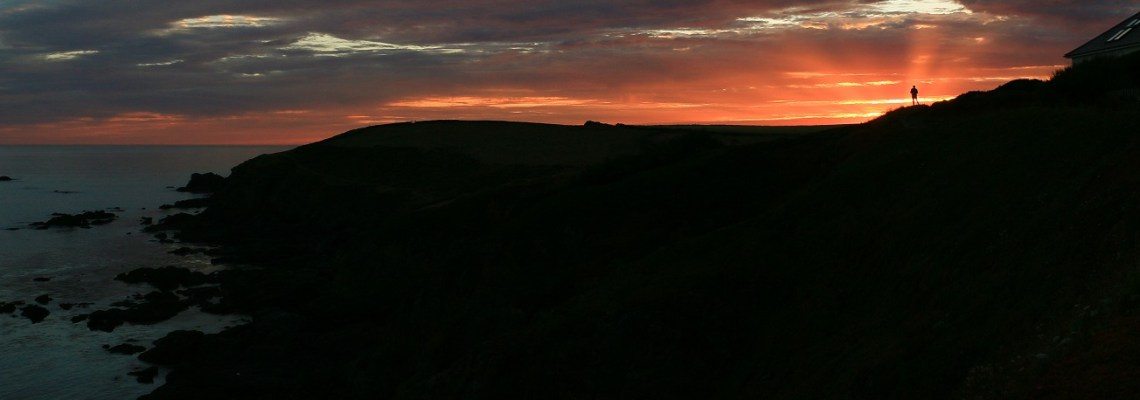
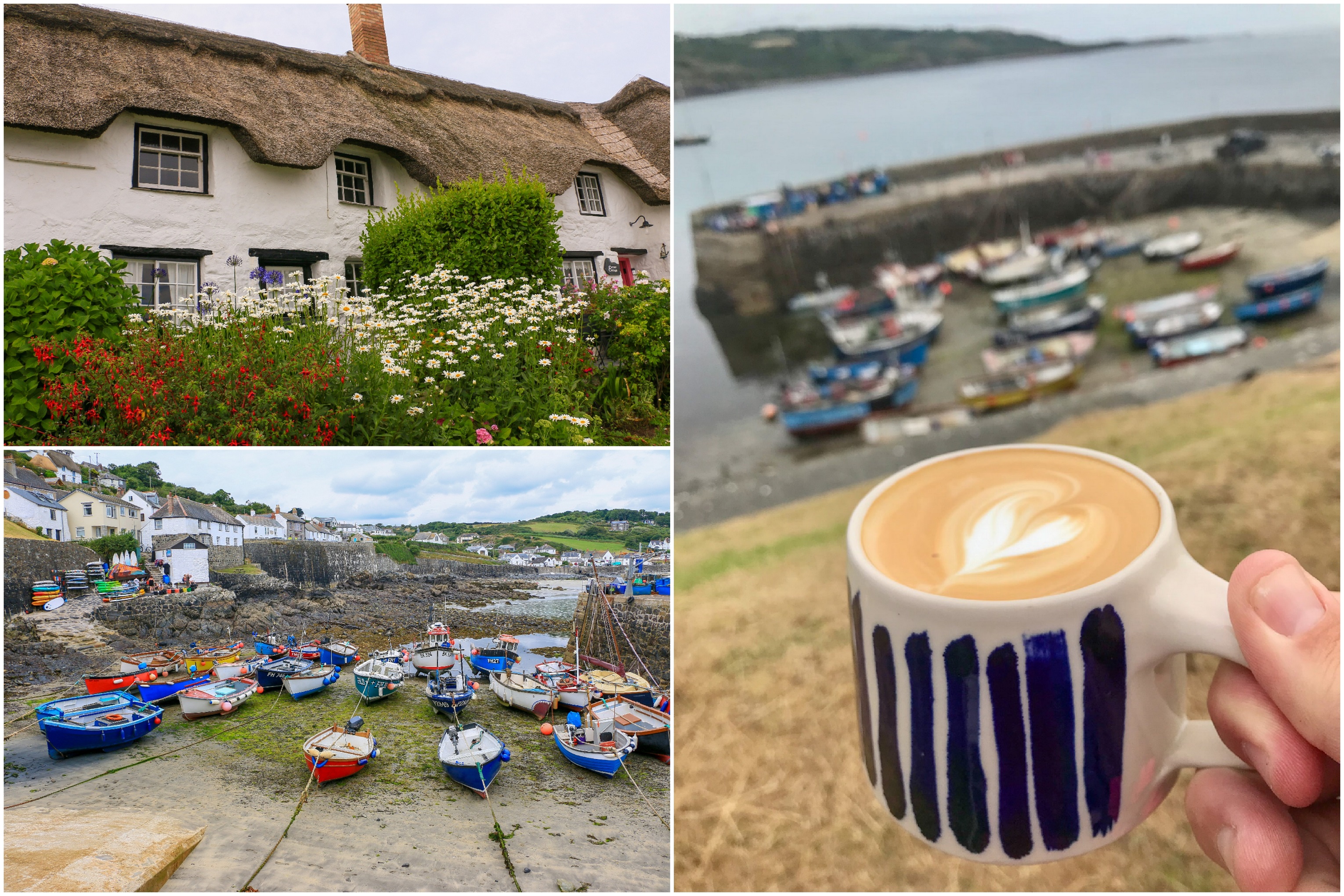

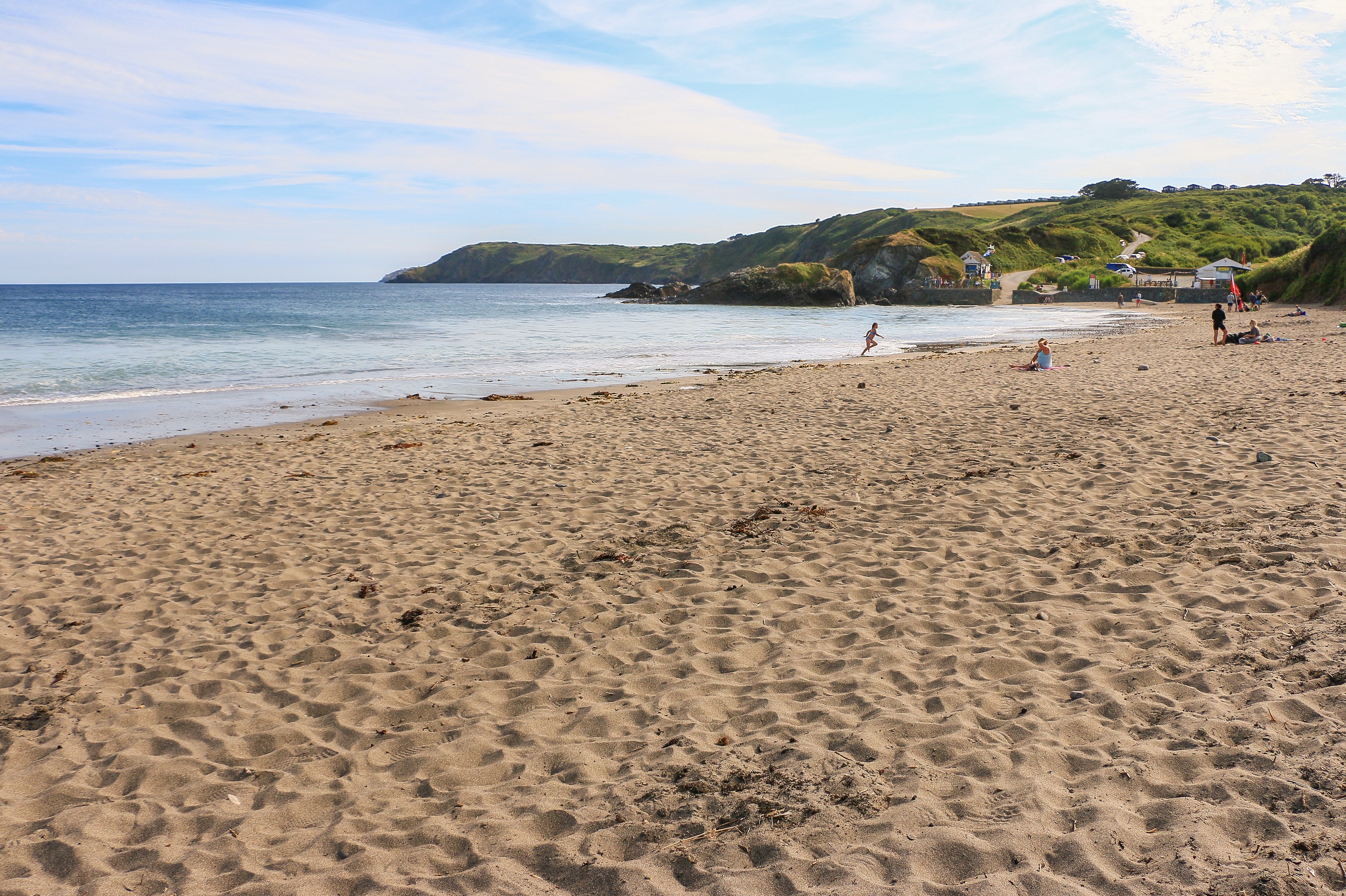

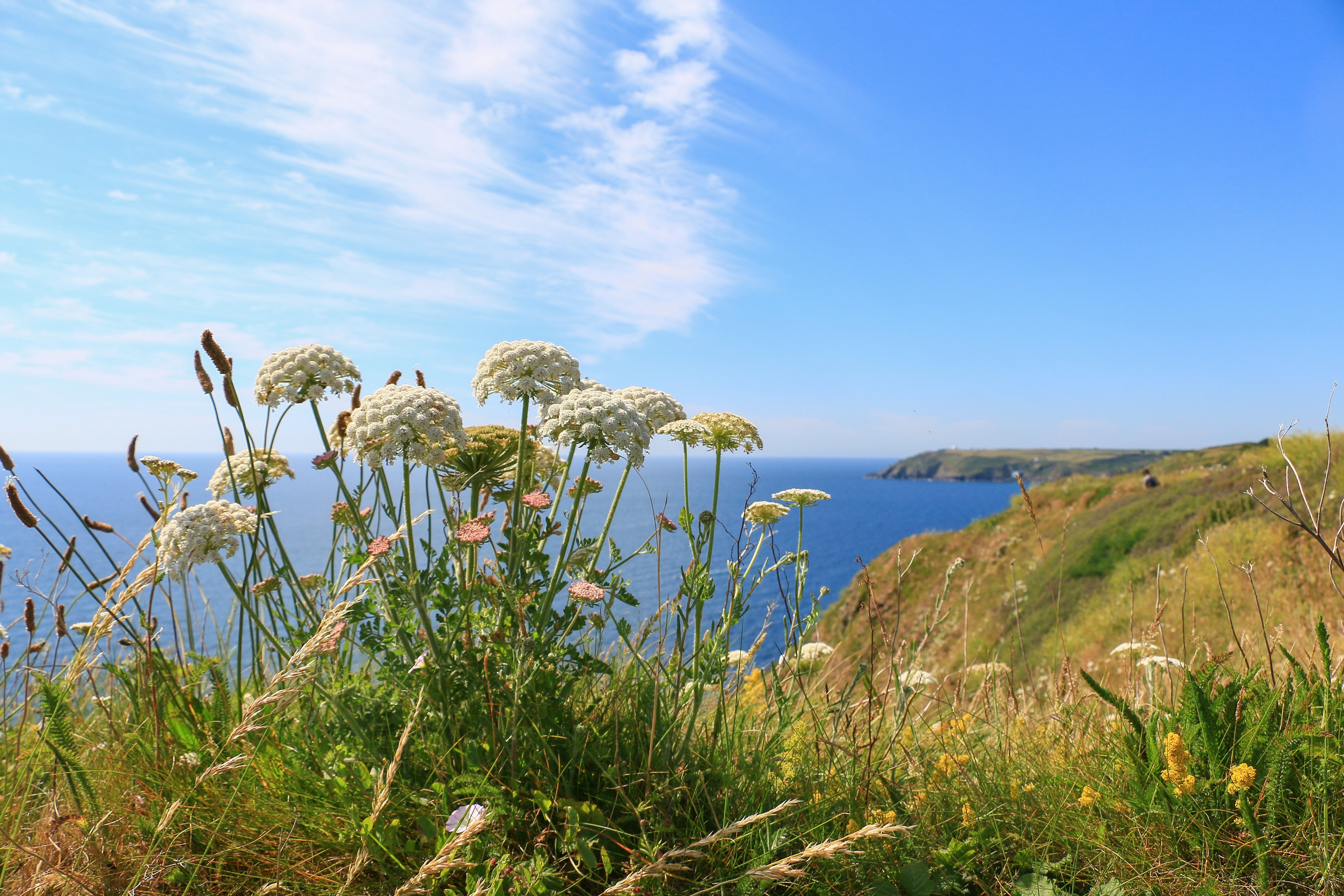

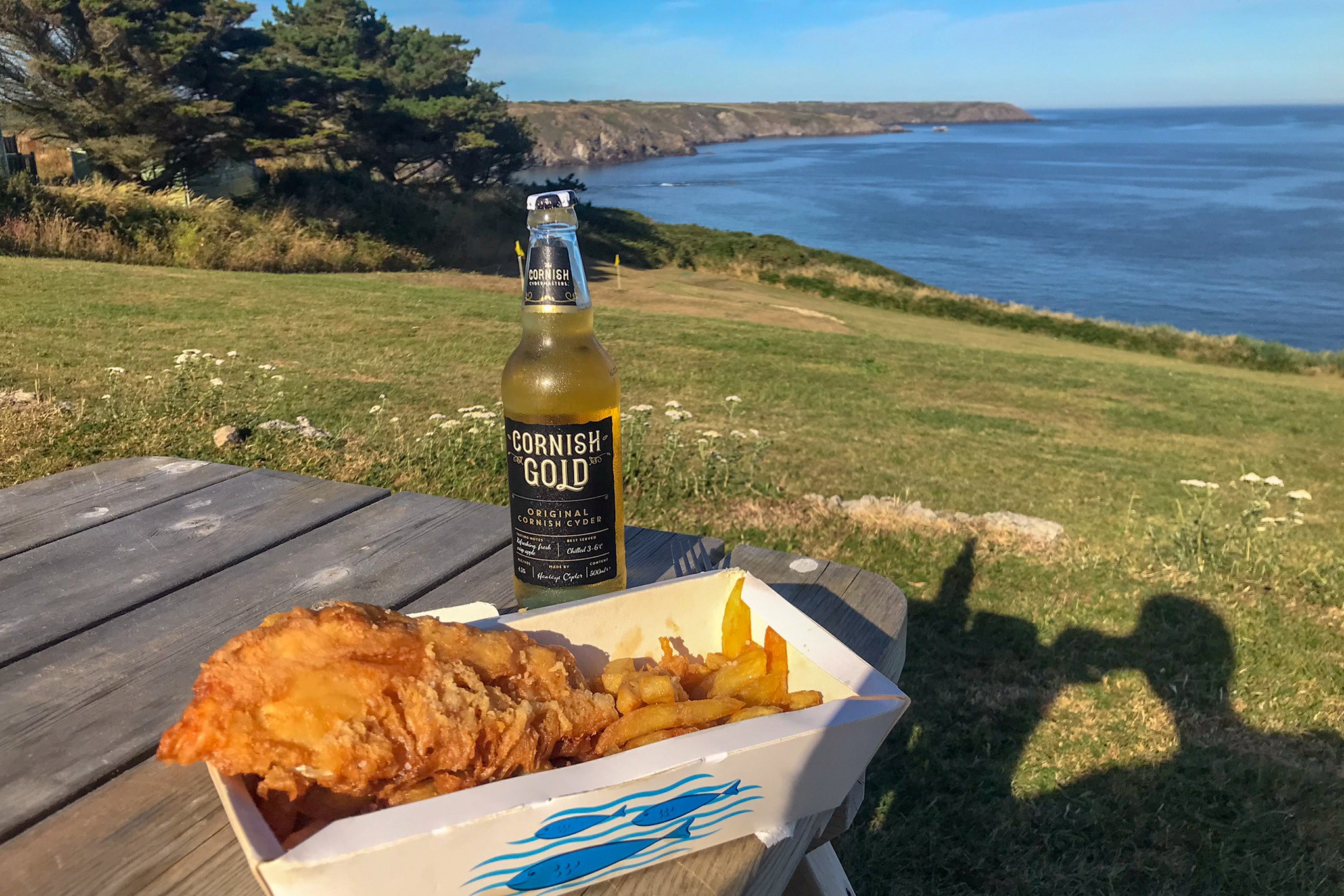
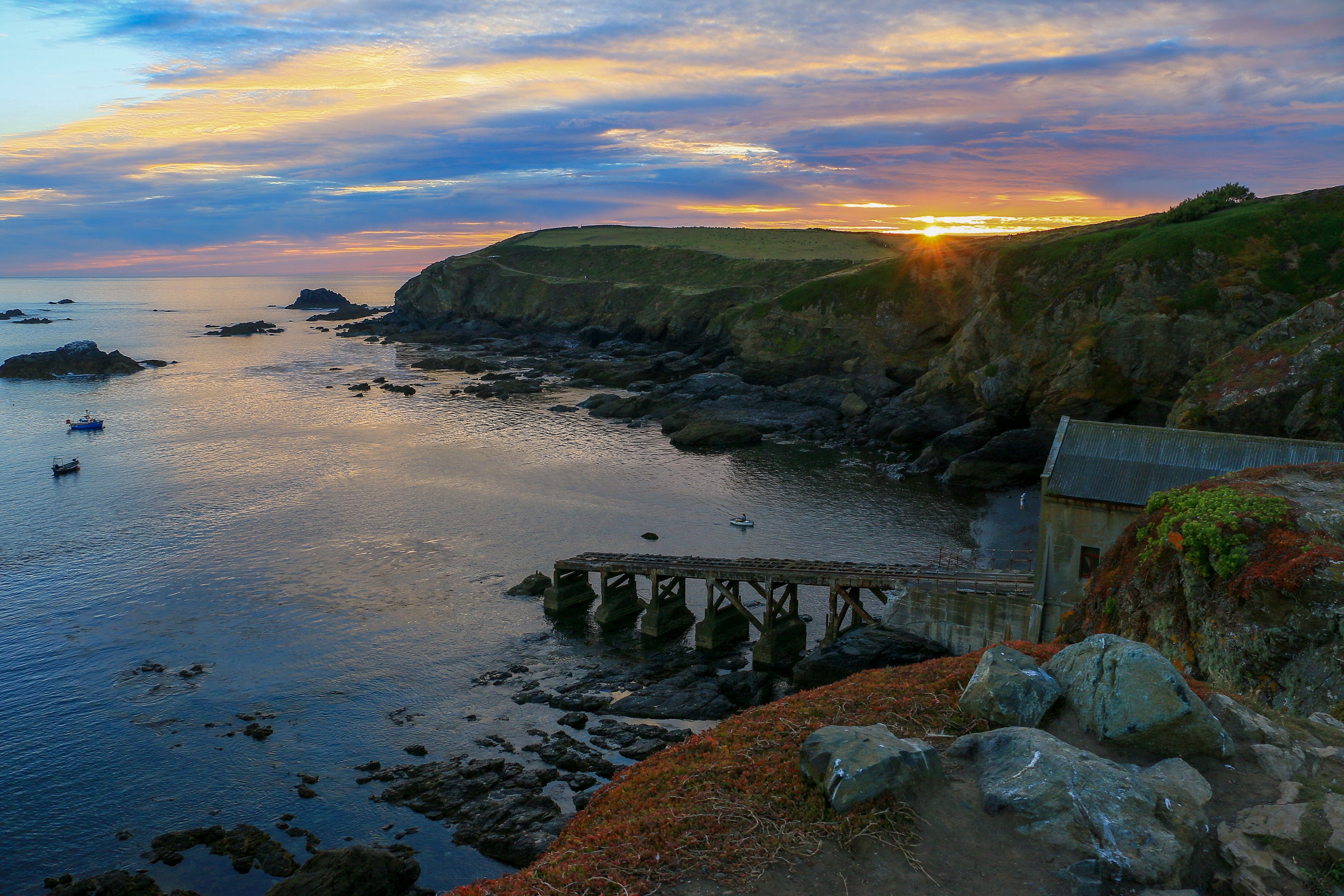


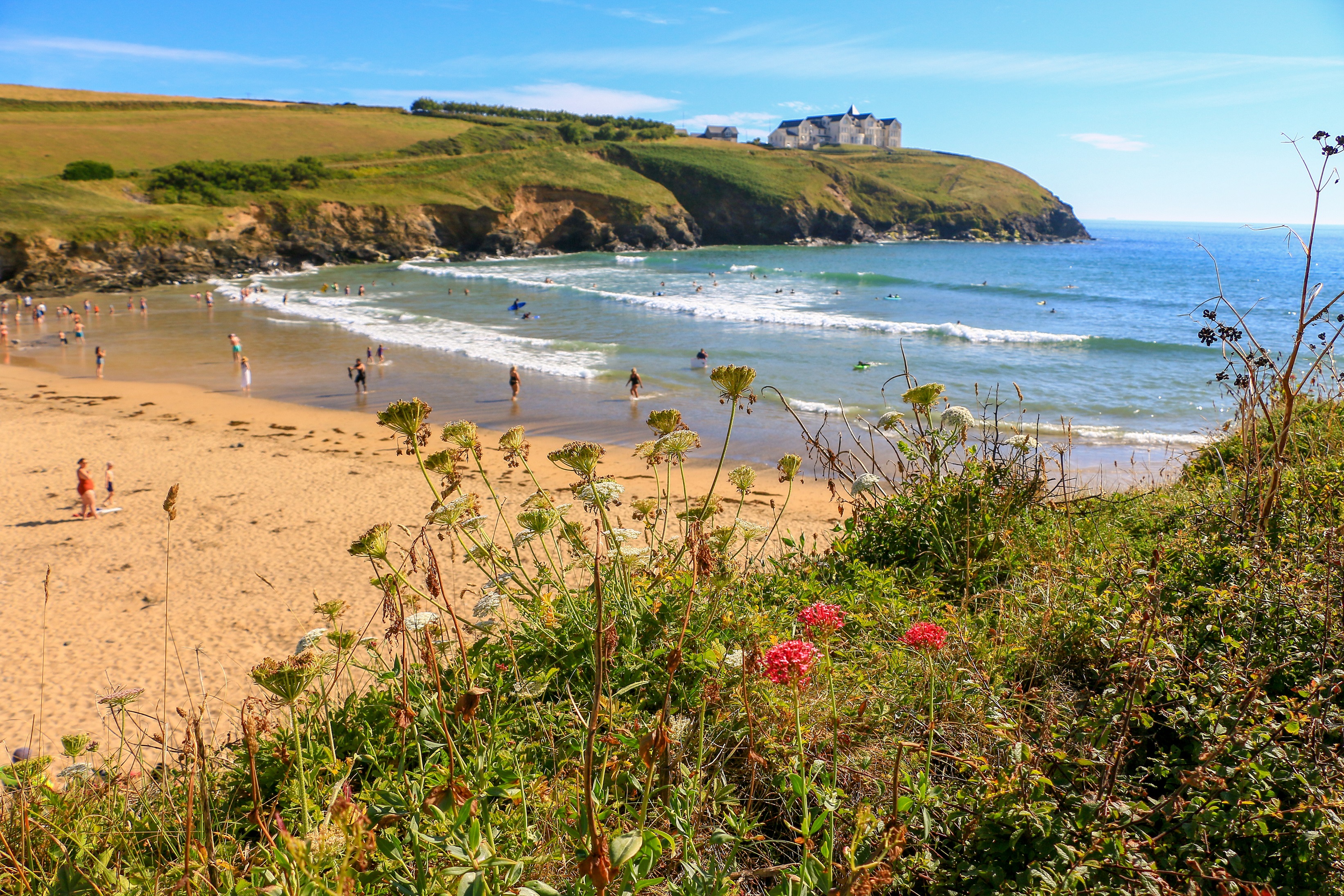

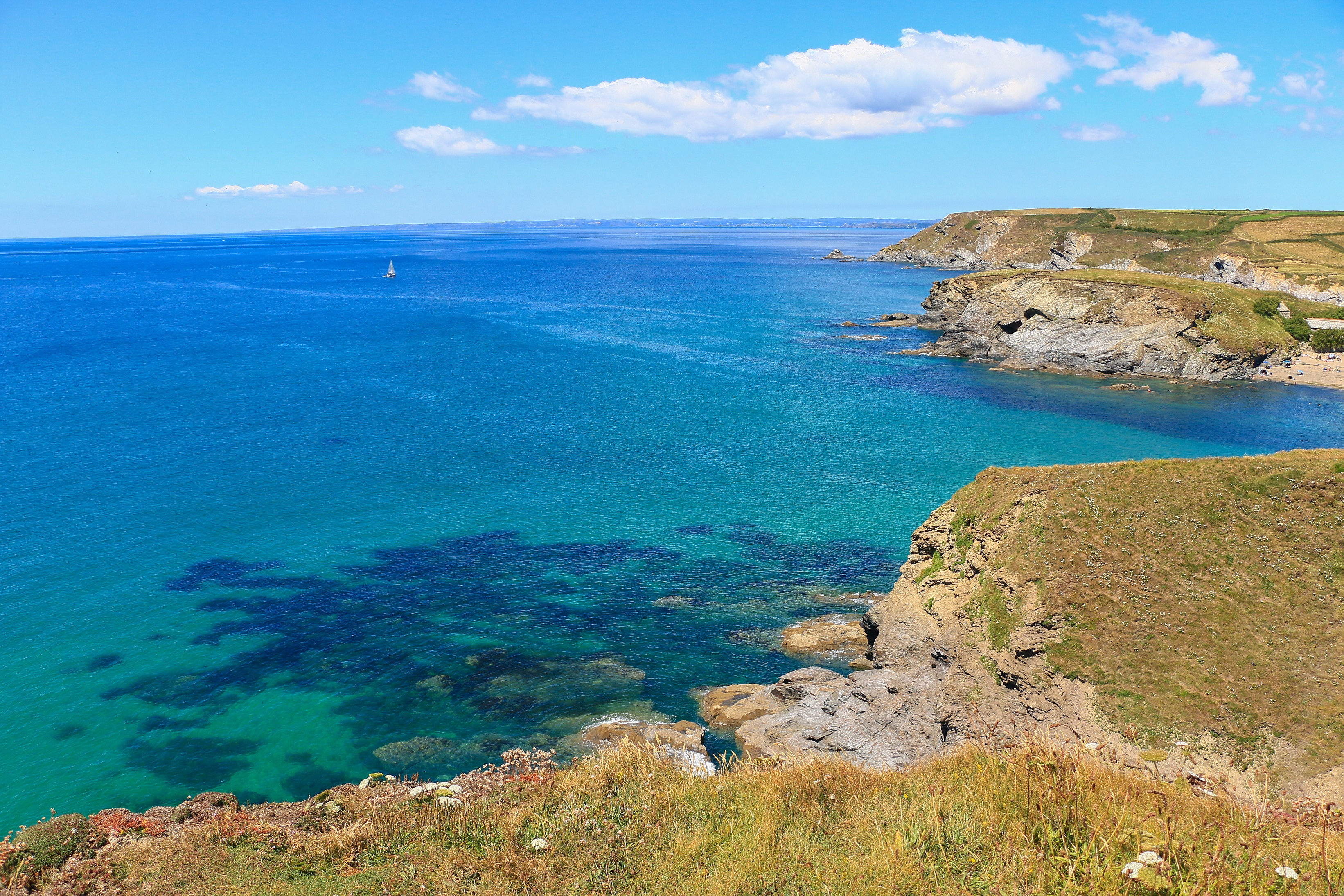

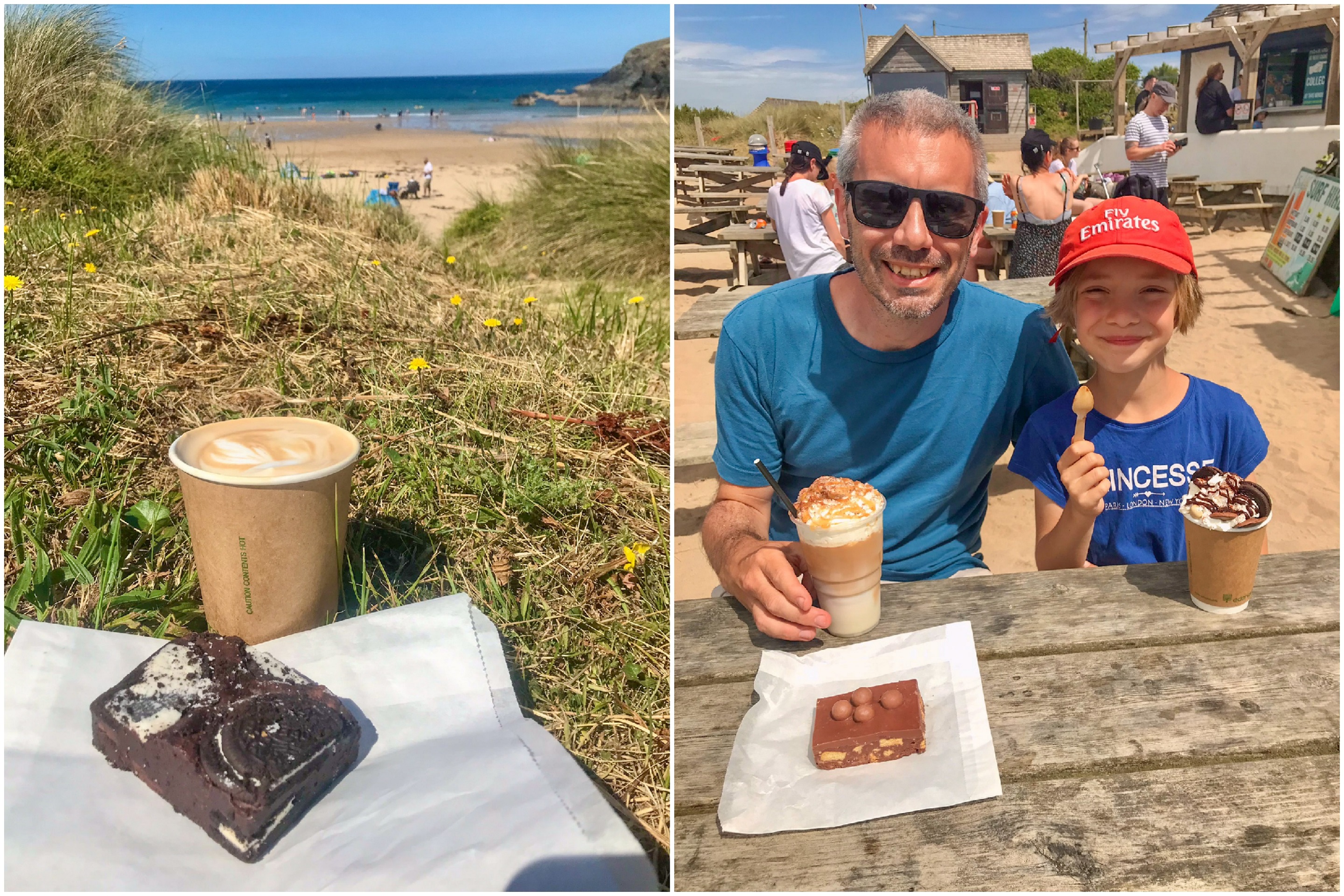
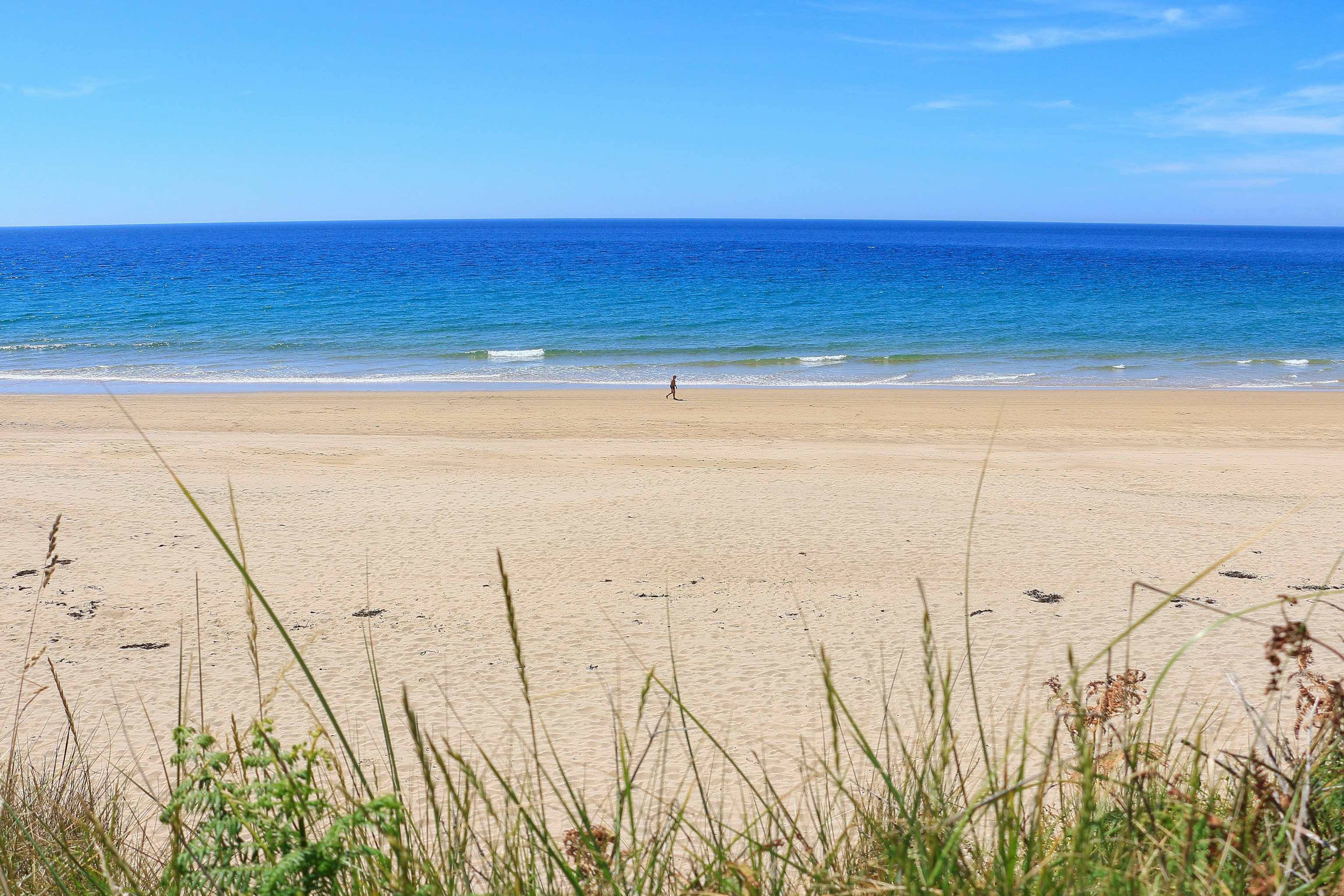
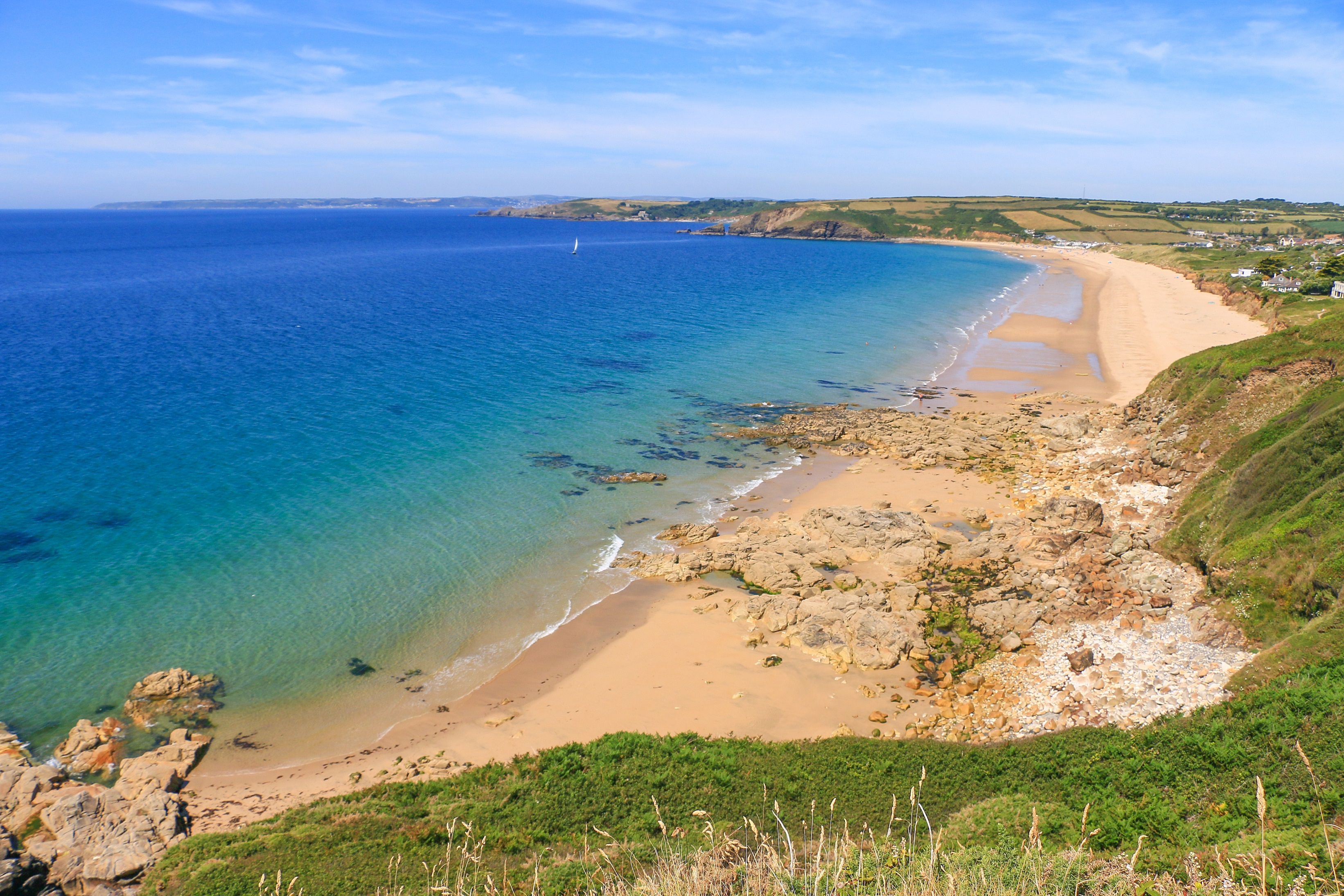

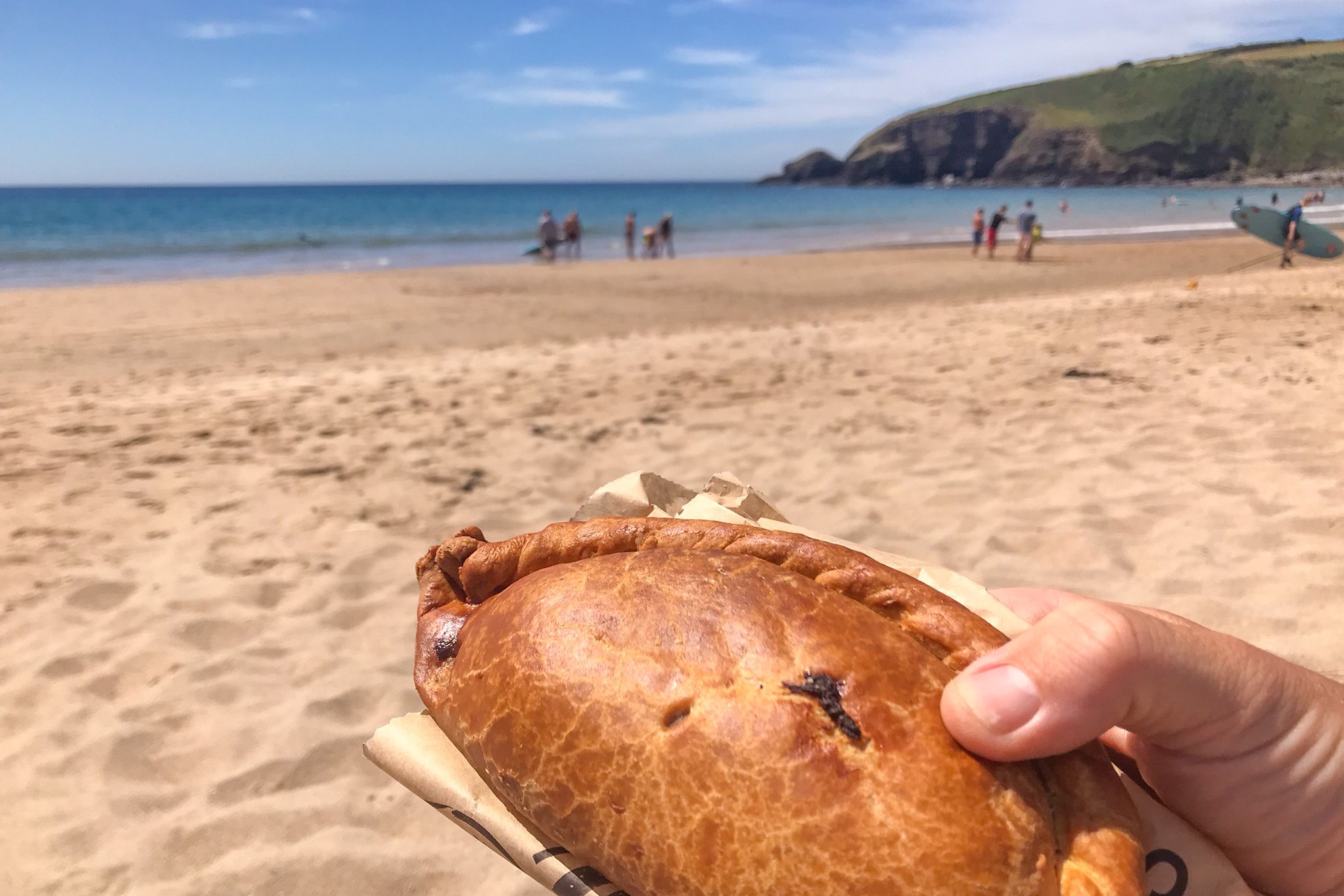


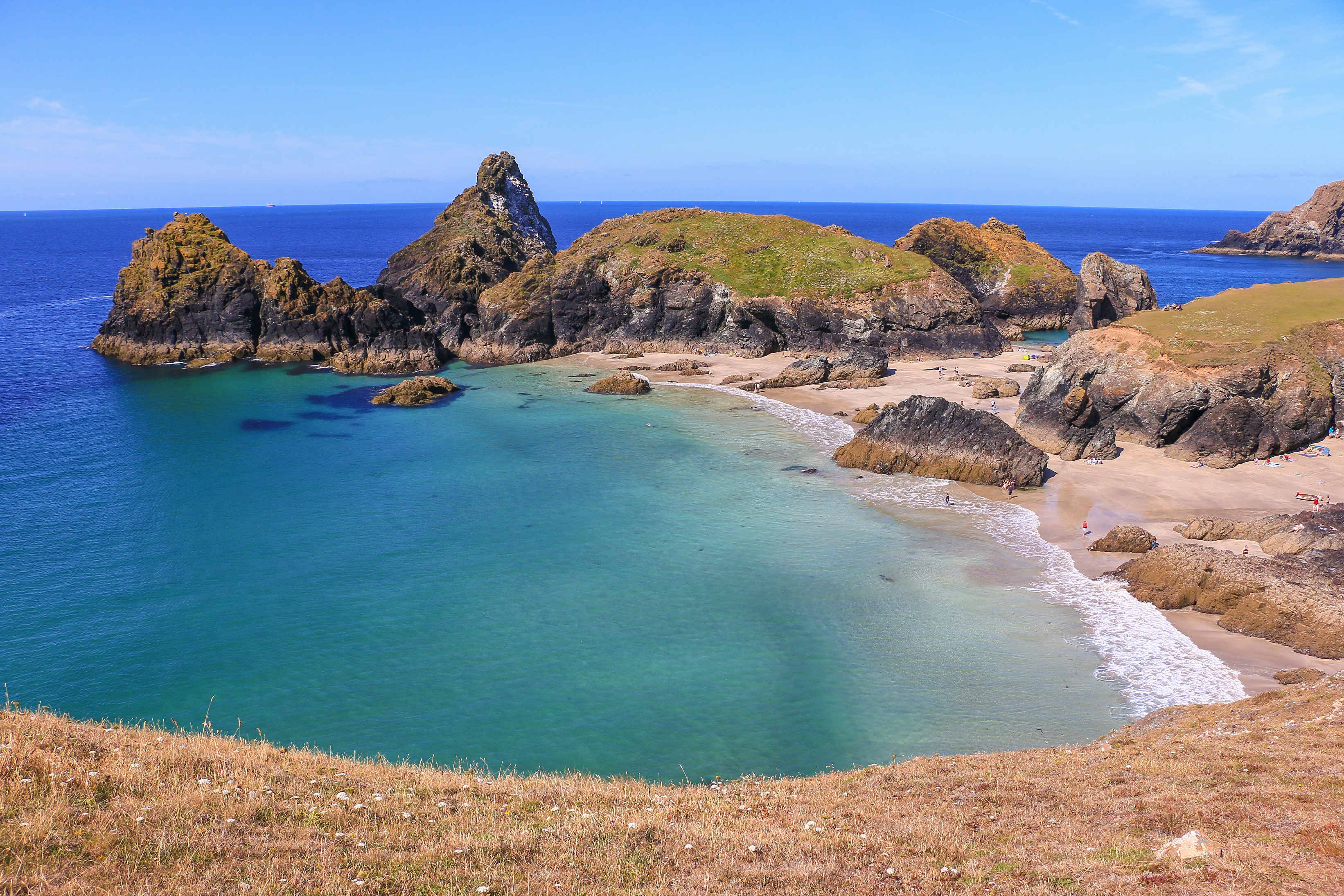
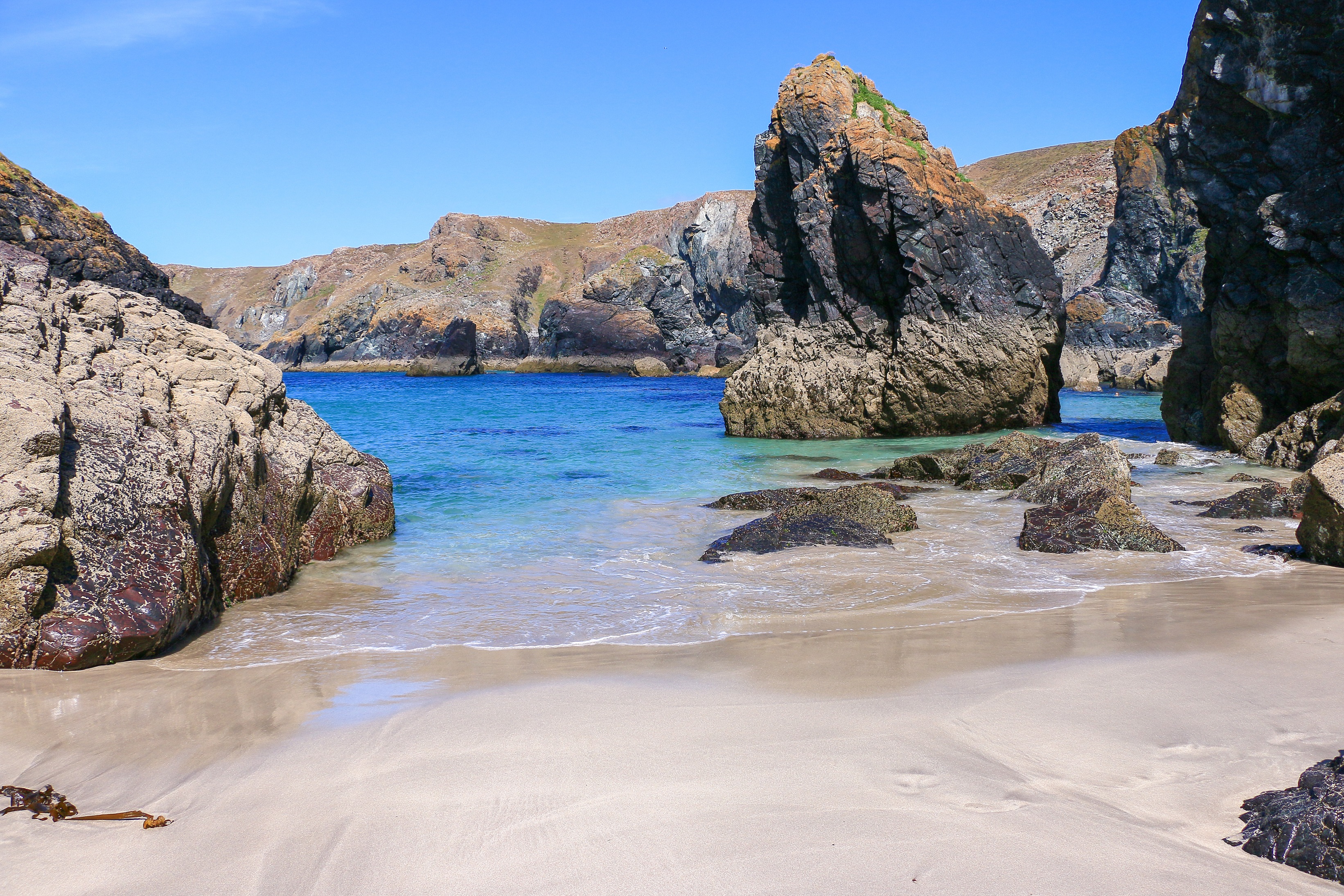

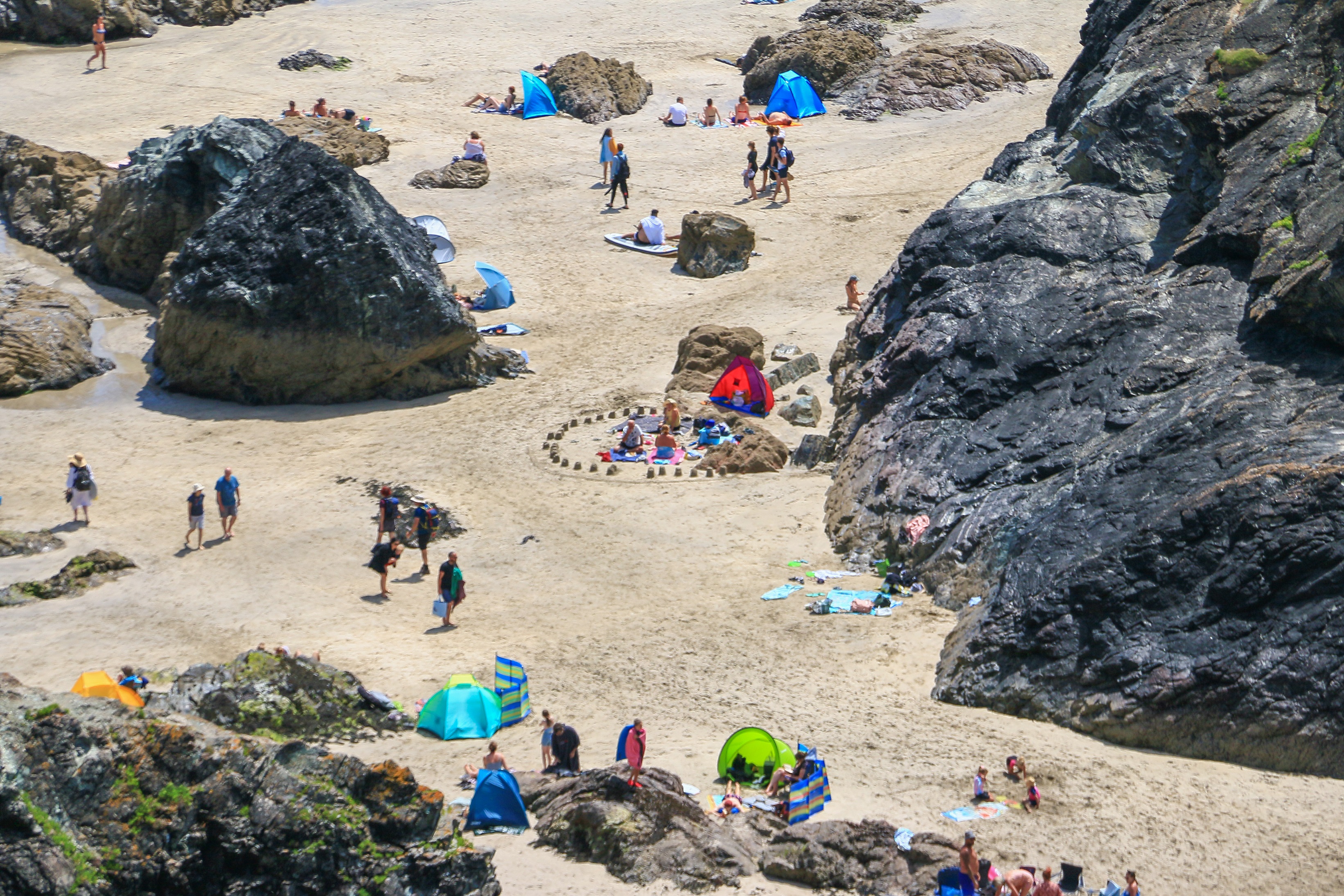
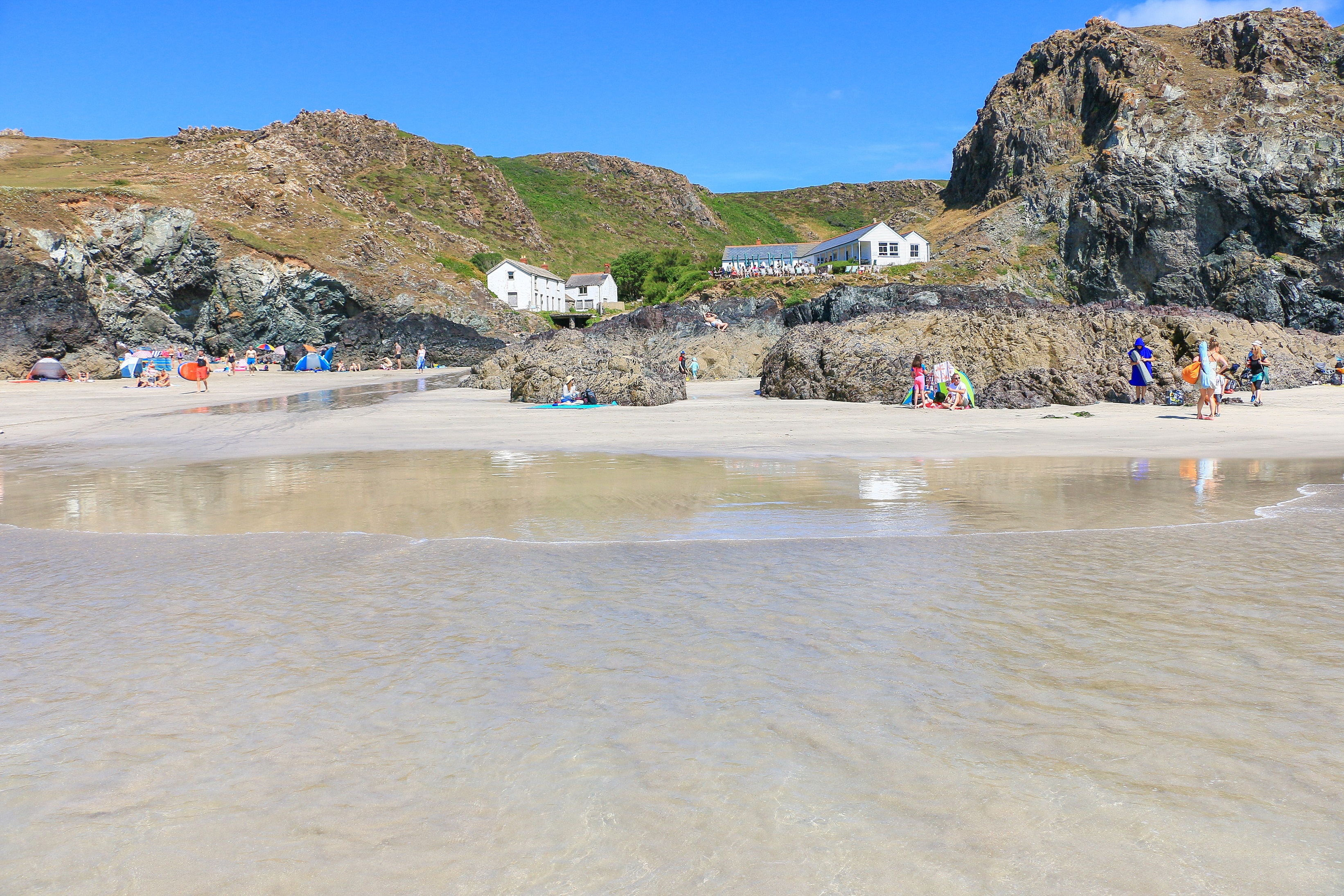


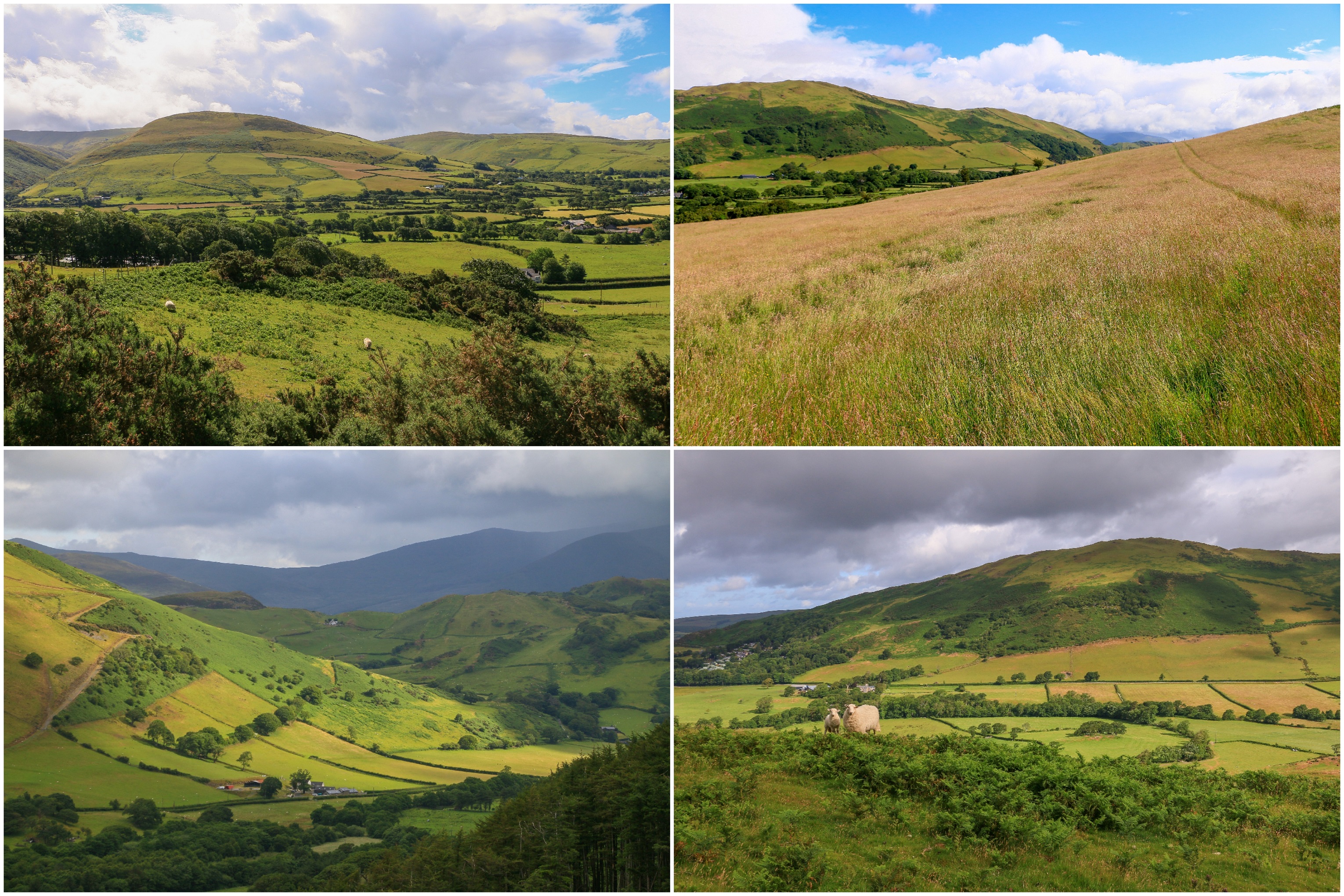
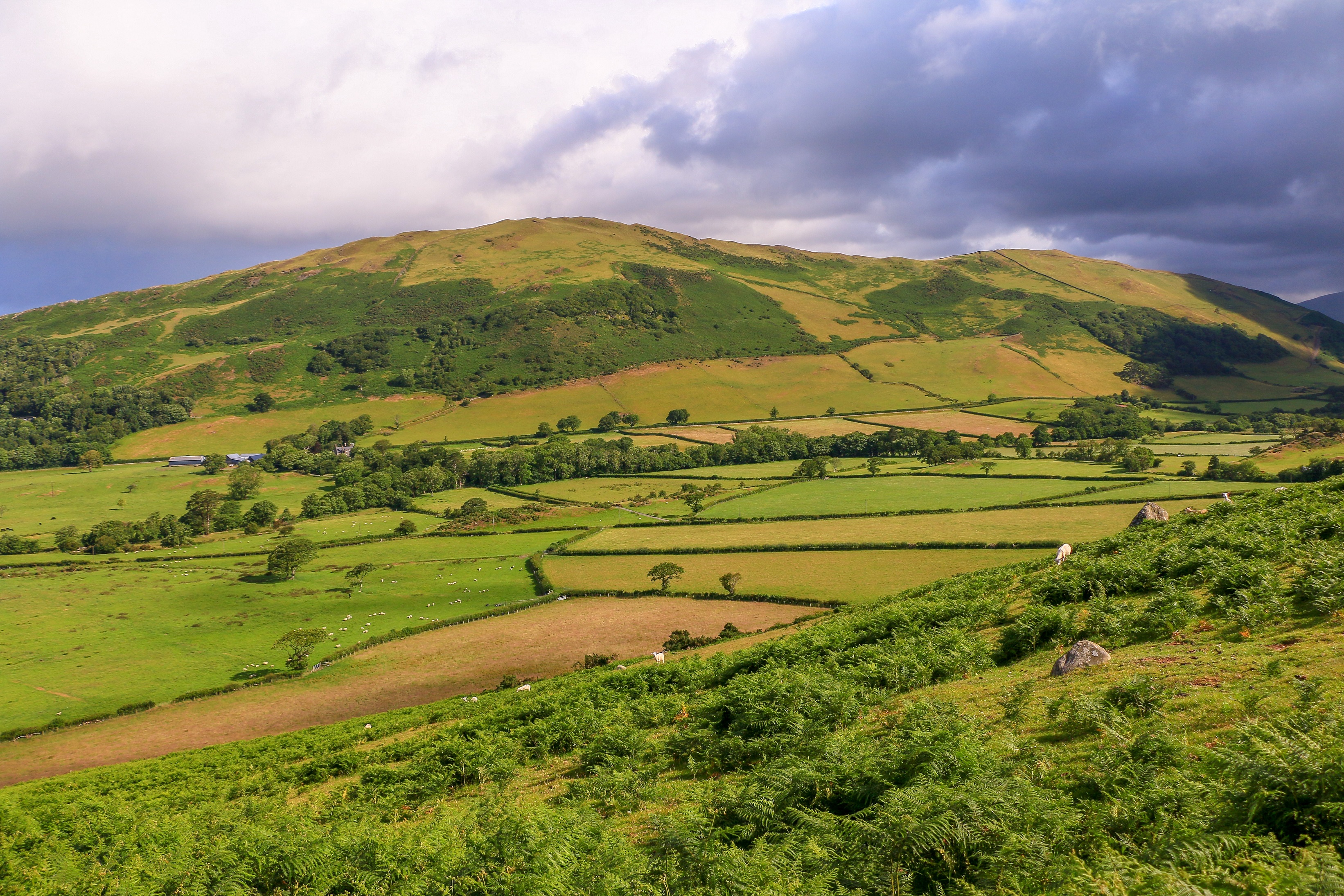

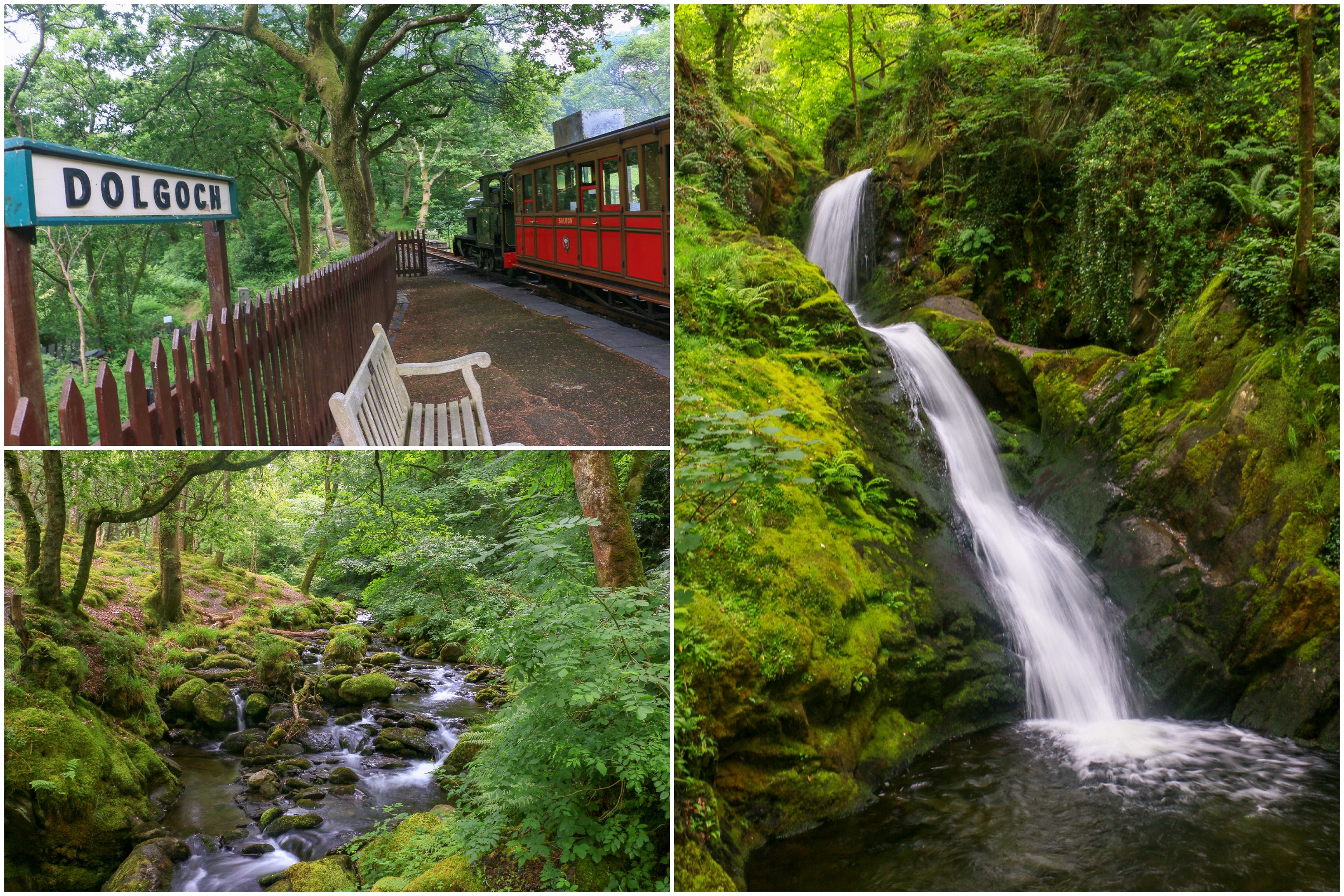


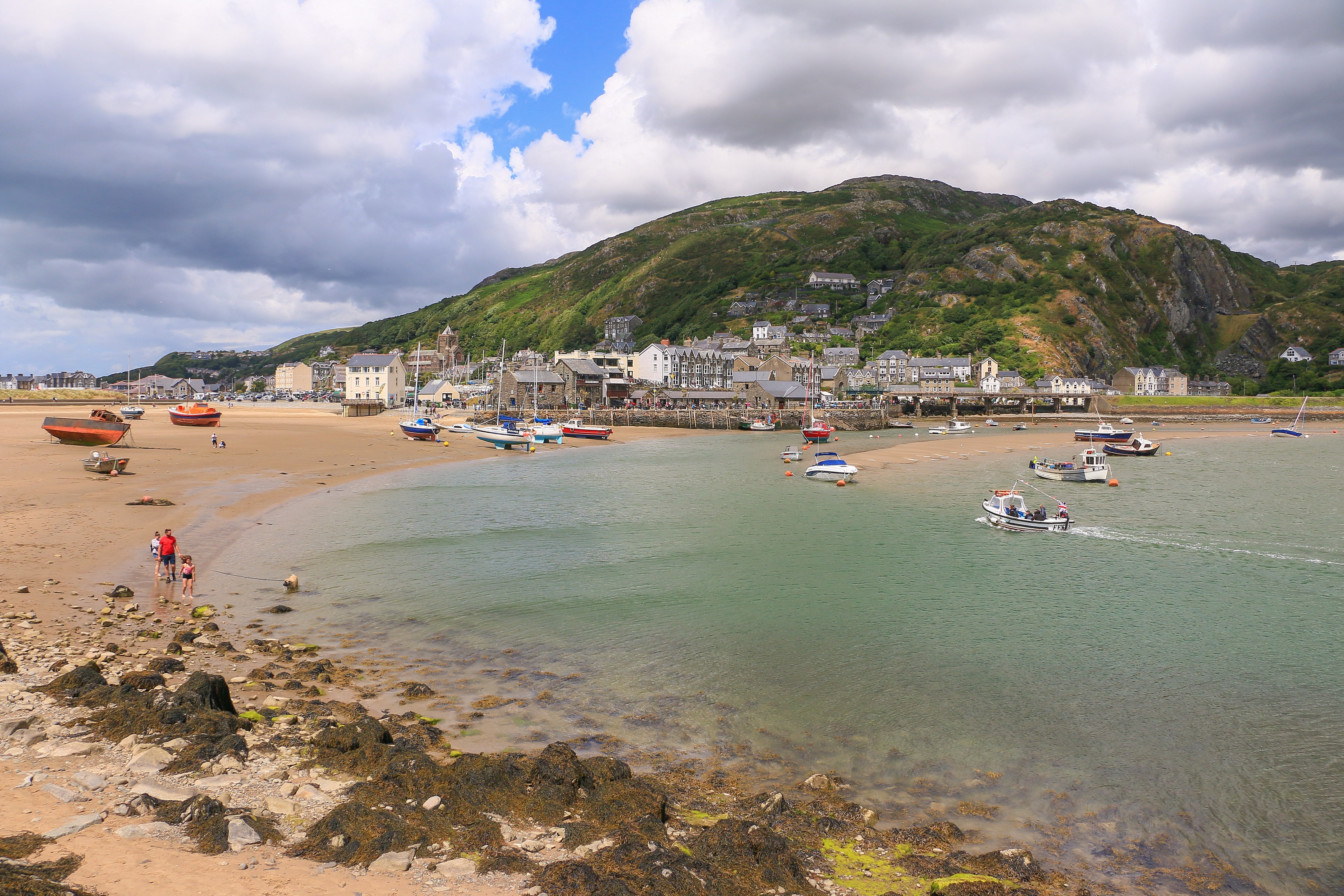


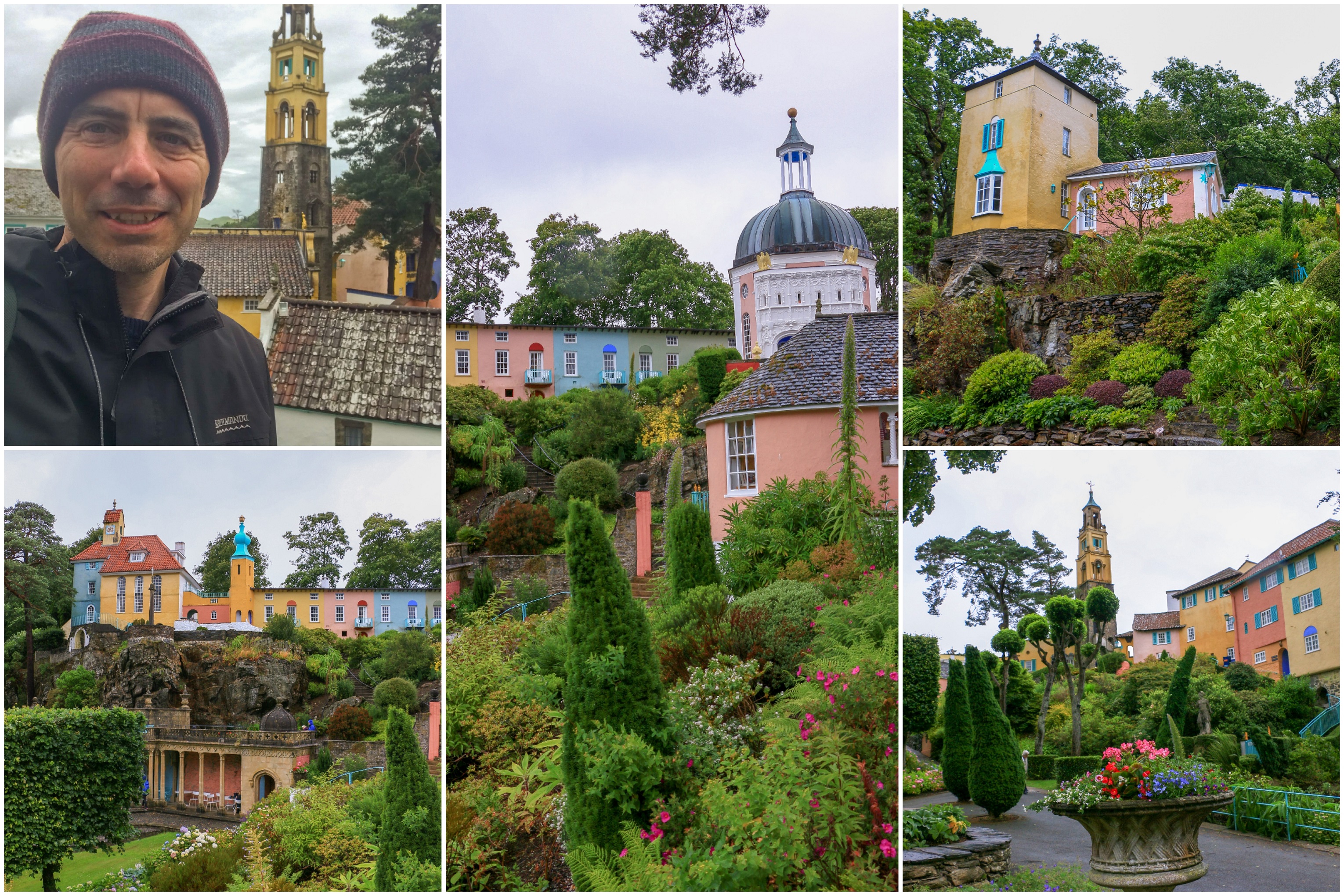

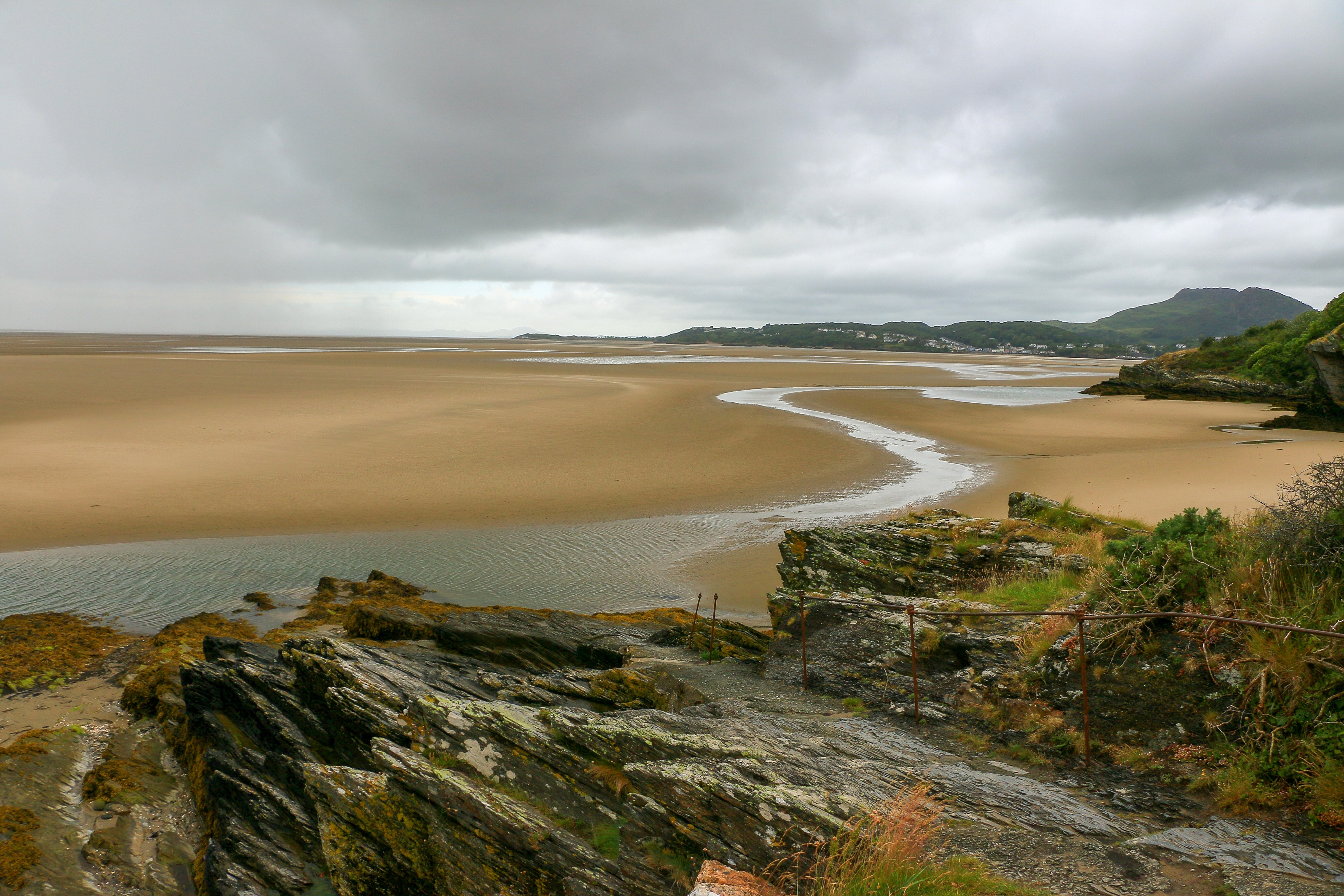

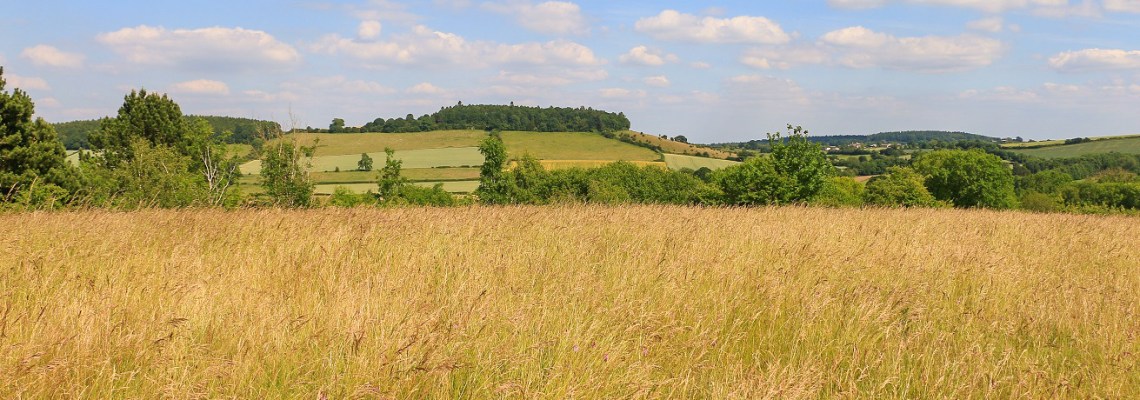
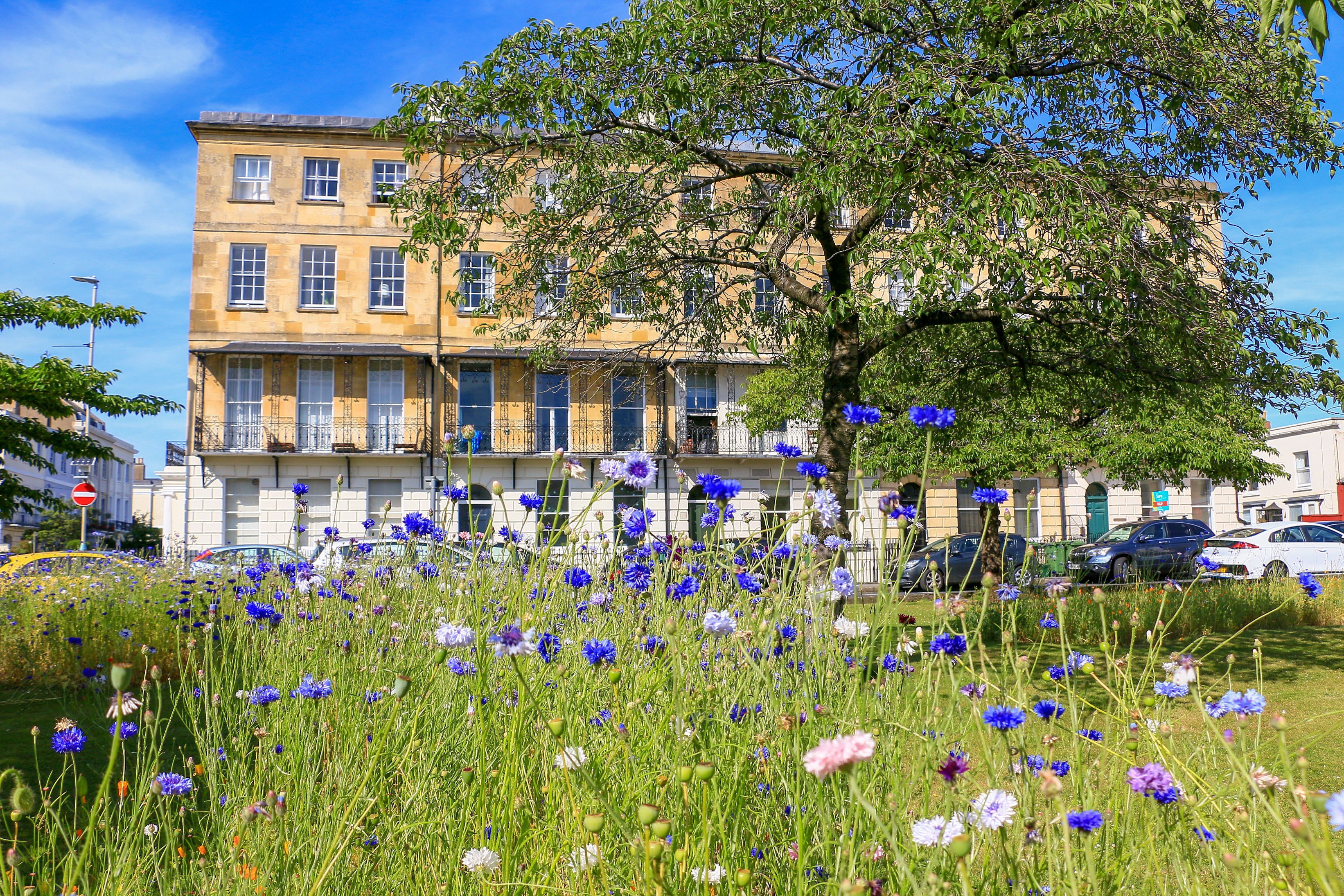


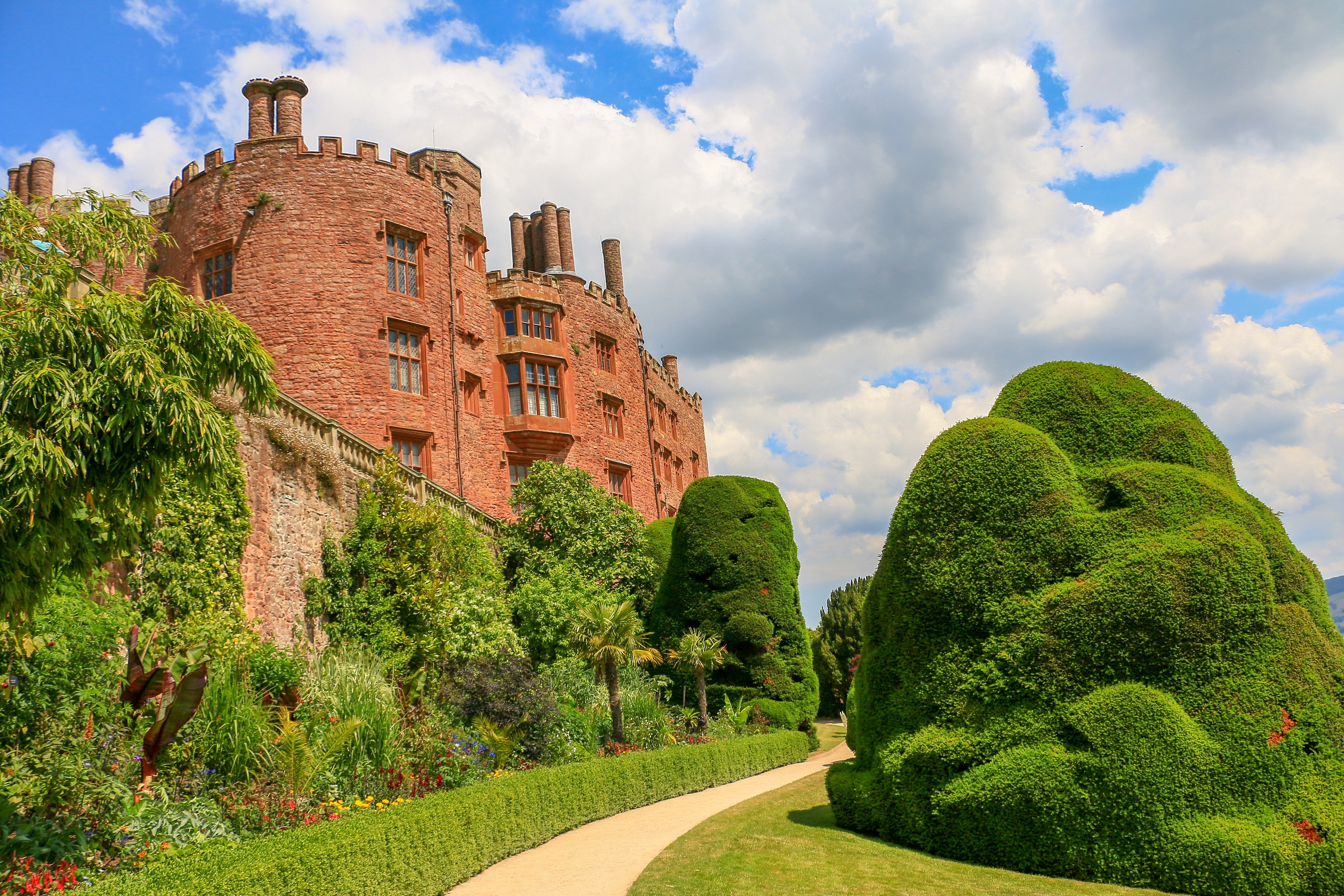
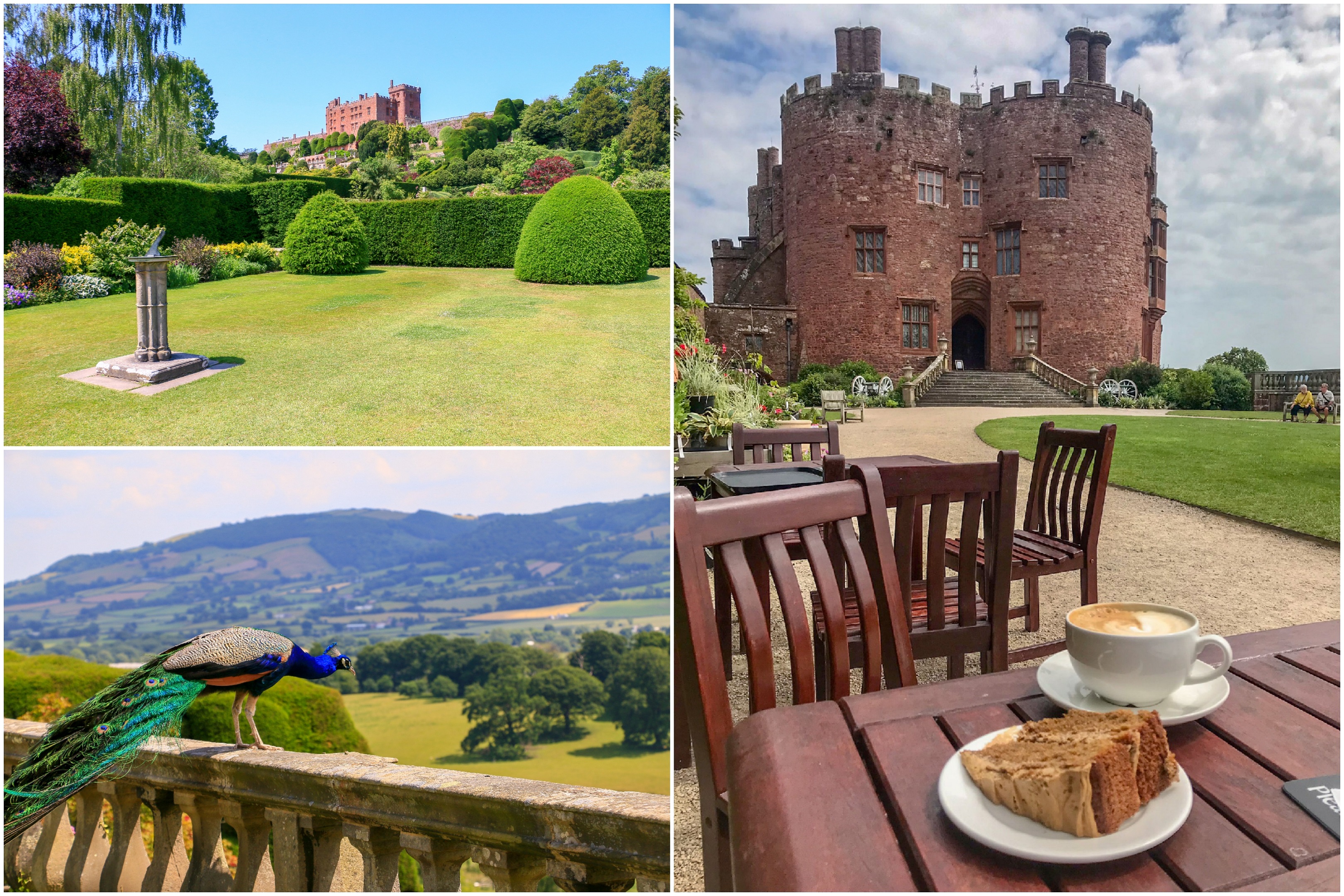
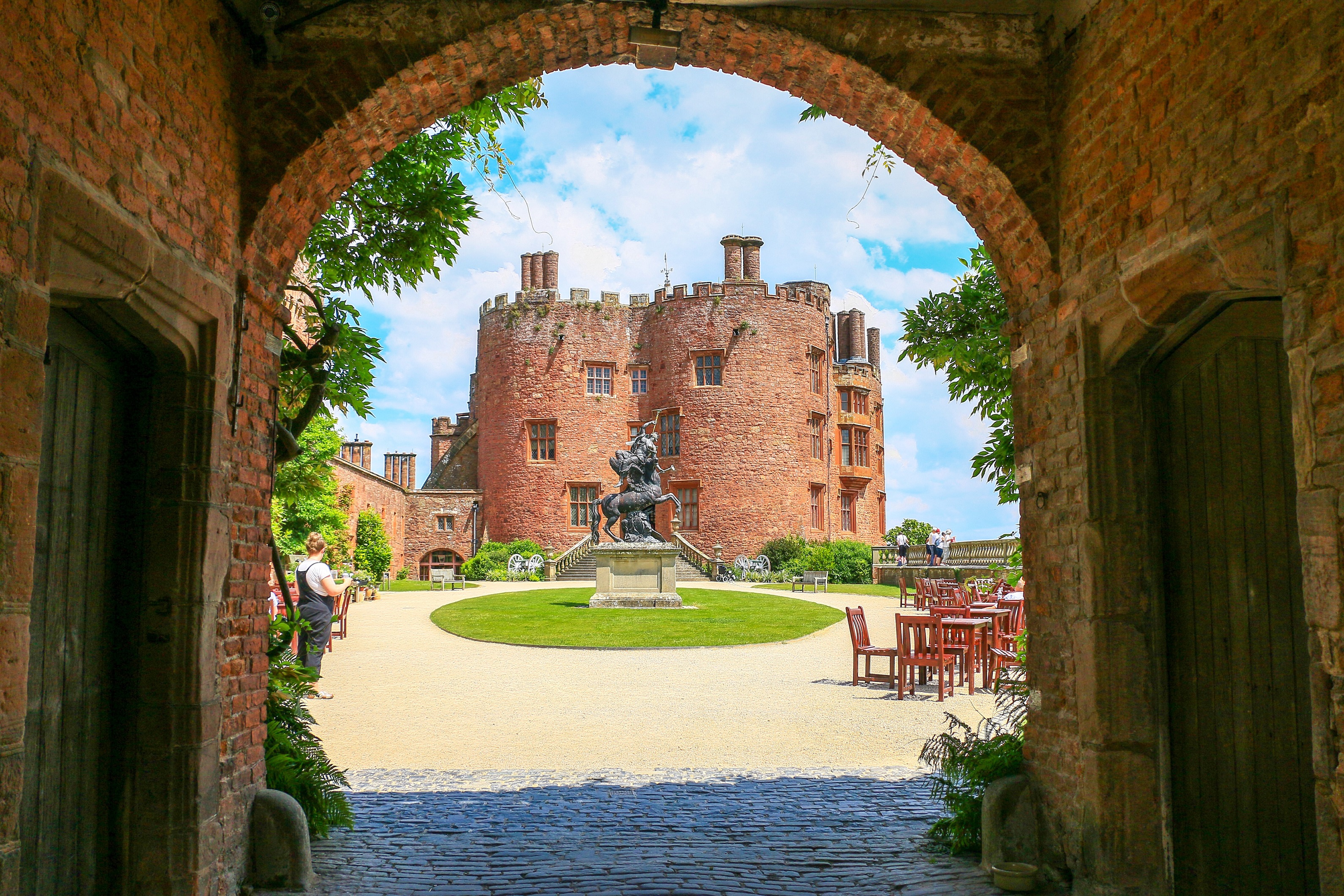

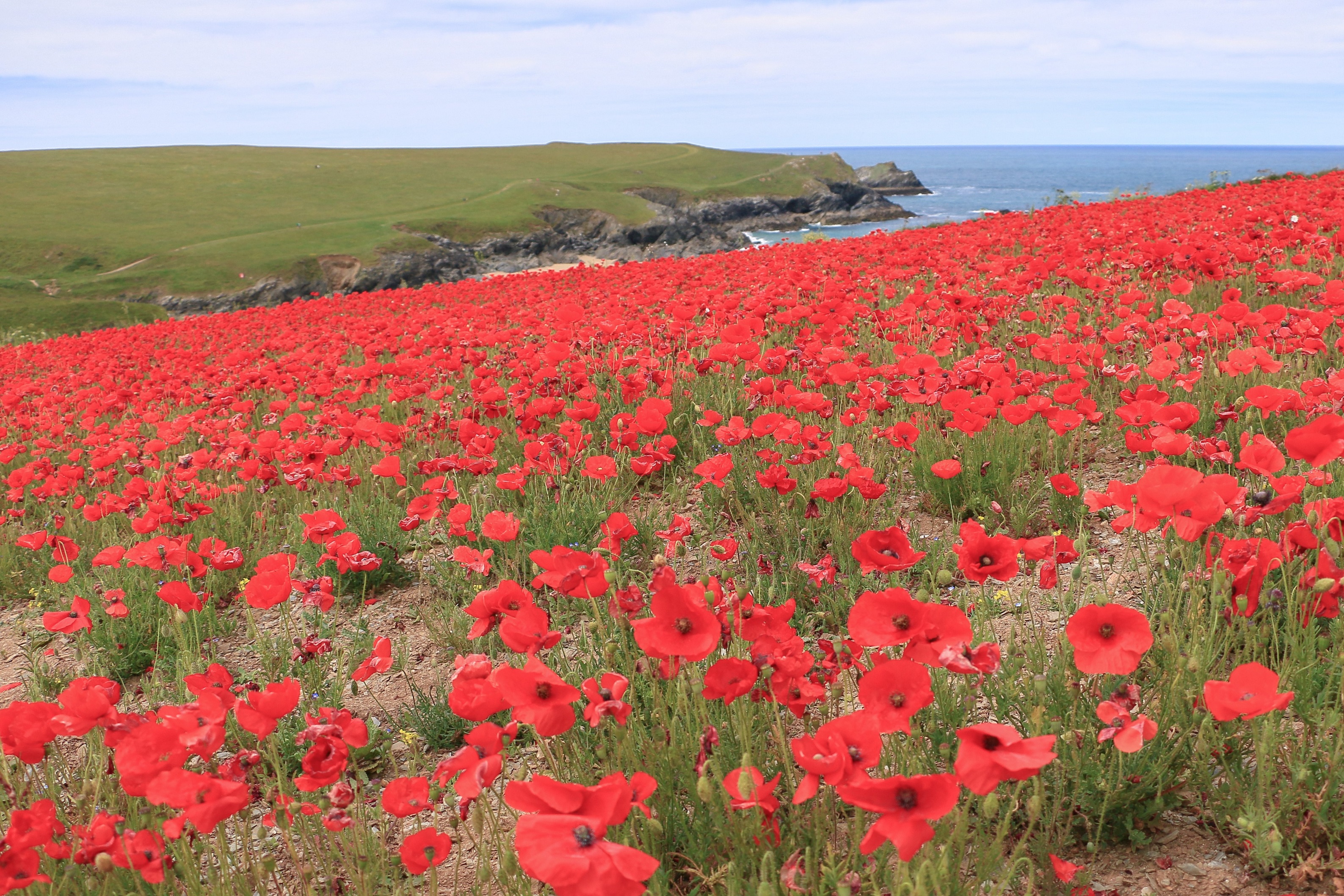
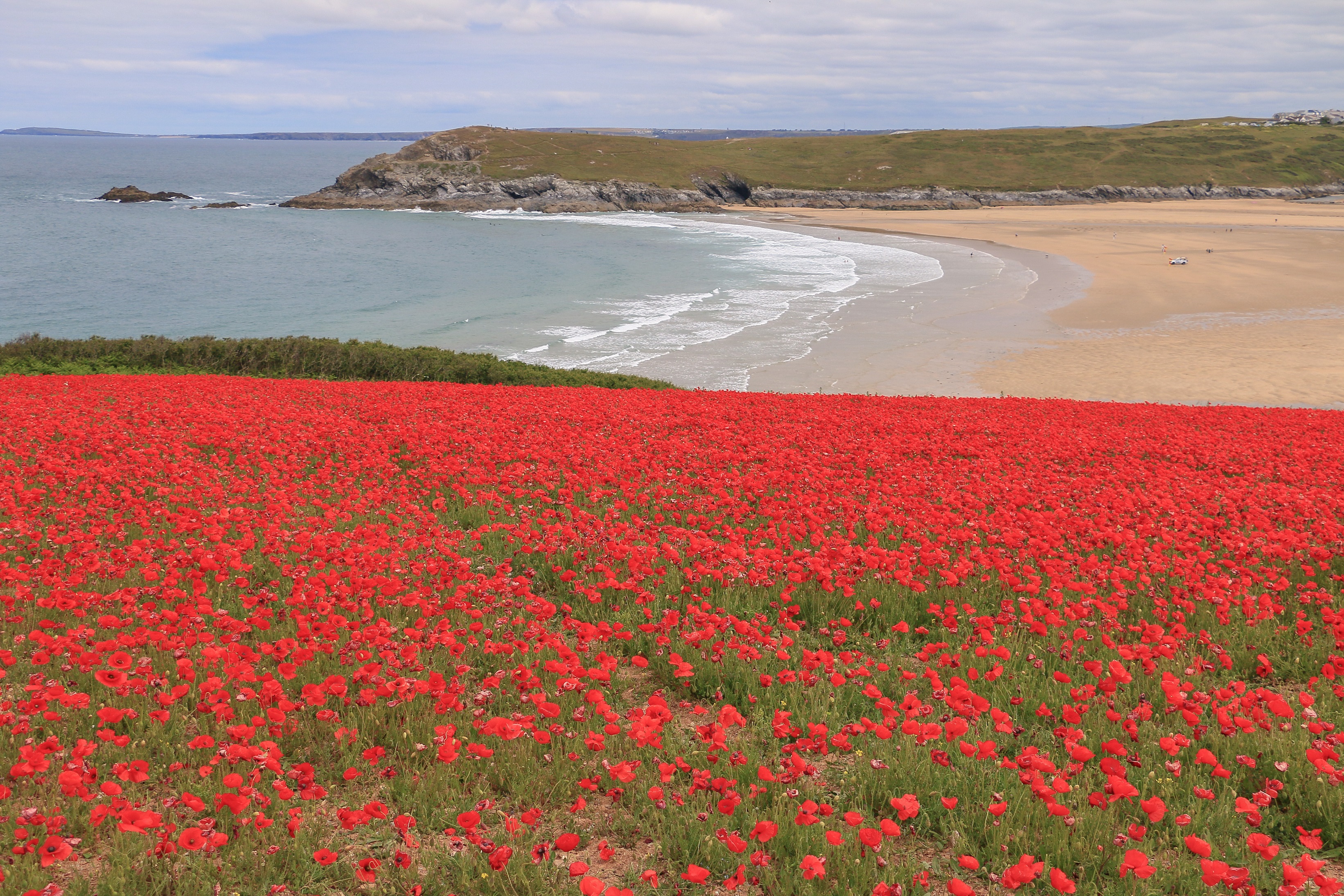

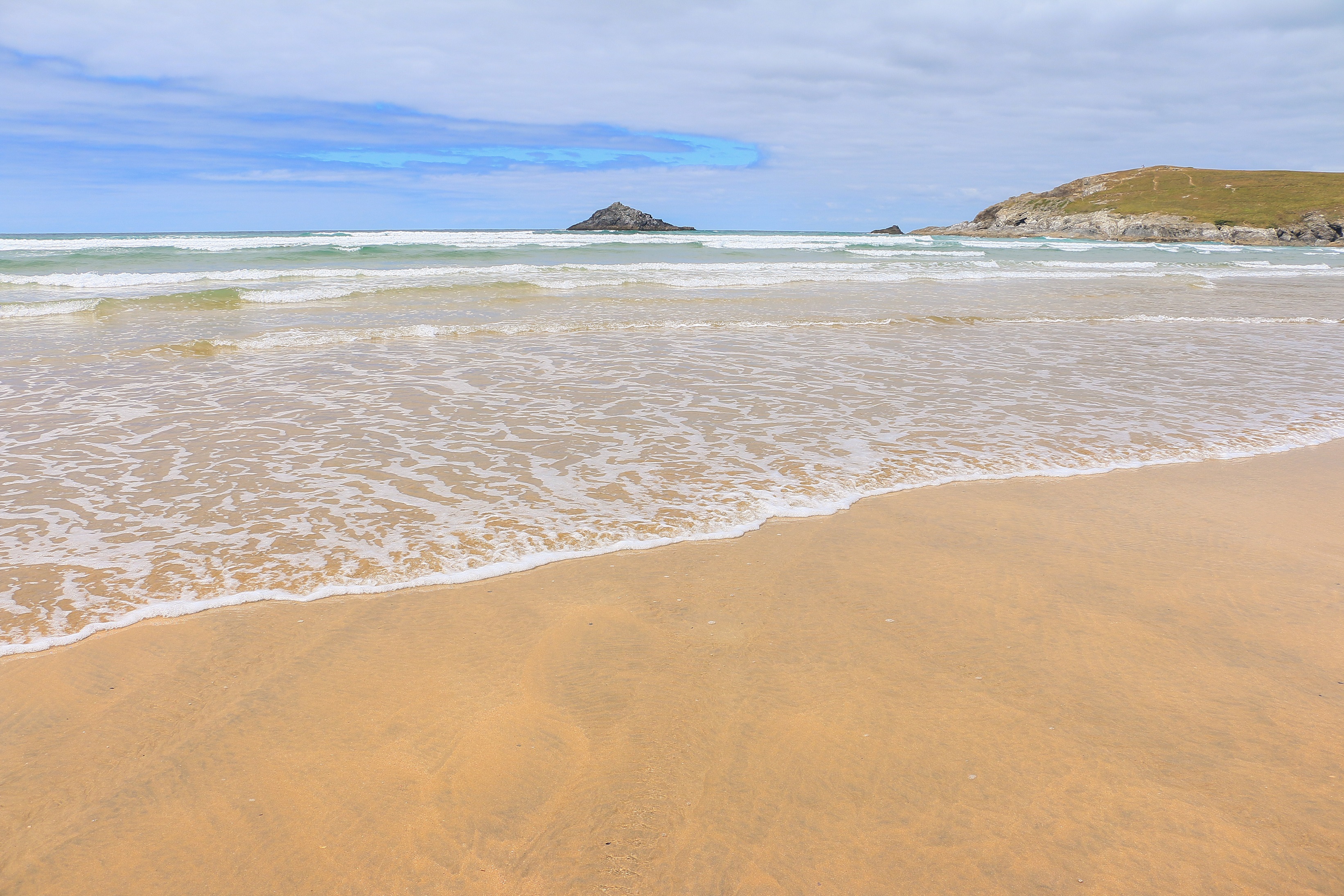


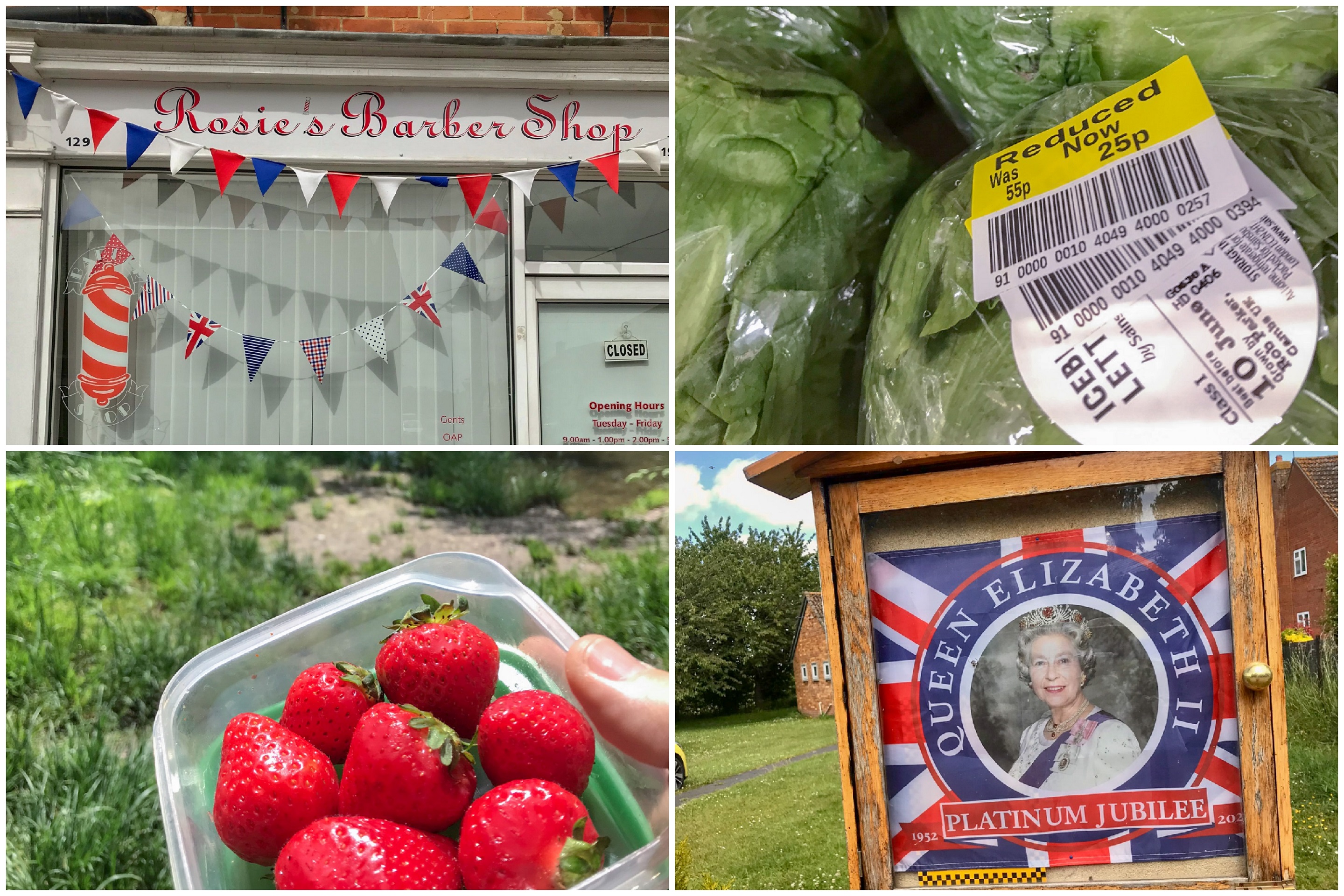

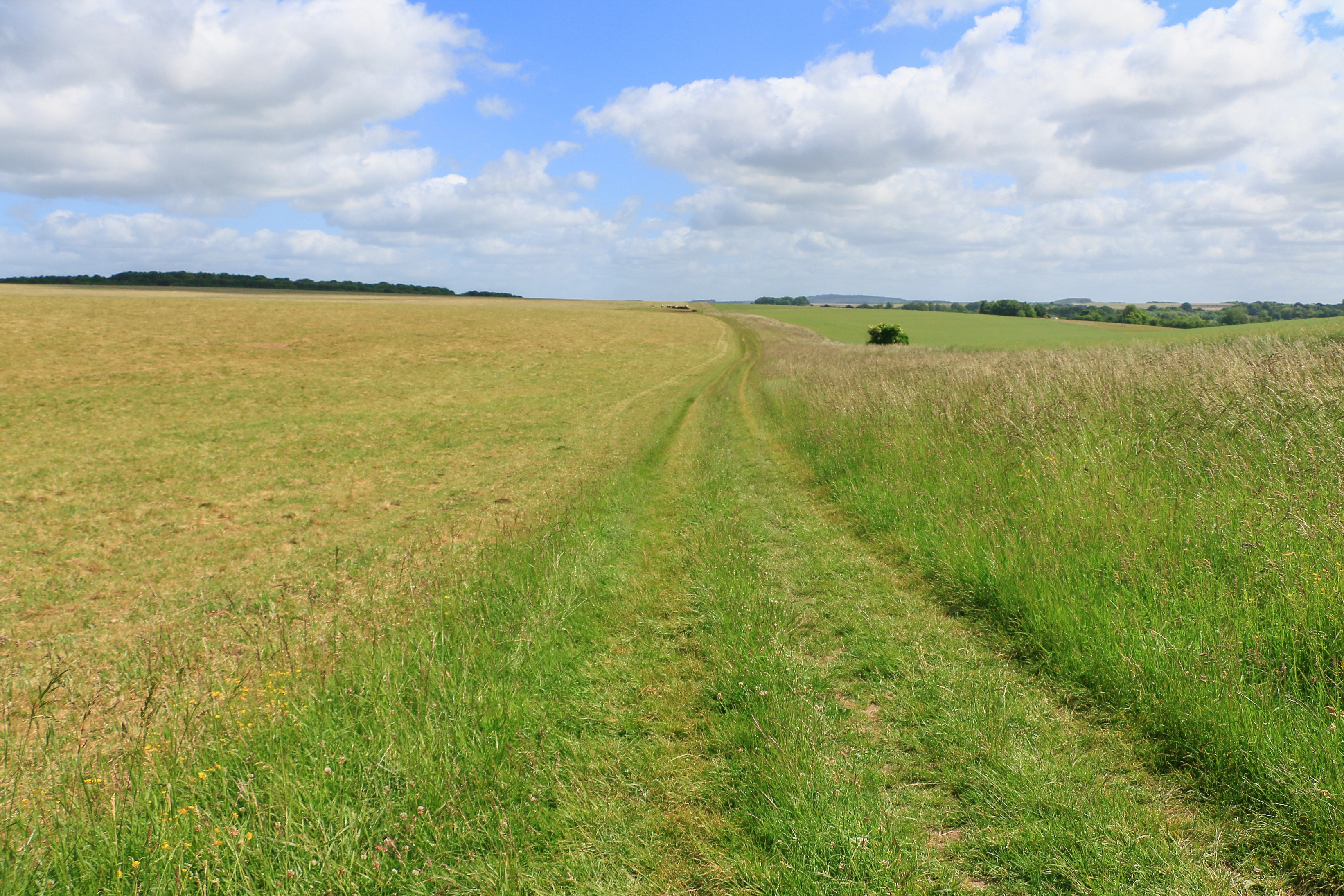


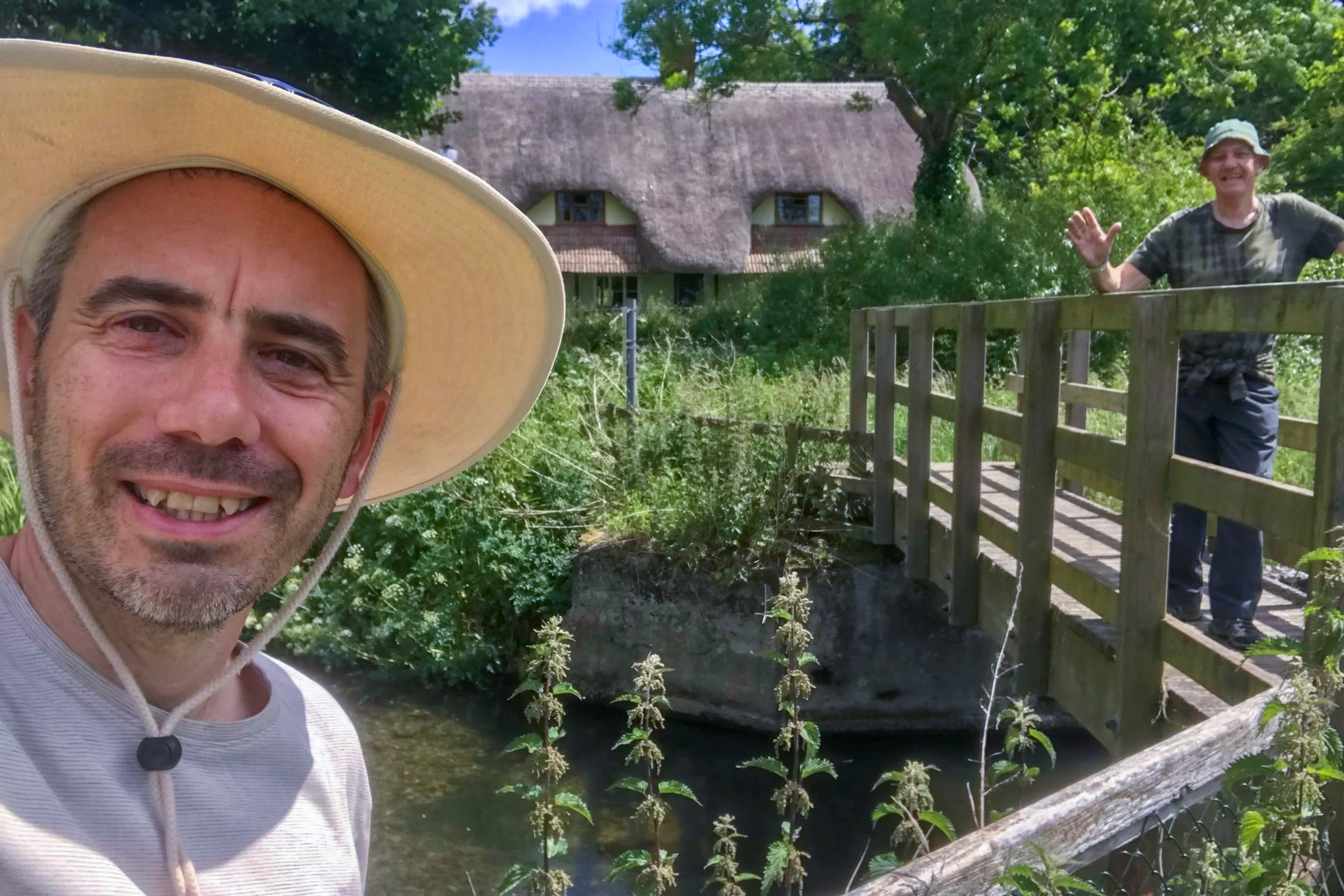


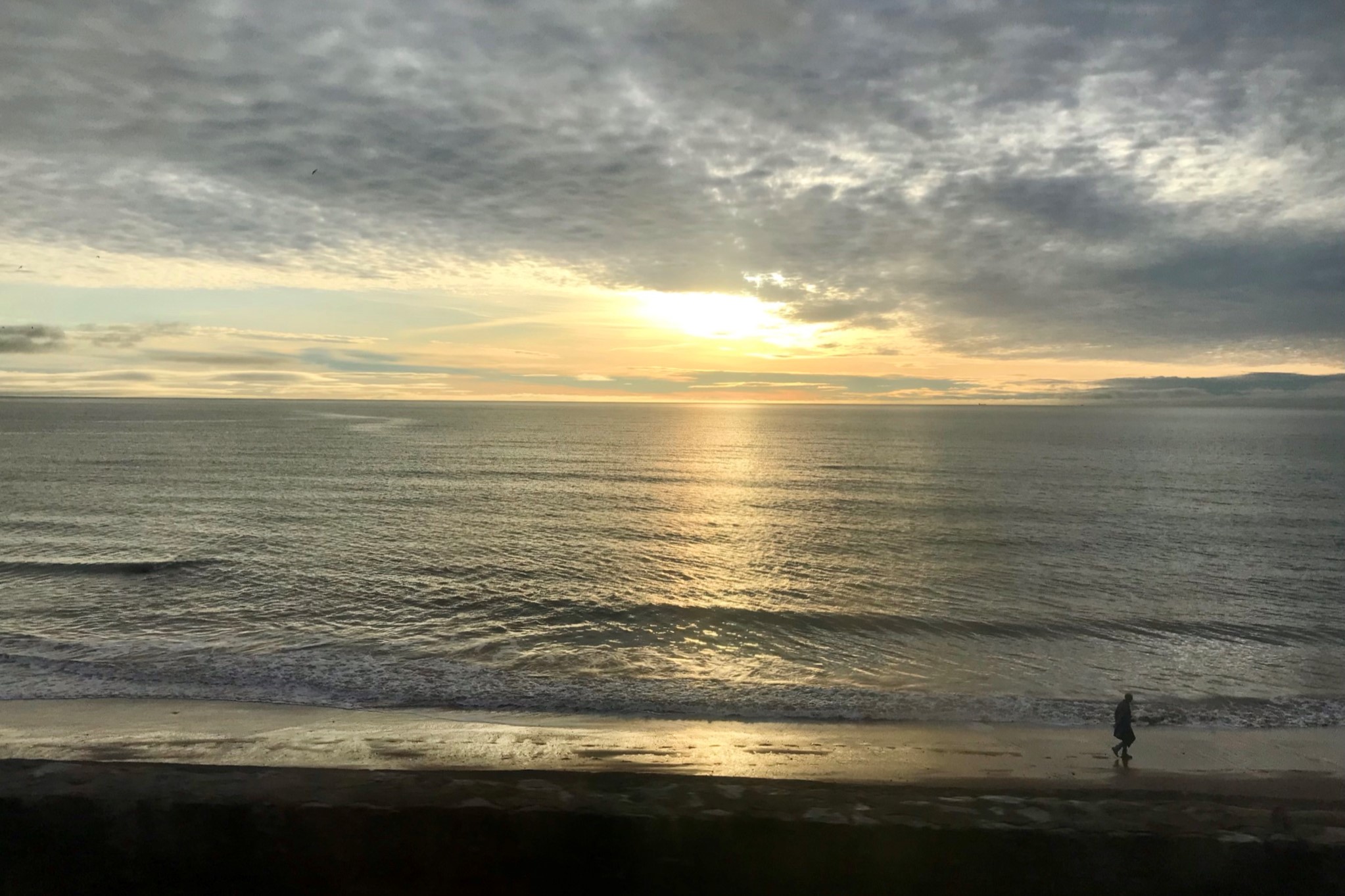


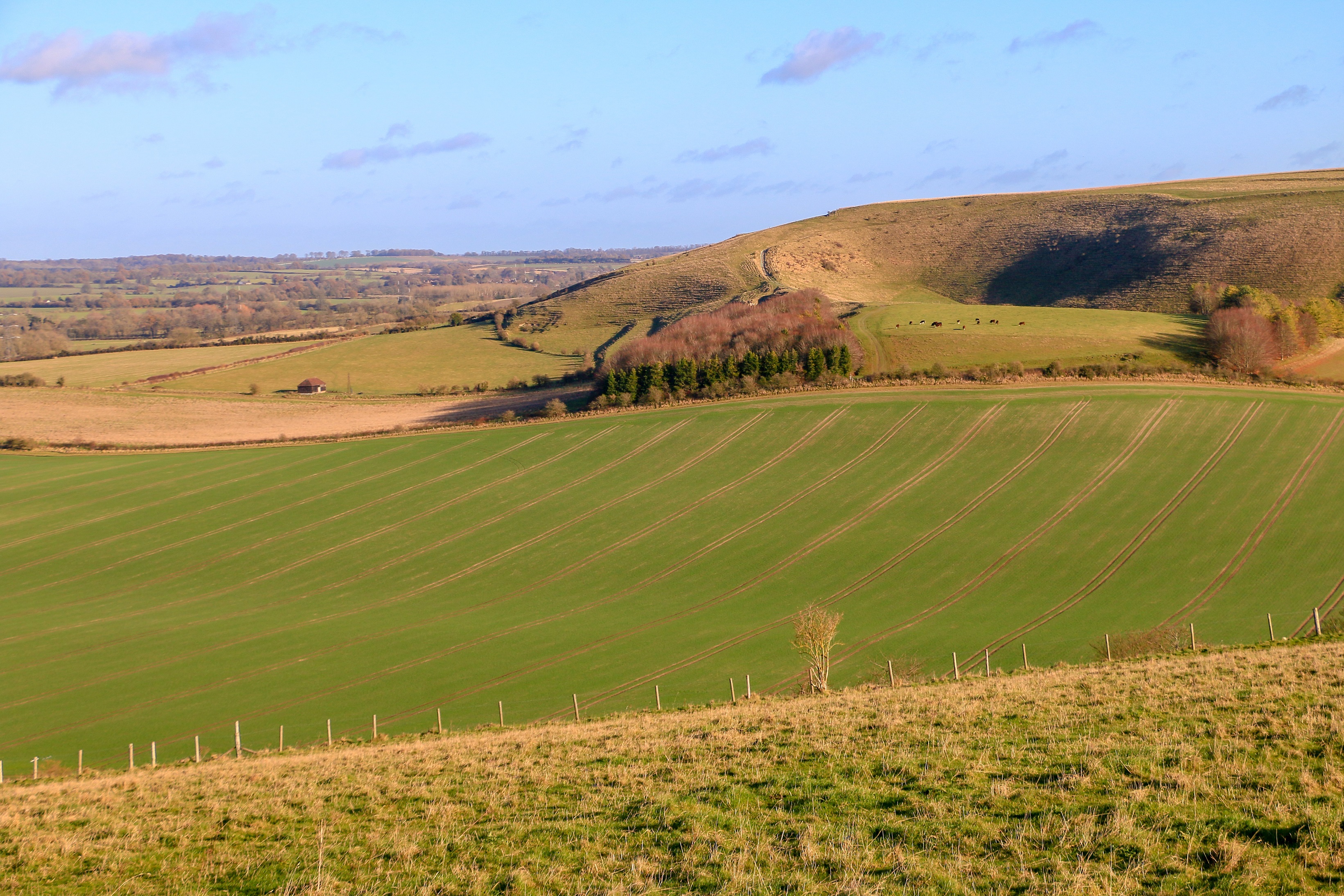

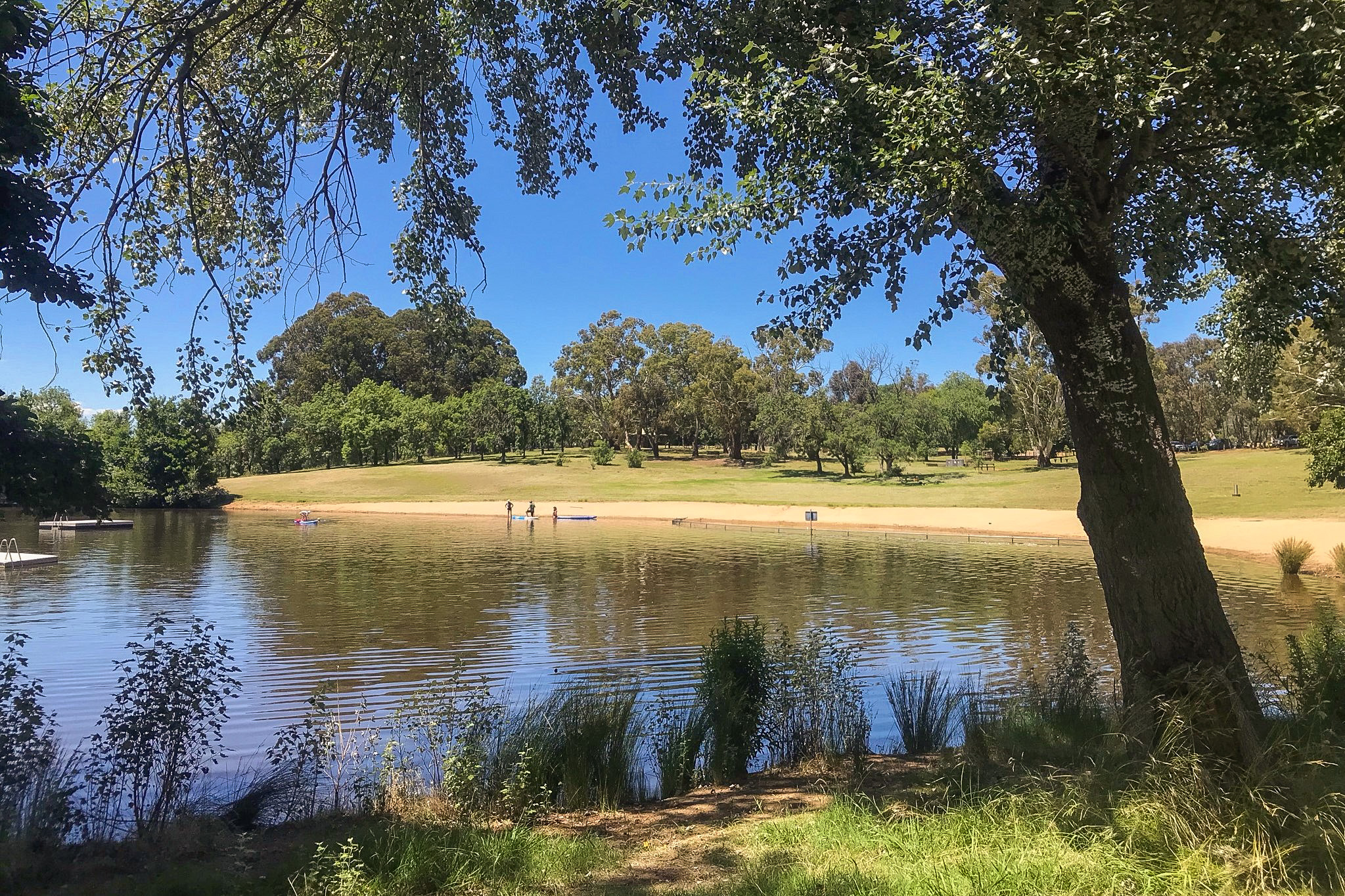


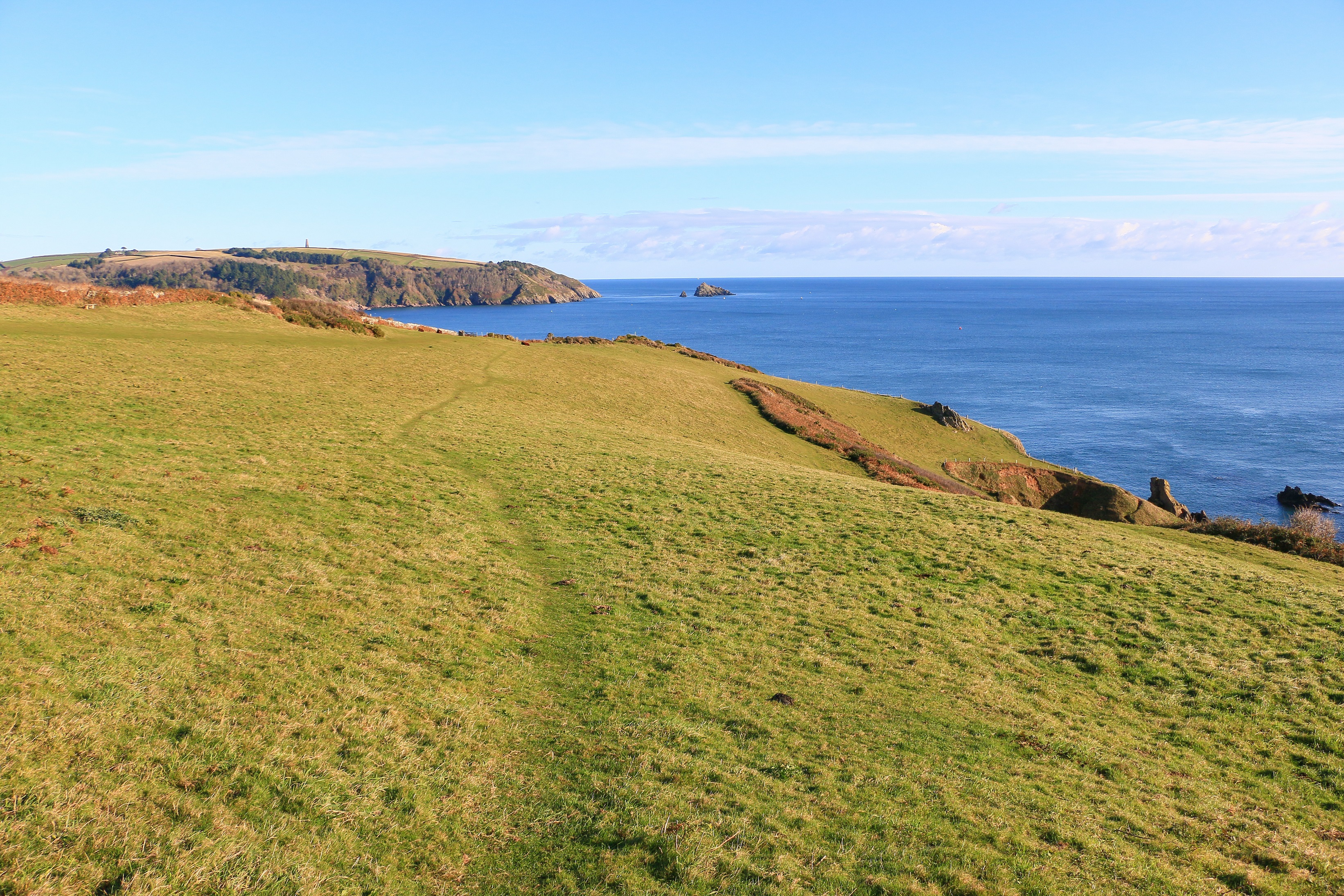


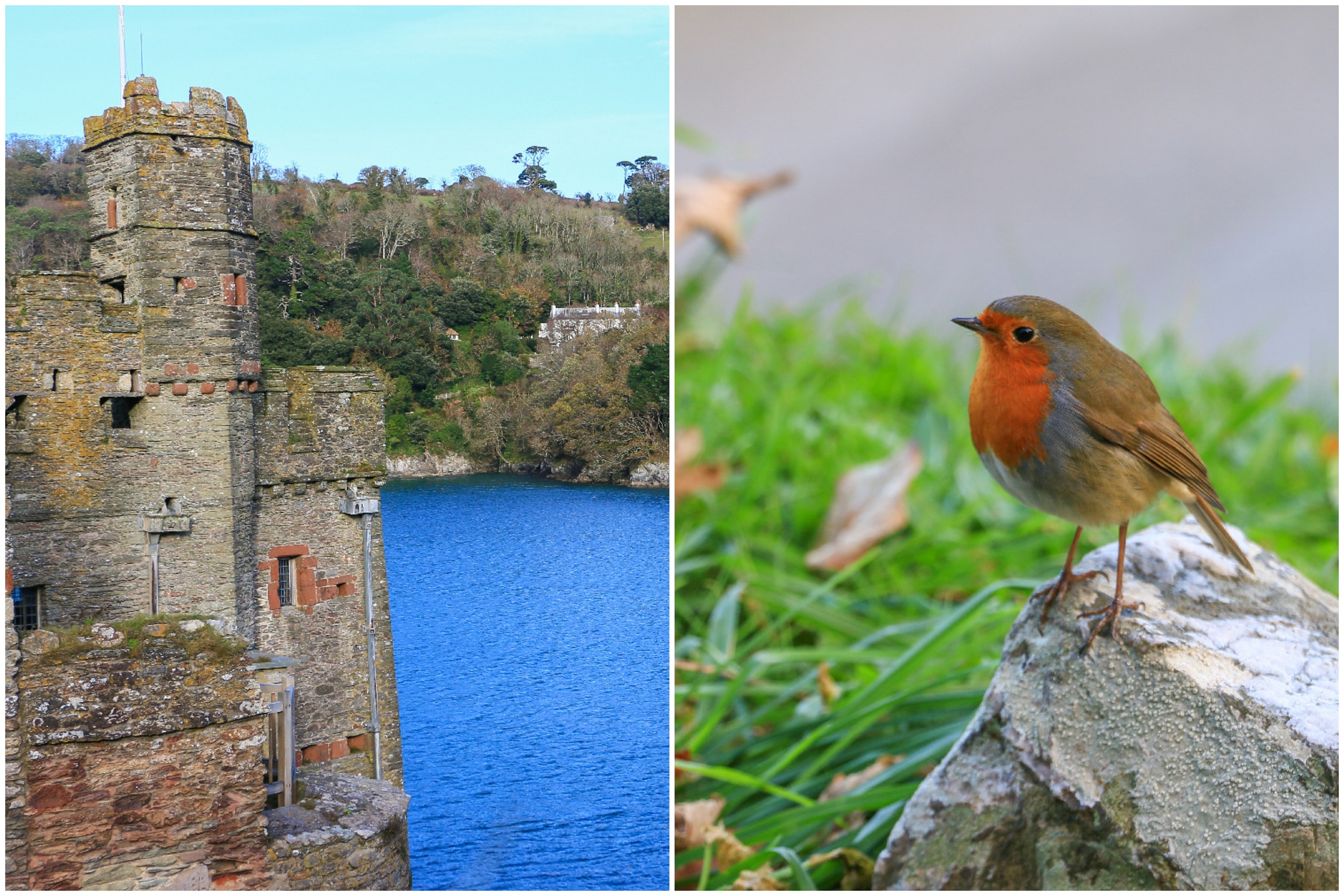


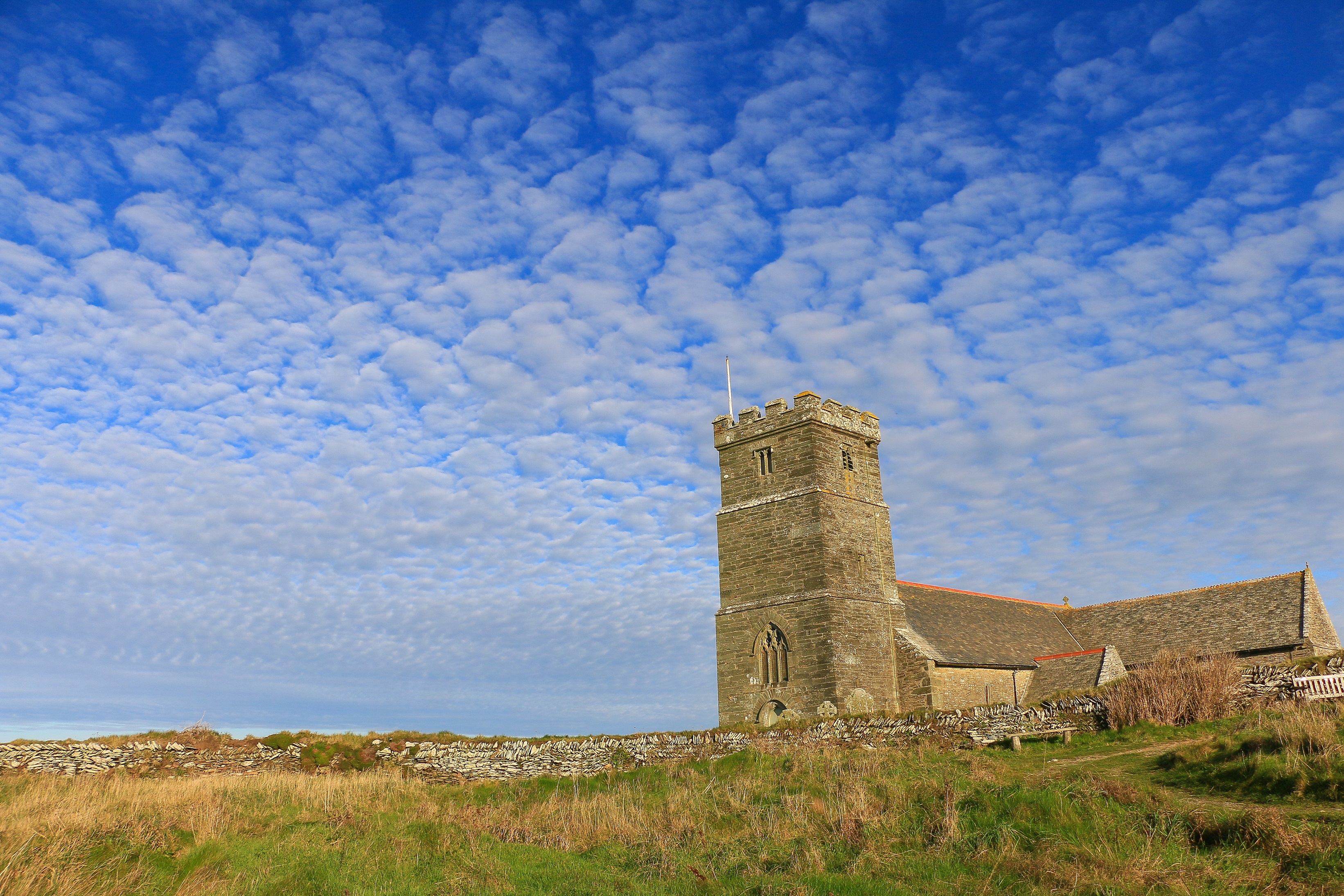
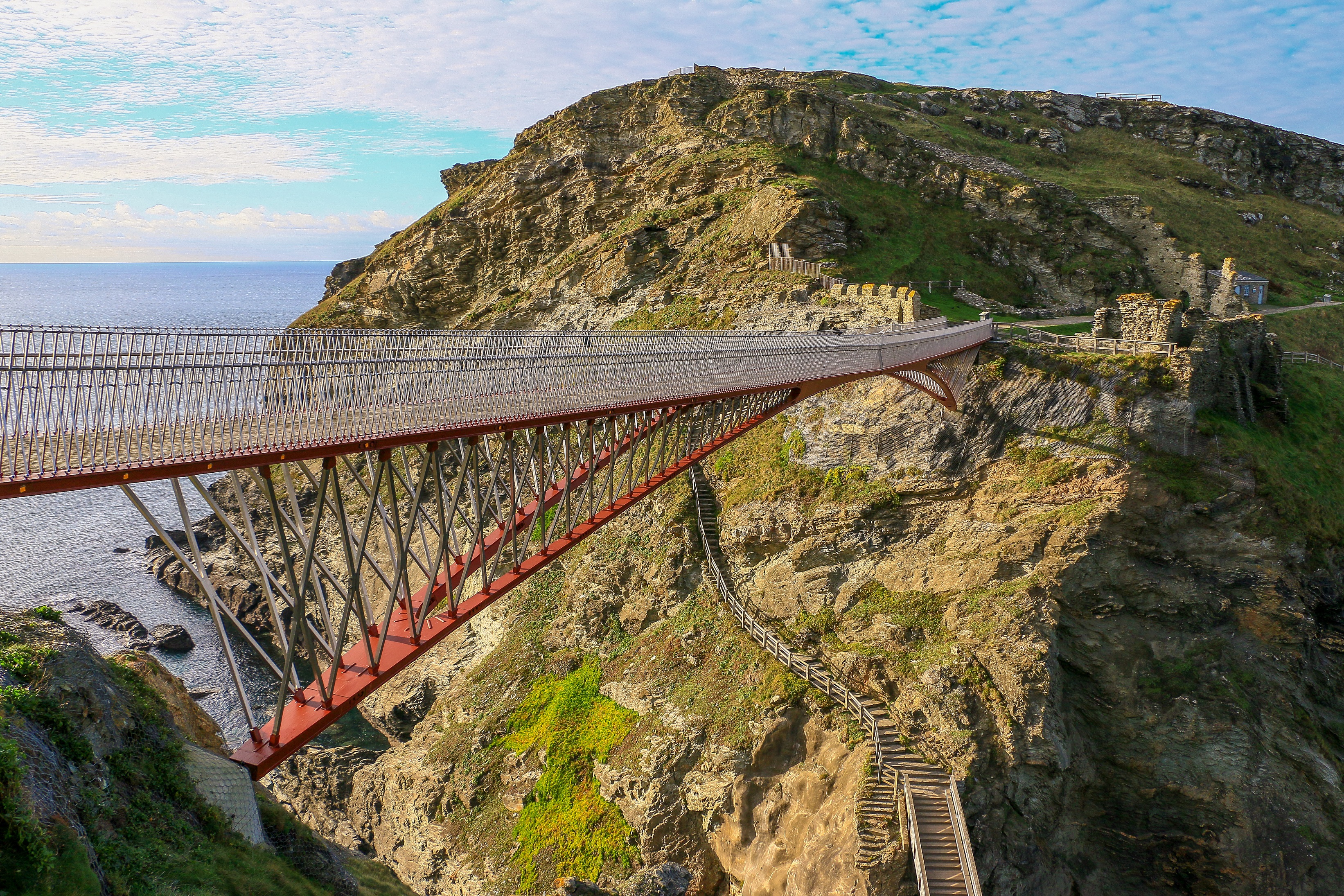


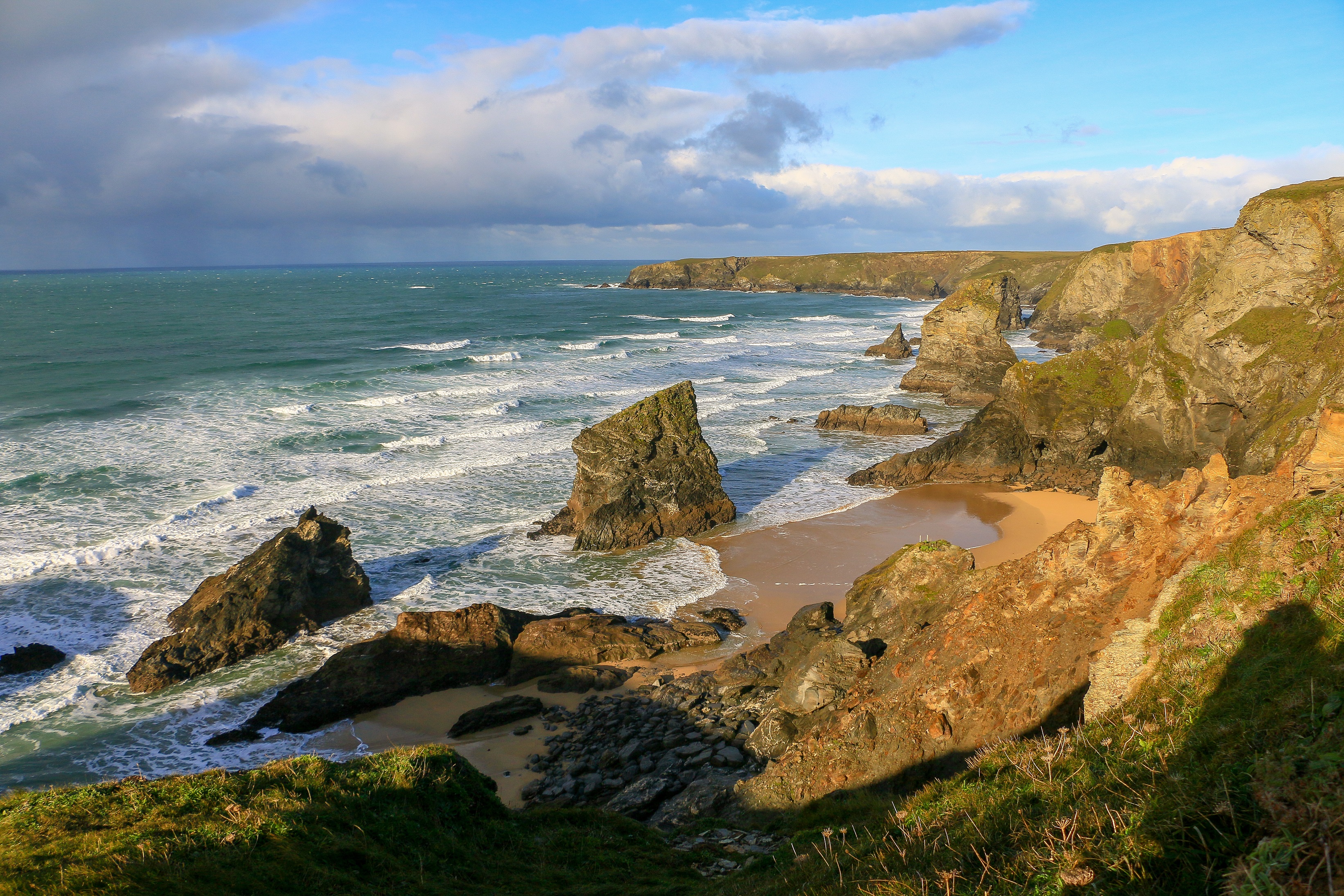


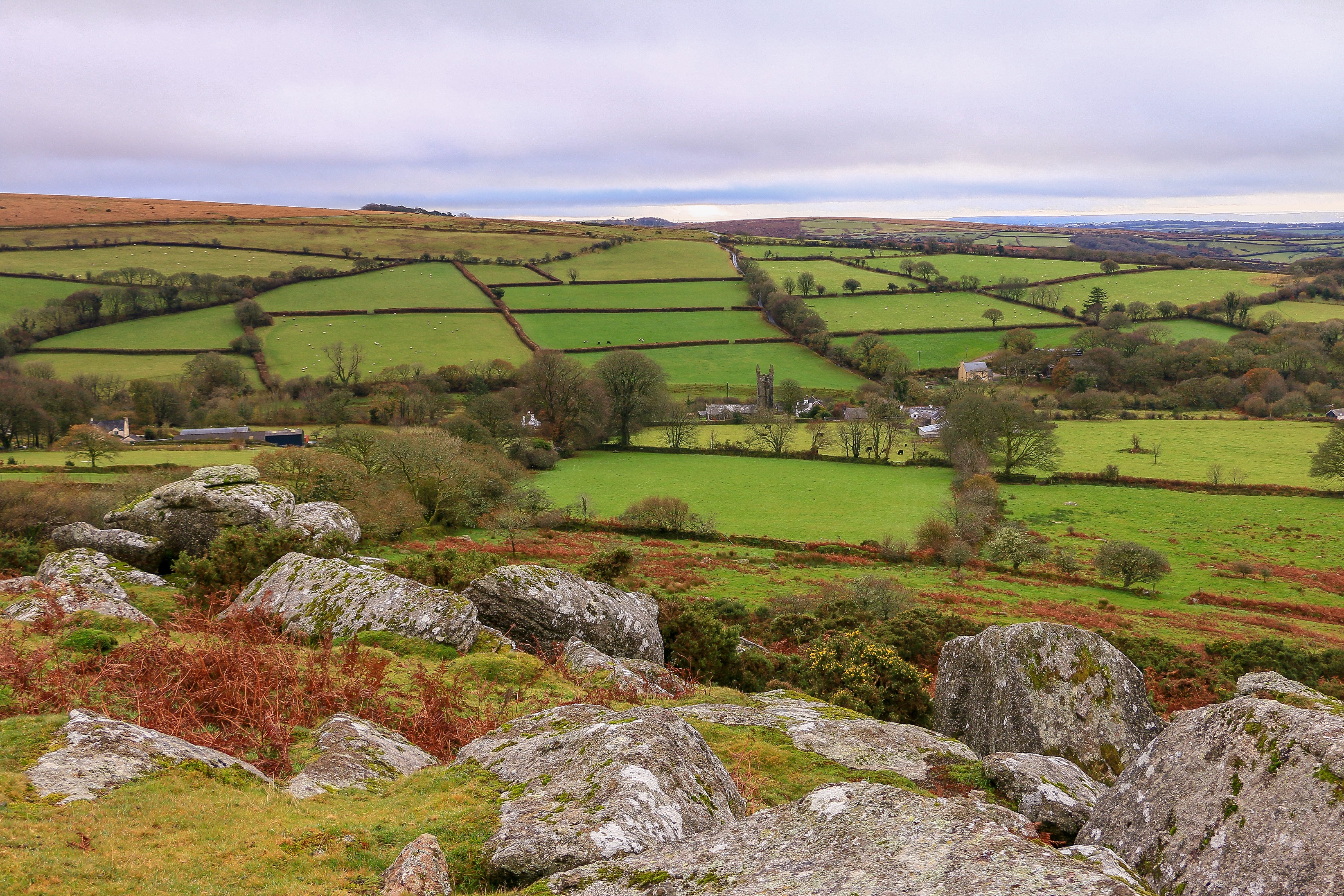
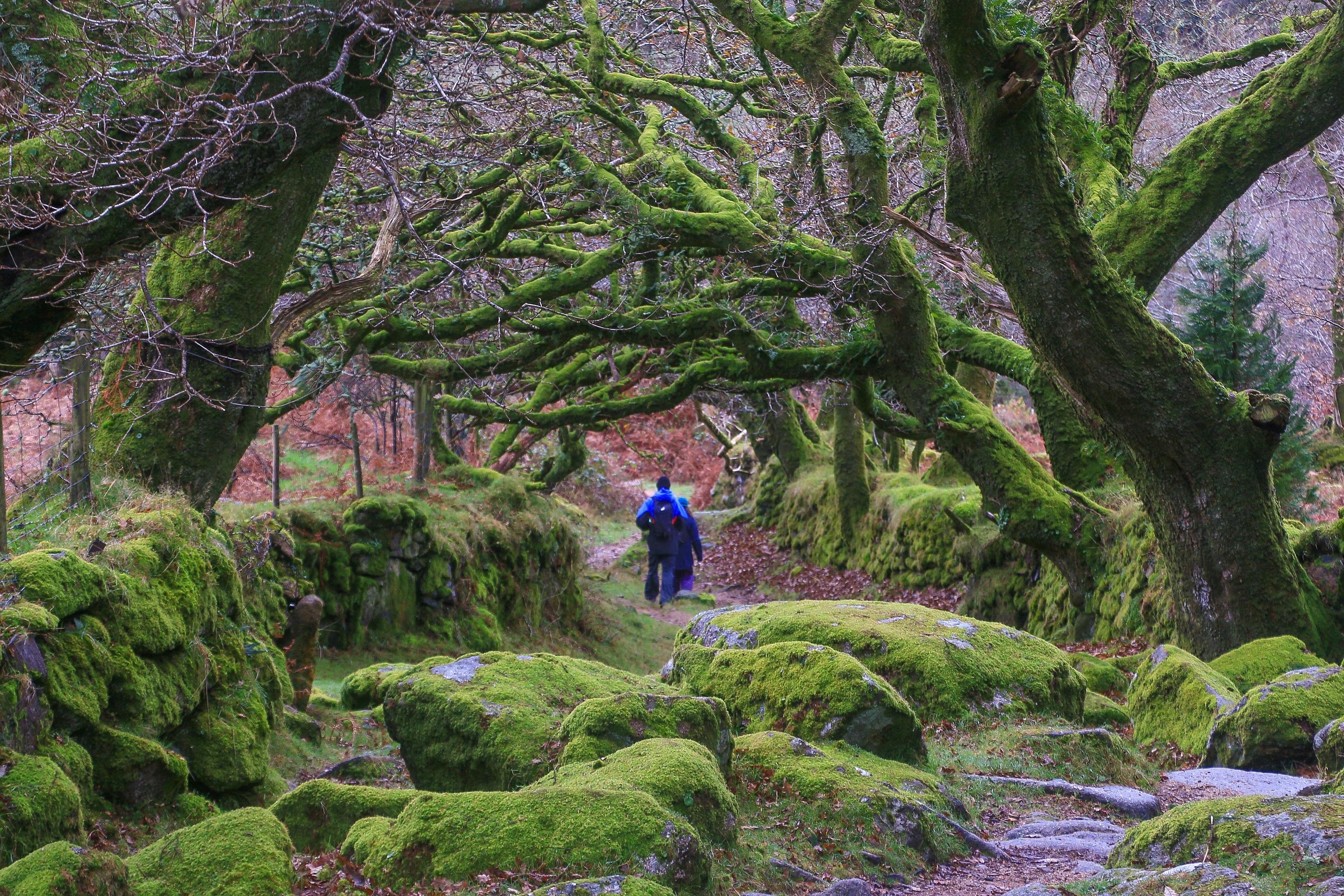


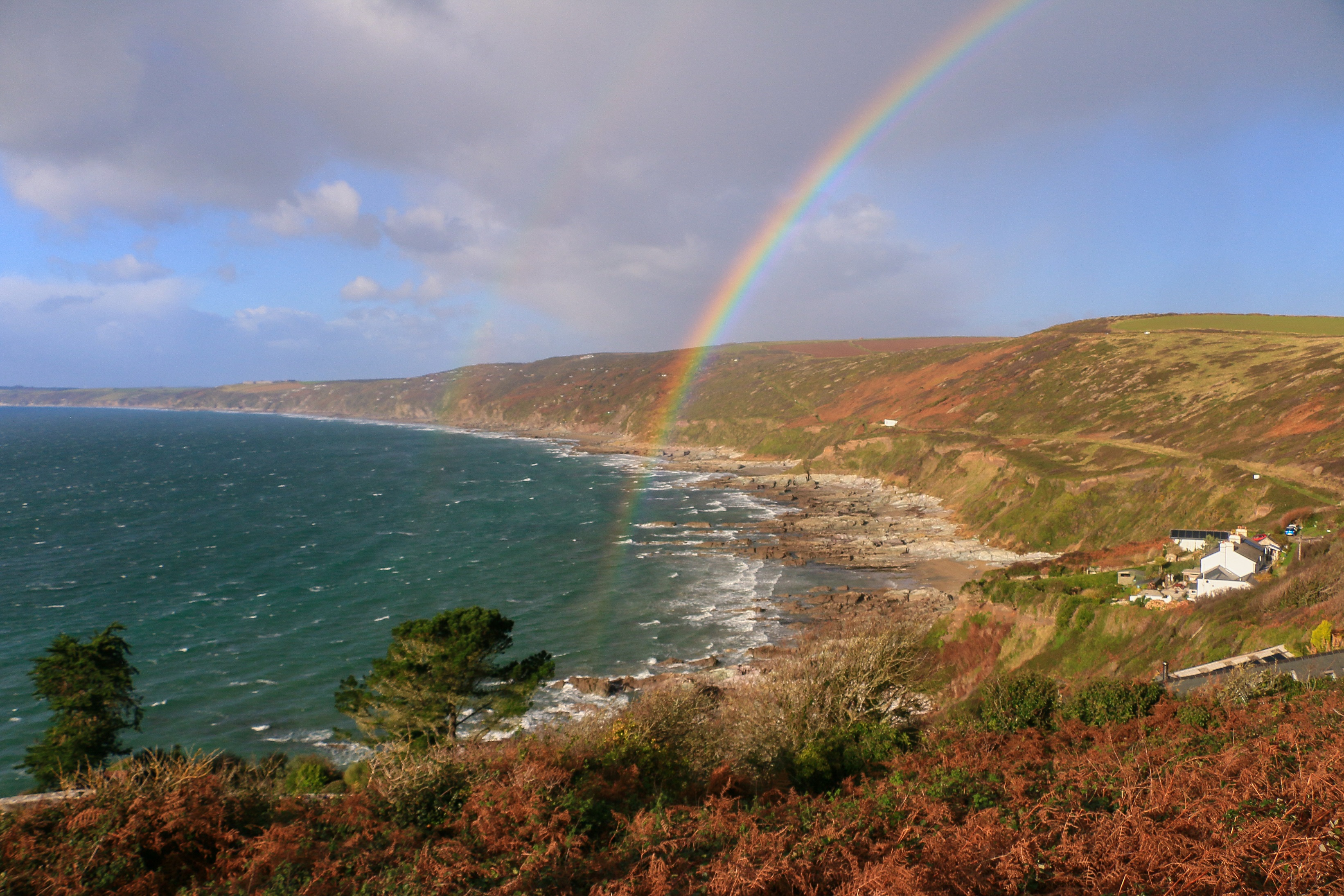
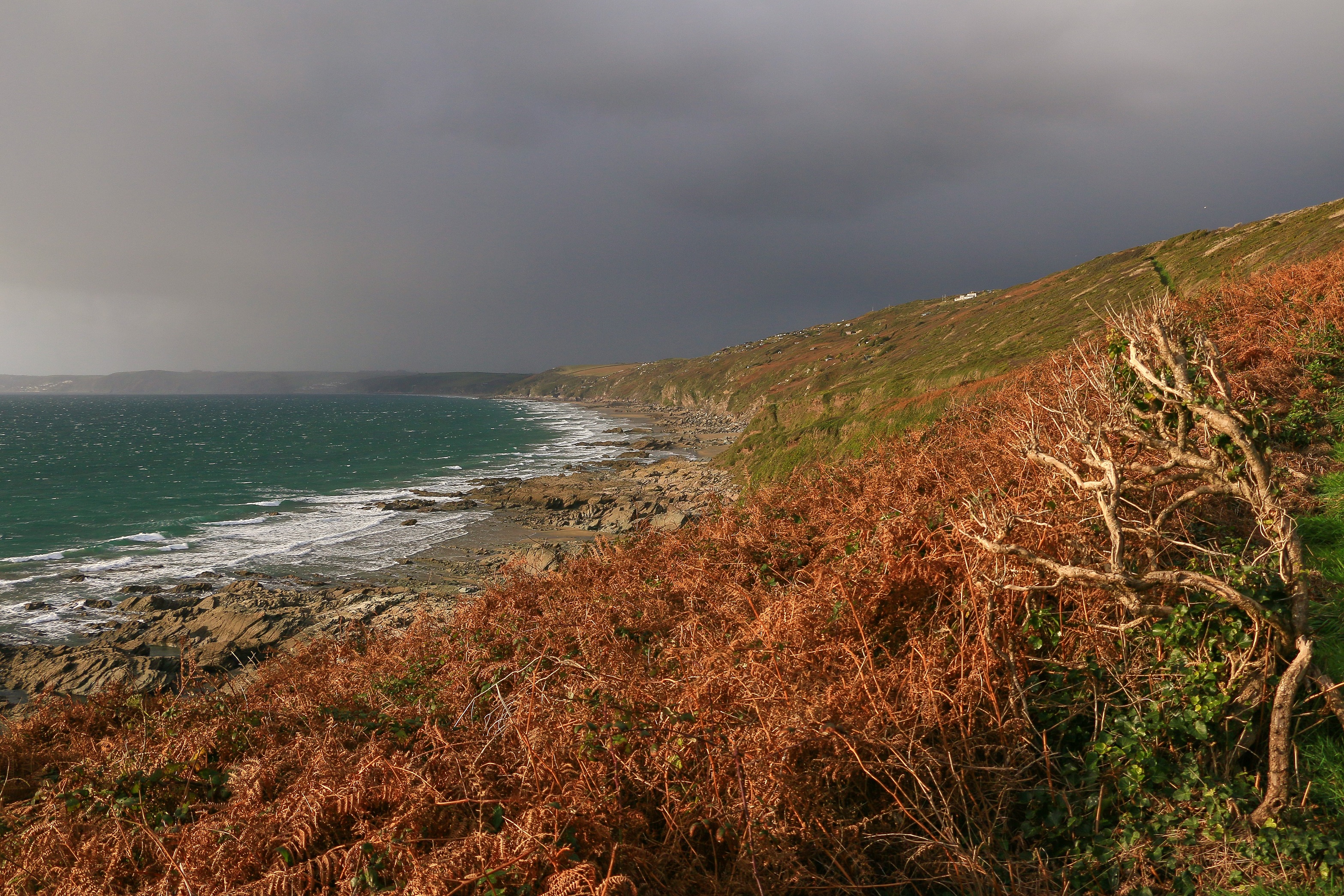


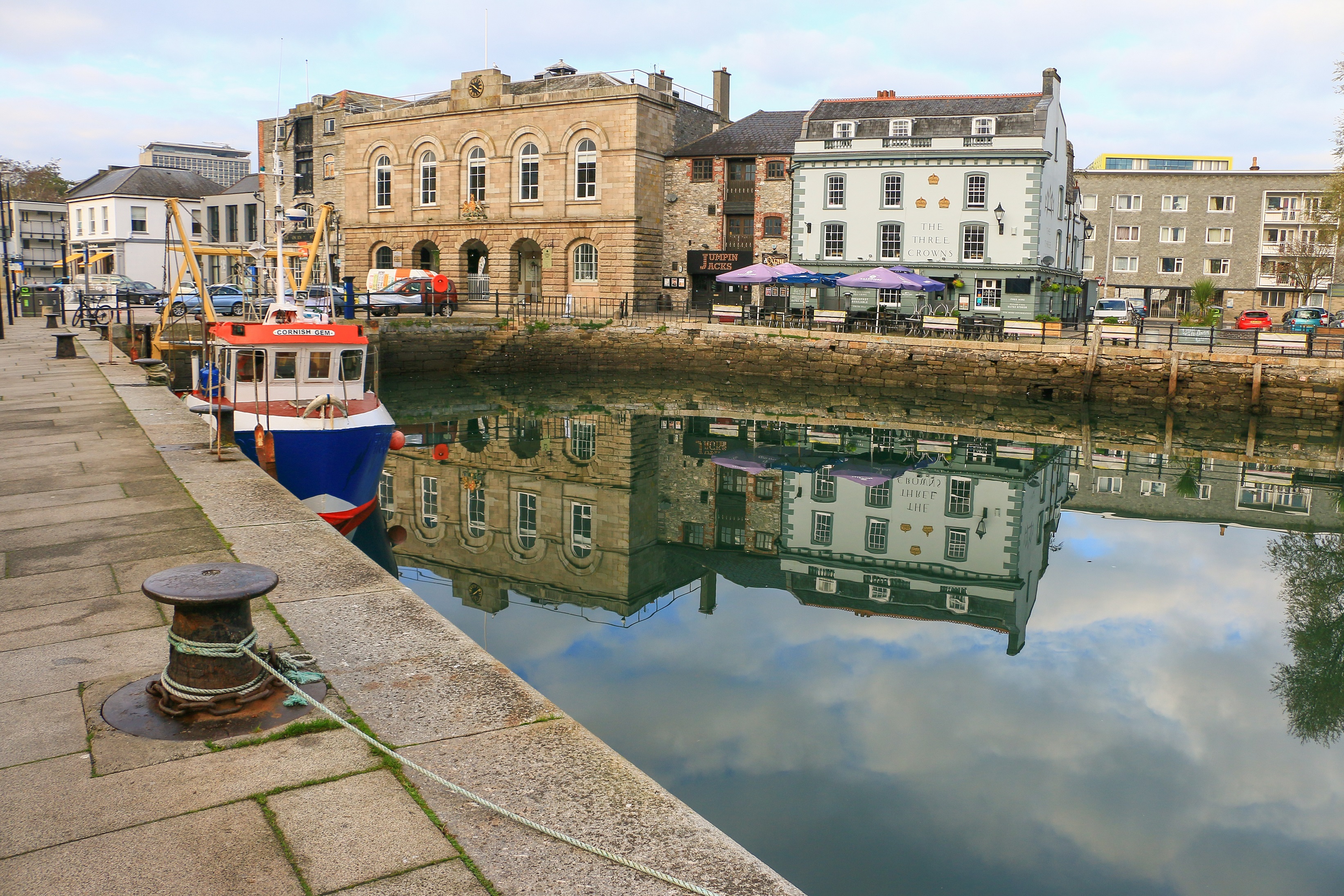


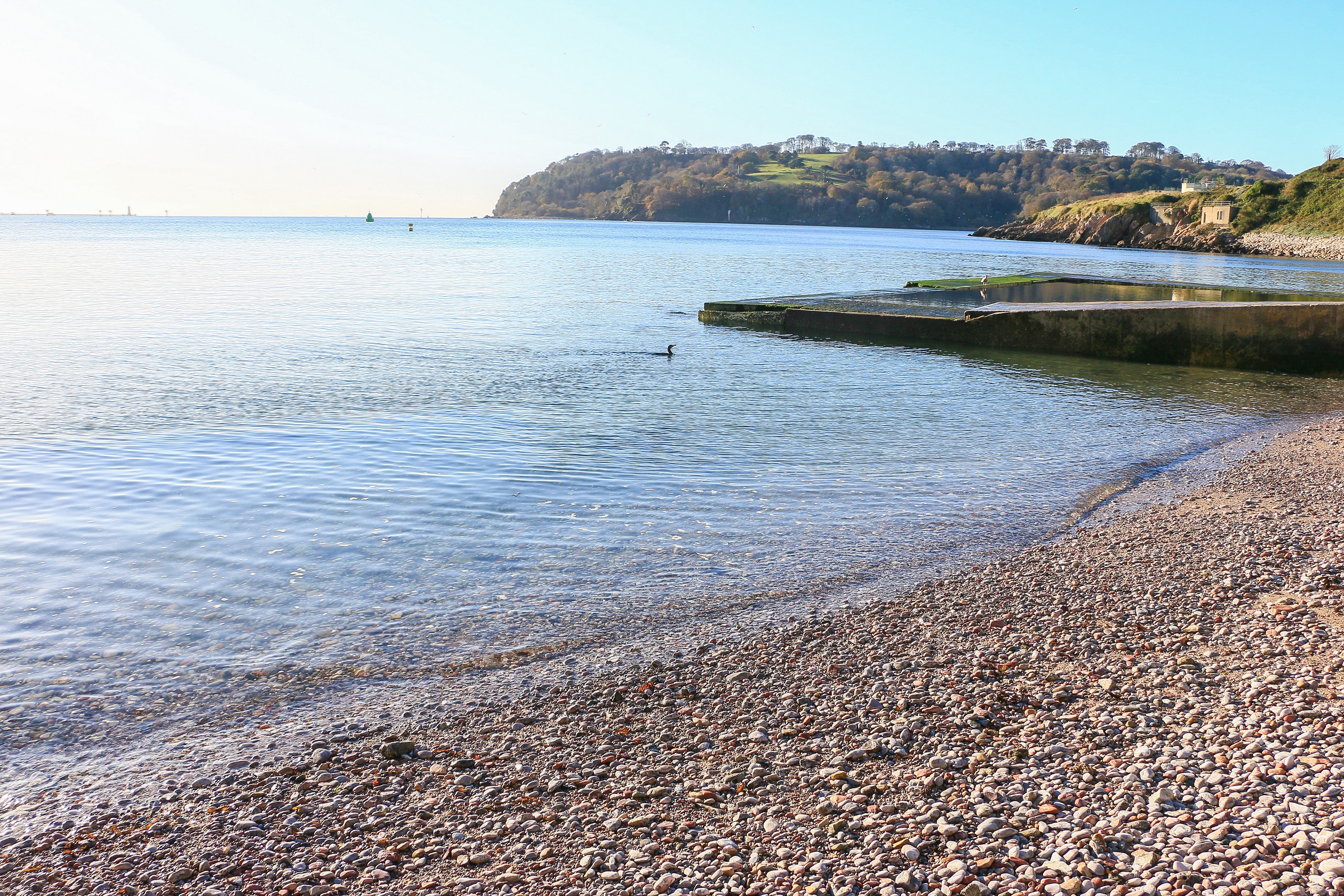

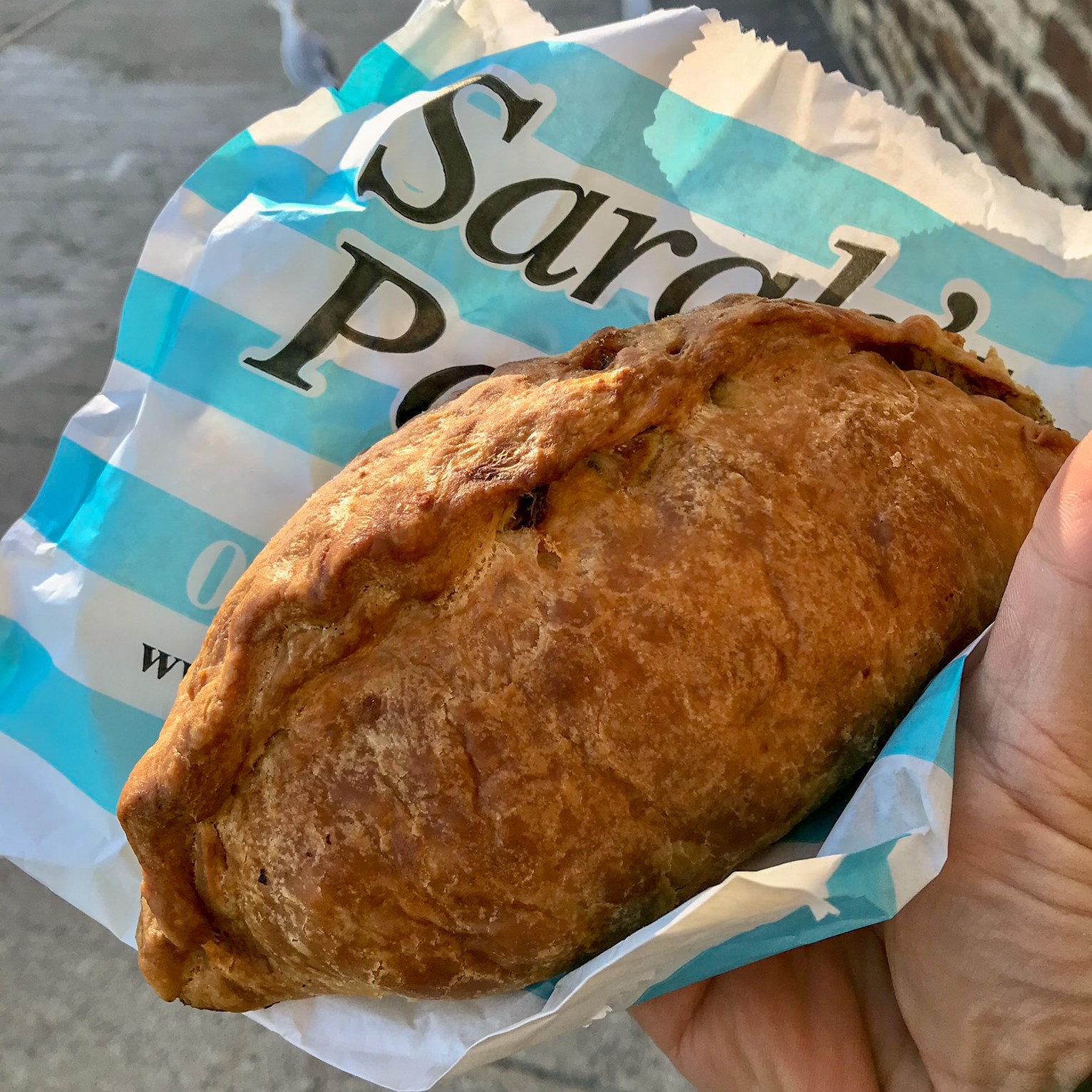


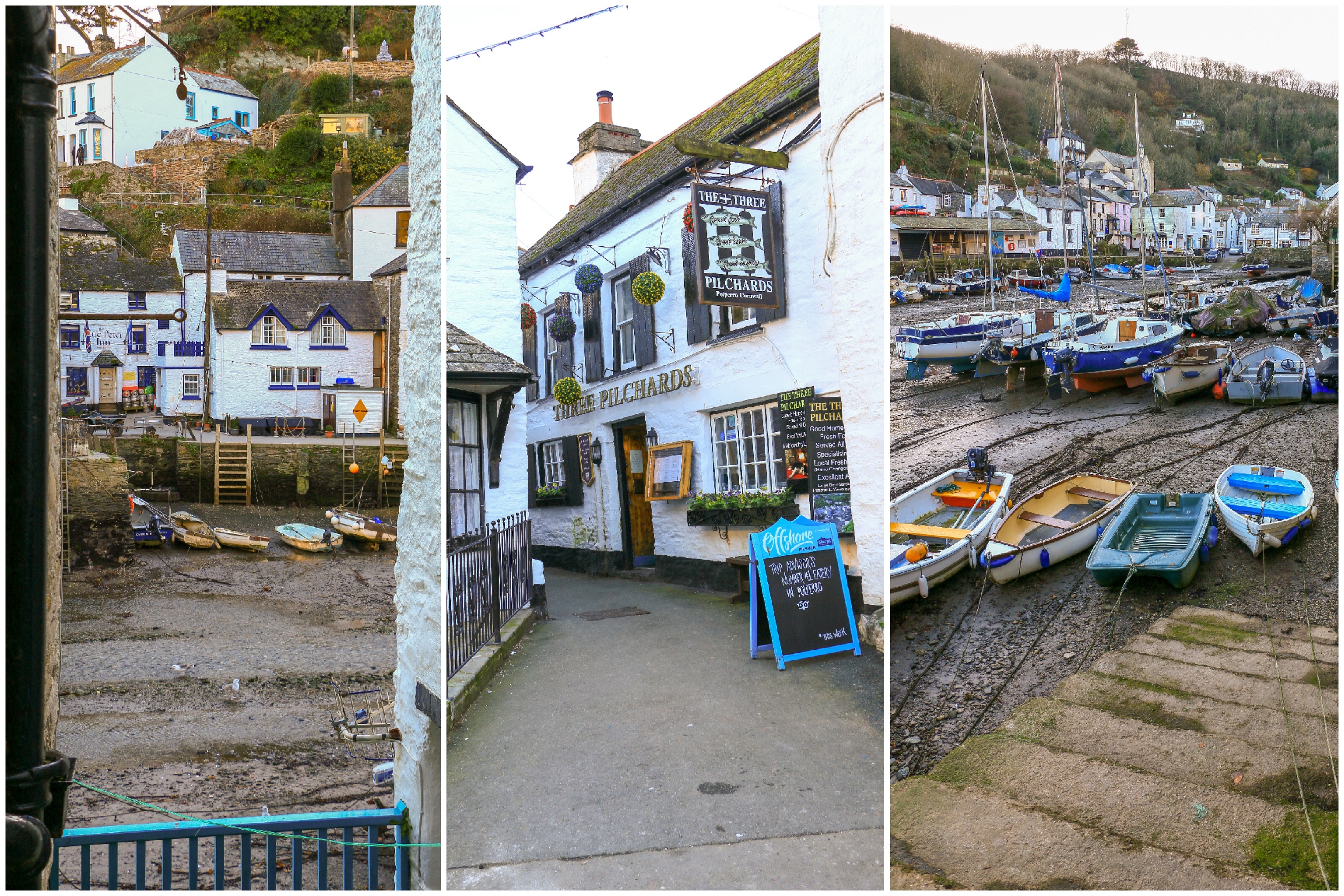

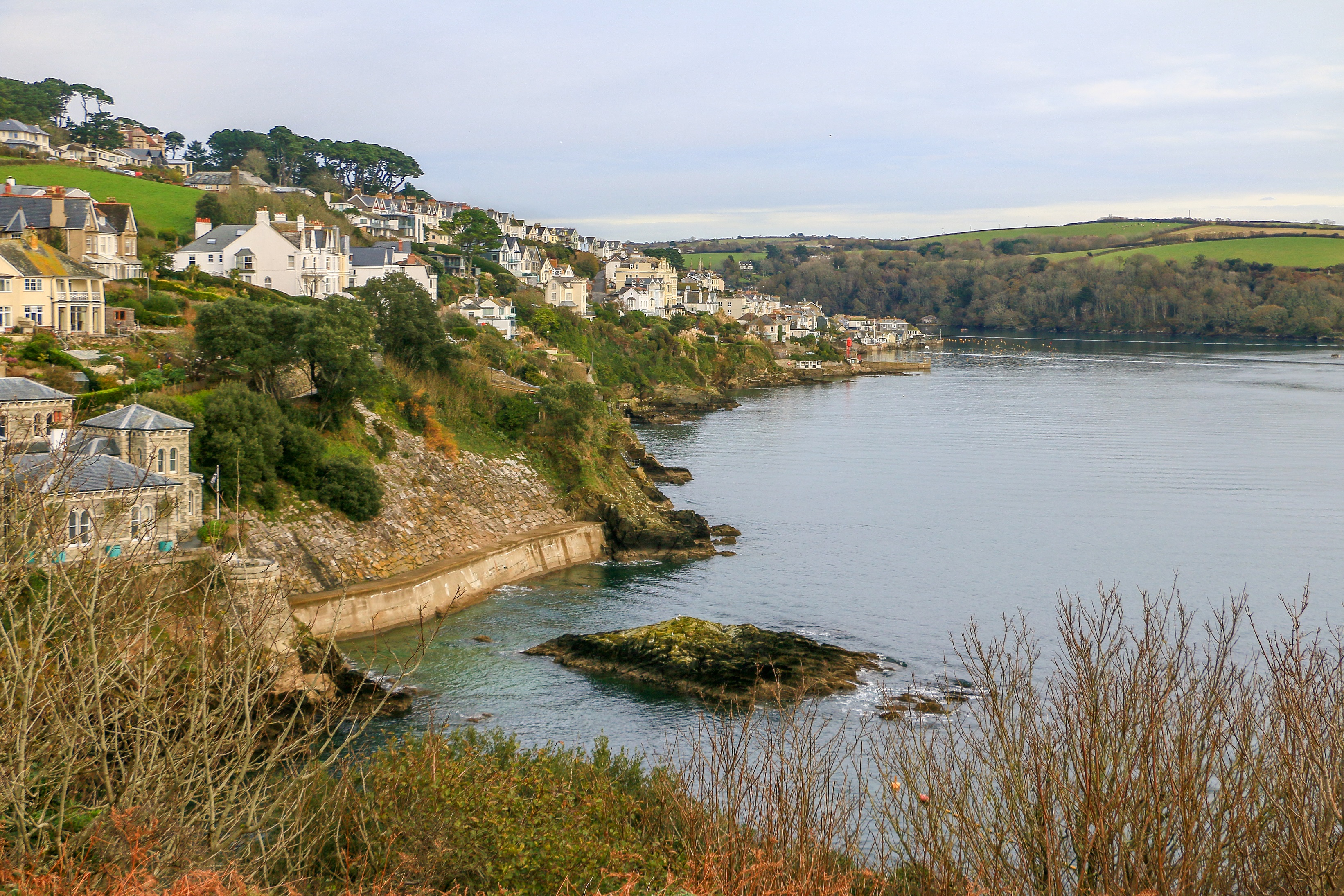


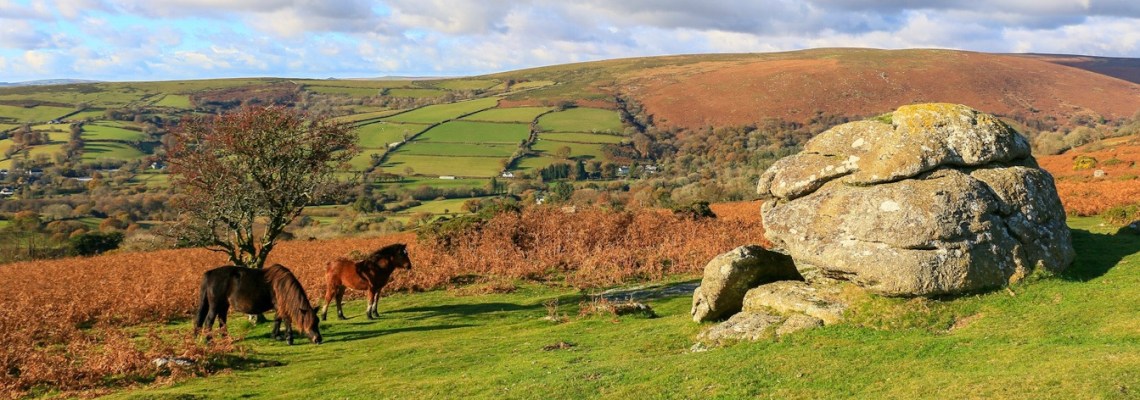

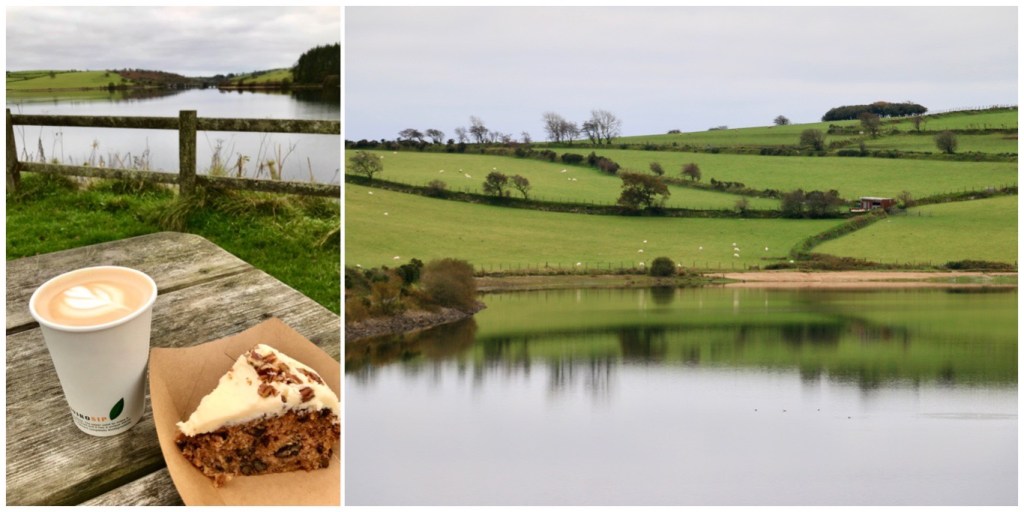


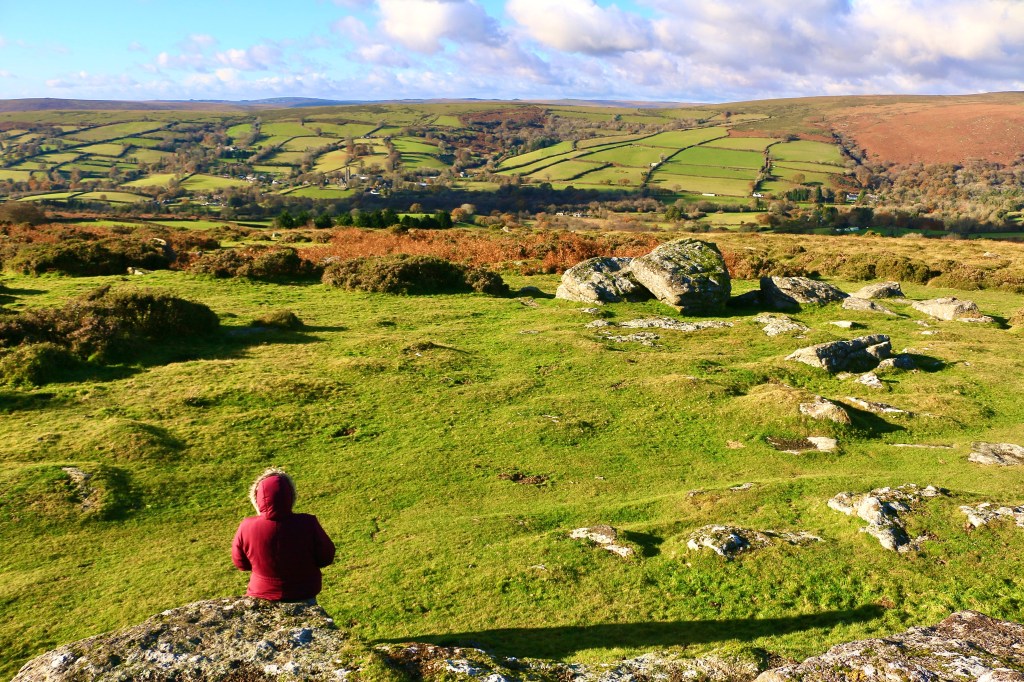
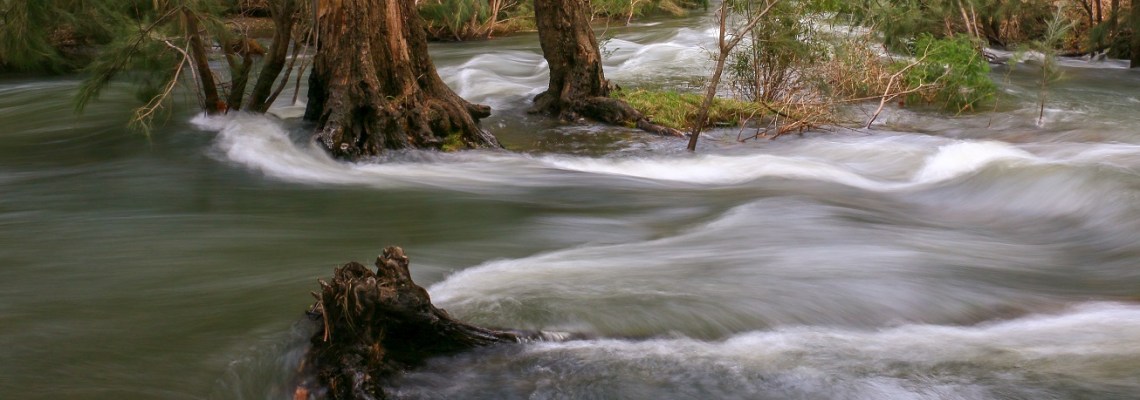
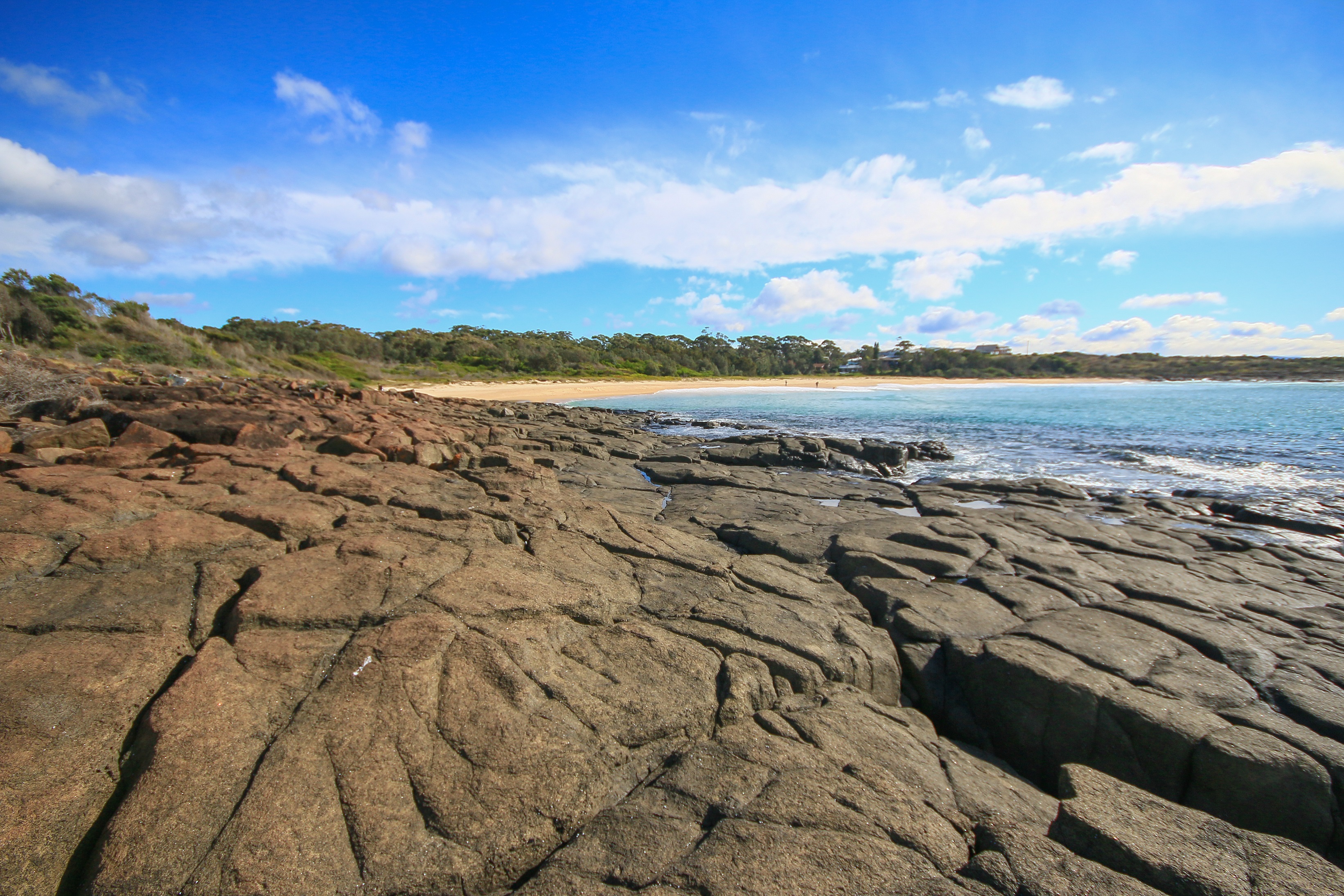


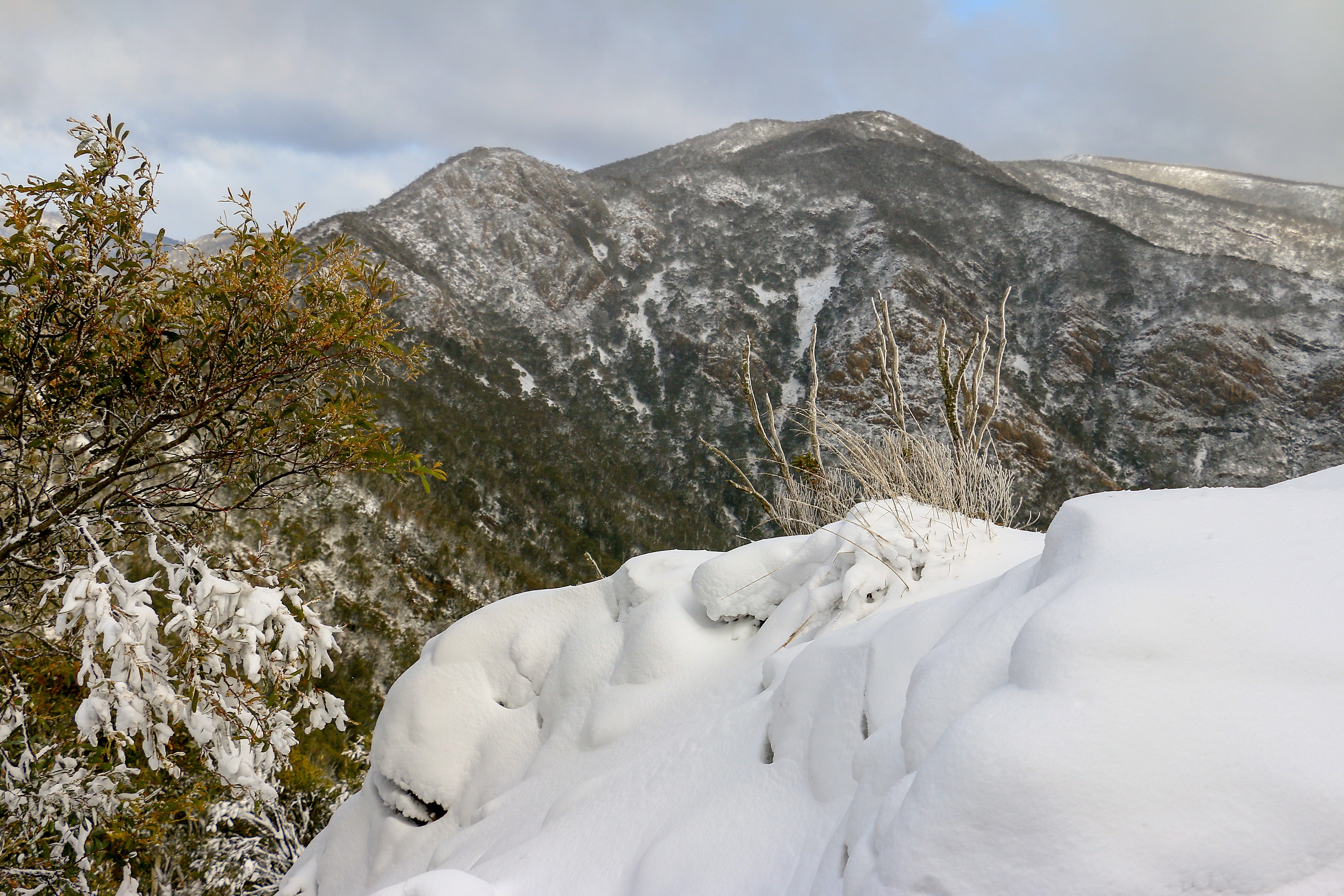
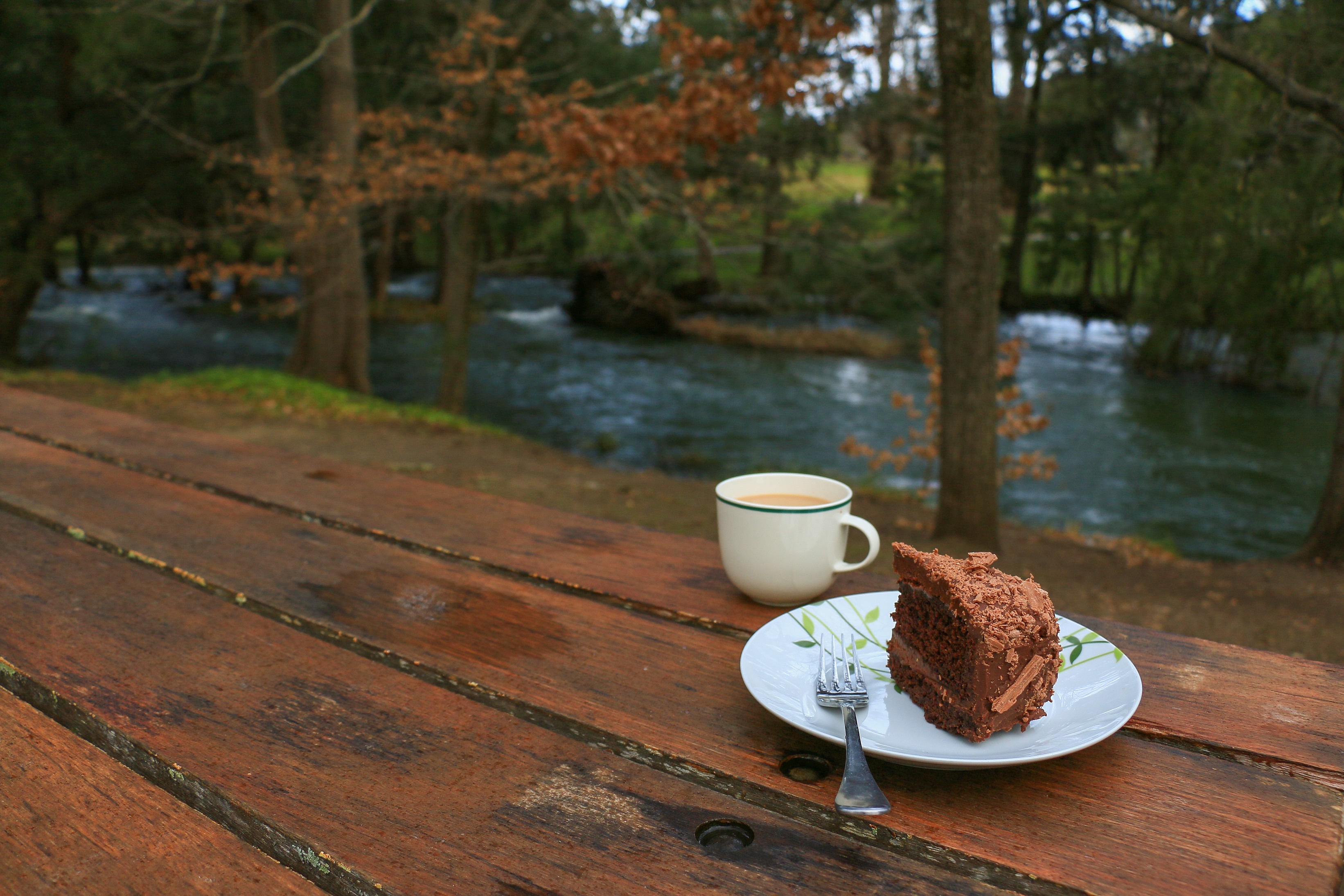


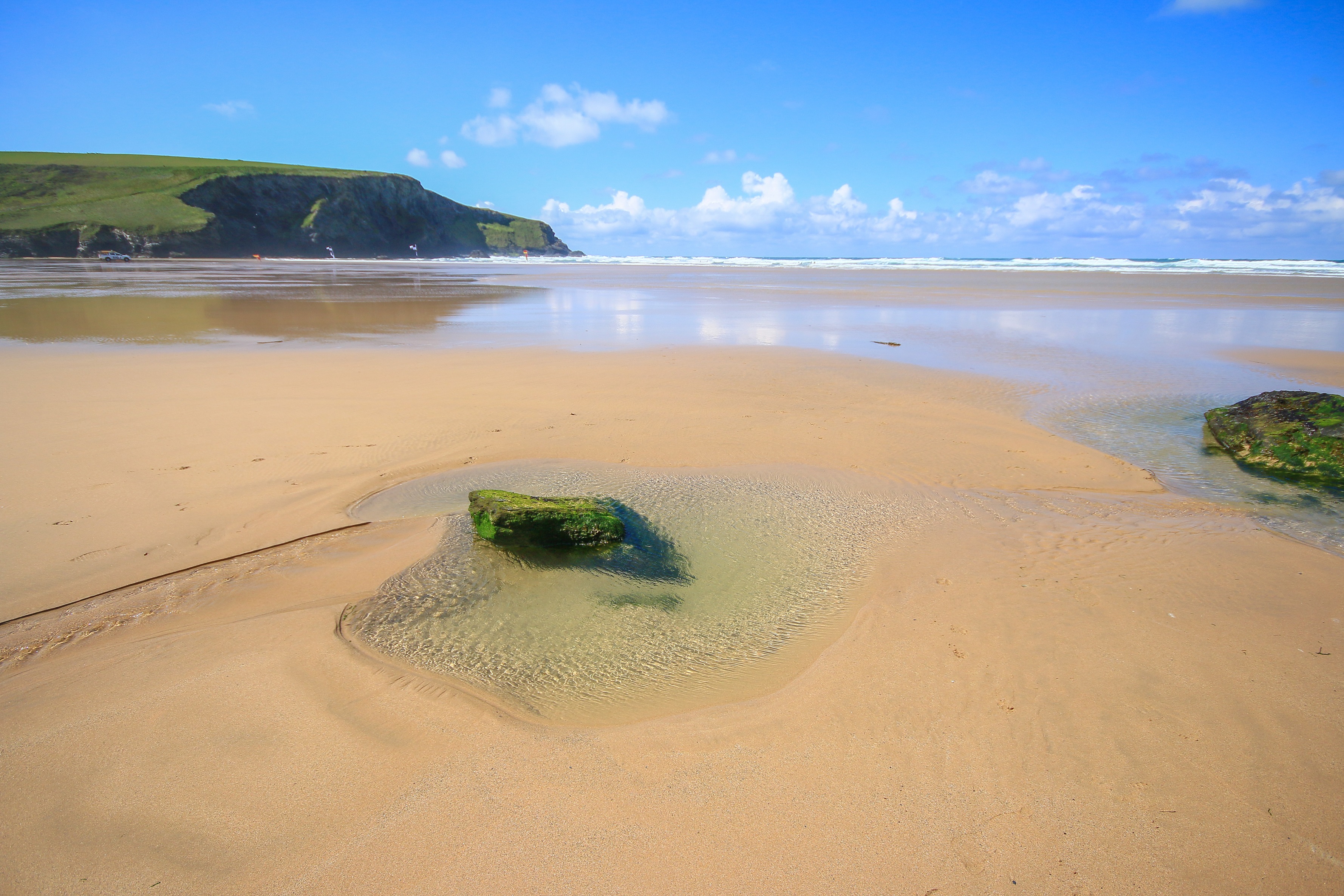
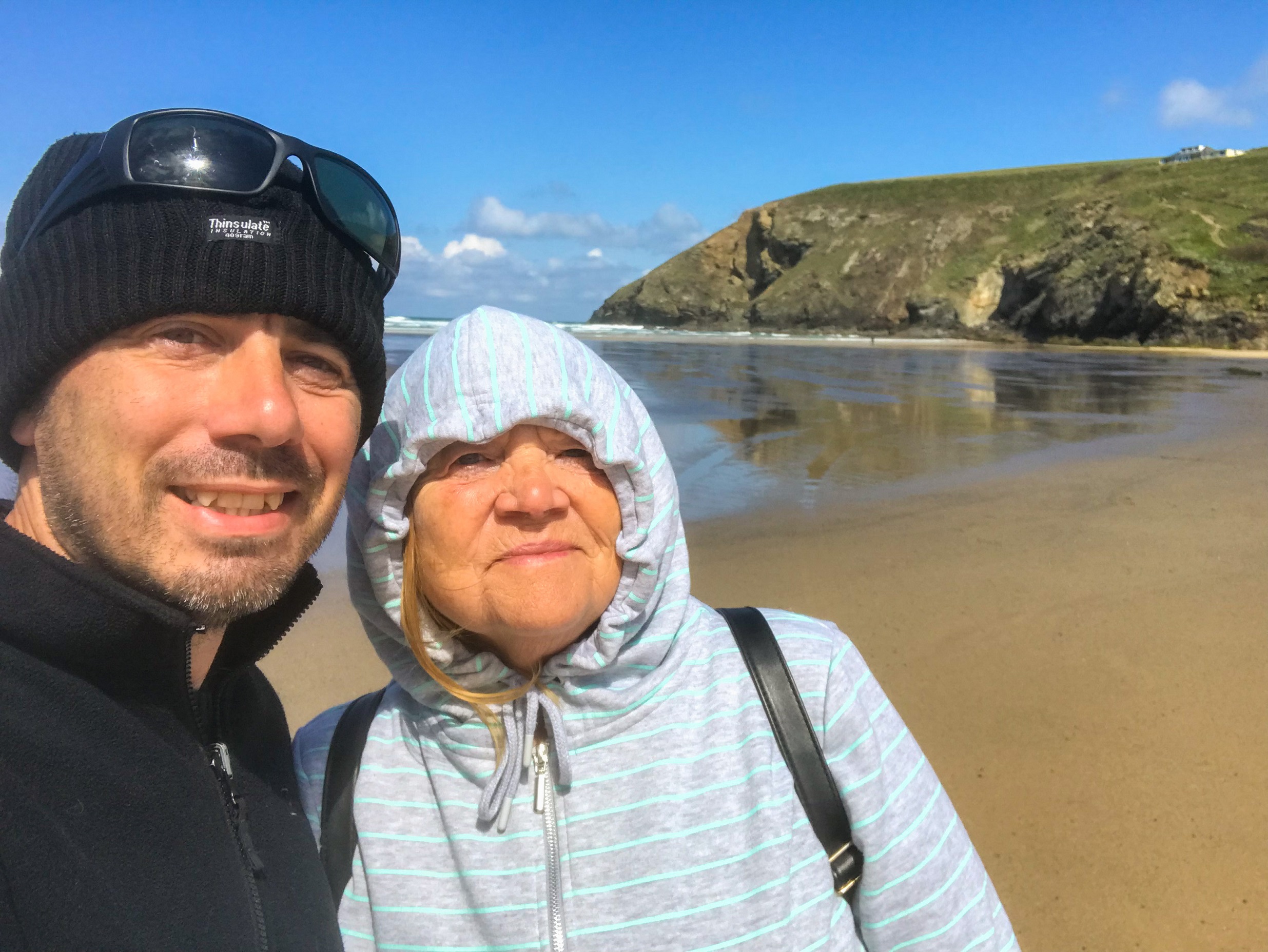

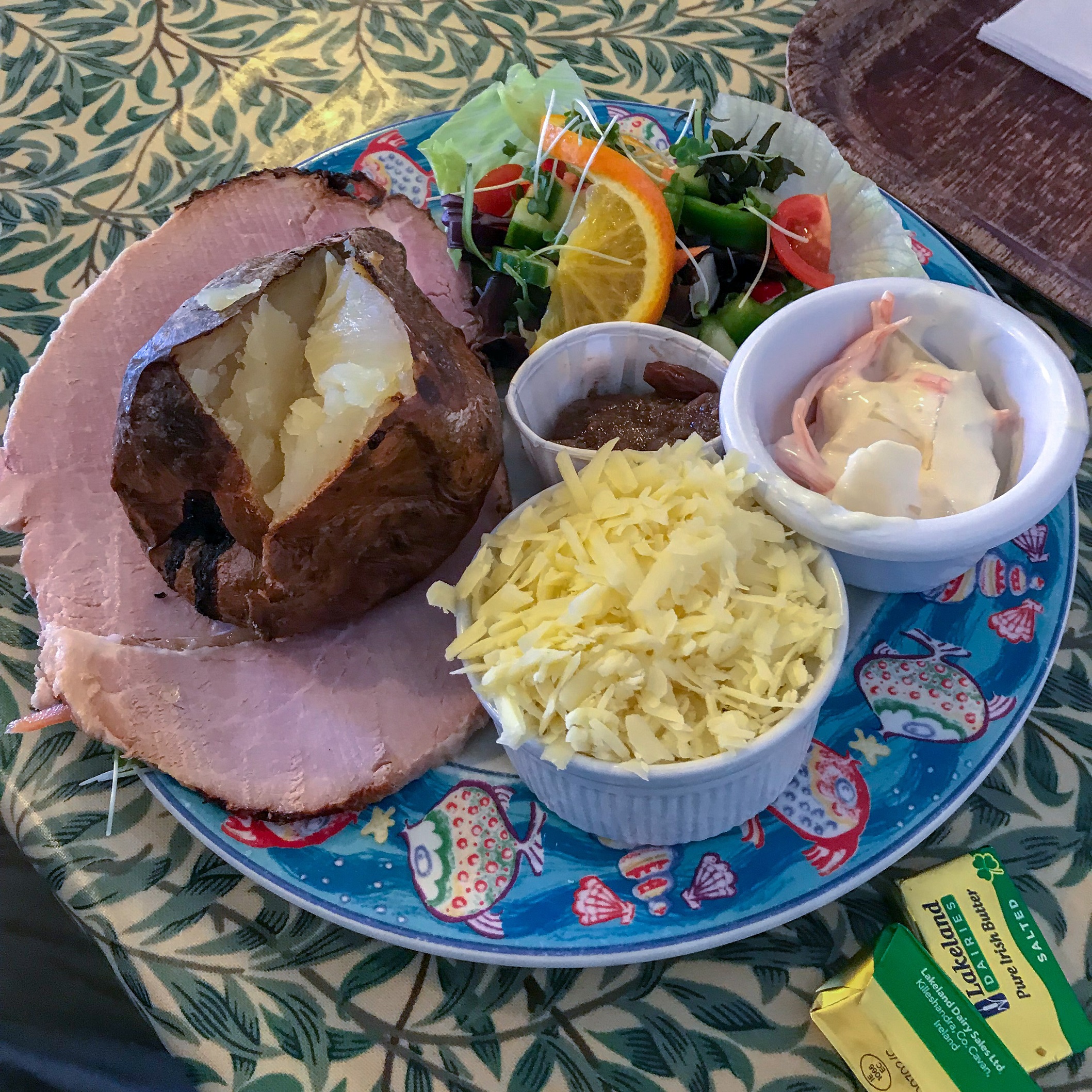

 gbpilgrim