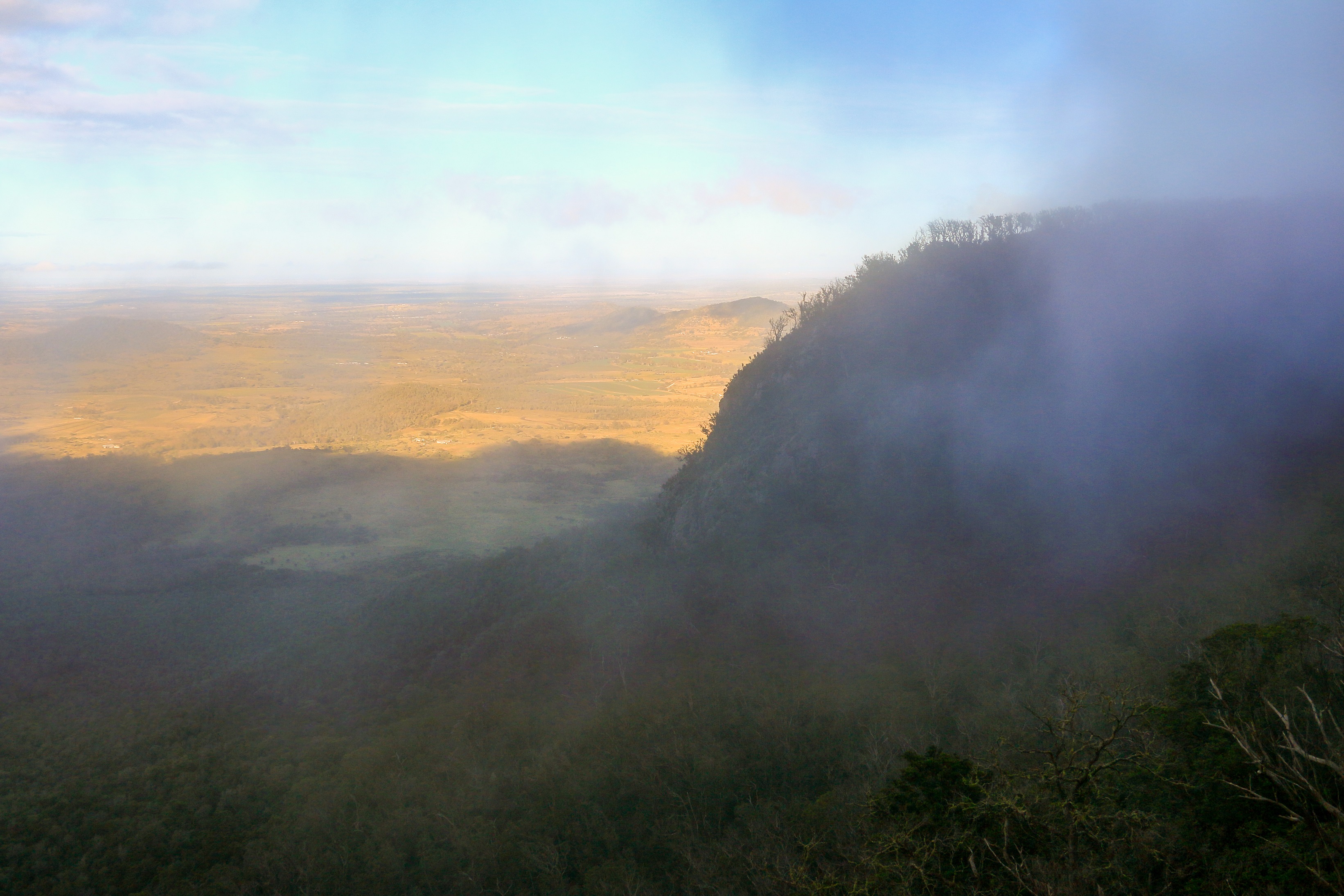
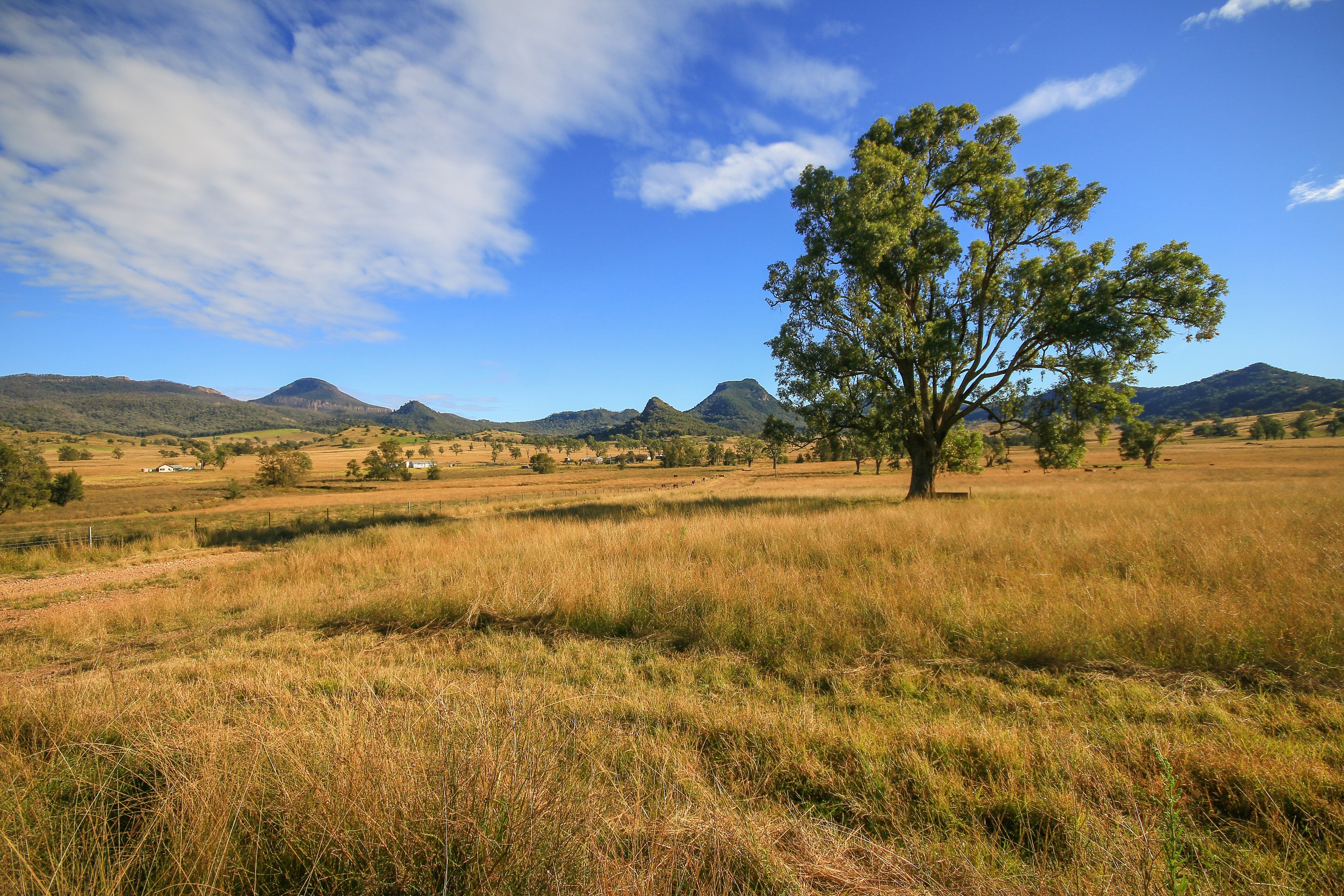
And so, that year that everyone was so looking forward to when it commenced draws to a close. If the sequels to 2020 continue to pan out like the Police Academy series then we are all in for a very unamusing time. Unless you’re really into these boorish characters, crass jokes and ridiculous plotlines.
Despite its ups and downs, I was surprised to be able to find myself for a couple of weeks at the latter part of 2021 in the United Kingdom. So thank you lax borders and frequent flyer points and negative lateral flow tests and annual leave build up and, most of all, thank you science. It was a bonus trip, taken with a wariness that things could so easily change again and again.
It was amazing and I would do it all over again. This, despite the shadow of coronavirus always lurking in the background, sometimes coming to the fore. At times – such as high upon a clifftop overlooking the Atlantic, roaring with laughter during an early Christmas gathering, scouring verdant countryside for lens hoods – the pandemic disappeared altogether. At others – shopping for cards in an almighty hurry, shoving swabs up my nose, double-masking when others breathe “freedom” – it was all that was going on.
The journey back to Australia is never really a good one and pandemic travel adds an extra layer of crap. Which is exactly what was lathered all over my hands from a Great Western Railway dispenser at Plymouth station. Awaiting a train to Exeter masks were – mostly – back in fashion but no-one was rocking the dual surgical-cloth combo quite like me.
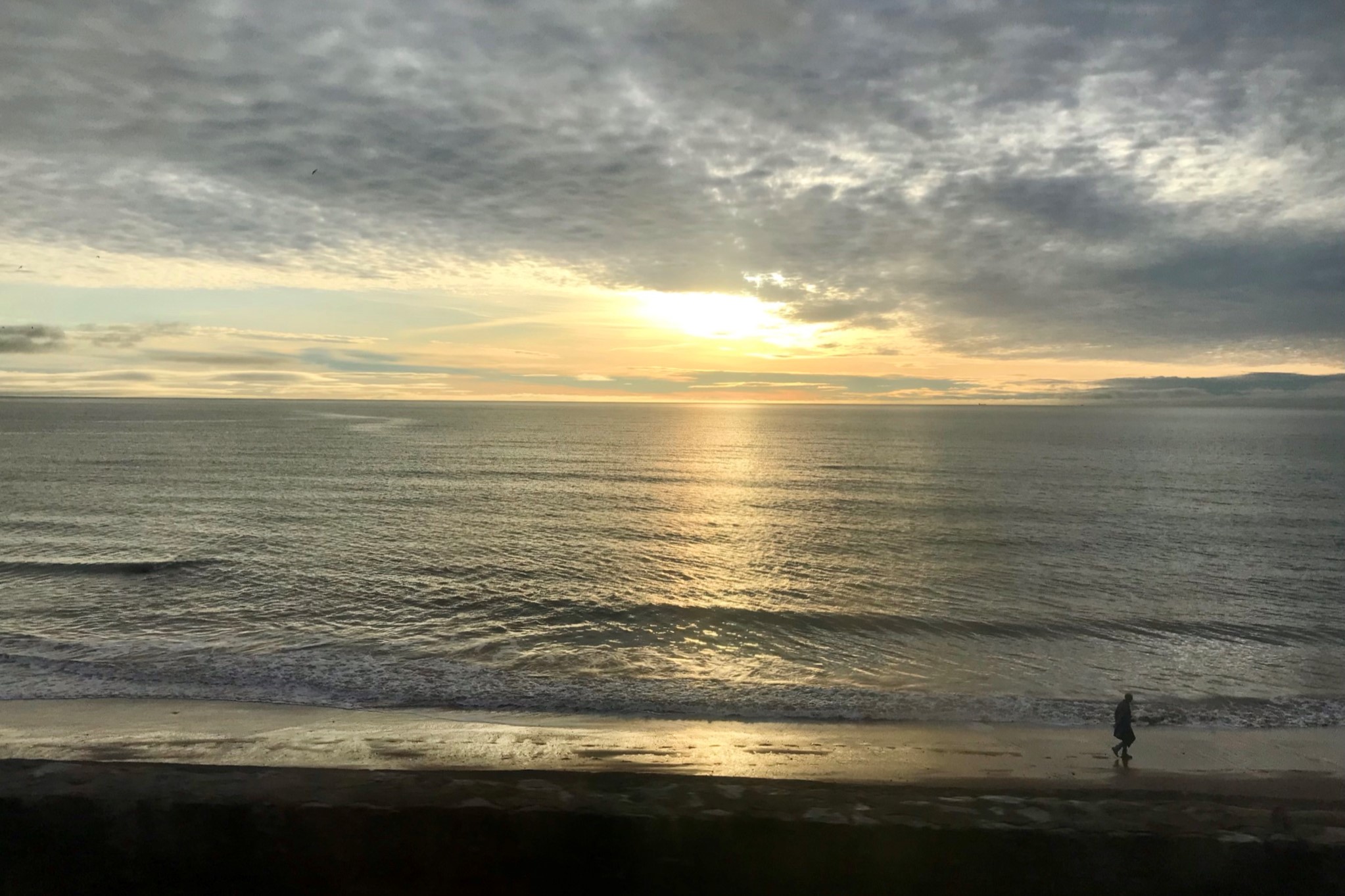
Eschewing my reserved seat for a quieter clump further down the carriage, it was a peaceful journey twisting through the ambrosia of South Devon. Along the Teign the low winter sun inched into the sky and flickered golden upon the caps of gentle waves as we wound towards Dawlish. A silhouette upon the beach swiftly passed by and I felt a yearning to swap places.
At Exeter a breath of fresh air before trundling on through a litany of country villages and towns straight out of Wessex – Whimple, Sherborne, Templecombe, Tisbury, and then finally Salisbury. For a meeting with Dad, a bakery and – yes – a PCR test.
At £99 (AU$200) I was expecting a gold plated swab and free lollipop, not a tiny pharmacy offering a ten second poke up the nose. Oh well, hopefully it will get me on a plane to Australia within the mandatory 72 hours. Hopefully.
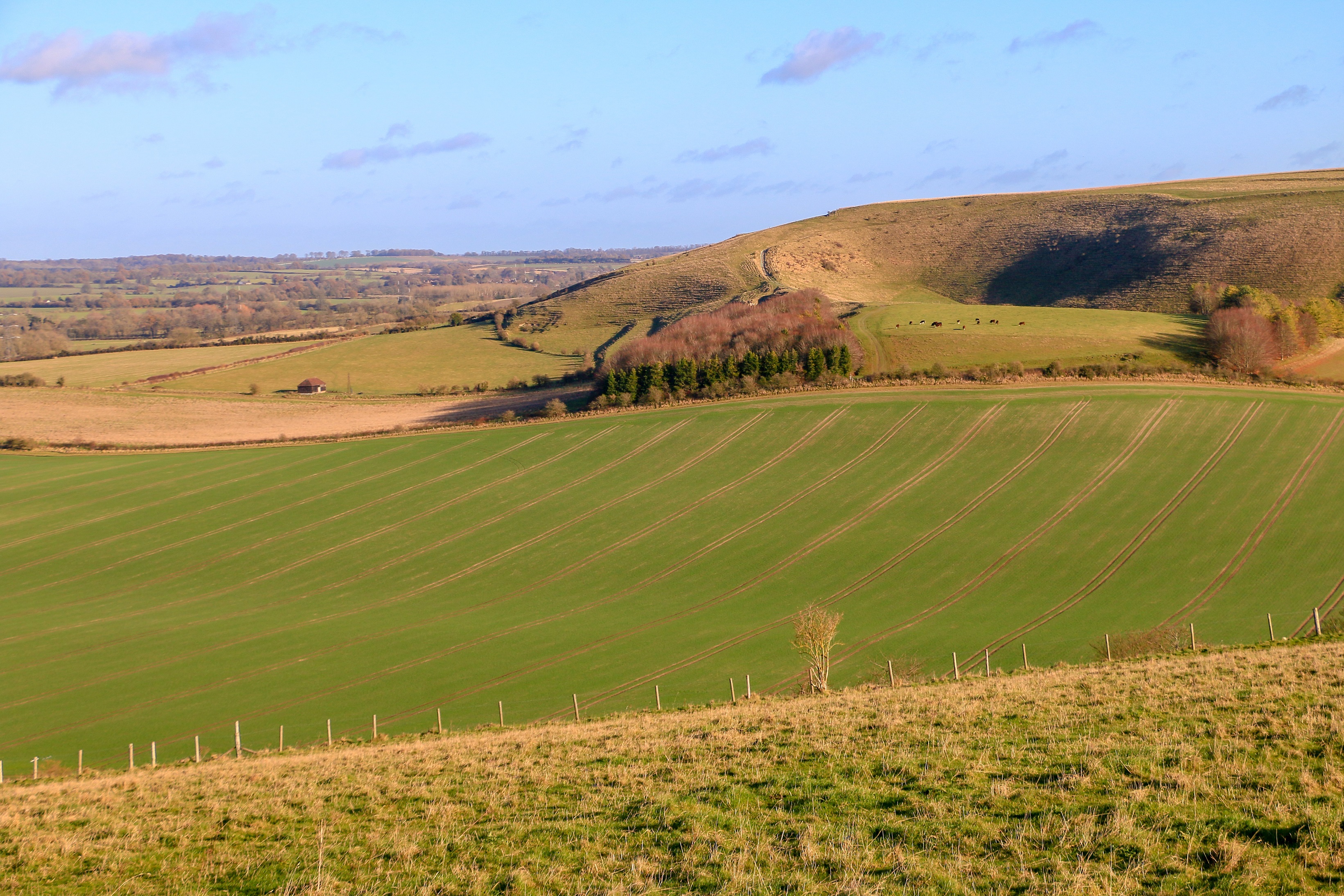
I stayed with Dad and Sonia for a couple of days, happily partaking in Tartiflette traditions and Saturday night quiz shows. The main activity was a delightful Wiltshire walk around the Vale of Pewsey, that ultimate pre-departure injection of countryside England, of green and pleasant, of great outdoors. Of surprising blue skies masking a chill winter wind.
Much of the route took us along the top of a characteristic chalk down, plunging curvaceously into rich, bounteous farming country. Beyond far-reaching vistas over loveliness, memorable features included a white horse, old burial mounds, brambles, crawling through gaps in a fence and slipping in cow-trodden mud. Oh and did I mention the Belgian Bun? Should’ve brought a flask though.
Despite blue skies, winter finally touched me with its bone-chilling menace. This occurred right about the time Dad lost a lens hood. Buffeted by the arctic, layered up with everything I had, unable to feel my nose. What the bloody hell am I doing? My mind switching to Australia.
It is quite feasible that some people in Pewsey felt that I should have stayed put in Australia. I dunno, spending my Dad’s money in their out-of-the-way town on instant hot chocolate. And while I can appreciate perspectives on non-existent pandemic control at the borders, I couldn’t help but feel this was borne from a place of zero foreigners whatsoever. Perhaps, Little Britain style, a deluge of vomit ensued after my revelation that I was over here from Australia.
Not that anyone appeared to be really minding a pandemic the next day at Honeystreet Mill. Full tables feasting on bacon and eggs and sausages and beans and mushrooms and toast, emanating vapours with every loud voice and legume fart. I had come here with cake in mind, but it was hard to look past English bacon and sausages and HP sauce one last time. And besides, they do take away.
And so, packing cake, the journey continues onto that great city of London, steeped in drenching drizzle. It was a scaled-back visit in keeping with the times: one night only in a Paddington hotel, enabling an early start to the airport the next day. The hotel was everything you would expect of a Paddington terrace: behind the elegant façade, a labyrinthine warren of creaking floors and random stairs and polite notices. Washing muddy shoes in the shower wasn’t one of them.
For the remains of the day I endeavoured to make two brief encounters. This necessitated an adventure ride on the Underground to get to North London. From Edgware Road I hopped on the Circle Line which in my experience has always been a voyage that never seems to go anywhere in a hurry. On the plus side – I reasoned – it’s a subterranean affair, with opportunities for fresh air to mingle as you wait for no good reason at Baker Street. Occupying time, mask-counting is the new Metro-reading, and I would say an average of six and a half out of ten managed to comply on the Circle Line.
From Kings Cross I hopped onto the deeper, murkier Northern Line once more. Here I positioned myself by the windows at the end of a carriage to allow that sooty centuries-old air to take on my twin mask protection. I guess there are probably traces of the Spanish flu down here, along with Churchill’s cigar smoke and aromas from a Wimpy burger.
Maybe I just got lucky, but it was quiet, with mask-wearing approaching nine out of ten heading to those affluent, sensible suburbs of the north. The emerging light after Highgate never fails to bring relief, despite having done this trip hundreds upon hundreds of times in the past. And soon, at East Finchley, I hopped off into the late afternoon air.
The skies had brightened a little, prior to their disappearance into night. Cognisant of being on an aeroplane for days, I was keen to walk and talk with Caroline, aided by the thoughtful and cherished gift of some M&S chocolate biscuits. Through Cherry Tree Wood I remarked how I vaguely remembered walking this way once to Muswell Hill and lo and behold after not having a clue where we were heading we ended up in Muswell Hill. From there it wouldn’t have been so far to the Ally Pally but the drizzle set in once again and the pub sounded a better prospect.
Despite all the ridiculous nonsense spouted about freedom days and the sanctity of pubs from our self-styled post-war yearning libertarian warriors I rather enjoyed my two pints in the pub with an old friend. It just felt, well, normal. Like old days, like old lives. Yes we had our masks at the ready and sat far from the smattering of patrons, but it was almost as if a pandemic didn’t exist. Despite talking for 80% of the time about the bloody pandemic. I guess the alcohol maybe went to my head, but I remember that hour with much fondness.
I also remember dinner with much fondness, again propped up by a glass or two of wine and the company of more old friends. It was all too brief with Melita and Geoff and Orla and how I yearned to just linger and crash on the sofa and get up the next morning to walk to Victoria Park or up to North Finchley Sainsbury’s for hummus, edamame and more wine. The hope is for this sometime in 2022…
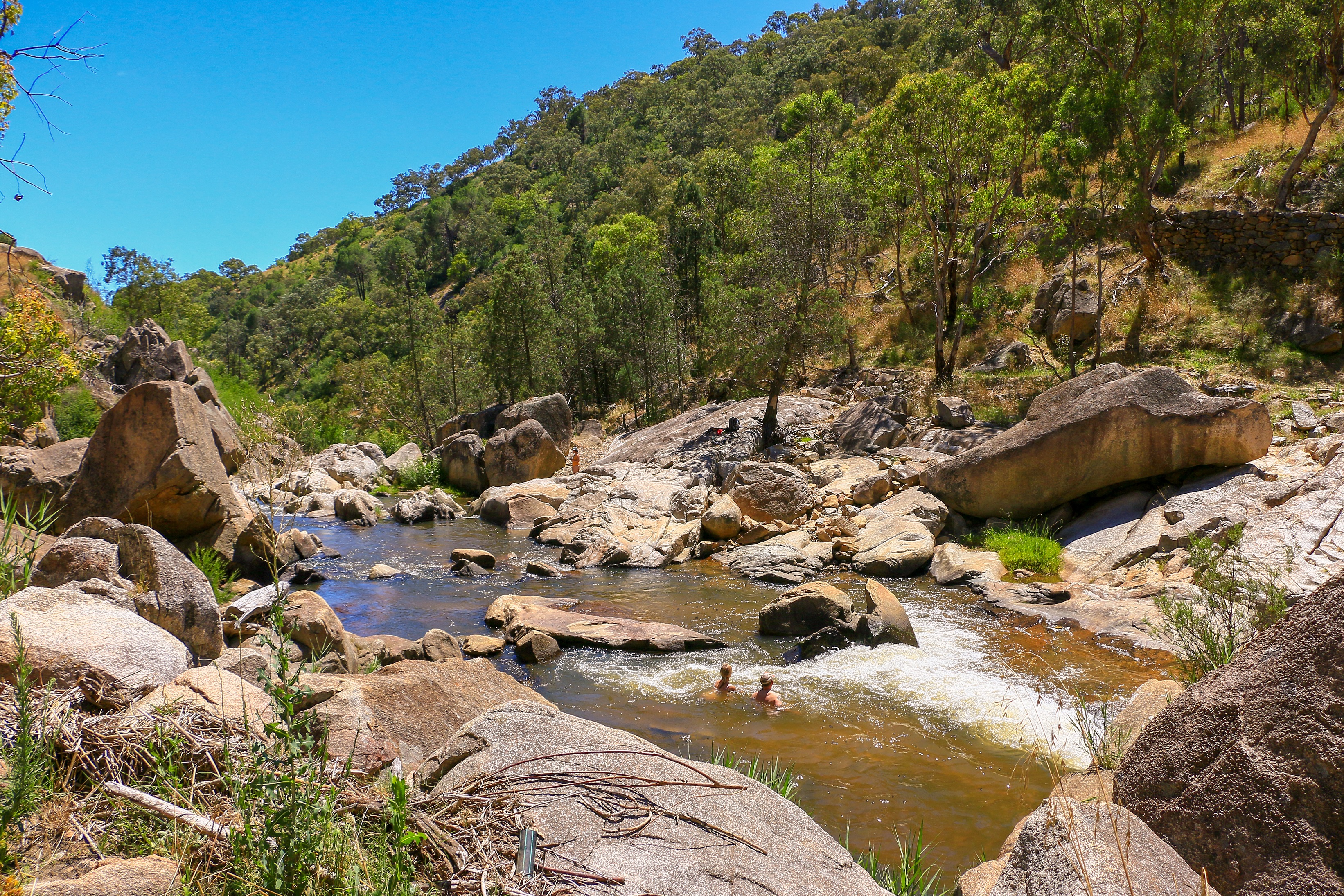
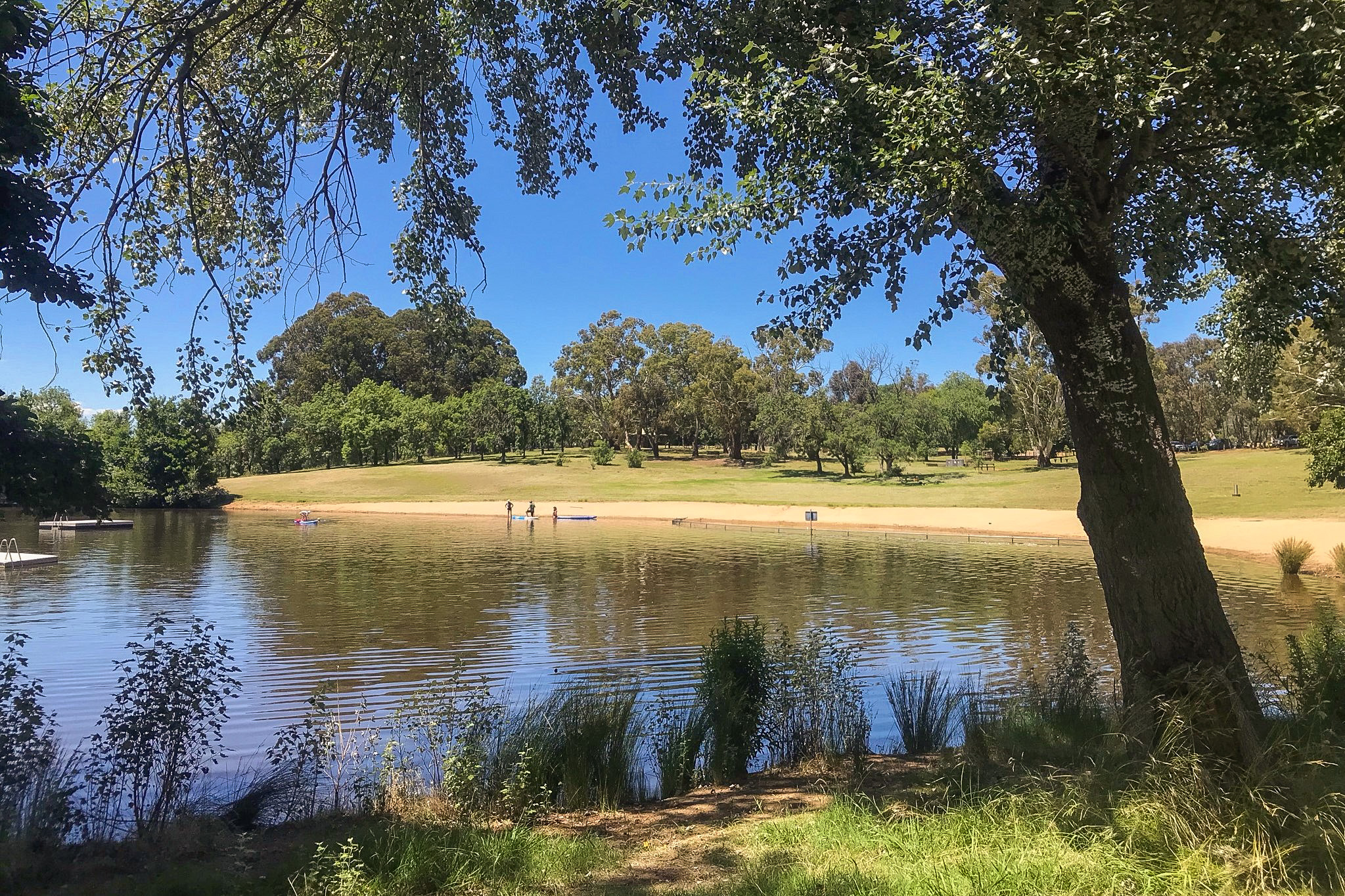
The final day of 2021 finds me sat writing this under a shady tree beside a lakeside bay in Canberra, Australia. A few families are scattered upon what counts for a beach, while a fluoro-white cockatoo shrieks from somewhere within a tall eucalyptus. Nursing me along, I managed to find one of the few coffee shops open – an Omicron lover’s dream – to pick up a takeaway. Accompanying shortbread comes courtesy of M&S at Terminal 3 of Heathrow. I had a lot of time at Terminal 3.
But I made it. After a PCR test, a cancelled flight, an airport hotel with buffet food, early coach pick-ups with whinging people, a nonstop coughing, nose-blowing man, Darwin, Sydney, driving down the highway to Canberra, three days of home quarantine followed by another bonus four, two more PCR tests and about six lateral flows. Horrible jet lag and a tired achy feeling that just wants to linger. Delights at being back and some disappointments. It was worth it all.
For the duration of my flight I was sat next to a well-masked older lady who was off to Sydney to see her son, his partner, and their son. A boy born under the shadow of COVID-19. This was her third attempt and I shouldn’t have been surprised at the obscenities flowing from her mouth at the first aborted take off. She just wanted to see her grandson for the very first time.
For ourselves and for others. This is why we do it and would do it all again. All the time holding on to the hope in our hearts that some sequels are better than the original.
Is December 25 any more than an arbitrary date? That one day where it was decided the shops would be shut and we should horde food as if the end of the world was nigh (possibly true). That one day when we all pretend to love Brussels sprouts and Christmas pudding. That one day when instead of miserable news on the radio in the morning, there is earnest preaching and high-pitched singing about miraculous events from afar. That one day when we are supposed to gather with loved ones. That one day to share things before the next lockdown.
I will happily oblige in the festivity and jolliness of December 25 and even tolerate a few Brussels sprouts as long as there is enough gravy to mask their evil. I shall do so again this year, perhaps taking in a prawn or two and a glass of chilled wine as I sweat profusely under a thirty degree sun. It should be pleasant enough, but in reality I feel like I have had my Christmas Day in 2021 already.
To be frank, by time it reaches November 28 in the UK it feels like you should all bloody well have had your Christmas Day by now! For weeks beforehand, the same five Christmas songs have been playing ad infinitum on Heart. Soft toy carrots have been flying out the doors of Aldi. Christmas lights from Poundland sparkle and shimmer outside every three or four houses as you drive down the street. Shopping is madness and the insanity of retail staff bombarded by Christmas music is plain to see.
Besides, the Christmas Day of November 28 2021 was one of the most magical in years. It was a day that dawned crisp and clear in the little town of Plymouth. All was calm. All was bright. While magical mother elves stayed at home to prepare a feast, I set off across the rolling green fields of South Devon. Follow the car. It stopped initially in some free parking alongside the river in Dartmouth. For a coffee before getting going, out onto the infinite gift that is the South West Coast Path.
It is here that I need to bring in a fictional character who wears bright clothes, often bellows with much jollity and possibly keeps a list of good and naughty children in a little red book. Naturally, I always thought of Michael Portillo as a bit of a posh tory twerp. But in his reinvention as doyen of trains and intrepid traveller who displays surprising warmth and rapport with the people he comes across, he is – well – incredibly likeable.
During the latter half of the year in Australia a show came on which was – for me at least – dream lockdown viewing (naturally it was on SBS). Michael Portillo going on a walk along the South West Coast Path. It was a bit of a departure from train japes Michael. A COVID-era Michael, who was wistful and introspective and possessing of fewer lime green jackets. It was simply a guy going for a walk along the most beautiful path in the world. On my country.
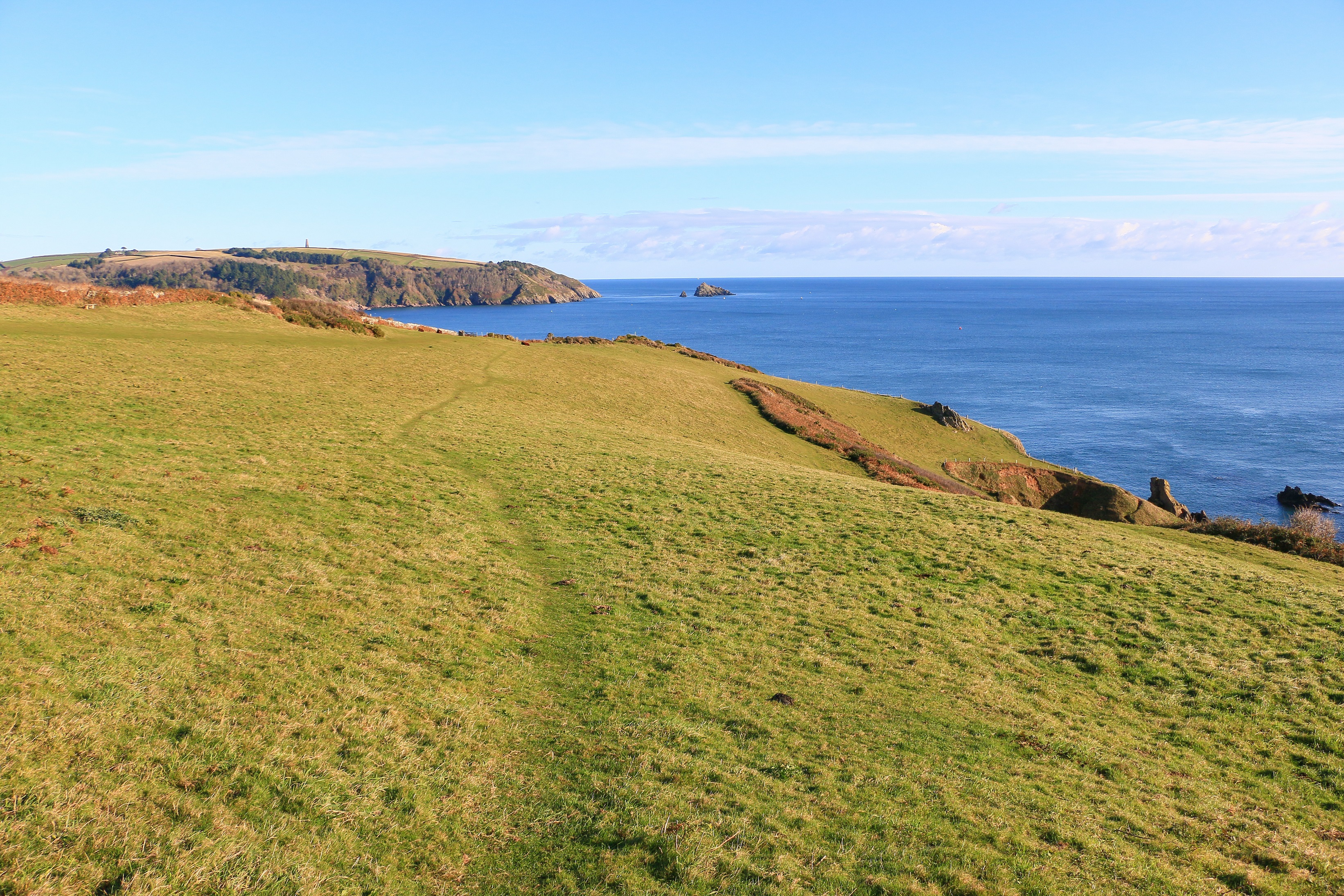
I remember an episode that commenced at Start Point and finished on the edge of Dartmouth, and the scenes on my walk today followed a small part of the same route. I set off from a car park at a spot called Little Dartmouth, quickly connecting to the coast path. There was an unmatched tranquillity about today, from the placid blue of the sea to the gentle undulations of the fields. Occasional sail boats emerged out of the Dart. Cows grazed contentedly. Robins flitted and chirped unseen among the browned hedges and trees.
After a delectable snack on a delectable bench overlooking serenity, the path soon led to Michael’s massive pole – a signpost at a junction ensuring everyone is kept on track. Only weirdoes like me would give this a second glance, but the signpost boasts a unique feature – installed by M.P. 2021. In locked down Canberra, taking comfort sharing in Michael’s frequent torment (somehow, a pleasant walk on a gorgeous coast path is way outside of his Kensington & Chelsea comfort zone), I thought there would be something fitting about making the pilgrimage to this spot. In many ways, it was still unbelievable that I could be here, just a few weeks on.
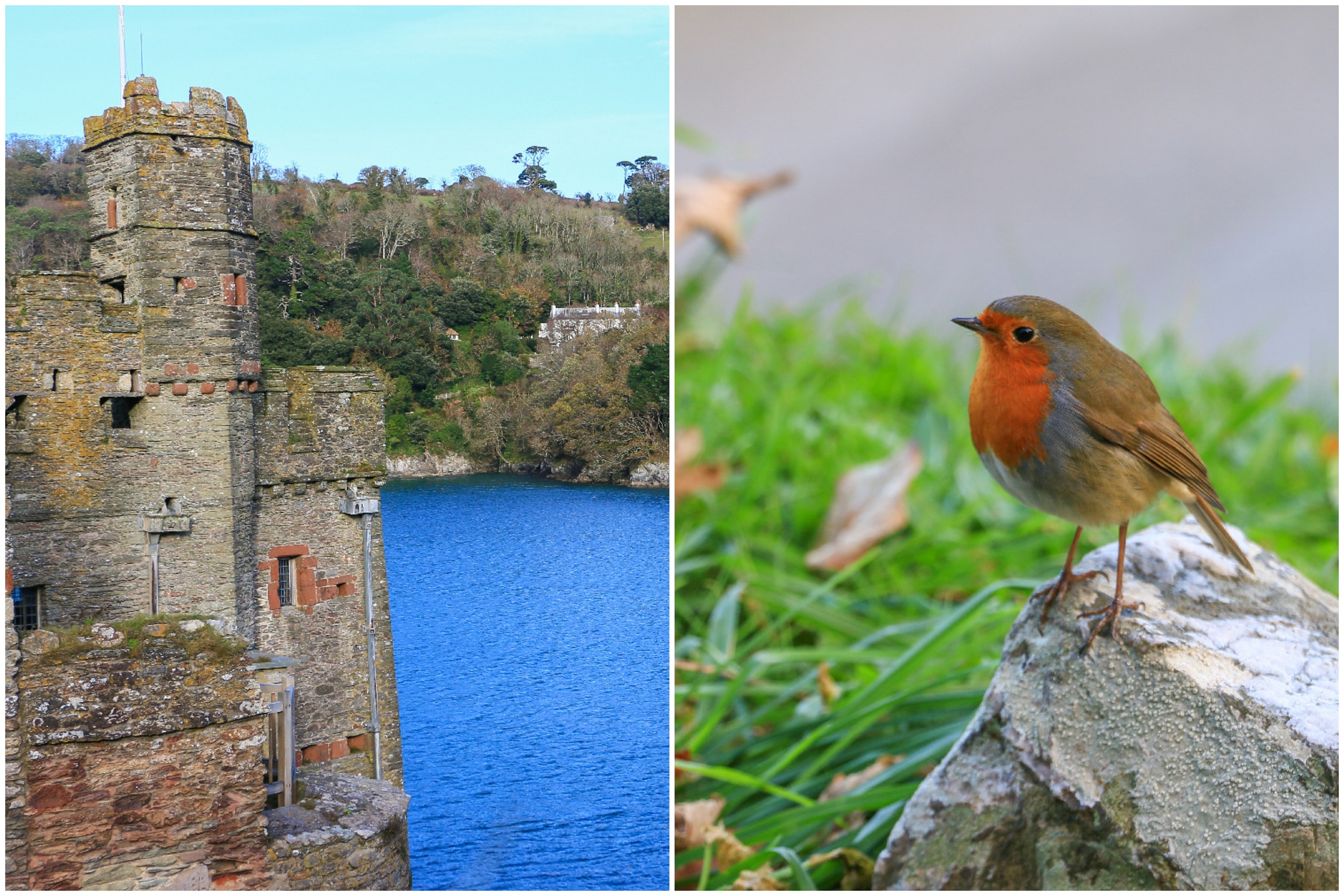
Anyway, no camera crews and gold-plated chauffeur driven cars for me, I must trudge on. Before long the path turns from the sea and follows the Dart estuary. Here, the other main motive for my walk today emerges – Dartmouth Castle and, more specifically, the presence of a café. I opt for the safety of a cup of tea and pick up some form of caramel and chocolate and biscuit. Many others are doing the same, sat outside overlooking the river from a generous array of benches. Attracted by my crumbs, a robin comes to offer company. And I am reminded how I shouldn’t eat too much and ruin my dinner.
Luckily, there is a fair chance to walk off some of the food with a steep climb up to Gallants Bower, an old hill fort offering lofty views back towards Dartmouth and, of course, out to sea. With this effort and the still sparkling afternoon sunshine I am actually starting to feel quite warm. For what I believe was the only time outdoors on this trip, I peel down to just a jumper.
I should get a move on for a date with another jumper though. Whenever the last time I was here during Christmas (maybe 2015?), I was lovingly gifted a Christmas jumper. It’s not the kind of thing that suits Australia and so it has sat gathering that musty smell in a drawer in a small room in Plymouth. In many ways I am surprised it is getting more than the one use, thankful that it is allowing me to fit in with the other elves who assemble for our Christmas dinner.
Roast pork and potatoes and parsnips. Veggies and stuffing and gravy. Pigs in blankets with crappy crackers and paper hats. That warm, rosy feeling of bodies crammed in a small space accompanying wine and noise and condensation on the windows. The lights, the very many sparkling lights. Secret Santa presents adding to the complexities of fitting everything in a suitcase. Funny quizzes and roaring, unstoppable, contagious laughter. Comfort and joy and belonging, providing culmination to a Most Perfect day which has been so long, too long, in coming. The gift of family and home. Merry November 28.
I doubt I could have arranged things any more perfectly for my long-awaited return to the coast of North Cornwall. Brilliant blue skies with barely a breath of wind. Quiet roads and quiet towns. Views to Lundy and North Devon and down the coast to Trevose. Coffee and walnut cake under the sun.
I’d like to say I stopped at Boscastle Farm Shop because my Mum and sister were on board and they needed a wee and some retail action but of course this was entirely a brilliant idea of my own making. Something to celebrate being together and seeing that rich blue line of the Atlantic stretching into infinity. Something to pay homage to the fruits of this most beautiful county of verdant green pasture and rugged, wild coast. A fillip to start the day off with a bang and another six million calories.
Boscastle. That place you come back to time and again just because. I would have done so without the delights of a farm shop café open on a weekday in November, but I also had a little extra motivation: Calendar Quest 2022, a frenetic mission to try to include a few shots that are not Australia in my annual make-Christmas-gift-giving-relatively-easy creation. Today, the challenge might be which one to pick.
An early Christmas gift offered inspiration to go just that little further, rising high above the crumpled S of the harbour as it makes its way to the ocean. I find it quite inexplicable that I had never risen to Penally Hill before, but every step was a moment. Perhaps a moment to capture in a calendar but we shall just have to wait and see.
In continuing happy vibes, the coast path from here is relatively flat, all the way along to Boscastle Farm Shop, where you could quite easily nip in for a cheeky slice of cake even though you had already done so. I didn’t, but next time.
As night follows day and cream follows jam, the next stop on this splendid day was inevitably Tintagel. An absolute ghost town, possibly haunted by Merlin’s beard. I have never seen the main strip so lifeless; so quiet I was able to drive to the very end, pull into a driveway outside Pengenna, and pick up a steak and Stilton pasty and a few cheese straws.
Last time I came to Tintagel there was the rude shock of finding out that Granny Wobbly’s Fudge Pantry had been taken over by some young punks from not round this way who had done some market research to tell them that people preferred fudge that was non-crumbly and bore an uncanny resemblance to something mass produced a long way away. Kind of like how people prefer a sausage roll from Greggs over something homemade from an independent bakery (oh, St. Agnes, next time…). Anyway, such was the speed at being able to get through Tintagel I didn’t even see if Grandkid Wankstain iFudge Laboratory was in business.
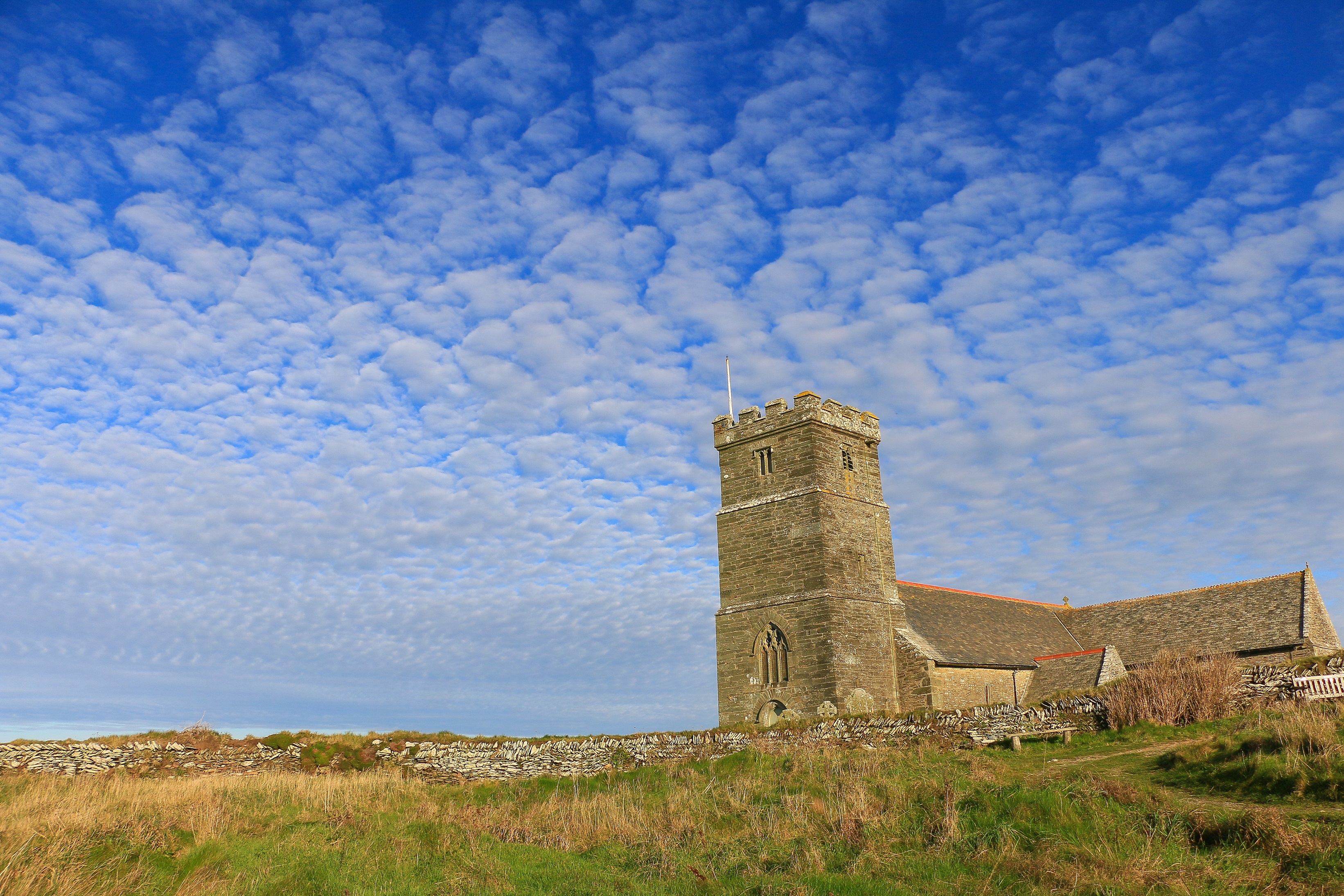
On that same visit I also discovered that it’s largely best to skip the high street of Tintagel altogether and head down from the town and up again with a ninety degree turn on a lane barely wide enough for your vehicle to park near St. Materiana’s Church. Perfect picnic vantages, and you can walk gently down towards Tintagel Castle without the prospect of a heart-busting climb back.
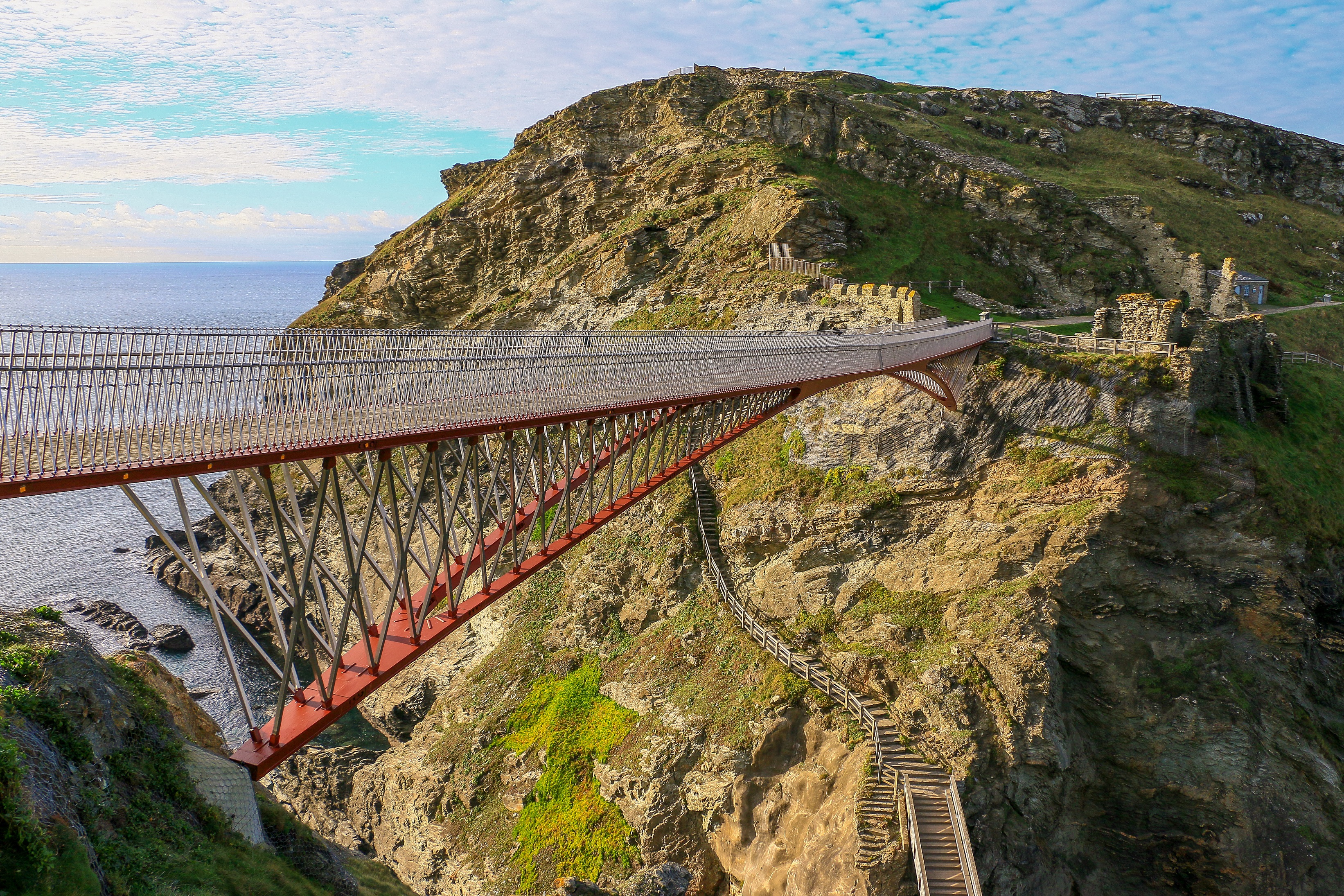
As timeless as it is, I sensed something different about this view. Oh, yeah, a great big brand spanking new shiny bridge connecting mainland Cornwall with the island. It’s the kind of place some ex-politician might visit as he walks the coast path for TV, grumbling about steps and characteristically enquiring about the use of some local slate during the first world war. It is undoubtedly a bridge made for TV and I rather like it.
As ex-politician muses on the mythical and spiritual energy of Tintagel island, he retreats for a final shot with a pint in hand at Trebarwith Strand. It’s a scene easy to enjoy, thanks to the enviable location of the Port William Inn. This time around I opt for an awful coffee, but I have my fudge stash (not from Tintagel) to make things better. The coast remains calm, the sky filling with high cloud, while the sun shifts lower towards the ocean. And you wonder if there is any better place in the world.
——————————-
A lot happened between that first visit to North Cornwall and the last. Storm Arwen. Omicron. Masks intermittently became a thing for some people again. Christmas parties at Number Ten. Depleted fudge stashes.
Returning in December, what was previously idyllic turned to something more irritating. Treats yearned for were closed. Parking and toilets were complicated and costly. Seagulls possessed added rage. And the weather was far more lousy, with frequent, heavy showers blowing in from the sea. However, amongst all this gloom there were just enough bright spots emerging precisely at the right moment to make everything seem absolutely wonderful again. This seems to me a very British condition, and not just in relation to the weather.
It was my last day in the South West before commencing the elongated journey back to Australia. In spite of several previous encounters, I had in mind a final cream tea though the allure of tasty jacket potatoes was also weighing on my mind. Maybe it was a day for both?
But first, another crappy coffee at Trevone Bay. Brought to you in association with a 50p toilet visit and a £60 parking fine. Complemented by a squally shower and chill wind. Footsteps upon the fine sandy cove cannot quite compensate, particularly when they sink into oozing outposts of the ocean.
Disappointment was threatening to turn into despair arriving at Carnewas. THE CAFE WAS CLOSED! Making things worse, staff were clearly present but busily affixing bunting and decking halls in preparation for Christmas shindigs. They should have been baking scones and potatoes, just for me. Didn’t they know how far I had come for this?
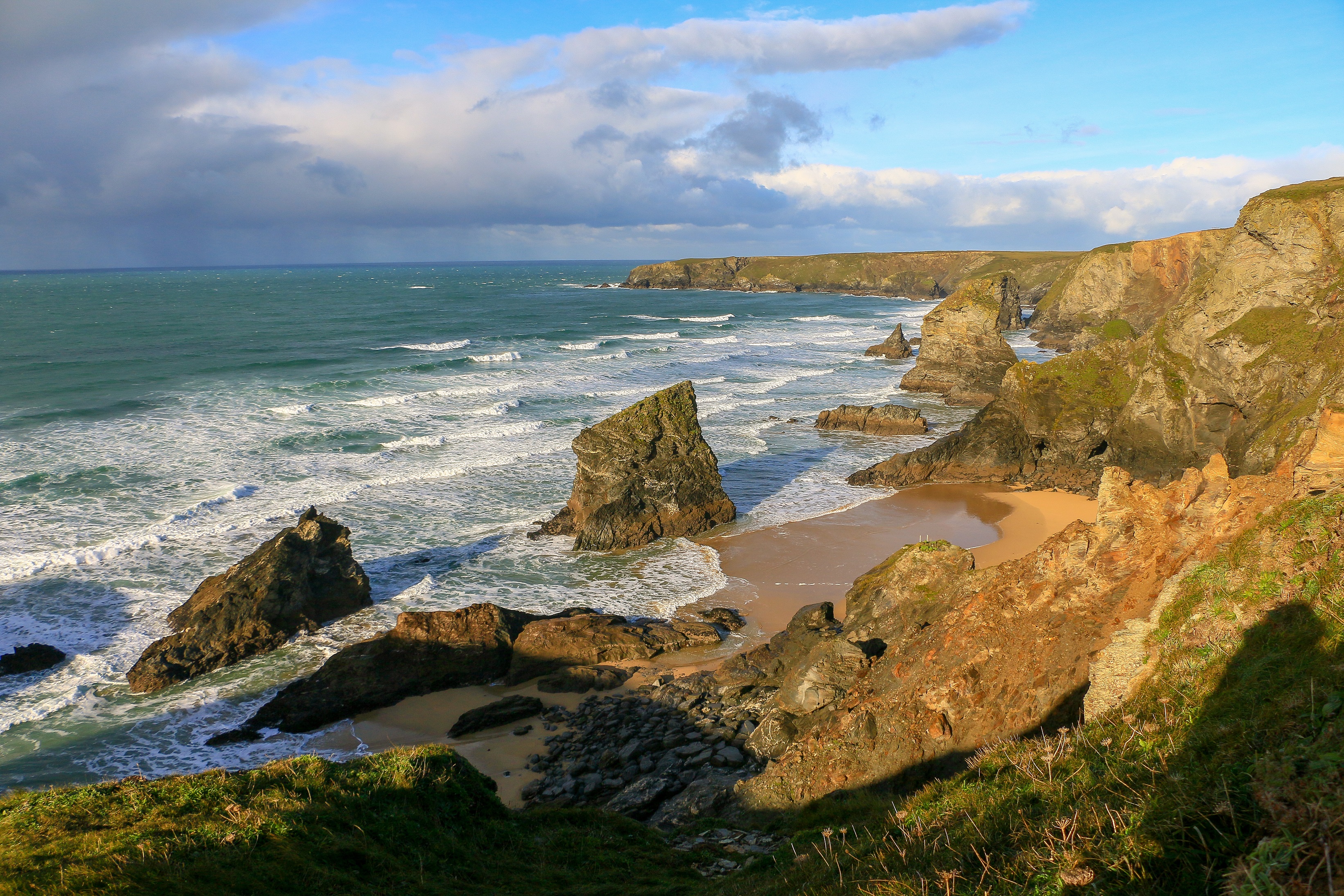
Mercifully the staggering coastline centred around Bedruthan Steps offered both comfort and awe. It usually does. A cloud front passed quickly overhead to reveal a strip of blue, illuminating the unstoppable lines of the ocean pulsating upwards into the receding beach and crashing upon the feet of mighty monoliths. The slightly frenzied sound of the surf funnelled up the high cliffs, out of sync with the sights below, as if in some badly dubbed episode of El Poldarko. Over towards Padstow, a rainbow glowed, set against a threatening sky heading our way. It was brief enlightenment.
Devoid of longed-for lunch, we retreated to Padstow to find something. Relative to many other towns on this trip it was positively buzzing, though not crazy enough to make parking down by the harbour a challenge. Among the odd restaurant inflated with a 25% Padstein premium, we counted at least four pasty shops. Kind of ridiculous really. With little other choice and not a great deal of enthusiasm, we opted for the best looking one.
Mum’s phone blared away somewhere in the depths of her bag. Distracted, the local seagull population espied an opportunity. A close call were it not for my wild screaming. By now, they sensed a kill and stalked us all the way back to the car. And so most of our time in Padstow was spent eating reasonable pasties in a silver Suzuki while webbed feet pounded the roof. A long way from the dream lunch I envisioned.
Not to be disheartened I knew of a potential ace up my sleeve. Or at least a Queen of Hearts. Midway between here and home there is a café actually open at Cardinham Woods, selling a decent scone with decent jam and indecent cream. Just the way I like it. Tomorrow I would be travelling to Wiltshire. Then onto London. Then, god-willing, Australia. I can only really properly farewell Cornwall – come rain or shine – in the most appropriate way. Handsome.
In November 2021 I never expected I would be drier in southwest England than I would have been remaining in southeast Australia. And while it was certainly far short of wall-to-wall sunshine, most days provided conditions suitable enough for forays outdoors. Prepare for downpours, gales, and mud and most of the time expectations will be surpassed.
The more challenging aspect of the season was getting used to the rapidly shrinking presence of daylight and then – once any sun had disappeared – bracing for six hours or so to occupy yourself before bed. Often in life I will take a walk towards the end of day but here the prospect of outdoors before or after dinner is so unappealing that you find yourself more comforted by watching The Chase with Bradley Walsh. That’s not the greatest state of affairs so the best thing to do is make sure you get out at some point into the daylight before it gets cut short. Even if this is just down the road.
Take Wembury, which is essentially Plymouth’s premier beachside suburb. A place you go to retire or fund the National Trust through parking fees. It’s not the most sparkling beach in the world but possesses a raw enough quality to blow away the city cobwebs, with plenty of nooks and crannies and pools and items on a café menu for exploration.
During the Saturday of Storm Arwen, cobwebs were certainly braced to be blown away but there was also surprising shelter to be had in the lee of a gusty nor’wester. Accompanied by Mum and Brooke, conditions were apt for a spot of beachcombing and hide and seek and trying to escape the clutches of Brooke wanting to play yet more hide and seek. Café menu exploration was a little more disappointing, a reduced list of items and takeaway only evocative of a sombre this-is-living-with-COVID-(before-Omicron) air.
————————————
Frolicking on a bright and breezy beach there is a good case to argue that storm force winds are preferable to the old classic enshrouding by drizzle. A Plymothian occurrence so regular that it feels like an innate part of your soul. The kind of day where going into town to pick up a jam donut from Sainsburys and a pack of free test kits seems appealing.
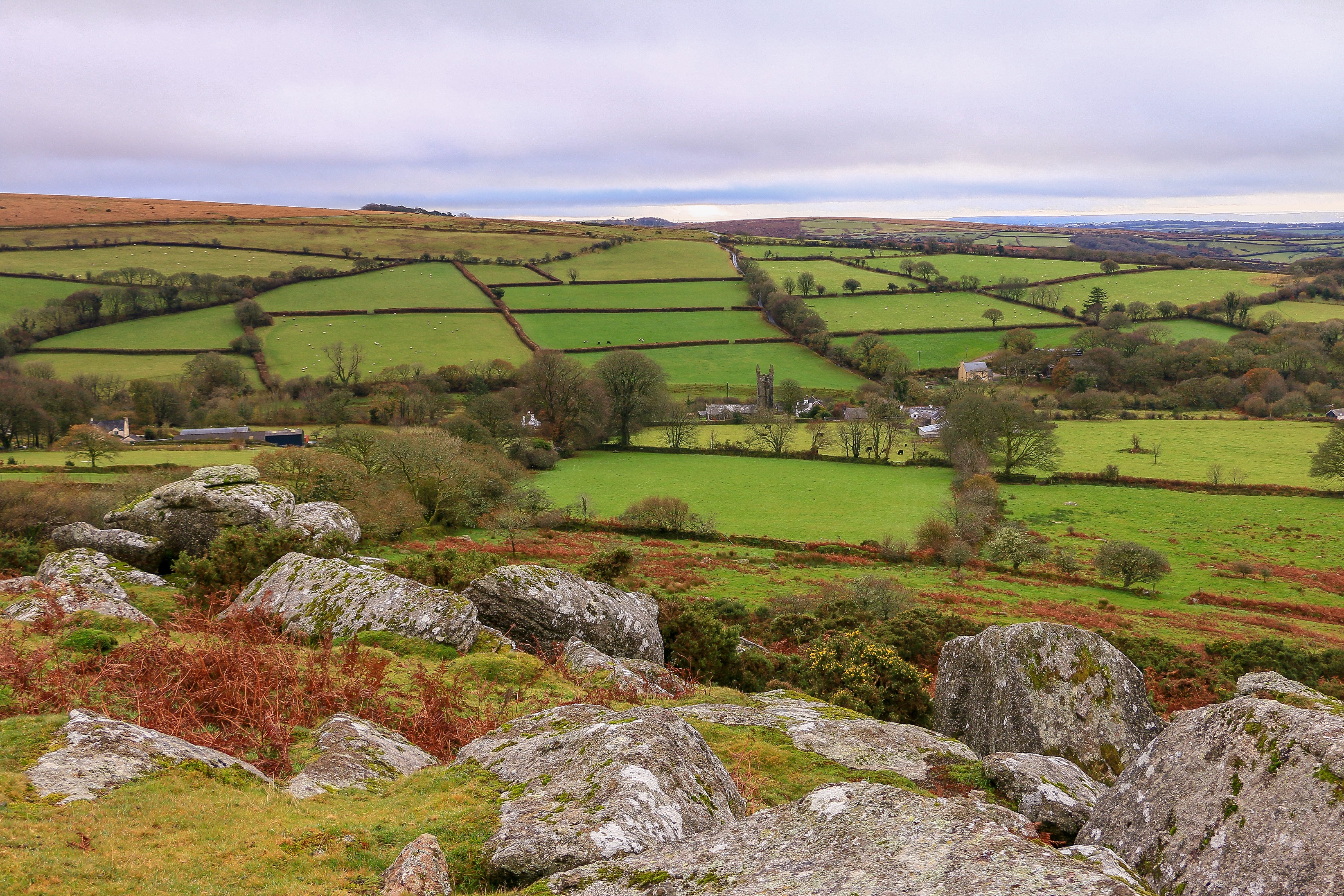
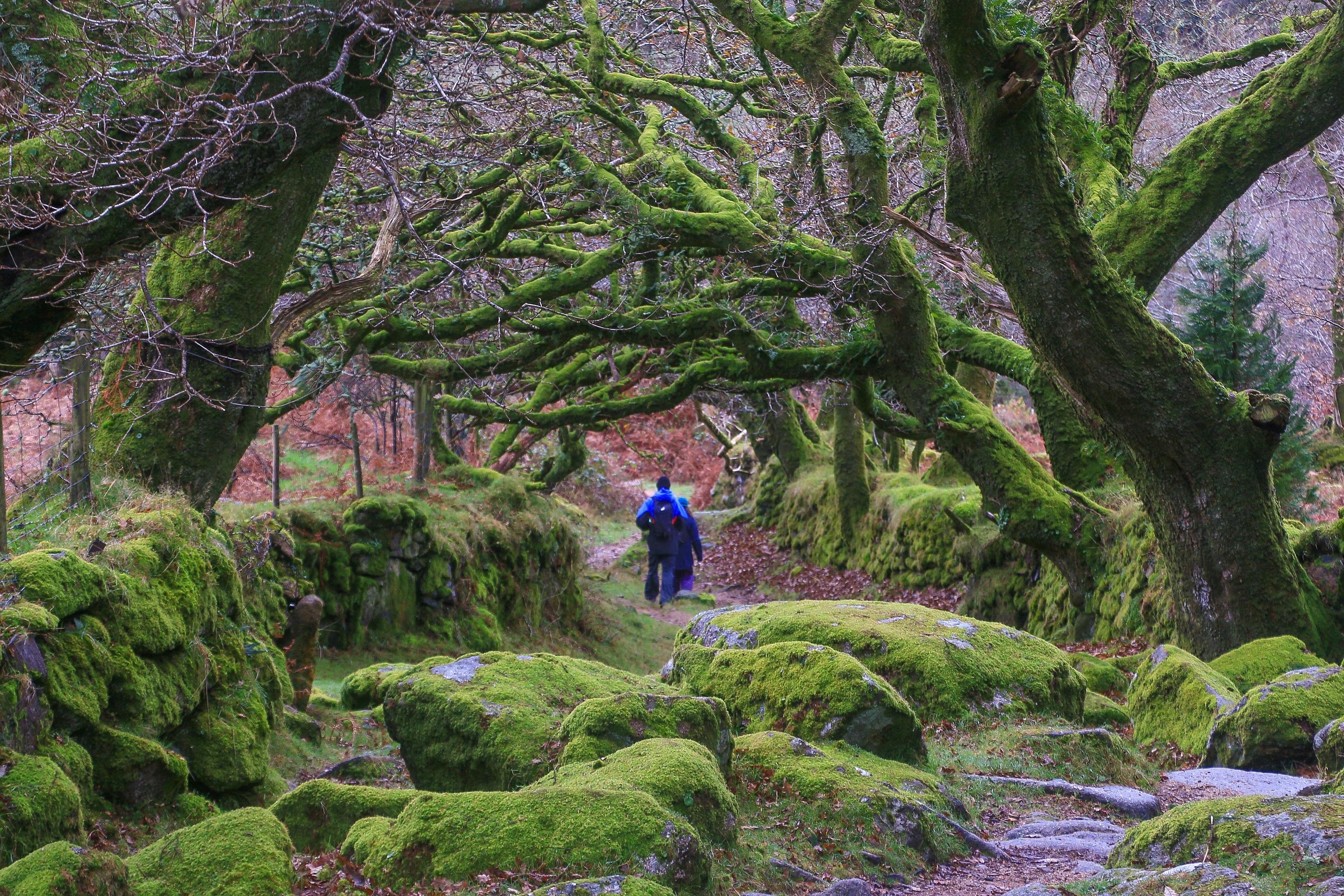
Still, it wasn’t torrential rain and I packed my waterproof in order to escape to the moors afterwards. You can marvel at this landscape for miles around on blue sky days but it feels more at peace with itself when hunkered down in the murk. The trees seep with moisture, their trunks wrapped in bright green moss while their withered roots thrust down into the crevices of a dry stone wall. Smoke rises from the dour, sturdy blocks of a farmhouse, looking out over swathes of browned bracken and the shattered granite piercings of a couple of tors. Crossing the land, lichen sprayed boulders prove a slippery adversary in between the boggy hollows where unkempt sheep stagger around on their spindly legs.
It’s a timeless, peaceful scene, captured not so far from Plymouth around Sheepstor. Sure, the arrival of two armoured troop carriers interrupted things for a time at Burrator, but other than that it was all pretty uneventful.
I love immersing myself in the landscape on a circular walk here, a walk I have revisited at different times of the year. Starting at the dam wall, the route takes in peaceful wooded paths, narrow country lanes, a small hamlet whose cottages cluster around an old church, countryside views, sounds and smells, and the final rocky ascent of Sheepstor. From this vantage, views south to the sea, west over Burrator, the Tamar Valley and Bodmin Moor, and north and east to the rugged, foreboding empty uplands of Dartmoor.
Today, by time I reached Sheepstor the murk had lifted a touch and the world below expanded. That was probably thanks to our old friend the wind, which offered a reminder atop the rocks of the need for more clothing. Forgetting my gloves, I would be pleased to return to the car, to Plymouth, and to a warm living room watching Bradley Everywhere Walsh.
————————————
As the crow flies (in volatile winds), WhitsandBay is but a few miles from downtown Dempourt / Devonport. Literally around the corner yet a place that feels another world away. This sense of exoticism is bolstered when traversing the Tamar aboard the Torpoint Ferry. Nothing like a water crossing to evoke those island vibes.
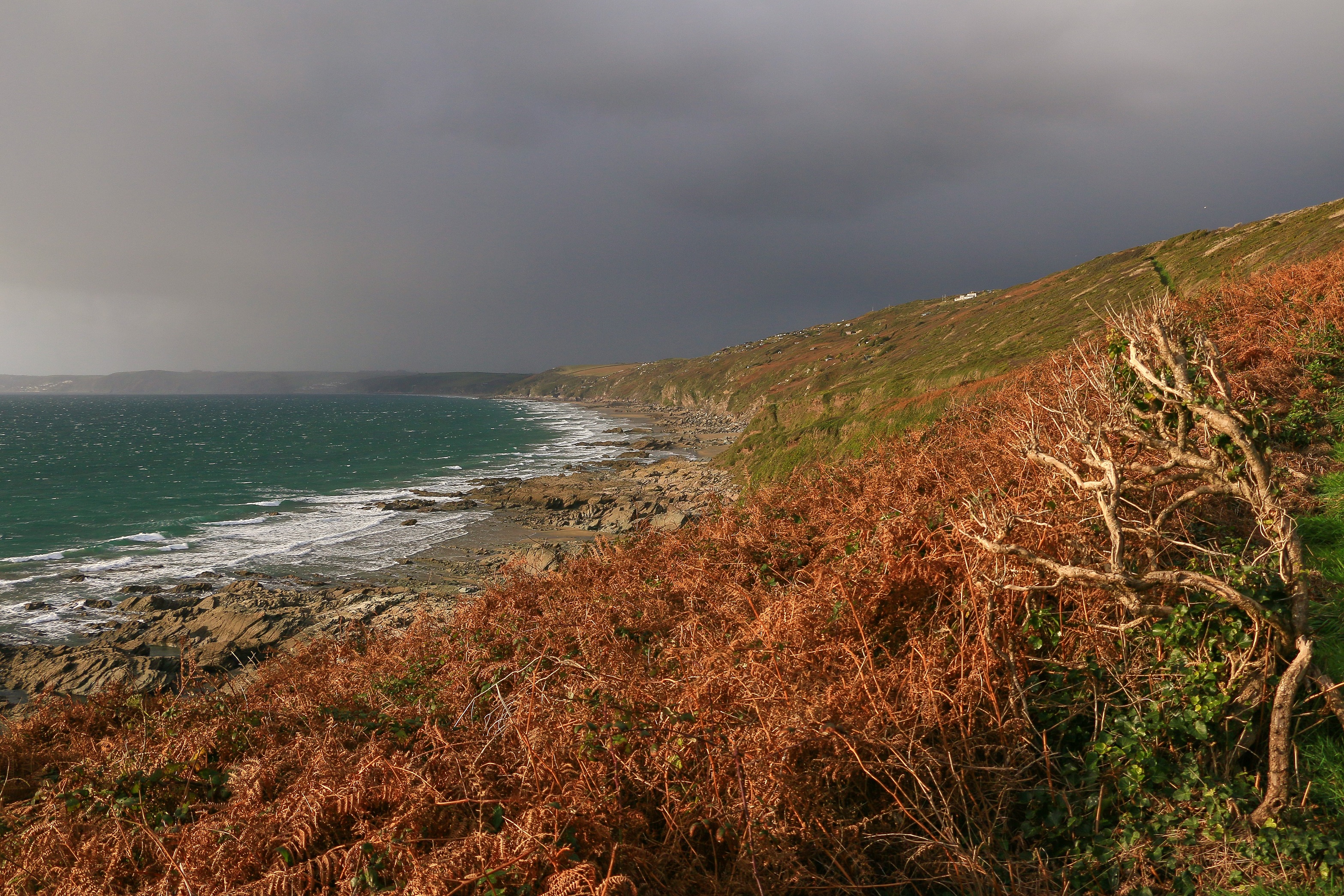
I suppose at the eastern end of the bay, Rame Head is almost an island. Just a narrow neck of land bridging across to a rocky outcrop rising volcano-like above the foaming ocean. A perfect destination to head off for alone as Storm Arwen approaches.
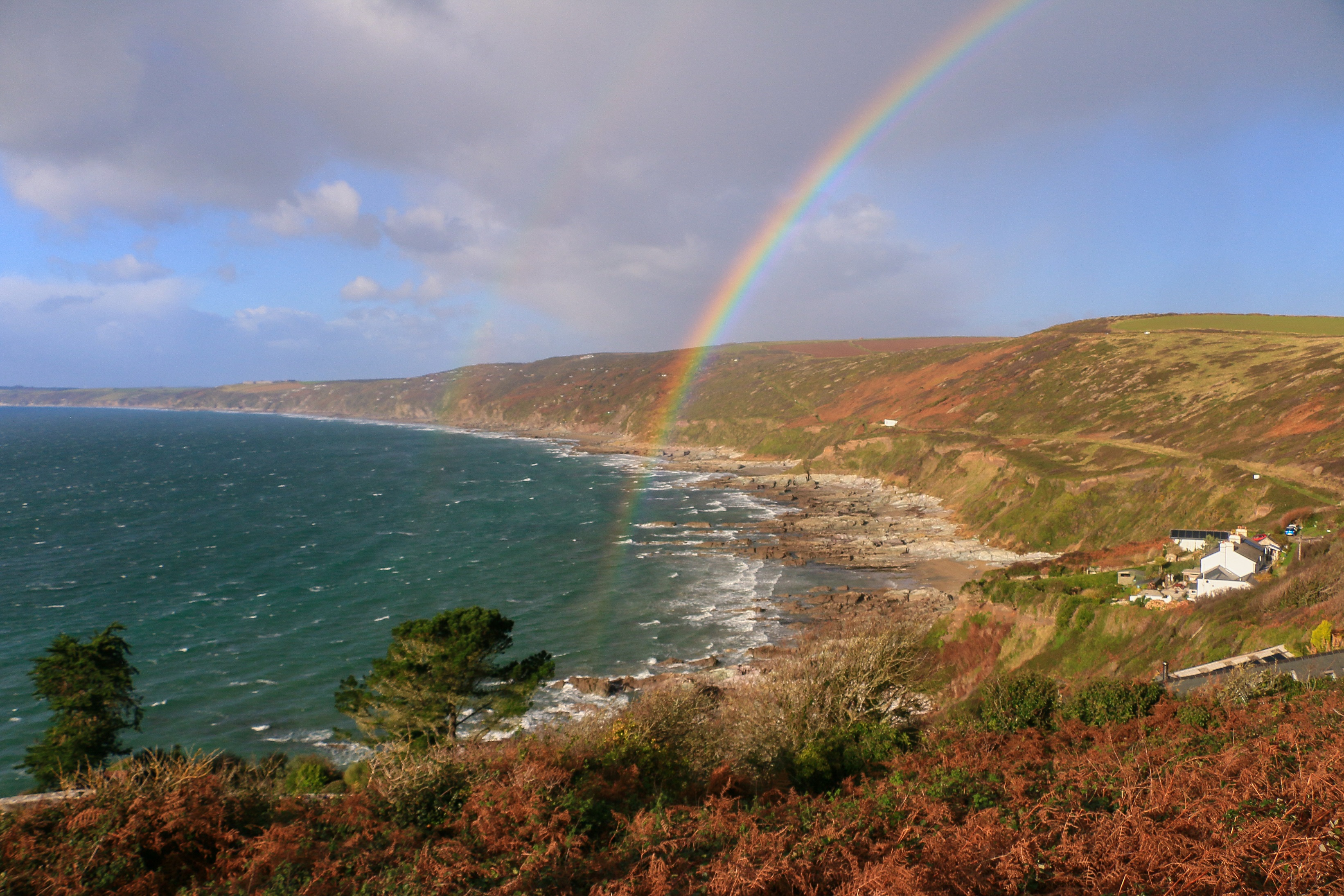
An earlier slip on a steep bank of mud boded well, and that was before a blustery shower deposited further grease along the South West Coast Path. If there was an upside, it was the presentation of drama and wildness and awe captured underneath a rainbow. The pot of gold being this is just around the corner from a large city, remember.
Other than that shower, I somehow managed to stay dry. And upright. The crossing to Rame Head wasn’t quite as scary as I expected; wider, drier, calmer, at least until the lee of the land subsided. The small stone ruin sitting upon Rame Head possessed nooks offering refuge and in other places a full on wind tunnel. Exiting the door proved the biggest challenge to remaining upright.
As I leaned into the wind to return to wider land, further rainbows came and went over delectable countryside and plunging coastline. The small shacks littering the sides of the cliffs flitted rapidly between sun and shade, beaming and fading. One of them somewhere over there might reward me with a cuppa.
Not just a cuppa, but also a scone with jam and cream. An outcome in this part of the world as inevitable as the swell of the sea releasing its force upon the land, or the onset of a good old-fashioned Plymouth drizzle. Or the likelihood that you’ll get back to a cosy indoor sanctuary and find Bradley Bloody Everywhere Walsh on the TV. Get out of town.
A part of me was dreading going into Plymouth City Centre. The goal: obtain cheap greeting cards, find a secret Santa present and see if I can pick up any of those free tests for the covids. Entering Card Factory double-masked felt every bit the gauntlet run, as old dears shuffled slowly through the narrow aisle, perusing every single Christmas card for every single family member. I swiftly picked up a box of impersonal festive cards, another random selection of five for a quid, and – unfortunately in haste – a birthday card for a non-existent sister-in-law. Meanwhile, my secret Santa exceeded the five pound limit, an extra two pounds worth it for the relief of not venturing into multiple stores rubbing up against bare faced contaminants.
The fresh air, ah the fresh air. Unfortunately it is also quite dull air as I reserve such conditions for trips to town, rather than waste good sunshine on Primark and Costa. This means the view from Plymouth Hoe today is rather monotone. The red of Smeaton’s Tower is subdued, while the placid water of the Sound passes a blur of Drake’s Island as it meets a similar shaded horizon.
By time I reach the Barbican, the gloom lifts a little and I feel in the mood for a coffee on the quay. Nearby Boston Tea Party offers potential for something half-decent but ends up with me confronting the prospect of sitting inside for a whole five minutes. It’s something to do with the worthy cause of not using takeaway cups. Never have I drunk an average latte in such rapid a time.
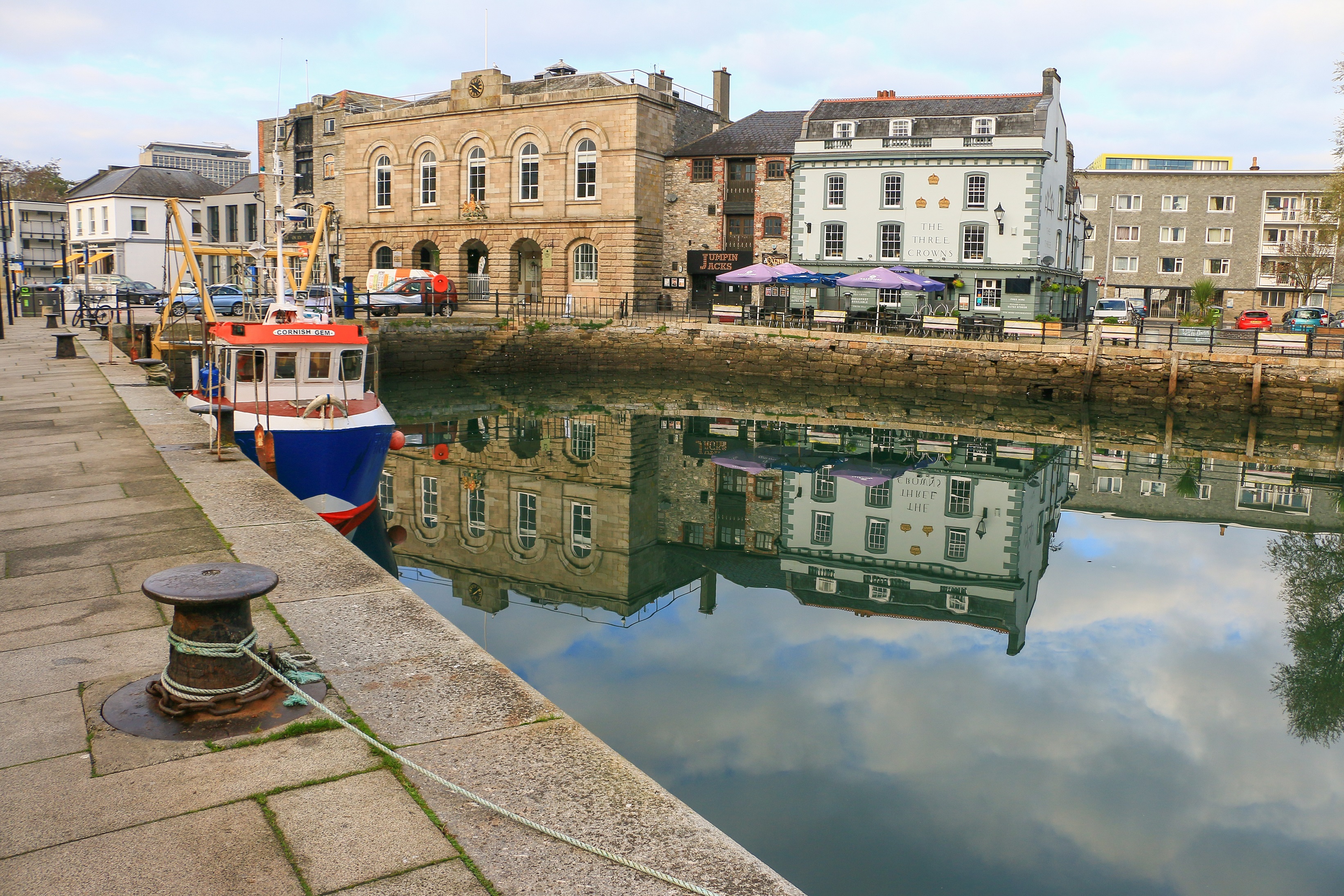
It’s kind of nice to wander Plymouth, even though it feels as if I am skimming through. As I pass, people continue to vape like there is no tomorrow (or airborne virus), queue along Royal Parade for a Citybus home, arrive en masse at Poundland. There are new things and old things and things which have simply changed their position. New things like ‘The Barcode’ and ‘The Box’ – while hardly inspiring in name – at least offer the sense of a city progressing. Old things either decay with neglect or prosper in their complex history.
One thing unchanged for a while are the two bridges crossing the River Tamar. I head to these later on the same day hoping for some kind of repeat of a previous sunset. I was intending to view proceedings from the Devon side but inadvertently get stuck crossing the road bridge and end up in Cornwall. While this provides a touch of charm down by the river in Saltash, I am fuming inside at the prospect of paying two pounds toll on the way back. I walk over to Devon nonetheless, and back to Cornwall again, as the daylight fades.
From this lofty vantage I can see further down the Tamar as it passes the Dockyard and enters the Sound. It is around there that Devil’s Point and the adjoining Royal William Yard provide a pleasant outlet from city noise and grime. I find myself in that vicinity the next morning, the gloom having well and truly lifted to a blue sky day. Being November, a chill remains in the hard stone buildings and shady wind tunnels of the Yard. Better seek the sea for reflection of warmth.
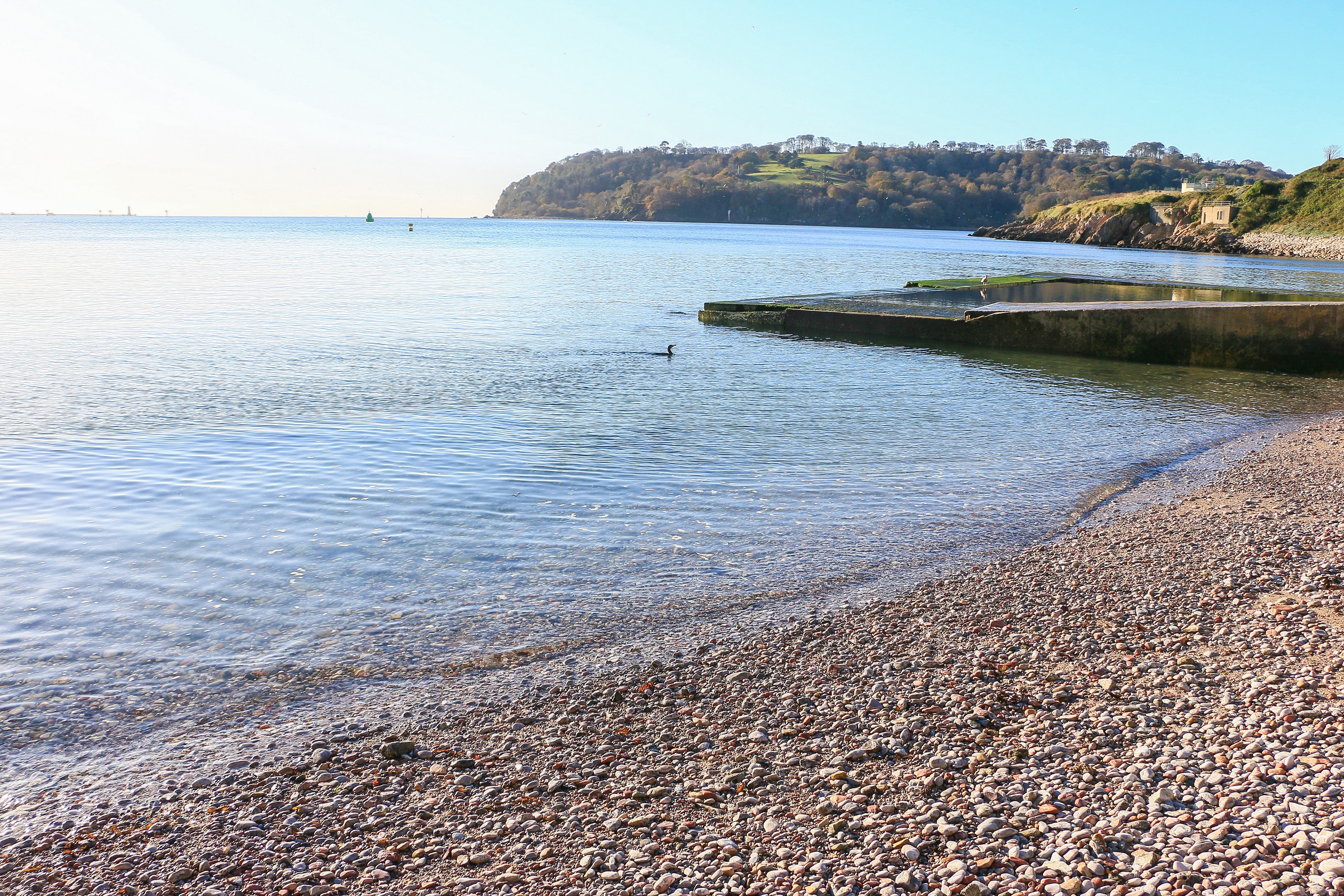
Nearby, Firestone Bay has risen in prominence thanks to the growth of wild swimming, visiting wildlife and posing figures on Instagram. I take time for a coffee and delicious slice of some kind here; these slices always propel the quality of the coffee in my memory. It’s only then that I notice the latest resident seal, chilling out on the shingle as the odd swimmer and paddleboarder lathers up. Calm and sparkling, it feels a long way from the city, and the congested aisles of Card Factory.
This is the Plymouth I could see myself in, the one where it is eternally sunny and I am literally strolling around beside the ocean with a decent coffee without having to work or shop for cut-price greeting cards. It is an unattainable Plymouth in reality, only appearing in these brief snippets of circumstance and good fortune. In such fleeting passage, they are of a Plymouth to treasure and remember. And to hope for in time again.
Apparently, the Cornish pasty has been a feature of the British diet since the 14th century. Originally the preserve of rich inbred gentry it wasn’t until the 18th century that the pasty became a nourishing treat for the masses. Today, go to any coastal town or village in Cornwall and the pervasiveness of pasties for the people persists.
In some spots the choice can appear bewildering. This includes the chainstorisation of Britain making its presence felt at heavily branded outlets offering crafted goods from industrial Solihull. But at the other end of the scale, it’s possible you may stumble across bona fide nooks hidden down narrow passageways, replete with evocative odours and large steel trays of steaming hot goodness fresh from the oven.
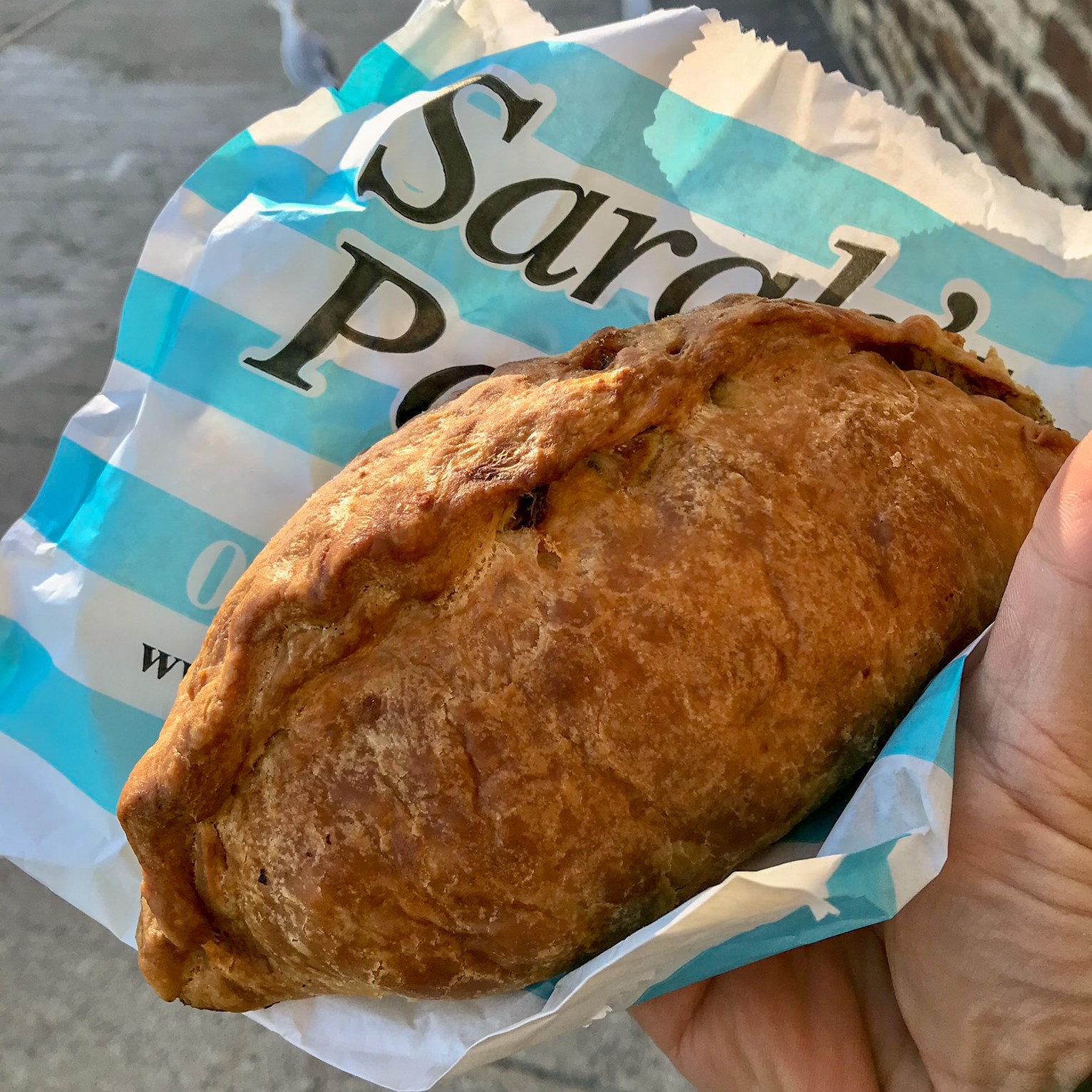
Looe has such a place (along with the odd chain) and it’s become a site of regular pilgrimage, competing with a cream tea in the what-will-Neil-eat-first adventure. Today – a Monday at the end of November – Looe is unusually becalmed. Indeed, many shops and eateries are closed. But thankfully Sarah’s is trading and offering a few remaining pasties as the day nears half one. Despite tending towards lukewarm, a two and a half year gap in this experience generates immense delight with that first bite.
Eating beside the seafront, the tide is low. Apart from the beach, this doesn’t exactly provide the most favourable impression of Looe. The river estuary empties to leave a patchwork of boats tilting high and dry. Salty seaweed spreads across oozing mud, offering a pungency almost as bad as the aroma of entrails swept from the fish market. And of course, everywhere, seagulls lurk desperate for winter pasties few and far between.
So, after a pause to collect further delicacies at Roly’s Fudge, Mum and I hot foot it out of town and head on to Polperro. This is – on paper – a more charming prospect though one you’d do well to steer clear of in the height of summer. That’s why I thought we could give it a shot today.
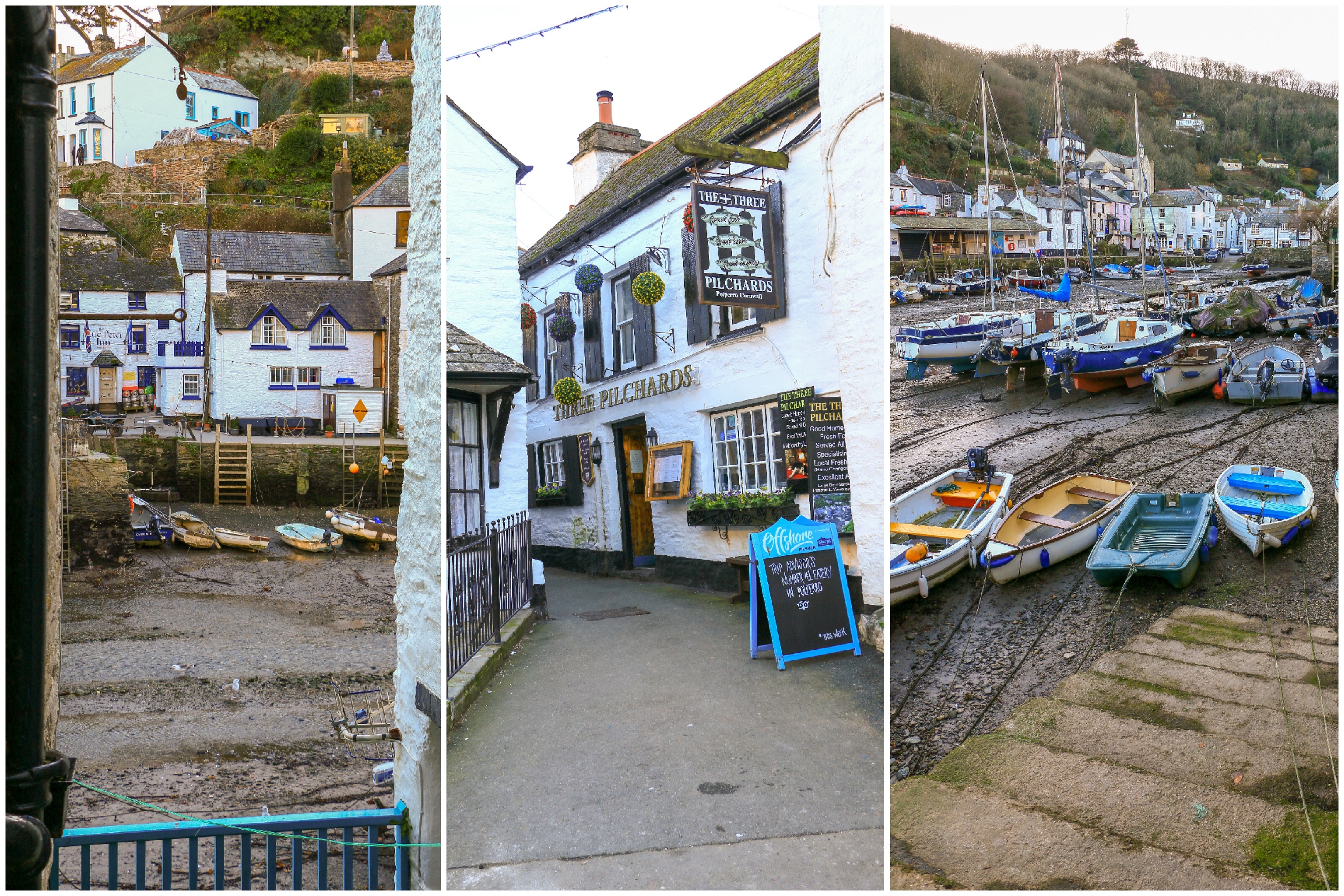
Indeed Polperro was quiet. Deathly quiet. Barely anything was open but this didn’t deter two very Polperro occurrences. First, we have the sight of a delivery van somehow trying to squeeze through a gap between whitewashed cottages as locals roll their eyes knowingly at one another. And secondly, there remains the rip-off parking on a cold grey day in November when jack all is open.
I expected non-summertime parking rates but forgot this was Polperro where the emphasis appears to be on doing everything possible to deter day trippers. As one of a handful, I felt a touch conspicuous trawling the streets with my camera and decided it was a good day to warm my head with a Plymouth Argyle beanie and thus parade – admittedly Devonian – credentials.
In low sun, the beanie was a handy addition as half of the village sat in perennial shade. While a series of cute cottages on the east side of the harbour beamed in fine, holiday-let whitewash, others faded into the dark and damp recesses of an impending winter. Striding out to the headland I could see Mum sat on a bench on the quay in the last receding corner of sun. And with a brief hello to the South West Coast Path, I set off back down through the shade to join her.
By now we were both thinking afternoon treat, or at least a coffee beside the tidal mud. But of course, nothing suitable was open. Being here in November was to prove both a blessing and a curse; cherishing the lack of bother and stress associated with thousands of tourists, taking advantage of quicker than usual drives and – sometimes – free parking, yet being more at mercy to the weather and missing out on some of the usual local treats and delicacies (I never did end up having an ice cream for instance).
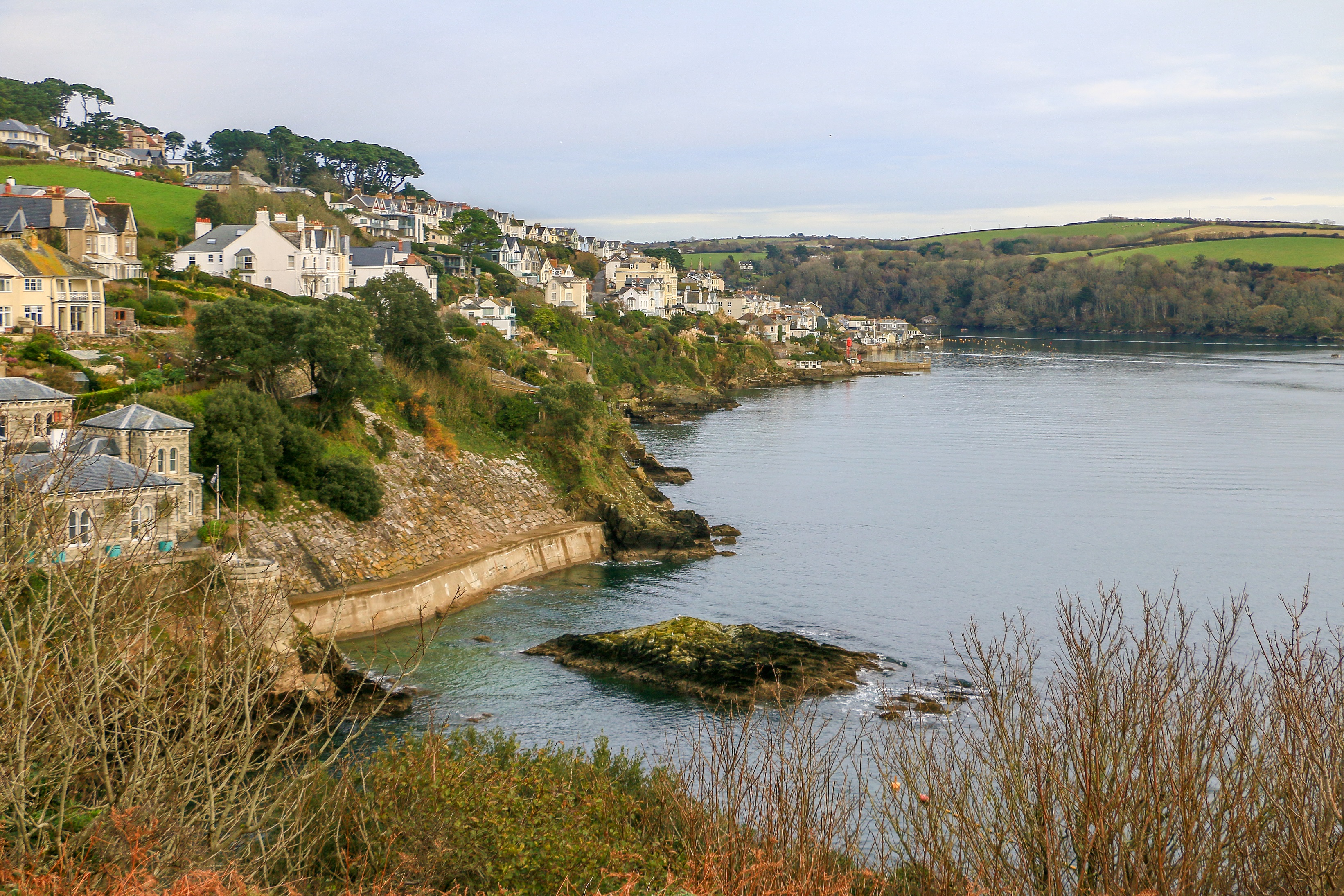
A similar picture played out a little further along the south coast on a different jaunt to Fowey. At picturesque Readymoney Cove, where I parked nearby for free, the kiosk supposedly open year round was obviously shut. Yet I was able to drive through the town and park again by the water, a prospect unfathomable in summer. Here at least a few spots were open and a coffee carried through attractive streets to a riverside bench offered contentment.
Lunch was a different matter, in brief taking in the disavowal of cold pasties in Fowey, a fruitless search for something in Lostwithiel and dismissal of a covidy café at a hoity toity garden centre (seriously, why not let us sit outside?). As a result, lunchtime had been and gone and options were running out. The last real opportunity was to return to Looe.
If you’ve actually been reading any of this babble you would know a pasty was a possibility here. But I was concerned at what would be left on the tray and how warm it might be. And the clock was clearly ticking over towards afternoon cream tea territory. So, we took a punt off the main drag, up a small hill. A short deviation that I’m sure will be repeated again. Daisy’s Café added to the what-will-Neil-eat-first adventure list. Making Looe the place where a wicked dilemma can finally be resolved: is it possible to have a pasty and cream tea on the same day? Roll on 2022!
Where do I begin? Faced with the rare overstimulation of drives to Sydney and flights to Darwin and much, much longer flights to Heathrow and double masking and swabs being shoved up noses and drives down the A303 and bacon and egg butties and autumn leaves and Ken Bruce still on BBC Radio 2 and drizzle? Where do I begin?
With speed bumps. Some shit may have gone down since May 2019 but if there is one upside to this passage of time it is the erosion of speed bumps along Eggbuckland Road, Plymouth. Approaching ‘home’ again I no longer need to brake every ten metres or so but can happily glide without delay towards long awaited reunions.
I suppose in this the neglect of governments proves to have its upsides. Or literal lack of them. Perhaps this flattening of speed bumps is what he means when he can be arsed to bumble out piffle like “levelling up”.
I may have been away for long but Britain feels a strange place to be in these days. COVID-normal Britain even stranger, particularly so for an arrival from the antipodes. It’s not an especially appealing destination in November 2021 yet somehow I crave it. Because here there are connections. And cream teas.
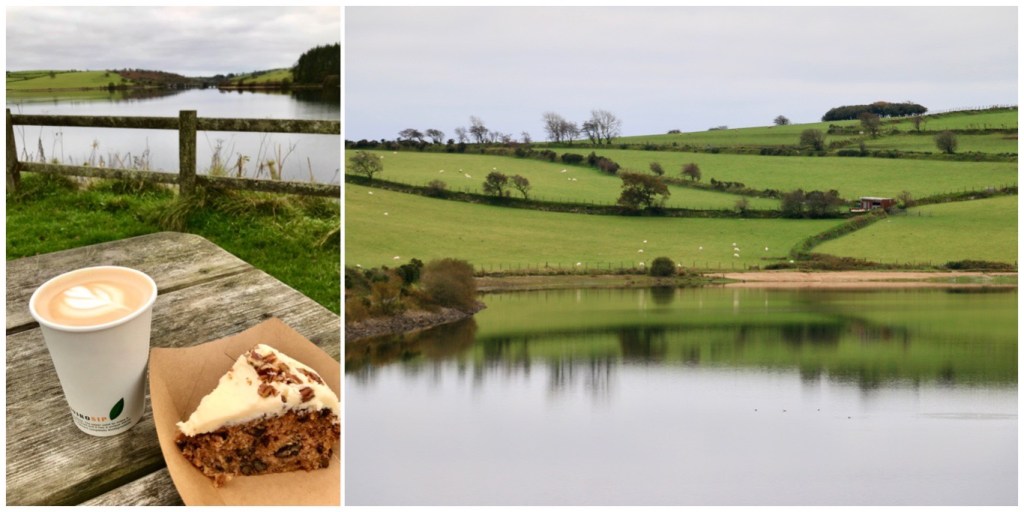
What I don’t usually come to Britain for is the coffee. However it is fair to say the serving from Olive & Co at Siblyback Lake on my first day there was bordering on the realms of impressive. To my delicate Australian ways, the sign requesting limitations on the number of people entering to order takeaway was also reassuring. Until a couple naturally disregarded this with their smug mask-free faces, as if they alone had conquered a whole pandemic.
To recover from this distress Mum and I did the whole sit outside in eight degrees under grey skies thing. Still, the outside world offered an antidote to everything else going on, those rolling green hills of the Cornish countryside feasted on once again by my hungry eyes. Damp, earthy air filled my nostrils while my mouth also came to be amply occupied.
Near Siblyback, the River Fowey twists and tumbles irresistibly toward the sea, a whitewater ride packaged together as Golitha Falls. It’s popular with dogs and photographers and people in wellies walking dogs and taking photos. Among woodland clinging on to the final browns of autumn, mossy tree trunks tell of the abundance of moisture all around. It feels like it will be this way at least until May. Or more likely forever.
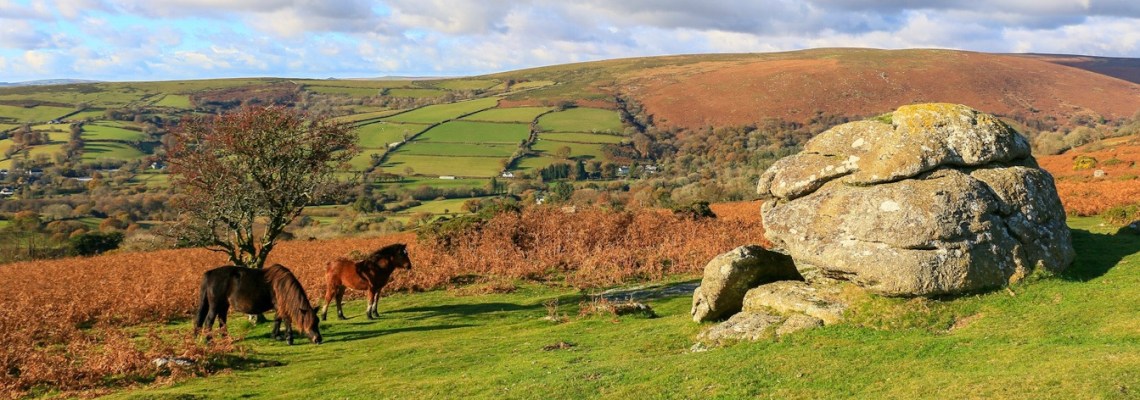
Enduring cake at Siblyback, it took a whole twenty four hours to reacquaint myself with a proper cream tea. Again outside, but this time under brighter skies within the charming village of Widecombe in the Moor. Considering it had been two and a half years, it took a good five minutes to arrange a photo shoot and administer jam and cream by which time the tea was lukewarm and scone a bit dry. But it went down well all the same.
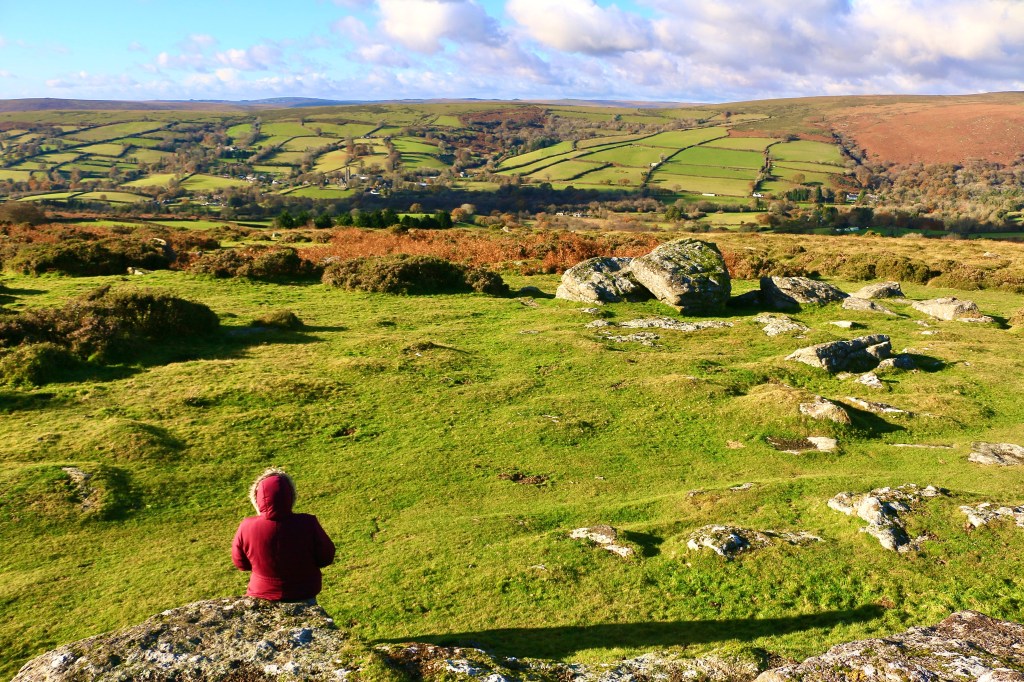
Was it enough to justify a complicated trip to Britain in November 2021? Well, probably not. But pan out from that village green onto the expanse of Dartmoor above and the tables begin to turn. Peaceful, dramatic, enchanting, quintessential, comforting, fresh. Perfect skies and vistas and air to share with Mum. And the anticipation of a couple more weeks of COVID Britain in store. Surely enough time for another cream tea or two.
In what can only be taken as a positive sign, I will soon need a visit to a petrol station. The last such experience was on Monday 13th September at 10:20am, a level of precision recorded in posterity – or at least for one month – by the magic of QR code. Looking back at it now, it felt a risky manoeuvre at the time, beyond the boundaries of my self-administered geographical bubble, justified in my mind by being significantly cheaper and twinned with the prospect of a different coffee shop. It was quite the holiday.
Since that date, the petrol gauge dipped in small increments only to hasten in more recent days. Friday 1st October granted the freedom for human beings to enter national parks – or a national park more precisely – and outlying nature reserves within the boundaries of the ACT. Just in time for a long weekend that would see newfound lovers of national parks and nature reserves flock to suffocate them with their devotion.
I was primed to wait, to let the suddenly-engaged nature enthusiasts have their maskless moment in the sun. But then I awoke early on the Monday – infuriatingly early given daylight savings had just kicked in – and saw an opportunity too good to pass.
An open road had been an object of desire for many weeks. Being Canberra there have been empty roads and there have been open vistas but never have these situations quite provided that sensation of travelling in a landscape. Of countryside flying past your window in an everchanging composition of shapes and colours and light and space. Each second a unique expression of time and place curated for your eyes only.
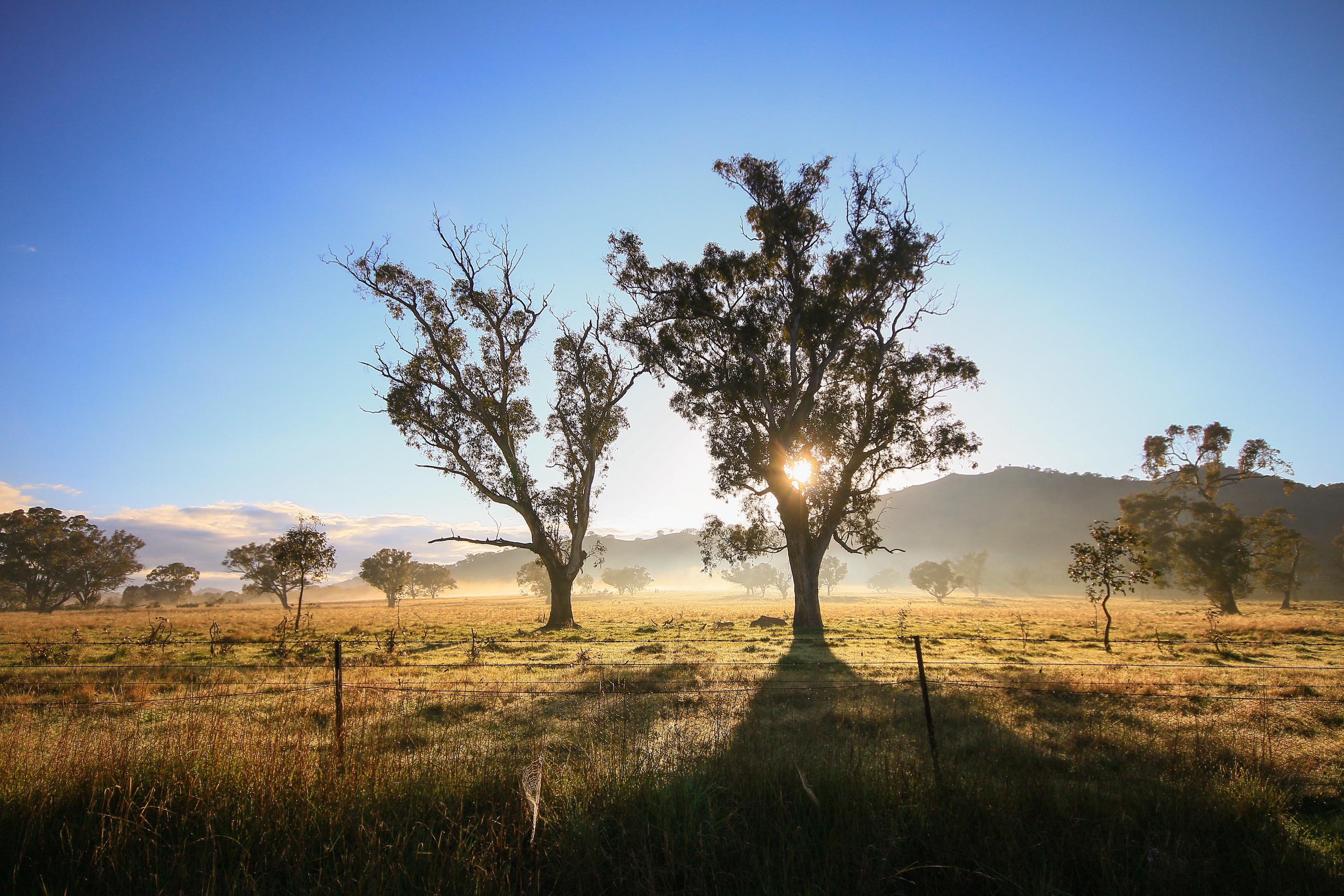
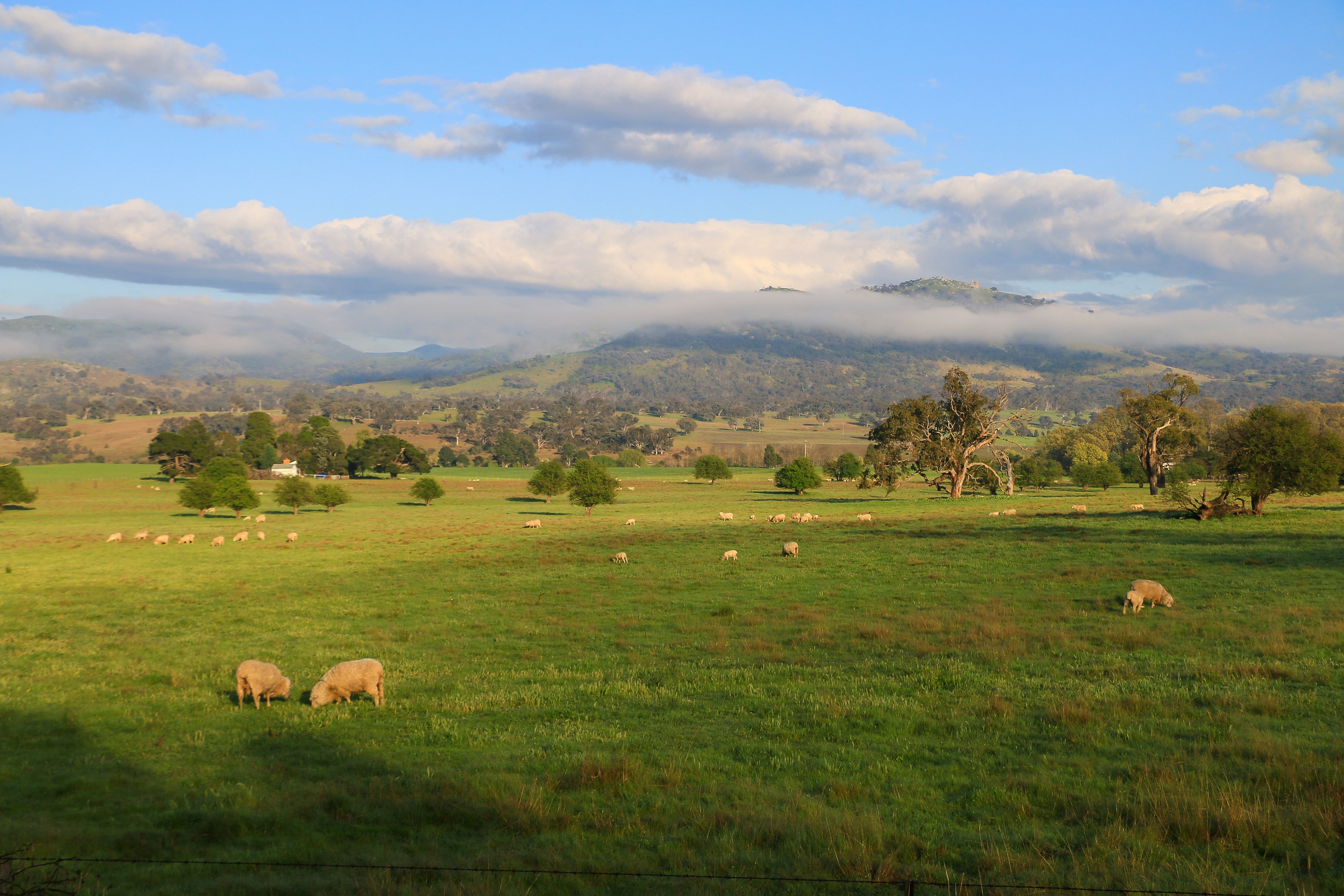
And what expressions of time and place these proved. Just out of town on the road to Tharwa, a countryside cloaked in misty lingerings and golden dew. Sturdy ranges rise up from sweeping grasslands, scattered with the withered trunks and branches of old gum tree. Cows and sheep and the odd outbuilding catch the eye, mere dots on a magnificent green canvas stretching to the sky. And oh how green.
If I were restrained within a bubble for but a few minutes this sight would still make my heart sing. And now that it is here again, I want it all the more.
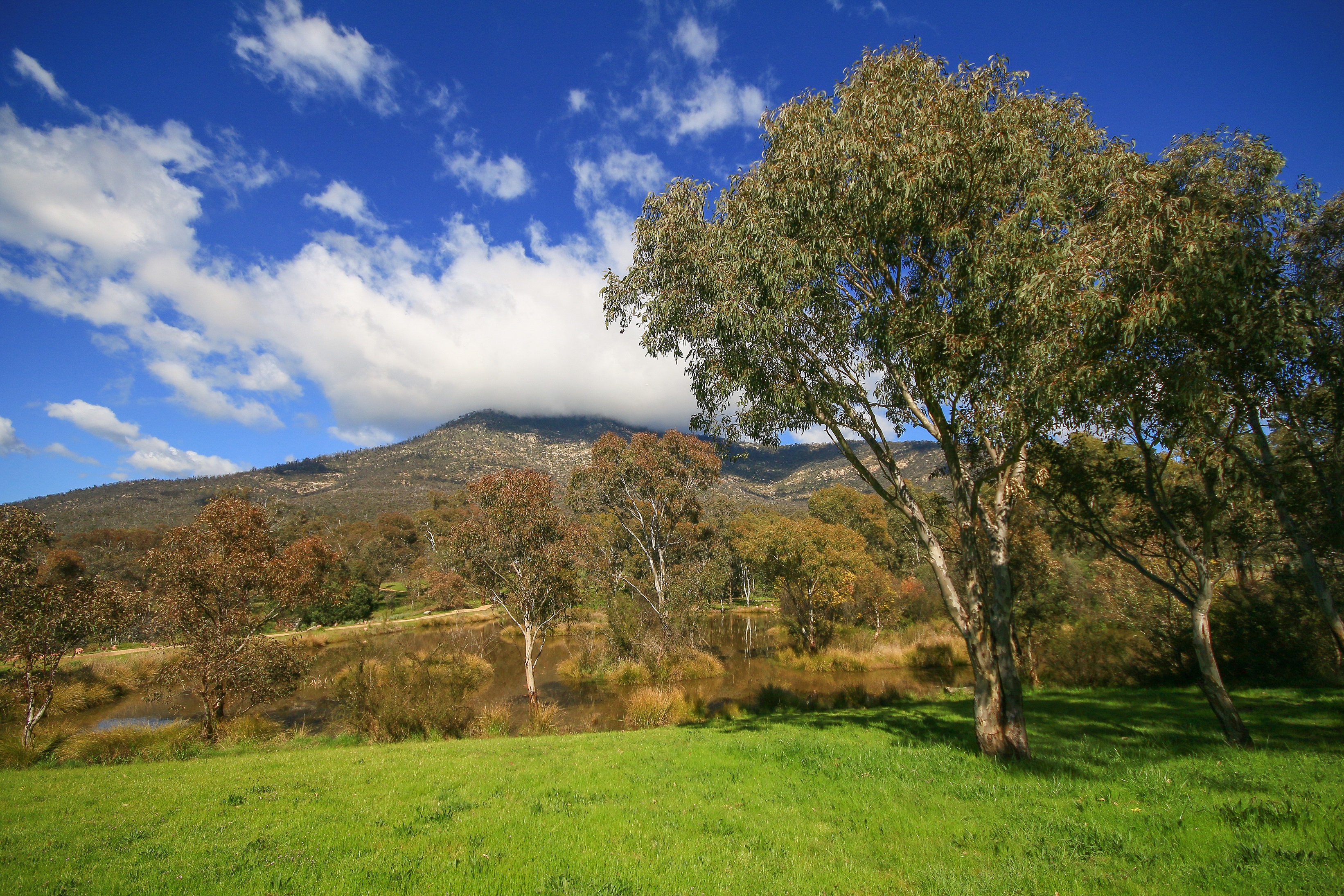
I can leave the car and venture out on foot into the fringes of Namadgi National Park. Already at the Visitor Centre a dozen or so cars are parked up as their inhabitants embrace the outdoors. The trail – worn from good rains and the numerous footsteps of a long weekend – cuts a muddy swathe towards the looming summit of Mount Tennent, still capped by its own personal cloud. Today, that exertion is far from my goal. I want to linger and learn.
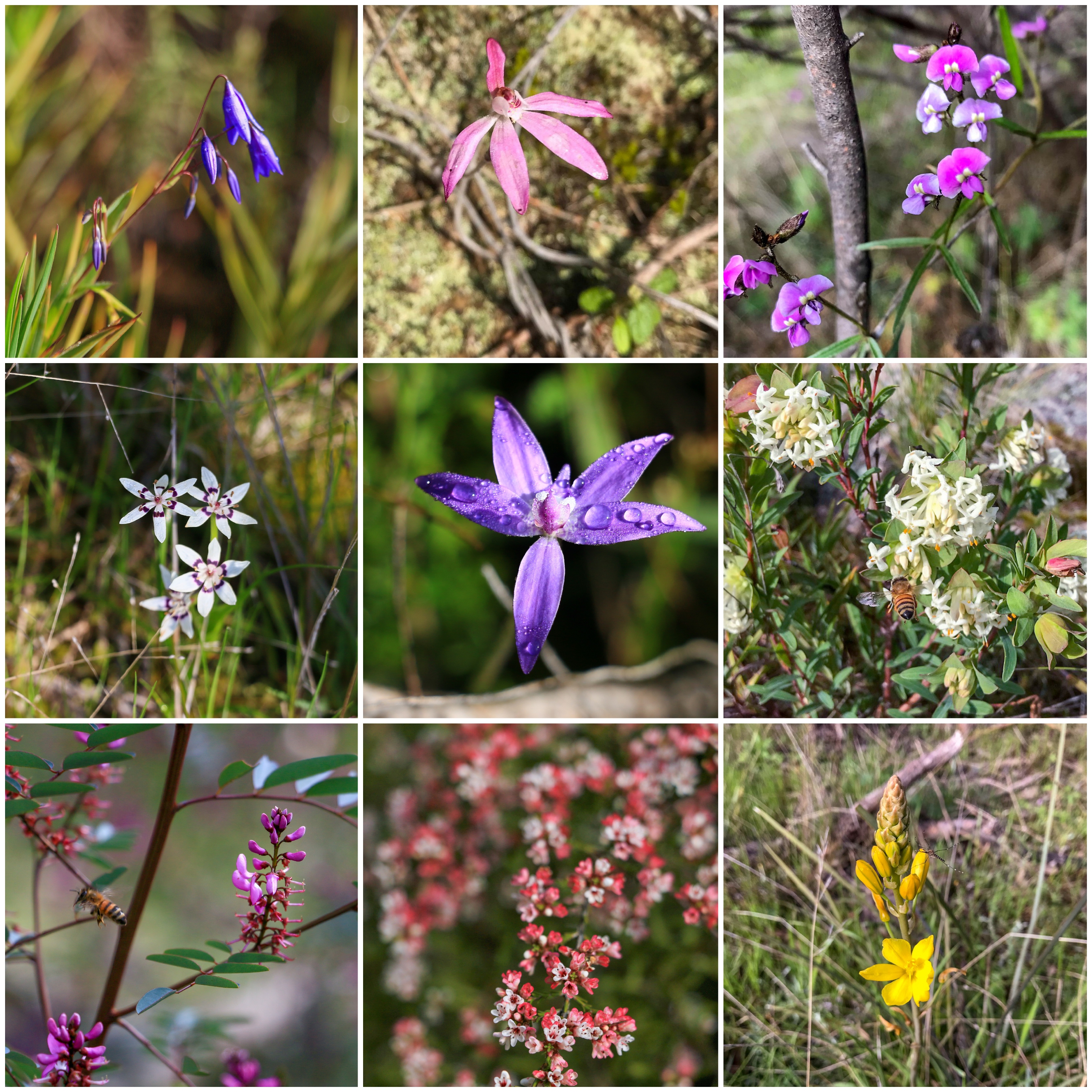
For all the joyous expansiveness of the landscape, topped off with flask tea on a seat at the Cypress Pine Lookout, I am distracted, fascinated, heartened by the more miniscule. The work of nature overcoming winter, recovering from fire, embracing spring. All emerging into the world once more.
One of my attempts at Lockdown 2 Self Improvement Projects has been aligned to the season and the pursuit (and somewhat more challenging identification) of our native wildflowers. Provided with generous encouragement and impetus, I have found this a satisfying, almost addictive pursuit, one that can easily turn an hour walk into two.
So, from the fragrant myrtles to the delicate orchids, the indecipherable varieties of pea to the bulbous generosity of golden lilies, there is so much to discover. Far and near, it truly is spectacular how much you can see when you actually look. Checking out as much as checking in.
Maybe it’s just me, but I can’t say I’m especially fond of a cracked phone screen on top of a magpie attack on top of an earthquake on top of a lockdown on top of a pandemic. Served up with a hearty dollop of impending nuclear Armageddon intersecting with blistering fire and dust super tornados. No, Wednesday you didn’t particularly rock my world.
Frankly, out of all those, the bloody magpie irks me the most. How dare you take away the satisfaction and soothing of my allotted outdoor exercise time in lovely spring sunshine. And mean another pathway is added to the blacklist. The pathways are busy enough as they are with all these people in various states of mask undress discovering pathways for the very first time. Why don’t you attack them, stupid magpie? Oh, that’s right, you remember me, but yet conveniently you don’t remember how I have never once tried to steal your babies in all those years, you bloody shit.
If there is any positive, the magpie at least adds a bit of frisson to another daily outing in the same part of suburbia. Six weeks in, the confines of living within a vague radius or region are starting to grate. There are only so many times – for instance – you can wander upon Red Hill without getting weary of the same route. On the most recent occasion, I found myself annoyed with an endless procession of joggers and dogs not on leads and family gatherings. Eroding the sensations usually associated with an escape to and immersion in nature. Sounds, sights, space shrinking.
An actual problem looking for a solution, I find myself more often than not heading off track. A little out of the way. Not exactly bush-bashing, more weaving between weeds. There are still a few spots in which to escape around the Woden zone. I probably shouldn’t share them here but figure a readership of six people – many of whom are not in Canberra – is not going to cause a sudden ruination of my life. If it does, I’ll know who to blame. And set that magpie upon you…
The Old Mugga Mugga Way
If Red Hill is akin to Fitness First every goddam afternoon, Mount Mugga Mugga Reserve is more like that rusty bench press underneath a pile of boxes at the back of the garage. Fringing the weirdness of O’Malley, it seems the varied diplomats and consuls who inhabit the area rarely go out to exercise. Perhaps like most aliens they have been cowed by those great tales of deadly inhabitants of the Australian bush. Preferring the safety and comfort of their own little piece of soil.
The Centenary Trail runs through the reserve and introduced me to the area back in the good old days of 2020. A few people still come and go along this thoroughfare but it’s simple to veer off onto a number of faint tracks and choose your own adventure. The landscape is a very Canberra mix of weedy incursions and precious Yellow Box-Blakely’s Red Gum grassy woodland, replete with gnarly old eucalypts and their generous, homely hollows.
One particular tree has fallen, and I have taken to it on several occasions to perch and drink tea from a flask and eat a treat and watch Gang-gangs fly past while kangaroos graze and deadly inhabitants of the Australian bush lurk in the crevices of the fallen tree on which I am sat.
The whole flask of tea thing has become another more frequent happening in my life in recent weeks; I don’t know why I haven’t thought of it much before. Perhaps I simply wasn’t quite of an age. But pandemics and magpie attacks have a way of adding on the years, transforming a simple flask of tea in the middle of the bush into something that feels much more precious.
Isaacs Off Piste Ridge
Mount Mugga Mugga itself is scarred by a quarry and the summit appears fenced off, thus remaining that rare Canberra hill not trampled upon by my own two feet. Yet it’s just one lump in a broad range extending from Red Hill south towards the Tuggeranong Valley. Adjoining Mugga Mugga, Isaacs Ridge proves popular for its pine trails and dog walks and boasts an archetypal trig marker summit loop with 360 degree views.
That all sounds a bit mainstream for me at the moment, so I veer off the fine balcony trail lapping at the foot of the ridge and decide to head up cross country. There is a very faint track at first, which slowly blends into a landscape of open grassland and rocky scrub. Over a false summit, a field of thistly plants remains quelled by winter – give it a month or two and the going will come with greater hazard. A random copse of casuarina appears as if some long-forgotten scientific experiment, offering a landmark to follow slowly upwards to the top of the ridge. And lo and behold, a photogenic gum tree, with some fallen logs for a rest (and possible tea).
From here, there are views east to that far off land of New South Wales. There is countryside and Mugga Lane and quarrying work and possibly even just a little part of the tip. But mostly it’s countryside. There is also the white trig marker visible to the south, acting as a beacon to aim for, navigating the rocky boulders and grasses of the ridge and returning to the mainstream.
The Murrumbidgee Vista Rocky Outcrop
For several weeks, Cooleman Ridge was proving one of those ambiguous places in the application and interpretation of local coronavirus restrictions. Is it in the Woden, Weston and Molonglo region or is it Tuggeranong? Is it within five kilometres of home or six and a half or eight? The answers are yes and sometimes you just have to ask the question does it actually matter?
One of those days was a lunchtime and instead of a flask of tea I packed up some crackers, nuts and cheese and went on a quest for the perfect place to snack. Eschewing the usual, well-defined summit rocks and strategically-situated benches I veered off towards a hillock I had eyed up in the past. A few gum trees stood atop resistant, hosting flurries of wattlebird and passing rosellas. Imagine by delight that under one of them was the perfectly positioned, home-crafted seat.
Someone had been here before looking for the ideal situation to escape to the country. A kindred spirit. And if a backdrop of lush farmland cloaking a river valley beneath forested hills isn’t enough, check out those crackers and cheese and nuts from Kingaroy. Off track snack pack perfection.
The Oakey Dokey Hill with bonus Hummock
Along with off track adventures one of the permissible things I have been doing virtually every day is picking up a takeaway coffee. It is the stuff of contact tracing nightmares and triggers the inner COVID police in me every time. Quit loitering. Stand away from me. Stop touching your face. Don’t order multiple coffees with various shades of milk for your entire bubble.
I’m also – naturally given current confines – alternating my takeaways between a mere handful of proximate cafes, constantly hoping they fail to materialise on the exposure site listing. In Lyons, Stand By Me offers something that is walkable from home and – should I wish to venture further – can be incorporated on a climb of Oakey Hill.
Of the six hilly nature reserves forming a horseshoe around the Woden Valley, Oakey Hill is probably the least fashionable and most unkempt. Power pylons compete with decommissioned water reservoirs and temporary fencing. The flora seems more degraded, more weedy, more battered and bruised by the elements. Still, there is a nice bench beside the trig marker if it’s vacant and a little used side track that offers good views out to the mountains.
Across from the reserve, a green corridor lines the divide between Lyons and Curtin. From here, more slivers of green penetrate into suburbia, one of which hosts a determinedly vicious magpie. Nowadays I avoid that particular route and instead continue around the outside of Curtin on a track that at one point takes on the appearance of pasture. It forms part of what has become a fairly regular ten kilometre bike jaunt which culminates in a different takeaway coffee at Red Brick.
Along this way, at the back of Curtin, there is a hummock which takes me away too. Behind, fences protect garden refuges with trampolines and lemon trees and potting sheds and shrubs of shady bottlebrush. But in front there are fields of green and skies of blue. On the horizon, the distinctive angles of the Brindabellas promise at much more freedom. And I am whisked away to a place far from busily exercising humans and irritating magpies and daily case numbers and limited coffee options. I am taken again off track.
My better instincts tell me not to add to the infinite pile of mediocrity written about lockdowns. Enough of the wry observations on human behaviour and knowing, self-satisfied quips about sourdough. But forgive me one indulgence: I absolutely hate myself every time I realise I am rolling my eyes or muttering under my breath about a misplaced mask or a small cluster of people sitting on open grass simply trying to get through life as best they can. I absolutely hate that we all now have a little COVID police officer within us.
When out and about I should really focus instead on the threat of magpies and the impending advent of flies hassling my face. These are, perversely, bright spots of our times. Reassurance that there is a normal, no matter if that involves a petulant bird trying to peck out your eyes. There are many bright spots right now.
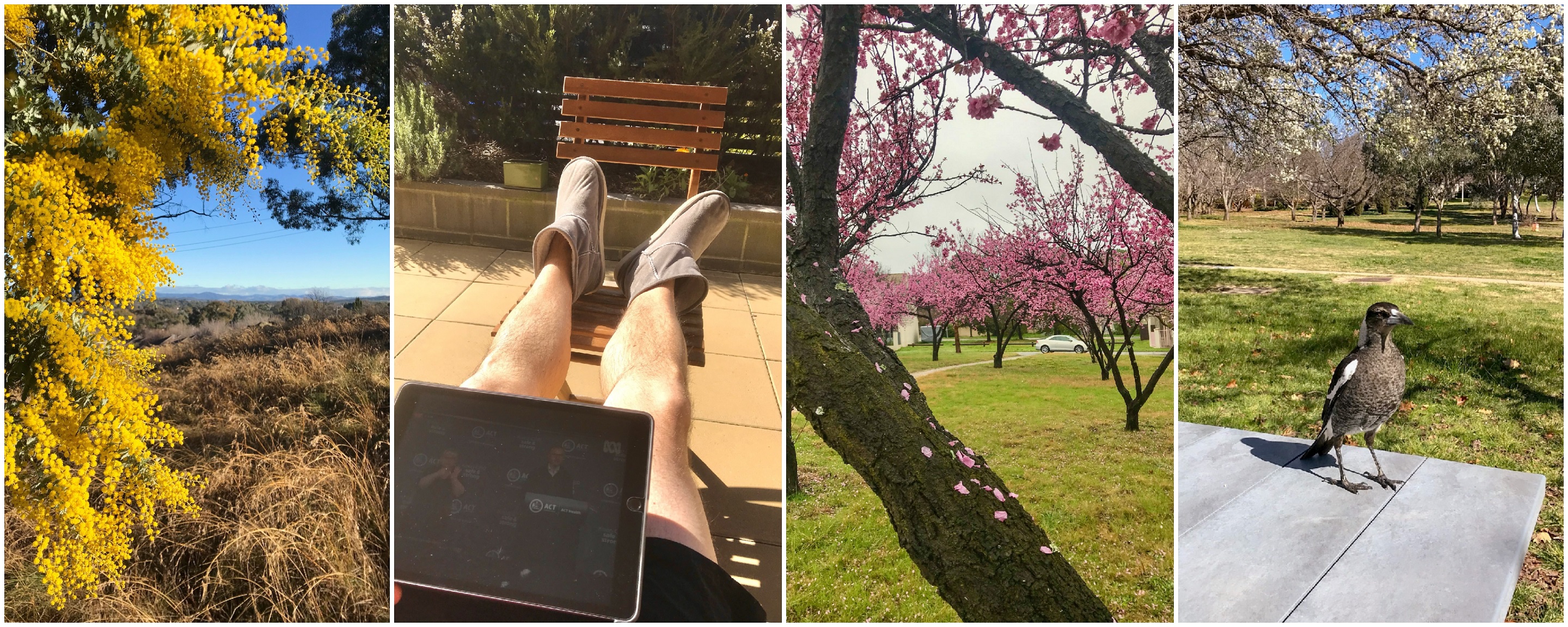
Take Sunday morning. Scenes of Emma Raducanu and an awesome kid on a bike coming together with an awesome adult on a bike. Out in the real world another awesome kid on a bike warmed me with a good morning greeting on the way for coffee. Sun was out, bees were buzzing, magpies were lurking. Shorts were on.
Bare legs couldn’t remain all day, the weather typical of spring: one day it’s all throw open the doors, the next retreat back into your cave. Nonetheless, the joy of spring is as enduring and as uplifting as ever.
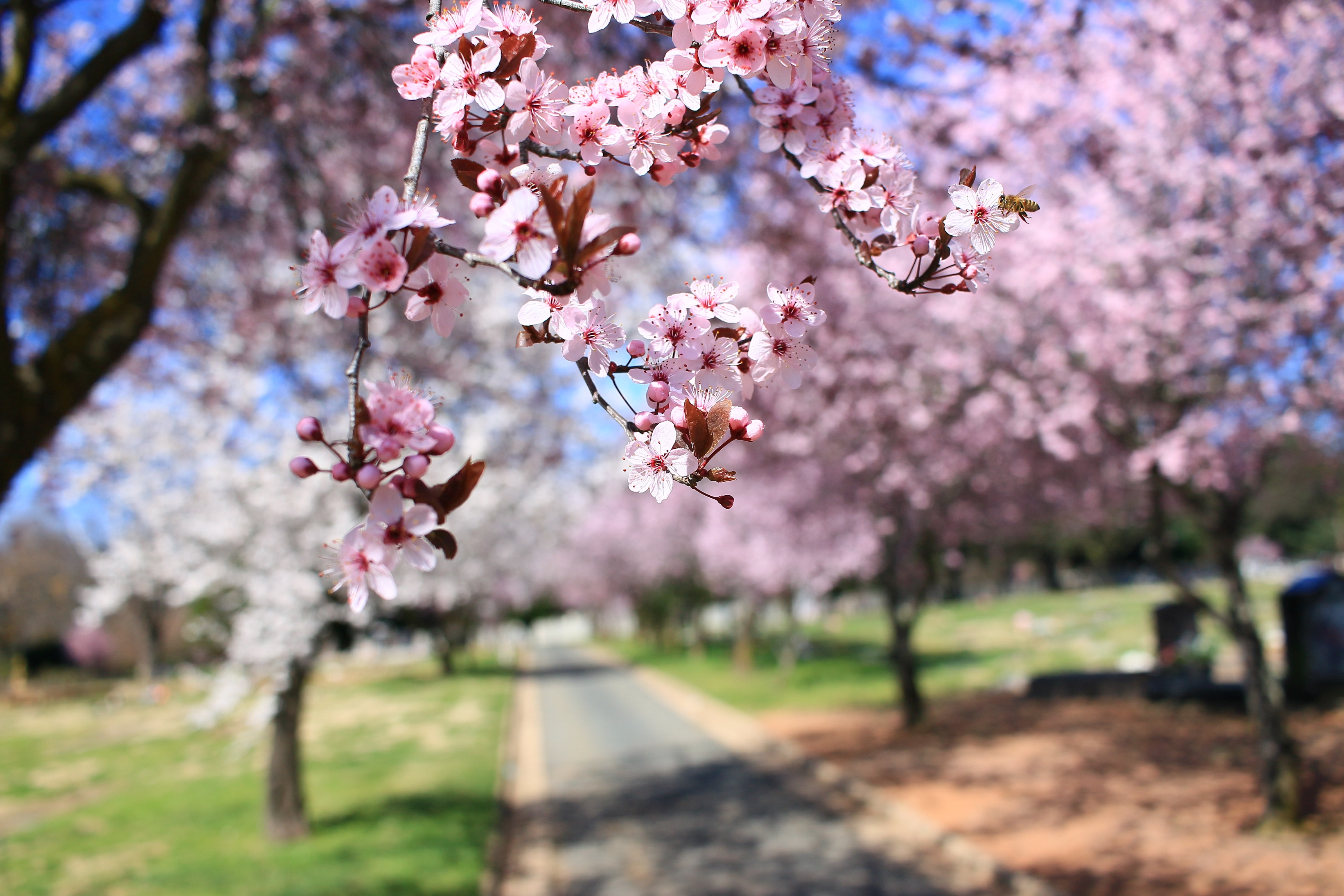
Favourite – and very local – spring spots include a clutch of trees next to Chifley shops transforming into a tunnel of pink, a cul-de-sac in Curtin that is equally as resplendent in autumn, and the natural blooms of Woden Cemetery.
The cemetery is a funny one, not that you hear anyone laughing. Here is open space on my doorstep that I conscientiously tiptoed around for a few years, driven by some hallowed sense of not wanting to intrude. Should a place of grief and loss really also be a place for me to ramble around seeking joy and delight? Well, in the full gamut of emotions that make us human, yes, or at least I have convinced myself of that in a lockdown during spring. And there is something undeniably poetic in the new life flourishing among the tombstones that I suspect many passing souls would beam a broad smile at.
Nearby, the rocks and stones scattered on a small piece of bushland between Garran and Hughes marvel at equally magnificent transformation. This is most apparent in the explosion of golden wattle, so full and vibrant and unashamedly Australian that is hard not to feel borderline okay about the batting average of S.P.D. Smith. Gang-gangs and galahs and annoying myna birds provide the backing for the exquisite melodies of our wonderful magpies. Everything feels industrious here, with a touch of ornithological romance and floral perfume in the air.
Each bead of effervescent wattle bloom is a bright spot. As is each elongated creak of a Gang-gang, each delicate petal of cherry blossom, each sun-glazed afternoon where you can throw on some shorts until the chill returns. Marry these with uplifting moments of human endeavour and achievement and connection and compassion and you have enough bright spots to form a whole constellation. A sky of stars so powerful it can even eclipse those inner COVID police, for a while.
Do you remember the time when you could leave footprints in the sand to melt away with the tide? Or take walks within forests as the sun scatters golden through a canopy of spotted gum? Can you recall when you could linger on a bench to feast on deep fried fruits of the sea? And what about that period when Australia really was the place to be?
I do, but it feels a long time ago, even though it was little over a month. With opportunity and freedom I had journeyed to the coast, cognisant of wintry weather in Canberra and the pervasive feeling that you might not be able to do this again. For a while.
I had found a quiet kind of place to stay in North Durras. The kind of place you might hunker down to see out a pandemic. A place where the biggest drama at this point in time was the wind, though where small reminders of far more disastrous natural events stir the mind. The wind quelled the temperature and whipped up sandy frenzy, but it was still an improvement on Canberra. And an invigorating reminder of the power of nature.
Not that I was thanking the wind when the power went down, just as I was about to settle into an evening escaping on a tour around France. I had to read and that felt like hard work when you really just want to lounge as lazily as possible. Thank goodness for the lights coming back on and the Col de Tourmalet.
Around North Durras I made friends with some King Parrots and Kangaroos, explored the sands and forests, and found my way wandering along the waterways as they infiltrate inland. Always across the channel, signs of South Durras peeked above the scrub and I wondered if there was a strong rivalry between the two. The South were probably boastful of having a shop while the North derided snooty Canberra-by-Sea.
Just for a while I had to remove myself from such unlikely drama. It was Saturday morning, and I was hoping for that perfect combination of sheltered sunshine and oceanside coffee strolling. I aimed for Bawley Point, noting some positive signs in my research: small bays protected from the south-easterly; a coffee caravan on a headland with a strong showing on TripAdvisor; Canberra-by-Sea.
At least the bays were sublime.
For some reason, the thought crossed my mind that Barry Cassidy had a holiday home in Bawley Point and hung out with Mike Bowers while Heather was off on some back road cracking a horse whip with Old Reggie Mundoon of Canowindra. This will mean nothing to any English readers, and most Australians too. Anyway, I think I remember this because Mike posted a picture of plumes of smoke from Bazza’s ample deck around the Christmas of 2019.
I could’ve watched Barry’s successors waffle on about ineptitude and continue to needlessly debate the pros and cons of lockdowns on the ABC on Sunday morning. But why do that when I can just take a few steps from my cabin and expose myself to a world of beautiful calm. From the abundant forest full of melodies to the glassy clear water stretching across to the south. No wind and a beaming radiance to lift the soul.
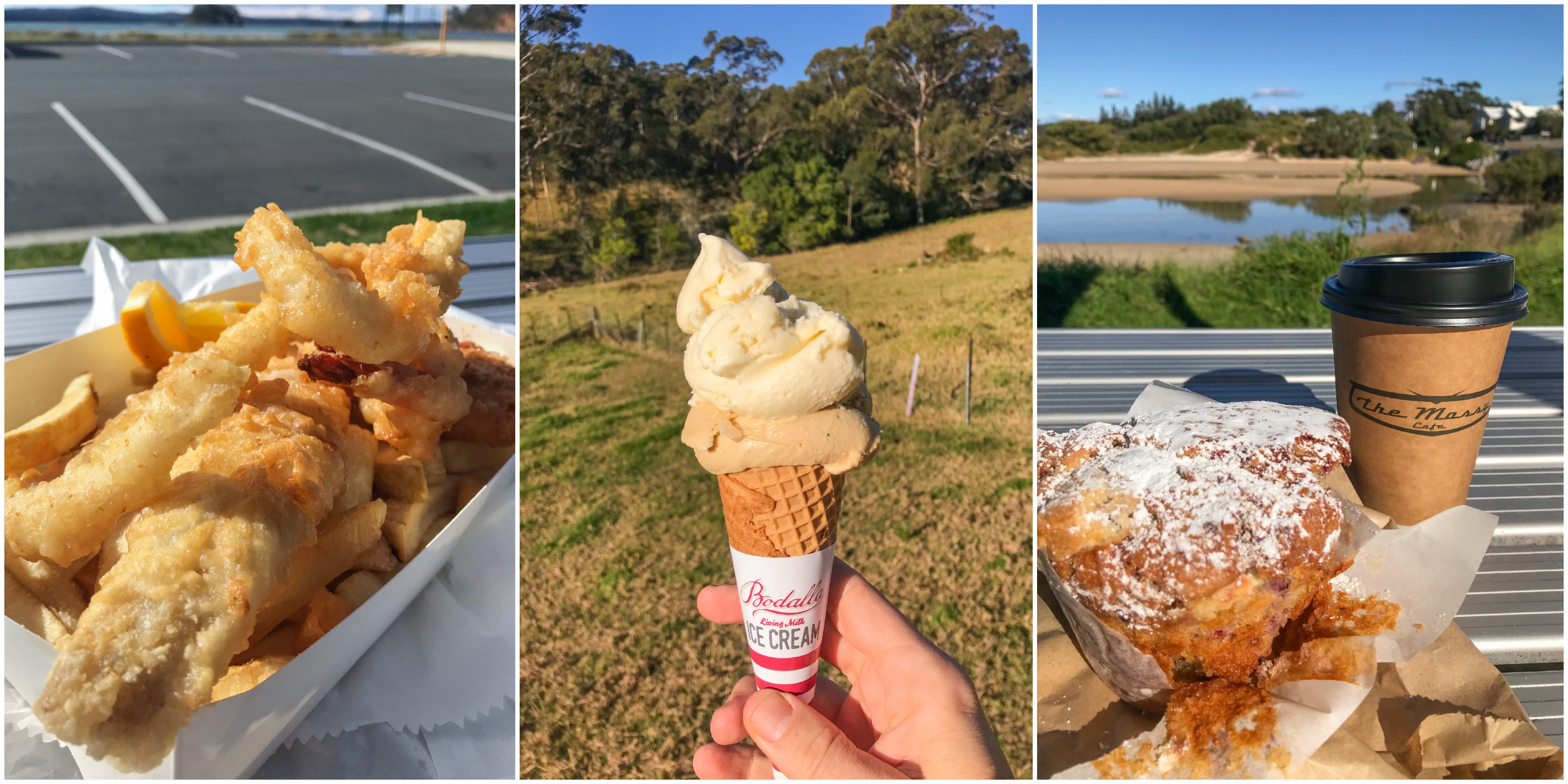
This would be a fine place to ride out a pandemic, though it could handle a decent café otherwise I may not survive. To ensure an improvement on the day before I left North Durras and drove south to Mossy Point, where there is a reliable spot for coffee. And a raspberry and white chocolate muffin. Just because.
The day was continuing to sparkle, and I was in no rush to head back home. With hardly a breath of wind it would’ve been the perfect day for a bike ride. Perhaps heading from Moruya along the river and out through pasture towards the ocean at Moruya Heads. You could pack some lunch and eat it in a sheltered bay, glistening under warm sunshine. Good job I packed my bike and prized $16 bike rack.
Doesn’t it look nice?
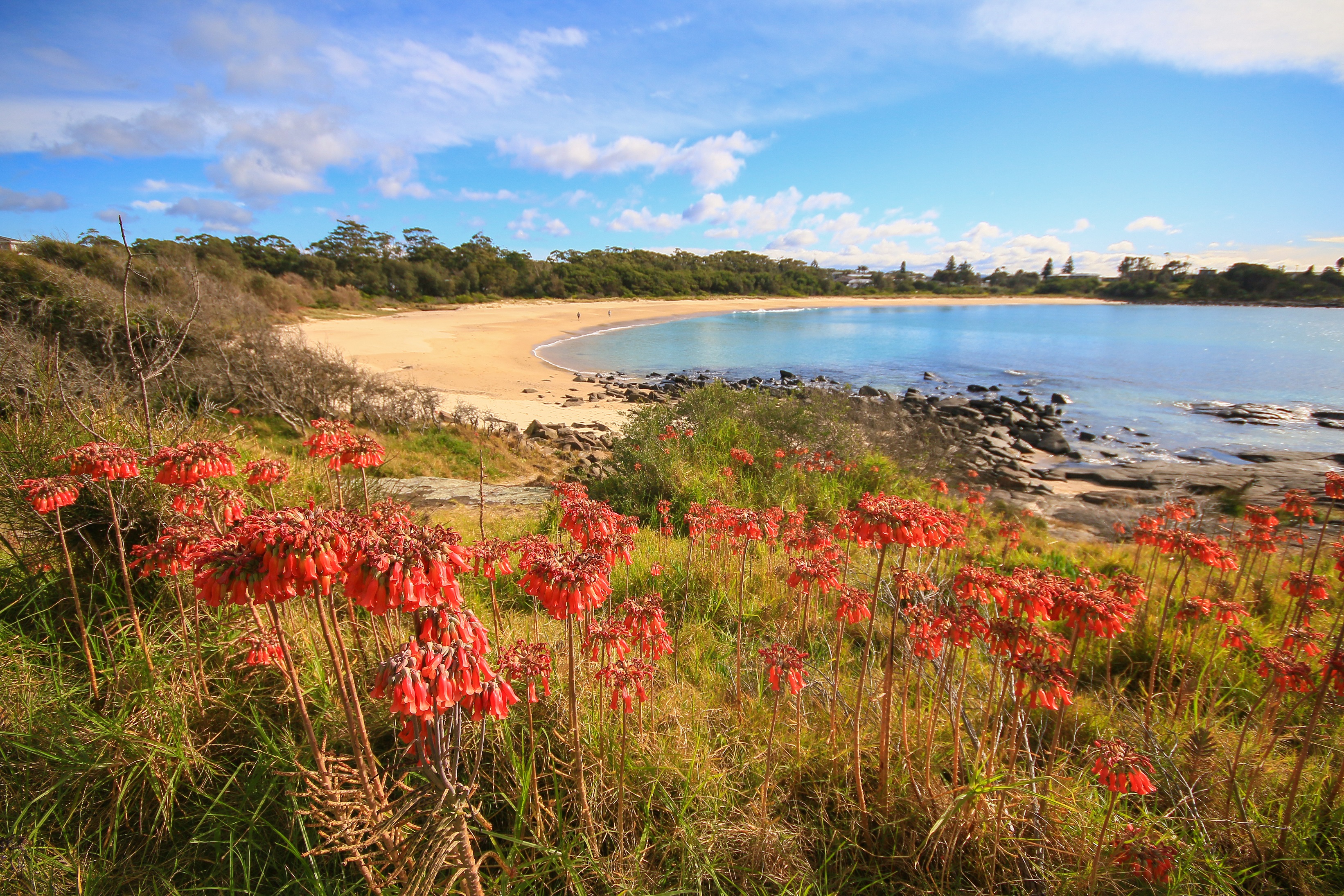
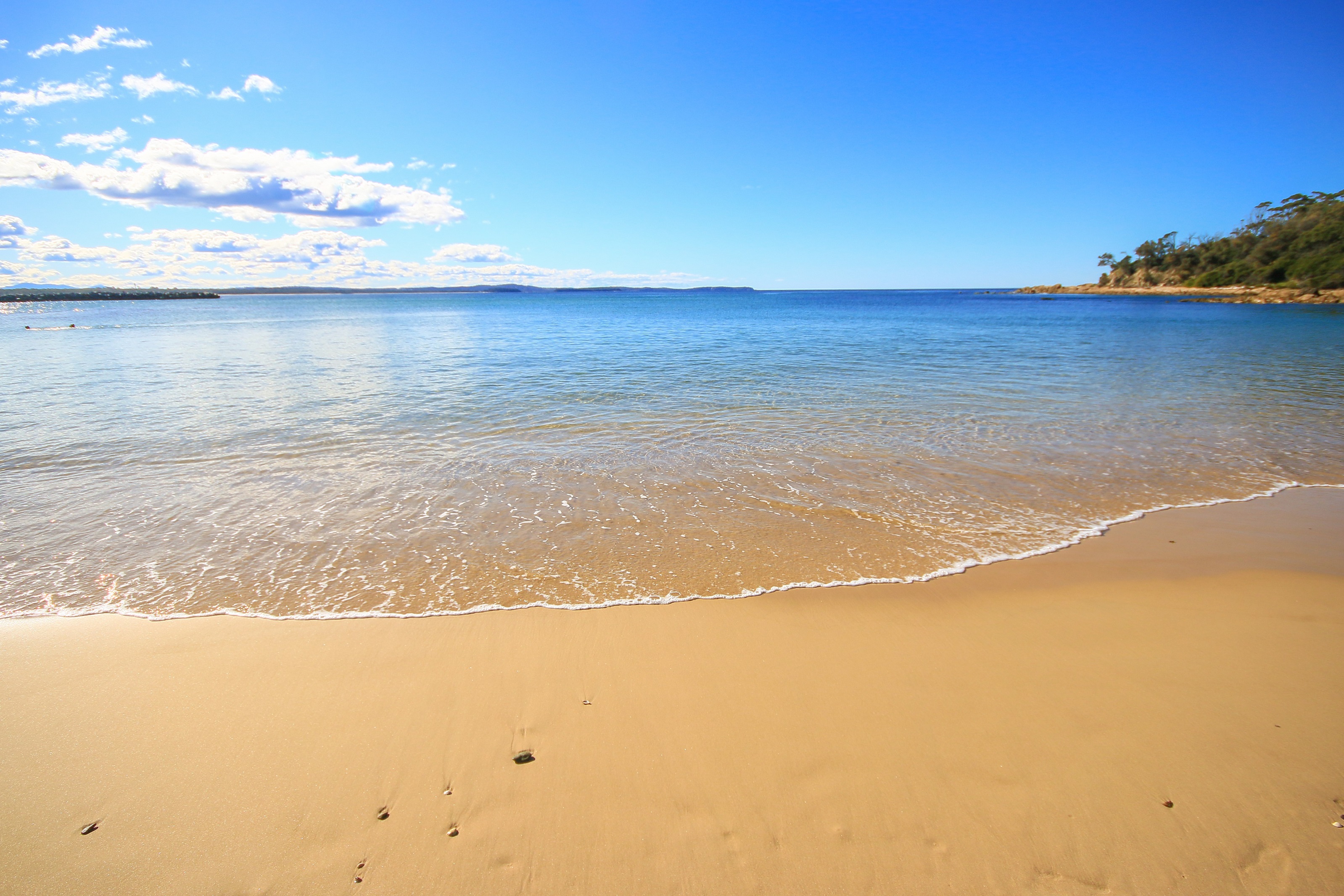
There was a beach at Moruya Heads – Shelly Beach – that offered the kind of nirvana that would prove an entirely effective crescendo to a piece of writing. The very essence of what I was seeking on this little break to the south coast of New South Wales in winter. Comfort, delight, beauty, and a quiet spot to sit in a T-shirt. I could have gone full shorts, but none were packed.
An ice cream would’ve hit the spot too, but I had to cycle back to Moruya – including over what felt like a mini Tourmalet – and then drive a fifty kilometre round trip. I mean, I didn’t have to take a fifty kilometre round trip but no, really I did. I’d done fish and chips, I’d done coffee by the sea and now I needed a double shot of Bodalla Dairy.
Another moment to treasure, to add to the bank of dream times to remember. And to look forward to when they are there to spoil us again.
While we waver towards probable lockdown at some point down the road, a certainty to hold on to is the march of spring. I can start to sense it in the evenings that are still light at 5:30, in the alarm call of birds beginning a stout defence of their nest, in the explosion of green and gold wattle somehow reminding me of many a repeat during the Channel 7 Olympic coverage.
In Australia, winter doesn’t always feel as distinguishable. What Queenslanders call winter certainly is not. In Bondi you can quite comfortably be parading minimal activewear in July, taking essential exercise to hang around in the line for takeaway coffee. Even Canberra – while frequently subjected to alarmist rhetoric and gloating Queenslanders – is still no Ice Planet Hoth.
Snow remains a novelty, especially in the city. Occasionally, hail masquerades or something between drizzle and sleet briefly descends. The only real flurry is in the resultant Facebook posts proclaiming snow. If it is snow, it is a very Plymouth kind of snow, with the same building anticipation and ultimate let down.
As in Plymouth, you must head up. And up and up, towards the high country in the sky. You can drive there on a weekend with thousands of others to enjoy traffic jams and diesel slush or put in the hard yards and discover a pristine winter wilderness by foot.
I go for the latter, though the hard yards are harder and many more yards than I initially hope. At Mountain Creek car park in Tidbinbilla I hope for a rerun of a previous time in this spot, when a good covering of fresh snow blanketed minty forest trees and the fire trails nearby. I hope to experience winter in its fullness in a matter of minutes, with enough time to retreat and find a warming café. I hope I have not dragged myself, my car, and my friend Alex out here in vain.
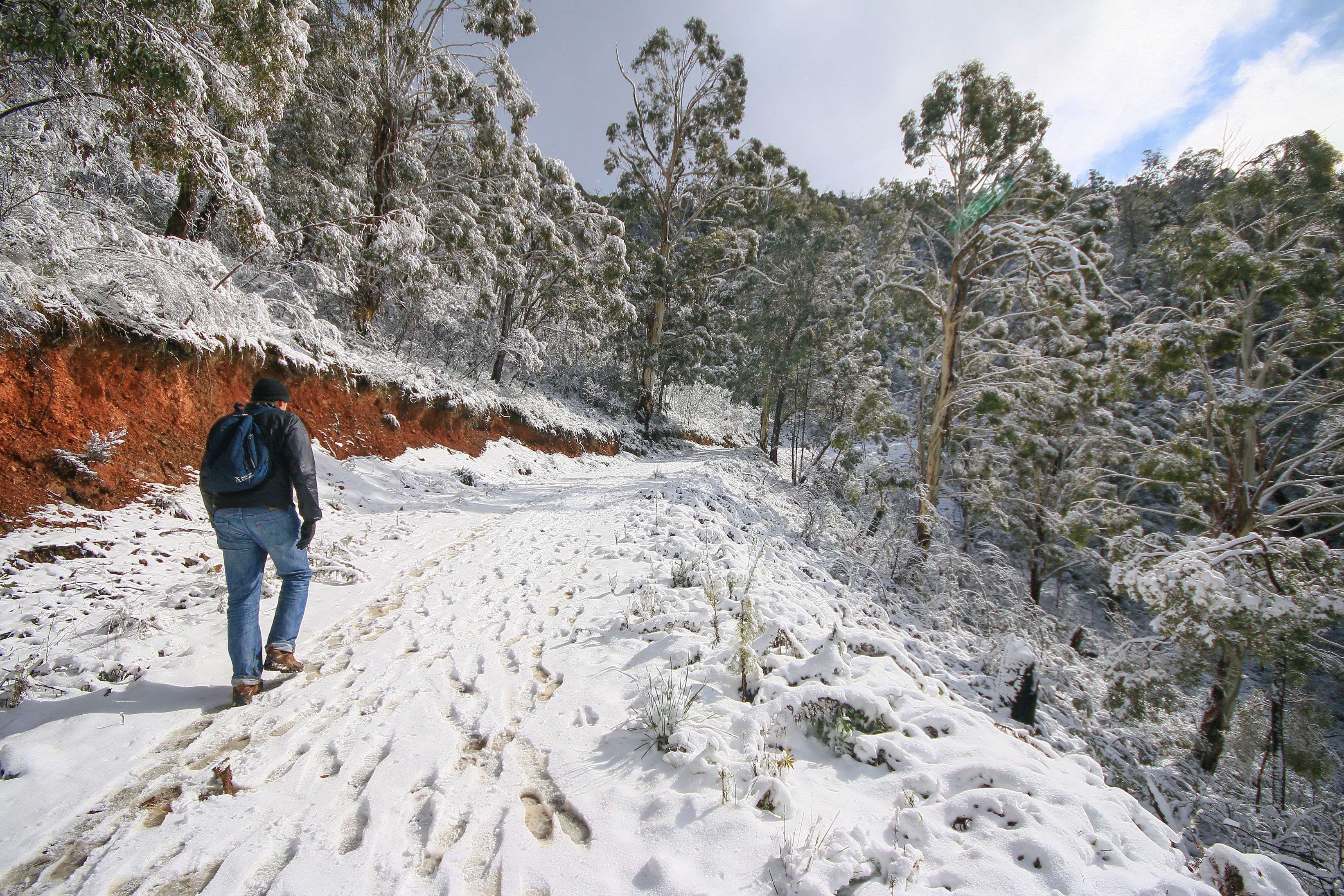
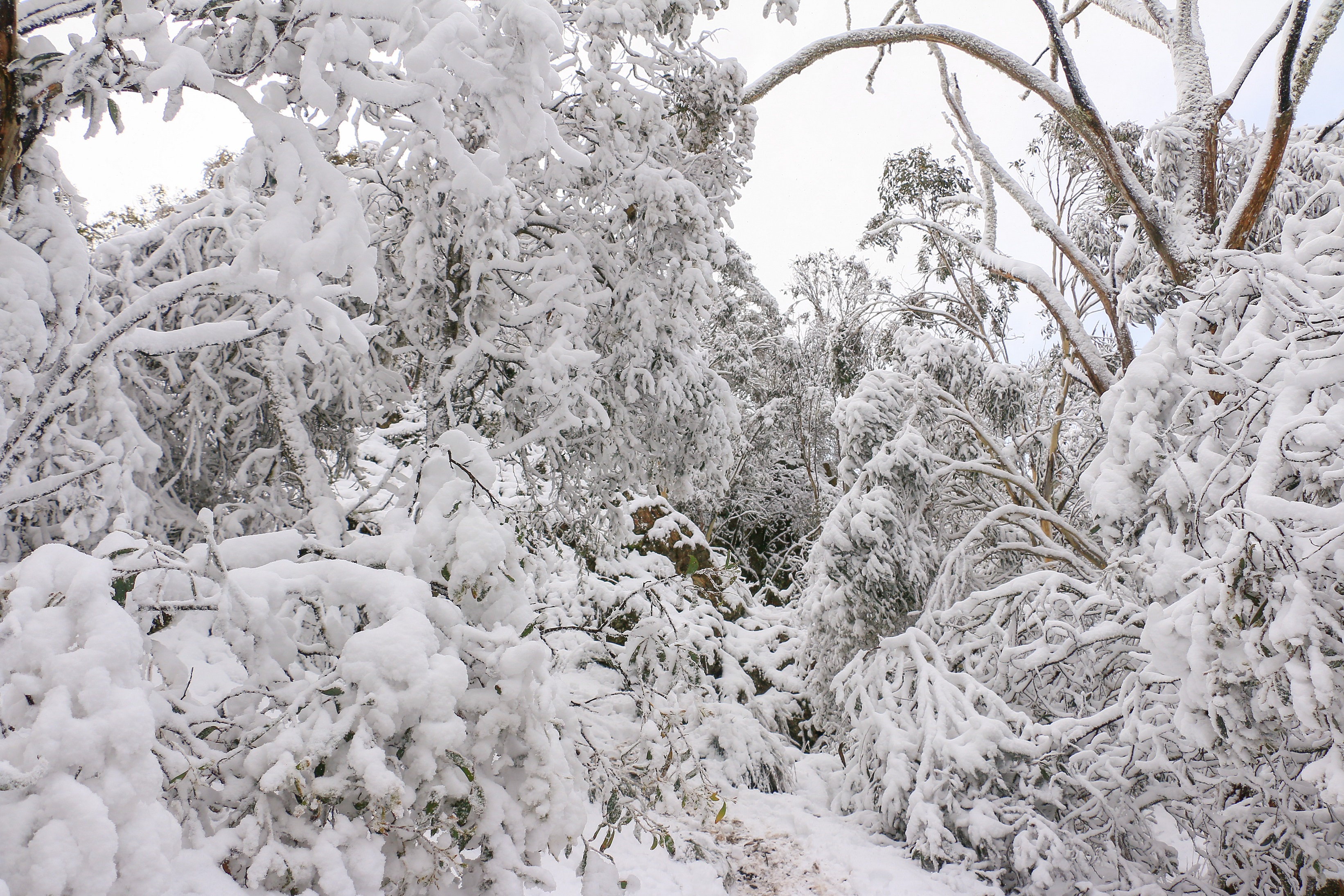
We set out on the Camels Hump Trail, with no intention of actually going to Camels Hump. Just enough altitude gain to reach the snow line. It’s steep at first, but that would mean we get to the snow quickly. Eventually, the first speckled dusting appears on some leaves. The first sprinkling upon the muddy brown fire trail emerges, disturbed by the tracks of a vehicle that has been fortunate enough to climb this way. By time the tracks vanish under a proper covering of snow, we are closer to the top.
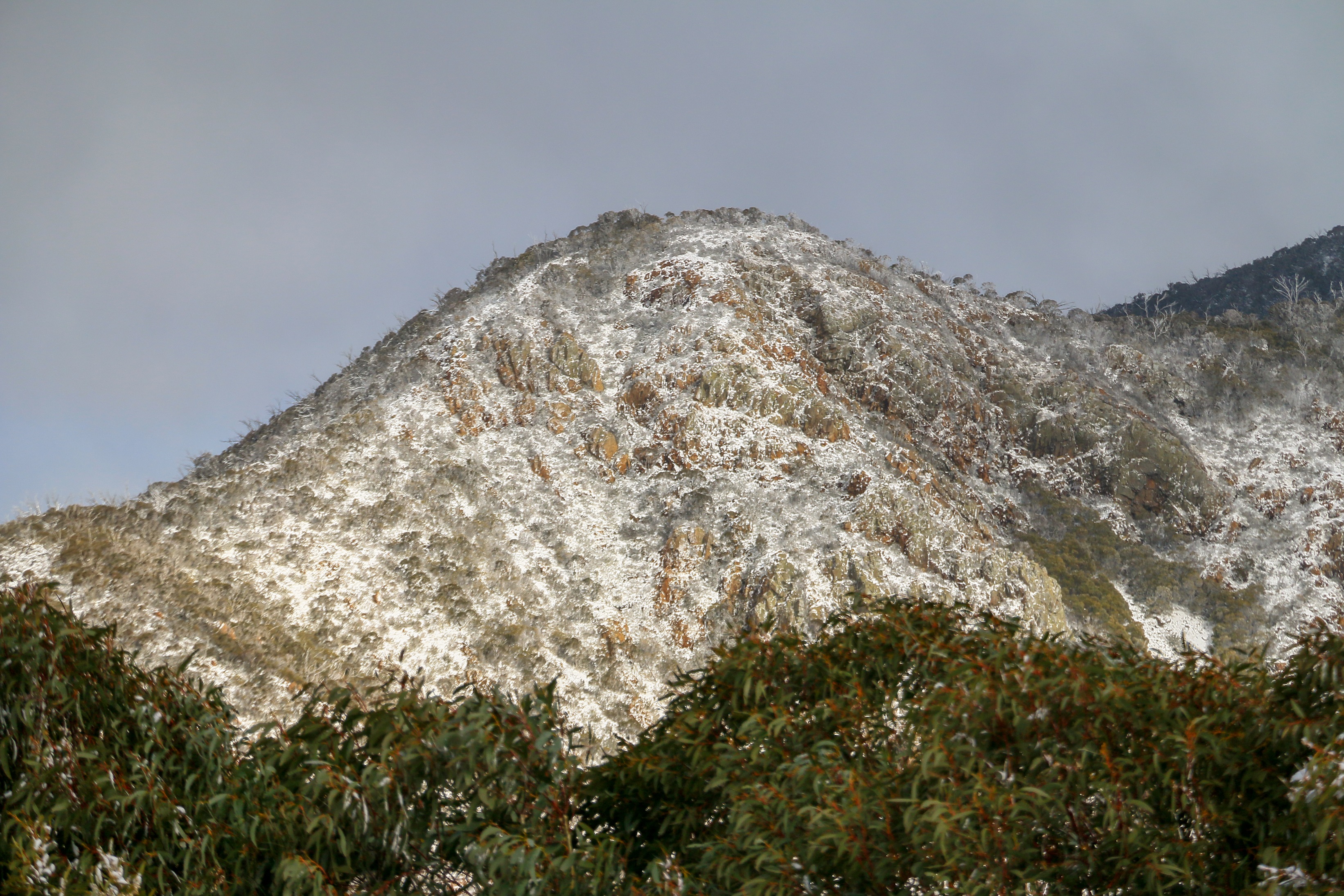
The trail has levelled off enough to encourage continuation, each step forward bringing incremental increase in snow cover, providing that uniquely satisfying sensation that comes with a Size 9 imprint. Between the laden eucalypts, views to the bare countryside glow from down below. Ahead, a pyramidical outcrop looks very much the mountain.
This was Camels Hump. After a year and a half I thought I may have exhausted all possibilities, but this was a new one. The fire trail ends, and the remaining track to the summit is through tunnels of low trees iced in white. The way ahead is almost indecipherable, the thought of descent alarming. I call it quits on a particular slippery rock and wait for Alex to return. Happy to watch the weather rapidly pass over Johns Peak.
After what seemed forever, Alex does return. I’m relieved there is no need to call on emergency services. I’m equally as relieved to hear the summit is enshrouded in dense shrubbery, without any visual reward. The visual reward is simply all around me, in this very winter wonderland.
The buzz. The excitement. The nerves. The never-in-my-lifetime strangeness underpinned by a back catalogue of disappointment. The sense of hope, exhilaration, and gut-wrenching drama more often than not deflated by events. The inevitable post-mortem punditry and scapegoating and resignation and acceptance. But maybe – just maybe – this time will be different.
If ever there was a weekend to finally come home this would be it. But I’ll be in bed, 12,000 miles away, turning on the bright lights of a laptop at five in the morning. Thinking about Italian coffee and chocolate digestives to perk me up. Minus three degrees in my shirt.
It’s a bed in a home that I haven’t written about for a good half a year, what with other more exciting jaunts. Canberra is still here, still going through its motions, still – touching wood – absent of coronavirus despite the best efforts of our neighbours. Still understated and beguiling, fortunate and free. Offering abundant life and opportunity if only you should look.
Over that time, Canberra has been doing what Canberra does, transitioning slowly but surely through the bursts of colour of autumn towards morning fogs which (usually) lift to reveal brilliant blue afternoons. It’s the time of year when continental superspreading sporting events disrupt sleep and sub-zero mornings add to the challenge of getting out from under the doona. A time when travel bubbles pop and masks finally become a thing. But do not despair. There is always fresh air.
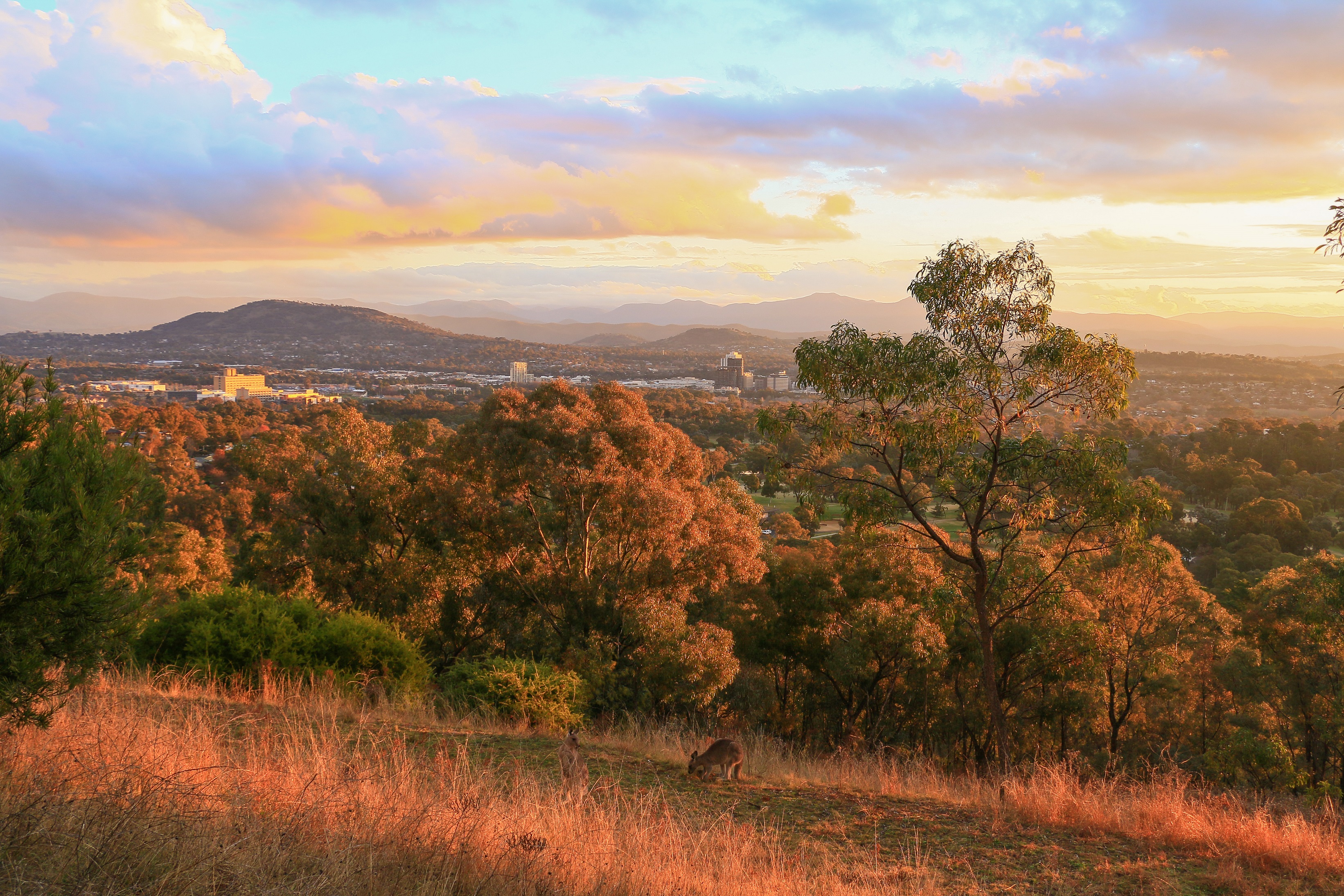
From the reliable vistas atop Red Hill, a quick jaunt up the road once the laptop powers down. Winter light always doing something special just before five in the afternoon. A warm angelic glow spreads over the rising towers of Woden, the hospital and the Pfizer vaccination hub. Kangaroos munch unaware. Some things change and some things don’t.
Rapidly contesting with Red Hill as my favourite nature reserve, Cooleman Ridge offers great reward for minimal effort. Fringing the west of Weston, the reserve boasts fine views back over Canberra but the real splendour is on the other side. Paddock. Hills. Forest. Mountains. A Murrumbidgee Valley creation. With suburban sprawl and hoonish echoes fading behind the ridge, it is a country walk in a city. And because so much of the Australian countryside is shamefully locked behind fence and gate and no trespassing signs, this is a real treasure.
The treasures of Mulligans Flat are perhaps a little less obvious – and much more likely to emerge at night. But this place is a sanctuary for humans and animals alike. It is another place that has grown on me through a pandemic, from the initial Centenary Trail crossing to volunteer tasks hassling echidnas and wallabies and turtles. As is oft-mentioned on a twilight tour, the dams were dry back when we were enshrouded in smoke. Today they come alive.
A bigger dam sits further west, lapping at a much bigger wilderness. When you stop and think about it, it is quite something that you can be picking up a good coffee at the neighbourhood shops and fifteen minutes later staring out towards this. Cotter Dam vistas shrink and stretch as you rise further into the sky, reaching a new summit at Mount McDonald.
Another new summit is added to my life experience when I take the dirt trail up to Mount Jerrabomberra. I have ventured beyond Canberra, though only just, and only before the latest Bondi-fed outbreak (just in case some paramilitary border goon decides this is reason enough to bar me from Western Australia for twenty years). I have come to Queanbeyan for the rare opportunity of coffee and cake at three in the afternoon, discovering a café that actually opens beyond two. Why is this not more of a thing? Especially when you can easily walk a few crumbs off afterwards.
It is becoming harder to discover new things like this in the backyard, but I am not there yet; Coronavirus may have to last another twenty years for that to materialise, something I would dearly love not to happen. I would love instead to walk in the Alps again, to hike along the downs of southern England chasing butterflies, to stroll through the Barbican and up to Plymouth Hoe, snaffling some fudge and an ice cream along the way.
But do not despair. I discover a winter’s walk alongside the clear water of the Tidbinbilla River, striking out through green forest singing in the aromas of fresh peppermint. Occasional early wattle pops golden and soothes like honey. There are views towards rocky crags and precipitous ridges and – down the track – a little home: Nil Desperandum. It has been restored to cuteness and if only they had a kettle with some tea and perhaps freshly baked scones waiting, the walk back wouldn’t have seemed such a chore.
Nil desperandum. Whenever or whatever might come home, do not despair.
Two weeks on holiday normally wouldn’t be such a strange thing. But it seems a pretty big deal these days. In the world BC, holidays would involve a month crisscrossing the UK in search of friends, family, scones and ales. Plus a European side trip featuring alps of snow and mountains of cheese. One day I’ll make it home again.
However, over the years I’ve come to think of home as more than a singular physicality. There are homes and, following the big bike ride, I needed to somehow find my way from Point B – Caloundra in Queensland – to Point A – Home, Canberra.
It had been a hectic holiday really, and I had visions of a couple of days nestled beside the ocean in some mild clime with good coffee. Perhaps a pool to soothe aching muscles. And a regular ice cream jaunt in the afternoon before taking in the final golden light of sundown. Alas, the weather forecast didn’t look especially conducive to this fantasy so – once again – I opted for the John Denver approach to travelling home.
Still, this wasn’t before at least taking in the sand and water on the Sunshine Coast. It was a brief foray, in between heavy showers and ocean chop at Alexandra Headland. Nearby, the Sunshine Plaza didn’t really offer a brighter disposition but eventually I located some much sought after rocky road. For later.
Faring Jason well with the understanding that we will one day again reunite for rail trail cycling magnificence, I fired up the four wheels and headed west. The road home was all smooth to start, taking me back – as it happened – into a land previously criss-crossed on two wheels. The second time around offered an opportunity to right some wrongs.
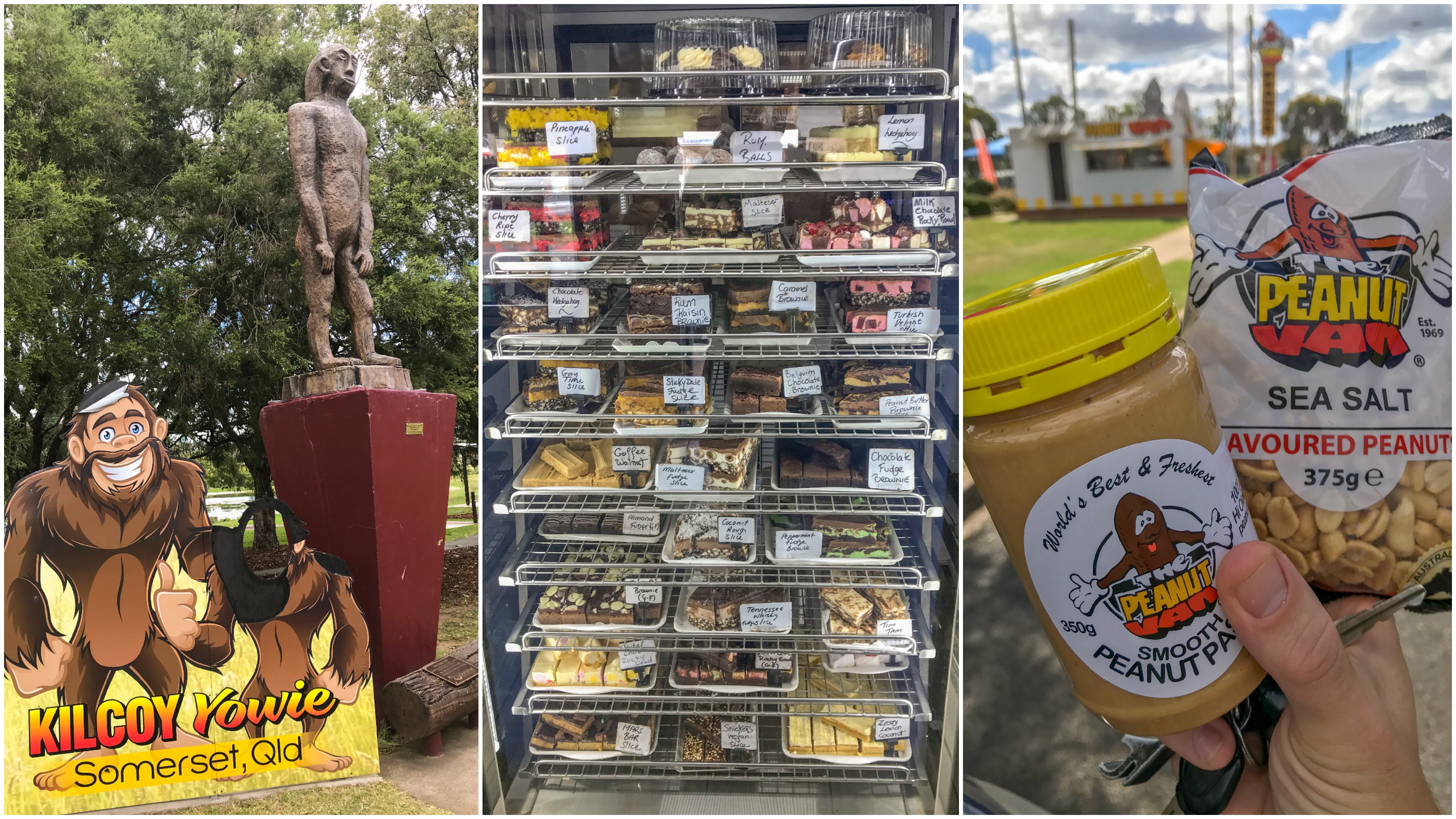
The first was pausing to marvel at the Kilcoy Yowie, which I had failed to note when we drove through here on the way to start our bike ride. It’s just, well, I cannot really explain. Further on, once more in Blackbutt, I called into the bakery where I scored a coffee and was confronted with the kind of display that causes indecisive cake-lovers like me to break out in a cold sweat. I think I went for sticky date fudge slice when pressed.
After the kilometre zero of Yarraman, the road led on towards Kingaroy. The extent of my knowledge about Kingaroy is absolute peanuts. Which is pretty spot on, given the area is famed for the cultivation of kernels. When in Kingaroy, Go Nuts is not the motto on the town sign, but you should at least stop by the Peanut Van. And if you want a taste of the manic, pop to the local Woolworths.
I was stocking up for the return to camping with a laser-like focus on making it as minimal effort as possible. Banana for breakfast. Packet soup for dinner, with a carrot and five frozen gyoza to add some bulk. Tent popped up, cooking by torchlight would never be so satisfying, and soup proved perfect in the cold.
At altitude in Bunya Mountains National Park it was surprising how cold things were, given I was still in Queensland. The Bunya Mountains rise up distinctly from the surrounding plains, a wild island among the productive downs. It is very much an island of biodiversity, illustrated by the large swathes of unique Bunya Pine. These giant, Monkey Puzzle type trees only grow naturally here and in a few smaller, dispersed pockets further north.
The trees yield massive cones which offered good tucker for Aboriginal Australians. When I see one in the small visitor centre, I am relieved my walking for the day has finished. Not only do you need to be wary of snakes, spiders, ticks, and stinging trees, but giant bloody cones falling on your noggin as well.
I absorbed the Bunya Mountains with a nice loop walk through dense forest, following lush gullies and creeks and occasionally peering out of the woods to see Queensland below. The gentle chirping of birds was a constant, but the dappled light and dark undergrowth made it impossible to sight any of the blighters. The forest had the becalmed air and melody of one of those meditation soundtracks cobbled together on Spotify by a bearded man wearing loose flowery pants.
Not that this led to a relaxing night. While I managed to get fairly snug, gusts of wind provoked regular rattling of canvas. With fitful rest, I rose early the next morning to discover my head in the clouds. With patience, this would rise and fall in swirls, chinks in the gloom revealing a sunny day unfolding for the Darling Downs.
Gravity would propel my car that way, rapidly plunging from the Bunya Mountains towards Dalby, where the day was indeed sunny. Dalby seems every bit a forgettable town, neither obviously appalling nor exceptionally outstanding. This is perfectly encapsulated by the popularity of a Coffee Club and Brumby’s Bakery on the high street.
Out of Dalby, large cotton fields once again spilled out towards the horizon. It is one of the regrets of the trip that I never managed to find a spot where I could brake abruptly and take a photo of them. Instead, here’s a metal yabbie at Moonie next to tennis courts and much sought after public toilets.
Moonie was little more than a junction on the way to Goondiwindi, a border town receiving attention over the past year for its checkpoints ensuring Queenslanders are kept safe from nasty viruses prior to a state election. As a border town it possesses all the essentials, retaining the chain store vibe of Dalby for passers-by who simply yearn for a bit of predictability. For lunch I grabbed some takeaway from Red Rooster, before a fuel stop and then a frozen coke from McDonalds to take me into New South Wales.
Crossing the border, one step closer to home. Yet still a million miles away. It certainly felt that way once my frozen coke had run out and I found myself on a bumpy road through endless fields of grain. The road – between Boggabilla and Warialda – was doing few favours to my left shoulder and arm, which had now developed post-cycling strain and pain.
In my ideal version of today I was reaching Bingara by two, allowing time for a relaxing nap before a potter around. But I’ve continued to underestimate Australia and the quest of driving across it. It was pretty much four when I checked into a motel – cheap, basic but welcoming in a countrified beige blanket kind of way. And not camping. One of the two double beds still looked good for a nap.
I vaguely remember passing through Bingara on another trip back from Queensland, the town now an intersection with the past. That time around I had come through Inverell and Myall Creek on my way to Narrabri and the Warrumbungles. Again attempting to cover a million miles in a day, I didn’t even stop here, but remember it conveyed a surprising rustic charm.
In the remaining light of day I therefore walked down to the Gwydir River and back into town where clusters of tradie and caravanning couples were gathering for Friday night dinner outside the pub. Along the high street, trees turned auburn signalled the passage of time and place that had gone on since I left home. And with the sun dipping over the hills, there was a tangible chill in the air. And plenty of chilli on my pizza.
Bingara enjoys a fine setting, nestled in a valley backed by rolling ranges. It’s technically in New England and feels that little bit closer to civilisation, if civilisation is Tamworth. I took in the surrounds from a lookout high upon one of many hills, wondering if I could see my destination. But that was still a long way off.
The road between Bingara and Narrabri must surely rank as a hidden gem. In between the two towns, the crazy volcanic landscape of Mount Kaputar National Park infiltrates, regularly revealing golden panoramas and rugged lumps thrust upward from the horizon. It’s one of those landscapes that makes you want to stop at regular intervals, eating yet again into your estimated journey time.
With a lunch date in the diary, I didn’t really have time to pause. I was in two minds whether to stop at Sawn Rocks, but being only a few hundred metres walk from the car park I figured I could squeeze such spectacle in. This is one of Australia’s best ‘organ-pipe’ rock formations, created in geological tumult and chaos. An experience I’m sure my car was feeling for the rest of the day.
I am not going to profess to taking it any faster than 110kph of course as I progressed towards Narrabri. The sacrifice for Sawn Rocks was no coffee in Narrabri and no wee in Wee Waa. By time I reached the small settlement of Pilliga I was more than ready to pause for some brief relief.
Pilliga is – shock horror – in the heart of The Pilliga, a vast, largely flat plain of sprawling dry forest and sandy soil. At one point – and I may have been hallucinating by that stage – I passed three camels. There was no chance to stop, and I’m not entirely sure if they were on a large farm or simply roaming wild. But the fact that you can easily imagine them roaming wild here says everything about the type of environment you are in.
Talking of wildlife, did I expect to find myself in Coonamble again? Well, yes, but I never expected I would be so ecstatic at reaching the place. Oh, there’s that spot I got chased by rabid dogs. Over there, the only café open on Sunday. There’s the river, languid and brown. The supermarket with the chemical mice killer aroma. The partly constructed public toilets embroiled in drama. And the home just out of town where I can again feel at home.
My plans were vague and uncertain and once pork belly was mentioned for dinner I knew this would be my spot for the night. Before dinner, lunch, a mere 45 minutes out of town. The Armatree Hotel is the best pub in town, the only pub in town, practically the only building in town. It has character and authenticity soaking through the wooden floorboards, corrugated iron bar, and XXXX on tap. Out back, the outback. And a beer garden, lively with get togethers and celebration of another week fulfilled.
I like the fact that I can come away from the Armatree Hotel having chatted to an old codger in a ten gallon cowboy hat while we both emptied the contents of our bladders. “Great place out here, hey”. Sure is mate, sure is.
After a restorative night, it finally was time for a homecoming. Coonamble to Canberra in one hit is a pretty lengthy affair but once through Dubbo (and a much-needed stop for coffee), the drive was pretty enjoyable. The weather had closed in and rain was falling as I reached Molong, giving the place an added autumnal melancholy. All across the Central West, trees were exploding crimson and gold in small towns like Cudal and on toward Cowra.
The rain had stopped and things were brighter by time I reached fairly familiar territory in Cowra. Not so long to go now. Just need a final country coffee to push me on, eclipsed by a delicious treat…because I am still on holiday after all. Just about. Down the road, Boorowa. Then Yass. Murrumbateman. Hall. And at last, home.
I had entered the point of no return. Doors closing behind me, confronted by a depleted selection of pre-cooked yellow food. A smoky, greasy vapour emanated from behind the counter. Around one of the square Formica tables, a trio of young people huddled around a carton of chips.
I had rolled into Injune desperate for a pick-me-up to push me on to the end of the road. For coffee this was the last outpost. And like a rabbit in headlights I was now captive. I had to order. Miraculously, I spotted a handwritten note on one of those fluorescent orange stars. Iced latte for $5.50. Coffee, ice, and milk which surely wouldn’t turn into a complete hash. Relief. A safer proposition than the risk of first degree burns.
Happily – should you find yourself in the situation – you’ll find iced latte and a pack of 39 cent custard creams from Aldi a winning combination on the Carnarvon Highway between Injune and Rolleston. It propels you into a more interesting landscape with plateaus rising up to the east and west. The road, finally, allows a speed limit of 110kph. And then you turn off, to fulfil a few goals and dreams.
I remember when Carnarvon National Park first piqued my interest. It was in a Qantas magazine, back when flying was more of a thing. I was probably on the last plane out of Sydney after some stupid meeting, feasting on two crackers and a vomit-coloured dip. A double-page photograph of intricately textured sandstone, a dark narrow fissure, vibrant green ferns, and the dizzying perspective provided by a human figure felt a long way away.
It’s a credit to that Qantas magazine that they managed to condense Carnarvon National Park into a few glossy pages. It’s also a credit to the professional photographers who managed to fit it all in. The vast, monotone plains in the surrounding landscape truly situate this as an oasis. The solitude required to get there leads to stimulus galore.
Hyper-stimulation first emerges a few kilometres outside the park. People and Hiluxes amass, caravans are adorned with satellite dishes, trailers, awnings and everything including the kitchen sink. There may even be – in the middle of Queensland – a large boat or two. Instantly I know this is not my type of campground. But there is little other choice and I set up home for two nights, conscious of beady eyes judging my unfolding canvas.
Many of the people I talk to are here for a week, maybe two. They can afford to spend whole days sitting in a fold-up chair playing candy crush. I have one complete day to head into the gorge, go as far as I can, and turn back again. One whole day that is immense in so many ways.
My phone tells me it was a 41,397 step kind of day, taking me along 29.1 kilometres. It was a day that started around six in the morning, when I parked up near the visitor centre. There was an orderly-looking campground here but for some reason it is only open during school holidays. Still, I took advantage of one of the many tables to make a cuppa and eat some breakfast, free from the guilt of disturbing the old folk getting their beauty sleep.
The walk starts with a sign of things to come: a crossing of Carnarvon Creek via a series of stepping stones. The first crossing is easy, reassuring everyone who finds themselves on this path to strike out further into the wilderness. Others later on require a bit more planning and a touch of blind faith. But don’t let this put you off. Just grab a big stick and think of the reward.
The gorge is said to extend for 30 kilometres, but the day walk goes as far as Big Bend, where there is a carry-in campground for those intrepid enough to explore further. Along the way, nature has created a series of incredible rock features, shady pools, and slot canyons, while original inhabitants have left their own mark. It is these spectacles – reached via shortish detours from the main trail – that create a natural itinerary to the walk, numbered like stops on a coach tour. Only here, self-propulsion is the required vehicle, and the only souvenir stands are those that assemble within your mind. And do they sure etch their way into it…
Moss Garden
Reaching the first stop seems to take forever, but I think that comes down to an eagerness to get there. It’s akin to sitting in the back of the car as a child, heading for a day at the beach. The side track also requires a little creek crossing and climbing of steps, penetrating into a small, fern-filled gully.
What can I say about the Moss Garden? It’s mossy and moist, fed by a narrow creek spilling into several clear pools. It’s the kind of garden that might be constructed at some expense in a billionaire megalomaniac’s estate, funded by worker exploitation and home shopping. Or constructed in the airport of some oil rich emirate to show off to the world. But nothing contrived here, just thousands and thousands of years of nature. Water, rock, vegetation. Gathering in blissful harmony.
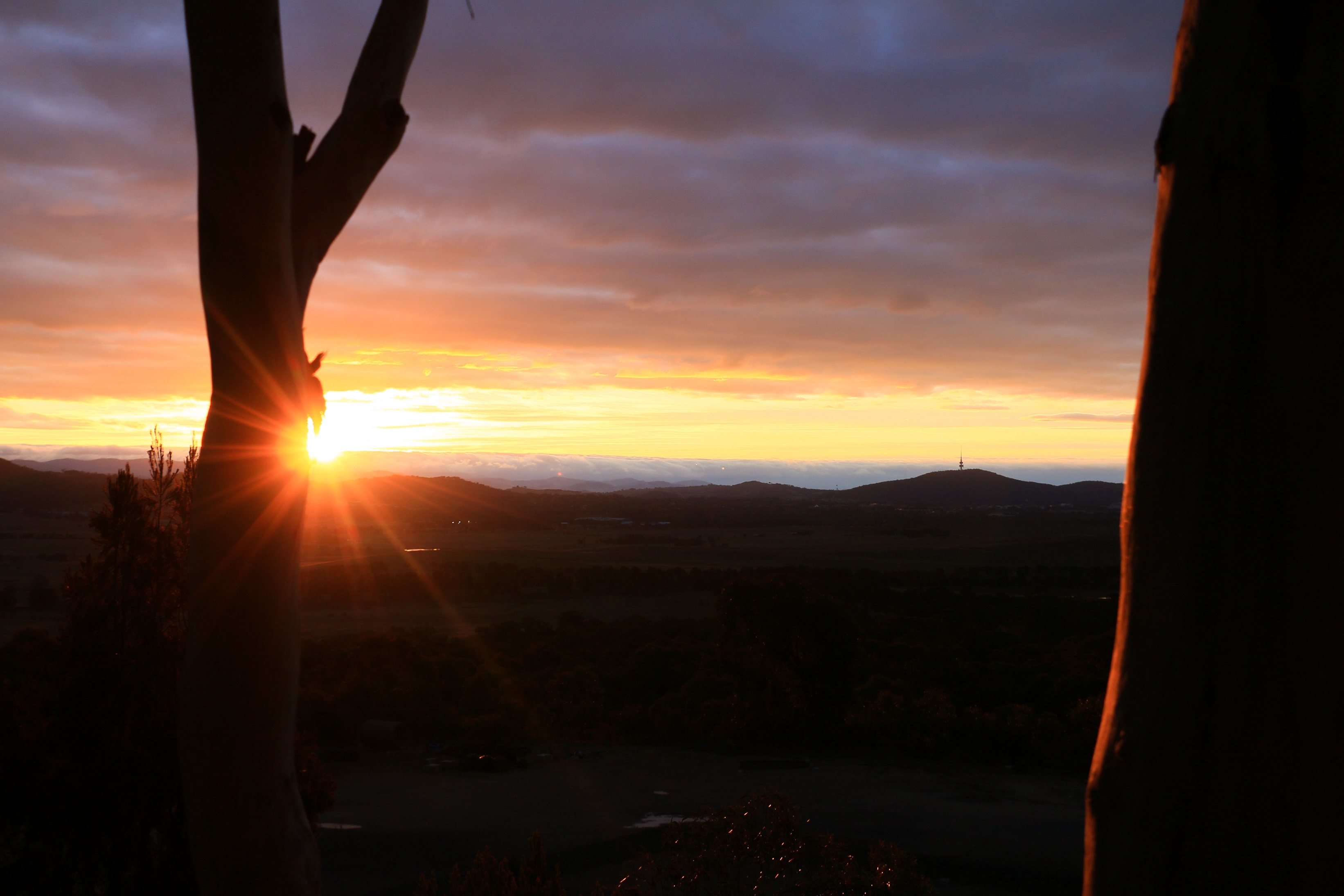
Amphitheatre
If the Moss Garden was beautiful in a serene kind of way, the Amphitheatre is, fittingly, all head-shaking drama. I think this is the setting for that double-page spread in the Qantas magazine many years back and you would need to be a professional photographer with a mega-wide angle lens and tripod and hours of patience waiting for the right light to come anywhere close to evoking the feeling of being in this place.
At first, you wouldn’t expect much. Nothing to see here. But walking towards giant luminous sandstone walls you notice a small doorway at their foot. And a series of metal steps up to the entrance. It is a crack perhaps little more than a metre, a corridor into a cavernous courtyard of wonder. Above, a small window to the sky, afoot a delicate display of vibrant ferns. It cries out for a massive “COOEE!” but somehow feels too reverential for that. A handful of people, myself included, just sit and soak it all in.
Art Gallery
The National Gallery of Australia is much more accessible and has a better café than the Art Gallery in Carnarvon Gorge. But you won’t find a 62 metre natural sandstone wall featuring over 2,000 engravings, ochre stencils, and free-hand paintings. The stencilling is considered to be some of the finest and most-sophisticated of its kind in their world.
This sacred spot serves a reminder that this is the land of the Bidjara and Karingbal People, and you are lucky enough to be here for a fleeting moment in time.
Cathedral Cave
Many people culminate their walk at the Art Gallery fulfilled, turning around and heading back home for an afternoon rest. The next stop up the gorge is four kilometres distant, and the track grading increases a notch on the scale. There are more stones to traverse and one creek crossing in particular requires a degree in trigonometry and dose of good fortune.
I’m glad I pushed on though, for this section is perhaps the most scenic. The main trail sticks closer to the rocky course of Carnarvon Creek, and sheer-sided multicoloured outcrops begin to press in on both sides. Palms and ferns and eucalyptus gather in the valley, nurturing colourful butterfly and chirpy birds, while emerald pools attract fast-moving dragonfly.
As a destination, Cathedral Cave undoubtedly has a spiritual quality, hosting further displays of Aboriginal art. It also possesses that echoey ambience formed from the hollow of a massive rock overhang. A chamber of secrets. Peaceful and shady, the benches situated opposite the walls encourage lingering. A rest before the return journey.
Boowinda Gorge
But don’t turn around! After Cathedral Cave, it’s a kilometre or so on to the end of the trail at Big Bend, but I neither had the energy nor the desire to visit a camping area. Just 200 metres on from Cathedral Cave, however, another dry creek cuts in from the west. At first, it’s nothing special, just an unending collection of large pebbles that make walking a little more taxing. But pursue further and you enter Boowinda Gorge.
This I found the most staggering spectacle of the day. I can’t really explain. Nature has formed something that engineering genius and billions of dollars would struggle to replicate. Curving walls, pebble paths, ferns and trees flourishing where chinks of light again emerge. And I had it all to myself.
————————–
I’m all for saving the best to last, especially when it comes to roast dinners. But what goes up must come down and, as much as I tried to conjure up a helicopter taxi from Big Bend, the return journey needed to be undertaken. On the plus side, things were still incredibly scenic the second time around, stepping stone confidence was sky-high, and I had a few Aldi custard creams to perk me up when needed.
There was also Wards Canyon, one of the stops between the Amphitheatre and Art Gallery which I had saved for the journey home. As lovely as this was – think more small cascades and rocky walled gullies – I can’t help but think my impression was overshadowed by weariness and the wonders that had gone before. It also took a bit of a climb and used up the last custard cream.
To get back to the car, I started to concentrate more on the little things. Some of the butterflies that would never settle. The blur of small birds flitting between shrubs. The red and blue dragonflies hovering above water. The people passing me by, saying G’day and inquiring just how much further it was to so and so. Push on, I encouraged, and don’t miss Boowinda Gorge.
In all honesty though, the last hour turned into a bit of a drag. There were a surprising number of steps and undulations that I didn’t notice in my excited state on the way out. The light was now brighter, the heat of the day well and truly upon us. Creek crossings were less an adventure, more a chore. My feet hurt.
Towards the end I was pretty much walking at the same pace as a man a hundred metres in front of me. It came as no great surprise when he let out a thank feck kind of “yahoo” upon sighting the visitor centre. I didn’t need empathy training to totally get it.
And so my walk in Carnarvon Gorge, years in the making, had reached its conclusion. I felt happy and fulfilled and in desperate need of a shower, cup of tea, slice of Christmas cake and a nap. Unfortunately, Takarakka ‘Bush Resort’ had other ideas. I returned to find I had neighbours, sat outside their caravan under the awning, playing candy crush and listening to the radio. Other neighbours were setting up with a clink of a camp kitchen here and a thud of a mallet there. Four-by-fours rocked up every few minutes, engines idling as they checked in at reception. The shower, tea and cake were divine. The nap non-existent.
At least I slept well that night. Very well, for tenting. Still, I was awake before sunrise so made a bit of noise and headed up a track to a nearby hill. A few other people were there, including a dad with a wide-awake baby and a couple of what I would say are younger boomers. The sunrise was – fleetingly – dramatic, while the younger boomers were lovely.
We chatted for a good while. They had arrived yesterday and were staying for a week. I was off to 1770 today. I passed on my tips and wished them a wonderful stay. They wished me well for my big bike ride. We parted, me feeling a little more favourable towards caravanning boomers, and them possibly thinking he is never going to manage that bike ride. Maybe.
Keen to get moving, and also keen to avoid the amenities block that was always dirty whenever I had to use it, I passed up the opportunity of a shower and hit the road. Yet instead of turning left, back to the highway, I veered right. I had come so far and something was bugging me. This had been years in the making, and when would I ever be here again?
When I arrived in Carnarvon National Park on Tuesday afternoon, I used the last of the daylight to explore a short walking trail along Mickey Creek. It was a simple and – in hindsight – relatively undramatic stroll. But that is only until the formed trail ends.
A bag left on a rock signalled I wouldn’t be the only one transitioning from a gentle amble to a rock-hopping adventure. Beyond the stones and the ferns, an entrance led into a narrowing gap. Walls closing in, the sound of ‘oohs’ and ‘ahs’ travelling down the chasm encouraged further exploration.
There was only really one spot that was a little challenging – in that I might get my feet wet. But I could do it. And so could my sunrise friends who I met again on the way out. So much better than just sitting outside your caravan playing candy crush. We both agreed, and I felt envious of the wondrous discoveries that still awaited them.
Farewell friends, and farewell finally this most magnificent oasis.
————————–
That could have been a good ending, but the road never ends. Neither does this blog post but all I can say if you are labouring is just imagine living and breathing it as opposed to a mere skim-read in your PJs.
After endeavours at Carnarvon, I planned a bit of R&R on the Queensland coast, 550km away. Worryingly I was desperate for a coffee by time I reached Rolleston, only a hundred clicks in. Even more worryingly, Rolleston didn’t look up to much. But beside the public toilets in a park, a cute caravan had popped up selling coffee and a few light snacks. The owner was charming and chatty, and I really really really wanted her coffee to be good. But scalding hot country ways are always difficult to cast off.
There is little to note between Rolleston and Biloela. The road, almost arrow straight, offers frequent car stopping bays and I realise these are essentially unofficial toilet stops as I recycle my coffee in a hedge. The highlight of this section of the road should really be the town of Banana, in Banana Shire. Yet, there is no comedy sized fibro banana or Banana World Theme Park incorporating Mango Village. A large sign erected for losers like me actually informs the world that Banana was named after a big bullock. Surrounded by coalfields, this is peak QLD.
Sadly, the only thing I knew of Biloela was the Australian Government’s really tough posturing to lock up a couple with two young children who were seeking asylum here. They now sit festering on an offshore island. The #hometobilo movement made me feel warm towards Biloela. The family in question had become part of the community, and the community part of them. They simply want their community back.
I didn’t find out much more about Biloela in my brief stop there. It didn’t seem the most appealing place, but then it is far more appealing than – say – a war zone or dictatorship inclined to ethnic-cleansing. Petrol was cheaper here, and I was surprised at the quality of coffee and a slice from the bakery – this is more like it. Road trip essentials.
Almost as Australian-sounding as locking up dark-skinned people seeking protection is the Bruce Highway. For me, it was a bit of a milestone, a sign that I had reached the Queensland coast. But like most highways along the east coast, the ocean is still miles away. And, hitting the highway south of Gladstone, the Towns of Agnes Water and Seventeen-Seventy were still 90 minutes away.
A sign that I was pretty much over the drive came when I didn’t even stop for a ‘big crab’ at Miriam Vale. It wasn’t that big, looking more like an elaborate shop sign than anything. And I don’t really like crab, stemming I think from my brother taunting me with crab claws as a kid. The same can be said for peanut butter, but I did at least stab his hand with a fork when he tried to steal some of my chips.
————————–
1770 clearly stands out from the crowd just by being a number. That was some good marketing by Lieutenant Cook and Joe Banks when they decided to make their second stop in Australia at this spot; I think Joe had seen some plants that took his fancy. If you look on the map, you will see a marker for the 1770 toilets, which you can only hope have been updated since they visited.
Confusingly 1770 has the postcode of 4667. So – in a remarkable turnaround for Australian abbreviation – it is often spelled out as Seventeen-Seventy. It also typically gets lumped together with its southern neighbour, Agnes Water. And I was staying on a campground between the two. Let me tell you the joy of driving past tents and awnings and trailers to take up home in a cabin with a double bed and kitchen and bathroom. The closest I will ever get to feeling all North Shore Sydney.
And so, with good rest, I had a lovely day in the Towns of Agnes Water and Seventeen-Seventy. In preparation for what is to come, I decided to explore it by bike. There were beaches and lookouts and a lovely coffee in some lovely gardens, embellished with sweet baklava. It was the best coffee in a long while, a clear indication this is a coastal location on the up.
Beyond the coffee stop, I was delighted by the Paperbark Forest Boardwalk. It wasn’t especially long but well worth the additional cycle up a small incline. Among the stands of paperbark, butterflies frequently floated and birds sang with joy. A nice way to get off the two wheels and stretch the legs.
Being beside the coast I had long targeted fish and chips during my stay here, which I gorged on beside the water on the wharf in 1770. Gorging again. The downside to this was that it required an uphill climb back to my cabin and a post-lunch nap. Later in the day, I returned to 1770 by car, and walked out to the headland, hopeful, like many others, that sundown would put on a decent show.
Now Saturday morning, I had been travelling for little over a week. I’d be leaving the ocean today and in memory of this I felt that getting a takeaway coffee first thing and sipping it on the beach would be a perfect moment. Situated next to a waterfront campground, the coffee took an age but when it came it was everything I had hoped for. Order and civilisation were being restored.
And so, next up Caloundra and then the Brisbane Valley Rail Trail. Heading south, I briefly paused in Bundaberg, picking up some provisions and a gift for my cycling buddy, Jason. Never would a $16 bike rack from Kmart prove so popular.
My final stop was in Childers, one last pause before hitting the elongated development of the Sunshine Coast. I had arrived, it would seem, in a town of coffee extremism. Ten minutes out of town, billboards implored me to stop at The Drunk Bean or Insane Caffeine. Nine hundred kilometres after Injune, the sound of coffee insanity appealed. It had largely been madness the whole way.